Archive for the ‘Exhibitions’ Category
26 November: Robyn Stacey “House to House” @ Jan Manton Art, Brisbane
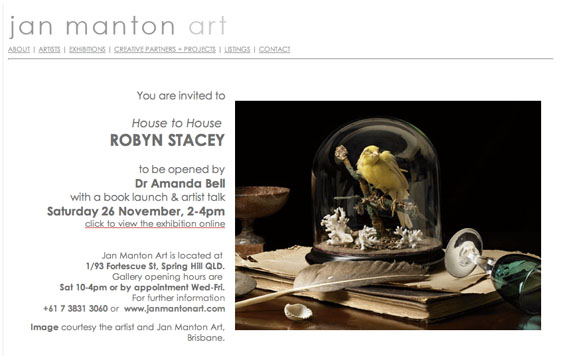
This afternoon we attended the opening and book launch of Robyn Stacey’s latest project “House to House” at Jan Manton Art in Brisbane.
http://www.stillsgallery.com.au/exhibitions/2011/index.php?obj_id=stacey
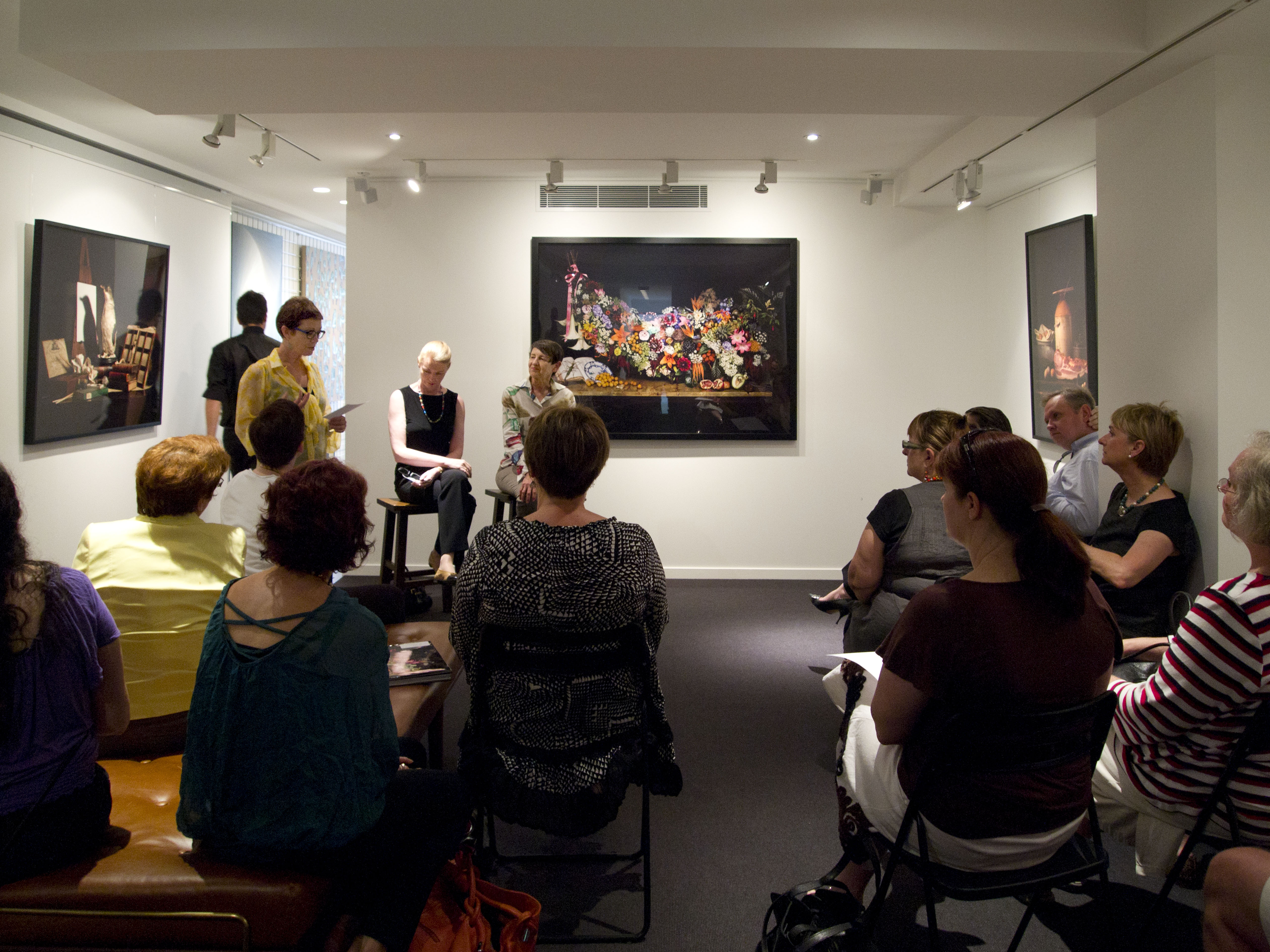
Jan Manton introduces Dr Amanda Bell who opened the exhibition
The work on show at Jan Manton Art is but a small selection of a larger body of work that was on show earlier this year at Stills Gallery in Sydney. This was a great selection from the larger show and included the book launch of a considerable volume on the historic house project. Working to extend the perception of the curatorial selection and exhibition, Stacey has embedded narrative and playful sense of discovery in the images she created of these objects.
Victoria Cooper
Stills Gallery show: Tall Tales and True
http://www.stillsgallery.com.au/exhibitions/2011/index.php?obj_id=2011_05&nav=4
A comment by Doug Spowart
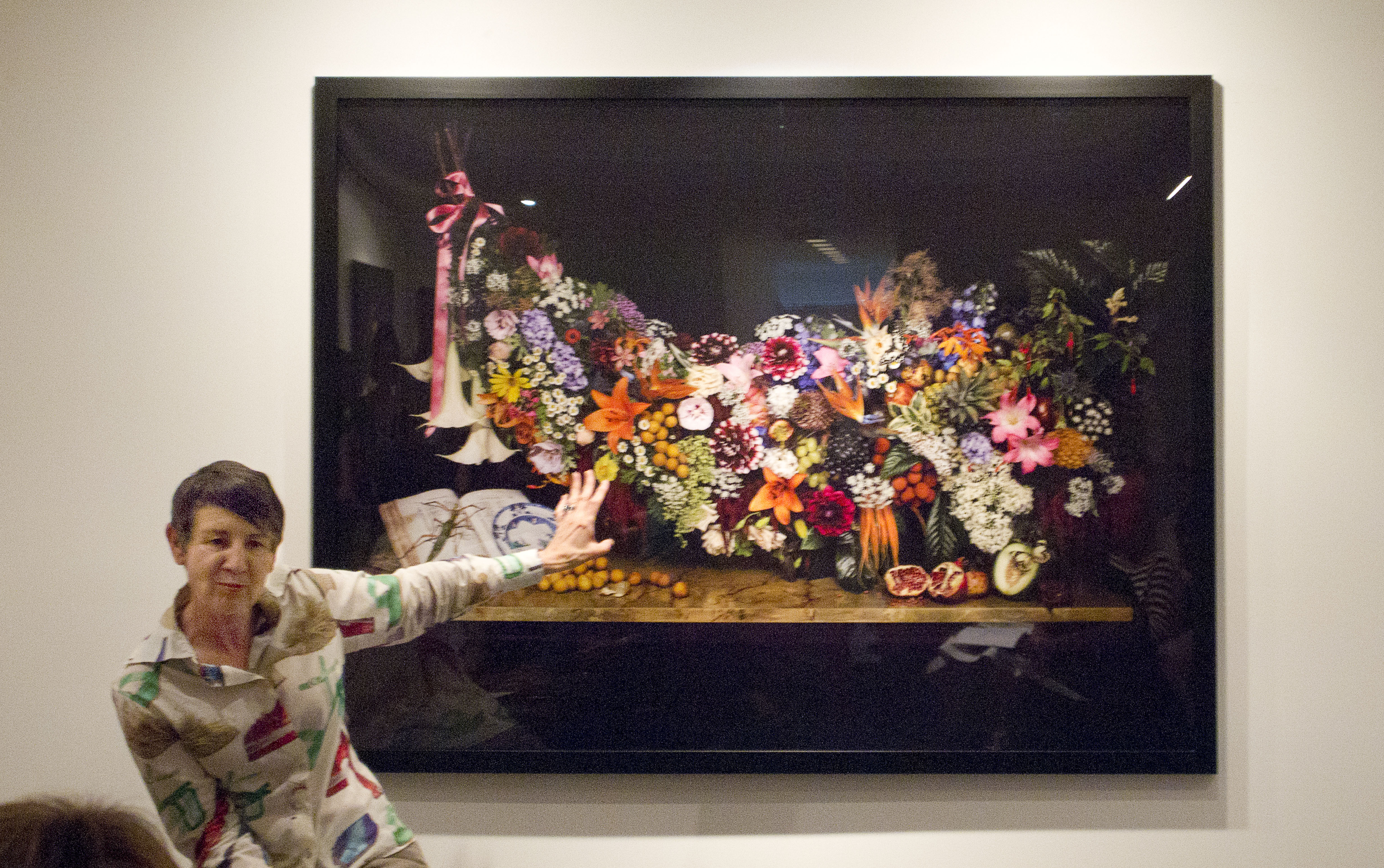
A veteran of museum and archive still life subject matter Robyn Stacey presents at this showing, 6 large-scale colour photographs. The photographs deserve and reward intense observation as each image is akin to peering through a magnifying glass where finite detail is revealed as the eye moves across the plane of view. Most photographs blend artefacts form the historical houses alongside the contemporary living subjects, usually of flora, fruit and nuts.
The images exist as tantalizing trompe-l’œil. The viewer is drawn through the photographic surface by the artist’s careful compositional placement of subject, the descriptive lighting employed, and the now uncommon experience of large format camera sharpness. Here the original visual experience of the texture, depth and space of what was carefully placed before the camera is reconstituted on the gallery wall.
Today, as growing response to the immediate digital snapshot, a movement called ‘slow photography’ is emerging taking its lead from the ‘slow’ food movement) These photographs, made as planned, considered, composed, placed, illuminated and imaged are perhaps the epitomy of the movement. David Hockney once proposed that the more time the artist takes making an artwork the more the viewer will get out of it. Robyn Stacey’s work is made with time and therefore will reward even the most intense, continued and considered observation.
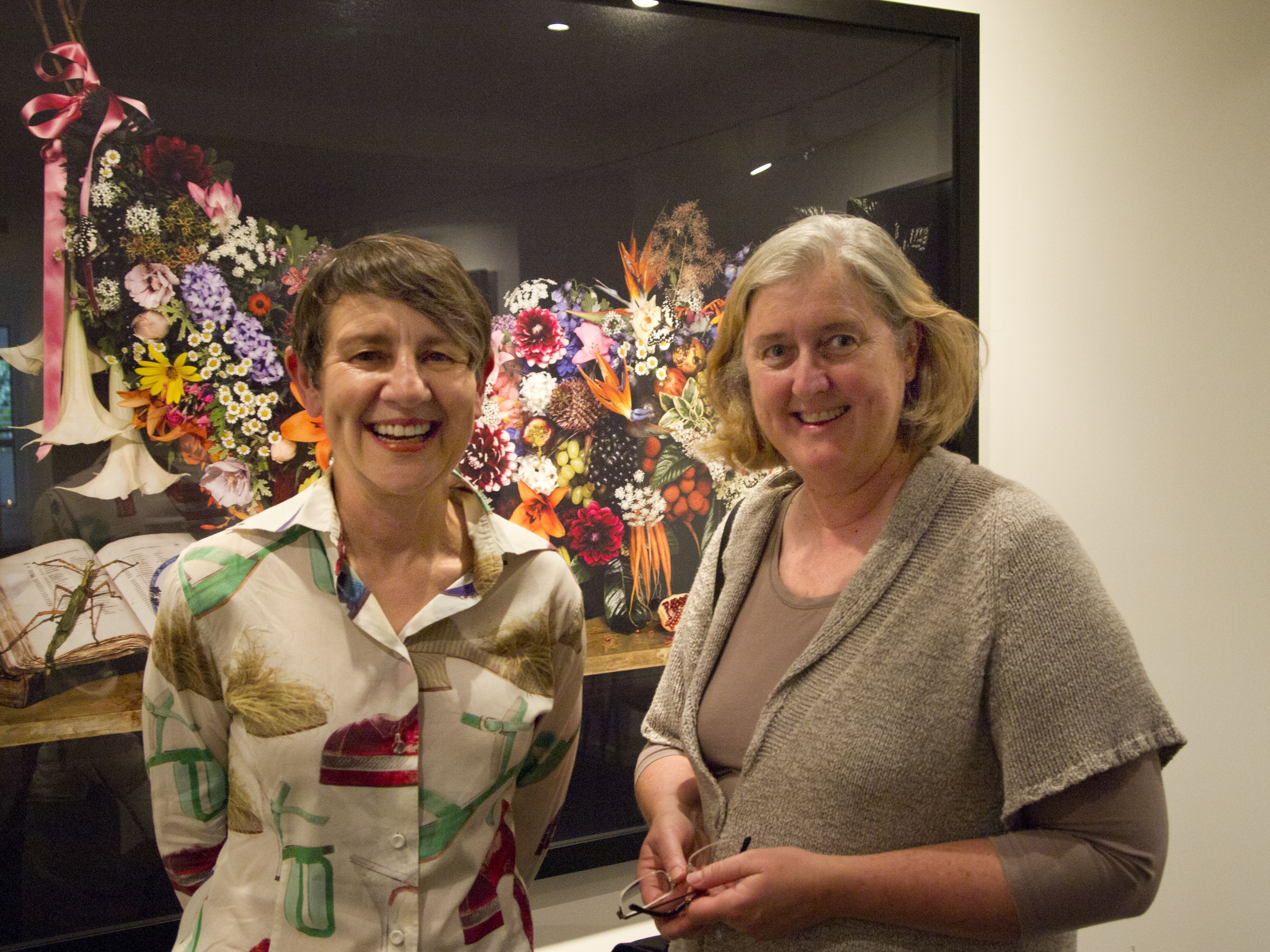
Robyn and Vicky talk about the work
Photos: Doug
11 November: Jan and Mark’s exhibition opening
A wildly exciting exhibition was opened last night featuring the first art photography exhibition by AIPP members Jan Ramsay and Mark Schoeman. The show is presented on the premises of Flute Fine Foods @ 380 Cavendish Road Coorparoo in Brisbane.
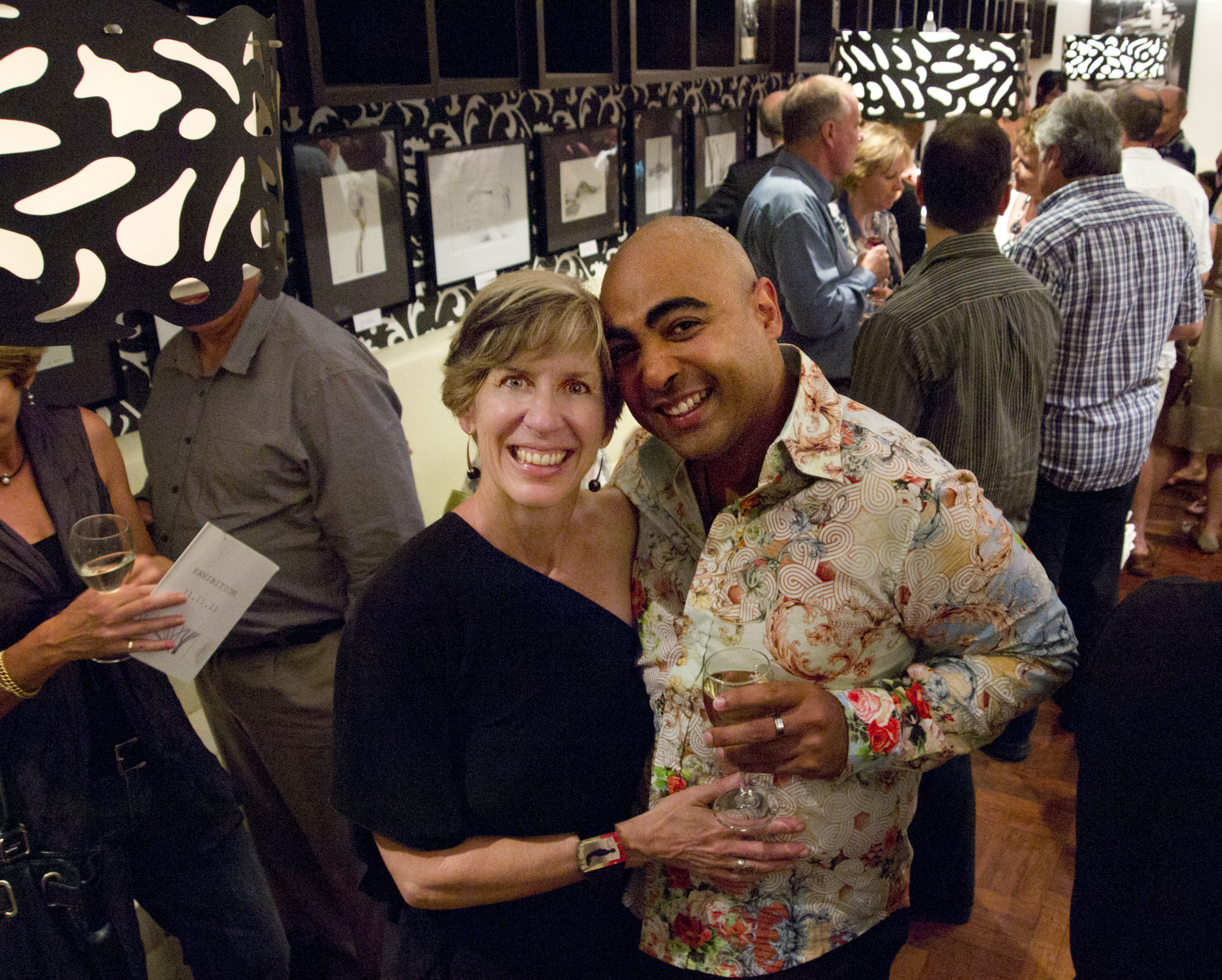
Jan + Mark @ the opening of their show
In the opening address I made the following comments:
Jan and Mark, as professional photographers and AIPP members, have stumbled upon the ultimate promotional activity in the the form of the art photography exhibition. They have created a convivial environment within the Flute Gallery, they have presented their photographic interests as fine art images of high key flowers (Jan) and female nudes (Mark), they have assembled an eclectic bunch of people and lubricated the conversation with fine wines and good food. Tonight friendships will be made or re-affirmed – participants will propose, make love and feel the joy of living. They will then want their engagements to be photographed, weddings recorded, babies and kids to be documented … The cycle goes on and on.
This evening we are all part of that strategy – So look at the art, be inspired. Consider your options for the future need for a photographer – Or – even just enjoy the moment, the present company and the art works presented here that come from the creative urges of these two remarkable people!
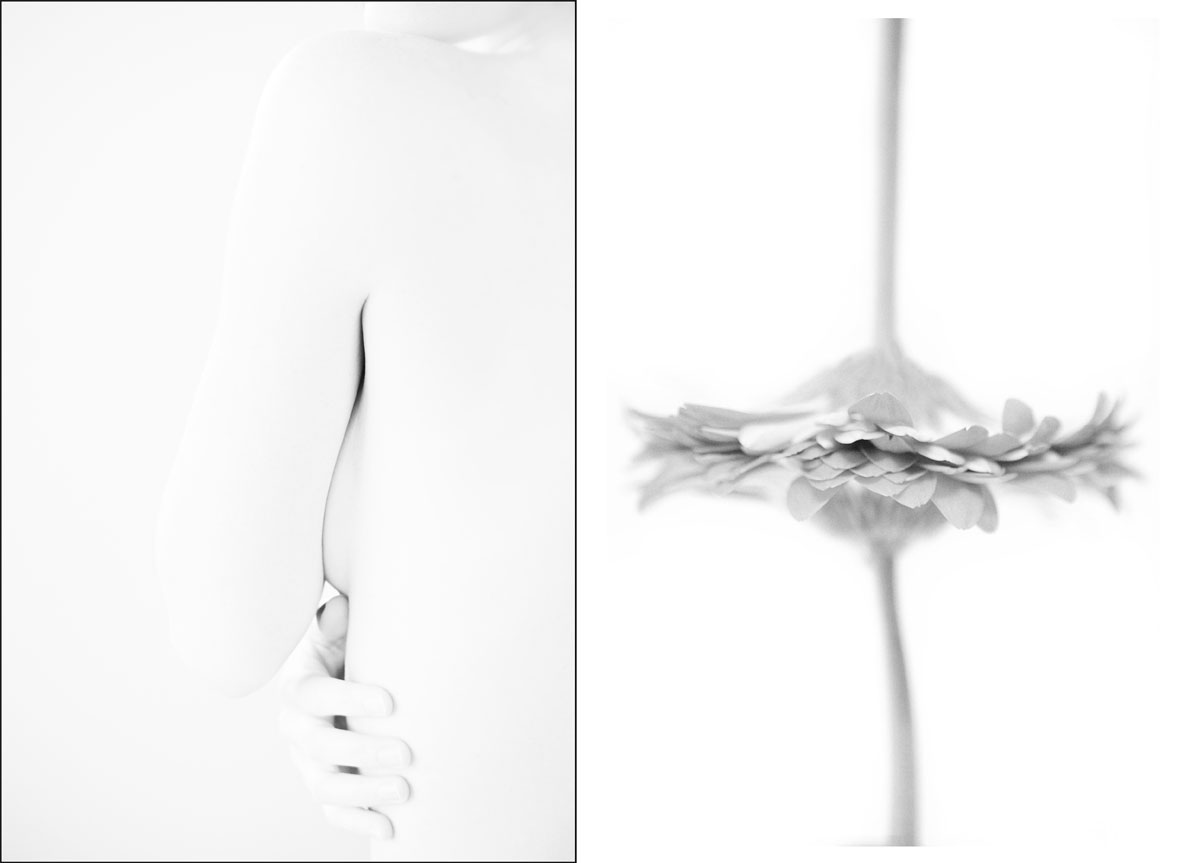
Mark’s high key nude + Jan’s high key flower transfer
Congratulations Jan and Mark.
Words+portrait photo: Doug Spowart
11 November: Visit to Noreen Grahame + Gallery
It has been a while since the flood but Noreen has reopened with a new show featuring a selection of the etchings of Euan Macleod from 2004~2009.*
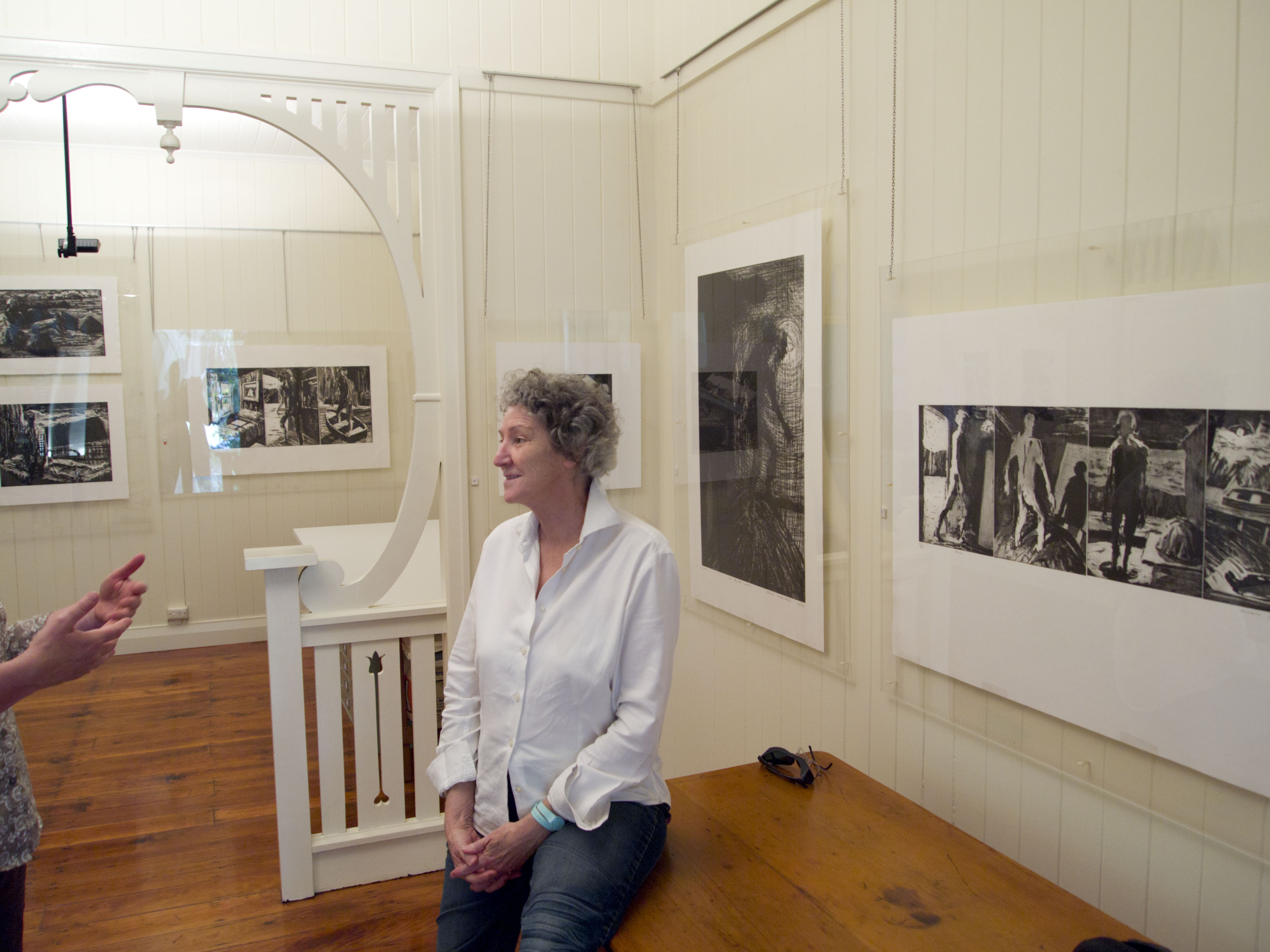
Noreen in conversation with Vicky
Noreen spoke of how she responded to the early signs of the imminent flood and began packing her extensive collection of art on the Sunday, days before the reality of the inundation was to hit Brisbane. She spoke of people in her area not being aware of what may happen.
With help from family and others including Anne Kirker and Helen Cole she was able to clear the building of artworks, furniture and framing equipment. The contents were stored in the homes of friends and family until, months later and after refurbishment of the gallery, she was able to return.
She commented on the fantastic support she had received including the fundraising auction that was organised by friends.
Noreen engaged both of us in conversation and, as usual when the conversation turned to things artists’ books, she disappeared and came back with examples of the works we were discussing from her collection. It was just like old times …
Congratulations on your achievement Noreen – Welcome back.
Words+pic: Doug Spowart
*Euan Macleod’s show continues until 26 November. A companion exhibition of Macleod’s painting works is on show at the Victor Mace Fine Art Gallery in Milton.
29 October: Hannah Roche “Unknown Pleasures” exhibition opening
I attended Hannah’s photographic exhibition opening on the 29th.
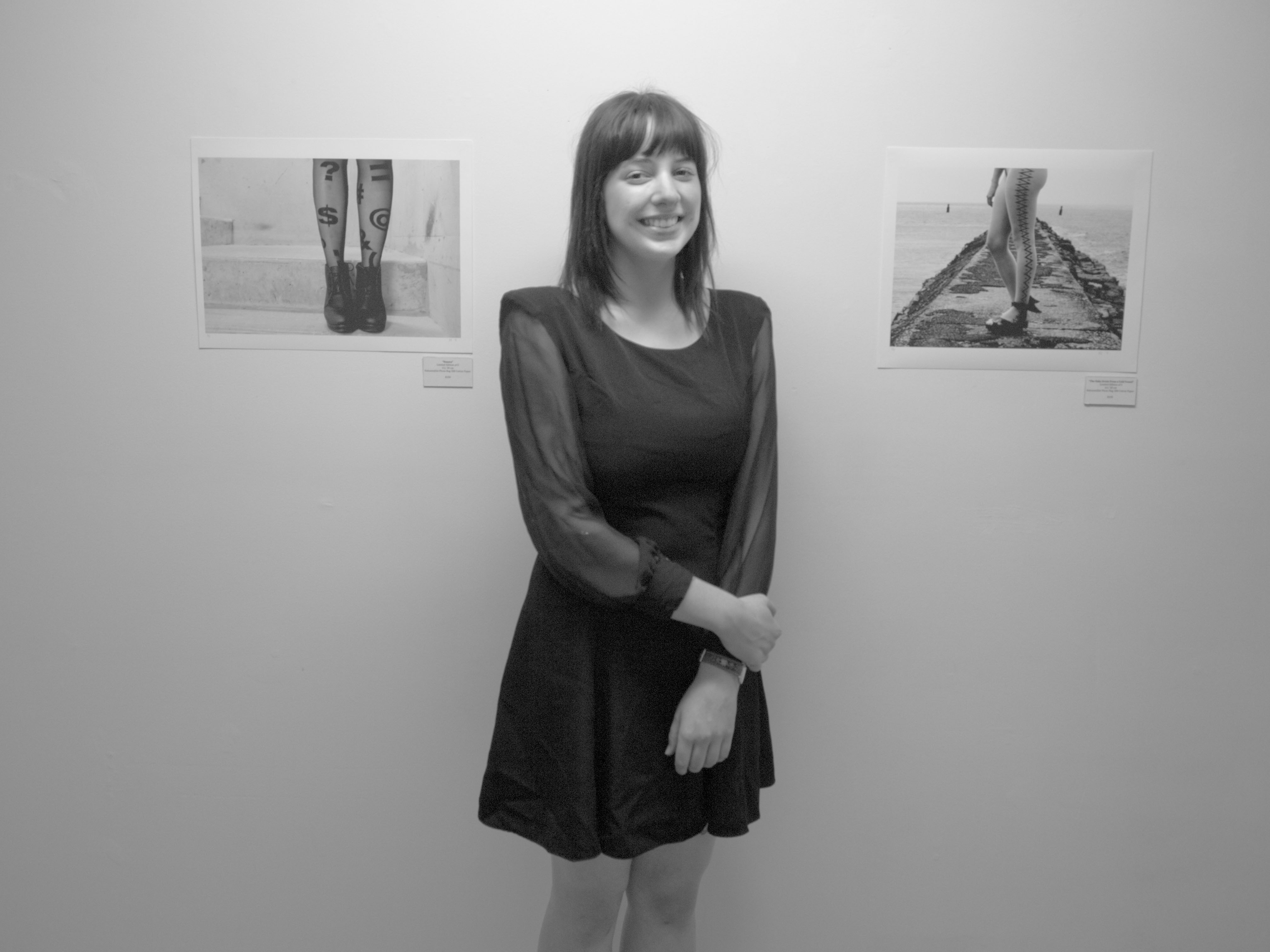
Hannah Roche @ her exhibition
“Unknown Pleasures”
Curator Daniel Elborne, Saturday, October 29 · 6:00pm – 9:00pm
RAYGUN GALLERY, 29 Annand Street, Toowoomba
.
The images of Hannah Roche are poetic quotations – some enigmatic – some idiosyncratic while others are romantic – des souvenirs de voyages. This show, curated by Daniel Elborne, contained images that were chosen to evoke in the viewer the uncanny within the mundane moments of daily life and to “establish meaning in the hiddenness of the everyday world”.[1]
These images come from a much larger body of experimental work by Hannah as she explores the medium of photography in its contemporary manifestations. Photography has always had an identity crisis as a representational medium and a carrier of messages. This critique has only intensified in the digital medium where the photograph refers to itself and its history and is no longer object but concept. This current condition of the photograph appears not to reduce its possibilities, but rather, for Hannah and other contemporary photographers, it opens up a vast new visual language.
Victoria Cooper (words + images)
[1] From the catalogue for the show, Unknown Pleasures, see http://raygunlab.com/2011/10/25/unknown-pleasures-opens-saturday-one-night-only/
23-28 October: A week of exhibition openings
Three exhibitions and six bodies of great work made by Art Photography students from the Diploma of Photoimaging @ SQIT were opened this week at venues across the Darling Downs.
SHOW 1: INSPIRING WOMEN ~ Shanea Rossiter @ Warwick Regional Art Gallery
The exhibition features portraits of women who have inspired Shanea. The exhibition supported a fundraiser for the Queensland Cancer Council, in particular Breast Cancer. Shanea’s mother is a breast cancer survivor, she told of her story as part of her opening address.
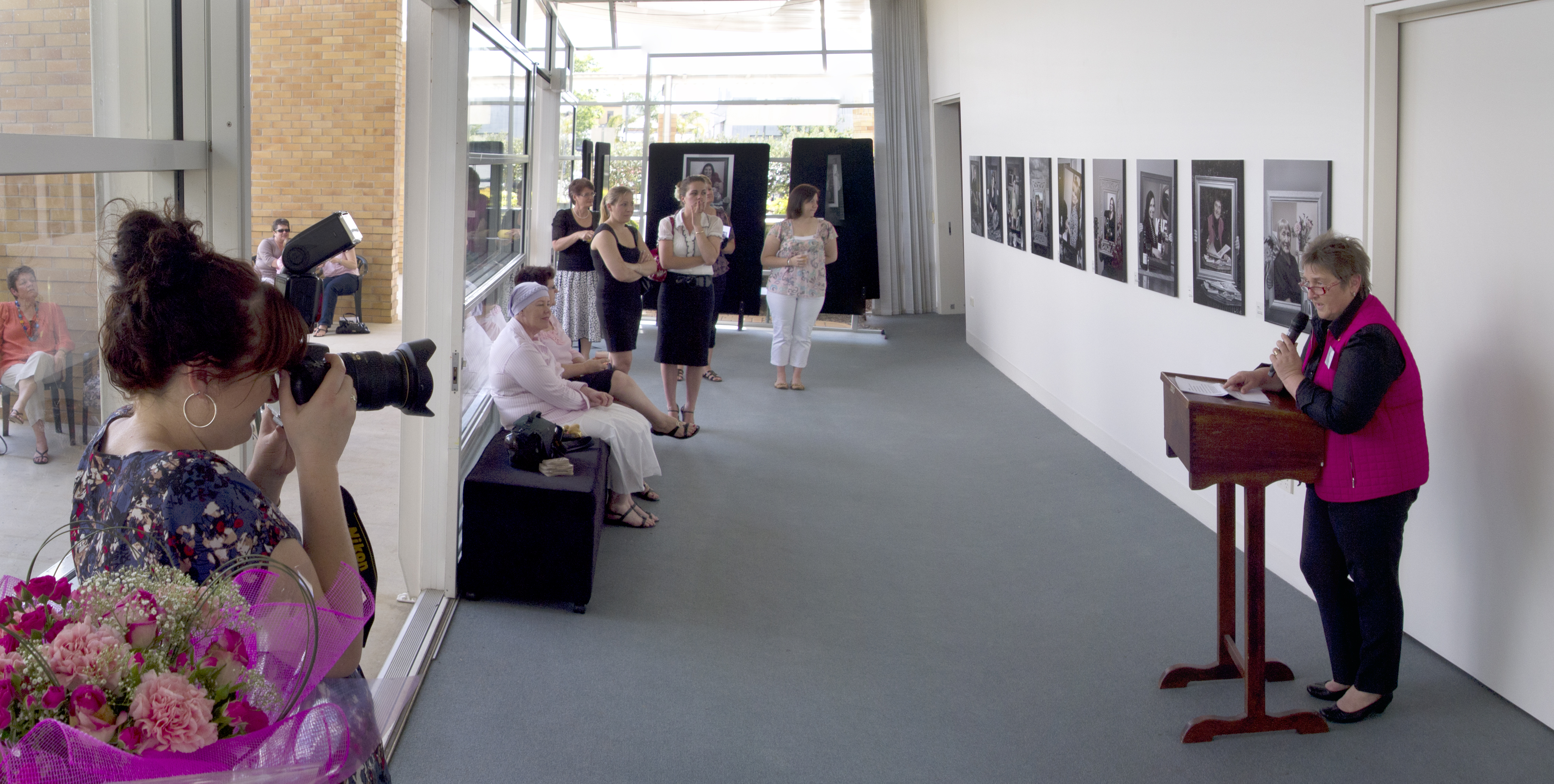
'Inspirational Women' opening address by Narelle (Shanea's mother)
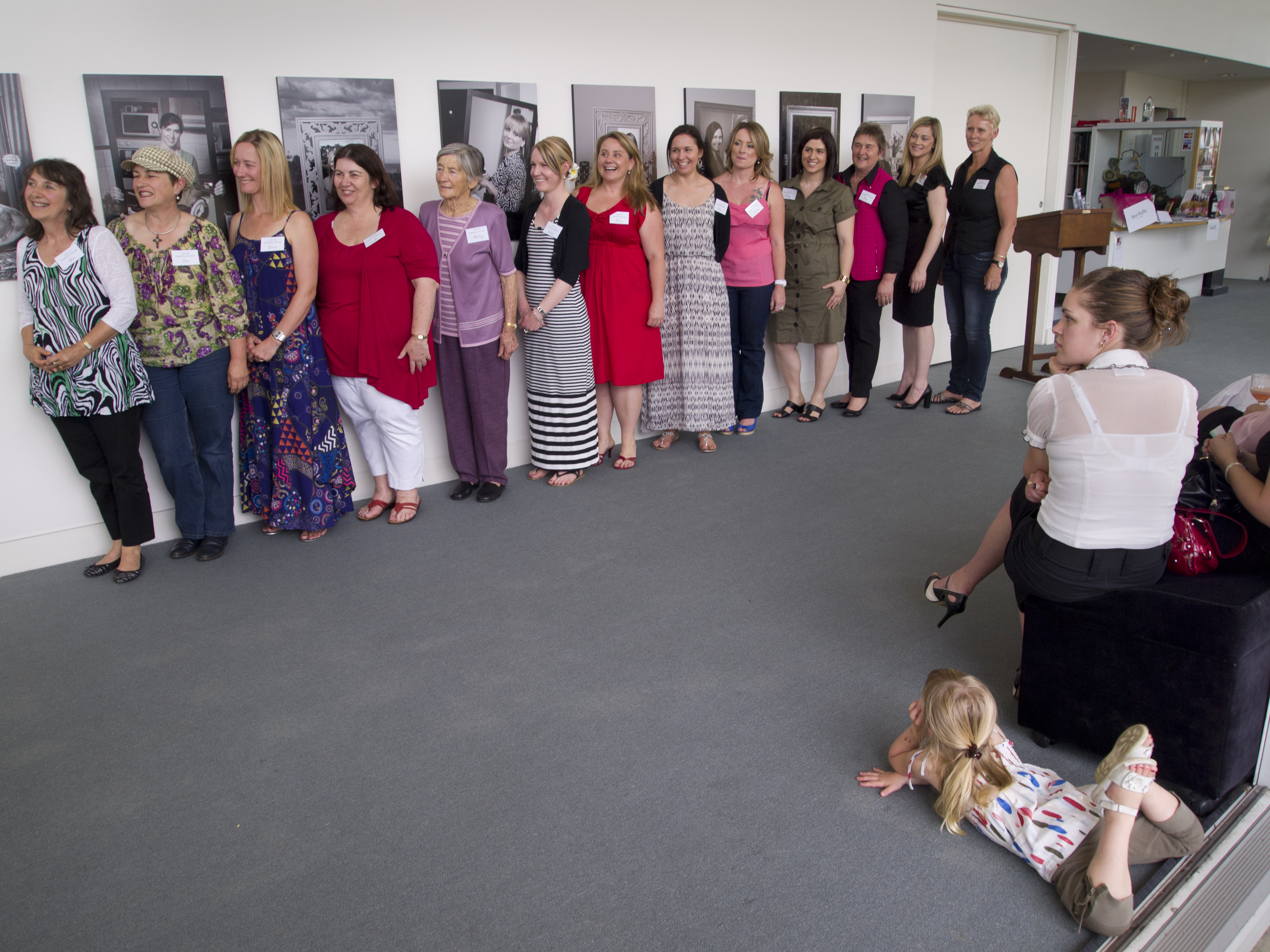
Shanea's portrait subjects line up for a group portrait
See for more details : http://www.warwickdailynews.com.au/story/2011/10/20/images-tell-tale-of-strength.
.
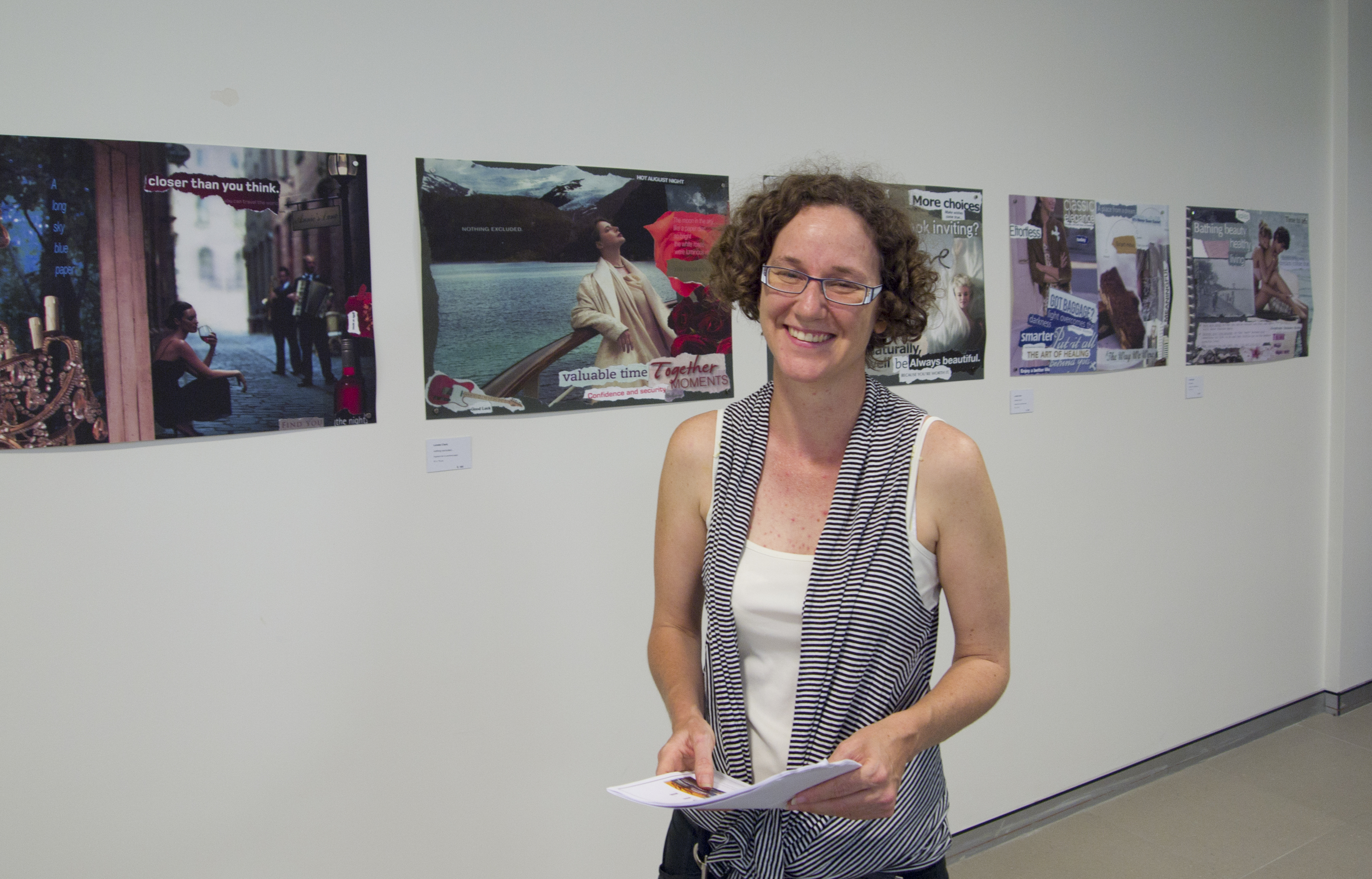
SHOW 2: Group Show ~ Cowboys (by Cynthia McBride), Faeries (by Jodi Watt), Phone boxes (Tracey St Johnwood) and Collage (Lorelei Clarke) @ Futures Gallery, SQIT.
The exhibition by these four photographers was opened by artist Adrianne Prague. In the opening address Adrienne spoke of the challenges for photography to be considered art. She drew on her knowledge of the history of art including the artist Joshua Reynolds.
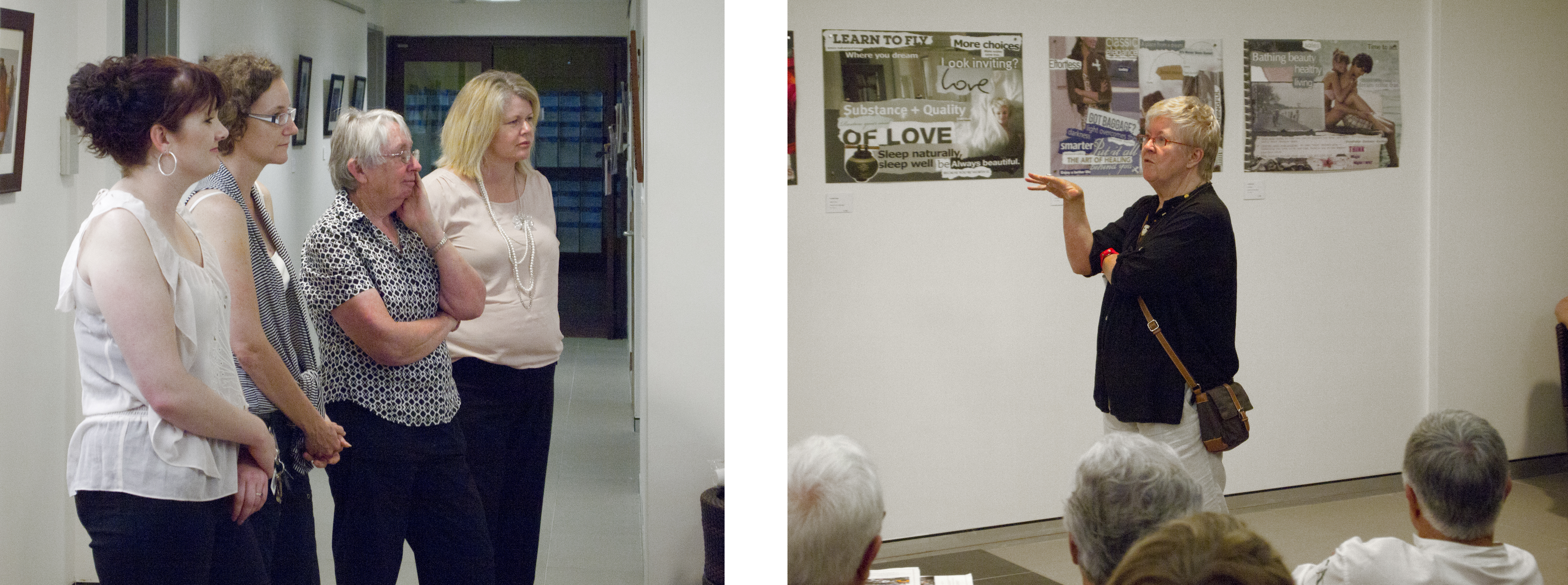
Tracey, Lorelei, Cynthia and Jodi listen to Adrienne's opening address
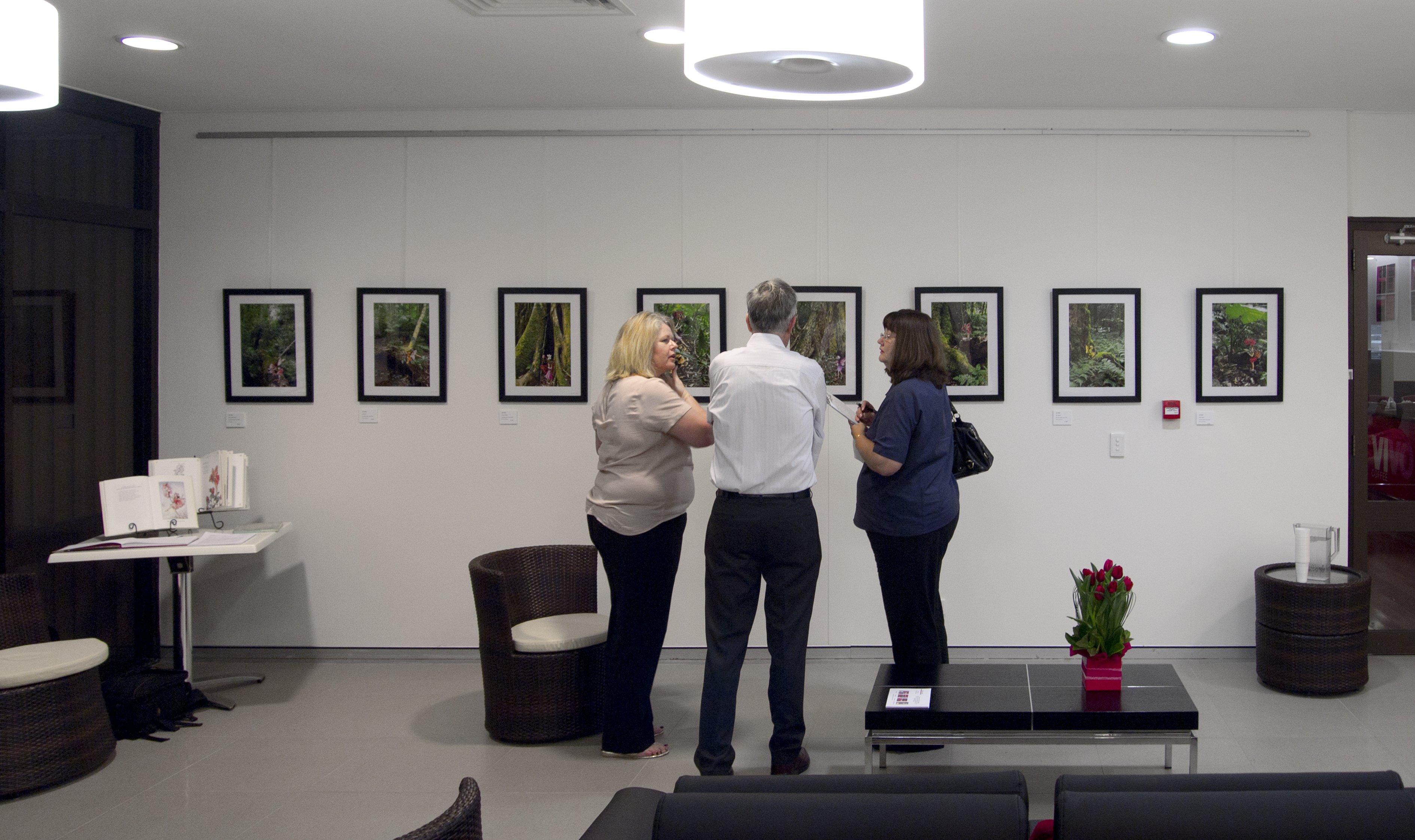
Jodi Watt's image wall
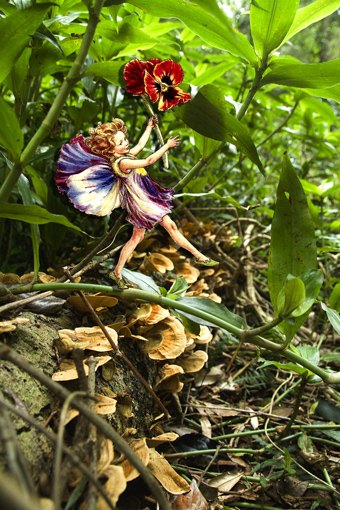
Faeries in the landscape
Image from Cynthia McBride's "Camooweal Calling"
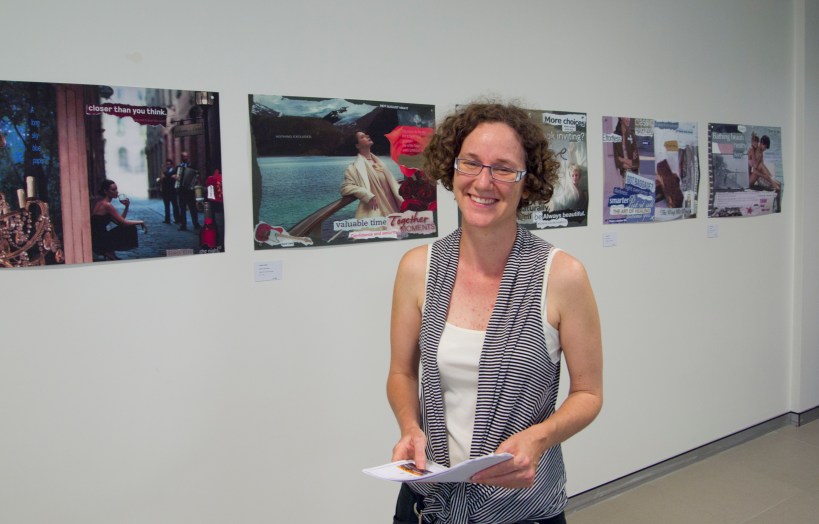
- Lorelei Clarke and her collages
.
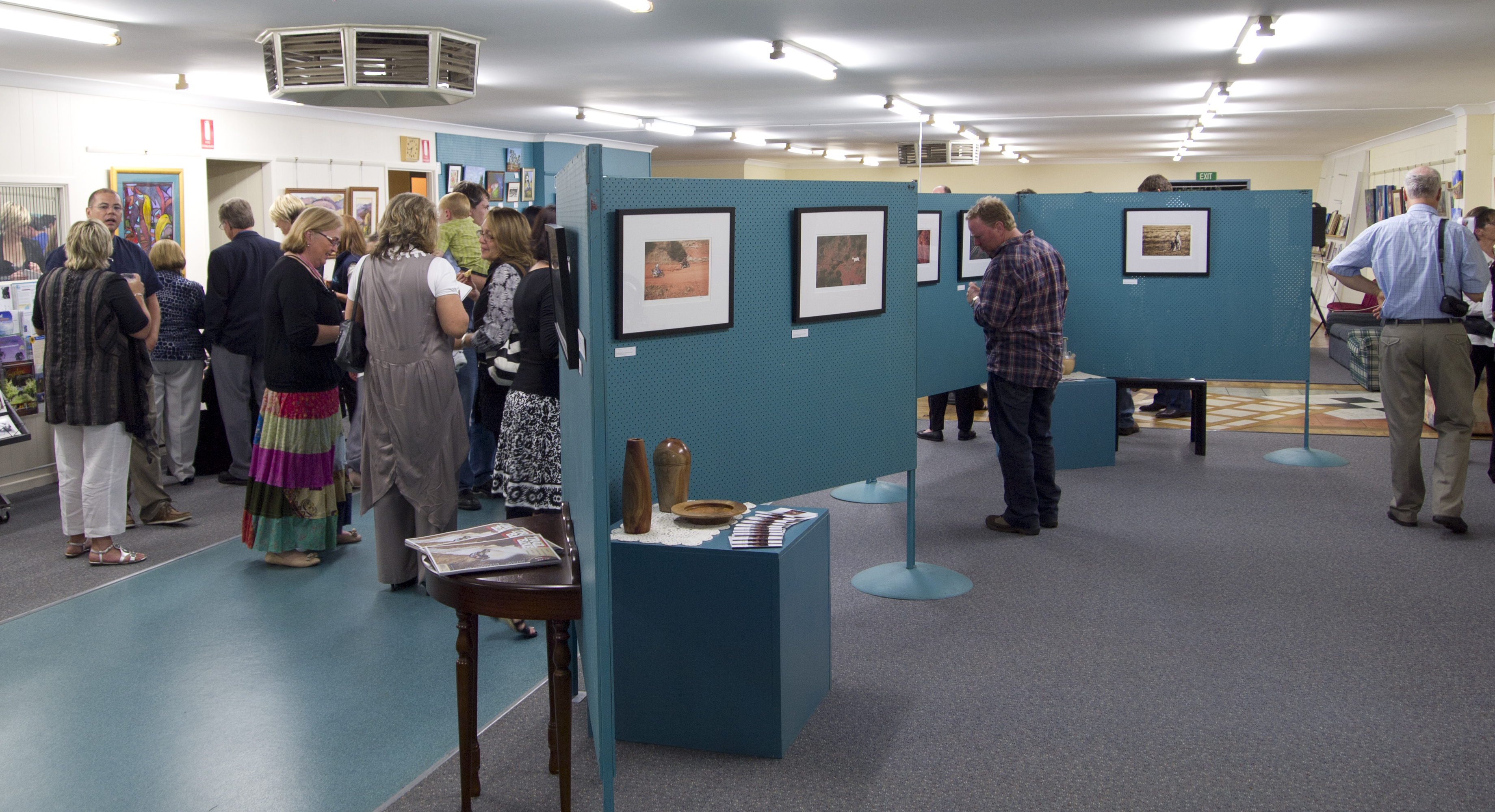
SHOW 3: 2011 CANNONBALL RUN (Charity Ride) by Lindsey Collier @ Pittsworth Regional Art Gallery.
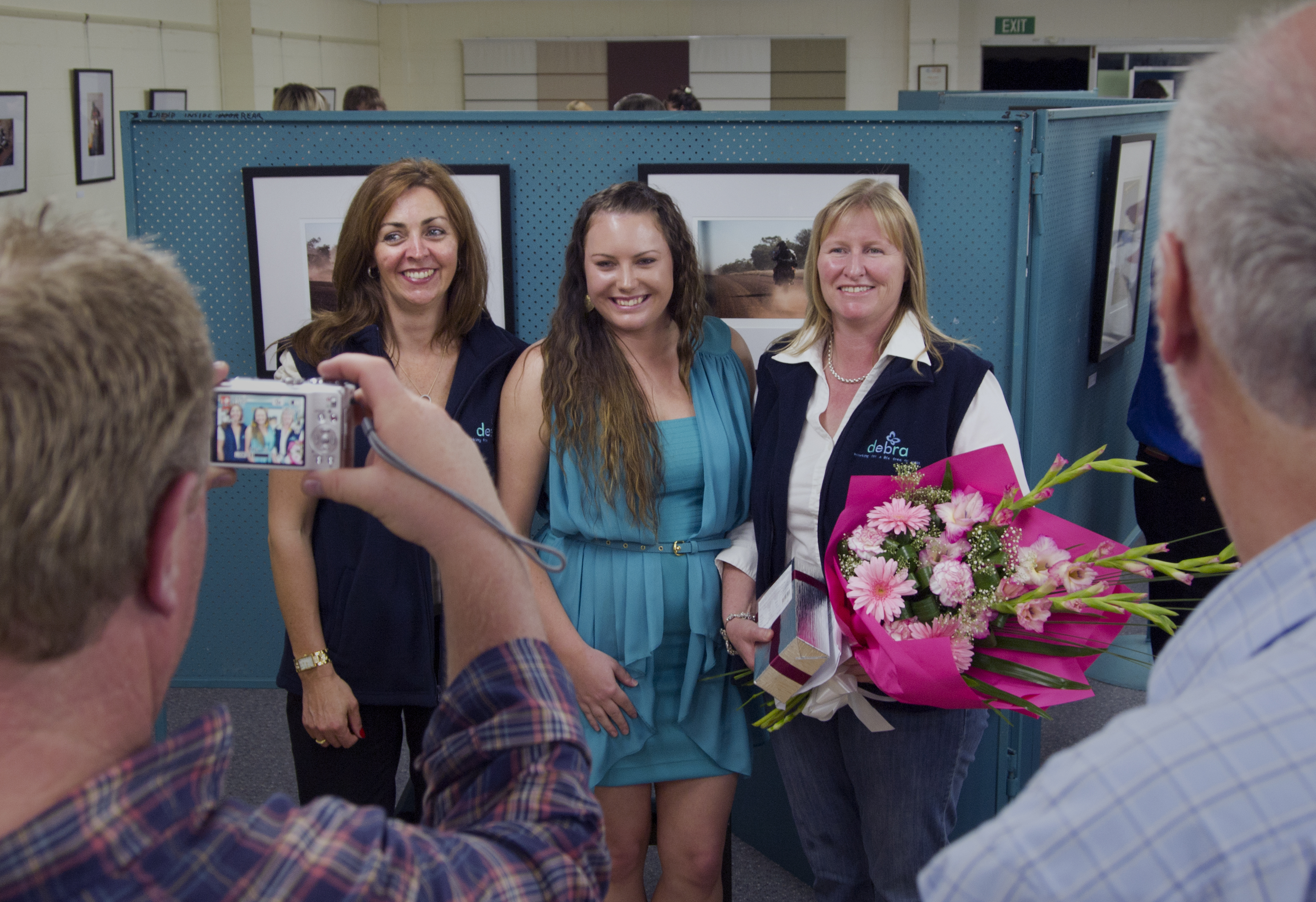
This exhibition consists of a documentary series that Lindsey made of the dirt bike charity ride fro Bribie Island in Queensland to the Barossa Valley via Uluru. The ride supported the DEBRA Charity and raised $34,000. The exhibition featured framed images, a limited edition book and video fusion presentations of the event.
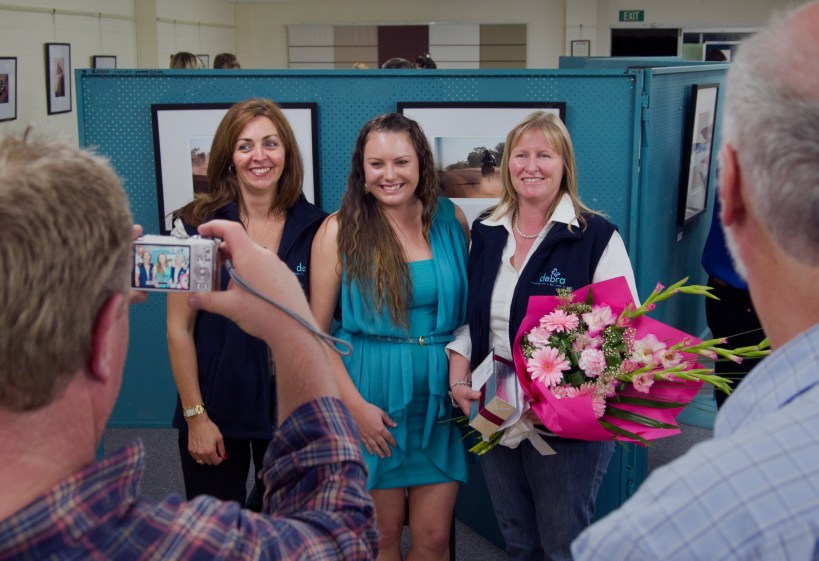
- Lindsey Collier (centre) being photographed with Debra representatives Simone Baird (l) and Sue McKenna (r)
.
NEWS STORY: http://www.cannonballride.com.au/joomla/index.php/media/54-media-stories/106-pittsworth-sentinel-
A PICTURE GALLERY: http://www.behance.net/gallery/2011-Cannonball-Charity-Ride/1915715
.
All photos by Doug Spowart
22 October – Through the Chronicle Lens Exhibition
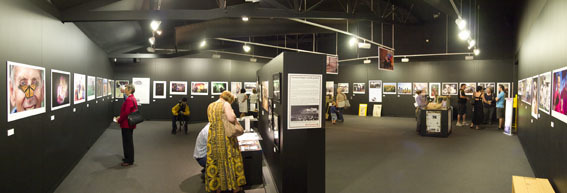
Through the Chronicle Lens Exhibition @ The Cobb & Co Museum, Toowoomba
When you’re a news photographer there’s a tendency to think of the types of subjects you want to photograph will be wars, celebrity, massive events and international sports. But what of the reality if you find yourself as a photographer on a regional newspaper on the other side of the Great divide? Do you wake up every morning wishing you were in the big city and the big time?
An exhibition of news images celebrating the 150th anniversary of Toowoomba’s Chronicle newspaper may provide some answers. Like where are the big stories – the ones that matter? What I would submit to you is that great photo opportunities exist everywhere and great photographers can find the amazing story in any situation. This exhibition bares testimony to this proposition. The Chronicle’s photographers, and there haven’t been too many of them over the last 30 years, toil in the daily grind of regional news. Their editor’s assignment briefs include the Chihuahua ‘Taco’ at the RSPCA, the buxom topless waitress at the Five Ways Hotel and Louise at the Crows Nest Op Shop – not the exotic stuff of the dailies. The exhibition shows the range of opportunities and how these lensmen and lenswoman Bev, carry out their duties.
I found the images on show spoke of the photographer not only doing their job for the newspaper, but also doing something for the community by receiving and recording their stories. It is perhaps in this that the true value of the regional news photographer.
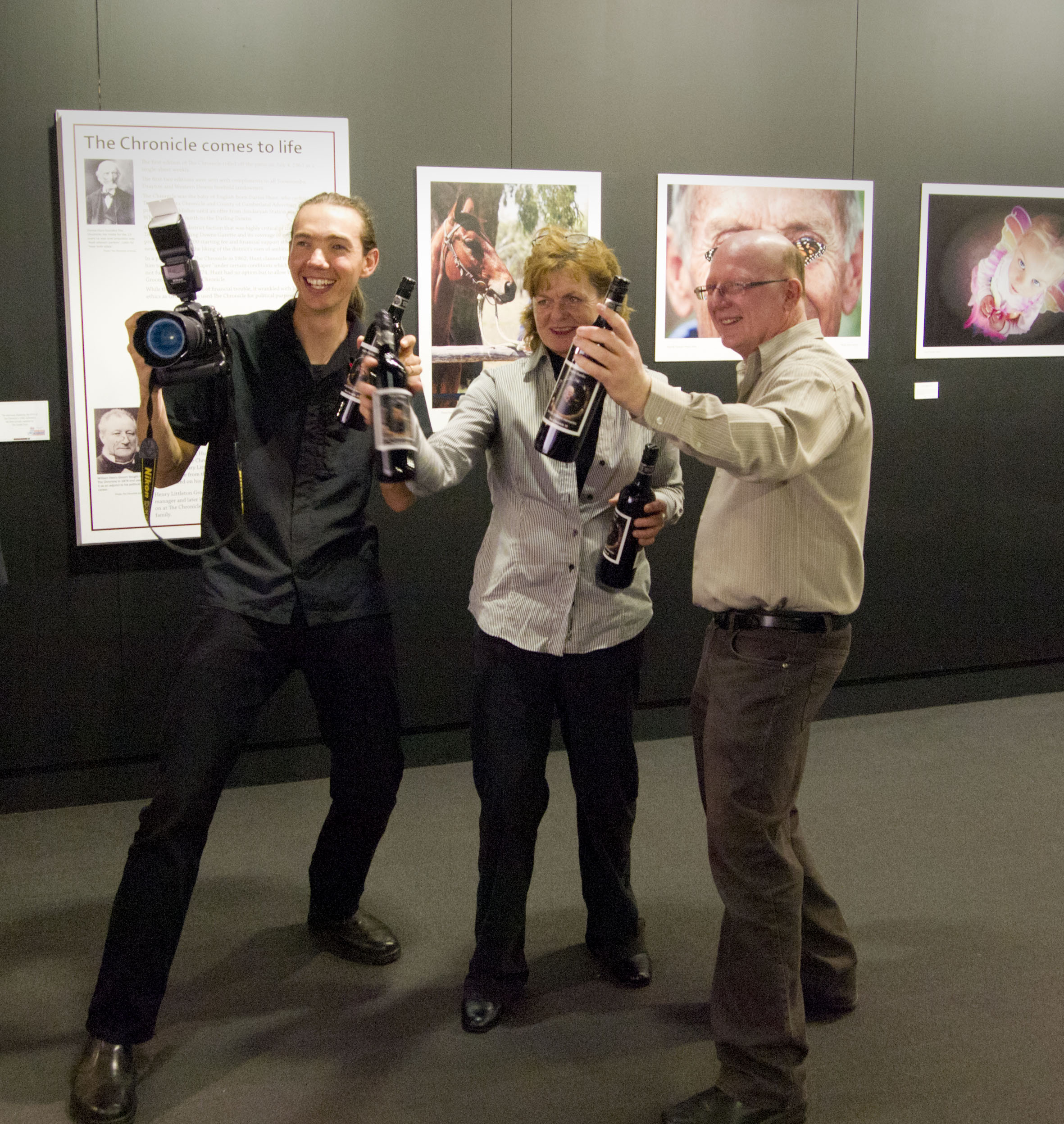
Photographers - Kevin Farmer, Bev Lacey and Neville Madsen
SEE Link for the Chronicle Story
http://www.thechronicle.com.au/story/2011/10/19/exhibition-captures-150-years-through-the-lens/
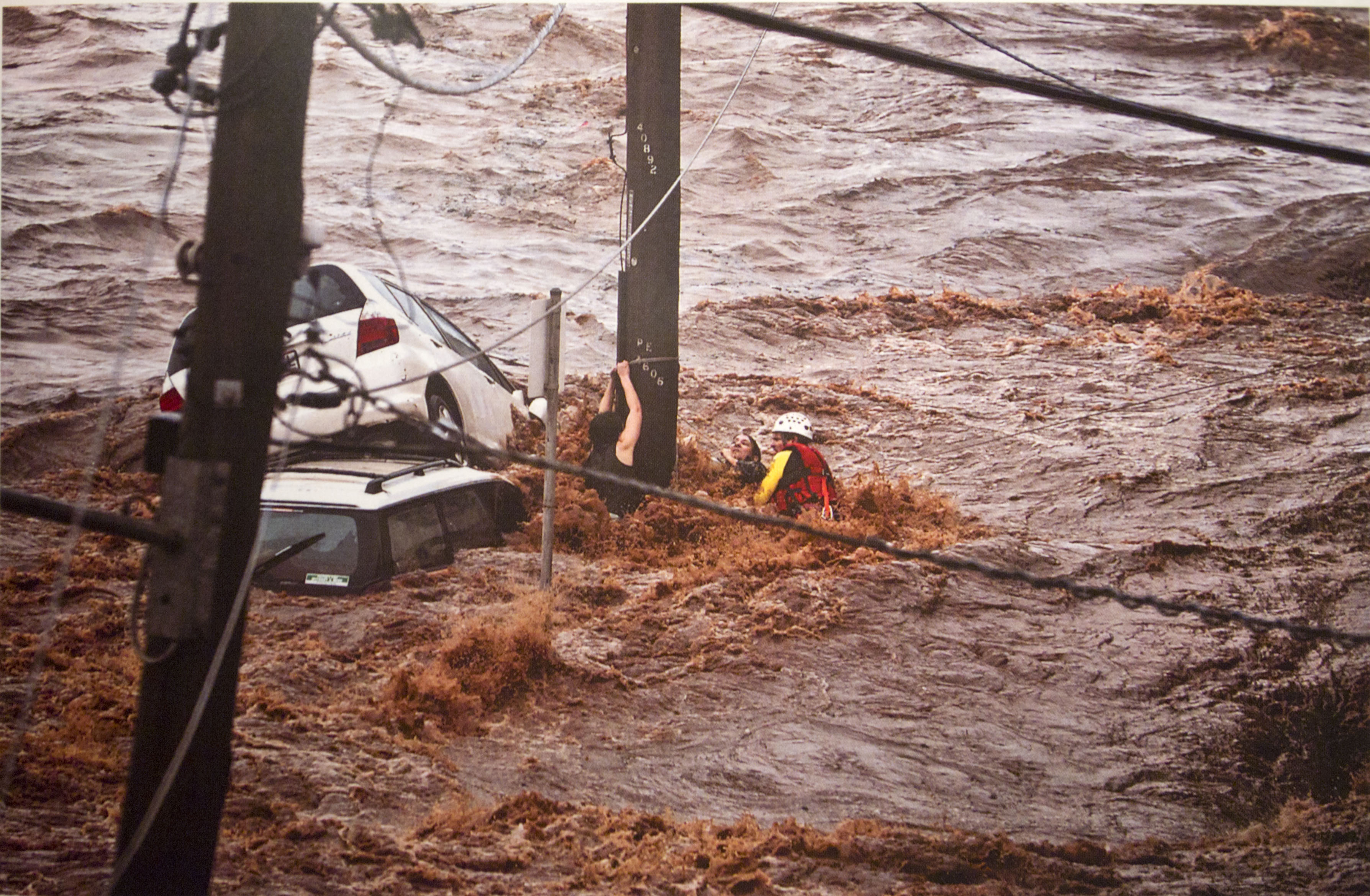
Nev Madsen's Walkley Award image: Flash Flood Rescue
NEV WINS WALKLEY AWARD
Great images that the world will notice do come to the regional photographers. Nev Madsen we to work on Tuesday January 11 thanking it just another day – However by day’s end Toowoomba was inundated by flash flooding an lives were being jeopardized. Nev found himself as witness to the life and death drama of frantic attempts to save people caught up in the swirling waters. He made his pictures of the dreadful moment and they were published world-wide.
Recently he was awarded a Walkley Award for Best Community and Regional Photography – Congratulations Nev.
SEE THE CHRONICLE STORY http://www.thechronicle.com.au/story/2011/10/14/chonicle-photographer-bags-walkley/
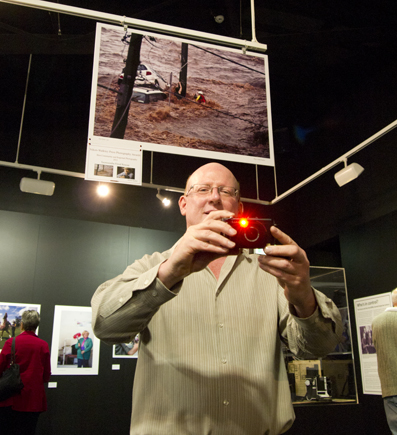
Nev with his award winning image in the exhibition
20 October – The end of the Roid Exhibition Opening
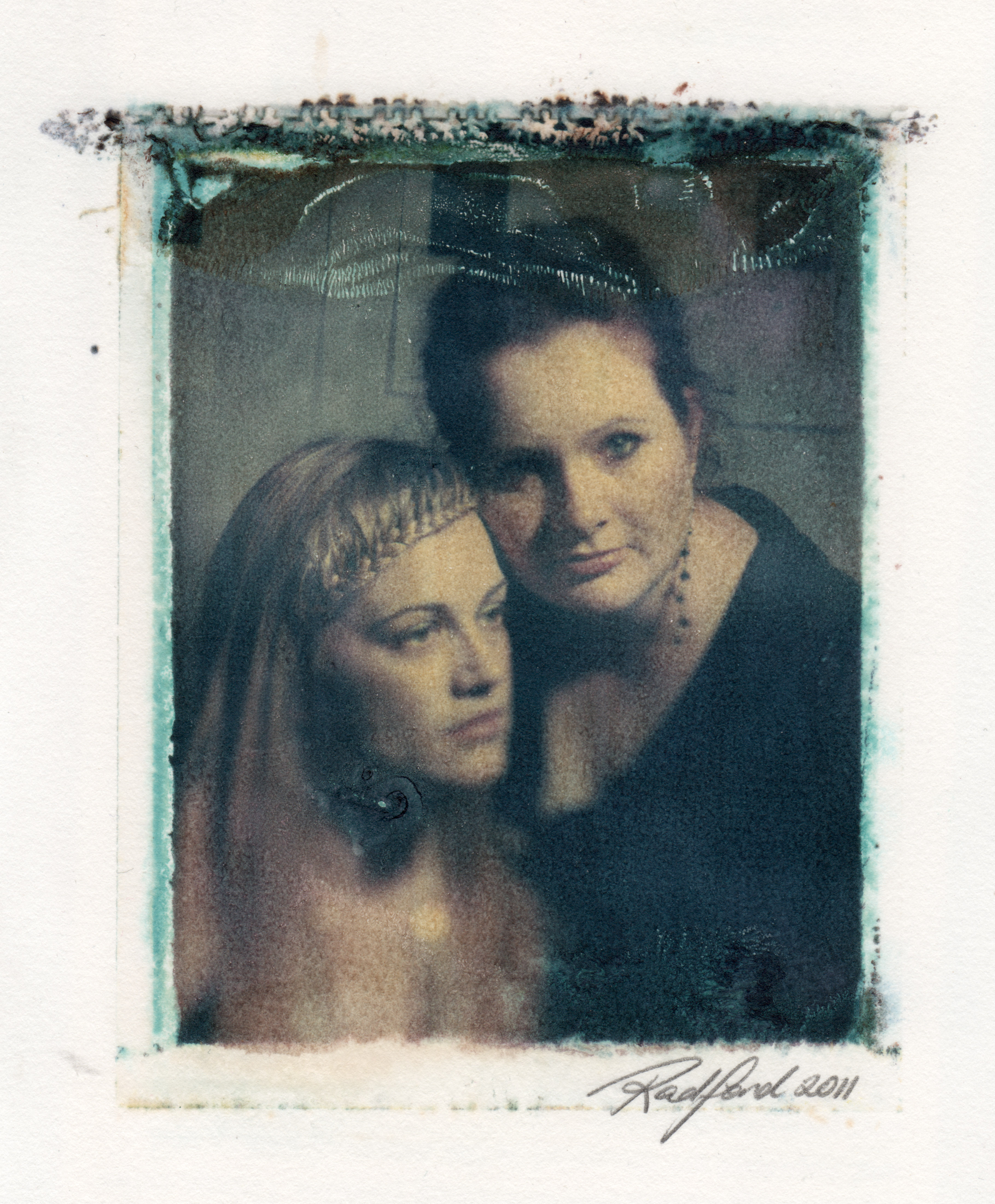
Type 59 transfer: Tracey+Shanea by Wayne Radford
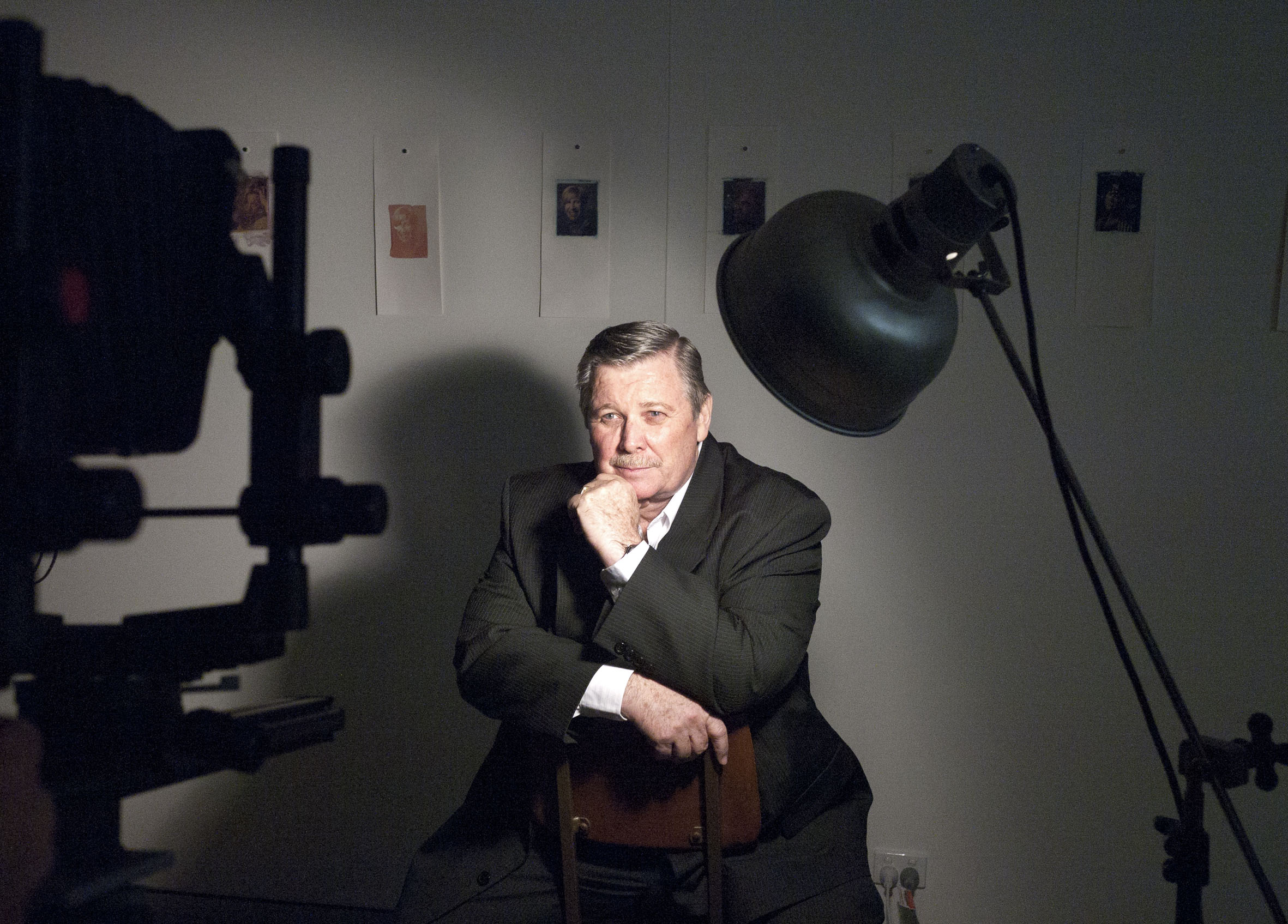
Photo: Ian Poole. Wayne Radford being photographed by Doug Spowart
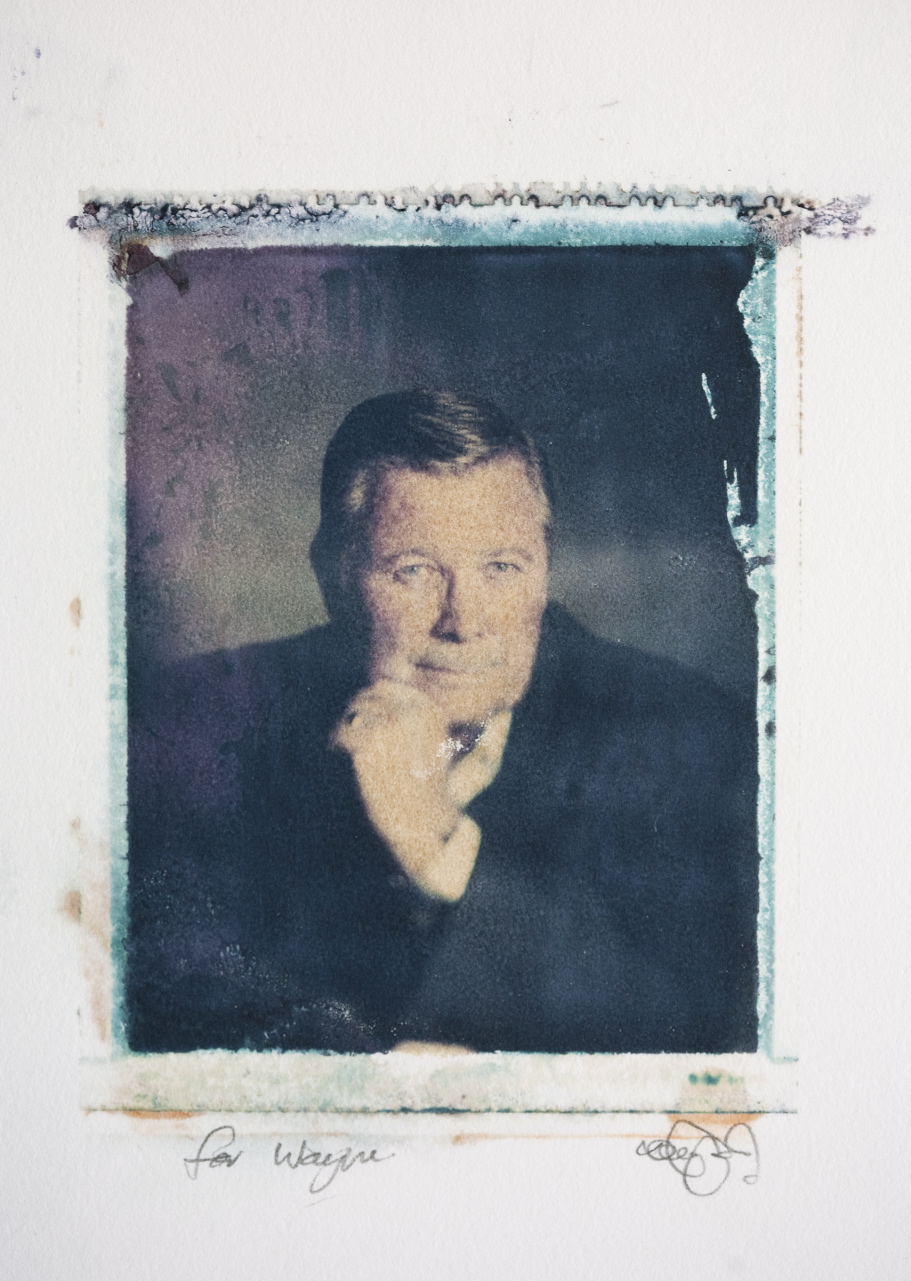
Type 59 transfer: Wayne Radford by Doug Spowart
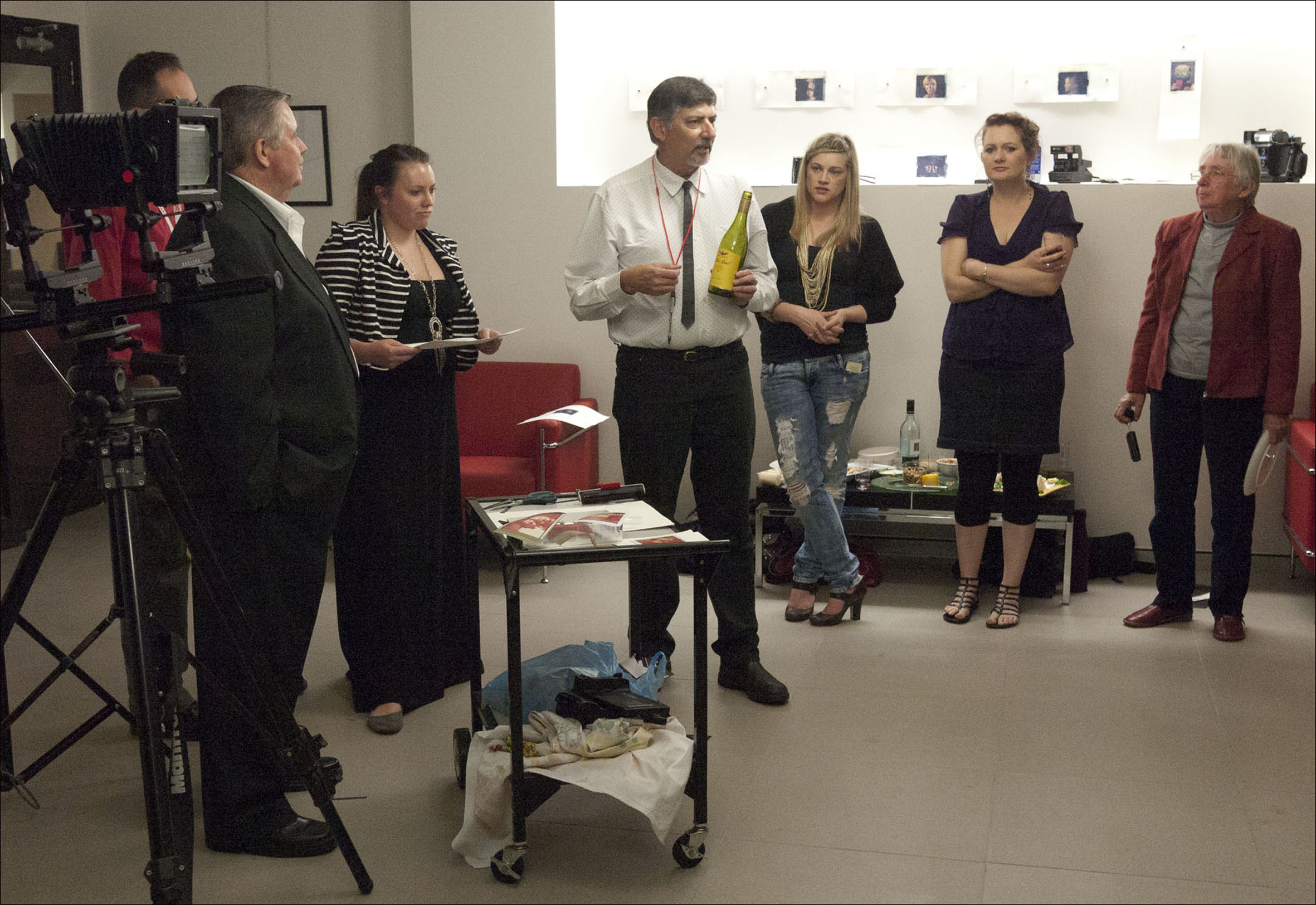
Photo: Ian Poole. Doug uses white wine as the transfer fluid!
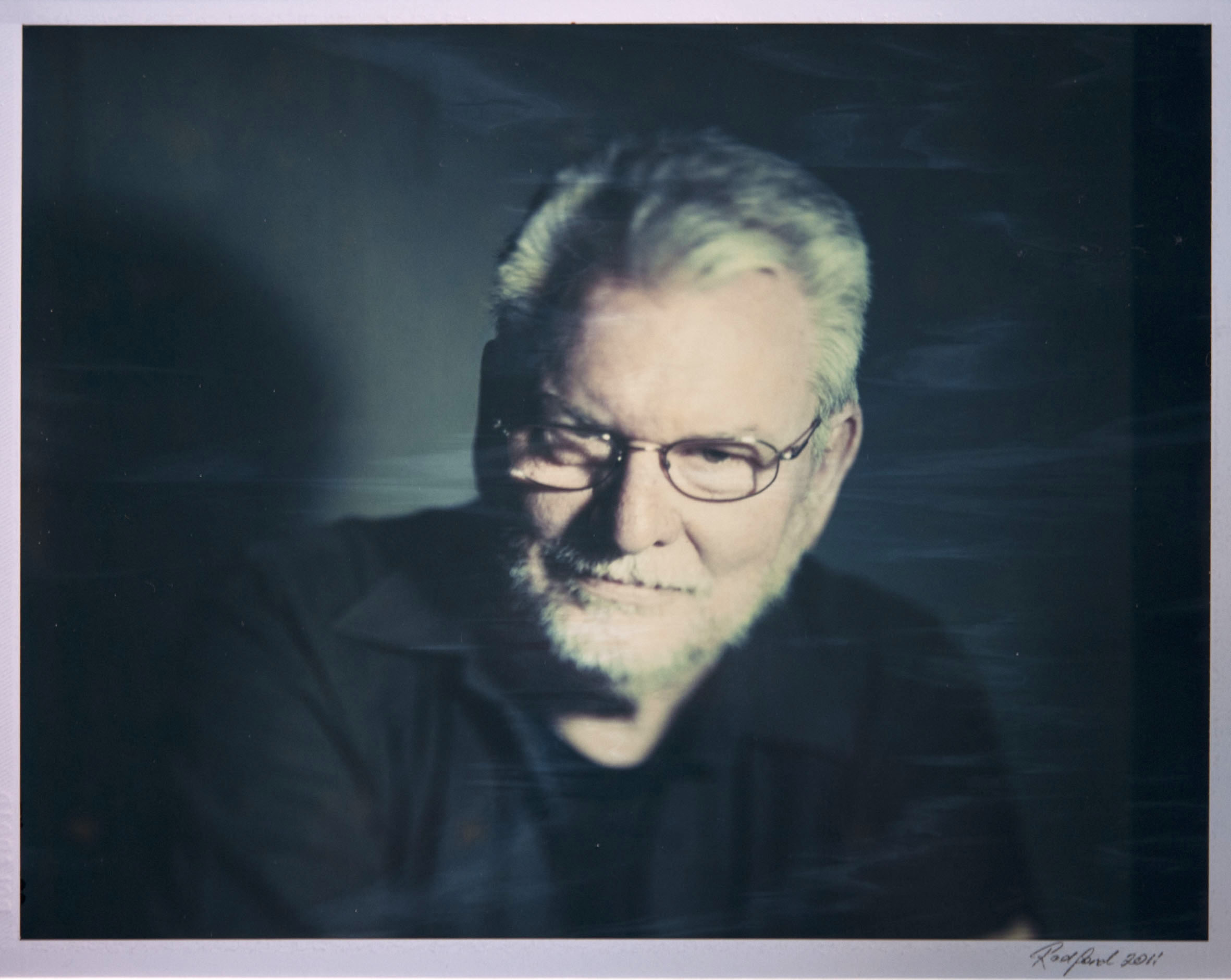
Ian Poole photographed by Wayne Radford 10x8 Type 809 Polaroid
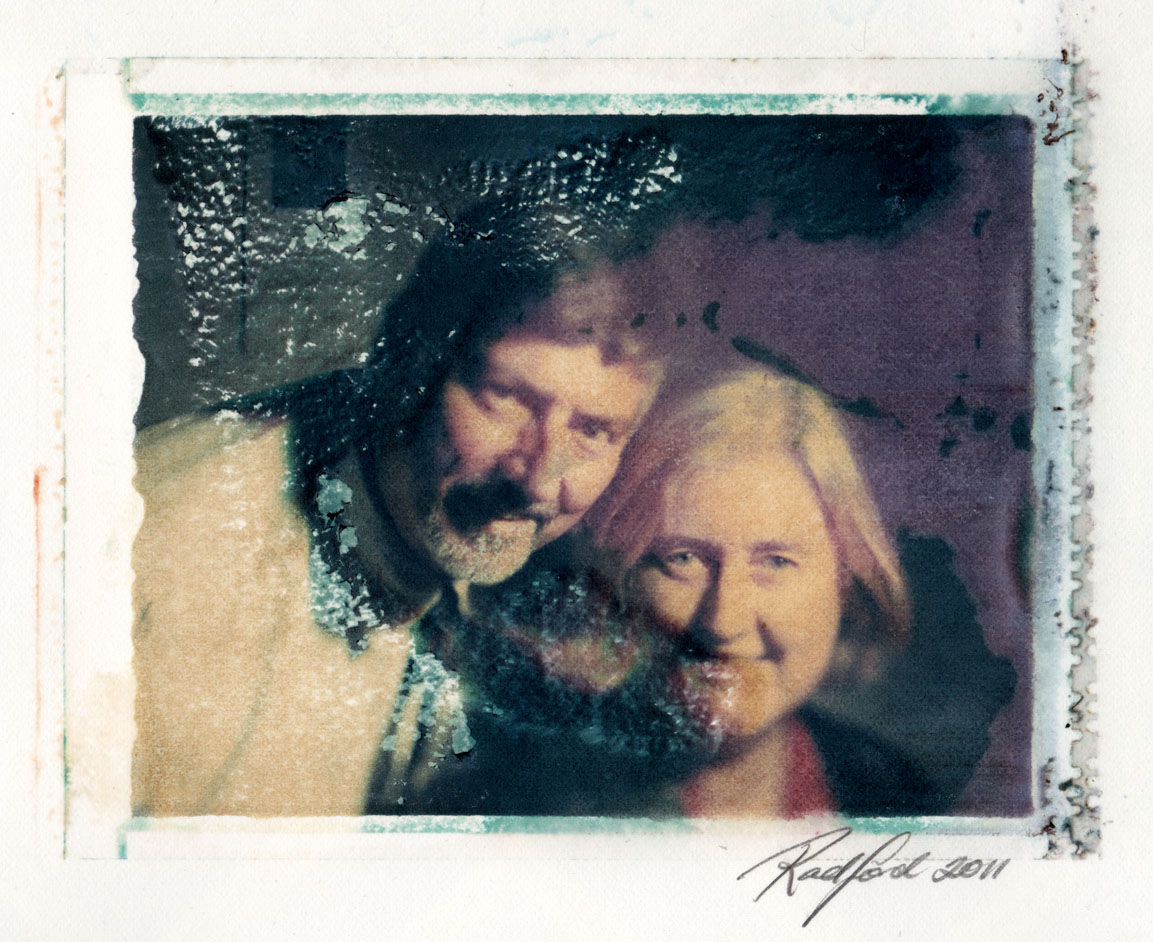
Vicky and Doug: Portrait by Wayne Radford
.
Wayne Radford’s last portrait was of Victoria and myself. The Type 59 Polaroid sheet film had sat in the bottom of the box for over 5 years beyond the expiry date and the mark of time left as a humidity smear of magenta in a reduced D-max. It’s a great image — and a fitting end to the ‘Roid’.
.
Bye Bye POLAROID …
END OF THE ROID – Polaroid Transfer Gallery
Here is a selection of the Polaroid transfers on show in the exhibition “The end of the ROID”
20 October: THE END OF THE ROID
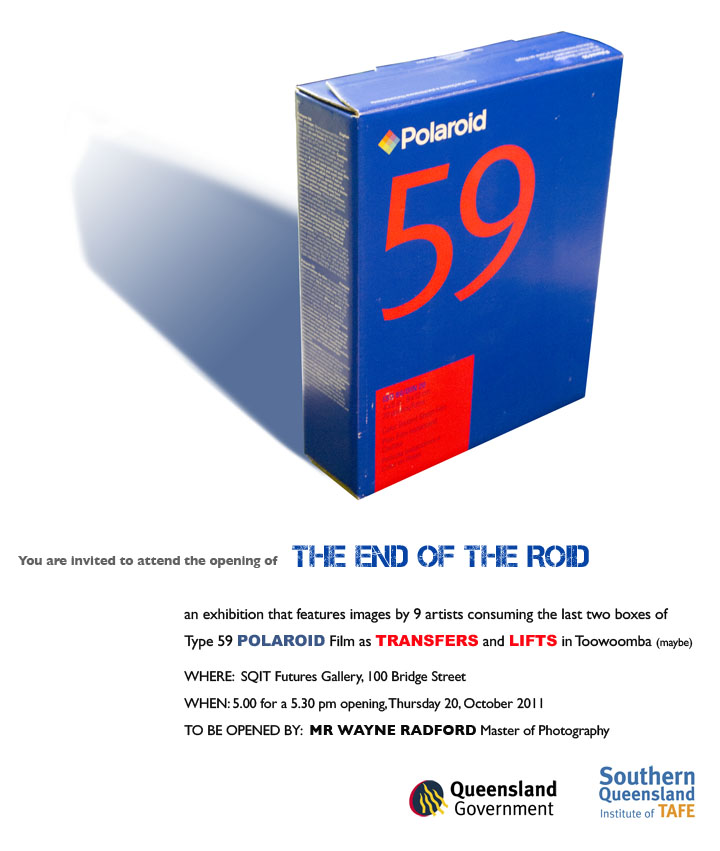
Watch a Video of the momentous occasion – the last Polaroid box opening, loading the Polaroid back, the last Polaroid “Pull”, the last few transfers and lifts ever to be taught to and done by students – teachers – anyone!!
A Gallery of images will be posted soon.
Cheers
Doug
August 26, 2011 HENRI CARTIER-BRESSON Opens @ QAG
Henri Cartier-Bresson exhibition opens at the Queensland Art Gallery.
Can you get into trouble at an exhibition opening – doing what Henri did: Taking photos, that is?
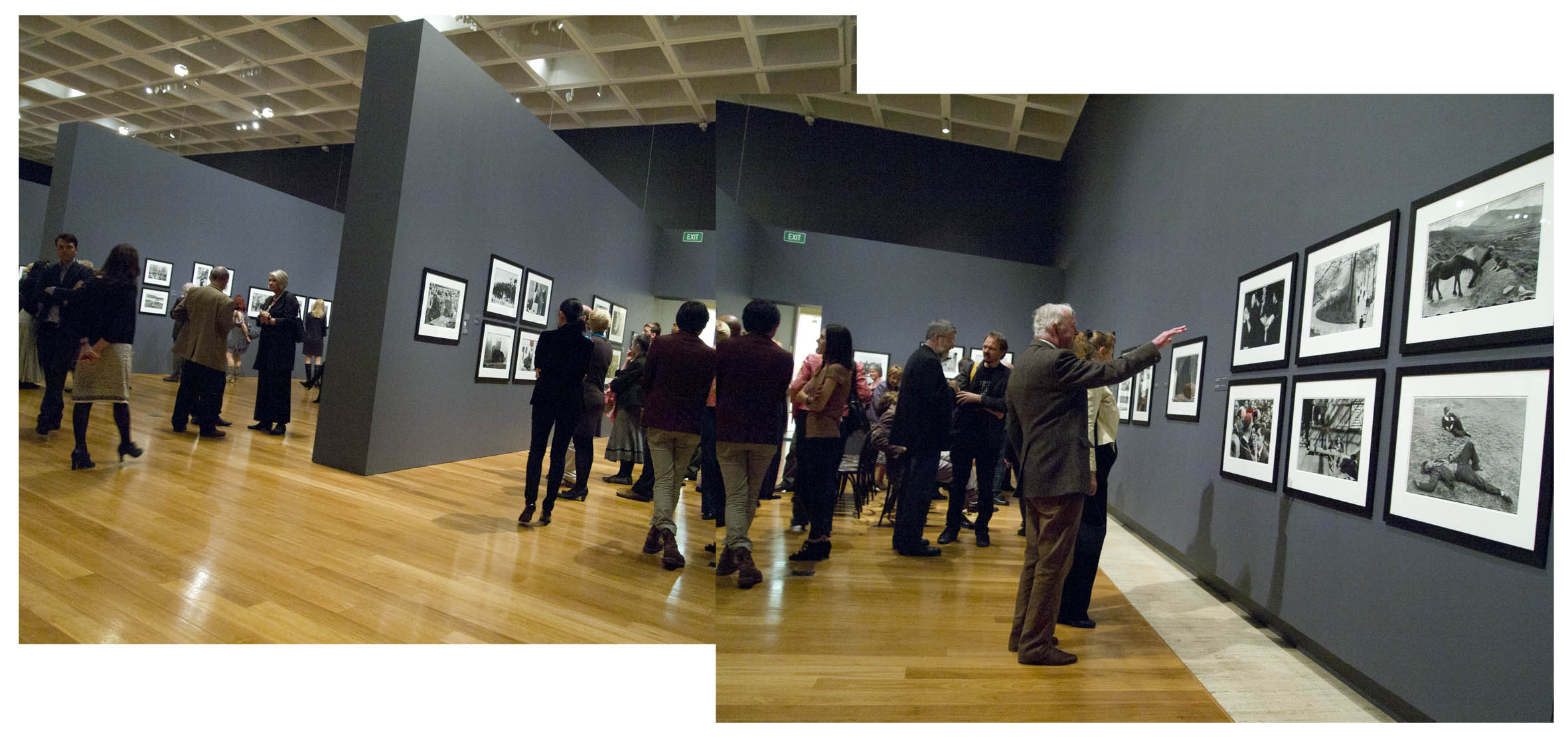
HCB Panorama instalation
The opening of Henri Cartier-Bresson’s exhibition The Man, The Image and The World at the Queensland Art Gallery was an event and an experience befitting the celebrated position that HCB holds within the genre of documentary photography. The exhibition was opened by Queensland Premier Anna Bligh, who spoke of a personal love interest in HCB’s work. The reason being, that her husband had given her the image, On the banks of the Marne, France 1938, as a gift while courting her in the 1980s.

Queensland Premier Anna Bligh opens the HCB
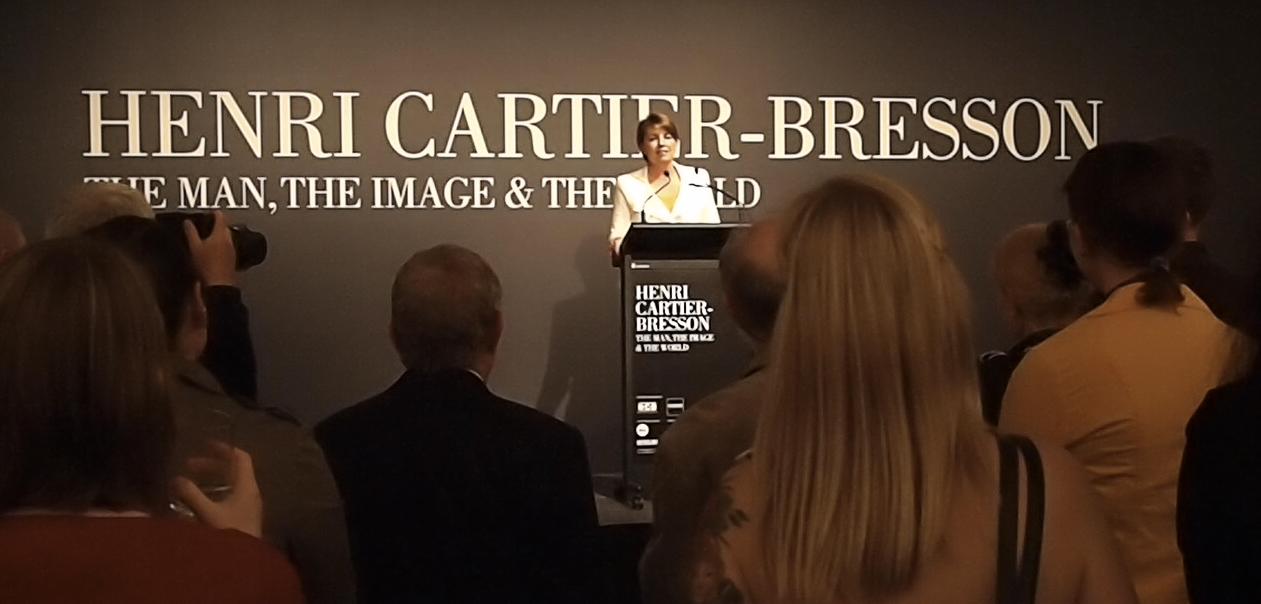
The occasion was auspicious by the presence of swishy attired, mainly older people unknown to the writer who must have been art gallery members and patrons. Scattered here and there were photographers, who to me, also seemed of the older age group. It has been a long – long, time since an exhibition of photography such as this has gained entry to the QAG/GOMA duopoly – and perhaps the invitation list, at least the photographers one, may have originated in that long past era of the last photo show. Additionally it seemed strange that some important players in the world of photography including a now, local renowned photojournalist, who actually knew HCB, wasn’t on the invitation list but secured entry as guests or by unofficially passed on invites.
After the usual opening speeches the invitees were allowed access to the exhibition. The show takes in the history of the photographer’s work in around 250 individual mounted and framed images. Those familiar with the HCB oeuvre will no doubt shuffle from one iconic image to the next, lingering long enough to grasp the moment, the intensity of light and the message that Henri composed. This exhibition puts into perspective his remarkable career behind the camera. For many however, the sheer volume of imagery could be too much. HCB himself said ‘you’ve got to milk the cow a lot to make a little cheese’ but this cheese platter may be so rich it is beyond quadruple Brie!
HCB worked as a photographer over a significant period of time, the exhibition media release quotes 70 years (although this may be misleading if we follow the HCB Foundation’s chronology of his first photographs being made in 1931 and then retiring in 1974 to take up drawing). He photographed portraits, the world in turmoil, the street corner and moments of poetry in everyday life. He lived, and worked, in a time where images were cherished, published and communicated. A time when photographers revered each other’s work and banded together to ‘make a difference’ to the world through the truthfulness of their lens and mass communication of journals like George Luce’s LIFE magazine. In its day the magazine was the TV news and the up-to-the-minute blog post – the world was a wide and weird place and HCB used his trusty Leica as a divining rod to seek out the unfamiliar and in doing so make order from the chaos of the continuum of time.
HCB was aided in the making of his distinctive photo work by his training under the tutelage of the cubist André Lhote and Cartier-Bresson’s passion for surrealism. It is often quoted that he found reality stranger that anything he could conjure up in his mind – so he took up photography. HCB, was inspired to photograph in particular, after seeing an image by Martin Munkacsi entitled Three boys at Lake Tanganyka 1930, of silhouetted boys running into surf.
Commentators on his HCB’s work such as Clement Greenberg (1964) described him as an ‘art photographer’ and added that ‘even among painter-photographers he stands out by the sophistication of his art consciousness[i]’. Art historian Ernst Gombrich (1978) honing in on HCB’s artist-training background claims that everything in our environment ‘resonates in our mind, tough we are rarely fully aware of these reverberations. It needs an artist to make us attend to the message of reality. Henri Cartier-Bresson is such an artist.[ii]’ Interestingly the ‘artist’ tag was played down by photographers who thought of him as being a ‘photographer’. None-the-less by 1974 HCB had had enough of photography and returned to his beloved drawing which he continued to practice until his death in 2004.
The world of 2011 is a different place to that which was inhabited by the camera toting HCB. Today he could be arrested, or at least hassled by police or overly protective parents for attempting to make the kind of photos for which he is famous. In 2011 he would have problems getting his work published as essays in major magazines usually don’t allow such in depth reportage. He may have been required to shoot in colour. He would still be able to pursue gallery exhibition and book publishing – one could even imagine a HCB Blurb book or two and maybe an online sales website. Could HCB have accepted the death of film, the spectre of the digital age and digital enhancement, and the public’s scepticism of the photo as truth? It’s interesting to note HCB disciple Sebastio Salgado has made the switch to digital and is proudly advertising his use of DXO film emulation software to enable his digital later images to have the same ‘look’ and grain ‘feel’ of the early film photos.
Ultimately one needs to ask the question ‘is Cartier-Bresson’s work meaningful today?’ Some, including this writer, may consider HCB a significant influence and guide in their personal practice as documentary photographers. Others will trace the meaning of the photographs as a thread that runs through their own lived experience – for them the images are touchstones for nostalgia and remembrance. Contemporary photographers may be inspired to emulate the ‘decisive moment’ and stage it in tableaux a la Jeff Wall, because that’s how it would be done today. We could lament the fact that the huge curatorial interest invested in iconising Cartier-Bresson many cause other, perhaps equally brilliant photodocumentary workers, to end up being overlooked. Wouldn’t it have been perhaps fitting for the QAG to have curated a companion show that could have provided an Australian context for HCB’s local peers and followers.
Admittedly the allure of the HCB street photographer persists today for many young practitioners. If they get a chance to see this work they may respect the provenance of their trade and find inspiration making documents of life as candid moments. This new work will enter the public record to feed the need for future nostalgia binges – for those who can remember, and be faithful documents of these times for those who aren’t born yet, to peer at and think how quaint it must have been to alive then.
After seeing the show I went home and pulled out my old Leica M3. I held it in my hands and reverently fired off all the shutter speeds several times, I pined for the times past when we were inseparable, before putting it back, as HCB had done so many years before, in safe storage.
Doug Spowart September 17, 2011

 wotwedid