COOPER’s SUBMISSION: Review of Environmental Protection and Biodiversity Conservation Act
FROM THE FORWARD TO THE EPBC REVIEW DOCUMENT:
The Environment Protection and Biodiversity Conservation Act 1999, plays a significant role in the protection and management of our environment and heritage. It operates within a broader context, alongside other Commonwealth laws and activities and those of state, territory and local governments. The activities of businesses, land managers and the community are also central to achieving environmental outcomes.
The EPBC Act requires that an independent review be undertaken at least once every ten years. The review must examine the operation of the Act and the extent to which its objects have been achieved. The last review was completed in 2009.
.
Victoria’s response to this review that follows comments on the potential acute and long term affects of environmental damage to the very substance that makes up our planet: land, water and sky.
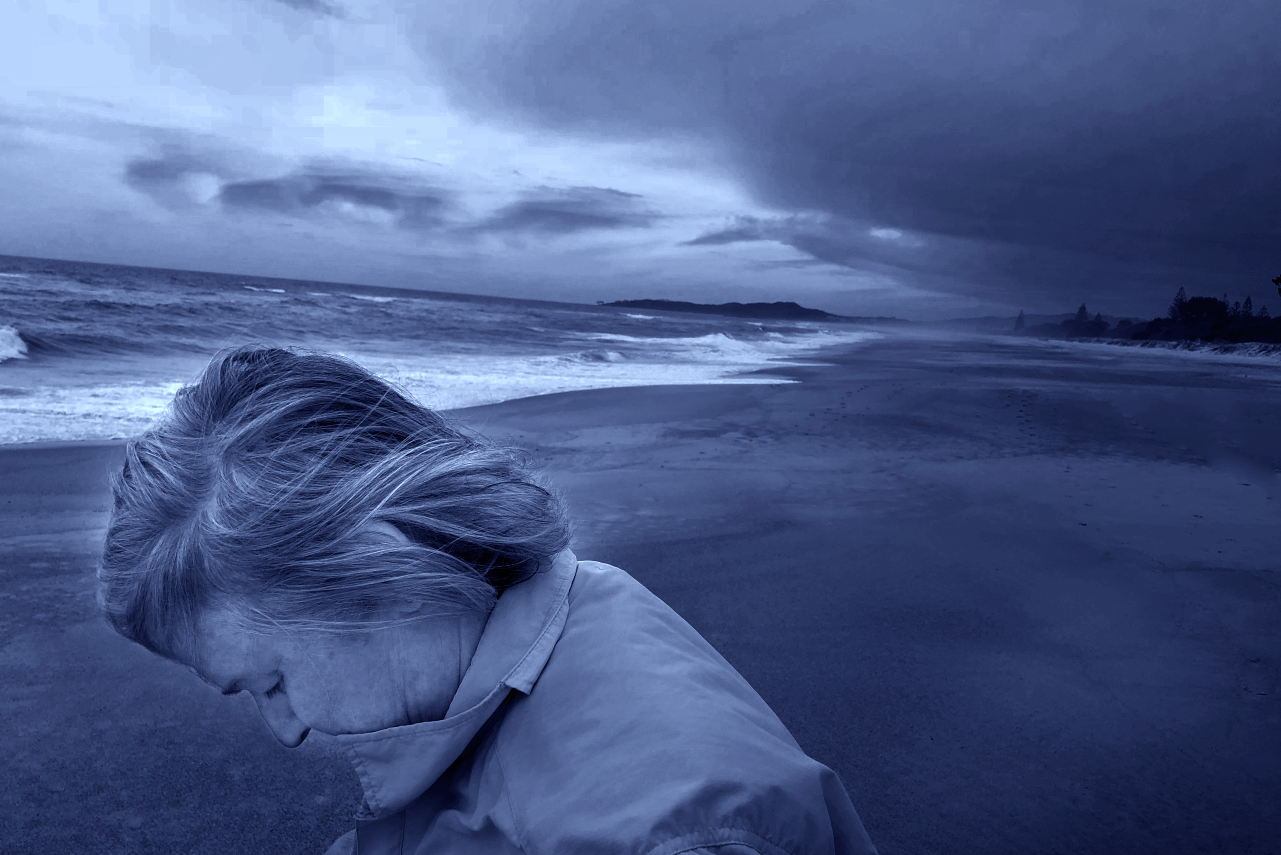
A reflective Victoria Cooper in the field ….PHOTO: Doug Spowart
The importance of Microbial life in the protection of, and biodiversity conservation in, the Australian environment.
My background in science is at a technical level working in both Human and Plant Pathology. I have also completed a PhD where my research examined the communication of freshwater issues in Australia and focussed on the interplay of cultural and creative visual narratives with a science project on aquatic fungi. This research brought together both my current practice in the visual arts and my past experience in science.
In my work I have witnessed the power of microbes as they shape our corporeal and environmental ecologies. When any of our physical systems become unbalanced or neglected these unseen co-inhabitants can become pathogenic impacting on our health and that of the planet. Alternatively if these organisms are lost from the many systems they support – life will cease to exist. For example a forest without fungi and bacteria, dead material would not be decomposed and recycled to renew the land.
My response to this review comments on the potential acute and long term affects of environmental damage to the very substance that makes up our planet: land, water and sky.
My concern is that this review is not addressing the following:
- The creation of a researchable archive on the renewable and sustainable effects of any impact on any microbiological agent. For example the change to the natural microbial community and populations on soil health from removing native grasses, or deforestation of old growth habitat; or the affects on the microbial environment in drying-out of critical wetlands that are drained and not replenished when water is available. If we create an imbalance in the microsphere, this will continue throughout the entire system.
- Create more professional and academic avenues of research to highlight the importance of a cross-discipline collaborative intelligence in this archive.
2.1 By including and financially supporting more broadly the Aboriginal and Torres Strait Indigenous knowledge and experience;
2.2 Australia government initiatives and entrepreneurship for Research and Development into innovative forms of Sustainable and Renewable technology to provide new ways to live with, know and imagine the unique Australian microbiota; and
2.3 Recognizing the urgency with which this action is needed for this work to be undertaken.
The ecology of the micro-environment has developed over many millennia from the beginning of life on Earth. Micro-organisms are in every part of our existence: in and on our bodies, the air we breathe, the food we eat, our soils and waterways. Australia has uniquely developed systems that support our diverse and rich geology, flora and fauna.
The interconnected relationships of micro to macro need to be well understood, protected and maintained in order to continue to sustain life’s balance.
Victoria Cooper PhD
A copy of the EPBC ACT REVIEW Document can be downloaded – Click this link: epbc_act_review_discussion_paper_0
.
Some of Victoria’s visual research work relating to the ideas embodied above…
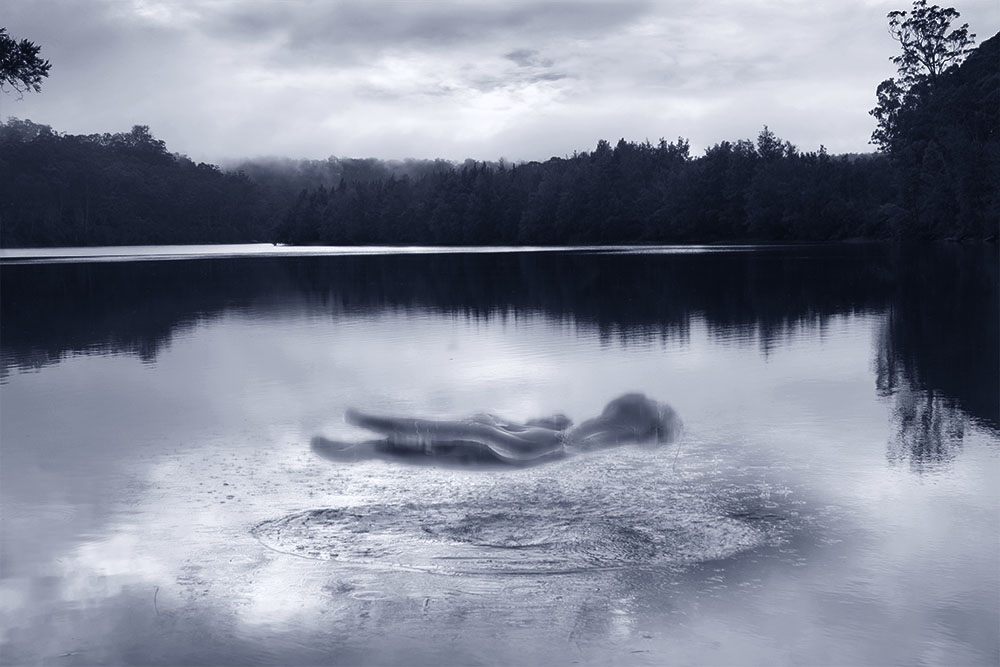
Vicky’s a page from the The River book
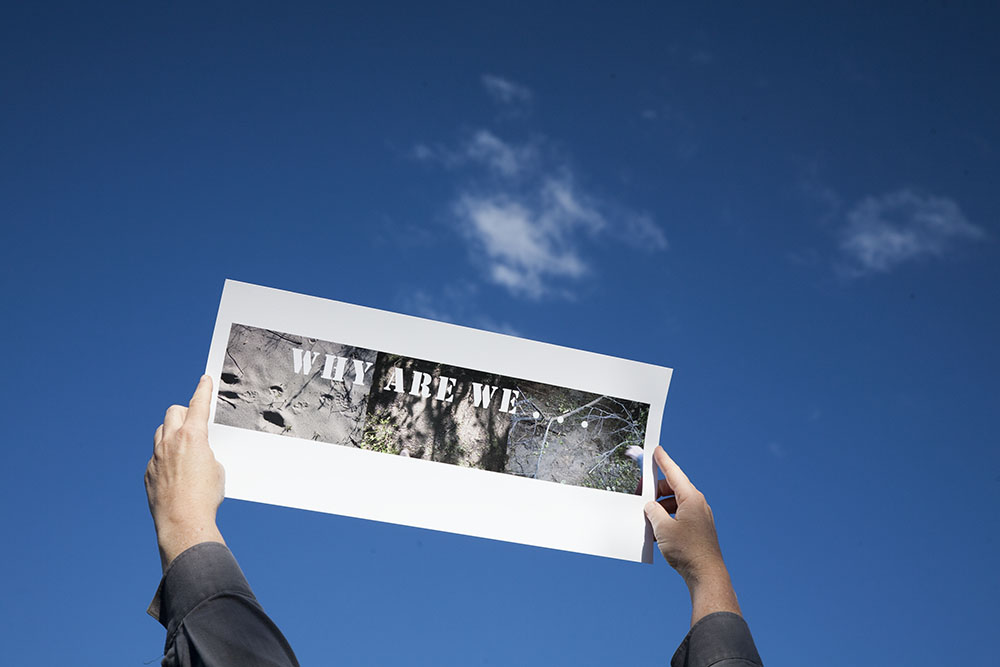
Documentation of a page from the book The Island
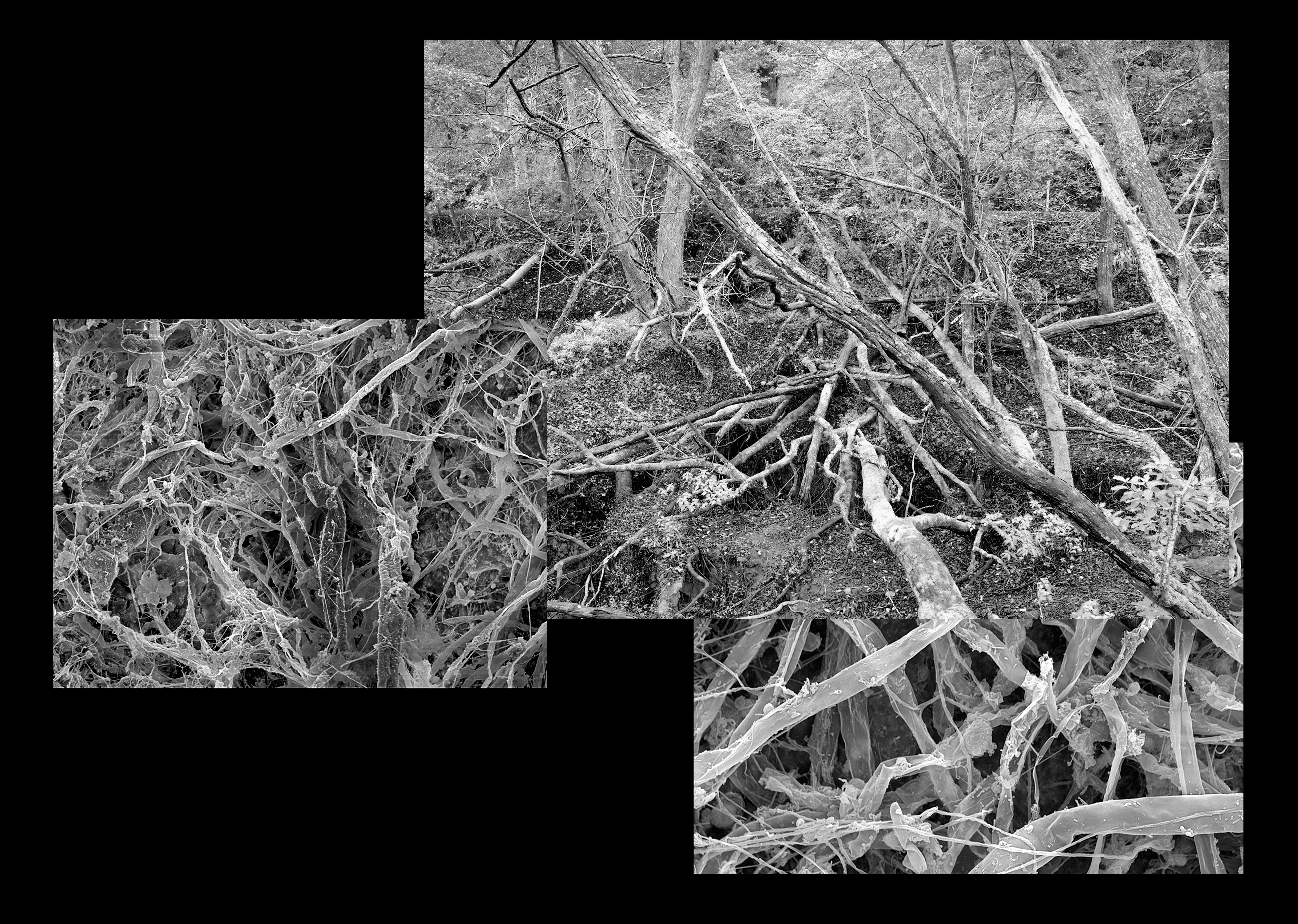
A double-page spread from the artists’ book Being Present
.
.
.
.
.
.
.
.
100 AUSTRALIAN WOMEN PHOTOGRAPHERS: Loud+Luminous-2020
.
.
LOUD & LUMINOUS – 100 Australian Women Photographers
The backstory from the L&L Founders, Hilary Wardhaugh & Melissa Anderson
The Loud & Luminous mission is to recognise and celebrate the contribution of contemporary women in the photographic arts in Australia. We believe this project is unique and important in recognising the extensive cultural contribution women photographic artists and photographers have made in this country.
This project is designed to empower the girls and women of today and tomorrow to chase in their dreams. This will always be a timely project and one that hopes will help educate and inspire many women of all ages.
The 2020 theme of ‘EQUALITY’ echoes the United Nations sustainable development goals of ‘gender equality’, and we very much look forward to seeing work that reflects that goal and our theme.
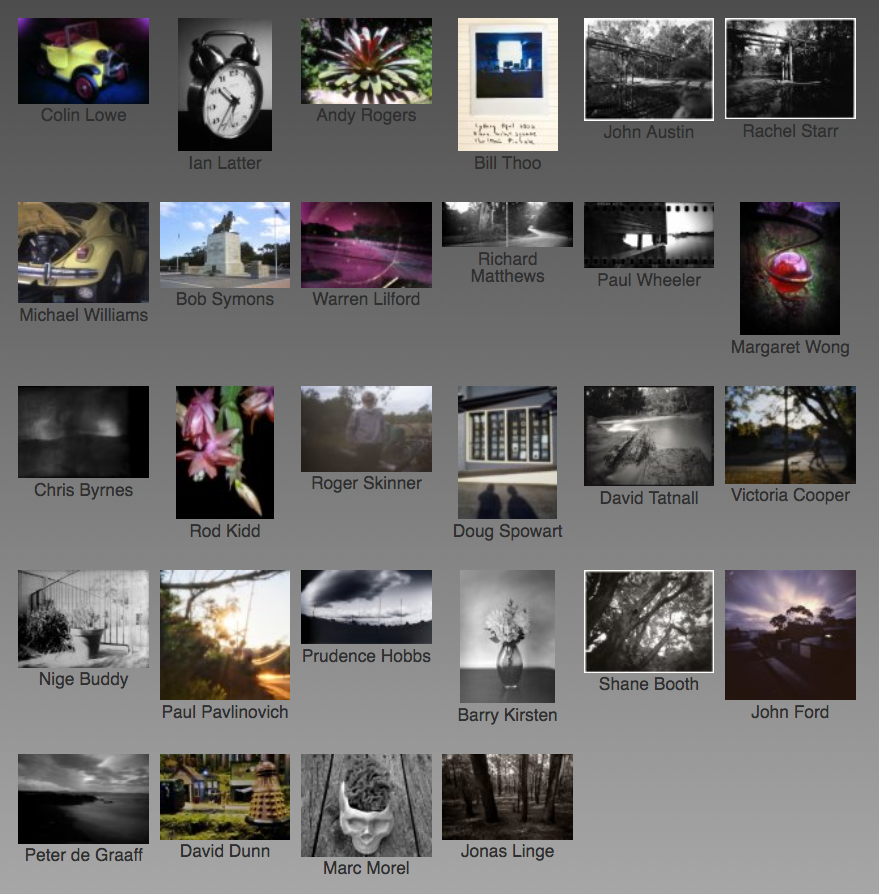
Late in 2019 a call went out to female photographers of any age throughout Australia to submit an image for consideration to be selected for the 3rd LOUD & LUMINOUS exhibition at Sydney’s CONTACT SHEET GALLERY and book. The photographers whose images were successful were:

Loud & Luminous selected photographers 2020
Due to COVID-19 the exhibition at Contact Sheet Gallery has been postponed. However over the next 3 months they will post works on the gallery’s online blog. ‘CLICK’ HERE!
Once again we were excited that images by both Victoria and Ruby were successful…
VICTORIA COOPER

Victoria Cooper: Portrait…..PHOTO:Doug Spowart
Victoria’s Artist’s Statement: All things have significance
All things have significance … sentient or not … organic or inorganic… a rich environment of diversity, differentiation and divergence.
The inspiration, like a ray of light through dark clouds, to create this image arises from the women that have, at great personal cost through leadership in research, writing and sheer passion, fought discrimination, voicelessness and political power structures to make a difference in the ongoing quest to create a sustainable and healthy planet. Among these women are: American Rachel Carson, Australian Mary E. White and Swedish schoolgirl Greta Thunberg.

All things have significance ….. PHOTO: Victoria Cooper
RUBY SPOWART

Ruby Spowart …. Photographer unkown
Ruby’s Artist’s Statement …. EQUALITY: Beauty in Aging
Some may say that only in youth there is beauty – as I witness in the unfolding of a fresh new orchid flower. But as I watched the flower each day, its beautiful strong colourful presence began to loose its vigour and the colours began to slowly fade. In the last stages of its life it turned a deep reddish tan almost gold.
Its youthful form no longer evident but now wrinkled and withered it has a different kind of elegance – an equality of beauty…

Ruby’s EQUALITY: Beauty in Aging
Hilary Wardhaugh & Melissa Anderson wish to acknowledge.

Hilary Wardhough + Melissa Anderson
.
In 2018 our wonderfully supportive sponsors included: Fujifilm Australia, Kayell Australia, Momento Pro, Victorian Women’s Trust, Creative Women’s Circle and Damian Caniglia Photography and Video. In 2019 we again secured Fujifilm Australia, Kayell Australia, Momento Pro, and Damian Caniglia Photography/Video. We also added Print2Metal and Amanda Summons (book designer) as sponsors.
In 2020 we added PPIB Photographers Insurance as a new sponsor. We were also very fortunate to have Paul McDonald at CONTACT SHEET Gallery as our Exhibition partner, too.
The 2019 and 2020 we held International Women’s Day Symposia in Canberra that were both sold out and received extremely well. We are also proud to say that the 2018 and 2019 Loud & Luminous books have been accepted into the National Library of Australia’s collection.
In 2020 we also saw the results of the stipend raised by the IWD 2019 ticket sales in a group exhibition with Suellen Cook, Tamara Whyte, Helga Salwe, Tricia King and Elise Searson at Photoaccess in Canberra.

The 2020 L&L book
BUY A COPY OF THE 2020 L&L book HERE
(Order before 30 June 2020)
.
.
.
.
Both Victoria and Ruby have been selected in earlier LOUD & LUMINOUS exhibitions

Victoria Cooper (left) ………………………………………………………………………………Ruby Spowart (right)
.
IN 2019 – ‘Click’ link to see the post
.

Victoria Cooper L&L entry 2018
In 2018 – ‘Click’ link to see the post
Looking forward to the next LOUD & LUMINOUS exhibition in 2021 …
2020 WORLDWIDE PINHOLE DAY 26 April – Our images

WPPD2020 – LOGO
.
Around the [w]hole world on Sunday April 26, 2020 pinholers were out having fun – Making their images for the 2020 Worldwide Pinhole Photography Day.
This year we are hunkered down during the Pandemic in Toowoomba, Queensland Australia. Once again, far away from the darkroom, we’ve fitted a piece of aluminium with a light admitting pin-prick to the body cap of our Olympus Pen camera and braved the parkland at the end of our street. The next day we uploaded our images with a detailed caption to the WPPD website to add to the contributions from Australian pinholers and many more from around the world.
This is the 15th year we have supported the WPD project!
WHAT IS WORLDWIDE PINHOLE DAY ALL ABOUT?
From the Worldwide Pinhole Photography Day website introduction
All the photographs in this extraordinary collection share two common characteristics: (1) they are lensless photographs (2) they were all made on April 26, 2020.
They also share an additional and less formal characteristic: the sincere enthusiasm of their creators who, by participating in this collective event, shared individual visions and techniques. Hence the amazing diversity of subjects, cameras, techniques and photographic materials combined in this exhibit!
Australian WWPD submission @ May3
VICTORIA’s PINHOLE IMAGE
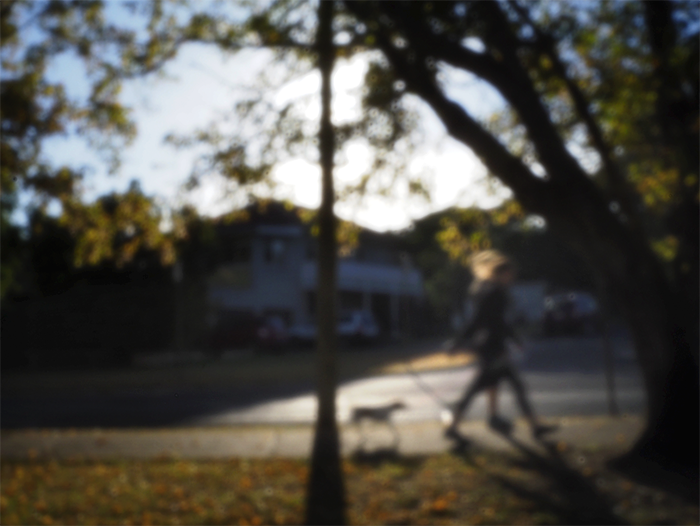
Out walking the dog during COVID Isolation PHOTO: Victoria Cooper
ABOUT VICKY’S PINHOLE IMAGE:
“Walking in the park as it turns to Autumn … Many people are exercising: walking, running, cycling during our period of isolation for COVID-19. I am grateful that during this terrible time, we are able to slow down and reconnect with what is important in our lives.”
DOUG’s PINHOLE IMAGE
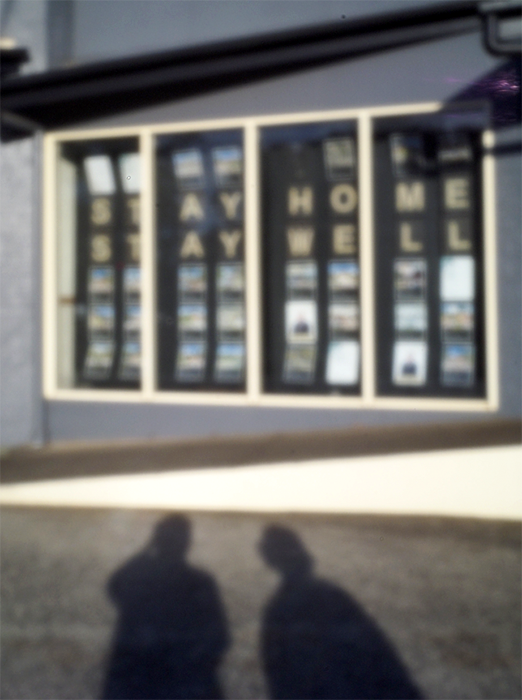
Doug Spowart’s Stay Home-WPPD-2020
ABOUT DOUG’S PINHOLE IMAGE:
“With the world-wide pandemic Covid-19 changing everything signs appear everywhere to remind us to stay vigilant in our resolve to limit community infection. Our local real estate agent has replaced photos of houses for sale with the letters S-T-A-Y H-O-M-E / S-T-A-Y W-E-L-L. Stay healthy everyone…”
.
OUR Digi-PINHOLE CAMERA
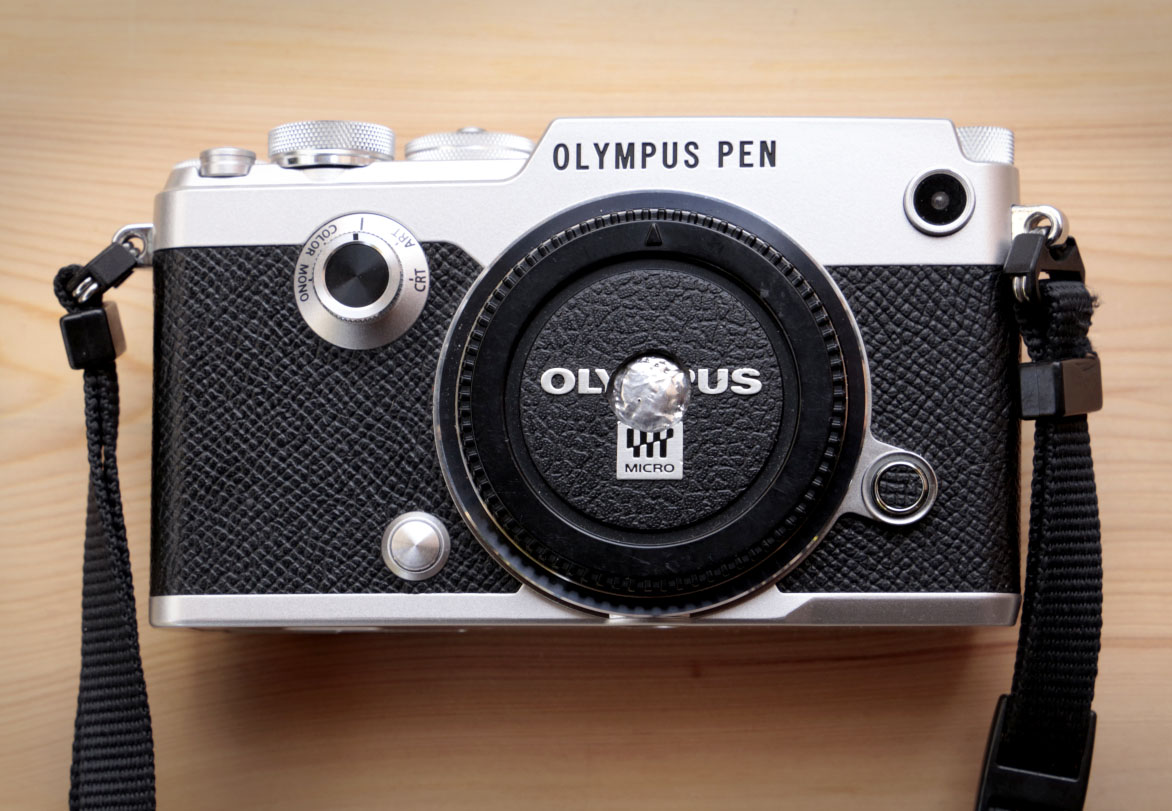
The Cooper+Spowart digi OLYMPUS PEN with pinhole …
“This is a converted digital Olympus Pen, shared with my partner Doug Spowart. The pinhole is a pin pierced hole in aluminium which is inserted into a hole drilled into a body cap. It is a hand held exposure of 1/20th second at ISO 800.”
Our digi-pinhole camera is an OLYMPUS Pen digital. The body cover has been drilled-out and a aluminium foil sheet with pin prick acts as the light emitting ‘hole’. Hand-held exposure 1/20th of a second ISO 800″
The 2020 WPPD GALLERY DEDICATION:
to Eric Renner who passed away in the USA last month
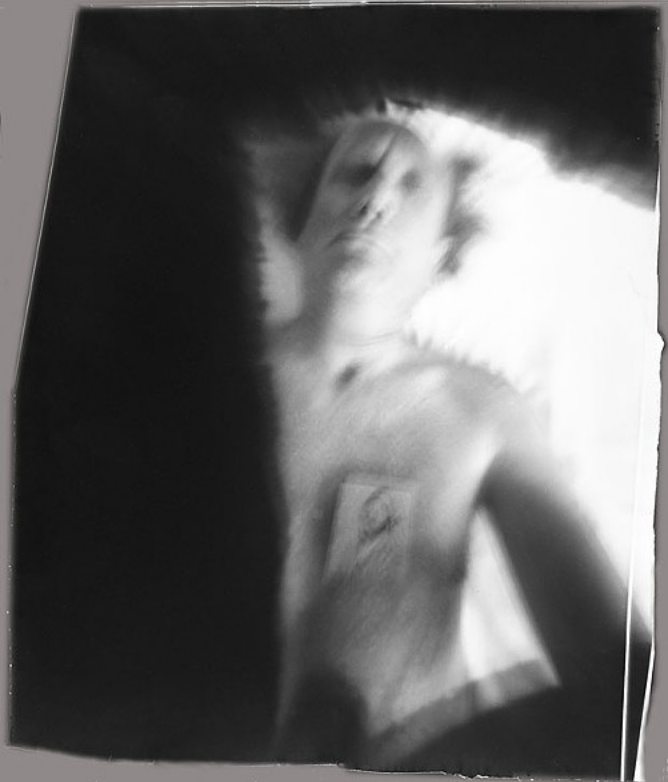
Self Portrait: Sweatshirt pinhole camera, Arles, 1996, pinhole photograph, 14″x11″ SOURCE: https://ericrennerphoto.com
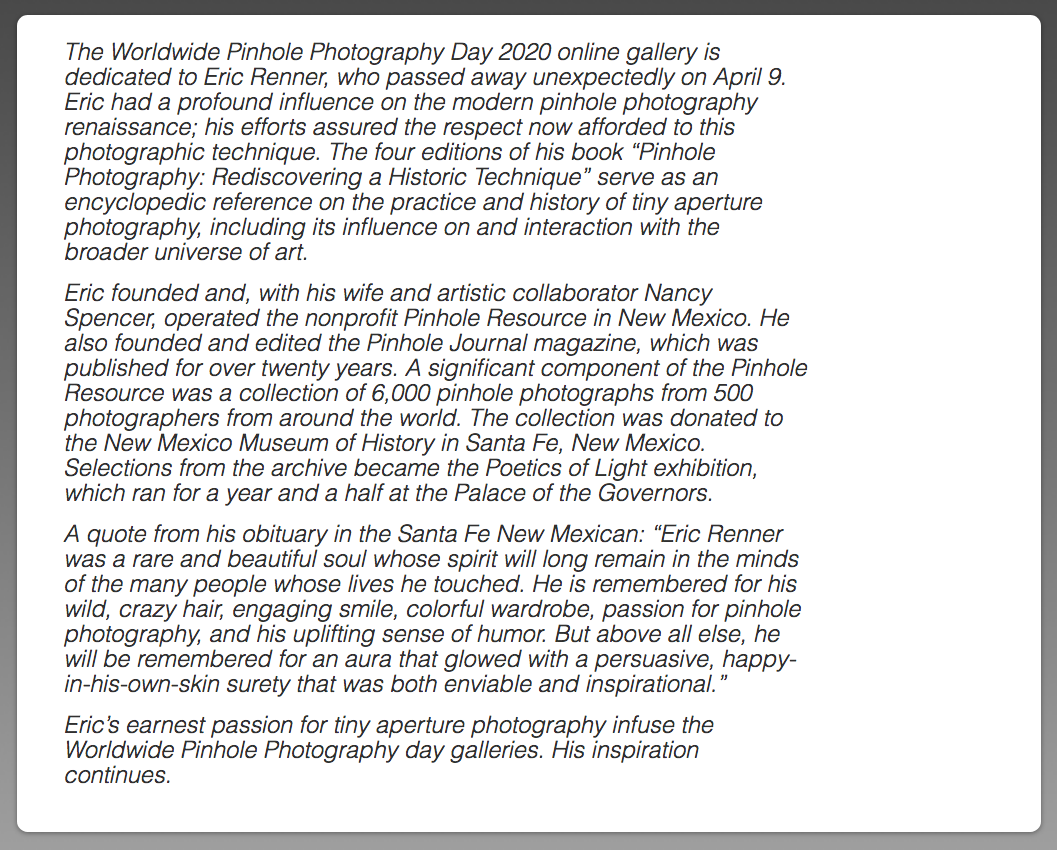
WPPD 2020 Eric Renner Dedication
VALE ERIC RENNER: Our connection with Eric and partner Nancy Spencer
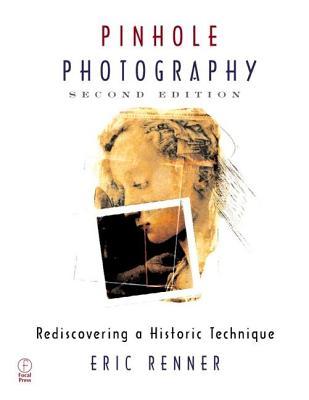
Eric’s Pinhole Photography book
From early in 1990 Vicky had connected with Eric Renner, partner Nancy Spencer and their Pinhole Resource. We exchanged communications and images showing the work that we were doing in Australia. Eric and Nancy, through their inclusive and generous efforts created a world-wide movement in pinhole photography that continues to grow.
Eric published a body a colour pinhole and zoneplate images from the exhibition Natural Encounter by Vicky in the pinhole journal. Later a collection of Doug’s 4×5 Zoneplate images were also published in the journal.
Over the years we continued to connect and share ideas and some of our work was included in the Focal Press book Pinhole Photography rediscovering a historic technique. Our work was also included in the Pinhole Resource collection, Poetics of Light exhibition and the accompanying Poetics of Light book at the New Mexico Museum of History.
Pinhole photography is a vibrant and exciting world-wide pinhole community and we are grateful for this legacy that Eric, with Nancy nurtured.
There’s a Blog post about the Poetics of Light book and our work in it HERE
.
Other images we made on the day…


Visit the WWPD Site for details of other submissions: http://pinholeday.org/
.
Our Past WWPD images:
2019 Doug+Vicky https://wotwedid.com/2019/04/29/2019-worldwide-pinhole-day-28-april-our-images/
2018 Doug+Vicky https://wotwedid.com/2018/04/29/2018-worldwide-pinhole-day-29-april-our-images/
2016 Doug: http://www.pinholeday.org/index.php?id=1235
2016 Vicky: http://www.pinholeday.org/index.php?id=1540
2015 https://wotwedid.com/2015/05/04/april-26-worldwide-pinhole-day-our-contributions-for-2015/
2014 Vicky’s http://pinholeday.org/gallery/2014/index.php?id=1810&City=Toowoomba
2014 Doug’s http://pinholeday.org/gallery/2014/index.php?id=1811&City=Toowoomba
2013 https://wotwedid.com/2013/04/29/world-pinhole-photography-day-our-contribution/
2012 http://www.pinholeday.org/gallery/2012/index.php?id=1937&searchStr=spowart
2011 http://www.pinholeday.org/gallery/2011/index.php?id=924
HERE IS THE LINK to the 2011 pinhole video http://www.youtube.com/watch?v=Yk4vnbzTqOU
2010 http://www.pinholeday.org/gallery/2010/index.php?id=2464&Country=Australia&searchStr=spowart
2006 http://www.pinholeday.org/gallery/2006/index.php?id=1636&Country=Australia&searchStr=cooper
2004 Vicky http://www.pinholeday.org/gallery/2004/index.php?id=1553&Country=Australia&searchStr=cooper
2004 Doug http://www.pinholeday.org/gallery/2004/index.php?id=1552&Country=Australia&searchStr=spowart
2003 http://www.pinholeday.org/gallery/2003/index.php?id=615&Country=Australia&searchStr=spowart
2002 http://www.pinholeday.org/gallery/2002/index.php?id=826&Country=Australia&searchStr=spowart
.
.
 .
The photobook event that THE VIRUS TOOK AWAY

Some Antipodean Photobooks from the Tate project …PHOTOCOLLAGE: Doug Spowart
.
On the weekend of May 2-3 2020 there was a weekend of major photobook activities planned for the PHOTO 2020 International Photo Festival in Melbourne.
A significant component of the event: A seminal selection of 52 Australian and New Zealand Photobooks* from the State Library of Victoria’s collection was to be made available for public viewing.
On Sunday May 3 international photobook guru Martin Parr was to team up with local photobook aficionado Doug Spowart in a public Q&A session. Of particular interest were their methodologies and considerations for reviewing photobooks. Among other questions it was proposed that they respond to the contentious issues of ‘What validates a book for it to be considered eligible to be included in a canon of photobooks?’ and ‘How such curated selections can energise the recognition for photobooks?’
It was planned that the panel interviewers and contributors to the discussion would be renown writer and Photojournalism Now publisher Alison Stieven-Taylor and would also include the celebrated New Zealand photobook maker and Massey University lecturer David Cook.
An additional event to add to the PHOTO 2020 Photobook Weekend was a major Photobook Fair that would include major publishers, significant photobook makers, a showing of the ANZ Photobook Awards, photobook manufacturers and POD suppliers, workshops and info sessions.
However the COVID-19 pandemic was to change all that …

March 15, 2020 post on the PHOTO 2020 Facebook page
The PHOTO2020 event, retitled as PHOTO2021 is being rescheduled with the new dates of 18 February – 7 March 2021.
Thank you to founder and Artistic Director Elias Redstone and Producer Rachel Ciesla from the PHOTO 2020 team and Des Cowley from the State Library of Victoria for their efforts to bring this project into fruition. And we look forward to being part of the programme on the rescheduled dates…
Keep up to date with PHOTO 2021
FACEBOOK: https://www.facebook.com/photofestivalau/
WEBSITE: https://photo.org.au/
The PHOTO 2021 team have been posting video interviews with a diverse group of international photographers and artists – Check them out…

FACEBOOK: Photo 2021-Photo Live
*52 Antipodean Photobooks: A beginning for a canon of the ANZ photobook
In 2019 the Tate Library received a selection of 52 photographically illustrated books from the Australian and New Zealand region. The books were curated by Australian photobook aficionado Dr Doug Spowart and were specially chosen to extend the Antipodean photobook presence within Martin Parr’s 12.5K photobook donation to the Tate in 2017.
Doug Spowart’s Tate commission came as a result of his meeting with Martin Parr at the 2017 Vienna Photobook Festival. Parr attended Spowart’s lecture on the Antipodean photobook at the Festival and saw examples of the 2016 ANZ Photobook of the Year Awards.

Martin Parr and Doug Spowart reviewing ANZ photobooks at the SLV for consideration to be included in the Tate submission. January 2018. ….. PHOTO: Victoria Cooper
In early 2018 Spowart met with Parr at the State Library of Victoria and shared with him a selection of the photobooks that had been curated for proposed Tate purchase.
While interest in the photobook has resulted in publications and scholarship from every major country in the world the same has not been the case for the Antipodean photobooks. Spowart sees the PHOTO 2020/2021 event as being an opportunity to celebrate ANZ photobooks and bring recognition to the local contemporary and historical publications. To this end Doug Spowart has published a blog entitled The Antipodean Photobook and a FACEBOOK page The Photobook in Australia and New Zealand (under construction @ May 2020).
.
.
Looking forward to PHOTO2021: 18 February – 7 March 2021
.
.
.
.
LOOKING AT PHOTOs IN THE GALLERY: a talk by Doug Spowart
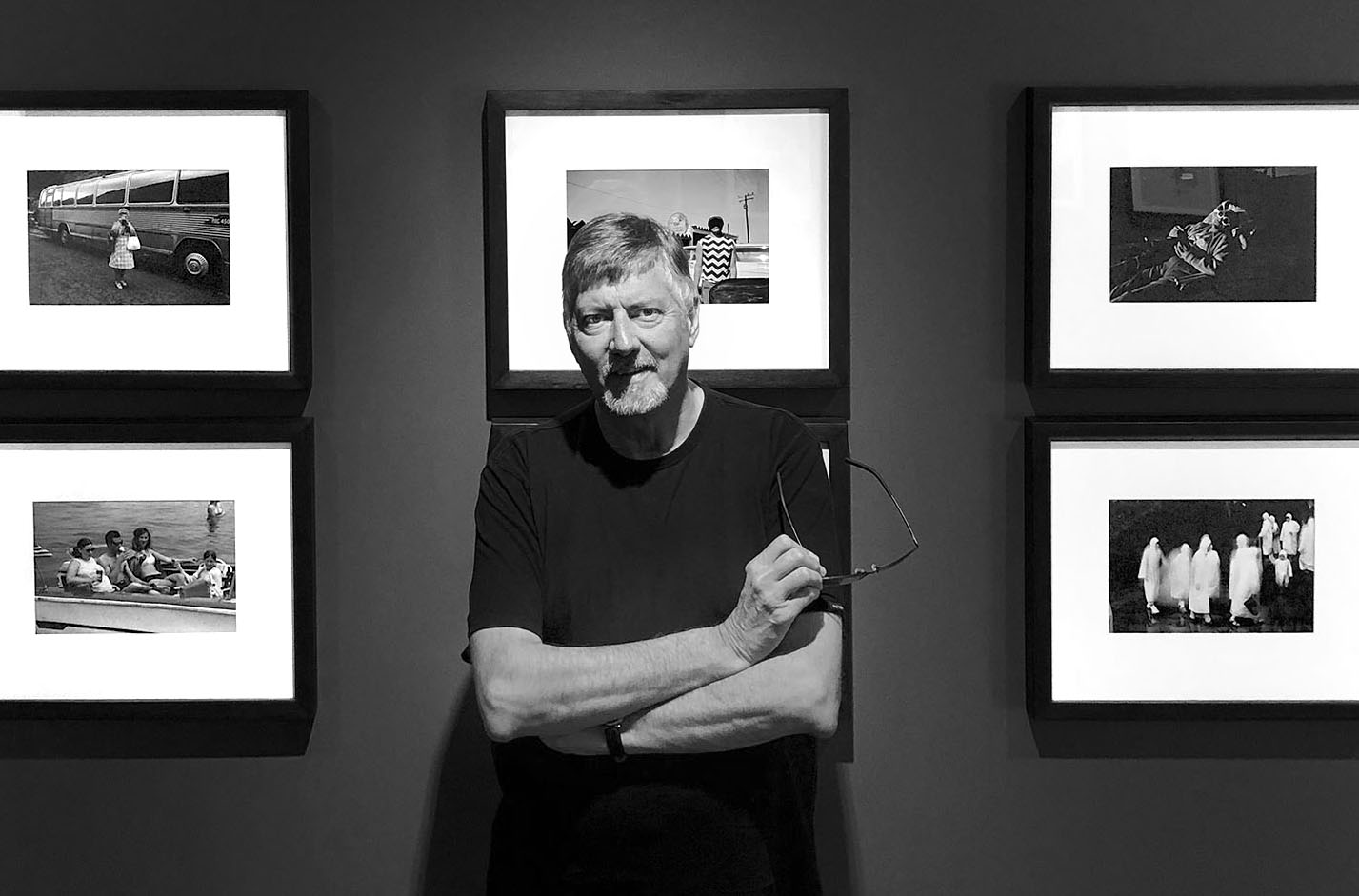
Doug Spowart in The Museum Project exhibition at Lismore Regional Gallery .…..PHOTO: Victoria Cooper
I’ve a lifetime of connection with art galleries from exhibitor to director and curator to reviewer. I’ve often pondered on how the gallery space connects with those who visit it and what insights they may take-away from that interaction.
Viewing an exhibition can be a very superficial activity or it can be one that can create the opportunity for a meaningful and personal experience.
I have often been interested in observing people in the gallery space and wondered whether they were: (1) an interested and attentive participant, (2) using the space for social interaction – with friends/partners/children, (3) there as a flâneur to be seen in the gallery or possibly (4) a person accompanying 1, 2 or 3.
Floor talks are a necessary part of the educative process carried out in an art gallery. It can transform the way art is introduced to a new audience and enlighten those wanting to know more.
At the end of last year I was invited to present a floor talk about an exhibition of photography at the Lismore Regional Gallery in northern NSW. The talk was to coincide with the gallery’s showing of The Museum Project a collection of American photography work from the 1970-2010. The project represents a selection of works from 7 photographers that cover a diverse range of approaches to photography. The photographers, and genre of their works are:
- Bonnie Schiffman – Celebrity portraiture
- Darryl Curran – Alternative imaging in cyanotype and van dyk browns
- Robert Von Sternberg – Photodocumentary travel locations
- Melanie Walker – Early digital montage and performance
- Barry Andersen & Robert Fichter – Landscape
- Victor Landweber – Approaches to idea of art as document
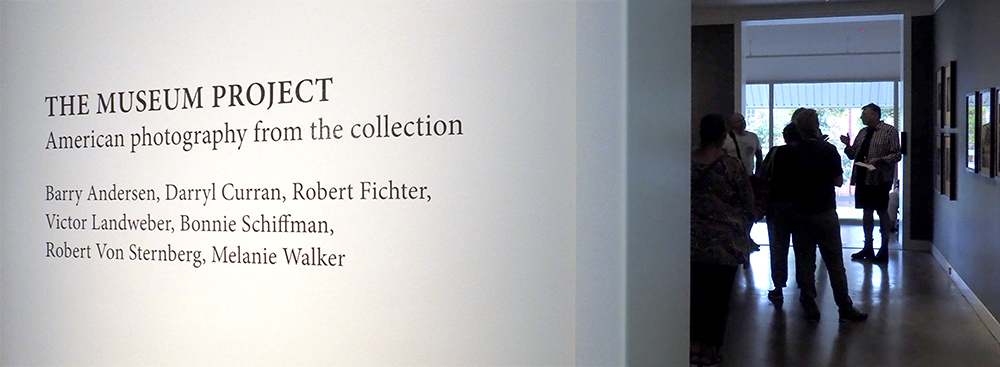
The Museum Project at the Lismore Regional Gallery
.
I considered the invitation and proposed that the talk would be based upon the idea of ‘Looking at photos in the gallery’. Rather than a direct translation of curator’s didactics I decided that I would use my gallery and photography experiences to suggest a number of steps and questions for the visitor in their engagement in the gallery space so they may derive more from the experience. I also acknowledged that attendees would be interested in a commentary about interesting aspects of the works including the conceptual and technical approaches taken by the photographers. The works presented an excellent opportunity to also talk about different approaches to photography as a visual art form.
In my preparation for the talk I visited the gallery and made notes on the works as well as carried out online research about the photographer’s backgrounds, manifestos and techniques.
I thought further about the proposition of looking at photographs in the gallery and prepared a script for the talk. To make the talk more interactive and personal, I decided to hand make a little booklet for each attendee to refer to during the talk and as take-home information source. In the 2015 Artists’ Book Brisbane Event, I did a similar process where I made a booklet of my talk for each of the 60 attendees of the conference and rather than an electronic presentation, I performed the book …
The gallery staff member assisting me for the day, Claudie Frock, had printed up 25 A3 sheets of my 8-page fold booklet the evening before so that Joanna Kambourian, Vicky and I could make up the books.
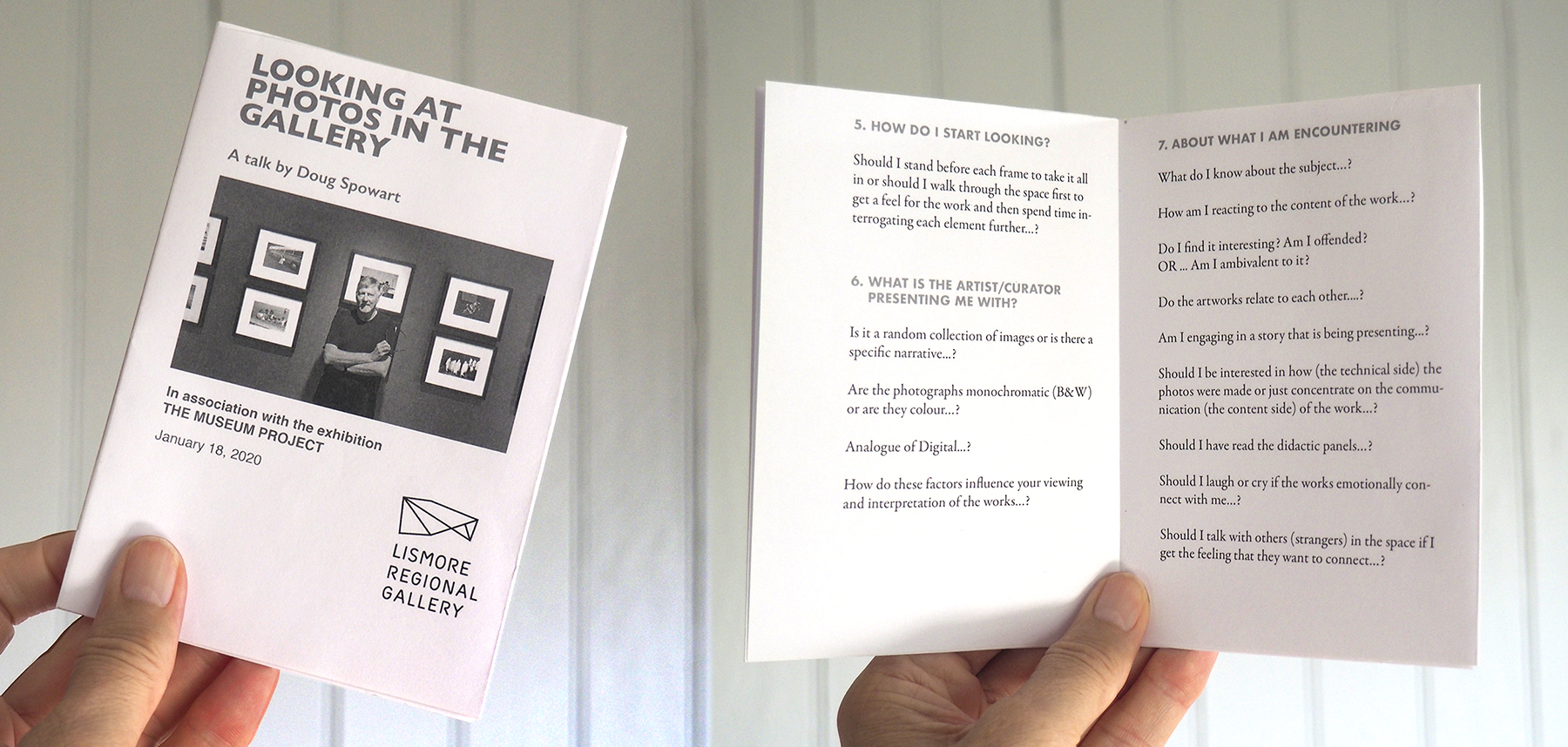
The Looking at Photos in the Gallery booklet
Overnight before the talk Lismore, and South-East Queensland and North-East New South Wales were drenched with flash-flooding rains so I was pleasantly surprised in the morning when 25 people came along to the talk. There was also a small group of deaf people attending the talk and I was supported in my presentation by AUSLAN interpreter Bronwyn. After the acknowledgement of country and an introduction by Claudie we began the talk.
.


Participant involvement is a necessary part of my presentation style and the question/answer format gave ample opportunities for attendees to interact in the talk. One of the gallery’s curators that attended, Fiona, added special insights about gallery installation, copyright and image conservation. The booklet process worked well and we managed to cover a diverse range of topics within the 1-hour time allotted.
You can download a PDF of the little A5 booklet LRG-Booklet
Vicky and I stayed on after the talk to connect with attendees who wanted to chat further and also to re-connect with two local photographers Jacklyn Wagner and Peter Derrett OAM who were associated with workshops that we had presented in Lismore at the Gasworks Art Centre and the Southern Cross University in the early 1990s. They presented us with a copy of the catalogue for a documentary project called Heart & Soul that featured people from around the region.
On leaving the gallery the rain had cleared to a sunny day…
.
.
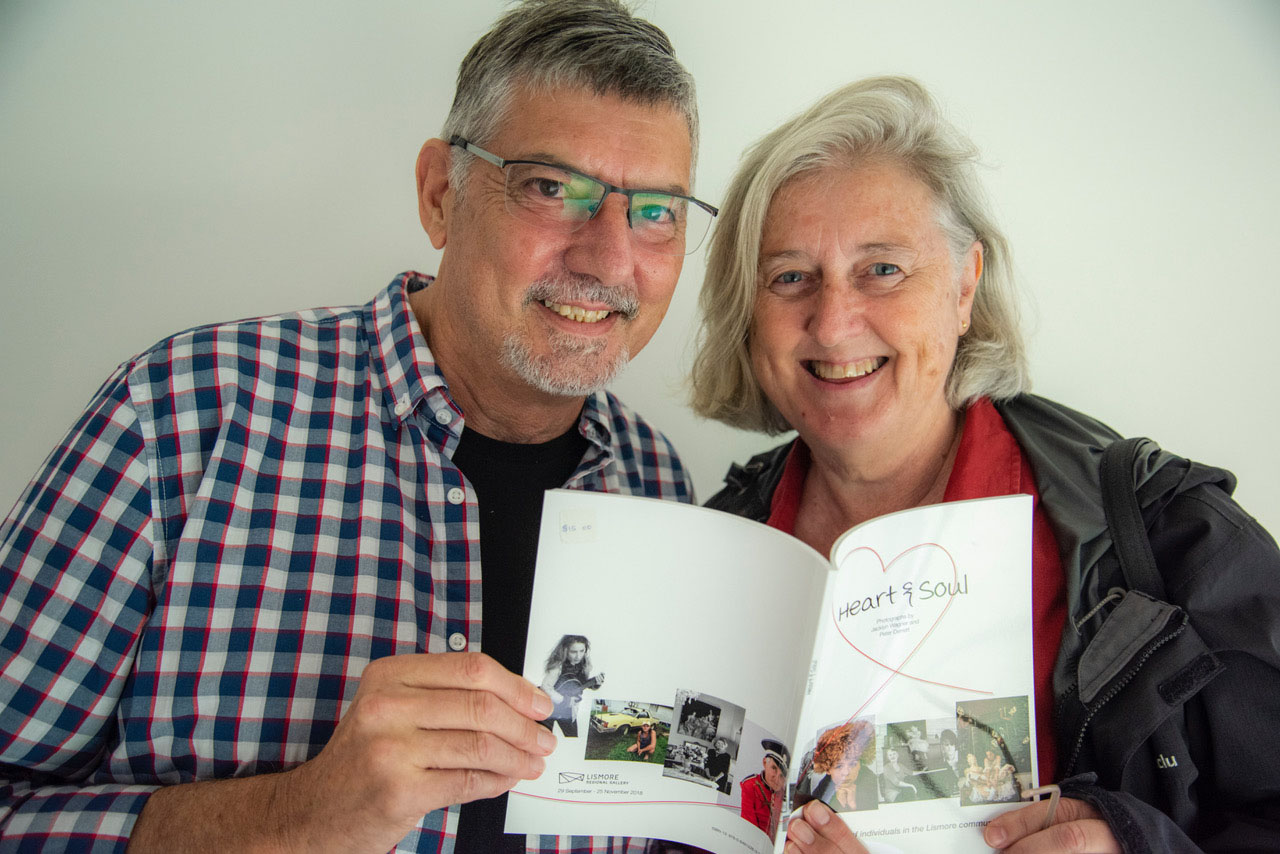
Vicky + Doug with the catalogue for the Heart&Soul exhibition by Jacklyn and Peter PHOTO: Peter Derrett OAM
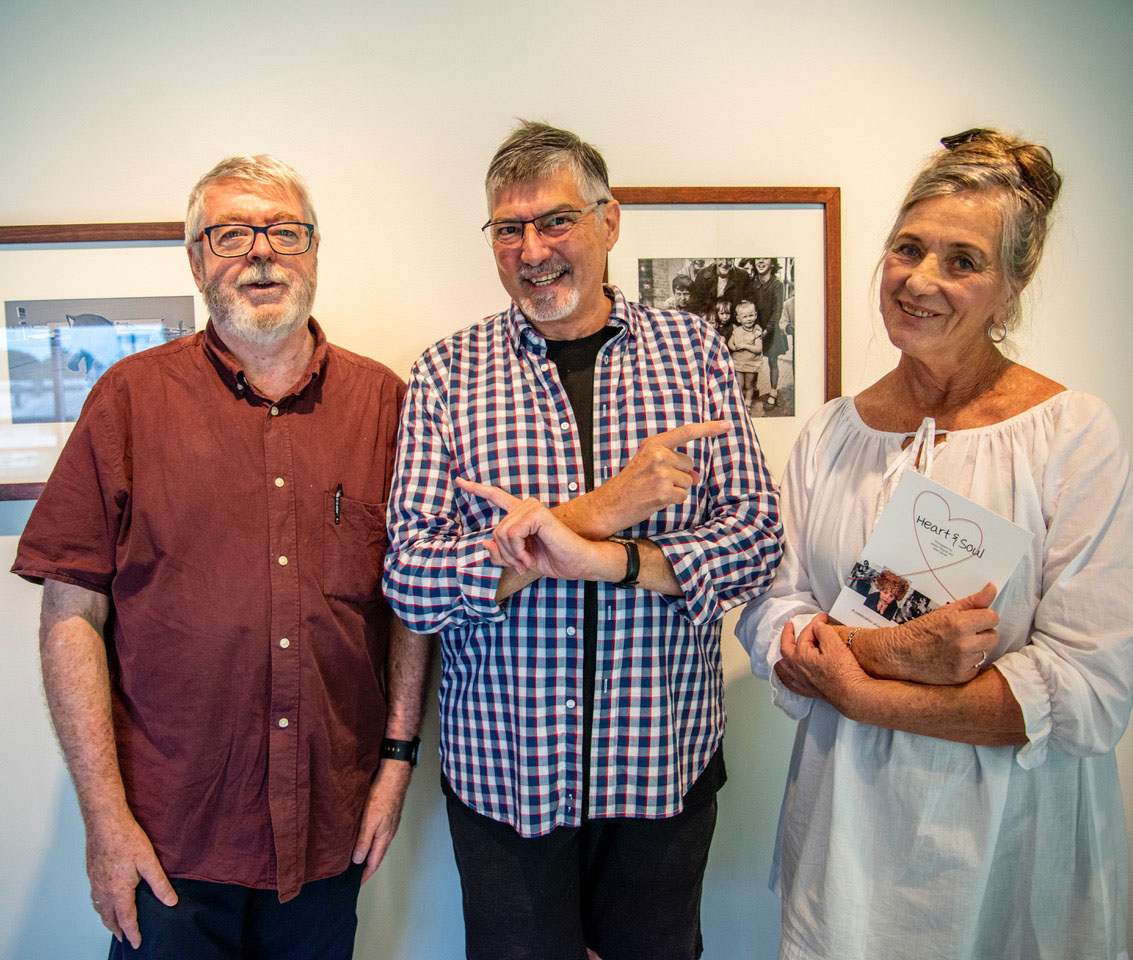
Doug with Jacklyn Wagner + Peter Derrett PHOTO: Dr Ros Derrett OAM
Please note the Booklet and the lecture are a work in progress to be added to in future versions – and it’s ©2020 Doug Spowart.
VICTORIA COOPER: Scroll works 1998-2003
Victoria Cooper: Portrait
.
Victoria Cooper talks about her early montage works in the form of 10 scrolls made in the period 1998-2003
The text below begins with a discussion about the first five scrolls, three from Mt Buffalo and two of Phillip Island clouds. This is the first public viewing of these early scroll works.
Following this is a short statement about the next five scrolls, The Five Stories of the Gorge. There is a separate blog post about these scrolls that presents more details and exhibition history along with an image of each scroll. HERE
.
For those who can see, existence takes place in an unfurling scroll of pictures captured by sight enhanced or tempered by other senses . . . Building up a language made of pictures translated into words and words translated into pictures, through which we try to grasp and understand our very existence. (Manguel, 2001, p.7)
.
Montage and digital narratives
Timothy Druckrey (1994) discusses the montage early in digital era: One of the central considerations in the emergence of electronic montage is the redefinition of narrative and the single image is not sufficient to serve as a record of an event but, rather, that events are themselves complex configurations of experience, intention, and interpretation. Nearly 30 years of the digital evolution, the montage and the collage in all its forms both traditional and analogue continues to shape perception and narrative of the human condition.
About my digital montage scroll works
My first major digital body of work in the late 1990’s was a series constructed visual narratives from photo-documentation in sites significant in my development as an environmental visual poet. In the digital medium, I then cut and blended my collected data/ resource of photographic elements into the multiple perspectives that visually tell my story through the form of rice paper scrolls. The sites were Mt Buffalo, coastal Victoria, and a small area of original forest near Toowoomba.
When I first encountered the landscape at Mount Buffalo, I was filled with a sense of awe. The most significant memories that remain with me are of the journeys from the valley to the summit. Over the years I have undertaken many walks that meander through or climb impressive granite landforms and rich stands of native flora. The Buffalo Scrolls were constructed from many individual elements of the analogue photographic material gathered on site and woven together in the computer later. Although initially informed by the tradition of Chinese and Japanese scroll making, I could not conform to the strict rituals of Asian art school but rather was guided in the production of these works by material thinking and the reflective/reflexive response to memory and corporeal experience.
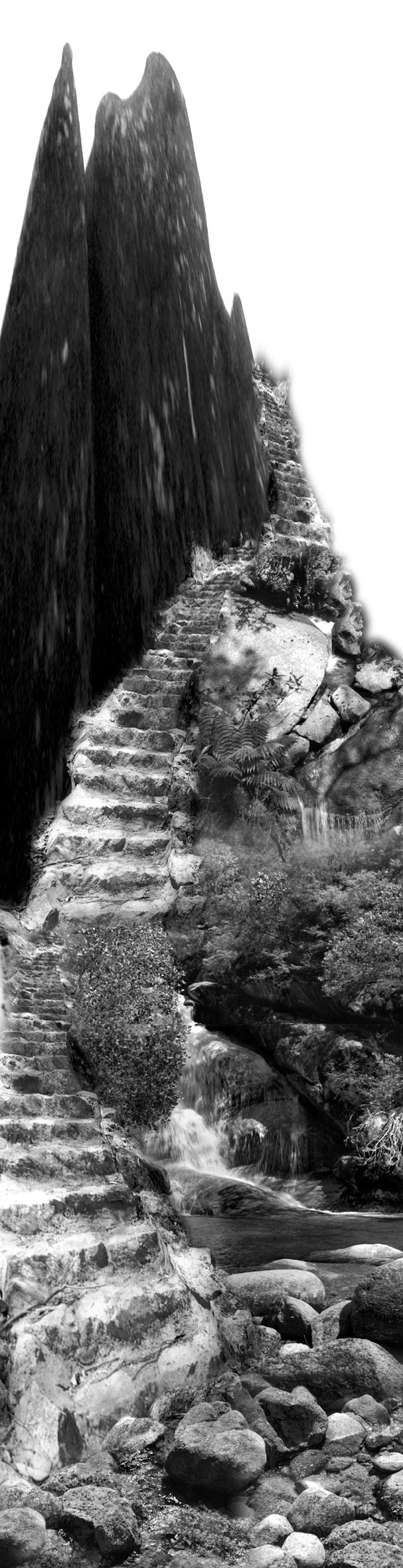
Victoria Cooper (August, 1999), Buffalo Scrolls, Waterfall,
inkjet on rice paper in acrylic boxes,
Image: 107×27.5 cm, Scroll: 250×30 cm.
The digital environment provided me with a psychological space in which images could be combined, manipulated and layered in the shaping of my story. I utilised image manipulation software to ‘grow’ and distort the landscape. Through this process I found that I was directed to imaginative places beyond any original intent or pre-visualization. Although the work originates in my direct recordings of place, the fluidity of digital space allowed for experimentation and new work to transform and evolve any fixed idea I may have had. So in creating The Waterfall scroll, a large boulder became a precipitous mountain to emphasis the terrain encountered. The trail up to the waterfalls was a seemingly endless rock-formed staircase that proved to be a challenging path.
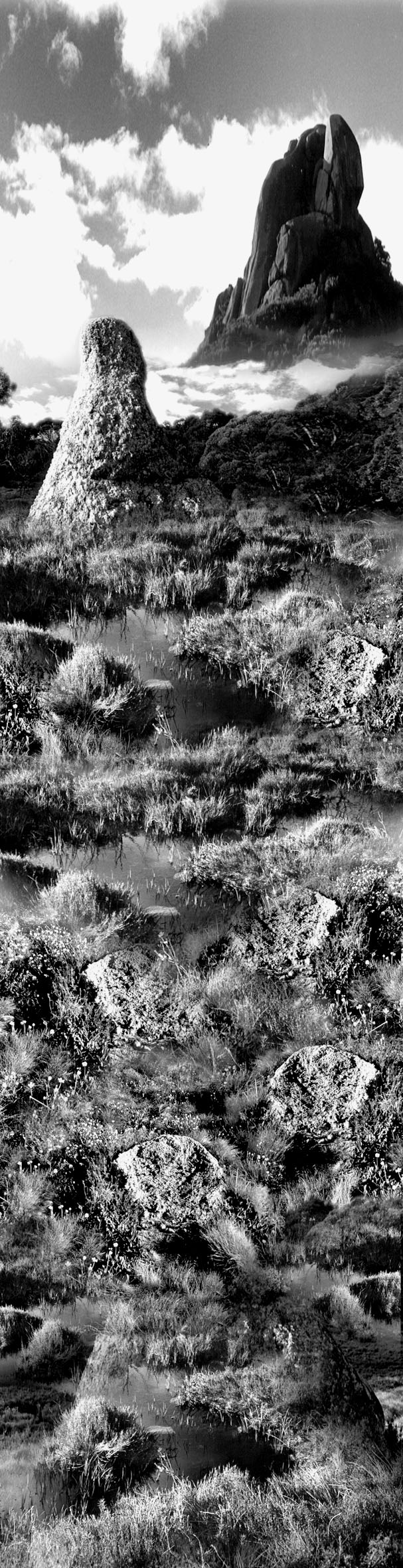
Victoria Cooper (August, 1999), Buffalo Scrolls, The Cathedral,
inkjet on rice paper in acrylic boxes, Image: 107×27.5 cm,
Scroll: 250×30 cm. Collection of the artist.
The Cathedral scroll journey across a watery marsh dotted with fragile alpine daisies is at times a precarious rock hop. Taking care not to step onto the vegetation beneath. In another of the Buffalo scrolls the ominous granite corridor of The Pinnacle defines the way through expanses of rock to the summit of the mountain in the distance.
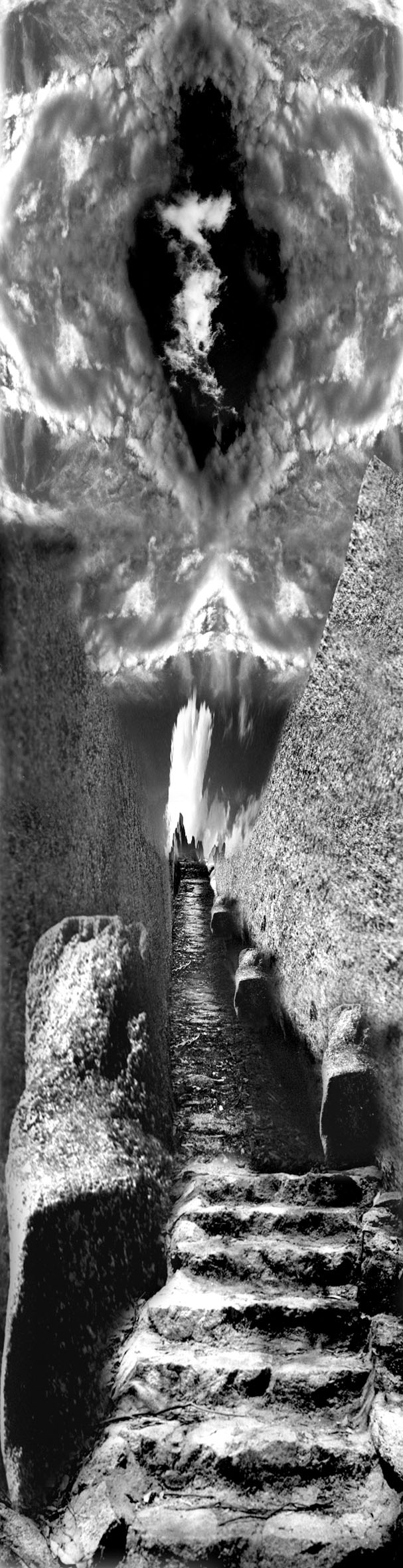
Victoria Cooper (August, 1999), Buffalo Scrolls, The Pinnacle, inkjet on rice paper in acrylic boxes, Image: 107×27.5 cm, Scroll: 250×30 cm. Collection of the artist.
.
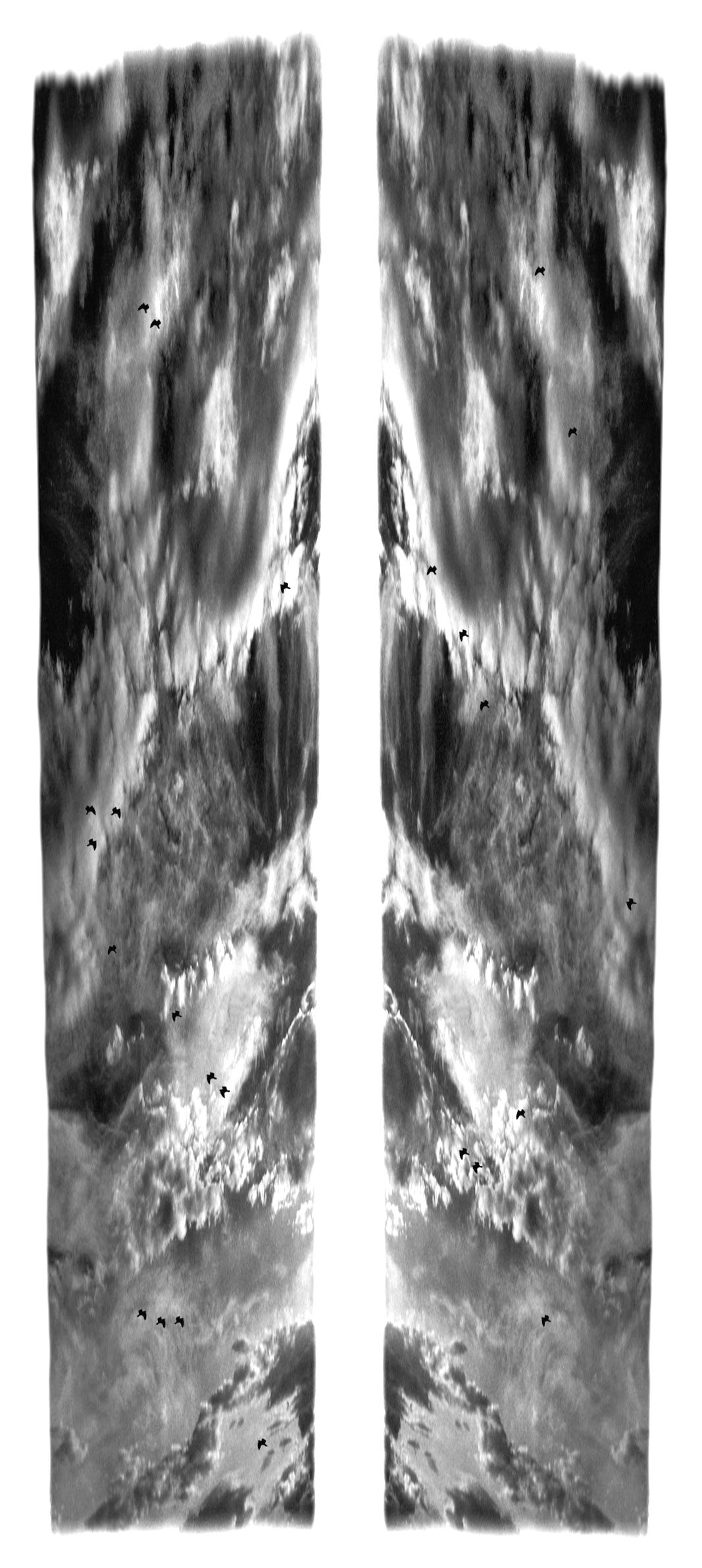
Victoria Cooper (August, 1999), Phillip Island Storm Cloud, left and right views,
inkjet on rice paper in acrylic boxes, Image: 107×24 cm, Scroll: 250×30 cm.
Collection of the artist.
My work with digital scrolls continued with the production of the diptych, Phillip Island Storm Cloud. These two images relate to the sense of anticipation felt when observing an approaching storm.
At Mount Buffalo and Phillip Island, I wrestled with both a fear of taking risks when encountering new and difficult terrain and a strong curiosity to explore the unknown. The scrolls reflect the memories of conflict and fear together with a sense of wonder I experienced within this sublime landscape and, in some ways more broadly, my life.
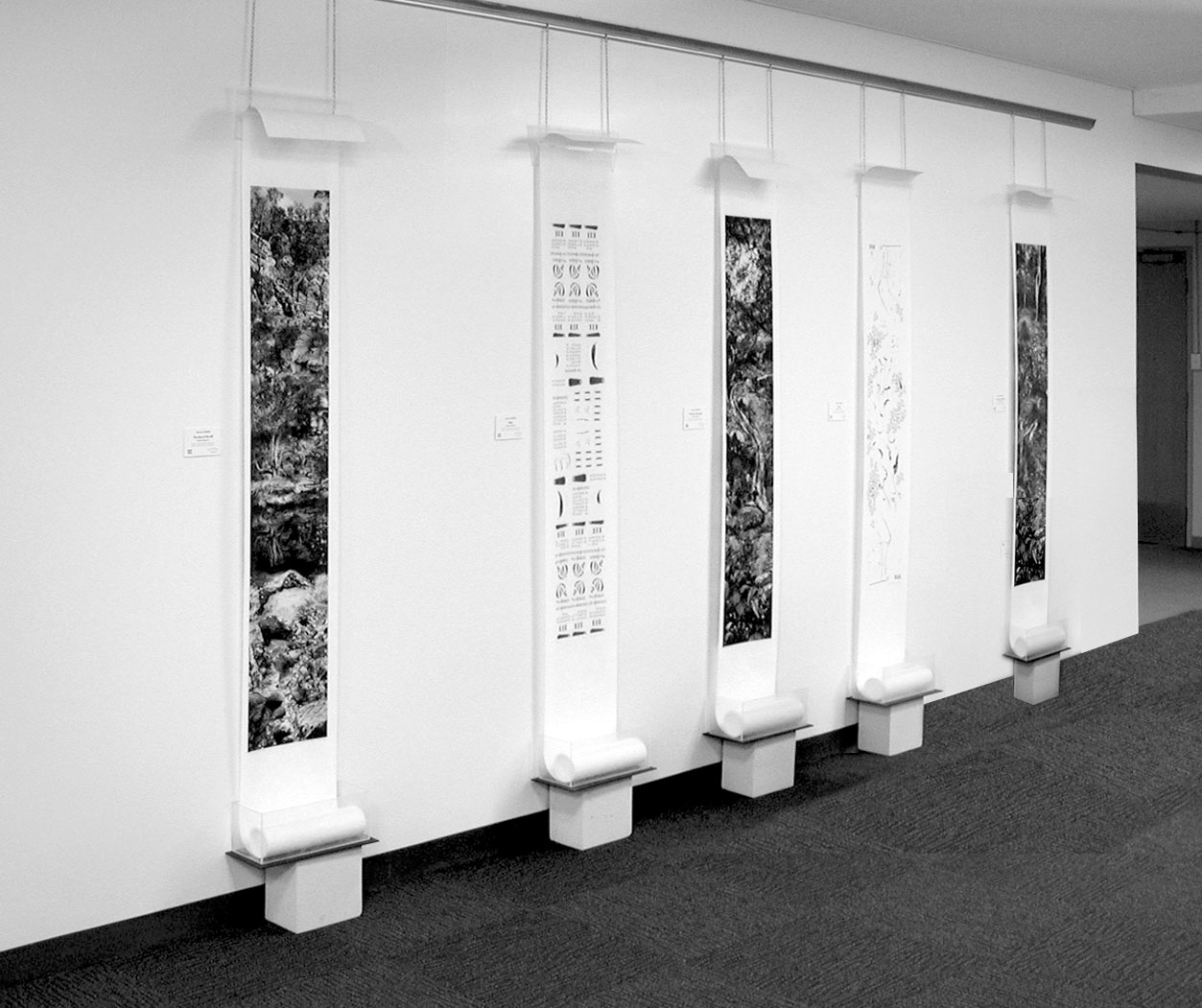
Installation of Victoria Cooper’s Five Stories of the Gorge
The virtual to the physical
The digital montages can only be seen in the electronic medium through the action of ‘scrolling’. Therefore, as some of my early inspiration came from the Asian form of presenting narratives, I utilised the rice paper scroll transformed the virtual to physical, tactile form. The scrolls are displayed in the vertical format and unravelled from their acrylic container to reveal the entire image. The viewer can enter the scroll at any point as with the initial perusal of a written story and, if engaged fully, can follow the narrative through from beginning to end.
The Five Stories from the Gorge Scrolls
Following this initial work I became more interested with the concept of small and intimate spaces found in everyday life. Five stories from the Gorge, presents a more intimate connection with the environment than the Buffalo series. Instead of trekking up precipitous climbs of distant mountain regions, I followed forgotten pathways and looked into the small, enclosed spaces of this gorge environment near where I lived. I made many journeys into the gorge and on each occasion I took time to absorb many sensory impressions as well as creating a digital photographic record.
As with the Buffalo work, I found that the single viewpoint photographic image did not give me the dynamic reading I sought. So again I created a series of montage scroll works synthesised from my collected visual recordings and sense-memory.
The physical environment of the gorge presented me with some complexities when blending the changes of photographic perspective into a seamless passage through the landscape. Central to this work was to attempt, by the use of scale and viewpoint changes, to reconstruct how the eye scans a scene. As the eye of the observer focuses on single viewpoints then moves to another it not possible to take in an entire scene with a single perspective. With this characteristic of visual perception in mind, I set out to recreate the landscape visually from multiple viewpoints. So in this body of work I seamlessly combined disjointed and sometimes perceptively conflicting views to form images that go beyond the static visual document.
During my visits to photograph the gorge, I also collected objects from the site. For me, the found elements provided a different narrative opportunity. In the scrolls Chaos and Order I investigated these natural elements presented in groupings as a kind of language. These pictographs form poems made up from a natural vocabulary associated with the visual form of the written word.
Each element was scanned into the computer to obtain a replica of their likeness, the objects themselves were later returned to the site to continue their natural cycle. The scroll, Order, begins the dialogue by suggesting the elements of a genetic code. The arrangements of the seeds and leaves and other fragments are seemingly organised and uniform but, on closer observation, there are subtle differences to the repeated segments.
Chaos came as an answer to the cyclic relentless processes that continually ebb and flow through time in nature. It is the interruptions, upheavals and the process of change that nurture and ensure survival. Though these scrolls are without the scenic detail, they are the essence of the region, a distilled manuscript of the cycles and disruptive events in nature over time.
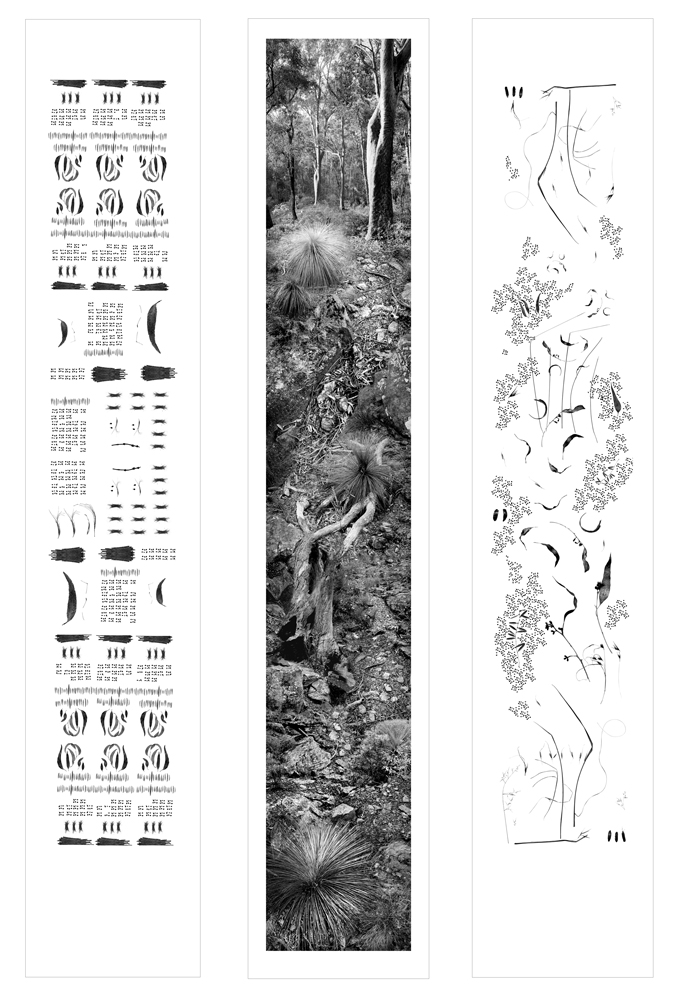
The Chaos and Order scrolls alongside the Hillside scroll
Five Stories from the Gorge, investigates the idea of wilderness and nature that exists in or on the edges of these human inhabited spaces.
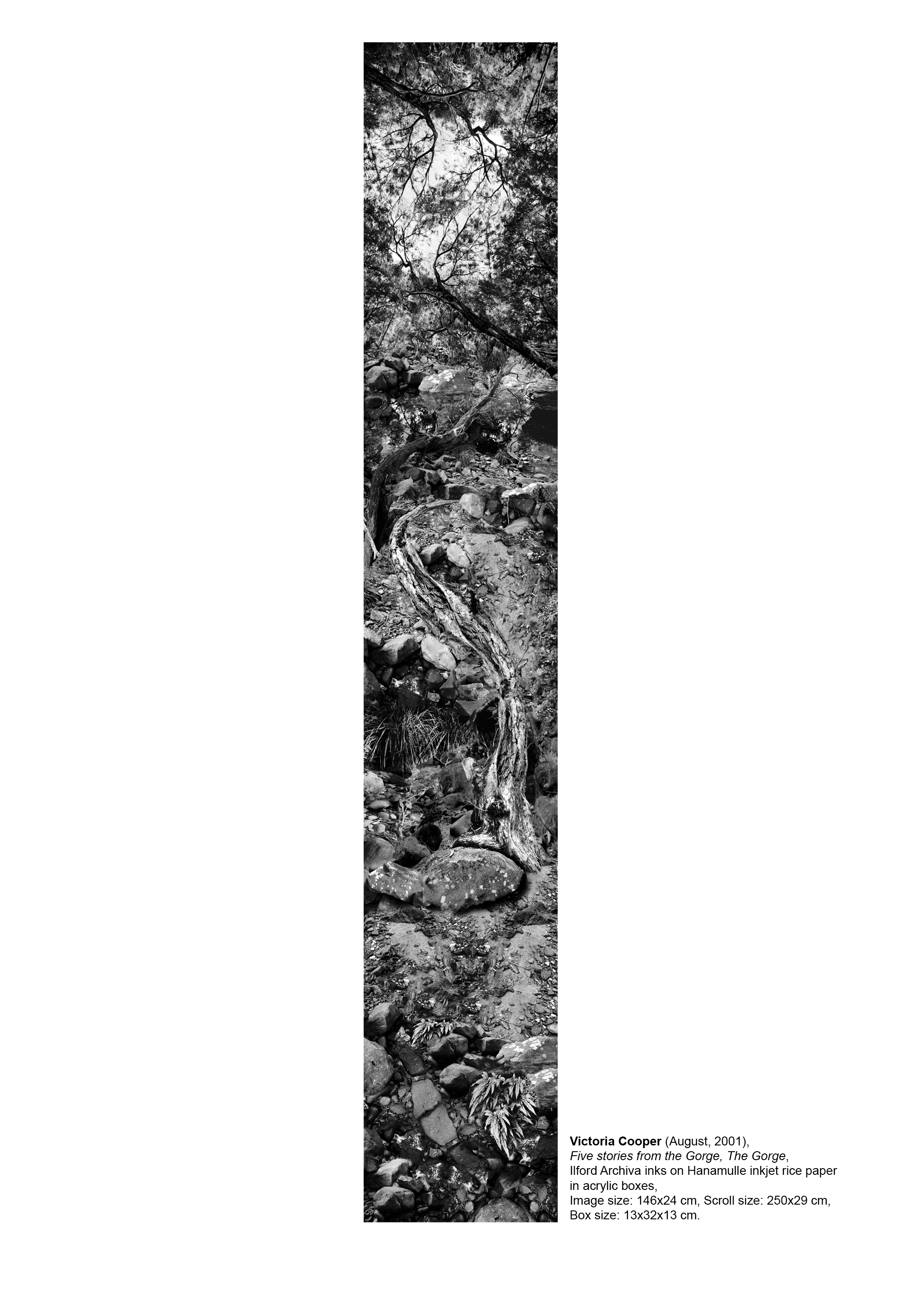
The Gorge – from the series Five Stories from the Gorge 2001
Throughout the process of image collection and construction I was informed by the influences of visual poetry, environmental art and my scientific background. The landscape paintings of William Robinson and Lin Onus have both innately influenced the way I see and work over my career. These reconstructed spaces are as fictional as a Tolkien novel but at the same time provide the evidence of existence as if collected in a Darwinian exploration.
Victoria Cooper
.
SEE A BLOG POST ABOUT The Five Stories of the Gorge: HERE
Bibliography
Timothy Druckrey (1994). ‘From Dada to Digital, Montage in the twentieth century’, Metamorphoses: Photography in the Electronic Age, Aperture, 136, Summer, pp 4-7.
Timothy Druckery (1996) editor. Electronic Culture, Technology and Visual Representation, New York, Aperture Foundation Inc.
Alberto Manguel (1996). A History of Reading, London, Harper Collins Publishers.
Alberto Manguel (2001). Reading Pictures, London, Bloomsbury Publishing Plc.
.
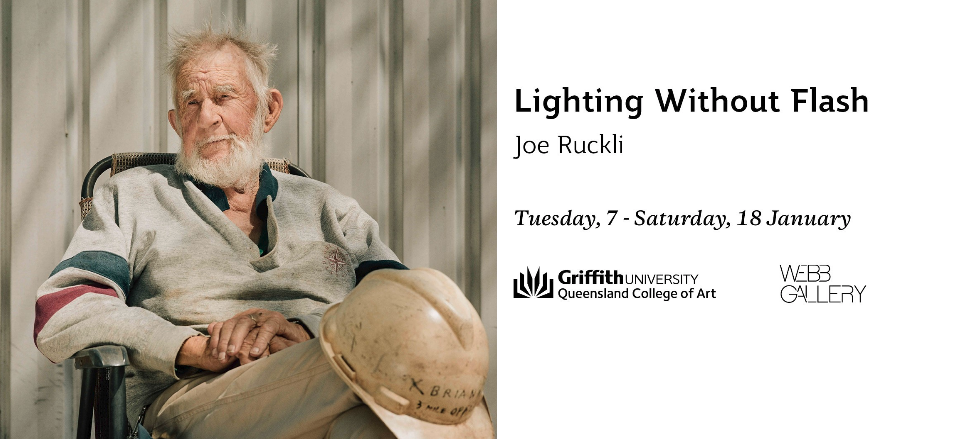
WOTweTHINK: Joe Ruckli’s ‘LIGHTNING WITHOUT FLASH’
.
Walking into Joe Ruckli’s exhibition Lightning Without Flash at the Queensland College of Art’s Web Gallery was a little like entering into the subject of his documentary work.
The white walls of the gallery evoke the opal miner’s white clay tunnels of Lightning Ridge in northern NSW. Here and there the glimmer of what opal miners call ‘colour’ appear in the form of photographs arranged in rows and in one random gallery hang.
In the center of the room on plinths sit piles of ‘potch’ – miners slang for junk opal in the form of Keno tickets, fractured clay clods, crumpled beverage cans, machinery debris and a ‘roly-poly’(tumble weed).
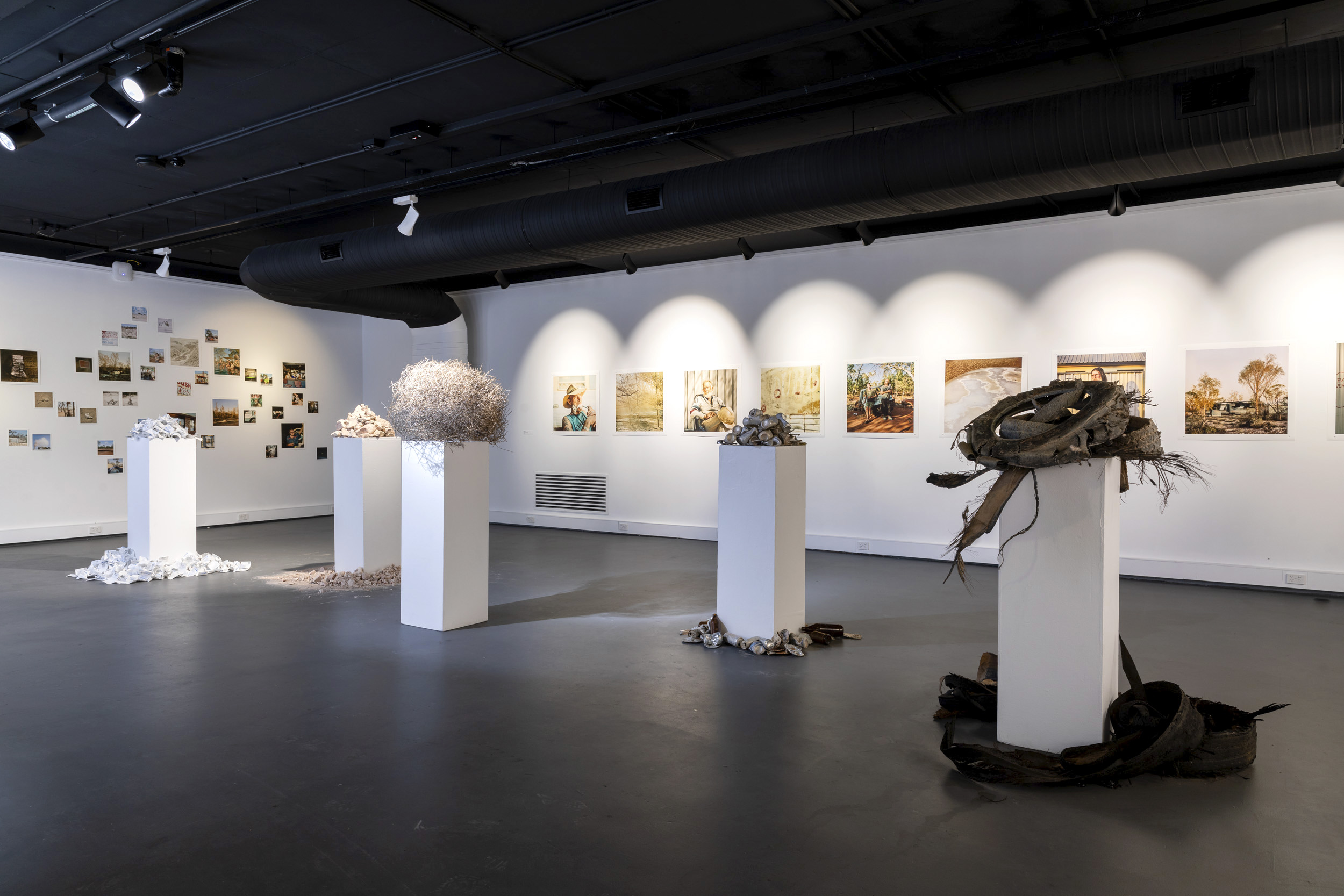
Lightning Without Flash…… Installation QCA Webb Gallery PHOTO: Joe Ruckli
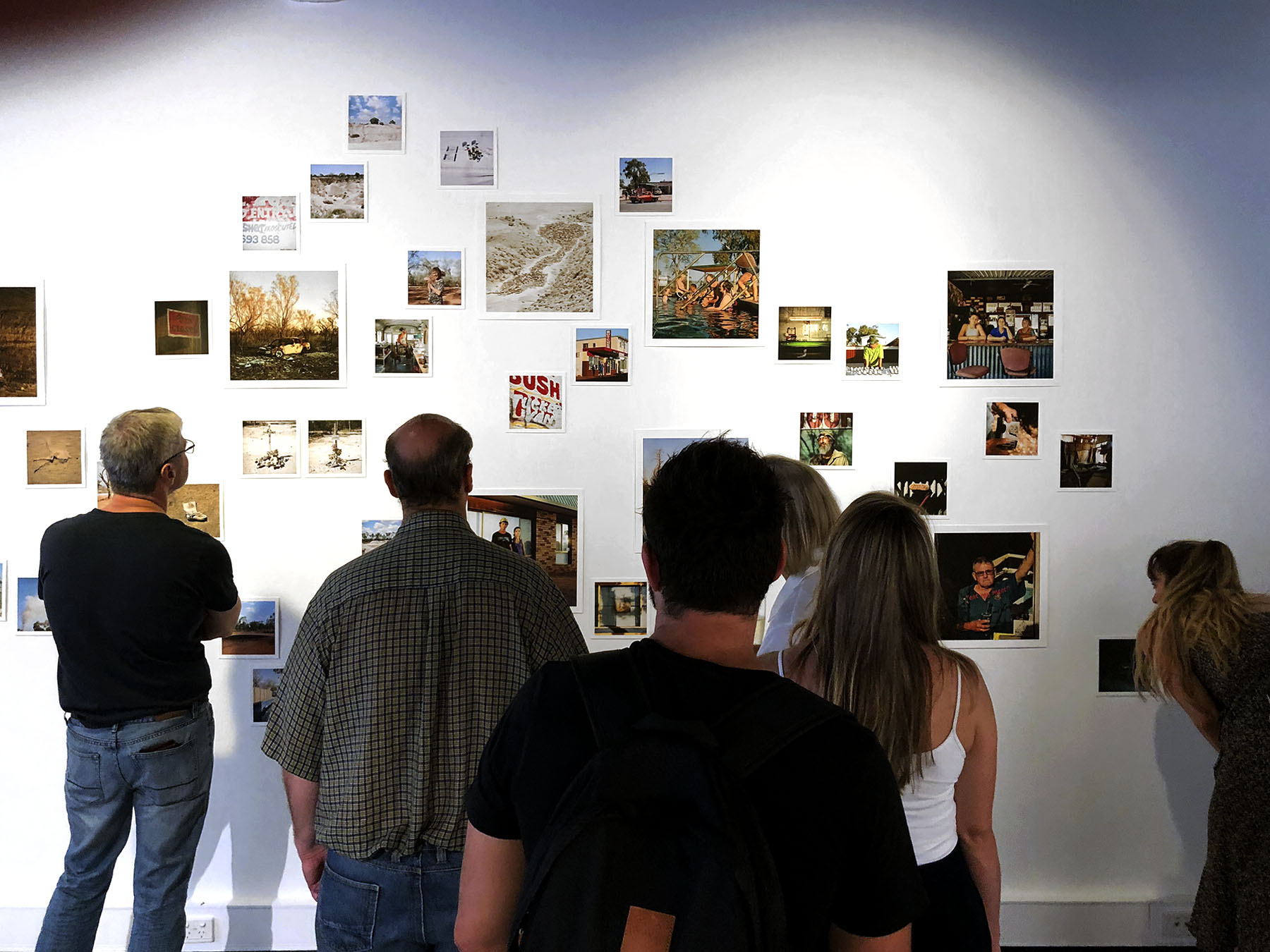
Gallery visitors at the exhibition opening … PHOTO: Doug Spowart
In traditional documentary style Ruckli’s ‘miner’s tunnel’ presents visual material that tells or invokes stories about place.
Ruckli’s human inhabitants live hard lives working in difficult conditions.
- A hand holds a wallet in which a well-handled 1960s b&w portrait of lady looks out of the frame – the thumbnail of the hand is damaged and cracked and a fly sits on the knuckle…
- A 50s+ lady stares challengingly at the camera, hand on hip the other resting on the doorway to her ‘home’ – behind her head a circular dark shape, perhaps a window, acts like a halo. There are layers of meaning here…
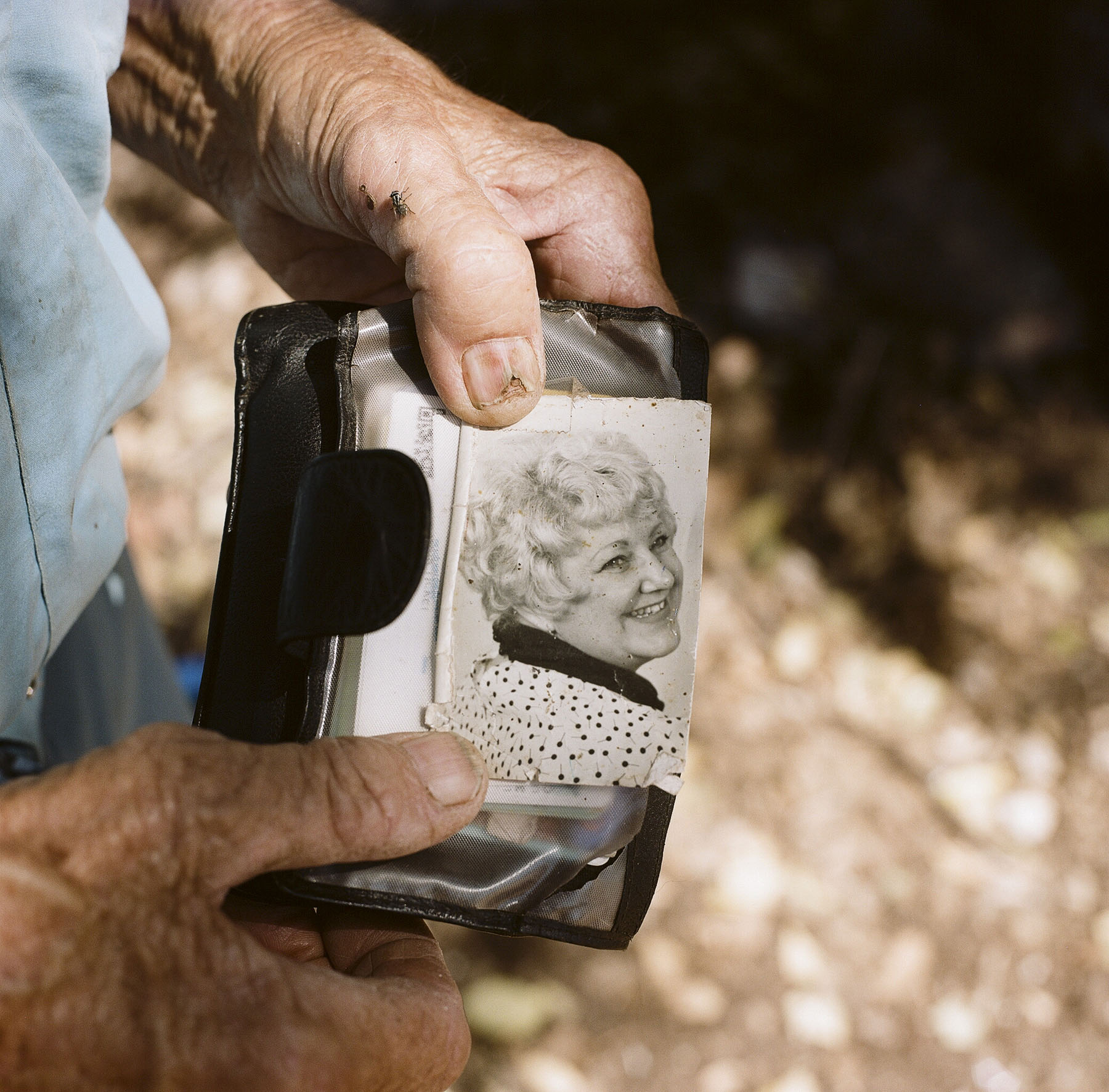
Lightning Without Flash…… QCA Webb Gallery PHOTO: Joe Ruckli
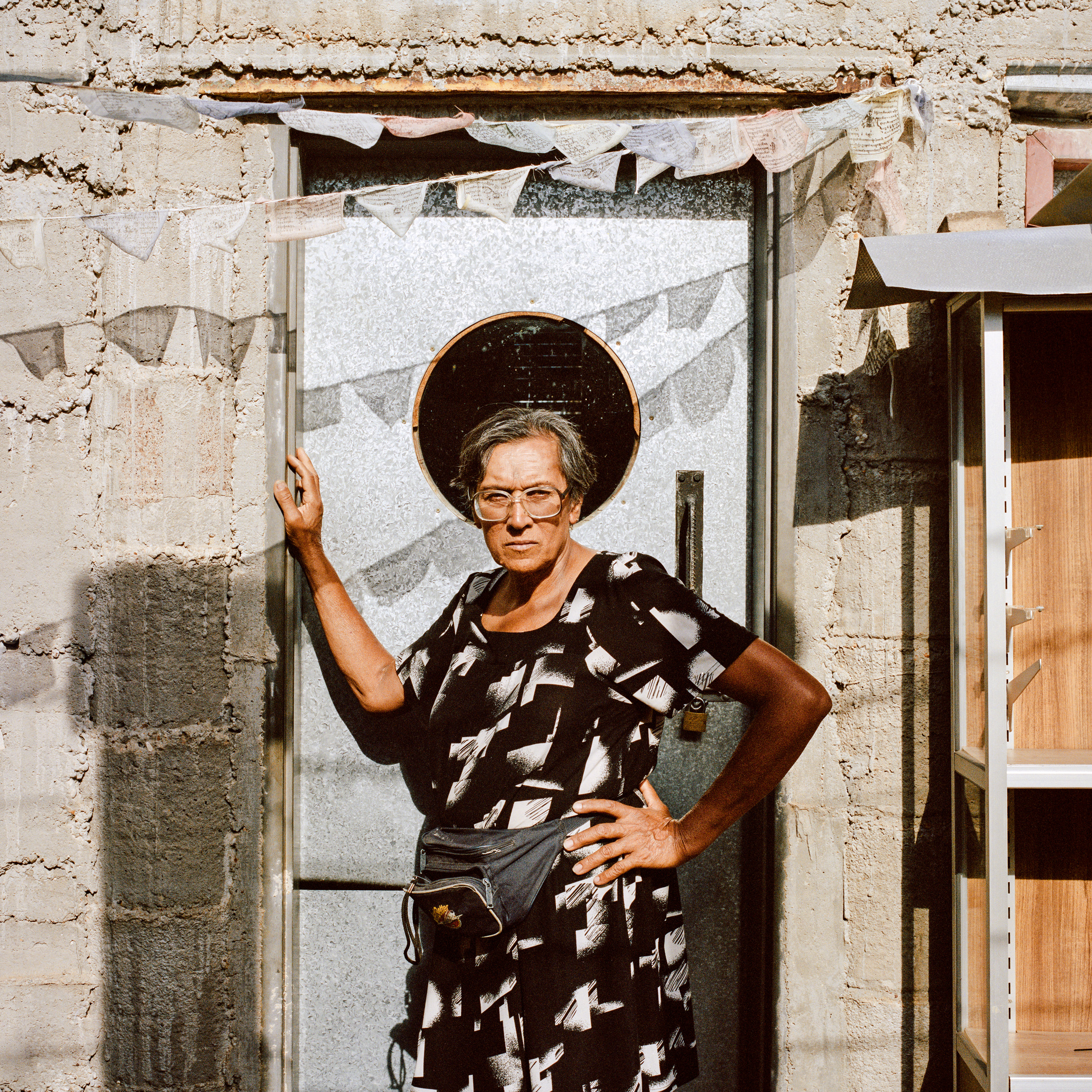
Lightning Without Flash…… QCA Webb Gallery PHOTO: Joe Ruckli
The human occupied space where people live and work is depicted as a run-down, rough and inhospitable place.
- A caravan surrounded by assorted re-purposed corrugated iron sheeting hides within a barren withered land.
- A ‘room’ of walls made of bits of bags, iron sheets, wood and bush poles seems like an abandoned hermit’s lair laid dormant for a century.
- A shop in the street ‘Peter’s Opals’ presents a stark elevation despite the beauty of the stones inside for sale.
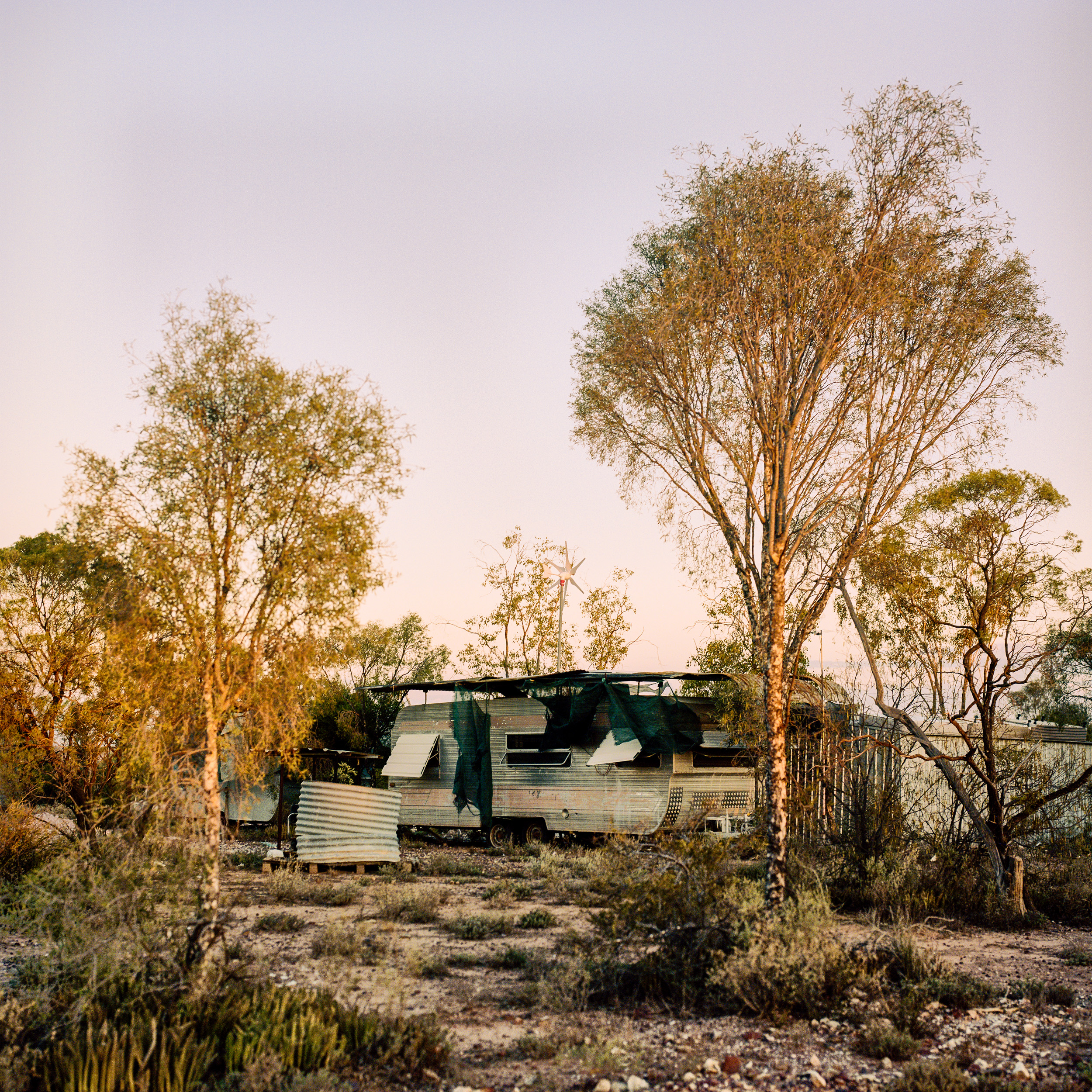
Lightning Without Flash…… QCA Webb Gallery PHOTO: Joe Ruckli
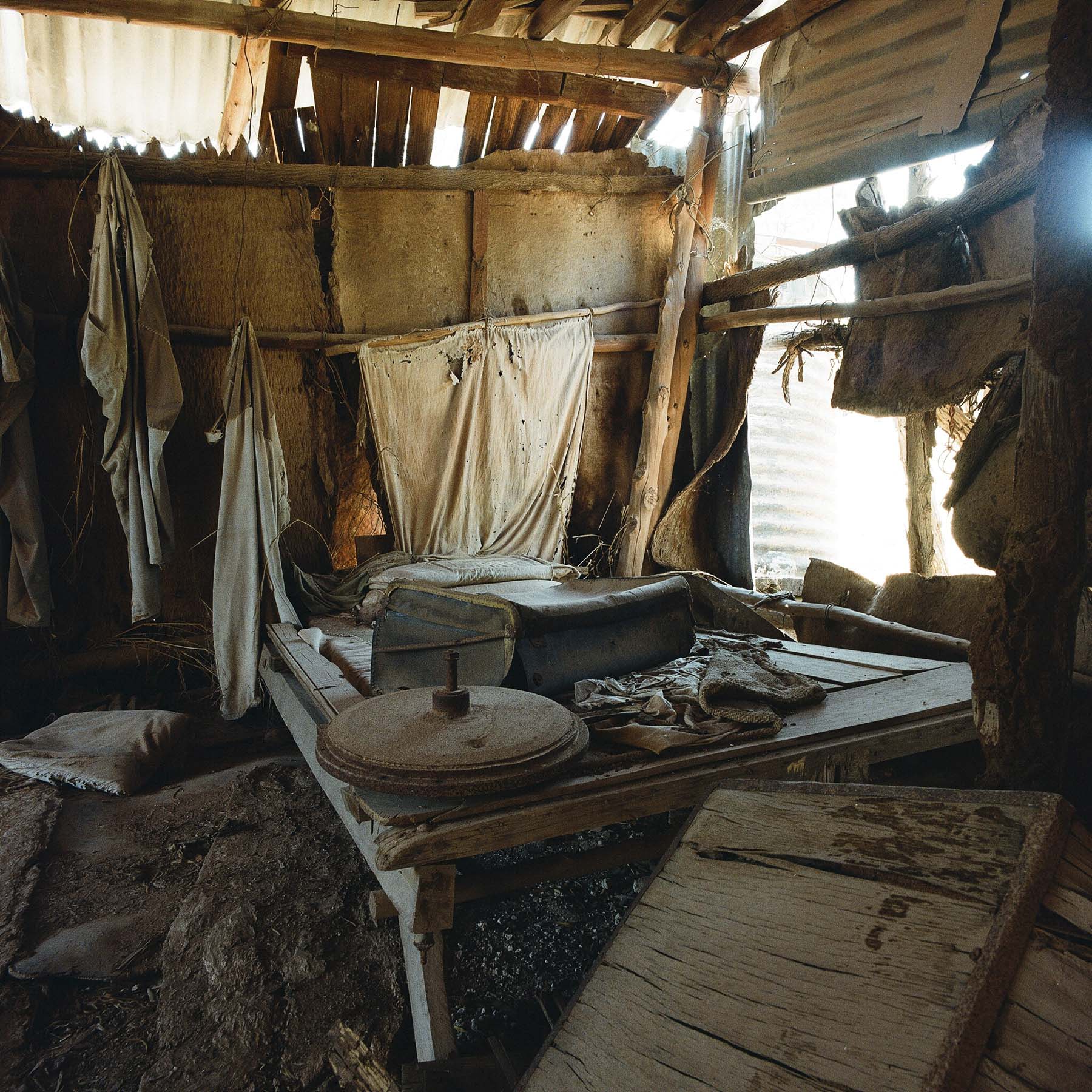
Lightning Without Flash…… QCA Webb Gallery PHOTO: Joe Ruckli
The natural space is tough enough for plants and animals without it being overlaid by the detritus of human habitation and exploitation.
- Bushland slashed by the track of grader blades, scattered bleached kangaroo bones and shrubbery covered by powdered bulldust giving the appearance of a snow scene.
- A kangaroo skeleton lies in profile, its running pose is gradually being smothered by wind-blown dust to perhaps one day to be found as a fossil of this time…
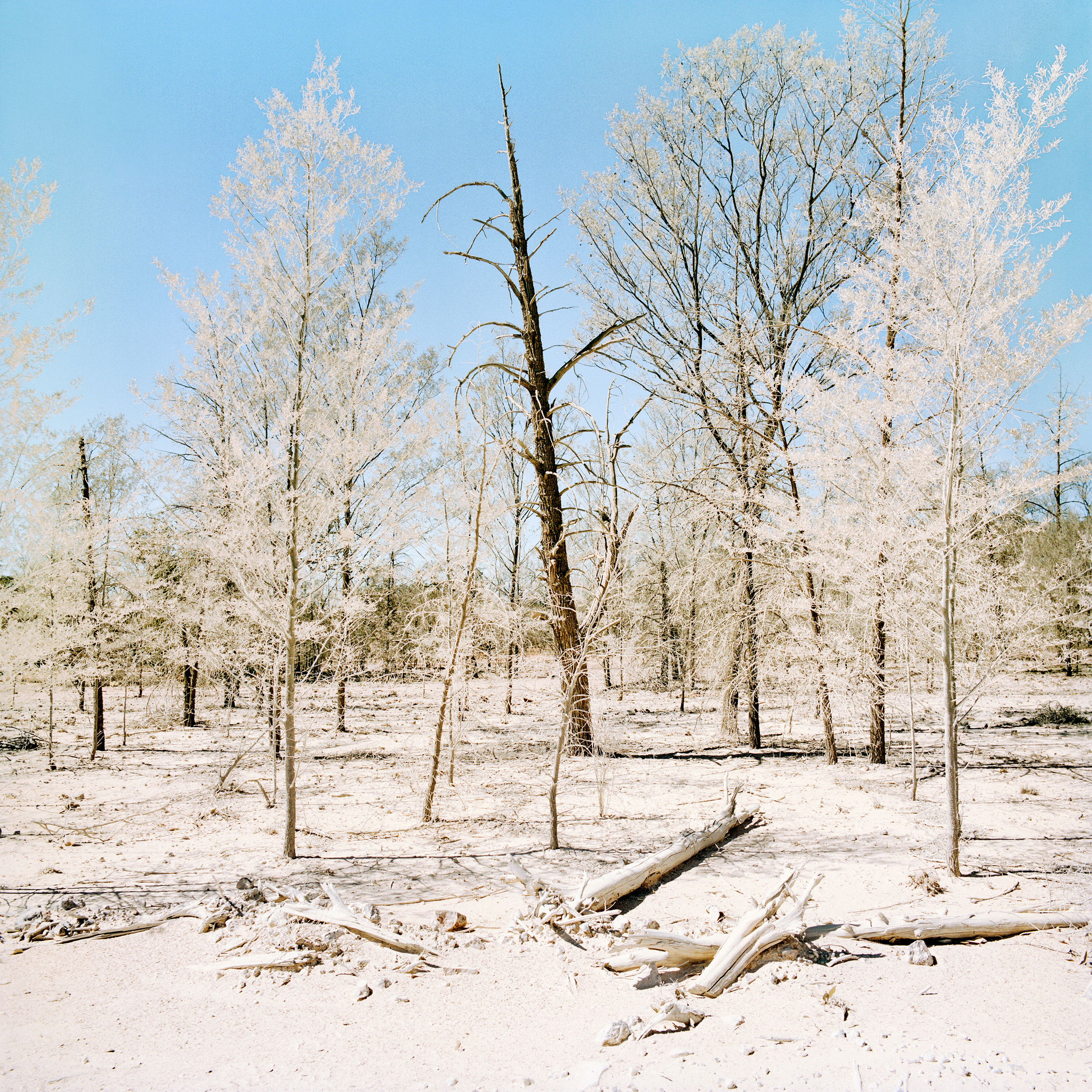
Lightning Without Flash…… QCA Webb Gallery PHOTO: Joe Ruckli
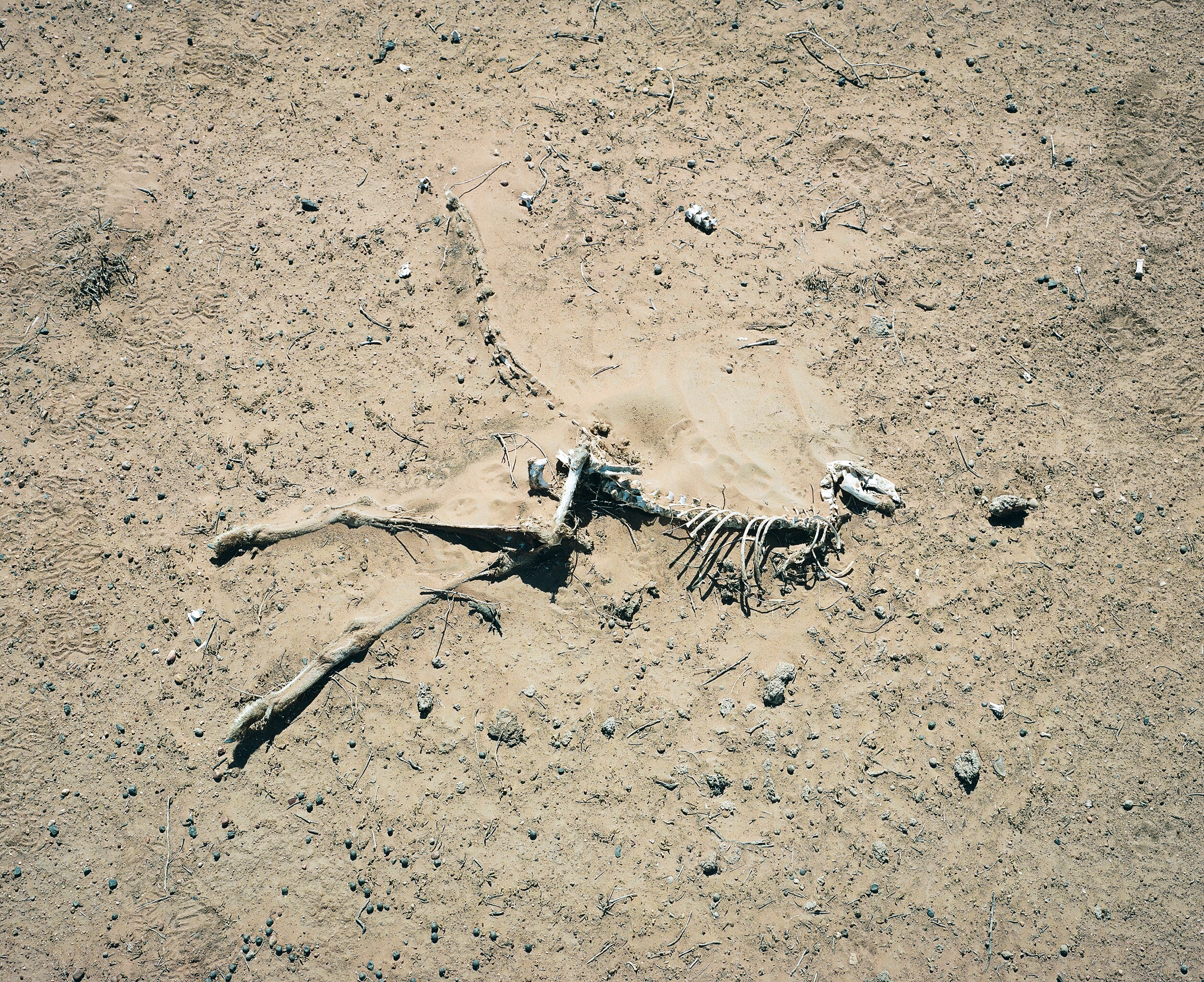
Lightning Without Flash…… QCA Webb Gallery PHOTO: Joe Ruckli
.
Ruckli has selectively, through his image and ephemera collecting, presented us with a first-hand experience of Lightning Ridge. It’s an alien space that few of us will ever encounter. But for one moment, in this white ‘tunnel’, we came to experience something of what lies behind the opal’s seduction. So powerful that it drives human endeavour to live, work and endure the hardships to strike the illusive and lucky find.
And we wonder about the gem – once extracted from its hiding in the claystones and then polished – destined for another place to adorn, as a jeweled accessory, the lifestyles of another world …
Doug Spowart with editorial support by Victoria Cooper
13 Jan 2020
.
What is WOTweTHINK …?
We attend many exhibitions and lament that these shows rarely have personal or reflective commentaries published about them. Our concept is to condense our thoughts into an Instagram-like short/sharp rought draft post. We hope that WOTweTHINK may encourage a broader discussion …
.
A SELECTION OF OTHER IMAGES FROM THE EXHIBITION
.


OUR 2019 FIELD STUDY Submission: Tidal fire debris
Each year artists from around the world submit 100 copies of an artwork and mail them to an address in Geelong, Australia. Coordinator of the Field Study International mail art project David Dellafiora works with a team to collate and assemble the A5 sized artworks into books. Copies of the Field Study International are sold to collectors and institutional libraries around the world to raise funds for the workshop and to cover project costs. Contributing artists are also sent a copy.
.
This has been a great yearly project for us for over 10 years. What follows is the story of our submission for 2019. At the end of the post there’s a brief story about Dellafiora’s Field Study Projects. David is also involved in many other mail art projects… LOOK HERE
.
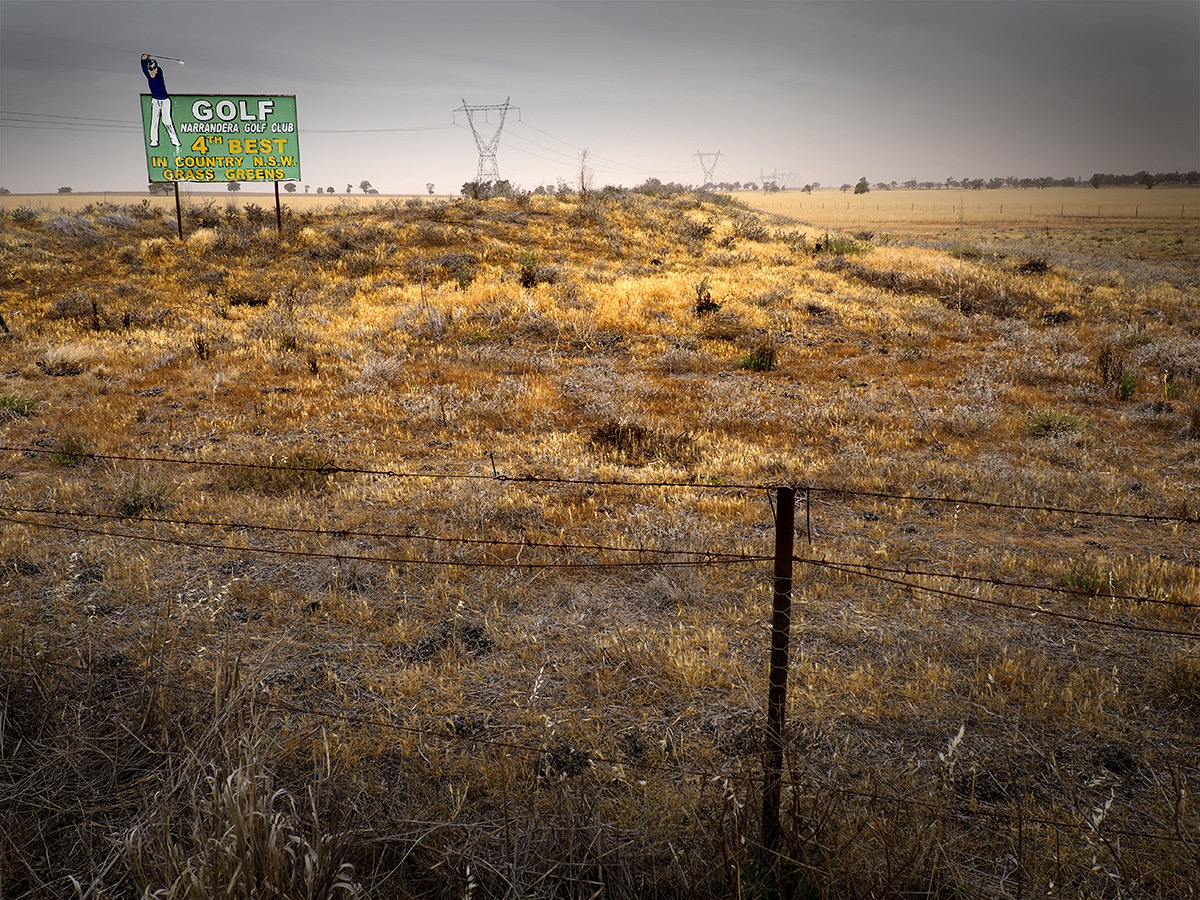
Narrabri roadside PHOTO: © Doug Spowart
.
Surrounded by fire
Recently we drove through central western New South Wales and southern Queensland. The country was dry and hot with willy-willies and dust storms lifting and moving the precious soil across the landscape. There was little or no green and the dams were dry- even rivers that would normally have some water were just sand and dry dirt. Travelling on further we witnessed the great Brigalow forests of southern Queensland seemingly quivering under the heat of the summer sun.
.
Overall the country was brittle and broken from the endless dry. Not even summer there was a concern for the future as country towns not used to running out of water were in dire situations. Coastal areas where fire is a part of environmental regeneration there was also widespread concern for this now unusual extended periods of dry. This was not a normal cycle… The country was about to explode… all it takes is a dry thunderstorm with lightning, a careless smoker driving past or sadly a deliberate act from criminals.
So then the fires started so much earlier than expected… the many brave souls rallied to fight for their community. But these were not just the normal local bush fires… They grew and joined to form huge firestorms, the fighters used all they could find from buckets to the fire fighting trucks… But much of the land was inaccessible and many areas of forest could not be saved from the onslaught of wind and heat… Some forests that had survived through the millennia without fire in unique and protected ecosystems were now potentially changed forever.
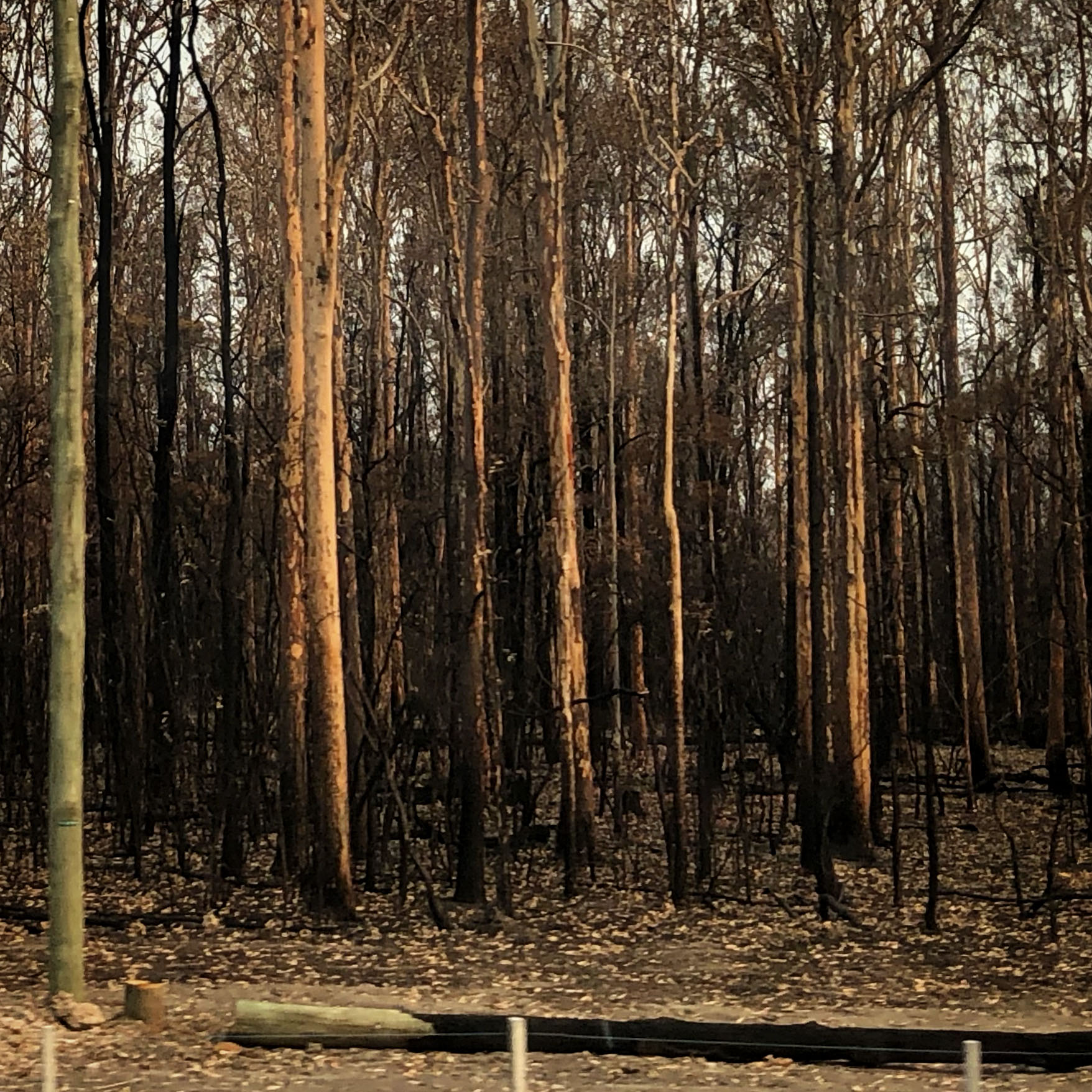
Fired forest near New Italy, northern NSW PHOTO: Victoria Cooper ©
We then came to stay at a friend’s family retreat on the coast of Northern NSW… The road to this place passes through huge areas of swamp and eucalypt forest that rarely burns as it is usually has good rain. But now we drove past kilometres and kilometres of burnt and dry country… We soon found that the regional area where our destination is located was surrounded by blackened country. The atmosphere, as with most of the coast in NSW was chocking with smoke and dust.
Even though we were assured that our town was safe these were not usual times and we felt uneasy and depressed by the enormity of this disaster.
We decided to dedicate our field report work to record this devastation. Our dismay was deepened when we walked along the beach and witnessed lines of leaves and twigs and other blackened material washed up with the tide .. like the dead bodies of victims discarded by criminals. Down the length of the entire coast of NSW where other fires raged, these waves of blackened and broken forests were appearing – the sea has returned the evidence to the place of the crime.
We began by gathering small samples of the material as symbolic references to vast amount of evidence left behind from these black tides. This Field Report is our first response as part of future substantive work on the contemporary condition of indifference, arrogance and ignorance towards a deteriorating environment.
Victoria Cooper
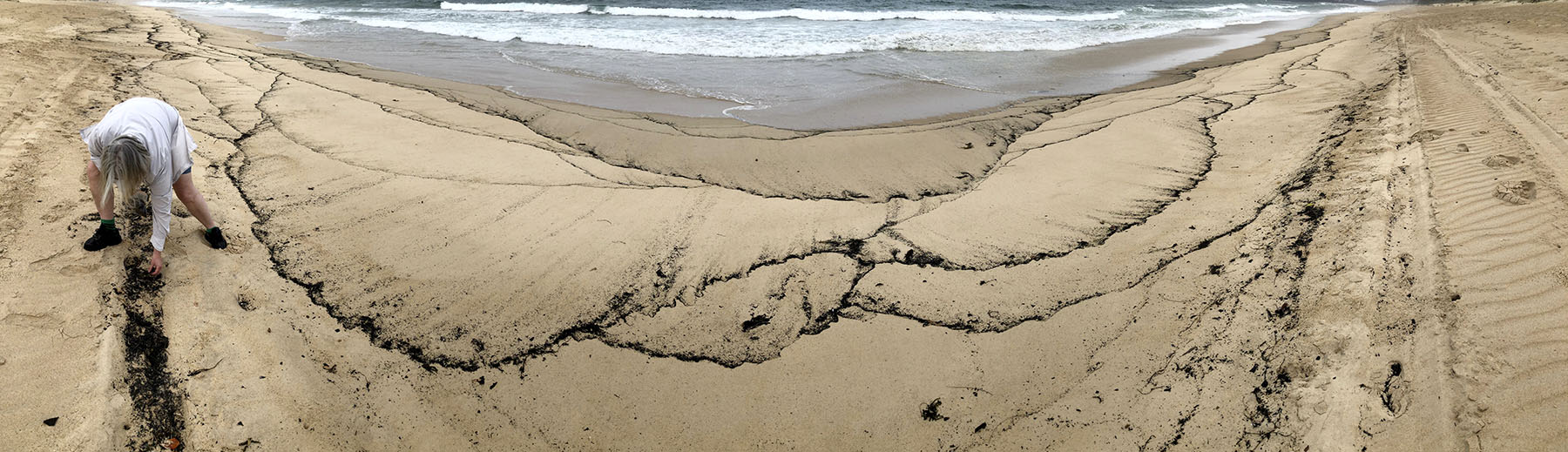
Ashed beach, Wooli northern NSW PHOTO: Doug Spowart ©
OUR SUBMISSION
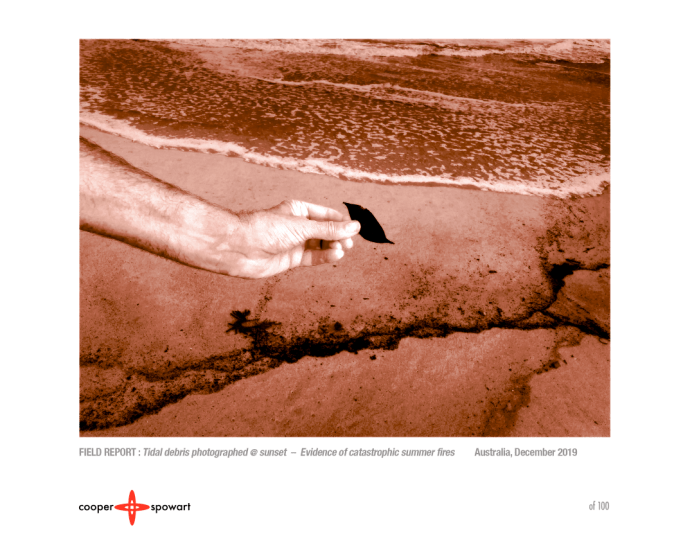
COOPER+SPOWART 2019 Field Study submission
Signing the 100 prints…
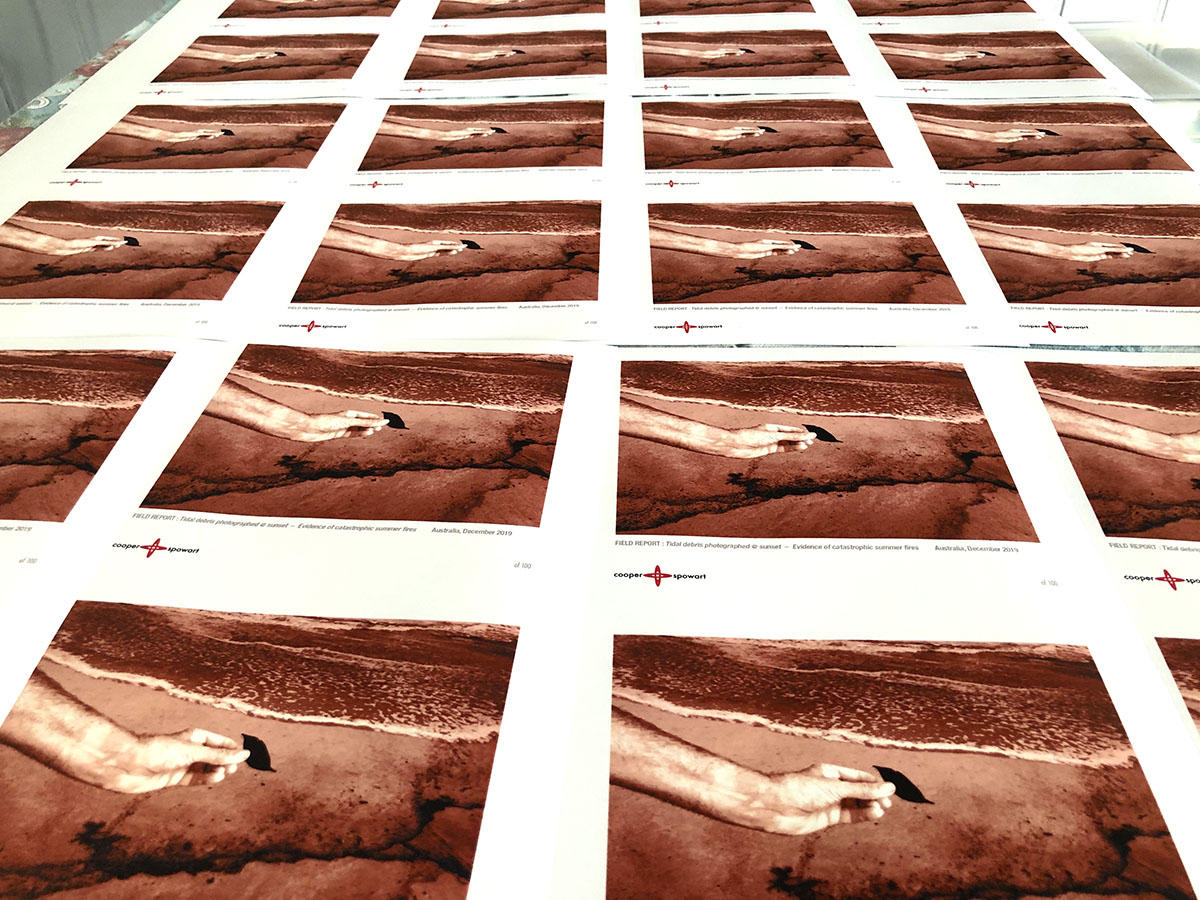
100 prints…
.
SOME BACKGROUND TO FIELD STUDY REPORT
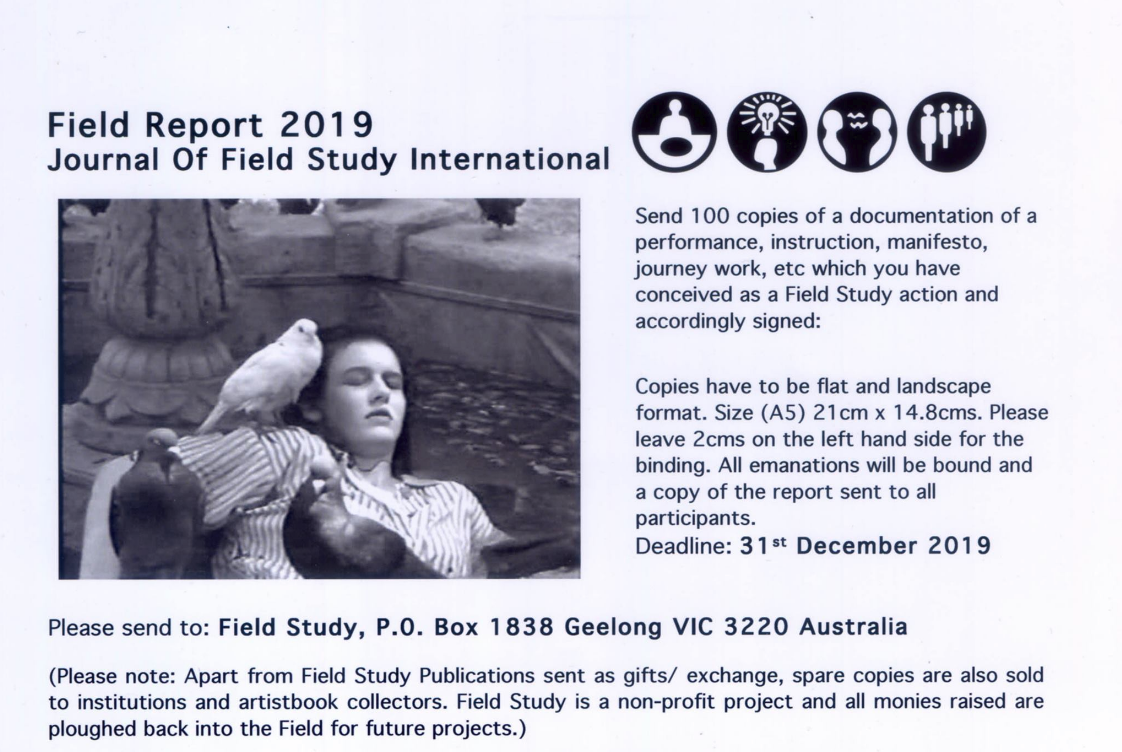
Field Study International 2019 Call for Entries
.
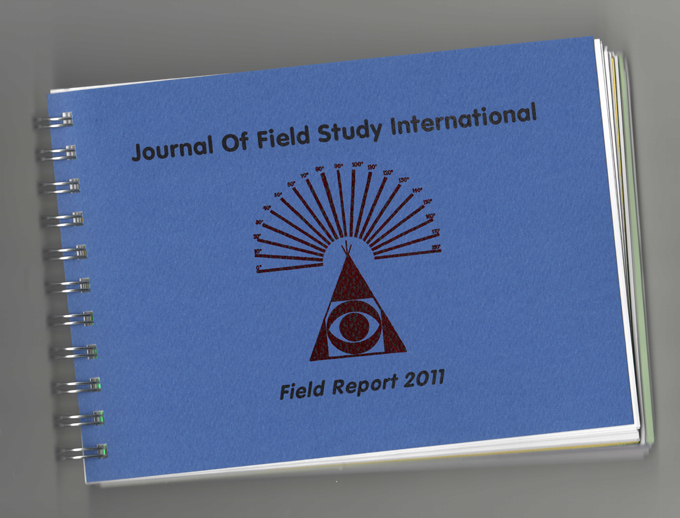
2011 Field Report cover
.
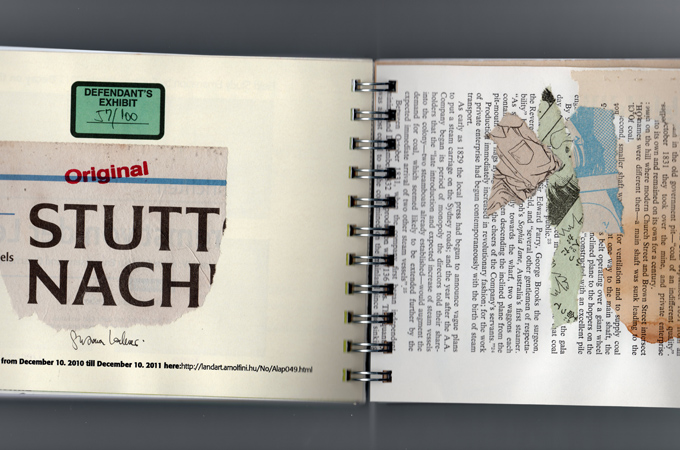
2011 Field Report pages
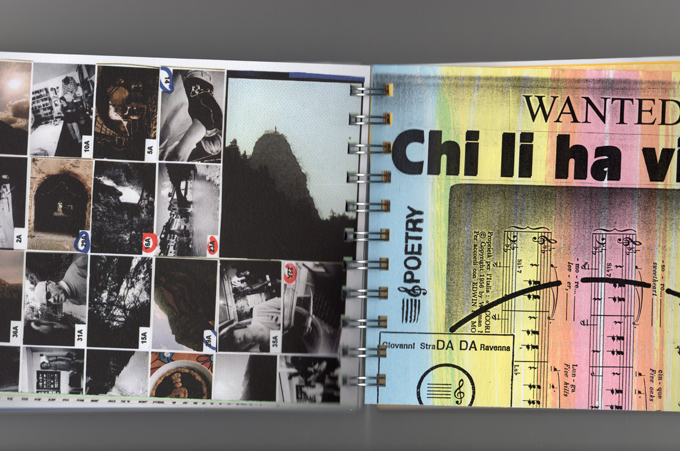
2011 Field Report
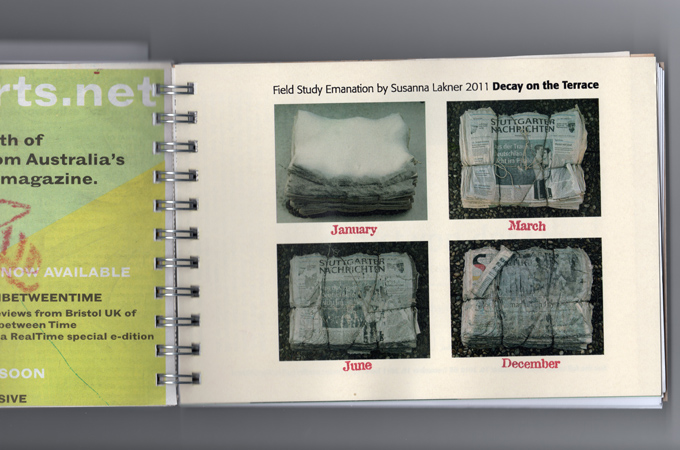
2011 Field Report pages
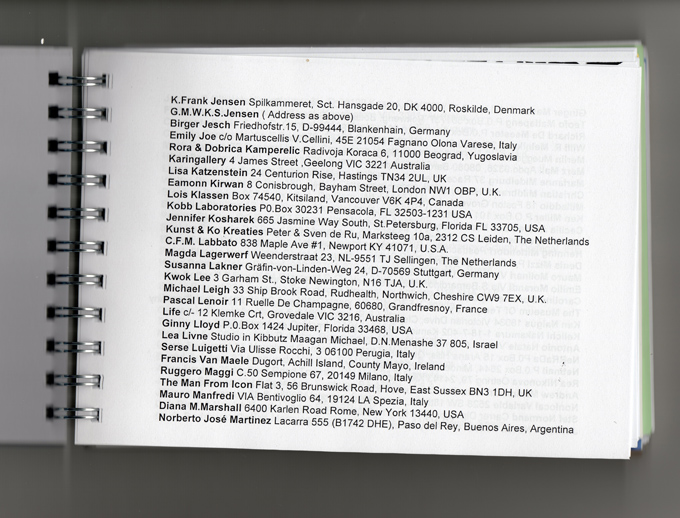
A page of participants – 2011 Field Report
.
.
Look out for the 2020 Call for Submissions …
.
.
.
BIFB: PHOTOBOOK WEEKEND – A Report

BIFB Webpage Header
WORLD PHOTOBOOK WEEKEND
A Photobook Club Australia World Photobook Day activity for 2019

The Ballarat International Foto Biennale was proud to host the World Photobook Day during the festival between Saturday 12 October and Monday 14 October. The call-out was to Celebrate World Photobook Day with other photography enthusiasts by attending 4 photobook events over the weekend.
.
Doug meeting with Aaron Bradbrook
The back story for the BIFB’s World Photobook Weekend is that in March Vicky and I visited the BIFB in its home the National Centre of Photography. In a conversation with Associate Curator Aaron Bradbrook we pitched the idea of a photobook event to coincide with World Photobook Day.
In followup conversations with the BIFB Creative Director Fiona Sweet a series of four events became part of the program. The events were: a keynote talk, a forum, a photobook fair and a birthday celebration.
With BIFB Creative Director Fiona Sweet


In the months that followed we worked with Fiona, refined the event focus and the people who could be involved. We then followed through with our side of the necessary preparations and promotion of the event.
This series of Blog posts provides a report on the four events as well as an opportunity to present a commentary on the Australian and New Zealand photobooks that was the topic of the talk I presented on the first day of the weekend.
To navigate through the events just ‘CLICK’ on the title tab. At the end of each post there’s a ‘RETURN to the HOMEPAGE’ link.
.
SATURDAY 12 OCTOBER

Doug Spowart + ANZ Photobooks
TALK BY DOUG SPOWART
Many Tribes: The Australian And New Zealand Photobook
Click LINK
.
SUNDAY 13 OCTOBER
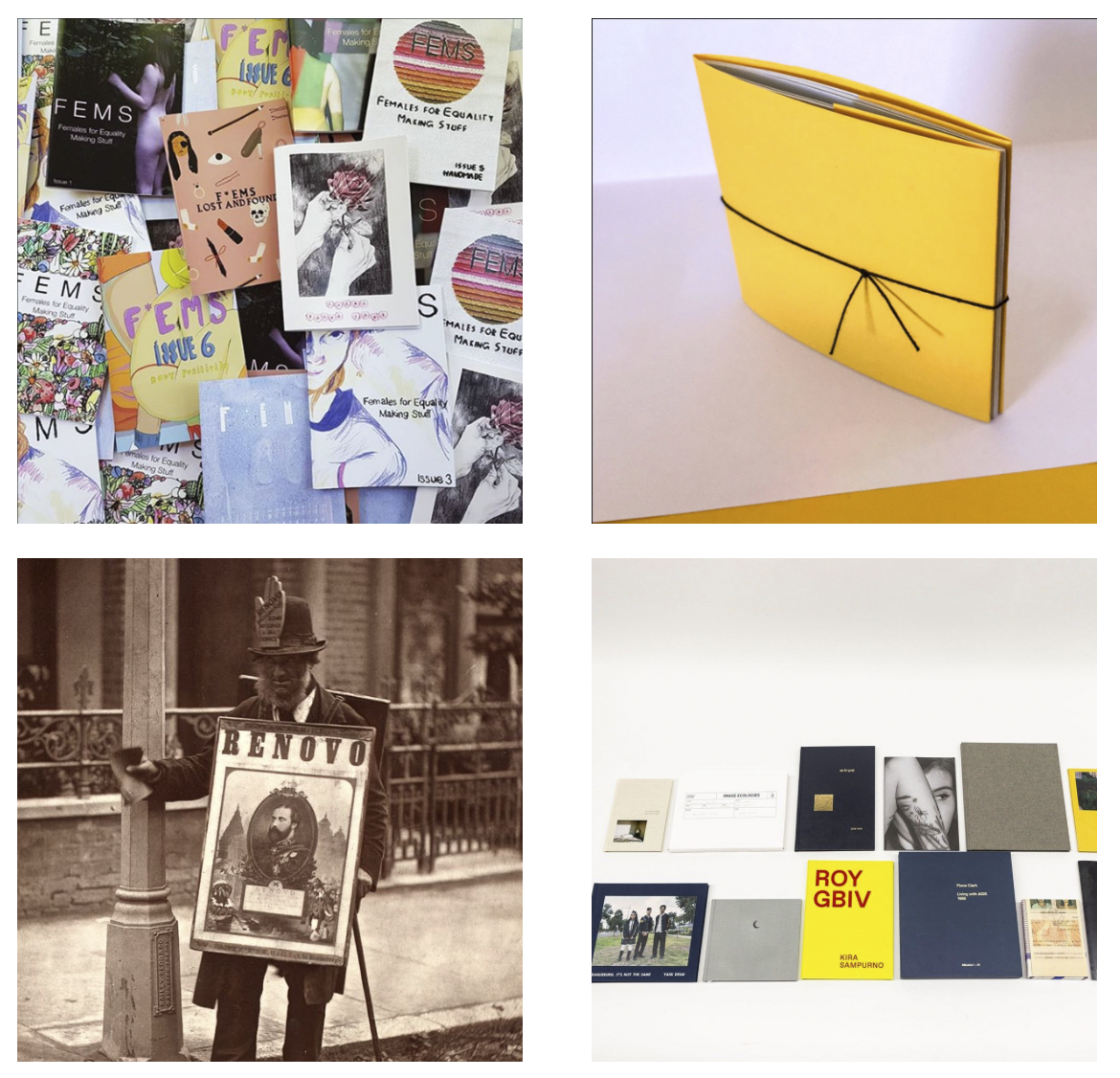
Book Fair participants
PHOTOBOOK FAIR
Click LINK
.
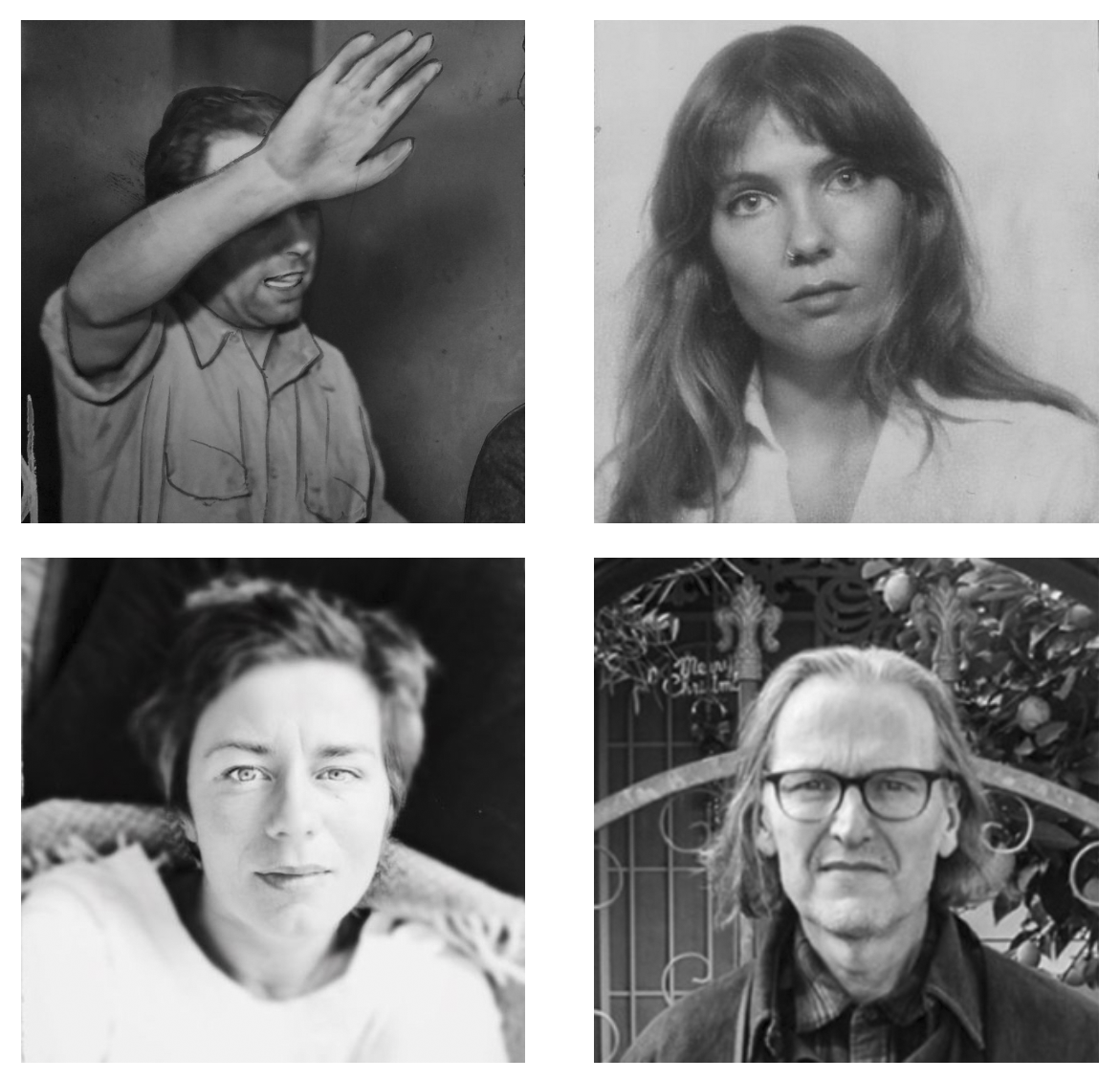
Forum Panelists
FORUM: Photobooks – Getting Published & Getting Collected
with Patrick Pound, Sarah Walker, Heidi Romano and David Wadelton. Moderated by Doug Spowart
Click LINK
MONDAY 14 OCTOBER
.

World Photobook Day Birthday Celebration
HAPPY BIRTHDAY PARTY! Celebrating 176 years of photobooks
Click LINK
.
.
.
..
.
.
.
.
.
.
.
.
.


BRITISH LIBRARY Acquires our cyanotype artists’ book
with 5 comments
A statement about the artwork
Across Australia over the January 26th long weekend, people prepare, cook and consume food to mark this day in history.
For us, this work is our response to, and in recognition of, the ‘turning of the page’ in Australian history that this date represents. One day, January 25th 1788, Aboriginal people feasted on a diverse banquet of bush tucker as they had for thousands of years. The next day, the country was transformed by a new paradigm represented in this work by the table setting of the First Fleet.
Australia Day, for us, is an important time to acknowledge the First Peoples’ perspective and their knowing of land, culture and history and how it should be recognised as underpinning the diversity and identity of contemporary Australia. We, as descendants of European people, are seeking to understand and know more about our place within the longer history of this land.
.
View 1: Australian Banquet, January 25/ 26, 1788
The 25th of January side of the broadsheet is viewed and contemplated.
.
View 2: Australian Banquet, January 25/ 26, 1788
The broadsheet is then turned over to view the 26th of January side.
.
View 3: Australian Banquet, January 25/ 26, 1788
Finally the broadsheet is held up to the light – the complex interrelationship between the two visual references to be seen and considered.
BOOK DESCRIPTION: A unique state artists’ book broadsheet
TITLE: Australian Banquet January 25/26, 1788
MEDIA: Double-sided cyanotype image in rice paper
DIMENSIONS: 37.6 x 77cm
PLACE & DATE MADE: Toowoomba, Queensland, Australia, 2010
EDITION: 7 unique state variants
SOME REFLECTIONS ON THE BOOK’S HISTORY
COLLECTIONS, EXHIBITIONS & AWARDS:
2020 COLLECTION: British Library
2015 EXHIBITED: Books by Artists – The Webb Gallery as part of the Artists Book Brisbane Event, Conference at the Queensland College of Art, Brisbane
2014 EXHIBITED: Artist’s Books (reprised) [artists’ books 1978-2014] – George Paton Gallery, University of Melbourne
2014 EXHIBITED: Alternative Imaging – Curated by Dawne Fahey at Two Doors Gallery, The Rocks, Sydney
2011: COLLECTION: Australian Library of Art, State Library of Queensland
2011 SHORTLISTED: Southern Cross University Artists’ Book Award, Lismore. Judge: Ross Woodrow
2011 EXHIBITED: BLUE – Arts Council Toowoomba members exhibition, Toowoomba Regional Art Gallery
2010 AWARD WINNER: Martin Hanson Awards, Gladstone Regional Art Gallery – Works on Paper
2010 EXHIBITED: Art Bound – Red Gallery, Glebe, Sydney
2010 FINALIST: Josephine Ulrick & Win Schubert Photography Award – Gold Coast City Gallery. Judge: Judy Annear
.
.
.
.
.
Text and © Doug Spowart+Victoria Cooper
.
.
.
.
Share this:
Written by Cooper+Spowart
January 26, 2020 at 1:20 pm
Posted in Artists Books, Cyanotypes, Wot happened on this day
Tagged with 1788, artists' book cyanotype, Australia Day comment, Australia Day in art, colonial Australia, cyanotype, Helen Cole, invasion day, January 25/ 26, View 1: Australian Banquet