Archive for the ‘Victoria Cooper’ Category
2020 WORLDWIDE PINHOLE DAY 26 April – Our images

WPPD2020 – LOGO
.
Around the [w]hole world on Sunday April 26, 2020 pinholers were out having fun – Making their images for the 2020 Worldwide Pinhole Photography Day.
This year we are hunkered down during the Pandemic in Toowoomba, Queensland Australia. Once again, far away from the darkroom, we’ve fitted a piece of aluminium with a light admitting pin-prick to the body cap of our Olympus Pen camera and braved the parkland at the end of our street. The next day we uploaded our images with a detailed caption to the WPPD website to add to the contributions from Australian pinholers and many more from around the world.
This is the 15th year we have supported the WPD project!
WHAT IS WORLDWIDE PINHOLE DAY ALL ABOUT?
From the Worldwide Pinhole Photography Day website introduction
All the photographs in this extraordinary collection share two common characteristics: (1) they are lensless photographs (2) they were all made on April 26, 2020.
They also share an additional and less formal characteristic: the sincere enthusiasm of their creators who, by participating in this collective event, shared individual visions and techniques. Hence the amazing diversity of subjects, cameras, techniques and photographic materials combined in this exhibit!
Australian WWPD submission @ May3
VICTORIA’s PINHOLE IMAGE
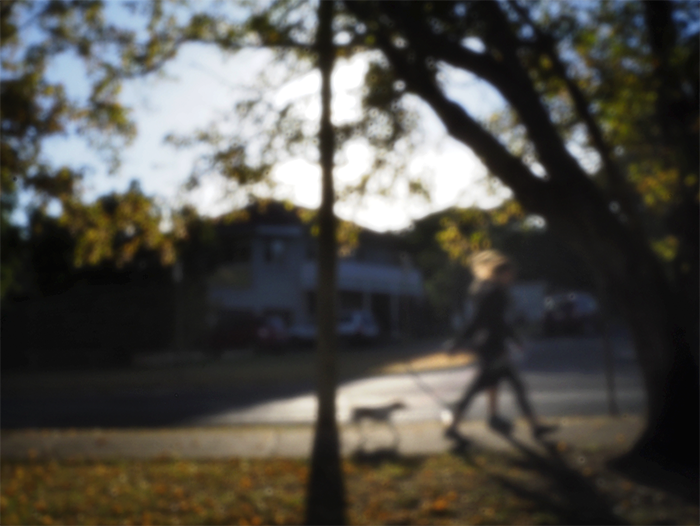
Out walking the dog during COVID Isolation PHOTO: Victoria Cooper
ABOUT VICKY’S PINHOLE IMAGE:
“Walking in the park as it turns to Autumn … Many people are exercising: walking, running, cycling during our period of isolation for COVID-19. I am grateful that during this terrible time, we are able to slow down and reconnect with what is important in our lives.”
DOUG’s PINHOLE IMAGE
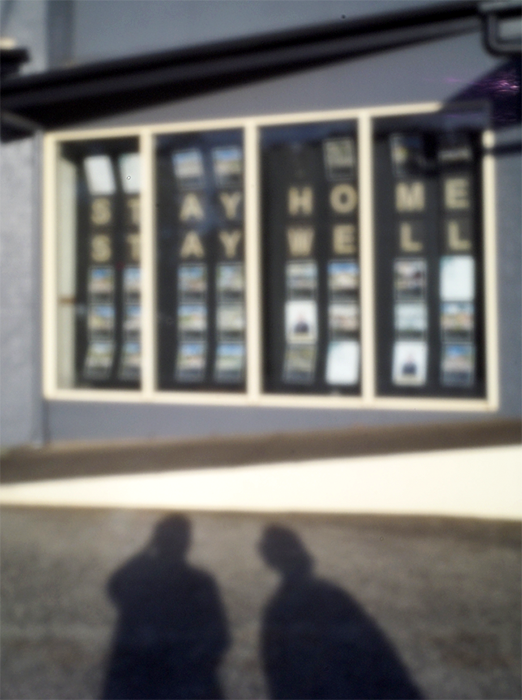
Doug Spowart’s Stay Home-WPPD-2020
ABOUT DOUG’S PINHOLE IMAGE:
“With the world-wide pandemic Covid-19 changing everything signs appear everywhere to remind us to stay vigilant in our resolve to limit community infection. Our local real estate agent has replaced photos of houses for sale with the letters S-T-A-Y H-O-M-E / S-T-A-Y W-E-L-L. Stay healthy everyone…”
.
OUR Digi-PINHOLE CAMERA
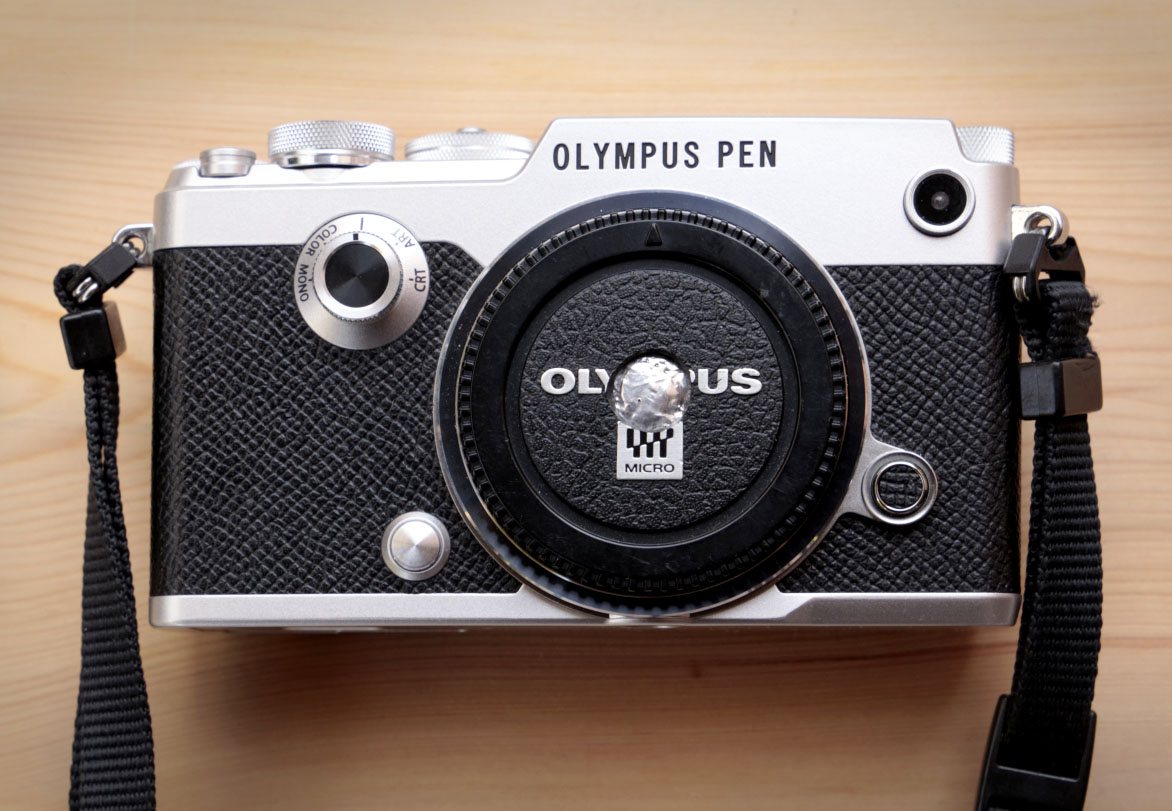
The Cooper+Spowart digi OLYMPUS PEN with pinhole …
“This is a converted digital Olympus Pen, shared with my partner Doug Spowart. The pinhole is a pin pierced hole in aluminium which is inserted into a hole drilled into a body cap. It is a hand held exposure of 1/20th second at ISO 800.”
Our digi-pinhole camera is an OLYMPUS Pen digital. The body cover has been drilled-out and a aluminium foil sheet with pin prick acts as the light emitting ‘hole’. Hand-held exposure 1/20th of a second ISO 800″
The 2020 WPPD GALLERY DEDICATION:
to Eric Renner who passed away in the USA last month
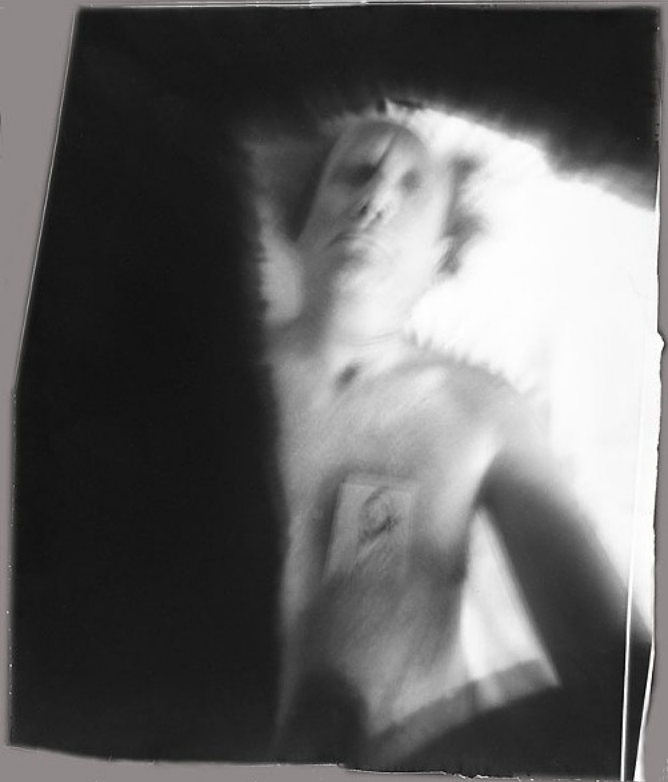
Self Portrait: Sweatshirt pinhole camera, Arles, 1996, pinhole photograph, 14″x11″ SOURCE: https://ericrennerphoto.com
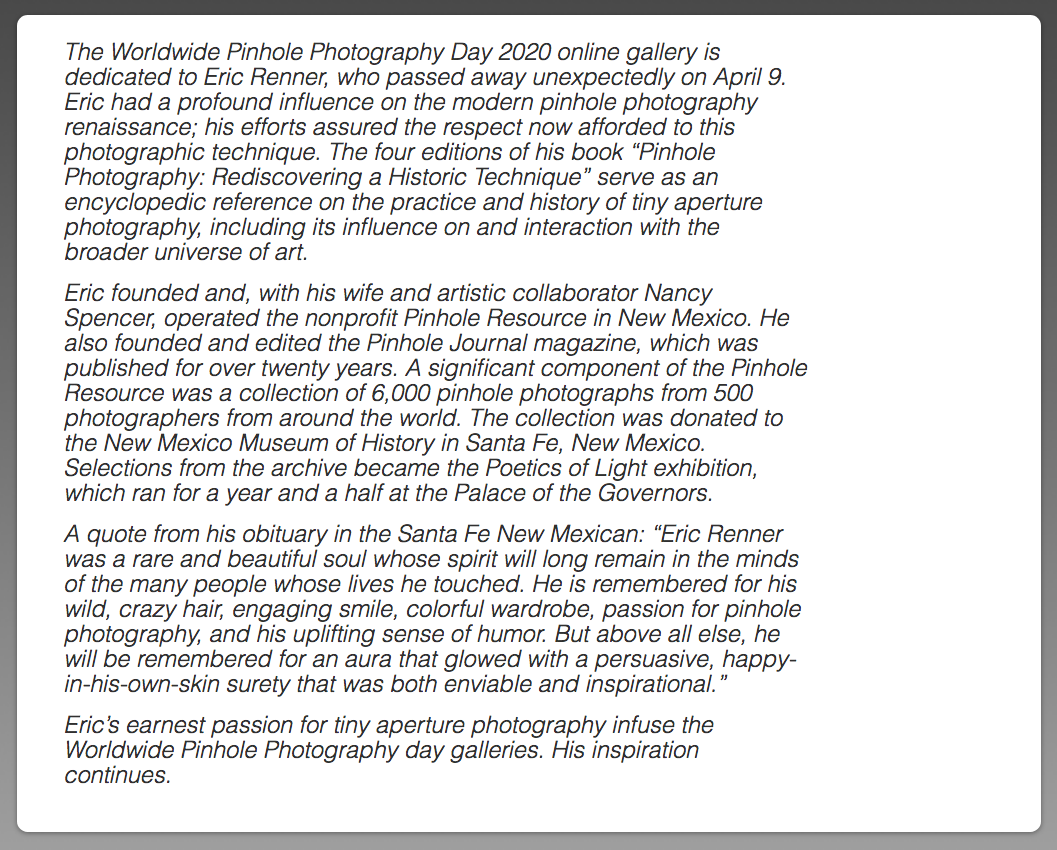
WPPD 2020 Eric Renner Dedication
VALE ERIC RENNER: Our connection with Eric and partner Nancy Spencer
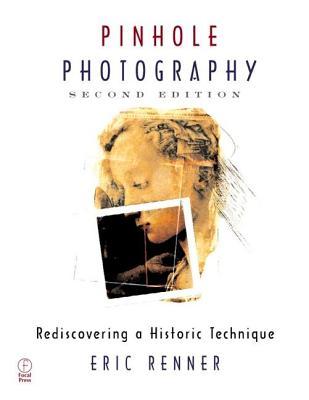
Eric’s Pinhole Photography book
From early in 1990 Vicky had connected with Eric Renner, partner Nancy Spencer and their Pinhole Resource. We exchanged communications and images showing the work that we were doing in Australia. Eric and Nancy, through their inclusive and generous efforts created a world-wide movement in pinhole photography that continues to grow.
Eric published a body a colour pinhole and zoneplate images from the exhibition Natural Encounter by Vicky in the pinhole journal. Later a collection of Doug’s 4×5 Zoneplate images were also published in the journal.
Over the years we continued to connect and share ideas and some of our work was included in the Focal Press book Pinhole Photography rediscovering a historic technique. Our work was also included in the Pinhole Resource collection, Poetics of Light exhibition and the accompanying Poetics of Light book at the New Mexico Museum of History.
Pinhole photography is a vibrant and exciting world-wide pinhole community and we are grateful for this legacy that Eric, with Nancy nurtured.
There’s a Blog post about the Poetics of Light book and our work in it HERE
.
Other images we made on the day…


Visit the WWPD Site for details of other submissions: http://pinholeday.org/
.
Our Past WWPD images:
2019 Doug+Vicky https://wotwedid.com/2019/04/29/2019-worldwide-pinhole-day-28-april-our-images/
2018 Doug+Vicky https://wotwedid.com/2018/04/29/2018-worldwide-pinhole-day-29-april-our-images/
2016 Doug: http://www.pinholeday.org/index.php?id=1235
2016 Vicky: http://www.pinholeday.org/index.php?id=1540
2015 https://wotwedid.com/2015/05/04/april-26-worldwide-pinhole-day-our-contributions-for-2015/
2014 Vicky’s http://pinholeday.org/gallery/2014/index.php?id=1810&City=Toowoomba
2014 Doug’s http://pinholeday.org/gallery/2014/index.php?id=1811&City=Toowoomba
2013 https://wotwedid.com/2013/04/29/world-pinhole-photography-day-our-contribution/
2012 http://www.pinholeday.org/gallery/2012/index.php?id=1937&searchStr=spowart
2011 http://www.pinholeday.org/gallery/2011/index.php?id=924
HERE IS THE LINK to the 2011 pinhole video http://www.youtube.com/watch?v=Yk4vnbzTqOU
2010 http://www.pinholeday.org/gallery/2010/index.php?id=2464&Country=Australia&searchStr=spowart
2006 http://www.pinholeday.org/gallery/2006/index.php?id=1636&Country=Australia&searchStr=cooper
2004 Vicky http://www.pinholeday.org/gallery/2004/index.php?id=1553&Country=Australia&searchStr=cooper
2004 Doug http://www.pinholeday.org/gallery/2004/index.php?id=1552&Country=Australia&searchStr=spowart
2003 http://www.pinholeday.org/gallery/2003/index.php?id=615&Country=Australia&searchStr=spowart
2002 http://www.pinholeday.org/gallery/2002/index.php?id=826&Country=Australia&searchStr=spowart
.
.
 .
.VICTORIA COOPER: Scroll works 1998-2003

Victoria Cooper: Portrait
.
Victoria Cooper talks about her early montage works in the form of 10 scrolls made in the period 1998-2003
The text below begins with a discussion about the first five scrolls, three from Mt Buffalo and two of Phillip Island clouds. This is the first public viewing of these early scroll works.
Following this is a short statement about the next five scrolls, The Five Stories of the Gorge. There is a separate blog post about these scrolls that presents more details and exhibition history along with an image of each scroll. HERE
.
For those who can see, existence takes place in an unfurling scroll of pictures captured by sight enhanced or tempered by other senses . . . Building up a language made of pictures translated into words and words translated into pictures, through which we try to grasp and understand our very existence. (Manguel, 2001, p.7)
.
Montage and digital narratives
Timothy Druckrey (1994) discusses the montage early in digital era: One of the central considerations in the emergence of electronic montage is the redefinition of narrative and the single image is not sufficient to serve as a record of an event but, rather, that events are themselves complex configurations of experience, intention, and interpretation. Nearly 30 years of the digital evolution, the montage and the collage in all its forms both traditional and analogue continues to shape perception and narrative of the human condition.
About my digital montage scroll works
My first major digital body of work in the late 1990’s was a series constructed visual narratives from photo-documentation in sites significant in my development as an environmental visual poet. In the digital medium, I then cut and blended my collected data/ resource of photographic elements into the multiple perspectives that visually tell my story through the form of rice paper scrolls. The sites were Mt Buffalo, coastal Victoria, and a small area of original forest near Toowoomba.
When I first encountered the landscape at Mount Buffalo, I was filled with a sense of awe. The most significant memories that remain with me are of the journeys from the valley to the summit. Over the years I have undertaken many walks that meander through or climb impressive granite landforms and rich stands of native flora. The Buffalo Scrolls were constructed from many individual elements of the analogue photographic material gathered on site and woven together in the computer later. Although initially informed by the tradition of Chinese and Japanese scroll making, I could not conform to the strict rituals of Asian art school but rather was guided in the production of these works by material thinking and the reflective/reflexive response to memory and corporeal experience.
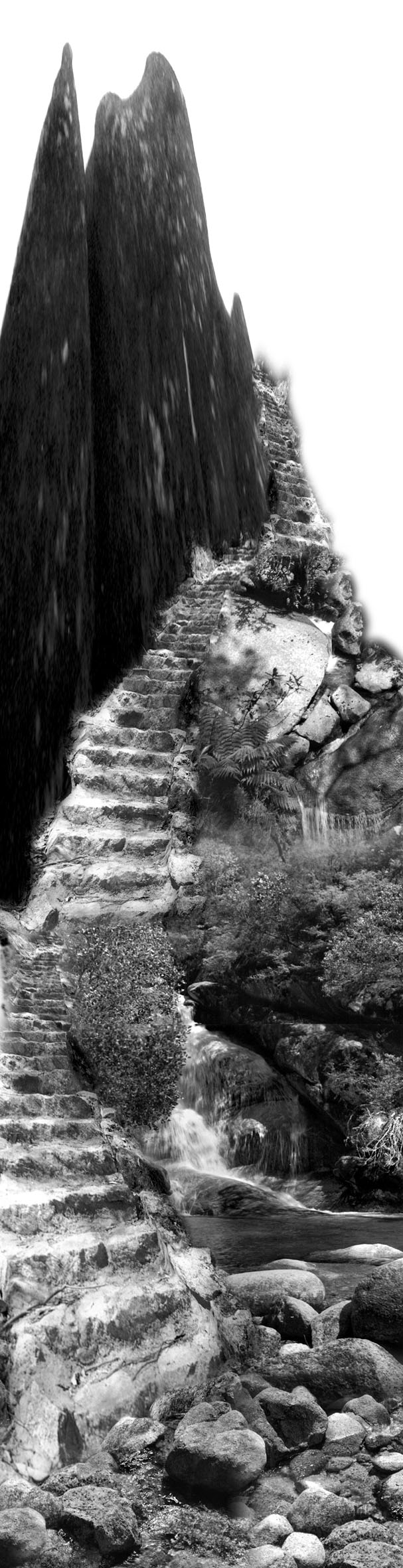
Victoria Cooper (August, 1999), Buffalo Scrolls, Waterfall,
inkjet on rice paper in acrylic boxes,
Image: 107×27.5 cm, Scroll: 250×30 cm.
The digital environment provided me with a psychological space in which images could be combined, manipulated and layered in the shaping of my story. I utilised image manipulation software to ‘grow’ and distort the landscape. Through this process I found that I was directed to imaginative places beyond any original intent or pre-visualization. Although the work originates in my direct recordings of place, the fluidity of digital space allowed for experimentation and new work to transform and evolve any fixed idea I may have had. So in creating The Waterfall scroll, a large boulder became a precipitous mountain to emphasis the terrain encountered. The trail up to the waterfalls was a seemingly endless rock-formed staircase that proved to be a challenging path.
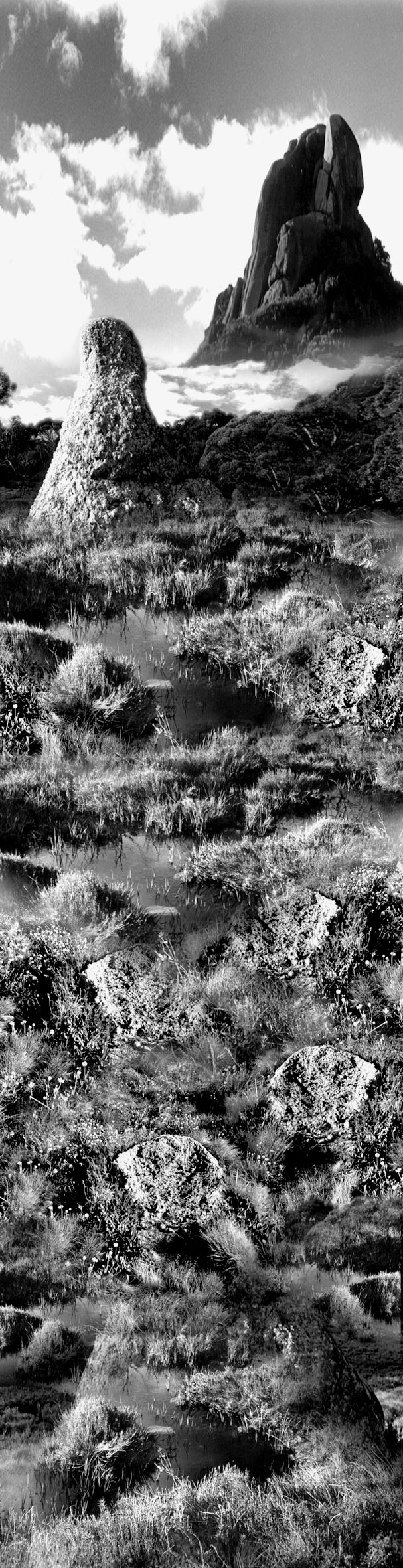
Victoria Cooper (August, 1999), Buffalo Scrolls, The Cathedral,
inkjet on rice paper in acrylic boxes, Image: 107×27.5 cm,
Scroll: 250×30 cm. Collection of the artist.
The Cathedral scroll journey across a watery marsh dotted with fragile alpine daisies is at times a precarious rock hop. Taking care not to step onto the vegetation beneath. In another of the Buffalo scrolls the ominous granite corridor of The Pinnacle defines the way through expanses of rock to the summit of the mountain in the distance.
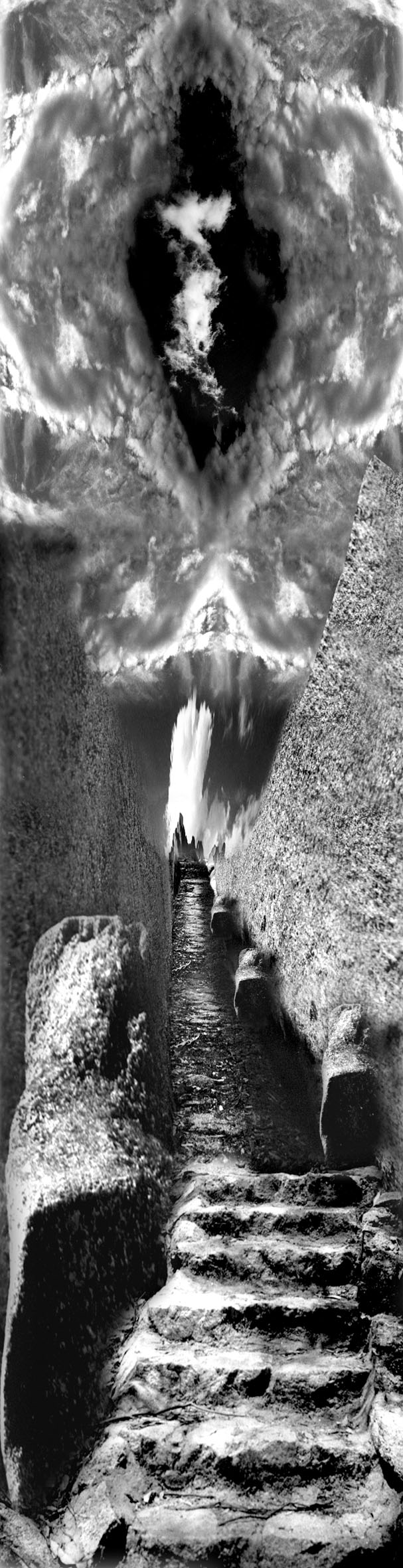
Victoria Cooper (August, 1999), Buffalo Scrolls, The Pinnacle, inkjet on rice paper in acrylic boxes, Image: 107×27.5 cm, Scroll: 250×30 cm. Collection of the artist.
.
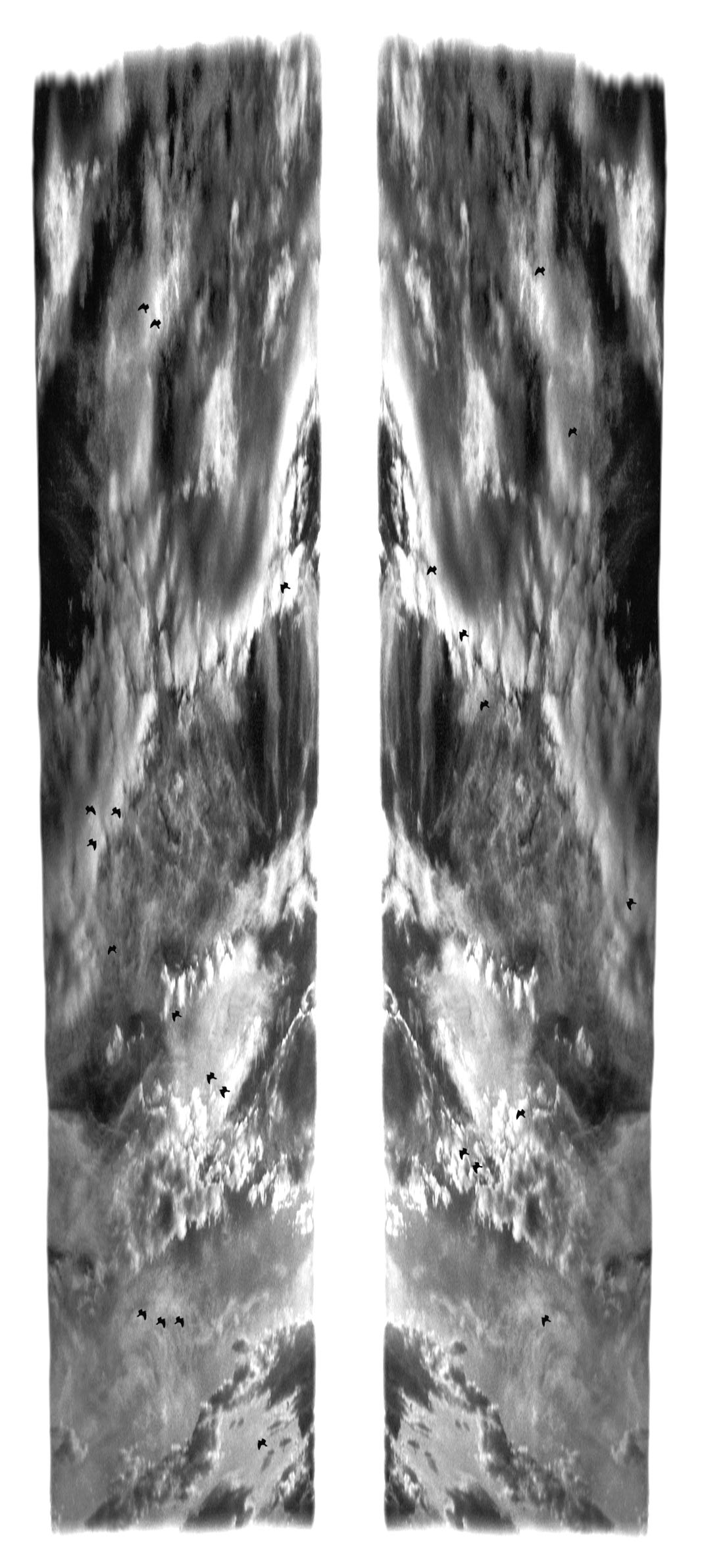
Victoria Cooper (August, 1999), Phillip Island Storm Cloud, left and right views,
inkjet on rice paper in acrylic boxes, Image: 107×24 cm, Scroll: 250×30 cm.
Collection of the artist.
My work with digital scrolls continued with the production of the diptych, Phillip Island Storm Cloud. These two images relate to the sense of anticipation felt when observing an approaching storm.
At Mount Buffalo and Phillip Island, I wrestled with both a fear of taking risks when encountering new and difficult terrain and a strong curiosity to explore the unknown. The scrolls reflect the memories of conflict and fear together with a sense of wonder I experienced within this sublime landscape and, in some ways more broadly, my life.
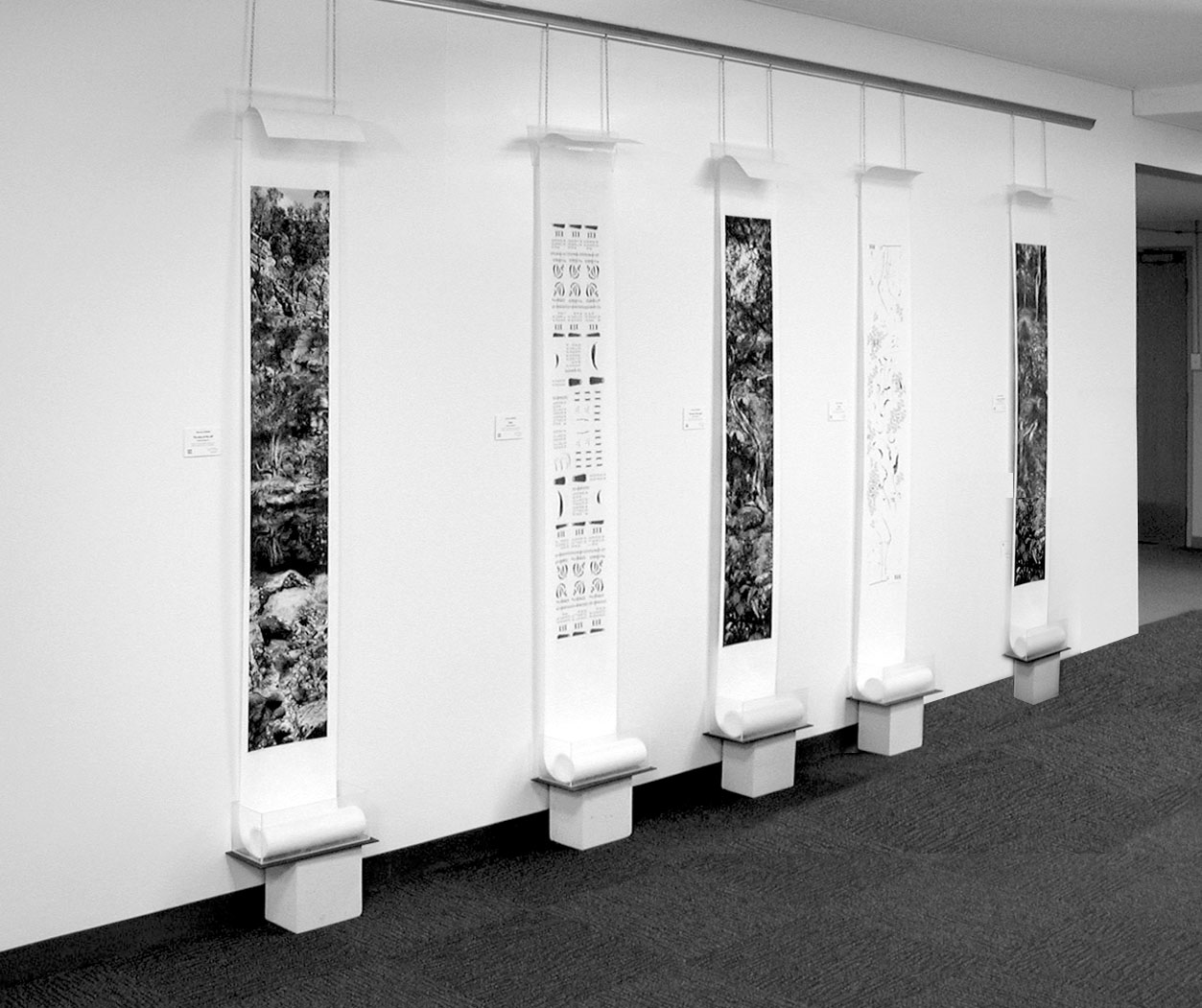
Installation of Victoria Cooper’s Five Stories of the Gorge
The virtual to the physical
The digital montages can only be seen in the electronic medium through the action of ‘scrolling’. Therefore, as some of my early inspiration came from the Asian form of presenting narratives, I utilised the rice paper scroll transformed the virtual to physical, tactile form. The scrolls are displayed in the vertical format and unravelled from their acrylic container to reveal the entire image. The viewer can enter the scroll at any point as with the initial perusal of a written story and, if engaged fully, can follow the narrative through from beginning to end.
The Five Stories from the Gorge Scrolls
Following this initial work I became more interested with the concept of small and intimate spaces found in everyday life. Five stories from the Gorge, presents a more intimate connection with the environment than the Buffalo series. Instead of trekking up precipitous climbs of distant mountain regions, I followed forgotten pathways and looked into the small, enclosed spaces of this gorge environment near where I lived. I made many journeys into the gorge and on each occasion I took time to absorb many sensory impressions as well as creating a digital photographic record.
As with the Buffalo work, I found that the single viewpoint photographic image did not give me the dynamic reading I sought. So again I created a series of montage scroll works synthesised from my collected visual recordings and sense-memory.
The physical environment of the gorge presented me with some complexities when blending the changes of photographic perspective into a seamless passage through the landscape. Central to this work was to attempt, by the use of scale and viewpoint changes, to reconstruct how the eye scans a scene. As the eye of the observer focuses on single viewpoints then moves to another it not possible to take in an entire scene with a single perspective. With this characteristic of visual perception in mind, I set out to recreate the landscape visually from multiple viewpoints. So in this body of work I seamlessly combined disjointed and sometimes perceptively conflicting views to form images that go beyond the static visual document.
During my visits to photograph the gorge, I also collected objects from the site. For me, the found elements provided a different narrative opportunity. In the scrolls Chaos and Order I investigated these natural elements presented in groupings as a kind of language. These pictographs form poems made up from a natural vocabulary associated with the visual form of the written word.
Each element was scanned into the computer to obtain a replica of their likeness, the objects themselves were later returned to the site to continue their natural cycle. The scroll, Order, begins the dialogue by suggesting the elements of a genetic code. The arrangements of the seeds and leaves and other fragments are seemingly organised and uniform but, on closer observation, there are subtle differences to the repeated segments.
Chaos came as an answer to the cyclic relentless processes that continually ebb and flow through time in nature. It is the interruptions, upheavals and the process of change that nurture and ensure survival. Though these scrolls are without the scenic detail, they are the essence of the region, a distilled manuscript of the cycles and disruptive events in nature over time.
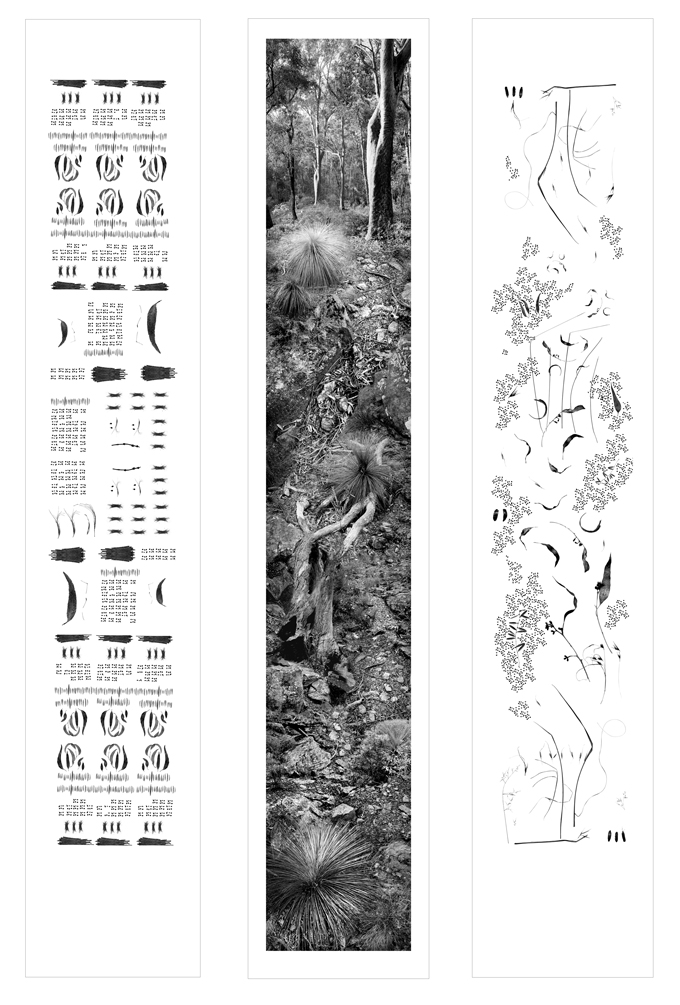
The Chaos and Order scrolls alongside the Hillside scroll
Five Stories from the Gorge, investigates the idea of wilderness and nature that exists in or on the edges of these human inhabited spaces.
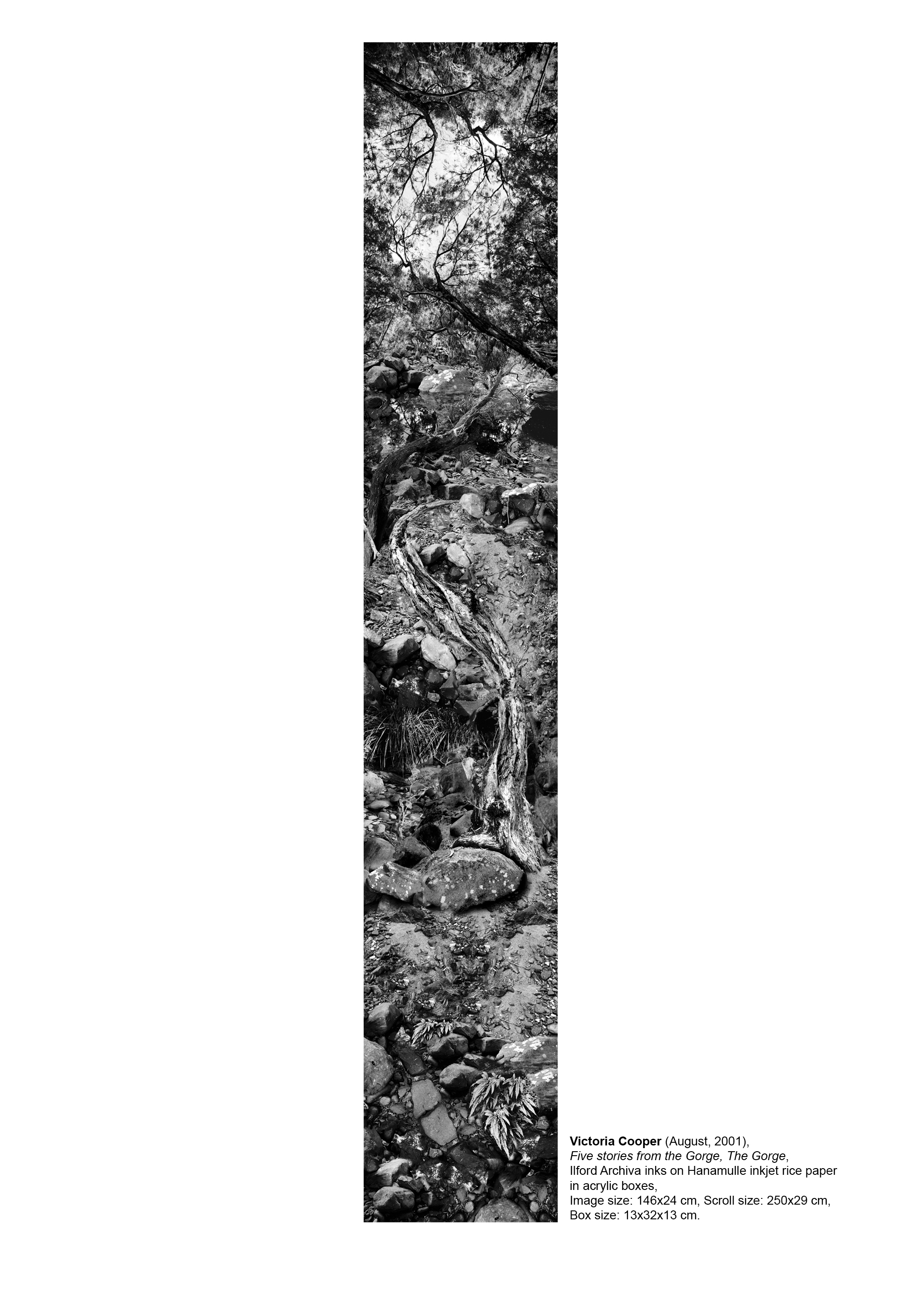
The Gorge – from the series Five Stories from the Gorge 2001
Throughout the process of image collection and construction I was informed by the influences of visual poetry, environmental art and my scientific background. The landscape paintings of William Robinson and Lin Onus have both innately influenced the way I see and work over my career. These reconstructed spaces are as fictional as a Tolkien novel but at the same time provide the evidence of existence as if collected in a Darwinian exploration.
Victoria Cooper
.
SEE A BLOG POST ABOUT The Five Stories of the Gorge: HERE
Bibliography
Timothy Druckrey (1994). ‘From Dada to Digital, Montage in the twentieth century’, Metamorphoses: Photography in the Electronic Age, Aperture, 136, Summer, pp 4-7.
Timothy Druckery (1996) editor. Electronic Culture, Technology and Visual Representation, New York, Aperture Foundation Inc.
Alberto Manguel (1996). A History of Reading, London, Harper Collins Publishers.
Alberto Manguel (2001). Reading Pictures, London, Bloomsbury Publishing Plc.
.
2019 WORLDWIDE PINHOLE DAY 28 April – Our images
.
Round the [w]hole world on Sunday the 28th of April 2019 pinholers were out having fun – Making their images for the 2019 WPD. Far away from the darkroom (again) we’ve once again fitted a pin-prick in a piece of aluminium fitted to a body cap of our Olympus Pen camera and we went on a road trip in Tasmania from the D’Entrecasteaux Channel to the mountains and back again.
This is the 14th year we have supported the WPD project!
.
ABOUT VICKY’S PINHOLE IMAGE:
.
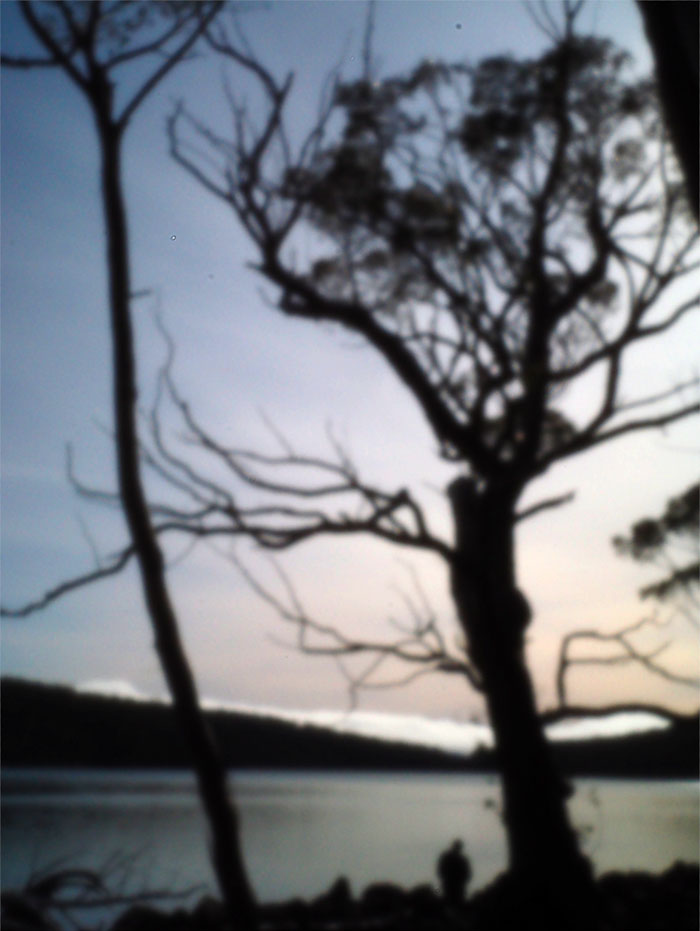
Capturing time and light in the mountains of Tasmania..
The photo was taken by digital capture with hand-made hole on an Olympus Pen using manual setting.
.
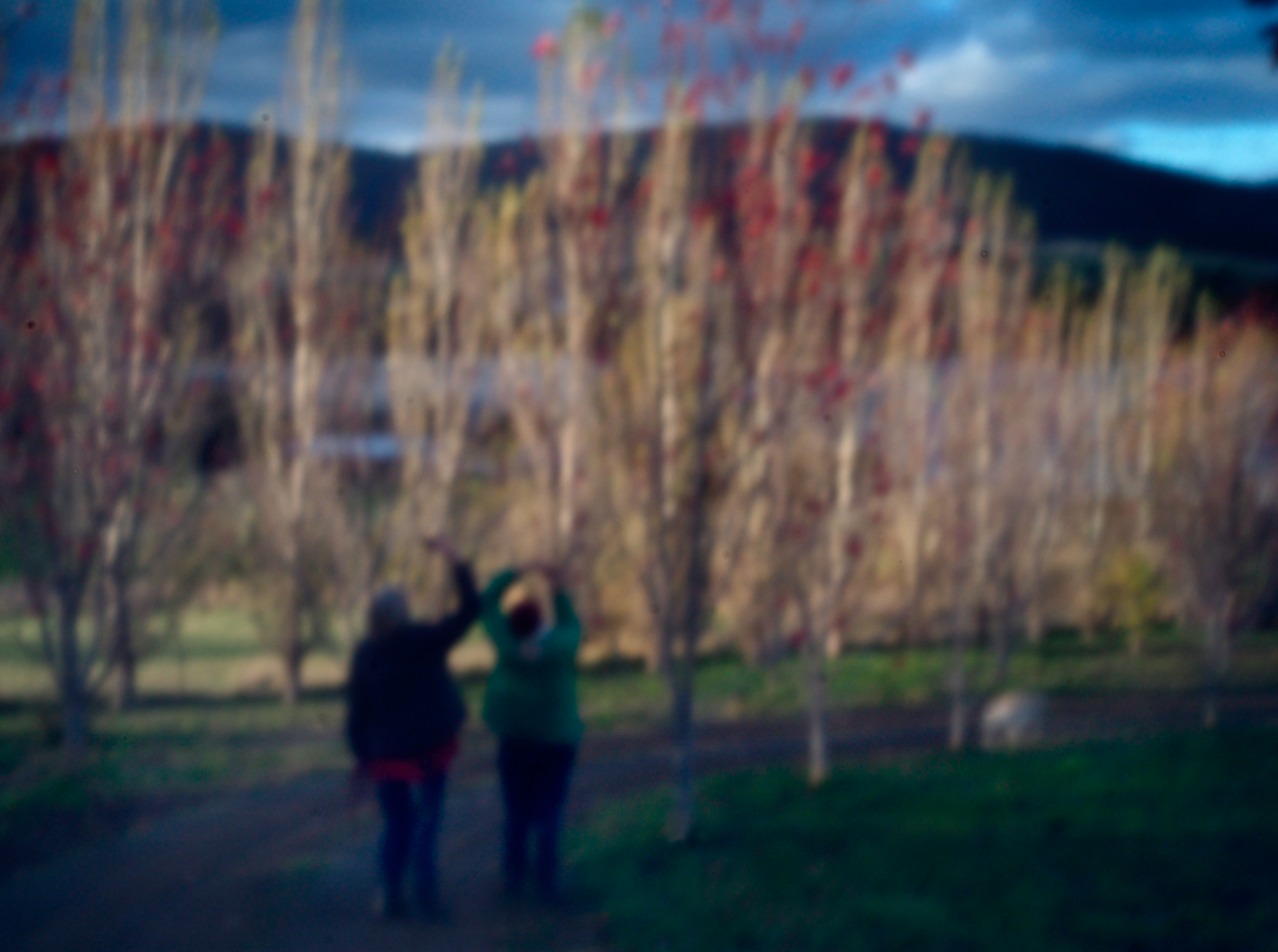
My friends take a photo with their iPhones
.
ABOUT DOUG’S PINHOLE IMAGE:
.
Late this afternoon we went walking in the Autumn light down past the bare trunks and branches of deciduous trees – my friends stopped to photograph with their iPhones… Callie walked on…
Both pinhole photographs were taken on an Olympus Pen camera
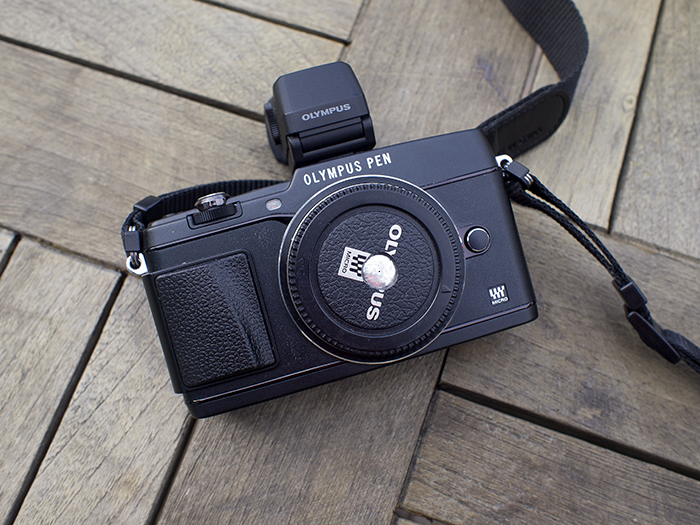
Camera with pricked pinhole in alfoil, Aperture exposure mode, ISO 800.
.
Other images we made on the day…


Visit the WPD Site for details of other submissions: http://pinholeday.org/
.
Our Past WPD images:
2018 Doug+Vicky https://wotwedid.com/2018/04/29/2018-worldwide-pinhole-day-29-april-our-images/
2016 Doug: http://www.pinholeday.org/index.php?id=1235
2016 Vicky: http://www.pinholeday.org/index.php?id=1540
2015 https://wotwedid.com/2015/05/04/april-26-worldwide-pinhole-day-our-contributions-for-2015/
2014 Vicky’s http://pinholeday.org/gallery/2014/index.php?id=1810&City=Toowoomba
2014 Doug’s http://pinholeday.org/gallery/2014/index.php?id=1811&City=Toowoomba
2013 https://wotwedid.com/2013/04/29/world-pinhole-photography-day-our-contribution/
2012 http://www.pinholeday.org/gallery/2012/index.php?id=1937&searchStr=spowart
2011 http://www.pinholeday.org/gallery/2011/index.php?id=924
HERE IS THE LINK to the 2011 pinhole video http://www.youtube.com/watch?v=Yk4vnbzTqOU
2010 http://www.pinholeday.org/gallery/2010/index.php?id=2464&Country=Australia&searchStr=spowart
2006 http://www.pinholeday.org/gallery/2006/index.php?id=1636&Country=Australia&searchStr=cooper
2004 Vicky http://www.pinholeday.org/gallery/2004/index.php?id=1553&Country=Australia&searchStr=cooper
2004 Doug http://www.pinholeday.org/gallery/2004/index.php?id=1552&Country=Australia&searchStr=spowart
2003 http://www.pinholeday.org/gallery/2003/index.php?id=615&Country=Australia&searchStr=spowart
2002 http://www.pinholeday.org/gallery/2002/index.php?id=826&Country=Australia&searchStr=spowart
.
.
.HEAD-ON Exhibition in SYDNEY to include Victoria COOPER + Ruby SPOWART

Headon Logo
I’m excited to announce that the two women in my life VICTORIA Cooper and my mother RUBY Spowart have both been selected as one of the LOUD and LUMINOUS curated 100 AUSTRALIAN WOMEN PHOTOGRAPHERS exhibition to be shown at the 2019 HEAD-ON PHOTO FESTIVAL. It is an amazing and powerful exhibition of contemporary photography brought together by the dynamic duo Hilary Wardhaugh and Melissa Anderson.
#knowmyname @nationalgalleryaus
Here’s the story…
ABOUT LOUD & LUMINOUS – from the web page
The Loud and Luminous mission is to recognise and celebrate the contribution of contemporary women in the photographic arts in Australia. We believe this project is unique and important in identifying the extensive cultural contribution women photo-based artists and photographers have made in this country. This project is designed to empower the girls and women of today and tomorrow to chase in their dreams. This is a timely project and one that hopes will help educate and inspire many women of all ages.
Vicky’s photograph is based on an important Tasmanian issue…
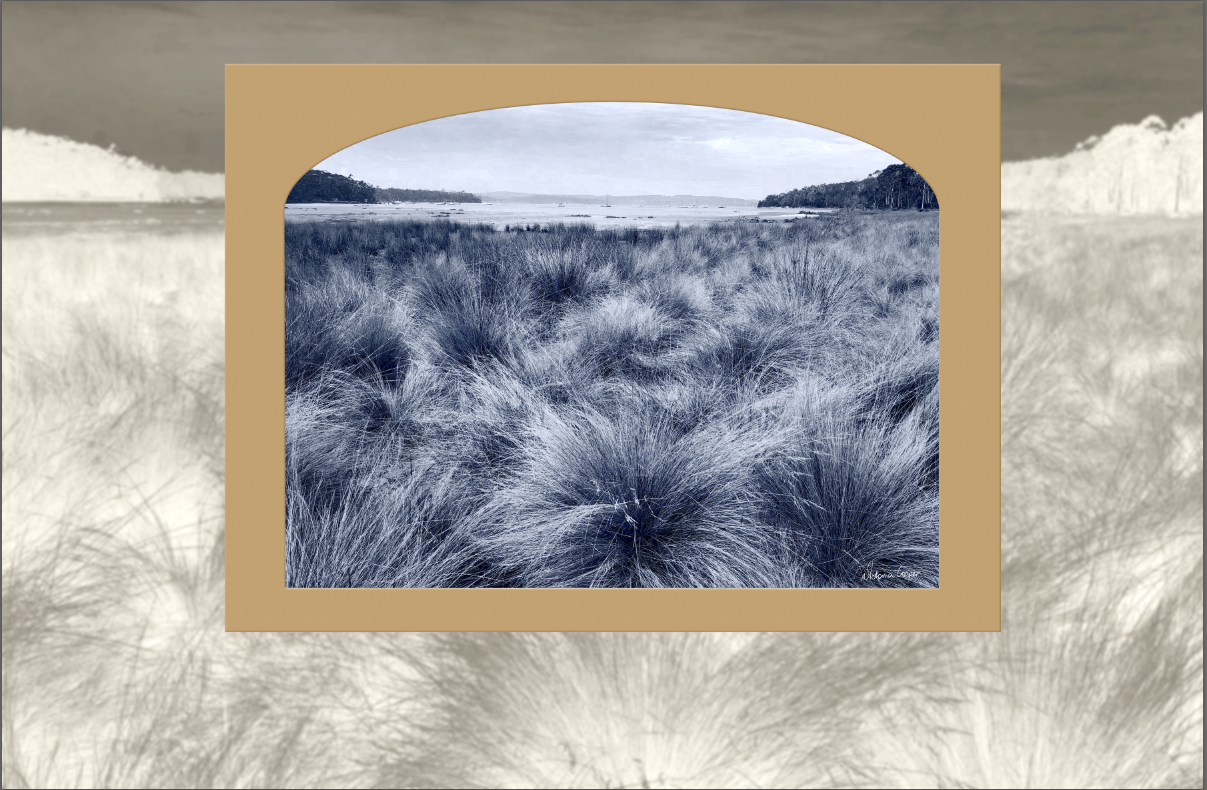
Listening …
VICKY’s ARTIST’S STATEMENT
My ancestors are European…. but I am removed by generations from these origins and have always sought to understand my place in this altered land. Over recent years I have spent time in Tasmania. I have come to know of Aboriginal stories that tell of women that lived and survived through the colonial invasion of their land and the resulting massive change to their lives and the future of their culture. I found Putalina, in Palawa kani, a place for reflection on the story telling that has highlighted the strength and power of past Aboriginal women including Truganini and Fanny Cochrane Smith.
Ruby’s work related to where she now lives and a reflection on her mother’s amateur painting…
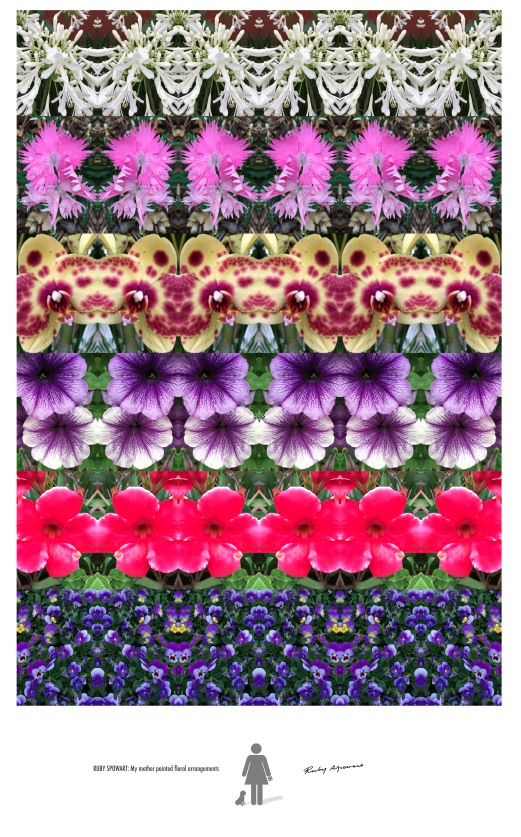
My mother painted floral arrangements
RUBY’s ARTISTS STATEMENT:
My mother painted floral arrangements.
Before getting married and having children on a farm in central Victoria in the early 1900s my mother painted in oils. I never saw her paint – having children and the hard life on the farm meant that there was no time for art. Her paintings, mainly of floral subjects, however lived on and now are cherished by the family generations that followed.
If there is an art gene then my mother passed it to me. In my life I have practiced many art mediums from enamelling to china painting and ceramics as well as photography. Despite having three children and working with my husband in a family business I persisted with my art making. It has rewarded me and enriched my life.
Now in my 90s I photograph with my iPhone and these flower photographs come from the gardens that my neighbours and I nurture. In this work I feel that I am making the flower ‘paintings’ that my mother was never able to…
Venue / Date / Times
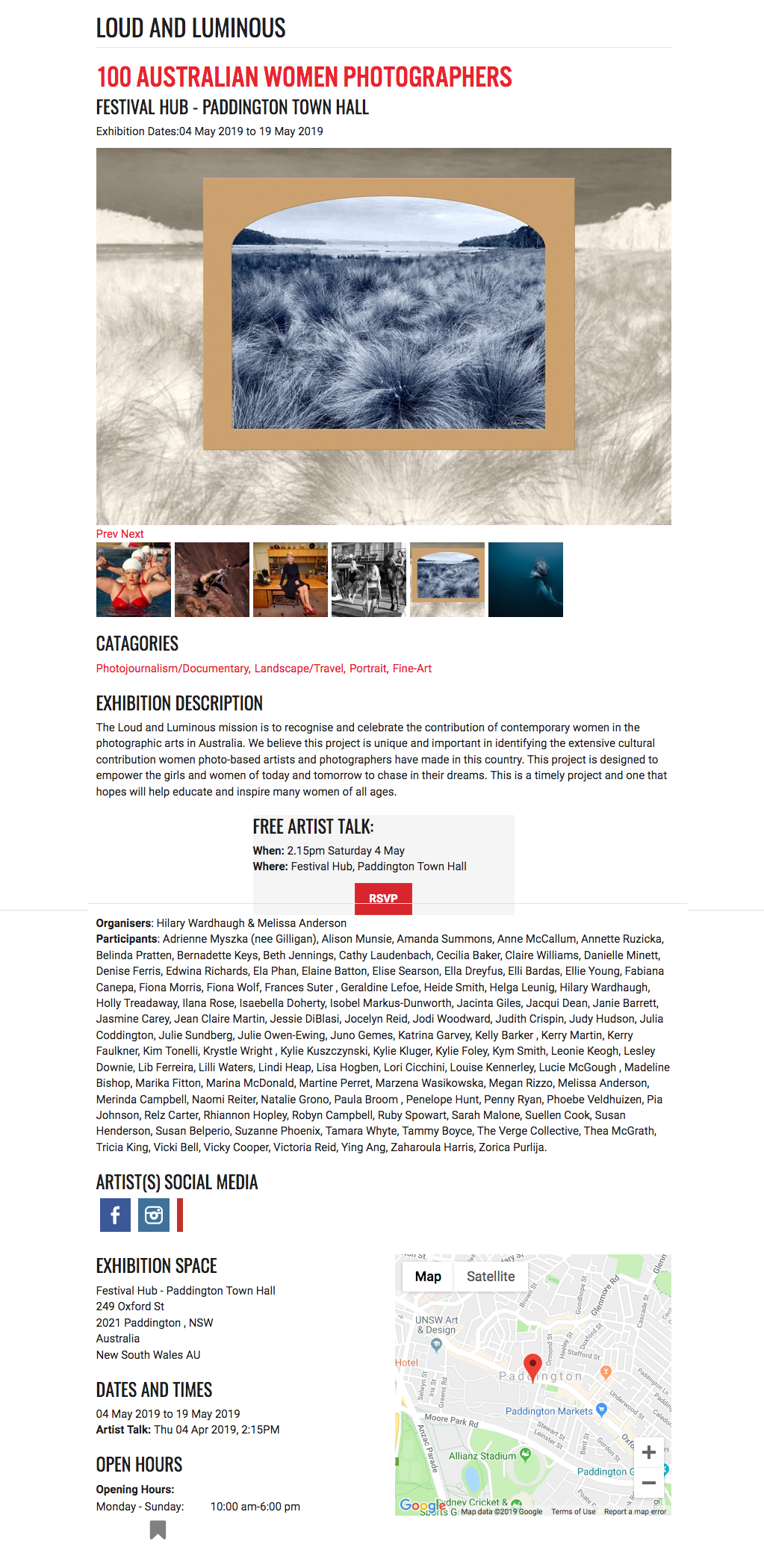
From the Headon website
.
WIM de VOS – Artist, teacher, musician, mentor, brother & friend
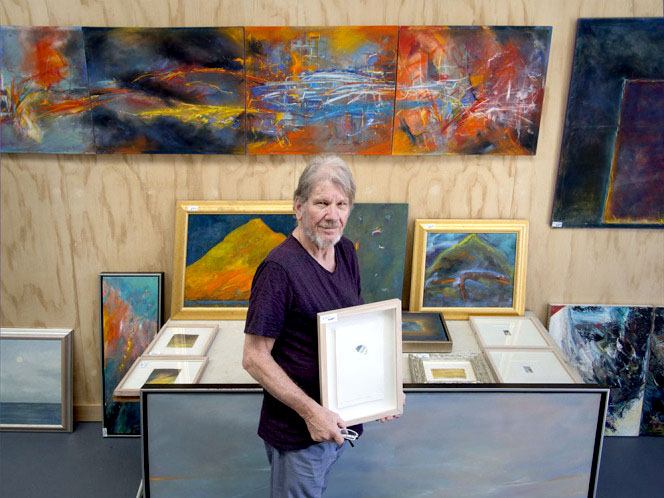
A portrait of Wim de Vos with his work at Studio West End
For Wim, by Vicky Cooper
In your last days we visited you….
Like the artist thinking about your next artwork…
You described your final work…
How, where, when…
You would be buried….
An acrylic case made by friends
In the bush
Up a hilly rocky track
To a hidden mountain
A stand of trees that had black bark
A particular view across a Valley
A golden sunset
A rock with the Red Fox coat of arms
Also created by a friend
50 years I have known you
Sometimes distant
Sometimes close
I danced with your groupies
In Cloudland where
You played a red Fender
Those favourite songs
Neil Young, Focus, George Harrison
Beach Boys and so may more…
I danced with Opa
At the Dutch Club
I loved Oma’s apple pie
The paper flowers and the needle work
The smell of pipe tobacco
The Dutch jokes
Stories of WW2
I remember your first exhibition
Michael Milburn
Your time in Maastricht
My sister with the two boys and soon a girl
My sister is now another beautiful story
The boys are also creating new stories
And the girl is strong and confident
The world has not limited them
At seminal moments
I needed inspiration and support
You were there
With Doug…
Fellow teacher, artist and family
I for 50 years
Doug for 30….
You could be at times testing…
But you were also investing
Your energy, creativity, ingenuity and knowledge
There are so many years of art
Toowoomba, Flying Arts, McGregor…
Then West End and Adele
A collaboration that built a strong community
Each of us all has personal stories
Each will be different
But all of it rich
Just like your studio and apartment
The walls and corners of your life
Are jam packed with collections
Of moments
Sad or cantankerous
Solitary or social
Dedicated and creative
But your parting words to me now echo in my everyday
That I never stop making my art…
And I now reflect that if it were not for his support
I – and perhaps many others – would not have started…..
It is in this legacy that you will always remain
.
.
.
Wim de Vos
VALE Wim de Vos 27/5/1947-8/12/2018.
Christene Drewe has written a post in the State Library of Queensland’ John Oxley Library Blog about Wim and the works that they have in their collection.
http://blogs.slq.qld.gov.au/jol/2019/01/24/remembering-brisbane-artist-wim-de-vos/
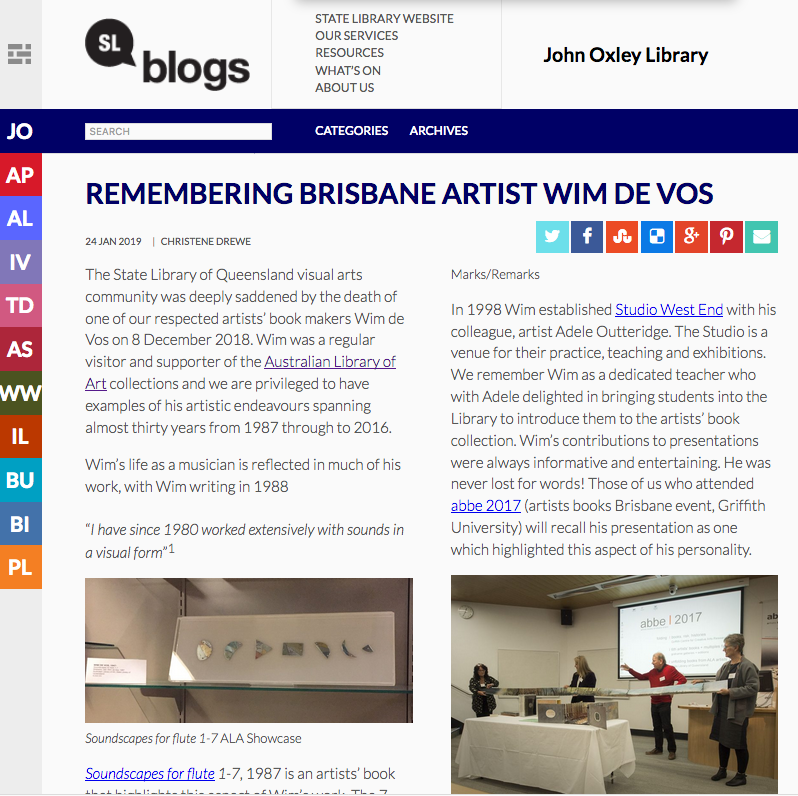
SLQ-JOL Blog post by Christene Drewe
.
.
.
Some images of Wim from events over the last few years…
.
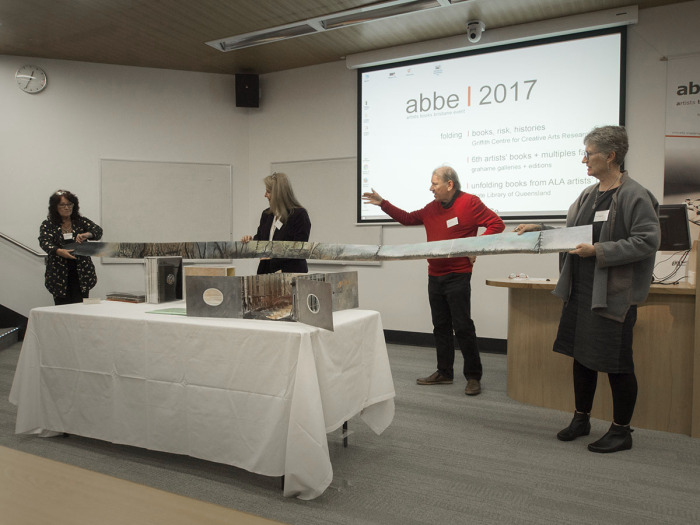
Wim presenting a long book at the Artists Book Brisbane Event – Griffith University Brisbane
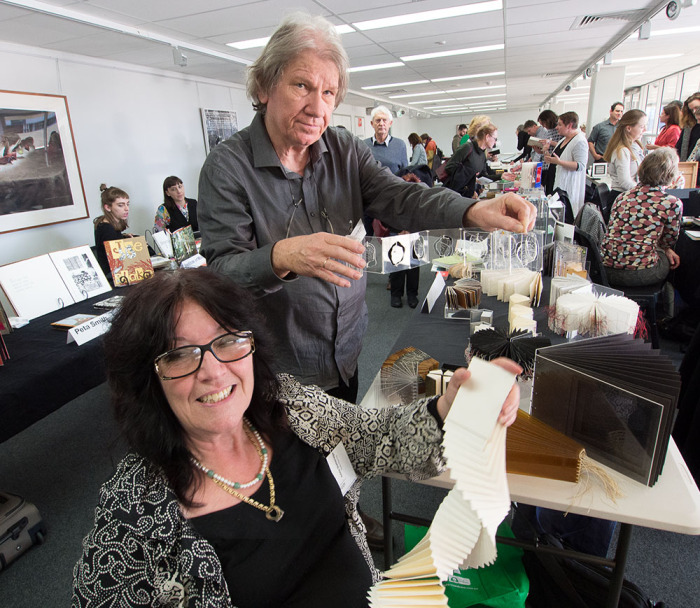
Wim & Adele at ABBE Artists Book Conference July 2015
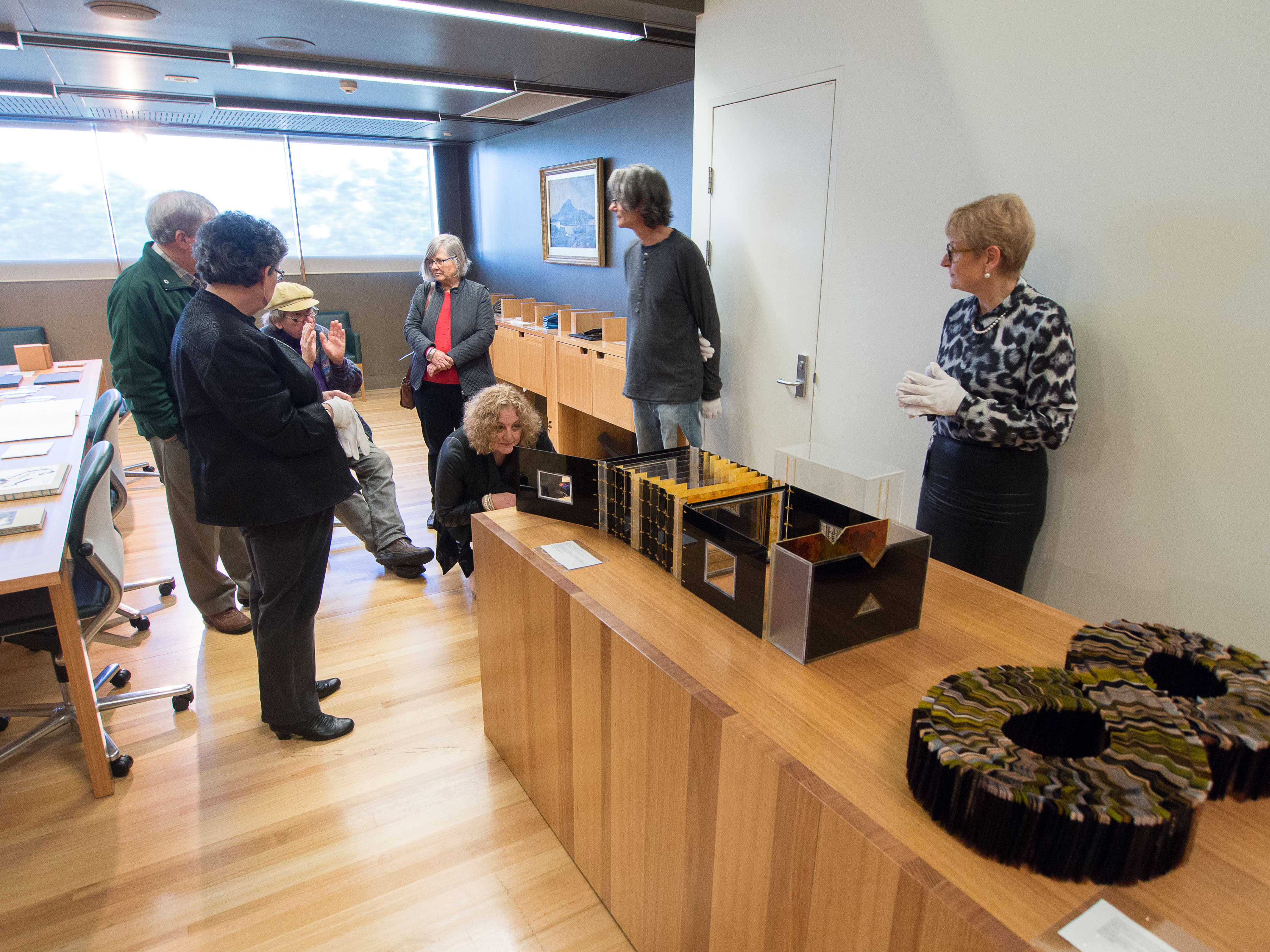
Wim showing the State Librarian Janette Wright his tunnel books at the Siganto Seminar 2015
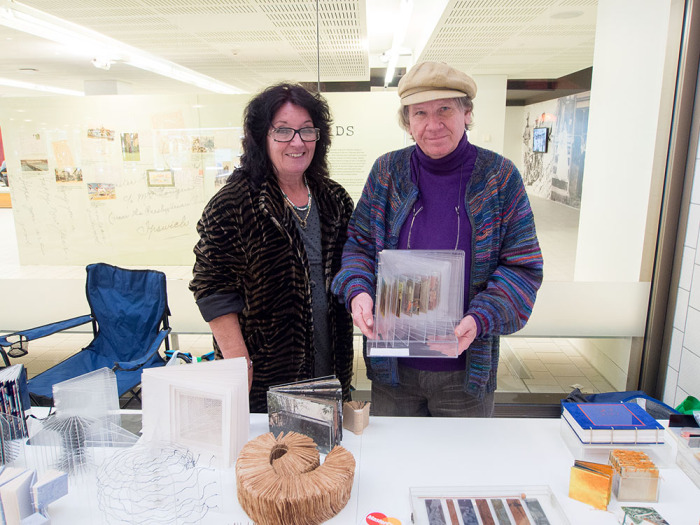
Wim & Adele at the State Library of Qld’s Artists’ Book Fair 2015
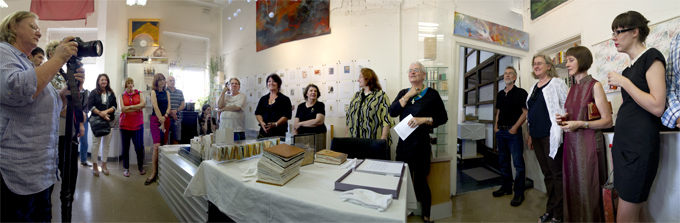
The launch of the Bookplate collection with Anne Jolly, Helen Cole and Gael Phillips and others
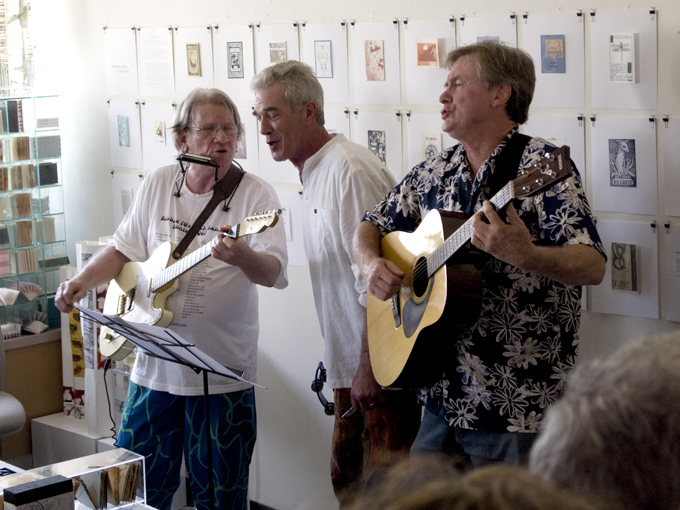
A return to the ‘Band’ days at Studio West End
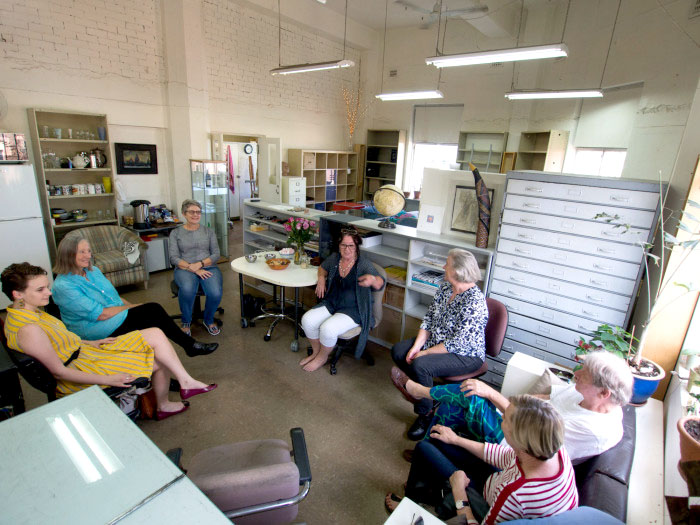
Farewell to ABSOE party, 23rd April 2016
A blog post about the ABSOE Studio and the NEW Studio can be found HERE
.
At the NEW West End Studio – November 2016
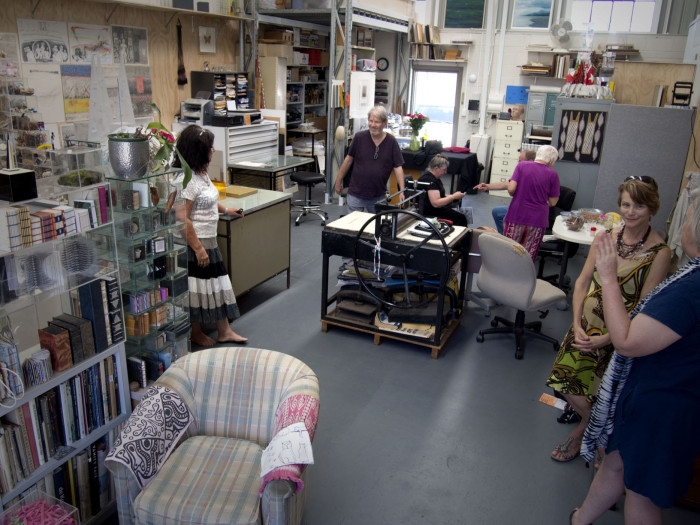
The NEW West End Studio
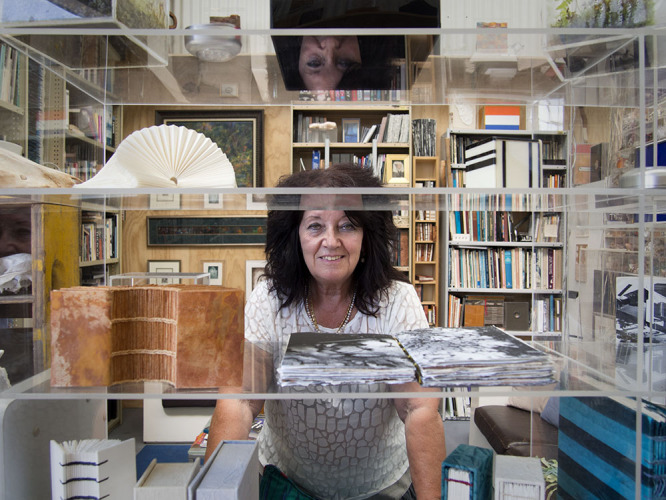
Adele in the New West End Studio
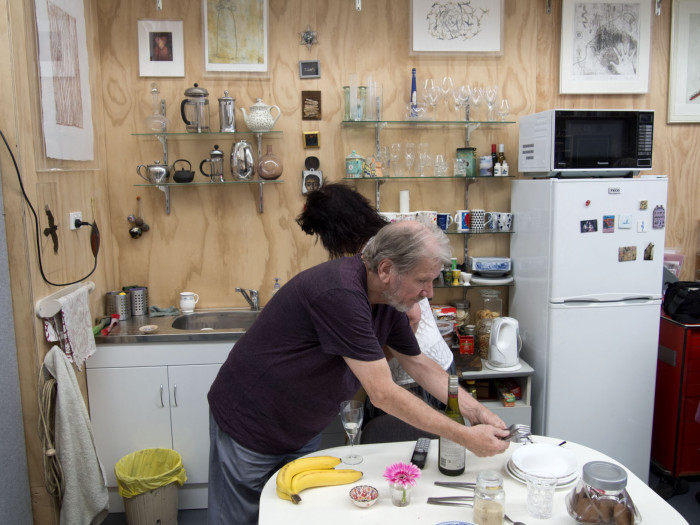
Lunch is prepared at the New West End Studio
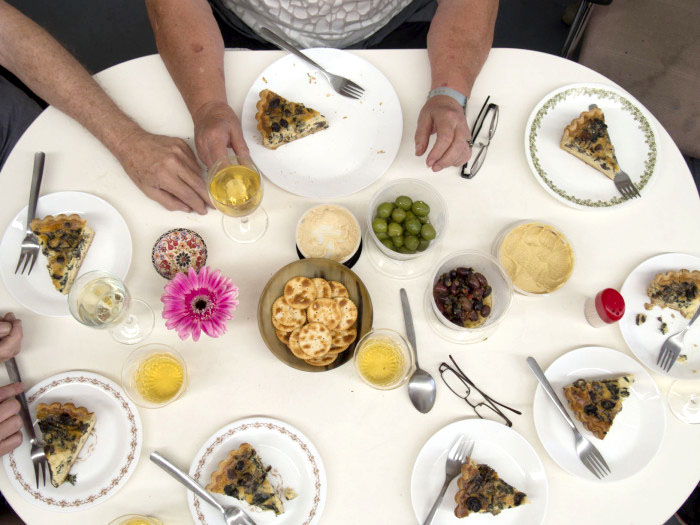
Lunch at the New West End Studio
.
Wim will be back in the studio soon…
.
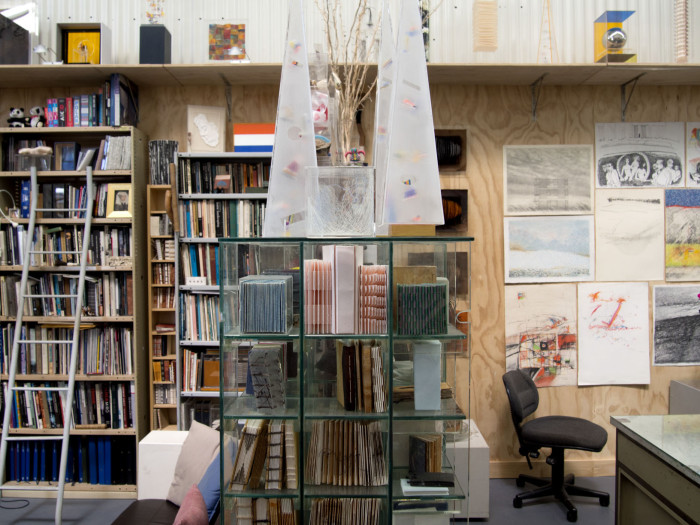
The studio


.
.
.
.
©Texts by Vicky Cooper . . . © All photographs by Doug Spowart
.
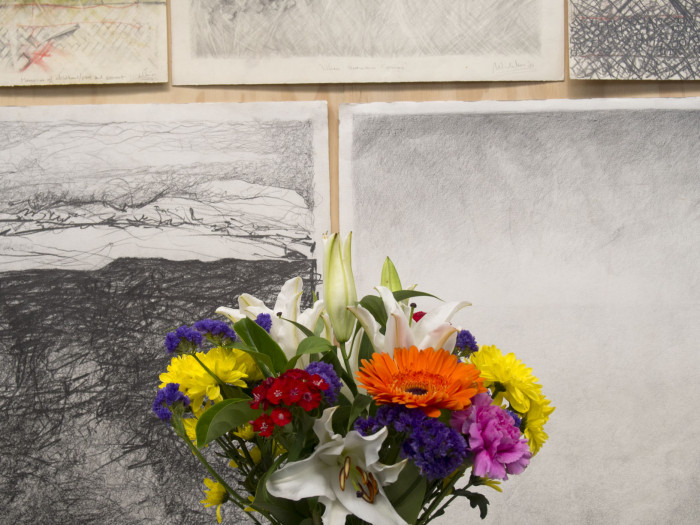
In remembrance….
.
.
.
BUNDANON Residency 2018 – WHY ARE WE HERE?
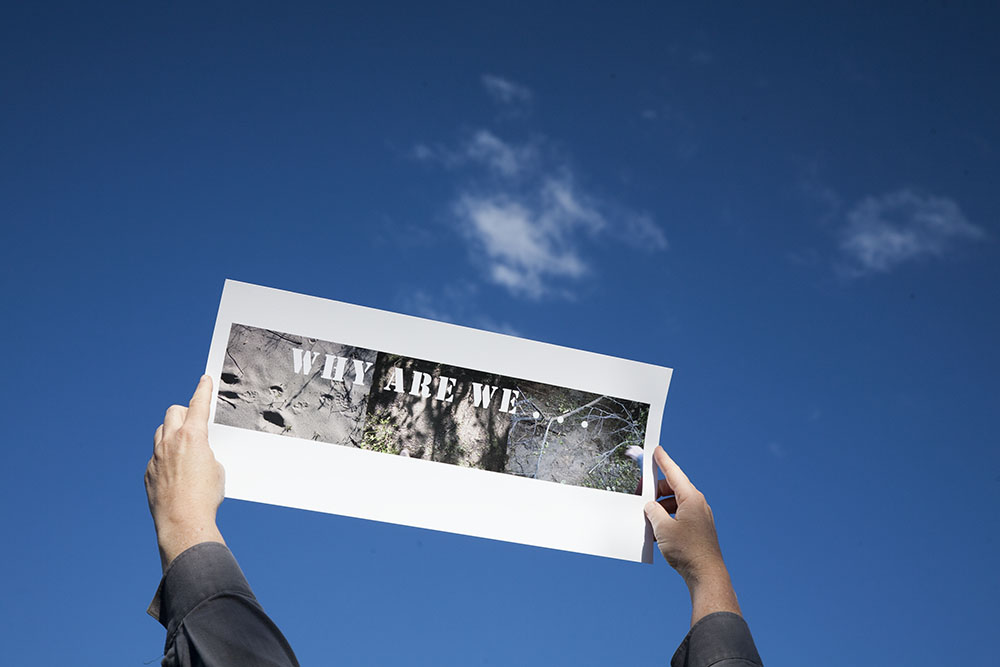
WHY ARE WE – documentation of a page from the Island Book
WHY ARE WE … Here at Bundanon?
In 2007 we were successful applicants for a Bundanon residency that enabled is to realize a major component of our individual PhD research. However we still needed to resolve many issues raised by this work and to return our finished works to be documented in the site that they were created. So in 2009 we were granted a second residency to complete this part of our studies.
While we were deep in our research other interesting and unanswered questions arose that have haunted us since this time. Although our itinerant life in the last few years has been exciting and constantly changing, we have missed the opportunity to be in a studio and a place devoted to just working on our practice.
Now this latest residency will give us time to work again at the boundaries of our practice and create the new work that has been gestating in our minds over these few years.
See our COOPER+SPOWART website for further info. (Please note the content of this page are Adobe Flash driven presentations)See relevant aspects of our past Bundanon residencies relating to our PhD research here Victoria COOPER Thesis – Doug SPOWART – Thesis.
FOLLOW OUR WORK over the next 3 weeks on our FACEBOOK Page
A SELECTION OF IMAGES
From artists’ books, photobooks, experimental projects, artwork documentation and our collaboration made during our 2007 & 2009 residencies.


.
SINGLE MEN’S QUARTERS CAMERA OBSCURA


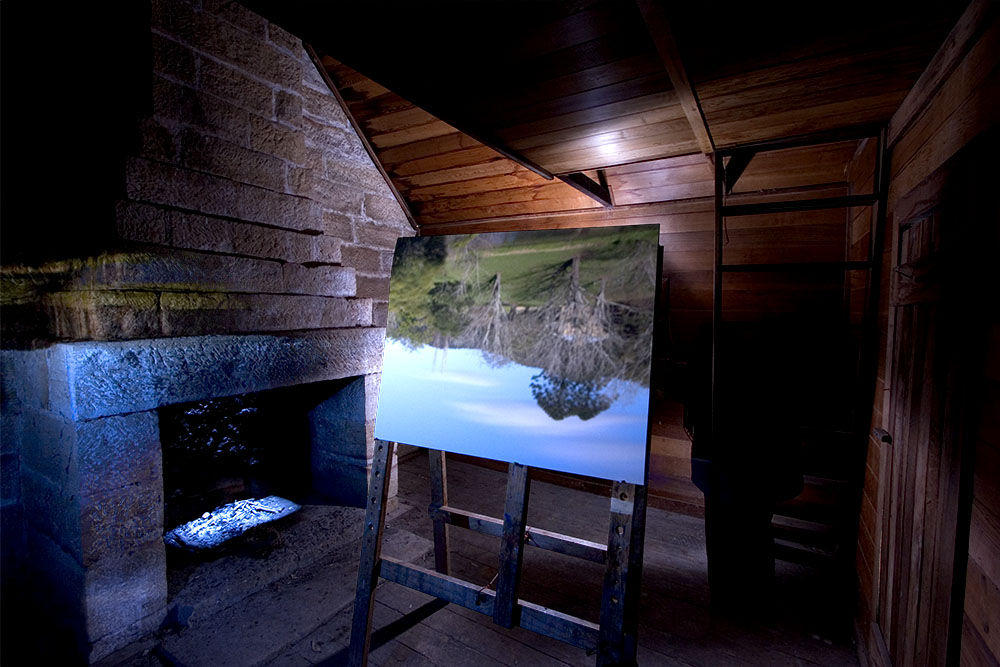
Documentation of the Camera Obscura image in the Single Men’s Quarters
PROJECTIONS
‘CLICK’ to enlarge


SOME IMAGES FROM DOUG’S WORK
‘CLICK’ to enlarge


SOME IMAGES FROM VICKY’S WORK
‘CLICK’ to enlarge


TO FOLLOW OUR ACTIVITIES OVER THE NEXT 3 WEEKS “LIKE” our FACEBOOK PAGE and in “Follow” – click “SEE FIRST”

FB-Follow
.
Please join with us in this exciting project…


LIBRIS ARTISTS’ BOOK AWARD – Cooper+Spowart Finalists
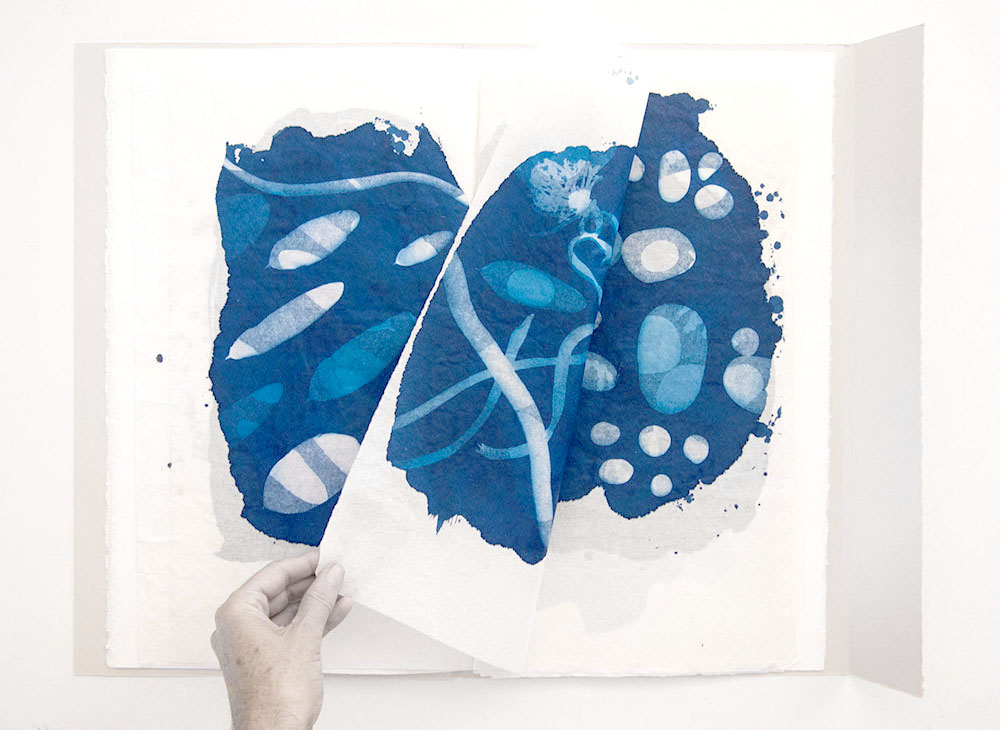
The artists’ book TIDAL by Cooper+Spowart
Our artists’ book TIDAL is now on show as a FINALIST in the 2018 LIBRIS ARTISTS’ BOOK AWARD at Artspace Mackay, Queensland, Australia.
We are excited to be finalists in this Award exhibition. The awards were announced on May 26 – details of the winning works and a download of the exhibition catalogue are available at the bottom of this post.
ABOUT OUR ARTISTS’ BOOK – TIDAL :
TIDAL is a montage of fragmented imprints made from the solid reality of found objects swept up by the tide–beautiful castaways from the ocean.
These objects as image elements, no longer in their original form, are woven together as if a poem, song or dance. In many ways TIDAL relates to a ‘desire for that melancholy wonder that is the blue of distance’ from Rebecca Solnit’s A field guide to getting lost. Or just simply it could be about the artist and their art.
It is book of double-sided cyanotype prints, when held to the light, allow for the montage of the images front and back, thus merging and unfolding the space and time of the page and the book. Reading becomes the blending of the fragments through the spatial divide of the turning page.
The video that follows gives a basic view of the TIDAL book:
ABOUT THE TIDAL BOOK PROJECT:


This project began with the collection of beach detritus at low tide after the super moon at Wooli, north coast New South Wales.
We worked collaboratively in the intense heat of Christmas Day 2016 to hand coat the cyanotype emulsion on ricepaper, expose the ‘found objects’ to the paper in the sun, and then wash-out in running water with a dash of lemon juice to create the double-sided cyanotype folios.
Over the next year we developed the structural form of the book, and finally returned to finish it at Wooli, as this state, over Christmas in 2017.
The double-sided cyanotype prints, when held to the light, allow for the montage of the images front and back, thus merging and unfolding the space and time of the page and the book. Reading becomes the blending of the fragments through the spatial divide of the turning page.
THE BOOK:
A unique state book of 6 double-sided cyanotype images on rice paper.
Book size 49.5x30x1 cm
The text was written by Victoria Cooper and includes a quote by Rebecca Solnit.
Folders and text:
Canson Stonehenge and Arches paper with rice-paper collage elements.
Garamond font family in pigmented inks on Arches paper.
This book is another work created in an ongoing series relating to the locality of Wooli and we acknowledge the support provided by Dr Felicity Rea
BOOK TEXT:
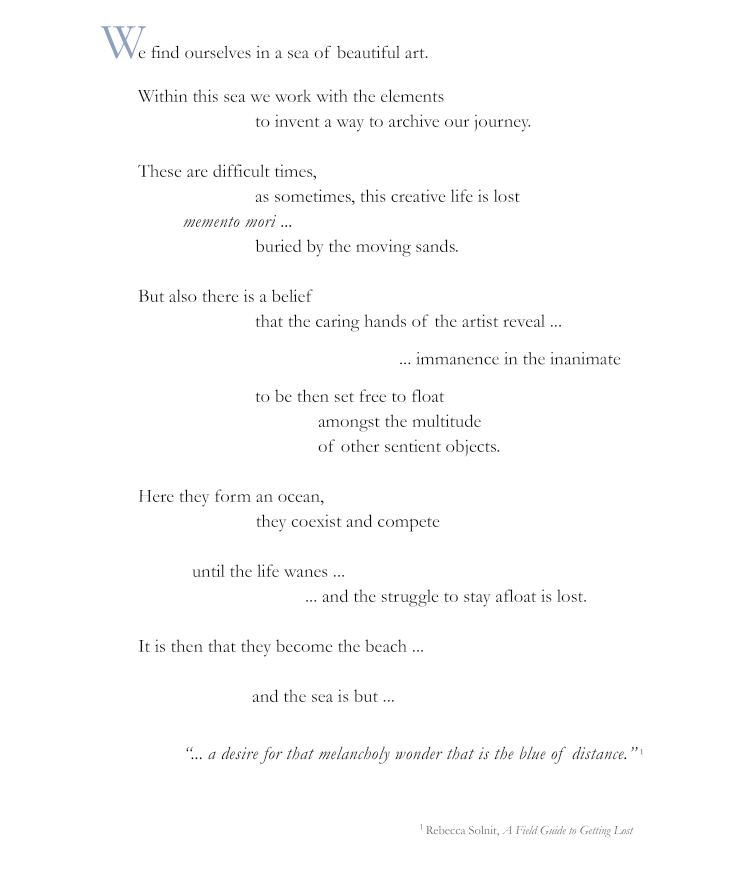
Frontpiece: TIDAL
OTHER INFORMATION INCLUDING THE WINNING BOOKS:
Category 1. Dalrymple Bay Coal Terminal National Artists’ Book Award
Winner: Clyde McGill for his work ‘Witness’
Category 2. Dalrymple Bay Coal Terminal Altered Book Award
Michelle Vine for her work ‘Contested Biography I (quadrat)’
Category 3. Mackay Regional Council Regional Artists’ Book Award
Jamian Stayt for his work ‘Tagged’
Category 4. Artspace Mackay Foundation Tertiary Artists’ Book Award
Jenna Lee for her work ‘A plant in the wrong place’
LIBRIS CATALOGUE
CLICK THE LINK BELOW TO DOWNLOAD A COPY OF THE CATALOGUE
Libris_Awards_2018_Catalogue_of_Entries_brochureA4
SEE OUR POST ABOUT THE 2016 LIBRIS AWARDS HERE
.
.
.
.
.
2018 WORLDWIDE PINHOLE DAY 29 April – Our images
.
Round the [w]hole world on Sunday the 29th of April 2018 pinholers were out having fun – Making their images for the 2018 WPD. Far away from the darkroom (again) we’ve once again fitted a pin-prick in a piece of aluminium fitted to a body cap of our Olympus Pen EP-5 camera and we went on a cruise around the New South Wales town of Muswellbrook pinholing…
This is the 13th year we have supported the WPD project!
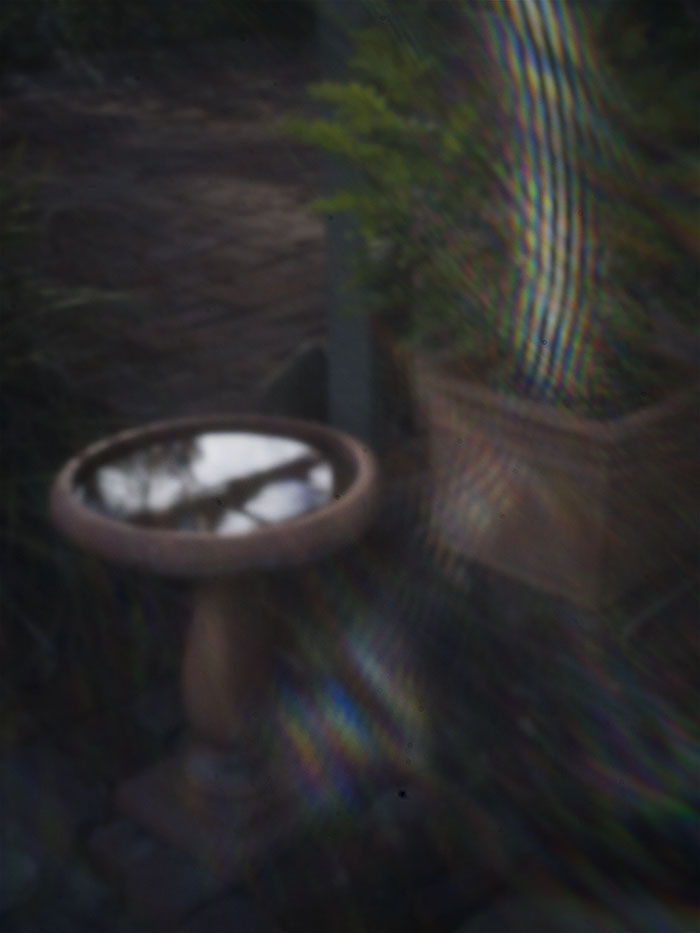
Bird bath by Victoria Cooper
.
ABOUT VICKY’S PINHOLE IMAGE:
.
Each day birds of all sizes come to drink from this and it is shared with the two cats who live here too… It is the driest April on record in this region of Australia.
The photo was taken with the intention of capturing the sun flare. Digital capture with hand-made hole on an Olympus EP5 on manual setting.
.
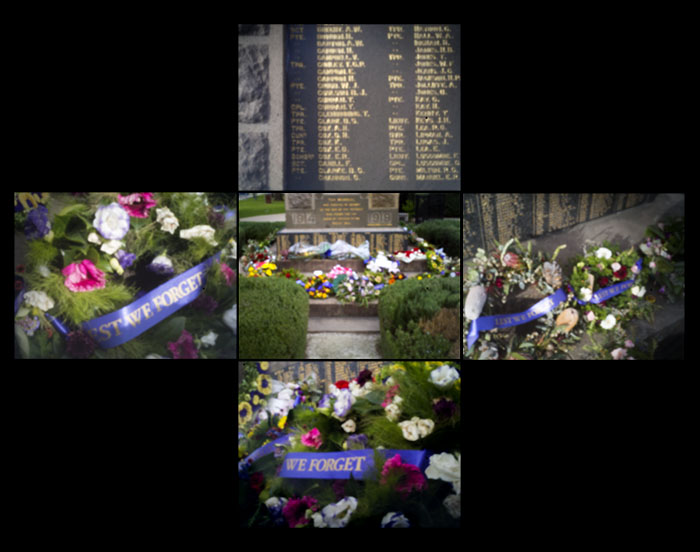
Lest we forget – April 25th by Doug Spowart
.
ABOUT DOUG’S PINHOLE IMAGE:
.
Each year on April 25 Australian and New Zealand peoples commemorate ANZAC Day in recognition of the sacrifice made by soldiers from our country in the First World War. Floral tributes are laid at memorials all over the country. The message on most wreaths is the phrase ‘Lest we forget’.
The photomontage is made up of 5 images – each photo was taken on an Olympus EP5 digitally with a hand-made pinhole.
.
Olympus Pen with hand pierced aluminum foil hole, Aperture exposure mode, ISO 800.
.
.
Visit the WPD Site for details of other posted: http://pinholeday.org/
.
Our Past WPD images:
2016 Doug: http://www.pinholeday.org/index.php?id=1235
2016 Vicky: http://www.pinholeday.org/index.php?id=1540
2015 https://wotwedid.com/2015/05/04/april-26-worldwide-pinhole-day-our-contributions-for-2015/
2014 Vicky’s http://pinholeday.org/gallery/2014/index.php?id=1810&City=Toowoomba
2014 Doug’s http://pinholeday.org/gallery/2014/index.php?id=1811&City=Toowoomba
2013 https://wotwedid.com/2013/04/29/world-pinhole-photography-day-our-contribution/
2012 http://www.pinholeday.org/gallery/2012/index.php?id=1937&searchStr=spowart
2011 http://www.pinholeday.org/gallery/2011/index.php?id=924
HERE IS THE LINK to the 2011 pinhole video http://www.youtube.com/watch?v=Yk4vnbzTqOU
2010 http://www.pinholeday.org/gallery/2010/index.php?id=2464&Country=Australia&searchStr=spowart
2006 http://www.pinholeday.org/gallery/2006/index.php?id=1636&Country=Australia&searchStr=cooper
2004 Vicky http://www.pinholeday.org/gallery/2004/index.php?id=1553&Country=Australia&searchStr=cooper
2004 Doug http://www.pinholeday.org/gallery/2004/index.php?id=1552&Country=Australia&searchStr=spowart
2003 http://www.pinholeday.org/gallery/2003/index.php?id=615&Country=Australia&searchStr=spowart
2002 http://www.pinholeday.org/gallery/2002/index.php?id=826&Country=Australia&searchStr=spowart
.
.
VICTORIA COOPER: Loud & Luminous – Women’s Day Exhibition
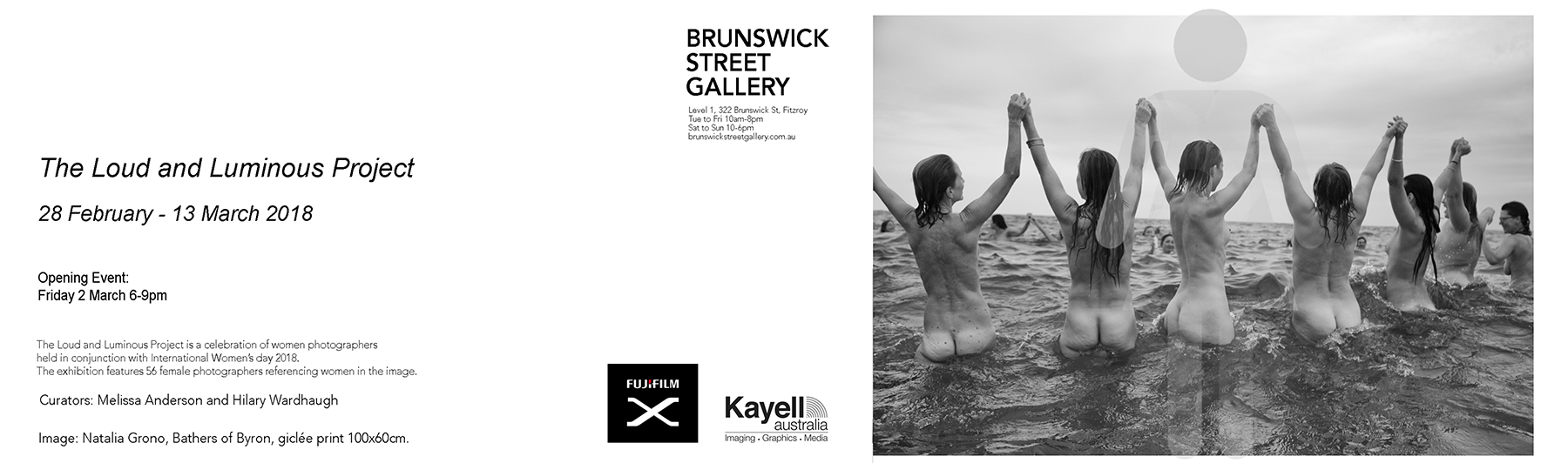
Loud & Luminous invite
.
VICTORIA COOPER IN A NATIONAL EXHIBITION OF WOMEN PHOTOGRAPHERS
LOUD AND LUMINOUS the exhibition, a celebration of Australian Women photographers, has been on show at Brunswick Street Gallery in Melbourne from 28th February – 13th March 2018 linking with International Women’s Day.
The Loud and Luminous mission concieved by Mel Anderson and Hilary Wardhaugh was to recognise and celebrate the contribution of contemporary women in the photographic arts in Australia. The exhibition has 56 emerging and influential Australian women photographers, referencing a women’s symbol in their finished work. Australian women from 9 years to 90 years contributed, with the goal to empower women of today and tomorrow.
The brief was completely open to interpretation. Artists used the figure of a woman literally or referenced it by shape or to make a statement. Each artists’ interpretation is quite unique and as a collective there is a strong message revealed.
This is a timely project and will educate and inspire women of all ages, backgrounds and disciplines by recognising the extensive cultural contribution women photographic artists make. It aims to empower the girls and women of today and tomorrow to chase in their dreams.
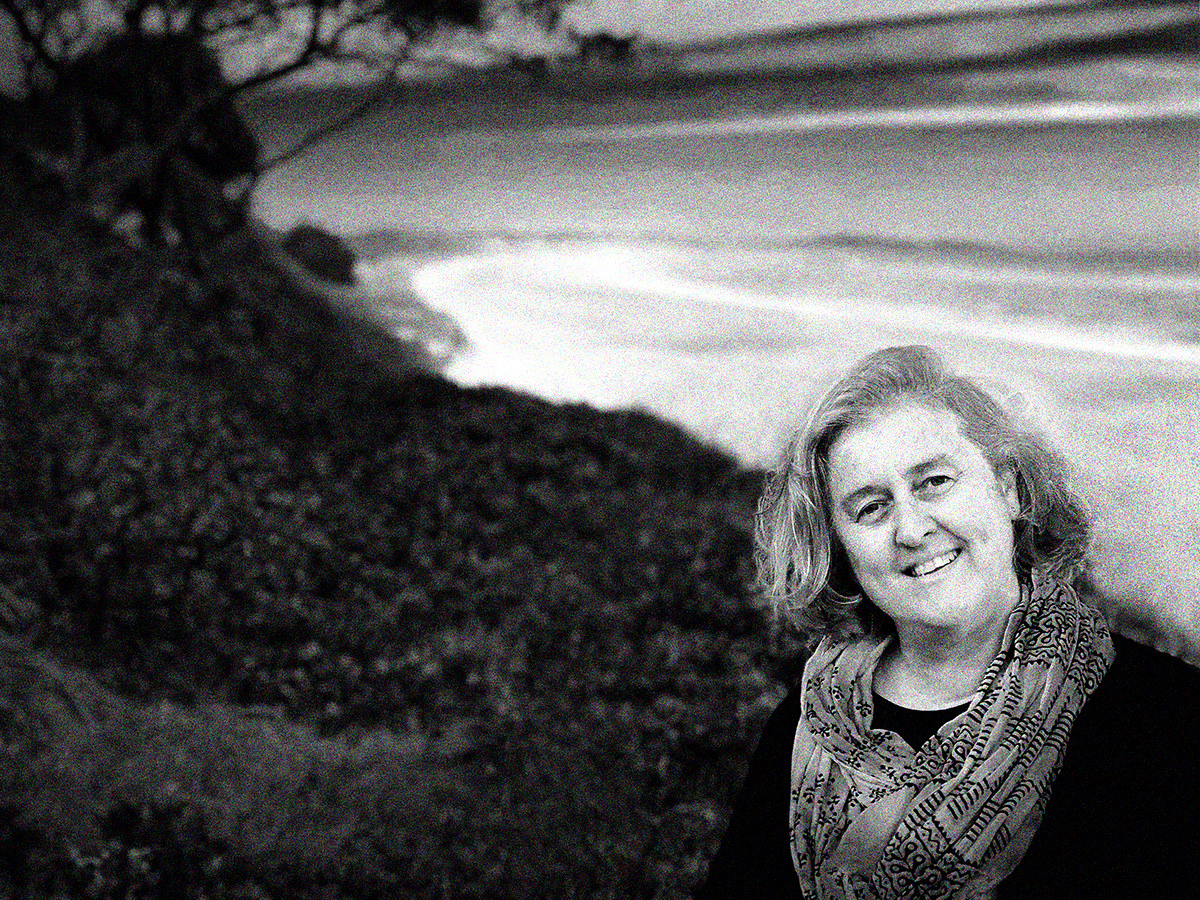
Victoria Cooper portrait
Artists Statement: Dreaming a River by Victoria Cooper
Influenced by Gerhard Richter’s enigmatic painting ‘Betty’, I was drawn to this photograph I made of a friend while travelling along the Danube River in Austria. It is an everyday moment but yet I find myself drawn into the reverie.
At first I struggled with the intervention of the exhibition symbolic motif, but as I contemplated my time walking beside this iconic river it was transformed through the thinking process. The motif multiplied: a thought pattern; a metaphorical weaving into a psychological fabric; or the confluence of symbolic women becoming a river.
Rather than a message or a memory of time and place, this work is embedded in the story of everyday life– of being in the world, and moments of dreaming …
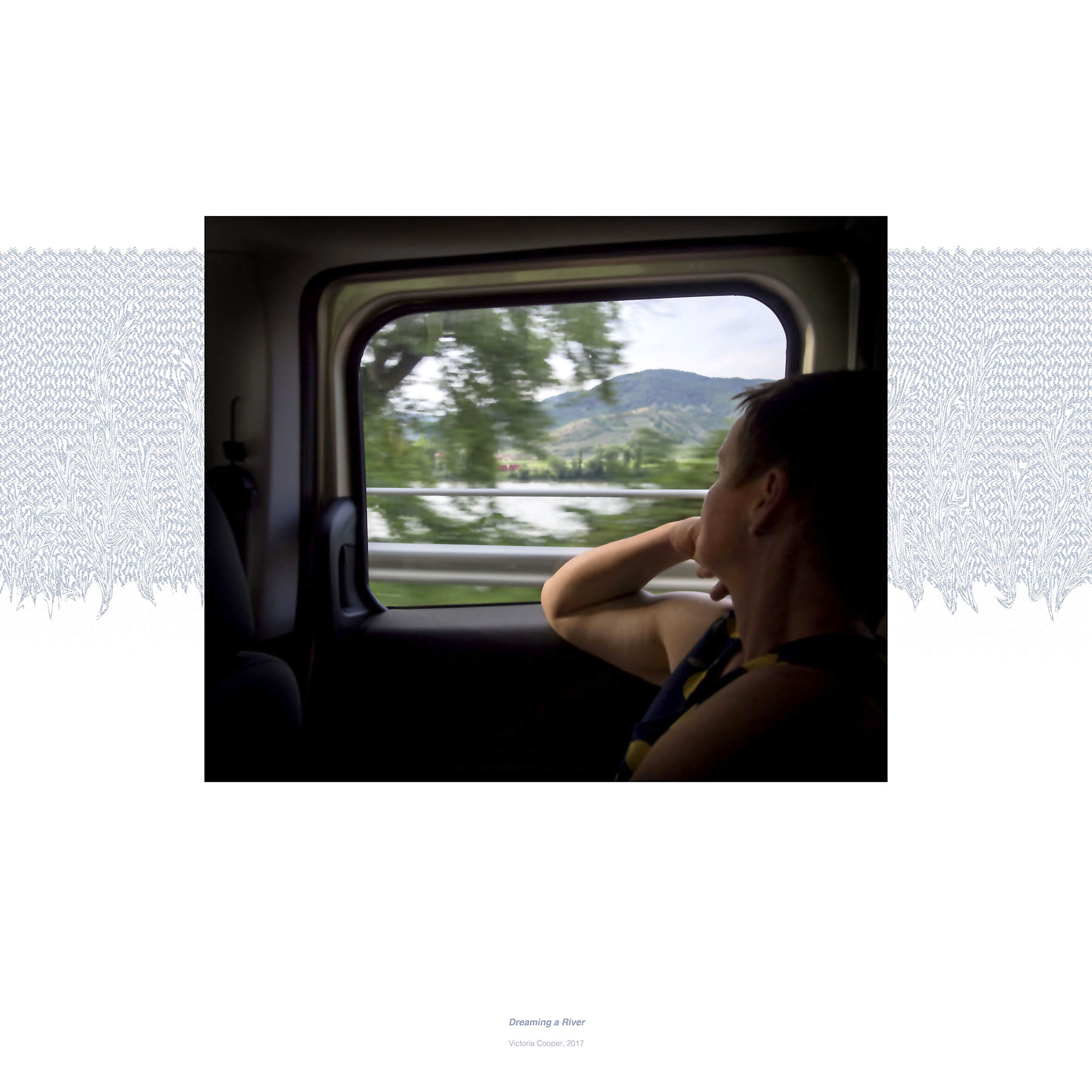
Digital photomontage created for the Loud and Luminous Project World Women’s Day 2018 exhibition
Victoria Cooper talks about her work
Who is in the show…?
SEE THE LOUD AND LUMINOUS SITE FOR BIOGs Click HERE
The opening event

The Loud+Luminous opening PHOTO: Hilary Wardhaugh
The conference
SEE THE LOUD AND LUMINOUS SITE FOR DETAILS Click HERE
A book about the exhibition made by sponsor MomentoPro
Thank you Melissa Anderson and Hilary Wardhaugh for coming up with the idea and coordinating the project through to its conclusion.
Thanks also to the Sponsors…

Sponsors
.
MONTAGE+THE ARTISTS’ BOOK: a paper by Victoria Cooper

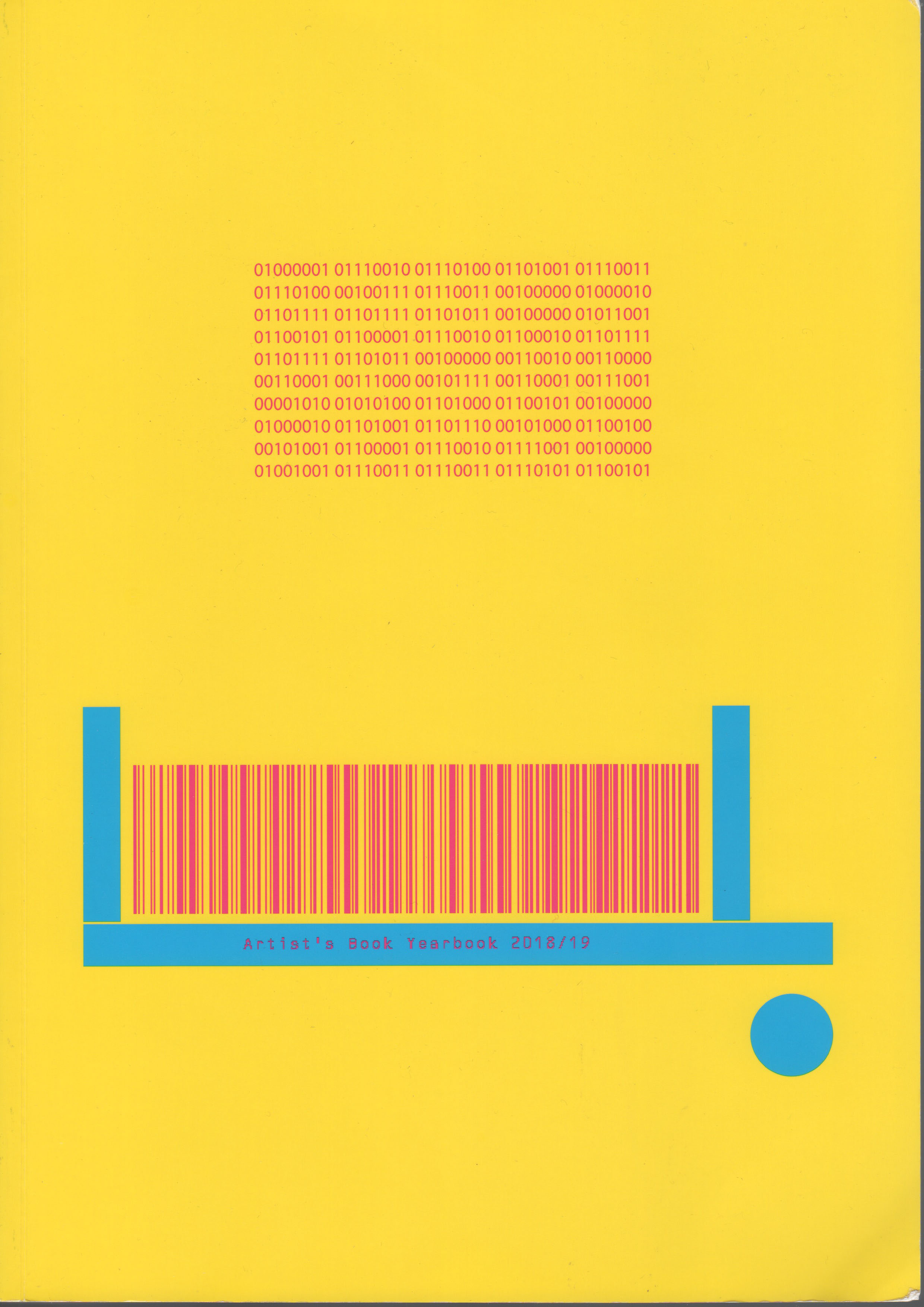
Victoria and the ARTISTS’ BOOK YEARBOOK 2018-9
.
I’ve recently had a major paper on my research into the montage and artists’ books published in the ARTISTS’ BOOK YEARBOOK 2017-8 edited by Sarah Bodman from the Centre for Fine Print Research (CFPR) at the University of the West of England. The paper covers ongoing research which was undertaken as part of my Siganto Foundation Research Fellowship at the State Library of Queensland.
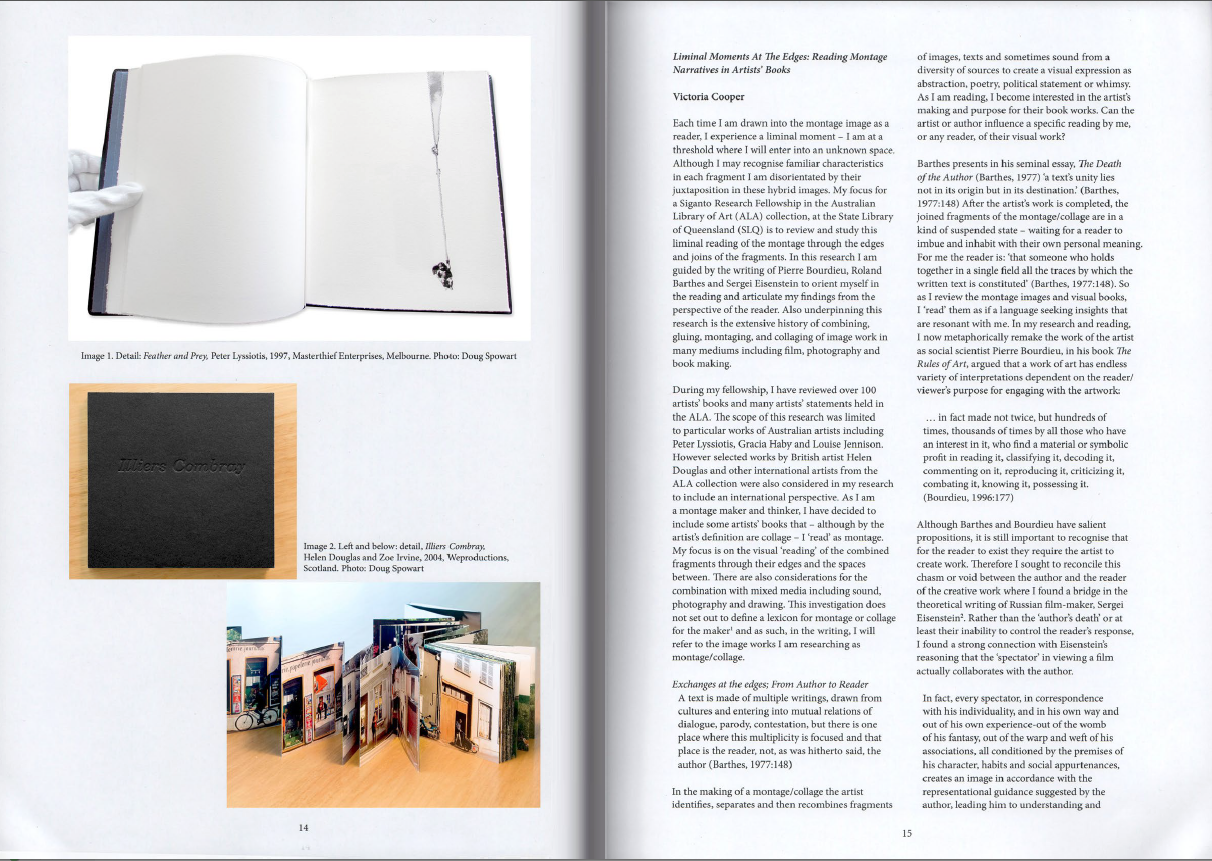
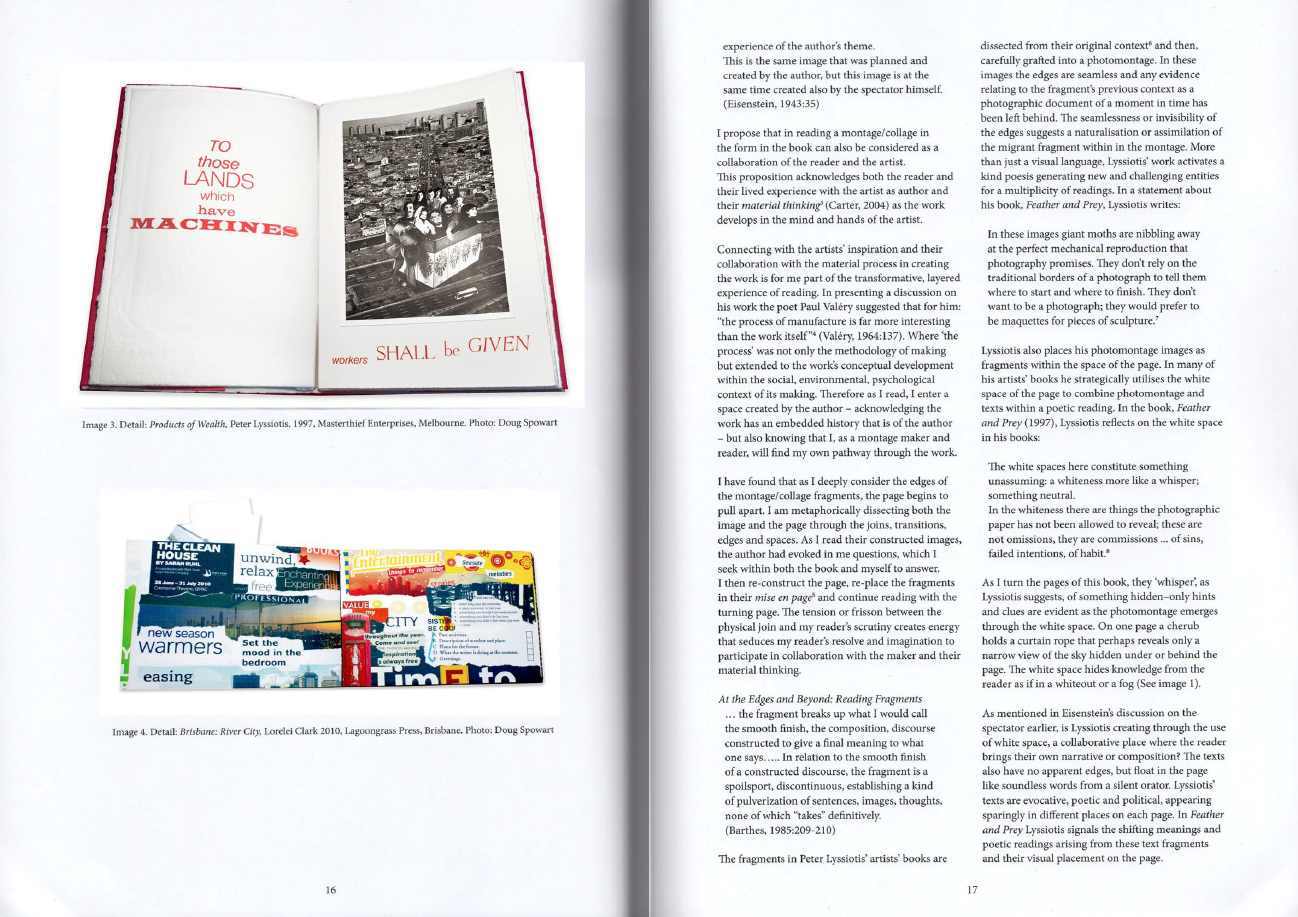


Here are the first 2 paragraphs from the paper
LIMINAL MOMENTS AT THE EDGES: READING MONTAGE NARRATIVES IN ARTISTS BOOKS
Each time I am drawn into the montage image as a reader, I experience a liminal moment – I am at a threshold where I will enter into an unknown space. Although I may recognise familiar characteristics in each fragment I am disorientated by their juxtaposition in these hybrid images. My focus for the Siganto Research Fellowship in the Australian Library of Art (ALA) collection, at the State Library of Queensland (SLQ) is to review and study this liminal reading of the montage through the edges and joins of the fragments. In this research I am guided by the writing of Pierre Bourdieu, Roland Barthes and Sergei Eisenstein to orient myself in the reading and articulate my findings from the perspective of the reader. Also underpinning this research is the extensive history of combining, gluing, montaging, and collaging of image work in many mediums including film, photography and book making.
.
During my fellowship, I have reviewed over 100 artists’ books and many artists’ statements held in the ALA. The scope of this research was limited to particular works of Australian artists including Peter Lyssiotis, Gracia Haby and Louise Jennison. However selected works by British artist Helen Douglas and other international artists from the ALA collection were also considered in my research to include an international perspective. As I am a montage maker and thinker, I have decided to include some artists’ books that–although by the artist’s definition are collage– I ‘read’ as montage. My focus is on the visual ‘reading’ of the combined fragments through their edges and the spaces between. There are also considerations for the combination with mixed media including sound, photography and drawing.
This investigation does not set out to define a lexicon for montage or collage for the makeri and as such, in the writing, I will refer to the image works I am researching as montage/collage.
[i] See my blog post for the Australian Library of Art, State Library of Queensland, http://blogs.slq.qld.gov.au/ala/2016/05/27/reading-montages-perceptions-dilemmas-edges-and-resolution/
Key books that I discuss in the paper are from the following artists:
Peter Lyssiotis, Feather and Prey, (1997), Masterthief Enterprises, Melbourne
Peter Lyssiotis, Products of Wealth, (1997), Masterthief Enterprises, Melbourne
Lorelei Clark, Brisbane: River City, (2010), Lagoongrass Press, Brisbane
Jack Oudyn, The very first book of fish, (199?), Micro Press, Ormiston, Queensland
Gracia Haby and Louise Jennison, And we stood alone in the silent night, (2008), Melbourne
Gracia Haby and Louise Jennison, Salvaged Relatives, Melbourne
Lyn Ashby, 20 minutes, , (2011), ThisTooPress, Victoria
Helen Douglas & Zoe Irvine, Illiers Combray. (2004), Weproductions, Scotland
Dianne Fogwell, Gene Pool, (2000), Edition & Artist Book Studio, Canberra School of Art, Canberra
You can download a copy of my paper HERE
PLEASE NOTE: This download version contains colour photographs of the books discussed – the Yearbook is published in monochrome.
.
Thank you to all the artists who gave permission for their works to be photographed and presented in the publication.
Enjoy — and I would appreciate any comments you may have about the paper…
You can buy your own hard copy of the Yearbook from UWE HERE
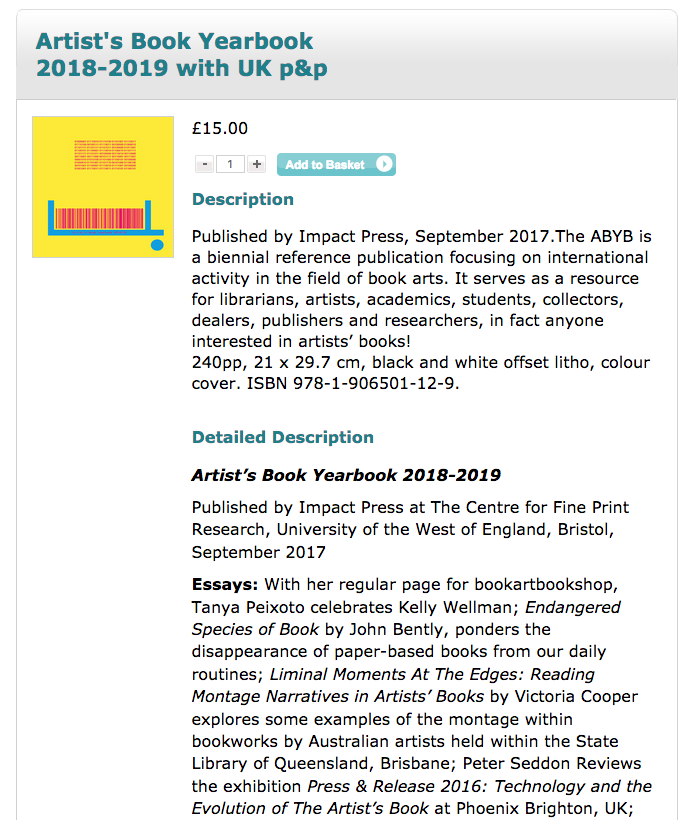
UWE Publications website
.
.
.
.
.
.
.
.
.
.

 wotwedid