Archive for the ‘Regional arts’ Category
DIGGING FOR GOLD: Nocturne Castlemaine+Chewton
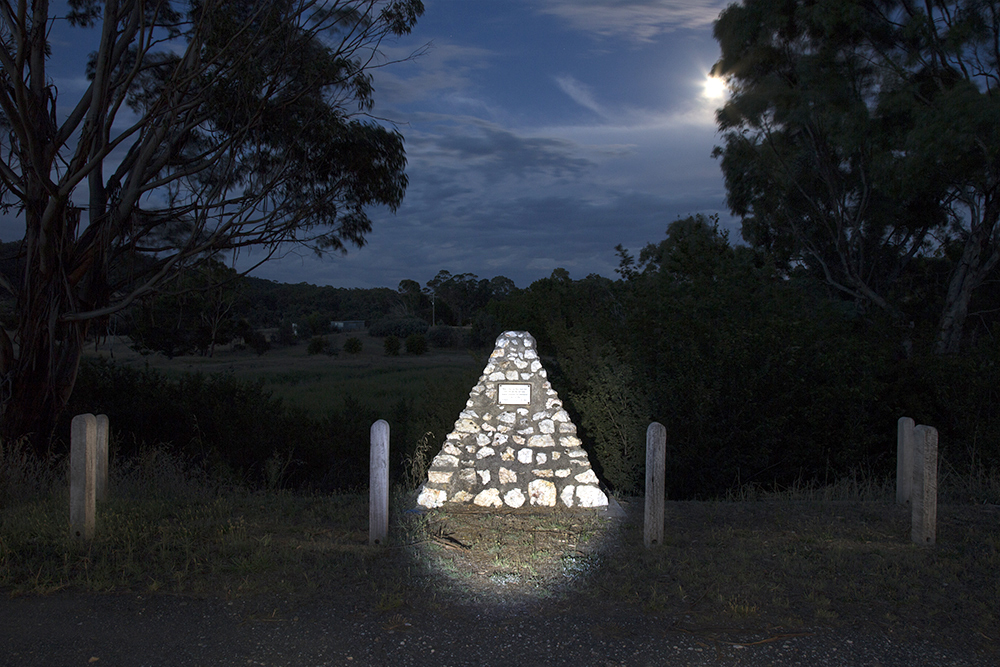
The memorial cairn celebrating the discovery of gold at this place in 1852
.
For about a month now we have been house-sitting in Chewton in the midlands of Victoria – the locality includes Castlemaine and Bendigo with Daylesford and Ballarat just down the road.
The region is famous for gold that was discovered in 1851 – with three months 30,000 diggers were working the alluvial gold fields. While initially a tent city very quickly buildings for every purpose where built many of which still stand today – although, some could be considered barely standing… Just up the street is The Red Hill Hotel that was built in 1854, the Chewton Town Hall in 1858 and the local post office was first opened in 1857.
By the end of the 1800s underground mining and dredging became the preferred methods to extract the precious metal. Companies that could undertake the industrial, technical and financial backing required replaced the independent digger. Populations shrunk and the architectural legacy of the boom times remained.
We have been out doing some night photography work to extend our Nocturne project further. Our nocturne photographs follow our usual methodology although we have added in the Day/Night duo image concept explored in the recent Nocturne Armidale project.
.

Castlemaine: Downes Road industrial scene
We have found that the Castlemaine and Chewton are thriving creative and cultural communities bolstered by artists, academics, writers and adventurers who have moved to this region. You can be surprised who lives around the corner…
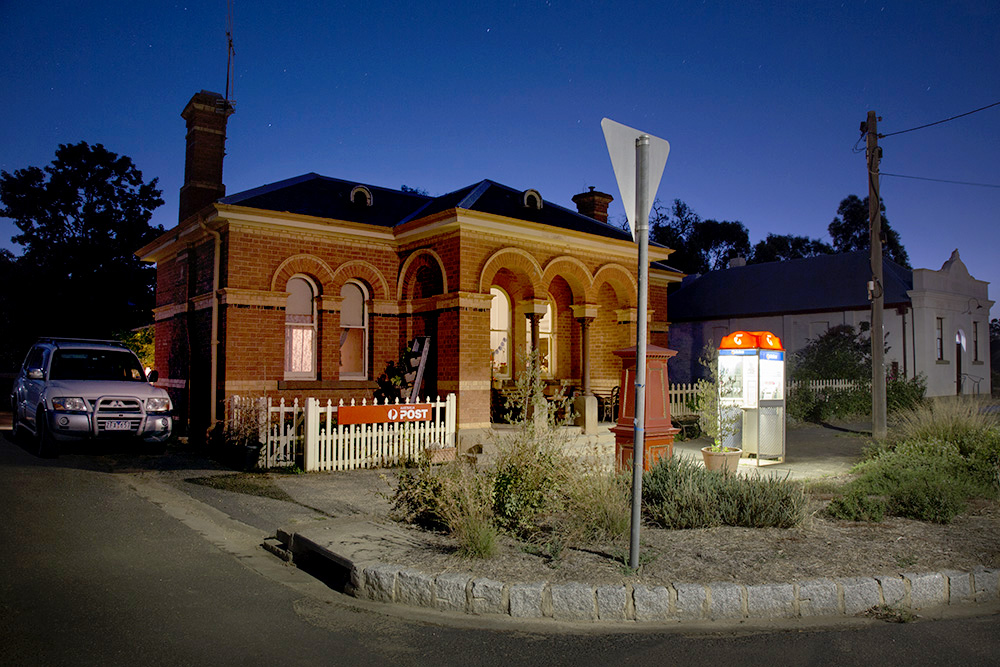
Chewton Post Office
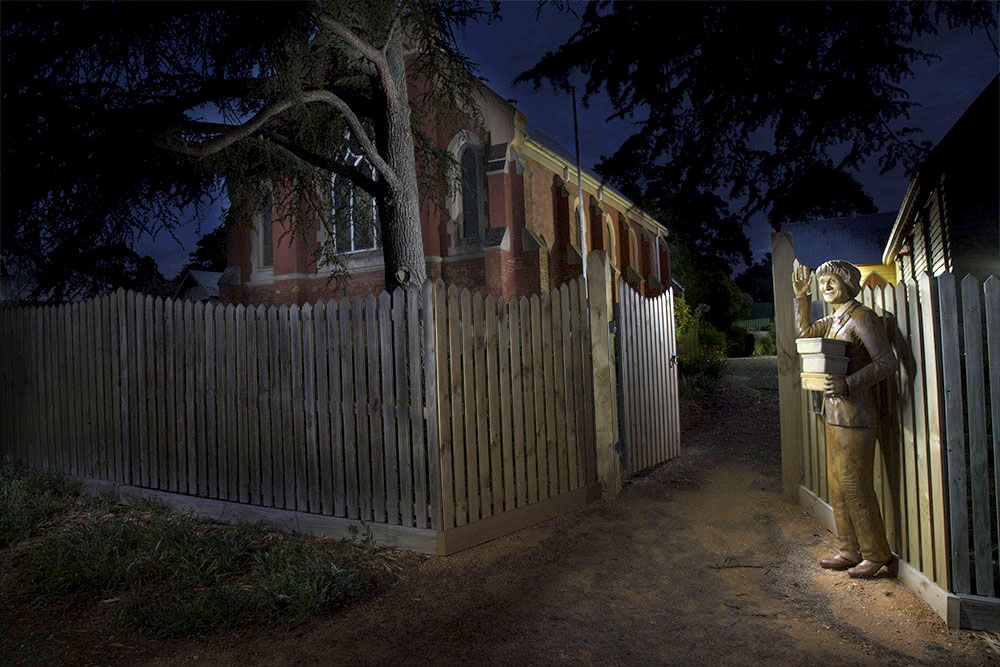
The Chewton Community & Senior Citizens Centre.
At the gate is an amazing life-sized sculpture of Alice Dennis by sculptor Richard Yates.
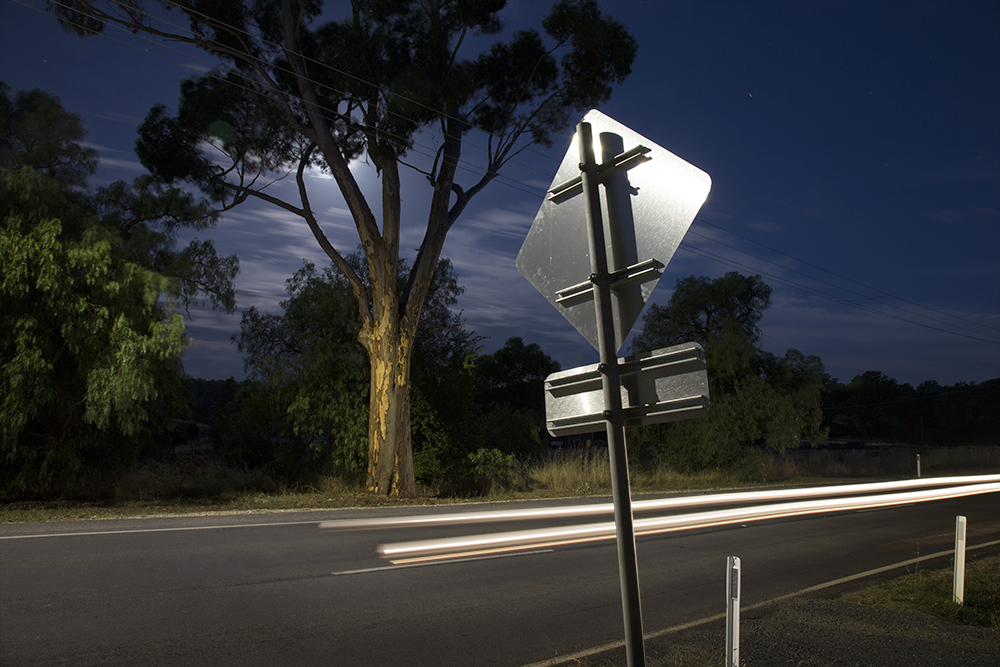
Pyrenees Highway and moon rise, Chewton
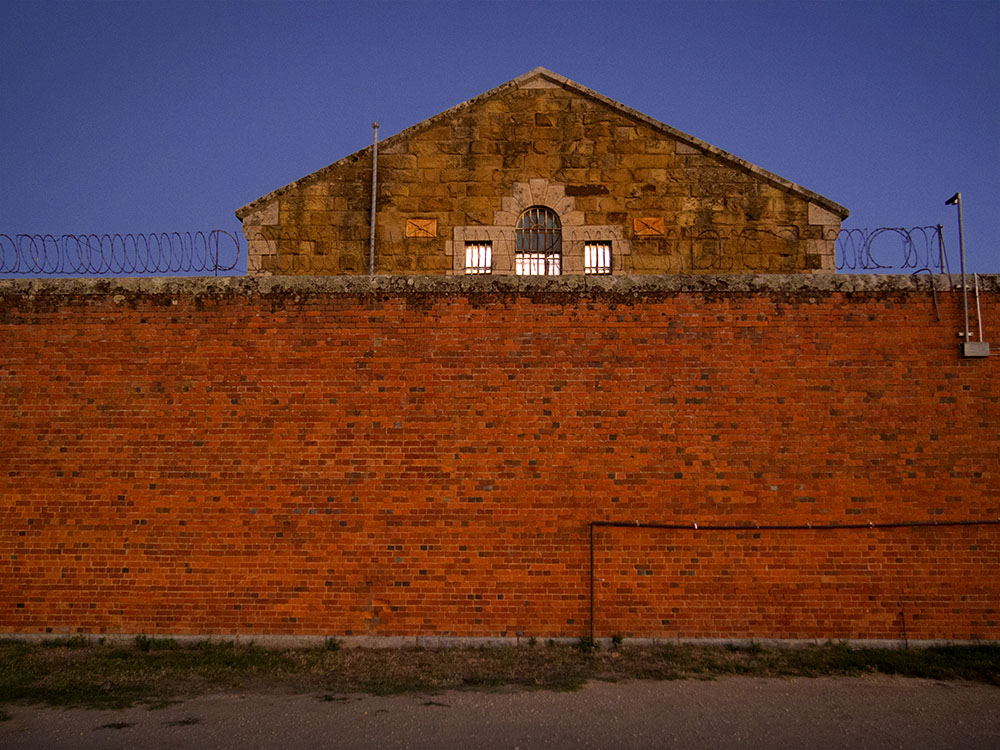
Elevation of the Old Castlemaine Jail…
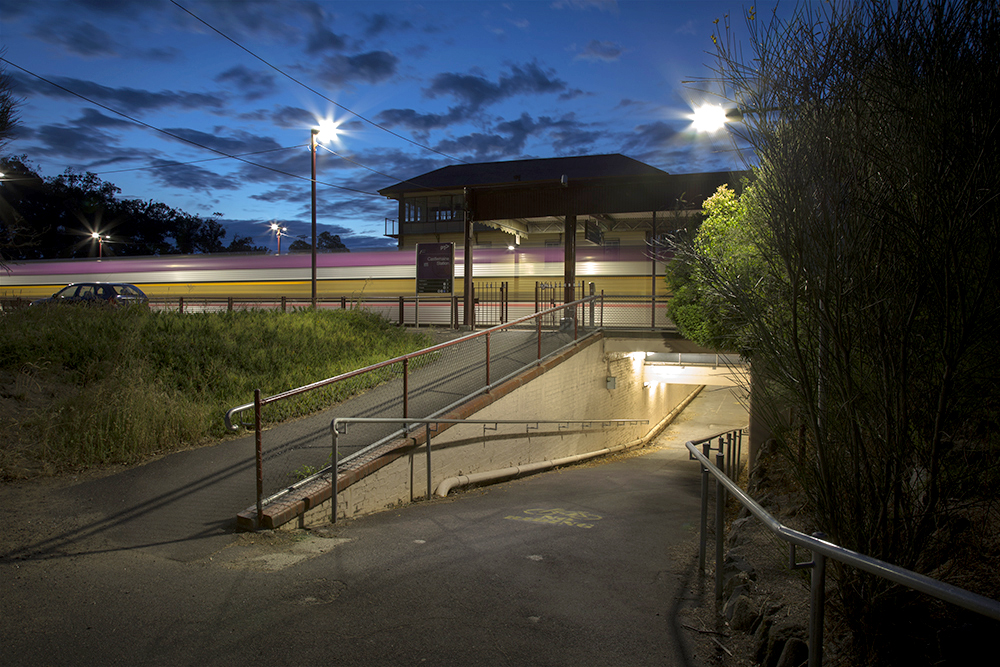
The 9.35pm to Melbourne leaves the Castlemaine Station…
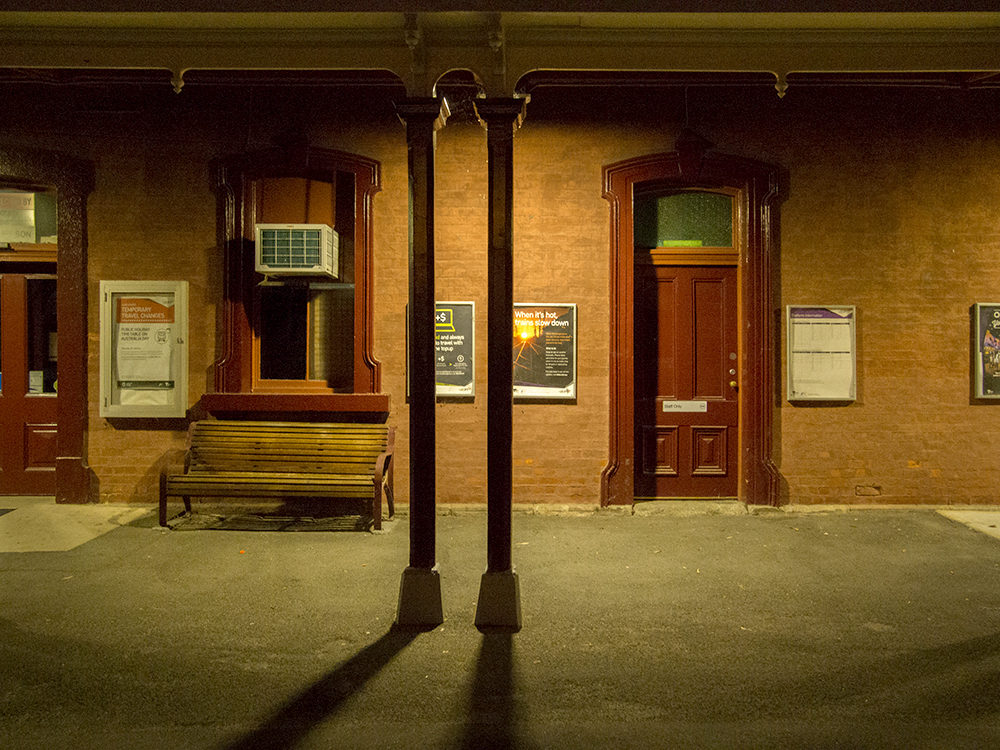
Castlemaine station detail… Poster says “When it’s hot – Trains slow down”. It was 41 degrees C max today – the train was running late. It was still 34 degrees when the train left the platform.
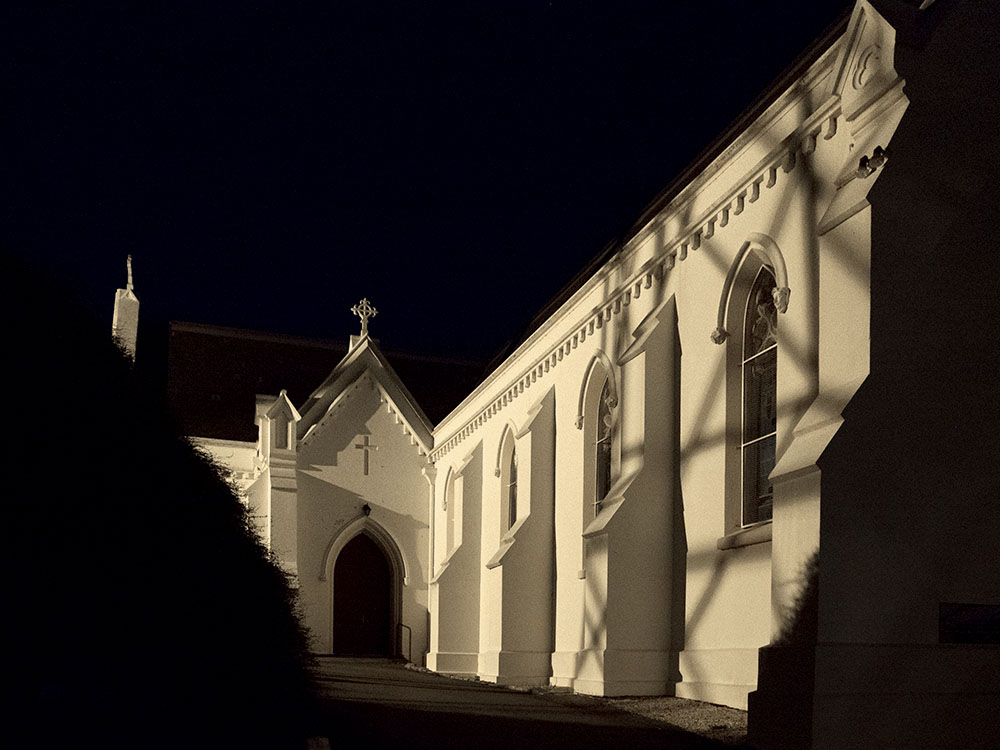
St Mary’s Church with shadows
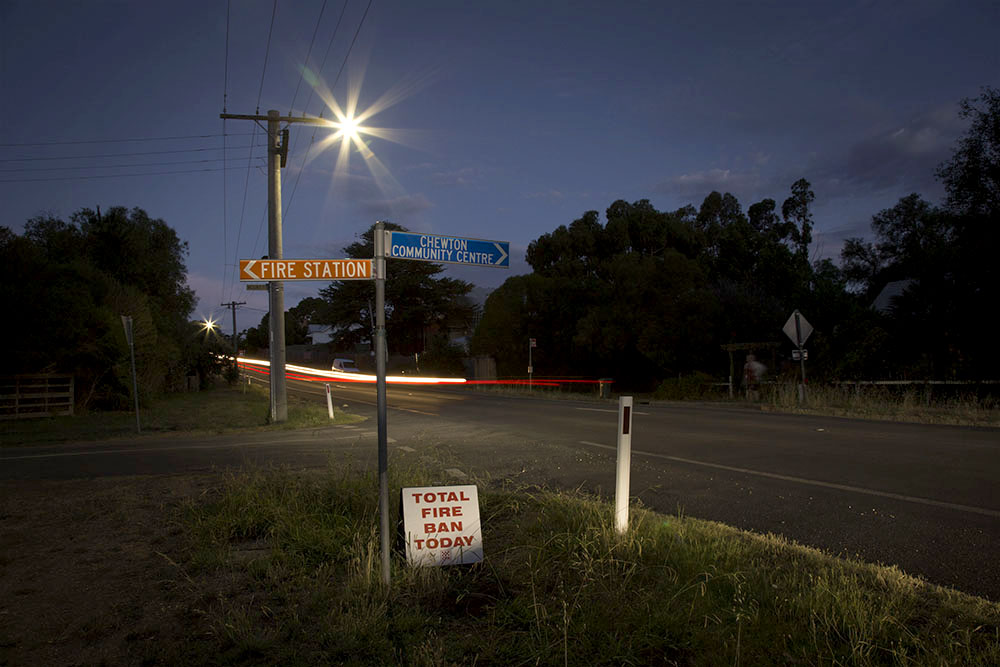
TOTAL FIRE BAN TODAY – Chewton CFA, Mount Street.
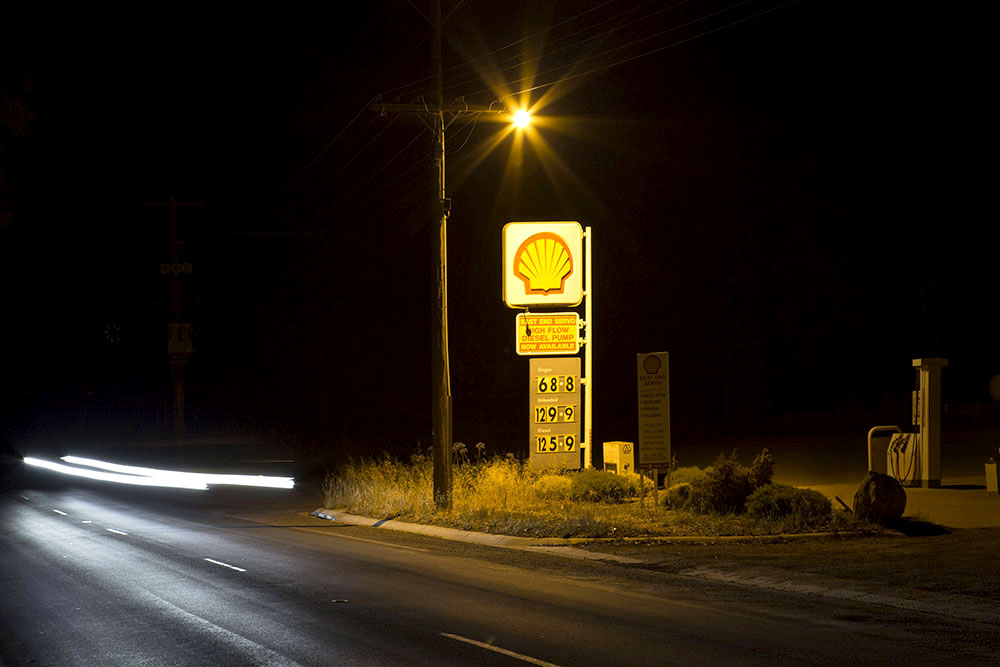
You know when you hit the 50kph zone coming into Chewton when you pass the Shell servo …
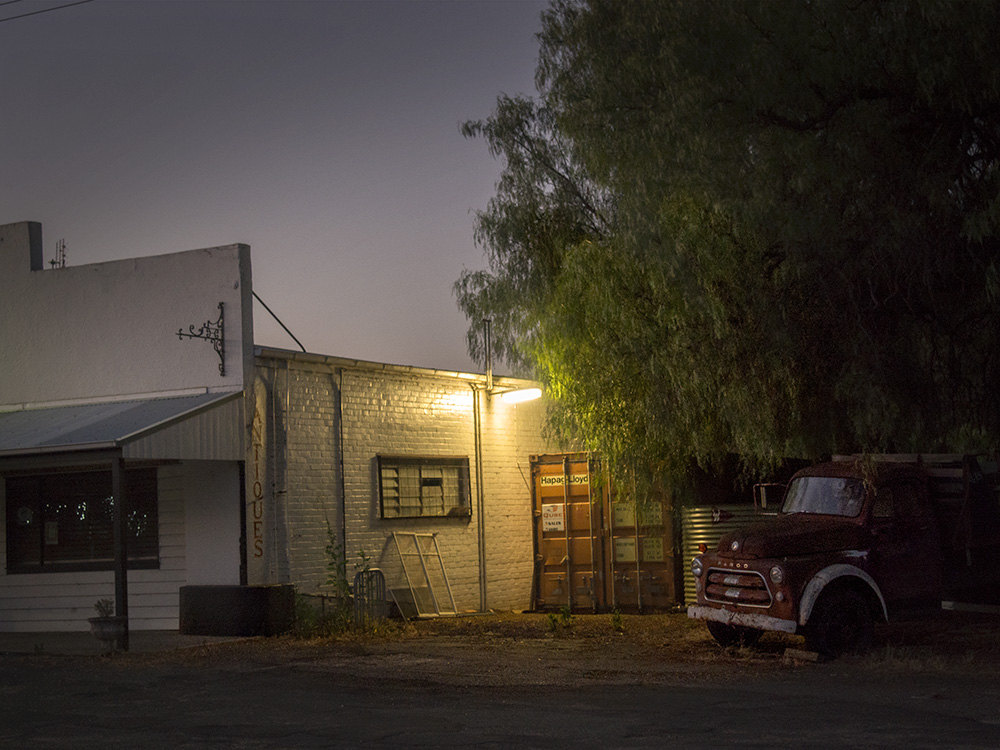
Just down the side of Mo’s Antiques Chewton
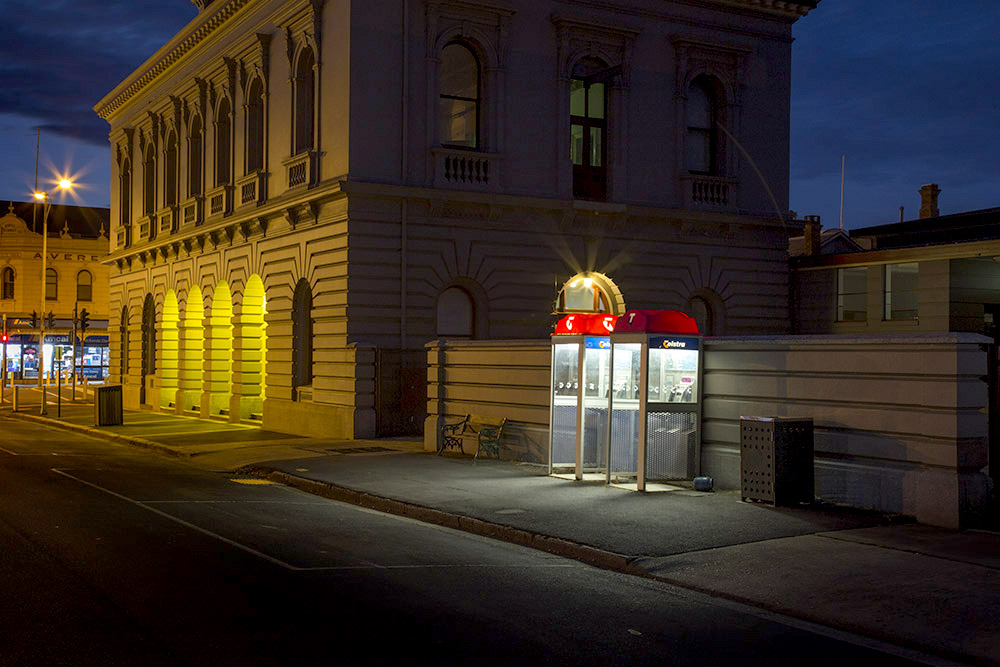
Castlemaine Post Office – Telstra telephones… who uses them now…?
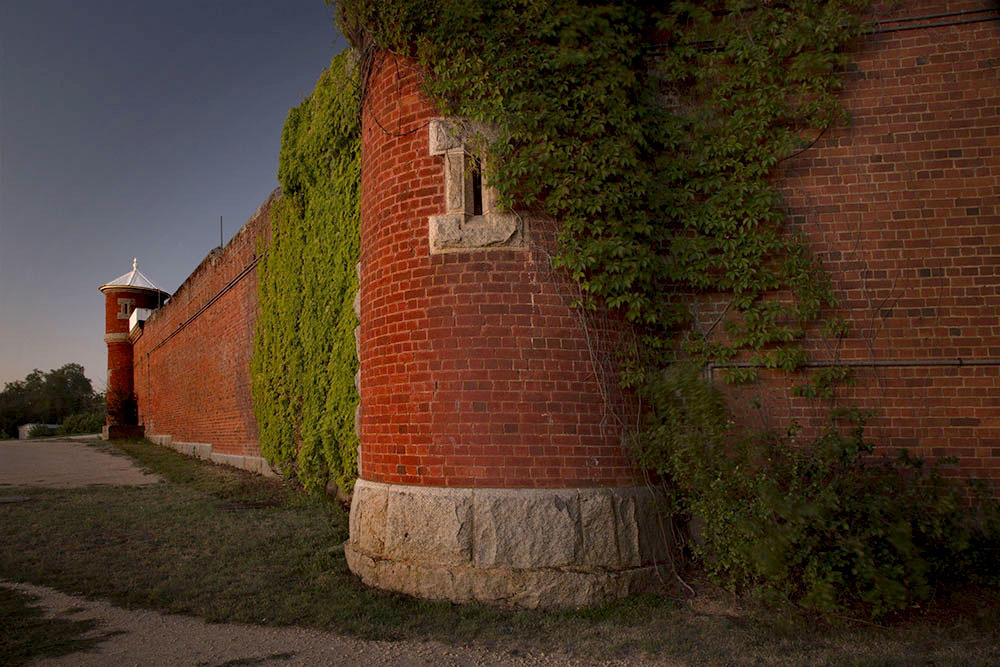
The Old Castlemaine Jail…
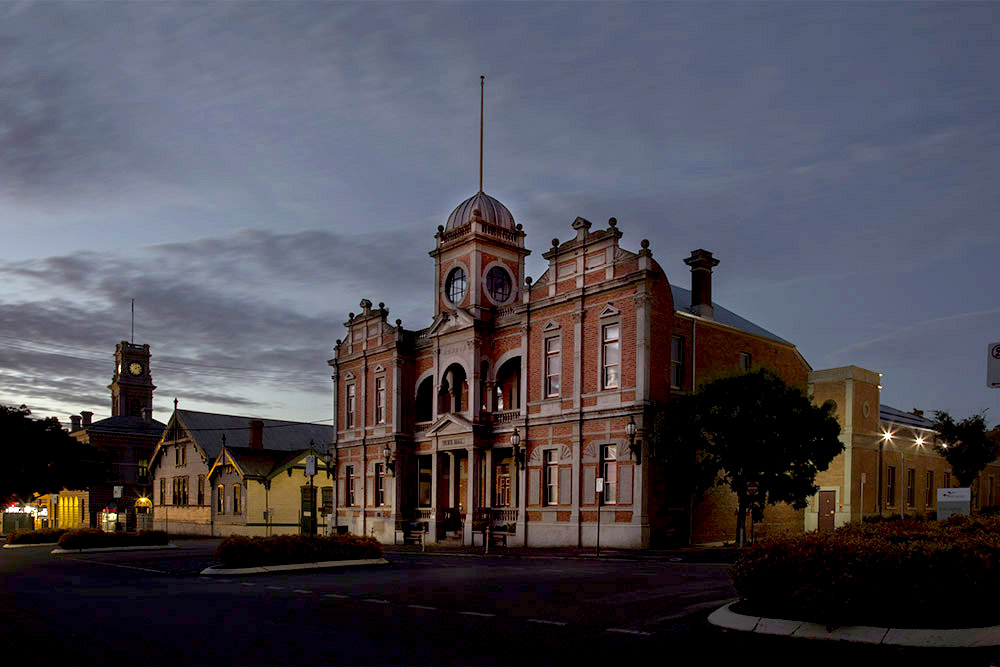
Castlemaine Town Hall – lights all out 9.30pm.
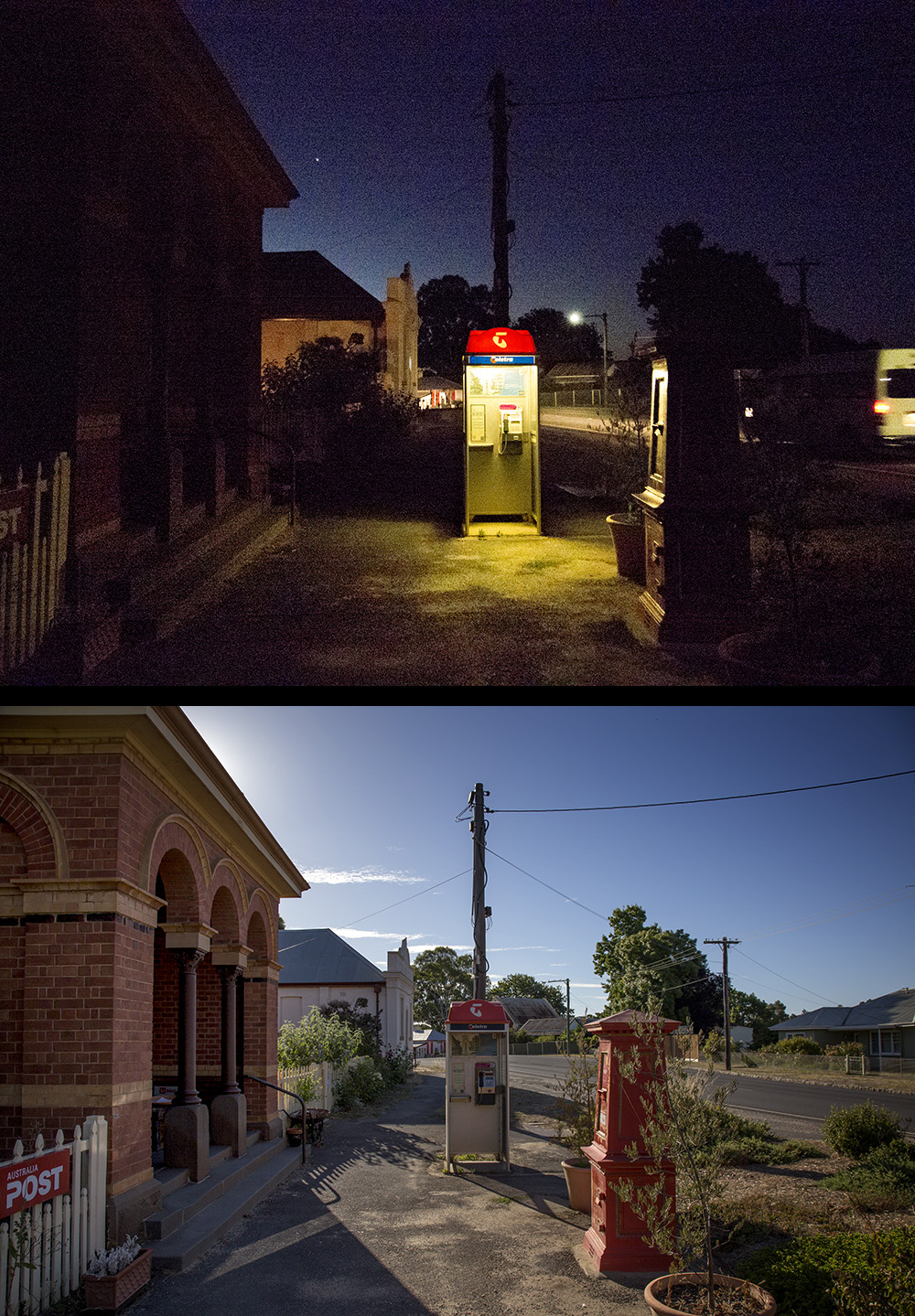
Phone Box DUO at the Chewton Post Office
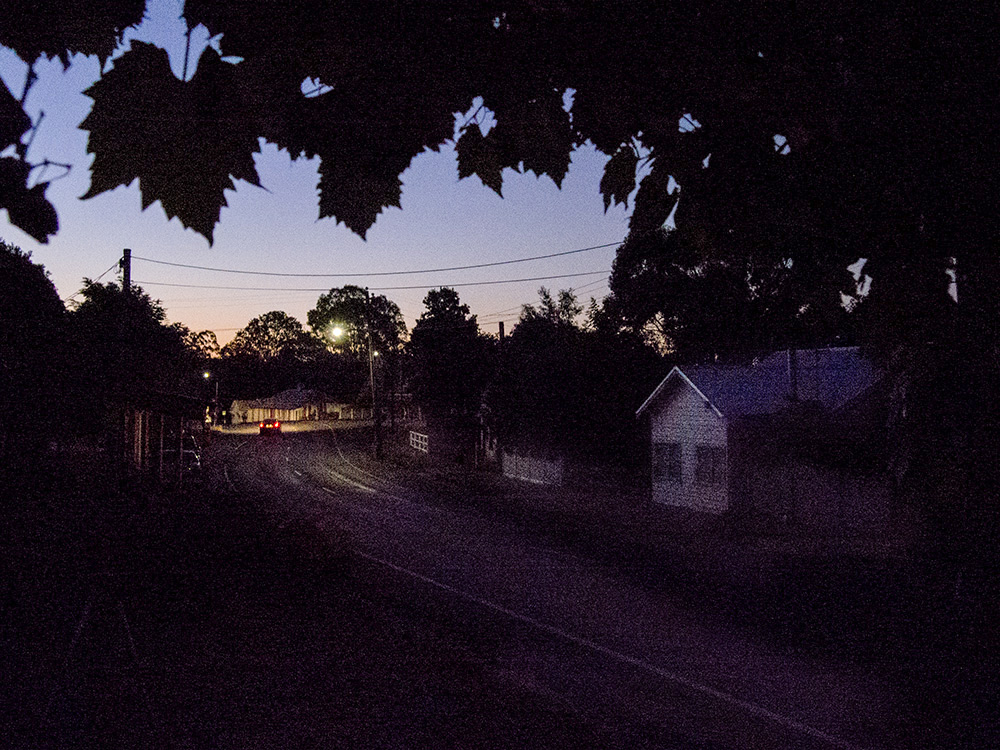
You could almost write a novel about this Chewton scene…
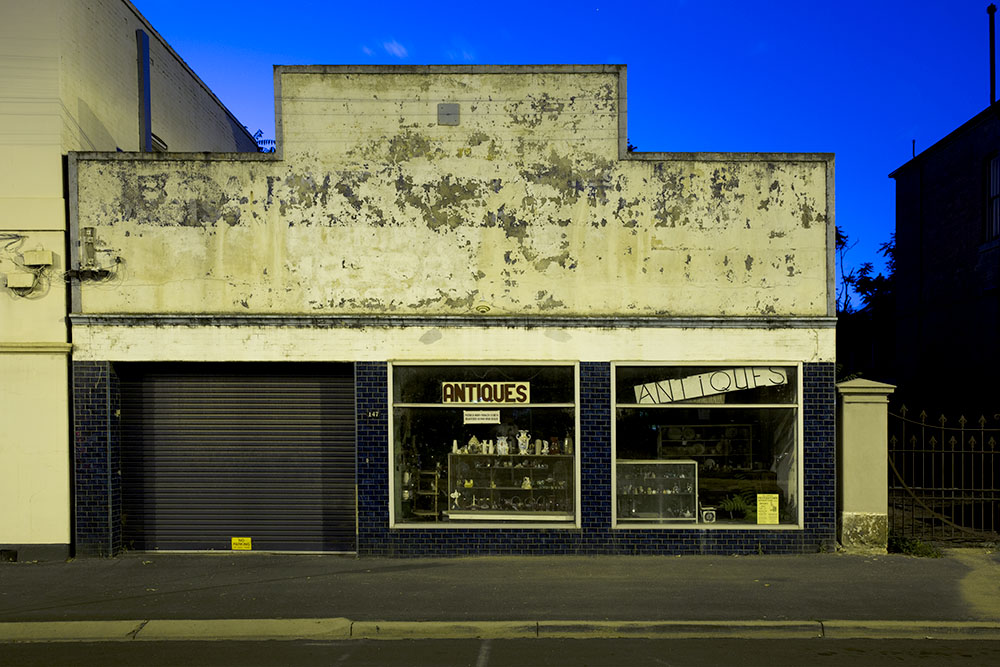
Antique, antique shop Castlemaine
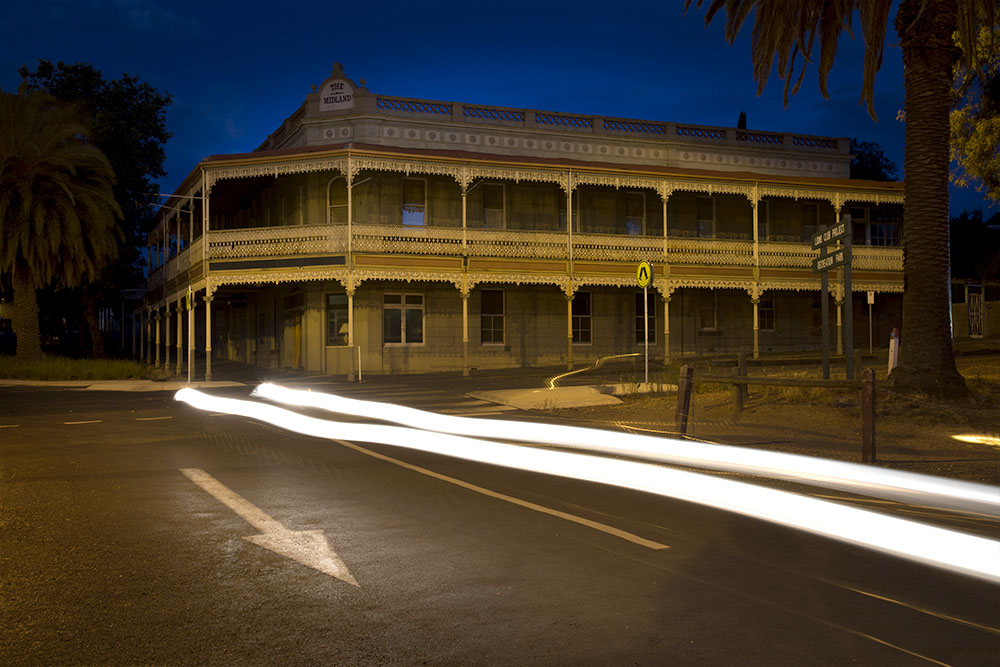
Castlemaine Midland Hotel just over the road from the station. The lights are out —- Is anybody home…?
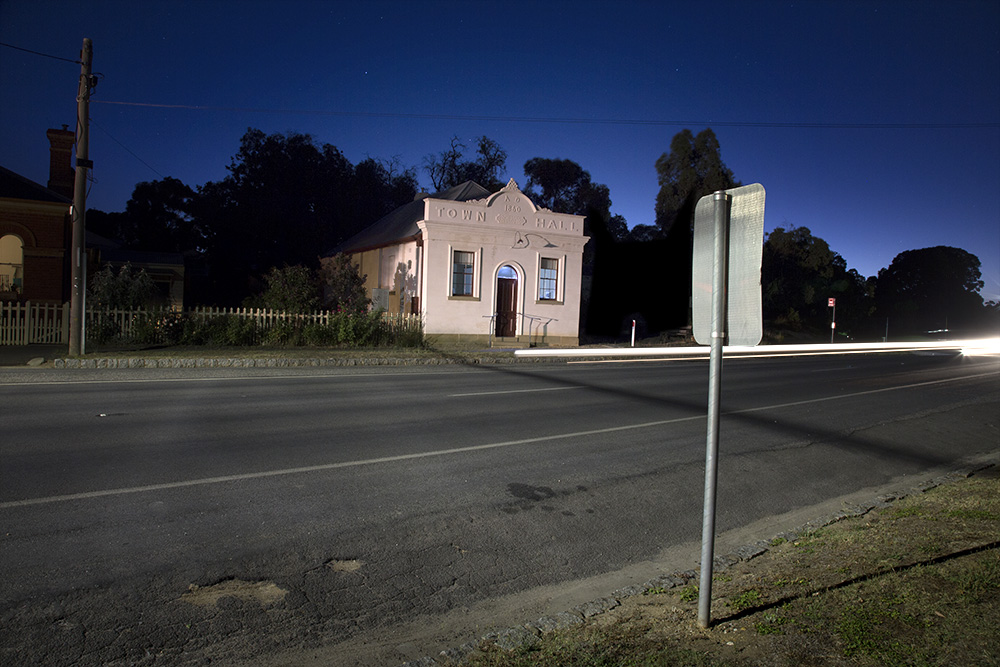
The Chewton Town Hall…
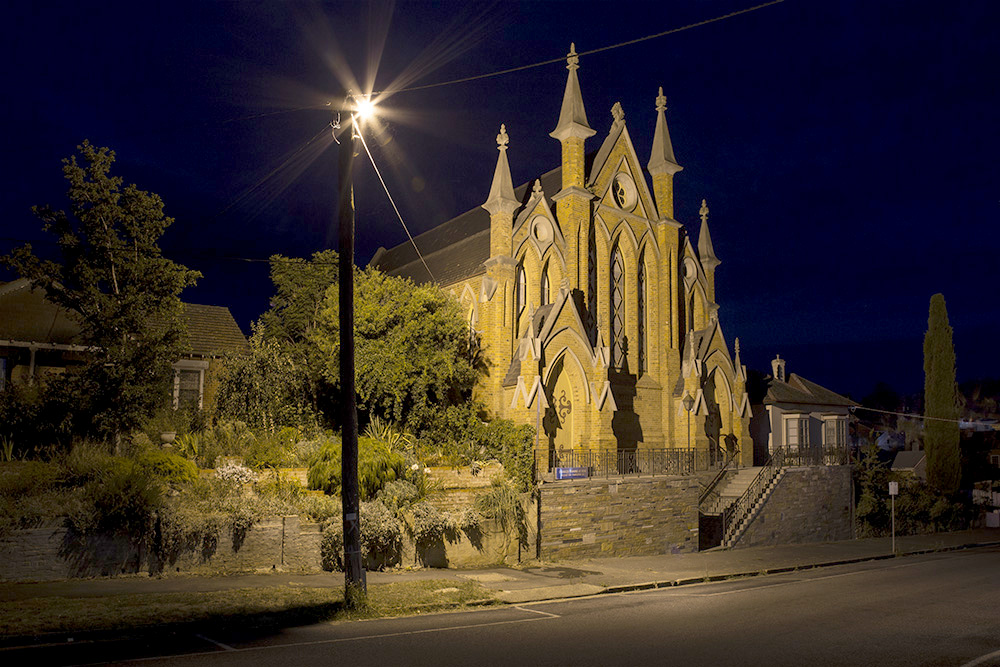
Castlemaine Presbyterian Church
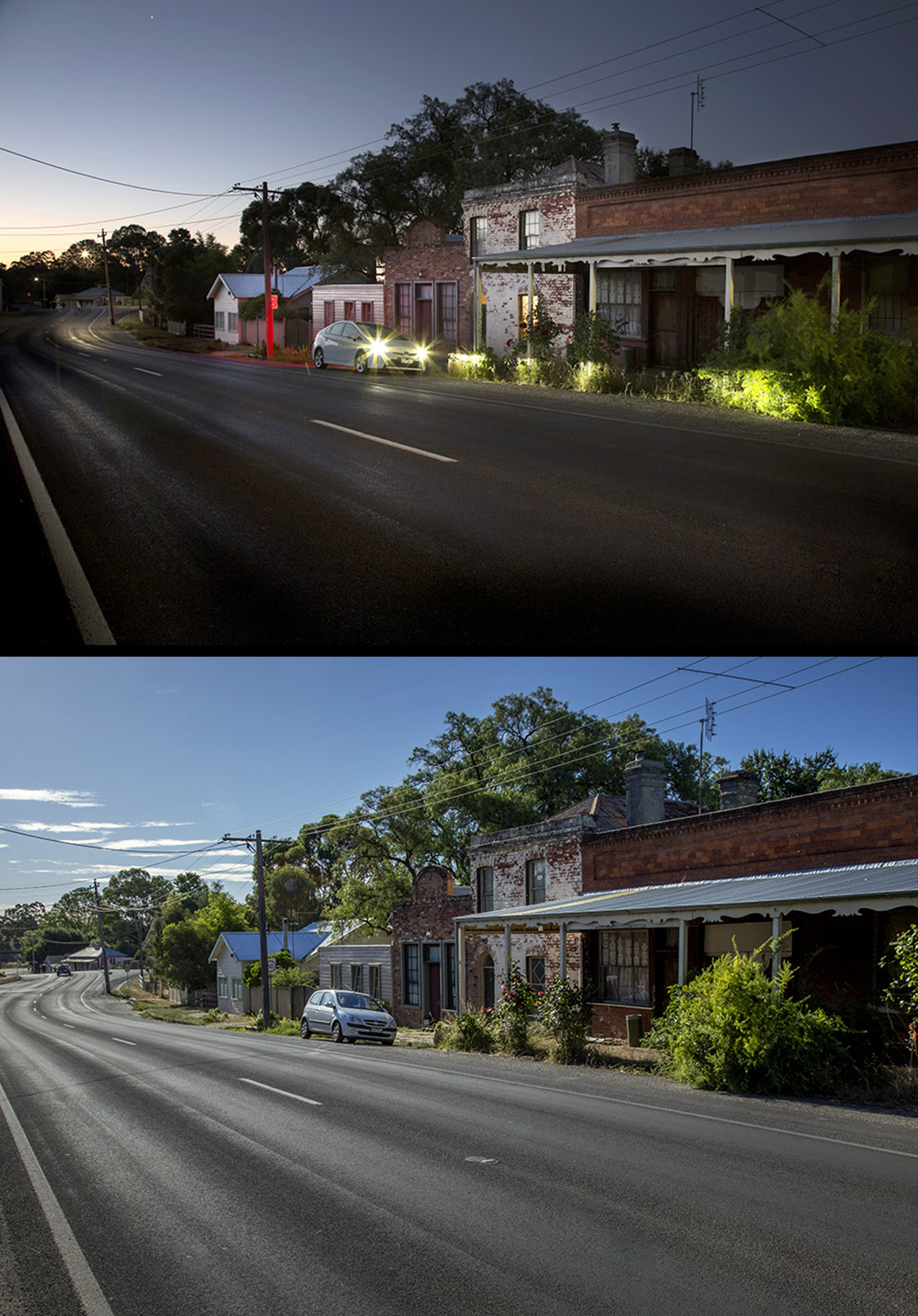
Opposite the Red Hill Hotel DUO
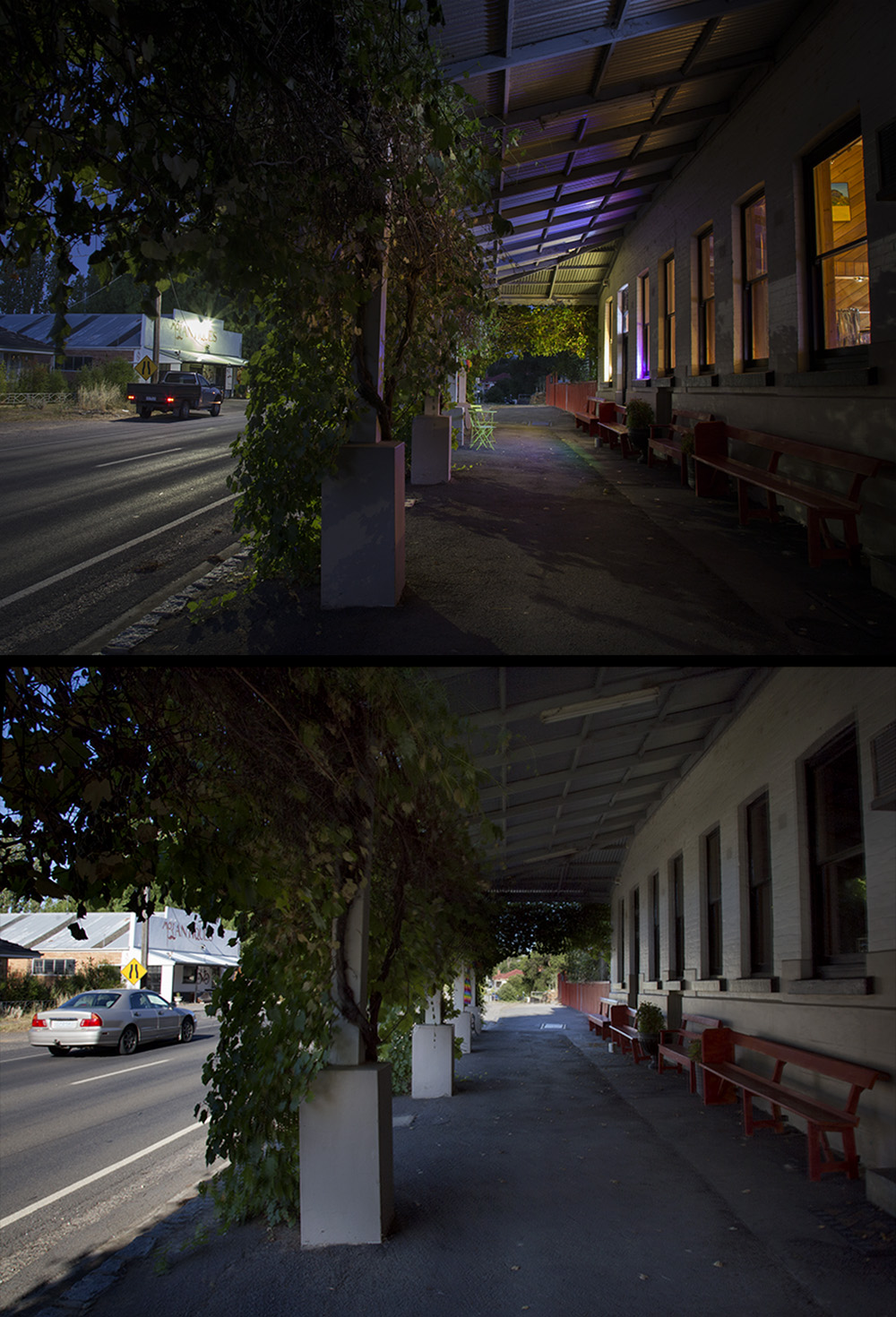
Under the veranda of the Red Hill Hotel
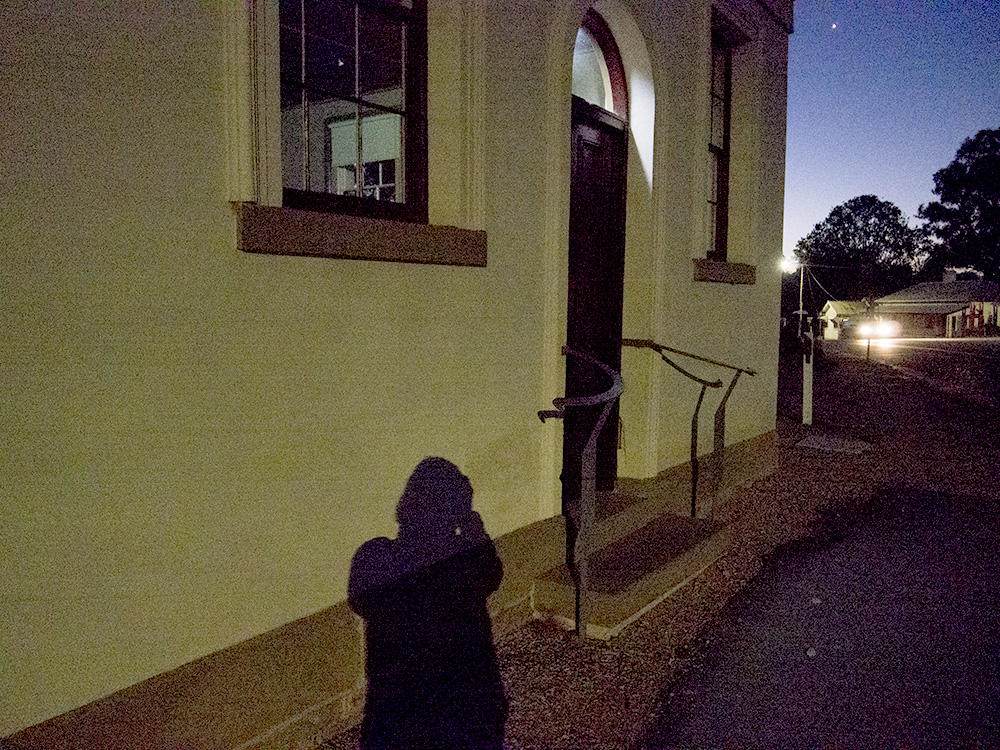
Cooper+Spowart – on the nocturne street, Chewton
OUR LATEST BOOK IS IN THE CCP SALON

CCP Header
Australia’s largest open-entry exhibition and competition, CCP Salon, is now in its 24th year and our photobook “YOU ARE HERE…” is in the show.
Presented by Leica and Ilford, with support from Affinity, this annual event celebrates the latest developments in photomedia practice around the country, and provides an exciting opportunity to exhibit work in a professional, high-profile context. Supported by 21 national leaders in the photographic industry, CCP Salon awards up to $20,000 worth of prizes over 26 categories, and visitors are invited to vote for their favourite image in the Michaels People’s Choice Award.
JUDGES: Janina Green – Artist, Dylan Rainforth – Writer, Michelle Mountain – CCP Program Manager, Naomi Cass, CCP Director – Non-voting Chair. Winners of the different categories will be announced at the opening on November 24th. The exhibition continues until December 17.
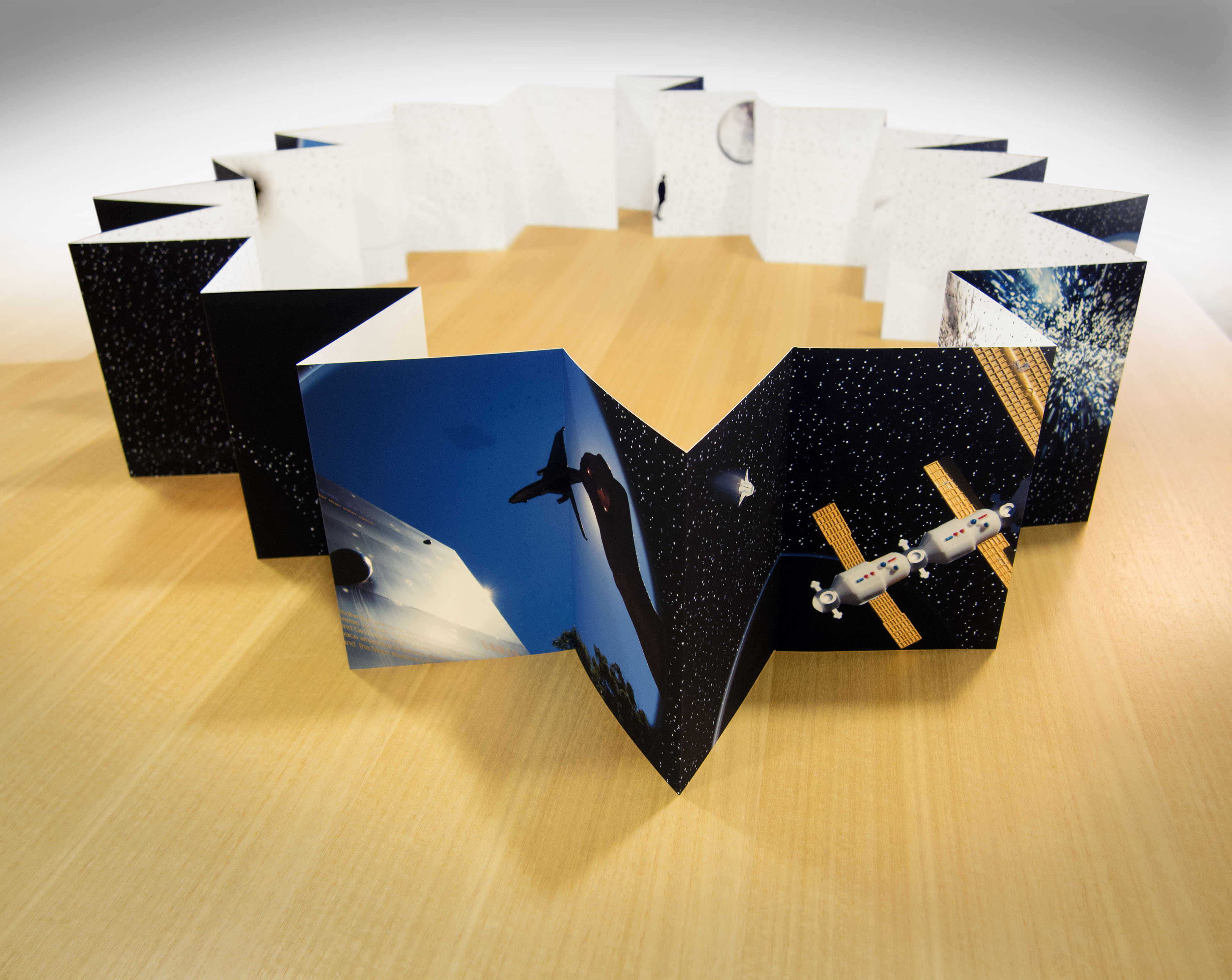
You are here…
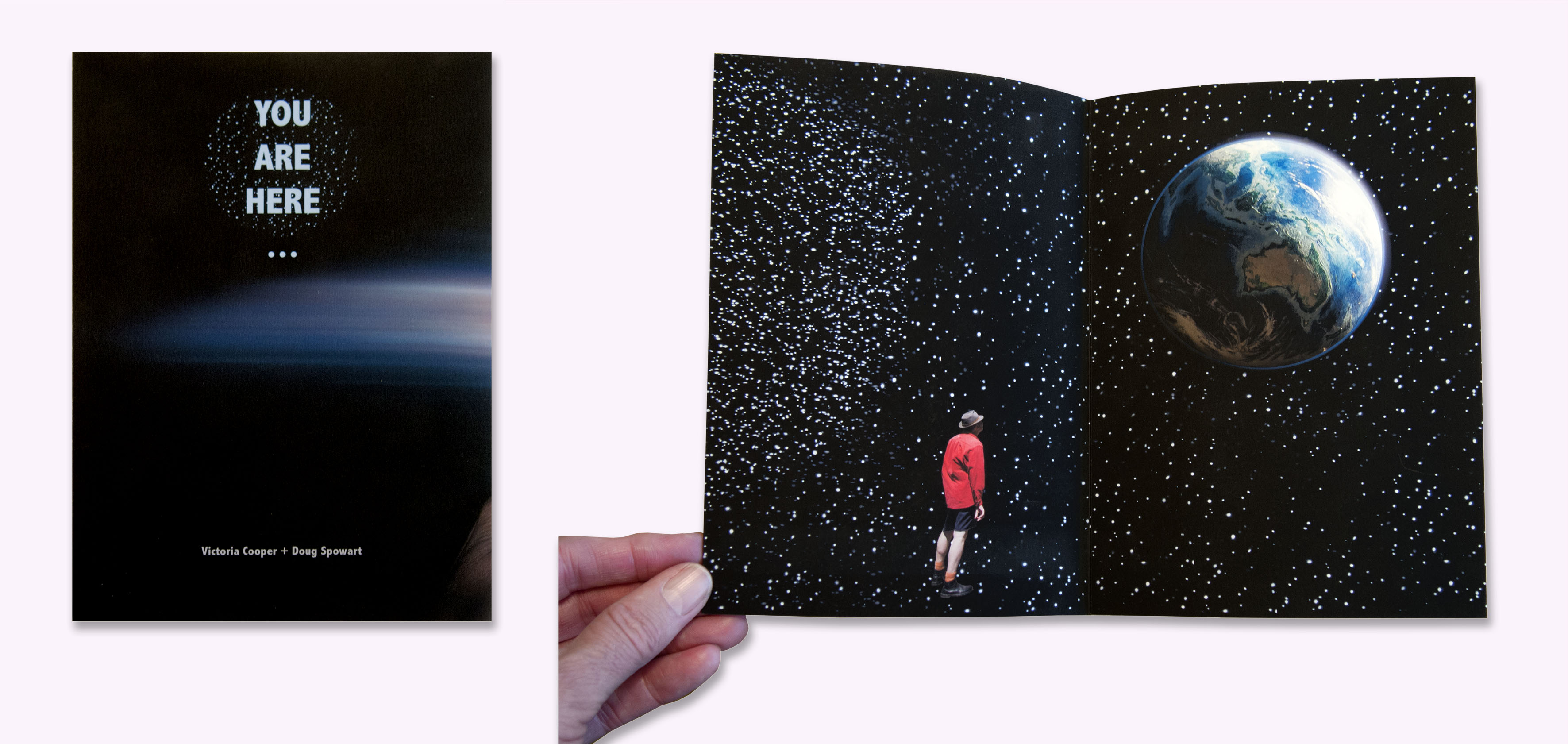
‘You are here…” Cover and codex opening
“You are here” a collaborative artists’ book by Victoria Cooper and Doug Spowart
This book is inspired by many years of travelling through the Pilliga Scrub along the Newell Highway in central western NSW.
On this major highway there is another journey for the road traveller that can take them metaphorically into outer space. This tourist attraction is called the “Solar System Drive” and extends from Belatta to Dubbo. The planets placed on signs along the highway lead to the “sun” which is located in the centre of the array at Siding Springs Space Observatory in the Warrumbungle National Park.
You are here traverses the liminal space between these two journeys, playing with the philosophical questions of place, space and time.
Details of the book: Pigment inks on cotton rag inkjet paper, 14 x 20 x3cm – extends to 6.3metres.
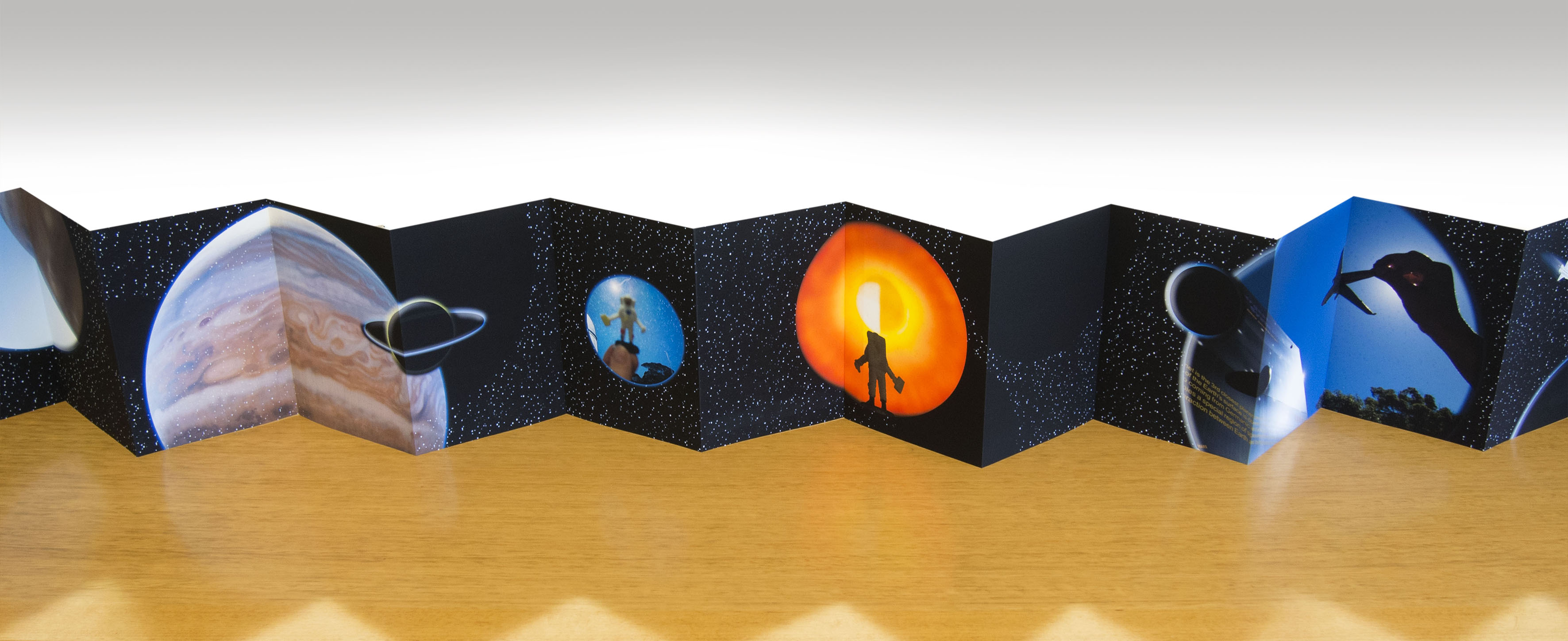
‘You are here…” detail
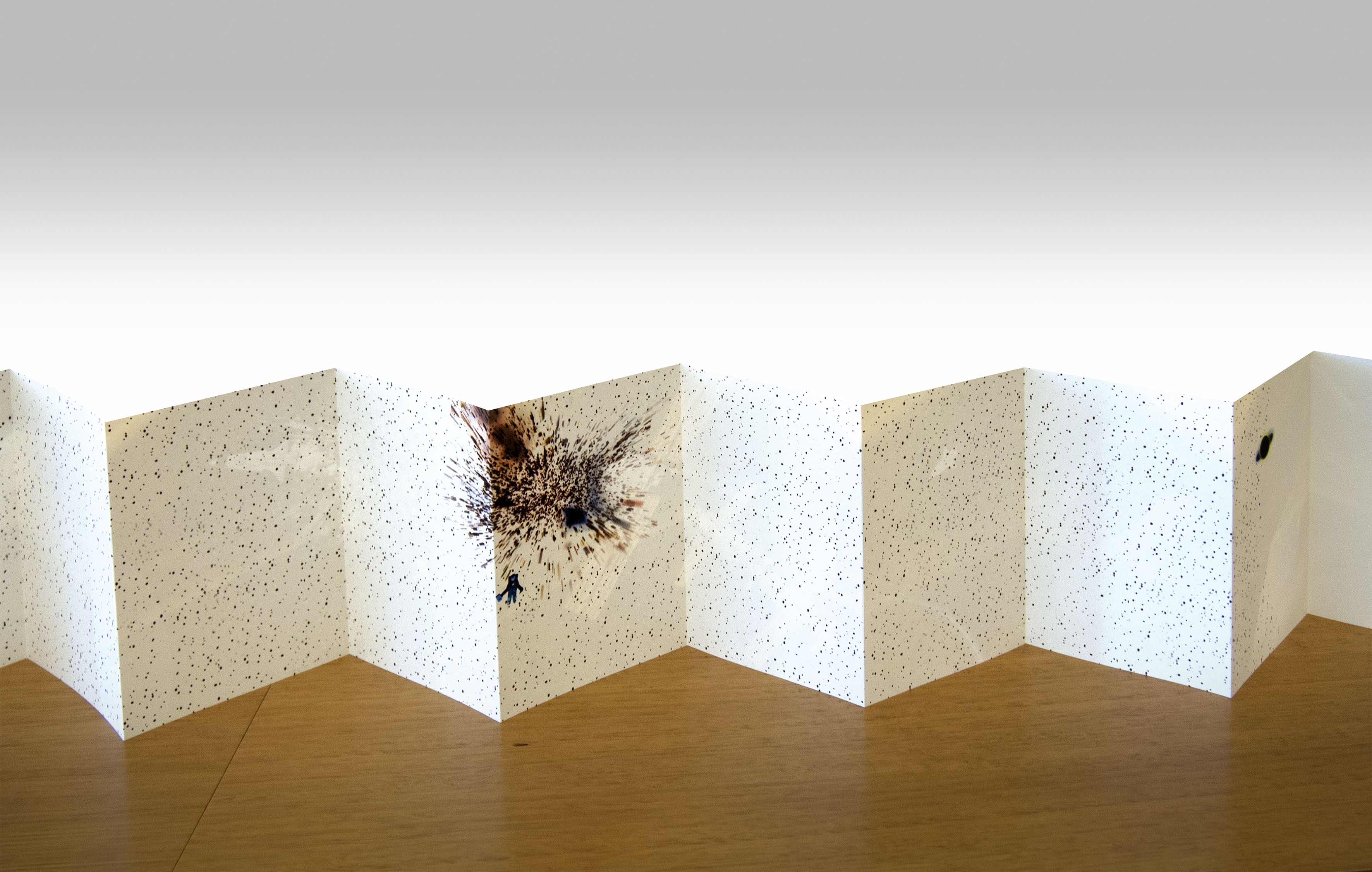
“You are here…” back detail
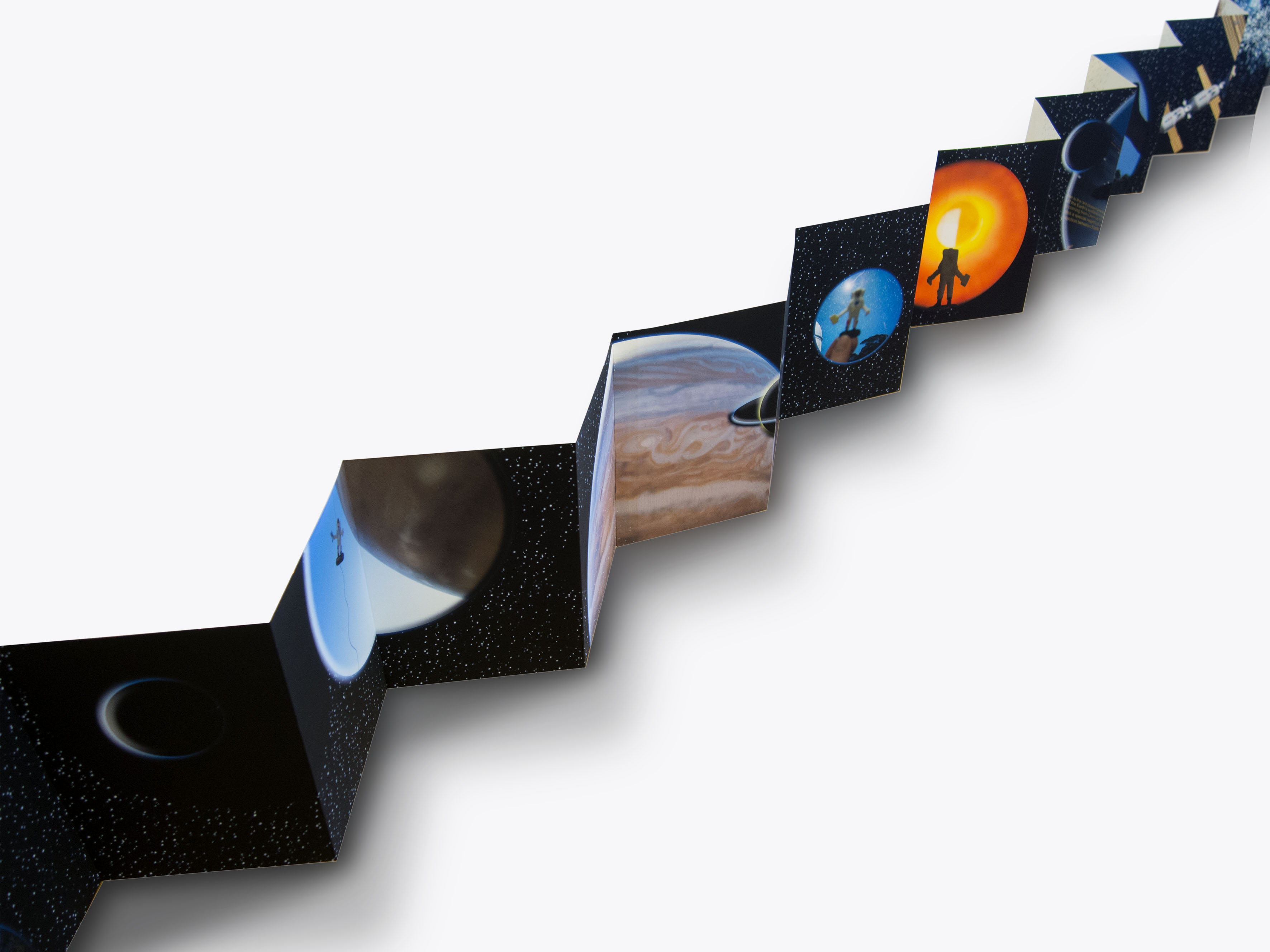
‘You are here…” detail
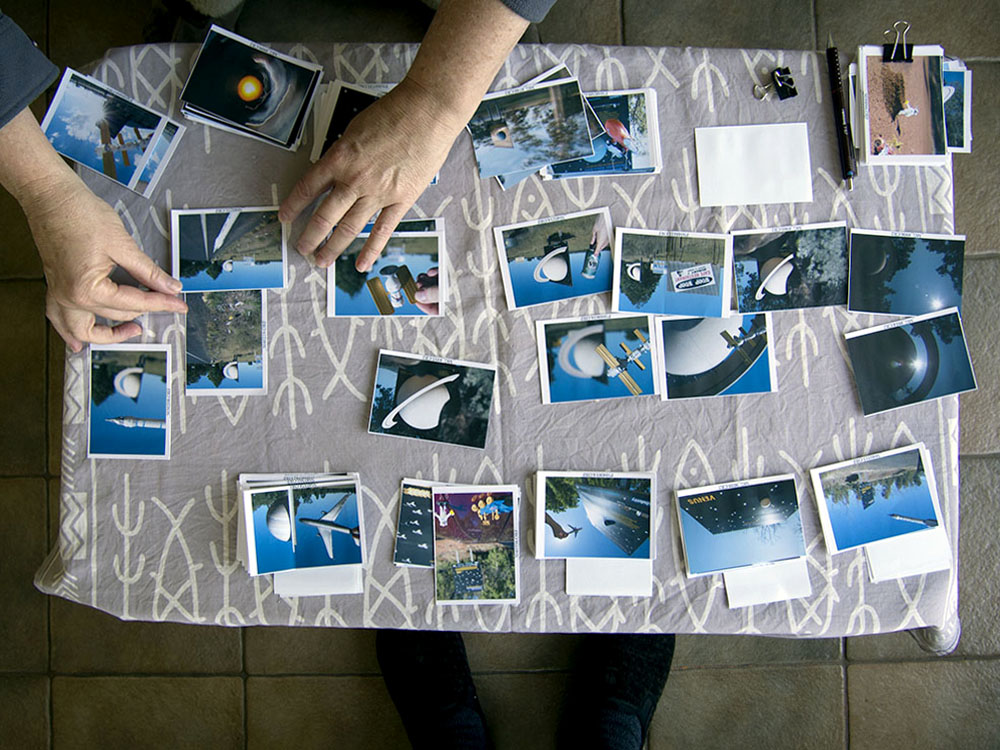
Planning the narrative of “You are here…” earlier this year.
.
.
.
MAUD GALLERY CAMERA OBSCURA – for one day only
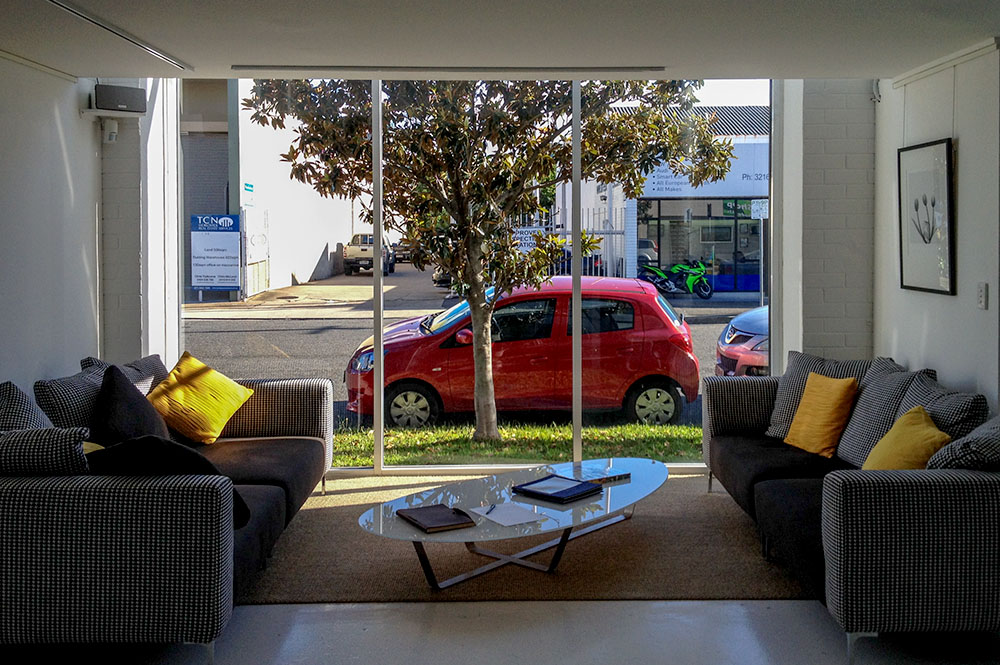
The Maud Gallery window to become a Camera Obscura
As a final event for Maud’s Festival of the Darkroom on November 26 between 12.00 Noon and 4.00pm we worked with Louis Lim to convert the Maud Gallery front room into a public Camera Obscura. We invited members of the Brisbane photo community to join with us for a look back to the origins of photography.
What follows are photos from the event…
Set-up day with Louis Lim, Ana Paula Estrada and Gillian Jones
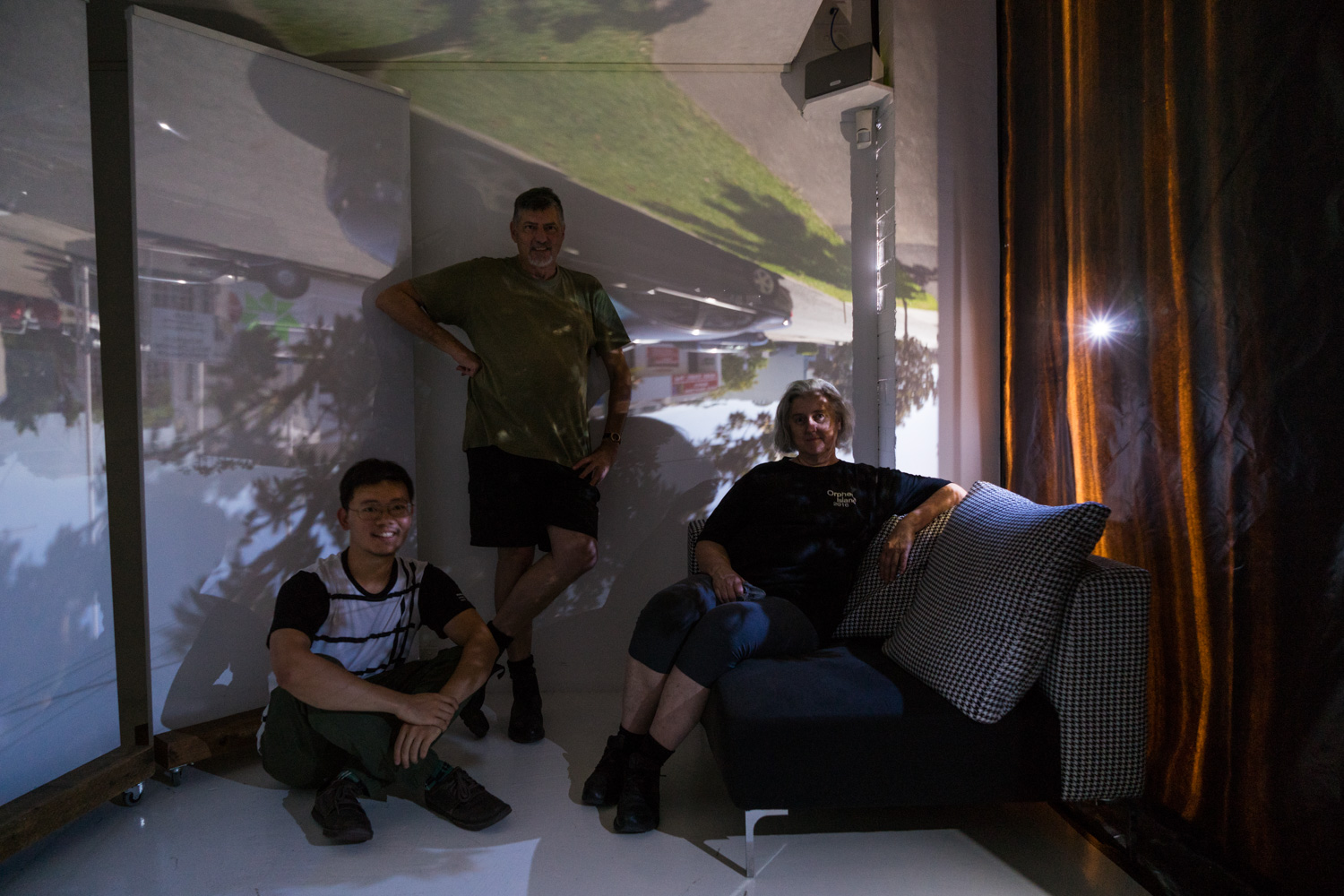
The Maud camera obscura team – Louis Lim, Doug+Vicky PHOTO: Louis Lim
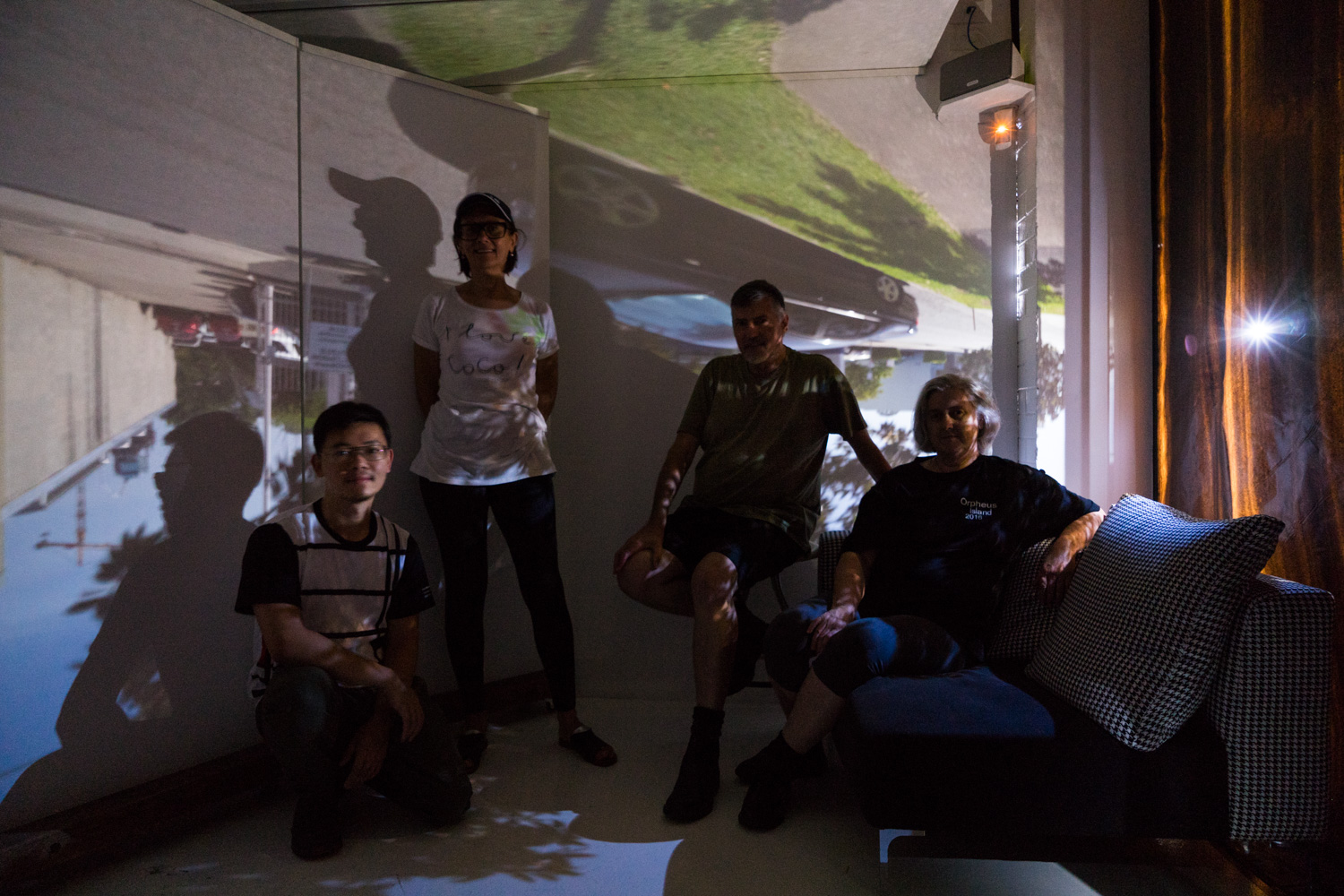
The Maud camera obscura team – Louis Lim, Doug+Vicky with Maud Director Irena Prikryl. PHOTO: Louis Lim
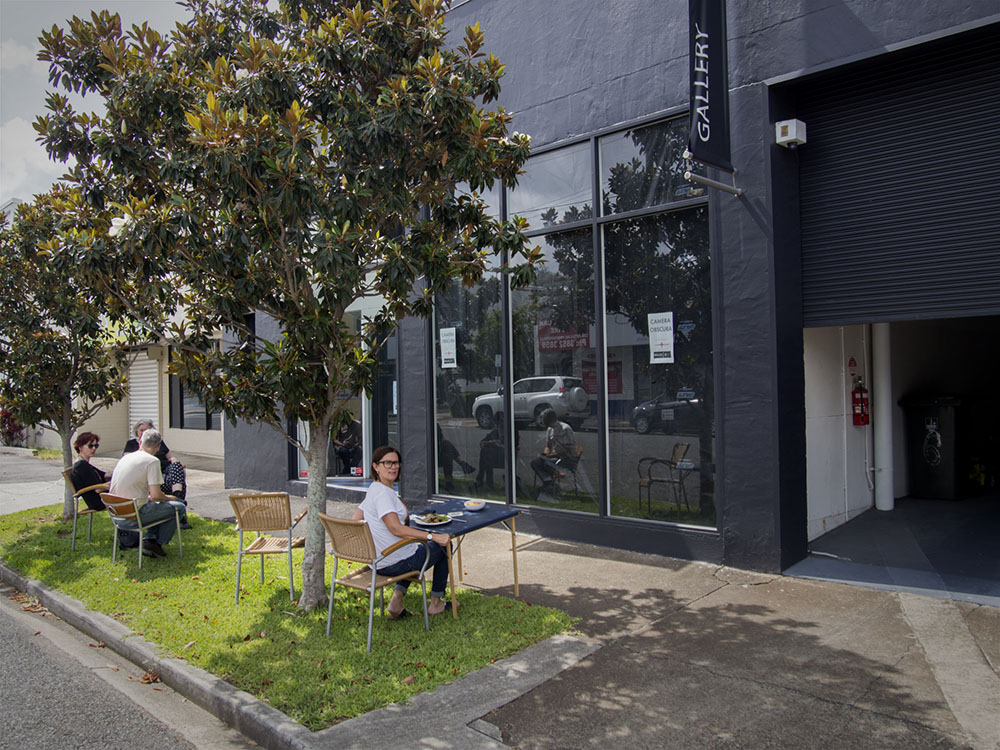
Outside looking in ––– The Maud Gallery Camera Obscura
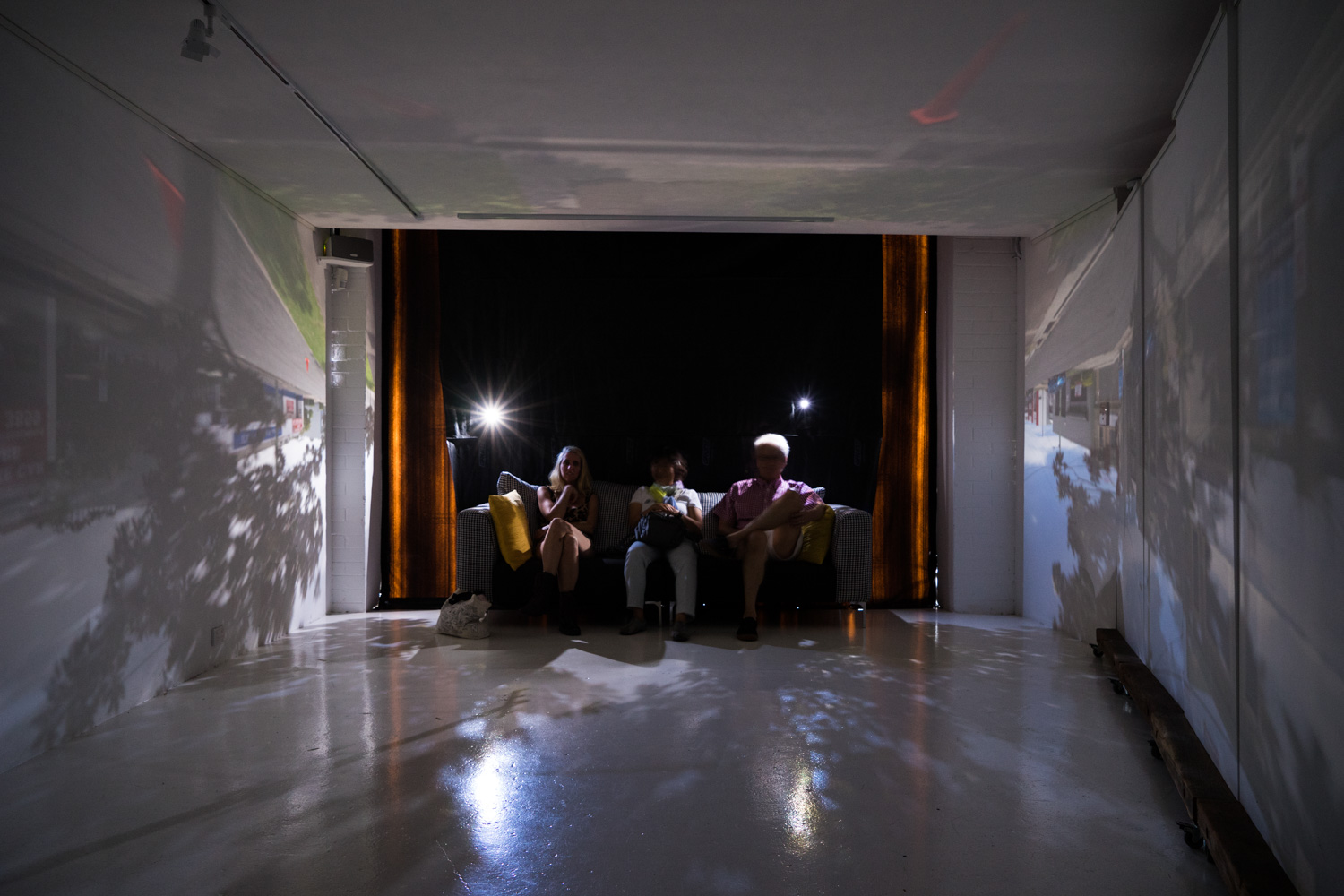
Camera obscura viewers sitting on the couch – note two holes… PHOTO: Louis Lim
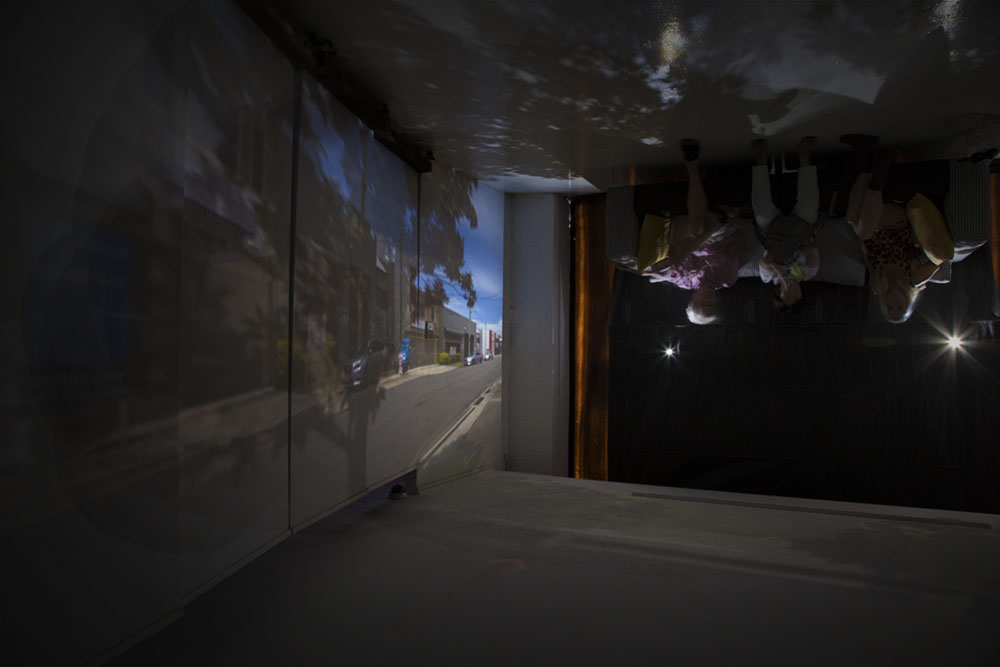
Inside the Maud Gallery Camera Obscura
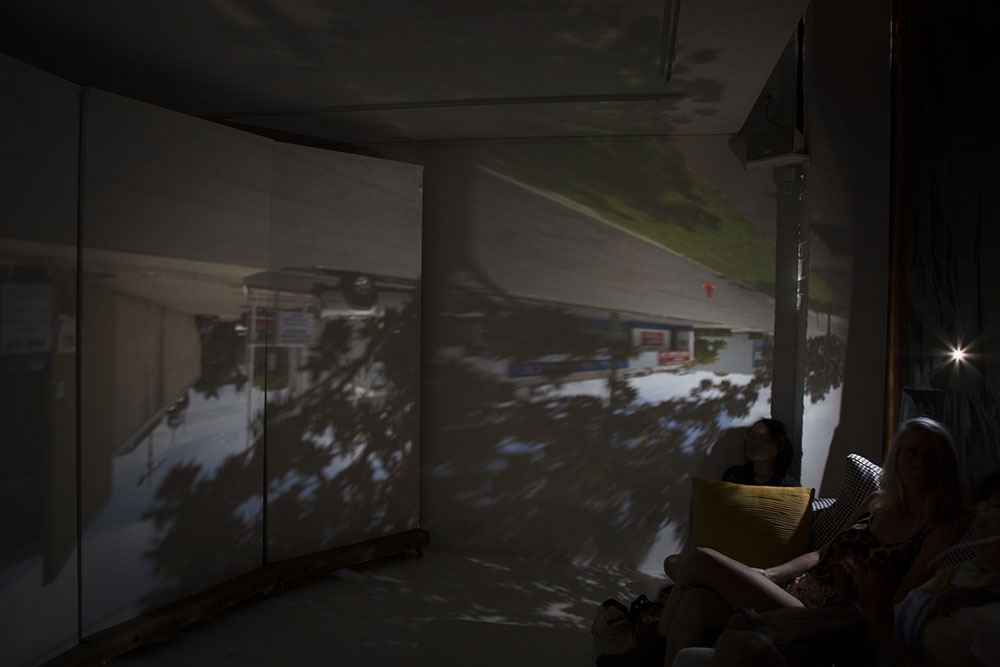
Inside the Maud Gallery Camera Obscura
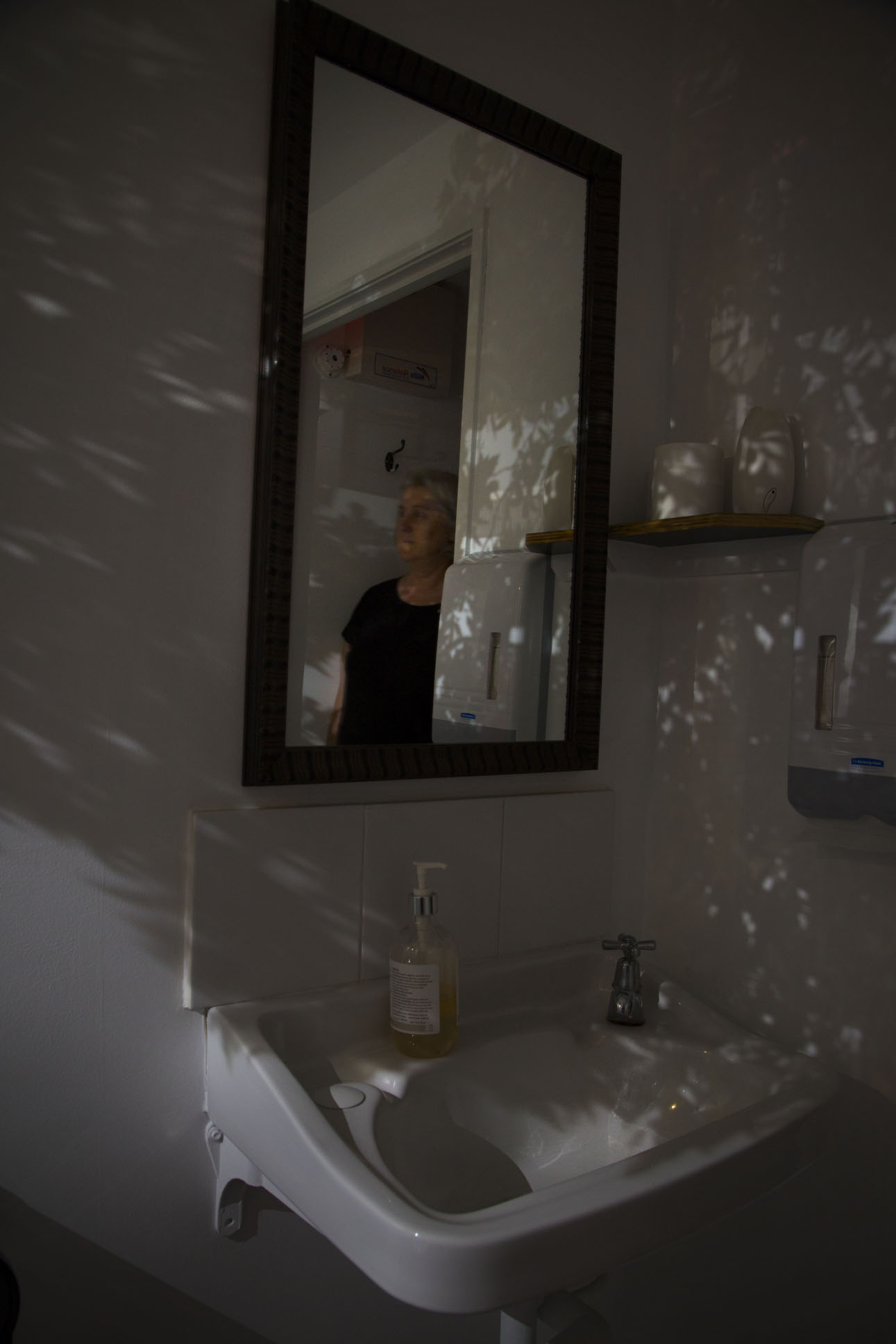
The Maud Gallery toilet was also converted into a camera obscura
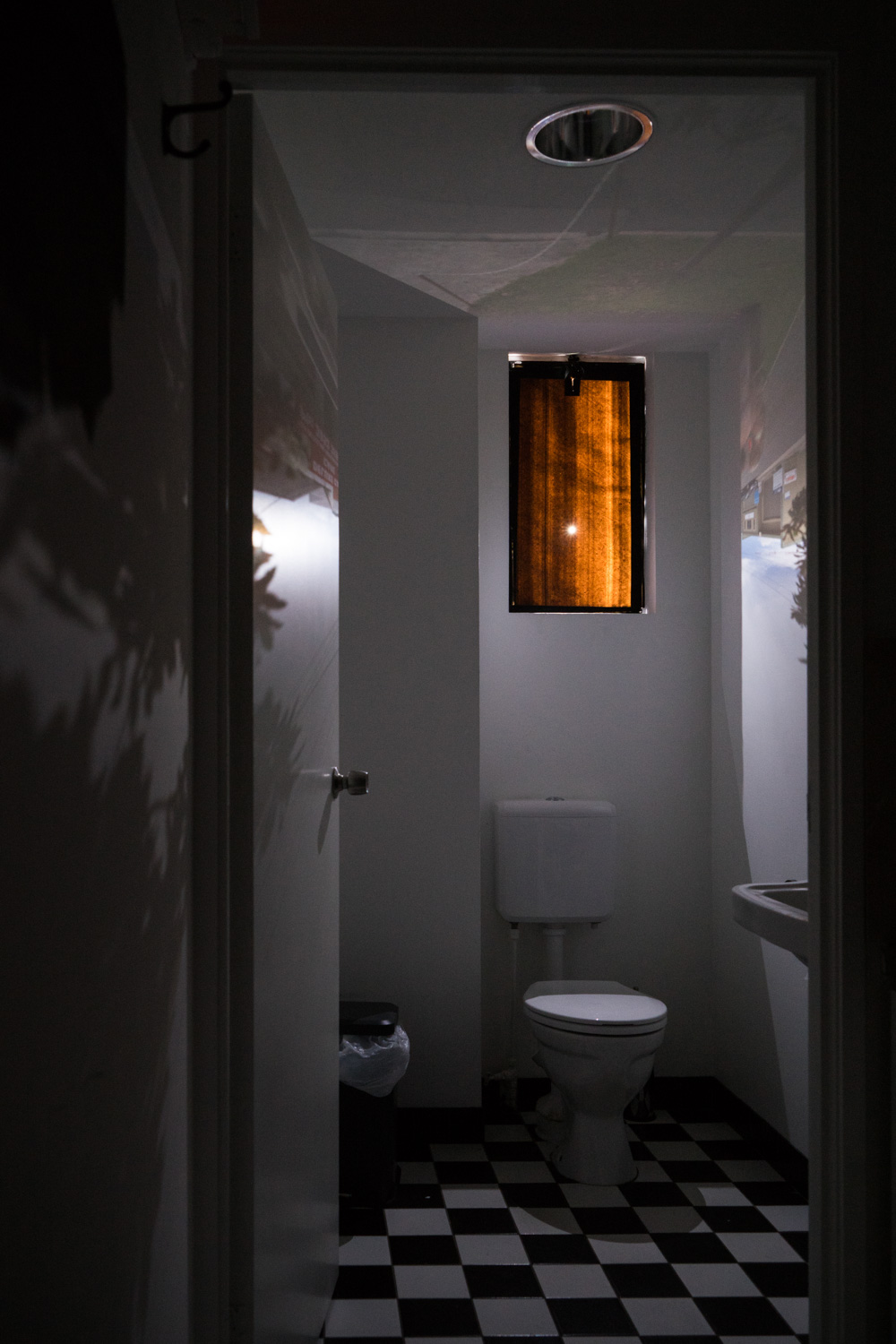
The camera obscura in the Maud toilet PHOTO: Louis Lim
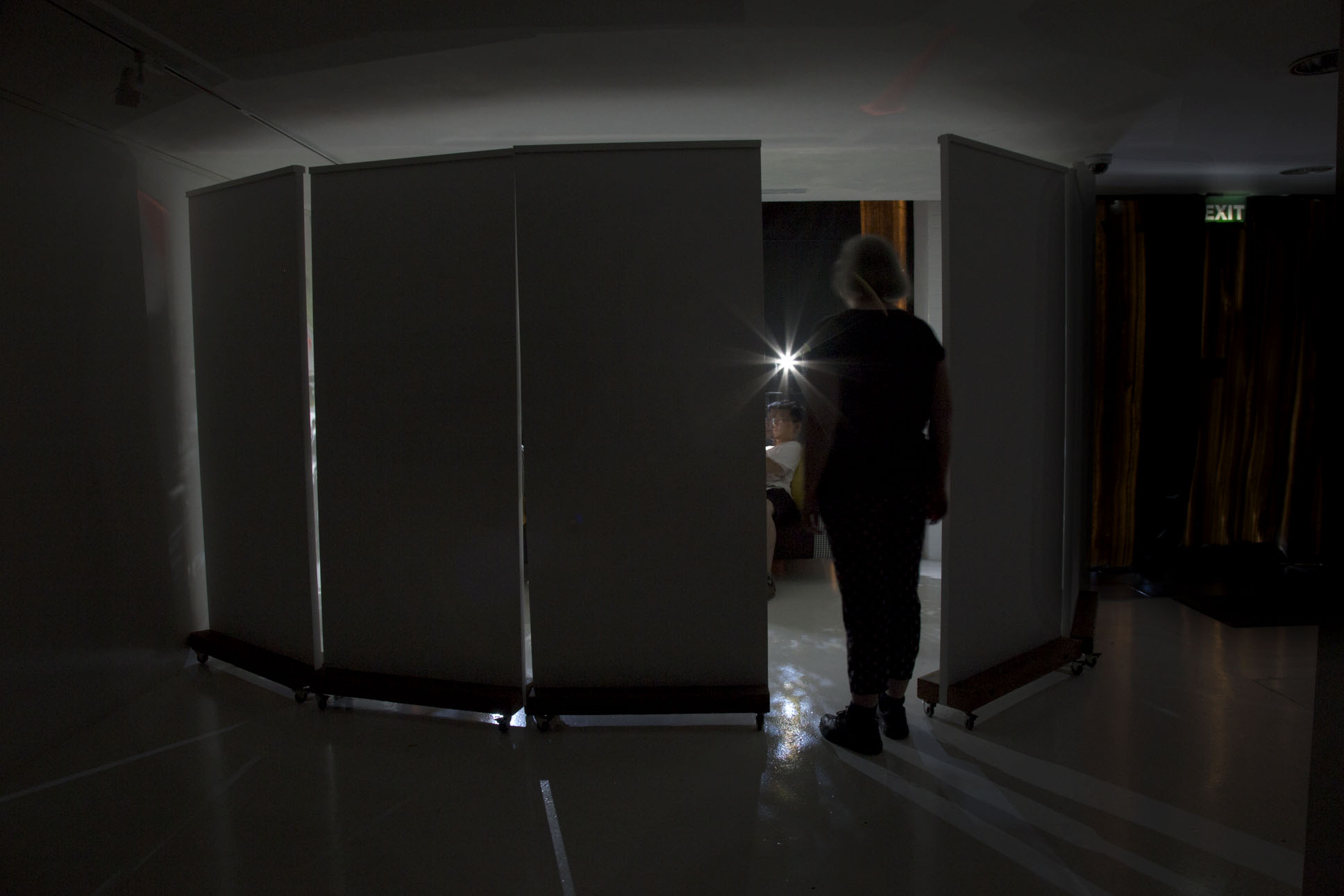
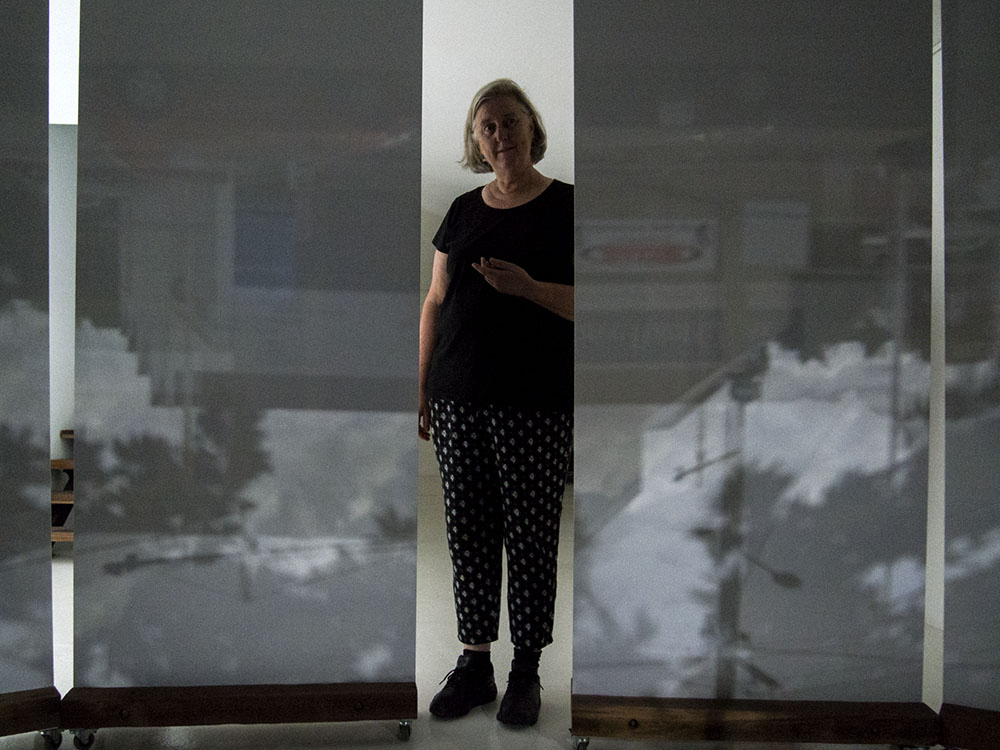
Vicky standing before the two pinhole projection – someone came in and let the light in…
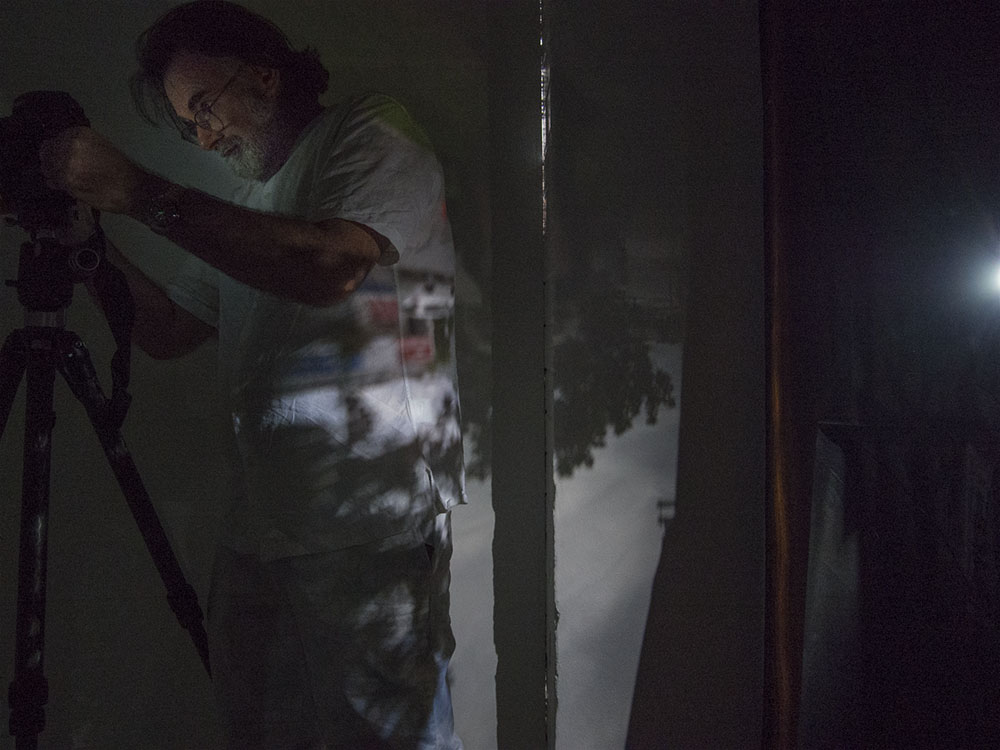
Photographer Neil while making a photograph becomes a camera obscura imaging surface…
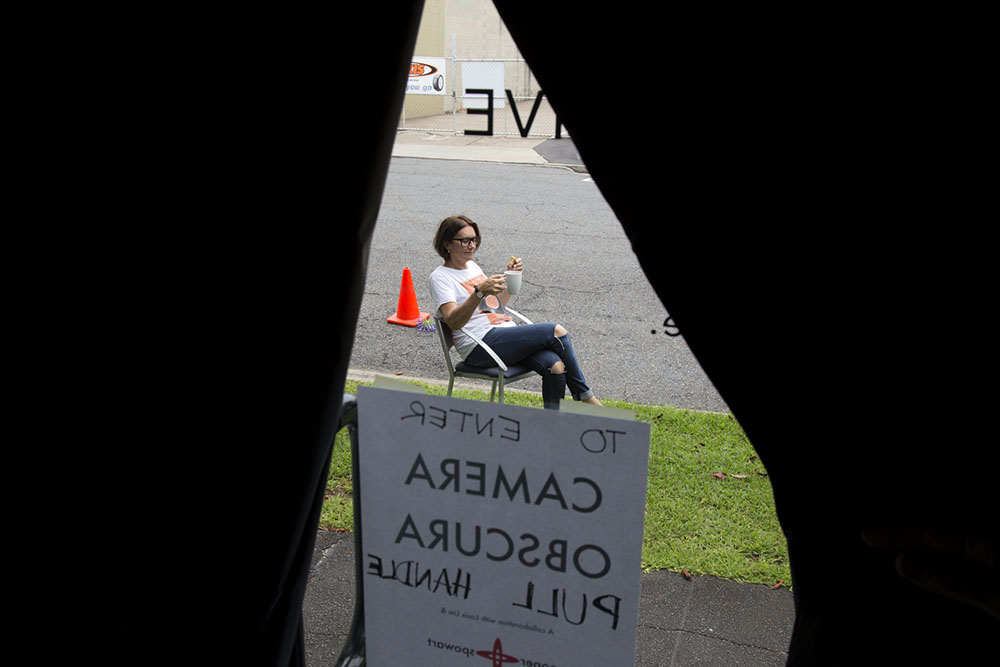
Gallery Director Irena takes a tea break…
Cooper+Spowart: 16 years of Camera Obscura Collaborations
In our collaborative work, we are interested in both the physical construct and cultural conventions that inform and shape us. This includes the common rituals and structures that surround, support and transport us in our everyday lives. In this work we have extended the context of documentary photographic methodology to include the narrative potential of the camera obscura and architectural projections.

Bedroom Camera Obscura 2000 (Y2K)
.
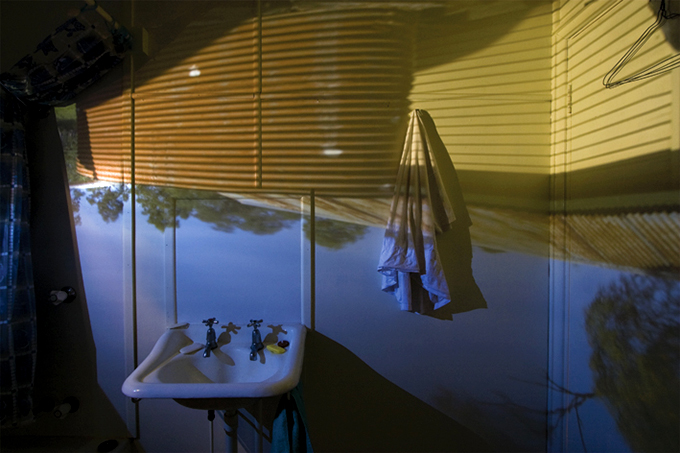
Avochie Bathroom Camera Obscura
.
In the camera obscura work the viewer’s perception of the everyday is spatially challenged. The structures that can form camera obscura are everywhere, but some spaces present themselves as clearly suitable for the making. This could be a city office, a motel room, a country bathroom or even a car. Our work attempts to contextualize the experience of the camera obscura within a concept, space or site. Upon entering the darkened space, the viewer is initially displaced, as the familiar image of the everyday is dim and unrecognizable. Then after time spent in the camera obscura, the image becomes clearer and the familiar is re-established ultimately resulting in a relocation of the observer’s awareness of place.
.
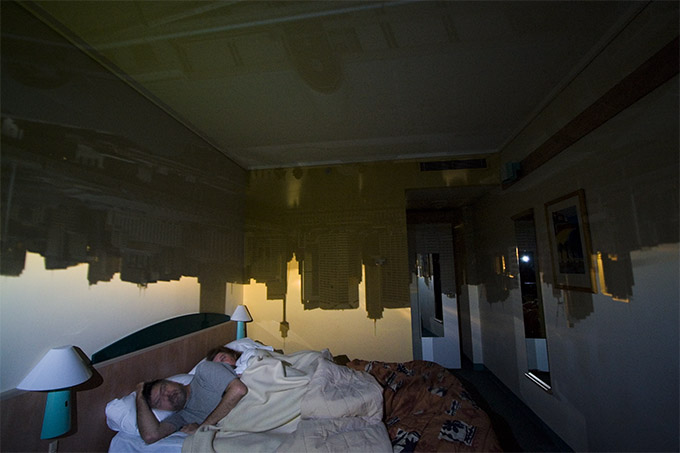
City of Dreams – Ibis Hotel sunrise over Sydney
.
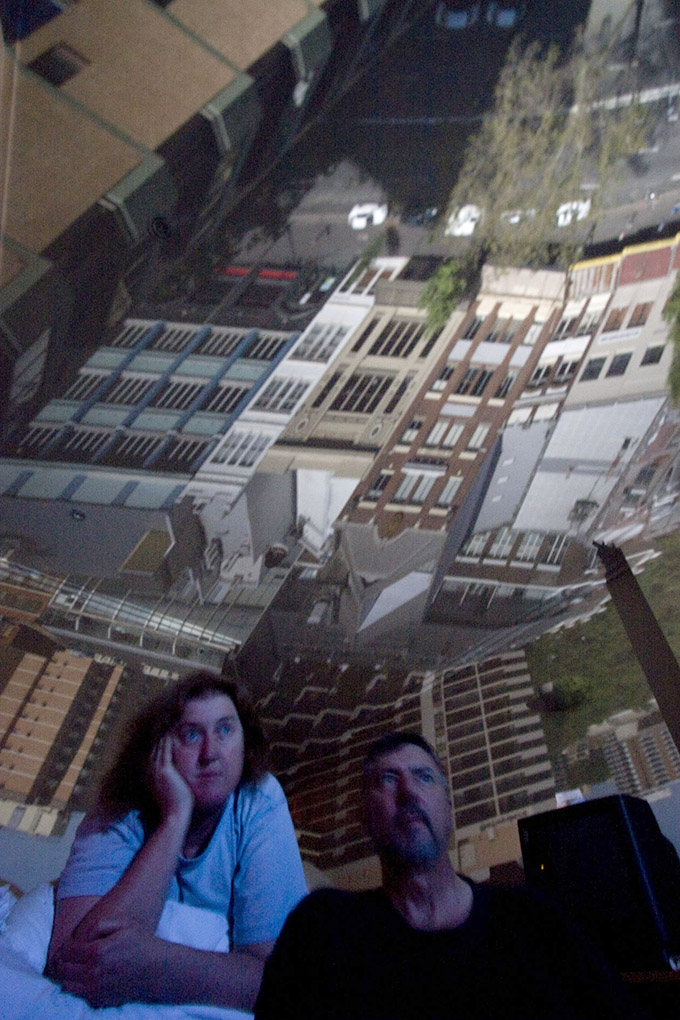
The Travelodge camera obscura 2008
.
Some background on the set-up for the Travelodge camera obscura:
Simple black garbage bags and some black electrical tape from the local 711 store. An aperture cut from a ‘found’ piece of aluminium – size around 8mm … we don’t use sophisticated glass lenses – these are direct light projections. A digital camera bares witness to our experience by capturing the image of the camera obscura projection.
.
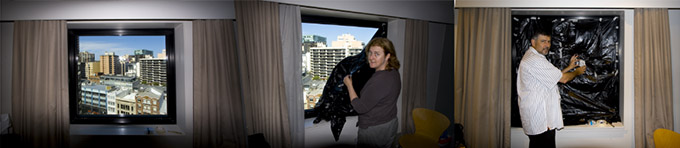
Blacking out the room
.

We were watching TV …
.
OUR MOST RECENT CAMERA OBSCURA: ORPHEUS ISLAND BEACH TENT
(A collaborative event with John de Rooy, Spyder Displays and the Orpheus Is Photo Workshop)
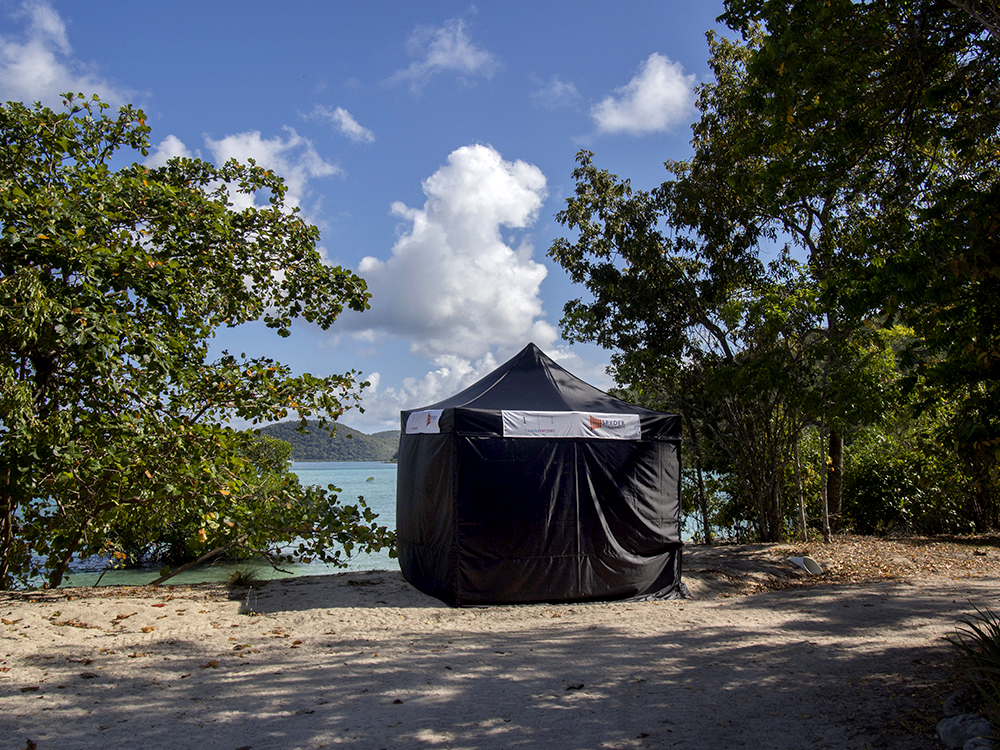
Our Spyder Camera Obscura

A DUO View of the scene and the Camera Obscura image
TO VIEW OTHER CAMERA OBSCURA WORK BY COOPER AND SPOWART SEE THE LINKS
.
Our Website:
http://www.cooperandspowart.com.au/4_PROJECTS/RoomCameraObscura-Project.html
Our car converted into a camera obscura and driven across Australia:
http://www.cooperandspowart.com.au/4_PROJECTS/CarCamera-Project.html
Two New Zealand Camera Obscuras in the the Queenstown Rydges Hotel:
https://wotwedid.wordpress.com/2012/05/07/two-new-zealand-camera-obscuras/
A public Camera Obscura performance and live video:
https://wotwedid.wordpress.com/2013/04/22/camera-obscura-pinhole-event-foto-frenzy-a-report/
YouTube videos:
http://www.youtube.com/watch?v=lyA5QP-mX-E
A camera obscura at the Queenstown Centre for Creative Photography:
https://wotwedid.wordpress.com/2012/05/07/camera-obscura-qccp/
A World Pinhole Day Camera Obscura at Mt Barney:
https://wotwedid.wordpress.com/2013/04/29/world-pinhole-photography-day-our-contribution/
.

Closing off the hole in the Travelodge Hotel camera obscura
.
© 2013 Victoria Cooper and Doug Spowart for 16 Years of Camera Obscuras Project
..
.

This work is licensed under a Creative Commons Attribution-NonCommercial-NoDerivs 3.0 Unported License.
.
.
ARTLANDS: Our missing presentation

Artlands Dubbo Webpage
ARTLANDS DUBBO CONFERENCE: Regional voices missing
Today we were to present a paper at the ARTLAND DUBBO REGIONAL ARTS AUSTRALIA CONFERENCE. Earlier this year we made a submission based on one of the conference themes and were excited to learn that our submission was accepted and that we were going to be able to add our story and project activities in regional arts in Australia to the conference.
However, then we found that the conference fees, despite ‘early bird’ and presenter discounts, combined with the costs to get to Dubbo and be accommodated were enormous. We had to look at support options for grants in Arts Queensland and the Regional Arts Fund and we found that none either ‘fitted’ with our needs or could be responded to in time to register. We therefore withdrew our presentation.
As regional artists, although we’ve been in Brisbane of late, and also independent researchers we have noticed many opportunities at conferences and seminars now require presenters to fund their place in the program. Now that might be affordable to academics, those employed in arts management or facilitation or those who have taxable incomes where such can be an allowable income tax deduction, but others just cannot afford to bear such costs.
It seems to us that many voices in the field of art in Australia are being kept out of the conversation by the cost of participation and the lack of grant support.
There is no doubt that ARTLANDS DUBBO will be a success and all who attend will benefit greatly from the shared experience and networking possible but for us, on this occasion, we stayed at home and worked on our art.
.
For those interested what follows is our proposal that related to the conference theme – REGENERATION: Exploring arts and cultural development using creativity that positively impacts on community vitality and well being.
ABSTRACT
Artists in residence programs provide unique opportunities for artists to explore their practice while contributing to the community’s cultural development. We will discuss ‘3 tiers’ of community engagement in our Nocturne AIR Projects: artist as creator, community as creator, and social media as a creative flux for interactive engagement.
OUR PRESENTATION
We will present a background on the Centre for Regional Arts Practice (Centre) that we formed in 2007 as a response to the circumstances and challenges of artists living in regional Australia. From the beginning the ‘Centre’ has engaged in advocacy, representation, commentary and the development of projects for regional artists and the communication of regional art perspectives.
Nocturne Projects
The ‘Centre’ engages in artist in residency programmes that enable the development of community based Nocturne Projects. These projects have been sponsored through the regional galleries of Muswellbrook, Grafton, Bundaberg, Miles and Armidale. We have also self-funded Nocturne documentary projects across eastern Australia and Tasmania.
3 Tiers of Engagement
In developing the methodology for our AIR Nocturne Projects we identified 3 tiers of community engagement, these are:
- artist as creator;
- community as creator: artist as facilitator; and
- social media as creative flux for interactive engagement.
Artist as creator:
We will talk about how our AIR work allows us to explore themes, both personal and collaborative, in the investigation and representation of “site” and “place” in the Australian landscape. We work to connect contemporary social issues with historical, scientific and mythological insights intrinsic to each site. Critical to, and inherent in, this work is these visual narratives that are deeply rooted in the recording and interaction with each place.
Community as creator – artist as facilitator:
Beyond our own work Nocturne AIR Projects we develop, in conjunction with the local gallery education officers programmes that provide creative development to suit each community’s needs. Included in these programmes may be workshops, practical digital photography shoot-outs and assignment work, image enhancement and file optimisation, one-on-one mentoring, developing social media skills as well as photobook and zine making.
Participants, whether they use hi-tech DSLR cameras, point-n-shoot cameras, tablets or smart phones, connect through meetings and workshop sessions. To provide a continuous stream of inspiration, feedback, instruction and support we establish closed Facebook groups for participants.
Social Media as a creative flux for interactive engagement:
All of the major Nocturne AIR Projects are connected to the broader community by a Facebook page. It enables an online space for sharing and presenting the project work. In the more recent projects, where there was an issue of distance for the regional community members to participate in the project, we managed two FB pages: one for those closely involved in the creative development of the Nocturne Project and another for the gathering and sharing stories through the broader community.
Using the methodology of the three tiers of engagement we believe we explore arts and cultural development using creativity that positively impacts on community vitality and well-being.
Western Downs Regional Council’s Community Development Officer Carollee Murphy stated the following about our Nocturne Miles Project:
Thank you for empowering our community with practical photography and book-making skills. Nocturne Miles installed a greater sense of shared space and community pride. The multi-modal outcomes of this project have been far-reaching, especially through social media and have painted Miles and district in a new light.
.
A LINK TO OUR NOCTURNE PROJECTS CAN BE FOUND HERE
.
.
ORPHEUS PHOTO WORKSHOP WRAP-UP

An Orpheus sunset
.
We came to Orpheus to share our knowledge, skills and experience of photography and the book. We were ready to assist and encourage – motivate and create with the participants… We had plotted and planned for months – but nothing could have prepared us for the Orpheus experience we were to have!
We were amazed with the boundless energy and enthusiasm for all things photography. In particular:
• Everyone’s participation in the lecture presentations
• The amazing camera obscura that John de Rooy & Spyder Displays had made
• The fun everyone had with pinhole imaging, lumen printing and other ‘photo play’ projects
• The playful and the deeply considered work made by everyone
• The individual creative development towards making books
• The joy that everyone expressed from making and crafting fine images and books
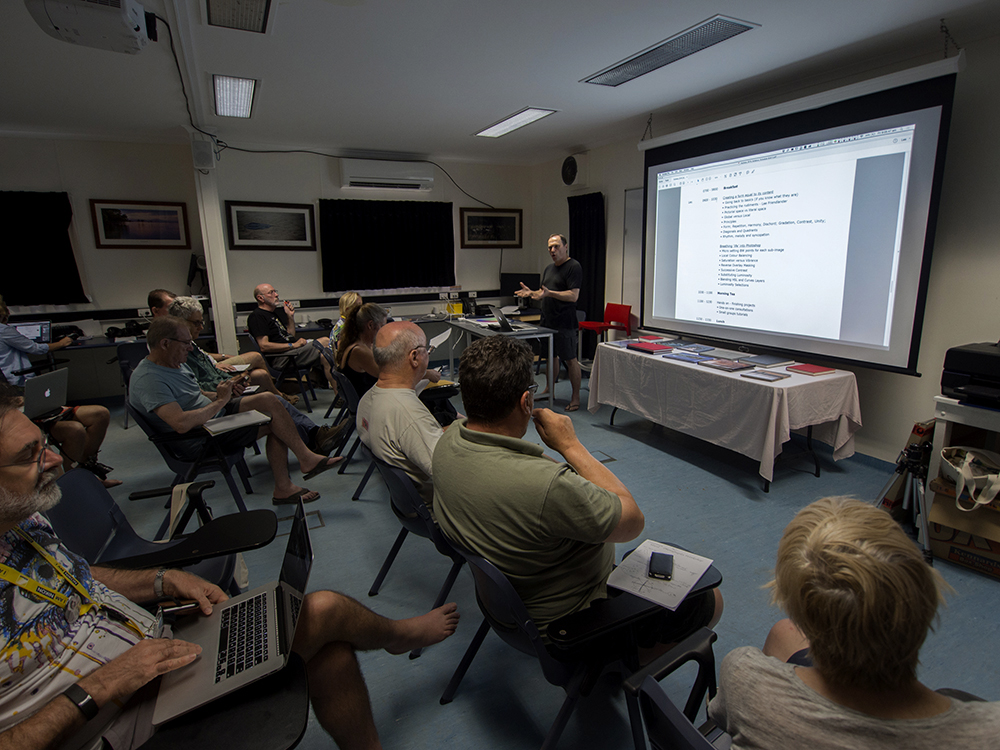
With Les in the lecture room
Our Spyder Camera Obscura
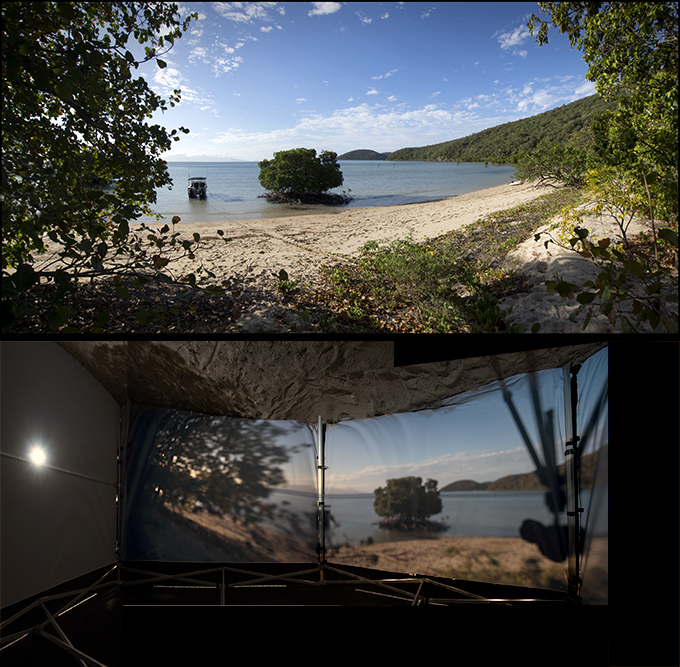
A DUO View of the scene and the Camera Obscura image
We appreciated the special access to the incredible equipment from Kayell, Hasselblad, Nikon, Epson and ProPhoto.
The support workers and organisers were photo experts, construction workers and logistical whizzes while always with a smile and good humour. So much happens behind the scenes of the great Orpheus Drama. But there was another endless creative space – the kitchen. And it was those that worked from dawn to well after we all had dined that we owe our sustained creative energy, fed our bodies and delighted our taste buds.
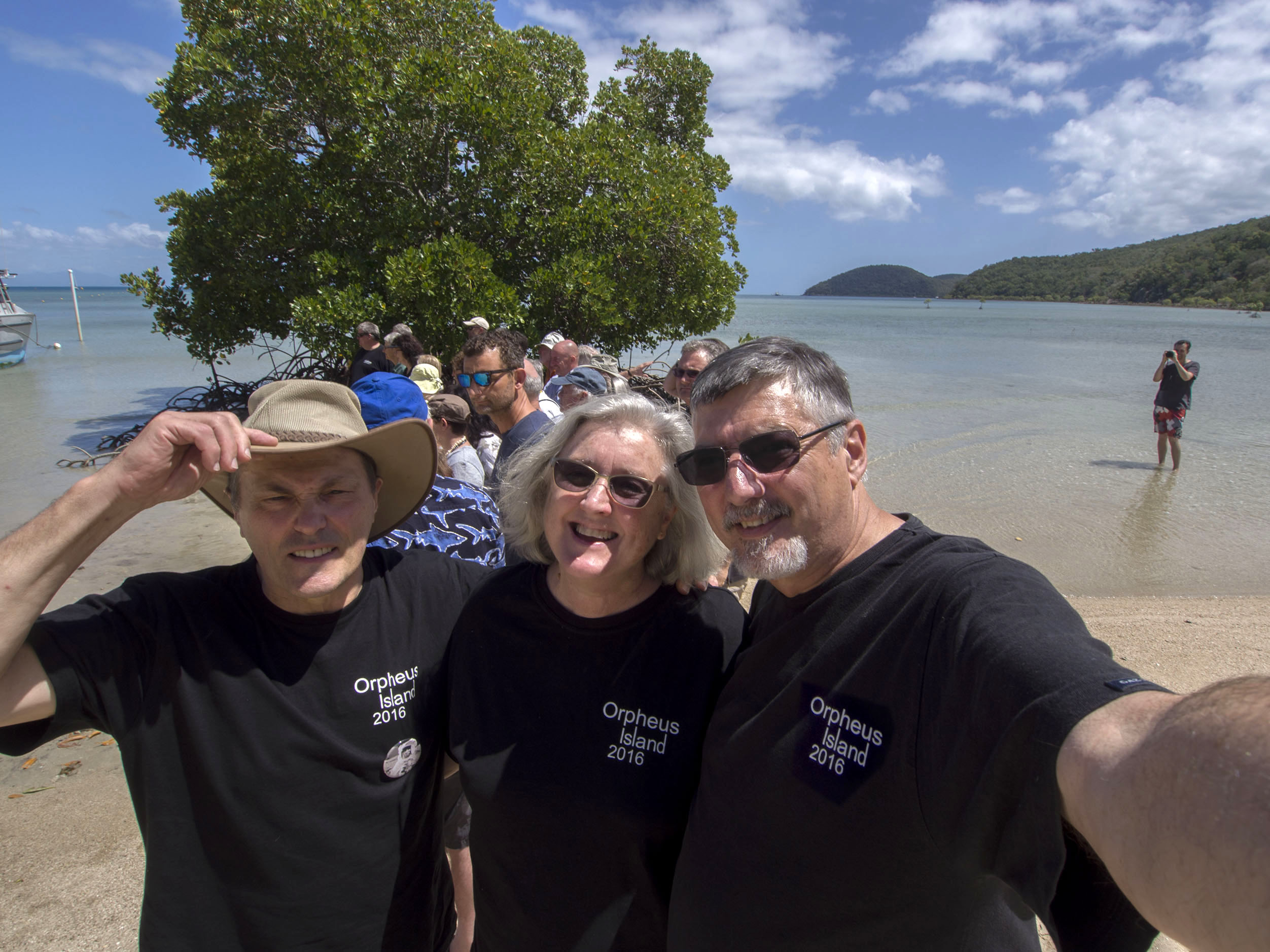
The lecture team – D+V and Les
All this made the working environment possible as we, with the amazing Les Walkling, worked together to share our knowledge, passion and inspiration for photography. It was inspiring for us working with Les – his dedication to sharing his great knowledge and experience. He is truly unique in Australian photography. Thank you also for your words about our contribution to the Orpheus Photo Workshop …
… I loved every minute of the ‘Doug & Vicky Roadshow’, and I even ‘re-named’ the main lecture theatre the ‘Doug and Vicky Studio’. What memorable times were had in and around that space. Every aspect of Doug and Vicky’s presentations were informative and entertaining, and I don’t think I have ever loved photo books so much, nor ‘played’ so joyfully with my photography. What a difference it makes working with skilled presenters who are at the top of their field and not afraid to share their love and devotion to what we all adore; our photography. I can’t thank them enough for their contribution to Orpheus 2016, their generosity and tireless expansiveness, and the difference they have made to our photographic lives.
.
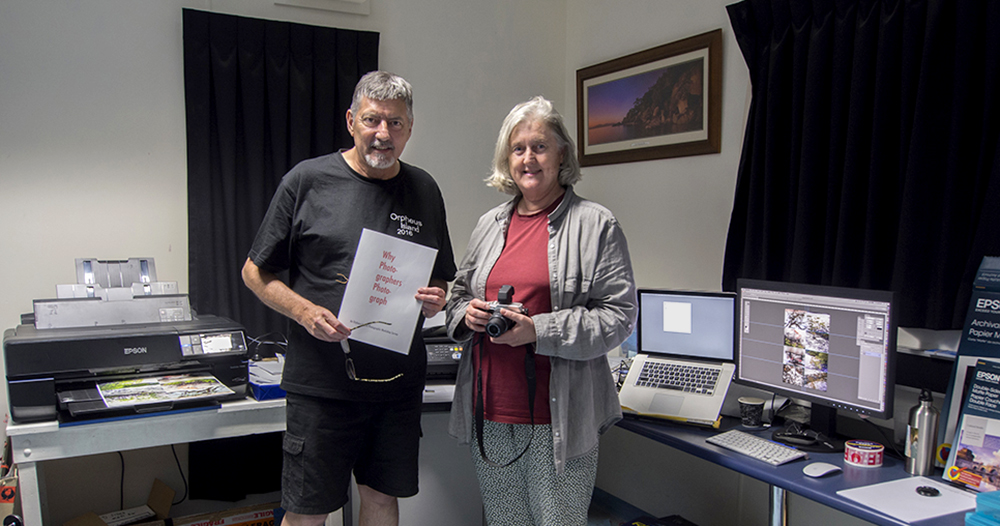
The Doug and Vicky studio
.
WHAT FOLLOWS IS AN ALBUM OF PHOTOS FROM THE WORKSHOP

Light painted ‘Orpheus’ on Orpheus Island

A ‘millpond crossing’ they said…!

But it did smooth out – heading towards Orpheus Island
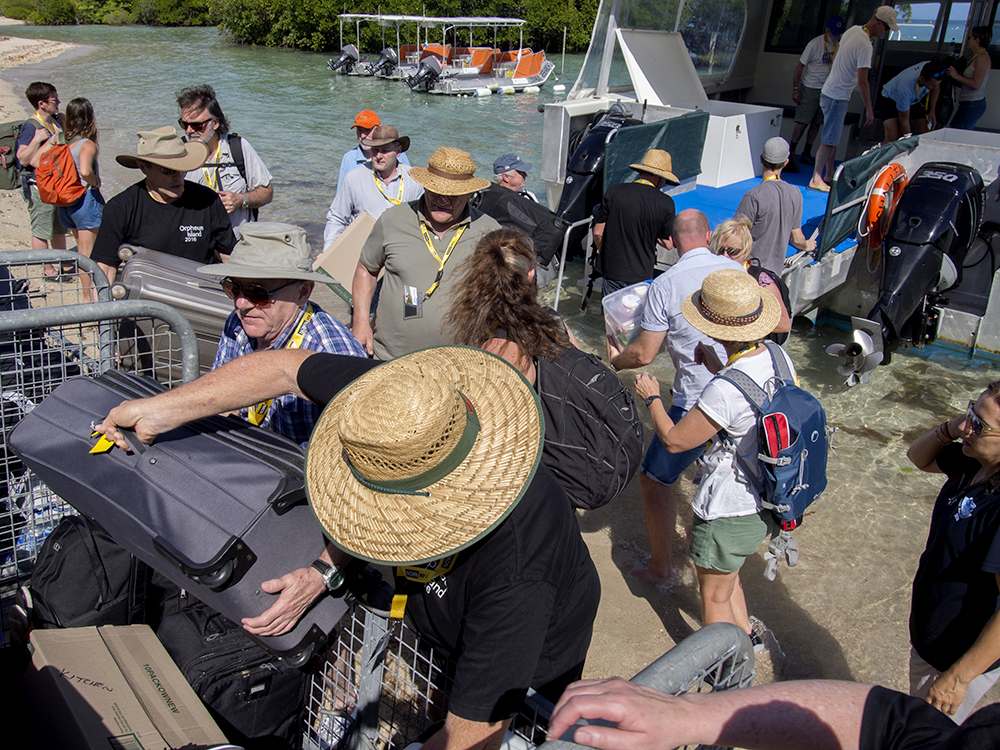
The arrival — unloading the boat
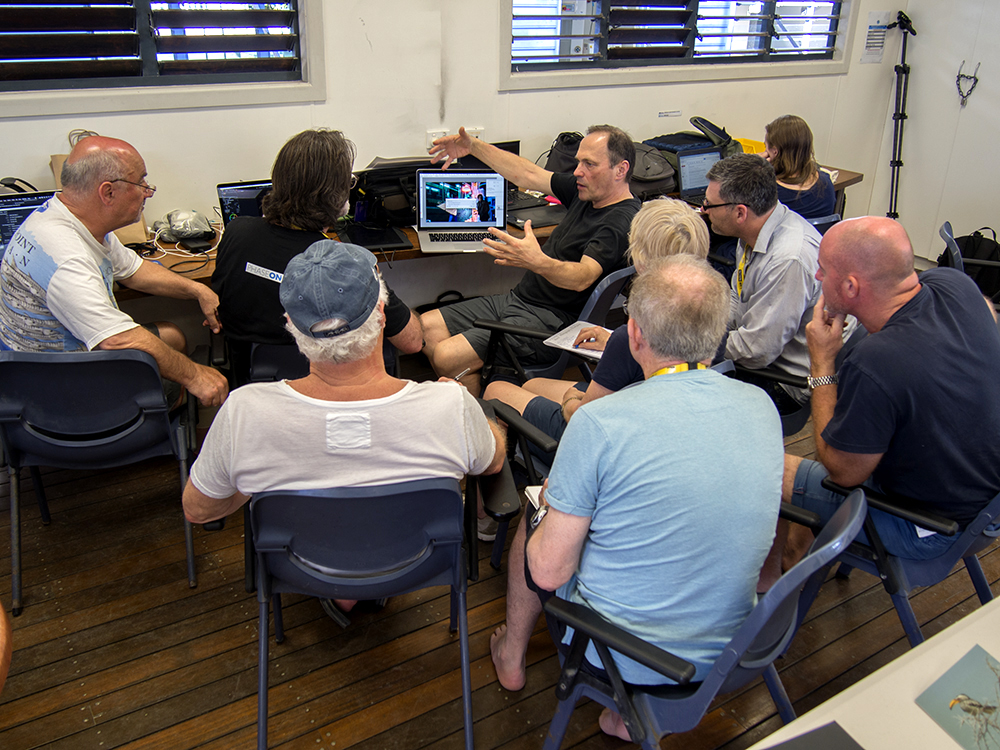
A Photoshop power session with Les
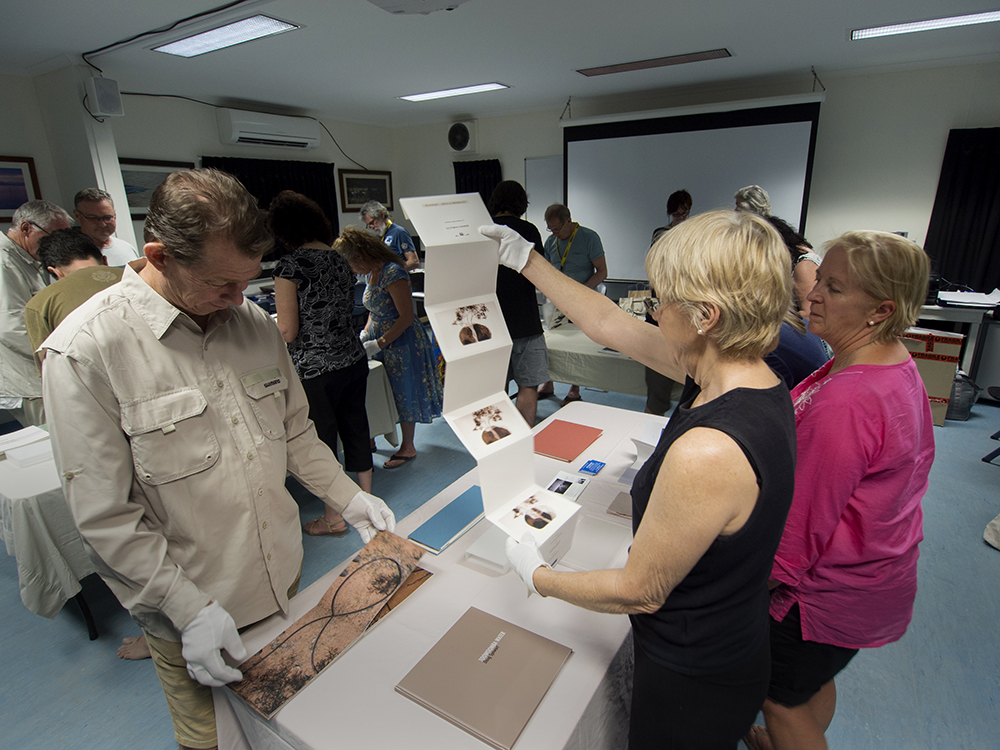
The Doug and Vicky ‘White Gloves Event’ showing a range of our artists’ books and photobooks
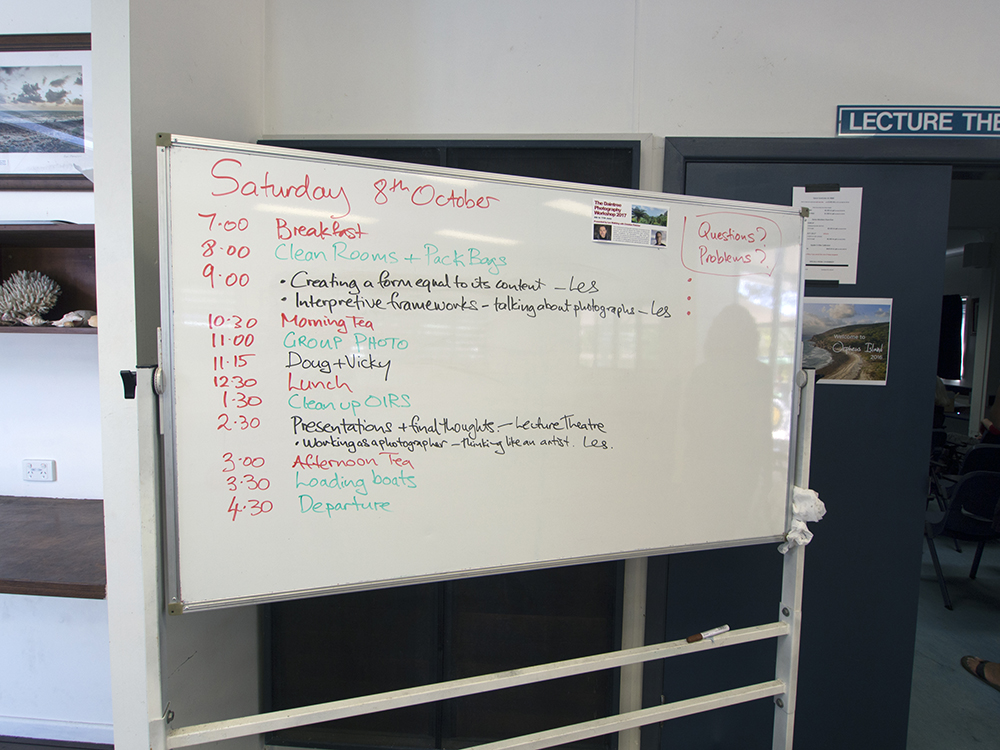
The order of the day
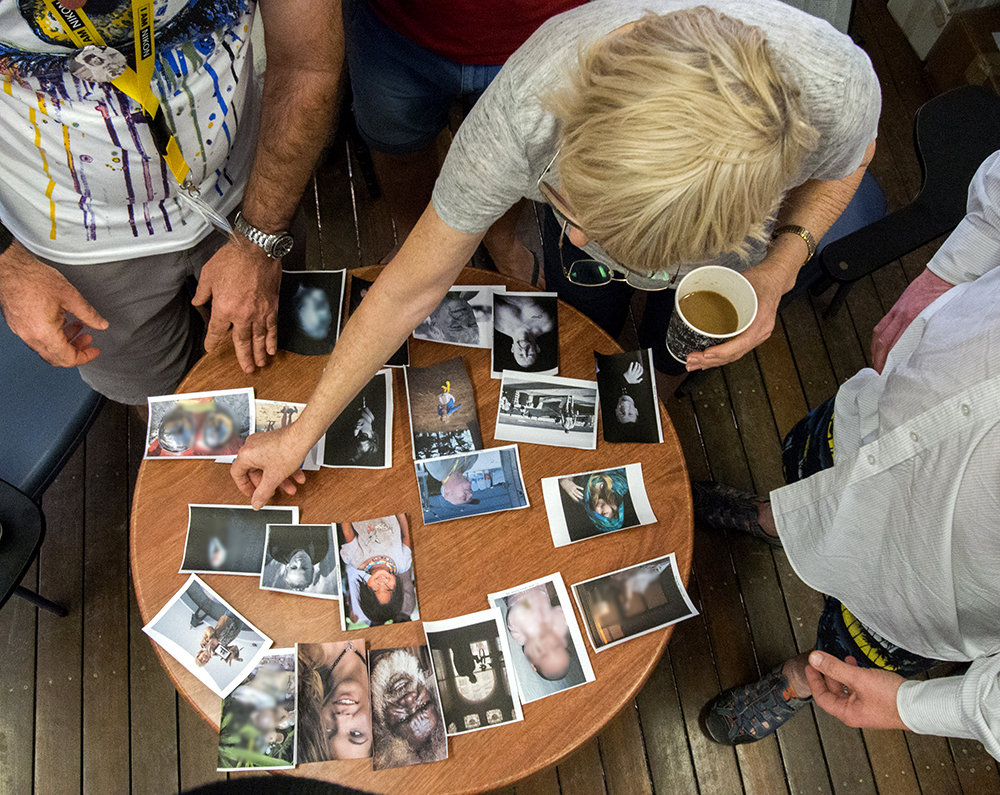
A photobook narrative development exercise
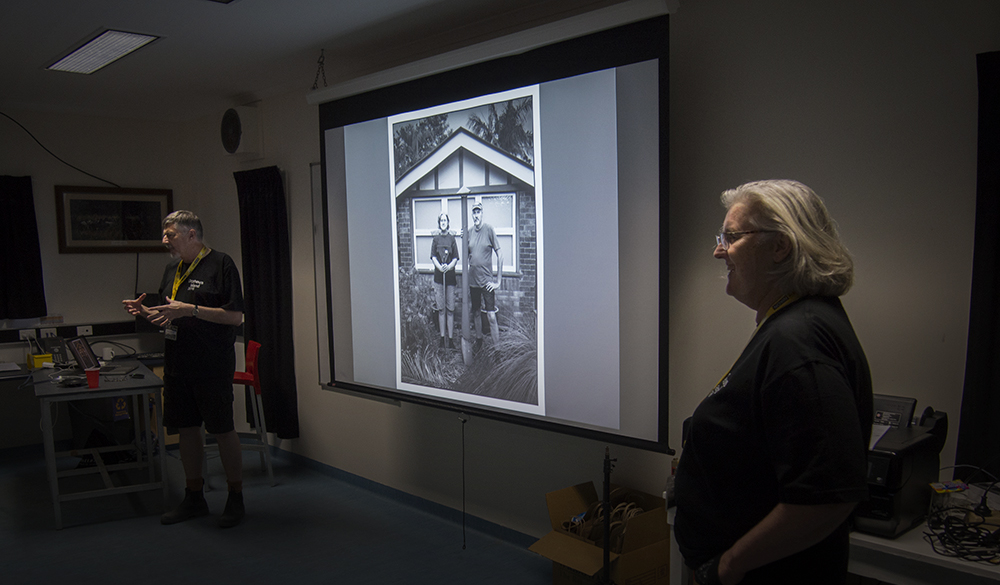
The D+V Roadshow….
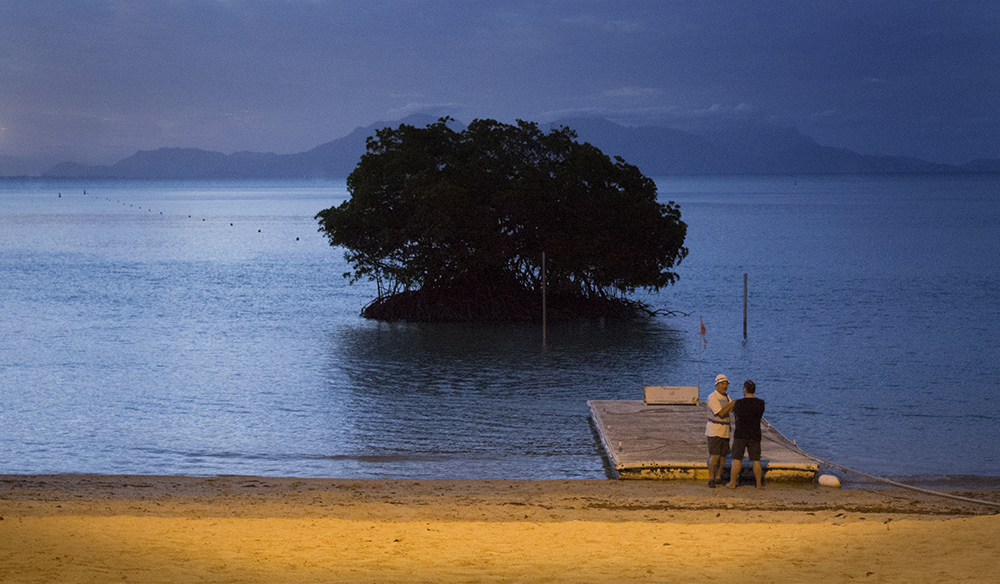
An early evening conversation
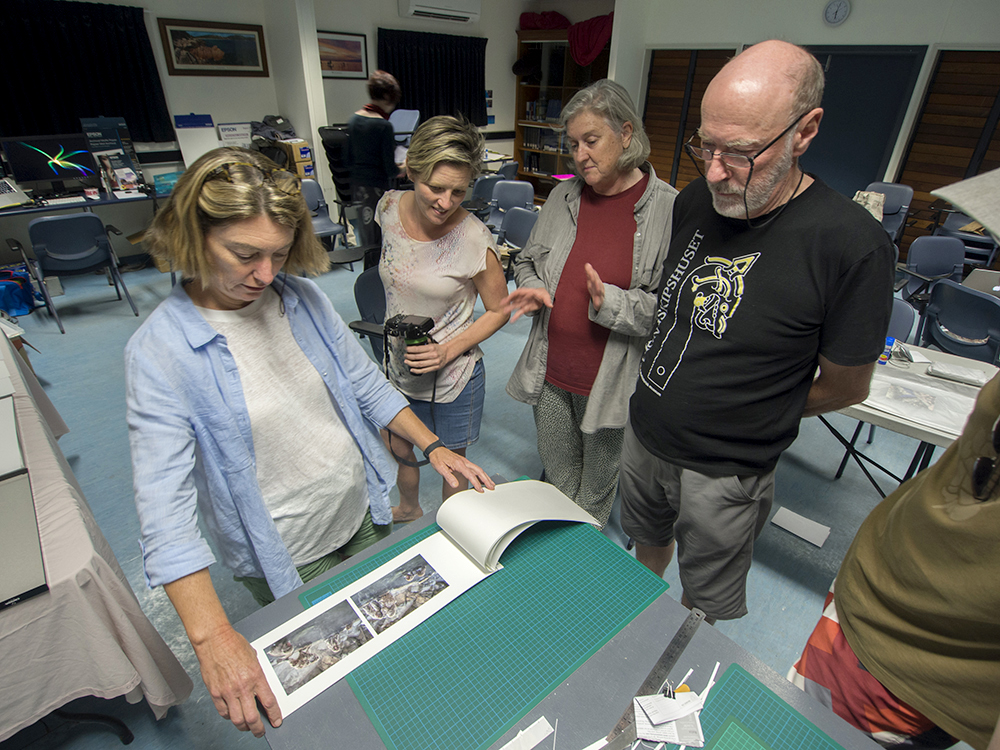
‘I made a photobook!!!’ Sarah shows her bookwork
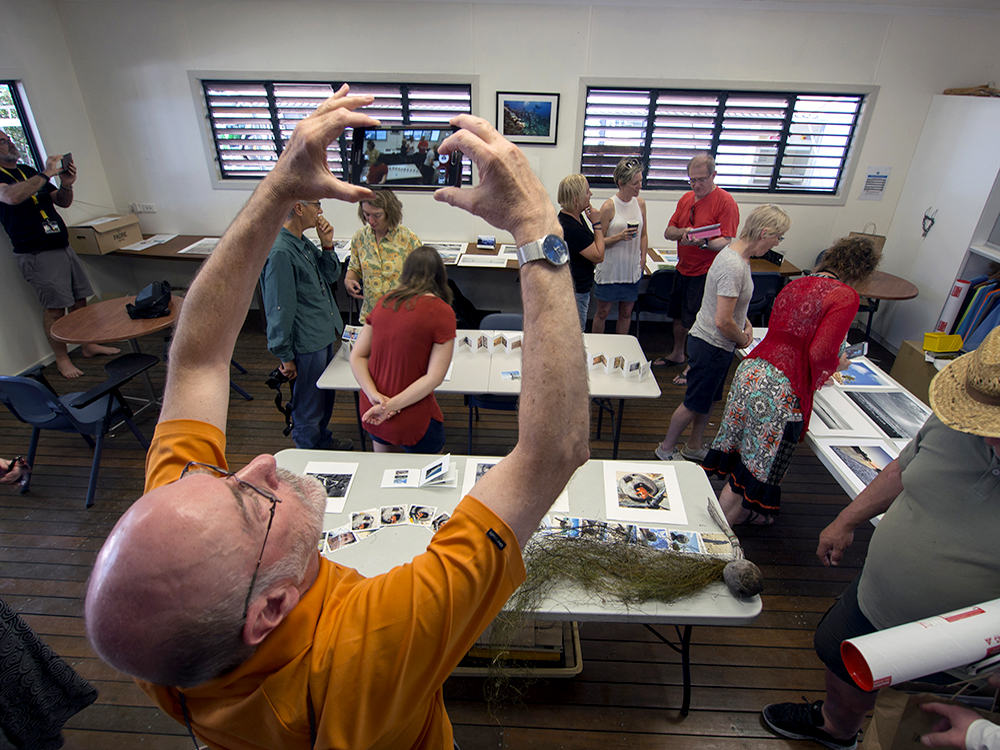
An exhibition of student work at the end of the workshop
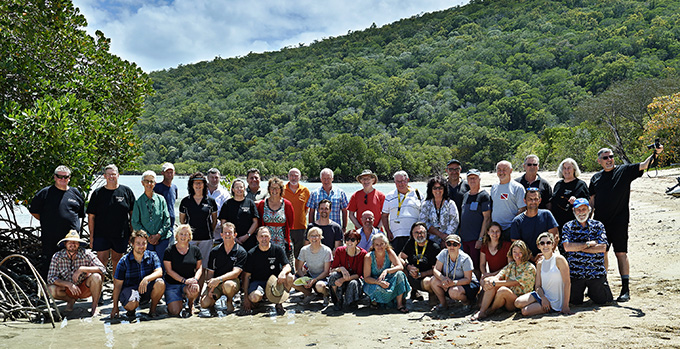
Orpheus Group Shot 2016
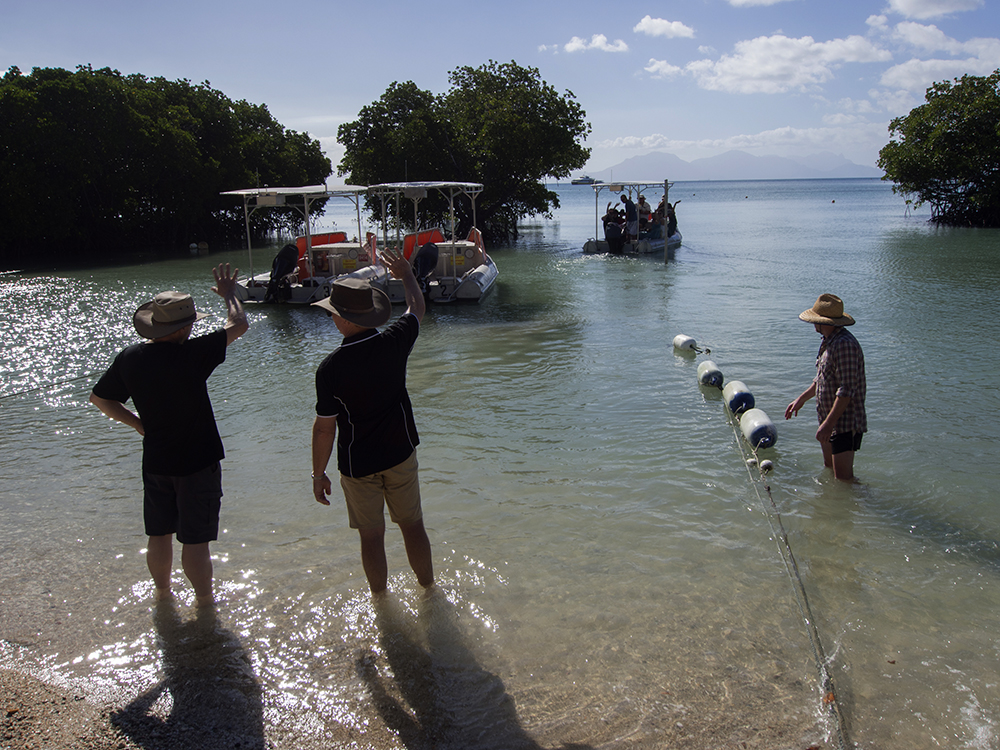
Saying goodbye to the participants…
The ‘staff’ take a break in a pinhole time-lapse movie made by Ross Eason…
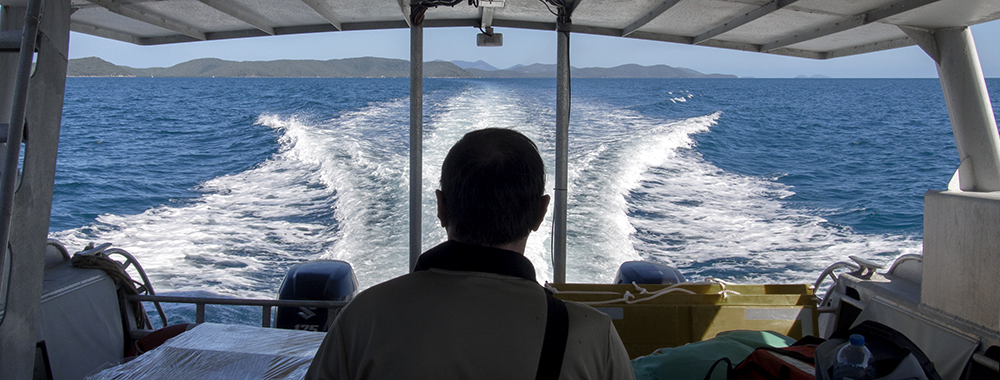
Les takes a last look as we leave the island behind…
.
Special thank you to:
John and Pam de Rooy our hosts and organisers – the rocks that underpin Orpheus
Tutors Murray, Ross and Rod for their ever-present support
Brenda, Dave and Nikolaj – an amazing Chef team
Marta and Jimmy from the JCU Research Facility – where would we be without their support?
Libby and Geoff from MomentoPro for their enthusiasm and collaboration in the book projects
Epson, Kayell and Canson for the fabulous papers and printers
William from Hasselblad and John from Kayell for the exceptional access to the gear
Nikon and the wonderful range of quality professional camera equipment.
AND… A very special thank you to all the photographers, now new friends, with whom we shared the experience of Orpheus 2016 …
Cheers
Doug+Vicky
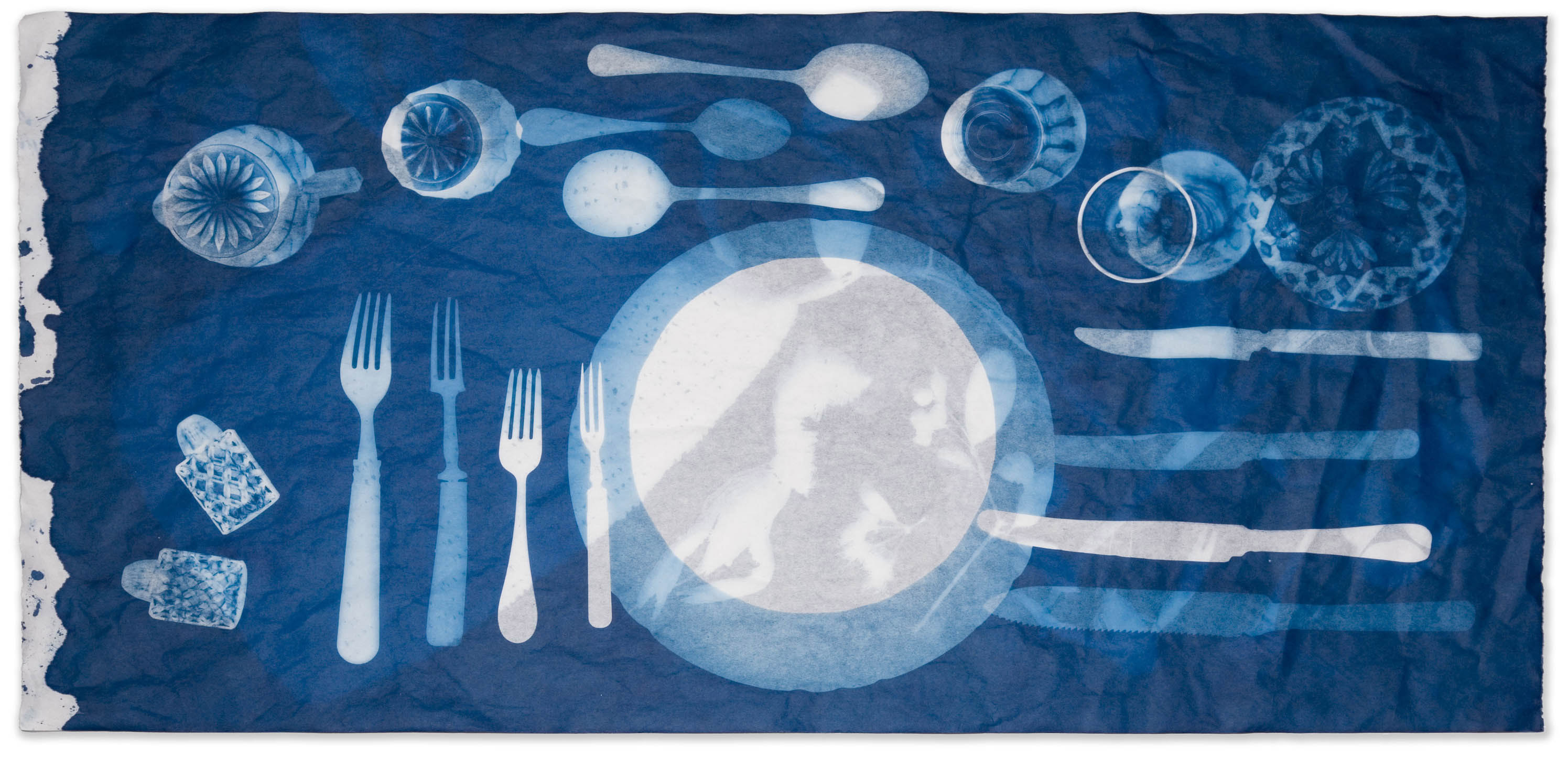
Cyanotype in rice paper, Broadsheet artists book
We are now getting ready for our next island workshop: on the Greek island of SKOPELOS
May 2017 for 2 weeks of art photography about ‘place’ making cyanotypes and photobooks + Greek culture, wine and food. SEE HERE FOR MORE INFO
.
.
COVERING: The 2016 Libris Artists’ Book Award
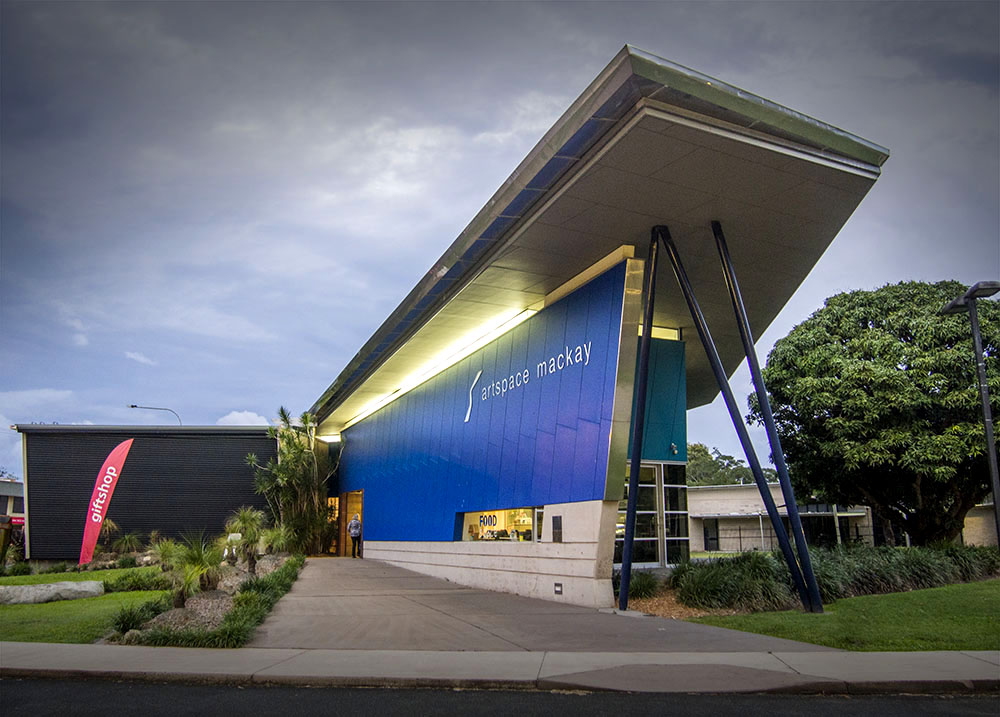
Artspace Mackay
A COMMENT ON THE 2016 LIBRIS ARTISTS’ BOOK AWARDS
In his announcement speech for the 2016 Libris Awards at Artspace Mackay judge Sasha Grishin makes the observation that: ‘The contemporary artists book is characterised by boundless freedom’, and adds that: ‘… it has absorbed many conceptual frameworks, many art mediums and technologies and goes across the spectrum of the senses.’
Visitors to Artspace and the Libris Awards encounter an open space with islands of book presentation devices. Plinths of all sizes – some encased, others at floor level, there are shelves on walls, books as mobile installations hung from the ceiling and other books with ‘pages’ covering large expanses of wall. This is not an easy walk-through exhibition as each work beckons, siren-like, calling for the extended gaze of the reader.

The Artspace Libris exhibition
.
On this occasion the winners were:
- Dalrymple Bay Coal Terminal National Artists Book Award $10,000 Acquisitive Award went to George Matoulas and Angela Cavalieri, with the text by Antoni Jach, for Europa to Oceania.*
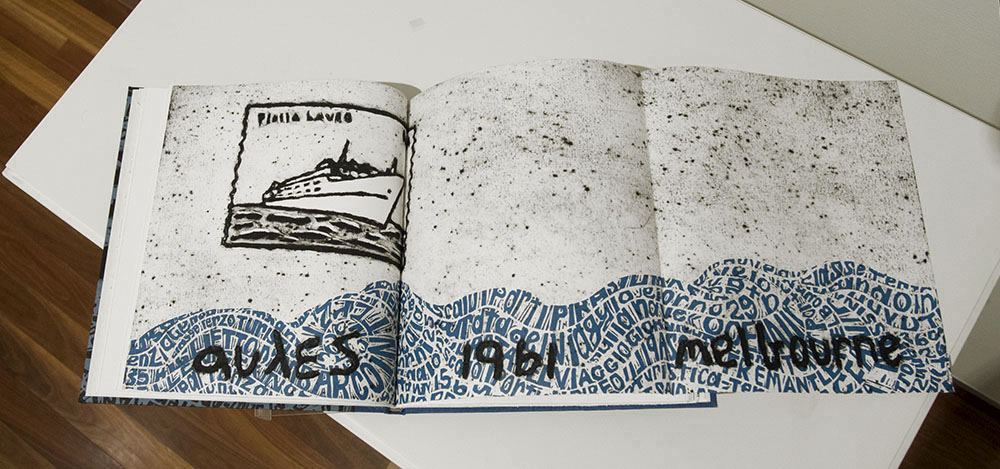
George Matoulas & Angela Cavalieri, with the text by Antoni Jach, Europa to Oceania
Grishin’s comments about the work were:
After much soulsearching I decided to allot the winning entry for the major prize to a collaborative and fabulous artists book by two Melbourne‐based artists, George Matoulas and Angela Cavalieri, with the text by the novelist and playwright Antoni Jach, titled Europa to Oceania. The three linocuts are by Angela, the three collographs are by George and there are another two collaborative foldout prints. The two artists, one of Greek extraction, the other from Calabria in Italy, with wit, profundity and beauty explore the migrant experience at a time when the Australian social fabric is under stress with the question of refugees and migration.
Highly commended in this award were:
Gracia Haby and Louise Jennison’s Closer to Natural
Monica Oppen’s Metropolis
Tim Moseley’s Kange pholu wandaPeter Lyssiotis’ Blind Spot
- Mackay Regional Council Regional Artists Book Award for a local artist went to May‐Britt Mosshamer for Tapping the knowledge.*
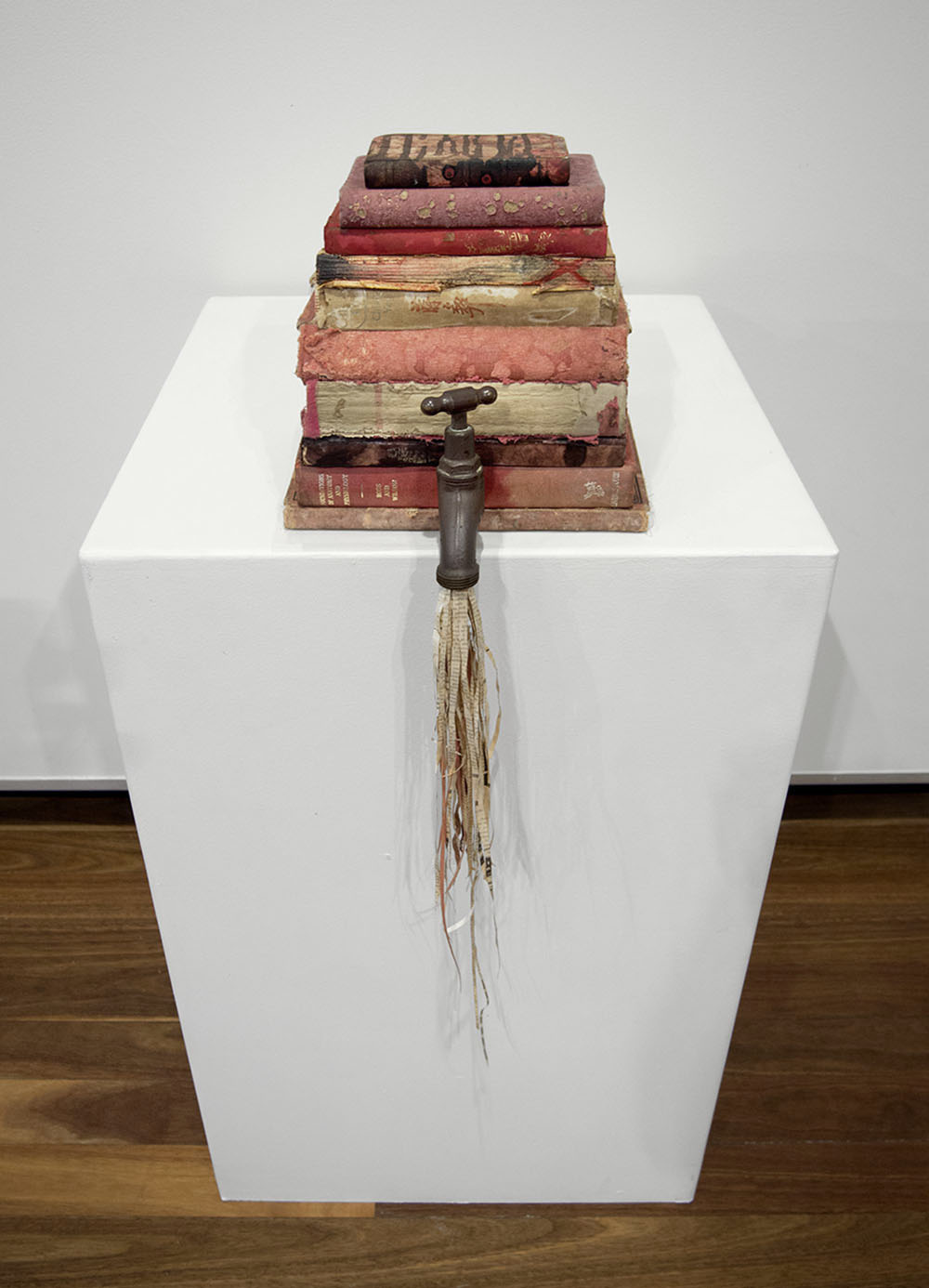
May‐Britt Mosshamer Tapping the knowledge.*
Grishin’s comments about the work were:
As much as one fought the temptation, the $2,500 award had to go to the local artist, May‐Britt Mosshamer and her effective piece Tapping the knowledge. In art you can say very important things with a bit of humour in your back pocket. This work is all about the flood of information and the drought in knowledge.
The highly commended, or runner‐up entries in this category were:
Denise Vanderlugt’s I used to wrap rainbows
Jo Mitchell’s For Mary
- Artspace Mackay Foundation Youth and Student Artists Book Award (under 26years), went to Brooke Ferguson and her The Small Garden (for M.S.).*
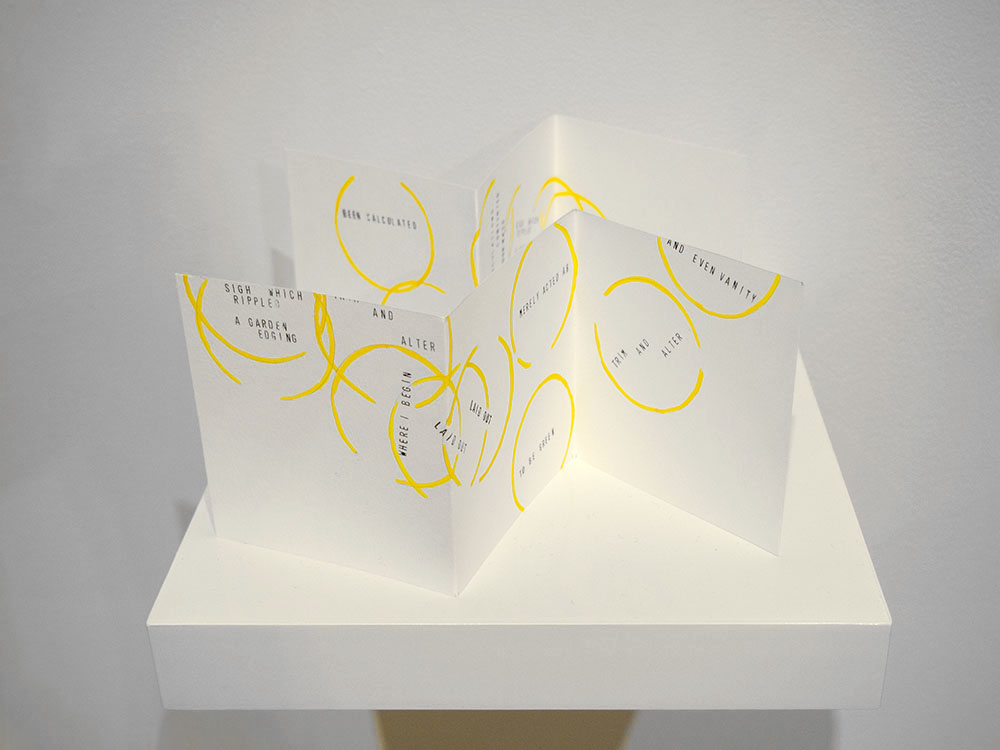
Brooke Ferguson The Small Garden (for M.S.).
Judge Grishin’s comment on the work:
This is an award that is about taking risks, a punt and choosing the unexpected, the promising and the challenging. It is literally a once in a lifetime opportunity for an emerging artist to gain national recognition plus a handy fistful of dollars. I selected the work by the 25‐year‐old Brisbane‐based artist, Brooke Ferguson and her The Small Garden (for M.S.) The MS stands for the wonderful veteran artist, Madonna Staunton, where young Brooke Ferguson was inspired by a poem by Staunton and with gouache, pen and ink and pencil has created a fragile concertina – a beautiful sensibility from a promising young artist.
.
In my opinion some books call for special mention. Caren Florance’s Pleasure demolition is transfixing. The suspended brown paper sheets with a hand printed letterpress phrases from poetry by Angela Gardner are animated by the flow of air and movement in the space. Forever moving, the oscillation of the pages becomes a machine for the generation of concrete poetry… phrases twirl and merge, poetic moments where new meaningful/less messages materialise.
.
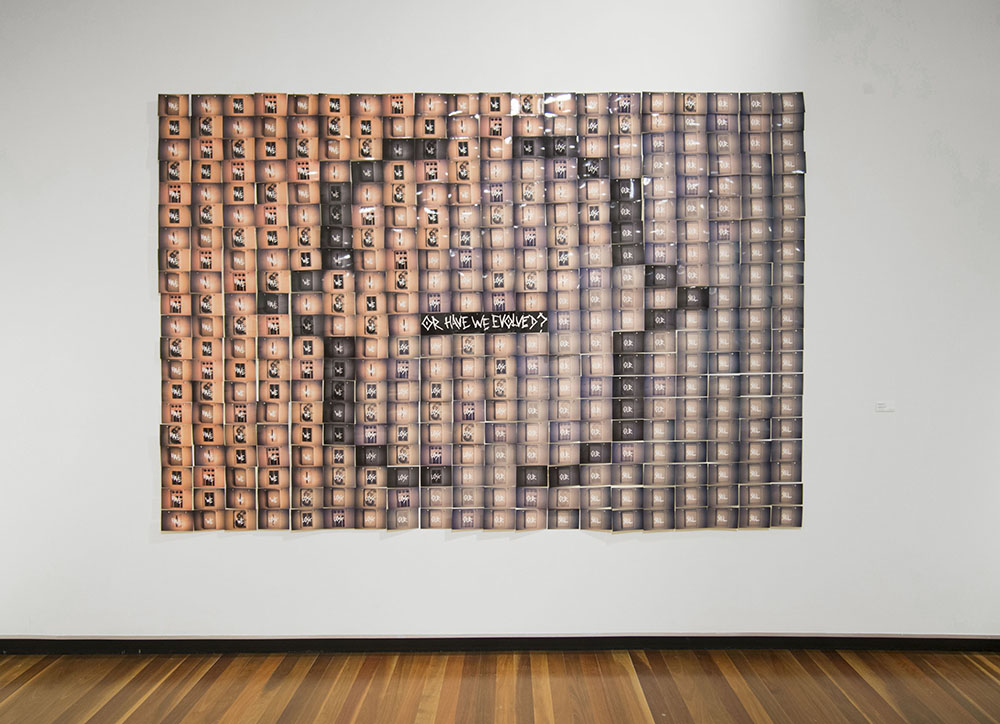
Jamian Stayt’s Soulless evolution
The individual pages of Jamian Stayt’s Soulless evolution are pinned to the wall making what may seem like a vast wallpaper pattern. However, Stayt’s work invites a closer reading of the cipher hidden within the layers of the image. He presents some big questions where contemporary notions of tradition are challenged and rapidly changing technology has intertwined agency in the evolutionary pathway for humanity.
.
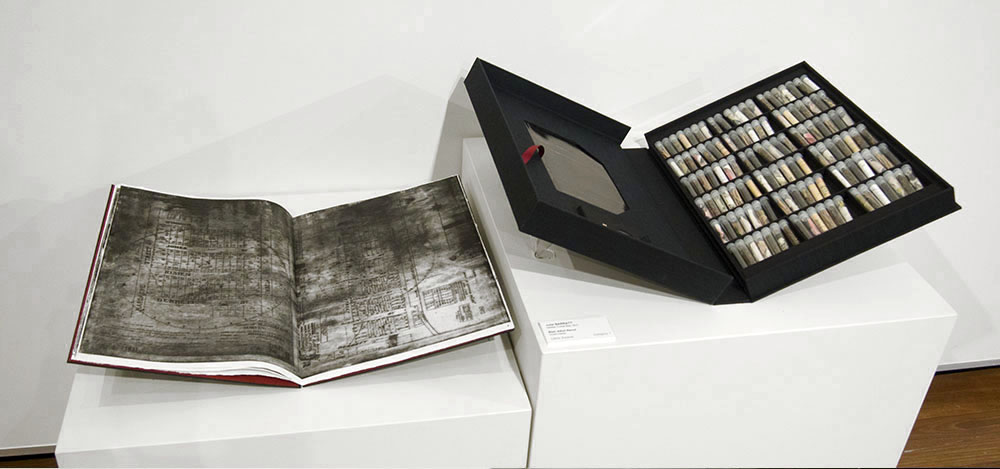
Julie Barratt Blair Athol recut
Julie Barratt’s Blair Athol recut refers to Solastalgia: a theory on the contemporary human condition for a deep loss of place. In one part of the installation there is a book of dark photolithographs where maps are encroached upon by black inks. For the reader this growing blackness evokes a gloomy absence. Facing the dark pages in the clamshell container are vials of coloured soils, plant fragments and found objects. Although collected from this disturbed place, these samples are vibrant and alive – perhaps they are the vestiges of childhood memories that recall a different time before the destruction of the physical place by coal mining.
.
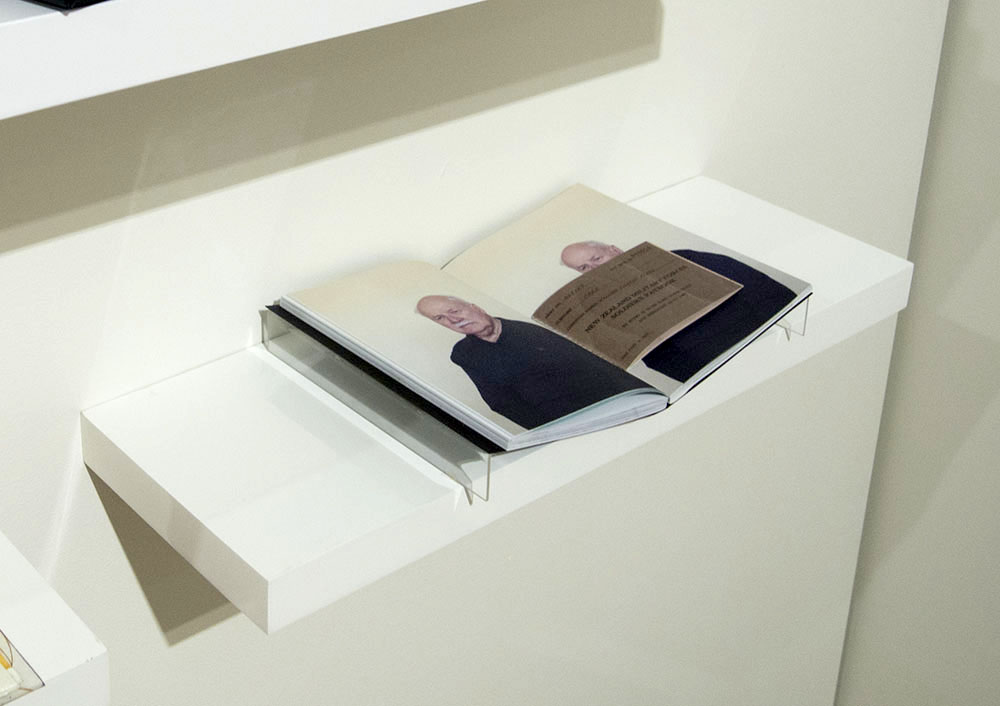
Ana Paula Estrada Memorandum
Many books feature photographs as the primary carrier of the narrative. Ana Paula Estrada’s Memorandum employs the medium to document elderly people and their connection with life through personal photographs and how their memories are re-lived through viewing these photos. The book, conceived and made through the Siganto Foundation Creative Fellowship in the Australian Library of Art at the State Library of Queensland, is a complex assemblage of contemporary portraits, photo-glimpses from family albums and a narrative conveyed through the turning of pages.
.

Exhibition view
.
As usual the artists’ book as exhibition defies direct touch and the turning of pages for narratives to be revealed and for the book to speak of what it has allowed the artist to create. But for the 72 books in the exhibition to be read the visitor would need to stay for the duration of the exhibition, working through the night with white gloves and torchlight. The exhibition reconnects and continues the significant contribution of the Artspace Mackay’s Libris Award to inspire artists and create a space discourse on the book in all its forms. In doing so the assembled exhibition represents cutting edge survey of Australian artists’ book practice.
Some works will become part of the Artspace Mackay collection; others will be re-packaged and returned to their makers. While the exhibition is dispersed its spirit will continue in the form of the gallery’s excellent illustrated catalogue, the text of Grishin’s speech, reviews, videos and other commentaries such as this, as well as the memories of the readers who viewed the show.
In two years time – the next iteration of this important event in the Australian artists’ book calendar will take place again. Wouldn’t it be nice if the whole collection could be purchased and held in perpetuity as a record of the discipline? Until then …
Dr Doug Spowart
16 October 2016

DOWNLOAD THE CATALOGUE: 2016-librisawards_illustratedlistofworks
Click to access 2016LibrisAwards_IllustratedListofWorks.pdf
.
A VIDEO FLY-THRU OF THE EXHIBITION
OTHER BOOKS FROM THE EXHIBITION

Denise Vanderlugt with her highly commended bookwork I used to wrap rainbows
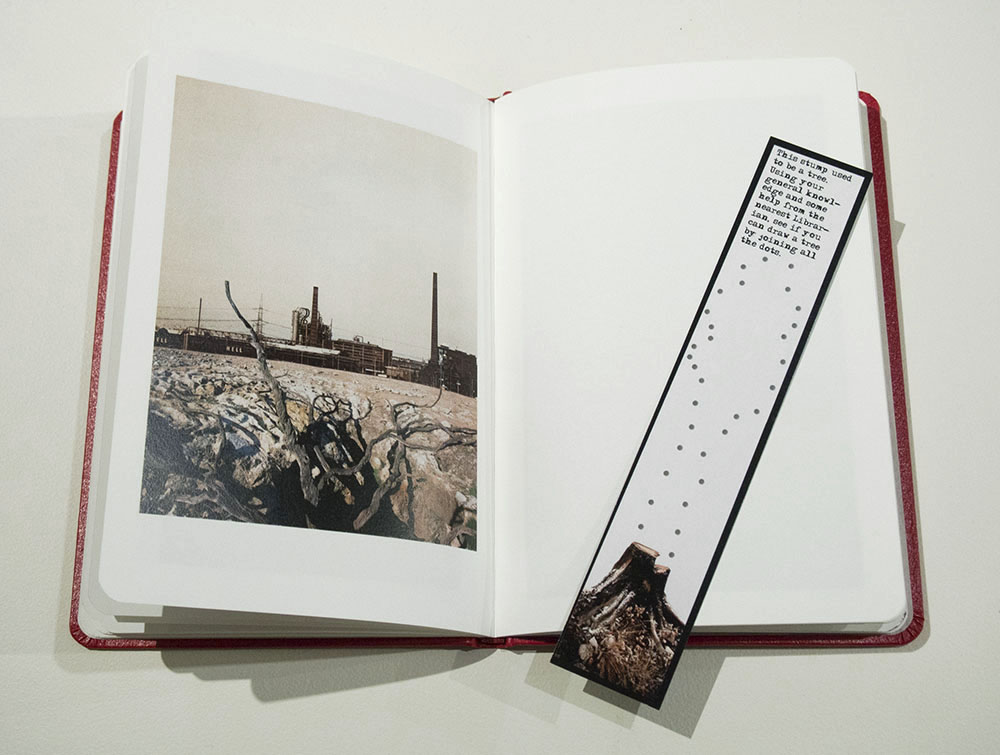
Peter LYSSIOTIS Blind spot
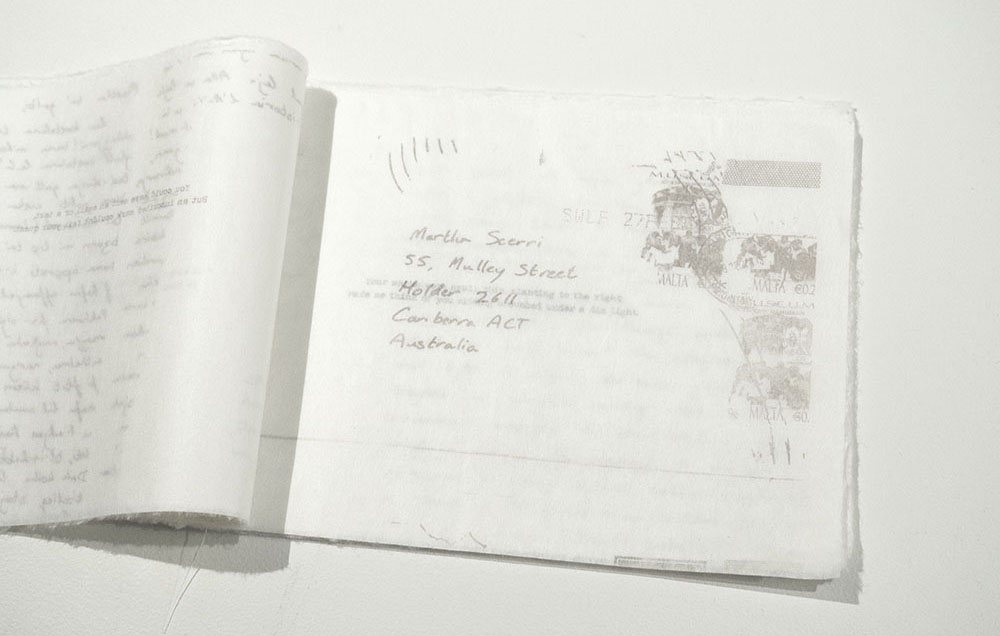
Martha BOWMAN You could have sent an email or a text
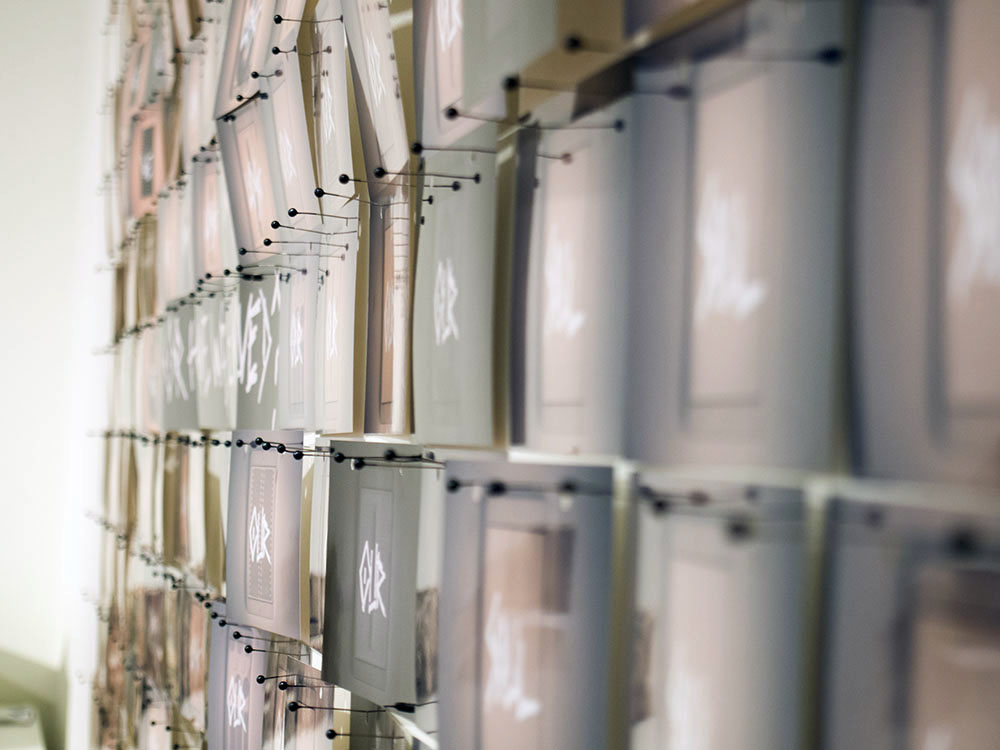
Jamian Stayt’s Soulless evolution (Detail)
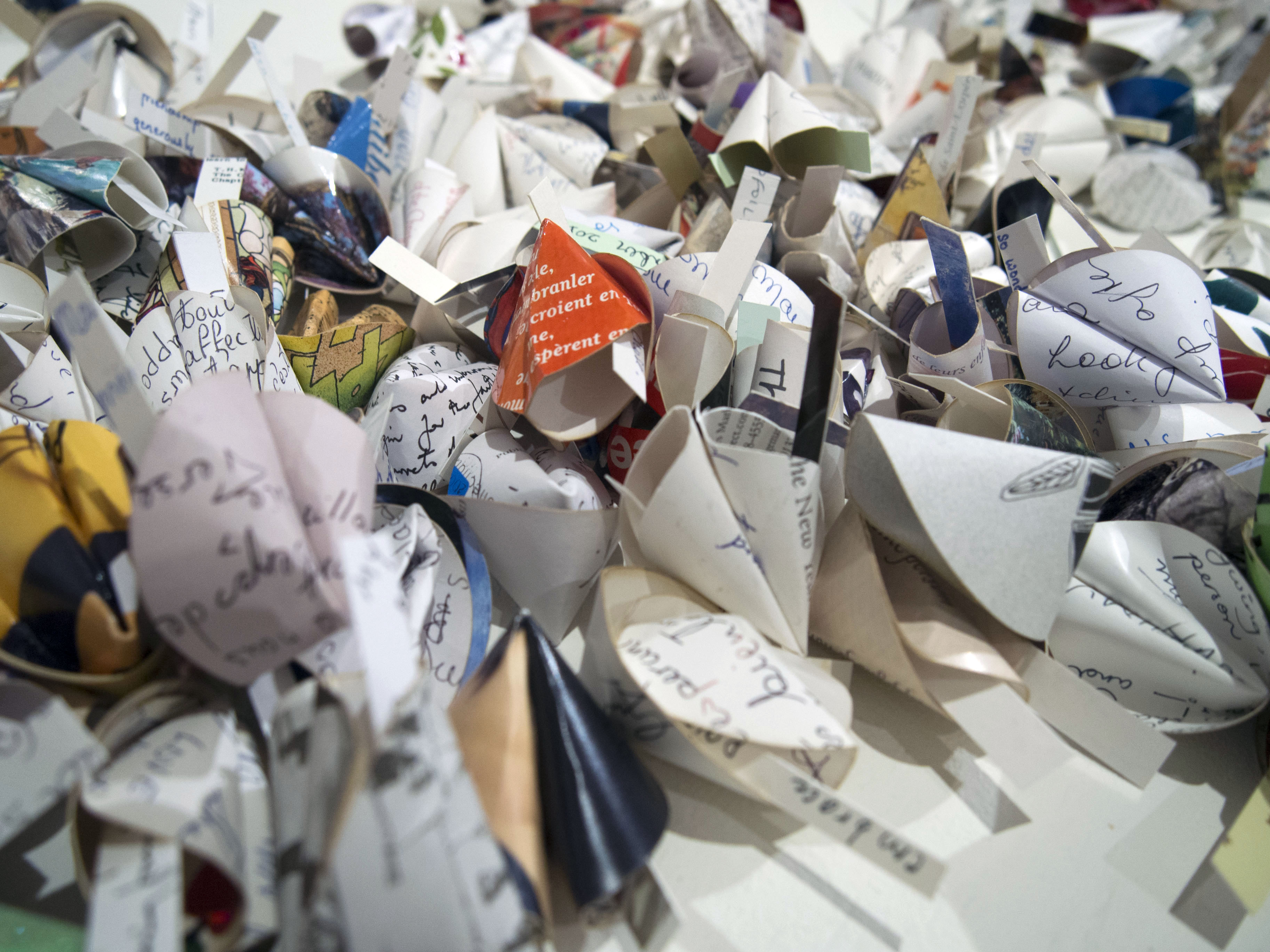
Bernard APPASSAMY Constellation of endearment (Detail)

Deanna HITTI Assimilated museum

Gracia HABY and Louise JENNISON Closer to natural
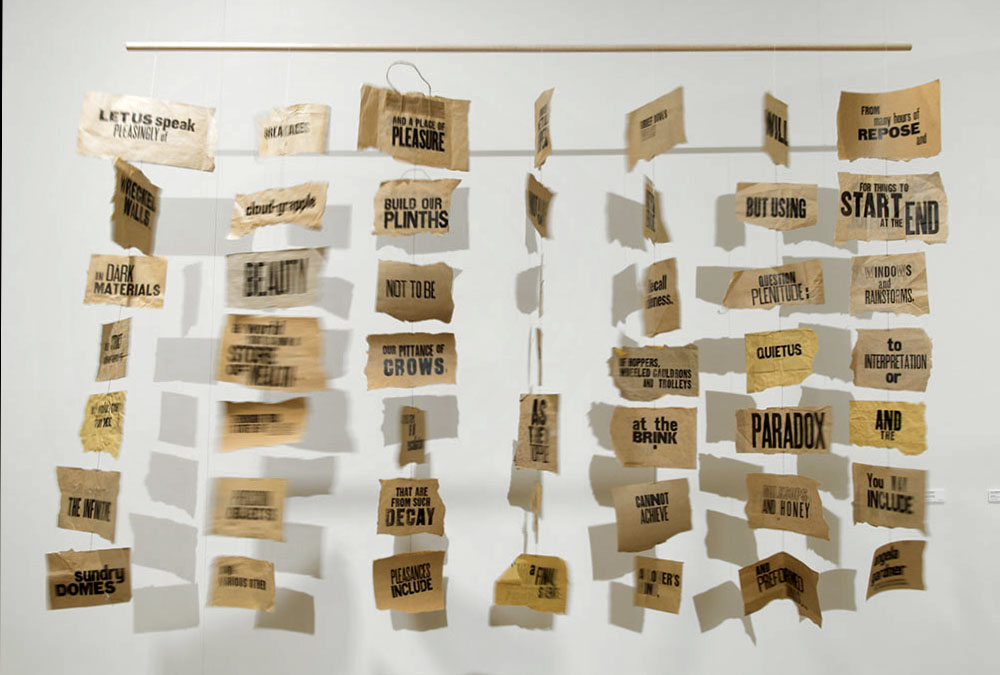
Caren Florance’s Pleasure demolition
.
.
All photographs and videos ©2015 Doug Spowart. Main text (except Judge Sasha Grishin’s words) ©2016 Doug Spowart With thanks to Victoria Cooper for her suggestions and edits.
.
.
COOPER+SPOWART – JOURNEY NORTH
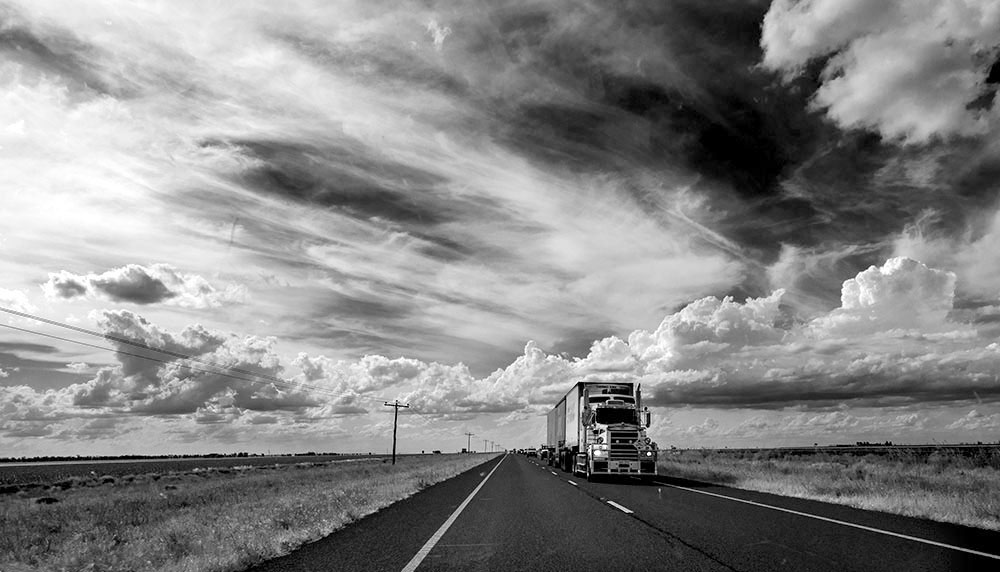
Travelling along highways north….
.
We are travelling up to north Queensland at the end of September for a month of artists’ book and photography projects, workshops and lectures.
.
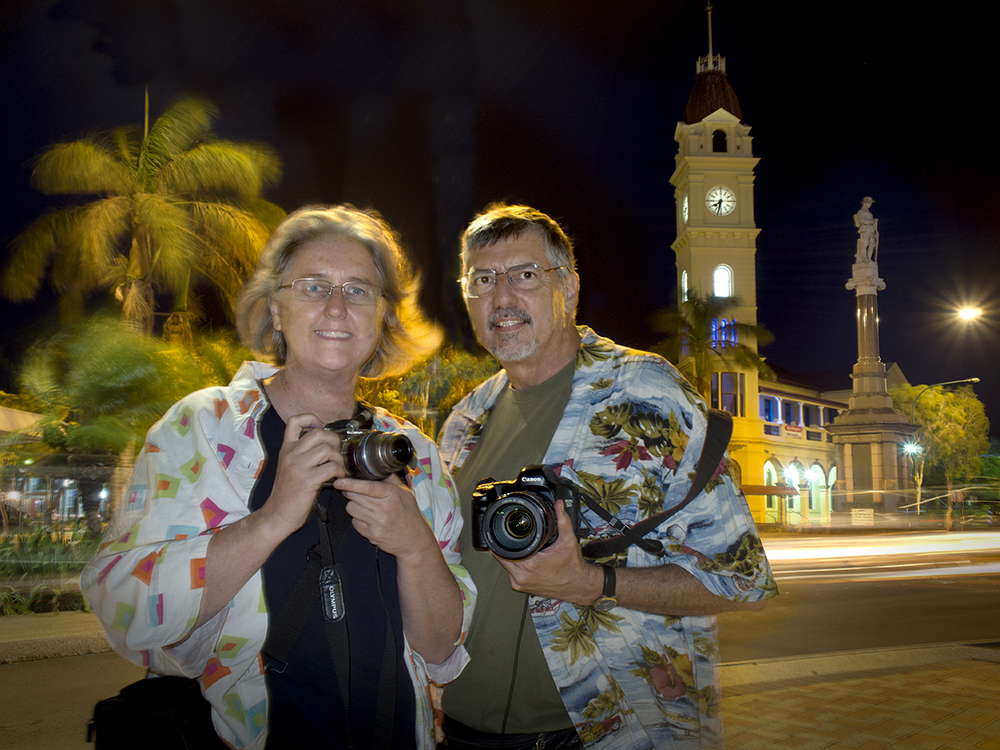
The artists in tropical garb with palm trees…
.
Our Journey …


Capricornia Printmakers logo
.
September 27 ROCKHAMPTON: CAPRICORNIA PRINTMAKERS
We will present an evening talk about our artists books/photobooks and the Siganto Foundation Research Fellowships work we have been doing in the Australian Library of Art at the State Library of Queensland.
.
.
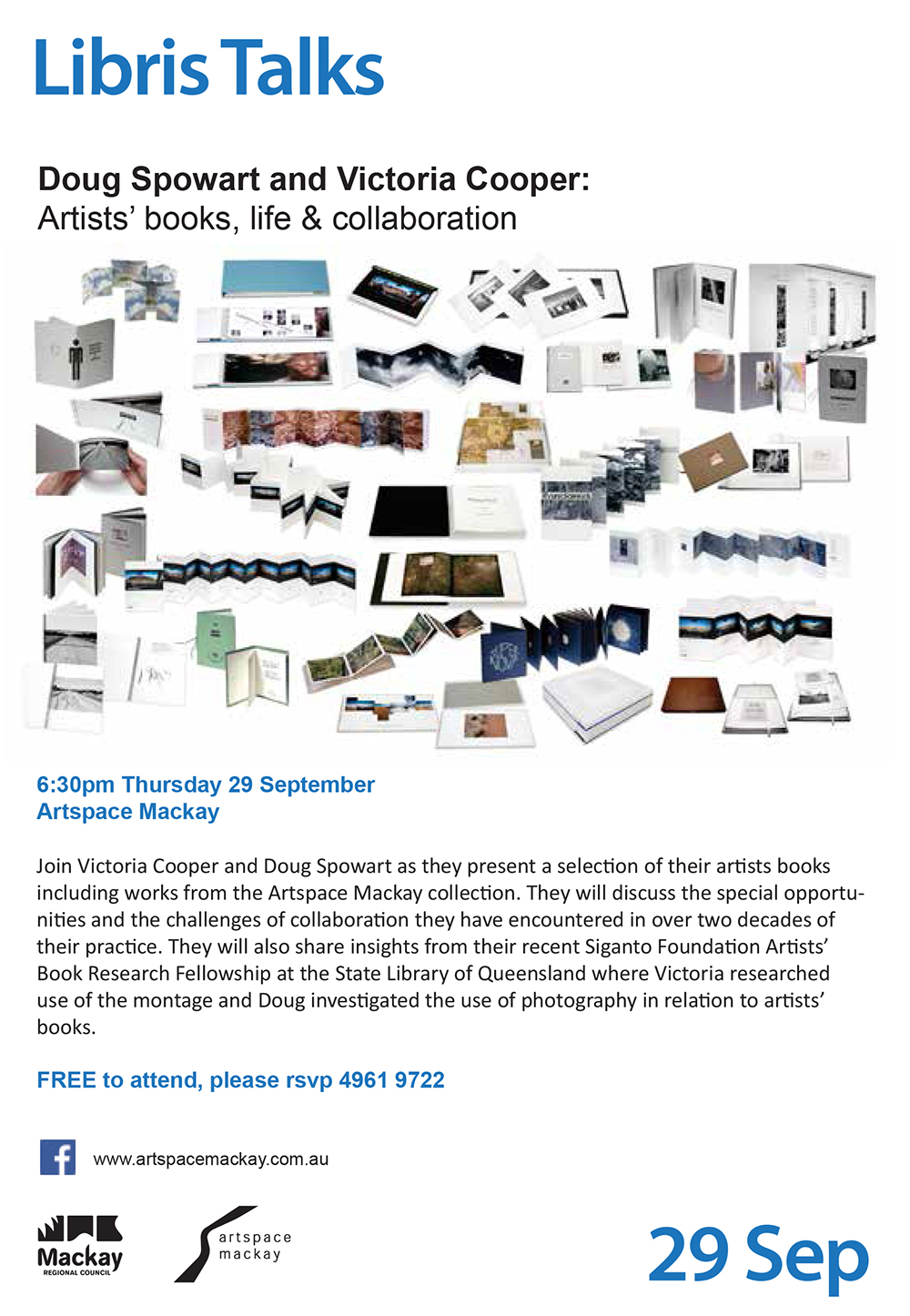
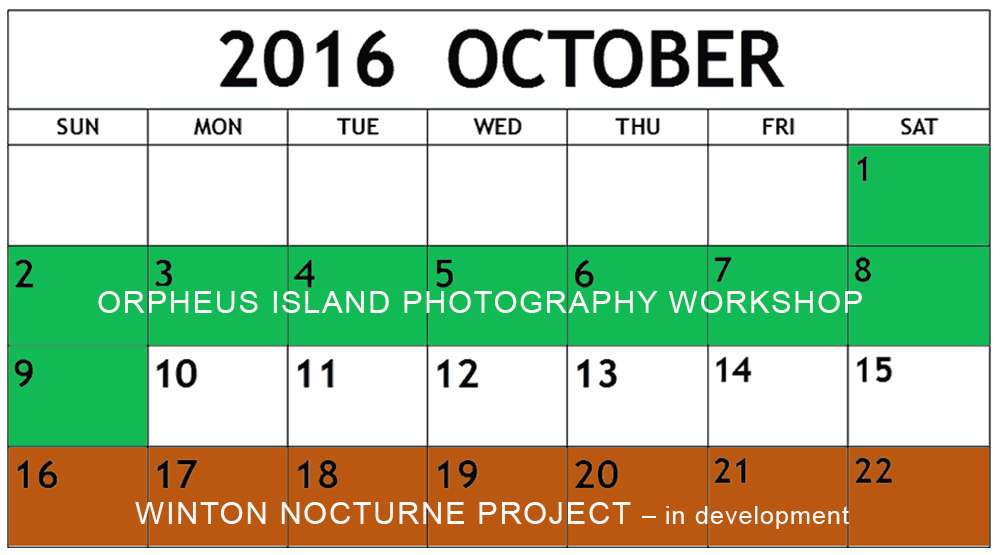
September 29 MACKAY: ARTSPACE MACKAY as part of the LIBRIS AWARDS PROGRAM
Here are the details…
.
.
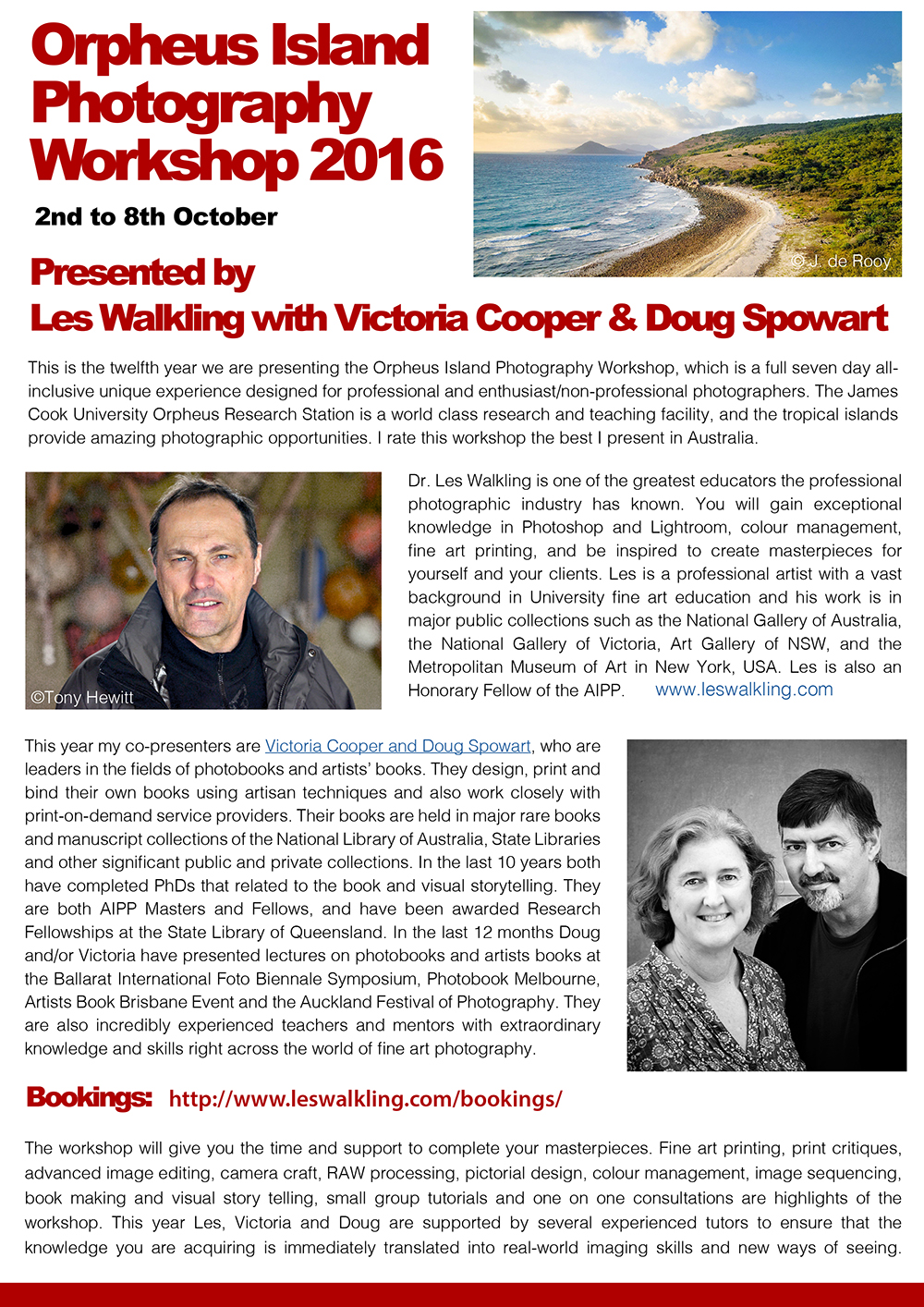
October 2-8 ORPHEUS ISLAND
Here are the details…
.
.
October 16-22 WINTON: NOCTURNE WINTON – To be confirmed
See our other Nocturne Projects … HERE
A few images like those we could be making at Winton follow…
.

Walker’s Hotel, Grafton
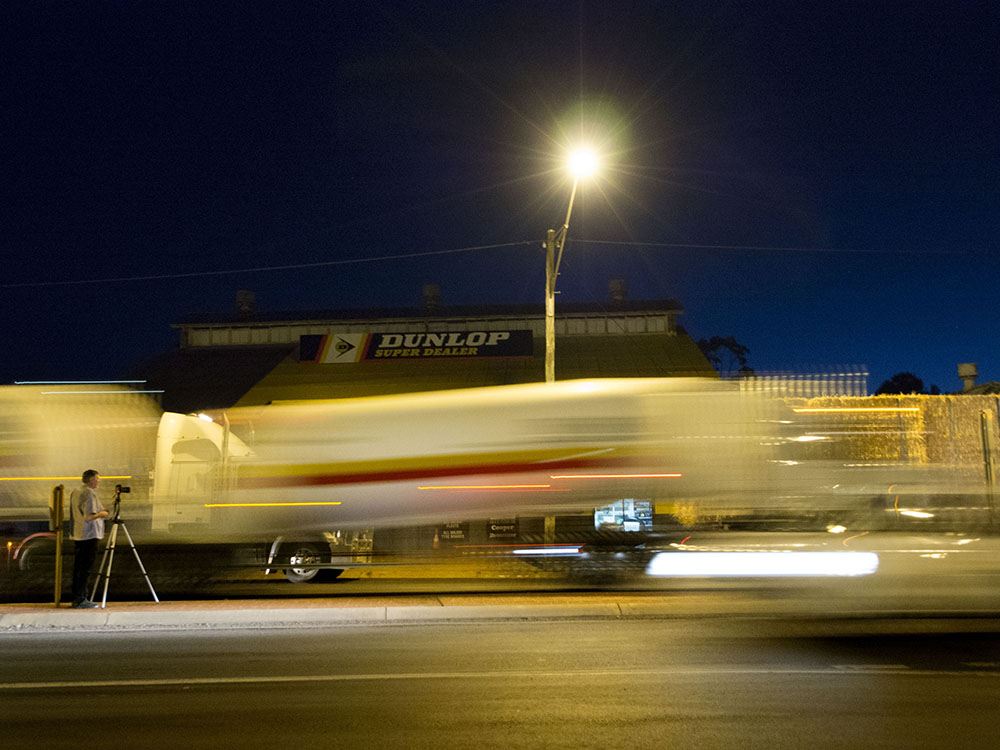
Trucks through town…
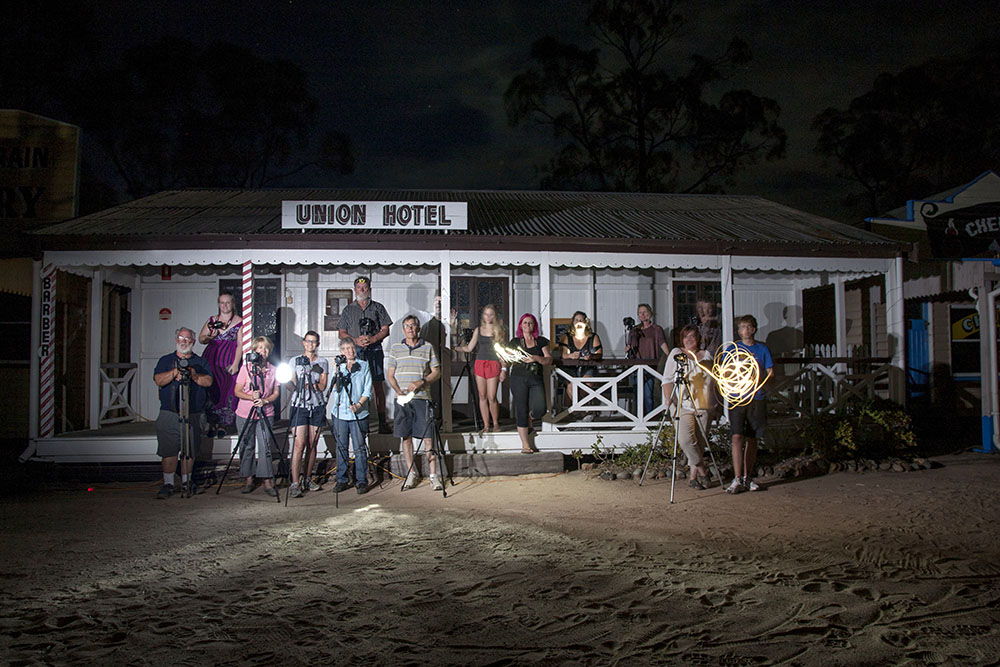
A group of Nocturne photographers
.

Nocturne Winton FB Logo
.
CONTACT US FOR DETAILS OF ANY OF OUR JOURNEYS NORTH ACTIVITIES
.
.
ODE TO TARAGO CARCAMERA OBSCURA
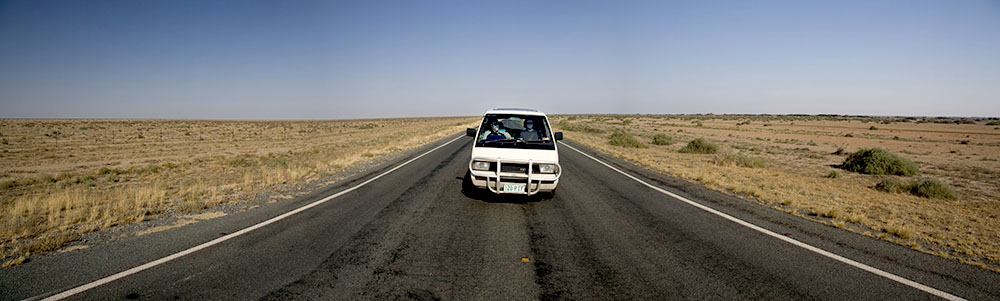
Just turned 500,000 kms on the Hay Plains near Balranald, NSW
Today I was just remembering when I first bought
the Tarago as a new car…
It was a smooth car/van in 1986 even though it was a 1985 model.
… I was its sole owner
.
Although Doug was a major driver and sharer of the running costs
then there are all those kilometers we three have travelled
Doug, Me and Tarago….
.
We have travelled, camped, forded flooded creeks, pushed through tracks that only
four wheel drives should go, crossed the sea (Tasmania), been invaded by possums,
carried our art, groceries, garden waste, house moving, friends, family,
and even a tour group of Japanese tourists,
Dodged kangaroos except for one that jumped into the side of us,
driven through bull dust without getting bogged,
though – monsoonal rains,
locust plagues, searing heat,
snow, sleet and frost, wild winds,
And beautiful spring days …
.
Dodged crazy drivers that were talking on mobile phones while simultaneously writing
in a book resting on the steering wheel!!!!
And then there was that really big spider that walked across the windscreen while I was driving…
was it inside or outside – not sure where that ended up?
The Tarago survived break-ins back in the Imagery Gallery days in Fish Lane …
There were the breakdowns… we all have so why not CarCamera Obscura Tarago?
But Treg… you always got her going again – Thank you so much …
.
Tarago suffered our singing along with the old cassette tapes
of the Travelling Wilburys, George Harrison and Pink Floyd
We planned, we imagined, we argued, we laughed, we cried, we did many things
We ate fish and chips on the Great Ocean Road …
.
We made the car into a camera obscura! And drove it across Australia …
Just as we celebrated 630,000 km …
the journey for our Tarago was to end….
..
We said our farewells – April 10, 2016
The Tarago CarCamera Obscura will be auctioned we were told…
.
.
A PICTURE STORY OF OUR TARAGO CARCAMERA OBSCURA
.
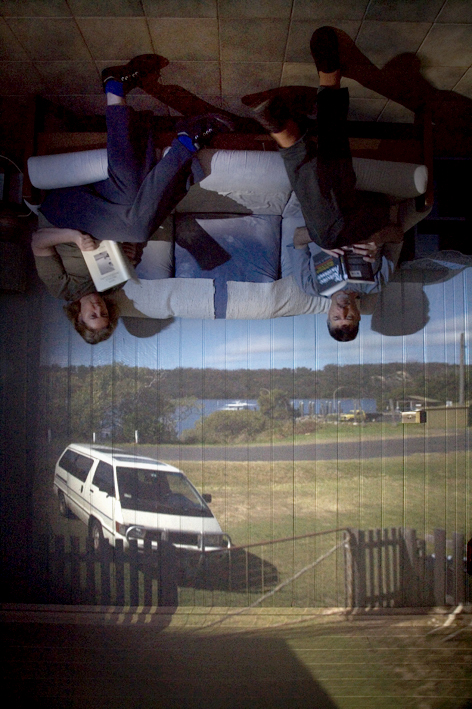
Wooli Camera Obscura with the Tarago
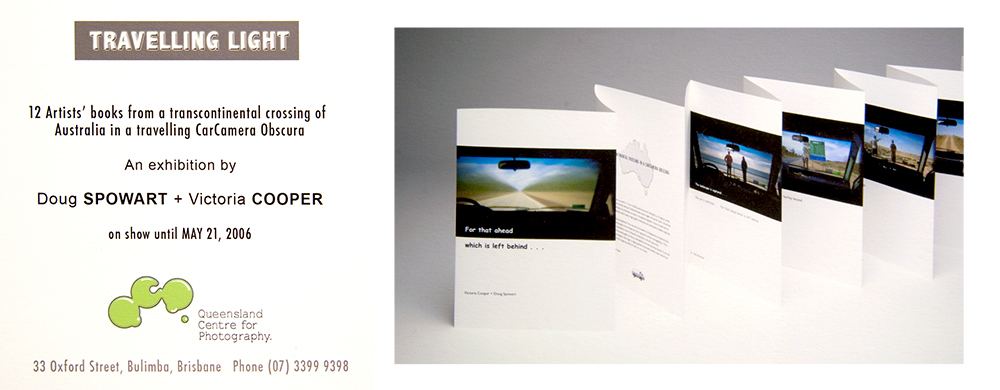
TRAVELLING LIGHT-Invitation from the Qld Centre for Photography show
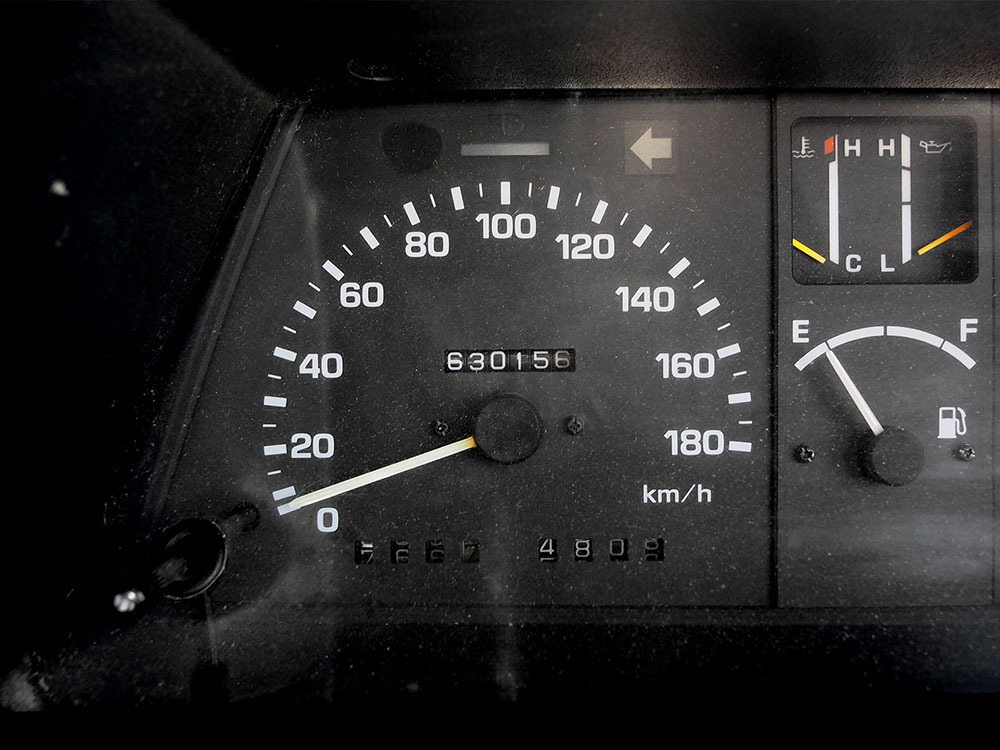
630,000 km – the final reading
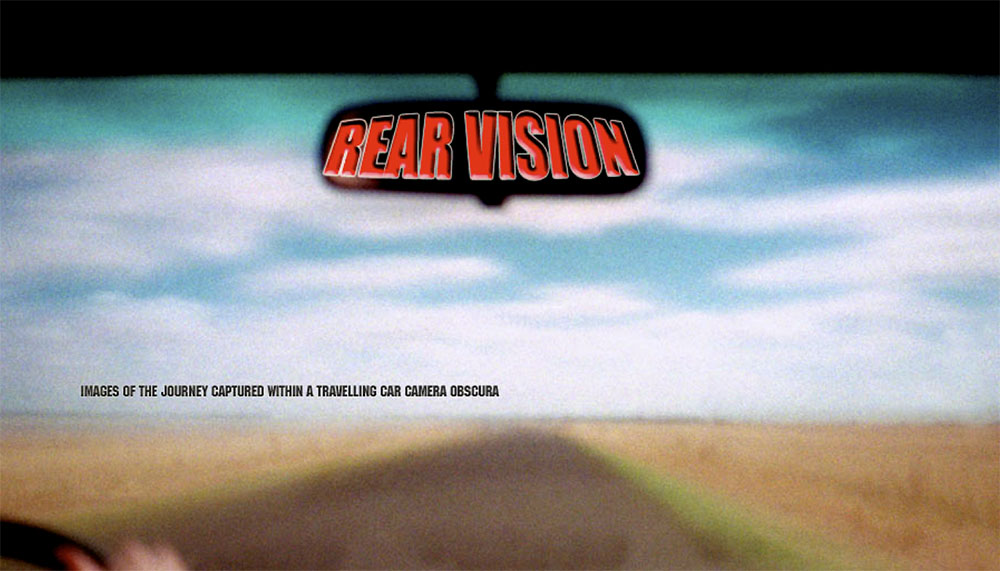
Frontpiece for the Photospace exhibition at the Australian National University
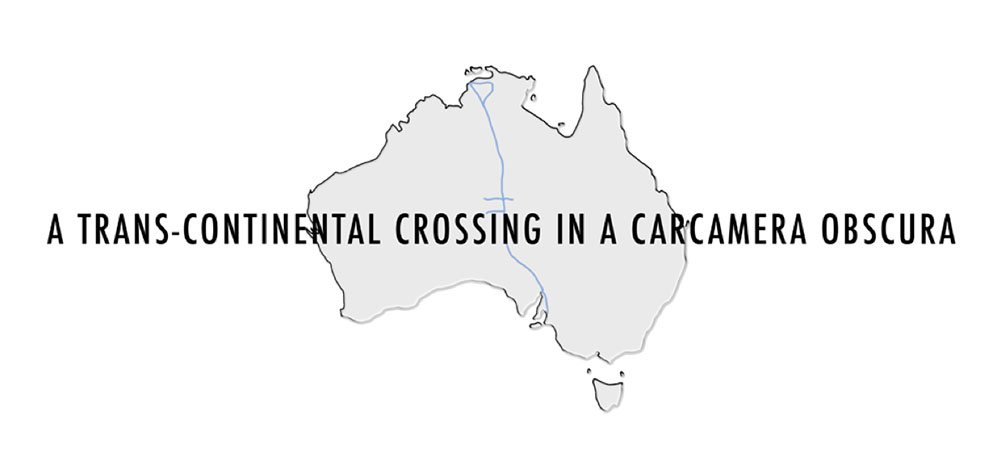
Transcontinental Crossing graphic
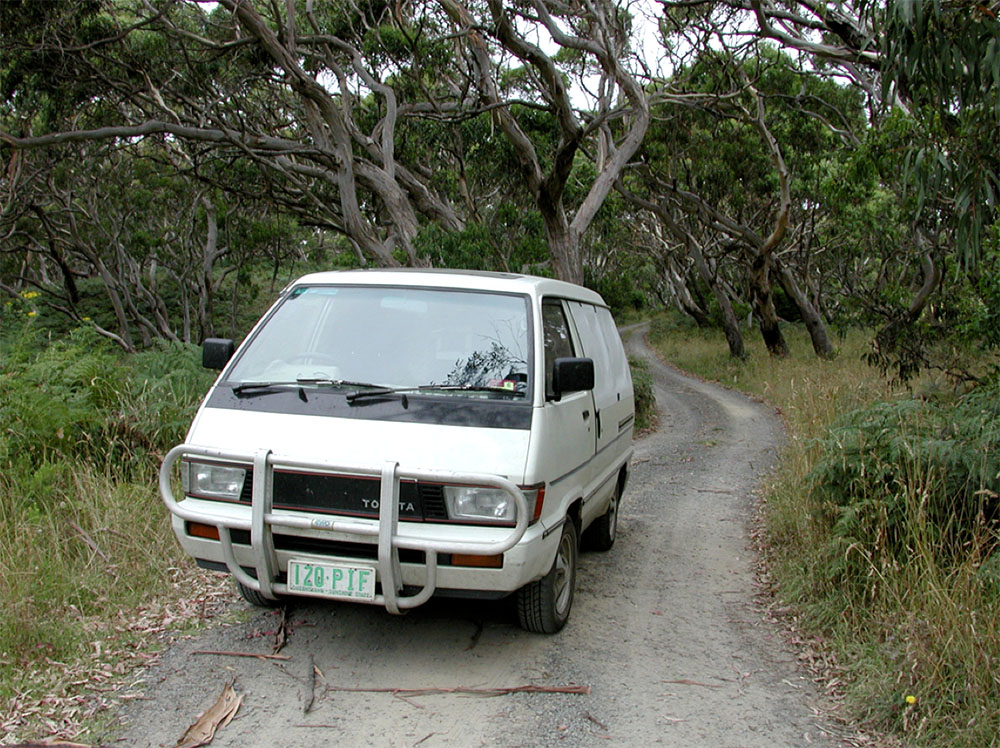
The CarCamera Obscura in the Ottway Ranges
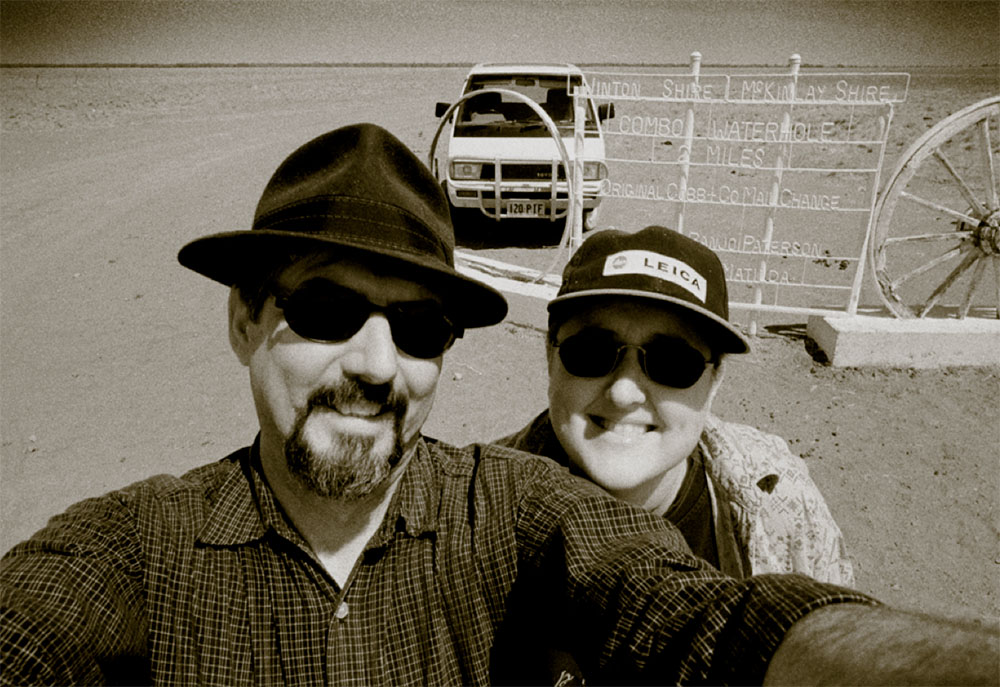
The Tarago at the Combo Water Holes near Winton
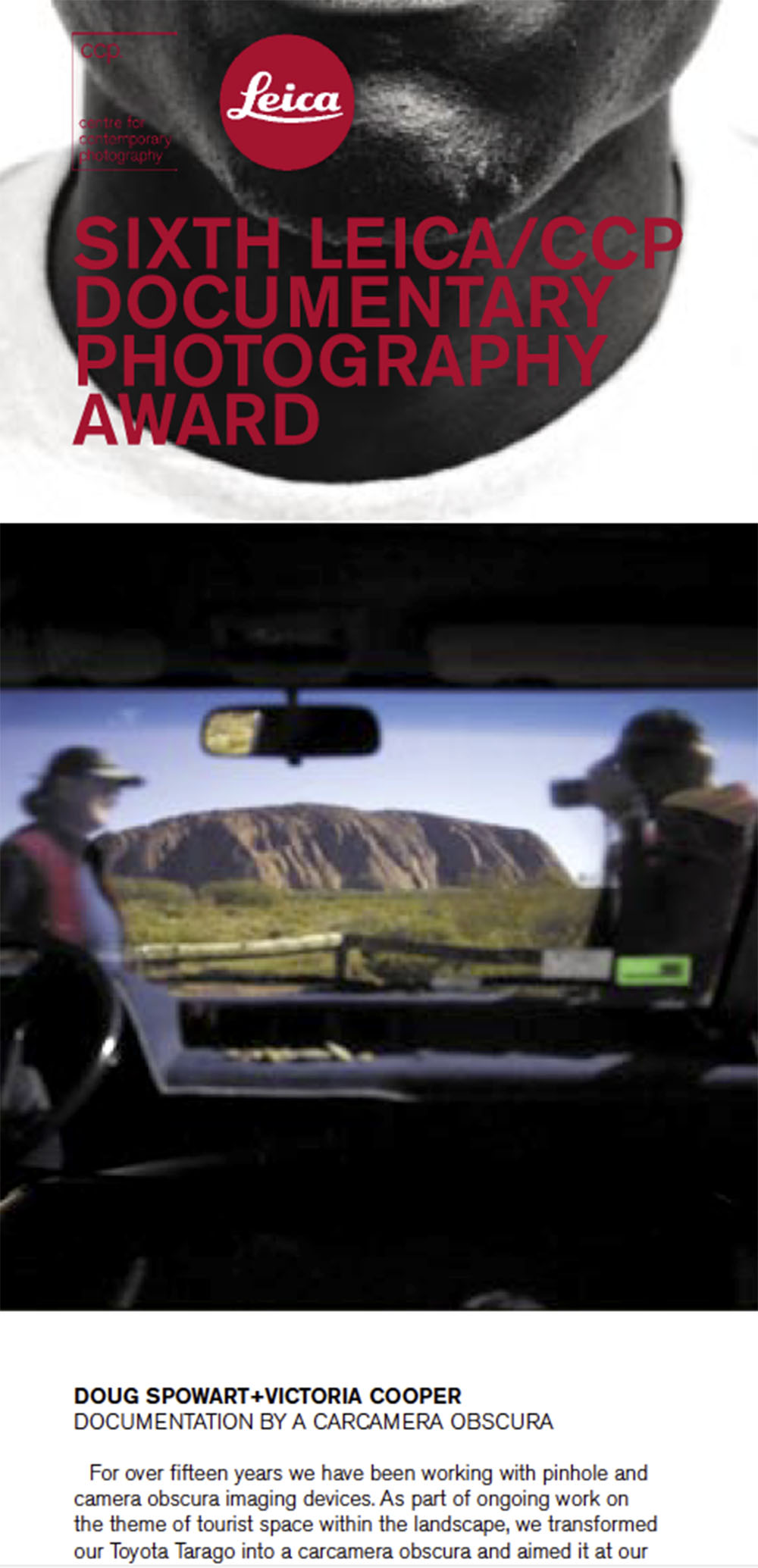
The CarCamera Obscura folio was a finalist in the LEICA CCP Photodocumentary Awards

CarCamera Obscura graphic – how it works…
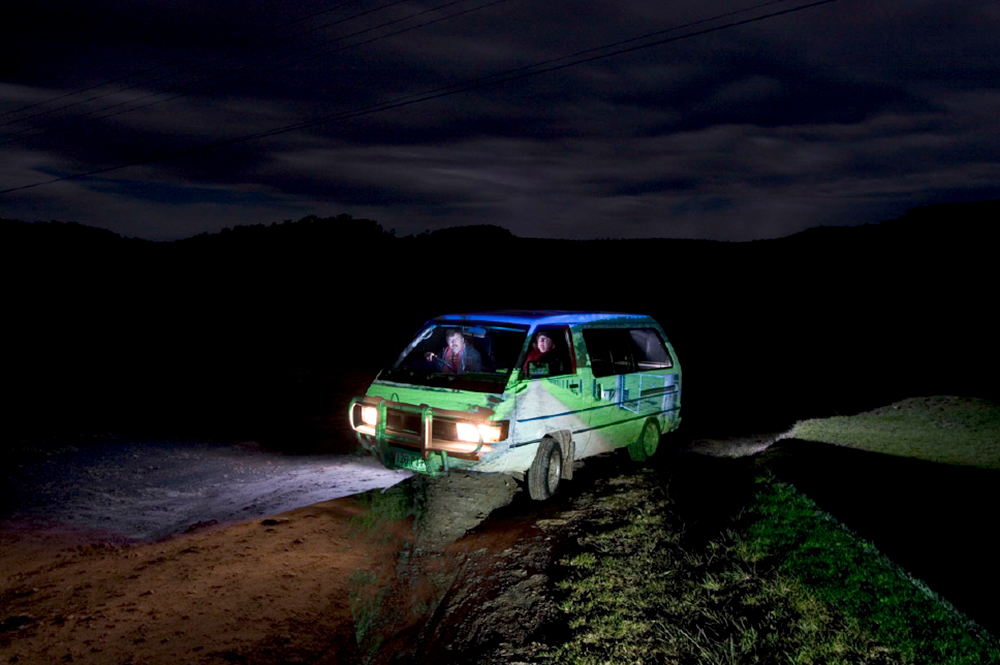
The CarCamera photographed as a projection @ Bundanon in 2007

A CarCamera Obscura on the Barkly Tablelands 2005
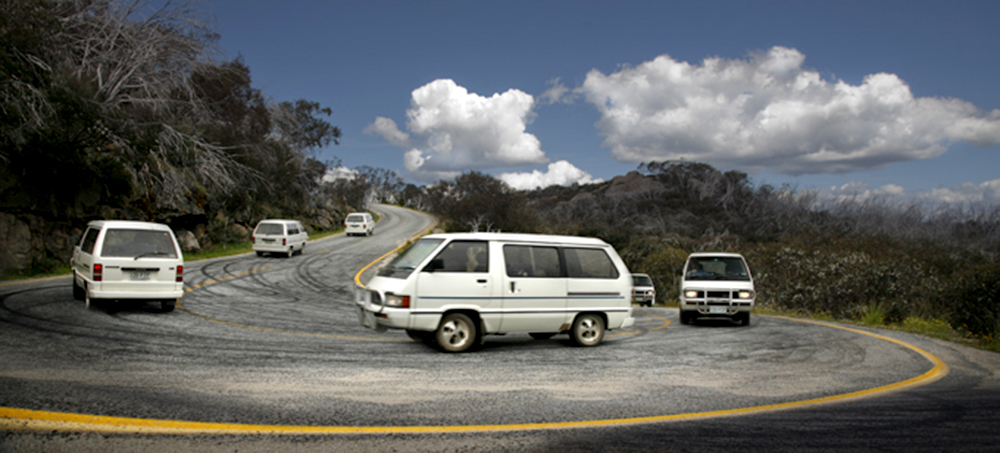
Negotiating a hairpin bend at Mt Buffalo, Victoria
.
.
.
.
POETICS OF LIGHT: Pinhole Book and our work
.
It’s not everyday that you wander into an art gallery bookshop and you stumble across a book with your work in it…! A favourite gallery bookshop for me is the QAGOMA bookshops in Brisbane – it’s always worth spending a little time there to see the latest books, to do a little in-store pre-reading, and to check out the ‘Specials’ table where the unaffordable book often becomes affordable.
The other day I’d escaped from some research work at the State Library of Queensland by walking through the preparations in QAGOMA for the 8th Asia Pacific Triennial to drop by the gallery bookshop. I held and flicked through a few books when a large volume entitled Poetics of Light with a big white reduced price label – $99.95 to $59.95. The title seemed familiar to me – then I saw the sub-title Contemporary Pinhole Photography, ‘yes, I remember that’, I thought to myself.
.
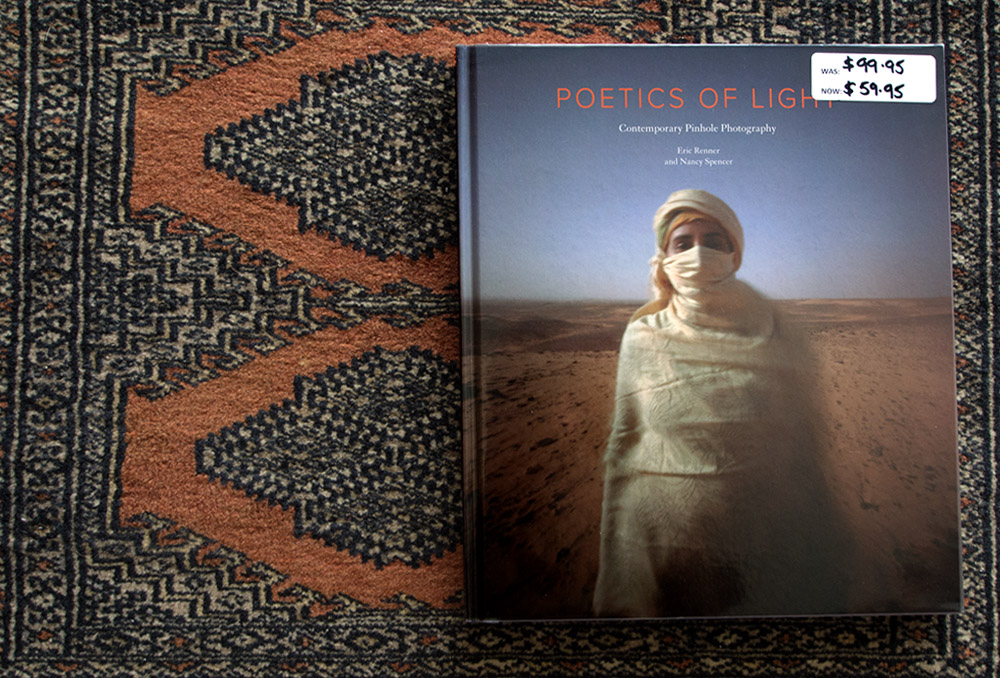
The book Poetics of Light
.
I flicked a few pages at the front of the book and one of my pinhole/zoneplate photos … a few pages on there was one of Vicky’s … I kept turning pages and I witnessed a compendium of amazing lensless imagery …
.

Doug’s ‘The Sentinel’ page

Vicky’s Banksia lineup
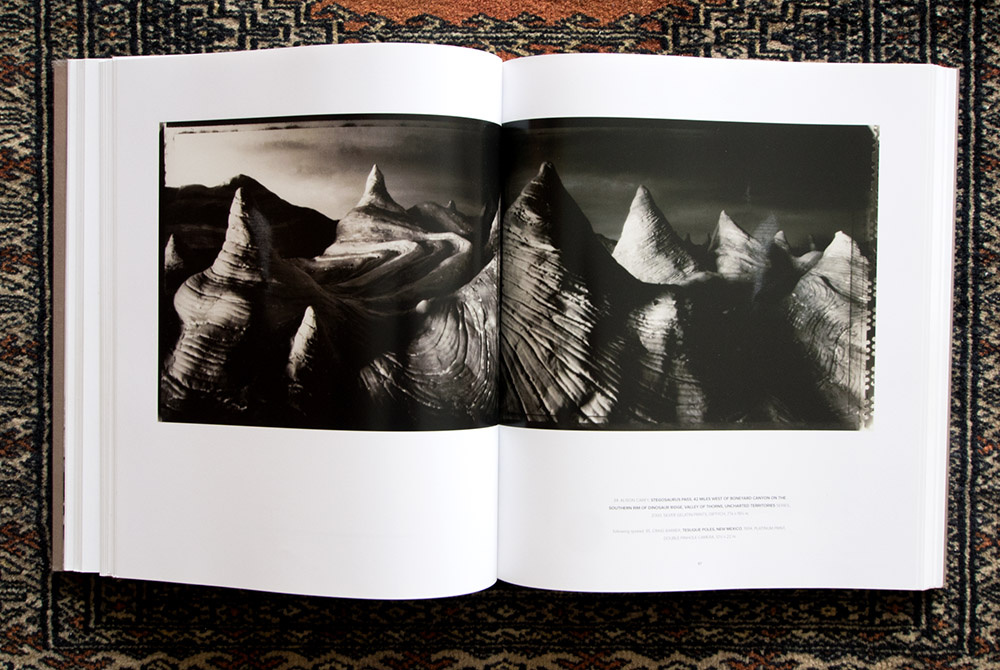


.
The last couple of years for us have been full of life-changing experiences and dealing with the issues of the moment, my being made redundant at TAFE and the subsequent time spent job searching, selling our house, lecture and writing commitments and amazing house-sit opportunities for friends – I’d completely lost track of this book and the exhibition that it compliments.
The Poetics of Life exhibition and book celebrates the donation of the pre-eminent Pinhole Resource Collection to the New Mexico History Museum (NMHM). The Pinhole Resource was founded by Eric Renner in 1984 and became the world’s centre for all things pinhole. Through personal research, workshops, networking and publishing Renner led the resurgence in pinhole photography, its techniques, images and its discourse. In 1989 Renner was joined by Nancy Spencer as a co-director of Pinhole Resource and co-editor of the Pinhole Resource journal.
.

The Poetics of Light Exhibition
.
Over the years Renner and Spencer amassed a unique collection of pinhole and camera obscura images, cameras both old and contemporary and texts, books and references about the art and practice of pinhole photography. Much of this material was donated by practitioners as a way of contributing to the ‘Resource’.
The Pinhole Resource Collection became part of the permanent collection of the Photo Archives of the New Mexico History Museum in 2012. This research archive is has the largest collection of pinhole photography and paraphernalia in the world with over 6,000 photographs, cameras, documents and books, as well as an entire run of Pinhole Journal. The NMHM has a website with images available to be searched by author’s/artist’s name, and also includes education resources and a blog.
So what is it about the pinhole image – why would anyone want to make photographs with a lens-less camera…? Renner and Spencer, in the book comment that: ‘describing the mystery of pinhole images is difficult, the concepts of soul, depth, yearning, timelessness, and archetypal feeling all contribute to the kind of visual reality produced, one perhaps only seen in a dreamlike state.’
We both felt privileged to have been selected for this book and exhibition and felt excitement at the opportunity to be recognised for our long practice in this worldwide movement.
Whilst much of our contemporary work centres on the camera obscura each year we participate in the yearly World Pinhole Day in late April – SEE our 2015-submission post HERE.
In the late 1990s I (Doug Spowart) was to state that: “pinholing creates images by simplicity, there is no techno-pretence; the images speak as murmurings, incantations of nostalgia, of mystique and memory; they are incisive and nebulous simultaneously; the process is an enigma.”
.

My pinhole (zoneplate) image from the Poetic of Light exhibition and book was taken at The Sentinel at Mt Buffalo using a modified 4×5 Graflex camera. In 1999 ILFORD featured the image in a PROPHOTO Magazine feature on my work. A story about the image is featured on our old website HERE
In a statement about the body of work, The Rocks of Ages, Victoria Cooper discusses her view that image is a result of the connection of technology, process, photographer and subject in the space/time of pinhole photography.
“These images formed part of an ongoing documentation of my corporeal and psychological experiences with the land. They were created using an ancient imaging device, the Pinhole, and analogue photographic materials. Each handcrafted image was then selectively toned to identify with memories other than the eidetic captured within the film. This process is slow and considered – the subject’s light remains on the photographic paper as not a direct document but rather as a visual exegesis of a time and place.”
What follows is a selection of pinhole images made by Cooper+Spowart

Vicky’s shortbread biscuit tin 6x17cm panorama roll film
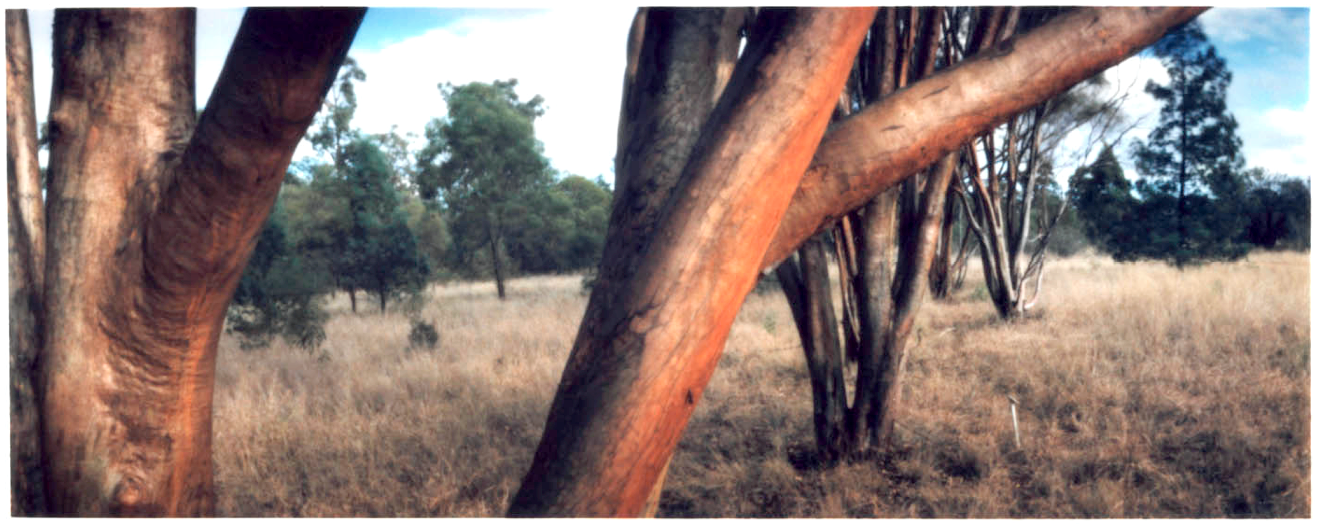

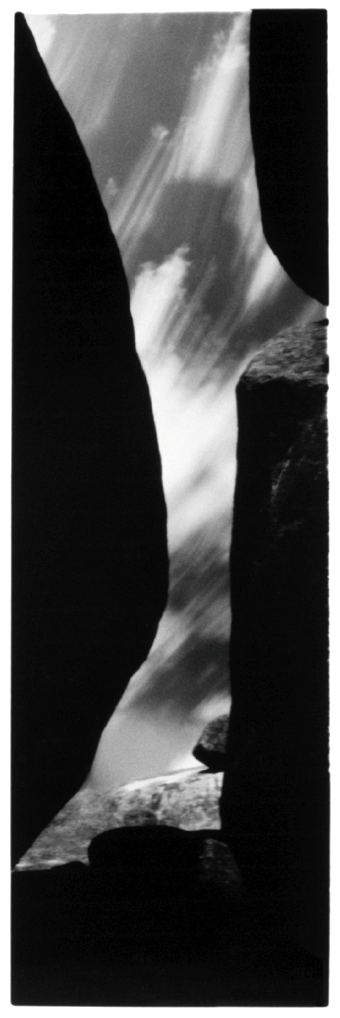
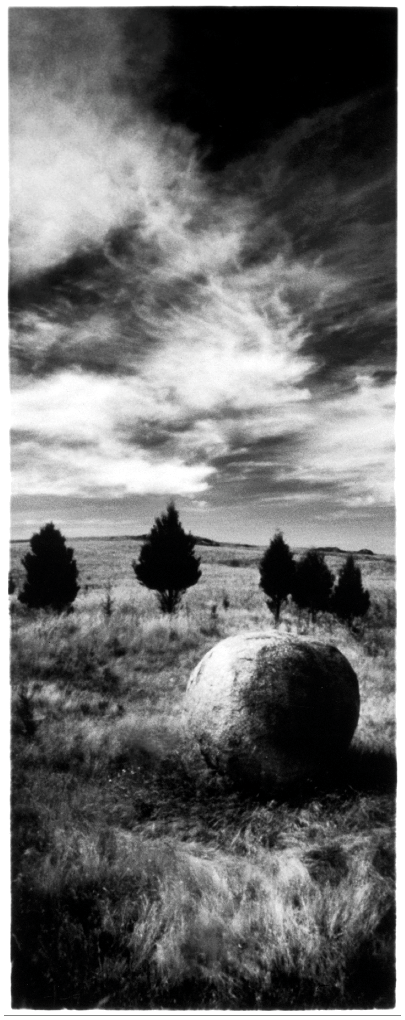
.
Other pinhole works by Vicky from film boxes and other cameras …

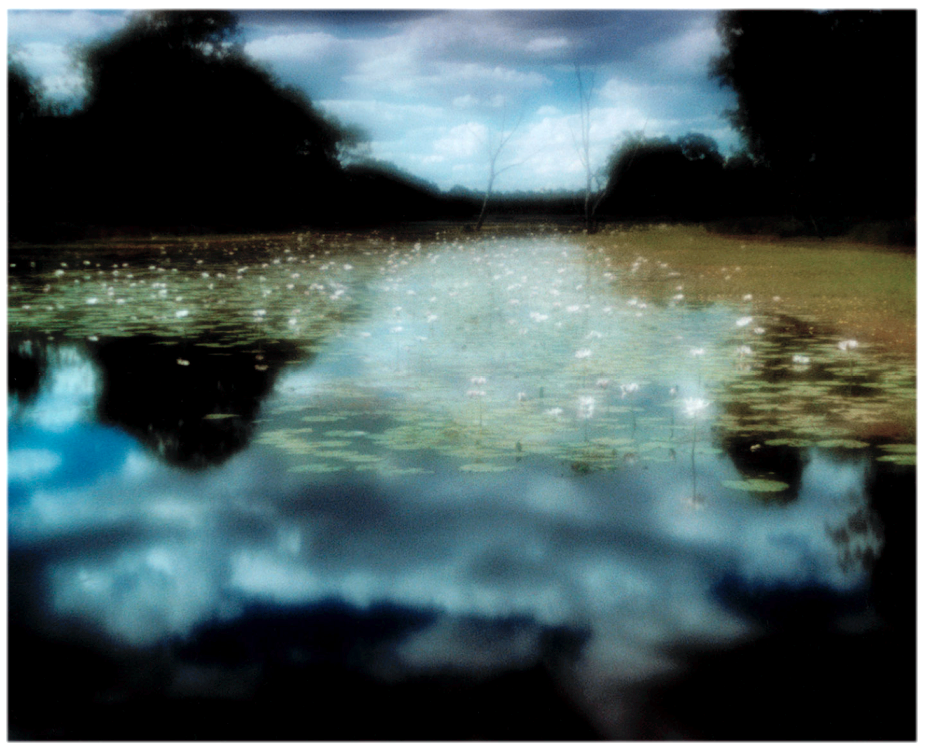

4×5 Chrome film exposed in a film box
.
Doug’s pinhole/zoneplate work from the 1990s

Doug’s Graflex 4×5 fitted with a zone plate

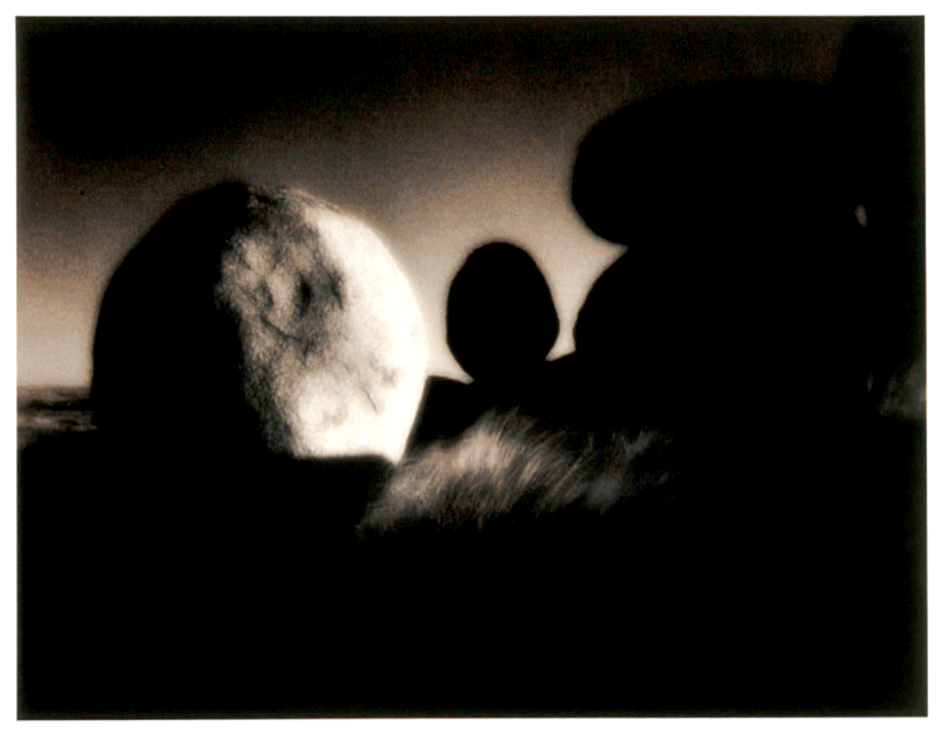
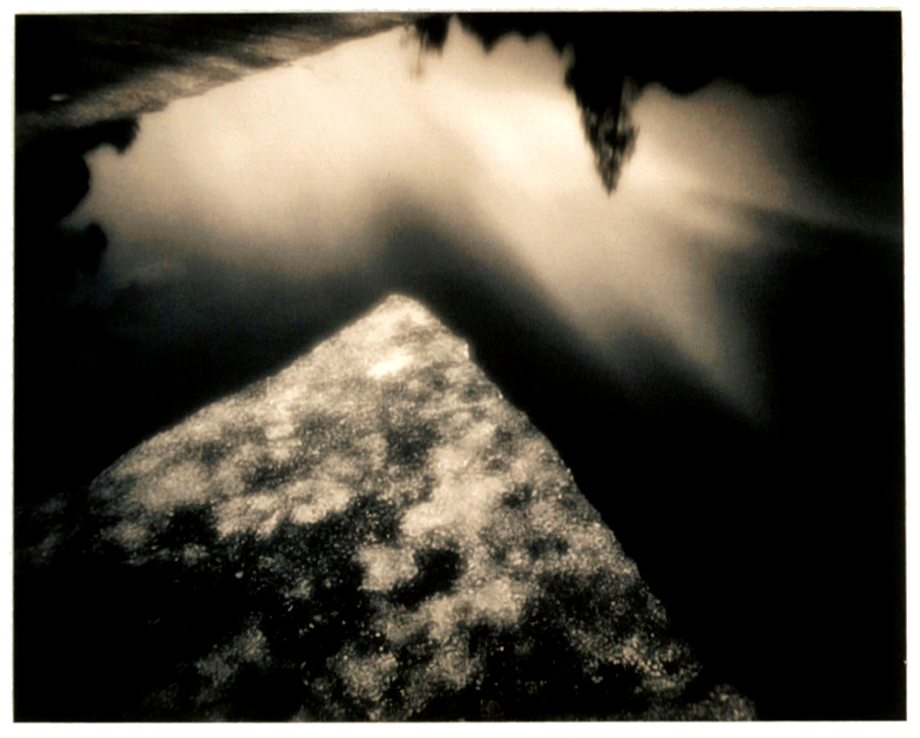
.
The CarCamera
From 2000-2008 we converted our Toyota Tarago into a travelling camera obscura and completed a transcontinental crossing from Adelaide to Darwin in what we called our CarCamera Obscura. Here is a small selection of work from this project…
.

The CarCamera in the field
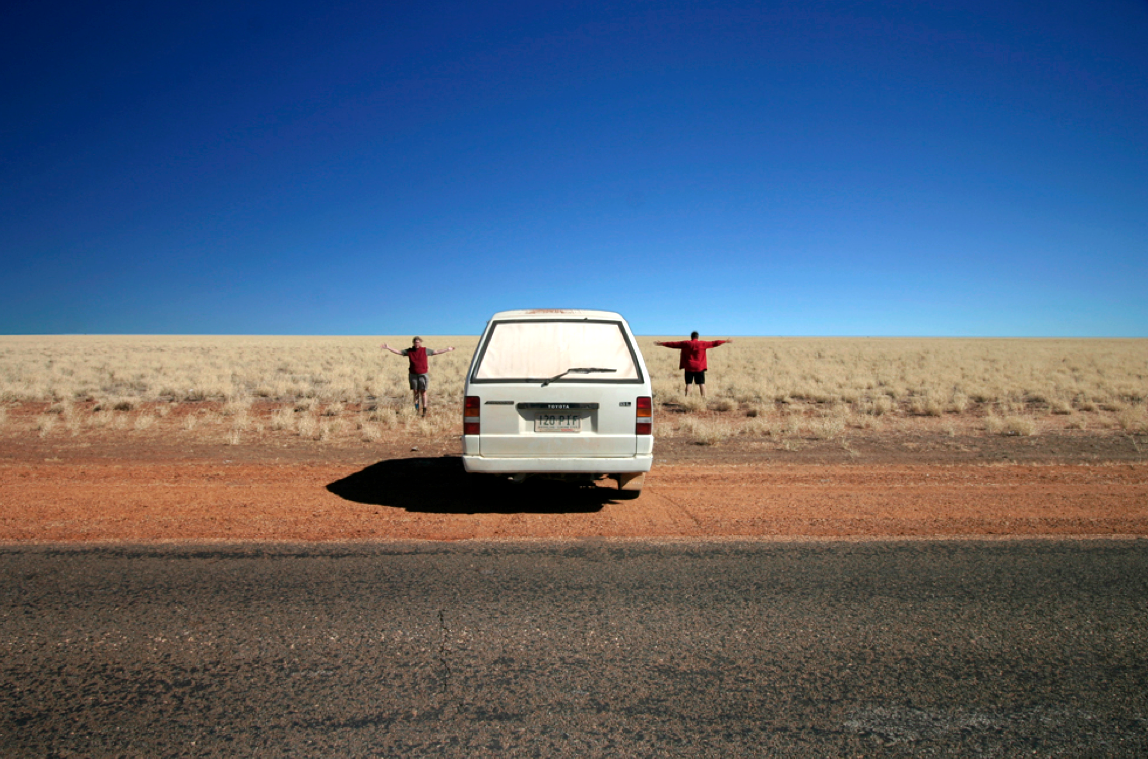
The CarCamera on the Barkly Tableands during the transcontinental crossing
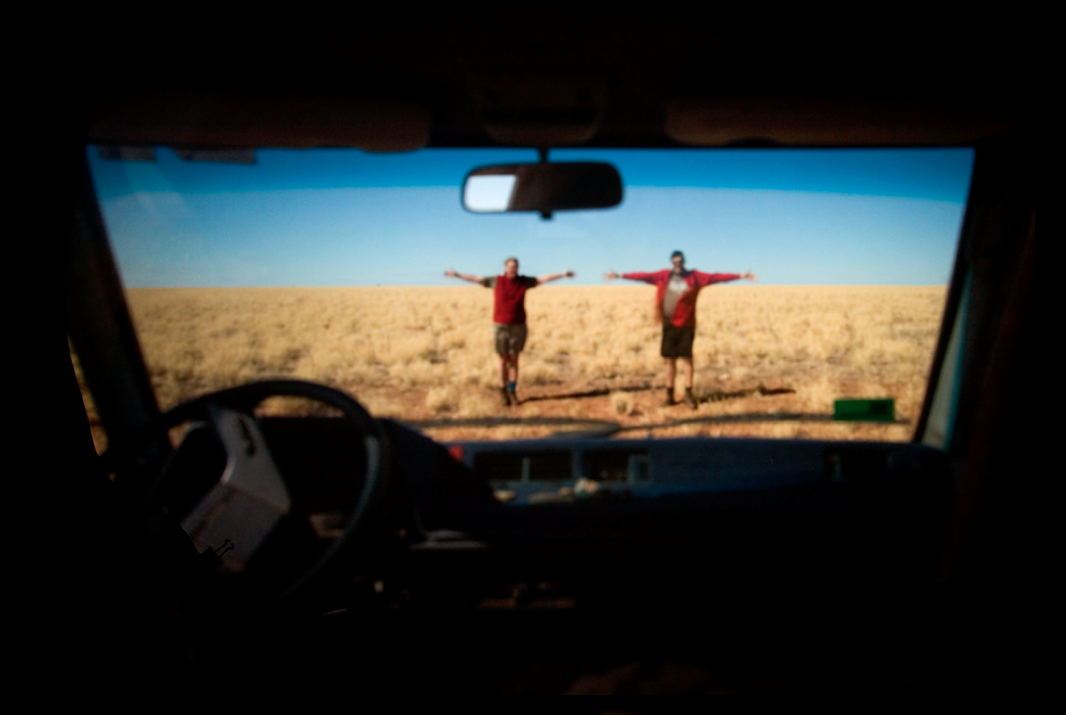
VIEW A DIGITAL MEDIA PRESENTATION OF CARCAMERA IMAGES
.
In a time where digital photography has impacted upon old analogue technologies we saw digital as just another opportunity to explore. When we were loaned a Fuji S1 Pro camera in the later part of 2000 we fitted a pinhole and made images…
.

A pinhole digital photo made with a Fuji S1 Pro camera in late 2000.
.
There are still more challenges … photography has some more to give, and, be discovered …
Oh!! And I bought the book too …
.
.
.
.
.
All images (except the NMHM exhibition instalation) © Doug Spowart and Victoria Cooper
ROGER SKINNER: A Life in Light – the book
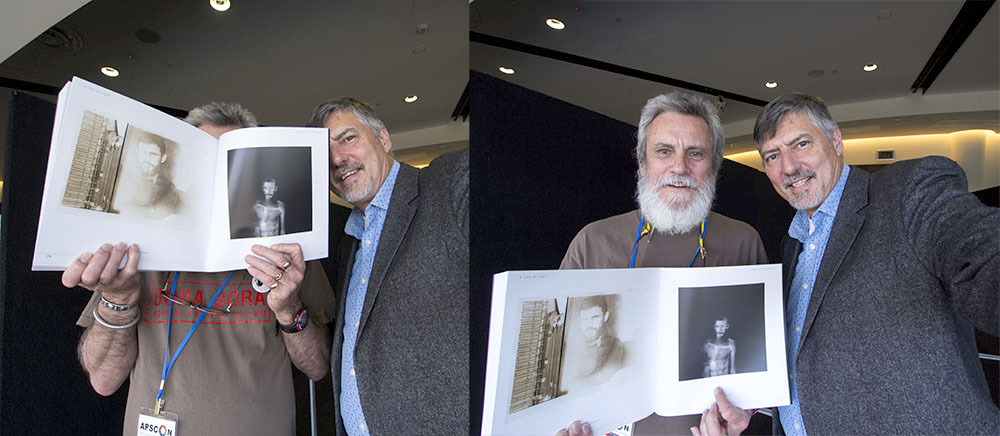
Roger Skinner and the blog author at the APSCON book launch
.
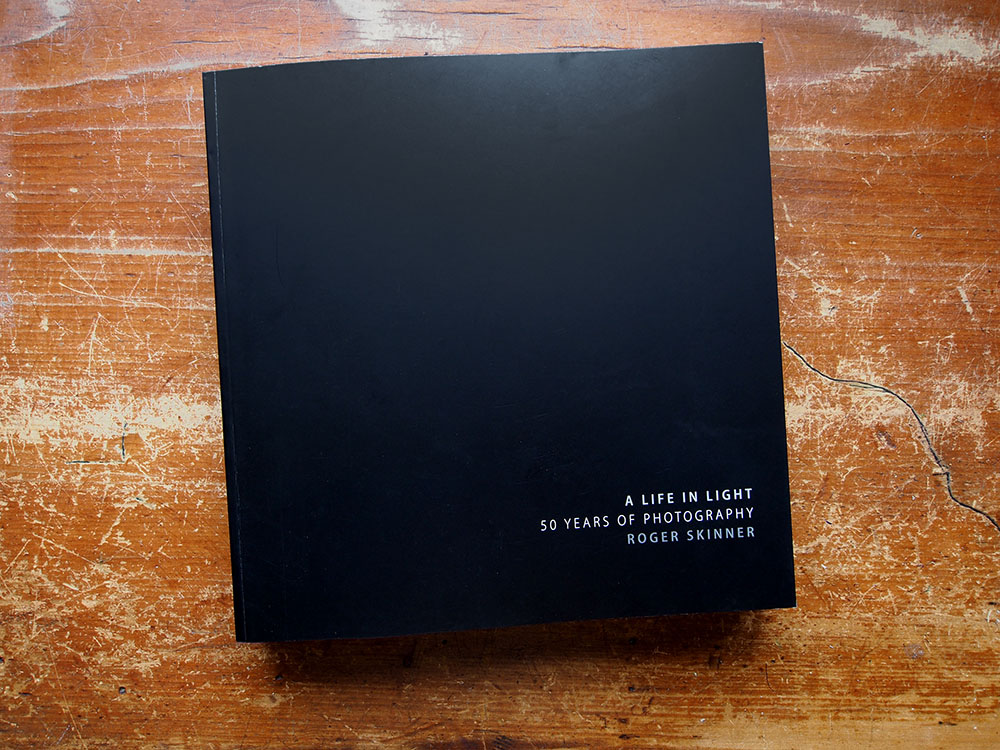
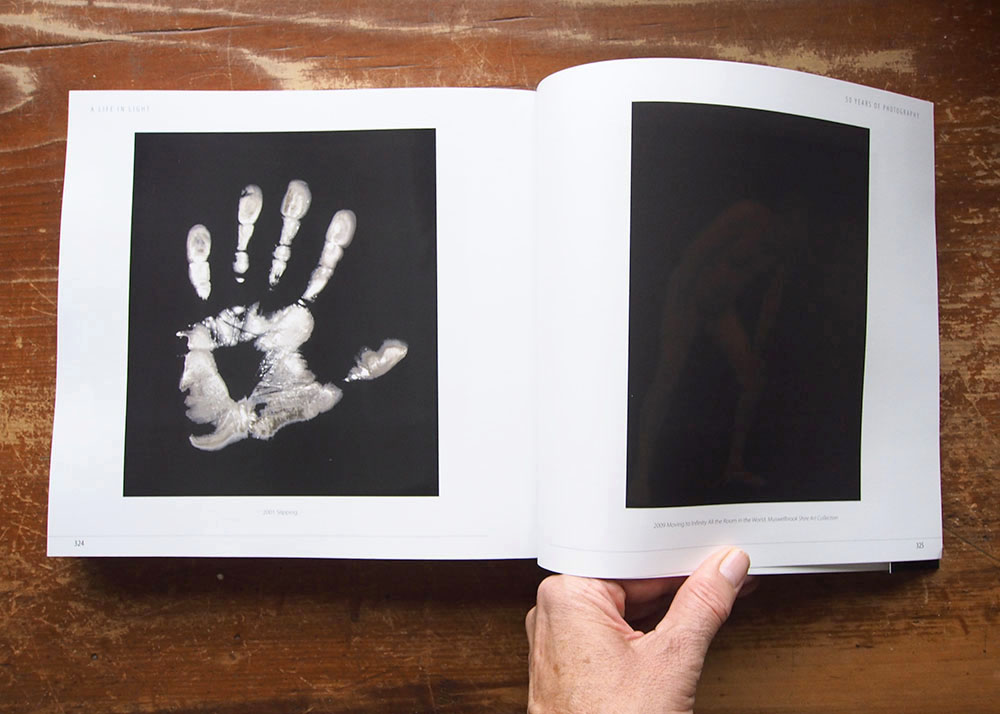
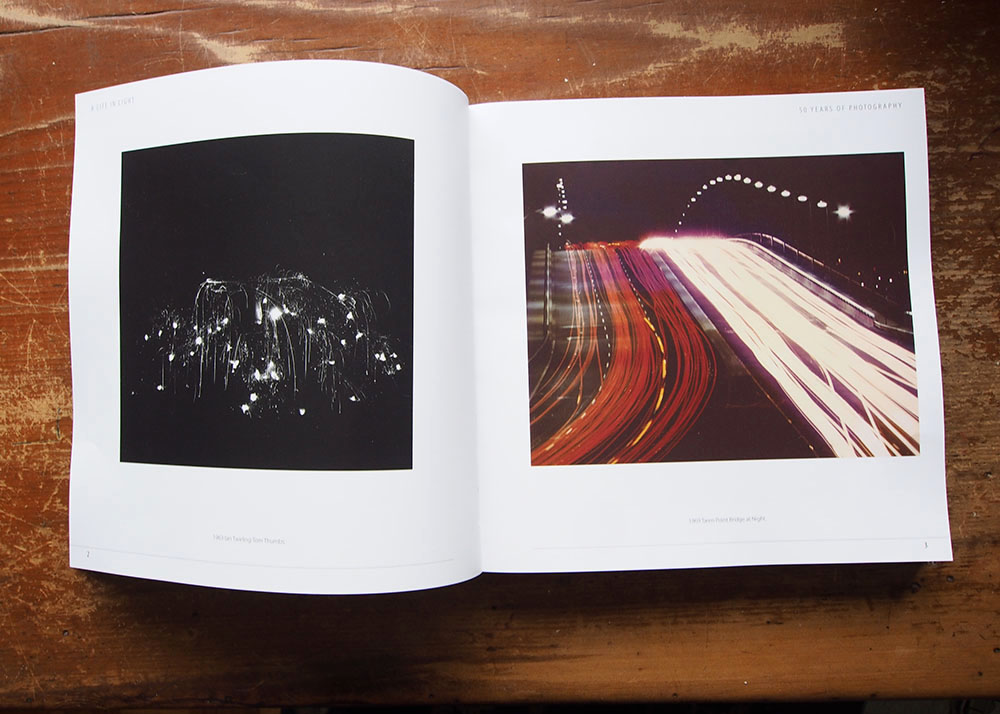
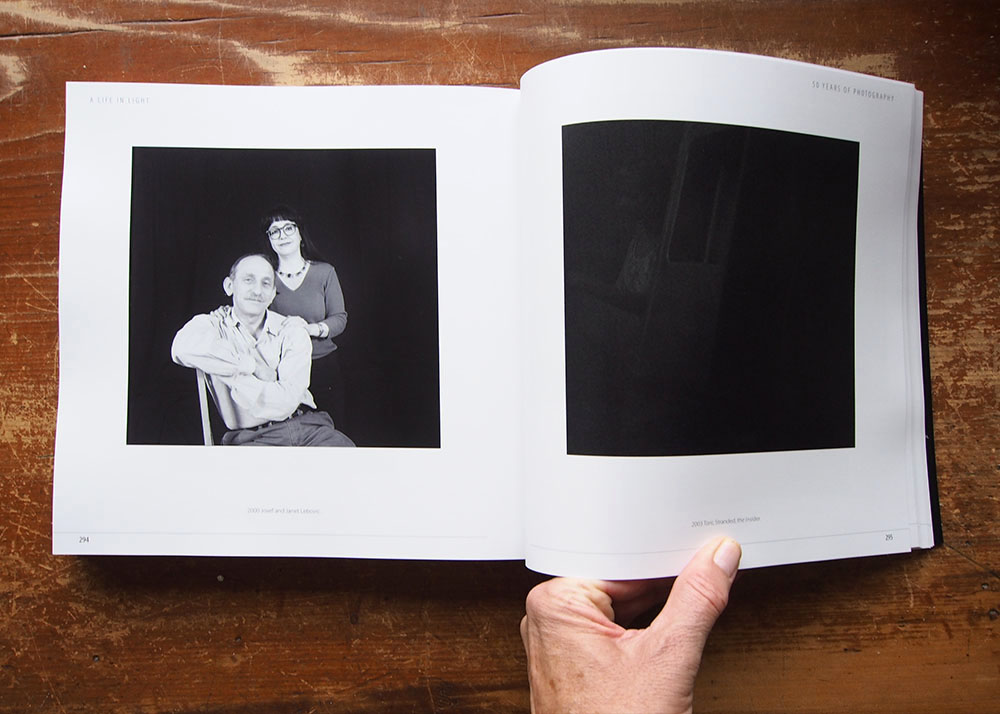
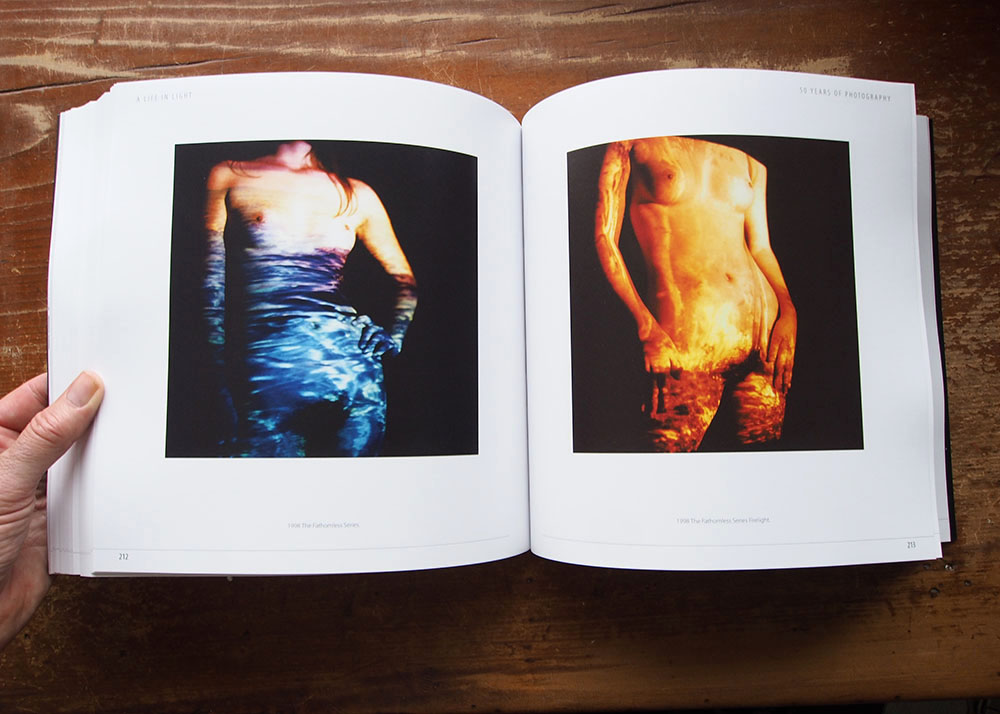
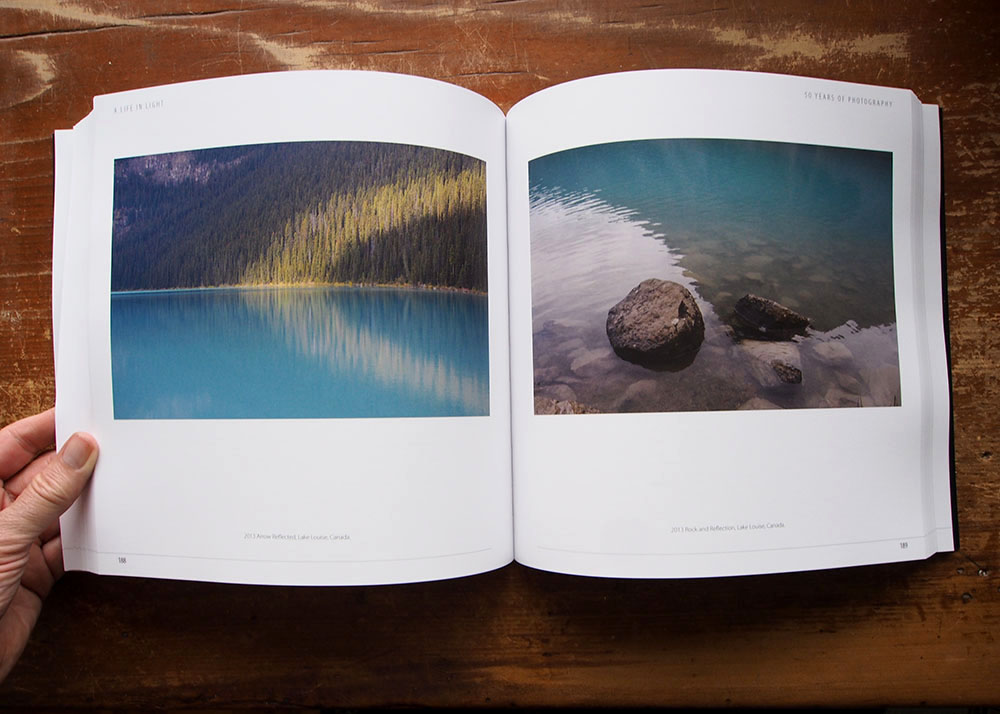
Roger Skinner is a prolific image maker, artist, photobook maker and poet. Skinner has won many of Australia art photography awards yet he also pursued an interest in the camera club movement. Celebrating 50 years of his photography Roger has compiled a weighty book divided into the subject themes that he chose to explore. Earlier this year he spoke with me about his self-published folly – 500 books, over 300 pages of colour and black and white photographs, every page a picture with consideration for the double page pairings. He also asked me to write a foreword to the book. In September Roger visited the printers in Canberra, picked up the proofs and brought them around to our house-sit in Queanbeyan with his print coordinator and brother Ian. What a moment to witness as the table before us was covered with the uncut pages of the book … A few suggestions and some corrections were made – then the presses rolled.
.
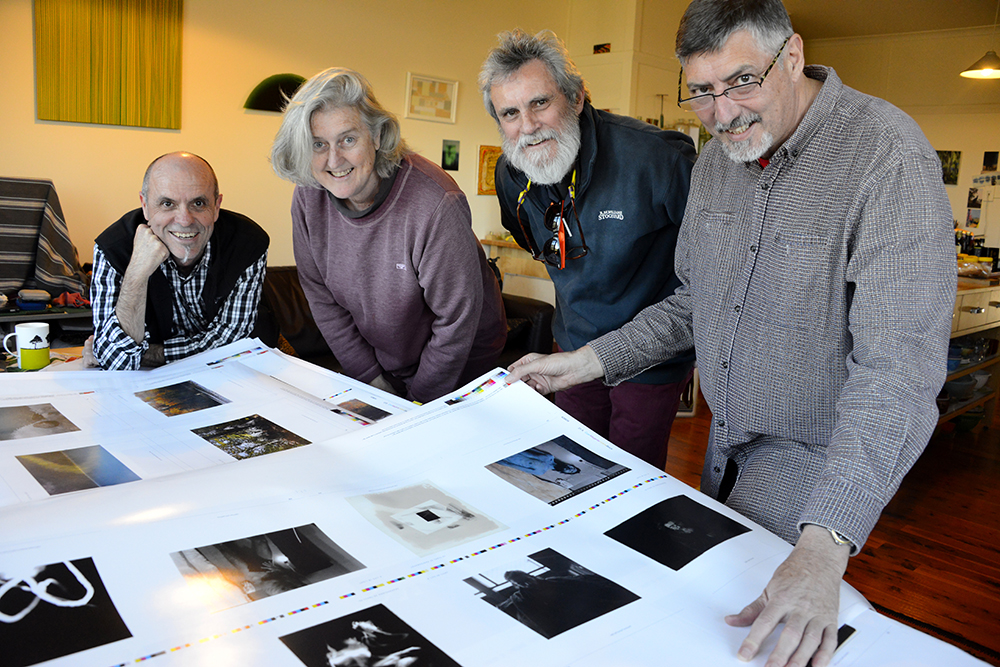
Ian Skinner, Vicky, Roger and Doug looking at proofs
For many years Roger was a director of the ‘Contemporary Group’ in Australian Photographic Society. Although he resigned his membership of the Society many years ago he was invited back to the APSCON convention at Tweed Heads to launch the book and make a presentation about self-publishing. As the proverbial ‘prodigal son’ Roger gave the 100 or so attendees the back story to his life in photography from the first photograph to those made relatively recently. He alluded to the complexities of self-publishing and the anxiety associated with committing to a personally funded book project in the many thousands of dollars. However his presentation was not intended to dissuade others from considering making their own books, but rather the realities of such an undertaking.
.
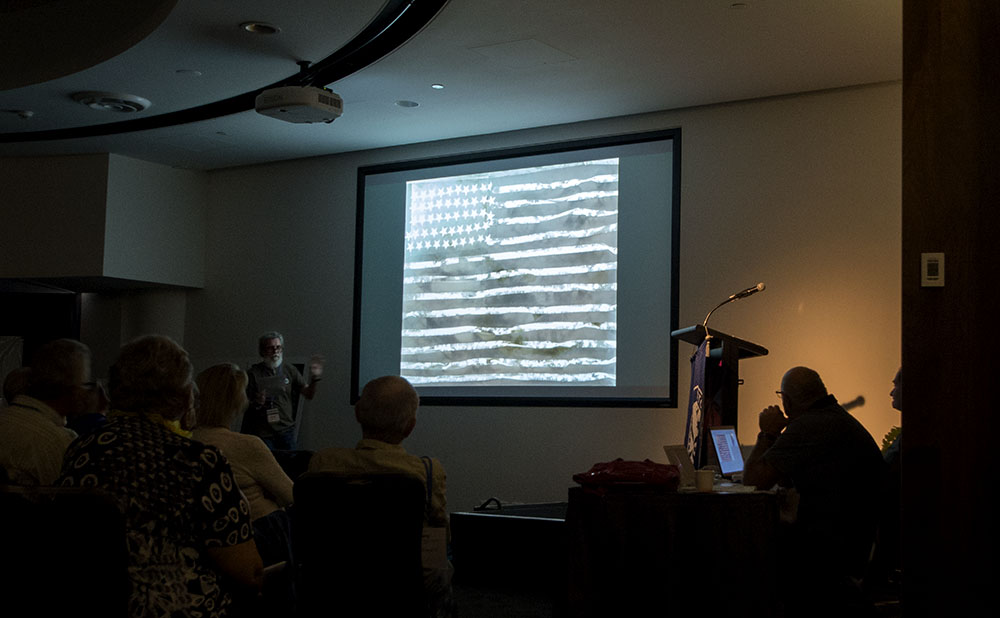
Roger Skinner presenting his book story @ APSON Conference
.
Towards the end of Roger’s lecture he asked me to come forward and officially launch the book. As I stood before this APSCON audience I was reminded of my first experience as a presenter in 1977 as a young budding photographer. Then, as now, the audience contained some of my mentors and heroes. These included Bill Smit gave me my first experience of a properly setup darkroom and printing techniques. And Graham Burstow, the Toowoomba photographer who inspired me in the late 1960s, and who is still as lively as ever with a new show just opened at the Gold Coast City Art Gallery. Like Roger my APS membership has now lapsed – I first joined in 1967 – perhaps I digress.
I spoke of Roger’s A Life in Light book as being a brave venture. Of how all photographers have libraries and that they learn principally from the books of others. I told them about the great variety of Roger’s work: was he a pictorialist? A photodocumentist? An abstractionist or a poet with a lens…? It gave me great pleasure to launch the book and I encouraged those present to support Roger, and their interest in photography to buy a book that very day … many did.
.

Doug Spowart launches Roger Skinner’s ‘A Life in Light’ PHOTO: Victoria Cooper
.
If you have an interest in seeing a collection of inspirational work created over 50 years then A Life in Light may be an ideal book to have in your library – to purchase:
.
Book $40.00 each
Postage and packing in Australia $13.40
Email address is rojpix@ipstarmail.com.au
Direct Deposits to Newcastle Permanent BSB 650 000 Acct No 915531504
.
SOME SAMPLE PAGES FROM BOOK
.

HERE IS MY FOREWORD TO THE BOOK ‘A LIFE IN LIGHT’ by ROGER SKINNER
The life and work of the regional artist
I have known Roger Skinner for over 30years and I can say that in the art of photography, he is a regional artist who cares little for his farawayness from the city. Spending a lifetime devoted to the camera and its image Skinner has pursued a range of activities in the camera club movement, professional photography associations and the photomedia art scene. Although he has an interest in the photograph as a historical document, Skinner’s practice also includes investigations into the nude, landscape, light painting, the self-image and environmental portraiture. His work has been extensively exhibited in solo and group shows, he has won numerous awards in every field of photographic endeavour, and his work is held in major private and public collections.
Not only is Roger Skinner the consummate artist, he is an organiser, facilitator and committee member. He is a builder and champion of networks that provide opportunities for others. Many will know him for his coordination of the Muswellbrook Art Photography Prize, an award won by major Australian photographers and judged by elite Australian curators, critics and commentators of the art. As a conference presenter, teacher and mentor, he has inspired and enthused many to extend their photography activities. For some time he was Education Officer at the Muswellbrook Regional Arts Gallery, and has also served as the Director of the Contemporary Group of the Australian Photographic Society.
But has the remoteness of his practice affected recognition for his own work? Apart from significant urban artists who have taken to living fashionably in the country after they have achieved their fame – how many regional artists have well deserved recognition in this country? Not many … not many. Recognition or not Roger Skinner just gets on with making his art and pursuing his other activities.
The regional space, people and their stories have revealed themselves to Skinner. His eclectic visual style exudes a kind of poetic response to the subject and life. Roger Skinner’s photographs tell us not only something of his interest and his eye for the world, but also how these photographs can touch with our experience of life and tell us something about ourselves.
Proximity has located Skinner in regional New South Wales, and despite a modicum of national infiltration of his work, this isolation may have served him well. However one could ponder the broader recognition and opportunities for his work had he lived in the creative networked proximity of a big city. Perhaps the extensive body of work presented in this book may enable a repositioning of his work within a pantheon of significant Australian photographers.
Dr Doug Spowart
Co-Founder – Centre for Regional Arts Practice
.
.
IMAGES OF THE BOOK FOLLOW…


.
All texts and photographs except that by Victoria Cooper ©Doug Spowart

 wotwedid