Archive for the ‘Place-Projects’ Category
SELFIES: A history according to Doug & Others
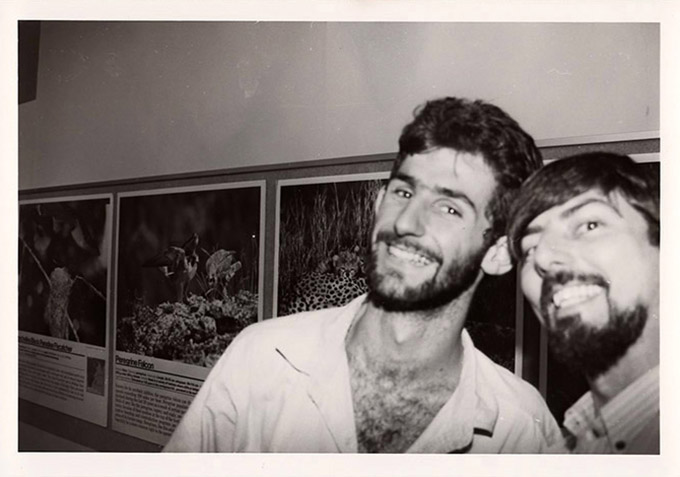
Darren & Doug ‘Selfie’ @ Imagery Gallery c1987
.
This recent Facebook post of a photo I made with Darren Jew in 1987 resulted in discussion around the idea of the ‘Selfie’ and my early connection with the technique. Around 12 years ago I discussed my inspiration and work with self-imaging in a university thesis – For your interest I publish the text here and add some images that date from my use of ‘Selfies’ in the 1980s.
For me the term ‘Selfie’ is a self image made by holding the camera at an arms length and angled back towards the photographer.
.
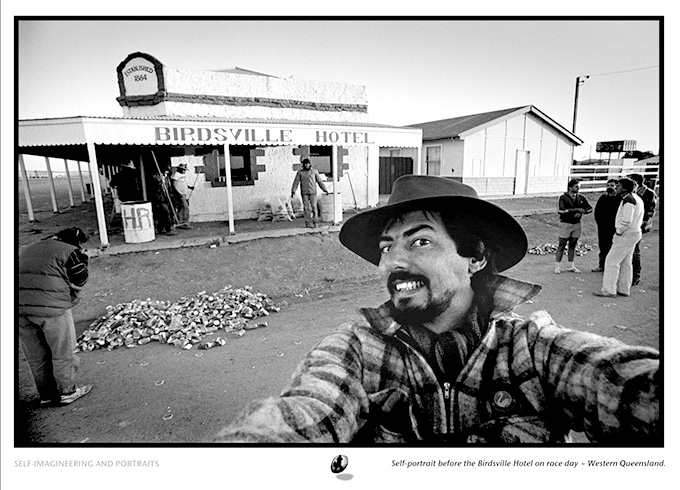
Doin’ a selfie @ Birdsville 1983
.
Self imagineering and portraits (now called Selfies)
.
For some time my photography has included the self-portrait. The inspiration came from a friend (John Elliott) in the early 1980s who held up the camera before himself and friends and then fired the shutter. He attributed his use of the technique to Jean Pigozzi a Hollywood paparazzi photographer who employed this method to make pictures which showed himself posing with the rich and famous subjects he photographed. In the book Pigozzi’s Journal of the Seventies Jann Wenner, then the Editor of Rolling Stone magazine, was to write in his introduction a description Pigozzi’s self-portraits as being: the ultimate fantasy of the fan in everyone: A picture of yourself with your favourite star. Conquests! Self-immortalisation!
.
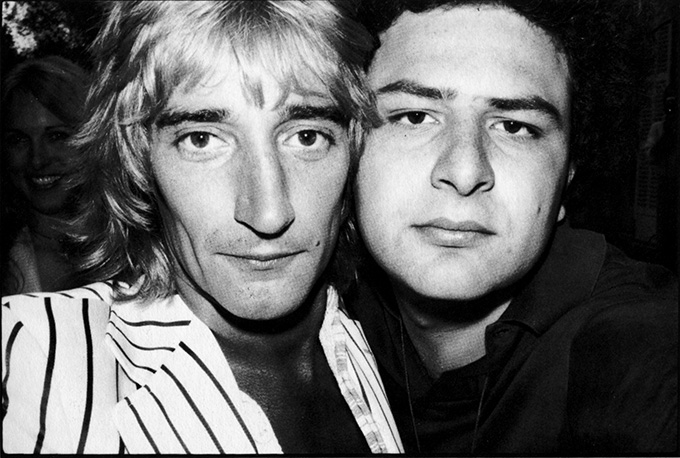
Rod Stewart with Jean Pigozzi
.
My use of the technique was basically to make images documenting myself at tourist locations as I travelled usually as a photo tour leader. Perhaps I was a ‘fan’ of the location, the location was one of my ‘conquests’, or maybe I sought ‘self-immortalisation’ through the photo – whatever. For me it just seemed the logical way of resolving problems relating to the imaging of personal experiences.
Using a 35mm Leica rangefinder camera with 35mm, and later with a 21mm lens, enabled wide angled views and sufficient depth of field to achieve the view I wanted. These self-portrait images often exhibit a random approach to composition as precise viewfinder alignment was not possible. I took care not to ‘dress up’ for the photograph so my appearance is what it was – no brushing of the hair, no straightening of the collar. They are, as intended, frank and factual.
.
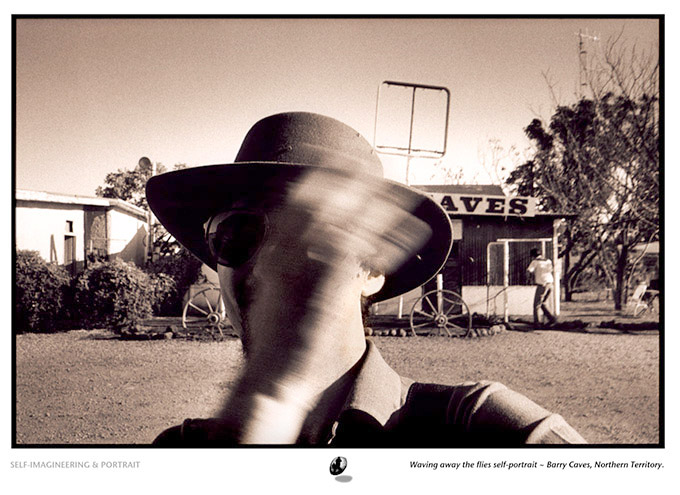
Waving away flies, Barry Caves NT, 1982
.
In time these images formed a collection of “This is me at. . .“ pictures. They were a kind of “Foo was here” with me being the Foo graffiti figure. On occasions the only reason I would stop and photograph at a particular location was to capture another self-portrait for the collection. Sontag in her book On Photography alludes to this modus operandi in her comment that: Travel becomes a strategy for accumulating photographs. Travel and self-imagineering was indeed to put me in situations where I could produce photographs that told of my experience – often in a humorous way.
.
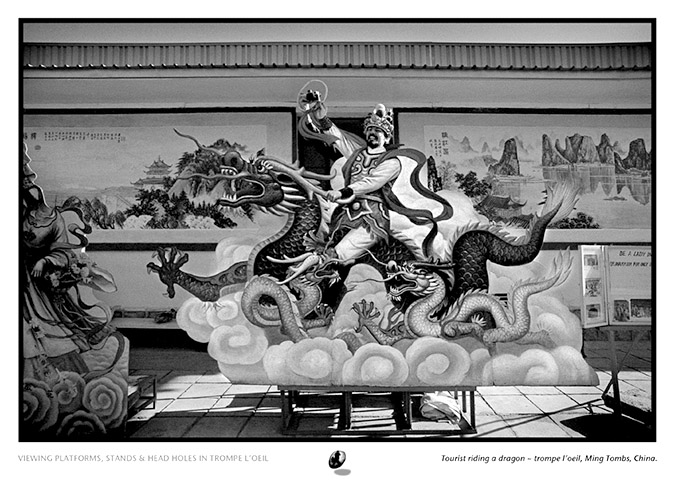
Riding a dragon and doin’ a selfie, China 1989
.
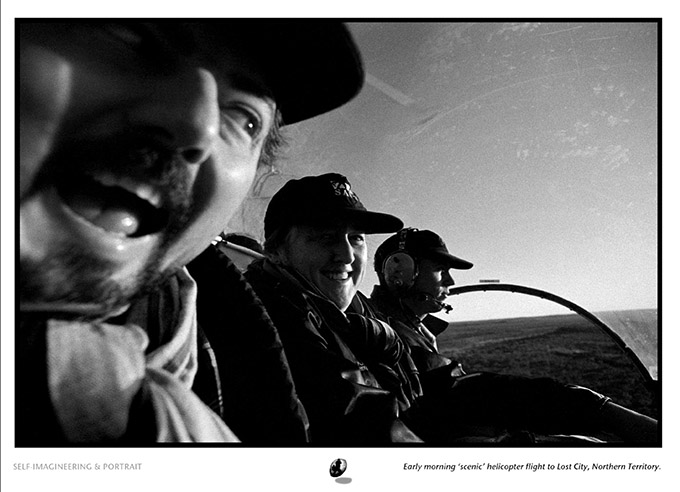
With Vicky & helicopter pilot, Heartbreak Hotel NT c1992
.
There were other aspects pertaining to self-imagineering work which encouraged my practice. I found that thrusting the camera before myself and in front of tourists assembled at the place of visitation was a kind of art performance. It was a spontaneous act; a celebration of experience that culminated in the ritual of photo taking. Self-imaging was crammed with fun and triviality. And having fun, and being seen to have fun and capturing that fun were certainly part of the agenda that drove my interest in this activity. The technique often caught on and doin’ a self-portrait became part of my fellow tourist’s recording rituals as well.
.
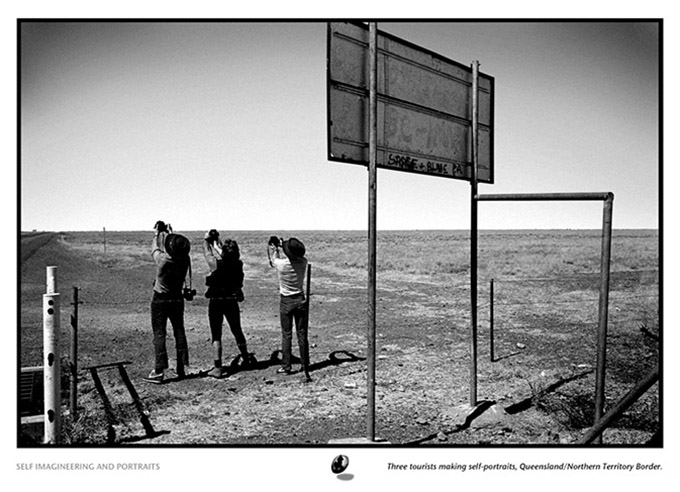
Tony, Rob and Mark doin’ Selfies @ the Qld NT Border 1983
.
Abridged from a Graduate Diploma thesis entitled My Shadow and I by Doug Spowart 2002. The thesis contains a discussion on the artist as tourist and the self-image as a document of personal experience.
.
SOME MORE IMAGES:
.
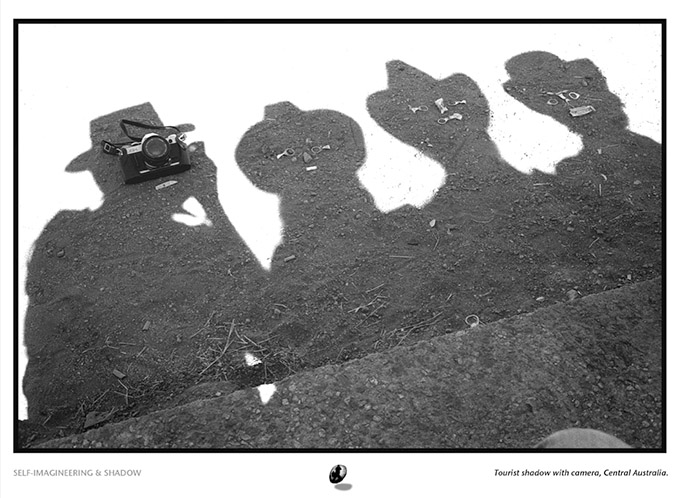
Selfie shadows with camera and ring-pulls, Alice Springs 1982
.
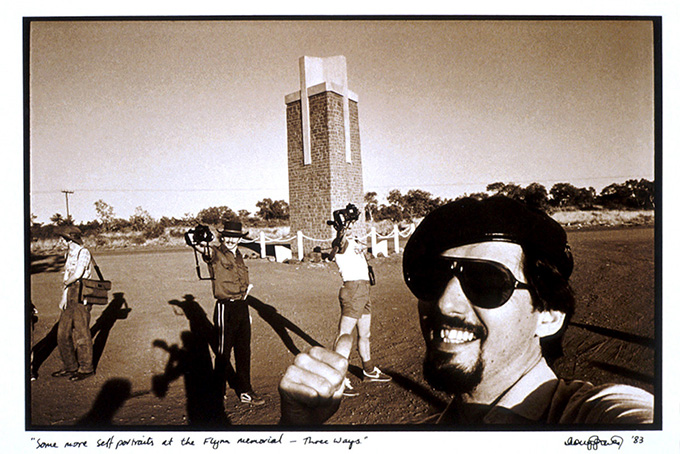
‘Che’ (Doug) Selfie with Tony & Mark @ Three Ways NT, 1983
.
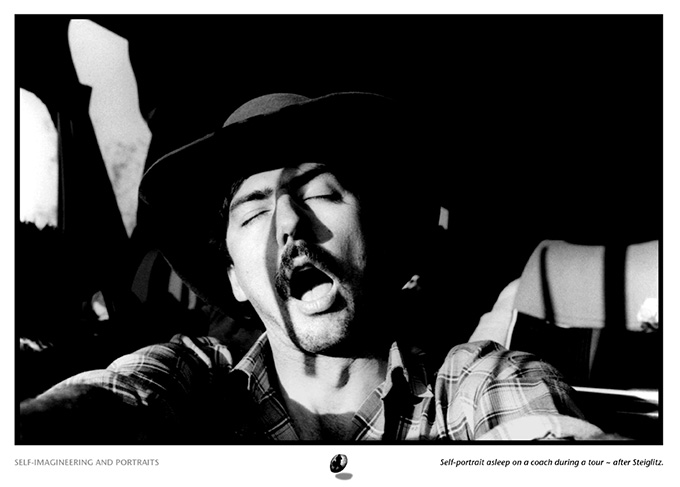
On a coach in Central Australia 1982
.
NEW UPDATES ON ‘SELFIES’
Texas town errects ‘selfies’ statue…
TEXTS ON PIGOZZI
http://www.helmutnewton.com/previous_exhibitions/pigozzi_and_the_paparazzi/index.html
A. D. COLEMAN’S COMMENT
A RECENT ADDITION TO THE DISCUSION ON ‘SELFIES’ (Although I’d say it was a self portrait)
http://www.openculture.com/2013/11/the-first-selfie-in-history-1839.html
AND ‘THE OXFORD DICTIONARY ‘WORD OF THE YEAR’
http://blog.oxforddictionaries.com/2013/11/an-infographic-of-selfie
AND A SPANISH INFOGRAPHIC
ANOTHER INFO GRAPHIC (English)
http://www.bestcomputerscienceschools.net/selfies/
.
Images and text © Doug Spowart
..
.

This work is licensed under a Creative Commons Attribution-NonCommercial-NoDerivs 3.0 Unported License.
.
.
.
.
CAMERA OBSCURA 2000–2020: In hotels and other places

Bedroom Camera Obscura 2000 (Y2K)
.
Our rhythms insert us into a vast and infinitely complex world, which imposes on us experience and the elements of this experience. Let us consider light, for example. We do not perceive it as a waveform carrying corpuscles but as a wonder that metamorphoses things, as an illumination of objects, as a dance on the surface of all that exists.…………
Henri Levebvre, Rhythmanalysis; Space, Time and Everday Life, page 82.
.
Cooper+Spowart: 20 years of Camera Obscura Collaborations
In our collaborative work, we are interested in both the physical construct and cultural conventions that inform and shape us. This includes the common rituals and structures that surround, support and transport us in our everyday lives. In this work we have extended the context of documentary photographic methodology to include the narrative potential of the camera obscura and architectural projections.
.
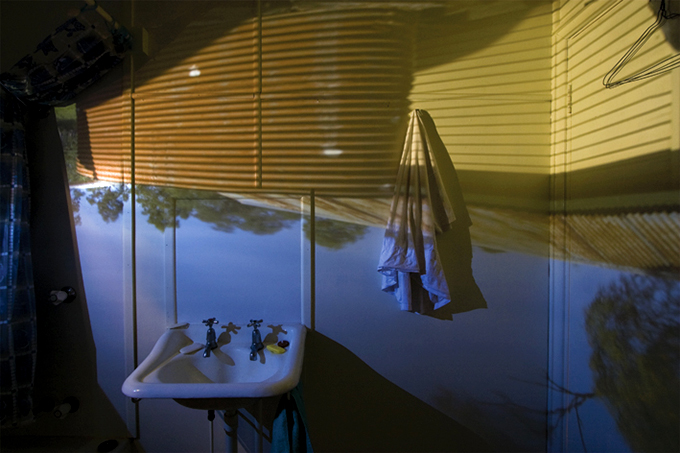
Avochie Bathroom Camera Obscura
.
In the camera obscura work the viewer’s perception of the everyday is spatially challenged. The structures that can form camera obscura are everywhere, but some spaces present themselves as clearly suitable for the making. This could be a city office, a motel room, a country bathroom or even a car. Our work attempts to contextualize the experience of the camera obscura within a concept, space or site. Upon entering the darkened space, the viewer is initially displaced, as the familiar image of the everyday is dim and unrecognizable. Then after time spent in the camera obscura, the image becomes clearer and the familiar is re-established ultimately resulting in a relocation of the observer’s awareness of place.
.

CarCamera Obscura graphic – how it works…
.

A CarCamera Obscura on the Barkly Tablelands 2005
.

Porthole on the Spirit of Tasmania – panorama camera obscura image 2018
.
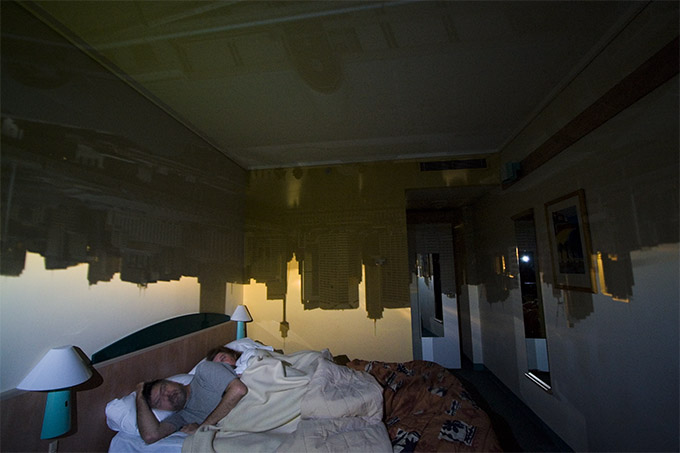
City of Dreams – Ibis Hotel sunrise over Sydney
.
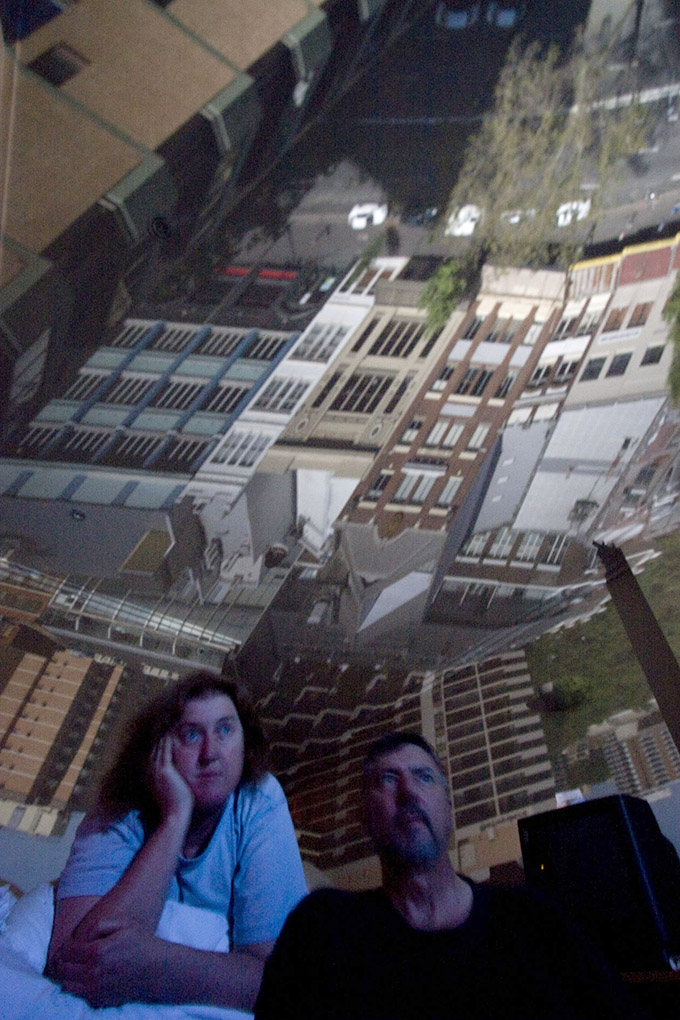
The Travelodge camera obscura 2008
.
Some background on the set-up for the Travelodge camera obscura:
Simple black garbage bags and some black electrical tape from the local 711 store. An aperture cut from a ‘found’ piece of aluminium – size around 8mm … we don’t use sophisticated glass lenses – these are direct light projections. A digital camera bares witness to our experience by capturing the image of the camera obscura projection.
.
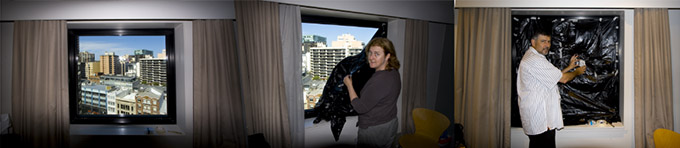
Blacking out the room
.

We were watching TV …
.
OUR MOST RECENT CAMERA OBSCURA: ORPHEUS ISLAND BEACH TENT
(A collaborative event with John de Rooy, Spyder Displays and the Orpheus Is Photo Workshop)
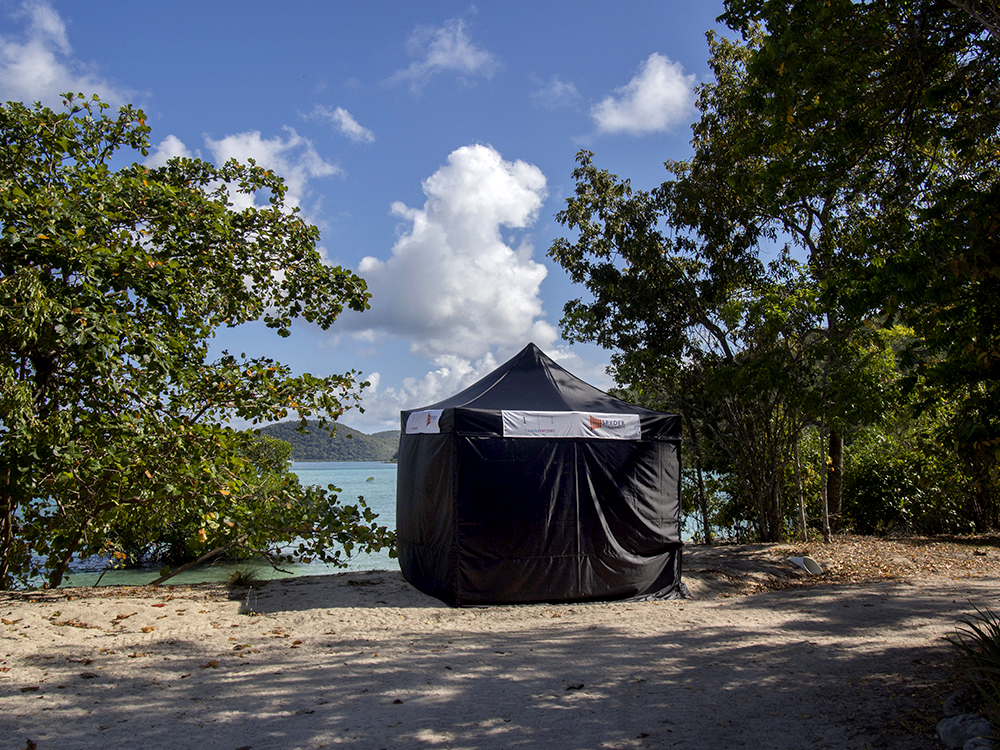
Our Spyder Camera Obscura

A DUO View of the scene and the Camera Obscura image
TO VIEW OTHER CAMERA OBSCURA WORK BY COOPER AND SPOWART SEE THE LINKS
.
Our Website:
http://www.cooperandspowart.com.au/4_PROJECTS/RoomCameraObscura-Project.html
The porthole on the Spirit of Tasmania Ferry
https://wotwedid.com/2019/01/11/2018-field-studies-camera-obscura-spirit-of-tasmania-porthole/
Our car converted into a camera obscura and driven across Australia:
http://www.cooperandspowart.com.au/4_PROJECTS/CarCamera-Project.html
Two New Zealand Camera Obscuras in the the Queenstown Rydges Hotel:
https://wotwedid.wordpress.com/2012/05/07/two-new-zealand-camera-obscuras/
A public Camera Obscura performance and live video:
https://wotwedid.wordpress.com/2013/04/22/camera-obscura-pinhole-event-foto-frenzy-a-report/
YouTube videos:
http://www.youtube.com/watch?v=lyA5QP-mX-E
A camera obscura at the Queenstown Centre fro Creative Photography:
https://wotwedid.wordpress.com/2012/05/07/camera-obscura-qccp/
A World Pinhole Day Camera Obscura at Mt Barney:
https://wotwedid.wordpress.com/2013/04/29/world-pinhole-photography-day-our-contribution/
.

Closing off the hole in the Travelodge Hotel camera obscura
.
© 2019 Victoria Cooper and Doug Spowart for 20 Years of Camera Obscuras Projects
..
.
This work is licensed under a Creative Commons Attribution-NonCommercial-NoDerivs 3.0 Unported License.
.
.
NOCTURNE GRAFTON PROJECT: Fieldwork Concludes
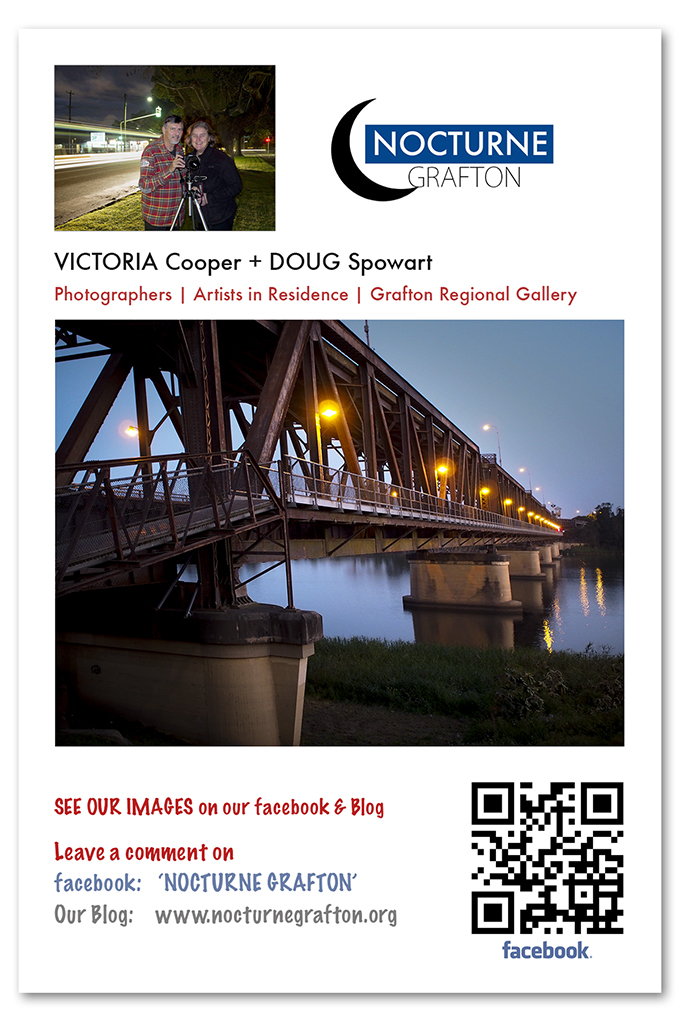
Promotional Card
.
We have just finished our artists-in-residence at the Grafton Regional Gallery. It was an amazing month and a wonderful opportunity to engage with the community and create art!
Artists in Residency programmes are an important opportunity to break out of the home/studio/teaching role routine to exchange or explore new ideas in a totally different environment. We consider our time in these residencies as essential to our practice; it transforms how we work and brings fresh ideas into our work. Integral to our projects is the immersion in each place and connecting with community and local narratives of place. Our time in Grafton was a remarkable: the community, its everyday stories and the imposing presence of the Clarence River all contributed inspiration for our creative work.
.
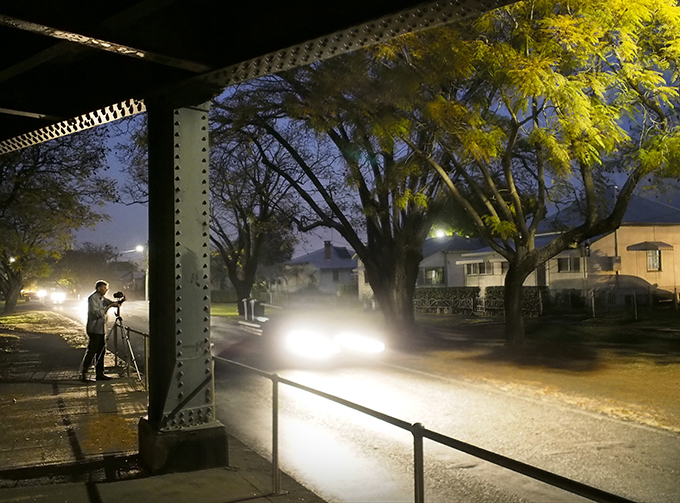
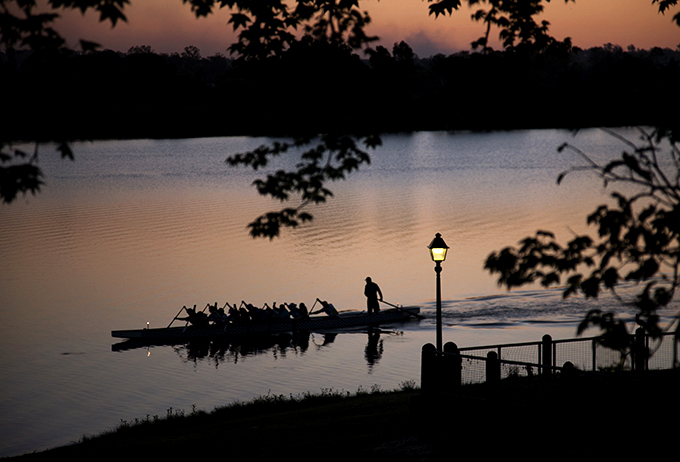
Doug photographing under the Pound Street viaduct
.
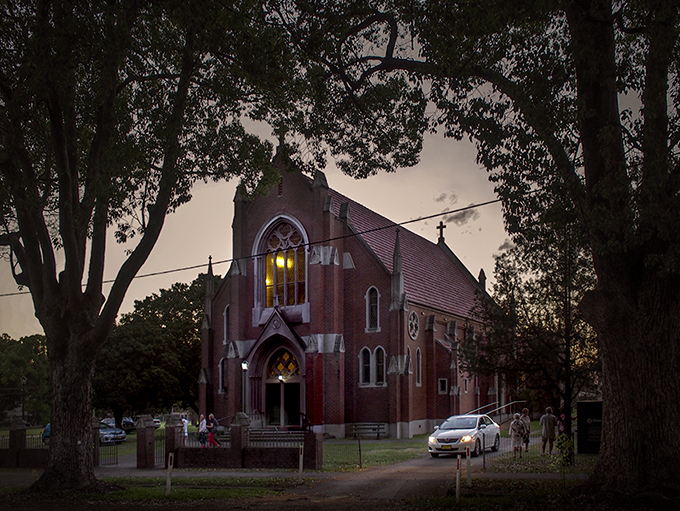

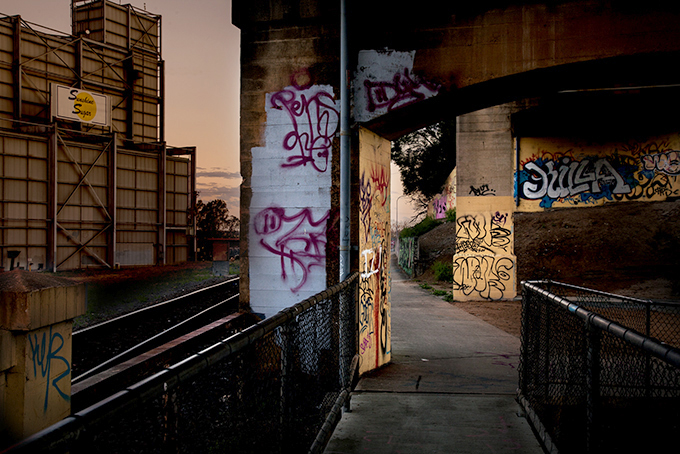
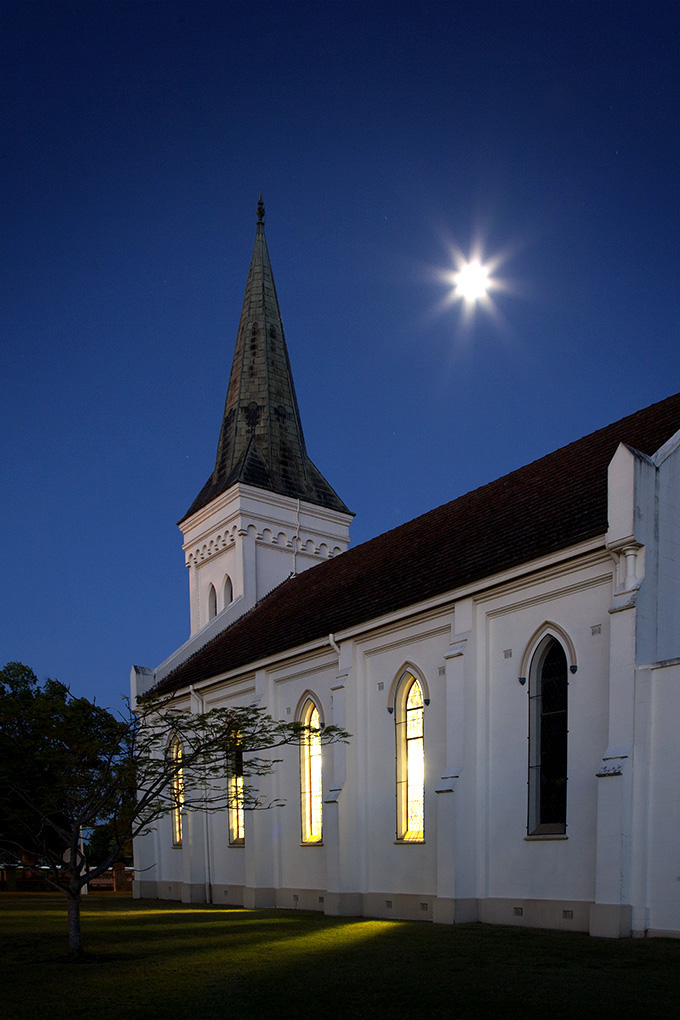
.
Our project was to create images of local places that to us visually evoked a narrative. The places were selected from our exploration of the town, researching local knowledge, and conversations with people we met. We sought places that were best illuminated by nocturnal light (late afternoon and early evening light). This light only lasts around 30 to 60 minutes, but its transformation of everyday places can be powerfully evocative. Our work in this time is intense and our awareness of the visual qualities of different spaces is deepened. The history and lived experience embedded in each place seems to ‘speak’ and we ‘listen’.
.
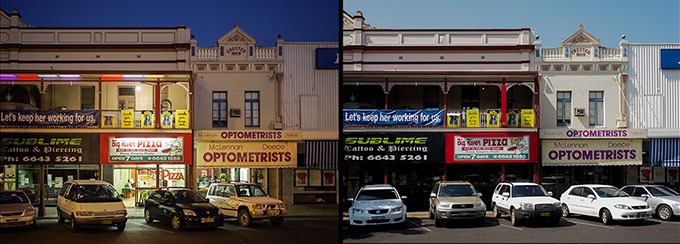
A comparison – Nocturne and daylight of the same subject
.
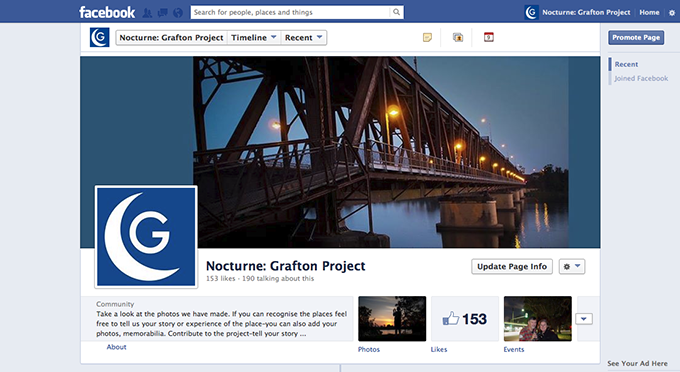
Facebook page
.
After each shoot we return to our residence to reflect, select and optimize our visual reconnaissance of nocturnal Grafton to then upload and ‘share’ online through Facebook and a blog. Through this sharing of our work we connected with a community and their stories in each place. Personal and historical accounts of these places brought our images to life. For us, this is where the art that exists – between our initial inspiration and local lived experiences.
.
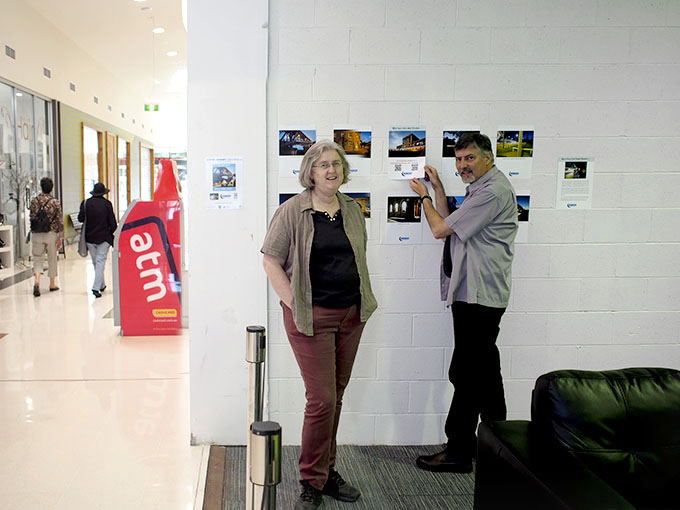
The LINK Shoppingworld gallery
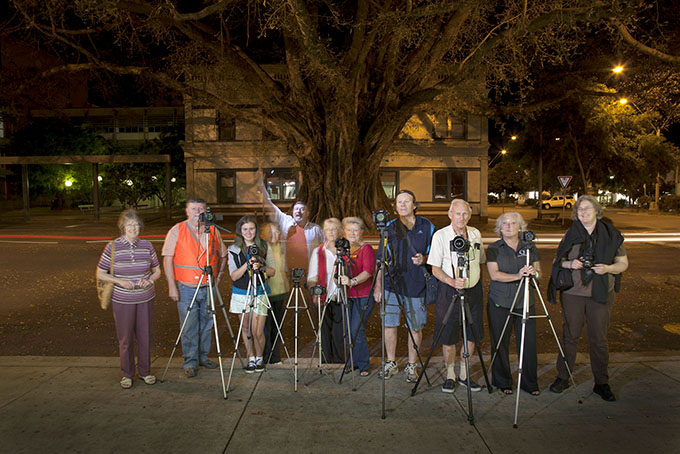
A nocturne shoot-out with the Grafton Camera Club
.
To extend the exchange that was integral to our project we also were involved in artists’ talks for schools, and other visitors to the Grafton Regional Gallery. We set up and attended two small displays of our ongoing work: one in the gallery and another in a vacant shop at the LINK arcade in the main shopping precinct. Doug and I had a very dear friend, Charlie Snook, who was a strong supporter and participant of the local camera club. So it was important for us to be able to connect with this enthusiastic group of photographers. We gave an evening talk, shared two of our nocturne shoots as photographic outings and judged their current assignment work. It was privilege to be invited to their 50th anniversary dinner held on the last weekend of our residency and a great way to finish our time in Grafton.
.

The C.R.A.P.y artist book team
.
We organized an activity to involve local and regional artists as well as a Brisbane arts professional in a collaborative artists’ book project. Under the auspices of the Centre for Regional Arts Practice, an organization created and coodinated by us, we held an activity over the weekend of September 21and 22. This collaborative event produced 60 copies of the C.R.A.P. Artist’s Survey Number 15, the theme of this survey was ‘the regional arts worker as a nomad’. Copies were shared amongst the participants while some were then set aside for donation to major collections including: The Grafton Regional Gallery and the State Library of Queensland.
.
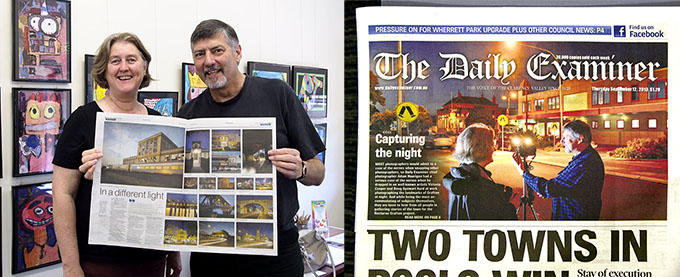
The Daily Examiner newspaper coverage
.
We were excited by the considerable support of and interest in our project from Grafton’s newspaper, The Daily Examiner, publishing separate stories, a front-page photograph and a weekend feature. Support also came from Senator Ursula Stephens shared the page and added ‘Grafton is the great Jacaranda city on the NSW north coast and the Nocturne Project is a wonderful example of celebrating local landmarks and building community identity. Love it!’ – was also an unexpected acknowledgement of our project. We visited the Grafton Historical Society and found a treasure of knowledge and information together with a willingness to assist in our research.
.
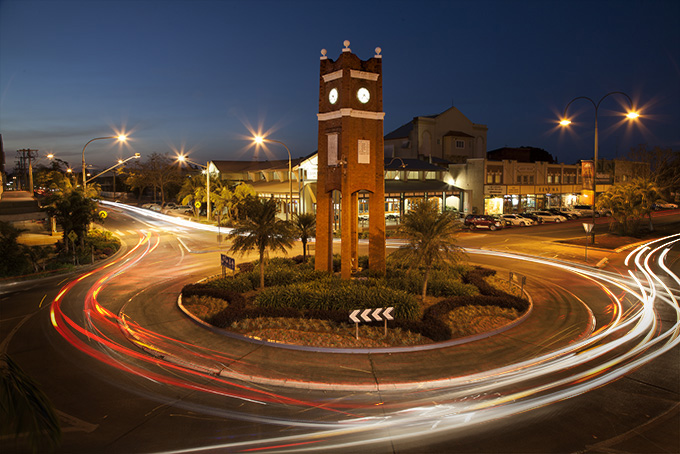
The Roundabout Clocktower from Weiley’s Hotel balcony
.
Some information on the Facebook component of the project: www.facebook.com/nocturnegrafton
During the month of September the project had 410 page ‘Likes’ and achieved a total viral reach of around 65,000 people. 65% of the Nocturne Grafton fan base were women (the Facebook average is 46%). The main engaged age group were women 25-34 years @ 17% of the total (the FB Average is 12%). The most popular post was the Clocktower roundabout from Weiley’s Balcony, which attracted 4,500 views and 274 likes, 37 comments and 44 shares (some of the reach was boosted). Interpretation of Facebook analytics is an interesting task and one that we will be reviewing over the next few weeks. We will maintain the Facebook page as a place for continued conversation.
.
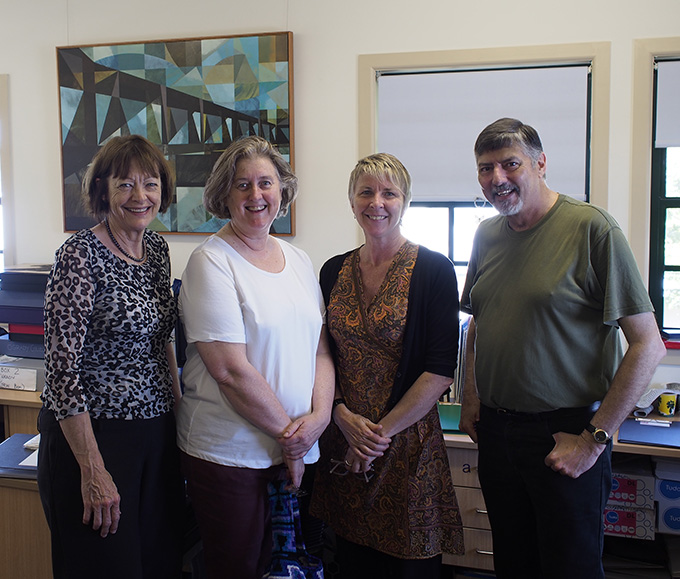
Jude McBean, Vicky, Cher Breeze & Doug
.
At all times during our residency an energetic and professional team, Jude McBean GRG Director, Cher Breeze, Avron Thompson and many dedicated volunteers at the Grafton Art Gallery provided valuable assistance, advice and stories. With the vision and support of the Gallery the residency was for us a transforming experience and our time at Grafton Art Gallery was highly productive.
And a BIG thank you to all our Facebook Friends who supported the project by their ‘Likes’, ‘Comments’ and ‘Shares’.
The final visual outcome for the project will be in the form of the continued online presence, artists/photo books and exhibition of image work. These artworks will reflect on the collaboration between our photographs, the social media project and the Grafton community.
.
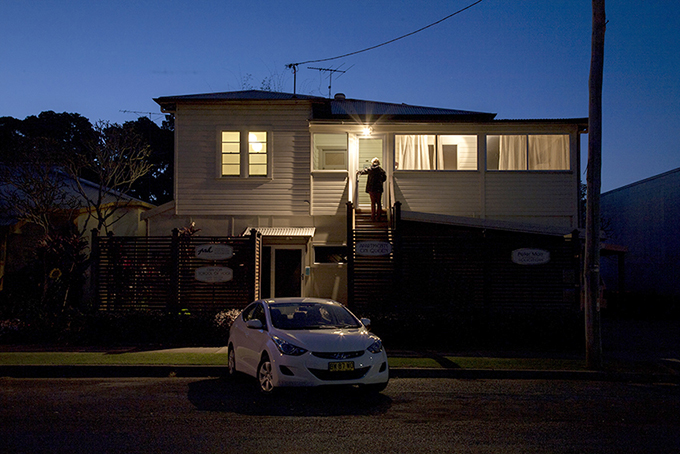
Going home on the last night of the residency…
Some comments from our Facebook friends at the conclusion of the project:
Peter Hunter OAM, ARPS, AFIAP: Victoria and Doug. I am really impressed with your photographs of Grafton at dusk. Your very impressive skill at taking a very ordinary subject and creating a great photo from it by using super composition, creative evening light and long exposure has resulted in a wonderful collection. I hope that they will be archived for posterity.
Marlene Szepsy: I have really enjoyed your way of sharing and bringing art to the community. A great artists in residence project. Thank you.
Louise Kirby: You have been wonderful AIR’s and I am so glad you came and shared your beautiful photography, your skills and your enthusiasm …
Adam Hourigan: pleasure meeting you guys. The photos make Facebook a much brighter place
Vanessa Collins: thanks for the way you have shown our beautiful town, can’t wait for the exhibition and the book
Stephanie Haines: Thank you for the beautiful photos… they made us all look at our town in a new way.
.
© 2013 Victoria Cooper and Doug Spowart for The Nocturne Grafton Project
..
.
This work is licensed under a Creative Commons Attribution-NonCommercial-NoDerivs 3.0 Unported License.
.
.
ADVANCE NOTICE: Memory Collective Exhibition to open @ TRAG
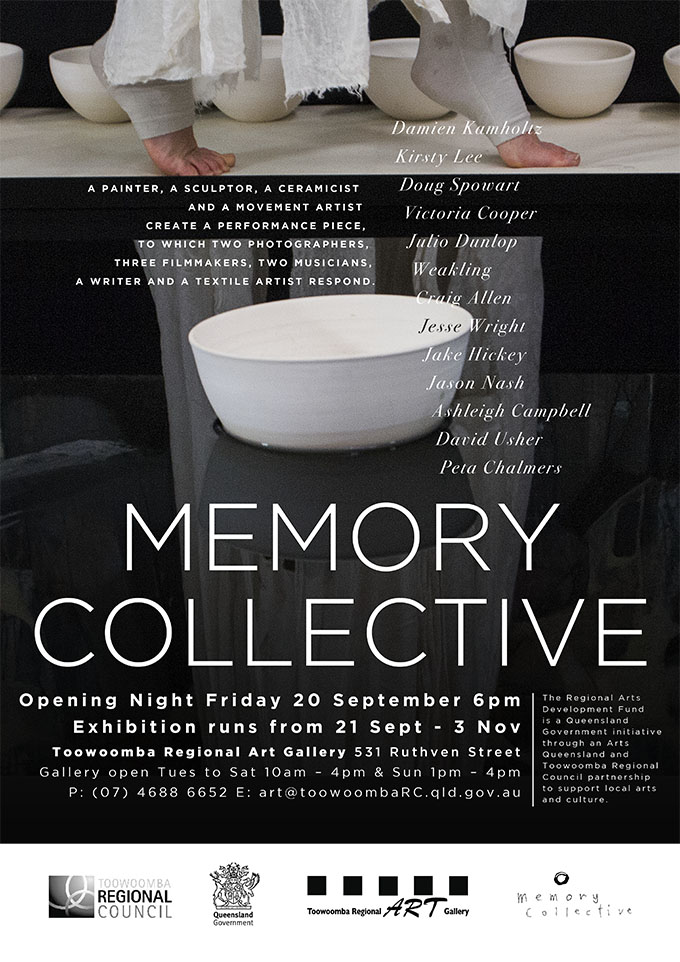
The Memory Collective Invite
.
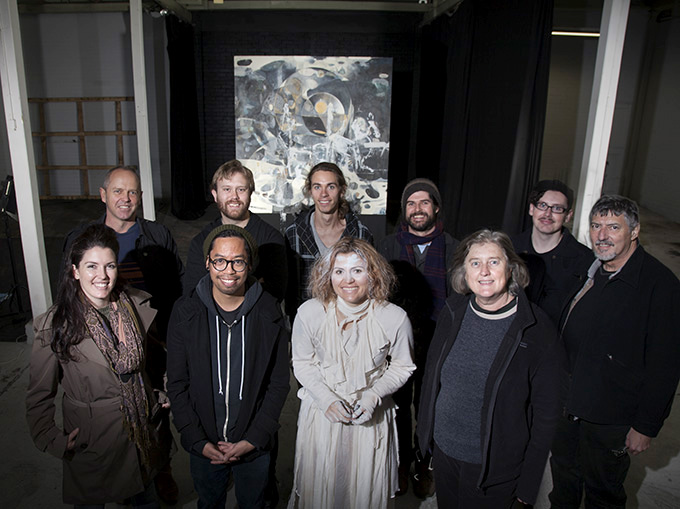
The Team: Front Ashleigh Campbell, Julio Dunlop, Kirsty Lee, Victoria Cooper, Doug Spowart
Back: David Usher, Jason Nash, Jesse Wright, Damien Kamholtz, Zac Rowling (weakling).
Not present: Peta Chalmers, Craig Allen & Jake Hickey
.
Photographer Victoria Cooper reflecting on the Memory Collective project
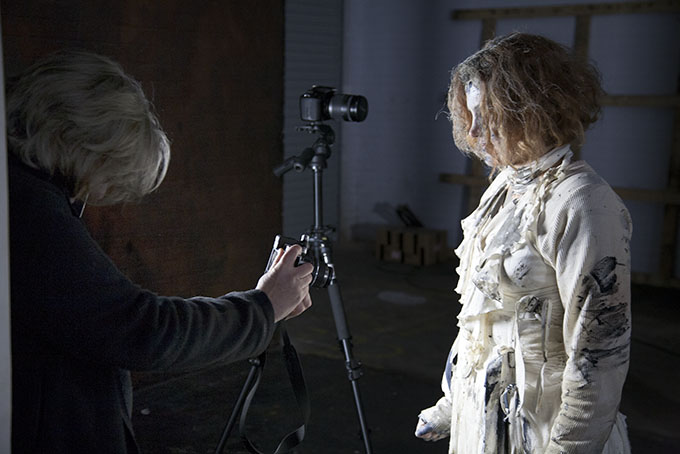
Vicky photographs Kirsty
.
Both Doug and I, familiar with collaborative projects, were excited to have the opportunity to connect with the multidisciplinary space that Damien Kamholtz was creating in the Memory Collective. So it was on one day in May, that each artist would bring to the chosen site their insights, instincts and life’s experience.
.
There was a painting – a very large painting; a sculpture filled with water, a ‘pond’ to reflect and dissolve the evolving performance; a movement artist to reconfigure the idea or memory of painting; seven white ceramic bowls to containing pigments and a singular bowl left empty to float across the dark water of the pond.
The physical space did not easily present itself at first–but as the project unfolded and discussion flowed from the practical, logistical to the intellectual, conceptual–the site itself also became a collaborator in the project: the stage, the remnants of its warehouse history, the idiosyncratic control over the method of entering the space (all us had to crawl under a jammed roller door)
Was the space asserting its role?
This day was not just a visual experience–it was a total sensory and psychological immersion.
Although a part of the documentary team, including video and still photography, I was compelled to cross beyond the voyeuristic role of witness. I was motivated by the tension created from: anxiety for the loss of the original painting with the frisson of anticipation for the evolving transformation.
The movement artist’s touch with the painting was sensual and slow.
We moved like moths; entranced by the night-light . . . circling . . . unable to land nor escape . . .
This was not a performance rather it was about life, unrehearsed and ephemeral. Only through technology were small parts recorded to be later pieced, montaged and sewn together in a kind of rich layered memory tapestry. And, like memory, there are gaps, fuzzy distortions of scale and time lines, loud visually busy moments together with quiet, serene and ethereal meditations.
I began this project with an intuition that it would be both inspiring and exhilarating to work with this creative group of Toowoomba based artists. Damien has, with delicacy and grace, enabled and cultivated a fertile collaborative space, which continues to extend the potential for the creative work.
.
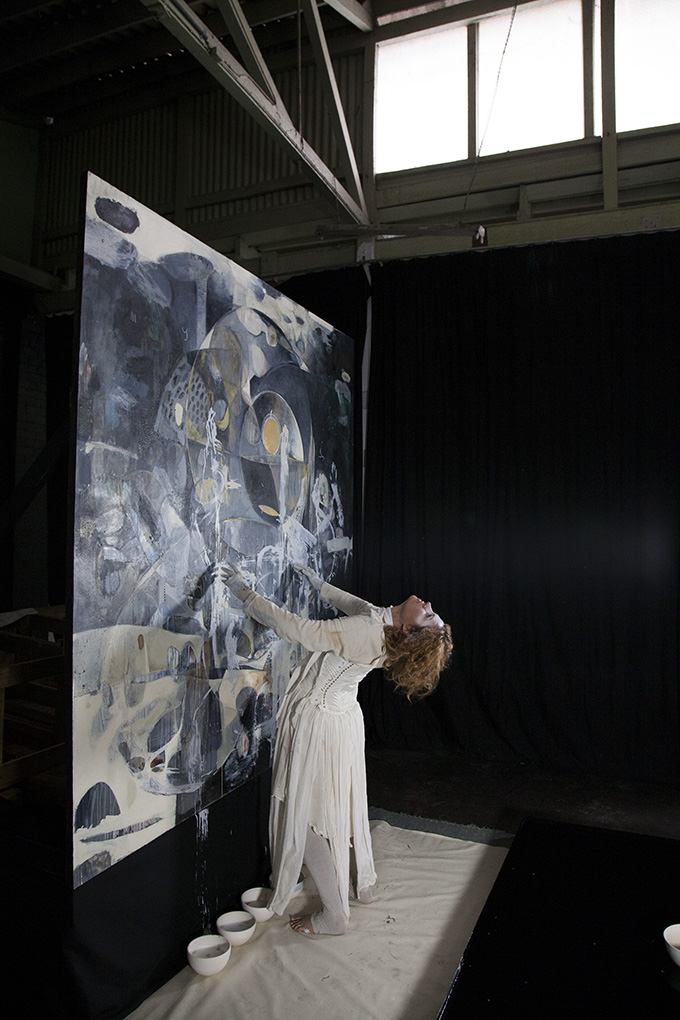
Kirsty addresses the painting in performance
.
A recollection of the MEMORY COLLECTIVE collaboration from Doug Spowart.
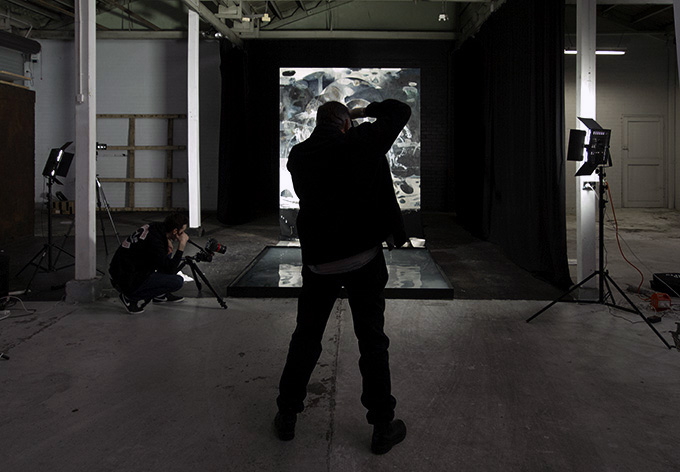
Doug photographs the performace
Working as a regional artist can be an isolating experience. Your networks are often big city based, coastal and a long way from your home on the range. I am familiar with collaborative art-making but it has usually been with my artist partner Victoria Cooper.
.
The Memory Collective was quite a different collaborative affair. As an individual artist I could never have thought up let alone coordinated, as Damien has, all of the interdisciplinary artists and artforms into one time–one space–one purpose–one artpiece. Meetings, Facebook discussions and site inspections enabled a real feeling of connection with the creativity of these fellow regional artists and their ideas, aspects of each discipline’s needs and potential for contribution.
https://wotwedid.wordpress.com/2013/06/17/memory-collective-a-performance-documentary-project/.
https://www.facebook.com/memorycollectiveproject
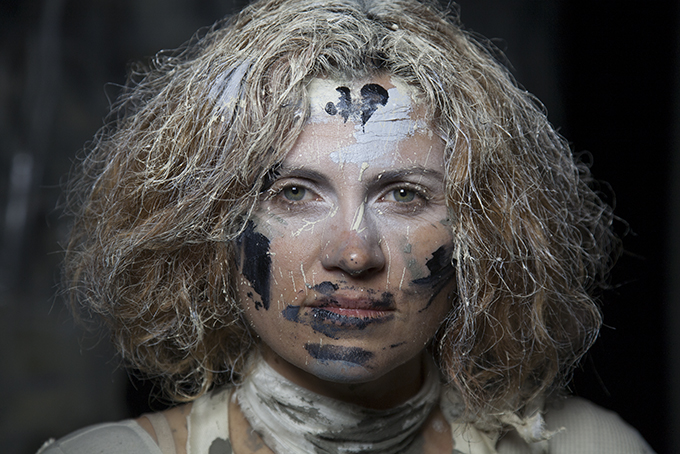
Kirsty Lee – the paint portrait
.
.
This work is licensed under a Creative Commons Attribution-NonCommercial-NoDerivs 3.0 Unported License.
.
.
.
.
NOCTURNE GRAFTON: A new Cooper+Spowart Residency begins

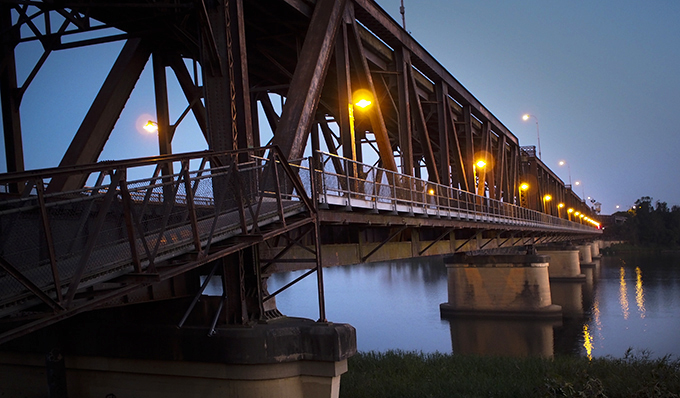
The iconic Clarence Bridge
.;..
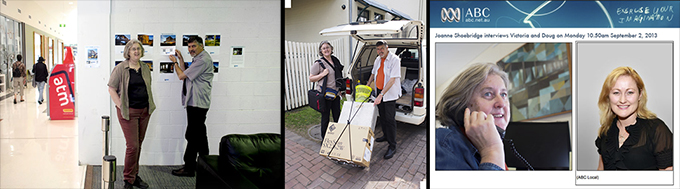
The mini gallery in the LINK Arcade – Moving in to GRG – And on ABC Radio with Jo Shoebridge
.
TELLING STORIES ABOUT PLACES
The Nocturne Grafton Project by COOPER+SPOWART: an Artist in Residence @ Grafton Regional Gallery throughout September 2013.
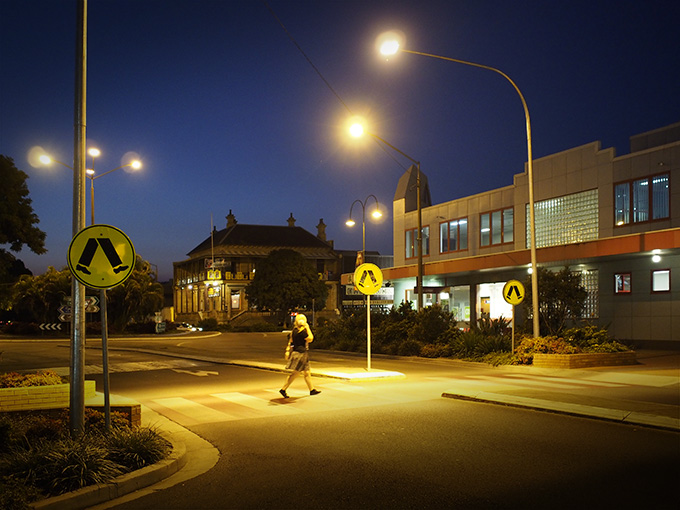
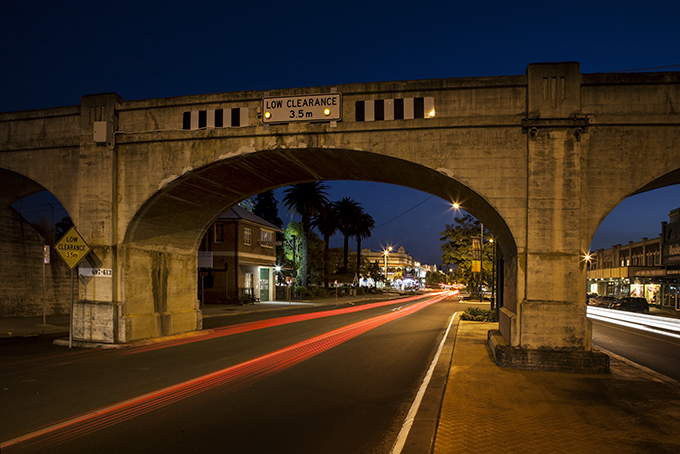
If a picture is worth a thousand words – how do you gather the 1,000 words from a community by showing them pictures of their town? Artists Victoria Cooper and Doug Spowart are exploring this question as they work as Artists in Residence at the Grafton Regional Gallery. Their residency project is entitled Nocturne Grafton and will consist initially of photographs of buildings and locations within the Grafton region.
The artists have made nocturne photographs in towns all over New South Wales and Victoria and the work has been featured in their Blogs and Facebook sites. In June and July this year they photographed and Facebooked the town of Muswellbrook and last year a large body of image work was created in the seaside community of Wooli.
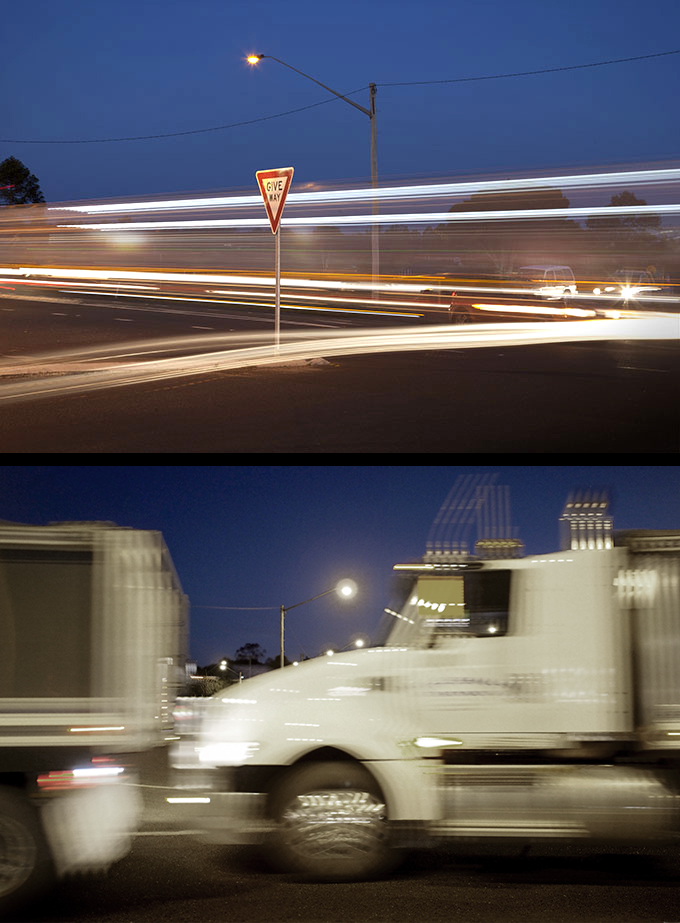
Cooper and Spowart make their photographs at dusk using the afterglow of sunset and streetlights to create an unusual image of the locations. This ‘nocturne’ light often requires long shutter speeds allowing the blurred movement of people and vehicles to be recorded. They enjoy photographing the visual effect of colours in different light conditions: ambient daylight, artificial lighting, car head and tail light trails. As artist Victoria comments, ‘in nocturne light there a sense of drama or a setting for a movie scene – a place where stories are told or evoked’.
.
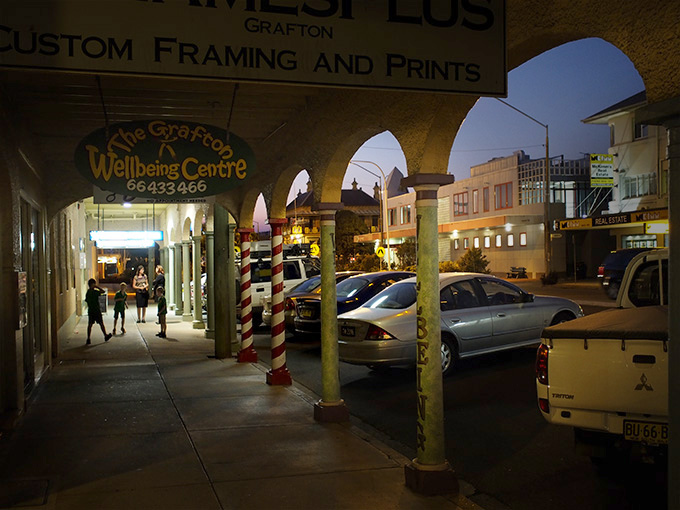
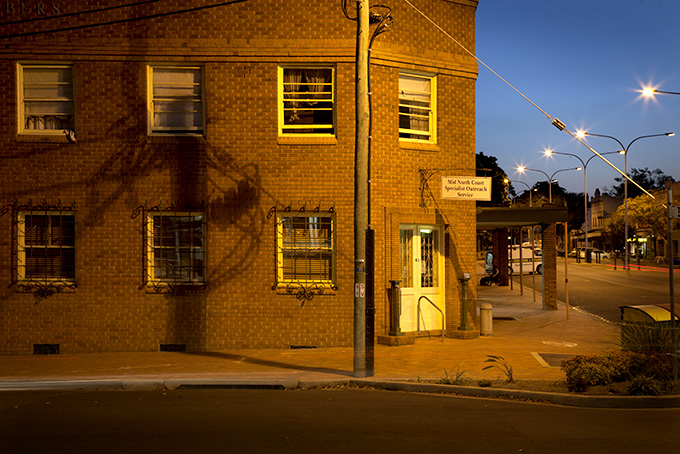
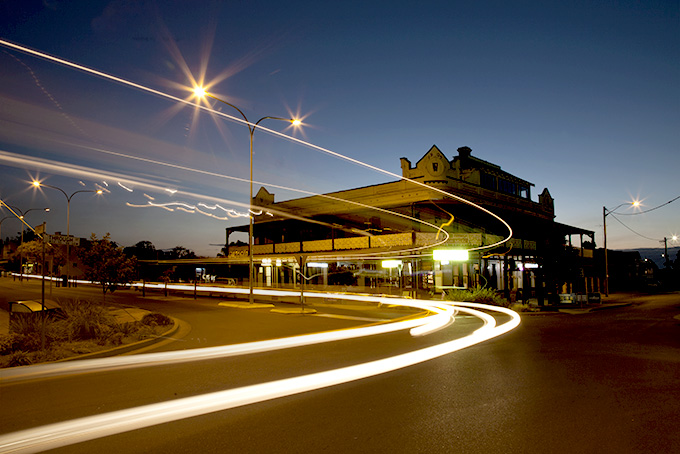
.
Making the photographs is only the beginning of the project’s activity; the next part involves the collecting of stories. As Doug Spowart explains, ‘the photographs will be posted on social media sites including Facebook for members of the Grafton community to tell us their stories or experiences that connect with the places photographed’. Victoria Cooper adds, ‘we’ve extended the saying that everyone has a story in them to every place has a story’.
.
.
They are now calling upon the Grafton community and others with similar experiences of ‘place’ to share their stories of each place photographed including their everyday and meaningful experiences by connecting with the project’s Facebook and Blog sites. As part of the residency they will be displaying photographs in the studio space at the Grafton Regional Gallery, and there will be opportunities for interested Grafton people to call by and talk with them about the project and assist in the uploading of stories.
Cooper and Spowart will also be presenting a talk about their work at the Grafton District Camera Club on September 11th and also at the Gallery at a later date. The artists will be creating a limited edition book and the Nocturne Grafton Project will continue to be accessible online.
The Cooper and Spowart Residency began on September 1 and will extend through to September 30. The social media sites are ‘Nocturne Grafton’ on Facebook and www.nocturnegrafton.org. At the beginning of the project these sites will contain only preliminary information.
To see examples of work from earlier ‘Nocturne’ projects visit:
Nocturne: Muswellbrook – https://www.facebook.com/pages/Nocturne-Muswellbrook-Project/462047657214253
Nocturne: Wooli – http://wp.me/p1tT11-q1
.
TO SUPPORT THE PROJECT:
Log on to FACEBOOK – ‘LIKE’ the page and ‘Click’ to receive Notifications and to show in your News Feed.

.
© 2013 Victoria Cooper and Doug Spowart for The Nocturne Grafton Project
.
This work is licensed under a Creative Commons Attribution-NonCommercial-NoDerivs 3.0 Unported License.
.
.
.
Damien Kamholtz: ‘My Icarus’ @ TRAG the VIDEO
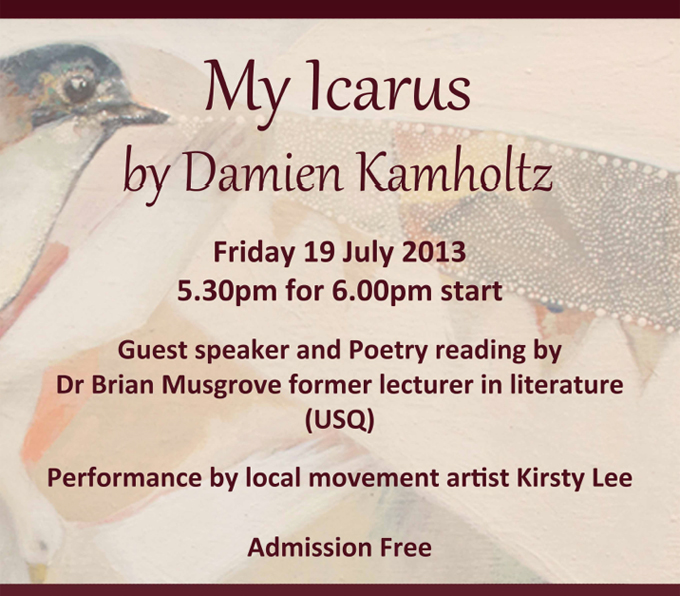
My Icarus invitation
.
FROM THE ART GALLERY WEBSITE:
‘My Icarus’ is a culmination of one painting, one sculpture and one film. These three interrelated works delve into poetry and mythology and showcase the Gallery’s recent acquisition of Mr Kamholtz’s painting, ‘The Spit that Joins the Magic Together’.
The exhibition title refers to the artist’s fascination with Greek mythological figures, Icarus and Daedalus, and the works of 19th Century French poet Arthur Rimbaud.
Additional creative ‘spittle’ for the performance was delivered in verse by guest speaker and former USQ lecturer in literature Dr Brian Musgrove with a simultaneous performance by Toowoomba movement artist Kirsty Lee.
The exhibition works include the recently acquired painting, an assemblage and a collaborative film produced by Mr Kamholtz, Jason Nash, Kirsty Lee and Craig Allen.
..
.
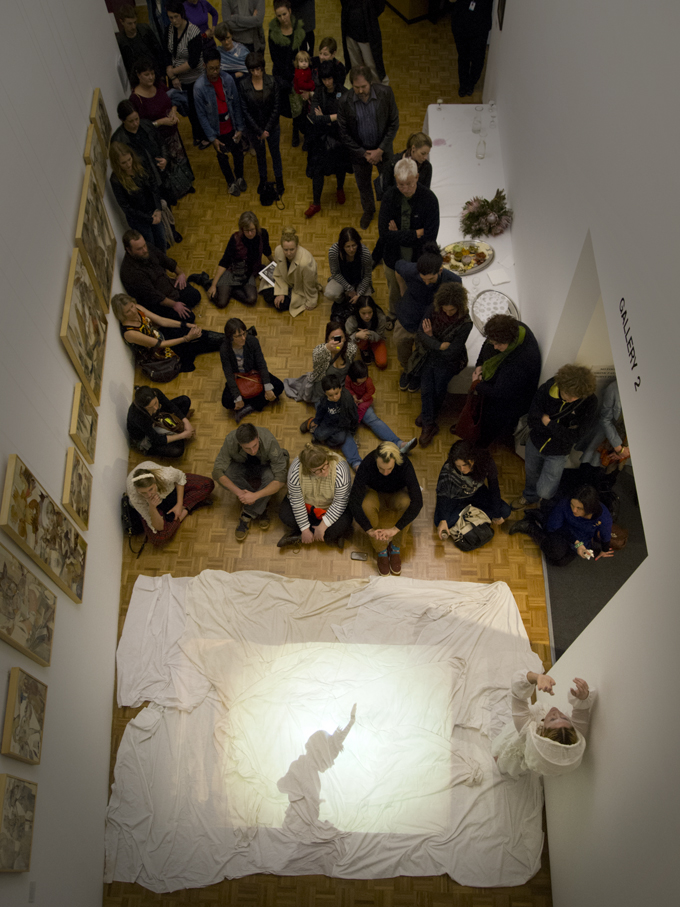
Toowoomba Regional Art Gallery attendees witnessing the event
.
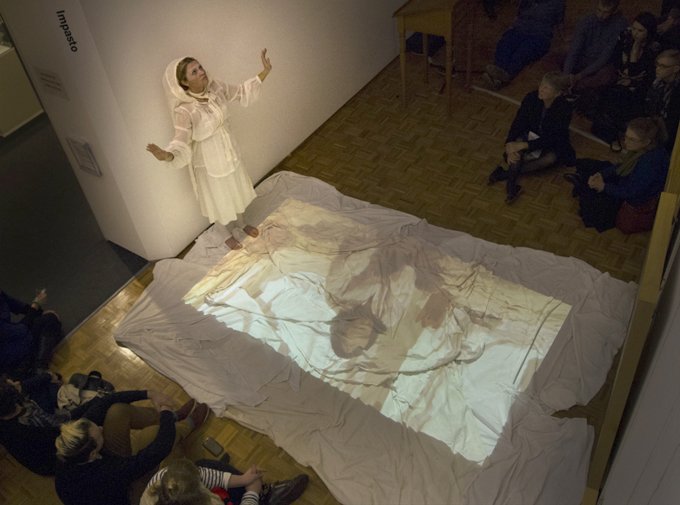
Kirsty Lee in performance
.
Photos and Video © 2013 Doug Spowart
.
This work is licensed under a Creative Commons Attribution-NonCommercial-NoDerivs 3.0 Unported License.
.
UPDATE: Nocturne Muswellbrook
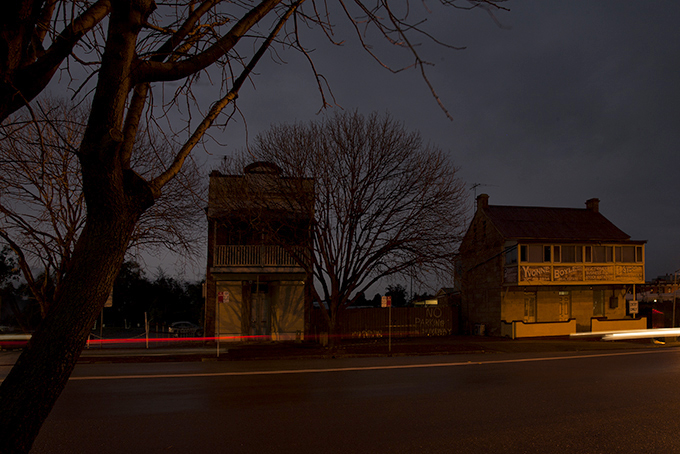
Intersection of Sydney & Haydon Streets
..
We’ve been busy in the Nocturne Muswellbrook project – Here is an update …
.
A NEWSPAPER STORY
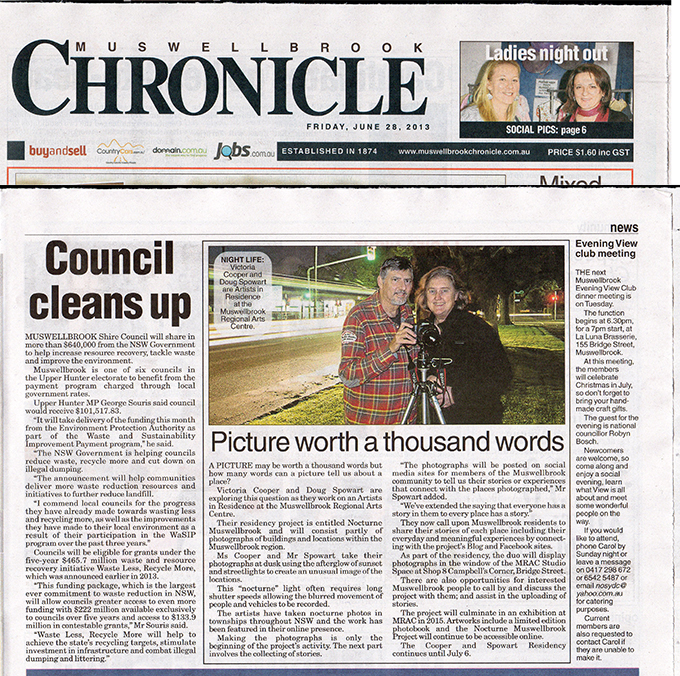
Chronicle News story: 28 June 2013
.
Our Gallery
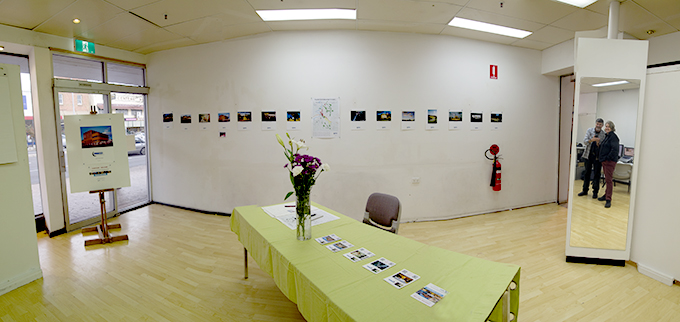
The Nocturne Gallery in SHop 8 Campbell’s Corner
.
An ABC Radio interview
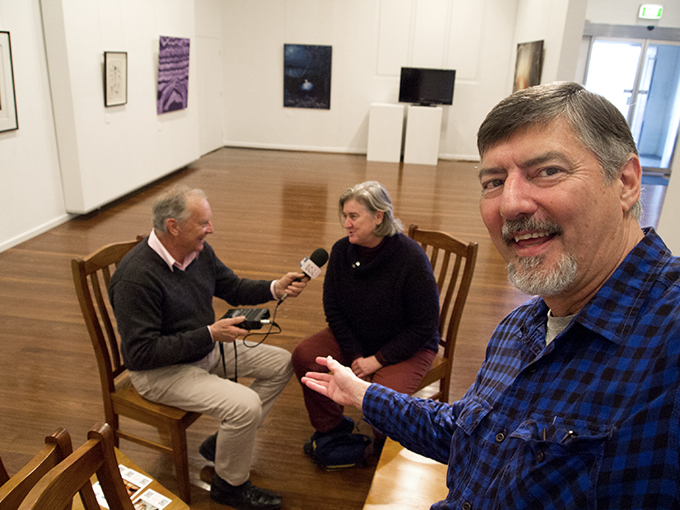
Mike Pritchard from ABC Radio interview
.
A presentation to the local Camera Club
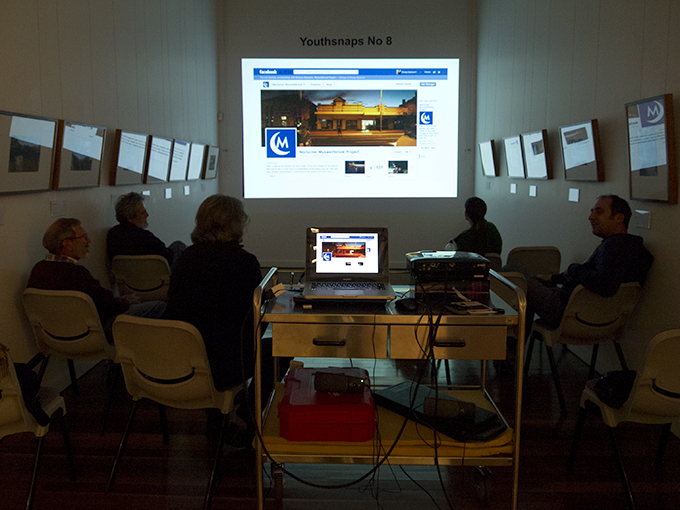
Muswellbrook & District Camera Club
.
Working in the rain – nearly every night lately …
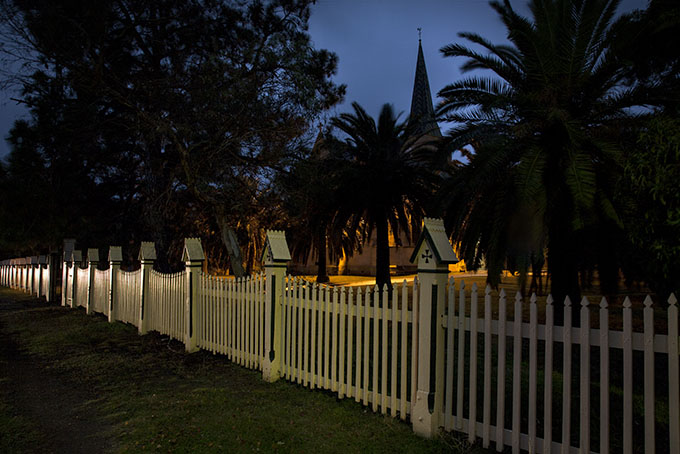
St Alban’s Anglican Church
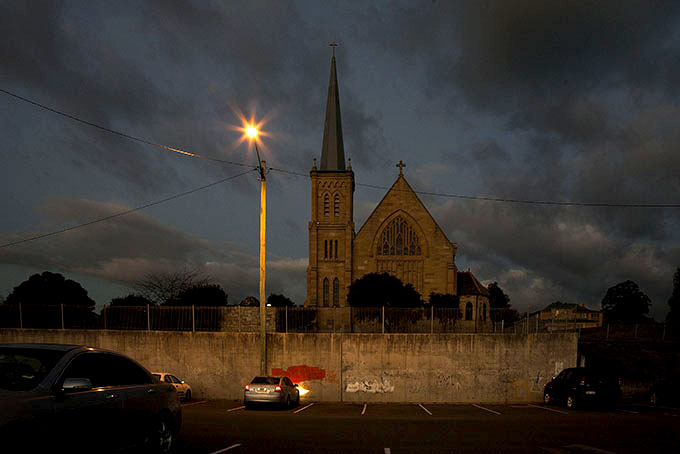
St James’ Catholic Church
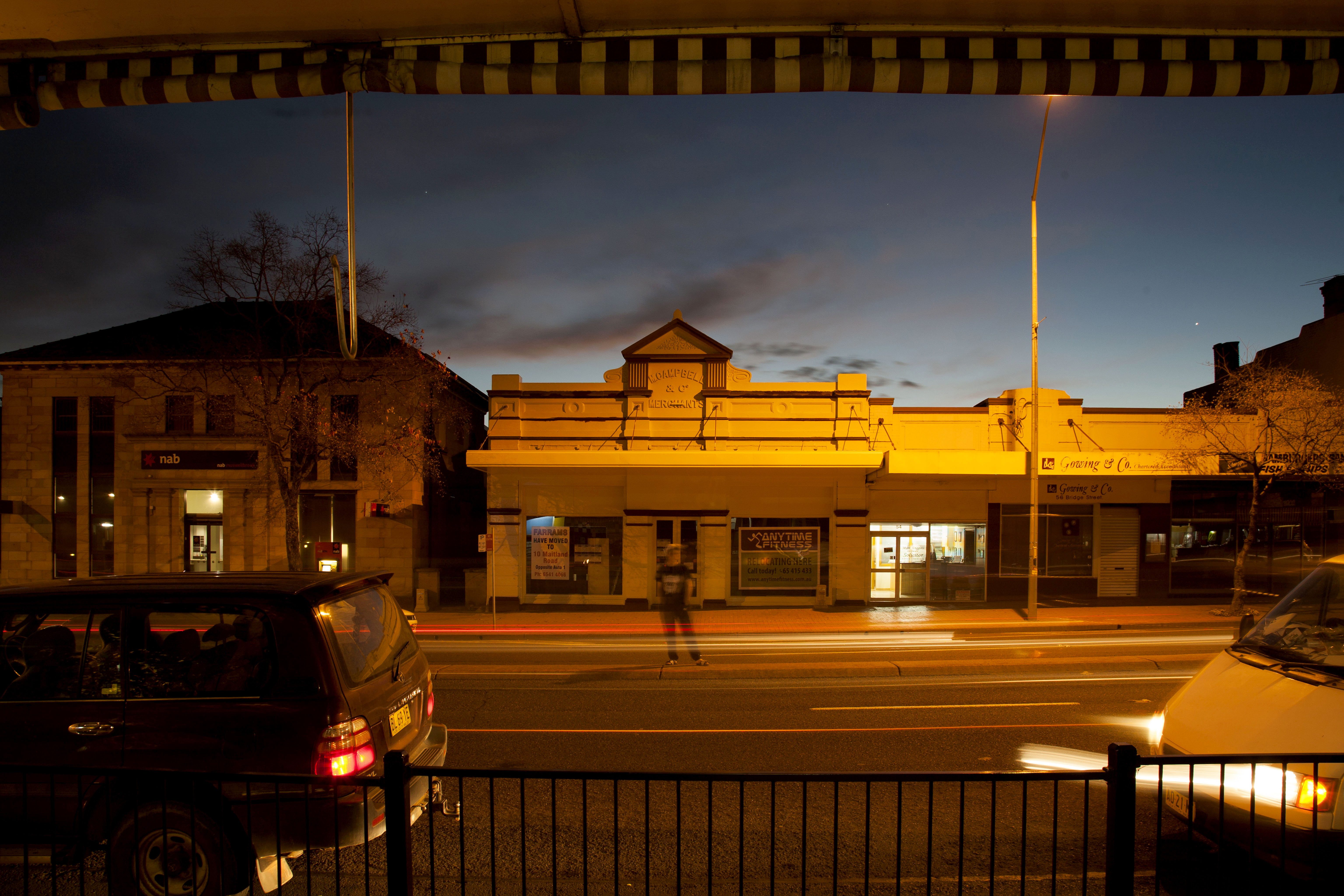
56 Bridge Street
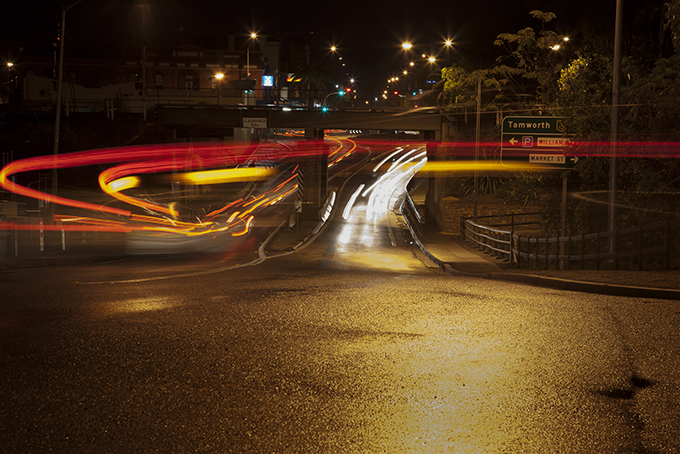
Southern end of the Subway
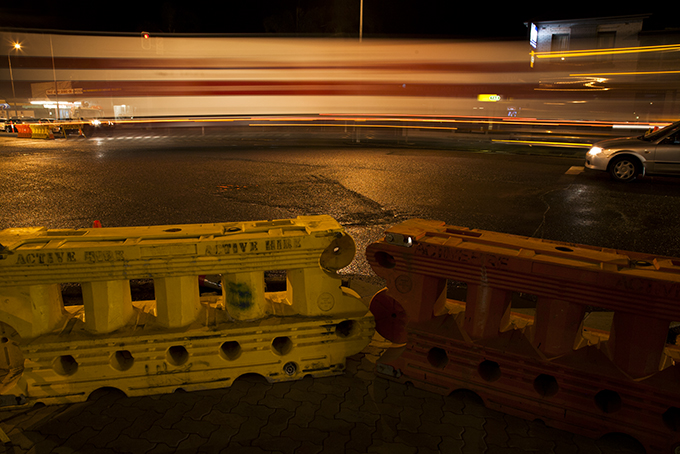
Corner Sydney Street and Maitland Road
.
SEE MORE IMAGES AND TO ALSO MAKE A PERSONAL COMMENT ON THE POSTS about your experience of ‘PLACE’ or stories evoked by the subjects we have photographed:
.
https://www.facebook.com/pages/Nocturne-Muswellbrook-Project/462047657214253.
AND
The Blog: www.nocturnemuswellbrook.org
.

Comment Now …
..
To Follow us on FACEBOOK ‘Tick’ GET NOTIFICATIONS and ALL UPDATES

.
© 2013 Victoria Cooper and Doug Spowart for The Nocturne Muswellbrook Project
.
This work is licensed under a Creative Commons Attribution-NonCommercial-NoDerivs 3.0 Unported License.
.
.
.
ARTIST IN RESIDENCE: Muswellbrook Nocturne
.

Nocturne Muswellbrook
.
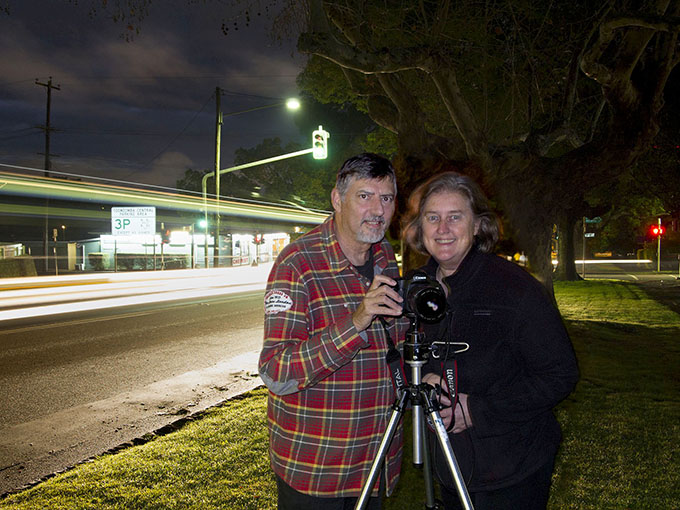
Victoria Cooper and Doug Spowart
For those of you who have been following our nocturne work over the last twelve months at WOOLI and in XMAS STREET we are now working on a new project in the Hunter Region of New South Wales. We are Artists in Residence at the Muswellbrook Regional Arts Centre and are now making nocturne photographs at dusk using the afterglow of sunset and streetlights documenting the town of Muswellbrook.
Nocturne light creates a sense of drama or a setting for a movie scene – a place where stories can be evoked and told. In this work we explore of the idiosyncratic nature of the architecture and street scenes of country and regional towns. The prosaic nature of these towns, when photographed in the dusk light, becomes part of a found aesthetic–a site-specific sculpture of light, colour and form. But there is also a visual narrative, isolated and exhumed by this light, one that has evolved from the activity of everyday life—yet the familiarity rendered it invisible.
Making the photographs is only the beginning of the project’s activity; the next part involves making a space for the telling of stories. Therefore the photographs are being posted on social media sites, a blog and Facebook to attract comments.
We now call upon the Muswellbrook community to share their stories of each place including their everyday and meaningful experiences by connecting with the project’s Blog and Facebook sites. We also invite other participants to comment if the photographic subject invokes the recollection of an experience or story.
The Blog: www.nocturnemuswellbrook.org
and Facebook
https://www.facebook.com/pages/Nocturne-Muswellbrook-Project/462047657214253
.


…
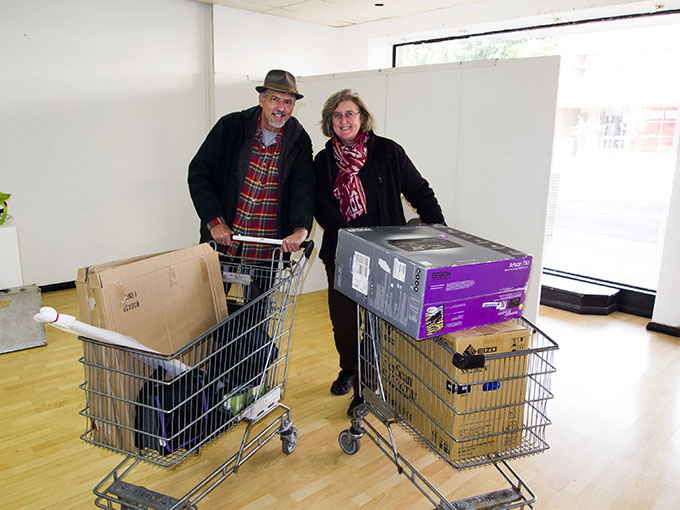
Doug+Vicky moving in to the Artists in Residence Studio
.
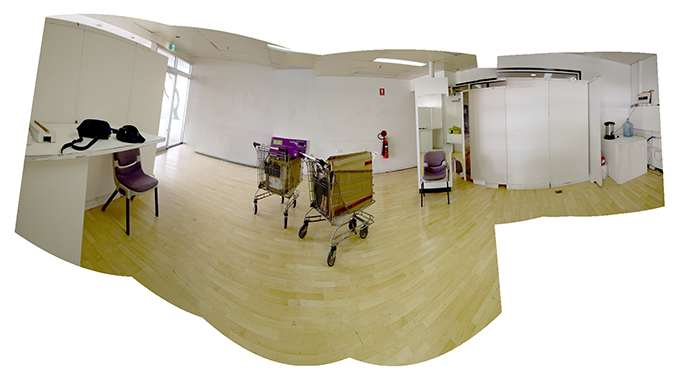
The Residence Studio
.
Comment Now …
..
To Follow us on FACEBOOK ‘Tick’ GET NOTIFICATIONS and ALL UPDATES
.
© 2013 Victoria Cooper and Doug Spowart for The Nocturne Muswellbrook Project
.
This work is licensed under a Creative Commons Attribution-NonCommercial-NoDerivs 3.0 Unported License.
.
.
.
MEMORY COLLECTIVE: A performance documentary project
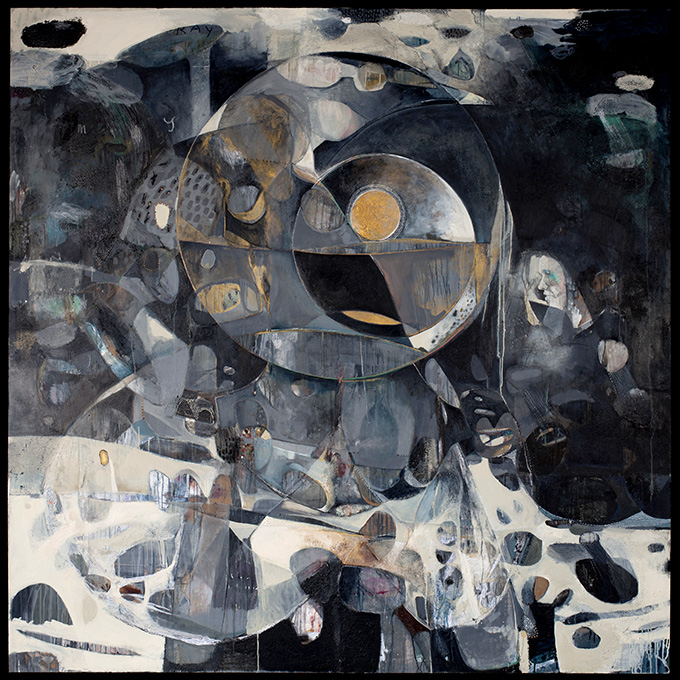
The Memory Collective painting by Damien Kamholtz
.
The Memory Collective is a multi-disciplinary collaboration orchestrated by artist Damien Kamholtz. Kamholtz states: The Memory Collective Project is a creative collaboration between 12 artists across eight artistic disciplines exploring concepts and themes relating to the human condition such as change, constants, history, refection and memory. The artworks created during the project will make up an exhibition to be held at the Toowoomba Regional Art Gallery in September 2013.
There are different stages to the project. First Kamholtz created a large 2.2 metre square painting, while sculptor, Jessie Wright constructed the large vessel to hold the water. Kamholtz’s painting is embedded with personal meaning in the form of fragments of his past art, the ashes of diaries. In the presence of this artwork we are drawn into a poetic landscape where faces emerge; symbols and totems slip from passive dark spaces and come into conscious awareness.
The second stage of the work was the performance in the form of 9 responses to the painting by Kristy Lee. The painting and the pool created the reflective and reflexive performative space and the transformative process of the original painting then began. Integral to the space were David Usher’s delicate pots; these vessels contained the pallet of shades that then shrouded and clouded the memory of the work. Over the course of the day the painting’s physical form was transformed into something different loosing its current visual form as only a memory.
Our part of the collaboration was to witness, respond and record the transformation of the work over the day. The next stage of the Memory Collective’s work will continue over the next month our component will be to create 9 large collaged photograph memory states of the work for the show in September. Works by others include; a video art piece, a documentary video, a soundscape, interviews, prose and poems. It is a significant project and is being funded by the RADF and supported through the exhibition at the Toowoomba Regional Art Gallery.
.
A fragment of photographic memories made by us for the MEMORY COLLECTIVE…
.
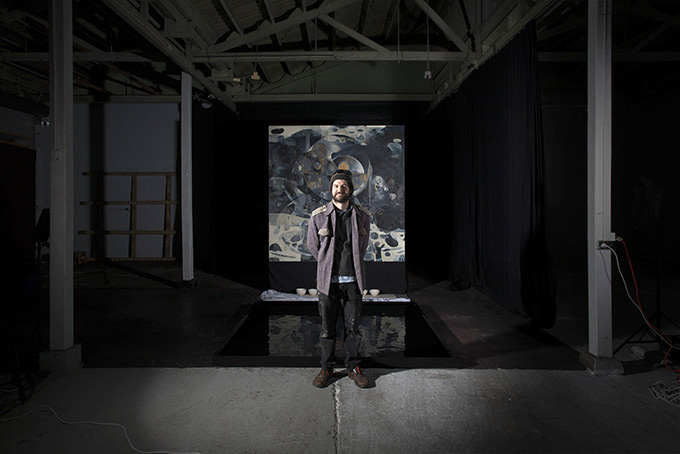
Damien Kamholtz in the performance space with the painting and pool
.
Doug documents the space …… Photo: Victoria Cooper
.

Kirsty and painting – in the early state…
…
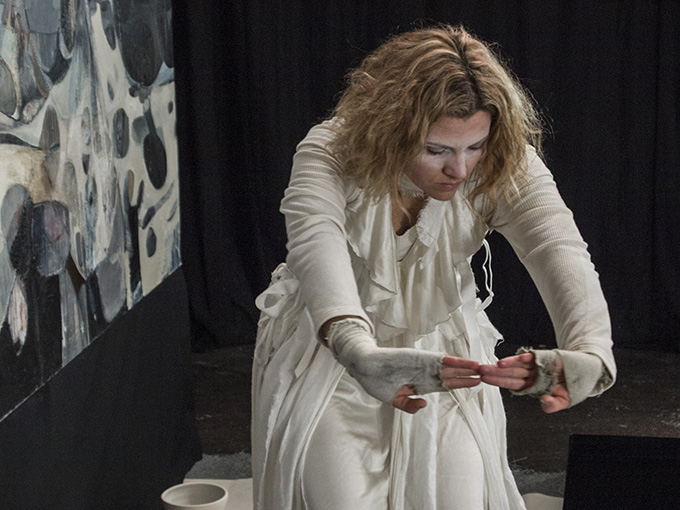
Kirsty Lee performs before the painting
.
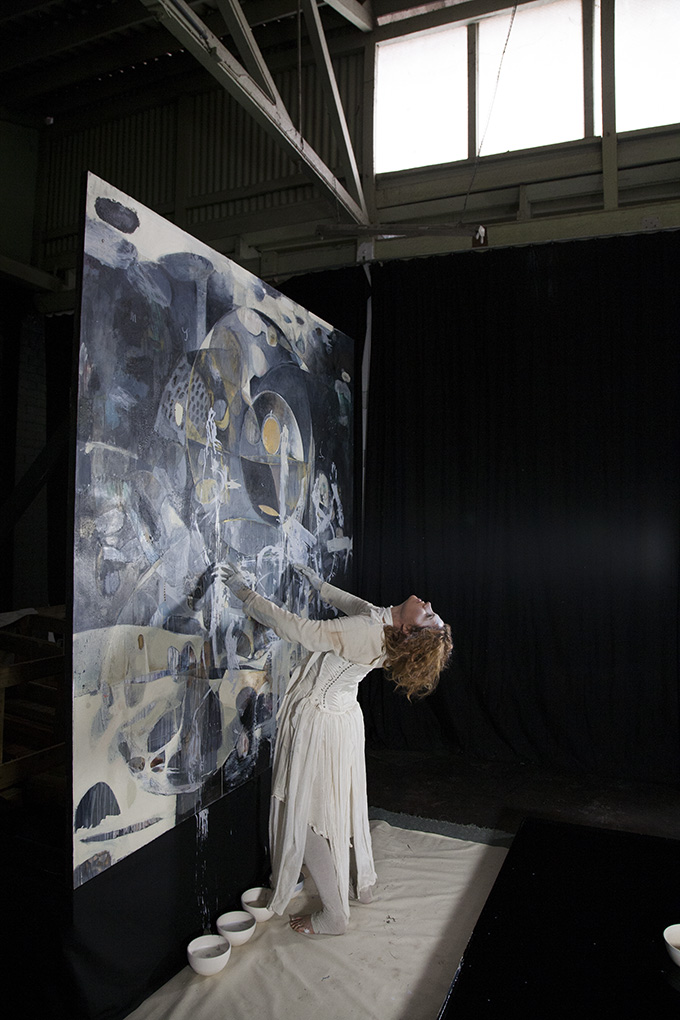
State 3 Kirsty applies paint to the paining…
.
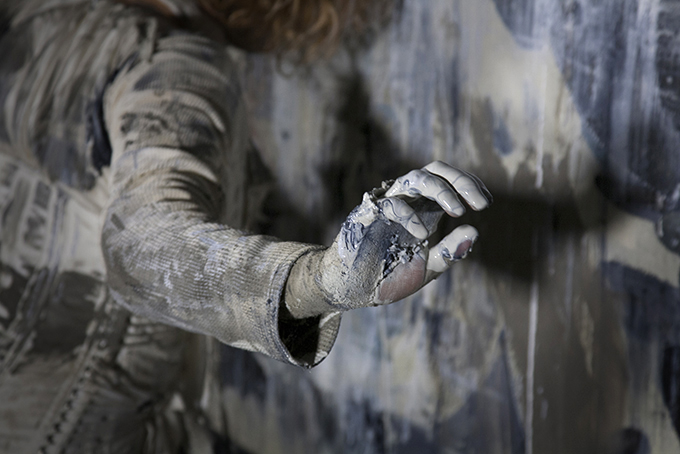
Hand paint
.

Kirsty Lee and her interaction with the painting … around Stage 6
.
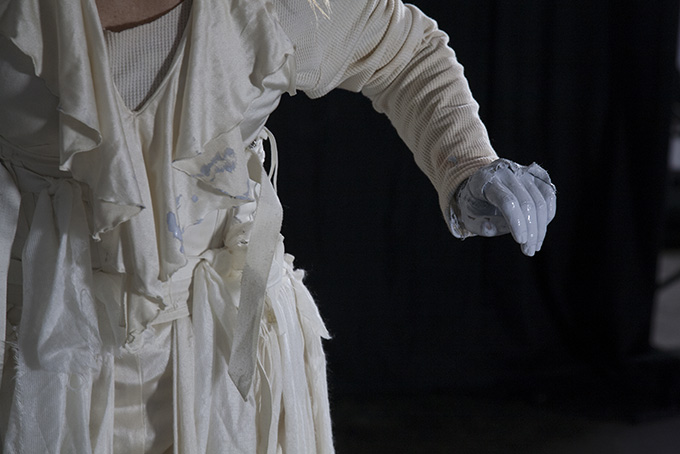
Blue hand…
.
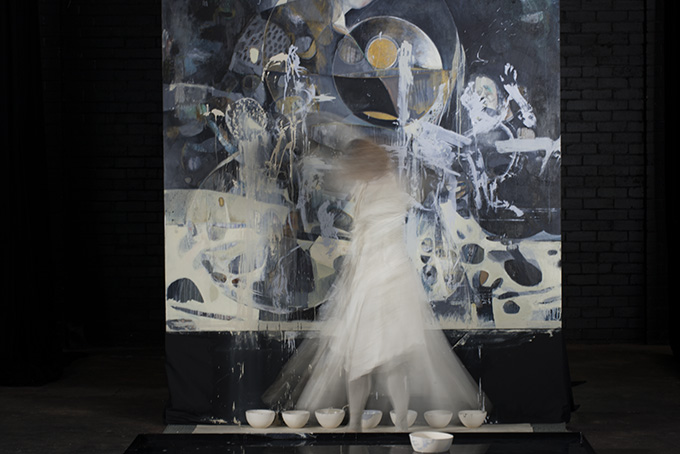
Kirsty Lee in a frenetic stage…
.
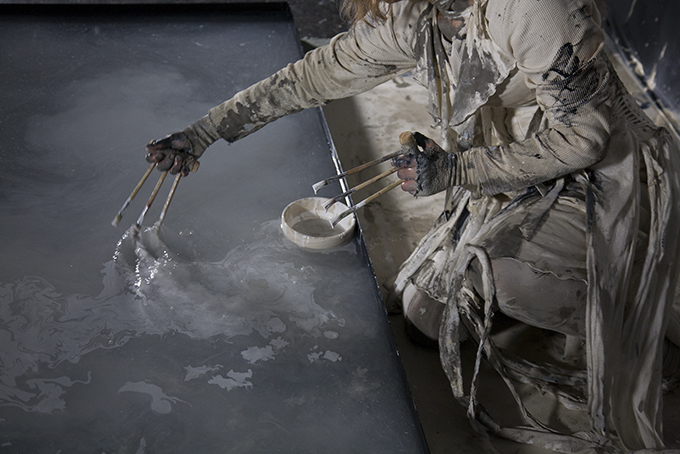
Kirsty and brushes before the pool
.
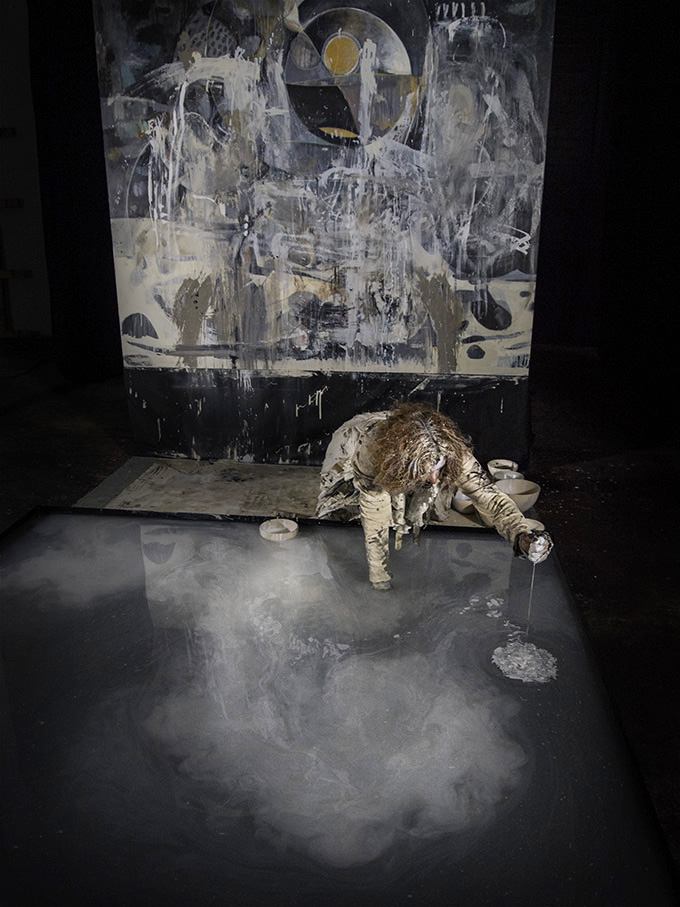
Paint fluid in the pool…
.

Towards the final state…
.
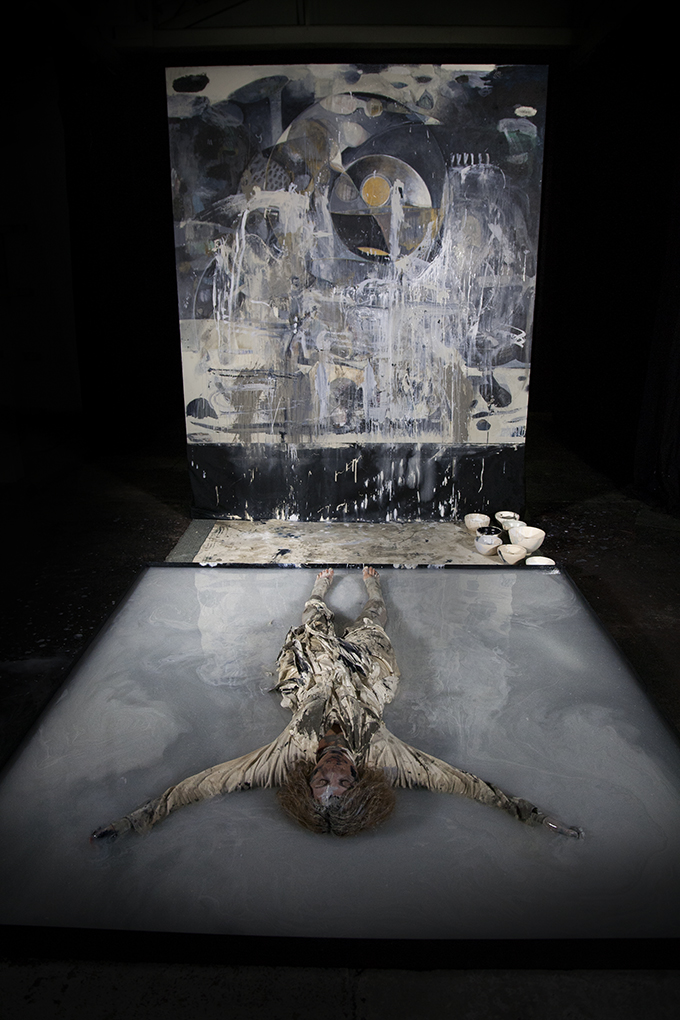
The final state …
…
.
 .
.
.
.
/.

Damien discussing movement with Kirsty
.
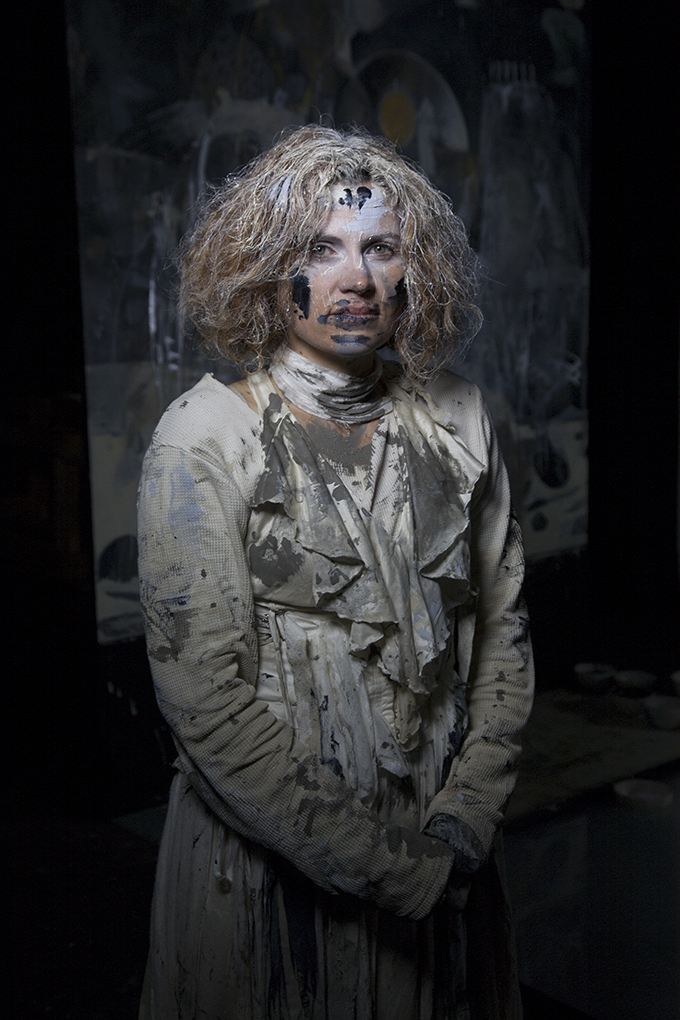
Kirsty Lee towards the end of the performance
.
Another creative work from the performance by Jason Nash…
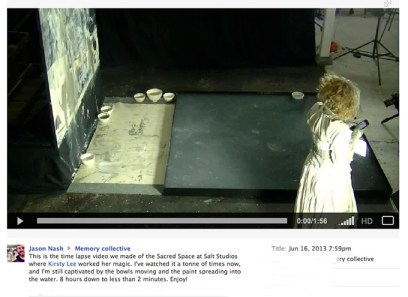
Jason Nash – Time lapse video
CLICK HERE to see Jason Nash’s ‘Memory Collective’ time-lapse video
.
The Team: Front Ashleigh Campbell, Julio Dunlop, Kirsty Lee, Victoria Cooper, Doug Spowart
Back: David Usher, Jason Nash, Jesse Wright, Damien Kamholtz, Zac Rowling ( weakling).
Not present: Craig Allen & Jake Hickey
.
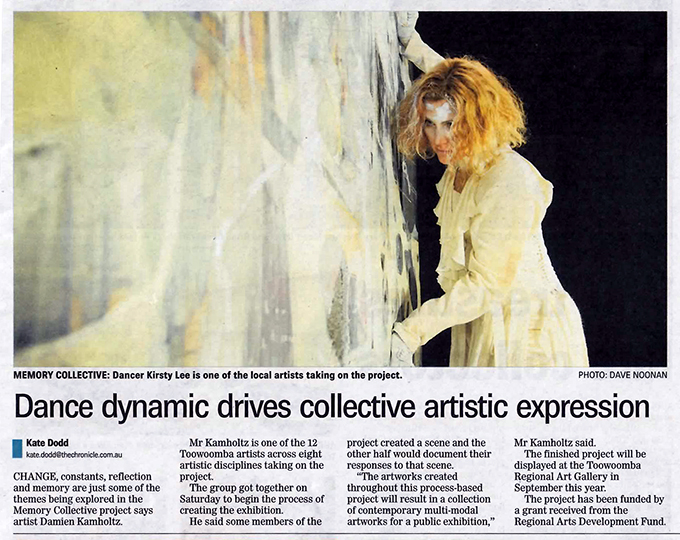
Toowoomba Chronicle 17 June, 2013 by Kate Dodd PHOTO: Dave Noonan
.
..
 .
.
.
© 2013 Victoria Cooper and Doug Spowart for The Memory Collective
.
This work is licensed under a Creative Commons Attribution-NonCommercial-NoDerivs 3.0 Unported License.
.
.
SUPPORT THIS PROJECT: Retake Melbourne App
In the opening paragraph of a review of John Elliott’s rephotography exhibition The Last Show and Re-shoot that was published in Art Monthly (#240 June 2011) I made the following comment:
Part of the mystique bestowed upon photography is the notion that a photograph captures a moment of time that enables a viewer to reconnect with or gain insights into the subject portrayed. Since its inception photographers have utilised photography’s inherent connection with time and place by reimaging the original subject days, months and years after the originating photographic ‘moment’. One notable re-photography project began in the 1970s by Mark Klett and his team in the United States with the Second View: The Rephotographic Survey Project, and continues with the recent Third views, second sights: a rephotographic survey of the American West. These projects draw upon the concept that comparative images over time extend the narrative of the single image, and that the differences and similarities observed tell a larger story – that of time and change.
I am excited by rephotography projects and from the early 1980s I have undertaken many myself. Now I have encountered news of an exciting project in Melbourne that will make this specialised photographic activity available to anyone with a smart phone or imaging device . Entitled Retake Melbourne the project will do two significant things; firstly, it will create an APP where earlier photographs of Melbourne can be located and aligned for the contemporary photographer to image the exact same view; and secondly, the source images will be from the the Sate Library of Victoria’s extensive Mark Strizic photography collection.
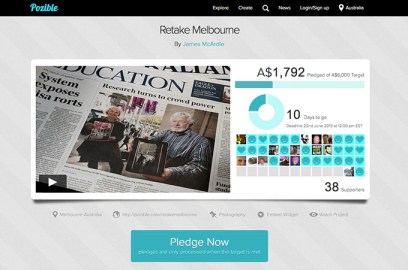
The project is being ‘floated’ via Pozible crowd sourcing, and time is running out to ensure this project gets the support to make it happen. I would ask you to review the project details that follow – login to Pozible, and make a pledge to support this valid and innovative project.
Thanking You
Doug Spowart
.
Here are the details … From the POZIBLE Project page
..
.
.
POZIBLE – Project Title: Retake Melbourne
Overview:
We Melburnians jealously defend our city as the ‘most live-able’; a cultured grande dame with a creative dash, anti-establishment street art, a larrikin love of football and lots of delicious secrets.
To participate in this project will be to illuminate and contrast her hidden past with her contemporary face.
Key to this is the mine of visual data in the State Library of Victoria’s collection, in particular immigrant Australian photographer Mark Strizic’s 5000 half-century-old negatives, colour transparencies and slides, acquired in 2007.
Aims:
When associate Greg Neville saw this archive, he envisaged a repeat photography project based on Strizic’s images which would uncover the glorious Melbourne buildings of his childhood memories.
We’d like to share this chance to retake Melbourne’s past. But re-photography is technically demanding. I realised that a mobile app would make the process accessible to everyone.

Image: © Mark Strizic: Melbourne GPO, 1950s

Mobile App mockup: © Strizic image overlay enables user to compose their own version accurately

A finished ‘re-photograph’ accurately duplicating Strizic photograph angle of view
By tapping the ‘crowd’ we can include you in this project. Your images might become valuable records, as Strizic’s are now, to researchers in the still further future! They will compare your view with Mark’s to see how the city has changed. You can be in on the birth of Melbourne’s first comparative photographic research project.
But first we need the tech to do it; a photography app that contributors will be first to use!
Background:
Close associate of architects Robyn Boyd and David Saunders, Strizic’s love of architecture and his European eye provoked his condemnation of the ugliness he saw invading Australian city-scapes during the 1960s when architecture of the Gold Rush era coexisted with, and was being demolished for, Modernist curtain-glass high-rise office buildings.

LHS Image: © Mark Strizic: Russell Street Melbourne, 1950s
RHS image: Greg Neville: Russell Street Melbourne, 2013

Image: © Mark Strizic: Melbourne Museum and State Library, 1950s
Outcomes:
By contributing to the development of our crowd-funded app, you will create the means to contribute accurate repeat photography of the locations of Strizic’s thirty-to-fifty year-old images of architecture, street-scenes and pedestrians, and to uncover the layers of history.
Historical and Creative results
Re-photography is studied and recognised for its value for historical, scientific, geographic, geologic and social science research; this use of crowd sourced material will be innovative.
Rather than being slavish copies of old photos, yours will be interpretations of Strizic’s originals which will build a picture of how a city has changed, and is in turn transforming us. There is a creative dimension in the ratio of interpretation to replication each contributor will employ in this process, that will add to value of their artefact. Their resultant contribution may be incorporated in the SLV online collection for comparison, by these and future researchers, with Strizic’s original.
The Mobile App:
With this app, members of the public can find locations photographed by Strizic on a map, orient their device’s camera closely to the angle, orientation and framing that he used using a transparent overlay of his image, downloaded from the SLV online collection, over their screen image.
This app will simplify the repeat photography exercise and enable you to produce a comparative image which will match or contrast existing conditions and features with those in his original image.
Contribute to our shared archive:
The State Library of Victoria‘s huge archive opens up a rich resource for Victorians online; now that everyone can access it; they can also interact with it. This crowd-sourced project will give the archive more exposure and contribute new resources.
Provide a resource for future research:
The Strizic archive forms a reference for participants who will be asked to repeat the making of the images in the same location. In doing so they will record a contemporary street scene peopled with pedestrians who may regard, occupy and use the city of Melbourne in very different ways now.
Increase your own knowledge of Melbourne and Photography:
Part of the durable, interactive and updatable project outcomes is that participants will make a substantial contribution, they in turn will benefit from the exercise of finding the locations in coming to understand at first hand the operation of the forces of change on the city, the influences of crowd behaviour on the city, and its power to change us and our societal interactions. You too can become a ‘re-photographer’!
- What will your contribution do?
Level of funding sought: $6,000 – $10,000
A huge volume of photographic contributions will be required to enable worthwhile comparison of the old and new images to show how Melbourne’s buildings and streets have shaped, and are shaped by, its populace and its society. Achieving the necessary quantity and accuracy will require $6,000 base funding for the development and distribution of a mobile-device app.
$6000 will pay for six months of the developer’s time in building the app.
Researcher Dr James McArdle, will contribute $12,000 in-kind support; for research into the State Library collection and mapping of locations of Strizic images for GPS locator in the app.
*Reaching $10,000:
will enable us to map significantly more locations and to pinpoint the date/time of capture for more Strizic photographs as a guide to the re-photographers.
Twitter: JamesmMcArdle
Content on this page is licensed under


 wotwedid