Archive for the ‘Place-Projects’ Category
Set-up: COW ART – Year of the Farmer
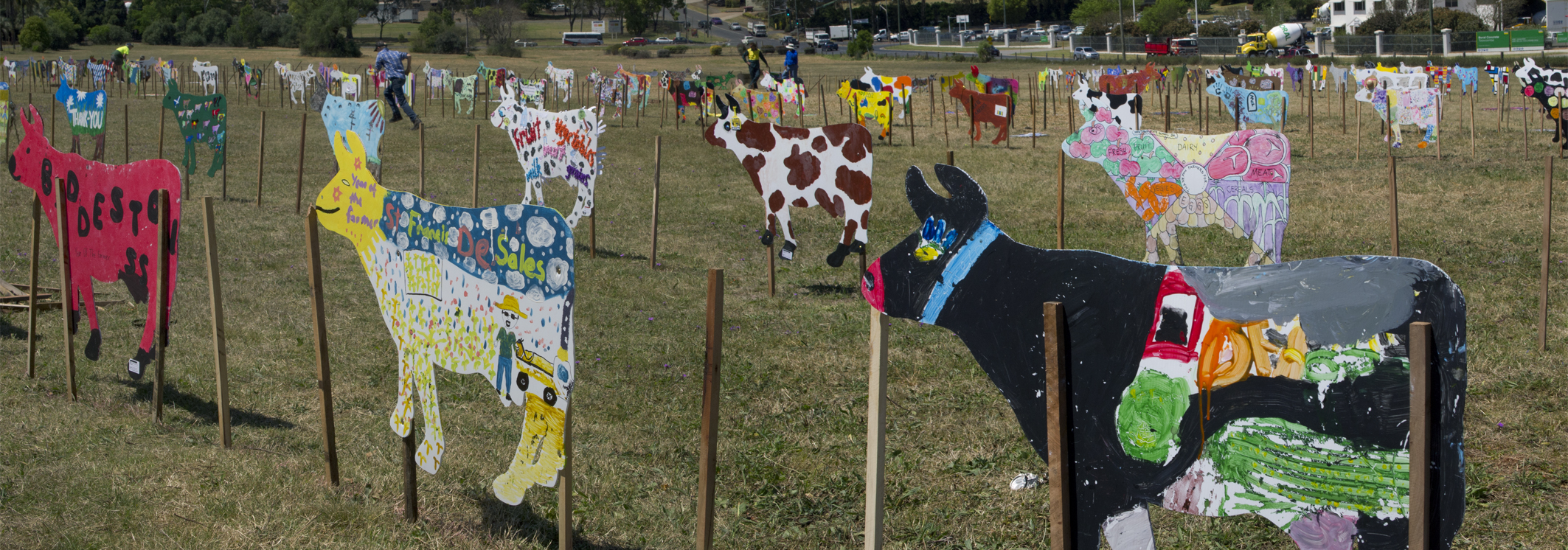
Cow Art setup in progress
The cows came back to Toowoomba to form a herd of 800+ artworks expressing the support of the 2012 Year of the Farmer. Organised by Paul Blinco and Debbie Nawrotzky from Pacific Seeds the corflute cows were decorated by artists, school kids and interested contributors to the project.
On Friday we took our artwork, the CondaMINE Cow, Variety: Thylacine (SEE previous post) out to the paddock to join up with the herd. Here are some images of the setup underway…
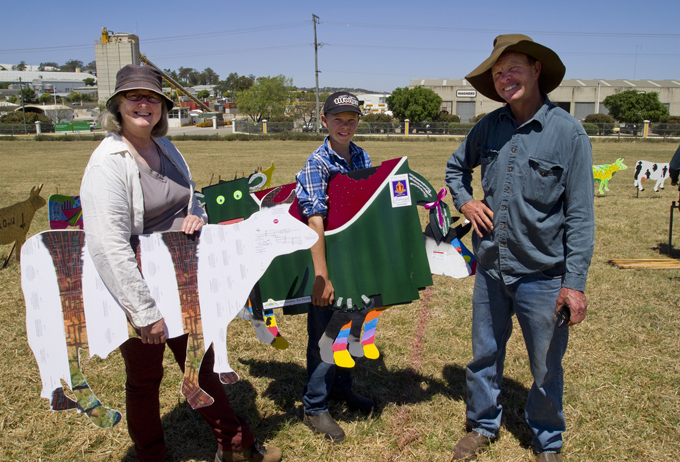
Vicky and our cow with Lindsay and Paul Blinco
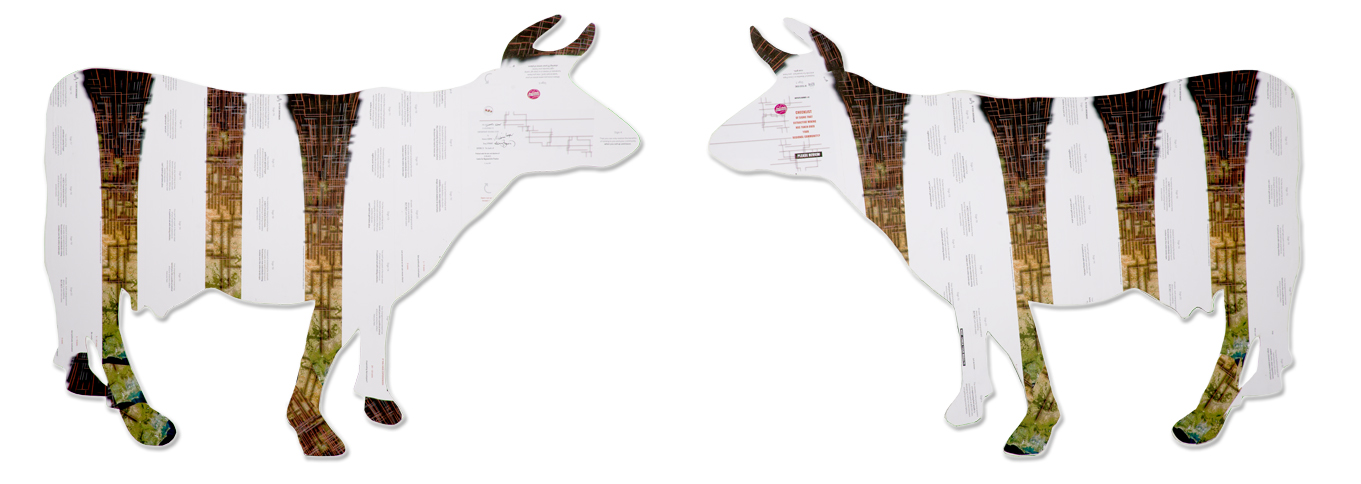
‘The CondaMINE Cow – Variety: Thylacine’ verso and recto (SEE background to the artwork – Click here)
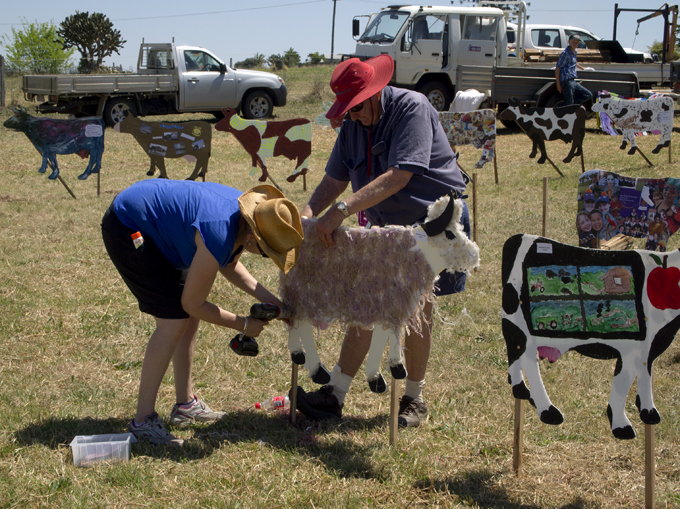
Setting-up the Cows
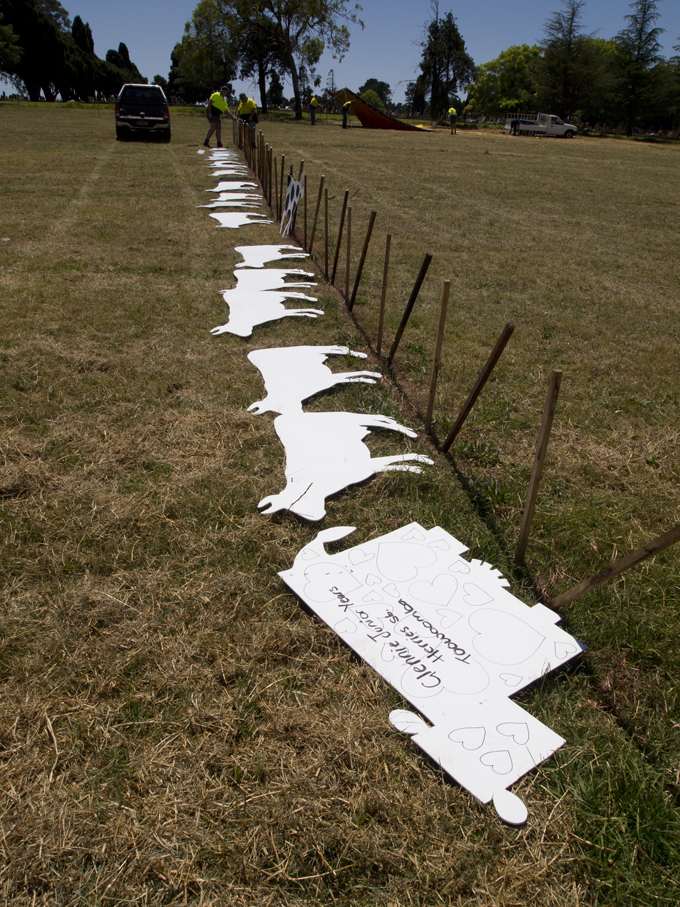
Laying out the cows

A montage of Cow Art
More images+audio from the COW ART Facebook Page, the Toowoomba Chronicle and ABC Radio interview
.
WOOLI NOCTURNE: a new project
We are working on a new project whilst on retreat on the NSW north coast. A tentative statement for the work is as follows …
In the interstitial zone between day and night our everyday and prosaic surroundings begin to take on an appearance that is, for us, unfamiliar. Streets and houses, the spaces of our habitation, are illuminated by the afterglow of sunset or by the shaft-like rays from the occasional street light. In this space the homely becomes the uncanny. Perhaps stirring memories of cave dwelling experiences deep within the primitive brain where in the shadows of the coming night, monsters lurk – just beyond the fire’s warm flickering light.
Enjoy … Vicky + Doug
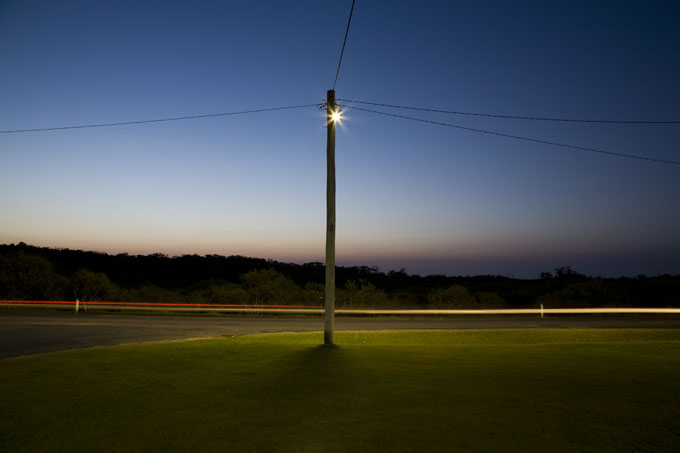
Image 0202
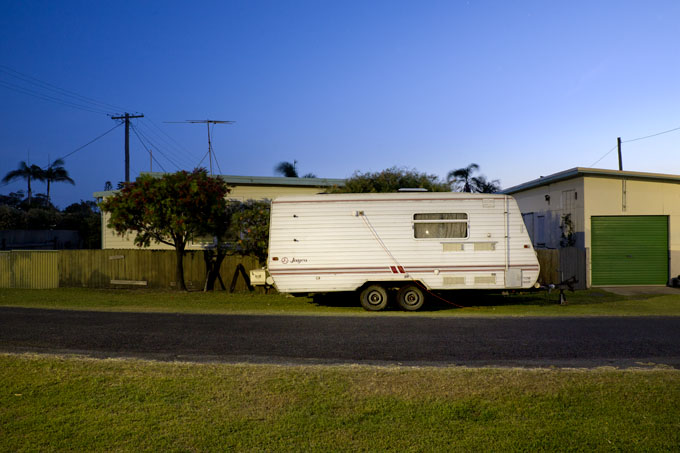
Image 0199
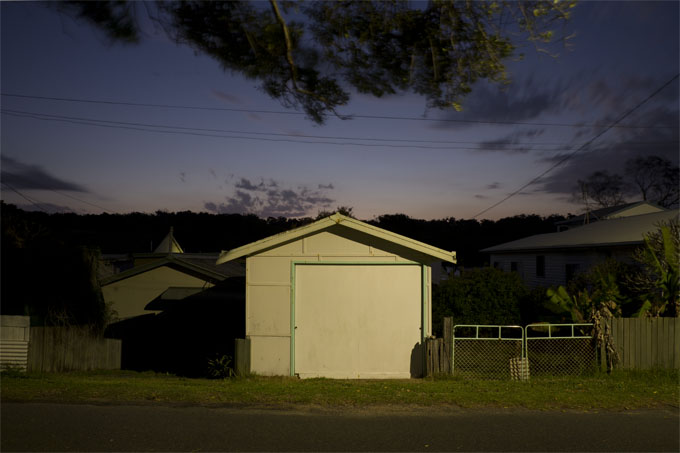
Image 0133
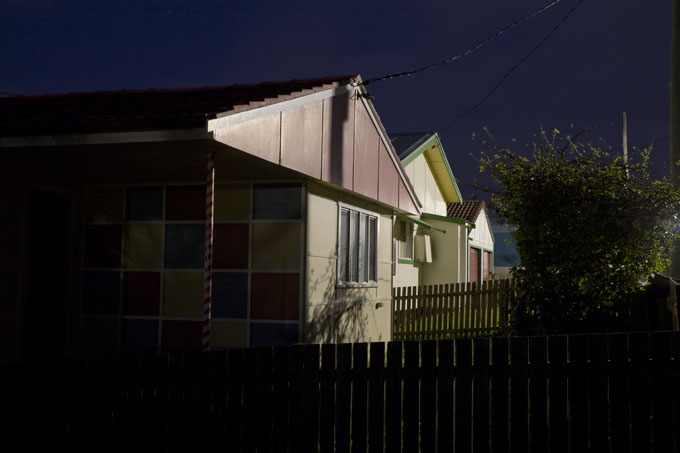
Image 0142
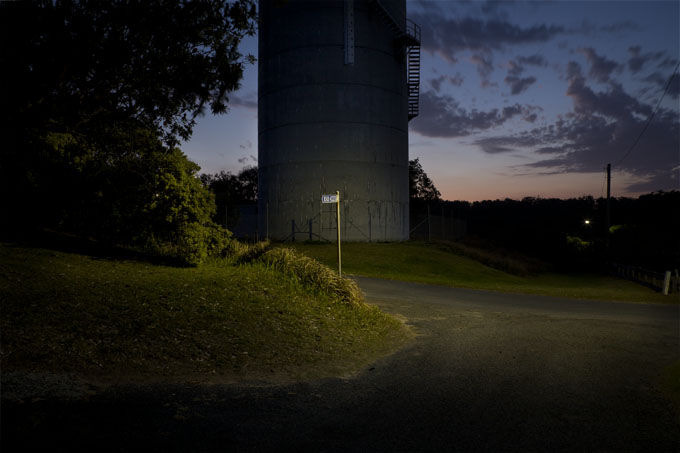
Image 0129
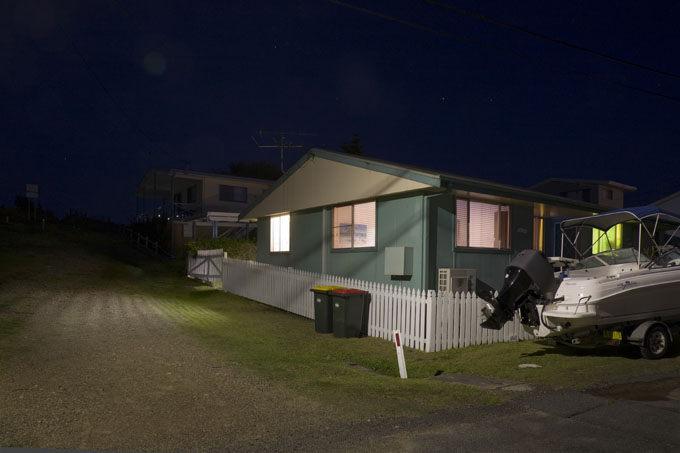
Image 0094
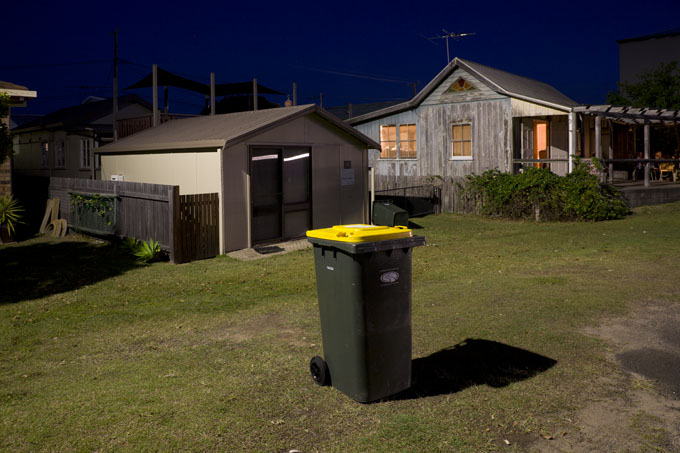
Image0092
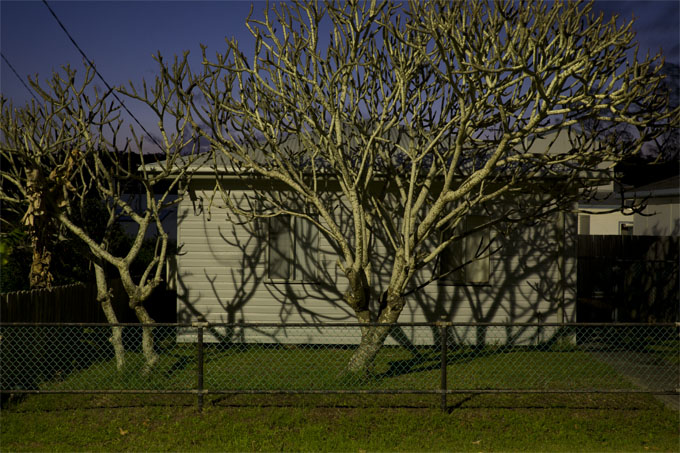
Image 0135
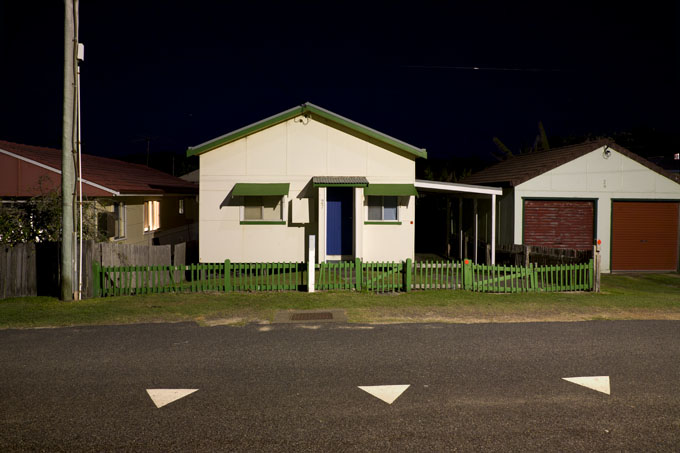
Image 0216
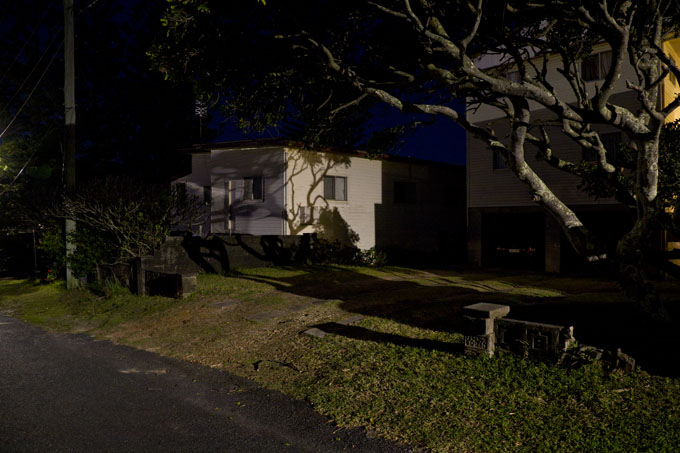
Image 0097
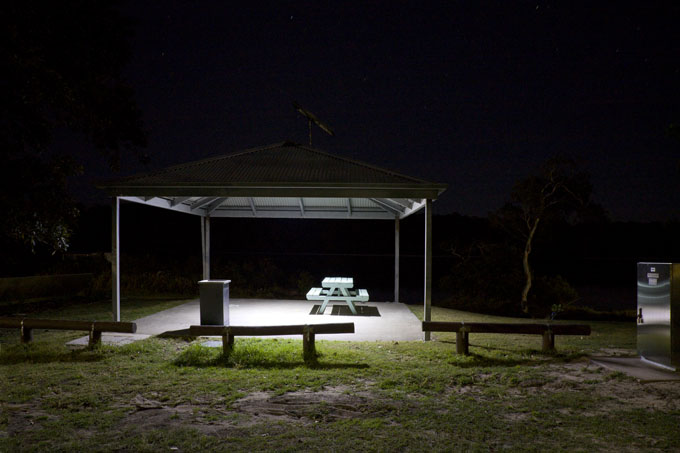
Image 0110
In support of The YEAR OF THE FARMER ‘The CondaMINE Cow – Variety: Thylacine’
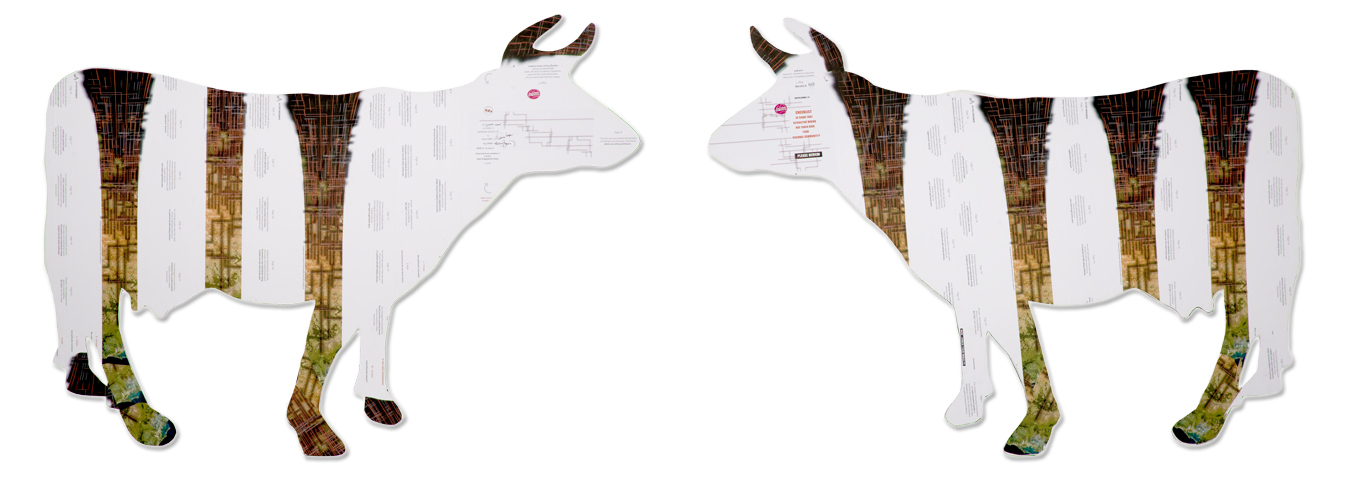
‘The CondaMINE Cow Variety: Thylacine’ recto and verso
We, at the Centre for Regional Arts Practice, are about to contribute an artwork to a project that is intended to celebrate the Australian Year of the Farmer. The project is called, the Australian Year of the Farmer Cow Art, and is being organised by Wendy and Paul Blinco from Pacific Seeds, Toowoomba. Around 1,000 corflute cows were made and passed on to interested groups, artists and school kids across the Darling Downs Region to decorate. The plain white surface of the cows have been painted, collaged or worked on by a range of other artistic means.
For more information visit the Australian Year of the Farmer Cow Art Facebook site
Named The CondaMINE Cow – Variety: Thylacine, our cow was created from a montage of texts and images from our Artists Survey book #12 Checklist of Signs That Extractive Mining Has Taken Over Your Regional Community (SEE the blog post Flying Arts Award for details). In this book, and now in this new variant (the Cow), we posit that a threat exists for farmers and farming land productivity by the extensive mining activity now taking place throughout this land. The farmer, like the Thylacine, may be an endangered species destined for extinction. We trust this cow will raise interest and promote debate on this issue.
Our Cow is at the beach where the makeover was carried out—next week she will be herded together with another 1,000 cows in Toowoomba for the main event.
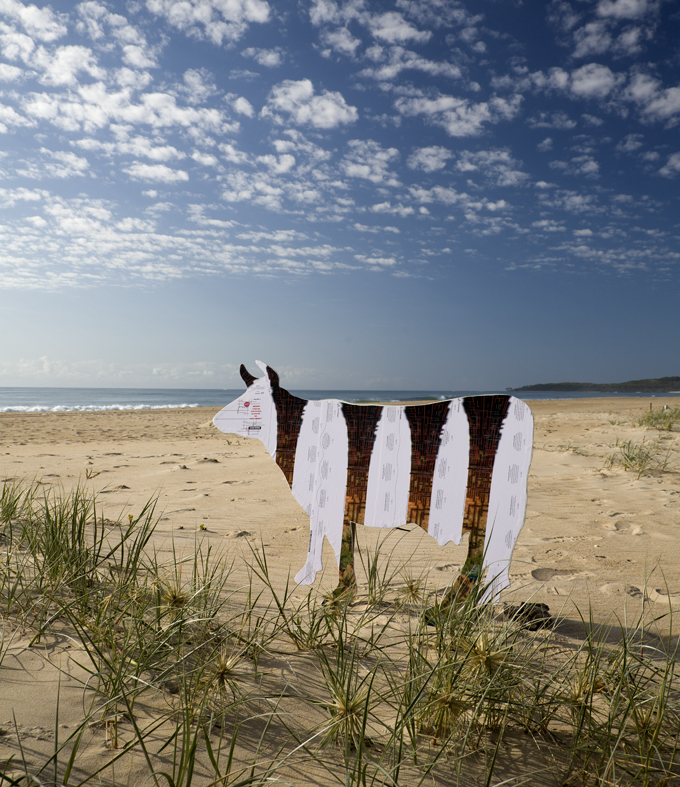
‘CondaMINE_Cow’ artwork by Victoria Cooper + Doug Spowart
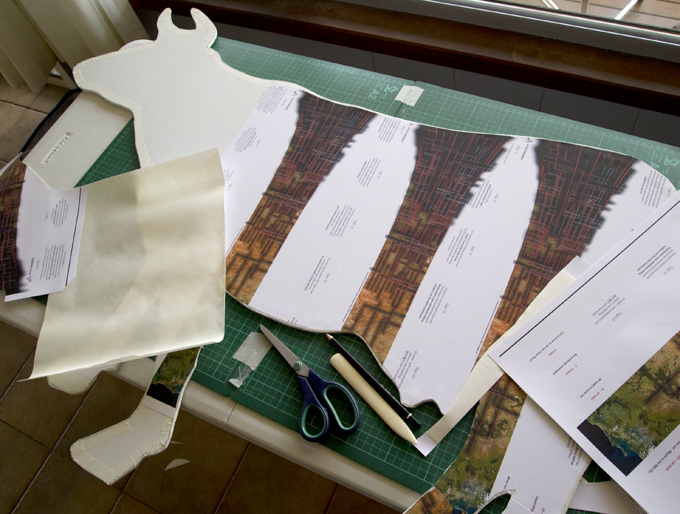
‘CondaMINE Cow’ in production
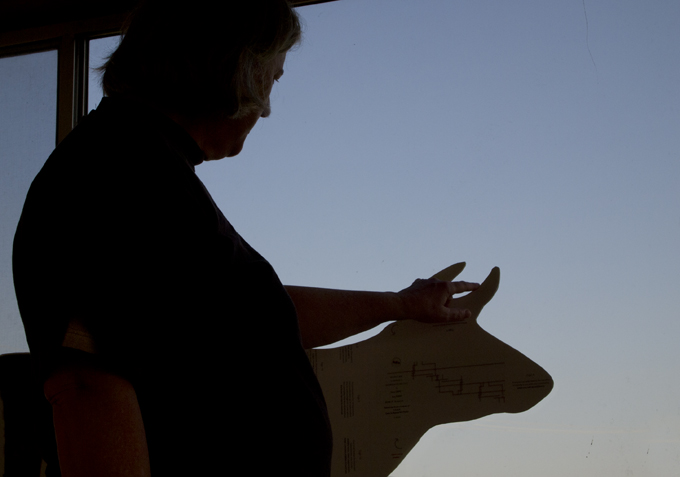
Vicky offering suggestions for the makeover
SHOOTING STRAIGHT: Regional Artists as Provocateurs
Shoot Straight You Bastards, Bungil Gallery, Roma, Queensland. 6 July-12 August, 2012
.
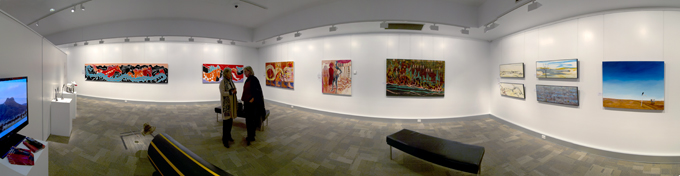
Shoot Straight You Bastards, Bungil Gallery, Roma
In her book The Lure of the Local (1997) Lucy R. Lippard states that ‘Artists can be very good at exposing the layers of emotional and aesthetic resonance in our relationships to place.’ (Lippard 1997:286) She also defines an ‘ethic’ for ‘art governed by place’ which includes the expectation, amongst others, that the work should be, ‘Provocative and Critical enough to make people think about the issues beyond the scope of the work, to call into question superficial assumptions about place, its history and its use.’ (Lippard 1997:287)
An exhibition at the Bungil Gallery in Roma, Shoot Straight You Bastards, by artists who collectively call themselves, the 6 artists from out of nowhere, creates a powerful document about relationships to place which are, as Lippard demands, ‘provocative and critical enough to make people think.’ These artists are from the Bowen Basin area around Central Southern Queensland that is currently the centre of a mining boom driven by the world’s need for cheap energy. In the enthusiastic push for profits to bolster shareholder’s returns and to reduce budget deficits, both the mining industry and the government have grasped the opportunity. While it may seem perfectly logical to develop a resource and capitalise upon it, there are many who oppose it. The principle concerns shared by many of these local communities are the threats to the farming and grazing productivity of the land, and the potential risk for long term damage to the quality of underground water across the region where mining and gas extraction is undertaken. The transformative effect on the communities and the landscape should not be underestimated.
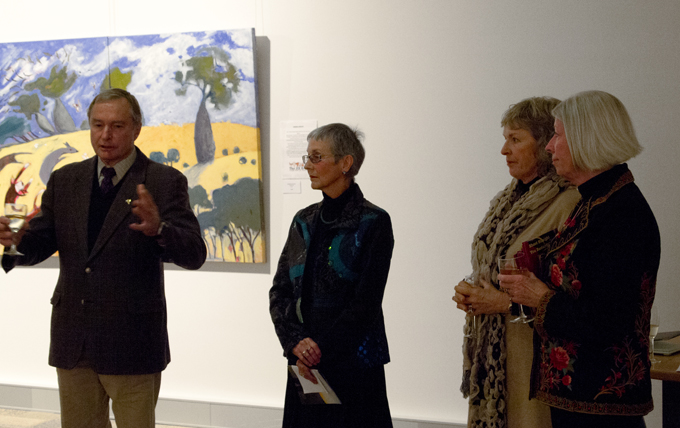
Howard Hobbs MP for Warrego opens the Shoot Straight You Bastards exhibition with 3 of the artists
The six artists are, Sandra Allen, Anne Cameron, Elizabeth Corfe, Barbara Hancock, Helen and Wally Peart. These artists and their families live on and work within this landscape as farmers and graziers. Time spent creating their artwork has to ‘fit in’ with the demands of daily living and working on the land. In their bios, the artists reference the many challenges of making art on a working farming property, as three of the artists reveal:
Anne Cameron, As with all women on the land, her artistic aspirations had to be subjugated to the needs of the property and the family,
Barbara Hancock, … the urge to paint often saw her running from paint brush to breast feeding the latest baby, and
Elizabeth Corfe’s life, has been shaped by a lifetime immersed in the highs and lows of making a living off the land.
Even though there have been obstacles they remain dedicated to their art and when possible have engaged in art training through a range of opportunities including academic study, Flying Arts and the Roma Art Group. Their works are technically and conceptually strident—quite distinct from the stereotypic pastoral ‘windmill in the sunset’ and ‘gum tree lined billabong’ paintings that art aesthetes may consider regional artists make.
These artists have amassed a large body of work expressing their concern for the land and, what they see as its impending demise. The title for the exhibition, Shoot Straight You Bastards originates from the last words of Breaker Morant as he stood before the firing squad. The six have chosen this phrase as their catch cry and they apply it to their current situation—shoot straight implies that the proponents; mining companies and governments present honest and accurate information and manage this development ethically and fairly. Their poem manifesto <http://www.sixartists.com.au/exhibitions.htm>(Link broken July 2016) questions the speed of resource development and the potential damage to air, water, earth, flora, fauna and people that this boom may have. In their impassioned plea they lament,
Why not look after Australia
For our country
For our people
For our future
In dry Australia, without artesian water we die.
Words on a website may be one avenue for activism but concepts expressed through art can also be a powerful way to evoke commentary and debate on broad social issues. Nicholas Croggan in an essay on Bonita Ely’s ecological work claims,
… the current state of ecological crisis will soon replace globalisation as the dominant cultural condition. In contrast to globalisation, which emphasises the invisible and the infinite, the state of environmental crisis drags us back to earth to contemplate the material and the finite. It demands that artists and non-artists alike reassess the way in which they engage with the natural world—both at a real and an imaginary level. (Croggan 2010:47)
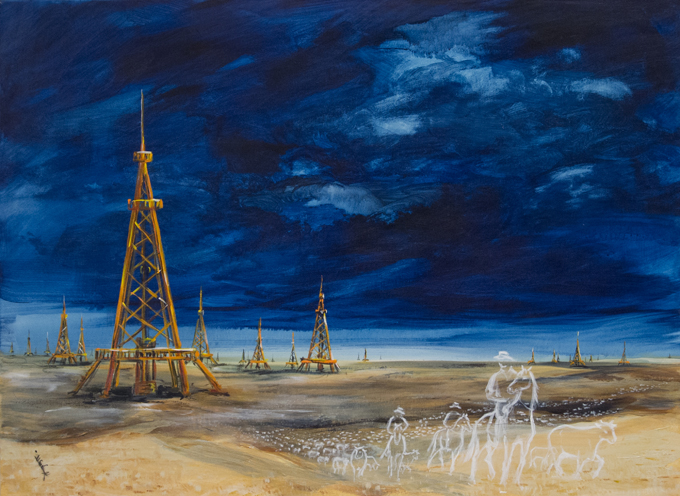
Banished by Elizabeth Corfe
The work of these artists does bring us ‘back to earth’ in ‘real’ and ‘imaginary’ ways. In the work Banished, Elizabeth Corfe presents a landscape of drilling rigs against blue sky and beige earth—ghostly forms of men on horseback tend phantom flocks and herds that may no longer exist. An expansive piece entitled Sucked in by Barbara Hancock depicts a vortex of change ‘sucking in’ the landscape and its inhabitants—several figures inside the central maelstrom mimic the expression of the subject in Edvard Munch’s The Scream. In Sandra Allen’s Once there were horses a snake-like chimerical (Chinese) dragon with $ signs for eyes scares horses to take flight. Refer to their website for more examples.
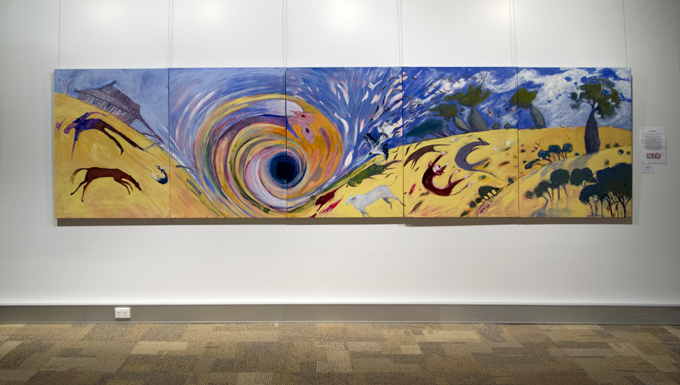
Sucked in by Barbara Hancock
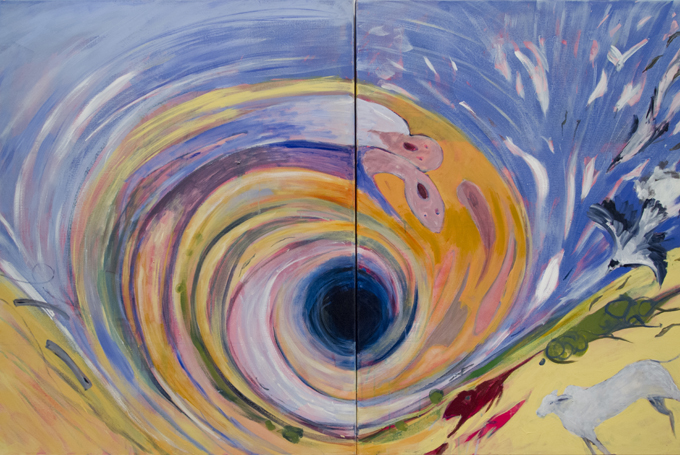
Sucked in by Barbara Hancock (detail)
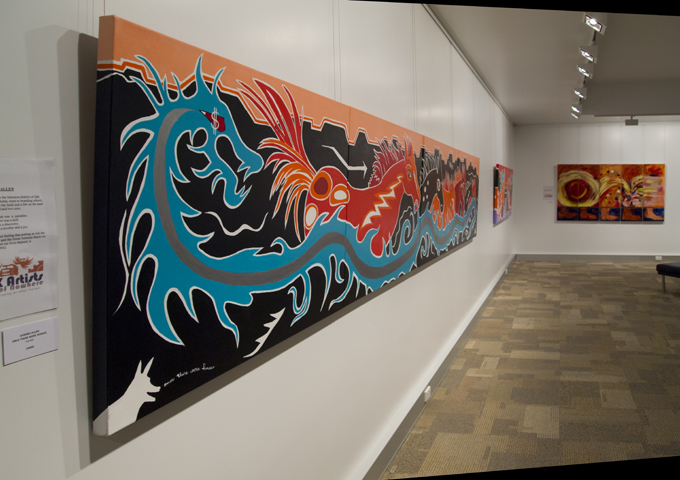
Once there were horses by Sandra Allen
The Shoot Straight You Bastards exhibition has already travelled to outback regions and is set to open in Wondoan in the next month, then on to Brisbane at the White Canvas Gallery in November.
These artists are empowered in the face of this inexorable transformation—as their voices can be heard through the making, presentation and communication of their art. In 2007, Lucy Lippard curated the exhibition Weather Report: Art and Climate Change. In her catalogue essay she spoke of the artist as a commentator, communicator and as one who acts as a provocateur. In the closing remark of her essay Lippard proposes, ‘… it is the artist’s job to teach us how to see.’ (Lippard 2007:11)
Artists do ‘teach us to see’ and it is commendable that these six artists work hard to engage their communities in issues that are important. Ultimately art is a considered and authentic vision of the world and ideas. Perhaps through the dissemination and connection with others these artists’ vision may bridge a gap and change perceptions.
Curator Stephanie Smith, in the catalogue for Weather Report: Art and Climate Change (2007), presents a call to arms where she states that as artists,
… we need occasional pauses to reflect on the ever-changing and sometimes inscrutable interrelationships in which we are all embroiled … And then we need to get up from that perch … and act on the insights derived from these critical, reflective pauses. We need to get into the fray … (Smith, 2007:15)
The 6 artists from out of nowhere are certainly getting ‘into the fray’.
Dr Doug Spowart July 29, 2012
Croggan, N 2010, ‘Bonita Ely’s art of ecology’, Art & Australia, vol. 48, no. 1, Spring 2010.
Lippard, LR 2007, ‘Weather Report: Expecting the Unexpected’, in K Gerdes (ed.), Weather Report: Art and Climate Change, Boulder Museum of Contemporary Art, Boulder, Colorado, USA.
Lippard, LR 1997, The Lure of the Local: Sense of Place in a Multicentered Society, The New Press, New York.
Smith, S 2007, ‘Weather Systems: Questions About Art and Climate Change’, in K Gerdes (ed.), Weather Report: Art and Climate Change, Boulder Museum of Contemporary Art, Boulder, Colorado, USA.
CAMERA OBSCURA: QCCP
Later in our time in Queenstown we made another camera obscura at Jackie and Mike’s Queenstown Centre for Creative Photography. The room image featured a view up Late Wakatipu reflected in a mirror. The expanse of the glacial lake with the layered horizon of mountains seemed, for the moment, peaceful.
We sat in the background view—the picture in a ‘lensed’ camera view of the image within the room. The camera sits on a chair on the right-hand side of the image and its shadow falls into the bottom of the frame. We’ve posted a second image of this photo inverted so to external view can be more easily interpreted.
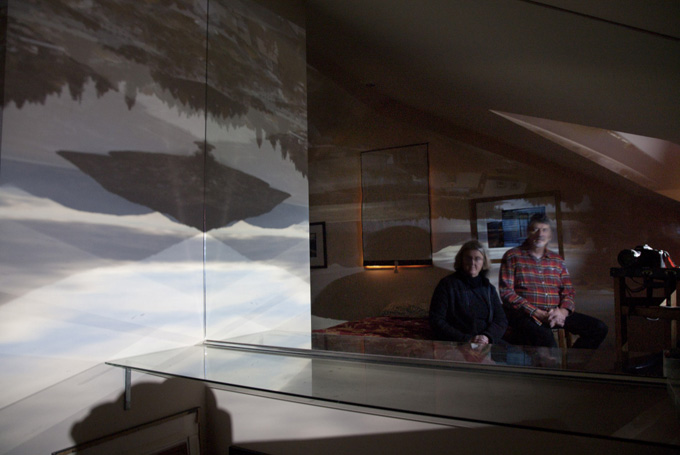
Camera Obscura: Queenstown Centre for Creative Photography
Cheers Doug and Vicky
TWO NEW ZEALAND CAMERA OBSCURAS
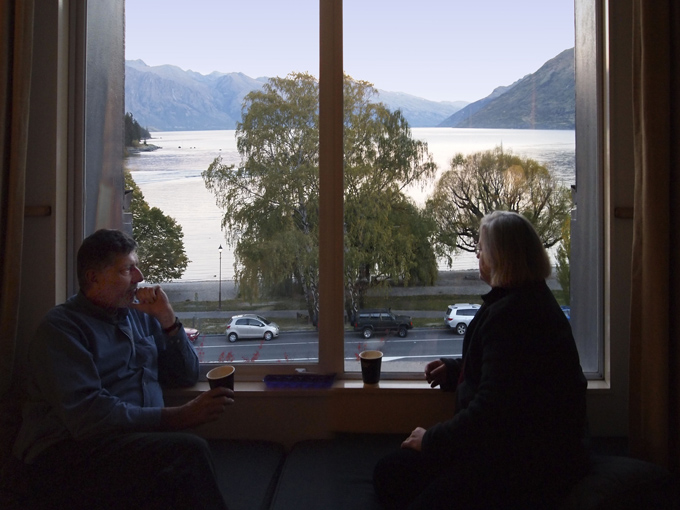
The view from our window @ Rydges Hotel overlooking Lake Wakatipu – Planning a camera obscura shoot
Rydges Hotel Camera Obscura: Queenstown + Lake Wakatipu
We checked into the Rydges on the Lake hotel at Queenstown in the late afternoon and the lake-view room demanded that a camera obscura image be made. Hotel and motel rooms are all pretty much the same—the beds, the bathroom, the table with one chair maybe two, the big mirror, the tiny bar fridge full of junk food and drink and the TV. In the room one could be anywhere and nowhere.
That evening a visit to the local 4 Square store meant that we were equipped with enough black plastic bin liners and some black electrical tape to cover the 2.5 X 3 metre window.
What we needed to complement the image potential for the picture was a beautiful clear sunny day—and that’s exactly what happened the next day. There were two sessions, one around mid-day and the other late afternoon. Blue sky, the golden leaves of poplar trees in autumn and the colours of lake and mountain filled the room.
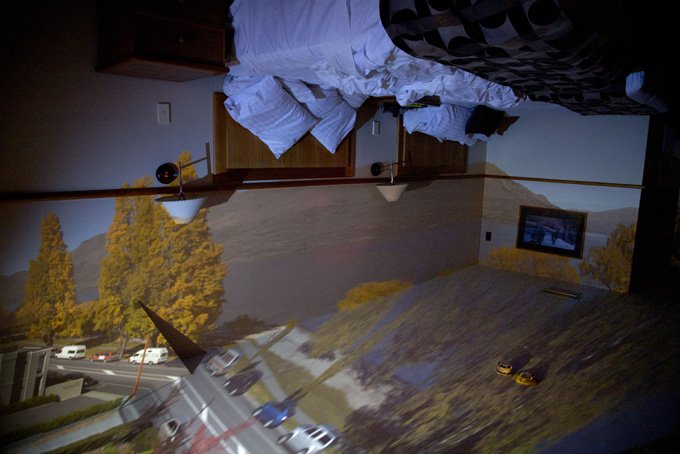
Camera Obscura image looking towards Walter Peak
In between shoots we left the ‘Do Not Disturb’ sign on the door just in case room-cleaning staff should intervene—We often wonder about what unsuspecting visitors would think when first entering the blacked-out space of the room.
Three main images were made—one of the un-made bed, a deep shot into the room, one each of the both of us—Vicky timing the one-minute exposure, the other, a simulation of Doug checking the review screen of the Olympus camera that had been used for image-making that day.
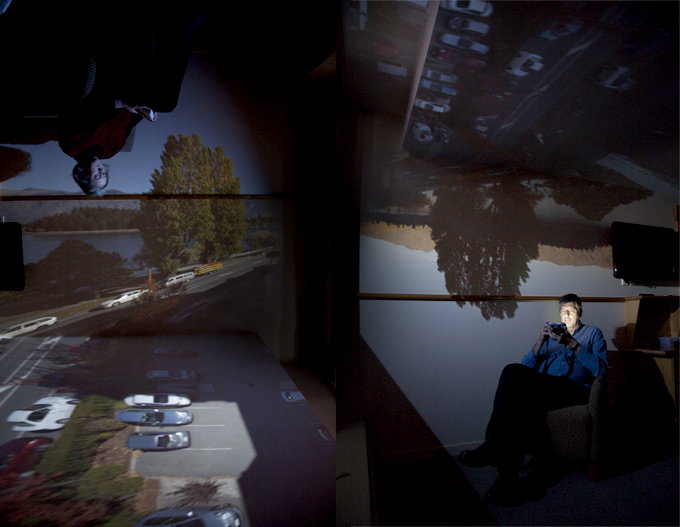
Image left: Vicky times the exposure Image right: Doug reviews images made on his camera
The ‘pinhole’ was fashioned from a postcard of Lake Wakatipu with the steamship the Earnslaw crossing the lake. The aperture was around 10mm and the exposure time around 2.5 minutes.

Victoria Cooper holding the postcard with the ‘hole’ in it
GIRRAWEEN National Park: A sunny weekend
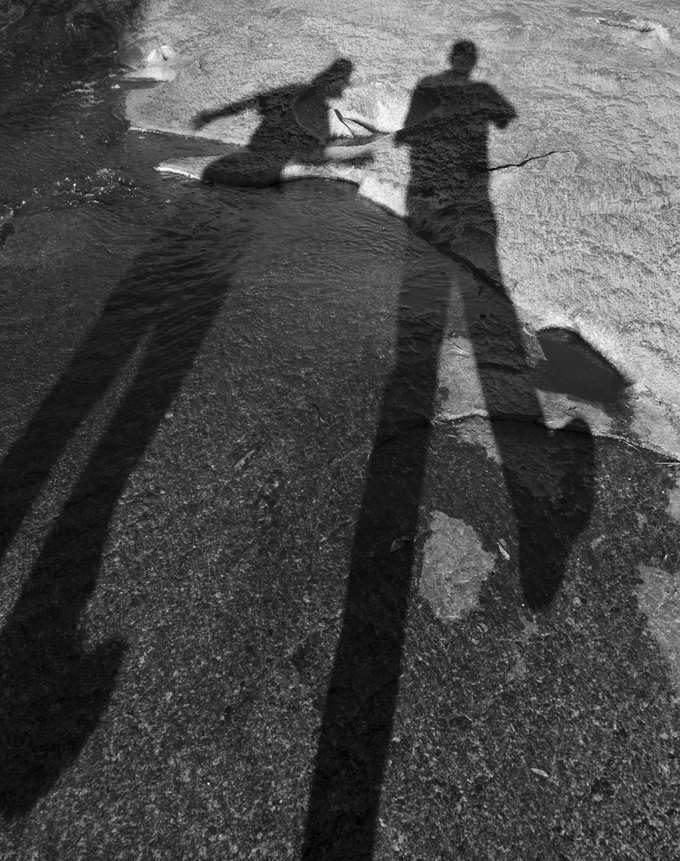
Shadow fun @ Bald Rock Creek crossing
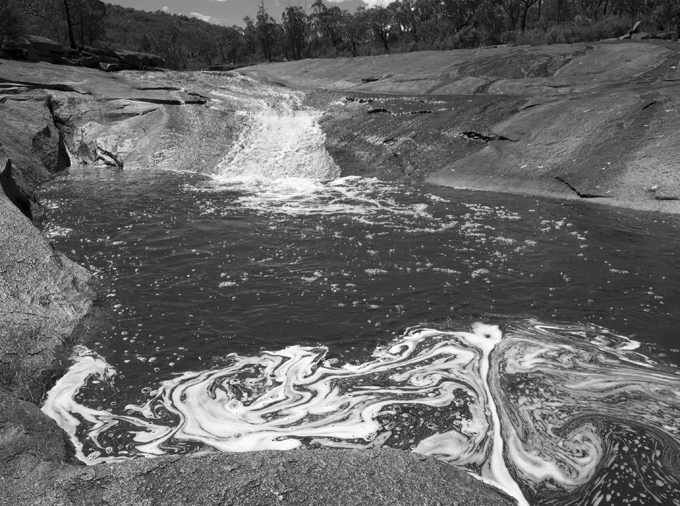
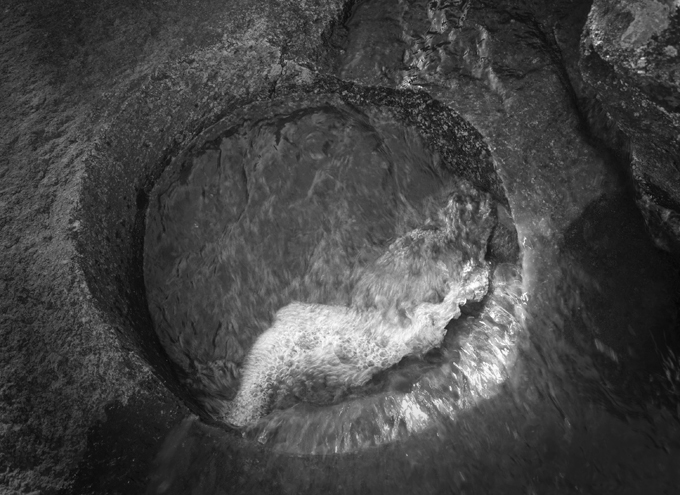
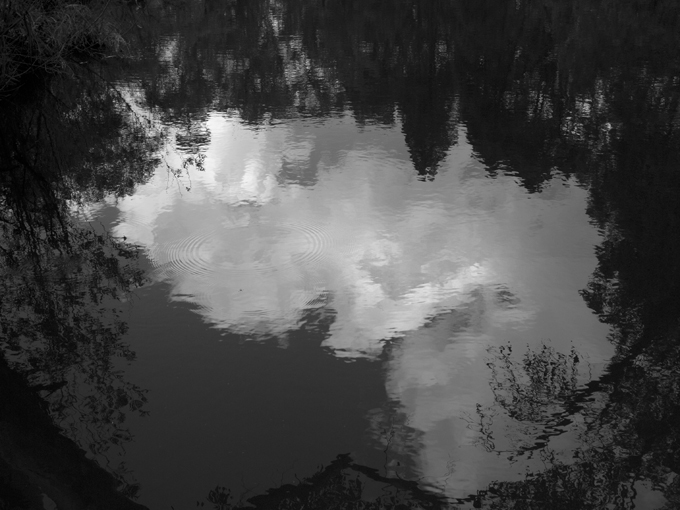
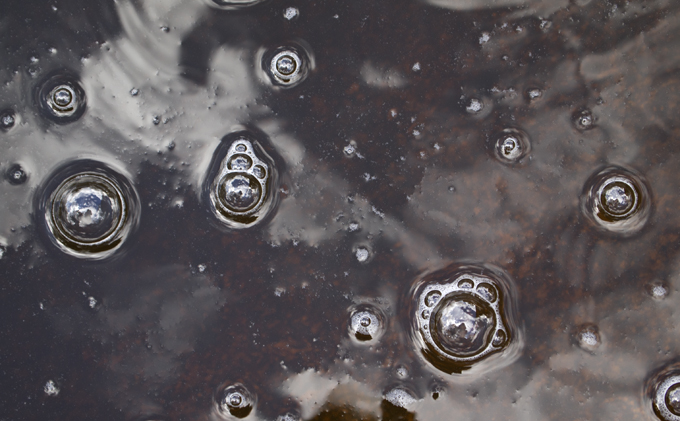
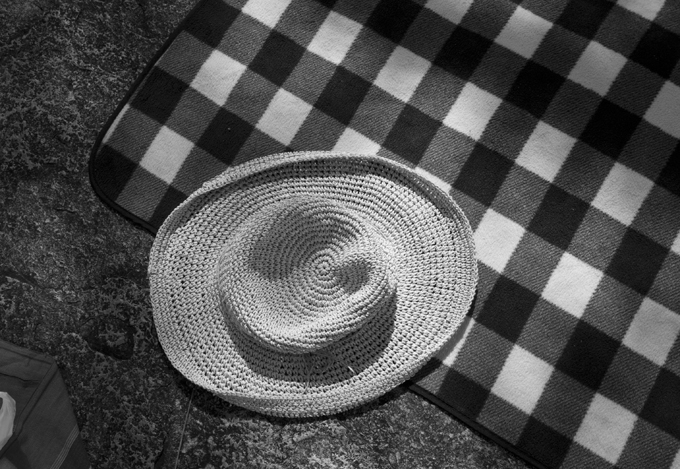
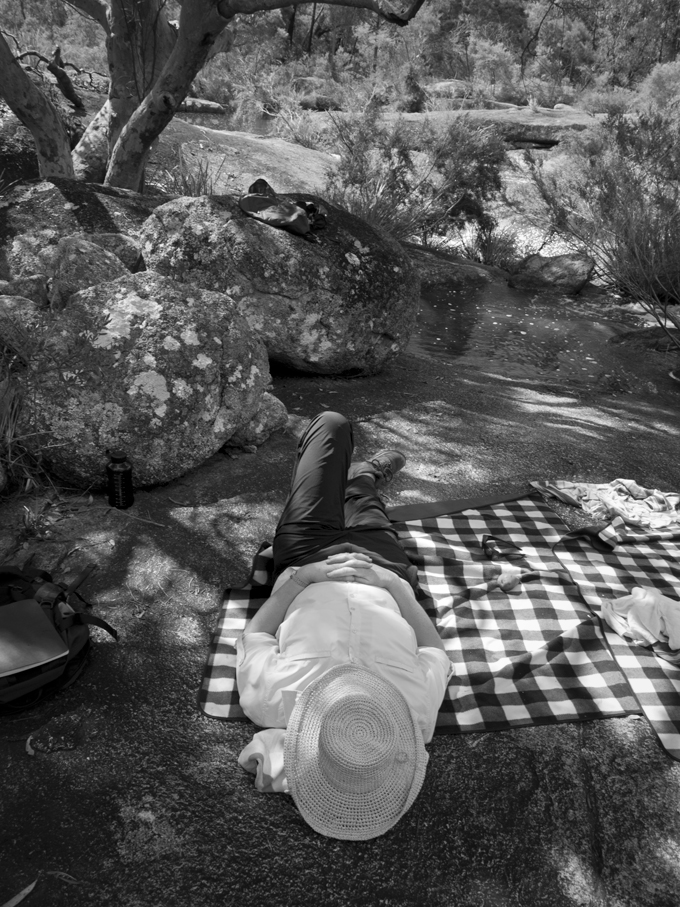
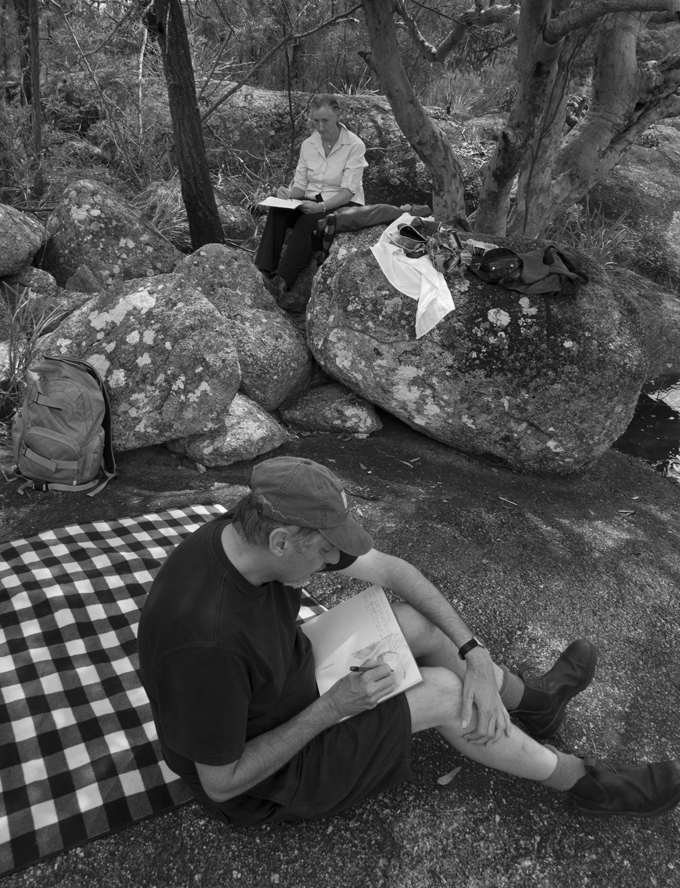
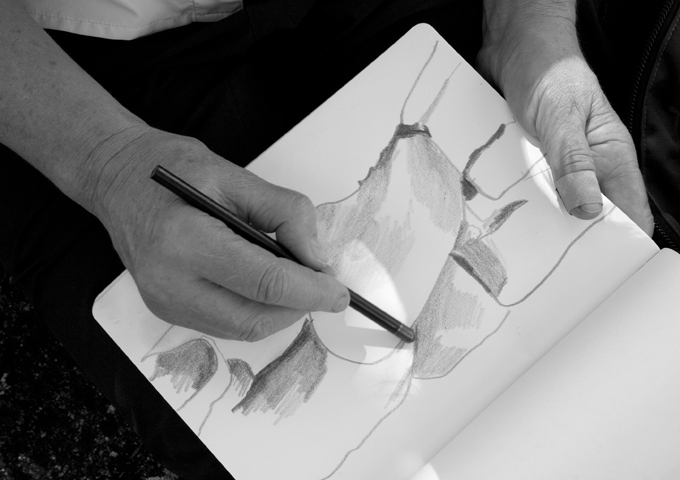
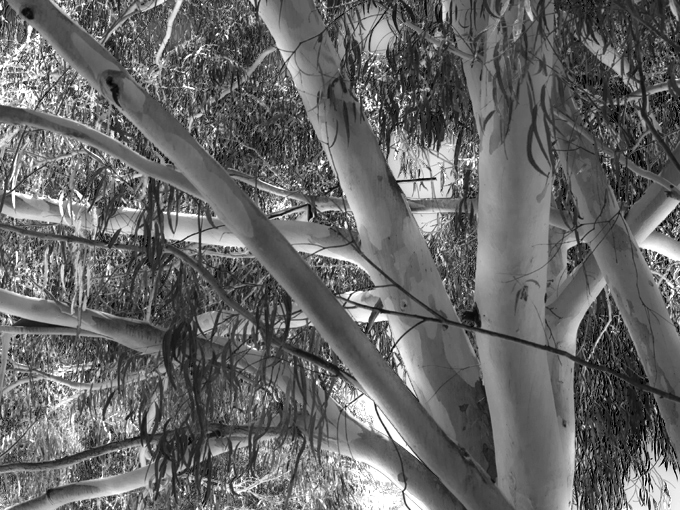
A few days away at Girraween celebrated a moment of clear sunny weather between weeks of inclement rainy and particularly miserable weekends. With water everywhere it was hard not to be compelled to image its flow and pattern. We shared this weekend with Felicity and relaxed in Nature’s place with fine foods punctuated by bouts of photography and drawing.
Feb 11: STORM LASHES Toowoomba – Blackout most of the evening
When the clouds get dark in Toowoomba these days we check the Bureau of Meteorology’s website to see what’s in store … Last year’s floods have made us sensitive to potential disasters. Today we checked BOM at 6.00pm as a storm appeared to be coming in from the west …
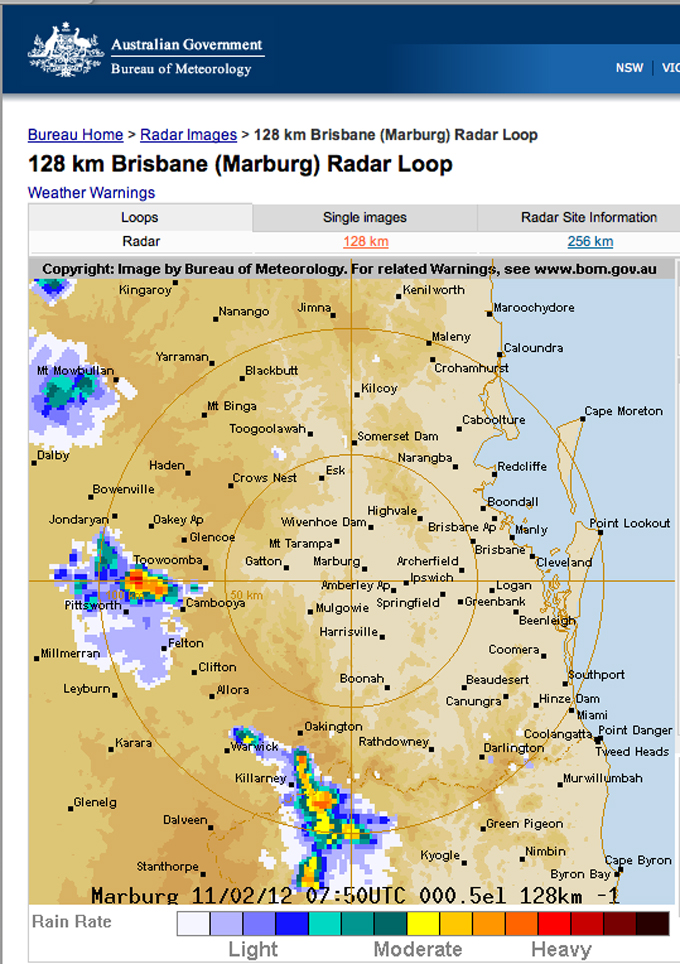
BOM Website 6.00.41sec 11-02-2012
Within a half an hour a severe thunderstorm hit Toowoomba and caused a power blackout lasting 3.5 hours. Just as well the MACs were charged …
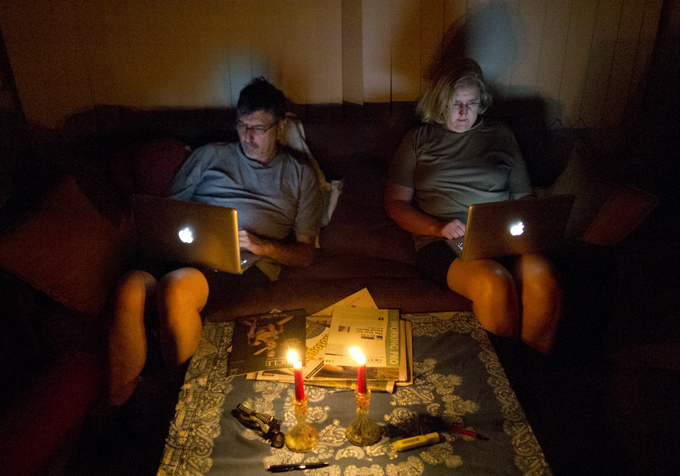
Doug and Victoria caught out after storm blacks out electricity
ALLORA SHOW: Bush Poets and passionate people
Telling living stories: Bush Poets and passionate people
FOR MORE PHOTOS OF DISPLAYS CLICK HERE!
Beyond the football and cricket ground there is a great Australian tradition of the agricultural show. In Allora recently we had the privilege to spend some time with a regional show – a show that had been running since 134 years. Doug judged the photography section and then we spent some time with the people and the exhibits that made the show an interesting and engaging event. These were passionate people busily supporting this local community event.
There were displays showcasing with their creative pastime pursuits and community projects. The local schools had creative displays; there were the hobbyist awards for hand made objects and Leggo sculptures. Also in the big shed were the usual competitions for the best cakes, scones, dampers and my favorite – the fancily iced arrowroot biscuit, the heaviest pumpkin and the best Dahlia and the woodwork and quilts displays.
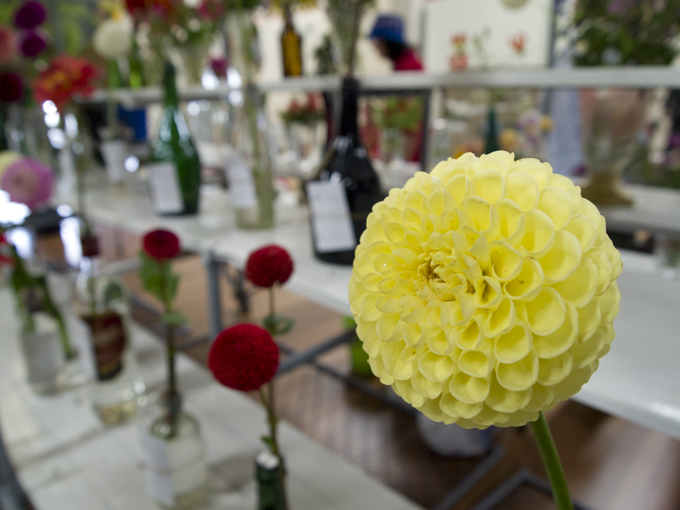
Allora Show - Best Dahlia
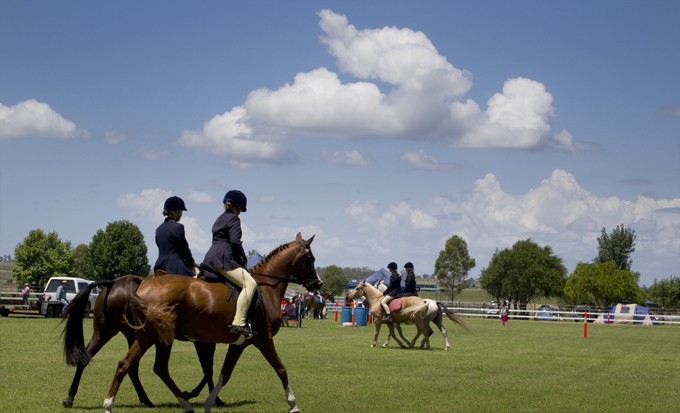
In the main oval there were suitably attired young girls with their horses in the dressage event. With their plaited hair matched the plaited mane and tails of the horses they competed with serious attention to the requirements of the event for the judge.
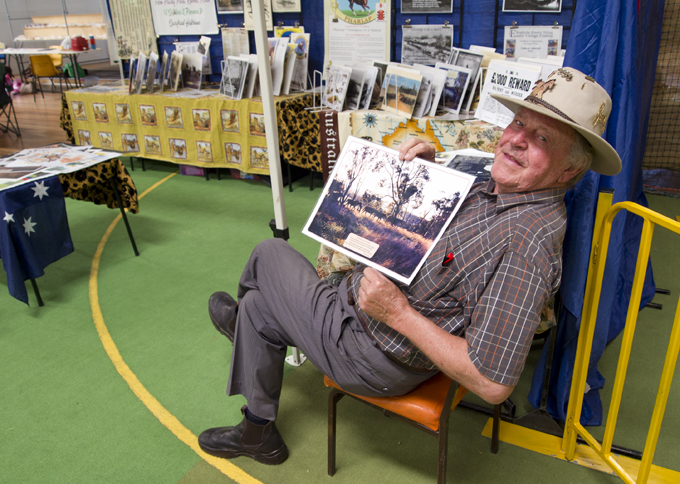
Lindsay Ashcroft with landscape photo and poem (see below) Photo: Victoria Cooper
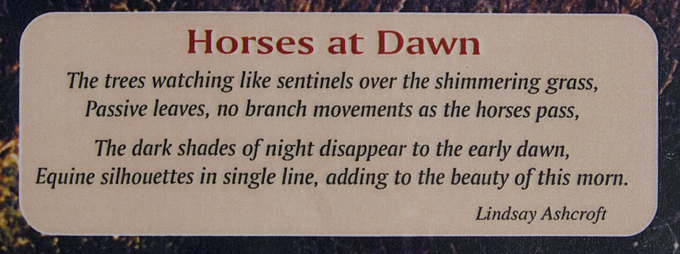
Lindsay Ashcroft poem
Lindsay Ashcroft, the bush poet, seasoned regional traveller, with his lyrical repartee made impromptu performances to our group of workers as Doug judged the photos. He passionately recited his poems of Australian sentiments that referred to iconic symbols like the poems of Banjo Patterson. Photographs taken by Lindsay or a graphic and artwork that inspired the words accompanied each poem, were available for purchase.
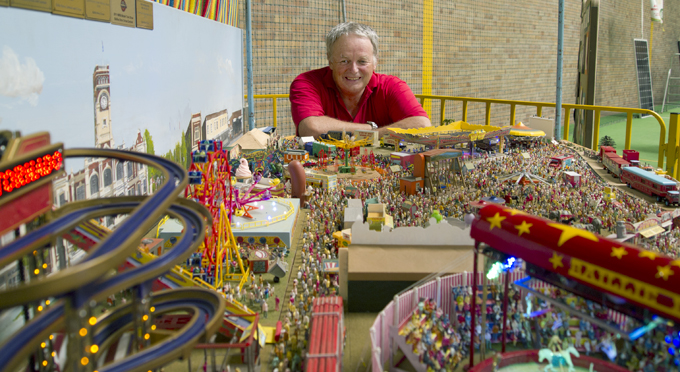
Baillie Boys Show Photo: Victoria Cooper
Beside Lindsay was a miniature show, a scale model carnival, with a painted background featuring Toowoomba buildings. A trio of enthusiasts, the Baillie Boys Shows, created this as a departure from the usual model trains display. They are now working on their next venture. You can see more of their work on their website, www.baillieboysshows.com , where they show the construction of various elements and display venue schedule.
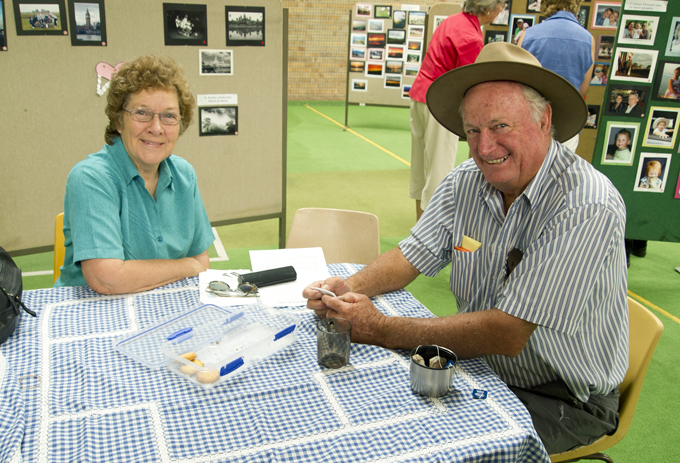
Margaret Phelan and Chief Pavillion Steward Barrie Geitz
It was fun to spend time with these people, their passions and their stories.
FOR MORE PHOTOS OF DISPLAYS CLICK HERE!
Words and photos: Victoria Cooper
FLOOD DONATION: ‘Toowoomba Water’ book to SLQ
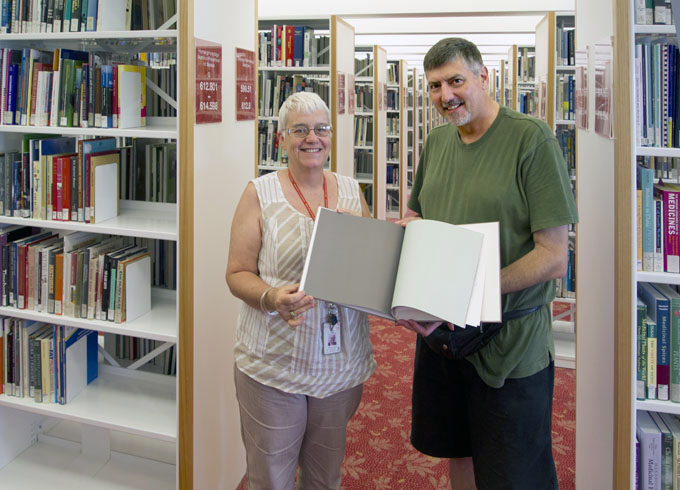
Helen Cole + Doug with the book 'Toowoomba Water'
At a time when all Queenslanders were reflecting on the first anniversary of the devastating floods of January 2011 it was fitting that I was able to make a presentation of the book Toowoomba Water to the Australian Library of Art at the State Library of Queensland.
The book features a response to flooding in Toowoomba that took place on January 10th. The book was designed to be output using Australia’s premier print-on-demand supplier – AsukaBook using their Book Bound Hard Cover 10″x10″ format.
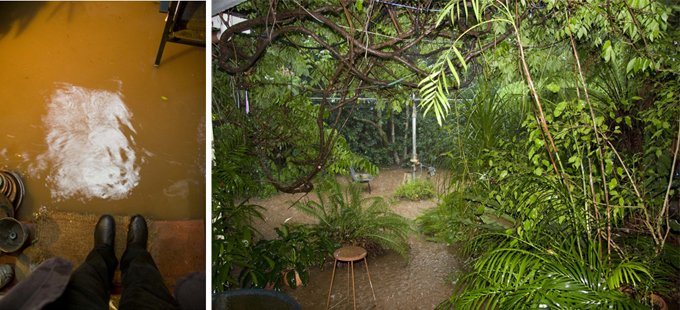
On the studio step + our 'rainforest' backyard
Water came within 20cm of our studio and a brown torrent flowed into our garden and under the house. At the bottom of our street a massive flow of water along East Creek took the lives of two people.
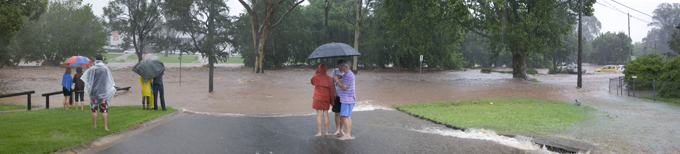
East Creek in flood at the bottom of Burns Street
The book makes a commentary on the flood by responding to an aspect of the event that was ‘sampled’ and then brought together to form the book – it is an unusual approach to the documentation of place. Reference for this methodology comes from the work of Marcel Duchamp‘s Paris 1919, Sol LeWitt’s colour grids and Bruce Nauman‘s L.A. Air.
The donation was accepted by Helen Cole, Senior Librarian, Australian Library of Art, State Library of Queensland.
SEE THE BOOK: http://www.cooperandspowart.com.au/2_PLACES/OtherBooks/Twba_Water_Flip/TwbaWater-Flip.html (Note: This link is to a Flash Flipbook that may not play on all viewing devices)

 wotwedid