Archive for the ‘Meeting People’ Category
STUDIO WEST END: REPRISE
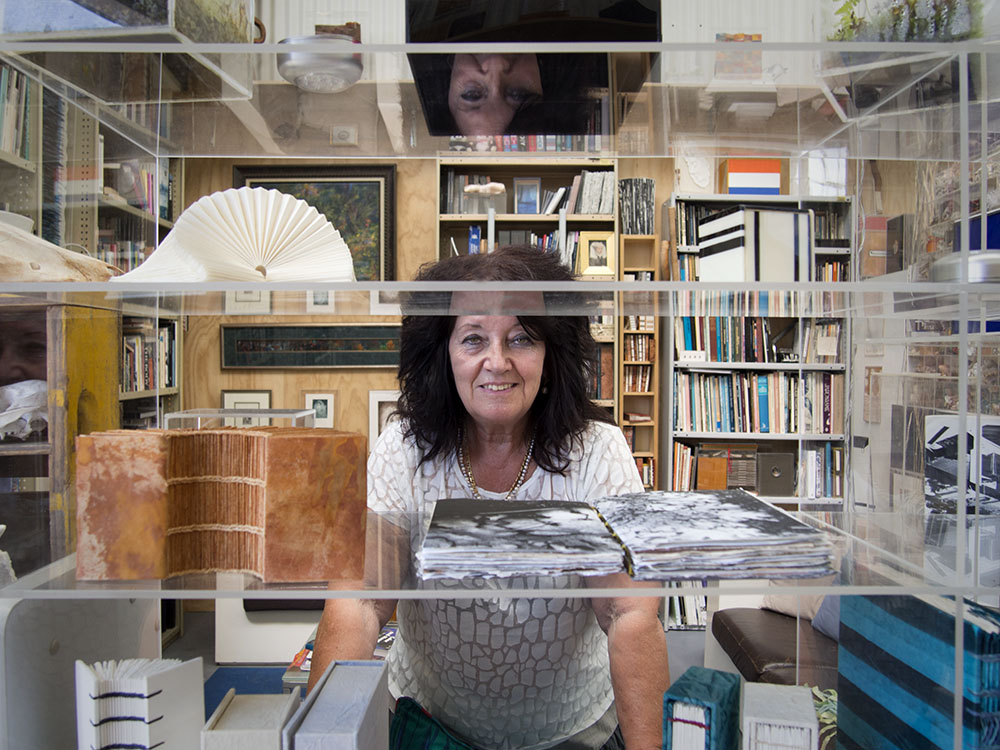
Adele Outtridge photographed in the new Studio by Doug Spowart
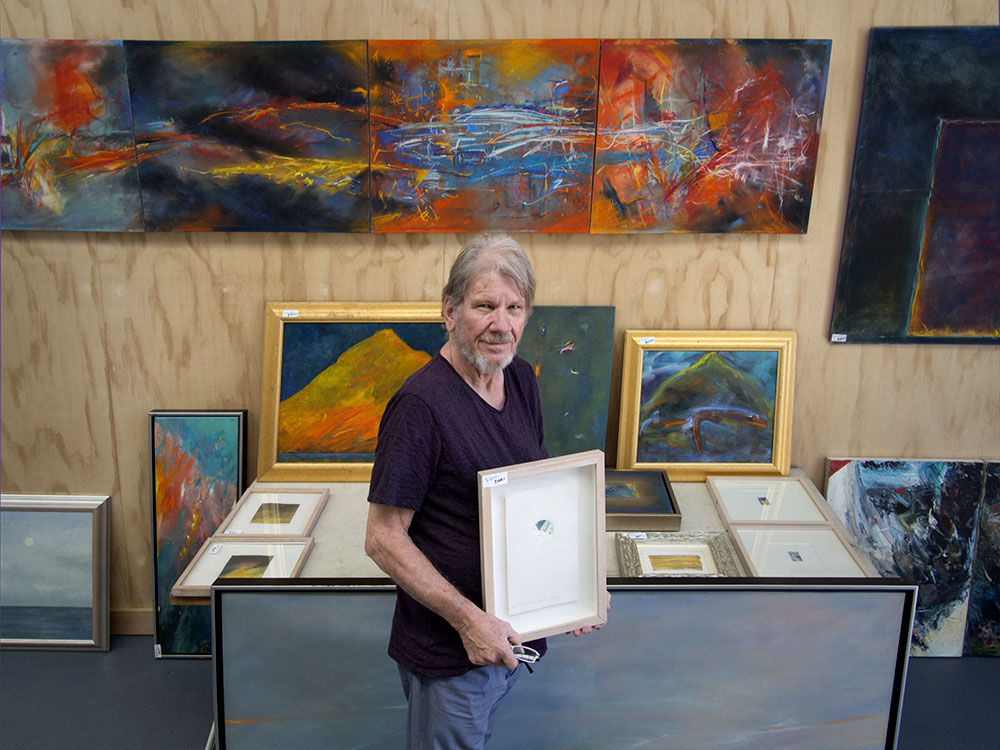
Wim de Vos photographed in the new Studio by Doug Spowart
Adele Outteridge and Wim de Vos are like ‘family’ for many artists and creatives in Queensland, and I’m sure around Australia and beyond. Their Studio West End has provided a space for artists to access printing technologies, be supported by mentoring and teaching provided by Adele and Wim, and also connect through the social meeting place that the studio was.
Over the years both Vicky and I have connected with them in many different ways; as co-teachers in an art college, as collaborators on art projects, attending events that each other had organised, learning and sharing skills and, at times, just sitting around – as other do – talking about art and artists…
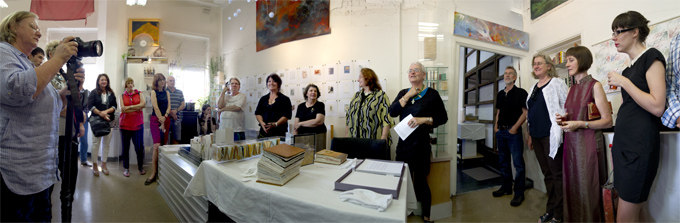
Helen Cole opens the Studio West End artists book show Photo: Doug Spowart
Adele and Wim have for many years operated their business Studio West End in the suburb of West End in Brisbane in an old soft drink and later and ice-cream factory. They made these places little palaces of art, inspiration and creativity. The workshop was often converted into an exhibition space and example of which would be the project launch of EX LIBRIS: WHO OWNS THIS BOOK
However the creeping menace of gentrification and the scourge of massive high rise development meant that earlier this year they had to pack up and leave their premises in the ABSOE building.
Vicky and I attended the last day party on the 23rd of April and I made some photographs of the state of the studio and its conversion into neat stacks of crates on pallets. What follows is a small selection of the ABSOE Studio West End wake…
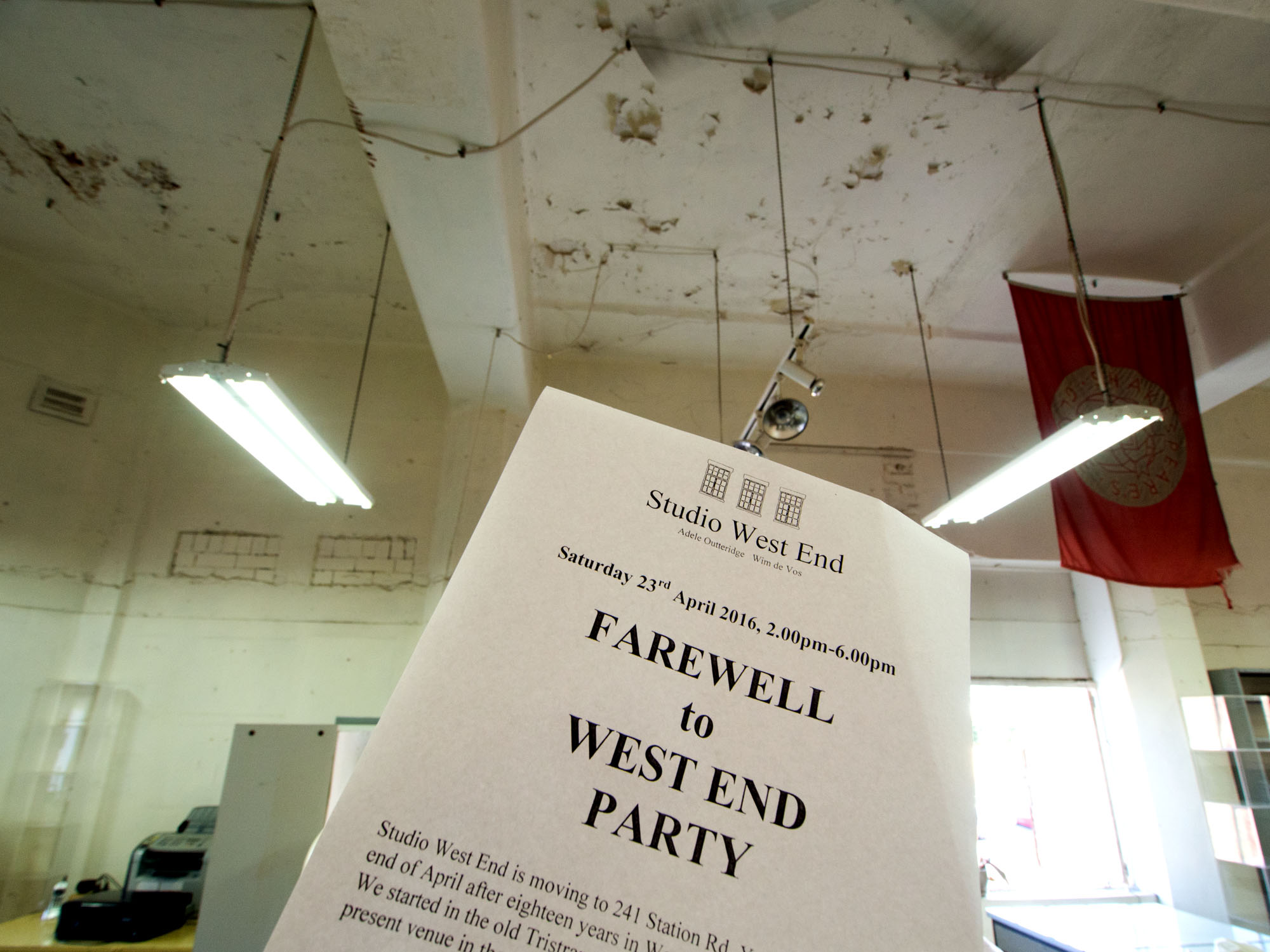
Invitation to the Farewell Party
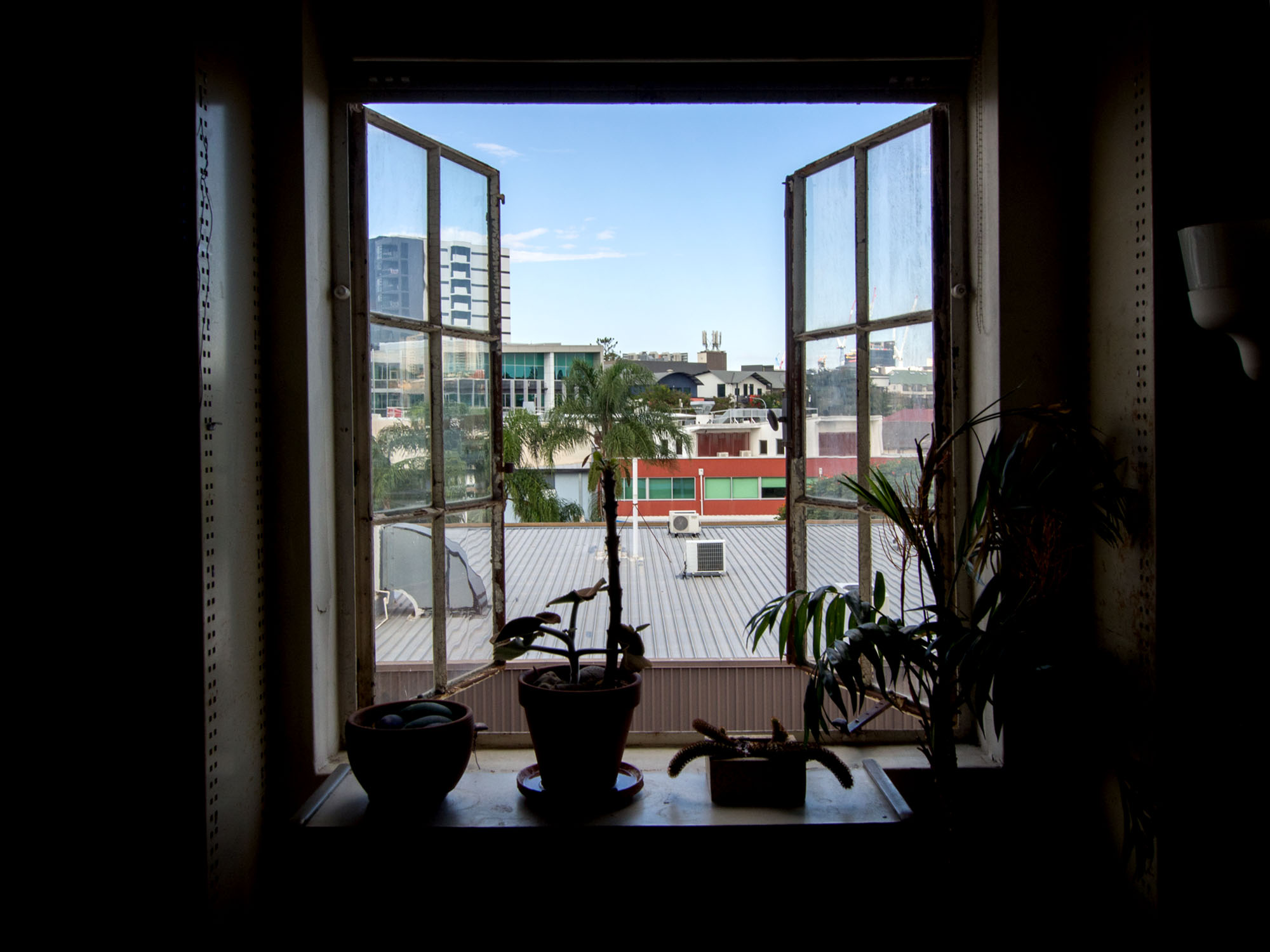
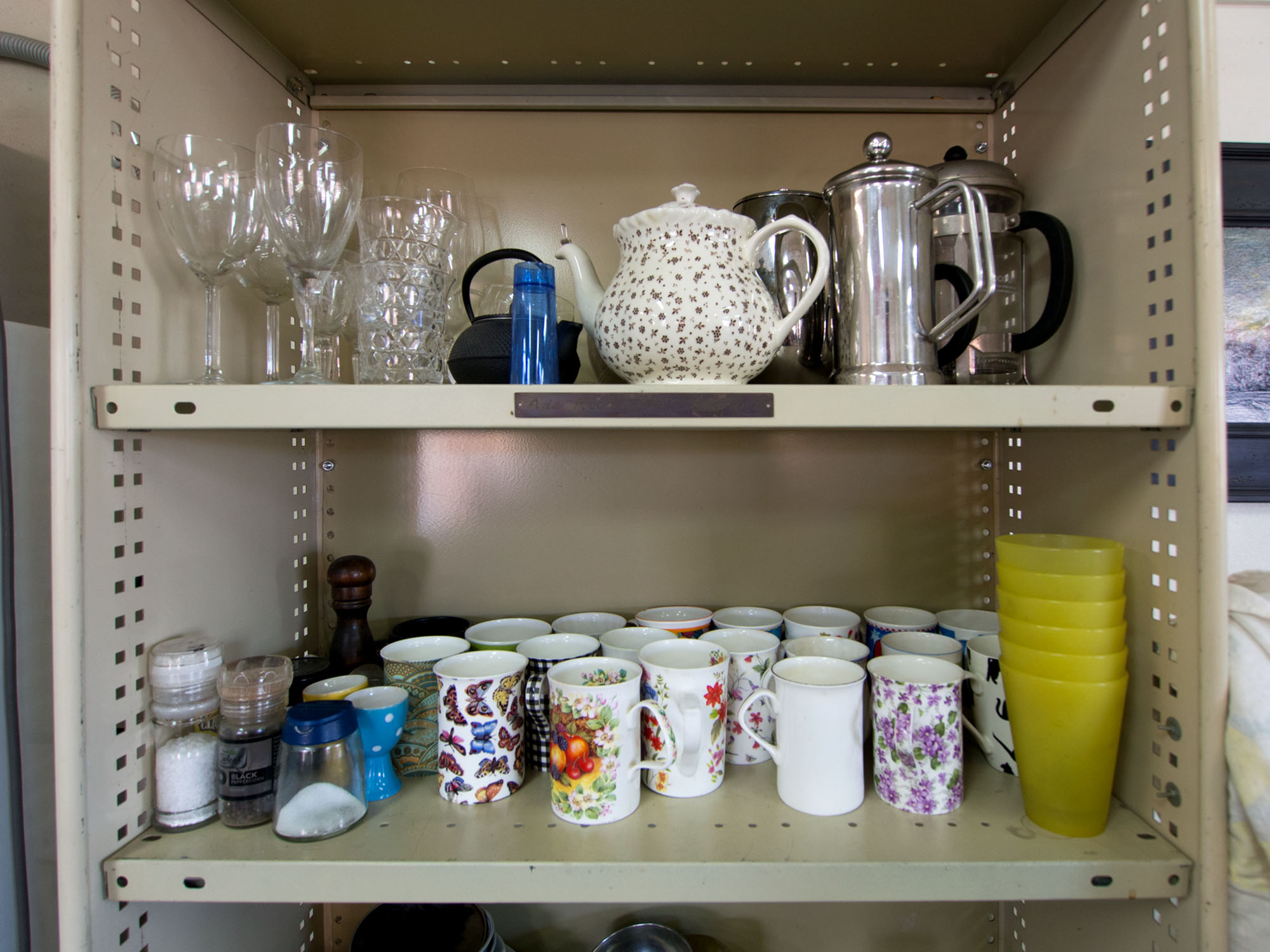
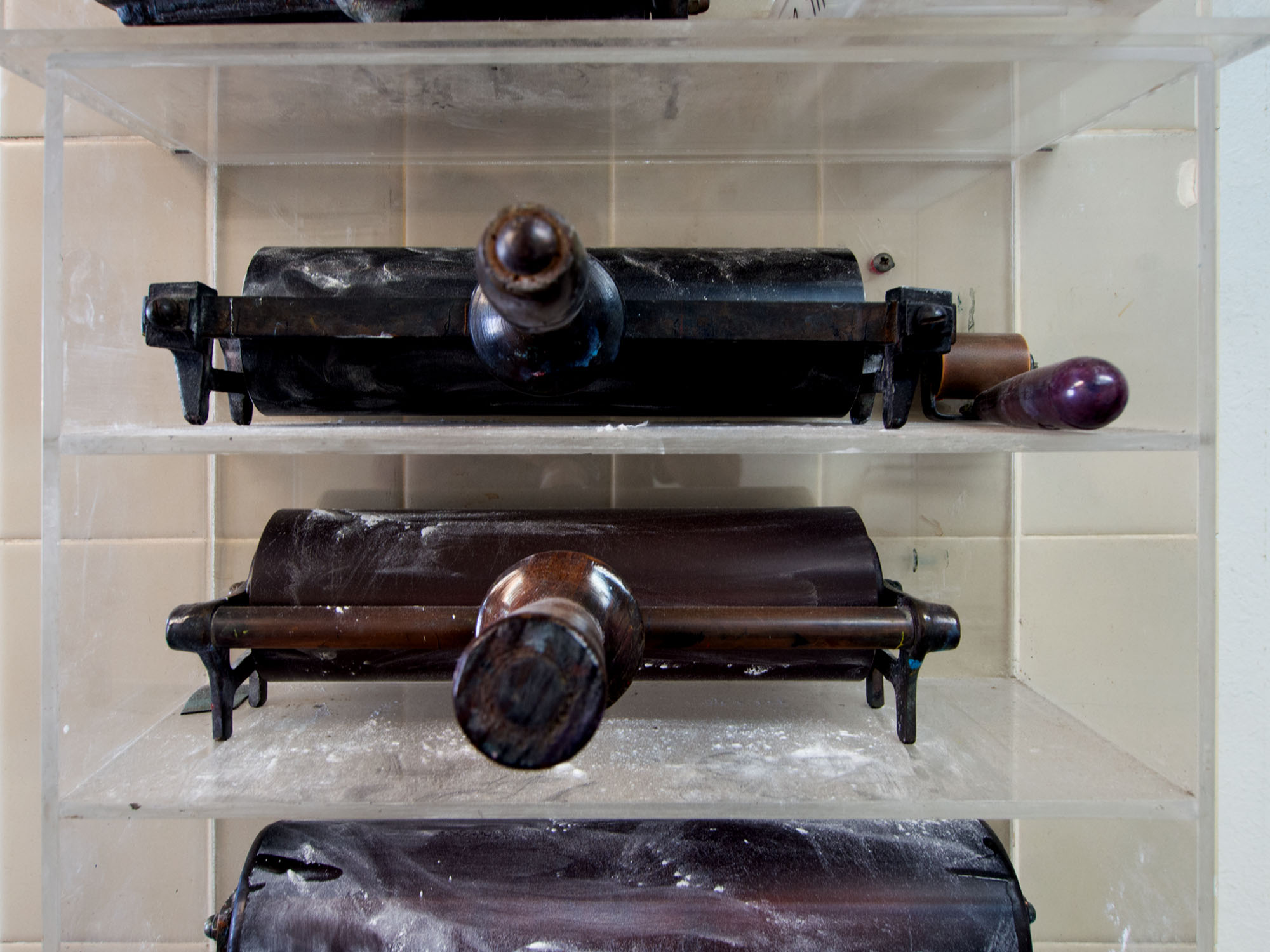
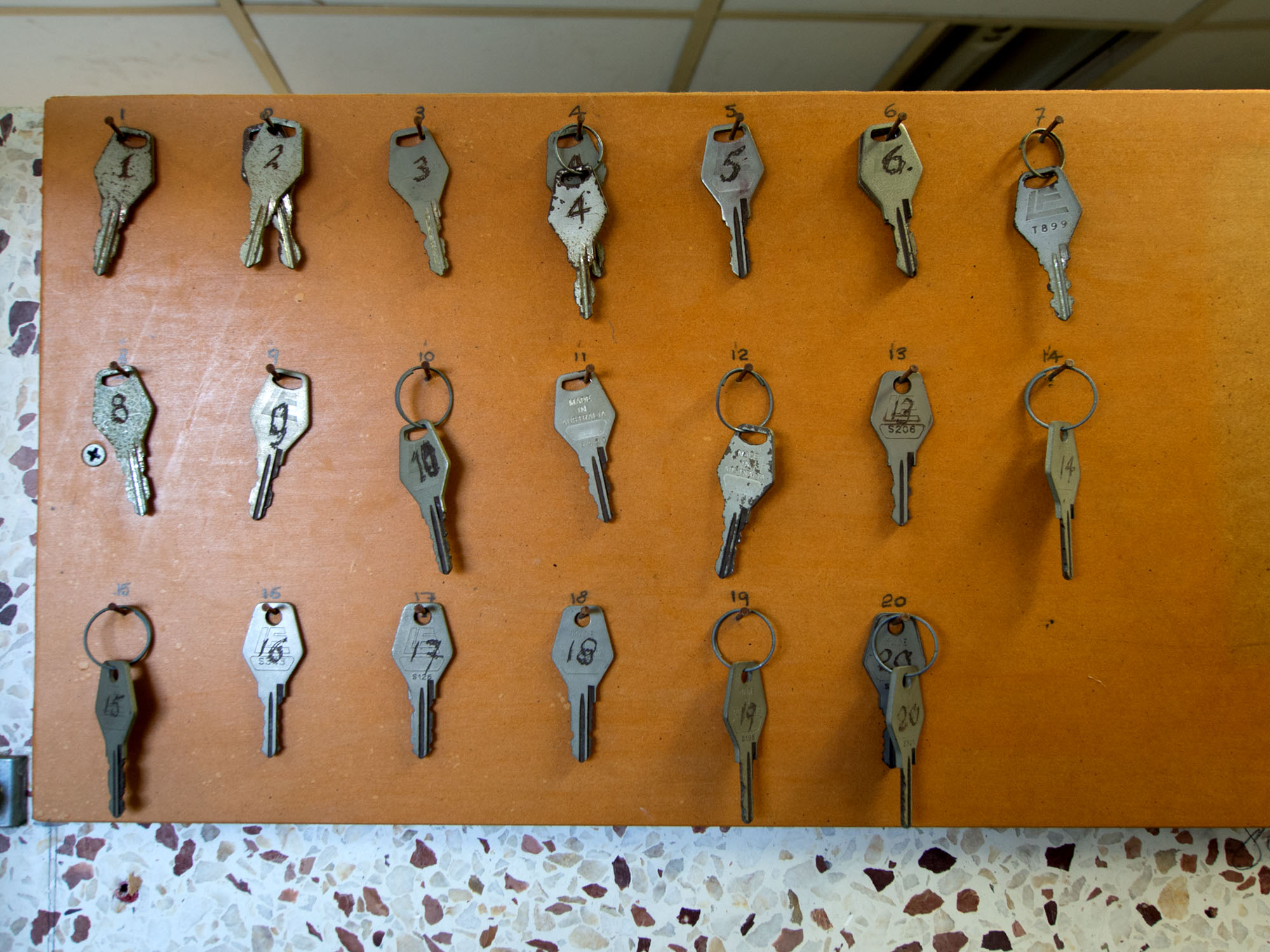
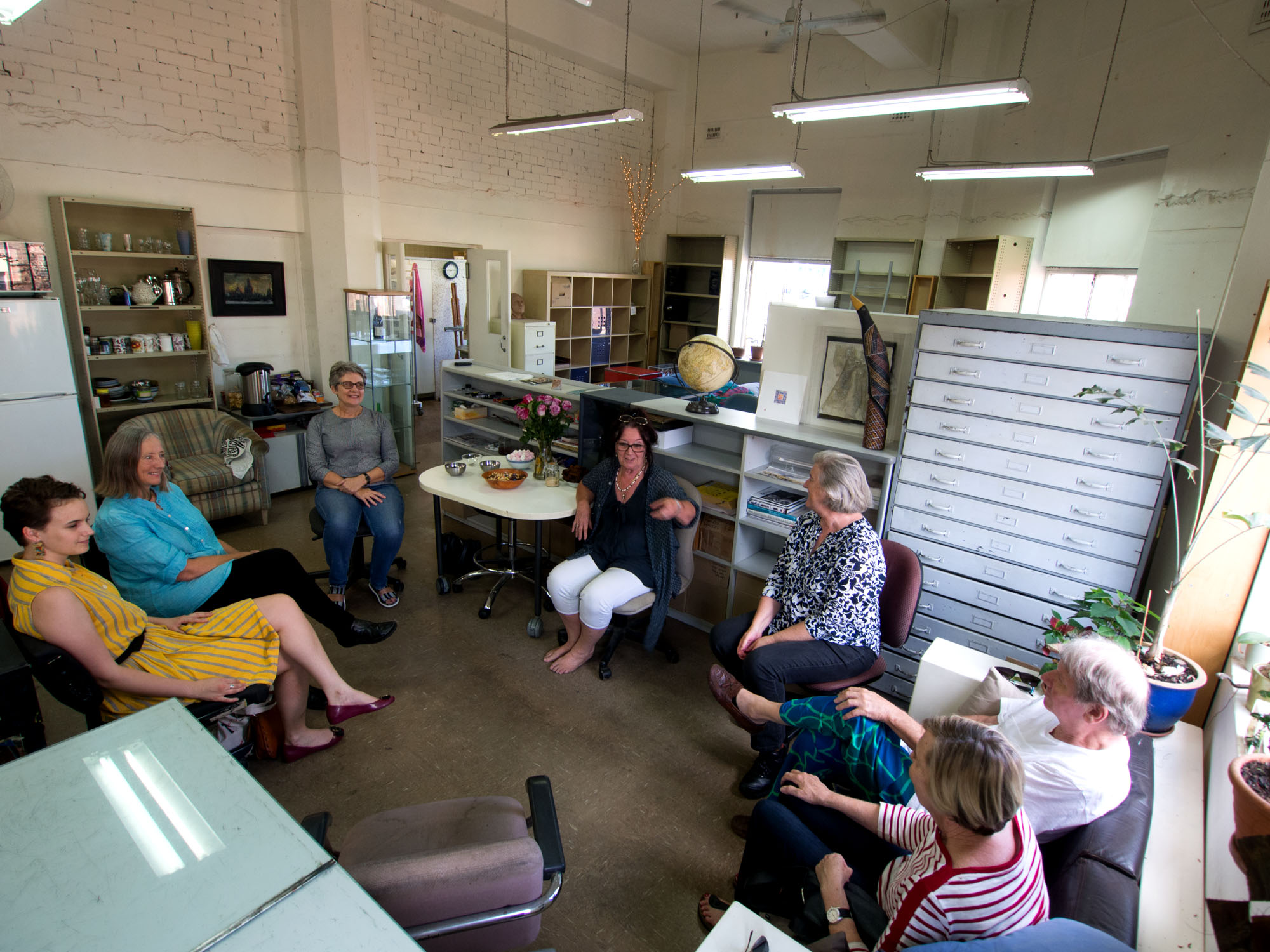
The farewell Absoe Building wake…
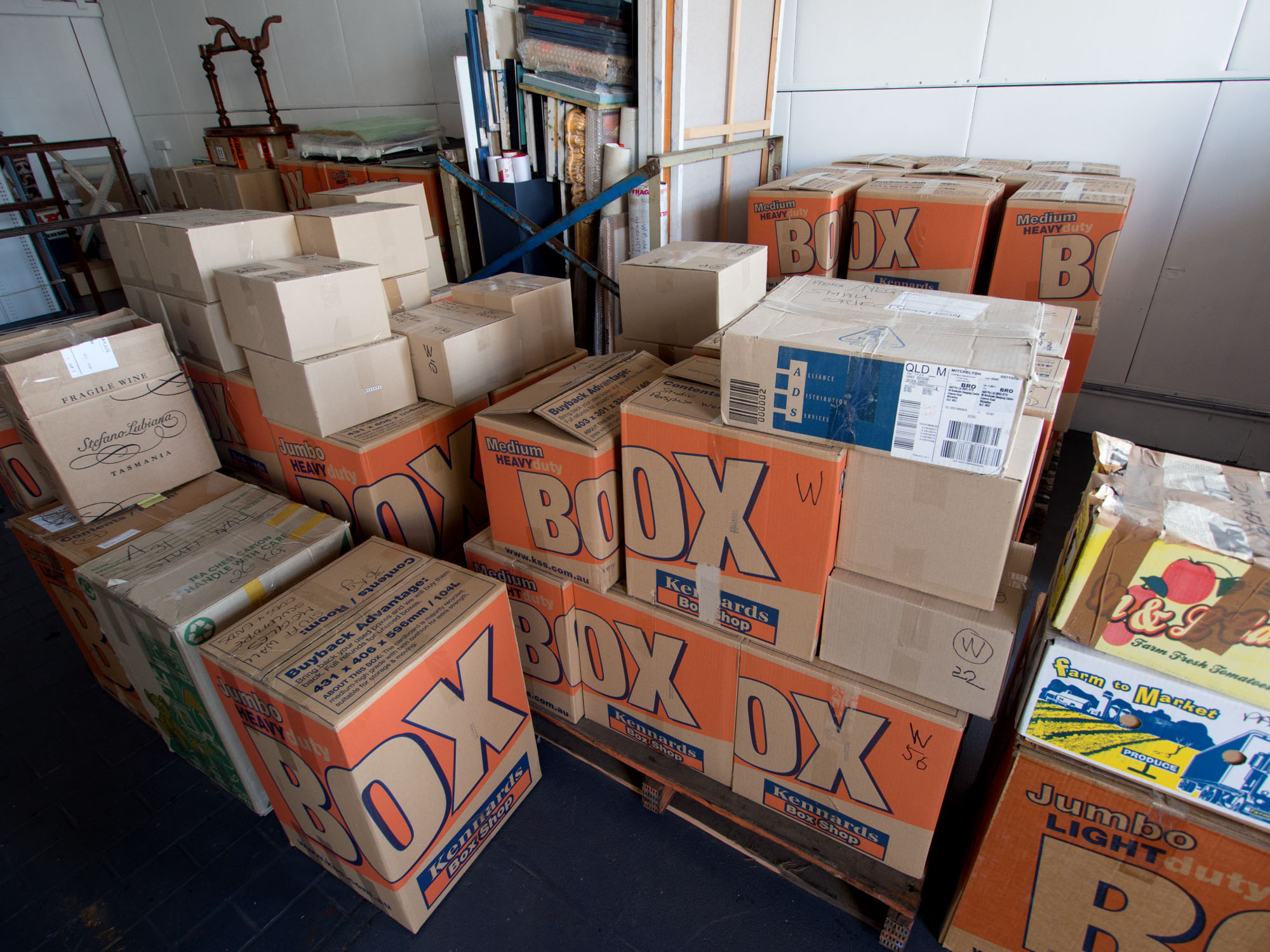
Moving out of West End
On October 30 Adele and Wim re-opened STUDIO WEST END at a new location –
241F Station Rd, Yeerongpilly 4105. Come to Gate 4, YCP (Yeerongpilly Corporate Park)
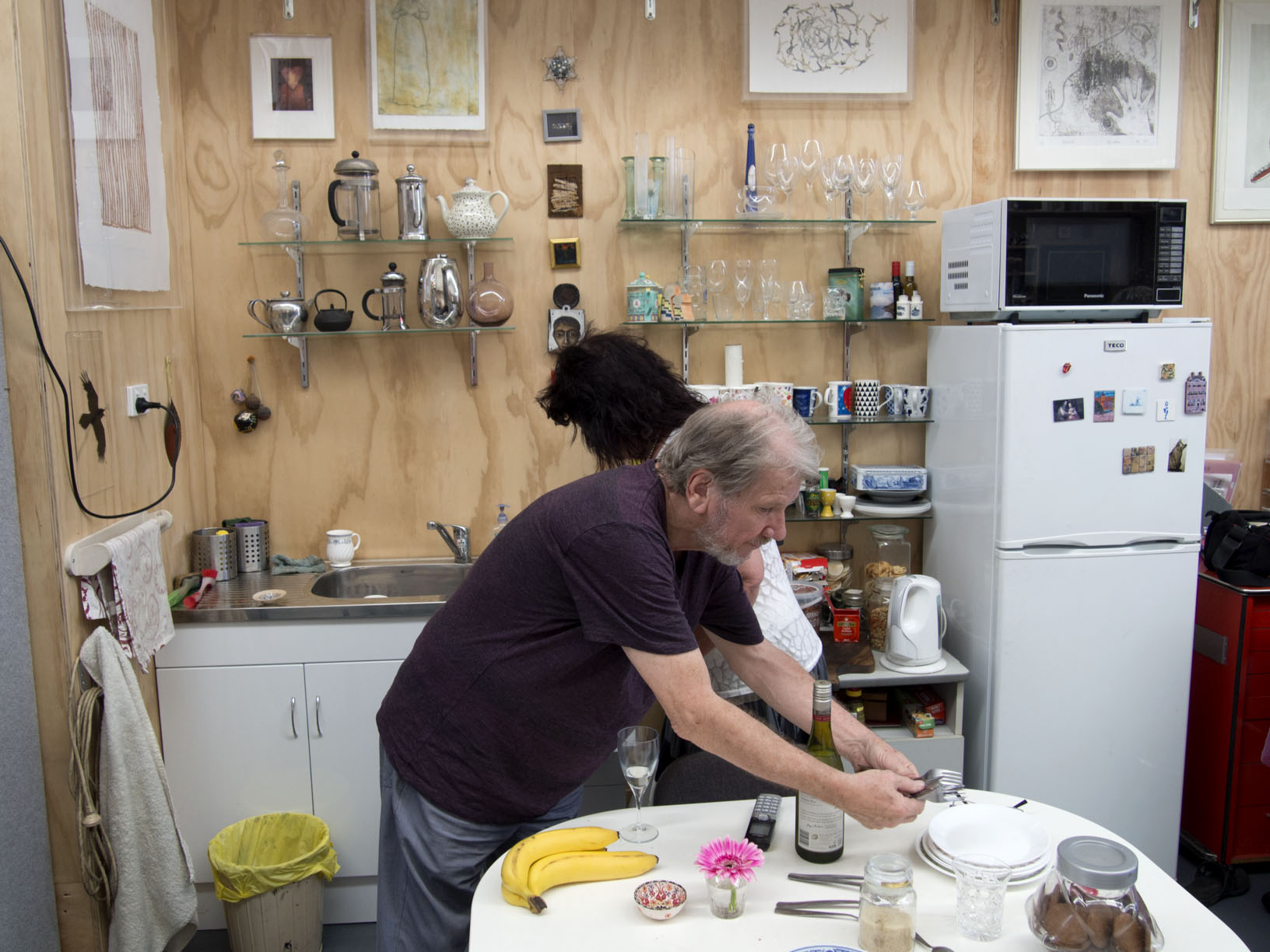
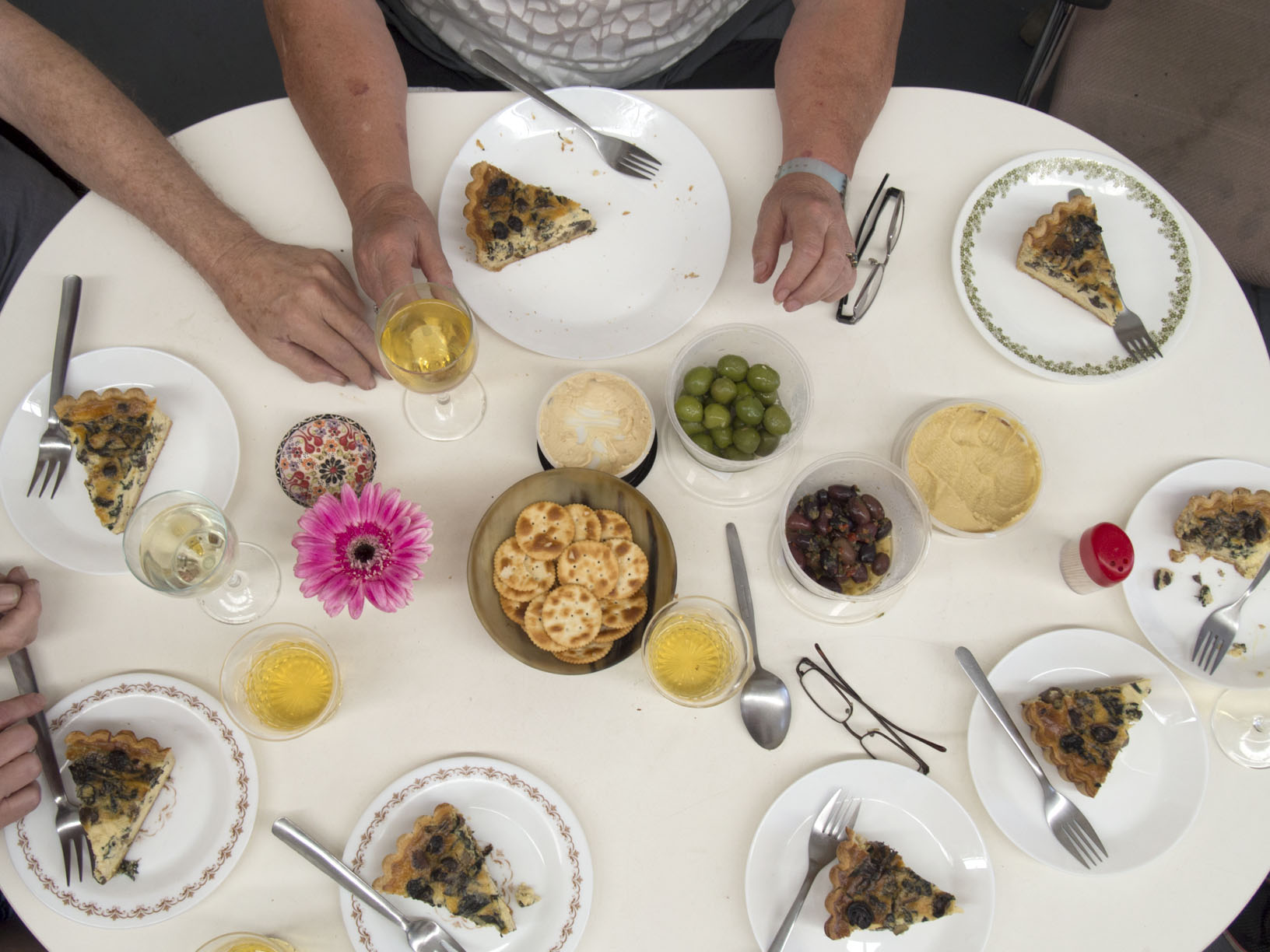
A large opening party was held on Friday evening with the new consecration of the new studio being performed by artist and raconteur Janet de Boer OAM. Acquaintances and friends were invited to visit the studio over the weekend and we went along for lunch the next day. We wish them all the best for the Studio’s continued operation.
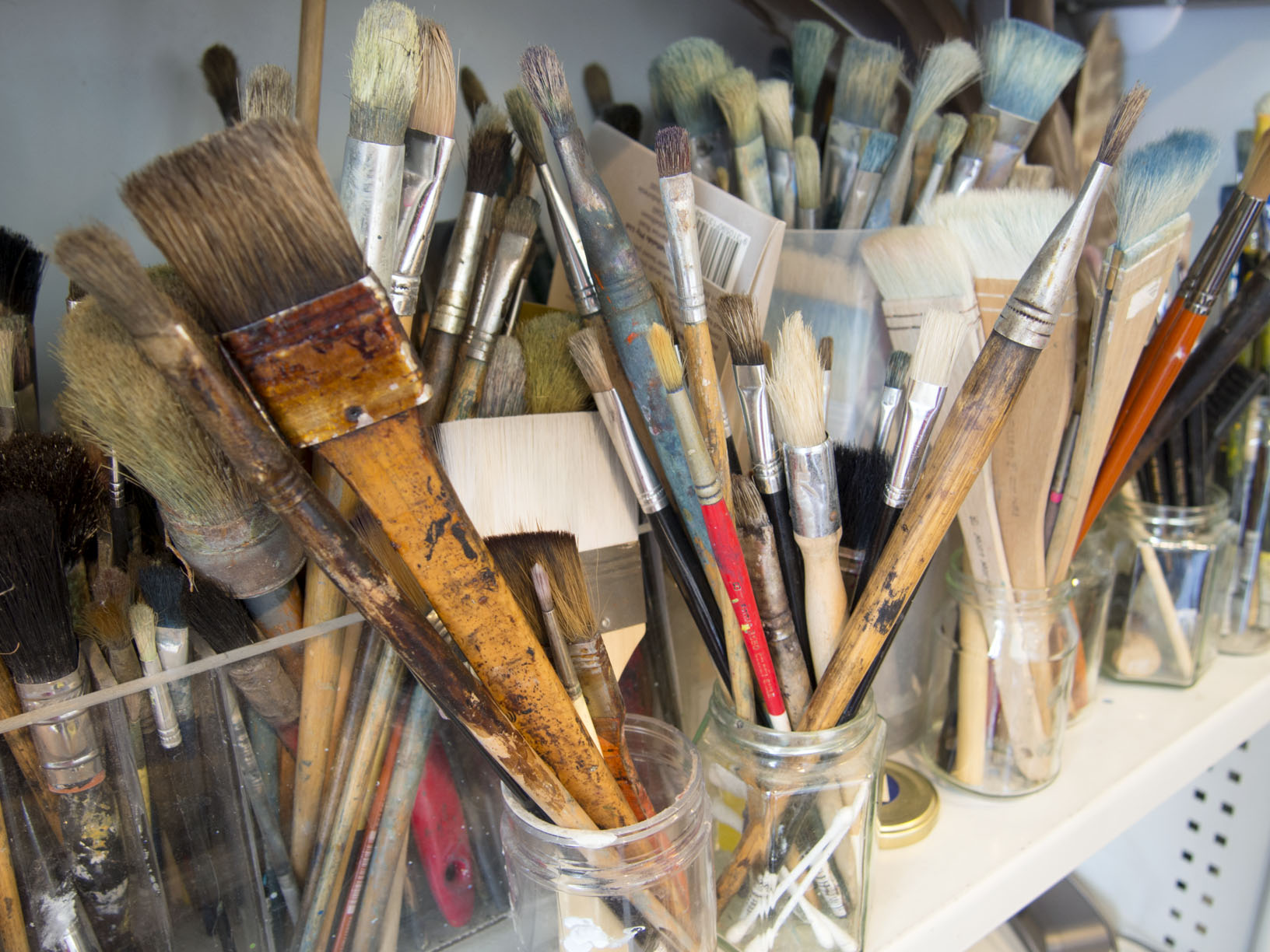
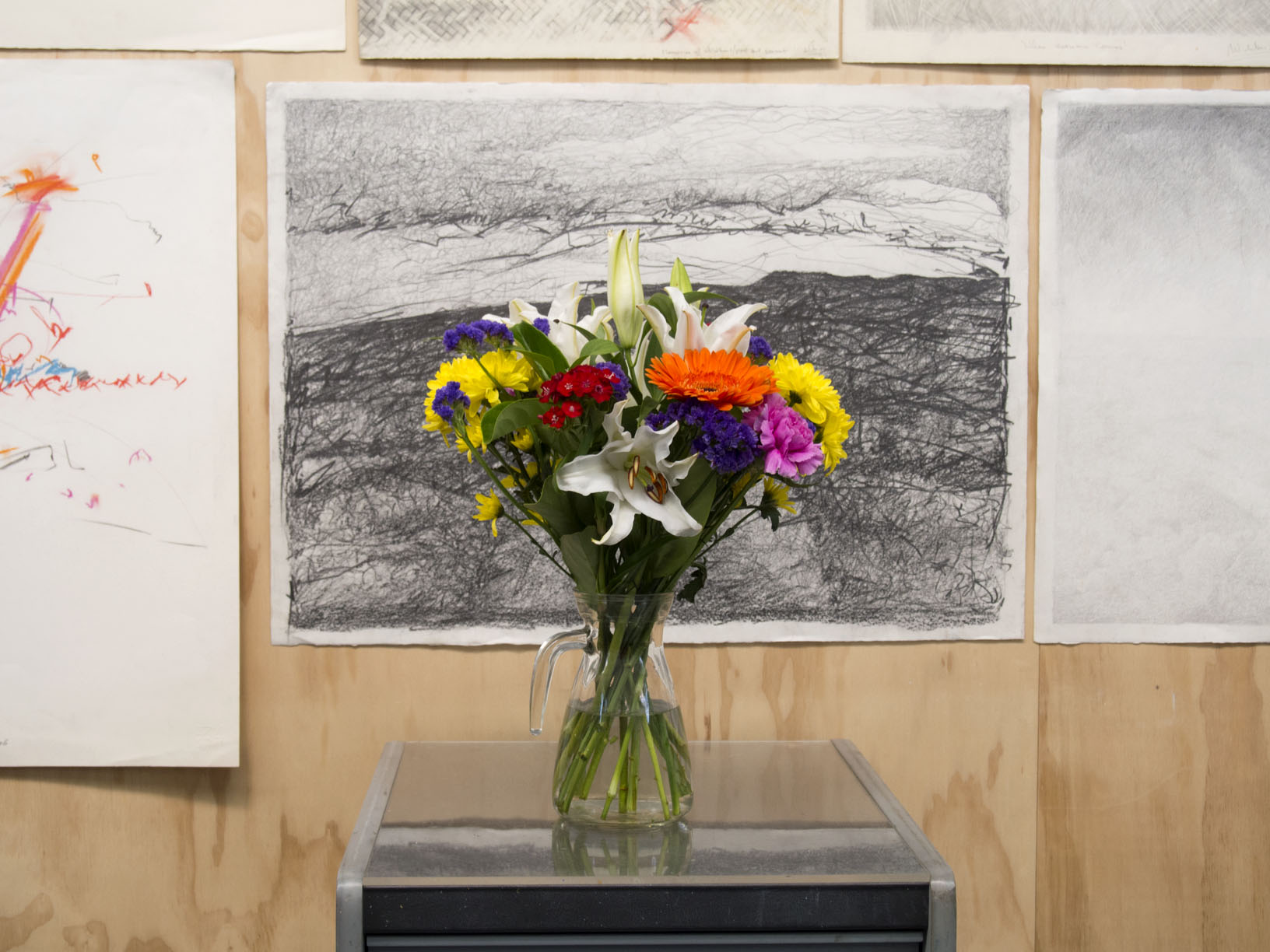
What follows is a documentation of the new space and its migration into a new space for art making, teaching and mentoring artists…
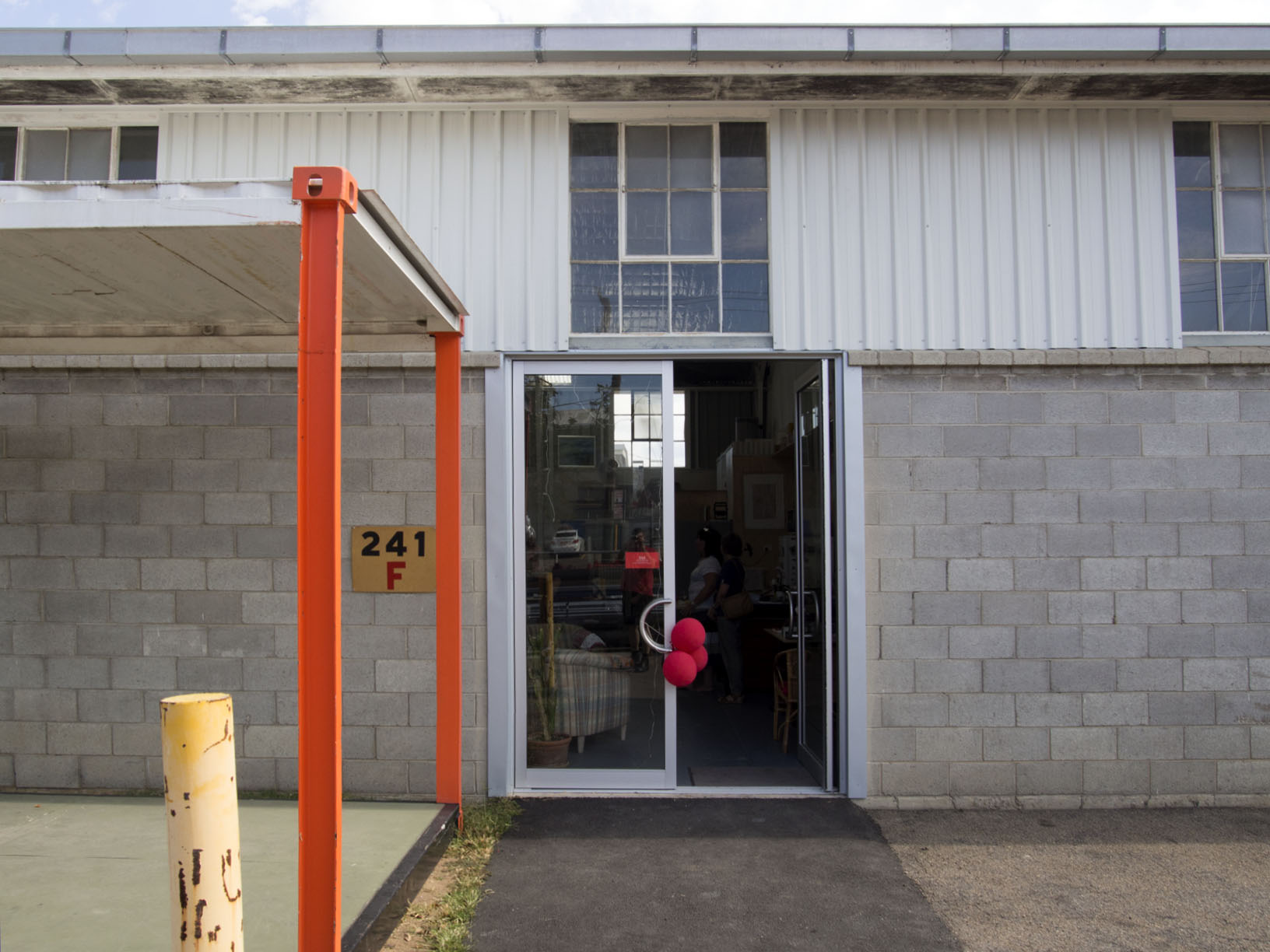
The NEW Studio West End
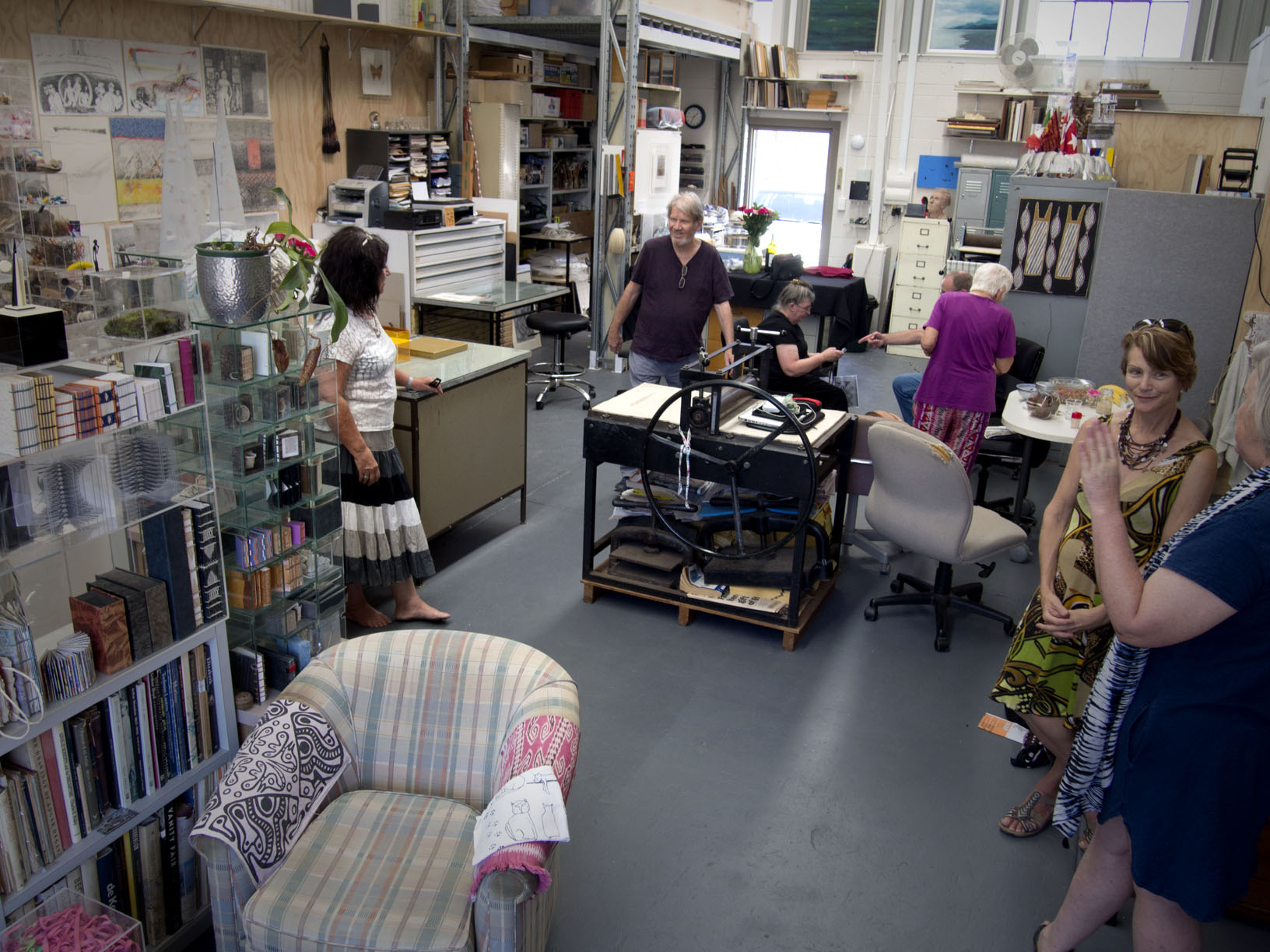
In the new Studio West End
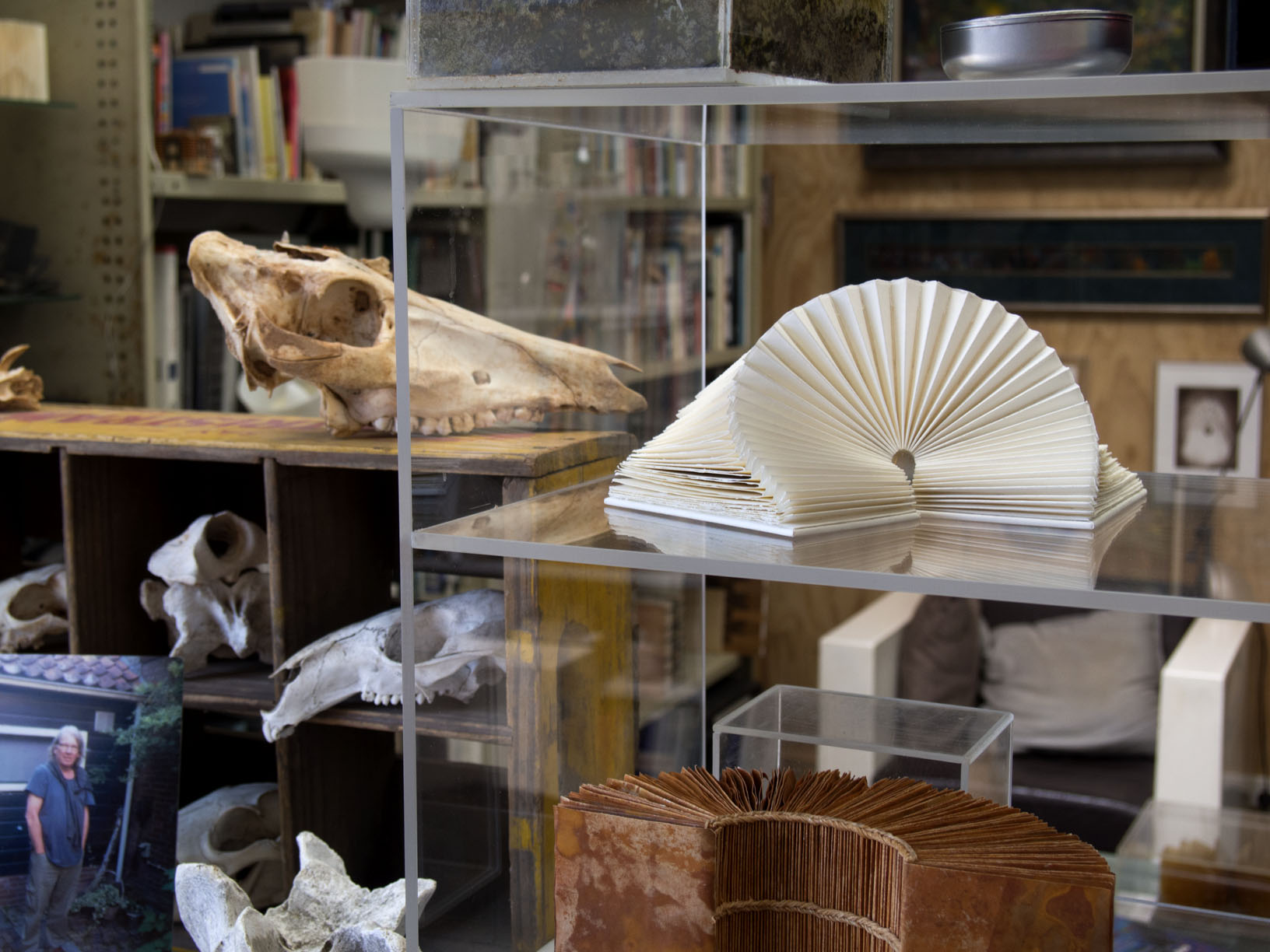
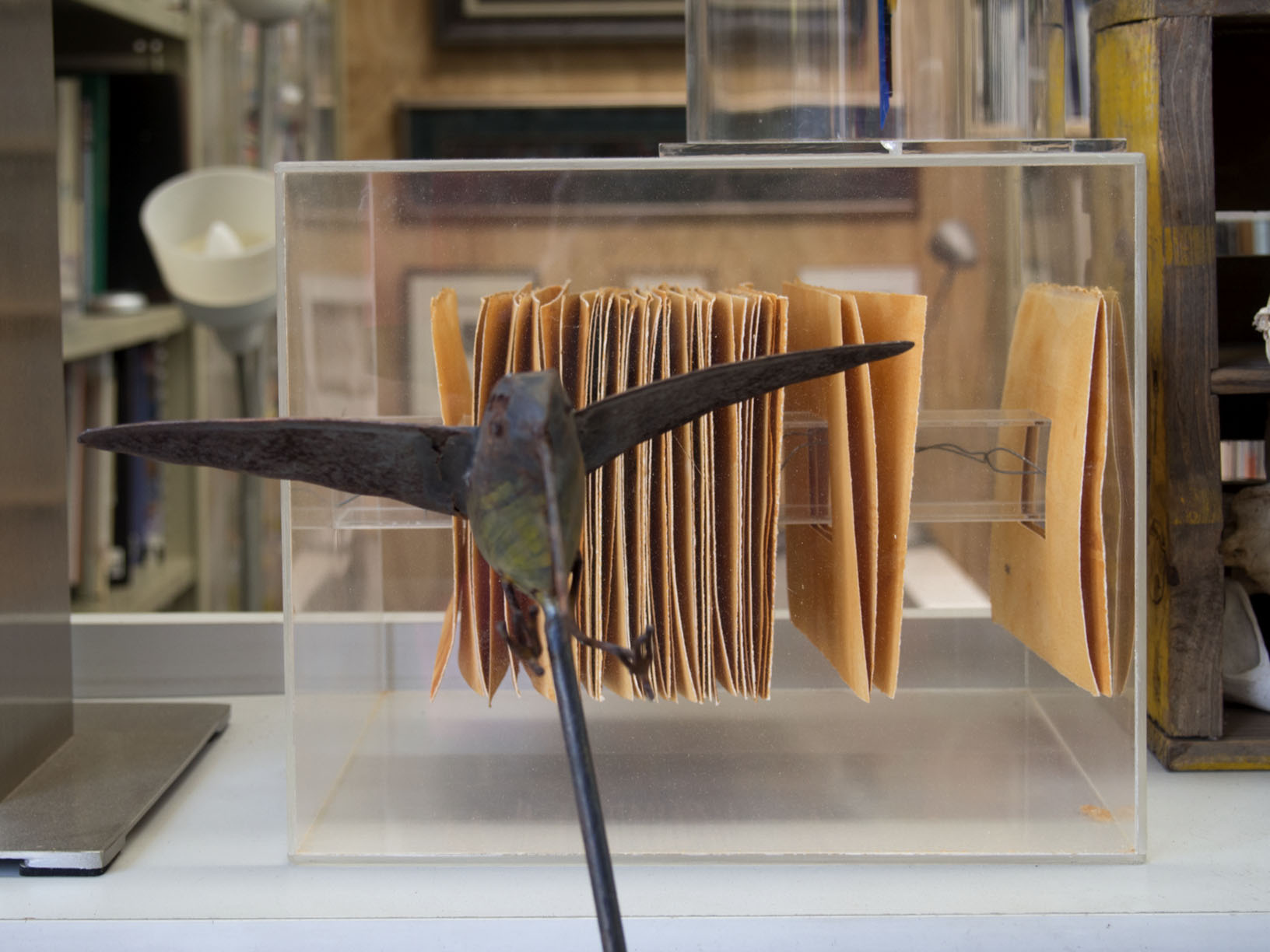
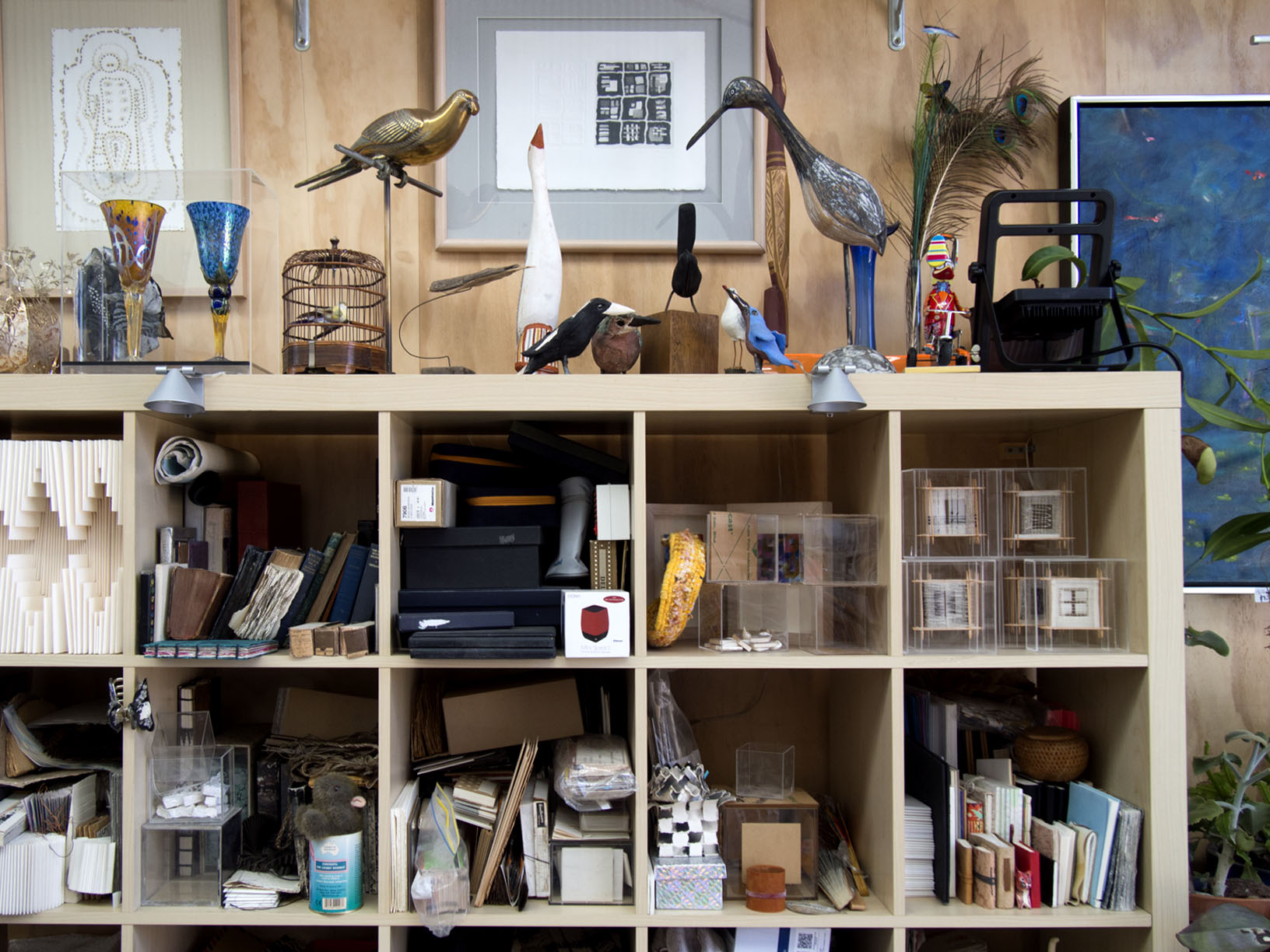
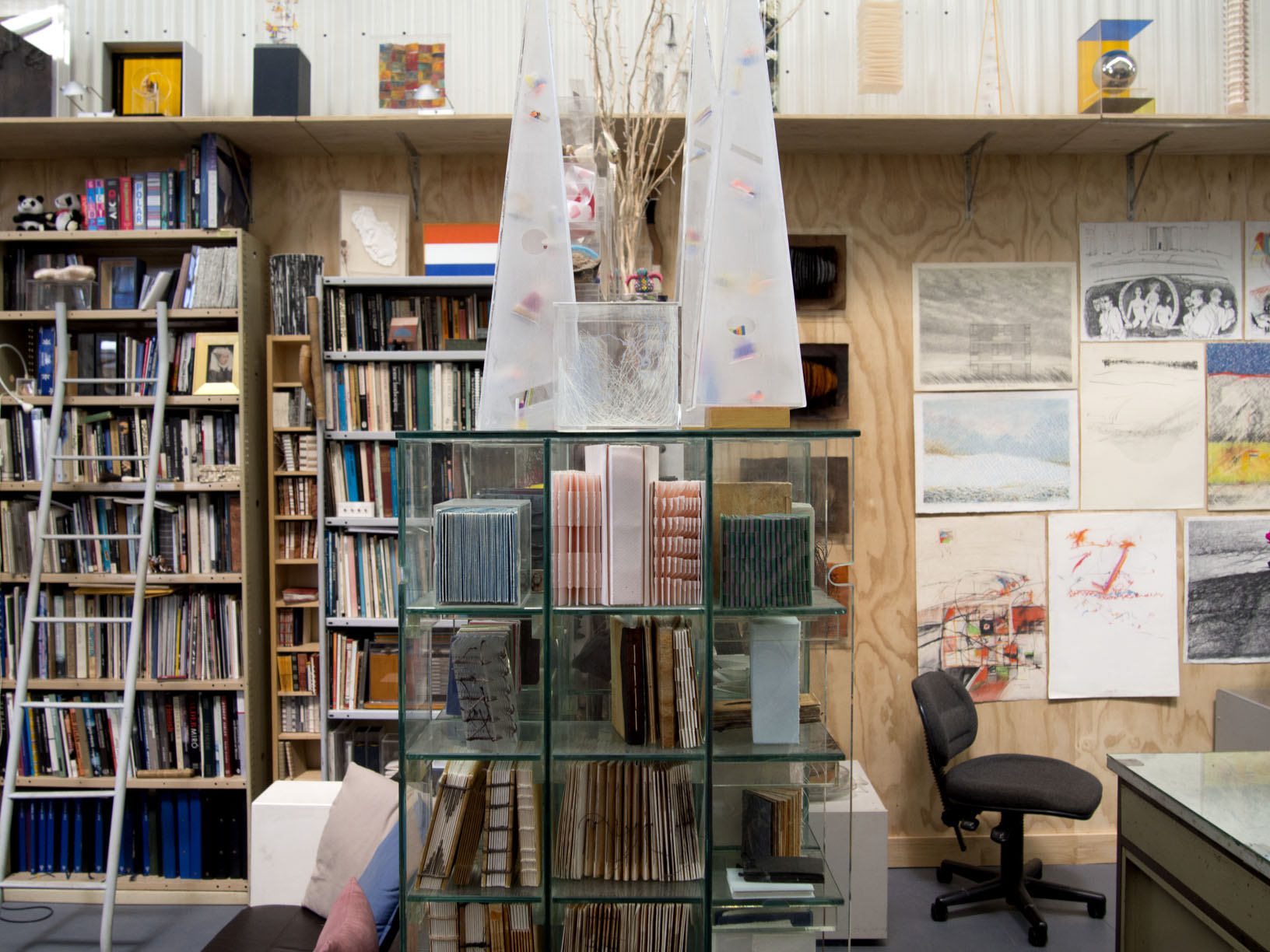
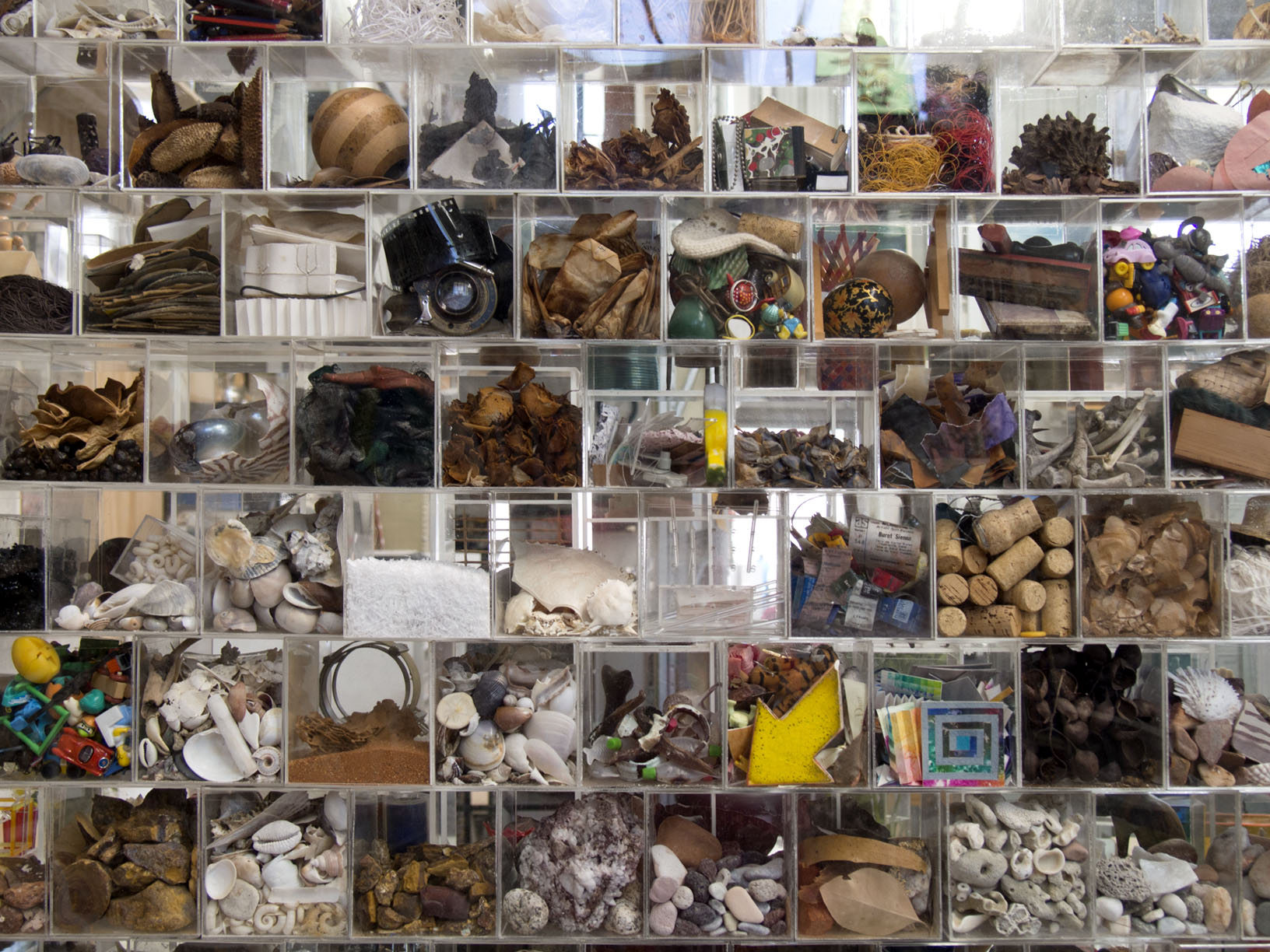
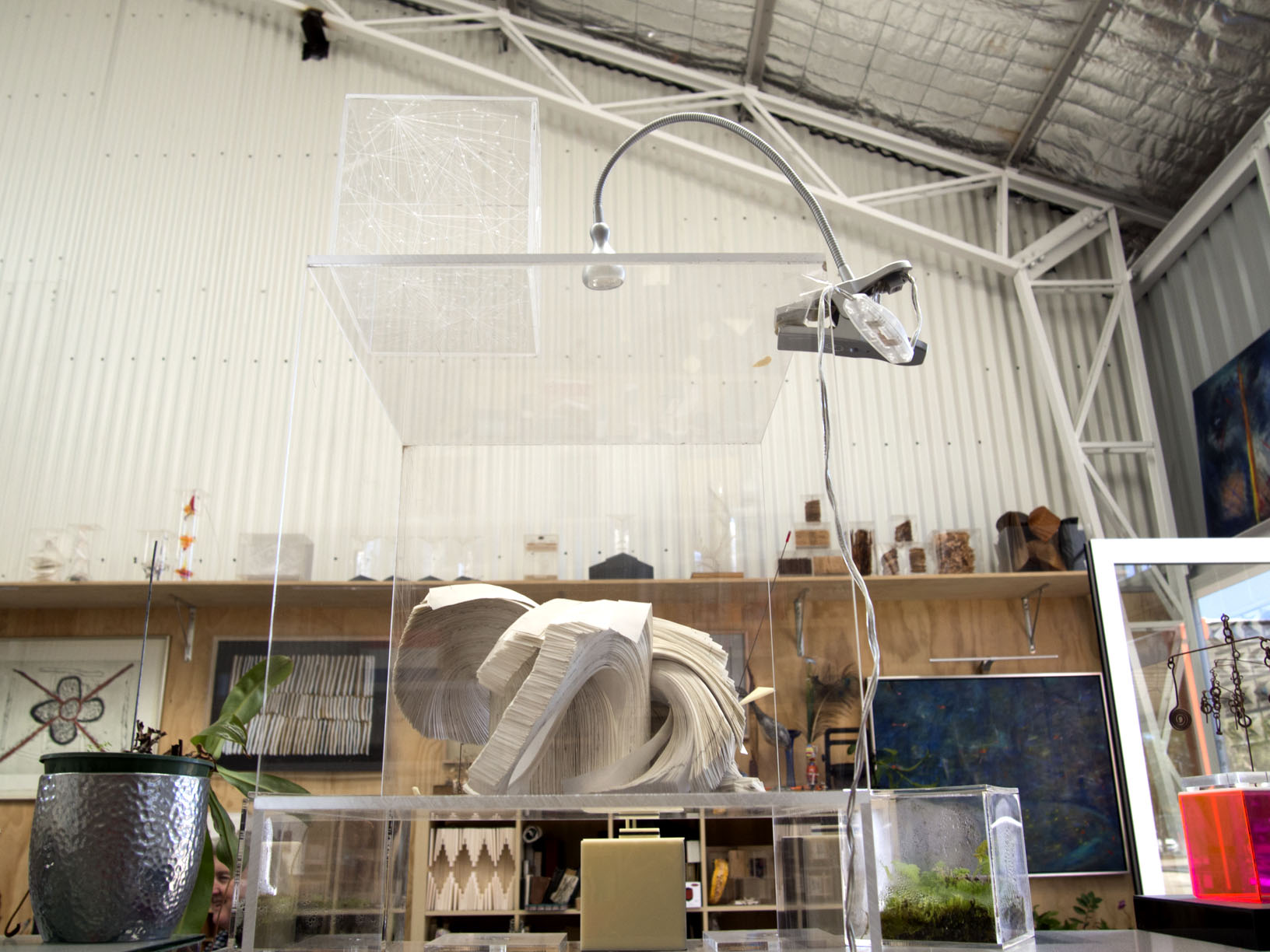
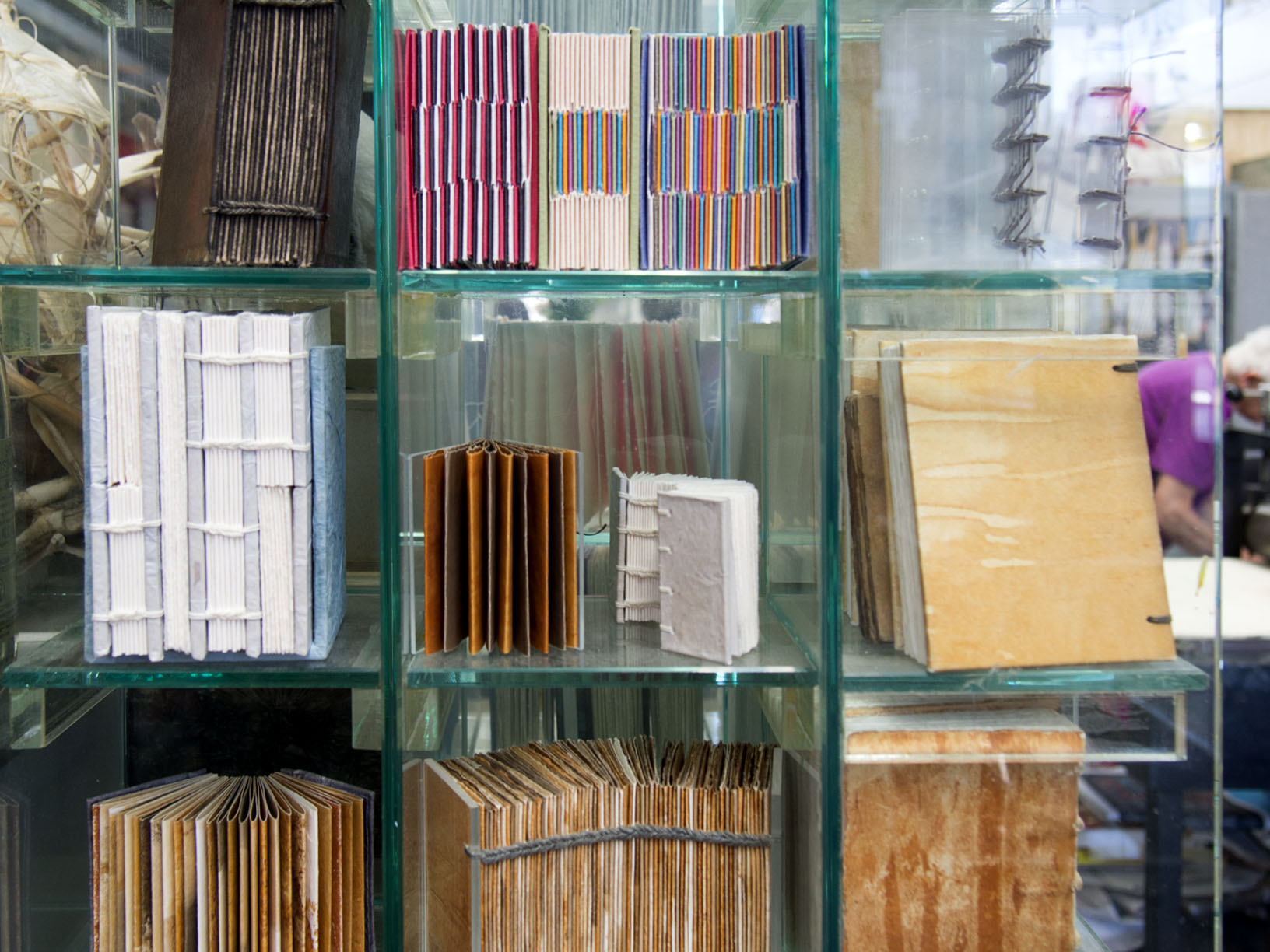
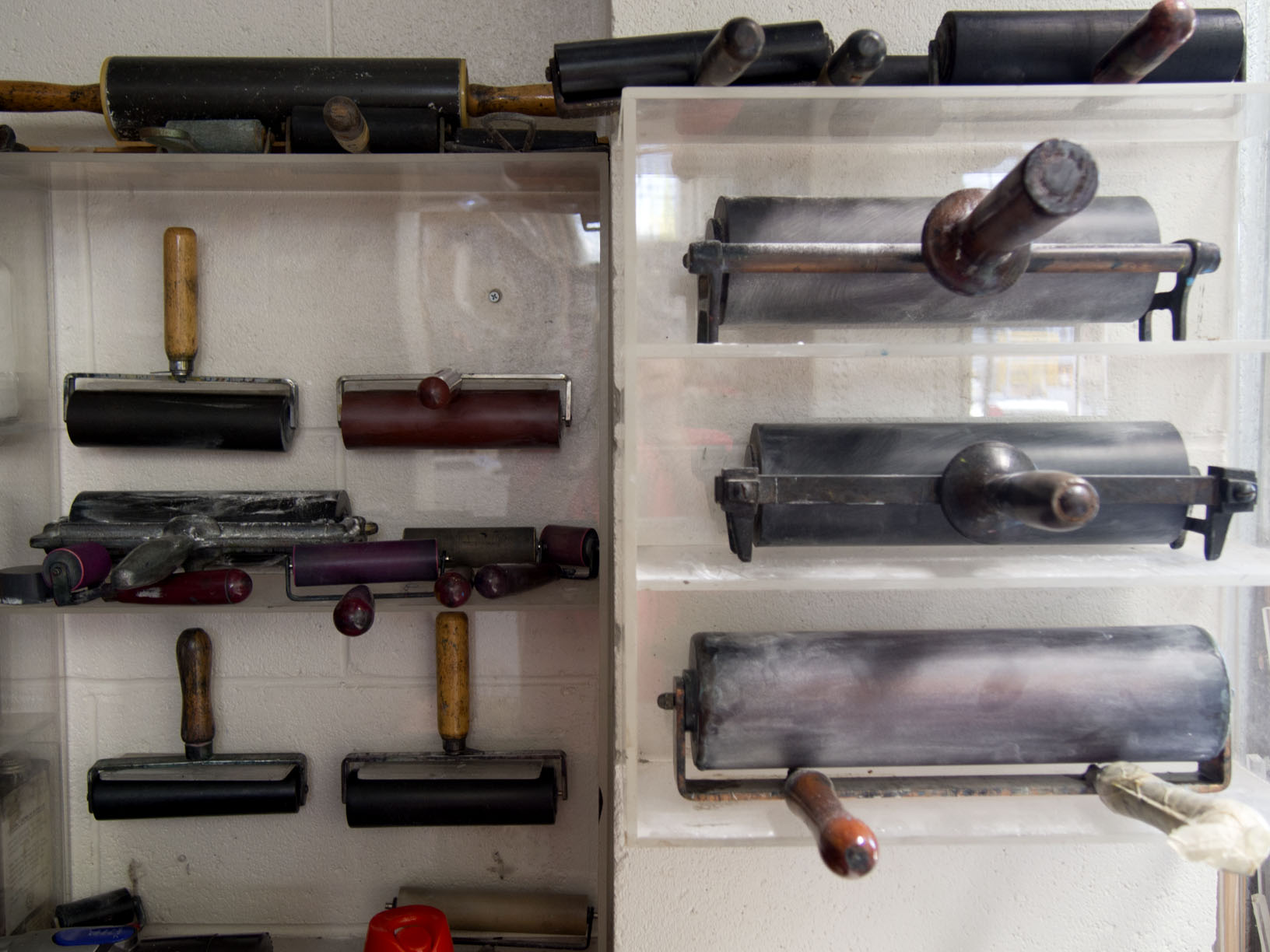
ALL photographs and text ©2016 Doug Spowart
.
.
ANA PAULA ESTRADA’s new book “MEMORANDUM”
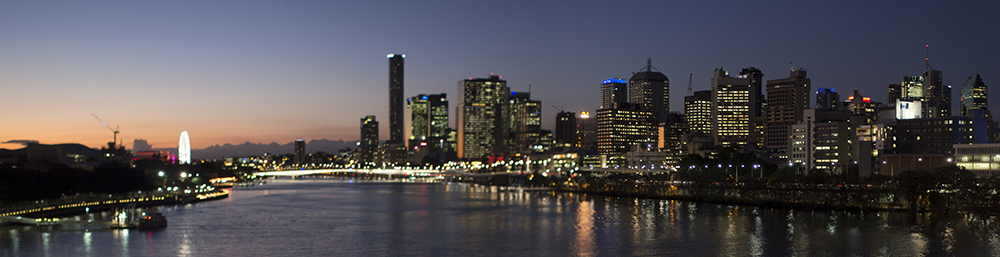
Brisbane City skyline
Brisbane is not a place not known for its photobook makers… there’s not much happening. Occasionally a gem from Dane Beesley, a few college student publications made for assessment and, every now and again, artists’ books/photobooks from yours truly and Victoria Cooper. So it is an exciting time when a new book is made as a total production from concept to printing and binding in Brisbane. That book is by photographer and photobook self-publisher Ana Paula Estrada and is entitled Memorandum. The book was completed as a project associated with Estrada’s Siganto Foundation Creative Fellowship in the Australian Library of Art at the State Library of Queensland.
.
Memorandum is a conceptual bookwork and is concerned with concepts of aging and memory, remembrance and the recounting of stories. In this book Estrada presents evocative associations where the photograph infers a memory or moment re-called.
At a first glance Memorandum could seem to be just a book of straight portraits featuring old people. The are multiple images on successive pages occasionally interspersed with a range of other photos and ephemera. Each of the people pictured in this book have been interviewed by Estrada and shared with her stories of their lives. Fragments of their memories, exhumed from the depths of memory, or in some cases, from lost recesses of the mind caused by age-related memory impairment or varied stages of Alzheimer’s disease. Estrada’s portrait sequences present the subjects with subtle expression changes. Turning the pages of the book are like a conversation with the person – animated and suggesting a dialogue is taking place.
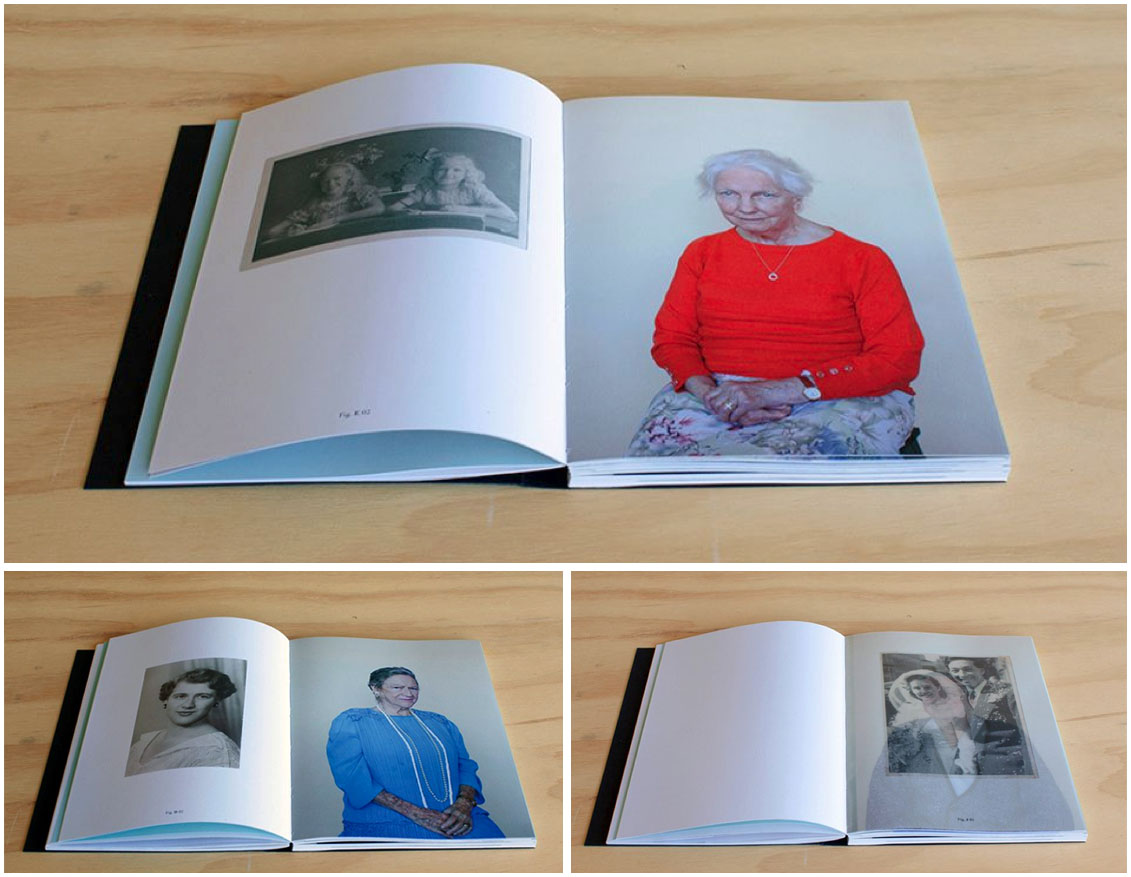
Page openings – Memorandum
Facing pages are sometimes blank to create a punctuation or pause in the conversation. Sometimes images and other ephemera are on the verso pages. These act as windows to the conversation – they need no caption, they are physical evidence of existence, substantiating the memory. They act as memory maps placed before the reader as additional information. Many of these images have been sourced from the person in conversation. Other photographs have been sourced by Estrada from the archives of the State Library of Queensland to illustrate the memory relayed to her in conversation with the subject.
Memorandum has achieved the notice of the world-wide photobook community:
Harvey Benge comments on the book https://harveybenge.blogspot.com.au/2016/08/ana-paula-estrada-memorandum-new.html
The Royal Photographic Society’s curated photobook exhibition https://issuu.com/bjsdesign/docs/photobook_exhibition_2016_catalogue
Shortlisting for the Artspace Mackay Libris Artists’ Book Awards 2016-librisawards_illustratedlistofworks
Shortlisting for the Encontros da Imagem Festival (Braga, Portugal)
A review by Gabriela Cendoya (in Spanish) can be seen HERE
The State Library of Queensland BLOG about the development of the book can be read HERE
The Australian Library of Art at the State Library of Queensland and the National Library of Australia have both bought copies.
I was honored to have Ana Paula approach me to write an essay to accompany the book. My text is printed as a broadsheet page folded and inserted into a pocket in the book’s cover. My essay is as follows….
PHOTOGRAPHIC MEMORY
Sitting here, I’m trying to recall the earliest memories of my life as a child. In this process of reflection I attempt to delve back into my memory searching for images, thoughts, experiences and feelings. What I find are personal, unique and fragmented memories that seem to have the appearance of photographs.
As I remember more of my childhood, I wonder if there is another way of visualising memories? But what emerges again in my mind are stilled photographic moments in particular, one of a family group. These photo memories have no colours, just black and white and slightly sepia. Wide white borders surround each memory and the corners are slightly bumped showing the patina of being handled. It even seems plausible to me I could even turn the memory over, and there would be a caption there in someone’s handwriting.
How could I, at 3 years of age, have known the significance and the outcome of my father’s posed group – my brother, mother and me? Other aspects of the photograph, like how youthful my mother appears, or how my father was not yet bald, give me something to base what I think should be my memories of that time. Could it be that I remember the photograph and have forgotten the moment of its making?
Writer and critic John Berger claims that, ‘All photographs are there to remind us of what we forget.’[i] Does this mean that because we have photographs, we allow ourselves to forget? What I do know is when we want to remember – we look at photographs. And when it comes to remembering there are social rituals that help us do this. Every family, for example, at some time or another, gathers together and the musty pages of photo albums are turned, old yellowed Kodak print packets thumbed through and the slides are held up to the light with everyone squinting to see some glimmer of recognition in the tiny frame. We have seen the archived baby photos, the wedding couple, holidays and kids playing at the beach, the new house and the other treasures that vernacular photography presents as a personal record. Through this ritual we encounter the rich archive of our family and ancestor’s lives. These now become ‘conditioned memories’, whether real or fiction. When we next see these photos we will think we remember the moment of their making and not necessarily our moment of first encountering them.
This conceptual bookwork by Ana Paula Estrada is concerned with the human condition of memory. Perhaps more specifically this work deals with concepts of ageing and memory, remembrance and the recounting of stories. The work also comments on the interpretation of stories and the retelling of what could be referred to as meta-stories in the form of a book.
As the pages of Memorandum are turned – people will be met. There will be conversations through the sharing of photographs, documents and news-clippings of these people’s lives. Through the process of making this book, memories have been revisited, refreshed and retold anew. These stories are offered for reader’s contemplation, perhaps even for future remembering. Memoranda, such as these, may be about other people’s stories – but in many ways they may stir our memories and become part of our stories as well.
Doug Spowart
[i] Berger, John. Keeping a Rendezvous [in English]. Granta in association with Penguin, 1992.
.
- Black soft cover, Section Sewn (Exposed Spine), 21 cm x 15 cm Stock: Ecostar Uncoated It contains a small 8pp booklet, fold out pages and a tipped in 112gsm translucent page
- 170 pages and 86 photographs
- Selling price $80
Other details about the book:
Photographs & Text:
Ⓒ2016 Ana Paula Estrada
Subject´s personal photographs.
John Oxley Collection, State Library of Queensland.
Design & concept: Ana Paula Estrada
Essay: Dr. Doug Spowart
Artwork: Linda Carling
Colour management: Martin Barry
Printing: Allclear in Brisbane, Australia
Typefaces: Chronicle Display and Aparajita
Paper stock: 120gsm &140gsm Ecostar
First edition, 2016
Print run: 200
Ana Paula Estrada’s Memorandum makes a significant contribution to the contemporary photobook genre in her ability to resolve the conceptualisation, capture – in photographs and recorded interview, the design and coordination of a complex concept into the simple form of of a book. And in doing so give us an opportunity to consider contemporary issues of our time through the photobook.
Doug Spowart
October 31, 2016
PHOTOS OF THE BOOK LAUNCH
AVID READER IN WEST END BRISBANE
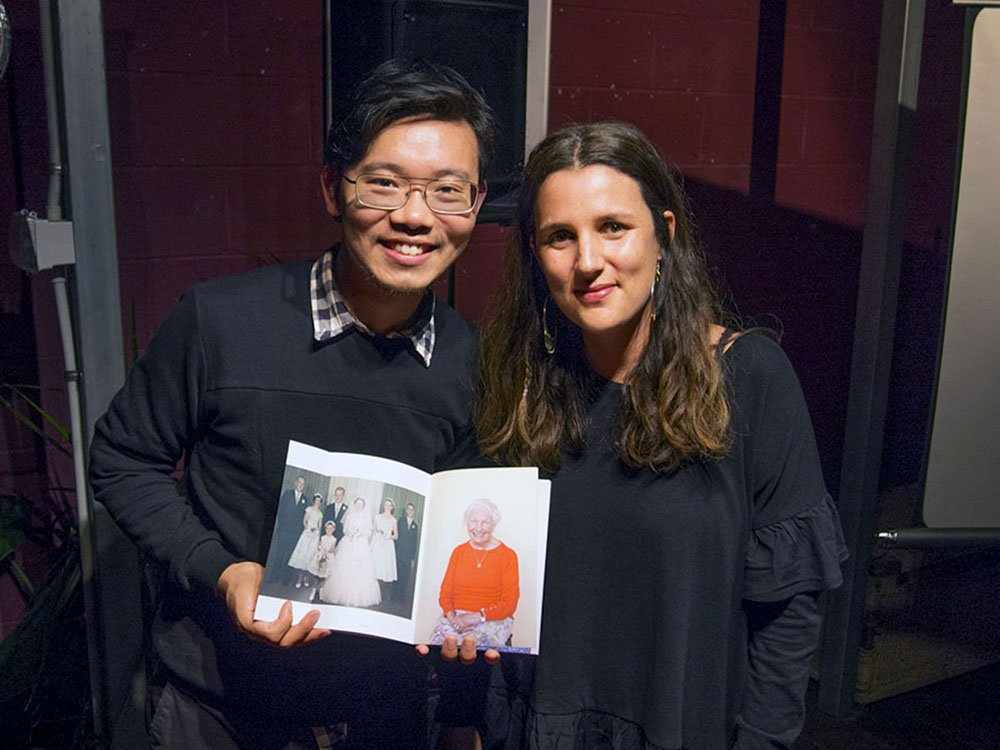
Louis Lim bought a book
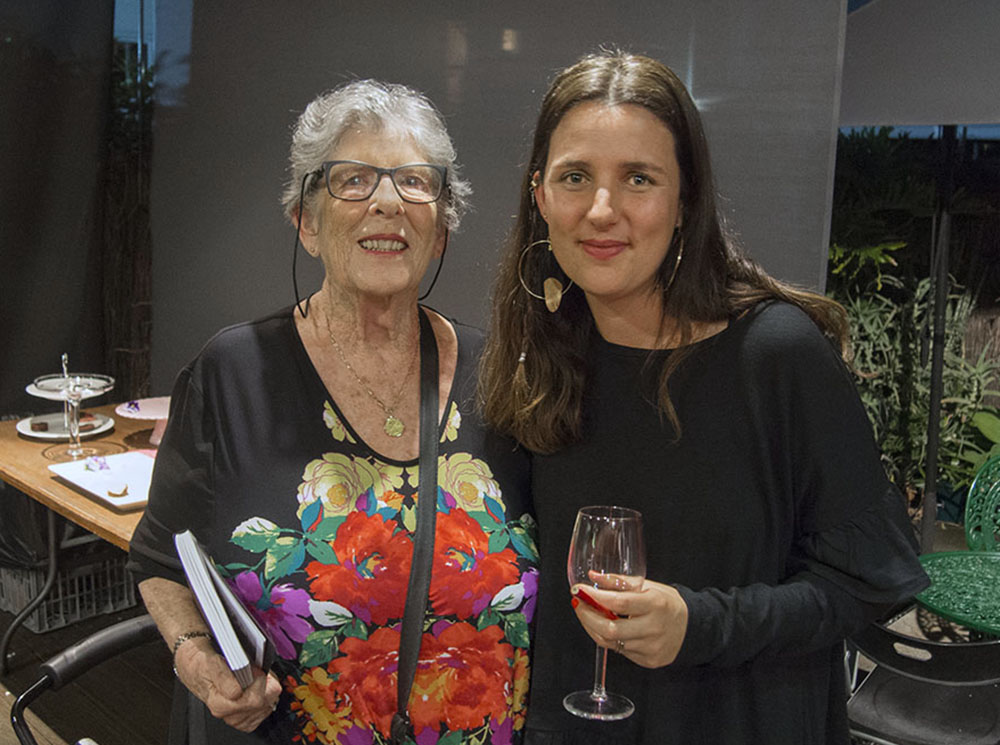
Annette Green and Ana Paula
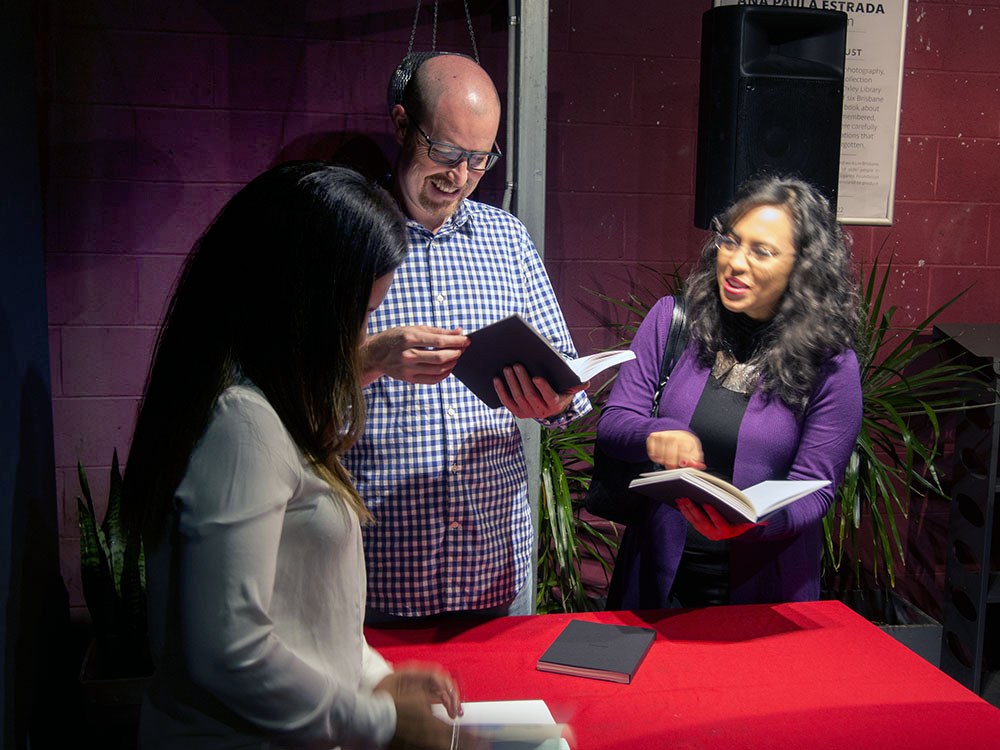
Looking at the book
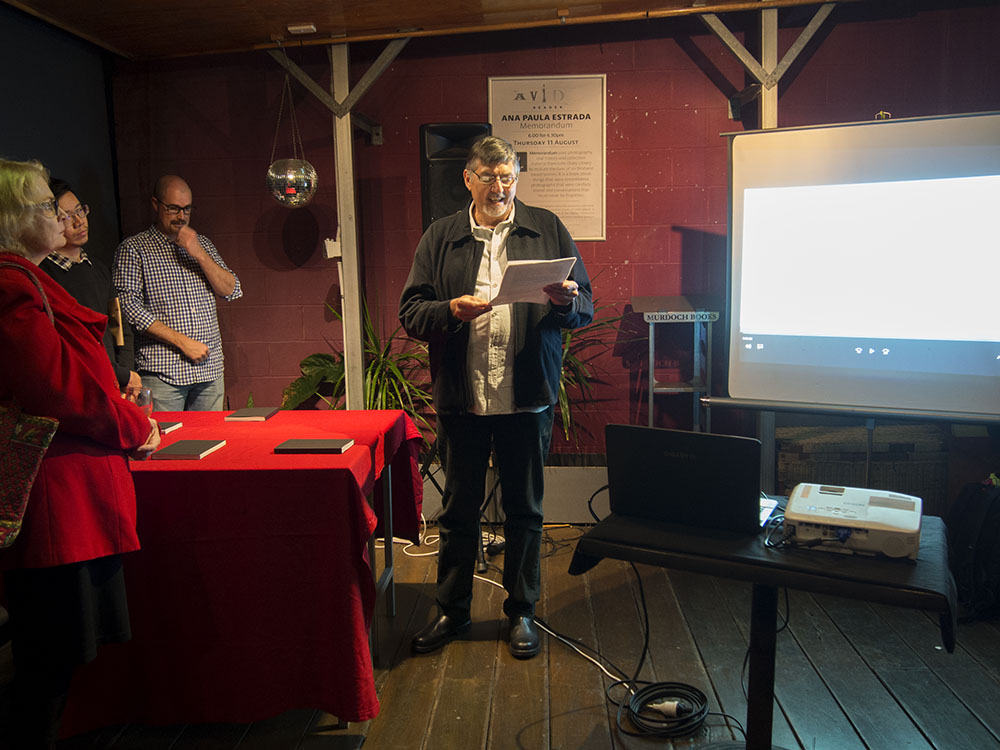
Doug Spowart reading his essay from the book
.
.
.
ORPHEUS PHOTO WORKSHOP WRAP-UP
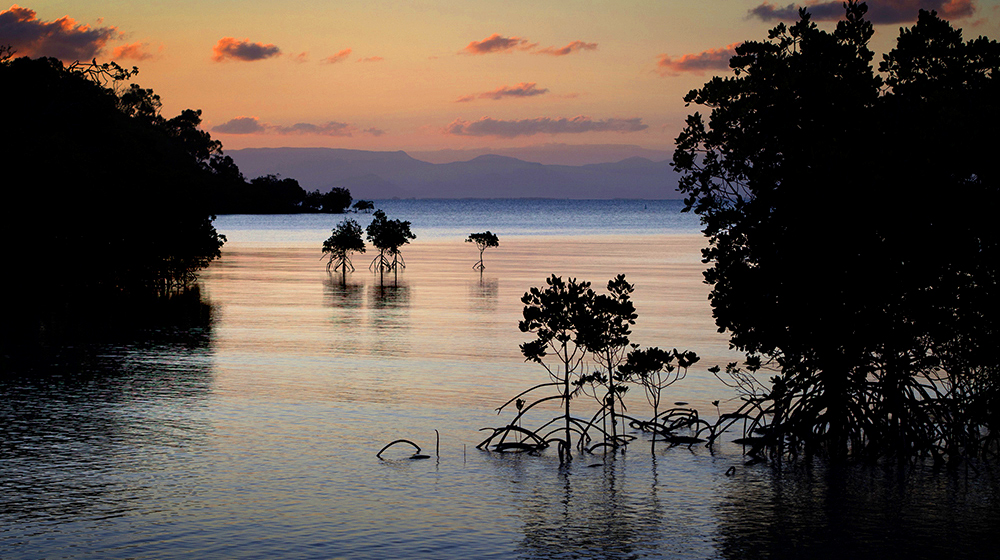
An Orpheus sunset
.
We came to Orpheus to share our knowledge, skills and experience of photography and the book. We were ready to assist and encourage – motivate and create with the participants… We had plotted and planned for months – but nothing could have prepared us for the Orpheus experience we were to have!
We were amazed with the boundless energy and enthusiasm for all things photography. In particular:
• Everyone’s participation in the lecture presentations
• The amazing camera obscura that John de Rooy & Spyder Displays had made
• The fun everyone had with pinhole imaging, lumen printing and other ‘photo play’ projects
• The playful and the deeply considered work made by everyone
• The individual creative development towards making books
• The joy that everyone expressed from making and crafting fine images and books
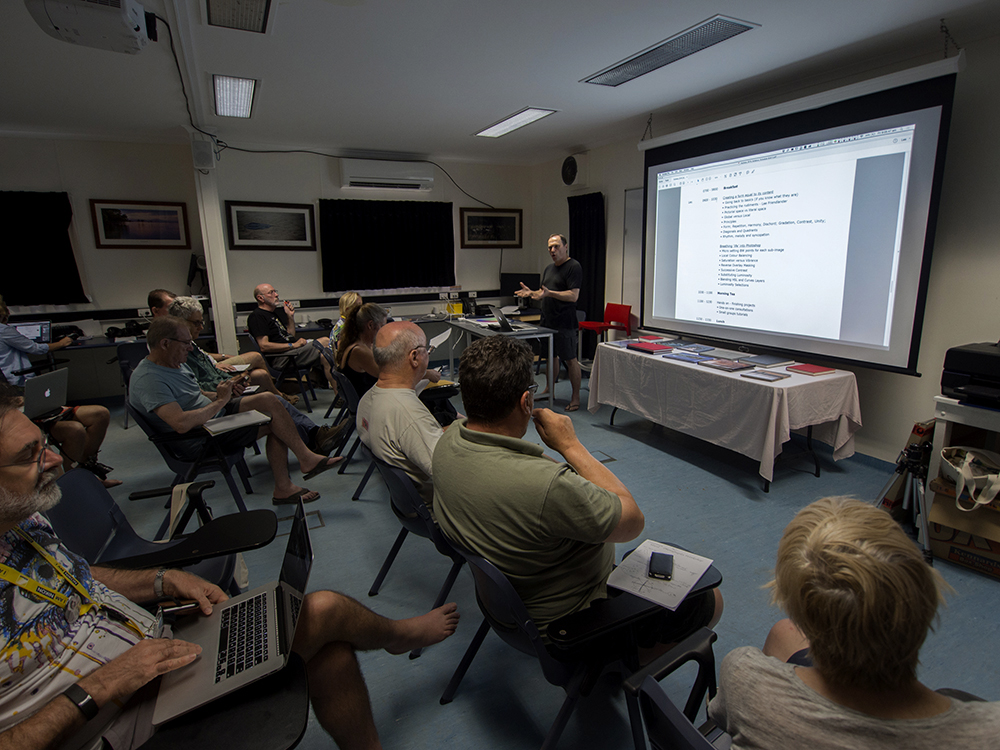
With Les in the lecture room
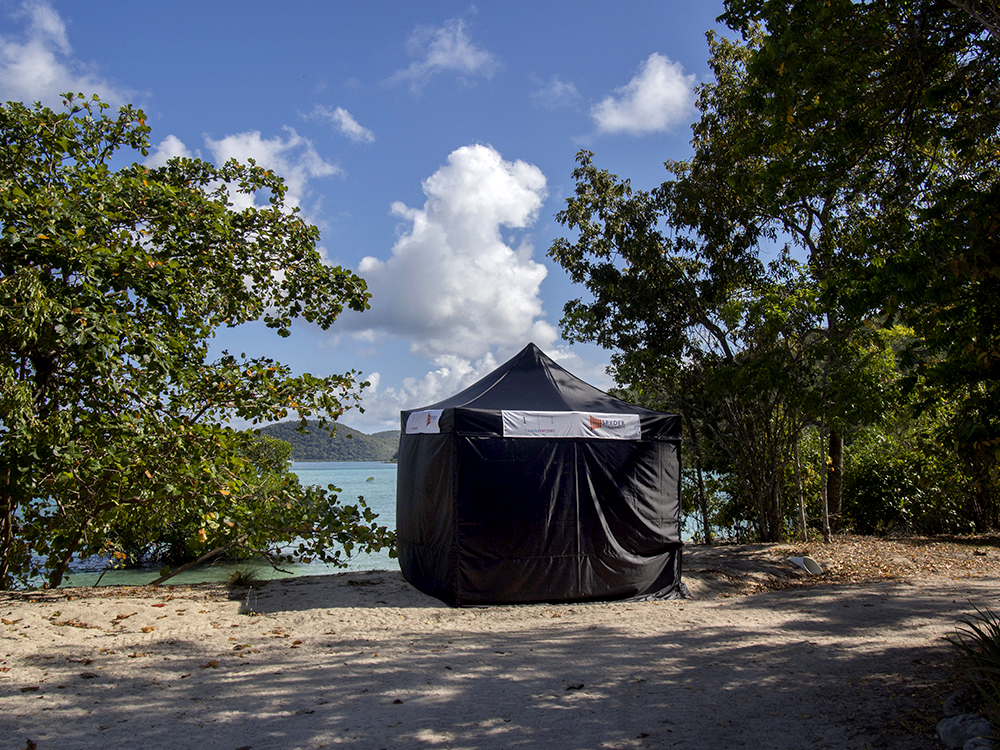
Our Spyder Camera Obscura
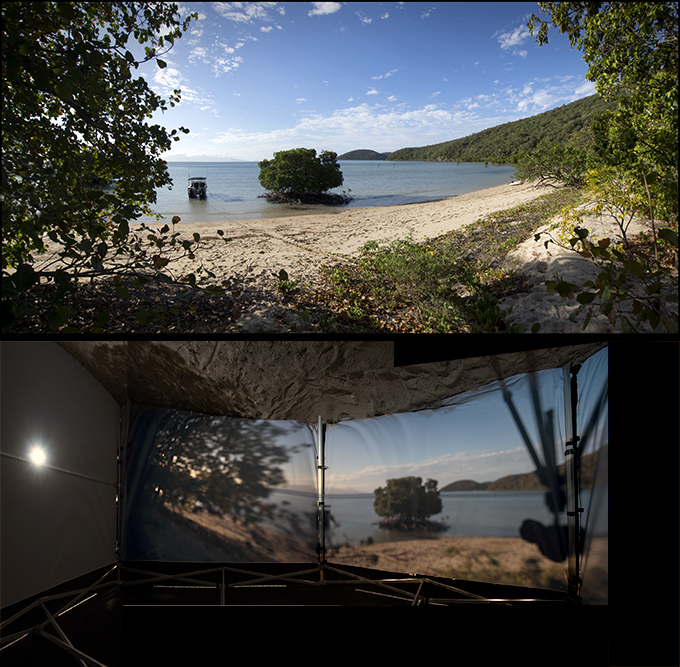
A DUO View of the scene and the Camera Obscura image
We appreciated the special access to the incredible equipment from Kayell, Hasselblad, Nikon, Epson and ProPhoto.
The support workers and organisers were photo experts, construction workers and logistical whizzes while always with a smile and good humour. So much happens behind the scenes of the great Orpheus Drama. But there was another endless creative space – the kitchen. And it was those that worked from dawn to well after we all had dined that we owe our sustained creative energy, fed our bodies and delighted our taste buds.
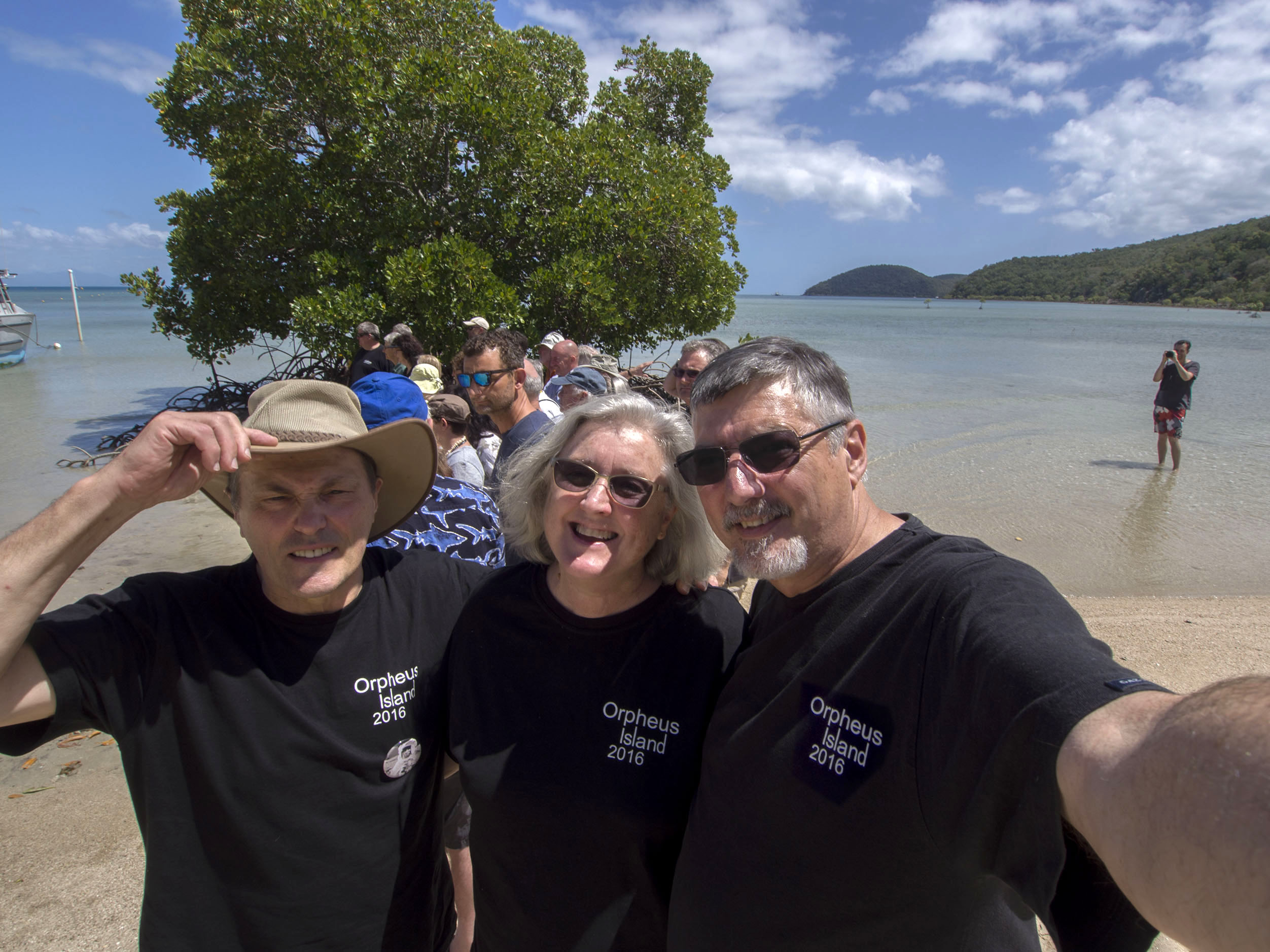
The lecture team – D+V and Les
All this made the working environment possible as we, with the amazing Les Walkling, worked together to share our knowledge, passion and inspiration for photography. It was inspiring for us working with Les – his dedication to sharing his great knowledge and experience. He is truly unique in Australian photography. Thank you also for your words about our contribution to the Orpheus Photo Workshop …
… I loved every minute of the ‘Doug & Vicky Roadshow’, and I even ‘re-named’ the main lecture theatre the ‘Doug and Vicky Studio’. What memorable times were had in and around that space. Every aspect of Doug and Vicky’s presentations were informative and entertaining, and I don’t think I have ever loved photo books so much, nor ‘played’ so joyfully with my photography. What a difference it makes working with skilled presenters who are at the top of their field and not afraid to share their love and devotion to what we all adore; our photography. I can’t thank them enough for their contribution to Orpheus 2016, their generosity and tireless expansiveness, and the difference they have made to our photographic lives.
.
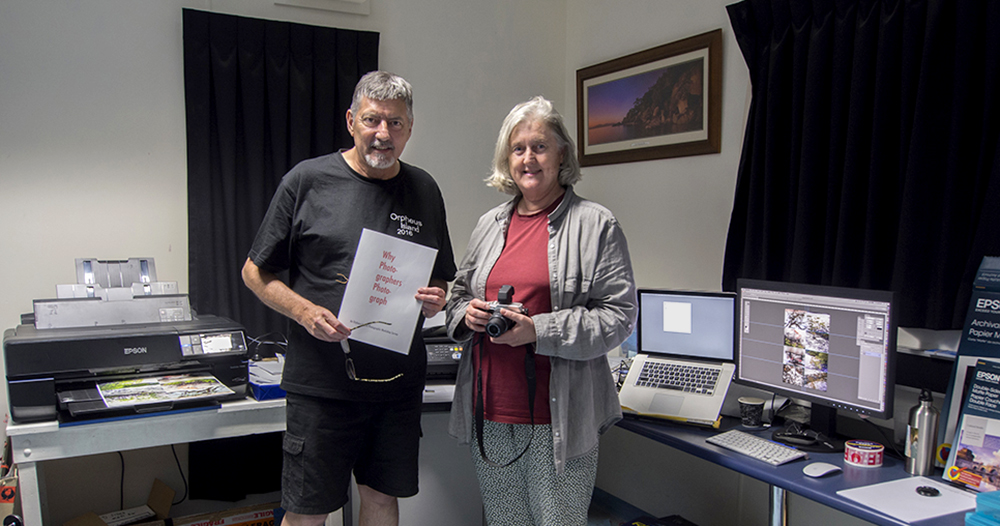
The Doug and Vicky studio
.
WHAT FOLLOWS IS AN ALBUM OF PHOTOS FROM THE WORKSHOP
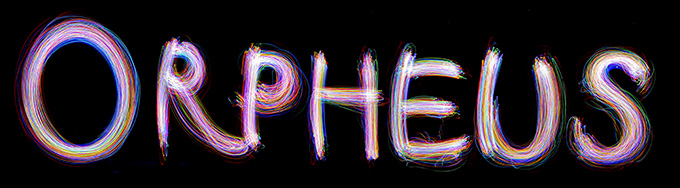
Light painted ‘Orpheus’ on Orpheus Island
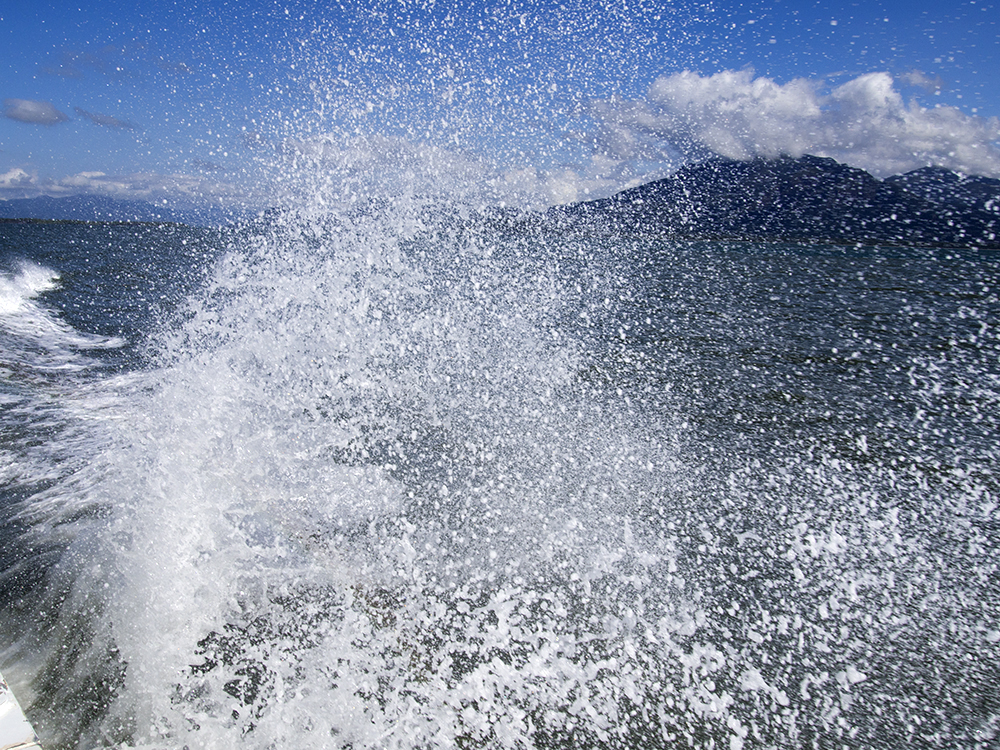
A ‘millpond crossing’ they said…!
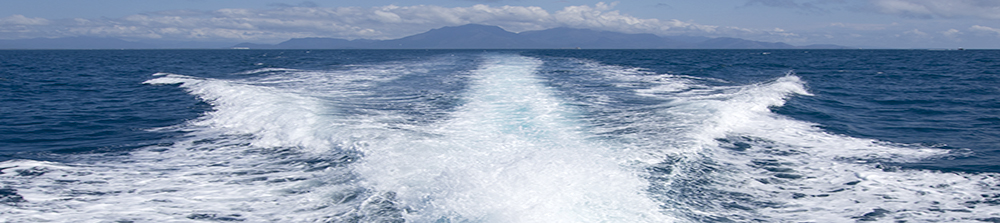
But it did smooth out – heading towards Orpheus Island
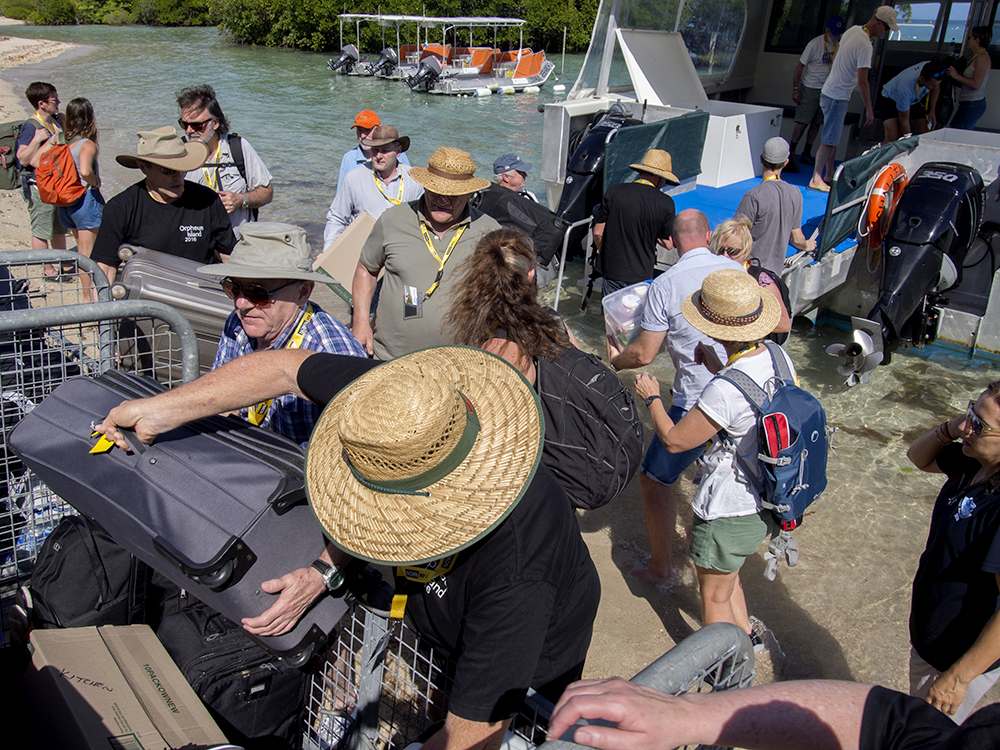
The arrival — unloading the boat
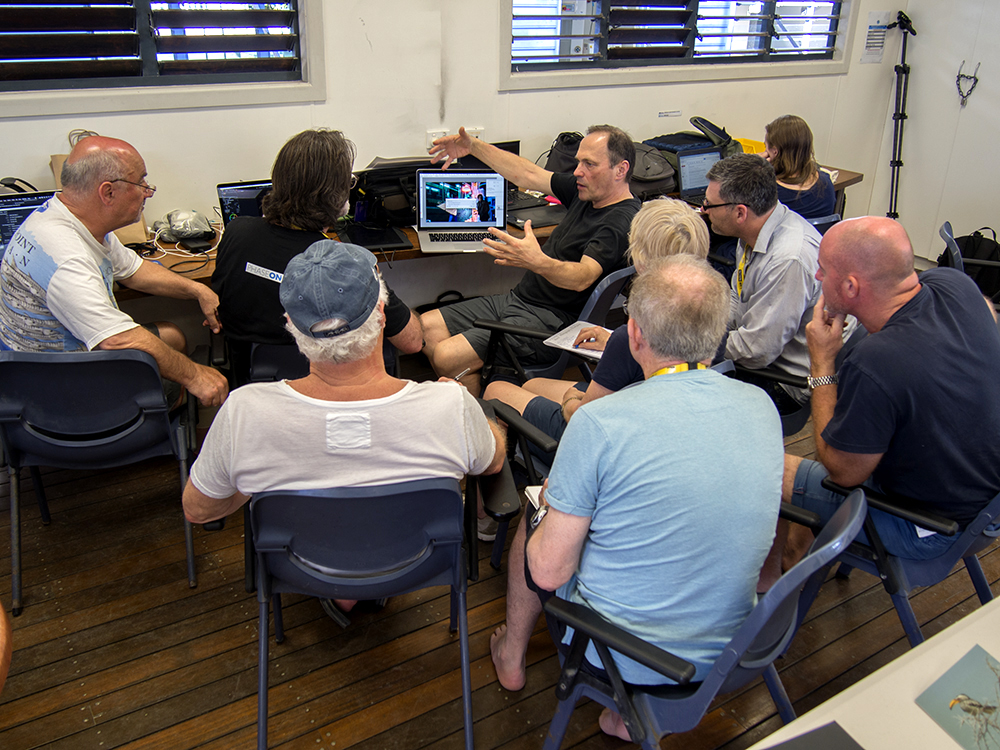
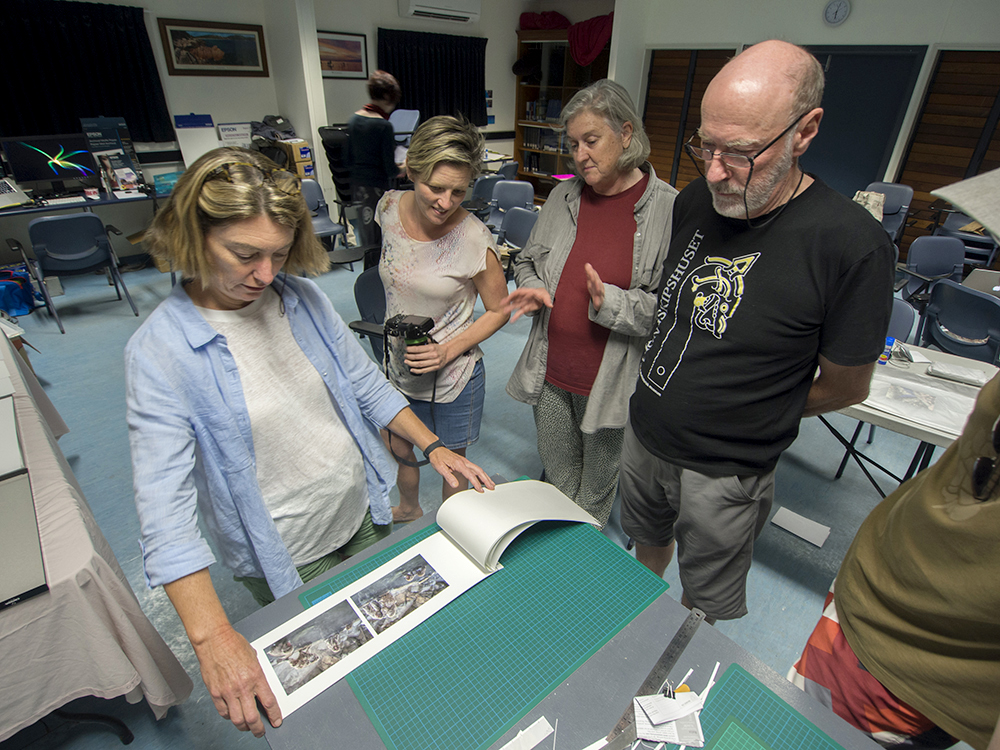
A Photoshop power session with Les
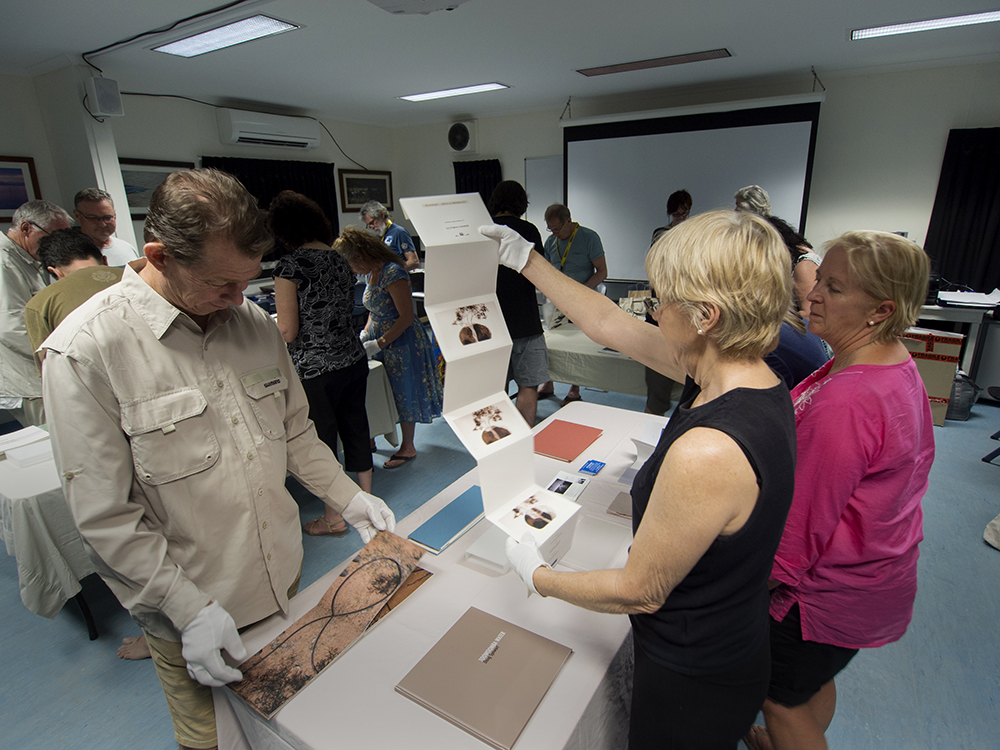
The Doug and Vicky ‘White Gloves Event’ showing a range of our artists’ books and photobooks
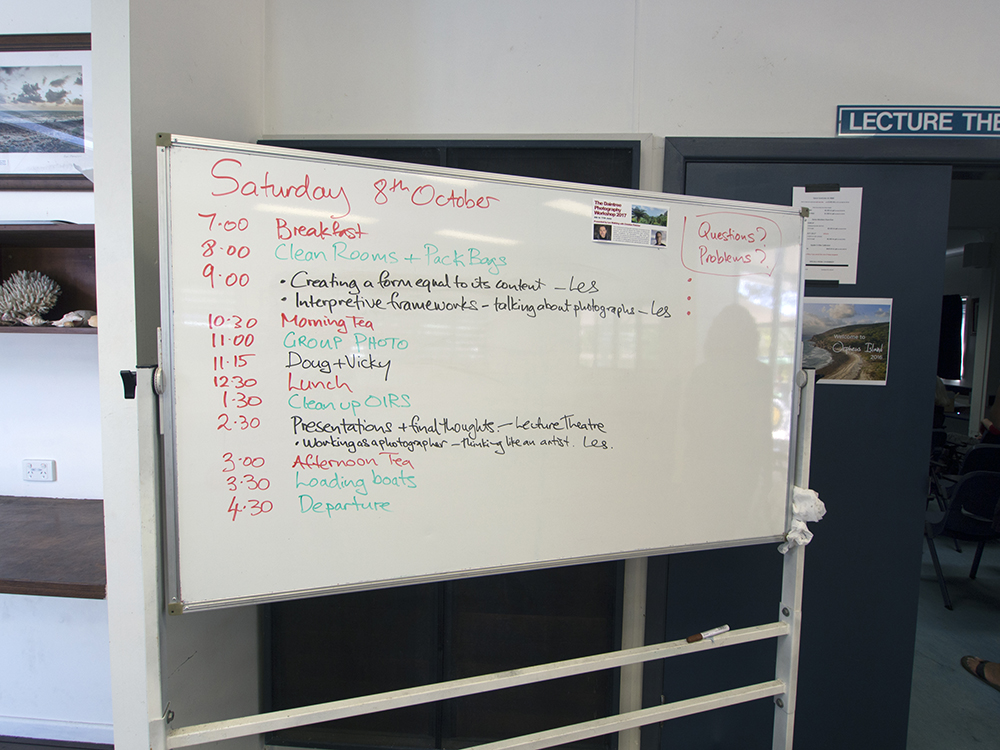
The order of the day
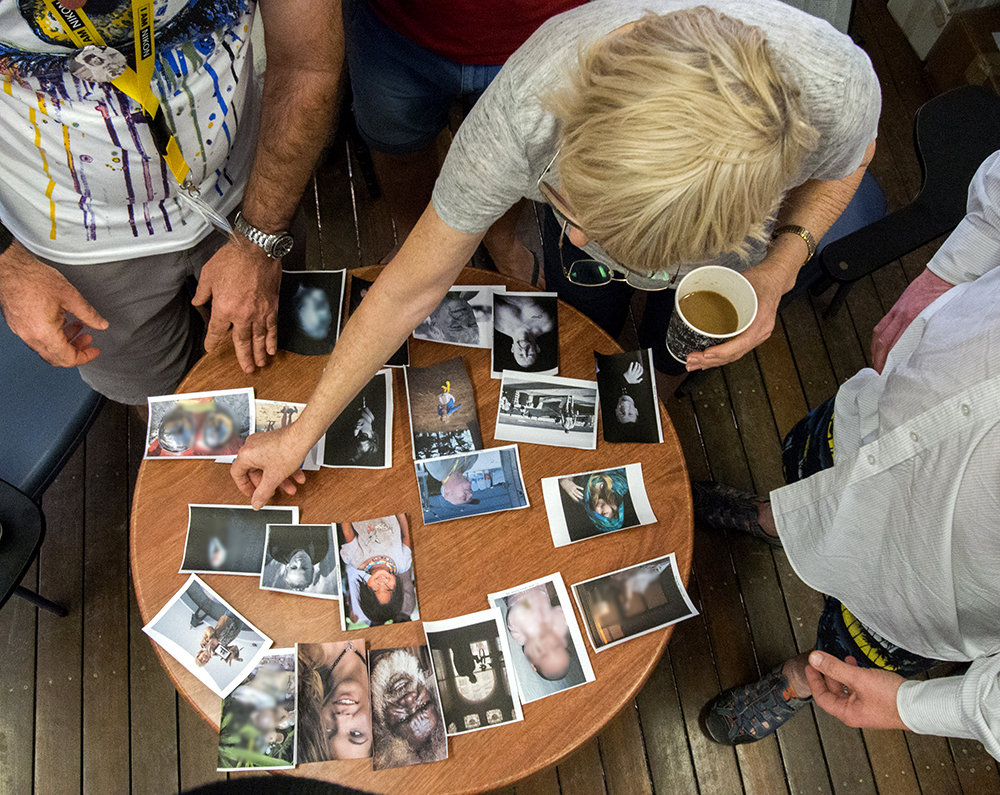
A photobook narrative development exercise
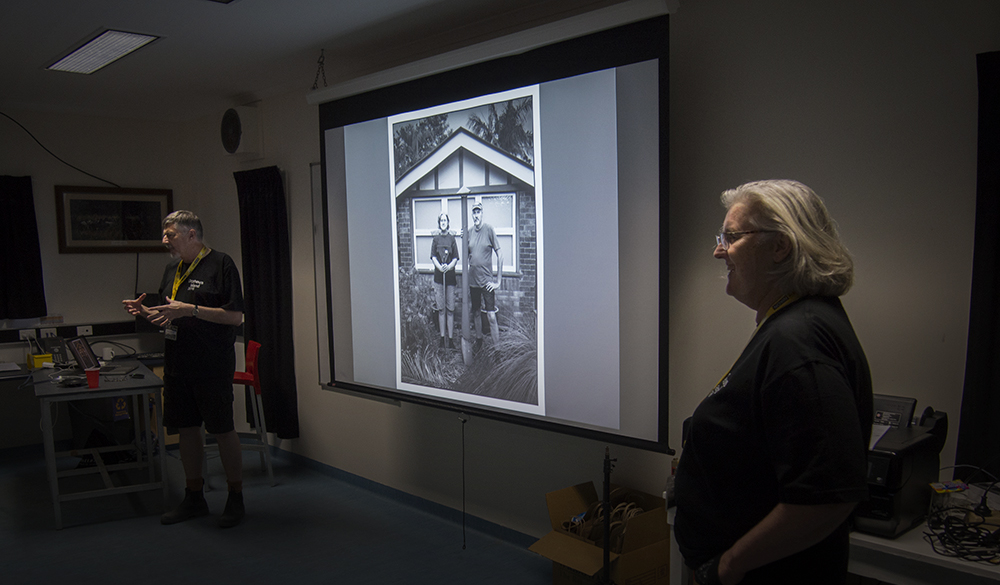
The D+V Roadshow….
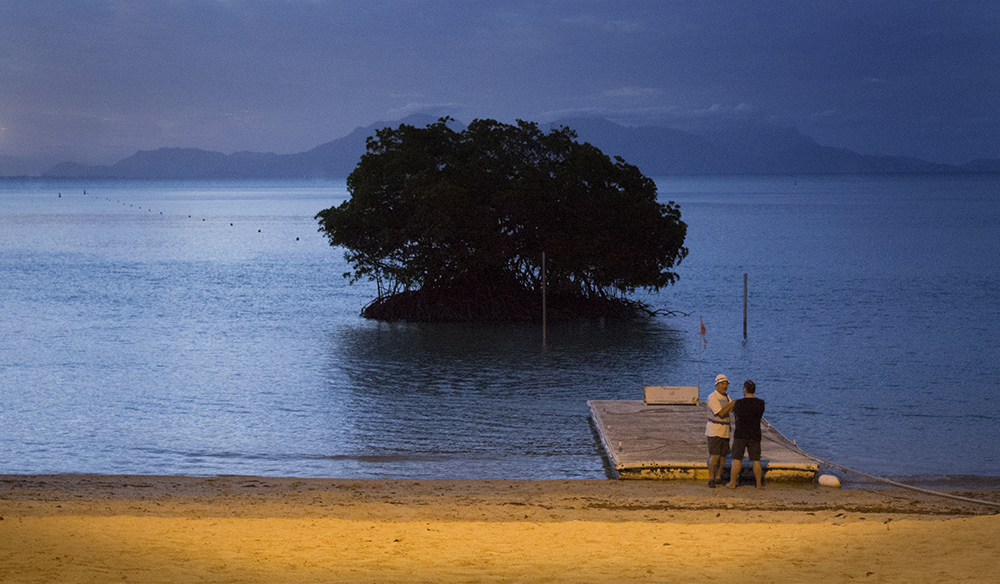
An early evening conversation
‘I made a photobook!!!’ Sarah shows her bookwork
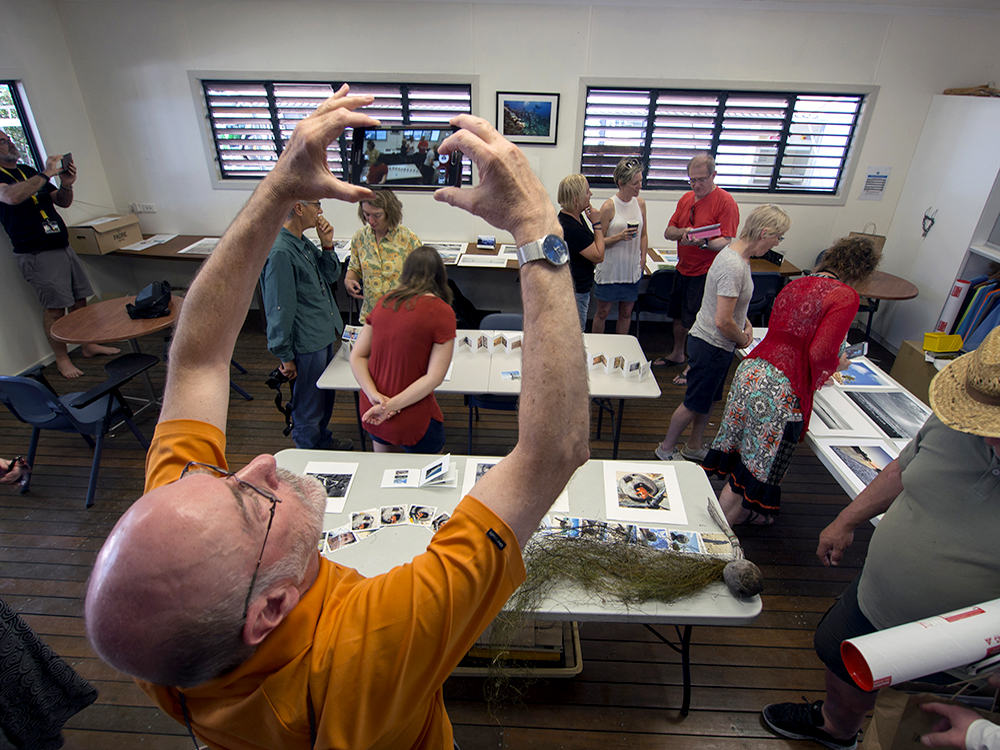
An exhibition of student work at the end of the workshop
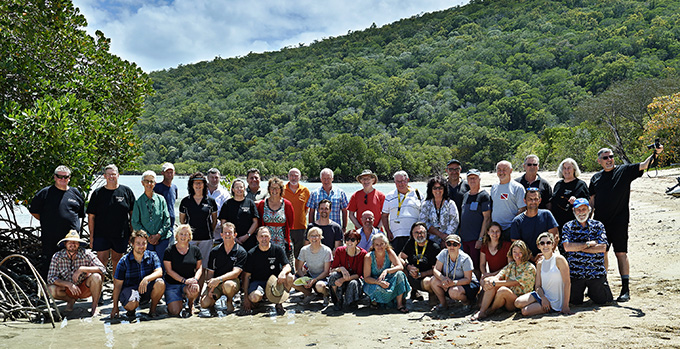
Orpheus Group Shot 2016
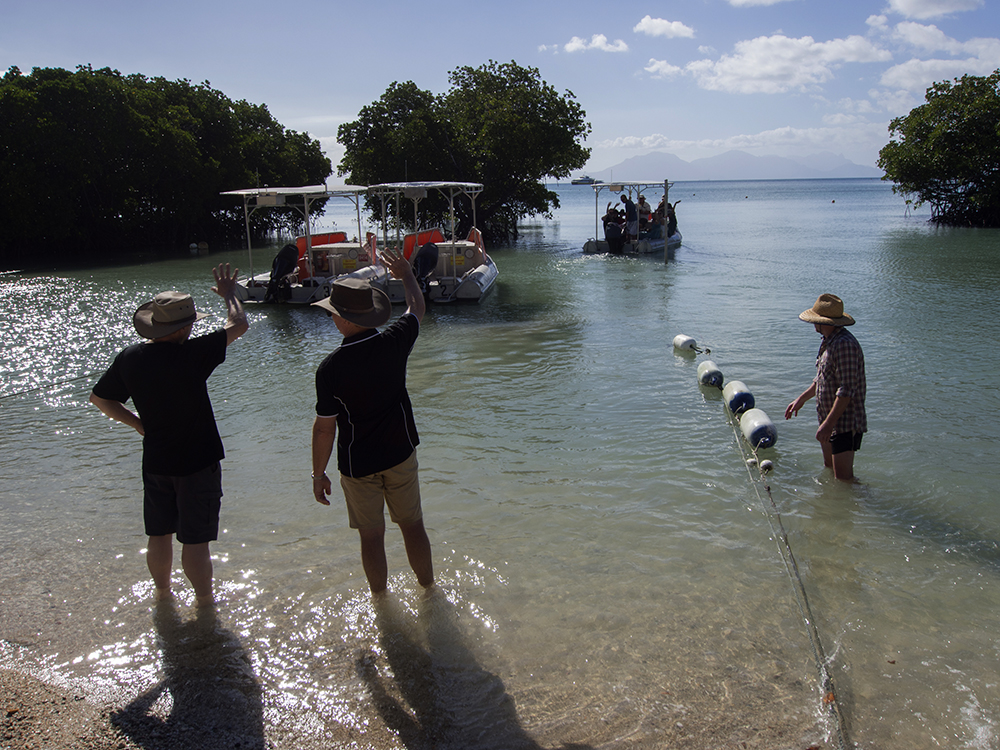
Saying goodbye to the participants…
The ‘staff’ take a break in a pinhole time-lapse movie made by Ross Eason…
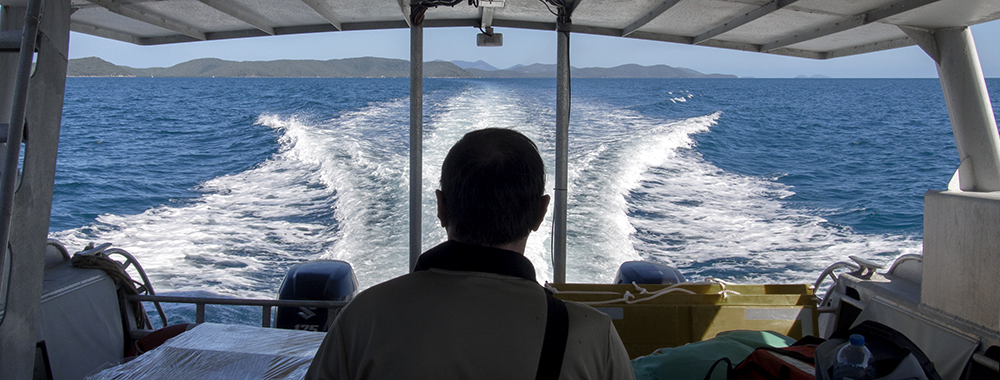
Les takes a last look as we leave the island behind…
.
Special thank you to:
John and Pam de Rooy our hosts and organisers – the rocks that underpin Orpheus
Tutors Murray, Ross and Rod for their ever-present support
Brenda, Dave and Nikolaj – an amazing Chef team
Marta and Jimmy from the JCU Research Facility – where would we be without their support?
Libby and Geoff from MomentoPro for their enthusiasm and collaboration in the book projects
Epson, Kayell and Canson for the fabulous papers and printers
William from Hasselblad and John from Kayell for the exceptional access to the gear
Nikon and the wonderful range of quality professional camera equipment.
AND… A very special thank you to all the photographers, now new friends, with whom we shared the experience of Orpheus 2016 …
Cheers
Doug+Vicky
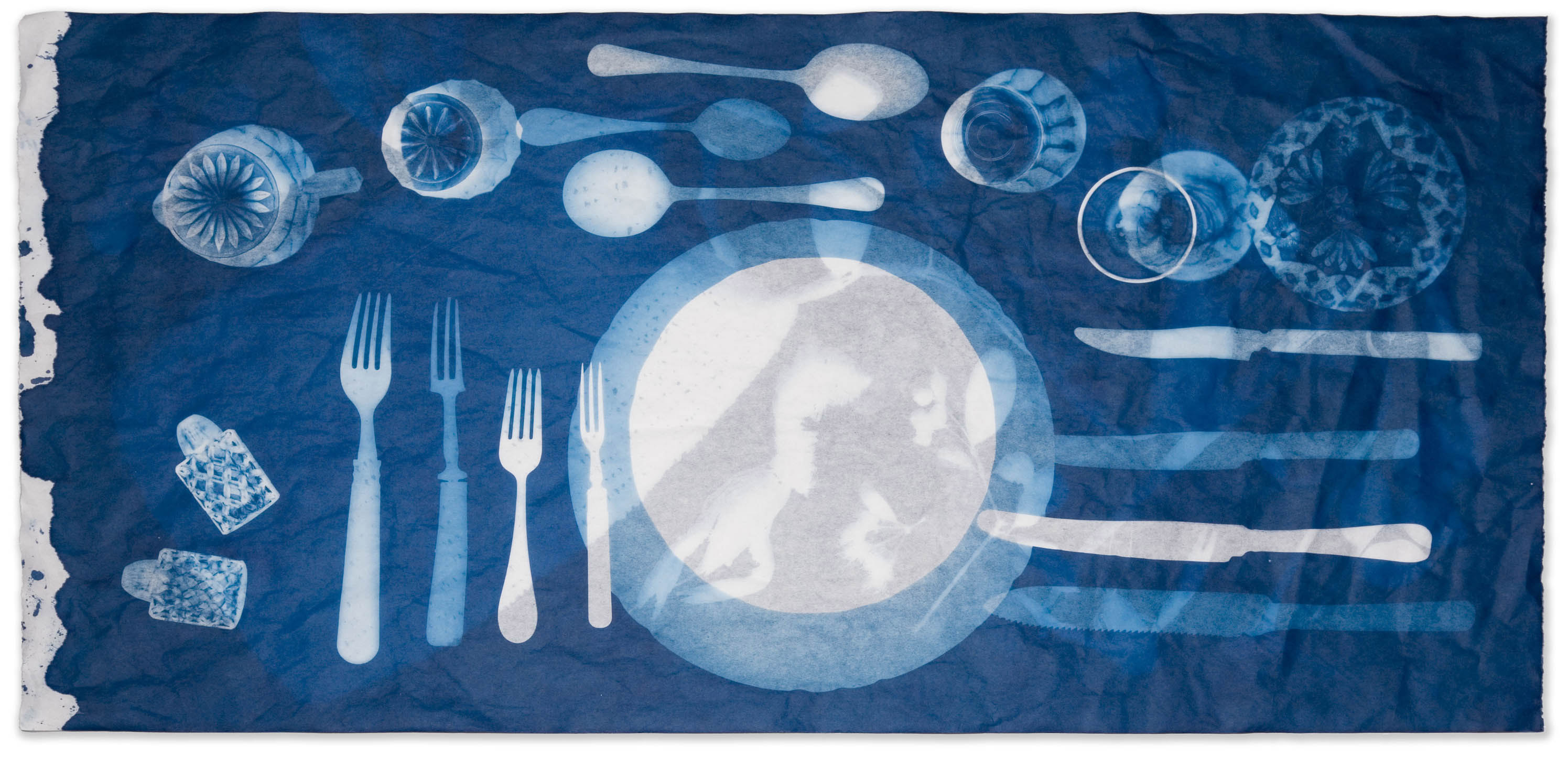
Cyanotype in rice paper, Broadsheet artists book
We are now getting ready for our next island workshop: on the Greek island of SKOPELOS
May 2017 for 2 weeks of art photography about ‘place’ making cyanotypes and photobooks + Greek culture, wine and food. SEE HERE FOR MORE INFO
.
.
ADVANCE NOTICE: COME TO THE ISLAND
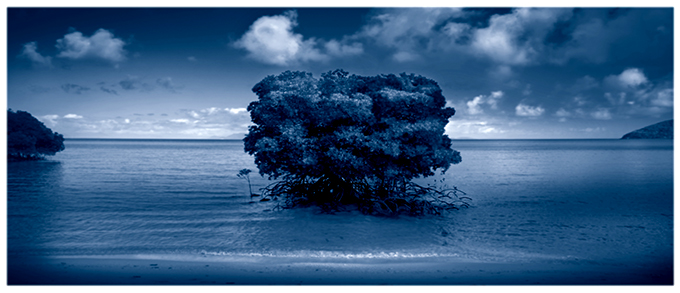
Mangrove Blue – Orpheus Island 2005 PHOTO: Doug Spowart
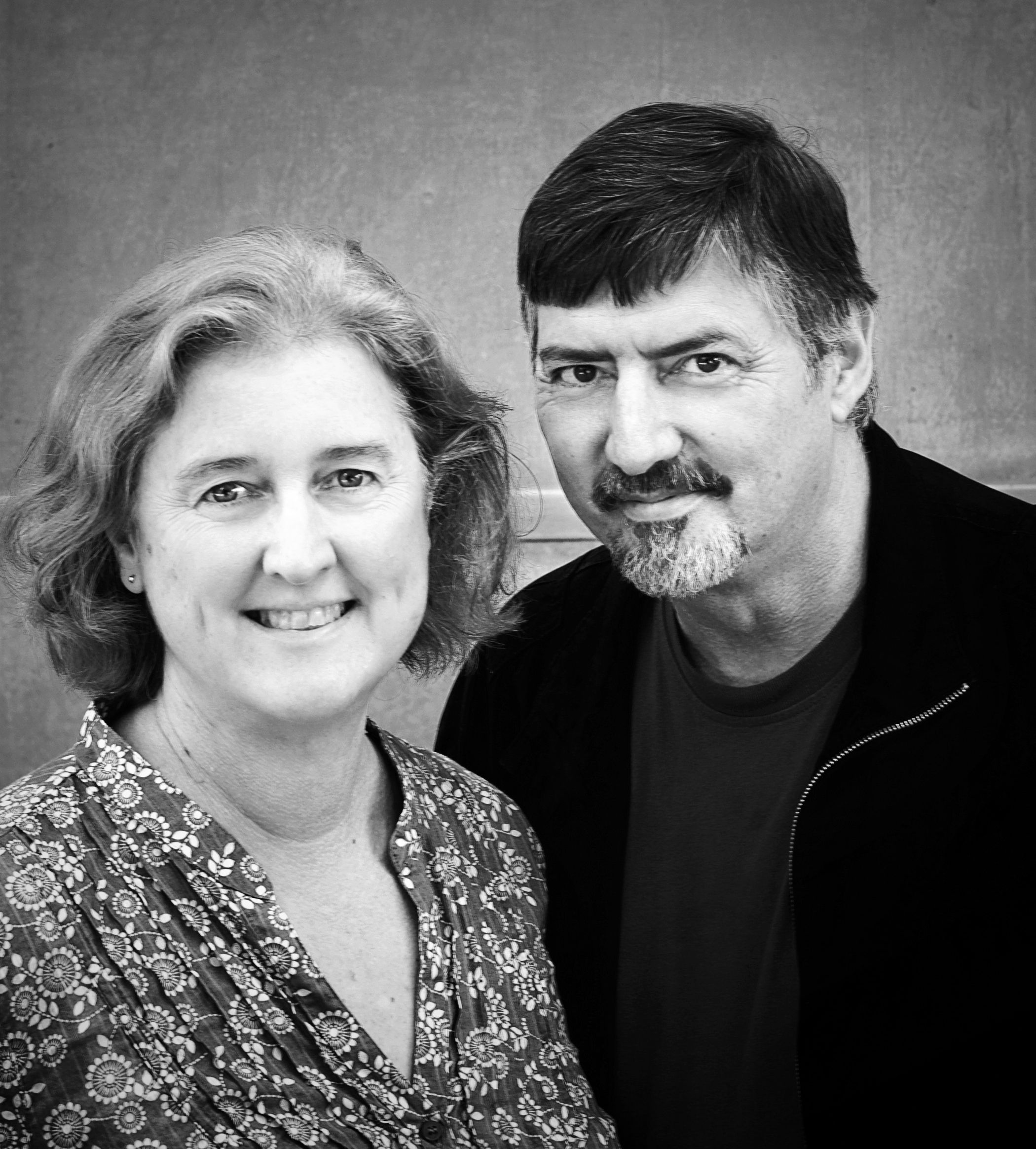
Victoria + Doug
“Come with us to the Great Barrier Reef’s Orpheus Island
2-8 October 2016 for a workshop with Les Walkling …”
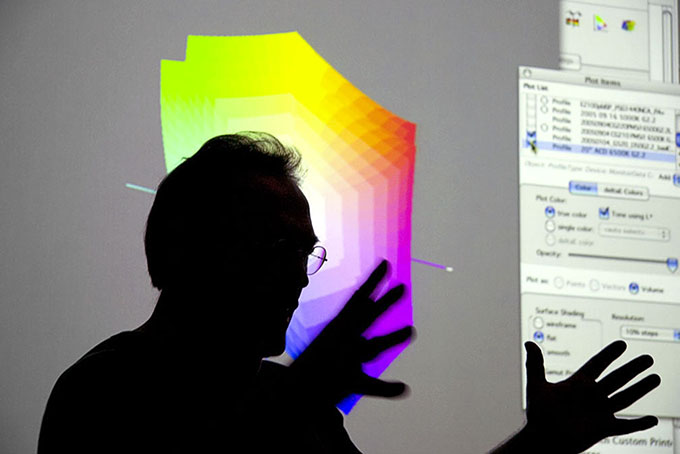
Les Walkling’s Colorspace portrait – Orpheus Island 2005 PHOTO: Doug Spowart
.
.
Orpheus Island Photography Workshop is a full seven day all-inclusive unique experience designed for professional photographers and enthusiast/non-professional photographers. The James Cook University Orpheus Island Research Station is a world class research and teaching facility, and the tropical islands provide for amazing photographic opportunities. Featured this year will be Victoria Cooper and Doug Spowart. This is the twelfth year Les has presented this workshop and he rates it as his best.
The workshop comprises lectures, demonstrations and presentations each morning, backed up with hands-on work after lunch and into the evening utilizing state-of-the-art printing facilities and a fully colour managed professional workflow.
Escape the winter blues for a week on a tropical island and be inspired by an amazing photography experience with Les, Victoria and Doug.
- Gain creative insights and how to put the “Wow” factor into your images;
- Explore bookmaking and fine art photography with Doug and Vicki;
- Learn self development and marketing ideas for you and your business;
- Polish your digital capture and advanced processing techniques;
- Print perfect colour or black & white images every time, whether through your own printer or at your pro lab;
- Work with our sponsors and try out their latest equipment, all types of printing media, and win lots of prizes;
- Polish your workflow for maximum efficiency while achieving brilliant colour and the highest impact in images for your clients, your gallery, or for award competitions;
- Experience superb underwater photography locations for snorkeling and beachcombing;
Check out the videos from past workshops:
Book now to reserve your space at Orpheus Island.
Experience the best “live in” workshop for photographers in Australia.
Go to:http://www.leswalkling.com/courses/orpheus-2016/
.
.
.
PERSONAL HISTORIES–Artists Books @ Uni of NSW–ADFA, Canberra
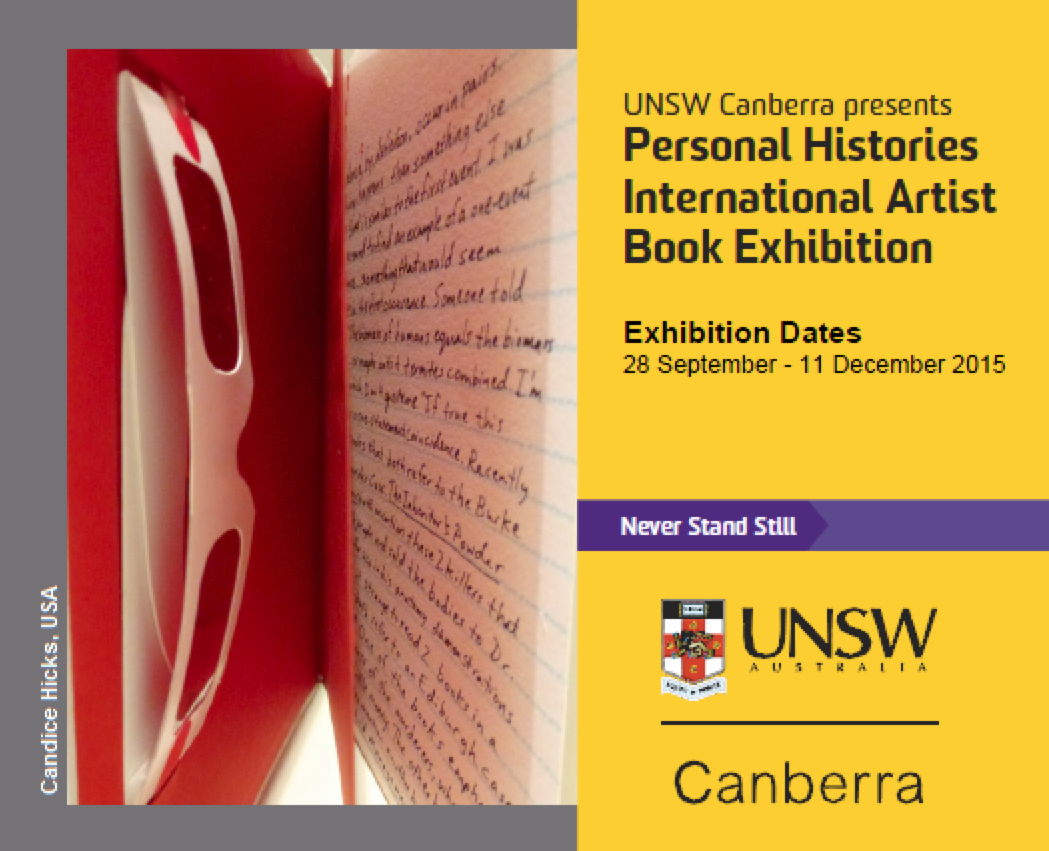
‘Personal Histories’ invite
To survive and work as an artist is a big enough challenge in this day and age–but for some that’s not enough. A few have dreams for fantastic extravaganzas and then commit themselves to the necessary problem solving and planning to bring these wild ideas into fruition. One such inspired individual is Robyn Foster who curated an international exhibition of artists books that was first shown at the Redland Museum, then Redlands Art Gallery. The show, Personal Histories was then traveled as a self funded initiative for the third exhibition at the University of NSW Library at ADFA in Canberra.
.
Ms Selena Griffith, Senior Lecturer in Design, UNSW Art & Design, officially launched the exhibition on the 1st October in Canberra and was attended by members of the local artists book community. We also attended the Canberra opening, viewed the exhibition and met some of the artists.
The exhibition is a curatorial masterpiece, the like of which is usually only undertaken by an institutional team! The works shown represent a wide gamut of practice from books that look and operate like books, to books as sculptural object. The books presented were made by every conceivable process and materials. Represented in the exhibition was every form of container for stories from codices, to concertinas and prosaic ‘ready-mades’. There is no resolution to the question ‘what is an artists book?’ as it continues to be challenged by the diversity and inventiveness of the works in this exhibition.
The stories in Personal Histories came from each artist’s life and experiences expressed through their creative art process. Through the intimacy of the book and the visual and haptic experience of reading, these personal narratives have the potential to be shared with those encountering these books in the future.
Congratulations Robyn Foster for curating and presenting this wonderful opportunity for us to experience the diversity of books by artists and the opportunity for these books to be seen.
Doug Spowart

Judy Bourke talking about her book ‘Born to life’ 2014. A tribute to Anne Murray.
A video of the exhibition showing a ‘fly through’ of some of the works as well as the opening address from Ms Selena Griffith and Robyn Foster’s response is available HERE:
.
.
FROM THE PERSONAL HISTORIES WEBSITE:
Bringing together artists from around the globe to share their own stories in artist book form.
Sharing similarities, diversities and individual perspectives.
Highlighting the dynamic world of artist books.
The Personal Histories International Artist Book Exhibition highlights the dynamic world of contemporary artists’ book practice, with contributing artists from over 16 countries who attempt to reconfigure and reignite our relationship with the book.
This exhibition intimately catalogues a perspective of individual life experience exploring various structures and content, with curator Robyn Foster inviting us to contemplate our evanescent relationship with books at a seminal point in history where technology has overtaken books as society’s primary information source.
A detailed website discussing the project, the exhibitions and the works can be found HERE
http://personalhistoriesartistbooks.weebly.com/
Some images from the event:
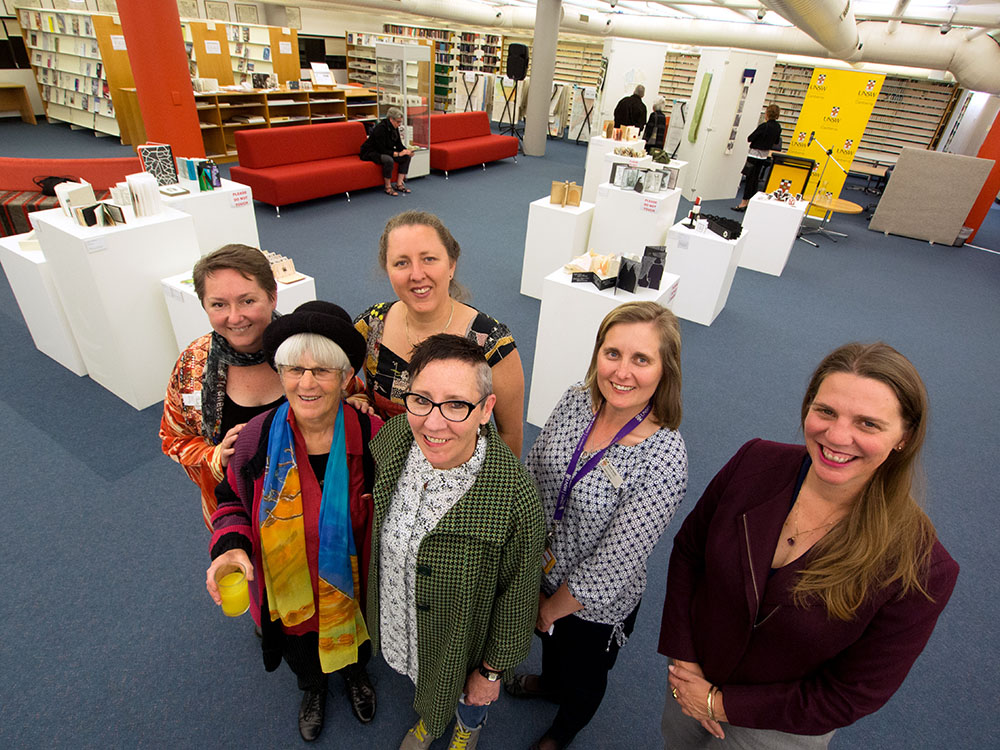
Robyn Foster, Judy Bourke, Selena Griffith, Tracie Toohey, Rachel Hunter, Lisa Morisset.

Tracie Toohey @ ‘Personal Histories’ opening Uni NSW, ADFA, Canberra.

Judy Bourke @ ‘Personal Histories’ opening Uni NSW, ADFA, Canberra.
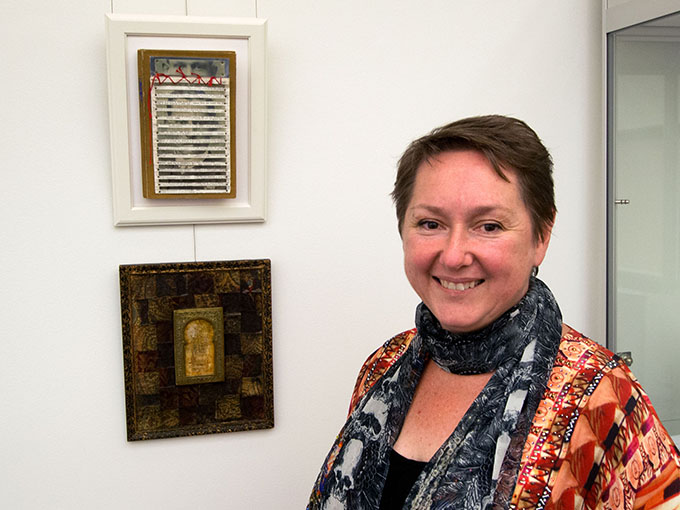
Robyn Foster @ ‘Personal Histories’ opening Uni NSW, ADFA, Canberra.
.
.
.
.
.
.
A DAY @ BALDESSIN PRESS STUDIO WITH SLV CREATIVE FELLOWS
.
A day at Baldessin Press Studio: The State Library of Victoria’s Creative Fellowships
.
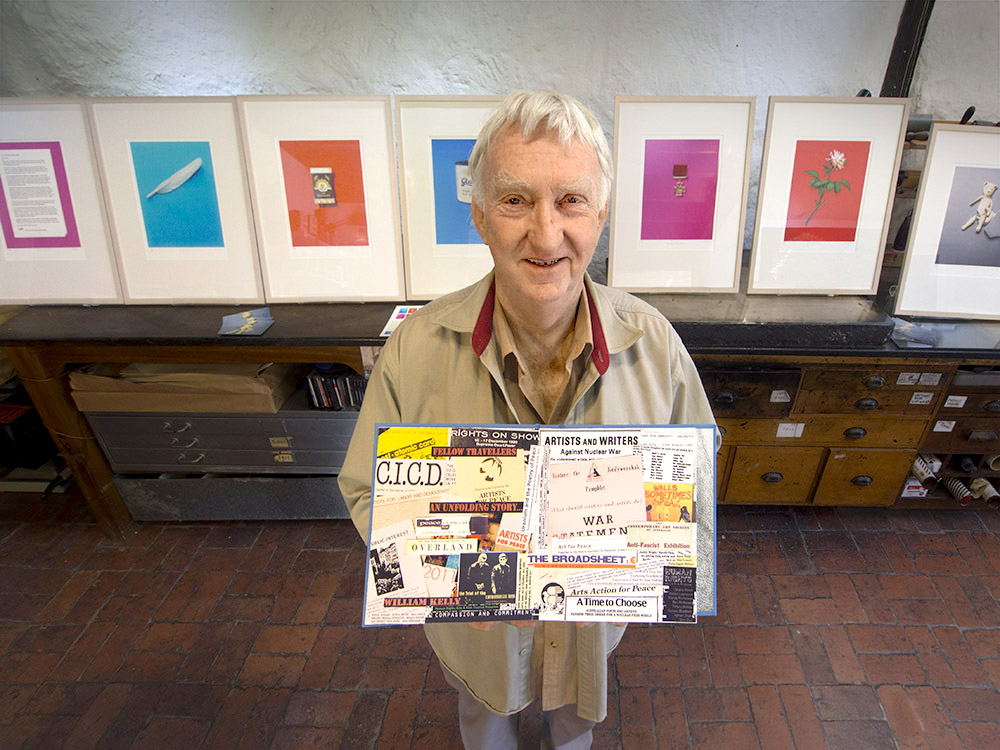
William Kelly, SLV Creative Fellow and Baldessin Press Studio Residency recipient
.
On September 27 a special event took place at the Baldessin Press Studio , St Andrews just northeast of Melbourne. The studio was built by George Baldessin who was a charismatic figure in the history of Australian art, especially in Melbourne in the 1970s. He had a brilliant career as a sculptor and printmaker, and was already considered an important figure in the history of Australian art at the time of his tragic accidental death in 1978 at the age of 39. The studio is situated in a bushland setting and is accompanied by a house and several buildings built by Baldessin and his wife Tess assisted by others including the Hails brothers.*
.
Baldessin’s passing put activity in the studio on hold for some years until Tess returned in 2001. Since then she has worked to re-ignite the creative potential of the place in George’s memory so that artists may continue to create in this special place and perpetuate his generous spirit.
Part of the program of the Press includes the State Library of Victoria’s The Baldessin Press Studio Residency that gives one of the SLV’s Creative Fellowship recipients working in any field the opportunity to create a body of work. The Residency may include accommodation, printmaking tuition, living expenses and some materials. The recipient will also have the opportunity to participate in a ‘Bon a Tirer’ event during the year to present their project to the Library, public, partners and other supporters. Artist Rick Amor generously supports the Baldessin Press Studio Residency.
.
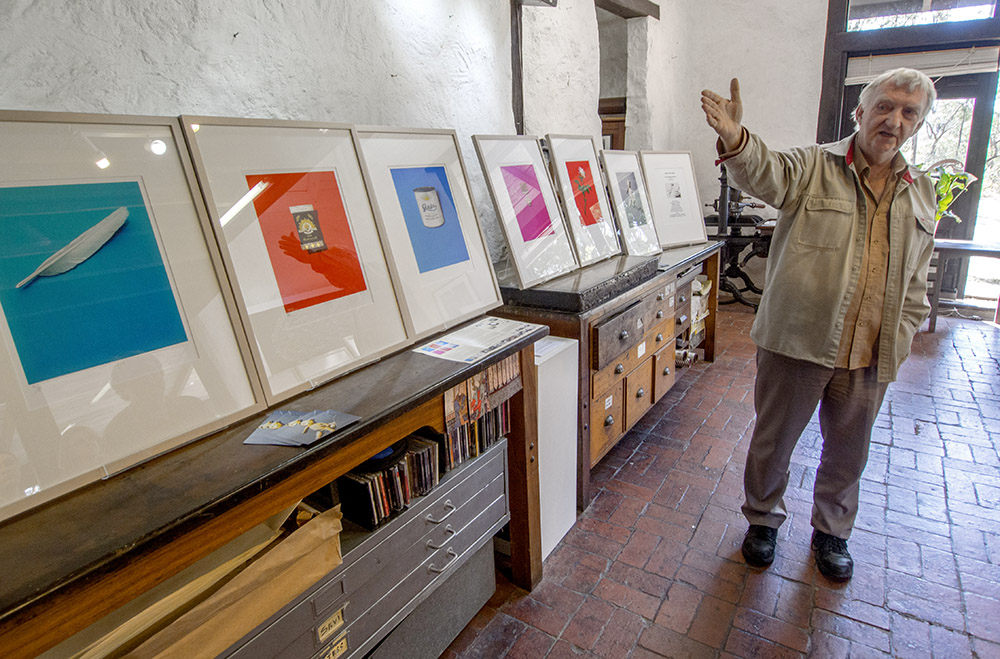
William Kelly, 2015 SLV Creative Fellow and Baldessin Press Studio Residency recipient
.
The 2015 Residency recipient was leading Victorian artist William Kelly a former Fulbright Fellow and Dean of the Victorian College of the Arts from 1975–82. His SLV research project dealt with Australian visual artists practicing between World War I and today, whose works have been informed by their beliefs about war and peace. His intention was to create an ‘accordion’ artist’s book – literally an unfolding story – that celebrated and connected the work of these artists*. In a comment about the body of creative work made as a result of the Baldessin Press Studio Residency Kelly was to say:
I have a profound belief that we can make this world be a better place but I don’t delude myself that it will, in any way, be easy. Art can play a part in this and artists can contribute to the larger debates about our future. I’ve been quoted as saying, “a painting will never stop a bullet but a painting (print, photograph, novel…) can stop a bullet from being fired”. These works, the “Baldessin Press Folio: Not in My Name” and the artist book “Fellow Travellers: An Unfolding Story” are testament to my belief in the power of the image. The first “Not in My Name” has images that refer to the ideas of courage, loss, innocence and unequivocally taking a stand.
.
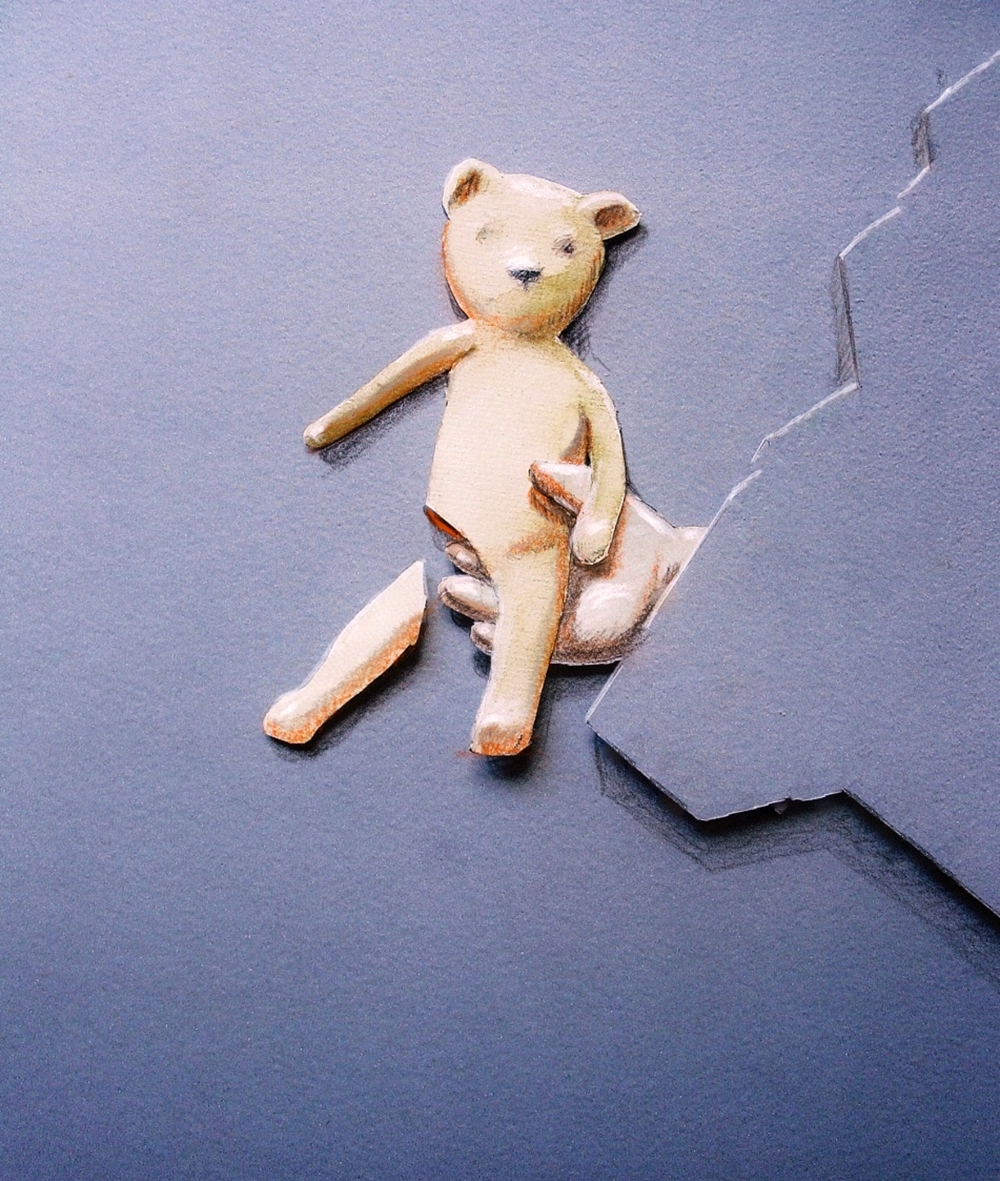
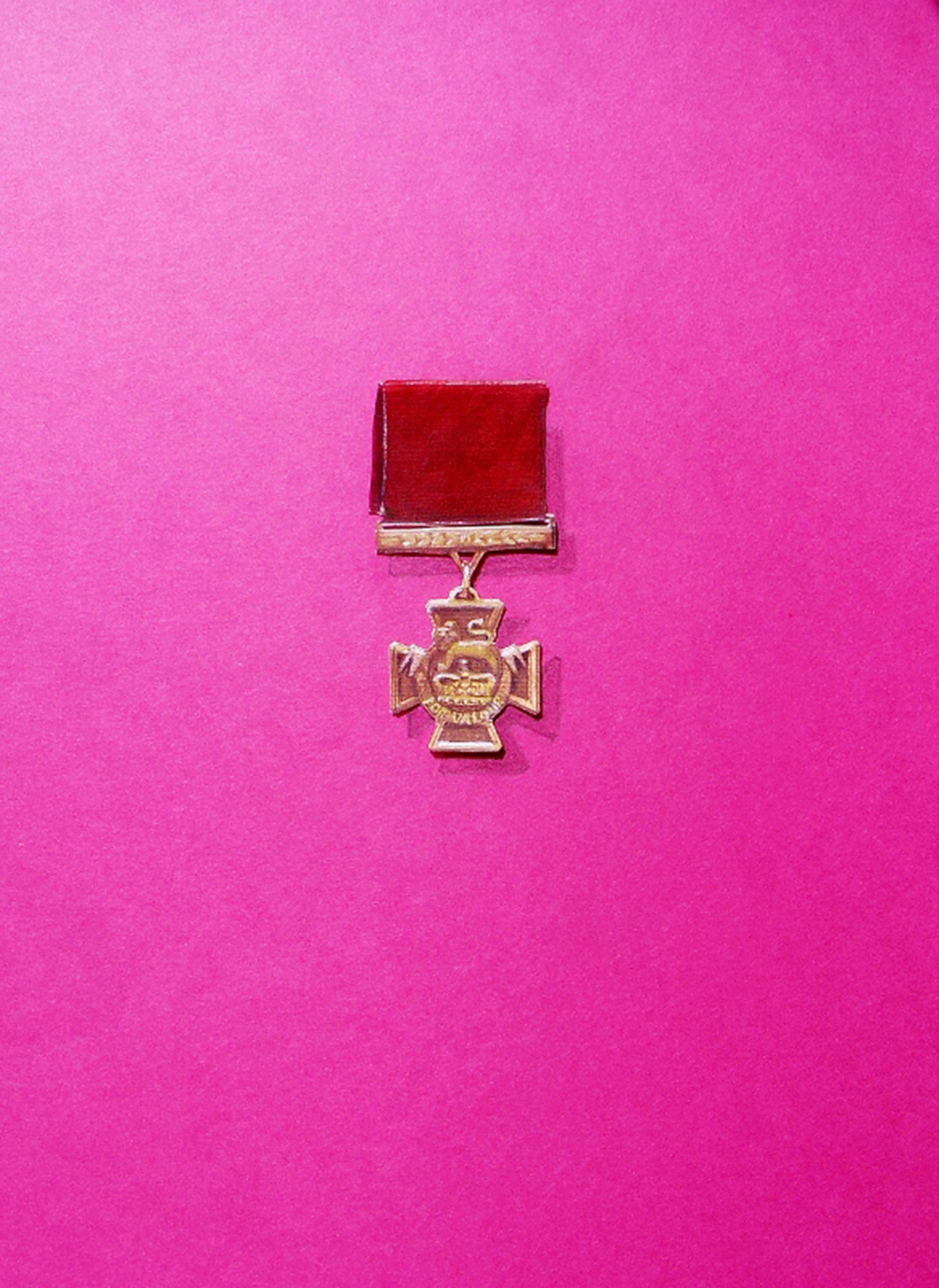
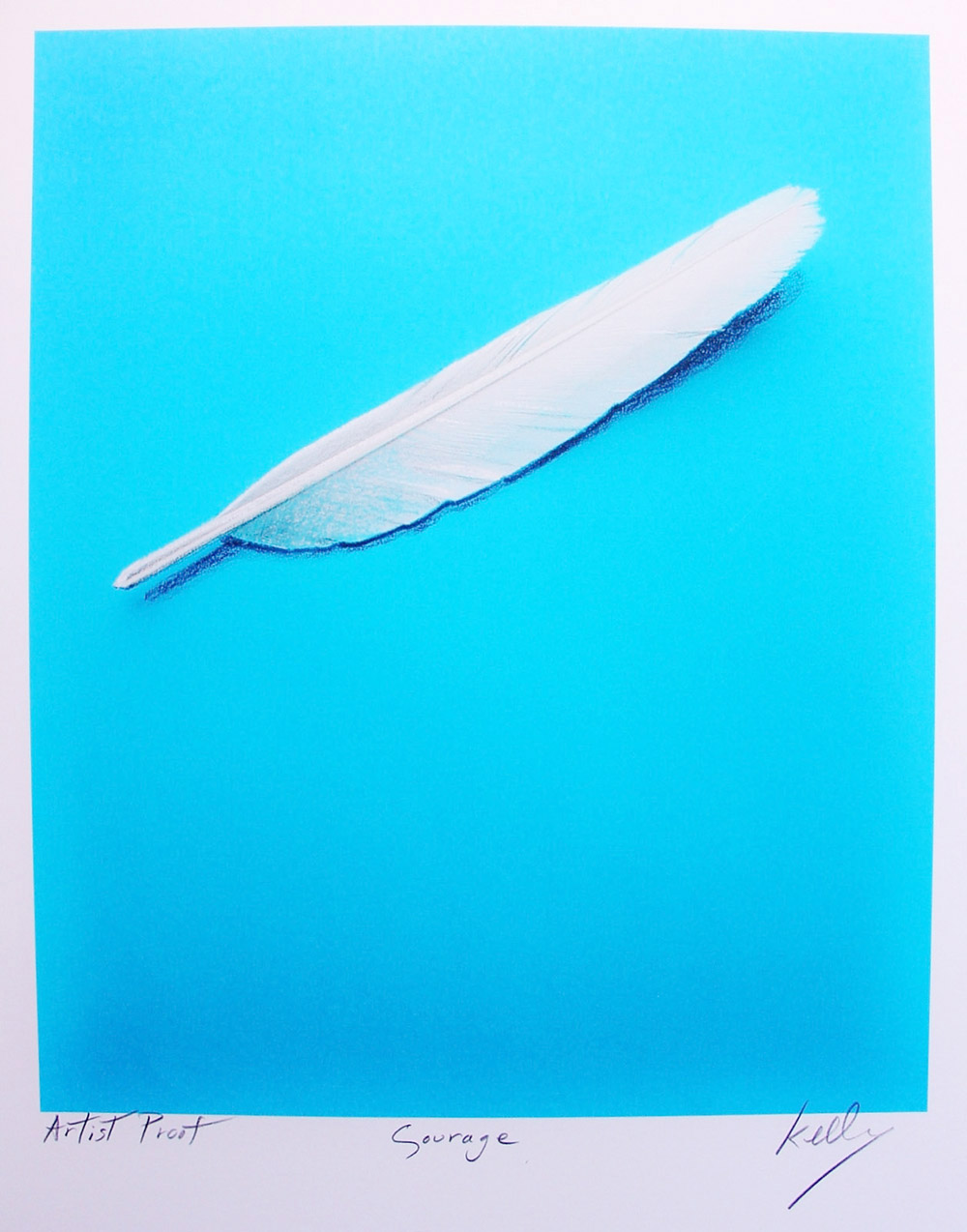
The second “Fellow Travellers…” is something of a tribute to those Australian artists, writers, filmmakers who, over the past 100 years (from WW1 to today) have publicly stood by their beliefs. It references many significant artist/activists from Noel Counihan to Arthur Boyd to those who took a stance against the Transfield Sculpture exhibition (as a result of Transfield’s role in detention centres). Those who are on this journey are, for me, ‘fellow travellers’ and as this list is nowhere near complete and increasing numbers of artists are becoming known for their position on peace, human rights, reconciliation and social justice it is an “unfolding story”.
.
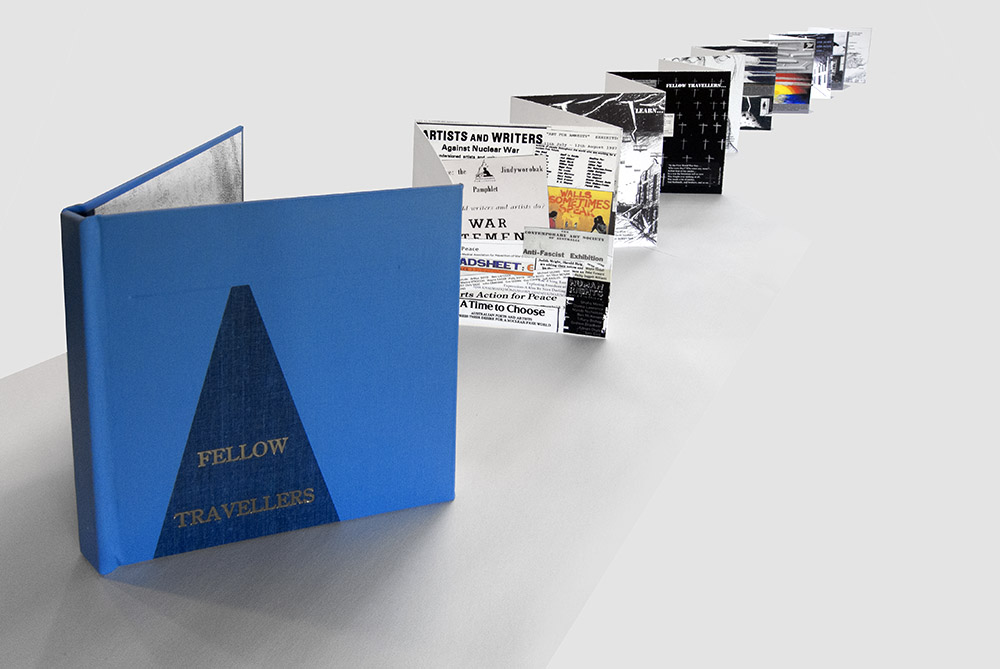
William Kelly’s Fellow Travellers
.
VIDEO: William Kelly discusses his Baldessin Press Studio Residency works
.
At the event the 2016 Baldessin Press Studio Residency recipient was announced. The recipient is Nicola Stairmand who works as an independent heritage consultant, curator and designer, combining her skills to research and interpret places of significance. She is currently employed at TarraWarra Museum of Art, where she assists with research and exhibition design.*
.
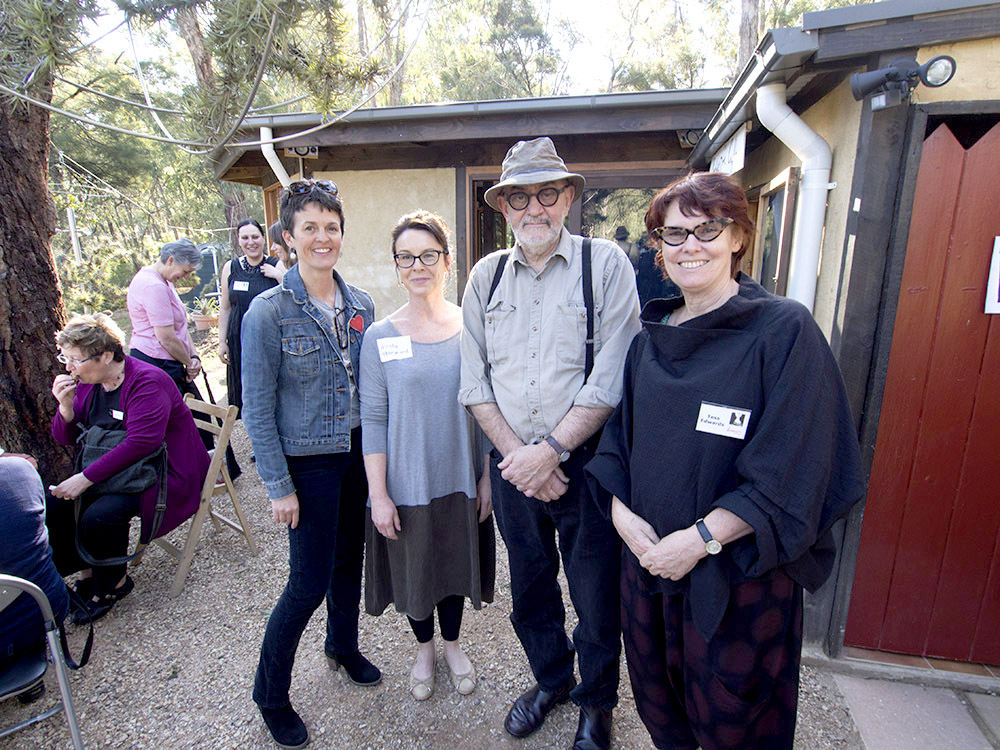
Indra Kurzeme SLV, Nicola Stairmand, Ric Amor and Tess Edwards
.
Stairmand’s project will seek to describe everyday life at Coranderrk Aboriginal Station, established in 1863 and closed in 1924, contributing to a greater understanding of its history. Using the State Library’s photographic and documentary collections, Nicola will research and produce a series of illustrative maps supported by images and descriptions.*
The formal proceedings took place on a bright and sunny spring afternoon with a kind of conviviality and informality that occurs when friends and community gather to share and celebrate important events. George Baldessin would certainly approve of this SLV Creative Fellowship and the part the press plays in bringing about new work.
.
.
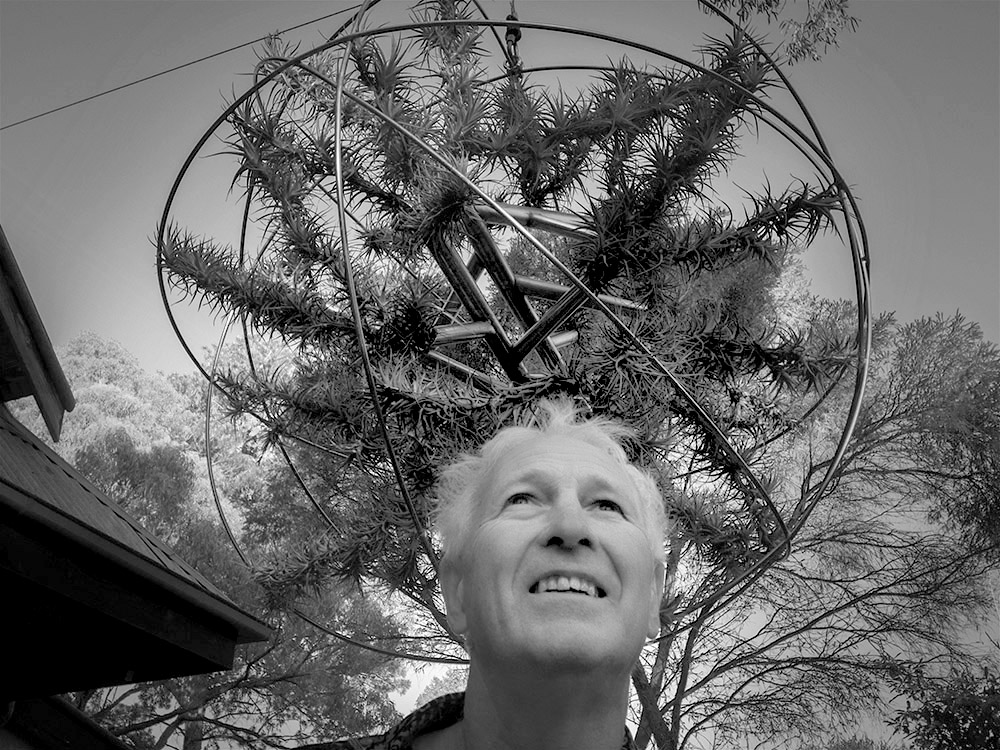
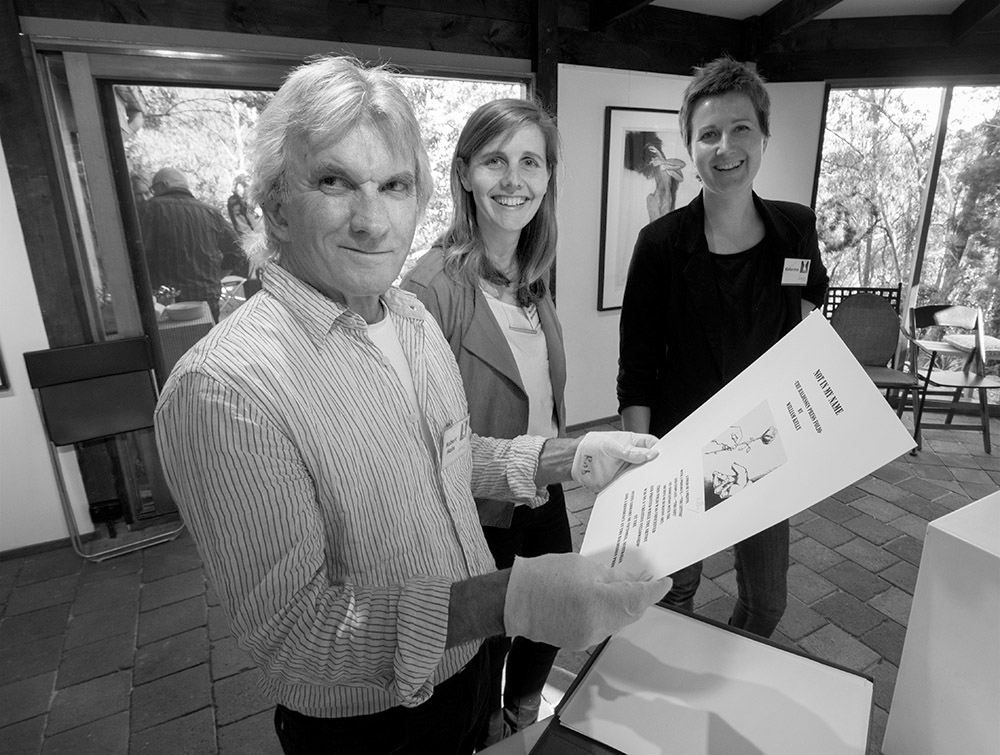
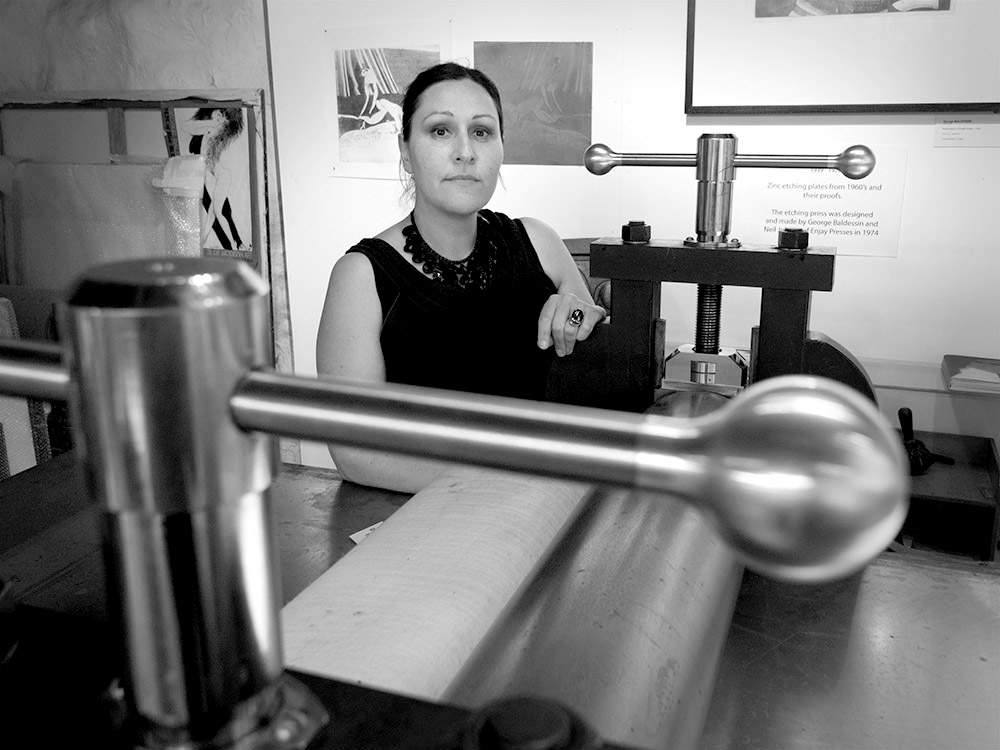
The Baldessin Press Studio Team
Click on their names to go to the Baldessin Press Studio Biogs…
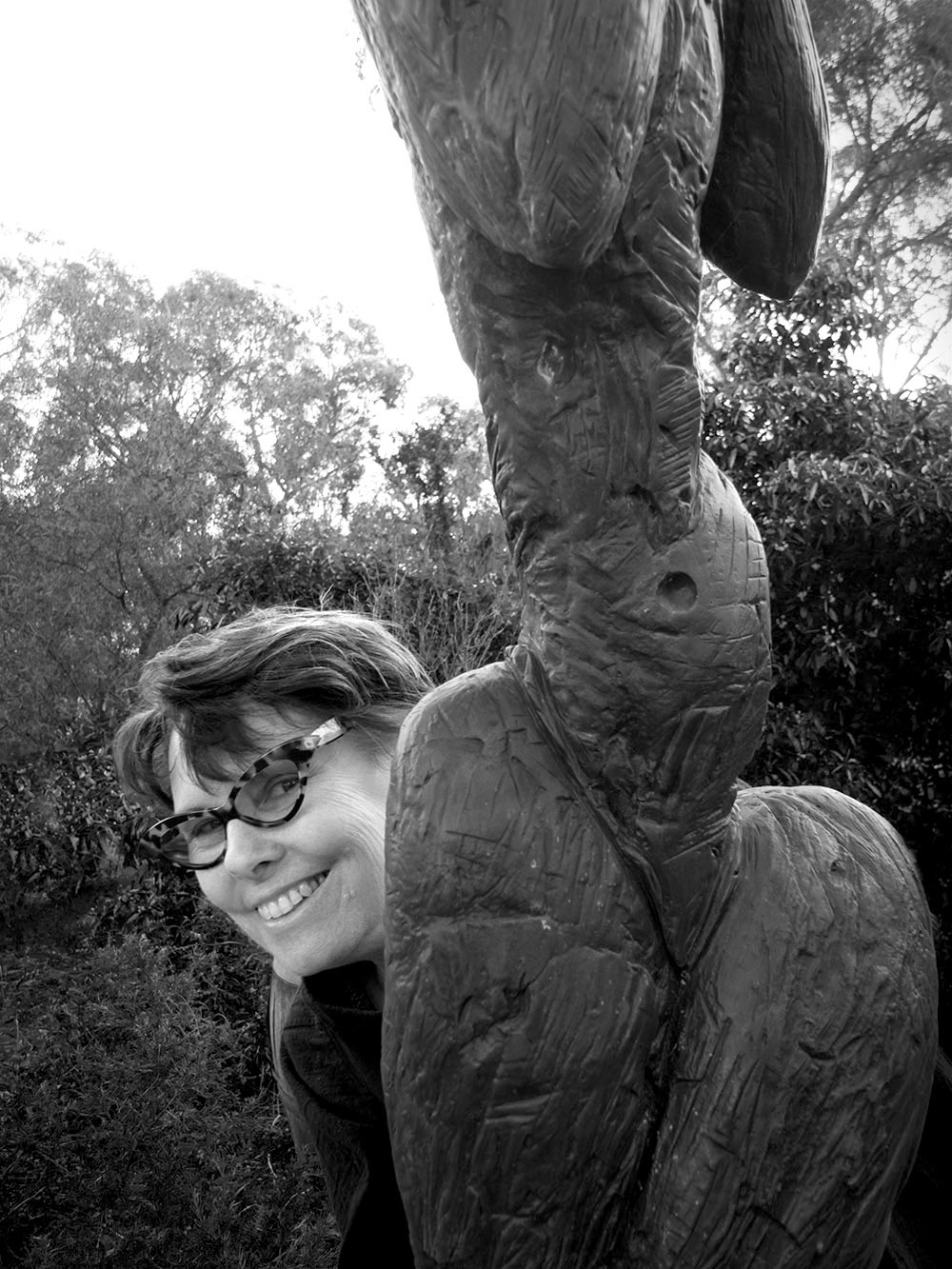
Tess Edwards (Baldessin)
.
.
.

.
Deanna Hitti (Baldessin’s master printer)
.
.
.
All photographs and video ©2015 Doug Spowart.
*Some texts paraphrased from SLV & Baldessin Press Studio websites. William Kelly artworks and text ©2015 William Kelly.
.
.
ROGER SKINNER: A Life in Light – the book
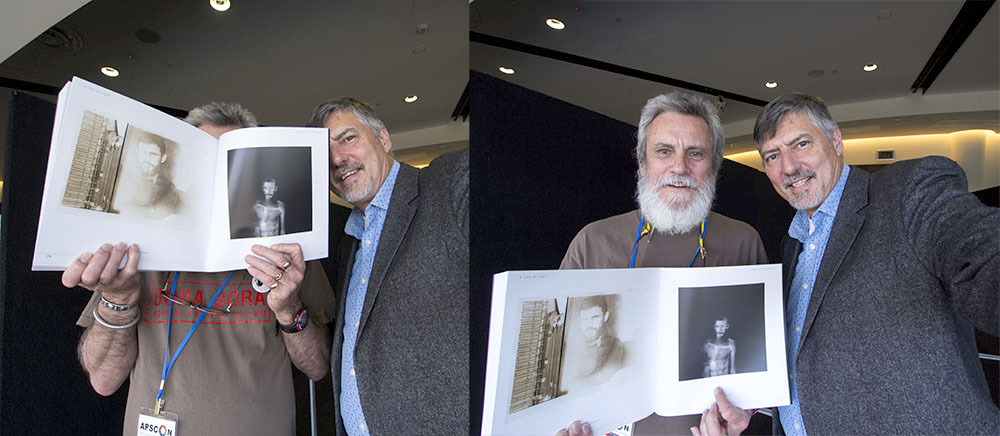
Roger Skinner and the blog author at the APSCON book launch
.
Roger Skinner is a prolific image maker, artist, photobook maker and poet. Skinner has won many of Australia art photography awards yet he also pursued an interest in the camera club movement. Celebrating 50 years of his photography Roger has compiled a weighty book divided into the subject themes that he chose to explore. Earlier this year he spoke with me about his self-published folly – 500 books, over 300 pages of colour and black and white photographs, every page a picture with consideration for the double page pairings. He also asked me to write a foreword to the book. In September Roger visited the printers in Canberra, picked up the proofs and brought them around to our house-sit in Queanbeyan with his print coordinator and brother Ian. What a moment to witness as the table before us was covered with the uncut pages of the book … A few suggestions and some corrections were made – then the presses rolled.
.
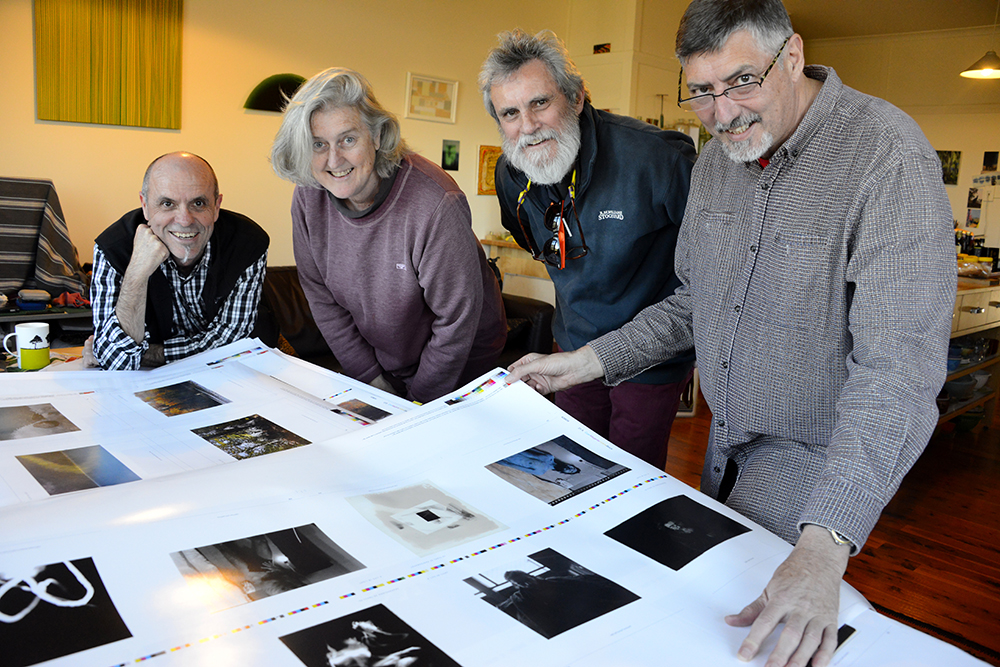
Ian Skinner, Vicky, Roger and Doug looking at proofs
For many years Roger was a director of the ‘Contemporary Group’ in Australian Photographic Society. Although he resigned his membership of the Society many years ago he was invited back to the APSCON convention at Tweed Heads to launch the book and make a presentation about self-publishing. As the proverbial ‘prodigal son’ Roger gave the 100 or so attendees the back story to his life in photography from the first photograph to those made relatively recently. He alluded to the complexities of self-publishing and the anxiety associated with committing to a personally funded book project in the many thousands of dollars. However his presentation was not intended to dissuade others from considering making their own books, but rather the realities of such an undertaking.
.
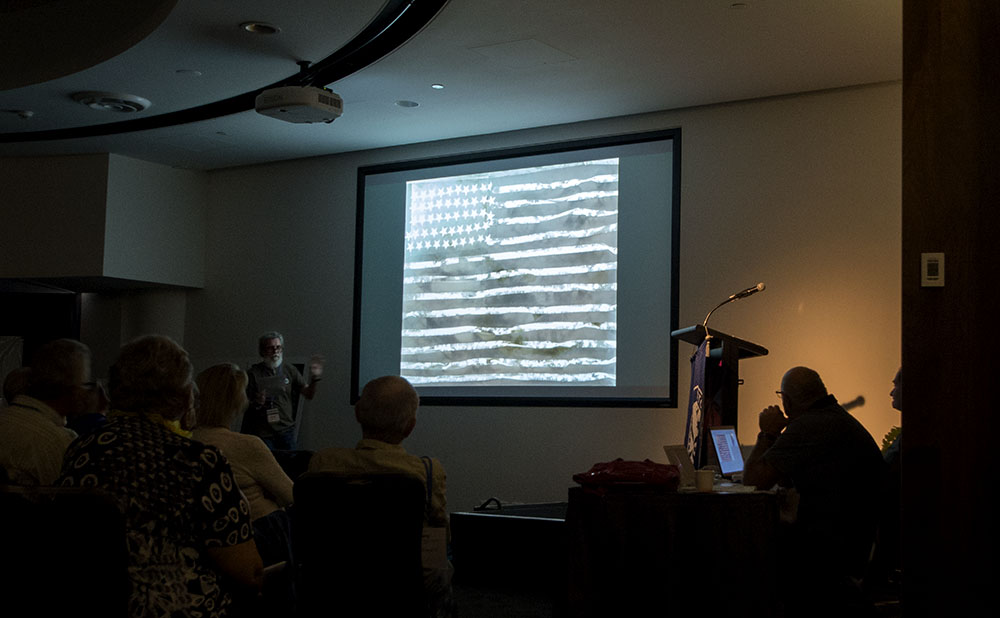
Roger Skinner presenting his book story @ APSON Conference
.
Towards the end of Roger’s lecture he asked me to come forward and officially launch the book. As I stood before this APSCON audience I was reminded of my first experience as a presenter in 1977 as a young budding photographer. Then, as now, the audience contained some of my mentors and heroes. These included Bill Smit gave me my first experience of a properly setup darkroom and printing techniques. And Graham Burstow, the Toowoomba photographer who inspired me in the late 1960s, and who is still as lively as ever with a new show just opened at the Gold Coast City Art Gallery. Like Roger my APS membership has now lapsed – I first joined in 1967 – perhaps I digress.
I spoke of Roger’s A Life in Light book as being a brave venture. Of how all photographers have libraries and that they learn principally from the books of others. I told them about the great variety of Roger’s work: was he a pictorialist? A photodocumentist? An abstractionist or a poet with a lens…? It gave me great pleasure to launch the book and I encouraged those present to support Roger, and their interest in photography to buy a book that very day … many did.
.

Doug Spowart launches Roger Skinner’s ‘A Life in Light’ PHOTO: Victoria Cooper
.
If you have an interest in seeing a collection of inspirational work created over 50 years then A Life in Light may be an ideal book to have in your library – to purchase:
.
Book $40.00 each
Postage and packing in Australia $13.40
Email address is rojpix@ipstarmail.com.au
Direct Deposits to Newcastle Permanent BSB 650 000 Acct No 915531504
.
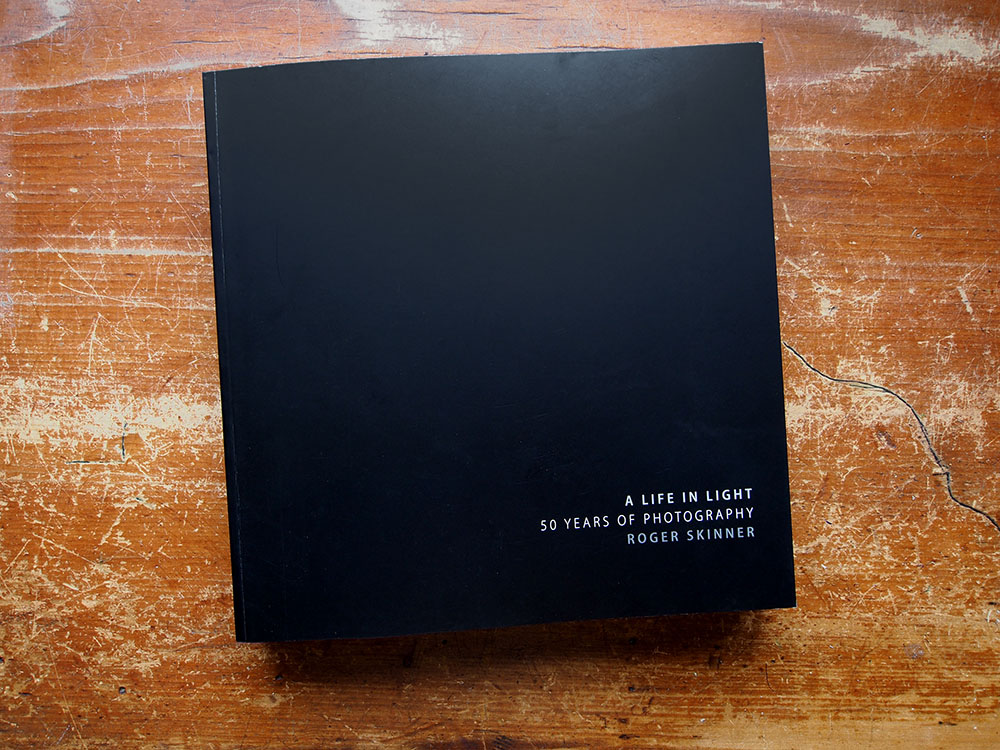
SOME SAMPLE PAGES FROM BOOK
.
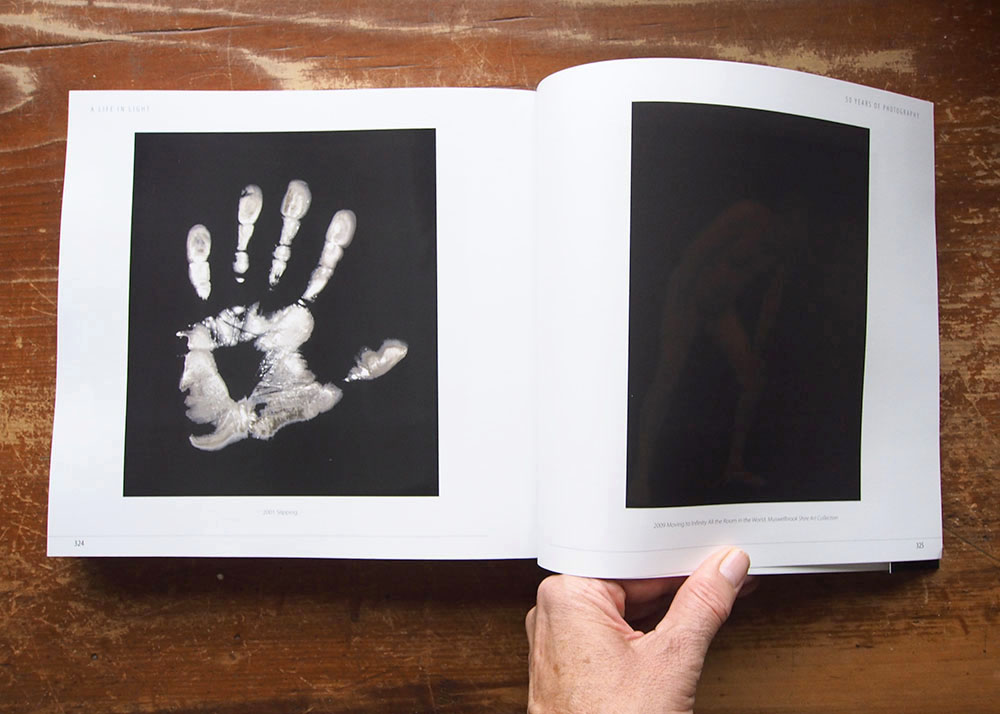
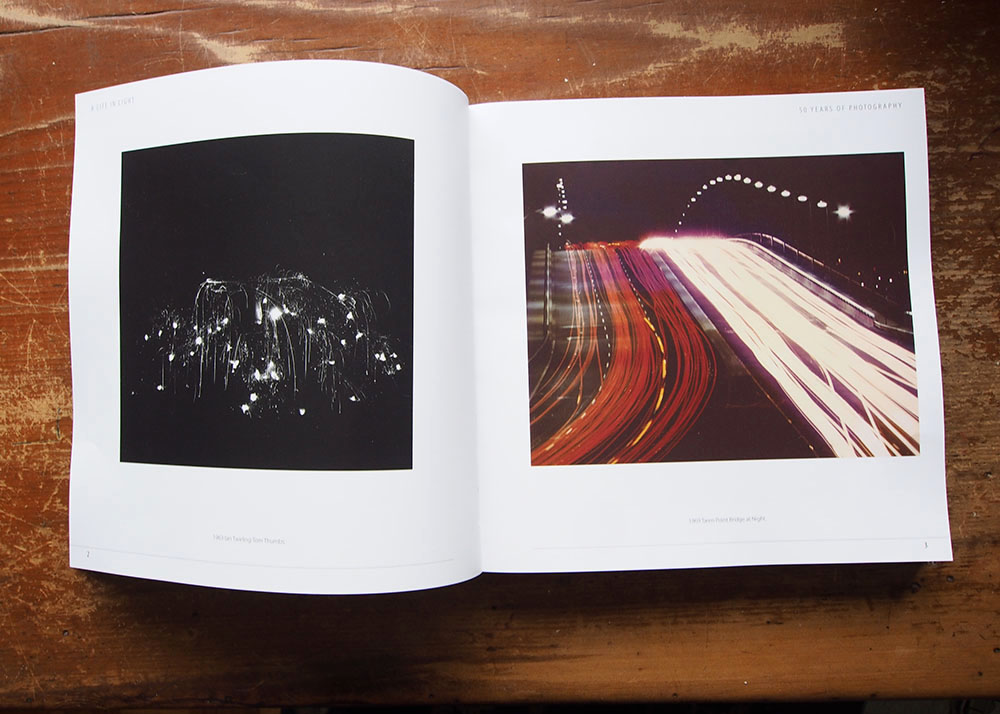

HERE IS MY FOREWORD TO THE BOOK ‘A LIFE IN LIGHT’ by ROGER SKINNER
The life and work of the regional artist
I have known Roger Skinner for over 30years and I can say that in the art of photography, he is a regional artist who cares little for his farawayness from the city. Spending a lifetime devoted to the camera and its image Skinner has pursued a range of activities in the camera club movement, professional photography associations and the photomedia art scene. Although he has an interest in the photograph as a historical document, Skinner’s practice also includes investigations into the nude, landscape, light painting, the self-image and environmental portraiture. His work has been extensively exhibited in solo and group shows, he has won numerous awards in every field of photographic endeavour, and his work is held in major private and public collections.
Not only is Roger Skinner the consummate artist, he is an organiser, facilitator and committee member. He is a builder and champion of networks that provide opportunities for others. Many will know him for his coordination of the Muswellbrook Art Photography Prize, an award won by major Australian photographers and judged by elite Australian curators, critics and commentators of the art. As a conference presenter, teacher and mentor, he has inspired and enthused many to extend their photography activities. For some time he was Education Officer at the Muswellbrook Regional Arts Gallery, and has also served as the Director of the Contemporary Group of the Australian Photographic Society.
But has the remoteness of his practice affected recognition for his own work? Apart from significant urban artists who have taken to living fashionably in the country after they have achieved their fame – how many regional artists have well deserved recognition in this country? Not many … not many. Recognition or not Roger Skinner just gets on with making his art and pursuing his other activities.
The regional space, people and their stories have revealed themselves to Skinner. His eclectic visual style exudes a kind of poetic response to the subject and life. Roger Skinner’s photographs tell us not only something of his interest and his eye for the world, but also how these photographs can touch with our experience of life and tell us something about ourselves.
Proximity has located Skinner in regional New South Wales, and despite a modicum of national infiltration of his work, this isolation may have served him well. However one could ponder the broader recognition and opportunities for his work had he lived in the creative networked proximity of a big city. Perhaps the extensive body of work presented in this book may enable a repositioning of his work within a pantheon of significant Australian photographers.
Dr Doug Spowart
Co-Founder – Centre for Regional Arts Practice
.
.
IMAGES OF THE BOOK FOLLOW…
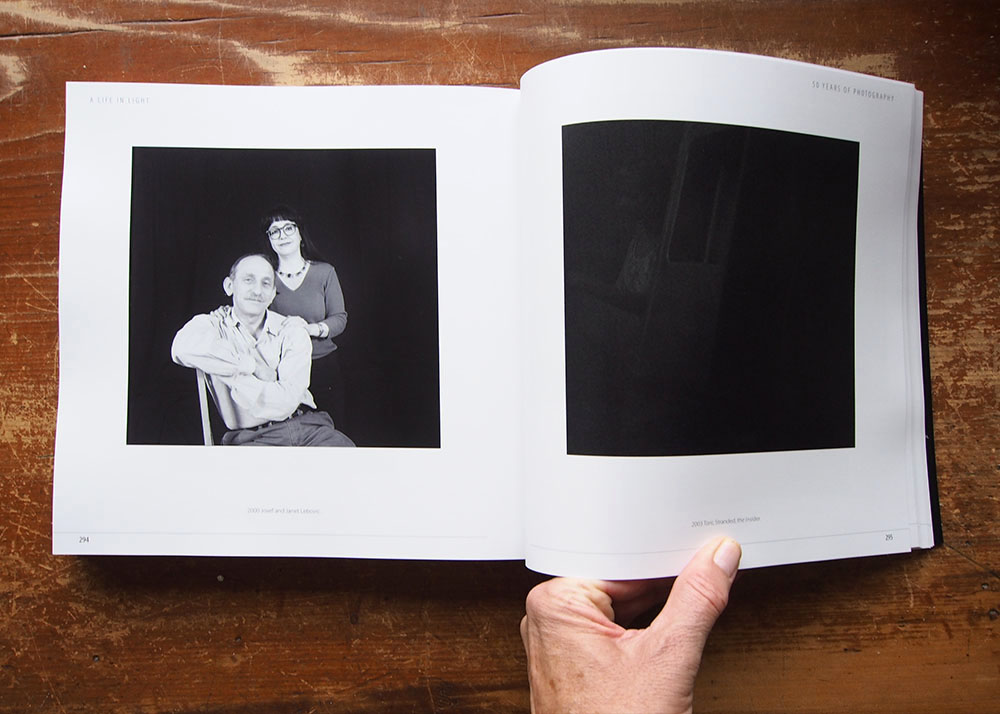
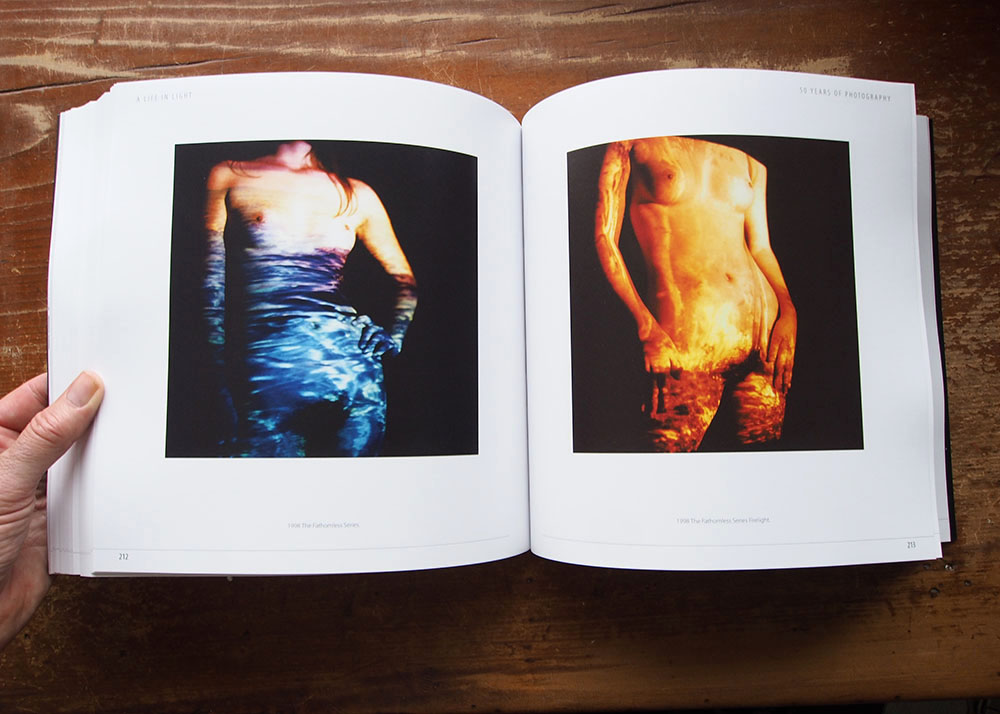
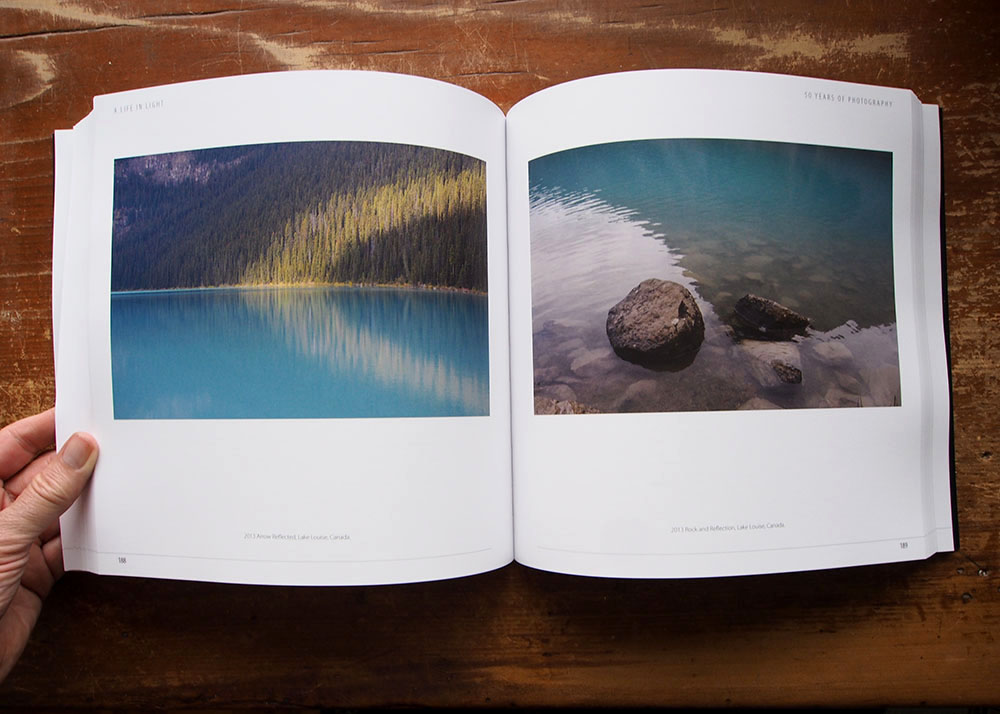


.
All texts and photographs except that by Victoria Cooper ©Doug Spowart
WORLD PHOTOBOOK DAY @ Brisbane’s Maud Creative
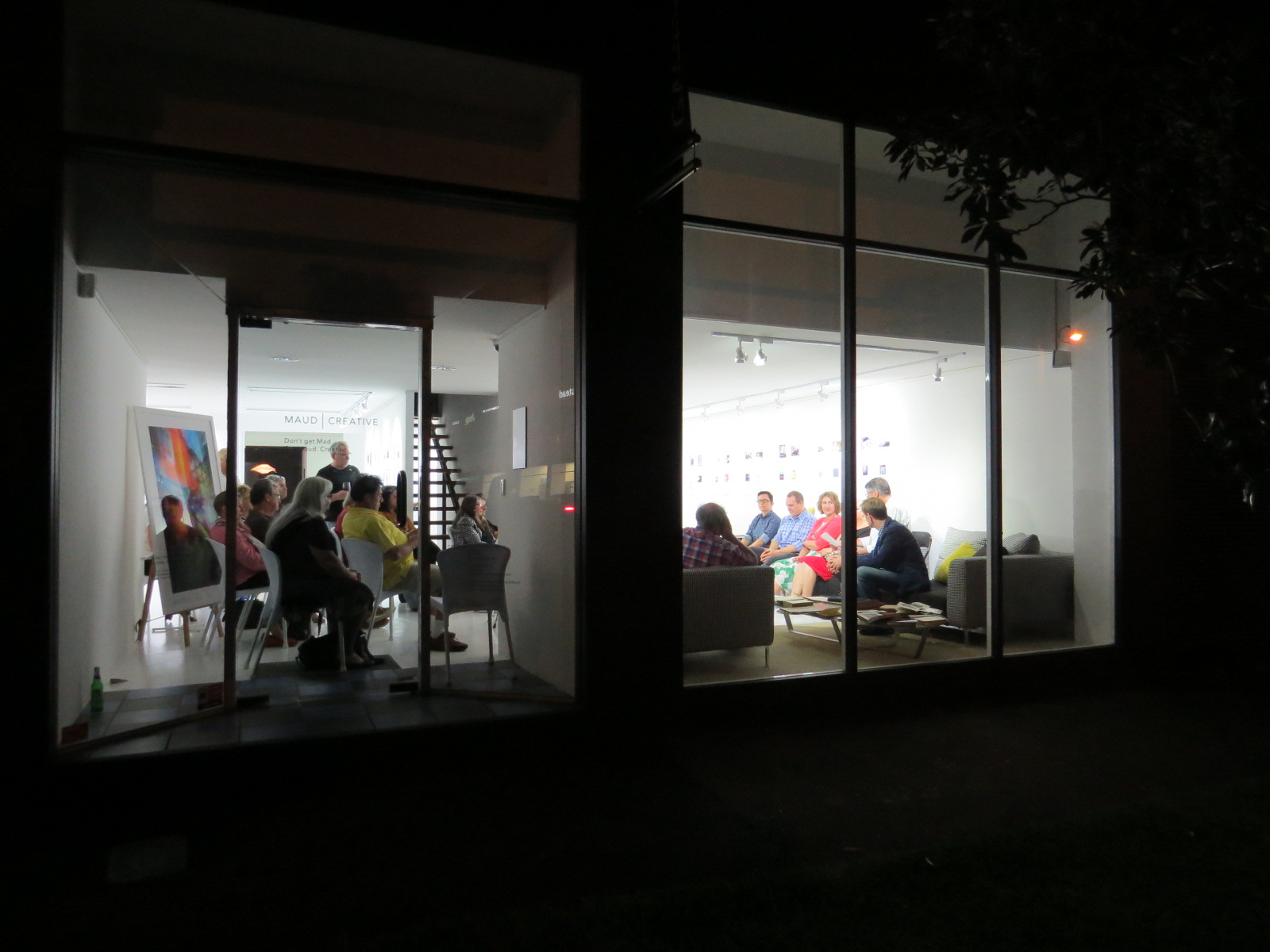
World Photobook Day at Maud Creative Gallery Photo Robert Gray
.
A survey project about those who read photobooks
My Favourite Photobook – Brisbane World Photobook Day
World Photobook Day (WPBD) in Brisbane Australia at Brisbane’s Maud Creative Gallery was celebrated with a survey project highlighting photographers and their photobooks curated by Victoria Cooper and Doug Spowart.
The international WPBD team chose this day in recognition of the British Library’s the acquisition of Anna Atkins’ Photographs of British Algae: Cyanotype impressions on October 14 in 1843. Atkins’ cyanotype book is arguably considered as the world’s first photobook as both image and text are printed simultaneously printed on the same page. It was some time before the photograph and text could be co-printed, so books that included photographic illustrations, were usually printed with text by letterpress processes and photographs ‘tipped-in’ as original prints. WPBD activities are supported through the PhotoBook Club, a worldwide network of groups interesting in photobooks.
The Cooper+Spowart survey asked photographers to submit a photograph of themselves reading their favourite photobook and comment on why they like their chosen book. Sixty-five photographers responded to the request. Working on tight timelines Cooper and Spowart printed the photographer’s submissions including: their self-portraits while reading, their chosen book and a comment about why they had chosen the book. This work was presented for viewing on the gallery wall.
.
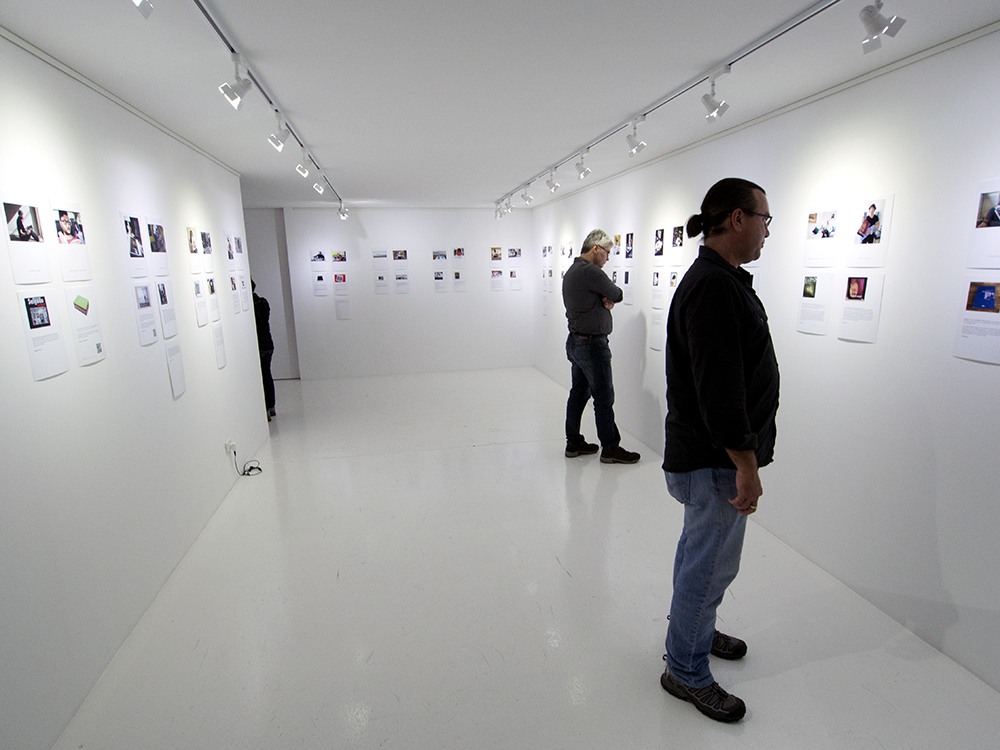
Brisbane World Photobook Day, Maud Gallery Photo Doug Spowart
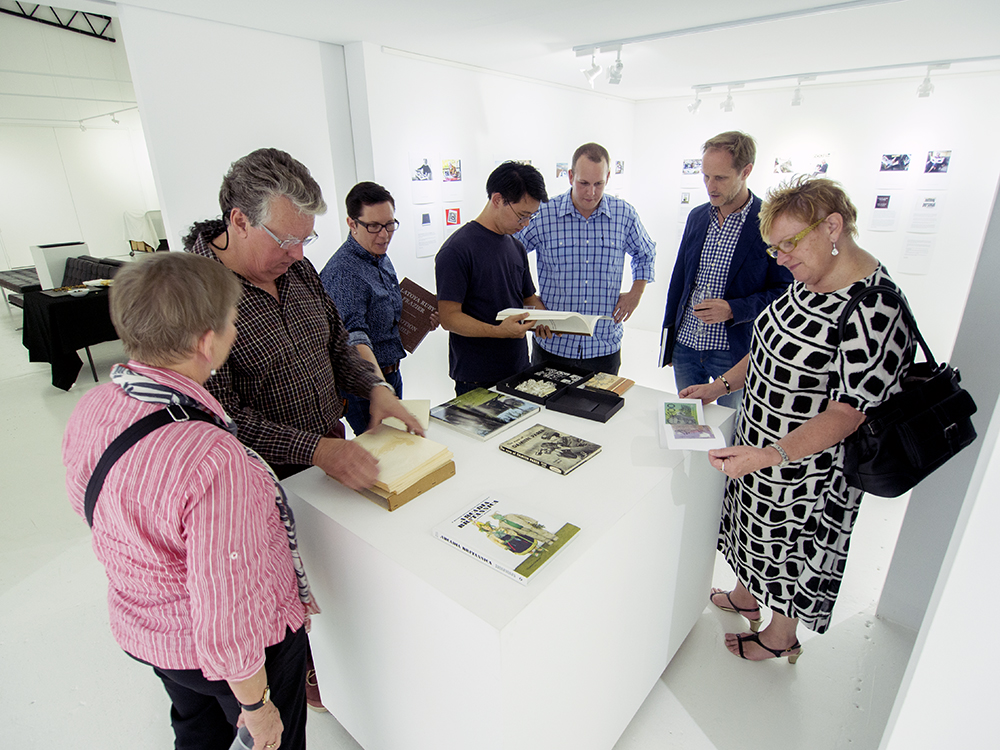
Looking at books – WPBD, Maud Gallery Photo Doug Spowart
.
The event was also attended by photographica collector and historian Sandy Barrie who presented a selection of photographically illustrated books from the 19th century. These books include the 1846 Art Union journal that contained an essay by Henry Fox Talbot and an original calotype print.
.
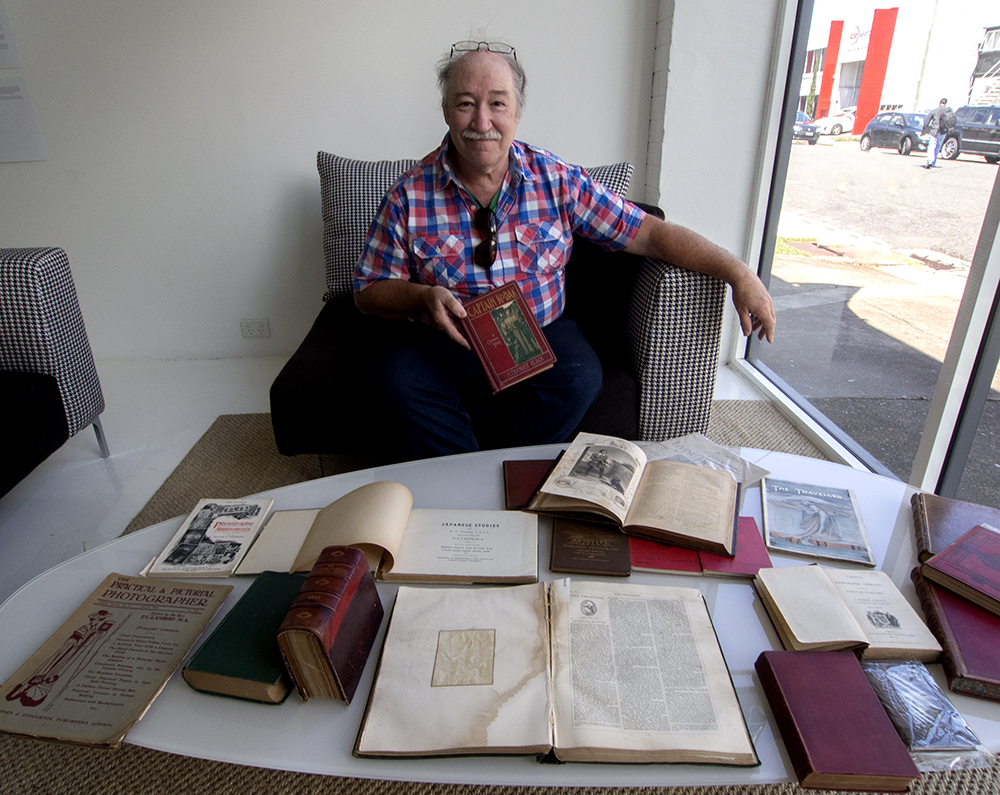
Sandy Barrie and the Art Union journal Photo: Doug Spowart
.
Early in the evening a ‘fly-through’ video was made of the installation with some guests present.
.
In the evening around 35 photobook enthusiasts attended a forum with panellists including Dr Heather Faulkner documentary transmedia practitioner and lecturer at the Queensland College of Art (Gold Coast), Chris Bowes artist and bookmaker, Julie Ann Sutton documentary photographer and collector, Helen Cole Senior Librarian and Coordinator of the Australian Library of Art at the State Library of Queensland, and Henri van Noordenberg artist and bookmaker. The forum was convened by Doug Spowart who in a Q&A format led discussion and a range of photobook issues including:
- Collecting books
- Possession and ownership
- Borrowing and loaning of books
- Adding bookplates and marginalia to books
- Letting children handle books
- The future of photobooks
.
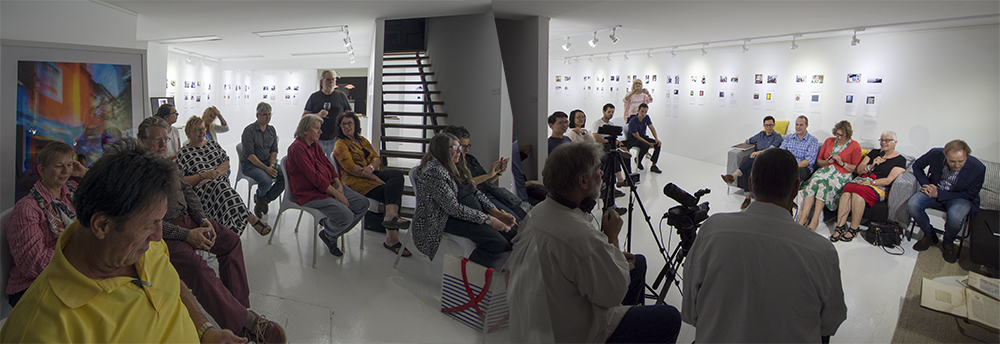
WPBD Forum Photo Daniel Groneberg
.
The last poignant comment came from Heather Faulkner when speaking of the future printed book. In her statement she referred to the recent changes to privacy laws giving government agencies access and scrutiny over all of our online metadata. Faulkner’s prediction is that the physical book, as it has been in the past, will be the place for personal and provocative commentary on contemporary life and politics.
.
Cooper+Spowart wish to acknowledge the following supporters of this project:
- The creative from Maud Gallery: Irena Prikryl, Teri Ducheck and Peter Pescell – videographer;
- Matt Johnston – The Photobook Club;
- Tony Holden and Ilford for the inkjet printing paper;
- Sandy Barrie;
- The forum panelists – Heather, Chris, Julie Ann, Helen and Henri;
- The installation team Maureen Trainor, Rene Thalmann, Mel Brackstone and Daniel Groneberg;
- And, of course, all the participants.
.
To celebrate the Brisbane WPBD event BLURB Australia has offered a discount voucher for participants in the Brisbane event. The code and conditions are: WPBD2015, expires 30 November 2015. Must pay with Australian dollars. Maximum discount per book is AUD$150. Each customer can use the code 1 time.
SEE a few of the photographers and their favourite books in this download:
.
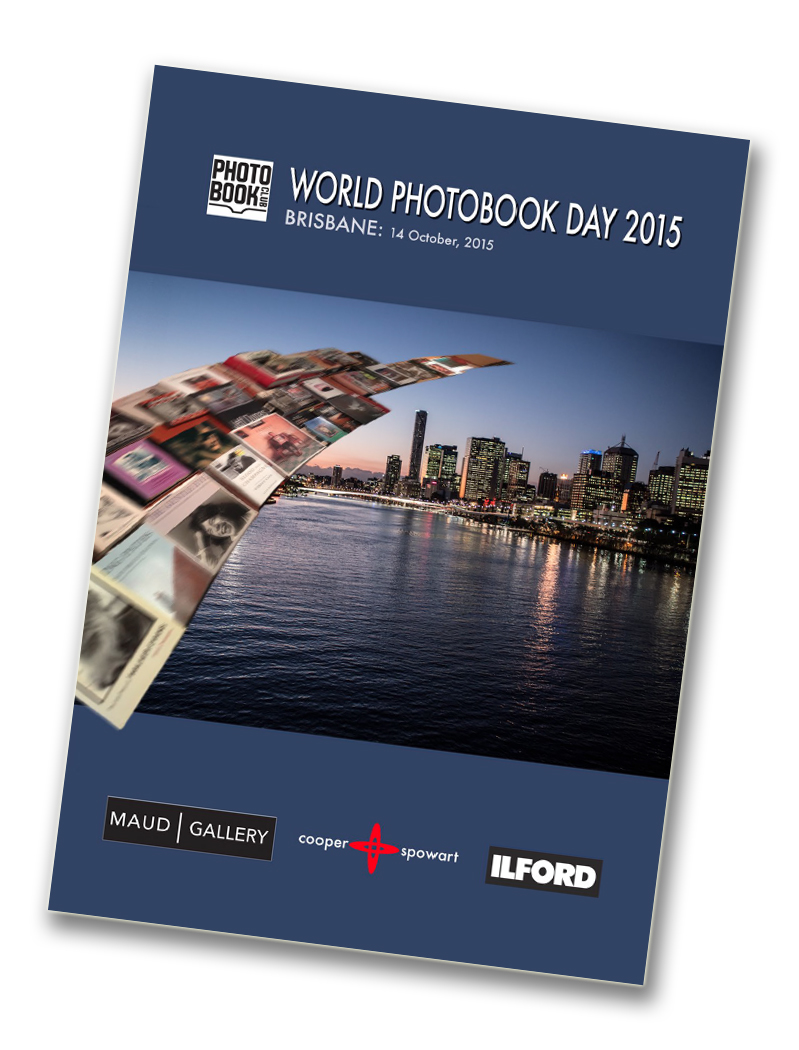
DOWNLOAD A PDF SELECTION: WPBD-Selected_Submissions
.
THE PROJECT WILL CONTINUE… Stay tuned.
.
Previous WPBD events coordinated by Cooper+Spowart 2013 and 2014.
.
.
The 67 participating photographers and their books were:
Peter Adams: Passage – Irving Penn
Melissa Anderson: Shooting Back – Jim Hubbard
Ying Ang: Sabine – Jacob Aue Sobol
Sandy Barrie: Art Union Journal, 1 June 1846 – Henry Fox Talbot essay
Chris Bowes: Tokyo Compression – Michael Wolf
Isaac Brown: Ray’s a Laugh – Richard Billingham
Harvey Benge: Blumen – Collier Schorr’s book
Camilla Birkeland: Mike and Doug Starn – Andy Grundberg
Daniel Boetker-Smith: In Flagrante – Chris Killip
Mel Brackstone: Melbourne and Me (a work in progress) – Adrian Donoghue
Helen Cole: Booked – Peter Lyssiotis
Victoria Cooper: Domesday Book – Peter Kennard
Michael Coyne: Workers -Sebastião Salgado
Judith Crispin: da Sud a Nord (from South to North) – Sabine Korth
Sean Davey: William Eggleston Paris
Jacqui Dean: Peter Adams – A Few of the Legends
John Elliott: Richard Avedon Portraits
Dawne Fahey: Julia Margaret Cameron – Marta Weiss
Heather Faulkner: The Notion of Family – La Toya Ruby Frazier
Liss Fenwick: Outland – Roger Ballen
Juno Gemes: Nothing Personal – Richard Avedon and text by James Baldwin
Kate Golding: Fig. – Adam Broomberg & Oliver Chanarin
Philip Gostelow: Thank You – Robert Frank
Robert Gray: Max Yavno
Daniel Groneberg: Los Alamos – William Eggleston
Sam Harris: Café Lehmitz – Anders Petersen
Tony Hewitt: 50 Landscapes – Charlie Waite
Douglas Holleley: Man and His Symbols – Carl Jung
Kelly Hussey-Smith: On the Sixth Day – Alessandra Sanguinette
Libby Jeffery: Inferno – James Nachtwey
Matt Johnston: Touch – Peter Dekens
Larissa Leclair: Moisés – Mariela Sancari
Louis Lim: Blind – Sophie Calle
James McArdle: Love on the left bank – Ed van der Elsken
Paul McNamara: The Terrible Boredom of Paradise – Derek Henderson
Henri van Noordenberg: Cinci Lei – Joost Vandebrug
Gael Newton: By the sea – CR White
Glen O’Malley: A Modern Photography Annual 1974
Thomas Oliver: Common Sense – Martin Parr
Maurice Ortega: The Apollo Prophecies – Kahn and Selesnick
Adele Outteridge: Pompeii – Amedeo Maiuri
Polixeni Papapetrou: Diane Arbus
Martin Parr: Bye, Bye Photography – Daido Moriyama
Gael Phillips: Arcadia Britannica, A Modern British Folklore Portrait – Henry Bourne
Louis Porter: Looking Forward to Being Attacked – Lieutenant Jim Bullard
Imogen Prus: The Whale’s Eyelash, A Play in Five Parts – Timothy Prus
Jack Picone: Exiles – Josef Koudelka
Ian Poole: White Play – Takuya Tsukahara
Irena Prikryl: Cyclops – Albert Watson
Susan Purdy: nagi no hira, fragments of calm – Suda Issei
Jan Ramsay: AraName – Bir Ara Güler Kitabi
Jacob Raupach: The Family Album of Lucybelle Crater – Ralph Eugene Meatyard
Felicity Rea: Pandanus – Victoria Cooper
Mark Shoeman: Me We, Love Humanity and Us
Roger Skinner: Third Continent – Self-published
Doug Spowart: The Research Library, National Gallery of Australia
Tim Steele: The Earth From The Air – Yann Arthus-Bertrand
Alison Stieven Taylor: Strange Friends – Bojan Brecelj
Julie Ann Sutton: Katherine Avenue – Larry Sultan
Maureen Trainor: Sequences – Duane Michals
Garry Trinh: Period of Juvenile Prosperity – Mike Brodie
Ann Vardanega: Loretta Lux
George Voulgaropoulos: A shimmer of possibility – Paul Graham
Marshall Weber: Street Our Street – Dana Smith & Marshall Weber
David A Williams: Avedon Fashion
Konrad Winkler: Emmet Gowin the new Aperture book
Simon Woolf: F Lennard Casbolt Retrospective Exhibition Catalogue
.
.
All photographs and texts remain the copyright of the submitting photographers.
ABBE: Artists books Brisbane Event 2015
ABBE Logo
For many years Queensland had a diversity of artists book activities: the bi-ennial Artspace Mackay Artists Book Forums and Libris Awards, the once yearly Noosa Artists Book Events and the Southern Cross University Acquisitive Artists Book Awards. Also contributing to this fertile artists book environment the State Library of Queensland’s Australian Library of Art which included the SLQ’s Siganto Foundation fellowships, ‘white glove’ presentations and events. Added to this were exhibitions and artists book fairs coordinated by Grahame Galleries and other shows at scattered venues. With the recent demise of the Mackay, Noosa and Southern Cross events their absence was felt by the artists book community. Now a new event has emerged to add to the SLQ and Grahame Galleries support of the art – the Artists Book Brisbane Event (ABBE). Over July 16, 17 and 18 ABBE featured a triptych of activities; a conference, an exhibition of books, an artists book fair and allied exhibition events at the State Library of Queensland, Grahame Galleries, The Studio West End, the IMA and Impress Printmakers Gallery.
The conference sought to address 3 main themes relating to the artists book:
- post literacy
- materiality/the haptic
- the nature of reading artists books.
Three keynote presenters lead the program:
- Sarah Bodman – Senior Research Fellow for Artists Books, CFPR editor of the Blue Notebook
- Brad Freeman – Founder and editor in chief of the Journal of Artist’s Books
- Dr Lyn Ashby – Australian artist and scholar making books
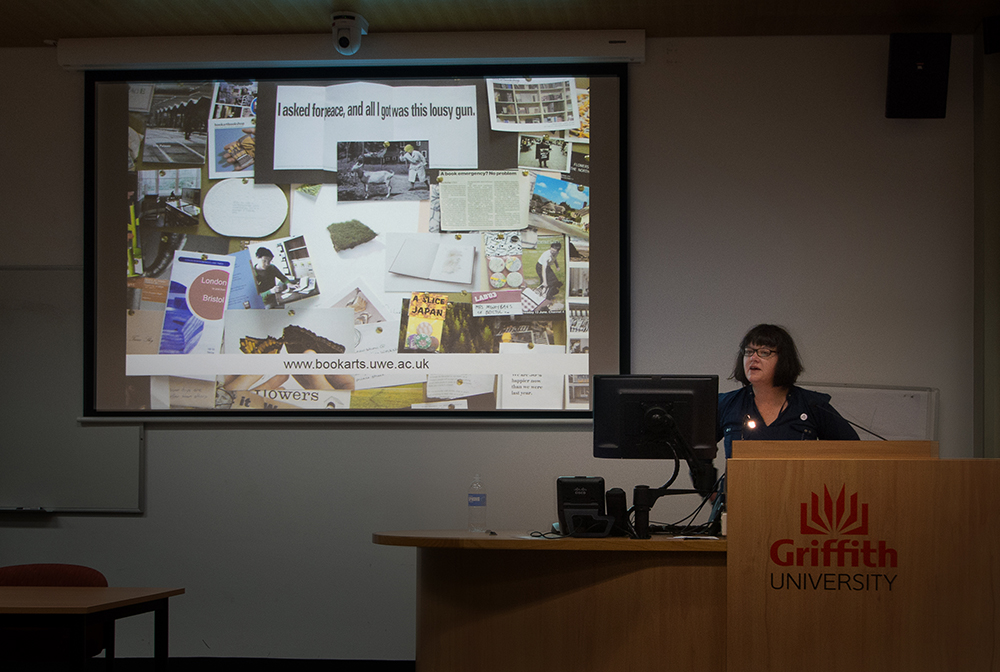
Sarah Bodman presents her keynote lecture
.
SARAH BODMAN (Abstract)– ARTISTS’ BOOKS AS A PHYSICAL SITE OF PRACTICE
If a post-Literate society might also encompass new ways of thinking about reading, we could think of contemporary artists’ books as a site of practice beyond that of McLuhan’s sign posting of the invention of moveable type as fundamentally responsible for how the Western world physically reads: “along the straight Lines of the printed page.”
We seem to have already moved from Linear to non-linear reading; we are used to flitting through digital screen-based texts, and losing our attention through a multitude of online multi-tasking. Physical engagement with artists’ books provides us with spaceto breathe, a slower rhythm of ingesting information and time to reflect, so what about the artists who are making them? How are artists engaging with the physical book now?
These examples focus on celebrating the book as a physical container used by artists to: re-present language, offer performative reading, view how reading is perceived, appropriate text from novels and instructional manuals into new works, or to transform information from the virtual into the physical.
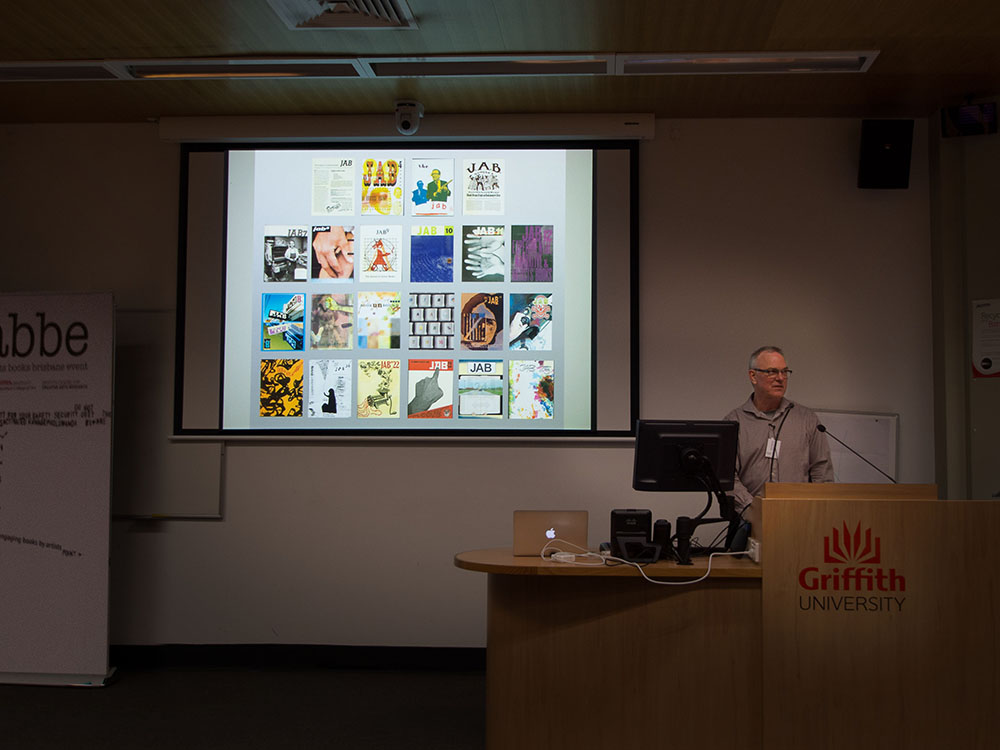
Brad Freeman presents his keynote lecture
.
BRAD FREEMAN (Abstract) – JOURNAL OF ARTISTS’ BOOKS
Brad Freeman’s Lecture focussed on JAB, the Journal of Artists’ Books, that supports critical inquiry into artists’ books. Since 1994 JAB has published interviews with contemporary artists whose primary medium is the artist book, reviews of artists’ books, and essays about historical issues and contemporary artists and their work. JAB has a two pronged approach to culture creation via publication arts; an educational approach with critical writing and documentation of current activity; and second, a creative approach with publication art-exploring the creative potential of print and the book by commissioning artists’ covers (letterpress and offset), artist designed pages, and artists’ books made especially for insertion into JAB.
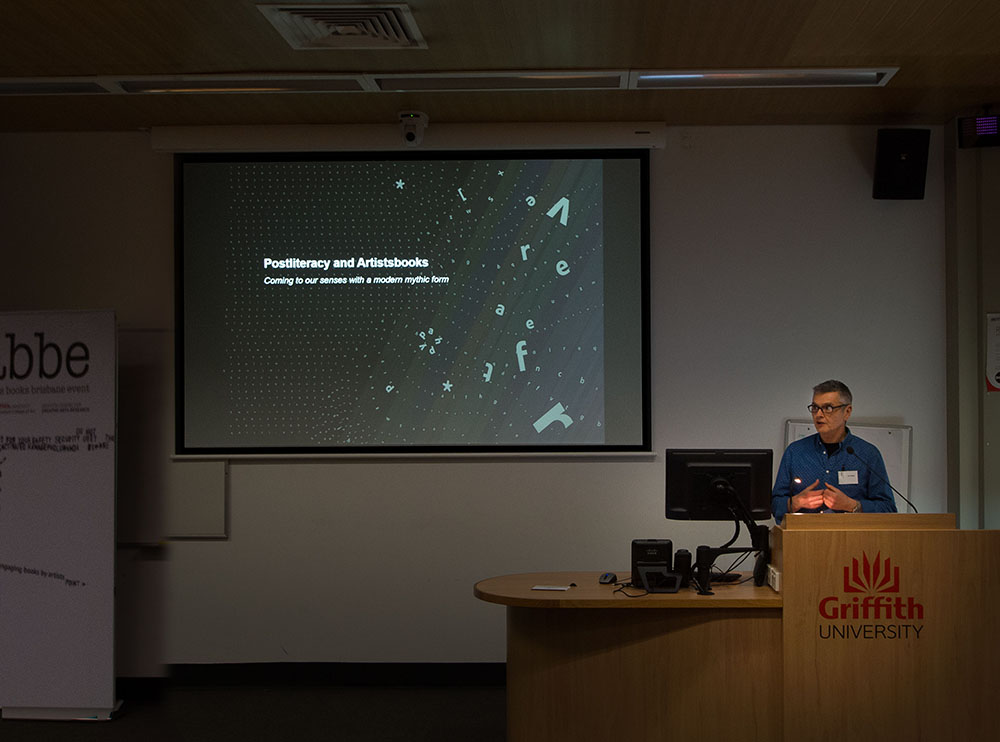
Lyn Ashby presents his keynote lecture
.
LYN ASHBY (Abstract) – POSTLITERACY AND ARTISTSBOOKS: Coming to our senses with a modern mythic form
This presentation is a speculation on the idea that contemporary artistsbooks may be the laboratory for a new literacy, and that in honor of the quietly evolutionary nature of this new literacy, we might call it “postliteracy”.
As background, it explores how our centuries of standard literacy and its attendant conventions of pictorial space and chronological, narrative time, have privileged a specific code in the representations of our language systems (both image and text) and their operations across the page and through the book. The prescriptions of these conventions and the domination of the line and the grid onto the look of language have come to minimise the participation (and uncertainty) of the senses in the direct process of apprehending meaning with language forms.
But the pages of artistsbooks are often filled with the explorations of other ways that language forms can activate a lively, sensory involvement with the page space, or how meaning can be formulated beyond the limitations of chronology.
Some of these experiments involve the invocation of pre literate, oral language structures that work more by the devices and grammars of music, song and myth than the usual strategies of standard literacy. in this way, the contemporary artistsbook may be the hardcopy home of a modern, mythic form.
.
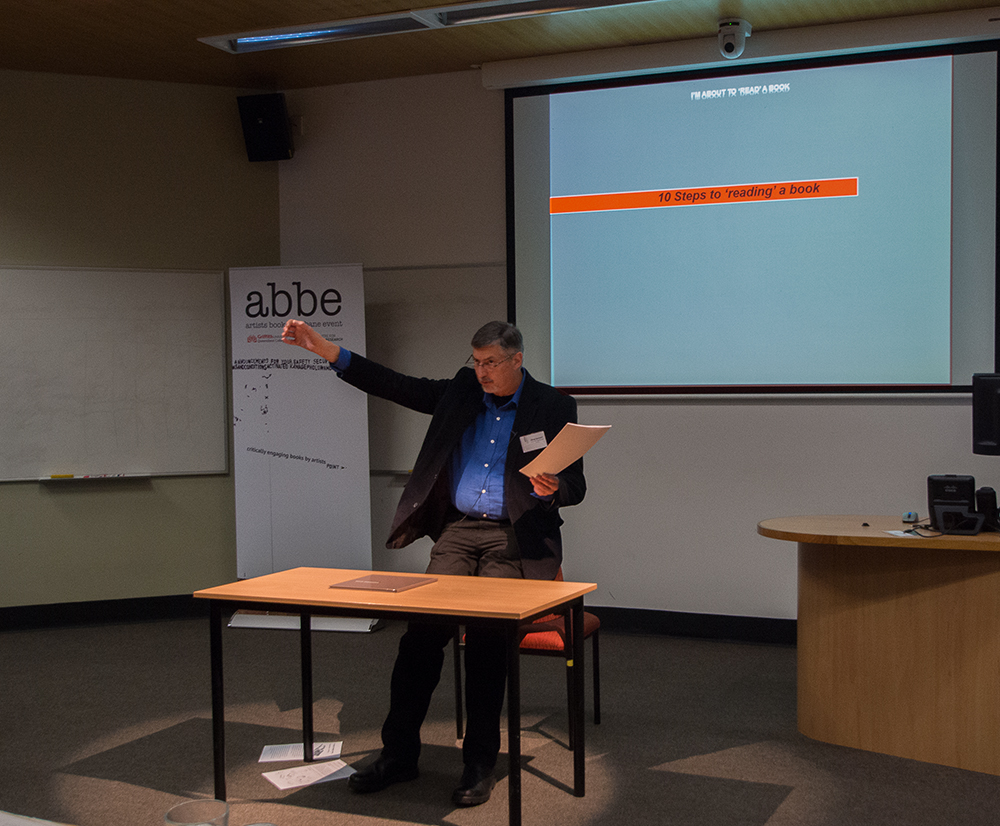
Doug Spowart performs his lecture ‘I’m about to ‘read’ a book’
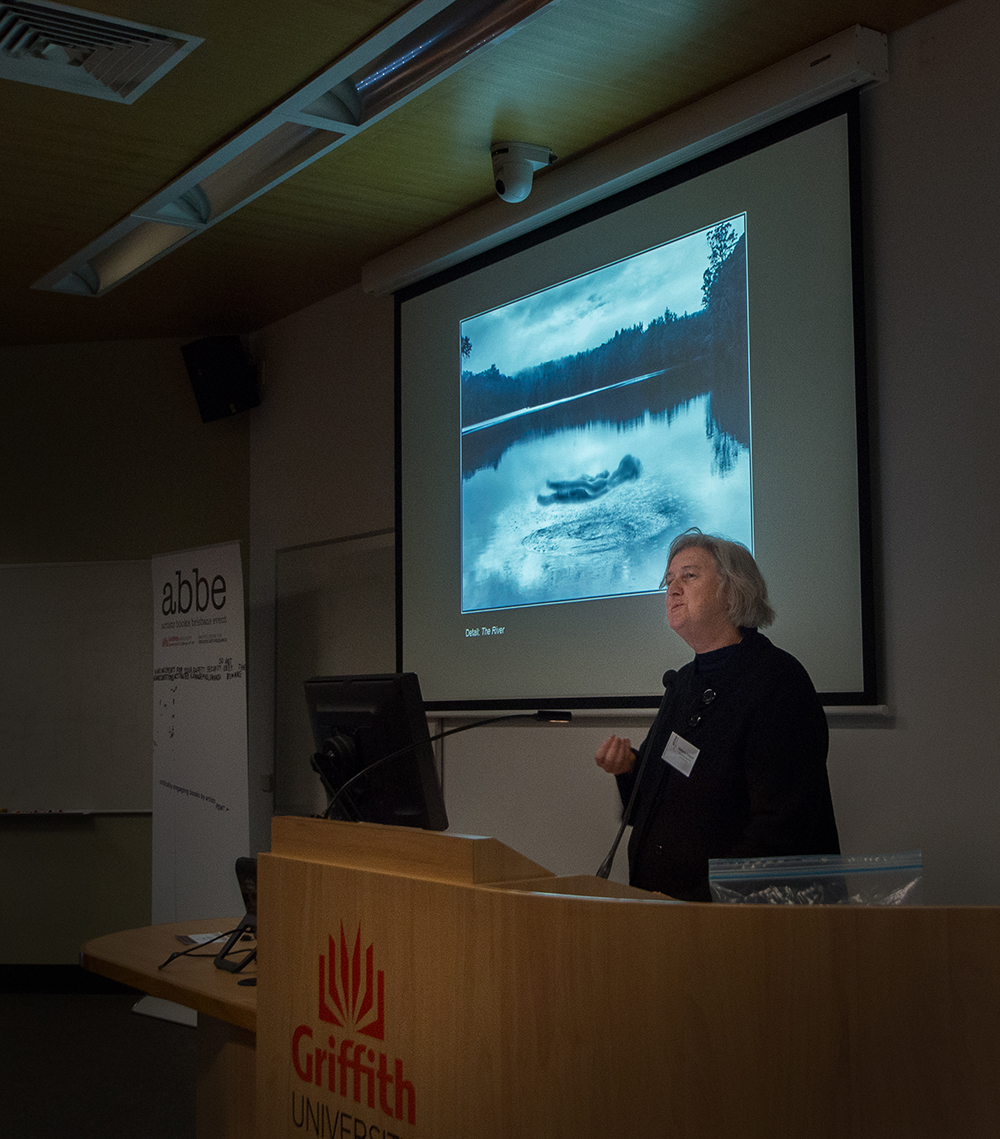
Victoria Cooper presents her lecture ‘The Grafted Image: The Montage’
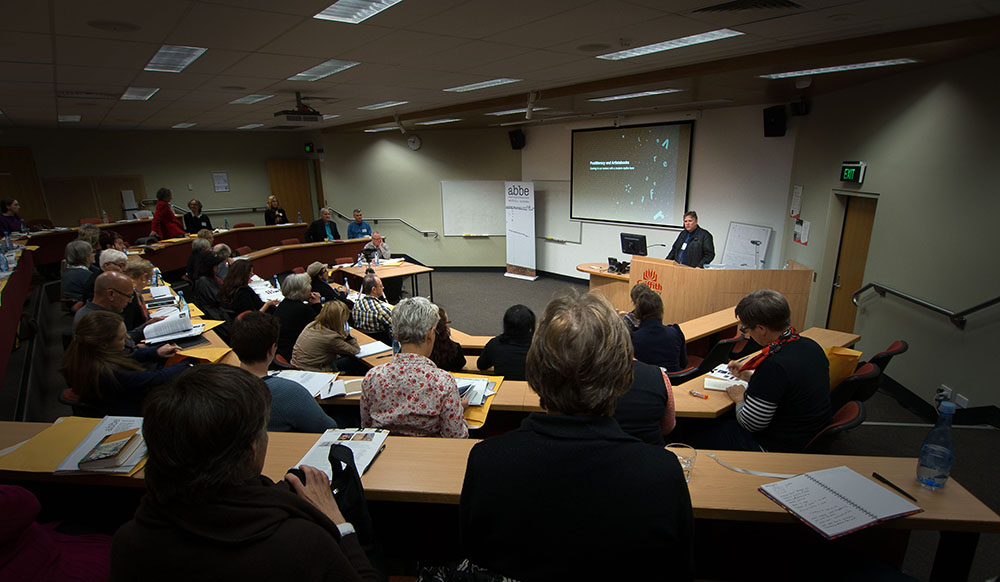
Tim Mosely presents in the lecture room
Presenting/Participating at the conference
.
- Lyn Ashby
- Sarah Bodman
- Sara Bowen
- Deidre Brollo
- Helen Cole
- Victoria Cooper
- Marian Crawford
- Daniel Della-Bosca
- Fiona Dempster
- Caren Florance
- Jenny Fraser
- Brad Freeman
- Angela Gardner
- Noreen Grahame
- Bridget Hillebrand
- Joel Lardner
- Marian Macken
- Tim Mosely
- Adele Outteridge
- Mikhail Pogarsky
- Doug Spowart
- Kym Tabulo
- Wim de Vos
- Gabriella Wilson
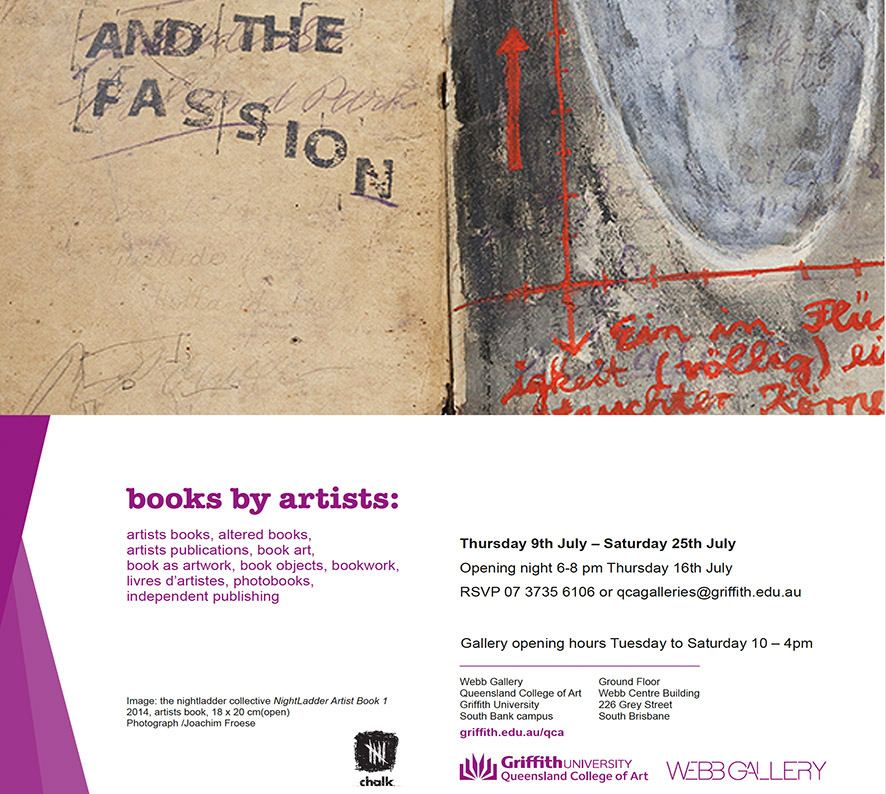
Invite – ‘books by artists’
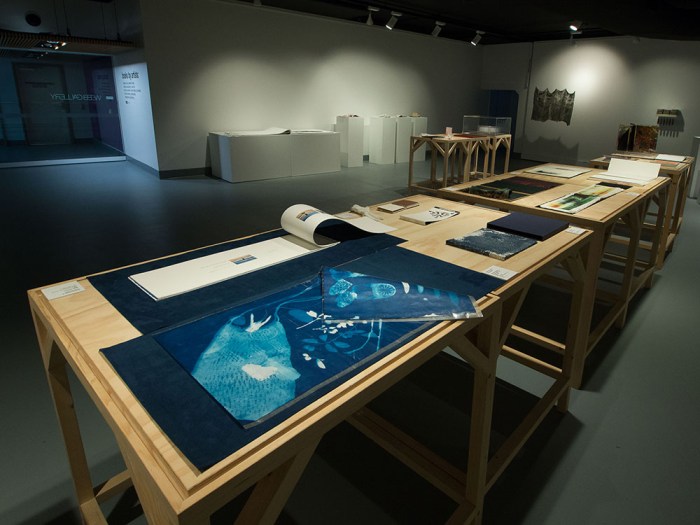
- books by artists’ in the Webb Gallery, QCA
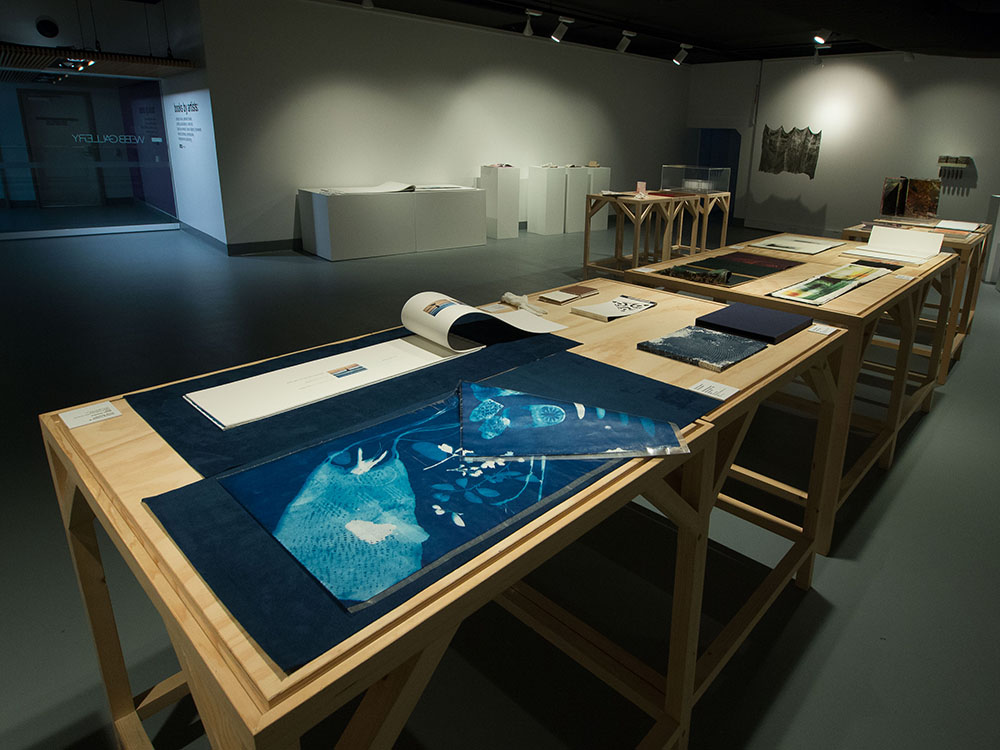
The ‘books by artists’ exhibitors
- Isaac Brown
- Blogger_dad
- Penny Carey-Wells
- Victoria Cooper
- Caroline Craig
- Fiona Dempster
- Hesam Fetrati Angela Gardner
- Annique Goldenberg
- Alannah Gunter
- Institute of Modern Art Cassandra Lehman-Schultz
- Alison Mackay
- Judy Macklin
- Heather Matthew
- Tess Mehonoshen
- Christine Mellor
- Tim Mosely
- night ladder collective
- Naomi O’Reilly
- Adele Outteridge
- Mona Ryder
- Rose Rigley
- Glen Skien
- Doug Spowart
- Wim de Vos
.
.
THE ABBE ARTISTS BOOK FAIR
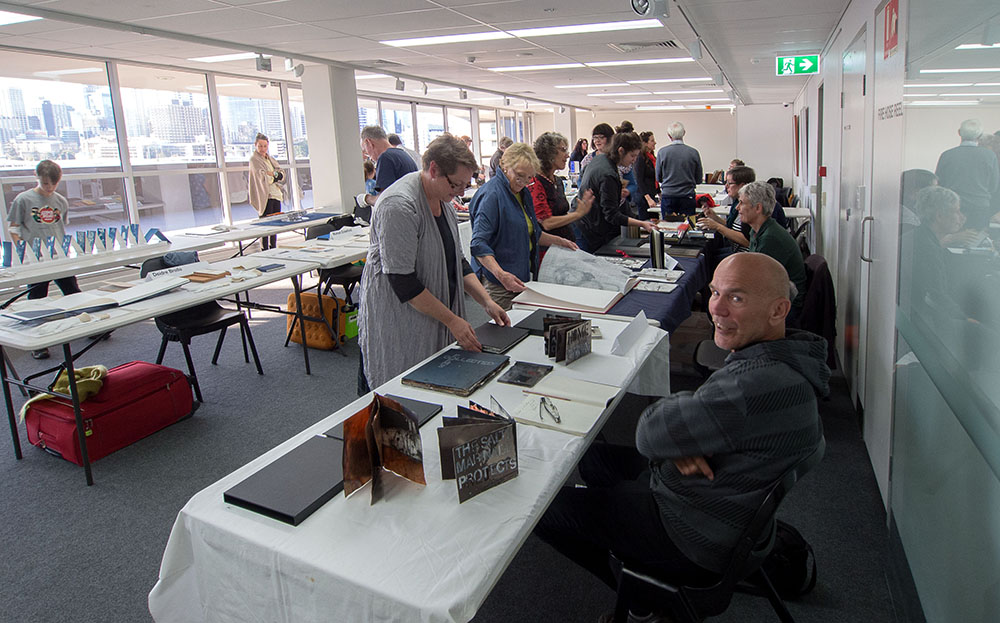
Artists Book Fair
.
Artists Book Fair stallholders
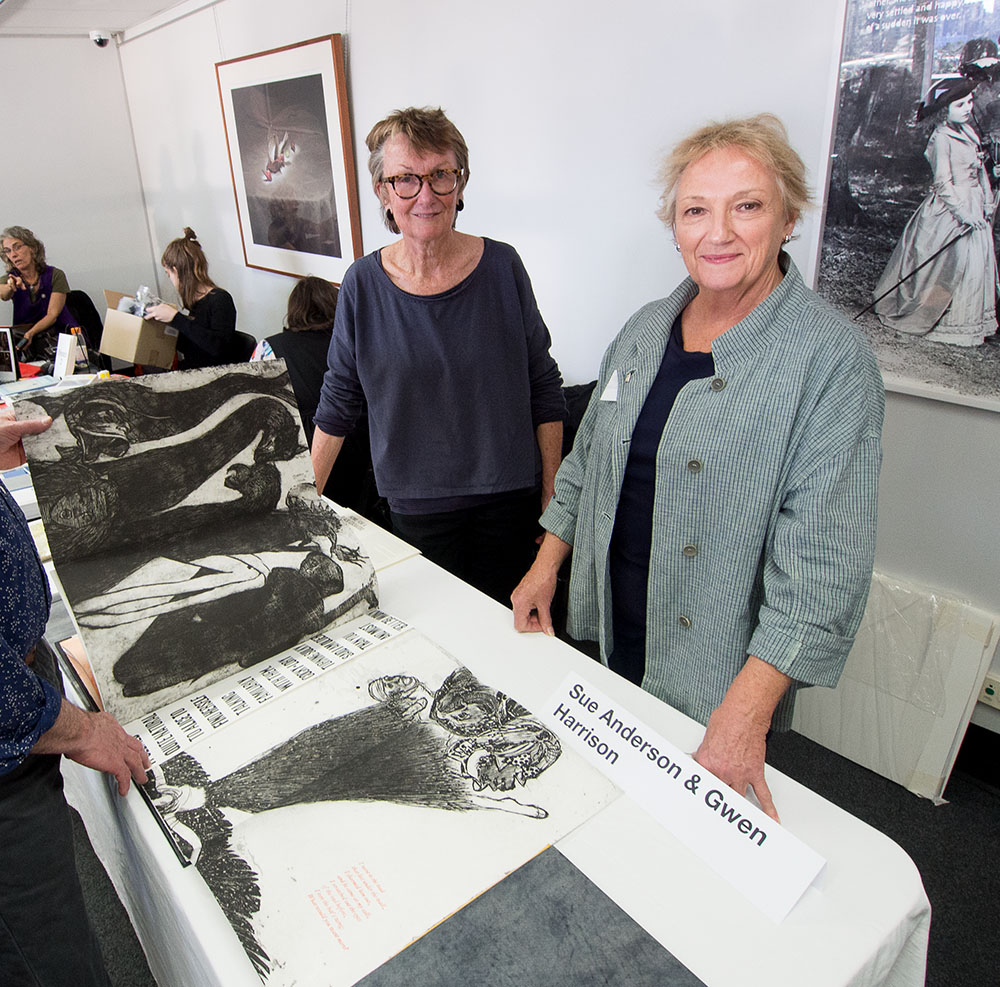
Sue Anderson + Gwen Harrison
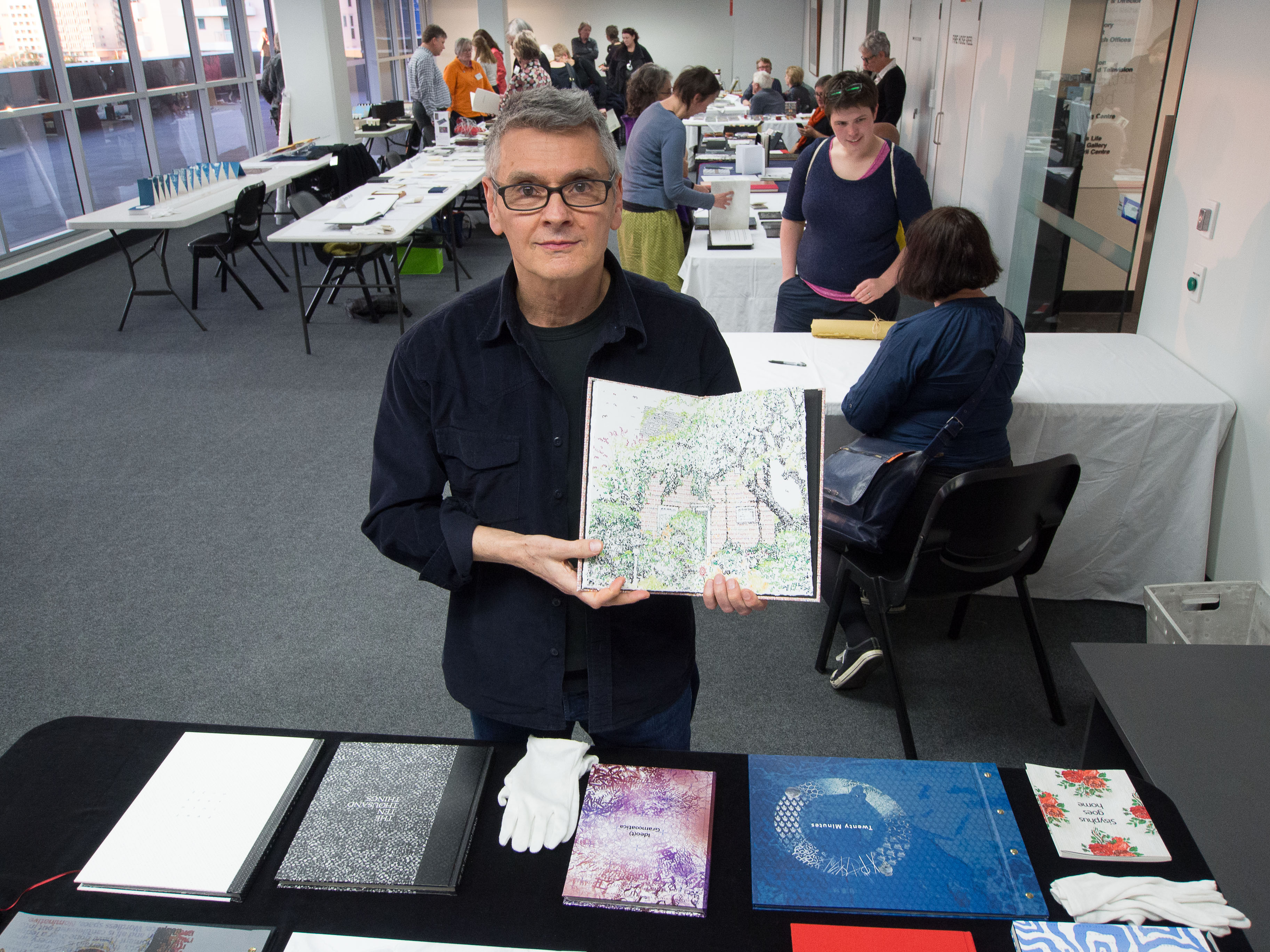
Lyn Ashby
Sara Bowen (no image taken)
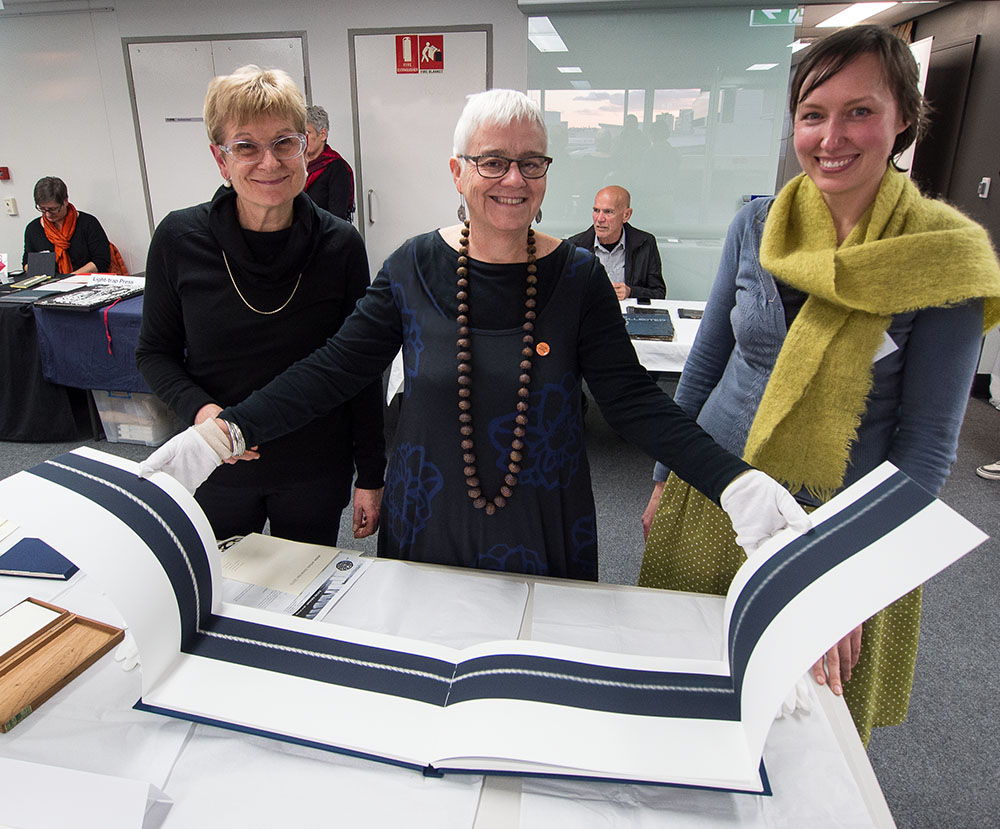
Deidre Brollo with Christene Drewe and Helen Cole
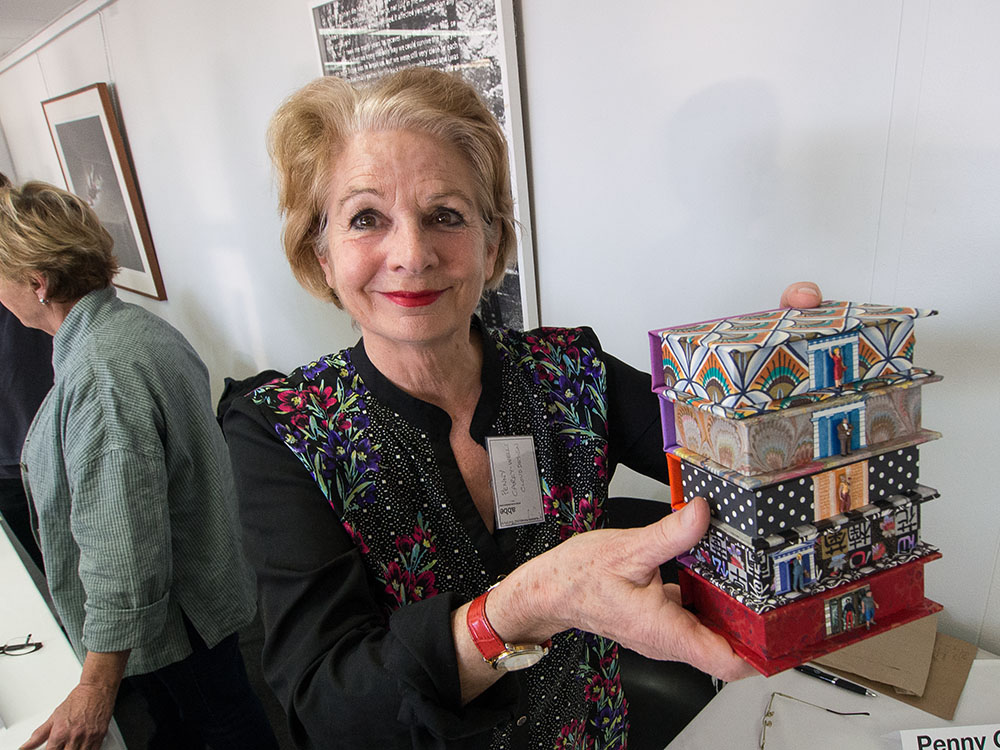
Penny Carey-Wells
Centre for Regional Arts Practice (Cooper+Spowart) (no image taken)
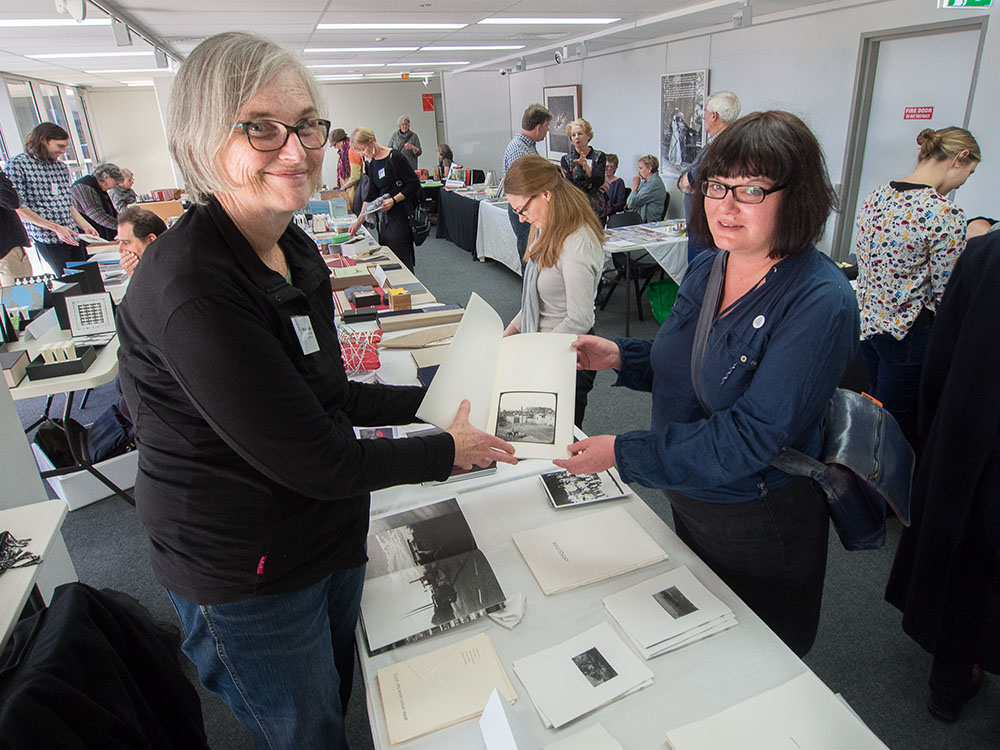
Marian Crawford with Sarah Bodman
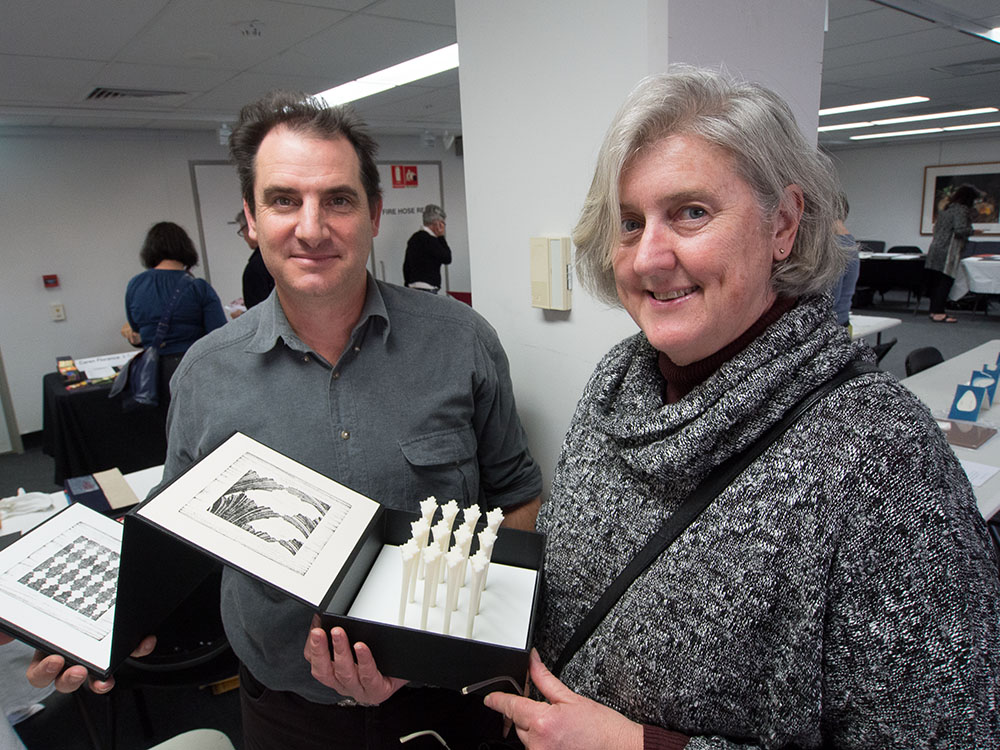
Daniel Dell-Bosca with Victoria Cooper
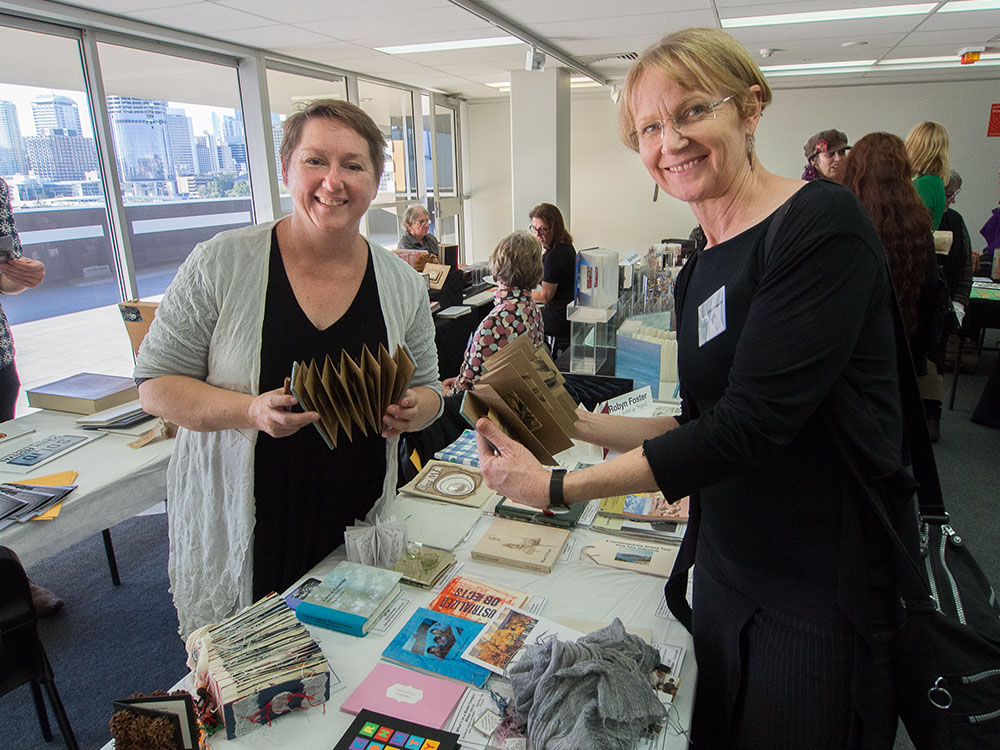
Robyn Foster + Fiona Dempster
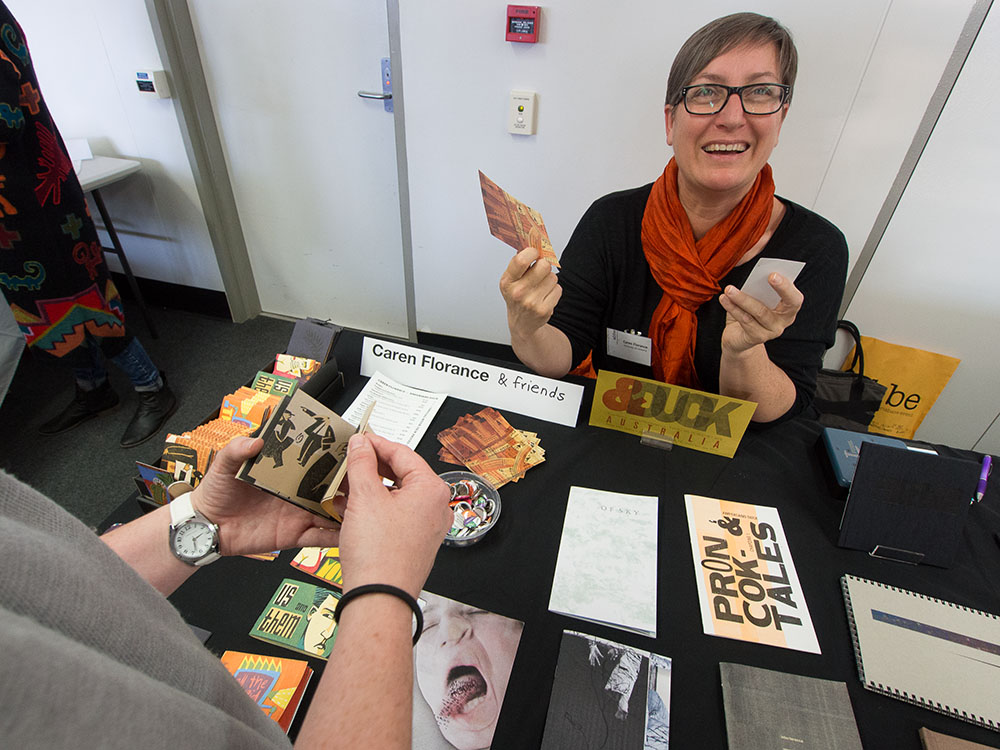
Caren Florance
Robyn Foster (no image taken)
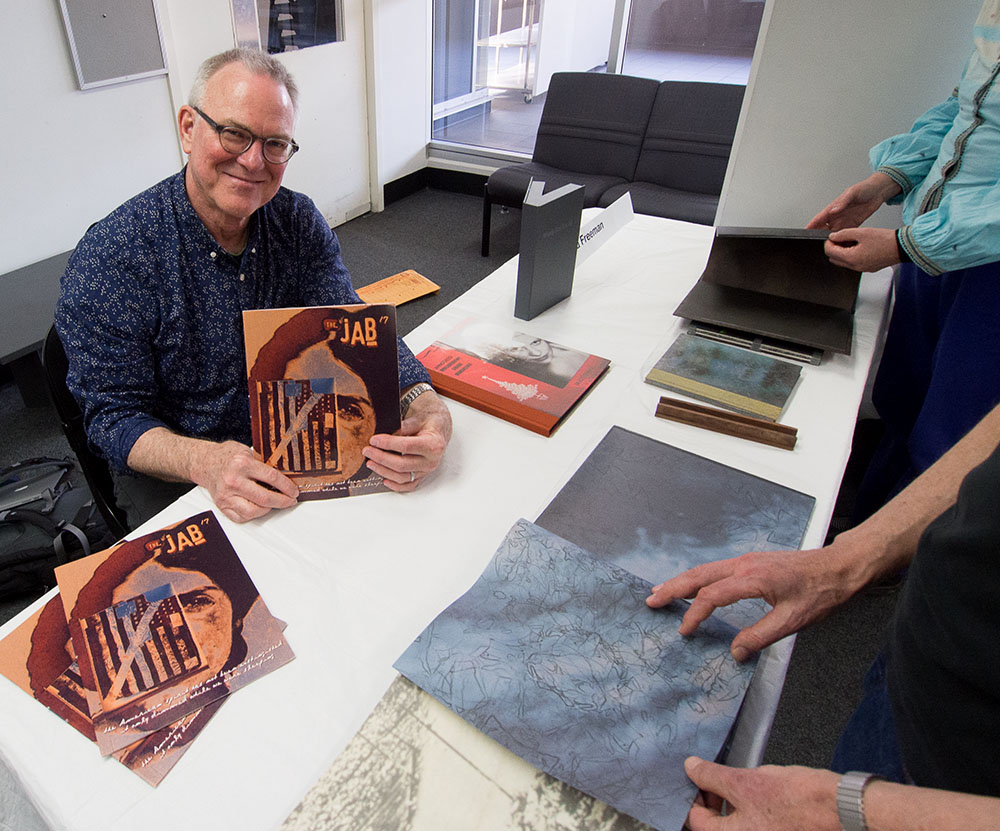
Brad Freeman JAB
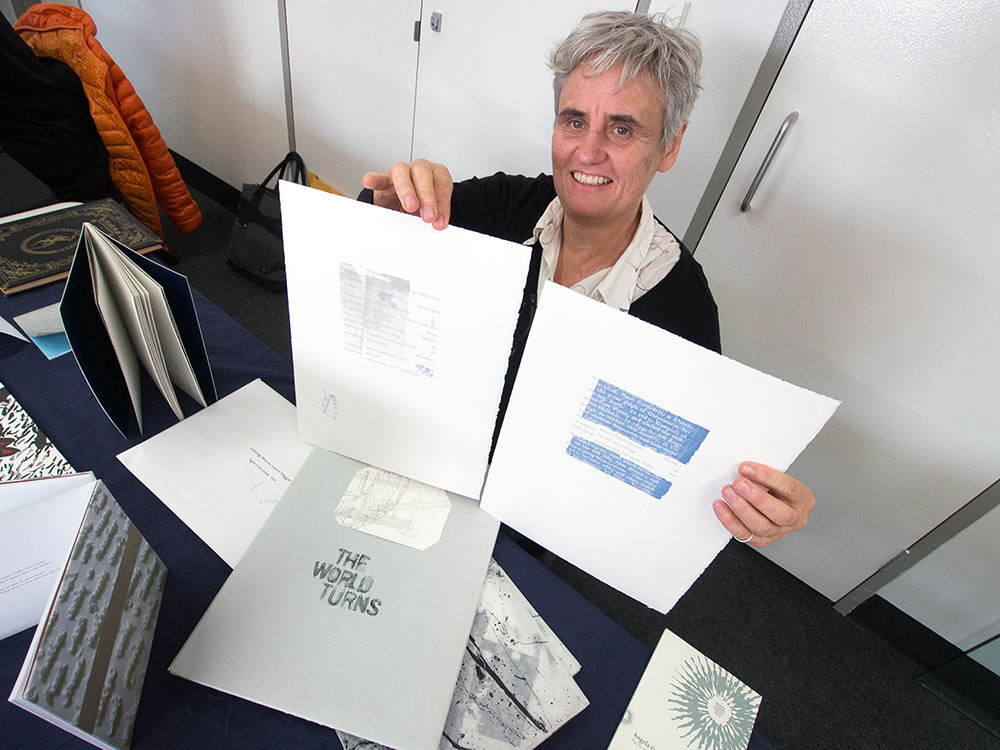
Angela Gardner
Griffith Centre for Creative Arts Research (no image taken)
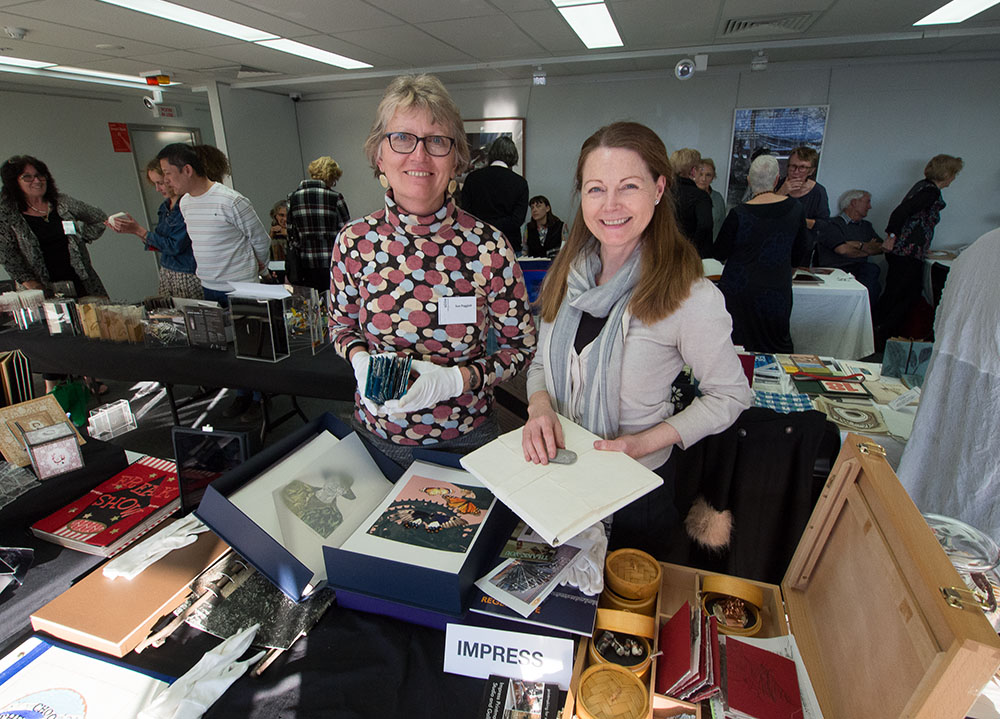
Impress Printmakers: Sue Poggioli + Jennifer Stuerzl
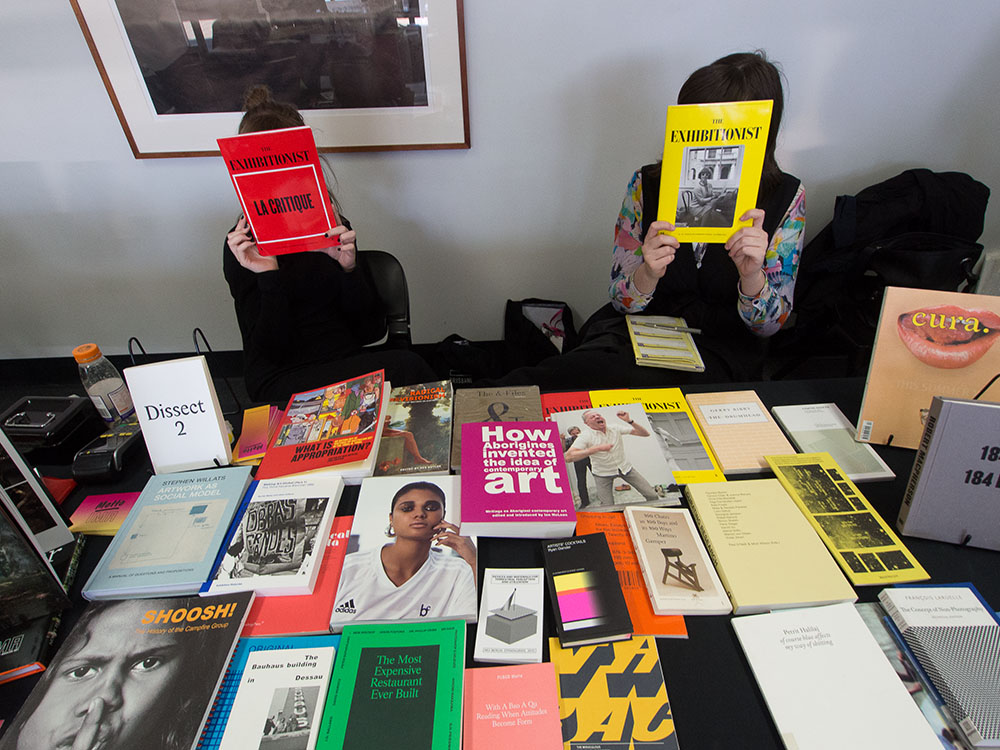
Institute of Modern Art
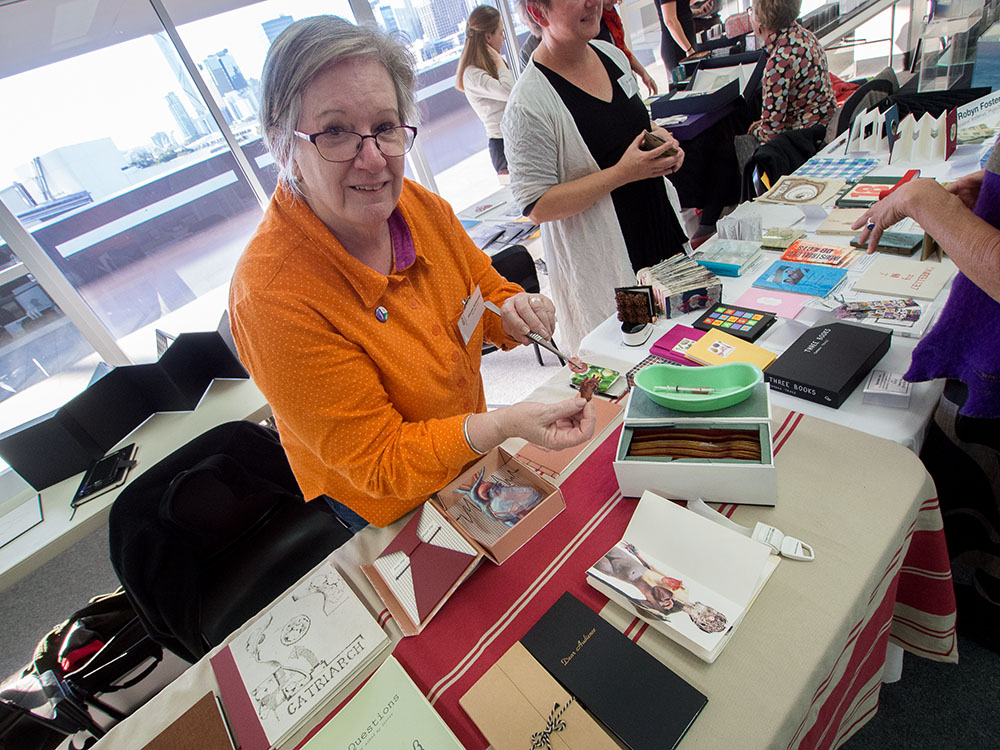
Sheree Kinlyside
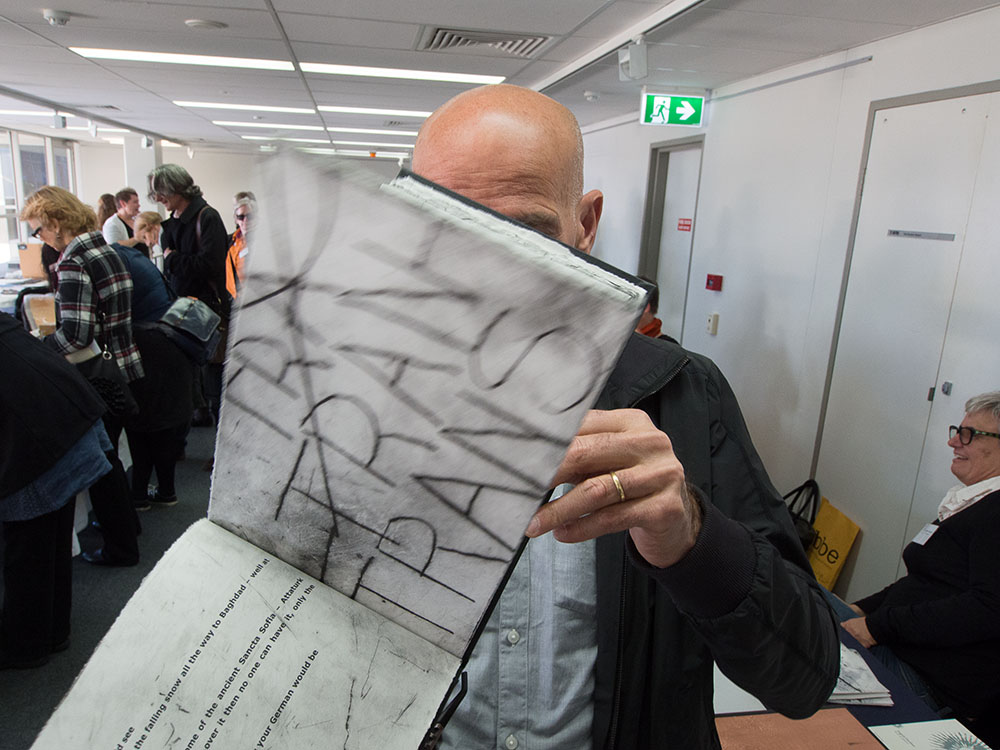
Clyde McGill
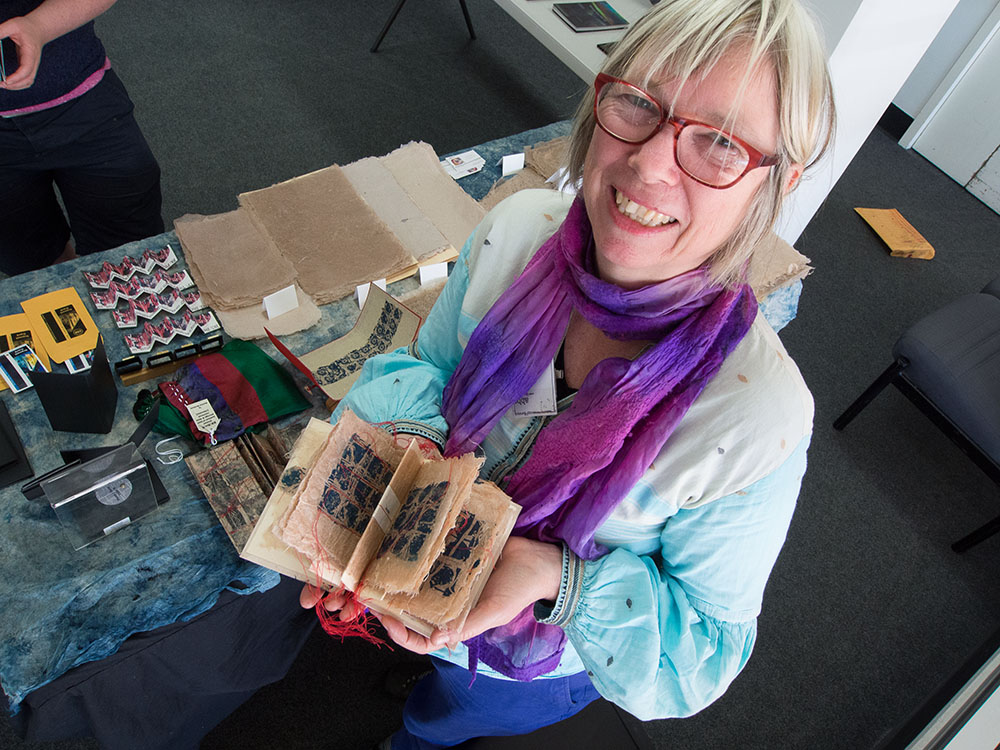
Heather Matthew
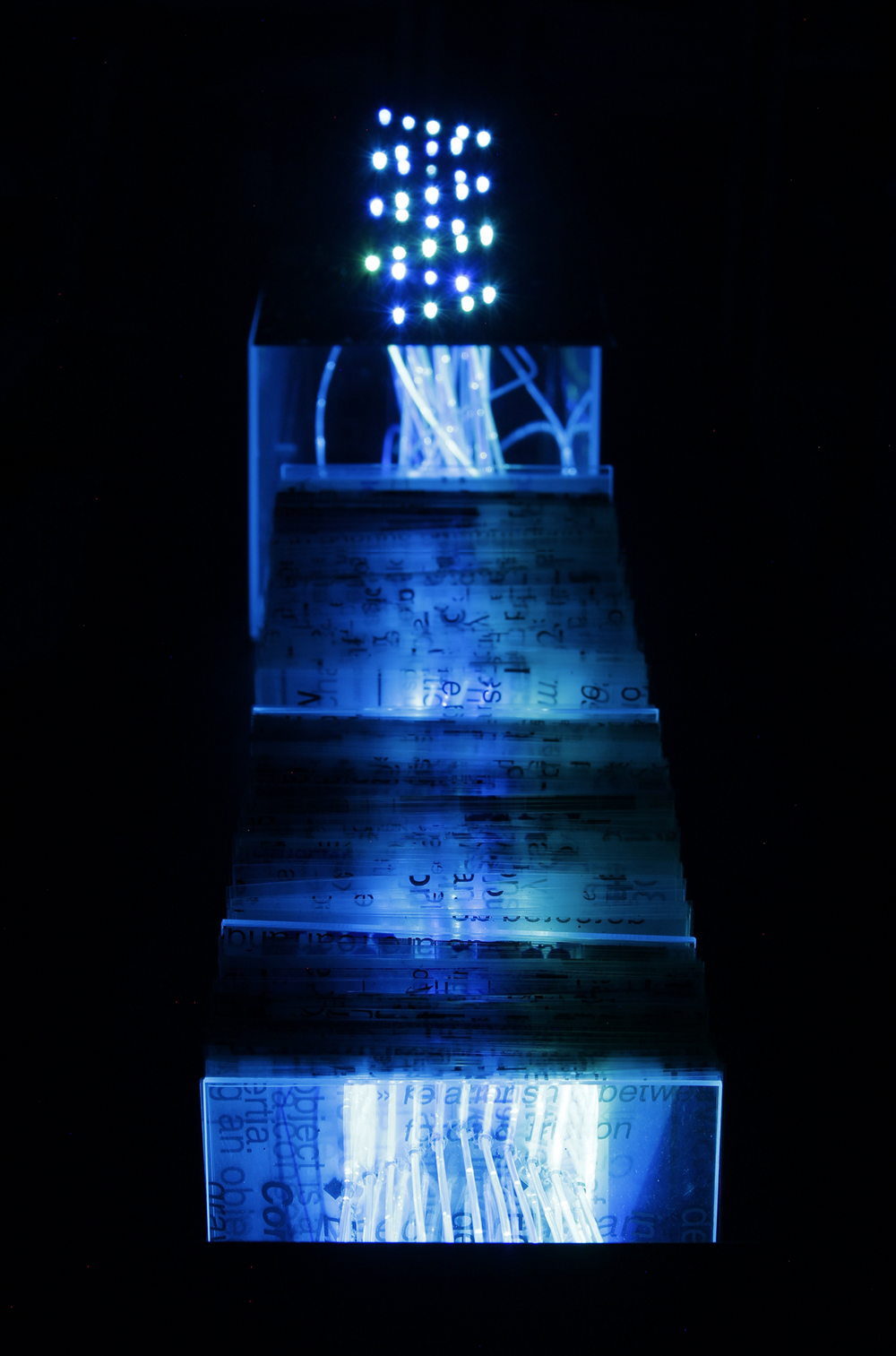
Anita Milroy book – ‘Biography of a Physicist’ (Image supplied by the artist)
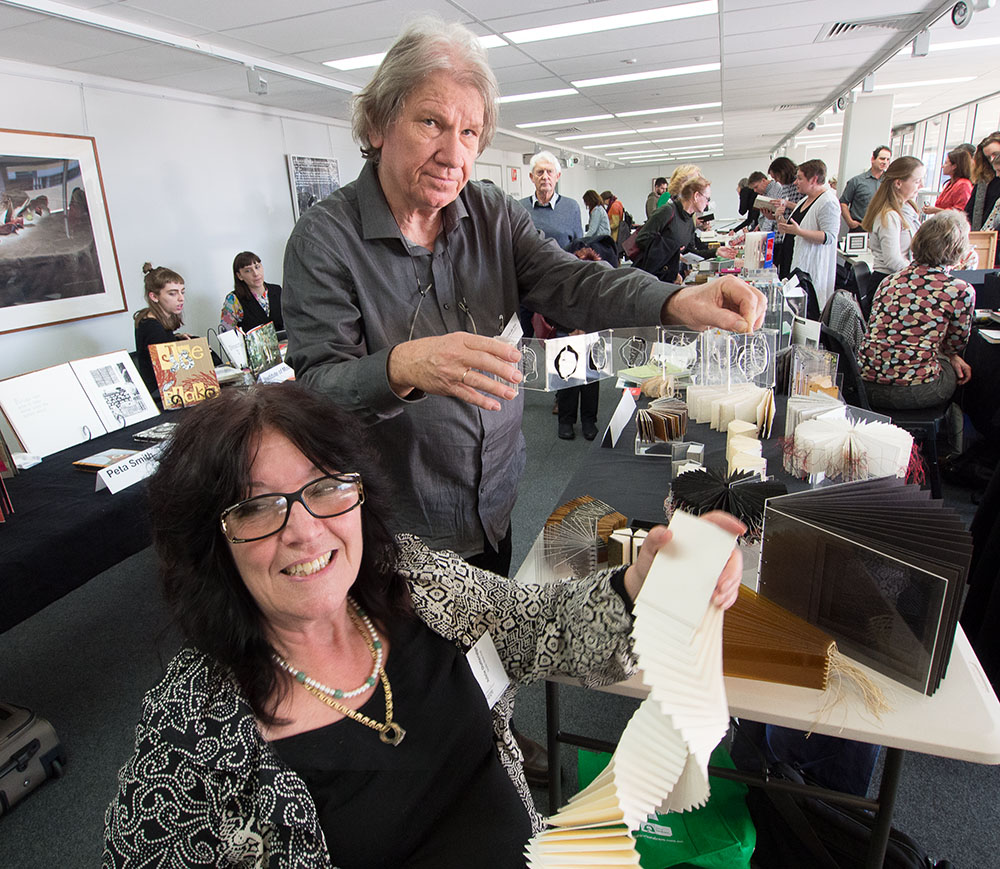
Adele Outteridge + Wim de Vos
QCA Gold Coast (no image taken)
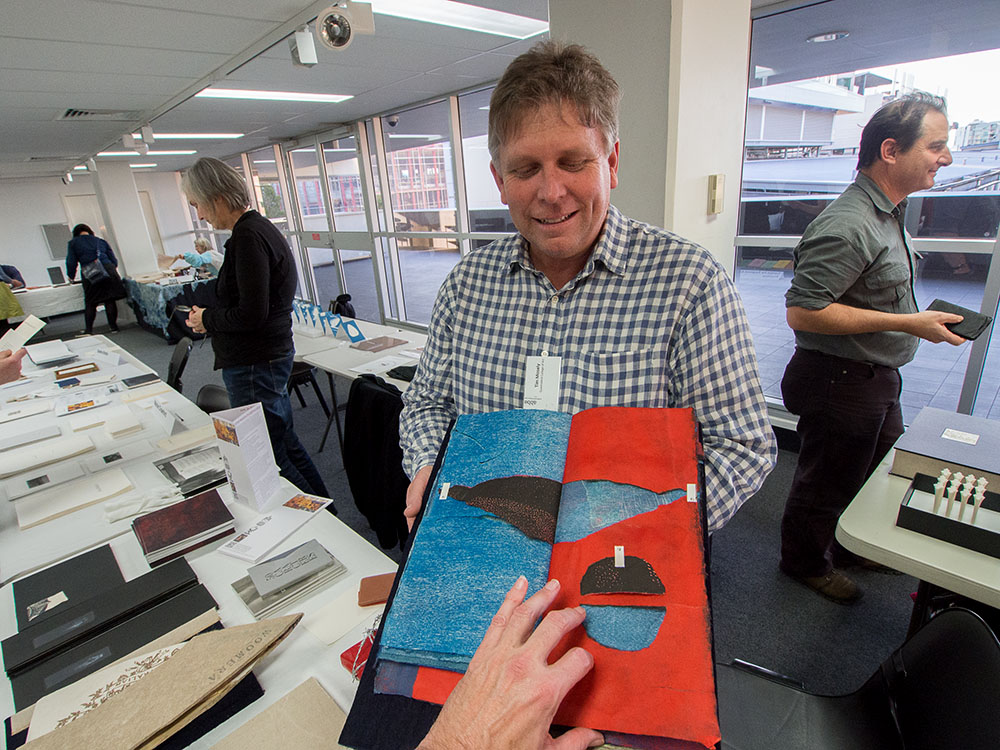
silverwattle bookfoundry (Tim Mosely)
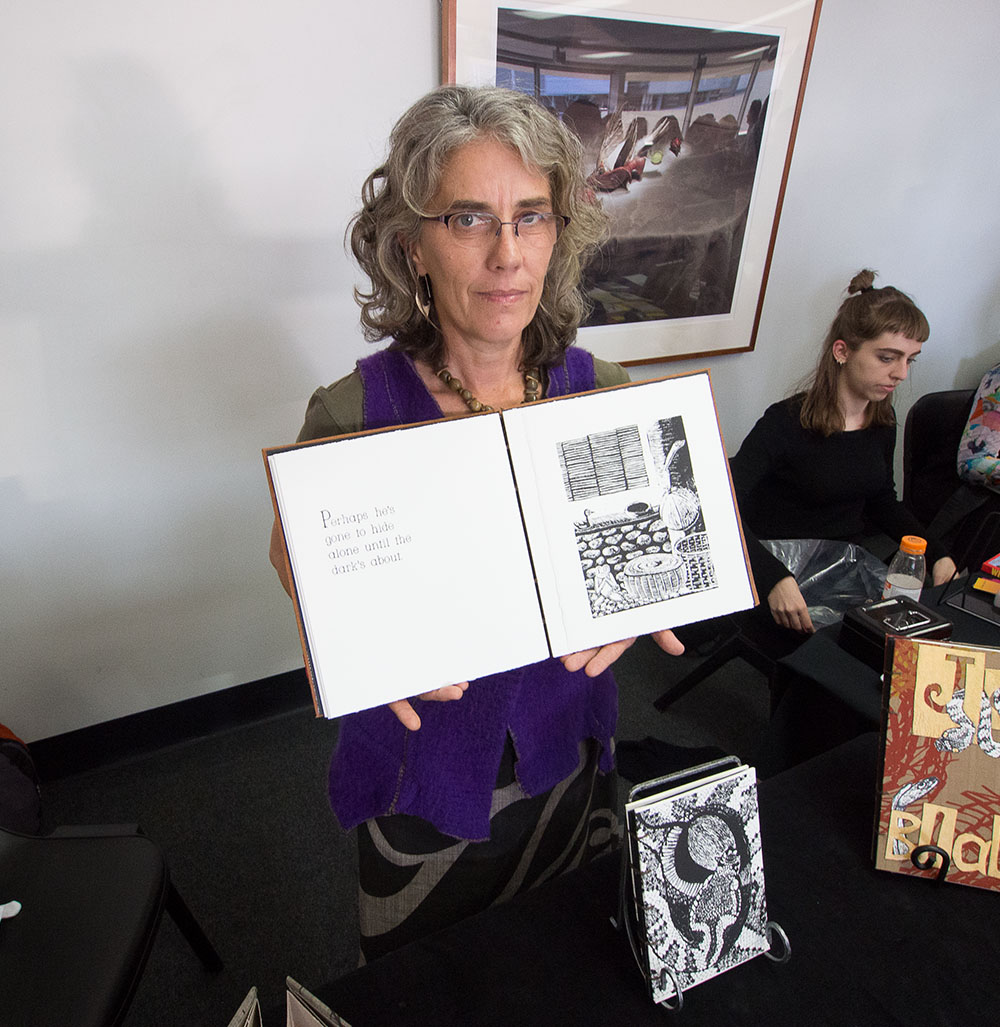
Peta Smith
.
ABBE participants also visited Grahame Galleries, The Studio West End and the State Library of Queensland
.
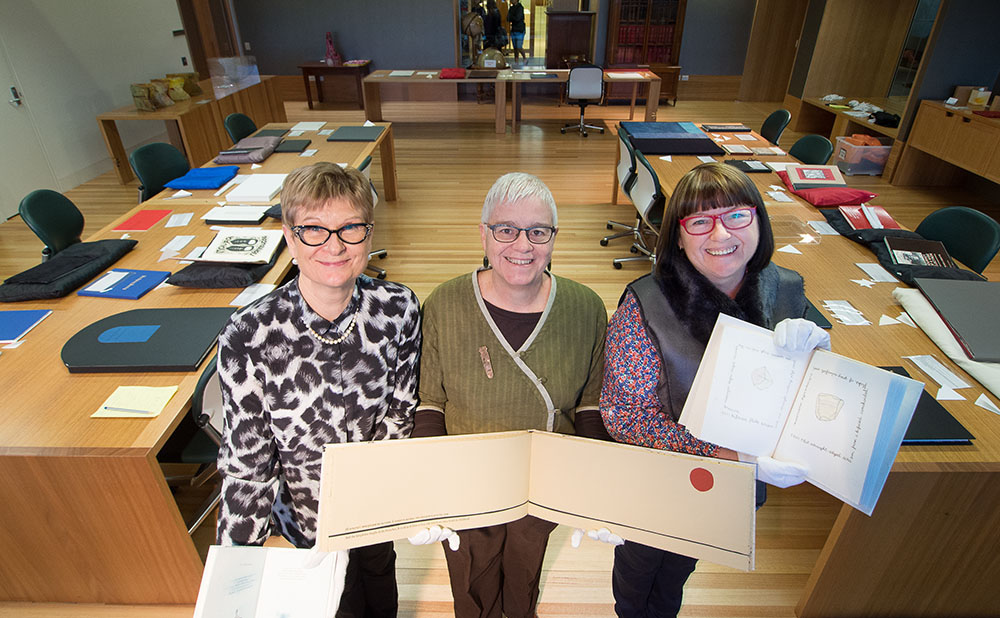
The SLQ White Gloves team Christene, Helen and Jeanette
.
.
ABBE Logo
ABBE was an initiative of the Griffith Centre for Creative Arts Research and was coordinated by Dr Tim Mosely and Dr Lynden Stone.
All photographs © 2015 Doug Spowart
.

This work is licensed under a Creative Commons Attribution-NonCommercial-NoDerivs 3.0 Unported License.
PERFORMING the BOOK @ SLQ – Siganto Artists Book Seminar
The Siganto Artists’ Books Seminar 2015
On June 20+21 the 2015 The Siganto Artists’ Books Seminar took place at the State Library of Queensland. Attendees were presented with a one–day series of lectures, performances and a forum addressing the diversity of the artists’ book and importantly visual and creative research being undertaken by Fellowships supported by the Siganto Foundation.
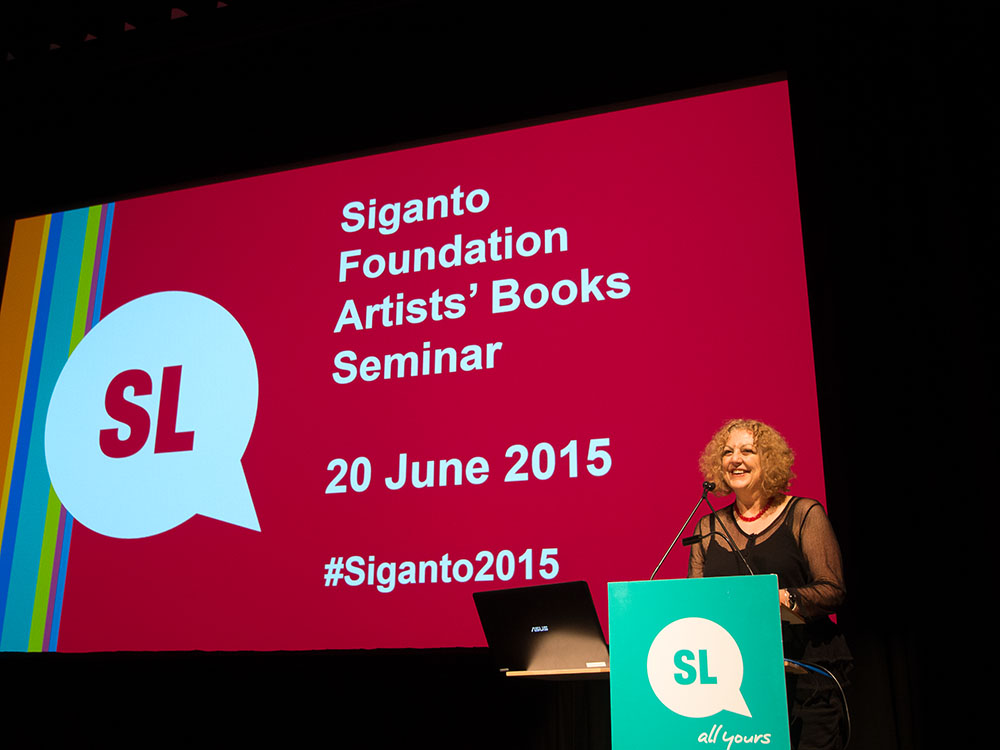
State Librarian Janette Wright welcomes attendees to the seminar
The State Librarian Jeanette, introduced by MC Christene Drewe, spoke of the Library’s Artists’ Book Collection. This was followed by Dr Marie Siganto from the Siganto Foundation who spoke enthusiastically about the Foundation’s support of the Artists’ Book Collection.
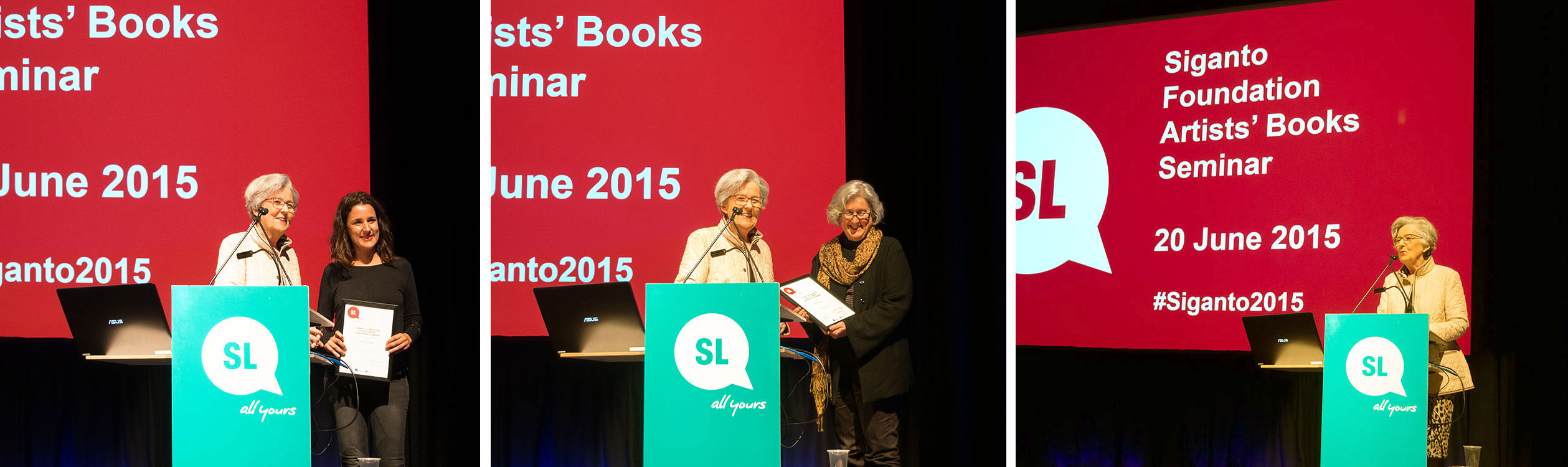
Dr Marie Siganto makes a presentation to the attendees of the seminar and presents 2015 Fellowships
A significant theme of this years’ event was based around the idea of artists’ books as performance. Brazilian artist, performer and academic Amir Brito Cadôr’s presented his keynote address The Book as Performance – he also performed a book reading of Momento Vital by Brazilian artist Vera Chaves Barcellos.
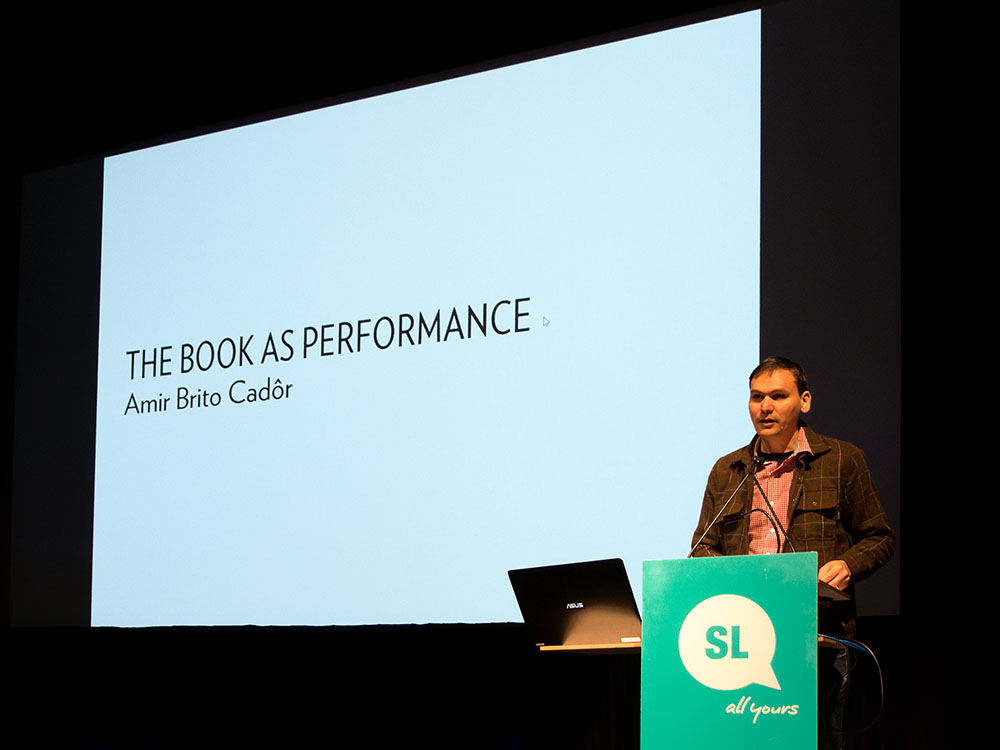
Amir Brito Cadôr makes his keynote presentation
In the morning session 2015 Siganto Foundation Artists’ Books Fellows Clyde McGill and Julie Barratt presented progress reports on their research projects. Jan Davis discussed her 2014 Creative Fellowship and presented the completed artists’ book to the Library. The book was entitled Drawing on the ground and referenced the historical aspects of work and toil on Queensland farms. Reference material for Jan’s book came from diaries, books and documents held by the Library. Her artists’ book features text fragments and line sketches – the book was bound by Fred Pohlman and the cover was styled to resemble an old station journal.
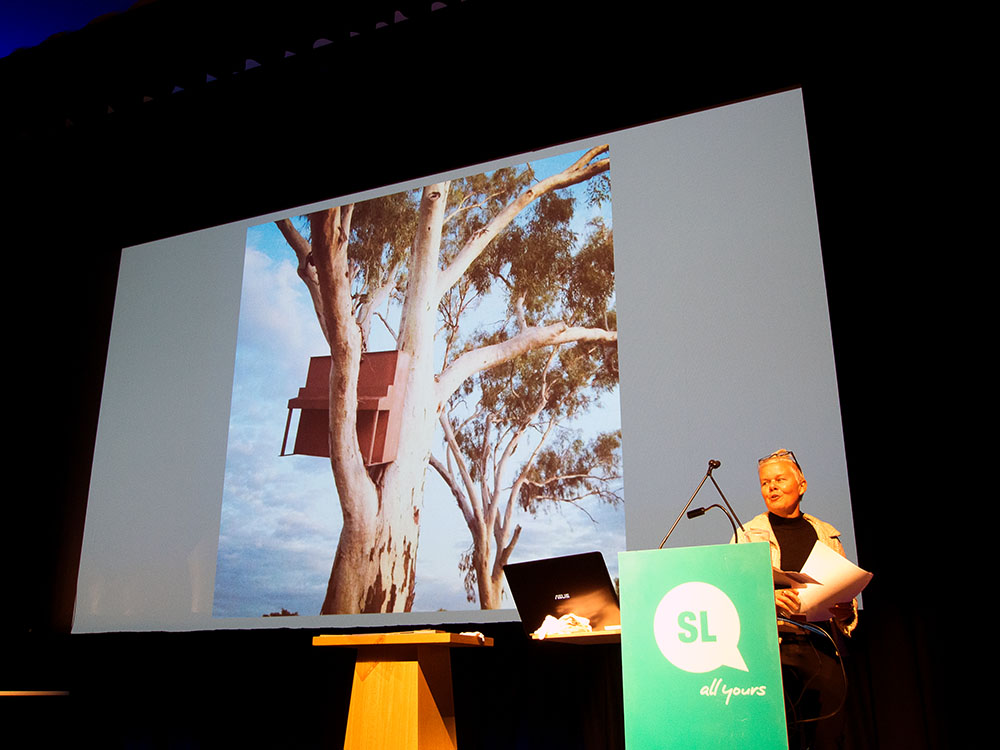
Julie Barratt discusses her Siganto Creative Fellowship
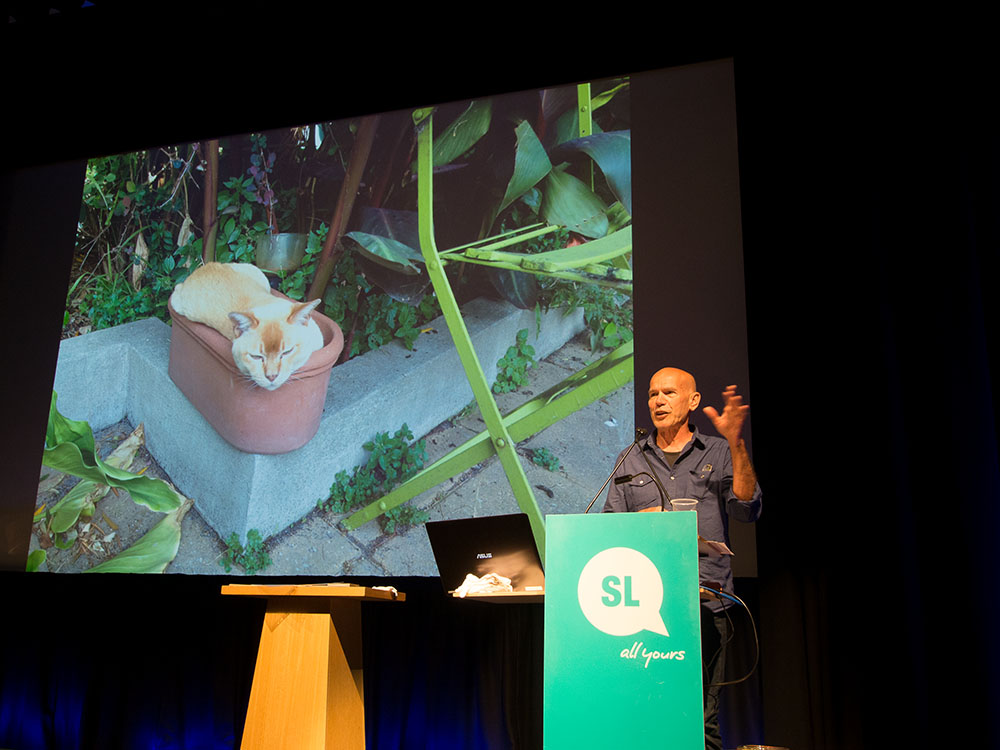
Clyde McGill discusses his Siganto Artists’ Book Creative Fellowship
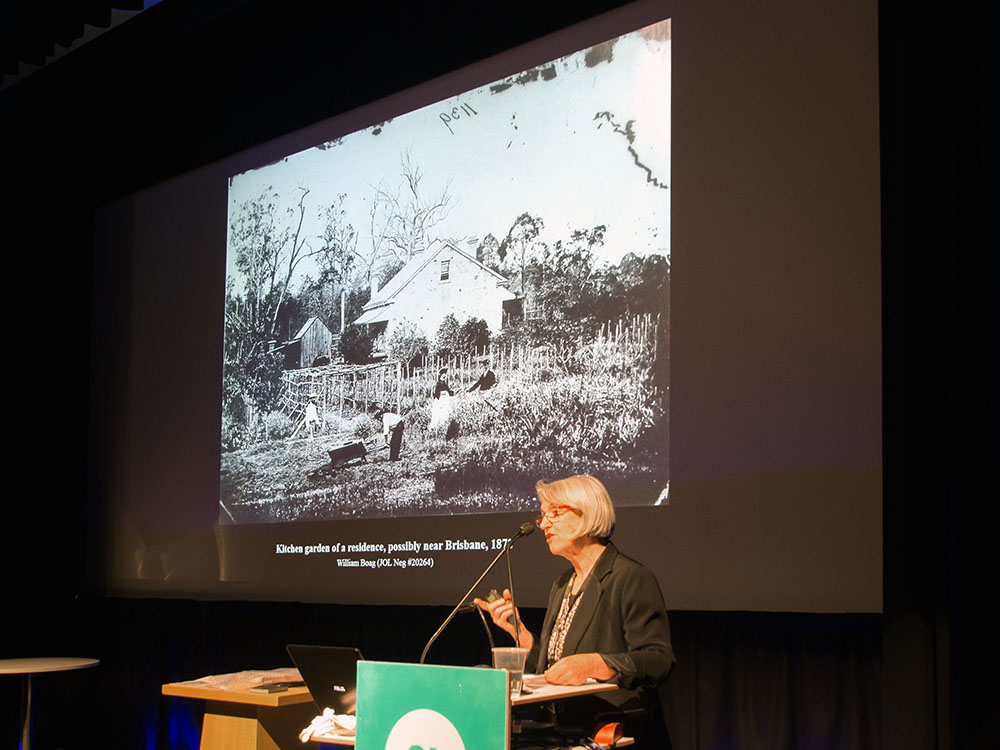
Jan Davis discusses Drawing on the ground, her Siganto Artists’ Book Creative Fellowship
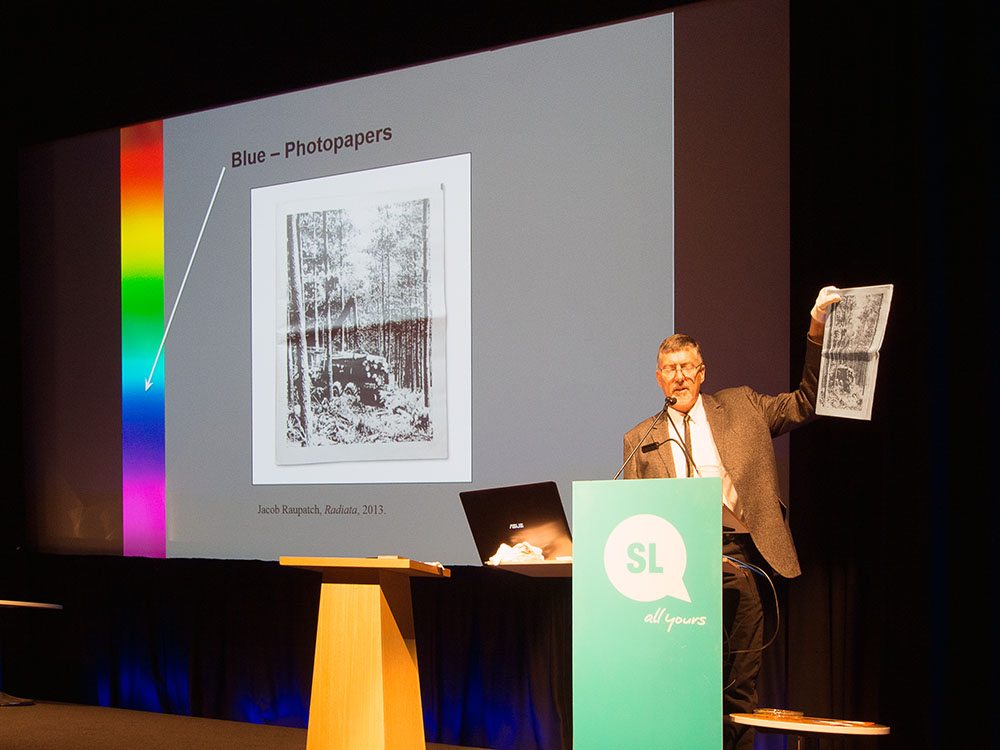
Doug Spowart discusses Jacob Raupach’s Radiata
As the 2014 Siganto Artists’ Books Research Fellow I presented an illustrated lecture on my experiences as a researcher of the Australian Library of Art, a selection of the range of books I encountered that employed photography from very minor references in text to conceptual pieces based on photographs. This list included:
Anne Wilson in, Tock 01-01-2000, 2000
Codex Event: Darren Bryant .. [et al.], Wild Cherry Tin Mine, 2006.
Vince Dziekian, Blooms Books, 1993-4.
Barbara Davidson, Different moods of the Opera House, 2001.
Felipe Ehrenberg, Generacion 1973
Peter Kingston, The Blue Mountains, 1987.
Michael Buhler, Oblique Lines, 19-.
William Copley Notes on a Project for a Dictionary of Rediculous Images, 1972.
Adam Broomberg + Oliver Chanarin, Holy Bible, 2013.
Judy Barrass, Eden-Monaro in Summer, 2001.
Juli Haas, The oyster book of lessons from the memory room, 2007.
Jihad Muhammad aka John Armstrong, Ten menhirs at Plouharnel, Carnac, Morbihan, Bretagne, France, 1982.
Angela Callanan, 7 Signs of Absence, 2010.
Susan King, Photo bio, 2011.
Malcolm Enright, Western Wisdom, 1998.
Pierre Cavalan, Artists Book, 1998.
Compiled by Kay Faulkner Indulge, 2006.
Debra Gibson, Kamikaze, 2004.
Dick Jewell, Found Photos, 1977.
Julie Barratt, Collateral damage, 2008.
Alison Knowles, Bread and Water, 2004.
David King, Raw deal, 1997.
Valerie Keenan HY1, 2001.
Tim Johnson, Fittings, 1972.
Christian Boltanski, Scratch, 2002.
Amanda Watson-Will, Judy and the Jacaranda, 2010.
Phillip Zimmerman, High tension, 1993.
Jan Davis, Solomon, 1995.
I then disclosed the principal research product the paper: The artists’ book, the photobook and the photo-a spectral approach, as well as recommendations to the Library for photobooks to be relocated from the General collection into places that reflected the significance of these books in the history of photography and the photobook. I also supplied Photobook Publishers and Info URLs that could be used by anyone wanting to keep up with new photobook releases an purchasing opportunities. I particularly noted that the Library held no Trent Parke books and provided, as an example, his book Dream Life that could have been purchased in 2000 for around $60 is now sold for $1,000+. Highlighting the need for the SLQ to be pro-active in purchasing contemporary book for modest outlay – rather than waiting until they are nearly unaffordable. I also highlighted the need for institutions to engage with and maintain links with artists’ book and photobook self-publishers as they exist outside of the usual publishing structures. I quoted Des Cowley, the State Library of Victoria’s History of the Book Manager from a statement made by him in his presentation at the ‘Other Photobook’ forum at Photobook Melbourne. He said:
… It is therefore incumbent upon staff in these institutions to build networks and relationships with the communities creating this work in order to be informed about what is being produced, and to ensure this material is acquired and preserved for future researchers.
My presentation concluded with two quotes from book artist and mail art aficionado Ulises Carrion that I felt related to the contemporary artists’ book and photobook. Carrion states:
I include books in the category of
living creatures … : they grow, reproduce, change colour, become ill and finally die.
At this moment we are witnessing the final stage of this process.
… if books are to survive they have to change. And [artists’] bookworks is the real possibility that books have for survival.
Schraenen, G. (1992). Ulises Carrion : We have won! Haven’t we?
.
HERE IS THE SLQ VIDEO OF THE SIGANTO FELLOW’S PRESENTATIONS
.
Other artists’ book performances included: Virginia and Julie Barratt’s The Morning After, one by Clyde McGill and a performance by QUT drama students of the three-part book Robert Bringhurst’s artist’s book New World Suite number three: a poem in four movements for three voices. The performers were Thomas Yaxley, Emily Weir and Meghan Clarke and was directed by QUT lecturer Floyd Kennedy.
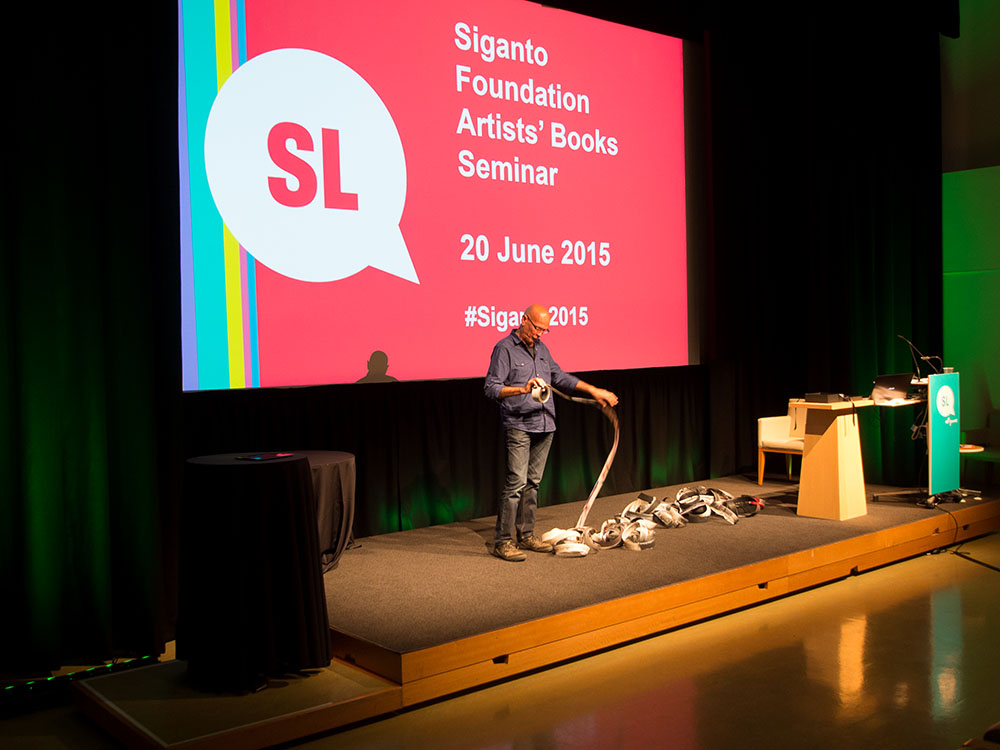
Clyde McGill performs his book
The afternoon concluded with a forum moderated by Louise Martin-Chew on the topic of collaboration. The forum participants were Clyde McGill, Julie Barratt and Doug Spowart. Each participant discussed a project that involved collaboration and questions were posed by Louise to bring out important points from each panelist. The most interesting aspect of this forum was when questions from the floor created heated debate around the idea of the physical book and its experience verses the virtual online experience.
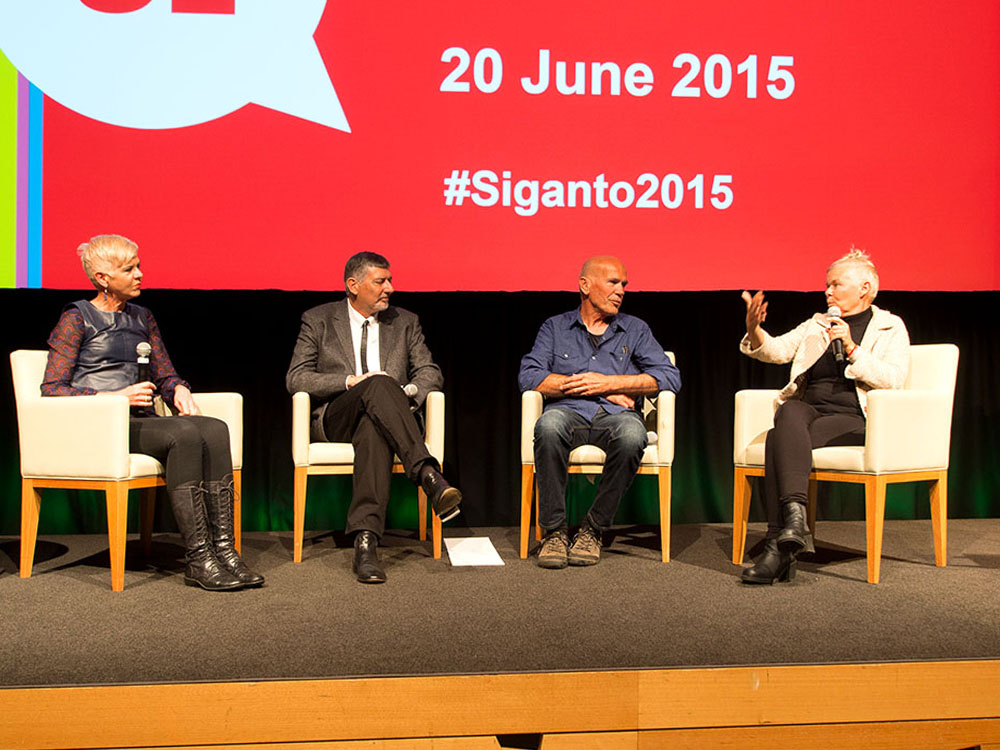
Julie answers a question in the collaboration forum
On Sunday many local and interstate stallholders presented their work for an Artists’ Book Fair in the Knowledge Walk at the SLQ. Tours of selected artists’ books from State Library’s Artists’ Book Collection were well attended and provide rare access to special books from the Australian Library of Art Collection. The two-day event was significant for the opportunity for artists’ book aficiandos, makers, collectors and readers to engage with the physicality of not only the books but also to touch with the extensive community of the book. Our thanks must go to the SLQ, particularly Christene Drewe and Helen Cole, and to the Dr Marie Siganto and the Siganto Foundation for their continued support of the artists’ book collection of the Australian Library of Art and events such as these. Doug Spowart
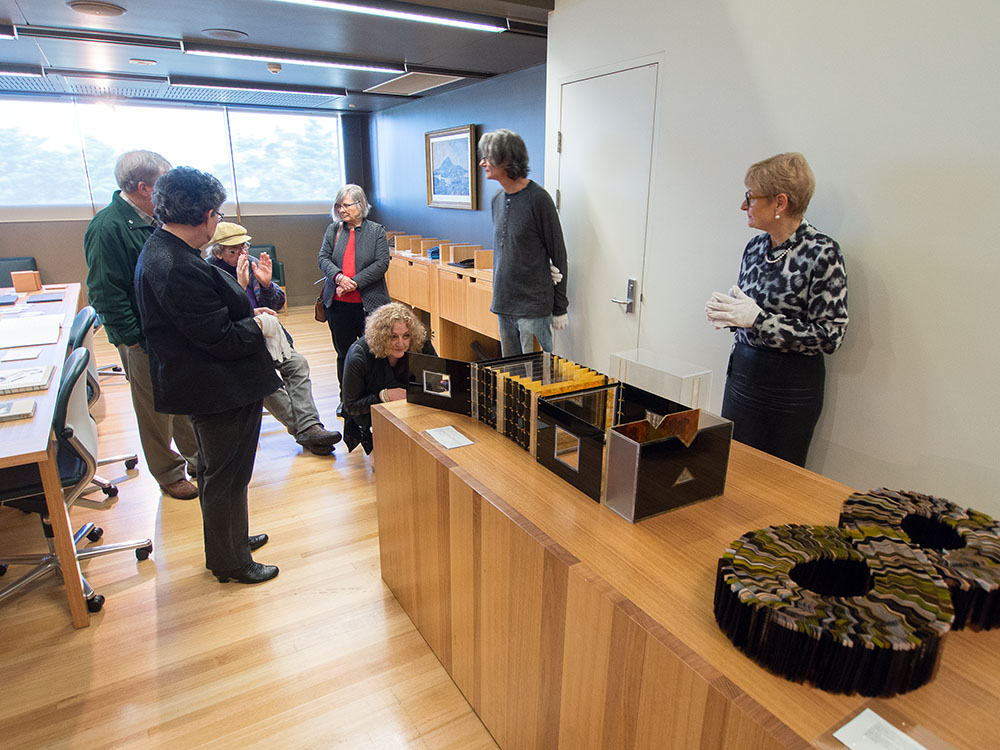
State Librarian, Janette Wright views a tunnel book by Wim de Voss
What follows are a range of images from the Seminar and Artists’ Book Fair
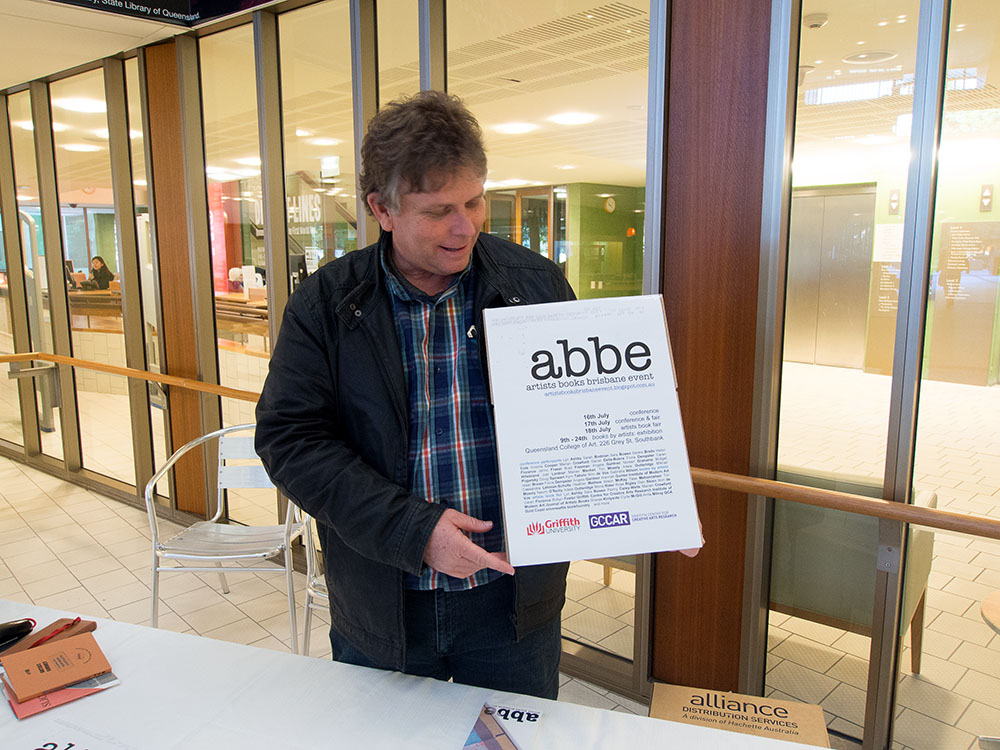
Tim Mosely promotes the ABBE Conference @ QCA in July
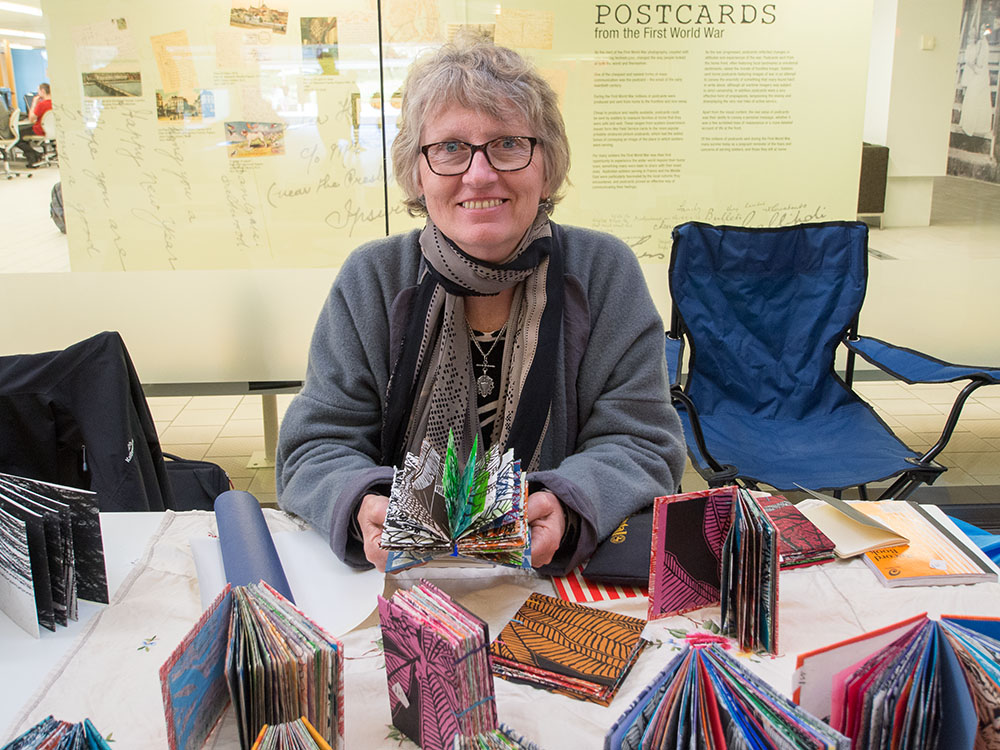
Sue Poggioli at the Artists’ Book Fair
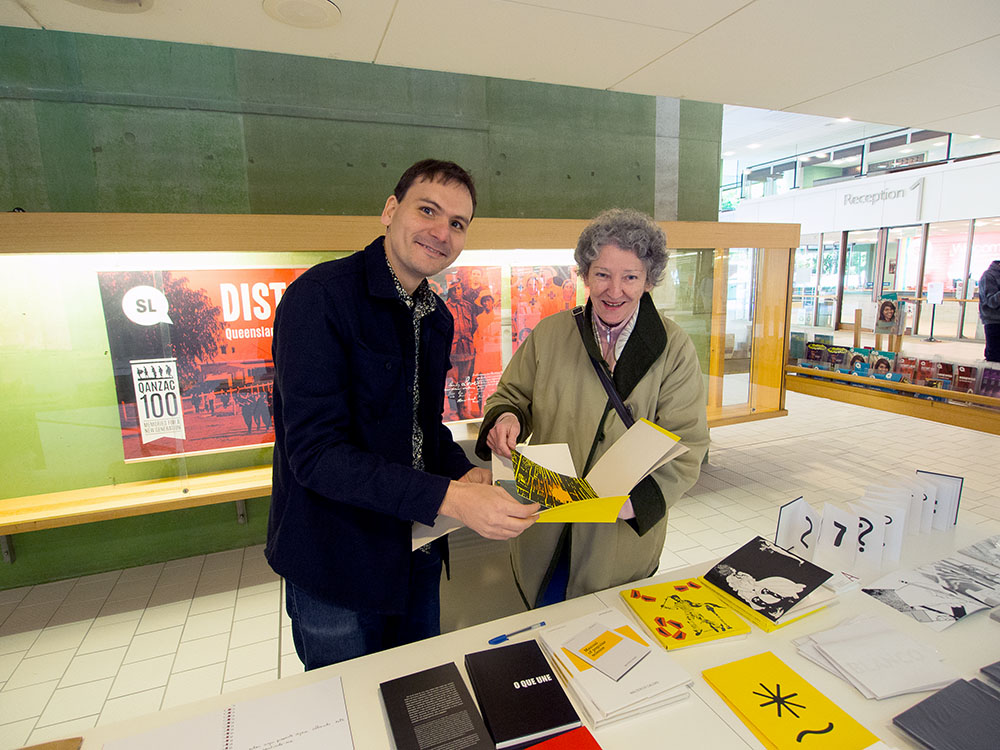
Amir and Noreen Grahame
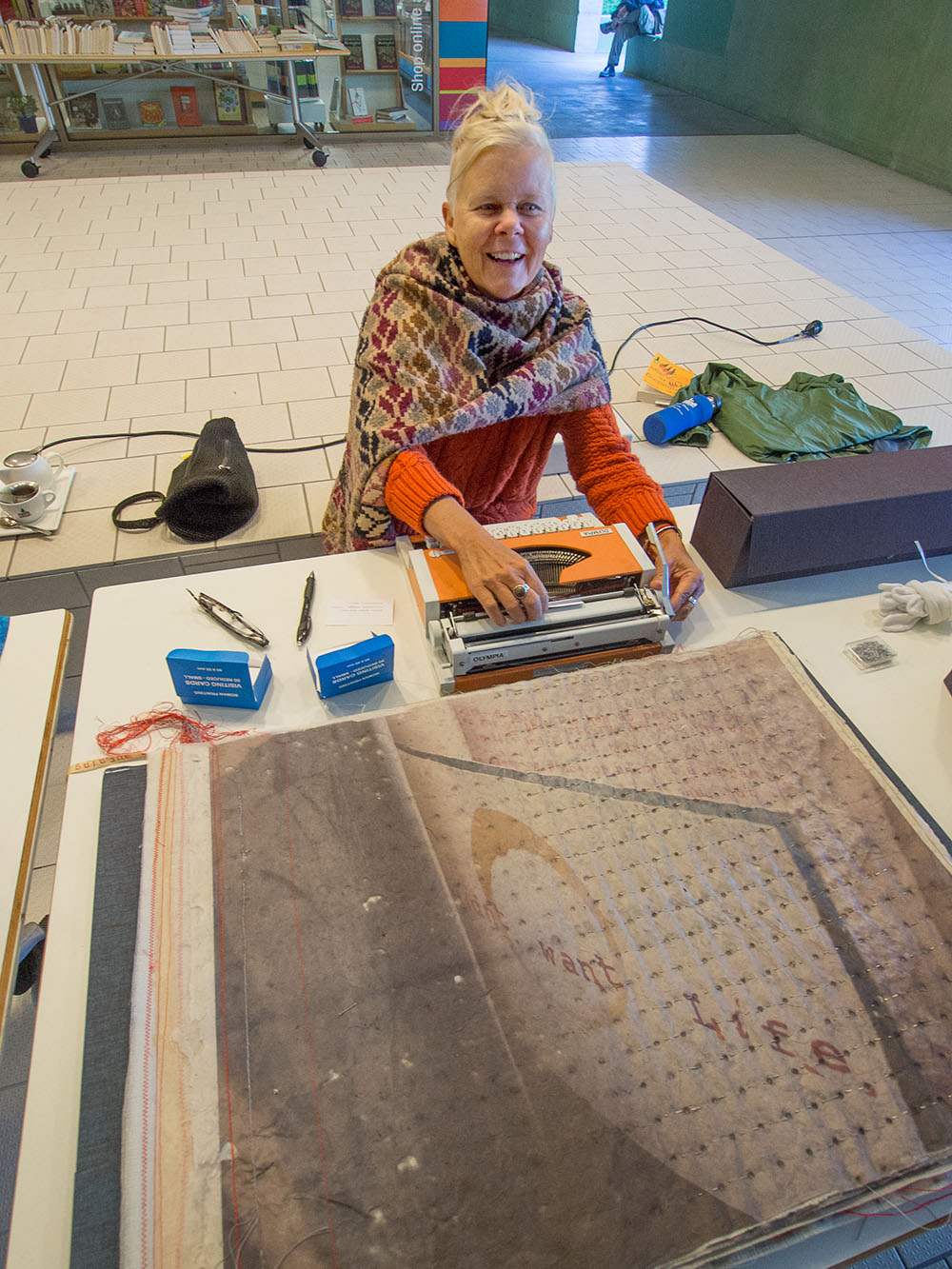
Julie Barratt at the Artists’ Book Fair
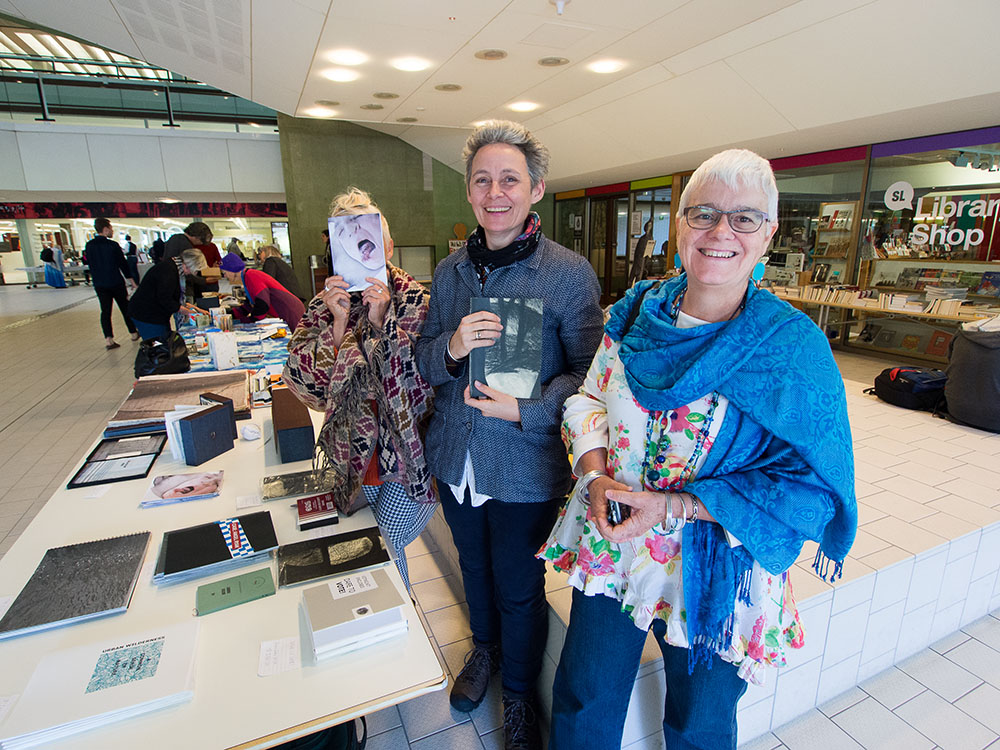
Julie Barratt, Monica Oppen and Helen Cole Artists’ Book Fair
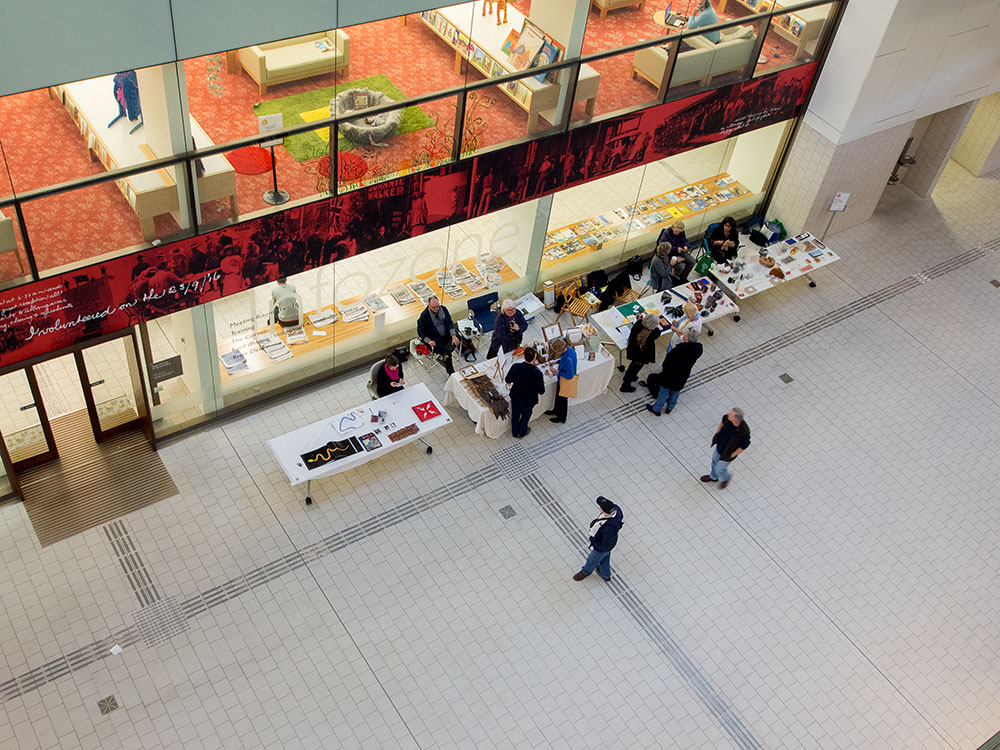
A section of the Artists’ Book Fair at the SLQ
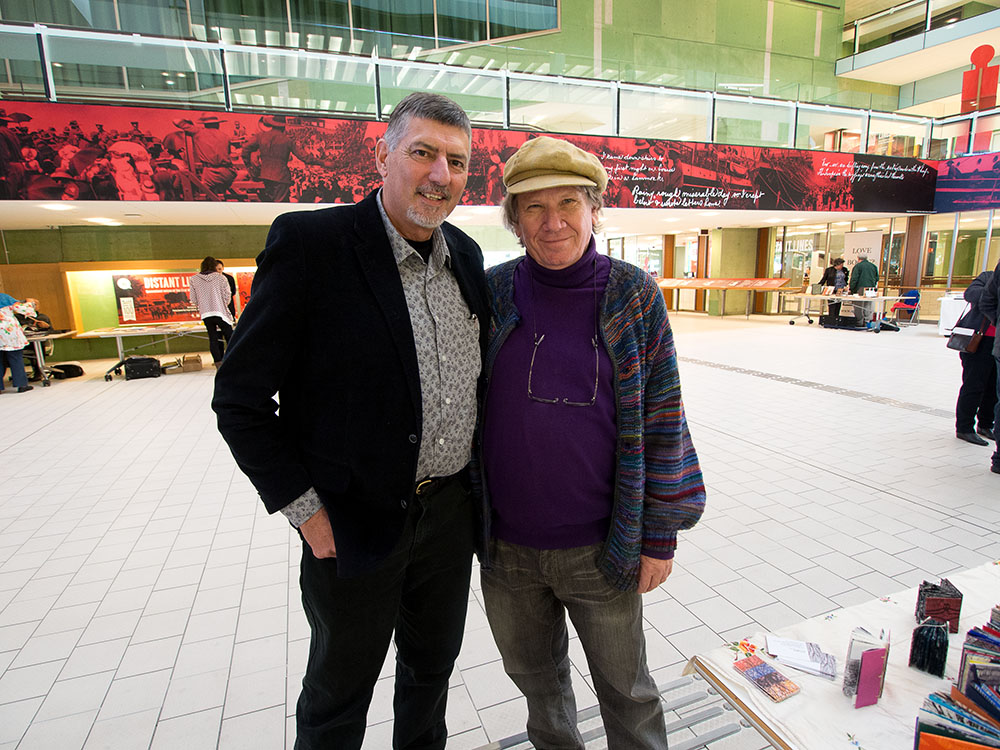
Doug Spowart and Wim de Voss
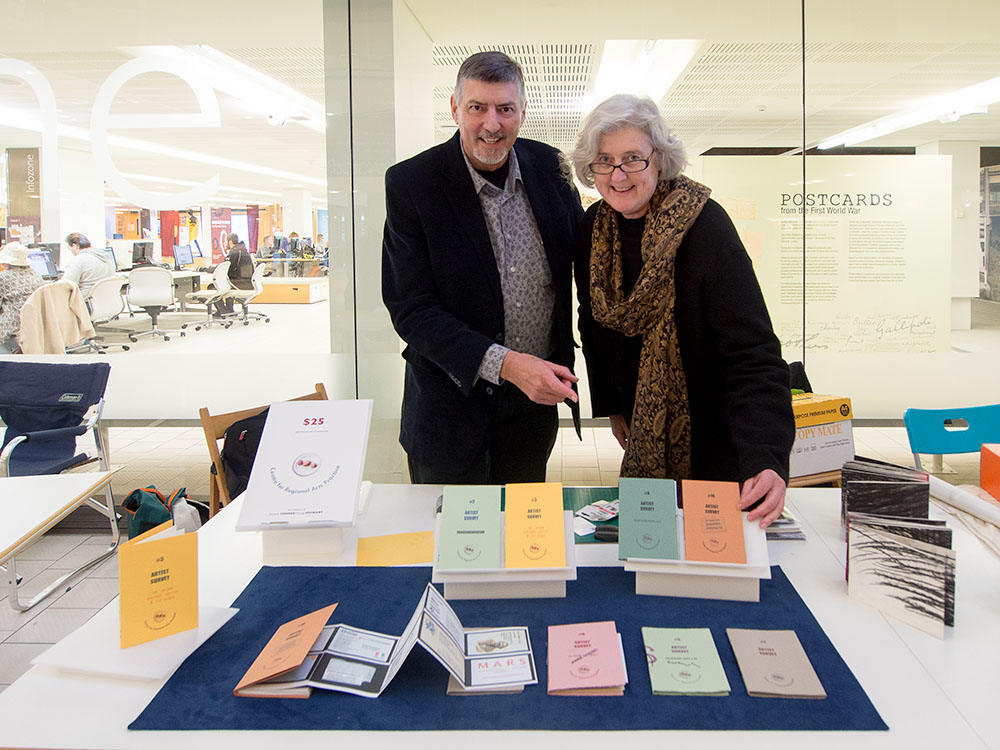
Doug Spowart and Victoria Cooper and their C.R.A.P. display
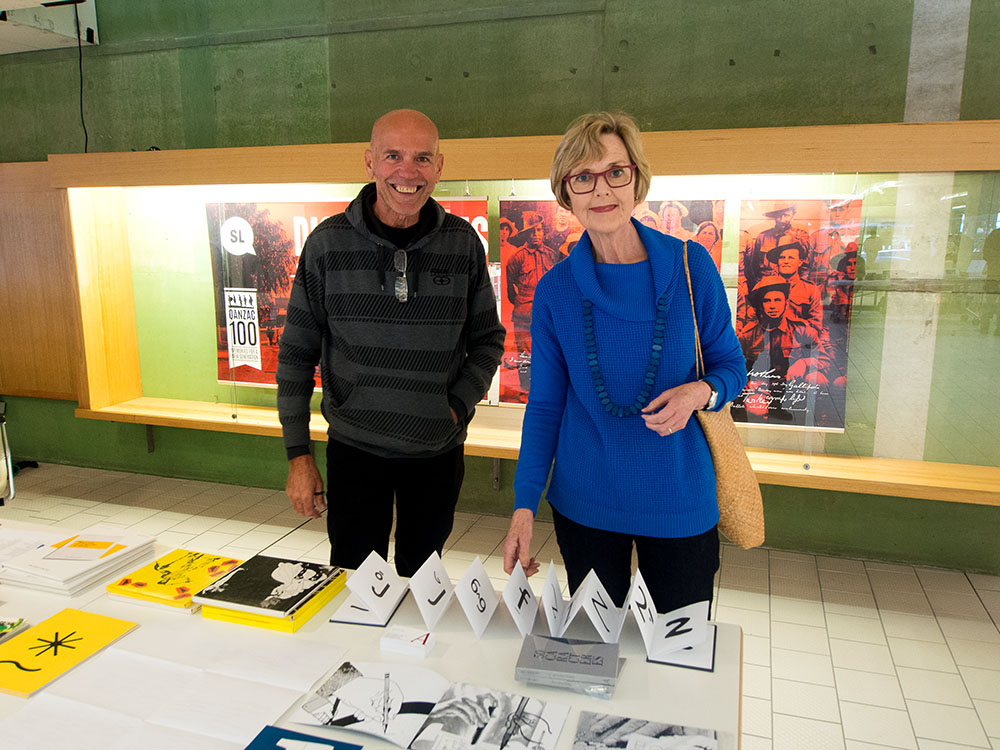
Clyde McGill and Anne Kirker
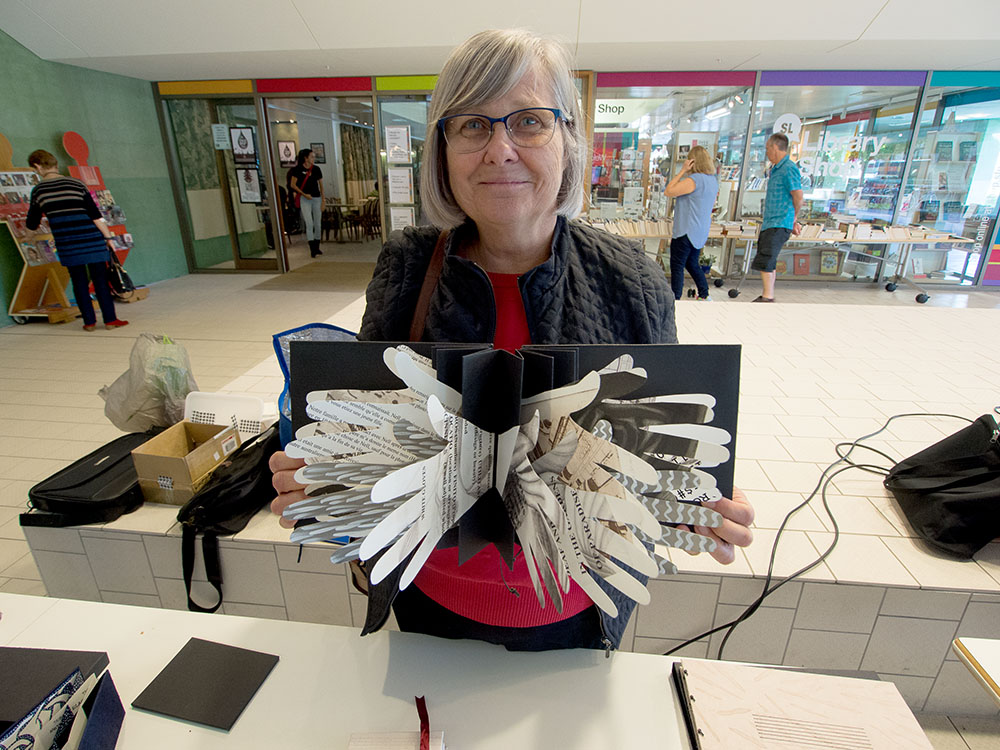
Helen Malone at the Artists’ Book Fair
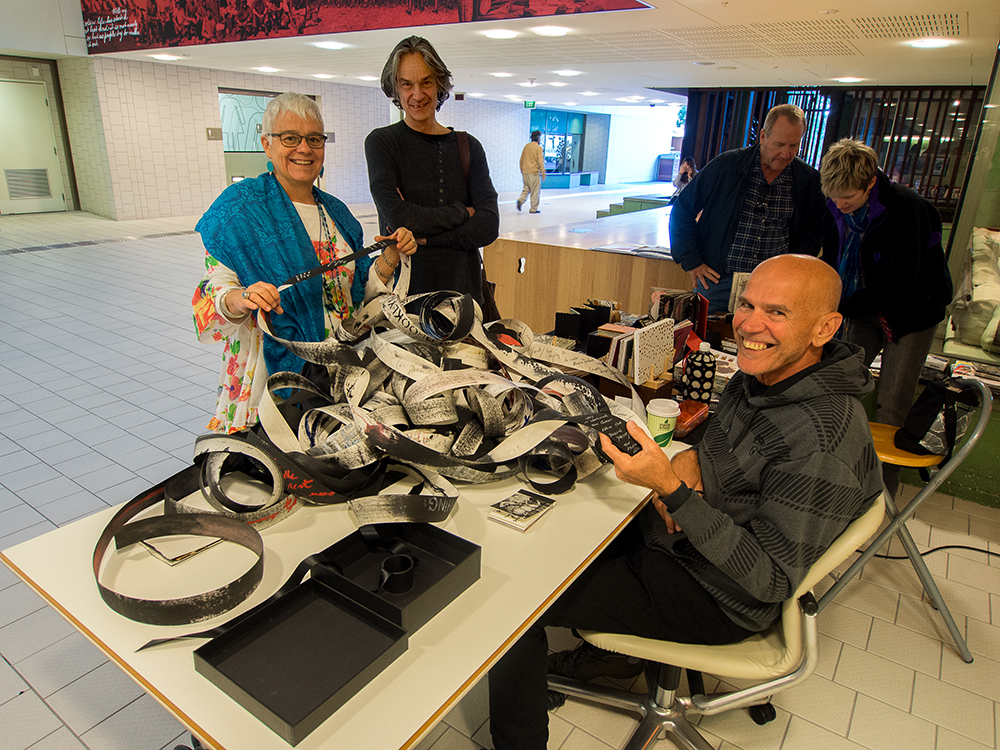
Helen Cole, Michael Wardell and Clyde McGill at the Artists’ Book Fair
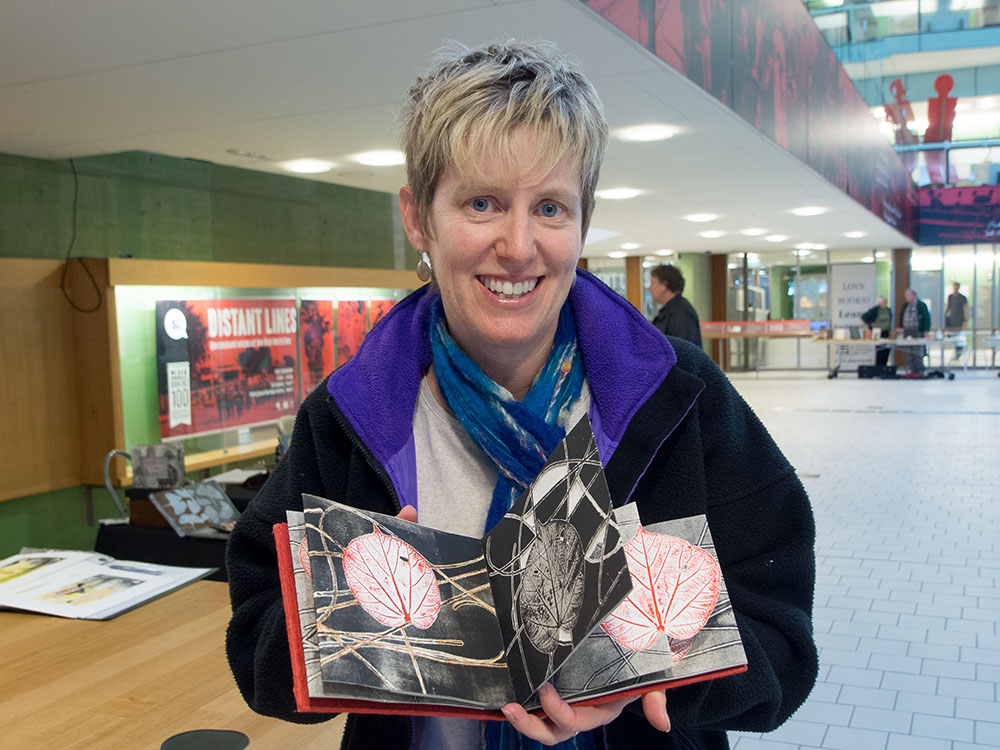
Sandra Pearce at the Artists’ Book Fair
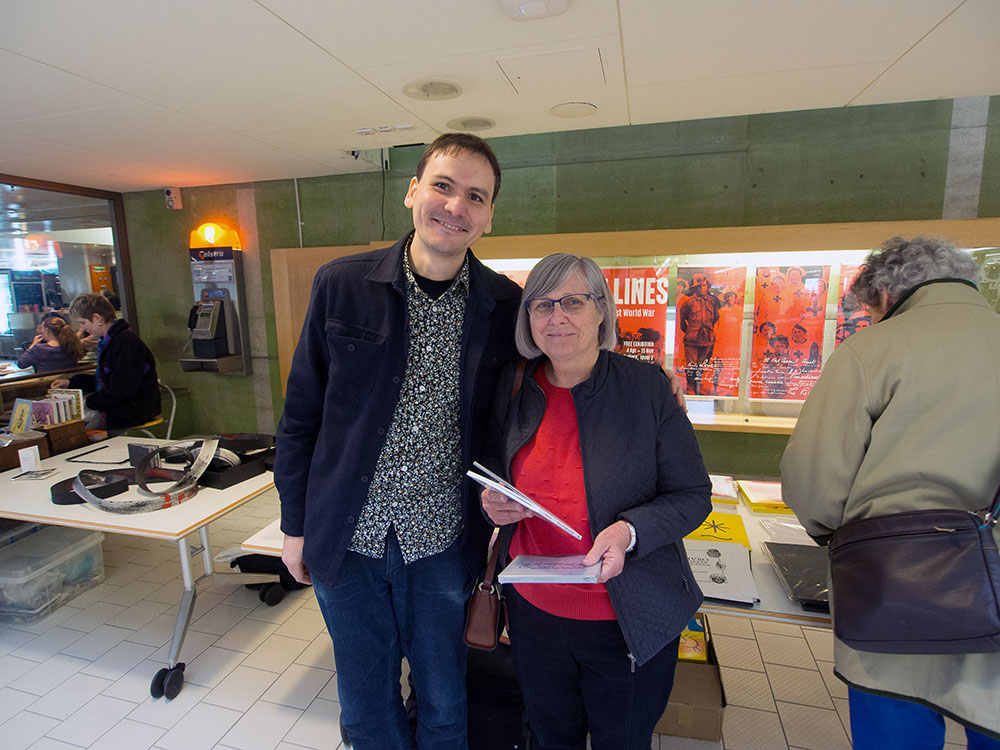
Amir Brito Cadôr with Helen Malone
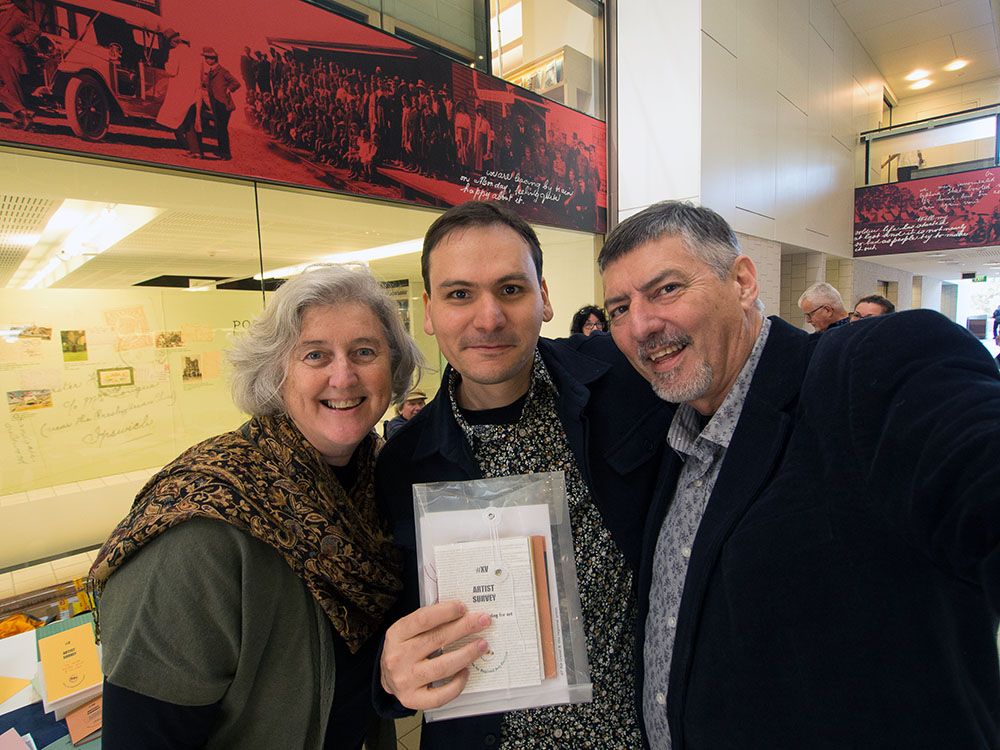
Amir Brito Cadôr with Victoria Cooper and Doug Spowart
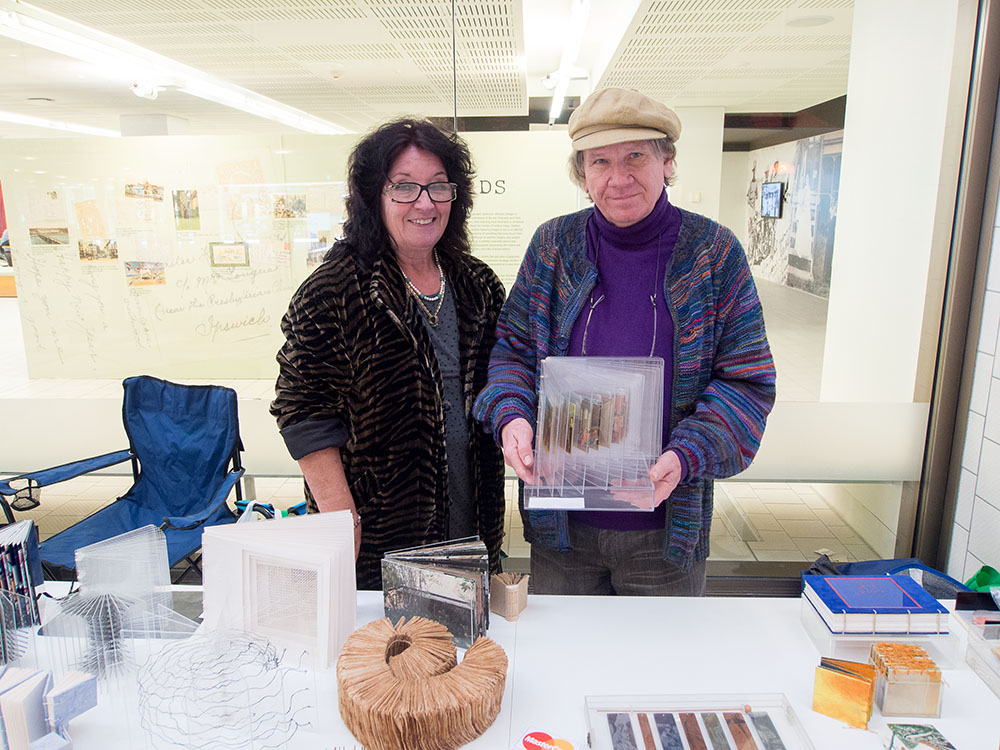
Adele Outteridge and Wim de Voss
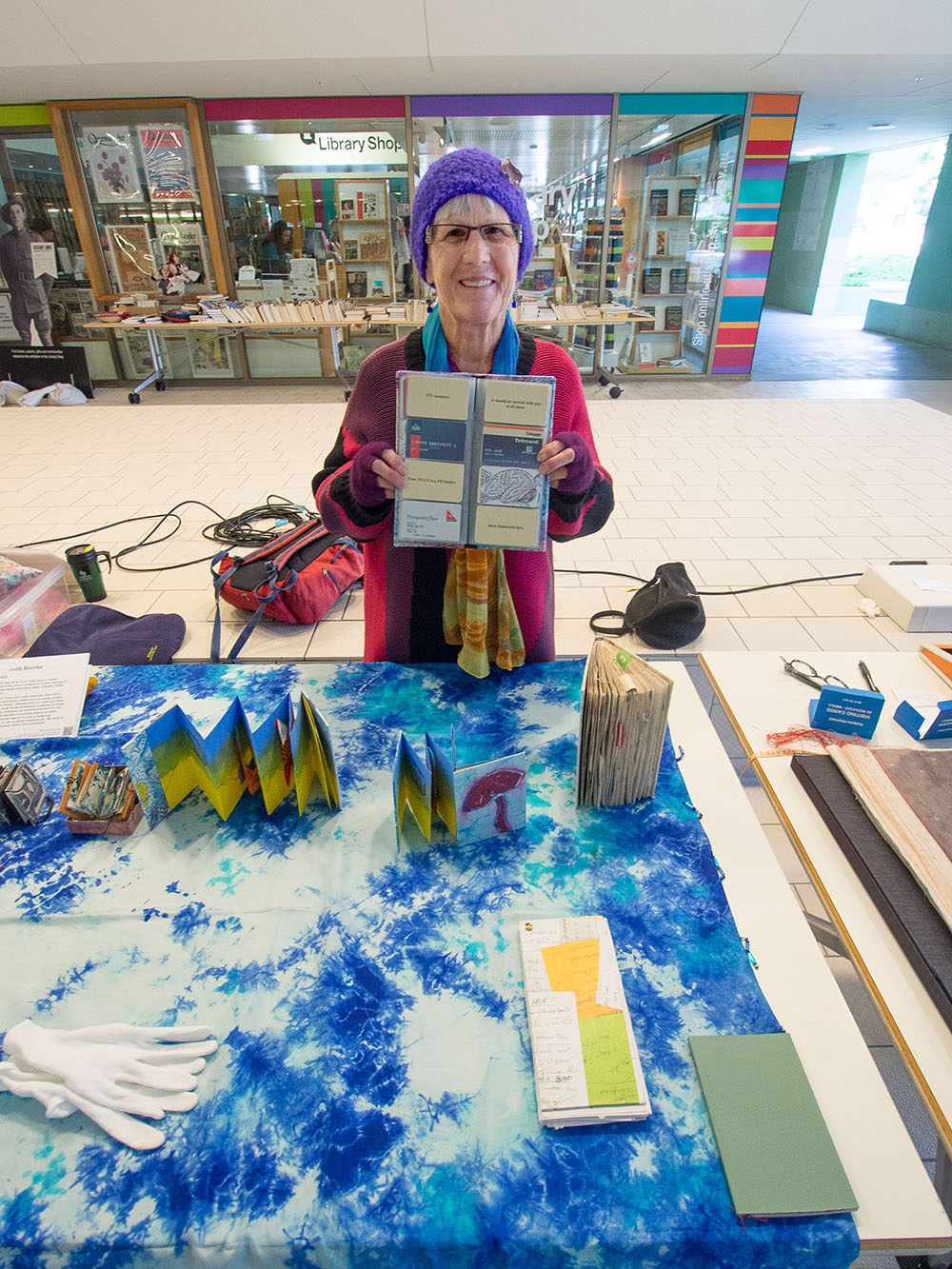
Judy Bourke at the Artists’ Book Fair
Presented by SLQ with the generous support of the Siganto Foundation. All photos and text ©2015 Doug Spowart

 wotwedid