Archive for the ‘Exhibitions’ Category
COOPER+SPOWART: ‘Contact Zone’ exhibition
Featuring the photo-based artist’s books and photobooks of Victoria Cooper and Doug Spowart
March 21 ~ April 5
Cooper and Spowart are influenced by the context and the consequences of living within a constantly changing relationship with the landscape. Contact Zone connects the viewer/reader with “place” relationships through the photobook, both physically and metaphorically.
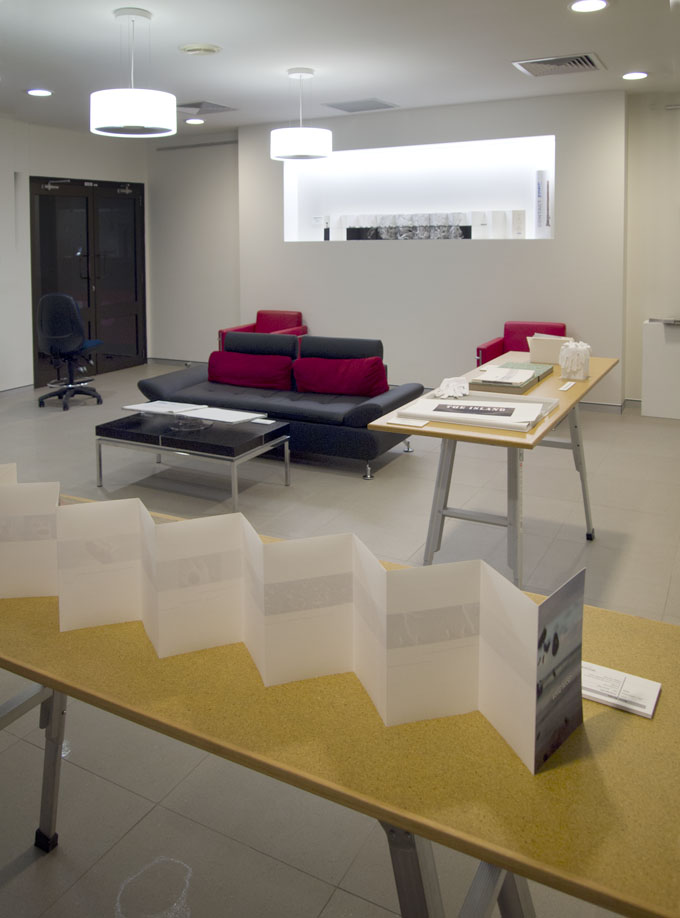
Contact Zone installation - Cooper+Spowart @ Futures Gallery, Toowoomba
Part of the 2012 QCP Queensland Festival of Photography
TIM MOSELY: An Eskimo climbing to a plateau
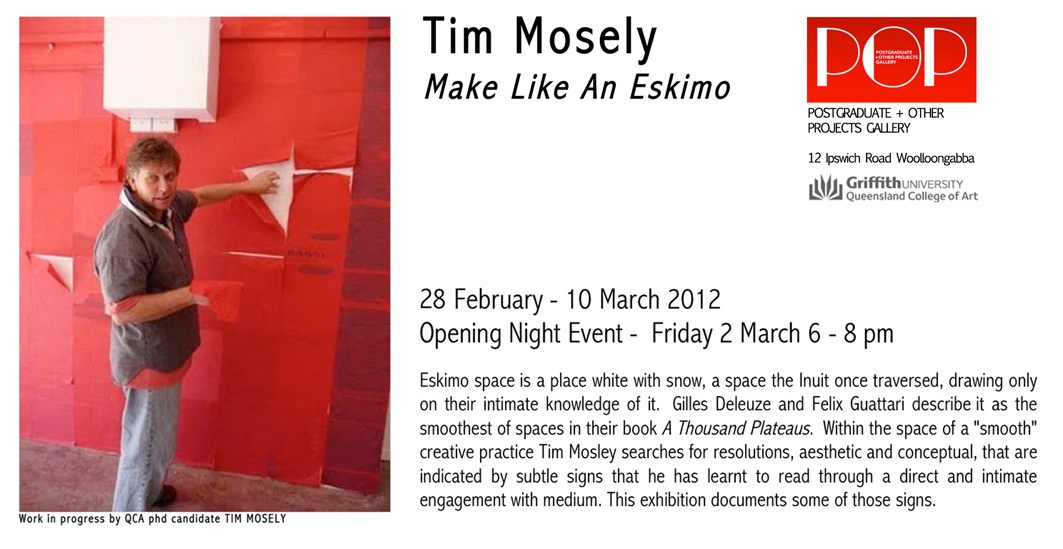
Make like an Eskimo – Invite
Tim Mosely is a PhD candidate at the Queensland College of Art. He is working through the research processes that students engage in to position their academic imprimatur on some aspect of human knowledge. Mosely over the years has developed a significant international practice in artists’ books, handmade paper and the book experience as one in which the tactile senses are evoked.
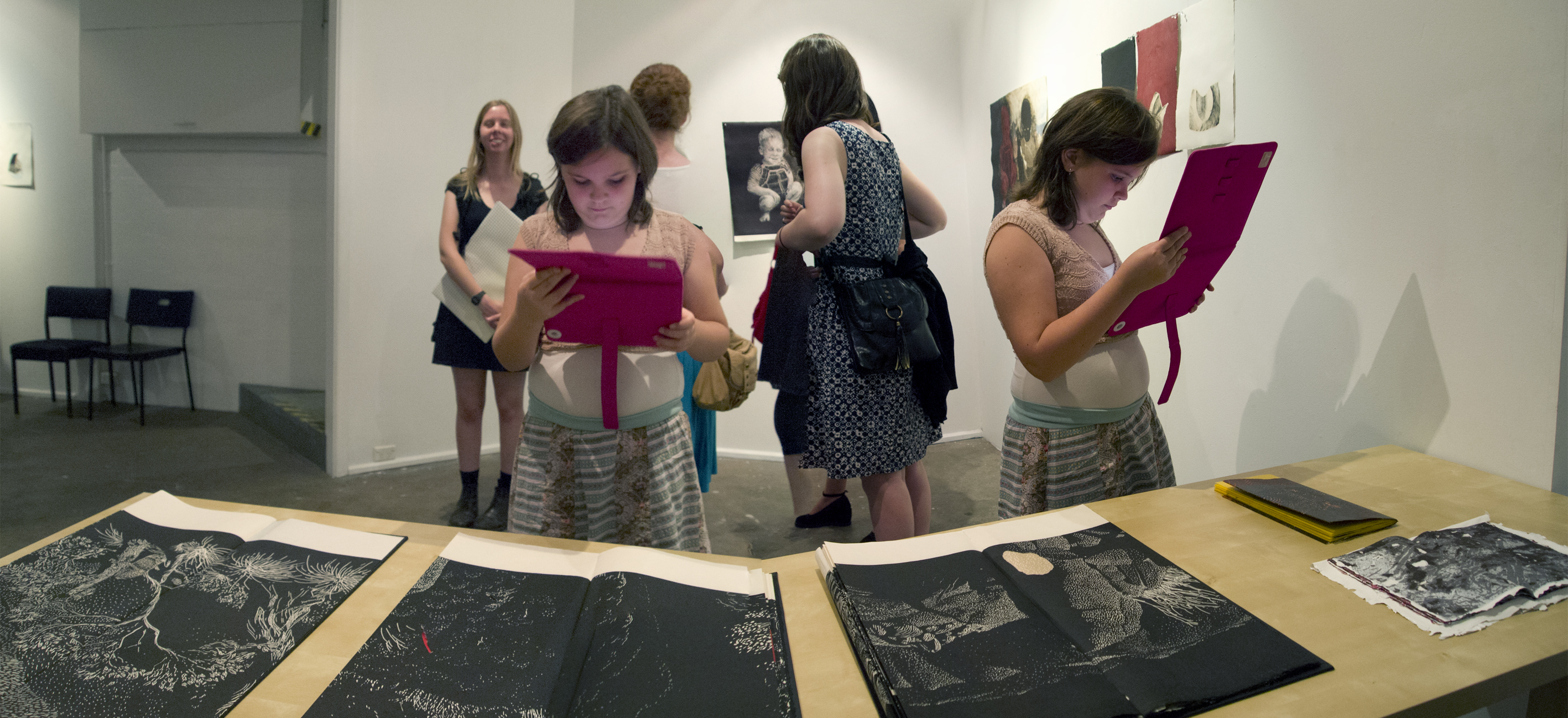
Tim Mosely – Make Like An Eskimo. POP Gallery Brisbane
Make like An Eskimo, at first appears as a mixed exhibition originating from many individual artists as each body of work teases out an idea, a gesture, a memory – blurred, or a theme. These are experiments, the research level is PhD so we do expect something that presents a challenge, or expresses a cathartic moment or even a line of questioning that leads … nowhere. This work does not leave this viewer wanting. The stones have been turned over and what has emerged are things that show Mosely’s Inuit traverse of the smooth white space where he has drawn on his intimate knowledge of printmaking medium, of his personal semiotics and his dreams.
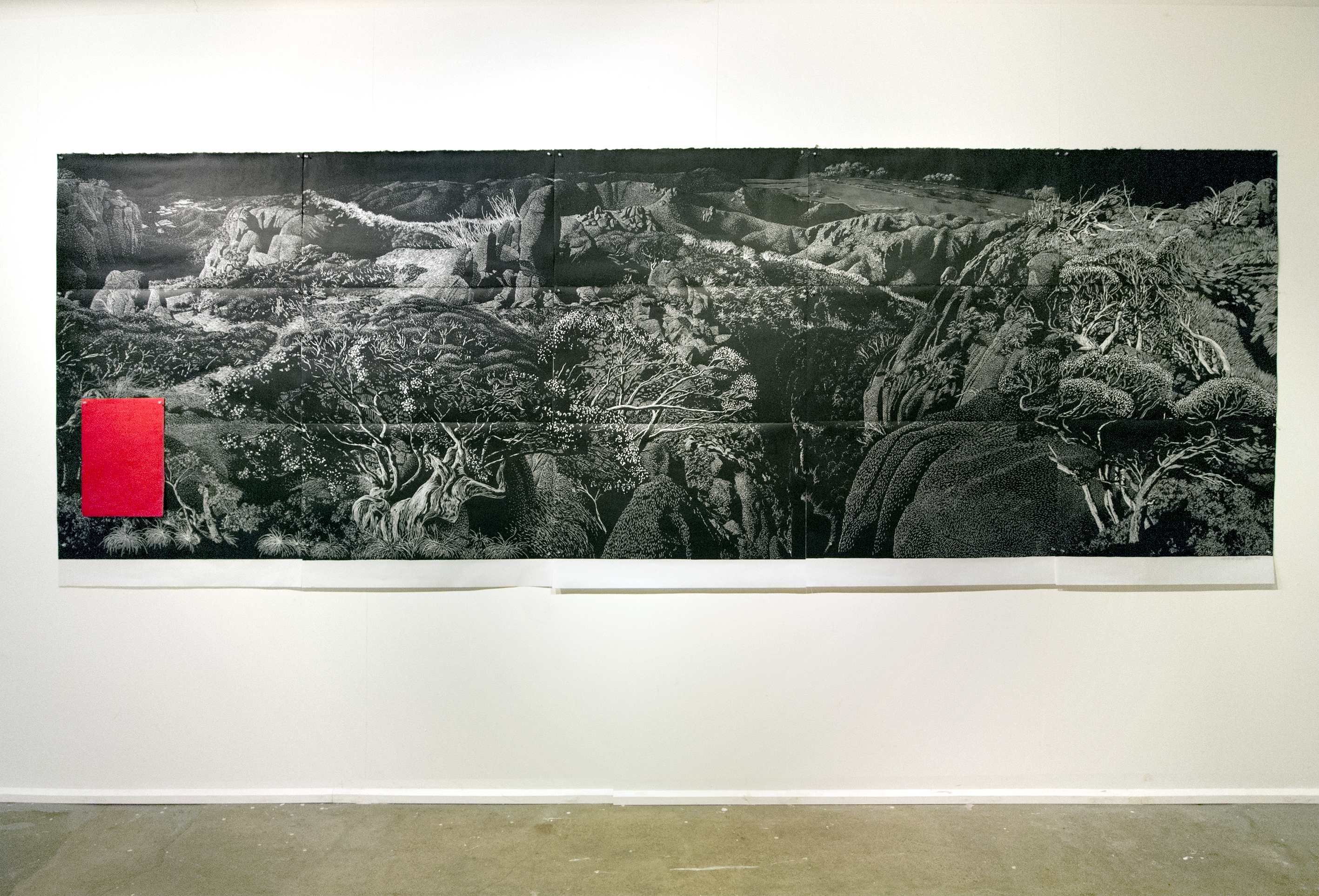
Tim Mosely – ‘imagining mt giluwe‘ a multi-sheet linocut
One monumental piece explodes from the wall – imagining mt giluwe. It’s a multi-sheet linocut – dark and brooding with markings made by Mosely’s tools that resemble some kind of tribal scarification. The wild landscape overpowers the smooth white gallery wall and entices the viewer to move in close. There is a hidden map implied by the transecting vertical and horizontal lines of the individual printed sheets. Is it a map of the physical, the metaphysical or is it just mere tactile experience – for touching with the eyes? There is a movement through the monochrome surface and a red rectangle of paper overlays a part of the image – is this order implied over chaos? Colonial blood over Nature? Or could it hide a didactic code with its intention to perplex the viewer – or maybe it is there to just hide the fact that no code exists?
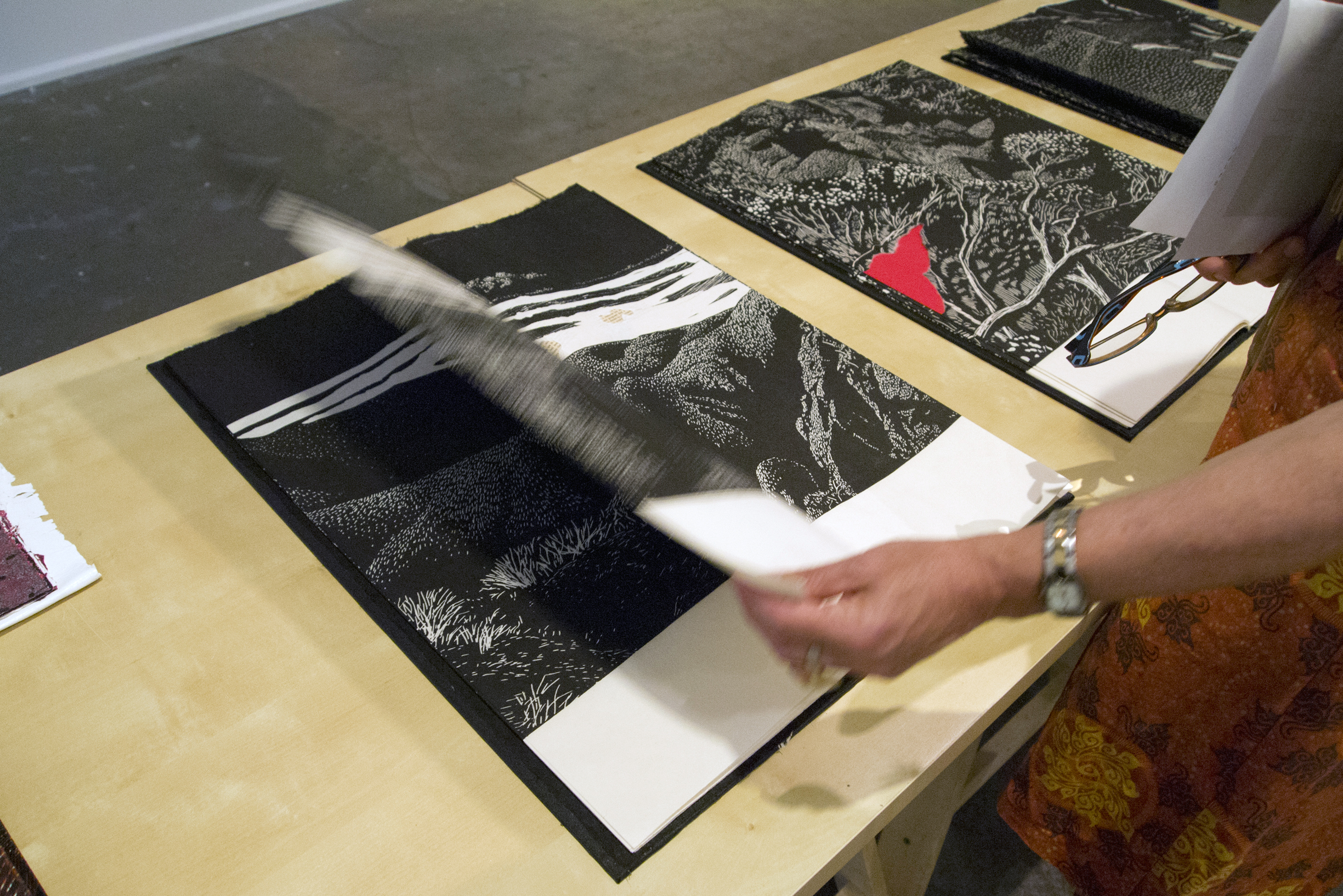
Tim Mosely – Make Like An Eskimo books
Another work, a series of books attempts to contain the big lino imagining mt giluwe. It is in fact, books made from pages of the large work. Once again there is a calling to explore and this time it is easier as the dividing and sectioning of the work into book form creates a path through the act of page turning. Some pages have been slashed and red paper shows through the jagged shapes implying similar questions as the red rectangle in the larger work. I am comfortable with this work, and perhaps Mosely is as well, as it is derivative of the language that he has employed in the past.
As I reflect on the experience of the POP Gallery I can confirm that Mosely is interrogating his practice, his experience of life and what it means to be an artist. What stands out is his haptic encounter in the making of his artworks and the profound need that he has for that vital energy to be infused into the art. And in that I think he is not alone – the materials seem to respond to his interaction. Here I am reminded of a discussion that Barbara Bolt has about a mode of thinking informed by Martin Heidegger’s techne and Paul Carter’s ‘material thinking’, where she states,
‘In the place of an instrumentalist understanding of our tools and material, this mode of thinking suggests that in the artistic process, objects have agency and it is through the establishing conjunctions with other contributing elements in the art that humans are co-responsible for letting art emerge.’ (Bolt 2007:1)
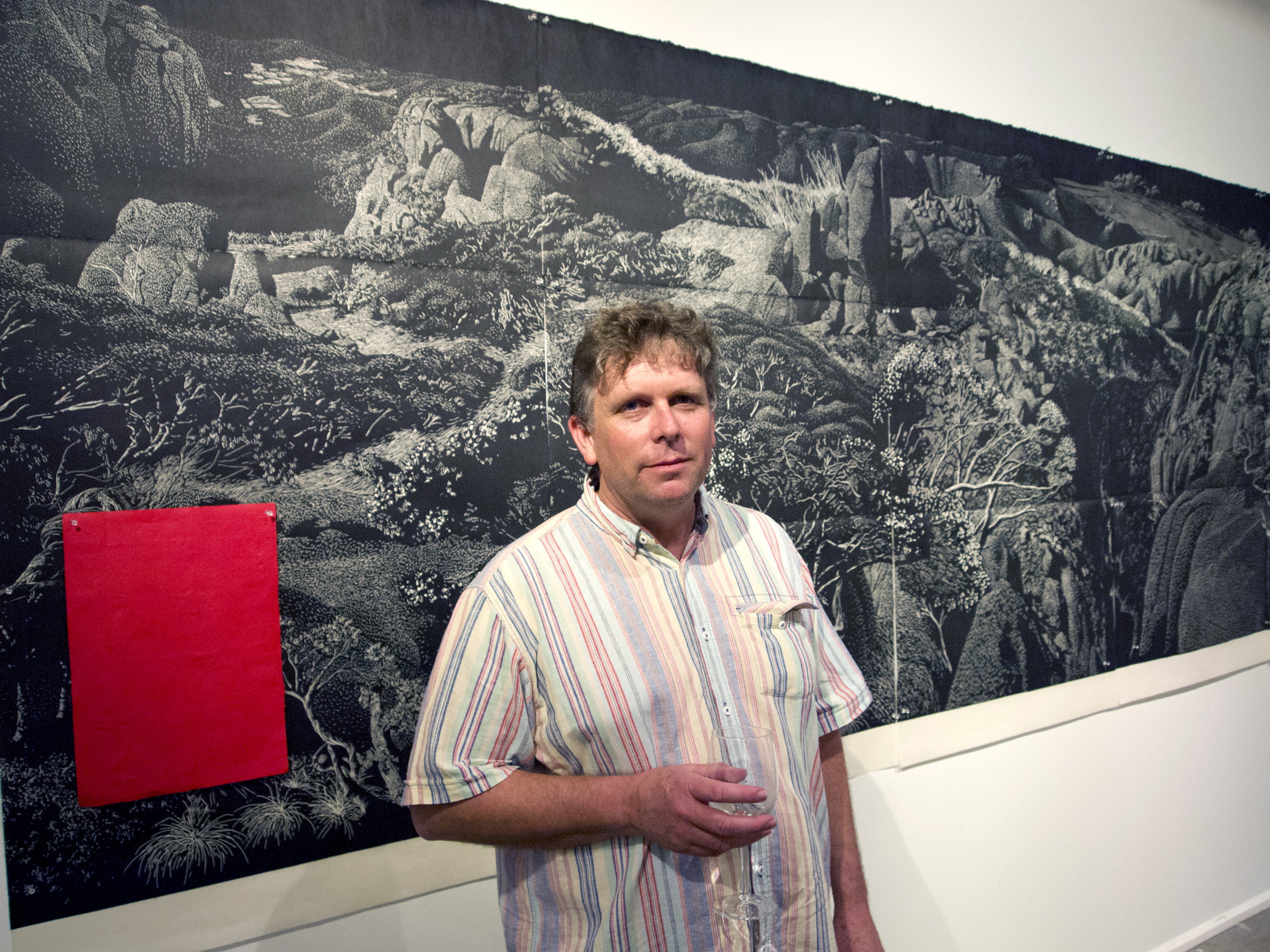
Tim Mosely in the exhibition Make Like An Eskimo
Mosely’s work and the materials in his work do emerge to present the viewer with communiqués that are enriched not only by what is embedded in them but also what they invoke in the mind of those who encounter them. We wish him well in the ascent to his academic plateau.
Doug Spowart
ART GALLERY IMMERSION: GOMA VISIT Part 2 ~ YAYOI KUSAMA

We then entered the Kusama exhibition space. Words alone cannot convey the experience encountered—images and videos may help. And that’s they key to the immersive gallery visitor’s strategy, you are allowed to photograph! In fact everyone is blazing away with cameras imaging their encounter with the art and artist’s wacky view of the world. Somehow Kusama just doesn’t seem weird – she just seems in tune with knowing what the viewer wants!
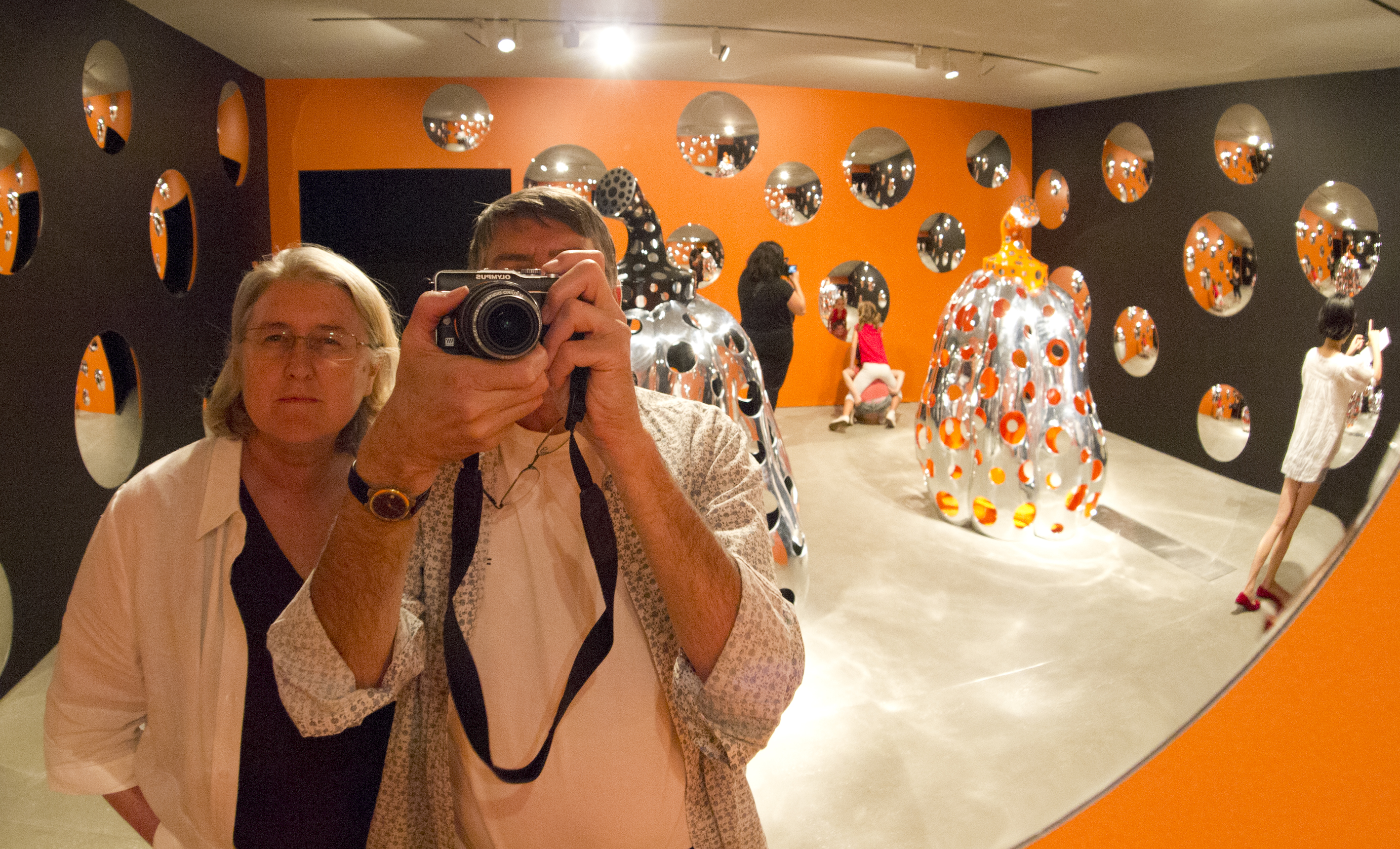
A self-portrait in the first room of the Kusama show

Kusama video mirror space + other visitors

Kusama sculpture flower

Vicky in the Kusama Obliteration room
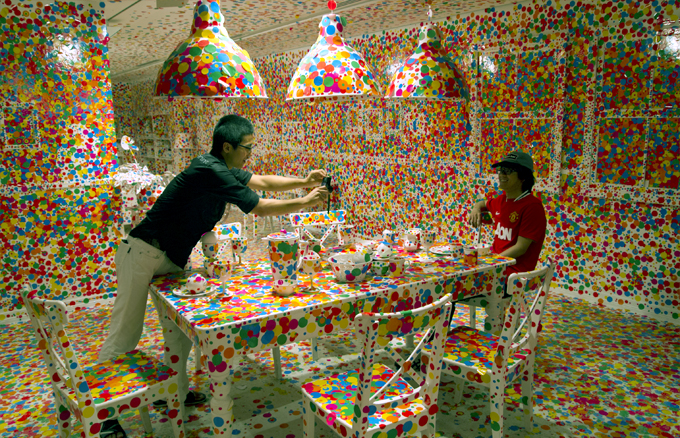
Kusama Obliteration room photographer
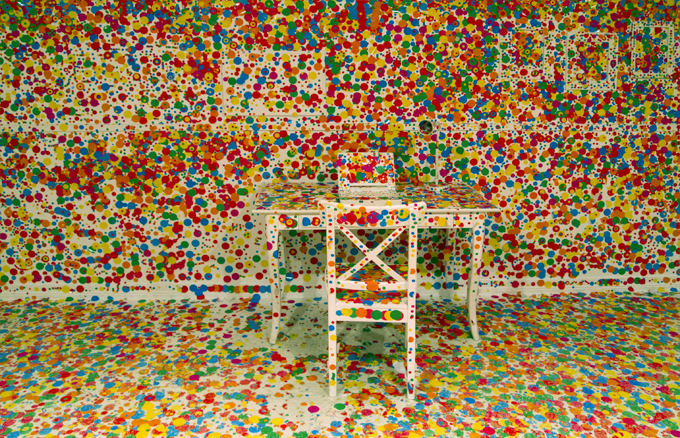
Kusama Obliteration room table and chair
ART GALLERY IMMERSION: GOMA VISIT Part 1 ~ DRAWING MATISSE
For some time I’ve been uncomfortable with the way that the concept of ART GALLERY has transformed from a place for the quiet experience of art and of seeking personal enlightenment, into one where visiting crowds seem hell-bent on seeking entertainment. Ultimately I gave in and developed an expectation that a gallery visit could be about an experience cram packed with gratuitous fun, and … a few personal epiphanic moments.
GOMA Director Tony Ellwood states that he would like audiences to the Yoyoi Kusama Look Now, See Forever exhibition to “immerse themselves in the artist’s unique and compelling world view”. To test Ellwood’s immersive suggestion Vicky and I recently visited the Kusama show and the more traditional historical survey show – Matisse: Drawing Life which is touted as being ‘the most comprehensive exhibition of Henri Matisse’s prints and drawings ever mounted.’
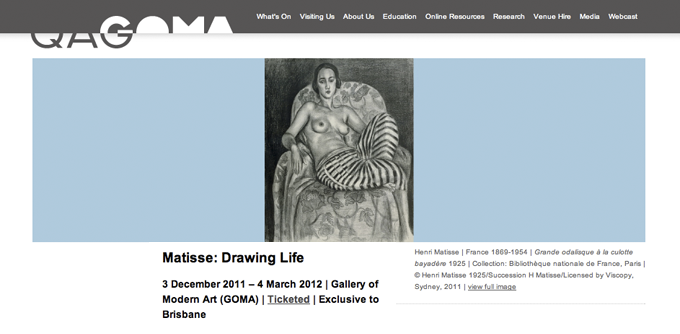
We took in the Drawing Life show first. Matisse drew everyday and one would, from the pervasive theme of the show, think he drew the female nude obsessively—or is it that he just obsessively drew. The transition to immersive experience happens on leaving the show as viewers are enticed to try their own hand at drawing. To stir the budding artists to action, they are supplied not just with pencil and paper, but also a Matisse-esque tableau of drawing fodder—fruit baskets for still life, mirrors for self-portraits and art-school plaster ‘nude’ sculptures to practice on the human form.
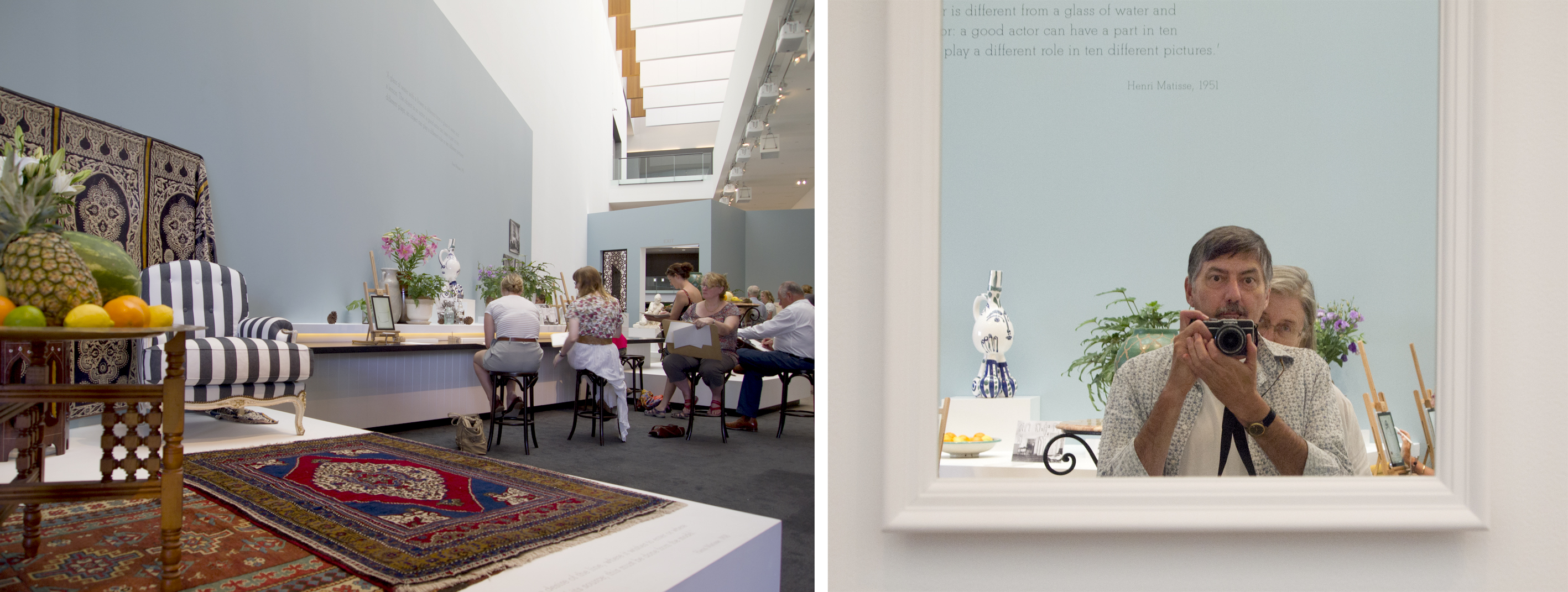
Matisse Drawing space - Doug+Vicky cheat - 'drawing' a self-portrait with a CAMERA
For the techno-inclined tablets were available loaded with a drawing program that enabled a drawing to be made with finger or stylus. Not necessarily following the subtlety of lead on textured paper but none-the-less an ‘experience’. We drew the Brisbane city skyline opposite GOMA. The experience was value-added by the opportunity for the ‘drawing’ to be emailed to friends. (We were to later discover that when viewed, the drawing grew on the screen accompanied by music.)
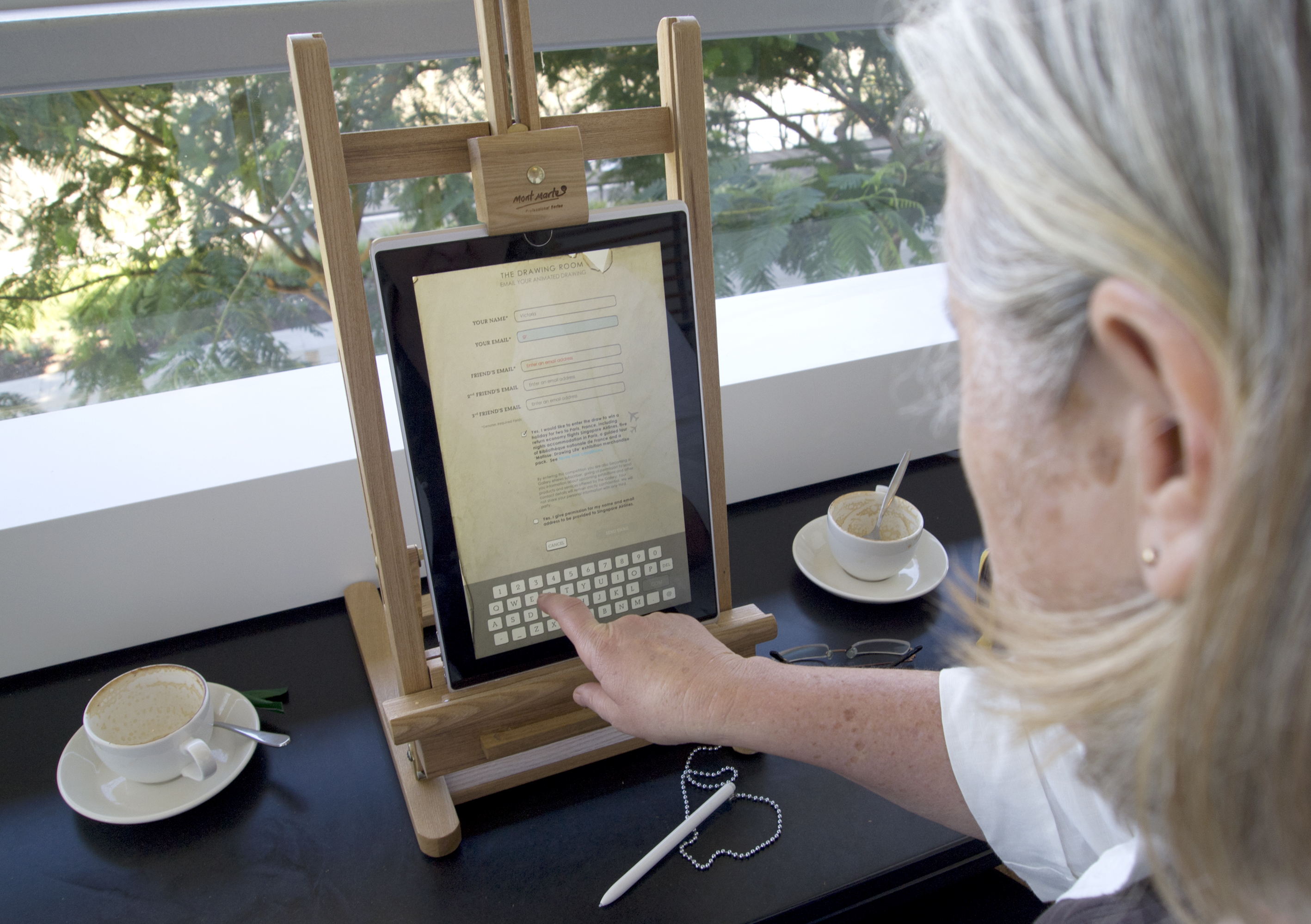
Vicky sends off her 'digi-drawing' as an email
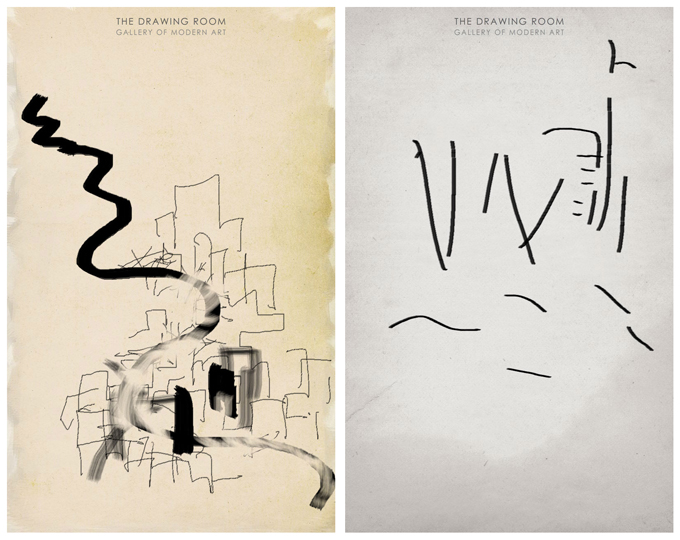
Vicky's 'digi-drawing' of Brisbane River --- Doug's 'digi-drawing' Brisbane city
With the Matisse ‘experience’ behind us we entered the Kusama show ….. SEE THE NEXT POST
IAN SMITH: “On and Off the Road” in Toowoomba Regional Gallery
On Sunday January 8, Ian Smith presented an artist’s talk to accompany his exhibition On and Off The Road, a travelling exhibition from the Gold Coast Art Gallery, at the Toowoomba Regional Art Gallery. Attended by around 60 local and visiting artists from the McGregor Summer Schools, Smith spoke about his life and work. The follow are a few comments and observations inspired by the man and his talk.
Ian Smith is like the Australian version of one of those characters straight out of Jack Kerouac’s 1950’s trans-American crossing, On the Road. He is the kind of person who would give you a lift as a hitch-hiker and keep you amused with every kind of story you can imagine, embellished with obtuse observations of life, art and doin’ what you need to. And if the narrative about Smith can stretch that far, his art is as big and crammed full of life and insightful opinion. Just by standing before it you can have a conversation with it where it tells you its story and you will not get a word in yourself.
Smith was born a brought up in Cairns. He didn’t ‘discover and fall in love’ with north Queensland as so many artists have. He is a self-confessed ‘Tropicale snob’ and wears his regional slant on things with all the swagger of a true regional artist. Smith is a figurative painter but somehow landscape gets in the way, although these landscapes have figures and life-signs of humanity.
VIEW THE ALEX CHOMICZ VIDEO of the exhibition and the artist: Ian Smith Paintings On and Off the Road
http://www.youtube.com/watch?v=W1kZi1ZHIGw.
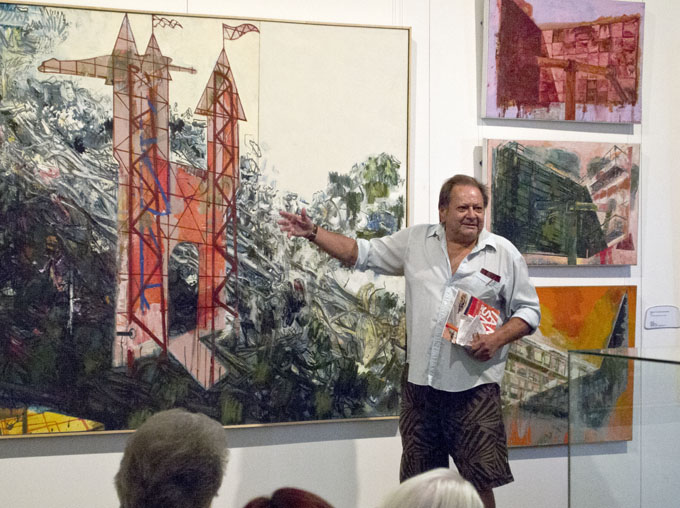
Ian Smith presenting an artist's talk @ the Toowoomba Regional Art Gallery 8 Jan 2012
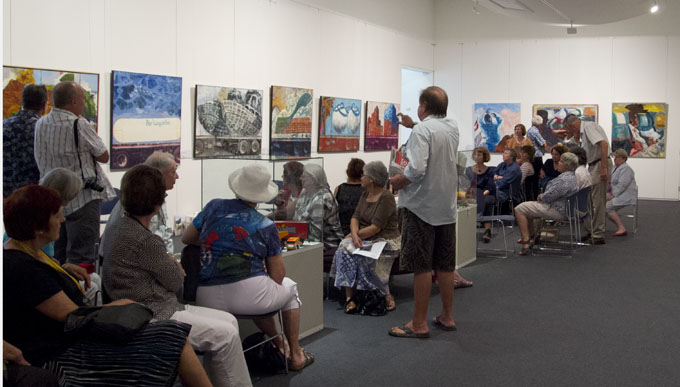
Ian Smith and crowd @ Toowoomba Regional Art Gallery
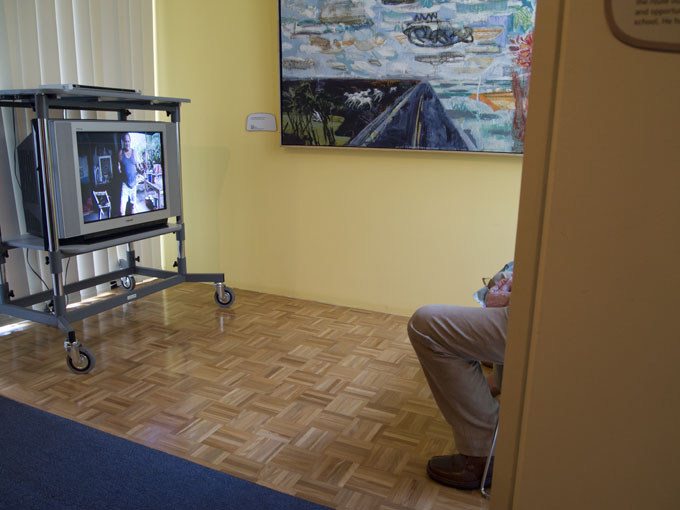
Watching the Alex Chomicz video "Ian Smith Paintings On and Off the Road"
Ian and I had some connections from the past – He exhibited in my Gallery (Imagery Gallery) in Brisbane in the 1980s and we shared teaching experiences at the Queensland College of Art in the 1970s and friendship with North Queensland photographer Glen O’Malley. So he came over home to my garden for a few beers (Ian) and coffees (Vicky and I) and a chat.
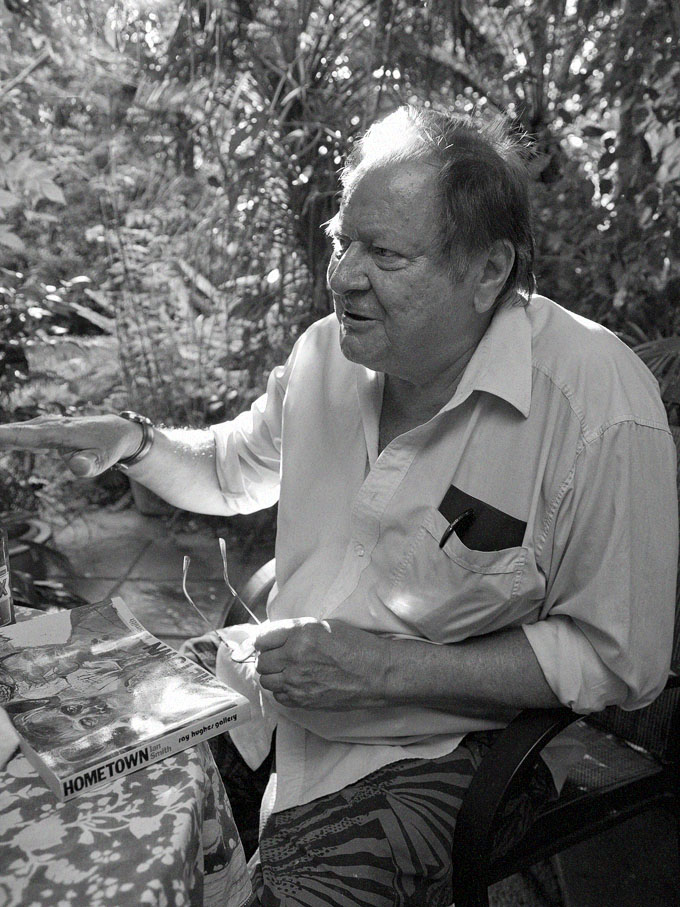
Ian Smith talking
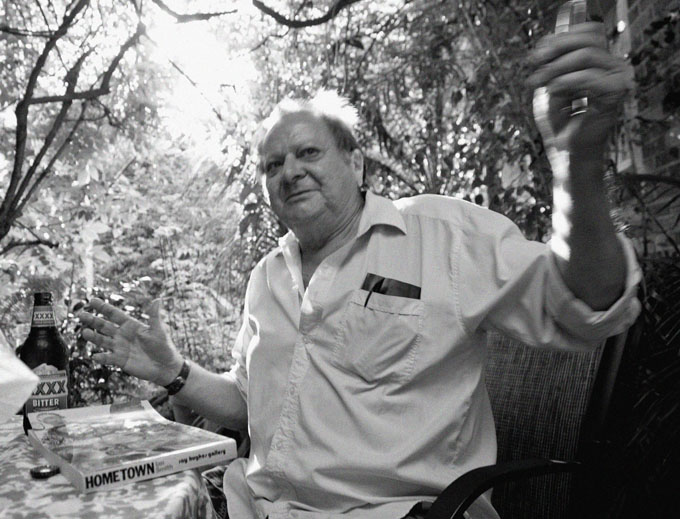
An animated Ian Smith makes his point!
BOAT and BIRD – Craig R Cole + Alister Karl : MADE Creative Space
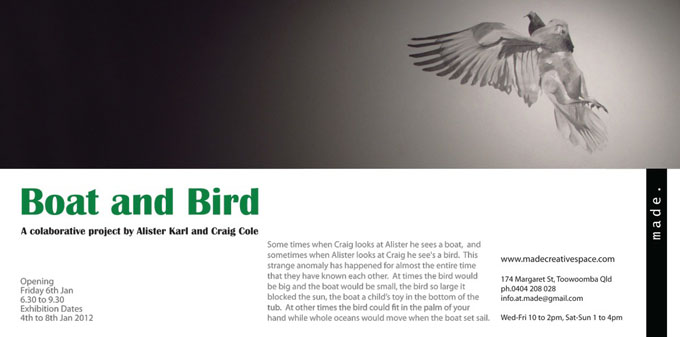
Boat and Bird invite
A tale of two types of gallery exhibition
The gallery, the artist, the exhibition and the audience have been around for a couple of hundred years where a common expectation is that the exhibition operates as a vehicle for the selling of art. There is a commercial reality that ‘selling’ art funds the process of art-making, on the part of the artist – and staying in business and generating income through commission, for the gallerist. There has always been an anathema or disinterest in the making of art as commodity against the creative free place that artists see themselves in a community.
In the 1960s, artists rebelled against the commercial gallery structure by making art in the landscape (land artists like Robert Smithson) or making ephemeral conceptual works (Fluxus), which were not the saleable commodity like the painting in the frame. Later, performance art and video artists created art that was often unpalatable to the art purchasing (investor) clientele by the nature of both the content and the medium itself. Artists want to just do their own thing but can art exist outside the mercantile frame? And were does fit within the contemporary artists’ community?
An exhibition by Craig R. Cole and Alister Karl in Toowoomba’s MADE creative space may serve to provide some insights. Entitled Boat and Bird the exhibition is a collaboration project by the two artists that features subject content as defined by the title – boats and birds. The two artists have a creative friendship that goes back over 14 years and for much of this time they claim the subjects of boat and birds have permeated their relationship.
The MADE space is multi-roomed, with wooden floor and black and white walls and the two artists have drawn, affixed and assembled found and collected objects. There is no catalogue, no erudite didactic panels, no pretence (or perhaps – all pretence) and no ‘in your face’ message the viewer to be burdened by. Drawings are fixed to the wall, and in some cases, they have been allowed to leap from the paper onto and into the gallery wall itself. A collection of delicate feathers appears to have settled on one part of the gallery wall where its embryonic bird shape morphs into a boat sail. In a mini installation space around 20-feathered shuttlecocks sail through the air before a framed print of the game being played.
Some collaborative boat works utilise nautical themed things rescued from junk shops and car boot sales. In the context of gallery these objects take on new meanings by the interaction of the viewer. Juxtaposed in the gallery space are boat models, a photo jig-saw, consisting of a harbour full of boats, is presented as a DIY for viewers to attempt to assemble, and a set of coded nautical message flags is presented for deciphering.
In one corner a collaborative piece consisting of things like ship models a bird covered cuckoo clock, a metre or two of fishing net, steel mesh, a pair of crutches and ancient surveyors strings and ropes. The collaged objects seemed sometimes bird-like and yet at other times maybe even boatish.
In viewing the works one may take clues and cues from the art works and then connect them with personal lived experience. Sometimes there is a moment of instant delight at discovering a hidden joke or glib message. Other times there is and enjoyment of the beauty of the simple line and outline or the whimsy of the extension of the artwork into the space.
The exhibition Boat and Bird presents art at its best – free, fresh and fun with enough take away visual memories to stir further thought and reflection. Here perhaps is the ‘other’ form of the exhibition, the hors commerce one. Perhaps this form is where the true he(art) is.
WORDS+PHOTOs: Doug
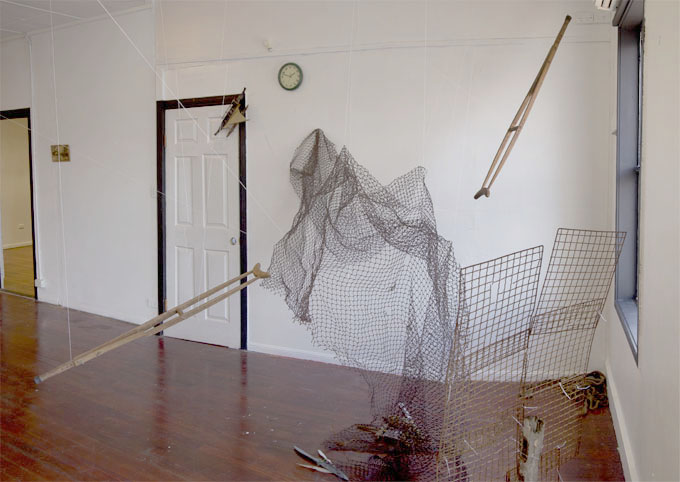
Is it a boat? or Is it a bird? A collaborative installation by Cole + Karl
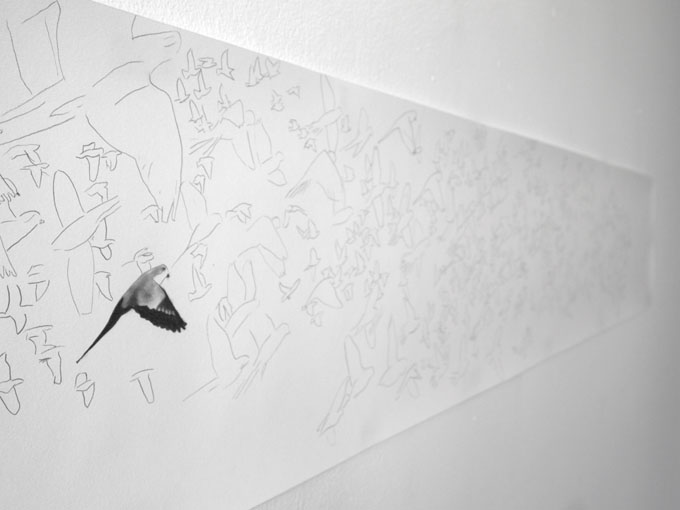
Birds drawing: Cole + Karl
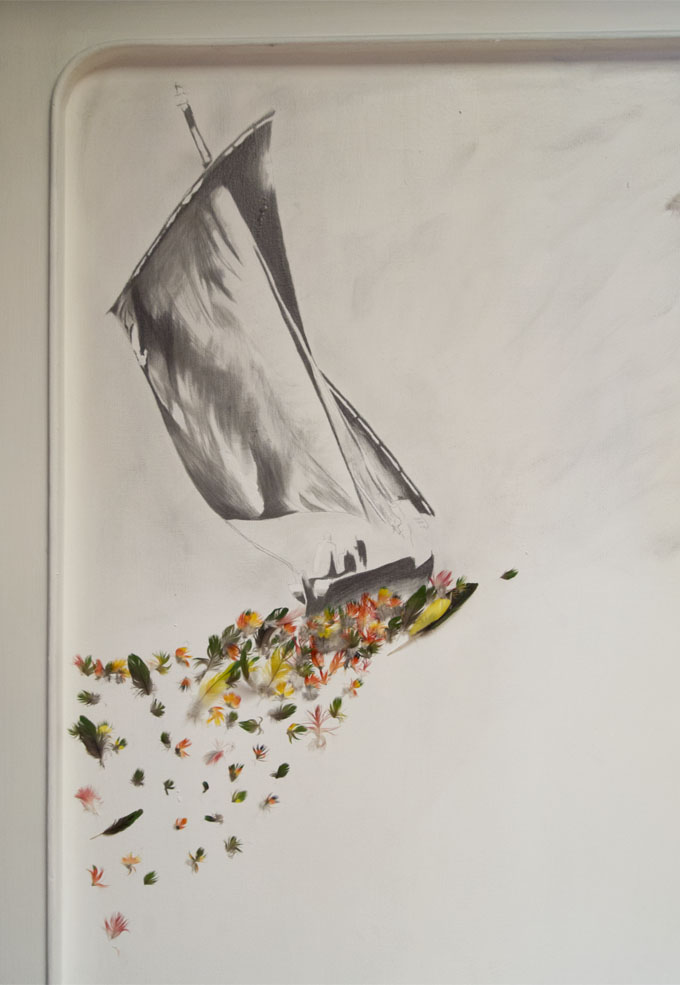
Feathers morphing into a sail: Cole + Karl
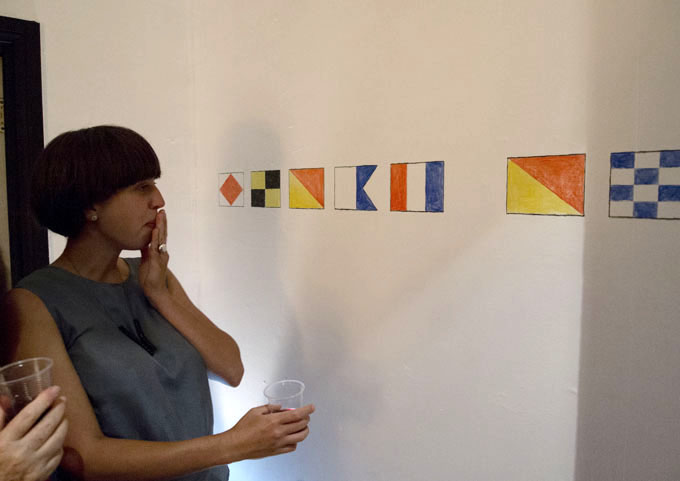
"Float on": Cole + Karl
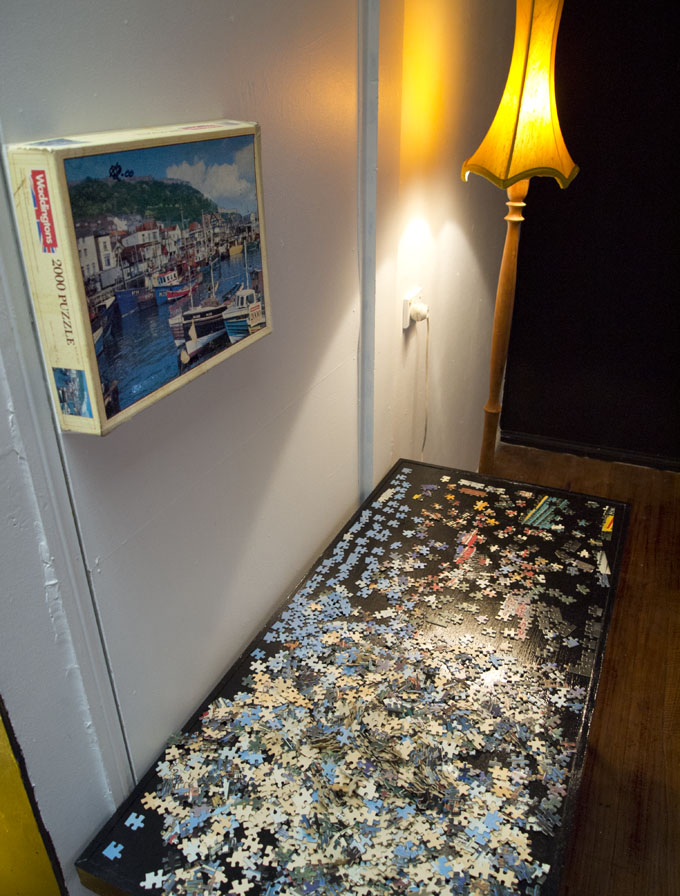
Boat harbor jig-saw: Cole + Karl
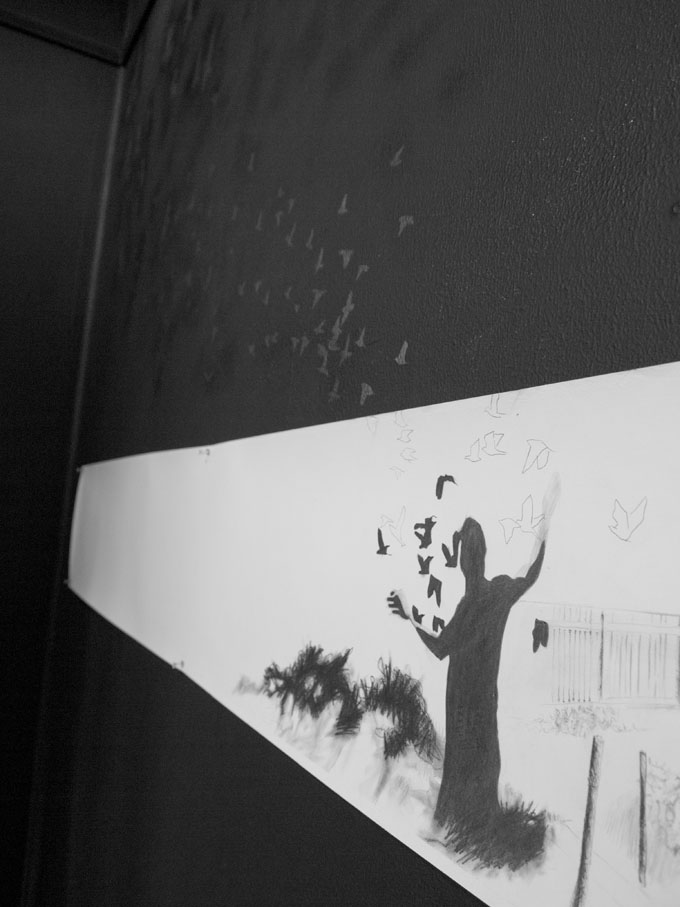
Birds escape from page
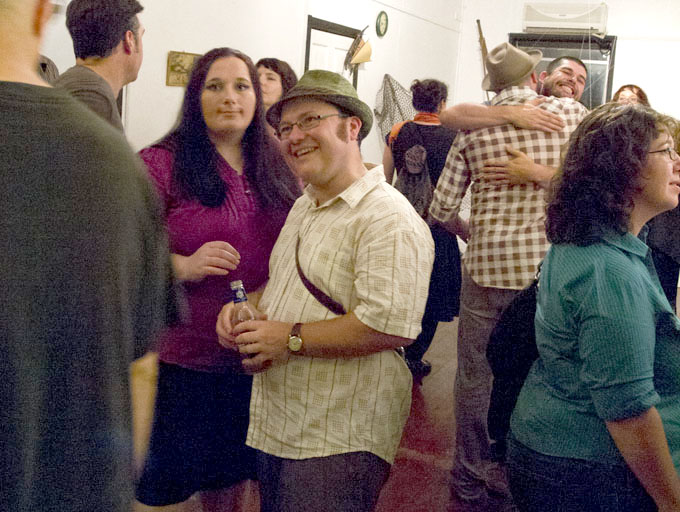
- Alister Karl @ opening of Boat and Bird
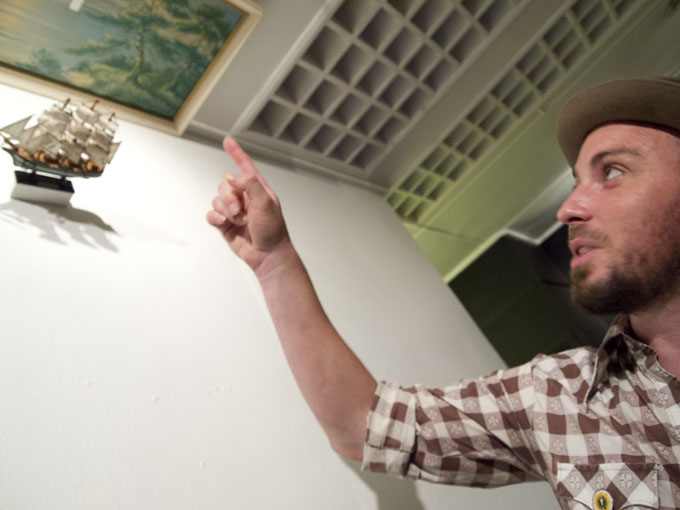
Craig explains the viewing alignment of boat and painting
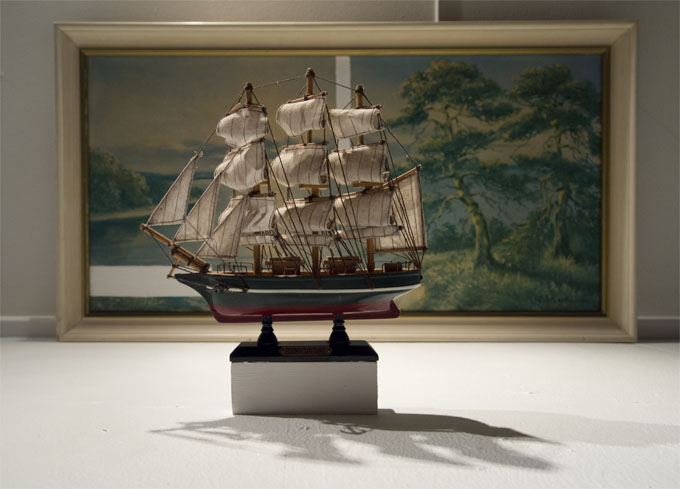
Craig's photo of boat and painting
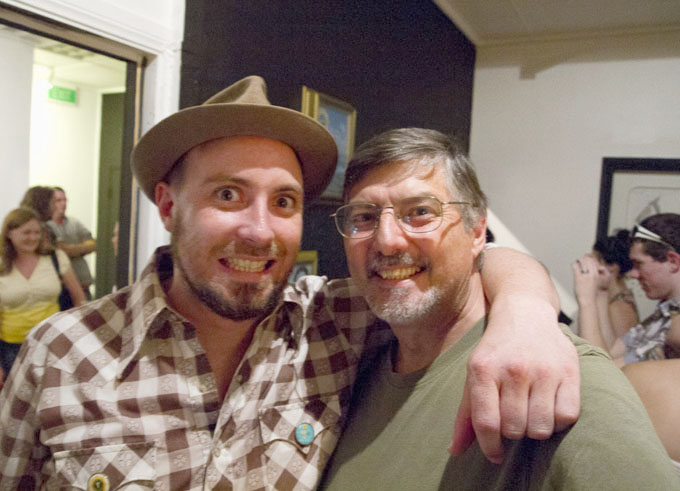
Craig R Cole and the author Doug R Spowart
13 December: James Turrell – Skyspace ‘Within without’
On three occasions we have visited the Turrell Skyspace artwork @ the National Gallery of Australia during our time in Canberra. Turrell states that:
My work is about space and the light that inhabits it. It is about how you confront that space and plumb it with vision. It is about your seeing, like the wordless thought that comes from looking into fire.
For us the Skyspace was like visiting a physical and visual phenomenon. The images that follow record our experience of the artwork – and some of the fun.
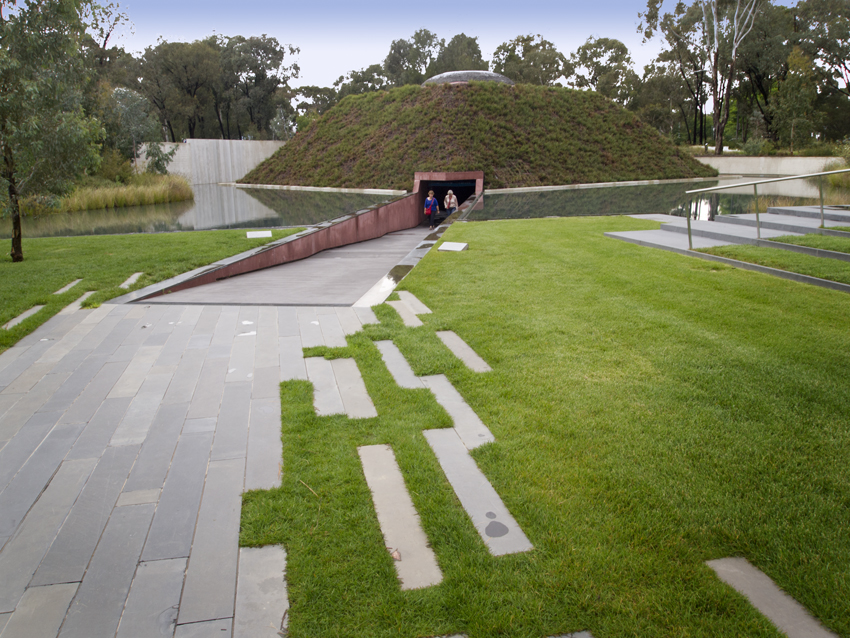
An external view of the Skyspace installation
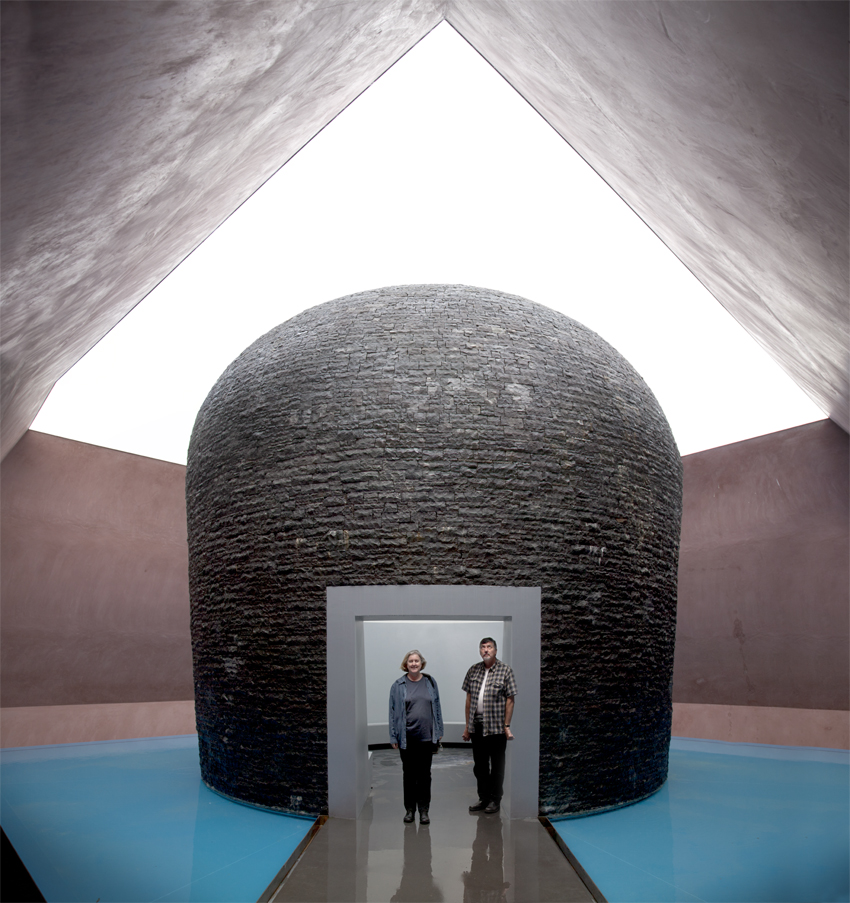
Inside the Skyspace installation – standing before the stupa
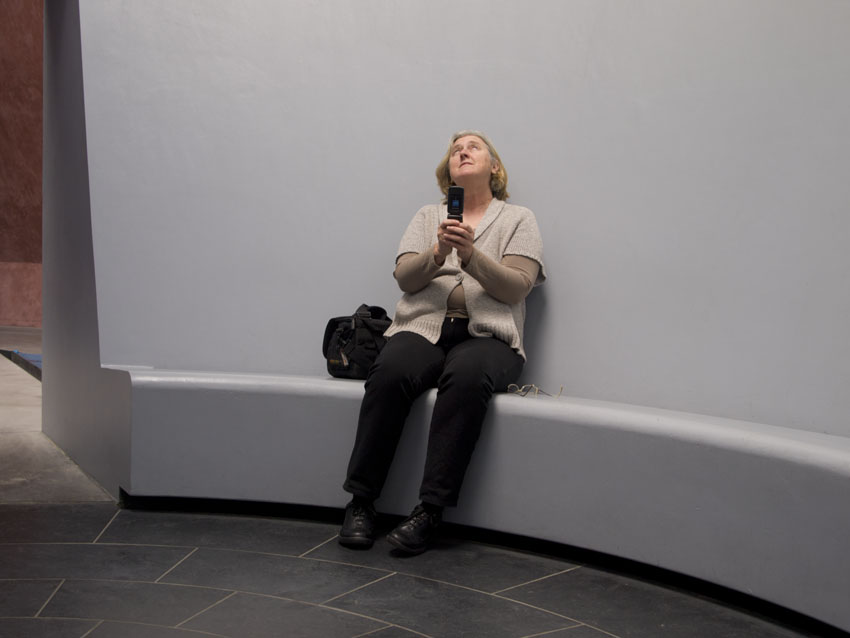
Vicky looking up towards the sky opening
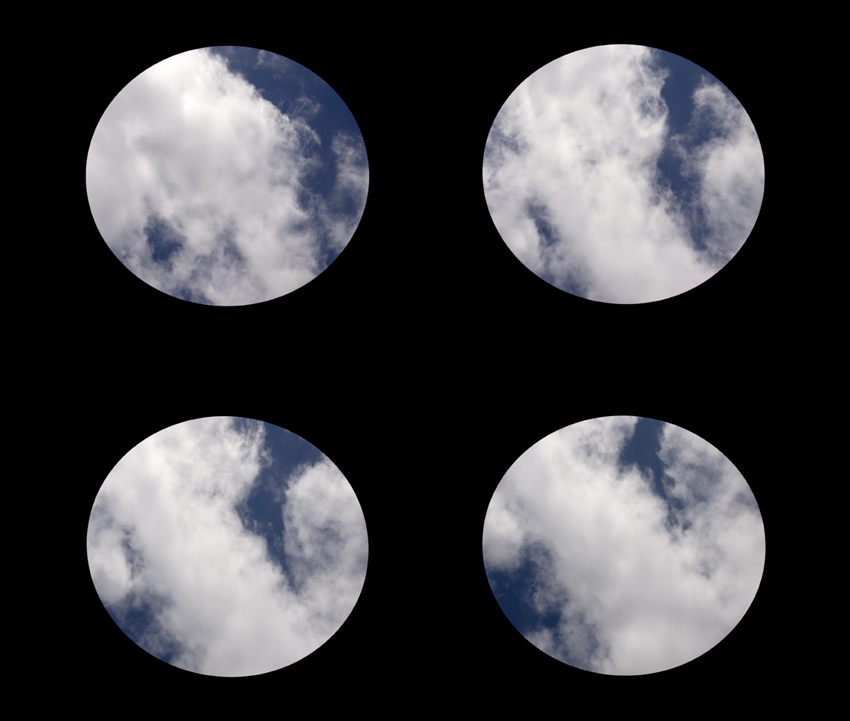
4 views of the Skyspace opening
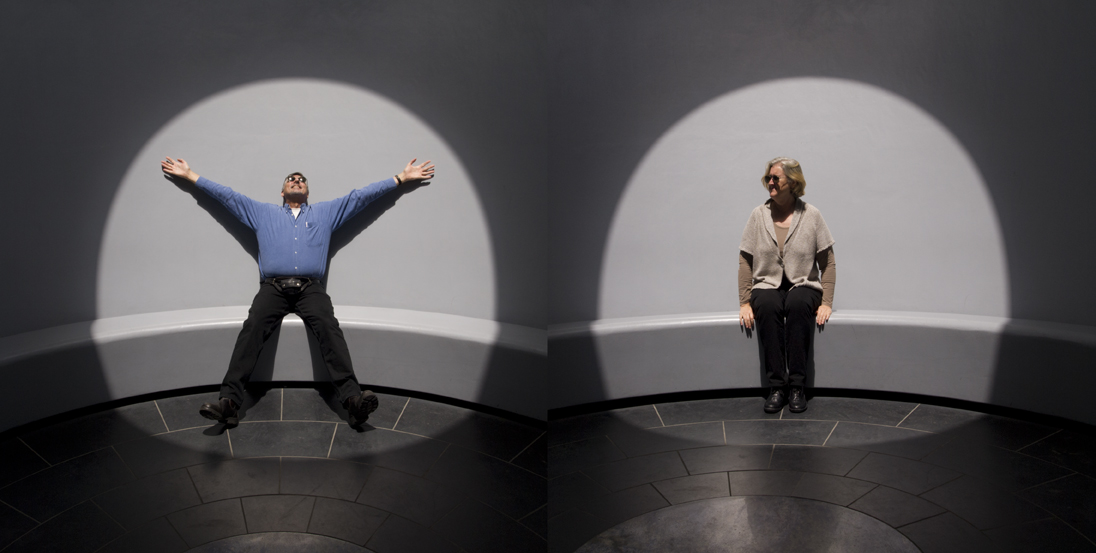
Sitting in the sun spot – two separate views
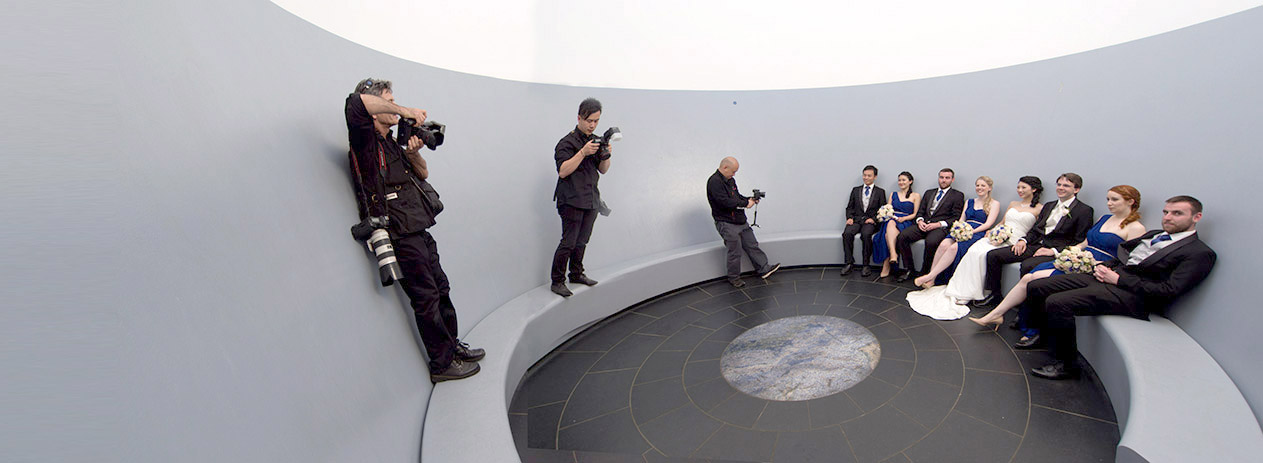
A wedding photographed in Skyspace
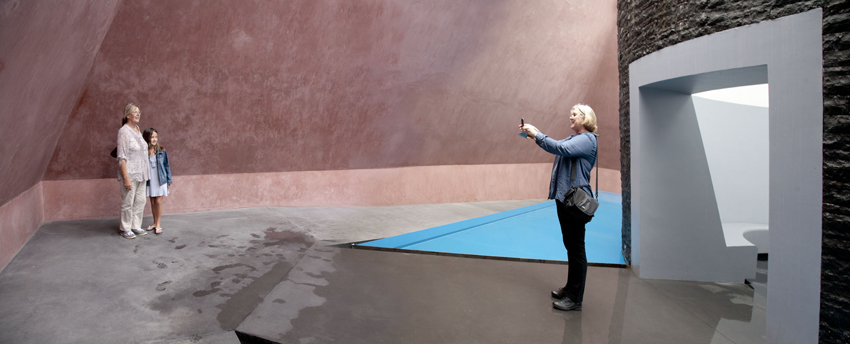
Vicky photographs fellow visitor
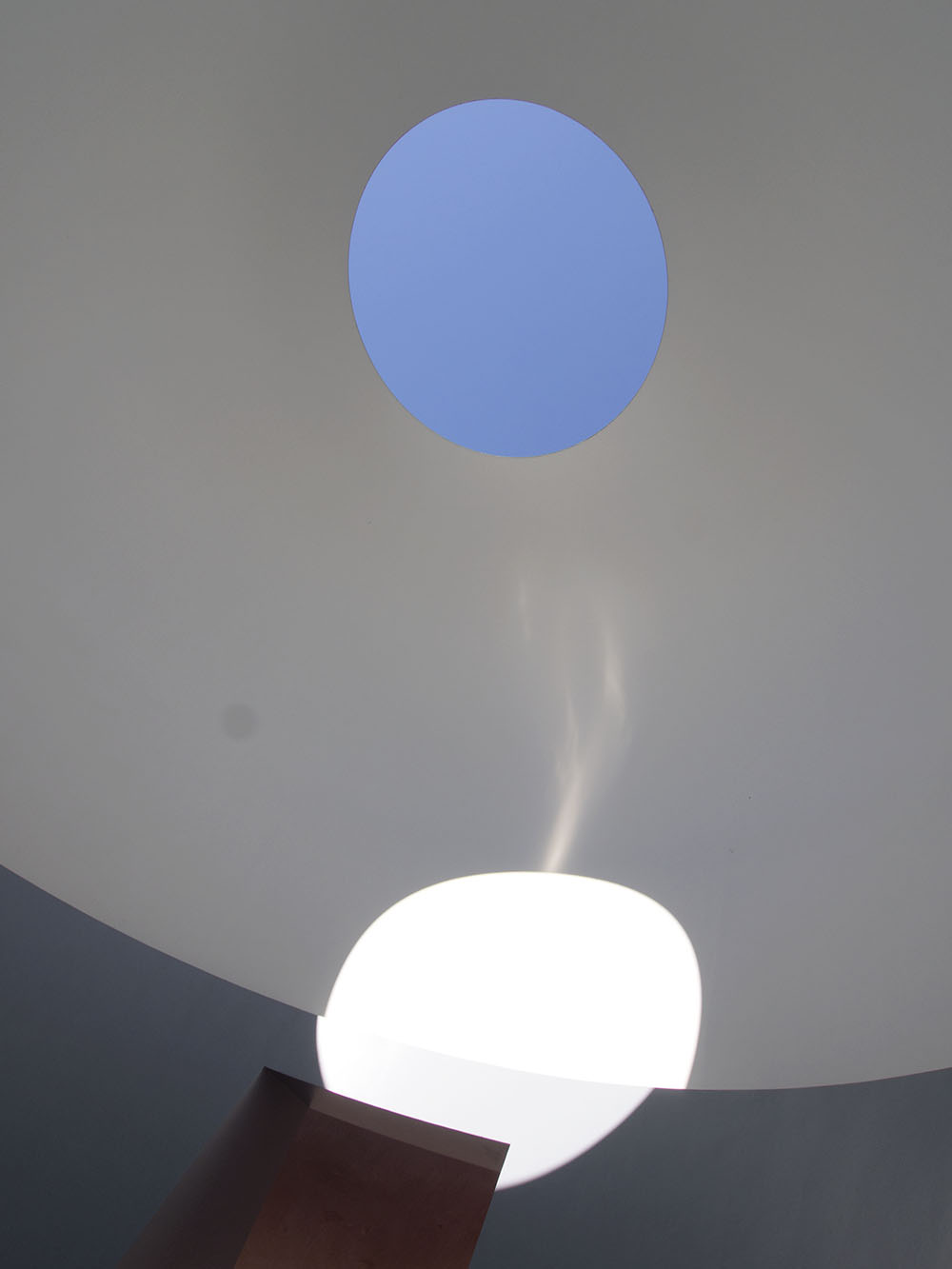
Sun circle projection
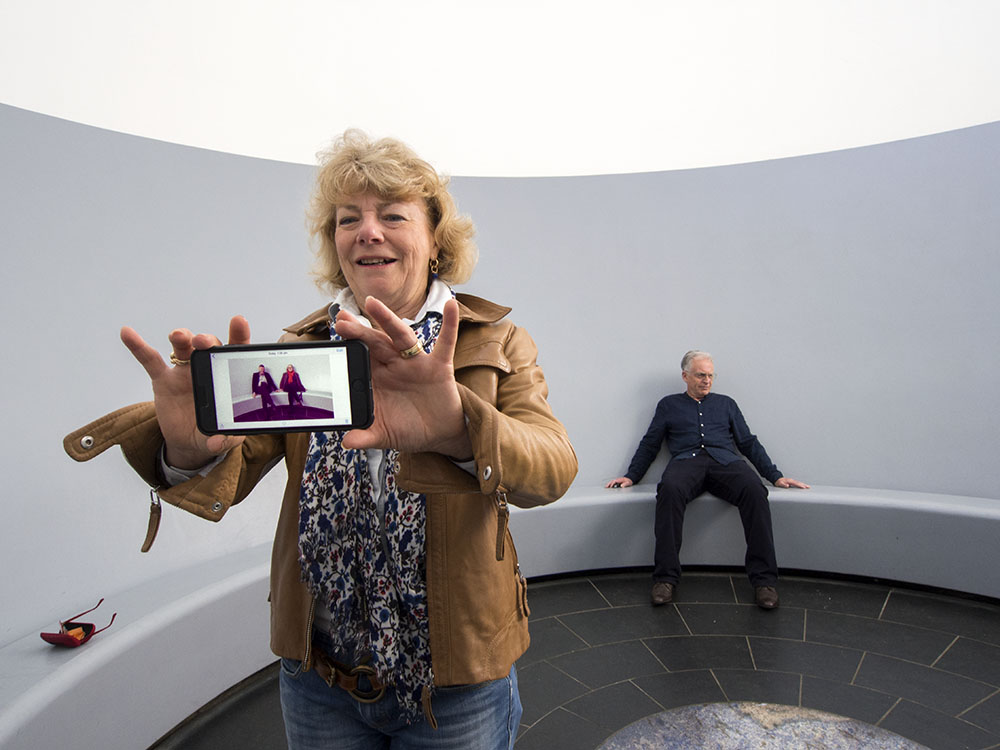
Inside Turrell’s Skyspace with friends doing selfies
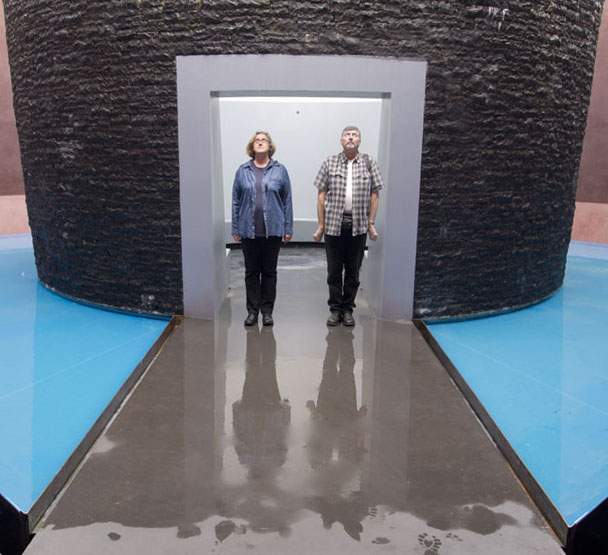
The two of us before the stupa at the end of our visit
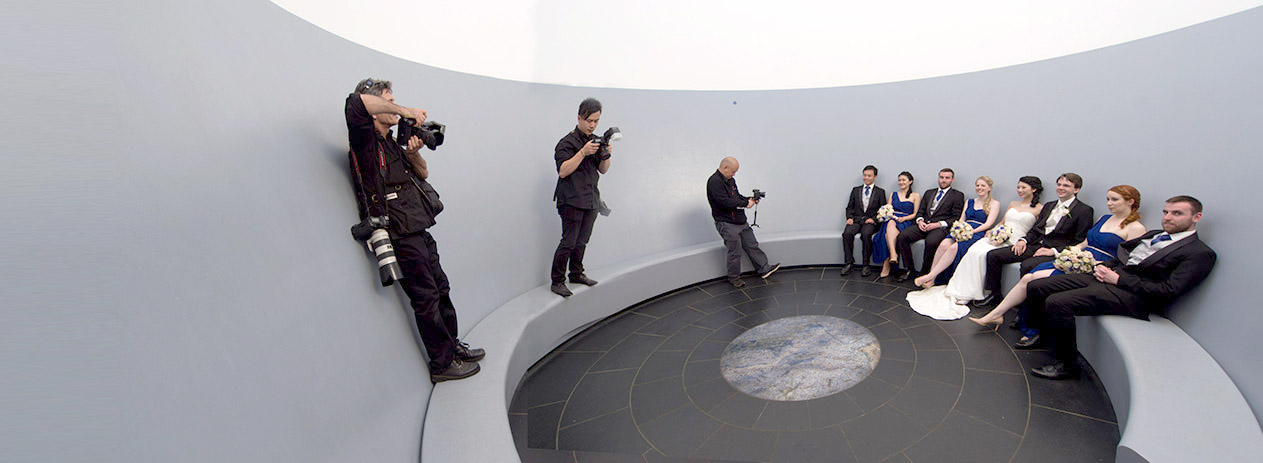
A wedding photographed in Skyspace
11 December: Visiting the National Gallery of Australia
Visiting the National Gallery for the first time in 14 months gave an opportunity to see the new Entrance and Foyer as well as, in another post – the James Turrell ‘Within without’ work.
The new extensions add a new box to the front of the building certainly provides an entrance way to the building that adds impact to the visitor’s first encounter with the space. Gone is the revolving door and the feeling of coming in a side entrance. Gallery staff welcome you and direct you to get your tickets for the Renaissance show, or to drop your excess gear at the cloakroom or see arty stuff in the bookshop.
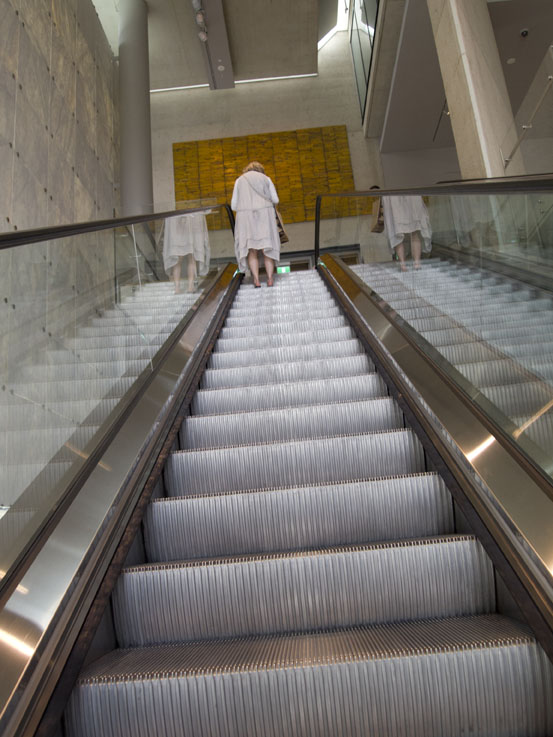
As if to be uplifted to the space where the art is an escalator beckons, when we were there it squeaked disconcertedly, and gradually your anticipation for being drawn into art Nirvana is met by …
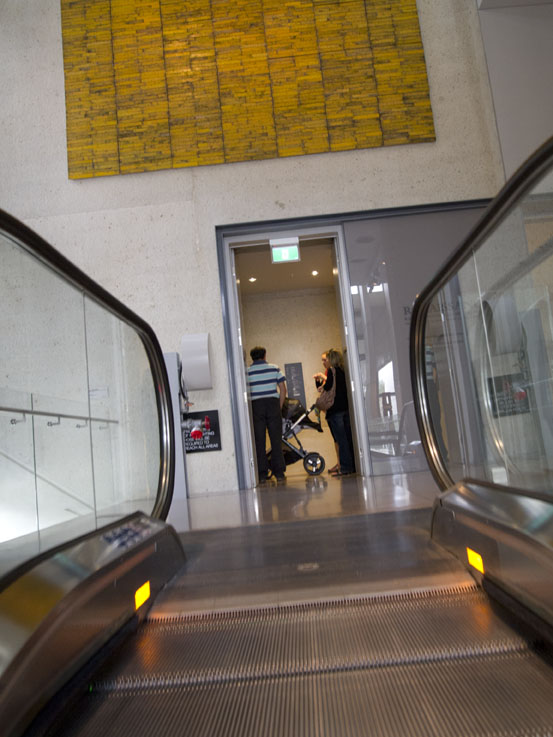
THE LIFT LOBBY!! A side-step to the right placed us on track to the exhibition galleries – It is as if the floor plan needed to be shifted 4 metres for the two buildings to line up.
Anyway there were some great shows and art to see and some favourite artworks to re-connect with.
In the PHOTOSPACE Gallery area the exhibition Upstairs downstairs: Photographs of Britain 1874-1990 presented a selection of classic documentary works from familiar names including Julia Margaret Cameron, John Thomson, Cecil Beaton, Felix H. Man, Humphrey Spender, Edith Tudor Hart, Bill Brandt, Grace Robertson, Bert Hardy, David Moore, David Potts, Roger Mayne, Lewis Morley, Chris Killip, Martin Parr and Nick Waplington.
Photography has long served the rich, the famous and the infamous. It has also had many practitioners who have championed the lives of those whose names history has never known. The social documentary tradition, focusing on the lives of ordinary people – usually those powerless to tell their story – has been a driving force in British photography. This is hardly a surprise in a society traditionally marked by class divisions and prejudices. (From the exhibition blurb)
This little gallery space in what was once the bookshop houses the NGA’s photography exhibition presence and while other media ancient and new get large prominent acreage this what we, as the photography interested public, have for the moment as an exhibition space.
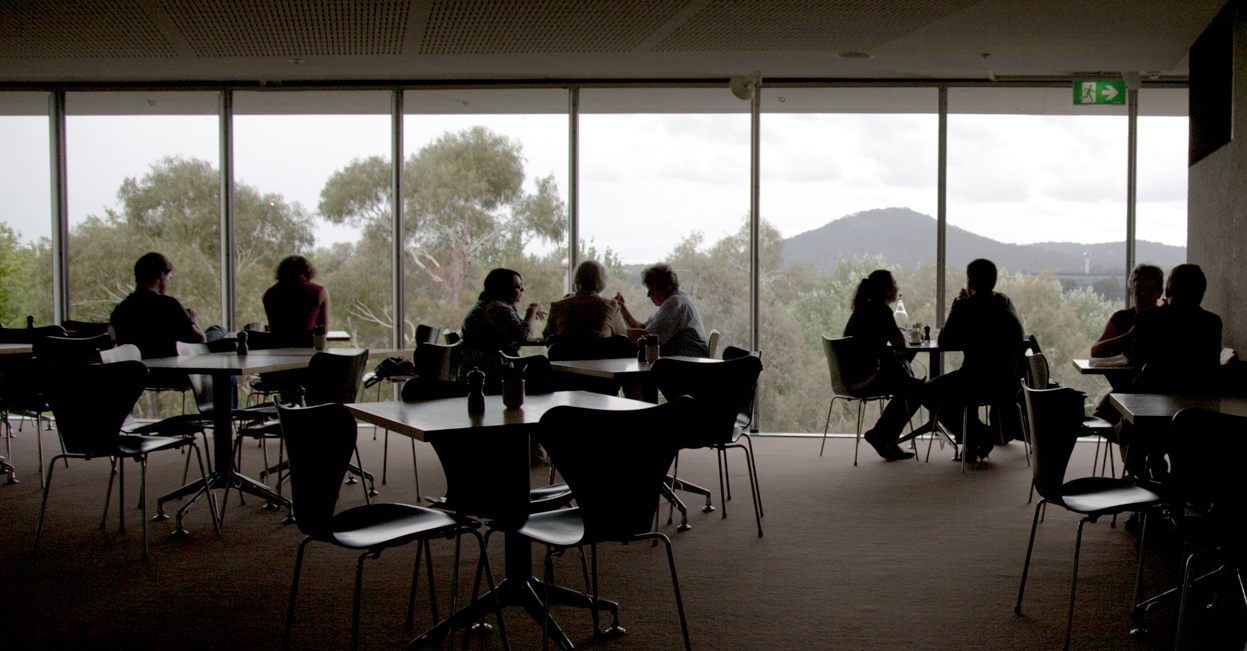
Later we visited the big ‘blockbuster’ Renaissance show and, as part of any NGA visit, the Members Lounge to sit and ponder the art seen and experienced over a coffee and friand.
One other new building activity underway at the National Gallery is a bird busily making a nest home in Neil Dawson’s suspended orb sculpture ‘Diamonds’. Interesting …
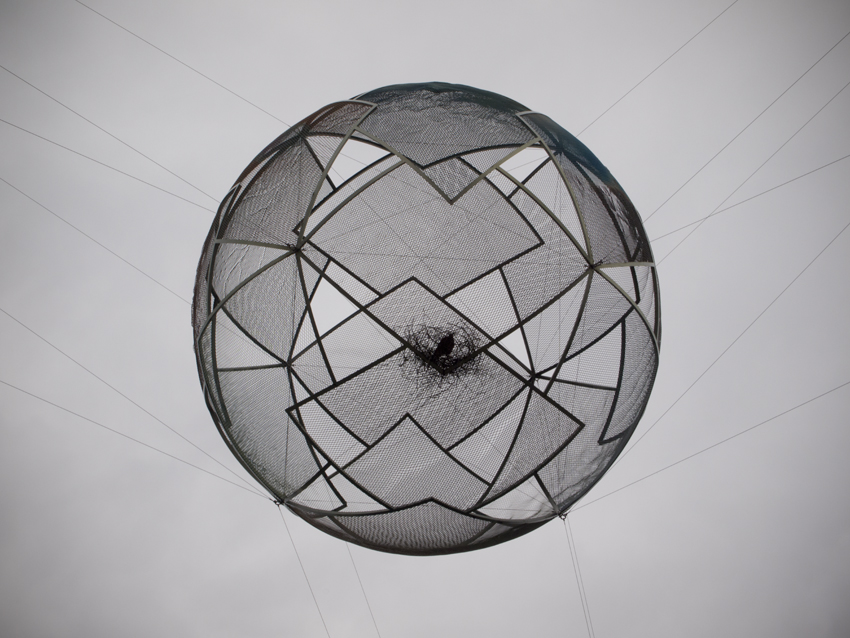
Neil Dawson’s ‘Diamonds’
10 December: Canberra – Small World
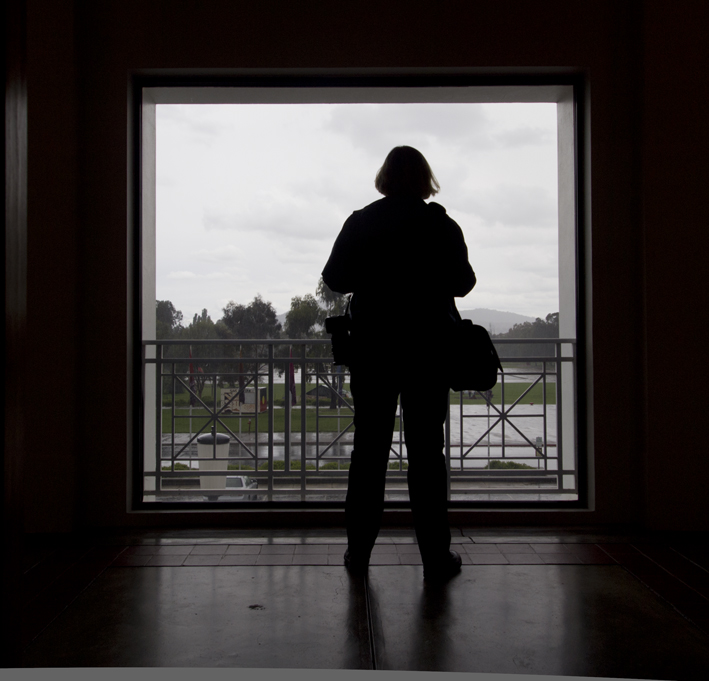
A rainy day in Canberra visiting Old Parliament House
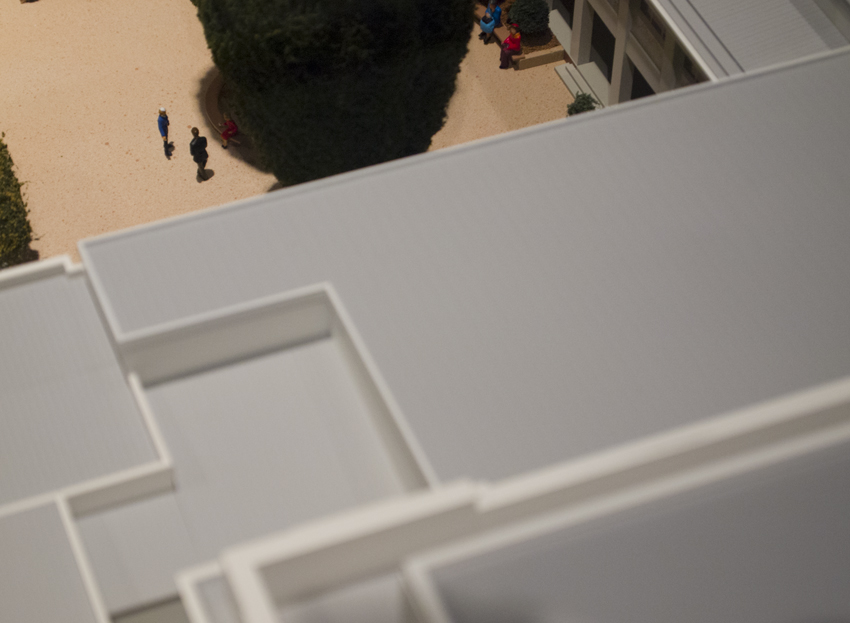
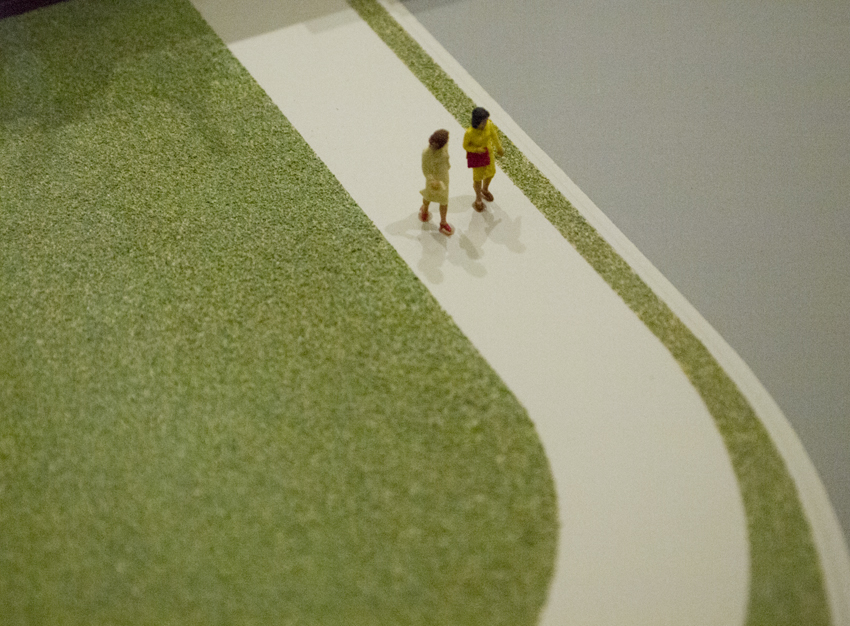
Old Parliament House now contains the Museum of Australian Democracy – but apart from an exhibition of Australia’s best cartoons for 2011 what interested me was the history of the building located within an architectural model of the building. Here I found the ‘small world’ of Canberra.
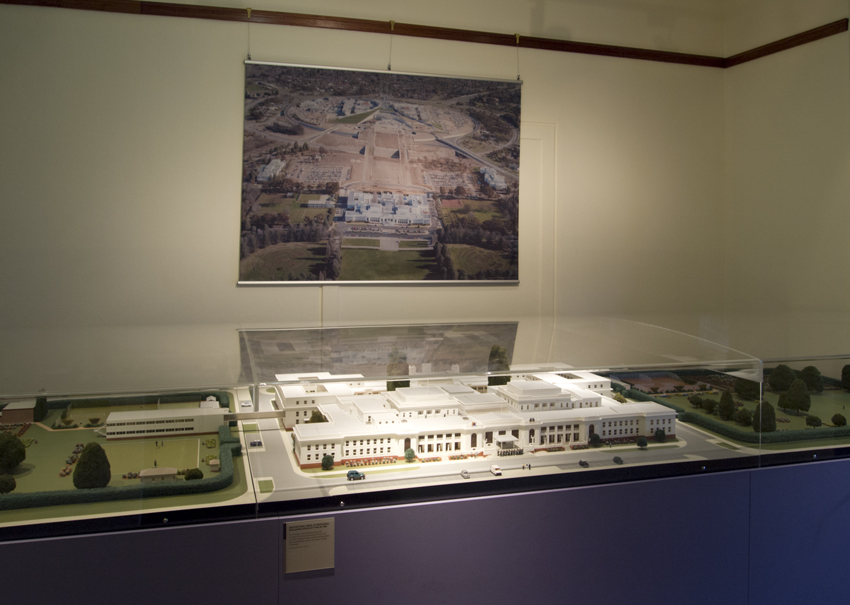
Model of the Old Parliament House 1988
CANBERRA SMALL WORLD
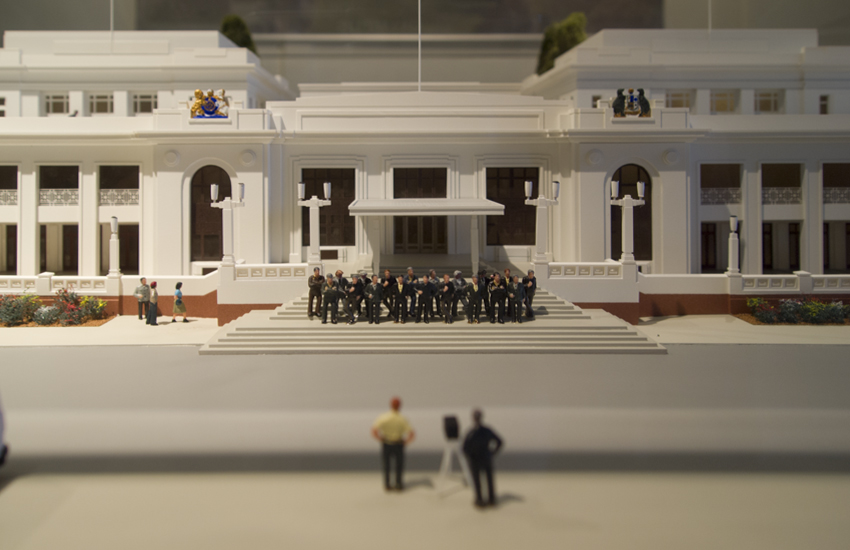
A group photo
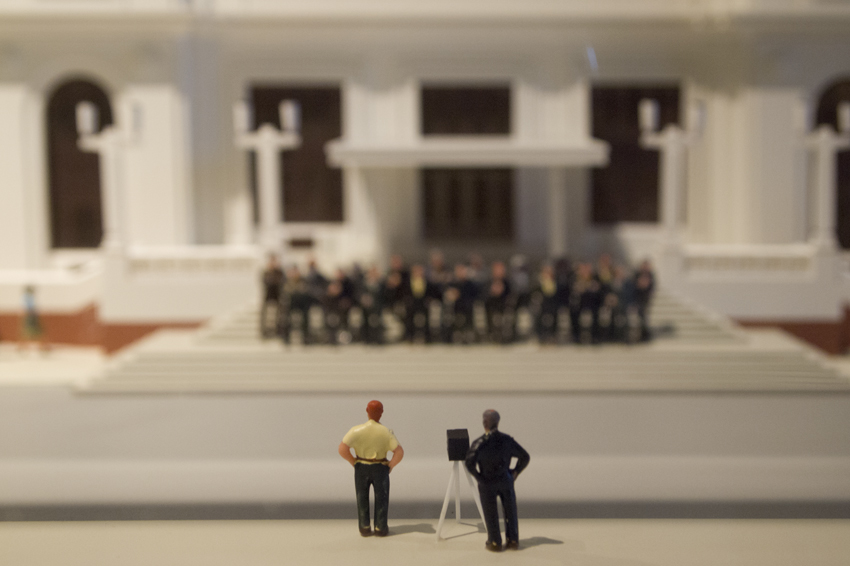
The photographer @ work
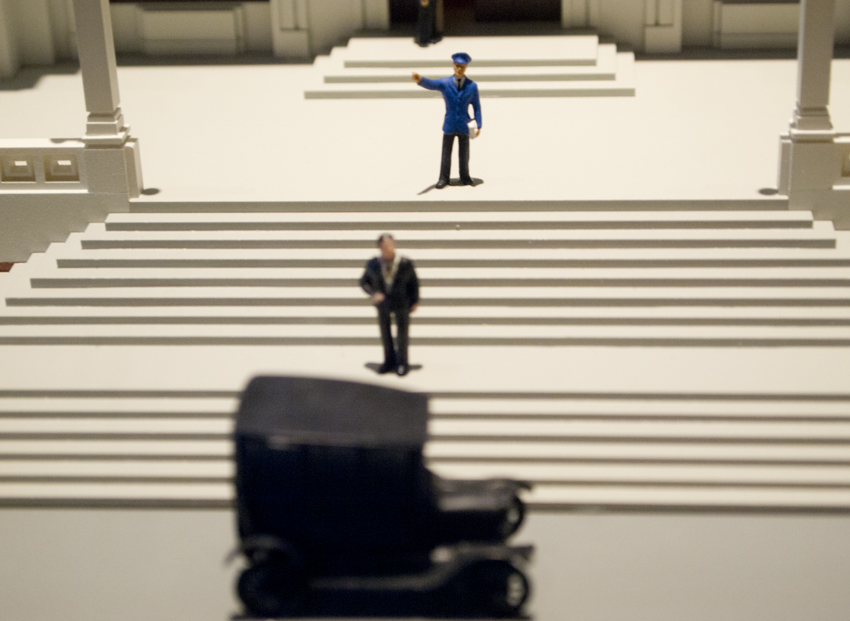
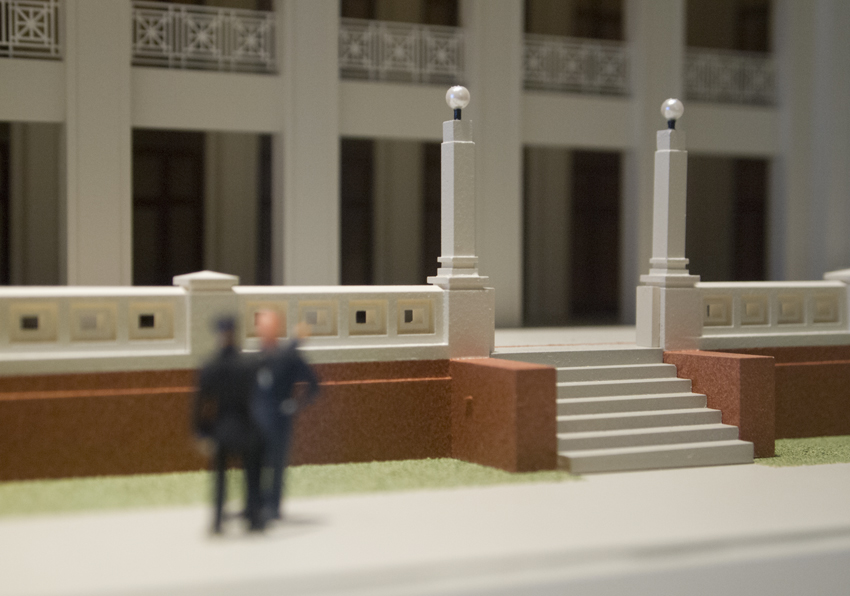
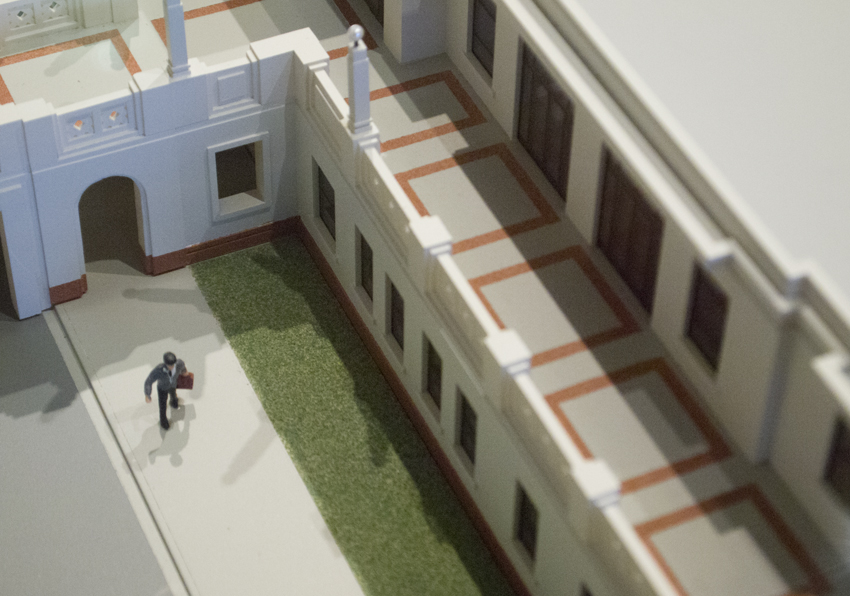
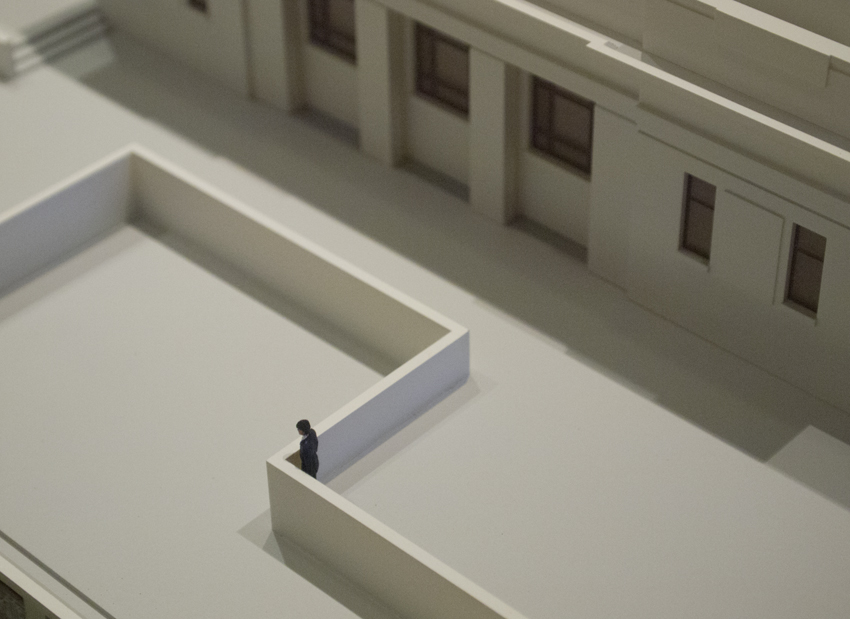
I wonder what this poor lonely soul is thinking?
.
.Concept an photos by Doug
9 December: Summer Travels
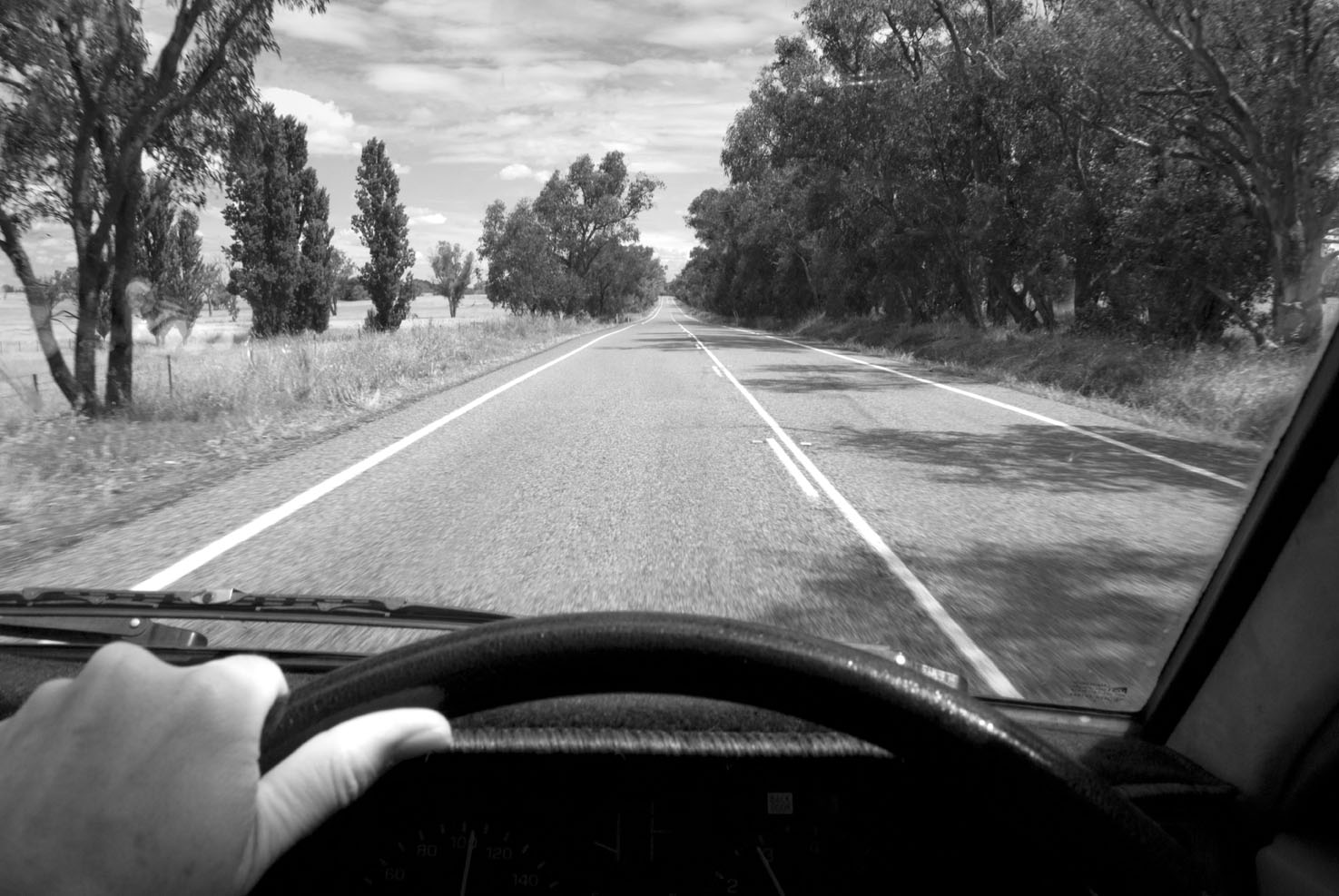
On the road to Canberra
This series of Blog posts presents a selection of WOTWEDID over a 5 day period at the beginning of our 2011 Summer Travels.
.
10 December: Arriving in Canberra
.

Our artist friend Liz Coates took us to an exhibition opening @ the M16 Gallery. Entitled TIMESCAPE the exhibition consisted of works by Julie Brooke, Ella Whateley & Vanessa Barbay (All visual arts PhD students from the Australian National University)
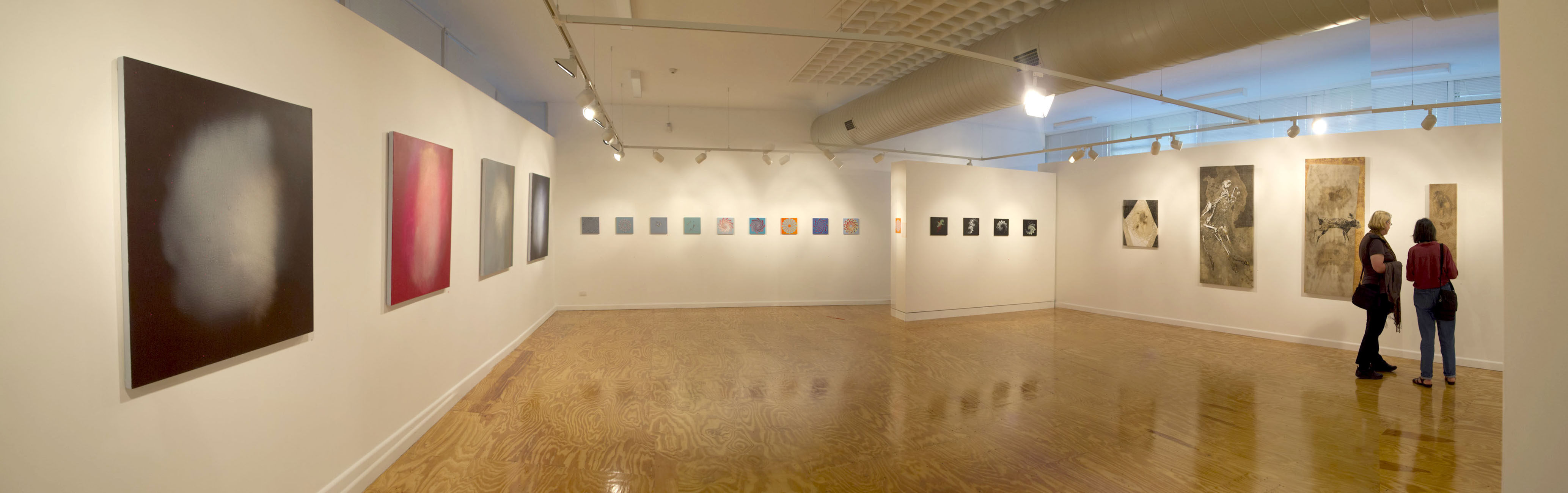
M16 Panorama : Exhibition "TIMESCAPE"
The exhibition was opened by Ruth Waller, Head of Painting @ ANU School of Art. Waller spoke of the challenge of the visual arts PhD and the special nature of the knowledge that artists have that is tuned and refined in the process of research and study.
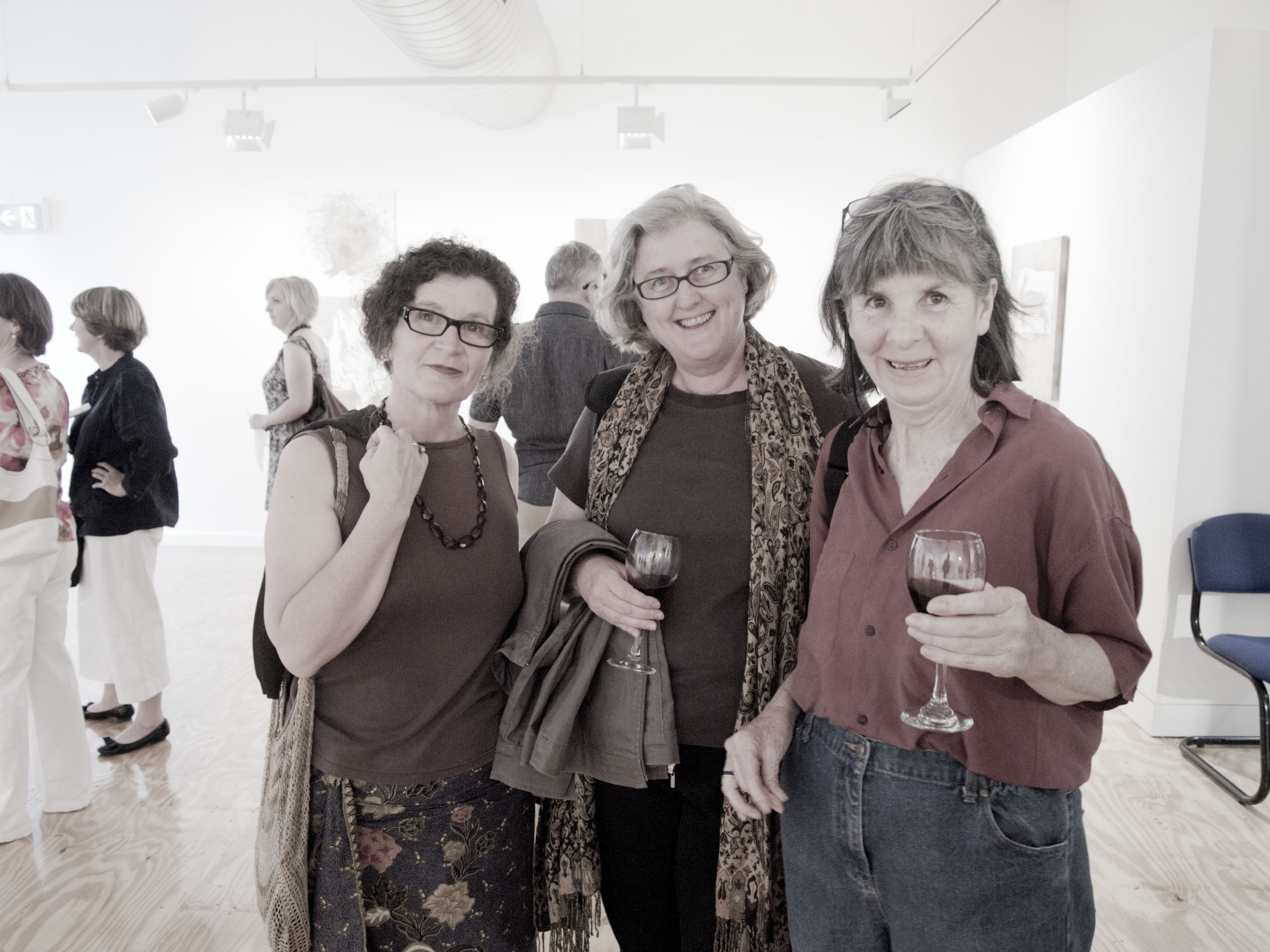
Ruth Waller, Vicky and Liz Coates
The work on show is a testimony to the work of the artist as academic researcher. The artists’ state that the work is “An exploration of how experiences of the complex and multi-dimensional qualities of time and space may be embodied in the material process of painting.”
SEE website for details http://m16artspace.com.au/?p=635
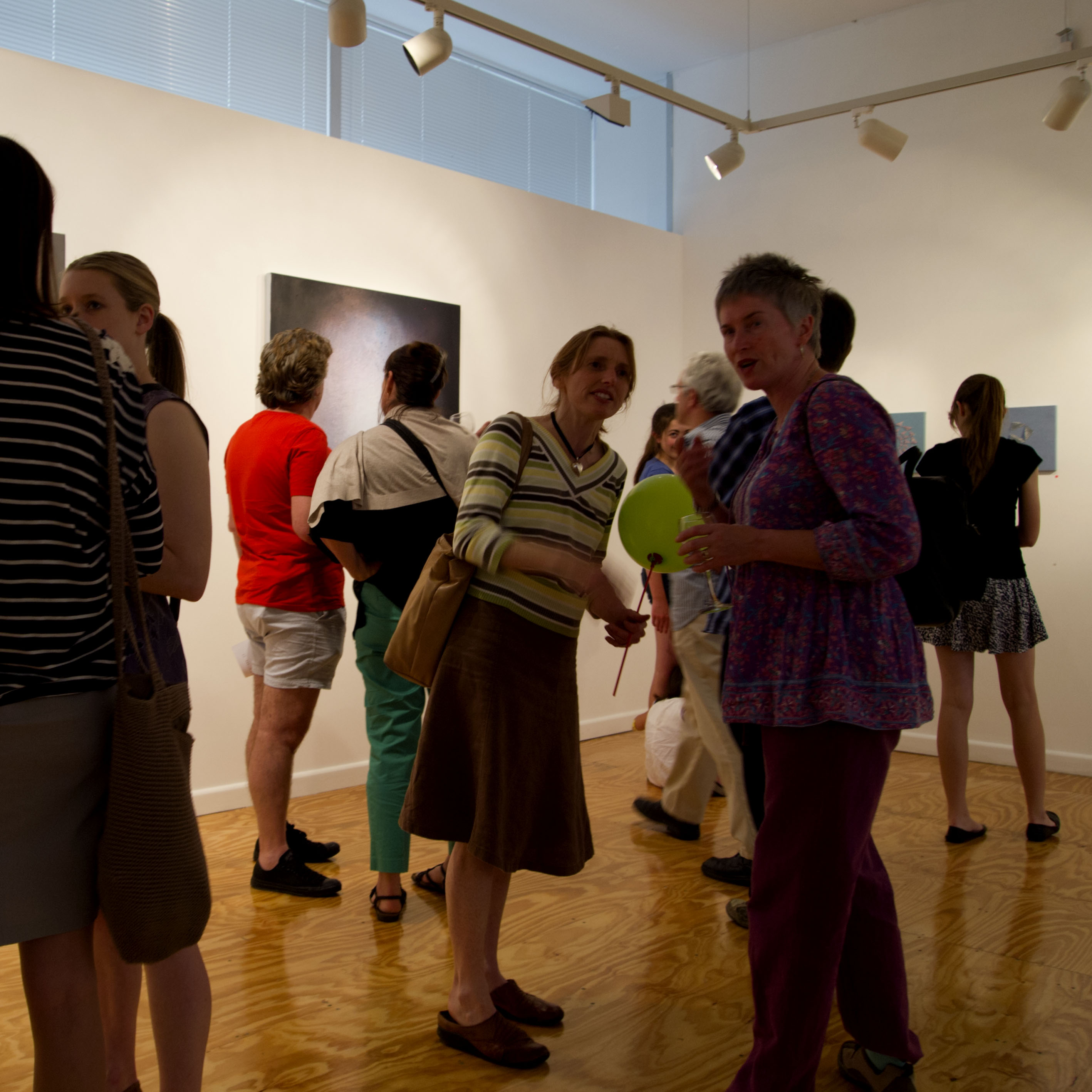
Pictures @ an exhibition
SEE A folio pictures made @ the exhibition opening http://www.behance.net/gallery/Pictures-an-exhibition/2669661
.
.

 wotwedid