Archive for the ‘Doug Spowart’ Category
CAMERA OBSCURA 2000–2020: In hotels and other places

Bedroom Camera Obscura 2000 (Y2K)
.
Our rhythms insert us into a vast and infinitely complex world, which imposes on us experience and the elements of this experience. Let us consider light, for example. We do not perceive it as a waveform carrying corpuscles but as a wonder that metamorphoses things, as an illumination of objects, as a dance on the surface of all that exists.…………
Henri Levebvre, Rhythmanalysis; Space, Time and Everday Life, page 82.
.
Cooper+Spowart: 20 years of Camera Obscura Collaborations
In our collaborative work, we are interested in both the physical construct and cultural conventions that inform and shape us. This includes the common rituals and structures that surround, support and transport us in our everyday lives. In this work we have extended the context of documentary photographic methodology to include the narrative potential of the camera obscura and architectural projections.
.
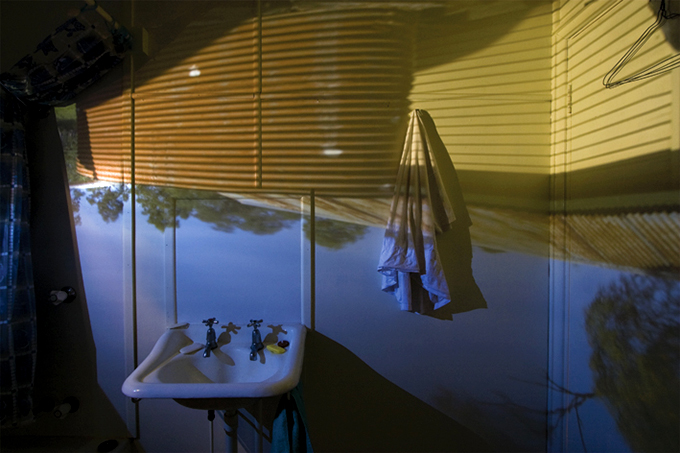
Avochie Bathroom Camera Obscura
.
In the camera obscura work the viewer’s perception of the everyday is spatially challenged. The structures that can form camera obscura are everywhere, but some spaces present themselves as clearly suitable for the making. This could be a city office, a motel room, a country bathroom or even a car. Our work attempts to contextualize the experience of the camera obscura within a concept, space or site. Upon entering the darkened space, the viewer is initially displaced, as the familiar image of the everyday is dim and unrecognizable. Then after time spent in the camera obscura, the image becomes clearer and the familiar is re-established ultimately resulting in a relocation of the observer’s awareness of place.
.

CarCamera Obscura graphic – how it works…
.

A CarCamera Obscura on the Barkly Tablelands 2005
.

Porthole on the Spirit of Tasmania – panorama camera obscura image 2018
.
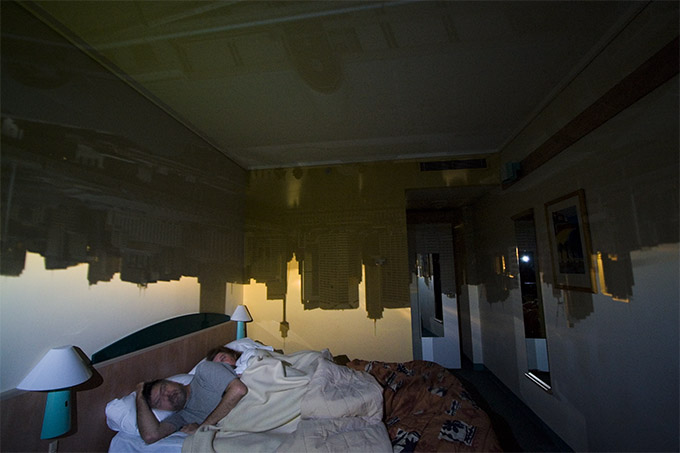
City of Dreams – Ibis Hotel sunrise over Sydney
.
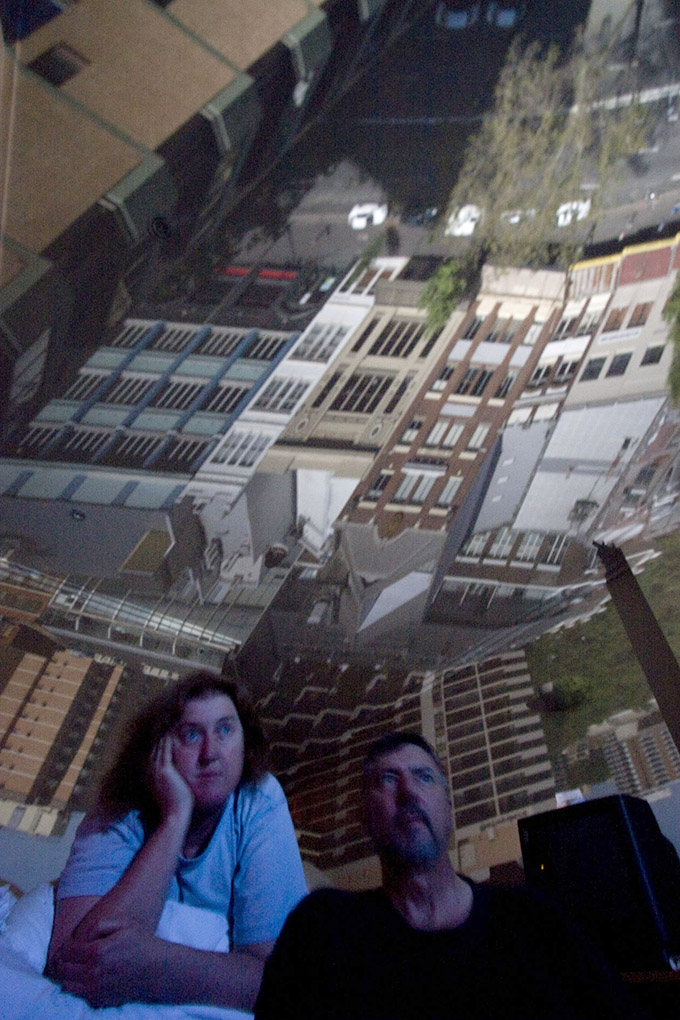
The Travelodge camera obscura 2008
.
Some background on the set-up for the Travelodge camera obscura:
Simple black garbage bags and some black electrical tape from the local 711 store. An aperture cut from a ‘found’ piece of aluminium – size around 8mm … we don’t use sophisticated glass lenses – these are direct light projections. A digital camera bares witness to our experience by capturing the image of the camera obscura projection.
.
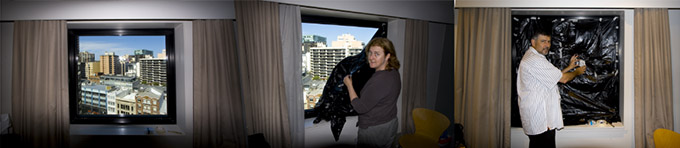
Blacking out the room
.

We were watching TV …
.
OUR MOST RECENT CAMERA OBSCURA: ORPHEUS ISLAND BEACH TENT
(A collaborative event with John de Rooy, Spyder Displays and the Orpheus Is Photo Workshop)
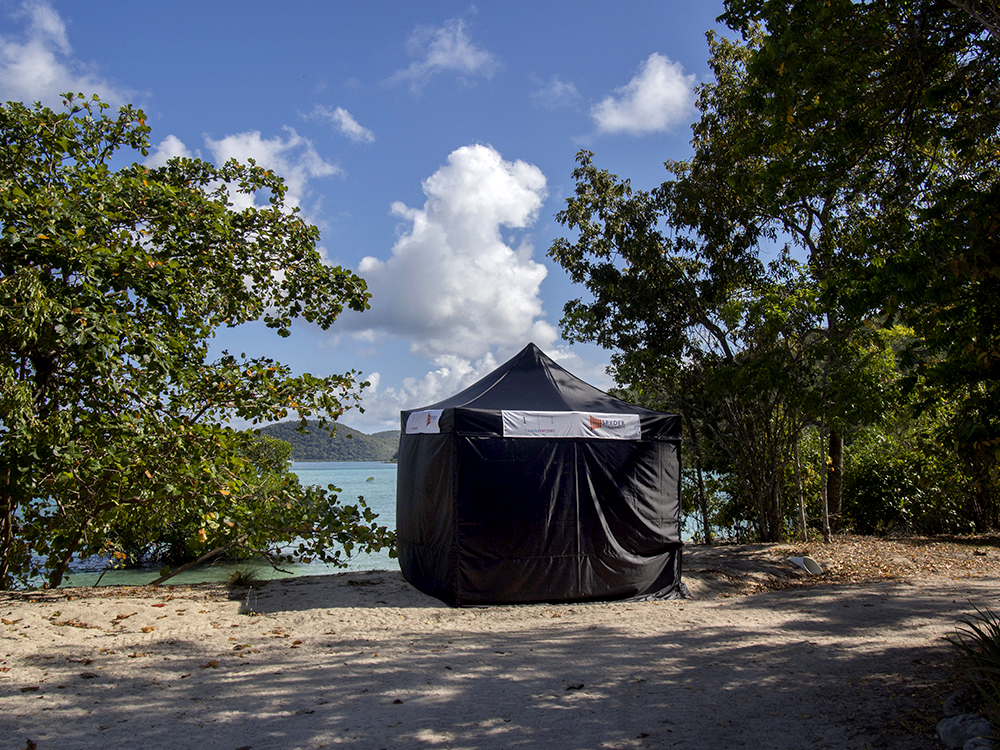
Our Spyder Camera Obscura

A DUO View of the scene and the Camera Obscura image
TO VIEW OTHER CAMERA OBSCURA WORK BY COOPER AND SPOWART SEE THE LINKS
.
Our Website:
http://www.cooperandspowart.com.au/4_PROJECTS/RoomCameraObscura-Project.html
The porthole on the Spirit of Tasmania Ferry
https://wotwedid.com/2019/01/11/2018-field-studies-camera-obscura-spirit-of-tasmania-porthole/
Our car converted into a camera obscura and driven across Australia:
http://www.cooperandspowart.com.au/4_PROJECTS/CarCamera-Project.html
Two New Zealand Camera Obscuras in the the Queenstown Rydges Hotel:
https://wotwedid.wordpress.com/2012/05/07/two-new-zealand-camera-obscuras/
A public Camera Obscura performance and live video:
https://wotwedid.wordpress.com/2013/04/22/camera-obscura-pinhole-event-foto-frenzy-a-report/
YouTube videos:
http://www.youtube.com/watch?v=lyA5QP-mX-E
A camera obscura at the Queenstown Centre fro Creative Photography:
https://wotwedid.wordpress.com/2012/05/07/camera-obscura-qccp/
A World Pinhole Day Camera Obscura at Mt Barney:
https://wotwedid.wordpress.com/2013/04/29/world-pinhole-photography-day-our-contribution/
.

Closing off the hole in the Travelodge Hotel camera obscura
.
© 2019 Victoria Cooper and Doug Spowart for 20 Years of Camera Obscuras Projects
..
.

This work is licensed under a Creative Commons Attribution-NonCommercial-NoDerivs 3.0 Unported License.
.
.
WORLD PHOTOBOOK DAY: Toowoomba Oct 14, 2013
.
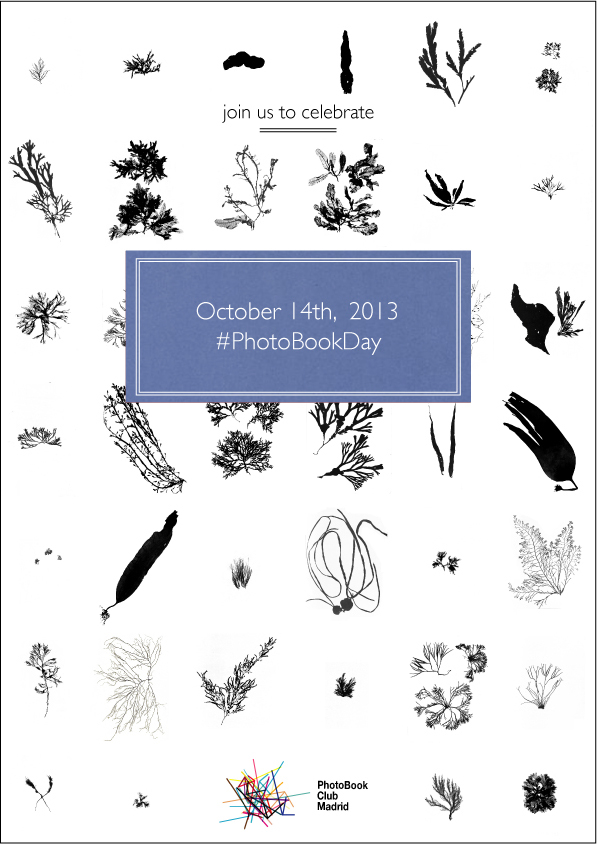
WORLD PHOTOBOOK DAY – CELEBRATED IN AUSTRALIA
.
.
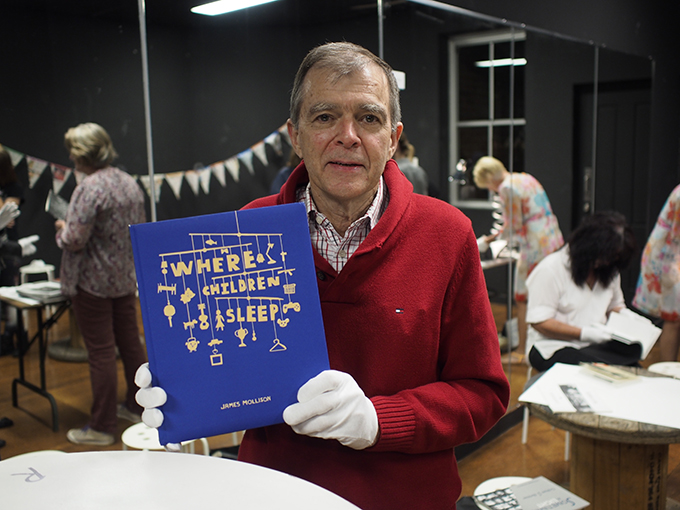
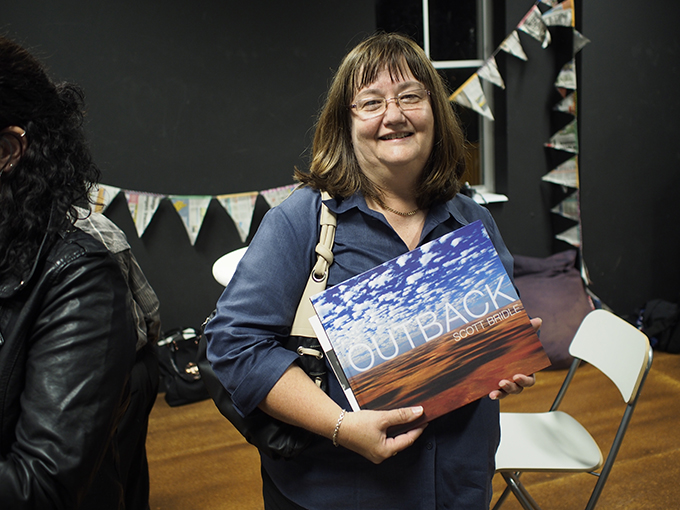
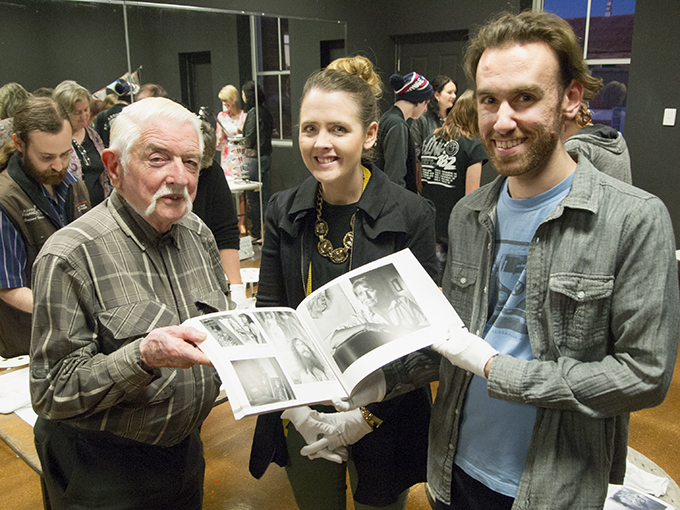
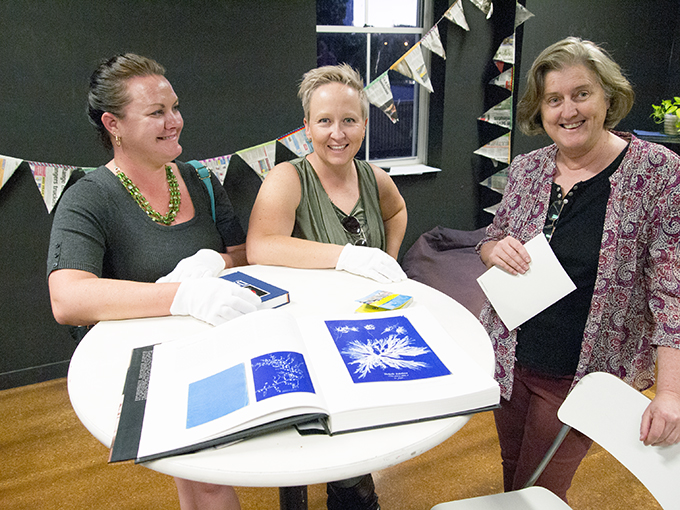
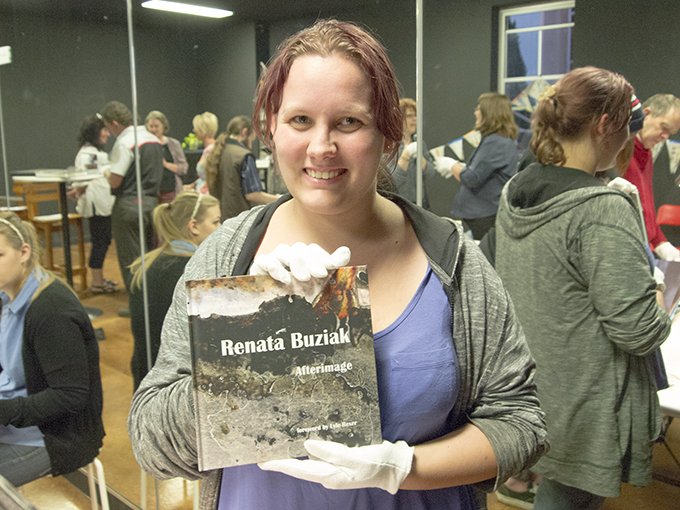
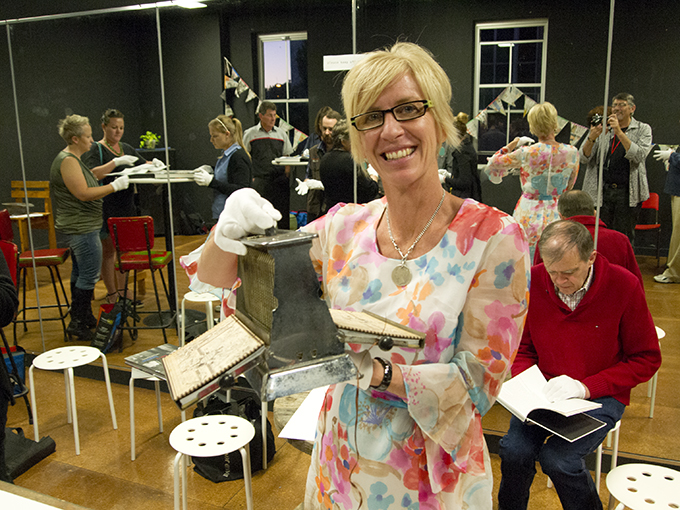
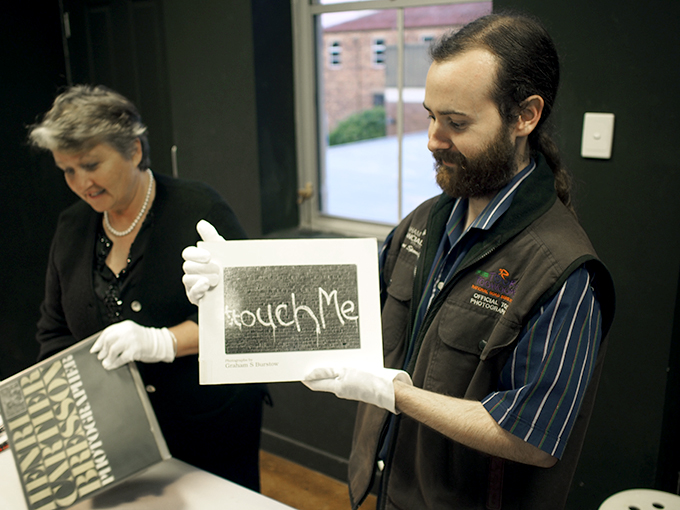
The city of Toowoomba in Queensland Australia celebrated World Photobook Day with a group of around thirty attending a Photo Book Club meeting. The event was held at TheGRID: Hybrid Arts Collective. The participants were from a wide range of photographically interested people: some from the local TAFE college, The Toowoomba Photographic Society, professional photographers, artists and academics. Each brought with them a favourite photobook to share and talk over with others. There were some precious books, some funky contemporary publications, and some of the more traditional coffee table tomes.
.
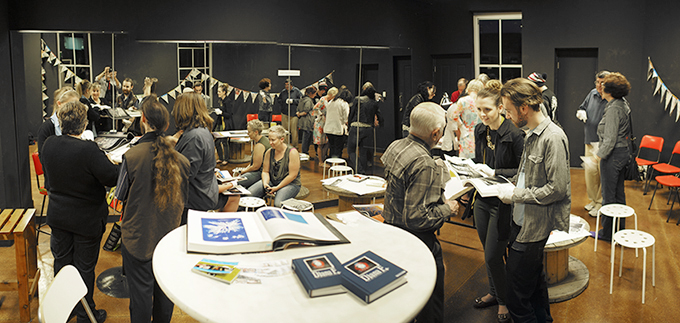
Toowoomba Celebrates World Photobook Day
.
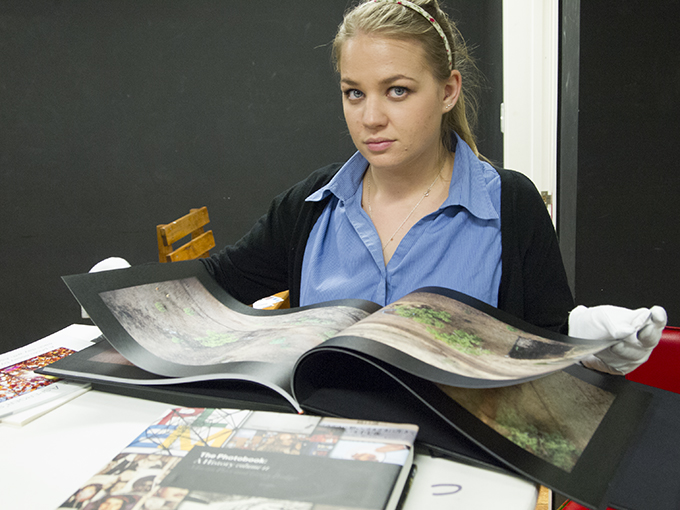
Event coordinator Doug Spowart welcomed the group and gave some background on the history of the photobook and the amazing place that Anna Atkins has within that history. On hand was the Badger and Parr The Photobook: A History Vol1 opened to the page of the Atkins Algae of the British Isles. Doug announced that an acquaintance of he and Victoria Cooper’s – Gael Phillips, was a distant relative of Anna Atkins and that whilst be unable to attend she has provided a commentary on the times, life and family. Gaels words are as follows…
… I thought I might give you a few details of the family of Anna Atkins, nee Children, which may help to explain the setting in which she produced the world’s first photographic book. My cousins, Elizabeth Parkes and Jean Doggett, with input from other family members, have published an account of our family which includes chapters on the Children family. At their family home, “Ferox Hall”, in Tonbridge, Kent, John George Children, Anna’s father and George Children, her grandfather, had built the largest electric battery the world has ever seen at their private laboratory. They were collaborating with Sir Humphry Davy on electrical experiments. It was because of her family’s experience with battery technology and electrochemistry, and almost certainly with the help of her father, that Anna would have had access to sufficient ferric ammonium citrate to produce cyanotypes. Her publication of “Photographs of British Algae” first appeared in October 1843 – British Algae – Cyanotype Impressions. Fox Talbot, a friend of the family, and from whom Anna had obtained her first camera, published “Pencil of Nature” between 1844 and 1846, in several parts. In 1979 Professor Larry Schaaf brought the attention of the world to the fact that the author of the world’s first photo book, AA, was Anna Atkins.
Anna Atkins, nee Children, was born in 1799. Her mother, Hester Anna Children, nee Holwell, was the grand-daughter of Governor Hollwell, one of the survivors of the Black Hole of Calcutta in 1756. Hester never recovered from the birth of Anna and died in 1800.
Anna also wrote a biography of her father, partly concealing her authorship under the initials, “AA”, as she did with her “Photographs of British Algae”.
.
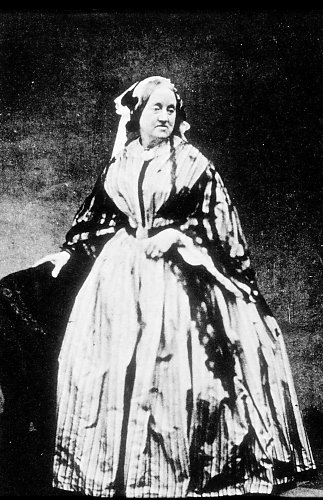
Anna Atkins 1861 [Source Wikipedia}
Anna and her husband, John Pelly Atkins, had no children of their own. Anna died in 1871 and her husband a year later. Their home, “Halstead Place”‘ has since been demolished.
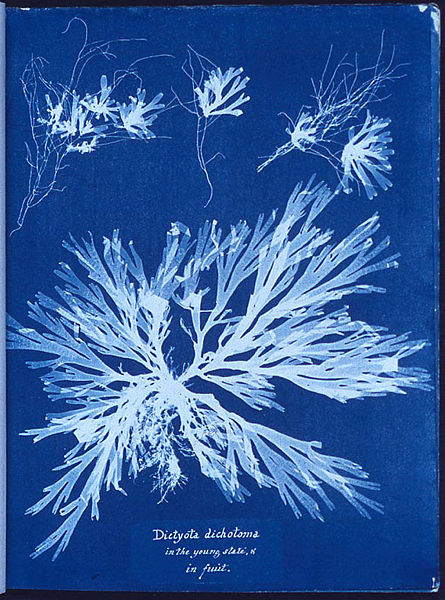
A photogram of Algae, made by Anna Atkins as part of her 1843 book, Photographs of British Algae: Cyanotype Impressions. Courtesy of The New York Public Library http://www.nypl.org.
.
Naturally my favourite photo book (or books, because the Cyanotypes of British Algae by AA run to three volumes) – “Photographs of British Algae – Cyanotype Impressions” by Anna Atkins, my distant cousin. In 1992 I had the great privilege to view copies of the volumes at the Library of the Royal Society in London. The edition ran from between 10 to 12 copies and a few of the plates from one of the copies are held in the National Gallery of Australia in Canberra.
I wish you all well for this celebration of the world’s first photo book by Anna Atkins.
Doug thanked Gael for her insight into the lady whose premier photographic pursuit we celebrate today.
Guests were then invited to continue their looking and talking about books, photography and other worthy matters. It was a remarkable event and one which will no doubt repeated in the future –– but it will be sooner than the next time we gather, once again, to celebrate WORLD PHOTOBOOK DAY.
..A PHOTOBOOK CLUB EVENT

.
HERE SOME IMAGES OF ATTENDEES AND BOOKS … A detailed list of books presented for viewing and other contributions submitted online will be added to this post in the near future.
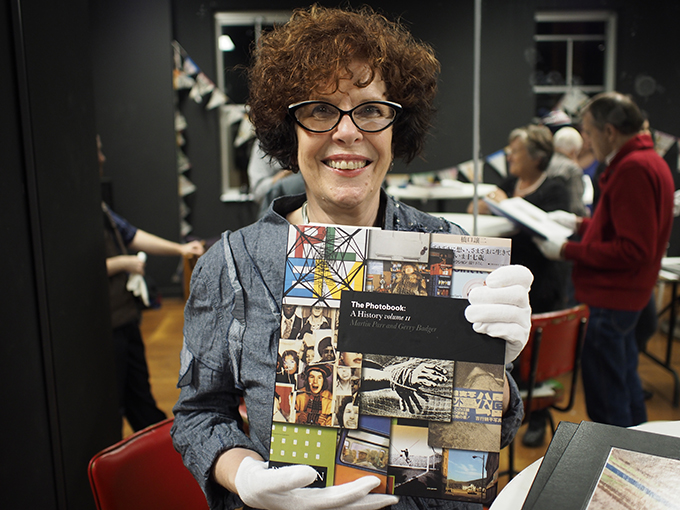
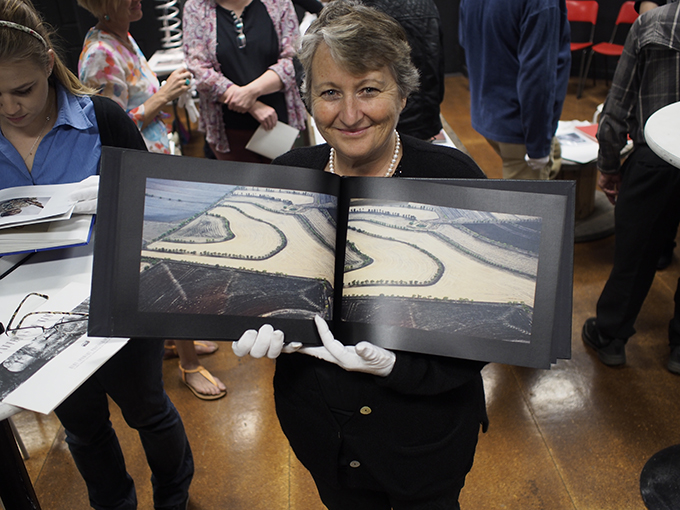
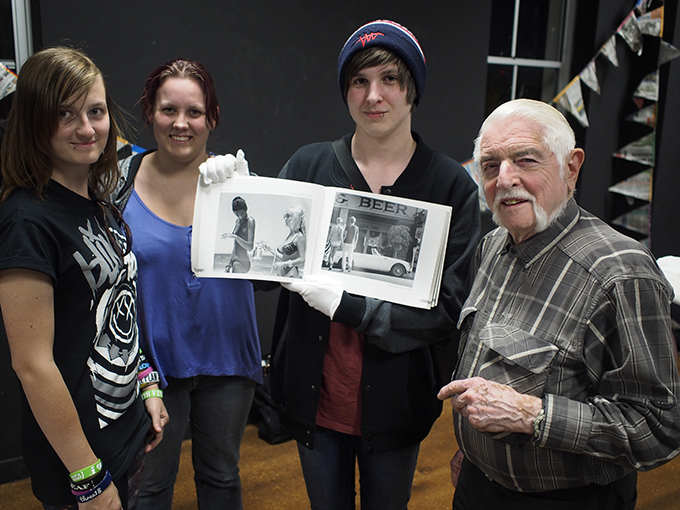
.
Report and photographs: ©2013 Doug Spowart. Anna Atkins’ story © Gael Phillips. Images of Anna Atkins sourced from Wikipedia and acknowledged appropriately.
.
.
FACING FACES: Judging the photographic portrait
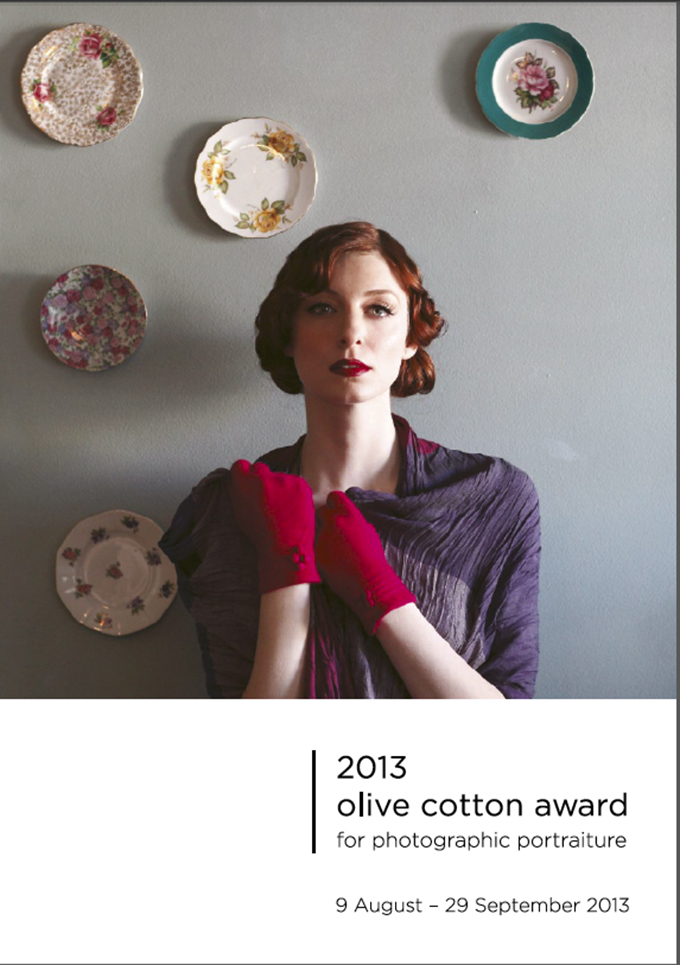
OCA Catalogue Cover
.
Olive Cotton Award Floortalk, Tweed River Art Gallery
.
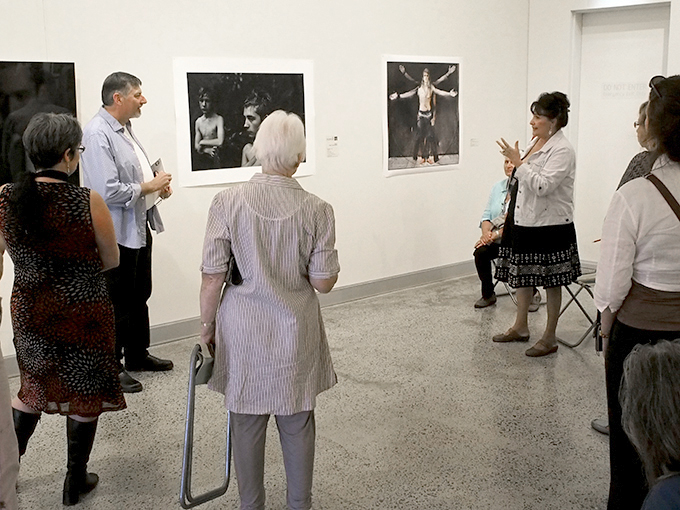
On September 15 about 30 people attended a floortalk in the exhibition space of the 2013 Olive Cotton Photography Award (OCA). In my preparation I reflected on the demands of a floortalk. Over the years I have given quite a few floortalks about my own as well as the work of others, including one at a previous Olive Cotton Award. I have also attended presentations by others. In this years OCA award I wanted to create an inclusive space for the audience. Rather than taking centre stage, I wanted to empower the attendees in a kind of role reversal–to bring to the discussion their approaches to looking at, and responding to, the photographic portrait.
.
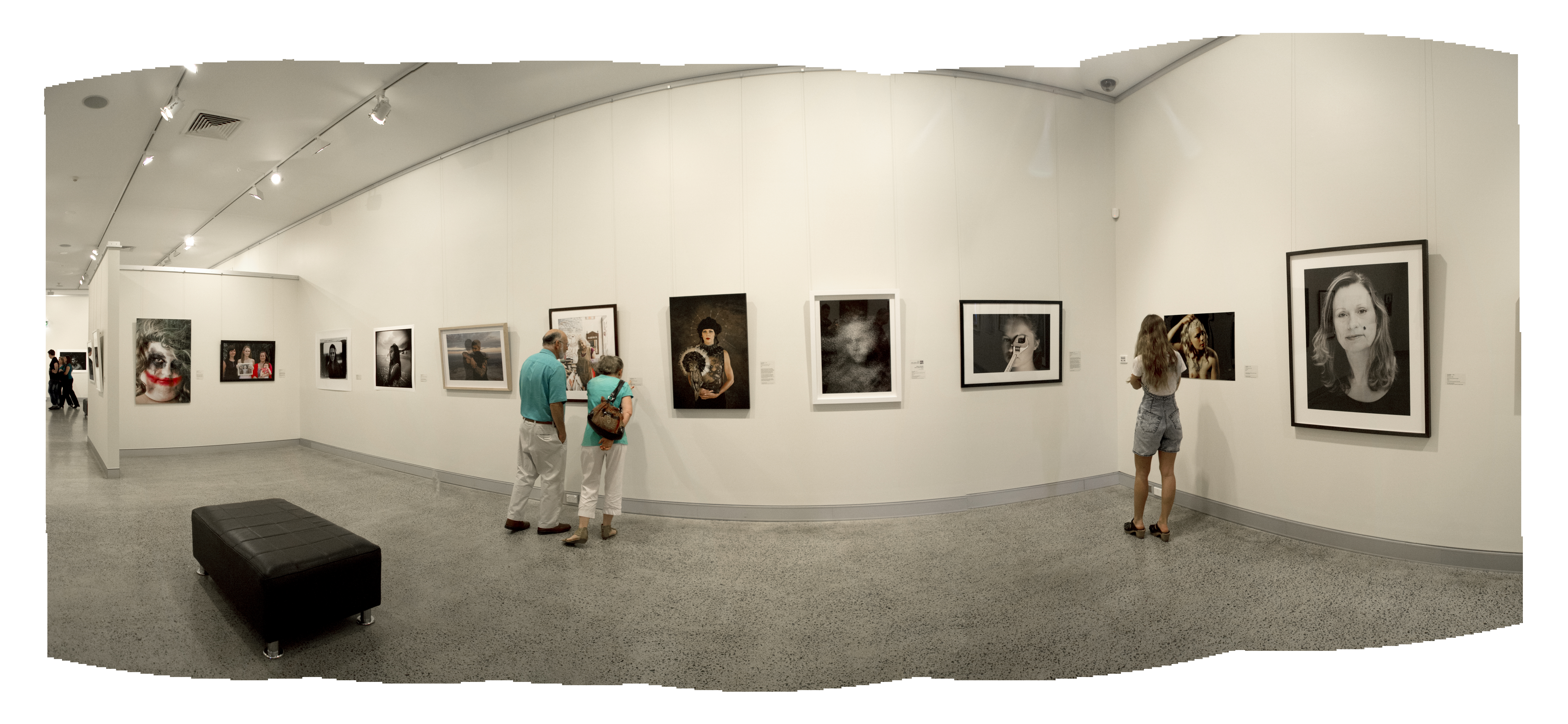
Olive Cotton Award installation at Tweed River Art Gallery
I introduced a concept for viewing and interpreting photographs that I call ‘positioning’. It relates to the interaction that takes place when looking at a photograph – particularly a portrait. It is what reaches into our emotions lived experience and solicits our response. The premise of this floortalk format draws upon the notion that everyone is a judge and is also informed by Roland Barthes’ concept of the ‘death of the author’. I am interested in how the viewer’s interpretation relates to their own life’s experience rather than a direct connection with the author’s intent for the communication. After all, I as the floortalk presenter, can only offer an opinion based on my personal experience and knowledge.
What follows is a conversational précis of the floortalk and the concepts covered relating to portrait photography and the OCA. After a formal introduction by Tweed River Art Gallery’s Public Programs Curator and Coordinator of the Award Anouk Beck, I addressed the group.
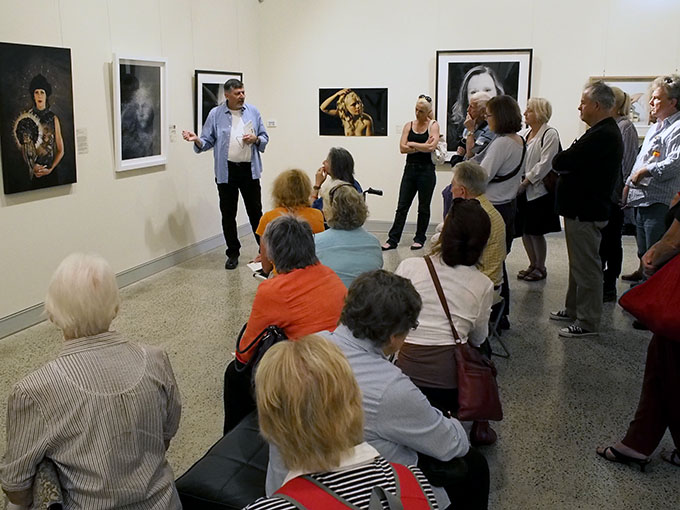
Doug Spowart presenting the floortalk
.
We stand this morning in a gallery exhibition dedicated to the most photographed subject of all – the human face! The floor talk today will explore the idea of the photographic portrait and how we reflect on the success of this visual communication.
There is an old saying that you can tell a great portrait because the eyes follow you around the room – Well any portrait, even a painting, where the subject is represented looking toward the photographer’s/artist’s viewpoint will capture the subject in a way that will enable this ‘phenomenon’ to be observed. So this method for assessing a portrait will not successfully operate here.
Another way of knowing what great portraits look like is to ask an expert, whomever they may be, to make a decision. Awards such as the Olive Cotton Award use this principle and over the years an impressive list of pre-eminent photographers and/or critics and commentators on photography have been commissioned for the task. I must acknowledge the judge for this year’s award – Helen Ennis. I cannot think of anyone who would be as knowledgeable of the ideas, thoughts and working methods of Olive Cotton than Helen Ennis. In her connection with Olive Cotton, Ennis has written several books and catalogues, selected works and curated exhibitions and is in the process of writing Cotton’s biography. Ennis has provided for us all a greater understanding of Cotton’s work and prominent position within the history of Australian photography.
Now, let us think about portraiture and the act, as we find ourselves today, looking at and evaluating portraits. It is interesting to note that although the portrait is at the top of the list of photographic subjects, we can see in this award there is no standard approach. As we look around this gallery space today no two portraits look the same – I’m not referring to the diversity of subject’s portrayed, but rather the way the photographer has created and presented the subject to us. The photographs range from snapshots of unplanned spontaneous moments to documentary reportage and illustrative magazine styled images, and then to the overtly staged theatrical tableaux. Some images are derivative – that is that the approach to the image replicates time honoured, and sometimes perhaps over used or common, techniques, styles or treatments. Other images may represent subject and styles in ways that are vibrant and fresh.
When a portrait is made the photographer makes personal decisions relating to equipment selected, technique, style, lighting, posing, gesture and subject expression. They make a portrait that satisfies their personal urge to tell a story. This story is usually firmly related to the subject; although it can be a theme the photographer is investigating or be based on something from the photographer’s own life experience. The photographer may want or even demand that viewers take from the work a particular and specific meaning. The artist’s statement accompanying exhibited works can support and signpost and influence the readings that a photographer may want to pass on.
However, I would suggest to you, that once the image leaves the photographer and is presented publically a new paradigm exists. Writer and commentator on photography Roland Barthes wrote ‘… the birth of the reader must be at the cost of the death of the Author.’ (Barthes 1977:148). In this instance I propose that the photographer is the author – the reader is the viewer. When looking at photographs the viewer connects their life experience to what the work presents, and the narrative or meaning that emerges can no longer be the photographers alone – it is a hybrid born by the activation of the viewer.
We are all judges in a way and each of us has a unique experience of the world that directs and supports our response to images that we view. We will no doubt encounter portraits here today that are universally powerful and profound yet there will be other images that may reach individuals amongst us in the most direct and personal ways. What this means is that each of us is a kind of judge, and that our individual responses may be just as profound as those experienced by Helen Ennis five or so weeks ago.
Today then, I invite you all to be the judge and what we will be doing is engaging with selected works from the exhibition to discuss and review – and I will be asking you to contribute to the conversation. To assist you with this I’d like to pass on the concept that may help us with this process – it’s essentially about what I will call ‘positioning’. Your response to a portrait photograph, or perhaps in another context any photograph or work of art, is informed by your personal background as we have already discussed. Your ‘position’ can be informed by the synergies of your life experiences that may include; physical, ideological, religious, gender, specific demographic, life experience of birth, death, love, illness, war or personal achievement or tragedy. So when we talk about a portrait please consider your position…
[What followed in the floortalk was a conversation by the participants moderated through my involvement. The audience contributed some interesting responses and ideas about portraits that included; Tamara Dean’s ‘Brothers’ 2013, Russell Shakespeare’s ‘Bob Katter’ MP 2011, Tina Fiveash’s ‘Twin Spirits’ 2013, Imogen Hall’s ‘Barry Jones and the ancestor’ 2012. At times there were powerful and emotional connections made by particular participants which were then shared through this floortalk conversational strategy.
.
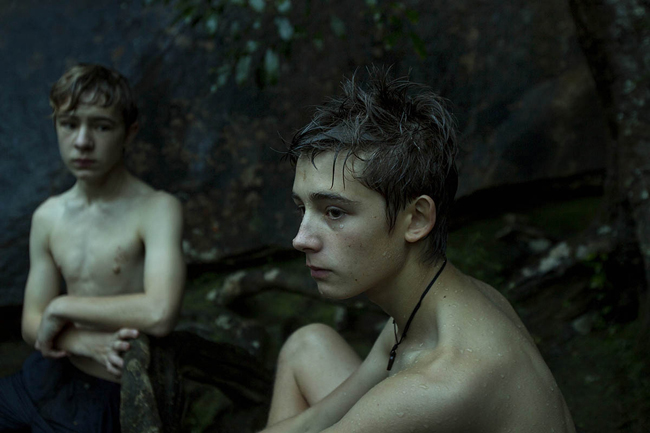
Tamara Dean’s Brothers
Participants discussing their position and response to a portrait
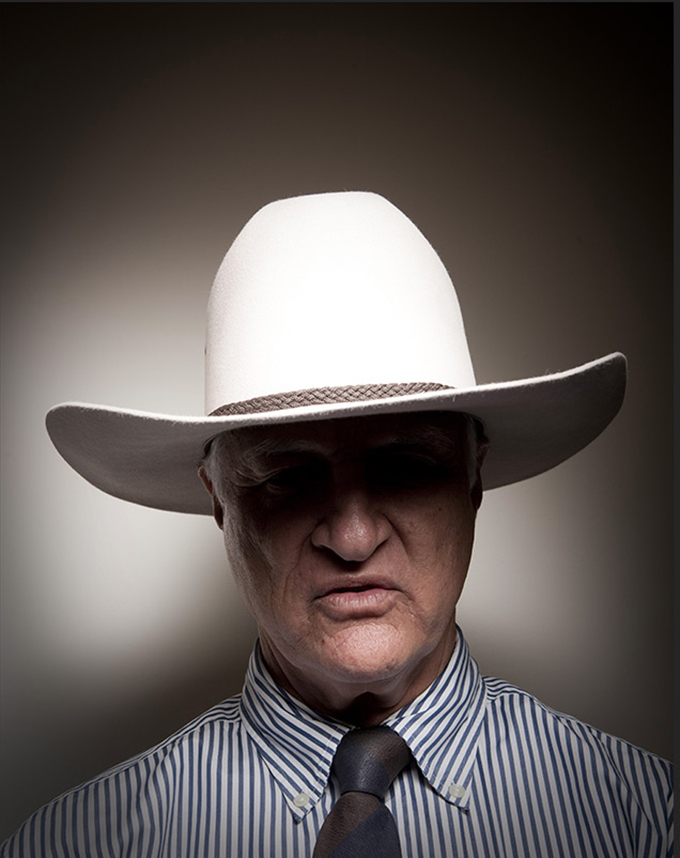
Russell Shakespeare’s Bob Katter MP
.
I was asked to give my position on the winning photograph – Trent Parke’s ‘Candid portrait of a woman on a street corner’ 2013. Many attendees did not –or– could not find a ‘position’, that would enable them to understand the reason behind its selection. I spoke from my position informed by my background in the art and professional practice of photography and many years dedicated to the education and critique of this medium – I knew from comments made by the judge on announcing the award that she found Parke’s image something that she at first didn’t standout as so many images do – but she kept coming back to it. My position on the image was as follows…]
.
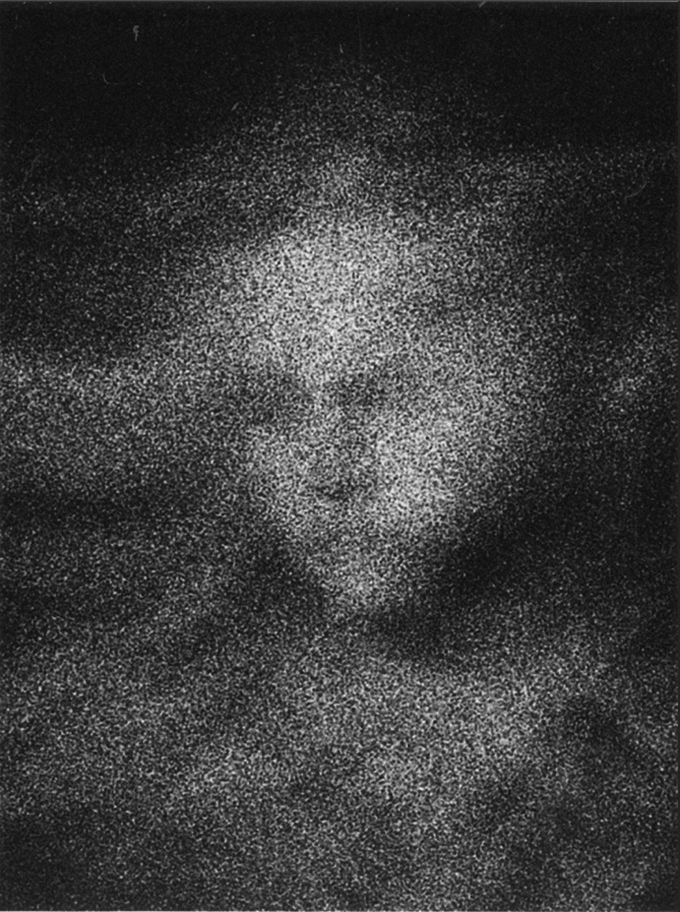
Trent Parke’s Candid portrait of a woman on a street corner
.
On first encountering Parke’s image it does not give us much – it initially appears as a field of greatly magnified monochrome film grain, which hides the delicate structure of a female face. A closer view reveals less, and interestingly, the further away you move the ‘sharper’ the image. Parke’s portrait demands more of the viewer to find meaning – it challenges, it questions, it’s not a specific person, unlike every other portrait in this award, but more the generic form. For me it also comments about the romance of film and ‘humanness’ in the digital age. At the beginning of this floortalk I suggested that much of portraiture can be derivative – but this image has no provenance in contemporary portraiture – it stands alone, perhaps signalling that there is room for new and exciting representations of the human visage yet to come…
[The floortalk concluded and attendees continued viewing other portraits in the show from their newfound critical ‘position’. The outcomes and exchanges resulting from my floortalk strategy was, for me, personally enlightening and rewarding. A number of participants came up after the talk to say how much they had enjoyed and appreciated the opportunity to discuss work and have their ideas, opinions and experiences shared in that way.
From their participation and responses today one could perhaps say that the author is dead – and many readers have been born …]
.
Dr Doug Spowart 3 October 2013
.
A PDF catalogue of the Olive Cotton Award is available here 2013 OCA catalogue for web_screen
.
Barthes, R. (1977). Image Music Text. London, Fontana Press.
,
Photographs of the floortalk © 2013 Victoria Cooper. All other images are the copyright of the photographer.
.
This work is licensed under a Creative Commons Attribution-NonCommercial-NoDerivs 3.0 Unported License.
.
NOCTURNE GRAFTON PROJECT: Fieldwork Concludes
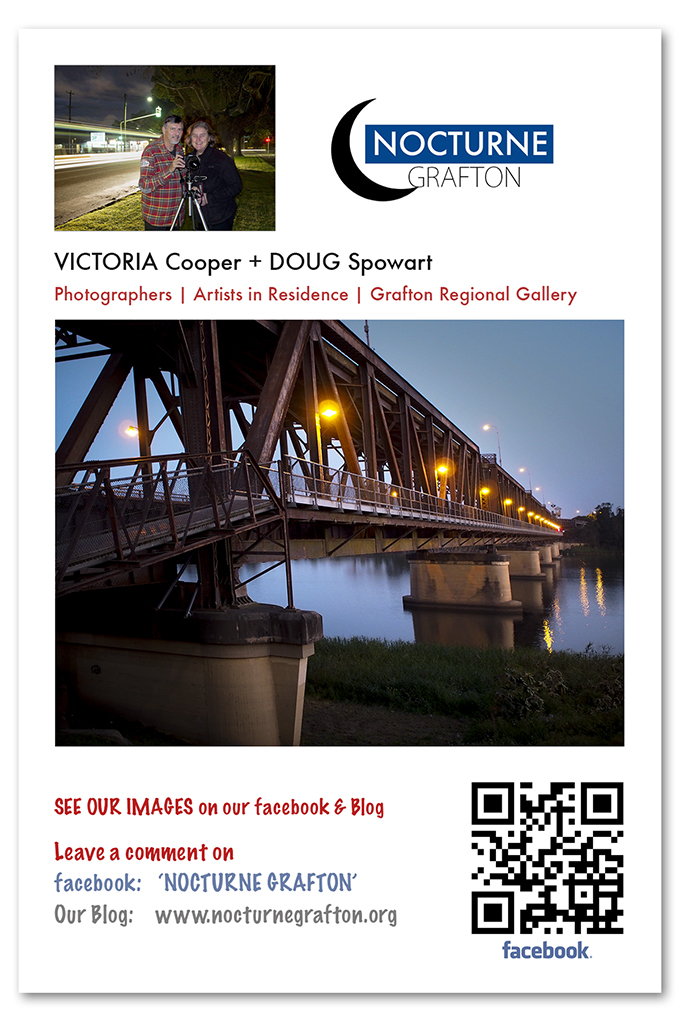
Promotional Card
.
We have just finished our artists-in-residence at the Grafton Regional Gallery. It was an amazing month and a wonderful opportunity to engage with the community and create art!
Artists in Residency programmes are an important opportunity to break out of the home/studio/teaching role routine to exchange or explore new ideas in a totally different environment. We consider our time in these residencies as essential to our practice; it transforms how we work and brings fresh ideas into our work. Integral to our projects is the immersion in each place and connecting with community and local narratives of place. Our time in Grafton was a remarkable: the community, its everyday stories and the imposing presence of the Clarence River all contributed inspiration for our creative work.
.
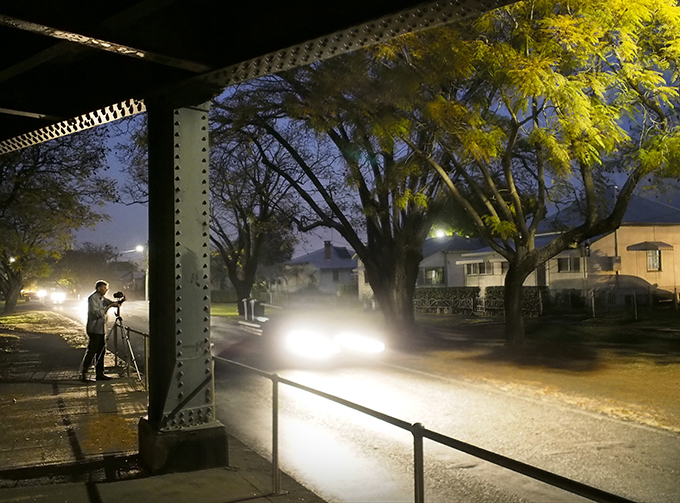
Doug photographing under the Pound Street viaduct
.
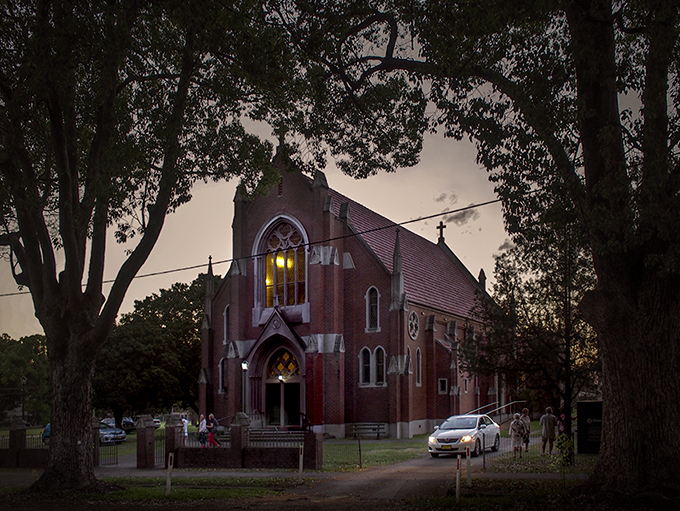

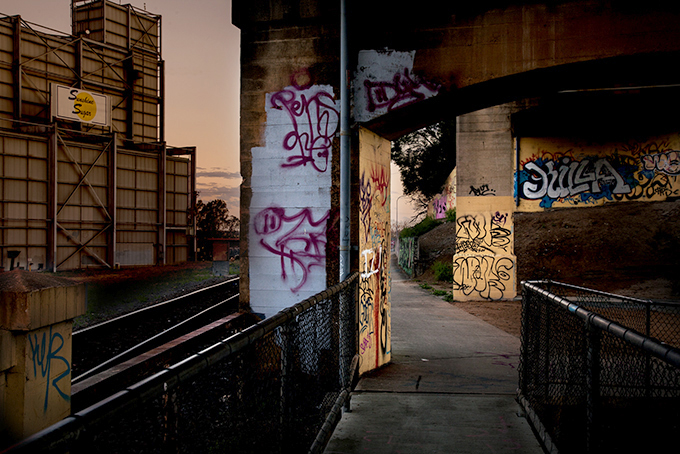
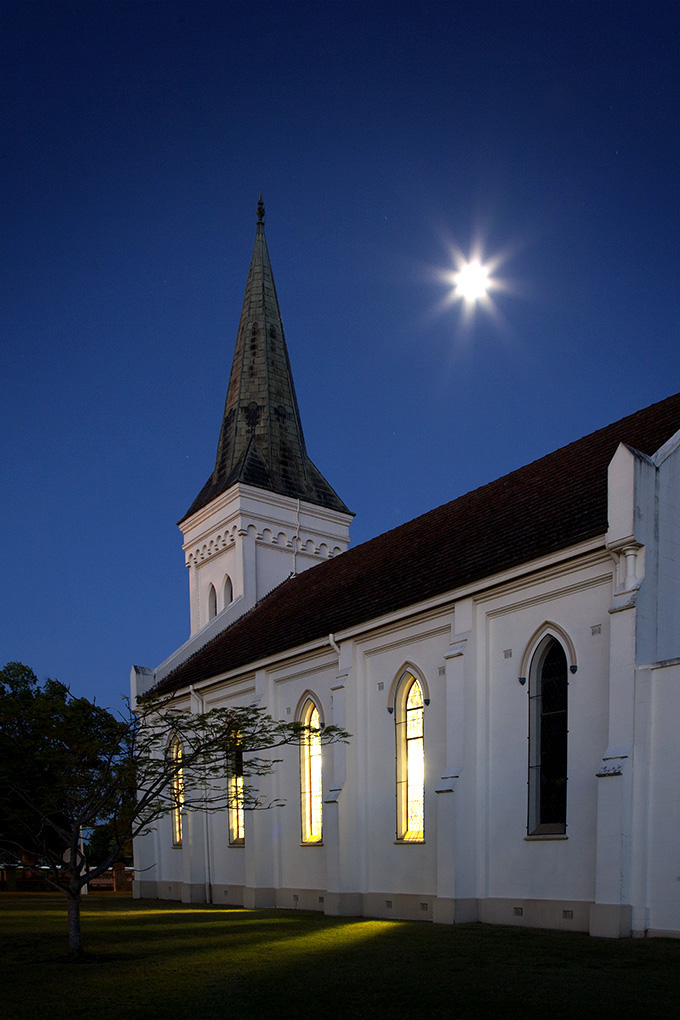
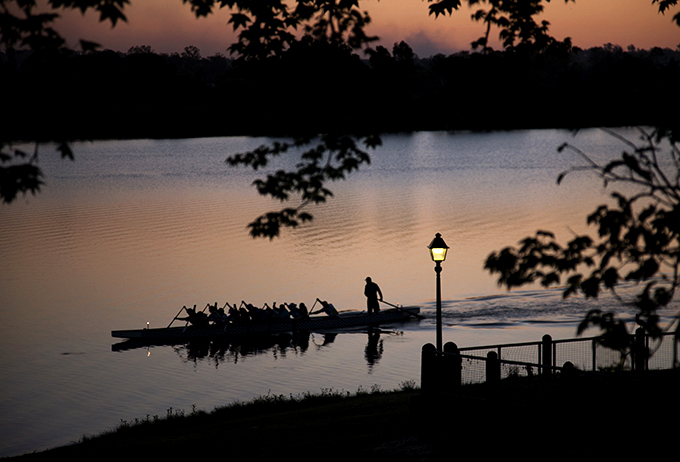
.
Our project was to create images of local places that to us visually evoked a narrative. The places were selected from our exploration of the town, researching local knowledge, and conversations with people we met. We sought places that were best illuminated by nocturnal light (late afternoon and early evening light). This light only lasts around 30 to 60 minutes, but its transformation of everyday places can be powerfully evocative. Our work in this time is intense and our awareness of the visual qualities of different spaces is deepened. The history and lived experience embedded in each place seems to ‘speak’ and we ‘listen’.
.
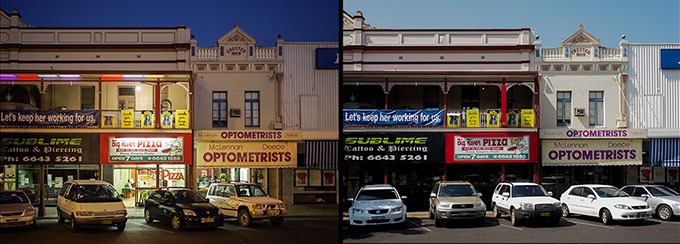
A comparison – Nocturne and daylight of the same subject
.
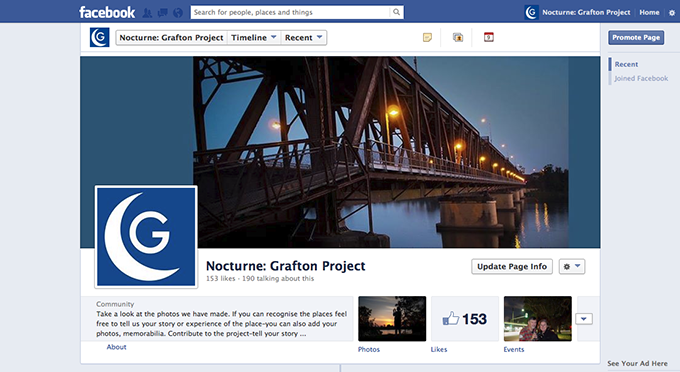
Facebook page
.
After each shoot we return to our residence to reflect, select and optimize our visual reconnaissance of nocturnal Grafton to then upload and ‘share’ online through Facebook and a blog. Through this sharing of our work we connected with a community and their stories in each place. Personal and historical accounts of these places brought our images to life. For us, this is where the art that exists – between our initial inspiration and local lived experiences.
.
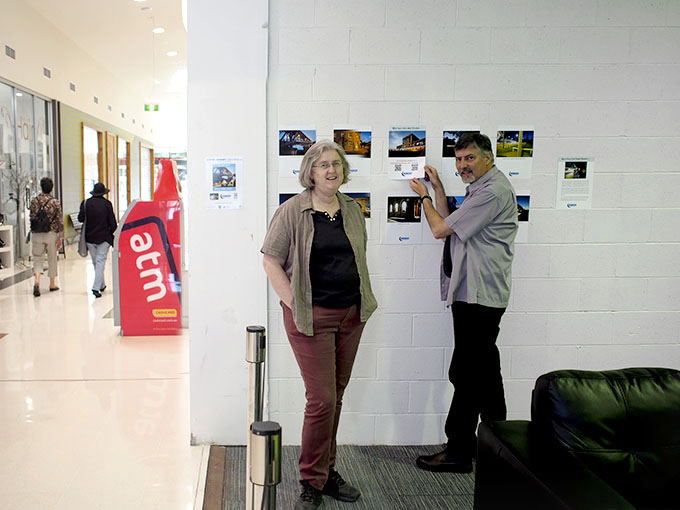
The LINK Shoppingworld gallery
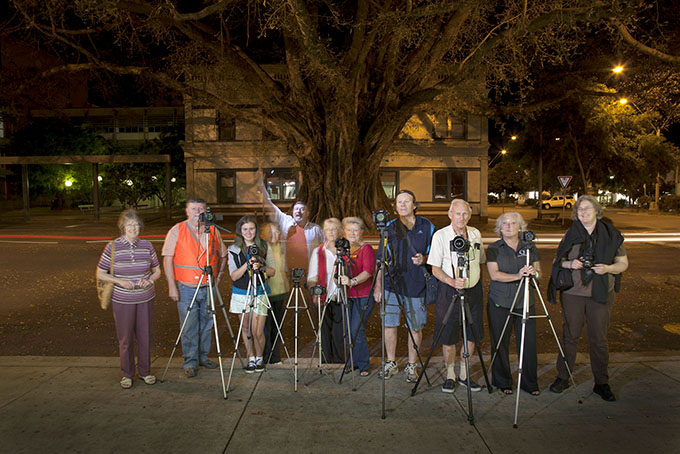
A nocturne shoot-out with the Grafton Camera Club
.
To extend the exchange that was integral to our project we also were involved in artists’ talks for schools, and other visitors to the Grafton Regional Gallery. We set up and attended two small displays of our ongoing work: one in the gallery and another in a vacant shop at the LINK arcade in the main shopping precinct. Doug and I had a very dear friend, Charlie Snook, who was a strong supporter and participant of the local camera club. So it was important for us to be able to connect with this enthusiastic group of photographers. We gave an evening talk, shared two of our nocturne shoots as photographic outings and judged their current assignment work. It was privilege to be invited to their 50th anniversary dinner held on the last weekend of our residency and a great way to finish our time in Grafton.
.

The C.R.A.P.y artist book team
.
We organized an activity to involve local and regional artists as well as a Brisbane arts professional in a collaborative artists’ book project. Under the auspices of the Centre for Regional Arts Practice, an organization created and coodinated by us, we held an activity over the weekend of September 21and 22. This collaborative event produced 60 copies of the C.R.A.P. Artist’s Survey Number 15, the theme of this survey was ‘the regional arts worker as a nomad’. Copies were shared amongst the participants while some were then set aside for donation to major collections including: The Grafton Regional Gallery and the State Library of Queensland.
.
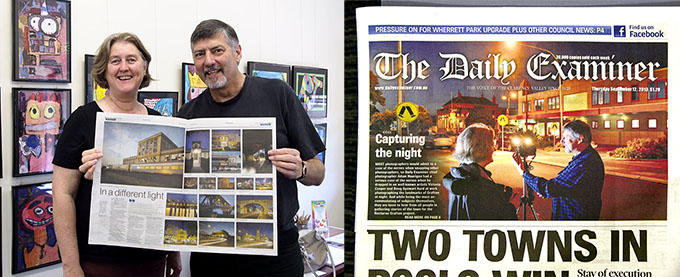
The Daily Examiner newspaper coverage
.
We were excited by the considerable support of and interest in our project from Grafton’s newspaper, The Daily Examiner, publishing separate stories, a front-page photograph and a weekend feature. Support also came from Senator Ursula Stephens shared the page and added ‘Grafton is the great Jacaranda city on the NSW north coast and the Nocturne Project is a wonderful example of celebrating local landmarks and building community identity. Love it!’ – was also an unexpected acknowledgement of our project. We visited the Grafton Historical Society and found a treasure of knowledge and information together with a willingness to assist in our research.
.
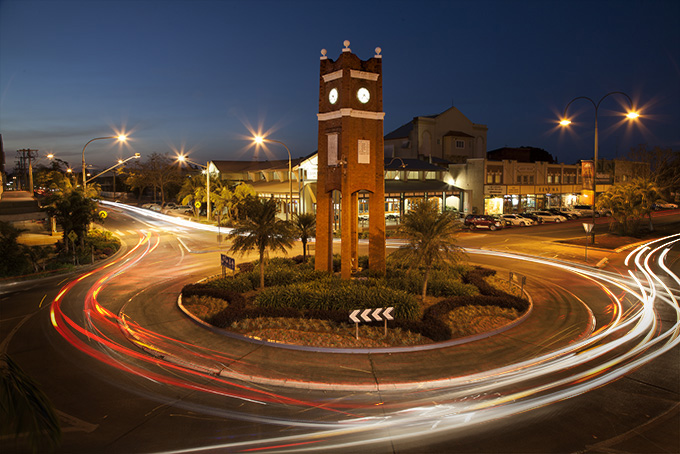
The Roundabout Clocktower from Weiley’s Hotel balcony
.
Some information on the Facebook component of the project: www.facebook.com/nocturnegrafton
During the month of September the project had 410 page ‘Likes’ and achieved a total viral reach of around 65,000 people. 65% of the Nocturne Grafton fan base were women (the Facebook average is 46%). The main engaged age group were women 25-34 years @ 17% of the total (the FB Average is 12%). The most popular post was the Clocktower roundabout from Weiley’s Balcony, which attracted 4,500 views and 274 likes, 37 comments and 44 shares (some of the reach was boosted). Interpretation of Facebook analytics is an interesting task and one that we will be reviewing over the next few weeks. We will maintain the Facebook page as a place for continued conversation.
.
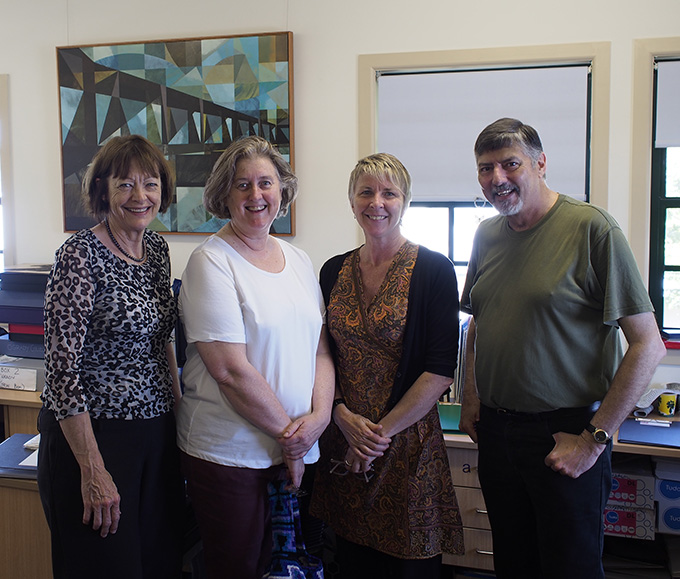
Jude McBean, Vicky, Cher Breeze & Doug
.
At all times during our residency an energetic and professional team, Jude McBean GRG Director, Cher Breeze, Avron Thompson and many dedicated volunteers at the Grafton Art Gallery provided valuable assistance, advice and stories. With the vision and support of the Gallery the residency was for us a transforming experience and our time at Grafton Art Gallery was highly productive.
And a BIG thank you to all our Facebook Friends who supported the project by their ‘Likes’, ‘Comments’ and ‘Shares’.
The final visual outcome for the project will be in the form of the continued online presence, artists/photo books and exhibition of image work. These artworks will reflect on the collaboration between our photographs, the social media project and the Grafton community.
.
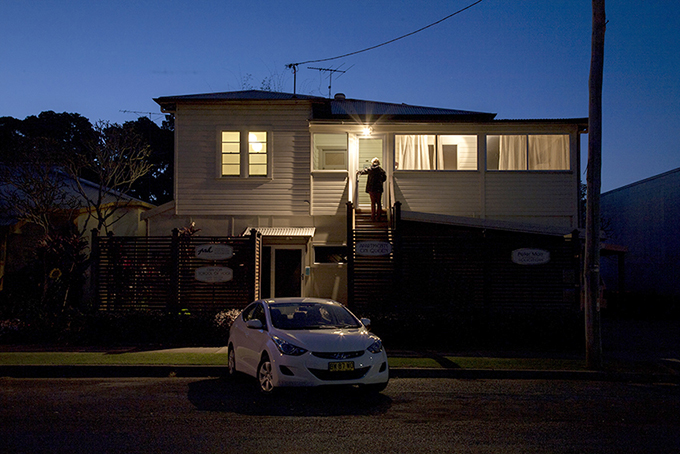
Going home on the last night of the residency…
Some comments from our Facebook friends at the conclusion of the project:
Peter Hunter OAM, ARPS, AFIAP: Victoria and Doug. I am really impressed with your photographs of Grafton at dusk. Your very impressive skill at taking a very ordinary subject and creating a great photo from it by using super composition, creative evening light and long exposure has resulted in a wonderful collection. I hope that they will be archived for posterity.
Marlene Szepsy: I have really enjoyed your way of sharing and bringing art to the community. A great artists in residence project. Thank you.
Louise Kirby: You have been wonderful AIR’s and I am so glad you came and shared your beautiful photography, your skills and your enthusiasm …
Adam Hourigan: pleasure meeting you guys. The photos make Facebook a much brighter place
Vanessa Collins: thanks for the way you have shown our beautiful town, can’t wait for the exhibition and the book
Stephanie Haines: Thank you for the beautiful photos… they made us all look at our town in a new way.
.
© 2013 Victoria Cooper and Doug Spowart for The Nocturne Grafton Project
..
.
This work is licensed under a Creative Commons Attribution-NonCommercial-NoDerivs 3.0 Unported License.
.
.
A PhD Conferred ‘in absentia’: And other PhD stories from Victoria Cooper
O.
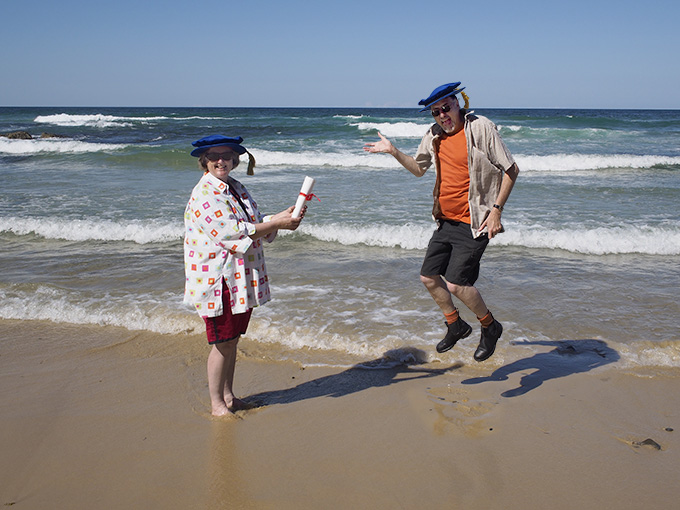
Vicky receives her testamur in absentia (a place near Diggers Rest – Grafton) …..Doug — Jumps for joy!
.
Vicky has her testamur at last! Doug is very happy as he can celebrate with Vicky their PhD awards!
We reckon that Diggers’ Rest has never seen such crazy head gear…..and that it should be considered that PhD conferral ceremonies should all be like this.
.
OTHER PhD POSTS ABOUT VICKY’S STUDY CAN BE FOUND HERE
THE WOOLI STUDY CENTRE:
https://wotwedid.wordpress.com/2012/04/01/easter-wooli-study-and-research-centre/
THE PENULTIMATE DRAFT + 5 FOOD ANTIDOTES:
https://wotwedid.wordpress.com/2012/10/31/the-phd-penultimate-draft-and-5-food-antidotes/
WAITING FOR THE EXAMINERS REPORT:
.
ADVANCE NOTICE: Memory Collective Exhibition to open @ TRAG
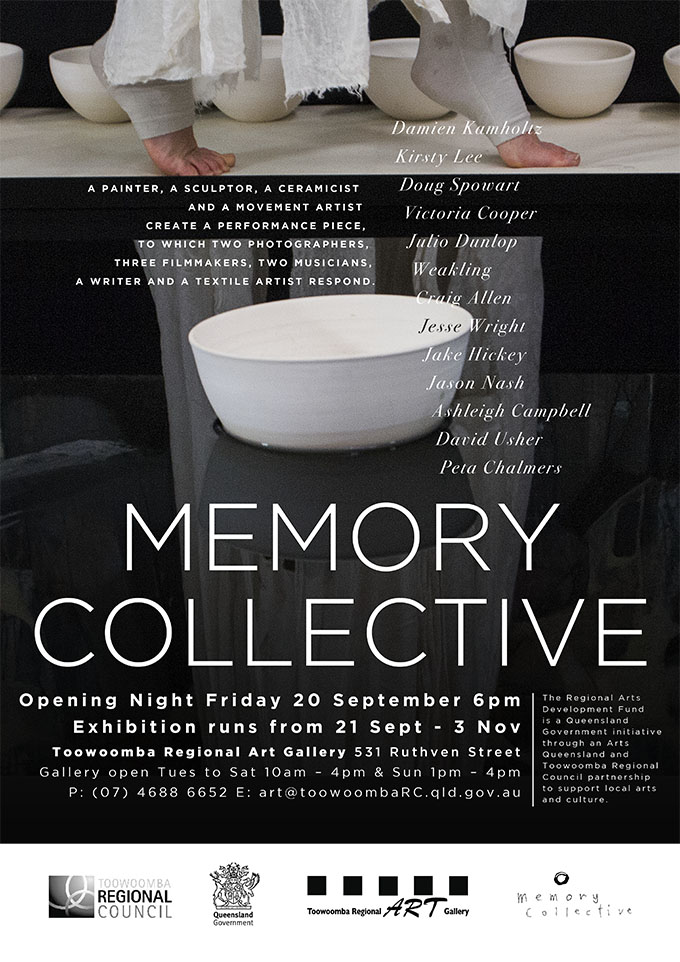
The Memory Collective Invite
.
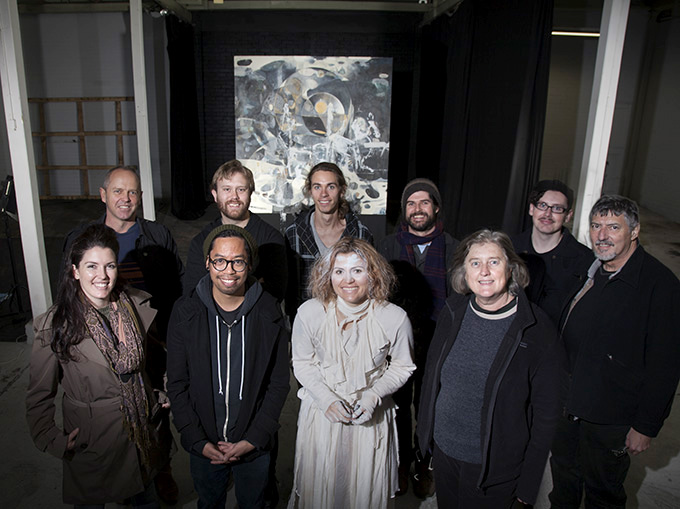
The Team: Front Ashleigh Campbell, Julio Dunlop, Kirsty Lee, Victoria Cooper, Doug Spowart
Back: David Usher, Jason Nash, Jesse Wright, Damien Kamholtz, Zac Rowling (weakling).
Not present: Peta Chalmers, Craig Allen & Jake Hickey
.
Photographer Victoria Cooper reflecting on the Memory Collective project
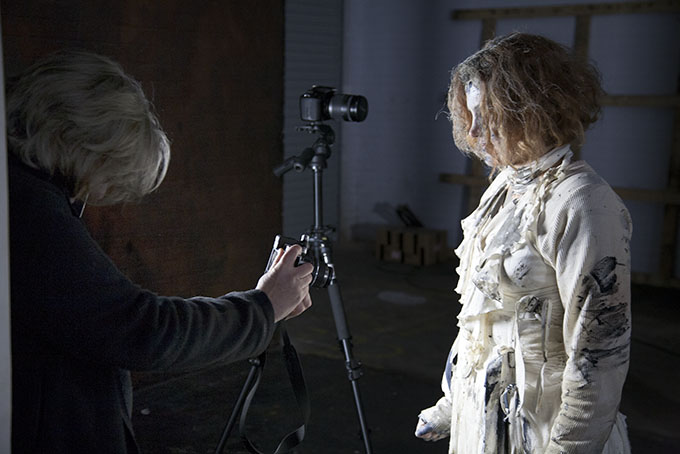
Vicky photographs Kirsty
.
Both Doug and I, familiar with collaborative projects, were excited to have the opportunity to connect with the multidisciplinary space that Damien Kamholtz was creating in the Memory Collective. So it was on one day in May, that each artist would bring to the chosen site their insights, instincts and life’s experience.
.
There was a painting – a very large painting; a sculpture filled with water, a ‘pond’ to reflect and dissolve the evolving performance; a movement artist to reconfigure the idea or memory of painting; seven white ceramic bowls to containing pigments and a singular bowl left empty to float across the dark water of the pond.
The physical space did not easily present itself at first–but as the project unfolded and discussion flowed from the practical, logistical to the intellectual, conceptual–the site itself also became a collaborator in the project: the stage, the remnants of its warehouse history, the idiosyncratic control over the method of entering the space (all us had to crawl under a jammed roller door)
Was the space asserting its role?
This day was not just a visual experience–it was a total sensory and psychological immersion.
Although a part of the documentary team, including video and still photography, I was compelled to cross beyond the voyeuristic role of witness. I was motivated by the tension created from: anxiety for the loss of the original painting with the frisson of anticipation for the evolving transformation.
The movement artist’s touch with the painting was sensual and slow.
We moved like moths; entranced by the night-light . . . circling . . . unable to land nor escape . . .
This was not a performance rather it was about life, unrehearsed and ephemeral. Only through technology were small parts recorded to be later pieced, montaged and sewn together in a kind of rich layered memory tapestry. And, like memory, there are gaps, fuzzy distortions of scale and time lines, loud visually busy moments together with quiet, serene and ethereal meditations.
I began this project with an intuition that it would be both inspiring and exhilarating to work with this creative group of Toowoomba based artists. Damien has, with delicacy and grace, enabled and cultivated a fertile collaborative space, which continues to extend the potential for the creative work.
.
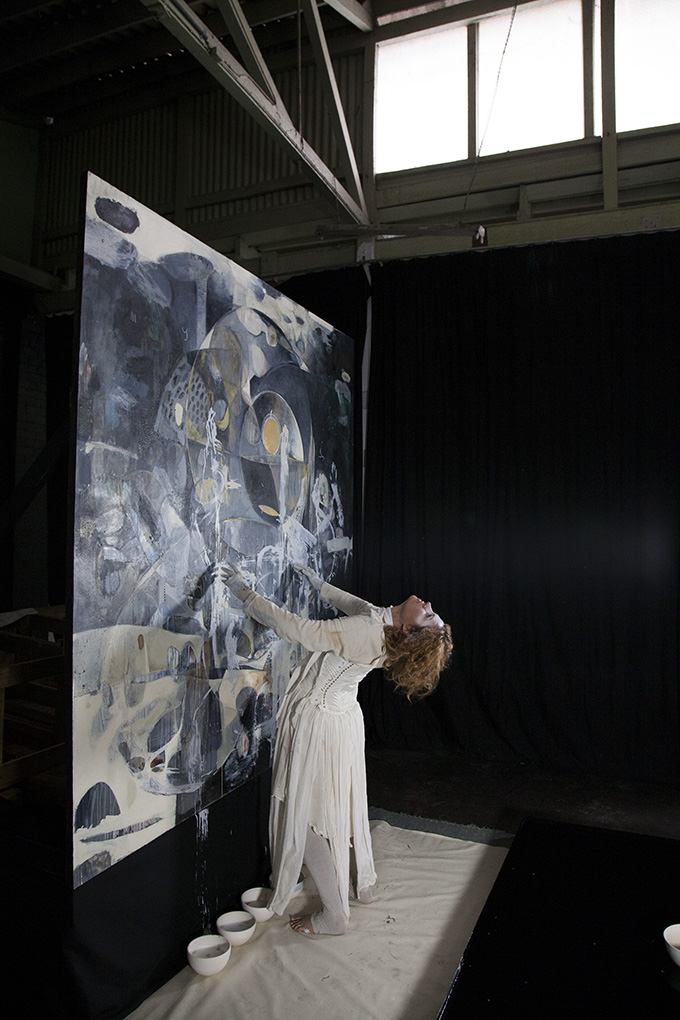
Kirsty addresses the painting in performance
.
A recollection of the MEMORY COLLECTIVE collaboration from Doug Spowart.
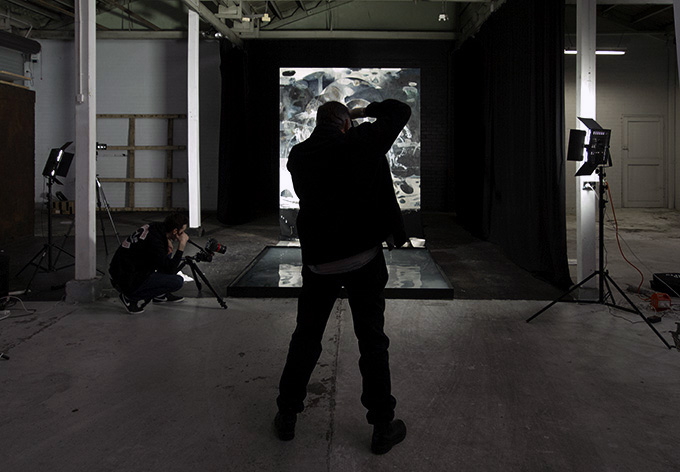
Doug photographs the performace
Working as a regional artist can be an isolating experience. Your networks are often big city based, coastal and a long way from your home on the range. I am familiar with collaborative art-making but it has usually been with my artist partner Victoria Cooper.
.
The Memory Collective was quite a different collaborative affair. As an individual artist I could never have thought up let alone coordinated, as Damien has, all of the interdisciplinary artists and artforms into one time–one space–one purpose–one artpiece. Meetings, Facebook discussions and site inspections enabled a real feeling of connection with the creativity of these fellow regional artists and their ideas, aspects of each discipline’s needs and potential for contribution.
https://wotwedid.wordpress.com/2013/06/17/memory-collective-a-performance-documentary-project/.
https://www.facebook.com/memorycollectiveproject
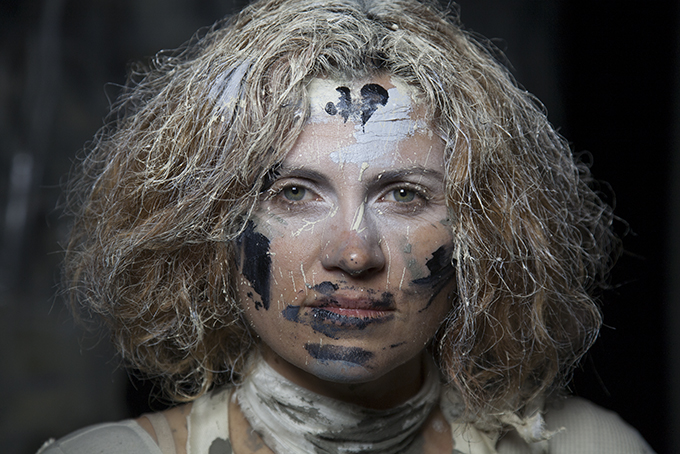
Kirsty Lee – the paint portrait
.
.
This work is licensed under a Creative Commons Attribution-NonCommercial-NoDerivs 3.0 Unported License.
.
.
.
.
NOCTURNE GRAFTON: A new Cooper+Spowart Residency begins

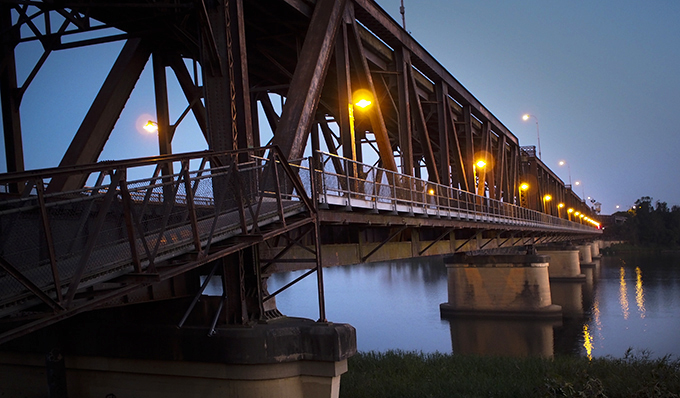
The iconic Clarence Bridge
.;..
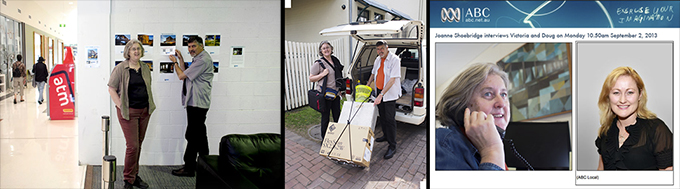
The mini gallery in the LINK Arcade – Moving in to GRG – And on ABC Radio with Jo Shoebridge
.
TELLING STORIES ABOUT PLACES
The Nocturne Grafton Project by COOPER+SPOWART: an Artist in Residence @ Grafton Regional Gallery throughout September 2013.
If a picture is worth a thousand words – how do you gather the 1,000 words from a community by showing them pictures of their town? Artists Victoria Cooper and Doug Spowart are exploring this question as they work as Artists in Residence at the Grafton Regional Gallery. Their residency project is entitled Nocturne Grafton and will consist initially of photographs of buildings and locations within the Grafton region.
The artists have made nocturne photographs in towns all over New South Wales and Victoria and the work has been featured in their Blogs and Facebook sites. In June and July this year they photographed and Facebooked the town of Muswellbrook and last year a large body of image work was created in the seaside community of Wooli.
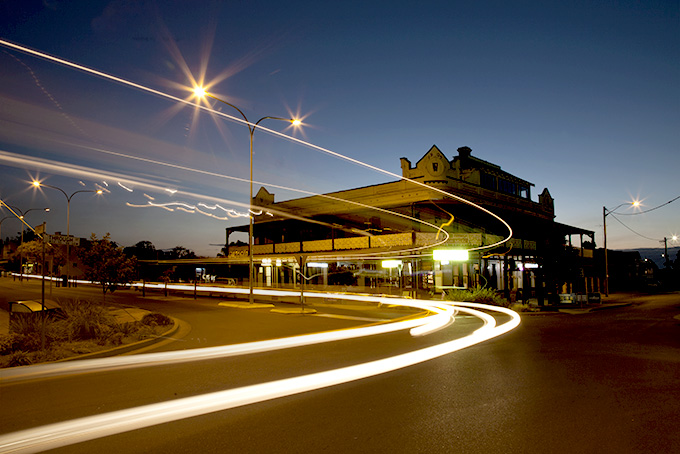
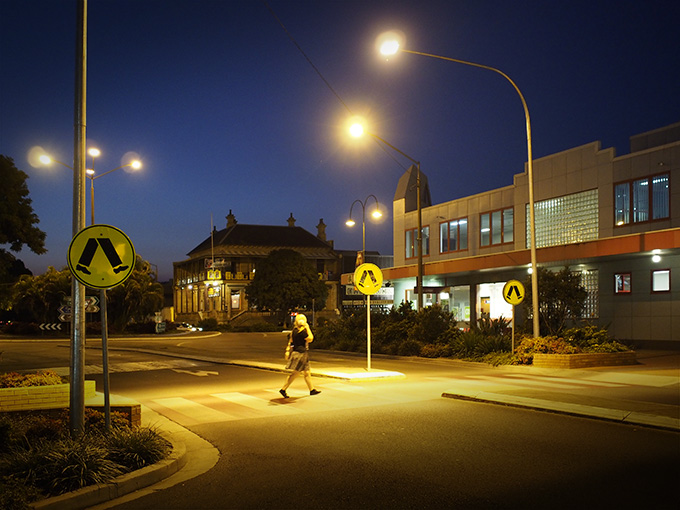
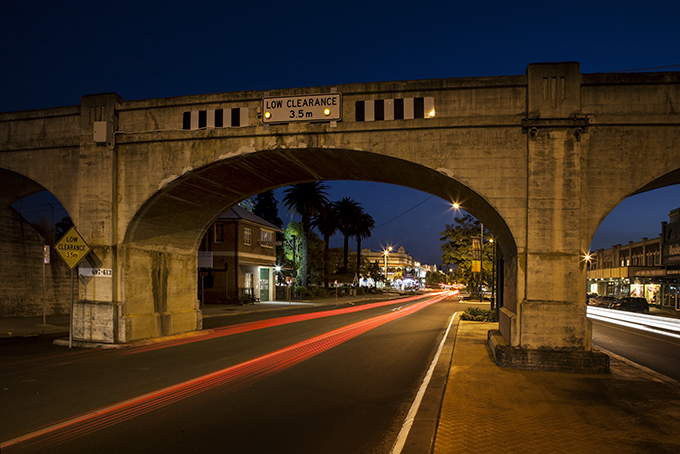
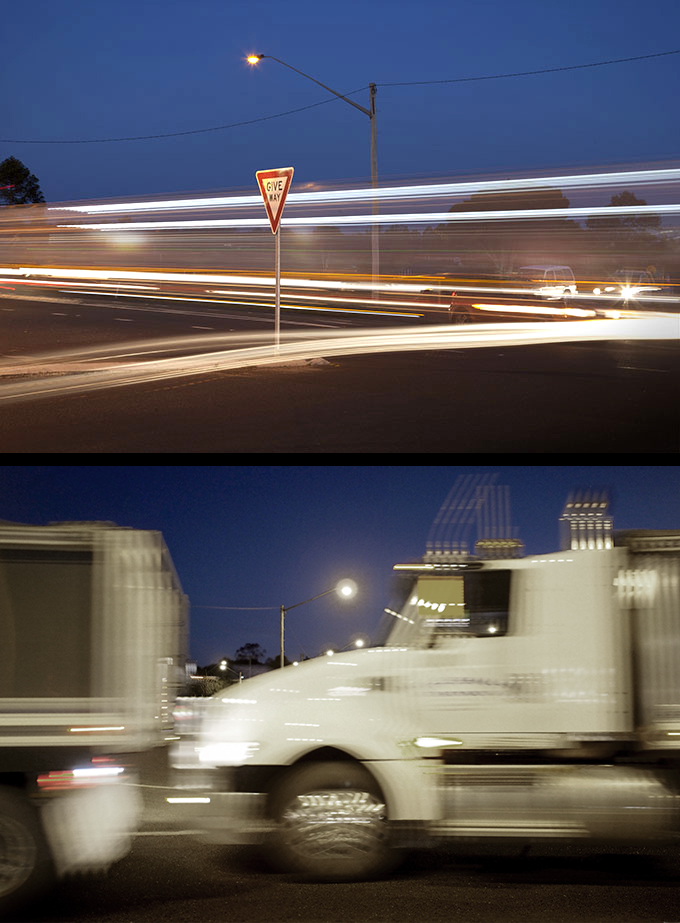
Cooper and Spowart make their photographs at dusk using the afterglow of sunset and streetlights to create an unusual image of the locations. This ‘nocturne’ light often requires long shutter speeds allowing the blurred movement of people and vehicles to be recorded. They enjoy photographing the visual effect of colours in different light conditions: ambient daylight, artificial lighting, car head and tail light trails. As artist Victoria comments, ‘in nocturne light there a sense of drama or a setting for a movie scene – a place where stories are told or evoked’.
.
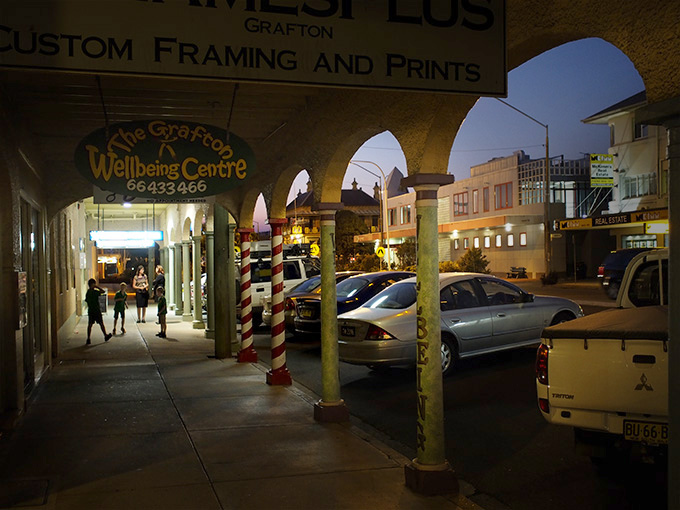
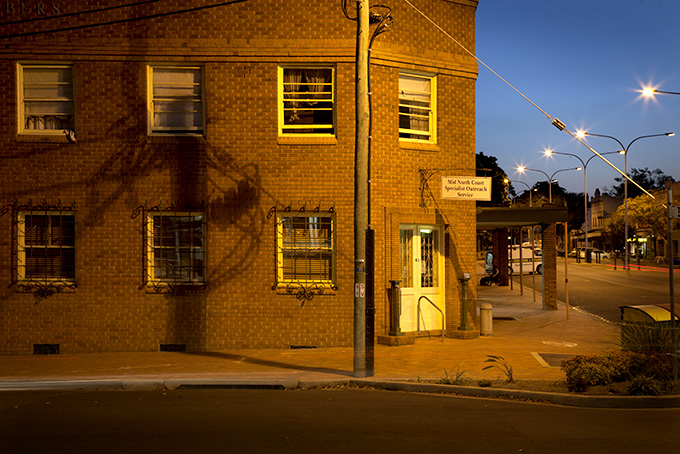
.
Making the photographs is only the beginning of the project’s activity; the next part involves the collecting of stories. As Doug Spowart explains, ‘the photographs will be posted on social media sites including Facebook for members of the Grafton community to tell us their stories or experiences that connect with the places photographed’. Victoria Cooper adds, ‘we’ve extended the saying that everyone has a story in them to every place has a story’.
.
.
They are now calling upon the Grafton community and others with similar experiences of ‘place’ to share their stories of each place photographed including their everyday and meaningful experiences by connecting with the project’s Facebook and Blog sites. As part of the residency they will be displaying photographs in the studio space at the Grafton Regional Gallery, and there will be opportunities for interested Grafton people to call by and talk with them about the project and assist in the uploading of stories.
Cooper and Spowart will also be presenting a talk about their work at the Grafton District Camera Club on September 11th and also at the Gallery at a later date. The artists will be creating a limited edition book and the Nocturne Grafton Project will continue to be accessible online.
The Cooper and Spowart Residency began on September 1 and will extend through to September 30. The social media sites are ‘Nocturne Grafton’ on Facebook and www.nocturnegrafton.org. At the beginning of the project these sites will contain only preliminary information.
To see examples of work from earlier ‘Nocturne’ projects visit:
Nocturne: Muswellbrook – https://www.facebook.com/pages/Nocturne-Muswellbrook-Project/462047657214253
Nocturne: Wooli – http://wp.me/p1tT11-q1
.
TO SUPPORT THE PROJECT:
Log on to FACEBOOK – ‘LIKE’ the page and ‘Click’ to receive Notifications and to show in your News Feed.

.
© 2013 Victoria Cooper and Doug Spowart for The Nocturne Grafton Project
.
This work is licensed under a Creative Commons Attribution-NonCommercial-NoDerivs 3.0 Unported License.
.
.
.
INVITATION: OLIVE COTTON AWARD–Public Programs
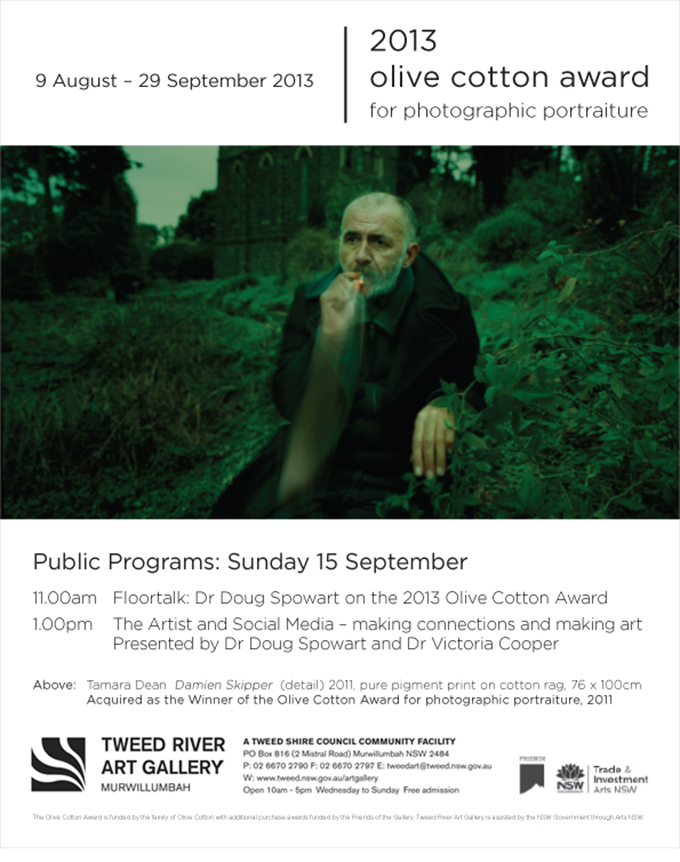
We are presenting two special presentation to compliment the 2013 Olive cotton Awards @ the Tween River Art Gallery, Murwillumbah.
A floortalk and discussion on contemporary Australian photographic portraiture based on the photographs is the award – AND – A look at the artist and social media, for making connections and making art.
SEE THE INVITATION BELOW:
Olive Cotton Awards Public Programs
.
For any extra details call the gallery on (02) 66702790.
.
.
ONE FOR THE BOOK – THE 2013 BLURB BIFB BOOK AWARD

.
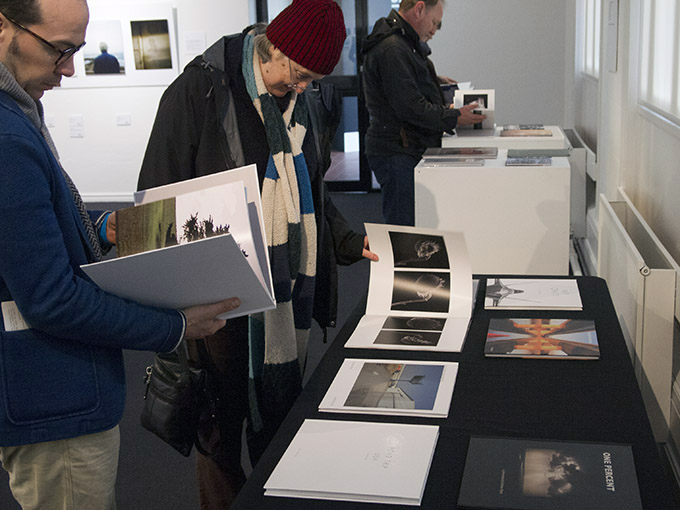
BIFB visitors checking out the book award entries
.
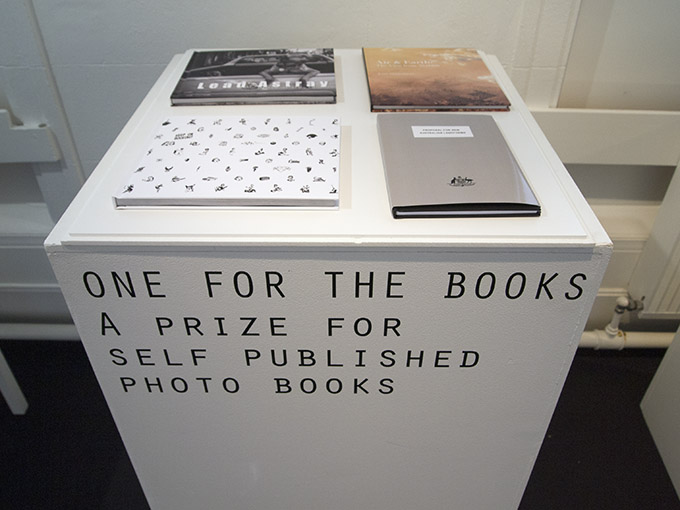
Doug’s book – front right
ONE FOR THE BOOKS
A display of some of the best self-published photobooks in the country are being exhibited at the 2013 Ballarat International Foto Biennale.
A PRIZE FOR SELF PUBLISHED PHOTOGRAPHY BOOKS proudly sponsored by Blurb
The Ballarat International Foto Biennale with major sponsor Blurb, present ‘One for the Books’ an exciting new prize celebrating the book as an innovative and contemporary format for presenting photography in a creative and narrative form. This prize is specifically for self publish, print on demand books. Books previously published by a traditional publishing house are not eligible for entry.
WHO COULD ENTER
The 2013 ‘One for the Books’ Prize will accept submissions for two categories; Professional and Amateur. Winners will be announced at on Monday 19th August 2013 at the Post Office Gallery, Ballarat. Entrants must be Australian residents. Around 100 books were submitted for the judging and 20 finalists were selected.
THE FINALISTS WERE …
The finalists [professional category]
Rhiannon HOPLEY NSW
Charles KLEIN SA
Darren MARTIN NSW
Garry MOORE VIC
Gary SHEPPARD NSW
Doug SPOWART QLD
Andrew STY AN NSW
Peter WHYTE TAS
The finalists [amateur category]
John Paul AZIZ & Shaun DUNCAN VIC
Michael DAVISON VIC
Lidia D’OPERA WA
Grant HUNT QLD
Paul JURAK ACT
Erin STONESTREET ACT
Scott VINEY QLD
.
AND THE WINNERS WERE …
At a special event on Monday August 19th the announcement of the winners of the inauguaral One for the books prize was announced.
.
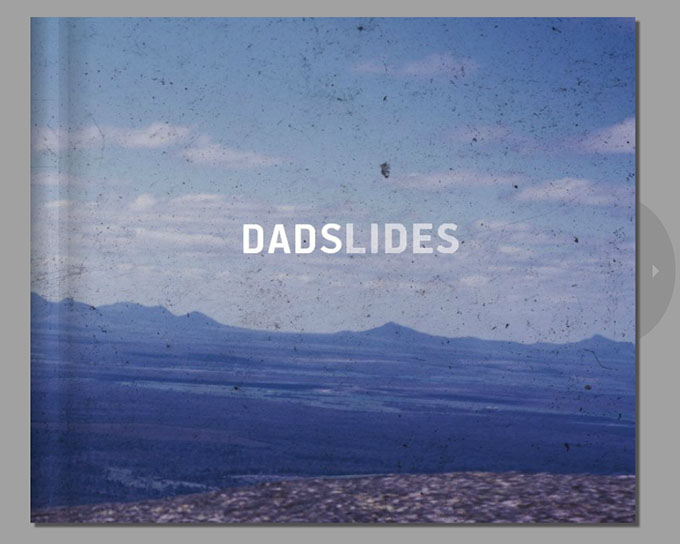
Charles Klein’s Awarded Book – Professional Category
Dadslides is a book dealing with a personal sense of nostalgia in the discovery of one’s own family photographs after the passing of a loved one. Klein’s book consisted of his father’s slides made between 1950 and 1981. The photos were scanned and sequenced within the book to create a document of a family growing up, going on holidays, messing around in the back yard and the other things that symbolise Australian life in this era. Strangely, whilst the book is about Charles Klein’s family, it strikes a resonance with us all and therein lies the beauty and the power of its narrative.
SEE THE BLURB REVIEW HERE: Charles Klein’s Awarded book
.
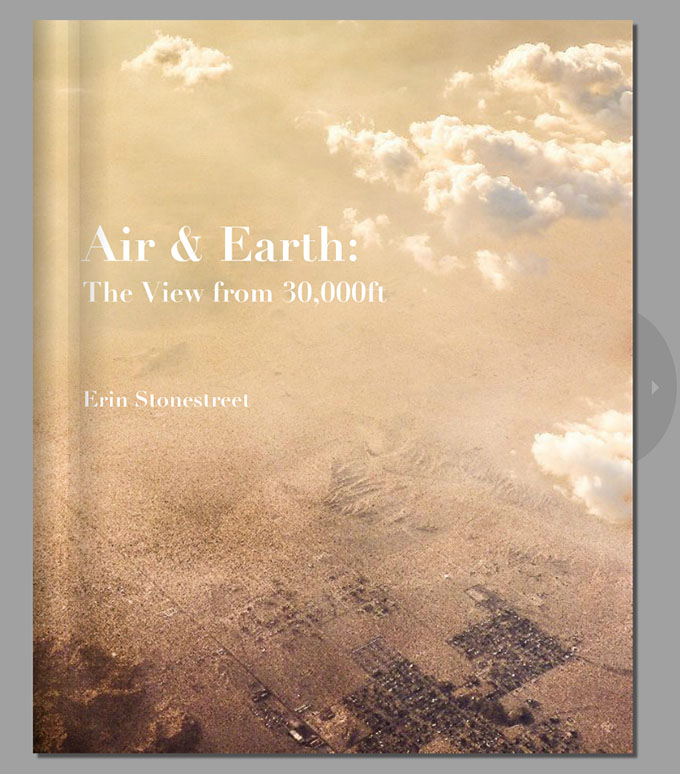
Erin Stonestreet’s Awarded Book – Amateur Category
Air & Earth: The view from 30,000 ft is a book that deals with the aerial view of the earth. The rich colours and image juxtaposition create for the viewer an abstract view – all scale is abandoned and the images take on a sense of the magical, and perhaps even for some, a spiritual meaning.
SEE THE BLURB REVIEW HERE: Erin Stonestreet’s book
.
I was excited to be a finalist in the award – Here is my book…
..

Doug’s Finalists Book
My book deals with the political scene and is a parody of the potential for government agencies and politicians to do absurd things for, as they call it, ‘the good of the people’.
.
SEE THE BLURB PREVIEW HERE: Doug’s Book.
.
PLEASE ENJOY – And do get to Ballarat to see these amazing books in person …
And join in on the photobook print-on-demand revolution.
.
.
MEMORY COLLECTIVE: A performance documentary project
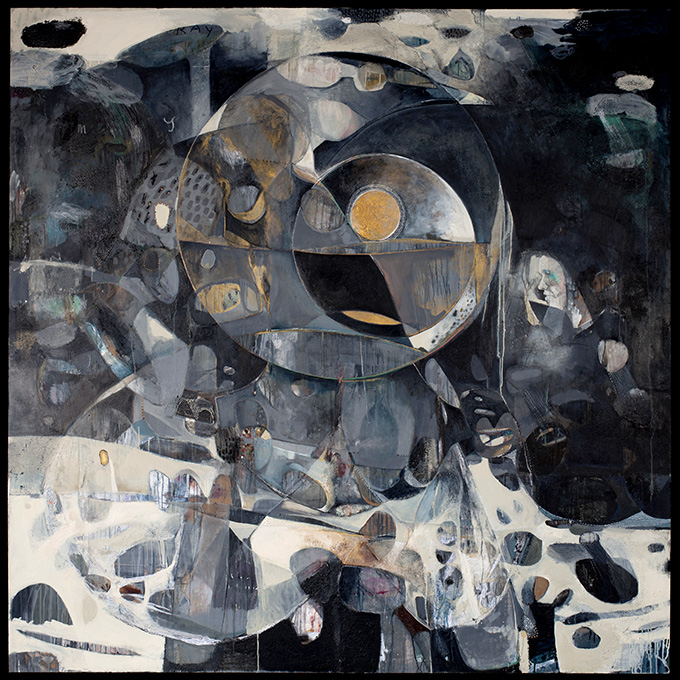
The Memory Collective painting by Damien Kamholtz
.
The Memory Collective is a multi-disciplinary collaboration orchestrated by artist Damien Kamholtz. Kamholtz states: The Memory Collective Project is a creative collaboration between 12 artists across eight artistic disciplines exploring concepts and themes relating to the human condition such as change, constants, history, refection and memory. The artworks created during the project will make up an exhibition to be held at the Toowoomba Regional Art Gallery in September 2013.
There are different stages to the project. First Kamholtz created a large 2.2 metre square painting, while sculptor, Jessie Wright constructed the large vessel to hold the water. Kamholtz’s painting is embedded with personal meaning in the form of fragments of his past art, the ashes of diaries. In the presence of this artwork we are drawn into a poetic landscape where faces emerge; symbols and totems slip from passive dark spaces and come into conscious awareness.
The second stage of the work was the performance in the form of 9 responses to the painting by Kristy Lee. The painting and the pool created the reflective and reflexive performative space and the transformative process of the original painting then began. Integral to the space were David Usher’s delicate pots; these vessels contained the pallet of shades that then shrouded and clouded the memory of the work. Over the course of the day the painting’s physical form was transformed into something different loosing its current visual form as only a memory.
Our part of the collaboration was to witness, respond and record the transformation of the work over the day. The next stage of the Memory Collective’s work will continue over the next month our component will be to create 9 large collaged photograph memory states of the work for the show in September. Works by others include; a video art piece, a documentary video, a soundscape, interviews, prose and poems. It is a significant project and is being funded by the RADF and supported through the exhibition at the Toowoomba Regional Art Gallery.
.
A fragment of photographic memories made by us for the MEMORY COLLECTIVE…
.
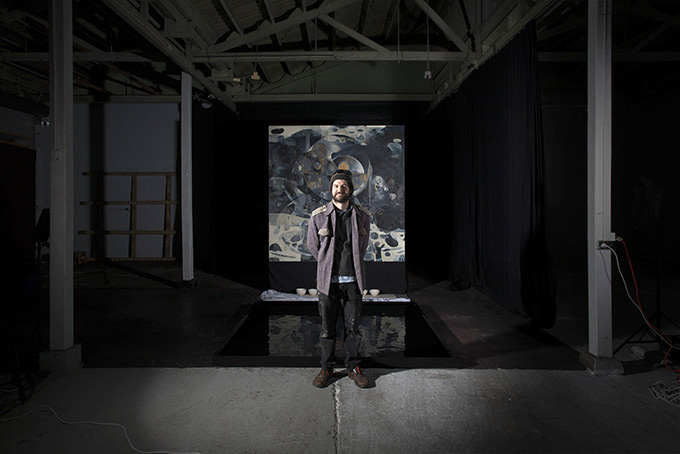
Damien Kamholtz in the performance space with the painting and pool
.
Doug documents the space …… Photo: Victoria Cooper
.

Kirsty and painting – in the early state…
…
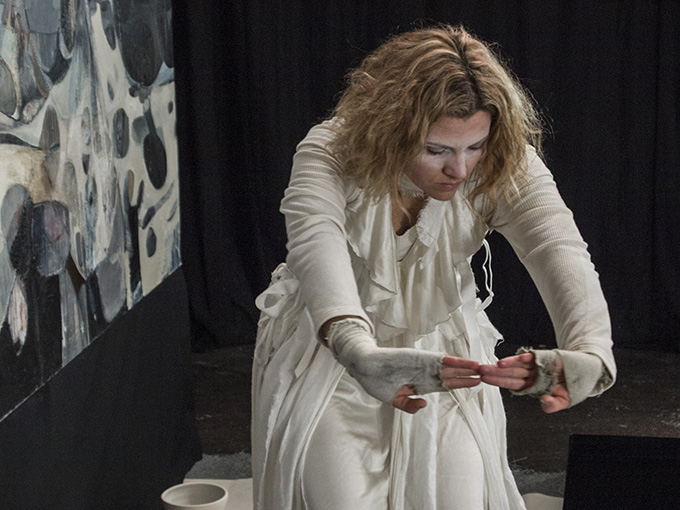
Kirsty Lee performs before the painting
.
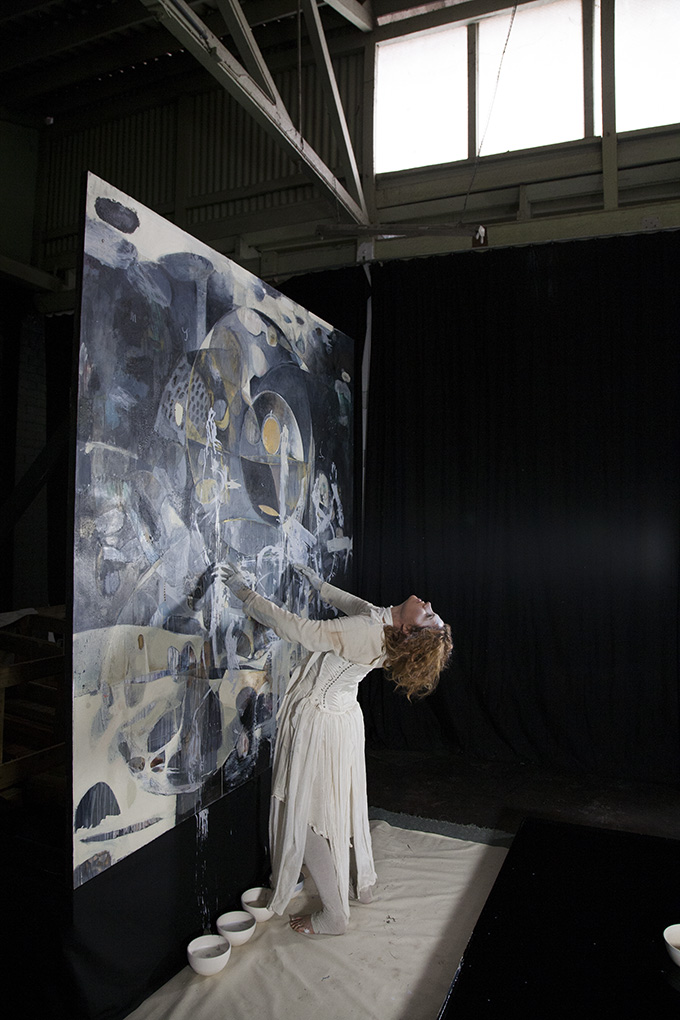
State 3 Kirsty applies paint to the paining…
.
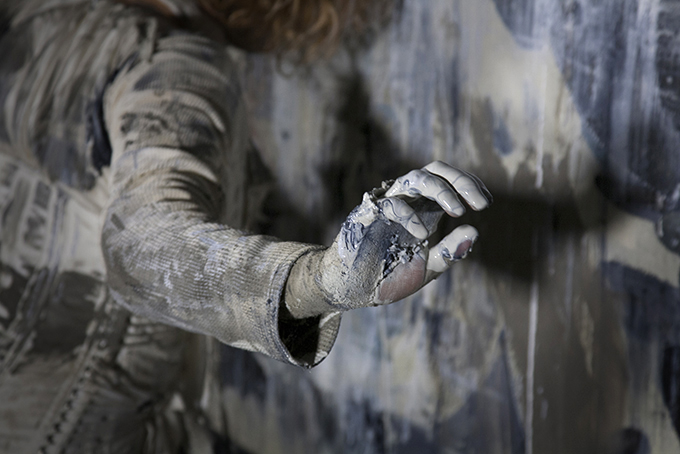
Hand paint
.

Kirsty Lee and her interaction with the painting … around Stage 6
.
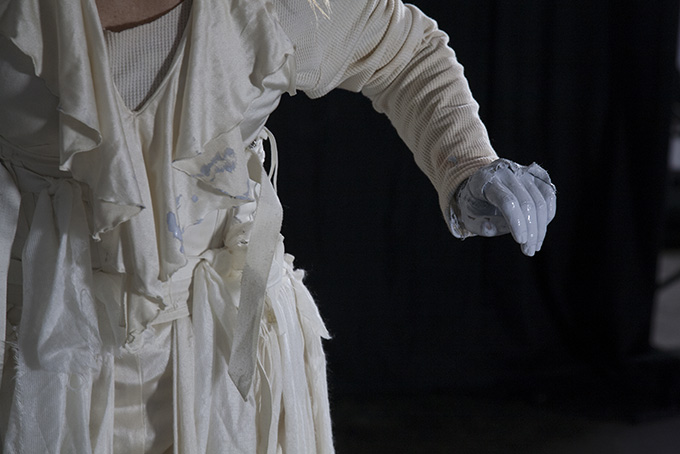
Blue hand…
.
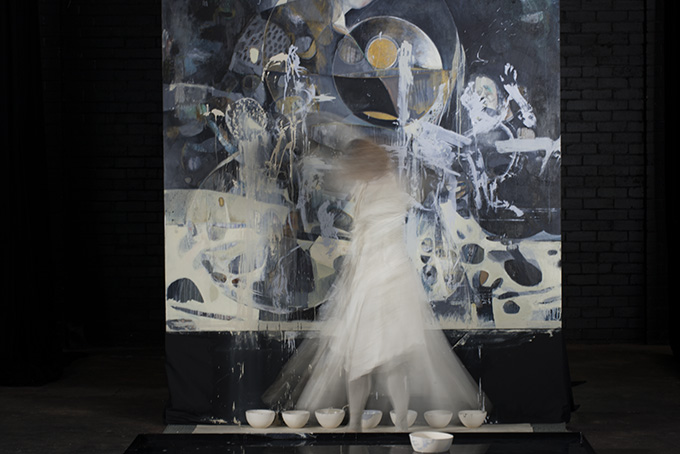
Kirsty Lee in a frenetic stage…
.
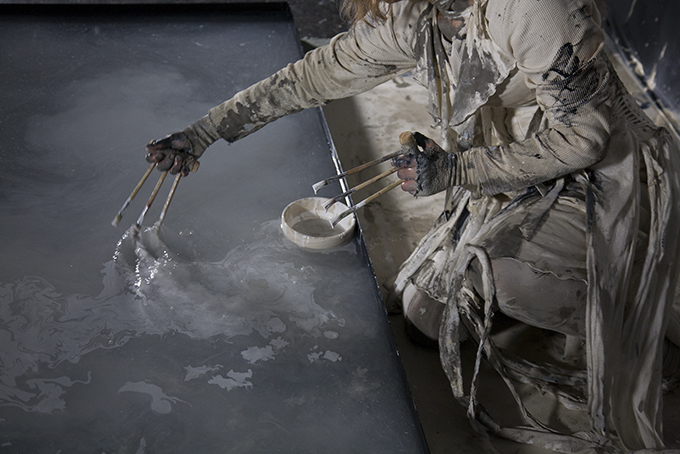
Kirsty and brushes before the pool
.
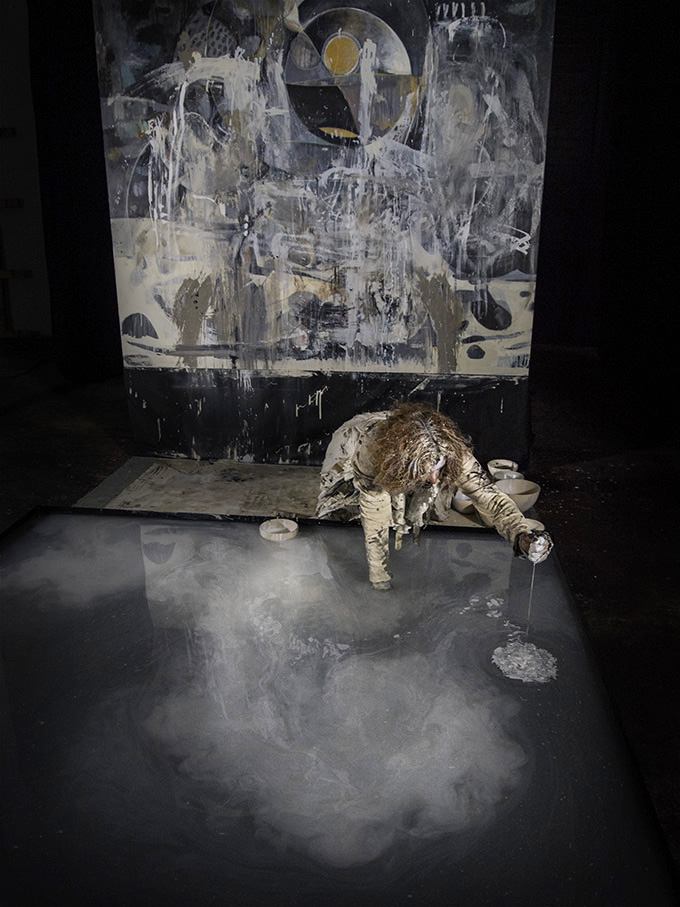
Paint fluid in the pool…
.

Towards the final state…
.
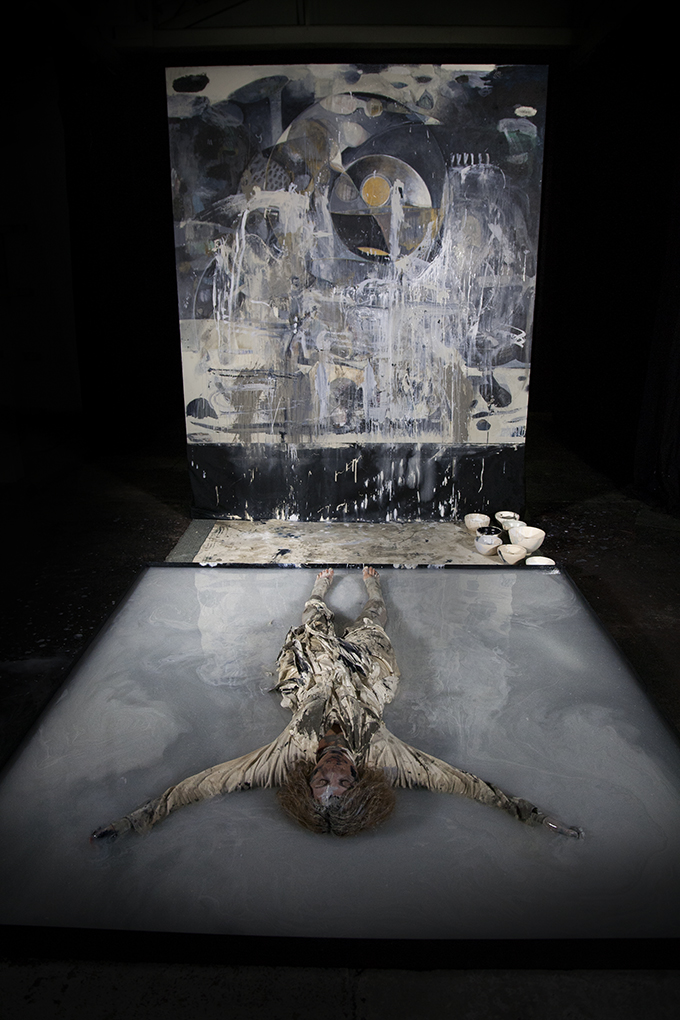
The final state …
…
.
 .
.
.
.
/.

Damien discussing movement with Kirsty
.
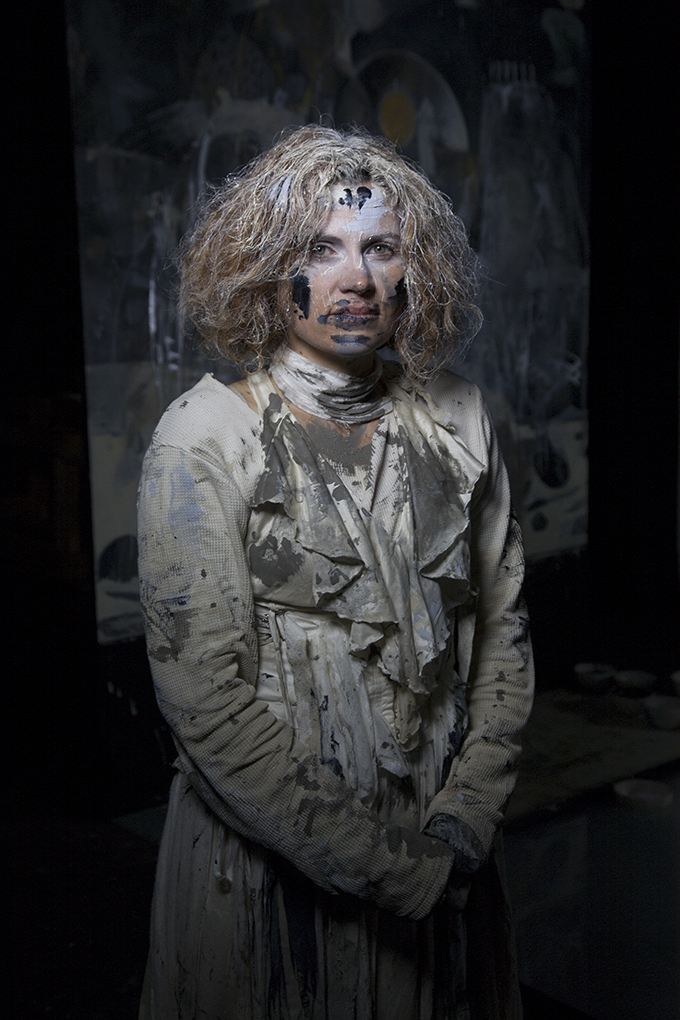
Kirsty Lee towards the end of the performance
.
Another creative work from the performance by Jason Nash…
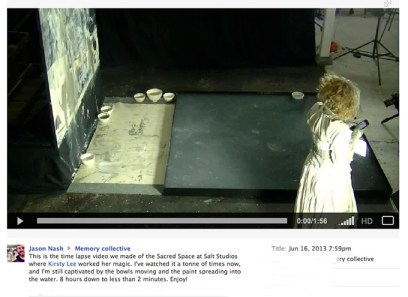
Jason Nash – Time lapse video
CLICK HERE to see Jason Nash’s ‘Memory Collective’ time-lapse video
.
The Team: Front Ashleigh Campbell, Julio Dunlop, Kirsty Lee, Victoria Cooper, Doug Spowart
Back: David Usher, Jason Nash, Jesse Wright, Damien Kamholtz, Zac Rowling ( weakling).
Not present: Craig Allen & Jake Hickey
.
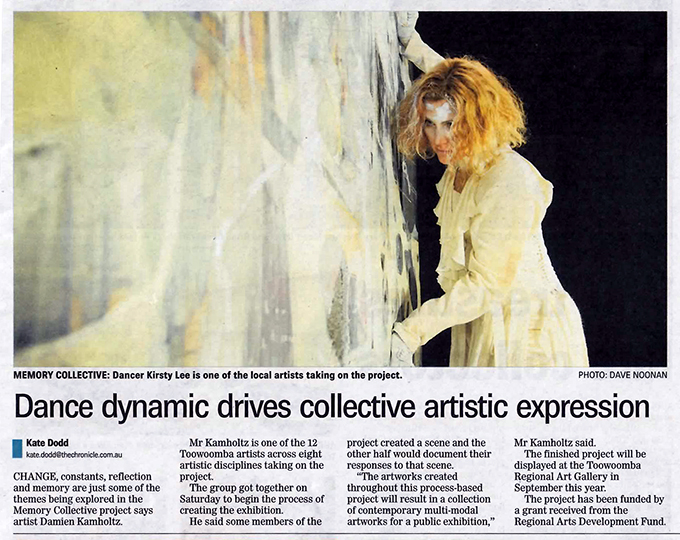
Toowoomba Chronicle 17 June, 2013 by Kate Dodd PHOTO: Dave Noonan
.
..
 .
.
.
© 2013 Victoria Cooper and Doug Spowart for The Memory Collective
.
This work is licensed under a Creative Commons Attribution-NonCommercial-NoDerivs 3.0 Unported License.
.
.

 wotwedid