Archive for the ‘Doug Spowart’ Category
THE PhD PENULTIMATE DRAFT and 5 Food Antidotes
Are you undertaking a PhD? Does the stress of it all affect your health and well being?
Here are 5 Antidotes in the form of food snacks that may help.
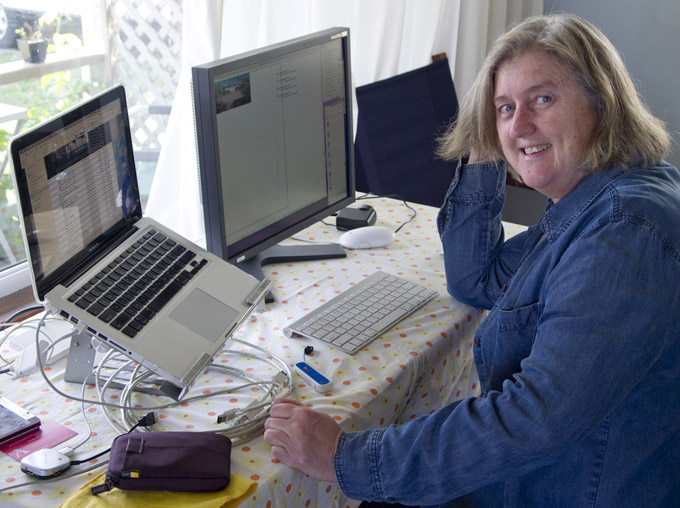
Victoria Cooper @ the Wooli Study Centre working on her PhD
.
ANTIDOTE #1: A LUNCH of ANTIPASTO DOWN THE BEACH
Two slices of prosciutto, mixed unsalted nuts, a slug each of double brie and blue cheese, black olives, pickled onion, seeded biscuits and packham pear. We drove there so Bundaberg Ginger Beer was the accompanying beverage.
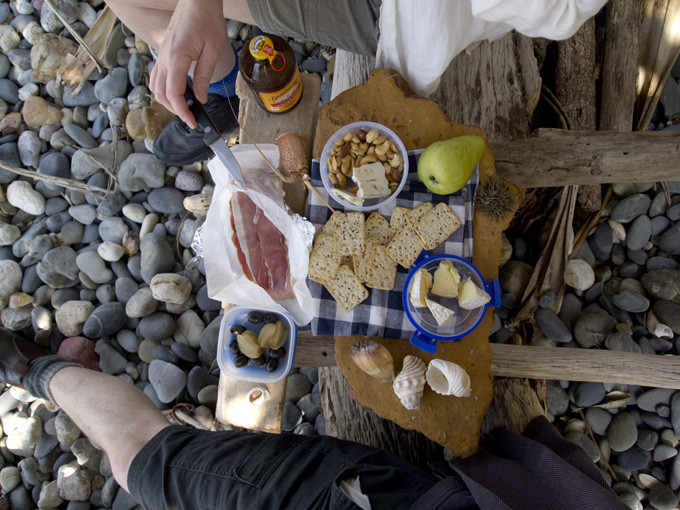
An antipasta-styled lunch on the beach
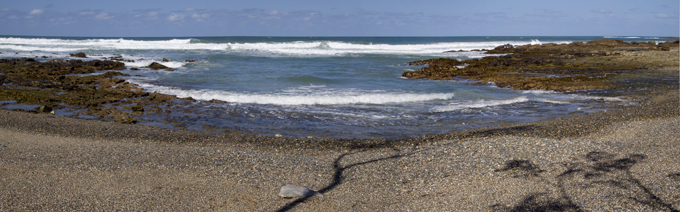
The view from the luncheon table…
SEE OUR ‘ALONG THE TRACK BLOG’ POST on the location Diggers Beach near Grafton
.
ANTIDOTE #2: An AFTERNOON TEA of home-made LEMON CAKES and EXPRESSO COFFEE
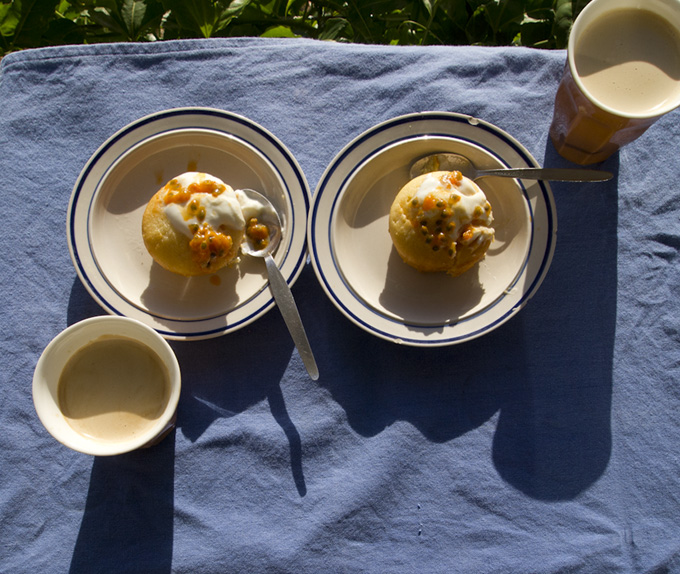
Afternoon tea of lemon cakes and coffee
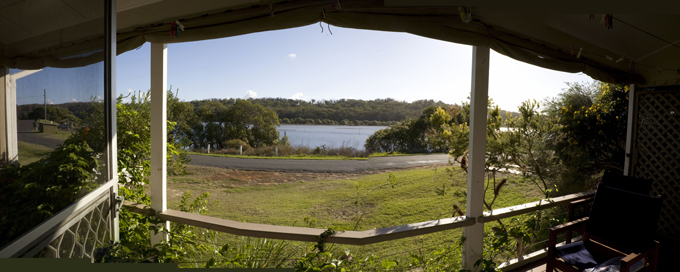
Afternoon tea verandah view
.
ANTIDOTE #3: A LUNCH of OYSTERS – Kilpatrick, with capers and mayo and au naturel with sourdough bread and fried prosciutto accompanied by a small glass of Verdelho white wine.
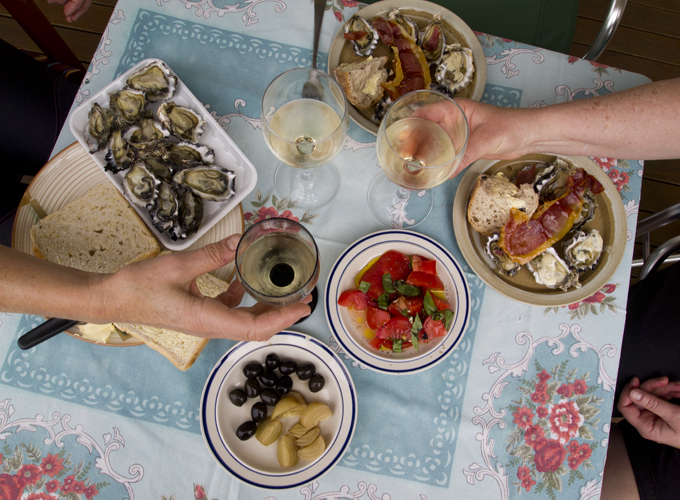
Oysters – a serving for three
.
ANTIDOTE #4: A SEAGULL’S BREAKFAST the coastal version of the ‘Dingoes Breakfast’ – A poop and a look around…
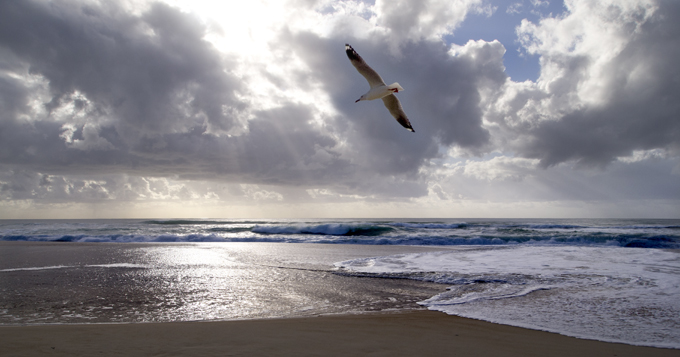
A seagull’s breakfast
.
ANTIDOTE #5: DINNER – FISH ‘n’ CHIPS out of the paper with lemon slices, mayo, flaked salt from the Murray River and a New Zealand Chardonay from Marlborough Sound.

Fish ‘n’ Chips and Mayo
NOTE: Don’t forget to have a great view to look out over when dining…

The view: Wooli River and Yuragir National Park beyond
.
We trust these antidotes may work for you … They did for us
Cheers Dr Victoria and Dr Doug
.
.
.
HELP DESIGN YOUR CITY: TRC City Centre Master Plan consultations
The invitation document header
Like all regional communities in the middle of the resources boom Toowoomba is a town growing rapidly. The Toowoomba Regional Council (TRC) has initiated studies to develop the necessary planning strategies considering the region’s expansion into the foreseeable future. The project is entitled the City Centre Master Plan (CCMP) and is intended to provide, ‘a co-ordinated set of design frameworks that will build on the strategic vision outlined in the CCMP by providing more detailed design concepts and guidelines.’[1]
Community consultations are a necessary part of the inclusive methodology employed by the TRC to ensure that their consultants and advisors ‘get it right’. On Wednesday the 17th of October members of the public and other interested parties were invited to ‘Help design public spaces within the Toowoomba City Centre’. We responded to an invitation for artists to contribute to the plan that came via the Arts Council of Toowoomba’s electronic mail-out.
At the meeting we were given an overview of the project and introduced to a plan for the workshop that divided the city into ‘places’ for review and discussion including the following: Open Spaces, Laneways and Streetscapes, Public Art projects and the landscape.
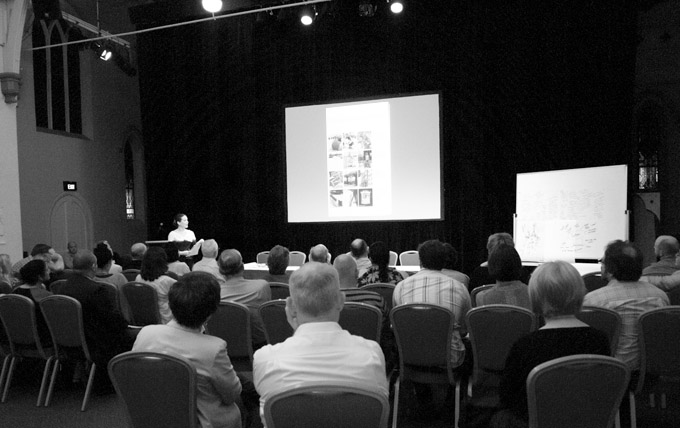
The meeting began with an overview
Vicky joined the table discussing the laneways and Public Art projects, which was directed by Brisbane art consultancy and project management group, Urban Art Projects (UAP). The discussion identified important Toowoomba Spaces: The Chronicle Arcade, Bell Street Mall, Duggan Street and general laneways and pathways commonly used to flow through the city. All agreed that the West Creek needed to be acknowledged as an important feature of the city.
The discussion of public art projects was highlighted with a question regarding the current lack of an art policy in the TRC planning agenda. The attendees were then reassured that the policy very close to being approved.
Many creative ideas, some new and some proven such as the Melbourne laneway projects were mentioned in the round table discussion. The need for safe public laneways and actively utilised, peopled public spaces were key points for the new development. In-situ and ephemeral art projects were high on the agenda to resolve some of these issues. The time passed and seemed productive for the team running the workshop. Some new networks were developed as people interacted in the discussion.
Even though there was a genuine attempt to be inclusive and respectful for the potential of existing structures both physical and cultural, there was no guarantee that any or all of the ideas would be realised. This was a plan for the possibilities, rather like a suggestion box. How they were to be funded and managed was not on the agenda.
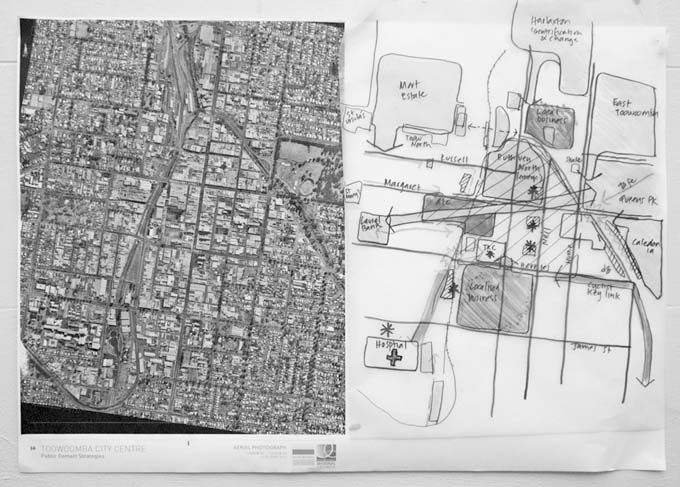
An aerial photograph and planning discussion document from the meeting
On another table the topic of Open Spaces was discussed with Peter Richards, Director of Deike Richards, a Brisbane based multi-disciplinary design practice. The members of the discussion group included many urban planners, architects, councilors and artists. Topics discussed looked at traffic flow, tree-lined boulevards, redevelopment of large blocks including the City Hall precinct, ideas for the Toowoomba Foundry site, bikeways and the repurposing of car parks into greenspaces. Suggestions for the Foundry site included a market like Melbourne’s Victoria Markets, as well as an artist’s studio precinct and a GOMA/MONA-like gallery—could it be called “TOGA–TOowomba Gallery of Art?.
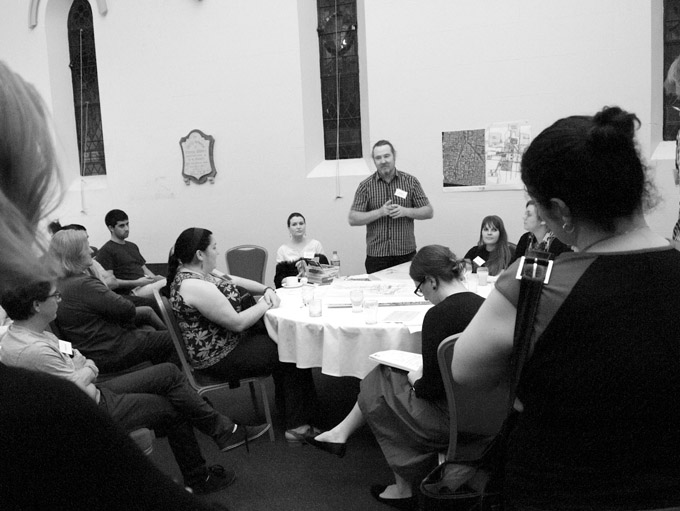
Summation of discussions
Ever present on maps of the Toowoomba City Centre at this meeting is a mega shopping centre development by QIC Global, creators of Robina on the Gold Coast and other major shopping centres. Their plan is to link the existing structures of Grand Central and Garden Town shopping centres with an overhead walkway. This will necessitate the demolition of the Council Library and the bridging of West Creek. It’s interesting to consider that shoppers will now only need to drive to either shopping centre, cross the walk way to the other and back into their cars. They perhaps will no longer need to engage with the older town shopping precinct.
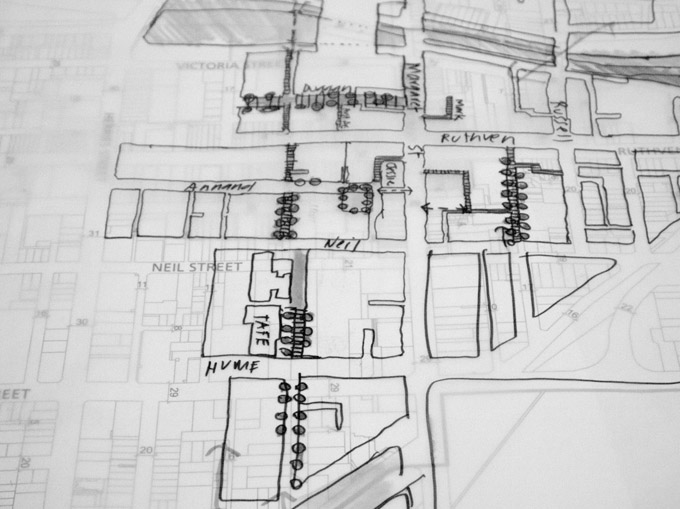
Discussion outcome overlays
What then is in store (a pun) for this historic town? What we are concerned about the following:
- Will art initiatives be managed, controlled and undertaken by outsiders in a kind of cultural fly-in fly-out fashion or will the art be nurtured and generated within?;
- Could the city centre end up as an experiment in urban(e) design?;
- Toowoomba has great historical value and memory, both Indigenous and colonial that needs to be considered;
- This city also has an important place in the landscape, on the divide between the great water system of inland Australia and the larger urban regions and fertile valleys of the coast; and
- As the community also is home to a rich arts scene, with many notable local, national and international creative individuals and groups that where ever possible could be involved as active participants.
We hope that commercial and political agendas will continue, as shown through this consultation process, to be influenced by community input, needs and values. And that this collaboration will create an ‘art-full’, exciting and functional city centre to support Toowoomba’s future as the commercial and public hub for this rapidly changing region.
Victoria Cooper & Dr Doug Spowart
[1] From the invitation ‘Help design public spaces within the Toowoomba City Centre’
COOPER+SPOWART Guest Bloggers @ SLQ Artists’ Books
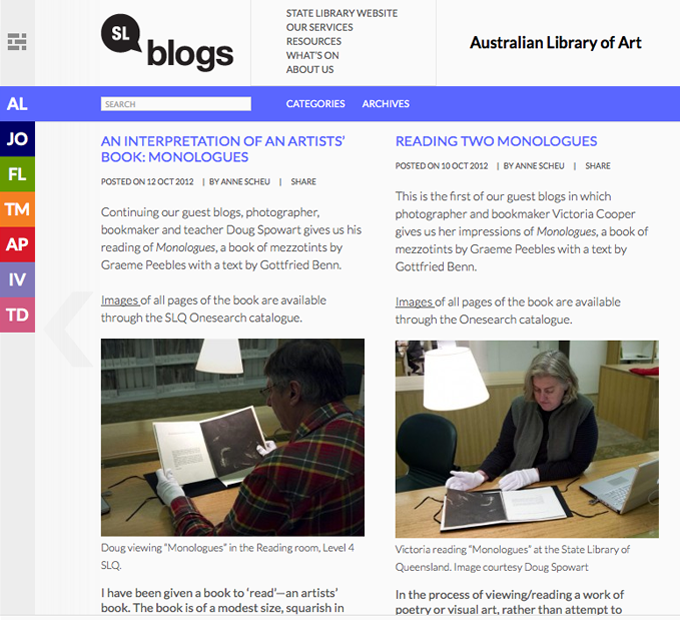
The State Library of Queensland has just posted commentaries that Vicky and I have prepared on the artists’ book ‘Monologues’, a book of mezzotints by Graeme Peebles and a text by Gottfried Benn. The texts and images of the book are available online – SEE …
http://blogs.slq.qld.gov.au/ala/
SLQ Blogsite
WOOLI NOCTURNE: a new project
We are working on a new project whilst on retreat on the NSW north coast. A tentative statement for the work is as follows …
In the interstitial zone between day and night our everyday and prosaic surroundings begin to take on an appearance that is, for us, unfamiliar. Streets and houses, the spaces of our habitation, are illuminated by the afterglow of sunset or by the shaft-like rays from the occasional street light. In this space the homely becomes the uncanny. Perhaps stirring memories of cave dwelling experiences deep within the primitive brain where in the shadows of the coming night, monsters lurk – just beyond the fire’s warm flickering light.
Enjoy … Vicky + Doug
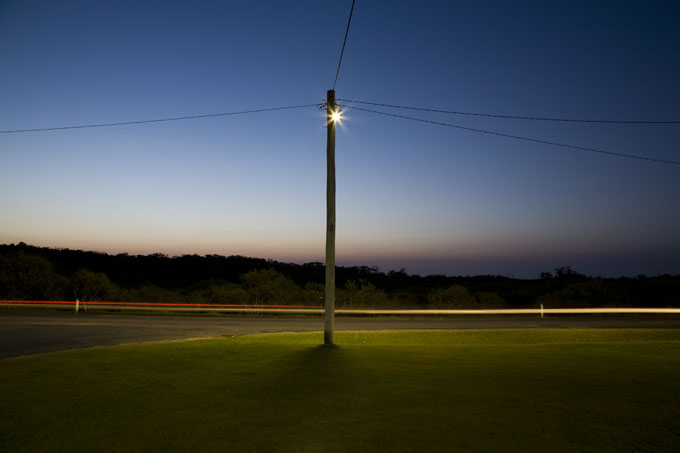
Image 0202
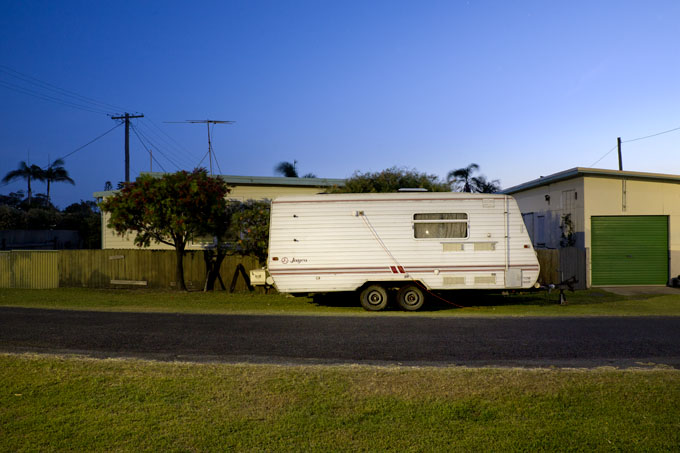
Image 0199
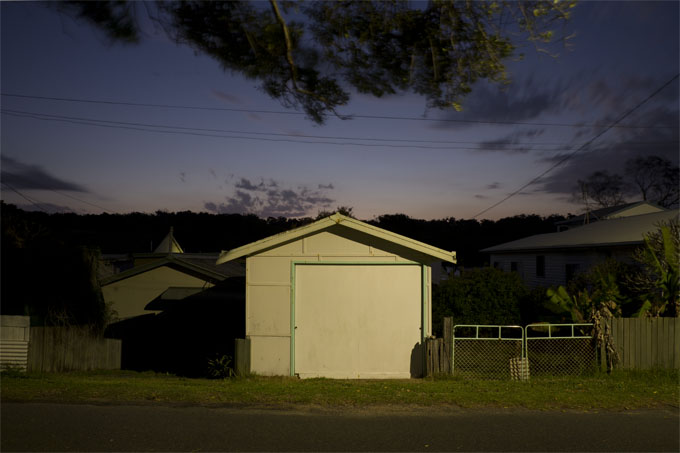
Image 0133
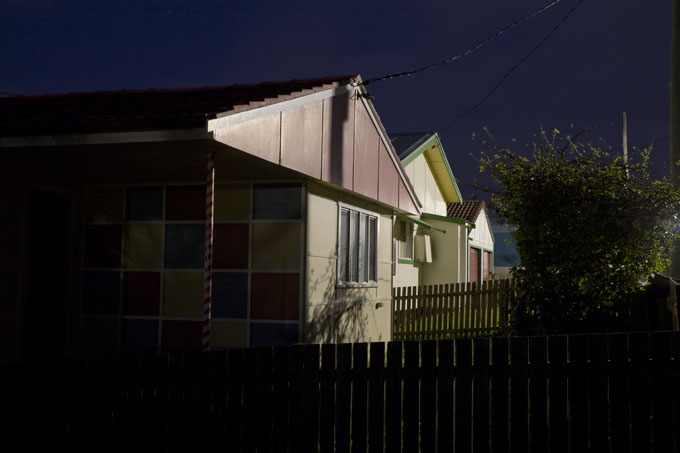
Image 0142
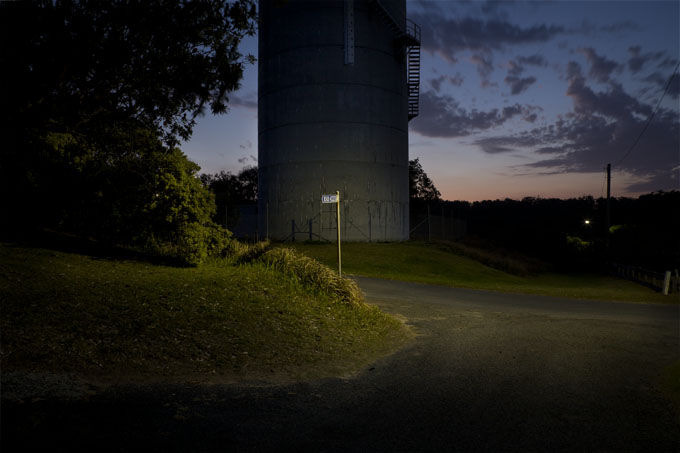
Image 0129
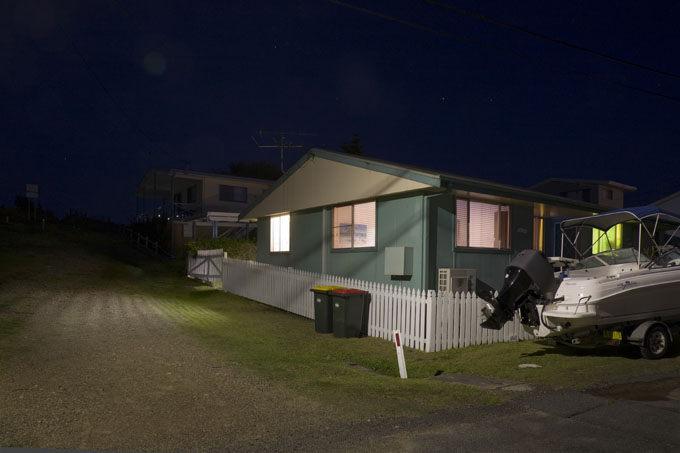
Image 0094
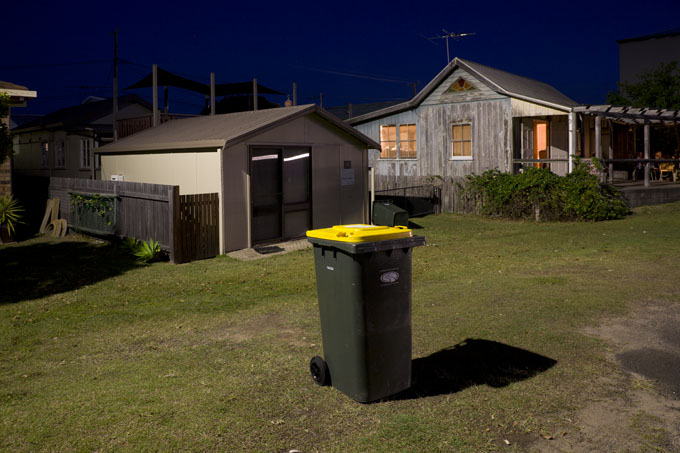
Image0092
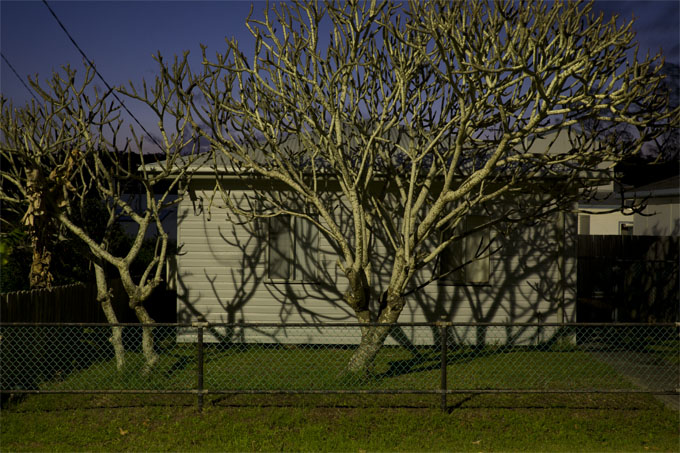
Image 0135
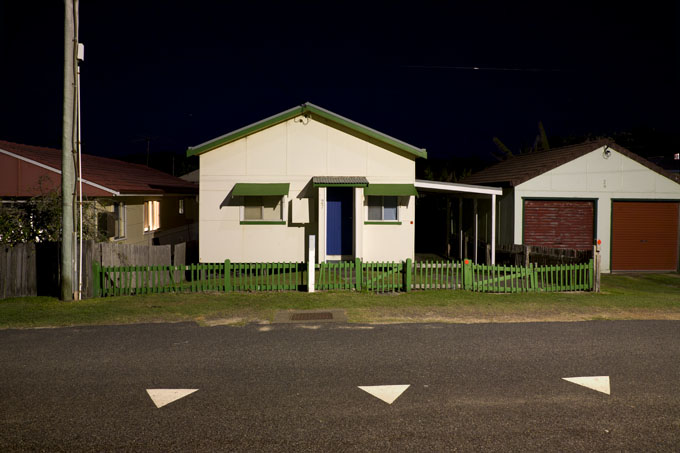
Image 0216
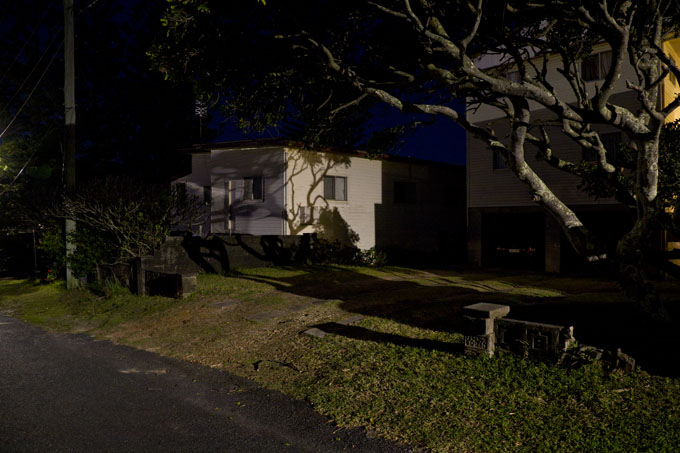
Image 0097
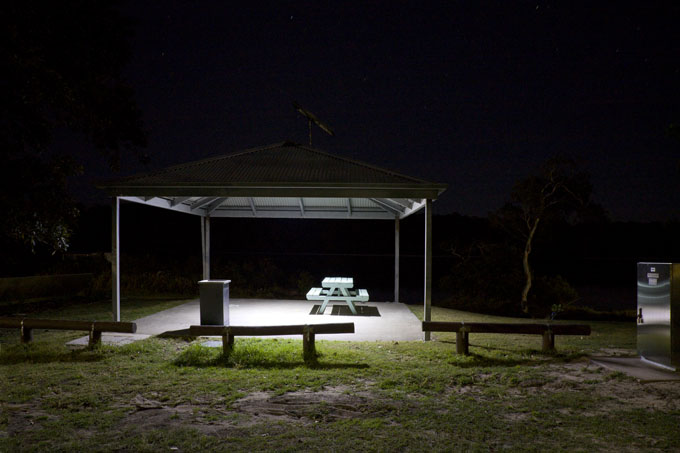
Image 0110
In support of The YEAR OF THE FARMER ‘The CondaMINE Cow – Variety: Thylacine’
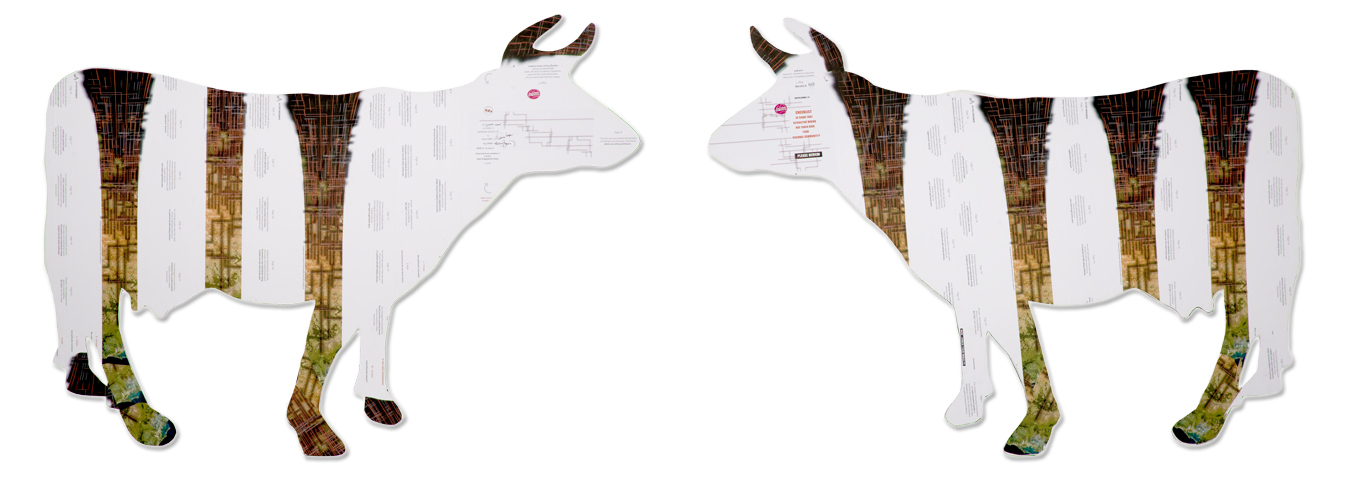
‘The CondaMINE Cow Variety: Thylacine’ recto and verso
We, at the Centre for Regional Arts Practice, are about to contribute an artwork to a project that is intended to celebrate the Australian Year of the Farmer. The project is called, the Australian Year of the Farmer Cow Art, and is being organised by Wendy and Paul Blinco from Pacific Seeds, Toowoomba. Around 1,000 corflute cows were made and passed on to interested groups, artists and school kids across the Darling Downs Region to decorate. The plain white surface of the cows have been painted, collaged or worked on by a range of other artistic means.
For more information visit the Australian Year of the Farmer Cow Art Facebook site
Named The CondaMINE Cow – Variety: Thylacine, our cow was created from a montage of texts and images from our Artists Survey book #12 Checklist of Signs That Extractive Mining Has Taken Over Your Regional Community (SEE the blog post Flying Arts Award for details). In this book, and now in this new variant (the Cow), we posit that a threat exists for farmers and farming land productivity by the extensive mining activity now taking place throughout this land. The farmer, like the Thylacine, may be an endangered species destined for extinction. We trust this cow will raise interest and promote debate on this issue.
Our Cow is at the beach where the makeover was carried out—next week she will be herded together with another 1,000 cows in Toowoomba for the main event.
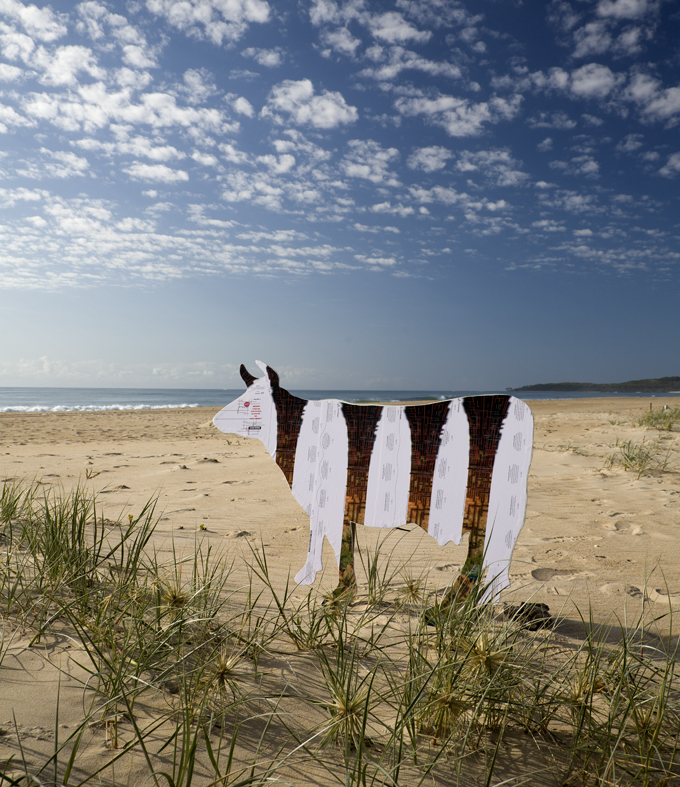
‘CondaMINE_Cow’ artwork by Victoria Cooper + Doug Spowart
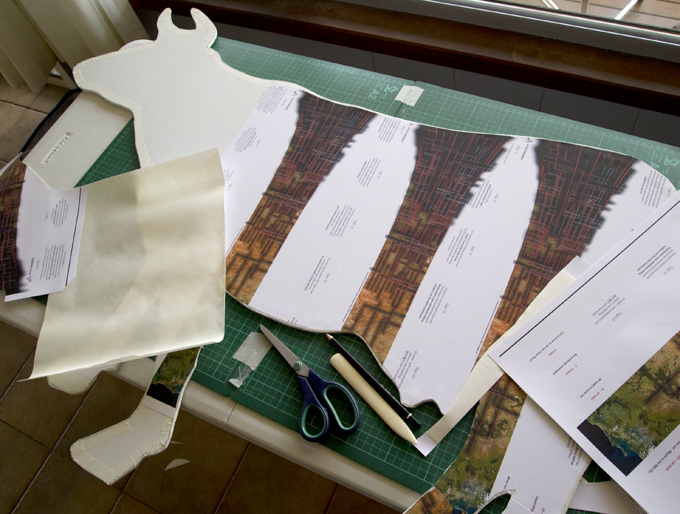
‘CondaMINE Cow’ in production
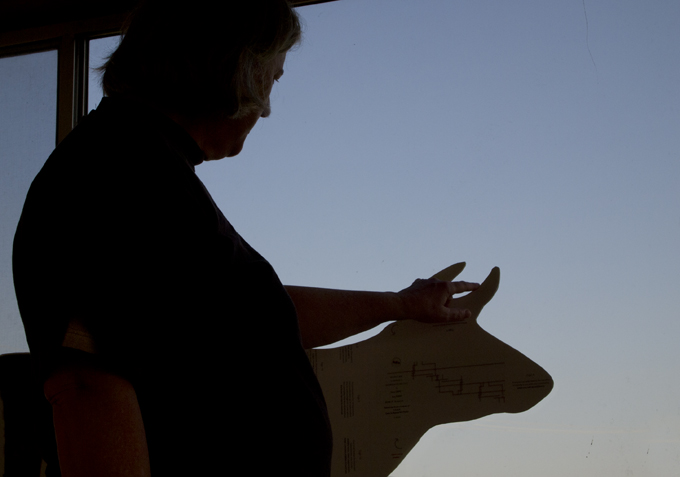
Vicky offering suggestions for the makeover
MEETING JULIE BARRATT@Grafton Regional Art Gallery
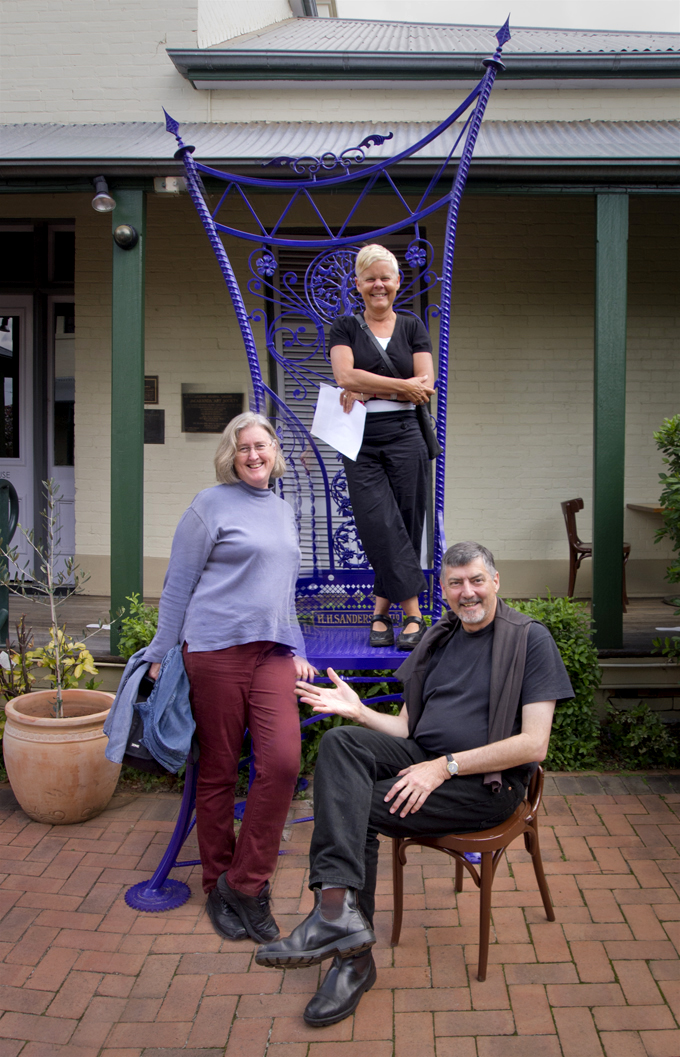
Julie Barrett on the Big Chair @ Grafton Regional Art Gallery with Victoria+Doug
As part of her role as Arts and Disability Manager for AccessibleARTS Julie was visiting GRAG to review proposals for an exhibition that is designed to cater for people with a disability. The exhibition, scheduled for later this year will feature works from the gallery’s collection that will be reinterpreted by local artists with the twist being that the new works need to be ‘viewable’ by visually impaired people—sounds like an interesting project.
We did lunch at the gallery and discussed a range of topics—it has been a while since we’d connected (SEE Wotwedid post JUNE 2011). We shared updates on our art projects; Julie spoke of another amazing project working with Aboriginal women from Central Queensland working with textiles and print techniques on silk that stretch for many metres. She is curating a show of this work at the Rockhampton Regional Art Gallery. Julie has a work in the upcoming Democracy exhibition @ Grahame Galleries in Brisbane and recently she was the recipient of the Alumni Award for the Arts and Social Sciences Faculty at Southern Cross University.
Julie was presented with a copy of our most recent Artists Survey book that deals with the encroachment of mining on farming lands in Queensland. She opened our booklet, read a few of the ‘signs’, appreciated the irony of the text and put it aside to review at length later. She then recounted the story of her childhood in North Queensland where the family owned the Blair Athol Station. Well, the property and the school that she attended were mined, disappeared—a huge open cut mine. At school the students were warned of blasting by a siren. They would then go and press against the library shelves to stop the books being vibrated out onto the floor. This and other memories of this mining encroachment are still strong for her and are being somewhat relived by CSG activities that are gaining ground in Northern NSW.
She needs to make art about it. Maybe we all need to whether or not it will change anything. We’ve recently come across a quote from Gerhard Richter that alludes to the circumstances of being an artist—the words may have resonance for any artist in any medium. He states,
“Painting is consequentially an almost blind, desperate effort, like that of a person abandoned, helpless, in totally incomprehensible surroundings—like that of a person who possesses a given set of tools, materials and abilities and has the urgent desire to build something useful which is not allowed to be a house a chair or anything else that has a name; who therefore hacks away in the vague hope that by working in a proper, professional way he will ultimately turn out something proper and meaningful.”
Gerhard Richter Notes1985 in The daily Practice of Painting edited by Han-Ulrich Obrist and translated by David Britt. London, 1985 p121 (note from 18.5.1985).
75 Years: Toowoomba Regional Art Gallery
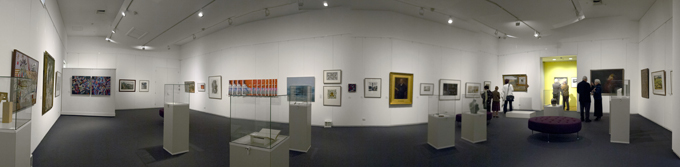
Toowoomba Regional Art Gallery Panorama
Toowoomba Regional Art Gallery, the oldest regional art gallery in Queensland, this month celebrated its 75th year of operation. When we consider that Queensland only recently celebrated its sesquicentennial therefore the gallery is half the age of Queensland itself! Other interesting dates; the Toowoomba region was settled in the 1840s and was proclaimed a city in 1904 The Toowoomba Show Society recently achieved a milestone of 142 years of shows in agriculture and industry and the Empire theatre celebrated its 100th birthday last year. It seems that the Toowoomba region was well and truly fired up as a community and perhaps overdue for an art gallery that was finally established in 1937.
The records show that various Governors of Queensland were associated with TRAG over the years and this association continues to this day with the current Governor Her Excellency Ms Penelope Wensley opening the 75th exhibition on July 2, 2012. In an impressively researched speech Governor Wensley recounted newspaper reports of the day relating to the gallery’s foundation. The 75th opening was attended by around 100 members of the local community including Mayor Paul Antonio, various councillors and members of the trustees or families of significant donors to the gallery.

Gallery Curator Di Baker with Governor Wensley discussing artworks
The exhibition features 75 individual artworks from the gallery’s collection—one for each of the 75 years. Standing in the middle of the main exhibition area one sees a diverse range of visual material. Paintings of bygone and contemporary eras by some very prominent artists, there are ceramics, fine jewellery (from the gallery’s principle collection media—contemporary wearables), and finally photographs and prints complete the veritable visual cornucopia on show. When I came to testing my recollection of the artwork’s titles and artists I was stumped, as the artwork didactics bore none of that information. This presented some confusion until I became aware the curatorial strategy for the show. The 75 works were selected on the basis of the year and the work’s conceptual connection with significant social, political or historical aspects of that year. The key to the sometimes quirky and idiosyncratic curatorial selection is the exhibition catalogue in which the rationale for the selection is linked with the title, media and the artist’s name.
While at first this seems a little strange my reflection on the concept confirms, for me at least, that the strategy is conceptually stimulating. The usual gallery exhibition is about artists and their art—this show IS about the gallery, its PLACE in the community and TIME, or rather the passage of time—75 years in fact. In this exhibition the gallery then assumes the position of ‘artist’ and were the ‘artwork’ is the curatorial team’s strategy.
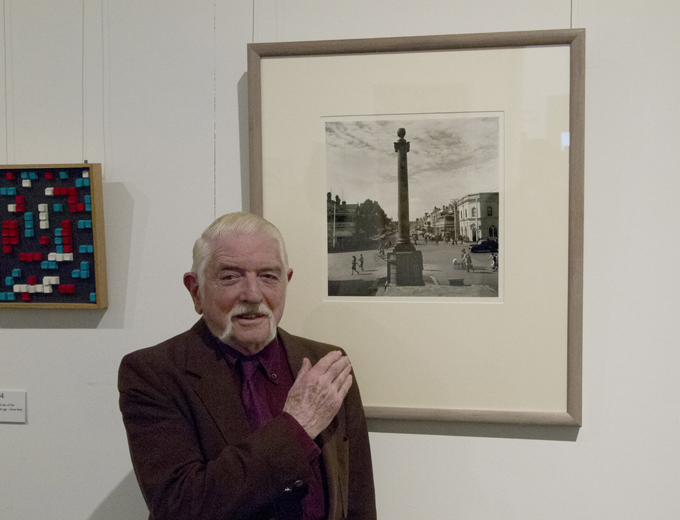
Doyen of Toowoomba’s photo scene Graham Burstow with a Max Dupain photograph in the exhibition
Bravo to the Toowoomba Regional Art Gallery and the team for bringing to us an exhibition featuring the gems of art from its collection that can tell these multiple stories. One, which is about the assiduous collection by the gallery of art stimulated by and/or created by the regional community. And secondly, this show provides recognition of significant art from outside Toowoomba that has been generously donated by benefactors over the years. Through the gallery display of these artworks the local community is able to connect with these wonderful touchstones of artists’ creative practice.
A visit to TRAG to see this show will require much more engagement than usual walk-through, so do plan for extended visits while the 75th year celebration show is on.
SEE more info Toowoomba Regional Council website
Doug Spowart 8 July 2012
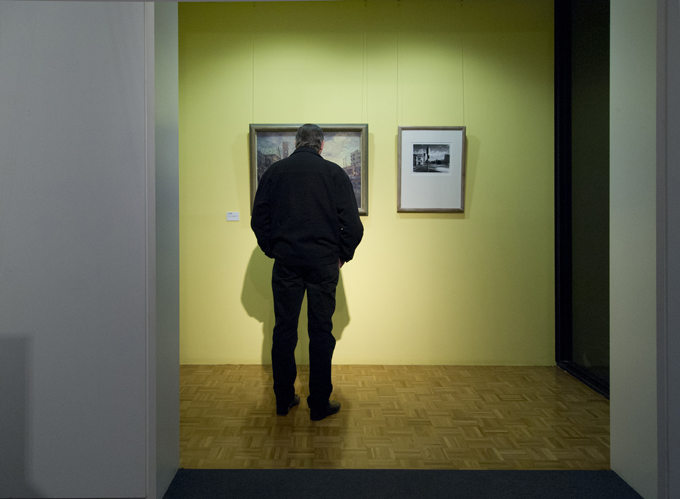
Doug next to his photograph of Ruthven Street selected for the exhibition
LIFE’S JOURNEY: Artists’ Book Exhibition, Redland Art Gallery
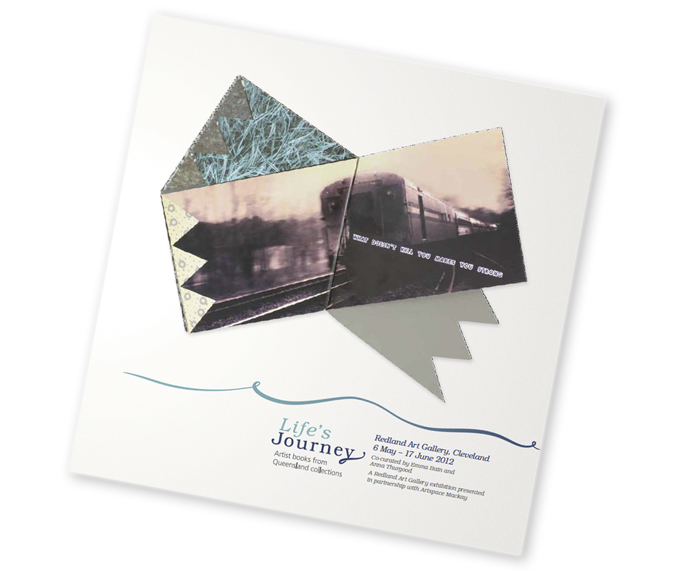
Life’s Journeys exhibition catalogue cover Redland Art Gallery
Judging a book by its cover a page
The artists’ book is usually sequestered away in library stacks and drawers in their neat little custom made archival cardboard boxes and plastic bags. In specialised library and private collections these are treasured objects; their owners become the custodian of the physical object of the book and the story is revealed in the site-specific act of reading within these spaces. But … sometimes they escape. On occasion artists’ books escape en-mass from their natural home of the library or private collection, and this is exactly the case with the exhibition Life’s Journey recently presented at the Redland Art Gallery, Cleveland.
Co-curated by Emma Bain Director of Redland Art Gallery and Anna Thurgood Acting Director of Artspace Mackay, the exhibition assembles books drawn from the significant, perhaps one could say—international quality, collections found in Queensland; Artspace Mackay (AM), grahame gallies + editions (gg+e), the State Library of Queensland (SLQ) and Studio West End (SWE). The exhibition’s themes, as highlighted in the catalogue essay by Louise Martin-Chew claim that they are intended to seek ‘out universal truths in individual journeys’, ‘the personal and individual’, …and ‘artist narratives with memoir-like threads’.
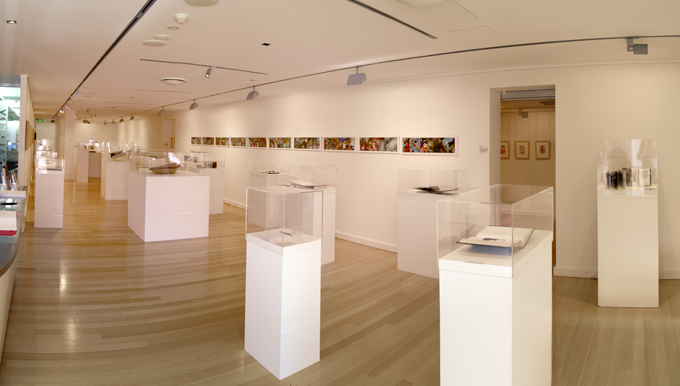
Life’s Journey exhibition @ Redland Art Gallery, Cleveland Photo: Doug Spowart
The viewer entering the gallery to see the Life’s Journeys books may not have read the catalogue, or have an understanding of the artists’ book discipline, but what they are to encounter in the white cube of the gallery space will be unusual. The Redland Gallery’s main room a literal forest of fourteen or more acrylic topped display cases. Inside each case resides the book, open to a page and resting on a stand or pillow. Some books don’t seem like books at all, they look more like 3D sculpture, or jewellery forms, or even things just fastened or bound together by threads. Other ‘books’ are in frames or on panels on the wall—one is even a projected image. It’s here where the viewer becomes acquainted with the ‘non-standard’ nature of the artists’ book—but there is more… The viewer can look at the narrative segment presented by the open page, or the expanded story presented in the wall-mounted works, or books that are of the concertina form. While being visually entertained by the titillating ‘sample’ view, the visitor may probably enjoy the encounter and will leave feeling a sense of discovering something interesting and unusual. But I would suggest that this is only part of the experience that the artists who made the books expected or wanted for those who see their books.
I know that this sounds like the continuing debate about the gallery exhibition of books where the sequential narrative that artists’ books require is neutered by single page views. But there is an issue, and for me a redeeming feature for shows like this, and that is that the display of artists’ books will encourage and excite people to hunt down these books in their usual library-sited storage spaces.
What I have written about before,* and what I will restate is, that these exhibitions are ‘tasters’ only. The exhibition strategy needs to include ways by which viewers can identify books of interest, understand how to access them, and then go-see, handle, read and fully encounter the artist’s communiqué. What is needed for the gallery viewer is a catalogue of the books and their source collections, how to access these collections, online references (maybe even flip-books of the works), perhaps even initiated within the exhibition space by QR codes or augmented reality clips. Using this concept the exhibition becomes an invitation for those who wish to take up the offer to handle and read the books in their site-specific habitat.
Now that’s off my chest, I have to say what an amazing collection of artists’ books the curators have pulled together. Seeing this cherry-picked selection in this context is far more interesting for me than looking through an online catalogue—here there is a sense of discovery. It’s a bit like going to a second-hand bookshop and just wandering through the stacks picking up whatever takes your fancy. Wandering through Life’s Journey was indeed an encounter with an eclectic bunch of artists’ books. Some of my favourites were there.

Adele Outteridge’s God Bless America Photo courtesy of Adele Outteridge
This included Adele Outteridge’s Teabag Book (2005) from SWE – just how many cups of tea were consumed to make this book? And another of Adele’s books, God Bless America (2003?) also from SWE, makes a political statement that can be read in different ways depending on the reader’s point of view of American society or foreign policy.
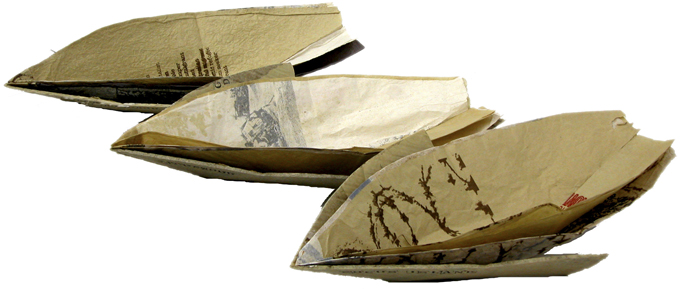
Books from the Codex Event 4 of which Naru is one (for reference only) Image courtesy of Tim Mosely
Another book Naru (2007), from the SLQ, was constructed from paper to form a 3D vessel—the book as a metaphor for a boat. The work was the result of a collaborative project entitled Codex Event 4 coordinated by Tim Mosely at Southern Cross University. Naru and the other books that were created by the team have an overtly political statement contained within their shape and the titling. These works comment on idea of the freedom that many people seek as they cross borders as refugees and how this conflicts with the Australian Government’s immigration policies.
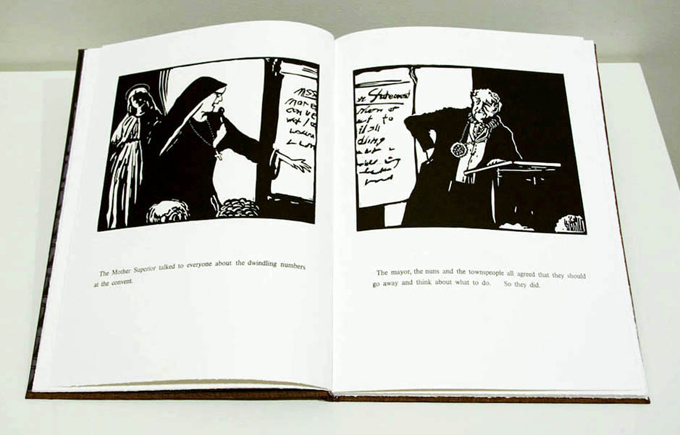
Sheree Kinlyside’s ‘The reluctant nun” (2009) @ 2010 Libris Artist Book Awards. Photo Doug Spowart
A fine press/printmakers book is represented by Sheree Kinlyside’s The reluctant nun (2009) from AM. The book was the winner of the Regional Artists Book Award at the 2010 Libris Artist Book Awards.
A book of a different shape, five sides(!) by American book artist Philip Zimmerman High Tension (1993), from gg+e, deals with a humorous look at contemporary society. The book is intentionally over-designed, montaging graphic elements and text with image narrative to make it an immensely interesting book—you want to pick it up and read through.
In the display of another book, Judy Watson’s Under the Act (2007) from gg+e, each page is framed and the work extends across one complete wall of the gallery. The folio single-sheet form of this book enables its reconfiguration to the wall possible. The work describes a personal narrative, a life’s journey, through the impact of oppressive white bureaucracy applied to Aboriginal peoples living in Queensland not that long ago.
Peter Lyssiotis and Noga Freiburg’s collaborative book Homeland (2003) from AM presents personal narratives of the authors, one a Greek Cypriot—the other an Israeli, about the way lines are drawn across maps to divide communities. The book invokes the story concept by using texts, family photographs and photomontages all bisected by a green line that divides the two communities.
One final book that I’ve always been inspired by is Scott McCarney’s Memory Loss (1988) from AM which deals with a medical condition that afficted his sibling. McCarney was recently in Brisbane with partner Keith Smith presenting an artists’ book workshop at the State Library of Queensland. This two-sided accordion structure book is replete with information from numerous sources including medical literature, personal photographs and correspondence. For me Scott’s book had truly escaped from the cases and was presented, sans protective acrylic lid, atop a plinth where viewing of one side was unobstructed. I think in terms of Scott’s politically subversive work that he would’ve liked that…
Life’s Journeys is a significant showing of what artists’ books can be and it puts the book firmly within the art gallery display environment. But none-the-less, with all the problems of display and the expectations that this commentator may have, the books do need to get out and about. They assert by their presence in the gallery that they exist and can be encountered by a diverse range of the art-interested public. And, perhaps is the case with any gallery exhibition, the viewer experience is something that develops and is enhanced by continued reflection after the viewing. The importance of the exhibition Life’s Journey, the accompanying exhibition Mind Mapping by local artist and bookmaker Jack Oudyn, and the associated workshops is that they will create much needed interest, scholarship and activity in the artists’ book genre. …. And hopefully inspire some viewers to become readers by pursuing the fuller of the artists’ book communiqué by engaging more fully with them when the books return to their respective collection homes.
Doug Spowart June 9, 2012
Please note: The links that I’ve selected to provide a visual connection with the text have been sourced from Google images and may not be the exact book presented for display in this show. I have found it interesting to discover how so many artists’ books are poorly, if at all, represented in the online domain.
KEITH SMITH + SCOTT McCARNEY @ SLQ
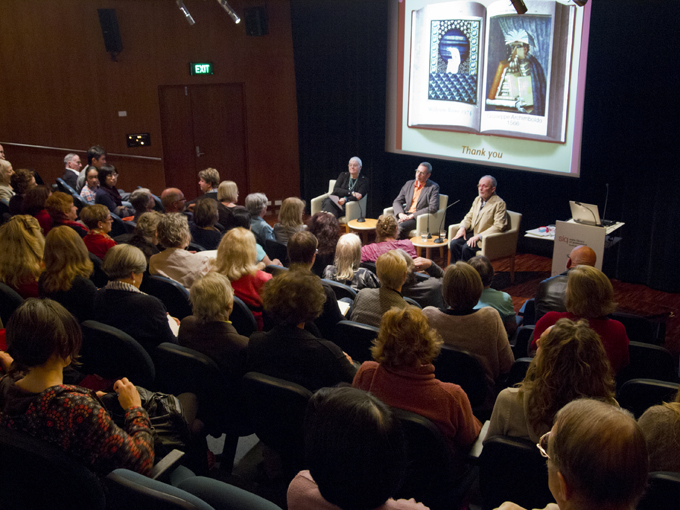
Please note: This post is derived from personal notes made at the event – They may contain some inconsistencies that are a result of my interpretation.
AUDIO NOW AVAILABLE @ http://enc.slq.qld.gov.au/audio/slq/pp/mp3/artdesign/Artistsbooks.mp3
In what looks like the one highlight in the Queensland artists’ book calendar for 2012 Keith Smith and Scott McCarney are visiting the State Library of Queensland to present a lecture about their work and to conduct a five-day workshop. Unable to attend the workshop due to teaching commitments I attended the talk at the SLQ today. I was not alone and the smaller SLQ auditorium was full of interested attendees — including some notables like Sarah Bowen, Adele Outteridge, Madonna Staunton, Wim deVos, Anne Marie Hunter and Lorelei Clark. The visit to SLQ by Scott and Keith is supported by the Siganto Foundation and members of the family were in attendance at the lecture.
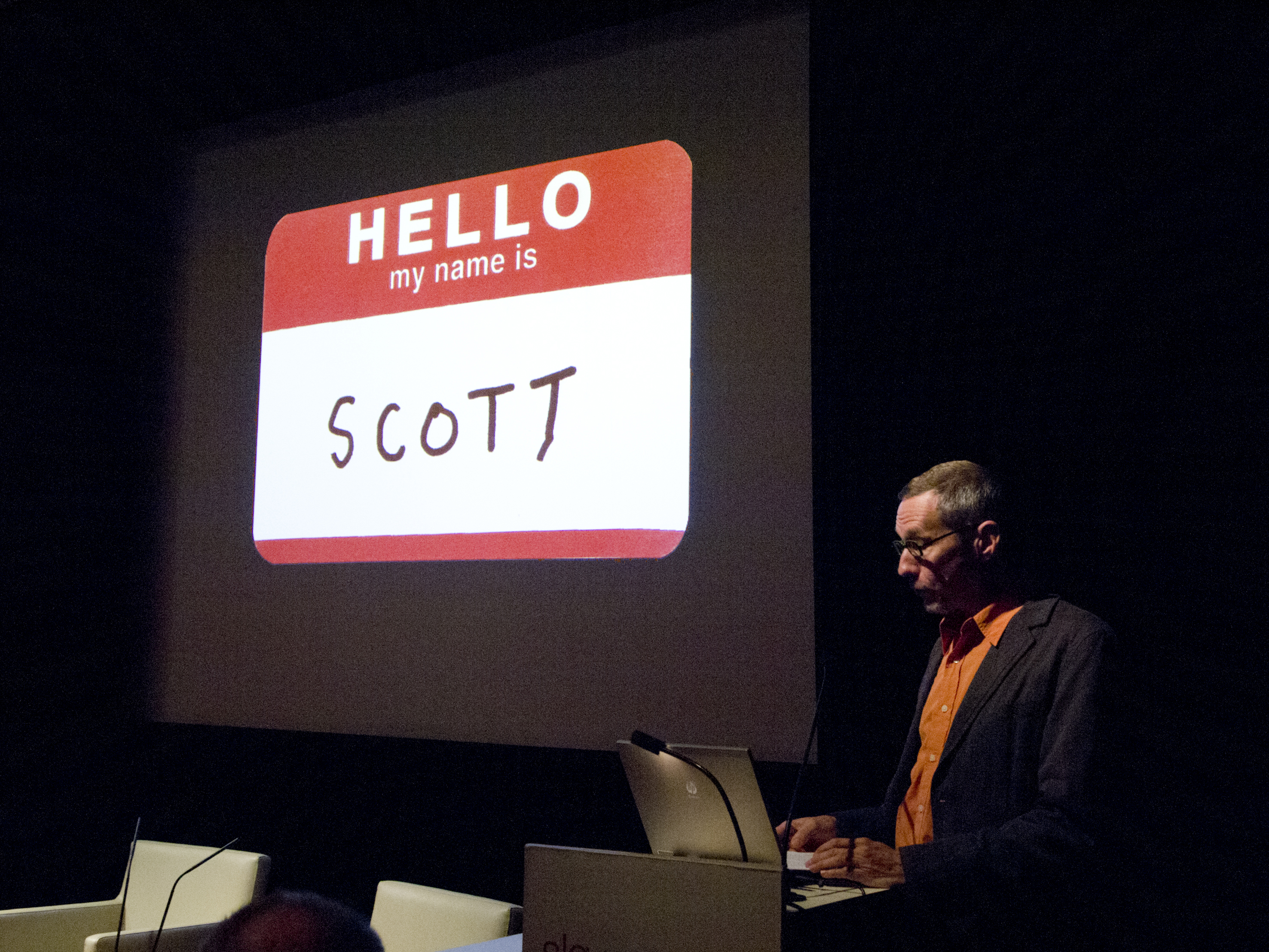
‘HELLO’ Scott!
After and introduction by SLQ Artists’ Bookie Helen Cole, Scott began his presentation by talking about the nature of the book in the digital age. He seemed to lament that libraries were beginning to change into Wi-Fi coffee houses — that’s not a problem for him as he believes the book, as a physical thing, will go beyond the electronic age.
He sees a real discussion about the future of the book is all about ‘display’. This remains a contentious issue for the artists’ book as they are difficult to handle and read as in exhibitions they are usually displayed frozen and ‘under glass’. Some of Scott’s work has been about presenting books as sculptural forms (Hanging Index) so the viewer does not really need to turn the pages to engage with the work.
Scott spoke in detail about his Autobiography series. He described how he couldn’t throw anything away and that he makes collections from things like name badges, rejection letters from galleries and grant applications, to-do lists and mud maps. This body of work provides an insight into the trivia and ephemera of life that escapes disposal through its transformation into his art. Connecting with the Internet world Scott’s Google Vanitas begun on Christmas Day last year represents the search results for his own name.
Scott showed many examples of works with where he cut through various pages within books to subvert the content of the book.
In a homage to Ed Ruscha Scott has taken Ruscha’s 1964 book Various small fires and milk and made his own take on the subject — Scott’s fires are those of riots and the curious inclusion of a glass of milk in Ruscha’s book is shortened to MLK, standing for Martin Luther King whose portrait appears in the book. l
A recent project by Scott was to participate in the al-Mutanabbi Street Coalition’s response to the car bombing of this street in Bagdad which was home to many of the city’s booksellers. Scott’s work Material Meditation on Mending Al Mutanabbi Street comprises fifteen two-sided loose-leaf prints made from collages made from remnants of found books, rubbings from bookbindings and photographs.
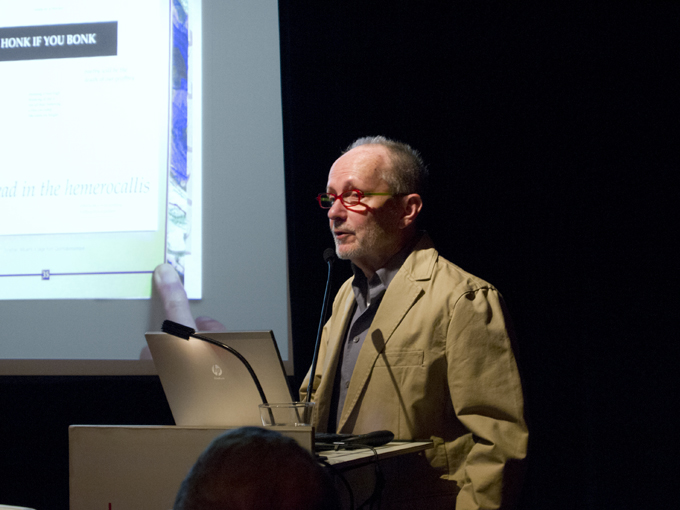
Keith Smith speaks
Scott then handed over to Keith who comments that he is now up into the 280s on his ever increasing list of books. He spoke of a number of book projects dealing with subjects like re-contextualisation of paintings of Saint Sebastian into Smith’s own painted backgrounds. Many variations on this theme have been created from an amassed collection of source paintings — he intimated that he was even working on a book as he was preparing to travel to Australia.
He spoke of his connection with the computer and digital book Bobby made as early as 1984 with an early Macintosh computer using MacPaint and MacWrite. In his latest work he has re-formatted the book and re-jigged the content. The new Bobby has been supersized to one of Smith’s biggest ever books.
One of Keith’s trademarks is the digitally created multi-layered photomontage and his rainbow borders and edges. He states that when using Photoshop he may be working with between 12 and 24 layers of colour. Pages for the book Seminal were shown as examples.
Book number 283 is Struggling to see deals with Smith’s continuing fascination with text and image. The book is dedicated to Nathan Lyons whose own books and image sequencing presents Smith with a constant source of challenge. Smith acknowledged Lyon’s mastery of organising images in a book in a way where the message of the book is spoken ‘between the pages’.
Question time yielded perennial questions to do with inkjet printers, papers, the ‘archivalness’ of the technology and editioning.
One questioner spoke of how books can be made by anyone via print on demand technologies …
Another question dealt with the montage …
Keith commented that the book tells him where to go …
A comment made by one participant was that they were coming to understand that with all the standardization of the book through language and form and that that is where the psychology of the artists’ book really kicks-in to say something else that we were not ready for…
A question about the eBook and where it fits in contemporary practice. Scott answered that with eBooks one must learn the tools and understand that they are about text in a multi-media platform and that translating work into digital form you need to recognise that it is married to the content.
Keith’s response was that was something for the younger generation, ‘I’m too old ….’ Perhaps it is, for him, that the eBook is not a tactile medium that you cut, fold, touch and be touched by — although it may be something else?
Doug Spowart May 28, 2012
NOTE: The SLQ will be posting this lecture online in the near future

 wotwedid
ReNEWSing the Newspaper: A group exhibition @ Futures Gallery
leave a comment »
An exhibition in which the local newspaper has been reinterpreted by 5 artists and reconstituted as a statement of a regional community in Australia.
The ‘ReNEWSing’ exhibition panorama @ Futures Gallery
Bev Lacey discusses one of the books
Artists: Kylie Noakes, Bev Lacey, Jess Martin, Yseult Taylor, Angela Moar and Doug Spowart
Exhibition visitors: Tina Wilson and Sue Lostroh
Sandy Pottinger, Bev Lacey + Victoria Cooper
Doug + the book ‘Have you got your Chronicle today’
.
BEV LACEY’S OPENING REMARKS
Each day the focus of my time in the office is spent on production of images for the next edition.
Or as in recent times, the production of images and video, for immediate release online and also for the printed edition.
The process is more in keeping with what other people’s expectations are and what they envisage as the final product.
This attention to a set formula – i.e. go to job, get back, quickly download and move onto next job – often narrows the thinking.
In the past when I have browsed through the work produced by the art students taking The Chronicle and creating an artist book, and this is an exciting interpretive assignment, I have been amazed, inspired, envious and a little in awe of the works produced.
I am always in awe of “the artists mind” the ability to see, the ability to transform often unobscure pieces into works of art that I cannot draw away from.
So I thought, taking about the works would not be a challenge at all. But in an attempt to say something worth hearing I am at a loss.
No not really……….
THE BOOKS – an artist book for me needs to be a tactile experience……
As I looked through the books on YouTube I found myself longing to turn the pages and feel the textures.
Does that make your books successful?? that I want to touch them, and experience more than flipping through them on a computer screen – yes I think so.
Yseult Taylor:
Sadly I found the interpretation on what was published on May 10, similar to what a lot of people think that The Chronicle is about; depressing stories about loss of life, jobs and accidents. We, the media do have a tendency to focus on the negative and in creating a book about what was published in the paper on that day May 10 – yes ….you have successfully captured the essence of our storytelling in that edition.
In saying that though, a new perspective was put to the viewer – a rather blunt and interesting division between the headline and advertising.
Jess Martin:
The constant, barrage of text and information which we all have in our lives at the moment,
Information – some useful most not.
Entering though the door of the commercial world, being given light relief , in cartoons and then the barrage again.
The page that I found most fascinating is the blank one – it stopped me in my tracks and you can feel your whole body just breathe out that sigh of relief – time out from the information overload.
Angela Moar:
As a reader , certain words or phrases mean more to one person than another, I found your isolation of the phrases that affected you, an interesting concept.
It make me think of how even in conversation; each individual’s interpretation of even, what I am saying here tonight, can be perceived differently.
Each person hears on a different level of understanding, all totally dependent on our individual life experiences , personal circumstances, and what we think of the person retelling the story.
And the stick men, the little soldiers that represent whom we all are, representing a formula, a set idea of what is news and the storyteller.
Klyie Noakes:
Kylie has isolated happier moments; selecting from the social pages. The moment in time, often totally set up where a photographer captures a moment in a social event.
The quotation, the who am I really, the what is that person thinking at that precise moment is often lost on the viewer as the person is represented, flat – not whole in three dimensional perspective, but as a “happy snap” of people out and about enjoying a moment .
But their real lives are still there, their thoughts their own we just don’t see beyond the smile, a mistake we make even when meeting other people.
Doug Spowart:
The multi layering effect of what is “The Chronicle” is I am sure what Doug is telling us.
A more sceptical self – realises the focus on advertising of cheap deals could be the reality.
But no – I am convinced Doug’s layering, is about a more in depth view of how production of a newspaper happens. The many people, the many processes, the many facets of a life in the office that create a product.
Overall:
Each of the books has that wonderful inviting appeal.
that “what is the artist trying to say to me, what was the artist thinking at the time of creating” ,
and I believe the success of these books lies simply in that – the questions that it asks the viewer, the simple fact that the viewer will ponder the questions, and the answers they themselves come up with – long after they put the books down.
Share this:
Written by Cooper+Spowart
September 5, 2012 at 7:09 pm
Posted in Artists Books, Doug Spowart, Exhibitions, Meeting People
Tagged with Artists Books, Bev Lacey, social commentary, The Chronicle, Toowoomba