Archive for the ‘Artists Books’ Category
PHOTOGRAPHER’S NIGHTMARE: Client returns faded wedding album after nearly 40 years!!
Not many people would pick me as a wedding photographer – Well, I’ve been to many, shot a few and even been employed as the wedding photographer. One of my photographs was the highest scoring wedding photograph at the AIPP Awards in 1991, and in the mid 1990s, I won the award ‘Queensland Innovative Wedding Photographer of the Year’ on two occasions. Masquerading as a wedding album, one of my artists books is even held in the State Library of Queensland’s rare books collection. SEE: http://srlopac.slq.qld.gov.au/cgi-bin/Pwebrecon.cgi?BBID=1381161
My wedding photography ‘career’ began auspiciously, as I guess most photographers do – with a family wedding. I was a naive 18 year old studying photography part-time at the College of Art in Brisbane. At the time I was working with an old Mamiya C33 and an M3 Leica with a Metz 202 flash, and the idea of shooting a wedding an adventure. At the time I was working at Kodak and some of my clients helped me out with advice and the ‘slip your prints in’ album that was the final outcome for the project.
All went to plan – I did the bride in the mirror at home, in the church during the ceremony with flash, the bride and groom walking up the isle, a quasi-documentary bride ‘n’ groom outside the church, family groups, bride and groom in the rear window of the car and the cake cutting. My brother Garry did marry Sheridan Draisey at All Saints Church and I had the photos to prove it.
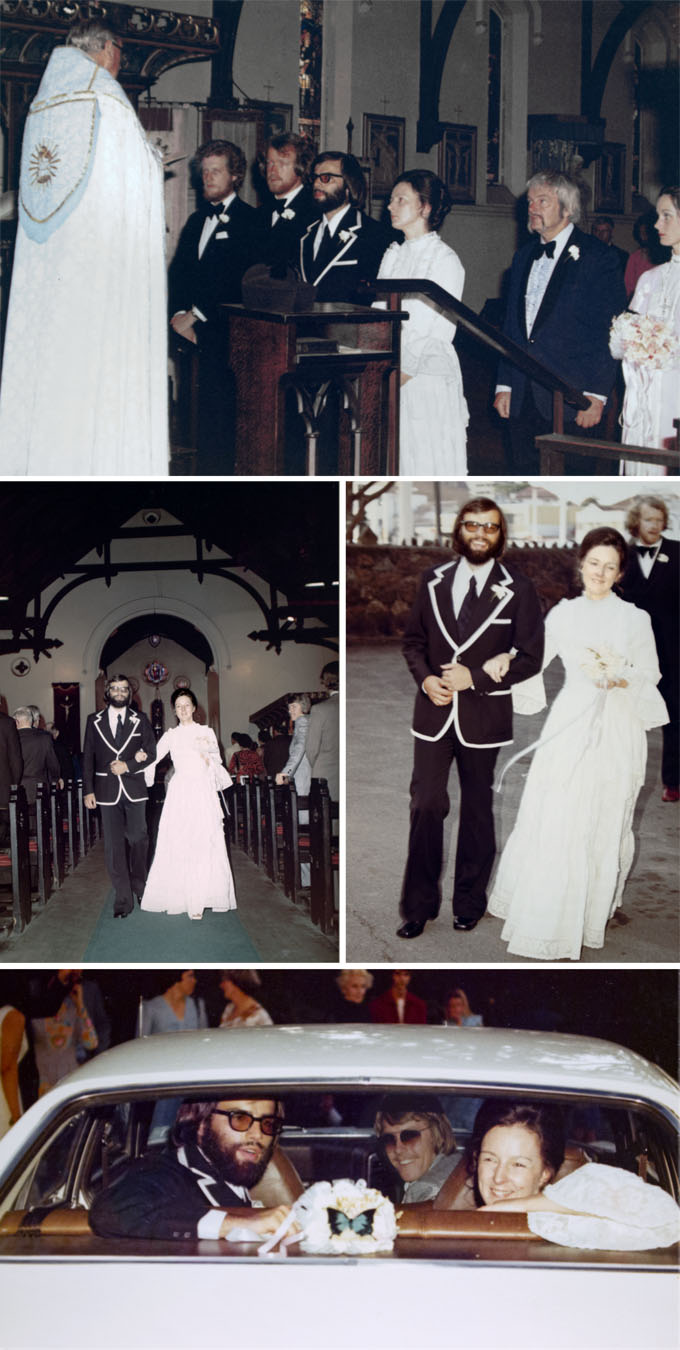
Wedding mosaic
Kodak printed the images; probably at their colour lab in Sydney as the Brisbane lab was still doing black and white processing exclusively. The prints were slipped into the pages and passed on to the happy couple.
Time passes…
A few years ago I heard through the family grapevine that the album was falling apart and that images were fading. I wonder how many photographers experience this fear of whether their goods and services will last and the possibility of the disgruntled client appearing from the past with faded, leuco-cyan (reddish) or yellowed prints and the grunge of time coating everything? Eventually I was reunited with the album and its sorry condition. What to do?
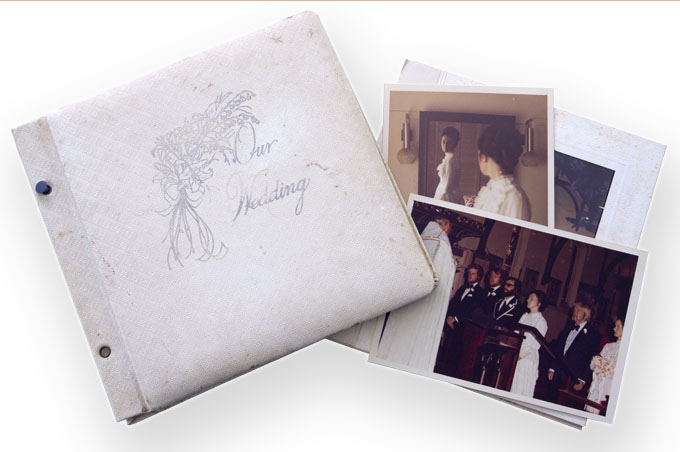
The original album
I scanned the images and used simple Adobe Photoshop techniques to remove casts and reconstitute faded colours. All images were reprinted on inkjet pigments and archival papers and the pages fitted into a new album cover. A CD-Rom was included loaded with the restored jpeg images. The original album was assembled as best as possible, wrapped archivally and inserted into a container for safe keeping and the new album similarly presented.
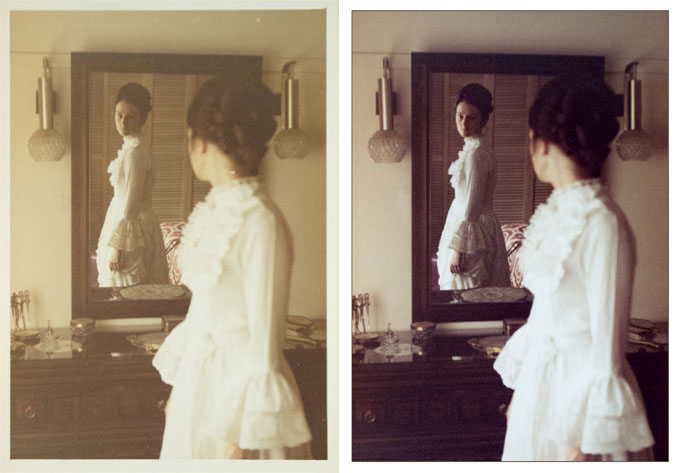
Before & after Adobe Photoshop restoration
On the next convenient occasion the album was represented to the client (my sister-in-law). She excitedly reviewed the album and recounted the wedding, and the stories of those in the group photos were updated – even perhaps made alive by their remembrance and telling.
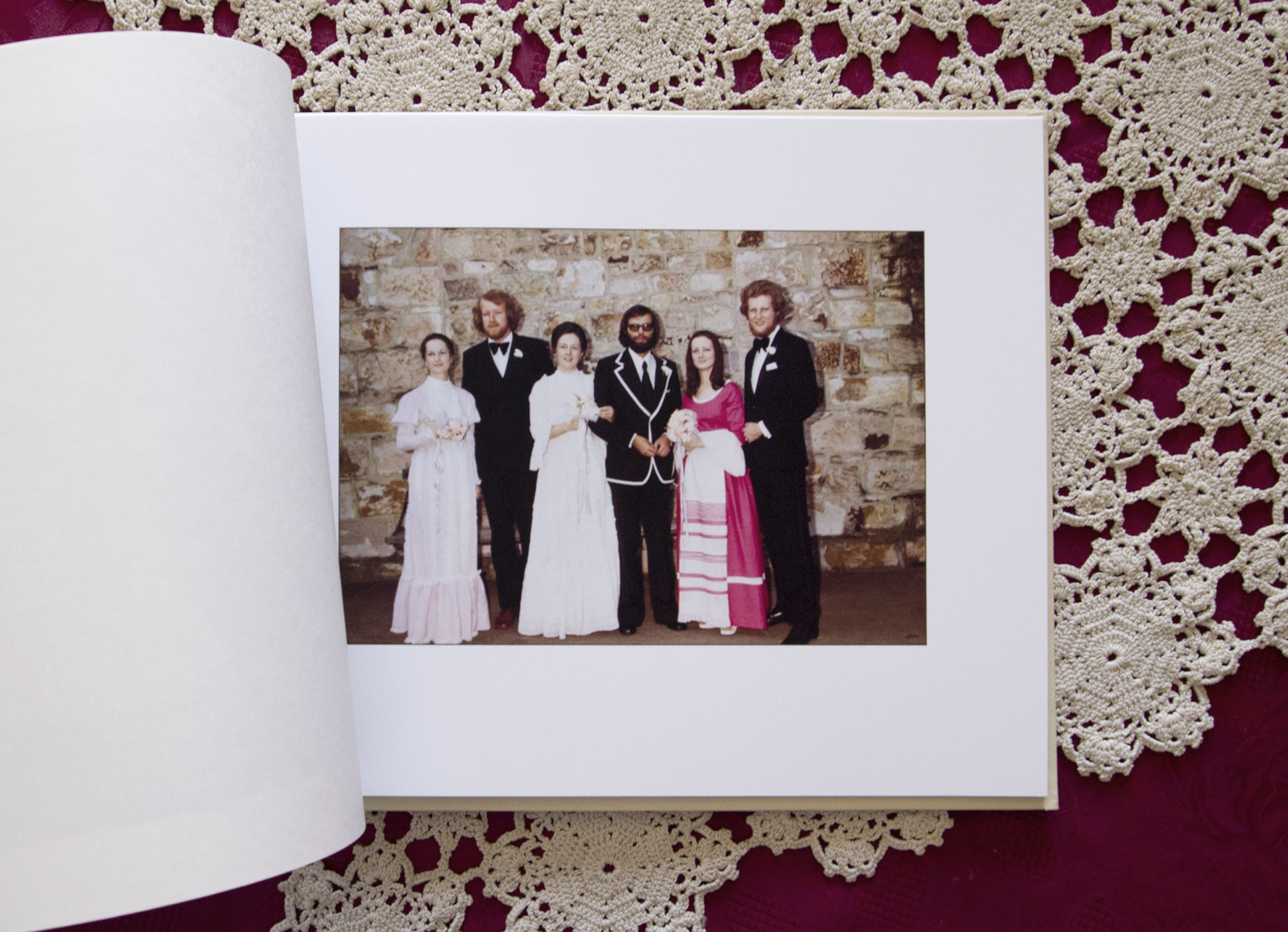
The New Album
My experience made me think about how photographers constantly push ‘photo memories’ as a selling point for choosing a professional photographer for important events. And I wondered how often the pro photographer’s images may, as in this case, not last as well as everyone might have expected. I came to also reflect upon how memories are recreated through photographs and how important the photograph of times past is for people – particularly as they age.
As the photographer and re-creator of the album I was rewarded by the experience and how many a faded image may be restored to its memorable potential by Adobe Photoshop. It is interesting how digital imaging was once touted as being the death of photography – it may very well be its salvation.
Doug Spowart
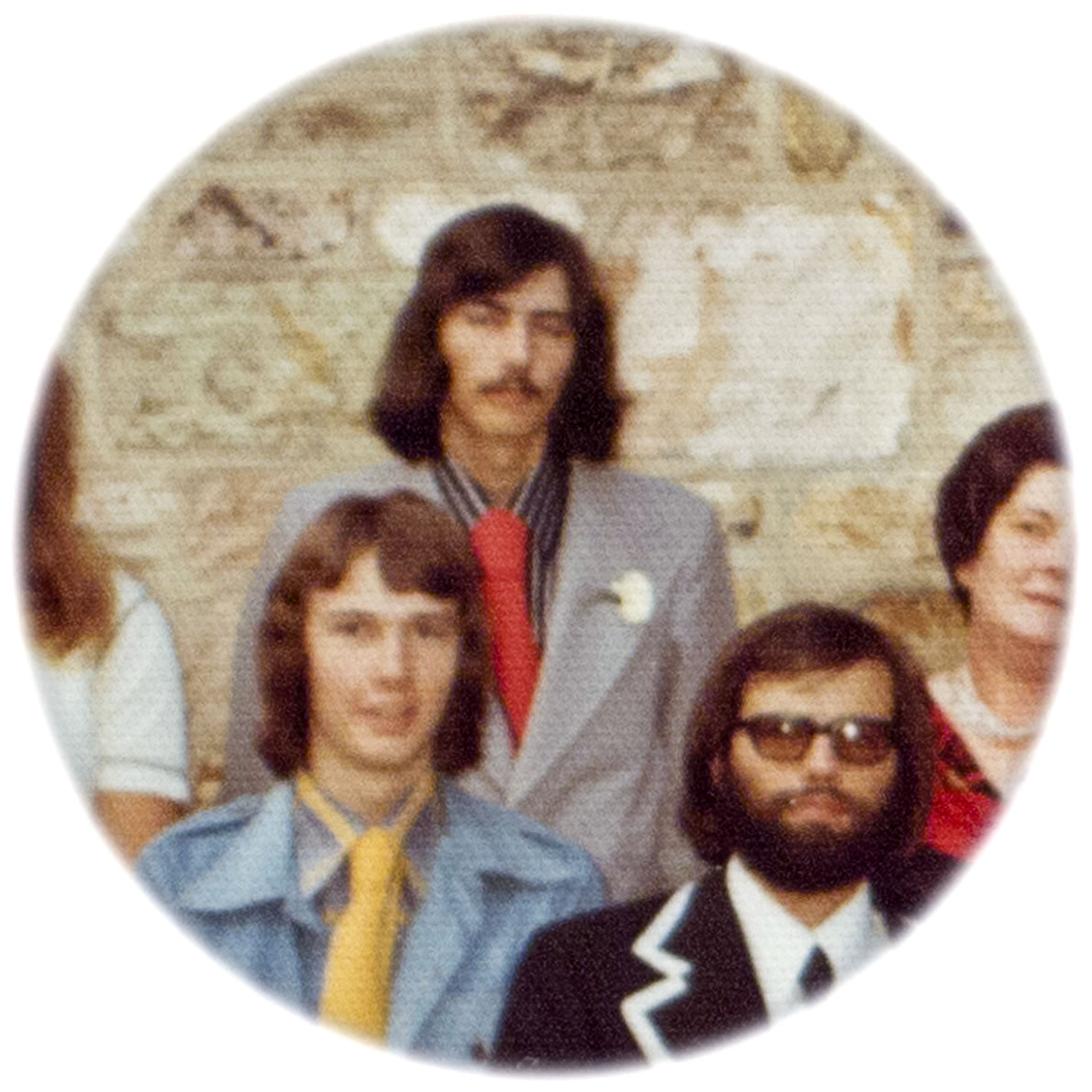
The photographer in the wedding group with brothers Garry and Peter
2012 FIELD STUDY MAIL ART PROJECT: Our contribution
On December 7, 2012 we mailed off to David Dellafiora in Geelong our contribution to the 2012 Field Study. We met David at the Artspace Mackay Artists Book Forum in 2010 where he presented a lecture on mail art and coordinated a collaborative project which dealt with the idea of the assembling book as a democratic multiple.
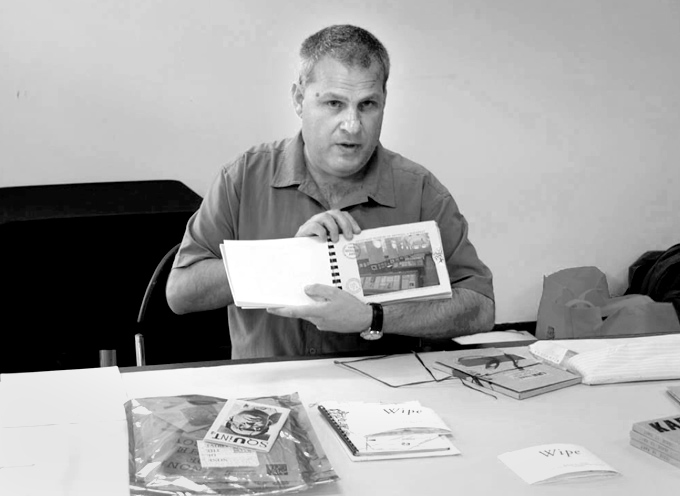
David Dellafiora Photo: Doug Spowart
.
David Dellafiora is a quietly spoken person and not one to push his significant history and activities in the world of mail art. He was however an enthusiastic distributor of A5 fliers, call-to-action invitations to participate in numerous mail art projects that he coordinates. Field Study, Kart, Wipe and others are projects that are essentially ‘assembling books’, where artists worldwide submit multiple artworks by mail to David. At specific times throughout the year David coordinates a team that assembles, packages and mails out to all contributors a copy of the compiled project. A part of the production run is retained with copies being offered for sale to artists, galleries and collectors. The income from this activity finances the production costs and the return postage. Field Study publications are included artists book collections such as the V&A, Museum of Modern Art New York, State Library of Victoria and the Ruth & Marvin Sackner Archive of Concrete & Visual Poetry.
The Field Study contributions are called emanations and can include all kinds of things including: ‘documentations of performances, actions and exhibitions, tracts, rants, instructions, manifestoes, reflections and experiments.’ A selection of pages can be seen in the illustrations from last year’s report at the end of this post. They are a mashup of Fluxus, DaDa, Surrealist inspired, zine-ish paste-up, rubber stamps, torn up letter ransom notes and concrete poetry. In its assembled form the power of Field Report is apparent as it becomes a snapshot of artistic, social and/or political commentary on the times that are current at the time of its publication.
.
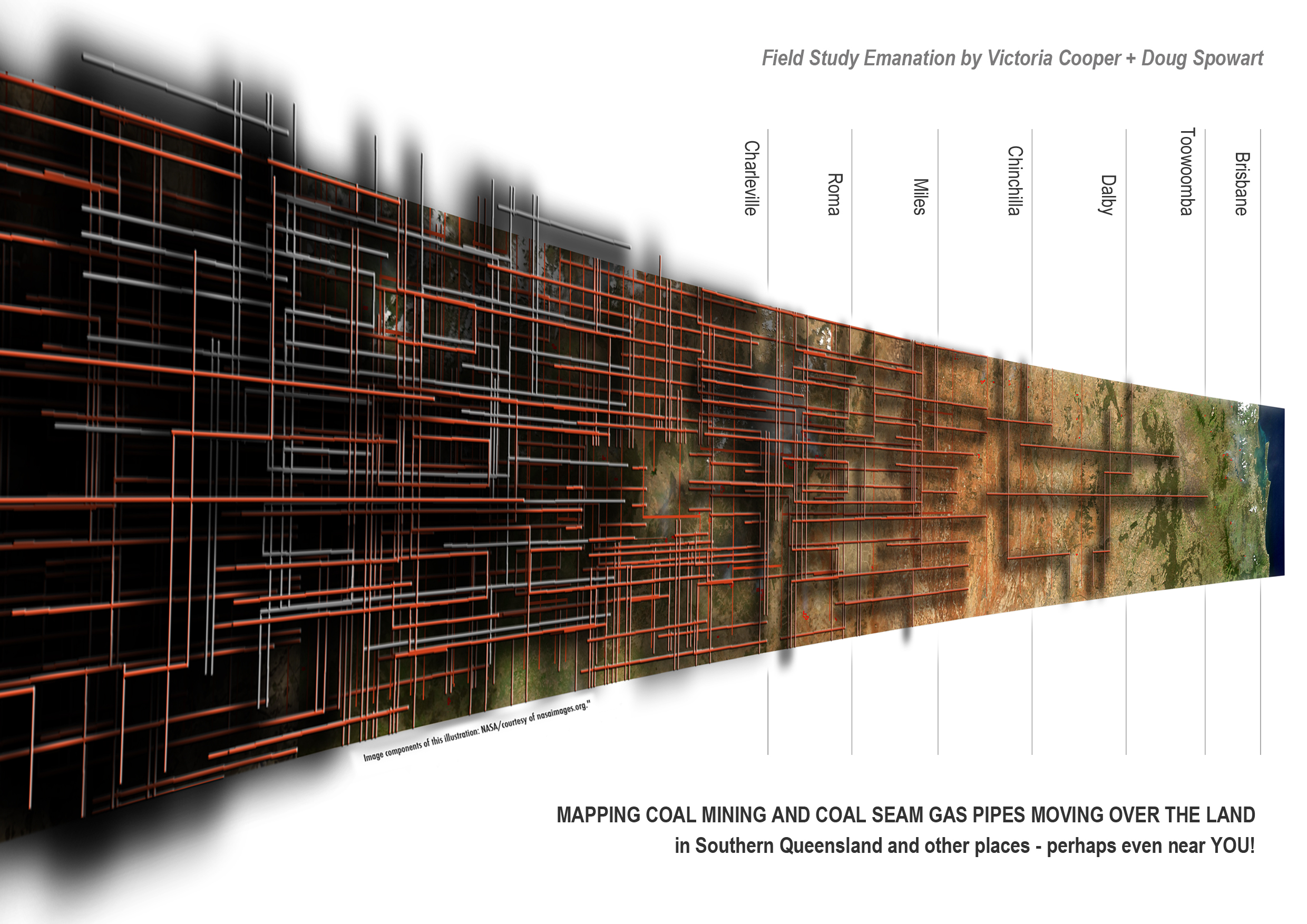
Our Field Study infographic about extractive mining industries in the Surat Basin
.
This year we contributed a piece that related to our commentary on extractive mining industries overtaking our regional communities. This is a variant to the Artists’ Survey Book #12 that has featured in past WOTWEDID posts. The page was printed using a high quality photocopier and each page, 100 in all, were signed and numbered by both of us. It was remarkable to see our workbench covered with the repeating pattern of 100 pages taking up an area of about 3 square metres.
.
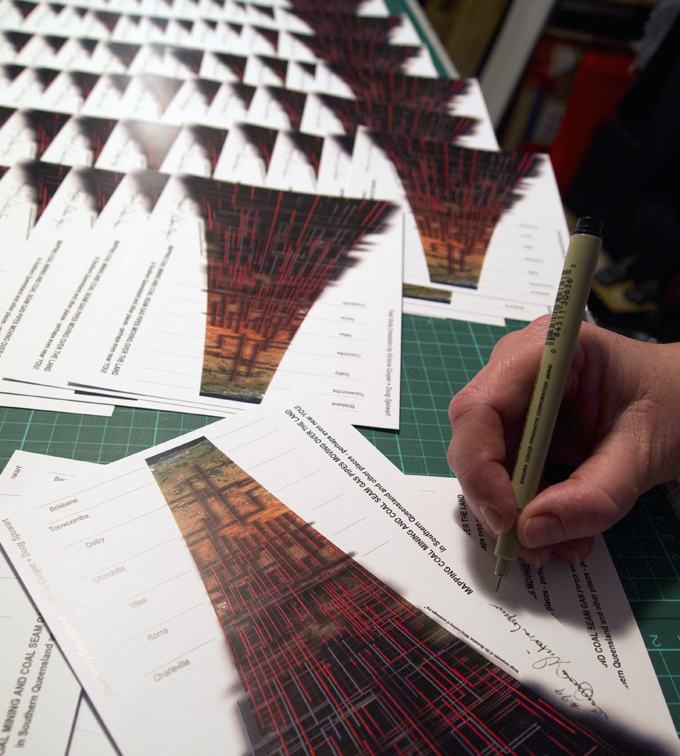
Signing our contribution
.
We look forward to receiving a package from Field Study International later on this year. And, for anyone interested in future Field Study projects, check out the Field Study Blog or review some of the accompanying documents that follow in this blog post.
Cheerio
Doug
.
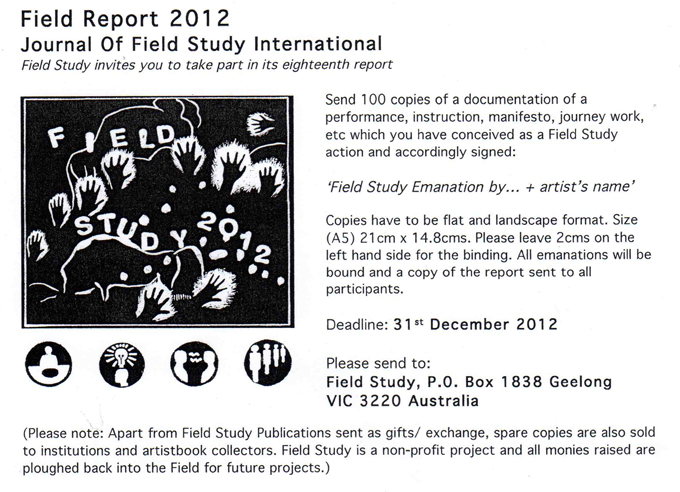
The call for 2012 contributions
.
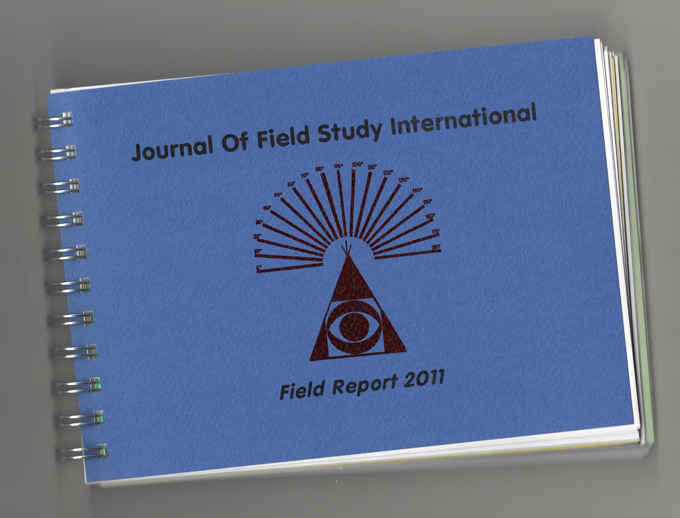
2011 Field Report cover
.
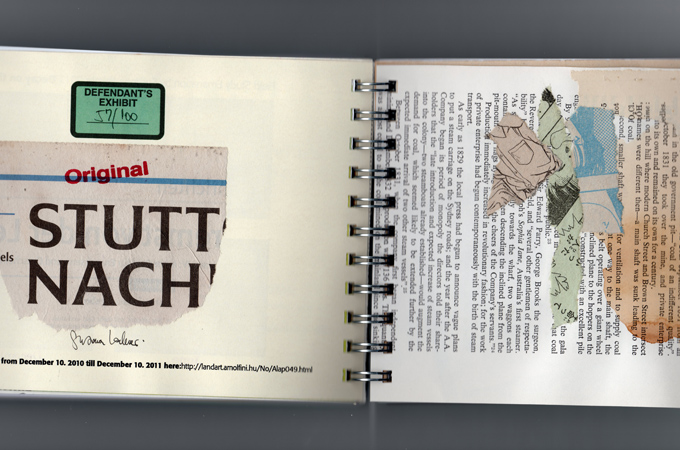
2011 Field Report pages
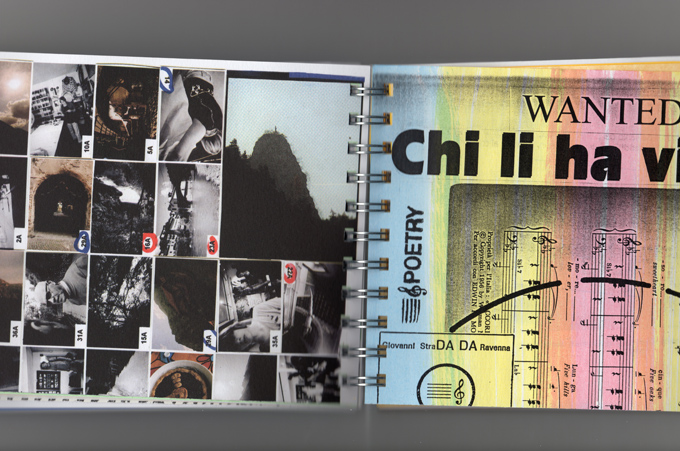
2011 Field Report
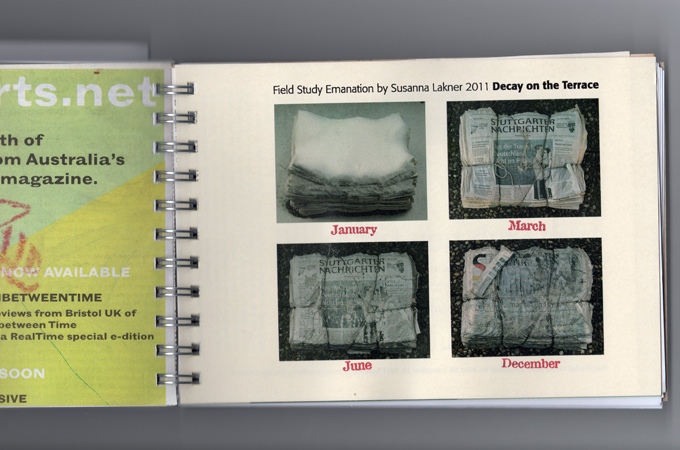
2011 Field Report pages
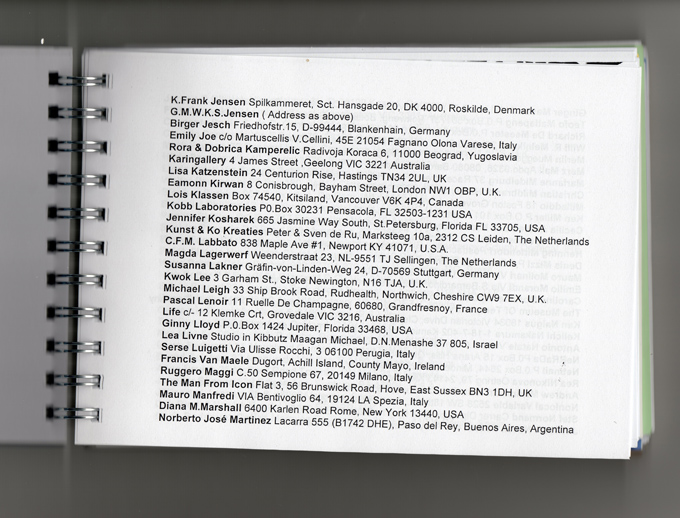
A page of participants – 2011 Field Report
.
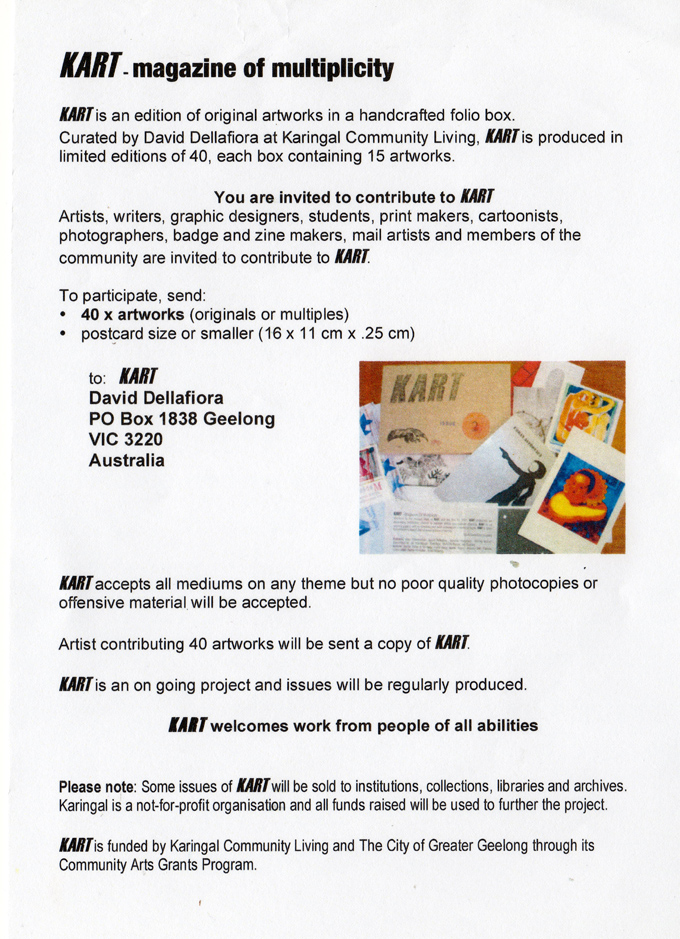
Kart Mail Art Project
.
2013 SABBATICAL for Doug+Victoria: A ‘Leap of Faith’
A NEW YEARS MESSAGE FROM COOPER+SPOWART
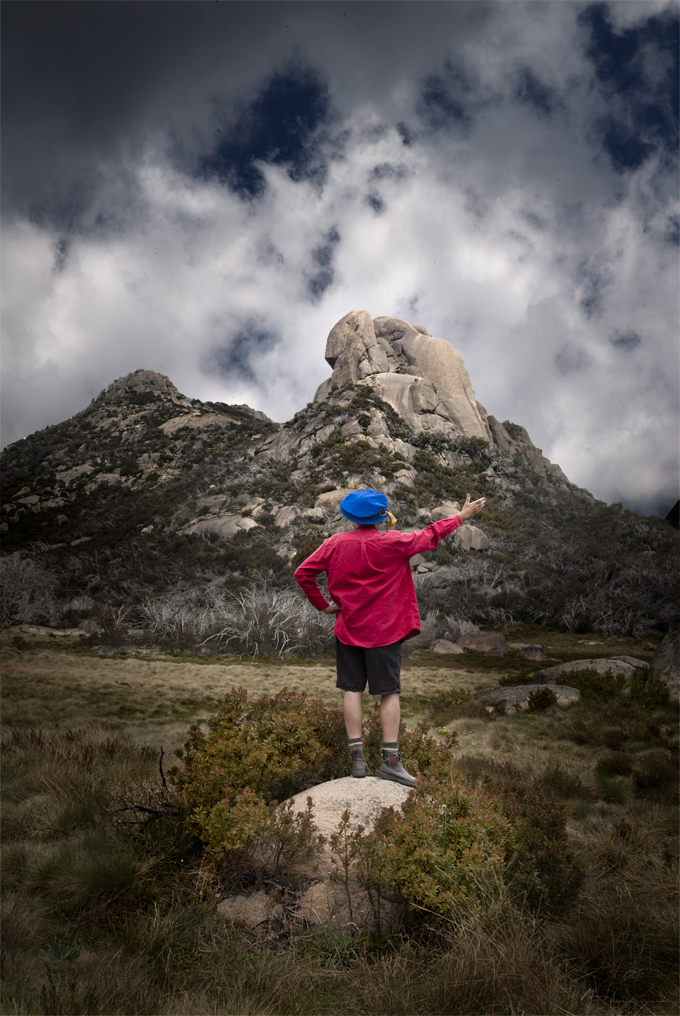
Dr Doug consulting Casper David Friedrichs re 2013 sabbatical, The Cathedral, Mt Buffalo.
In the year 2000 we began our involvement in higher academic study at Monash University in Post Graduate Diploma study. Since then, except for a small break in 2003, we continued our university research and art practice. Throughout this period we maintained both our arts practice and working at TAFE where Doug was full-time employed as a teacher and Victoria worked as a sessional teacher. All holidays and long service leave was consumed by the demands of study, research and at times a busy exhibition and private lecture programme. The hard work and study culminated last year (2012) with Doug being awarded Doctor of Philosophy at James Cook University in May, and Victoria submitting her PhD for final examination in late November.
Now, as we head into 2013, we are taking time out to pursue our post-doctorial research interests, opportunities to present and share our specialist knowledge and skills and to re-connect with our professional practice as artists and commentators on contemporary issues. It is a ‘self-funded sabbatical’. To finance this venture we intend to generate opportunities that may include ‘cloud funded projects’, artists in residencies, specialist workshops, seminars and consultancies, and sessional teaching or lecturing. We are also open to projects that may become available through our connections.
To up date you on our current interests and professional activities we include the following:
Doug: Social media and its applications within creative practice and personal communication; assembling and writing a critical commentary about Australian photobooks from 1900-2000; the narrative form of the hybrid photobook and the elevation of the print-on-demand photobook into a higher order of visual communication.
Victoria: Maintain a review of contemporary science/art interdisciplinary research as an accepted practice in academic institutions. Special interest in: the scientist, the artist and intuition; the historical use of visual art practice as information within scientific publications; Montage Thinking, as a mode for visual thinking and intellectual discourse through visual and non-visual information.
This adventure is somewhat a ‘leap of faith’ and as such we have created a blog onto which we will post sabbatical related content – we will invite to view this site when it comes online. This WOTWEDID blog will continue as our broader commentary platform – on occasion dual postings may occur. Other special research interest blogs will also emerge and you will be advised of opportunities to connect with their content.
Please contact us if you see any opportunities to support our ‘leap of faith’ sabbatical.
We wish you all an exciting 2013 New Year and look forward to perhaps connecting with you, and also connecting you with, commentaries about the issues of our shared interests.
Cheerio
Victoria and Doug
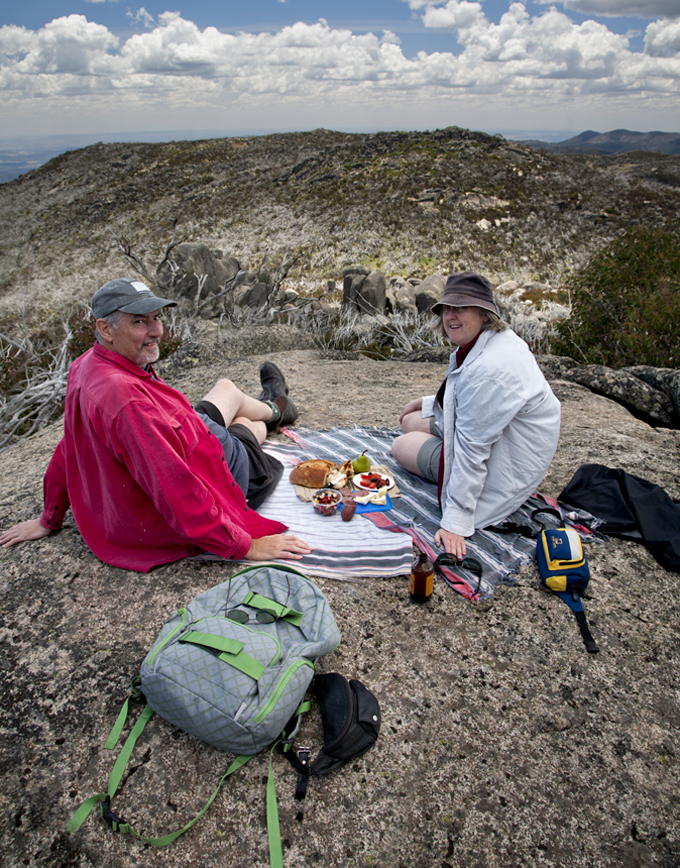
A 2013 lunch planning meeting at The Horn @ Mt Buffalo on 12.12.12
RUBY SPOWART TURNS 85
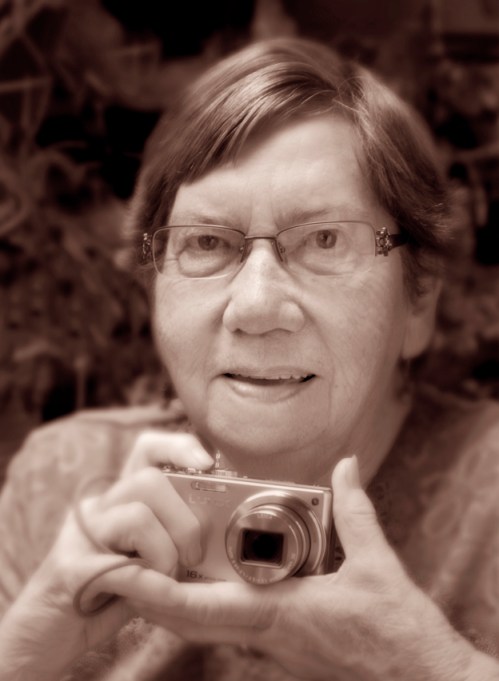
Ruby Spowart Photo: Doug Spowart
I visited my mother last month just after the family birthday celebration given by her three sons and their families. 85 is a big number when it comes to years lived on this planet and one of Ruby’s recent projects gave me an opportunity to reflect on the life that she has witnessed. Ruby just finished an Apple iPhotobook entitled Meet my ancestors which contains family portraits, group photographs, texts and personal visual ephemera from the last 170 years of her, and mine–Ancestors. This is the third book she has made of this genre, the first being an artists book made from collected images of each year of her life from 1 to 21, and the second, a photobook entitled Bringing home the grain in which she describes the agricultural processes of grain growing and harvesting she encountered in her childhood on a farm in Northern Victoria.
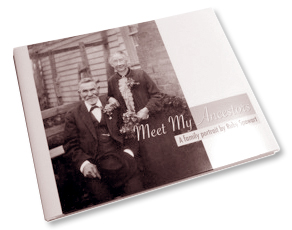
Ruby’s Meet my ancestors book
The Meet my ancestors project brought me in contact with the value of the family photograph, either professionally made or made at home as a box Brownie snapshot, in its ability to provide proof of existence and the aging process encountered by a subject over many successive portraits. Another feature of Ruby’s assemblage and ordering of these family photographs is that they all have a connected linage. This is distinctly different to family photos encountered in junk shops, antique shops and car boot sales. In these circumstances the photographs are separated from their meaning, they become isolated examples of someone and not ‘a’ specific ‘known’ individual—a kind of image orphan.
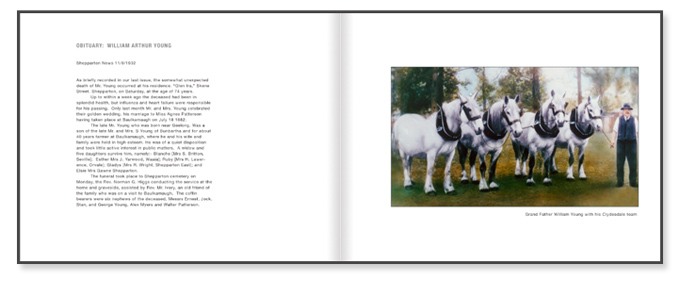
Ruby’s Meet my ancestors book inside
These family portraits are not just photos as she has added a text as well and linked it to other records like personal correspondence and newspaper reports—usually of obituaries. A picture may be worth the proverbial 1000 words but a picture and an appropriate amount of text can place it within a context, a time and ancestral linage. John Berger wrote about this necessary liaison of photo and text in his book Another way of telling1. He says: ‘In the relation between a photograph and words, the photograph begs for an interpretation, and the words usually supply it. The photograph, irrefutable as evidence but weak in meaning, is given a meaning by the words.’
In contemporary society with the popularity of TV programs like Who do you think you are and the online availability of genealogical information there is a heightened interest in our family trees and ancestry. And, as Ruby has lived half of the time covered by her book it is important for her to be engaged in such a project. What is equally exciting for me is that she sits before a computer, sending and receiving communiqués and images from the extended family, she orders, optimizes and designs the pages of the book (with a little help from me): when she was 3 could she have ever dreamed of such a thing…

Ruby Spowart aged about 3
SEE earlier post about Ruby and her work
Ruby can be contacted through LINKEDIN
Happy Birthday Ruby,
Son Doug, and Vicky
.
1. Berger, J 1982, ‘Appearances’, in Another way of telling, Writers and Readers Publishing Cooperative Society Ltd., London, UK.
EX LIBRIS: WHO OWNS THIS BOOK? A Queensland artists’ bookplate project
Zealous book collectors have always prominently placed inside the first few pages of a book their Ex Libris bookplate as a sign of ownership of books that they acquire. Over time these bookplates became a kind of specialised artwork created by artists and designers—not only for their own collected books but also for the libraries of serious book collectors. Bookplates then, are not just the carriers of the name of a book’s [one time] owner, but are also a thing of artistic integrity and beauty. Indeed there exist a large number of book-collecting dilettantes who are more interested in the bookplate and less in the book in which it is fixed.
The origins of the bookplate can be traced back to the 15th century and the artists who made them include Albrecht Durer and Hans Holbein. In Australia the most noteworthy bookplate designers include Norman Lindsay, Adrian Feint and G.D. Perrottet. Most significant state and national library collections include bookplate works. The Toowoomba Regional Art Gallery has a collection of bookplates as part of The Lionel Lindsay Gallery and Library Collection (Also known as the Bolton Collection) and in 2004 Patrick Corrigan AM gifted to the gallery a collection 318 bookplates, mostly by Australian artists, including John Shirlow, Lionel and Norman Lindsay, P. Neville Barnet, George Perrottet, Lloyd Rees, Pixie O Harris and Brett Whiteley.
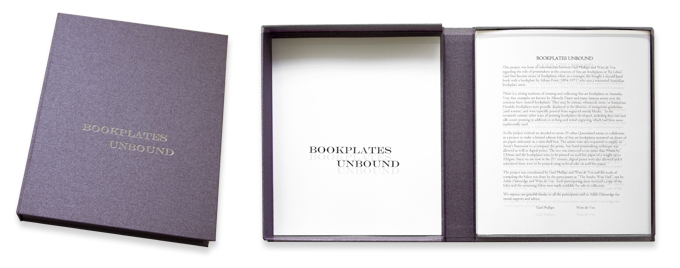
“Bookplates Unbound” limited edition set (two views) Photos: Doug Spowart
Into this bookplate space a new and ambitious project is set to provide a contemporary view of the bookplate by Queensland artists. The project, entitled Bookplates Unbound, was inspired by conversations between artists Gael Phillips and Wim de Vos around the role of printmakers in the creation of fine art bookplates. The details of the Bookplates Unbound are as follows (from the frontpiece):
As the project evolved we decided to invite 29 other Queensland artists to collaborate in a project to make a limited edition folio of fine art bookplates mounted on sheets of art paper, unbound, in a clam shell box. The artists were also requested to supply an Artist’s Statement to accompany the prints. Any hand printmaking technique was allowed as well as digital prints. The size was restricted to no more than 90mm by 130mm and the bookplates were to be printed on acid free paper of a weight up to 100gsm. Since we are now in the 21’t century, digital prints were also allowed and, if submitted, these were to be printed using archival inks on acid free paper.
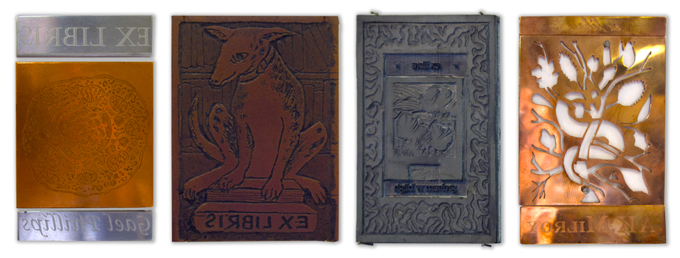
Some of the ‘Bookplates Unbound’ printing plates Photo:Doug Spowart
The Bookplates Unbound set of bookplates is a limited edition production with each artist receiving a copy. The remaining copies will be made available to collectors. The coordination of the project was undertaken by Gael Phillips and Wim de Vos at The Studio West End and was supported by Adele Outteridge.
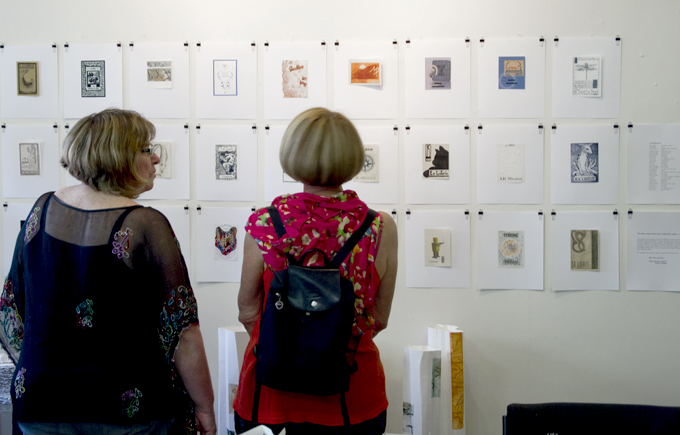
‘Bookplates Unbound’ wall @ The Studio West End Photo: Doug Spowart
Anne Jolly, of Novel Lines Bookshop, launched the Bookplates Unbound set at a special event at The Studio West End on November 24. Accompanying the launch was an exhibition of artists books from friends of Studio West End that was opened by Helen Cole, Senior Librarian, State Library of Queensland. Wim de Vos also gave the audience a performance of two new tunnel books, one on Venice and the other referencng the Chrysler Building in New York that he has created [SEE the video in this post]. The openings concluded with a musical 6 song set by ‘Rock and Roll’ impresario Wim and fellow band members Neil Anderson and Robin Webb [SEE the video in this post].
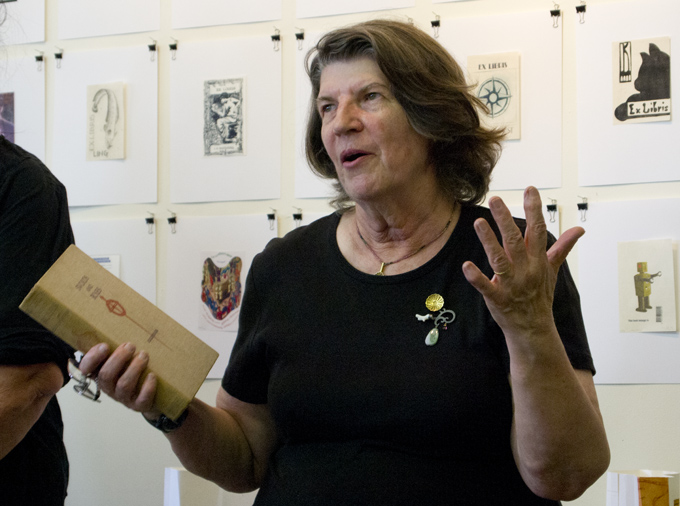
Gael Phillips talks @ ‘Bookplates Unbound’ launch Photo: Doug Spowart
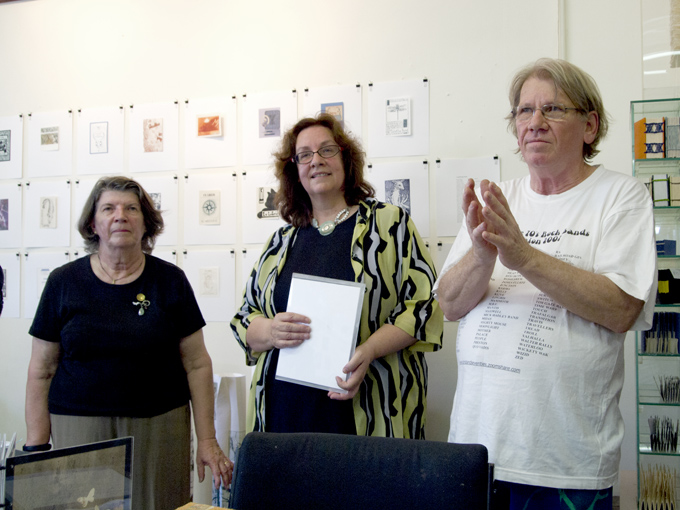
Wim and Gael thank Anne Jolly Photo: Doug Spowart
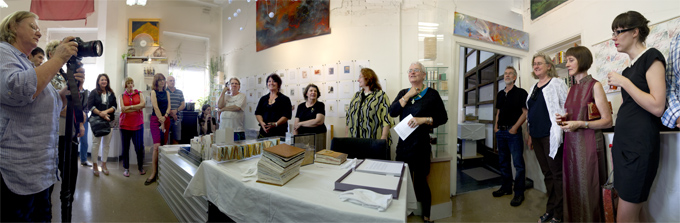
Helen Cole opens the Studio West End artists book show Photo: Doug Spowart
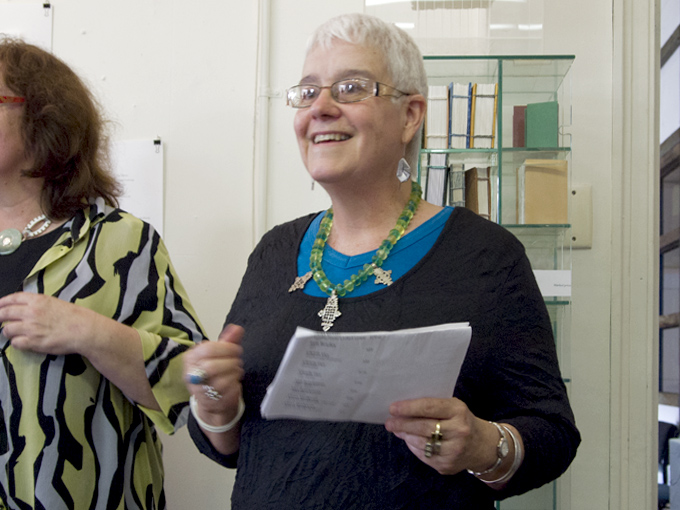
Helen Cole opens the Studio West End artists book show Photo: Doug Spowart
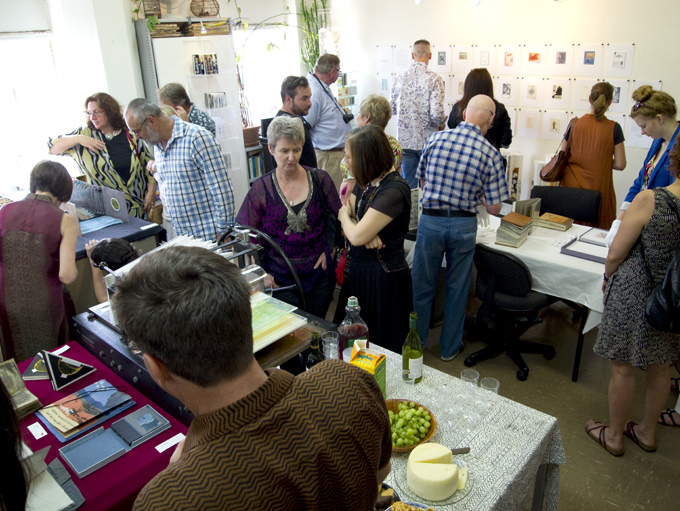
Studio West End artists book show Photo: Doug Spowart
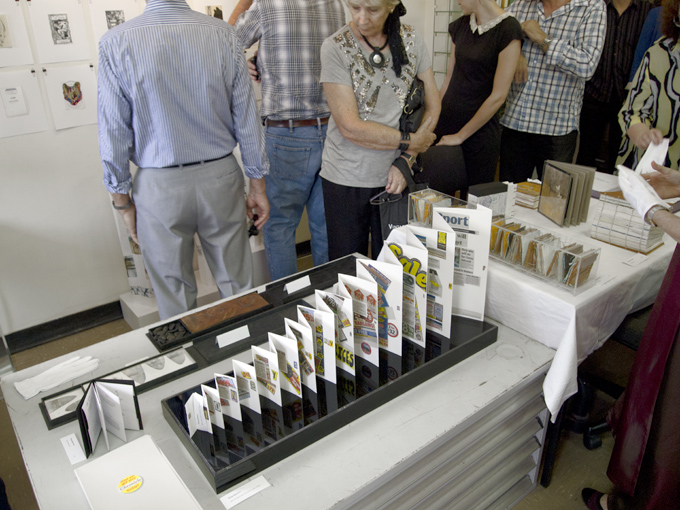
Studio West End artists book show Photo: Doug Spowart
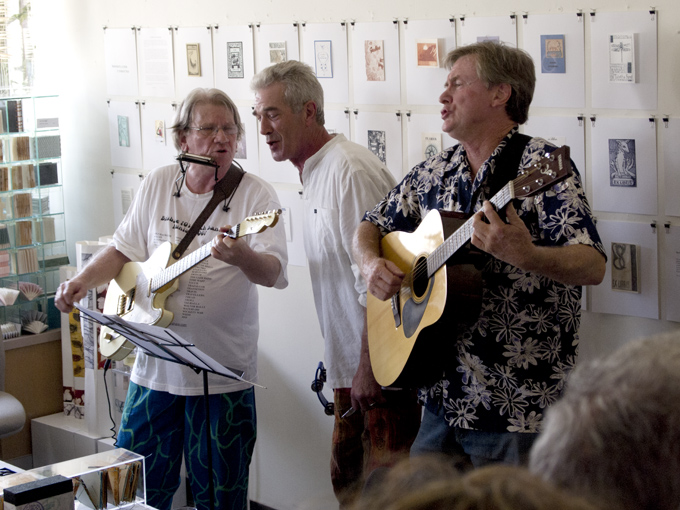
The Band – Wim, Robin Webb and Neil Anderson Photo: Doug Spowart
The contributing artists to the Bookplates Unbound and their respective print media are:
Janette Bailey Line etching / aquatint
Graham Bligh Linocut
Susan E Bowers Sugarlift etching and embossing
Victoria Cooper Digital print
Geraldine Connolly Soft ground etching
Philomena Drake Etching / aquatint
Malcolm Enright Digital print
Barbara Heath Digital print
Tabitha Ford Line etching
Lynne French Line etching and relief roll
Teresa Jordan Digitised linocut
Jeraldene Just Line etching
Sharon Lee Digital print
Chris Ling Line etching
James McDougall Photo etching
Julanne McDougall Photo etching
Fiona Medhurst Line etching and rubber stamp
Karla Meursing Linocut
Anita K Milroy Three hand pierced plates, line etching and embossing
Katharine Nix Lino etching
Adele Outteridge Line etching
Gael Phillips Line and photo etching on three plates
Pip Reid Line aquatint etching
Anneke Silver Engraved lino print
Doug Spowart Digital print
Stephen Spurrier Digital print
Madonna Staunton Wood cut and rubber stamps
Jonathan Tse Screen print
Geoff Thompson Line etching
Wim de Vos Line etching on four plates
Sheryl Whimp Open bite etching
.
.
The Colophon for Bookplates Unbound
This Edition consists of forty copies, of which this is number 11
The bookplates were mounted on acid free cartridge paper and the cover titles embossed in “Times New Roman”. The font used for the Artists’ Statements was “Centaur”, designed by the late Bruce Rogers. The clam shell boxes were made by a craftsman bookbinder, Tony Gibaud at “Craftsmen Bookbinders”, Geebung, Queensland, who also made the blocks for the cover, spine and title page to a design by Gael Phillips and Wim de Vos. The text was printed by Drawing & Drafting Digital, Bowen Hills, Queensland.
The copyright of the bookplate images is retained by the individual artists.
ISBN: 978-0-646-59203-9
Published by Alumni Publishers
© 2012 Brisbane
•
WHAT HAPPENS in a Brisbane storm black-out!!
At a dinner attended by Queensland artists’ book people last Saturday in Brisbane a giant thunder storm caused a black-out. Now any self respecting ‘bookie’ would probably have a mini-book reading light or two on their person, but this was not the case. Out came the candles – and in their yellow light we were pushed closer together by the darkness …
As we chortled on about books, democracy, bureaucracy, and greater world issues the piercing shafts of lightning, the accompanying crash of thunder and the sound of driving rain on the roof brought us closer to a time before books, were human beings nestled-in around a flicking fire and told stories by animated gestures and spoken language.
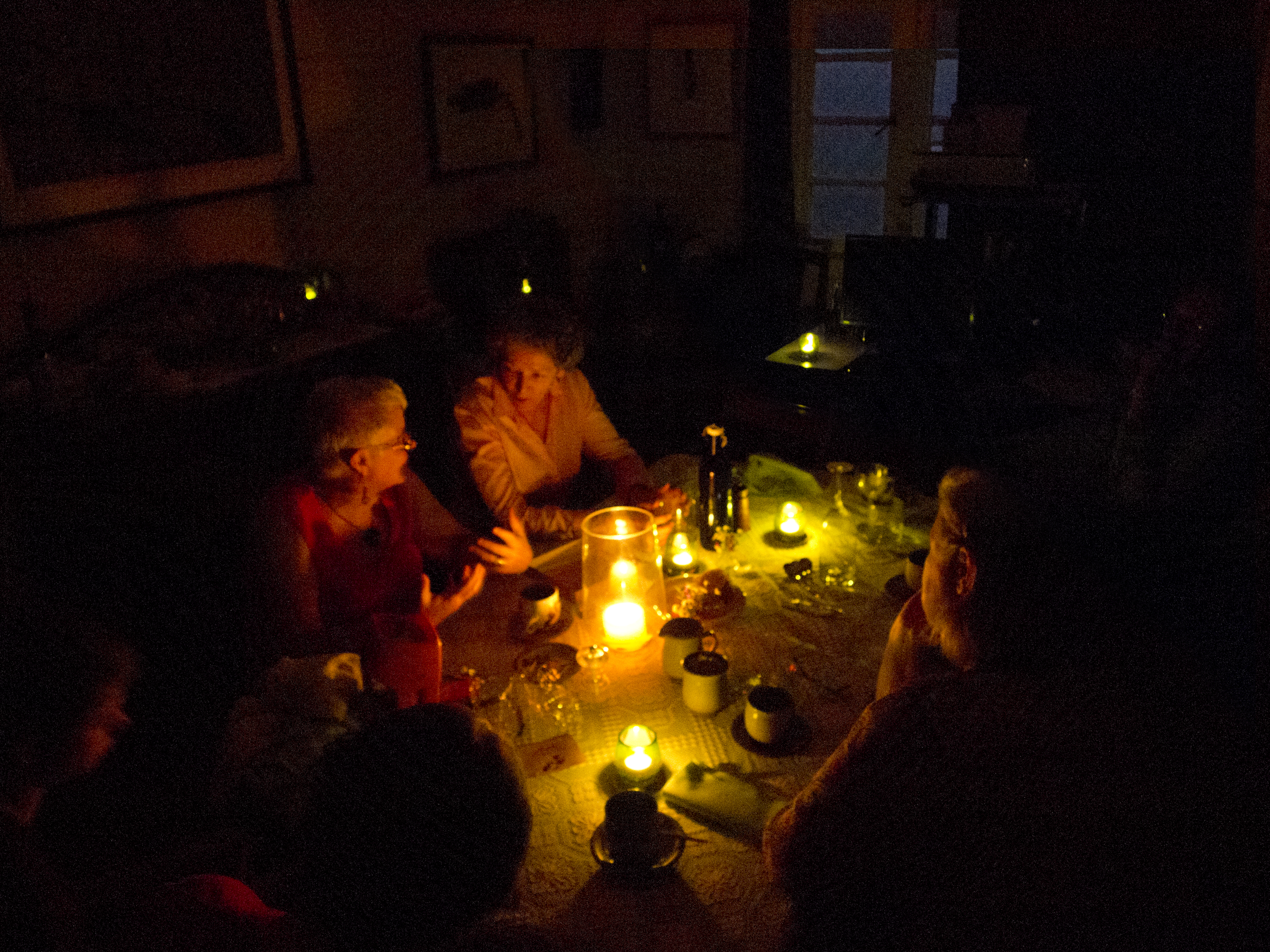
Brisbane book arts dinner black-out
GRAHAME GALLERIES: Lessons in History Vol. II – Democracy
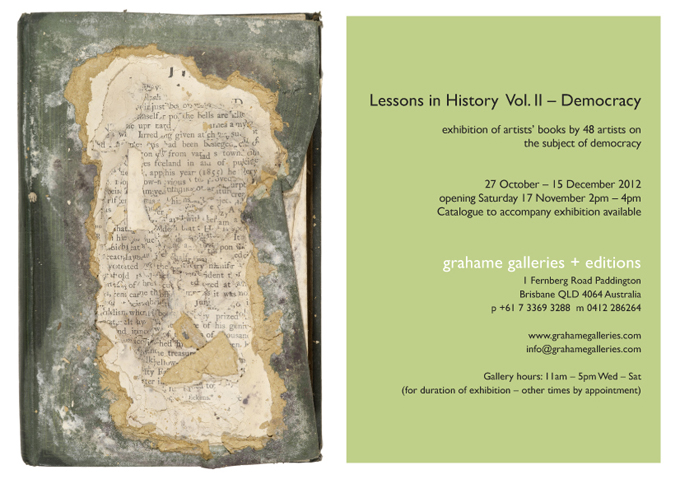
In an otherwise drought of artists’ book activity in Brisbane the opening of the much awaited exhibition at grahame galleries Lessons in History Vol. II – Democracy provided a welcome spike in calendar. In one brief afternoon there was the opportunity to be swept up in a deluge of books and book people. This is a the democratic camera view of the event …
A catalogue is available for viewing at the gallery’s website HERE. A print catalogue featuring each book is available from the gallery as well.
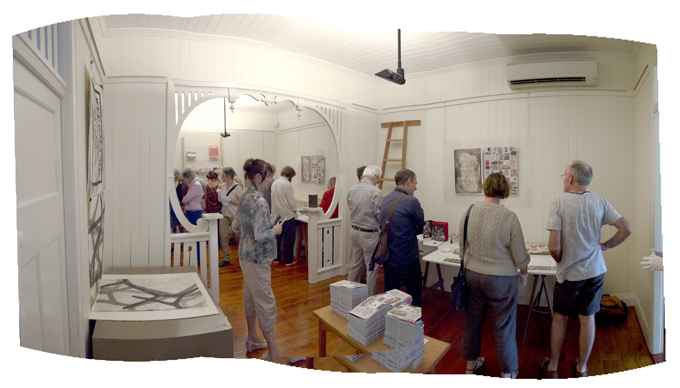
grahame galleries panorama
.
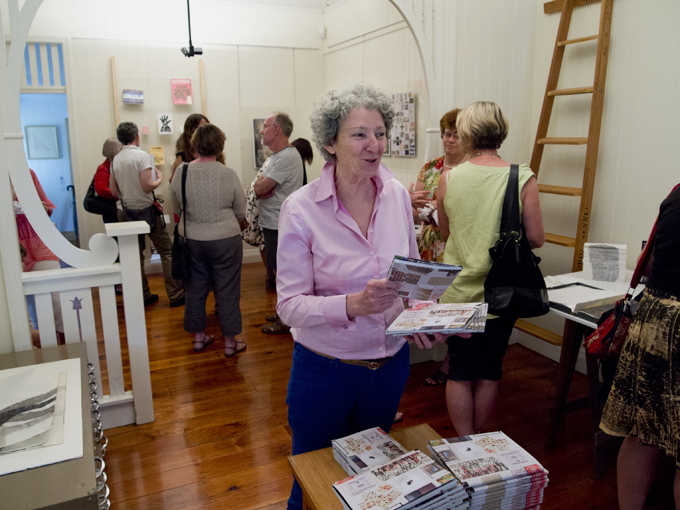
Noreen Grahame and the catalogue
.
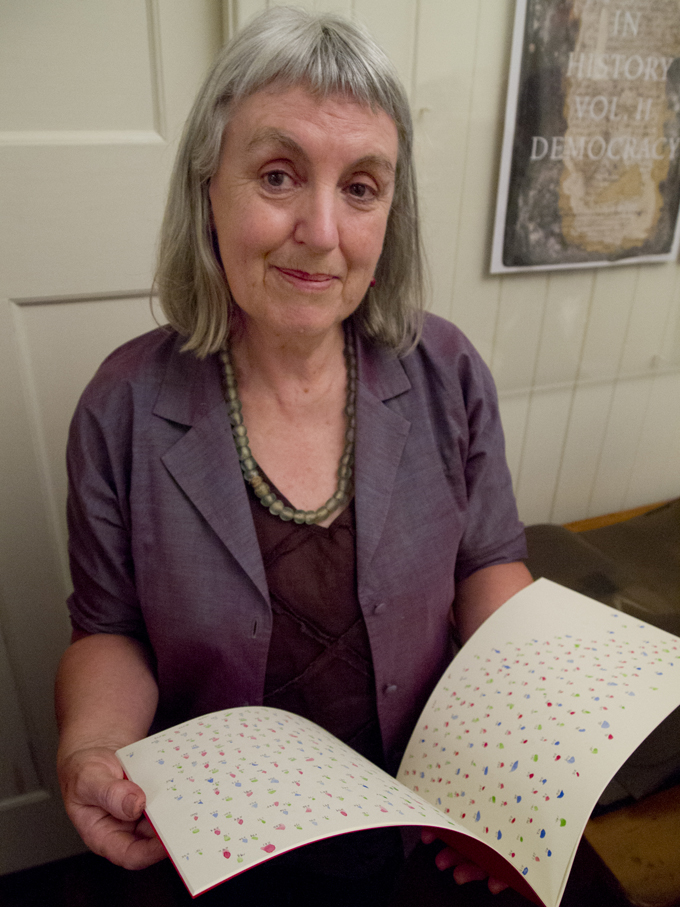
Jan Davis and her book Democracy Counts
.
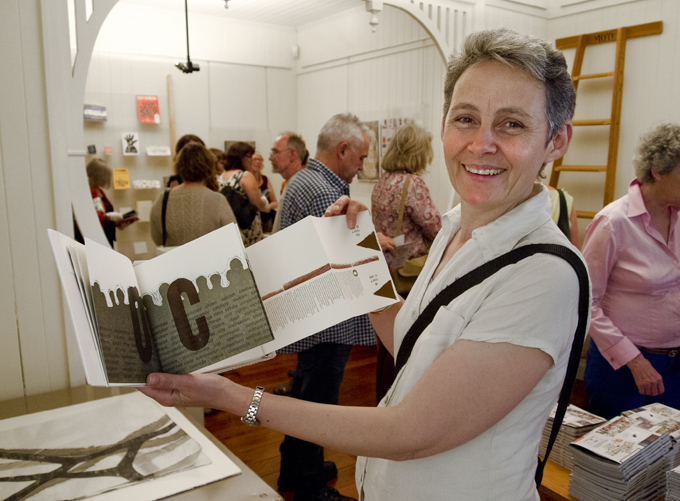
Monica Oppen and her book Dare to VOTE!
.
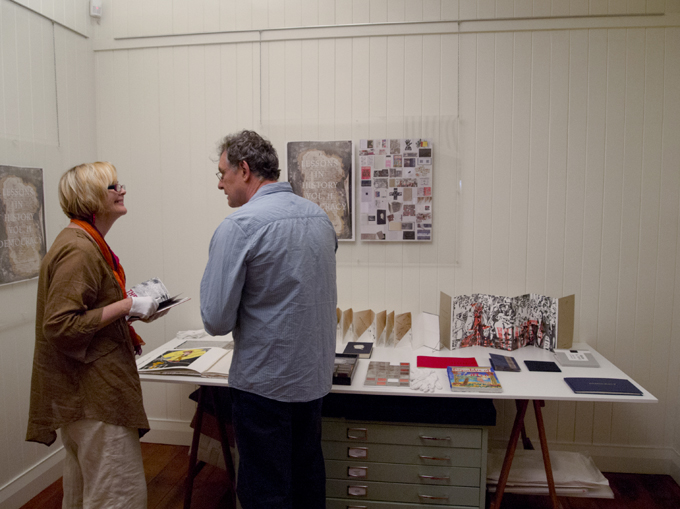
Anne Kirker and Ron McBurnie discussing books
.
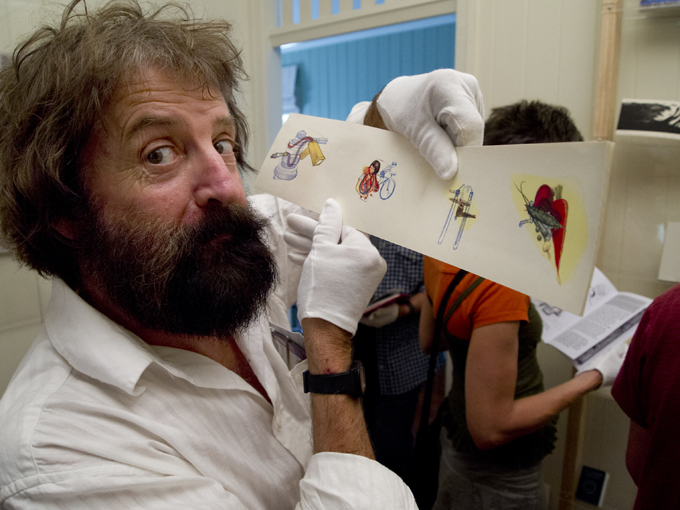
Stephen Spurrier and his book Canaries for Democracy
.
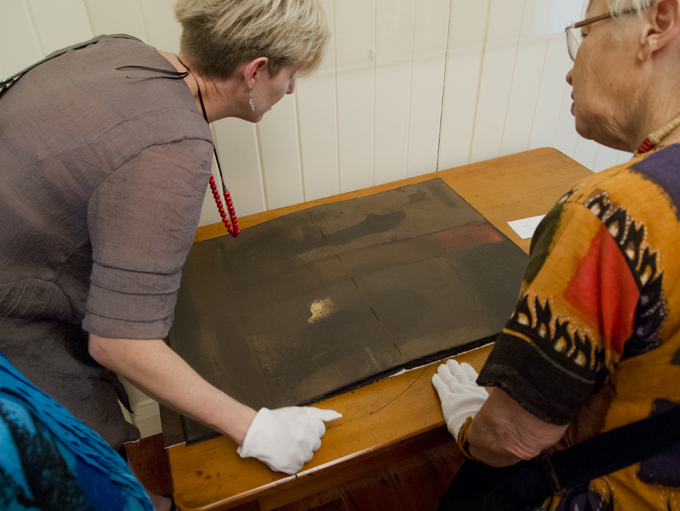
Looking @ Glen Skien’s Atlas 1
.
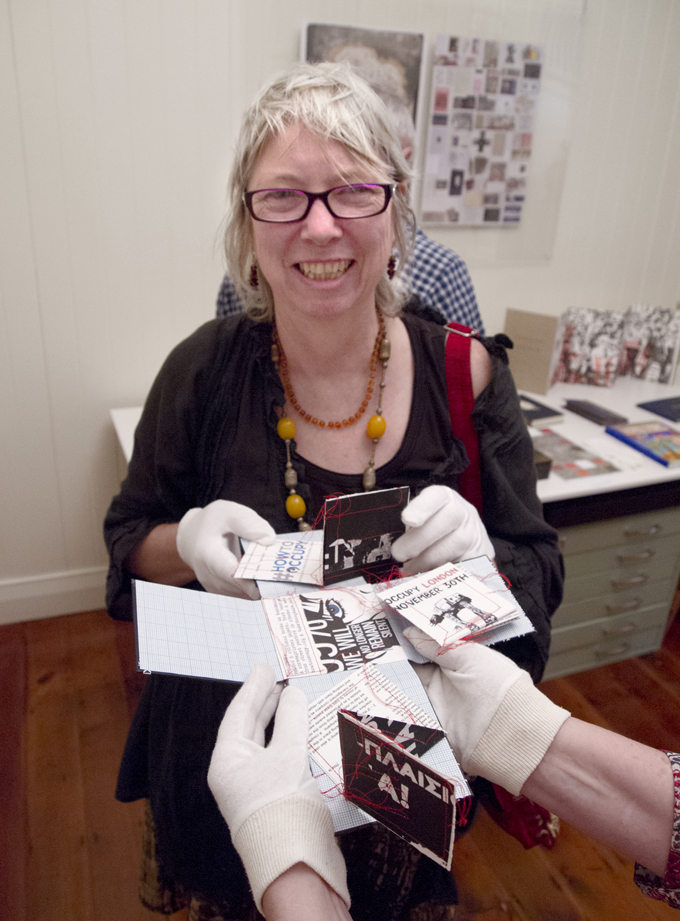
Heather Matthew and her book Occupy
.
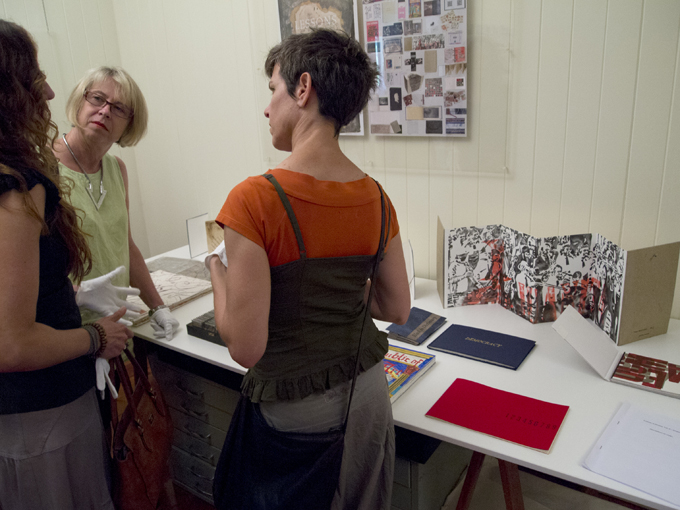
Discussing Democracy books
.
COOPER+SPOWART Guest Bloggers @ SLQ Artists’ Books
The State Library of Queensland has just posted commentaries that Vicky and I have prepared on the artists’ book ‘Monologues’, a book of mezzotints by Graeme Peebles and a text by Gottfried Benn. The texts and images of the book are available online – SEE …
http://blogs.slq.qld.gov.au/ala/
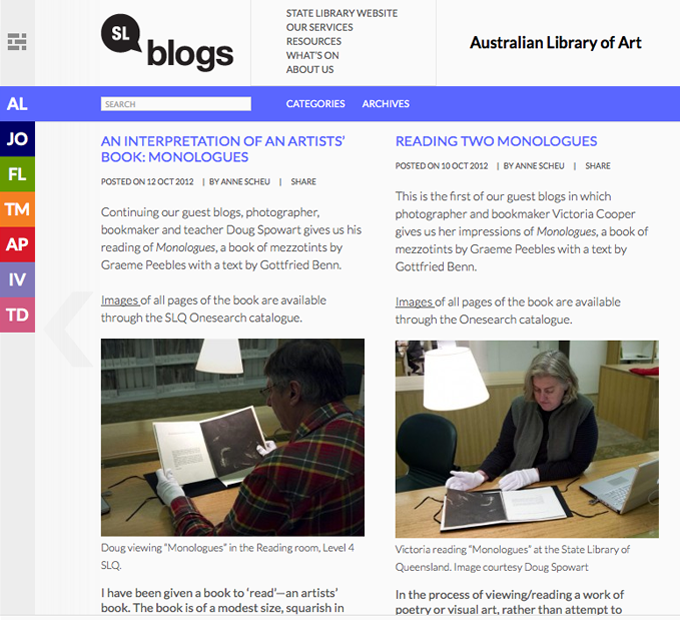
SLQ Blogsite
In support of The YEAR OF THE FARMER ‘The CondaMINE Cow – Variety: Thylacine’
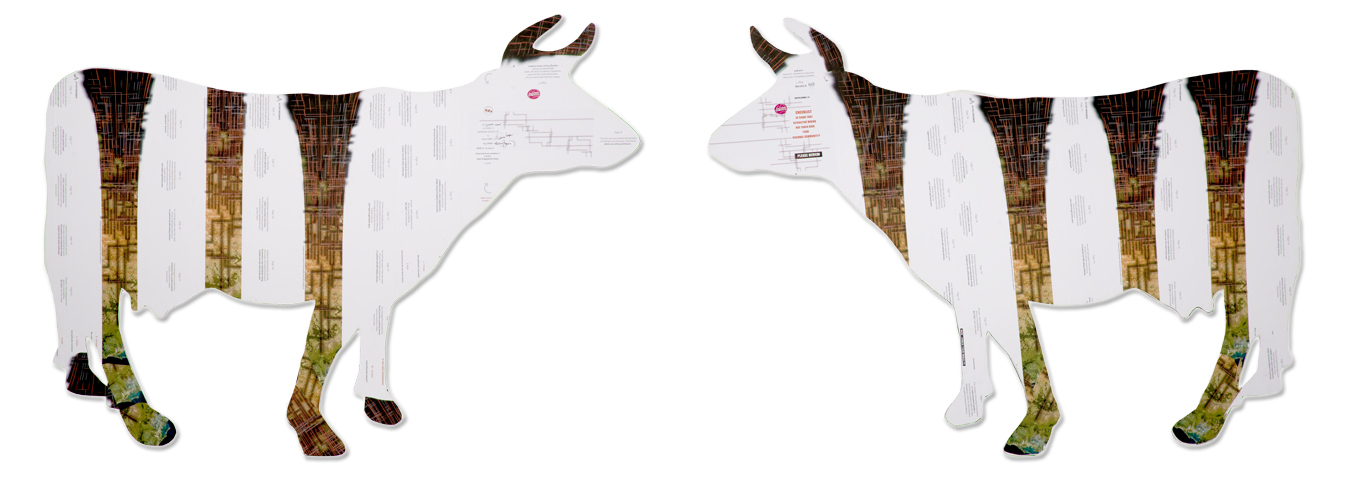
‘The CondaMINE Cow Variety: Thylacine’ recto and verso
We, at the Centre for Regional Arts Practice, are about to contribute an artwork to a project that is intended to celebrate the Australian Year of the Farmer. The project is called, the Australian Year of the Farmer Cow Art, and is being organised by Wendy and Paul Blinco from Pacific Seeds, Toowoomba. Around 1,000 corflute cows were made and passed on to interested groups, artists and school kids across the Darling Downs Region to decorate. The plain white surface of the cows have been painted, collaged or worked on by a range of other artistic means.
For more information visit the Australian Year of the Farmer Cow Art Facebook site
Named The CondaMINE Cow – Variety: Thylacine, our cow was created from a montage of texts and images from our Artists Survey book #12 Checklist of Signs That Extractive Mining Has Taken Over Your Regional Community (SEE the blog post Flying Arts Award for details). In this book, and now in this new variant (the Cow), we posit that a threat exists for farmers and farming land productivity by the extensive mining activity now taking place throughout this land. The farmer, like the Thylacine, may be an endangered species destined for extinction. We trust this cow will raise interest and promote debate on this issue.
Our Cow is at the beach where the makeover was carried out—next week she will be herded together with another 1,000 cows in Toowoomba for the main event.
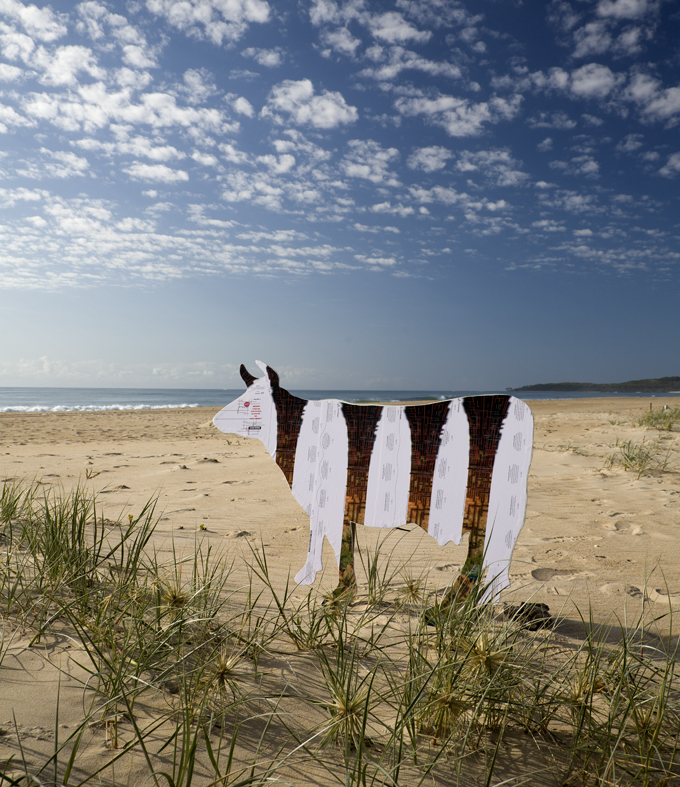
‘CondaMINE_Cow’ artwork by Victoria Cooper + Doug Spowart
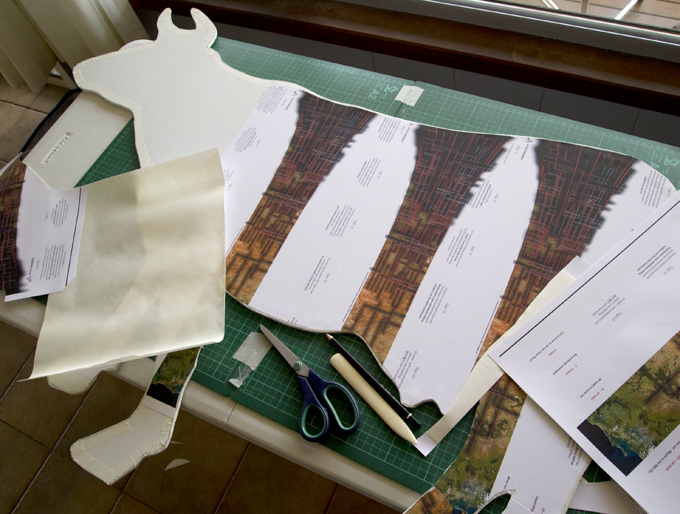
‘CondaMINE Cow’ in production
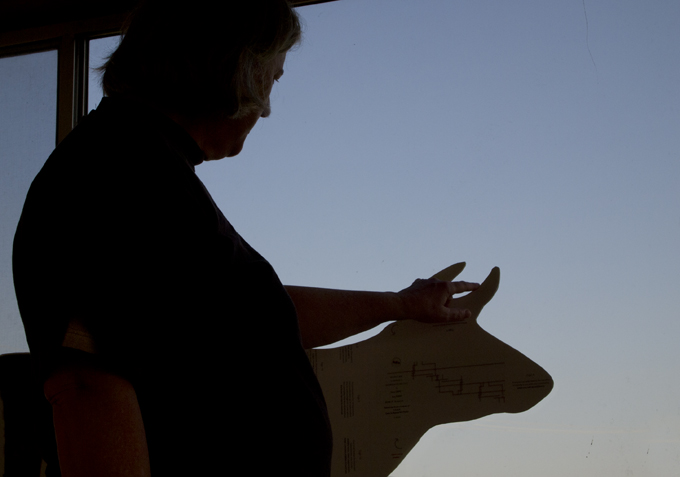
Vicky offering suggestions for the makeover


OUR BOOK in the show ‘Lessons in History Vol. II – Democracy’ grahame galleries
leave a comment »
Cover: Art is always the best policy
.
ART IS ALWAYS THE BEST POLICY
Recent democratic debate in Australian politics has been apprehended by special interest lobby groups. It is now time for artists to stand up and be vocal to capture their share of the political scene.
This policy booklet presents the Regional Artists for Government Election (R.A.G.E.) campaign and its political demands. The R.A.G.E. policies at first seem flippant and glib, however, as we have experienced in contemporary politics, the absurd can, with the right ‘spin’ and ‘media cycle’, become plausible – in fact, even highly appealing to the voters, leading to positive opinion polls and success at the ballot box.
SUPPORT R.A.G.E. – Join the Art Revolution Today.
The edition of the book is 25 with 5 artist’s proofs. Copies of the book can be purchased from grahame galleries for $25 + packaging and post.
A video performance of the book is available here …
.
..
Share this:
Written by Cooper+Spowart
November 28, 2012 at 3:04 am
Posted in Artists Books, Exhibitions, Regional arts
Tagged with Art is always the best policy, artists and art policy, artists and democracy, artists comment on democracy, C.R.A.P., Centre fro Regional Arts Practice, grahame galleries, Lesson in History Vol. II - Democracy, Noreen Grahame