Posts Tagged ‘Chris Bowes’
CONCEPTUAL PHOTOGRAPHY PRIZE: The Mullins Conceptual Photography Prize – Muswellbrook Art Centre
.
.
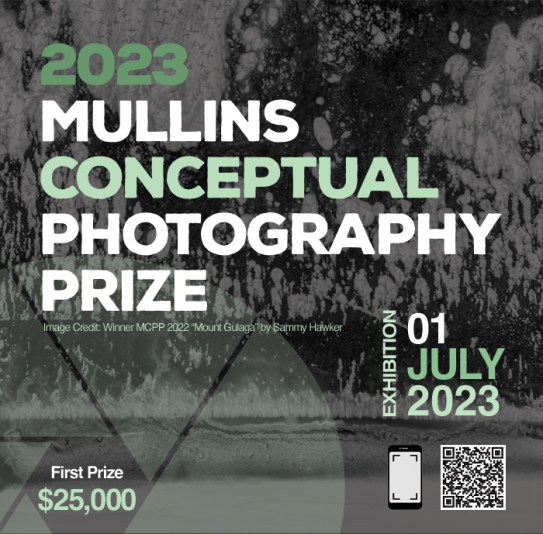
Recently we were part of the judging team for the 2023 Mullins Conceptual Photography Prize (MCPP) which is coordinated by the Australian Photographic Society. The Award is acquisitive and is offered nationally with a value of $25,000. The Mullins Prize seeks to find Australia’s best conceptual photographic works where the means of work presentation are unrestricted, inviting photographers to illustrate the intent of their works through a myriad of mediums. The finalists are exhibited and judged at the Muswellbrook Regional Arts Centre.
.
.


.
.
JUDGE ELOISE MAREE’s PRIZE ANNOUNCEMENT SPEECH
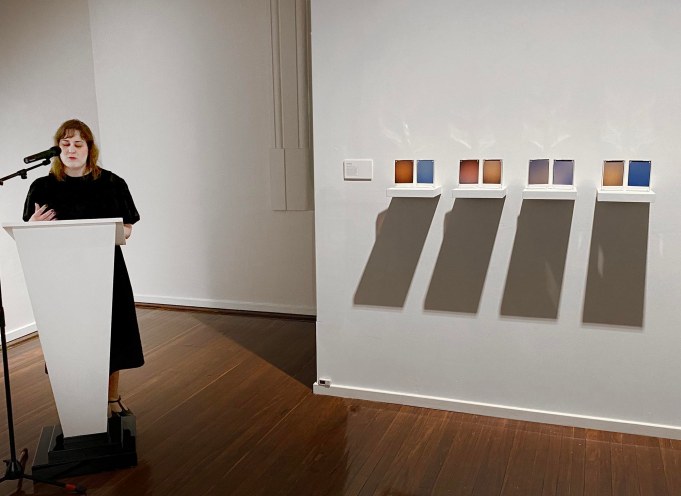
Eloise Maree announces the winner
It’s been a pleasure and a privilege judging the 2023 Mullins Conceptual Photography Prize here at Muswellbrook Regional Arts Centre, on Wanaruah Land. I’ve really enjoyed observing the ways in which the works dialogue with one another, as well as the dialogue they bring about in their observers.
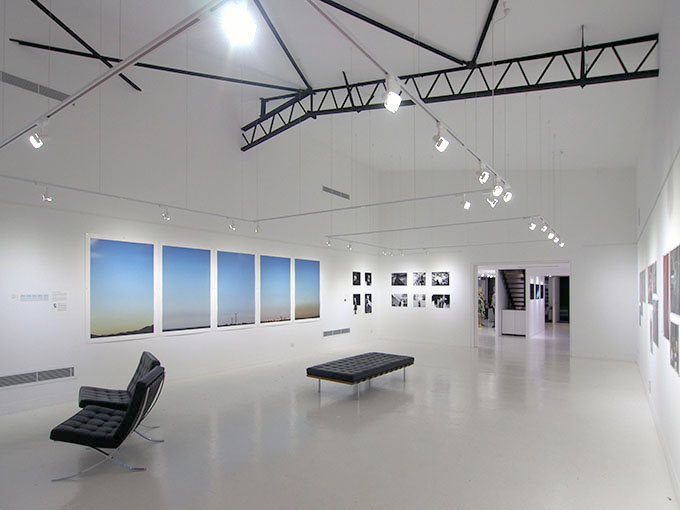
I am pleased to announce that CHRIS BOWES is the WINNER of the 2023 MCPP with his work SUN KISSED #1–4. The fact that Chris Bowes has two works within this finalists exhibition is a testament, I feel, to the strength of his artistry.
Sun Kissed #1-4 is concurrently simple – coloured film imprinted with light as the sun rises and sets – and complex – non-representational landscapes, at once simulacras and originals, motion and stasis, photography and meteorology. Congratulations on beautifully distilling and expanding the definition of landscape photography.
Chris Bowes is a multi-disciplinary artist based in Naarm (Melbourne), on the unceded lands of the Kulin nation. Bowes is a first time MCPP finalist and receives the 2023 MCPP $25,000 cash Prize.
.
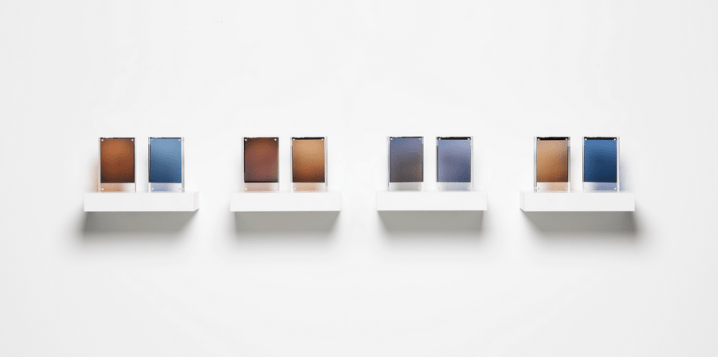
Chris Bowes Sunkissed #1–4
.
ARTISTS STATEMENT: “Sun Kissed” is a series of experimental photographs created using a hand-made camera that, rather than capturing a representational image, instead captures the colour of light. They are presented in pairs, each pair containing an imprint of the light at sunrise and sunset over the course of several days. As such, the work’s aim is to reduce landscape photography to its most basic form, imbuing photographic film with an impression of the sun rather than capturing it washing over the environment.
.
.
.
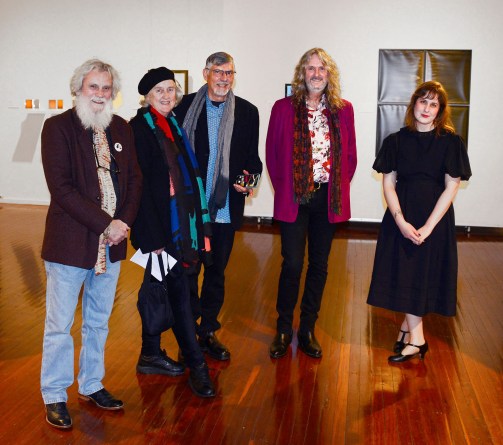
Roger Skinner with the Adjudicators
.
COMMENTS ON THE ADJUDICATION BY JUDGE LEN METCALF
The 2023 Mullins Conceptual Photography Prize is an incredible and important exhibition. It shines as the leading art photography prize, and as such is a showcase of what photography can be. That is the point of it isn’t it? To question what photography is, to push the boundaries into new areas, to test assumptions and explore the photographic visual medium beyond its established boundaries. The resulting exhibition does this exceptionally well.
This visually stimulating, emotionally charged and intellectually challenging exhibition is the culmination of a long judiciary process. Firstly 450 entries are digitally catalogued and the adjudicators, Eloise Maree, Victoria Cooper, Doug Spowart and myself (Len Metcalf) carefully start examining each entry. We carefully considered each of the artworks, the multiple images that accompanied many of the works, sizes, the titles, and the artists statements. From here we all picked a selection to be a finalist and to be exhibited. Interestingly, there was only one overlapping artwork, a testament to the diversity in background and aesthetics of the panel, but most importantly to the diversity and quality of the entries.
Thirty artworks were bought together for the exhibition at Muswellbrook Regional Arts Centre, an interesting and stimulating mix of work. As we wandered around the exhibition the quality and the breadth was overwhelming. As was the daunting task of choosing only one winner. I joked that we could randomly choose a winner and argue how deserving it would be.
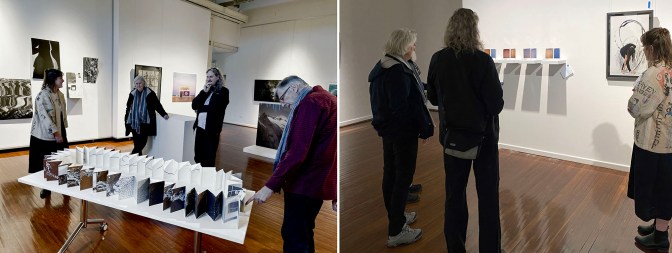
Adjudicators deliberating
The adjudication panel, over the better part of a day, wandered around and discussed every artwork in depth. Examining in detail, considering the artwork in front of us as it was presented. It was mentally exhausting and incredibly rewarding.
When we came together, reflecting on all of those conversations, there had been one artwork where all the judges glowed as we hovered around it, the conversation was stimulating and illuminating inspired by the artwork. A quick check with all the judges and the decision was unanimous.
The judges agreed to each choose their own to add four additional highly commended awards.
.
.
.
ABOUT THE HIGHLY COMMENDED AWARDS
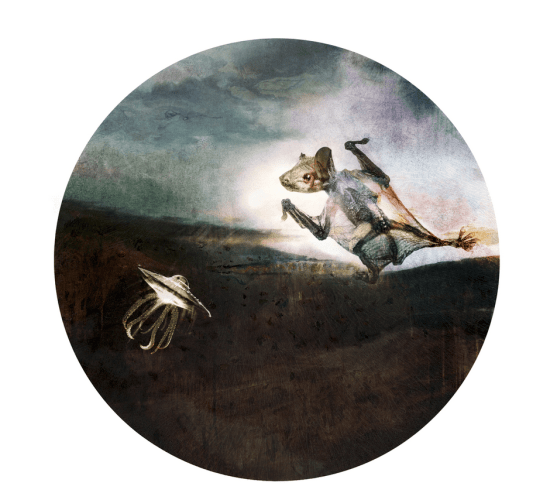
Judith Nangala Crispin’s A flying saucer over Clyde Mountain, shows Declan, dead at two hours old, how to make a new body out of light
Judith Nangala Crispin A flying saucer over Clyde Mountain, shows Declan, dead at two hours old, how to make a new body out of light
.
Doug Spowart comments on Judith Nagala Crispin’s Highly Commended work
The very name of this prize ‘Conceptual Photography’ demanded of me to seek out works that went beyond the reality of normal visual captures and that dealt with and idea transferred to a photographic outcome. Though Crispin’s work is firmly embedded in a range of photography and, perhaps even pre-photography techniques what excites me is the caring and poetic narratives she creates that connect the death of the animal recorded and its spiritual resurrection.
ARTISTS STATEMENT: This is part of a series of afterlife portraits of birds and animals, ascending between earth and outer space. I place cadavers on emulsion, creating images with a Lumachrome glass printing sun printing, cliché-verre and chemigram. Decomposition chemistry creates colour and detail. Each print is exposed 30–50 hours in natural light. This work draws on my experience of tracing my family’s Aboriginal ancestry. I am trying to honour the lives of animal and birds with whom we share this planet.
.
.
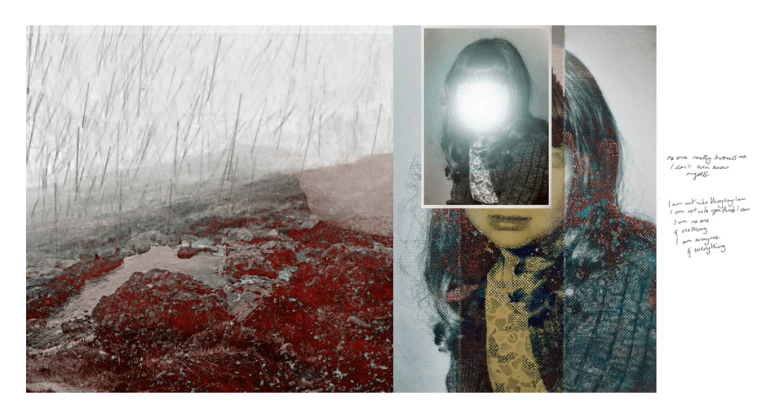
Arrayah Loynd’s I don’t always understand/selectively mute (diptych)
Arrayah Loynd I don’t always understand/selectively mute (diptych)
Victoria Cooper comments on Arrayah Loynd’s work
This work is hard to walk past but equally hard to look at. The artist’s statement and title resonates with the images. Loynd embedded concepts of identity, crisis and trauma in the layers of this deeply confronting work.
ARTISTS STATEMENT: I don’t feel like I belong in my body, it feels awkward and uncomfortable like an ill fitting suit. I live in a constant state of confusion…of others, of myself. I am not who they say I am, I am not who you think I am. I am no one and nothing, I am everyone and everything, So come and find me, but only in the small moments when I want to be found. I make no promise that I will be there. (neurodivergence/trauma)
.
.
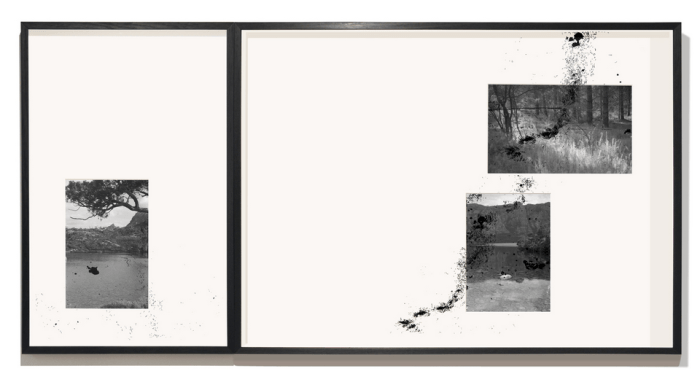
Melanie Cobram’s The Colony Reclaims the Land
Eloise Maree comments on Melanie Cobram’s The Colony Reclaims the Land
Within this work, Melanie’s photographically ‘captured’ landscapes are terrorised and territorialised by a colony of termites (I’d be curious to know if the termites were a native or introduced species). I really enjoy the way the termites’ interventions extend beyond the photographic negatives to the matboard, just as this photoseries extends discussions on migration, citizenship and belonging beyond the usual frames of reference. Congratulations on creating such a thought-provoking work, Melanie.
ARTISTS STATEMENT: The Colony Reclaims the Land is a series of 35mm negatives depicting the Australian landscape, intervened by a colony of termites. The negatives were fed into a termite mound and crossed over by the colony as it travelled assiduously across the nest. The work plays with the dialogue of living on colonised land by inviting a native colony to reclaim its own image. The termites’ subtle topographical drawings reconcile landscape and language, eliciting conversations about migration, citizenship and belonging.
.
.
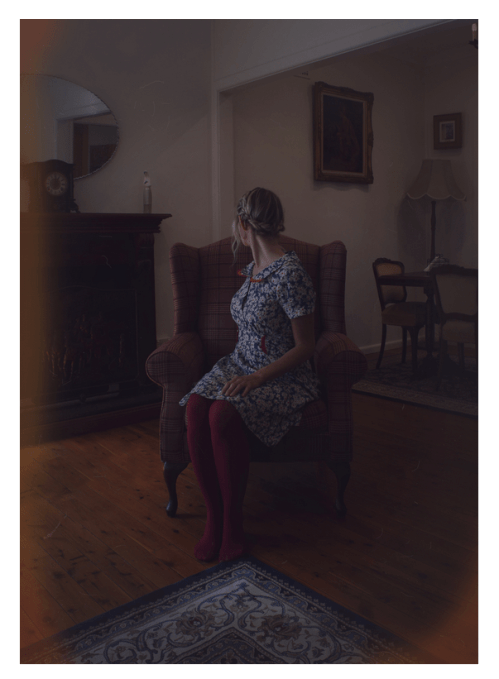
Jess Leonard’s I knew at the Time
Len Metcalf’s comments on Jess Leonard’s I knew at the Time
‘I knew at the Time’, by Jess Leonard is fascinating as it is one of the few artworks in the exhibition that adheres to a more traditional approach to the photographic medium. Or is it? The artwork and the narrative asks the viewer so many questions. Ones that remain unanswered by the work. We are left with discussions and questions. As the artists says in their artists statement, ‘themes of women, the body and place, memory and mystery… The story you walk away with is yours to believe.’
ARTISTS STATEMENT: Perhaps uncanny and slightly disorientating this work explores themes of women, the body and place, memory and mystery with only a fragment of the narrative presented before the viewer. The story you walk away with is yours to believe.
.
.
THE FINALISTS
Name Artwork Title
Alex Walker Manual Exposure
Anna Carey Crystal Mystery, 2022
Annabelle McEwen Self Scan B (photogrammetry)
Arrayah Loynd I don’t always understand/selectively mute (diptych)
Ben Kelly Dimension
Chris Bowes Dip/Dunk #1
Chris Bowes Sun Kissed
Chris Byrnes Beyond the Photogram Chasing Alison No 1 Dawn Light
Damian Dillon Bourgeois Cha Cha #7
Dave Carswell Flocculation #2
Holly Schulte Swell (37)
Jacinta Giles For the Birds?
Jenny Pollak Free Fall
Jess Leonard I Knew At The Time
Judith Nangala Crispin A flying saucer over Clyde Mountain, shows Declan, dead at two hours old, how to make a new body out of light
Katrina Crook Untitled#1 (In Silence)
Kelly Marie Slater Landshapes: Pass between Needles
Kenneth Lambert Burden of Proof (Data Portrait of Magdalene)
Kim Percy Sway
Marcus O’Donnell (De)Composition – a dark ecology
Matthew Schiavello Under the Sea
Melanie Cobham The Colony Reclaims the Land
Nicholas Hubicki Vitichiton (the end of the forests)
Nikky Morgan-Smith Index
Peter Rossi Unchopping A Tree
Regina Piroska I Followed A Worm (accordian book)
Stephen Blanch The Acrobat and the Flea (Flood Loss, Lismore 2022)
Tebani Slade Of me in the landscape
Wouter Van de Voorde Uncontrolled
Yianni Maggacis The Good Room XII
.
.
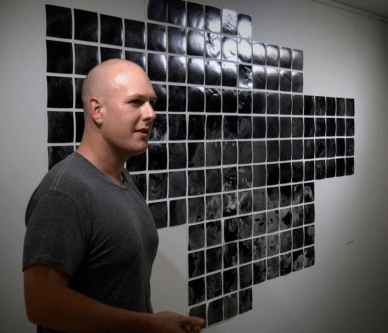
Chris Bowes 2017 PHOTO: Doug Spowart
.
CHRIS BOWES’ COMMENTS ON RECEIVING THE PRIZE
Published on his social media after the Prize’s announcement …
Chris Bowes’ @quisbie
Well, this was a pleasant surprise.
I’ve been making art for over a decade, and yesterday was probably the highlight of my career so far. Ever since I made my first conceptual project Sweat nine years ago, I’ve been wanting to create a process that captured some of those ideas using ‘landscape’ photography. When I first picked up a camera 15 odd years ago, my main interest was shooting landscapes. This focus transitioned to conceptual photography while I studied, and it completely changed the way I viewed and used the medium. What I’m most excited about is that this prize money will go back into the photographic community by supporting my new venture @kindredcameras.
It feels really validating to win a competition like this, but I feel conflicted about competitions because while I’ve come out on top, there are lots of other amazing artists who were just as deserving of the win. I want to acknowledge the significant time and money that artists put into being a part of these things with the unlikely hopes that they’ll win the big prize. It’s often a huge financial burden and an emotional rollercoaster. The work from all the other artists in the show is incredible, and I hope you go and have a look at their practices
.
.
ABOUT THE ADJUDICATORS
.
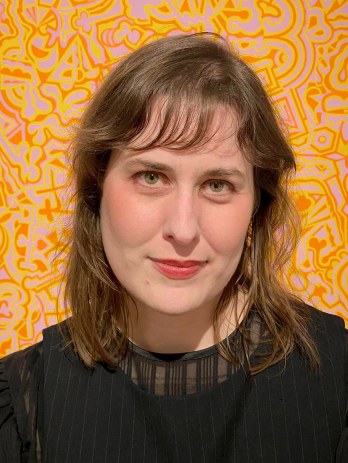
Eloise Maree PHOTO: Doug Spowart
Eloise Maree
Eloise is an artist and arts worker privileged to be living and working on and with Gundungurra and Wiradjuri land (Blue Mountains and Bathurst, New South Wales).
Eloise is a photographic artist utilising wet plate photographic processes. Eloise is interested in the relationships between people and place, in the history, and historical processes, of photography and in ‘creative histories’. Eloise’s camera-original wet plate photographs are both historical (hand sensitised using a silver nitrate solution, for example) and contemporary (shot using modern lenses, for example, and or lighting). This locates Eloise’s photographic art in the past as well as the present, and this colocation enables Eloise’s revisionings of histories and archives.
Eloise is experienced by way of Craig Tuffin as well as by way of Ellie Young of Gold Street Studios, a Bachelor of Visual Arts (Honours) (Sydney College of the Arts, the University of Sydney) and a Master of Museum Studies (the University of Sydney).
.
.
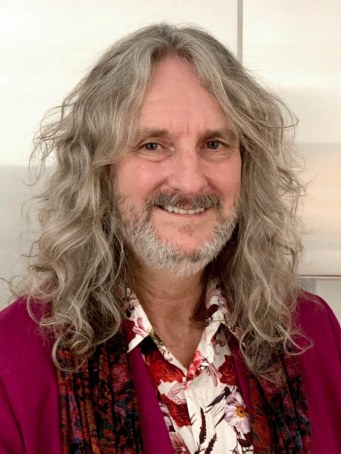
Len Metcalf PHOTO: Doug Spowart
Len Metcalf
Len’s journey towards photographic education began long ago, with the gift of his first camera as a young boy in the Blue Mountains, and his first teaching experience in a local Scout troupe at fifteen years old. After graduating from High School, Len took a job as an outdoor educator in Kangaroo Valley to support himself through a Visual Arts degree, majoring in Photography.
This was the beginning of a lifelong quest to combine his passions for adventure, education and photography. While studying Fine Art, Len had the opportunity to learn from fine teachers such as George Schwartz, Eardly Lancaster Julie Brown-Rrap and Lynn Roberts Goodwin at the City Art Institute (now Faculty of Fine Arts at NSW University).
He graduated with straight distinctions and received the coveted award for ‘Most Outstanding Advanced Colour Photographer’. Turning down two corporate photography sponsorship offers, Len instead pursued a career in education and outdoor adventure. Photography became his unbridled passion and his escape from work. During his 30-year career in the education sector Len worked with numerous schools and businesses as an experiential educator, facilitating learning outcomes through experiences in the outdoors.
In the tertiary education sector Len worked at the University of Technology, Sydney in the Faculty of Adult Education as course coordinator and lecturer in the Bachelor of Teaching program. Later, he took on a role in the TAFE system as a vocational trainer designing, developing, coordinating and running some of the best industry courses in the world for over twenty years.
After 30 years as a facilitator, educator and trainer, Len was ready to pursue a new direction. He completed a Graduate Diploma in Art Education at Sydney University and a Masters Degree in Adult Education at the University of Technology, Sydney. In 2000 Len founded Len’s School. Since then he has been teaching, mentoring and guiding photographers in some of the most spectacular landscapes in Australia, from arid deserts and windswept coasts to his backyard in the Greater Blue Mountains World Heritage Area.
.
.
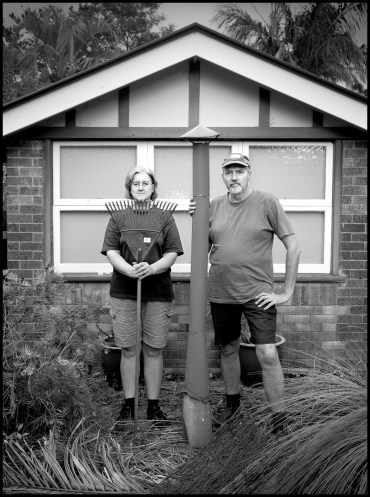
Cooper+Spowart PHOTO:Spowart/Elliott
Cooper+Spowart
Victoria Cooper and Doug Spowart are visual artists with an extensive practice as individuals and in collaboration. Both have completed individual PhD studies in photography, photobooks and artists’ books. Cooper and Spowart have been finalists in many photographic art awards and been the recipients of major prizes.
They have also judged photography, artists book and photobook awards, and have lectured nationally and in New Zealand. Their work including prints, artists’ books and photobooks has been acquired by regional and state galleries and also by the prominent art book collections of State Libraries, the National Library of Australia and the British Library.
In social media they contribute to the Instagram accounts @wotwesaw (Victoria) @woteyesaw (Doug) and their practice commentary blog www.wotwedid.com. They are the founders of the Centre for Regional Arts Practice, The Cyanotype in Australia and New Zealand and the Antipodean Photobook (also Blogs and Facebook groups).
.
.
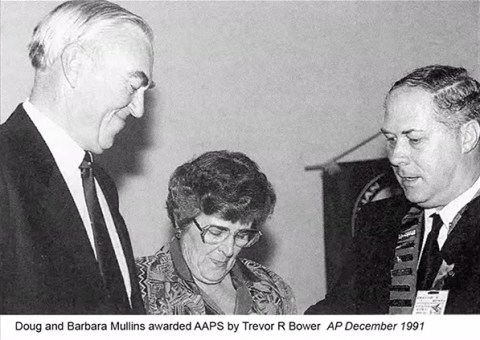
Doug and Barbara Mullins PHOTO: Trevor Bower
ABOUT THE AWARD’S BENEFACTORS: DOUG AND BARBARA MULLINS
In 2009, Barbara Mullins provided the Australian Photographic Society with a bequest in memory of her husband, the late Doug Mullins, President of the Society 1964-1966. This bequest was part of the proceeds from the sale of Mullins Gallery, the former headquarters of the South Australian Photographic Federation of which Doug was Patron.
At that time the bequest was intended to support the regular publication of an APS book of members’ work. In 2011 the first edition of APS Gallery was published. In 2012, the APS celebrated its 50th anniversary and a second book was published. No further books have been created and the balance of the bequest has since grown through interest earned.
Seeking to ensure the long-term future of its new Australian Conceptual Photography Prize introduced in 2019, the Society approached the Mullins family with a proposal that would satisfy the intent of honouring both Doug’s and Barbara’s significant contributions to the APS. There was much synergy in the proposal with the style of Doug’s exhibition photography in the Prize, and in Doug and Barbara’s generous support of the arts and the Art Gallery of SA.
In early December 2019, approval was received to apply the balance of the bequest funds to the Prize. The Society has, therefore, retitled the prize as the Mullins Conceptual Photography prize (MCPP) and it will be a permanent reminder of Barbara and Doug Mullins.
.
.
The coordinators of the MCPP are Brian Rope and Roger Skinner – Thank you for your enthusiasm, energy and hard work to help make the Prize happen.
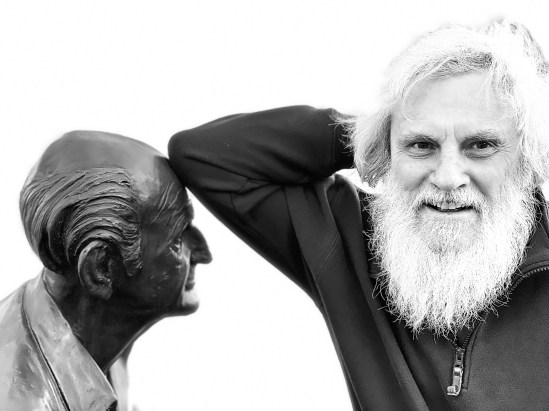
Roger Skinner and Max PHOTO: Doug Spowart
THE MULLINS CONCEPTUAL PHOTOGRAPHY PRIZE gratefully acknowledges all their supporters and sponsors:
• Bengalla Mining Company www.newhopegroup.com.au
• Ilford www.instagram.com/ilfordphoto/
• MACH Energy www.machenergyaustralia.com.au
• Malabar www.malabarresources.com.au
• Australian Photography magazine www.australianphotography.com
Thank you to Eliose Maree and Len Metcalf for their texts. Some texts edited from the APS and MRAC Releases and SM posts
.
©2023 All photos by Doug Spowart
.
.
.
.
.
.
.
.
.
.
DARK LOVE: Stories of the darkroom @ Maud Gallery

It seems that in the digital age many photographers still pine for the days past when the darkroom was familiar territory. While older photographers may have fond memories, today they share their darkroom love with new-comers, mainly younger and digitally native photographers. To honour the past and to celebrate the future of the darkroom we worked with the Director of Maud Creative Gallery Irena Prikryl recently to host a series of events and workshops to recognise analogue photography in contemporary photographic practice.
On November 8 a group of photographers responded to the call to attend an event at the gallery called DARK LOVE: Stories of the Darkroom. They were asked to come along with something special about the darkroom and tell a story associated with it. On arrival at the gallery their photographs were prepared and then hung on the wall. The presentations were timed at around 5 minutes and were quite fascinating.
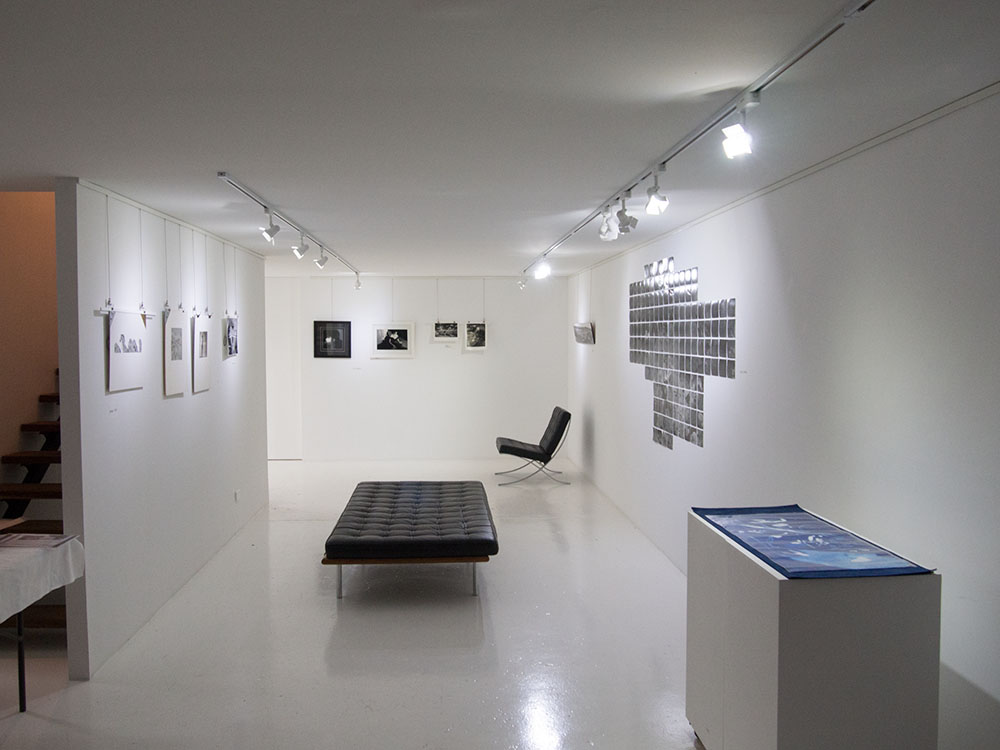
Part of the Dark Love exhibition at Maud Gallery
What follows is a photo of the attendee, their print and a brief comment about their stories …
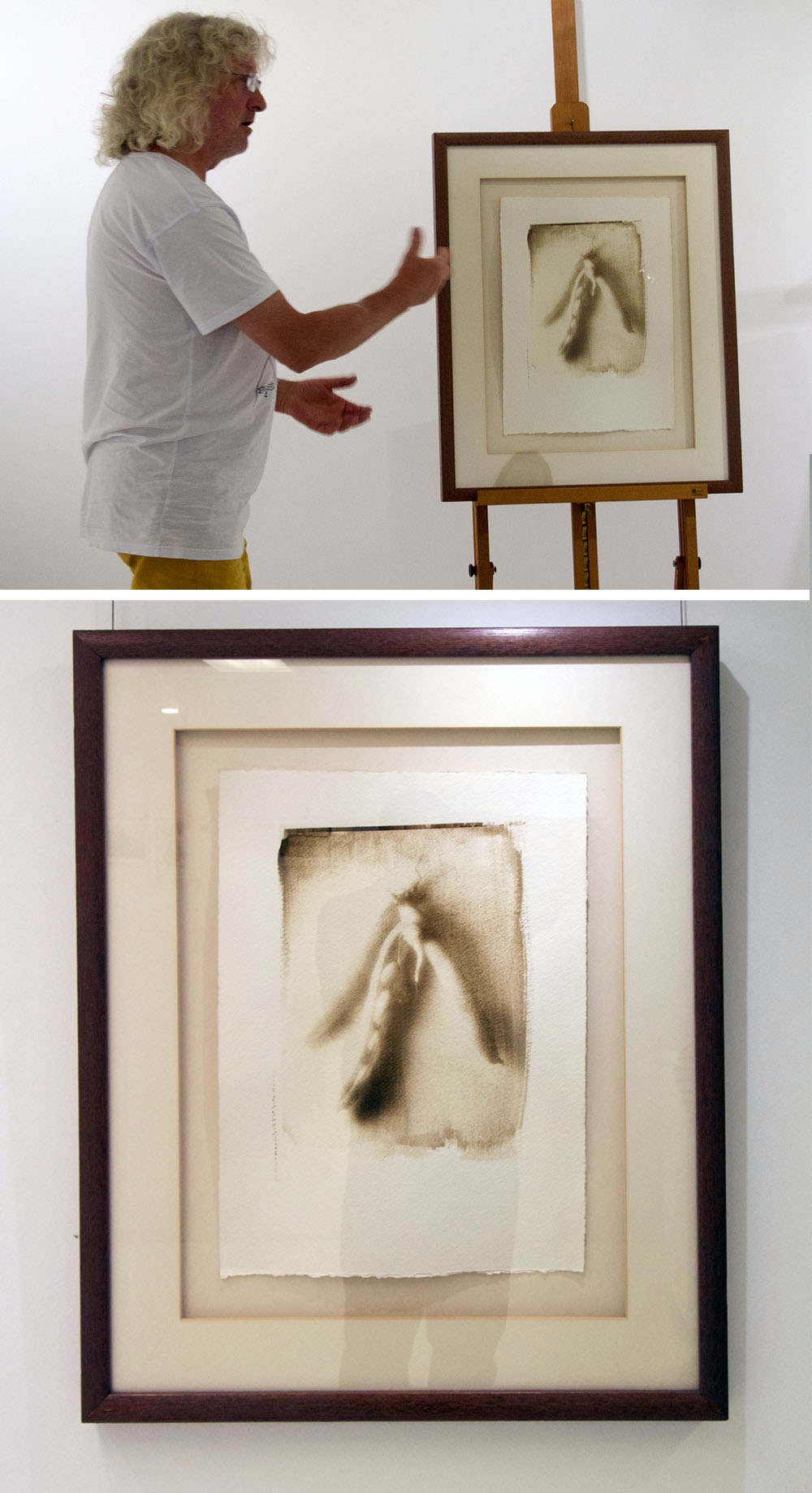
Alex Buckingham
Alex spoke about working with Liquid Light emulsions
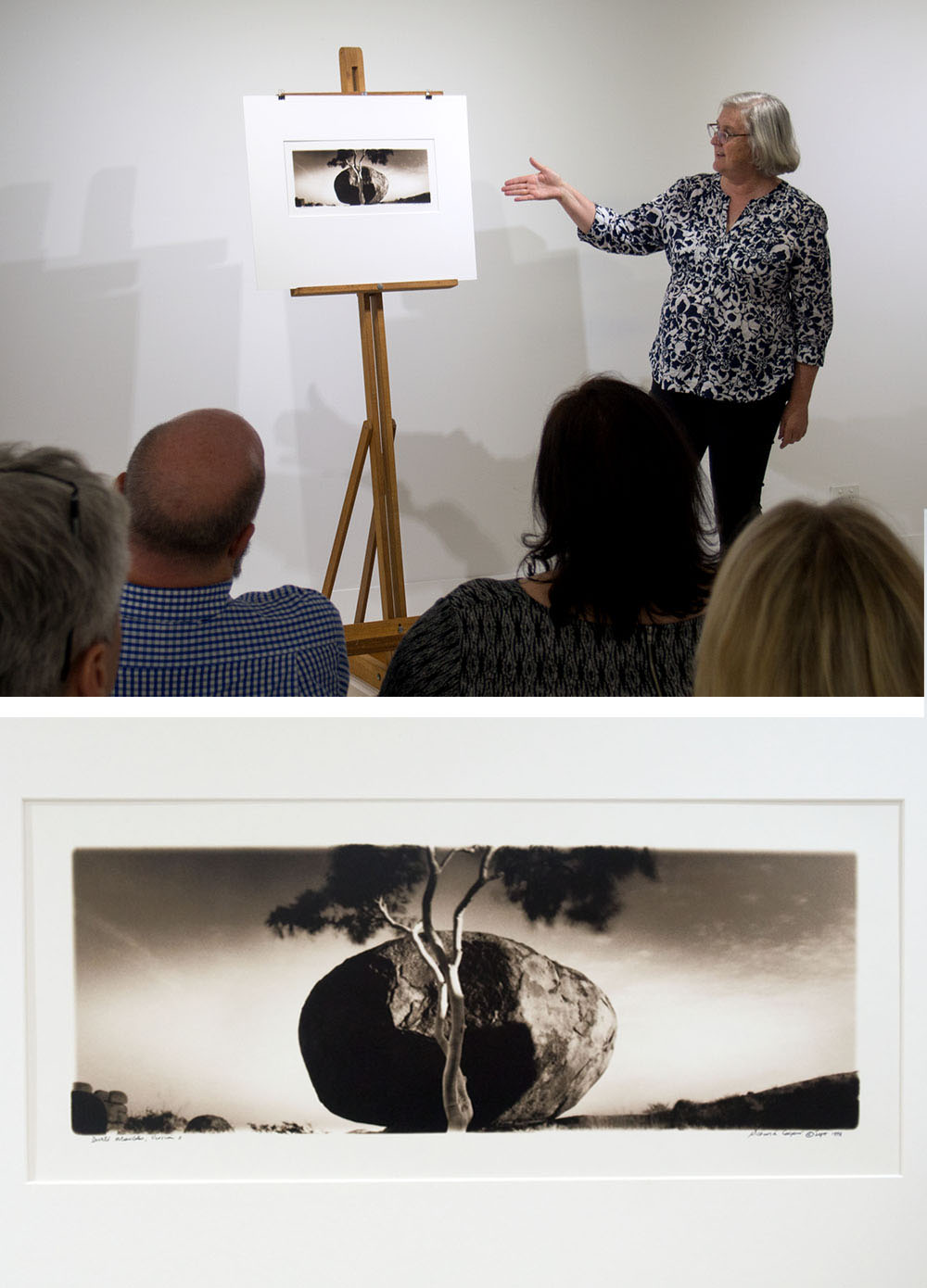
Victoria Cooper
Victoria Cooper discussed the making of this pinhole biscuit tin photo and the challenges of printing the 6x18cm negative
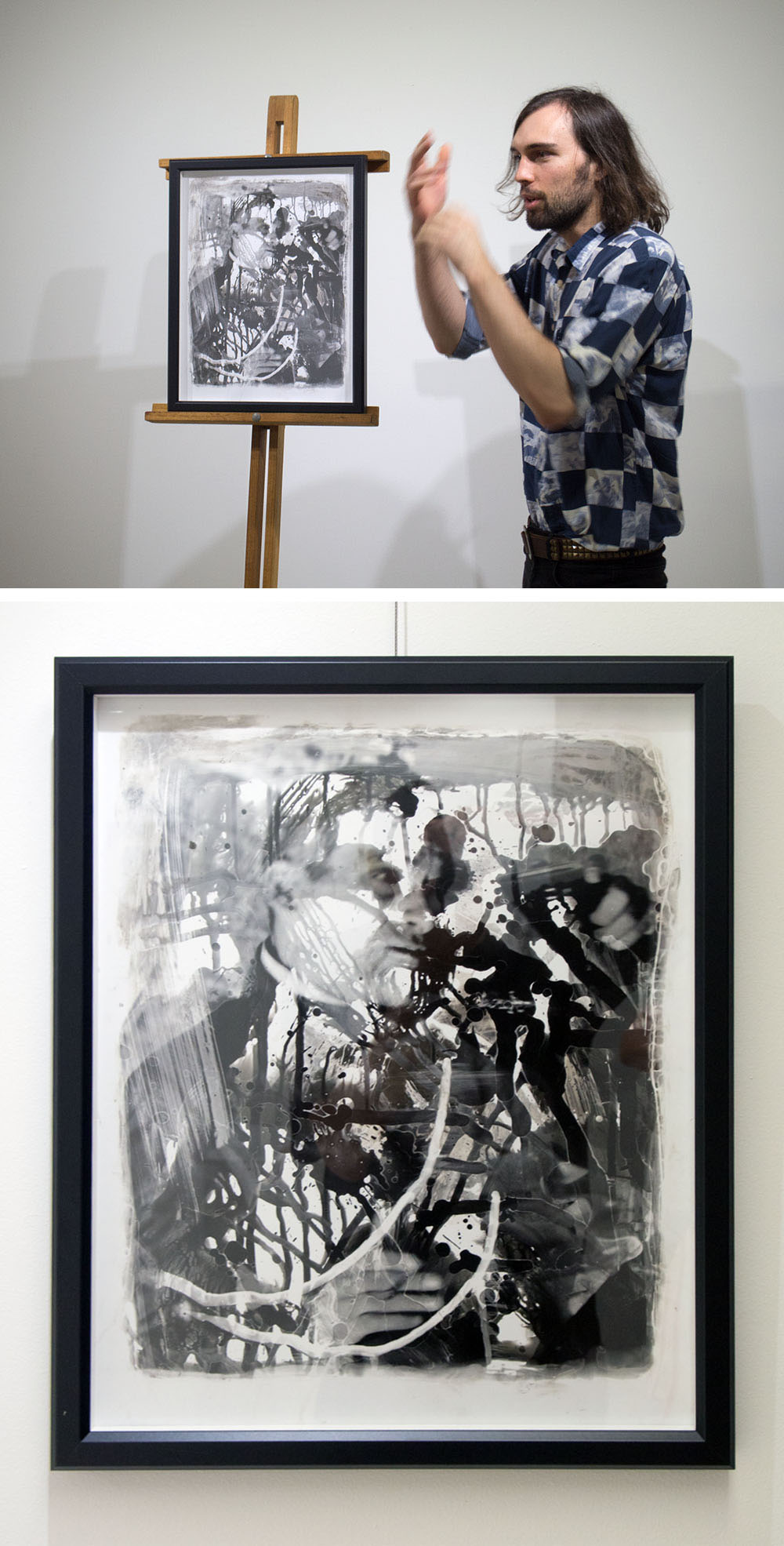
Thomas Oliver
Thomas spoke about his current academic research in the multiple printing of a single negative.
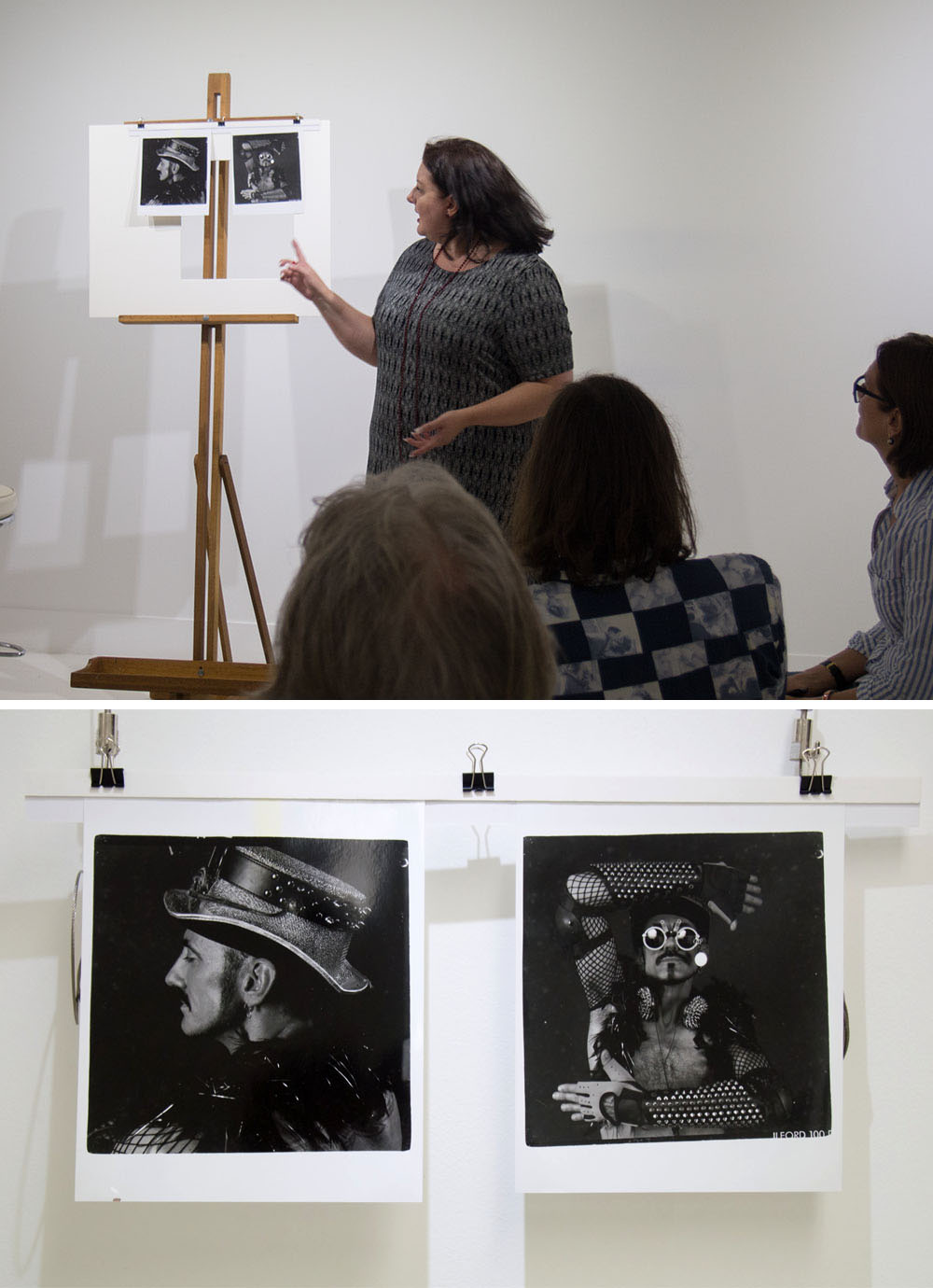
Tammy Forward
Tammy discussed the making of a studio portrait.
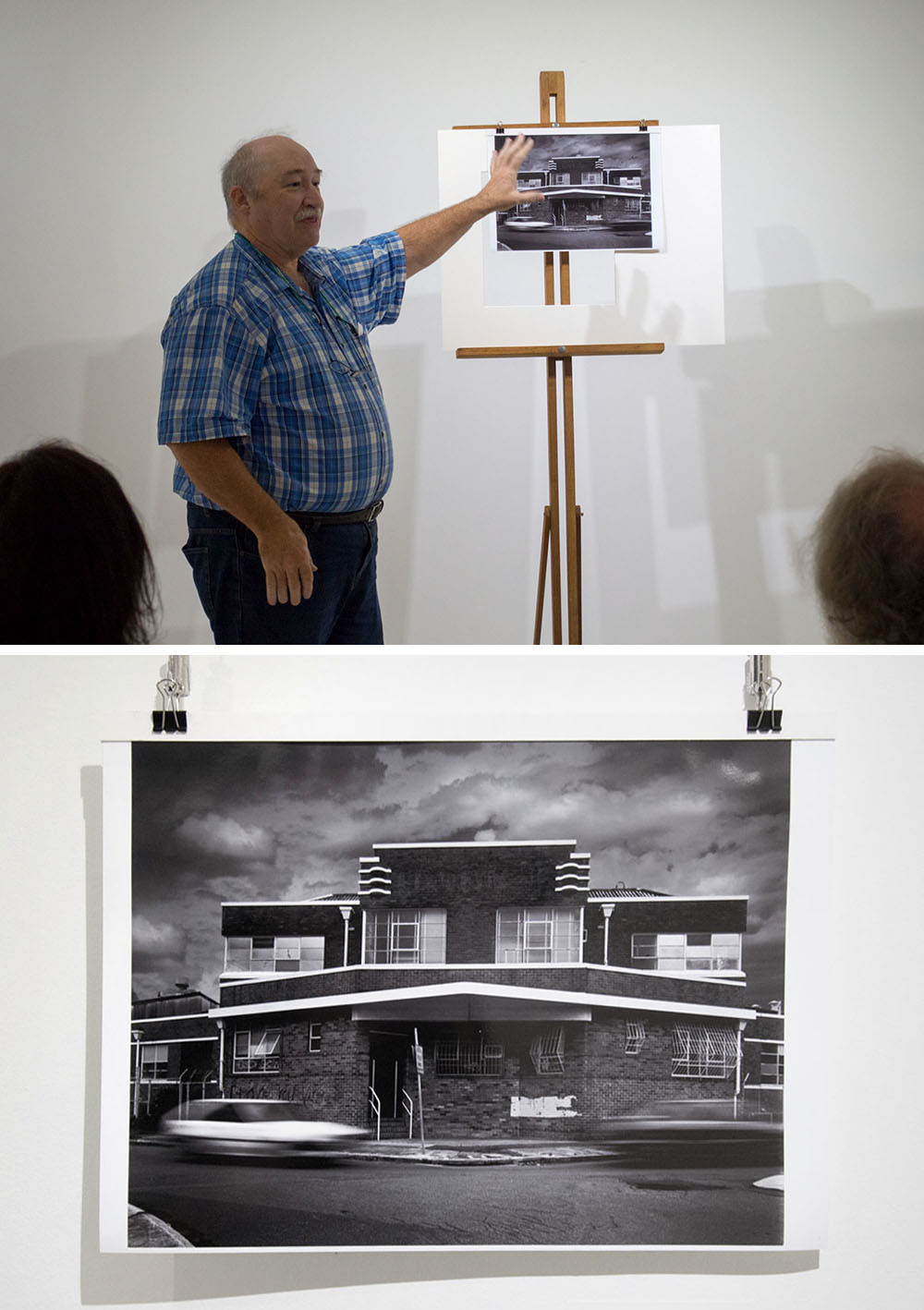
Sandy Barrie
Sandy spoke of the dangers of shooting large format in busy Sydney traffic.
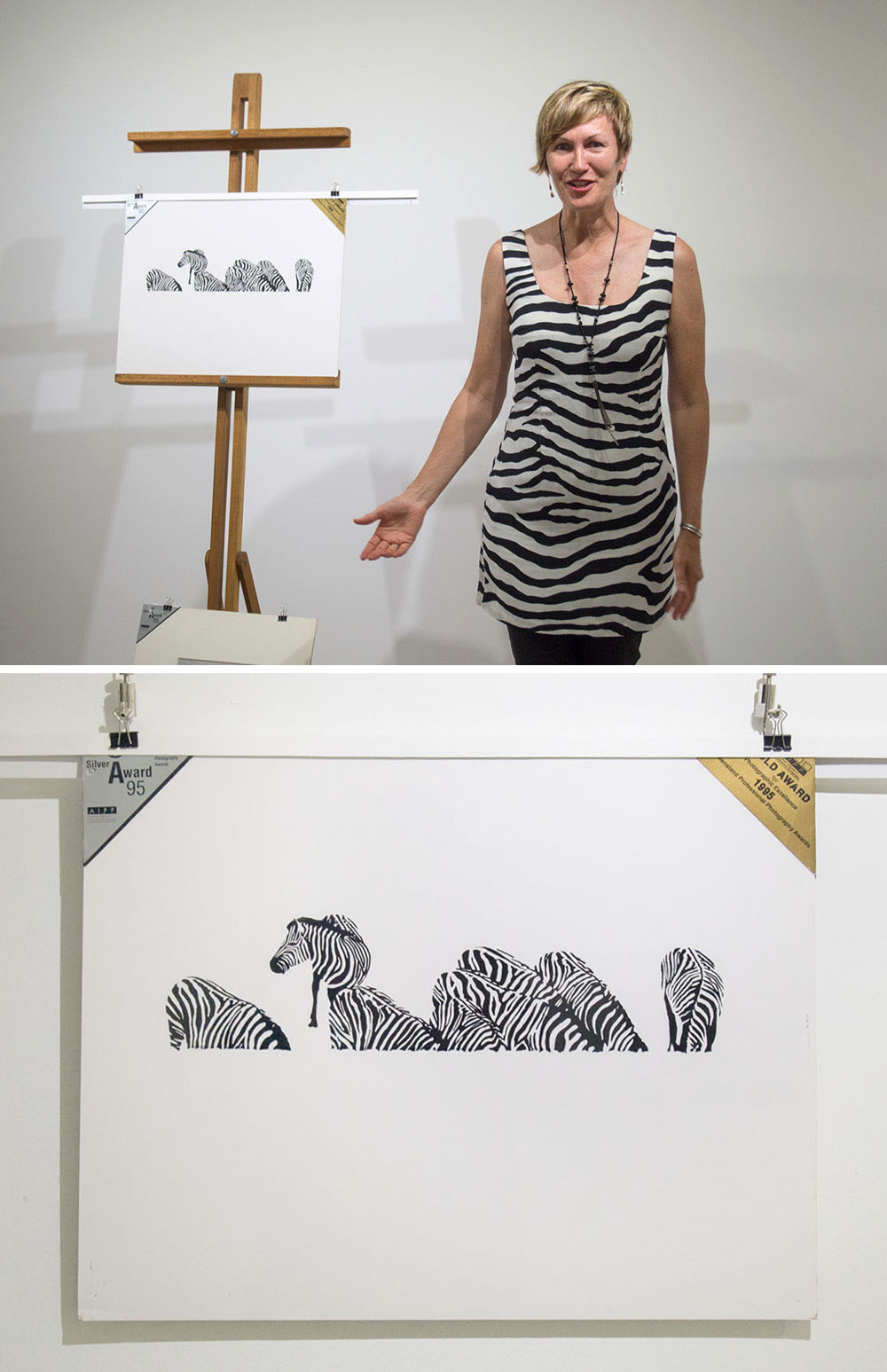
Robyn Hills
Robyn told the story of the making of this award winning print – from its origins from a point-n-shoot camera to darkroom high contrast printing ‘Tipp-ex” and a little bit of marker pen… A great animated performance….

Rob Crapnell
Rob discussed his interest in the darkroom and work with a 6×7 Pentax documenting how old heritage buildings in Brisbane are being cramped by the skyscraper…

Peter Pescell
Peter discussed his use of an ‘ancient’ bellows camera and reloaded 120 aerial film on spools to make this image… the old and the outdated still have currency in analogue…
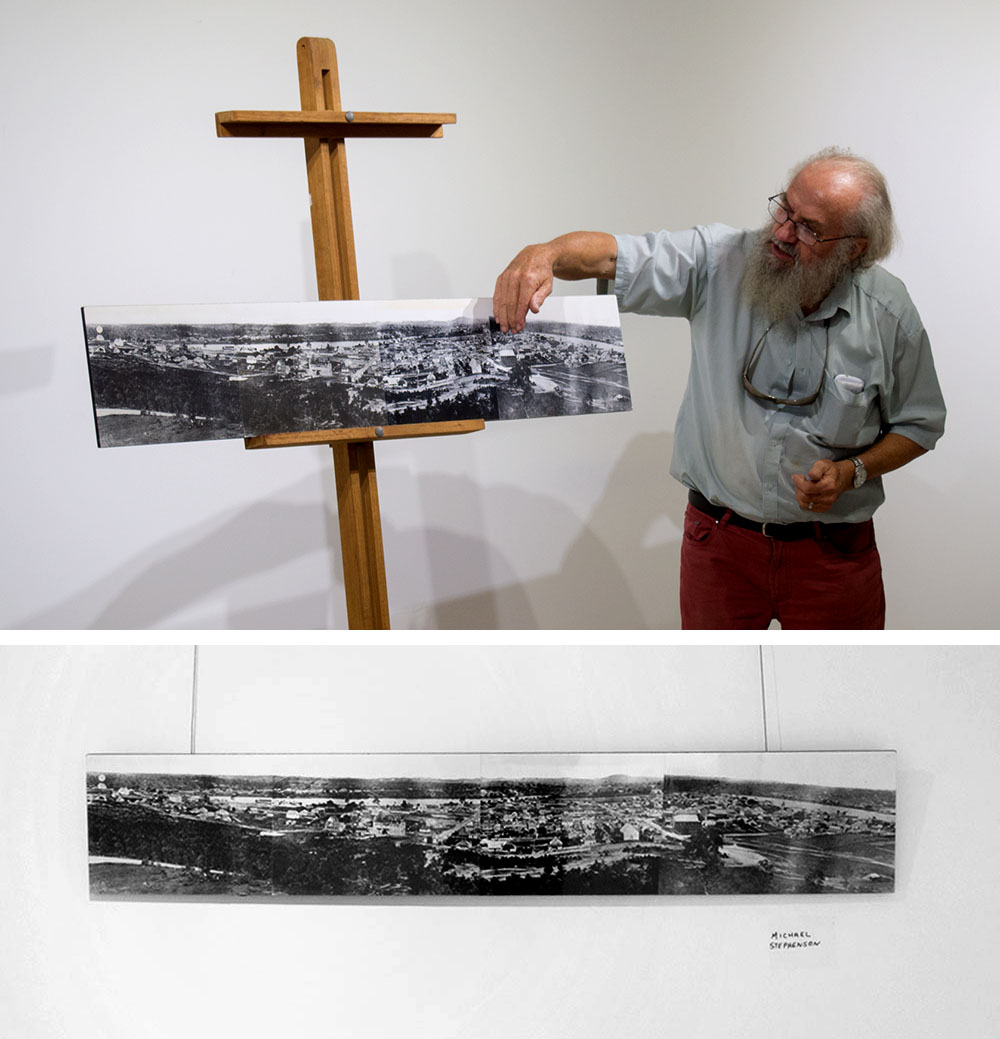
Michael Stephenson
Michael discussed his modern printing of a series of lantern slides that represented a panorama of Brisbane made in the 1870s(?) by the photographer a Mr Wilson(?).
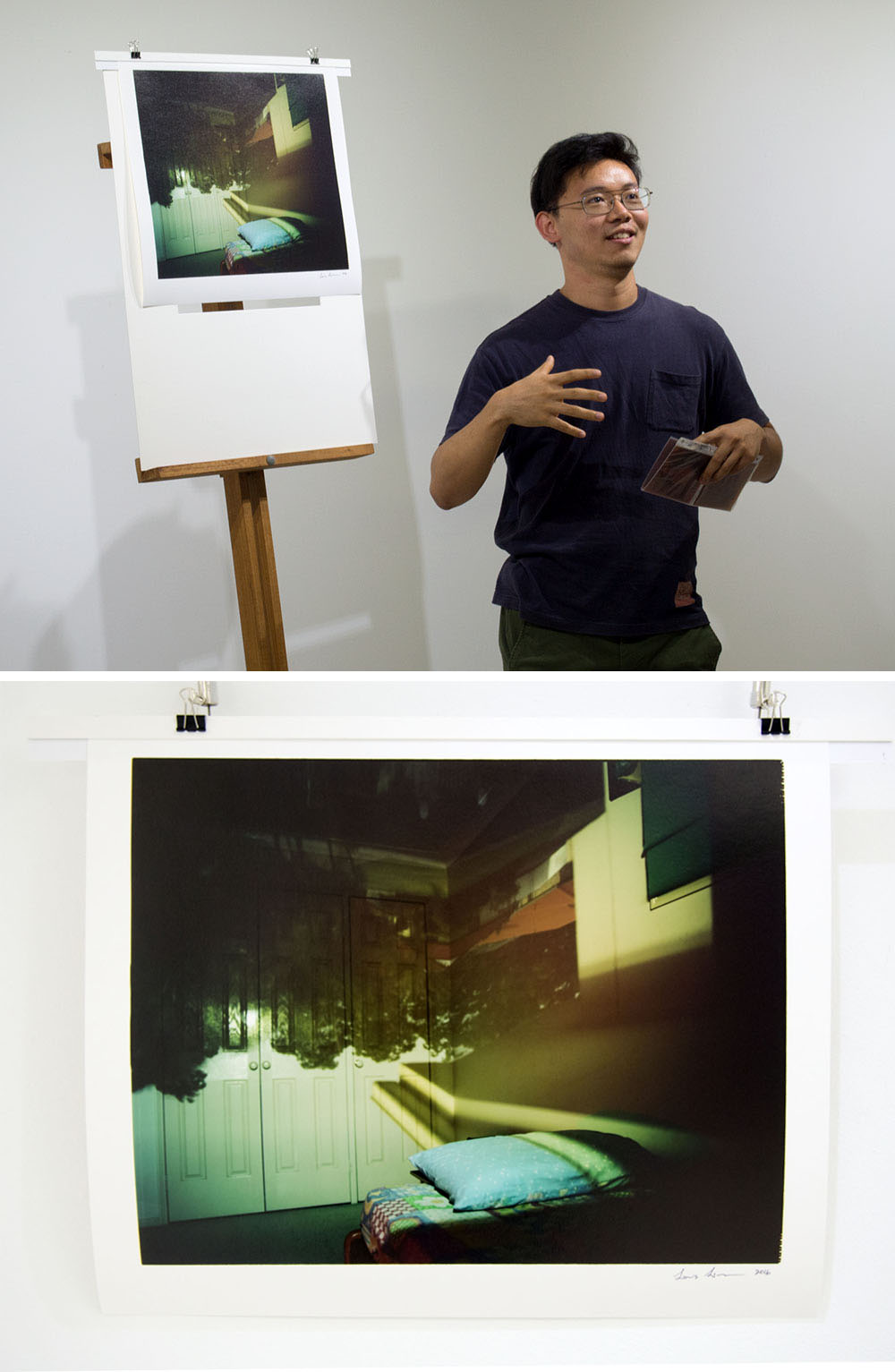
Louis Lim
Louis spoke of a camera obscura that he made in a children’s hospital as part of an artist in residence. He described the view of Vulture Street in Brisbane on the ceiling of the room and how children visiting the space were enthralled by the images on the ceiling and walls…
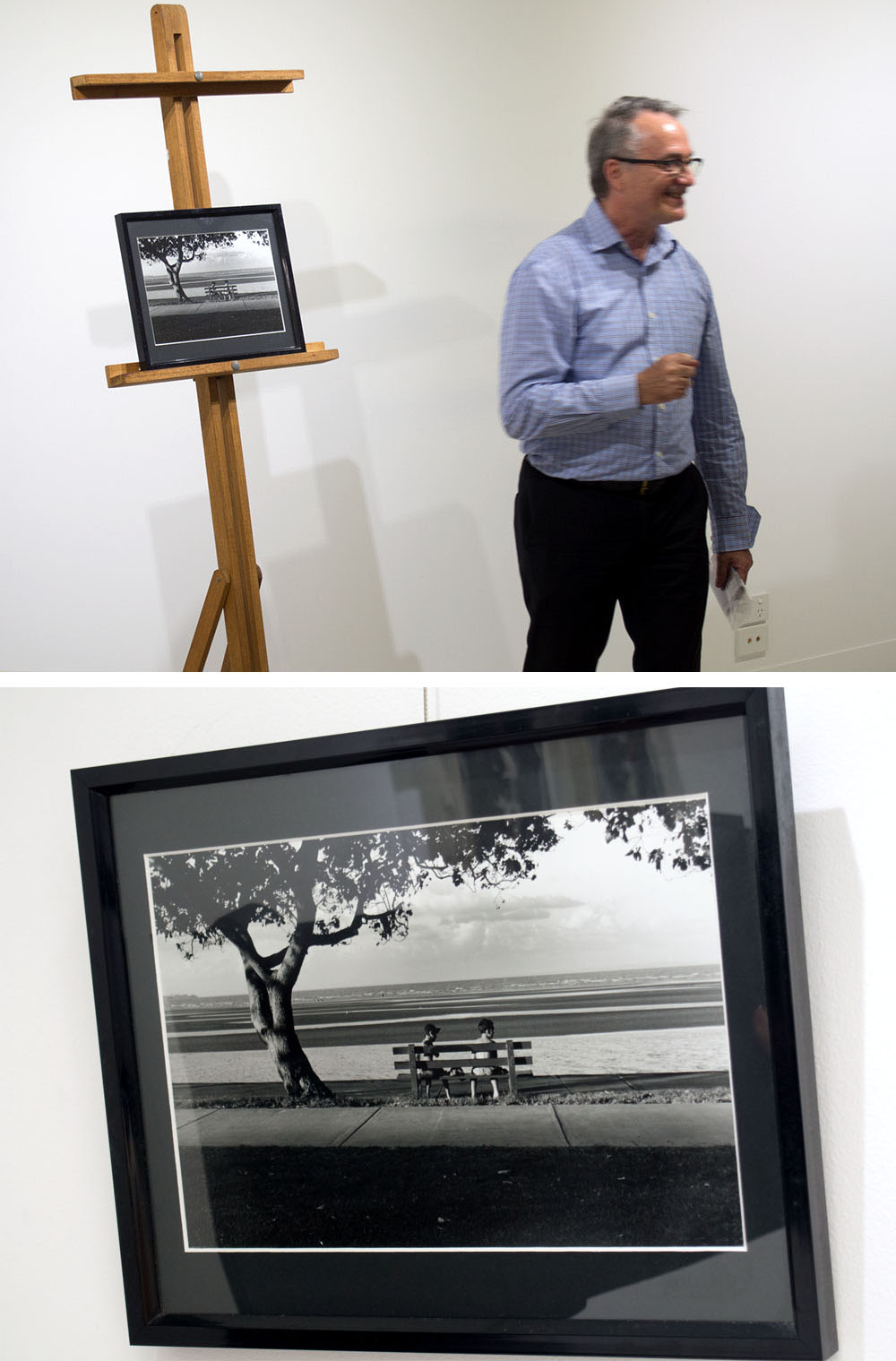
Jeff Ryan
Jeff discussed the taking of this photograph and its connection personal connection with he and his brother’s lives. The photo was made relatively recently at a place where Jeff and his brother played as kids 40 years earlier.

Irena Prikryl
Irena’s story related to buying her first serious camera – a Hasselblad and then taking some photos in Grand Central Station in New York. The camera was balanced on a railing and the shutter speed was long… The photo was recently printed in a Fine Art Print workshop at Maud with Doug+Vicky.
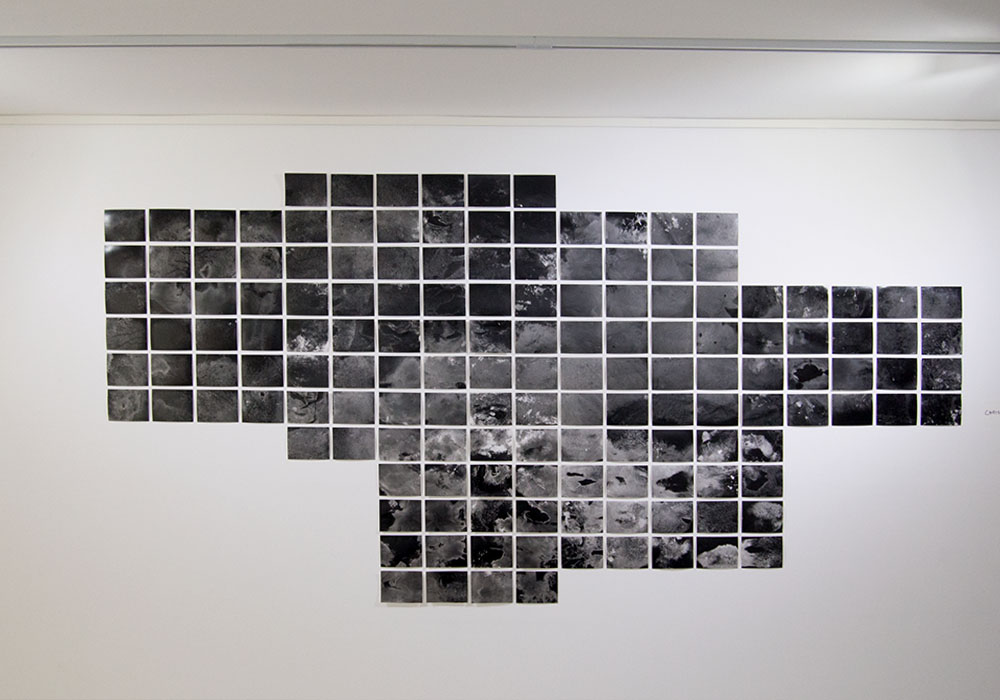
Chris Bowes
Chris Bowes was unable to attend but had come by earlier to install his personal investigation of self and sweat by placing un-exposed B&W photopaper against his body. The prints are then process yield a ‘Chemigram’. Chris will present a floortalk at the gallery. Check the Dark Love page for details…

David Symons
David discussed that the origins of his 1980s photographic series was a response to the work and photobooks of David Hamilton. Hamilton was well known for his ‘soft-porn’ photos of young girls. Symons spoke about how he appropriated Hamilton’s photos by double printing copy negatives through a cracked mud image. Texts from Hamilton’s book were adapted by Symons using a redactive process to reveal an alternative story….
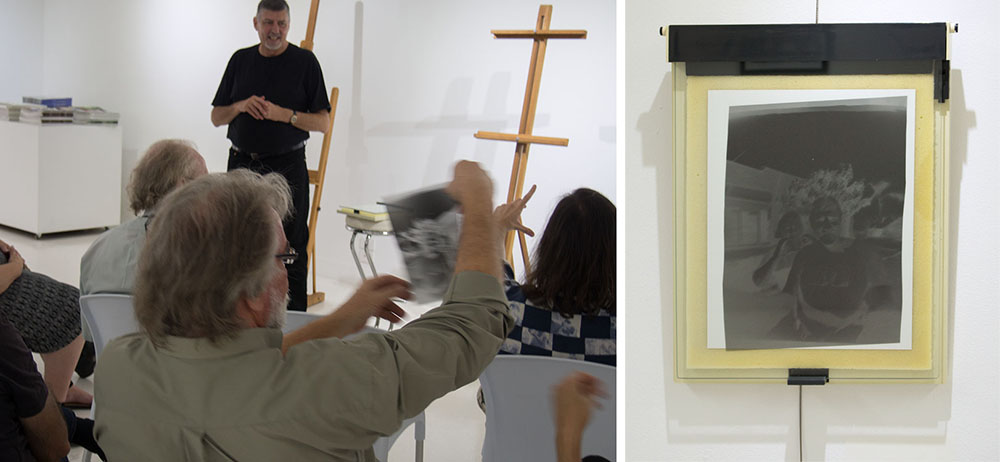
Doug Spowart
I commented about how a recent re-connection with pinhole photography during the Pinhole workshop last weekend had helped to resolve a need for a new project that Vicky and I will be working on next year. I passed around an 8″x10″ film pinhole negative that had revived my interest and love of the darkroom. PHOTO: Victoria Cooper.

Edwin Wecker
Edwin discussed his experiences with film photography whilst on tour to India with his friend Russell Shakespeare.

Gail Hoger-Neuman
Gail showed some photographs from her early 1990s exhibition ‘Hollywood Stills’ that was shown at Imagery Gallery.
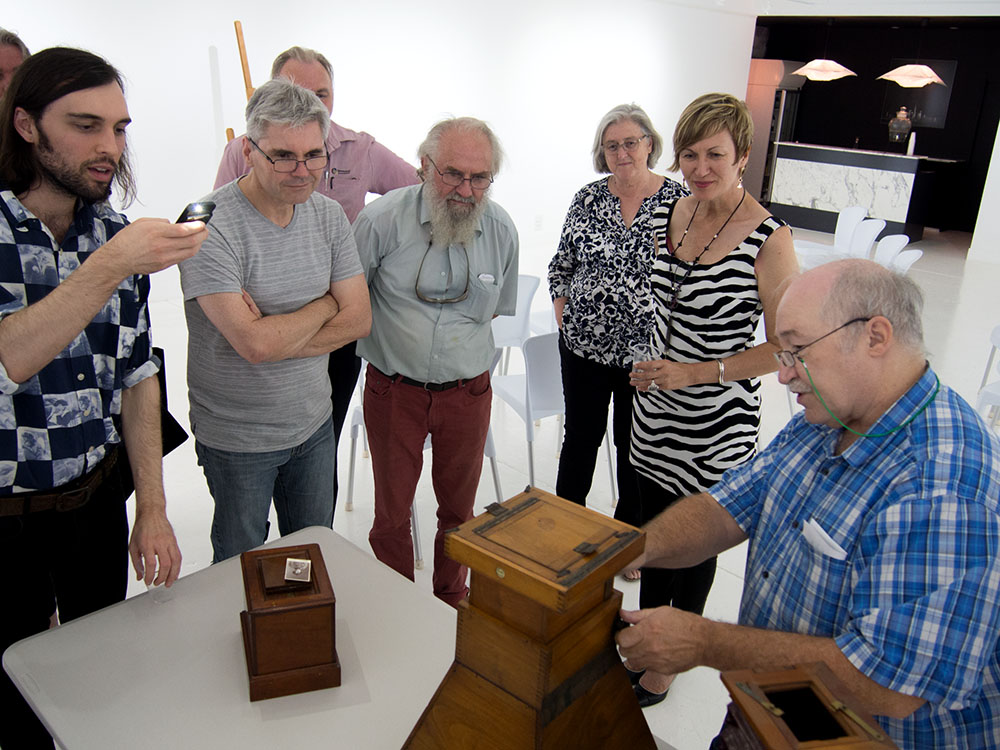
Sandy Barrie demonstrates ancient portable daylight enlargers – the oldest was made before 1859.
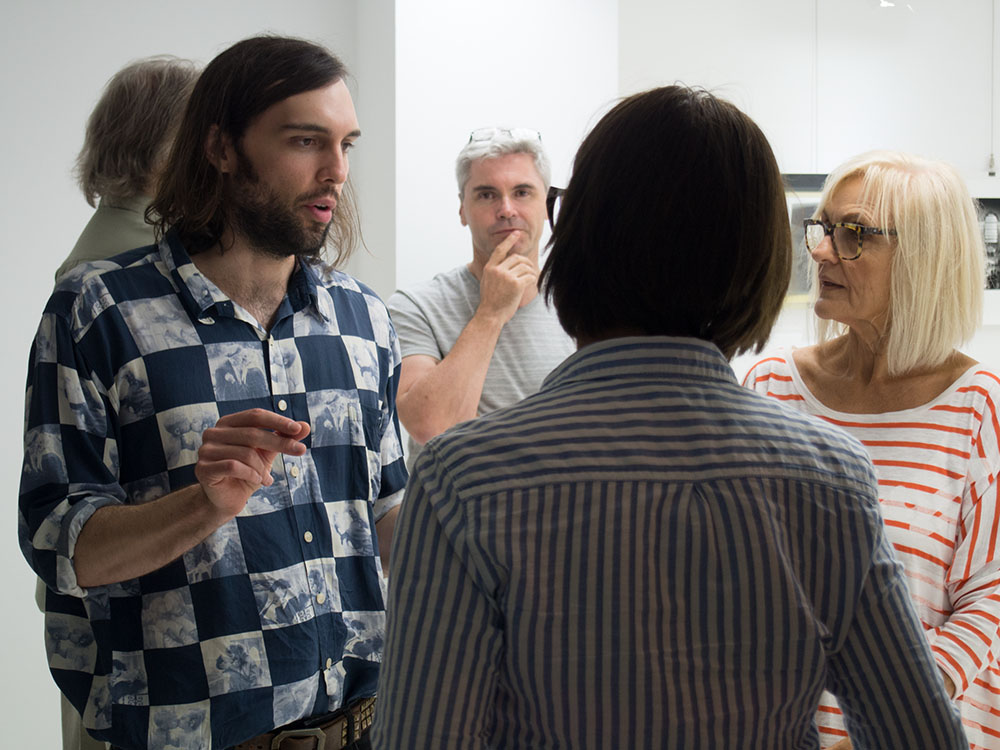
Conversations continued after the presentations
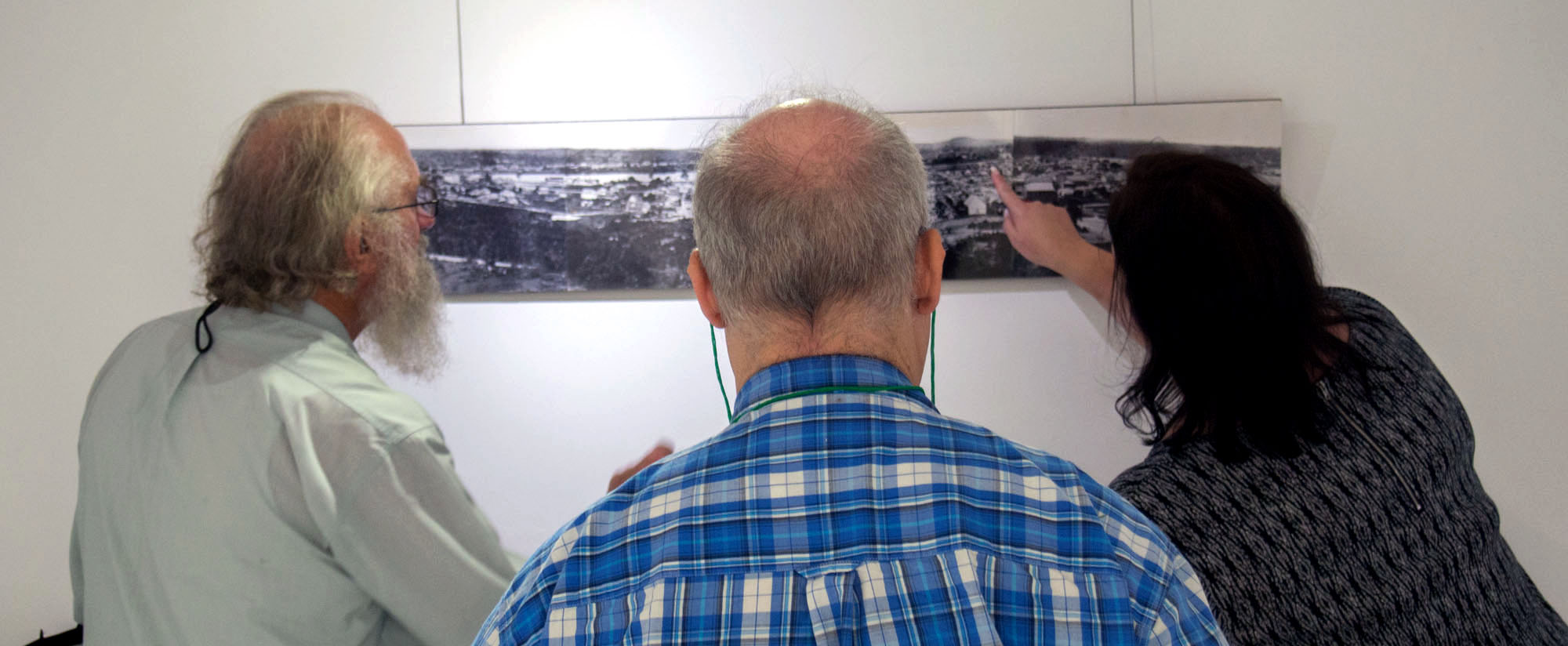
The DARK LOVE works were enjoyed and discussed
CHRIS BOWES FLOORTALK – 26 November – details to be confirmed
A FINE ART PRINTING WORKSHOP WILL TAKE PLACE ON – Postponed to 2017
A CYANOTYPE WORKSHOP – Details HERE
AND THE FRONT GALLERY WILL BE CONVERTED INTO A CAMERA OBSCURA on November 26 (to be confirmed)
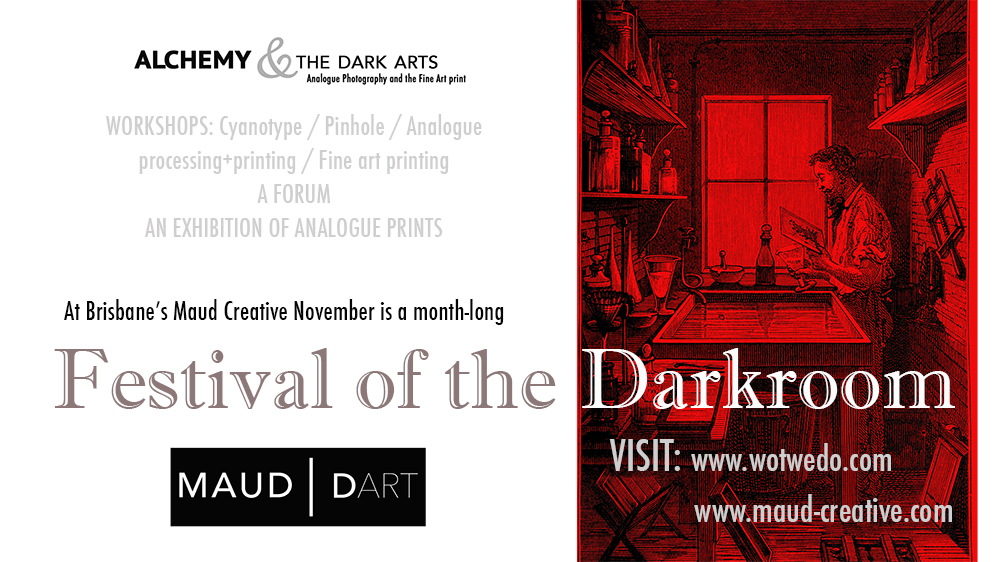
Festival of the Darkroom logo
All portrait photographs and gallery documentations unless credited otherwise ©2016 Doug Spowart
.
.
NEW PHOTODOC SHOW Curated by Doug @ Maud Gallery
In-situ – Frontispiece
.
IN SITU: New Photodocumentary Work
At the end of 2015 I was the external assessor for the Queensland College of Art Bachelor of Photography Documentary stream. The work that I encountered from their recently completed documentary photography projects was inspiring. The projects that they had engaged in employed an ‘embedded’ methodology. Each photographer created stories expressing concepts and ideas that I felt deserved a wider audience. As some of the projects crossed-over into the slippery areas of art and concept documentation I felt that presenting the work in this context would encourage comment and discourse.
.
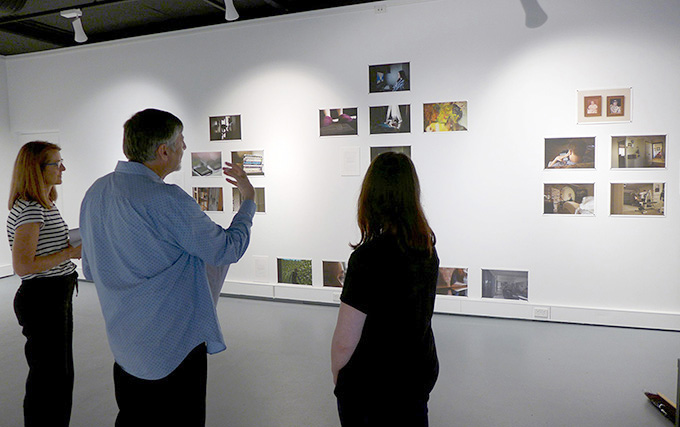
Doug in an assessment @ the Queensland College of Art PHOTO: Earle Bridger
I sought support from Irena Prikryl, Director of Brisbane’s Maud Gallery, with my intention being to curate a show of selected works. Over a week I forwarded to Irena websites and links to the student’s works – each submission was met with a response – ‘these photos are awesome!’ Irena then offered an exhibition early in 2016. In discussions with students I found that one of them was interested in curating and gallery management – so an honorary internship was offered to Gillian Jones.
The rationale for exhibition is as follows:
Every photograph is a document. A photographic document may be about a friend’s smile, a family event, a dramatic storm cloud or a dent in a car door. But, what about those documentary images that tell us about the greater aspects of life in our times? These other photographs can encompass the tragedies of human suffering, of rituals and habits, of things that escape our casual view of the world and documents of hidden acts, a performances or a ‘happening’.
The documentary photographs in this exhibition are made by photographers not working as the casual iPhone snapshot ‘photographer’ of today, but rather individuals who embed themselves in human and natural environments to witness, to empathise and to document with a camera so a story can be shared.
The documentary photographers in this exhibition present their work as evidence of what they have seen, felt and been touched by. This work represents new photodocumentary practice and will place viewers in situ – surrounded by issues of contemporary life…
The exhibitors who accepted the invitation were:
Follow the links to the Maud Gallery website to see the projects (NOTE: Some links may now be inactive)
.
Chris Bowes for the work ‘Sweat‘
Richard Fraser for the work ‘Pup play and beyond – exploring Brisbane’s BDSM subculture’
Gillian Jones for her work ‘Choice, Chance or Circumstance‘
Louis Lim for his work ‘Waiting for Sunshine‘
David Mines for the work ‘Beautiful one day perfect the next?
Thomas Oliver for his work ‘Disconnection‘
Marc Pricop for the work ‘Our Place in The Valley‘
Elise Searson for her work ‘Karen’ Lyme disease sufferer
Cale Searston for his work ‘BLU‘
The show was opened by arts writer Louise Martin-Chew on March 9 who was to comment at the beginning of her address that:
I am not an expert on photo documentary: my interest is in art and artist stories. I’m interested in the way in which we may tell and share these stories most effectively, and it is the many narratives, often those that are hidden unless you are part of that experience, or sub culture, that is at the heart of this exhibition of new photography.
.
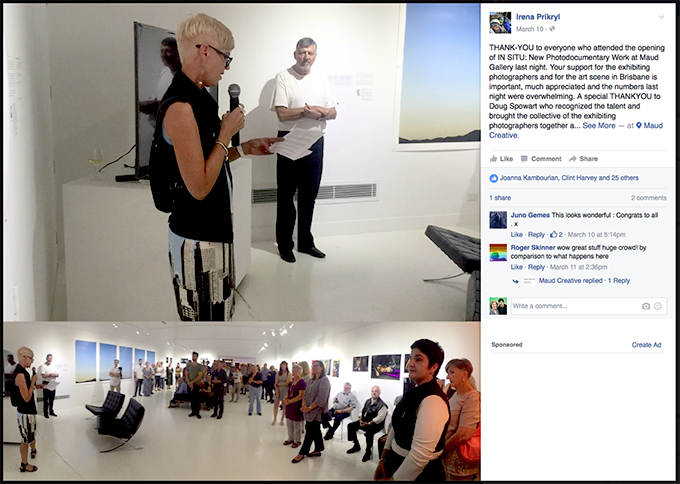
Louise Martin-Chew opens ‘In Situ’ PHOTOS: Irena Prikryl
.
Well over 120 people attended the exhibition opening. A cash bar operated with the profits going to the Lyme Disease Association of Australia charity – associated with Elise Searson’s project’
.
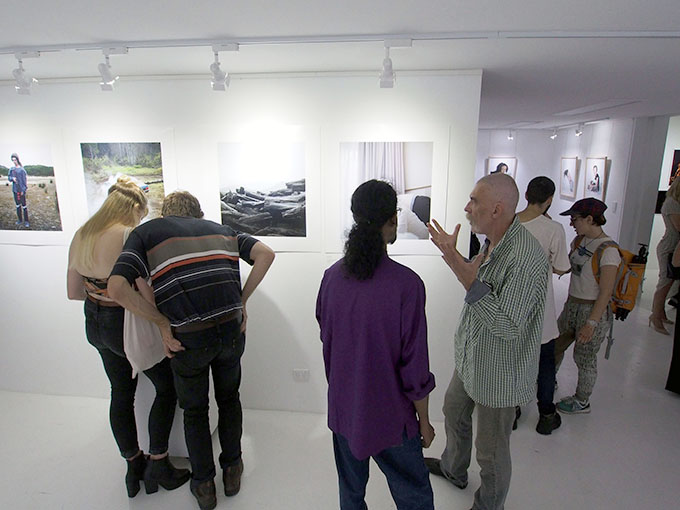
Opening attendees
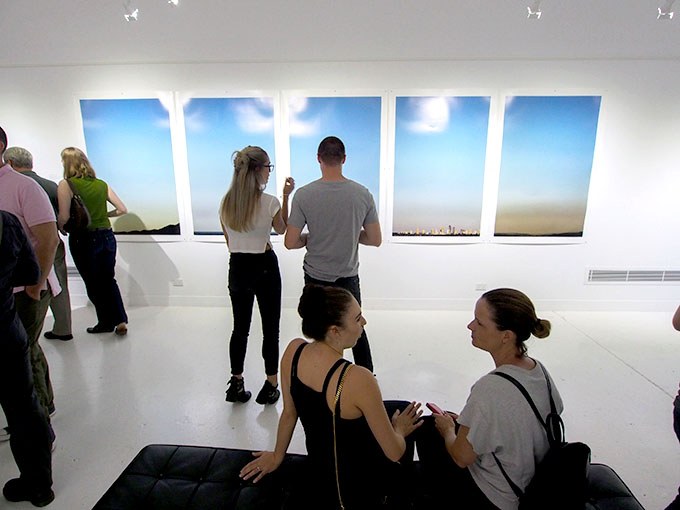
Opening attendees
.
Some views of the exhibition:
.
David Mines’ ‘Beautiful one day perfect the next?’
Elise Searson’s ‘Karen’ Lyme disease
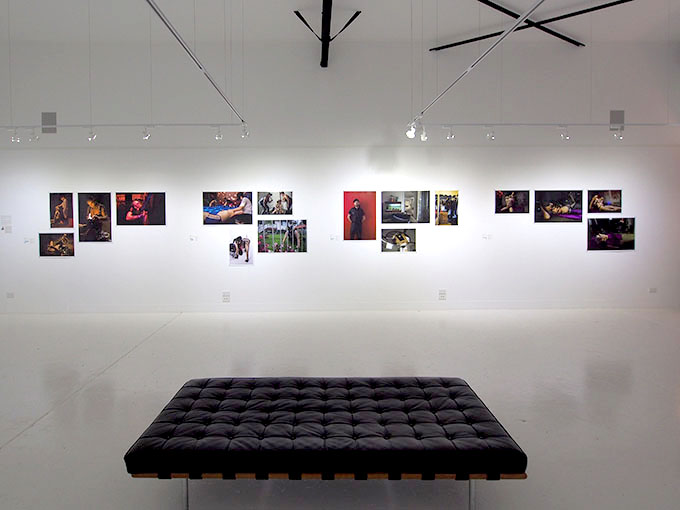
Richard Fraser’s ‘Pup play and beyond’
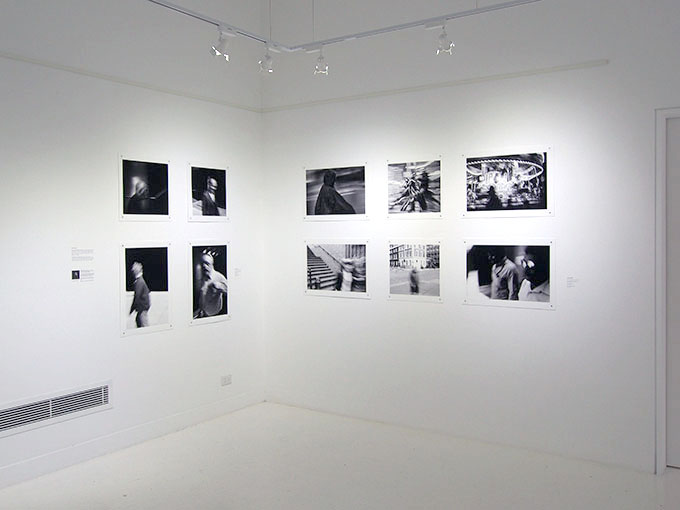
Thomas Olivers’ ‘Disconnection’
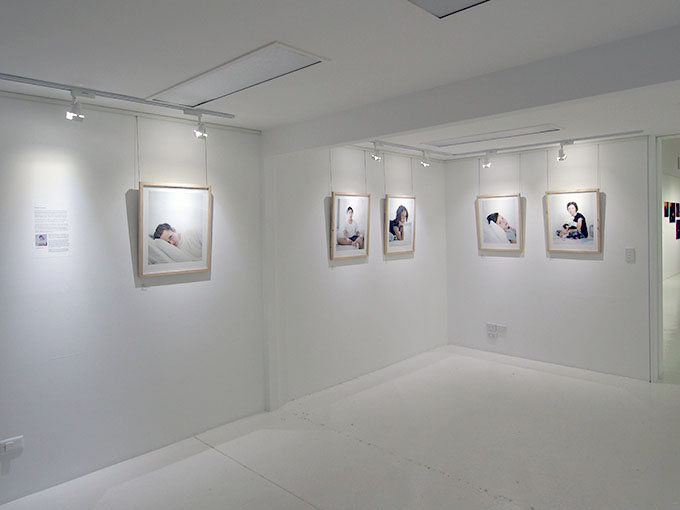
Louis’ ‘Waiting for Sunshine’
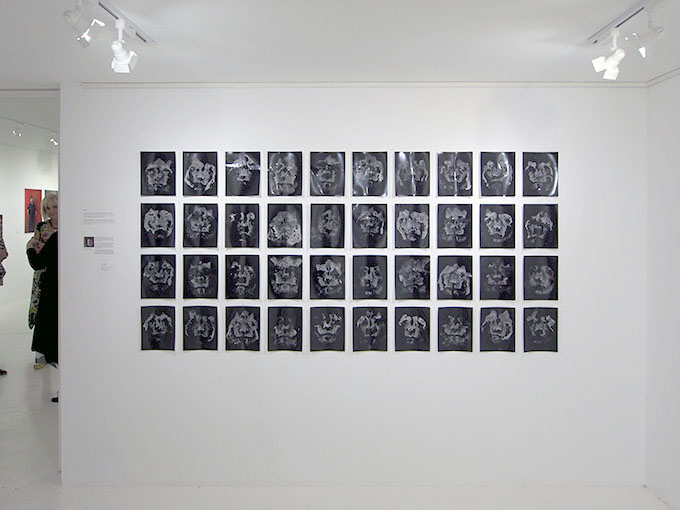
Chris Bowes’ ‘Sweat’
.
Over the course of the exhibition each of the photographers presented a floortalk at the gallery. One contributor was Thomas Oliver, who is currently studying overseas in Toronto, Canada presented a Skype session in the gallery before his work.
.
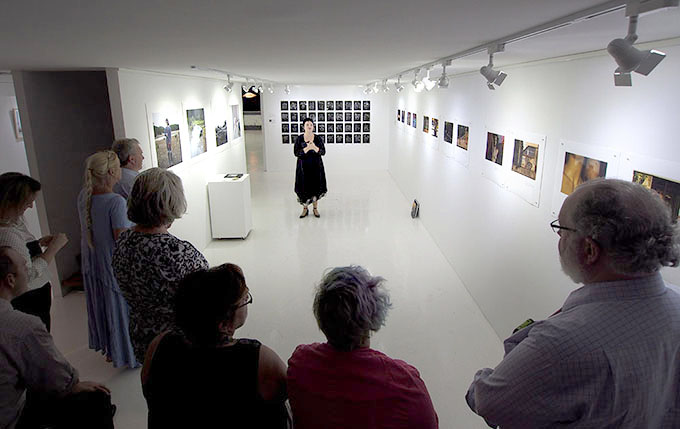
Gillian Jones presenting her floortalk
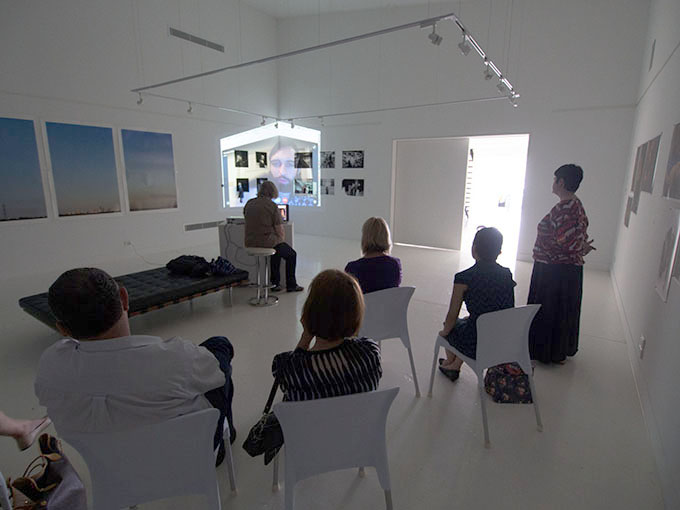
Thomas Oliver giving his floortalk by Skype
.
The exhibition concluded on the 20th March with a dinner for the exhibitors and gallery members within the white walled empty space of the gallery.
.
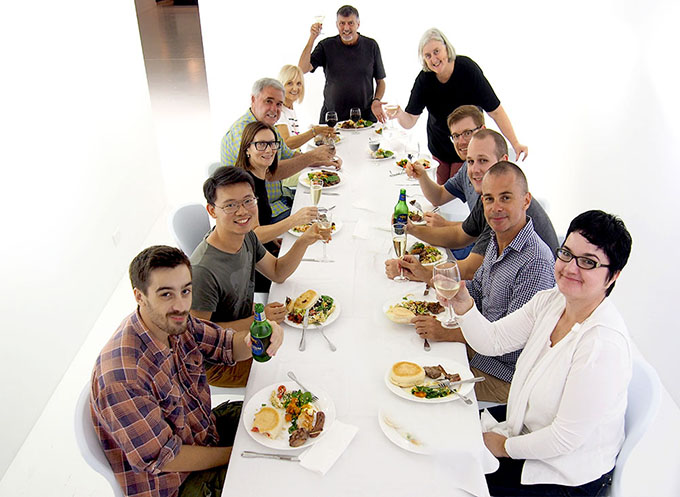
The artists’ dinner @ Maud Gallery
.
In my comments at the opening of the exhibition I stated that a documentary photograph does not exist until it is publically distributed. The exhibition, In Situ: New Photodocumentary Work, put this work and the stories it contains before an audience. Everyone seeing it may interpret this work differently; such is the nature of the photodocument. Perhaps the true value of photodocumentary work can be summed up in Louise martin-Chew’s closing statement:
The power of this collection of works by a very talented group is simply summed up I think: Art may not be able to save the world, but it has an unparalleled ability to help us understand the individuals that comprise a community, a country, a continent = the world. And that may be sufficient.
Thank you to Irena Prikryl and Maud Gallery, Gillian Jones, the contributing photographers and Louise Martin-Chew for a memorable and powerful photodocumentary exhibition of new works.
Dr Doug Spowart
Louise Martin-Chew’s opening address can be seen on her website: HERE
New-PhotoDoc Catalogue
A catalogue of selected works from the show can be downloaded: NEW-DOC-CATALOGUE
Each of the photographer’s works can be seen on the Maud Gallery website under the participant’s names in the OUR ARTISTS menu – they can be purchased from the site as well.
.
Unless attributed otherwise all texts and photographs are ©2016 Doug Spowart
WORLD PHOTOBOOK DAY @ Brisbane’s Maud Creative
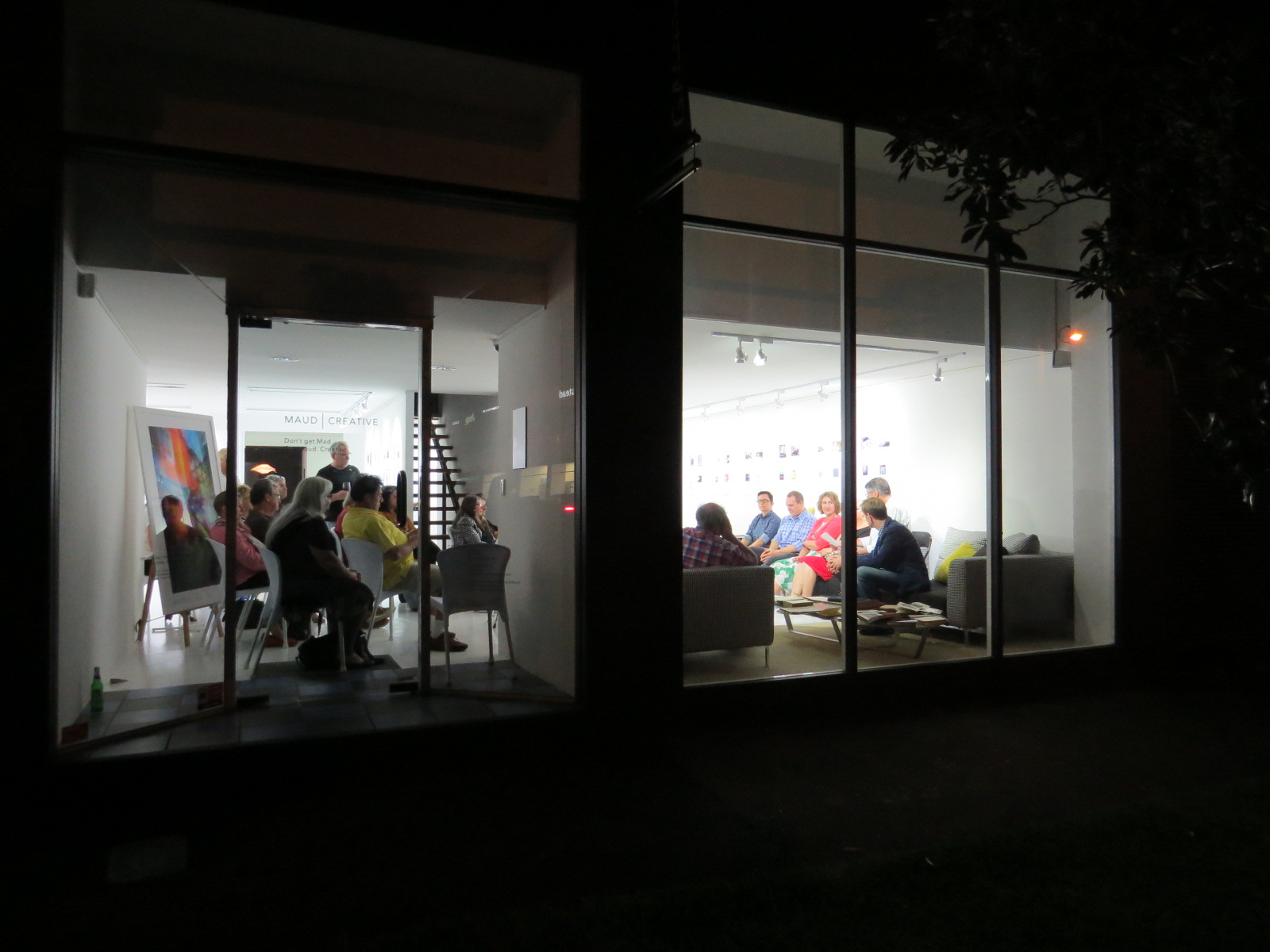
World Photobook Day at Maud Creative Gallery Photo Robert Gray
.
A survey project about those who read photobooks
My Favourite Photobook – Brisbane World Photobook Day
World Photobook Day (WPBD) in Brisbane Australia at Brisbane’s Maud Creative Gallery was celebrated with a survey project highlighting photographers and their photobooks curated by Victoria Cooper and Doug Spowart.
The international WPBD team chose this day in recognition of the British Library’s the acquisition of Anna Atkins’ Photographs of British Algae: Cyanotype impressions on October 14 in 1843. Atkins’ cyanotype book is arguably considered as the world’s first photobook as both image and text are printed simultaneously printed on the same page. It was some time before the photograph and text could be co-printed, so books that included photographic illustrations, were usually printed with text by letterpress processes and photographs ‘tipped-in’ as original prints. WPBD activities are supported through the PhotoBook Club, a worldwide network of groups interesting in photobooks.
The Cooper+Spowart survey asked photographers to submit a photograph of themselves reading their favourite photobook and comment on why they like their chosen book. Sixty-five photographers responded to the request. Working on tight timelines Cooper and Spowart printed the photographer’s submissions including: their self-portraits while reading, their chosen book and a comment about why they had chosen the book. This work was presented for viewing on the gallery wall.
.
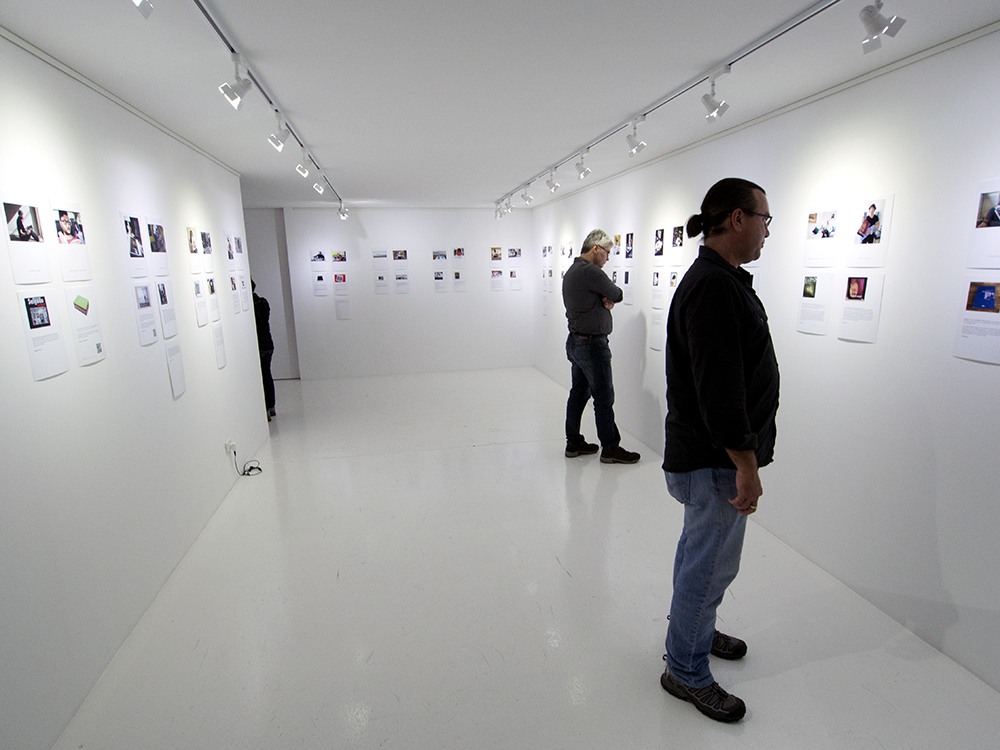
Brisbane World Photobook Day, Maud Gallery Photo Doug Spowart
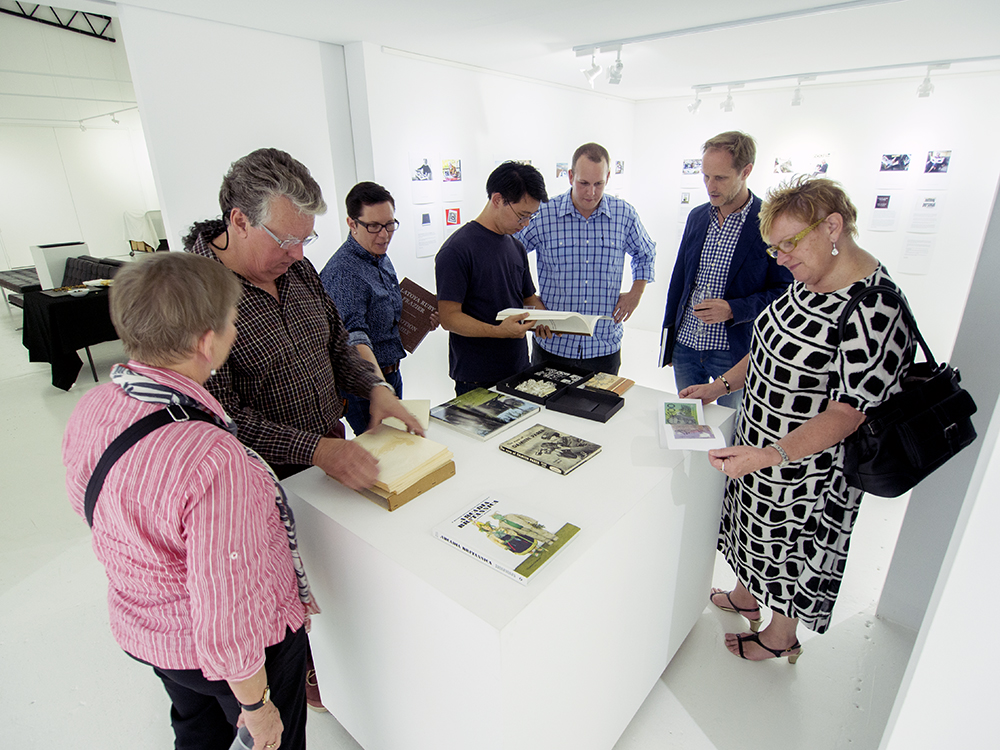
Looking at books – WPBD, Maud Gallery Photo Doug Spowart
.
The event was also attended by photographica collector and historian Sandy Barrie who presented a selection of photographically illustrated books from the 19th century. These books include the 1846 Art Union journal that contained an essay by Henry Fox Talbot and an original calotype print.
.
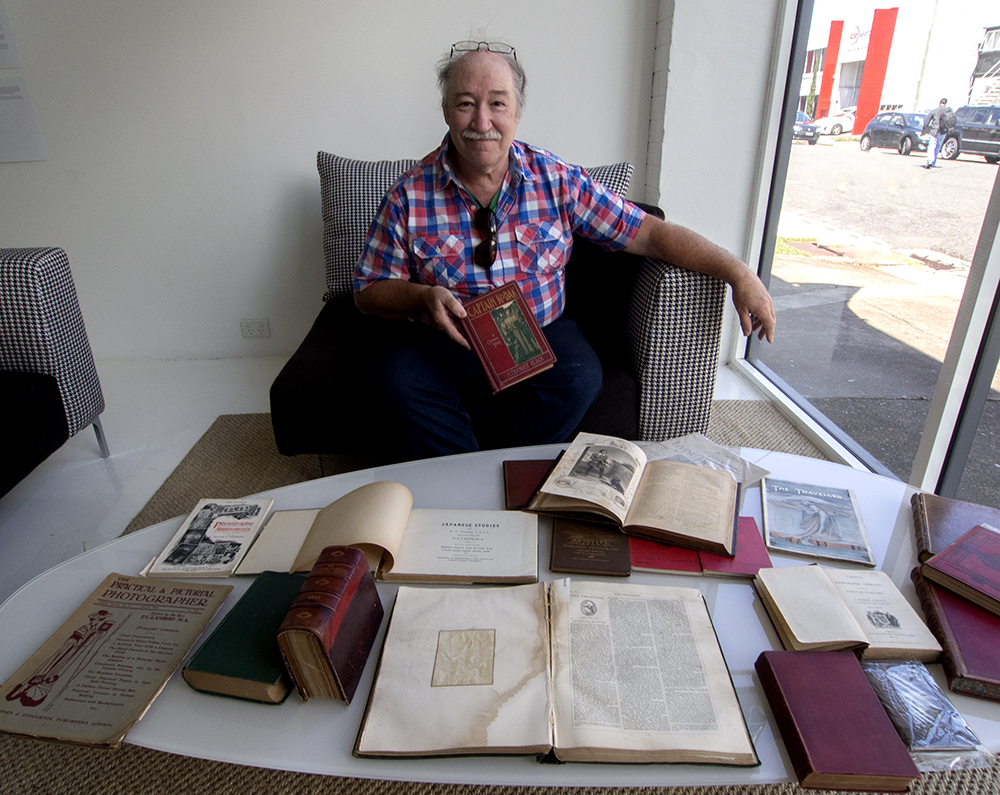
Sandy Barrie and the Art Union journal Photo: Doug Spowart
.
Early in the evening a ‘fly-through’ video was made of the installation with some guests present.
.
In the evening around 35 photobook enthusiasts attended a forum with panellists including Dr Heather Faulkner documentary transmedia practitioner and lecturer at the Queensland College of Art (Gold Coast), Chris Bowes artist and bookmaker, Julie Ann Sutton documentary photographer and collector, Helen Cole Senior Librarian and Coordinator of the Australian Library of Art at the State Library of Queensland, and Henri van Noordenberg artist and bookmaker. The forum was convened by Doug Spowart who in a Q&A format led discussion and a range of photobook issues including:
- Collecting books
- Possession and ownership
- Borrowing and loaning of books
- Adding bookplates and marginalia to books
- Letting children handle books
- The future of photobooks
.
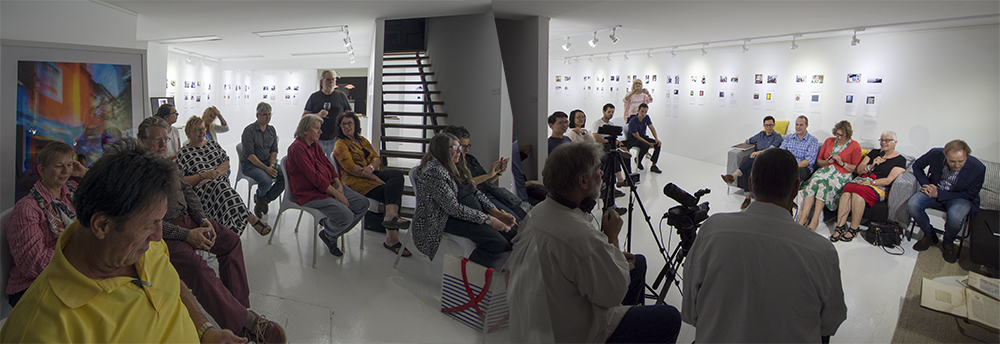
WPBD Forum Photo Daniel Groneberg
.
The last poignant comment came from Heather Faulkner when speaking of the future printed book. In her statement she referred to the recent changes to privacy laws giving government agencies access and scrutiny over all of our online metadata. Faulkner’s prediction is that the physical book, as it has been in the past, will be the place for personal and provocative commentary on contemporary life and politics.
.
Cooper+Spowart wish to acknowledge the following supporters of this project:
- The creative from Maud Gallery: Irena Prikryl, Teri Ducheck and Peter Pescell – videographer;
- Matt Johnston – The Photobook Club;
- Tony Holden and Ilford for the inkjet printing paper;
- Sandy Barrie;
- The forum panelists – Heather, Chris, Julie Ann, Helen and Henri;
- The installation team Maureen Trainor, Rene Thalmann, Mel Brackstone and Daniel Groneberg;
- And, of course, all the participants.
.
To celebrate the Brisbane WPBD event BLURB Australia has offered a discount voucher for participants in the Brisbane event. The code and conditions are: WPBD2015, expires 30 November 2015. Must pay with Australian dollars. Maximum discount per book is AUD$150. Each customer can use the code 1 time.
SEE a few of the photographers and their favourite books in this download:
.
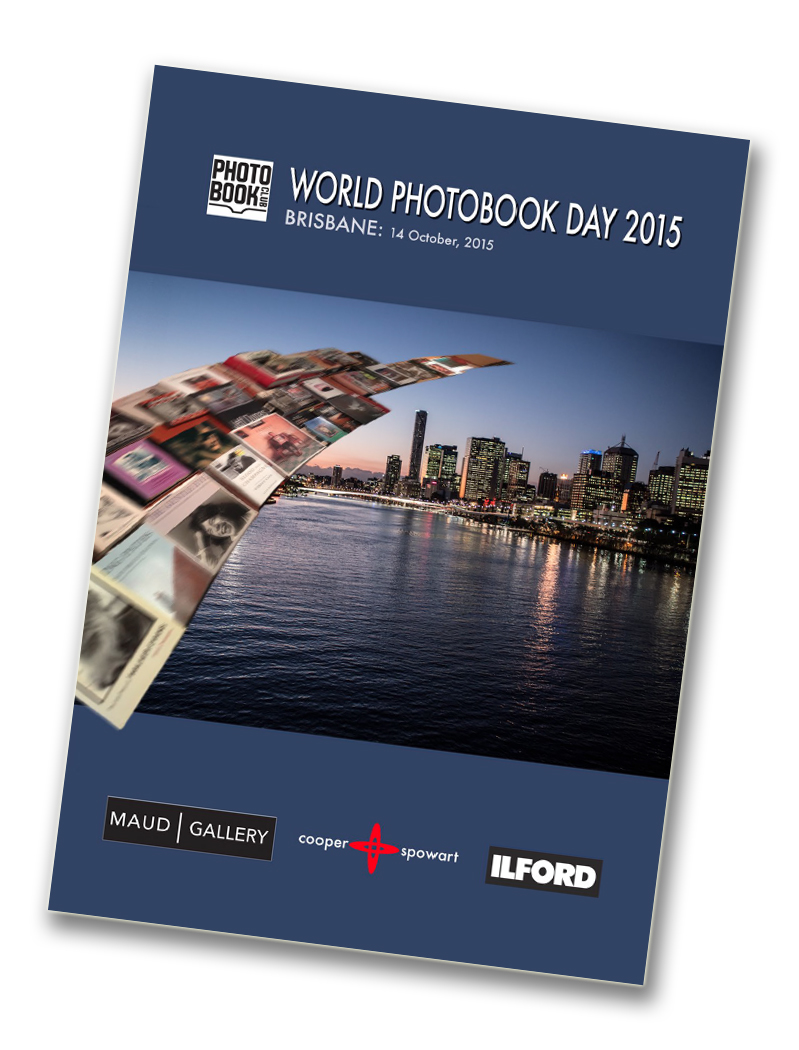
DOWNLOAD A PDF SELECTION: WPBD-Selected_Submissions
.
THE PROJECT WILL CONTINUE… Stay tuned.
.
Previous WPBD events coordinated by Cooper+Spowart 2013 and 2014.
.
.
The 67 participating photographers and their books were:
Peter Adams: Passage – Irving Penn
Melissa Anderson: Shooting Back – Jim Hubbard
Ying Ang: Sabine – Jacob Aue Sobol
Sandy Barrie: Art Union Journal, 1 June 1846 – Henry Fox Talbot essay
Chris Bowes: Tokyo Compression – Michael Wolf
Isaac Brown: Ray’s a Laugh – Richard Billingham
Harvey Benge: Blumen – Collier Schorr’s book
Camilla Birkeland: Mike and Doug Starn – Andy Grundberg
Daniel Boetker-Smith: In Flagrante – Chris Killip
Mel Brackstone: Melbourne and Me (a work in progress) – Adrian Donoghue
Helen Cole: Booked – Peter Lyssiotis
Victoria Cooper: Domesday Book – Peter Kennard
Michael Coyne: Workers -Sebastião Salgado
Judith Crispin: da Sud a Nord (from South to North) – Sabine Korth
Sean Davey: William Eggleston Paris
Jacqui Dean: Peter Adams – A Few of the Legends
John Elliott: Richard Avedon Portraits
Dawne Fahey: Julia Margaret Cameron – Marta Weiss
Heather Faulkner: The Notion of Family – La Toya Ruby Frazier
Liss Fenwick: Outland – Roger Ballen
Juno Gemes: Nothing Personal – Richard Avedon and text by James Baldwin
Kate Golding: Fig. – Adam Broomberg & Oliver Chanarin
Philip Gostelow: Thank You – Robert Frank
Robert Gray: Max Yavno
Daniel Groneberg: Los Alamos – William Eggleston
Sam Harris: Café Lehmitz – Anders Petersen
Tony Hewitt: 50 Landscapes – Charlie Waite
Douglas Holleley: Man and His Symbols – Carl Jung
Kelly Hussey-Smith: On the Sixth Day – Alessandra Sanguinette
Libby Jeffery: Inferno – James Nachtwey
Matt Johnston: Touch – Peter Dekens
Larissa Leclair: Moisés – Mariela Sancari
Louis Lim: Blind – Sophie Calle
James McArdle: Love on the left bank – Ed van der Elsken
Paul McNamara: The Terrible Boredom of Paradise – Derek Henderson
Henri van Noordenberg: Cinci Lei – Joost Vandebrug
Gael Newton: By the sea – CR White
Glen O’Malley: A Modern Photography Annual 1974
Thomas Oliver: Common Sense – Martin Parr
Maurice Ortega: The Apollo Prophecies – Kahn and Selesnick
Adele Outteridge: Pompeii – Amedeo Maiuri
Polixeni Papapetrou: Diane Arbus
Martin Parr: Bye, Bye Photography – Daido Moriyama
Gael Phillips: Arcadia Britannica, A Modern British Folklore Portrait – Henry Bourne
Louis Porter: Looking Forward to Being Attacked – Lieutenant Jim Bullard
Imogen Prus: The Whale’s Eyelash, A Play in Five Parts – Timothy Prus
Jack Picone: Exiles – Josef Koudelka
Ian Poole: White Play – Takuya Tsukahara
Irena Prikryl: Cyclops – Albert Watson
Susan Purdy: nagi no hira, fragments of calm – Suda Issei
Jan Ramsay: AraName – Bir Ara Güler Kitabi
Jacob Raupach: The Family Album of Lucybelle Crater – Ralph Eugene Meatyard
Felicity Rea: Pandanus – Victoria Cooper
Mark Shoeman: Me We, Love Humanity and Us
Roger Skinner: Third Continent – Self-published
Doug Spowart: The Research Library, National Gallery of Australia
Tim Steele: The Earth From The Air – Yann Arthus-Bertrand
Alison Stieven Taylor: Strange Friends – Bojan Brecelj
Julie Ann Sutton: Katherine Avenue – Larry Sultan
Maureen Trainor: Sequences – Duane Michals
Garry Trinh: Period of Juvenile Prosperity – Mike Brodie
Ann Vardanega: Loretta Lux
George Voulgaropoulos: A shimmer of possibility – Paul Graham
Marshall Weber: Street Our Street – Dana Smith & Marshall Weber
David A Williams: Avedon Fashion
Konrad Winkler: Emmet Gowin the new Aperture book
Simon Woolf: F Lennard Casbolt Retrospective Exhibition Catalogue
.
.
All photographs and texts remain the copyright of the submitting photographers.

 wotwedid