FAST FOODS LEAVE BAD TASTE IN TOOWOOMBA
When a community challenges its elected representatives
On January 11th we attended a public meeting to join the protest against a Toowoomba Range development that would change the nature of a highly visible part of our town and diminish liveability values of an area close to where we live—the background of the protest and personal reflections on the meeting follow…
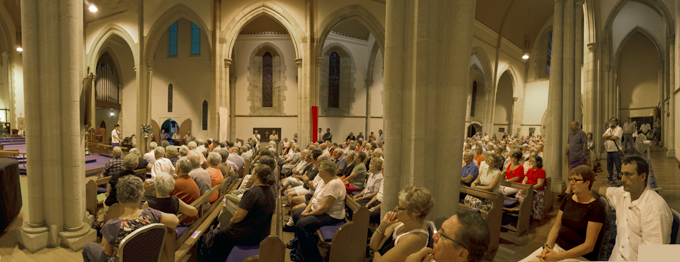
St Lukes Church – Toowoomba Range Public Meeting ………Photo: Doug Spowart
At a special meeting of the Toowoomba Regional Council on December 21st approval was given to a major commercial development at the ‘Top of the Range’—the main road transport entry to Toowoomba. The development, it is claimed, is required to service the needs of the local community with a McDonalds, a KFC and a convenience store that will operate 24 hours per day. The development is conditional on the installation of traffic lights, by the developer, at the intersection of the Warrego Highway (Cohoe Street) and Herries Streets.
It is claimed that responses provided by the community against the development in the pre-approval stage were not adequately considered in the Council’s decision.
Concerned residents called the protest meeting at St Luke’s Church because the development was given the go ahead despite their objections and those from other stakeholders. As the area is currently mainly residential with adjoining motels and a service station their objections included the 24 hour presence of:
- safety issues of the proximity of the traffic lights at the crest of the Range creating mayhem for trucks and busses—gearboxes, clutches, mechanical and loading problems that may require breakdown vehicles and Range holdup and delays;
- traffic/car park noise;
- overnight carpark lighting; and
- cooking odours permeating the local environment.
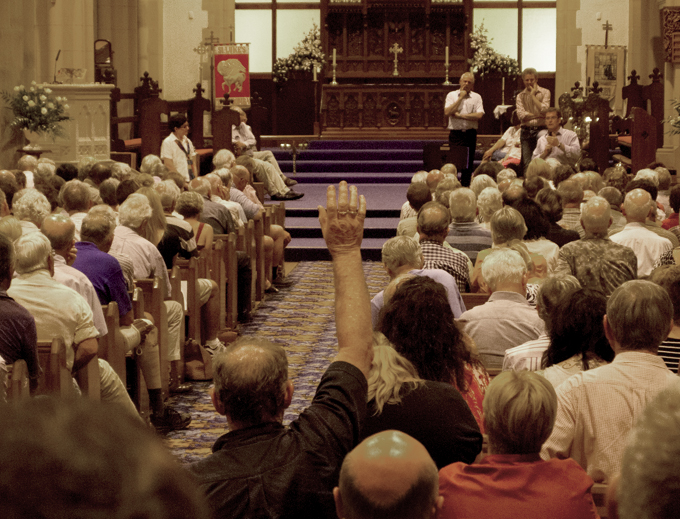
‘I have a question’ … .. Photo: Doug Spowart
The meeting was chaired by East Toowoomba resident Kate Powell and those addressing the meeting included State Government members Trevor Watts & John McVeigh, TWU state secretary Peter Biagini and councillor Mike Williams. Questions and comments from the floor were clapped, hissed and booed depending on the feelings of those in attendance. Councillor Mike Williams was indeed a brave man to attend such a meeting however his answers provided understanding of council process and procedures—he refrained from answering questions relating to the specific council decision to approve the development. He did comment that he had voted against the development in the December Council meeting.
The Second Toowoomba Range crossing was a side issue, but one which stirred the crowd. They were advised that authorities felt that the current crossing would be satisfactory for traffic densities of up to 23,000 vehicles daily and that was expected to be by the year 2020—BUT that number of vehicles is using the crossing every day NOW! And … 25% of those vehicles are heavy transport.
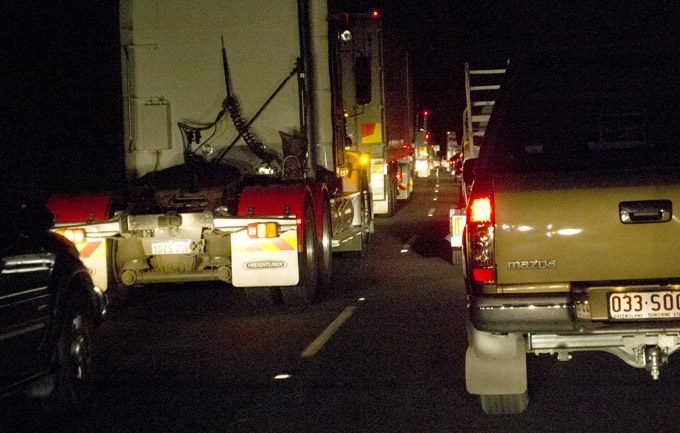
Traffic jam after truck breakdown, 10-01-2013 – Toowoomba Range ………Photo: Victoria Cooper
Members of the audience voiced their emotional outcries as well:
- ‘What an ugly entry this will provide to the our Garden City’;
- ‘What have you done to my beautiful city’; and
- ‘How can you approve another ‘fast food’ outlet in this town … there are already 7 in Toowoomba?’
It was agreed that the Council’s decision would be challenged by the appeal process and to achieve that a committee of nine members were selected from the floor. One attendee quipped that: ‘For council to fight a legal battle derived from this meeting they will use the money of those ratepayers here tonight protesting!’ And a legal battle is where this protest is leading…
What we felt important is the recognition that government, council or administrative bodies need to consider that commercial ‘development’ should go hand-in-hand with community values.
Dr Doug Spowart
The protest group has established a website called FRIENDS OF THE TOOWOOMBA RANGE – To visit click HERE
For more information see the links to some Chronicle Newspaper reports:
http://www.thechronicle.com.au/news/eighth-maccas-planned-for-city-east-toowoomba/1545915/
http://www.thechronicle.com.au/news/fast-food-development-approval-sparks-anger/1694378/
XMAS STREET NOCTURNE: A new site project
.
On the road and in the street
.
In past years after a day’s travelling doing fieldwork we usually aim for an overnight stay in a country town to rest for the night before attacking the road again. On arrival in the town we drive down the main street to inspect the available/affordable accommodation options. By nightfall we are usually ensconced in the motel room: organising our day’s imaging, catching up with emails, dinner and so on. The next day we move on . . .
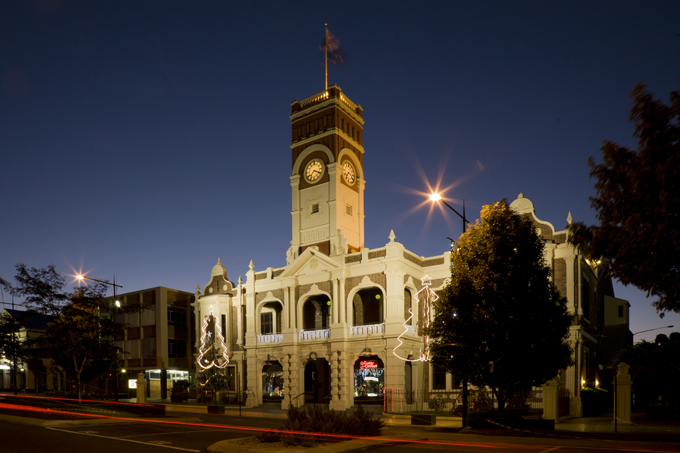
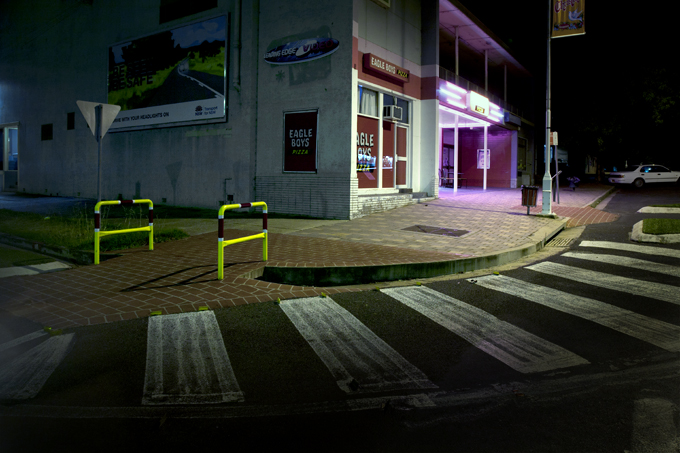
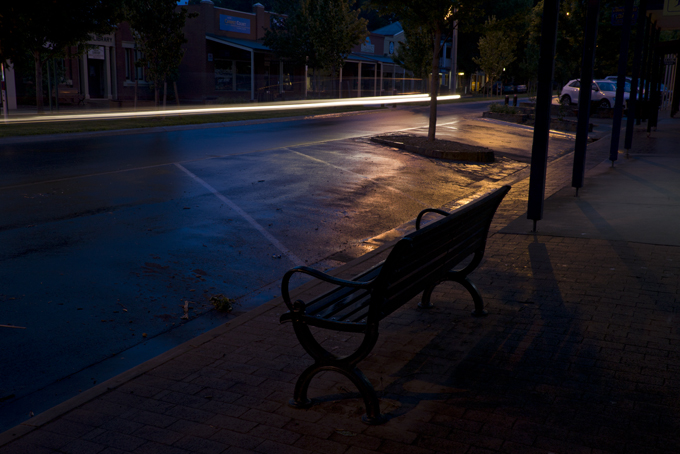
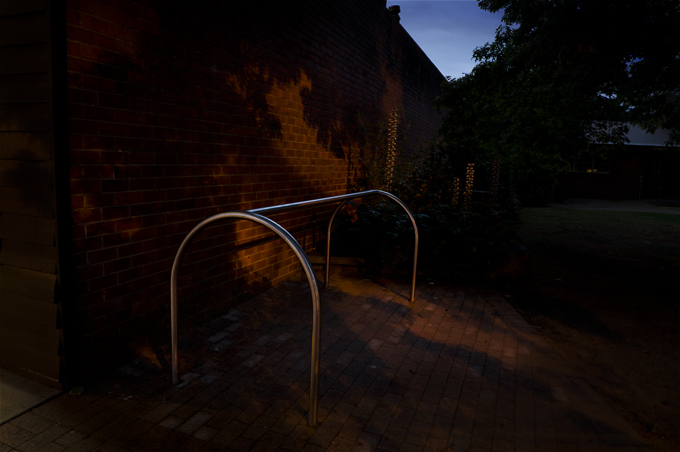
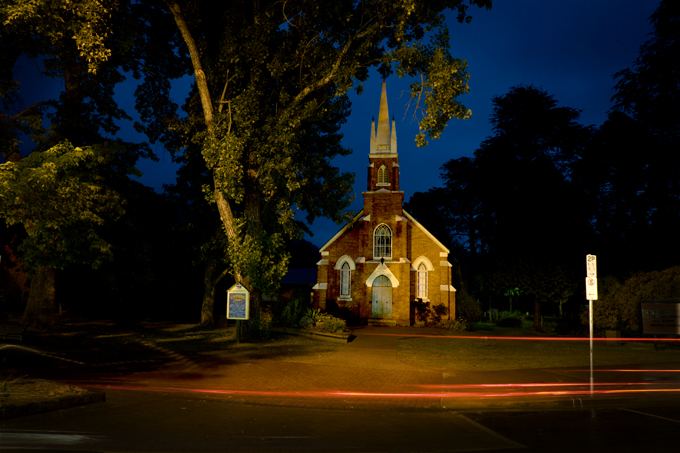
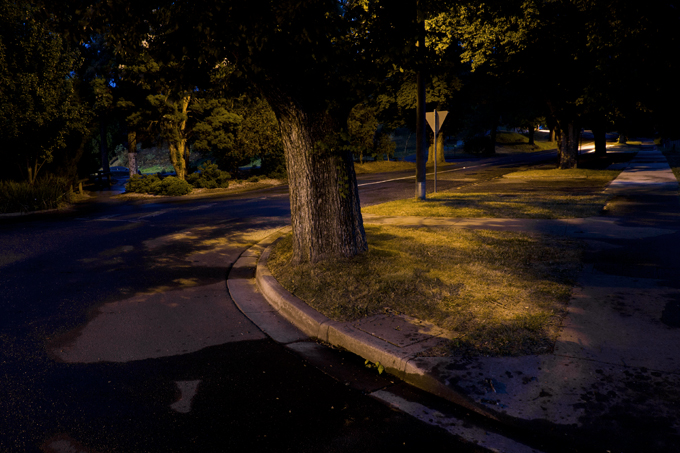
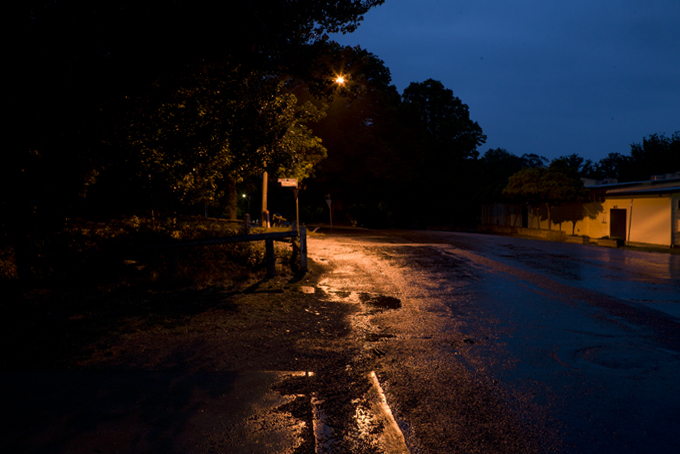
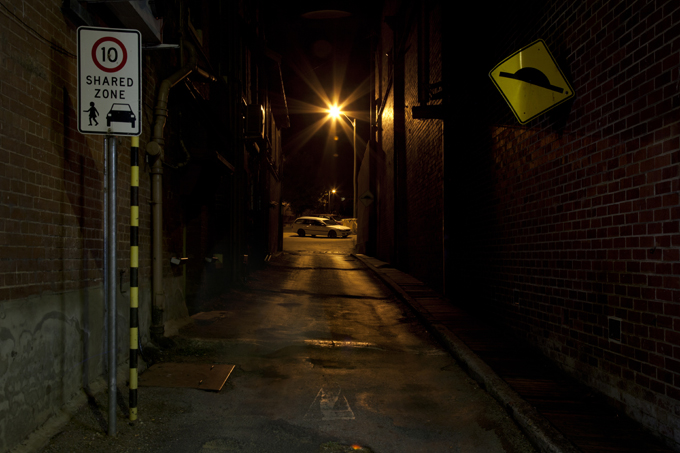
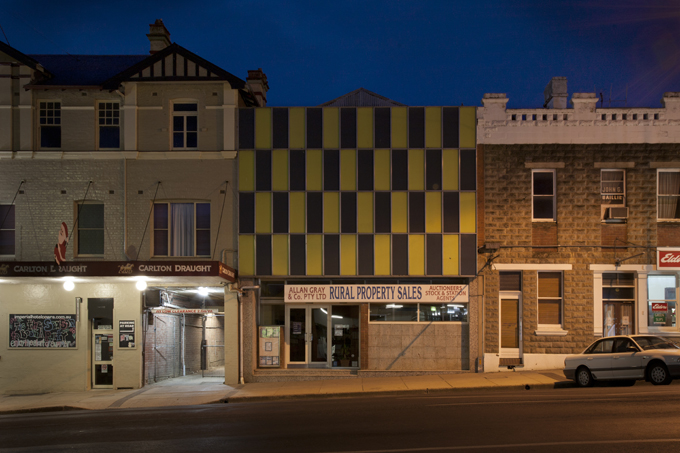
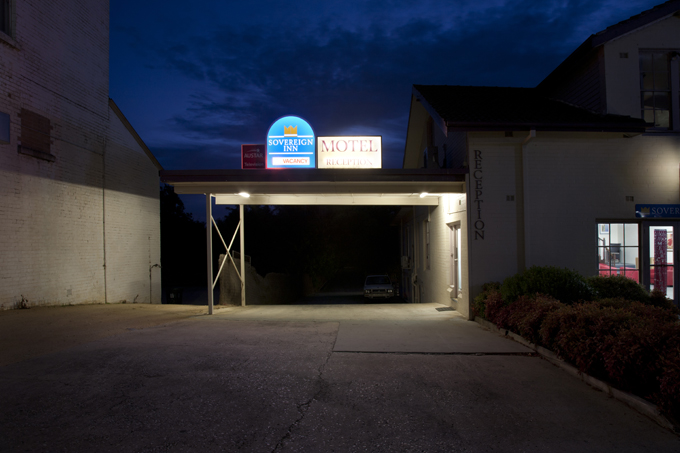
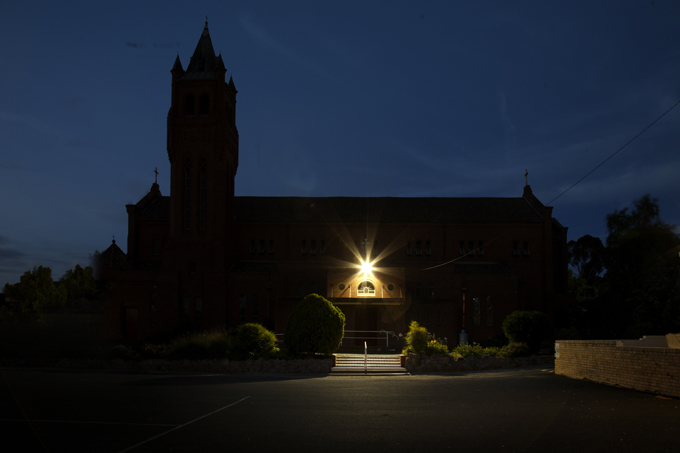
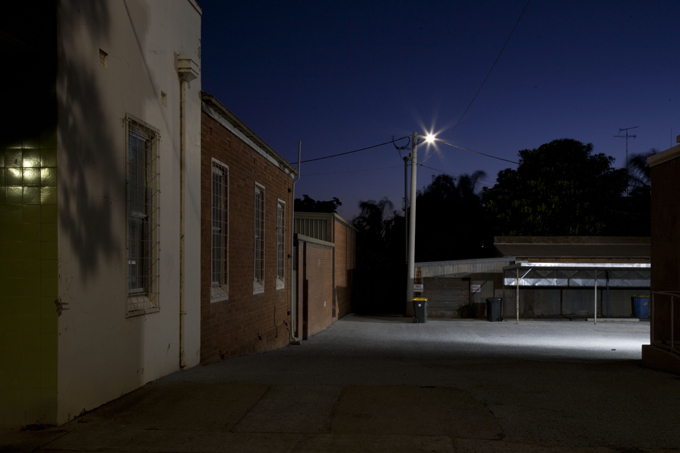
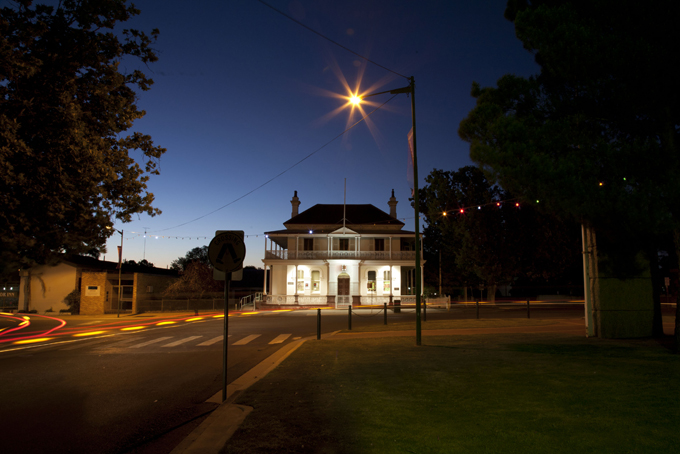
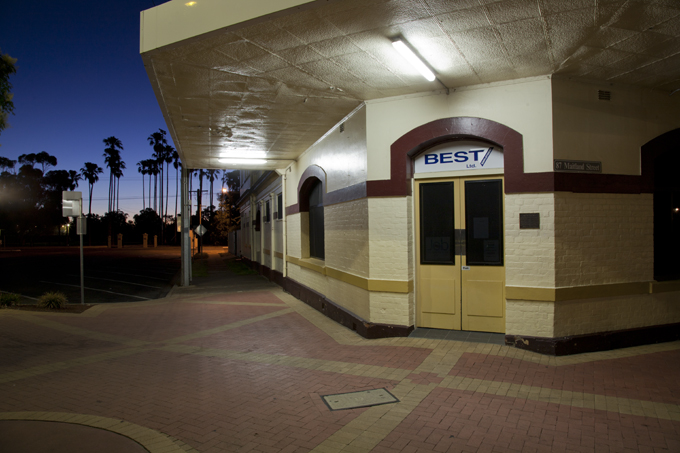
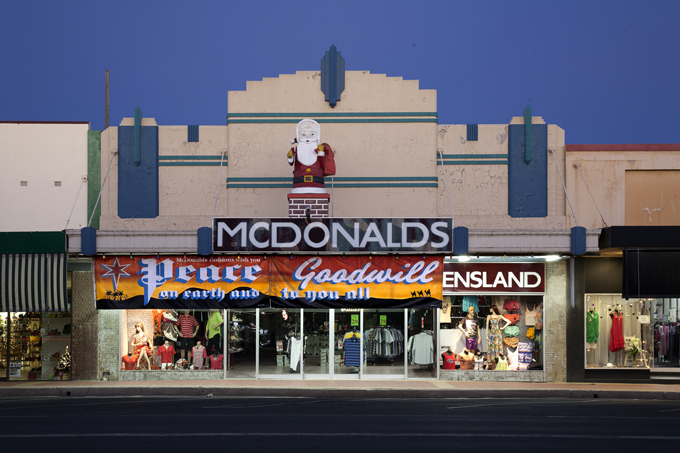
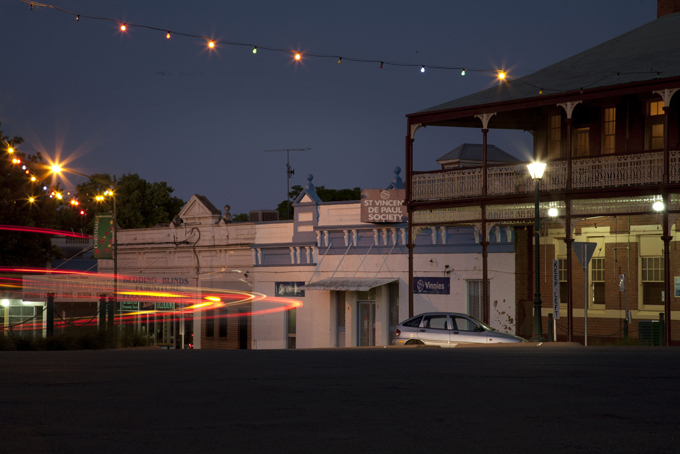
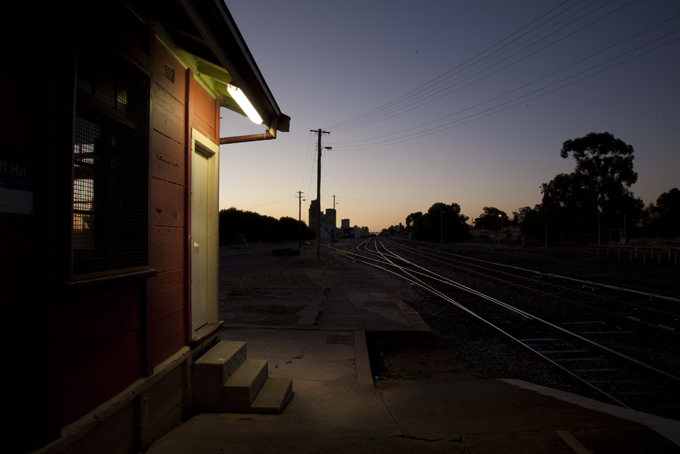
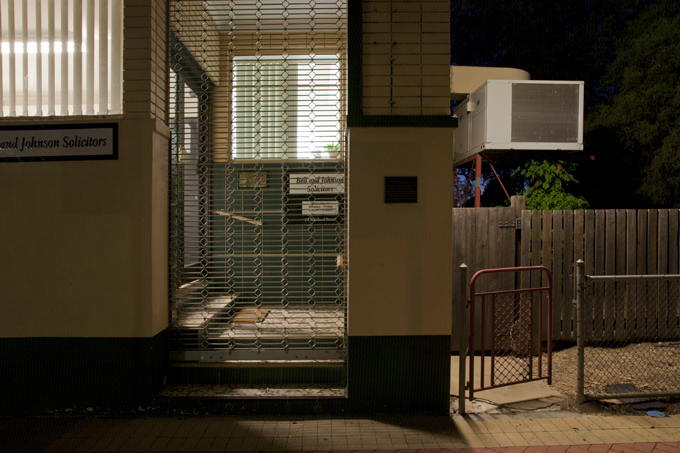
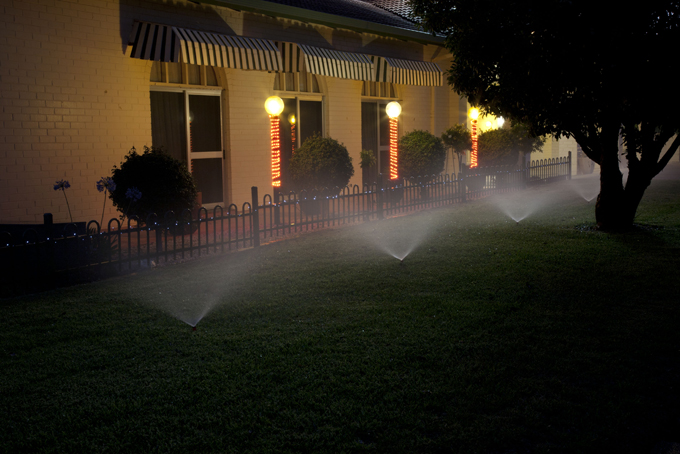
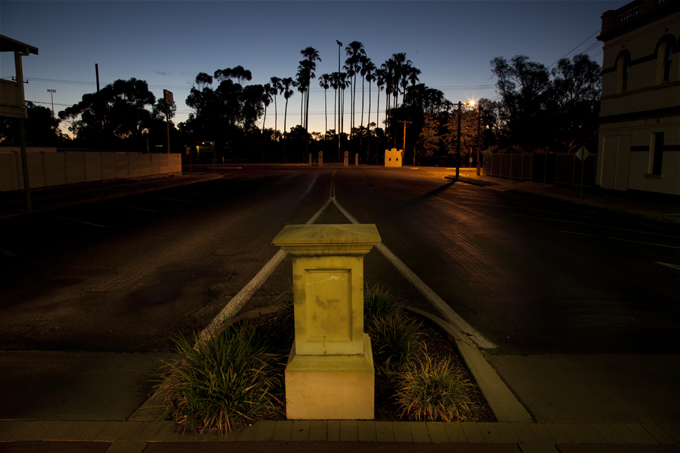
This year during our summer field trip, motivated by the results of our recent Wooli Nocturne Project, we decided to document at twilight an aspect of each town where we stayed. This meant arriving early so that we could walk down the main street before sunset. Our objective was to survey the site-specific arrangement of town’s Xmas display, (whether present or absent), and identify features that at dusk would also be artificially illuminated. Returning later we would shoot under the deep blue/magenta skies of the early evening and the night lights.
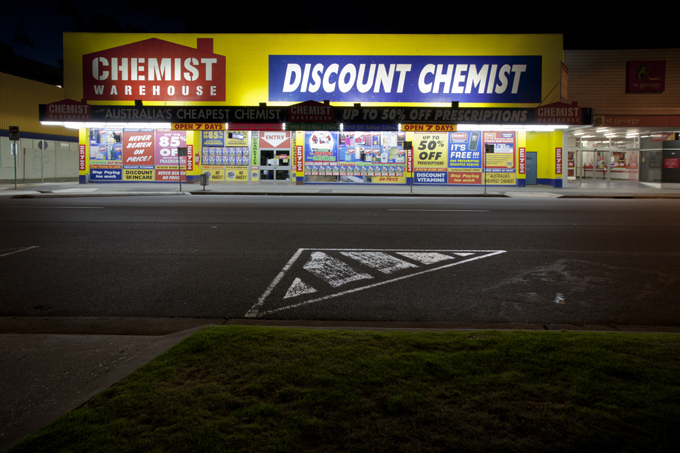
In this work we are not alone, as photographers across the history of the art have used this montage of artificial and natural light effects to document urban environments. The development of this work has been influenced over time by a sustained interest in artists like Edward Hopper and Jeffrey Smart, and the photographers Eugène Atget, Brassaï, William Eggleston, Joel Meyerowitz, Gregory Crewdson and Brian Brake. More recently in Australia, artists and photographers notably Bill Henson and Mark Kimber have also explored aspects of this genre.
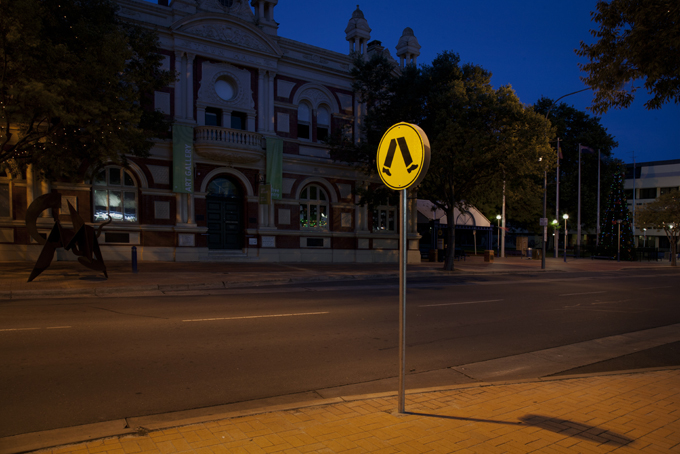
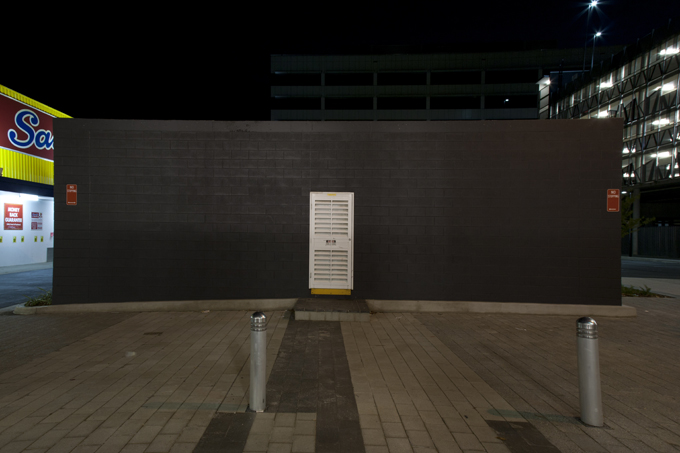
Recognising that the inherent nature of this transient light evokes the uncanny, an unseen presence or the interstitial filmic moment captured as a still is fundamental to our project. In this work the documentary photograph is not just a record of the idiosyncratic nature of each town’s main street and its Xmas light show as in these lighting conditions everyday objects are transformed from their daytime function. The prosaic nature of these towns, when photographed in the dusk light, becomes part of a found aesthetic: a site-specific monument to nocturnal light; a visual narrative of light, colour and form.
Xmas Street Nocturne: A site-specific project by Victoria Cooper + Doug Spowart
5 January 2013
.
Towns and cities imaged:
- Albury
- Bright
- Coonabarabran
- Cowra
- Narrabri
- Narrandera
- Toowoomba
2012 FIELD STUDY MAIL ART PROJECT: Our contribution
On December 7, 2012 we mailed off to David Dellafiora in Geelong our contribution to the 2012 Field Study. We met David at the Artspace Mackay Artists Book Forum in 2010 where he presented a lecture on mail art and coordinated a collaborative project which dealt with the idea of the assembling book as a democratic multiple.
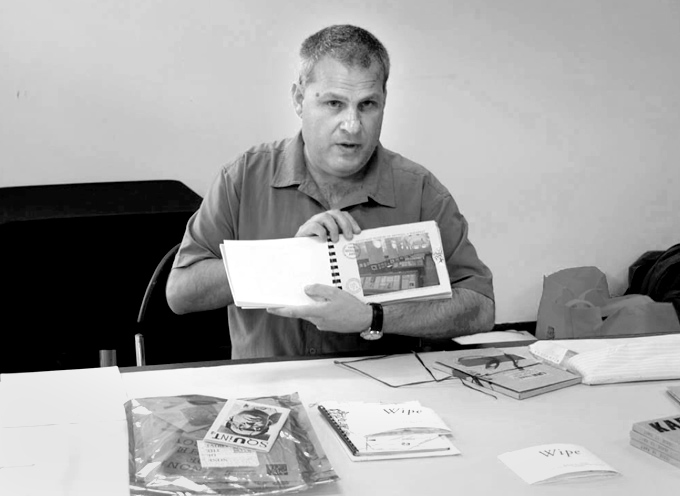
David Dellafiora Photo: Doug Spowart
.
David Dellafiora is a quietly spoken person and not one to push his significant history and activities in the world of mail art. He was however an enthusiastic distributor of A5 fliers, call-to-action invitations to participate in numerous mail art projects that he coordinates. Field Study, Kart, Wipe and others are projects that are essentially ‘assembling books’, where artists worldwide submit multiple artworks by mail to David. At specific times throughout the year David coordinates a team that assembles, packages and mails out to all contributors a copy of the compiled project. A part of the production run is retained with copies being offered for sale to artists, galleries and collectors. The income from this activity finances the production costs and the return postage. Field Study publications are included artists book collections such as the V&A, Museum of Modern Art New York, State Library of Victoria and the Ruth & Marvin Sackner Archive of Concrete & Visual Poetry.
The Field Study contributions are called emanations and can include all kinds of things including: ‘documentations of performances, actions and exhibitions, tracts, rants, instructions, manifestoes, reflections and experiments.’ A selection of pages can be seen in the illustrations from last year’s report at the end of this post. They are a mashup of Fluxus, DaDa, Surrealist inspired, zine-ish paste-up, rubber stamps, torn up letter ransom notes and concrete poetry. In its assembled form the power of Field Report is apparent as it becomes a snapshot of artistic, social and/or political commentary on the times that are current at the time of its publication.
.
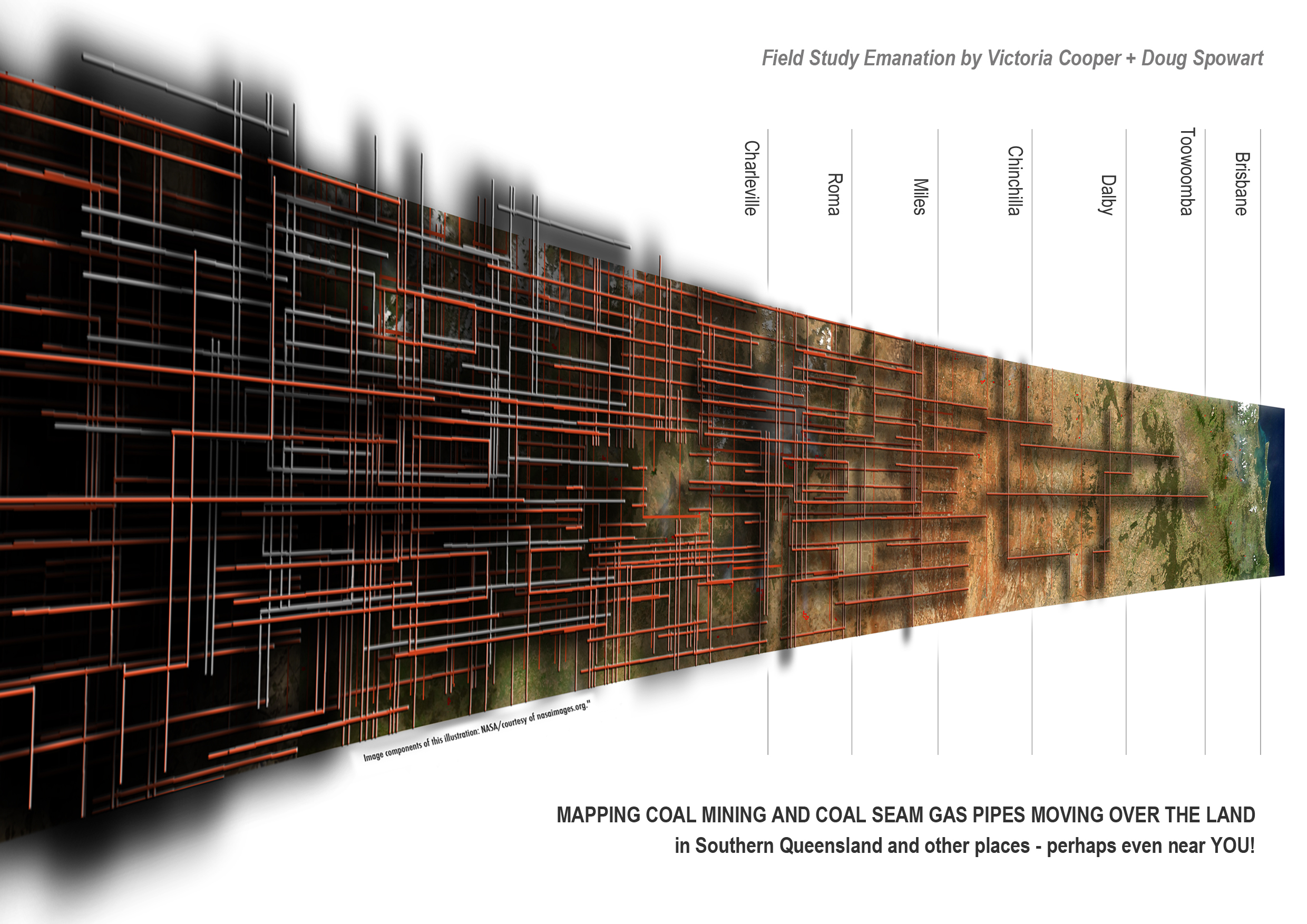
Our Field Study infographic about extractive mining industries in the Surat Basin
.
This year we contributed a piece that related to our commentary on extractive mining industries overtaking our regional communities. This is a variant to the Artists’ Survey Book #12 that has featured in past WOTWEDID posts. The page was printed using a high quality photocopier and each page, 100 in all, were signed and numbered by both of us. It was remarkable to see our workbench covered with the repeating pattern of 100 pages taking up an area of about 3 square metres.
.
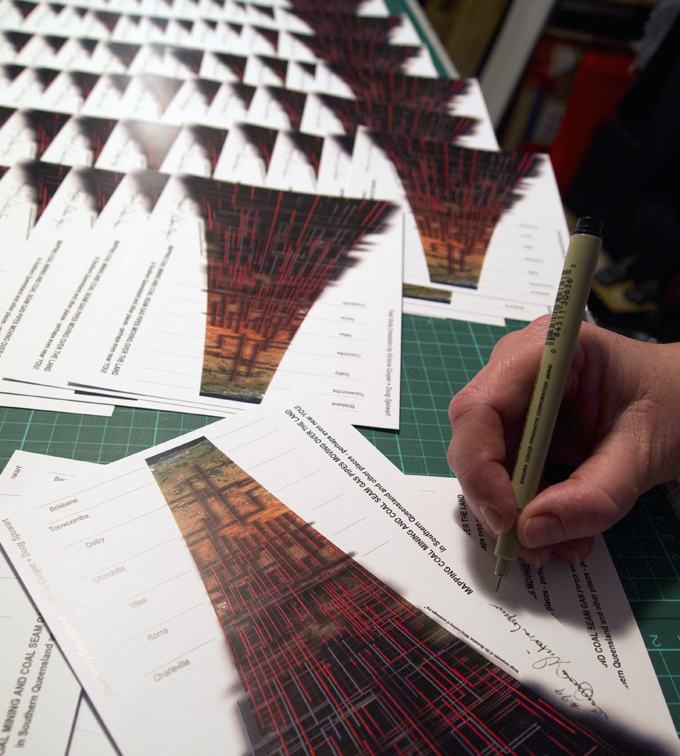
Signing our contribution
.
We look forward to receiving a package from Field Study International later on this year. And, for anyone interested in future Field Study projects, check out the Field Study Blog or review some of the accompanying documents that follow in this blog post.
Cheerio
Doug
.
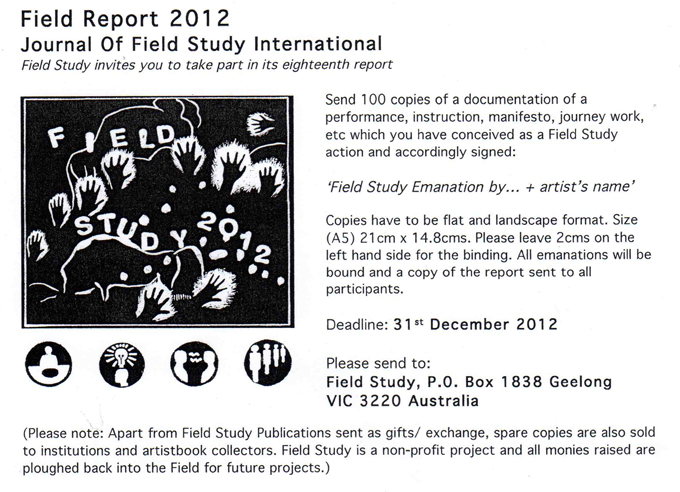
The call for 2012 contributions
.

2011 Field Report cover
.
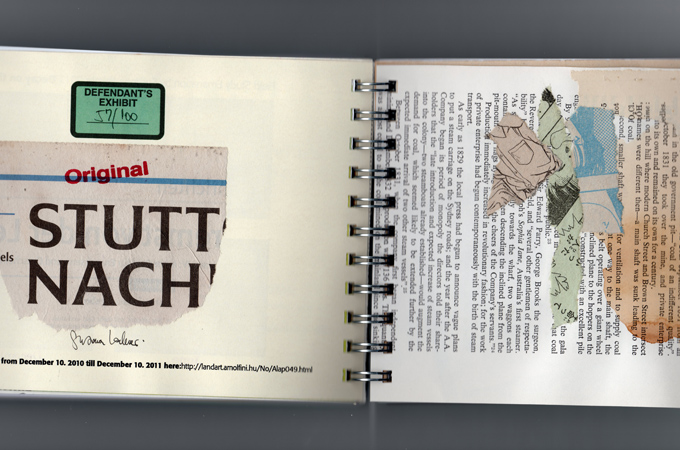
2011 Field Report pages
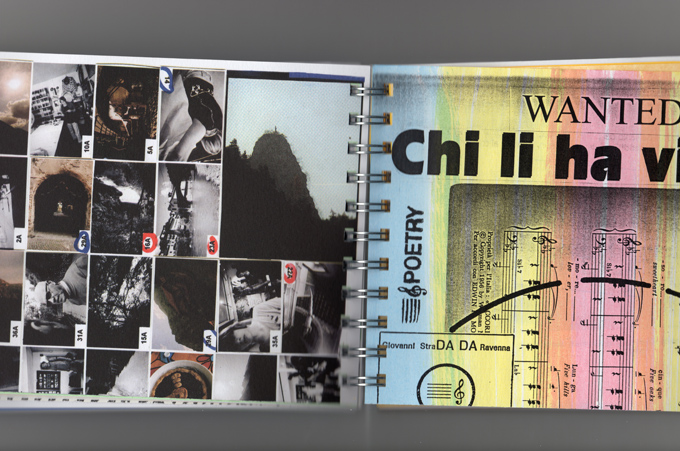
2011 Field Report
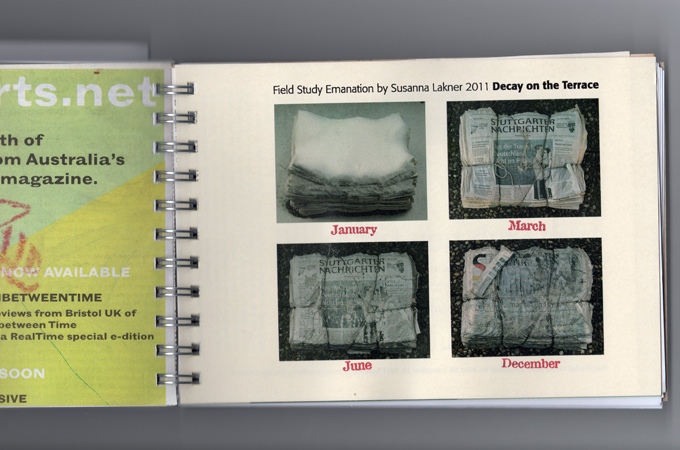
2011 Field Report pages
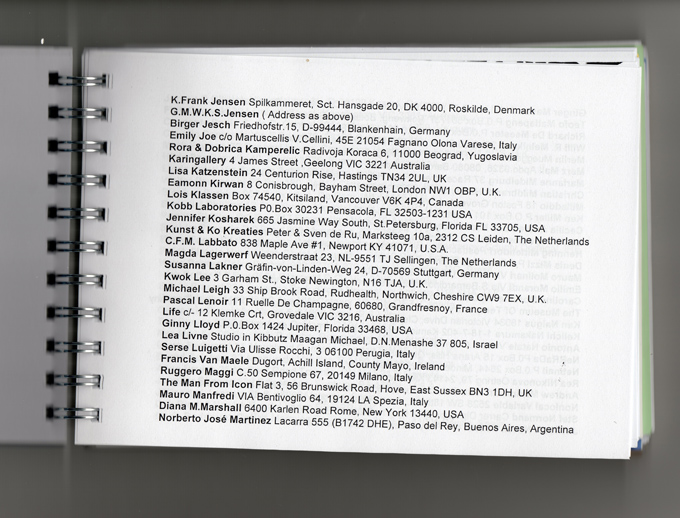
A page of participants – 2011 Field Report
.
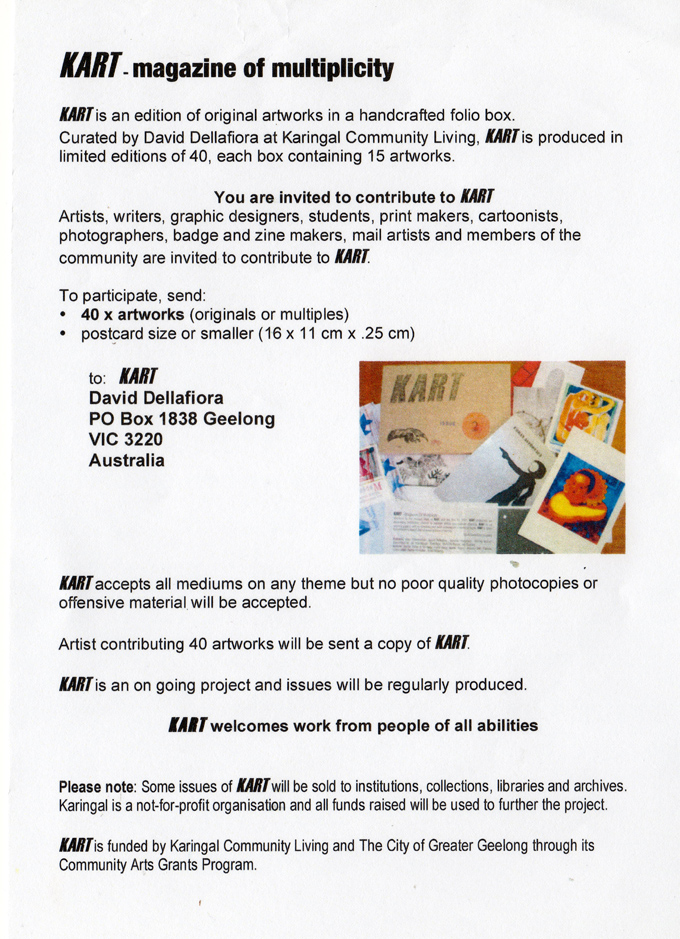
Kart Mail Art Project
.
2013 SABBATICAL for Doug+Victoria: A ‘Leap of Faith’
A NEW YEARS MESSAGE FROM COOPER+SPOWART
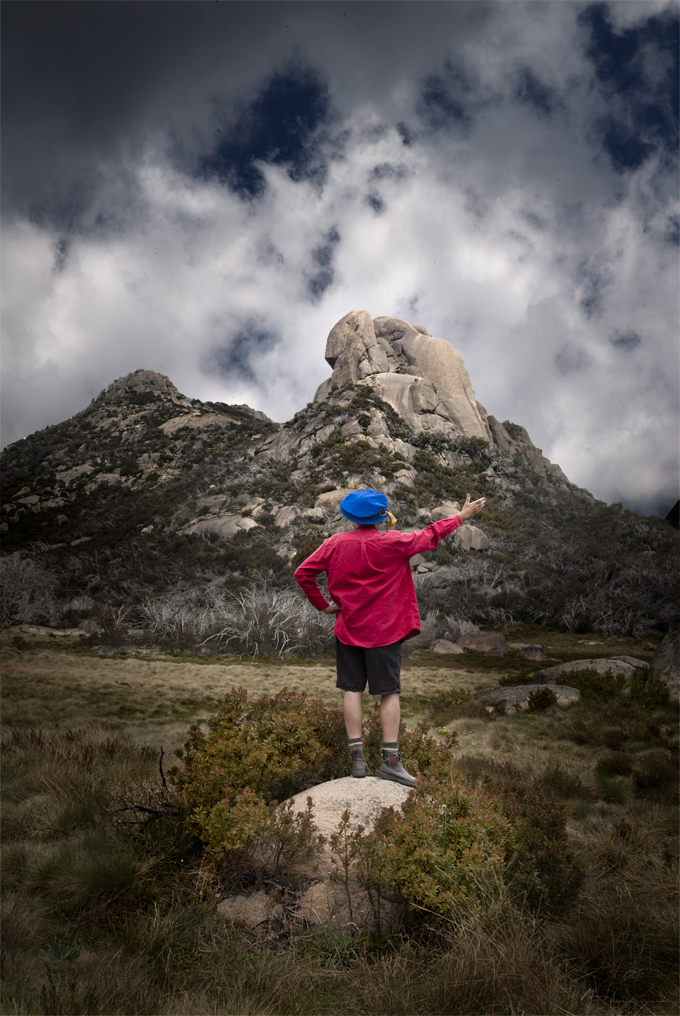
Dr Doug consulting Casper David Friedrichs re 2013 sabbatical, The Cathedral, Mt Buffalo.
In the year 2000 we began our involvement in higher academic study at Monash University in Post Graduate Diploma study. Since then, except for a small break in 2003, we continued our university research and art practice. Throughout this period we maintained both our arts practice and working at TAFE where Doug was full-time employed as a teacher and Victoria worked as a sessional teacher. All holidays and long service leave was consumed by the demands of study, research and at times a busy exhibition and private lecture programme. The hard work and study culminated last year (2012) with Doug being awarded Doctor of Philosophy at James Cook University in May, and Victoria submitting her PhD for final examination in late November.
Now, as we head into 2013, we are taking time out to pursue our post-doctorial research interests, opportunities to present and share our specialist knowledge and skills and to re-connect with our professional practice as artists and commentators on contemporary issues. It is a ‘self-funded sabbatical’. To finance this venture we intend to generate opportunities that may include ‘cloud funded projects’, artists in residencies, specialist workshops, seminars and consultancies, and sessional teaching or lecturing. We are also open to projects that may become available through our connections.
To up date you on our current interests and professional activities we include the following:
Doug: Social media and its applications within creative practice and personal communication; assembling and writing a critical commentary about Australian photobooks from 1900-2000; the narrative form of the hybrid photobook and the elevation of the print-on-demand photobook into a higher order of visual communication.
Victoria: Maintain a review of contemporary science/art interdisciplinary research as an accepted practice in academic institutions. Special interest in: the scientist, the artist and intuition; the historical use of visual art practice as information within scientific publications; Montage Thinking, as a mode for visual thinking and intellectual discourse through visual and non-visual information.
This adventure is somewhat a ‘leap of faith’ and as such we have created a blog onto which we will post sabbatical related content – we will invite to view this site when it comes online. This WOTWEDID blog will continue as our broader commentary platform – on occasion dual postings may occur. Other special research interest blogs will also emerge and you will be advised of opportunities to connect with their content.
Please contact us if you see any opportunities to support our ‘leap of faith’ sabbatical.
We wish you all an exciting 2013 New Year and look forward to perhaps connecting with you, and also connecting you with, commentaries about the issues of our shared interests.
Cheerio
Victoria and Doug
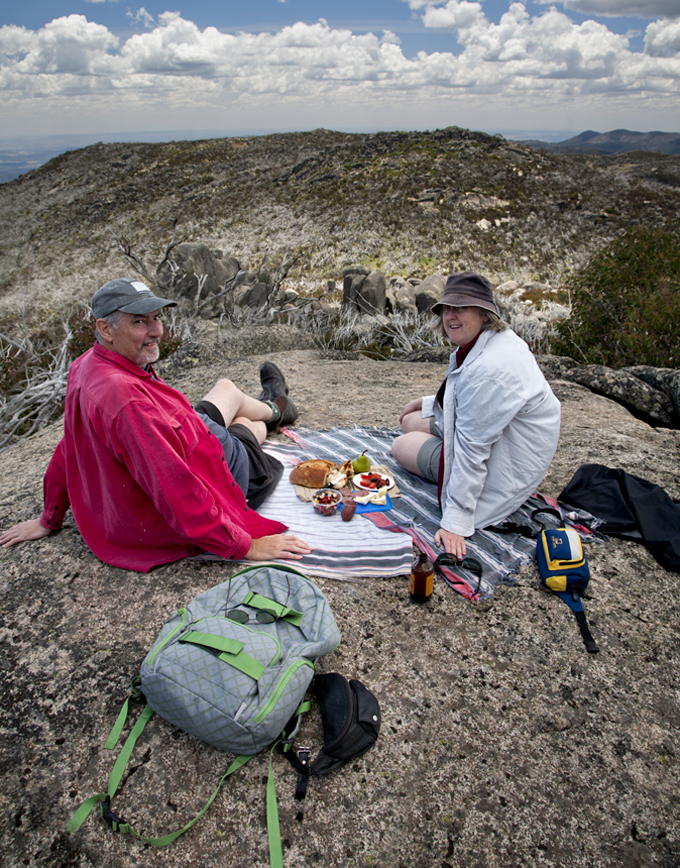
A 2013 lunch planning meeting at The Horn @ Mt Buffalo on 12.12.12
FROGS HOLLOW NEW YEAR FIREWORKS—Toowoomba 2012-13
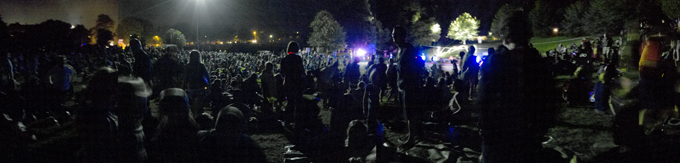
The crowd @ Toowoomba’s Frogs Hollow New Years Eve fireworks display Photo: Doug Spowart
It seemed like 10,000 people attended the Toowoomba “Frogs Hollow” 2012-13 fireworks display last night creating traffic jams, pedestrian crossing dramas and footpath parking mayhem. The crowd ‘ooooo—d’ and ‘aaaaaah—d’ and dotted throughout the audience were the lights from hundreds of digital camera, iPhone and iPad view screens recording the event. Starting at 7.40pm EST the show was over in ten or so minutes and much of the crowd dispersed.
I’ve photographed my share of fireworks—the tripod, remote release, being in a position with a clear view (up wind), careful focus and exposure correct. This year I just worked with my point-and-shoot Olympus Pen hand held—3200 ISO, auto (out-o) focus, auto exposure-around a ¼ second, and intuitively firing the shutter.
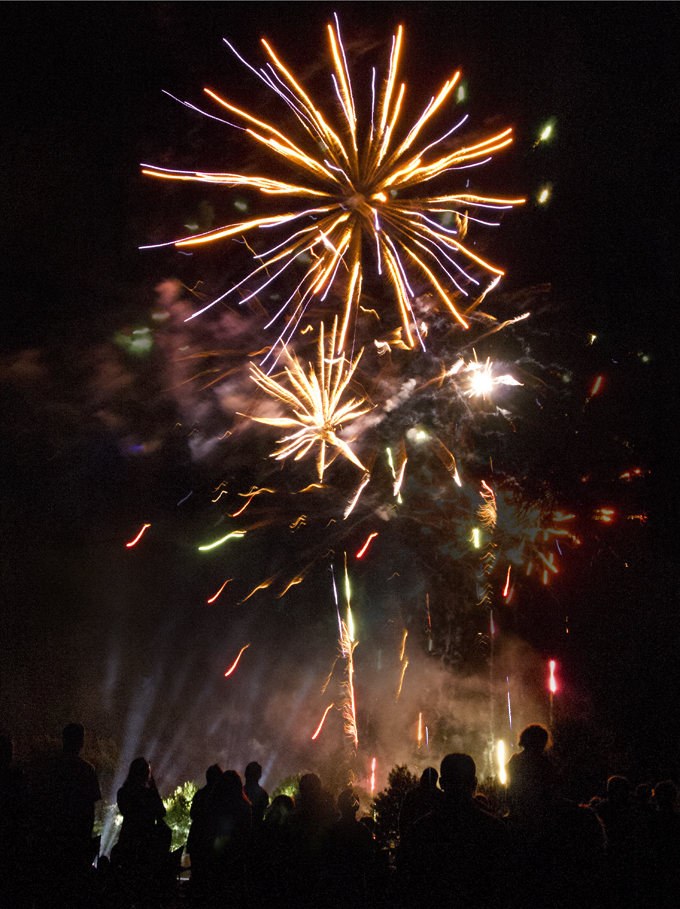
Toowoomba New Years Eve fireworks display Photo: Doug Spowart
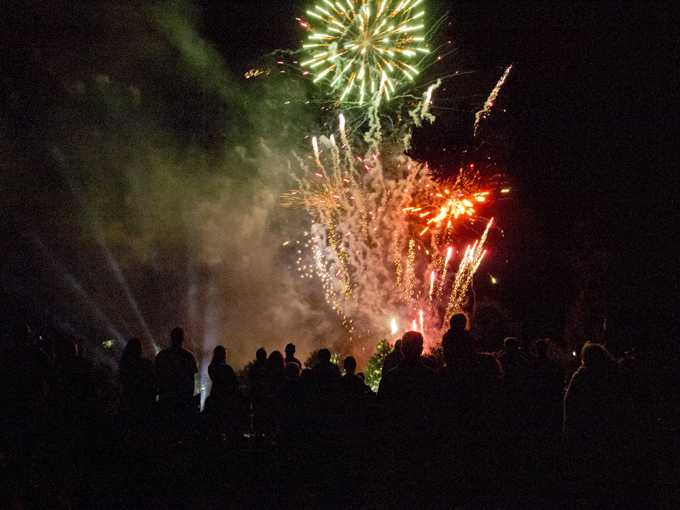
Toowoomba New Years Eve fireworks display Photo: Doug Spowart
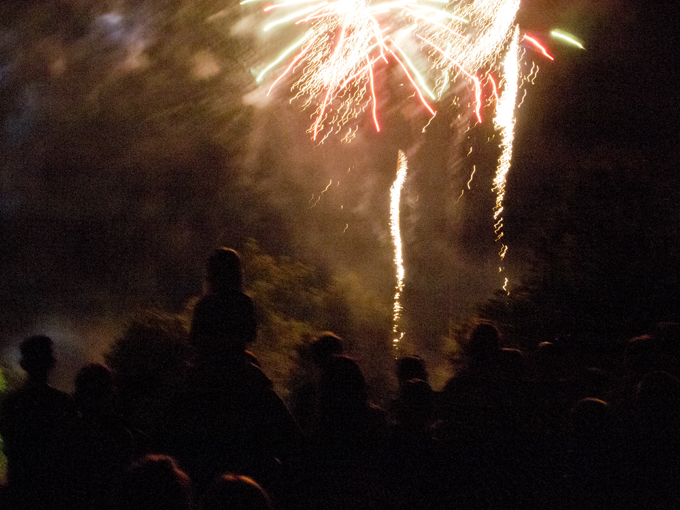
Toowoomba New Years Eve fireworks display Photo: Doug Spowart
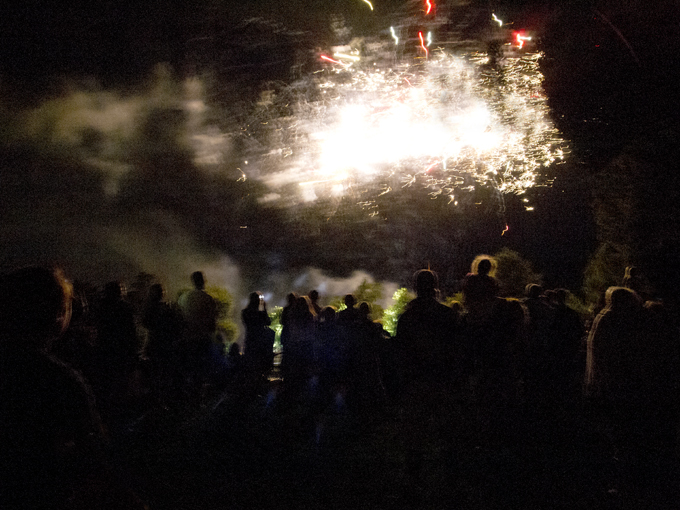
Toowoomba New Years Eve fireworks display Photo: Doug Spowart
Being IN the moment for me has created a different kind of view, and maybe one that closer represents the feeling of being there—“BOOM” “BOOM” “CRACKLE” and “POP”. Oh! I forgot the sound missing from stills. You will need to imagine that until I get the video function going—next year . . .
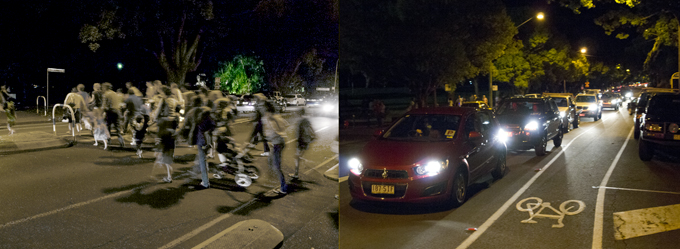
Traffic-cars and people @ Toowoomba New Years Eve fireworks display
SEE the Toowoomba Chronicle report for more information
http://www.thechronicle.com.au/news/new-years-eve-a-blast/1702476/
The WOTWEDID WordPress Blog 2012 in review
The WordPress.com stats helper monkeys prepared a 2012 annual report for this blog. It contains some interesting data about WOTWEDID and the world of blogging.
As always we are interested in your feedback … And, HAPPY NEW YEAR.
From Vicky and Doug.

Here’s an excerpt:
600 people reached the top of Mt. Everest in 2012. This blog got about 9,900 views in 2012. If every person who reached the top of Mt. Everest viewed this blog, it would have taken 17 years to get that many views.
RUBY SPOWART TURNS 85
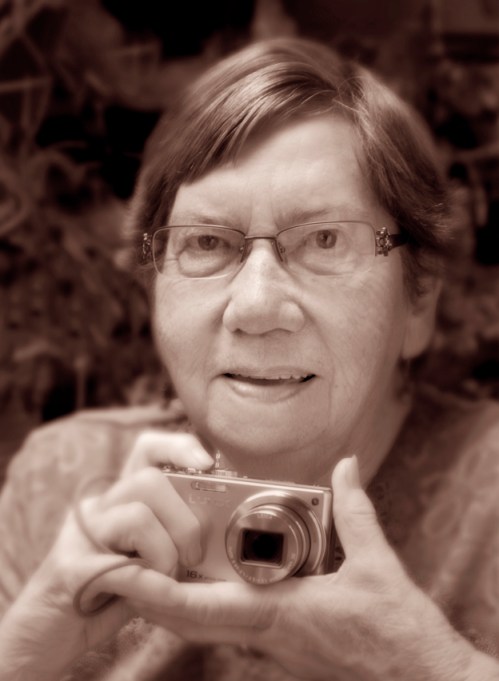
Ruby Spowart Photo: Doug Spowart
I visited my mother last month just after the family birthday celebration given by her three sons and their families. 85 is a big number when it comes to years lived on this planet and one of Ruby’s recent projects gave me an opportunity to reflect on the life that she has witnessed. Ruby just finished an Apple iPhotobook entitled Meet my ancestors which contains family portraits, group photographs, texts and personal visual ephemera from the last 170 years of her, and mine–Ancestors. This is the third book she has made of this genre, the first being an artists book made from collected images of each year of her life from 1 to 21, and the second, a photobook entitled Bringing home the grain in which she describes the agricultural processes of grain growing and harvesting she encountered in her childhood on a farm in Northern Victoria.
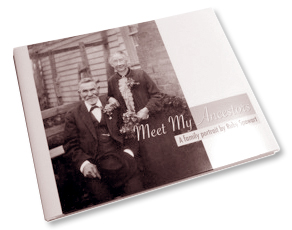
Ruby’s Meet my ancestors book
The Meet my ancestors project brought me in contact with the value of the family photograph, either professionally made or made at home as a box Brownie snapshot, in its ability to provide proof of existence and the aging process encountered by a subject over many successive portraits. Another feature of Ruby’s assemblage and ordering of these family photographs is that they all have a connected linage. This is distinctly different to family photos encountered in junk shops, antique shops and car boot sales. In these circumstances the photographs are separated from their meaning, they become isolated examples of someone and not ‘a’ specific ‘known’ individual—a kind of image orphan.
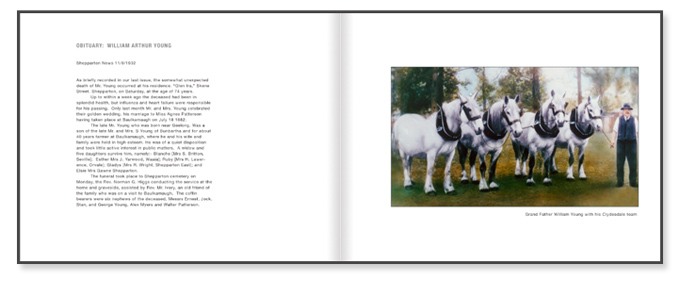
Ruby’s Meet my ancestors book inside
These family portraits are not just photos as she has added a text as well and linked it to other records like personal correspondence and newspaper reports—usually of obituaries. A picture may be worth the proverbial 1000 words but a picture and an appropriate amount of text can place it within a context, a time and ancestral linage. John Berger wrote about this necessary liaison of photo and text in his book Another way of telling1. He says: ‘In the relation between a photograph and words, the photograph begs for an interpretation, and the words usually supply it. The photograph, irrefutable as evidence but weak in meaning, is given a meaning by the words.’
In contemporary society with the popularity of TV programs like Who do you think you are and the online availability of genealogical information there is a heightened interest in our family trees and ancestry. And, as Ruby has lived half of the time covered by her book it is important for her to be engaged in such a project. What is equally exciting for me is that she sits before a computer, sending and receiving communiqués and images from the extended family, she orders, optimizes and designs the pages of the book (with a little help from me): when she was 3 could she have ever dreamed of such a thing…

Ruby Spowart aged about 3
SEE earlier post about Ruby and her work
Ruby can be contacted through LINKEDIN
Happy Birthday Ruby,
Son Doug, and Vicky
.
1. Berger, J 1982, ‘Appearances’, in Another way of telling, Writers and Readers Publishing Cooperative Society Ltd., London, UK.
EX LIBRIS: WHO OWNS THIS BOOK? A Queensland artists’ bookplate project
Zealous book collectors have always prominently placed inside the first few pages of a book their Ex Libris bookplate as a sign of ownership of books that they acquire. Over time these bookplates became a kind of specialised artwork created by artists and designers—not only for their own collected books but also for the libraries of serious book collectors. Bookplates then, are not just the carriers of the name of a book’s [one time] owner, but are also a thing of artistic integrity and beauty. Indeed there exist a large number of book-collecting dilettantes who are more interested in the bookplate and less in the book in which it is fixed.
The origins of the bookplate can be traced back to the 15th century and the artists who made them include Albrecht Durer and Hans Holbein. In Australia the most noteworthy bookplate designers include Norman Lindsay, Adrian Feint and G.D. Perrottet. Most significant state and national library collections include bookplate works. The Toowoomba Regional Art Gallery has a collection of bookplates as part of The Lionel Lindsay Gallery and Library Collection (Also known as the Bolton Collection) and in 2004 Patrick Corrigan AM gifted to the gallery a collection 318 bookplates, mostly by Australian artists, including John Shirlow, Lionel and Norman Lindsay, P. Neville Barnet, George Perrottet, Lloyd Rees, Pixie O Harris and Brett Whiteley.
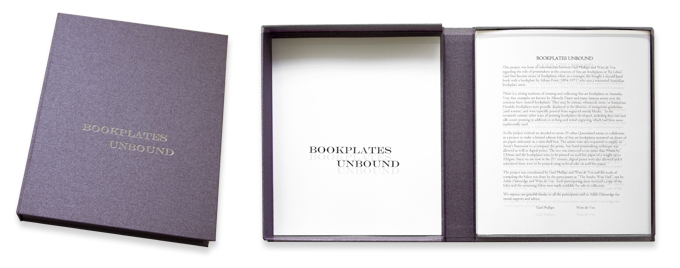
“Bookplates Unbound” limited edition set (two views) Photos: Doug Spowart
Into this bookplate space a new and ambitious project is set to provide a contemporary view of the bookplate by Queensland artists. The project, entitled Bookplates Unbound, was inspired by conversations between artists Gael Phillips and Wim de Vos around the role of printmakers in the creation of fine art bookplates. The details of the Bookplates Unbound are as follows (from the frontpiece):
As the project evolved we decided to invite 29 other Queensland artists to collaborate in a project to make a limited edition folio of fine art bookplates mounted on sheets of art paper, unbound, in a clam shell box. The artists were also requested to supply an Artist’s Statement to accompany the prints. Any hand printmaking technique was allowed as well as digital prints. The size was restricted to no more than 90mm by 130mm and the bookplates were to be printed on acid free paper of a weight up to 100gsm. Since we are now in the 21’t century, digital prints were also allowed and, if submitted, these were to be printed using archival inks on acid free paper.
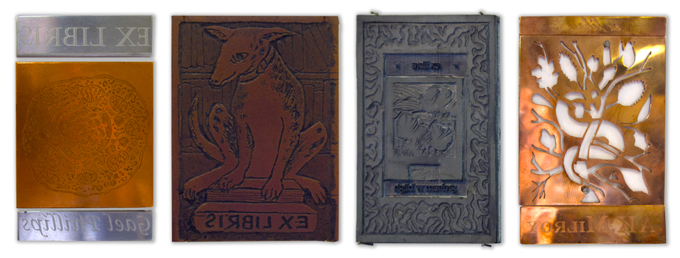
Some of the ‘Bookplates Unbound’ printing plates Photo:Doug Spowart
The Bookplates Unbound set of bookplates is a limited edition production with each artist receiving a copy. The remaining copies will be made available to collectors. The coordination of the project was undertaken by Gael Phillips and Wim de Vos at The Studio West End and was supported by Adele Outteridge.
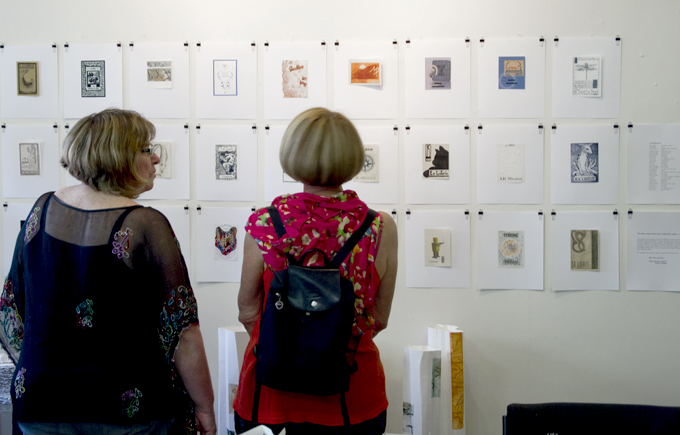
‘Bookplates Unbound’ wall @ The Studio West End Photo: Doug Spowart
Anne Jolly, of Novel Lines Bookshop, launched the Bookplates Unbound set at a special event at The Studio West End on November 24. Accompanying the launch was an exhibition of artists books from friends of Studio West End that was opened by Helen Cole, Senior Librarian, State Library of Queensland. Wim de Vos also gave the audience a performance of two new tunnel books, one on Venice and the other referencng the Chrysler Building in New York that he has created [SEE the video in this post]. The openings concluded with a musical 6 song set by ‘Rock and Roll’ impresario Wim and fellow band members Neil Anderson and Robin Webb [SEE the video in this post].
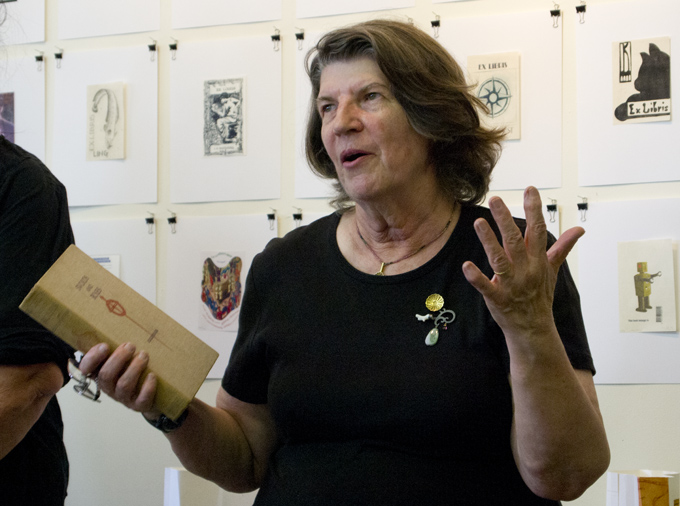
Gael Phillips talks @ ‘Bookplates Unbound’ launch Photo: Doug Spowart
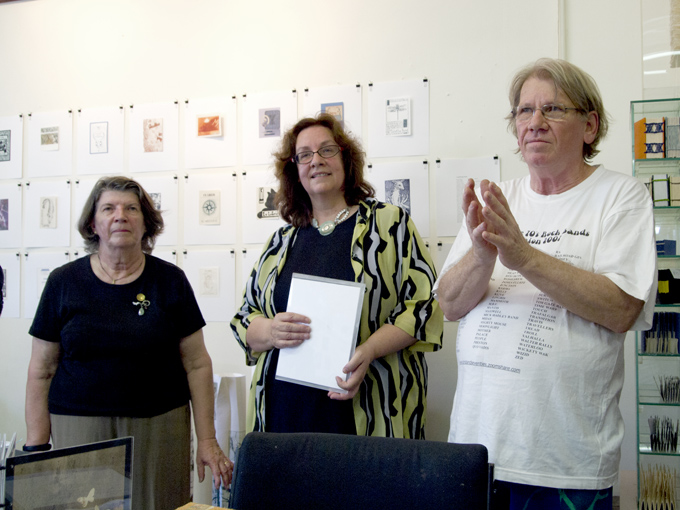
Wim and Gael thank Anne Jolly Photo: Doug Spowart
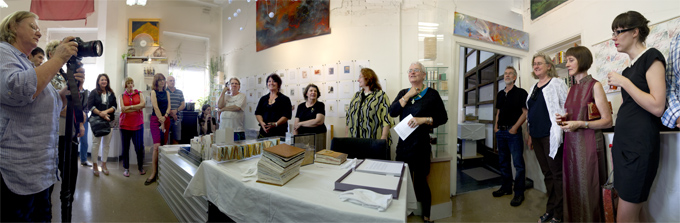
Helen Cole opens the Studio West End artists book show Photo: Doug Spowart
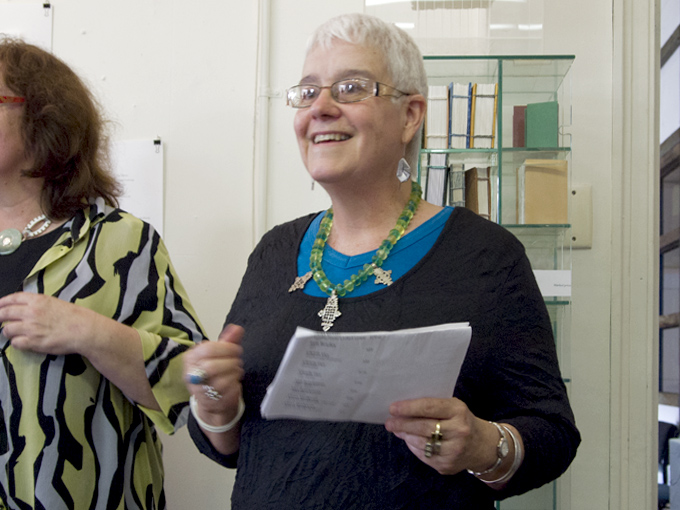
Helen Cole opens the Studio West End artists book show Photo: Doug Spowart
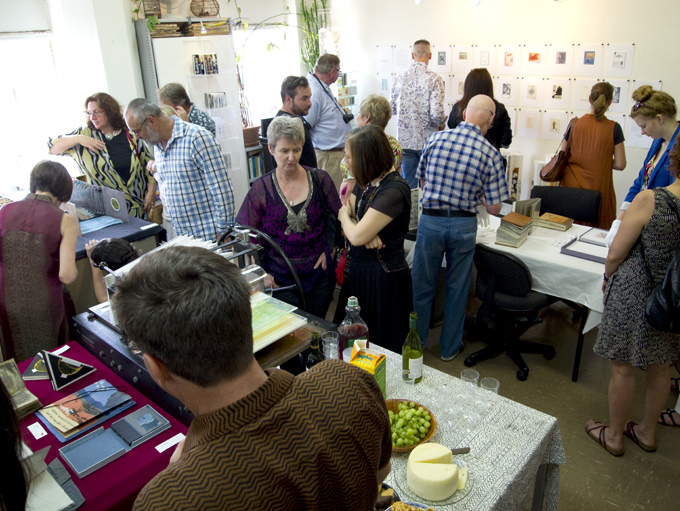
Studio West End artists book show Photo: Doug Spowart
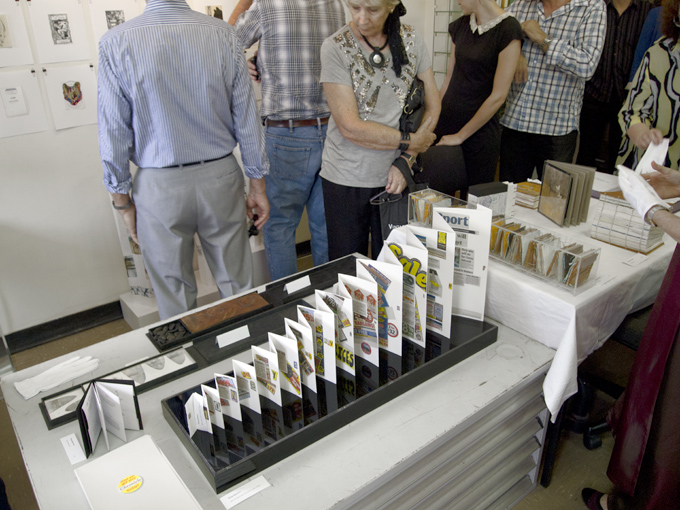
Studio West End artists book show Photo: Doug Spowart
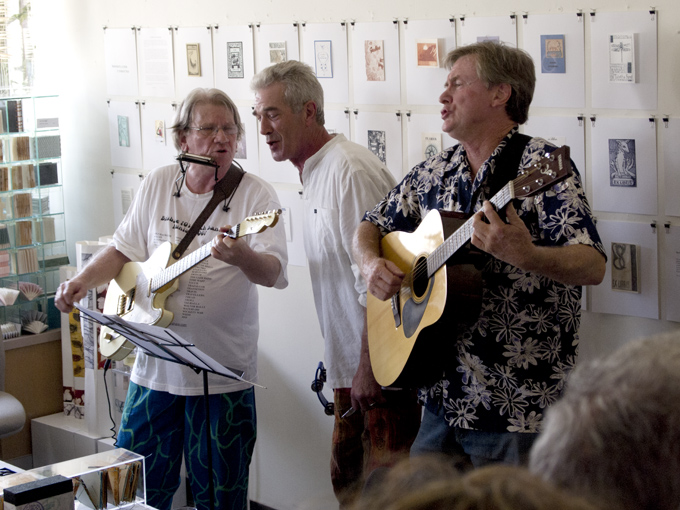
The Band – Wim, Robin Webb and Neil Anderson Photo: Doug Spowart
The contributing artists to the Bookplates Unbound and their respective print media are:
Janette Bailey Line etching / aquatint
Graham Bligh Linocut
Susan E Bowers Sugarlift etching and embossing
Victoria Cooper Digital print
Geraldine Connolly Soft ground etching
Philomena Drake Etching / aquatint
Malcolm Enright Digital print
Barbara Heath Digital print
Tabitha Ford Line etching
Lynne French Line etching and relief roll
Teresa Jordan Digitised linocut
Jeraldene Just Line etching
Sharon Lee Digital print
Chris Ling Line etching
James McDougall Photo etching
Julanne McDougall Photo etching
Fiona Medhurst Line etching and rubber stamp
Karla Meursing Linocut
Anita K Milroy Three hand pierced plates, line etching and embossing
Katharine Nix Lino etching
Adele Outteridge Line etching
Gael Phillips Line and photo etching on three plates
Pip Reid Line aquatint etching
Anneke Silver Engraved lino print
Doug Spowart Digital print
Stephen Spurrier Digital print
Madonna Staunton Wood cut and rubber stamps
Jonathan Tse Screen print
Geoff Thompson Line etching
Wim de Vos Line etching on four plates
Sheryl Whimp Open bite etching
.
.
The Colophon for Bookplates Unbound
This Edition consists of forty copies, of which this is number 11
The bookplates were mounted on acid free cartridge paper and the cover titles embossed in “Times New Roman”. The font used for the Artists’ Statements was “Centaur”, designed by the late Bruce Rogers. The clam shell boxes were made by a craftsman bookbinder, Tony Gibaud at “Craftsmen Bookbinders”, Geebung, Queensland, who also made the blocks for the cover, spine and title page to a design by Gael Phillips and Wim de Vos. The text was printed by Drawing & Drafting Digital, Bowen Hills, Queensland.
The copyright of the bookplate images is retained by the individual artists.
ISBN: 978-0-646-59203-9
Published by Alumni Publishers
© 2012 Brisbane
•
PHOTO GRADUATION 2012 SQIT
The 2012 SQIT Photoimaging Graduation event took place on November 26 in the college theatre. Around 80 family, friends and local photography identities attended the two-hour event. The Graduation is a student project overseen by teacher Rachel Susa and her first year students and is a mix of celebration, reflection and fun. Each year a guest speaker provides an insight into the photographic industry – this year David Seeto addressed the audience with his life experiences in photography. His early film-based work with complex sets, large format film and tricky lighting situations made the students thankful for the ability they have to use digital techniques and Adobe Photoshop to assemble images now – easily. David discussed his documentary work over many years with outback legend R. M. Williams.
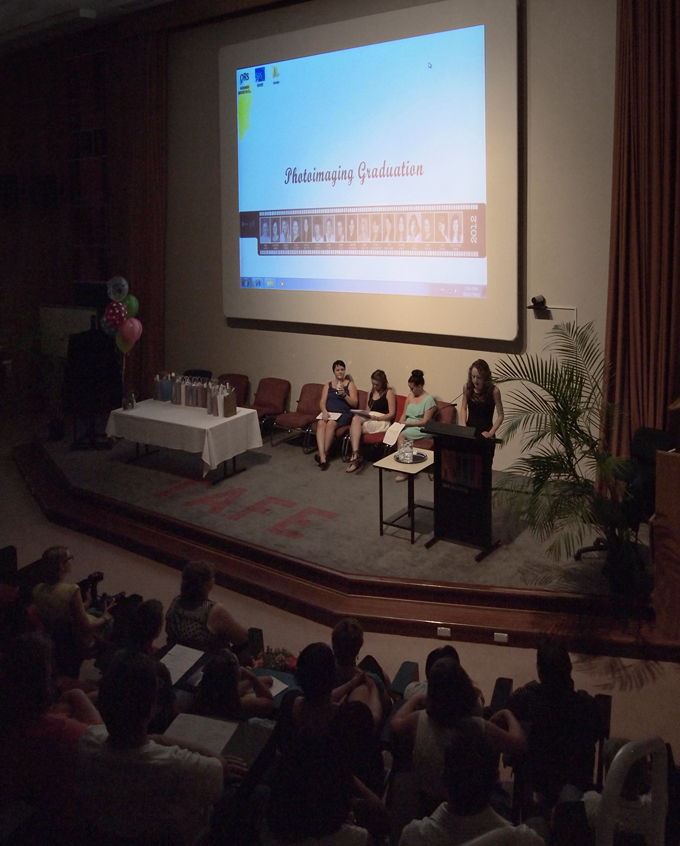
The SQIT Photoimaging Graduation 2012
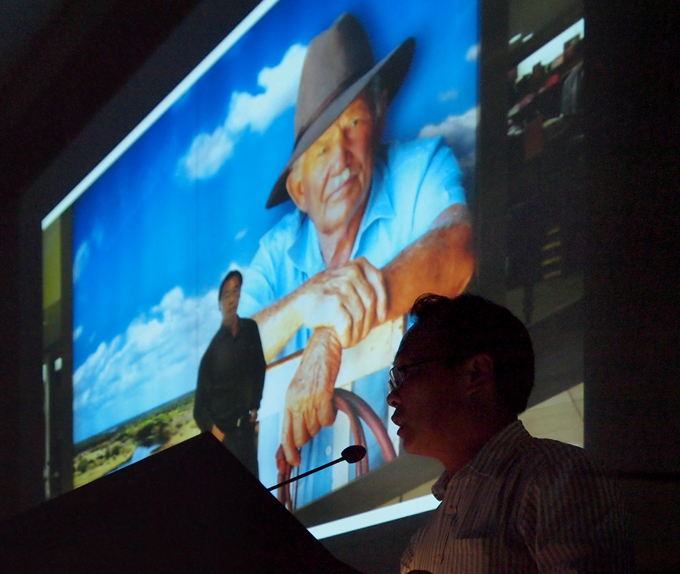
David Seeto presents the keynote address
At the Graduation event the SQIT Photoimaging Awards are announced. This year’s Syd Owen Graduating Student of the Year is Abby Dennien. Her award recognises the significant contribution made by Syd Owen Senior in the formation of the Institute of Australian Photography (now the AIPP) in the 1960s and his support of professional photography in this country. As part of her award Abby has the opportunity to gain extra experience as a part-time employee of Owen Studios for the next 6 months The Photobook of the year was awarded to Christine Ivanov for a book about night travel along local highways.
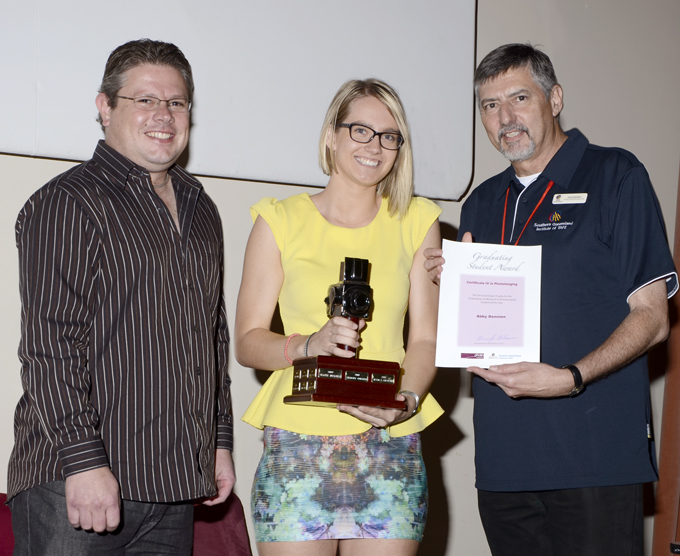
Raymond Keyworth from Owens Studios with Abby Dennien and Doug PHOTO: Alison Ahlhaus
The Graduating students take the stage at the end of the night and a celebration poster is unveiled which features a portrait of the students and teachers. Then it’s all over — until next year!
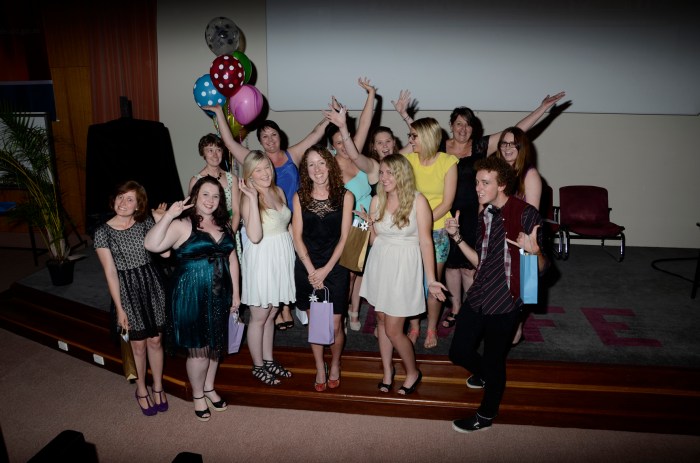
Certificate IV in Photoimaging Graduation Group PHOTO: Alison Ahlhaus
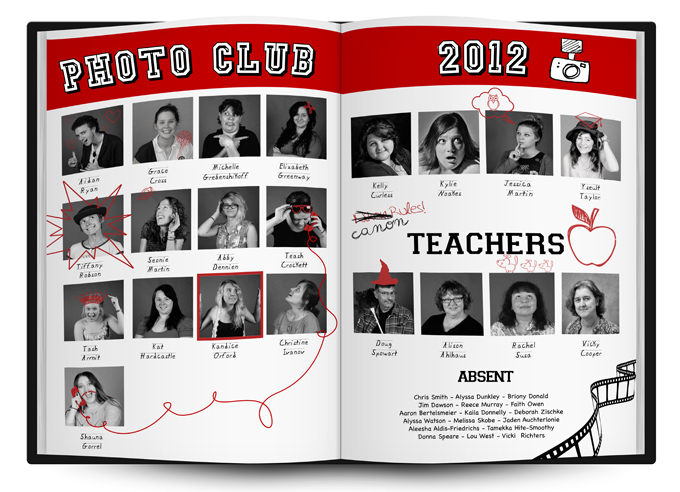
The 2012 Student Board

 wotwedid
‘BOOKPLATES UNBOUND’: The Cooper+Spowart contribution
leave a comment »
Here are our contributions to the Bookplates Unbound project – SEE previous post for details
.
VICTORIA COOPER: ex libris, dedicated to Dr Dorothy Shaw
Victoria Cooper’s Bookplate
A statement about this work…
To many of her colleagues Dorothy was enigmatic and modest about her personal and past life. Under the surface of this quiet and reserved nature, she had an inquiring, creative mind. I always found her willing to venture into the unchartered territory of the imagination, while still grounded in the everyday physical world.
Dorothy also had distinct methods of working: I could always count on her typewritten notes clearly outlining for me the information on her specimens intended for deposit into the Plant Pathology Herbarium. These typed notes may seem a standard communication—but Dorothy used a typewriter, similar to the old black 1940s Imperial machine. It seemed that this was an idiosyncratic protest against the unwanted aspects of the digital paradigm invading her world. It must be noted that although Dorothy did not utilise aspects of digital communication, she was readily accepting of the digital world. Dorothy not only embraced fully the digital art I was creating but she also recognised the important role of digital technology and work practices necessary in contemporary scientific research.
In the visual work for my PhD—involving fresh water aquatic fungi—I consulted Dorothy’s considerable knowledge on these organisms. Our exchanges were creative and fertile, inter-relating knowledge and concepts from both science and visual art. The designs and patterns in this bookplate were selected from a collection of microscopic photomicrographs of aquatic fungi I created for the visual component of my PhD. I also chose the typeface Courier, for the bookplate to reflect the typewritten notations that were emblematic of Dorothy’s recordings.
Dorithy is passed away now and although I did not get to see her library, I am sure it was diverse, interesting and informative. I am equally confident that she would have a manually typed (non-digital) catalogue and reference list for each book. From these connections and perceptions of this creative, dedicated scientist, I created this bookplate—I have made it to evoke the life of Dorothy Shaw as a Library: one full of mystery, knowledge, life’s challenges and experiences.
Victoria Cooper
.
DOUG SPOWART: A homage to a Walter Benjamin comment about book collecting
Doug’s Bookplate
.
A statement about this work…
In Walter Benjamin’s 1931 essay, Unpacking My Library: A Talk About Book Collecting, I found a discussion that echoed my desire for accumulating books and their assembly into a personal library. In the text Benjamin shares his love of the process of: finding, acquiring books, building a library, and what it means to possess books—many of them.
In this bookplate I make reference to Benjamin’s comment that a collection may include books from other libraries that were loaned and never returned. This covert act has historically been something I’d encountered from others who did not return books. After a time, if I approached the borrower seeking the book, their usual response was the denial of ever borrowing the volume – or – that it had already been returned.
I cannot deny that I too have lusted after books seen in private libraries, books in bookshops and catalogues that I could never afford, or books held in institutional repositories. I have thought, like Benjamin, of borrowing and then never giving them back.
However this bookplate* is pure fantasy and not an admission of guilt. It is my commentary on Benjamin’s proposition in the form of a modified bookplate to indicate the changed ownership, dubious provenance as well as a signifier of obsessive possession.
Doug Spowart
* I must acknowledge that I do have a book in my library that is stamped ‘The Kodak Technical Library’ over which is confidently signed ‘Julian Smith’. And there are annotations and marginalia in the same pencil that are indicators of Smith’s provenance. I bought the book from a respectable Melbourne bookseller in 2002.
Share this:
Written by Cooper+Spowart
December 24, 2012 at 3:35 am
Posted in Doug Spowart, Exhibitions, Victoria Cooper
Tagged with aquatic fungi, Australian bookplate artists, Bookplates, Bookplates Unbound, comments about book collecting, Dr Dorothy Shaw, Walter Benjamin