Archive for the ‘Wot happened on this day’ Category
HEATHER FAULKNER’s ‘A Matter of Time’ Exhibition

In Heather Faulkner’s exhibition A Matter of Time
A Matter of Time – Heather Faulkner, Brisbane Powerhouse 26 March–28 April 2013.
Today everyone possesses a camera so by association everyone is a photographer and everyone takes photographs. Evidence of this activity is in all kinds of spaces we inhabit, but of course it is most prevalent in the pervasive and immediate space of online social media. Andy Warhol once exhorted that: ‘In the future, everyone will be world-famous for 15 minutes’, and perhaps the proliferation of photography in Facebook, Pinterest and Instagram has indeed made everyone famous, as some purport, ‘for 15 people’1. The extension of this euphemism could be that ‘everyone may be famous for 15 online photographs.’
But what has all this to do with an exhibition of documentary photographs in suburban Brisbane? Well … for me ‘photography’ in the hands of casual shooters, responding spontaneously to their lives, represents only a segment of the world’s daily dose of photography. Documentary photographers for example, use photography as visual research to inform and create understanding for others. These photographers are usually directed by passion for a particular issue, and driven by the need to tell stories of others and maybe even–of themselves. In this context the act and product of photography transcends the milieu of images and provides us with a deeper connection through the communication of the narrative. This exhibition is from one such photographer.
Heather Faulkner’s exhibition A Matter of Time, at the Brisbane Powerhouse, is a charged and evocative statement about the circumstances, situations and legacies of lesbian women living in the state of Queensland. Faulkner documented the lives of eight women and their significant lived experience of the political and social regimes that existed and, as claimed in the exhibition statements, still exists today.
Faulkner’s images take on two separate forms: large format black and white full frame portraits, and colour images of a more documentary nature. In the large portraits the subject’s stare is direct to camera capturing the viewer’s attention in what Faulkner describes as the ‘oppositional gaze’2. They are assertive and declare ‘this is me’. Placed alongside these portraits is the biography and backstory of each woman. For the viewer/reader in this juxtaposition the text and the image creates a silent dialogue. As in the examples of Faulkner’s presentation of Carol Lloyd’s story shown here.
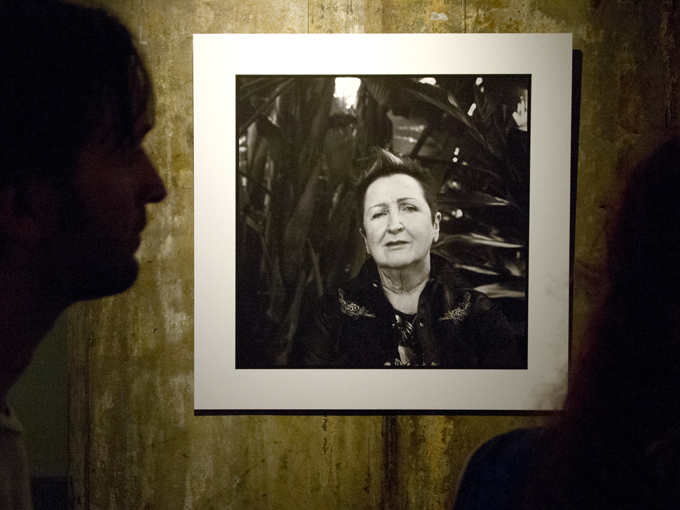
Carol Lloyd – the large portrait. Heather Faulkner’s exhibition A Matter of Time
.
The colour images are extremely intimate and distinctly banal, perhaps exhibiting the photographer’s light touch to aesthetically intervene in the narrative. The subject is imaged engaging in life’s everyday activities: cuddling a family pet, on the couch watching TV, talking with others, arranging things on a bed. The photographic treatment of these photographs is not the sensationalised grainy monochrome, extreme perspective depth and overtly dramatic composition that so often pervades the modern photojournalistic genre. There is a sense of the view being derived from ‘hanging out with friends’, and of the camera as an invisible witness. For me this approach results in authentic and genuine documents.

Carol Lloyd in a reflective moment – Heather Faulkner’s exhibition A Matter of Time

Carol Lloyd as performer – Heather Faulkner’s exhibition A Matter of Time
.
The exhibition also includes historical family snapshots that are presented alongside the recent images. A young child smiles back at the viewer, faded and colour-casted prints and wedding group photographs all add to the story of each subject. To protect the anonymity of people in these images black bands have been placed across faces to prevent recognition. The integration of these photographs extends the exhibition beyond just being about photographs and into the realm of a more complete and provocative social documentary statement.

Carol Lloyd’s personal image history in Heather Faulkner’s exhibition A Matter of Time
.
Ultimately everyone will draw their own conclusions about the women portrayed and the lives that they have lived, or should I say, endured. Faulkner states in exhibition materials that a research report suggests that: ‘Queensland is the most homophobic state in Australia’3. Facilitated through Faulkner’s photographs, exhibition strategies and other products resulting from this work, the stories told here engage with the human face of the weary struggle, of these women’s resilience, and the strength gained by the rewards of living an authentic life.
.
Dr Doug Spowart with a contribution from Victoria Cooper
More on Heather Faulkner: http://heatherfaulkner.com.au/
1 Bell Hooks (1992) The Oppositional Gaze in Black Looks: Race and Representation, Boston: South End Press.
2 http://web.archive.org/web/20061214124420/http://www.hyperorg.com/blogger/mtarchive/004264.html
3 Faulkner’s Artist’s Statement cites Roy Morgan Research (2008-2010)

Heather Faulkner @ the opening
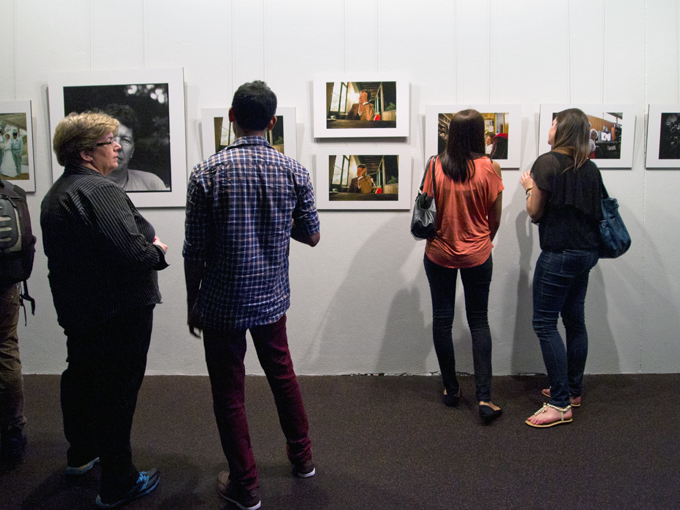
Heather Faulkner’s exhibition A Matter of Time
All exhibition photographs © Heather Faulkner 2013.
Images of the exhibition installation and text by Doug Spowart .

This work is licensed under a Creative Commons Attribution-NonCommercial-NoDerivs 3.0 Unported License.
FRENZIED A.I.R. ‘PoPuP’ Exhibition @ Brisbane’s GALLERY FRENZY
We are now in Brisbane participating in an Artist in Residence @ Foto Frenzy in Coorparoo.
On Wednesday evening we presented an artist’s talk about our previous residencies and our approach to ‘Place Projects’. The event was attended by around 40 photographers, artists and students.
The exhibition will be on show on Easter Monday April 1st and Tuesday 2nd of April – We will be in attendance at the gallery between 11.00 am and 4.00 pm on those days.
GALLERY FRENZY is in the Foto Frenzy Photography Centre
Unit 3/429 Old Cleveland Rd, Coorparoo QLD 4151
We are also presenting a series of workshops @ Foto Frenzy–for details visit the website WWW.WOTWEDO.COM.
FRENzied A.I.R. Poster

Ian Poole, a Director of Foto Frenzy, opens the exhibition.
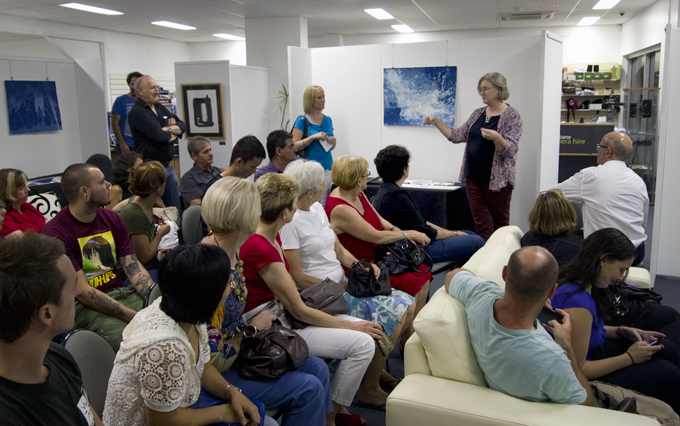
Vicky talking about her work

Selfie with Ian Poole
.
SOME OF THE WORK ON SHOW …
The exhibition features a selection of Camera Obscura works, Projections, cyanotypes and artists’ book and photobook works.

CarCamera concertina book
.
PLAY A VIDEO OF SOME OF THE CARCAMERA WORK

The ‘Hitting the Skids’ flipbook
.
PLAY A VIDEO OF THE FLIPBOOK
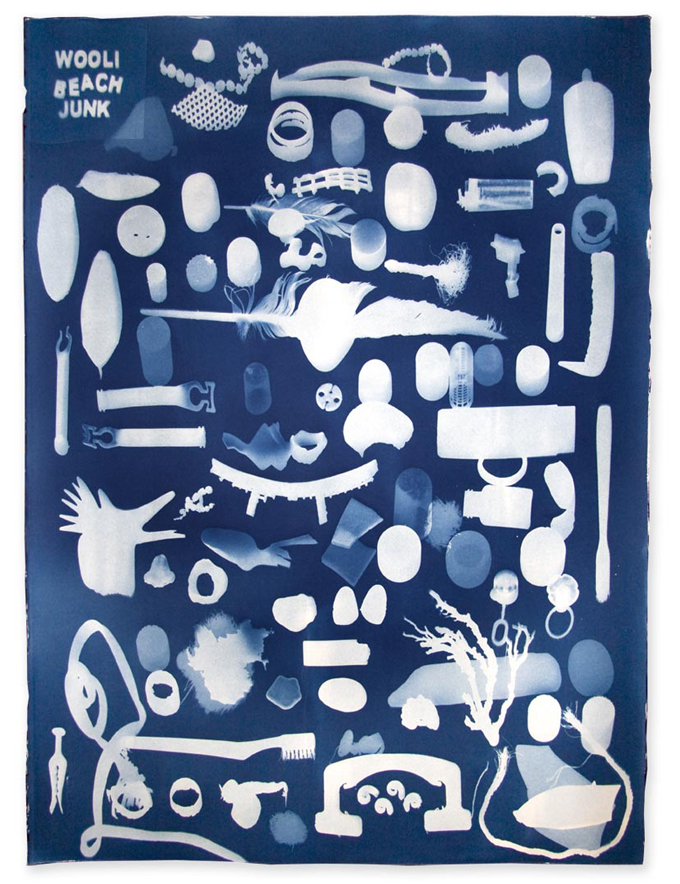
‘A cyanotype by Doug Spowart ‘Wooli Beach Junk’
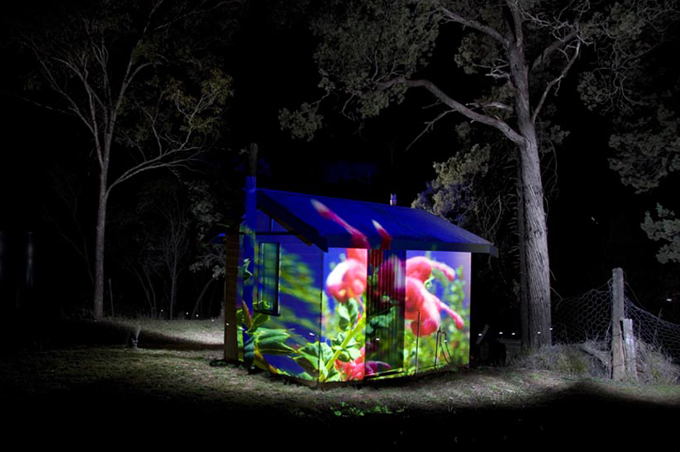
Projection – Myall Park Botanic Gardens
.
This work is licensed under a Creative Commons Attribution-NonCommercial-NoDerivs 3.0 Unported License.
.
.
CODEX 9: ARTISTS’ BOOK DISCUSSION MEETING
Queensland, it seems, is the place to be if you are interested in artists’ books (ABs). Queenslanders have one of the countries most significant collection of artists’ books in the State Library of Queensland, another significant private collection held by Noreen Grahame, herself a major contributor to the AB in this country. Other collections and events coordinated by Artspace Mackay including the Focus on Artists’ Books Forum and Libris Awards. There are also major practitioners of the art living and working in Queensland including Katherine Nix, Adele Outteridge, Wim de Vos, Ron McBurnie, Stephen Spurrier, Helen Malone, Jack Oudyn, Judy Barrass, and many more.

CODEX Event graphic
In this fertile space for ABs a small band of interested practitioners recently met to discuss the idea of forming a special interest group dedicated to the discipline. The invitation came as an email under the auspices of a CODEX 9 event with the following statement:
books by artists / artists books
printmaking, letterpress, papermaking and more
artists interested in making books are invited to
join an Impress Printmakers discussion group
located in Brisbane to foster and promote
contemporary artists book practice
Meeting on level 4 of the State Library of Queensland the 10 attendees represented a broad range of artists many of whom have had significant activity within the AB discipline, some had experiences of working as teachers using the book as a learning tool, some had academic links to ABs apart from their practice of making books, all had a definite interest in the discipline and wanted to engage in the idea of the discussion group as proposed in the invitation.
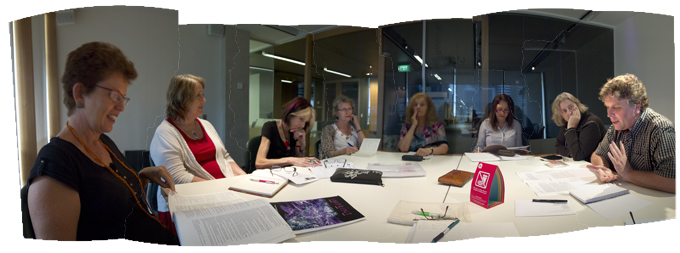
CODEX Event + Impress Printmakers AB discussion meeting
During the meeting many topics were raised including:
- The dogged question of ‘what is an artist’ book?
- What is not an artists’ book?
- Where does the apostrophe go in the term artists book and why does it move
- The Duchampian view of the ‘found object’ as art and his often cited idea that ‘it’s art because I say it is, and I’m an artist’
- If it has a colophon then it’s an AB(?)
- Scrapbooks as AB and the silent ‘s’ in the term scrapbook
- Ideas of sharing knowledge about the gamut of the discipline
One participant presented a polemic to the group, proposing that a freestanding 3D object on the table before us could be an AB – how would we know? The object was a folded “No food or drink allowed” SLQ sign. Discussion ended and reinforced the group’s interest in being challenged, as through such knowledge and understanding emerges.
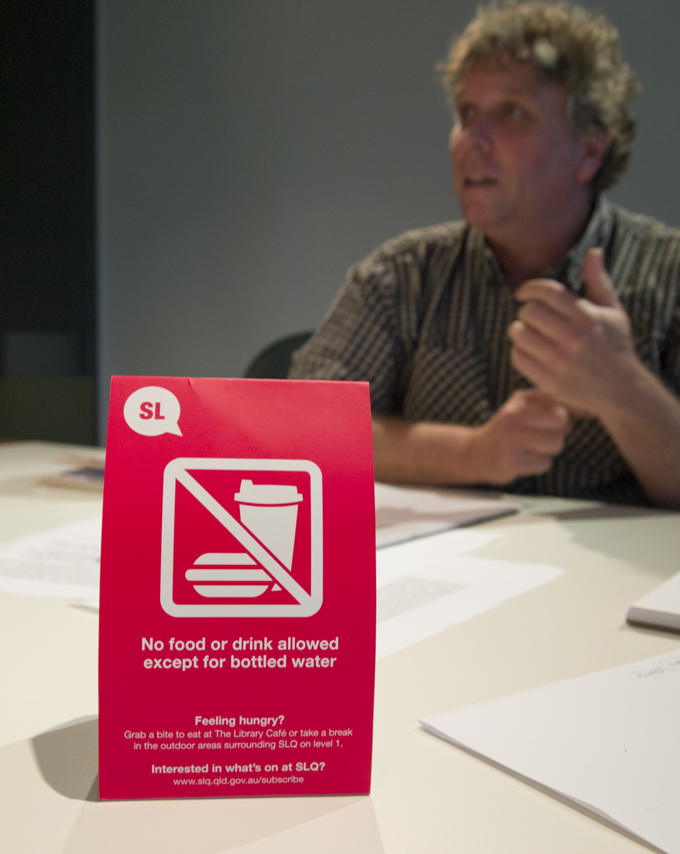
a polemic for an artists book
Other structural matters relating to the group’s future activities, meeting schedule, email and communications methods were discussed. Some requested a degree of anonymity at this time. It was noted that the SLQ will be hosting the next Siganto seminar with the topic being the trouble with artists’ books. It was agreed that it will be a ‘must attend’ event.
The meeting concluded in a convivial mood with most attendees going for a coffee, and we guess, some more conversations about the idea of the artists book …
.
Doug and Victoria
.
This work is licensed under a Creative Commons Attribution-NonCommercial-NoDerivs 3.0 Unported License.
GETTING iPAD’ed’ for the future of education
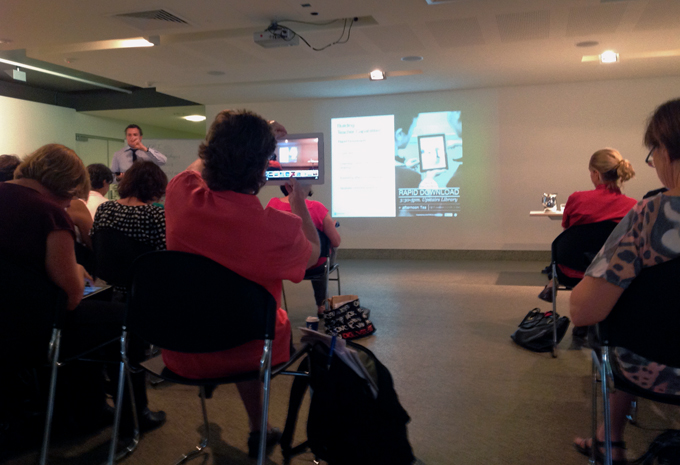
Over the last two weeks we have attended free Apple iPad lectures and demonstrations at the State Library of Queensland. Offered as part of their Digital Skills workshops the SLQ run them in partnership with presenters from the Apple Distinguished Educators program.
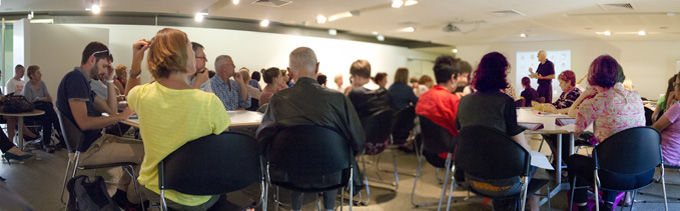
Attending the first session of the SLQ Digital Skills workshop, February 20, 2013 …Photo: Doug Spowart
Whilst I’ve been around classrooms in the higher education area for most of my life, I now see an edu-game changing revolution emerging, based on opportunities provided by emergent digital technologies–most significantly the Apple iPad. Once we sat in front of desktop screens and towers enslaved by the size and weight of the technology. This scenario morphed into a mini, almost-mobile laptop phase where function and use usually mimicked its larger desktop brother. Now small portable tablets, in particular iPads, are replacing the computer behemoths of the past, and seem to be filling gaps in technology, social and human behaviour, centred on education.
It’s not just the iPad that’s made this possible, as it is merely the machine that acts a stage for the action. Everything about accessibility and functionality with the iPad ultimately comes down to apps. While we are familiar with conventional computer software and the near monopoly on applications for purpose, and their attached expense, apps are often free or modestly priced from $2~$10. And there are literally 1,000s and 1,000s of them, essentially an app for whatever you may want to do. This is why the iPad has such an intoxicating effect in the education interface of student and, perhaps also, those who teach.

There are other considerations. The realm of education is essentially a place of youth, they want to subvert existing paradigms and most importantly they want to play games. The now ubiquitous iPad has transformed the learning space from chalk ‘n’ talk, and cursor ‘n’ mouse, into a gamified experience. Gamification, as Wikipaedia suggests, ‘is the use of game-thinking and game mechanics in a non-game context in order to engage users and solve problems.’ The iPad provides a rich ‘game-like’ experience for users and much like a Trojan horse, it acts as the ‘hidden’ carrier of a teaching strategy for knowledge, skill acquisition, problem solving, creative expression and communication. Finally we teachers have found out that we can let kids have fun in the classroom.
The SLQ Digital Skills workshops and the presentations by the Apple Distinguished Educators have for me clarified this concept. The edu-evangelistic approach of the presenters and their vision for the future, has inspired me to get on board the iPad education facilitated experience, for both my students and I – we ‘wanna have fun’ …
Dr Doug Spowart
.
More information of upcoming sessions:
SLQ’s Digital Skills workshop series is presented in partnership with Apple Distinguished Educators.
.
This work is licensed under a Creative Commons Attribution-NonCommercial-NoDerivs 3.0 Unported License.
GIRRAWEEN National Park in the rain
Or: When the Bureau of Meteorology says it ‘might’ rain it probably will!!
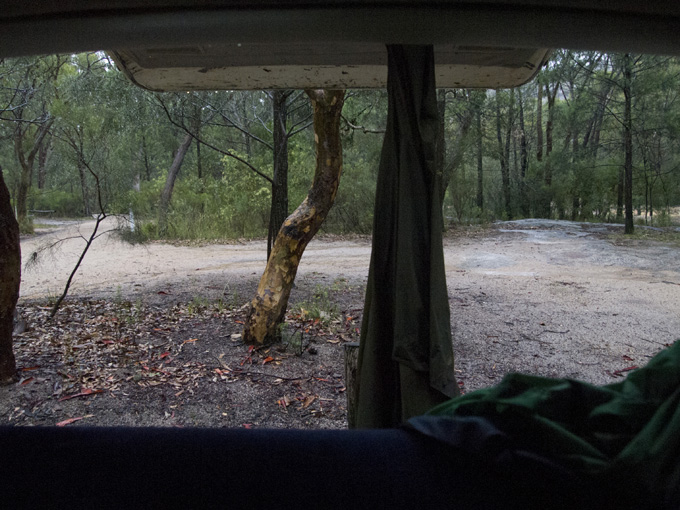
Girraween in the rain – Rear view from the Tarago
.
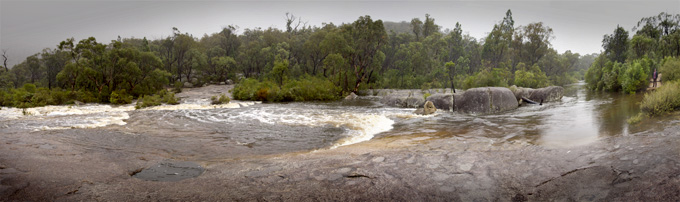
Bald Rock Creek in minor flood the next morning
.
Camping in the rain at Girraween
.
We shouldn’t have – but – we did . . .
We were celebrating our sabbatical
Girraween our place for such rituals
So we put the tent up, set up the camp and fire
And settled in for a quiet night in the bush.
A couple of raindrops signaled what was to come.
As it gradually increased to a steady drizzle
We retreated to the car.
Our Tarago has sheltered and transported us for over 550,000kms
Through droughted landscapes of searing heat and bull dust
In driving rain and along flooded roadsides
Across vast and lonely country roads
The car is our inspiration, our ‘think-tank’ even our camera.
It has dodged kangaroos by travelling at snails pace
Avoided destination fixated drivers and their death defying maneuvers
Now again we are avoiding the soaking rain in the warm and comfort of this legendary vehicle
From the car we planned and prepared our evening meal
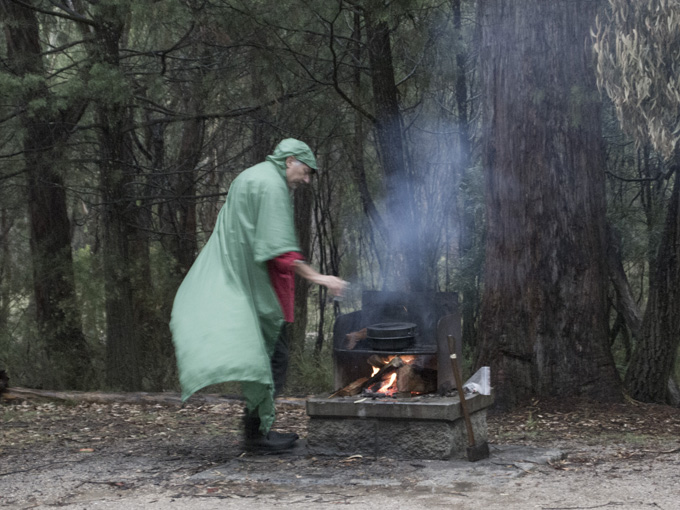
Doug tends the fire in the rain in preparation for the cooking of a roast chicken dinner in a Bedourie Oven
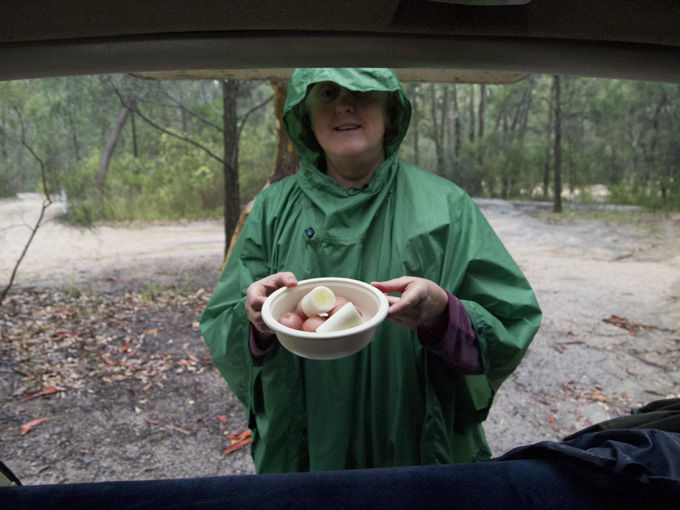
Vicky prepares the spuds and leeks at the rear of the Tarago
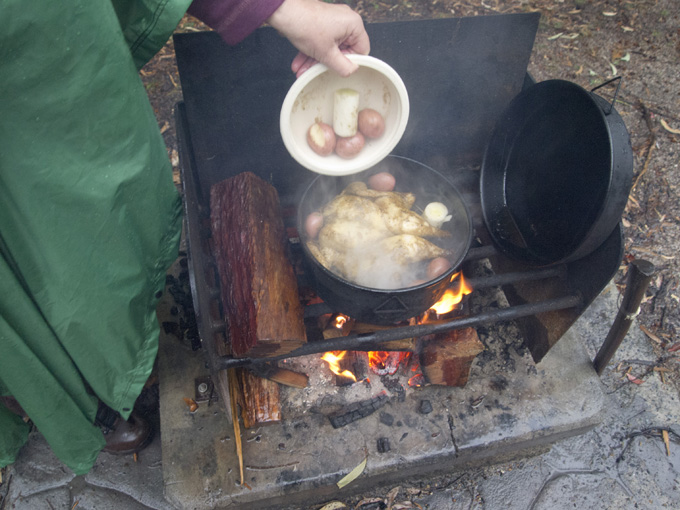
Adding the spuds and leeks to the chicken in the Bedourie Oven – Yep! It’s raining…
Doug started the fire in the rain
A job he has done more than once
And we put our chicken in the Bedourie oven to slowly roast
Added leeks and potatoes a little later
We watched the fire cook from the car
The rain still steadily increasing
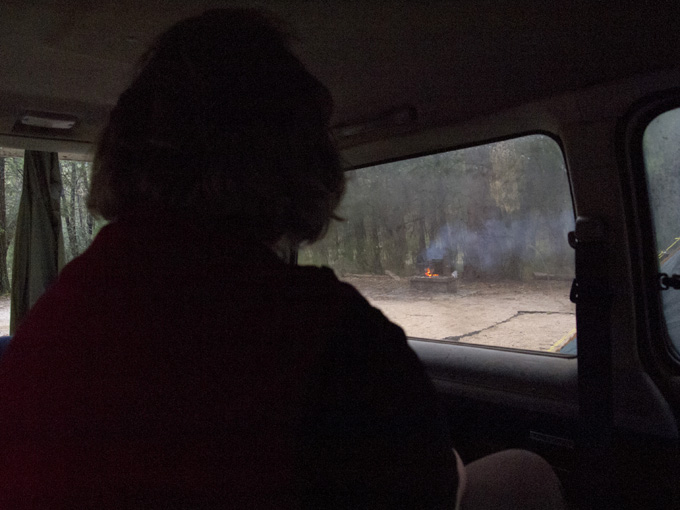
Watching the cooking from the driest space – the Tarago
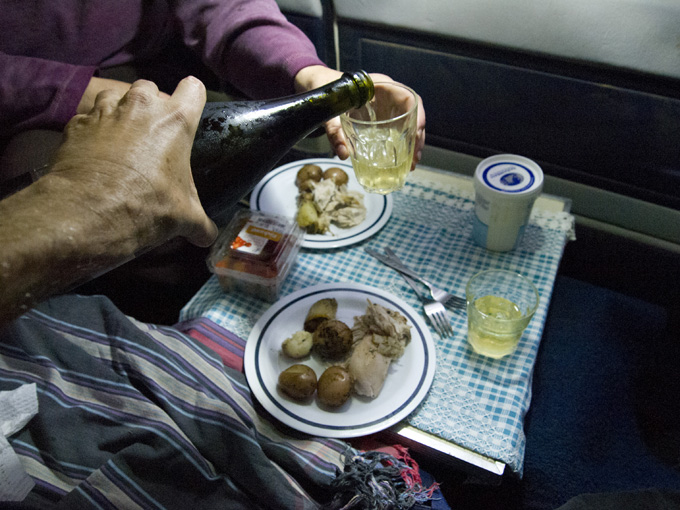
A camper’s roast dinner prepared and eaten in the Tarago
.
Finally our dinner was ready
A bottle of celebratory Brown Brothers Patricia
In our dry and warm car
Life is pretty good …
.
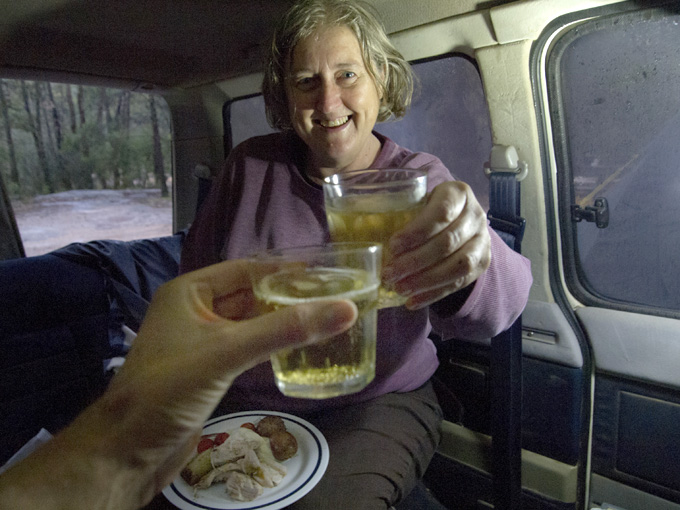
We’re excited, a toast (Brown Brothers Bubbly) to the roast dinner – cooked in the rain ….
.
Words: Victoria Cooper ….≥≥………Images: Doug Spowart
.
.
The regional gallery that advertises on highway billboards
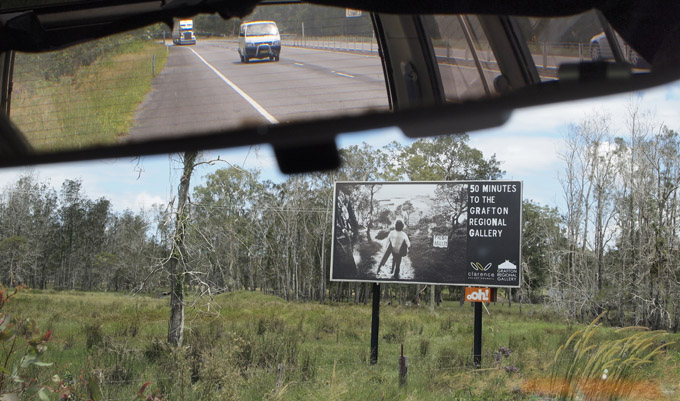
Grafton Art Gallery – Highway Billboard Photo: Doug Spowart
The concept of cultural tourism is often cited as the justification for local council support of regional arts infrastructure that may include, cultural policy, gallery facility and staffing, education or interpretive or developmental officers, local arts workers, regional grant administration and auspicing. What interests us as we travel around the country is the quality of regional arts practice and the entrepreneurial activities that are taking place that tend to be lost in the white noise of the big city hype of blockbusters and art heroes.
The Grafton Regional Gallery is well known for its Jacaranda trees and the Jacaranda Acquisitive Drawing Prize. But there are other things, for example how many regional galleries participate in highway billboard advertising? —GRG does. Another aspect is the diversity of shows presented include curated exhibitions from works in their collection, shows by local artists and travelling exhibitions—recently the Archibald Prize,.
On this occasion two exhibitions attracted our interest, The Art of Sound, a GRG collaboration with the National Film and Sound Archive and Garlugun.gi by local ceramicist Bevan Skinner.
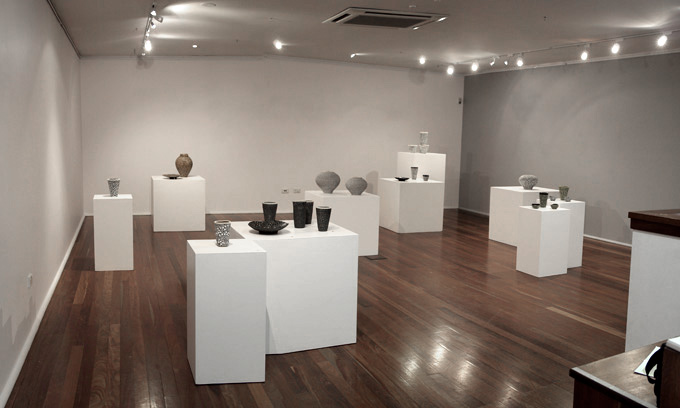
Bevan Skinner’s Garlugun.gi
Skinner’s work is informed by his indigenous heritage. A Gumbaygan man he states in the detailed catalogue accompanying the show that: ‘my work always revolves around my culture, my identity and my spirit.’ While any artist could claim the same provenance for their art Skinner’s work is a deliberate and profound blending of the earth of his country (clays, oxides and pigments), and culture (mark making, tradition and storytelling). While the dot technique of the desert artists is apparent in this work Skinner’s use of the motif is to represent stars in the sky and the meaningfulness that they have for him as a way to connect and remember loved ones passed away and now appearing as stars in the night sky. These works are part of a larger series Winda-bin Waluurrgundi – Stars of The Valley.
Bevan Skinner’s work is presented in a multi-plinthed exhibition space with groups of pots and plates resonating. Some time ago I remember a comment by David Hockney in which he said something around the idea that the time the artist takes in making a work is matched by how it will engage with the viewer. There is something of this in Skinner’s work, for me each piece is a vessel that holds in the artist’s communiqué and the viewer’s gaze activates the message.
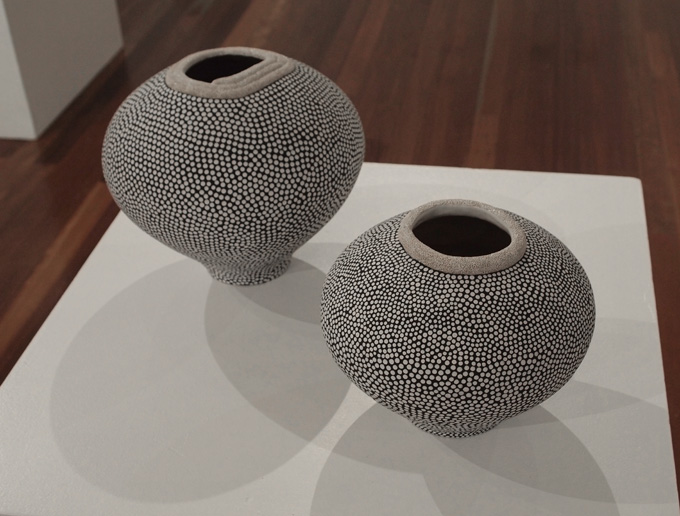
Winda-bin Waluurrgundi – Stars of The Valley Series 1 2008 (foreground)
One side issue emerging from Bevan Skinner’s biography is Associate Diploma in Ceramics training he completed at TAFE in the early 1990s with art teachers who assisted with his development as an artist. I can only exhibit trepidation about the future of artists like Skinner who early in their career ‘found themselves’ through TAFE, now that in NSW art training has been dropped from all TAFE colleges.
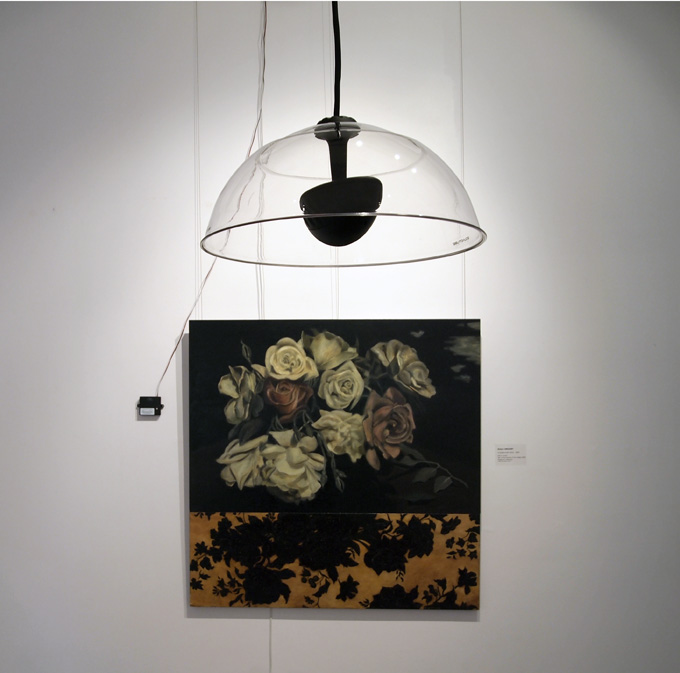
Robyn Sweaney A passionate affair (2003)+ Country Garden audio
The Art of Sound offers a new way of presenting visual art in a gallery space. The concept is to pair works from the GAG collection with audio material supplied from the National Film and Sound Archive so that the viewer of an artwork has a sight and sound experience of the art. On entering the gallery space the visitor is immediately met with the usual artworks on the wall but something is different—each has some kind of parabolic Perspex dish suspended above or headphones nearby. These sonic devices deliver, in a fairly localised way, music or audio to compliment the work. Composer and sound/artist designer James Hurley undertook the installation of the audio apparatus at GAG.
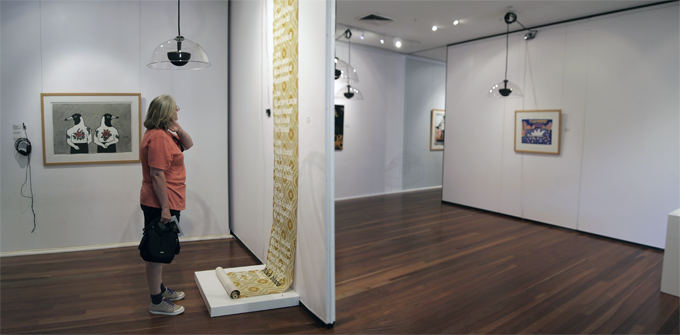
The Art of Sound installation
Gallery Director Jude McBean does not provide answers in her didactic panel statement but rather asks some provocative questions:
‘I wonder how long the effect of linking a particular sound with an artwork will last and how much will the sound determine or change perceptions of the work. These questions also apply to the linking of an artwork to a sound. How long will the participant recall the artwork when hearing that sound outside of the gallery and will the artwork determine or change the experience of the sound or not? The answers are eagerly anticipated over the duration of the project and in later years.’
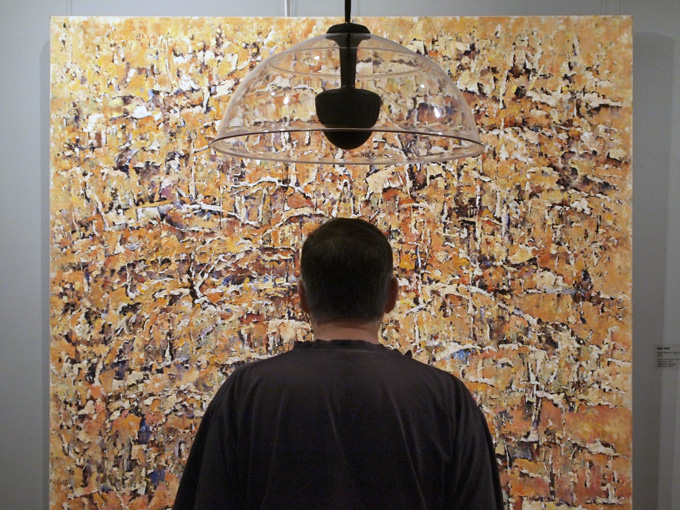
Mike Riley Stock Reserve near Grafton (2010) + AMATA audio PHOTO: Victoria Cooper
What I found was that sometimes the audio triggered personal recollections of time and place and that these could be used as a kind of reference for the visual experience of the art. Music, for example, has a broad dissemination across a generation. Take for example the ‘Happy Little Vegemites’ 1954 advertisement. However the artist’s work is very limited in its distribution so the audio conjures up a familiar personal response through which the image is viewed for its concurrency. On other occasions like with Mike Riley’s Stock Reserve near Grafton (2010) and indigenous folk music by AMATA (2007) where the piece of music or audio was unknown as was the artwork a new experience was created. A profound work for me was the Judy Cassab, Mothers Love (2004), J W Lindt pair of 1870s photographs of local Aboriginal people with children synergised by the traditional Indigenous singing by BUMA (2008) a song about crying babies who will go to sleep when fed. Could it be that mine was the predictable response that the curators and their pairing of visual and audio stimulus wished to create?
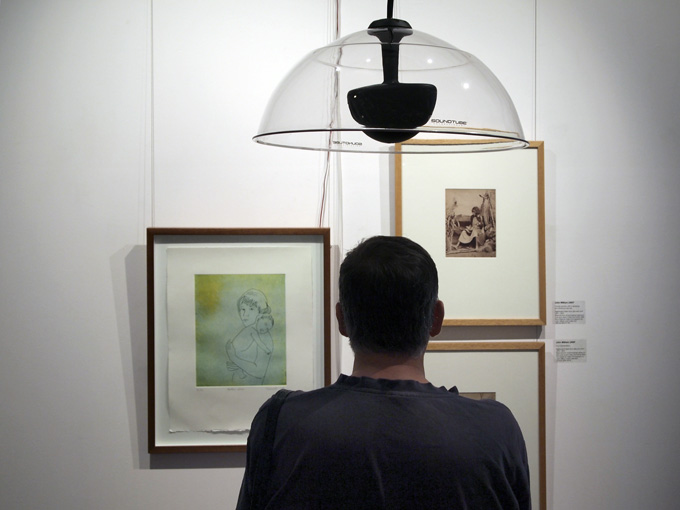
Judy Cassab Mothers Love (2004), JW Lindt photographs (1870s)+BUMA audio PHOTO: Victoria Cooper
Another, perhaps subversive experiment that I undertook in the space was to attempt to activate as many sound sources as possible and listen to the montage of sounds whilst moving about the artworks—somehow it created an experience of life itself …
Thank you to the GAG and to other regional galleries around the country who through ingenuity, creativity, entrepreneurship and cunning do as much for their communities as they do for the rest of the country in presenting contemporary art.
.
Dr Doug Spowart
Photos by Doug and Victoria Cooper
WAITING, Waiting, waiting for the examiner’s report on PhD thesis
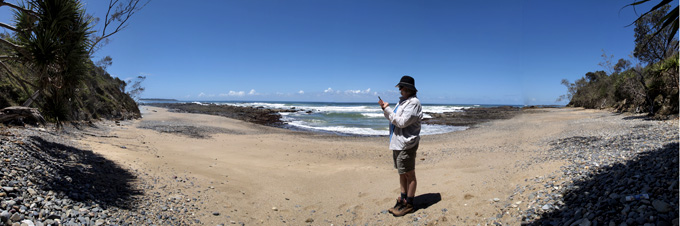
Checking to see if the examiners have gotten back…
The thesis (exegesis) was submitted in late November. I was thinking that the examiners would probably have gone on Christmas break before the taking the time to review the thesis so I wasn’t expecting anything in January. By Early February I began to occasionally check my university email for any news … With the iPhone I could even do that at the beach.
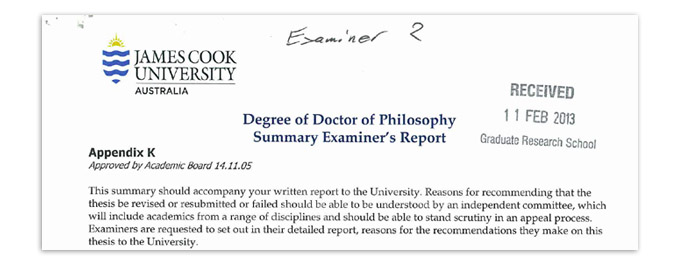
Monday 11, 2013: The email and report arrived – One examiner gave the thesis the ‘all clear’. The other examiner required review of some aspects of the thesis. So, the final hurdle is some corrections and then some more university bureaucratic documentation and I’m done!!! Dr Stephen Naylor my supervisor is excited as well…
Victoria Cooper
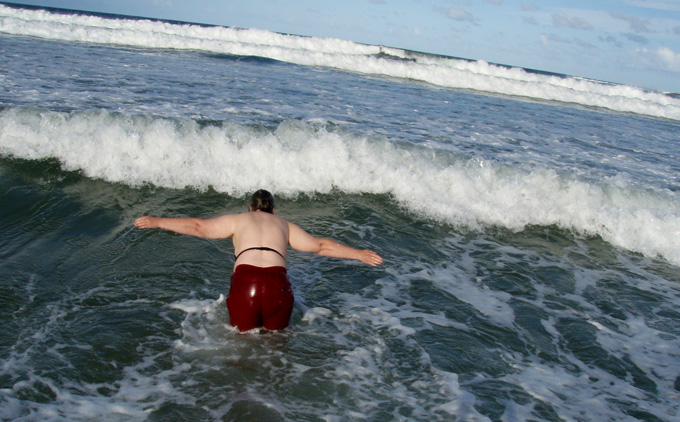
diving into the final stages of a PhD
WEIRD SILENCE in Toowoomba: TC Oswald aftermath
MONDAY JANUARY 28 2013, an eerie silence has fallen over Toowoomba. The howling wind, driving rain and the bumping of things on the roof and around the place has gone after being ever present for three days. I strain to hear something—ah! There’s a birdcall or two (have not heard them for days), a car drives down the street … and then there’s nothing again.
The s-s-plash emptying the rain gauge is a very benign sound, and then I realise what the difference is … there is none of the constant noise of the B-Double trucks, the 8,000 of them that grind through Toowoomba every day. Every highway in-or-out of town is closed.
I hear more birds and sun is coming out—there is something of a Toowoomba experience of the past, a kind of déjà vu, perhaps even nostalgia for a time before trucks took over this town.
From Doug
UPDATE: January 29 – the ‘noise’ has started again…
.

Truck noise PHOTO: Victoria Cooper
OSWALD AFTERMATH: TOOWOOMBA – January 2013
Emptying the rain gauge for the third time since Friday – Another 120mm – I didn’t empty it on Sunday as the outside weather conditions were too nasty.
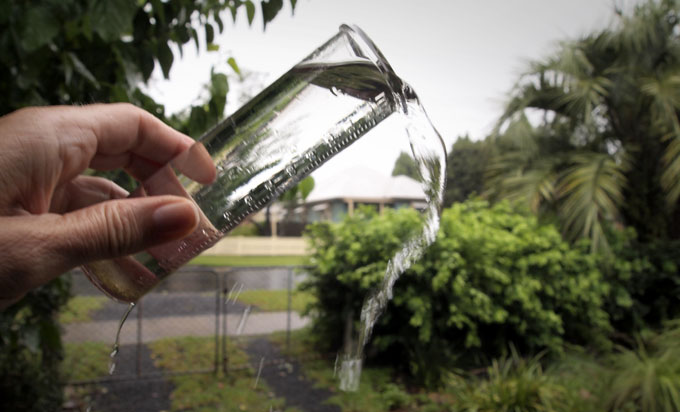
Tipping out the rain guage again PHOTO: Doug Spowart
We went out just now after being cooped up by the weather. Lots of bits of trees, occasional branches, eroded footpaths and water running everywhere. East Creek at the bottom of our street is fairly tame and seems to have contained itself throughout the deluge—nothing like January 10, 2011. (SEE the image below)
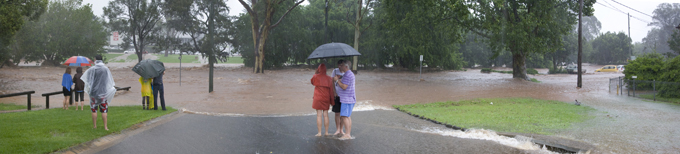
2011 FLOOD – Burns St Toowoomba PHOTO: Doug Spowart
Our thoughts are with friends, acquaintances and people who we don’t know at this time who are experiencing significant hardship as a result of ex-cyclone Oswald.
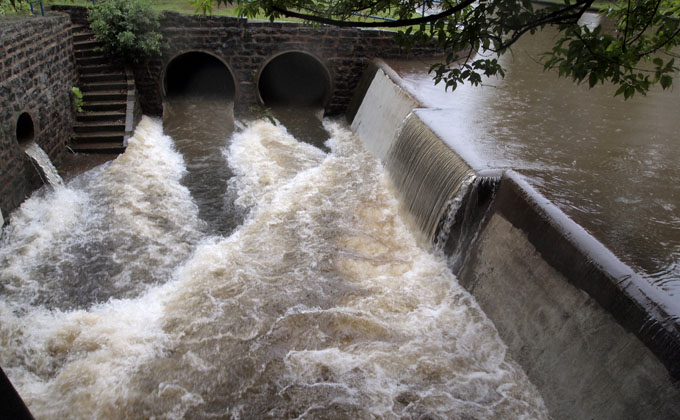
Drains East Creek near Margaret St, Toowoomba Photo: Doug Spowart
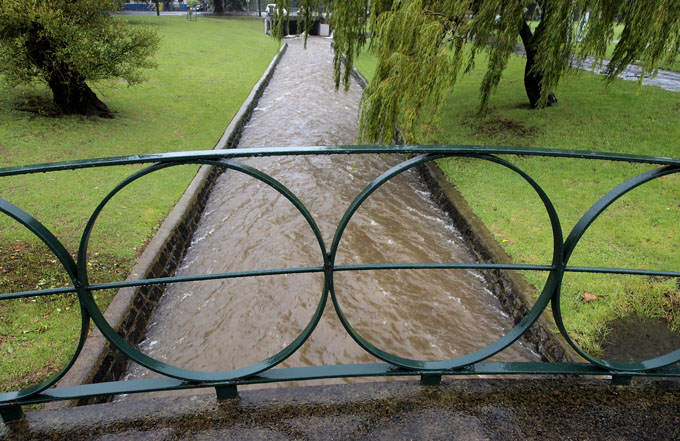
East Creek Toowoomba near Queens Park Photo: Doug Spowart
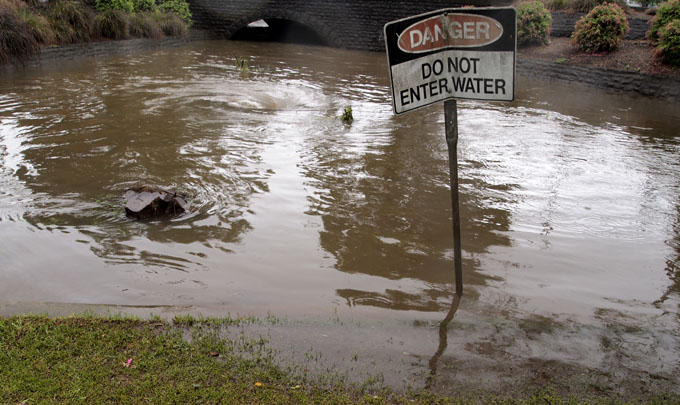
East Creek whirlpool near Herries St Toowoomba Photo: Doug Spowart
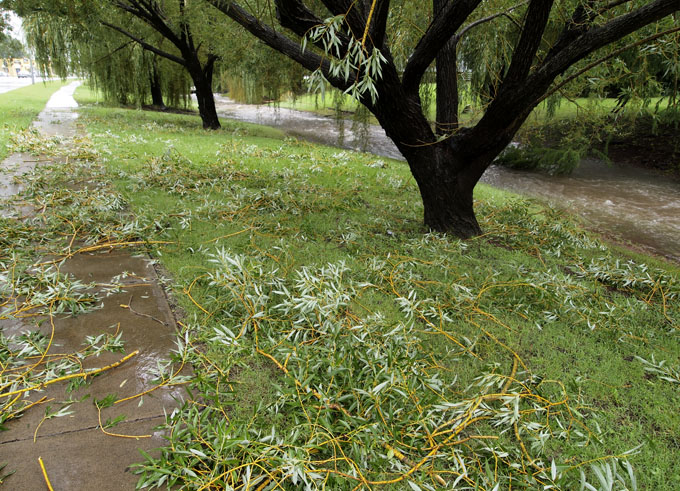
East Creek along Kitchener St Toowoomba Photo: Doug Spowart
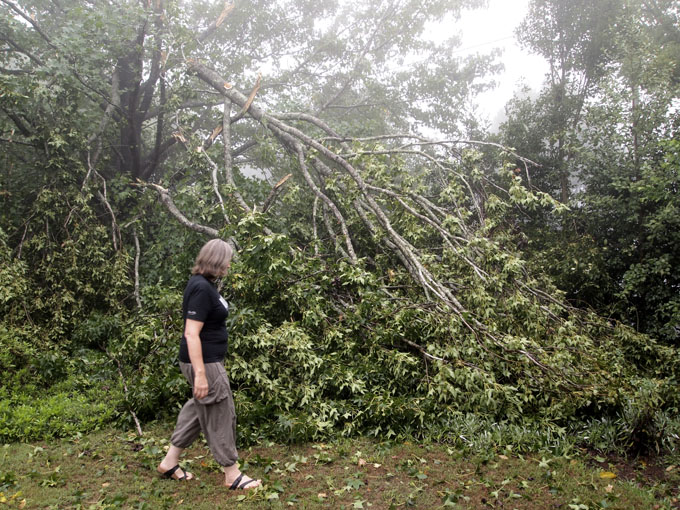
Fallen tree Margaret Street residence PHOTO: Doug Spowart
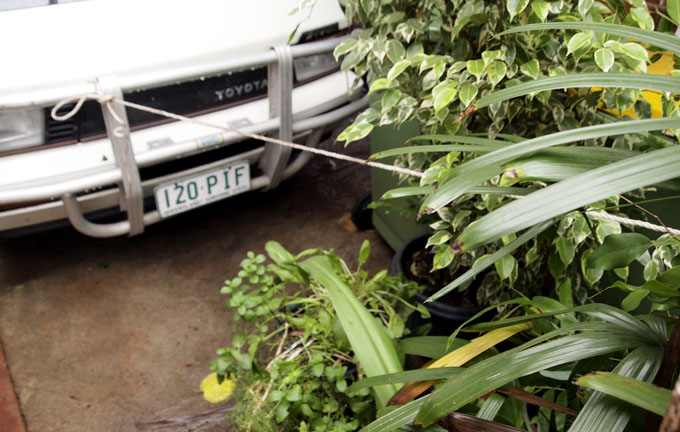
Tethered pot plants in the garage to stop them blowing away PHOTO: Doug Spowart
More stories Toowoomba Chronicle – Click HERE
Stay Safe ….
Doug + Vicky
WHIPPING UP A FOTO FRENZY
Dr Doug opens the FOTO FRENZY Photographic Centre in Brisbane
The much awaited reopening of the expanded FOTO FRENZY Photographic Centre in Coorparoo took place on Friday, January 18, 2013. Attended by a crowd of around 100 well-wishers the event heralded a new beginning for dilettantes of a wide range of photography interests including:
- photography workshops
- photographic gallery
- fine art printing, mounting and framing
- photographic darkroom hire
- studio hire
- one-on-one consultations

Mark photographs the Foto Frenzy Team PHOTO: Victoria Cooper
The FOTO FRENZY space is shared with BRISBANE CAMERA HIRE, specialist in providing a range of photographic gear and unusual accessories.
The Foto Frenzy team includes Brisbane photo identities Ian Poole, Cam Attree, Tony Holden and Darren Jew. All four are photographers and have specialist areas of activity from photography as art, to location and underwater photography, nude and glamour photography and photography as personal expression. Darren Jew is well known in photo workshop circles for the ‘Faces and Places’ workshop that he established with Jim McKitrick in the late 1980s.
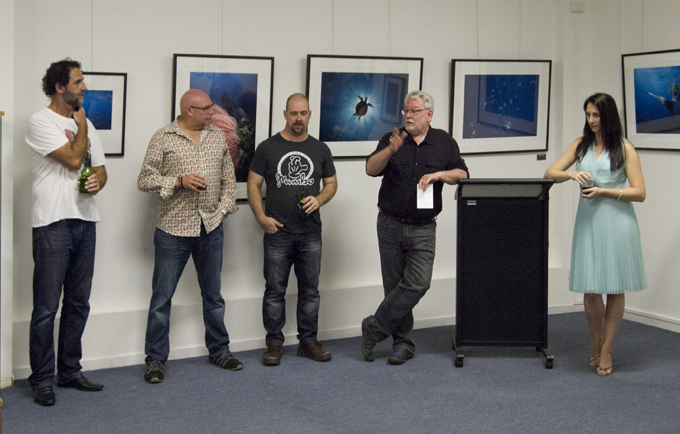
The team l-r Darren Jew, Tony Holden, Cam Attreee, Ian Poole and Susan BCH PHOTO: Victoria Cooper
The Foto Frenzy team have been together for twelve months in a modest facility just a short distance away from the new home. Now with the larger facility and the linkup with Susan & Jacob and Brisbane Camera Hire new and amazing opportunities for the business and the clients that they service are available.
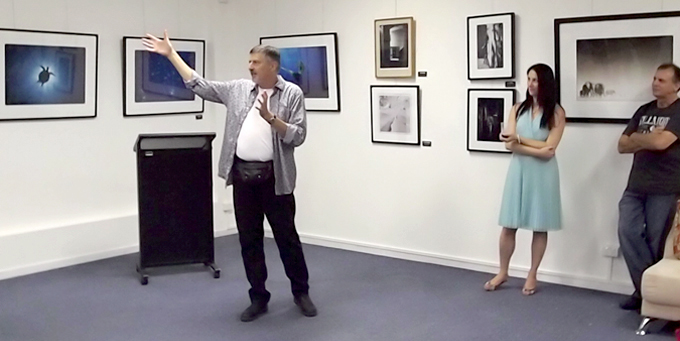
Doug Spowart opens Foto Frenzy PHOTO: Victoria Cooper
As someone with a history in photography that connects with most of the Foto Frenzy team, as well as being a former Director of the photo gallery and workshop—Imagery Gallery, (that operated in Brisbane from 1980-1995), I was asked to open the new Foto Frenzy Photographic Centre. Some of my comments in the opening speech were…
The other day I was made aware of a TIME magazine article in which the claim was made that 10% of all the photographs ever made in the over 170 year history of photography were made in 2012!! This statement is evidence that with digital photography, including the now ubiquitous mobile phone, means that anyone can take photographs—But does that mean that everyone IS a photographer? My opinion is no—Because there is something special in the blood of the photographer that enables them, or demands of them, that just seeing and snapping isn’t enough.
True photographers want to ‘craft’ and create images that are about significant visual communication. Sometimes powerful, sometimes sublime, sometimes nonsensical or humorous and sometimes, perhaps even bland and boring. We know of these kinds of photographs because they tell us about beauty in the world, of atrocity, of feast, famine and of love and the human condition. These images inspire us and drive us, perhaps even spur us on to be better photographers ourselves—and this is where we encounter the need for networking, training, nurturing support, guidance and technology support. This is where the Foto Frenzy suite of services will link with our lives.
I congratulate the Foto Frenzy team and Brisbane Camera Hire for their vision, entrepreneurship and financial commitment in establishing this photographic centre. And what I see are the great opportunities for those of us interested in being a part of what photography is, and where it is going—to have a place that will be a hub, or should I say, a frenzied hive of activity.
It is with great pleasure that I declare the Foto Frenzy centre open….
Ian Poole in his thank you advised the attendees that Cooper and Spowart were to be, in a couple of months, the Foto Frenzy’s first Artists in Residence.
SPECIAL NOTE: We will be conducting a range of workshops @ Foto Frenzy over the following months. The topics of our workshops and consultations will include aspects of our PhD research into photobooks, creative photography practice, narrative and story telling in the photo sequence and aspects of social media, in particular Linkedin, Blogs and YouTube. We will also be available for one-on-one project/concept development.
To let us know you would like to be advised of the workshops when they become available
Contact us <Greatdivide@a1.com.au>
.
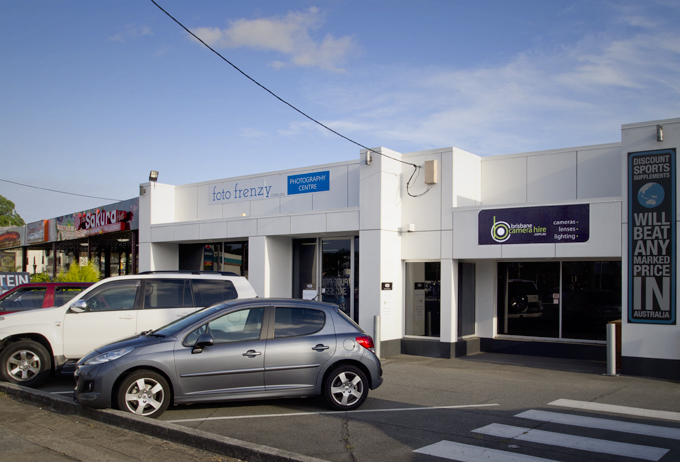
Foto Frenzy @ Corparoo, cnr Old Cleveland & Bennets Rds PHOTO: Doug Spowart

The Foto Frenzy Gallery PHOTO: Victoria Cooper
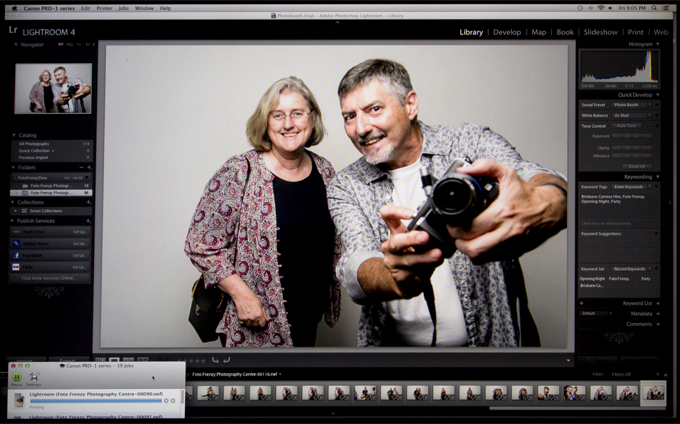
Doug Spowart and Victoria Cooper in the Foto Frenzy Photobooth
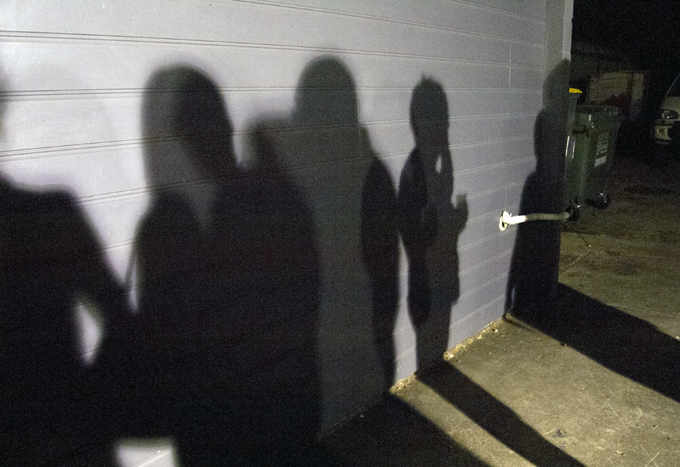
Foto Frenzy opening shadows PHOTO: Doug Spowart
Cheers Doug and Victoria

 wotwedid