Archive for the ‘Victoria Cooper’ Category
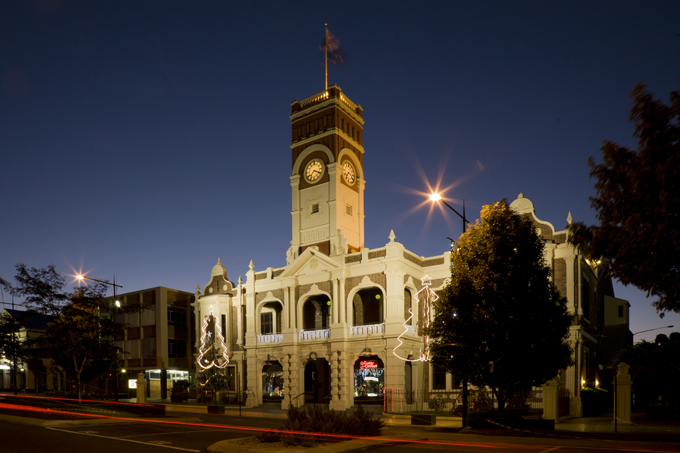
XMAS STREET NOCTURNE: A new site project
.
On the road and in the street
.
In past years after a day’s travelling doing fieldwork we usually aim for an overnight stay in a country town to rest for the night before attacking the road again. On arrival in the town we drive down the main street to inspect the available/affordable accommodation options. By nightfall we are usually ensconced in the motel room: organising our day’s imaging, catching up with emails, dinner and so on. The next day we move on . . .
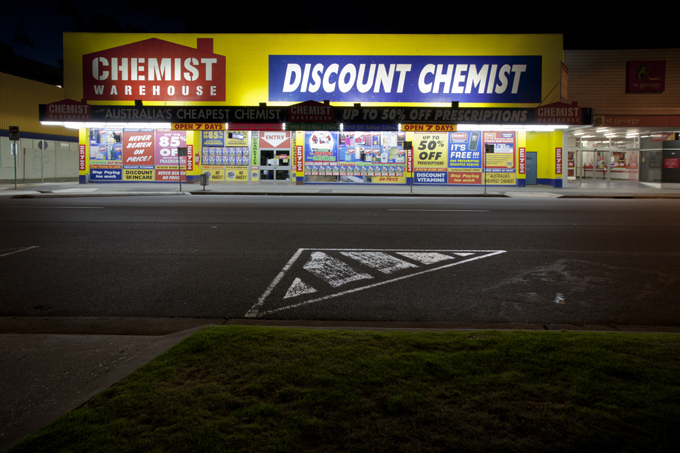
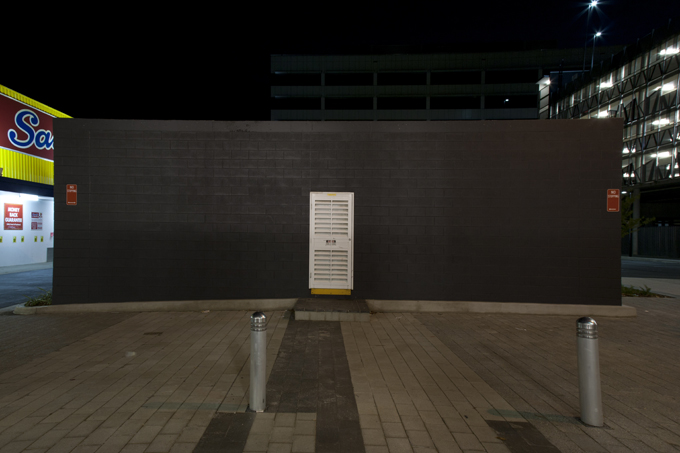
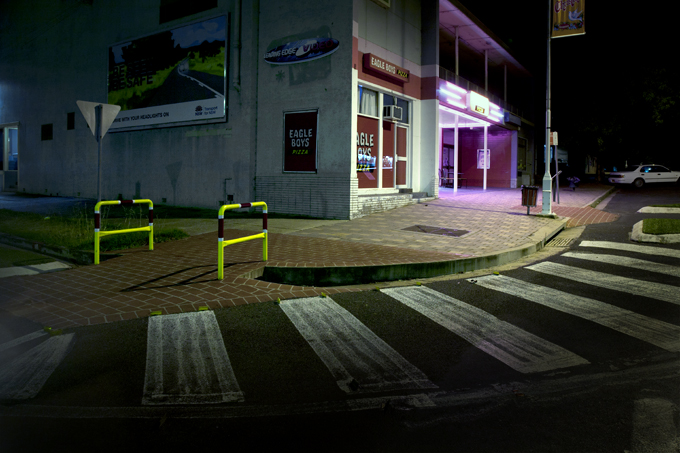
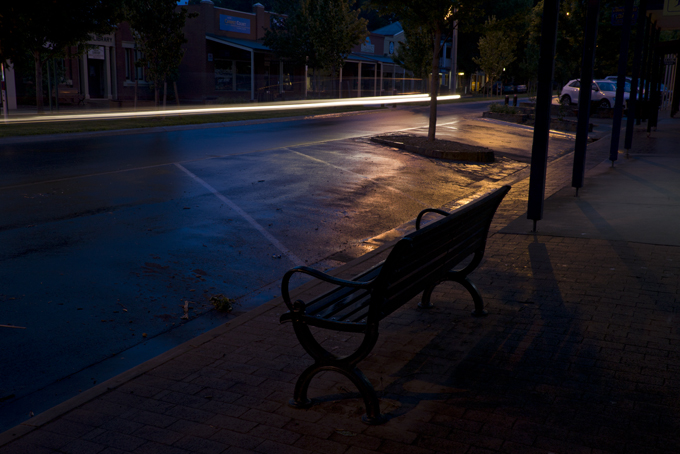
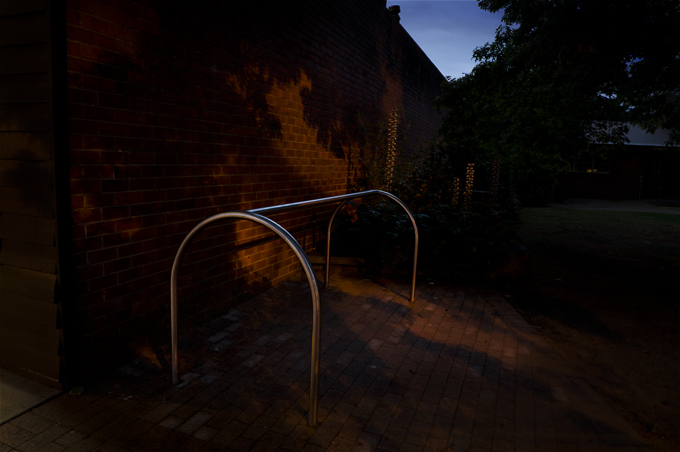
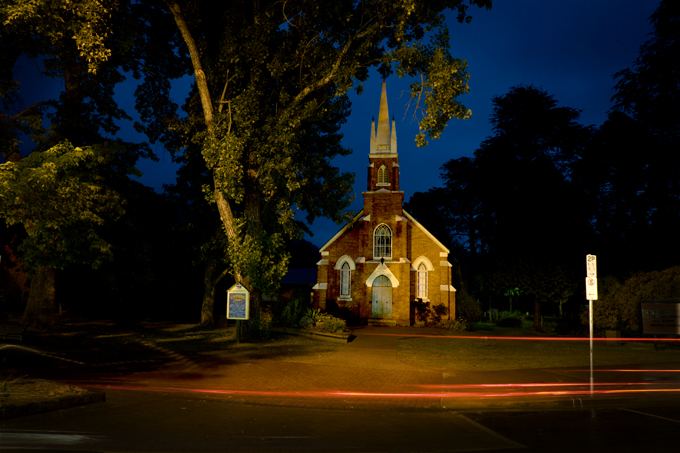
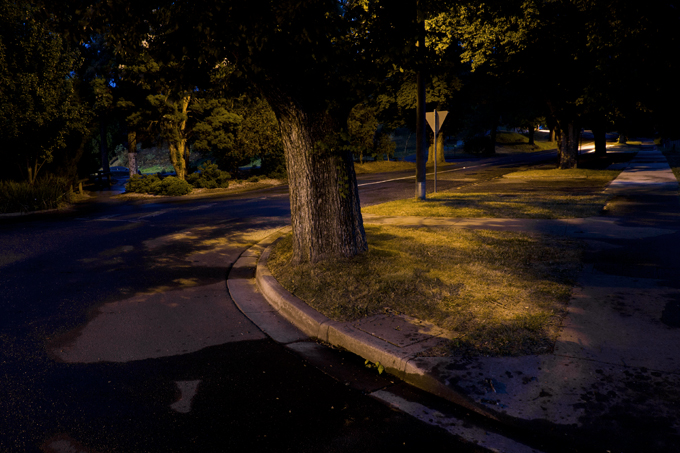
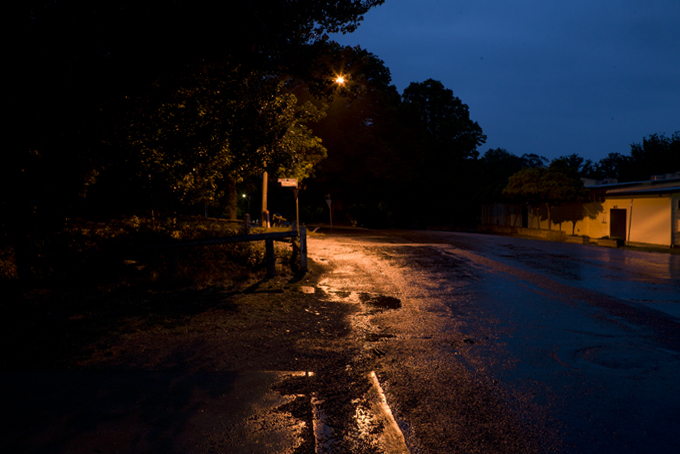
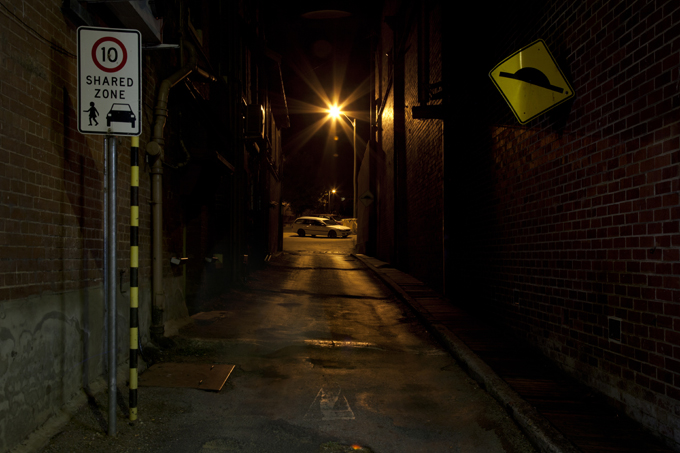
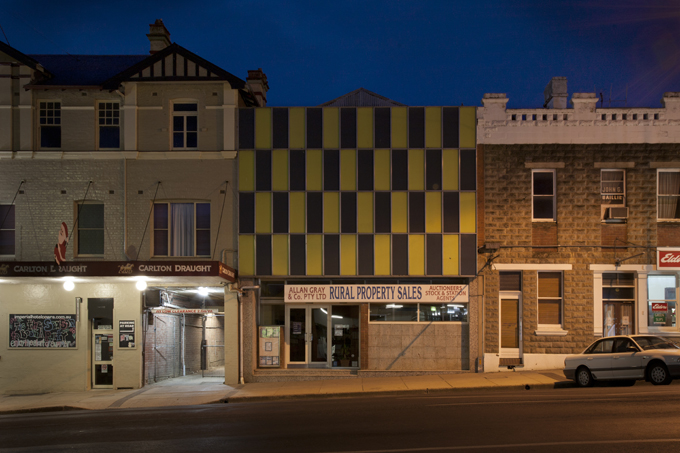
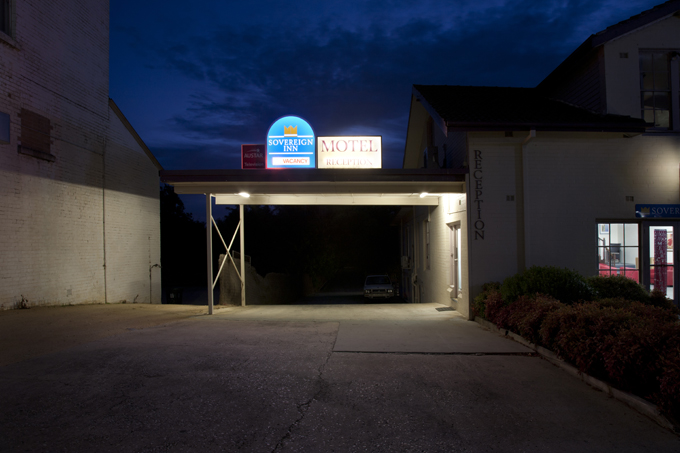
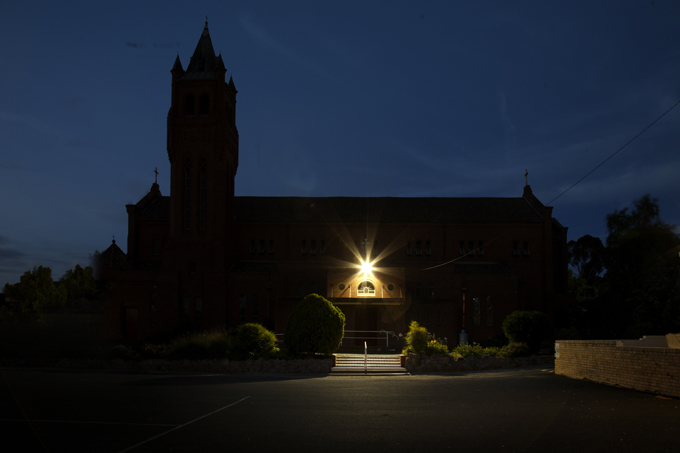
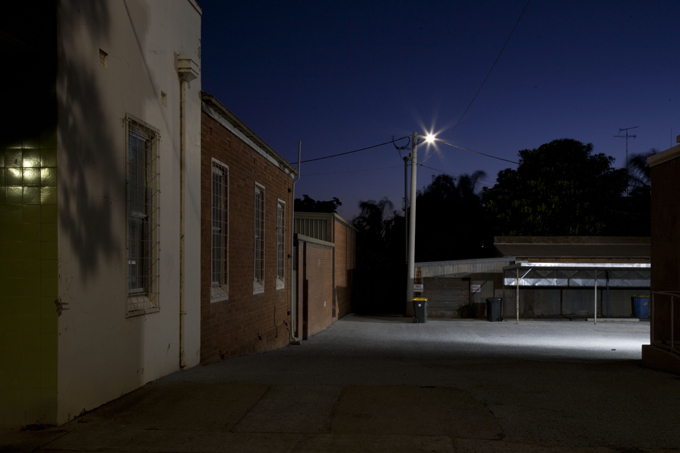
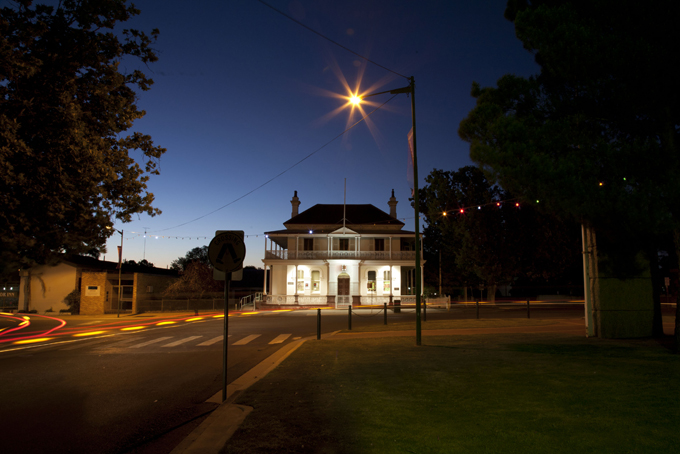
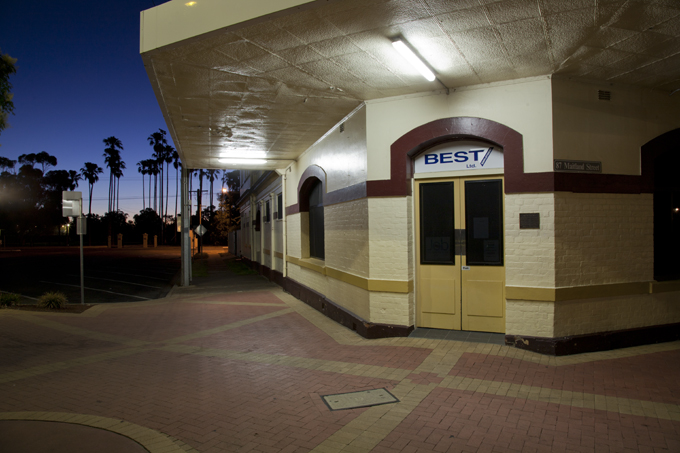
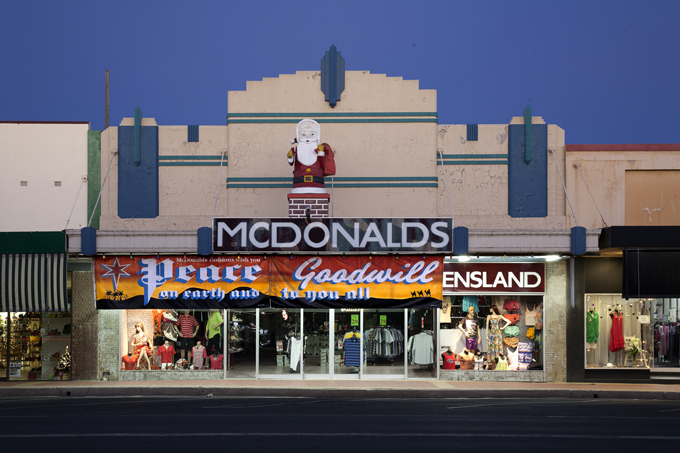
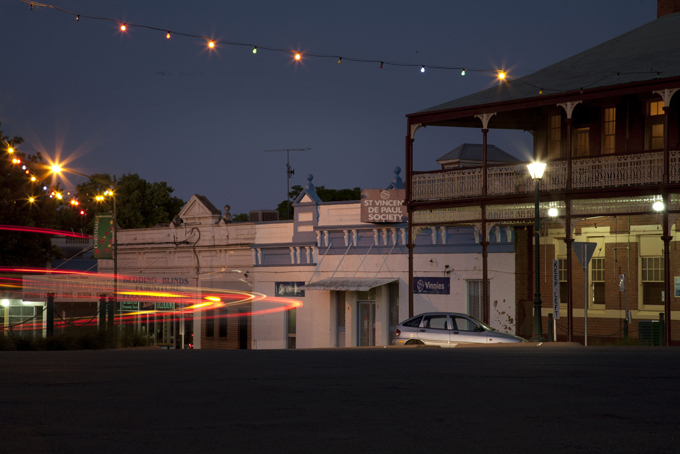
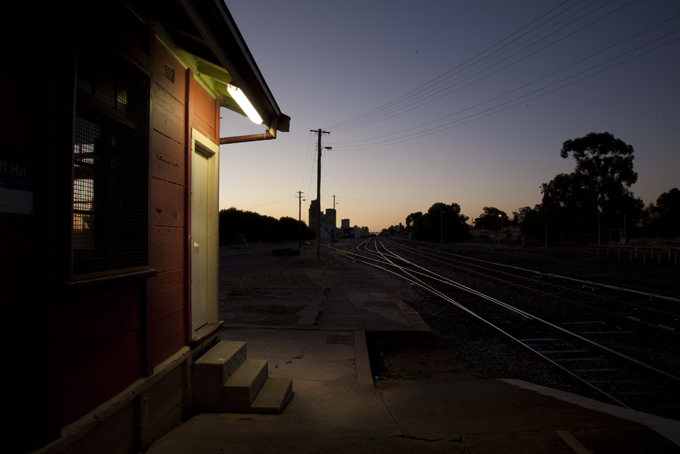
This year during our summer field trip, motivated by the results of our recent Wooli Nocturne Project, we decided to document at twilight an aspect of each town where we stayed. This meant arriving early so that we could walk down the main street before sunset. Our objective was to survey the site-specific arrangement of town’s Xmas display, (whether present or absent), and identify features that at dusk would also be artificially illuminated. Returning later we would shoot under the deep blue/magenta skies of the early evening and the night lights.
In this work we are not alone, as photographers across the history of the art have used this montage of artificial and natural light effects to document urban environments. The development of this work has been influenced over time by a sustained interest in artists like Edward Hopper and Jeffrey Smart, and the photographers Eugène Atget, Brassaï, William Eggleston, Joel Meyerowitz, Gregory Crewdson and Brian Brake. More recently in Australia, artists and photographers notably Bill Henson and Mark Kimber have also explored aspects of this genre.
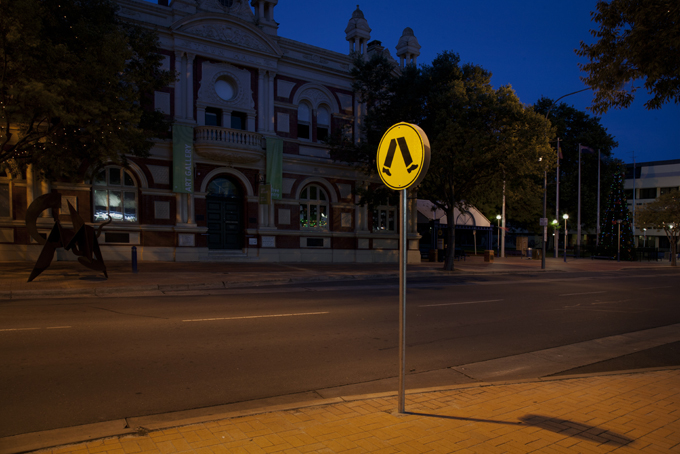
Recognising that the inherent nature of this transient light evokes the uncanny, an unseen presence or the interstitial filmic moment captured as a still is fundamental to our project. In this work the documentary photograph is not just a record of the idiosyncratic nature of each town’s main street and its Xmas light show as in these lighting conditions everyday objects are transformed from their daytime function. The prosaic nature of these towns, when photographed in the dusk light, becomes part of a found aesthetic: a site-specific monument to nocturnal light; a visual narrative of light, colour and form.
Xmas Street Nocturne: A site-specific project by Victoria Cooper + Doug Spowart
5 January 2013
.
Towns and cities imaged:
- Albury
- Bright
- Coonabarabran
- Cowra
- Narrabri
- Narrandera
- Toowoomba
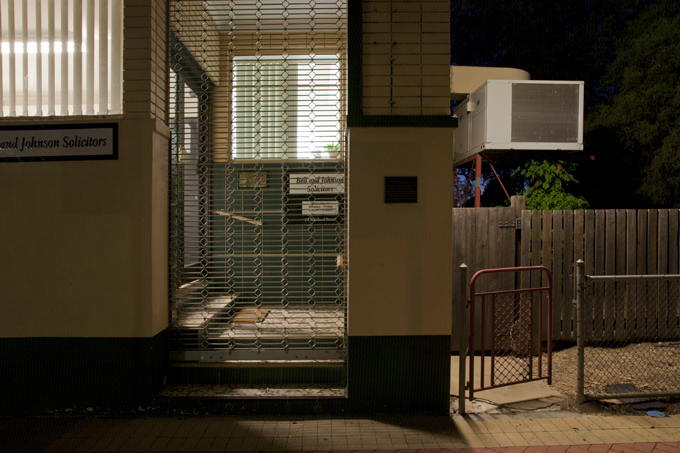
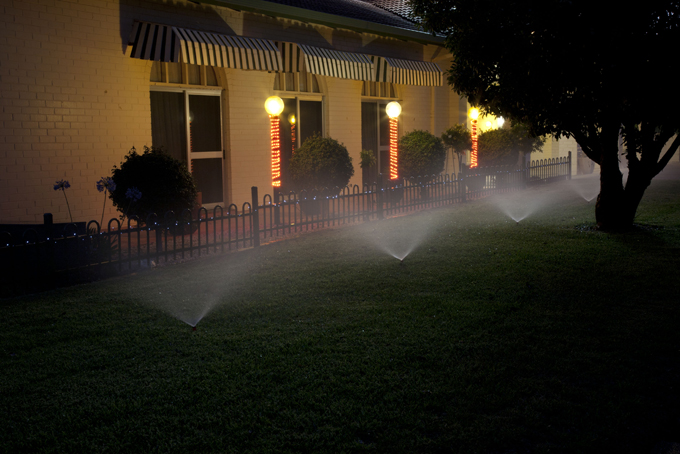
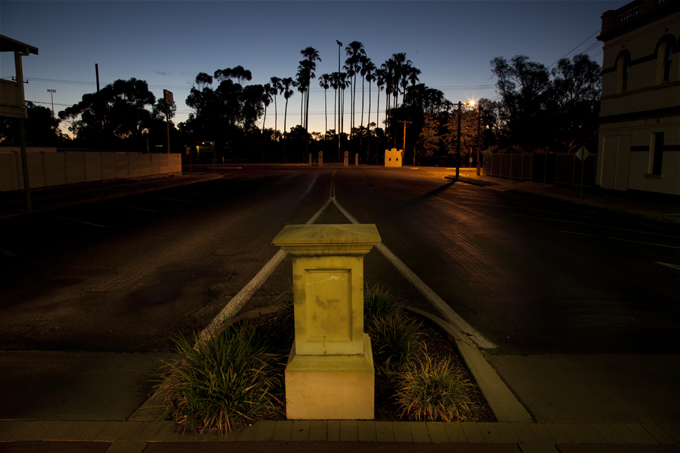
2013 SABBATICAL for Doug+Victoria: A ‘Leap of Faith’
A NEW YEARS MESSAGE FROM COOPER+SPOWART
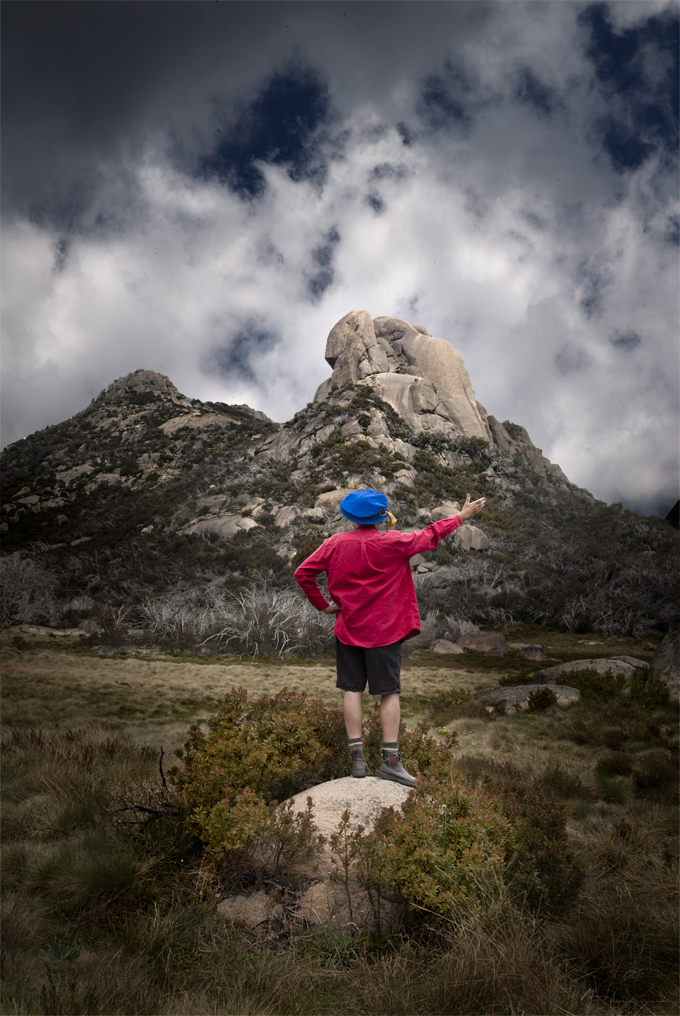
Dr Doug consulting Casper David Friedrichs re 2013 sabbatical, The Cathedral, Mt Buffalo.
In the year 2000 we began our involvement in higher academic study at Monash University in Post Graduate Diploma study. Since then, except for a small break in 2003, we continued our university research and art practice. Throughout this period we maintained both our arts practice and working at TAFE where Doug was full-time employed as a teacher and Victoria worked as a sessional teacher. All holidays and long service leave was consumed by the demands of study, research and at times a busy exhibition and private lecture programme. The hard work and study culminated last year (2012) with Doug being awarded Doctor of Philosophy at James Cook University in May, and Victoria submitting her PhD for final examination in late November.
Now, as we head into 2013, we are taking time out to pursue our post-doctorial research interests, opportunities to present and share our specialist knowledge and skills and to re-connect with our professional practice as artists and commentators on contemporary issues. It is a ‘self-funded sabbatical’. To finance this venture we intend to generate opportunities that may include ‘cloud funded projects’, artists in residencies, specialist workshops, seminars and consultancies, and sessional teaching or lecturing. We are also open to projects that may become available through our connections.
To up date you on our current interests and professional activities we include the following:
Doug: Social media and its applications within creative practice and personal communication; assembling and writing a critical commentary about Australian photobooks from 1900-2000; the narrative form of the hybrid photobook and the elevation of the print-on-demand photobook into a higher order of visual communication.
Victoria: Maintain a review of contemporary science/art interdisciplinary research as an accepted practice in academic institutions. Special interest in: the scientist, the artist and intuition; the historical use of visual art practice as information within scientific publications; Montage Thinking, as a mode for visual thinking and intellectual discourse through visual and non-visual information.
This adventure is somewhat a ‘leap of faith’ and as such we have created a blog onto which we will post sabbatical related content – we will invite to view this site when it comes online. This WOTWEDID blog will continue as our broader commentary platform – on occasion dual postings may occur. Other special research interest blogs will also emerge and you will be advised of opportunities to connect with their content.
Please contact us if you see any opportunities to support our ‘leap of faith’ sabbatical.
We wish you all an exciting 2013 New Year and look forward to perhaps connecting with you, and also connecting you with, commentaries about the issues of our shared interests.
Cheerio
Victoria and Doug
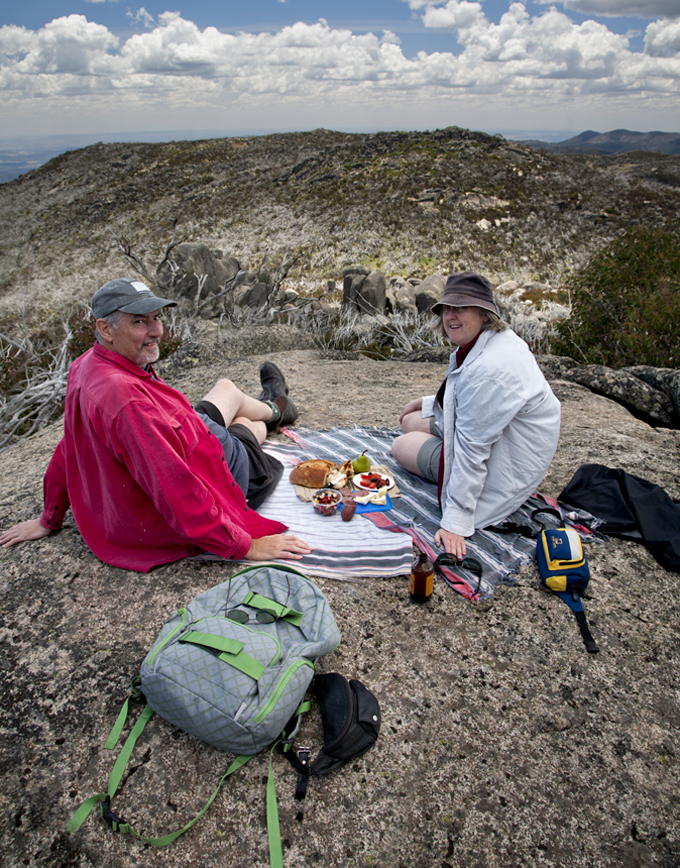
A 2013 lunch planning meeting at The Horn @ Mt Buffalo on 12.12.12
THE RANGE: Comments about the C.R.A.P. event
The RANGE Festival Director Ashley Bunter and Arts Council Toowoomba President Jennifer Wright (Summers) comment on the Centre for Regional Arts Practice event at the GRID. SEE earlier post on the event HERE.
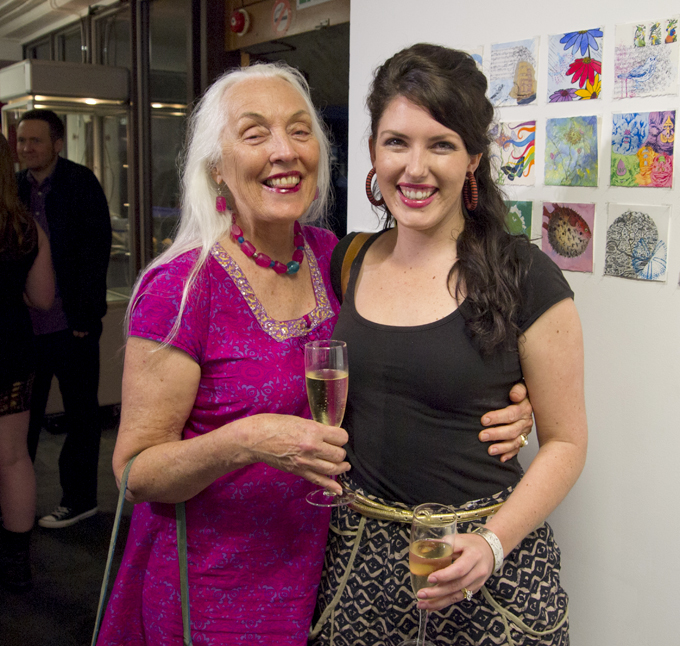
Jennifer Wright (Summers) and Ashleigh Bunter
Mining jobs are temporary and have negative impacts with binge drinking, lack of affordable housing for any nearby community.Why can’t we continue to make Toowoomba a centre of creativity, art and culture? Arts Council Toowoomba’s mission statement has always been to create a vibrant and creative centre for the arts.
At the Regional Arts Australia Conference in Golwa Federal Minister Simon Crean detailed how collaborative creative projects and partnerships had renewed regional cities including Newcastle and Townsville.Mark Robinson from Arts Council UK talked about making adaptive resilience real. When industries declined, regional UK communities remained creatively productive and adapted with integrity to changing circumstances with lasting benefit for the community.
The Edinburgh Festival, now 21 years old is part of Edinburgh’s strength and creates formal and informal social capital and feeds the community.
Transformations have started here and I hope we can ride the momentum of the RANGE festival. Festivals become part of the environment, attracting the touring dollar.
We can support a growing ecology and develop critical discussion in the region if we stick together, continue to adapt, gain confidence but not wreck the community,
if we remain open, dynamic and creative we position ourselves behind a creative industry that has longevity stands to benefit the community in a long term sustainable way.
Jennifer Wright (Summers)
THE RANGE: Centre for Regional Arts Practice Event
ARE YOU A REGIONAL ARTIST?

Jennifer Wright (Summers) makes a point at the Centre for Regional Arts Practice event
The Centre for Regional Arts Practice (C.R.A.P.) event, ‘Are you a regional artist?’ was part of the 2012 RANGE festival of art and culture program. Attended by around thirty people from around the Toowoomba region the event took place at The GRID Creative Space. The stimulus for the event and its question is the series of artist survey books produced by C.R.A.P. founders Victoria Cooper and Doug Spowart. Topics covered by the books deal with the issues and the experiences that Cooper and Spowart have encountered over many years as regional artists. Surveys have included the following titles:
#1 How do you know you are a regional artist?
#2 How do you now you operate a regional arts business?
#3 The inland regional artist & the beach
#4 The regional artist & climate change
#5 The regional artist & the global financial crisis
#6 Swine flu & the regional artist
#7 Air travel & the regional artist
#8 Flooding in your studio
#9 Summer lethargy
#10 The New Zealand regional artist
#11 Vote 1: Campaign for Regional Artists for Government Election (Democracy)
#12 Checklist of the signs that extractive mining has taken over your regional community.

7 of the 12 Artist Survey books published by the Centre for Regional Arts Practice
Six local artists accepted the invitation to participate in the event by selecting an artist survey book that related to their experiences and interests. They were asked to select passages from the books and to present and discuss these passages. The artists were: Jack Atley, Fancy Darling, John Elliott, Elysha Gould, Sue Lostroh and Jennifer Wright (Summers) [Their Bios are included at the end of this post]. The panel members represent a diversity of practice which is both grounded by necessity but also enjoying the freedom to be at the creative edge. Toowoomba’s art community is evolving and seemingly drawing strength from a fertile montage of place-minded inclusivity along with strident individualism. This motivated group of young and established artists are moving with the changing landscape of the regional arts practice, while also operating within a national and global perspective.
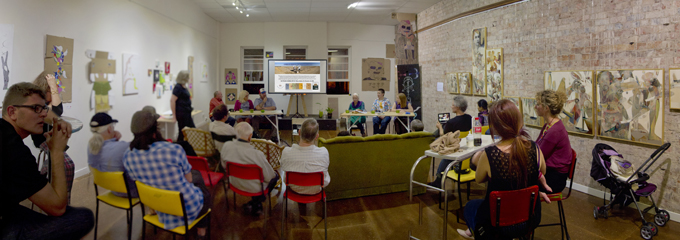
At the Centre for Regional Arts Practice event @ The Grid in Toowoomba
The Artist Survey books acted as catalyst and provocateurs for discussion and commentary where each panellist presented a particular slant on their selected subject. What followed was an organic and freeform forum with a range of questions being discussed and challenged. The main theme—the identity crisis of regional artist—was at the centre; the responses made the issues relevant, while evoking alternative considerations.
After each panellist’s segment the audience was asked if the ‘agreed’ or ‘disagreed’ with the proposition put by each Artists Survey Book. Some topics, such as ‘Do you need a week at the beach’, ‘How do you know if you operate a regional business’ and ‘The signs that mining has taken over your community’ resulted in a majority support. Other books, including ‘Would you agree that regional artists should form their own political party’ and ‘The regional artist and the GFC’, drew out other interesting issues and challenges from the panel and attendees beyond just the questions posed in the books. In some cases the outcome of the discussion recognised that all artists, from both regions and city, connect with the same issues. Perhaps all artists are regional?

Sue Lostroh asks ‘Do regional artists need a week at the beach?’
From the panellist’s responses it became evident that regional artists are passionate people with opinions and ideas about their practice and the opportunities and challenges of regional life. The feedback coming from some of the informal discussions at the end of the night suggested there could be future events of this nature in the form of a forum.
From our perspective this event brought not just consensus, but importantly new perspectives on, and challenges to, what it means to be a regional artist living and working on The RANGE.
Finally, attendees were invited to contribute comments to the forthcoming Artists Survey Book ‘The regional artist and the artists run initiative’. This edition of the C.R.A.P. Artist Survey book is intended to celebrate the role of the ARI in the Toowoomba region—the main theme of The RANGE festival.
Until next time …

C.R.A.P. event attendees chatting after the activity
PANELIST’S BIOS
Elysha Gould is a visual artist and Co-Director and founder of the artist-run initiative, made.Creative Space Toowoomba, and is the current Supervisor of Dogwood Crossing arts and cultural facility in Miles, Queensland. Living as an expatriate during the formative years of her childhood and having a mixed Australian-Japanese heritage, Elysha’s work incorporates paper cutting, drawing and installation that explore ideas of cross-cultural representations, contrasting contexts in the imagery and materials she uses.
Sue Lostroh was born in Sydney half a century ago, now living and working in Toowoomba, Sue has various tertiary qualifications the latest being a Master of Philosophy. However her study now happens on her travels to various destinations including Hong Kong, Singapore, England, Belgium, Holland, Germany, Italy, Switzerland, and France so far. Sue trained as a printmaker but turned into an installation artist who has held a handful of solo exhibitions, her favourite was at the National Sculpture Forum in Canberra: Adopt my language say your farewells. She has participated in over 35 group shows in a variety of locations including Singapore, Brisbane and Toowoomba and she has a wide and varied arts experience curating about 80 exhibitions since 1987, she was an associate lecturer in visual arts and has supervised various research projects for students undertaking professional development. Sue is associated with the production, editing or authoring of over 30 exhibition catalogues, 4 CDs and a considerable number of education kits, didactics and exhibition support material. Sue currently coordinates the education programmes at TRAG
John Elliott is a writer/photographer based in Toowoomba and works all over Australia. He has 14 books to his credit, had his own exhibition at the National Portrait Gallery and 25 works are in the NPG Collection. John’s work centres around his love of the bush and interest in people’s stories.
Jennifer Wright (Summers) is President at Arts Council Toowoomba and advocate for the establishment of Toowoomba Regional Council’s Public Art Policy. She enjoys building respectful relationships between councillors, businesses, artists and local community members. Jennifer was chosen to win the 2012 Regional Arts Australia award because she has demonstrated an outstanding contribution to the Arts in her community, her commitment to creating opportunity for regional artists and tireless volunteering work.
Fancy Darling is an artist and musician. Painting and drawing the erotic, classically trained pianist singer songwriter and cabaret performer, currently a resident artist at the grid.
Jack Atley: punk rock warlord.
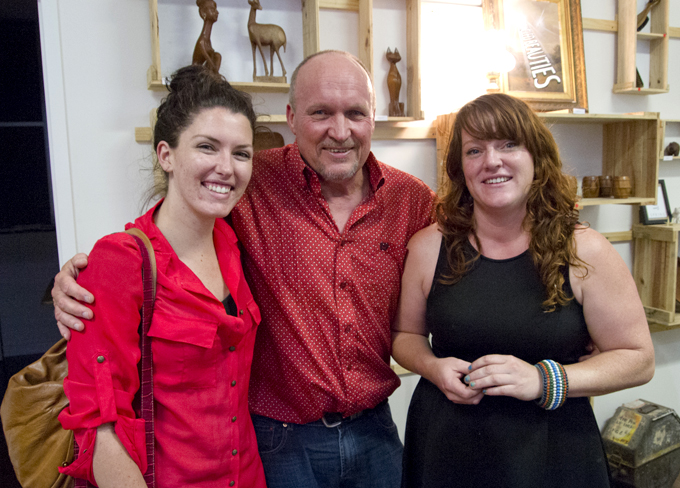
Ashley Bunter, John Elliott and Alison Mooney

Jack Atley, Fancy Darling and Doug Spowart
THE PhD PENULTIMATE DRAFT and 5 Food Antidotes
Are you undertaking a PhD? Does the stress of it all affect your health and well being?
Here are 5 Antidotes in the form of food snacks that may help.
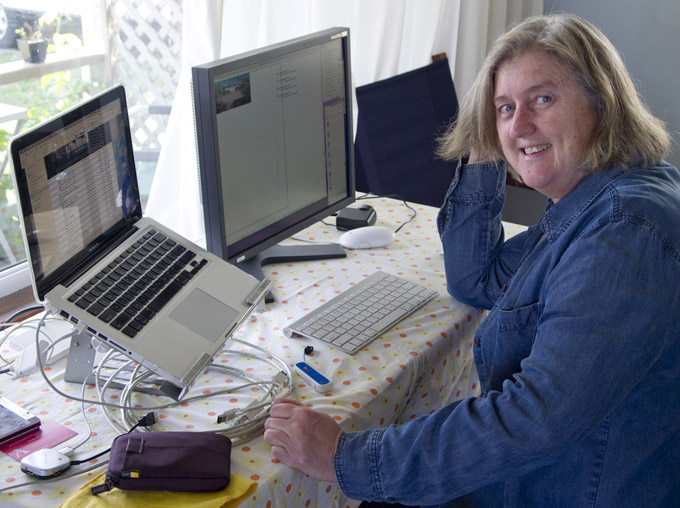
Victoria Cooper @ the Wooli Study Centre working on her PhD
.
ANTIDOTE #1: A LUNCH of ANTIPASTO DOWN THE BEACH
Two slices of prosciutto, mixed unsalted nuts, a slug each of double brie and blue cheese, black olives, pickled onion, seeded biscuits and packham pear. We drove there so Bundaberg Ginger Beer was the accompanying beverage.
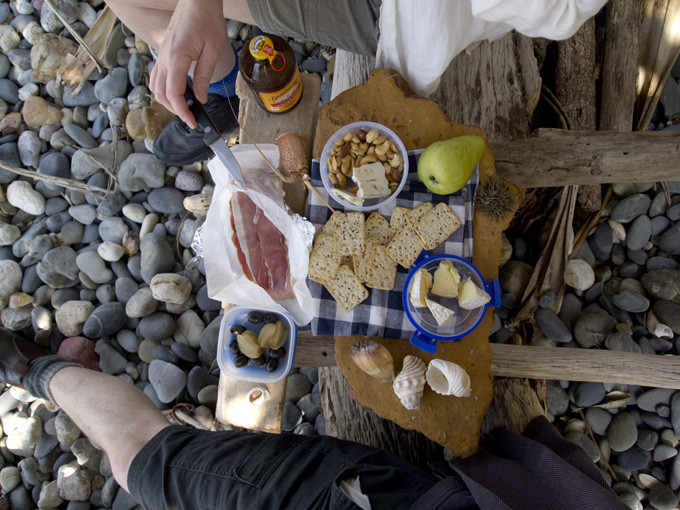
An antipasta-styled lunch on the beach
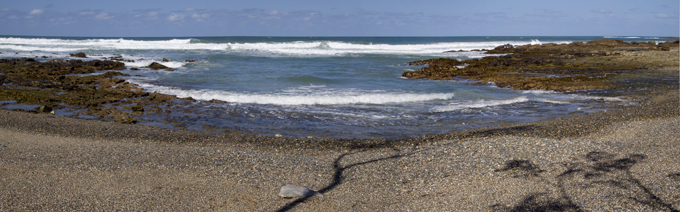
The view from the luncheon table…
SEE OUR ‘ALONG THE TRACK BLOG’ POST on the location Diggers Beach near Grafton
.
ANTIDOTE #2: An AFTERNOON TEA of home-made LEMON CAKES and EXPRESSO COFFEE
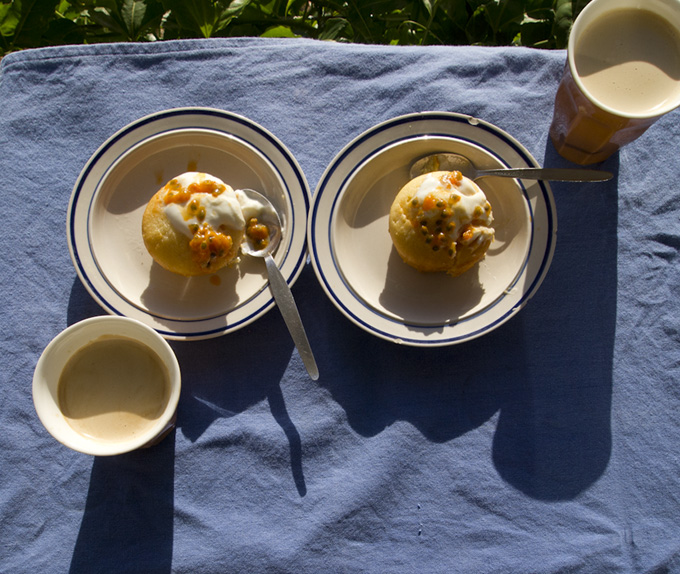
Afternoon tea of lemon cakes and coffee
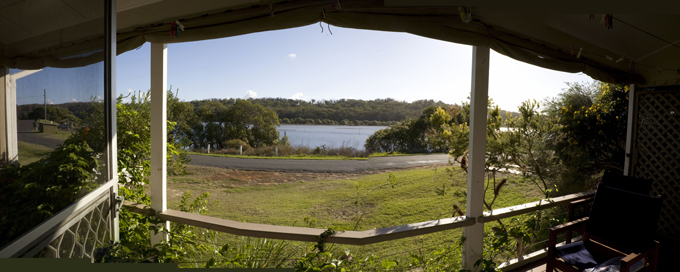
Afternoon tea verandah view
.
ANTIDOTE #3: A LUNCH of OYSTERS – Kilpatrick, with capers and mayo and au naturel with sourdough bread and fried prosciutto accompanied by a small glass of Verdelho white wine.
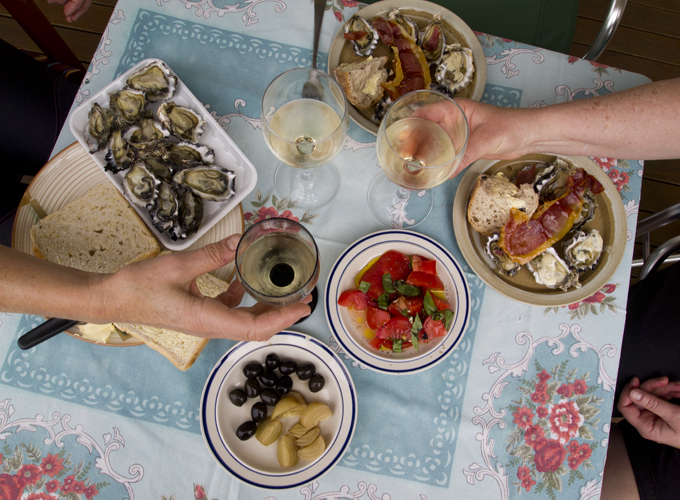
Oysters – a serving for three
.
ANTIDOTE #4: A SEAGULL’S BREAKFAST the coastal version of the ‘Dingoes Breakfast’ – A poop and a look around…
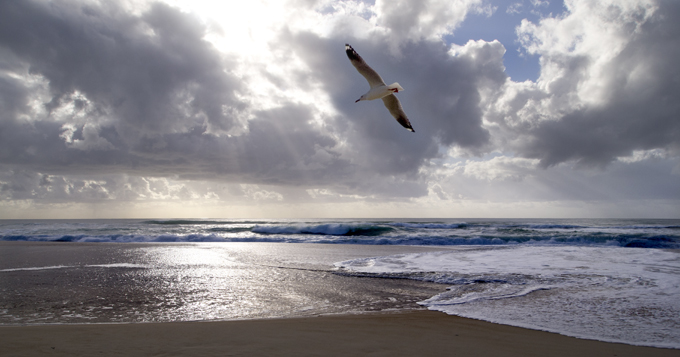
A seagull’s breakfast
.
ANTIDOTE #5: DINNER – FISH ‘n’ CHIPS out of the paper with lemon slices, mayo, flaked salt from the Murray River and a New Zealand Chardonay from Marlborough Sound.
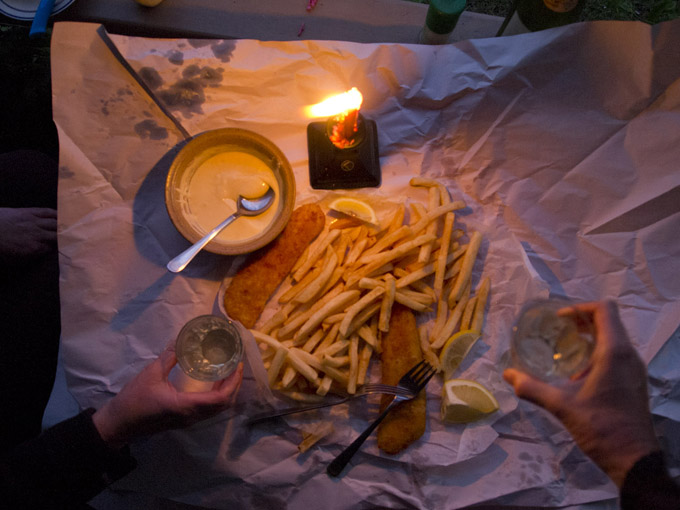
Fish ‘n’ Chips and Mayo
NOTE: Don’t forget to have a great view to look out over when dining…
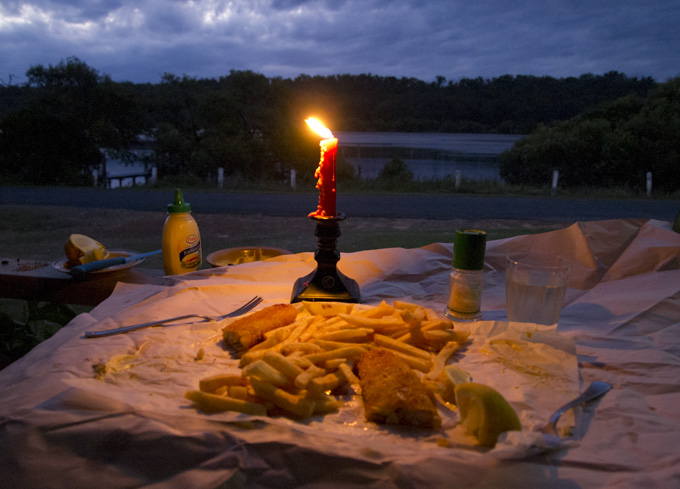
The view: Wooli River and Yuragir National Park beyond
.
We trust these antidotes may work for you … They did for us
Cheers Dr Victoria and Dr Doug
.
.
.
HELP DESIGN YOUR CITY: TRC City Centre Master Plan consultations
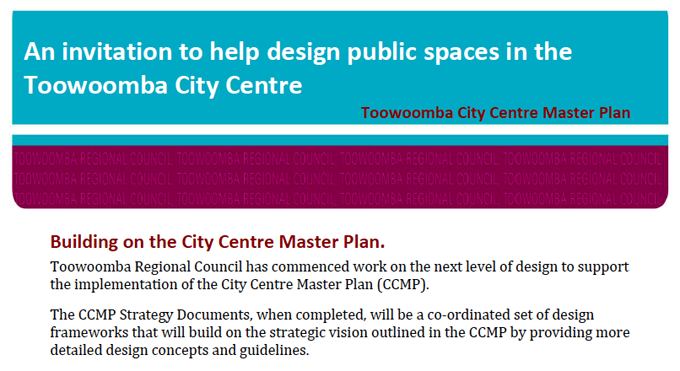
The invitation document header
Like all regional communities in the middle of the resources boom Toowoomba is a town growing rapidly. The Toowoomba Regional Council (TRC) has initiated studies to develop the necessary planning strategies considering the region’s expansion into the foreseeable future. The project is entitled the City Centre Master Plan (CCMP) and is intended to provide, ‘a co-ordinated set of design frameworks that will build on the strategic vision outlined in the CCMP by providing more detailed design concepts and guidelines.’[1]
Community consultations are a necessary part of the inclusive methodology employed by the TRC to ensure that their consultants and advisors ‘get it right’. On Wednesday the 17th of October members of the public and other interested parties were invited to ‘Help design public spaces within the Toowoomba City Centre’. We responded to an invitation for artists to contribute to the plan that came via the Arts Council of Toowoomba’s electronic mail-out.
At the meeting we were given an overview of the project and introduced to a plan for the workshop that divided the city into ‘places’ for review and discussion including the following: Open Spaces, Laneways and Streetscapes, Public Art projects and the landscape.
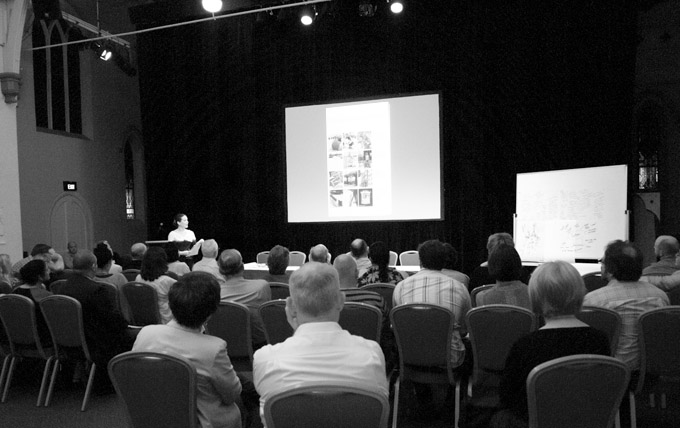
The meeting began with an overview
Vicky joined the table discussing the laneways and Public Art projects, which was directed by Brisbane art consultancy and project management group, Urban Art Projects (UAP). The discussion identified important Toowoomba Spaces: The Chronicle Arcade, Bell Street Mall, Duggan Street and general laneways and pathways commonly used to flow through the city. All agreed that the West Creek needed to be acknowledged as an important feature of the city.
The discussion of public art projects was highlighted with a question regarding the current lack of an art policy in the TRC planning agenda. The attendees were then reassured that the policy very close to being approved.
Many creative ideas, some new and some proven such as the Melbourne laneway projects were mentioned in the round table discussion. The need for safe public laneways and actively utilised, peopled public spaces were key points for the new development. In-situ and ephemeral art projects were high on the agenda to resolve some of these issues. The time passed and seemed productive for the team running the workshop. Some new networks were developed as people interacted in the discussion.
Even though there was a genuine attempt to be inclusive and respectful for the potential of existing structures both physical and cultural, there was no guarantee that any or all of the ideas would be realised. This was a plan for the possibilities, rather like a suggestion box. How they were to be funded and managed was not on the agenda.
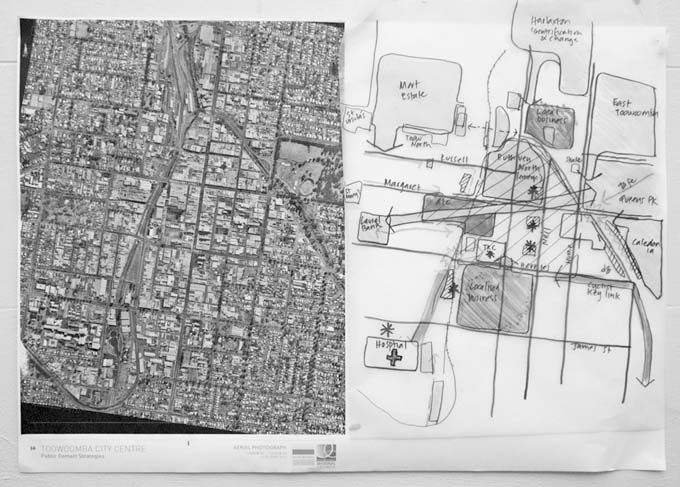
An aerial photograph and planning discussion document from the meeting
On another table the topic of Open Spaces was discussed with Peter Richards, Director of Deike Richards, a Brisbane based multi-disciplinary design practice. The members of the discussion group included many urban planners, architects, councilors and artists. Topics discussed looked at traffic flow, tree-lined boulevards, redevelopment of large blocks including the City Hall precinct, ideas for the Toowoomba Foundry site, bikeways and the repurposing of car parks into greenspaces. Suggestions for the Foundry site included a market like Melbourne’s Victoria Markets, as well as an artist’s studio precinct and a GOMA/MONA-like gallery—could it be called “TOGA–TOowomba Gallery of Art?.
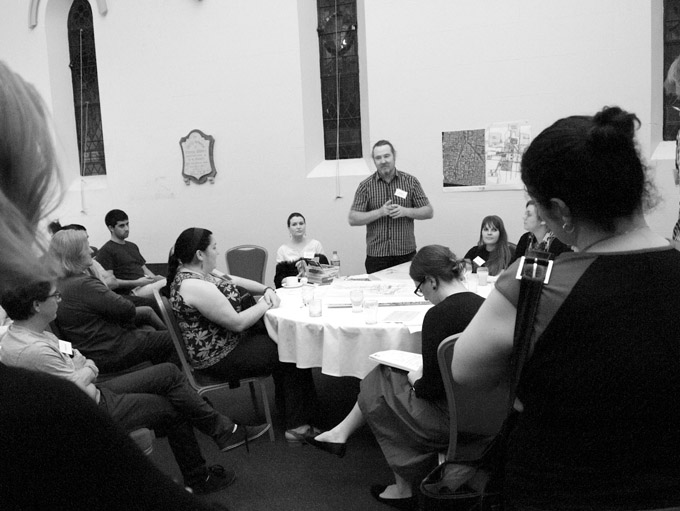
Summation of discussions
Ever present on maps of the Toowoomba City Centre at this meeting is a mega shopping centre development by QIC Global, creators of Robina on the Gold Coast and other major shopping centres. Their plan is to link the existing structures of Grand Central and Garden Town shopping centres with an overhead walkway. This will necessitate the demolition of the Council Library and the bridging of West Creek. It’s interesting to consider that shoppers will now only need to drive to either shopping centre, cross the walk way to the other and back into their cars. They perhaps will no longer need to engage with the older town shopping precinct.
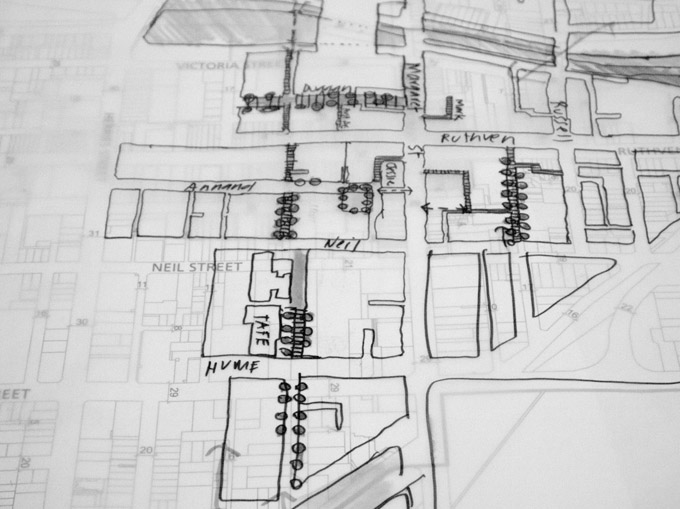
Discussion outcome overlays
What then is in store (a pun) for this historic town? What we are concerned about the following:
- Will art initiatives be managed, controlled and undertaken by outsiders in a kind of cultural fly-in fly-out fashion or will the art be nurtured and generated within?;
- Could the city centre end up as an experiment in urban(e) design?;
- Toowoomba has great historical value and memory, both Indigenous and colonial that needs to be considered;
- This city also has an important place in the landscape, on the divide between the great water system of inland Australia and the larger urban regions and fertile valleys of the coast; and
- As the community also is home to a rich arts scene, with many notable local, national and international creative individuals and groups that where ever possible could be involved as active participants.
We hope that commercial and political agendas will continue, as shown through this consultation process, to be influenced by community input, needs and values. And that this collaboration will create an ‘art-full’, exciting and functional city centre to support Toowoomba’s future as the commercial and public hub for this rapidly changing region.
Victoria Cooper & Dr Doug Spowart
[1] From the invitation ‘Help design public spaces within the Toowoomba City Centre’
COOPER+SPOWART Guest Bloggers @ SLQ Artists’ Books
The State Library of Queensland has just posted commentaries that Vicky and I have prepared on the artists’ book ‘Monologues’, a book of mezzotints by Graeme Peebles and a text by Gottfried Benn. The texts and images of the book are available online – SEE …
http://blogs.slq.qld.gov.au/ala/
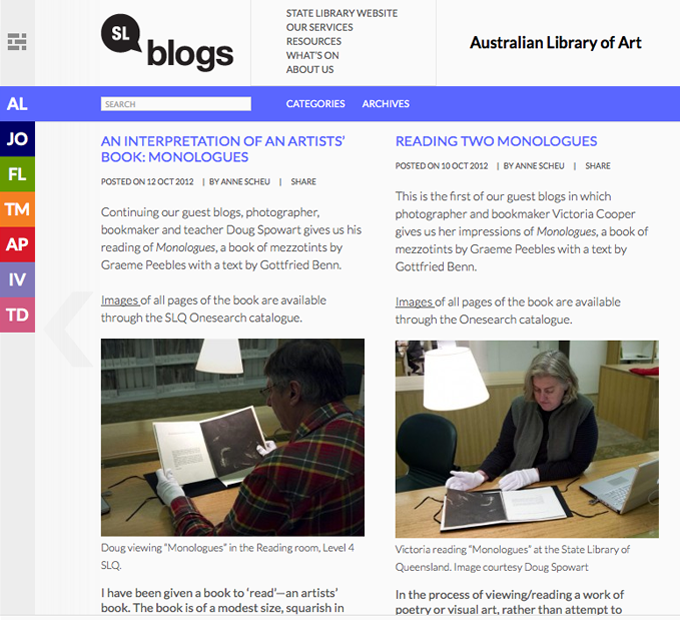
SLQ Blogsite
WOOLI NOCTURNE: a new project
We are working on a new project whilst on retreat on the NSW north coast. A tentative statement for the work is as follows …
In the interstitial zone between day and night our everyday and prosaic surroundings begin to take on an appearance that is, for us, unfamiliar. Streets and houses, the spaces of our habitation, are illuminated by the afterglow of sunset or by the shaft-like rays from the occasional street light. In this space the homely becomes the uncanny. Perhaps stirring memories of cave dwelling experiences deep within the primitive brain where in the shadows of the coming night, monsters lurk – just beyond the fire’s warm flickering light.
Enjoy … Vicky + Doug
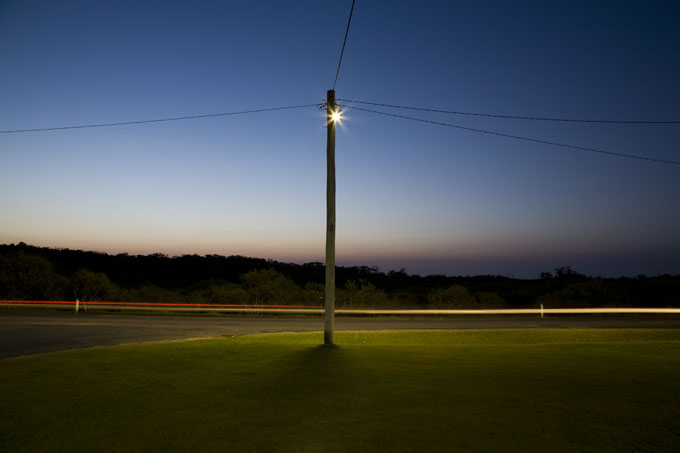
Image 0202
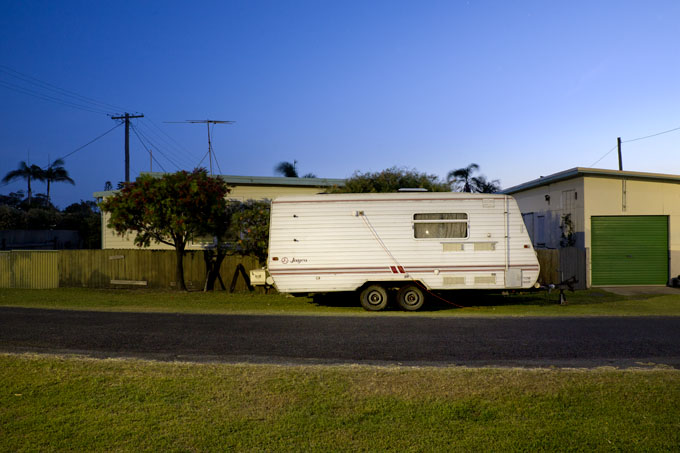
Image 0199
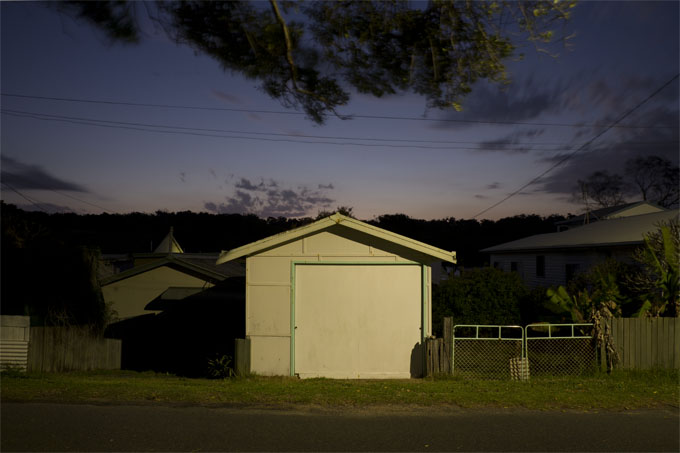
Image 0133
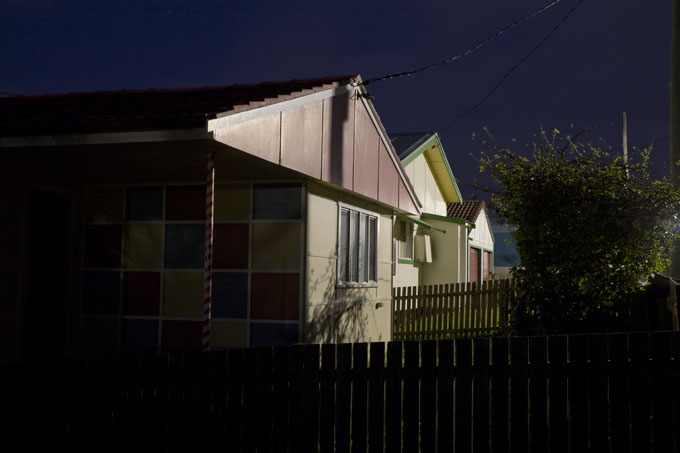
Image 0142
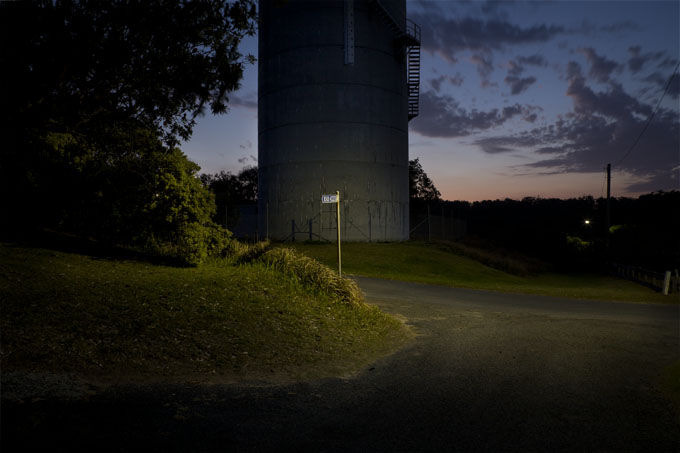
Image 0129
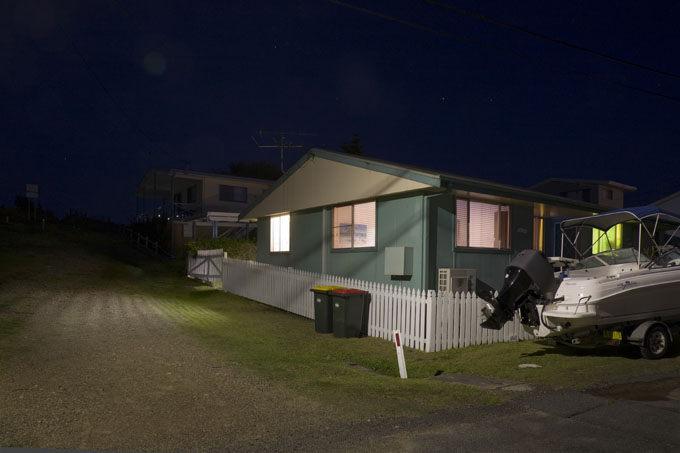
Image 0094
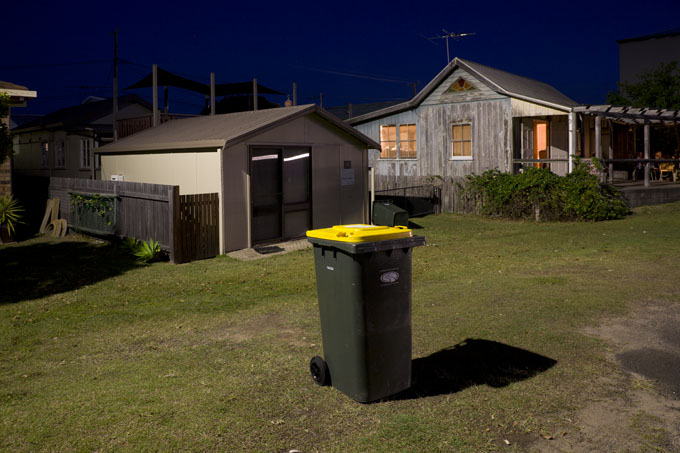
Image0092
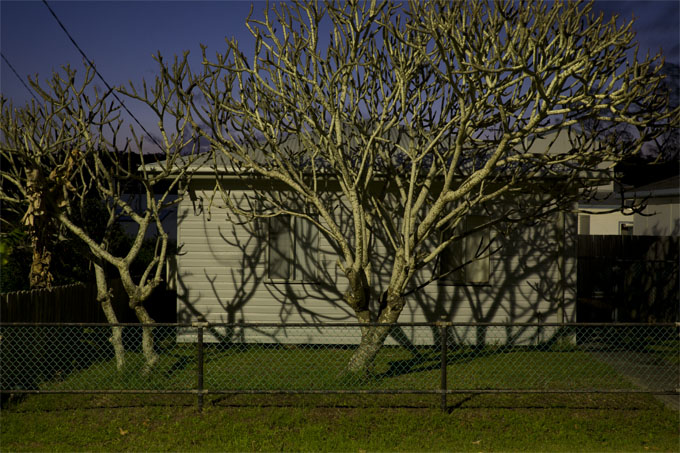
Image 0135
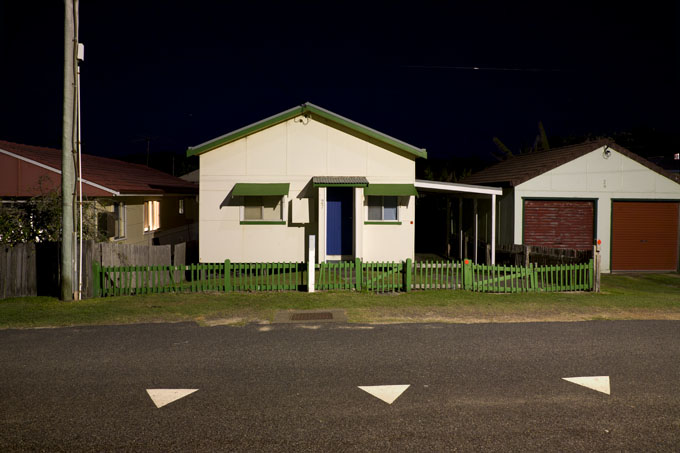
Image 0216
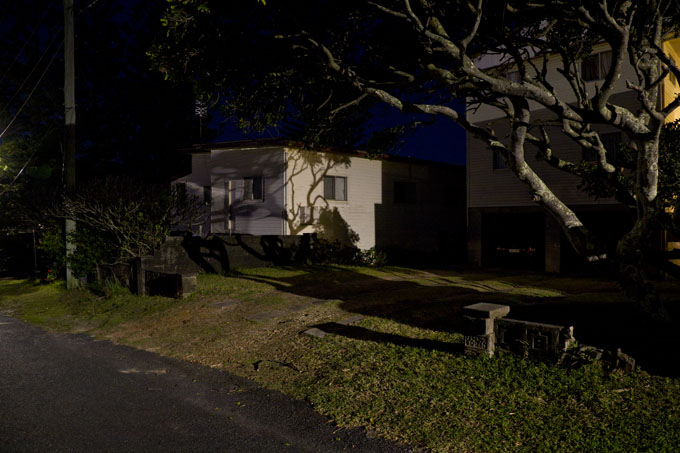
Image 0097
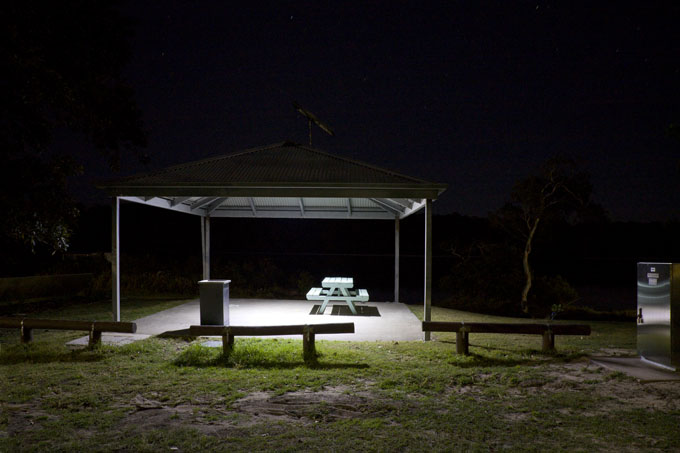
Image 0110
In support of The YEAR OF THE FARMER ‘The CondaMINE Cow – Variety: Thylacine’
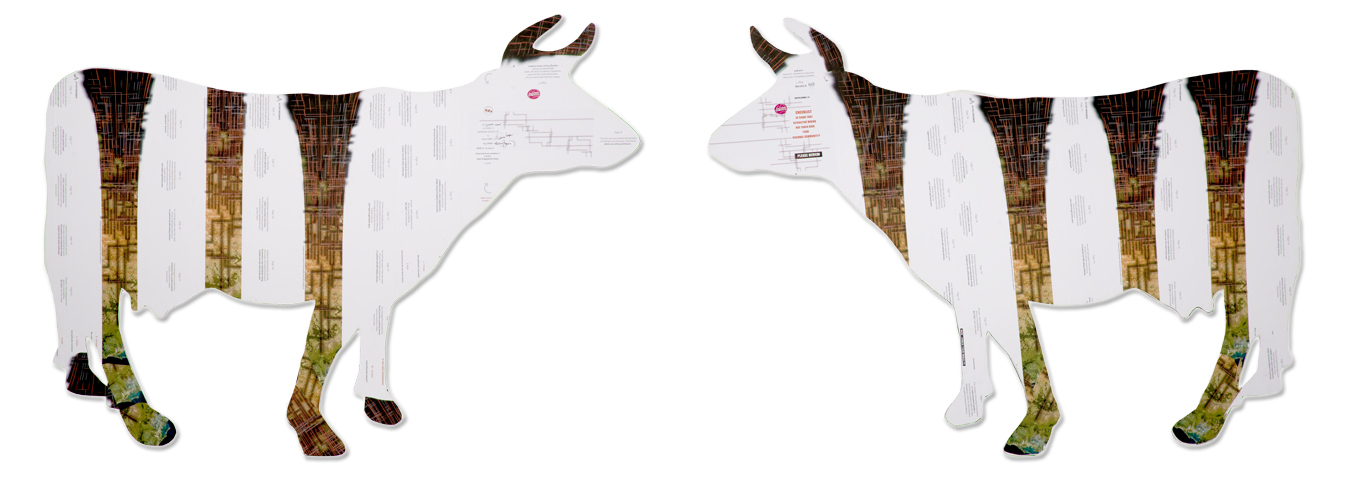
‘The CondaMINE Cow Variety: Thylacine’ recto and verso
We, at the Centre for Regional Arts Practice, are about to contribute an artwork to a project that is intended to celebrate the Australian Year of the Farmer. The project is called, the Australian Year of the Farmer Cow Art, and is being organised by Wendy and Paul Blinco from Pacific Seeds, Toowoomba. Around 1,000 corflute cows were made and passed on to interested groups, artists and school kids across the Darling Downs Region to decorate. The plain white surface of the cows have been painted, collaged or worked on by a range of other artistic means.
For more information visit the Australian Year of the Farmer Cow Art Facebook site
Named The CondaMINE Cow – Variety: Thylacine, our cow was created from a montage of texts and images from our Artists Survey book #12 Checklist of Signs That Extractive Mining Has Taken Over Your Regional Community (SEE the blog post Flying Arts Award for details). In this book, and now in this new variant (the Cow), we posit that a threat exists for farmers and farming land productivity by the extensive mining activity now taking place throughout this land. The farmer, like the Thylacine, may be an endangered species destined for extinction. We trust this cow will raise interest and promote debate on this issue.
Our Cow is at the beach where the makeover was carried out—next week she will be herded together with another 1,000 cows in Toowoomba for the main event.
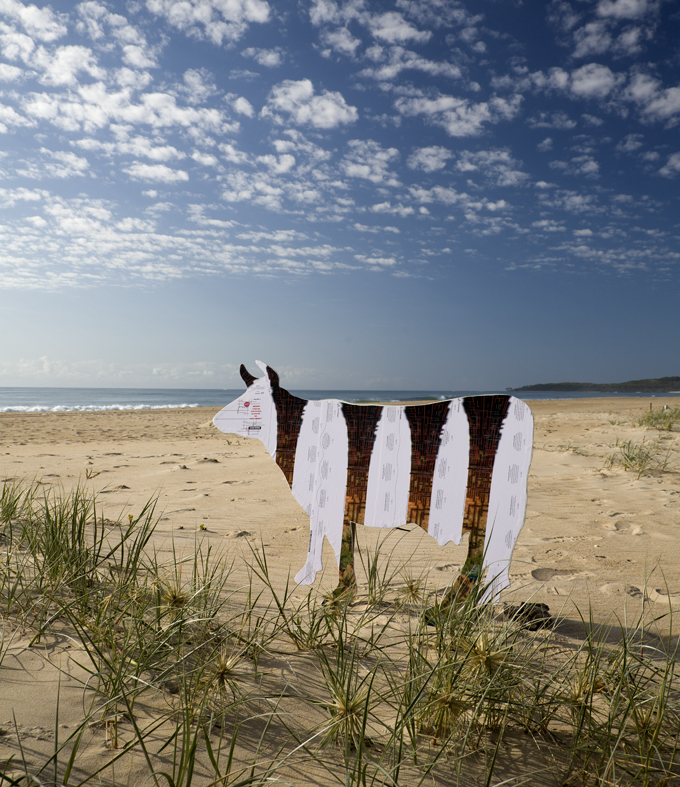
‘CondaMINE_Cow’ artwork by Victoria Cooper + Doug Spowart
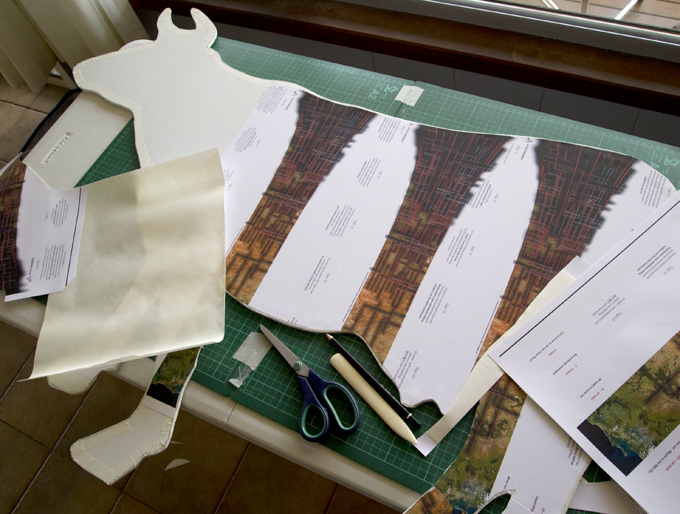
‘CondaMINE Cow’ in production
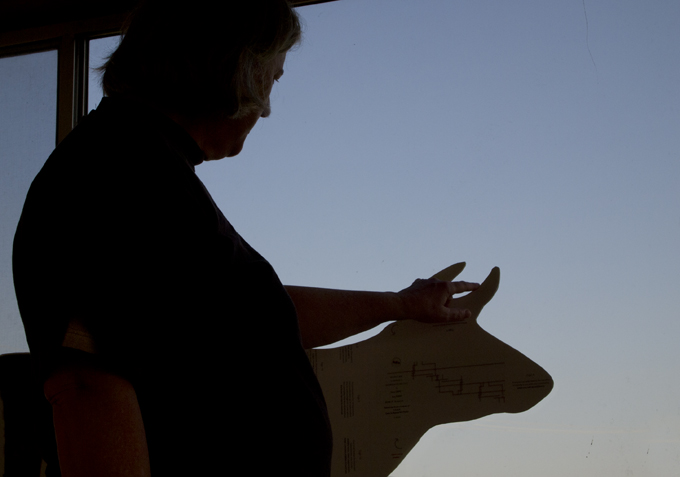
Vicky offering suggestions for the makeover

 wotwedid
‘BOOKPLATES UNBOUND’: The Cooper+Spowart contribution
leave a comment »
Here are our contributions to the Bookplates Unbound project – SEE previous post for details
.
VICTORIA COOPER: ex libris, dedicated to Dr Dorothy Shaw
Victoria Cooper’s Bookplate
A statement about this work…
To many of her colleagues Dorothy was enigmatic and modest about her personal and past life. Under the surface of this quiet and reserved nature, she had an inquiring, creative mind. I always found her willing to venture into the unchartered territory of the imagination, while still grounded in the everyday physical world.
Dorothy also had distinct methods of working: I could always count on her typewritten notes clearly outlining for me the information on her specimens intended for deposit into the Plant Pathology Herbarium. These typed notes may seem a standard communication—but Dorothy used a typewriter, similar to the old black 1940s Imperial machine. It seemed that this was an idiosyncratic protest against the unwanted aspects of the digital paradigm invading her world. It must be noted that although Dorothy did not utilise aspects of digital communication, she was readily accepting of the digital world. Dorothy not only embraced fully the digital art I was creating but she also recognised the important role of digital technology and work practices necessary in contemporary scientific research.
In the visual work for my PhD—involving fresh water aquatic fungi—I consulted Dorothy’s considerable knowledge on these organisms. Our exchanges were creative and fertile, inter-relating knowledge and concepts from both science and visual art. The designs and patterns in this bookplate were selected from a collection of microscopic photomicrographs of aquatic fungi I created for the visual component of my PhD. I also chose the typeface Courier, for the bookplate to reflect the typewritten notations that were emblematic of Dorothy’s recordings.
Dorithy is passed away now and although I did not get to see her library, I am sure it was diverse, interesting and informative. I am equally confident that she would have a manually typed (non-digital) catalogue and reference list for each book. From these connections and perceptions of this creative, dedicated scientist, I created this bookplate—I have made it to evoke the life of Dorothy Shaw as a Library: one full of mystery, knowledge, life’s challenges and experiences.
Victoria Cooper
.
DOUG SPOWART: A homage to a Walter Benjamin comment about book collecting
Doug’s Bookplate
.
A statement about this work…
In Walter Benjamin’s 1931 essay, Unpacking My Library: A Talk About Book Collecting, I found a discussion that echoed my desire for accumulating books and their assembly into a personal library. In the text Benjamin shares his love of the process of: finding, acquiring books, building a library, and what it means to possess books—many of them.
In this bookplate I make reference to Benjamin’s comment that a collection may include books from other libraries that were loaned and never returned. This covert act has historically been something I’d encountered from others who did not return books. After a time, if I approached the borrower seeking the book, their usual response was the denial of ever borrowing the volume – or – that it had already been returned.
I cannot deny that I too have lusted after books seen in private libraries, books in bookshops and catalogues that I could never afford, or books held in institutional repositories. I have thought, like Benjamin, of borrowing and then never giving them back.
However this bookplate* is pure fantasy and not an admission of guilt. It is my commentary on Benjamin’s proposition in the form of a modified bookplate to indicate the changed ownership, dubious provenance as well as a signifier of obsessive possession.
Doug Spowart
* I must acknowledge that I do have a book in my library that is stamped ‘The Kodak Technical Library’ over which is confidently signed ‘Julian Smith’. And there are annotations and marginalia in the same pencil that are indicators of Smith’s provenance. I bought the book from a respectable Melbourne bookseller in 2002.
Share this:
Written by Cooper+Spowart
December 24, 2012 at 3:35 am
Posted in Doug Spowart, Exhibitions, Victoria Cooper
Tagged with aquatic fungi, Australian bookplate artists, Bookplates, Bookplates Unbound, comments about book collecting, Dr Dorothy Shaw, Walter Benjamin