Archive for the ‘Speaking on Photography’ Category
BOOKEND: Photobook Melbourne — what a read?
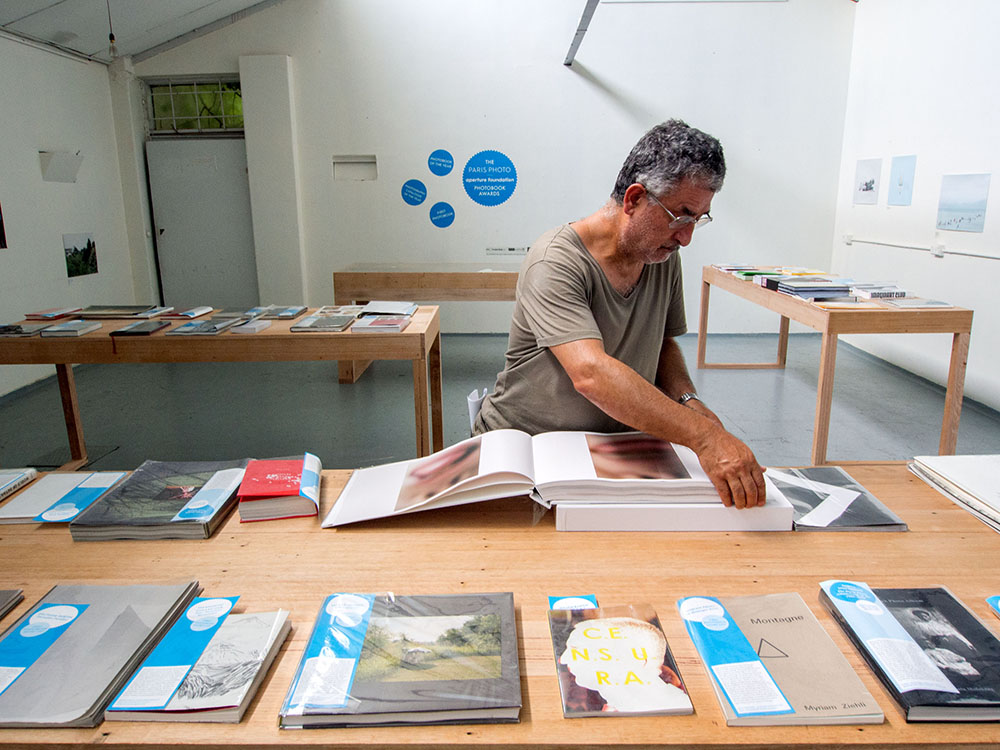
Photobook Melbourne: Peter Lyssiotis looking at an Aperture Books
We all know that feeling when you are really getting into a book, its narrative and flow, and then you reach the point where, as the last page is turned, you wish it could go on, and on… Photobook Melbourne (PM) was something of that kind of experience. The books seen, perhaps around 300, the exhibitions seen, and the people met now all vividly reside in memory and digital capture code.
The Photobook Melbourne event took place between February 12 to 22 it was coordinated by Heidi Romano and Daniel Boetker-Smith. It was always an ambitious undertaking. Its vision was to connect international photobook world with makers and lovers of the book from around Australia… and New Zealand. This was achieved through numerous exhibitions, library displays, photobook awards, forums and workshops.
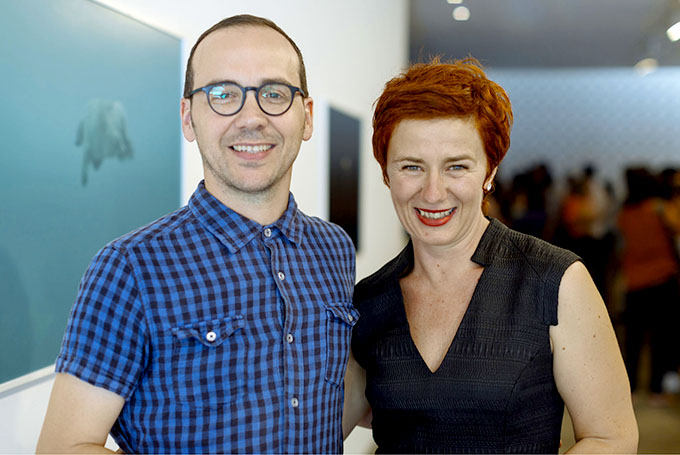
Daniel Boetker-Smith + Heidi Romano PHOTO: Courtesy of Lauren Dunn www.artdocumentation.com.au
Photobook Melbourne can only be described as a massive success. The photobook community of practice needs events like these so they can band together to affirm their interest and belief in the importance and creative power of the photobook. For once, the world of photobooks has come to us, or at least Melbourne, and for that we are a stronger and more informed cohort of makers, readers, collectors and lovers of photobooks.


Some of the attendees have responded to a request for comments – others are posts from Blogs and Facebook posts…
FROM JACOB RAUPACH: Photobook Melbourne was an amazing week full of a genuinely insightful mix of talks, exhibitions and book exhibitions, with the fair during the first weekend proving to be a great networking point for the rest of the week that followed. … I felt that the inaugural festival set an amazing benchmark for the following years! Looking forward to 2016.
FROM HARVEY BENGE‘s BLOG: On a zero to ten scale I’d give the festival a ten! Visit his site for more commentaries about photobook
FROM CHRIS BOWES: For someone naïve to the world of photobooks, Photobook Melbourne was an eye opening experience. Although coming in as a virtual outsider to this rapidly expanding art scene, I sank my teeth into as many of the talks, exhibitions and book collections I could manage, and came away a lot more informed than I was going in. Personal favourites were the Paris Photo – Aperture Foundation Photobook Awards exhibition, where the content of the books was engaging and the calibre unmatched, and ‘The Other Photobook Forum’, where in particular Gracia Haby and Louise Jennison showed that with a little creativity and business sense one can make a buck and do what they love.
FROM LIBBY JEFFERY – Momento Pro: The number of participants, visitors, books and buyers at Photobook Melbourne were fantastic and they confirmed that small press and self publishing is alive and well in Australia. The Awards and Book Fair also proved that a selection of high standard work is being created here, but a collaborative promotion and showcase of Australian photo books to the global market would benefit everyone.
FROM: ANGEL LUIS GONZALEZ FERNANDEZ Facebook Comment Back in Dublin after an amazing first edition of PHOTOBOOK MELBOURNE, having discovered tons of new work and books from Australia, New Zealand, and more -and having met a truckload of awesome people.
FROM KELVIN SKEWES: As someone that attended almost all of the events that were part of Photobook Melbourne I can only describe it as a tour de force for lovers of the Photobook. The festival opened on February 12th at the Centre for Contemporary Photography with Robert Zhao Renhui’s exhibition
A Guide To The Flora And Fauna Of The World and with a smoking ceremony by the traditional owners to welcome the festival to their land. Also announced on the opening night was the Australian Photobook of the year which was won by Raphaela Rosella for her unpublished book ‘We Met a Little Early But I Get to Love You Longer’ and I was humbled to be the runner up with my newspaper as photobook ‘Nauru: What was taken and what was given’. …
The main event for the first weekend of the festival was the Photobook Melbourne Book fair at CCP an event at was full of frenetic energy and far too many photobooks to browse let alone buy; amongst the many booksellers highlights included the infatigable Perimeter book with titles from Mack and Spector books and Anita Totha from Remote books who is doing to sterling job promoting photobooks from New Zealand. …
Great thanks are due to the entire Photobook Melbourne team so thank you Heidi Romeo, Daniel Boetker-Smith, esteemed guests Ángel Luis González Fernández, Ron Jude and the Dysturb Photo Collective, festival partners and sponsors Momento Pro, Photography Studies College, Copyright Agency and venues CCP, MGA, Strange Neighbour, Colour Factory, Neo Space, Baron Said and James Makin Gallery and to all the volunteers without whom this could not have happened so thanks to Felix Wilson, Kate Robinson, Bella Capezio, Katrin Koenning and countless others.
See you next year!
MORE COMMENTS WILL BE ADDED AS THEY BECOME AVAILABLE…
WHAT FOLLOWS IS A PERSONAL DIARY OF PHOTOBOOK MELBOURNE
Our arrival on the first weekend was delayed by my recent medical incursion so we fly into Melbourne on Wednesday. Through a friend we were able to stay in an apartment right in the middle of the city and our journeys out and about were by tram, train and lifts given by friends.
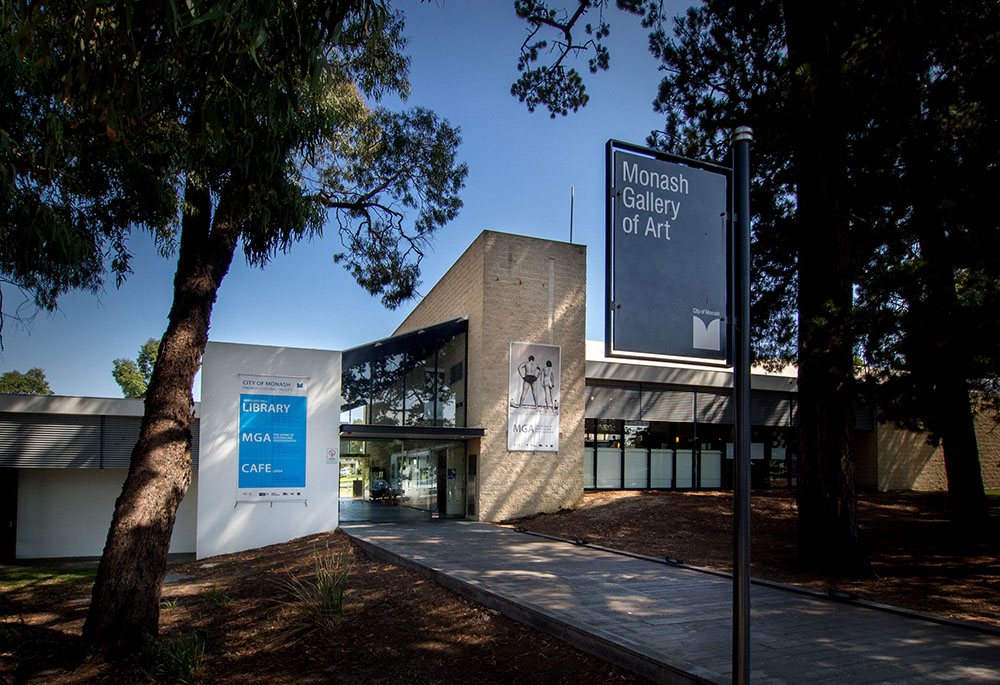
The MGA – The Home of Australian Photography
THURSDAY: We attended two book related exhibitions at the Monash Gallery of Art. Badged as the ‘Home of Australian Photography’ the gallery presented two photobook exhibitions, one of images from the collection that featured the theme of books and reading and was entitled ‘Light Reading’. The other was The Natural Collection an assemblage of books by The Photobook Club’s Matt Johnston and co-curated by Lucy Johnson. The Natural Collection brings together photobooks that explore “the harmony, tension and play” that occurs in the human relationship with nature and the natural landscape.
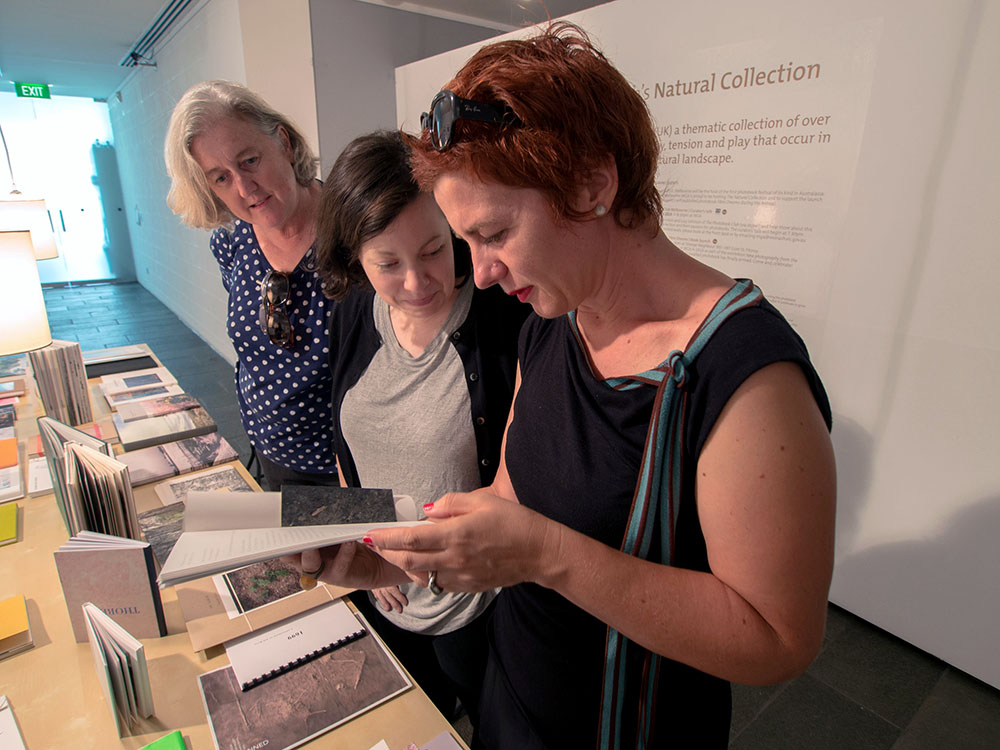
Heidi, Steph and Vicky discussing a book
The exhibition space was setup for readers to sit and work their way through a most interesting selection of Euro/American centric responses to the theme. Grand trade books sat next to simple fold ‘n’ staple zine-like booklets. We were there with Heidi Romano, Simone Rosenbauer from Sydney and MGA Gallery’s Education and Public Programs officer Stephanie Richter. We engaged in a spirited debate about book design; production methods and how to evaluate books.
That evening we attend a dinner for PM speakers, contributors, supporters and sponsors. By this stage it was acknowledged that the PM had been an enormous success so congratulatory statements were announced and a great feeling of an Australian photobook community being well and truly launched by this event.
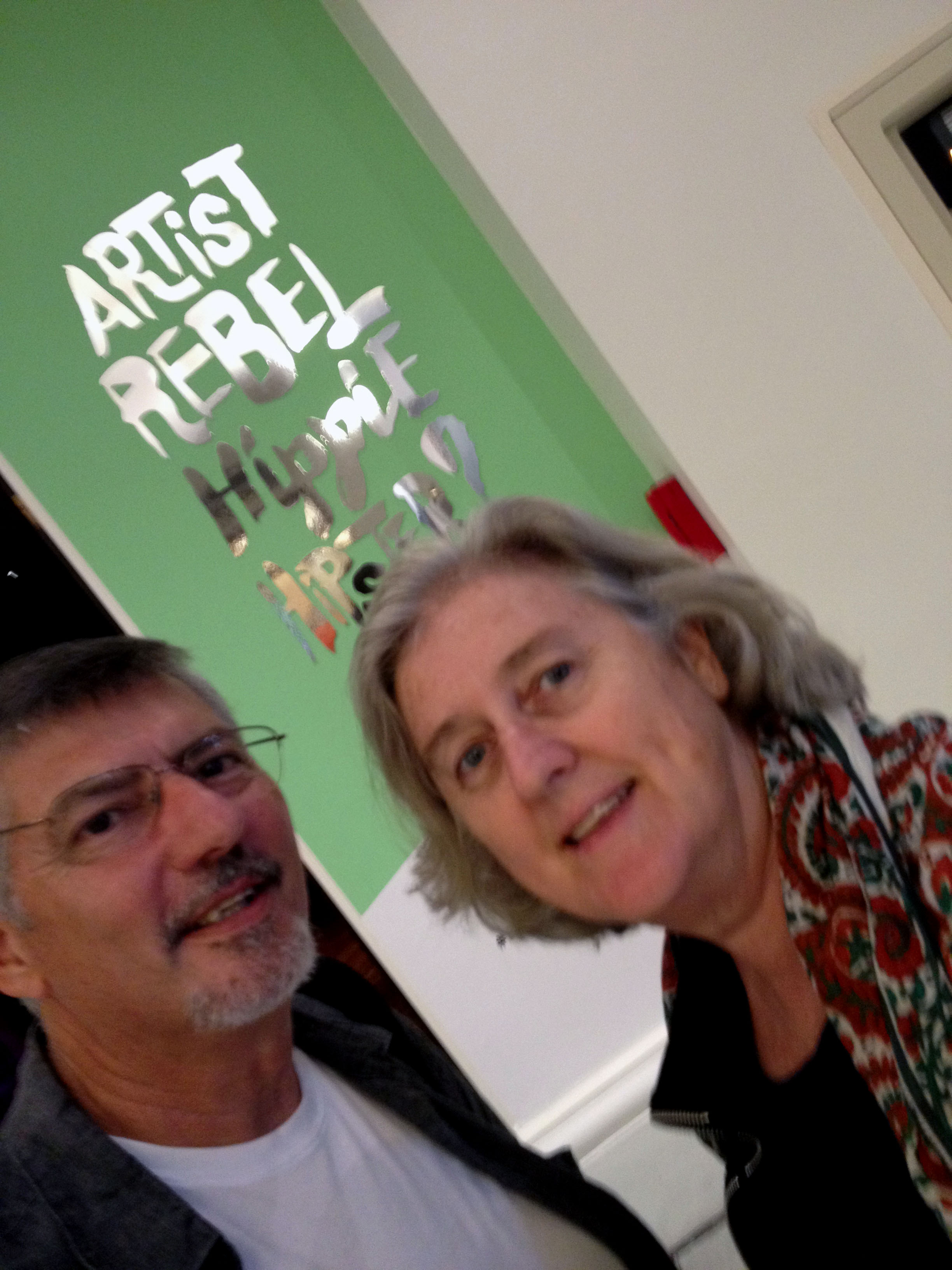
Bohemian Vicky+Doug
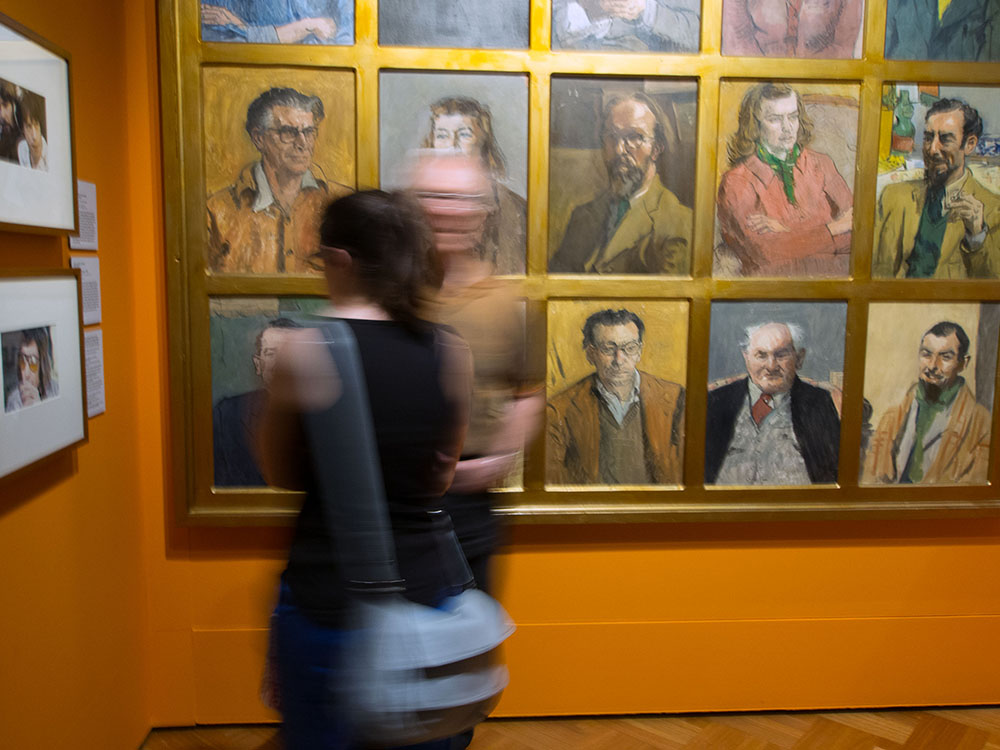
Bohemian Melbourne portrait wall
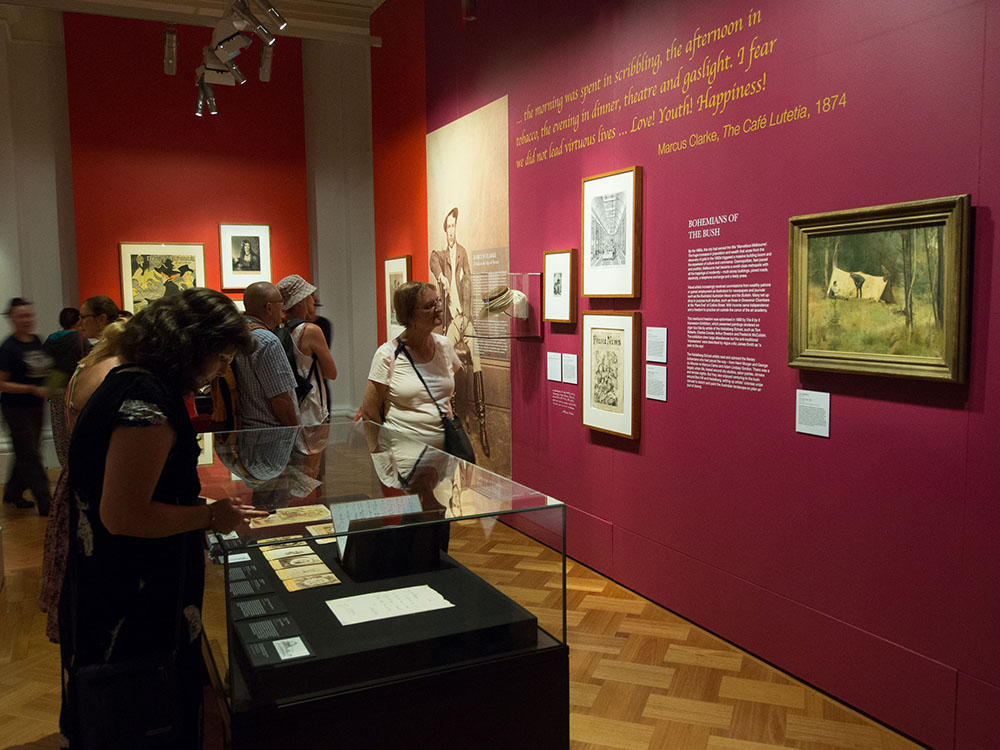
Bohemian Melbourne
FRIDAY MORNING: A breakfast of avocado, bacon and relish was partaken at a suburban street café while being interviewed by Australian Photography contributor Anthony McKee for a feature on photobooks. Morning tea with Robert Heather and Des Cowley at the State Library of Victoria and a visit to the SLV exhibition Bohemian Melbourne – a fascinating reflection on the creative, musical and arty sub-culture of Melbourne. Rennie Ellis’ photos contributed much to this history as well as poster art, paintings and the ephemera and memorabilia of the different eras represented by the theme.
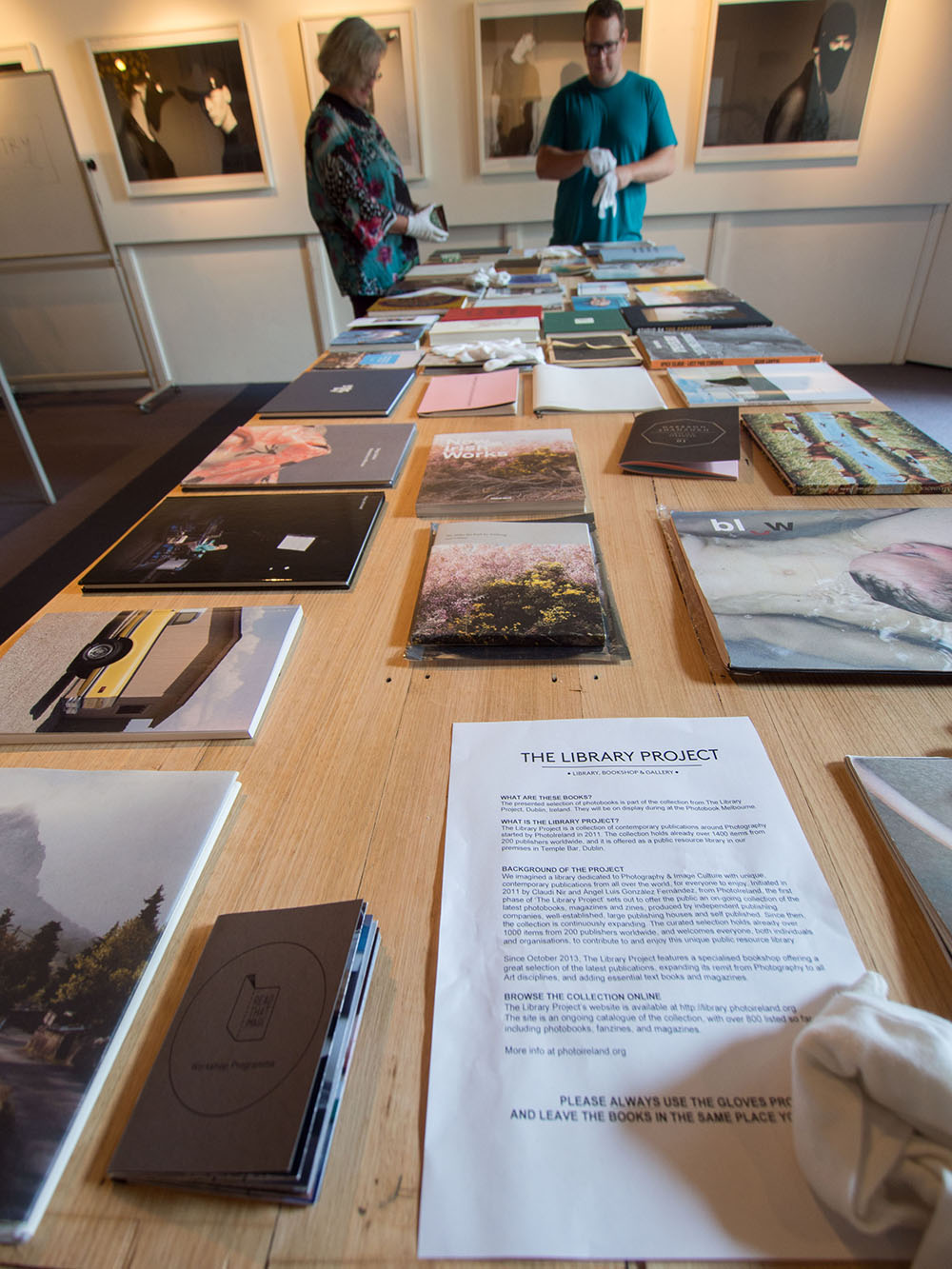
The Library Project @ PSC
FRIDAY AFTERNOON: We visited Photography Studies College to view ‘The Library Project’, a collection of photobooks brought to PM by Ángel Luis González Fernández from PhotoIreland. ‘The Library Project’ aim is to collect contemporary publications based on photography to create a public resource library. We viewed many books that are not easily available to see in Australia including Cristina de Middel’s Afronauts.
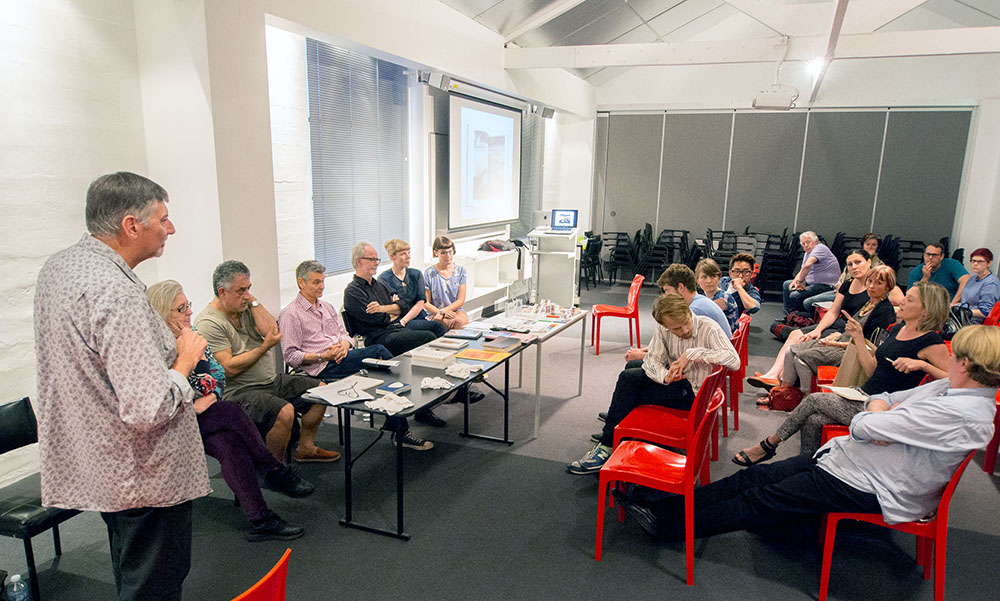
The ‘OTHER’ Photobook Forum – a question from the floor
FRIDAY EVENING: Later that evening we were involved with The ‘OTHER’ Photobook Forum – Artists’ Books, Zinesters and the Photobook took place. We have been working on this project for a couple of months now and we were able to bring together key practitioners from these ‘other’ photobook disciplines who discussed and provided commentary on their use of the photo in the book. The participants included photomonteur Peter Lyssiotis, zinesters Gracia Haby and Louise Jennison, artists’ book maker Dr Lyn Ashby, Des Cowley from the State Library of Victoria and Victoria Cooper who stood in for Georgia Hutchison who was unable to attend due to extenuating family issues.
It was an event that stirred much interest with artists like Deanna Hitti and Theo Strasser attending as well as Momento Pros’ Libby Jeffery, and photobook makers Kelvin Skewes, Daniel Boetker-Smith and Chris Bowes.
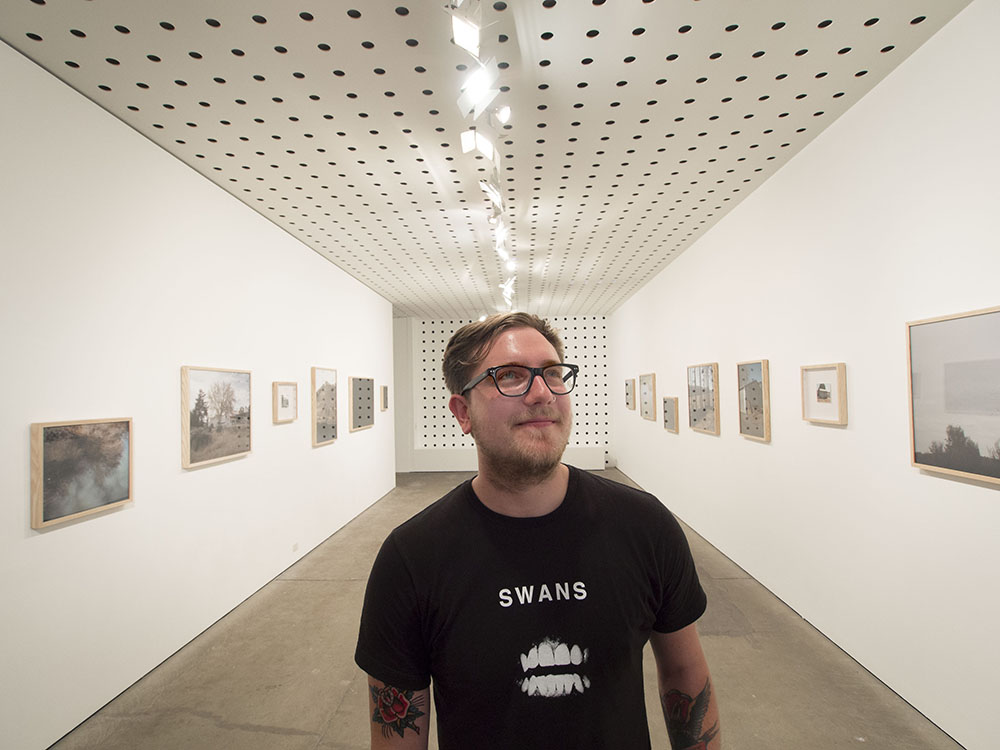
Jacob Raupach @ CCP
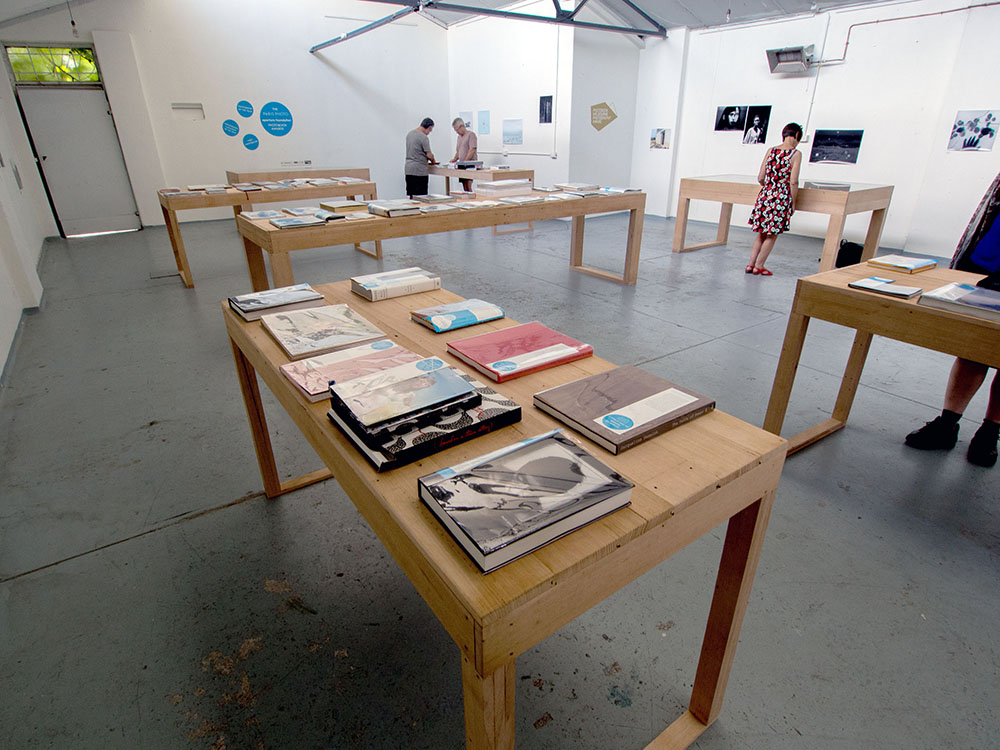
Aperture Books on display @ The Baron Said
SATURDAY: A day to attend artists talks at the Centre for Creative Photography by, amongst others photobookmaker Jacob Raupach and the exhibition FELL – Bought a copy of his latest book WEALTH. Following up with visits to the Momento Pro Australian Photo Book of the Year Award at the Asia Pacific Photobook Archive and the Aperture Photobook exhibition @ The Baron Said and a stimulating lunch with Peter and Tess Lyssiotis @Babkah.
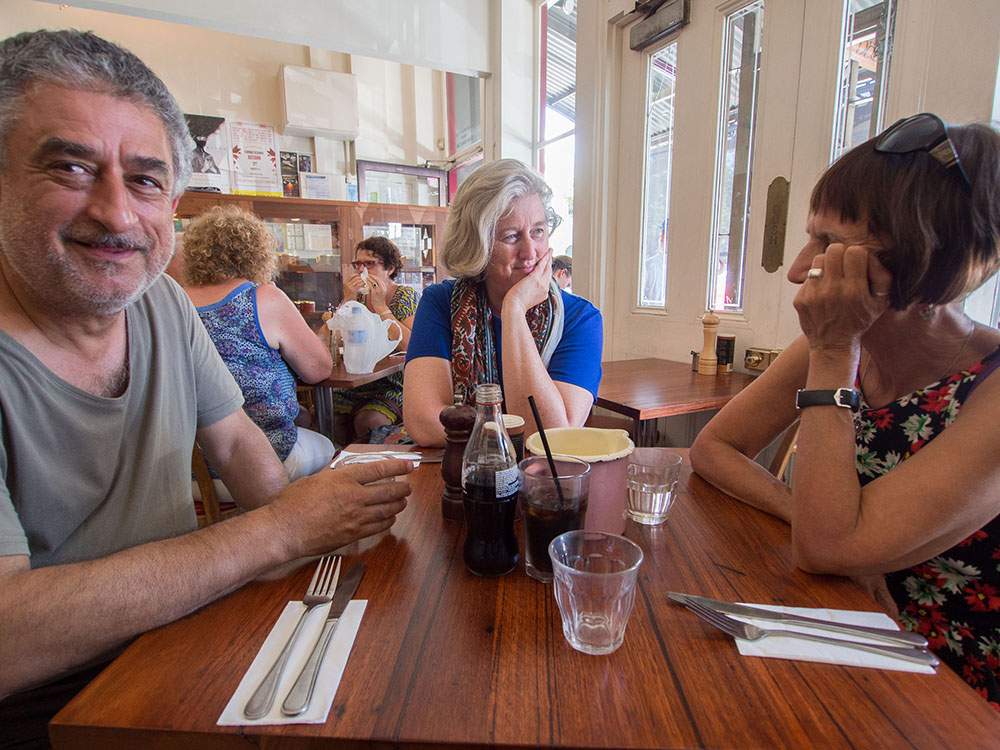
Lunch with Tess + Peter
Photobooked-out we headed back to the city by tram and had a chance meeting with Lismore artist and Siganto Artists Book Fellow Jan Davis who was attending a Print Council meeting – Only in Melbourne could strange intersections like that could happen.


SATURDAY EVENING: Melbourne White Night event
450,000 Melbournians took over the streets of the CBD – everything stayed open and performances and projections, bands and music were everywhere. Amongst other things we went to see the projections in the Dome at the State Library of Victoria at 10.30 at night – queued in line for 30 minutes with 1000s of others what a night…!
SUNDAY
A day of traveling home to cyclone weather drenched Brisbane.
UNTIL NEXT TIME —- For PHOTOBOOK MELBOURNE 2nd EDITION….
Regional Selfies: Communities and Self-Documentation
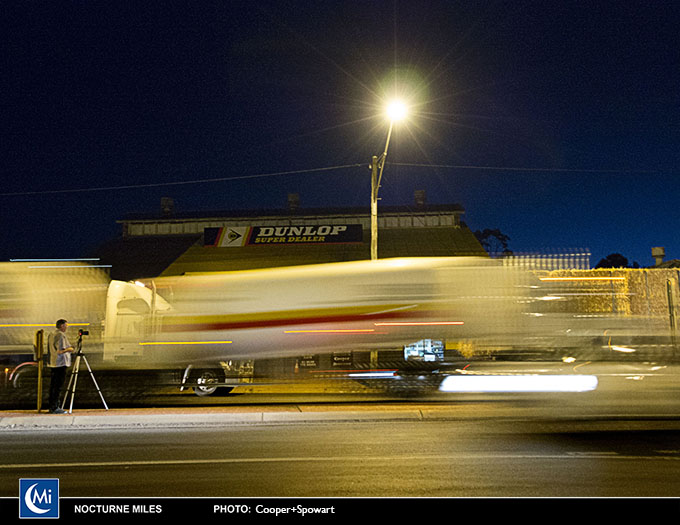
Through documentary photography and social media Victoria Cooper and Doug Spowart have explored connections with Place in urban and regional communities in Queensland, New South Wales and Victoria. The purpose of these Nocturne Projects is to capture everyday scenes of each community in nocturnal light, dusk and dawn. These images are then posted on a Nocturne project Facebook page to evoke stories, memories and shared experiences from the community.
In each project Spowart and Cooper found different ways to include community participation. In 2014, they were invited to work in Miles, a major town of the Western Downs Region of Queensland. The Nocturne Miles Community Documentary project sought to engage with the broader public to undertake self-documentation projects and skill development in nocturne photography. Both local and temporary residents who enjoy taking photos, as well as those more skilled in photography were all invited to participate. After an initial workshop, Spowart and Cooper mentored the 18 participants to create images for the project including self-portraits and daily assignments and produce Facebook reports and a zine.
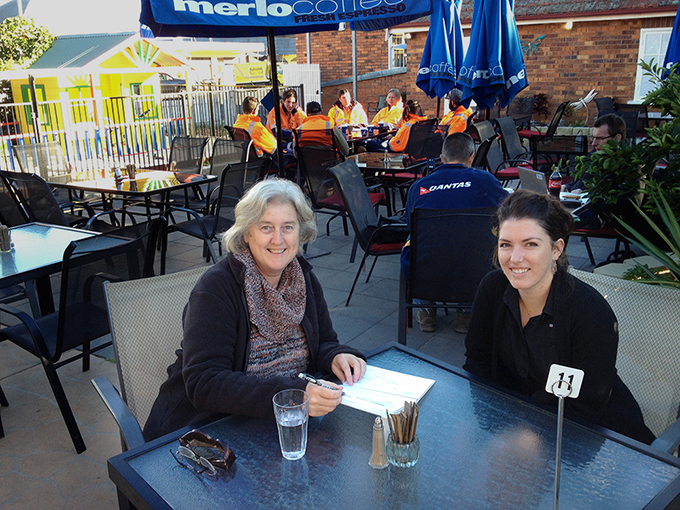
Vicky and Ashleigh Campbell in a pre-event planning meeting
To begin the project consultations were undertaken with staff from the Western Downs Regional Council’s Cultural Development team Ashleigh Campbell and Anne Keam at Dogwood Crossing to refine the project to match the needs of their community. Then centre staff sought out members of the community who could be interested in the project. Possible candidates then completed an Expressions of Interest form to provide some information on their experience and the photography tools they had access to e.g. DSLR camera, point and shoot camera, mobile phone or tablet cameras. Another important consideration was that the applicants were going to be in the region during the project to participate in briefings, workshops and shootouts as well as the final day’s zine making activity.
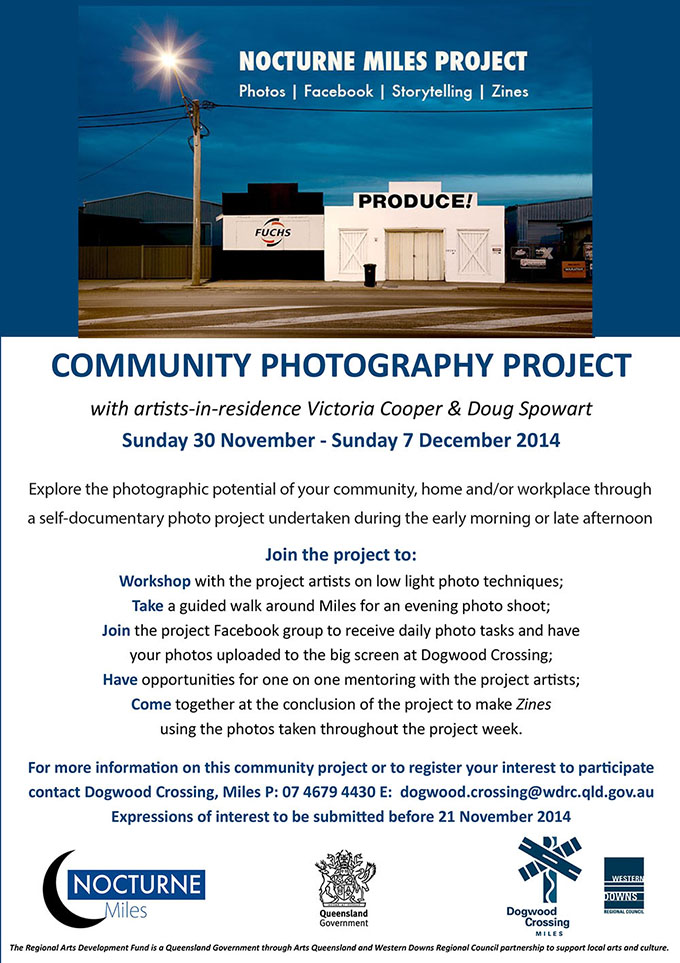
Project Flyer – Nocturne Miles
While numbers were limited there was a desire by the artists and Dogwood Crossing that the project accessible to as many participants and be as inclusive as possible. The one proviso was that project participants needed to live and/or work in or near Miles including the smaller surrounding towns or on properties/work camps in the Miles district.
The participants engaged with the project in a variety of different ways including:
- An initial introduction to the project and skill development workshop;
- Guided evening photography shoot-outs in the main Street of Miles as well as at the Miles Historic Village;
- Daily photo tasks over the week of the project assigned through a project Facebook group;
- Optional mentoring sessions, where required, to enable images to be prepared and uploaded for the project;
- Display of participants photos to a digital screen at Dogwood Crossing; and
- A practical ‘zine’ making workshop.

Doug doing a briefing
The project began on Sunday November 30 with an introductory workshop, briefing and a shootout. Progressively images were collated and uploaded to the Nocturne Miles Community Facebook page. Each day a new topic was presented a challenge and their interpretation formed into a photocollage. Communication with the participants was made through a private Facebook group page that enabled hear 24hour contact with participants and Cooper+Spowart. Some participants came into Dogwood Crossing with their photos or with requests for support in making and/or optimising better photographs. On Wednesday evening special access was provided to the Miles Historical Village for group to experiment with ‘painting with light’ and ‘projection’ techniques.
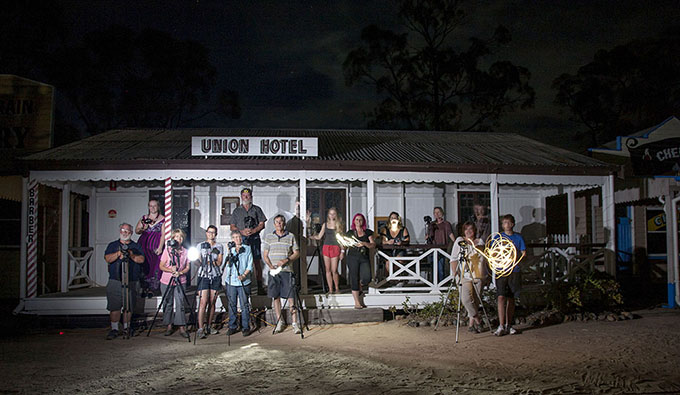
The Nocturne Miles participants at Miles Historical Village
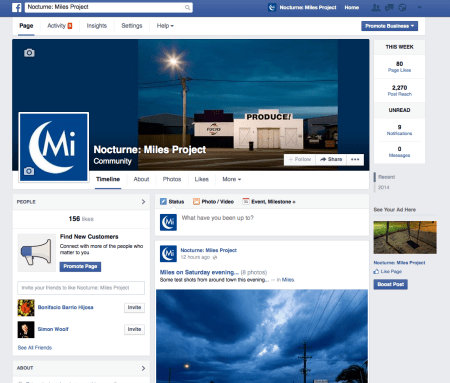
Facebook page
Cooper and Spowart added their images to the Facebook page as well and some visitors to the page posted stories about the places pictured. By the project’s end the page had 241 Page Likes, 60 Posts and the Total Reach was 17,771. Both the group page and the community page are still active.

Vicky and Doug in the Dogwood Crossing foyer
Some of the photocollages that formed the 8 page Zines that were made using the Dogwood Crossing’s A3 colour photocopier. These were cut and folded into zines that were inserted into a red and yellow special edition of the Centre for Regional Arts Practice’s Artists Survey Books.
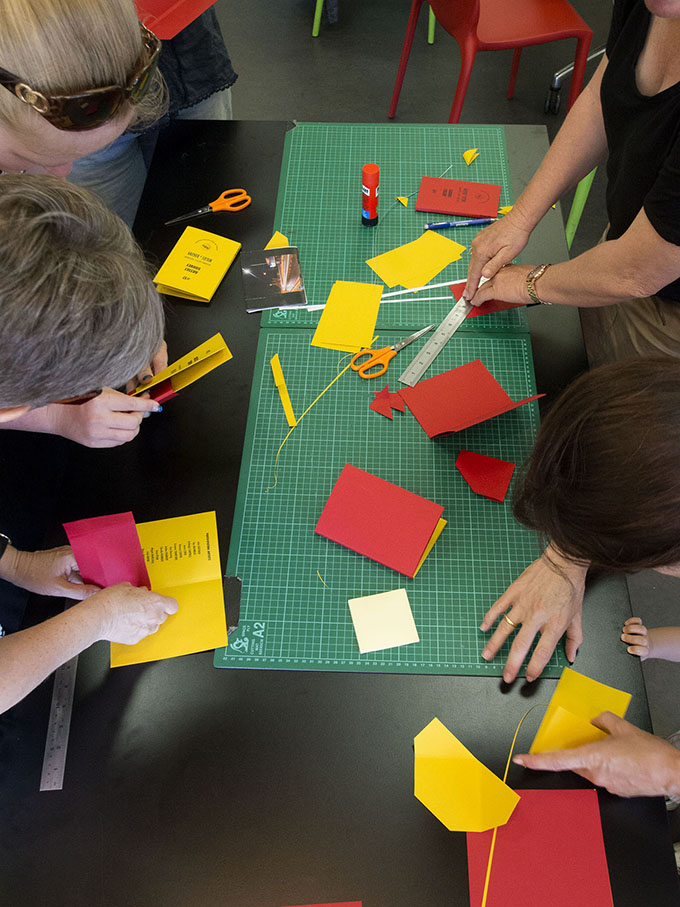
Nocturne Miles Zine making workshop
Some of the Photocollages
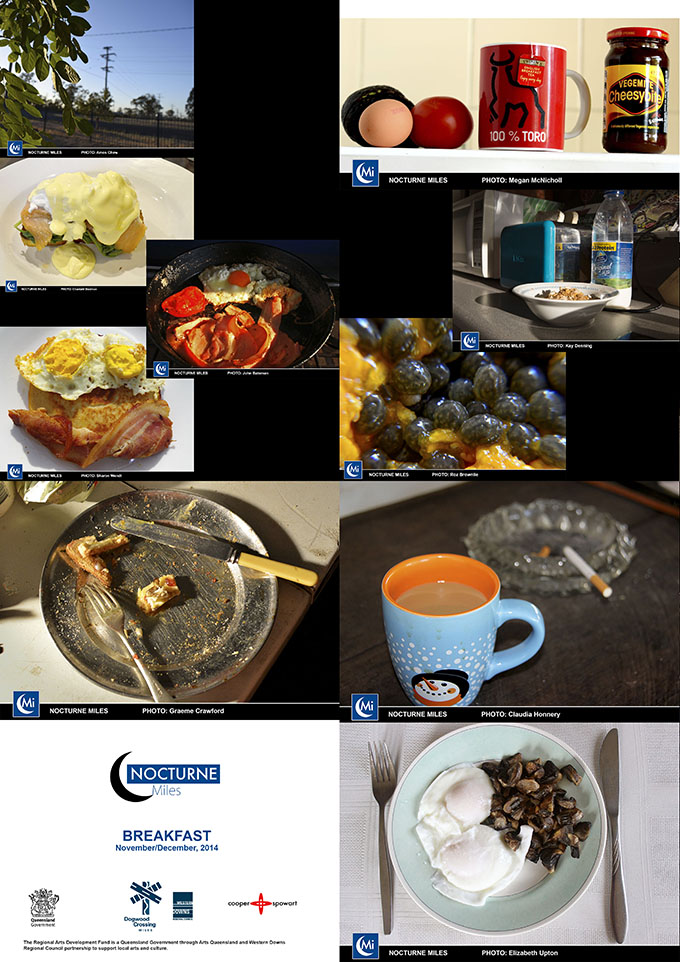
Breakfast – Nocturne Miles
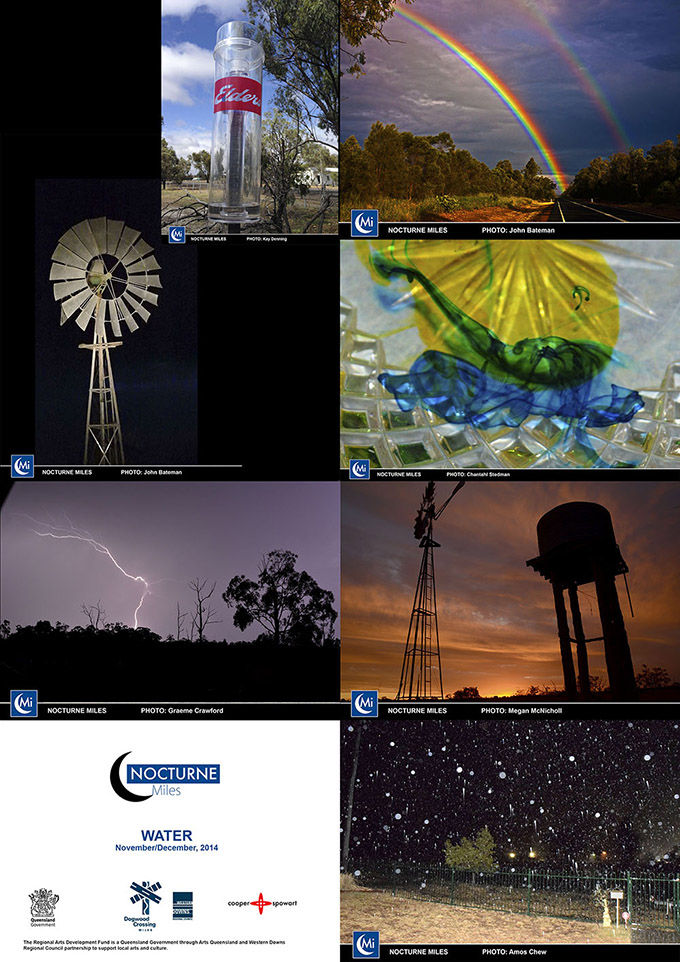
Water – Nocturne Miles

Miles Historical Villiage – Nocturne Miles
The photocollages presented here are examples of the image sets created by the participants. It is interesting to note that the original images may have emanated from all camera formats fro iPhone, simple digital point-n-shoot to sophisticated DSLRs.
We hear a lot about documentary photographers and student photographers travelling out into the country to create documents of life outside of the metropolis. Once on the ground these photographers seek out subjects to pursue and photograph. In this way significant documents are created of these outlying communities. However, the subject of the of the photographer’s gaze, and what is photographed, is based on the view of ‘outsiders’. The photographs they make may match preconceived ideas, and mythologised opinions, that they bring with them rather than how the people who inhabit these places feel about how and where they live.
What the Nocturne Miles project shows is perhaps that in an age where everyone can be a photographer what is important is the photograph itself. What then stands out the most is the link between the photograph and it’s authenticity. With this in mind these photographs are actual fragments of the lives of local people, whether they are from the farm, or people engaged in extractive industries, or those who work in administration roles or students at school, their voice in this conversation adds another view we can have of our regional communities.
The project was undertaken between November 21 and December 7 2014 and was overseen by Western Downs Regional Council’s Cultural Development Coordinator Ashleigh Campbell and Cultural Development Officer Anne Keam. The success of the project was also made possible by the enthusiastic support of the WDRC team at Dogwood Crossing.
What follows are more photocollages and individual images from the project
More images are on the Surat Basin.com.au website HERE
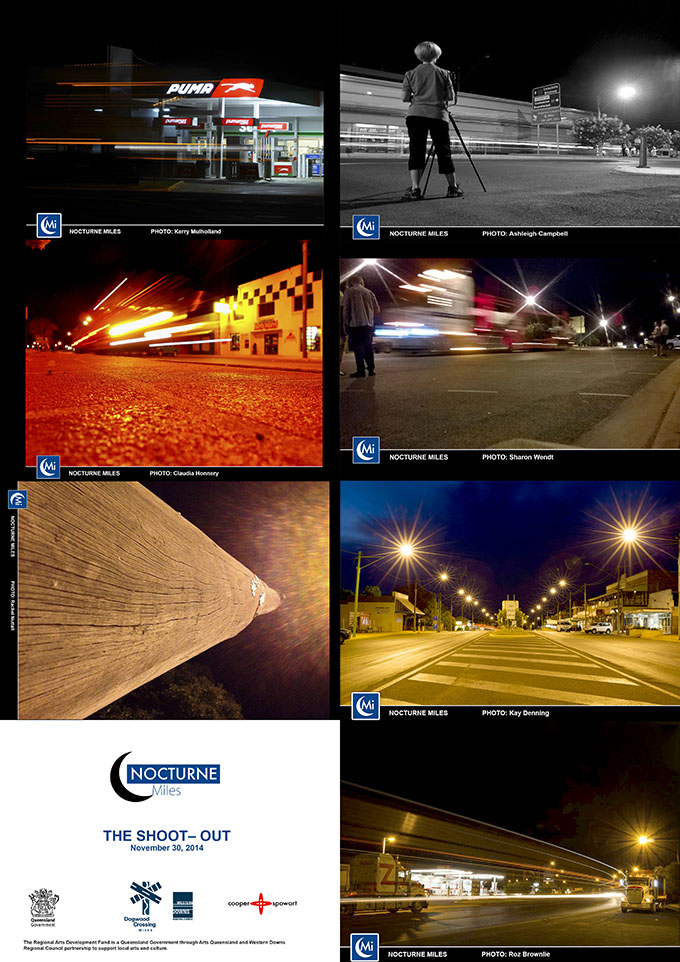
Murlilla Street – Nocturne Miles
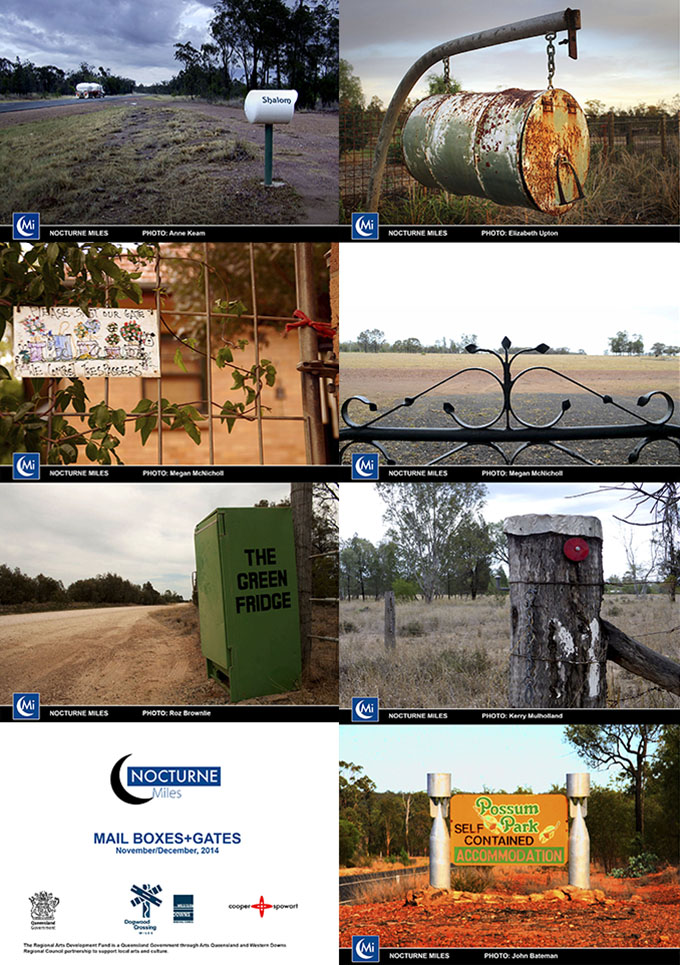
The front gate – Nocturne Miles
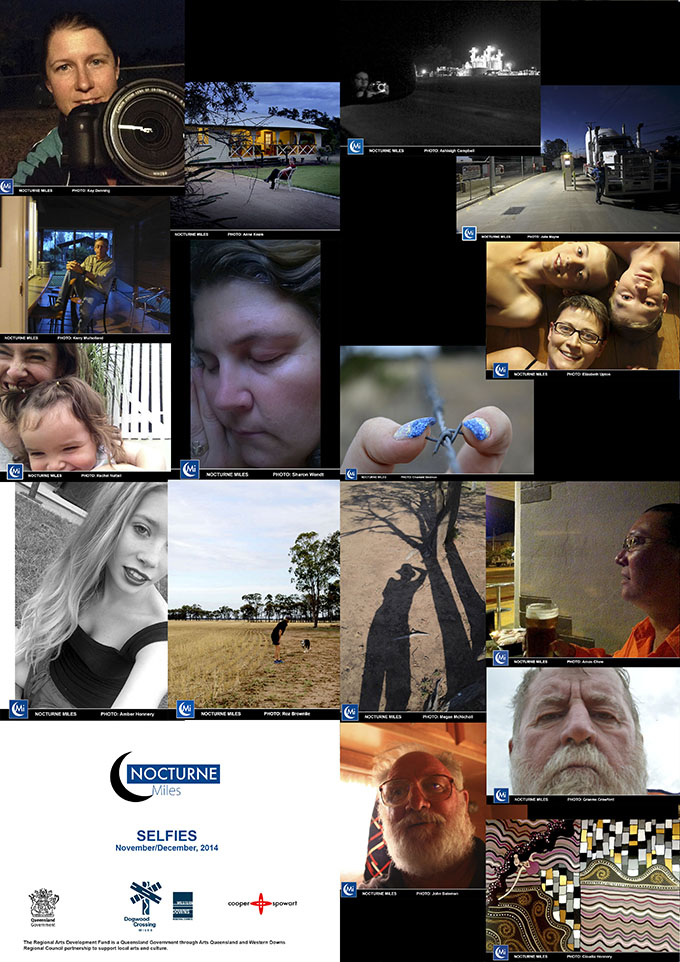
Selfies – Nocturne Miles
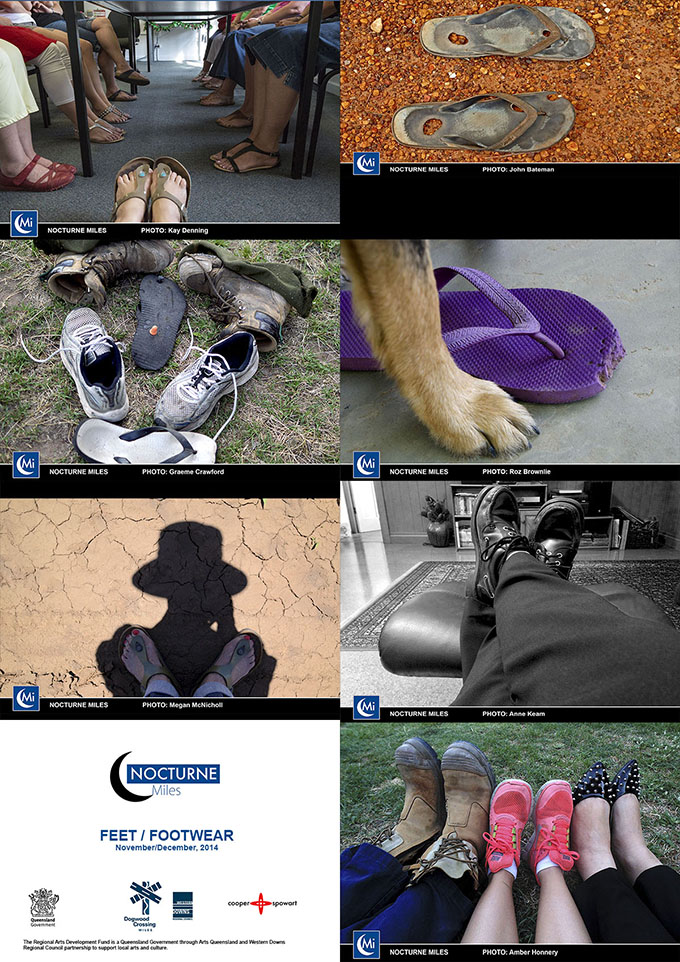
Footwear – Nocturne Miles
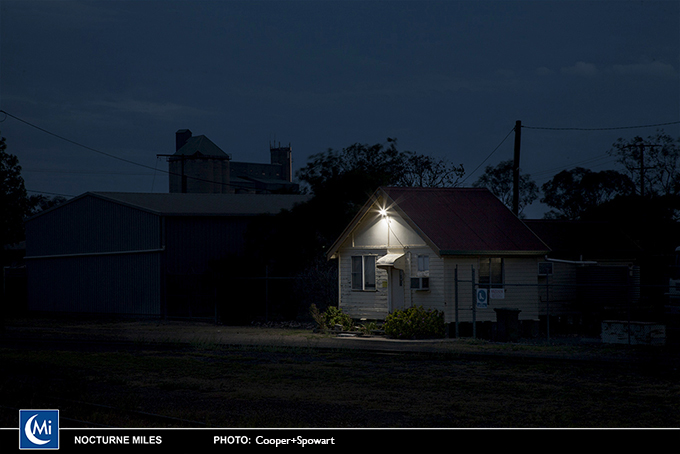
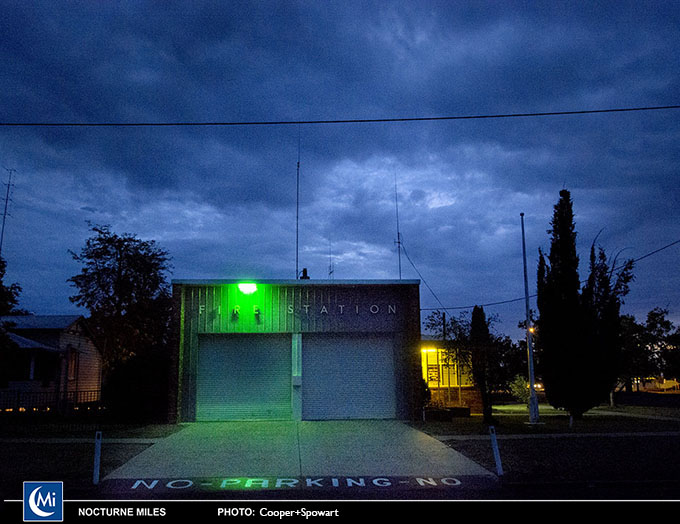
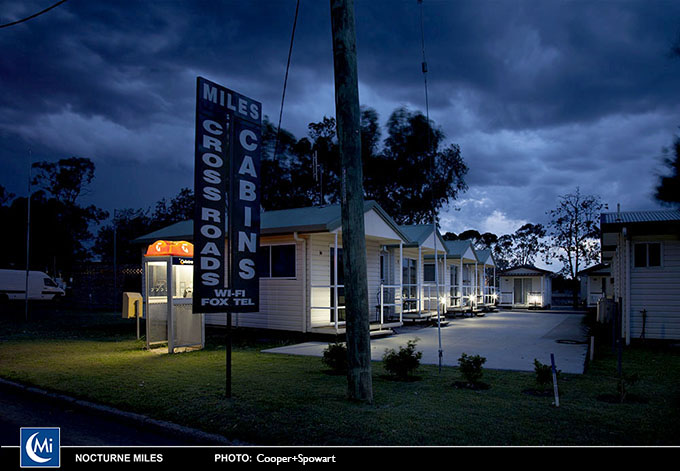

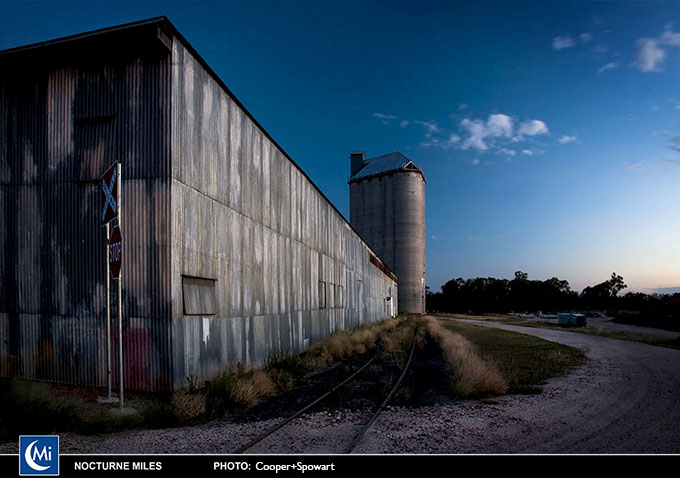
Text and photos unless otherwise accredited are Copyright ©2014 Victoria Cooper+Doug Spowart
DOING IT BY THE BOOK: Judging the 2015 Momento Pro Australian Photo Book Awards
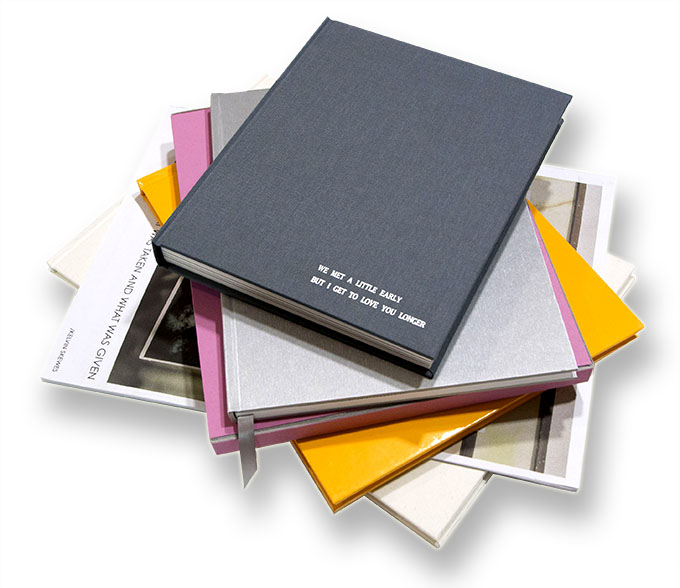
The 2014 Australian Photobook of the Year Finalists stack
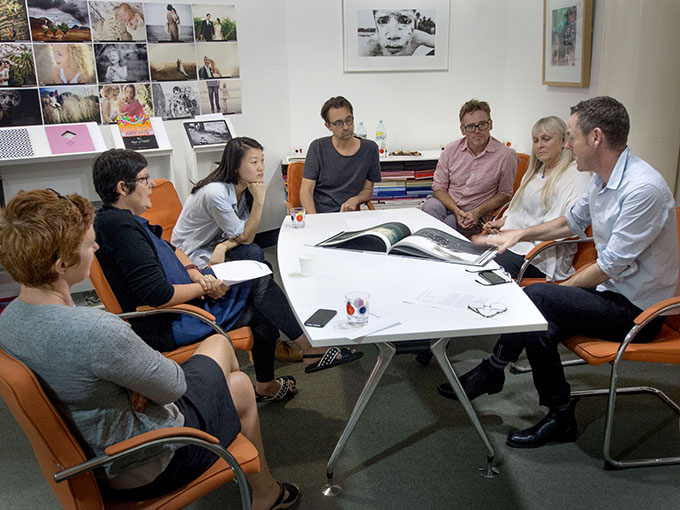
On the 30th of January six identities from the Australian publishing and photography scene gathered in Sydney to review a selection of the best photo books from Australian authors and to select a recipient for the title Momento Pro Australian Photo Book of the Year. Prior to this event 100 books had been submitted in the award by Australian photographers working in a wide range of book forms that employ photography.
The judges for the award were: Shaune Lakin (Curator of Photography @ National Gallery Of Australia), Diana Hill [Publisher @ Murdoch Books), Sonya Jeffery (Books at Manic), Kim Hungerford (Art and Design Consultant and Buyer @ Kinokuniya), Michael Howard (Joint Art Director @ Sydney Morning Herald) and Doug Spowart (Research Fellow – Australian Library of Art, State Library of Queensland).
The judges deliberating PHOTO: Doug Spowart
The process started 10 days earlier when the judges were sent a USB drive containing the 100 PDF files. Within a few days the judges were to review the files and select their top 12 books. These results where then collated by the Momento Pro team to give 15 finalists. They were:
- Gold Coast Ying Ang
- Nonna to Nana Jessie + Jacqueline DiBlasi
- Typhoon Stephen Dupont
- Better Half Jackson Eaton
- Lover of Home Odette England
- The Beginning Brendan Esposito
- The Kings of KKH Andrea Francolini
- Bedrooms of the Fallen Ashley Gilbertson
- Tribal PNG David Kirkland
- In the Folds of Hills Kristian Laemmle-Ruff
- Don’t Just Tell Them, Show Them Jesse Marlow
- SALT Emma Phillips
- Nauru: What was taken and what was given Kelvin Skewes
- We Met a Little Early But I Get to Love You Longer Raphaela Rosella.
- Fibro Dreams Glenn Sloggett
Of these finalists, one book was published by an academic institution, three were published through an independent publisher and two were unpublished – the remaining books were self-published. The diversity of subject matter covered by the books included a portraiture and documentary cookbook, ethnographic documentary, social documentary, conceptual projects about human relationships of place and memory, books about irony and humour or glimpsed juxtapositions of subjects seen and photographed in the street. The books mainly fitted the conventional codex model and were trade printed and bound. One ‘photo book’ was a newspaper styled publication, and another was a deluxe artists’ book laparello of an exceptionally large size.
More debating … PHOTOS: Doug Spowart
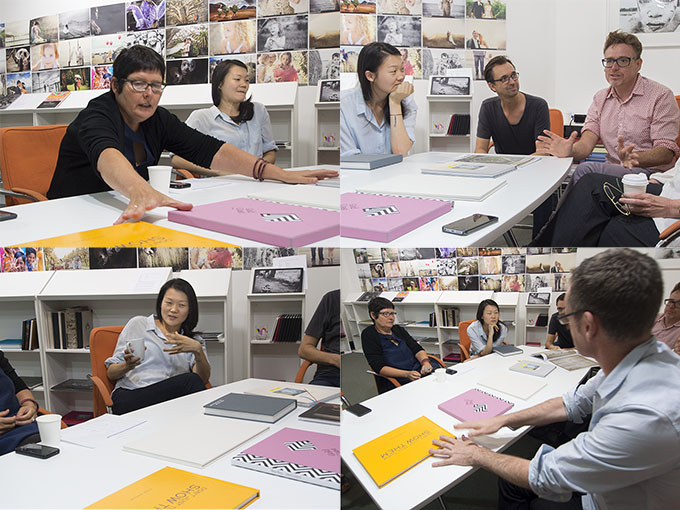
As the judges came together at the Momento Pro facility in Chippendale they introduced themselves and participated in briefings conducted by Chairman of Jurors Heidi Romano, Director of Photo Book Melbourne and Libby Jeffery from the award sponsor Momento Pro. Then each judge engaged with the books – turning pages, cracking spines, smelling paper and inks, looking, reading, touching and connecting with the narrative and the experience that each book may contain. As all books were originally seen as digital images on screen there were some surprises as the digital version presented quite different experience to the physical printed book.
At this time individual conversations took place, ideas and responses to books shared. Opinions about photo books expressed and probed. Some of the key discussion points related to questions like ‘What is a photo book?’, and the validity of certain book topics and forms like cookbooks, newspapers, grand artists’ book productions – were they able to be considered as photo books? This part of the process was useful as it enabled a range of ideas to emerge from the broad views and experience of the judging panel.
The six judges then gathered around a large table – each book was presented for discussion at the end of which a vote was made as to whether it would be held-over in a ‘for further consideration’ stack or not. The discussions enabled each judge to express their experience of the book, opinions about narrative, sequencing, design and typography, production values as well as how the books ‘fitted’ with the idea of the photo book. One interesting consideration was the suitability of the book’s format, design and structure as a container to hold and present the narrative.
Some of the other discussion points that emerged included:
- A trend which is emerging where the cover of the book has no photograph on it or minimal text to identify it;
- The absence of the author’s name on the cover of the book;
- The length of the book – many books the judges felt were just too long;
- The editing and sequencing of images – many judges felt that they’d like to have done a review of the book to give an opportunity for the great photos and story to be more effectively told;
- Texts within books need quality editing as well;
- Aspects of book size and binding – a concern was ‘whether the physical nature of the book gets in the way of its storytelling potential’;
- Design features that do not support the narrative; and
- Ethics in documentary photography in relation to what level of personal information about the subject is OK to disclose in a book.
As a result of this judging segment the 15 finalists were reduced to six books. These books were interrogated further with particular attention being paid to the expectation that a great photo book should create, as it is activated by the viewer/reader, a moment where the book’s design, photographs, texts, layout, sequencing all combine to express a powerful statement, narrative or emotional response.
Of these six books selected Heidi Romano was to comment that ‘they were equal to any of the world’s current great photo books’. One final review and discussion needed to follow to select the ultimate title winner. This was preceded with discussion regarding the message that awards like these make to the photo book community about what constitutes exemplary work. The participating judges recognized the importance of this aspect of the final award selection. Ultimately all of the books were given highly commended awards with Kelvin Skewes’ Nauru: What was taken and what was given being awarded the title of Runner Up. First prize was awarded to Raphaela Rosella’s We Met a Little Early But I Get to Love You Longer book. Although unpublished the book had been printed and bound by the Momento Pro team to the author’s specifications. It featured personal narratives written by young mothers, the design and page-turning/text sequencing, powerful imagery and the inclusion of personal notes and letters extended the story and loaded the emotional response potential for the viewer.
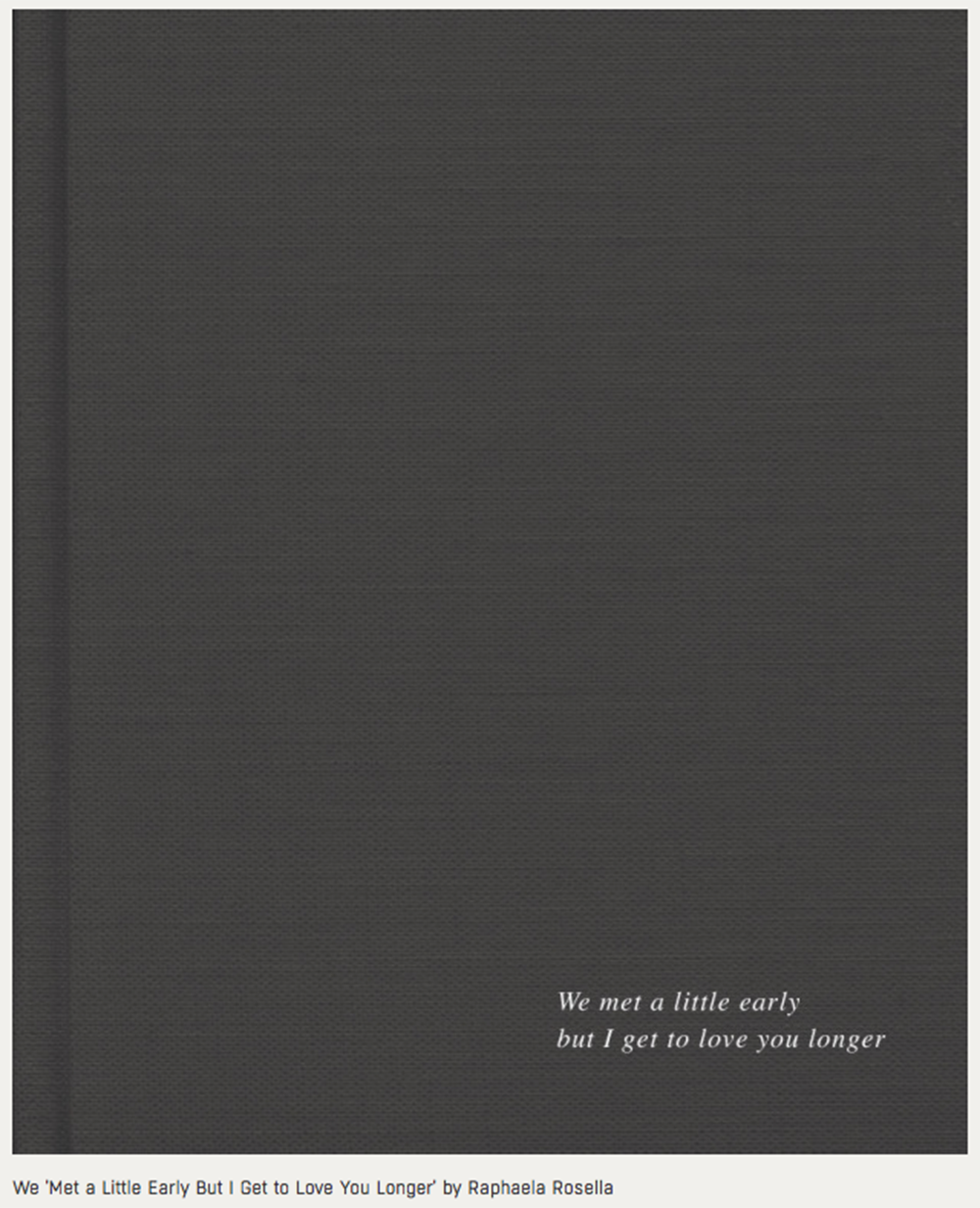
We Met a Little Early But I Get to Love You Longer Raphaela Rosella
Images and words from this book are available HERE: RAPHAELA_ROSELLA-We_met_Book
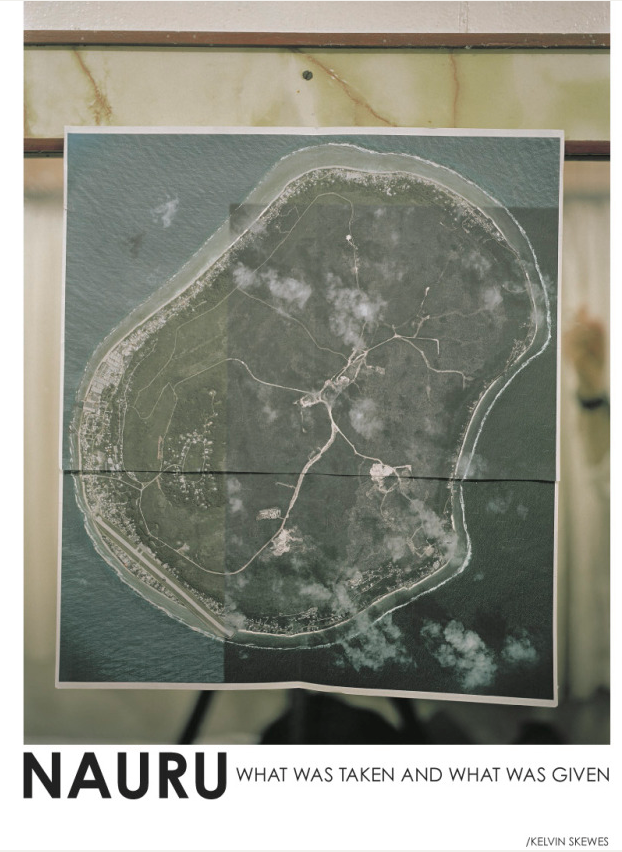
Nauru: What was taken and what was given Kelvin Skewes
The details of this book are available HERE
MORE DETAILS ABOUT THE BOOKS AND JUDGES COMMENTS ARE AVAILABLE HERE
The award winners receive:
Winner – $1,500 cash + $8,000 Momento Pro credit
Runner Up – $1,500 Momento Pro credit
People’s Choice – $500 Momento Pro credit
An additional award will be the ‘peoples choice’ from votes received during the exhibition of the books at the Asia Pacific Photobook Archive at the Photo Book Melbourne event.
This award helps to define what great Australian photobooks can be is and has rewarded great Australian photobooks. Additionally it will continue to fuel commentary and debate around the nature of the practice in Australia and serve to extend interest in and recognition of the discipline and the practitioners of the discipline in Australia.
Doug Spowart
February 12, 2015
WOTWEDID BLOG: 2014 in review – interesting facts + stats
The WordPress.com stats people prepared a 2014 annual report for our WOTWEDID blog.

Here’s an excerpt:
The concert hall at the Sydney Opera House holds 2,700 people. This blog was viewed about 13,000 times in 2014. If it were a concert at Sydney Opera House, it would take about 5 sold-out performances for that many people to see it.
BEING [photo]BOOKED @ QLD COLLEGE OF ART
Heather introduces Doug’s lecture…
.
Last week we were guest presenters at the Queensland College of Art on the Gold Coast. We worked with photo media and digital media students and their lecturer Heather Faulkner discussing the topic of the contemporary photobook.
.
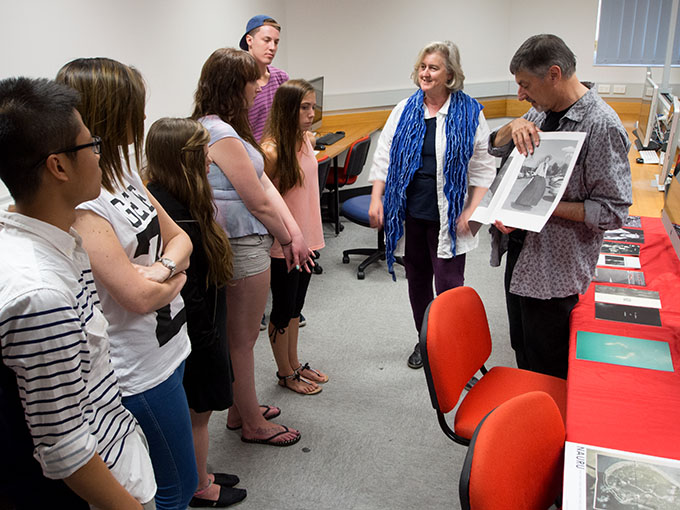
Victoria Cooper and Doug Spowart talking about photobooks….PHOTO: Heather Faulkner
.
Doug presented a lecture on the history of the photobook and brought students up to date with the contemporary photobook including Ying Ang’s latest book ‘Gold Coast’. Students then were given an opportunity to hold, handle and view a range of contemporary photobooks from Australia and overseas including books by, Alec Soth and Brad Zellar, Martin Parr, Garry Trinh, Daniel Milnor, George Voulgaropoulos, Jacob Raupach, Lloyd Stubber, Emma Phillips, Kelvin Skewes, Joachim Schmid, James Mollison, Paul Graham, Gracia and Louise as well as a selection of zines from the Sticky Institute. We also presented a selection of our own photobooks and artists’ books. Of particular interest to the students was the structure, construction, printing and binding of photobooks.
.
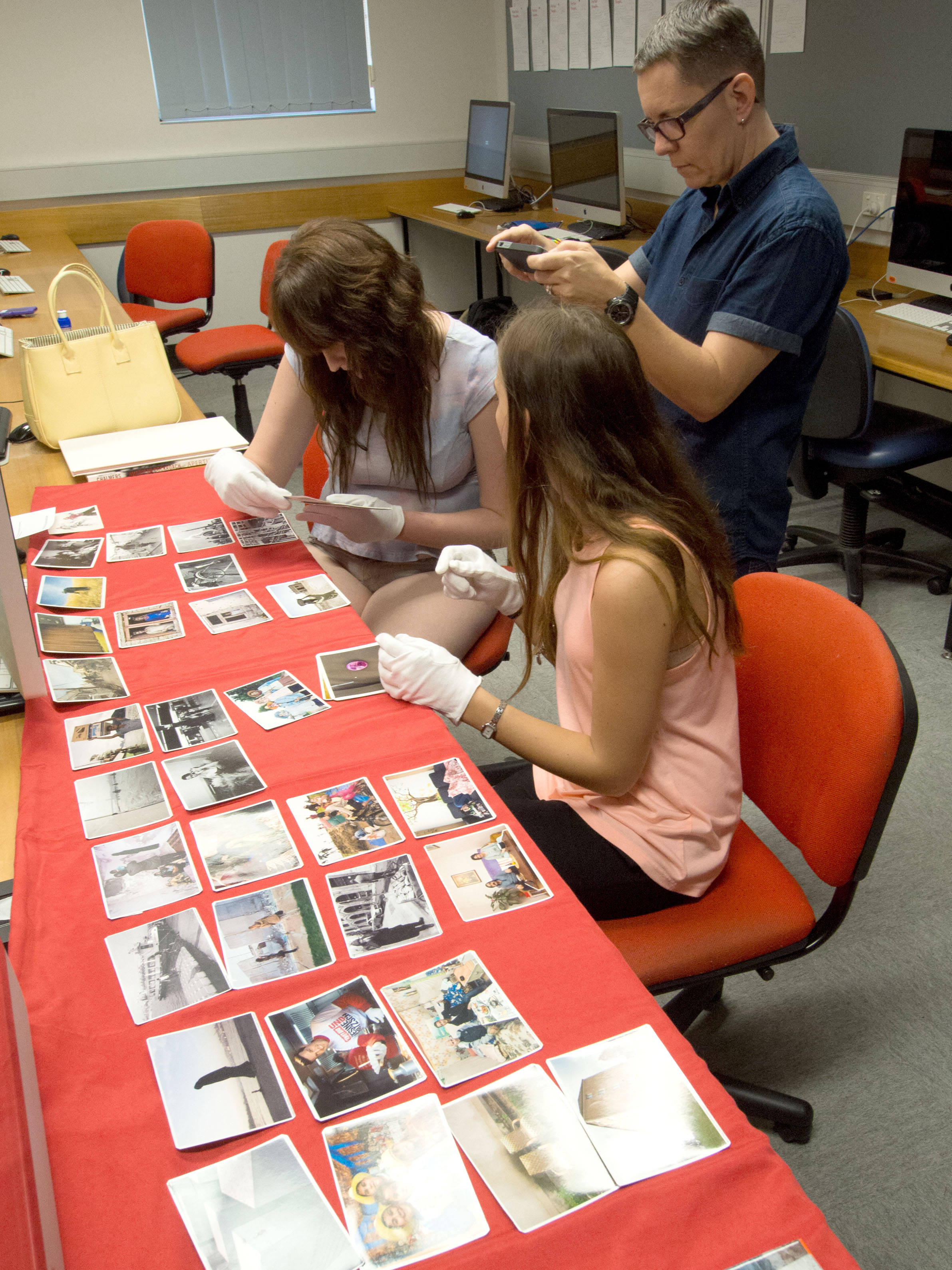
Students working on a sequencing task with Heather Faulkner
An important part of an accompanying tutorial covered ideas around the sequencing of images in photobooks and the ways in which narrative could be expressed. Students were then tasked to work with a series of images using unusual sequencing strategies that we suggested.
.
We enjoyed the opportunity to engage with these students and discuss one of our favourite topics and share amazing books from our photobook library. Thank you Heather Faulkner for arranging this event…
.
.
.
.
GEORGE PATON GALLERY: Artist’s Books (reprised) Exhibition
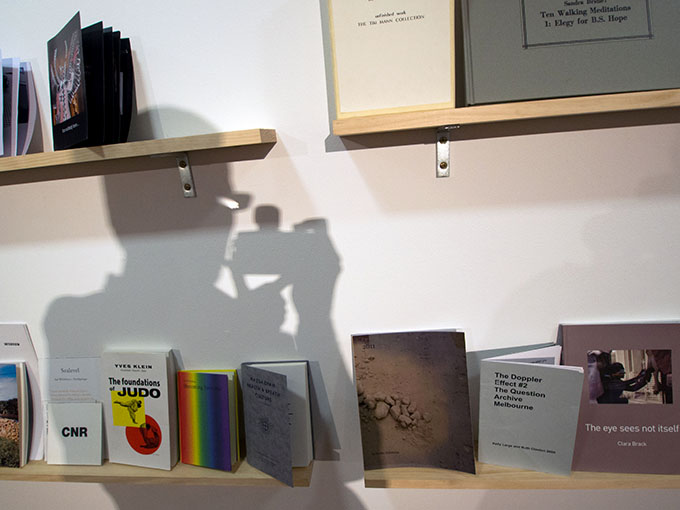
Artists’ Book Selfie
.
Digging in the archive: past and present
Artist’s Books (reprised) [artists’ books 1978-2014]: George Paton Gallery, University of Melbourne
Dates: 26 August to 5 September
A recent show entitled, George Paton Gallery, Artist’s Books (reprised), promoted that it would be showing “four decades of investigation into the possibilities and limitations of the artists’ book form.” Whilst the exhibition as presented had some gaps in the chronology, it did live up to its claim of presenting a significant collection of contemporary works alongside a carefully curated group of seminal artists’ book works from shows presented at the George Paton Gallery in the 1970s and 80s.
.
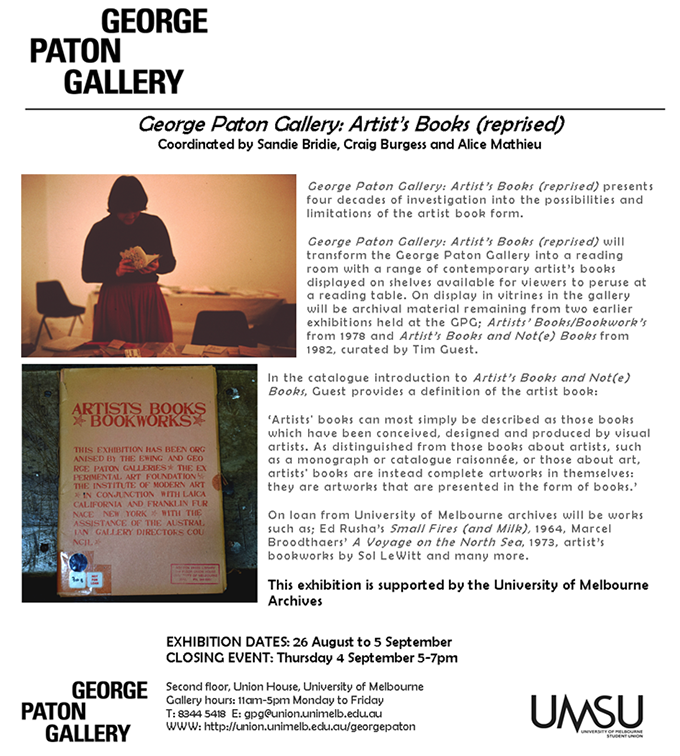
George Paton Gallery Website notice
.
Visitors to the gallery encountered a space resembling a reading room with trestle tables and bookshelves presenting the contemporary books for viewing, handling and reading. Some books were marked as ‘white-gloved’ handling whilst the majority was available for direct tactile experience. Enclosed in vitrines were the historical books on loan from the University of Melbourne archives. Interestingly during the 1970s and 80s these books would have only cost a few dollars to buy but now they attract significant values. Included in this prized collection of books are: Ed Ruscha’s Small Flres and Milk; 1964; Marcel Broodthaers’ A Voyage on the North Sea; 1973; Sol LeWitt’s Grids – using all combinations of straight, not- straight and broken lines; 1975; Richard Long’s The North Woods, 1977 and Dieter Roth’s, Gesammelte Werke, Band 7, 1974. These books were sourced from past exhibitions held by the George Paton Galley: Artists’ Books/Bookworks from 1978 and Artist’s Books and Not (e) Book! from 1982, the latter curated by Canadian Tim Guest.
.
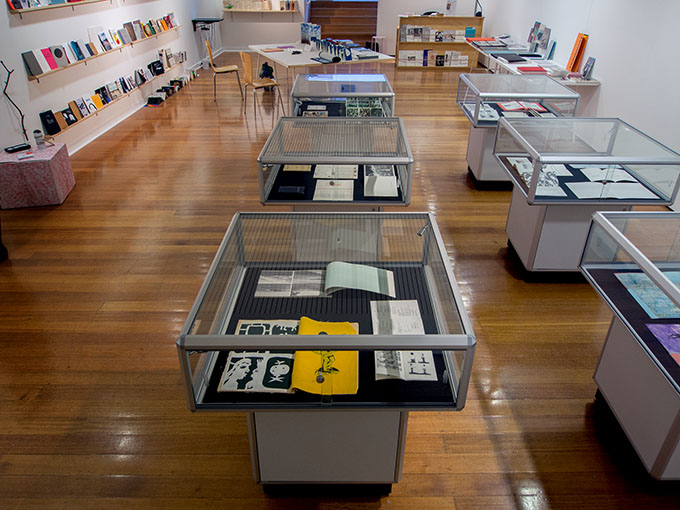
George Paton Gallery
In all just over 100 books were available for viewing essentially coming from a ‘call out’ for artists book makers to present work for the show. There were some interesting names; Peter Lyssiotis, Theo Strasser, Sandra Bridie, mail artist David Dellafiora, zinesters Gracia Haby and Louise Jennison, and photo-newspaper publisher Jacob Raupach. Anyone with a preconceived idea of what an artists’ book is, or should be, may have been challenged by some of the works in the show – but what an experience it was to be challenged in that way. It was a rare opportunity to view and compare such a diverse and historical collection of artists’ books.
.
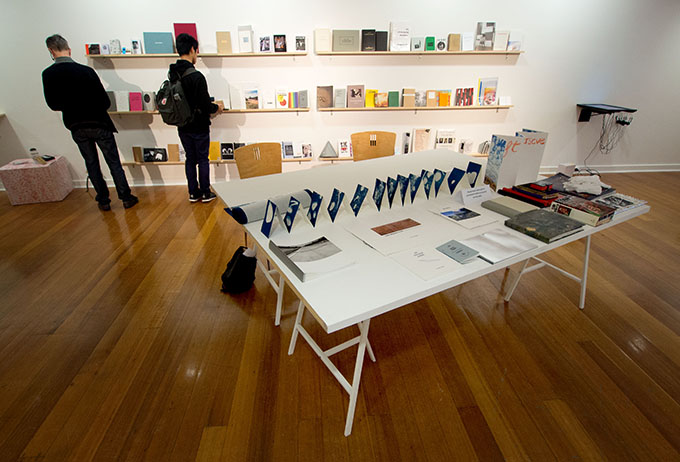
Exhibition installation
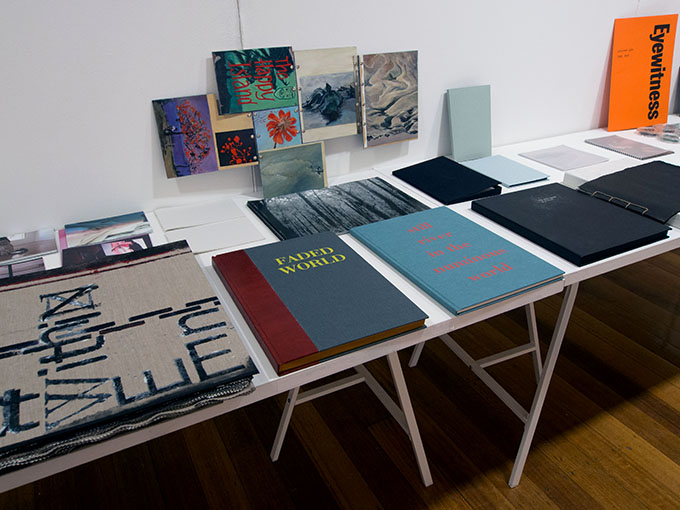
Antoni Jach’s Faded World and books by other artists
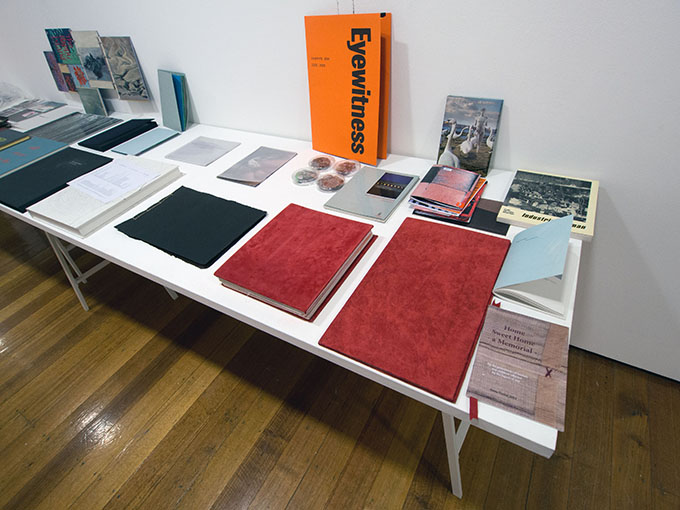
Books by Peter Lyssiotis, Theo Strasser and others
After spending a couple of hours in the exhibition space I searched for a way of describing the show. Then I found a text that offered a perceptive critical evaluation of the artists’ book genre. Some relevant passages from this text follow…
.
Artists’ books can most simply be described as those books which have been conceived, designed and produced by visual artists. As distinguished from those books about artists, such as a monograph of catalogue raisonee, or about art, artists’ books are instead complete artworks in themselves: they are artworks that are presented in the form of books.
Since about 1960 a distinct genre of artists’ books has appeared. These are by artists who are self-consciously exploring the possibilities of printed books: the social dynamics of a reproducible vs. a unique art object; the aesthetics of the mass print media vs. fine art prints or deluxe editions.
The contemporary genre of artists’ books is now a widespread phenomenon. Practically every significant development in western art has been reflected in the ongoing publication of artists’ books. There are books coming out of the movements of pop art, minimalism, arte povera, performance art, fluxus, happenings, and new image painting. Conceptual artists of the 1960’s and 70’s in particular, utilized the book form as a method of realizing artworks. We can regard these books now as a vein which runs through many areas of contemporary art and includes diverse movements, interests and preoccupations.
Or have the interests been so diverse? Pop art, minimalism, performance art, arts provera, were all movements distinct from (even antagonistic to) one another, yet they all belonged to a general tendency towards “non-objective” art… Briefly, this tendency has been reflected in a desire on the part of artists to explore new media, in an attempt to abandon the traditional (modernist) disciplines of painting and sculpture. It was/is in favour of the widened scope of the flux and flow of a multi-disciplinary approach. For example, an artist may be involved in sculpture as easily as film, performance, video, photography and/or books. Perhaps most significantly there has been a conscious determination to undercut the reification of artworks – society’s valuation of art – by concentrating on the non-objective. This has meant, for instance, producing works from common industrial or throw away materials (art povera, fluxus), works constructed only in theory (conceptual art, language art), imagery stolen from the banal repertoire of mass media (pop art) ….. All this seems to have been more successful as an ideal than as an actual practice. Minimal sculpture in the late 60’s was quite successful in the art marketplace. Conceptual art has been immensely influential, popular, and saleable. As much as these artworks were determined in opposition to the bourgeoise reification of art they were inevitably complicit with it. That is because capitalism is a social system which seems to embrace new ideas but in fact appropriates and establishes a commercial value for then.
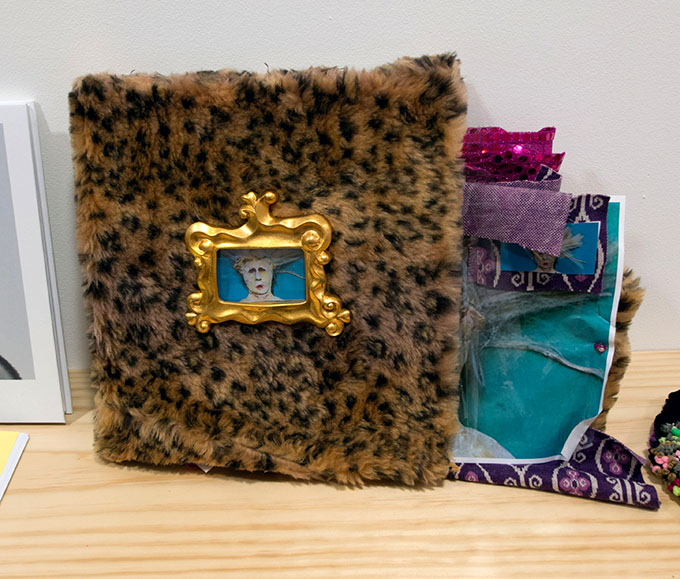
A book by Dianne Dickson
Artists’ books typify this interest in non-objectivity and reflect the internal contradictions of such an ideal in a particular way. In contrast to the traditional “livre d’artistes” of deluxe editions, artists’ books are usually inexpensively produced and sold. They are affordable, accessible and as plebeian as an art object can be. In fact they are almost too exemplary of the non-objective ideal.
As books they are not commercially viable simply because they defy the expectations of a mass market by presenting avant-garde information. Yet they have few patrons in the art world because their affordability to the public represents a low profit for a dealer. Also, books can not [sic] be viewed in the same way as other art objects; they must be held in one’s own hands and read. It is remarkable then that despite the contradictions and foils of art’s survival, artists’ books have become such a highly evolved genre of contemporary art, as evidenced by the works in this exhibition.
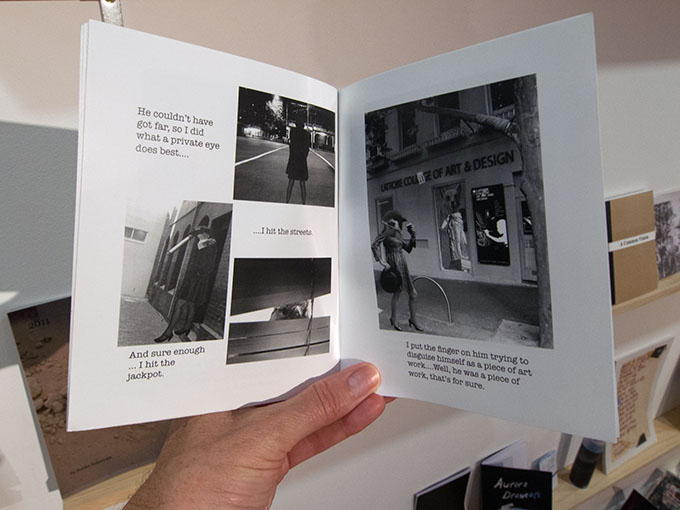
Suzannah Griffith’s While The City Sleeps
.
To illustrate means to make something clear by example, or to adorn a book with pictures. Within a publication, an illustration can be a picture, a drawing, a photograph, a design, or an ornament. Illustration is, of course, a prominent element in all mass media publishing. To consider all illustrations as a single genre is, in a way, quite boggling. It means imagining all magazines in the world and all the printed pictures.
With this imagining I try to analyze these pictures but have only an individual response to guide me. In principle my inquiries and suggestions are all subjective, my curiosity is intuitive, my critical remarks are speculative. These habits of mind and predilections constitute the trail of my argument. Because illustration operates as such an enormous social phenomenon, it is difficult to grasp its total meaning as a genre. It is too huge a concept. Yet paradoxically, all is intimately familiar.
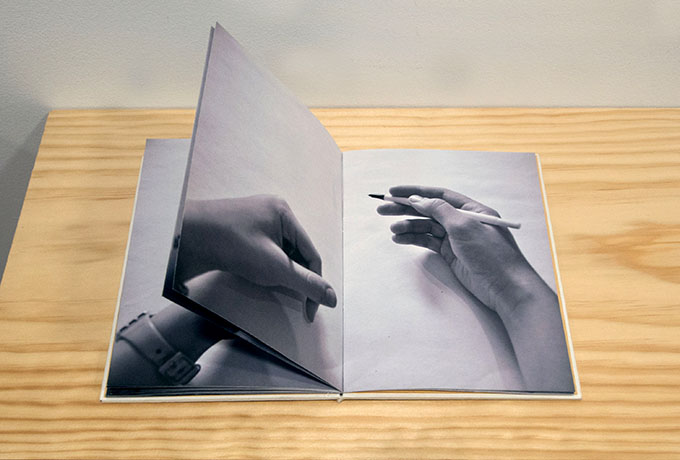
Sarah McConnell’s 29 2011
Practically everyone looks through magazines, sees the pictures, knows what they mean. But try to separate yourself from a simple recognition of the picture and examine the picture as a conceptual model and you may understand how difficult it can be. An illustration is not simply a picture of an object or thing. In that object’s absence a picture is a way of visualizing it, recalling it or conjuring it. Then all together the medium of illustration is a way of visualizing the world. As illustration is a mass medium, it is certainly a very powerful and influential instrument of ideas. As a conceptual model, a picture is showing us how to think and what to think about.
Art characteristically departs from conventions. In leading the way from these conventions and artists can end up revealing and/or inventing upon a given culture, popular or otherwise. Furthermore, the artists’ books in this exhibition occupy a middle ground between the hermetic region of high art and the mass culture of popular illustration. They also embody a comparison between the two; they have been produced as a way of participating (in theory at least) in the mainstream of popular culture at the same time as they are an extension of art, extending beyond galleries and museums, and outside of the realm of the rarified art object.
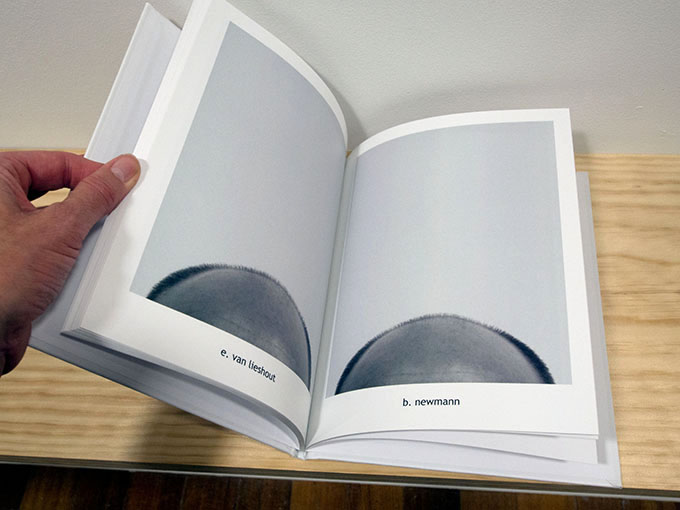
Jon Hewitt’s feel the confidence 2011
It may be noted that the photo works included in the exhibition are not photography books in the usual sense. For example in some books, the artist has exchanged the customary fine detail and high quality printing found in most art photography books for the flat, grainy, aesthetic of newswire or snapshot photographs, with all their vernacular associations. In other books the artist may manipulate the photographic frame by cropping it tightly to draw attention to narrative details or expanding it to the edge of the page for a window effect. Some books here constitute a repertoire of personalities through a wide array of photographic self-portraits. Others are collections of images specific thematic subject matter which suggests an interpretation of the complex meanings of culture and its institutions through the examination of its artifacts.
.
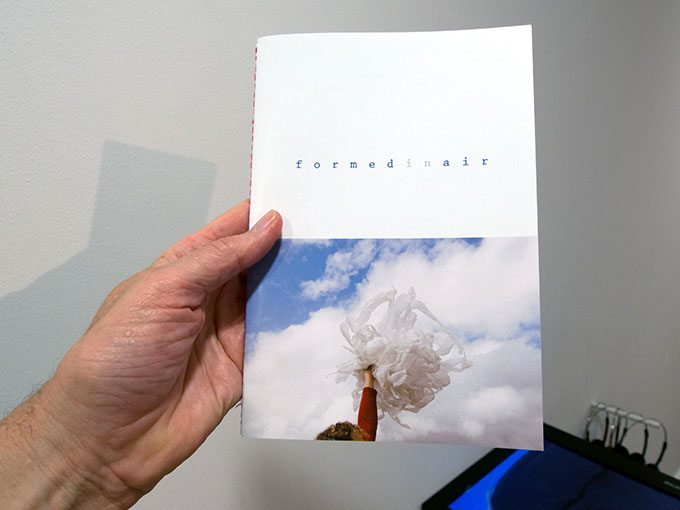
Yasmin Heisler’s formed in air 2014
In opposition to the conventions of art photography, which dictate an aesthetic around the “integrity” of an individual print, these photo books, to some extent, are each engaged with the qualities inherent in reproduction by offset and other printing processes. The artists represented in this exhibition are utilizing photographs as something other than a clear, well-composed picture. In their books they manipulate the “natural reality” of photographs and so inform our recognition of photographic images with their mannered inventiveness.
There are also a few books included here which are constructed sculpturally to introduce a tactile sensation to the fingertips and so expand the act of reading illustrations into the field of sensory awareness.
.
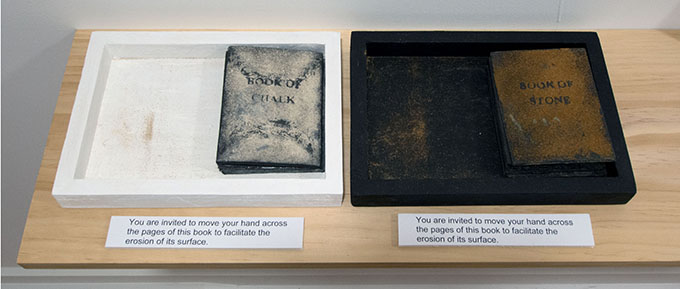
Bridget Hillebrand’s Book of Chalk 2014 and Book of Stone 2014
Finally, just as the works in this exhibition are included towards an exploration of the social and aesthetic attributes of illustration, they also demonstrate a way of looking at and experiencing the world. Theses artist’s books reveal and embody a way of reading deeply into they dimensions of contemporary culture. As much as they foster an incipient consciousness they ask for sensitivity on the part of the reader.
.
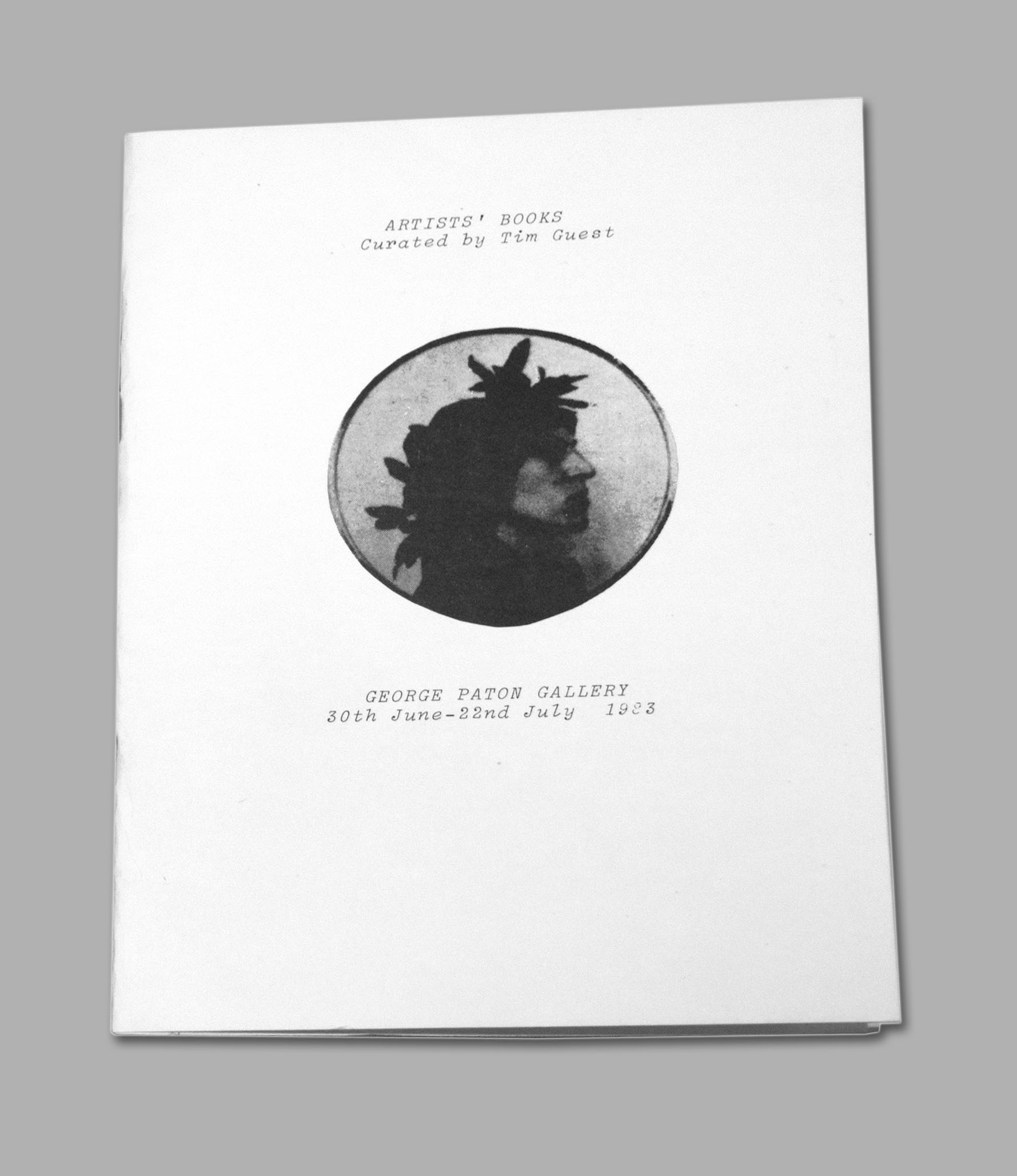
Tim Guest, the catalogue for the 1982 George Paton Gallery Artist’s Books and Not (e) Book!
These words come from Tim Guest, the curator for the 1982 George Paton Gallery Artist’s Books and Not (e) Book! A copy of his catalogue for the show was made available at the exhibition. Guest’s commentary is as relevant today as it was in the early 1980s, and while we have moved on, and now view the artists’ book works of that time with a degree of comfort and acceptance, the new artists’ book works continue, as Guest points out to, ‘demonstrate a way of looking at and experiencing the world’. For me it emphatically confirms that artists’ book are still ‘edgy’ and still pushing limits.
Doug Spowart
September 5, 2014
DOWNLOAD the contemporary list of artists’ books gpg artists books list of works
DOWNLOAD the books on loan from the University of Melbourne ArtistsBooksloanselectionGPG2014 docx
.
.
Part of the associated activity for the show – an artists’ book making event outside the gallery led by Michele and Laine. It was a a sunny and warm late winter’s day in Melbourne.
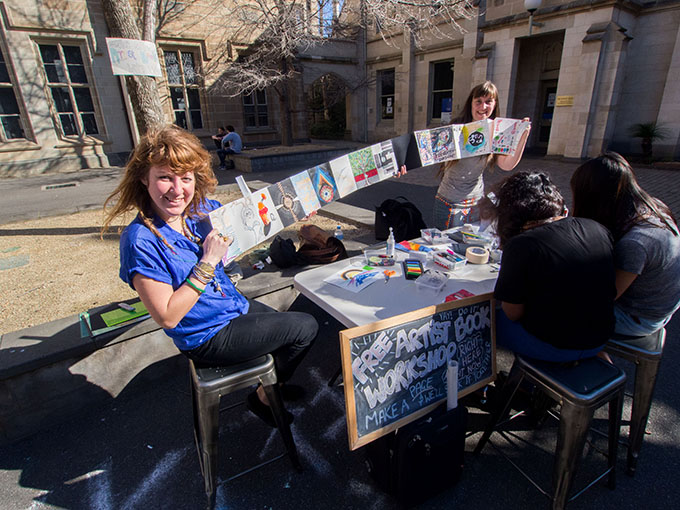
Michele Grimston and Laine Stewart and their Free Artist’s Book activity
.
.
.
.
DOUG’S PHOTOBOOK @ Phoenix Art Museum Self-Published Show

In Focus – banner
.
Doug’s Blurb book ‘Proposal for New Australian Landforms’ has been accepted in to the INFOCUS: Juried Exhibition of Self-Published Photobooks at the Phoenix Art Museum in the United States. The exhibition will be on show from August 23 to September 28, 2014 in the Doris and John Norton Gallery for the Center for Creative Photography. The information that follows in this post comes from the Phoenix Art Museum’s site. http://infocus-phxart.org/photobooks/
.
About this Exhibition (From the Phoenix Art Gallery’s website)
Earlier this year INFOCUS, the Photography Support Organization of Phoenix Art Museum, called photographers to send examples of their self-published photobooks. The purpose of the exhibition is to explore the range of ways that artists are using newly available commercial technologies in order to express themselves. A jury, made up of seven industry professionals including, Founder, Indie Photobook Library – Larissa Leclair and authors of Publish Your Photography Book Mary Virginia Swanson and Darius Himes, reviewed 271 submissions from 15 countries in the Americas, Europe, Asia and Australia. The exhibition represents the 151 books they chose, as examples of the wide range of photobooks being produced today.
We asked for books of any subject including retrospective, project-based, souvenir albums, fictional narrative, exhibition catalogues, poetic, biographical, or children’s books, and welcomed collaborative or collective books in addition to those by a single author. We found that in a well-crafted book, the artist considers every element of the book’s design, and uses each to enhance the finished product. Among the selections are noteworthy selection of paper weight and surface; cover material; printing method and reproduction quality; font style, color and size; text placement and justification (centered, aligned to the right or left); endpaper and title page design; binding (spiral bound, hard bound, paperback); size and placement of the images; sequence of the images; and inclusion (or exclusion) of and placement of the caption information.
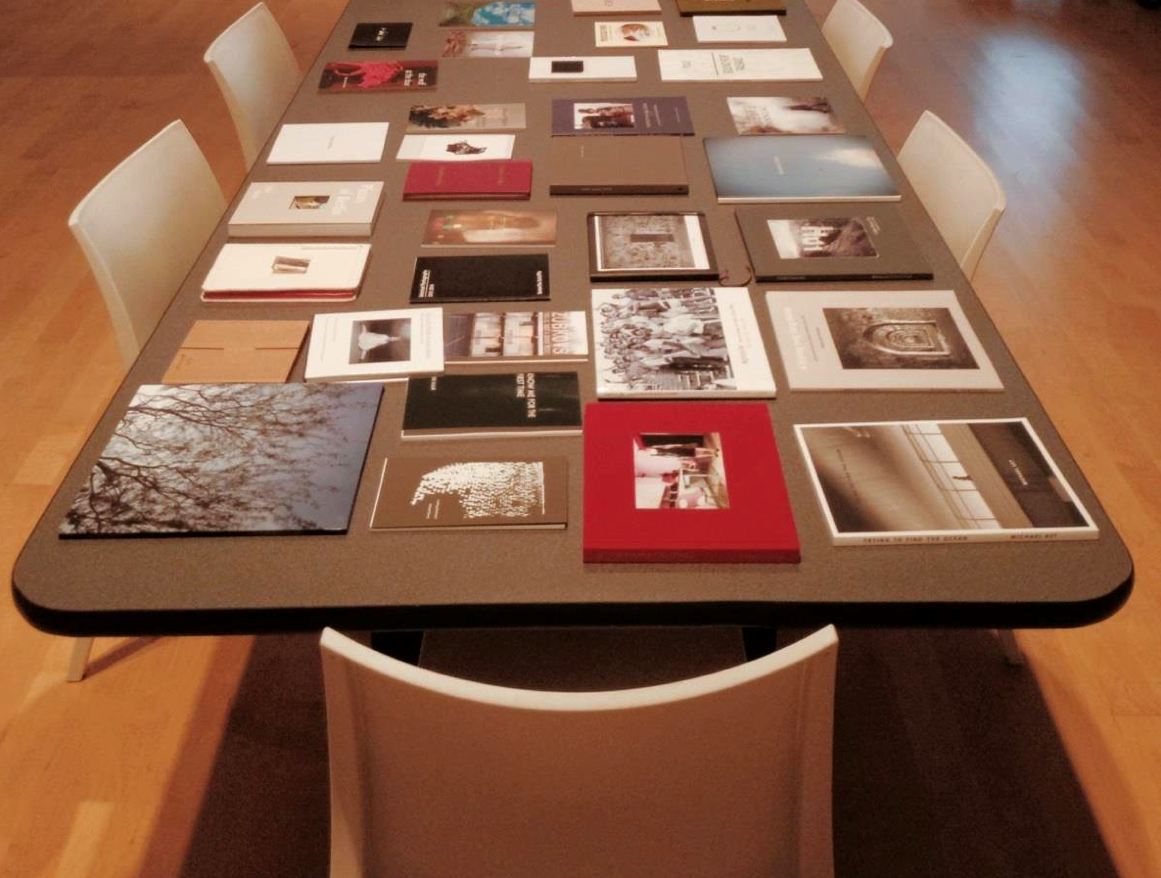
INFOCUS – Photobook display (from the INFOCUS page)
.
Read a few words from the curator, Rebecca Senf
From the earliest years of the medium’s history, photographers have embraced the book form as a way to present, organize and disseminate their work.
Books allow photographers to expand their reach to a much larger audience and to control the presentation of their work. Publishing a body of work also increases prestige and permanence; by creating books, artists know that their printed volume, in libraries and private collections, will long outlive them. Within the art field, there exists a reverence for books, a reverence that acknowledges the care and attention that went in to producing them.
Publishing photographic books has rapidly changed over the last twenty years, with the impact of technology on book publishing and photography. Costs of paper, printing and binding have increased and profit margins for traditional publishers are narrowing, creating a risk-averse climate in which unknown artists have difficulty getting books published by existing presses. The bookstores where we once browsed and purchased books are being replaced by online retailers, which in turn, changes our patterns of buying and the way products are marketed. Furthermore, many types of reading (including news, correspondence, and recreational fiction) have moved away from sheets of paper and bound books to digital displays of various kinds.
Despite these massive shifts in how they are made, the desire to produce photographic books is only increasing. Young photographers want their artwork to be presented as a book, and photographic books continue to be produced, discussed, admired, coveted, collected, and sold.
“The Process and the Page: Developing Photographic Books,” on view at Phoenix Art Museum from March 29 to August 17, 2014, presented book-making materials from the archival collections of the Center for Creative Photography, to show how photographers have participated in the creation of their photographic books over the course of the last 100 years. Now, with the INFOCUS Juried Exhibition of Self-Published Photobooks, we can shed light on an important new phase in the story of photographic books – the ability of photographers world-wide to produce high-quality books of their work through self-publishing.
.
The Jury
The photobooks in this exhibition were selected by:
Abigail Nersesian – Librarian, Phoenix Art Museum
Jennifer Barnella – Retail Sales Manager, Phoenix Art Museum
Joshua Chuang – Chief Curator, Center for Creative Photography
Becky Senf – Norton Family Curator, Center for Creative Photography
and Phoenix Art Museum
Mary Virginia Swanson – Co-author, Publish Your Photography Book
Darius Himes – Co-author, Publish Your Photography Book
Larissa Leclair – Founder, Indie Photobook Library
.
..
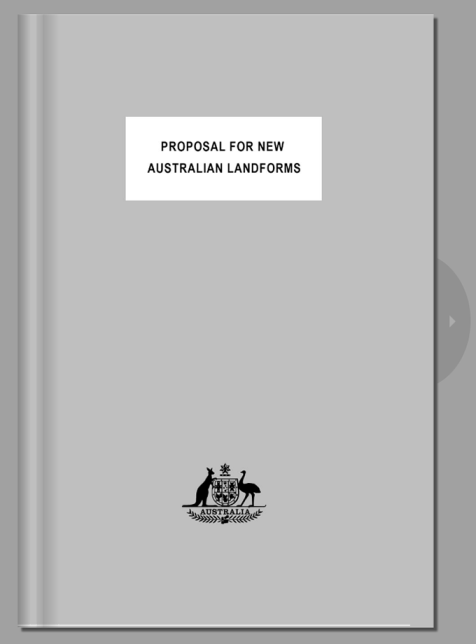
Doug’s Book
.
My book deals with the political scene and is a parody of the potential for government agencies and politicians to do absurd things for, as they call it, ‘the good of the people’.
SEE THE BLURB PREVIEW HERE: Doug’s Book.
.
CLICK the link below for a list of the accepted entries and links to the books
INFOCUS Photobook Exhibition list
..
.
.
SELECTING AN APPA PHOTOBOOK DISPLAY
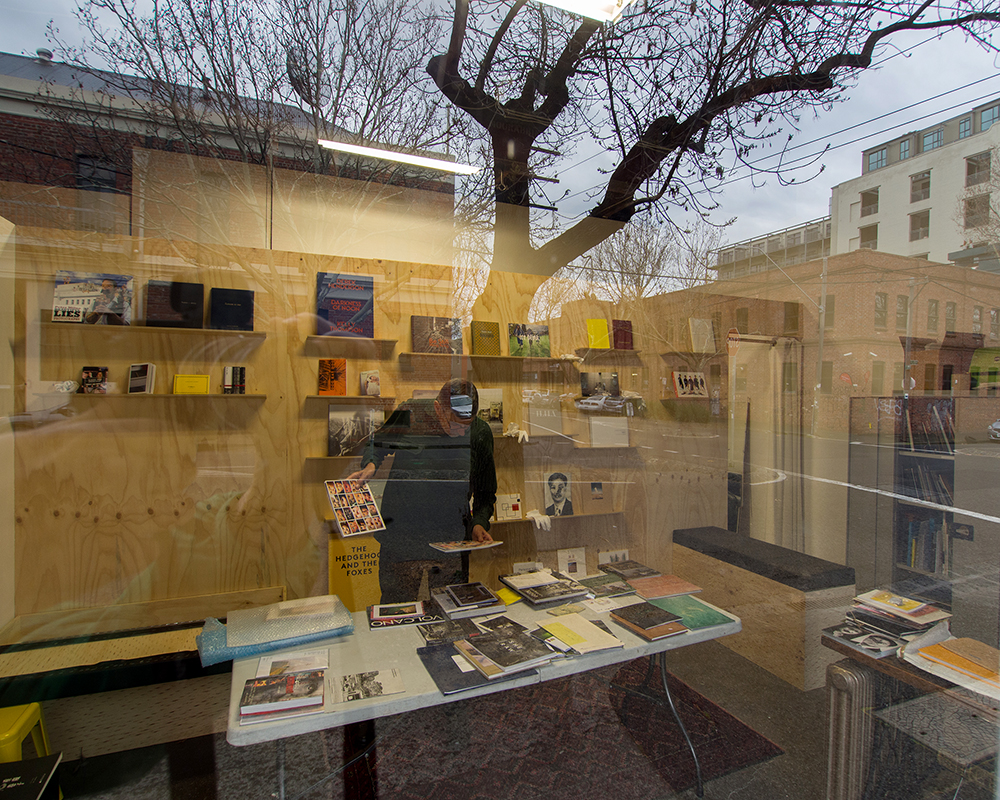
Doug in the APPA space working thru the books on a cold Melbourne winter’s day PHOTO: Victoria Cooper
.
Selecting photobooks @ APPA: A methodology and the list.
I was recently given the opportunity to select books from the Asia Pacific Photobook Archive for their wall display over the next month. While selecting a book to look at and buy in a bookshop can be a challenging enough, the task to review the archive and select around 30 books was daunting. I figured that I needed a methodology.
.
After some thought I put my ideas to Victoria Cooper, photomonteur Peter Lyssiotis, and APPA Director Daniel Boetker-Smith – here’s what we came up with:
- that I’d attempt to make a book array that mirrors the Asia Pacific geographical region
- that I’d select work that was reasonably contemporary
- that the names of the book makers would not unnecessarily bias my selection (interestingly the photographers of books from locations like China, Japan and south east Asia were quite unknown to me)
- that where possible I would select photographers working on their subject matter relating to their own country (the books of some localities were made by visiting photographers).
I wasn’t just going to look at books. As I reached out for, and held each book, I’d consider it as an object, feel its presence and weight, the tactile and sensory experience of the thing. Then I’d engage with its mechanical properties of turning the pages and becoming acquainted with it as a communicative device. In this the following would be considered:
- layout
- typography
- images and their sequencing
- paper, production and binding methods
- it as a narrative form.
In the final moments of engagement with the book I’d need to make a judgment call – was it successful? Whatever that may be? I am a firm believer in Roland Barthes’ proposition that the moment a written piece, I would say a book, is passed to others to read/view that the ‘author dies’ and that the ‘reader is born’. So, as the reader, I was to make the following decisions. I should note that towards the final stages of geographical assemblage I called upon Daniel and his extensive knowledge, to suggest books from, or about specific areas to be considered by me for inclusion.
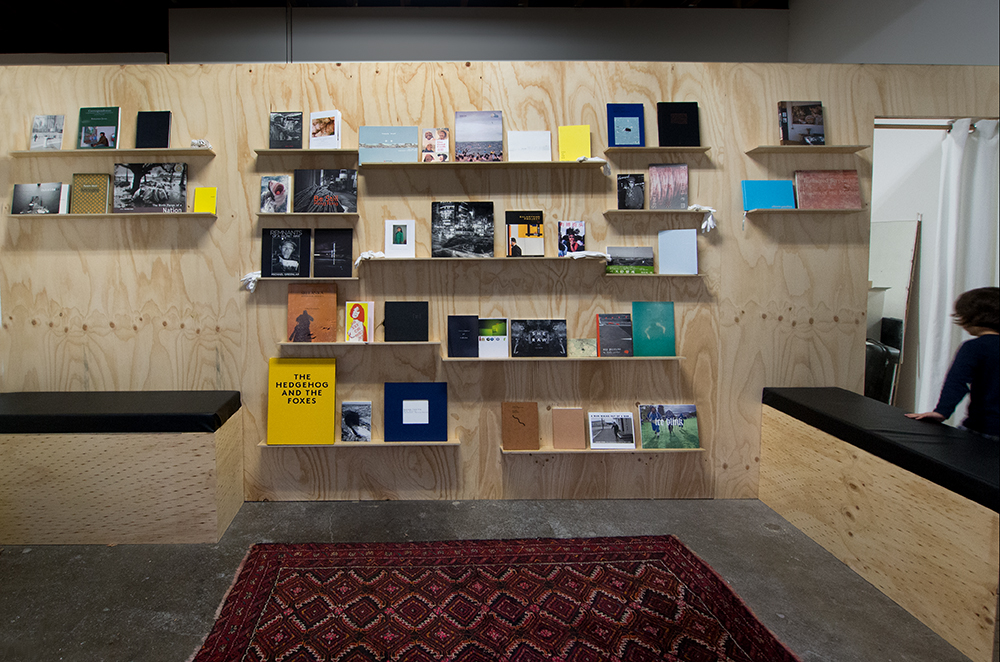
The Doug Spowart APPA Selection
.
.
Here is selection of the geographic locations, their makers and the titles:
Dubai/Surfers Paradise – Sean Fennessy ‘Gold’
Iran/Australia – Katayoun Javan ‘Correspondences: A photographic journey between past/Iran & present/Australia’
India – Munem Wasif ‘Belonging’
India – Pablo Bartholomew ‘Outside In’
Bangladesh – Shahidul Alam ‘The Birth Pangs of a Nation’
.
.
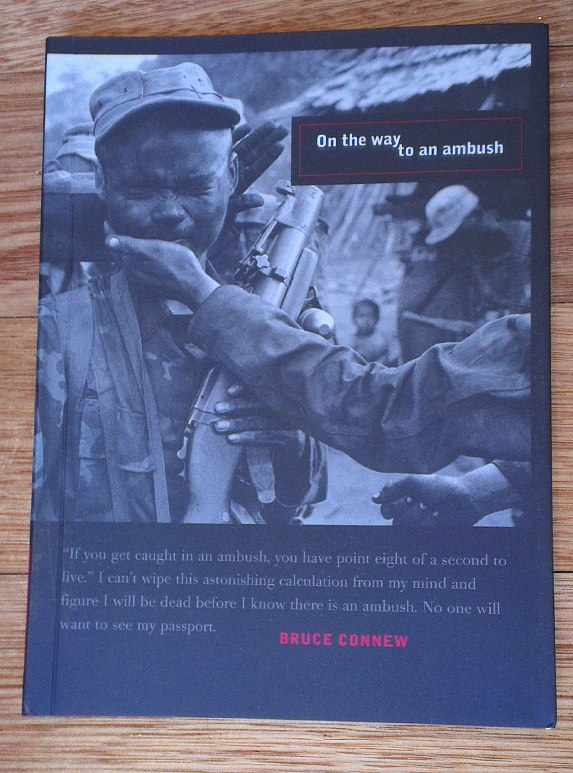
Burma – Bruce Connew ‘On the way to an ambush’
Cambodia – Isabella Capzio ‘Where the water once was: Boeung Kat Lake Phnom Penh
Thailand – Hiro Imai ‘Bangkok’
Thailand – Miti Ruangkritya ‘Thai Politics no.2’
Laos – Michael Greenlar ‘Remnants of a secret war’
Malaysia – Welan Chong ‘Please mind the gap: Singapore’
Hong Kong – Douglas Khoo ‘Be Still Hong Kong’
Sri Lanka – Nihal Fernando ‘Sri Lanka: A personal Journey’
China – Huang Qingjun & Ma Hongjie ‘Family Stuff’
.
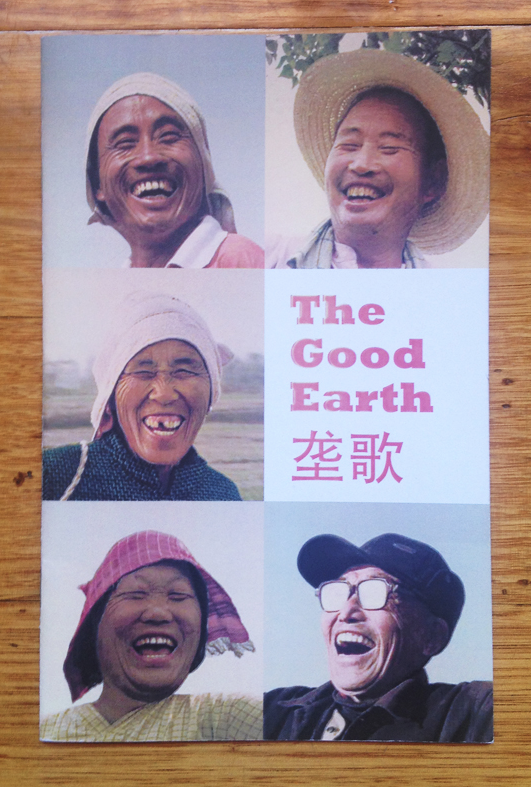
China – Li Kejun ‘The Good Earth’
China – Zhang Xiao ‘Coastline’ (?)
China – ‘Lens on Wesi Lake’
China – Vincci Huang ‘Eyes in the air’
.
.
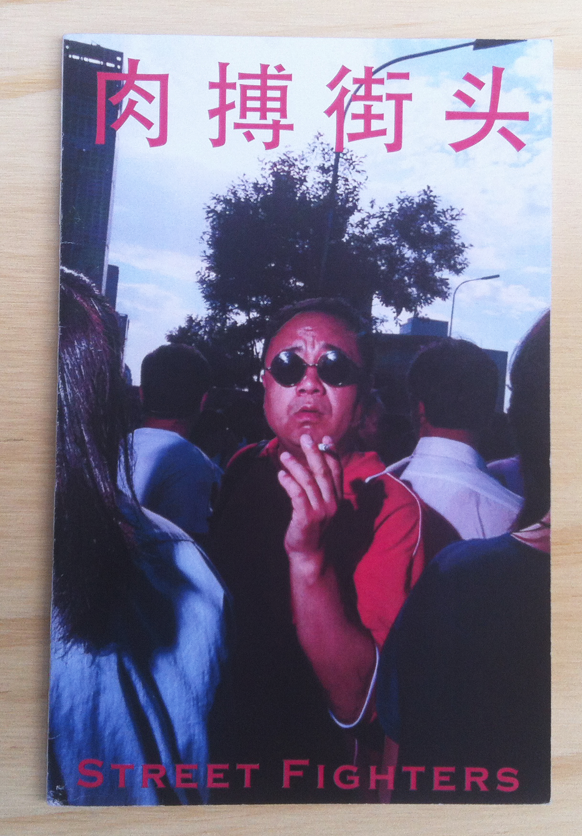
China – Wu Chenghuan ‘Street Fighters’ Beijing
Taiwan – Paul Koolher ‘Political Chaos’
Japan – Bruno Quinquet ‘Salaryman Project: Business Schedule’
Japan – Chie Murakami ‘Japanese Girl’
Japan – Sun Yanchu ‘Obsessed’
Japan – Big book Japanese cities
Japan – Saori Ninomiya ‘Requiem’.
.
.
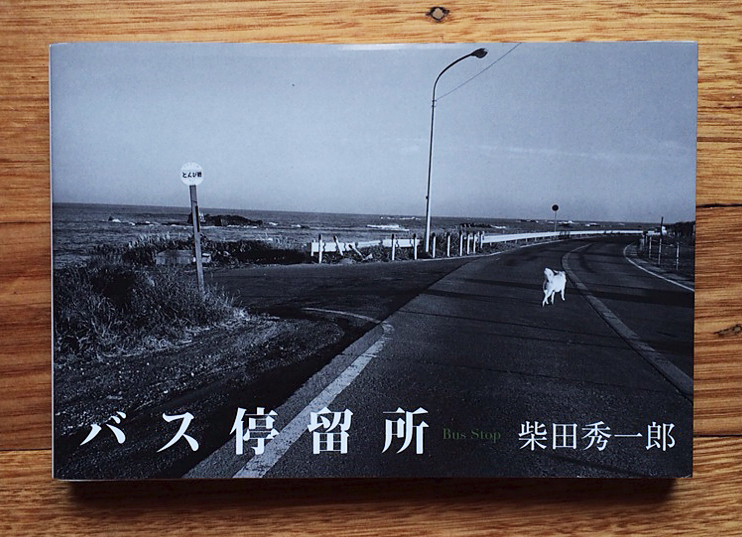
Japan – Shuichiro Shibata ‘Bus Stop’
Japan – Zhao Renbui & Satoshi Katnoku ‘The whiteness of a whale: a project with The Institute of Critical Zoologists’
West Coast American book
Canadian book
Philippines – Dina Gadia ‘Buxxxom Grind’
South Pacific region – Monini Chandra ‘Album Pacifica’
Mexico – Isabella Capezio ‘Feathered Serpents & Visions of the Mother’
Australia – George Voulgaropoulos ‘Children of Auburn’
Australia – [n]
Australia – Emma Phillips ‘Volcán’ (Variant ?)
Australia – Lilli Waters ‘She Raw’
Australia – Ingvar Kenne ‘The Hedgehog and the Foxes’
Australia – Melissa Deerson (Coordinated) ‘Docklands Field Trip’ Melbourne
.
.
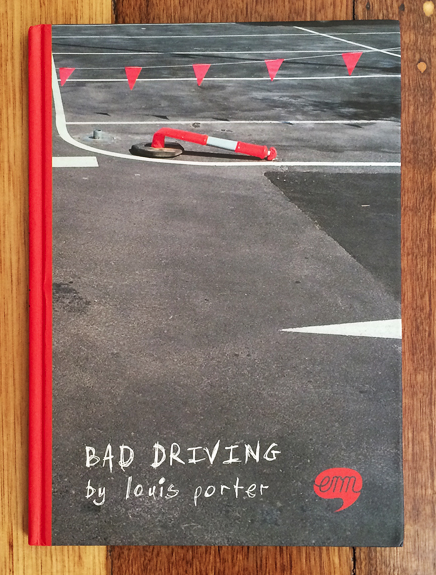
Australia – Louis Porter ‘Bad Driving’
New Zealand – David Cook, Wiramu Puke and Jenty Valentine ‘River–Road: Journeys Through Ecology’
New Zealand – Solomon Mortimer ‘Solomon’s Travels: Volume One 2012’
New Zealand – Lucien Rizos ‘A man walks out of a bar: New Zealand photographs 1979-1982’
.
.
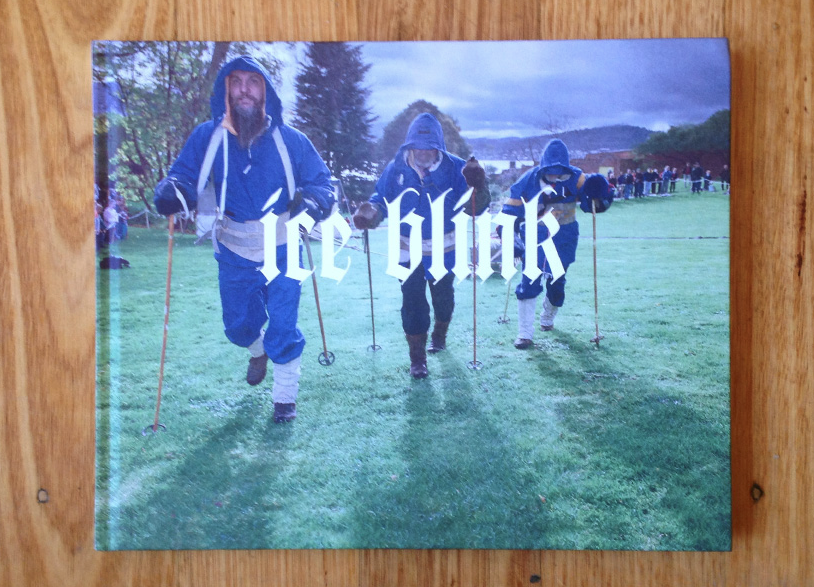
Antarctica – Ann Noble ‘Ice Blink’
END OF LIST (Some books are not listed here…)
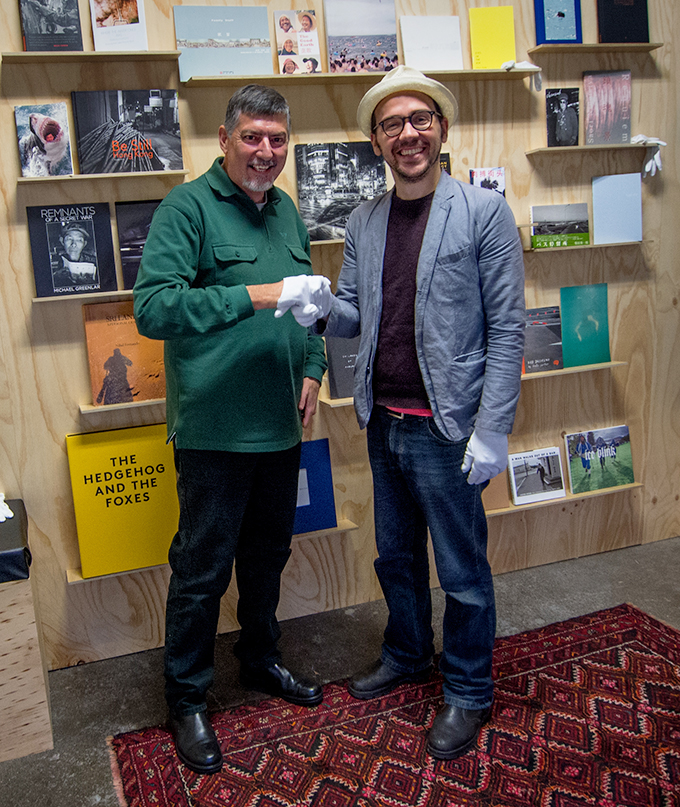
Doug and APPA Director Daniel Boetker-Smith PHOTO: Victoria Cooper
.
Thanks must go to Daniel’s ongoing support of this project and making this resource available for us all — And also thanks to the photographers for contributing to the archive.
Cheers Doug
.
APPA Sign
WISEMAN ON SAFARI @ Brisbane’s Maud Gallery
Respectfully Intruding by John Wiseman @ Maud Gallery, Brisbane
August 6 – September 13, 2014. The exhibition was opened by Ken Duncan on August 8.
.
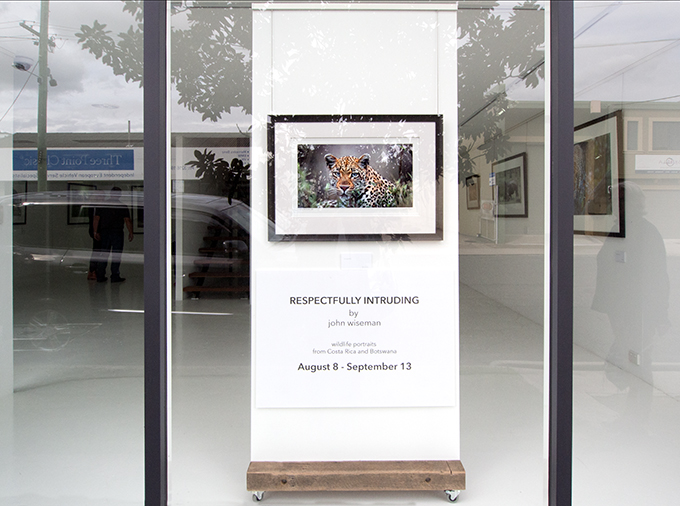
Maud Gallery window
John Wiseman’s photography exhibition Respectfully Intruding at Brisbane’s Maud Gallery presents an invitation to go on safari and peek over his shoulder while he observes and photographs wildlife on the African savannah or in the Costa Rican rainforest. Luckily for us his invitation is to the gallery and the trials and complexities of journeys to exotic places are made easy for us. He also saves us the trouble of waiting, waiting, fighting impatience and the agonies of cramped photography vehicles and observation hides. Dust, flies, mosquitoes, things that will sting or eat you are not part of Wiseman’s plan. We are also spared the burdens of travel, airports, border guards with guns and the grind of life in these exotic lands. What we are given are his photographs.
.
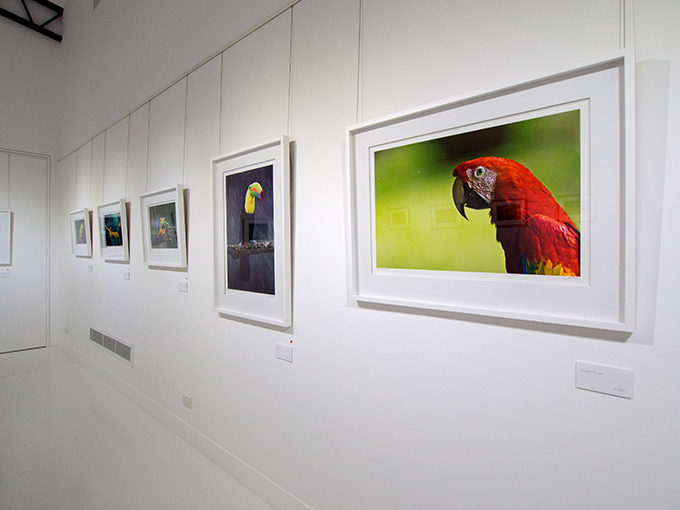
Maud Gallery installation
.
In the white spaces of Maud Gallery, a kind of ‘safari of wonder’ is encountered –as the visitor wanders through the exhibition of wildlife and flora images. Rhino, elephant, leopard and lion of Africa inhabit the front room. Then in contrast to the ochres, browns and blacks, there are birds, flowers, frogs and snakes in green, yellow and turquoise of the rainforest that inhabit the large inner gallery. The bridge between these two environments is the photography style and vision of John Wiseman.
.
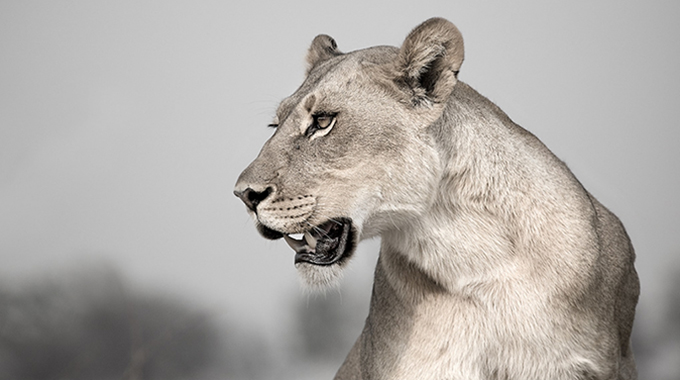
The Lioness
.
We are no stranger to subjects like these as they have adorned National Geographic magazines, a thousand Attenborough ‘Life on Earth’ TV programs and countless coffee table books. We may have become so familiar with these subjects that these new works may just become just another ‘one of those’. But I would say look again. Wiseman is no quick snap wildlife shooter – his images exhibit careful consideration for subject and the moment captured. His arrangement and design of the image and concern for lighting takes images to the perfect moment that we think only Photoshop fakery could reveal. But these are real images from single exposures straight out of the camera without much post capture treatment.
.
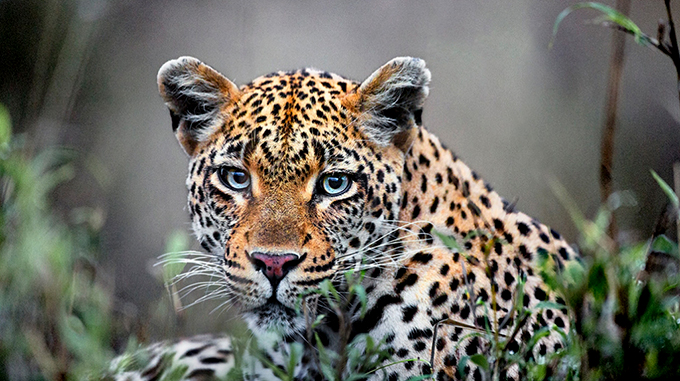
Blue Eyes
.
Individual images stand out and draw your attention to the framed photograph – for those who love cats, a stunning image of a leopard with clear eyes will hold you in it’s mesmerising and piercing gaze. In another photograph entitled, ‘Family Portrait’, a lioness and four playful cubs look off camera with ears pricked up, attention aroused – for the viewer there is an ability to take in that frozen moment. Someone with an understanding of safari photography will wonder low long and what patience it took for Wiseman to get such an image.
.
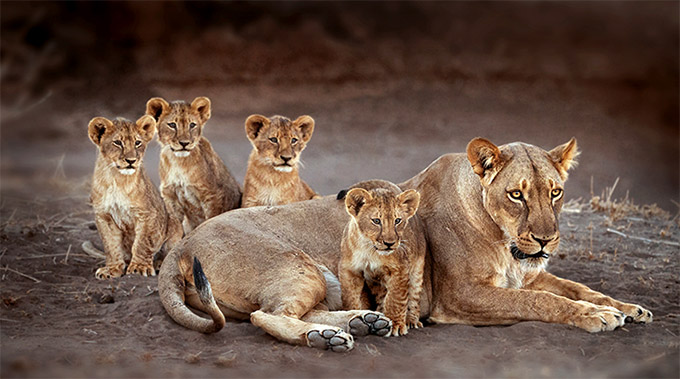
Family Portrait
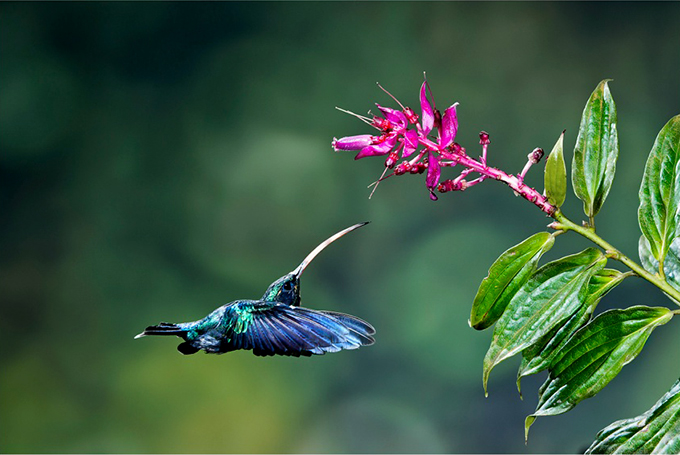
Blue Hummingbird
.
In the Central American space humming birds dance and glide in many frames. Frozen in flight, something that is particularly difficult to photograph, these birds are like airborne jewels with iridescent colouring attracted to equally colourific blooms. Once again Wisemans mastery of technique gets the photo but his sense of design, moment of capture, concern for background and subject placement make these extraordinary photographs. A multiple electronic flash setup is used to create these images and in a few photos Wisemen has synchronised the flash with a slow shutter speed allowing a frozen moment, as in the other images, to be combined with the blur of the wings in the longer moment of capture. For me this tells the greater story of the little bird’s hovering capacity and the beauty of this feathered flight.
.
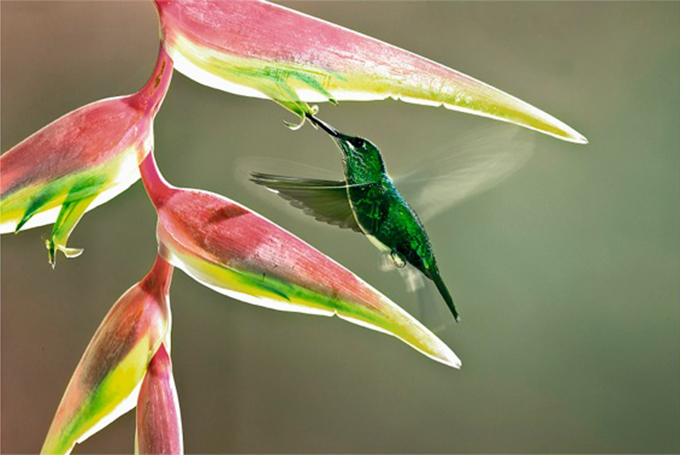
Hummingbird Feeding
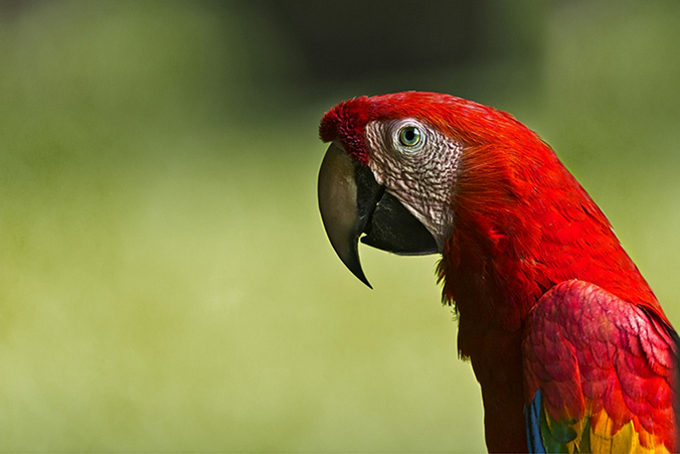
Scarlet Macaw
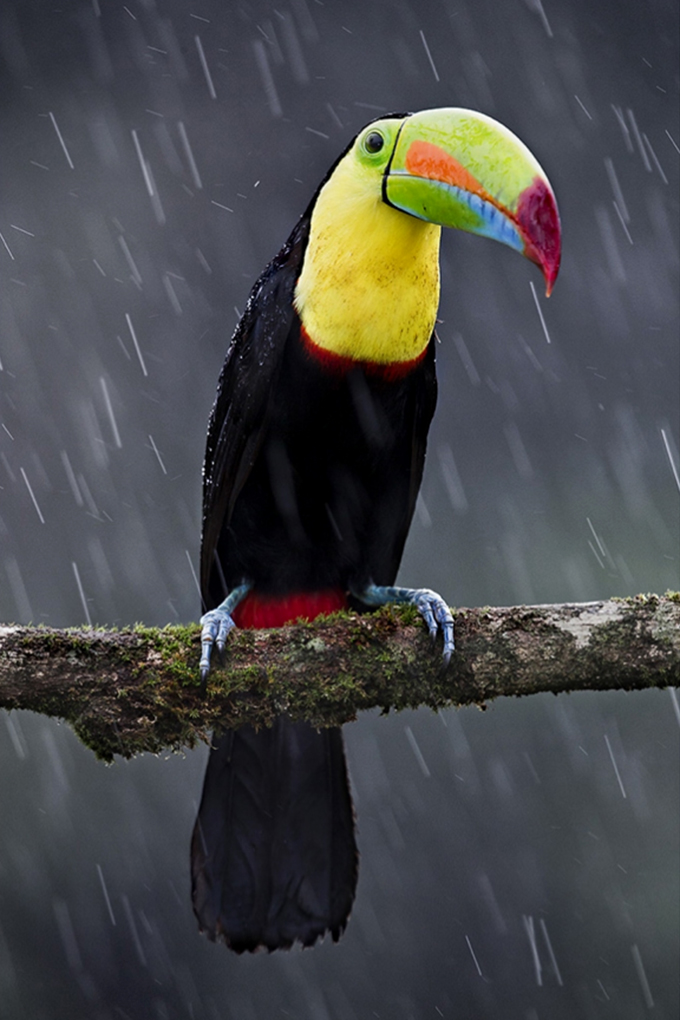
Toucan in the rain
The Costa Rican rainforest also has its share of frogs that perform for Wiseman’s camera. Colours, backgrounds, movement and clarity once again reflect Wiseman’s fascination for the natural world. Other images that evoke response include a toucan in the rain, and the sinister shapes of snakes, the most beautiful of which hides camouflaged in the framework of a heliconia flower.
.
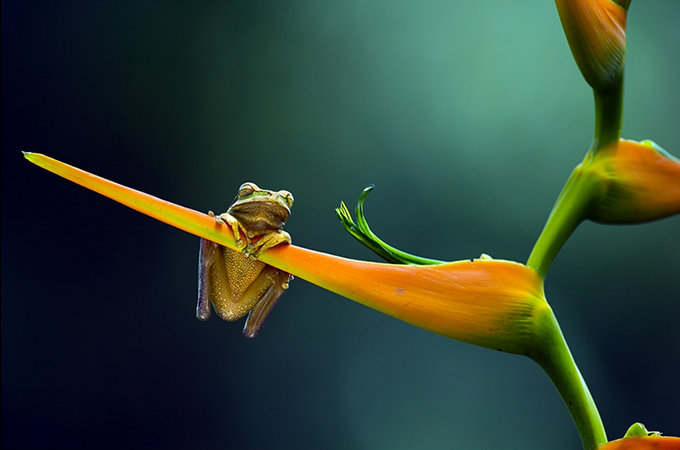
The Serenity of Sleep
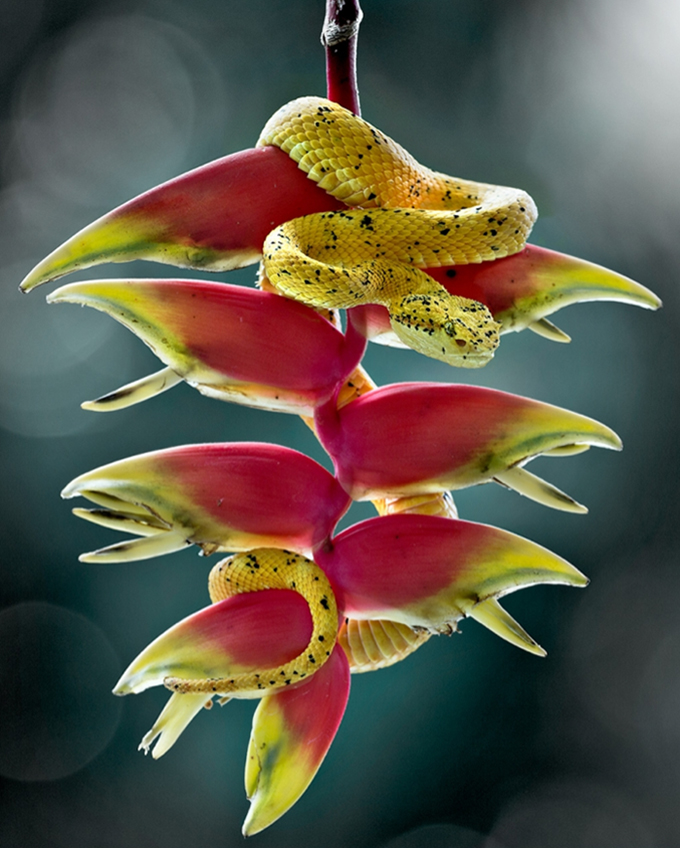
Viper on heliconia.
.
In an artist’s statement Wiseman states that he finds in his photography adventures: ‘The intoxicating excitement of the animals of Africa; the size, beauty and grace of these creatures and the love of the chase.’ And that most certainly is evident in the photographic works presented to us in this exhibition. And unlike many who venture, or have in the past, ventured into exotic lands in search of the hunt and big game with a gun – John Wiseman has been, and shot big and small game, and presented his trophies of the living things for us to observe and share his excitement and wonder of these things.
.
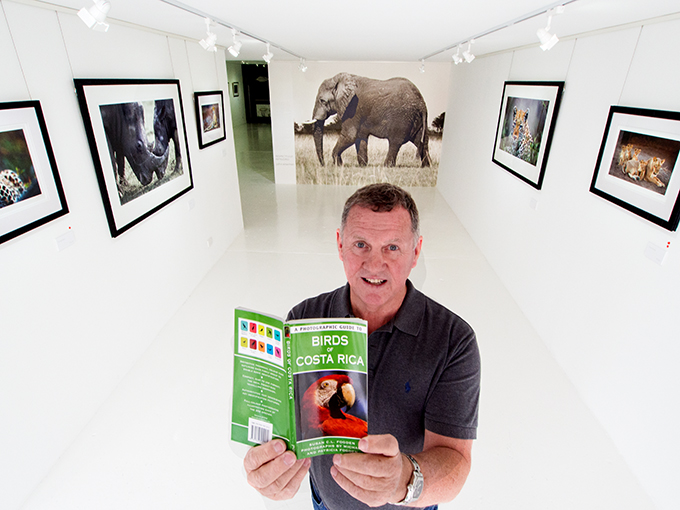
John Wiseman reading up on Costa Rican birds
.
Doug Spowart 18 August 2014
.
Texts and installation photos © Doug Spowart 2014 Photographs from the exhibition © John Wiseman
.
.
.
COOPER+SPOWART EXHIBITION: Speaking About Place
.

Speaking About Place gallery layout
Speaking About Place: the Nocturne Project
Victoria Cooper & Doug Spowart
Cam Robertson Gallery, Toowoomba Regional Art Gallery, 19 July – 17 August 2014
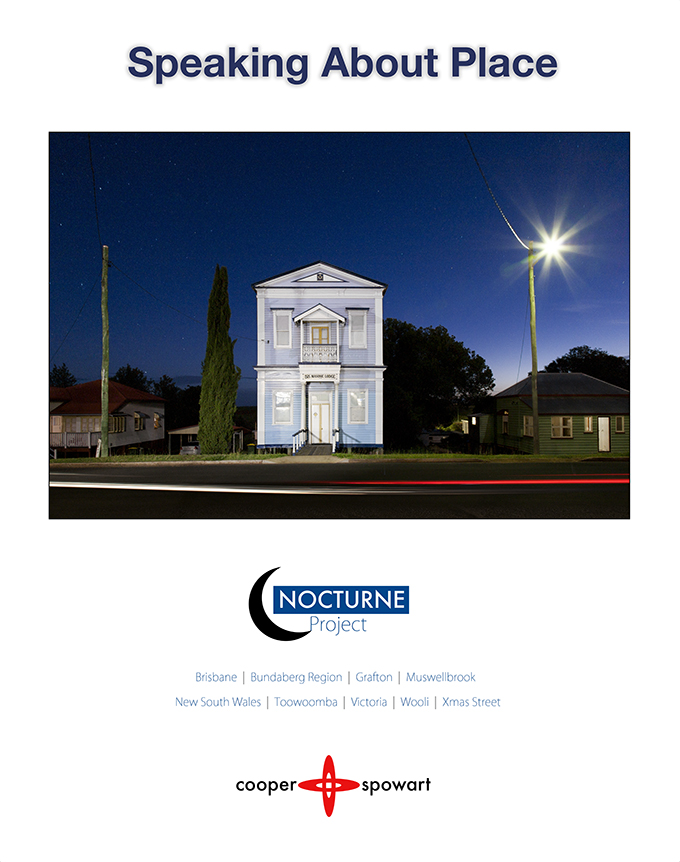
Our arts practice is informed by our ongoing and evolving connection with Place. Our Place-Projects are influenced by the context and the consequences of living within a constantly changing landscape. We work with a range of photographic concepts and techniques, from the camera obscura, through analogue processes to the digital forms of the medium. Our work is presented as visual narratives in artists’ books, photobooks, exhibition images and, more recently, blogs and social media.
Through our Nocturne documentary photography and Facebook social media projects, we have explored connections with Place in urban and regional communities throughout Queensland, New South Wales and Victoria. For us the phenomenon of nocturnal light transforms these everyday spaces. Buildings, busy street corners, quiet alleyways all become filled with the dramatic light of a movie scene. In 2013 and 2014 we were given the opportunity, through funded Artists-in-Residence (AIR) programmes, to undertake Nocturne projects in the regional communities of Muswellbrook, Grafton and Bundaberg.
In this exhibition we present a selection of images from three years of our Nocturne Projects. The work shown here adds to the recent Childers Art Gallery exhibition of this project, by the inclusion of social media elements. Therefore in this gallery we invite viewers to connect with the work in a forum outside the virtual space of Facebook. To enable this connection to take place we have created folios that contain transcripts of Facebook/Place/Storytelling from each of the three AIRs.
.
About the photographs
We photograph in the early evening nocturnal light, a time of day where the afterglow of sunset and the glow of streetlights transform the everyday experience of place for the viewer. Images created at this time require long camera exposures and therefore produce photographs that can capture blurred movement of people and vehicles. Another important aspect of the Nocturne aesthetic is the effect of colour and the juxtaposition of coloured lights in the different situations of ambient daylight, artificial lighting, car head and taillights.
.
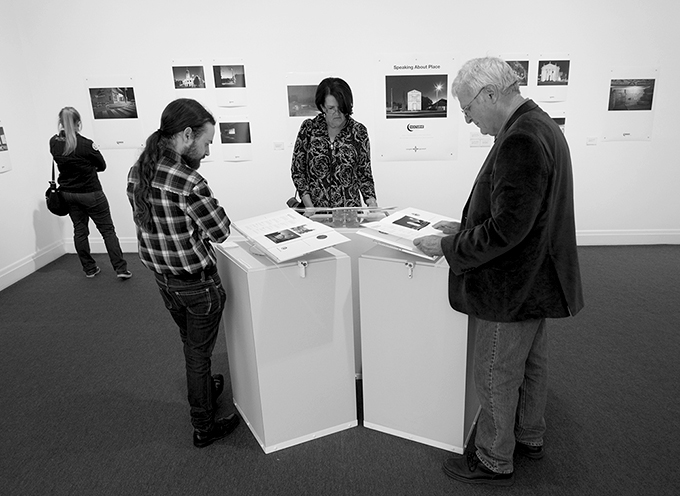
Exhibition viewers reading Facebook responses
.
More than photographs
The photographs in themselves have no intrinsic meaning – it is the viewer, with their experience and memory that brings life to the image. In this moment of connection they may recount a personal narrative or connect with the historical significance of the place. This collaboration between photograph and viewer is exciting and vibrant – expanding the potential for the documentary image to go beyond the vision of the photographer.
As the Nocturne project has evolved, we have discovered the importance of sharing place stories through images, words, in person and online. Through Speaking about Place we have extended the potential for this project to share the transformative nature of lived experience and everyday life in each community.
The Western Downs town of Miles is scheduled for a social media Nocturne project later this year.
.
CLICK HERE To download a PDF of some of the Facebook narratives Catalogue-Comments-interact-FP3
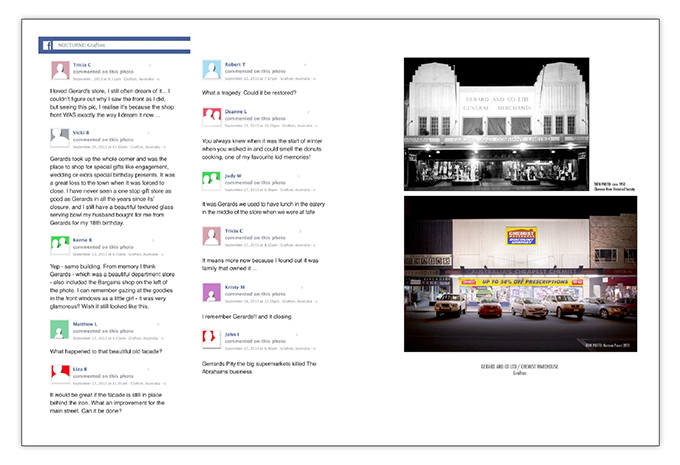
Community comments about the photographs on Facebook
The online Nocturne Projects can be accessed at http://nocturnelink.com
.
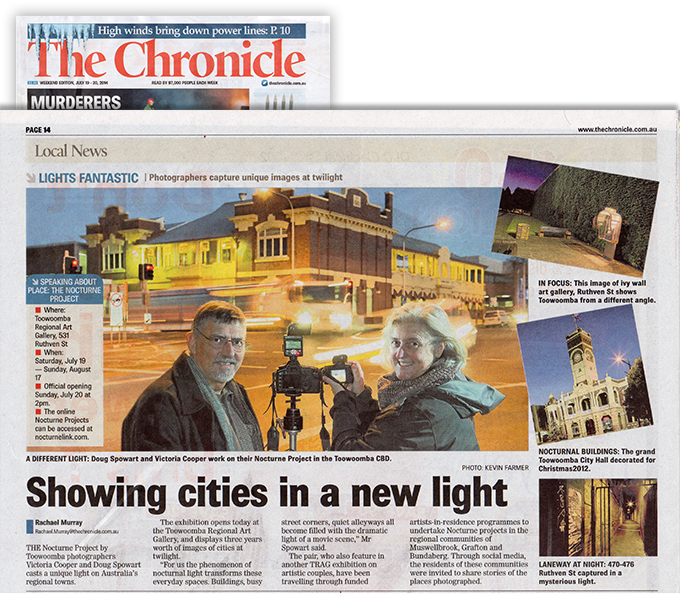
Link to The Toowoomba Chronicle online news story:
http://www.thechronicle.com.au/news/showing-cities-in-a-new-light/2323064/
.
A selection of images from the opening and associated events
.
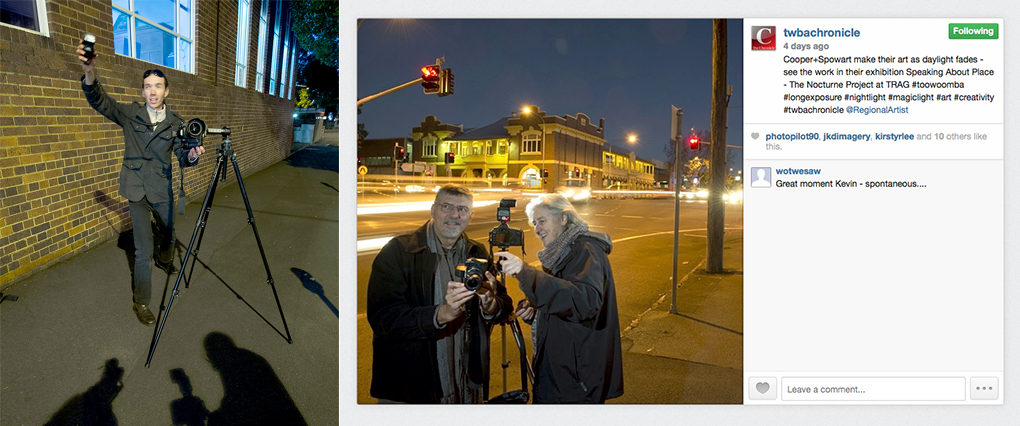
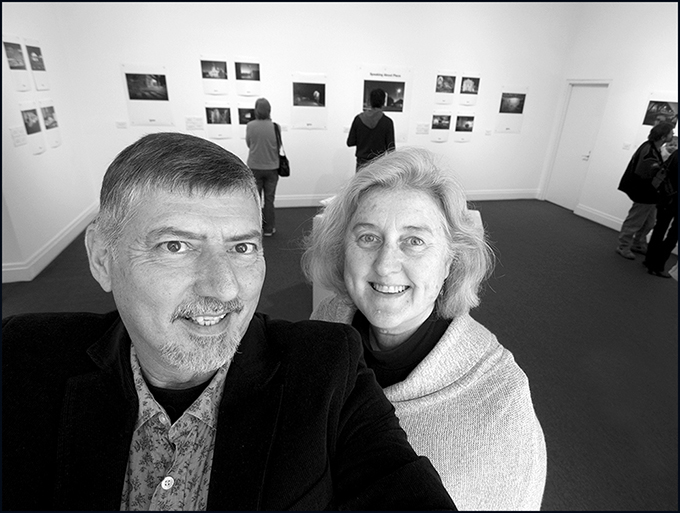
Toowoomba Chronicle photographer Kevin Farmer gets a Nocturne reverse-photo with us – From The Chronicle Instagram feed
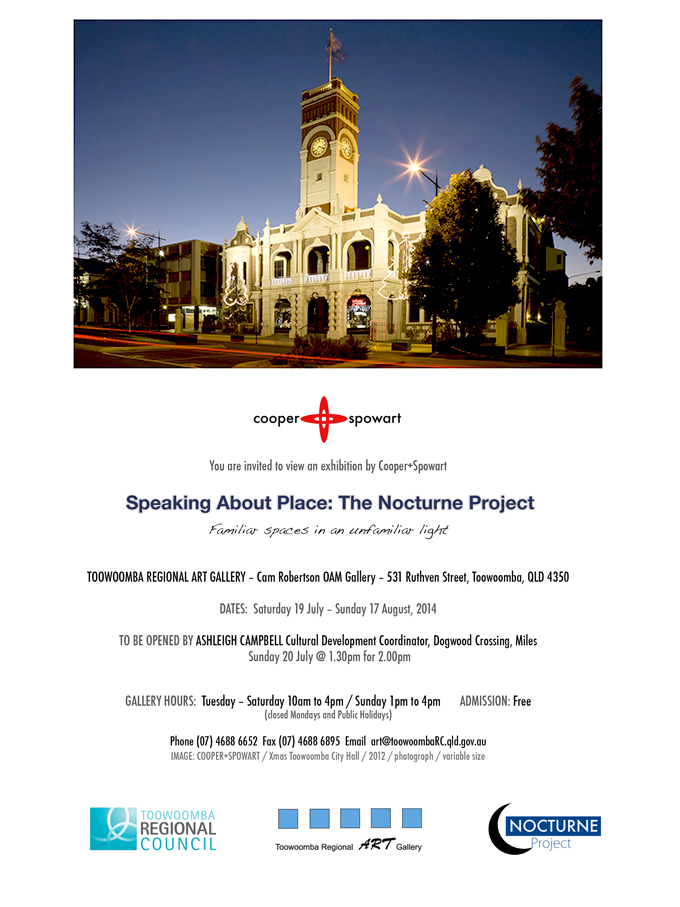
Exhibition invitation featuring the Toowoomba Town Hall Xmas 2012
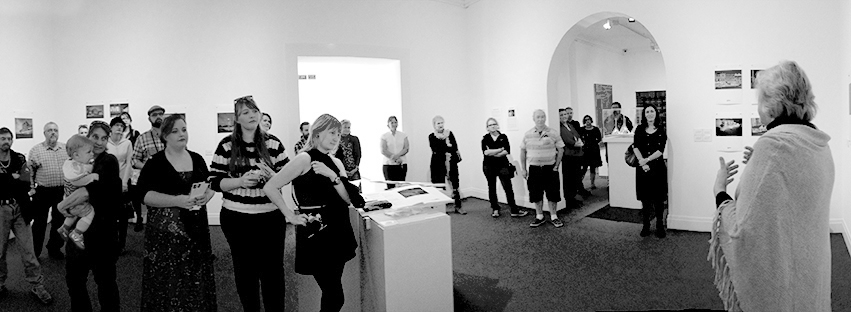
The opening of ‘Speaking About Place by Ashleigh Campbell
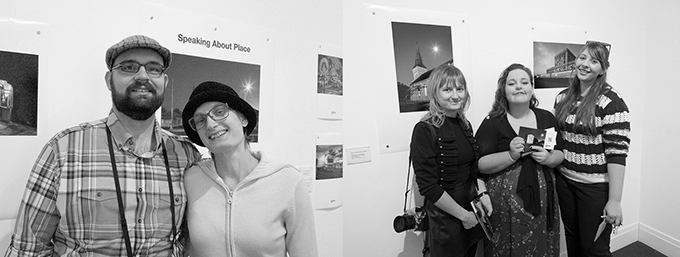
Some attendees at the opening
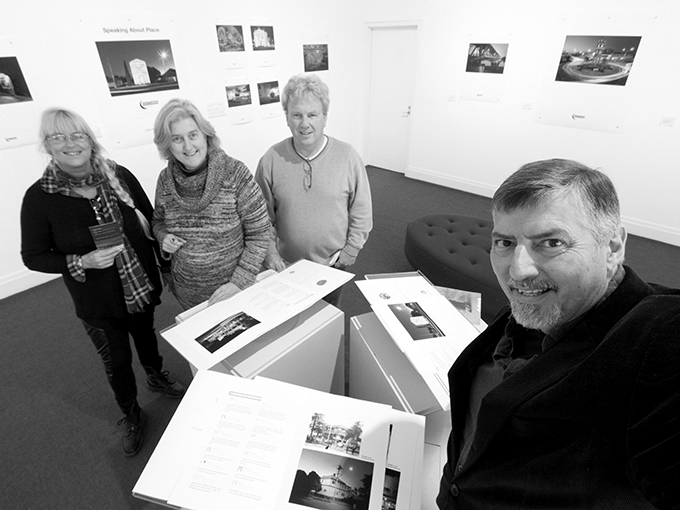
Maureen Trainor and Kevin Scattergood visit the show
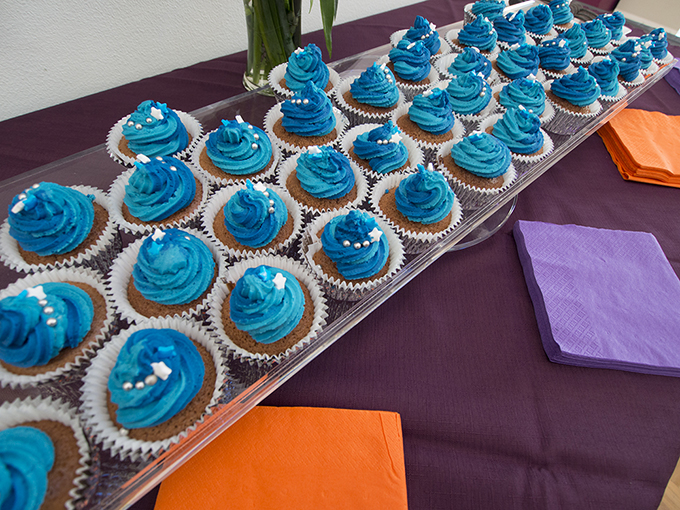
Jess Martin’s Nocturne Cup Cakes…
.
.
Visit http://nocturnelink.com to connect with our Nocturne Projects
..
.
.
.
Installation photos and documentation of the artworks and text ©Doug Spowart
Instagram photo and news story © The Toowoomba Chronicle and Kevin Farmer
.

My photographs and words are licensed under a Creative Commons Attribution-NonCommercial-NoDerivs 3.0 Unported License.
http://creativecommons.org/licenses/by-nc-sa/2.5/au/
.
.

 wotwedid