Archive for the ‘Photobooks’ Category
WORLD PHOTOBOOK DAY @ Brisbane’s Maud Creative
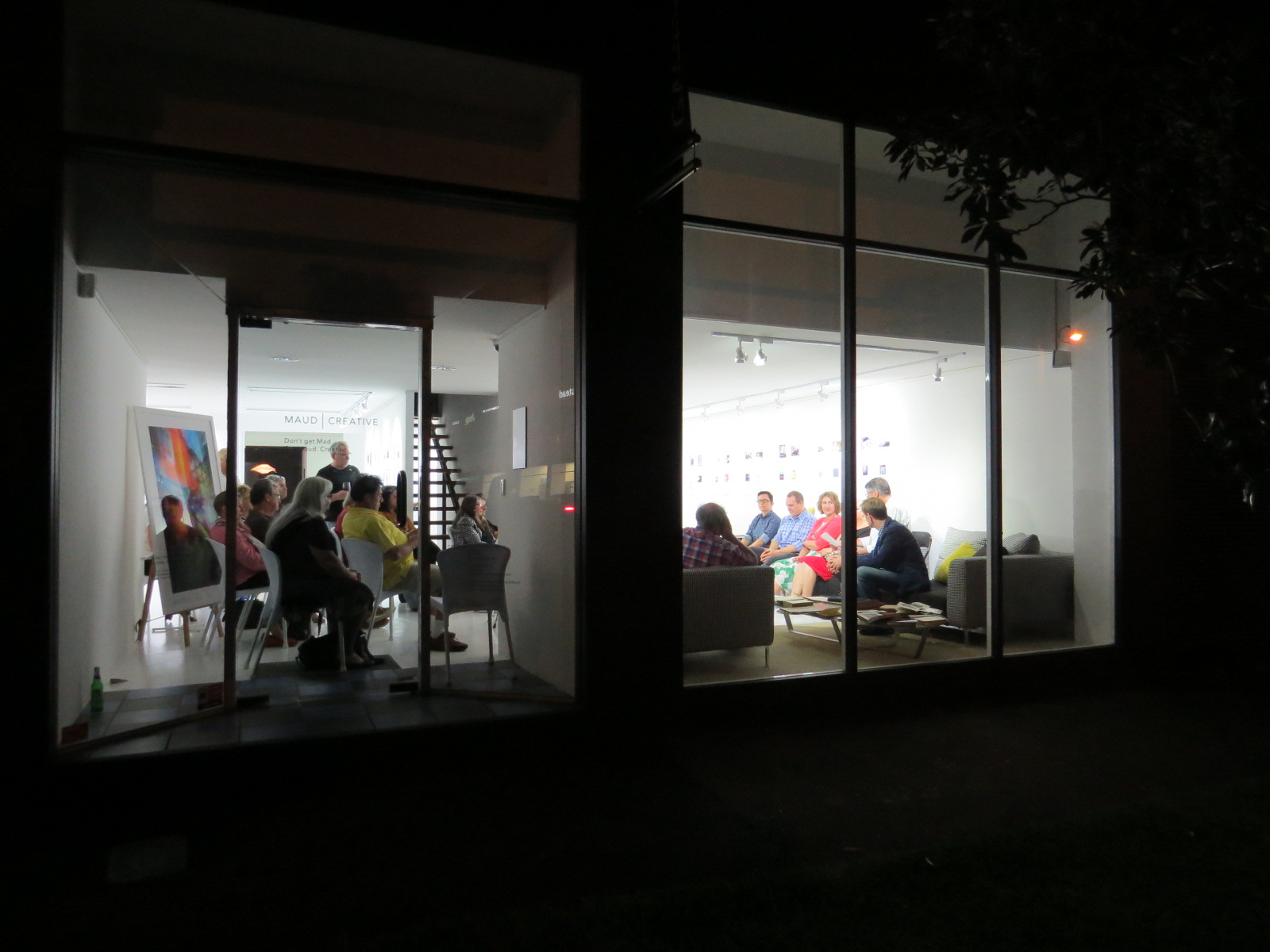
World Photobook Day at Maud Creative Gallery Photo Robert Gray
.
A survey project about those who read photobooks
My Favourite Photobook – Brisbane World Photobook Day
World Photobook Day (WPBD) in Brisbane Australia at Brisbane’s Maud Creative Gallery was celebrated with a survey project highlighting photographers and their photobooks curated by Victoria Cooper and Doug Spowart.
The international WPBD team chose this day in recognition of the British Library’s the acquisition of Anna Atkins’ Photographs of British Algae: Cyanotype impressions on October 14 in 1843. Atkins’ cyanotype book is arguably considered as the world’s first photobook as both image and text are printed simultaneously printed on the same page. It was some time before the photograph and text could be co-printed, so books that included photographic illustrations, were usually printed with text by letterpress processes and photographs ‘tipped-in’ as original prints. WPBD activities are supported through the PhotoBook Club, a worldwide network of groups interesting in photobooks.
The Cooper+Spowart survey asked photographers to submit a photograph of themselves reading their favourite photobook and comment on why they like their chosen book. Sixty-five photographers responded to the request. Working on tight timelines Cooper and Spowart printed the photographer’s submissions including: their self-portraits while reading, their chosen book and a comment about why they had chosen the book. This work was presented for viewing on the gallery wall.
.
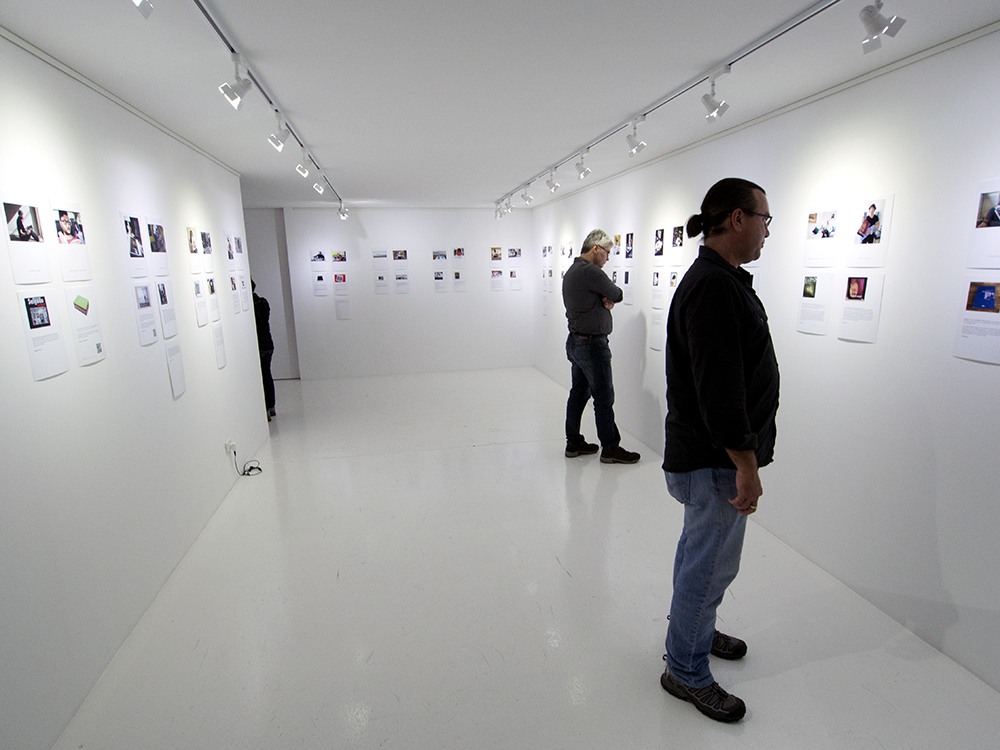
Brisbane World Photobook Day, Maud Gallery Photo Doug Spowart
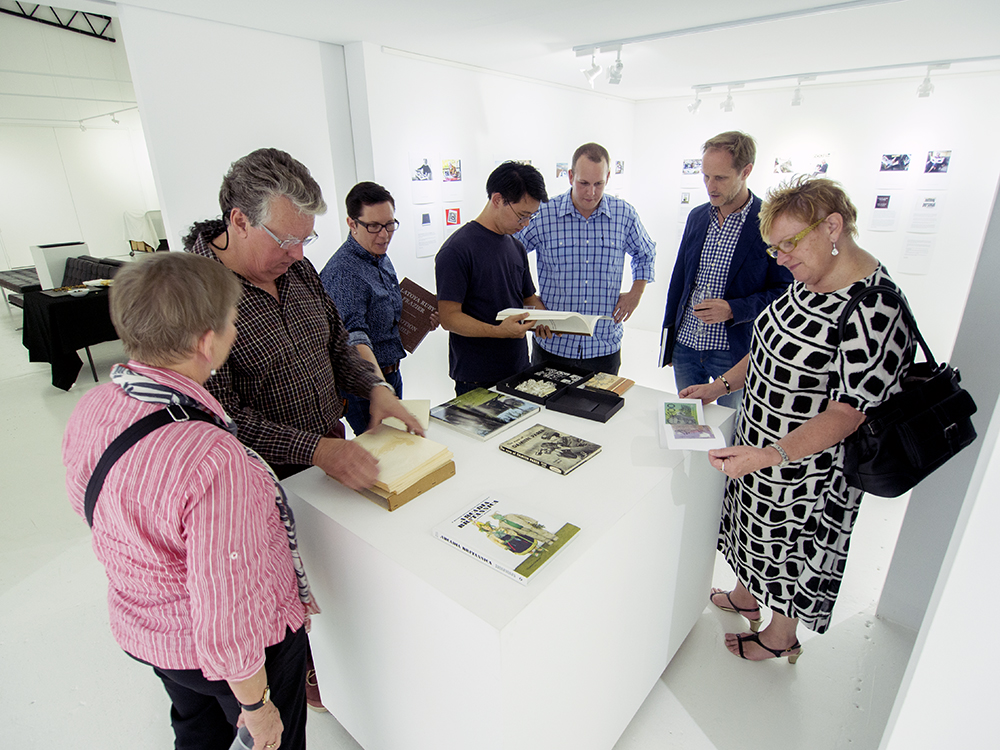
Looking at books – WPBD, Maud Gallery Photo Doug Spowart
.
The event was also attended by photographica collector and historian Sandy Barrie who presented a selection of photographically illustrated books from the 19th century. These books include the 1846 Art Union journal that contained an essay by Henry Fox Talbot and an original calotype print.
.
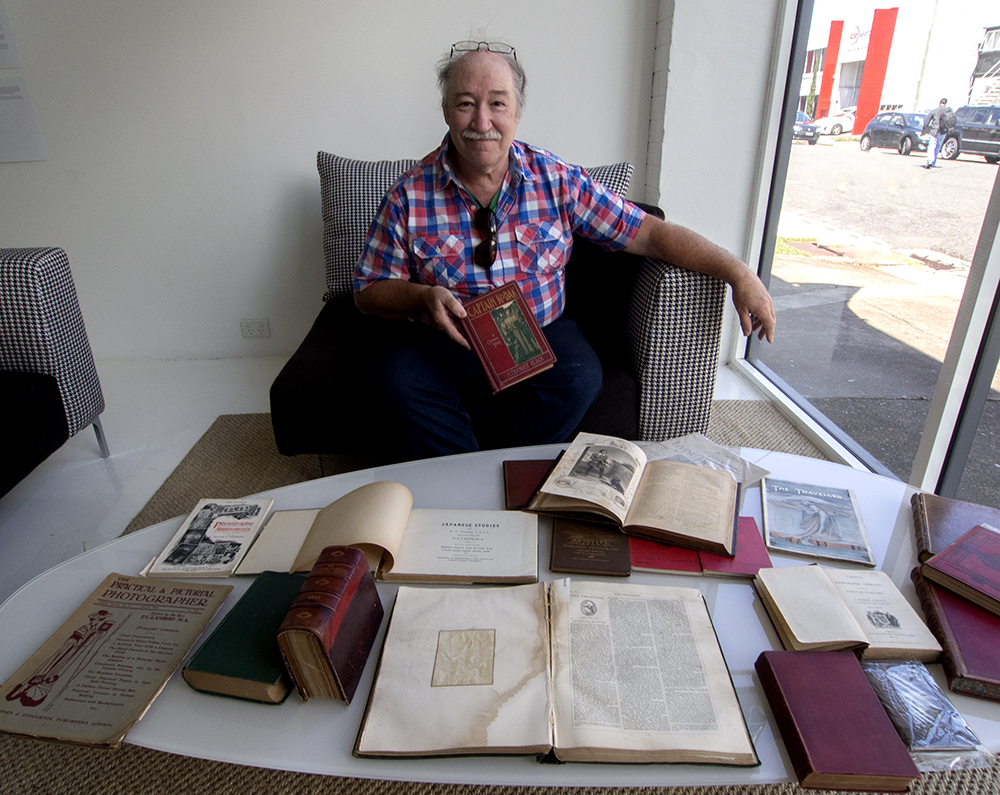
Sandy Barrie and the Art Union journal Photo: Doug Spowart
.
Early in the evening a ‘fly-through’ video was made of the installation with some guests present.
.
In the evening around 35 photobook enthusiasts attended a forum with panellists including Dr Heather Faulkner documentary transmedia practitioner and lecturer at the Queensland College of Art (Gold Coast), Chris Bowes artist and bookmaker, Julie Ann Sutton documentary photographer and collector, Helen Cole Senior Librarian and Coordinator of the Australian Library of Art at the State Library of Queensland, and Henri van Noordenberg artist and bookmaker. The forum was convened by Doug Spowart who in a Q&A format led discussion and a range of photobook issues including:
- Collecting books
- Possession and ownership
- Borrowing and loaning of books
- Adding bookplates and marginalia to books
- Letting children handle books
- The future of photobooks
.
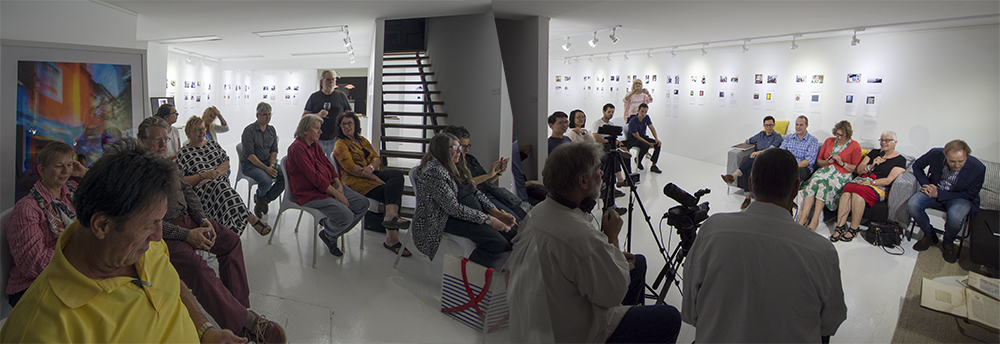
WPBD Forum Photo Daniel Groneberg
.
The last poignant comment came from Heather Faulkner when speaking of the future printed book. In her statement she referred to the recent changes to privacy laws giving government agencies access and scrutiny over all of our online metadata. Faulkner’s prediction is that the physical book, as it has been in the past, will be the place for personal and provocative commentary on contemporary life and politics.
.
Cooper+Spowart wish to acknowledge the following supporters of this project:
- The creative from Maud Gallery: Irena Prikryl, Teri Ducheck and Peter Pescell – videographer;
- Matt Johnston – The Photobook Club;
- Tony Holden and Ilford for the inkjet printing paper;
- Sandy Barrie;
- The forum panelists – Heather, Chris, Julie Ann, Helen and Henri;
- The installation team Maureen Trainor, Rene Thalmann, Mel Brackstone and Daniel Groneberg;
- And, of course, all the participants.
.
To celebrate the Brisbane WPBD event BLURB Australia has offered a discount voucher for participants in the Brisbane event. The code and conditions are: WPBD2015, expires 30 November 2015. Must pay with Australian dollars. Maximum discount per book is AUD$150. Each customer can use the code 1 time.
SEE a few of the photographers and their favourite books in this download:
.
DOWNLOAD A PDF SELECTION: WPBD-Selected_Submissions
.
THE PROJECT WILL CONTINUE… Stay tuned.
.
Previous WPBD events coordinated by Cooper+Spowart 2013 and 2014.
.
.
The 67 participating photographers and their books were:
Peter Adams: Passage – Irving Penn
Melissa Anderson: Shooting Back – Jim Hubbard
Ying Ang: Sabine – Jacob Aue Sobol
Sandy Barrie: Art Union Journal, 1 June 1846 – Henry Fox Talbot essay
Chris Bowes: Tokyo Compression – Michael Wolf
Isaac Brown: Ray’s a Laugh – Richard Billingham
Harvey Benge: Blumen – Collier Schorr’s book
Camilla Birkeland: Mike and Doug Starn – Andy Grundberg
Daniel Boetker-Smith: In Flagrante – Chris Killip
Mel Brackstone: Melbourne and Me (a work in progress) – Adrian Donoghue
Helen Cole: Booked – Peter Lyssiotis
Victoria Cooper: Domesday Book – Peter Kennard
Michael Coyne: Workers -Sebastião Salgado
Judith Crispin: da Sud a Nord (from South to North) – Sabine Korth
Sean Davey: William Eggleston Paris
Jacqui Dean: Peter Adams – A Few of the Legends
John Elliott: Richard Avedon Portraits
Dawne Fahey: Julia Margaret Cameron – Marta Weiss
Heather Faulkner: The Notion of Family – La Toya Ruby Frazier
Liss Fenwick: Outland – Roger Ballen
Juno Gemes: Nothing Personal – Richard Avedon and text by James Baldwin
Kate Golding: Fig. – Adam Broomberg & Oliver Chanarin
Philip Gostelow: Thank You – Robert Frank
Robert Gray: Max Yavno
Daniel Groneberg: Los Alamos – William Eggleston
Sam Harris: Café Lehmitz – Anders Petersen
Tony Hewitt: 50 Landscapes – Charlie Waite
Douglas Holleley: Man and His Symbols – Carl Jung
Kelly Hussey-Smith: On the Sixth Day – Alessandra Sanguinette
Libby Jeffery: Inferno – James Nachtwey
Matt Johnston: Touch – Peter Dekens
Larissa Leclair: Moisés – Mariela Sancari
Louis Lim: Blind – Sophie Calle
James McArdle: Love on the left bank – Ed van der Elsken
Paul McNamara: The Terrible Boredom of Paradise – Derek Henderson
Henri van Noordenberg: Cinci Lei – Joost Vandebrug
Gael Newton: By the sea – CR White
Glen O’Malley: A Modern Photography Annual 1974
Thomas Oliver: Common Sense – Martin Parr
Maurice Ortega: The Apollo Prophecies – Kahn and Selesnick
Adele Outteridge: Pompeii – Amedeo Maiuri
Polixeni Papapetrou: Diane Arbus
Martin Parr: Bye, Bye Photography – Daido Moriyama
Gael Phillips: Arcadia Britannica, A Modern British Folklore Portrait – Henry Bourne
Louis Porter: Looking Forward to Being Attacked – Lieutenant Jim Bullard
Imogen Prus: The Whale’s Eyelash, A Play in Five Parts – Timothy Prus
Jack Picone: Exiles – Josef Koudelka
Ian Poole: White Play – Takuya Tsukahara
Irena Prikryl: Cyclops – Albert Watson
Susan Purdy: nagi no hira, fragments of calm – Suda Issei
Jan Ramsay: AraName – Bir Ara Güler Kitabi
Jacob Raupach: The Family Album of Lucybelle Crater – Ralph Eugene Meatyard
Felicity Rea: Pandanus – Victoria Cooper
Mark Shoeman: Me We, Love Humanity and Us
Roger Skinner: Third Continent – Self-published
Doug Spowart: The Research Library, National Gallery of Australia
Tim Steele: The Earth From The Air – Yann Arthus-Bertrand
Alison Stieven Taylor: Strange Friends – Bojan Brecelj
Julie Ann Sutton: Katherine Avenue – Larry Sultan
Maureen Trainor: Sequences – Duane Michals
Garry Trinh: Period of Juvenile Prosperity – Mike Brodie
Ann Vardanega: Loretta Lux
George Voulgaropoulos: A shimmer of possibility – Paul Graham
Marshall Weber: Street Our Street – Dana Smith & Marshall Weber
David A Williams: Avedon Fashion
Konrad Winkler: Emmet Gowin the new Aperture book
Simon Woolf: F Lennard Casbolt Retrospective Exhibition Catalogue
.
.
All photographs and texts remain the copyright of the submitting photographers.
PUMPING-UP the VOLUME on PHOTOBOOKS
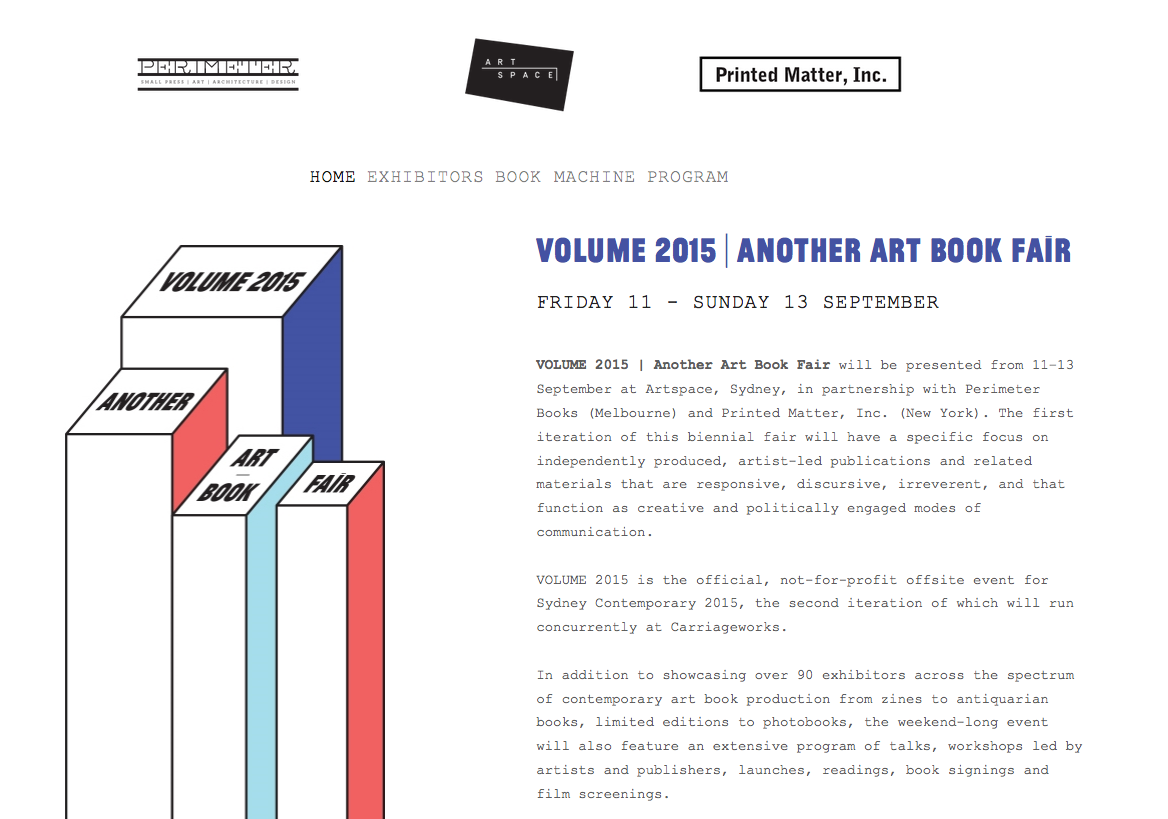
Screen dump on Volume site
.
I attended Volume: Another Art Book Fair in Sydney on the weekend of September 11+13, 2015. The event was a collaboration between Artspace, Perimeter Books and the American artists’ book not-for-profit book shop Printed Matter. Packed into the Artspace building in Woolloomooloo were around 100 ‘Art Book’ makers, publishers and sellers all vying for the attention of potential purchasers. The table holders had spread before them all things book – let’s not try and get into discussions around what an ‘art book’ is, but rather celebrate the range of published products from thin stapled zines and comics, to self-pub photobooks, artists’ books and gallery catalogues, and further to trade-styled ‘fine art’ books and livre d’artiste productions.
.
Some of the Volume Art Book Fair table participants included:
.
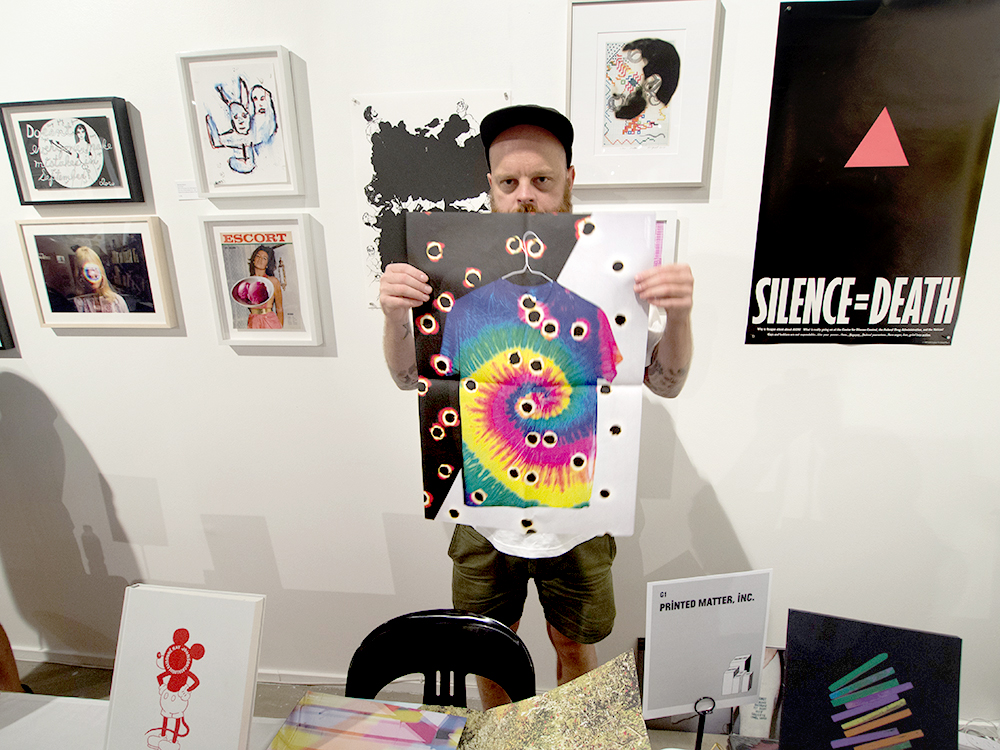
Shannon Michael Cane from Printed Matter
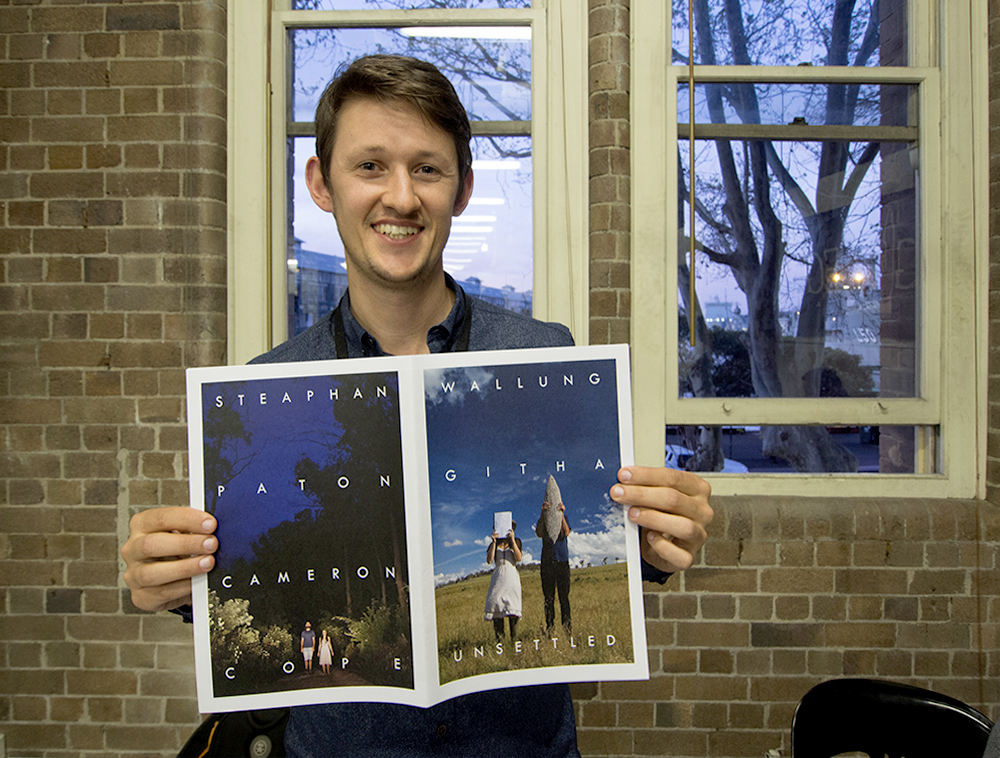
Cameron Cope
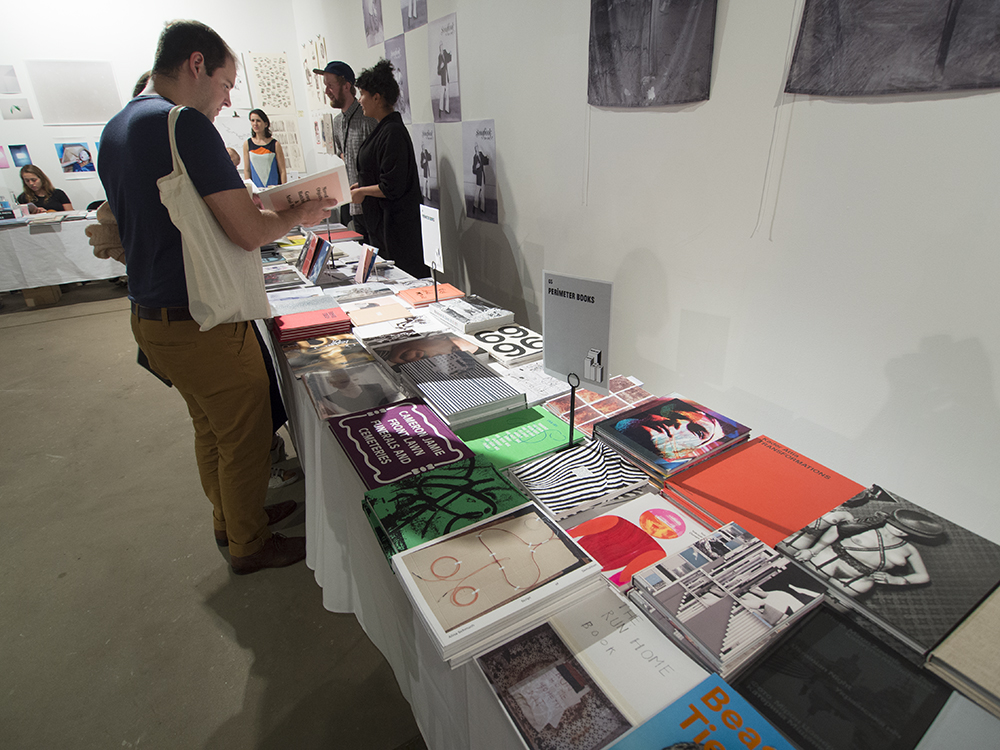
The Perimeter Books table
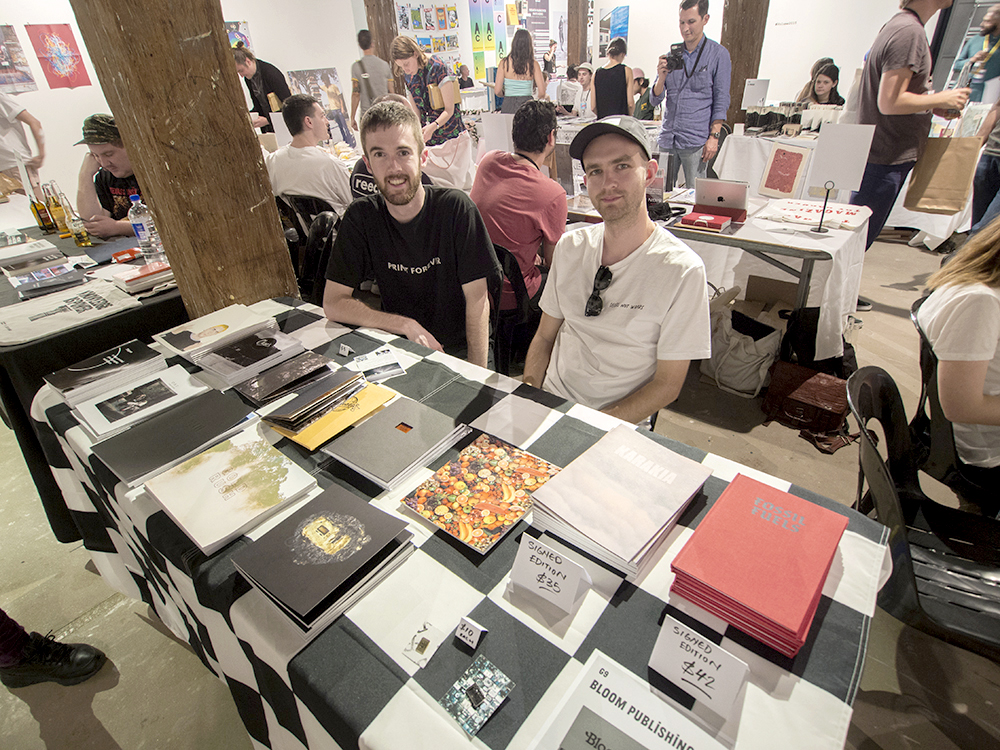
Bloom Publishing Lloyd Stubbers + Jay Dymock
Bloom Publishing: Lloyd Stubbers + Jay Dymock
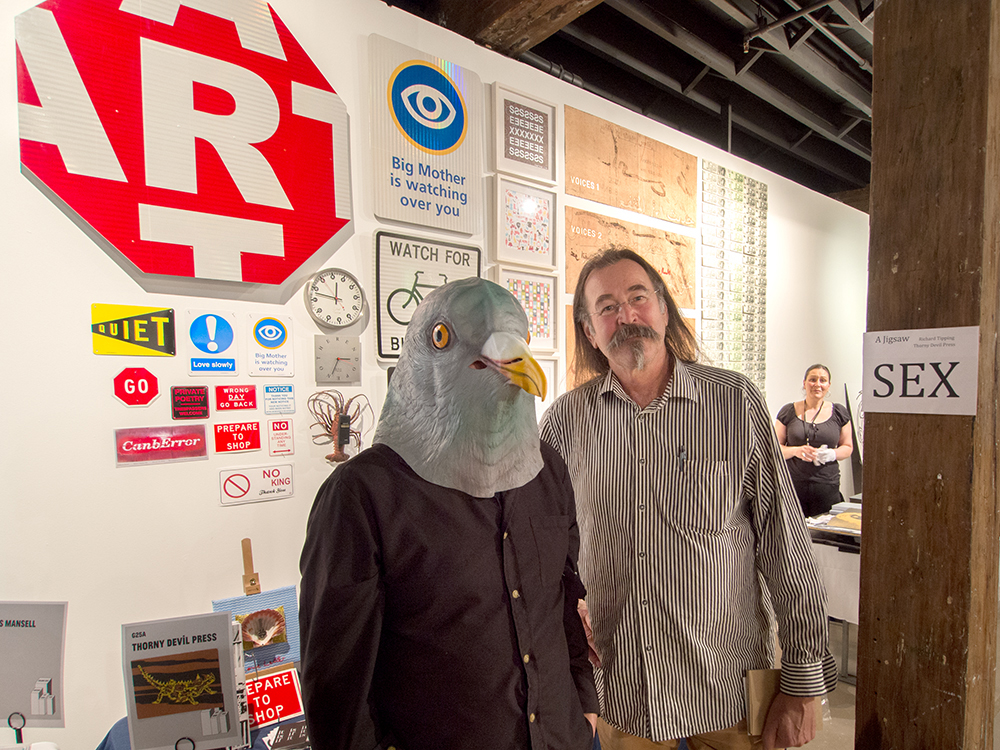
Richard Tipping and Max Ernst (David Dellafiora)
Thorny Devil Press: Richard Tipping
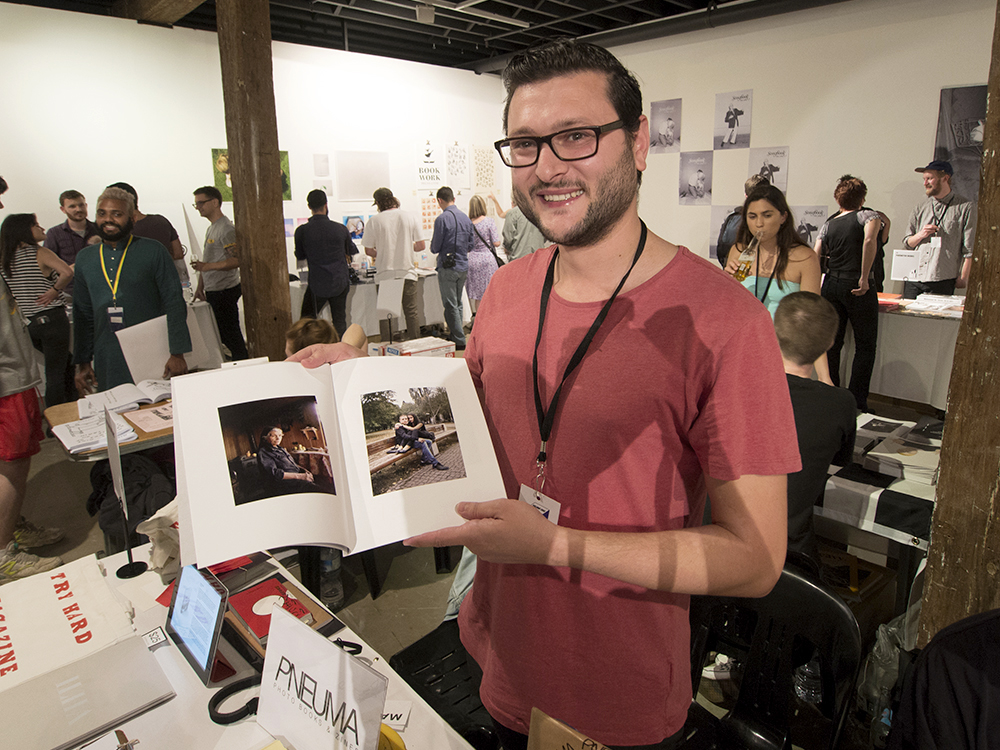
George Voulgaropoulos
Pneuma Publishing: George Voulgaropoulos
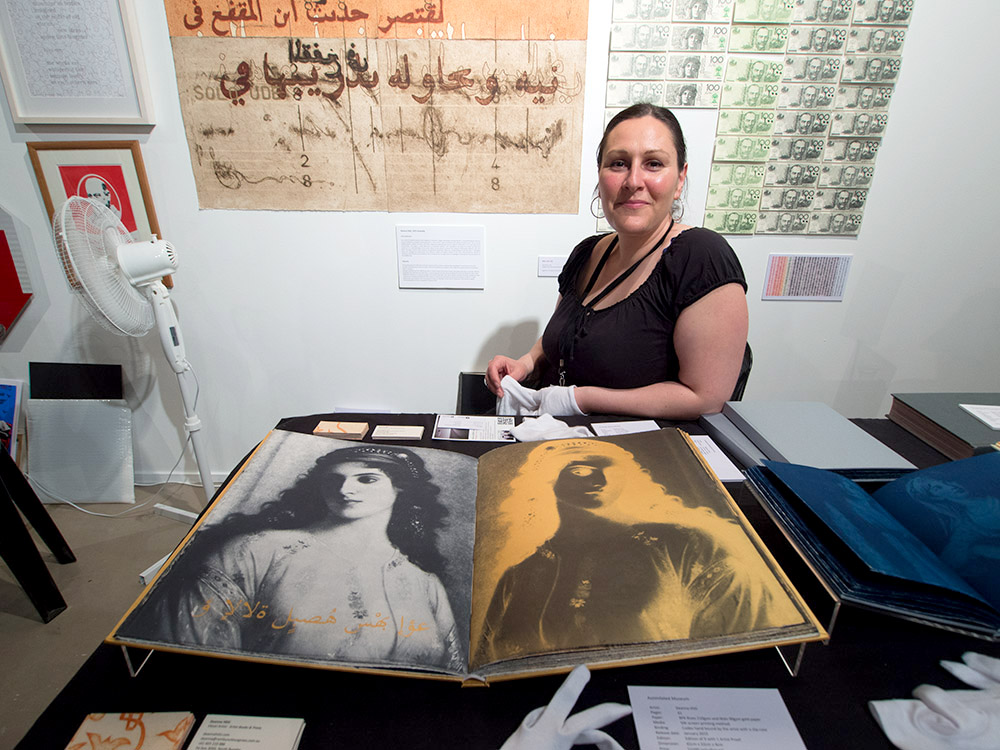
Deanna Hitti
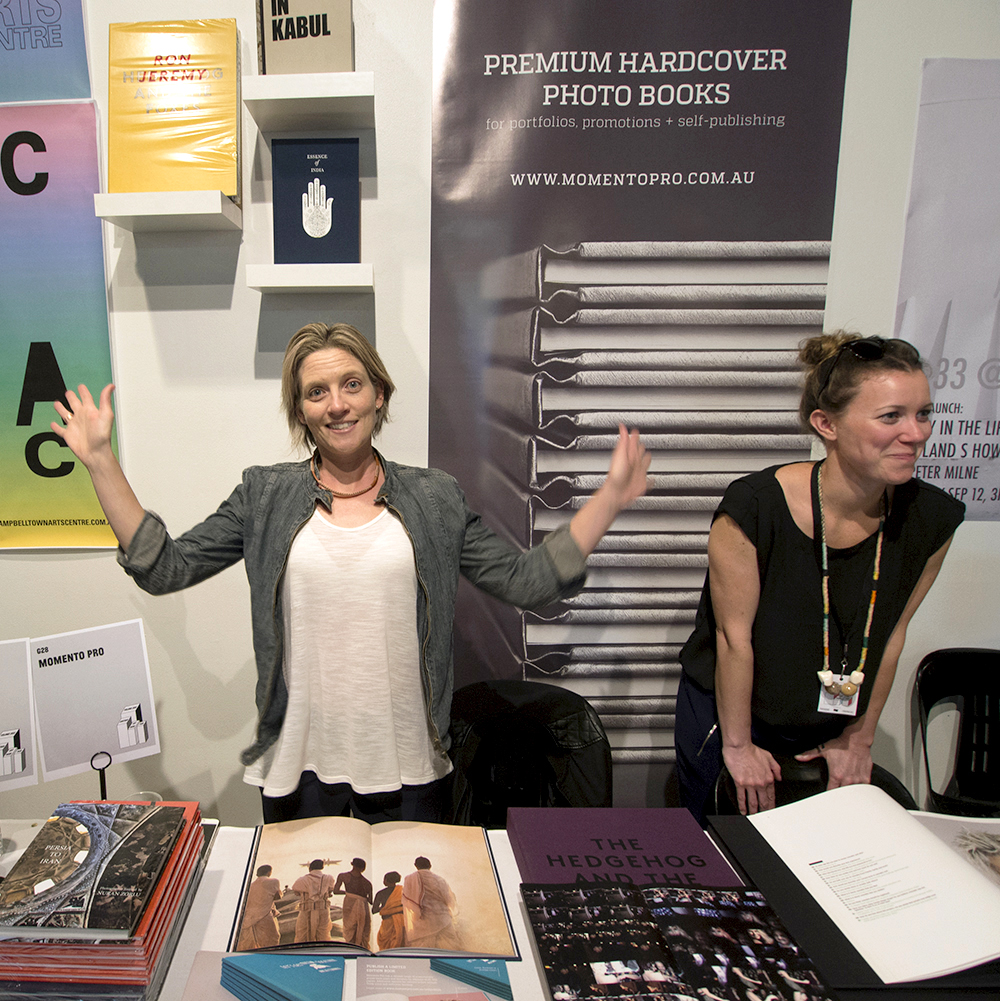
Libby Jefferies MomentoPro after a long day on Sunday
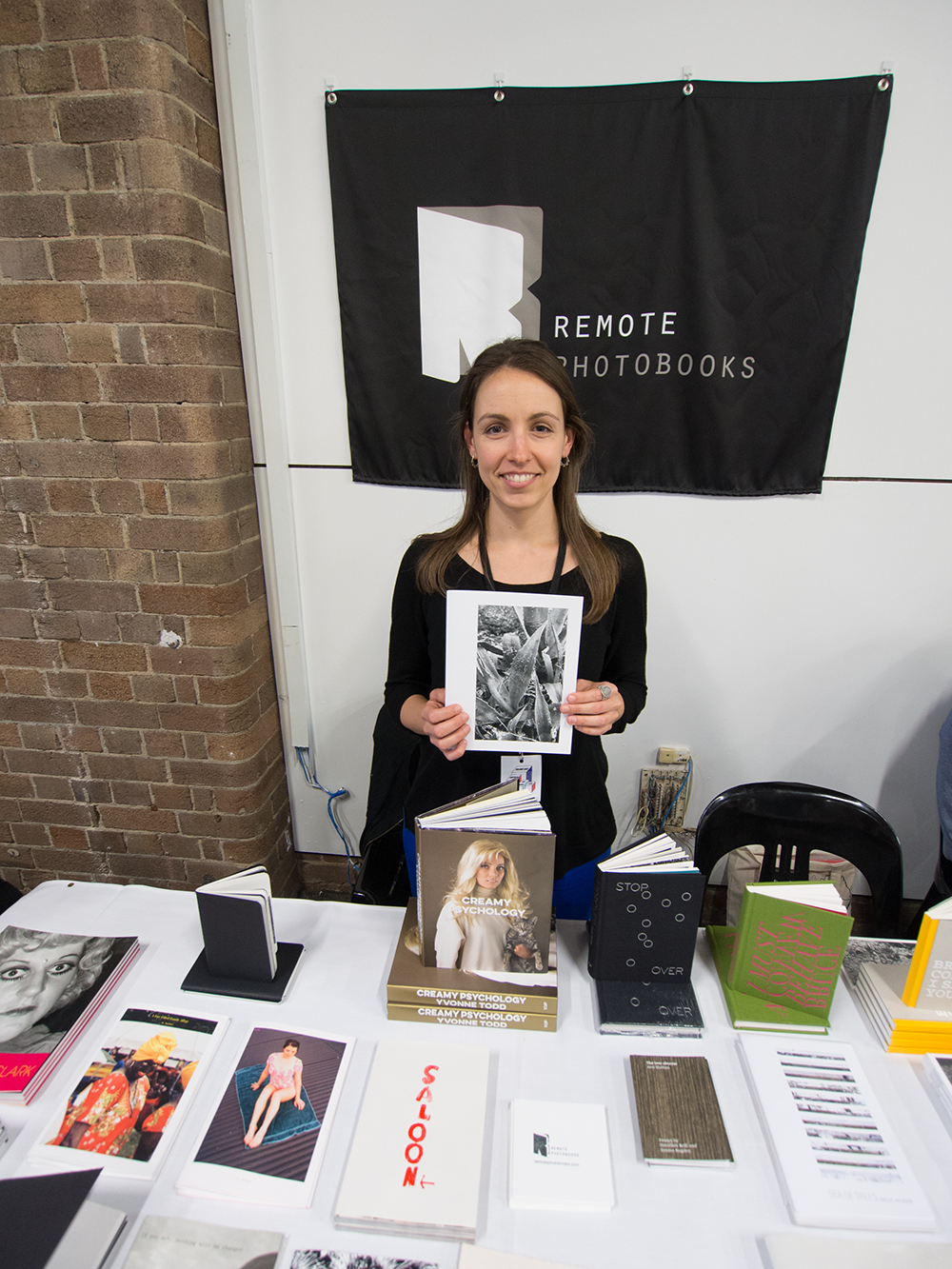
Anita Totha Remote Photobooks NZ
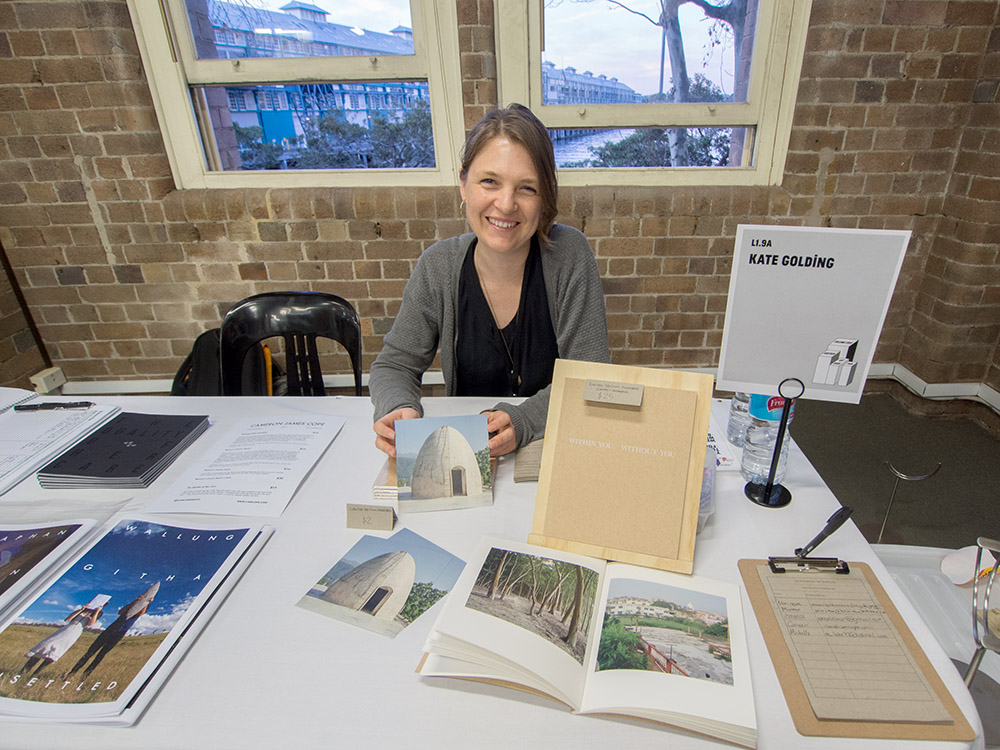
Kate Golding
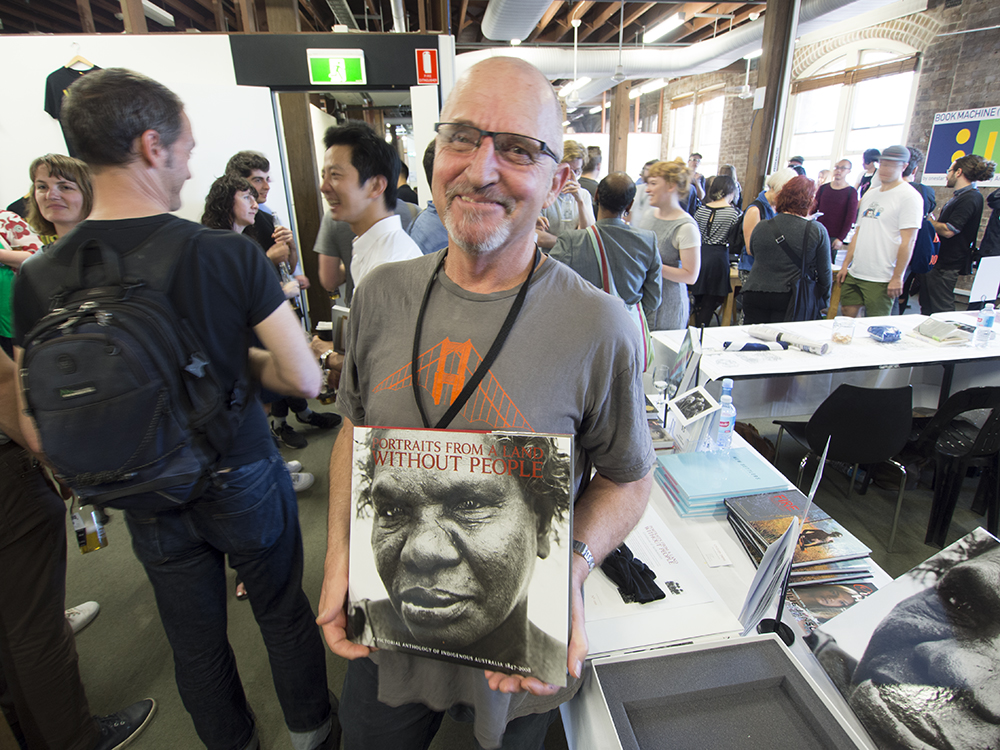
John Ogden Cyclops Press
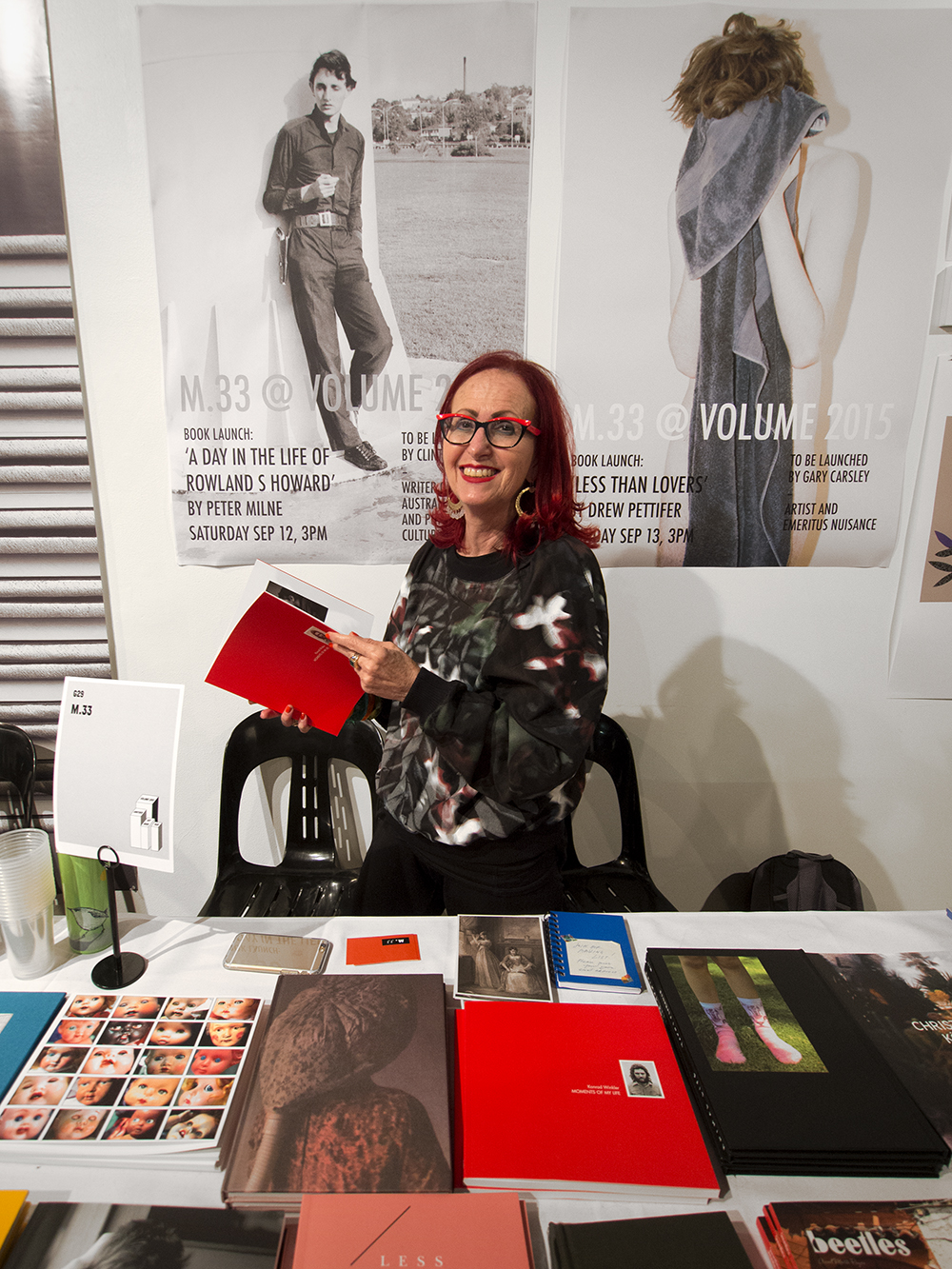
Helen Frajman – m.33
.
Selling books to interested collectors and lovers of books is one thing but as is the case with the emergent trend in self-pub everyone wants to have their own book. To cater to this growing group of keen makers the program included many free forums, workshops and lectures by a variety of key makers and commentators on various aspects of the disciplines of writing and self-publishing (self-pub).
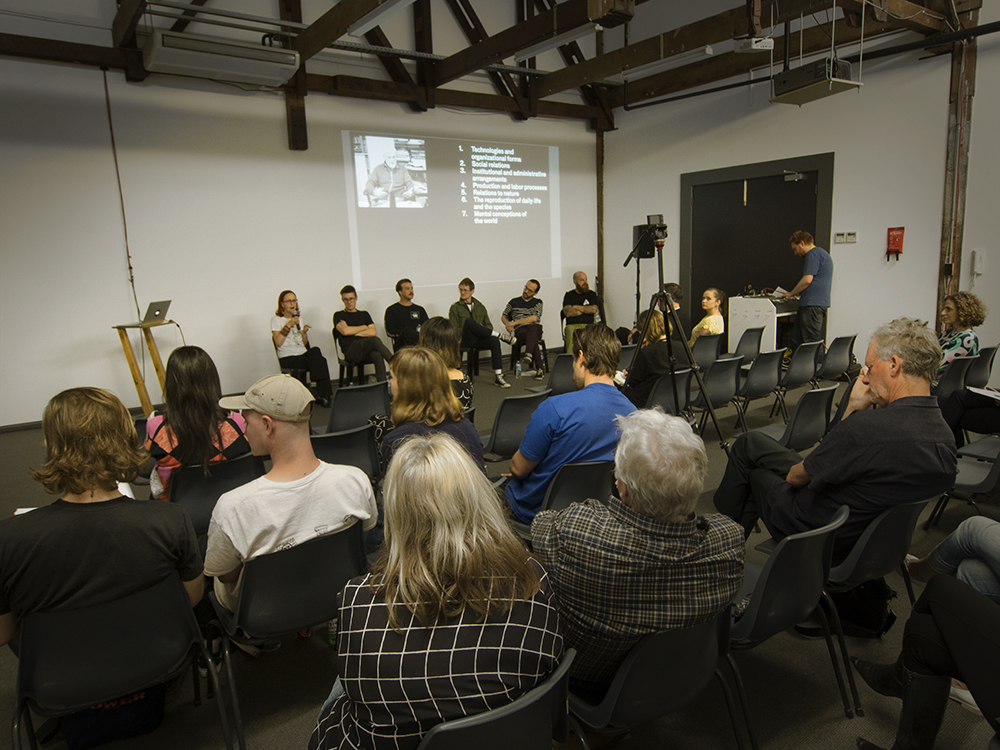
Why Publish panel
As my interest is in topics related to photobooks I attended two sessions: Why Publish and Designing Photobooks. The why-pub panel consisted of Helen Frajman (m.33), Daniel Boetker-Smith (Asia-Pacific Photobook Library), Brad Haylock, Jack Harries and Geordie Cargill and Shannon Michael Cane from Printed Matter. Attendees, of which there were around 30, heard discussions relating to the usual issues of publishing, getting a designer, edition numbers, marketing, selling and getting your work into the right hands including the international market. Brad Haylock suggested the key themes for photobooks were:
- Technologies and organizational forms
- Social relations
- Institutional and administrative arrangements
- Production and labor processes
- Relations to nature
- The reproduction of daily life and the species
- Mental conceptions of the world
Ultimately the overall message seemed to be ‘Give it a go’!
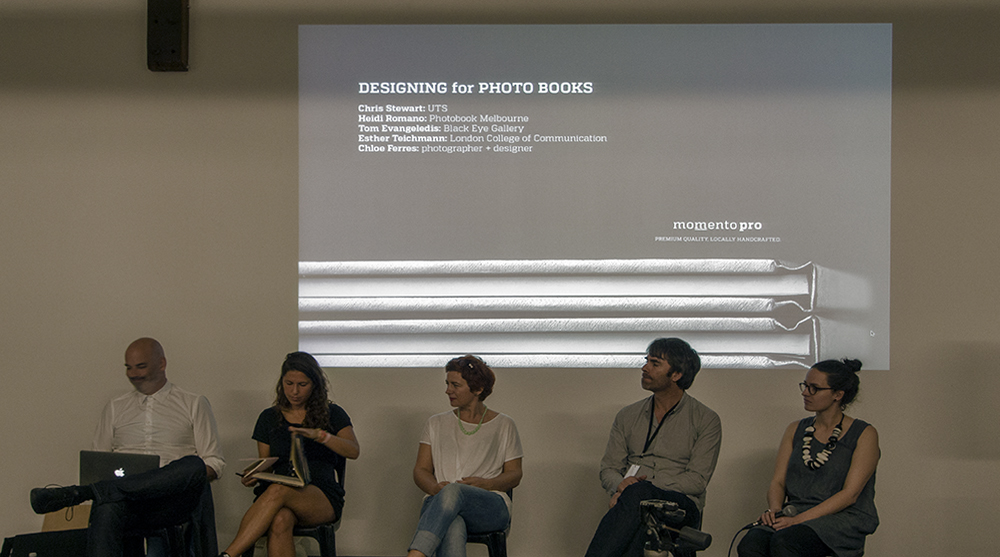
The Designing for Photo Books panel
Associate Professor Christopher Stewart from University of Technology Sydney chaired the Designing for Photobook panel. Each speaker showed examples of their work and discussed design concerns associated with their books. Heidi Romano from Unlessyouwill spoke of her history in design, her passion for the photobook and her experience of the international world of book design. She cited her interest in advancing Australian photobook design as being a driver for her establishment of Photobook Melbourne. Esther Teichmann, and artist from the UK discussed her exhibition work and the challenge of bringing wall-work into the space of the book as well as her experiences, not always pleasant ones, with book designers. Tom Evangeledis, Black Eye Gallery described his interest in encouraging exhibitors at his gallery to consider a book to support the exhibition but also to enhance the opportunity for the artist’s work to be extended beyond the exhibition dates. Chloe Ferres, probably kept the most on track with the topic of book design by presenting a range of works that in some ways subvert the idea of the book being a vessel to hold photographs that express a narrative – she considers the book structure as also important to the narrative and uses a range of design interventions to disrupt the preciousness that many photographers seem to consider important when they make books.
Christopher Stewart posed questions to the panelists to draw out aspects of the topic but when asked if there were questions from the floor Daniel Boetker-Smith asked about how we can make photobooks that are more about the ‘fetish’ of the book – ‘some books all look the same – I’m interested in all kinds of books. A young photographer in Myanmar stapling a bunch of photographs together to make a book is just as important to me as some “coffee table tome”!’ An attendee agreed and responded that books often look the same as they as designed from a dummy where all decisions about the book are considered at the beginning and immutable – whereas another less formal method is the development of a book in a process where opportunities for review and discovery are made along the way allowing the book to be like a collaborator with the artist…
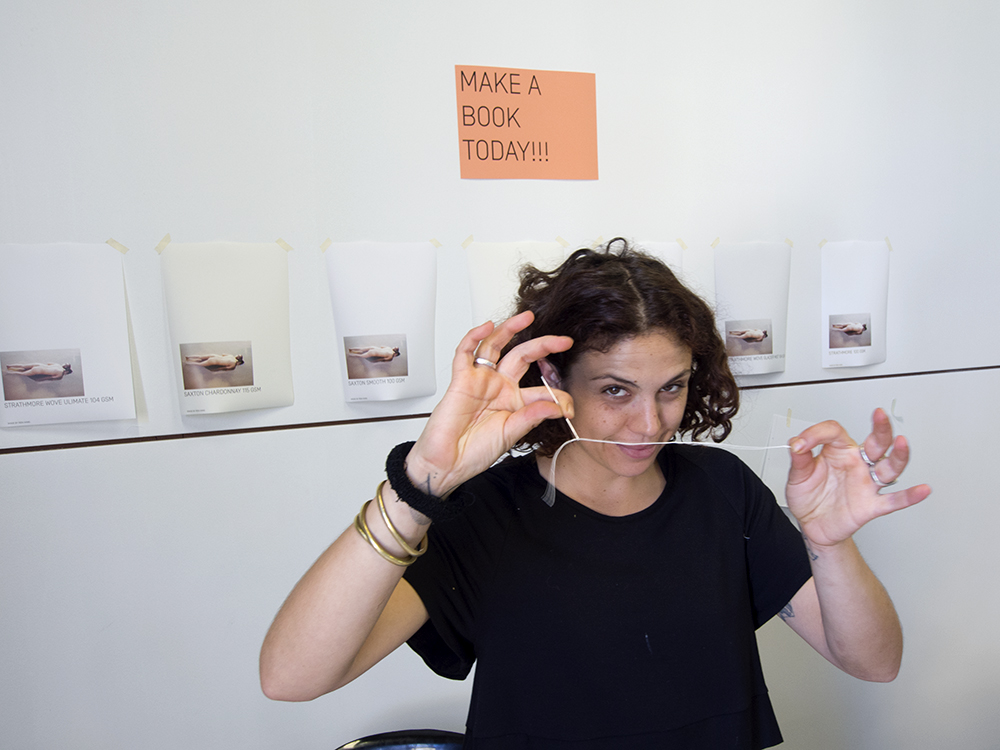
Bella Capezio making Insta Photobooks for APPA
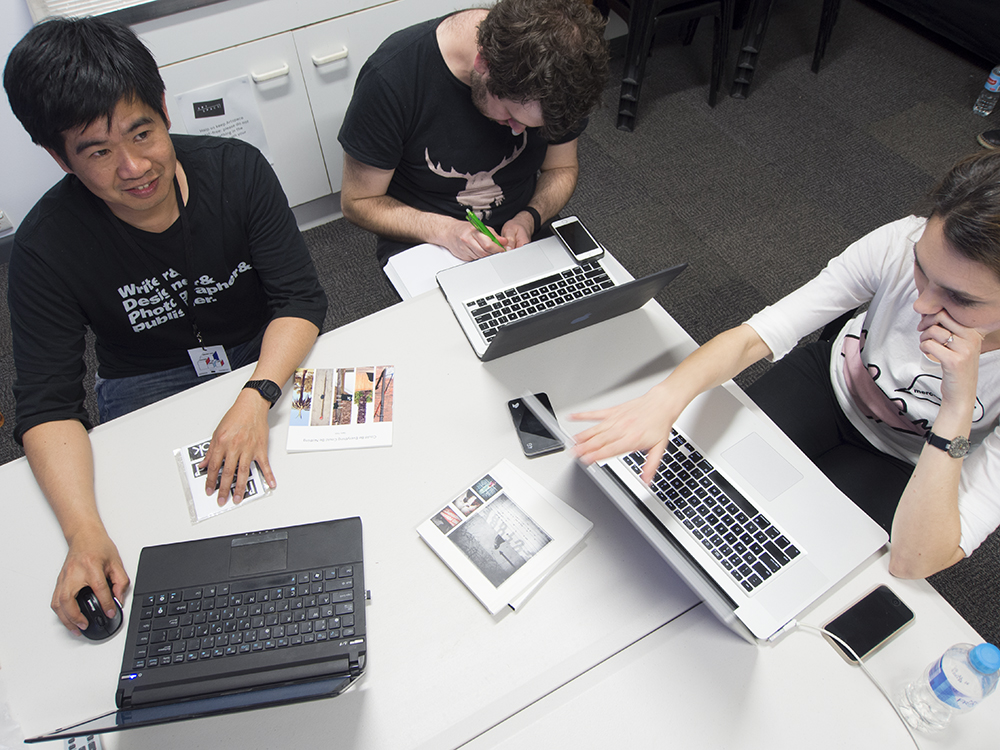
Make your own Photobook with Garry Trinh
While some attendees attended these lecture sessions others were busy making books. The print-on-demand company BLURB offered bookmaking workshops over the weekend led by photobook self-publisher Garry Trinh. Asia-Pacific Photobook Archive presented a selection of their books at the event and founder Daniel Boetker-Smith and Bella Capezio led photobook-making sessions as well.
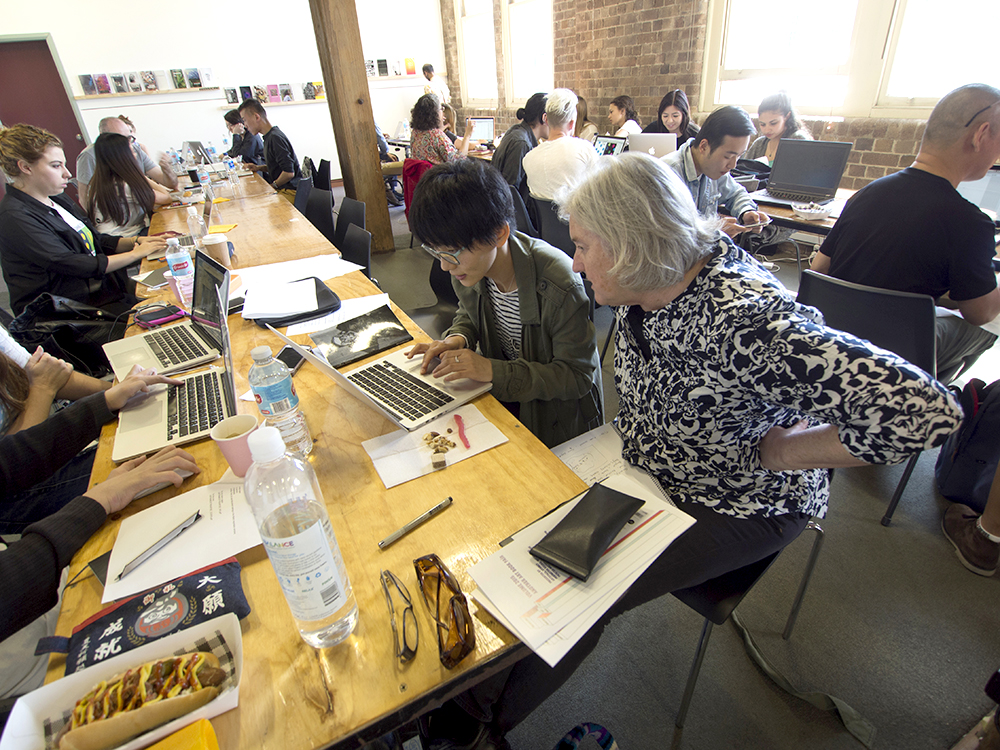
Victoria Cooper and Ruyin Yang
The biggest book-making venture over the weekend was a special project coordinated by Onestar Press who, with Artspace and other supporters including Surry Hills Print & Design Konica-Minolta, design students from University of New South Wales – Art &Design. The project, entitled ‘Book Machine’, brought together a designer with a ‘content provider’ (artist or photographer), and over the course of 3.5 hours the two work together to design a book. Overnight the book was printed and made available to its collaborative participants.
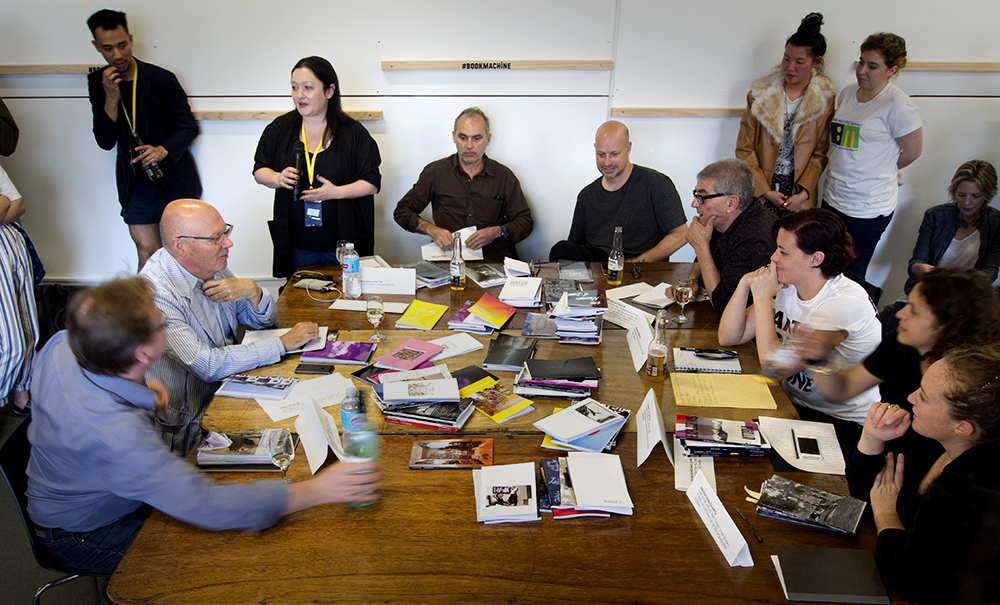
Alexie Glass-Kantor – introduces the Book Machine commentators
Late on Sunday afternoon the Artspace coordinators drew together a distinguished panel of erudite book critics and commentators including Brianna Munting – NAVA, Simon Barney Artist, Alexie Glass-Kantor – Executive Director Artspace, Maddalena Quarta – One Star Press, Bella Capezio – Asia-Pacific Photobook Archive, Philip Keir – publisher and artists’ book collector and Nicholas Tsoutas – Curator and Art management executive. A crowd gathered to hear this discussion and celebrate this unusual project.
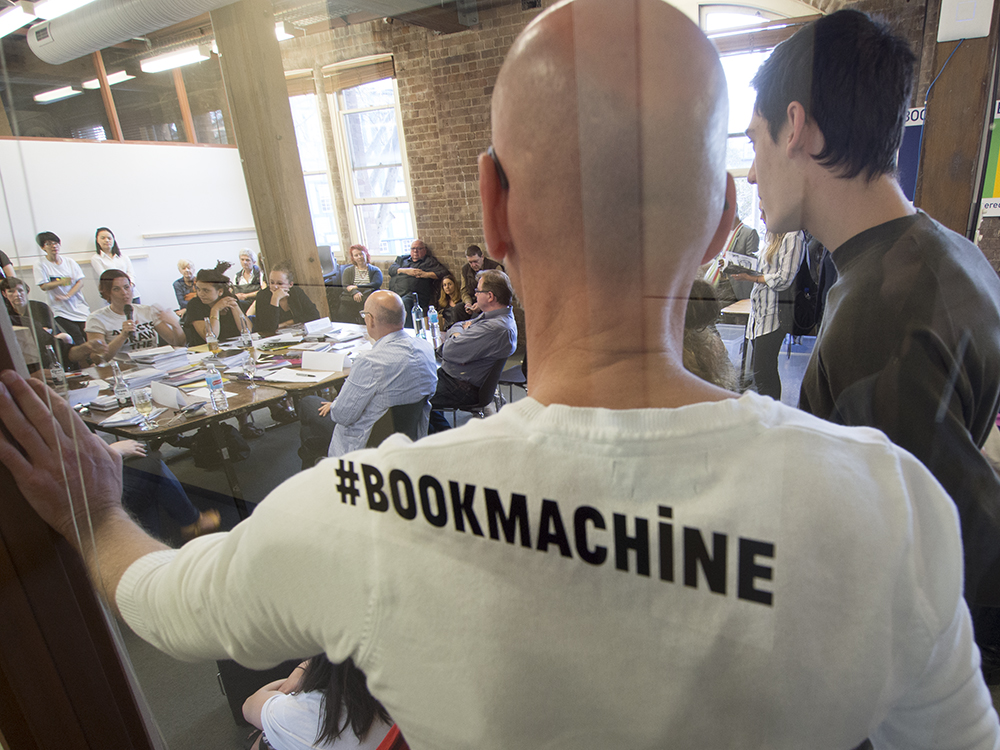
Book Machine
Towards the end of the day on Sunday I rushed around to catch up with people that I still hadn’t spoken with and books not yet seen. I felt something of the heightened energy levels with which these table holders had been operating in the preceding days. Did they sell enough books…? Did they make contacts with people who will do future business with them or provide content for future books…? Did they get a chance to check out what everyone else was doing…? Did they get to do a Book Machine project…? Buy a pie at Harry’s Cafe de Wheels or take-in the harbor, the Finger Wharf and the view of naval ships at Garden Island.
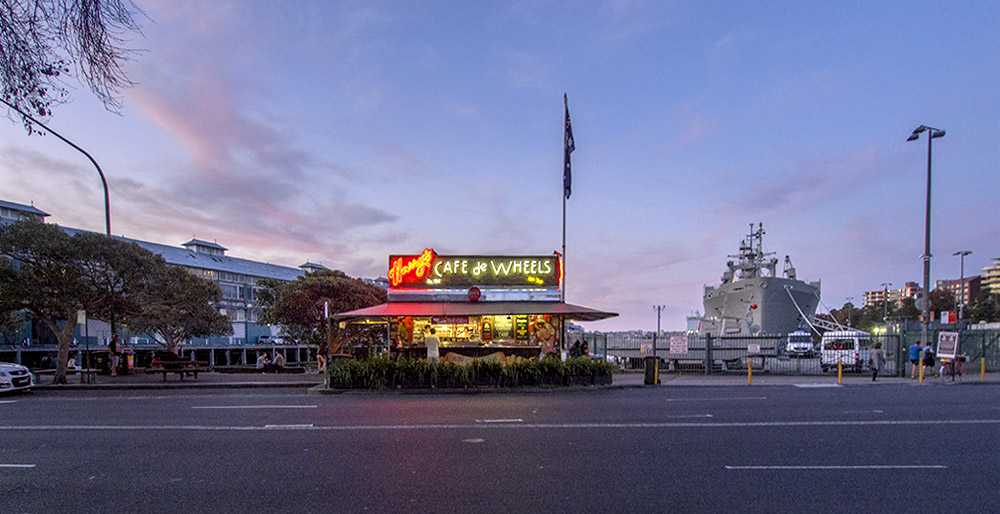
Harry’s Cafe de Wheels
Volume: Another Art Book Fair was a major undertaking for the visionaries who conceived it and then brought it into fruition. There were so many activities, add-on events, presentations and booksellers and books available for artbookophiles in which to luxuriate. There was a real sense of community created in this art book fair that can only advance the disciplines associated with it. One thing is for certain, at least for me, is that I know I have just attended one of the most significant art book fairs to be held in this country to date. When, and where the next one will be is something we’ll await with much anticipation…
Doug Spowart
14 September 2015
PHOTOBOOK ANXIETY – A paper by Doug Spowart
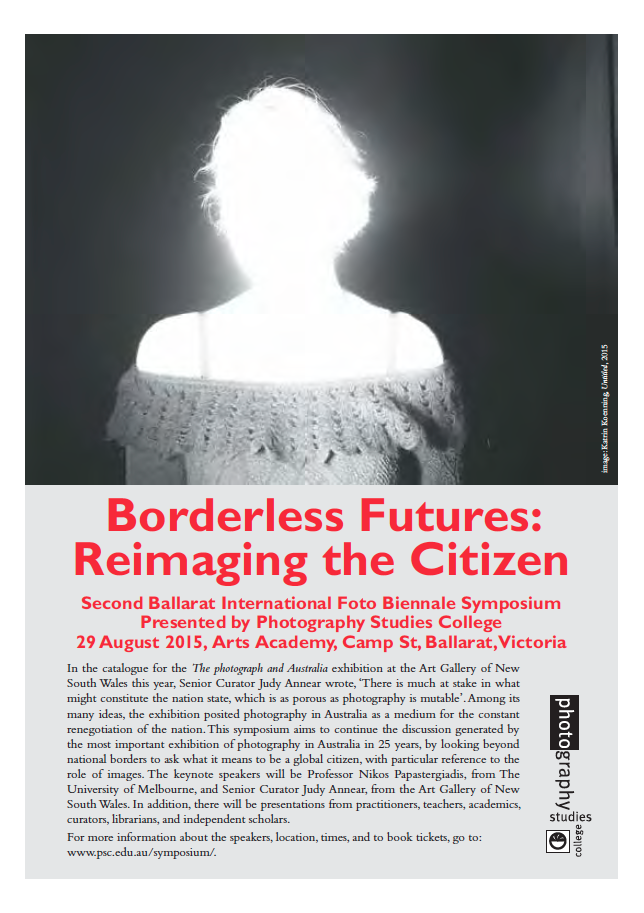
What follows is a transcript of the paper presented at the ‘Borderless Futures: Reimaging the Citizen’ Symposium as part of the 2015 Ballarat International Foto Biennale. Selected images from the presentation accompany the text to illustrate concepts raised. The text is relatively conversational as it was ‘performed’ rather than read to the audience.
PHOTOBOOK ANXIETY… a paper by Dr Doug Spowart
I doubt that Henry Fox Talbot or Anna Atkins realised in the 1840s what an impact that the photobook would have in the 21st century and the role it plays in the self-publishing revolution that we are witnessing today. The old publishing and bookselling paradigm is now redefining itself and trying to maintain its composure and power over their once lucrative territory. Now every photographer wants and can make their own books – but they need the inspiration found in the latest photobooks and they need to be kept informed by the movers and shakers of the discipline as to what is happening now, and what are the future trends and opportunities.
As a result there is a heightened anxiety for constant and direct personal connection with the pulse of this worldwide phenomena. Social media is the communication vehicle of choice and participants in the photobook network are driven to frenetically seek updates, reviews, new releases, posts about their books and the latest gossip through social media channels.
The anxiety surrounding this activity is palpable and the frisson of social media, particularly Facebook, is the powerful tool for this necessary communication as well as for community building in the burgeoning indie publishing photobooks movement.
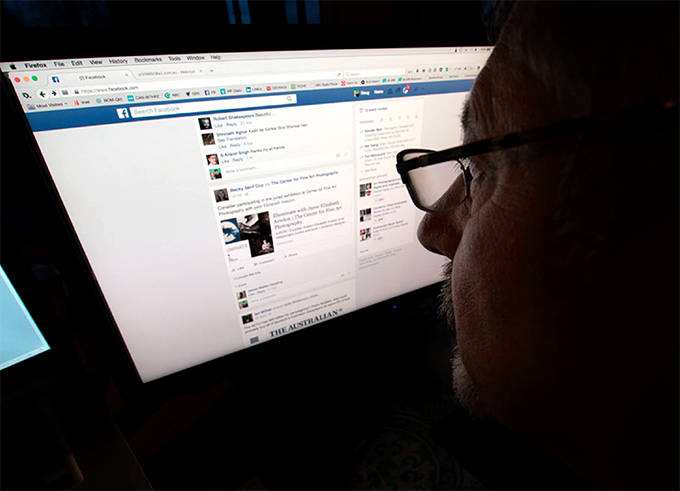
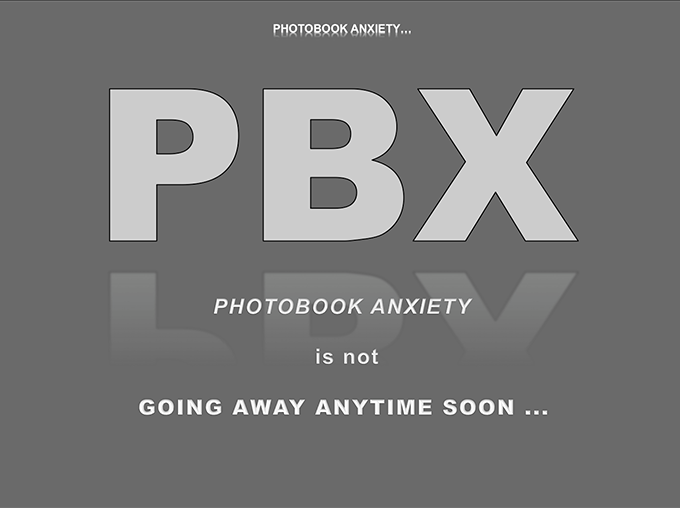
Welcome to ‘Photobook Anxiety’ otherwise known by its clinical title PBX. It is driven by the sufferer having an uncontrollable desire to be a part of everything photobook happening in the world. It is characterised by the sufferer constantly checking social media –
What are the signs that of those suffering from this malady?
Wishing I could be there…
There are so many events that happen worldwide it’s impossible to get to all of them let alone one. In a recent Facebook newsfeed the frustrated respondent posted ‘Oh I would freaking kill to be there…”
A sampling of the year’s calendar includes these events:
- Photobook Melbourne February
- Art Book Melbourne – May
- Photo London – May
- Auckland Festival of Photography (Photobook Symposium) – May
- Kassel Foto Book Festival – June
- Obscura Festival of Photography (Photobook Day) – August
- Perimeter book sale last weekend
- Book Case Study in the Netherlands – September
- Aperture at Photo Paris – November
I should have bought a copy of…. Out-of-print/Limited editions/pre-orders
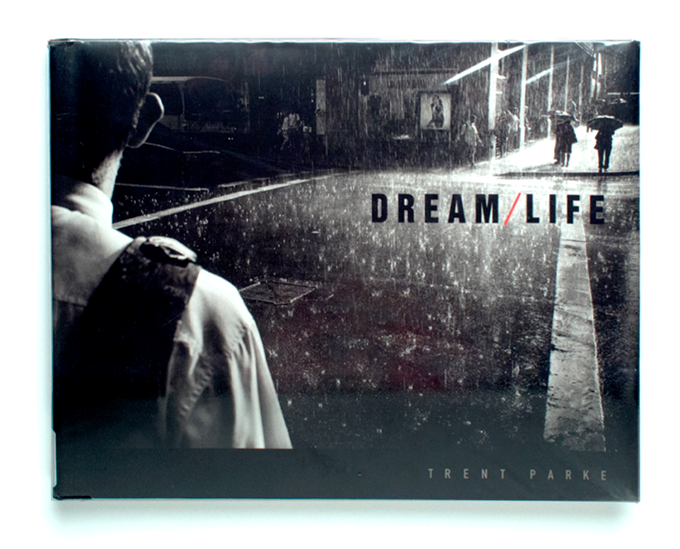
Trent Parke’s Dream Life, probably Australia’s greatest ever photobook, is an excellent example of a rare and out-of-print photobook. Originally selling for around $60 in 2001 it is now is impossible to get for prices less that 25 times that amount.
One was listed on Amazon recently for 1550 Pounds?
Earlier this year one was offered in a Photoeye’s Auction – with a day to go it was $ 895 I did not see the final hammer price…
Last year Abebooks listed one for $1084 in this very town (Ballarat) – I’ve just checked and the Known World Bookshop down the street and they have sold the book.
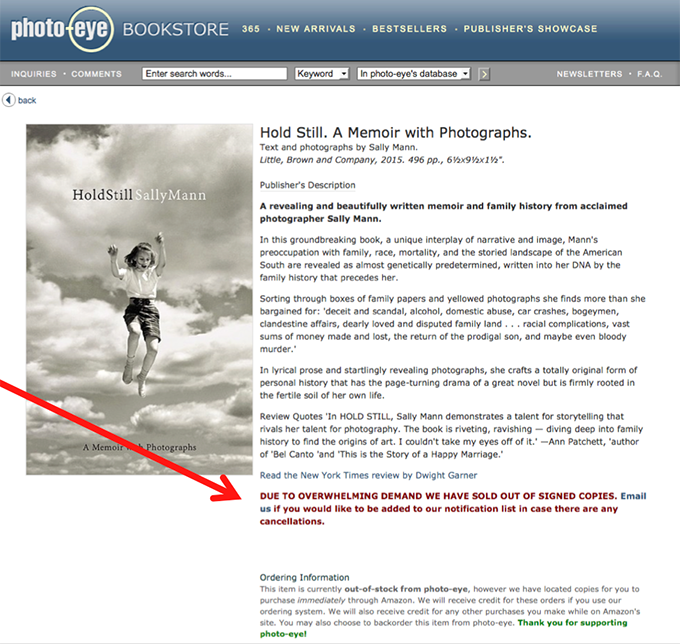
Limited Editions and Pre-Ordering
Adding to this PMX is the trend particularly among American photobook suppliers like Photo-Eye to advertise limited supplies of signed books which can be ‘pre-ordered’ with specific cut-off times and dates. Even these can be out-sold before you hear about the offer being available as in the case recently with Sally Mann’s Hold Still.
Recently Australian Bloom Publishing offered little badges with the text ‘Print Forever’ as white text on a black background. These were ‘snapped-up’ and a following post Bloom advised that the badges were ‘all gone’! But advised FB Friends to ‘Stay tuned for more in the coming weeks’. PMX now demands that Bloom is followed closely so you won’t miss out on the following offers….
You anxiously await the posts and stories of people you follow…
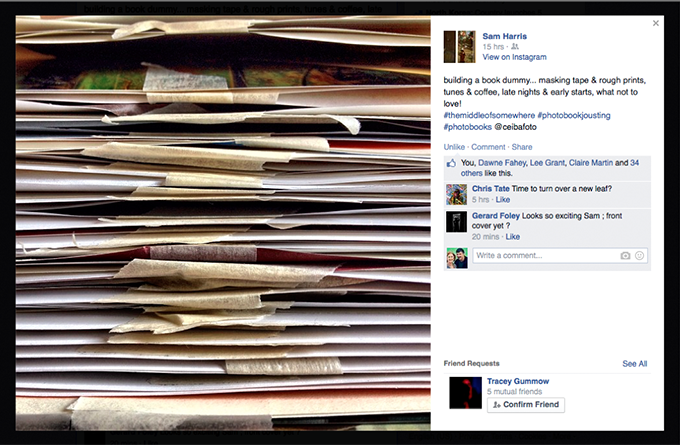
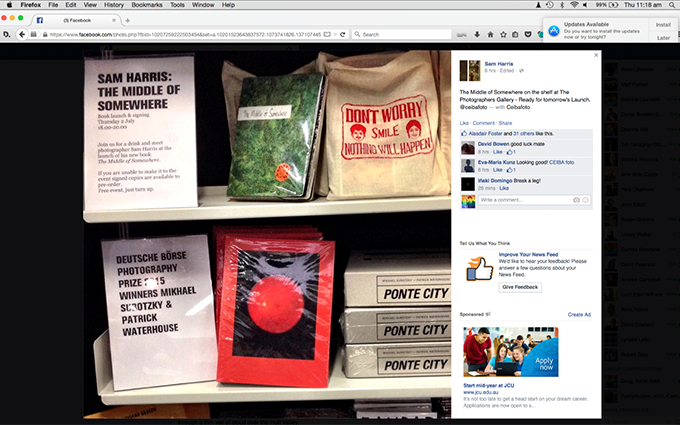
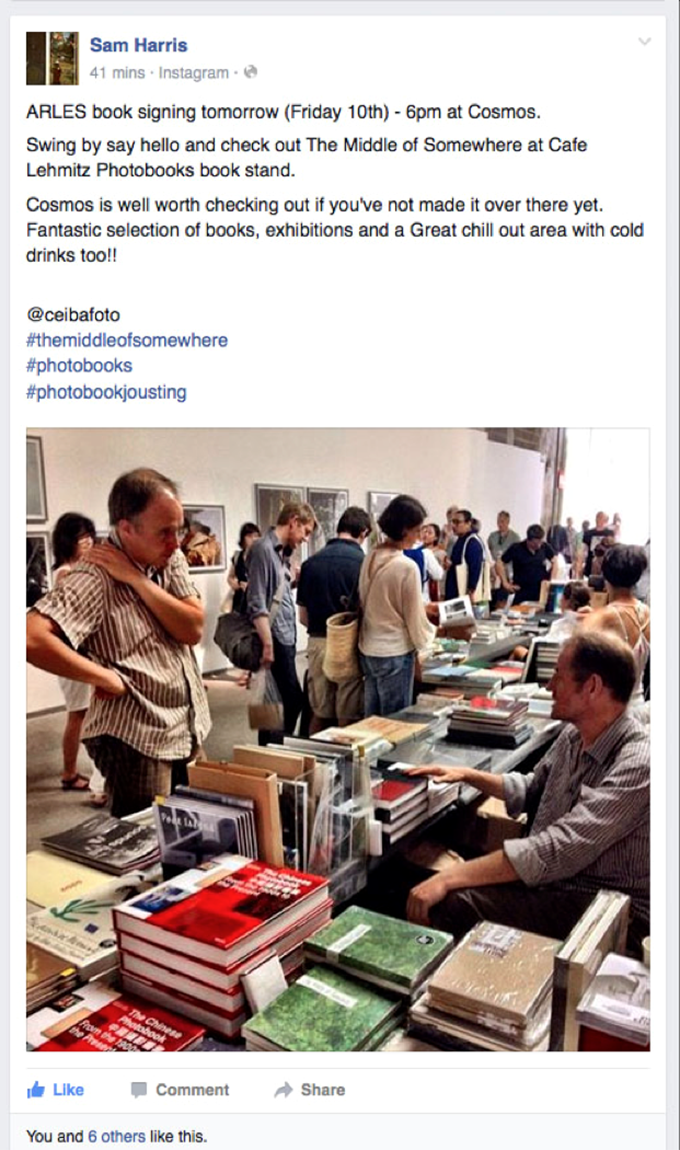
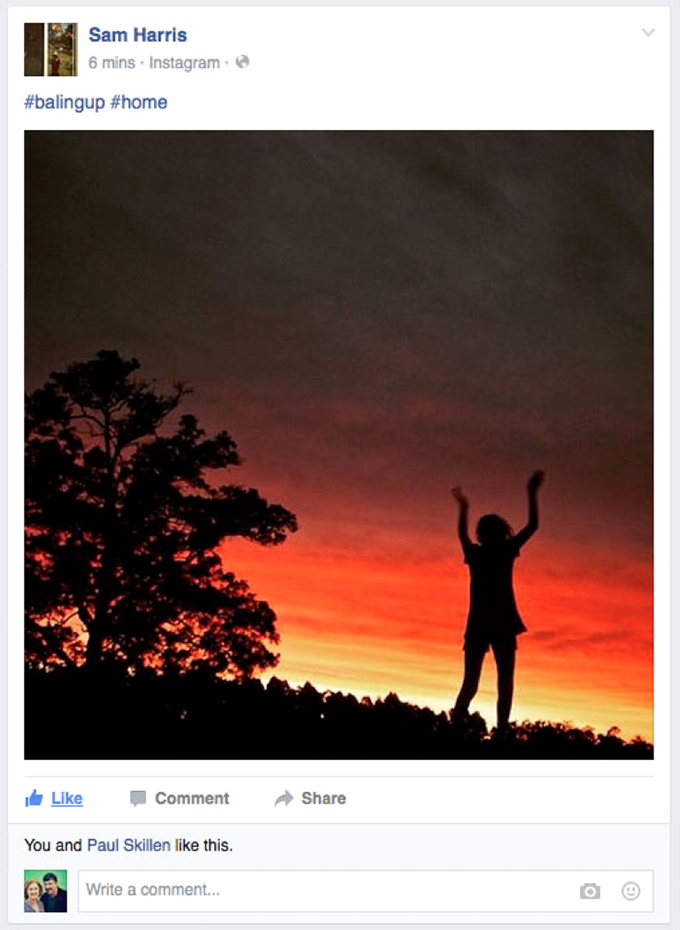
Who hasn’t been following the exploits of photobook officiando Sam Harris and his latest book The Middle of Somewhere. Sam’s posts have taken us a long on the journey illustrated by images that could well form the basis of a new book. As FB friends we saw the posted images of the design stages and felt his excitement at seeing the book on bookshelves at major European shows and being on a table at Arles with the book. The anguish of the missing visa to re-enter Australia and the joy of being back in Australia and the Balingup sunset at home… Oh! And the set up for his exhibition and book launch by Alasdair Foster at BIFB…
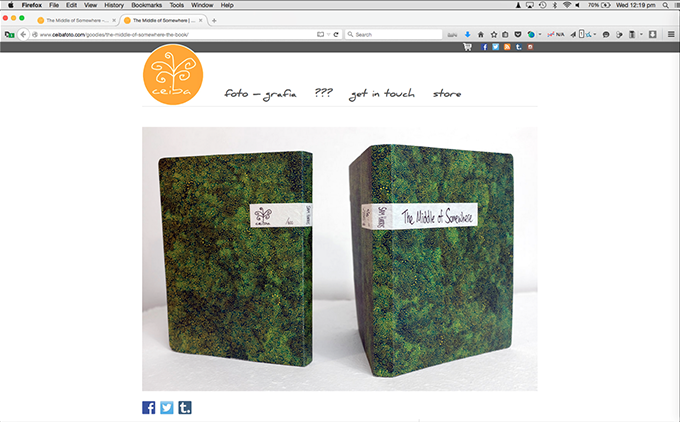
You anxiously await the posts about new stuff…
FB Friends – People who you respect and believe know what’s going on offer advice on books to look at, and get before they are sold out. Adding to PBX phrases like ‘Look what I got today from Photoeye, Alejandro Cartagena’s latest book. It will be gone before you know it’ and ‘Holy moly!!! If you can get your hands on a copy of Mariela Sancari’s brilliant ‘Moises’, do it now. Only 500 copies.’
A couple of days ago Anita Totha from the Photobook Club Auckland posted that Broomberg+Chanarin’s latest book was available: ‘Better get your hands on this now…’. Even Bloom has a new pin — gotta get that! And what about Martin Parr badged clothing and accessories … could that be going a bit far…?
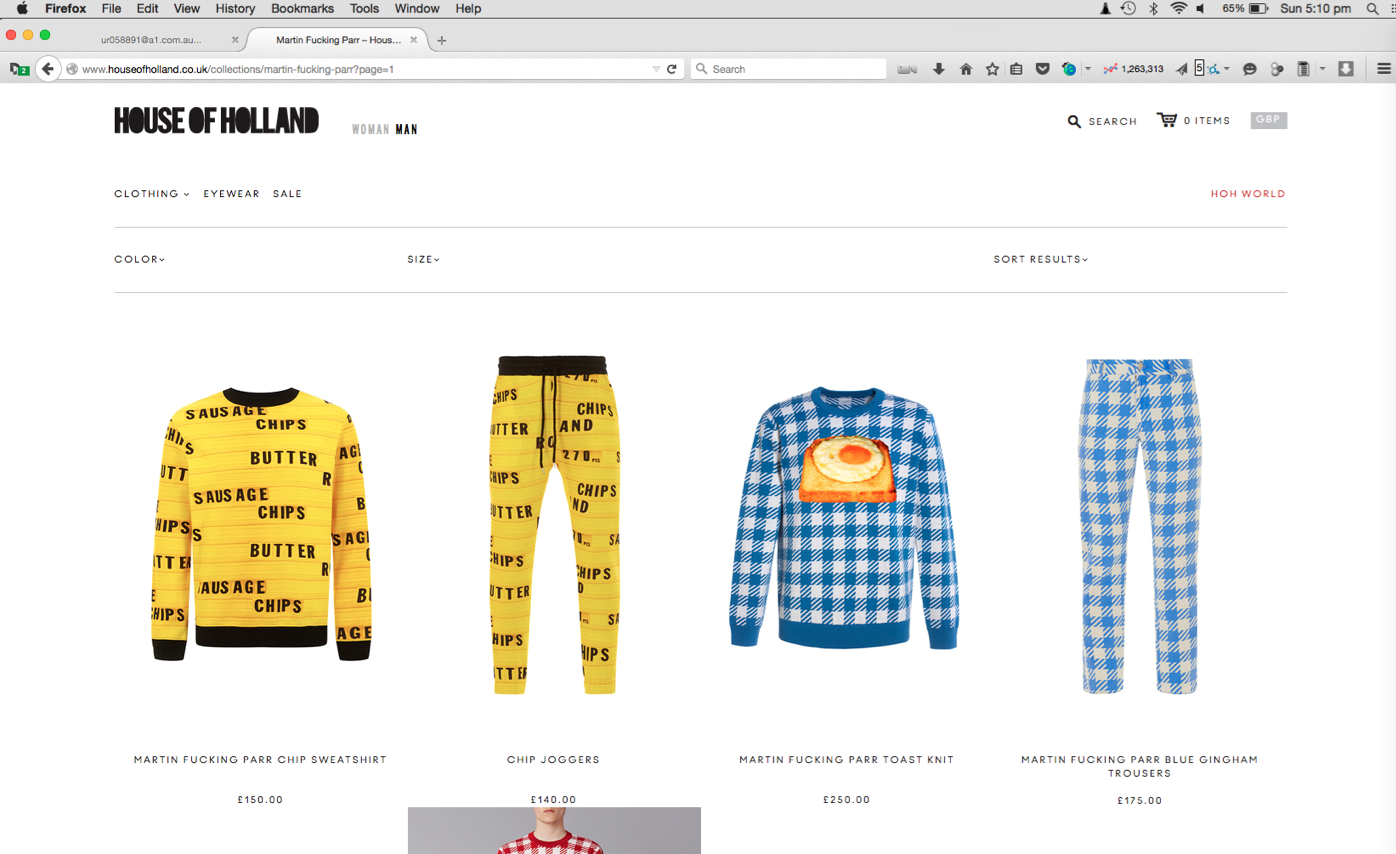
You lament the gaps you’ve identified in your collection!
PBX will cause ‘sufferers’ go to extraordinary lengths to try and fill them… An ‘Ask Meta Filter poster exclaims ‘Help me get my hands on Trent Parke. I mean, his books. It’s driving me mental. I must get Trent Parke’s “Dream Life” and “Seventh Wave” … Replies state the value of the book with responses like ‘Ouch’, ‘And no Dream/Life to be found. Snif’
In another post on ‘The Online Blog’ Kelvin, a respondent from Melbourne, brags about ‘poking his head’ into a second hand bookshop on the way to buying some biscuits from his local Subway store and asked if they had a copy of Dream Life ––– they did, and sold it to him for $70
So busy trying to be ‘in it’ you have no time for your own work
Doug Stockdale of The Photobook blog recently posted ‘a change to my photobook commentaries’. He’s overwhelmed by the ‘dizzying rate’ of new photobooks and the quality and creativity of these books. Stockdale comments that they need ‘a shout out to the photographic community at large to increase awareness’ and that is what his blog attempts to do. However he’s finding that there’s not enough time for his own projects so he announced a a more ‘concise’ Facebook format for the blog in future posts…
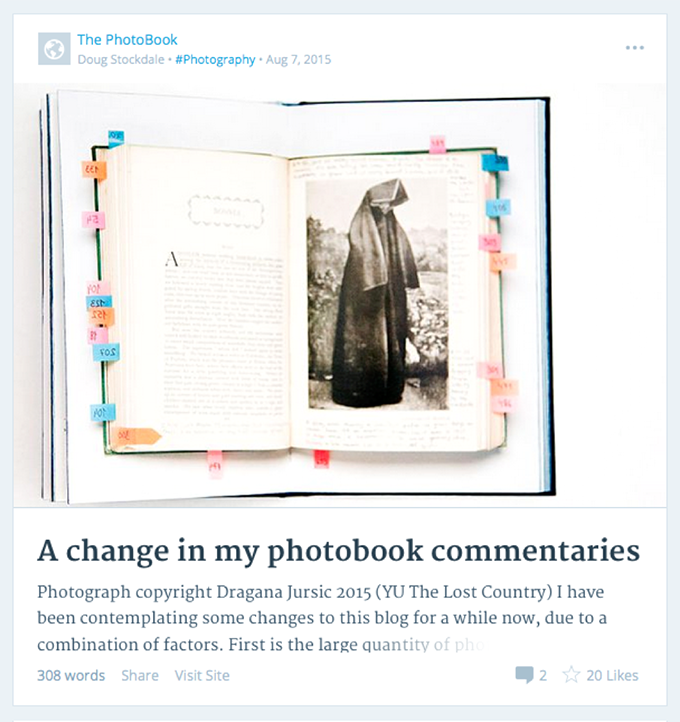
Just how pervasive is PBX?
Using SM for personal communications
A few days before Mothers Day this year a Brisbane acquaintance received notification that Ciaran Og Arnold’s ‘I went to the worst of bars…’ book was available in a bookshop in Amsterdam – She posted ‘I want this for Mother’s Day’ Her partner responded in less than an hour – ‘You got it’. Weeks later she triumphantly able to post that the book has arrived.
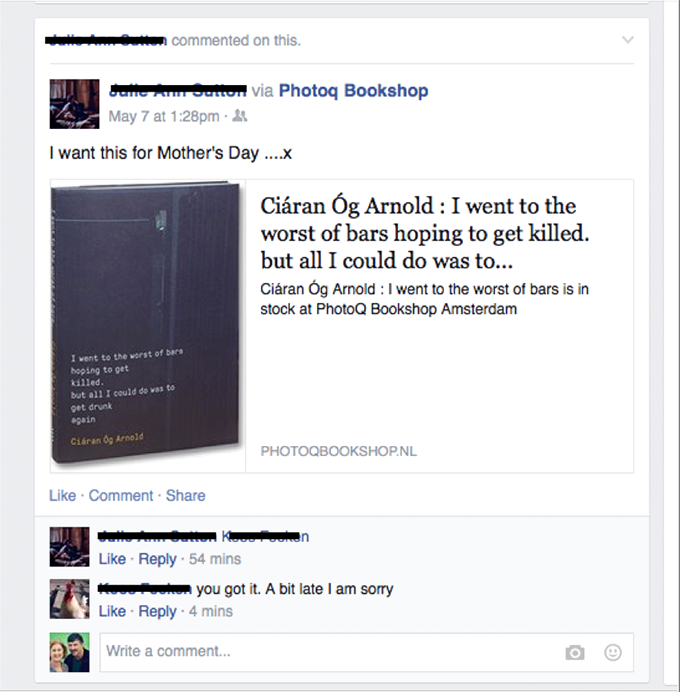
That you know the picture backgrounds for each photobook commentator’s blogs…
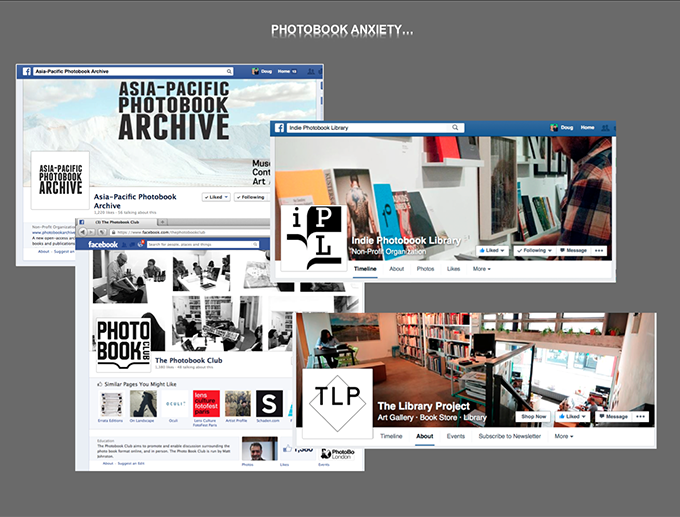
Every photobook supplier, commentator, collector or archive has a standard background that is used for his or her social media presence:
Perimeter Books in Melbourne has the shop-view, sometimes with a table of books with Justine or Emma’s hand.
The Indie Photobook Library is the tabletop and a MAC laptop computer keyboard
Asia Pacific Photobook Archive used a knotted wood plank background for quite a while then, the floor of their old space and then confused us all by using every background imaginable.
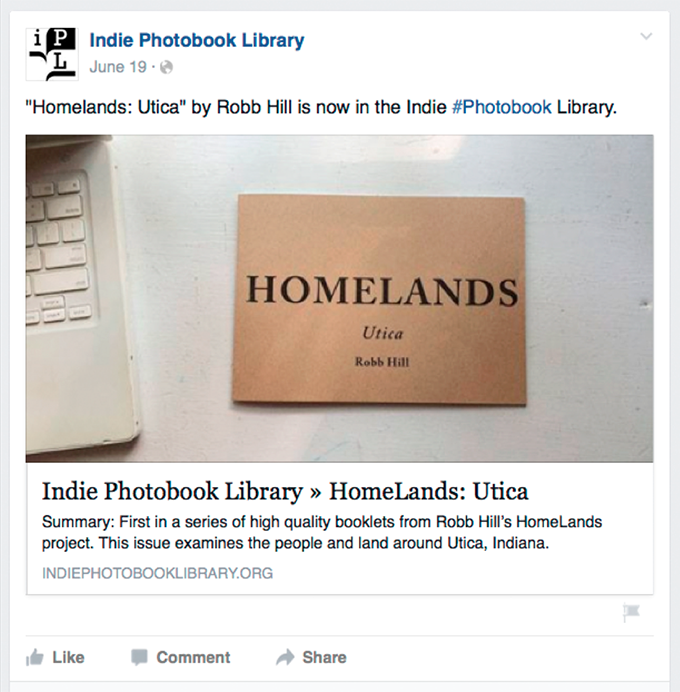
Can’t walk past a second-hand bookshop – or bookshop markdown table without feeling a twinge to look inside
The anticipation of being rewarded with wondrous things is such a strong motivator
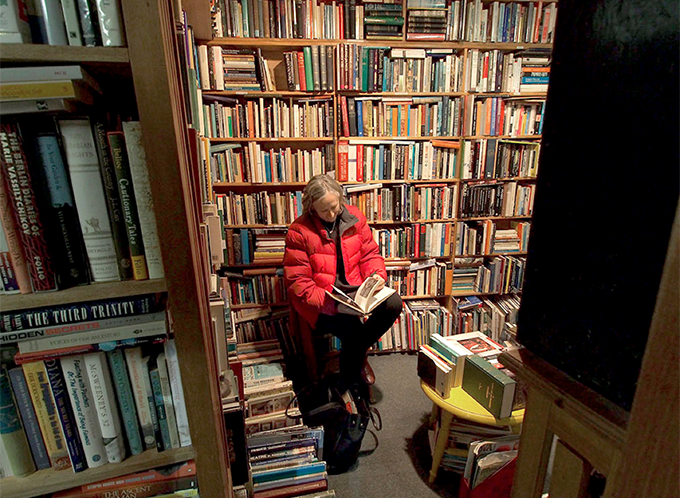
Spending more than you can afford building your library
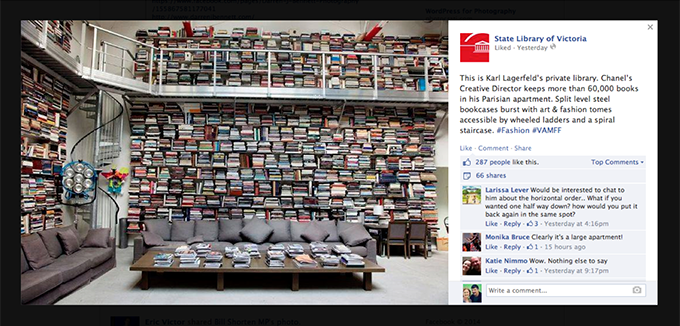
The anxiety of photobook collectors was certainly shaken by a FB post from the State Library of Victoria about Karl Largerfield’s personal library. I suppose it comes down to getting one’s priorities right when it comes to collecting and personal finances.
Gotta make sure I’ve got the dates of the next Art Book Fair locked-in to my diary
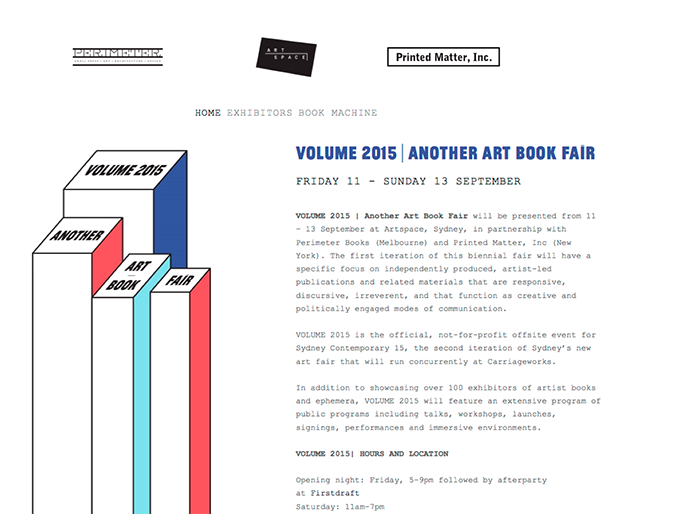
Were you one of the 16,000 who went to the Melbourne Art Book Fair? If you weren’t there you probably heard and read about how amazing it was. Now you don’t want to miss out on the next one… Well, the ‘Sydney Volume 2015 – Another Art Book Fair’ is on in 2 weeks…
Lifeline book sales are marked on your calendar
The Benjamin Effect!!
Photobook collectors will feel a connection with Walter Benjamin and his essay on ‘I’m unpacking my library’. In it he states ‘Of the customary modes of acquisition, one of the most appropriate to a collector would be the borrowing of a book with its attendant non-returning.’[i]
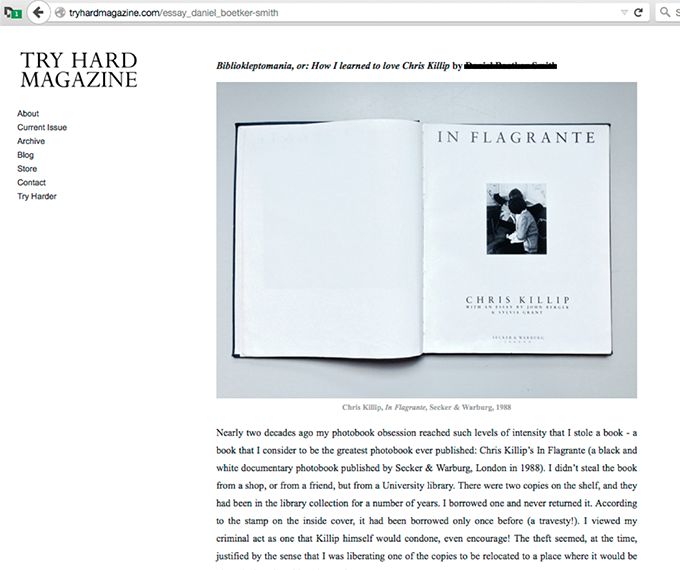
But there are ways more desperate than that – stealing books. A significant photobook identity recently admitted that his last resort to save his favourite book from being held in library limbo by committing an act of ‘Bibliokleptomania’.
Benjamin also has something that any PBX sufferer can take heed of and that is: ‘Of all the ways of acquiring books, writing them oneself is regarded as the most praiseworthy method.’[ii] And that must inspire those inflicted with PBX to go and make a book of their own…
Antidotes / To Feed or Cure
- Reviewing your social media strategy – set your FB preferences to ensure you get ‘Notifications’ and that your selected ‘Friends’ are listed as ‘Family’;
- De-friend people who post what they ate for breakfast or pics of their cat – unless the cat is reading a book! (FB Friend Judy Barass posted this as a response to this point);
- Find new FB Friends – sources of quality information – like Harvey Benge, Stockdale’s The Photobook Blog, Foam, Dazedigital.com, Selfpublishbehappy.com, and Remote Photobooks for what’s happening in New Zealand;
- Develop equity in social media: Giving = Getting. That is ‘Like’ things that you like, ‘Comment’ and ‘Share’ things adding your own comment to make it interesting for you FB Friends;
- Don’t just ‘lurk’ on FB otherwise things that you may be interested in will disappear from your Newsfeed as FB may think that you to not engage with the content;
- Looking at allied book disciplines like artists’ books and zines;
- Sharing your books – I’ll give you mine if you give me yours. I’ll buy yours if you buy mine;
- Donate and contribute to photobook archives like the Indie Photobook Archive and the Asia Pacific Photobook Archive;
- Grow your local – connect with events and people doing things in your region;
- Lobby art institutions, libraries and criticism networks for more photobook content; and
- Become an active advocate for photobooks.
In conclusion
Ultimately it’s hopeless and PBX sufferer must give in to their base desires and needs and participate with energy, vigour and indifference to other aspects of your life….
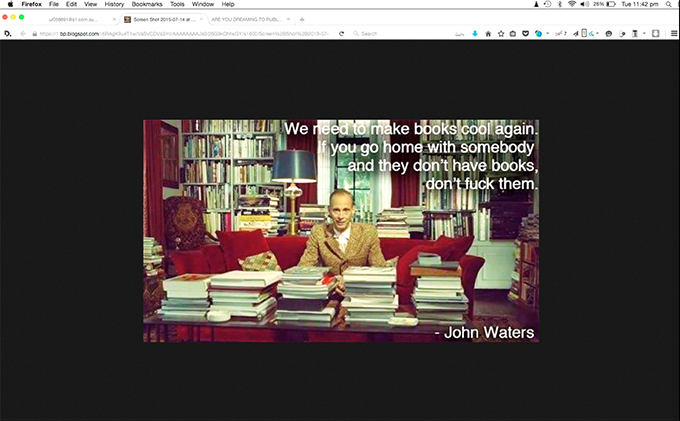
Finally: A thought from John Waters…..
Thank You – And – SEE YOU ONLINE….
Benjamin, Walter. “Unpacking My Library: A Talk About Book Collecting.” Translated by Harry Zohn. In Illuminations, 69-82. New York: Schocken Books, 2007. Reprint, Harcourt, Brace & World, New York, 1968.
[i] Benjamin, Walter. “Unpacking My Library: A Talk About Book Collecting.” Translated by Harry Zohn. In Illuminations, 69-82. New York: Schocken Books, 2007. Reprint, Harcourt, Brace & World, New York, 1968. P62
[ii] ibid p61
PHOTO EXHIBITIONS @ The Ballarat Int’l Foto Biennale
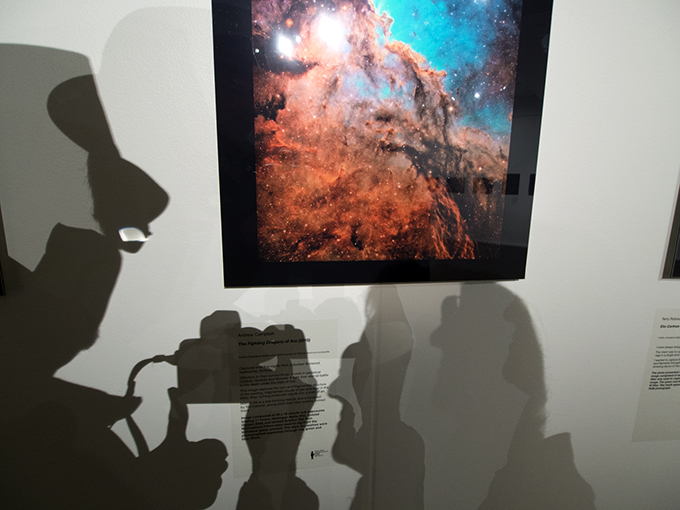
Looking at Andrew Campbell’s astro worlds
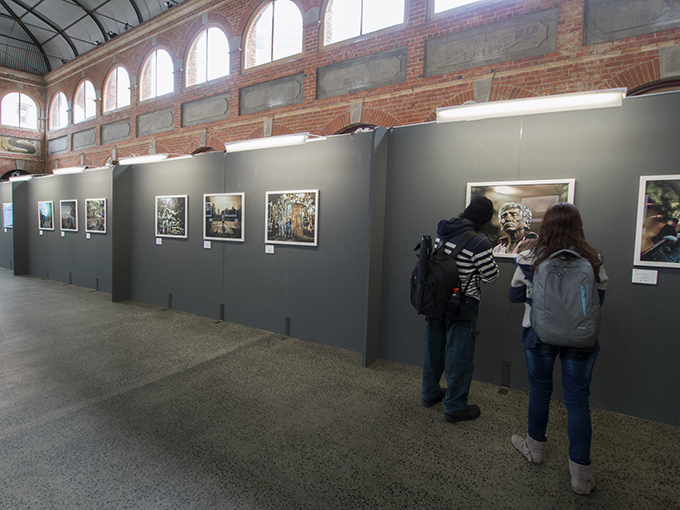
When visiting the Ballarat International Foto Biennale you very quickly find out that photography is a diverse and amazing communicative medium for storytelling, information transfer and as interior decoration. The 100 or more exhibitions cover walls in and around Ballarat in places as austere as the Ballarat Art Gallery, to classic Victorian halls and buildings and boutique coffee shops. Most exhibition spaces are within walking distance of the centre of town so the visitor becomes a foto flaneur…
This was out 3rd BIFB, in 2009 we were part of the Core Program with our Borderlines exhibition at the Post Office Gallery, so it was easy for us to slip into the exhibition walking process. I might say, it rained – or drizzled, as usual. It was cold, as usual. But people encountered along the way – old friends, new acquaintances were past of the ‘as usual’ BIFB experience.
Presented below are some images from the streets of Ballarat. What follows are some images of exhibitions seen. Occasional and brief comments about the shows, (some from the program), will be given as well as a link to the BIFB Program. Get there if you can —- there’s still weeks to go with workshops, talks and tours to add to the exhibitions.
A wrap-up report posted by the BIFB Committee is available HERE
CHECK OUT THE PROGRAM BIFB Program
BALLARAT: the view from the street
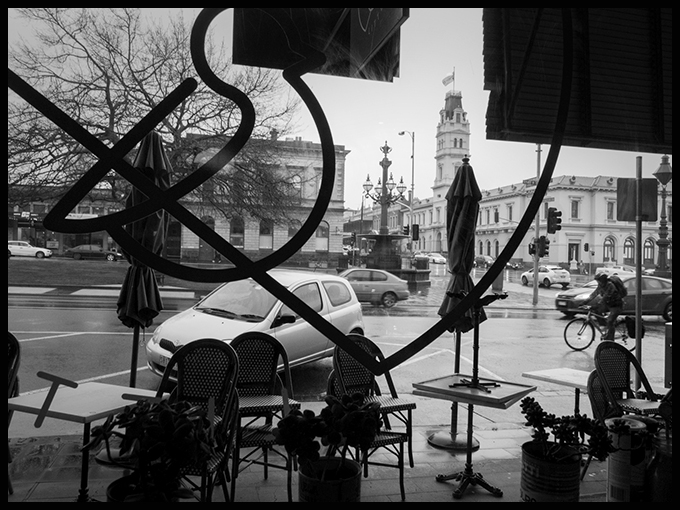
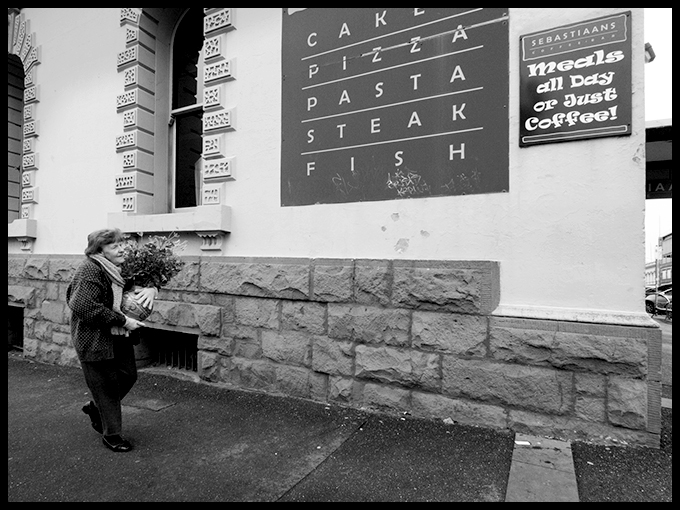
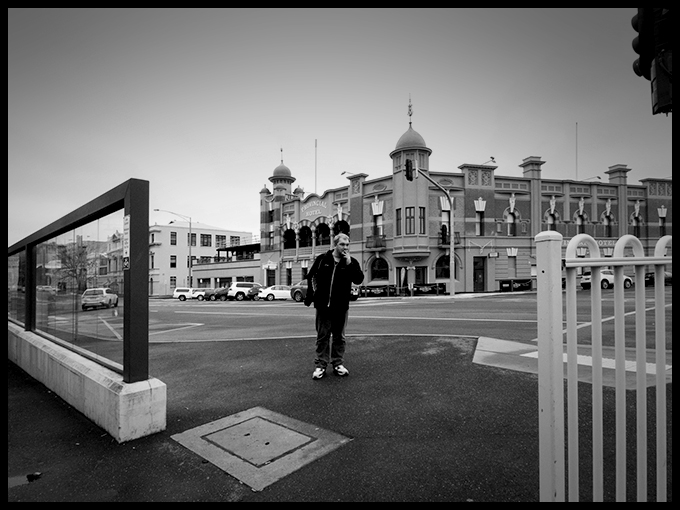
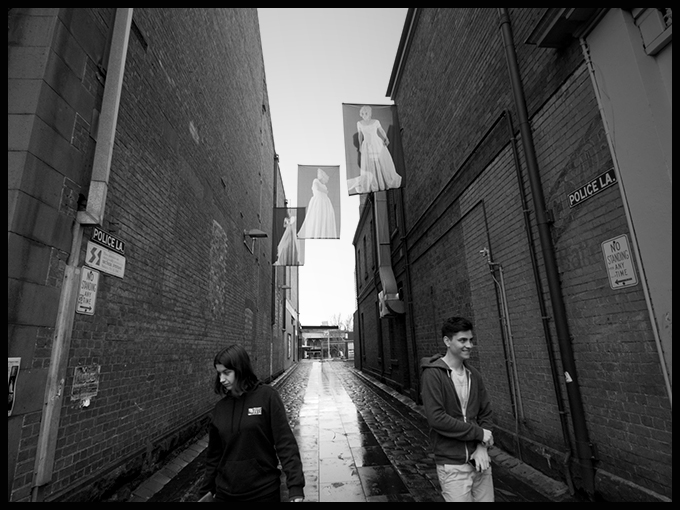
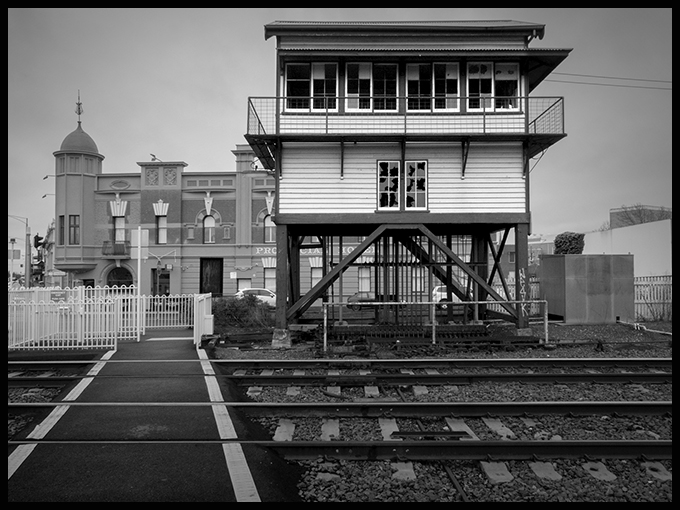
We began @ Sam Harris’ exhibition – The Middle of Somewhere
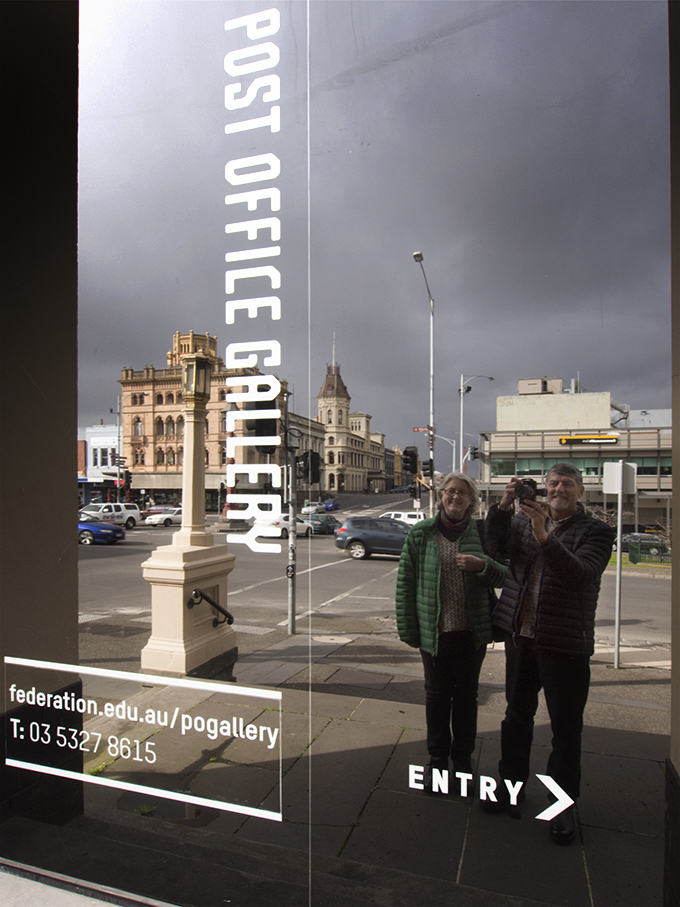
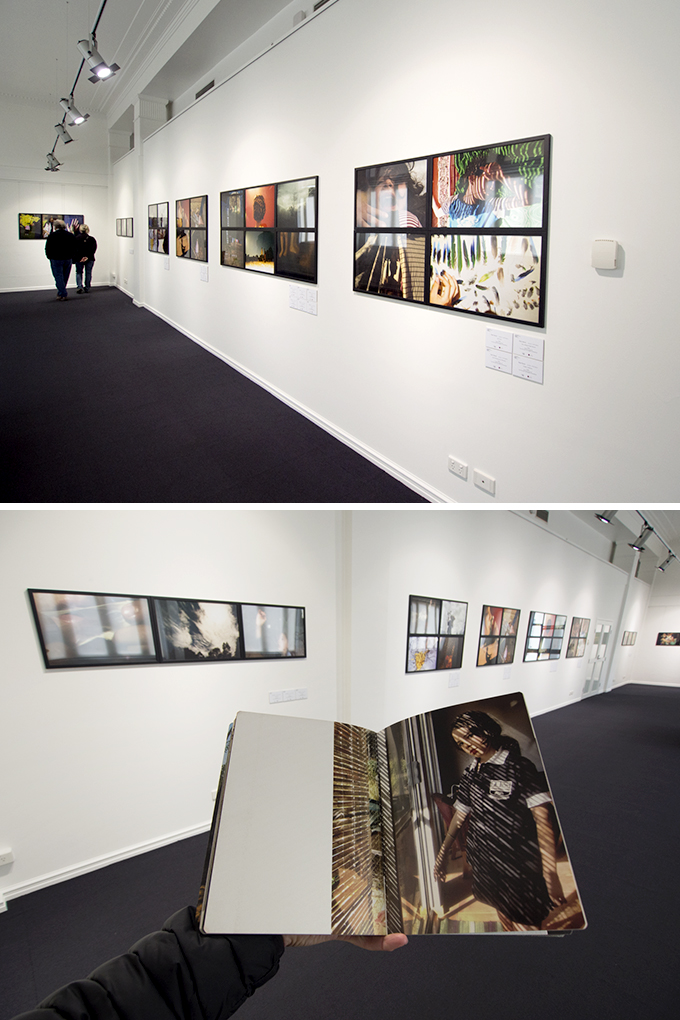
Sam Harris’ ‘The Middle of Somewhere’ Post Office Gallery
It was interesting to see the translation of book images into the space of the white walled gallery.
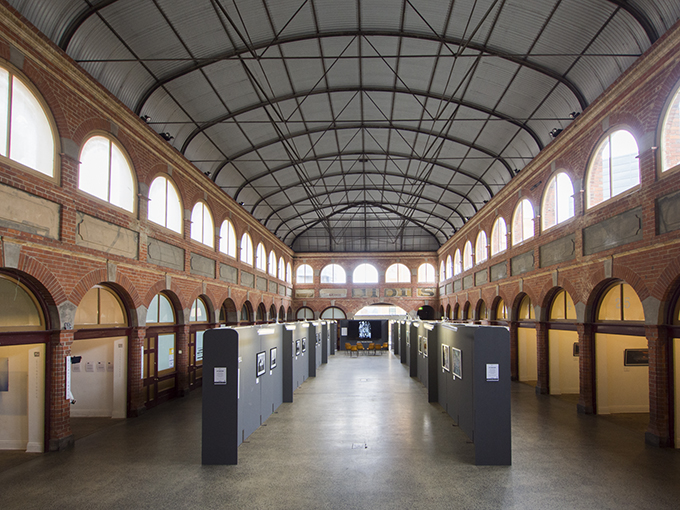
The Mining Exchange exhibition area – @ a very quiet time…
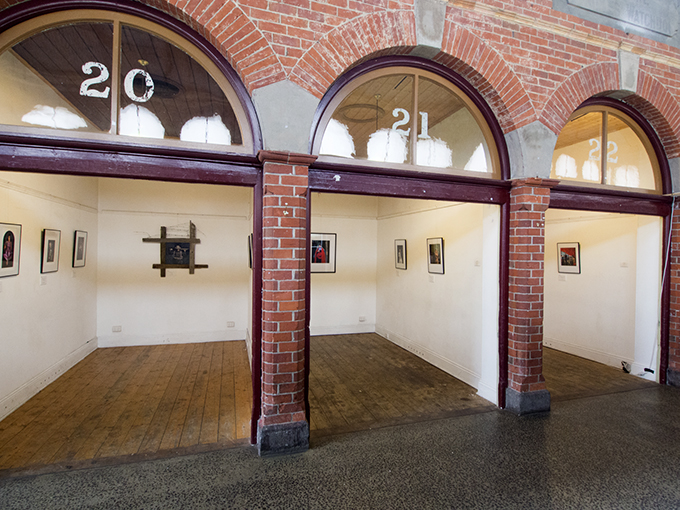
Part of David Williams’ exhibition alcoves
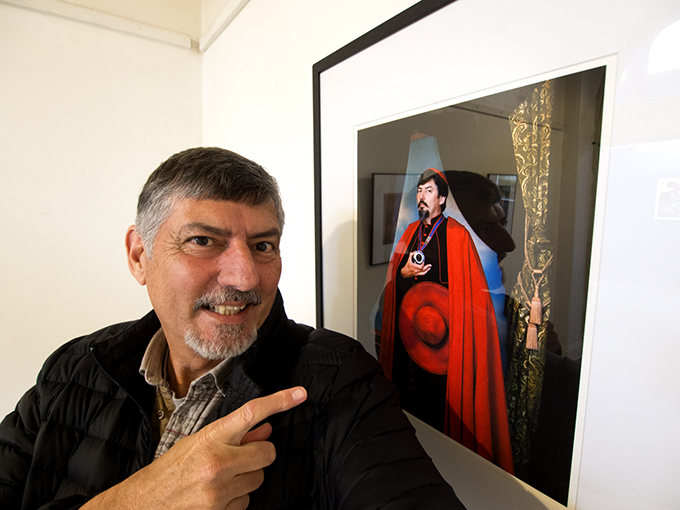
A portrait of me made by David in the 1990s as ‘The Cardinal’
Some great conceptual portrait work by a true master of portraits – David Williams
Alejandro Chaskielberg’s ‘La Creciente’
Alejandro Chaskielberg’s ‘La Creciente’
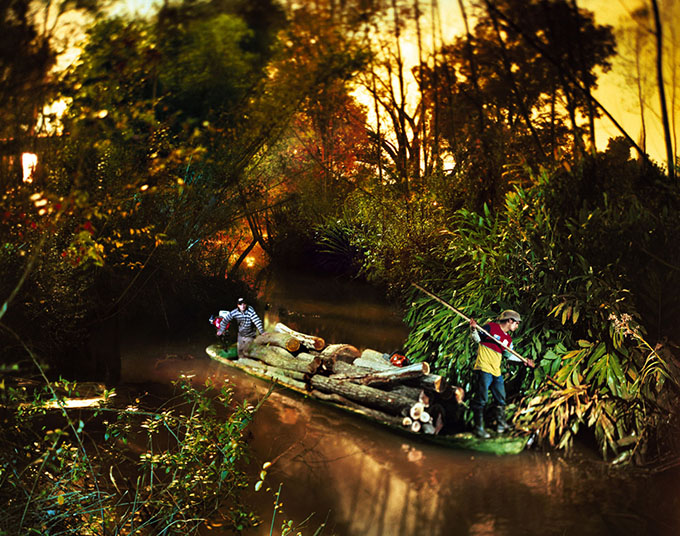
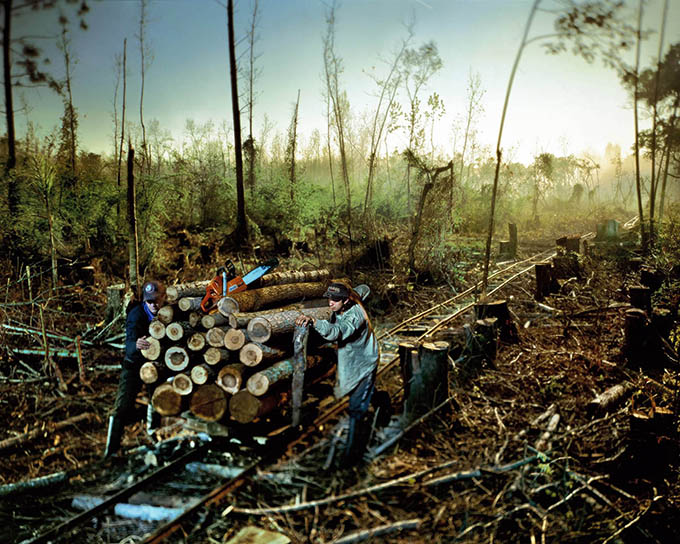
A Paraguayan immigrant travels together with an Argentinian islander, who is his employer. They are loading 3 tons of Willows, taking them to the principal port of the Delta in order to sell the wood.
An amazing exhibition of large format photography with images taken under moonlight conditions. Although the photographer claims that no flash or other lighting is used in his work …
Stephen Dupont’s ‘Piksa Niugini : Portraits and Diaries’
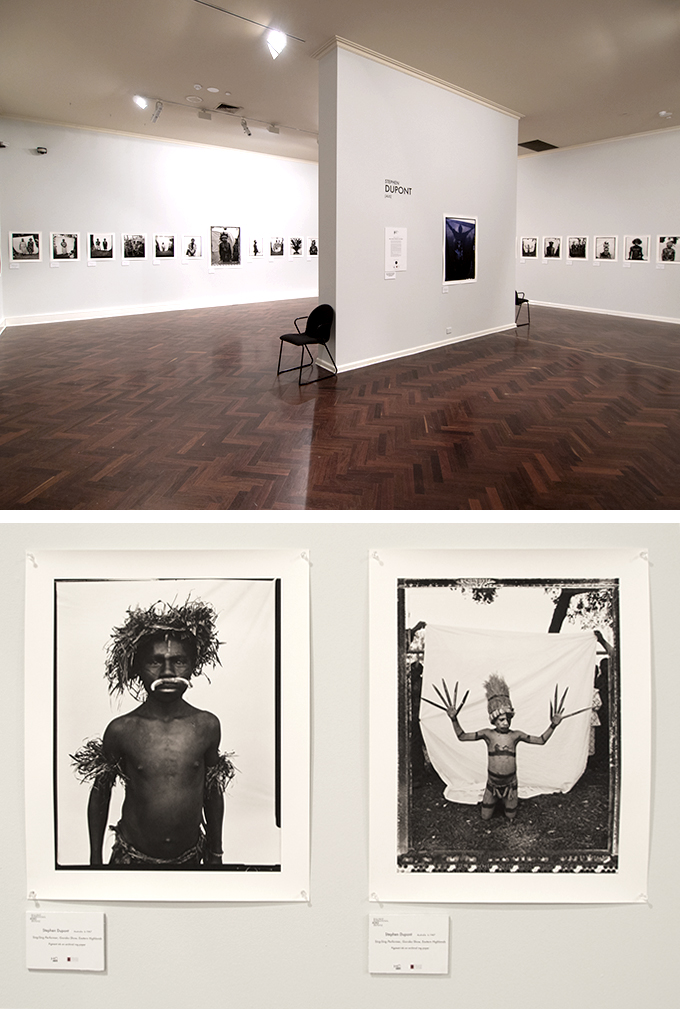
Dupont covers the walls of the gallery with a panoramic portrait of New Gineau tribes men and women. His ‘hold up the sheet’ separates the subject from the background which would imply a purely ethnographic recording. Now the subjects become art…
Leon Bird ‘Mrs Patronis Guest House’
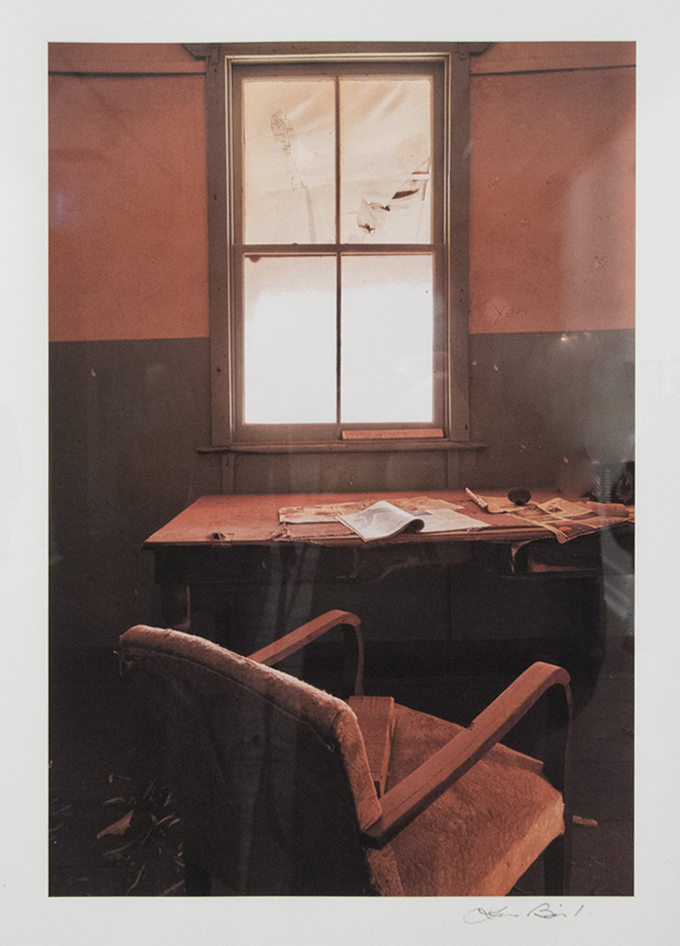
Leon Bird
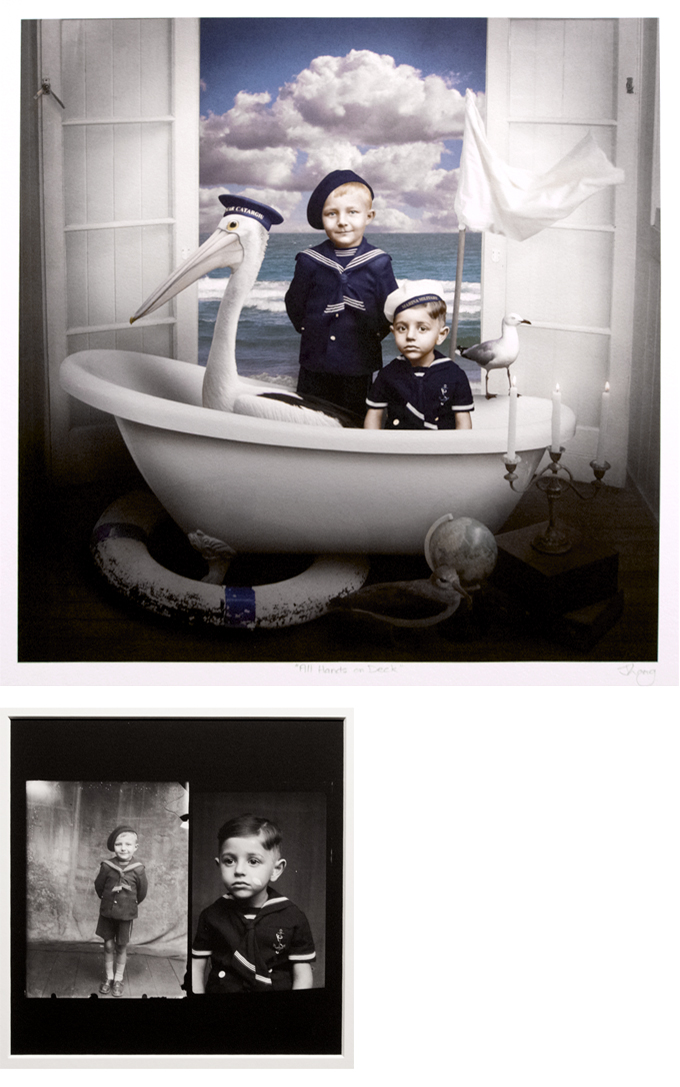
Jane Long’s
‘Dancing With Costica’
The Dancing with Costica series initially came about when I decided to brush up on my retouching skills. After finding the Costica Acsinte Archive on Flickr I became fascinated with the images and their subjects. I wanted to bring them to life. But more than that I wanted to give them a story (from the catalogue).
AN amazing exhibition of not just Photoshop technique but more importantly the conceptual construction of narratives and haunting places for these subjects to inhabit and live on…
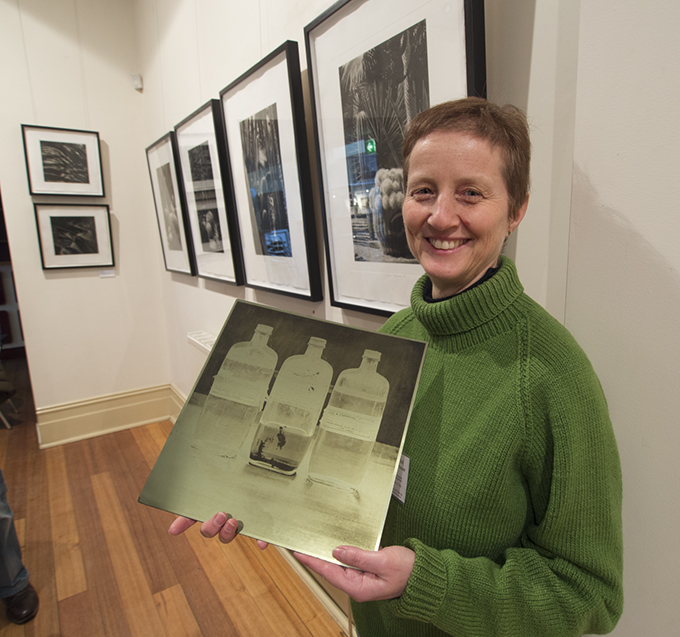
Silvi Glattauer holding a gravure plate of an image from ‘Organic Balance’
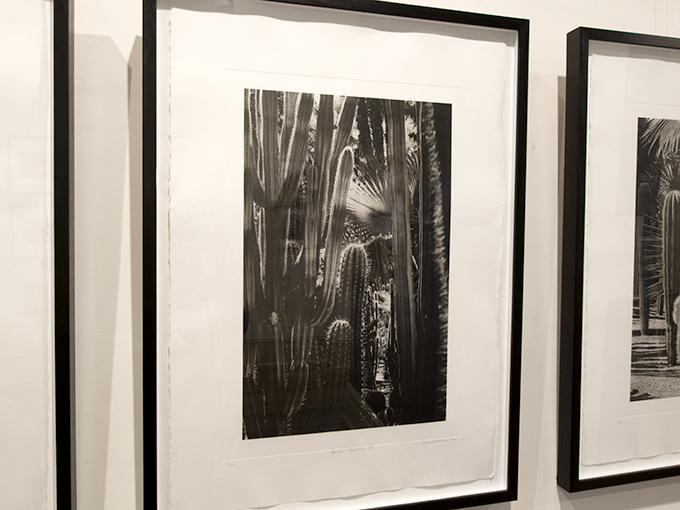
One of Silvi’s gravures
Some beautiful images enhanced by the best way to make photographic images – Gravure…!
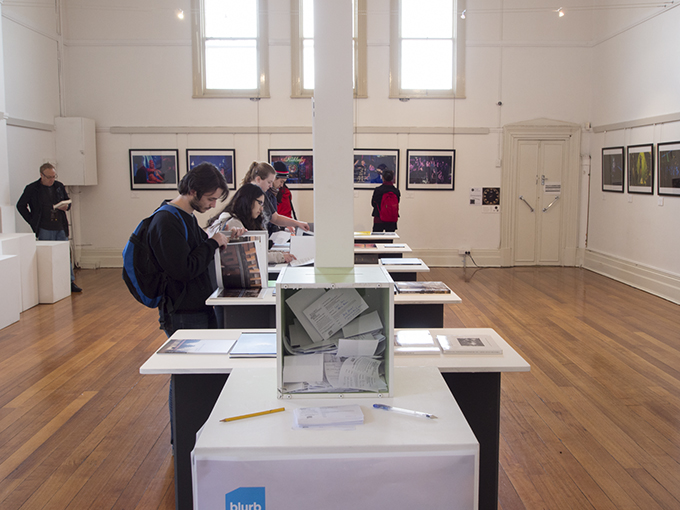
BLURB’s ‘One for the book’ Photobook Award display in Trades Hall
20 Books from around the world were selected as finalists for this award – some interesting works including one of my own… It’s a public vote to select a winner —Vote for mine!!!
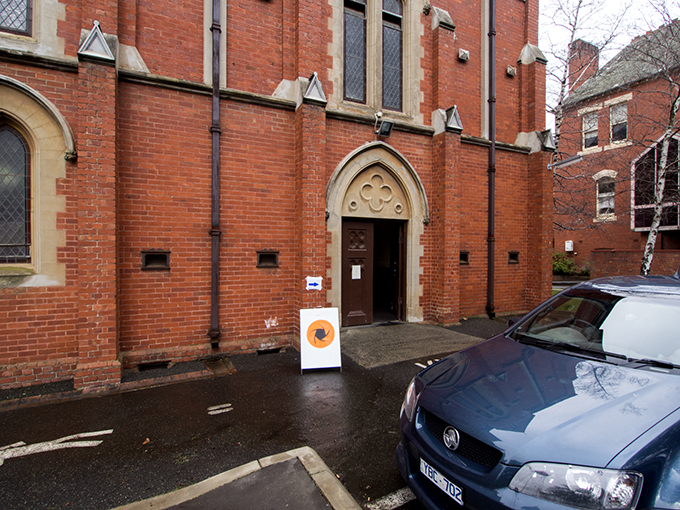
The St Patricks exhibition hall
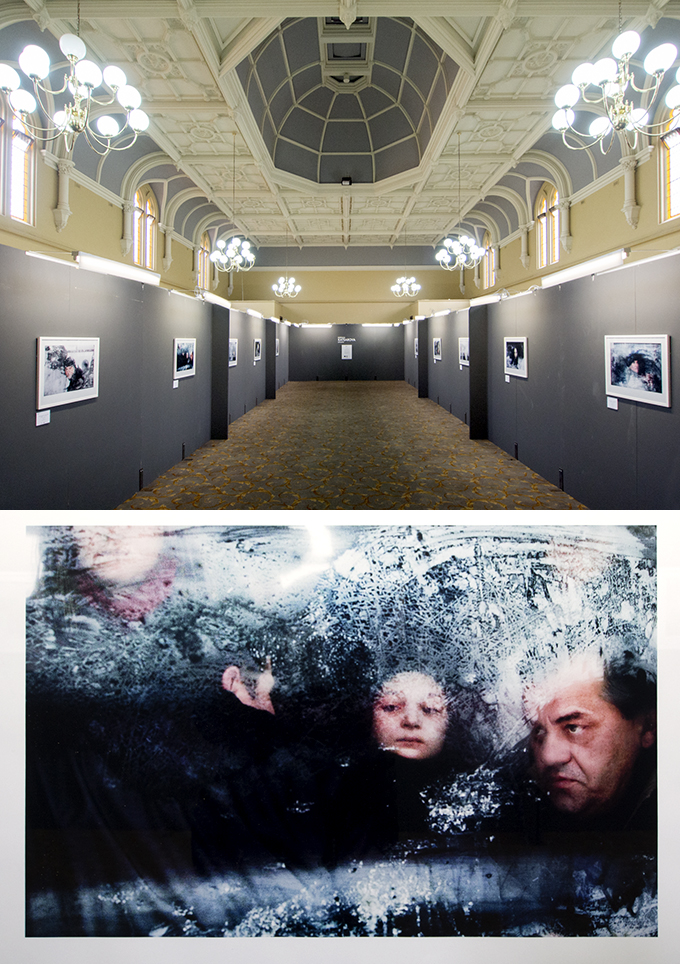
Boryana Katsorova’s
‘Freezing’
The exceptionally cold weather and snowstorms that hit Europe in February 2012, caused traffic chaos, road closures, straining emergency services, grounding flights and pushing the death toll past 300 people and left entire villages cut off. I have documented this event in my series ‘Freezing’ capturing the distant stares of passengers (from the catalogue).
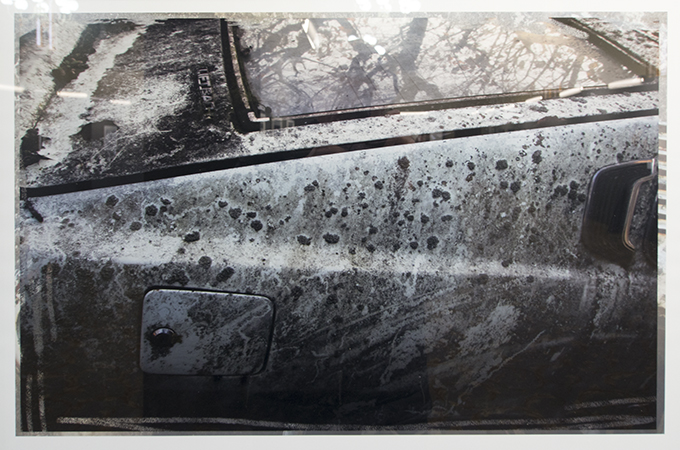
Michelle Vannier’s
‘Car Graveyard’
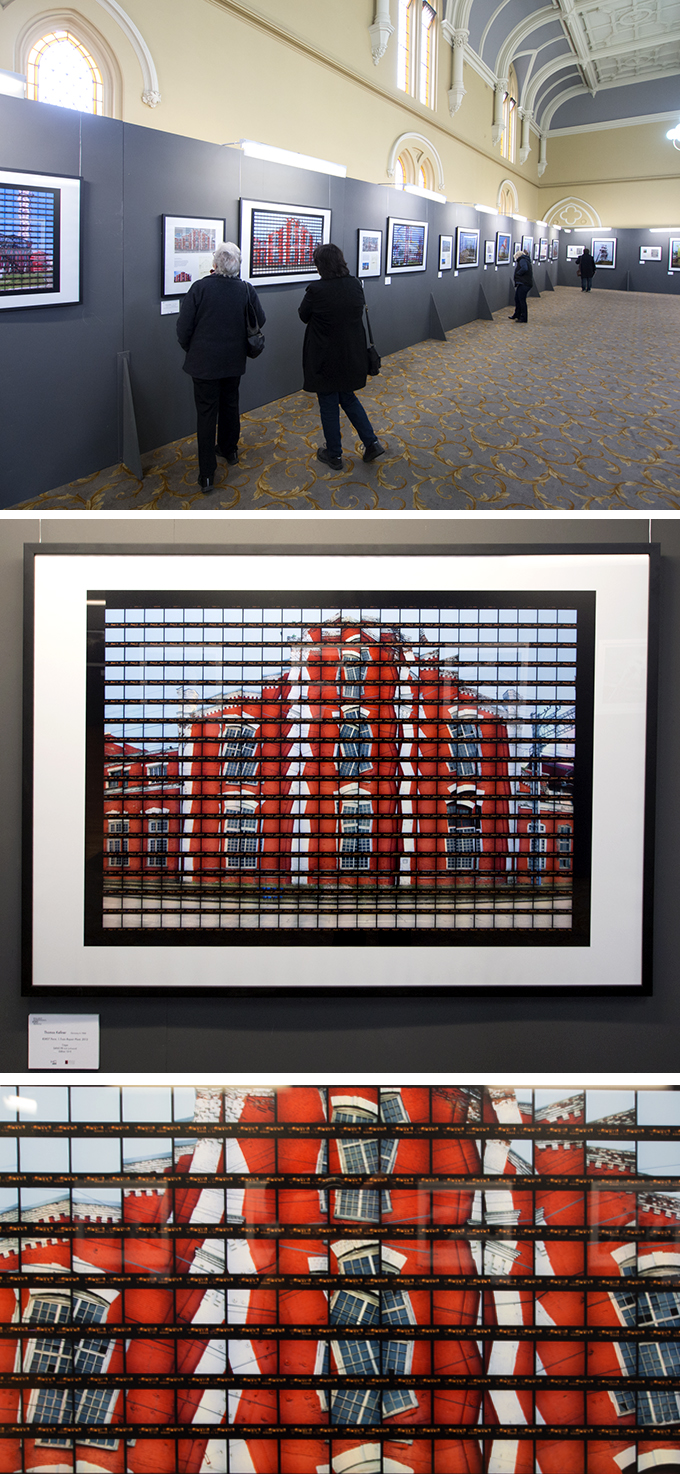
Thomas Kellner
‘Genius Loci – Two German Gentlemen of Siegen in the Land of the Tsars’
Film-based mosaics – each full width of the subject being a 24 exposure film. Individual frames are ‘wiggled’ to deconstruct the real subject. A detailled plan of each image’s deconstruction is shown alongside the finished work.
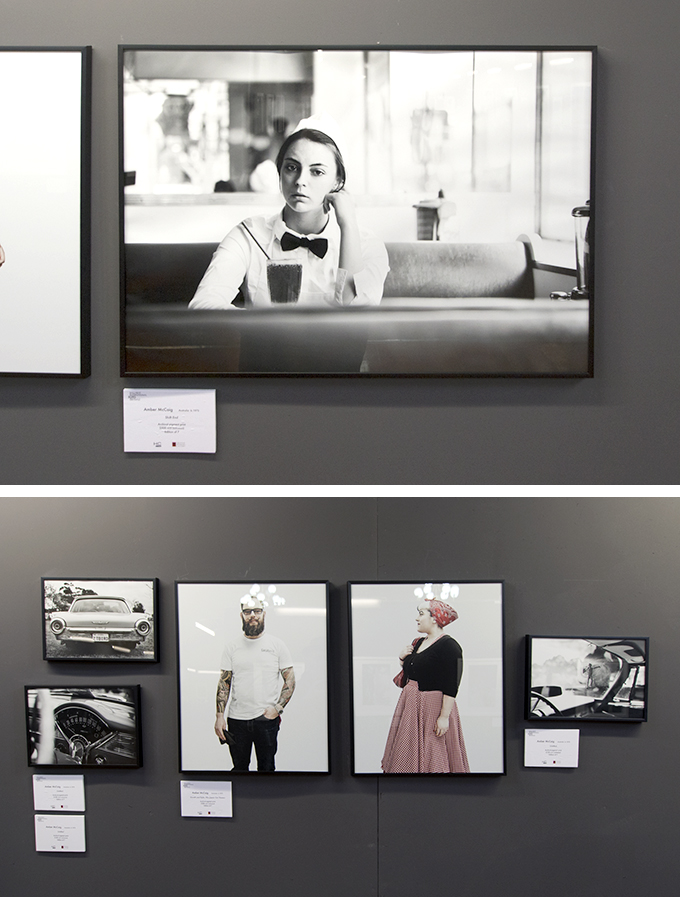
Amber McCraig’s ‘Americana Now’
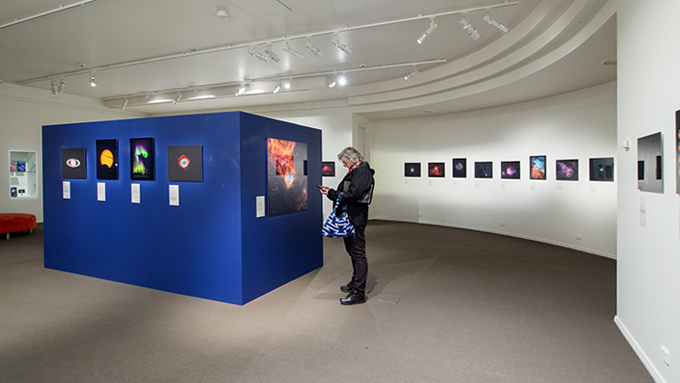
Astronomical Society of Victoria’s
‘Wonders of the Universe Exposed’
A stellar exhibition by the astronomers with cameras – Include work by our telescope here Andrew Campbell.
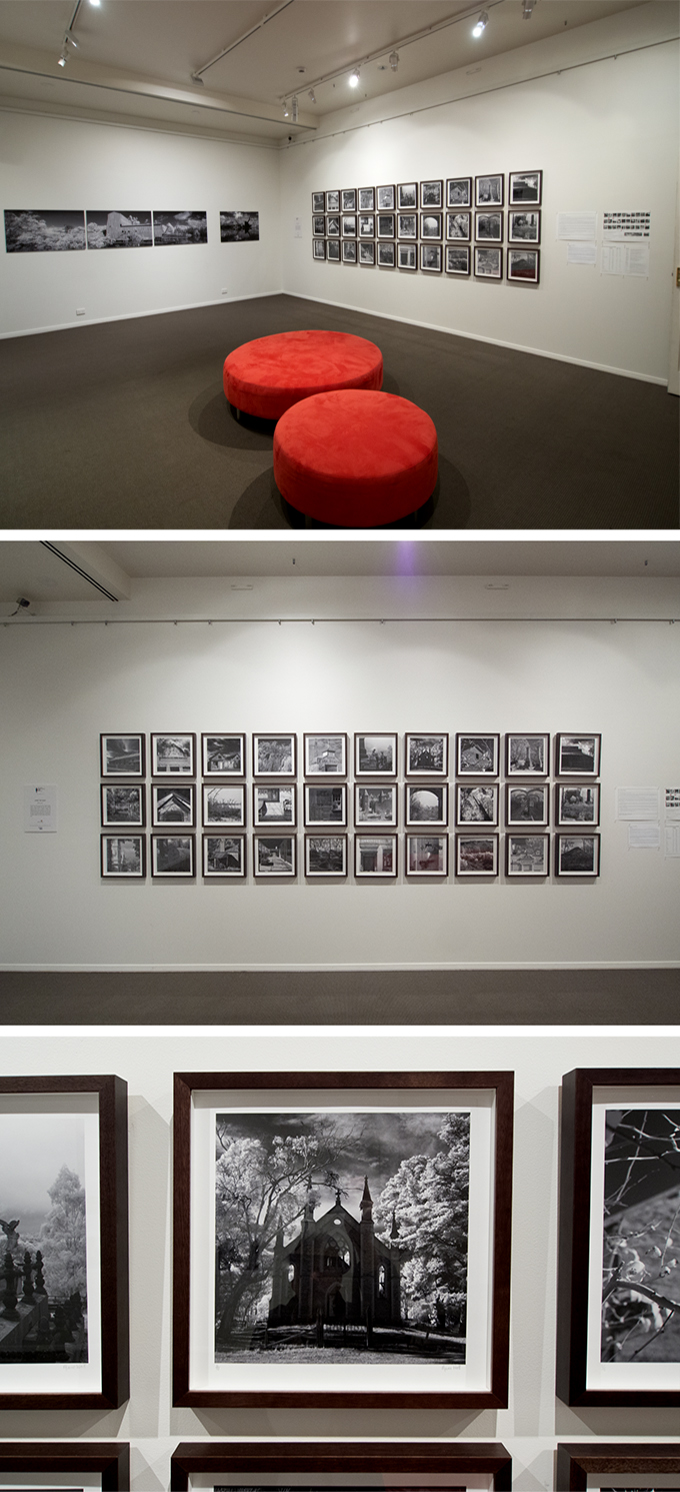
Marie Watt ‘After the Rush’
Marie Watt’s series After the Rush uses infrared photography to emphasise the atmospheric solitude of the lesser known gold rush sites – in a bid to remind us of a wider vibrant, though harsher, past (from the catalogue).
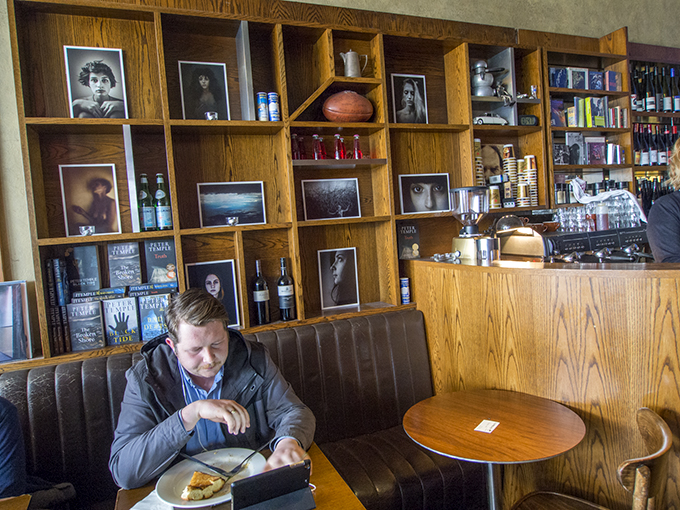
An exhibition in a coffee shop…
OH!! It was such a busy couple of days…
DOUG to speak @ Ballarat Foto Biennale Symposium
Photobook Anxiety graphic
On August 29 I’ll be speaking at the Symposium: Borderless Futures, Reimaging the Citizen which is taking place at the Ballarat International Foto Biennale. The speakers program is amazing with presentations relating to the topic of the symposium.
My presentation is entitled PHOTOBOOK ANXIETY: SOCIAL MEDIA AND INDIE PUBLISHING and the abstract is as follows:
The photobook is at the core of a self-publishing revolution. The structure of the old publishing and bookselling paradigm is now reshuffled and redesigned. Now every photographer wants to make their own books – they need the inspiration found in the latest photobooks and to be informed by the movers and shakers of the discipline.
.
As a result there is an emerging heightened anxiety for personal connection with pulse of this worldwide phenomena. Social media is the communication vehicle of choice. Everyday participants in the photobook network frenetically seek updates, reviews, new releases, post about their books and the latest gossip through social media channels – this anxiety is palpable.
This paper will discuss the frisson of social media as a powerful tool for communication and community building in the indie publishing movement of photobooks.
HERE’S THE LINK TO THE PROGRAM AND TO BOOK – Check out the BIFB Program as well:
http://ballaratfoto.org/event/psc-symposium-borderless-futures-reimaging-the-citizen/
BIFB PSC Symposium logo
Hope to see you there….
THE ARTIST & PHOTOBOOK MELBOURNE
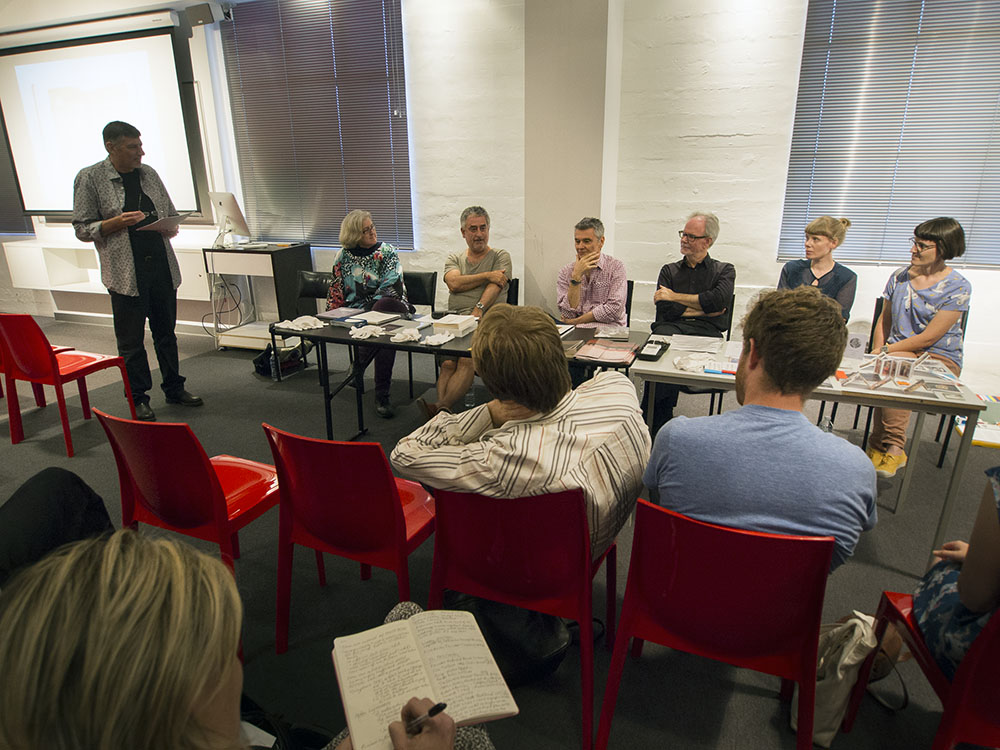
The forum panel….Photo: Anthony McKee
In February this year Melbourne hosted the biggest photobook event ever in this country. Called Photobook Melbourne the event brought together exponents, collectors and critics from around the world as well as from around Australia and New Zealand. Hundreds of books were handled, read and appraised in the many galleries and venues that came on board to support the event.
Martin Parr and Gerry Badger in their second volume of The Photobook: A History (2006), recognised artists who worked with photographs in a specific chapter entitled Appropriating Photography: The Artist’s Photobook.
Participants in the artists’ book discipline have been active indie, DIY publishers worldwide for sixty years or more and many of them use photography in their books. They have well established networks, events activities, awards, critical debate and collectors both private and public.
At a time such as Photobook Melbourne where all things photobook are celebrated and discussed it may be worthwhile to consider what concurrence may exist today between the artists’ book and the photobook. How do artists consider their use of photography and the photograph in their books? Is there any sympatico between the photobook and the artists’ book.
To address these and many more questions I was supported by the Photobook Melbourne organisers Heidi Romano and Daniel Boetker-Smith, to convene a forum to bring the voice of the artists’ book into the photobook conversation. The participants in the forum were; Dr Lyn Ashby, Gracia Haby and Louise Jennison, Peter Lyssiotis, Des Cowley and Dr Victoria Cooper (who was co-opted as Georgia Hutchison withdrew due to personal reasons in the final days).
The proceedings of the forum, with the support of the participants, have now been formed into a PDF booklet that can be downloaded FREE from this site. To provide a taste of the presentations I present the following quotes from the texts:
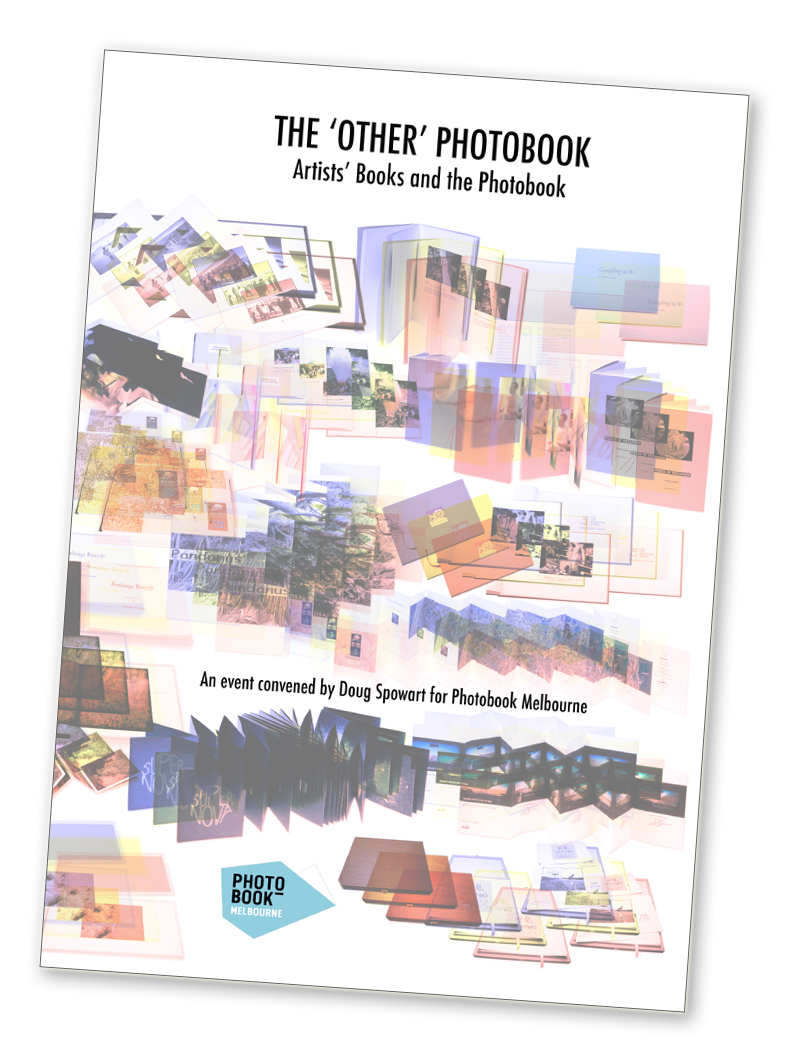
The PDF Forum book
.
DOWNLOAD HERE: PM-OTHER PB-BOOK
.
Lyn Asby
Lyn Ashby
I make books. With few exceptions, these are hand-made, limited-edition books that would generally be considered to be “artist’s books” using the standard codex form. These are not photographic books. That is, the photograph is rarely the core of the meaning or purpose of the book. But I often use components or aspects of photographs and composite these with graphics, texts, drawings and painting etc, all of which feed into the overall material on each page.
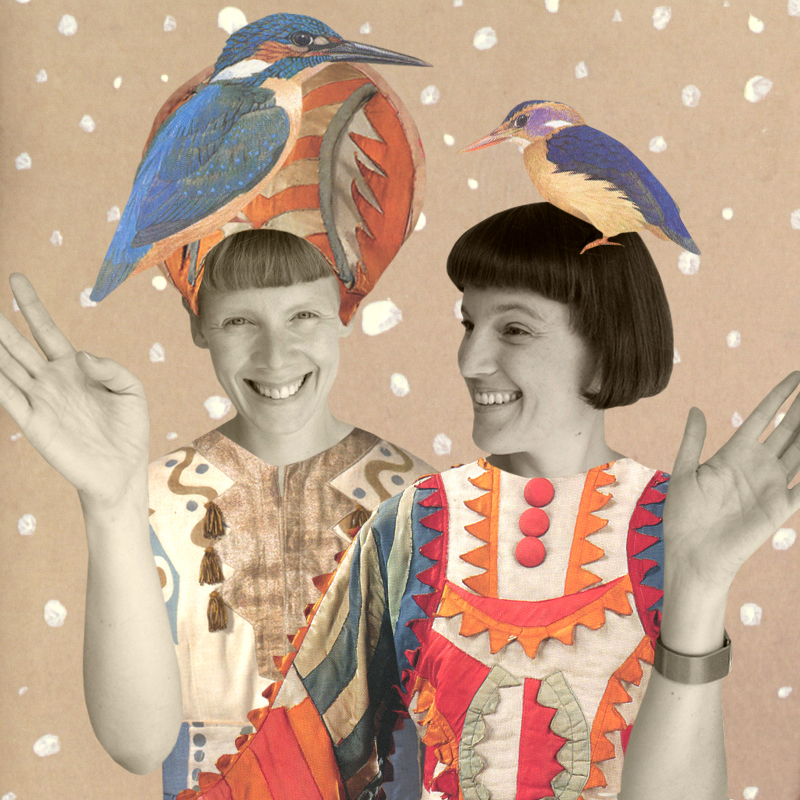
Gracia Haby + Louise Jennison
Gracia Haby and Louise Jennison
For those of you who we have yet to meet, we are besotted with paper for its adaptable, foldable, cut-able, concealable, and revealing nature. In our artists’ books, prints, zines, drawings, and collages, we use play, humour, and perhaps the poetic, to lure you closer. And sometimes this will incorporate photography. For us, it is not the medium that is always of greatest import, but the message. And so, we use found photographs in our artists’ books and zines not because they are photos, but because of what they can enable us to say, and what we hope you might feel.
Des Cowley
Des Cowley
History of the Book Manager, Collection Development & Discovery, State Library Victoria
One of the challenges for libraries and collecting institutions is to build representative collections of contemporary books and ephemeral works created by artists, photographers, and zinemakers. Artists books, photobooks, and zines generally circulate outside mainstream distribution channels – publishers, general bookshops, distributors – and are effectively off-radar for many libraries. It is therefore incumbent upon staff in these institutions to build networks and relationships with the communities creating this work in order to be informed about what is being produced, and to ensure this material is acquired and preserved for future researchers.
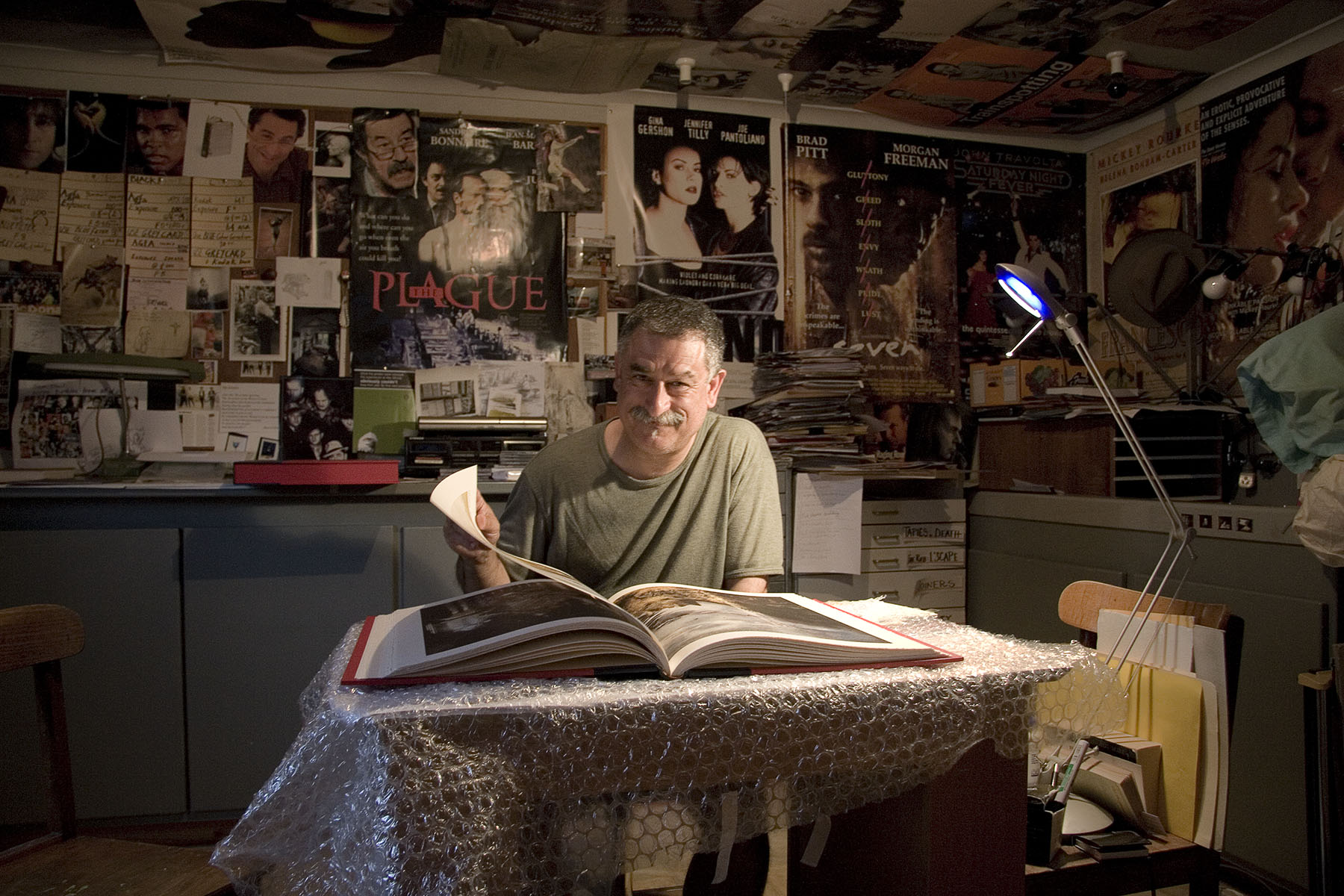
Peter Lyssiotis
Peter Lyssiotis
I had a friend who lived in Belgium. He died a while back. Before he did, though, he painted a pipe on a canvas and underneath it he wrote “This is not a pipe”.
To continue my friend’s mission I say “This is not a book”.
The artists’ book is rather a workshop, a garage; a space where a time-honored craft is practised: it is here that the world gets repaired, reconditioned, reassembled.
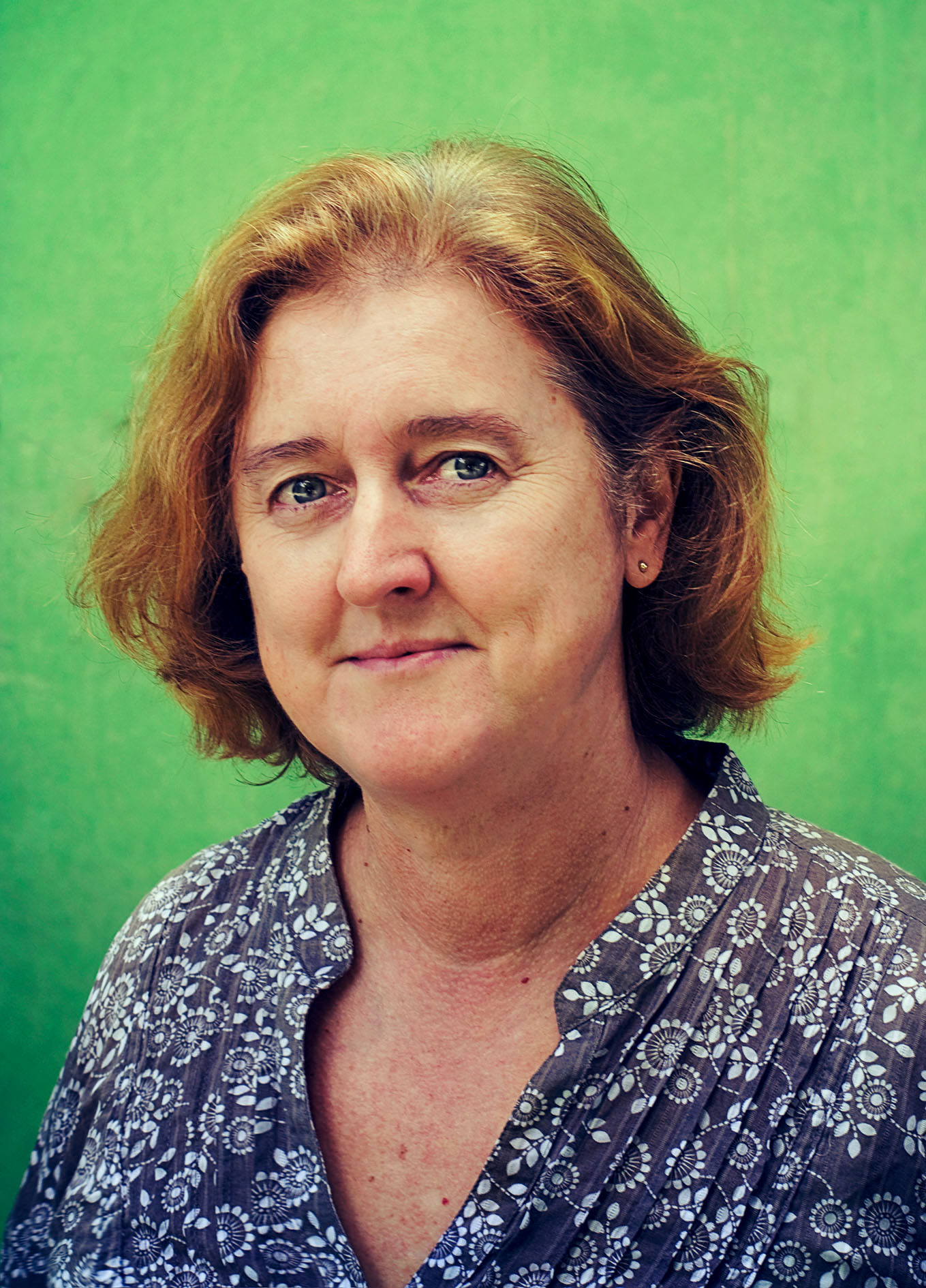
Victoria Cooper
Victoria Cooper
The digital cutting, dissecting, layering and suturing of the photographic quotations is an absorbing process through which the visual story emerges. I then materialize this virtual image of the narrative as a physical book in many forms: scroll, concertina or codex. Rather than images on a gallery wall, the narrative space of the book offers for me an endless potential for interplay of the corporeal and the imagination through the idiosyncratic experience of reading.
.
.
DOWNLOAD THE BOOK HERE: PM-OTHER PB-BOOK
.
.
.
PERFORMING the BOOK @ SLQ – Siganto Artists Book Seminar
The Siganto Artists’ Books Seminar 2015
On June 20+21 the 2015 The Siganto Artists’ Books Seminar took place at the State Library of Queensland. Attendees were presented with a one–day series of lectures, performances and a forum addressing the diversity of the artists’ book and importantly visual and creative research being undertaken by Fellowships supported by the Siganto Foundation.
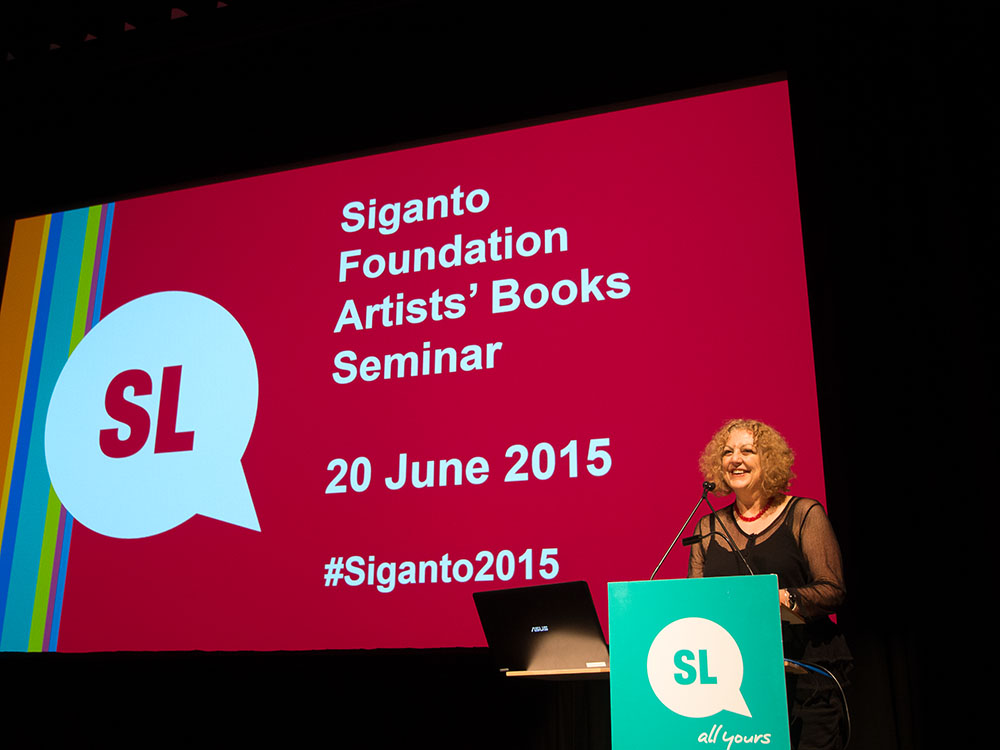
State Librarian Janette Wright welcomes attendees to the seminar
The State Librarian Jeanette, introduced by MC Christene Drewe, spoke of the Library’s Artists’ Book Collection. This was followed by Dr Marie Siganto from the Siganto Foundation who spoke enthusiastically about the Foundation’s support of the Artists’ Book Collection.
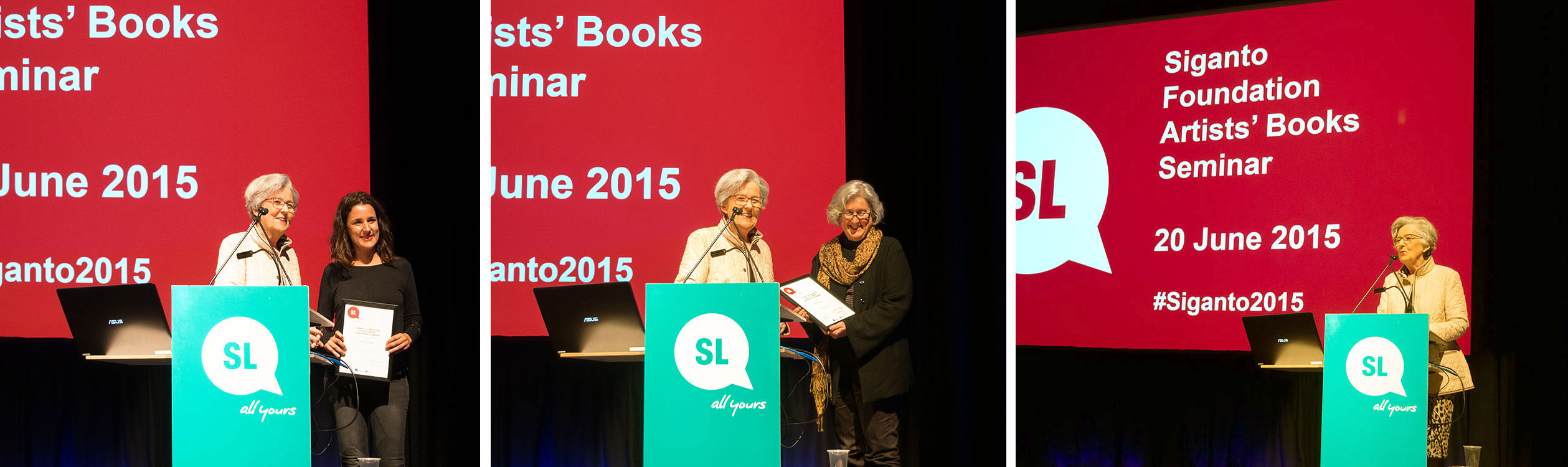
Dr Marie Siganto makes a presentation to the attendees of the seminar and presents 2015 Fellowships
A significant theme of this years’ event was based around the idea of artists’ books as performance. Brazilian artist, performer and academic Amir Brito Cadôr’s presented his keynote address The Book as Performance – he also performed a book reading of Momento Vital by Brazilian artist Vera Chaves Barcellos.
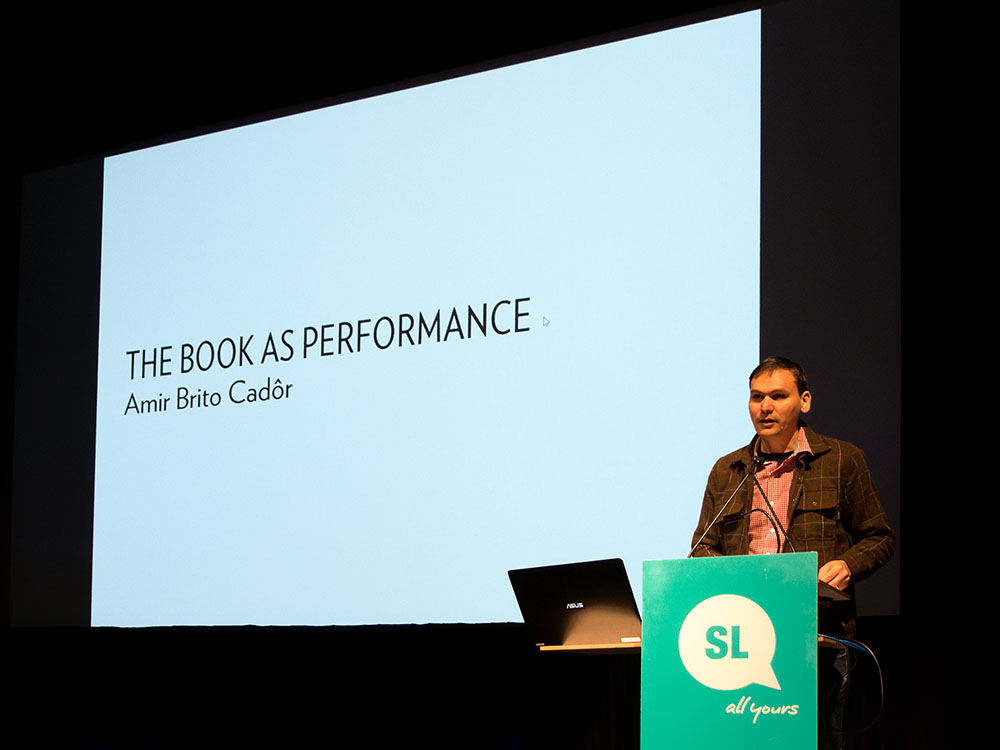
Amir Brito Cadôr makes his keynote presentation
In the morning session 2015 Siganto Foundation Artists’ Books Fellows Clyde McGill and Julie Barratt presented progress reports on their research projects. Jan Davis discussed her 2014 Creative Fellowship and presented the completed artists’ book to the Library. The book was entitled Drawing on the ground and referenced the historical aspects of work and toil on Queensland farms. Reference material for Jan’s book came from diaries, books and documents held by the Library. Her artists’ book features text fragments and line sketches – the book was bound by Fred Pohlman and the cover was styled to resemble an old station journal.
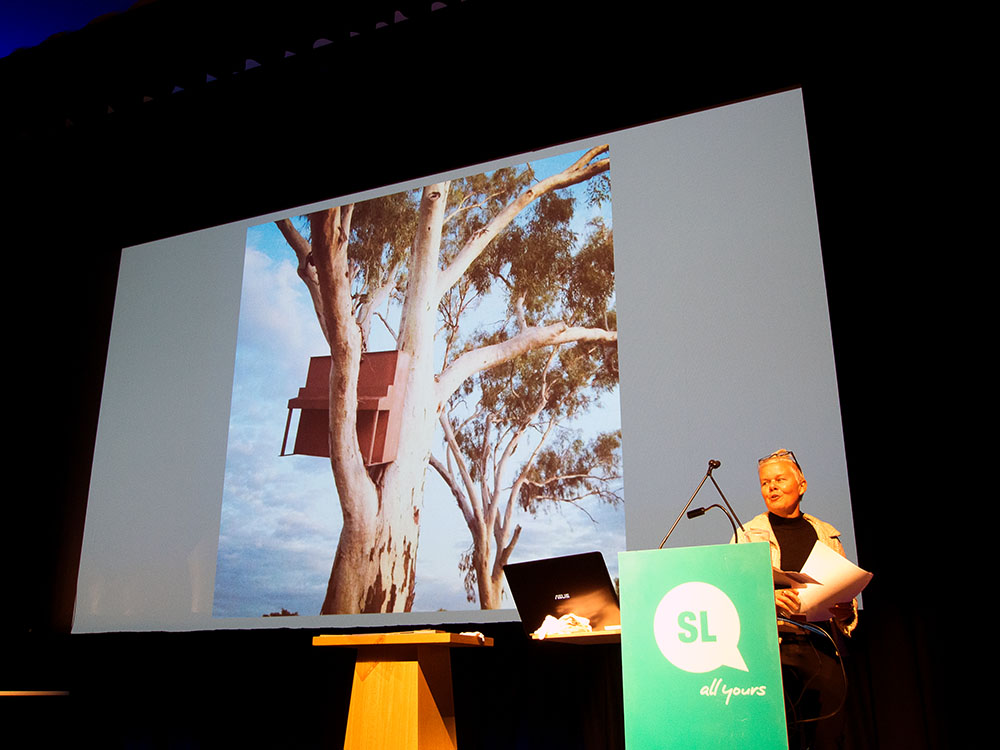
Julie Barratt discusses her Siganto Creative Fellowship
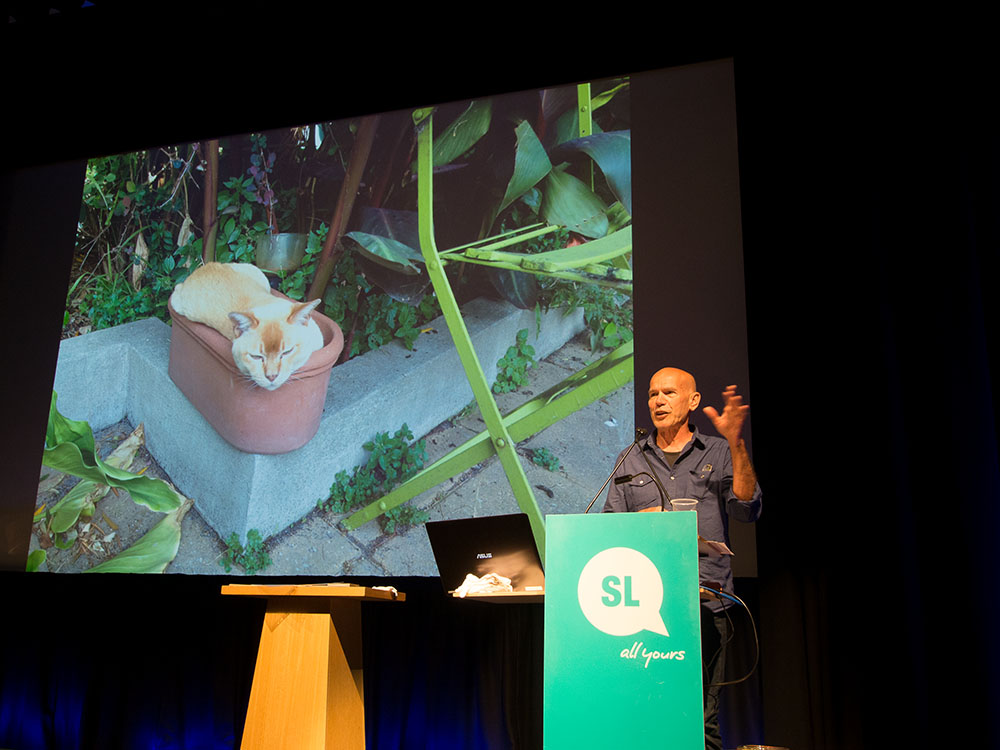
Clyde McGill discusses his Siganto Artists’ Book Creative Fellowship
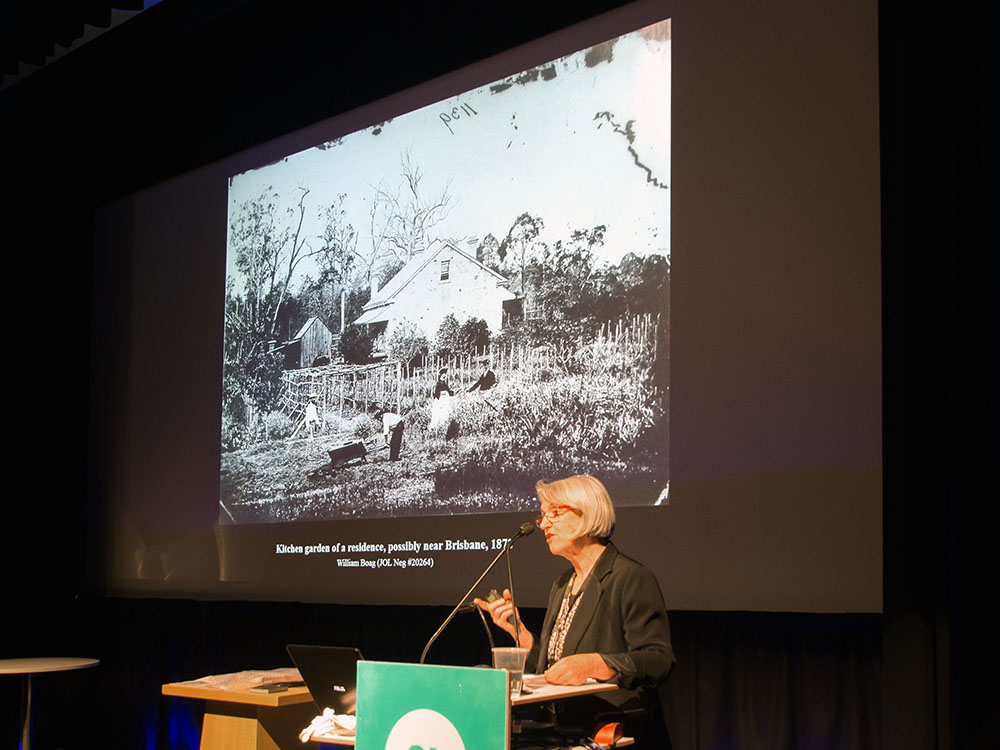
Jan Davis discusses Drawing on the ground, her Siganto Artists’ Book Creative Fellowship
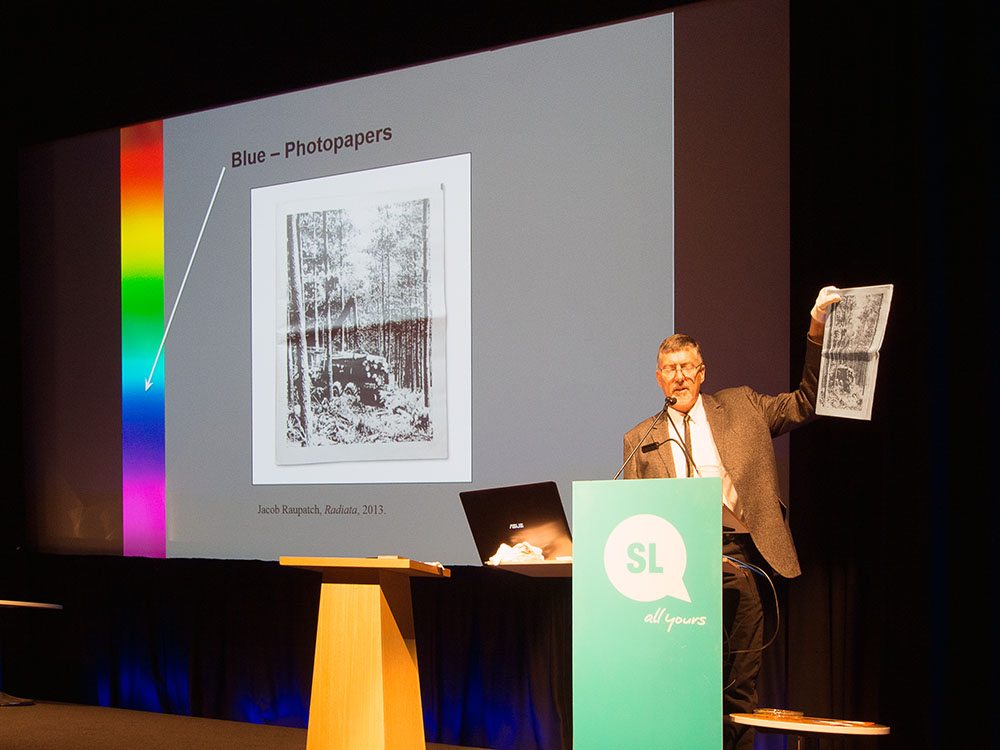
Doug Spowart discusses Jacob Raupach’s Radiata
As the 2014 Siganto Artists’ Books Research Fellow I presented an illustrated lecture on my experiences as a researcher of the Australian Library of Art, a selection of the range of books I encountered that employed photography from very minor references in text to conceptual pieces based on photographs. This list included:
Anne Wilson in, Tock 01-01-2000, 2000
Codex Event: Darren Bryant .. [et al.], Wild Cherry Tin Mine, 2006.
Vince Dziekian, Blooms Books, 1993-4.
Barbara Davidson, Different moods of the Opera House, 2001.
Felipe Ehrenberg, Generacion 1973
Peter Kingston, The Blue Mountains, 1987.
Michael Buhler, Oblique Lines, 19-.
William Copley Notes on a Project for a Dictionary of Rediculous Images, 1972.
Adam Broomberg + Oliver Chanarin, Holy Bible, 2013.
Judy Barrass, Eden-Monaro in Summer, 2001.
Juli Haas, The oyster book of lessons from the memory room, 2007.
Jihad Muhammad aka John Armstrong, Ten menhirs at Plouharnel, Carnac, Morbihan, Bretagne, France, 1982.
Angela Callanan, 7 Signs of Absence, 2010.
Susan King, Photo bio, 2011.
Malcolm Enright, Western Wisdom, 1998.
Pierre Cavalan, Artists Book, 1998.
Compiled by Kay Faulkner Indulge, 2006.
Debra Gibson, Kamikaze, 2004.
Dick Jewell, Found Photos, 1977.
Julie Barratt, Collateral damage, 2008.
Alison Knowles, Bread and Water, 2004.
David King, Raw deal, 1997.
Valerie Keenan HY1, 2001.
Tim Johnson, Fittings, 1972.
Christian Boltanski, Scratch, 2002.
Amanda Watson-Will, Judy and the Jacaranda, 2010.
Phillip Zimmerman, High tension, 1993.
Jan Davis, Solomon, 1995.
I then disclosed the principal research product the paper: The artists’ book, the photobook and the photo-a spectral approach, as well as recommendations to the Library for photobooks to be relocated from the General collection into places that reflected the significance of these books in the history of photography and the photobook. I also supplied Photobook Publishers and Info URLs that could be used by anyone wanting to keep up with new photobook releases an purchasing opportunities. I particularly noted that the Library held no Trent Parke books and provided, as an example, his book Dream Life that could have been purchased in 2000 for around $60 is now sold for $1,000+. Highlighting the need for the SLQ to be pro-active in purchasing contemporary book for modest outlay – rather than waiting until they are nearly unaffordable. I also highlighted the need for institutions to engage with and maintain links with artists’ book and photobook self-publishers as they exist outside of the usual publishing structures. I quoted Des Cowley, the State Library of Victoria’s History of the Book Manager from a statement made by him in his presentation at the ‘Other Photobook’ forum at Photobook Melbourne. He said:
… It is therefore incumbent upon staff in these institutions to build networks and relationships with the communities creating this work in order to be informed about what is being produced, and to ensure this material is acquired and preserved for future researchers.
My presentation concluded with two quotes from book artist and mail art aficionado Ulises Carrion that I felt related to the contemporary artists’ book and photobook. Carrion states:
I include books in the category of
living creatures … : they grow, reproduce, change colour, become ill and finally die.
At this moment we are witnessing the final stage of this process.
… if books are to survive they have to change. And [artists’] bookworks is the real possibility that books have for survival.
Schraenen, G. (1992). Ulises Carrion : We have won! Haven’t we?
.
HERE IS THE SLQ VIDEO OF THE SIGANTO FELLOW’S PRESENTATIONS
.
Other artists’ book performances included: Virginia and Julie Barratt’s The Morning After, one by Clyde McGill and a performance by QUT drama students of the three-part book Robert Bringhurst’s artist’s book New World Suite number three: a poem in four movements for three voices. The performers were Thomas Yaxley, Emily Weir and Meghan Clarke and was directed by QUT lecturer Floyd Kennedy.
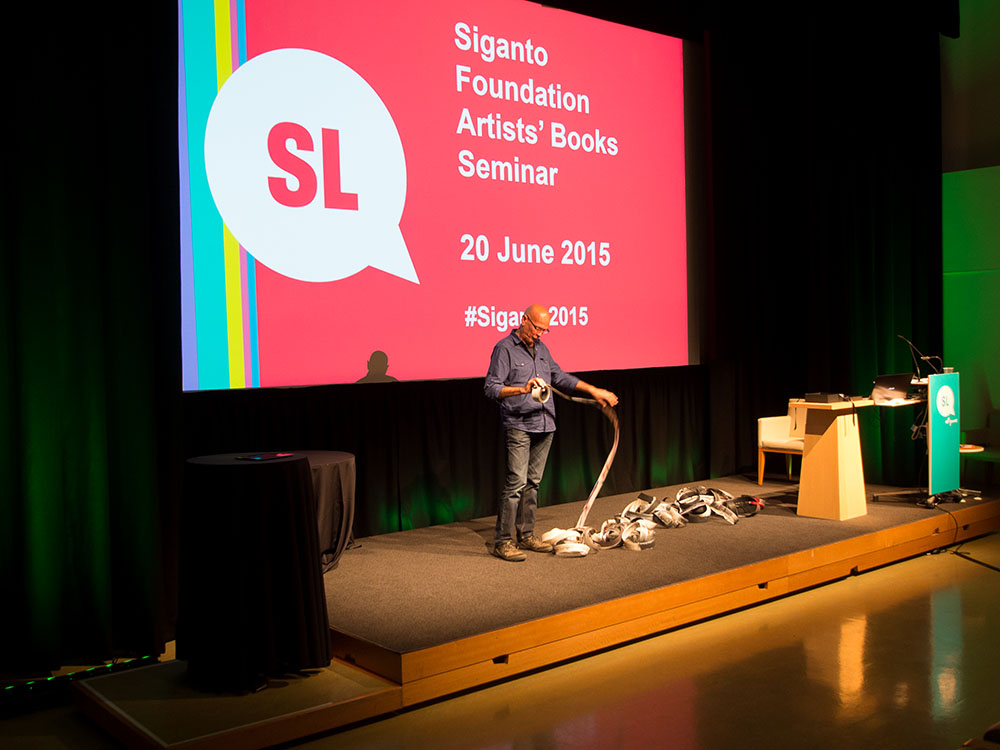
Clyde McGill performs his book
The afternoon concluded with a forum moderated by Louise Martin-Chew on the topic of collaboration. The forum participants were Clyde McGill, Julie Barratt and Doug Spowart. Each participant discussed a project that involved collaboration and questions were posed by Louise to bring out important points from each panelist. The most interesting aspect of this forum was when questions from the floor created heated debate around the idea of the physical book and its experience verses the virtual online experience.
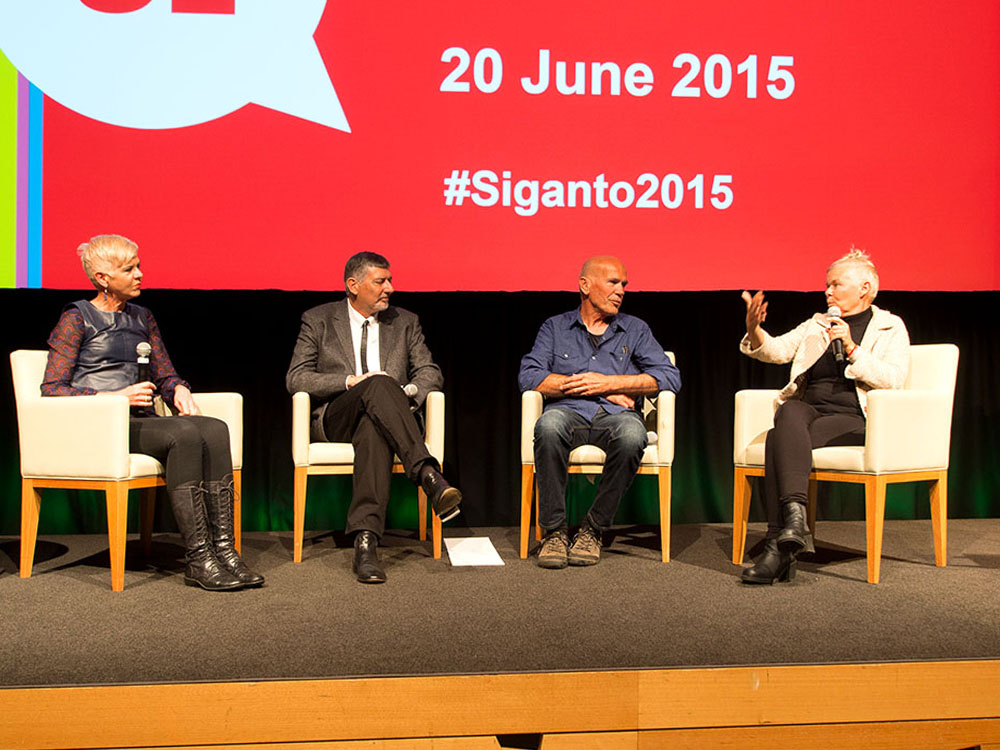
Julie answers a question in the collaboration forum
On Sunday many local and interstate stallholders presented their work for an Artists’ Book Fair in the Knowledge Walk at the SLQ. Tours of selected artists’ books from State Library’s Artists’ Book Collection were well attended and provide rare access to special books from the Australian Library of Art Collection. The two-day event was significant for the opportunity for artists’ book aficiandos, makers, collectors and readers to engage with the physicality of not only the books but also to touch with the extensive community of the book. Our thanks must go to the SLQ, particularly Christene Drewe and Helen Cole, and to the Dr Marie Siganto and the Siganto Foundation for their continued support of the artists’ book collection of the Australian Library of Art and events such as these. Doug Spowart
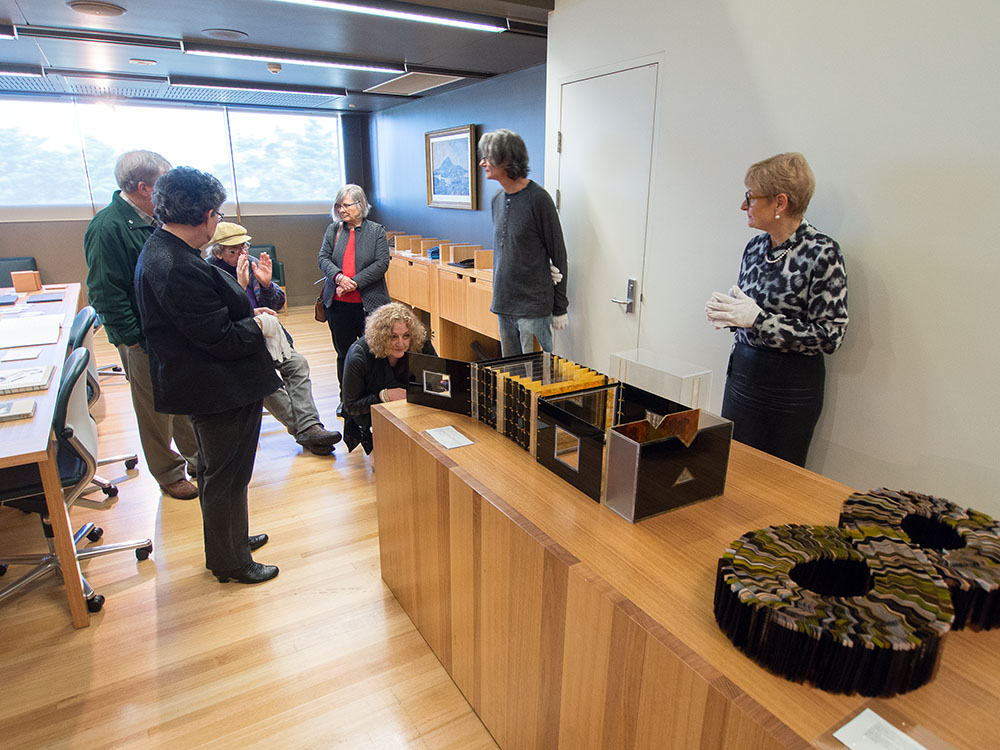
State Librarian, Janette Wright views a tunnel book by Wim de Voss
What follows are a range of images from the Seminar and Artists’ Book Fair
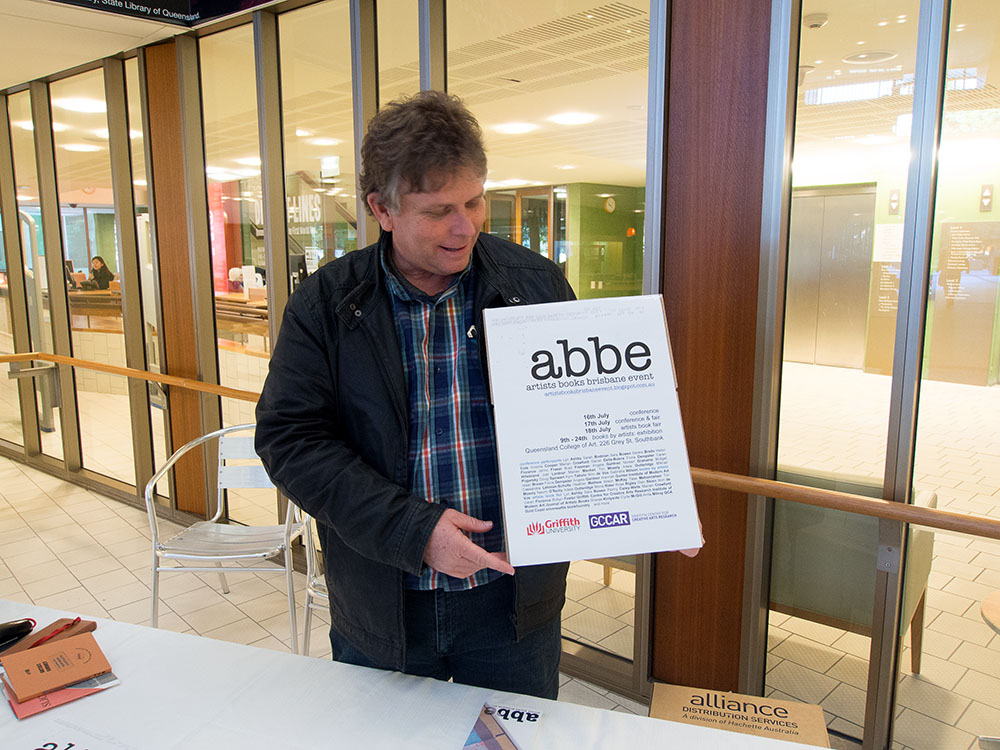
Tim Mosely promotes the ABBE Conference @ QCA in July
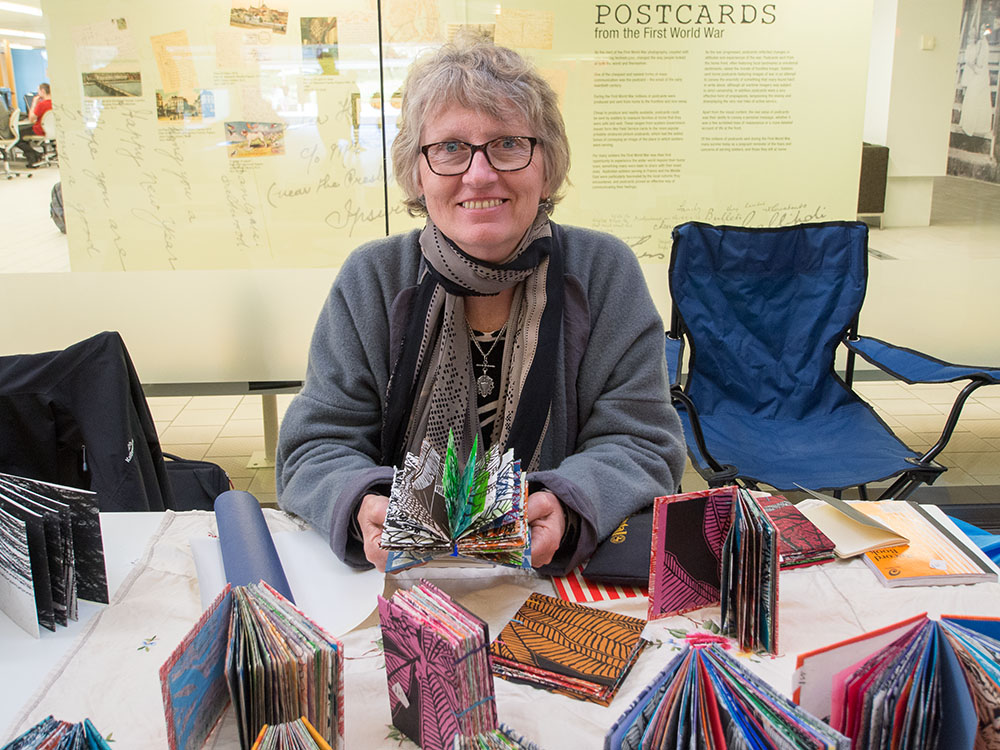
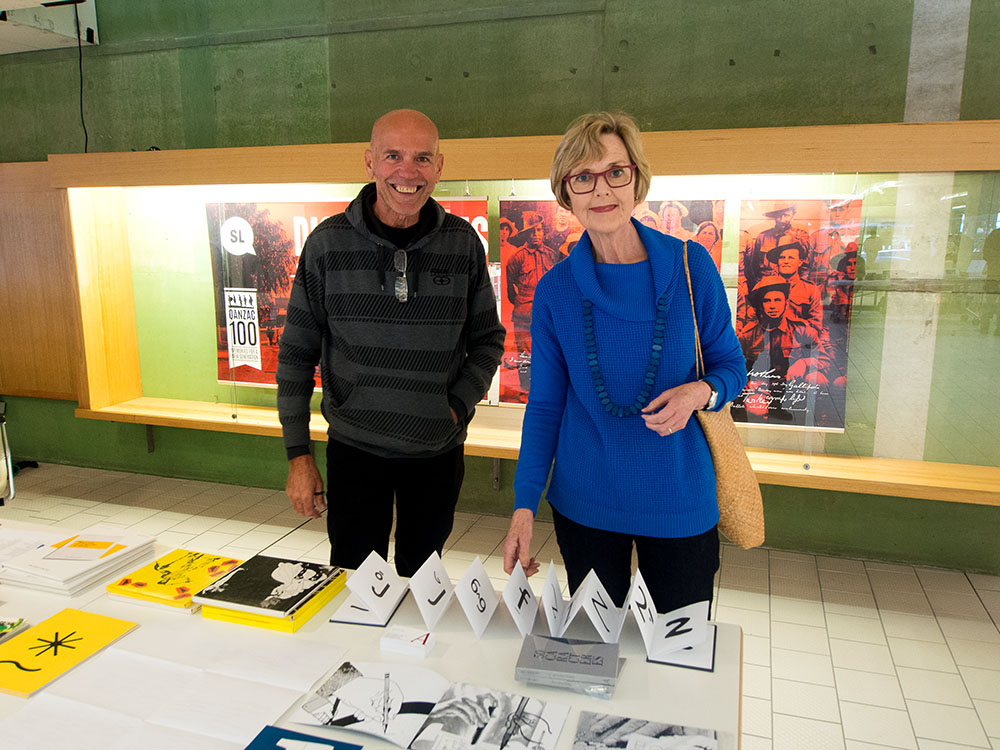
Sue Poggioli at the Artists’ Book Fair
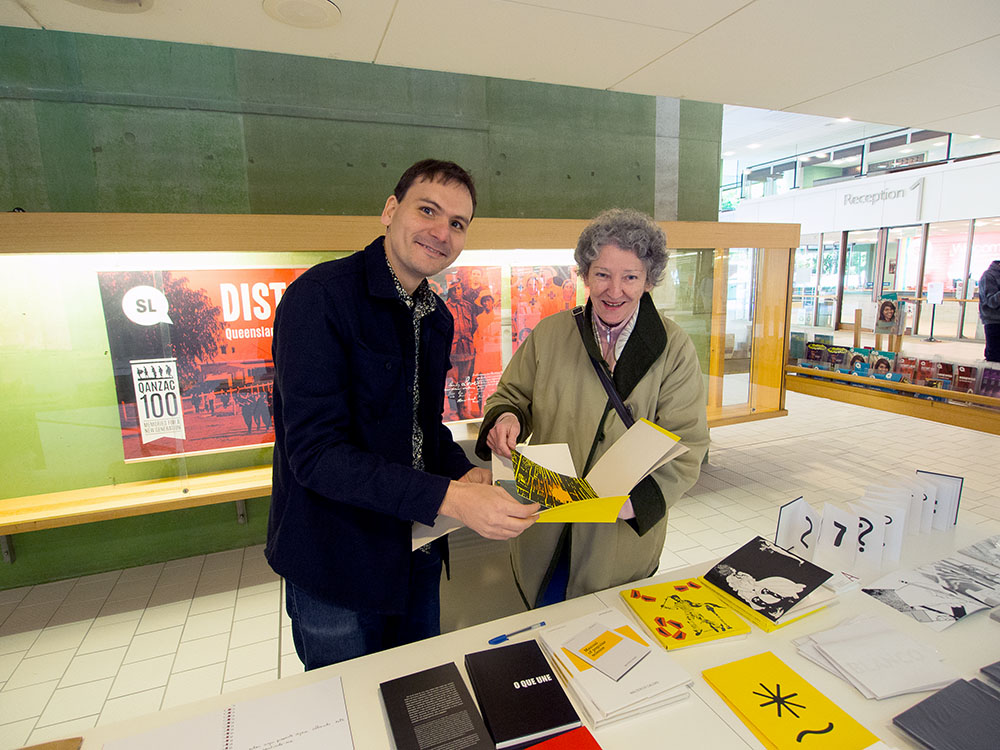
Amir and Noreen Grahame
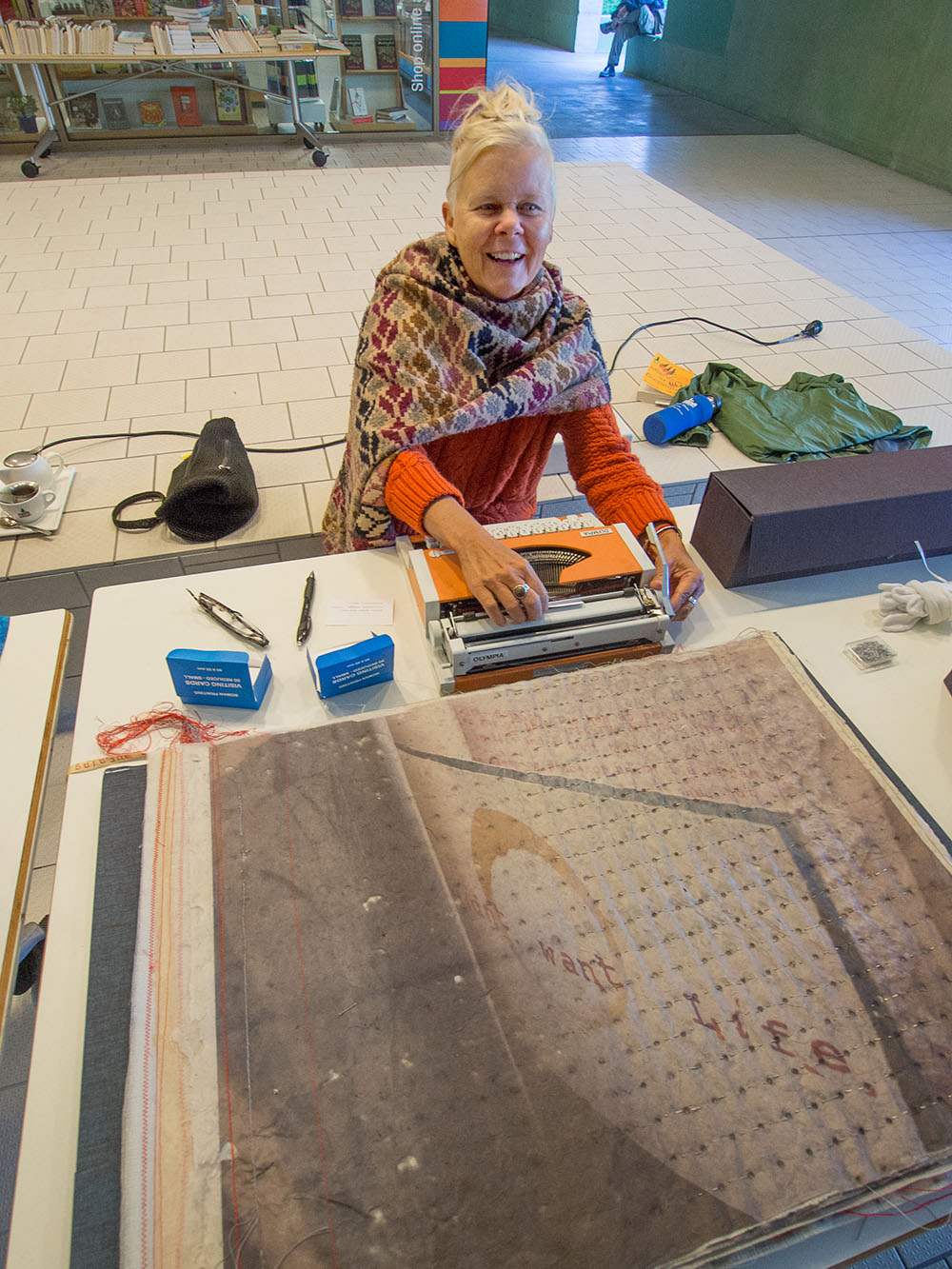
Julie Barratt at the Artists’ Book Fair
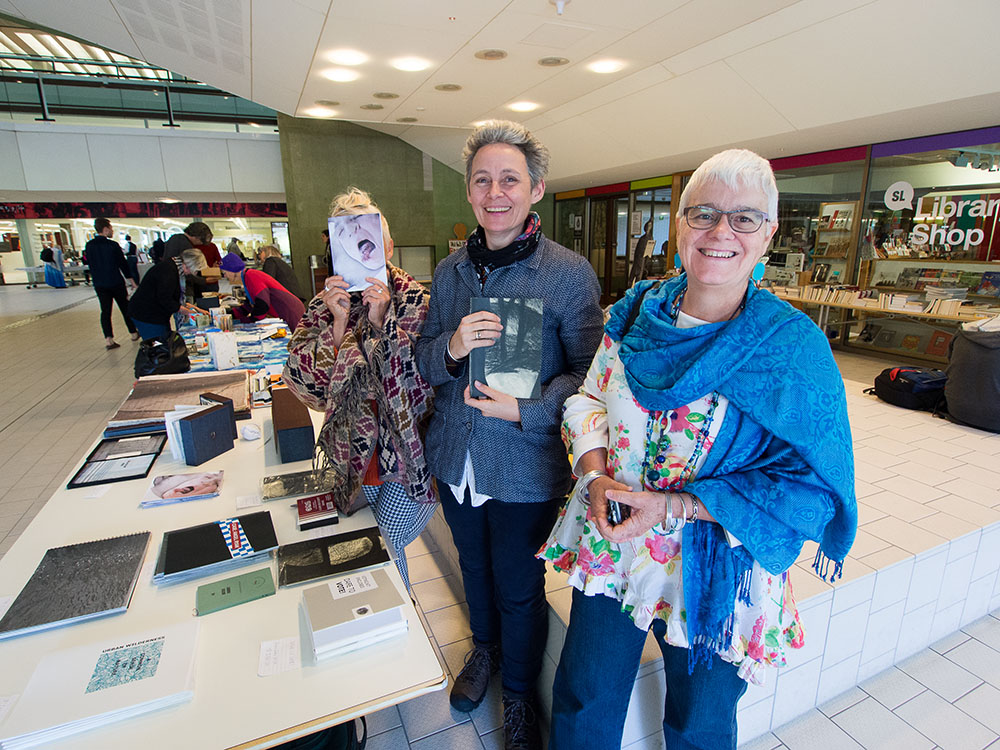
Julie Barratt, Monica Oppen and Helen Cole Artists’ Book Fair
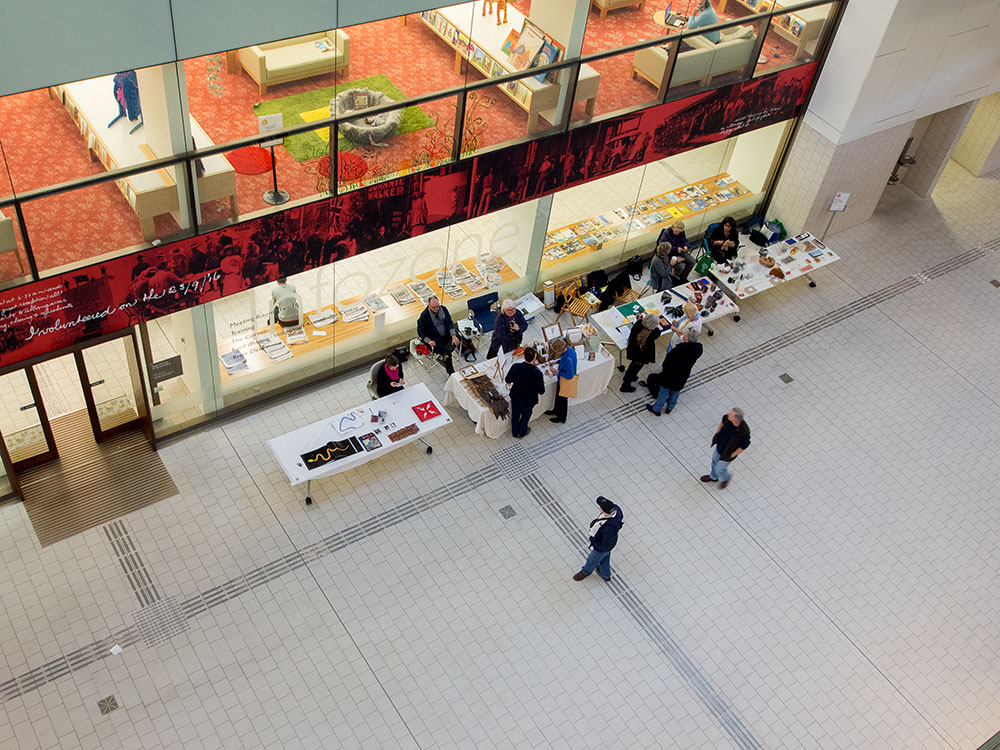
A section of the Artists’ Book Fair at the SLQ
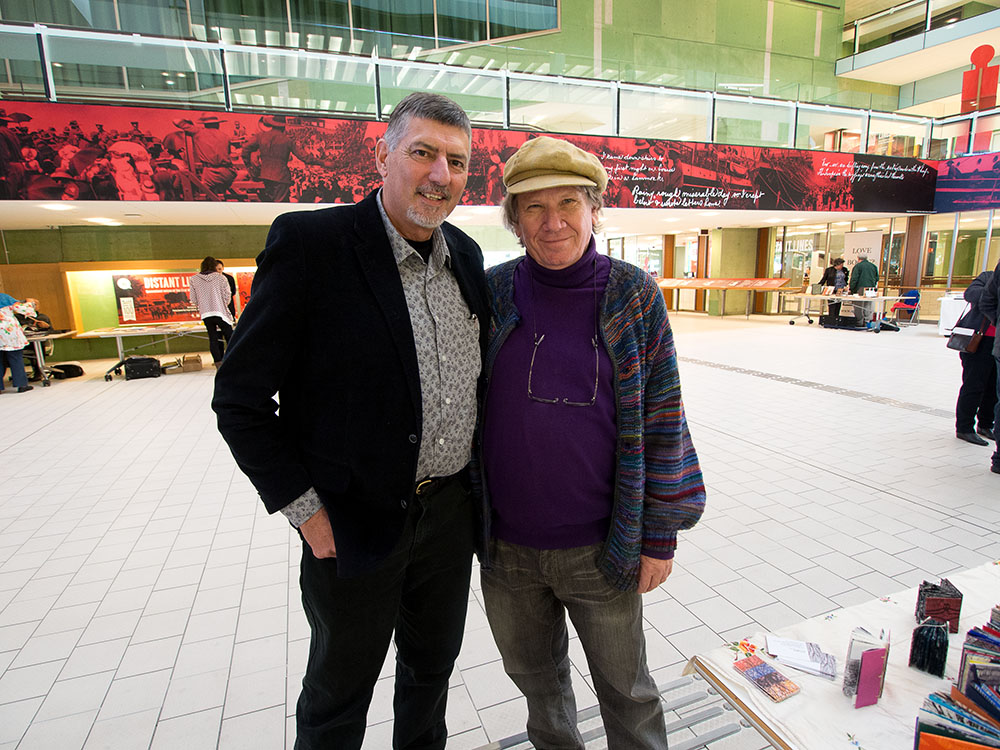
Doug Spowart and Wim de Voss
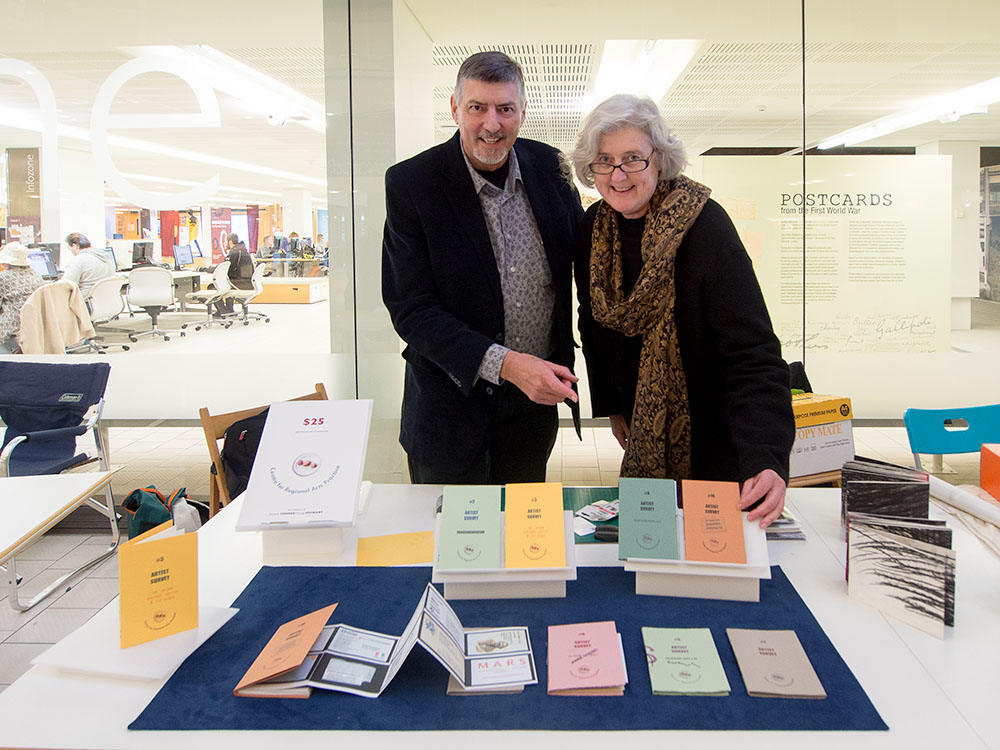
Doug Spowart and Victoria Cooper and their C.R.A.P. display
Clyde McGill and Anne Kirker
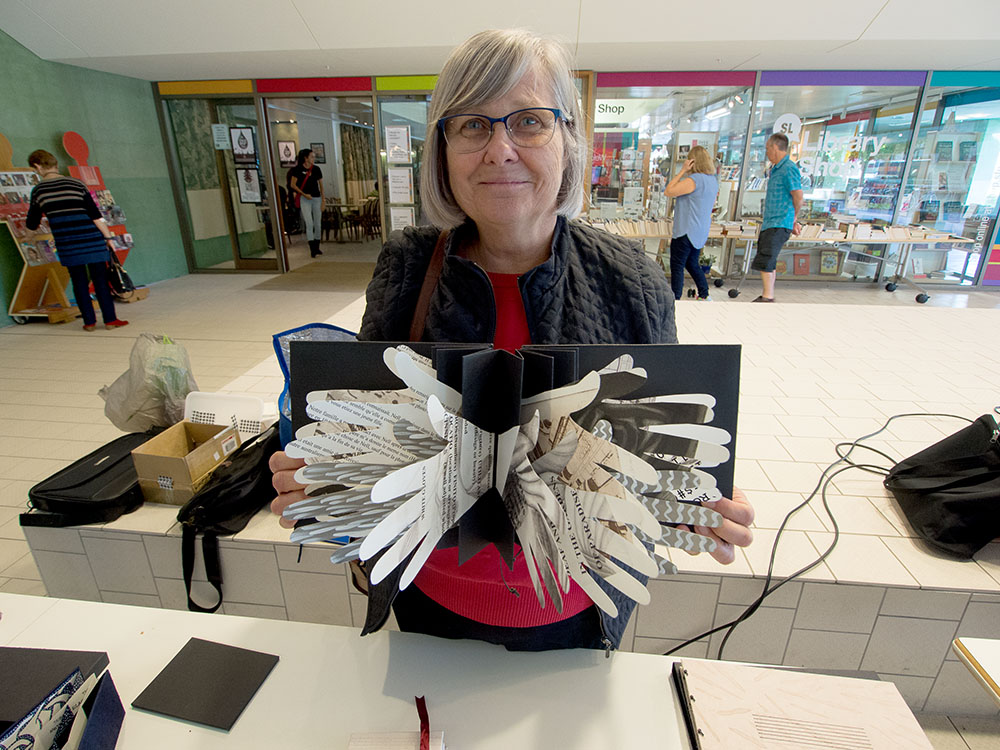
Helen Malone at the Artists’ Book Fair
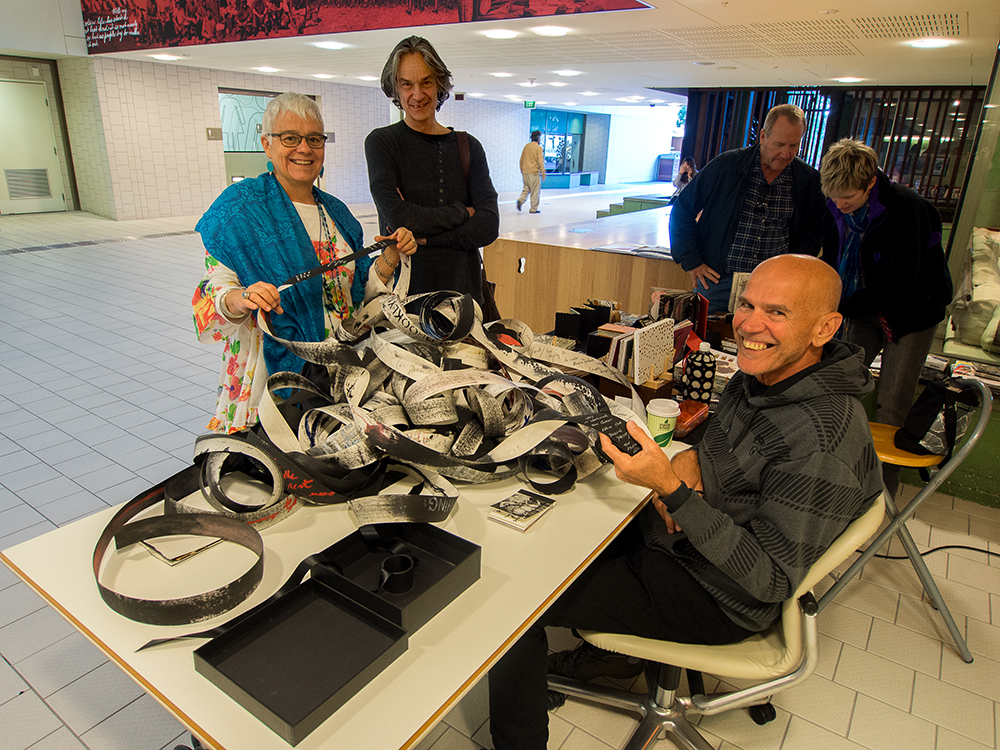
Helen Cole, Michael Wardell and Clyde McGill at the Artists’ Book Fair
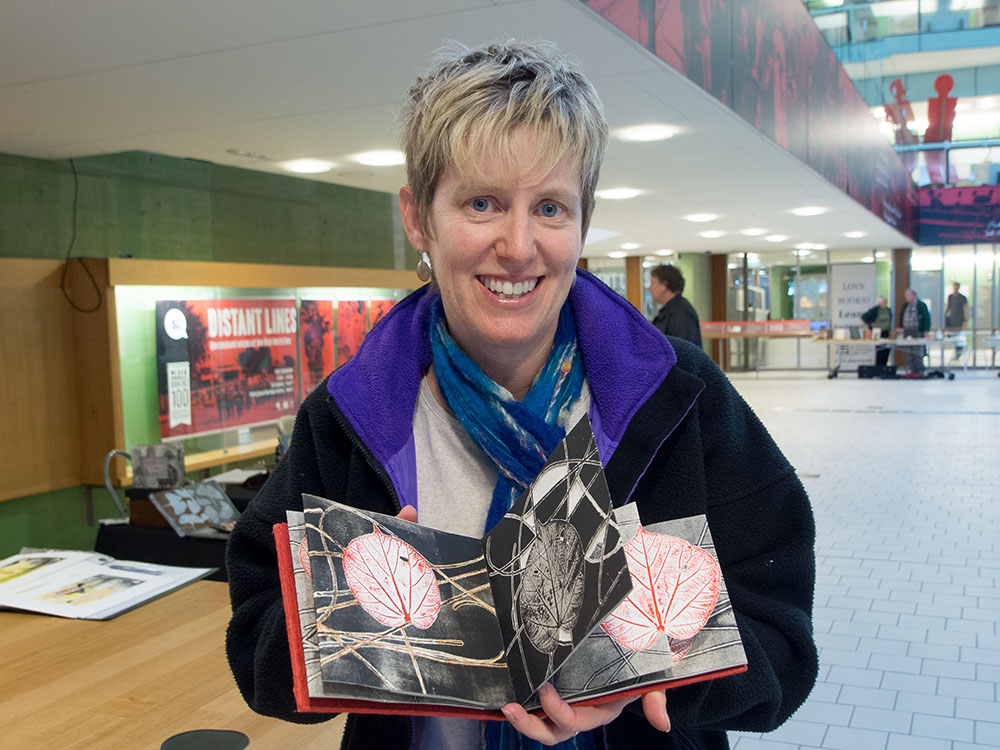
Sandra Pearce at the Artists’ Book Fair
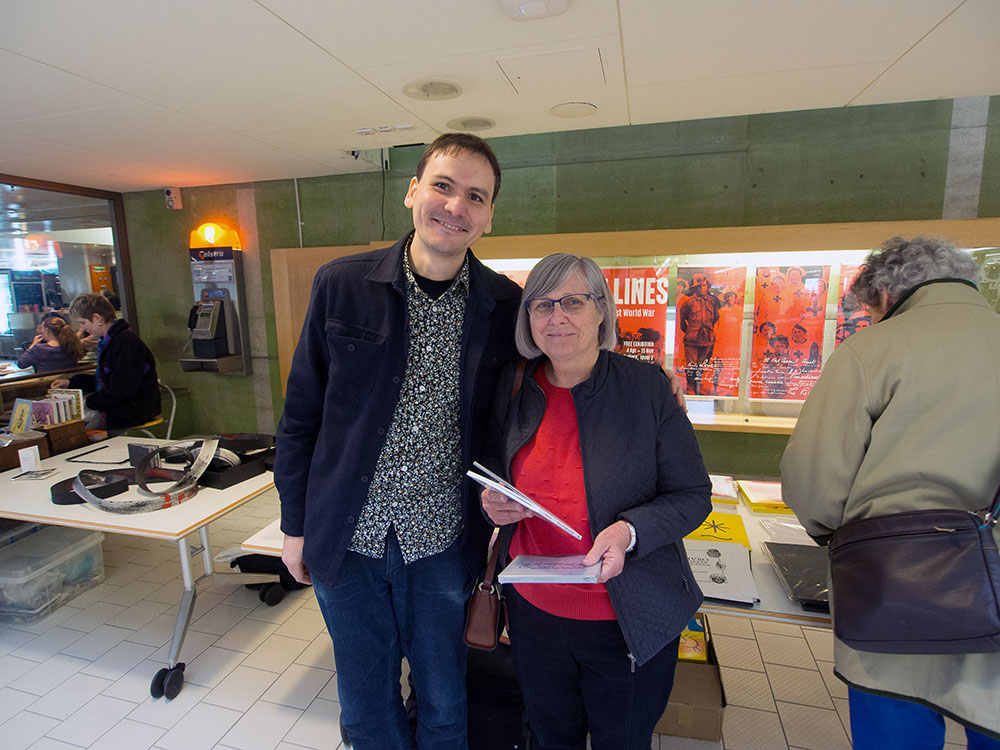
Amir Brito Cadôr with Helen Malone
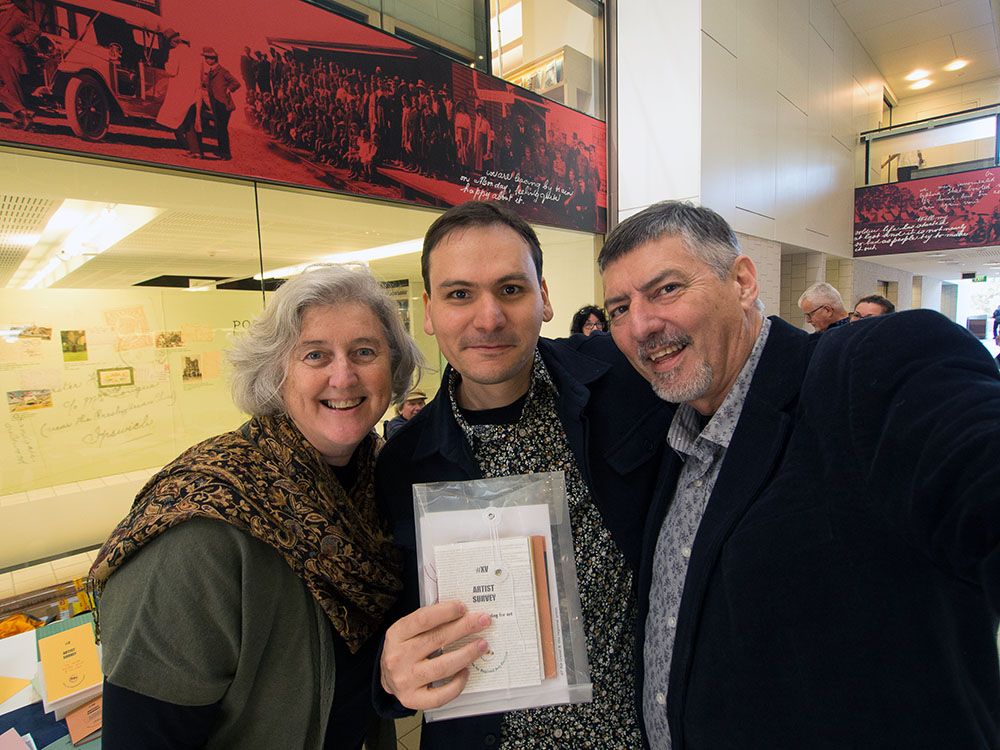
Amir Brito Cadôr with Victoria Cooper and Doug Spowart
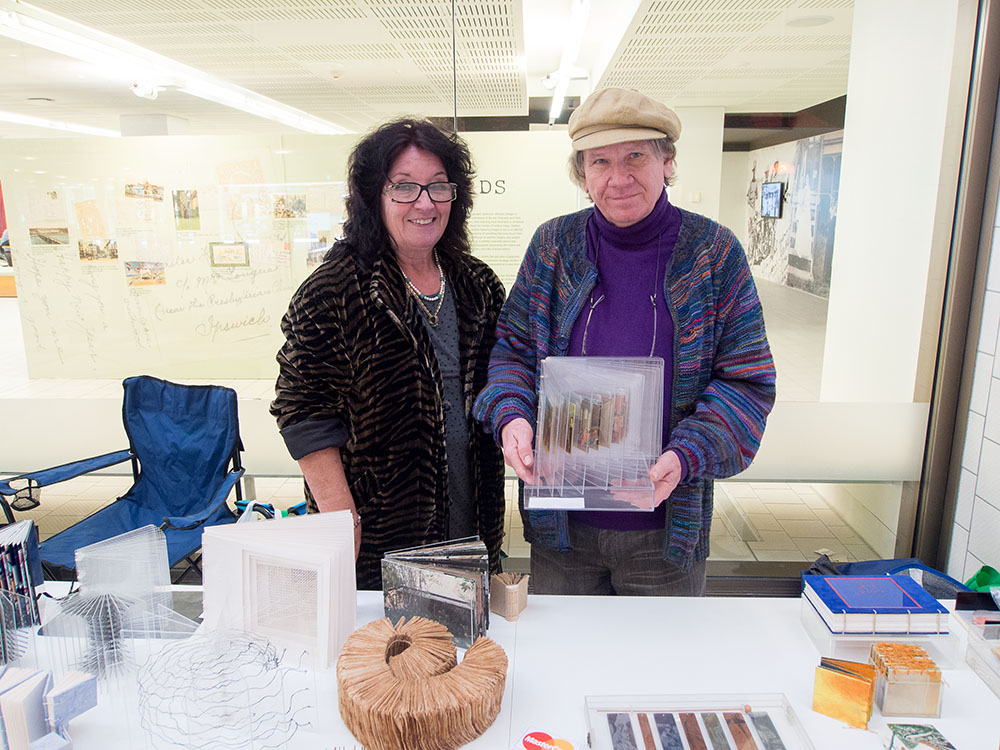
Adele Outteridge and Wim de Voss
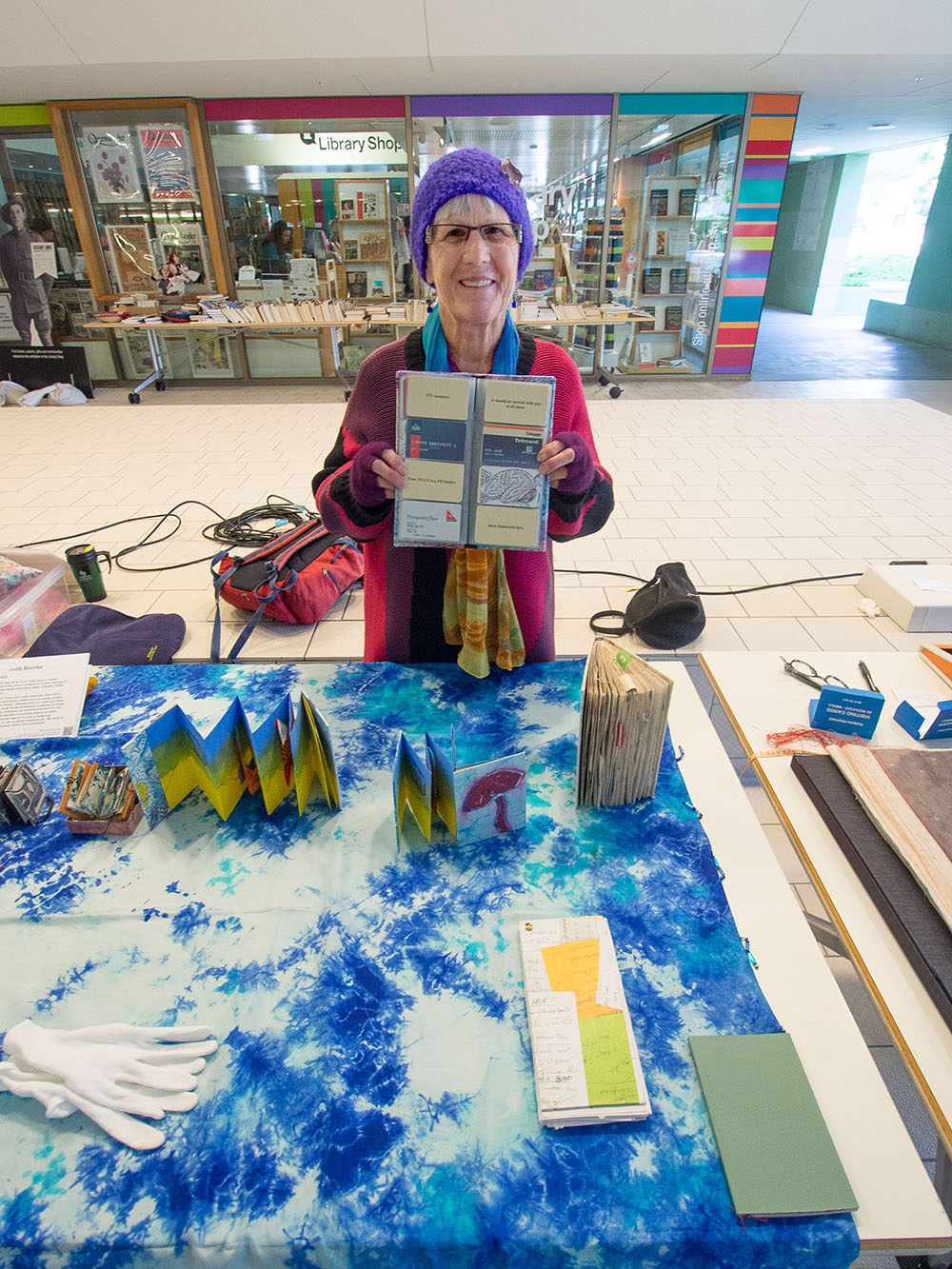
Judy Bourke at the Artists’ Book Fair
Presented by SLQ with the generous support of the Siganto Foundation. All photos and text ©2015 Doug Spowart
REPORT on SIGANTO ARTISTS’ BOOK RESEARCH FELLOWSHIP @ SLQ
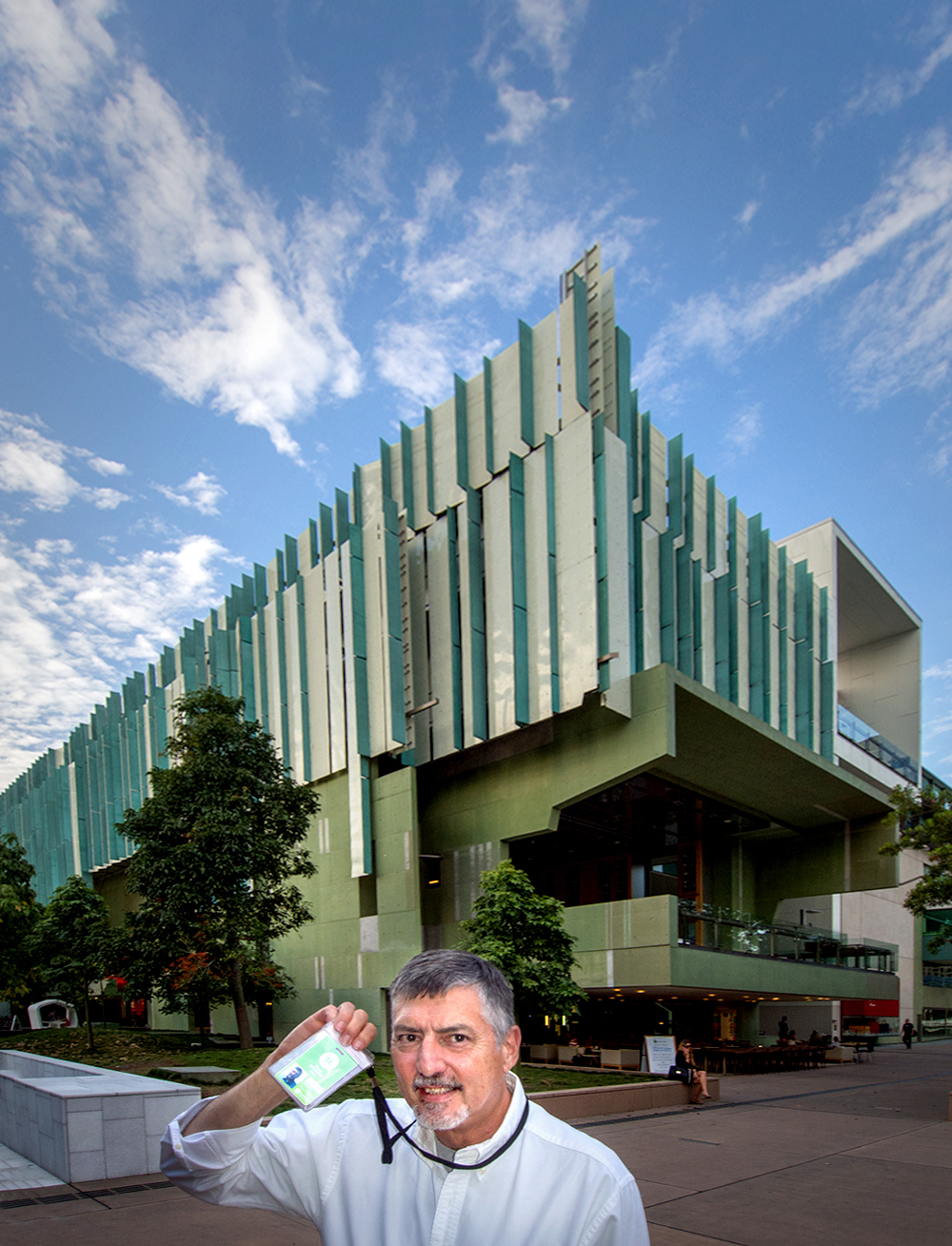
Doug Spowart at the SLQ with his Security pass
.
A PHOTO OPPORTUNITY: Looking for photos in the Australian Library of Art
As the inaugural Siganto Artists’ Book Research Fellow I have had an opportunity to access the State Library of Queensland’s resources including the significant artists’ book collection held in the Australian Library of Art. During the Fellowship I have engaged in specific research related to my proposal and in doing so it has enabled the creation of a much-needed critique on photography and the artists’ book. It has enhanced my understanding of the photography and artists’ book creative products and has placed me in a position of knowledge of these disciplines, the nature of these creative works, their collection and description.
.
In this research my particular interest is in the intersection of photography and the artists’ book. Over a four-month period from October to January in 2014-5 I worked in the Fellows Room and in the Repository at the SLQ. During this time I engaged in a variety of activities that related to my proposed research activities. These included:
- A review of artists’ books in the Australian Library of Art collection looking for the presence of photography
- Creating and using a spreadsheet in which the review was logged
- Documentation of books containing photography
- Selected books were considered for critical evaluation
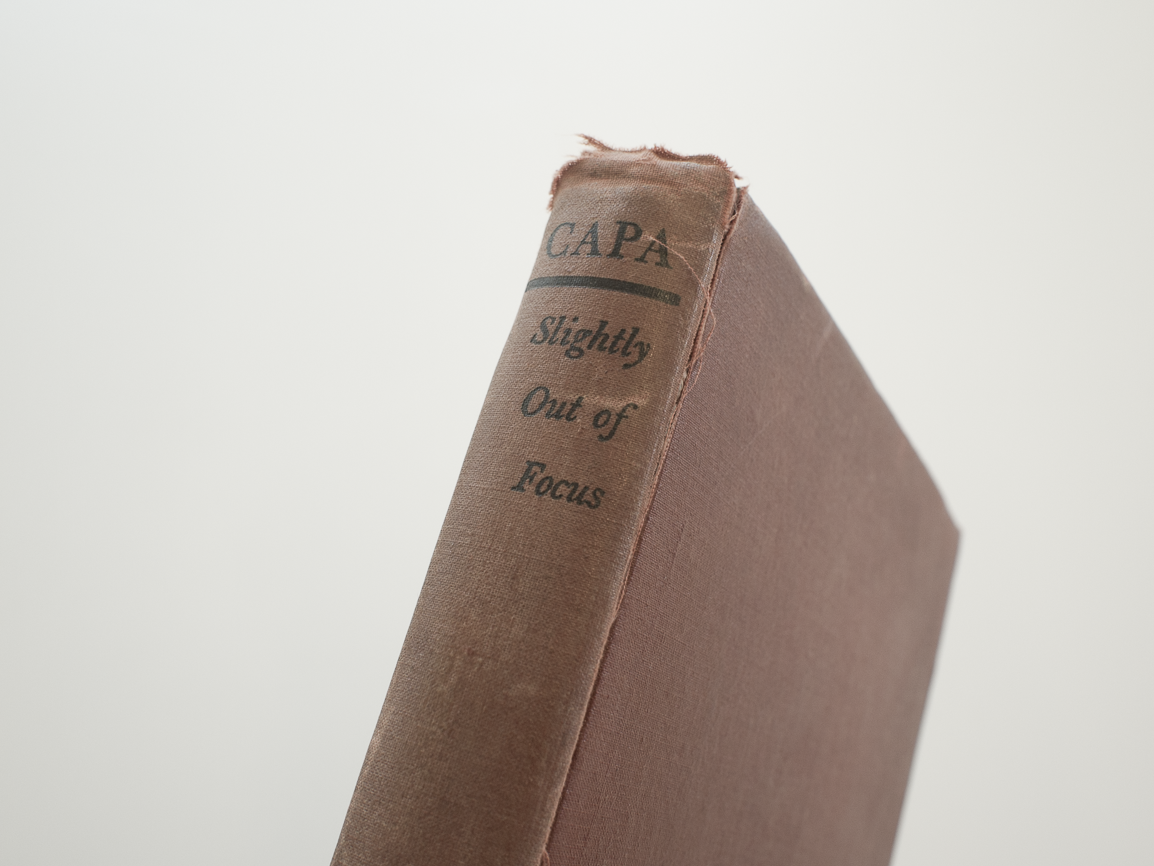
Robert Capa’s ‘Slightly out of focus’
I was also interested in books that have emerged as being significant in the newly documented history of the photobook and also the ALA’s acquisition of contemporary photobooks. I found in the library’s general collection many key seminal photobooks like Robert Capa’s 1947 Slightly out of focus: [the story of a war photographer], Henri Cartier-Bresson’s 1952 The decisive moment, and Richard Avedon’s 1976 Portraits. While some of these books are difficult to find, expensive to buy, and have been re-released in modern printings the original book is an important touchstone for those interested in photographic history. The ALA collection also revealed surprises with my discovery of a Japanese ‘Provoke era’ book from the 1960s and Broomberg and Chanarin’s ‘The Holy Bible’ from 2013 – both books representative of key approaches to the photobook and the use of photographs in creative book publishing.
.
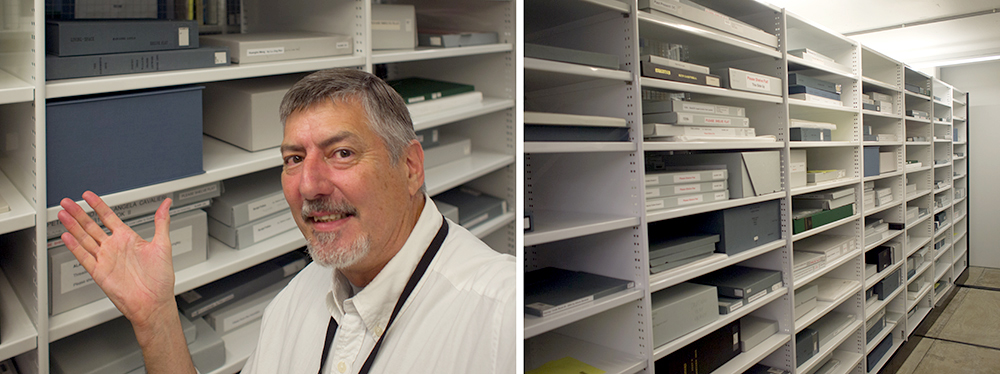
Doug Spowart in the SLQ Repository
I attended the library usually 4-5 days per week. After an initial settling-in and establishment of my methodology for work I began near-daily research in the Repository. I usually worked on a 3-hour time limit per session during which I viewed and reviewed as many books as possible. My methodology involved direct contact with the book and an engagement with the physical and the metaphysical. I held each book, I turned each page, I read each word (where text existed), I made my assessment and logged the results of the appraisal on my spreadsheet and photographically documented the book. It was a slow and intense process that has resulted in a significant resource which has the possibility to reveal interesting facts about the photo in the artists’ book.
An integral aspect of the review process was the haptic experience of encountering the book, opening its enclosure, clamshell or paper wrap, and sensing the book’s activation by this act. I found that these books were entities to themselves, a containers for sharing the artists’ vision, idea or narrative. Some perhaps were being read for the first time in a while. And in the quietness of the Repository the books revealed themselves to me… At the end of each 3-hour session I was quite exhausted. Although the ALA staff were always interested to hear my report of the favourite ‘book of the day’.
What intrigued me was the diversity of the media and the message that artists place in the creative vessel of the artists’ book. I found myself seduced as much by books of abstract, textural or other non-photo print forms as I was with books with photographs in them.
Working through the library’s catalogue I often found myself looking up obscure books, different editions of books, photographers, topics and references allied to my research interests. I would request these items and they would be delivered to me. I would stack and categorise these books relating to different research interests. Subsequently, as my desk grew with more and more books, I requested a printout of my personal loans. The librarian assisting me looked surprised as the printer spat out around 50 items. One of my life follys is collecting books and there came a time when this personal library-in-the-library would need to be returned, as I was to exceed my loan limit.
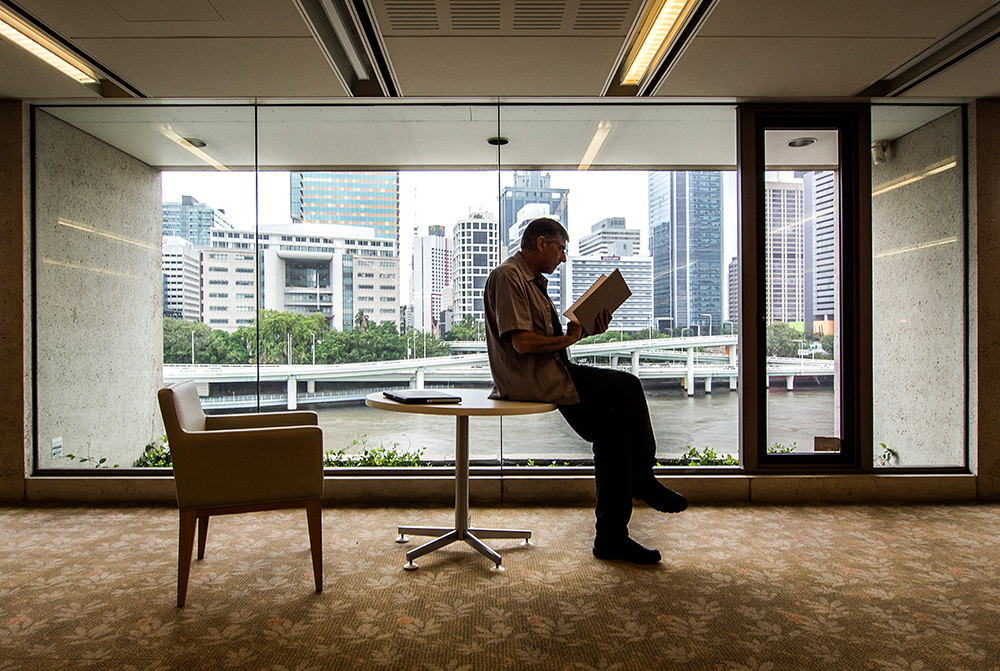
Doug Spowart reading a book at the SLQ
During my Fellowship I was able to develop and complete a significant paper outlining a way of categorising the presence of the photograph in the creative book production genres of artists’ books and photobooks. Entitled, A Photo Spectrum: Book genres and photography, it encompasses the limited edition livre d’artiste through artists’ books, zines, self-published photobooks, designer photobooks and limited edition deluxe photobooks. This paper is presently being held by an American publisher to be included in a book on the contemporary photobook. I intend to discuss this outcome in the seminar. Another paper about contemporary photobooks written during the Fellowship entitled, Everyone a publisher, was published in the recent special issue on artists’ books in the State Library of Victoria’s La Trobe journal. I also coordinated and chaired a forum on The OTHER Photobook – Artists’ books and Zines at the Photobook Melbourne event in February, and in May I spoke on Encountering a photobook at the Talking Culture Symposium of the Auckland Photo Festival. The Siganto Fellowship assisted in providing me with time and a place where my activities could be dedicated in the pursuance of my research.
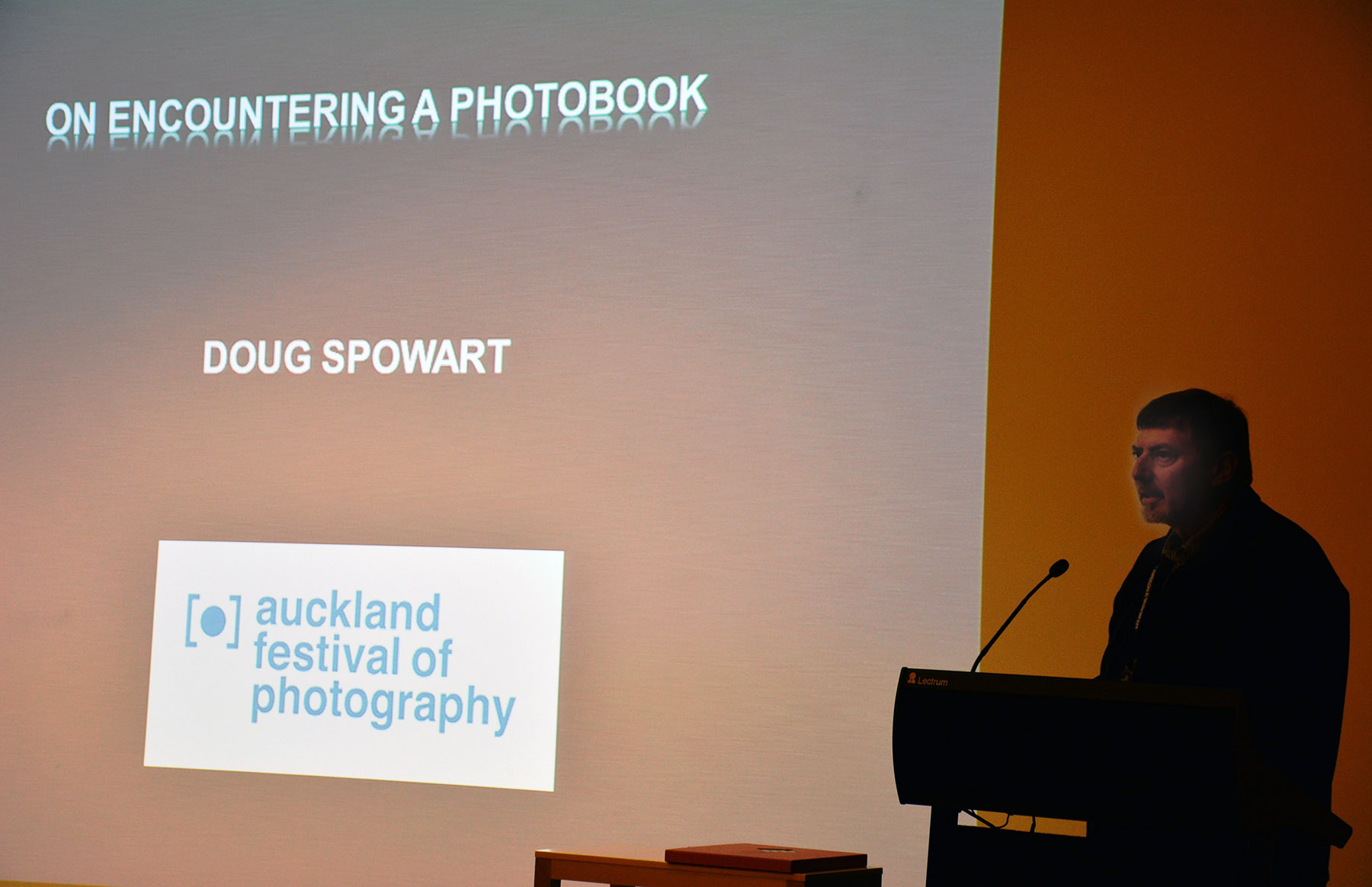
Doug speaking at the Auckland Festival of Photography
As a result of the Fellowship I am working on projects that include the presentation to the SLQ of a strategy for the continuing purchase and collection of contemporary photobooks in the ALA. Still in development is the preparation and design of a book of selected works from the ALA collection that were fundamental to my research thesis on the photo in the book.
At the Siganto Artists’ Book Seminar (Click here for the Blog post) I will present a paper outlining the curious and interesting aspects of my ALA review including amazing books that need to be seen, held, and pages turned so that they can share the maker’s communiqué, and stimulate the reader to encounter … the photo in the book.
Dr Doug Spowart
2014 Siganto Artists’ Book Research Fellow
PHOTOBOOKS: everyone a publisher – The LA TROBE Journal
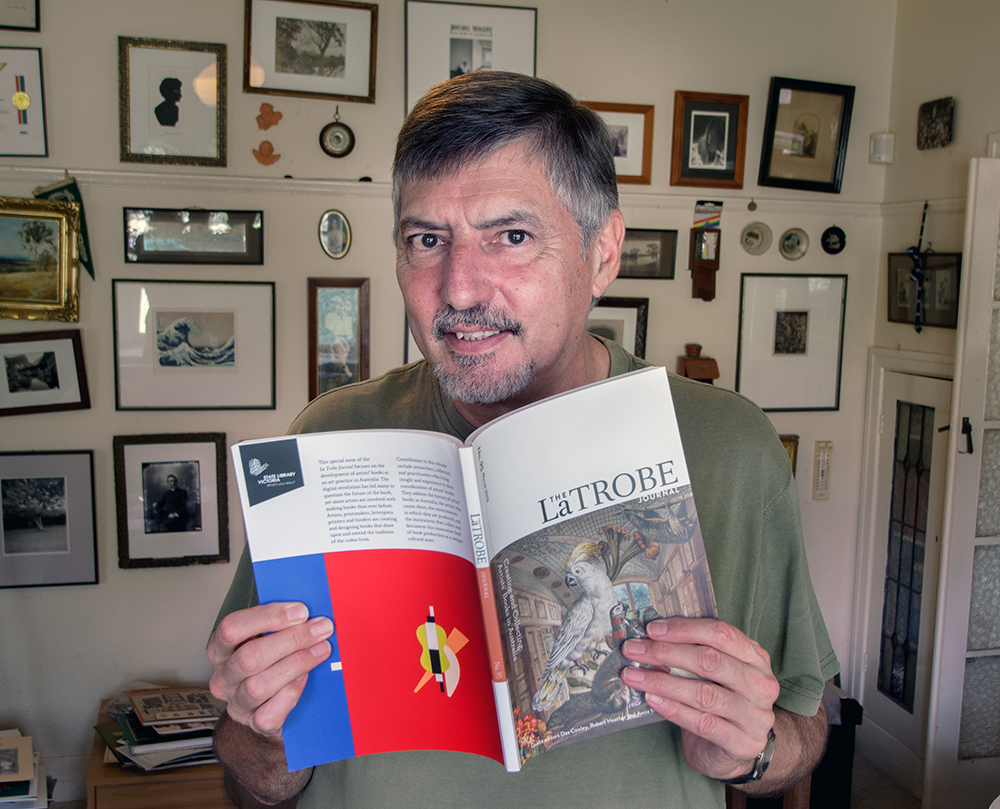
Doug Spowart with the La Trobe journal
.
I’m particularly excited to announce that a copy of my essay on Photobooks published in the State Library of Victoria’s La Trobe journal is now available as a free download. Here are some details and links
.
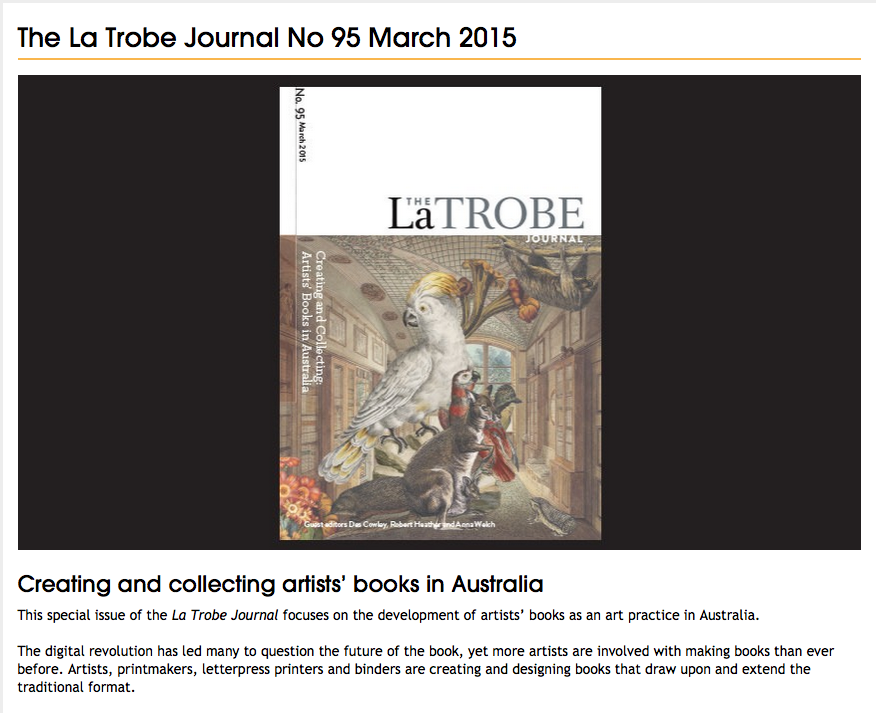
The La Trobe journal with the great Gracia & Louise cover
TITLE:
The photobook: everyone a publisher?
ABSTRACT:
Digital technology, indie DIY and print-on-demand photobooks have transformed contemporary photography book publishing, however the creative and innovative influence that graphic designers have brought to the artists’ book is now extending into the photobook artform.
FIRST PARAGRAPH:
Over recent years the photographically illustrated book has undergone a massive makeover, in effect freeing it from traditional publisher controls. Digital technologies have been the major cause of this paradigm shift due to the democratisation of photography, new production technologies, and new funding and marketing platforms. The 19th-century polymath Henry Fox Talbot, inventor of the positive/negative process for photography, was so enthusiastic about the potential for his discovery that he made a prediction for a future where: ‘Every man [would be] his own printer and publisher’. It would now seem that Talbot’s prediction has come to pass. Increased public access to book publishing is particularly important for those photographers and artists who employ the camera and the photograph in their art practices.
Topic headings:
- Photographers desire books
- A new term emerges
- A new critique forms for the photobook
- A new accessibility to book production
- The happy self-publisher
- The artist book and self-publishing
- A new challenge emerges: design my book
- In conclusion
Features a commentary on Ying Ang’s Gold Coast and photos of books by Louis Porter, Lloyd Stubber and Mimmo Cozzolino.
CLICK THE LINK BELOW TO DOUG SPOWART’s ESSAY DOWNLOAD
http://www.slv.vic.gov.au/sites/default/files/La-Trobe-Journal-95-Doug-Spowart.pdf
LINKS TO OTHER DOWNLOADS
- [Front matter] (pdf,276.52 KB)
- · Des Cowley, Robert Heather & Anna Welch – Editors’ introduction (pdf,105.18 KB)
- · Helen Cole – Public collections of artists’ books in Australia (pdf,617.45 KB)
- · Andrew Schuller – A history of the Croft Press (pdf,859.45 KB)
- · Sasha Grishin – Books in the Canberra region: the golden years (pdf,1011.85 KB)
- · Steven Tonkin – A defining decade: Australian artists’ books in the 1970s (pdf,461.45 KB)
- · Artists’ books from the State Library of Victoria: a photo essay (pdf,5.3 MB)
- · Caren Florance – The changing face of contemporary letterpress in Australia (pdf,493.65 KB)
- · Peter Anderson – Conceptual and perceptual: the early artists’ books of Robert Jacks (pdf,503.25 KB)
- · Marian Macken – Reading time: the book as an alternative architectural practice (pdf,1.28 MB)
- · Doug Spowart – The photobook: everyone a publisher? (pdf,523.78 KB)
- · [Back matter] (pdf,274.28 KB)
.
.
.
PHOTOBOOK INDEPENDENT: Our books in Hollywood – thanks to QCP
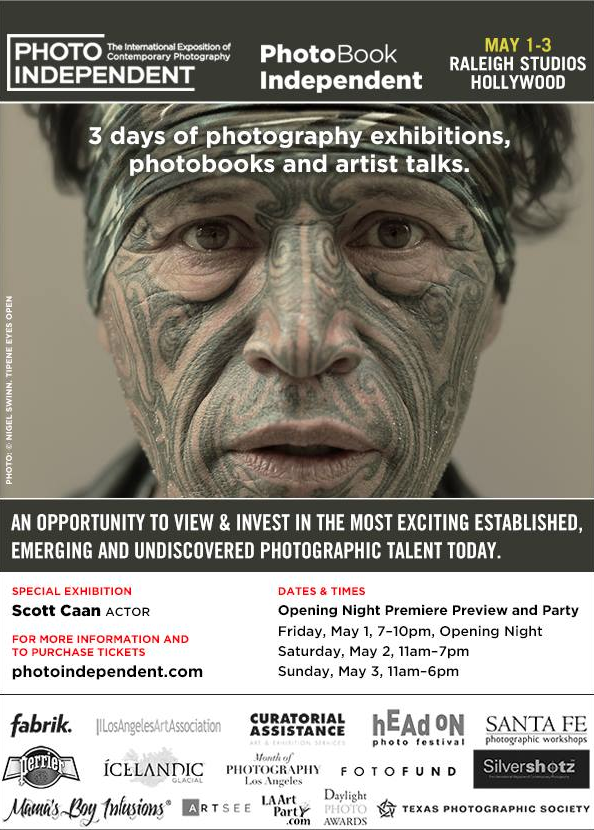
Photo Independent poster
.
As part of its international activities for Queensland and Australian photographers the Queensland Centre for Photography participated in the inaugural Photo Independent art fair at Raleigh Studios, Los Angeles 1–3 May, 2015. The main Australian contingent consists of the wall images of 12 photomedia artists. They are Anna Carey, Belinda Kochanowska, Chris Bowes, David La Roche, Henri van Noordenburg, Kim Demuth, Kelly Hussey-Smith & Alan Hill, Katelyn-Jane Dunn, Lynette Letic, Michael Cook and Marian Drew.
.
An additional aspect of Photo Independent is one dedicated to the recognition of photographers who work in the book format. Called Photobook Independent the QCP curated a selection of 16 Australian photo publishers to present in the L.A. event.
In QCP media about these two events the following statement was made:
The QCP is excited to be part of this ground-breaking event as the world of photography will set its focus on Los Angeles 1–3 May, 2015 for a weekend celebrating international photography and the most talented image-makers across various genres of the medium. Numerous high profile art fairs including Paris Photo Los Angeles, Photo Contemporary, Photo Independent and PhotoBook Independent will launch their annual editions in Hollywood with additional special photography exhibitions throughout Los Angeles. The weekend promises to offer the enthusiastic art patron a plethora of opportunities to experience photography at its highest calibre.
The photobook publishers were: Ingvar Kenne, Dane Beesley, Anne Ferran, Lindsay Varvari, Rohan Hutchinson, Julie Shiels, Prudence Murphy, Christopher Young, Paul Batt, Ian Tippett, Doug Spowart, Victoria Cooper, Gemma Avery, Michelle Powell, Mathias Heng and Christopher Köller.
Interviews with the artists and photobook makers can be found on the LUCIDA Site: http://lucidamagazine.com/
Biogs on the photobook participants can be seen here: http://qcpinternational.com/portfolios/photo-book-independent-2015/
.
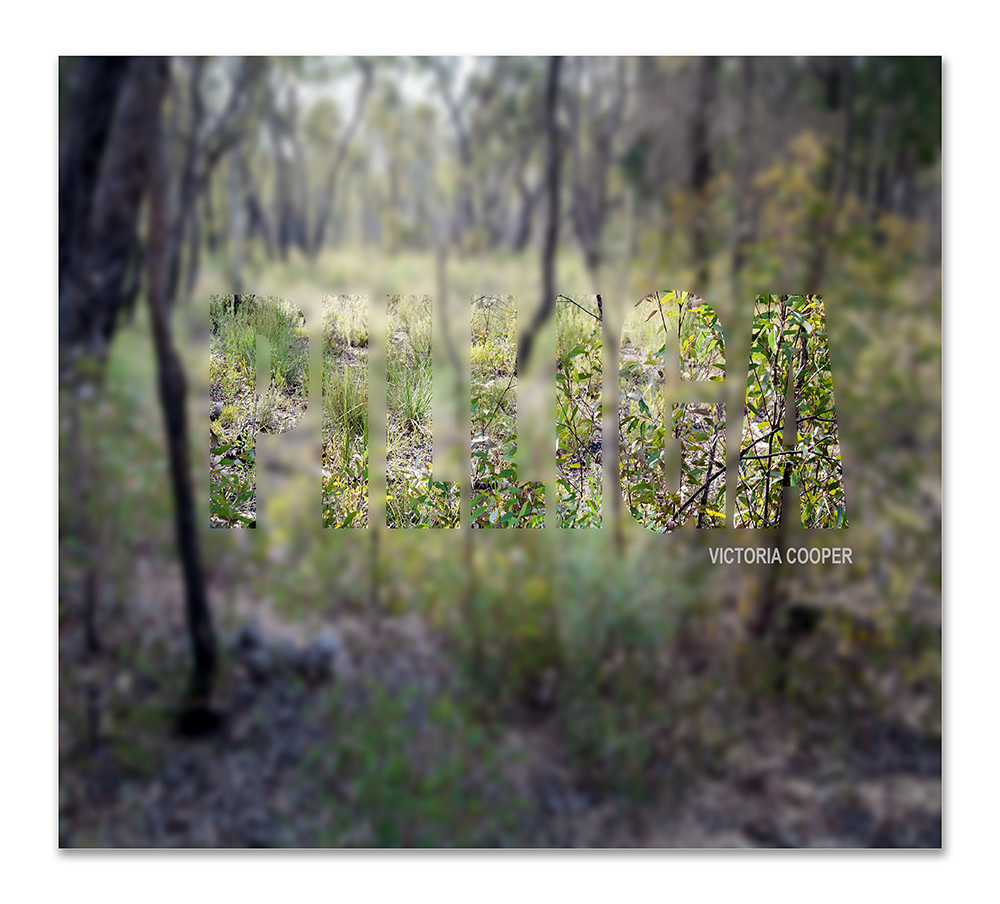
Victoria Cooper’s PILLIGA
.
About Victoria’s Book: PILLIGA
Pilliga is the culmination of 10 years work. It is informed by the many physical, psychological and metaphorical journeys through this enigmatic place during the decade of its creation.
This book is not a topographic depiction of the Pilliga Scrub, a remote location in the Australian Bush. Rather it is a human story of lurking deep anxiety manifested as a destructive invisible entity feeding on fears of the unknown and unknowable.
A PDF of the book can be seen here:PILLIGA-redsmr
The book can be purchased from BLURB here: http://blur.by/1Q9cGhh
.
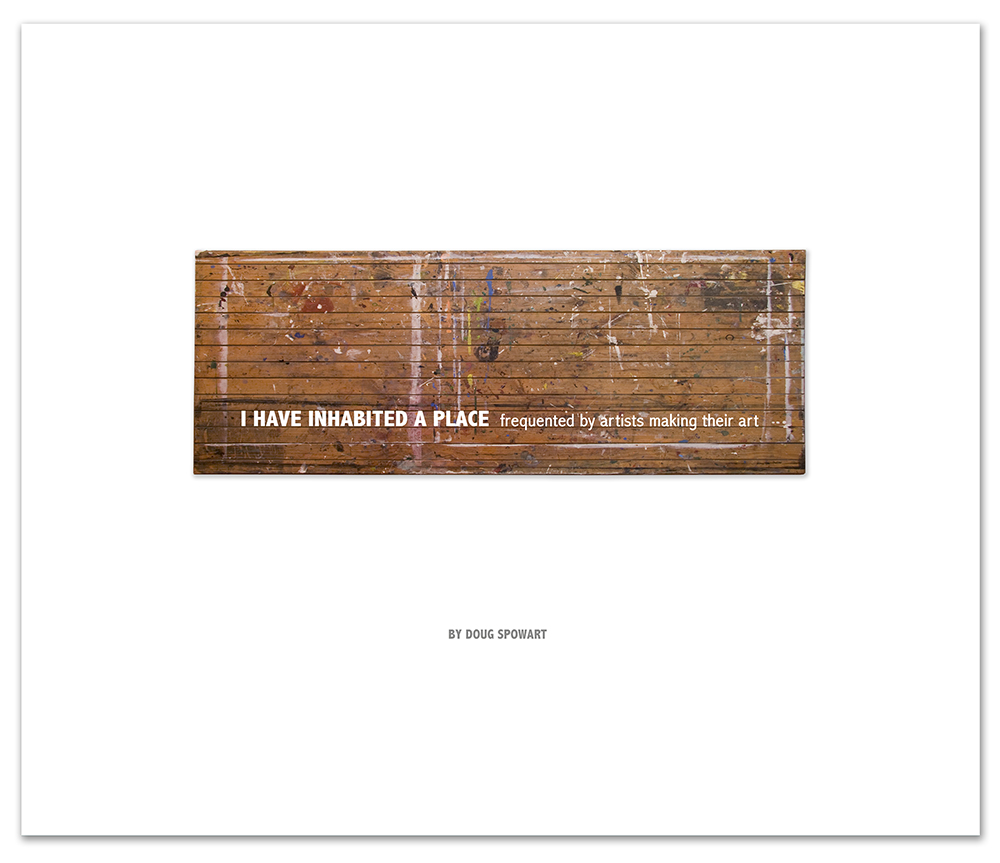
Doug Spowart’s I have inhabited a place …
About Doug’s Book: I HAVE INHABITED A PLACE FREQUENTED BY ARTISTS MAKING THEIR ART …
This book relates to the experience of being a documentary photographer within the world. The subject, a deserted artist’s studio, becomes an immersive landscape for investigation. This photobook expresses a personal narrative about loss, absence, place, and concepts around the relationship between the non-human and the working practices of artists.
A PDF of the book can be seen here: I have inhabited a place …red2
The book can be purchased from AMAZON here: http://blur.by/1K65dMu
.
.
.

 wotwedid