Archive for the ‘Photobooks’ Category
DOUG Has article on Photobooks in BETTER PHOTOGRAPHY
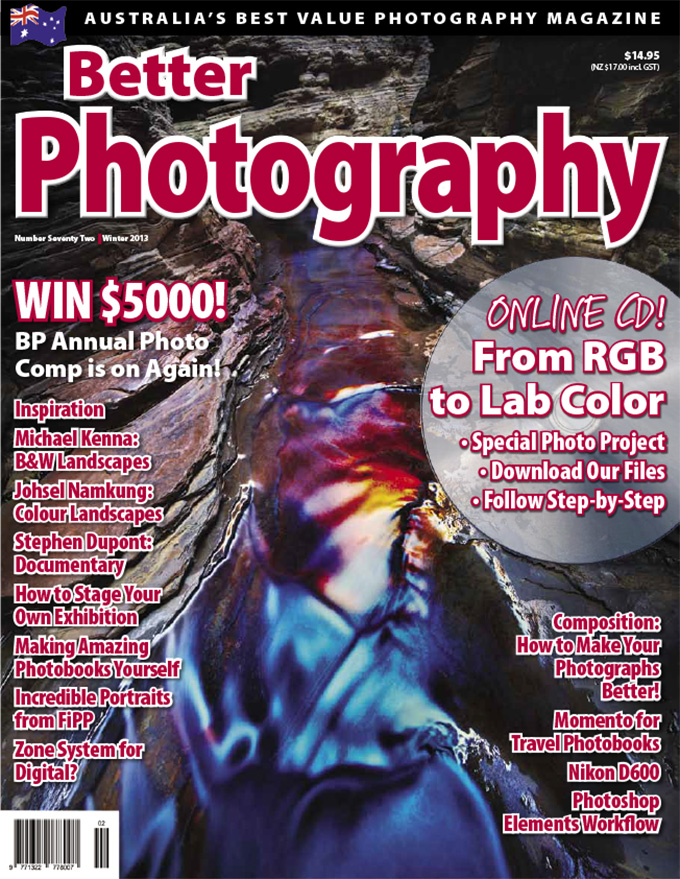
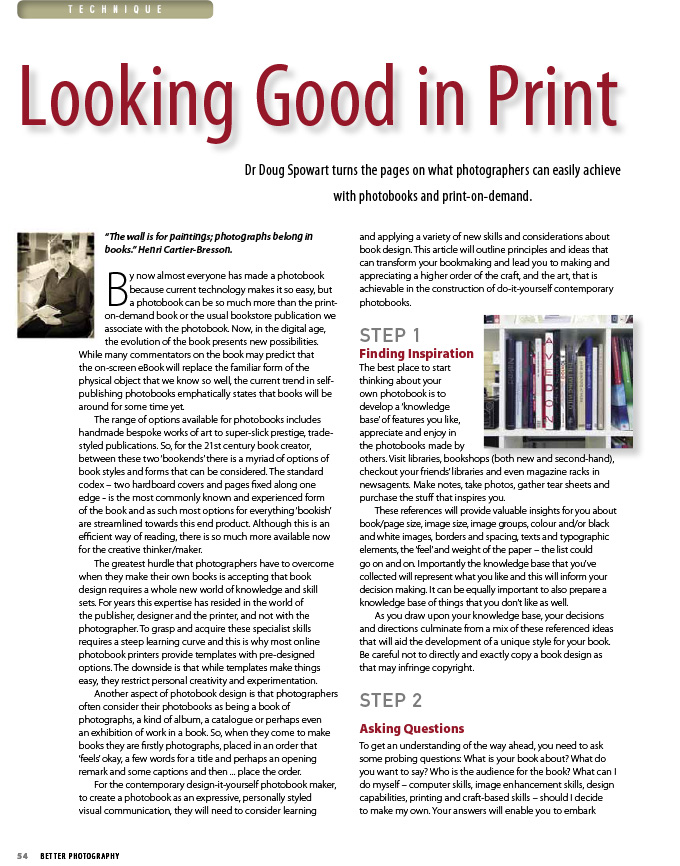
The winter edition of Peter Eastway’s BETTER PHOTOGRAPHY includes an article by Doug on Photobooks. The piece covers a step-by-step discussion on making your own photobooks from concept to output, either by DIY or Print-on-demand.
.
.
Here’s page one of the article …
.
.
DOWNLOAD A PDF of the article here: SPOWART-Photobooks-Better_Photography
.
AND – Do buy the magazine for the other great stories and prizes!!
.
.
.
.
hEADoN into THE FUTURE OF PHOTOBOOK PUBLISHING
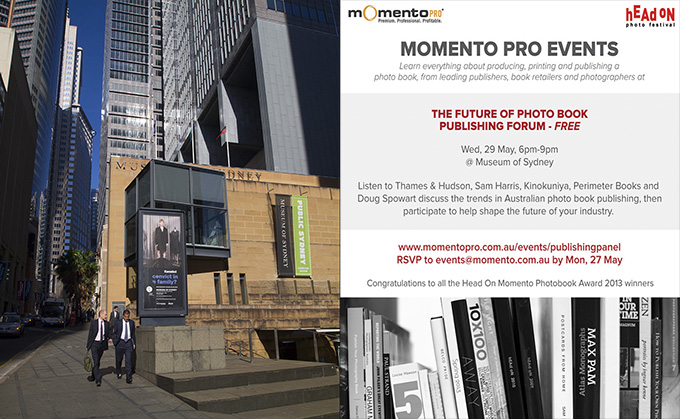
Invite and MOS

The Future of the Photo Book Forum ……Photo: Victoria Cooper
.
RUNSHEET & OVERVIEW:
Momento Pro/HEADON Event: The Future of Photo Book Publishing
.
6.00 pm Panellists arrive on stage
6.10 pm Doug Spowart: Welcome and good evening.
Photographers and those who make photobooks are storytellers – and – with this in mind – I would like to acknowledge and pay respect to the traditional owners and story-tellers of this land on which we meet; the Gadigal people of the Eora Nation.
This evening we will discuss the photobook and consider the opportunities for its future in Australia.
My name is Doug Spowart, I make artists books, photobooks and I have a research interest in photography and the form of the photobook.
This evening I’m joined by an eminent panel of book people with a wide range of knowledge and expertise on the topic.
The order of this evening will begin with an overview by me about the photobook. Then each of the panellists will discuss their involvement within the book and photobook world. Following that the panel will be presented with a range of questions – some sent in from attendees. Towards the end of the forum we have set aside time for your questions and comments to the panel. The forum will close and be followed by refreshments and networking opportunities …
At this juncture I would like to thank our Sponsor Momento Pro and the Organizers of the HeadOn Photo Festival, and the Museum of Sydney for this opportunity to engage in dialogue about this growing and evolving medium …
.
AN OVERVIEW OF THE PHOTOBOOK
.
Photobook luminary Martin Parr states:
… that photography and the book were just meant for each other; they always have been. It’s the perfect medium for photography: it’s printed, it’s reproducible and it travels well. (Parr in Lane 2006:15)
The photobook is indeed the ‘perfect medium’ for photography and its history, the history of photography are inextricably linked with that of publishing. In fact some of the earliest experiments in photography made by Hércules Florence (1804 -1879), Nicéphore Niépce (1765 -1833) and Henry Fox Talbot (1800 -1877) were to discover methods and processes that would enable the copying and printing of texts or designs by capturing and fixing camera obscura images.
![William Henry Fox Talbot, by John Moffat, 1864 By Michael Maggs [Public domain], via Wikimedia Commons](https://wotwedid.com/wp-content/uploads/2013/06/william_henry_fox_talbot_by_john_moffat_1864-by-michaelmaggs-public-domain-via-wikimedia-commons.jpg)
William Henry Fox Talbot, by John Moffat, 1864
By Michael Maggs [Public domain], via Wikimedia Commons
Books illustrated by photographs as a genre of the publishing industry flourished. The photographic image could operate as a storyteller, a precise document of truth, a device to entertain and, at times, a carrier of propaganda. Early photography book works consisted of travel, geographical and military expeditions, trade catalogues, scientific and ethnographic documentation.
Although some photographers, like Talbot, may have established their own publishing ventures, usually the photographer was a supplier of images for a publication that was commissioned by someone else – a publisher, benefactor or government agency. The publishing of a book was, and still is, a task requiring the specialized skills, the entrepreneurship and financial acumen found in the worlds of publishing, marketing and bookselling. Books are created for a purchasing audience: it is a mercantile process where return on the investment in a publishing project is a necessary outcome.
What is it about photographers and their need for photobooks?
Martin Parr describes the influence that photobooks had on his own practice by stating that:
I’m a photographer and I need to inform myself about what’s going on in the world photographically. Books have taught me more about photography and photographers than anything else I can think of. (Parr in Badger 2003:54)
Parr is not alone. The publishing house Aperture – a well established international publisher of contemporary and historical photographic essays and monographs – acknowledges in their organization’s credo that:
Every photographer who is a master of his [sic] medium has evolved a philosophy from such experiences; and whether we agree or not, his thoughts act like a catalyst upon our own — he has contributed to dynamic ideas of our time. Only rarely do such concepts get written down clearly and in a form where photographers scattered all over the earth may see and look at the photographs that are the ultimate expression. (in Craven 2002:13)
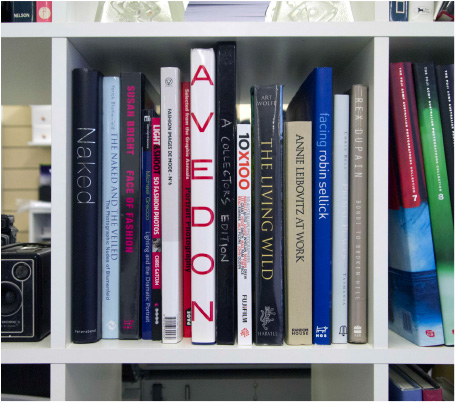
Library
So photographers seek inspiration for their work by building their own reference libraries: have you ever visited a photographer and not had discussions about books or been invited to see their library? It then makes sense that photographers will want a book of their own. Photobook publisher Dewi Lewis exclaims: ‘I have yet to meet a photographer who doesn’t want to see their work in book form.’ (Lewis and Ward 1992:7).
Photobook commentators and publishers of the book Publish Your Photography Book, Darius Himes and Mary Virginia Swanson claim that this need is universal and emotive:
It almost goes without saying that every photographer wants a book of his or her work. It’s a major milestone, an indicator of success and recognition, and a chance to place a selection of one’s work in the hands of hundreds, if not thousands, of people. Plus it is just plain exciting to hold a book of your photographs! (Himes and Swanson 2011:26)
It seems that this ‘rite of passage’ is an important step of professional recognition as photographer, photobook maker and writer – Robert Adams – makes the following statement in his book Why people photograph:
I know of no first-rate photographer who has come of age in the past twenty-five years who has found the audience that he or she deserves without publishing such a book. (Adams 1994:44-5)
Does it then follow that every photographer of note or the creator of a significant body of work deserves a book?
It is not that easy. Amongst others the photobook publisher Dewi Lewis argues that the market for photobooks is limited – where he identifies that: ‘photographers themselves are the largest purchasers of photobooks’ (Lewis and Ward 1992).
Ultimately unsold books are remaindered – something even Magnum photographer Martin Parr experienced. His first book Bad Weather (1982) sold poorly and was remaindered at 40p. In an essay on photobook publishing Peter Metelerkamp reports that:
Parr himself bought in as many copies as he could at that price (very much below the cost of production) (Metelerkamp circa 2004:7).
But while remaindered books can be a great way to acquire a low priced library they represent a loss to the publisher, who may then be wary of undertaking future photobook ventures.
The photographers who are successfully trade-published are usually either well known and/or are those who produce work that is of interest to a broad audience. Most notably in Australia this has included celebrated photographers such as Harold Cazneaux (1878-1953), Frank Hurley (1885 -1962), Max Dupain (1911-1992), Jeff Carter (1928-2010), David Moore (1927-2003), Peter Dombrovskis (1945 -1996), Rennie Ellis (1940-2003).
In contemporary times other avenues of photobook publishing as a documentary/art project have emerged and include photobooks by Tracey Moffatt (1960- ), Max Pam (1949- ), Matthew Sleeth (1972- ), Stephen Dupont (1967- ), Trent Parke (1971- ) Michael Coyne (1945- ) and Wesley Stacey (1941- ) and many others. The field of contemporary pictorial photobook books could be represented by the likes of Ken Duncan (1954 – ), Peter Lik (1959 – ) and Steve Parish (1945 – ). Then there are so many more …
So what about the photographer doing it for themselves?
Historically, the self-publishing of photobooks was a huge investment of time and money – an individual photographer’s access to the required production and printing facilities was a major barrier. Also those who have financed their own publishing exploits generally lacked the distribution and marketing connections that were attached to the major publishing houses.
Access to printing facilities were overcome by the photographer having contacts in or working in the printing industry such as American photobook-maker Ed Ruscha did with books like Twenty-six Gasoline Stations (1963). In Australia Peter Lyssiotis was able to produce: Journey of a Wise Electron (1981) and other books by participating in a co-operative that accessed a commercial printing press during down time or on weekends. But these access points were not available for everyone who wanted to publish a book.
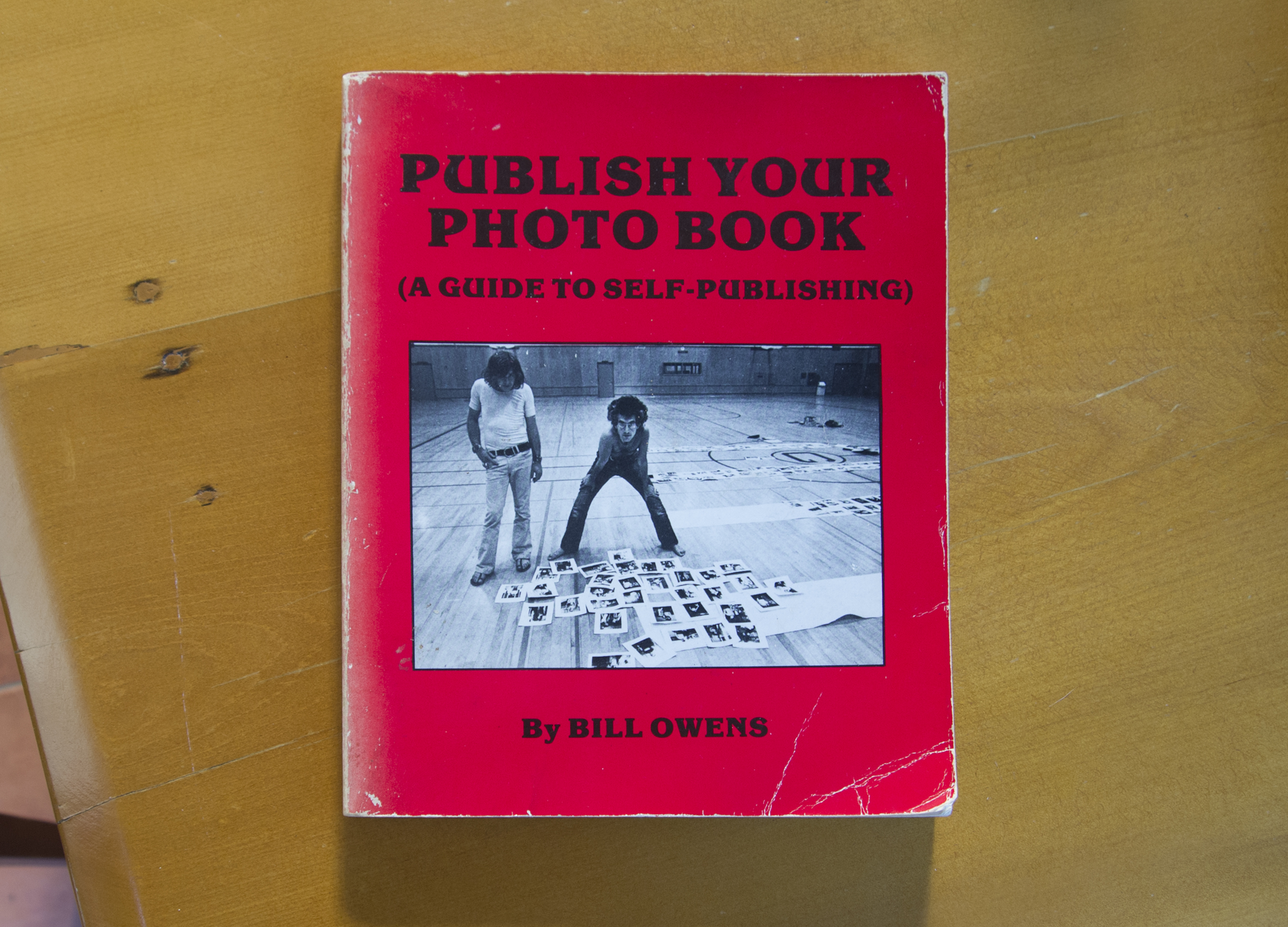
Bill Owen’s book
Nearly 35 years ago American photographer Bill Owens, publisher of Suburbia (1972) and other books made the following introductory statement to his info-guide – Publish Your Photo Book (1979) – a statement that may resonate with the experience of today’s photobook publishers:
Had my photographic books made lots of money I would not have written this book. I wouldn’t need to because I would be part of the establishment and enjoying its privileges. (Owens 1979:3)
It has been a long time coming, but 175 years later with digital technologies including DIY book design software, print-on-demand presses like HP Indigo, the self-published photobook is fulfilling Talbot’s prediction. It’s never been easier for anyone to make a photobooks.
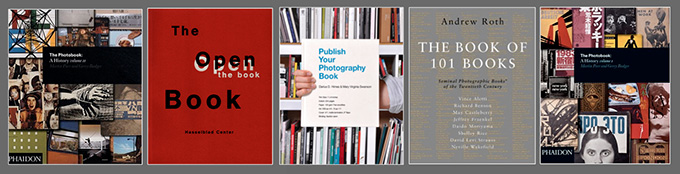
Some seminal photobook texts
The photobook discipline now has commentators and critics, there are awards, linkages with the artists book, supporting independent groups like Self Publish Be Happy, The Photo Book Club and the Indie Photo Book Library.
However just making a book, even your own, does not guarantee success – whatever that might be. But at this time, what are the barriers and opportunities that we in Australia need to consider and respond to as this boom in photobooks continues?
What ideas, social and political mechanisms and appropriate structures do we need to create to nurture and support this emerging publishing paradigm?
Let us now pose some questions to the panel …
.
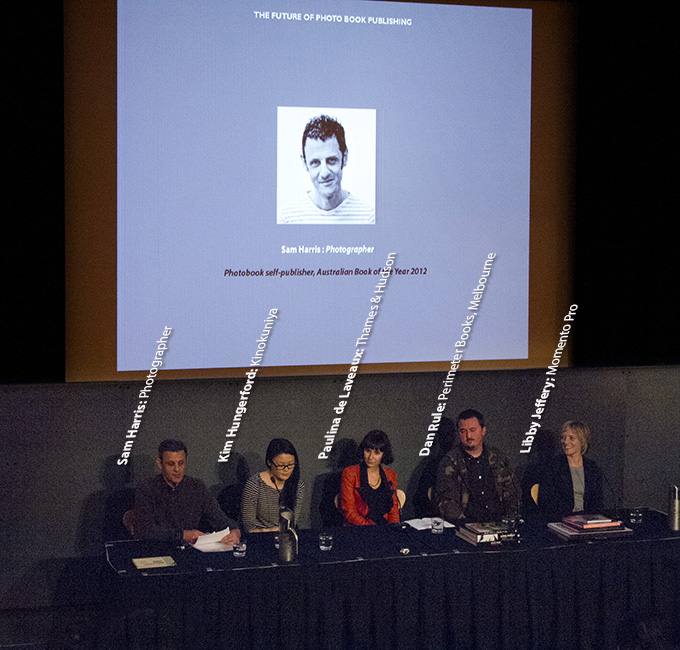
INTRODUCTION OF THE PANELISTS
See invitation blog post for bios http://wp.me/p1tT11-MT
.
.
A SELECTION OF THE QUESTIONS POSED TO THE PANEL
- What is the recipe for the perfect commercially viable photo book?
- Are Awards/Fairs/Festivals/Exhibitions important to or essential for photo book sales and marketing?
- It’s often stated that the basic market for the photo book is photographers themselves – how can this market be expanded so that the photo book can become more popular for a broader audience?
- Is the Australian photo book consumer more interested in Euro/USA content than homegrown books?
- Is there a market for Australian photo books overseas? Are there mechanisms in pace to support photo books as export? Are our photo books internationally competitive?
- If, as a publisher, you were approached by a photographer with a photo book idea – What would you expect them to bring to your meeting with them.
- What kinds of books/themes or content would an independent or niche publisher take on that a mainstream publisher wouldn’t?
- In the photo book genre, as with other special interest low volume publication sales, will print on demand publishing become a viable option – thereby doing away with the practice of remaindering?
- How can we nurture, inspire and develop the Australian photo book market?
.
A SYNOPSIS OF THE DISCUSSION WILL BE POSTED SEPARATELY:
.
In conclusion … I’d like to see, and I guess you would as well, that the photobook break from the publishing paradigm that Bill Owens spoke of before.
Let’s hope that as a result of, or perhaps more modestly, that this forum will contribute to a future where photographers and their photobooks will be recognized, revered and financially rewarded for their contribution to telling their stories, our stories and the stories of humanity and of life on this planet and beyond.
Once again thank you to our panelists …
Our sponsor – Momento Pro
The HeadOn Photo Festival
And to you all —–
You are now most welcome to join us for some refreshments and networking
8.15 pm Close…..
.
.
Bibliography for Doug’s Overview
Adams, R. (1994). Why People Photograph. New York, USA, Aperture Foundation.
Badger, G. (2003). Collecting Photography. London, Mitchell Beazley Ltd.
Craven, R. H. (2002). Photography past forward: Aperture at 50. New York, Aperture Foundation Inc.
Himes, D. D. and M. V. Swanson (2011). Publish Your Photography Book. New York, Princetown Architectural Press.
Lane, G. (2006). “Interview: Photography from the Photographer’s Viewpoint. Guy Lane interviews Martin Parr.” The Art Book 13(4): 15-16.
Lewis, D. and A. Ward (1992). Publishing Photography. Manchester, Conerhouse Publishing.
Metelerkamp, P. (2004). “The Photographer, the Publisher, and the Photographer’s Book.” Retrieved 12 March 2009, from http://www.petermet.com/writing/photobook.html.
Owens, B. (1979). Publish your Photo Book (A Guide to Self-Publishing). Livermore, California, USA, Bill Owens.
Talbot, W. H. F. (1839). Letter to Sir John Herschel, HS/17/289. The Royal Society. S. J. Herschel. London, UK, The Royal Society: HS/17/289.
.
.
.
All photographs © 2013 Victoria Cooper & Doug Spowart
Texts an Overview (except references as cited) © 2013 Doug Spowart
.

This work is licensed under a Creative Commons Attribution-NonCommercial-NoDerivs 3.0 Unported License.
.
.
hEAdoN/Sydney: Doug to moderate panel on Photobooks
 .
.
.
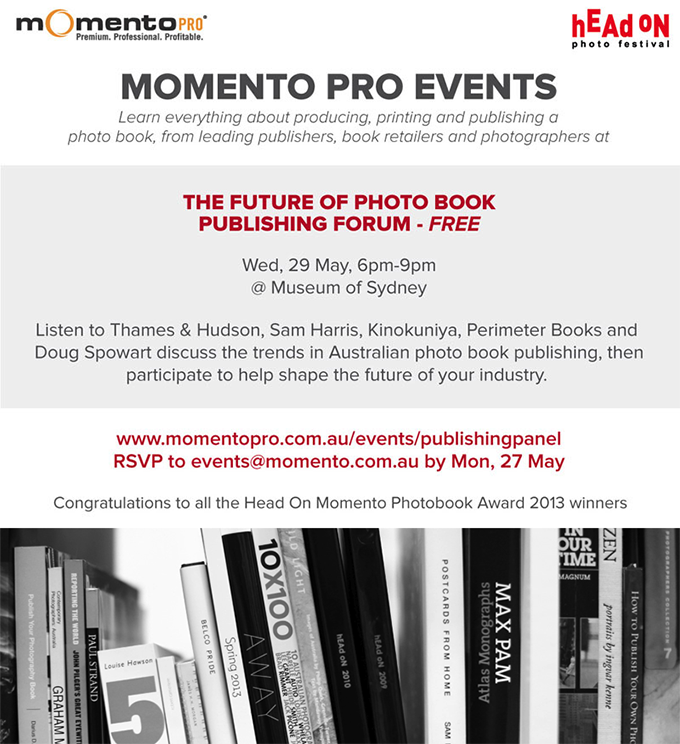
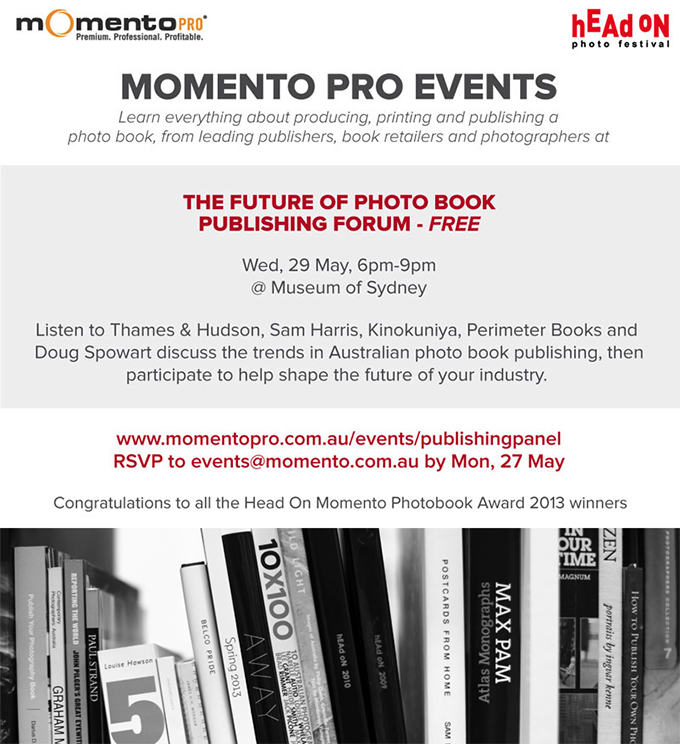
THE FUTURE OF PHOTO BOOK PUBLISHING FORUM
Presented by Momento Pro http://www.momentopro.com.au/events/publishingpanel
A Head On Photo Festival Event
Wed, 29 May, 6.00 – 9.00pm
@ The Museum of Sydney
Admission is free but please RSVP to events@momento.com.au by 25 May
Join panelists and guests from the photography, publishing, print, book retail and creative industries to discuss local and international trends in photographic book publishing, and contribute to shaping its future. The panel discussion will conclude with open questions from the audience, followed by refreshments and networking.
Should you wish to submit questions for consideration please email events@momento.com.au.
THE PANEL
.
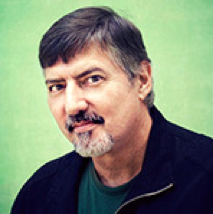
Doug Spowart …..Moderator
Photographer & Academic
Dr Doug Spowart has been extensively involved in creative media areas for over 40 years — his practice includes: artists books, photobooks, artist, critic, judge, writer and teacher. He has completed a Doctorate of Philosophy at James Cook University researching issues of the contemporary photobook. Spowart’s work, as well as collaborative work with Victoria Cooper has found its way into many private, regional and state public galleries, national and international photography and artists’ book collections. Spowart’s photobooks have won the AIPP Queensland Photographic Book of the year on two occasions and he has twice been Runner-up to the national AIPP photobook award.
.
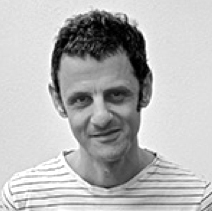
Sam Harris / Photographer
Sam Harris has been a passionate photographer and educator for more than 20 years. He started freelancing in the London music industry making album sleeve art then went on to shoot editorial portraits and documentary features for leading publications including The Sunday Times Magazine, Esquire, GQ and Ray Gun (USA).
In 2002 he re-evaluated his lifestyle to travel the globe with his family, until he settled in the forests of South Western Australia in 2008 where he shoots his on-going family diary, lectures photography, runs workshops and creates photographic books. His book Postcards from Home has received multiple awards including the publishing industry’s Galley Club Book of the Year and Australian Book of the Year Award 2012.
.

Kim Hungerford
Kinokuniya / Art & Design Department Manager
Kinokuniya stocks an extensive collection of graphic novels, art, design and travel books and also features an instore Art Gallery which exhibits works from creative artists to help them develop their careers. As Art & Design Manager, Kim is versed in the distribution, sales, marketing and financials of art and photographic book publishing, the different publishing options available and the differences in reception from book consumers, critics and collectors.
.
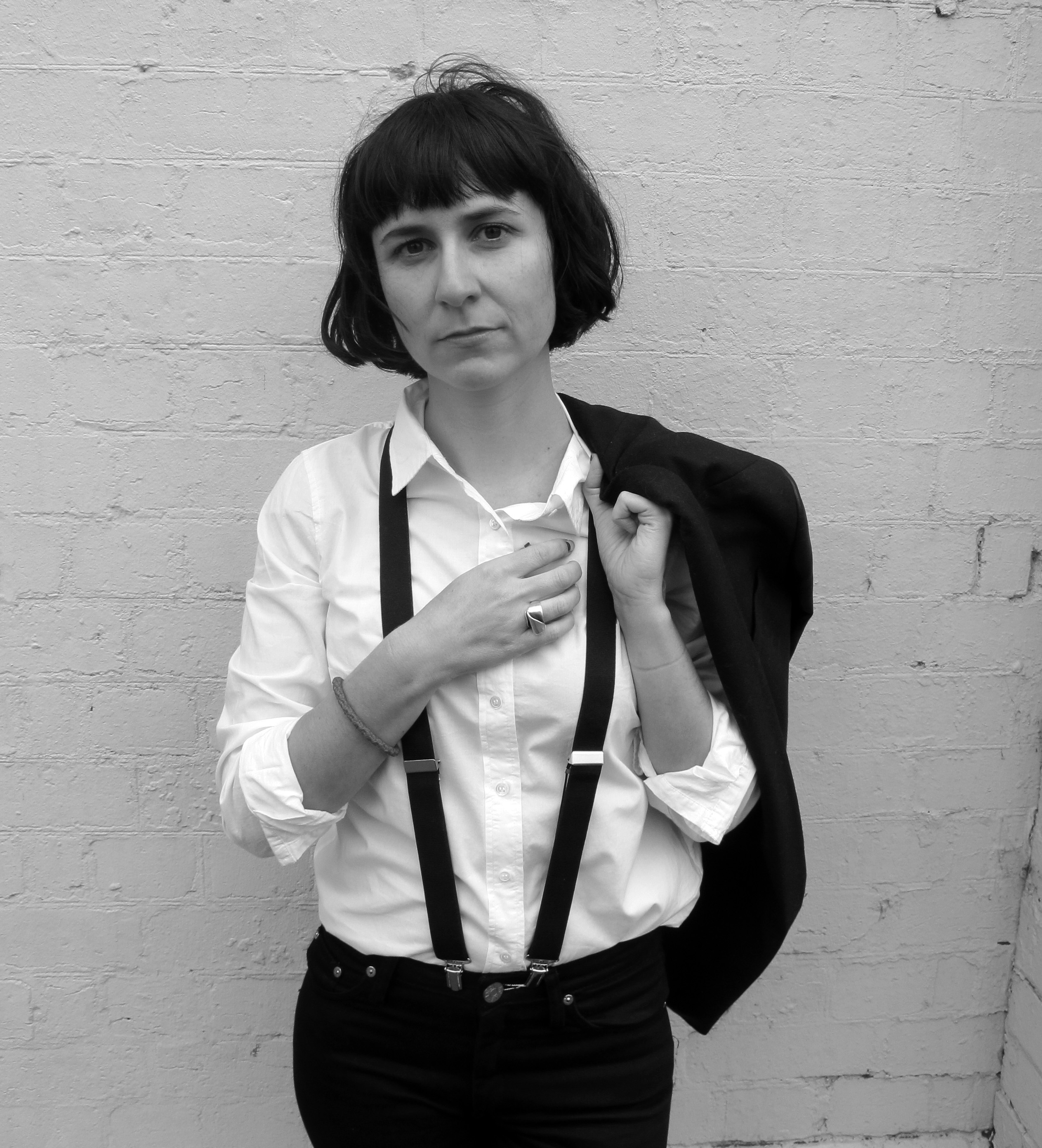
Paulina DeLaveaux
Thames & Hudson / Publishing Manager
Paulina de Laveaux is Publishing Manager of Thames & Hudson Australia specialising in illustrated books on art, architecture, design, photography, fashion and other creative fields.
Paulina is passionate about books, and familiar with what makes a photographic book artistically and commercially successful, what is popular with the mainstream consumer verse the cultural consumer, and has also been a judge for the Head On Momento Photobook Awards 2013 and the Most Beautiful Books Awards
.

Dan Rule
Perimeter Editions / Director
Dan Rule is a writer, critic, editor and publisher from Melbourne, Australia. He is the co-director of Perimeter Books, Perimeter Editions and Perimeter Distribution, the co-publisher of Erm Books and an editor of Composite Journal.
He is also a weekly art critic and columnist for The Saturday Age, contributing editor and senior writer at Broadsheet Media and has written on art, photography, music and culture for The Sydney Morning Herald, Dazed & Confused, Oyster, Vault, Art Guide, Australian Art Collector and countless others.
.
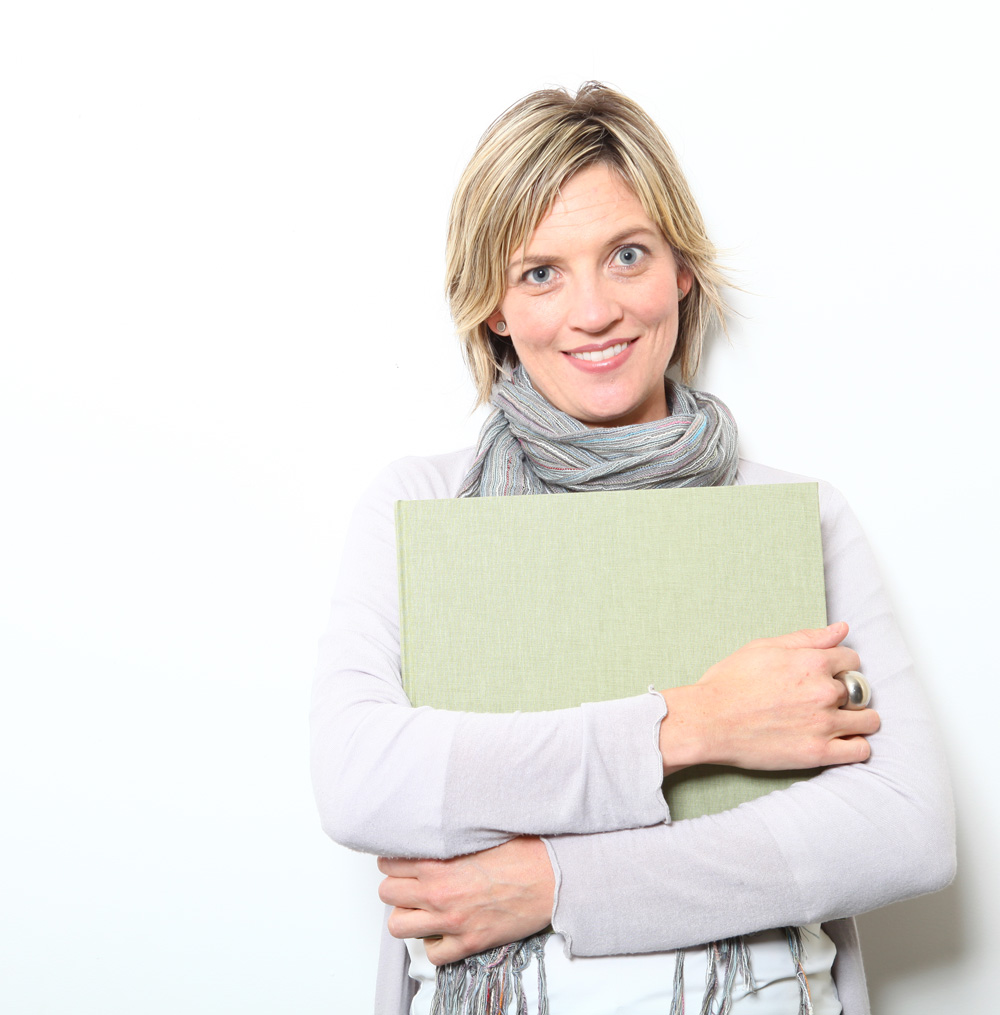
Libby Jeffery
Co-founder and Communications Manager @ Momento
Libby has enjoyed studying and working in communications and media production since undertaking a B.A. Communications at UTS and volunteering with interactive CD-ROM producer Pacific Advanced Media Studios in 1994. Since then her career has revolved around communications, events coordination and media production for creative industry pioneers including OzEmail, the Australian Interactive Media Industry Association (AIMIA), IPR Systems and most recently the Chippendale Creative Precinct.
Following her role in 1999 as Project Manager for the Australian Society of Authors’ e-publishing and digital rights management experiment, OzAuthors, she, partner Geoff Hunt, and colleague James Whitwell founded Momento in 2004. Momento was Australia’s first print-on-demand photo book service and the proprietary Momento layout software, lets anyone design their own coffee-table photo book easily, ready for printing. Momento remains the ‘finest’ service provider in Australia today, celebrating photography and photographers in all forms
.

.
.
GETTING the BLURB on PHOTOBOOKS
.
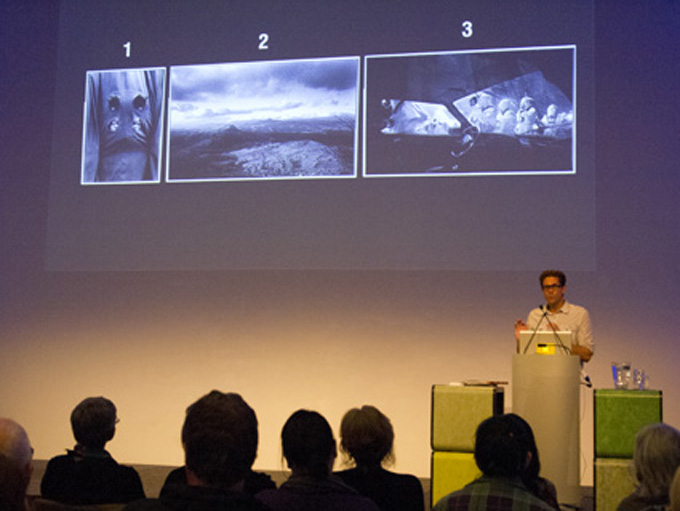
Daniel Milnor is Blurb’s Photographer-at-large and inspirational bookmaker. Last week we attended presentation by Daniel at the Edge (SLQ) in Brisbane. Attended by an audience of around 80 the presentation, of three hours duration, told the story of how to make photobooks. Not just a bunch of photos in a catalogue or folio form but something that told a story – expressing a narrative.
Milnor is the consummate presenter and storyteller – adding to each technical concept and thing to consider in book-making his own personal story. And there were some amazing insights into Daniel’s career as a photodocumentary photographer of exotic places like South America and Sicily, but also of his own life. In one book he discussed, which was made entirely in his own home, he showed a picture of his shower curtain!!
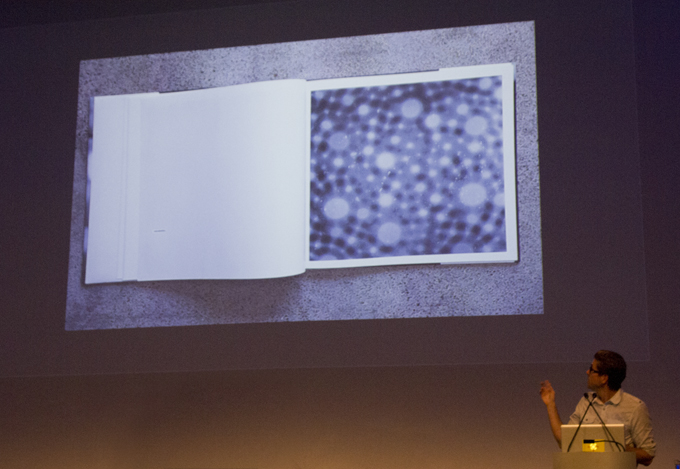
Milnor’s shower curtain
.
In the presentation Milnor provided a step-by-step approach to the making of a book:
Step 1 Make/locate a body of work
Step 2 Give yourself time to edit
Step 3 Time to sequence
Step 4 Start the book using an online POD service – Like Blurb.
Step 5 Get the book
And – not really covered specifically although constantly part of his refinement of book ideas: Step 6 – Review it and re-do it better!!!
.
His little phrases and comments that stuck in my memory (or notepad include):
Photobooks that are driven by the photographer –“don’t make any money” unless you have a big-name and are chosen by Steidl. However “subject driven books” can be successful
“Leopard lighting” portraits made under a tree – dappled light
Unless you “Think about your work, write about your work, talk about your work and show your work – You are never going to have a connection with your work!”
“Book builder”
Landscape “rocks and twig” photography
“The narrative arc”
“The perfect solution is YOUR solution”
“Don’t be afraid to play around…”
.
What interested me was the excitement he expressed for his own books – their concepts and development. Towards the end of the presentation he showed examples of books created as collaborations with artists, books that were ‘added-to’ by creative intervention whereby the outcome became a unique state work of art. A seminal book for him in his challenge to the ‘normal’ photobook is the book On Approach which has won much acclaim for him. He commented that a curator he had met casually had described him as a ‘conceptual artist’ he seemed excited by the title and that his work, as art, could enter another space – the gallery.
.
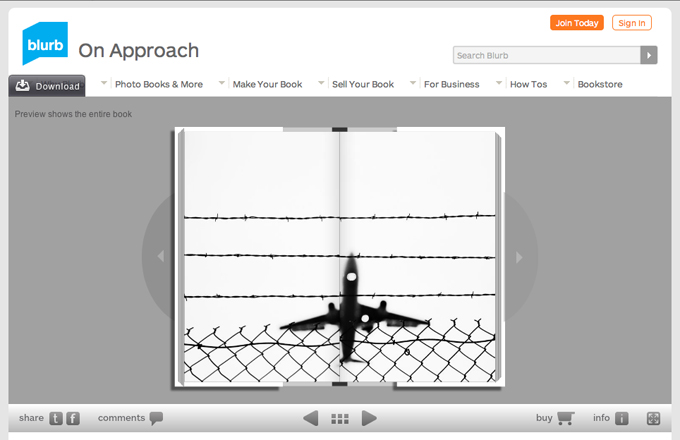
See Daniel Milnor’s book On Approach @ Blurb
.
In the second last question of the day I asked him about the idea of the artists’ book and how artists can inform, as he had found, a new direction for photobooks – in his answer he spoke at length about the proposition — I think he agreed…
Thank you Daniel Milnor, and thank you Blurb for bringing some discussion on photobooks into this country. And the opportunity to engage with so many Australian photographers wanting to tell photo stories using the emancipating opportunities of print-on-demand indie publishing.
.
Doug Spowart
.
LINKS TO DANIEL MILNOR:
His Website: http://www.smogranch.com/
.
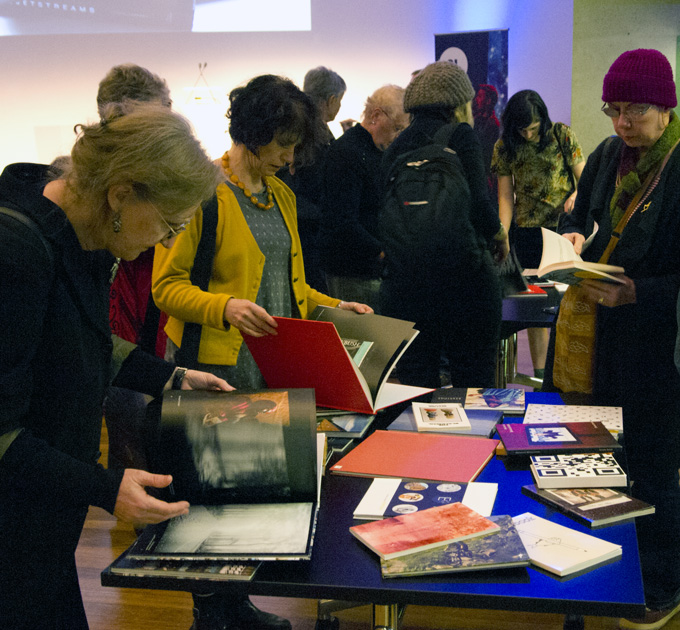
Attendees looking a Blurb sample books
.
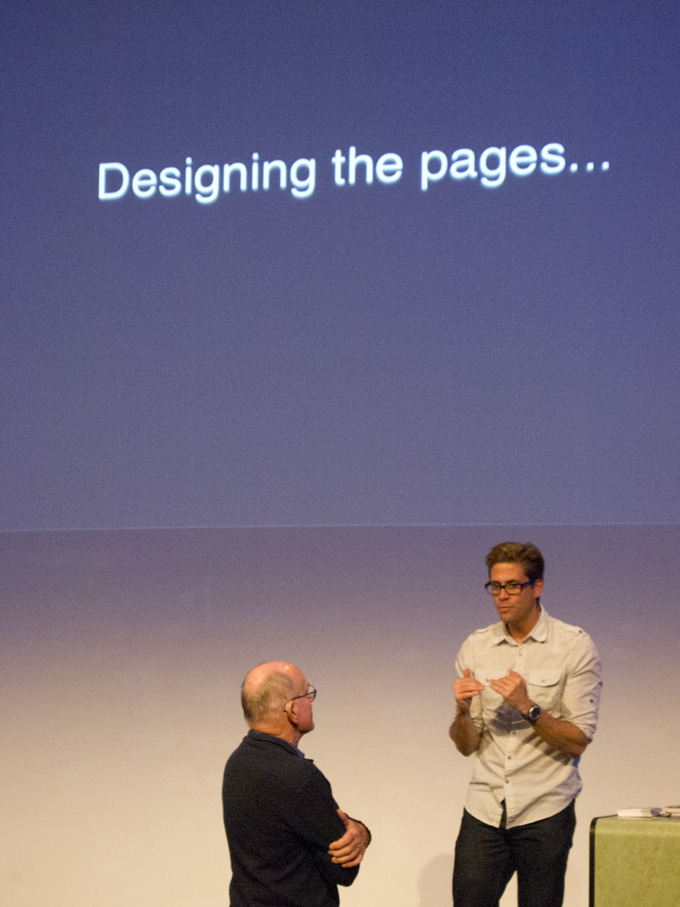
Daniel Milnor talking with an attendee during the break
.
.
All photographs © Doug Spowart 2013.
This work is licensed under a Creative Commons Attribution-NonCommercial-NoDerivs 3.0 Unported License.
.
.
COOPER+SPOWART TALK ABOUT PHOTOBOOKS
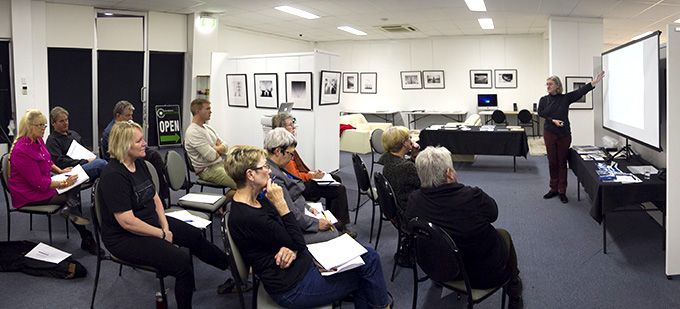
Victoria Cooper talking about photobooks @ Foto Frenzy
On the evening of May 21 Victoria + Doug presented a talk and showing of their self-published photobooks and artists books. Entitled LOOKING GOOD IN PRINT: PHOTOBOOK, the talk connected participants with concepts and techniques on how to personalize and create photo-stories in the form of the bespoke self-published book.
Participants engaged in a lecture presentation that helped them to develop a broader understanding of what a photobook can be—extending them beyond just a collection of photos into a resolved personal narrative of high technical and aesthetic values.
The range of options for making photobooks was discussed and samples of hand-made, inkjet printed and hand-bound artists’ books, as well as print-on-demand books were available for viewing and handling.
The Intro Session included an overview of the following topics:
- Simple and advanced forms and structures of books
- The creative influence of artists books
- The image, sequence and the narrative flow
- Production and design issues for handmade/print-on-demand book
- Computer processing of the book
- Simple bindings for the handmade book
.
.
.
Location:
Unit 3/429 Old Cleveland Road, Camp Hill, QLD 4152.
Time + Date: 6.00 – 8.30pm, Tuesday May 21, 2013.
THE FEE: $ 75.
Bookings were made through:

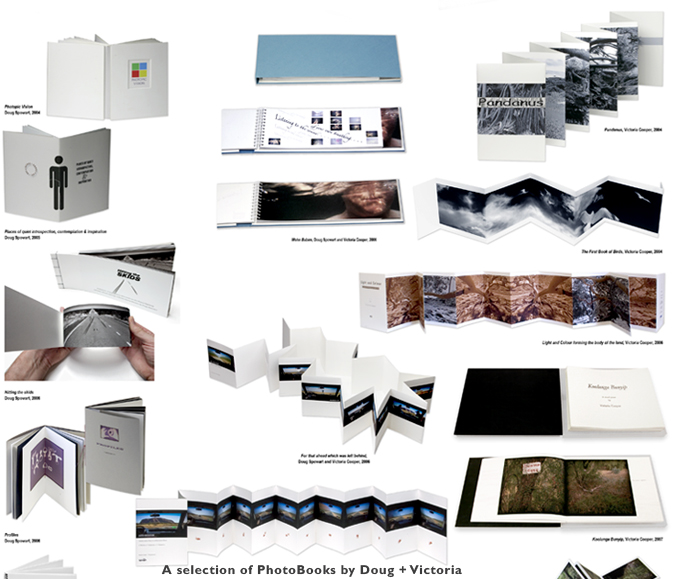
.
.
All photographs + text © Doug Spowart 2013.
This work is licensed under a Creative Commons Attribution-NonCommercial-NoDerivs 3.0 Unported License.
SLQ Siganto Seminar: The trouble with artists’ books
AT THIS TIME THE BLOG WILL FEATURE IMAGES OF THE EVENT
We are happy to receive comments and dialogue arising from the seminar and will post selected feedback. Please leave a comment on this blog for consideration by us for posting.
The podcast is available at http://www.slq.qld.gov.au/audio-video/webcasts/recent-webcasts/siganto-seminar
Cheers Doug+Victoria
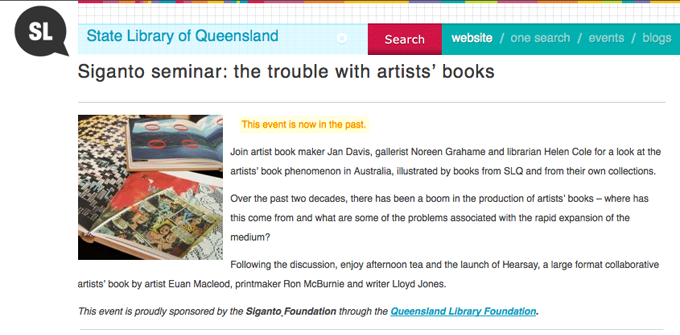
From the SLQ website – Promo for the evnt
.
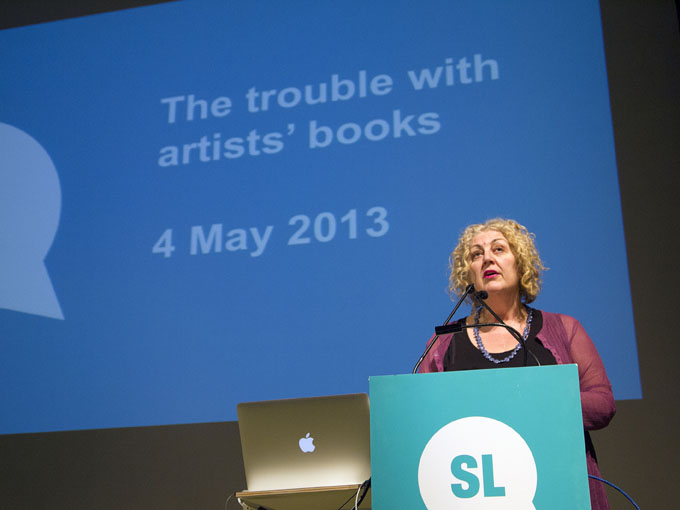
The State Librarian Jeanette Wright opens proceedings
.
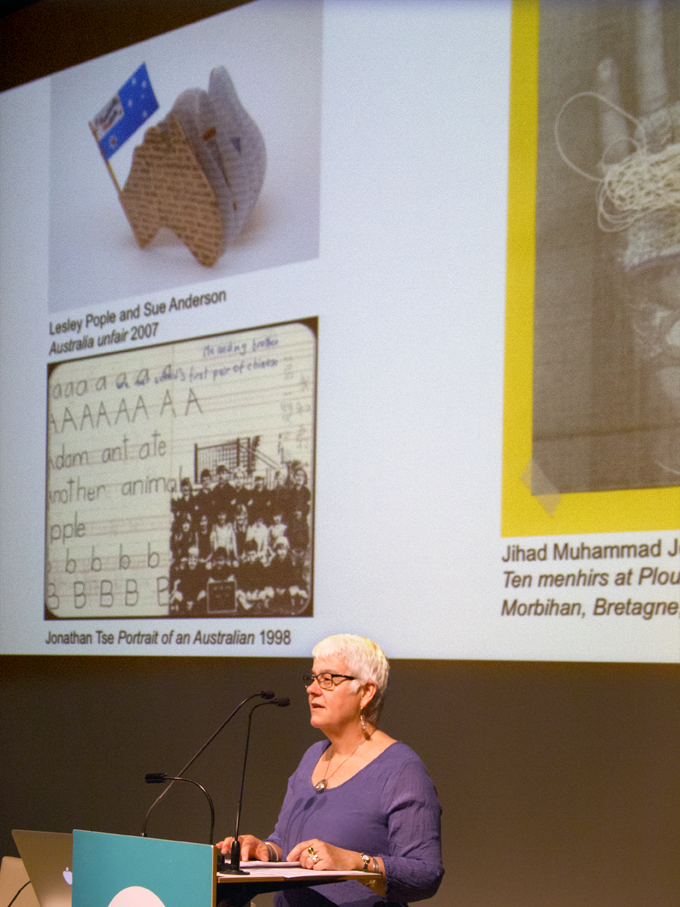
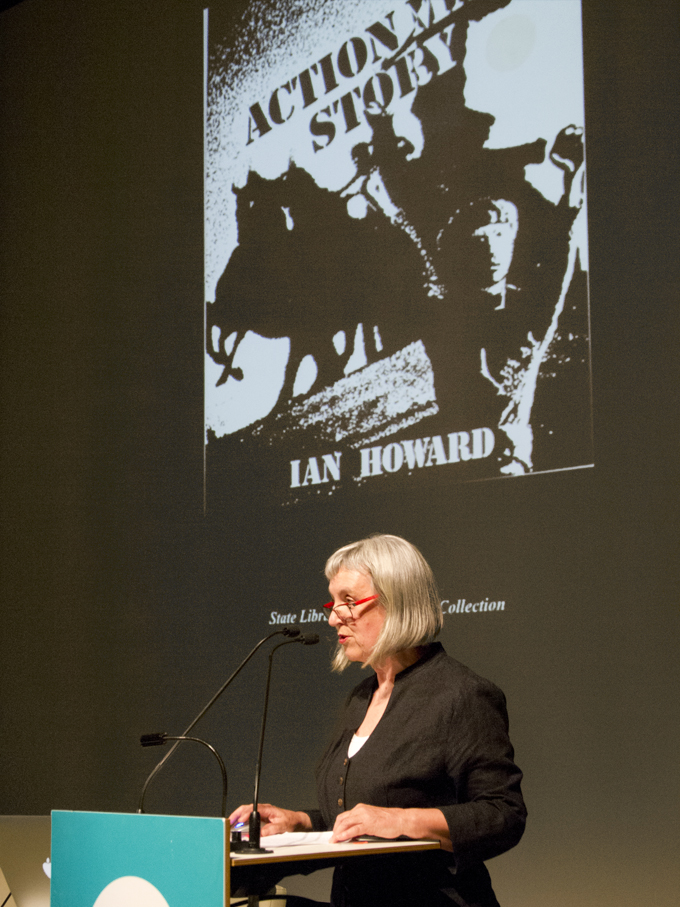
Helen Cole presents the Librarian’s view
.
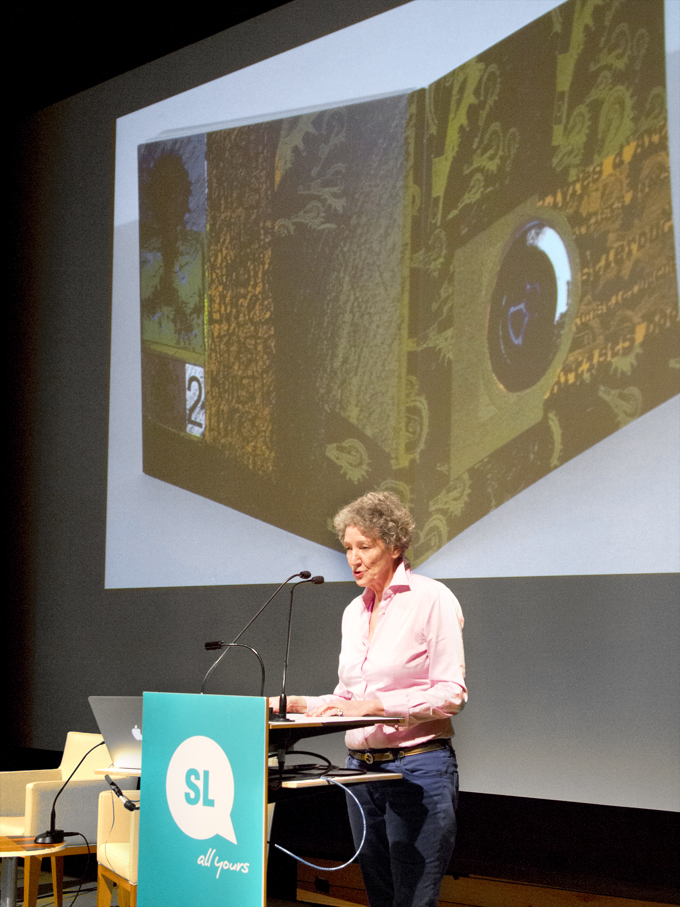
Jan Davis presents the Artist’s view
.
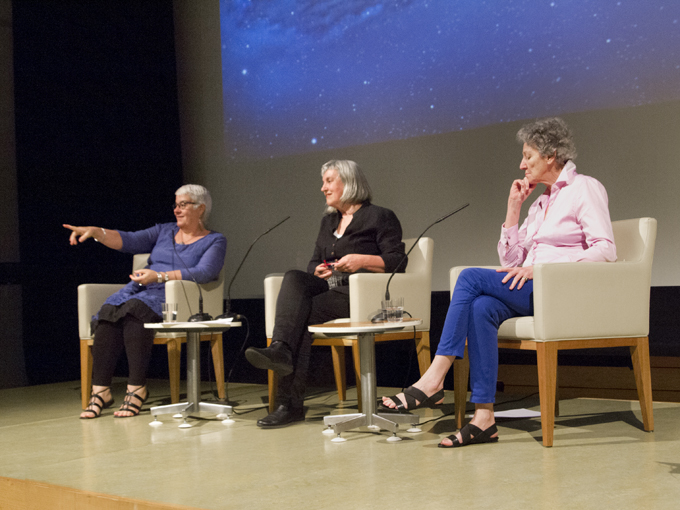
Noreen Grahame presents the Gallerist’s view
.
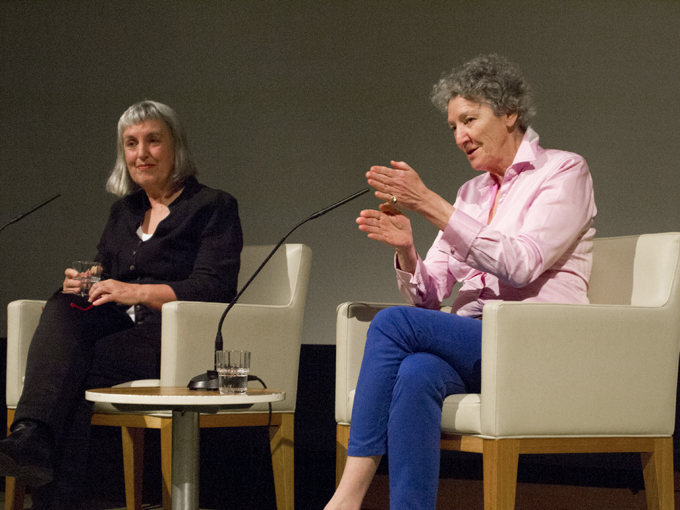
Helen Cole chairing the Question and Answer session
.
Noreen Grahame answers a question
.
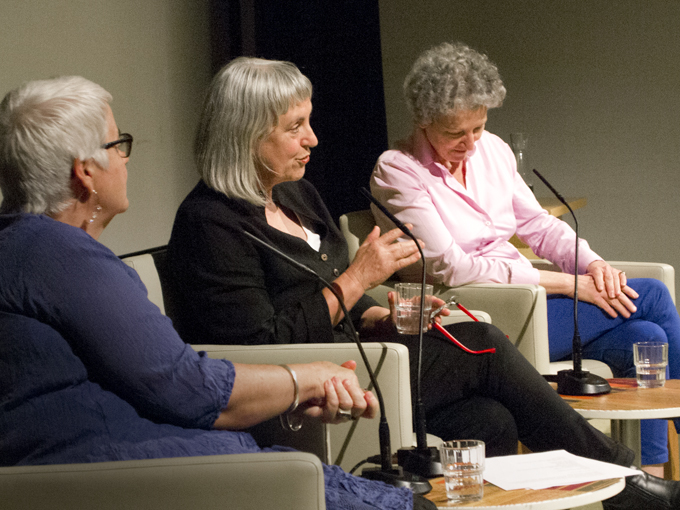
Jan Davis answers a question
.
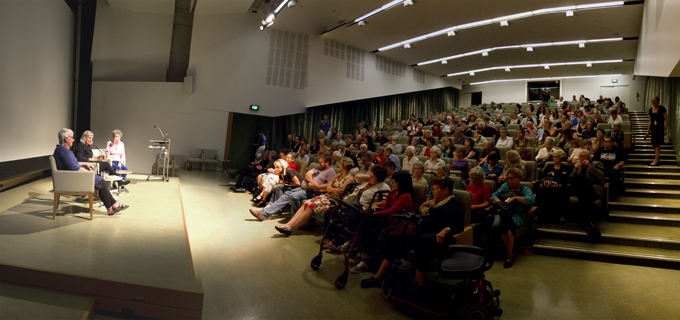
The Auditorium crowd
.
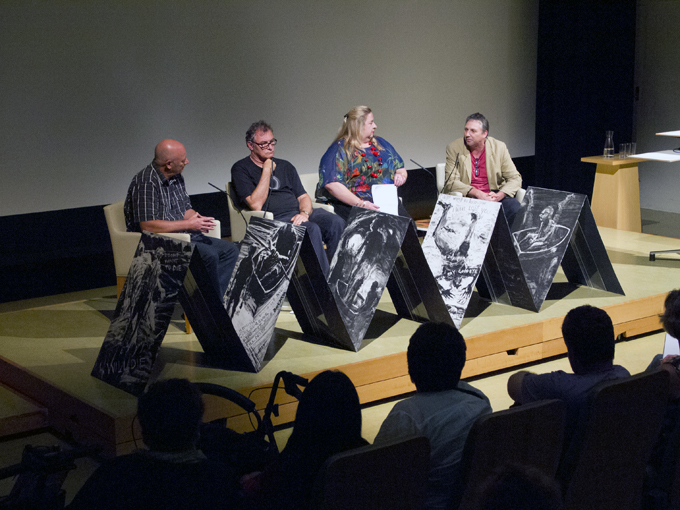
The Hearsay team members discuss the project
.
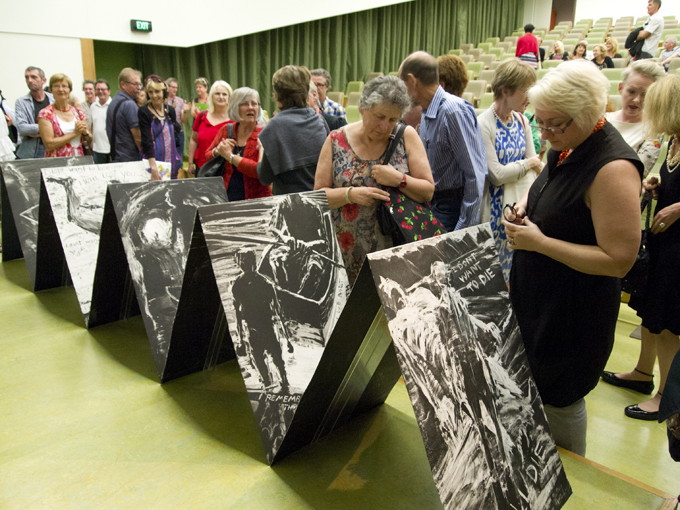
Attendees viewing the Hearsay book
BLOGPOSTS ABOUT THE EVENT ARE AVAILABLE AT THE FOLLOWING:
Judy Barrass ‘Critical mass Blog’ http://www.criticalmassblog.net/2012/?p=2568
.
All photographs © Doug Spowart 2013.
This work is licensed under a Creative Commons Attribution-NonCommercial-NoDerivs 3.0 Unported License.
FRENZIED A.I.R. ‘PoPuP’ Exhibition @ Brisbane’s GALLERY FRENZY
We are now in Brisbane participating in an Artist in Residence @ Foto Frenzy in Coorparoo.
On Wednesday evening we presented an artist’s talk about our previous residencies and our approach to ‘Place Projects’. The event was attended by around 40 photographers, artists and students.
The exhibition will be on show on Easter Monday April 1st and Tuesday 2nd of April – We will be in attendance at the gallery between 11.00 am and 4.00 pm on those days.
GALLERY FRENZY is in the Foto Frenzy Photography Centre
Unit 3/429 Old Cleveland Rd, Coorparoo QLD 4151
We are also presenting a series of workshops @ Foto Frenzy–for details visit the website WWW.WOTWEDO.COM.
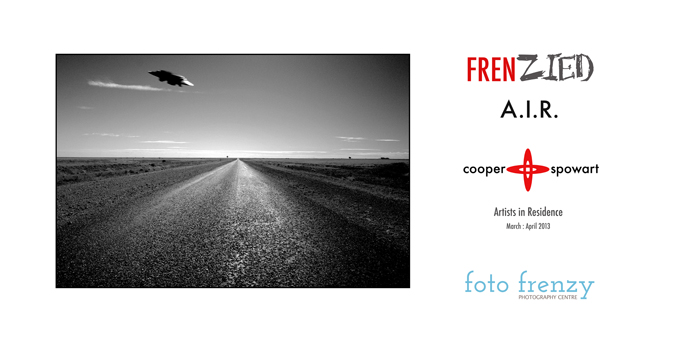
FRENzied A.I.R. Poster

Ian Poole, a Director of Foto Frenzy, opens the exhibition.
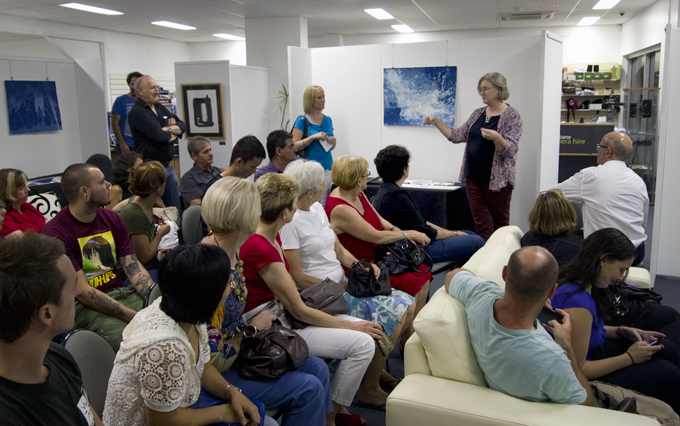
Vicky talking about her work

Selfie with Ian Poole
.
SOME OF THE WORK ON SHOW …
The exhibition features a selection of Camera Obscura works, Projections, cyanotypes and artists’ book and photobook works.

CarCamera concertina book
.
PLAY A VIDEO OF SOME OF THE CARCAMERA WORK

The ‘Hitting the Skids’ flipbook
.
PLAY A VIDEO OF THE FLIPBOOK
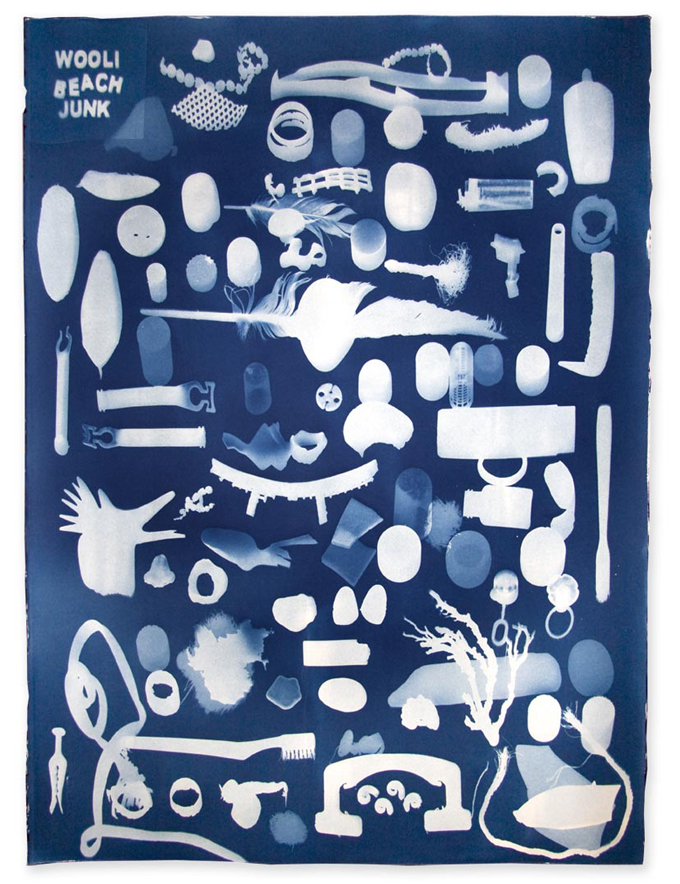
‘A cyanotype by Doug Spowart ‘Wooli Beach Junk’
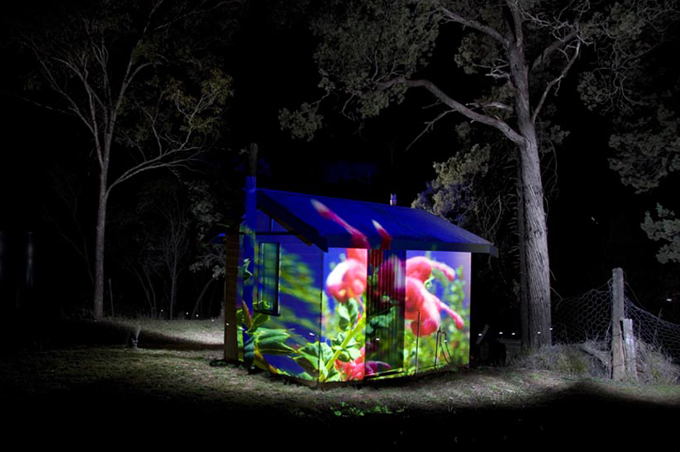
Projection – Myall Park Botanic Gardens
.
This work is licensed under a Creative Commons Attribution-NonCommercial-NoDerivs 3.0 Unported License.
.
.
YOU ARE INVITED: Meet the Artists Talk @ Foto Frenzy
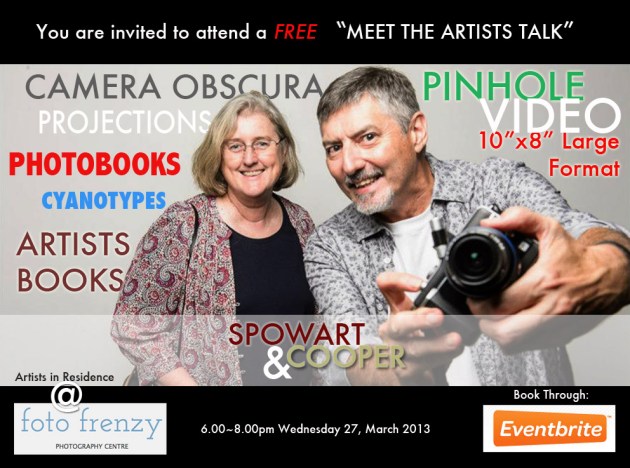
Meet the artists, see their work, hear them talk about creativity, invention, tinkering with art, and how to pursue personal directions in art-making and life.
The artists will also launch their Foto Frenzy workshop series and Artist in Residence.
Foto Frenzy
Unit 3, 429 Old Cleveland Road
Brisbane, QLD 4151
Australia
Wednesday, 27 March 2013 from 6:00 PM to 8:00 PM (EST)
.
The event is FREE but seating is limited. Please book through Eventbrite
Click Here
.
Victoria Cooper and Doug Spowart of Photographers of the Great Divide, are visual artists working in the fields of photoimaging, books as art, cultural research and education. They have collaborated on many art projects and exhibitions of book works that have featured their room and car camera obscuras.
As part of their PhD studies research and artworks produced were in the form of Photobooks and Artists Books. Both are Masters of Photography and Honorary Fellows of the Australian Institute of Professional Photography.
Spowart and Cooper have both lectured in Australia and New Zealand on the topic of the photobook and artists’ books and their book have been purchased for the rare book and manuscript collections in the State Libraries of Queensland and Victoria, and the National Library of Australia.
.
Visit <wotwedo.com> for the Cooper and Spowart Workshops.
.
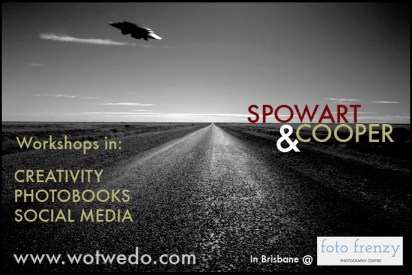
LAUNCH: WOTWEDO.COM – the Cooper+Spowart workshops
For over 30 years Doug Spowart and 20 years for Victoria Cooper, have participated in training for creatives including artists and photographers. The pair has lectured in art and photography at TAFE colleges, universities, workshops, conferences and seminars for students, amateurs and professionals alike. Now, during April, May and June, through WOTWEDO.COM @ Brisbane’s Foto Frenzy, they offer a range of specialised & bespoke training and consultation services.
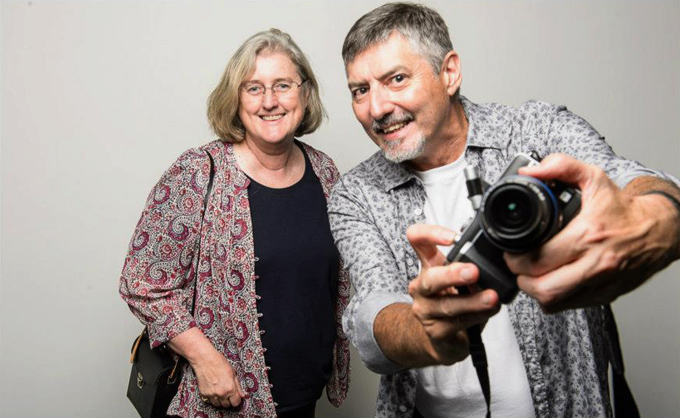
Both Doug and Victoria are Masters of Photography and Honourary Fellows of the Australian Institute of Professional Photography (AIPP). Throughout most of the 1990s Doug was the Chairperson of the AIPP Professional Photography Awards. In the mid 2000s both Vicky and Doug were involved as AIPP representatives in writing national photography TAFE level curriculum for Certificate and Diploma of Photography programs. In the last 10 years Victoria and Doug have engaged in part-time university study in photography and the world of artists books and art.
in 2013 Doug and Victoria are taking a sabbatical from TAFE teaching to pursue post-doctoral research and to re-engage with their arts practice. These workshops are part of their ‘Leap of Faith’ initiative that was introduced in their earlier blog post.
Do review their WOTWEDO workshop program and see WOT-THEY-CAN-DO for YOU!
.
THE WORKSHOPS
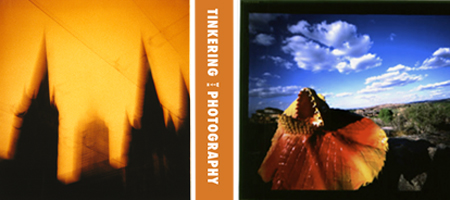
SERIES 1: TINKERING WITH PHOTOGRAPHY
Is your photography becoming formulaic (predictable) and more about digital technology and post-production than about the hands-on experience of taking photographs? Do you want to investigate possibilities of making a personal style beyond Instagram, Lomography and Hipstamatic filters?
This series is crammed full of projects and ideas that will present you with challenges, weird stuff, things you’ve heard about but never had the chance to try, and things that require a rush of the creative thought juices. Use this workshop to reconnect with your love of photography.
Dates (Tentative) 6 Sessions: Monday, April 15, 22, 29 and May 6, 13 & 20, 2013.
.
SERIES 2: LOOKING GOOD IN PRINT–PHOTOBOOKS
By now everyone has made a photobook and in many ways current technology makes it easy to make one. But a photobook can be so much more – it can be a hand-made artwork or a super-slick prestige trade styled publication.
The Looking Good in Print: Photobook introductory session and workshop series will connect participants with concepts and techniques on how to personalize and create photo-stories in the form of the bespoke self-published photobook.
The range of options for making photobooks will be discussed and samples of hand-made, inkjet printed and hand-bound artists’ books, print-on-demand books will be available for viewing.
Dates (Tentative) 5 Sessions: Wednesday, April 10, 24, and May 1, 8 & 15, 2013.
.

SERIES 3: INTEGRATED SOCIAL MEDIA
When you Google yourself, or your business, what kind of response do you get? Is your online presence a bit thin or based on content from Facebook, a website maybe, and a few social mentions?
This introductory session and workshop series is designed to help you to start developing an integrated online presence. It will illustrate how an integrated approach to using platforms like Linkedin, WordPress Blogs, YouTube and Behance Folios can create a ‘wall’ of search engine locatable, quality references and social media mentions as to who you are and what you do.
Dates (Tentative) 5 Sessions: Tuesday, May 21, 28, and June 4, 11 & 25, 2013.
.
MORE INFORMATION & BOOKINGS
VISIT <www.wotwedo.com> for further details and bookings or contact Doug and Victoria by email info@cooperandspowart.com.au
Bookings through:
.
.
This work is licensed under a Creative Commons Attribution-NonCommercial-NoDerivs 3.0 Unported License.
2013 SABBATICAL for Doug+Victoria: A ‘Leap of Faith’
A NEW YEARS MESSAGE FROM COOPER+SPOWART
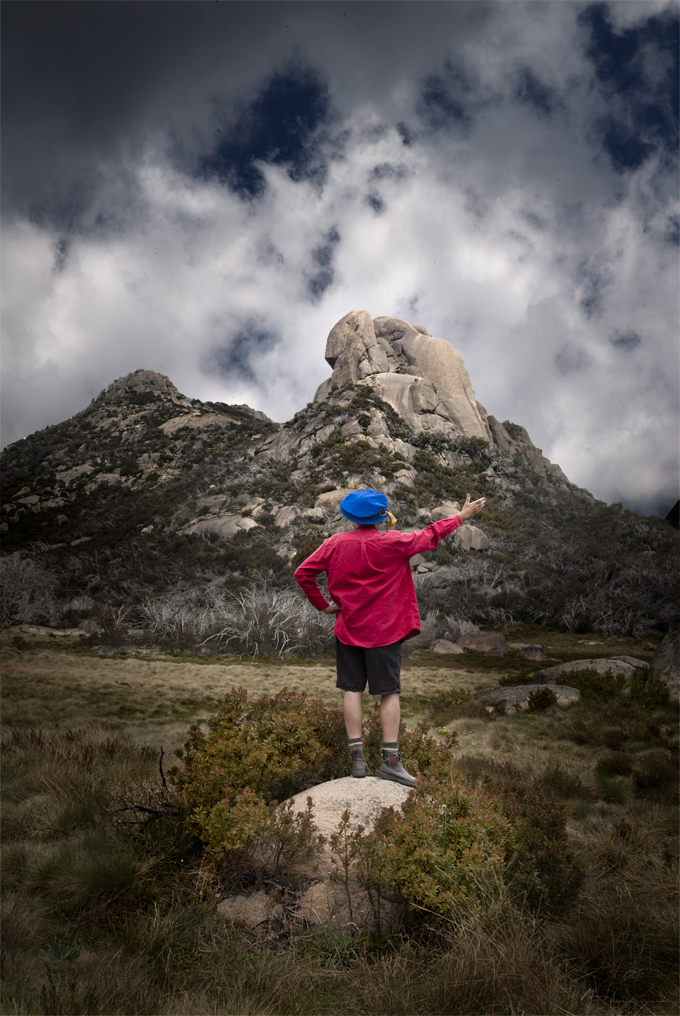
Dr Doug consulting Casper David Friedrichs re 2013 sabbatical, The Cathedral, Mt Buffalo.
In the year 2000 we began our involvement in higher academic study at Monash University in Post Graduate Diploma study. Since then, except for a small break in 2003, we continued our university research and art practice. Throughout this period we maintained both our arts practice and working at TAFE where Doug was full-time employed as a teacher and Victoria worked as a sessional teacher. All holidays and long service leave was consumed by the demands of study, research and at times a busy exhibition and private lecture programme. The hard work and study culminated last year (2012) with Doug being awarded Doctor of Philosophy at James Cook University in May, and Victoria submitting her PhD for final examination in late November.
Now, as we head into 2013, we are taking time out to pursue our post-doctorial research interests, opportunities to present and share our specialist knowledge and skills and to re-connect with our professional practice as artists and commentators on contemporary issues. It is a ‘self-funded sabbatical’. To finance this venture we intend to generate opportunities that may include ‘cloud funded projects’, artists in residencies, specialist workshops, seminars and consultancies, and sessional teaching or lecturing. We are also open to projects that may become available through our connections.
To up date you on our current interests and professional activities we include the following:
Doug: Social media and its applications within creative practice and personal communication; assembling and writing a critical commentary about Australian photobooks from 1900-2000; the narrative form of the hybrid photobook and the elevation of the print-on-demand photobook into a higher order of visual communication.
Victoria: Maintain a review of contemporary science/art interdisciplinary research as an accepted practice in academic institutions. Special interest in: the scientist, the artist and intuition; the historical use of visual art practice as information within scientific publications; Montage Thinking, as a mode for visual thinking and intellectual discourse through visual and non-visual information.
This adventure is somewhat a ‘leap of faith’ and as such we have created a blog onto which we will post sabbatical related content – we will invite to view this site when it comes online. This WOTWEDID blog will continue as our broader commentary platform – on occasion dual postings may occur. Other special research interest blogs will also emerge and you will be advised of opportunities to connect with their content.
Please contact us if you see any opportunities to support our ‘leap of faith’ sabbatical.
We wish you all an exciting 2013 New Year and look forward to perhaps connecting with you, and also connecting you with, commentaries about the issues of our shared interests.
Cheerio
Victoria and Doug
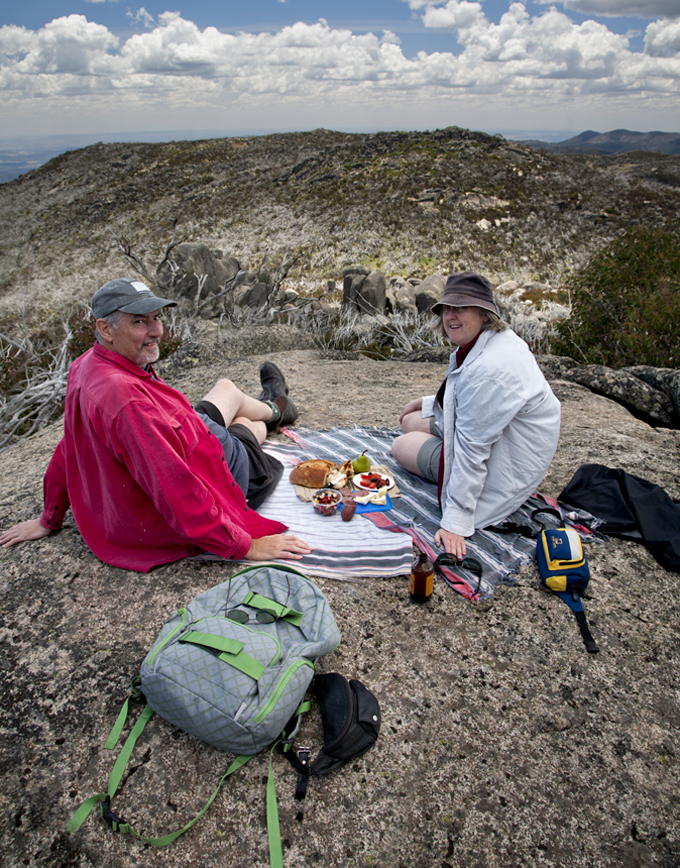
A 2013 lunch planning meeting at The Horn @ Mt Buffalo on 12.12.12

 wotwedid