Archive for the ‘Exhibitions’ Category
FRENZIED A.I.R. ‘PoPuP’ Exhibition @ Brisbane’s GALLERY FRENZY
We are now in Brisbane participating in an Artist in Residence @ Foto Frenzy in Coorparoo.
On Wednesday evening we presented an artist’s talk about our previous residencies and our approach to ‘Place Projects’. The event was attended by around 40 photographers, artists and students.
The exhibition will be on show on Easter Monday April 1st and Tuesday 2nd of April – We will be in attendance at the gallery between 11.00 am and 4.00 pm on those days.
GALLERY FRENZY is in the Foto Frenzy Photography Centre
Unit 3/429 Old Cleveland Rd, Coorparoo QLD 4151
We are also presenting a series of workshops @ Foto Frenzy–for details visit the website WWW.WOTWEDO.COM.
FRENzied A.I.R. Poster

Ian Poole, a Director of Foto Frenzy, opens the exhibition.
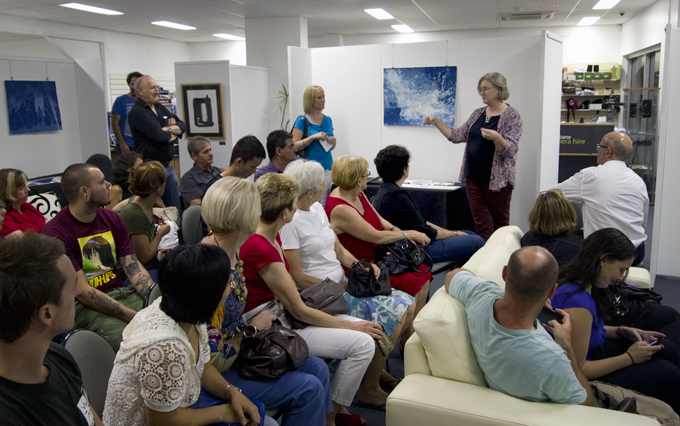
Vicky talking about her work

Selfie with Ian Poole
.
SOME OF THE WORK ON SHOW …
The exhibition features a selection of Camera Obscura works, Projections, cyanotypes and artists’ book and photobook works.

CarCamera concertina book
.
PLAY A VIDEO OF SOME OF THE CARCAMERA WORK

The ‘Hitting the Skids’ flipbook
.
PLAY A VIDEO OF THE FLIPBOOK
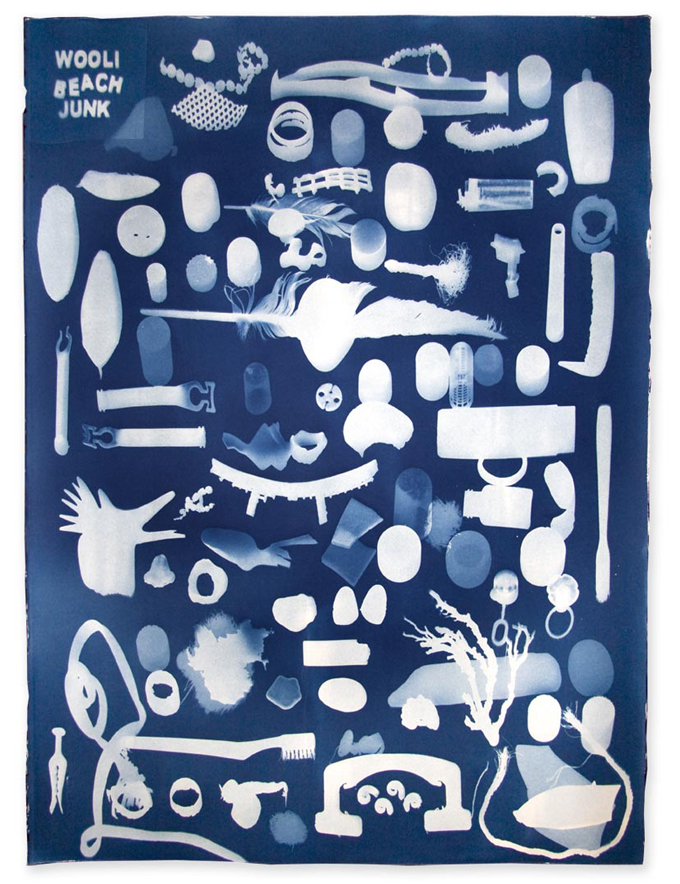
‘A cyanotype by Doug Spowart ‘Wooli Beach Junk’
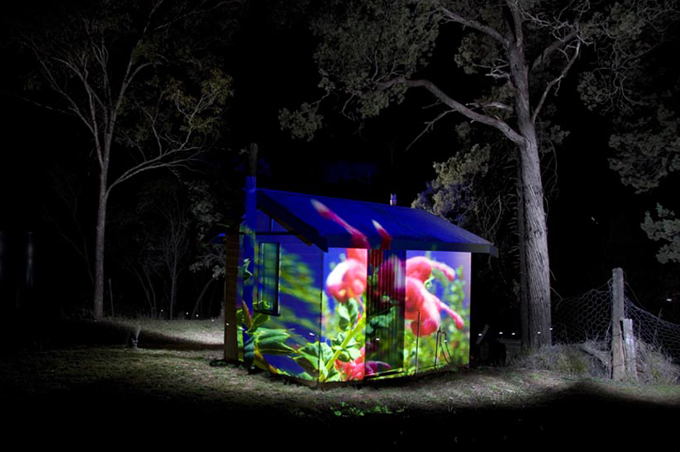
Projection – Myall Park Botanic Gardens
.

This work is licensed under a Creative Commons Attribution-NonCommercial-NoDerivs 3.0 Unported License.
.
.
COOPER SCROLLS @ Toowoomba Regional Art Gallery
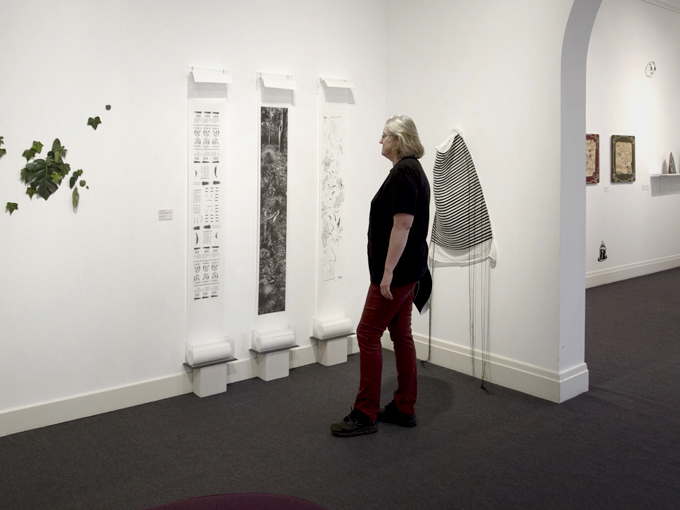
Victoria Cooper in the Off The Wall installation of three scrolls from the series of five
.
ABOUT ‘THE STORIES OF THE GORGE’ ON SHOW @ TRAG
Victoria Cooper’s digital montage Stories from the Gorge scrolls, made over ten years ago were included in Toowoomba Regional Art Gallery show. The exhibition was entitled Off the wall and was on show in Gallery 2 and Amos Gallery in May 2013.
The information about the exhibition that follows comes from the exhibition room sheet prepared at the time by Toowoomba Regional Art Gallery Exhibitions Officer, Ashleigh Bunter:
The works in the exhibition have been selected from the Toowoomba Regional Art Gallery’s City Collection. They have been placed simply together due to their three-dimensional nature and to highlight their derivation from the traditional two-dimensional picture plane.
This exhibition demonstrates the way that artists manipulate physical depth within their works which can often create a greater engagement between the object and the viewer. Interestingly, many of the works in this exhibition focus upon environment, whether it is the natural, public or the domestic environment. Materiality is also a common consideration. Throughout this exhibition one can see the influence of ‘the collector’, artists who gather images or common materials, reusing and reinterpreting them to create their art.
Victoria Cooper’s Stories from the Gorge: Order, chaos and the story of the hillside is a Chinese-landscape-scroll inspired series that represents “the last bastion of a natural chaos and order, an anti-culture, occurring on the fringes of agriculture.”[i] Human effects on the natural environment are central to Cooper’s practice and her prints and artists’ books in various formations lead the view from a flat two dimensional plane into the landscapes she investigates. These printed scrolls rise up from handmade acrylic boxes like the tall gum trees on their surfaces.
Other artists in the Off The Wall show include; Michael Schlitz, Marieke Dench, Tiffany Shafran, Judith Kentish, and Brigid Cole-Adams and the exhibition will be on the wall until May 26, 2013.
.
PRIZES AND AWARDS
2001 The Gorge was purchased by Australian Library of Art at the State Library of Queensland
2001 – Photographer and gallery director Sandy Edwards awarded The Gorge, First Prize in the Muswellbrook Photography Award
2001 – MCA Director Elizabeth Ann Macgregor awarded The Cliff, First Prize for Works on Paper, Martin Hanson Memorial Art Awards, Gladstone Regional Art Gallery and Museum
2002 – Five Stories from the Gorge was a Finalist in the 2002 Josephine Ulrick & Win Schubert Foundation for the Arts Photography Award at the Gold Coast City Art Gallery was selected by Isobel Crombie Curator at the National Gallery of Victoria
2002 –The triptych was acquired during its showing in the Toowoomba Biennial Acquisitive Award selected by Julie Ewington, then Curator at the Queensland Art Gallery..
.
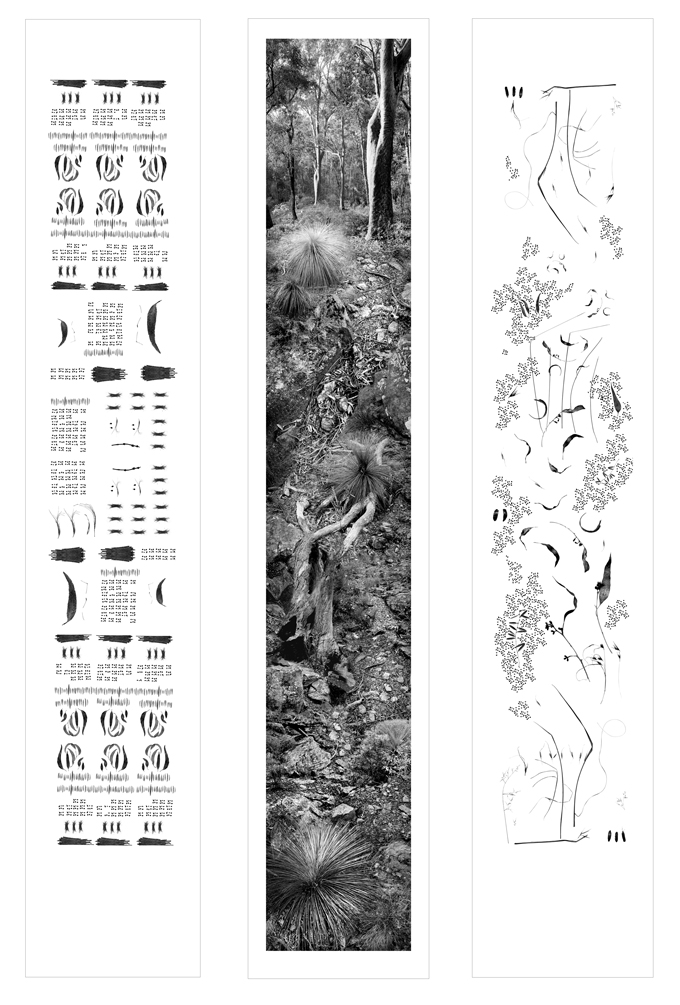
Three images of the Stories from the Gorge triptych as presented @TRAG
.
THE BACKSTORY OF THE SCROLLS AND THE SERIES OF 5 WORKS
Cooper’s scrolls were presented for the TRAG exhibition as a triptych, however in the original exhibition, entitled Searching for the Sublime, there were five scrolls. Searching for the Sublime was a collaborative project with sculptor Jim Roberts, fellow artist Doug Spowart and curator Deborah Godfrey. The inspiration for the project was a wilderness area in the Helidon Hills a mere 20 kilometres north-east of Toowoomba. Supported by an RADF Grant, the show featured Roberts’ sculptures, Spowart’s abstract water photographs, and Cooper’s scrolls and was shown at 62 Robertson Gallery in Brisbane in August 2001.
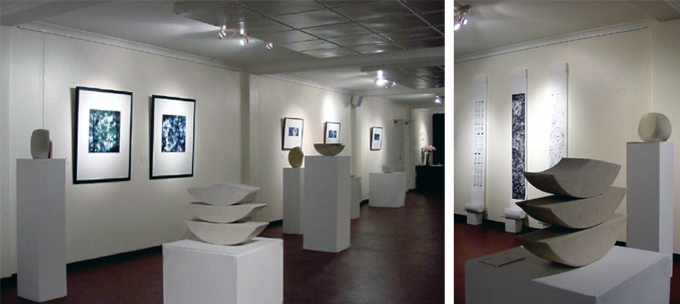
Searching for the Sublime @ Gallery 62 Robinson PHOTO: Courtesy of 62 Robertson
.
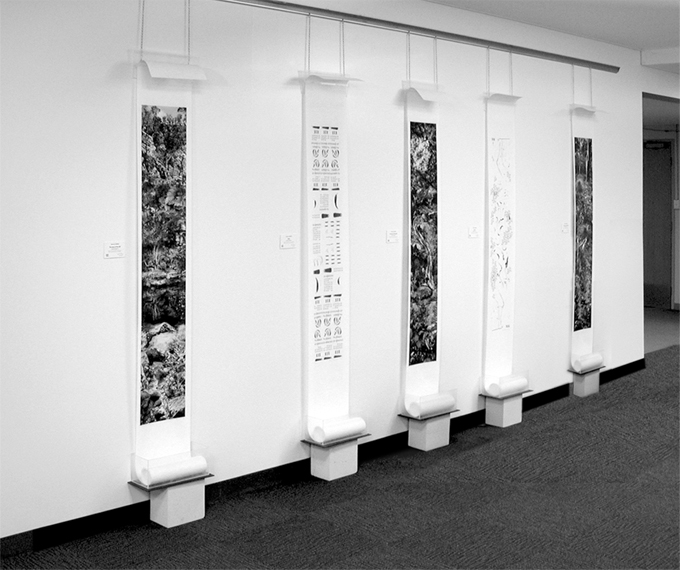
Five Stories from the Gorge installation at SQIT Gallery
.
The images were assembled as a photomontage in the tiny, by current sizes, Blueberry iMac computer. At times Victoria juggled 200 layers in one Adobe Photoshop document to create the fiction panoramas. Seeing the whole image was a problem as most of the time Cooper’s view was no bigger than the iMac screen requiring her to ‘scroll’ the image up and down–just as you will do in looking at the images in this post. Saving the files took 20-30 minutes and the system often crashed. The images were printed in pigment inks on an Ilford Novajet printer onto Hahnemühle Japan ‘rice paper’ by IMT on the Gold Coast. Victoria worked with artist Wim de Vos to design the bespoke handmade acrylic boxes. The design featured the ability for the box to not only serve as a container, but also act as a device to display the scrolls.
The complete set of scrolls, Five Stories from the Gorge, was shown in many venues and awards (see prize list at the end of this post), including Photospace at National Art School, Australian National University, Canberra. Canberra Times arts reviewer Myra McIntyre commented that Cooper’s works are:
Most elegant and fascinating photographic objects are Landscape stories, a series of five Asian-inspired scrolls. Cooper crawls, wanders and flies through the Australian landscape gathering hundreds of objects, patterns, and perspectives that she digitally intertwines, creating a continuum of almost imperceptibly diverse perspectives and a physical sense of vertigo in the viewer.
Review, Canberra Times, May 10, 2002
In 2002 the triptych was acquired during its showing in the Toowoomba Biennial Acquisitive Award selected by Julie Ewington, then Curator at the Queensland Art Gallery. Interestingly the rules of the competition at the time restricted entries to work that had not previously won an art award–as such only the three scrolls The Story of the Hillside, Chaos and Order were entered. When purchased the two other scrolls were orphaned from the set.
So here in this blog, we reunite the Five Stories from the Gorge presented in a form for you to scroll/stroll through … Enjoy.
.
By Doug Spowart
.

Story of the Cliff
.

Story of the Gorge
.

Story of the Hillside
.
This work is licensed under a Creative Commons Attribution-NonCommercial-NoDerivs 3.0 Unported License.
The regional gallery that advertises on highway billboards
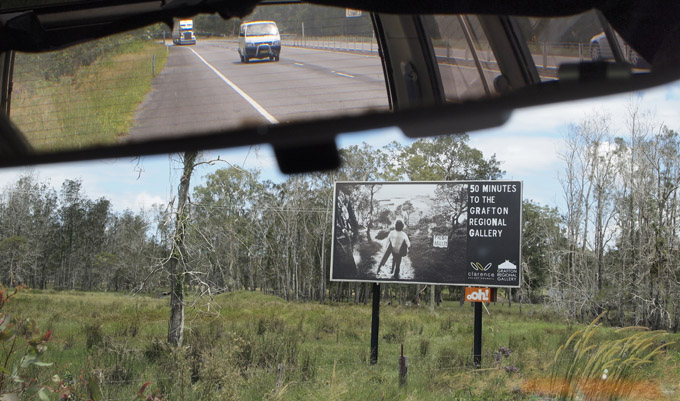
Grafton Art Gallery – Highway Billboard Photo: Doug Spowart
The concept of cultural tourism is often cited as the justification for local council support of regional arts infrastructure that may include, cultural policy, gallery facility and staffing, education or interpretive or developmental officers, local arts workers, regional grant administration and auspicing. What interests us as we travel around the country is the quality of regional arts practice and the entrepreneurial activities that are taking place that tend to be lost in the white noise of the big city hype of blockbusters and art heroes.
The Grafton Regional Gallery is well known for its Jacaranda trees and the Jacaranda Acquisitive Drawing Prize. But there are other things, for example how many regional galleries participate in highway billboard advertising? —GRG does. Another aspect is the diversity of shows presented include curated exhibitions from works in their collection, shows by local artists and travelling exhibitions—recently the Archibald Prize,.
On this occasion two exhibitions attracted our interest, The Art of Sound, a GRG collaboration with the National Film and Sound Archive and Garlugun.gi by local ceramicist Bevan Skinner.
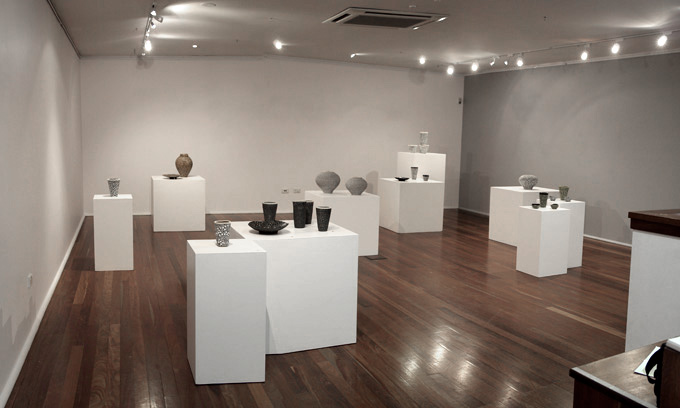
Bevan Skinner’s Garlugun.gi
Skinner’s work is informed by his indigenous heritage. A Gumbaygan man he states in the detailed catalogue accompanying the show that: ‘my work always revolves around my culture, my identity and my spirit.’ While any artist could claim the same provenance for their art Skinner’s work is a deliberate and profound blending of the earth of his country (clays, oxides and pigments), and culture (mark making, tradition and storytelling). While the dot technique of the desert artists is apparent in this work Skinner’s use of the motif is to represent stars in the sky and the meaningfulness that they have for him as a way to connect and remember loved ones passed away and now appearing as stars in the night sky. These works are part of a larger series Winda-bin Waluurrgundi – Stars of The Valley.
Bevan Skinner’s work is presented in a multi-plinthed exhibition space with groups of pots and plates resonating. Some time ago I remember a comment by David Hockney in which he said something around the idea that the time the artist takes in making a work is matched by how it will engage with the viewer. There is something of this in Skinner’s work, for me each piece is a vessel that holds in the artist’s communiqué and the viewer’s gaze activates the message.
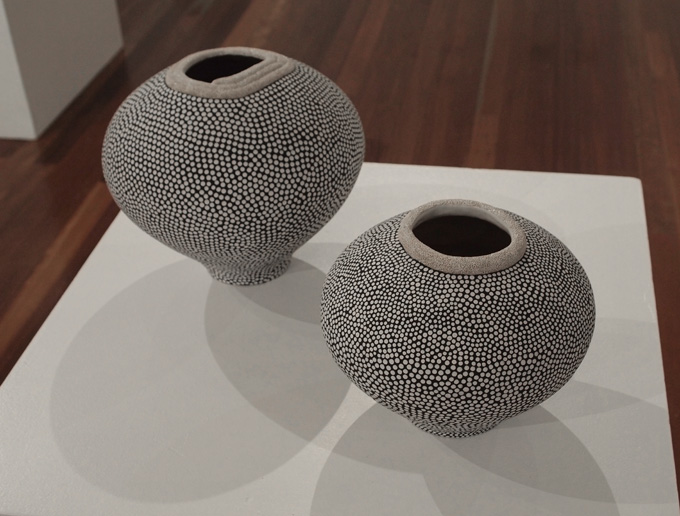
Winda-bin Waluurrgundi – Stars of The Valley Series 1 2008 (foreground)
One side issue emerging from Bevan Skinner’s biography is Associate Diploma in Ceramics training he completed at TAFE in the early 1990s with art teachers who assisted with his development as an artist. I can only exhibit trepidation about the future of artists like Skinner who early in their career ‘found themselves’ through TAFE, now that in NSW art training has been dropped from all TAFE colleges.
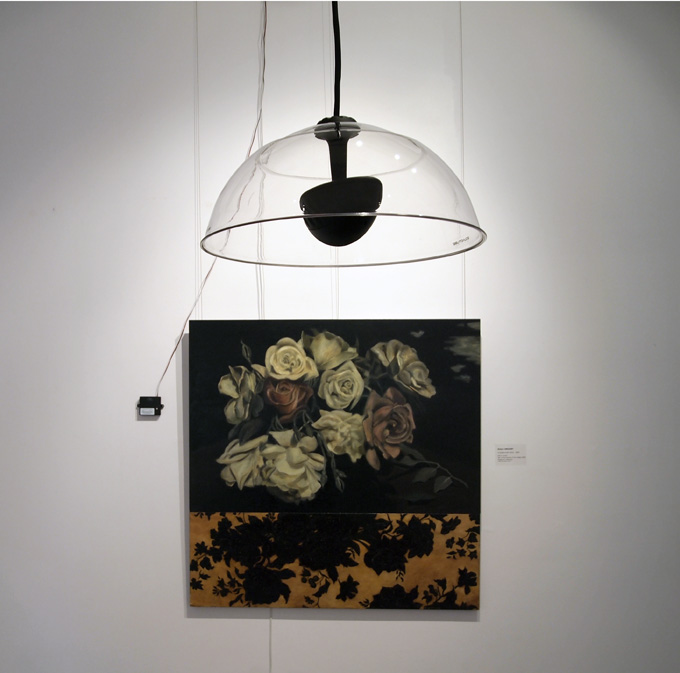
Robyn Sweaney A passionate affair (2003)+ Country Garden audio
The Art of Sound offers a new way of presenting visual art in a gallery space. The concept is to pair works from the GAG collection with audio material supplied from the National Film and Sound Archive so that the viewer of an artwork has a sight and sound experience of the art. On entering the gallery space the visitor is immediately met with the usual artworks on the wall but something is different—each has some kind of parabolic Perspex dish suspended above or headphones nearby. These sonic devices deliver, in a fairly localised way, music or audio to compliment the work. Composer and sound/artist designer James Hurley undertook the installation of the audio apparatus at GAG.
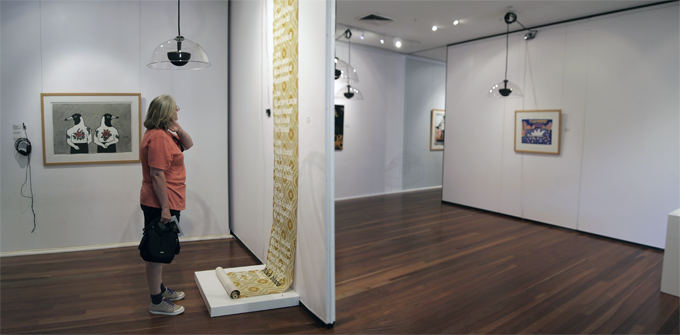
The Art of Sound installation
Gallery Director Jude McBean does not provide answers in her didactic panel statement but rather asks some provocative questions:
‘I wonder how long the effect of linking a particular sound with an artwork will last and how much will the sound determine or change perceptions of the work. These questions also apply to the linking of an artwork to a sound. How long will the participant recall the artwork when hearing that sound outside of the gallery and will the artwork determine or change the experience of the sound or not? The answers are eagerly anticipated over the duration of the project and in later years.’
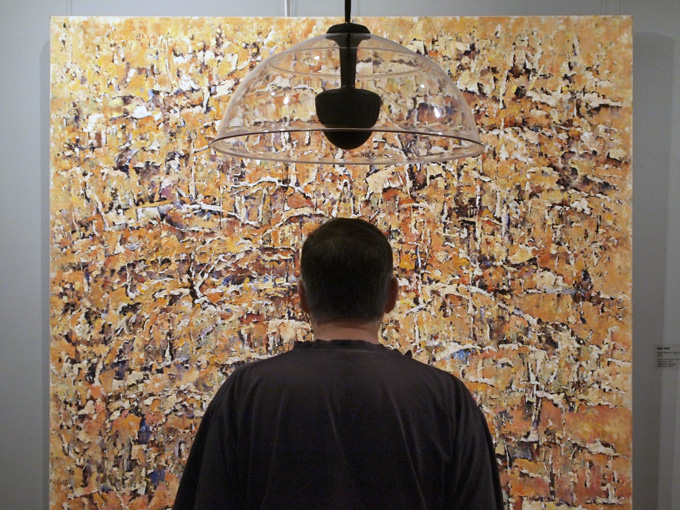
Mike Riley Stock Reserve near Grafton (2010) + AMATA audio PHOTO: Victoria Cooper
What I found was that sometimes the audio triggered personal recollections of time and place and that these could be used as a kind of reference for the visual experience of the art. Music, for example, has a broad dissemination across a generation. Take for example the ‘Happy Little Vegemites’ 1954 advertisement. However the artist’s work is very limited in its distribution so the audio conjures up a familiar personal response through which the image is viewed for its concurrency. On other occasions like with Mike Riley’s Stock Reserve near Grafton (2010) and indigenous folk music by AMATA (2007) where the piece of music or audio was unknown as was the artwork a new experience was created. A profound work for me was the Judy Cassab, Mothers Love (2004), J W Lindt pair of 1870s photographs of local Aboriginal people with children synergised by the traditional Indigenous singing by BUMA (2008) a song about crying babies who will go to sleep when fed. Could it be that mine was the predictable response that the curators and their pairing of visual and audio stimulus wished to create?
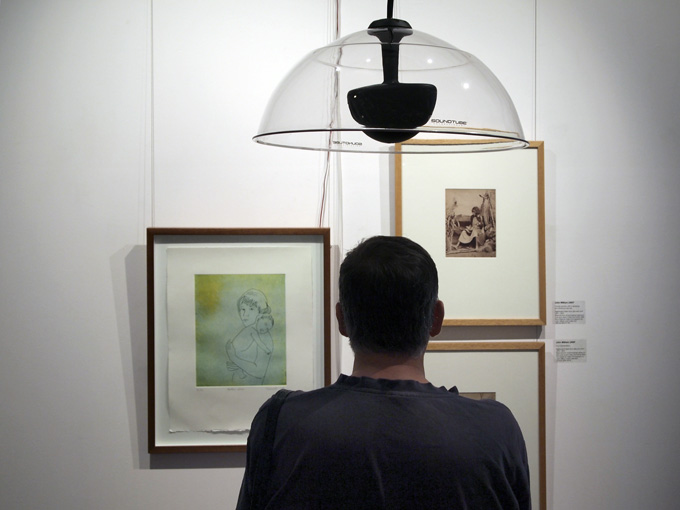
Judy Cassab Mothers Love (2004), JW Lindt photographs (1870s)+BUMA audio PHOTO: Victoria Cooper
Another, perhaps subversive experiment that I undertook in the space was to attempt to activate as many sound sources as possible and listen to the montage of sounds whilst moving about the artworks—somehow it created an experience of life itself …
Thank you to the GAG and to other regional galleries around the country who through ingenuity, creativity, entrepreneurship and cunning do as much for their communities as they do for the rest of the country in presenting contemporary art.
.
Dr Doug Spowart
Photos by Doug and Victoria Cooper
QAGOMA: THE ART GALLERY + The Photographer
My interest in the world I engage with has led me to be a photographer, sometimes more specifically, a photodocumentary photographer. In my life, art and the space of the gallery, has been a constant companion to my every present desire to encounter both the idea, and the ideas of artists. Linking the two: the gallery and photographic documentation can create problems. This means that I observe and can receive a trigger, a response to make images. I have had to control this impulse to comply with the prevailing gallery institutional morays around photography in their controlled public spaces. Although, for around twenty years to subvert this bureaucratic impost I have photographed where no security could observe and intercept image making—I’ve photographed art gallery dunnies![i] Sometimes I still steal a photograph or two in the gallery: the call of the architectural space, the art in situ and the interaction of fellow patrons is far too strong. And sometimes I get cautioned and asked ‘not to photograph’ by art gallery attendants.
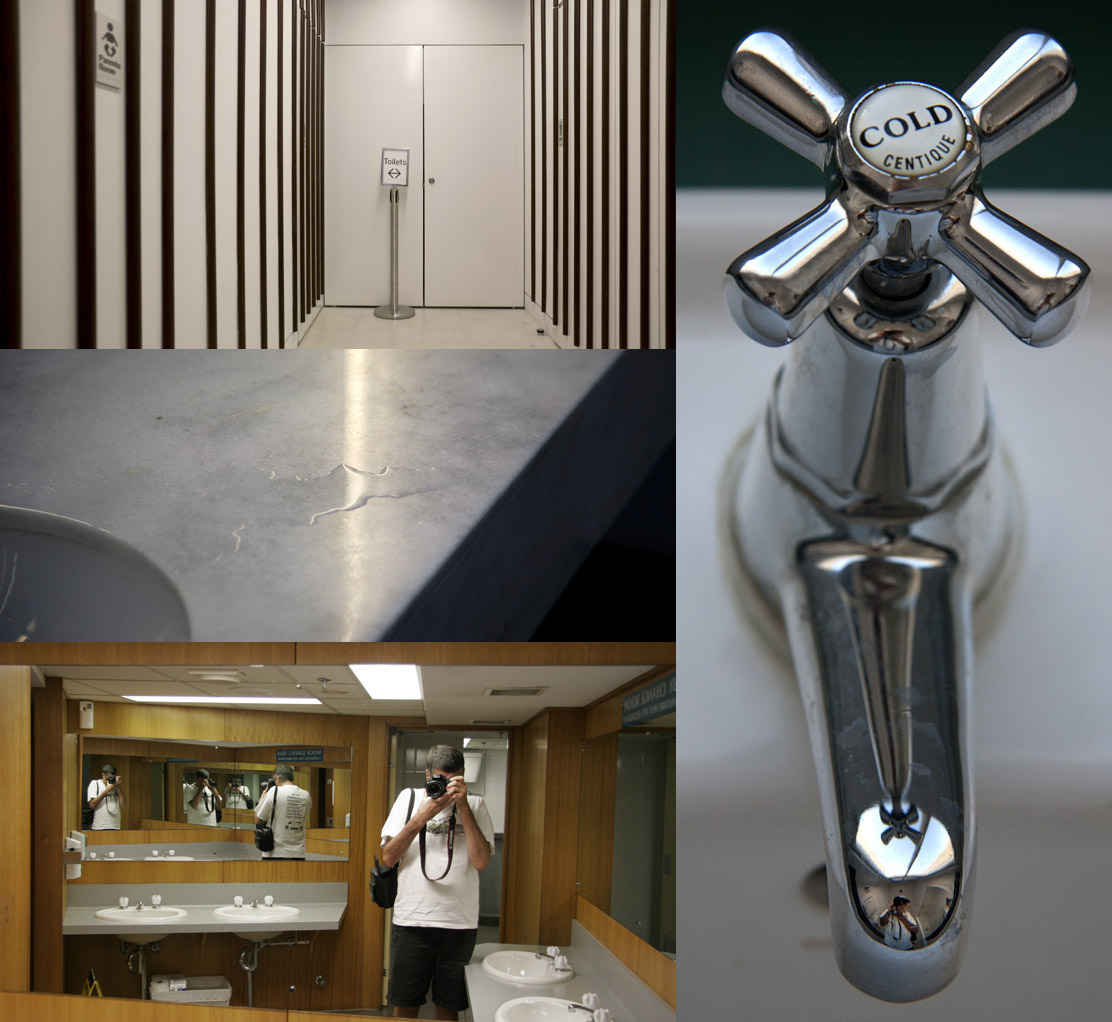
But that has all changed, most significantly in QAGOMA in Brisbane. Now, gallery photography (except in loaned exhibitions where copyright issues preclude photography), has been democratised as every visitor now has an iPhone, a point-and-shoot camera or a DSLR and they are not afraid to use their devices to document artwork, the gallery itself or their interaction with both. This liaison between the camera toting gallery patron and the gallery is a concession that may have arisen from the gallery’s recognition of a changing expectation of the gallery by art viewers. Before taking up a new position as Director of the National Gallery of Victoria the then QAGOMA Gallery Director Tony Ellwood stated in an interview in the Australian Newspaper that: ‘As a director, you continue to reinvent an institution as audience trends and expectations evolve.’[ii] This relaxed attitude to photography seems to be popular as is the revised approach to the ‘quiet as a library’ noise etiquette gallery maxim of the past.
Visitors to galleries do want to encounter art and they want to be rewarded by their engagement with it. Whether this is educative, informative or experiential the act of personal documentation for future reflection and sharing with others is important. In some ways the act of photography is a signifier of the meaningfulness of the art or the experience of that moment for the person with the camera. When images and personal reflection is posted in social media, Facebook and Blogs, the artist/artwork, the exhibition and the gallery become an extended space. But there is also something of the theme park in the nouveau gallery visitor’s expectations, and that is that they want to be entertained, and be seen in that mode of behavior.
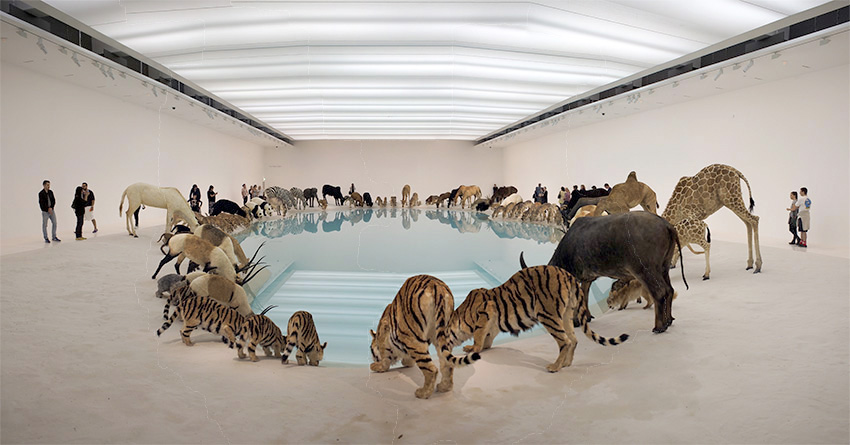
Cai Guo-Qiang: Heritage 2013, GOMA. Photo: Doug Spowart
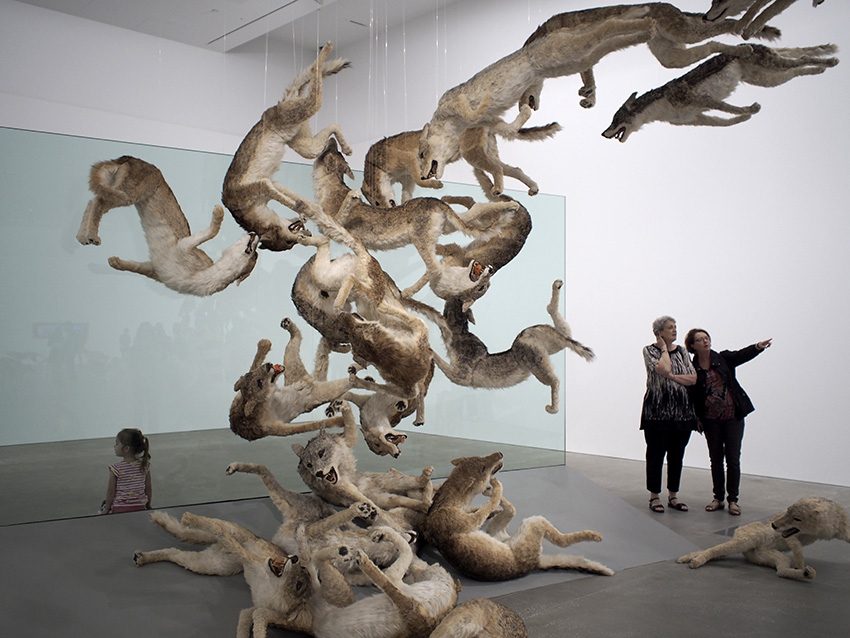
Cai Guo-Qiang: Head on 2006, GOMA. Photo: Doug Spowart
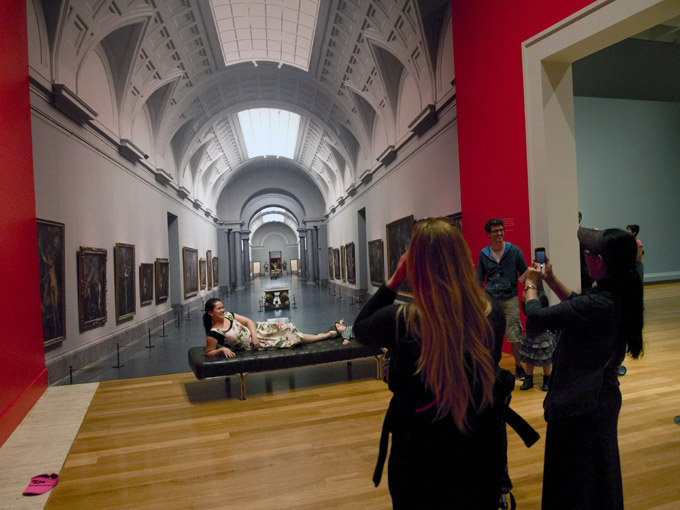
A patron as a clothed Maja ……..Portrait of Spain: Masterpieces from the Prado
QAGOMA’s huge visitor numbers, the highest in Australia at 1.8 million last year, acknowledge the success of catering for this emerging visitor expectation and it would appear that Director Ellwood has brought changes like these into the mix. David Walsh the entrepreneur behind Hobart’s MONA in the Age Newspaper comments that Ellwood: ‘… crosses the boundaries between high art and fun.’[iii]
To enlarge upon the gallery’s audience development strategies QAGOMA Acting Director Suhanya Raffel’s wrote, in the foreword for ‘The 7th Asia Pacific Triennial of Contemporary Art’ publication a claim that: ‘This Gallery is renowned for its inclusive and innovative public programs’ and that the APT has been seminal to the Gallery’s awareness of the importance in, ‘developing interactive art works with contemporary artists and creating meaningful ways for audiences to engage with contemporary art.’[iv]
While it may seem that it’s logical for a gallery to do all it can to attract visitors it seems that there is a political expectation for the gallery to do just that. The Honourable Campbell Newman, Premier of Queensland, in the press release announcement of Chris Saines as the new QAGOMA Director appointee, that ‘I’m confident he [Saines] will fulfil [sic] the brief to provide an accessible and engaging art experience to audiences, while enhancing QAGOMA’s reputation as an art museum of international standing, and Queensland’s reputation as a culturally dynamic state.’[v]
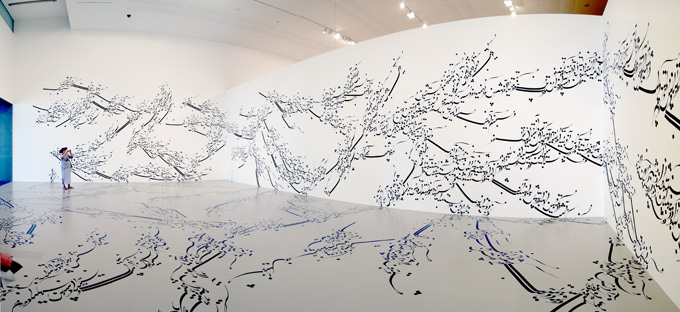
A visitor photographs Parastou Forouhar’s Written room 1999–ongoing
.
As a photographer I am not alone in my interest in photographing in the gallery and making images of gallery patrons viewing artworks. Thomas Struth[vi] is well known for his close-up views of visitor’s expressions made in the world’s swankiest galleries. Elliott Erwitt’s[vii] photographs exhibit his wry humour and the juxtaposition of subject and situation. The gallery inspired work of both photographers has been famously published in exhibitions and books. While my style sometimes has a kinship with Erwitt’s humour the work I do is more about the incongruities presented by a peopled vibrant space full of large and small-scale objects, fames, architectural forms and 3D experiential rooms.
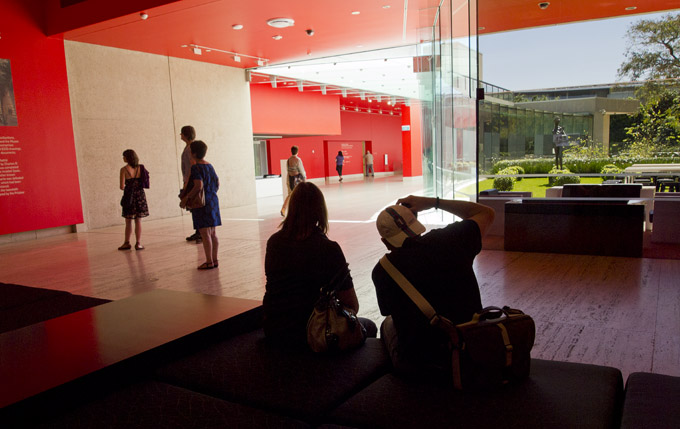
A gallery visitor photographing ……Portrait of Spain: Masterpieces from the Prado
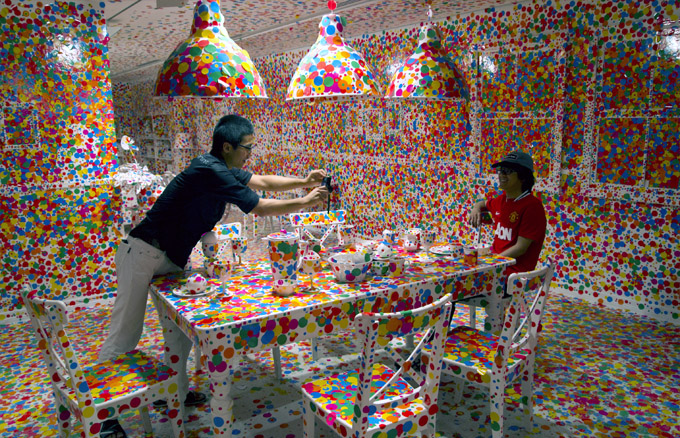
Yayoi Kusama’s The obliteration room
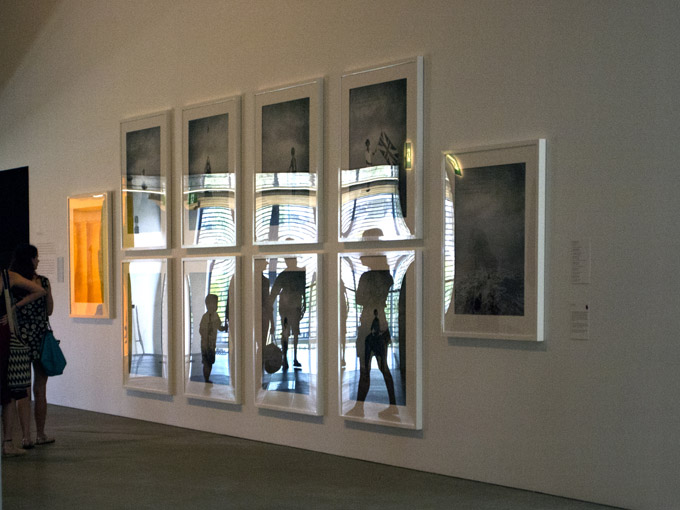
APT frame reflections
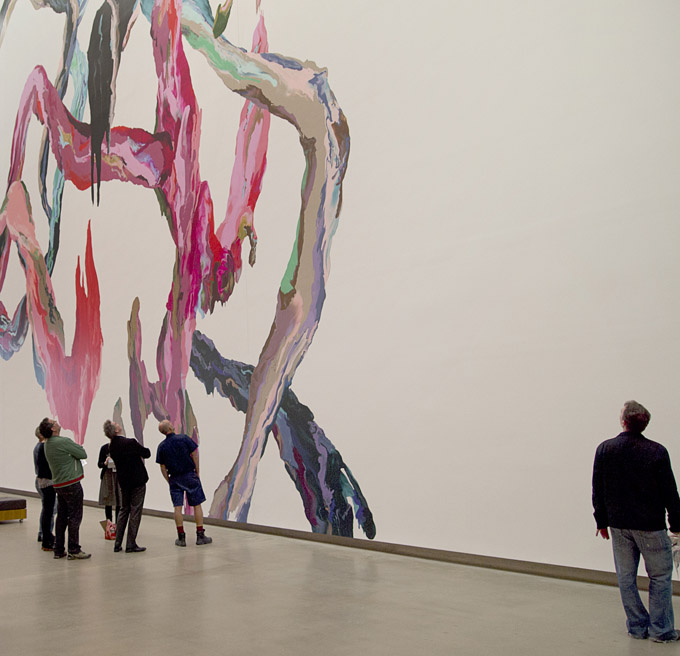
Noël Skrzypczak’s Jungle 2012
As gallery patrons move within these spaces and spontaneously respond to what they encounter—my objective is to observe and record moments in which a synergy exists between the subject, the place, maybe the artwork and a sense of order that the photographer in me needs resolved. These are unpredictable and fluid moments where intuition and patience contribute to a desired outcome. Work in the space of the gallery I do so cautiously not wanting my presence or activity to impede or influence my fellow visitors. Often the camera is turned on my partner Victoria and myself, as we experience the gallery. As always, in this space the viewer becomes the viewed, and I in turn I am also viewed, by the now benevolent gallery attendants.
Every visit to QAGOMA is now not only an opportunity to connect with the artworks on show but also to document fellow visitors and their experience of art—often themselves being compelled by the same impetus as mine, to photograph and inter-react with the gallery and the art presented within.
.
Dr Doug Spowart
Many of my gallery photography exploits are posted, with commentaries, on the blog <wotwedid.wordpress.com>
[i] I made an artists book entitled Places of quiet introspection in 2006 that features some of these surreptitiously made art gallery dunny photographs. A copy of the book was purchased by the State Library of Queensland’s for inclusion in their Artists Book collection.
[ii] http://www.theaustralian.com.au/news/features/tony-ellwood-44-national-gallery-of-victoria-director/story-e6frg8h6-1226464781363
[iii] http://www.theage.com.au/entertainment/art-and-design/big-task-for-new-gallery-director-20120229-1u3jg.html
[vii] Amazon.com book description for Erwitt’s Museum Watching. <http://www.amazon.com/Elliott-Erwitt-Museum-Watching-Photographs/dp/0714863114>
WHIPPING UP A FOTO FRENZY
Dr Doug opens the FOTO FRENZY Photographic Centre in Brisbane
The much awaited reopening of the expanded FOTO FRENZY Photographic Centre in Coorparoo took place on Friday, January 18, 2013. Attended by a crowd of around 100 well-wishers the event heralded a new beginning for dilettantes of a wide range of photography interests including:
- photography workshops
- photographic gallery
- fine art printing, mounting and framing
- photographic darkroom hire
- studio hire
- one-on-one consultations

Mark photographs the Foto Frenzy Team PHOTO: Victoria Cooper
The FOTO FRENZY space is shared with BRISBANE CAMERA HIRE, specialist in providing a range of photographic gear and unusual accessories.
The Foto Frenzy team includes Brisbane photo identities Ian Poole, Cam Attree, Tony Holden and Darren Jew. All four are photographers and have specialist areas of activity from photography as art, to location and underwater photography, nude and glamour photography and photography as personal expression. Darren Jew is well known in photo workshop circles for the ‘Faces and Places’ workshop that he established with Jim McKitrick in the late 1980s.
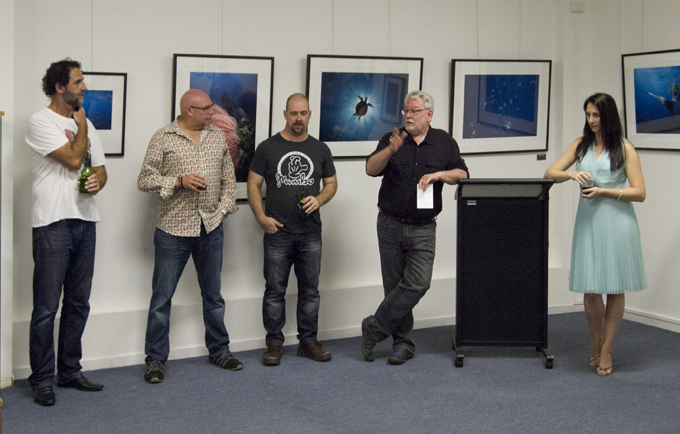
The team l-r Darren Jew, Tony Holden, Cam Attreee, Ian Poole and Susan BCH PHOTO: Victoria Cooper
The Foto Frenzy team have been together for twelve months in a modest facility just a short distance away from the new home. Now with the larger facility and the linkup with Susan & Jacob and Brisbane Camera Hire new and amazing opportunities for the business and the clients that they service are available.
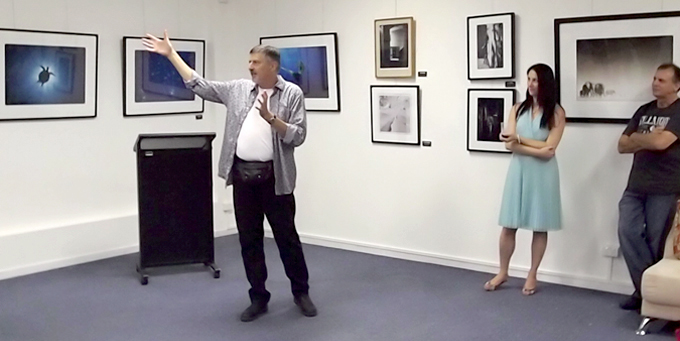
Doug Spowart opens Foto Frenzy PHOTO: Victoria Cooper
As someone with a history in photography that connects with most of the Foto Frenzy team, as well as being a former Director of the photo gallery and workshop—Imagery Gallery, (that operated in Brisbane from 1980-1995), I was asked to open the new Foto Frenzy Photographic Centre. Some of my comments in the opening speech were…
The other day I was made aware of a TIME magazine article in which the claim was made that 10% of all the photographs ever made in the over 170 year history of photography were made in 2012!! This statement is evidence that with digital photography, including the now ubiquitous mobile phone, means that anyone can take photographs—But does that mean that everyone IS a photographer? My opinion is no—Because there is something special in the blood of the photographer that enables them, or demands of them, that just seeing and snapping isn’t enough.
True photographers want to ‘craft’ and create images that are about significant visual communication. Sometimes powerful, sometimes sublime, sometimes nonsensical or humorous and sometimes, perhaps even bland and boring. We know of these kinds of photographs because they tell us about beauty in the world, of atrocity, of feast, famine and of love and the human condition. These images inspire us and drive us, perhaps even spur us on to be better photographers ourselves—and this is where we encounter the need for networking, training, nurturing support, guidance and technology support. This is where the Foto Frenzy suite of services will link with our lives.
I congratulate the Foto Frenzy team and Brisbane Camera Hire for their vision, entrepreneurship and financial commitment in establishing this photographic centre. And what I see are the great opportunities for those of us interested in being a part of what photography is, and where it is going—to have a place that will be a hub, or should I say, a frenzied hive of activity.
It is with great pleasure that I declare the Foto Frenzy centre open….
Ian Poole in his thank you advised the attendees that Cooper and Spowart were to be, in a couple of months, the Foto Frenzy’s first Artists in Residence.
SPECIAL NOTE: We will be conducting a range of workshops @ Foto Frenzy over the following months. The topics of our workshops and consultations will include aspects of our PhD research into photobooks, creative photography practice, narrative and story telling in the photo sequence and aspects of social media, in particular Linkedin, Blogs and YouTube. We will also be available for one-on-one project/concept development.
To let us know you would like to be advised of the workshops when they become available
Contact us <Greatdivide@a1.com.au>
.
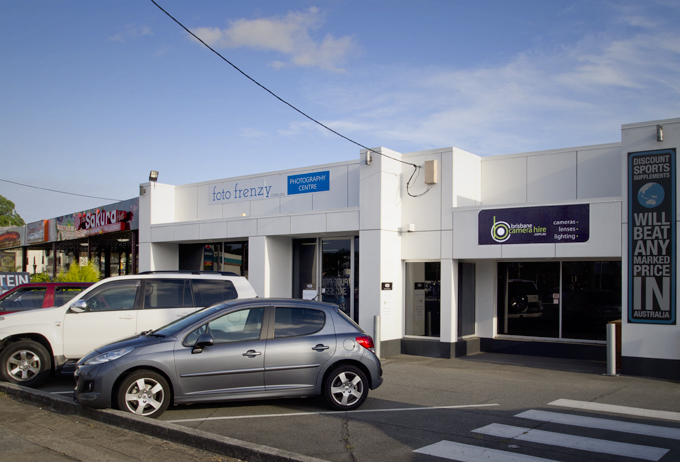
Foto Frenzy @ Corparoo, cnr Old Cleveland & Bennets Rds PHOTO: Doug Spowart

The Foto Frenzy Gallery PHOTO: Victoria Cooper
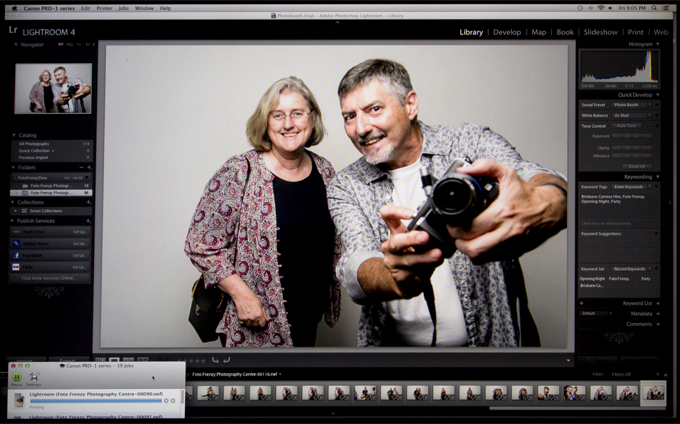
Doug Spowart and Victoria Cooper in the Foto Frenzy Photobooth
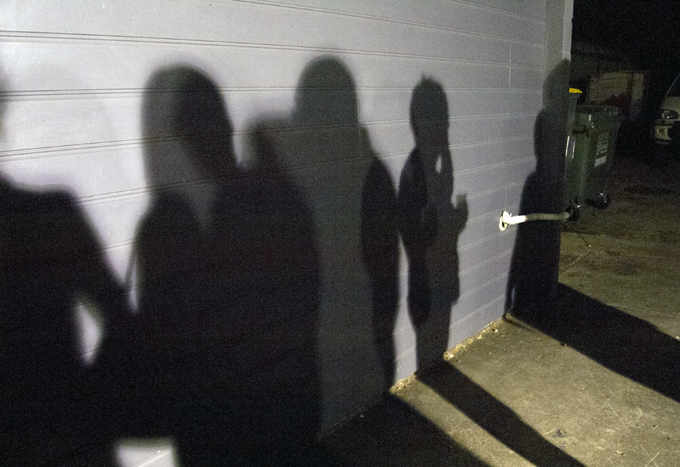
Foto Frenzy opening shadows PHOTO: Doug Spowart
Cheers Doug and Victoria
2013 SABBATICAL for Doug+Victoria: A ‘Leap of Faith’
A NEW YEARS MESSAGE FROM COOPER+SPOWART
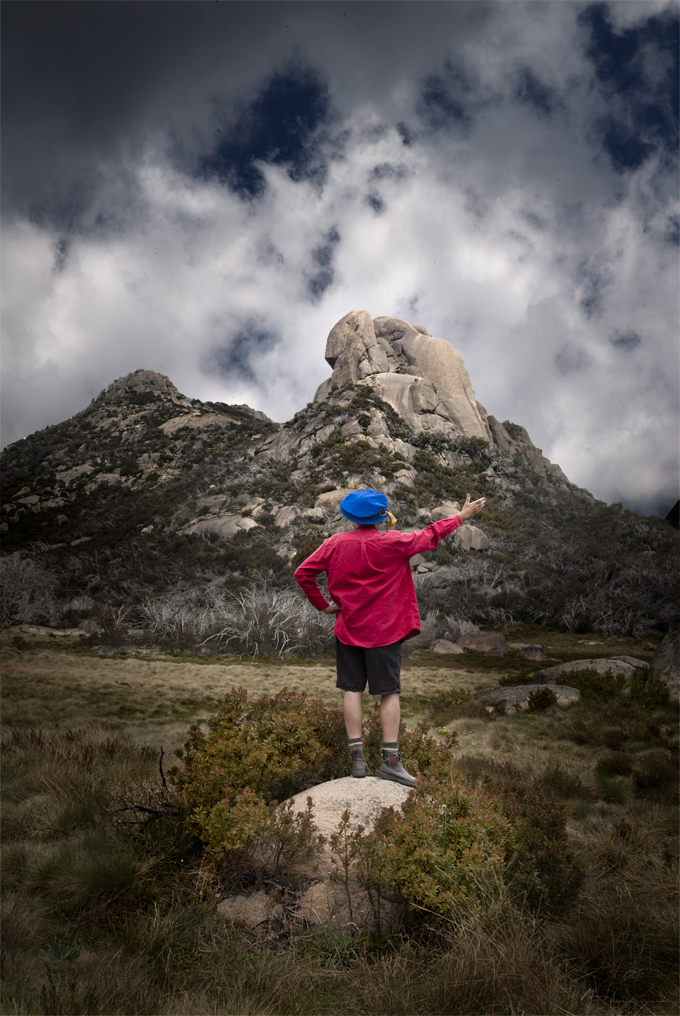
Dr Doug consulting Casper David Friedrichs re 2013 sabbatical, The Cathedral, Mt Buffalo.
In the year 2000 we began our involvement in higher academic study at Monash University in Post Graduate Diploma study. Since then, except for a small break in 2003, we continued our university research and art practice. Throughout this period we maintained both our arts practice and working at TAFE where Doug was full-time employed as a teacher and Victoria worked as a sessional teacher. All holidays and long service leave was consumed by the demands of study, research and at times a busy exhibition and private lecture programme. The hard work and study culminated last year (2012) with Doug being awarded Doctor of Philosophy at James Cook University in May, and Victoria submitting her PhD for final examination in late November.
Now, as we head into 2013, we are taking time out to pursue our post-doctorial research interests, opportunities to present and share our specialist knowledge and skills and to re-connect with our professional practice as artists and commentators on contemporary issues. It is a ‘self-funded sabbatical’. To finance this venture we intend to generate opportunities that may include ‘cloud funded projects’, artists in residencies, specialist workshops, seminars and consultancies, and sessional teaching or lecturing. We are also open to projects that may become available through our connections.
To up date you on our current interests and professional activities we include the following:
Doug: Social media and its applications within creative practice and personal communication; assembling and writing a critical commentary about Australian photobooks from 1900-2000; the narrative form of the hybrid photobook and the elevation of the print-on-demand photobook into a higher order of visual communication.
Victoria: Maintain a review of contemporary science/art interdisciplinary research as an accepted practice in academic institutions. Special interest in: the scientist, the artist and intuition; the historical use of visual art practice as information within scientific publications; Montage Thinking, as a mode for visual thinking and intellectual discourse through visual and non-visual information.
This adventure is somewhat a ‘leap of faith’ and as such we have created a blog onto which we will post sabbatical related content – we will invite to view this site when it comes online. This WOTWEDID blog will continue as our broader commentary platform – on occasion dual postings may occur. Other special research interest blogs will also emerge and you will be advised of opportunities to connect with their content.
Please contact us if you see any opportunities to support our ‘leap of faith’ sabbatical.
We wish you all an exciting 2013 New Year and look forward to perhaps connecting with you, and also connecting you with, commentaries about the issues of our shared interests.
Cheerio
Victoria and Doug
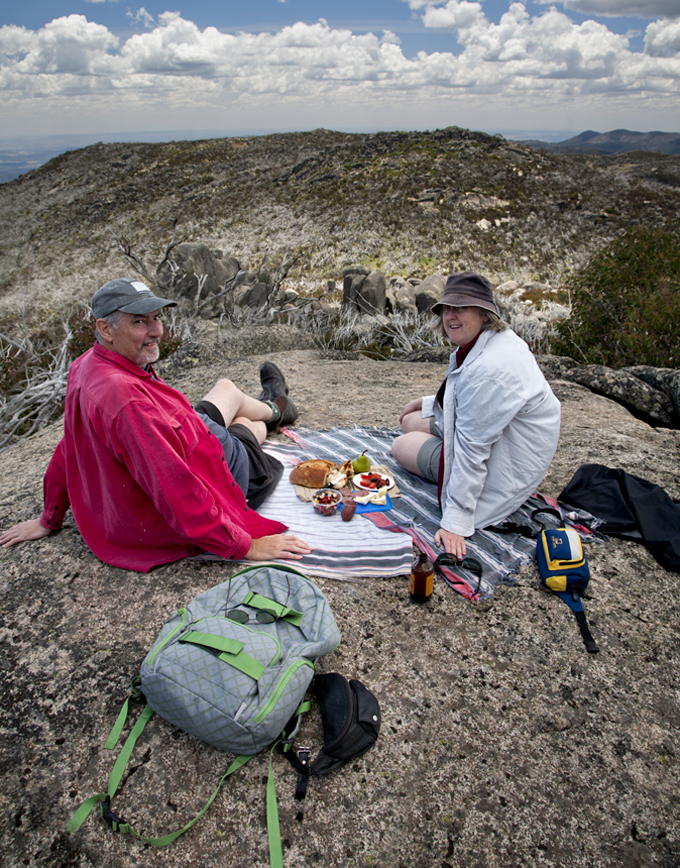
A 2013 lunch planning meeting at The Horn @ Mt Buffalo on 12.12.12
EX LIBRIS: WHO OWNS THIS BOOK? A Queensland artists’ bookplate project
Zealous book collectors have always prominently placed inside the first few pages of a book their Ex Libris bookplate as a sign of ownership of books that they acquire. Over time these bookplates became a kind of specialised artwork created by artists and designers—not only for their own collected books but also for the libraries of serious book collectors. Bookplates then, are not just the carriers of the name of a book’s [one time] owner, but are also a thing of artistic integrity and beauty. Indeed there exist a large number of book-collecting dilettantes who are more interested in the bookplate and less in the book in which it is fixed.
The origins of the bookplate can be traced back to the 15th century and the artists who made them include Albrecht Durer and Hans Holbein. In Australia the most noteworthy bookplate designers include Norman Lindsay, Adrian Feint and G.D. Perrottet. Most significant state and national library collections include bookplate works. The Toowoomba Regional Art Gallery has a collection of bookplates as part of The Lionel Lindsay Gallery and Library Collection (Also known as the Bolton Collection) and in 2004 Patrick Corrigan AM gifted to the gallery a collection 318 bookplates, mostly by Australian artists, including John Shirlow, Lionel and Norman Lindsay, P. Neville Barnet, George Perrottet, Lloyd Rees, Pixie O Harris and Brett Whiteley.
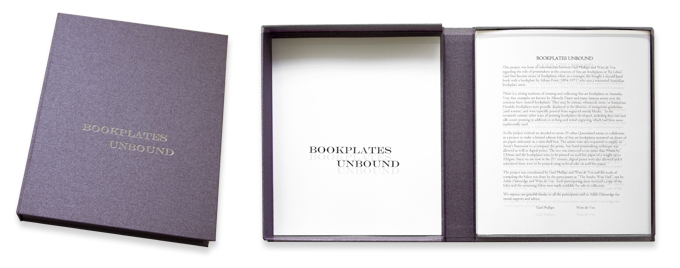
“Bookplates Unbound” limited edition set (two views) Photos: Doug Spowart
Into this bookplate space a new and ambitious project is set to provide a contemporary view of the bookplate by Queensland artists. The project, entitled Bookplates Unbound, was inspired by conversations between artists Gael Phillips and Wim de Vos around the role of printmakers in the creation of fine art bookplates. The details of the Bookplates Unbound are as follows (from the frontpiece):
As the project evolved we decided to invite 29 other Queensland artists to collaborate in a project to make a limited edition folio of fine art bookplates mounted on sheets of art paper, unbound, in a clam shell box. The artists were also requested to supply an Artist’s Statement to accompany the prints. Any hand printmaking technique was allowed as well as digital prints. The size was restricted to no more than 90mm by 130mm and the bookplates were to be printed on acid free paper of a weight up to 100gsm. Since we are now in the 21’t century, digital prints were also allowed and, if submitted, these were to be printed using archival inks on acid free paper.
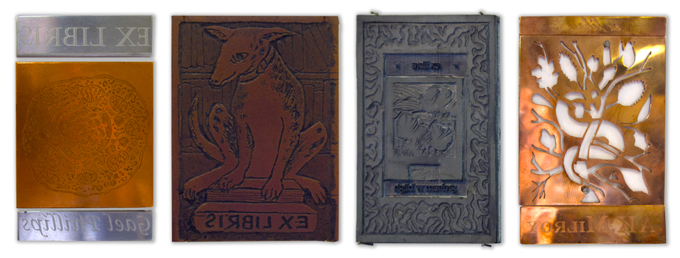
Some of the ‘Bookplates Unbound’ printing plates Photo:Doug Spowart
The Bookplates Unbound set of bookplates is a limited edition production with each artist receiving a copy. The remaining copies will be made available to collectors. The coordination of the project was undertaken by Gael Phillips and Wim de Vos at The Studio West End and was supported by Adele Outteridge.
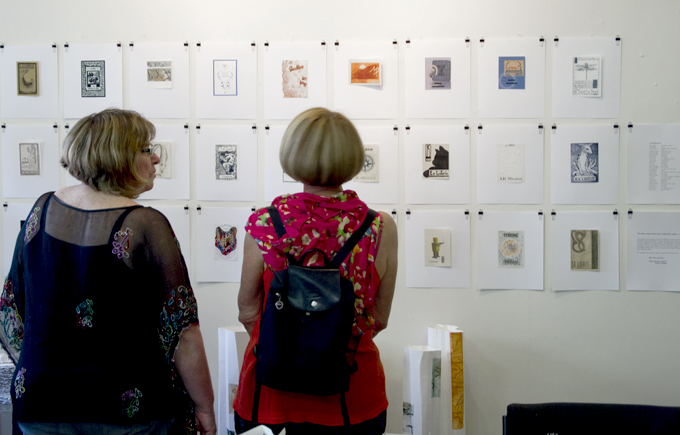
‘Bookplates Unbound’ wall @ The Studio West End Photo: Doug Spowart
Anne Jolly, of Novel Lines Bookshop, launched the Bookplates Unbound set at a special event at The Studio West End on November 24. Accompanying the launch was an exhibition of artists books from friends of Studio West End that was opened by Helen Cole, Senior Librarian, State Library of Queensland. Wim de Vos also gave the audience a performance of two new tunnel books, one on Venice and the other referencng the Chrysler Building in New York that he has created [SEE the video in this post]. The openings concluded with a musical 6 song set by ‘Rock and Roll’ impresario Wim and fellow band members Neil Anderson and Robin Webb [SEE the video in this post].
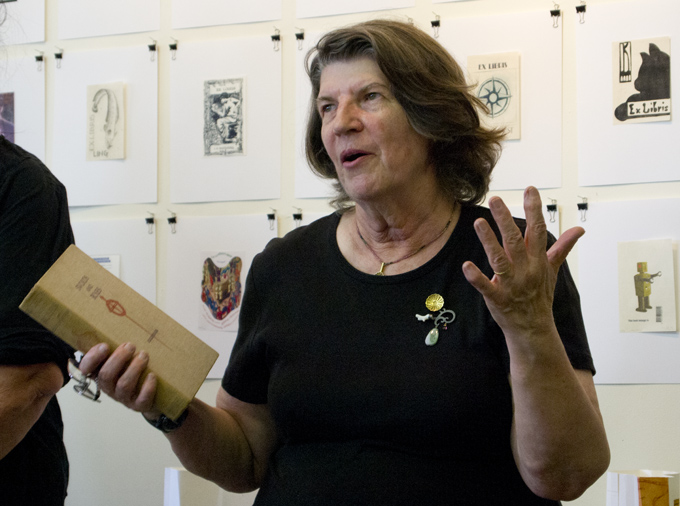
Gael Phillips talks @ ‘Bookplates Unbound’ launch Photo: Doug Spowart
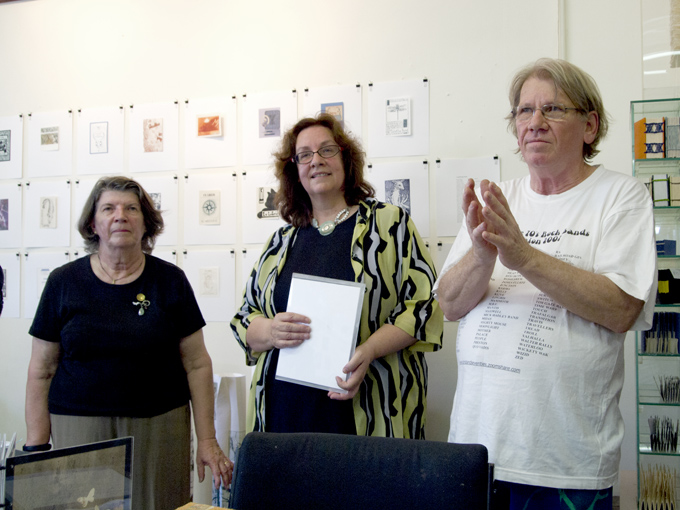
Wim and Gael thank Anne Jolly Photo: Doug Spowart
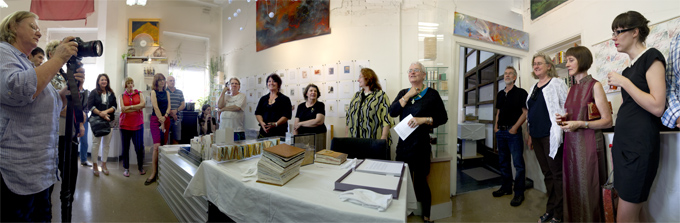
Helen Cole opens the Studio West End artists book show Photo: Doug Spowart
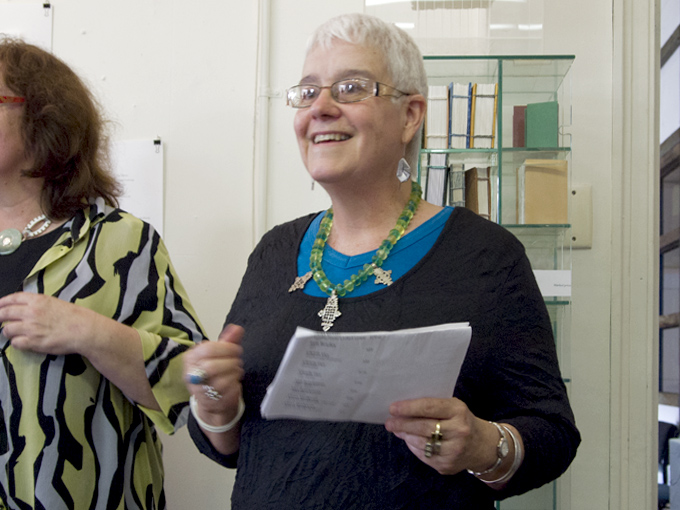
Helen Cole opens the Studio West End artists book show Photo: Doug Spowart
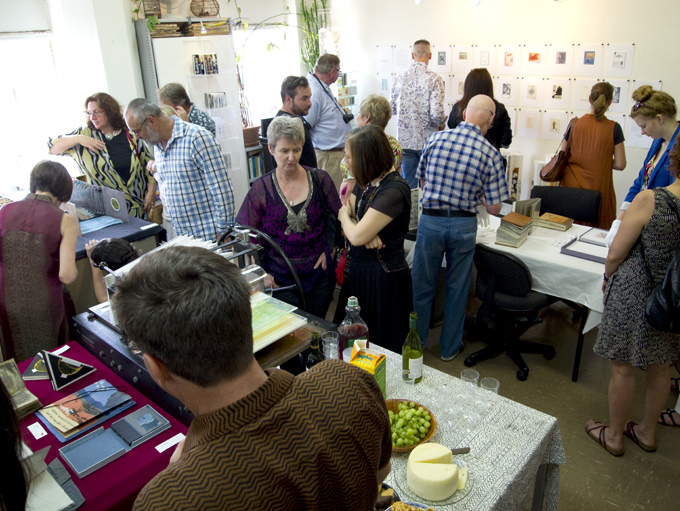
Studio West End artists book show Photo: Doug Spowart
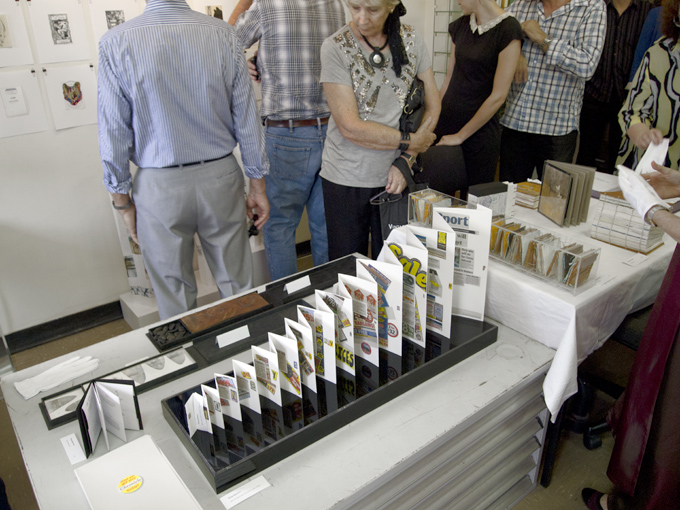
Studio West End artists book show Photo: Doug Spowart
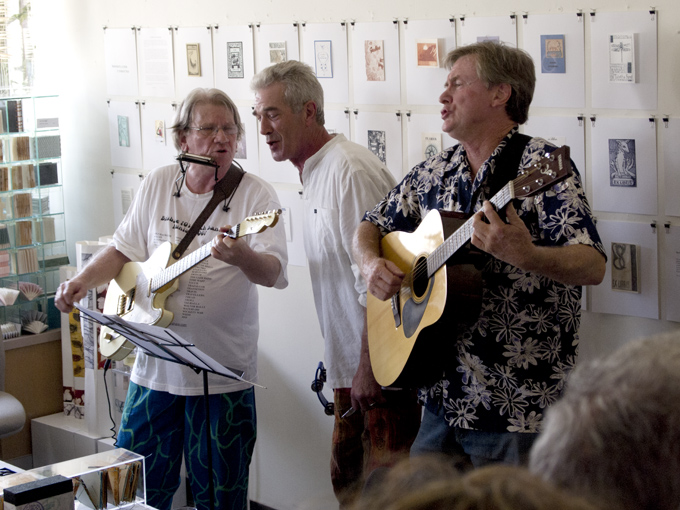
The Band – Wim, Robin Webb and Neil Anderson Photo: Doug Spowart
The contributing artists to the Bookplates Unbound and their respective print media are:
Janette Bailey Line etching / aquatint
Graham Bligh Linocut
Susan E Bowers Sugarlift etching and embossing
Victoria Cooper Digital print
Geraldine Connolly Soft ground etching
Philomena Drake Etching / aquatint
Malcolm Enright Digital print
Barbara Heath Digital print
Tabitha Ford Line etching
Lynne French Line etching and relief roll
Teresa Jordan Digitised linocut
Jeraldene Just Line etching
Sharon Lee Digital print
Chris Ling Line etching
James McDougall Photo etching
Julanne McDougall Photo etching
Fiona Medhurst Line etching and rubber stamp
Karla Meursing Linocut
Anita K Milroy Three hand pierced plates, line etching and embossing
Katharine Nix Lino etching
Adele Outteridge Line etching
Gael Phillips Line and photo etching on three plates
Pip Reid Line aquatint etching
Anneke Silver Engraved lino print
Doug Spowart Digital print
Stephen Spurrier Digital print
Madonna Staunton Wood cut and rubber stamps
Jonathan Tse Screen print
Geoff Thompson Line etching
Wim de Vos Line etching on four plates
Sheryl Whimp Open bite etching
.
.
The Colophon for Bookplates Unbound
This Edition consists of forty copies, of which this is number 11
The bookplates were mounted on acid free cartridge paper and the cover titles embossed in “Times New Roman”. The font used for the Artists’ Statements was “Centaur”, designed by the late Bruce Rogers. The clam shell boxes were made by a craftsman bookbinder, Tony Gibaud at “Craftsmen Bookbinders”, Geebung, Queensland, who also made the blocks for the cover, spine and title page to a design by Gael Phillips and Wim de Vos. The text was printed by Drawing & Drafting Digital, Bowen Hills, Queensland.
The copyright of the bookplate images is retained by the individual artists.
ISBN: 978-0-646-59203-9
Published by Alumni Publishers
© 2012 Brisbane
•
OUR BOOK in the show ‘Lessons in History Vol. II – Democracy’ grahame galleries
The Cooper+Spowart book Art is always the best policy, is included in the grahame galleries exhibition Lesson in History Vol. II – Democracy curated by Noreen Grahame. The book is a tounge-in-cheek commentary on democracy and the artist and is published as part of the Centre for Regional Arts Practice – Artists Survey books. The artist’s statement for the work is as follows …
.

Cover: Art is always the best policy
.
ART IS ALWAYS THE BEST POLICY
Recent democratic debate in Australian politics has been apprehended by special interest lobby groups. It is now time for artists to stand up and be vocal to capture their share of the political scene.
This policy booklet presents the Regional Artists for Government Election (R.A.G.E.) campaign and its political demands. The R.A.G.E. policies at first seem flippant and glib, however, as we have experienced in contemporary politics, the absurd can, with the right ‘spin’ and ‘media cycle’, become plausible – in fact, even highly appealing to the voters, leading to positive opinion polls and success at the ballot box.
SUPPORT R.A.G.E. – Join the Art Revolution Today.
The edition of the book is 25 with 5 artist’s proofs. Copies of the book can be purchased from grahame galleries for $25 + packaging and post.
A video performance of the book is available here …
.
..
GRAHAME GALLERIES: Lessons in History Vol. II – Democracy
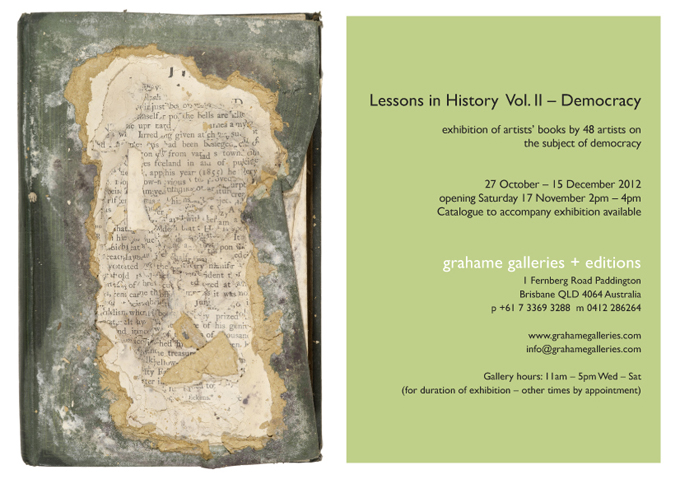
In an otherwise drought of artists’ book activity in Brisbane the opening of the much awaited exhibition at grahame galleries Lessons in History Vol. II – Democracy provided a welcome spike in calendar. In one brief afternoon there was the opportunity to be swept up in a deluge of books and book people. This is a the democratic camera view of the event …
A catalogue is available for viewing at the gallery’s website HERE. A print catalogue featuring each book is available from the gallery as well.
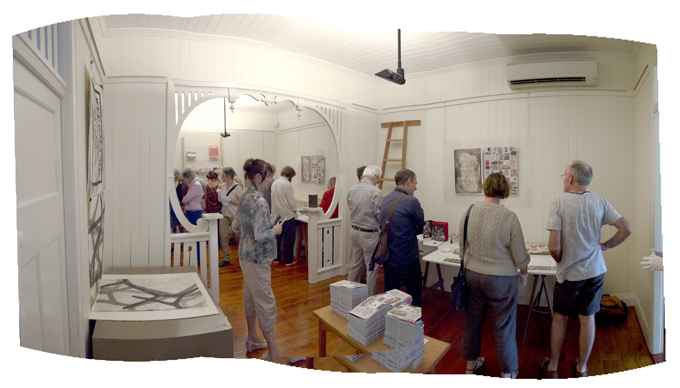
grahame galleries panorama
.
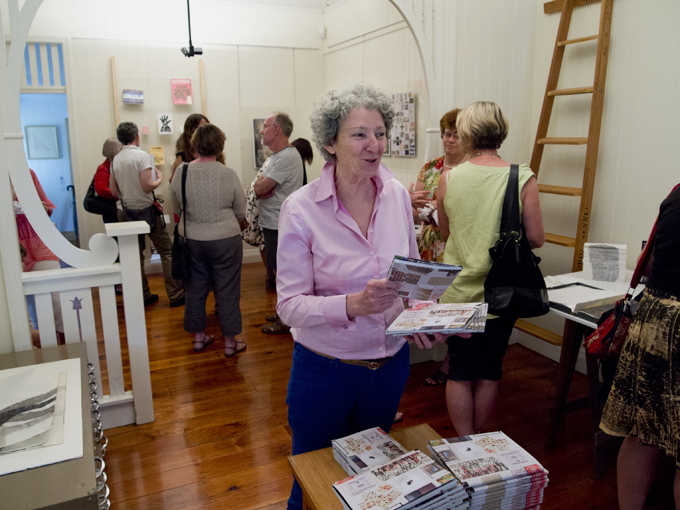
Noreen Grahame and the catalogue
.
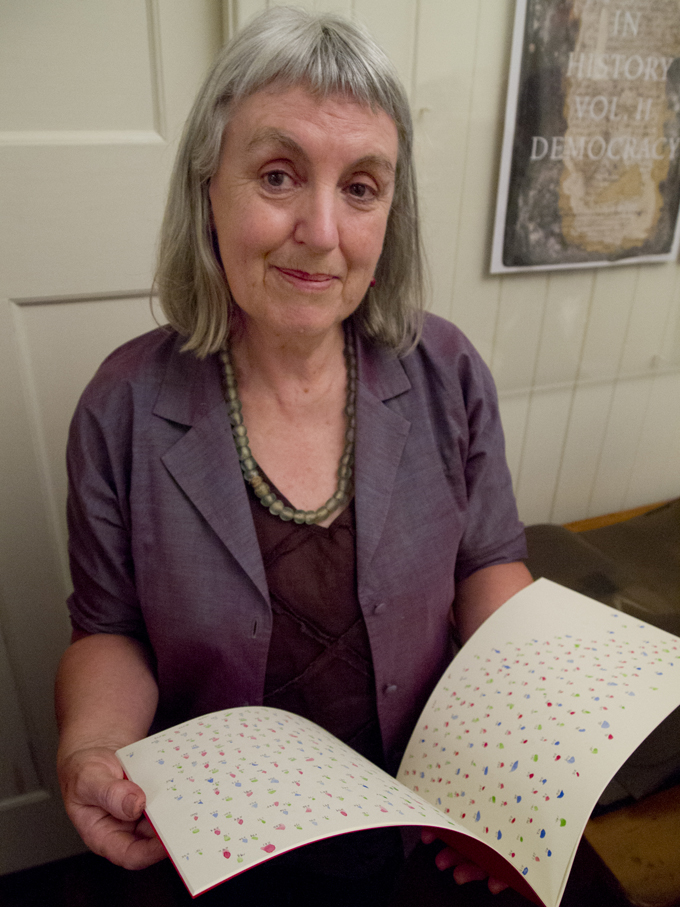
Jan Davis and her book Democracy Counts
.
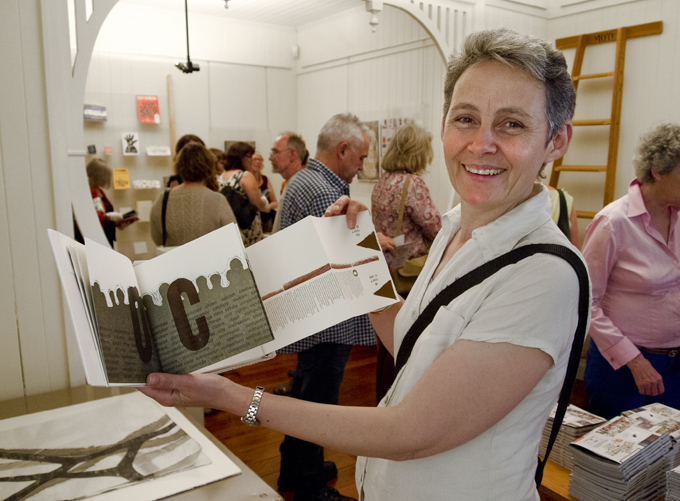
Monica Oppen and her book Dare to VOTE!
.
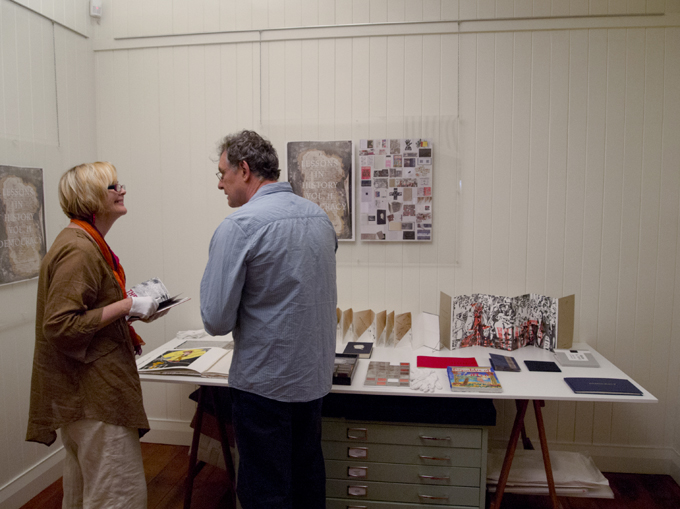
Anne Kirker and Ron McBurnie discussing books
.
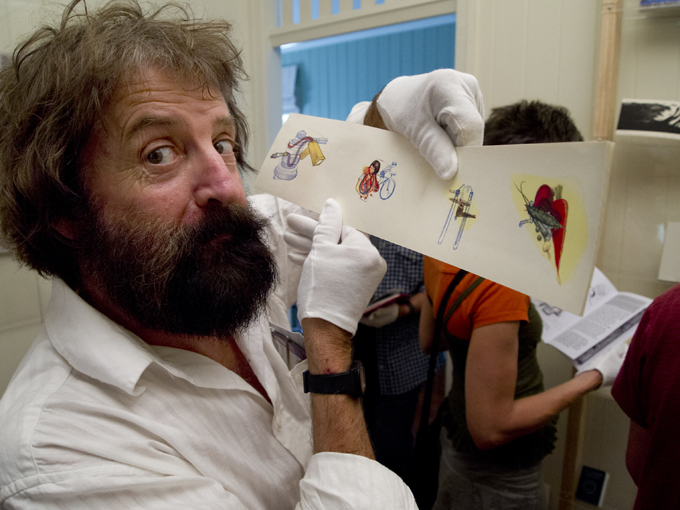
Stephen Spurrier and his book Canaries for Democracy
.
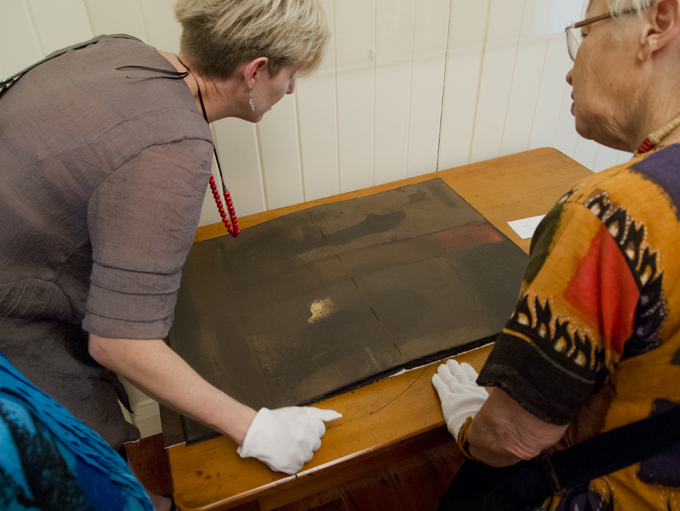
Looking @ Glen Skien’s Atlas 1
.
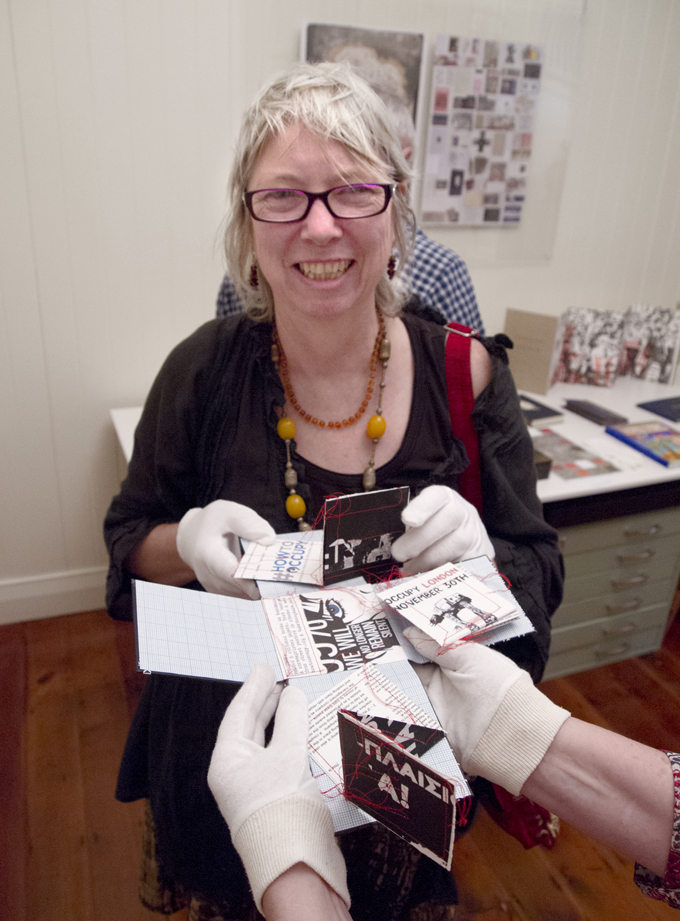
Heather Matthew and her book Occupy
.
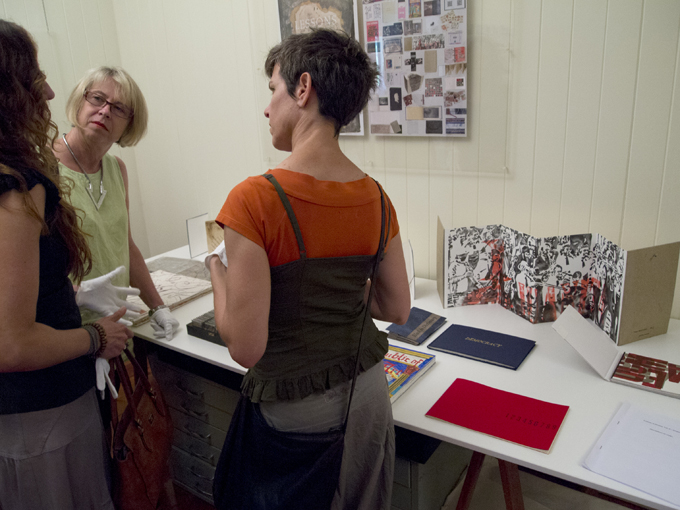
Discussing Democracy books
.

 wotwedid
‘BOOKPLATES UNBOUND’: The Cooper+Spowart contribution
leave a comment »
Here are our contributions to the Bookplates Unbound project – SEE previous post for details
.
VICTORIA COOPER: ex libris, dedicated to Dr Dorothy Shaw
Victoria Cooper’s Bookplate
A statement about this work…
To many of her colleagues Dorothy was enigmatic and modest about her personal and past life. Under the surface of this quiet and reserved nature, she had an inquiring, creative mind. I always found her willing to venture into the unchartered territory of the imagination, while still grounded in the everyday physical world.
Dorothy also had distinct methods of working: I could always count on her typewritten notes clearly outlining for me the information on her specimens intended for deposit into the Plant Pathology Herbarium. These typed notes may seem a standard communication—but Dorothy used a typewriter, similar to the old black 1940s Imperial machine. It seemed that this was an idiosyncratic protest against the unwanted aspects of the digital paradigm invading her world. It must be noted that although Dorothy did not utilise aspects of digital communication, she was readily accepting of the digital world. Dorothy not only embraced fully the digital art I was creating but she also recognised the important role of digital technology and work practices necessary in contemporary scientific research.
In the visual work for my PhD—involving fresh water aquatic fungi—I consulted Dorothy’s considerable knowledge on these organisms. Our exchanges were creative and fertile, inter-relating knowledge and concepts from both science and visual art. The designs and patterns in this bookplate were selected from a collection of microscopic photomicrographs of aquatic fungi I created for the visual component of my PhD. I also chose the typeface Courier, for the bookplate to reflect the typewritten notations that were emblematic of Dorothy’s recordings.
Dorithy is passed away now and although I did not get to see her library, I am sure it was diverse, interesting and informative. I am equally confident that she would have a manually typed (non-digital) catalogue and reference list for each book. From these connections and perceptions of this creative, dedicated scientist, I created this bookplate—I have made it to evoke the life of Dorothy Shaw as a Library: one full of mystery, knowledge, life’s challenges and experiences.
Victoria Cooper
.
DOUG SPOWART: A homage to a Walter Benjamin comment about book collecting
Doug’s Bookplate
.
A statement about this work…
In Walter Benjamin’s 1931 essay, Unpacking My Library: A Talk About Book Collecting, I found a discussion that echoed my desire for accumulating books and their assembly into a personal library. In the text Benjamin shares his love of the process of: finding, acquiring books, building a library, and what it means to possess books—many of them.
In this bookplate I make reference to Benjamin’s comment that a collection may include books from other libraries that were loaned and never returned. This covert act has historically been something I’d encountered from others who did not return books. After a time, if I approached the borrower seeking the book, their usual response was the denial of ever borrowing the volume – or – that it had already been returned.
I cannot deny that I too have lusted after books seen in private libraries, books in bookshops and catalogues that I could never afford, or books held in institutional repositories. I have thought, like Benjamin, of borrowing and then never giving them back.
However this bookplate* is pure fantasy and not an admission of guilt. It is my commentary on Benjamin’s proposition in the form of a modified bookplate to indicate the changed ownership, dubious provenance as well as a signifier of obsessive possession.
Doug Spowart
* I must acknowledge that I do have a book in my library that is stamped ‘The Kodak Technical Library’ over which is confidently signed ‘Julian Smith’. And there are annotations and marginalia in the same pencil that are indicators of Smith’s provenance. I bought the book from a respectable Melbourne bookseller in 2002.
Share this:
Written by Cooper+Spowart
December 24, 2012 at 3:35 am
Posted in Doug Spowart, Exhibitions, Victoria Cooper
Tagged with aquatic fungi, Australian bookplate artists, Bookplates, Bookplates Unbound, comments about book collecting, Dr Dorothy Shaw, Walter Benjamin