Archive for the ‘Artists Books’ Category
VICTORIA’S SLQ BLOG POST – Montage Research
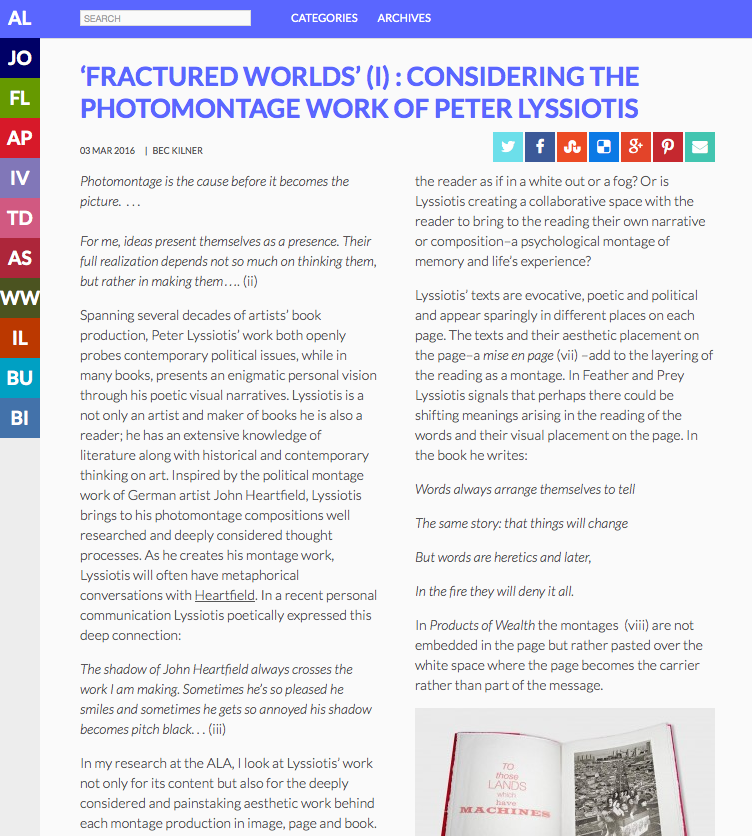
http://blogs.slq.qld.gov.au/ala/2016/03/03/fractured-worlds-i-considering-the-photomontage-work-of-peter-lyssiotis/
.
Recently Victoria’s ongoing research on the topic of montage in artists’ books was published. This paper discussed Peter Lyssiotis’ work and the use of photomontage.
.
‘Fractured Worlds’ (i) : Considering the photomontage work of Peter Lyssiotis
.
Photomontage is the cause before it becomes the picture. . . .
For me, ideas present themselves as a presence. Their full realization depends not so much on thinking them, but rather in making them…. (ii)
Spanning several decades of artists’ book production, Peter Lyssiotis’ work both openly probes contemporary political issues, while in many books, presents an enigmatic personal vision through his poetic visual narratives. Lyssiotis is a not only an artist and maker of books he is also a reader; he has an extensive knowledge of literature along with historical and contemporary thinking on art. Inspired by the political montage work of German artist John Heartfield, Lyssiotis brings to his photomontage compositions well researched and deeply considered thought processes. As he creates his montage work, Lyssiotis will often have metaphorical conversations with Heartfield. In a recent personal communication Lyssiotis poetically expressed this deep connection:
The shadow of John Heartfield always crosses the work I am making. Sometimes he’s so pleased he smiles and sometimes he gets so annoyed his shadow becomes pitch black. . . (iii)
In my research at the ALA, I look at Lyssiotis’ work not only for its content but also for the deeply considered and painstaking aesthetic work behind each montage production in image, page and book. In his statement in Products of wealth (cited in the epigraph) he discloses how the power of the work is developed through the making. It is this Material Thinking (iv) process that informs my ‘reading’ of the artists books I have chosen to engage with in this research. All artists’ books are invested with rich imagery drawn from the artist’s mind and hand, including computer or photo-mechanically generated and composed narratives.
As a reader of these books I now hold the object that represents the time spent problem solving, the years of knowledge in making and working with materials, the conceptual development of all elements that is the book–whether simple or complex, the aesthetic choices for image, page and text design, the many small or big decisions that are embodied in this work of art that is made to be held and considered by a reader. My challenge now is to find a way to share these insights with you as a distant reader who is unable to take in the necessary sensory and haptic experience of reading these works of art. In this blog I share my ruminations and questions that inspire me to read and read again many times these books of wondering and wandering, which are deeply poetic and sometimes melancholic.
I chose, Feather and Prey, for the deeply considered and poetic use of the page; the balance and arrangement of image, text and white space. Alternatively, Products Of Wealth has politically motivated photomontage prints tipped-in or glued onto the page. These are two very different ways of composing a narrative with photomontage and text and ultimately presented two different experiences for reading the montage.
Feather and Prey is bound in black leather with details of red leather on the spine and embossed images on the front and back covers.

These embossed images at the beginning and end importantly announce that the reading starts from the cover rather than from inside the book. Along with this distinctive book binding, the use of fine art papers and considered printing processes, suggests a reverence in the reading of each page.
The photo-elements in Lyssiotis’ montage narratives are no longer records of reality but now have emerged, through a process of poiesis, as visual codes with a new life and purpose:
In these images giant moths are nibbling away at the perfect mechanical reproduction that photography promises. They don’t rely on the traditional borders of a photograph to tell them when to start and where to finish. They don’t want to be a photograph; they would prefer to be maquettes for pieces of sculpture. (v)
These new hybrid images create a disturbance within the familiar routine of everyday practice and present an alternate way of perceiving and referring to the world. The visual semiotics of reality that photography represents is now channeling through montage–new spaces for imagining–a poetics of dreams.
But what characteristic does Lyssiotis identify in each element as he carefully separates them from their original contexts? Does this question really matter, as each fragment will be transformed having little relationship to its origin. These montaged elements are then fused together perhaps as a metaphorical act of transcendence and then placed or montaged within the page.
These fragments of images and text strategically appear across the white space in the book. In a short exegetic essay or artist’s statement on this book Lyssiotis discusses his intention for the white space in the book:
The white spaces here constitute something unassuming: a whiteness more like a whisper; something neutral.
In the whiteness there are things the photographic paper has not been allowed to reveal; these are not omissions, they are commissions … of sins, failed intentions, of habit. (vi)
I turn the pages and they ‘whisper’ of something hidden where only hints and clues are allowed through as the photomontage emerges through the white space. A cherub holds a curtain rope that reveals a narrow view of the sky behind.

Does the white space hide knowledge from the reader as if in a white out or a fog? Or is Lyssiotis creating a collaborative space with the reader to bring to the reading their own narrative or composition–a psychological montage of memory and life’s experience?
Lyssiotis’ texts are evocative, poetic and political and appear sparingly in different places on each page. The texts and their aesthetic placement on the page–a mise en page (vii) –add to the layering of the reading as a montage. In Feather and Prey Lyssiotis signals that perhaps there could be shifting meanings arising in the reading of the words and their visual placement on the page. In the book he writes:
Words always arrange themselves to tell
The same story: that things will change
But words are heretics and later,
In the fire they will deny it all.
In Products of Wealth the montages (viii) are not embedded in the page but rather pasted over the white space where the page becomes the carrier rather than part of the message.

These images become windows–looking into a montage hybrid world that may seem alien to us but paradoxically it is of us. Looking into the space of the image–rather than the page as in Feather and Prey–I am transported to a place where there is no space left to think… claustrophobic. The view shows the reader terrifying and perhaps even diabolic territories for consideration and reflection.
The edition consists of six separate books stored and presented in a bespoke box.

The books are bound using the simple pamphlet style, perhaps referencing the tradition of the political publication. The covers of the books are red and the box is covered in red and black cloth again suggesting the political nature of the reading. As I read, I notice that the 3D relief pattern of the letterpress texts (ix) seems to bite emphatically into the paper. Lyssiotis’ choice of font styles along with the red and black font colours also adds to the political tone that is invested in the photomontages and the binding. In book 6, Lyssiotis writes about the montage:
In these montages, the planet isn’t about to explode; the explosion has already happened. What is left is a fractured world
Finally, I find it interesting to note that these books were produced in the same year, 1997, and yet each have quite different approaches to the montage of image, text and page. Can these differences point to a deeper comprehension of the value in and values of visual reading? In this kind of reading the psychology and memory of the reader can be engaged in the transference of something more than knowledge and information.
So is the montage a space for questions rather than answers? Reading these artists’ books is in some way also a montage where the visual narrative and the artistic intention is adapted and interpreted by the memory and mind of the reader. Perhaps the nature of the montage hybrid including the page could be comprehended in terms of gestalt. As it is greater than the individual parts–the montage can be a holistic comment or reflection on the cultural and human questions of its historical location.
Victoria Cooper PhD
Feb 2016
(i) Peter Lyssiotis, 1997, The Products of Wealth, Book 6: Political Photomonteurs Can Give You The Courage To Eat Bricks, Masterthief Enterprises, Melbourne.
(ii) Ibid.
(iii) Handwritten note sent by email to the author, February 23 2016. In this note, Lyssiotis presents an evocative and intriguing discussion on the montage works in his books Feather and Prey and The Products of Wealth. Although seemingly a dialogue between himself and Heartfield, it is more a self-critique informed by the Heartfield polemics and the political montage. This note will be published in full with the permission of Peter Lyssiotis in a future article I am writing on his work.
(iv) As presented in: Paul Carter 2004, Material Thinking, Melbourne University Publishing Ltd, Melbourne. In many ways this book is a philosophical discussion on the work and methodology of the artist including: the interaction with their materials, the intellectual nature of the artists’ visual research and their resulting art.
(v) In the ALA original Materials Archive there are several boxes of Peter Lyssiotis papers. This quote is cited from unpublished writing discussing his book “Feather and Prey” Call Number: item #29358/3 box # 13331.
(vi) ibid.
(vii) This references the mise en scène in cinema theory.
(viii) The montages are black and white archival fibre-based silver gelatin photographic prints where Lyssiotis worked with Robert Colvin to print for this publication.
(ix) Texts were handset and printed by Nick Doslov, Renaissance Bookbinding
ADVANCE NOTICE: COOPER+SPOWART @ AIPP Brisbane ‘Hair of the Dog’ Conference

Hair of the Dog header
On the 6th of February we will be presenting a breakout session at the annual AIPP Hair of the Dog Conference in Brisbane. Our presentation, entitled OPENING-UP THE PHOTOBOOK will provide a commentary on the contemporary photobook/artists book. Our spiel from the HOTD website states:
The photobook has emerged as a ubiquitous form of story telling. Now everyone makes these books to varying levels of expertise. Photobooks and albums have always been the domain of photographers. To maintain their leadership and innovation in this discipline, professional photographers need to be aware of the options available and emergent trends in the photobook. This Breakout session will present a contemporary view of the photobook in all its forms from simple photo-zines to print-on-demand productions and handmade artisan books.
We will be giving attendees a digital presentation to introduce the topic and a major show ‘n’ tell session will follow that will unpack the contemporary photobook/artists’ book. The books presented will come from our collection including some of our own works. A special part of this session will be inclusion of books from Australia’s best print on demand service providers ASUKABOOK, BLURB, MOMENTOPRO and PICPRESS who have given us examples of their most innovative books.
As a result of this session participants will be able to consider innovative and new commercial publishing products that will provide them with a point of difference from competitors and the general public.
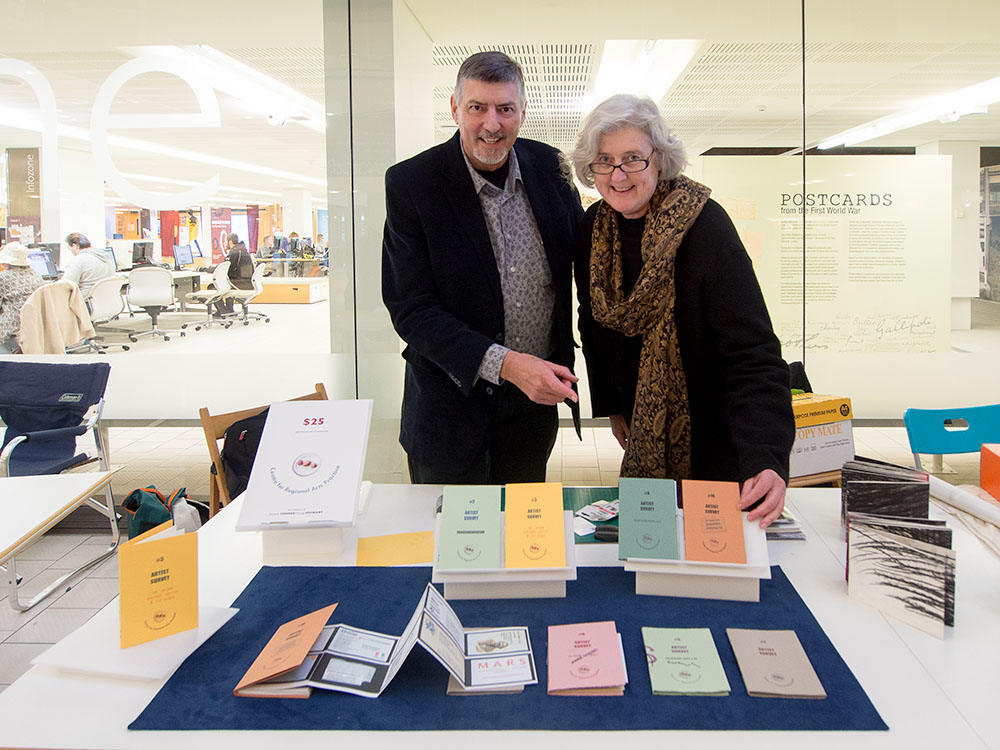
Doug Spowart and Victoria Cooper at the State Library of Qld’s 2015 Art Book Fair
.
Victoria Cooper and Doug Spowart are leaders in the fields of photobooks and artists’ books. Their books are held in major rare books and manuscript collections of the National Library of Australia, State Libraries and other significant public and private collections. In the last 10 years both have completed PhDs that related to the book and visual storytelling. They have both been awarded Research Fellowships at the State Library of Queensland. In the last 12 months Doug has presented lectures on photobooks at Photobook Melbourne, the Ballarat International Foto Biennale and the Auckland Festival of Photography.
FOR MORE INFORMATION VISIT:
http://www.hotd.aippblog.com/index.php/speakers-2016/doug-spowart-victoria-cooper/
PRICING INFORMATION:
Earlybird Rates (End January 15th, 2016)
AIPP Member 2 Days plus the Business Masterclass on Monday – Early Bird $420 After Early Bird $520
AIPP Member 2 Days Only (Sat & Sun) – Early Bird $290 After Early Bird $390
AIPP Member 1 Day (either the Sat or Sun) – Early Bird $200 After Early Bird $280
Student 2 Days plus the Business Masterclass Monday – $150
Student 2 Days (Sat & Sun) – $120
Student 1 Day (either the Sat or Sun) – $90
Non-Member 2 Days (Sat & Sun) – Early Bird $435 After Early Bird $585
Non-Member 1 Day (either the Sat or Sun) – Early Bird $300 After Early Bird $420

Hair of the Dog header
PERSONAL HISTORIES–Artists Books @ Uni of NSW–ADFA, Canberra
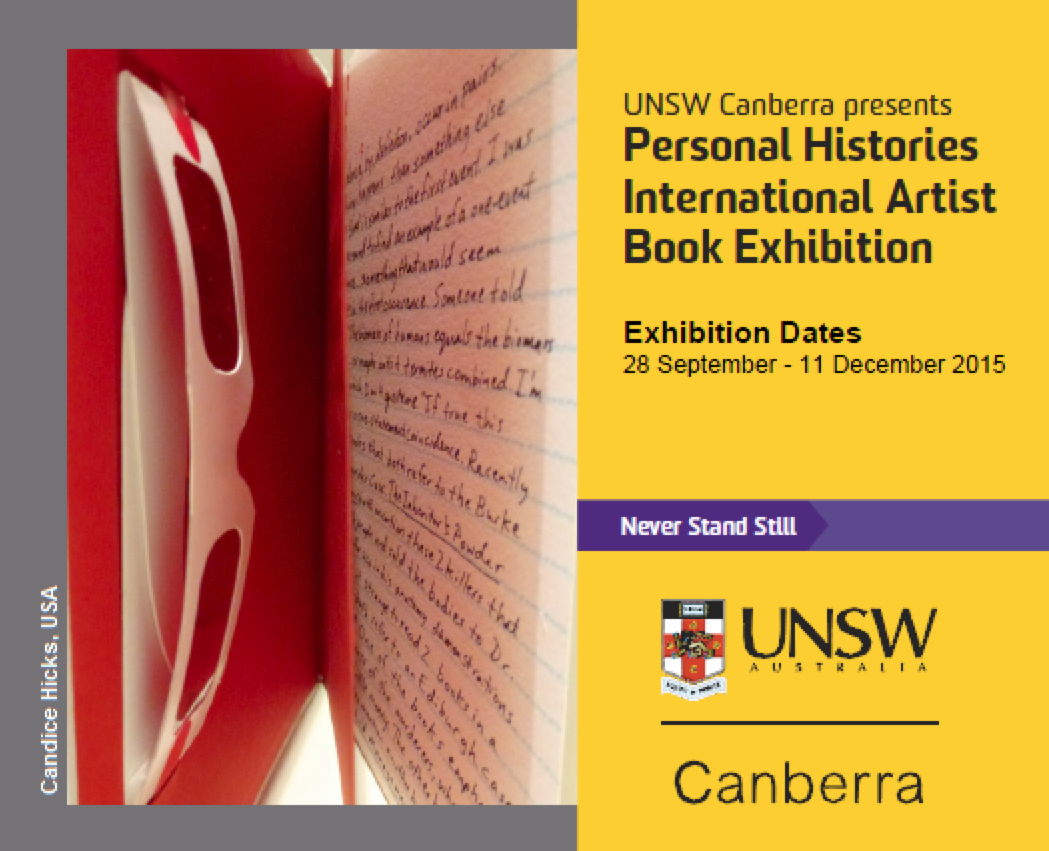
‘Personal Histories’ invite
To survive and work as an artist is a big enough challenge in this day and age–but for some that’s not enough. A few have dreams for fantastic extravaganzas and then commit themselves to the necessary problem solving and planning to bring these wild ideas into fruition. One such inspired individual is Robyn Foster who curated an international exhibition of artists books that was first shown at the Redland Museum, then Redlands Art Gallery. The show, Personal Histories was then traveled as a self funded initiative for the third exhibition at the University of NSW Library at ADFA in Canberra.
.
Ms Selena Griffith, Senior Lecturer in Design, UNSW Art & Design, officially launched the exhibition on the 1st October in Canberra and was attended by members of the local artists book community. We also attended the Canberra opening, viewed the exhibition and met some of the artists.
The exhibition is a curatorial masterpiece, the like of which is usually only undertaken by an institutional team! The works shown represent a wide gamut of practice from books that look and operate like books, to books as sculptural object. The books presented were made by every conceivable process and materials. Represented in the exhibition was every form of container for stories from codices, to concertinas and prosaic ‘ready-mades’. There is no resolution to the question ‘what is an artists book?’ as it continues to be challenged by the diversity and inventiveness of the works in this exhibition.
The stories in Personal Histories came from each artist’s life and experiences expressed through their creative art process. Through the intimacy of the book and the visual and haptic experience of reading, these personal narratives have the potential to be shared with those encountering these books in the future.
Congratulations Robyn Foster for curating and presenting this wonderful opportunity for us to experience the diversity of books by artists and the opportunity for these books to be seen.
Doug Spowart

Judy Bourke talking about her book ‘Born to life’ 2014. A tribute to Anne Murray.
A video of the exhibition showing a ‘fly through’ of some of the works as well as the opening address from Ms Selena Griffith and Robyn Foster’s response is available HERE:
.
.
FROM THE PERSONAL HISTORIES WEBSITE:
Bringing together artists from around the globe to share their own stories in artist book form.
Sharing similarities, diversities and individual perspectives.
Highlighting the dynamic world of artist books.
The Personal Histories International Artist Book Exhibition highlights the dynamic world of contemporary artists’ book practice, with contributing artists from over 16 countries who attempt to reconfigure and reignite our relationship with the book.
This exhibition intimately catalogues a perspective of individual life experience exploring various structures and content, with curator Robyn Foster inviting us to contemplate our evanescent relationship with books at a seminal point in history where technology has overtaken books as society’s primary information source.
A detailed website discussing the project, the exhibitions and the works can be found HERE
http://personalhistoriesartistbooks.weebly.com/
Some images from the event:
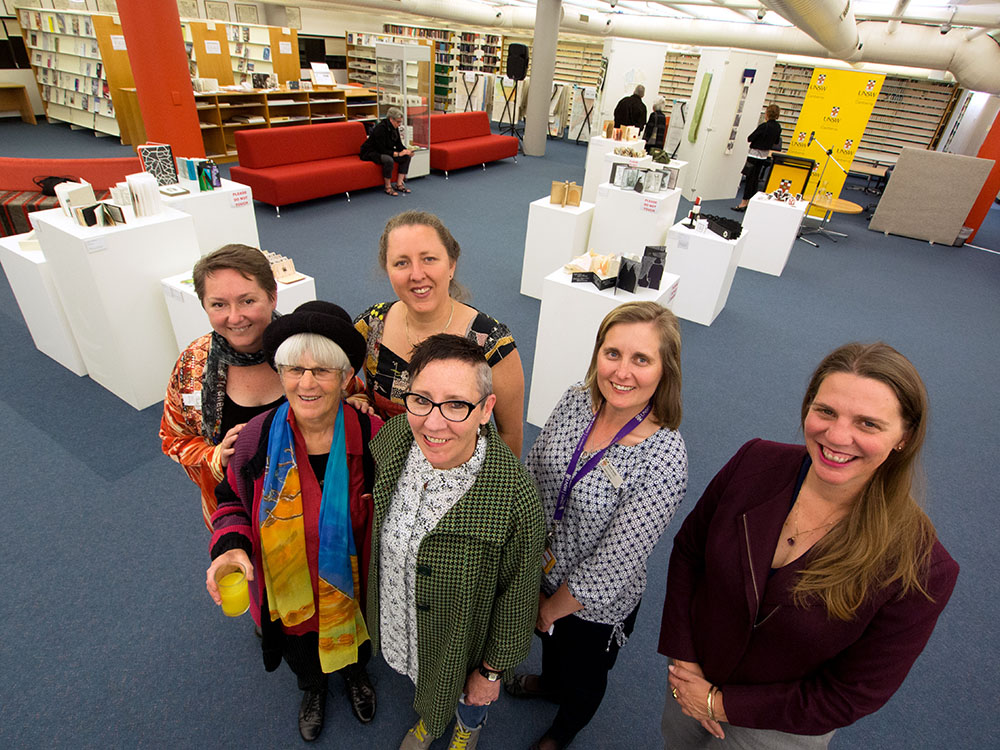
Robyn Foster, Judy Bourke, Selena Griffith, Tracie Toohey, Rachel Hunter, Lisa Morisset.

Tracie Toohey @ ‘Personal Histories’ opening Uni NSW, ADFA, Canberra.

Judy Bourke @ ‘Personal Histories’ opening Uni NSW, ADFA, Canberra.
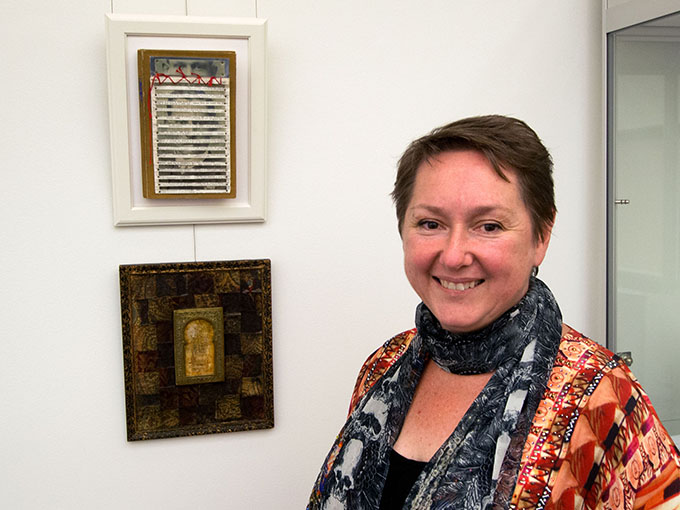
Robyn Foster @ ‘Personal Histories’ opening Uni NSW, ADFA, Canberra.
.
.
.
.
.
.
VICTORIA COOPER: Shortlisted for National Library Creative Fellowship
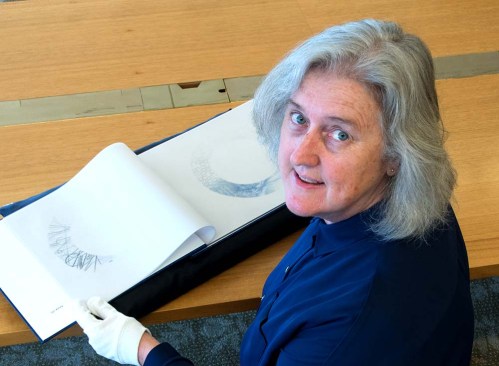
Victoria Cooper researching artists books
I was recently shortlisted for a Creative Fellowship at the National Library of Australia. Even though I was not successful in receiving the fellowship, this level of recognition for my project is very exciting. For a long time I have been dreaming about a project in which I can unleash the bunyip from its exile within the contemporary narrative of children’s books. Muzzled by anthropomorphism, this chimera of the dark swampy corners of Australia may seem to be docile and quaint, but I believe there is still a sublime wildness within–waiting to surface…..
This was my proposal for the National Library of Australia’s Creative Fellowship
The bunyip was once a feared monster of Australian waterways and swamps. In this project I ask: Where is this chimera of Indigenous and early colonial storytelling and myth to be found in contemporary life? Has this fearsome spirit been tamed through parody or clichéd as the mythical swamp creature found only in children’s storybooks or travel brochures?
Perhaps as Henry Rankine, of the Ngarrindjeri tribe in South Australia, proposes in Robert Holden’s 2001 book ‘Bunyips, Australia’s Folklore of Fear’:
‘So the Bunyip (the Mulgewongk) he is still in our Dreamings. He is still there today, just like we have fast jets in the sky, we still have got that fellow in the river’.
Through the opportunity provided by the Creative Fellowship, I had hoped to build upon preliminary research highlighted in my PhD[i] by engaging with the National Library’s substantial collection of material on the bunyip. I had intended to build a visual and textual resource to underpin my development of an alternative concept of the bunyip.
Ultimately this work would form the basis of creative visual narratives that are intended to challenge, re-imagine and re-establish a sense of wonder and respect for this arcane, sublime phenomenon.

Victoria Cooper’s artists book “Koolunga Bunyip” 2007 collected by the National Library
The Project Continues:
Strongly guided by the contemporary theory of Solastalgia[ii], both Doug and I plan to continue this research as an integral part of our individual and collaborative practice. Our Nocturne Projects and many bookworks are created in response to the current issues of living with this transforming human/nature relationship.
[i] My research project, I have witnessed a strange river, can be found online at James Cook University research online site: http://researchonline.jcu.edu.au/31799/
[ii] Solastalgia: the distress caused by environmental change
Glenn Albrecht , Gina-Maree Sartore, Linda Connor, Nick Higginbotham, Sonia Freeman, Brian Kelly, Helen Stain, Anne Tonna, Georgia Pollard Australasian Psychiatry Vol. 15, Iss. sup1, 2007
A DAY @ BALDESSIN PRESS STUDIO WITH SLV CREATIVE FELLOWS
.
A day at Baldessin Press Studio: The State Library of Victoria’s Creative Fellowships
.
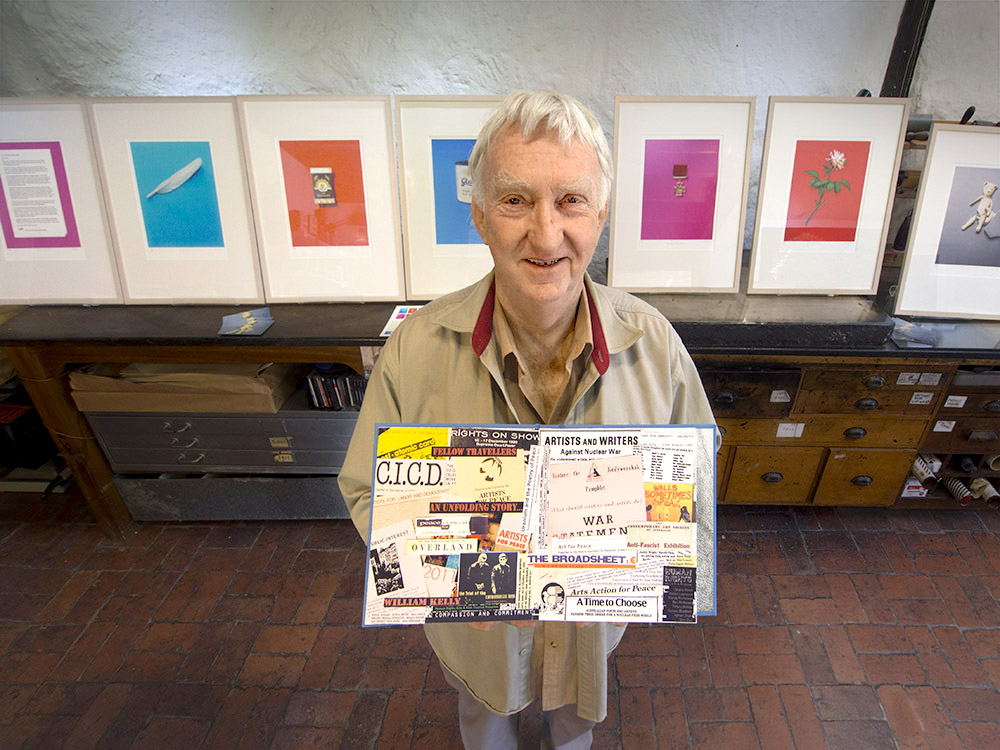
William Kelly, SLV Creative Fellow and Baldessin Press Studio Residency recipient
.
On September 27 a special event took place at the Baldessin Press Studio , St Andrews just northeast of Melbourne. The studio was built by George Baldessin who was a charismatic figure in the history of Australian art, especially in Melbourne in the 1970s. He had a brilliant career as a sculptor and printmaker, and was already considered an important figure in the history of Australian art at the time of his tragic accidental death in 1978 at the age of 39. The studio is situated in a bushland setting and is accompanied by a house and several buildings built by Baldessin and his wife Tess assisted by others including the Hails brothers.*
.
Baldessin’s passing put activity in the studio on hold for some years until Tess returned in 2001. Since then she has worked to re-ignite the creative potential of the place in George’s memory so that artists may continue to create in this special place and perpetuate his generous spirit.
Part of the program of the Press includes the State Library of Victoria’s The Baldessin Press Studio Residency that gives one of the SLV’s Creative Fellowship recipients working in any field the opportunity to create a body of work. The Residency may include accommodation, printmaking tuition, living expenses and some materials. The recipient will also have the opportunity to participate in a ‘Bon a Tirer’ event during the year to present their project to the Library, public, partners and other supporters. Artist Rick Amor generously supports the Baldessin Press Studio Residency.
.
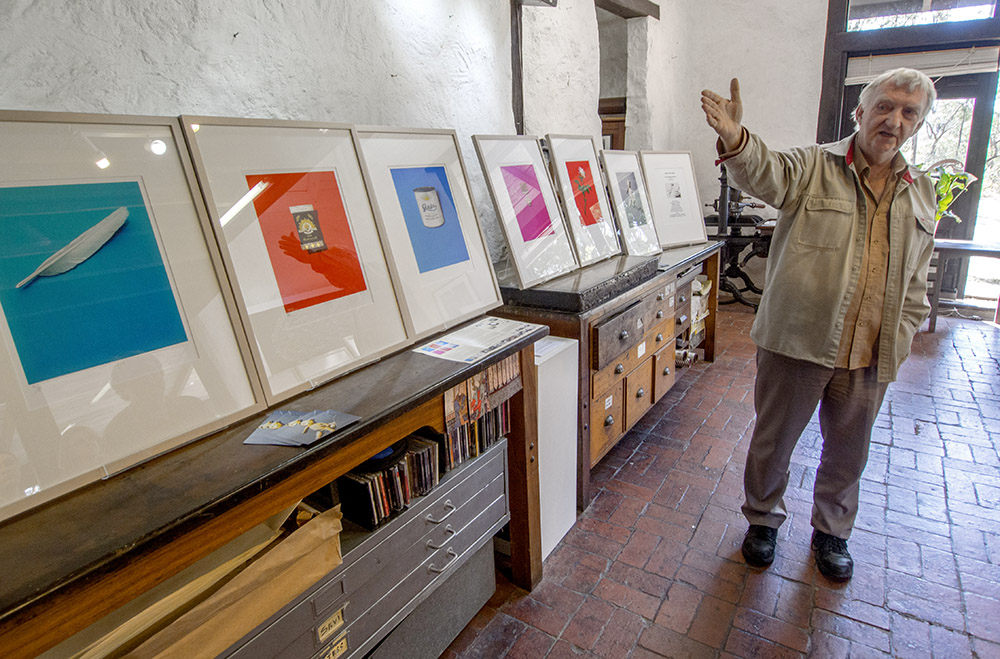
William Kelly, 2015 SLV Creative Fellow and Baldessin Press Studio Residency recipient
.
The 2015 Residency recipient was leading Victorian artist William Kelly a former Fulbright Fellow and Dean of the Victorian College of the Arts from 1975–82. His SLV research project dealt with Australian visual artists practicing between World War I and today, whose works have been informed by their beliefs about war and peace. His intention was to create an ‘accordion’ artist’s book – literally an unfolding story – that celebrated and connected the work of these artists*. In a comment about the body of creative work made as a result of the Baldessin Press Studio Residency Kelly was to say:
I have a profound belief that we can make this world be a better place but I don’t delude myself that it will, in any way, be easy. Art can play a part in this and artists can contribute to the larger debates about our future. I’ve been quoted as saying, “a painting will never stop a bullet but a painting (print, photograph, novel…) can stop a bullet from being fired”. These works, the “Baldessin Press Folio: Not in My Name” and the artist book “Fellow Travellers: An Unfolding Story” are testament to my belief in the power of the image. The first “Not in My Name” has images that refer to the ideas of courage, loss, innocence and unequivocally taking a stand.
.
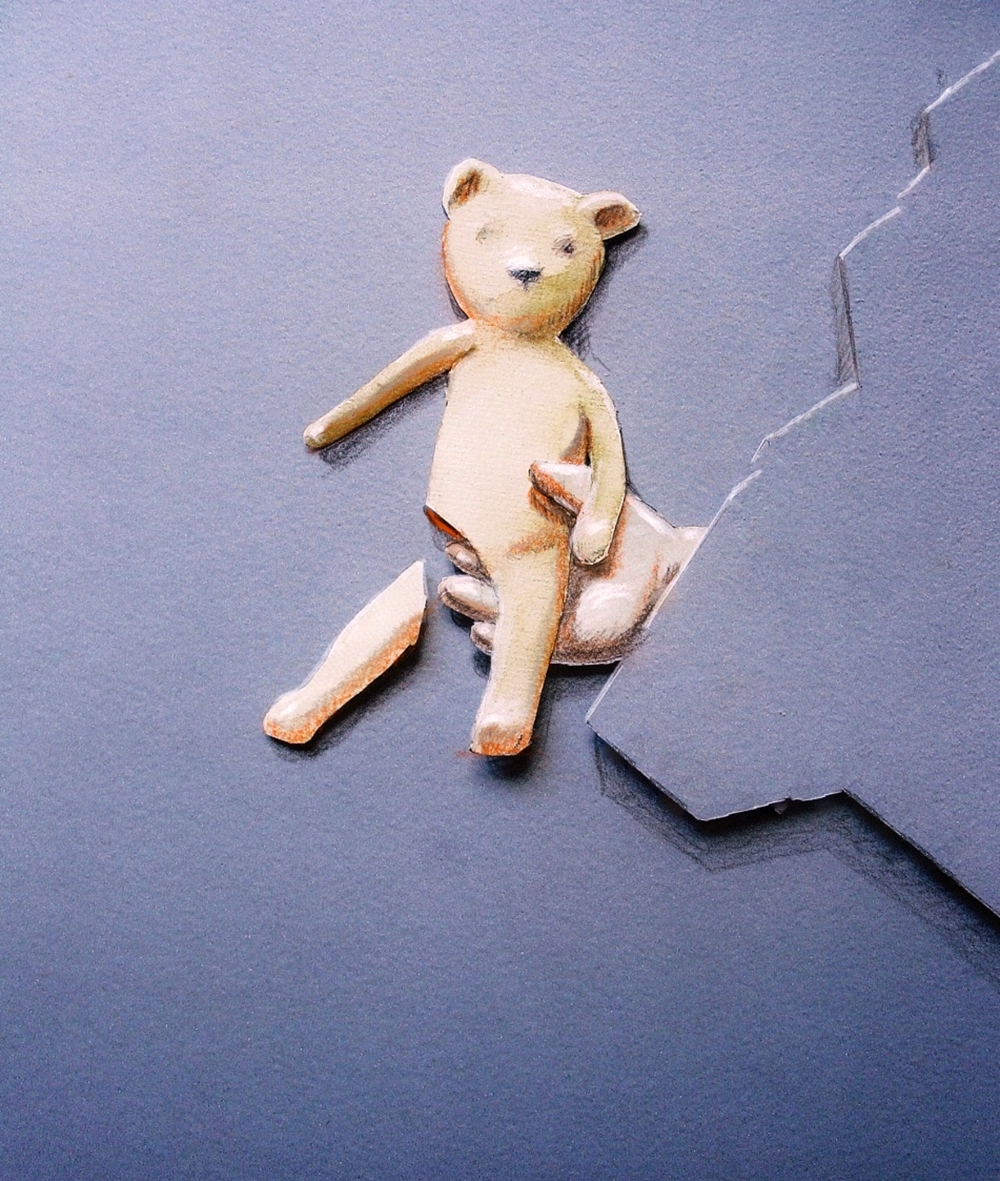
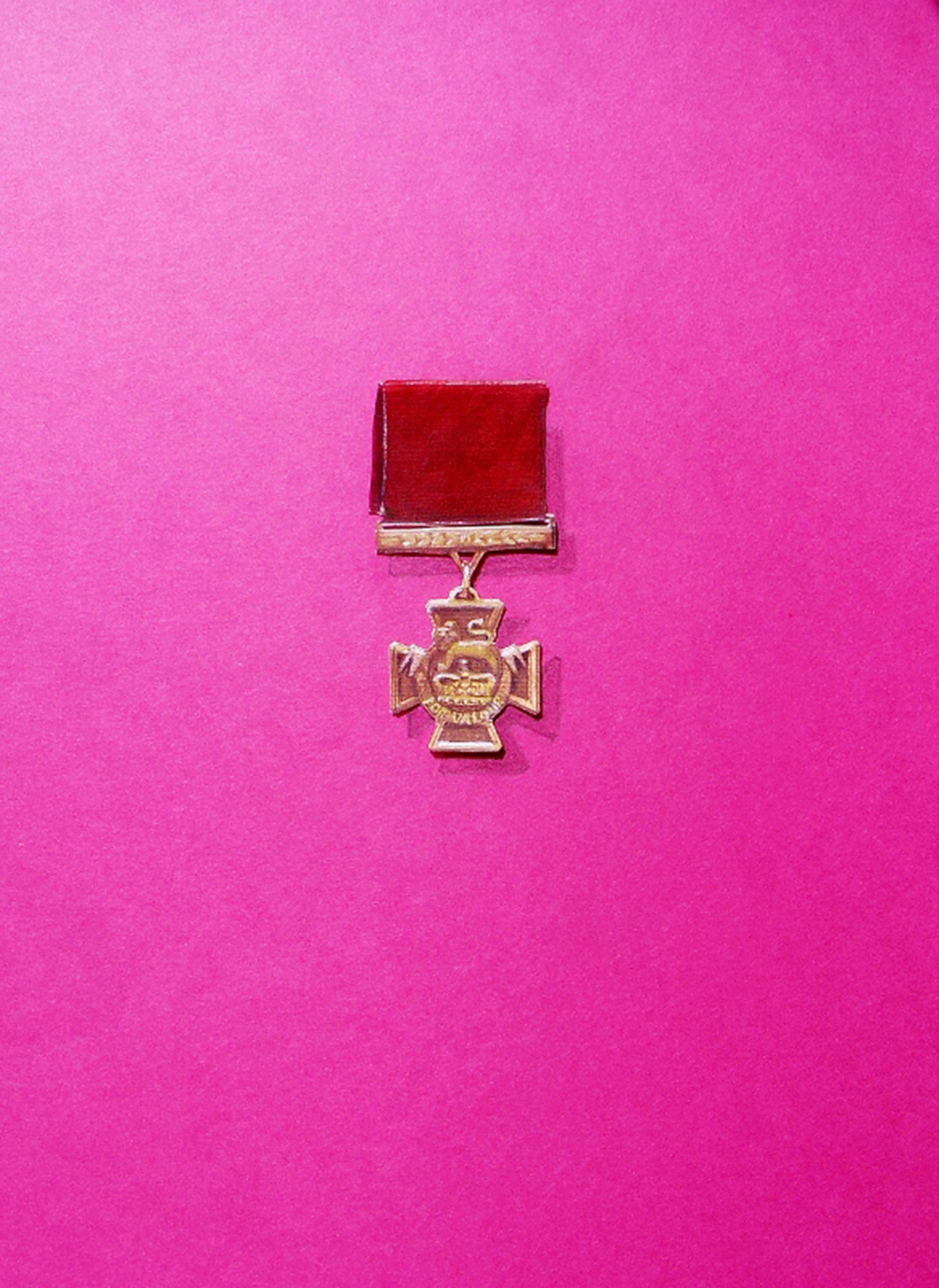
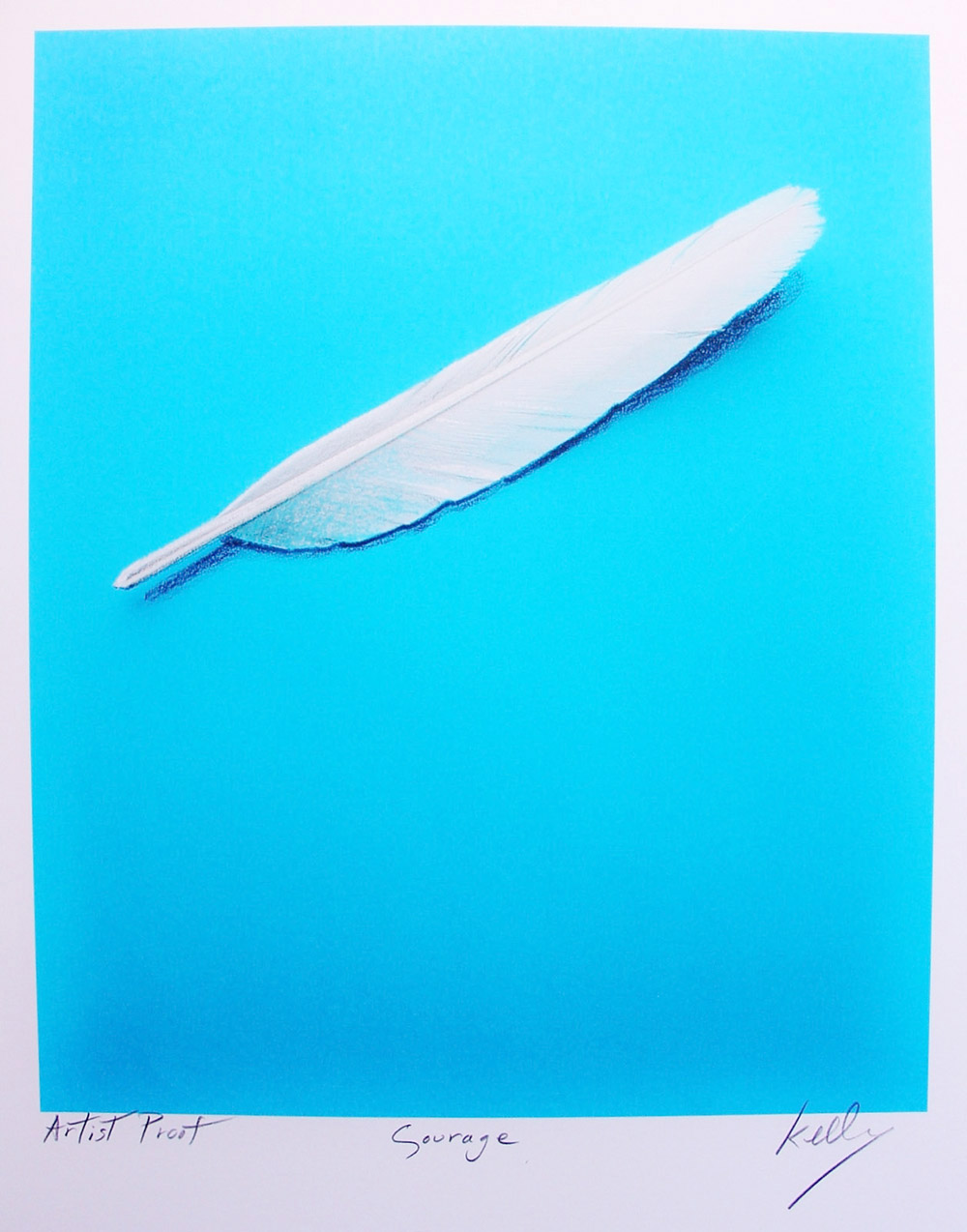
The second “Fellow Travellers…” is something of a tribute to those Australian artists, writers, filmmakers who, over the past 100 years (from WW1 to today) have publicly stood by their beliefs. It references many significant artist/activists from Noel Counihan to Arthur Boyd to those who took a stance against the Transfield Sculpture exhibition (as a result of Transfield’s role in detention centres). Those who are on this journey are, for me, ‘fellow travellers’ and as this list is nowhere near complete and increasing numbers of artists are becoming known for their position on peace, human rights, reconciliation and social justice it is an “unfolding story”.
.
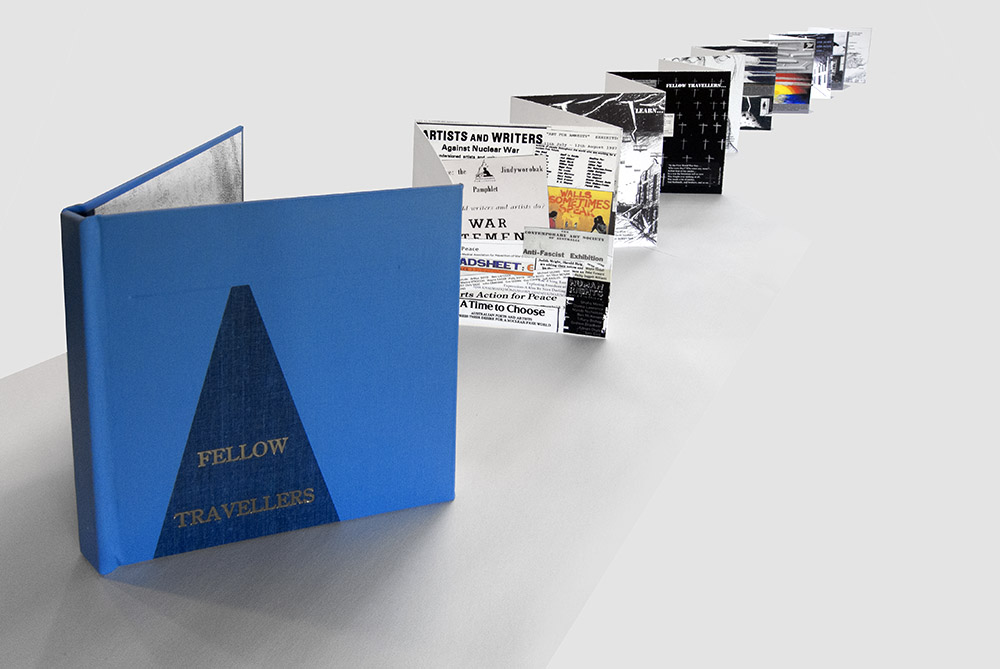
William Kelly’s Fellow Travellers
.
VIDEO: William Kelly discusses his Baldessin Press Studio Residency works
.
At the event the 2016 Baldessin Press Studio Residency recipient was announced. The recipient is Nicola Stairmand who works as an independent heritage consultant, curator and designer, combining her skills to research and interpret places of significance. She is currently employed at TarraWarra Museum of Art, where she assists with research and exhibition design.*
.
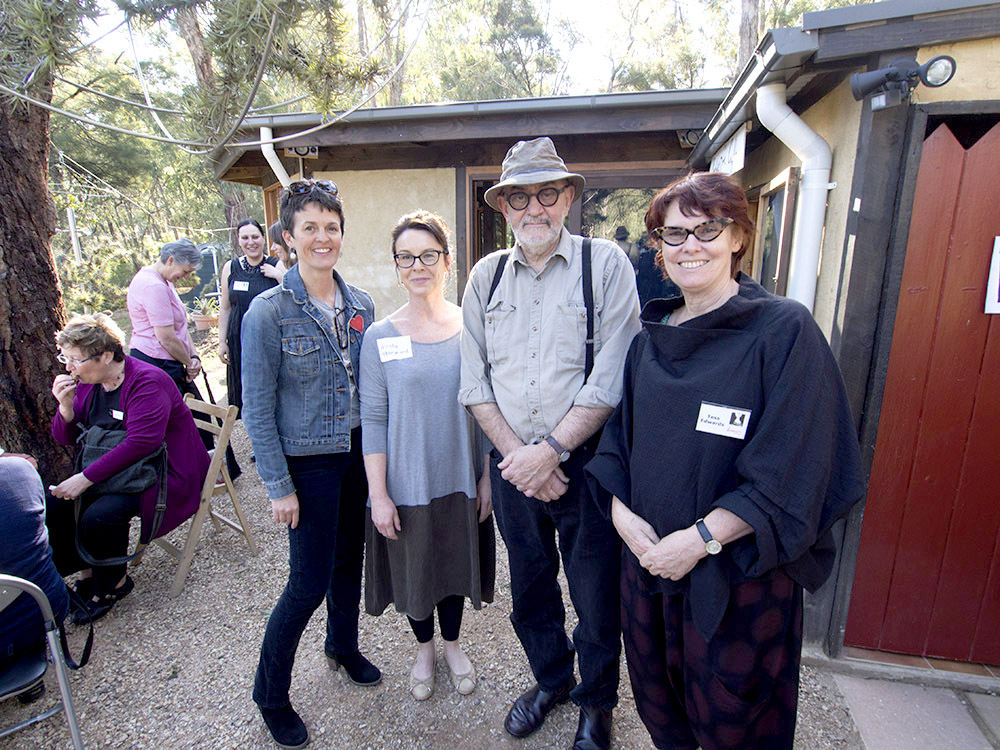
Indra Kurzeme SLV, Nicola Stairmand, Ric Amor and Tess Edwards
.
Stairmand’s project will seek to describe everyday life at Coranderrk Aboriginal Station, established in 1863 and closed in 1924, contributing to a greater understanding of its history. Using the State Library’s photographic and documentary collections, Nicola will research and produce a series of illustrative maps supported by images and descriptions.*
The formal proceedings took place on a bright and sunny spring afternoon with a kind of conviviality and informality that occurs when friends and community gather to share and celebrate important events. George Baldessin would certainly approve of this SLV Creative Fellowship and the part the press plays in bringing about new work.
.
.
The Baldessin Press Studio Team
Click on their names to go to the Baldessin Press Studio Biogs…
Tess Edwards (Baldessin)
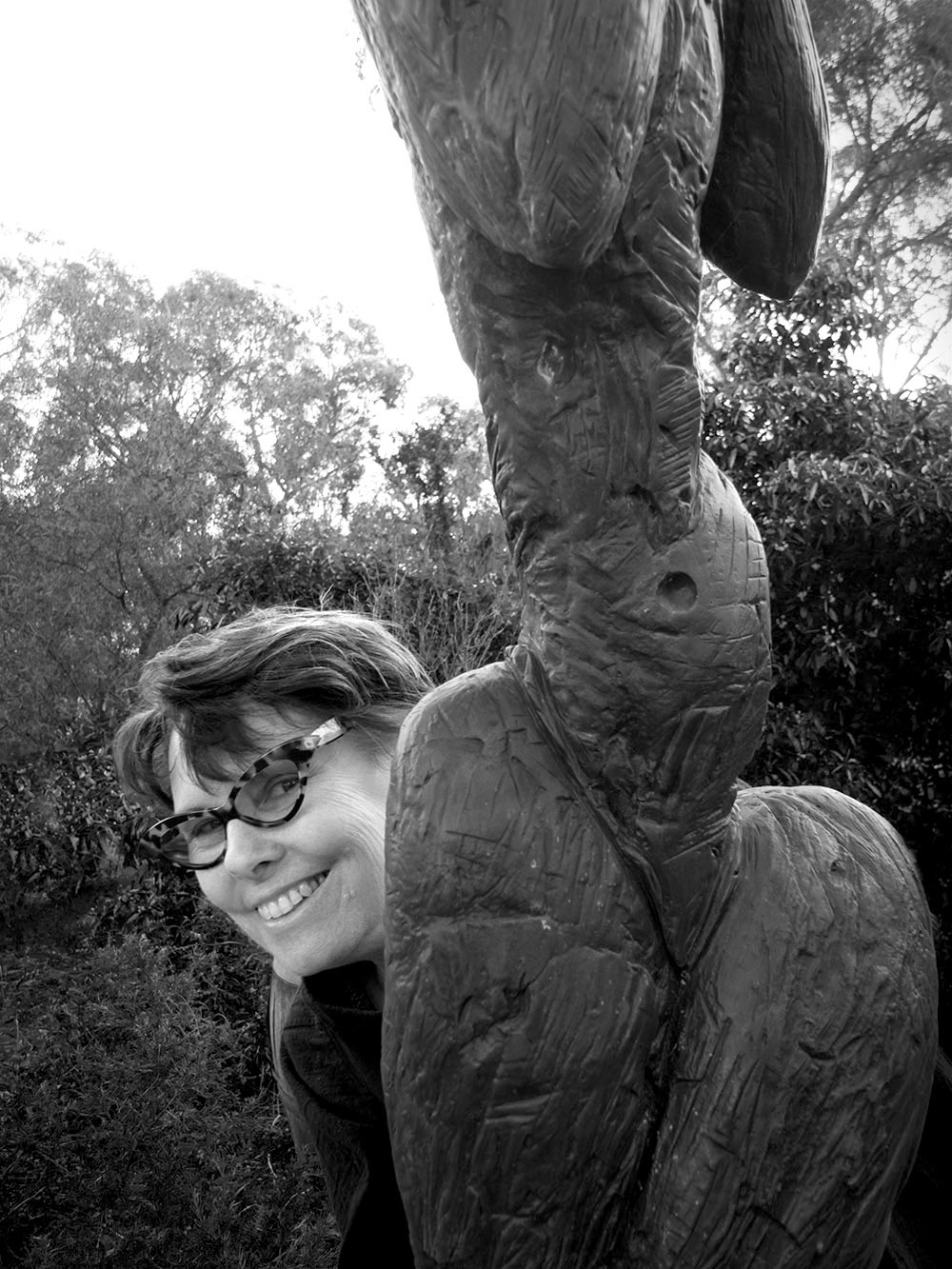
.
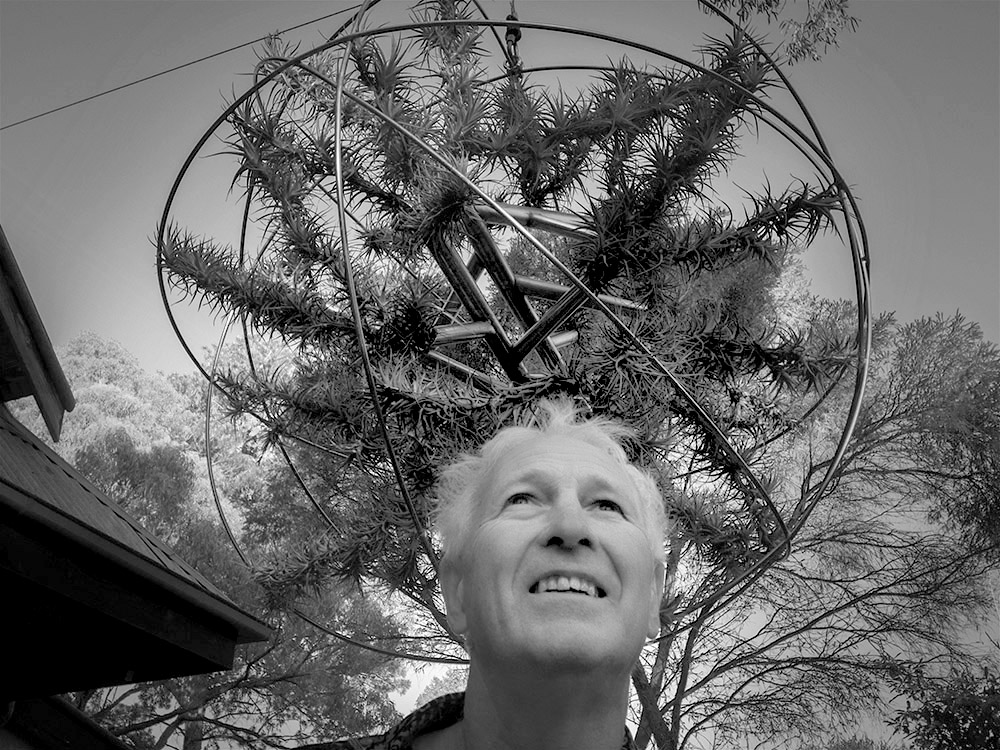
.
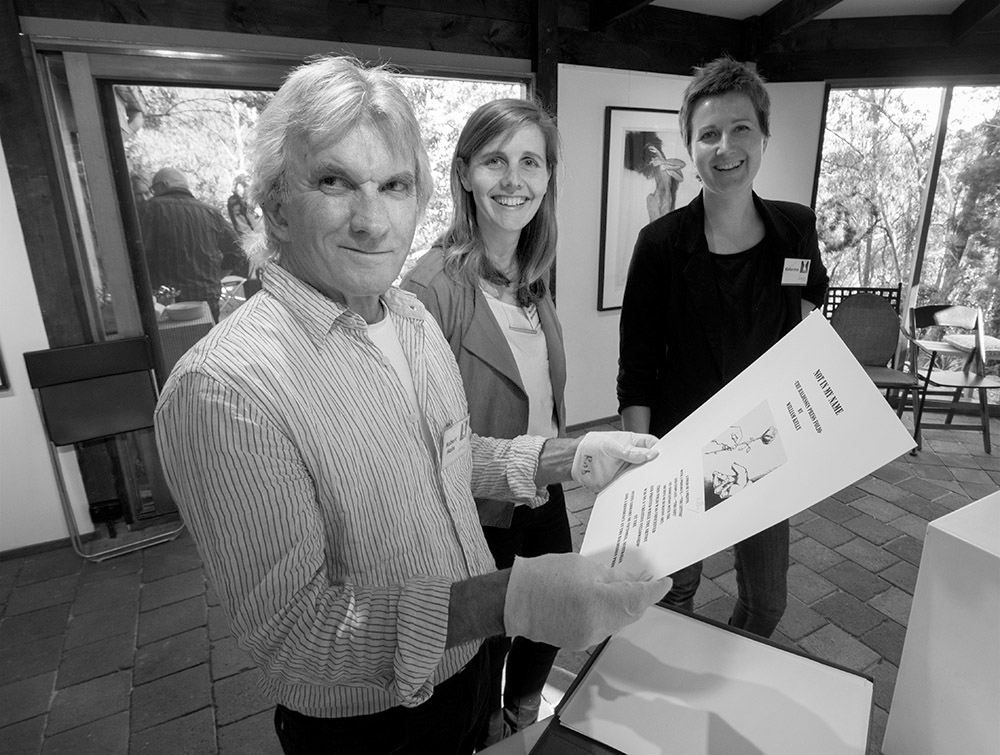
.

.
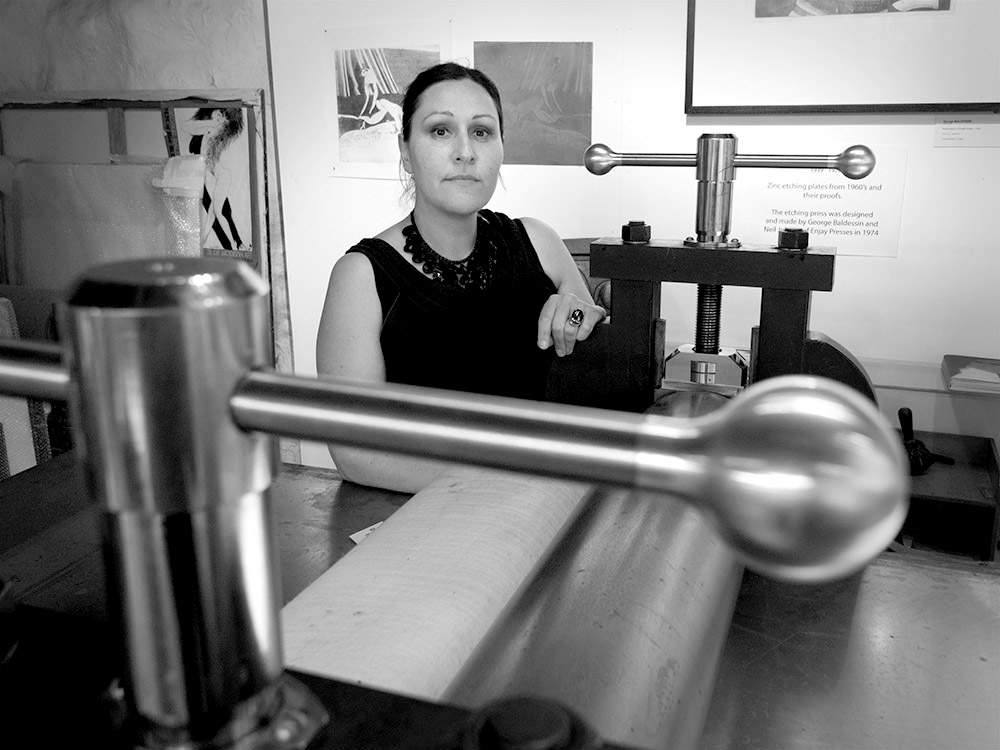
Deanna Hitti (Baldessin’s master printer)
.
.
.
All photographs and video ©2015 Doug Spowart.
*Some texts paraphrased from SLV & Baldessin Press Studio websites. William Kelly artworks and text ©2015 William Kelly.
.
.
WORLD PHOTOBOOK DAY @ Brisbane’s Maud Creative
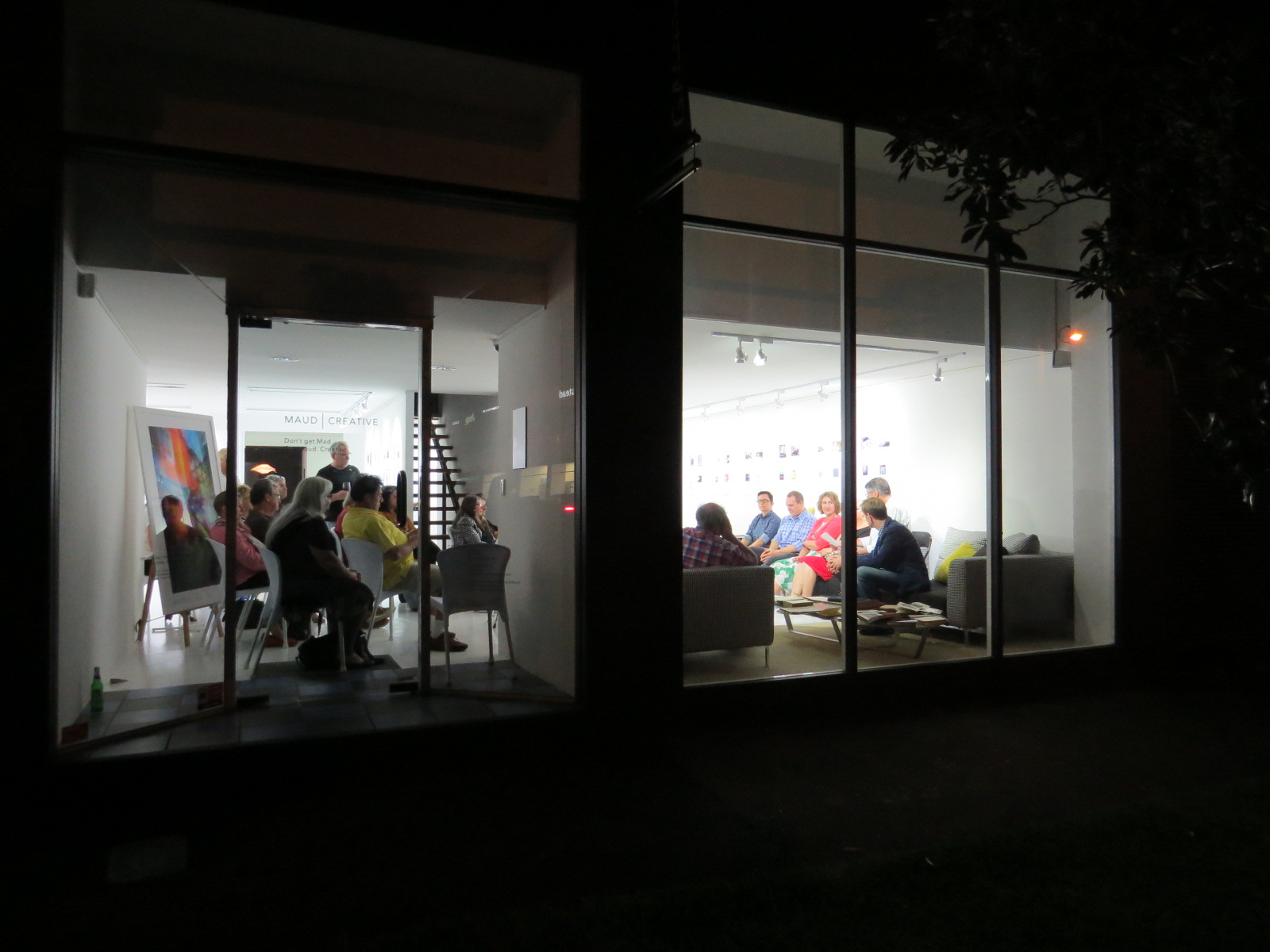
World Photobook Day at Maud Creative Gallery Photo Robert Gray
.
A survey project about those who read photobooks
My Favourite Photobook – Brisbane World Photobook Day
World Photobook Day (WPBD) in Brisbane Australia at Brisbane’s Maud Creative Gallery was celebrated with a survey project highlighting photographers and their photobooks curated by Victoria Cooper and Doug Spowart.
The international WPBD team chose this day in recognition of the British Library’s the acquisition of Anna Atkins’ Photographs of British Algae: Cyanotype impressions on October 14 in 1843. Atkins’ cyanotype book is arguably considered as the world’s first photobook as both image and text are printed simultaneously printed on the same page. It was some time before the photograph and text could be co-printed, so books that included photographic illustrations, were usually printed with text by letterpress processes and photographs ‘tipped-in’ as original prints. WPBD activities are supported through the PhotoBook Club, a worldwide network of groups interesting in photobooks.
The Cooper+Spowart survey asked photographers to submit a photograph of themselves reading their favourite photobook and comment on why they like their chosen book. Sixty-five photographers responded to the request. Working on tight timelines Cooper and Spowart printed the photographer’s submissions including: their self-portraits while reading, their chosen book and a comment about why they had chosen the book. This work was presented for viewing on the gallery wall.
.
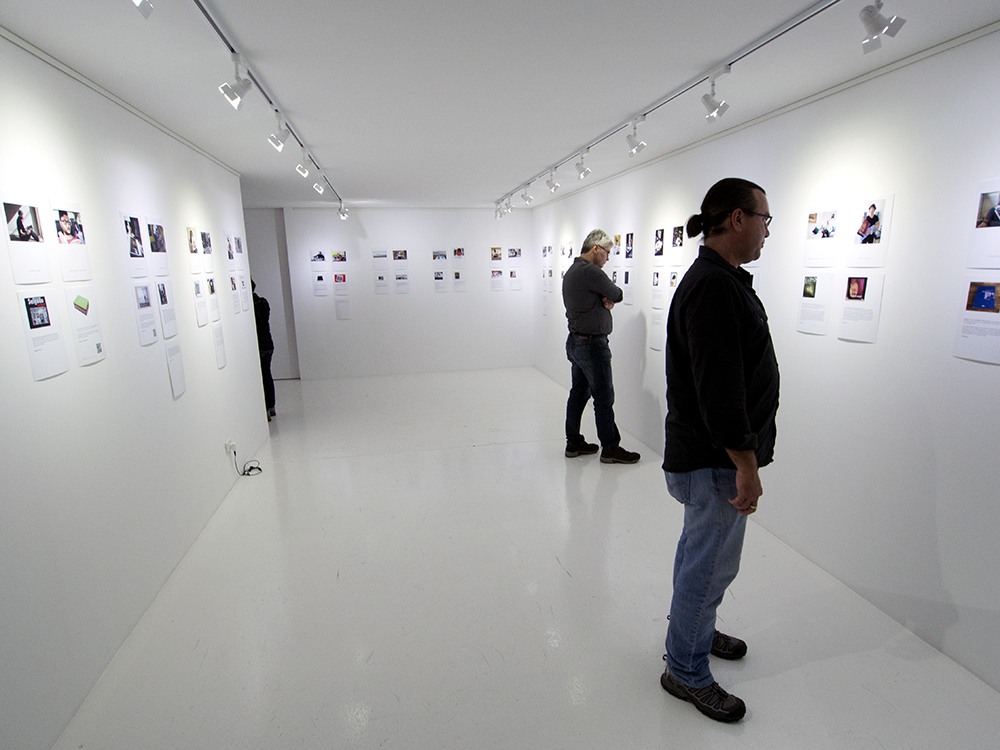
Brisbane World Photobook Day, Maud Gallery Photo Doug Spowart
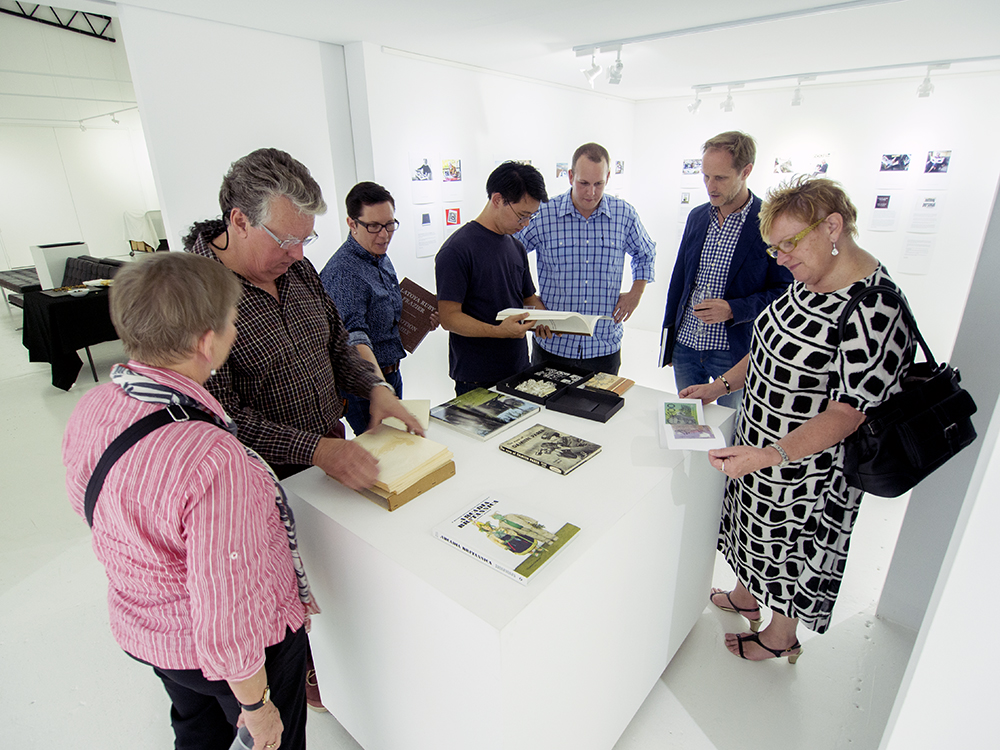
Looking at books – WPBD, Maud Gallery Photo Doug Spowart
.
The event was also attended by photographica collector and historian Sandy Barrie who presented a selection of photographically illustrated books from the 19th century. These books include the 1846 Art Union journal that contained an essay by Henry Fox Talbot and an original calotype print.
.
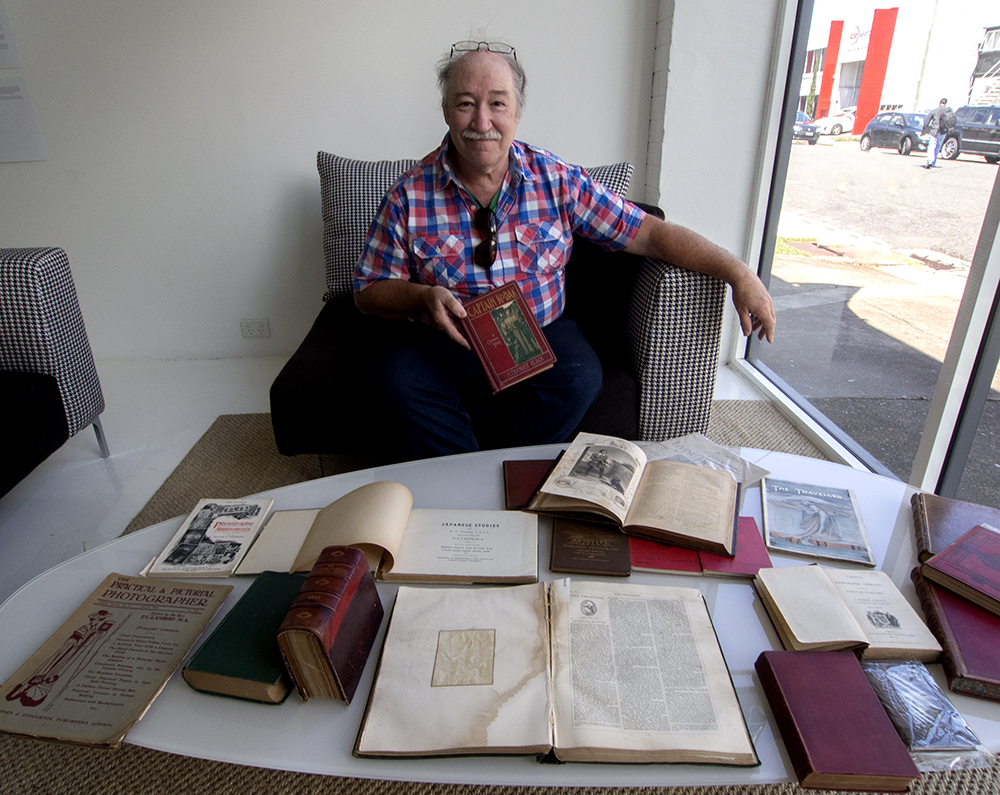
Sandy Barrie and the Art Union journal Photo: Doug Spowart
.
Early in the evening a ‘fly-through’ video was made of the installation with some guests present.
.
In the evening around 35 photobook enthusiasts attended a forum with panellists including Dr Heather Faulkner documentary transmedia practitioner and lecturer at the Queensland College of Art (Gold Coast), Chris Bowes artist and bookmaker, Julie Ann Sutton documentary photographer and collector, Helen Cole Senior Librarian and Coordinator of the Australian Library of Art at the State Library of Queensland, and Henri van Noordenberg artist and bookmaker. The forum was convened by Doug Spowart who in a Q&A format led discussion and a range of photobook issues including:
- Collecting books
- Possession and ownership
- Borrowing and loaning of books
- Adding bookplates and marginalia to books
- Letting children handle books
- The future of photobooks
.
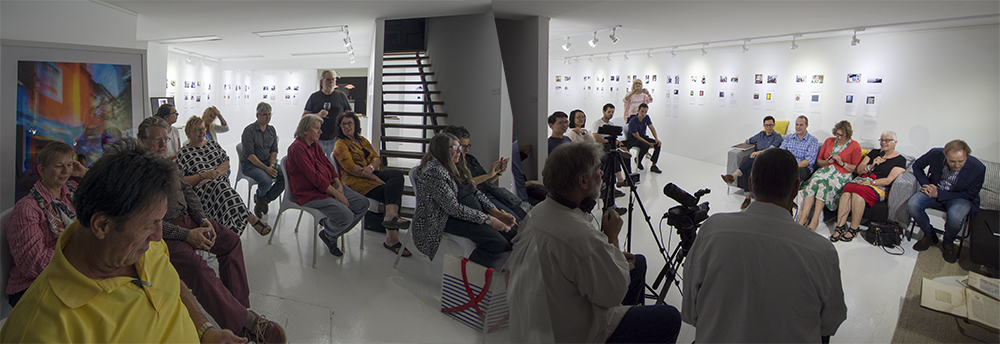
WPBD Forum Photo Daniel Groneberg
.
The last poignant comment came from Heather Faulkner when speaking of the future printed book. In her statement she referred to the recent changes to privacy laws giving government agencies access and scrutiny over all of our online metadata. Faulkner’s prediction is that the physical book, as it has been in the past, will be the place for personal and provocative commentary on contemporary life and politics.
.
Cooper+Spowart wish to acknowledge the following supporters of this project:
- The creative from Maud Gallery: Irena Prikryl, Teri Ducheck and Peter Pescell – videographer;
- Matt Johnston – The Photobook Club;
- Tony Holden and Ilford for the inkjet printing paper;
- Sandy Barrie;
- The forum panelists – Heather, Chris, Julie Ann, Helen and Henri;
- The installation team Maureen Trainor, Rene Thalmann, Mel Brackstone and Daniel Groneberg;
- And, of course, all the participants.
.
To celebrate the Brisbane WPBD event BLURB Australia has offered a discount voucher for participants in the Brisbane event. The code and conditions are: WPBD2015, expires 30 November 2015. Must pay with Australian dollars. Maximum discount per book is AUD$150. Each customer can use the code 1 time.
SEE a few of the photographers and their favourite books in this download:
.
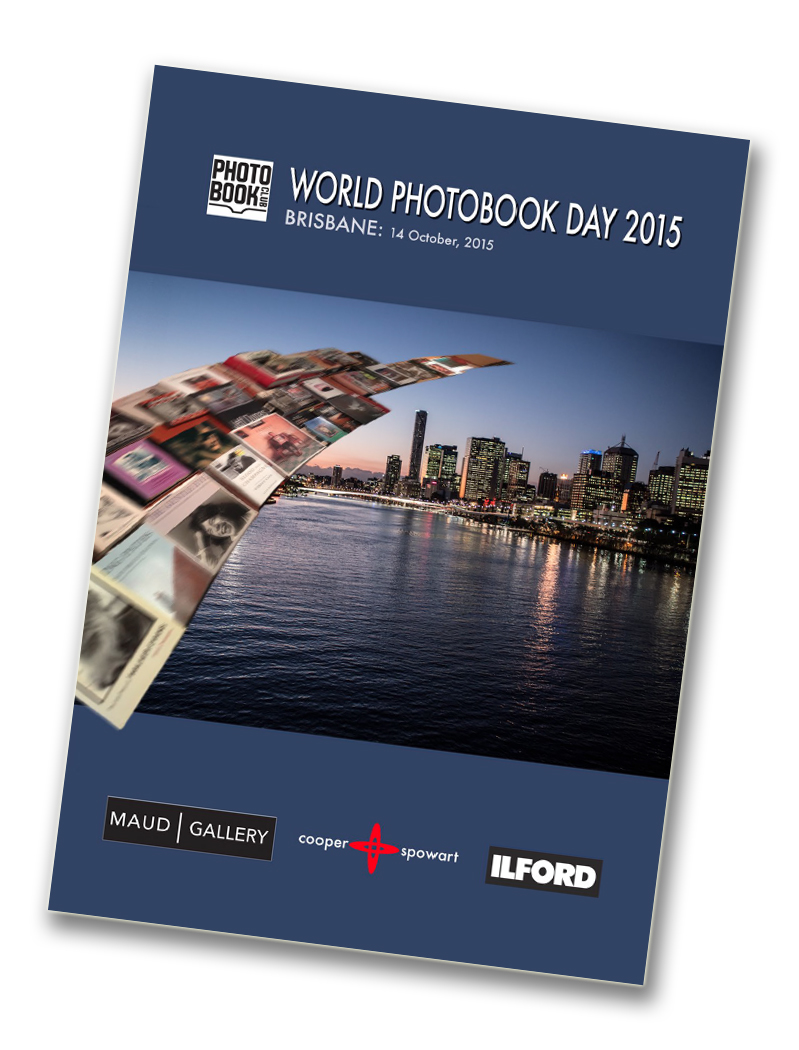
DOWNLOAD A PDF SELECTION: WPBD-Selected_Submissions
.
THE PROJECT WILL CONTINUE… Stay tuned.
.
Previous WPBD events coordinated by Cooper+Spowart 2013 and 2014.
.
.
The 67 participating photographers and their books were:
Peter Adams: Passage – Irving Penn
Melissa Anderson: Shooting Back – Jim Hubbard
Ying Ang: Sabine – Jacob Aue Sobol
Sandy Barrie: Art Union Journal, 1 June 1846 – Henry Fox Talbot essay
Chris Bowes: Tokyo Compression – Michael Wolf
Isaac Brown: Ray’s a Laugh – Richard Billingham
Harvey Benge: Blumen – Collier Schorr’s book
Camilla Birkeland: Mike and Doug Starn – Andy Grundberg
Daniel Boetker-Smith: In Flagrante – Chris Killip
Mel Brackstone: Melbourne and Me (a work in progress) – Adrian Donoghue
Helen Cole: Booked – Peter Lyssiotis
Victoria Cooper: Domesday Book – Peter Kennard
Michael Coyne: Workers -Sebastião Salgado
Judith Crispin: da Sud a Nord (from South to North) – Sabine Korth
Sean Davey: William Eggleston Paris
Jacqui Dean: Peter Adams – A Few of the Legends
John Elliott: Richard Avedon Portraits
Dawne Fahey: Julia Margaret Cameron – Marta Weiss
Heather Faulkner: The Notion of Family – La Toya Ruby Frazier
Liss Fenwick: Outland – Roger Ballen
Juno Gemes: Nothing Personal – Richard Avedon and text by James Baldwin
Kate Golding: Fig. – Adam Broomberg & Oliver Chanarin
Philip Gostelow: Thank You – Robert Frank
Robert Gray: Max Yavno
Daniel Groneberg: Los Alamos – William Eggleston
Sam Harris: Café Lehmitz – Anders Petersen
Tony Hewitt: 50 Landscapes – Charlie Waite
Douglas Holleley: Man and His Symbols – Carl Jung
Kelly Hussey-Smith: On the Sixth Day – Alessandra Sanguinette
Libby Jeffery: Inferno – James Nachtwey
Matt Johnston: Touch – Peter Dekens
Larissa Leclair: Moisés – Mariela Sancari
Louis Lim: Blind – Sophie Calle
James McArdle: Love on the left bank – Ed van der Elsken
Paul McNamara: The Terrible Boredom of Paradise – Derek Henderson
Henri van Noordenberg: Cinci Lei – Joost Vandebrug
Gael Newton: By the sea – CR White
Glen O’Malley: A Modern Photography Annual 1974
Thomas Oliver: Common Sense – Martin Parr
Maurice Ortega: The Apollo Prophecies – Kahn and Selesnick
Adele Outteridge: Pompeii – Amedeo Maiuri
Polixeni Papapetrou: Diane Arbus
Martin Parr: Bye, Bye Photography – Daido Moriyama
Gael Phillips: Arcadia Britannica, A Modern British Folklore Portrait – Henry Bourne
Louis Porter: Looking Forward to Being Attacked – Lieutenant Jim Bullard
Imogen Prus: The Whale’s Eyelash, A Play in Five Parts – Timothy Prus
Jack Picone: Exiles – Josef Koudelka
Ian Poole: White Play – Takuya Tsukahara
Irena Prikryl: Cyclops – Albert Watson
Susan Purdy: nagi no hira, fragments of calm – Suda Issei
Jan Ramsay: AraName – Bir Ara Güler Kitabi
Jacob Raupach: The Family Album of Lucybelle Crater – Ralph Eugene Meatyard
Felicity Rea: Pandanus – Victoria Cooper
Mark Shoeman: Me We, Love Humanity and Us
Roger Skinner: Third Continent – Self-published
Doug Spowart: The Research Library, National Gallery of Australia
Tim Steele: The Earth From The Air – Yann Arthus-Bertrand
Alison Stieven Taylor: Strange Friends – Bojan Brecelj
Julie Ann Sutton: Katherine Avenue – Larry Sultan
Maureen Trainor: Sequences – Duane Michals
Garry Trinh: Period of Juvenile Prosperity – Mike Brodie
Ann Vardanega: Loretta Lux
George Voulgaropoulos: A shimmer of possibility – Paul Graham
Marshall Weber: Street Our Street – Dana Smith & Marshall Weber
David A Williams: Avedon Fashion
Konrad Winkler: Emmet Gowin the new Aperture book
Simon Woolf: F Lennard Casbolt Retrospective Exhibition Catalogue
.
.
All photographs and texts remain the copyright of the submitting photographers.
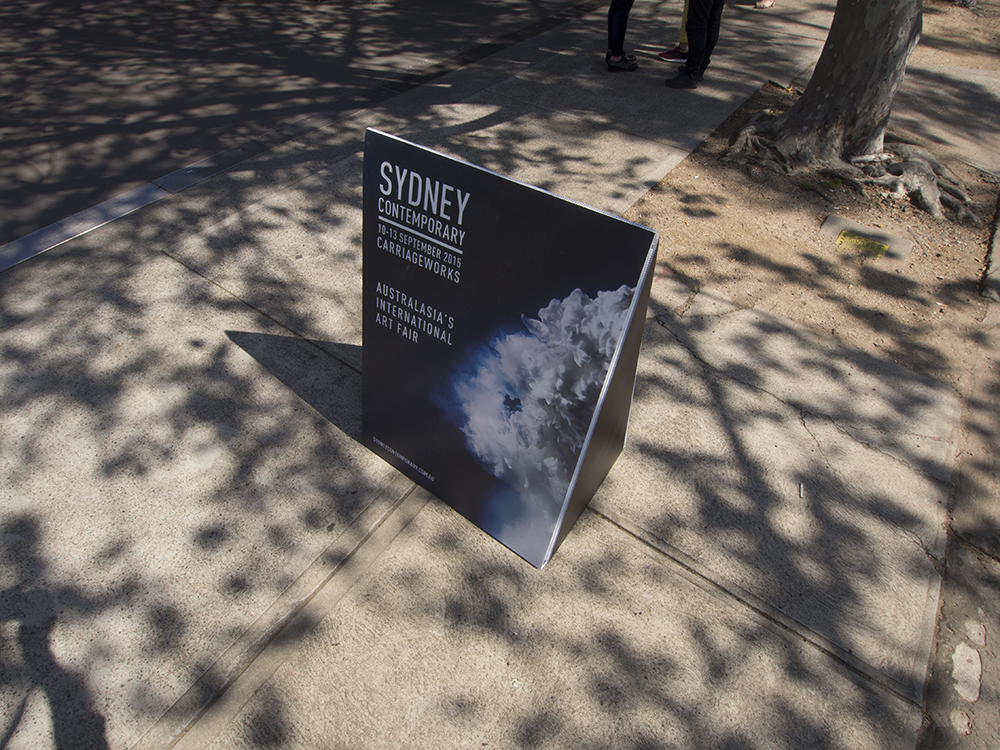
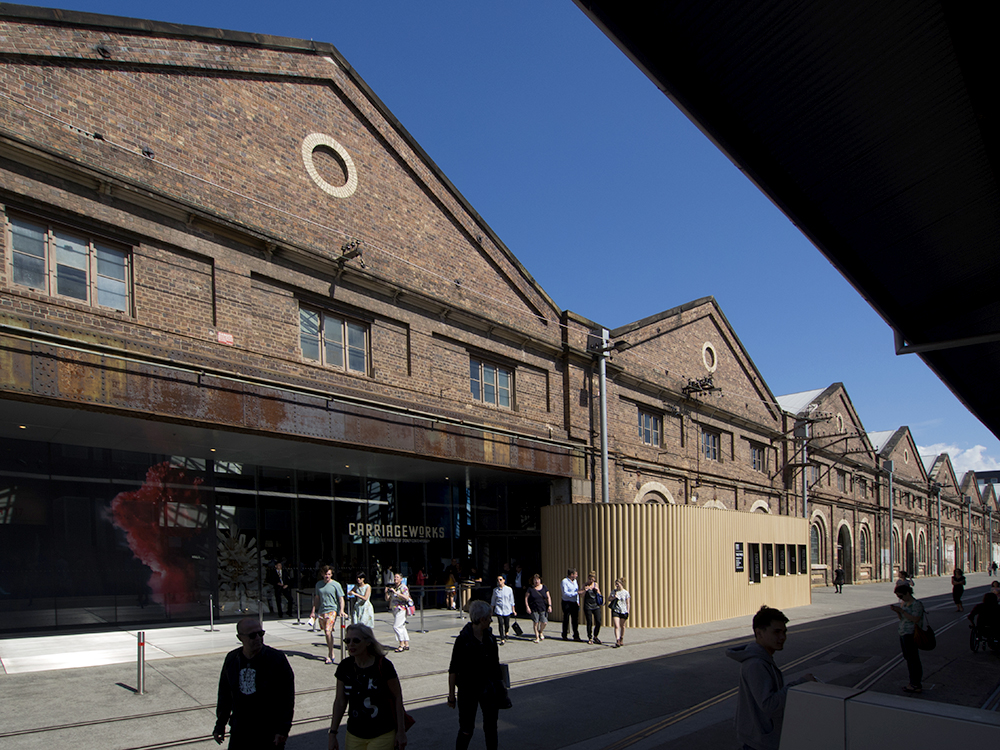
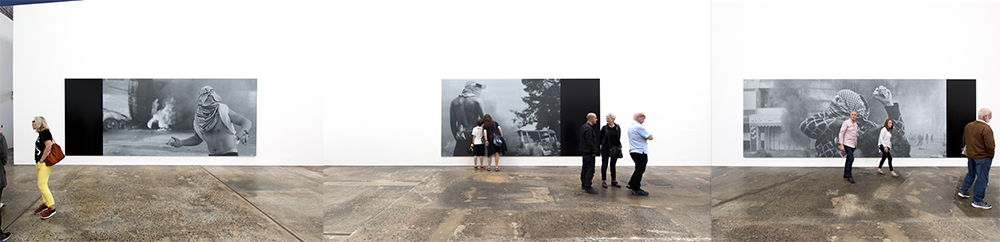
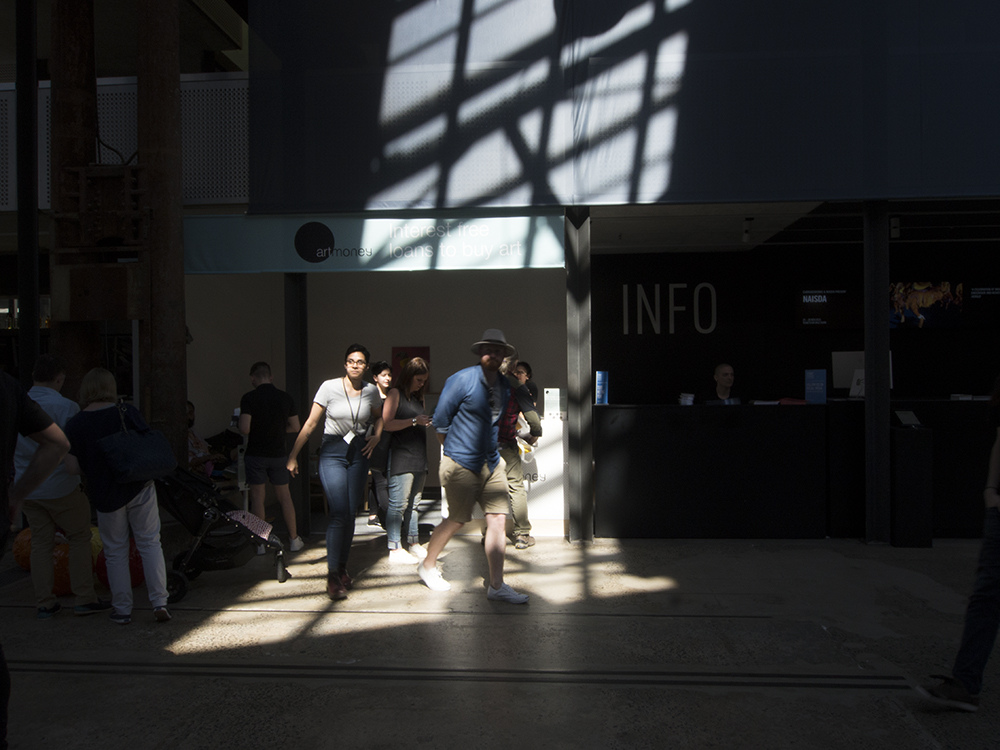
SYDNEY CONTEMPORARY 2015 – A photo essay
.
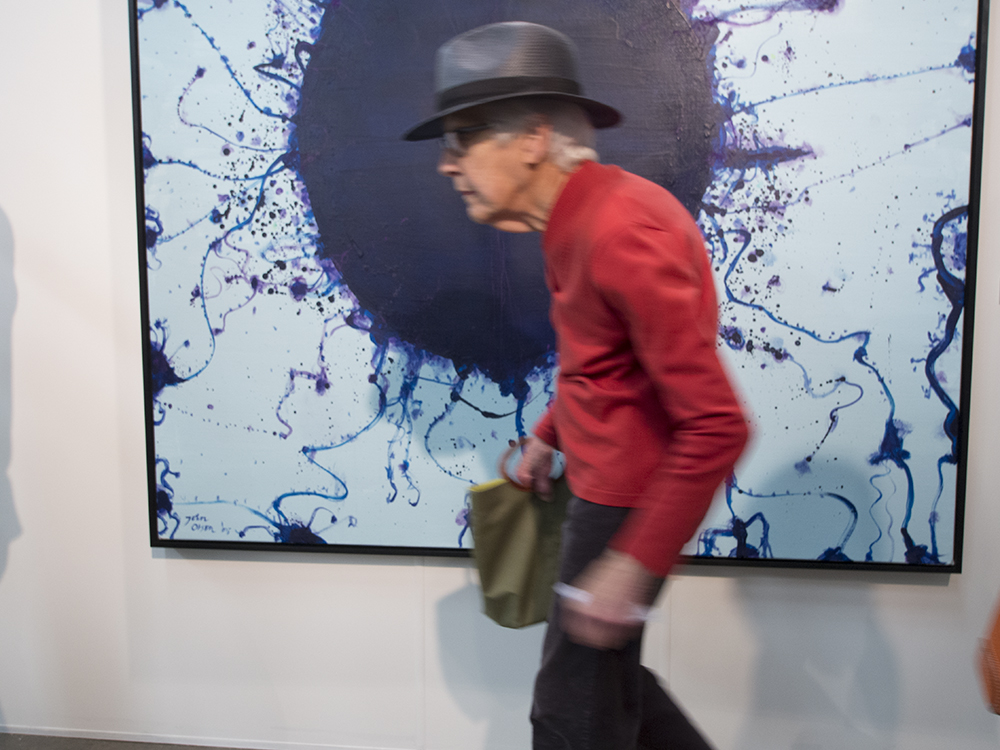
Well, we visited the Sydney Contemporary Art Fair on September 12 — Well, what can I say … perhaps photos can tell it better …
.
SYDNEY CONTEMPORARY FACTS:
A five-day fair with 90 galleries
$14 million in art sales
The fair was held in Sydney’s Carriageworks exhibition space
From Wednesday 9 to Sunday 12 September, was the centrepiece of Art Week in Sydney
Was attended by 30,000 people.
.
FOR MORE INFORMATION – ABC ONLINE REPORT: Sydney Contemporary art fair records $14m in sales as art market booms
http://www.abc.net.au/news/2015-09-17/art-fair-success-signals-booming-art-market/6784548
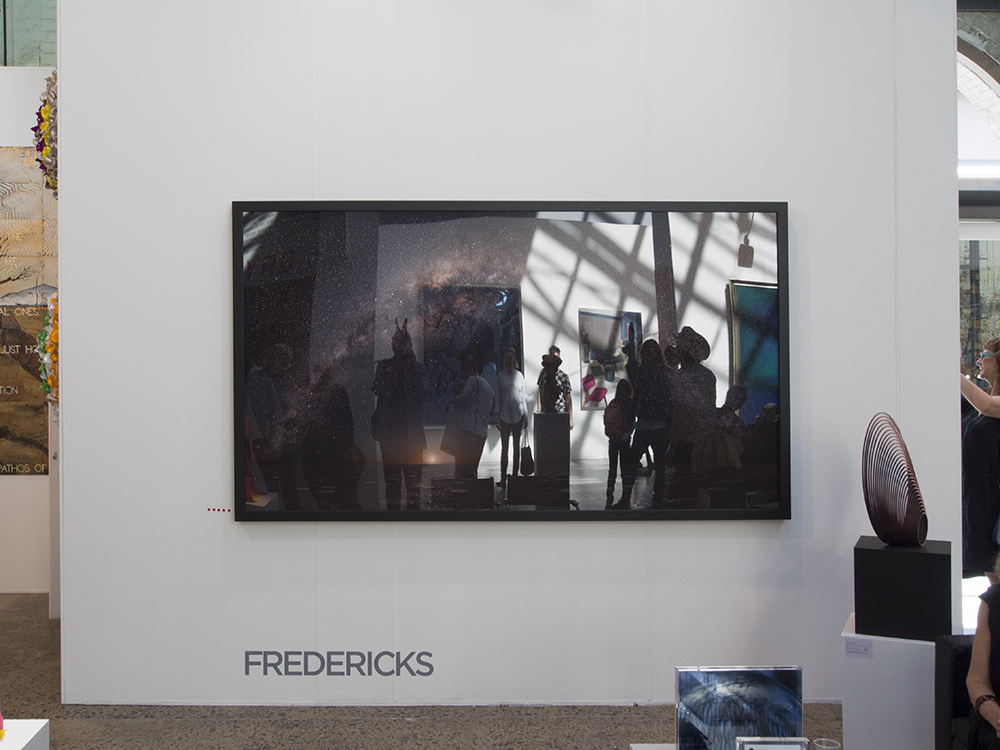
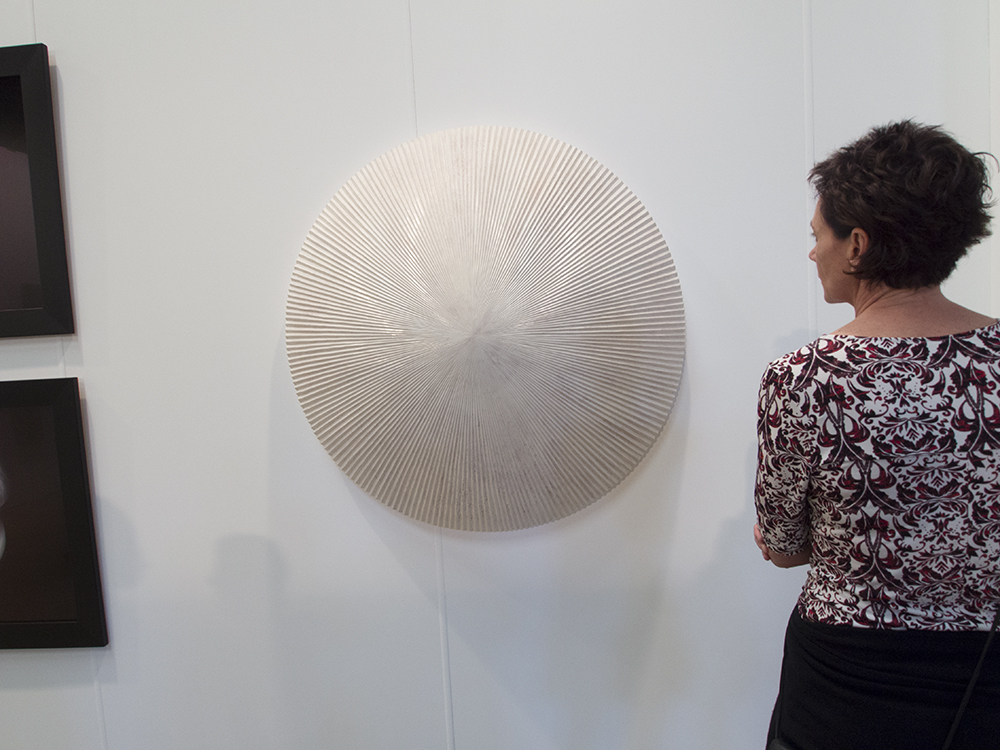
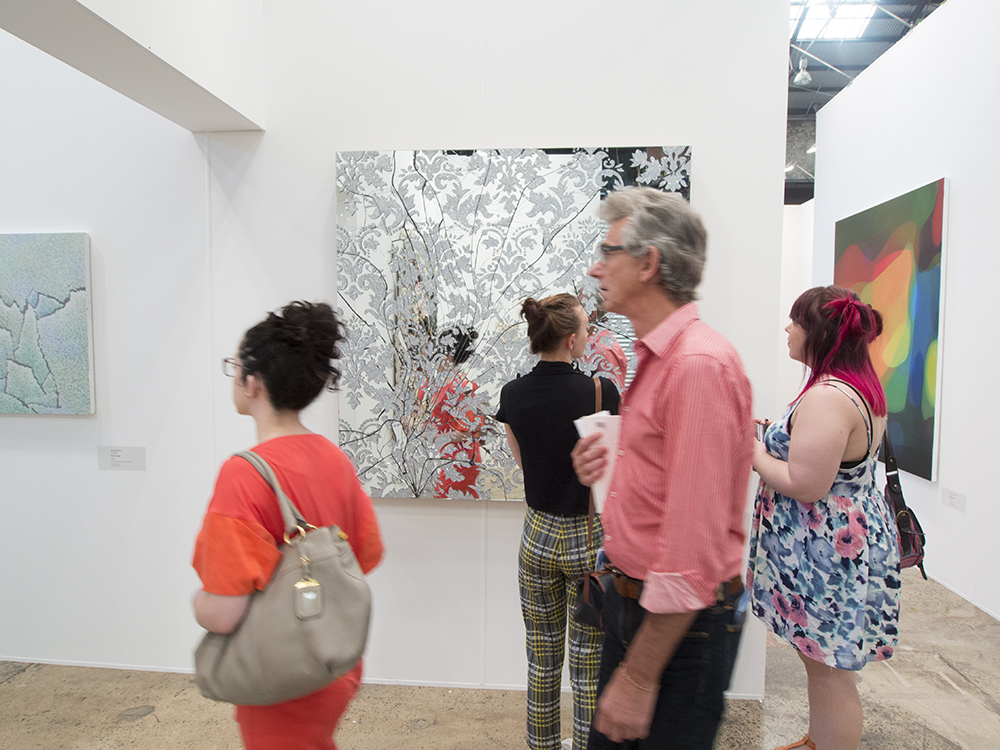
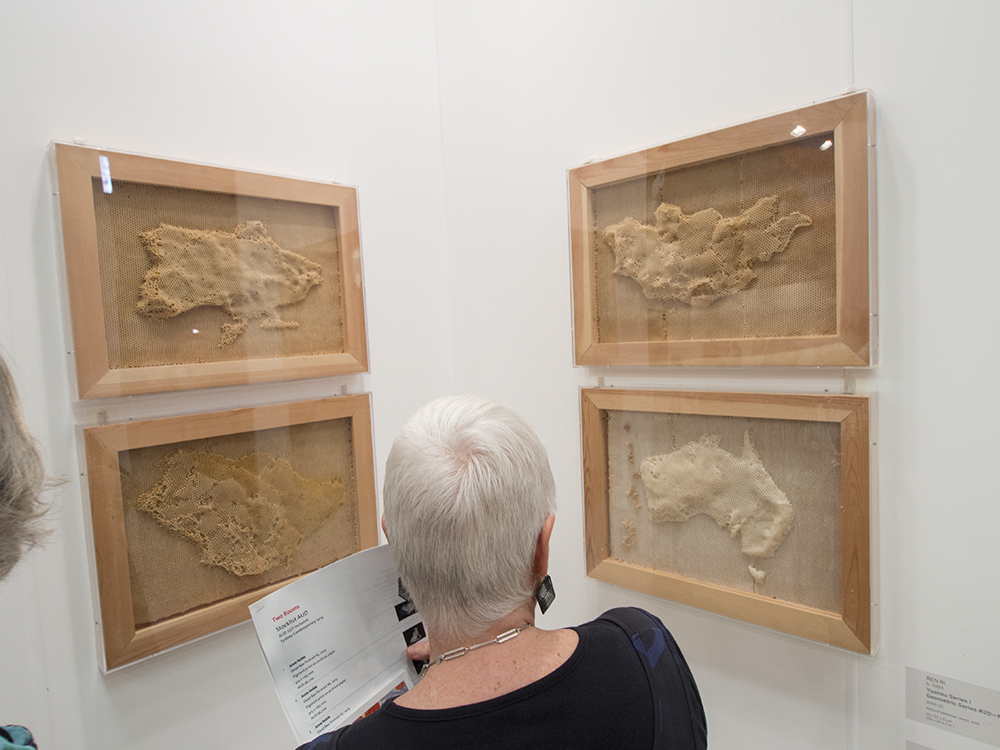
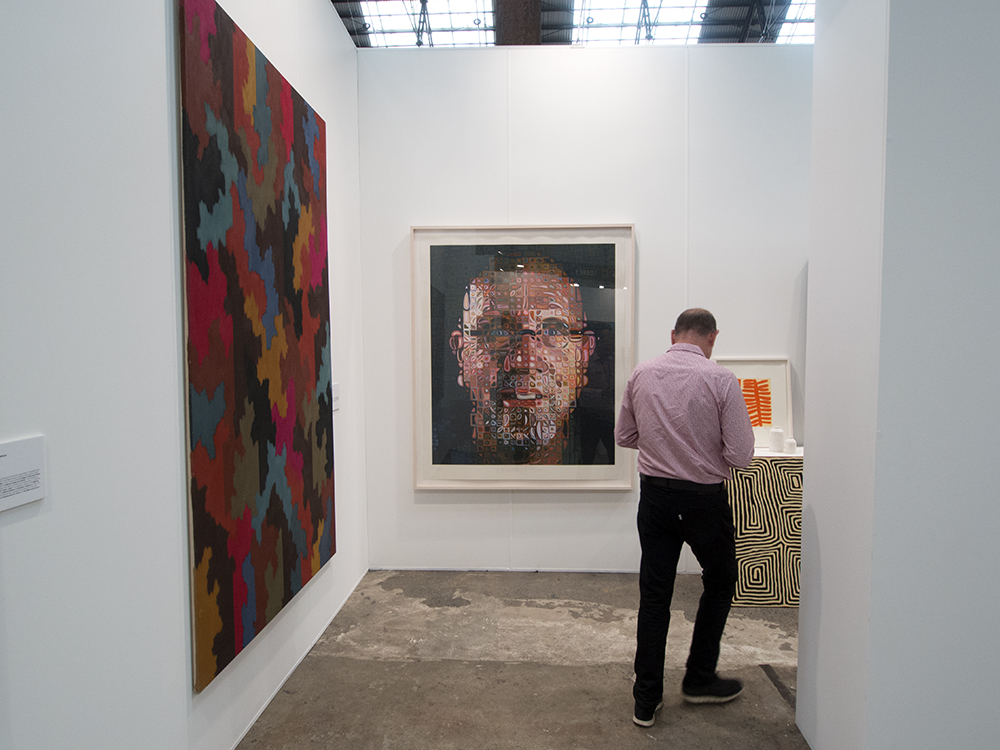
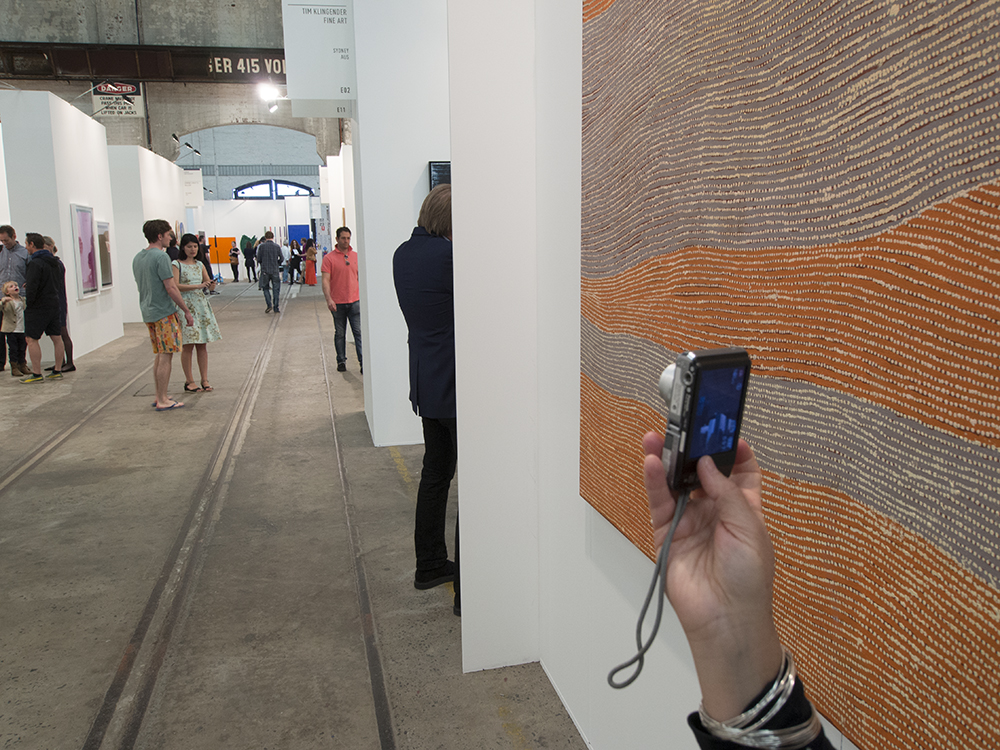
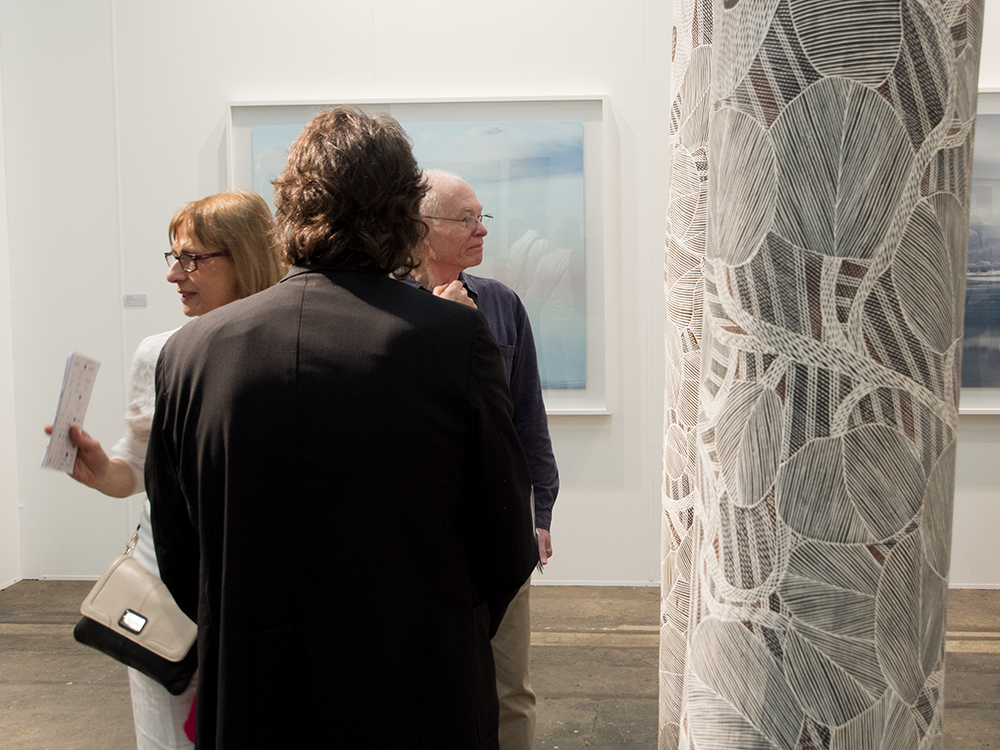
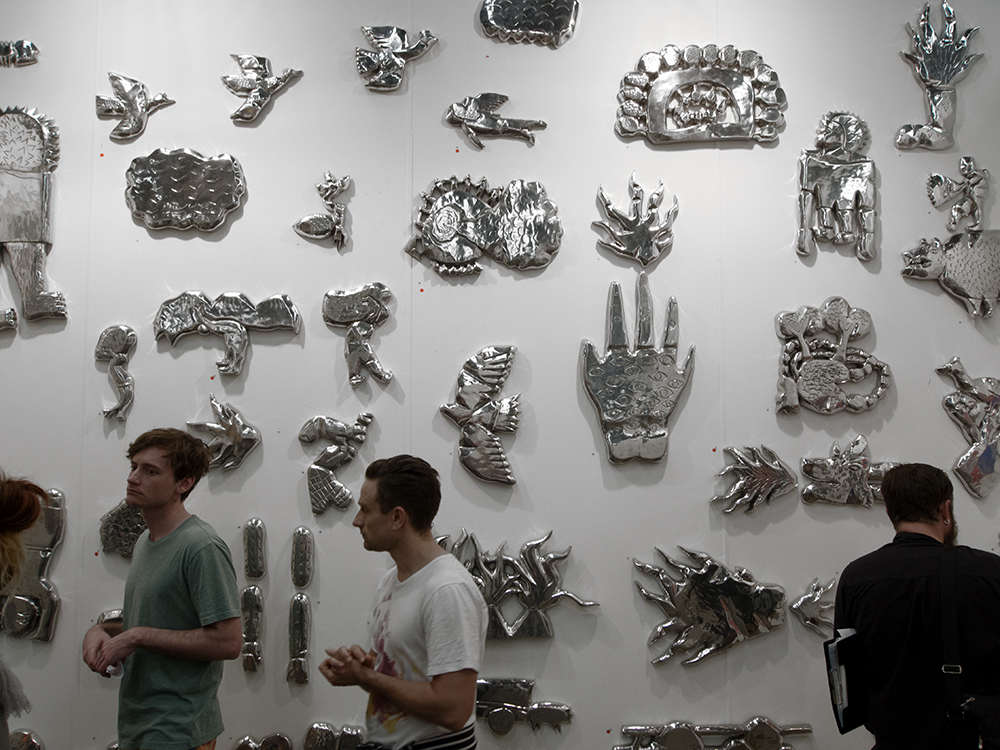
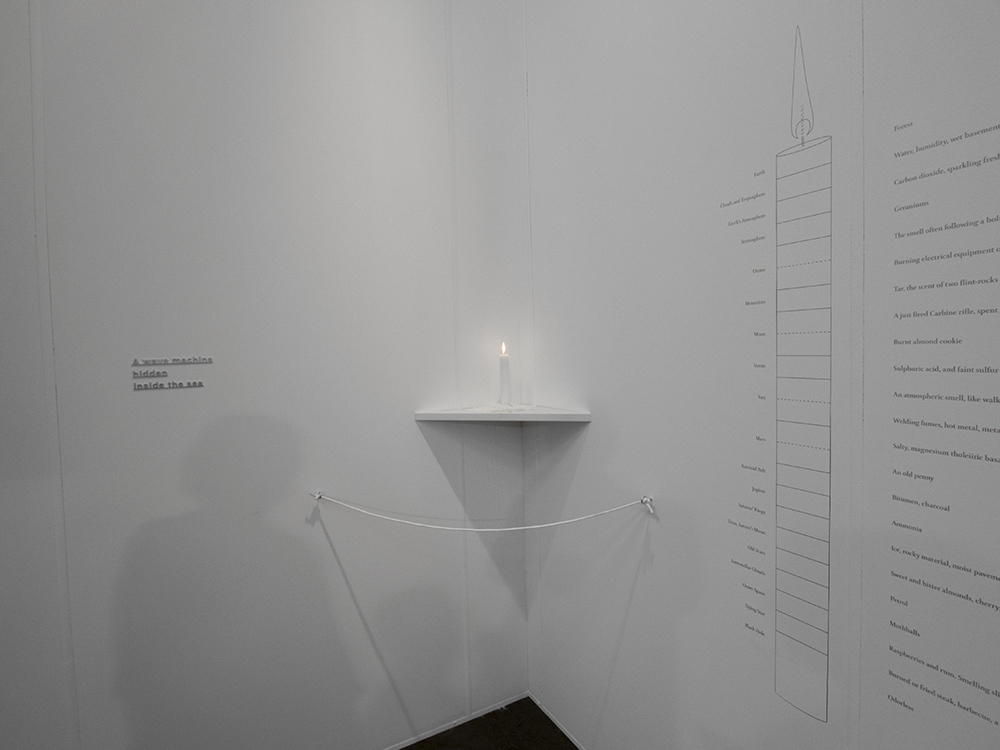
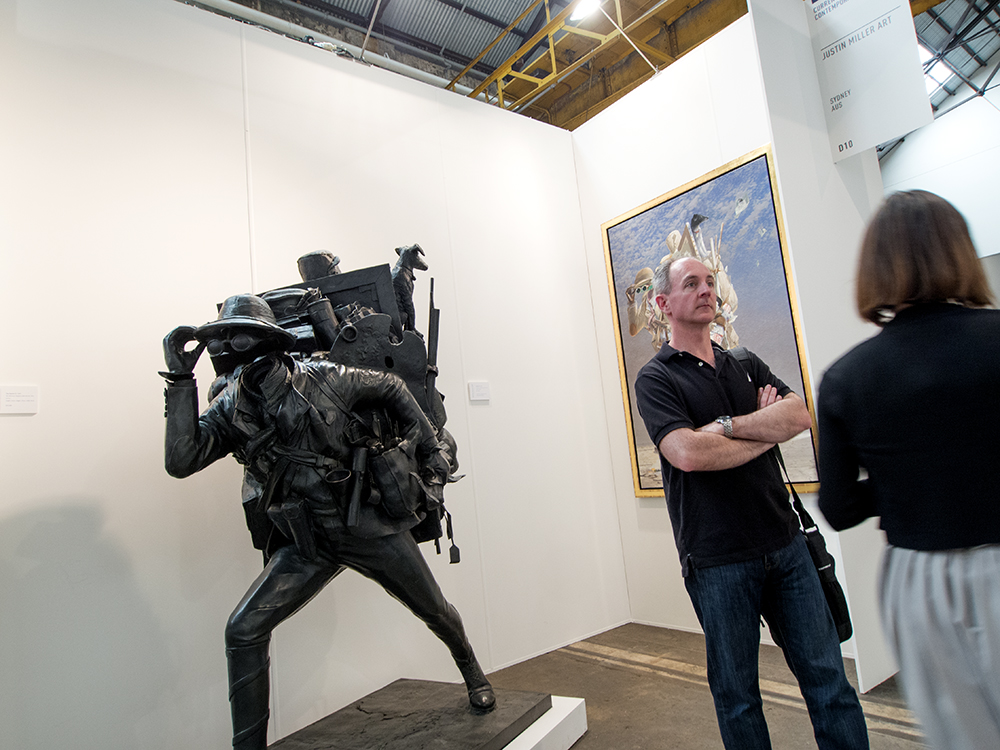
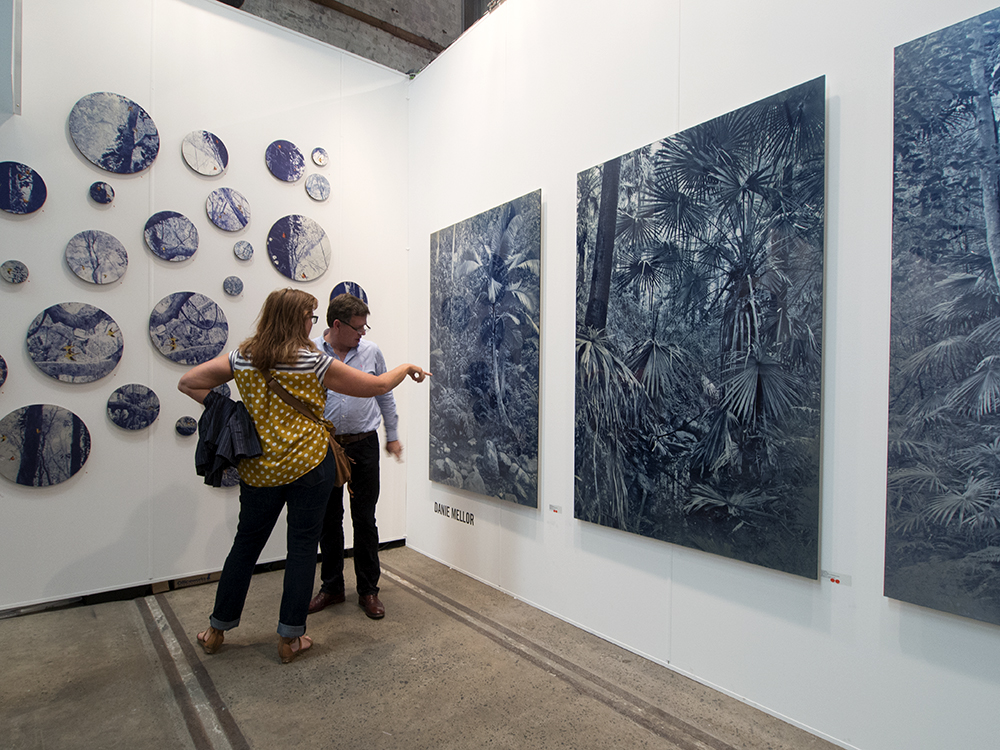
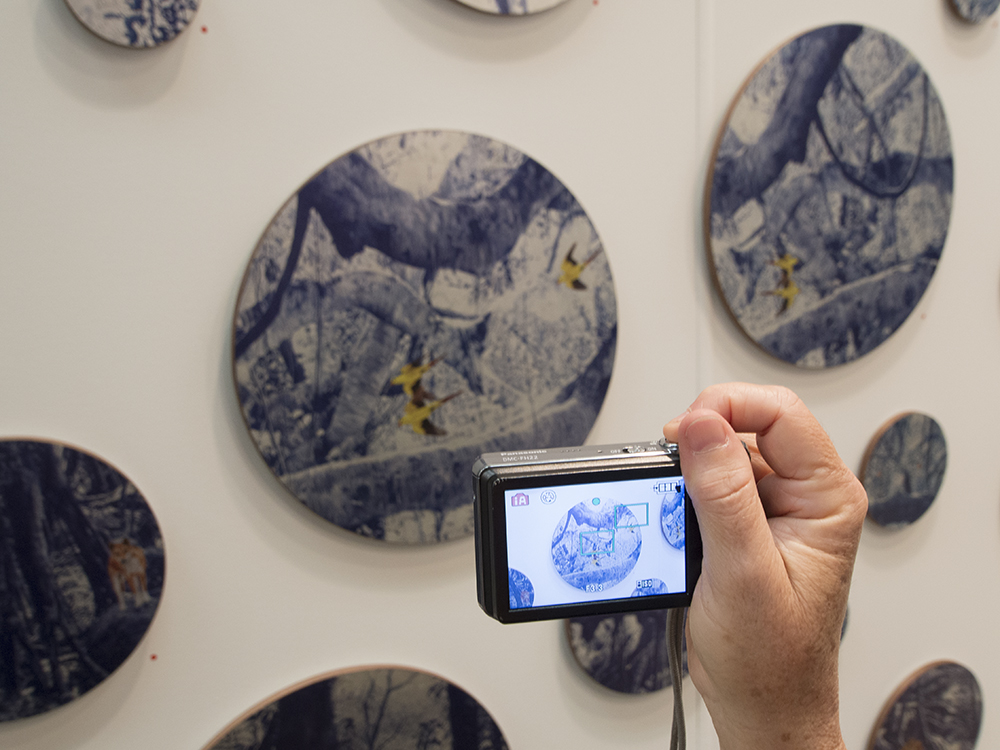
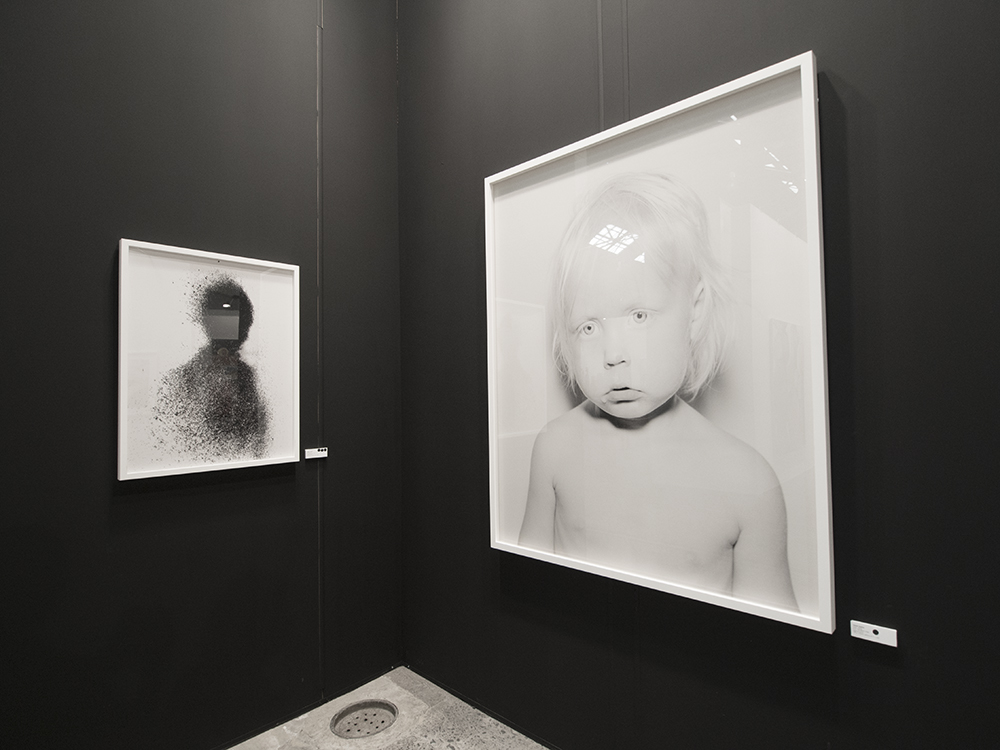
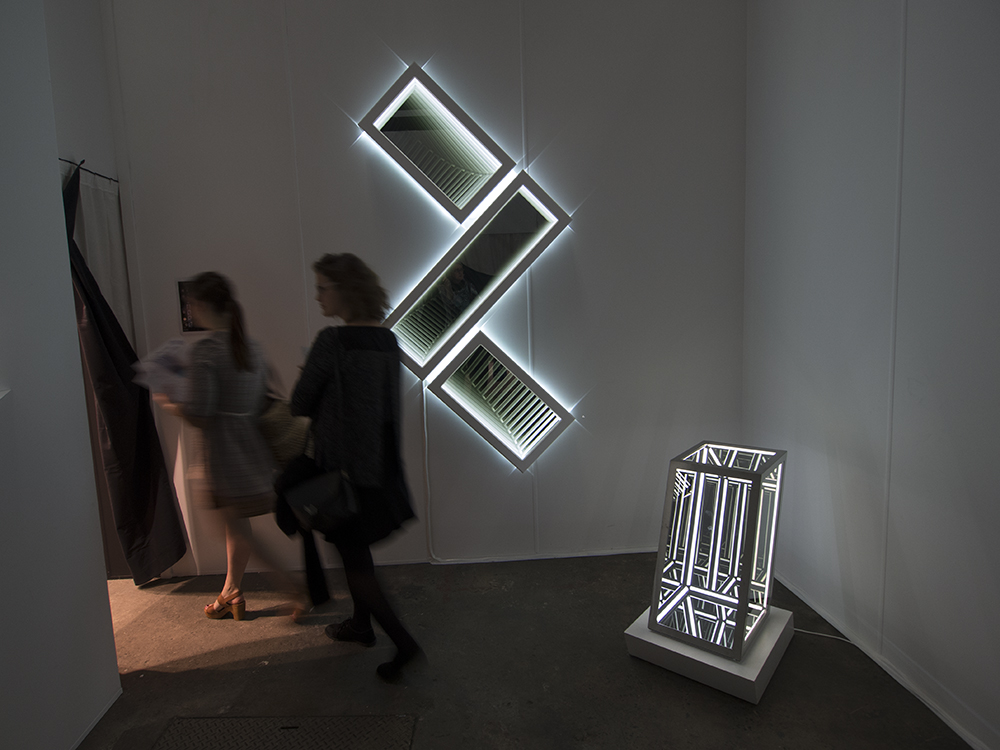
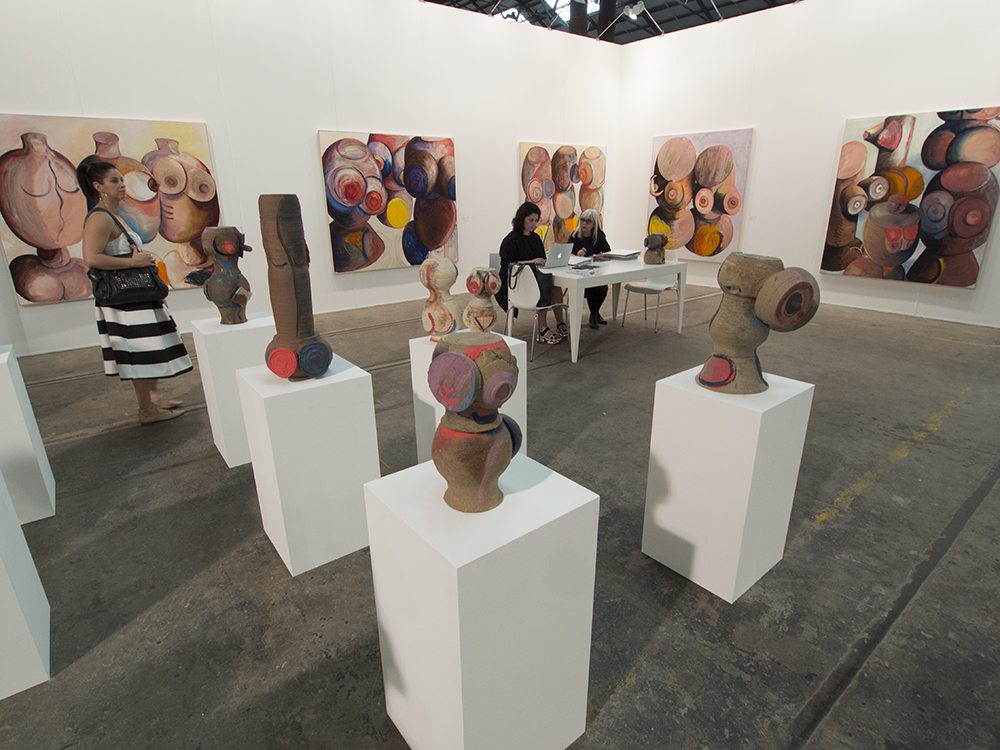
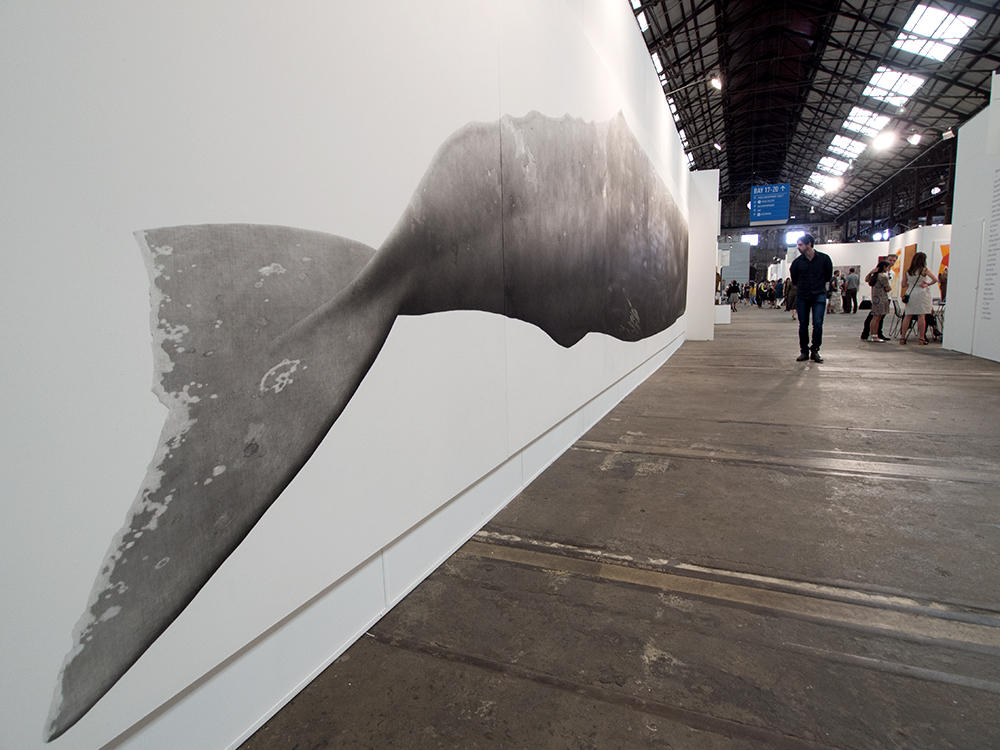
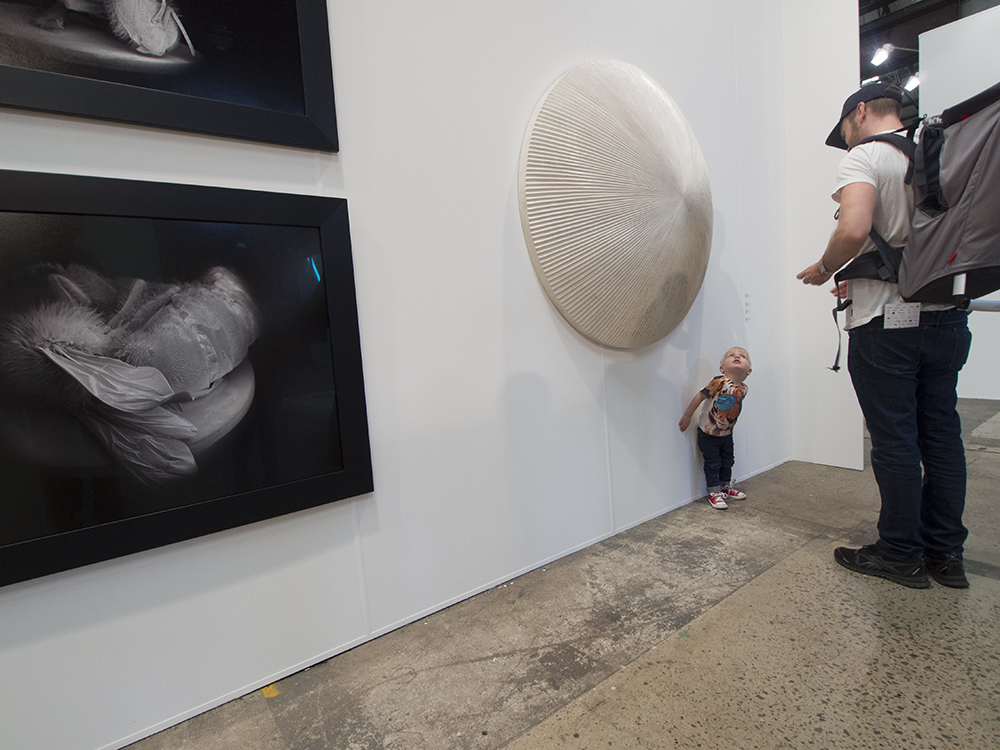
PAPER CONTEMPORARY Presented in association with The Print Council of Australia Inc
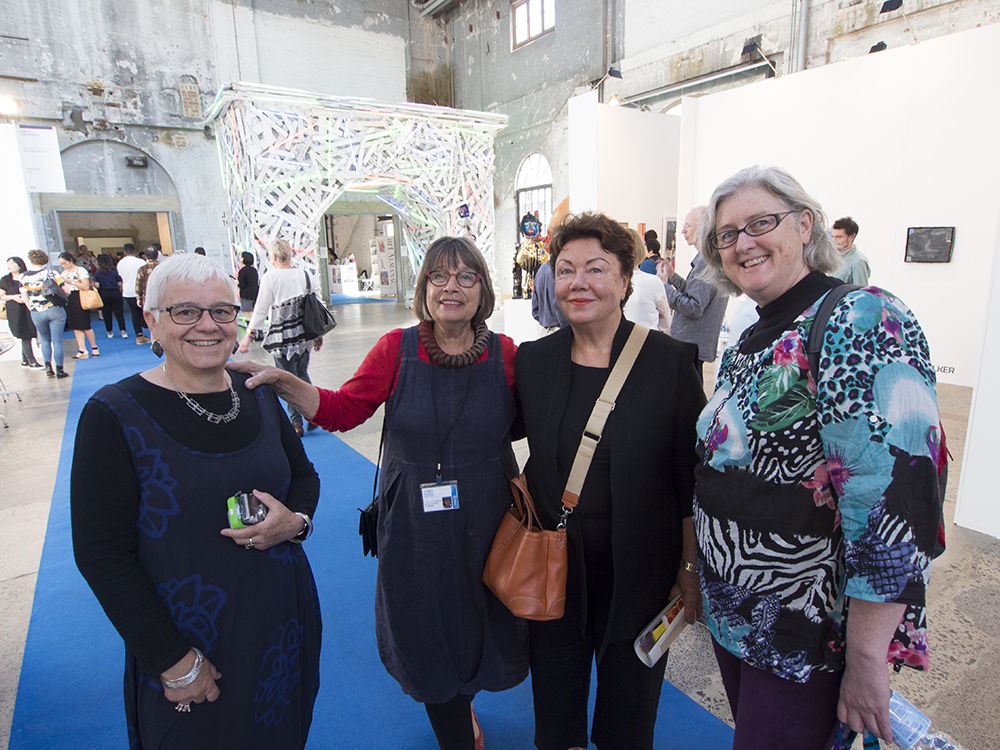
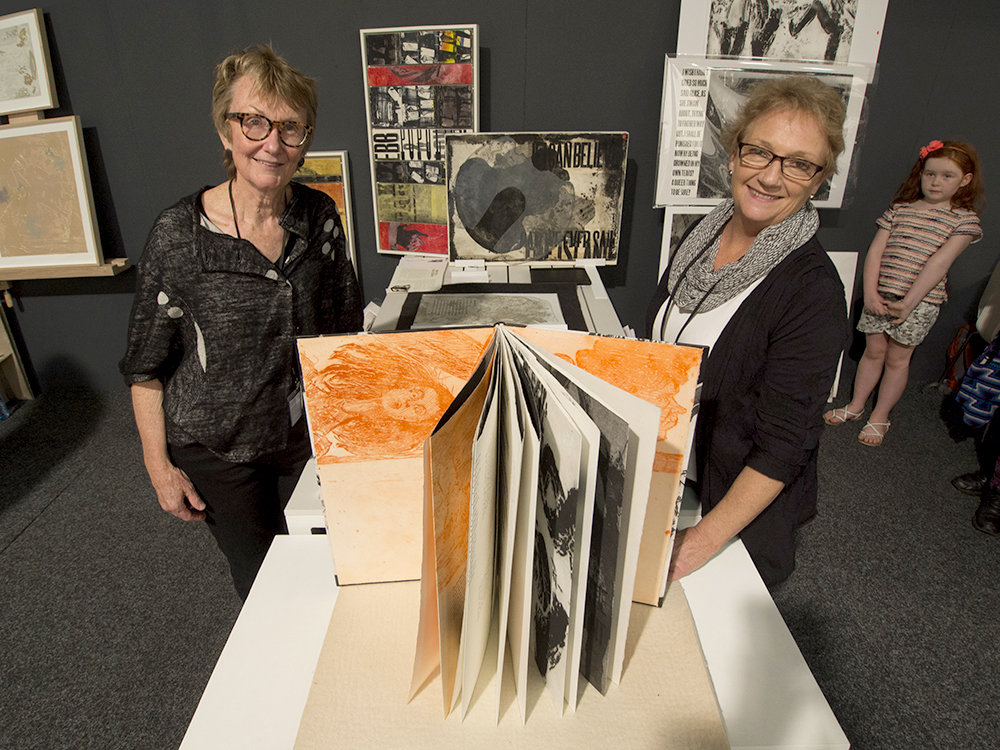
Helen Cole, Akky Van Ogtrop + Victoria Cooper
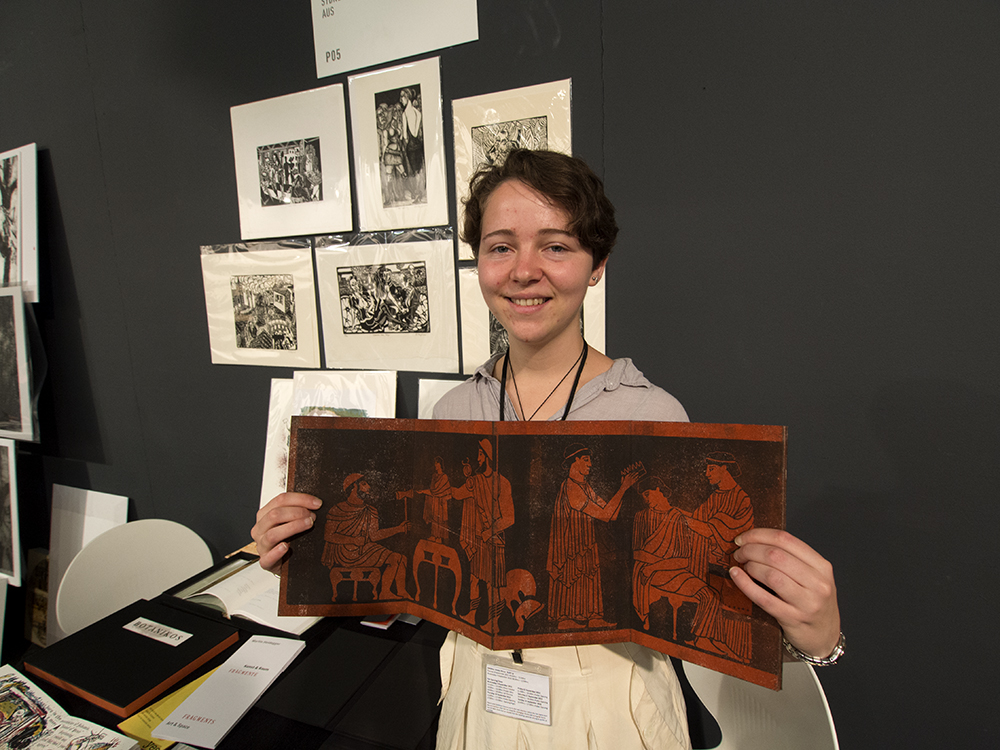
Brigita Oppen Ant Press
Sue Anderson + Gwen Harrison
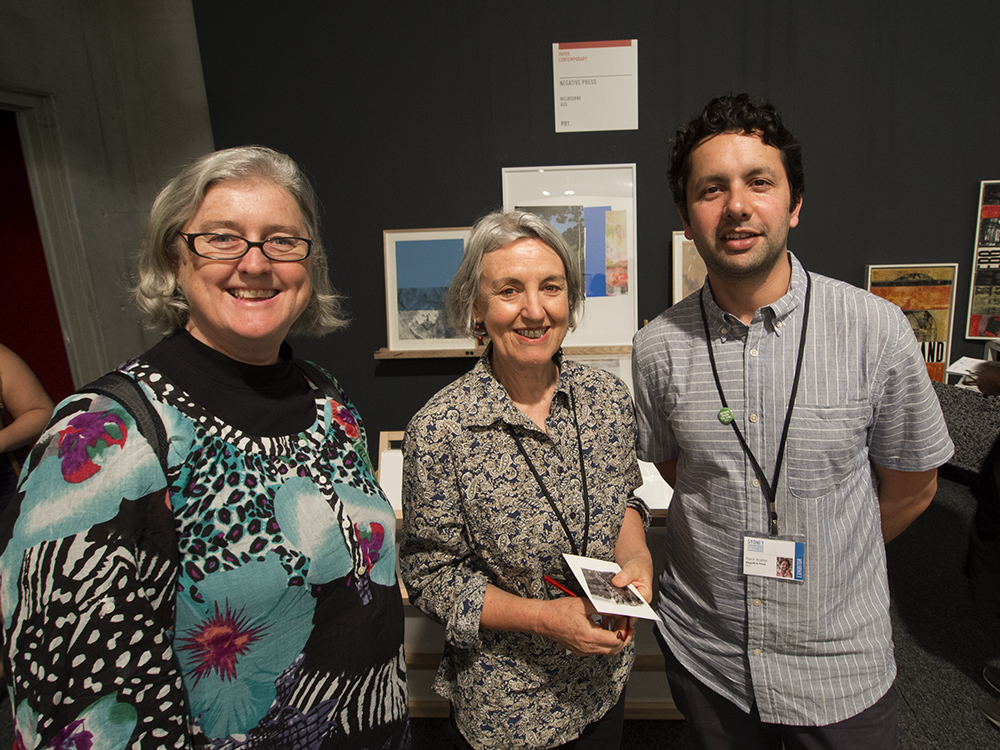
Victoria Cooper, Jan Davis + Trent Walter
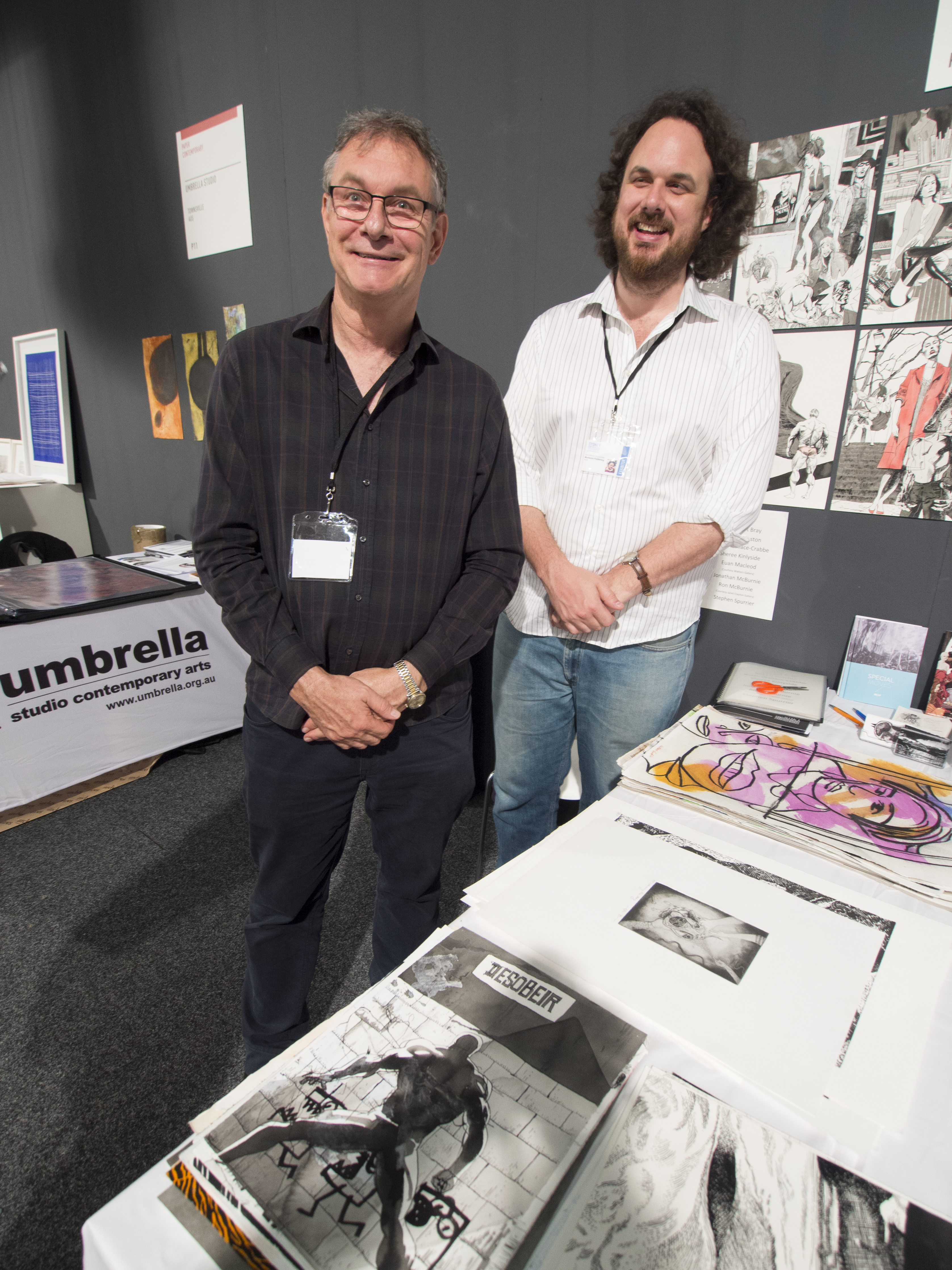
Ron and Jonathon McBurnie
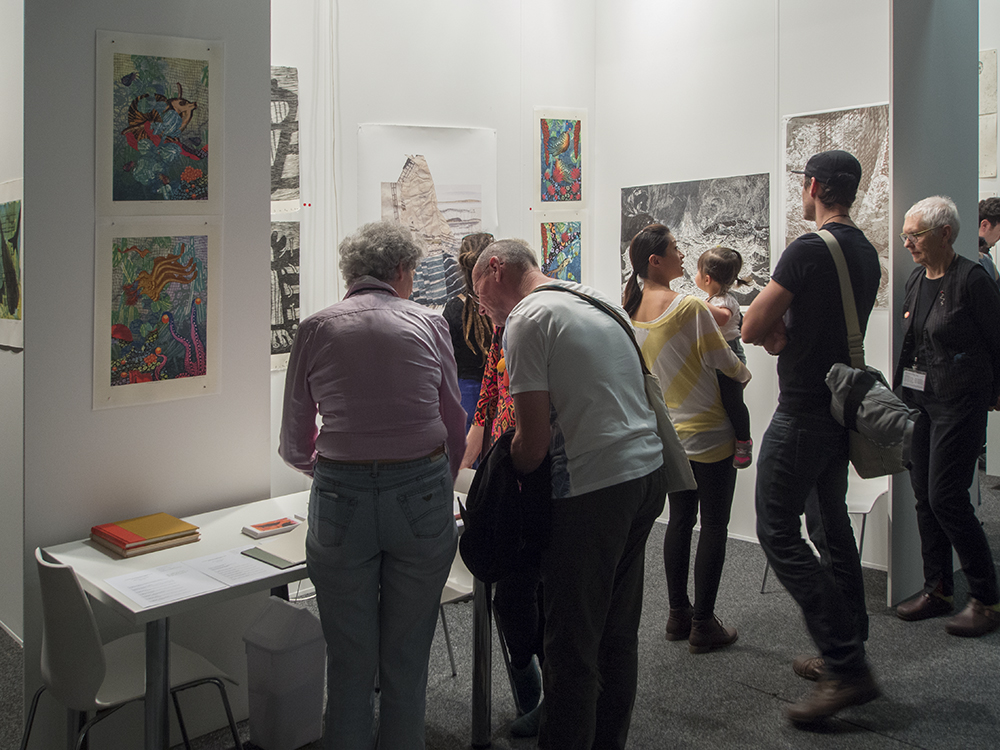
Noreen Graham’s stand @ Paper Contemporary
.
Well, until next time … two years from now…
All photographs ©2015 Doug Spowart
.
.
.
PUMPING-UP the VOLUME on PHOTOBOOKS
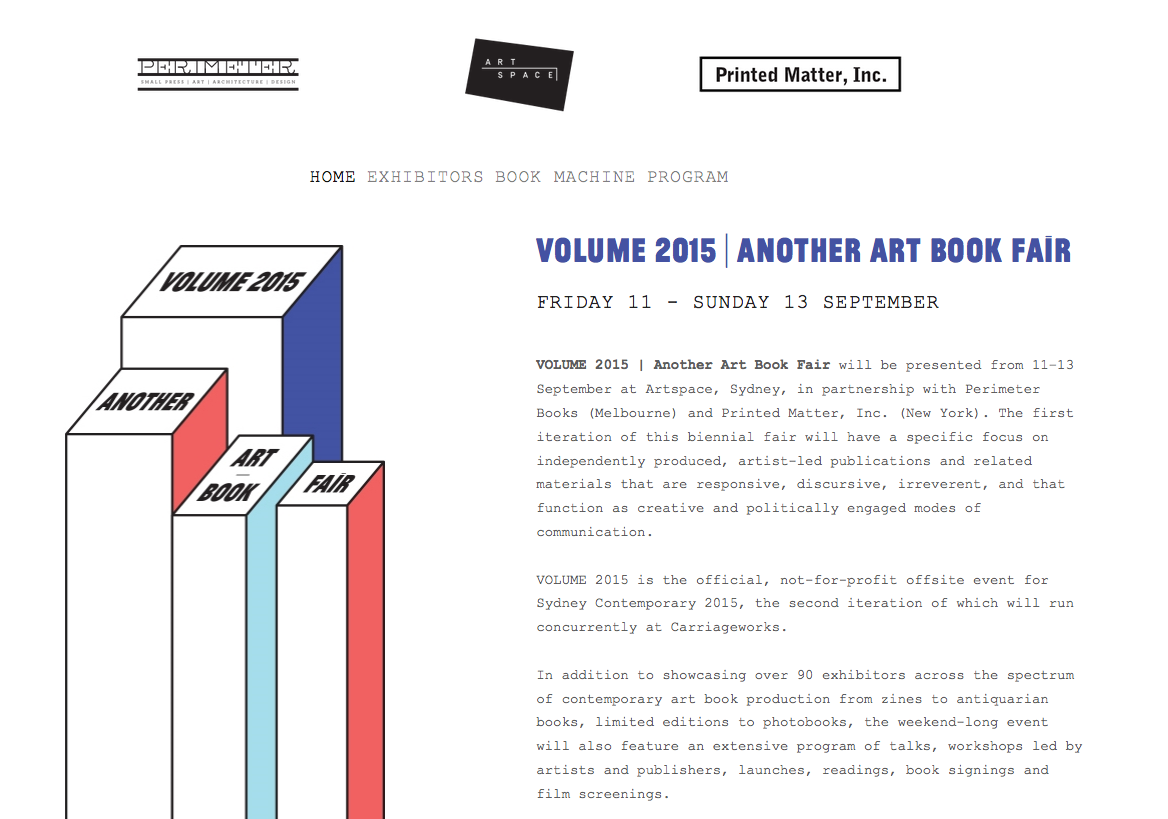
Screen dump on Volume site
.
I attended Volume: Another Art Book Fair in Sydney on the weekend of September 11+13, 2015. The event was a collaboration between Artspace, Perimeter Books and the American artists’ book not-for-profit book shop Printed Matter. Packed into the Artspace building in Woolloomooloo were around 100 ‘Art Book’ makers, publishers and sellers all vying for the attention of potential purchasers. The table holders had spread before them all things book – let’s not try and get into discussions around what an ‘art book’ is, but rather celebrate the range of published products from thin stapled zines and comics, to self-pub photobooks, artists’ books and gallery catalogues, and further to trade-styled ‘fine art’ books and livre d’artiste productions.
.
Some of the Volume Art Book Fair table participants included:
.
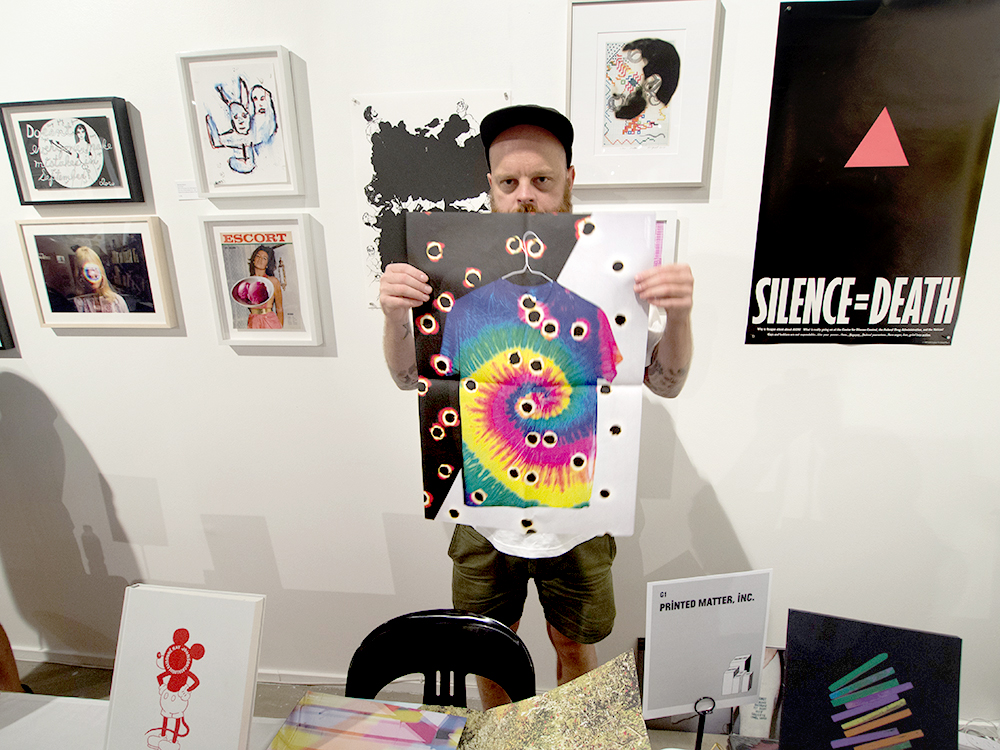
Shannon Michael Cane from Printed Matter
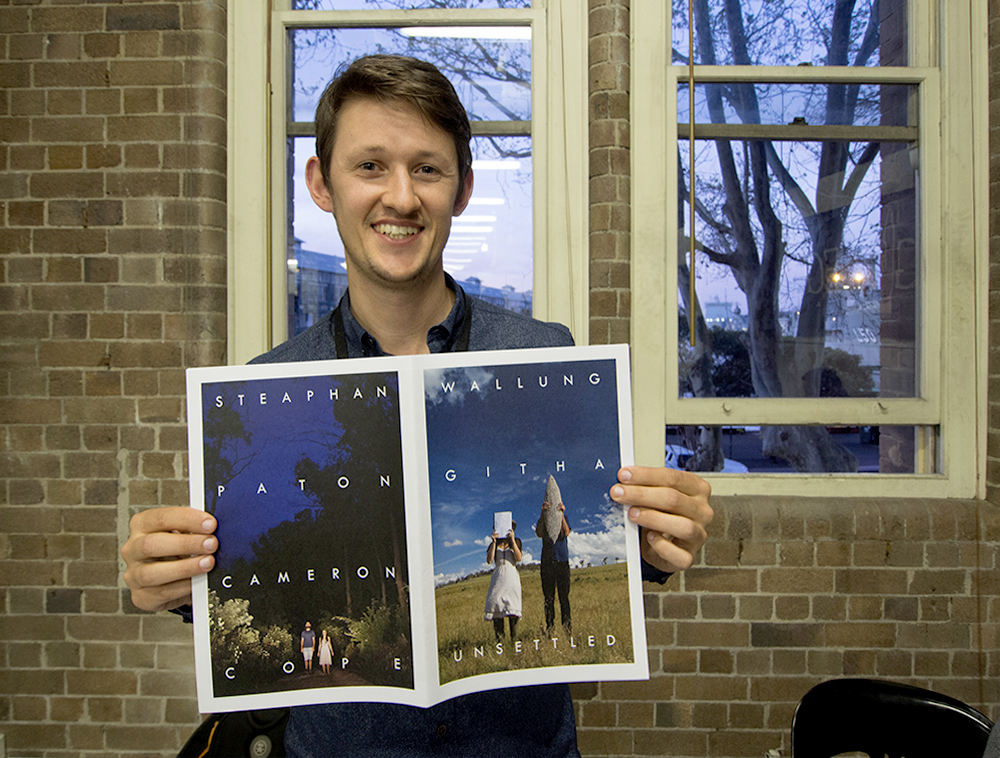
Cameron Cope
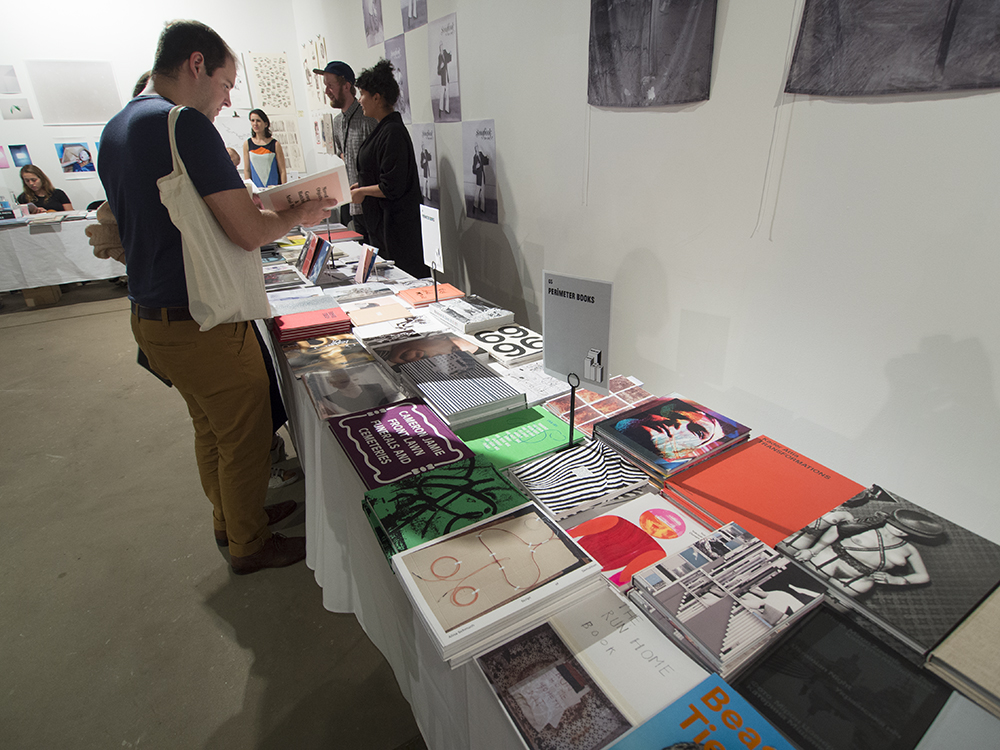
The Perimeter Books table
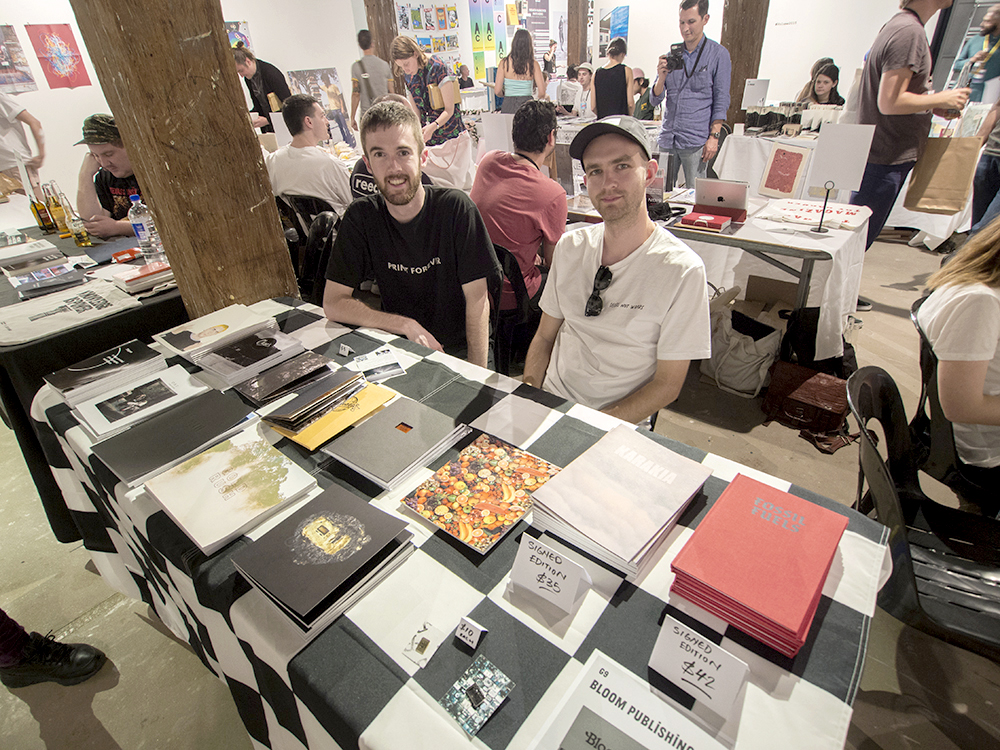
Bloom Publishing Lloyd Stubbers + Jay Dymock
Bloom Publishing: Lloyd Stubbers + Jay Dymock
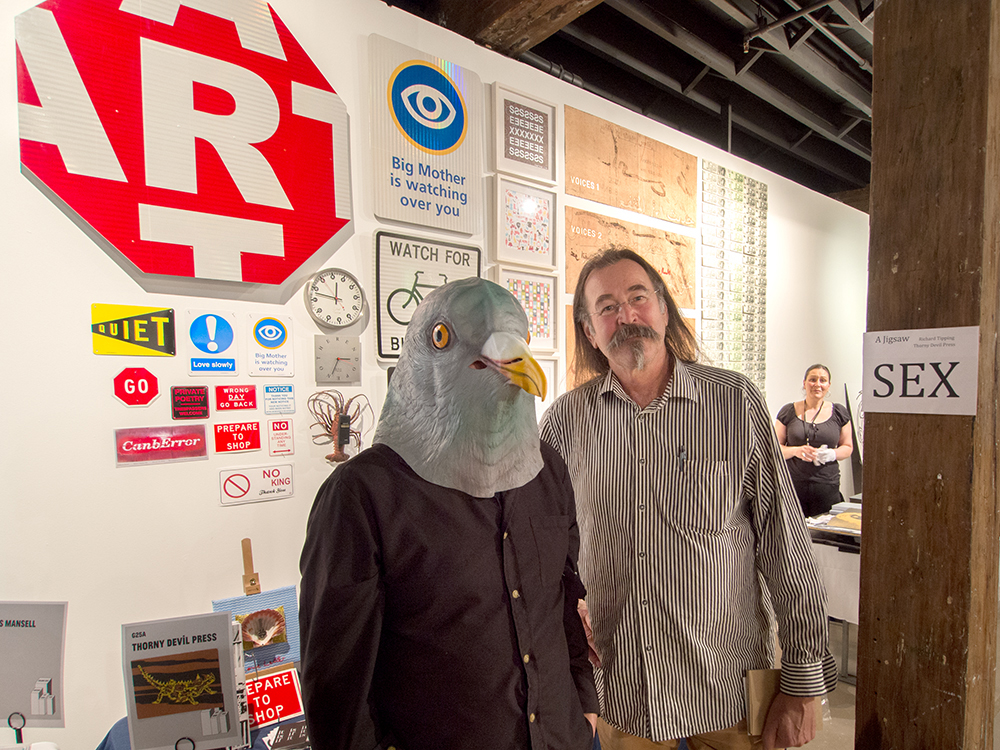
Richard Tipping and Max Ernst (David Dellafiora)
Thorny Devil Press: Richard Tipping
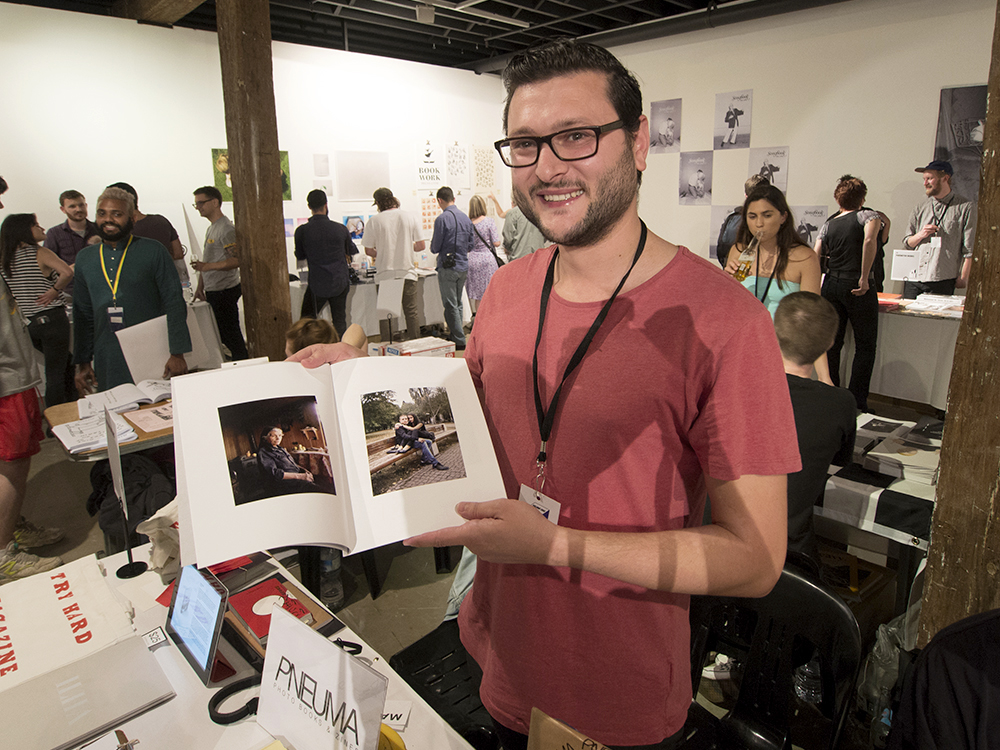
George Voulgaropoulos
Pneuma Publishing: George Voulgaropoulos
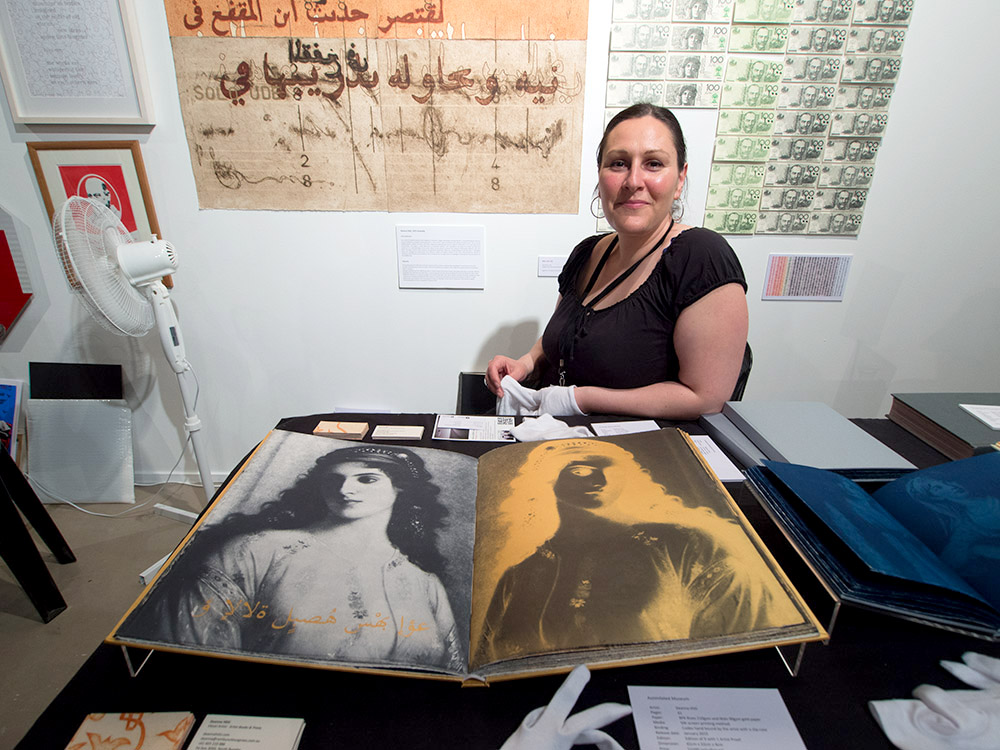
Deanna Hitti
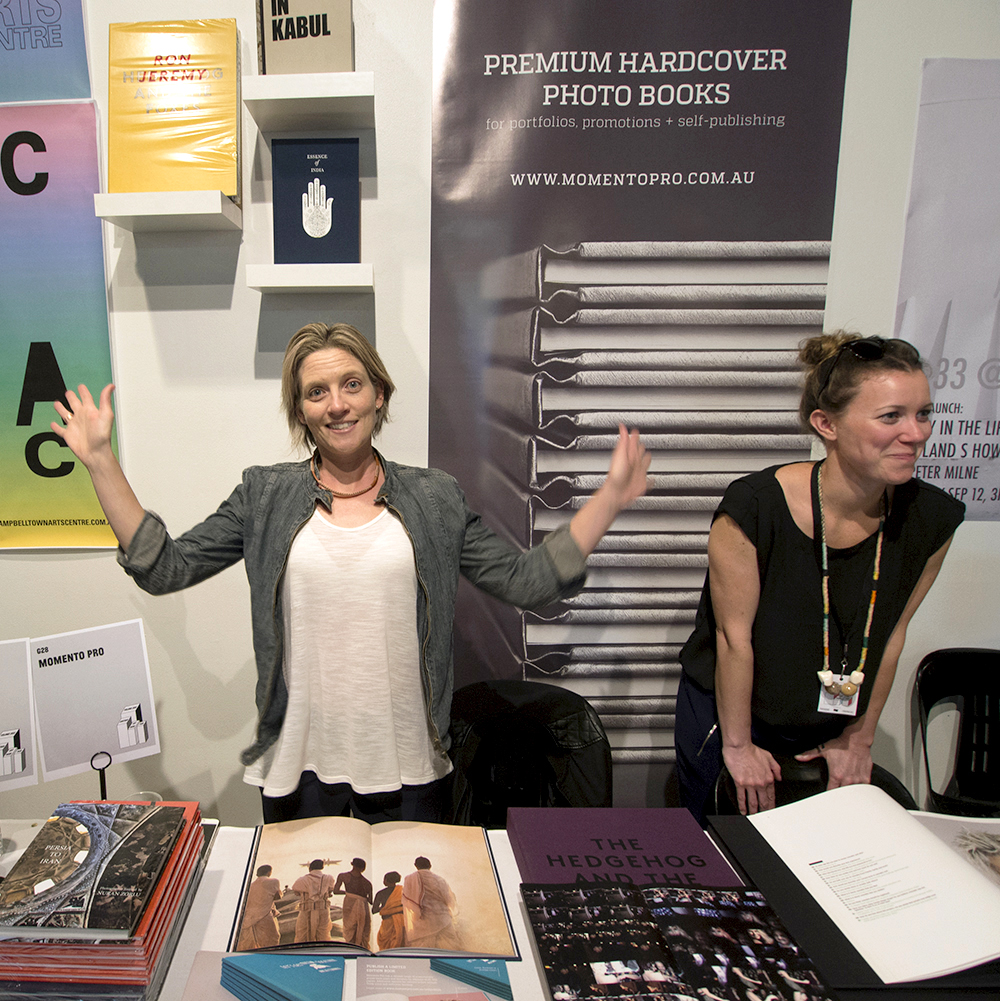
Libby Jefferies MomentoPro after a long day on Sunday
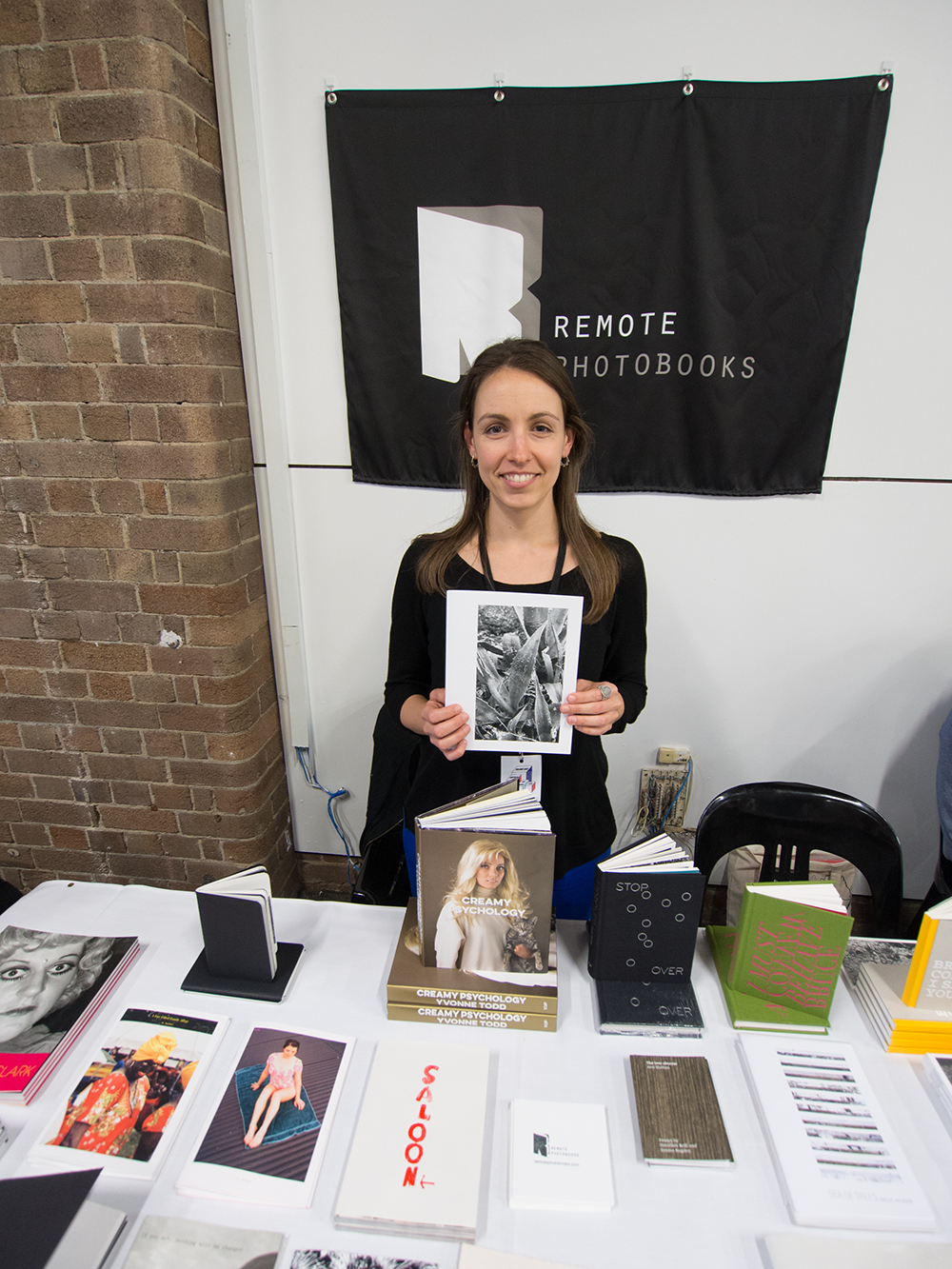
Anita Totha Remote Photobooks NZ
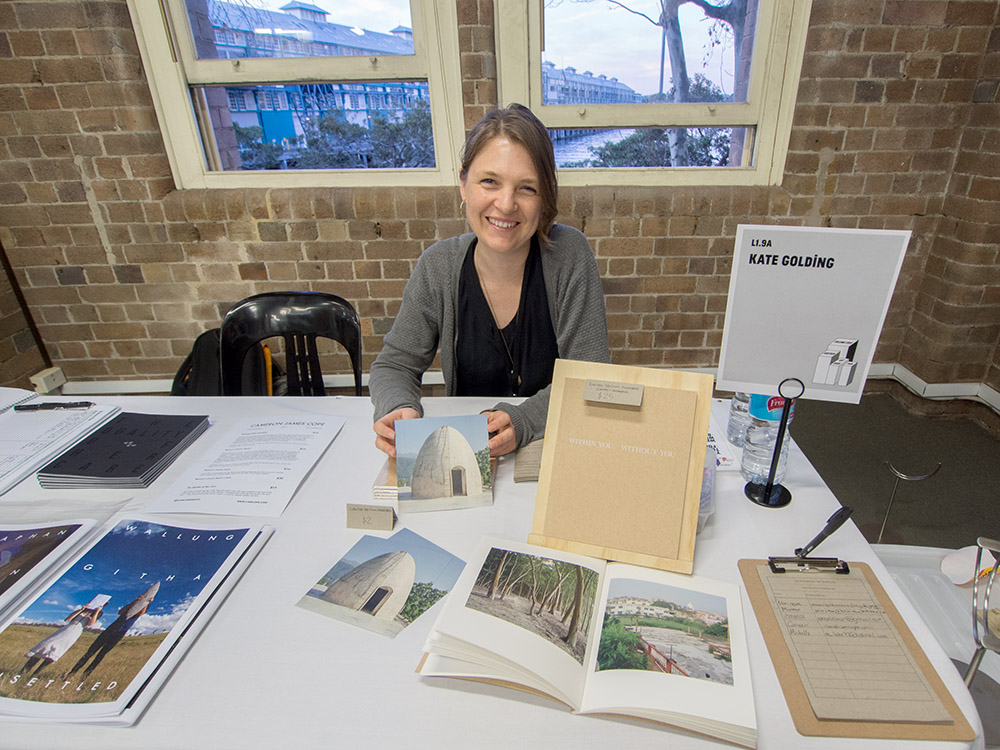
Kate Golding
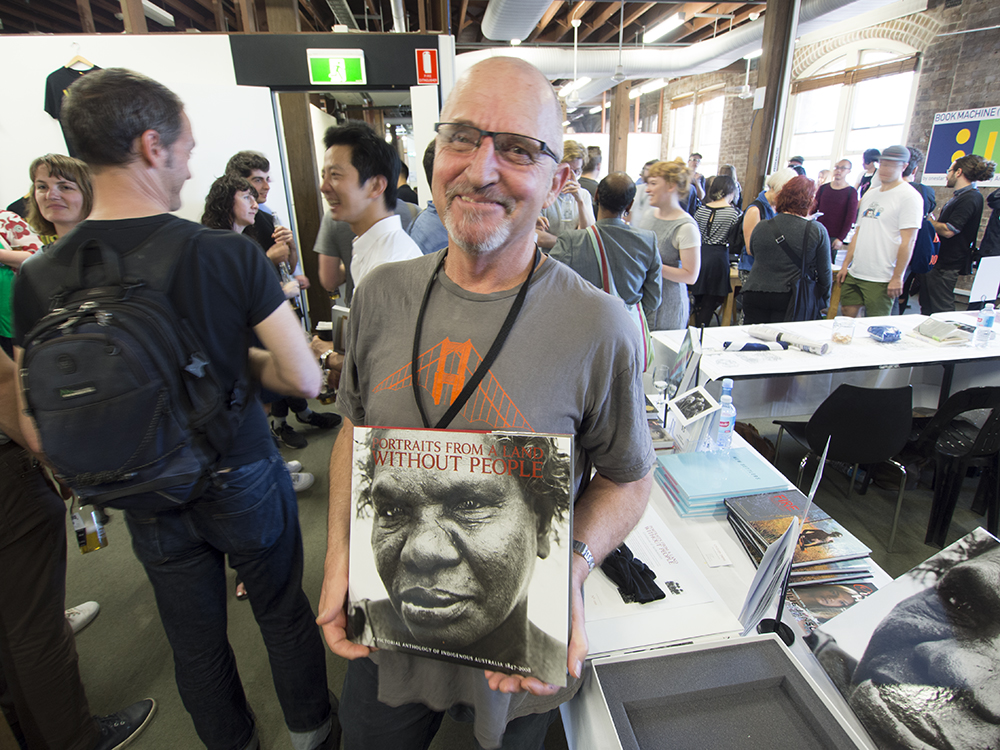
John Ogden Cyclops Press
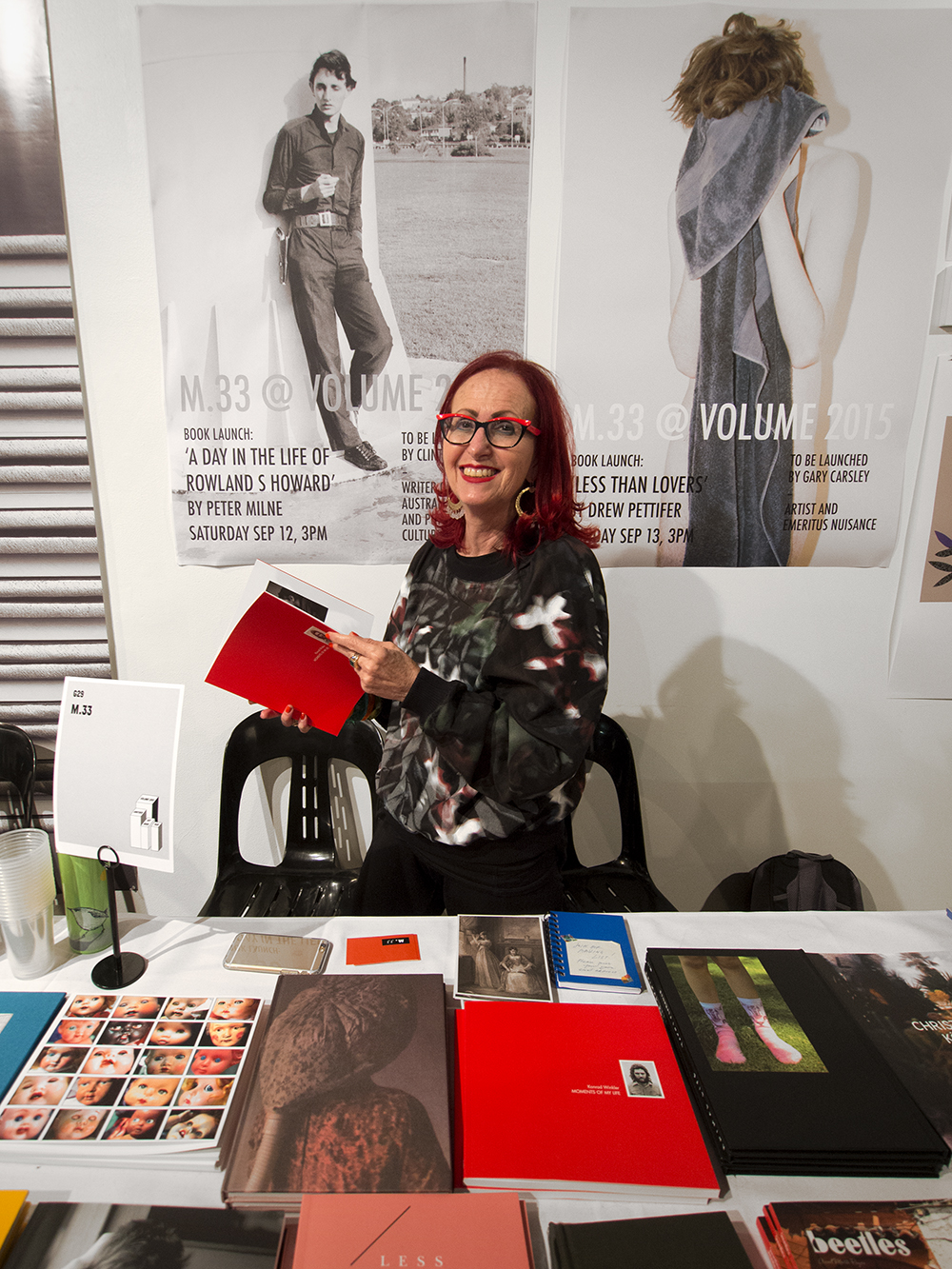
Helen Frajman – m.33
.
Selling books to interested collectors and lovers of books is one thing but as is the case with the emergent trend in self-pub everyone wants to have their own book. To cater to this growing group of keen makers the program included many free forums, workshops and lectures by a variety of key makers and commentators on various aspects of the disciplines of writing and self-publishing (self-pub).
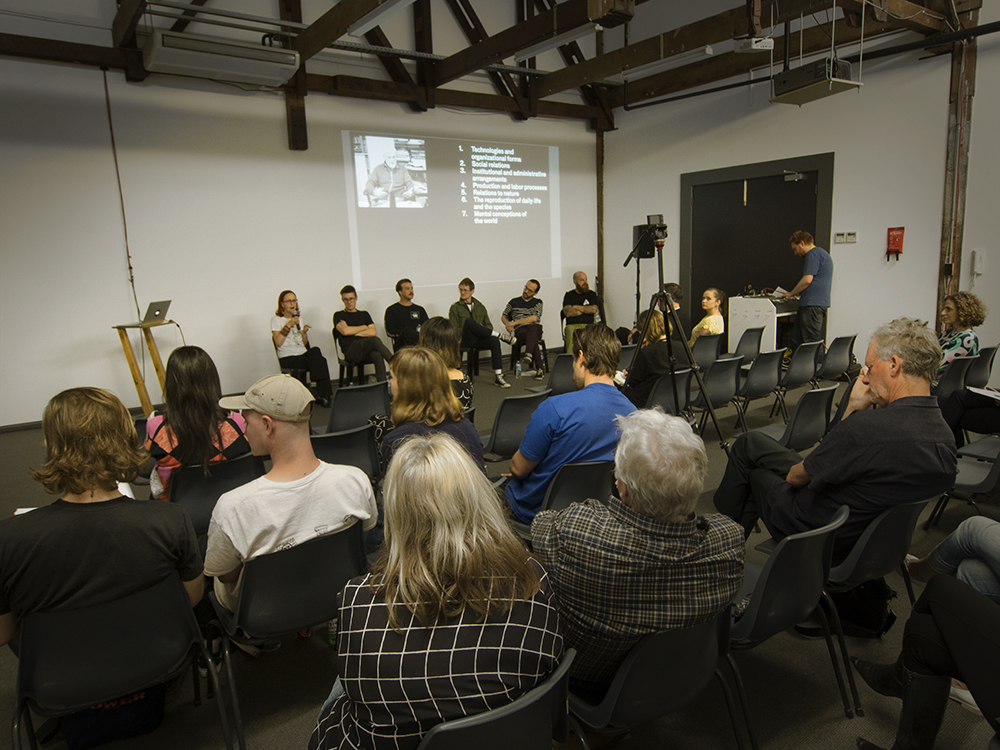
Why Publish panel
As my interest is in topics related to photobooks I attended two sessions: Why Publish and Designing Photobooks. The why-pub panel consisted of Helen Frajman (m.33), Daniel Boetker-Smith (Asia-Pacific Photobook Library), Brad Haylock, Jack Harries and Geordie Cargill and Shannon Michael Cane from Printed Matter. Attendees, of which there were around 30, heard discussions relating to the usual issues of publishing, getting a designer, edition numbers, marketing, selling and getting your work into the right hands including the international market. Brad Haylock suggested the key themes for photobooks were:
- Technologies and organizational forms
- Social relations
- Institutional and administrative arrangements
- Production and labor processes
- Relations to nature
- The reproduction of daily life and the species
- Mental conceptions of the world
Ultimately the overall message seemed to be ‘Give it a go’!
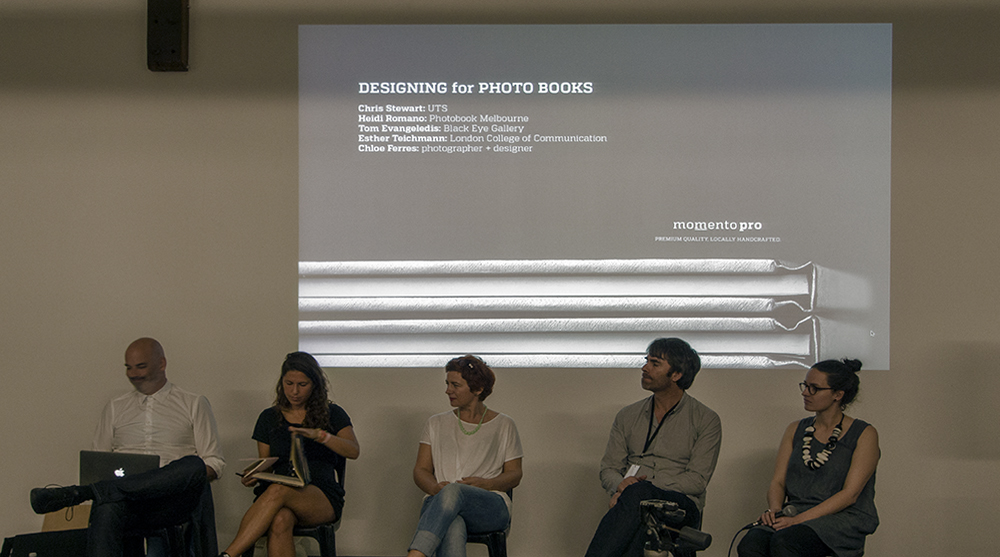
The Designing for Photo Books panel
Associate Professor Christopher Stewart from University of Technology Sydney chaired the Designing for Photobook panel. Each speaker showed examples of their work and discussed design concerns associated with their books. Heidi Romano from Unlessyouwill spoke of her history in design, her passion for the photobook and her experience of the international world of book design. She cited her interest in advancing Australian photobook design as being a driver for her establishment of Photobook Melbourne. Esther Teichmann, and artist from the UK discussed her exhibition work and the challenge of bringing wall-work into the space of the book as well as her experiences, not always pleasant ones, with book designers. Tom Evangeledis, Black Eye Gallery described his interest in encouraging exhibitors at his gallery to consider a book to support the exhibition but also to enhance the opportunity for the artist’s work to be extended beyond the exhibition dates. Chloe Ferres, probably kept the most on track with the topic of book design by presenting a range of works that in some ways subvert the idea of the book being a vessel to hold photographs that express a narrative – she considers the book structure as also important to the narrative and uses a range of design interventions to disrupt the preciousness that many photographers seem to consider important when they make books.
Christopher Stewart posed questions to the panelists to draw out aspects of the topic but when asked if there were questions from the floor Daniel Boetker-Smith asked about how we can make photobooks that are more about the ‘fetish’ of the book – ‘some books all look the same – I’m interested in all kinds of books. A young photographer in Myanmar stapling a bunch of photographs together to make a book is just as important to me as some “coffee table tome”!’ An attendee agreed and responded that books often look the same as they as designed from a dummy where all decisions about the book are considered at the beginning and immutable – whereas another less formal method is the development of a book in a process where opportunities for review and discovery are made along the way allowing the book to be like a collaborator with the artist…
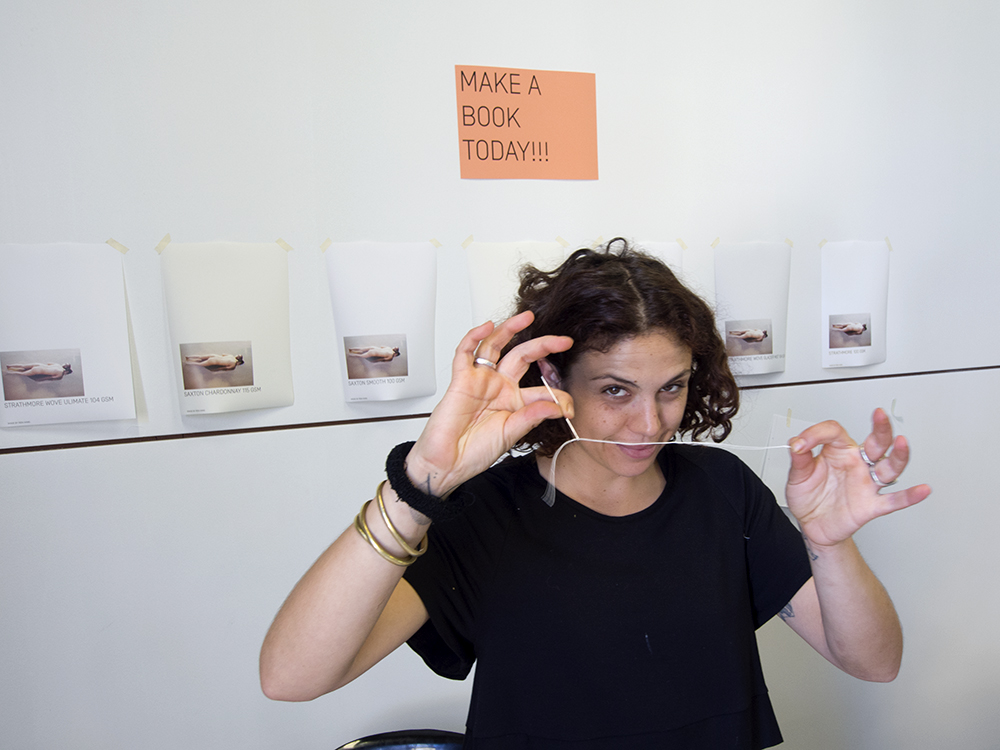
Bella Capezio making Insta Photobooks for APPA
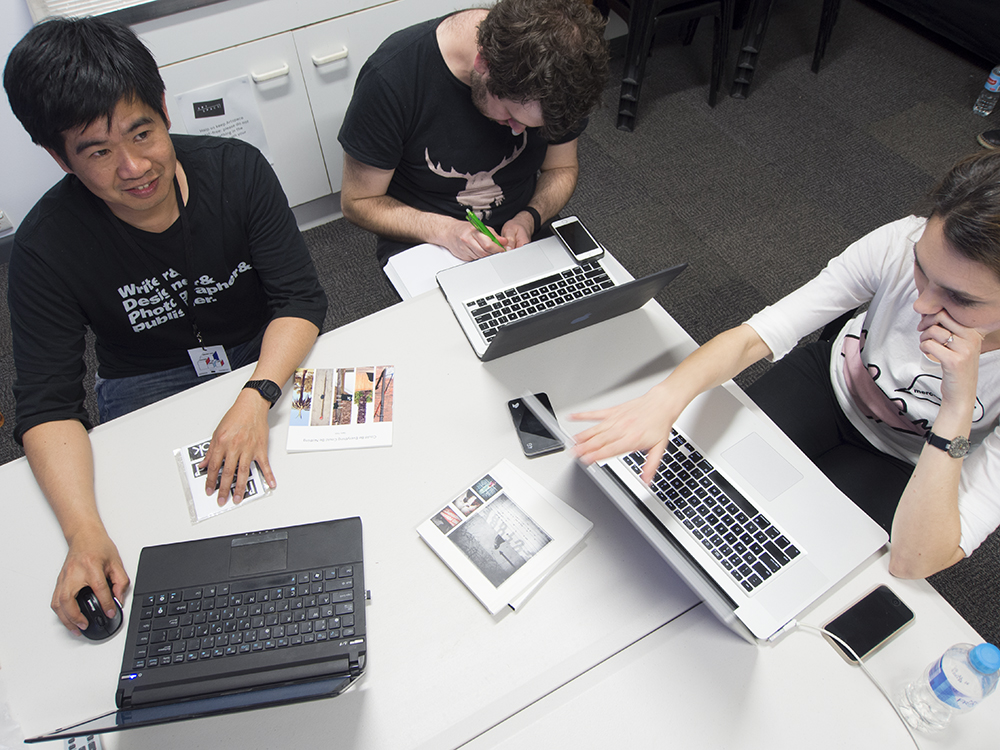
Make your own Photobook with Garry Trinh
While some attendees attended these lecture sessions others were busy making books. The print-on-demand company BLURB offered bookmaking workshops over the weekend led by photobook self-publisher Garry Trinh. Asia-Pacific Photobook Archive presented a selection of their books at the event and founder Daniel Boetker-Smith and Bella Capezio led photobook-making sessions as well.
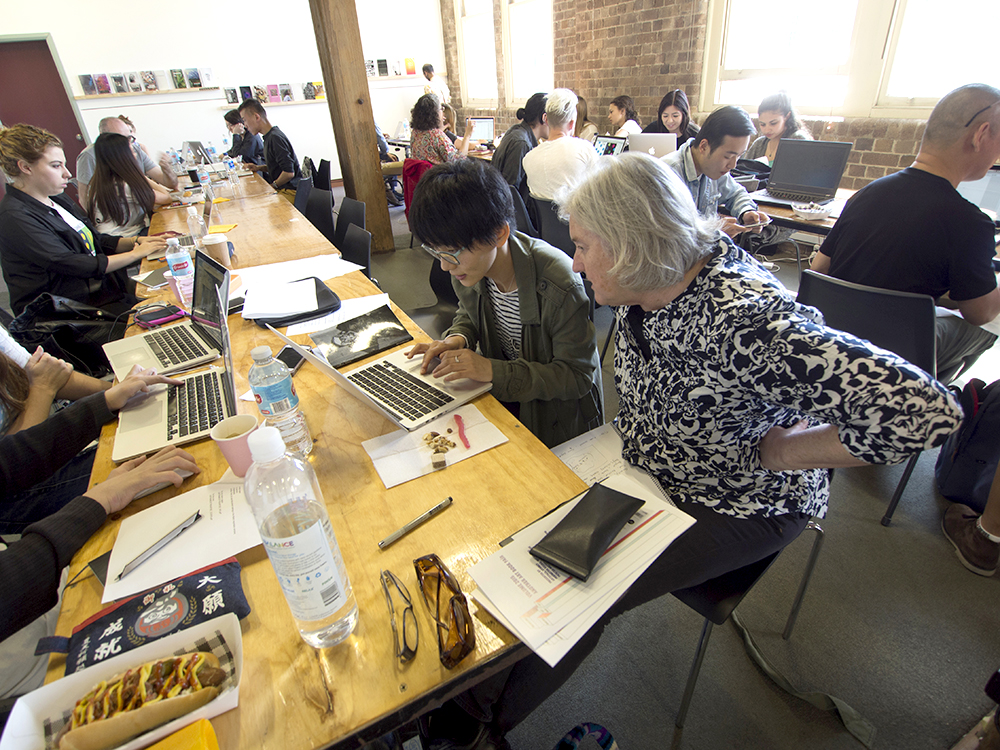
Victoria Cooper and Ruyin Yang
The biggest book-making venture over the weekend was a special project coordinated by Onestar Press who, with Artspace and other supporters including Surry Hills Print & Design Konica-Minolta, design students from University of New South Wales – Art &Design. The project, entitled ‘Book Machine’, brought together a designer with a ‘content provider’ (artist or photographer), and over the course of 3.5 hours the two work together to design a book. Overnight the book was printed and made available to its collaborative participants.
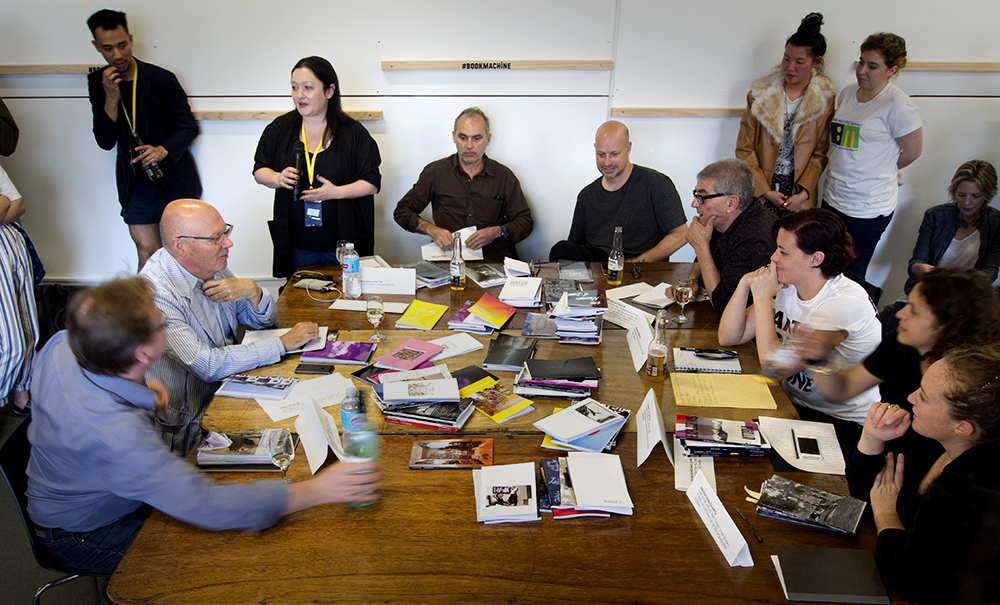
Alexie Glass-Kantor – introduces the Book Machine commentators
Late on Sunday afternoon the Artspace coordinators drew together a distinguished panel of erudite book critics and commentators including Brianna Munting – NAVA, Simon Barney Artist, Alexie Glass-Kantor – Executive Director Artspace, Maddalena Quarta – One Star Press, Bella Capezio – Asia-Pacific Photobook Archive, Philip Keir – publisher and artists’ book collector and Nicholas Tsoutas – Curator and Art management executive. A crowd gathered to hear this discussion and celebrate this unusual project.
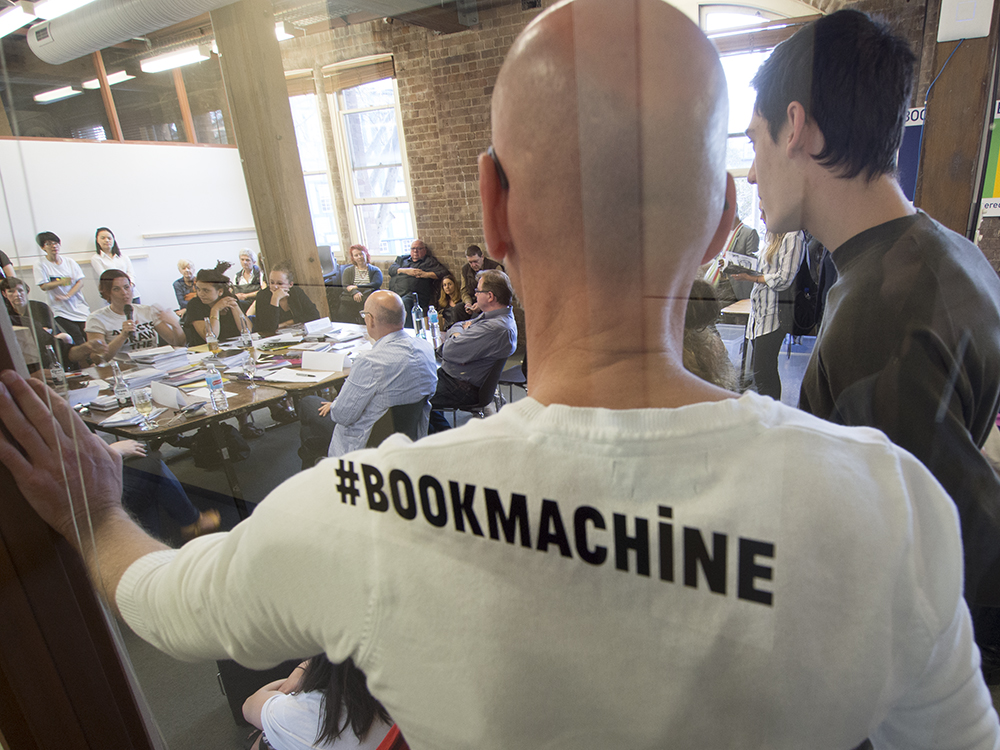
Book Machine
Towards the end of the day on Sunday I rushed around to catch up with people that I still hadn’t spoken with and books not yet seen. I felt something of the heightened energy levels with which these table holders had been operating in the preceding days. Did they sell enough books…? Did they make contacts with people who will do future business with them or provide content for future books…? Did they get a chance to check out what everyone else was doing…? Did they get to do a Book Machine project…? Buy a pie at Harry’s Cafe de Wheels or take-in the harbor, the Finger Wharf and the view of naval ships at Garden Island.
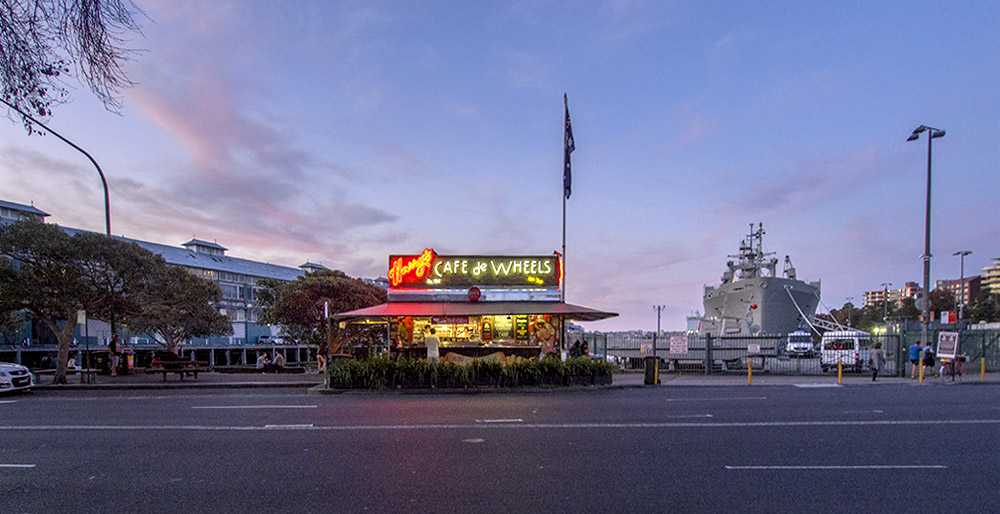
Harry’s Cafe de Wheels
Volume: Another Art Book Fair was a major undertaking for the visionaries who conceived it and then brought it into fruition. There were so many activities, add-on events, presentations and booksellers and books available for artbookophiles in which to luxuriate. There was a real sense of community created in this art book fair that can only advance the disciplines associated with it. One thing is for certain, at least for me, is that I know I have just attended one of the most significant art book fairs to be held in this country to date. When, and where the next one will be is something we’ll await with much anticipation…
Doug Spowart
14 September 2015
PHOTOBOOK ANXIETY – A paper by Doug Spowart
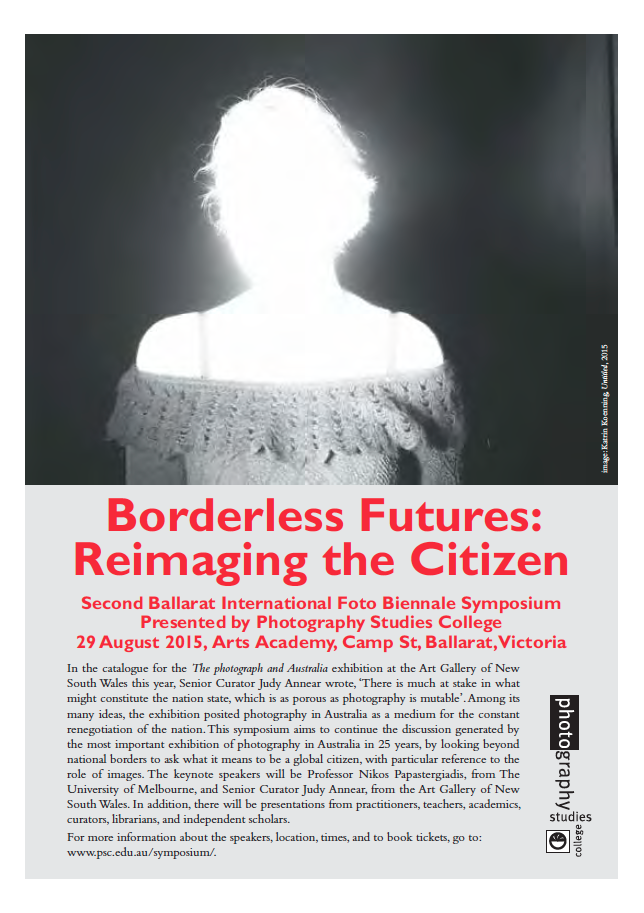
What follows is a transcript of the paper presented at the ‘Borderless Futures: Reimaging the Citizen’ Symposium as part of the 2015 Ballarat International Foto Biennale. Selected images from the presentation accompany the text to illustrate concepts raised. The text is relatively conversational as it was ‘performed’ rather than read to the audience.
PHOTOBOOK ANXIETY… a paper by Dr Doug Spowart
I doubt that Henry Fox Talbot or Anna Atkins realised in the 1840s what an impact that the photobook would have in the 21st century and the role it plays in the self-publishing revolution that we are witnessing today. The old publishing and bookselling paradigm is now redefining itself and trying to maintain its composure and power over their once lucrative territory. Now every photographer wants and can make their own books – but they need the inspiration found in the latest photobooks and they need to be kept informed by the movers and shakers of the discipline as to what is happening now, and what are the future trends and opportunities.
As a result there is a heightened anxiety for constant and direct personal connection with the pulse of this worldwide phenomena. Social media is the communication vehicle of choice and participants in the photobook network are driven to frenetically seek updates, reviews, new releases, posts about their books and the latest gossip through social media channels.
The anxiety surrounding this activity is palpable and the frisson of social media, particularly Facebook, is the powerful tool for this necessary communication as well as for community building in the burgeoning indie publishing photobooks movement.
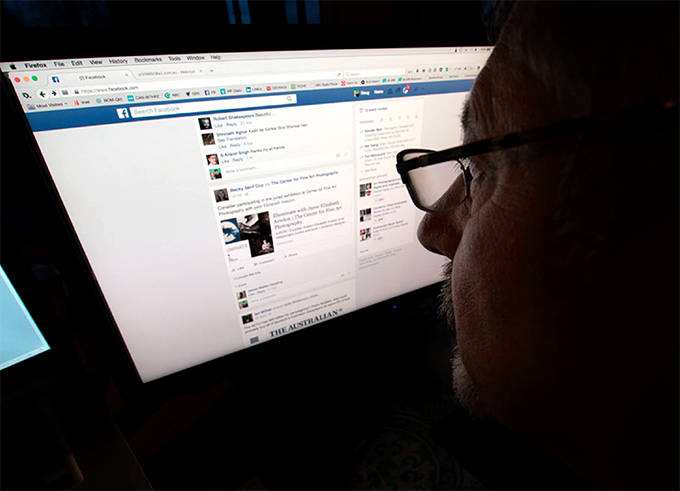
Welcome to ‘Photobook Anxiety’ otherwise known by its clinical title PBX. It is driven by the sufferer having an uncontrollable desire to be a part of everything photobook happening in the world. It is characterised by the sufferer constantly checking social media –
What are the signs that of those suffering from this malady?
Wishing I could be there…
There are so many events that happen worldwide it’s impossible to get to all of them let alone one. In a recent Facebook newsfeed the frustrated respondent posted ‘Oh I would freaking kill to be there…”
A sampling of the year’s calendar includes these events:
- Photobook Melbourne February
- Art Book Melbourne – May
- Photo London – May
- Auckland Festival of Photography (Photobook Symposium) – May
- Kassel Foto Book Festival – June
- Obscura Festival of Photography (Photobook Day) – August
- Perimeter book sale last weekend
- Book Case Study in the Netherlands – September
- Aperture at Photo Paris – November
I should have bought a copy of…. Out-of-print/Limited editions/pre-orders
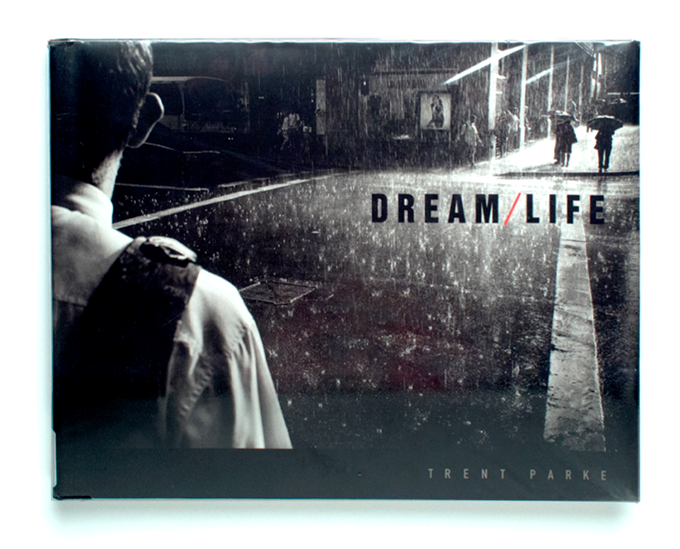
Trent Parke’s Dream Life, probably Australia’s greatest ever photobook, is an excellent example of a rare and out-of-print photobook. Originally selling for around $60 in 2001 it is now is impossible to get for prices less that 25 times that amount.
One was listed on Amazon recently for 1550 Pounds?
Earlier this year one was offered in a Photoeye’s Auction – with a day to go it was $ 895 I did not see the final hammer price…
Last year Abebooks listed one for $1084 in this very town (Ballarat) – I’ve just checked and the Known World Bookshop down the street and they have sold the book.
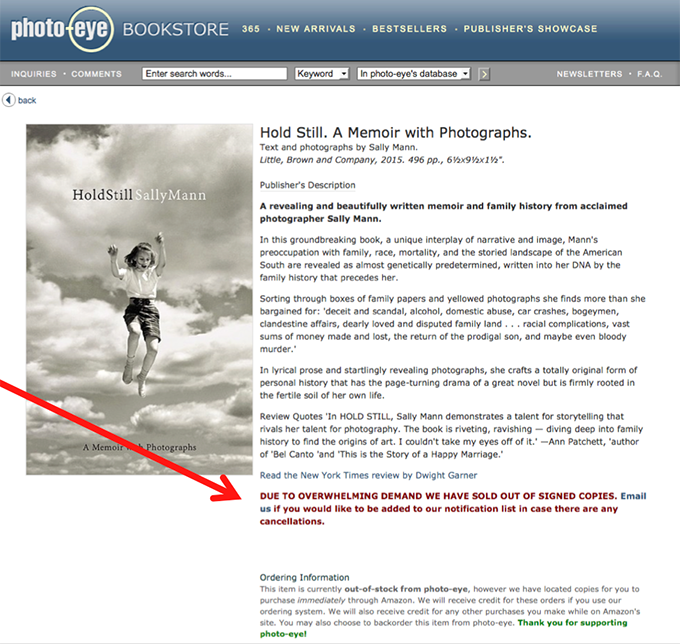
Limited Editions and Pre-Ordering
Adding to this PMX is the trend particularly among American photobook suppliers like Photo-Eye to advertise limited supplies of signed books which can be ‘pre-ordered’ with specific cut-off times and dates. Even these can be out-sold before you hear about the offer being available as in the case recently with Sally Mann’s Hold Still.
Recently Australian Bloom Publishing offered little badges with the text ‘Print Forever’ as white text on a black background. These were ‘snapped-up’ and a following post Bloom advised that the badges were ‘all gone’! But advised FB Friends to ‘Stay tuned for more in the coming weeks’. PMX now demands that Bloom is followed closely so you won’t miss out on the following offers….
You anxiously await the posts and stories of people you follow…
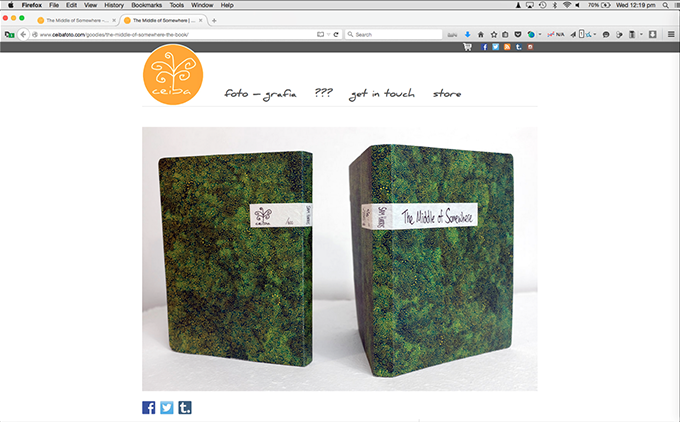
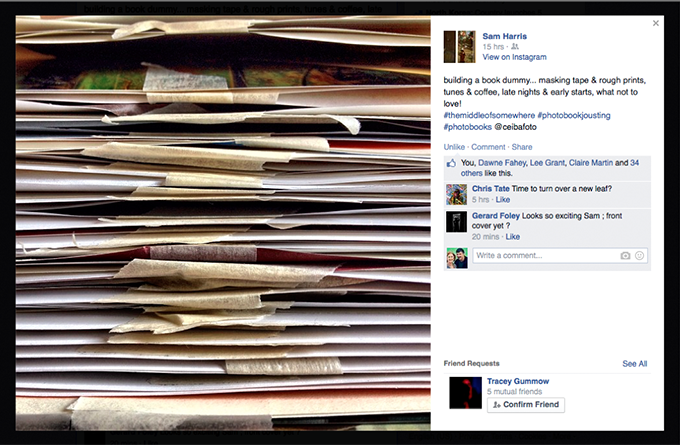
Who hasn’t been following the exploits of photobook officiando Sam Harris and his latest book The Middle of Somewhere. Sam’s posts have taken us a long on the journey illustrated by images that could well form the basis of a new book. As FB friends we saw the posted images of the design stages and felt his excitement at seeing the book on bookshelves at major European shows and being on a table at Arles with the book. The anguish of the missing visa to re-enter Australia and the joy of being back in Australia and the Balingup sunset at home… Oh! And the set up for his exhibition and book launch by Alasdair Foster at BIFB…
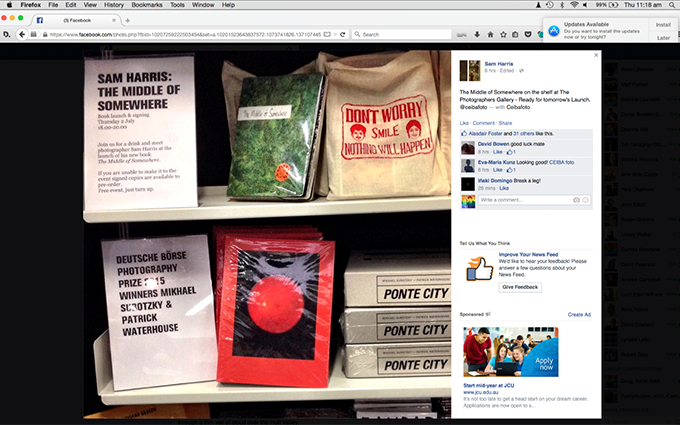
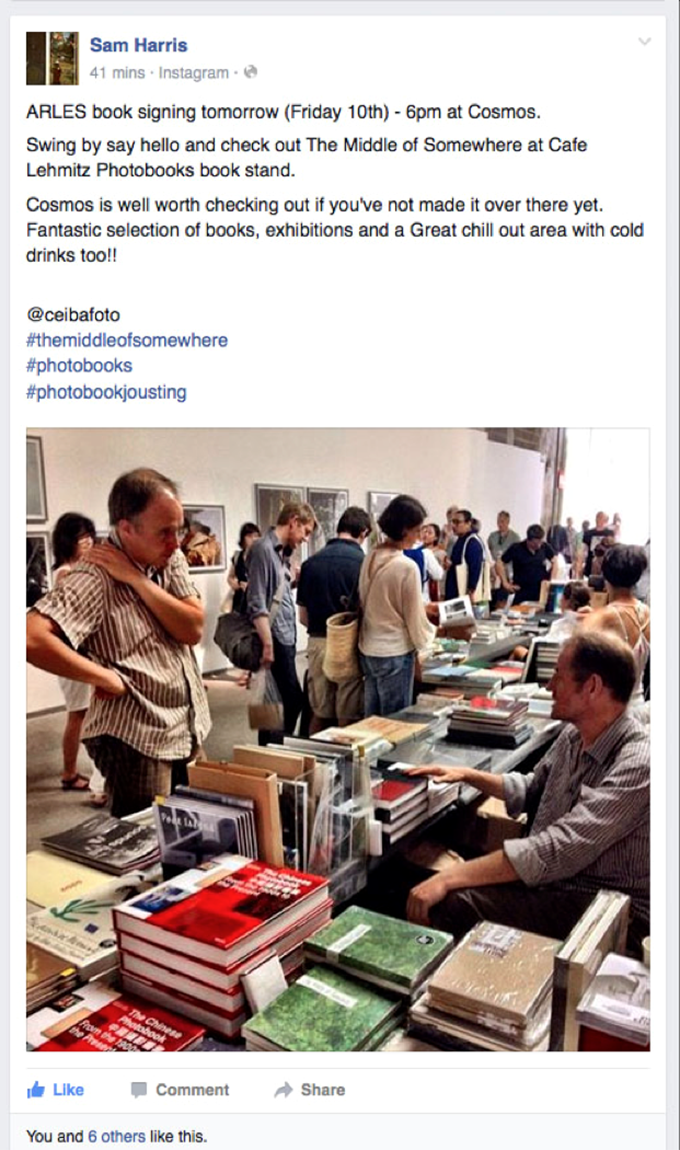
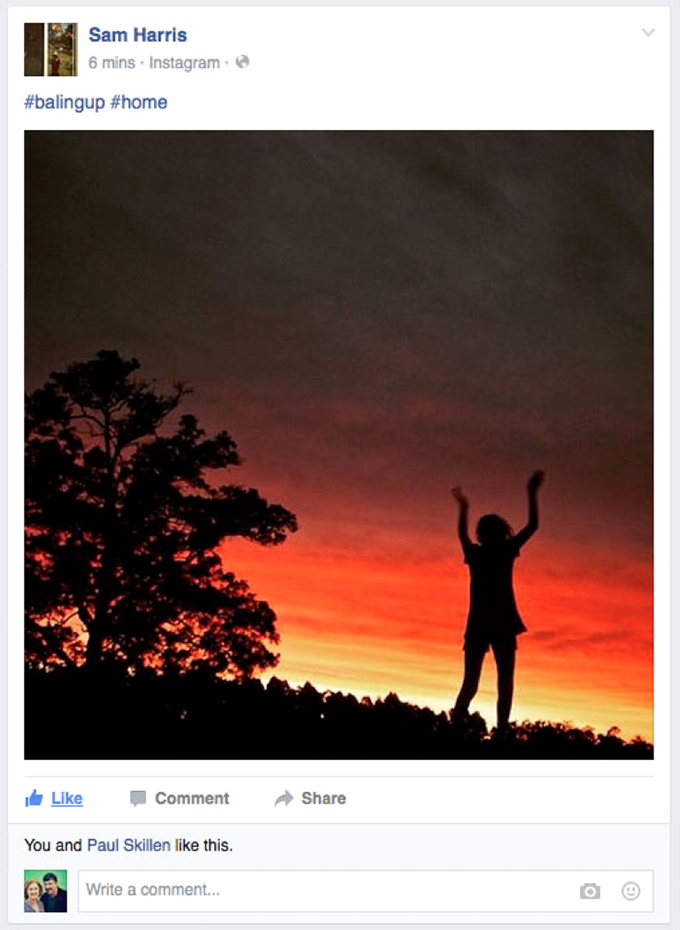
You anxiously await the posts about new stuff…
FB Friends – People who you respect and believe know what’s going on offer advice on books to look at, and get before they are sold out. Adding to PBX phrases like ‘Look what I got today from Photoeye, Alejandro Cartagena’s latest book. It will be gone before you know it’ and ‘Holy moly!!! If you can get your hands on a copy of Mariela Sancari’s brilliant ‘Moises’, do it now. Only 500 copies.’
A couple of days ago Anita Totha from the Photobook Club Auckland posted that Broomberg+Chanarin’s latest book was available: ‘Better get your hands on this now…’. Even Bloom has a new pin — gotta get that! And what about Martin Parr badged clothing and accessories … could that be going a bit far…?
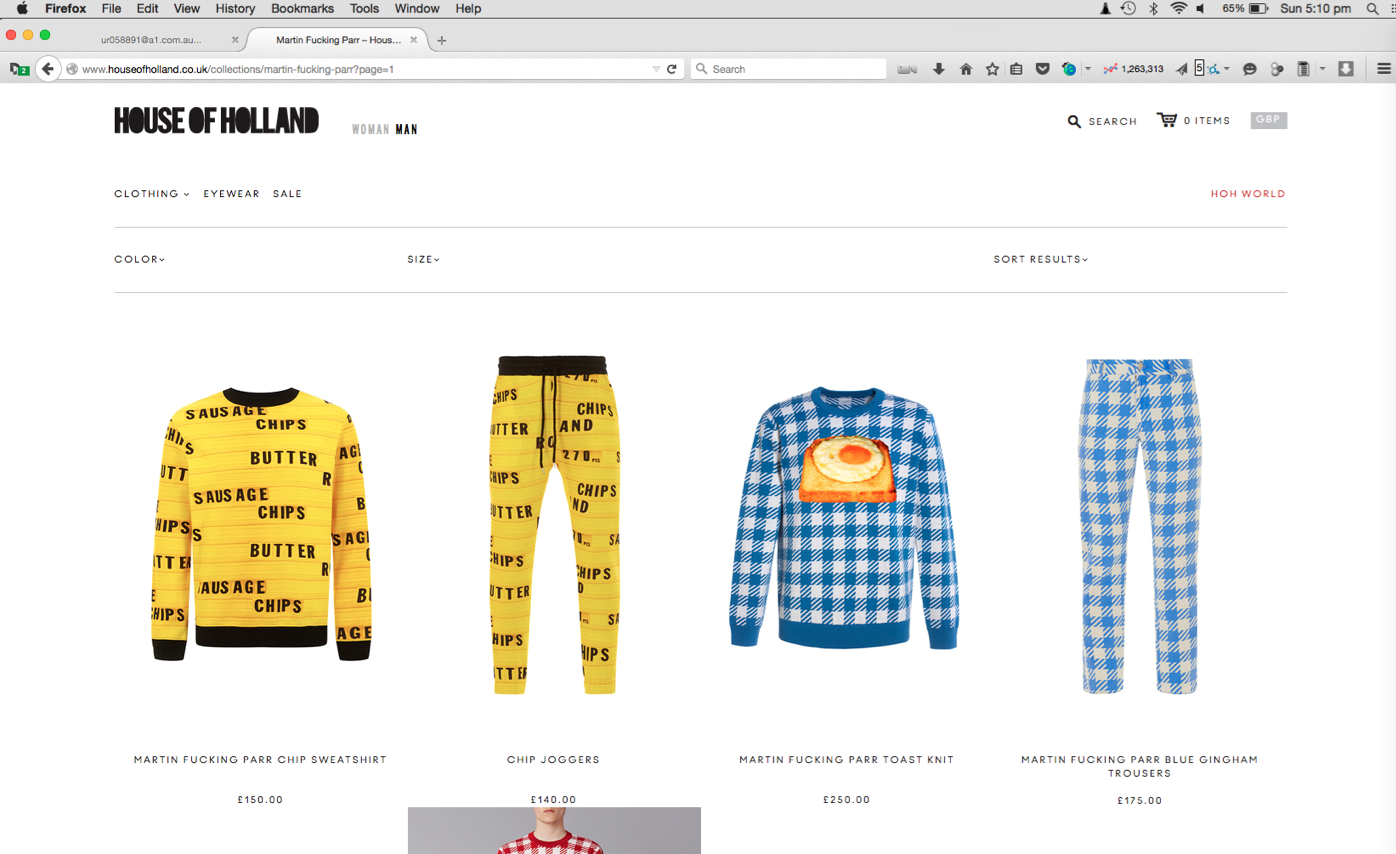
You lament the gaps you’ve identified in your collection!
PBX will cause ‘sufferers’ go to extraordinary lengths to try and fill them… An ‘Ask Meta Filter poster exclaims ‘Help me get my hands on Trent Parke. I mean, his books. It’s driving me mental. I must get Trent Parke’s “Dream Life” and “Seventh Wave” … Replies state the value of the book with responses like ‘Ouch’, ‘And no Dream/Life to be found. Snif’
In another post on ‘The Online Blog’ Kelvin, a respondent from Melbourne, brags about ‘poking his head’ into a second hand bookshop on the way to buying some biscuits from his local Subway store and asked if they had a copy of Dream Life ––– they did, and sold it to him for $70
So busy trying to be ‘in it’ you have no time for your own work
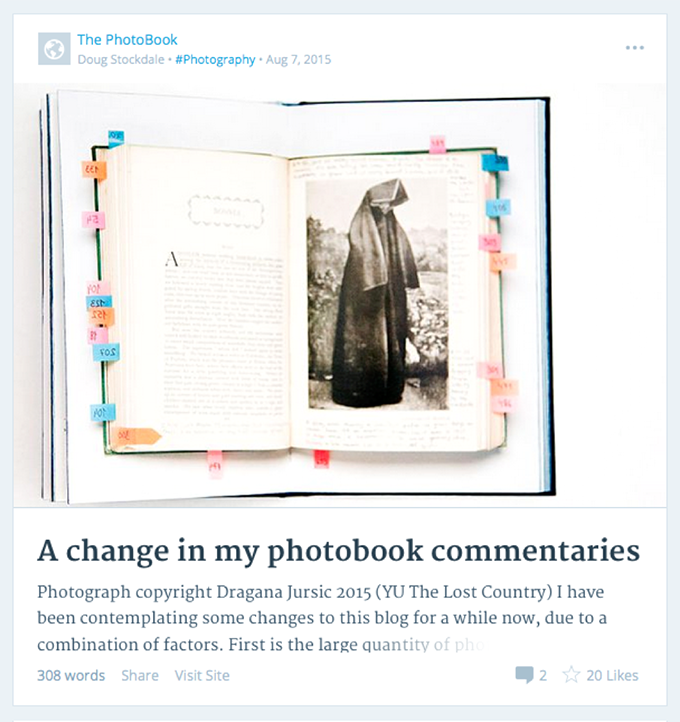
Doug Stockdale of The Photobook blog recently posted ‘a change to my photobook commentaries’. He’s overwhelmed by the ‘dizzying rate’ of new photobooks and the quality and creativity of these books. Stockdale comments that they need ‘a shout out to the photographic community at large to increase awareness’ and that is what his blog attempts to do. However he’s finding that there’s not enough time for his own projects so he announced a a more ‘concise’ Facebook format for the blog in future posts…
Just how pervasive is PBX?
Using SM for personal communications
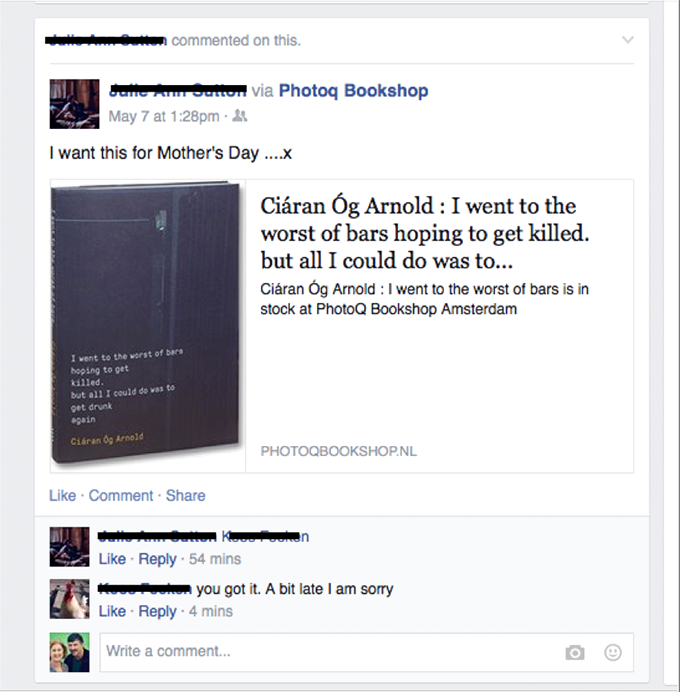
A few days before Mothers Day this year a Brisbane acquaintance received notification that Ciaran Og Arnold’s ‘I went to the worst of bars…’ book was available in a bookshop in Amsterdam – She posted ‘I want this for Mother’s Day’ Her partner responded in less than an hour – ‘You got it’. Weeks later she triumphantly able to post that the book has arrived.
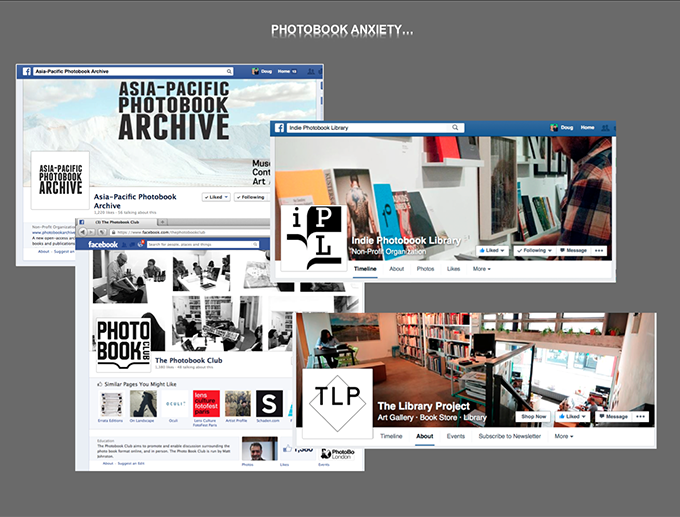
That you know the picture backgrounds for each photobook commentator’s blogs…
Every photobook supplier, commentator, collector or archive has a standard background that is used for his or her social media presence:
Perimeter Books in Melbourne has the shop-view, sometimes with a table of books with Justine or Emma’s hand.
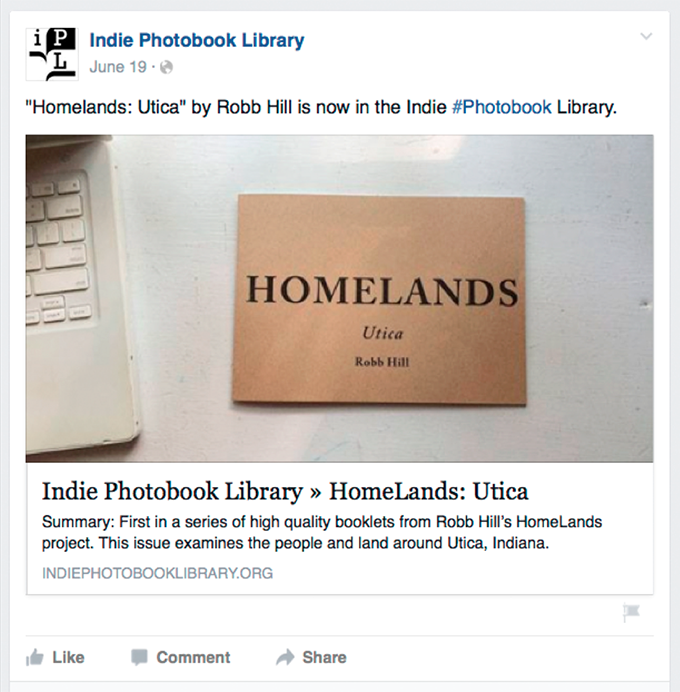
The Indie Photobook Library is the tabletop and a MAC laptop computer keyboard
Asia Pacific Photobook Archive used a knotted wood plank background for quite a while then, the floor of their old space and then confused us all by using every background imaginable.
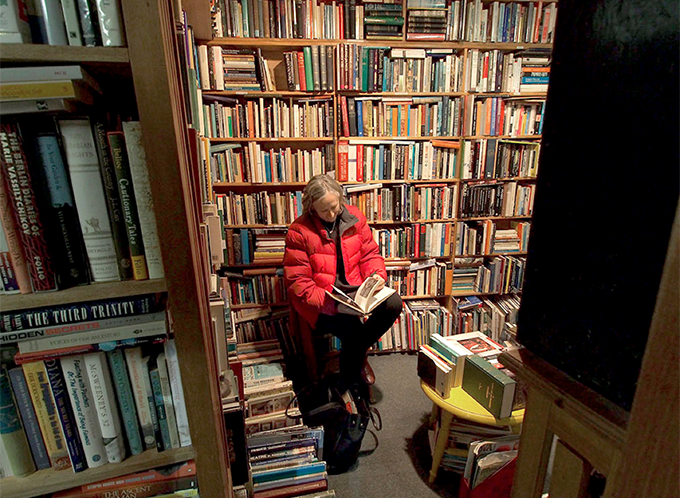
Can’t walk past a second-hand bookshop – or bookshop markdown table without feeling a twinge to look inside
The anticipation of being rewarded with wondrous things is such a strong motivator
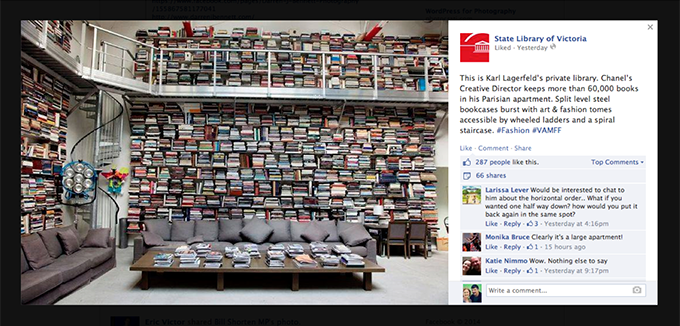
Spending more than you can afford building your library
The anxiety of photobook collectors was certainly shaken by a FB post from the State Library of Victoria about Karl Largerfield’s personal library. I suppose it comes down to getting one’s priorities right when it comes to collecting and personal finances.
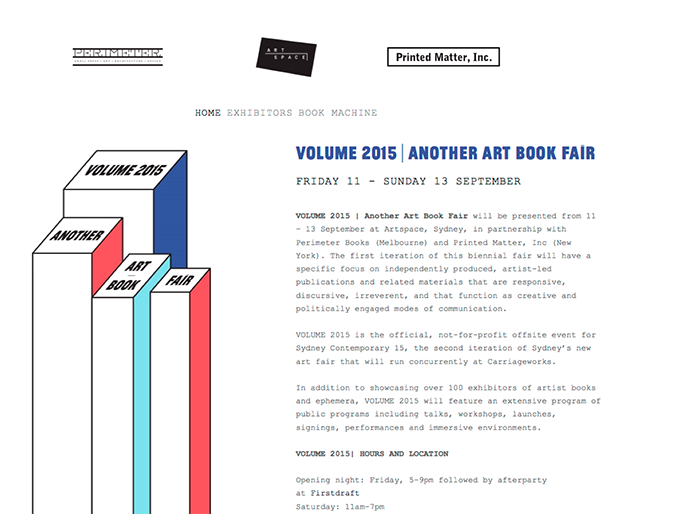
Gotta make sure I’ve got the dates of the next Art Book Fair locked-in to my diary
Were you one of the 16,000 who went to the Melbourne Art Book Fair? If you weren’t there you probably heard and read about how amazing it was. Now you don’t want to miss out on the next one… Well, the ‘Sydney Volume 2015 – Another Art Book Fair’ is on in 2 weeks…
Lifeline book sales are marked on your calendar
The Benjamin Effect!!
Photobook collectors will feel a connection with Walter Benjamin and his essay on ‘I’m unpacking my library’. In it he states ‘Of the customary modes of acquisition, one of the most appropriate to a collector would be the borrowing of a book with its attendant non-returning.’[i]
But there are ways more desperate than that – stealing books. A significant photobook identity recently admitted that his last resort to save his favourite book from being held in library limbo by committing an act of ‘Bibliokleptomania’.
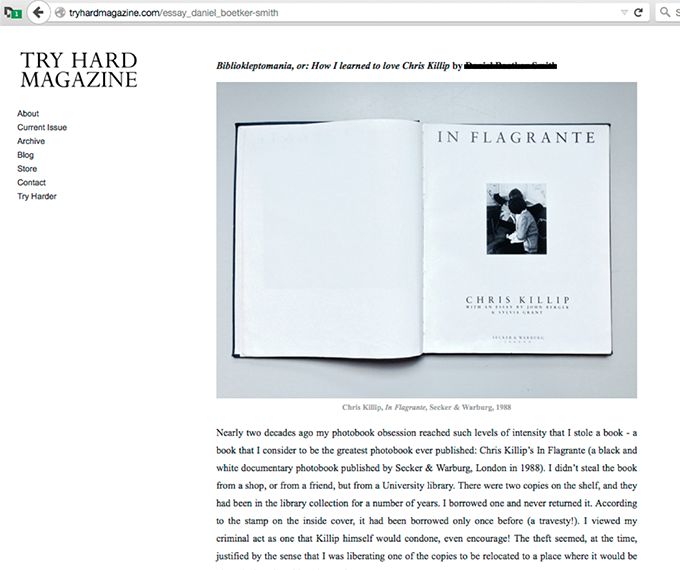
Benjamin also has something that any PBX sufferer can take heed of and that is: ‘Of all the ways of acquiring books, writing them oneself is regarded as the most praiseworthy method.’[ii] And that must inspire those inflicted with PBX to go and make a book of their own…
Antidotes / To Feed or Cure
- Reviewing your social media strategy – set your FB preferences to ensure you get ‘Notifications’ and that your selected ‘Friends’ are listed as ‘Family’;
- De-friend people who post what they ate for breakfast or pics of their cat – unless the cat is reading a book! (FB Friend Judy Barass posted this as a response to this point);
- Find new FB Friends – sources of quality information – like Harvey Benge, Stockdale’s The Photobook Blog, Foam, Dazedigital.com, Selfpublishbehappy.com, and Remote Photobooks for what’s happening in New Zealand;
- Develop equity in social media: Giving = Getting. That is ‘Like’ things that you like, ‘Comment’ and ‘Share’ things adding your own comment to make it interesting for you FB Friends;
- Don’t just ‘lurk’ on FB otherwise things that you may be interested in will disappear from your Newsfeed as FB may think that you to not engage with the content;
- Looking at allied book disciplines like artists’ books and zines;
- Sharing your books – I’ll give you mine if you give me yours. I’ll buy yours if you buy mine;
- Donate and contribute to photobook archives like the Indie Photobook Archive and the Asia Pacific Photobook Archive;
- Grow your local – connect with events and people doing things in your region;
- Lobby art institutions, libraries and criticism networks for more photobook content; and
- Become an active advocate for photobooks.
In conclusion
Ultimately it’s hopeless and PBX sufferer must give in to their base desires and needs and participate with energy, vigour and indifference to other aspects of your life….
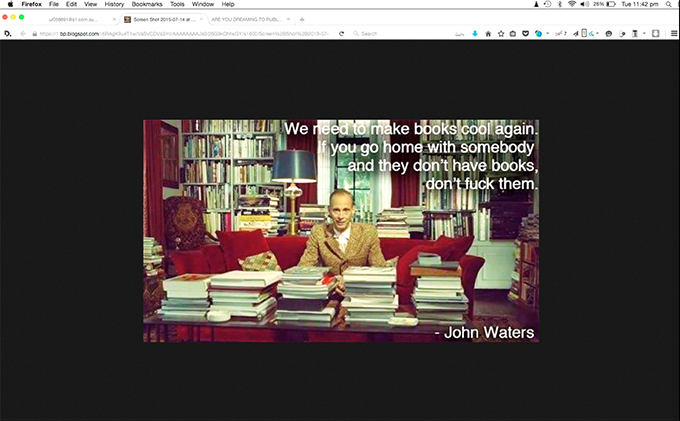
Finally: A thought from John Waters…..
Thank You – And – SEE YOU ONLINE….
Benjamin, Walter. “Unpacking My Library: A Talk About Book Collecting.” Translated by Harry Zohn. In Illuminations, 69-82. New York: Schocken Books, 2007. Reprint, Harcourt, Brace & World, New York, 1968.
[i] Benjamin, Walter. “Unpacking My Library: A Talk About Book Collecting.” Translated by Harry Zohn. In Illuminations, 69-82. New York: Schocken Books, 2007. Reprint, Harcourt, Brace & World, New York, 1968. P62
[ii] ibid p61
THE ARTIST & PHOTOBOOK MELBOURNE
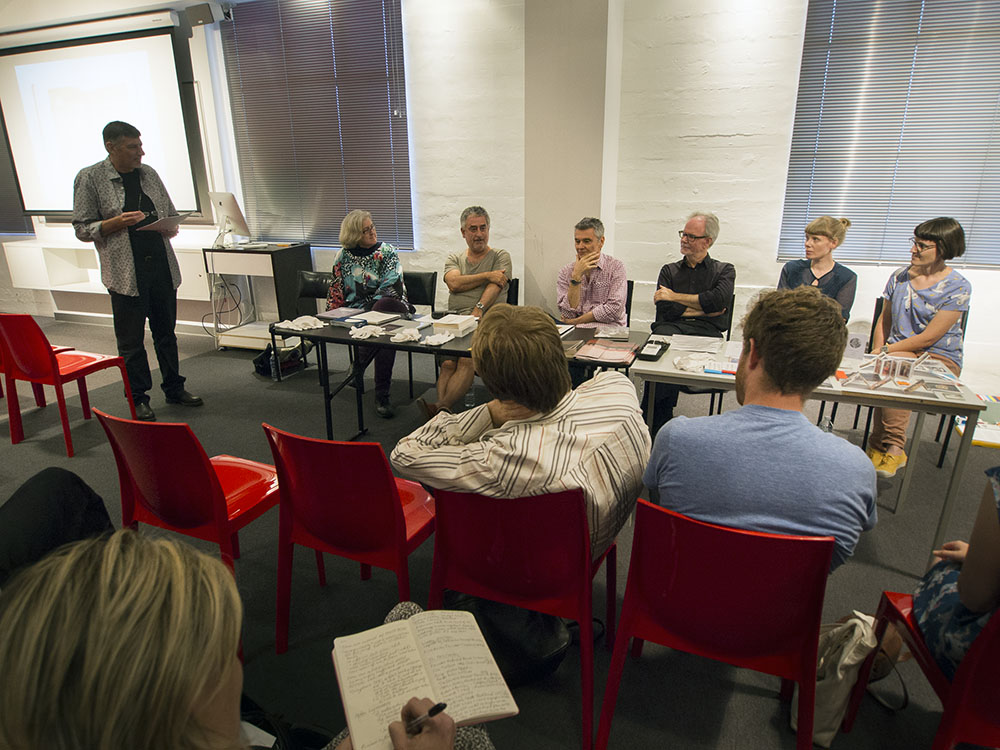
The forum panel….Photo: Anthony McKee
In February this year Melbourne hosted the biggest photobook event ever in this country. Called Photobook Melbourne the event brought together exponents, collectors and critics from around the world as well as from around Australia and New Zealand. Hundreds of books were handled, read and appraised in the many galleries and venues that came on board to support the event.
Martin Parr and Gerry Badger in their second volume of The Photobook: A History (2006), recognised artists who worked with photographs in a specific chapter entitled Appropriating Photography: The Artist’s Photobook.
Participants in the artists’ book discipline have been active indie, DIY publishers worldwide for sixty years or more and many of them use photography in their books. They have well established networks, events activities, awards, critical debate and collectors both private and public.
At a time such as Photobook Melbourne where all things photobook are celebrated and discussed it may be worthwhile to consider what concurrence may exist today between the artists’ book and the photobook. How do artists consider their use of photography and the photograph in their books? Is there any sympatico between the photobook and the artists’ book.
To address these and many more questions I was supported by the Photobook Melbourne organisers Heidi Romano and Daniel Boetker-Smith, to convene a forum to bring the voice of the artists’ book into the photobook conversation. The participants in the forum were; Dr Lyn Ashby, Gracia Haby and Louise Jennison, Peter Lyssiotis, Des Cowley and Dr Victoria Cooper (who was co-opted as Georgia Hutchison withdrew due to personal reasons in the final days).
The proceedings of the forum, with the support of the participants, have now been formed into a PDF booklet that can be downloaded FREE from this site. To provide a taste of the presentations I present the following quotes from the texts:
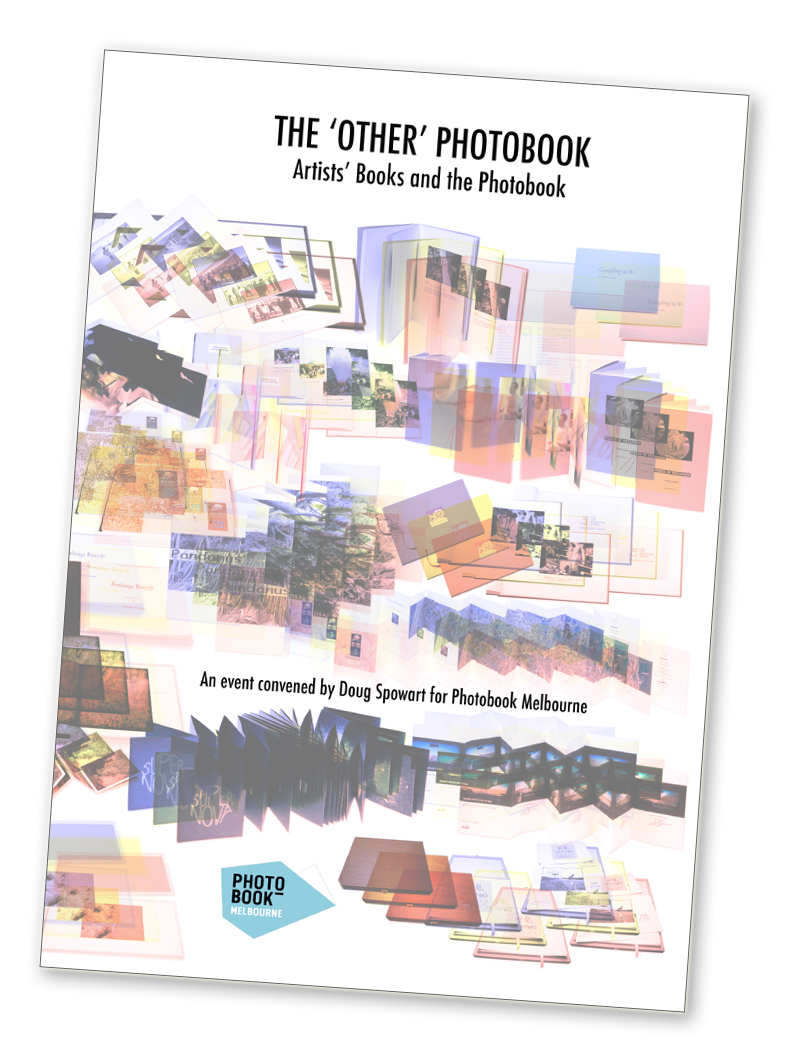
The PDF Forum book
.
DOWNLOAD HERE: PM-OTHER PB-BOOK
.

Lyn Asby
Lyn Ashby
I make books. With few exceptions, these are hand-made, limited-edition books that would generally be considered to be “artist’s books” using the standard codex form. These are not photographic books. That is, the photograph is rarely the core of the meaning or purpose of the book. But I often use components or aspects of photographs and composite these with graphics, texts, drawings and painting etc, all of which feed into the overall material on each page.
Gracia Haby + Louise Jennison
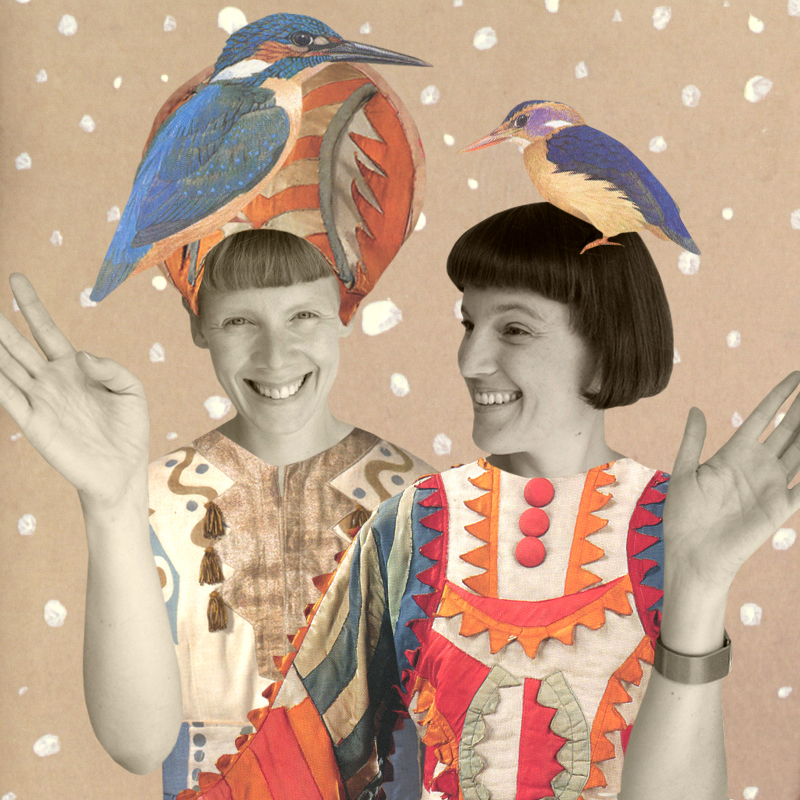
Gracia Haby and Louise Jennison
For those of you who we have yet to meet, we are besotted with paper for its adaptable, foldable, cut-able, concealable, and revealing nature. In our artists’ books, prints, zines, drawings, and collages, we use play, humour, and perhaps the poetic, to lure you closer. And sometimes this will incorporate photography. For us, it is not the medium that is always of greatest import, but the message. And so, we use found photographs in our artists’ books and zines not because they are photos, but because of what they can enable us to say, and what we hope you might feel.
Des Cowley
Des Cowley
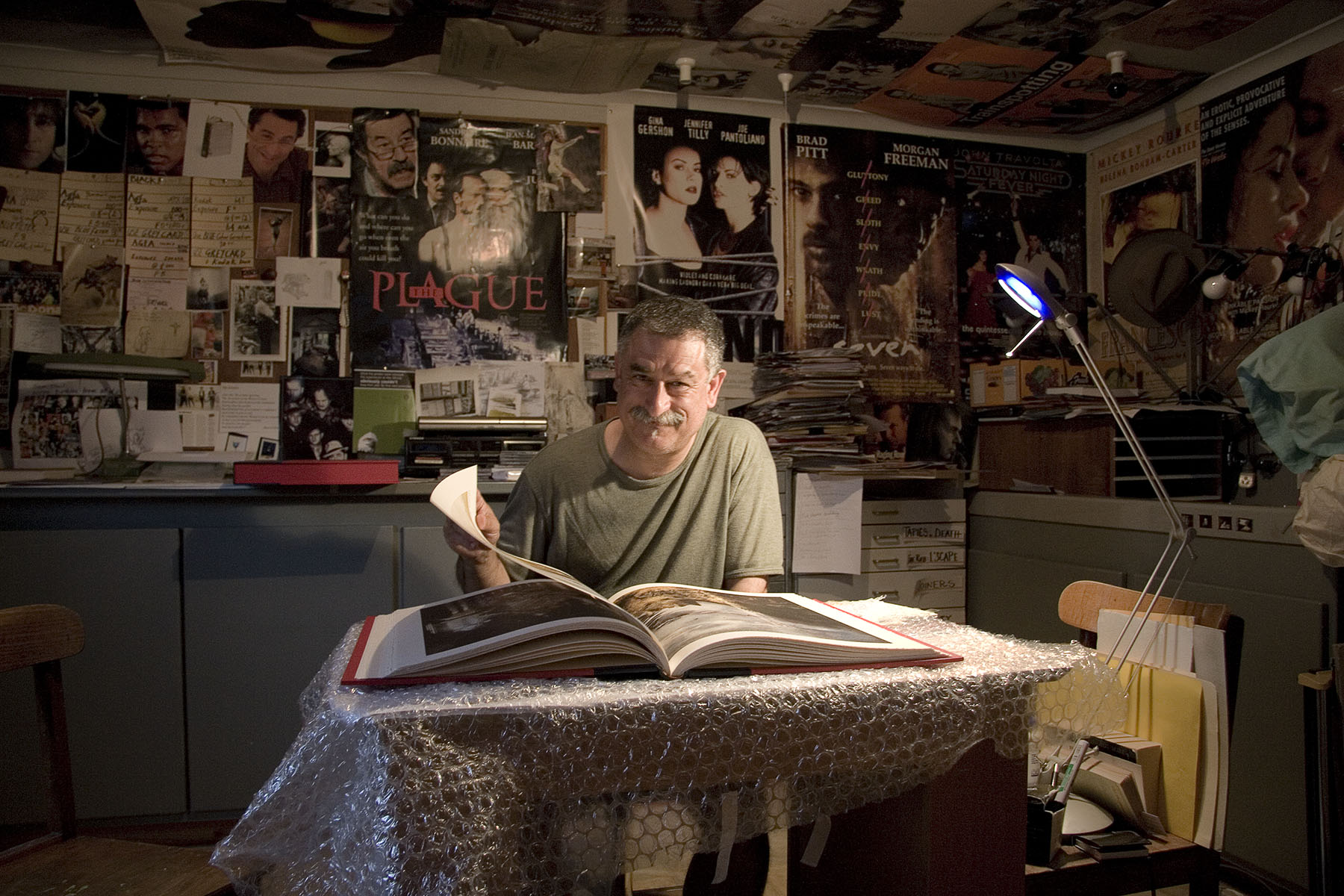
History of the Book Manager, Collection Development & Discovery, State Library Victoria
One of the challenges for libraries and collecting institutions is to build representative collections of contemporary books and ephemeral works created by artists, photographers, and zinemakers. Artists books, photobooks, and zines generally circulate outside mainstream distribution channels – publishers, general bookshops, distributors – and are effectively off-radar for many libraries. It is therefore incumbent upon staff in these institutions to build networks and relationships with the communities creating this work in order to be informed about what is being produced, and to ensure this material is acquired and preserved for future researchers.
Peter Lyssiotis
Peter Lyssiotis
I had a friend who lived in Belgium. He died a while back. Before he did, though, he painted a pipe on a canvas and underneath it he wrote “This is not a pipe”.
To continue my friend’s mission I say “This is not a book”.
The artists’ book is rather a workshop, a garage; a space where a time-honored craft is practised: it is here that the world gets repaired, reconditioned, reassembled.
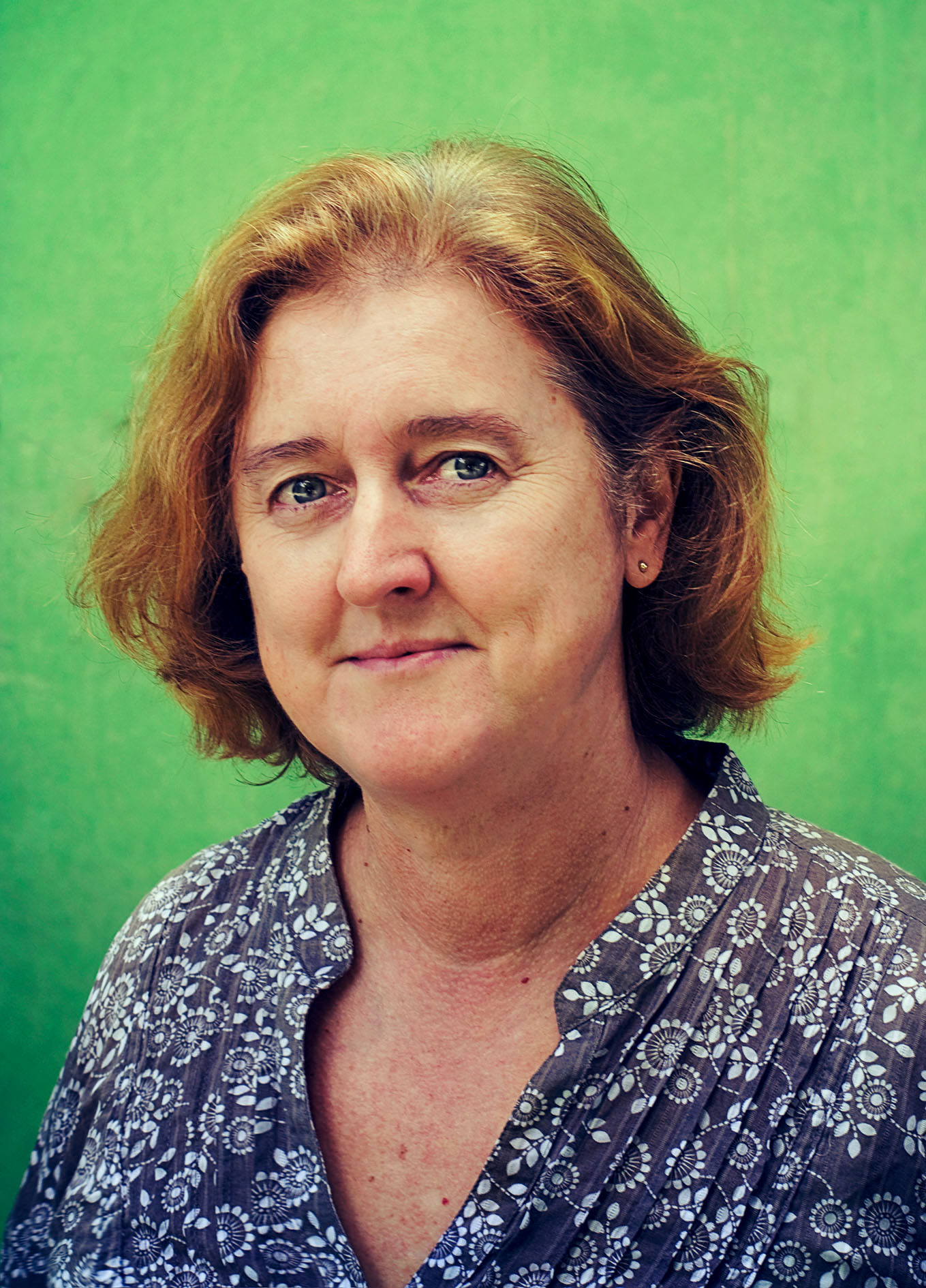
Victoria Cooper
Victoria Cooper
The digital cutting, dissecting, layering and suturing of the photographic quotations is an absorbing process through which the visual story emerges. I then materialize this virtual image of the narrative as a physical book in many forms: scroll, concertina or codex. Rather than images on a gallery wall, the narrative space of the book offers for me an endless potential for interplay of the corporeal and the imagination through the idiosyncratic experience of reading.
.
.
DOWNLOAD THE BOOK HERE: PM-OTHER PB-BOOK
.
.
.

 wotwedid