Archive for the ‘Wot happened on this day’ Category
DRAWING @ 2014 Jacaranda Acquisitive Drawing Award

Vicky disappearing into Wooli Escarpment 2014 by Andrew Tompkins
Jacaranda Acquisitive Drawing Award 2014
ENTRY DETAILS FOR THE 2016 AWARD can be downloaded HERE
Grafton Regional Gallery 18 October – 7 December 2014
The judge for 2014 was art critic and historian John McDonald.
Paul Klee is credited with stating that ‘drawing was taking a line for a walk’, and on viewing the current Jacaranda Acquisitive Drawing Award at the Grafton Regional Gallery one would come to the conclusion that the line meanders down a very wide path. What is on offer to viewers of the exhibition is an opportunity to engage with the many ways of telling a story through the medium of drawing. The media of drawing, as presented in the show, can be lead pencil, charcoal, brush strokes, hot wires, swipes of pigments, resin glossed over marker pen, fine paper cuts, inkjet applied lines and lines engraved in Perspex and yet there’s much more that that.

Part of the gallery installation of the JADA show
A drawing can emulate the camera’s slice of focus, and ability to capture a shape, a form or an association of elements. It can also be part of a process to unlock alternative or new ways of seeing or considering a subject. It may be the result of an artist’s doodle emanating from an unconscious experience. Some see drawing as a lesser art as it is usually a preliminary to the art making. In this space however, drawing in all its varied forms represents the strength of the discipline and easily dispels any challenges to it being an autonomous finished artwork.
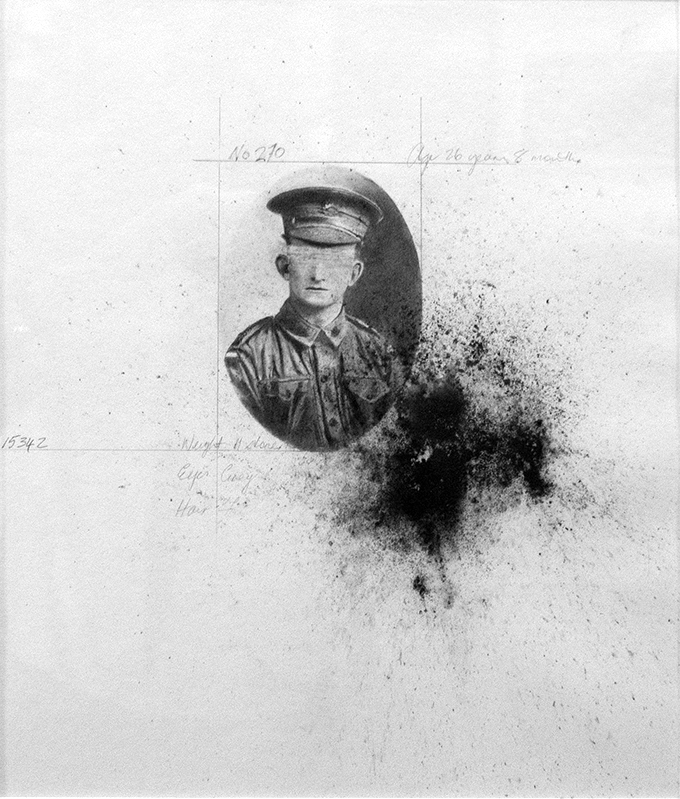
Christine Wilcocks’ Fit for Duty 2014
Some viewers may have an expectation that drawing relies on evidence of draughtsmanship will expect to see works exhibiting that skill. But just drawing to exactly mimic reality is not the way of the artist. In work entitled ‘Fit for Duty’ 2014* by Christine Wilcocks takes the direct transcript of a subject to another level in a portrait of a World War I soldier. The work comments on the man’s physical examination prior to being admitted to the army. The portrait’s eyes are covered by blankness and textual elements and an aggressive inkblot form provides the viewer with a reflection on the artist’s idea of the work.
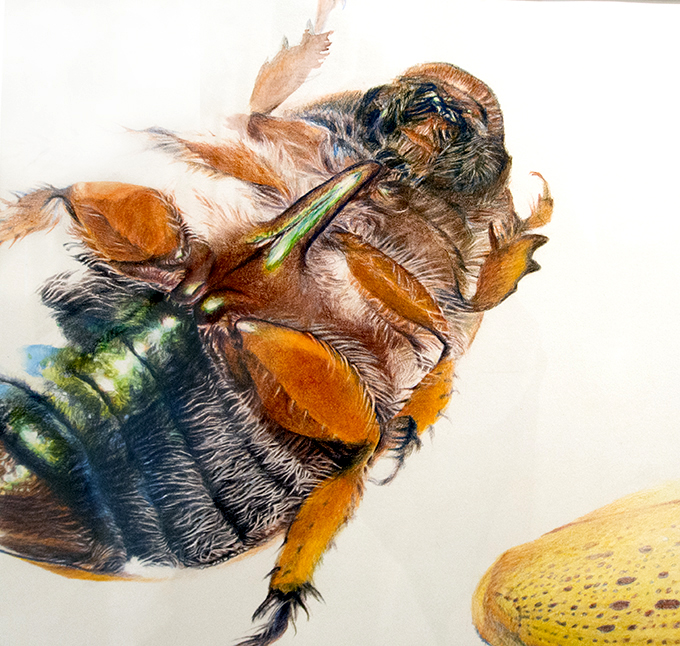
Petrina Seale’s Home Studies in Nature II 2014 (Detail)
A work about documentation is a study of a beetle by Petrina Seale entitled ‘Home Studies in Nature II’ 2014 uses coloured pencils on a white paper ground – the truncated composition to draws attention to the of the subject.
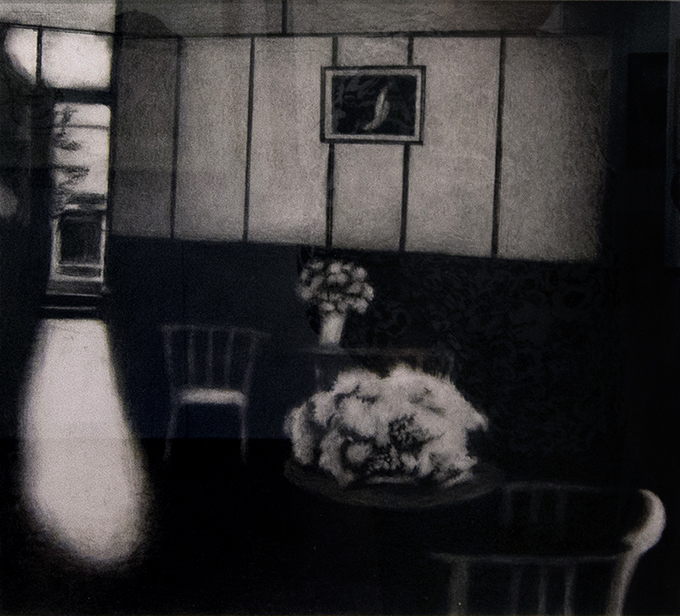
Matt Foley’s Hotel Lake Eacham 2014
In another work by Matt Foley entitled ‘Hotel Lake Eacham’ 2014 the artist has created a study in light of a dreamlike space, a vignette of a place imbued with a darkness and depth of black pigment that is the stuff of half remembered recollections.

Bruno Leti Ashes to Ashes 2013-2014
Four large framed pieces by Bruno Leti entitled ‘Ashes to Ashes’ 2013-2014 is a textural surface of the paper, abstracted, patterned, colourless with blurred edged shapes like fragments of memories. The work comments on the artist’s personal experience of the destruction of places of personal significance by fire. The work itself is partly pigmented by the charcoal retrieved from the fire.
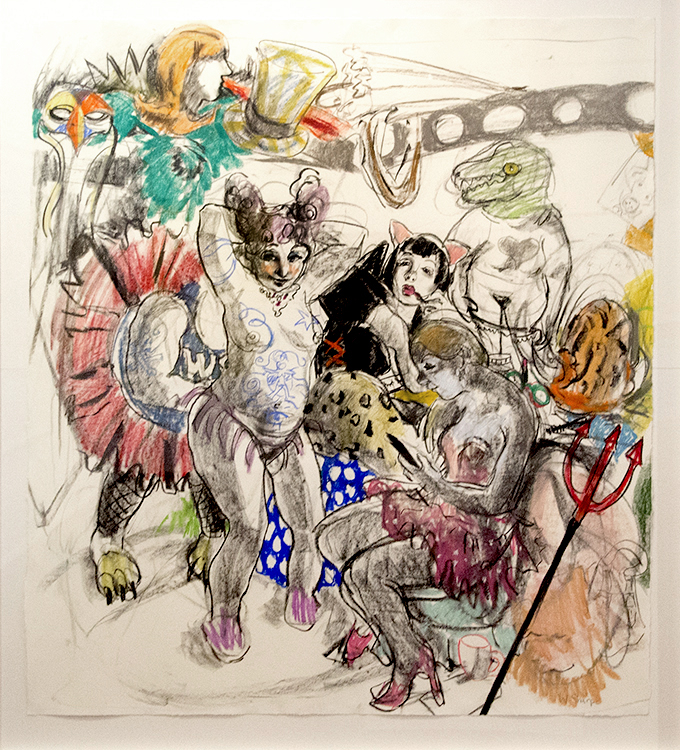
Wendy Sharpe’s Backstage Burlesque with Venetian Mask 2013
Klee’s line was taken for a dance into a seedy bohemian den by Wendy Sharpe in her work ‘Backstage Burlesque with Venetian Mask’ 2013*. A female figure being dressed presents an impish grin towards the viewer – provocatively displaying the comfort of her nakedness. Brightly coloured pastel gestures define other figures surround this main subject all preparing for the stage performance. Close viewing reveals squiggly lines that allude to other stories within the work.
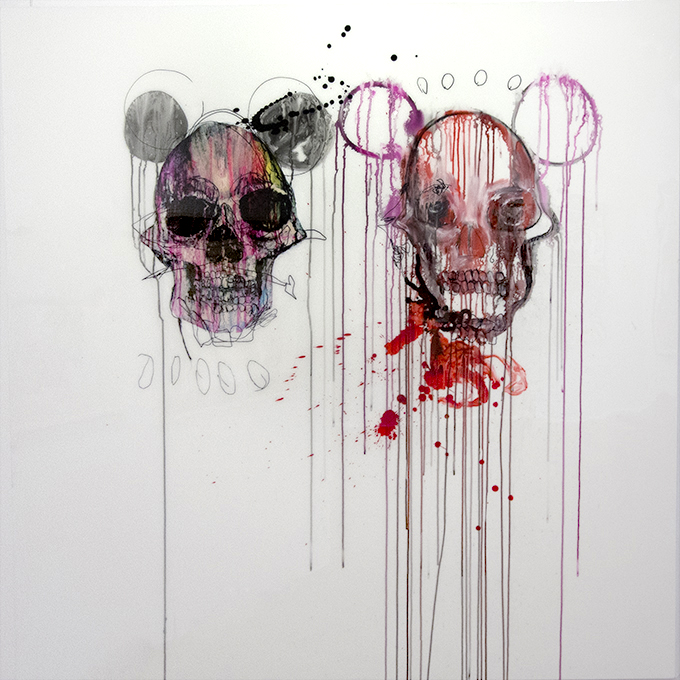
Anthony Bennett’s e pluribus anus – a portrait of tony abbott 2014
Anthony Bennett’s ‘e pluribus anus – a portrait of tony abbott’ 2014 makes a political statement about his subject. A skull with Micky Mouse ears is repeated twice on a white ground made glisteningly hard by its shiny resin coating. One of the skulls is in the process of de-colouring and the pigments dribble down the large-scale work. Bennett’s drawing has all the freneticism of a hastily sketched graffiti work interrupted by a police car coming around the corner.
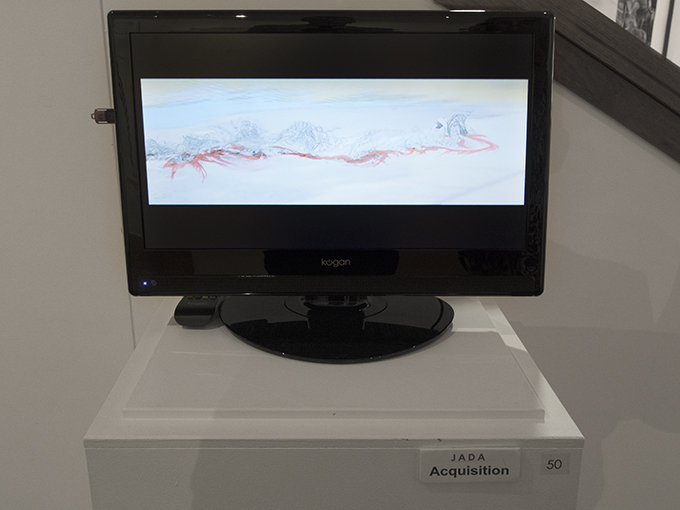
Todd Fuller’s A Dance for Paul Klee 2014
.Todd Fuller’s work ‘A Dance for Paul Klee’ 2014* celebrates Klee’s metaphor for drawing. The digitally presented artwork is of a choreographed dance performance that has its origin in a movie. The film has been overlaid by gestural line work positioned based on the movement of the dancer. Flourishes of colour, most noticeably red, follow and trace the subject’s animation across the screen.
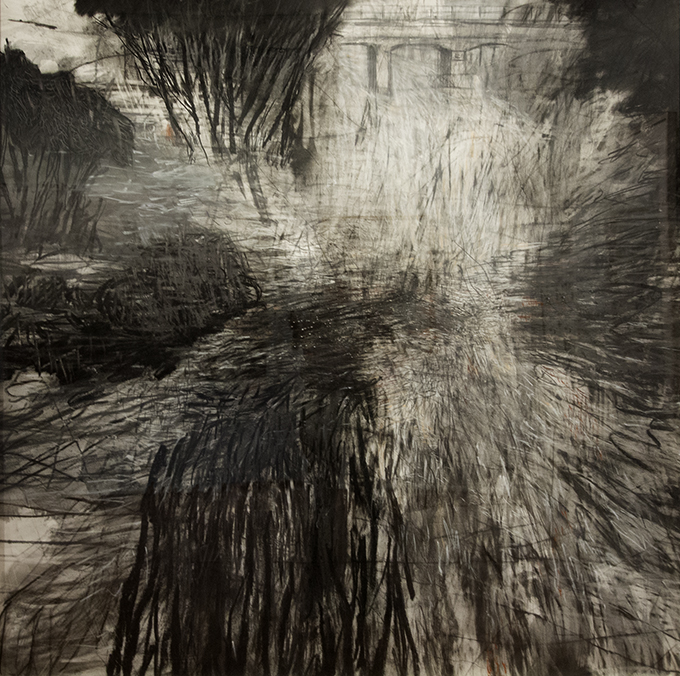
Emma Walker’s Keys Bridge in Flood 2014
.
The overall winner of the $20,000 prize was ‘Keys Bridge in Flood’ 2014* by Emma Walker. The work is 150 x 150cm and represents the movement of water through a flooded landscape. Gazing longer at the work the viewer is captured by the vitality, rush and flow of the graphite, charcoal, pencil and pastel marks on the paper. These marks become the substance of the artist’s inspiration – they are the water, they are the flood, they are the emotions that come from the artist to us. All of these things are in that drawing….
.
.
Doug Spowart
15 November 2014
.
.
* Denotes work was acquired
Other works acquired include:
- Michael Cusack ‘Vista’ 2014
- Lee Hyun-Hee ‘108 defilements’ 2013.
.
The 2014 JADA will travel to seven venues over the next two years including; Manning Regional Gallery, Cowra Regional Art Gallery, the University of the Sunshine Coast Gallery, Glasshouse Port Macquarie, Redcliffe City Gallery, the Broken Hill Regional Art Gallery and the Tamworth Regional Art Gallery.

catalogue
ooo
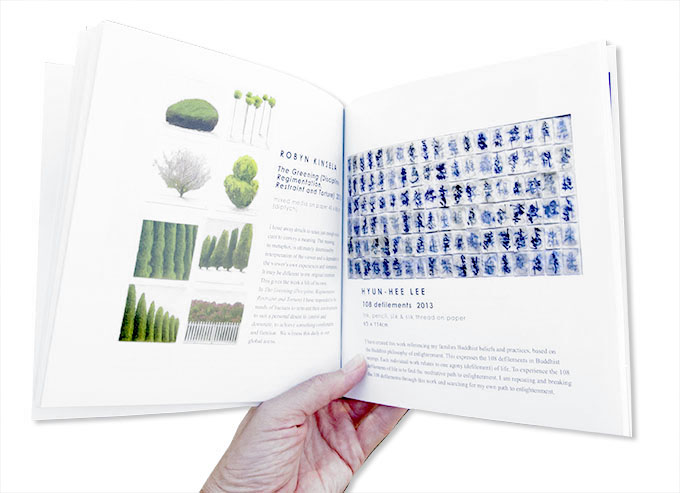
A catalogue for the show contains an introduction by GRG Director Jude McBean, artists’ statements and images of the works.
For details contact:
.
Please note: Photographs of artworks are the copyright of the artist. All images were made by the author in the gallery space and may have elements of reflection and lighting variations that are not part of the original artwork.
WORLD PHOTOBOOK DAY – The Photobook Club Brisbane events
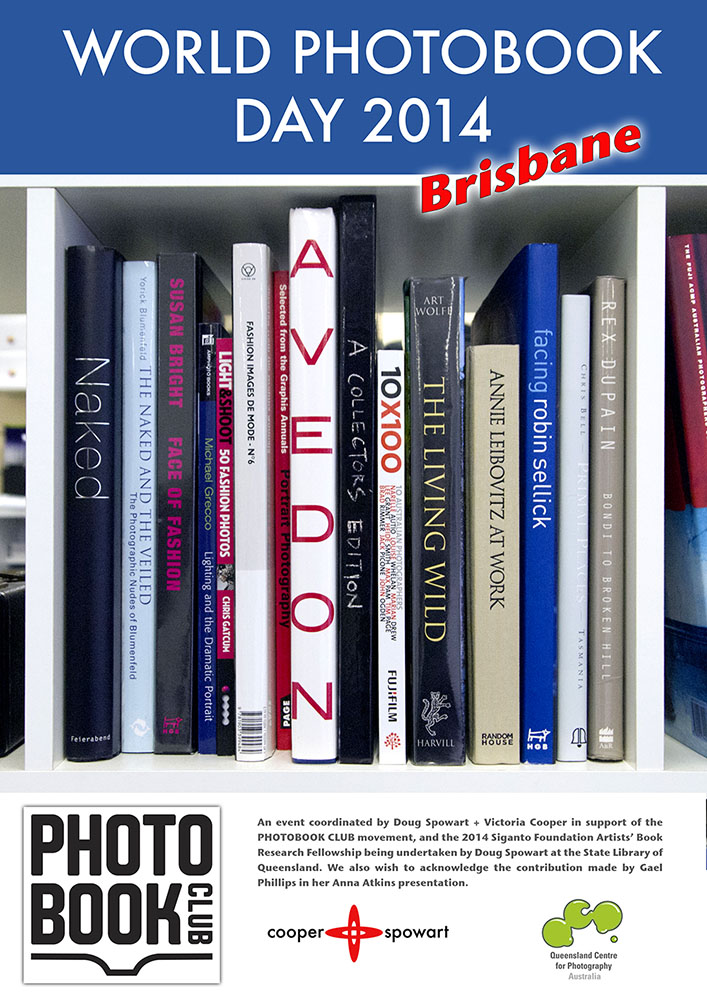
WPD Poster
.
For photobook people the 14th of October is World Photobook Day (WPD) and celebrations worldwide are coordinated through the Photobook Club group. On this day in 1843, the British Library catalogued Photographs of British Algae: Cyanotype Impressions by Anna Atkins, and is therefore considered historically significant as the first official record of a published photobook. In 2013 Victoria Cooper and I organised an event in Toowoomba. This year as part of my Siganto Foundation Artists’ Book Research Fellowship we arranged two events to take place at The Edge facility that is part of the SLQ.
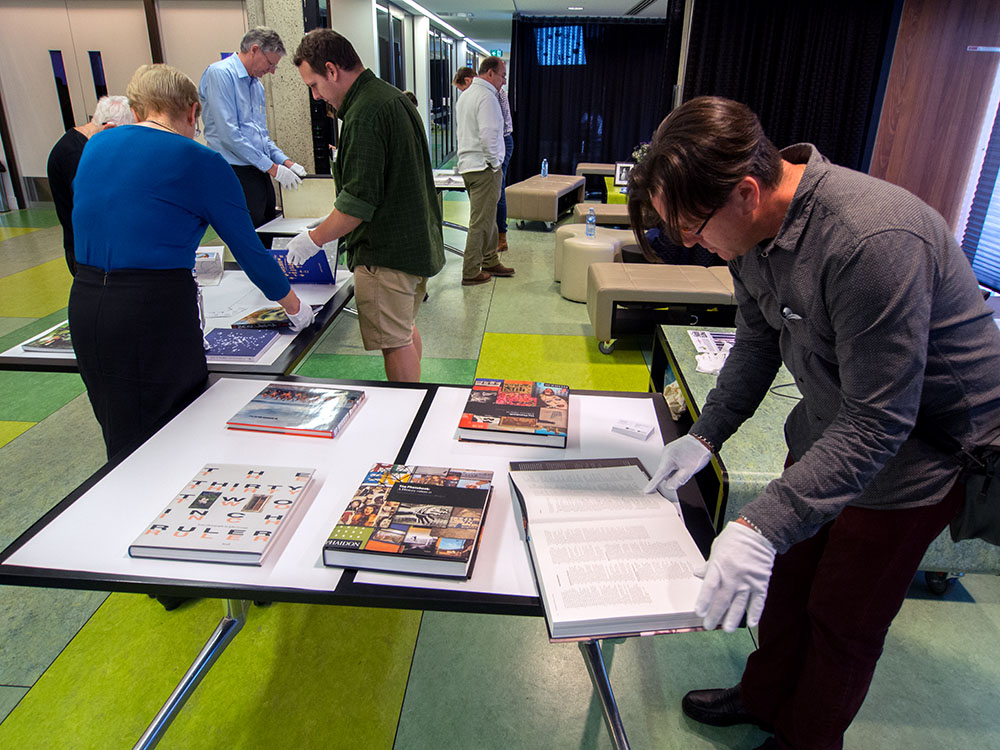
The QCP WPB event
.
The first event was arranged for Queensland Centre for Photography members to view contemporary photobooks, artists’ books, photo-zines and photo-papers from our collection. Around 30 publications, mainly by Australian photographers and artists, were presented to a group of around 18 participants. This selection included two books, Ying Ang’s Gold Coast and John Elliott’s Ju Raku En, which were launched only in the last few weeks. Staff members from the Australian Library of Art attended this opportunity to view examples of this emergent book genre.
.
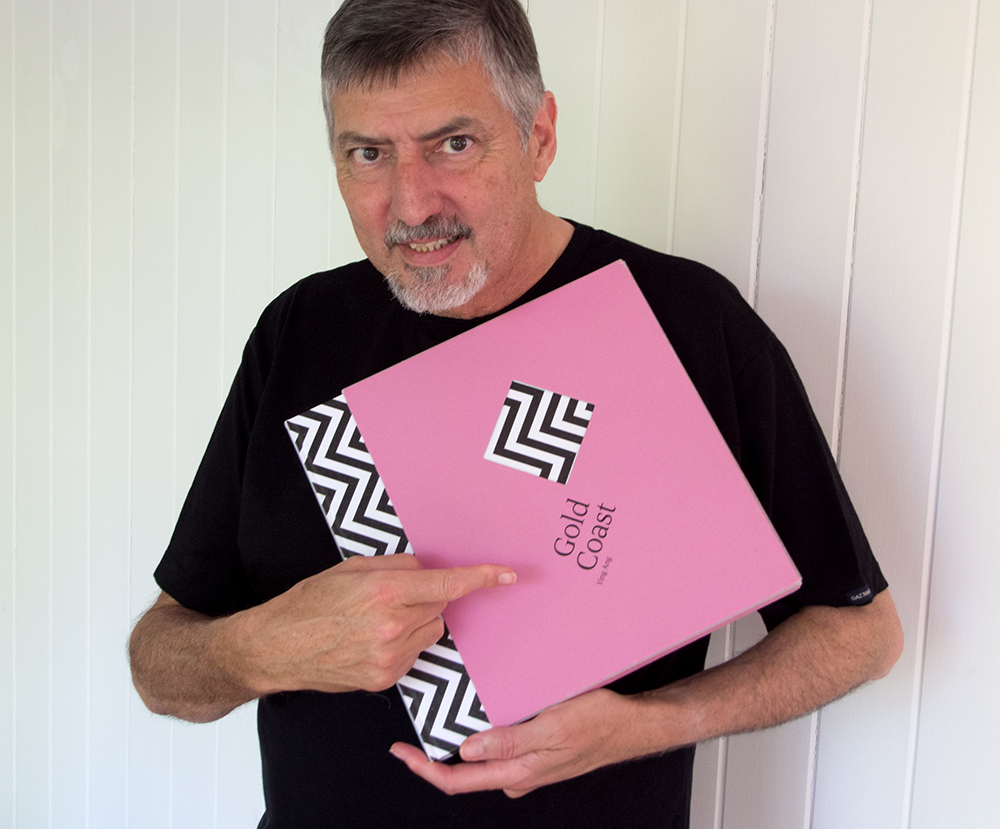
With Ying Ang’s Gold Coast
.
The main Photobook Club WPD event took place in the evening and was attended by around 24 participants. Each brought along their favourite photobook to share and discuss with their fellow attendees. The oldest book presented was a photographic portrait book from the 1860s, and the more recent books included, W Eugene Smith’s The BIG Book, Spada’s Gomorrah Girl, and Spottorno’s PIGS. Many participants contributed their own print on demand books, or bespoke handmade artists’ books thereby representing the spectrum of the photo and the book.
A special part of the evening WPD event was a presentation by Dr Gael E. Phillips about Anna Atkins, her family and motivations for her cyanotype work. Phillips, a local Brisbane resident, is a distant cousin of Atkins shared her extensive research of this significant family connection. The assembled group were presented with the fascinating story of Anna Atkins (‘Anna Children’ – her maiden name), her father – George, relatives and networks in photography, science and society in nineteenth century England. Two attendees Dr Marcel Saffier and Sandy Barrie both significant photo historians showed a strong interest in Phillip’s research and talk.
.
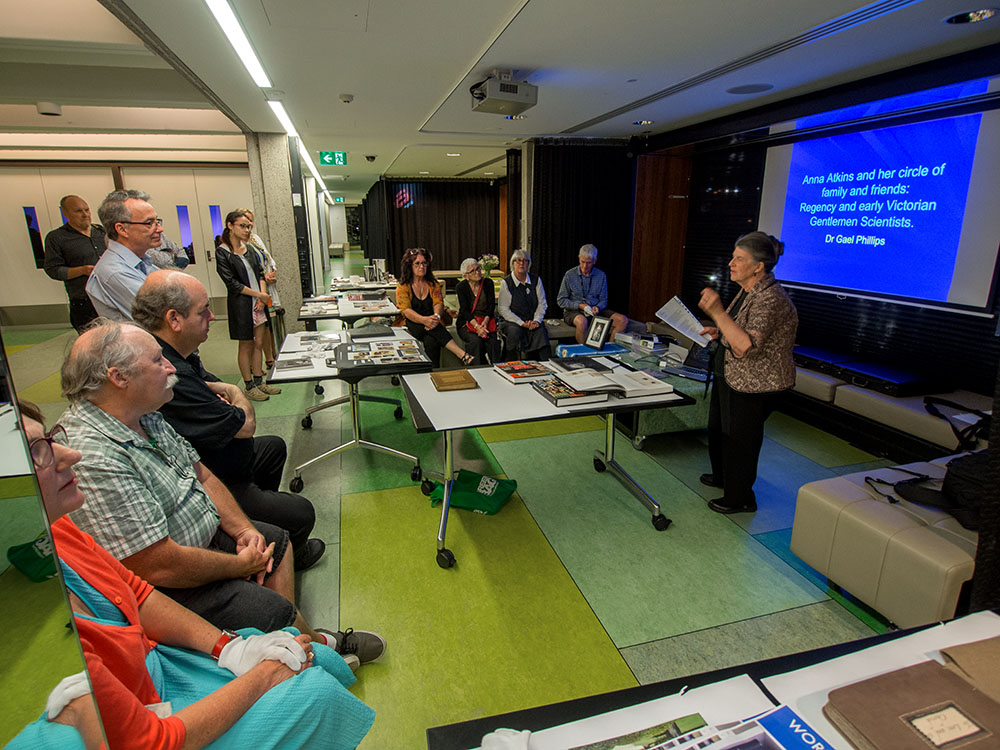
Gael makes her Anna Atkins presentation
.
Apart from the two events we curated this year, two new South-East Queensland organisers also presented WPD events. This provides evidence that there is a strong interest in seeing, talking about, publishing and collecting photobooks.
As part of my Fellowship activities I’m scheduling further events to keep the interest in his research growing, and to promote a greater awareness of the significant resource of ‘the photograph and the book’ held by the State Library of Queensland.
Keep in touch… Doug Spowart.
.
.
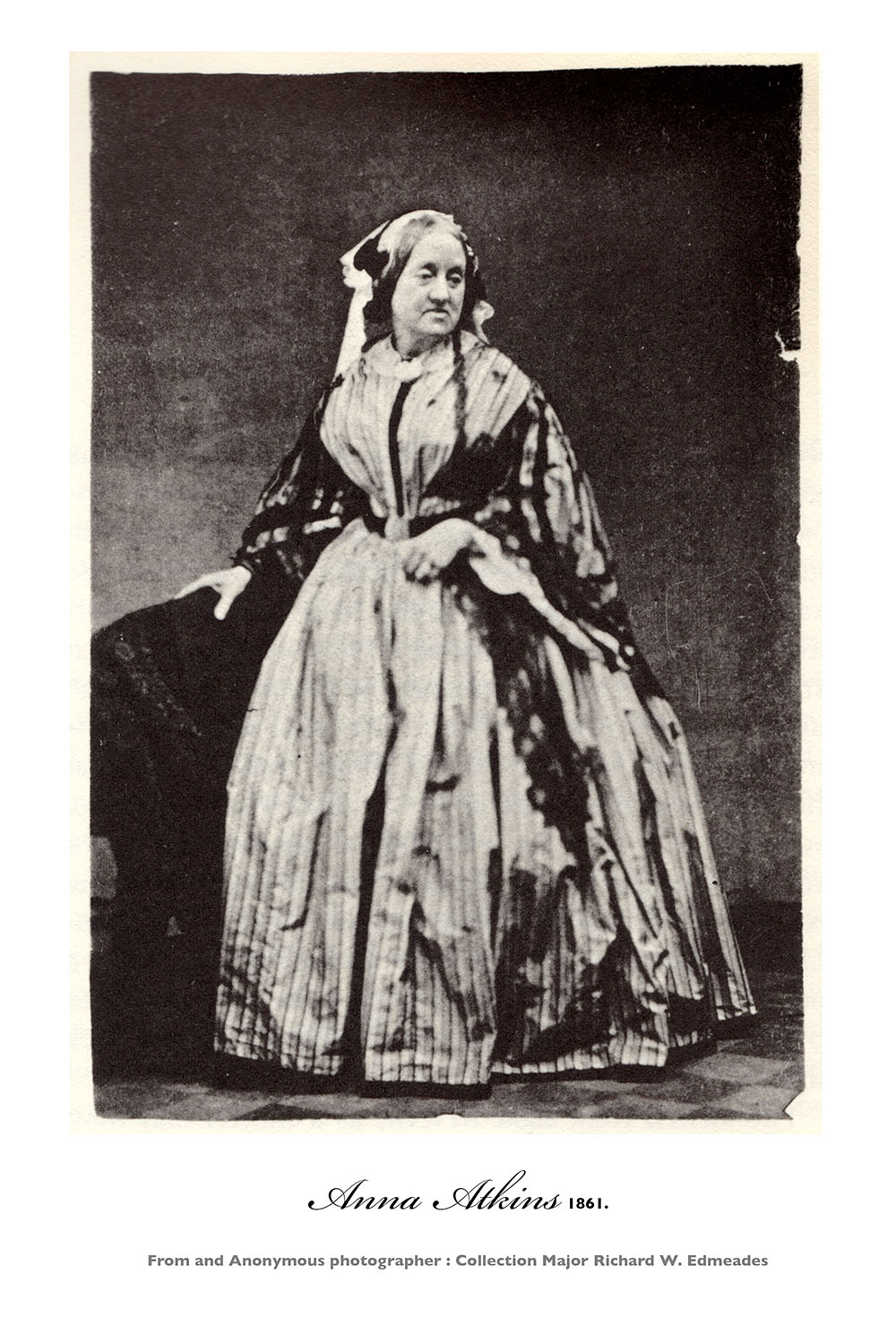
Anna Atkins-Portrait 1861
.
What follows is a precis of Dr Phillips’ presentation:
Anna Atkins (1799-1871) is now recognised as being the first person to publish a book using a photographic technique. This recognition has come late but is, I think, largely due to the work of Prof Larry Schaaf. My cousins, Jean Doggett, Elizabeth Parkes and I were also doing similar research at the same time because of a family link with the Children family. The Children family have been long established in Kent and trace their family back to Simon a Children in 1370.
Anna Atkins was born, Anna Children, her mother dying when she was a few months old, but she grew up in a wealthy household surrounded by family friends who included many of the great Gentlemen Scientists of the Regency period and later. These included Sir Humphry Davy, Dr W H Wollaston, Sir Joseph Banks, the Herschels and William Henry Fox Talbot. Her father, John George Children, was a well known scientist in the first half of the nineteenth century and his publications include descriptions of the largest electrical battery ever built, which he and his father constructed in their own laboratory at their home, Ferox Hall, in Tonbridge.
Following the failure of the Tonbridge Bank, George Children, Anna’s grandfather, was bankrupted. His properties were sold to pay the creditors of the bank. His son, John George Children, obtained a position at the British Museum, and appears in the painting of the Temporary Elgin Marble Room in 1819. Initially in the Antiquities Department, he later became the Keeper of Minerals and then the Keeper of Zoology.
Anna Children illustrated Lamarck’s ‘Genera of Shells’ which her father had translated. In 1825 Anna married John Pelly Atkins JP, and they made their home at Halstead Place. Mr Atkins was made High Sheriff of Kent for 1847.
In 1841 a Manual on British Algae was published. Anna used the Cyanotype process, newly invented by a close family friend, Sir John Herschel, to make numerous images of British seaweeds. The first volume appeared in 1843 and pre-dated William Henry Fox Talbot’s ‘Pencil of Nature’.
Anna’s father acted as an intermediary in her scientific endeavours, writing to Hooker at Kew Gardens about the progress of the imaging of the algae and Hooker, in turn, instructed Anna in botany. Her father’s chemical knowledge was invaluable in the production of the cyanotypes. Father and daughter had a very close relationship and when her father died on the first day of January 1852 she was grief stricken. Her Memoir of J G Children, privately published in 1853, was modestly signed AA, as were her volumes of cyanotypes of British seaweeds. The memoir includes poetry written by her grandfather, George, her father, John George and also poetry she herself wrote.
We celebrate the anniversary of the accessioning of the first of her volumes of cyanotypes into the Library of the British Museum. Anna Atkins, nee Children was an artist – she drew, she did lithography and was an author, writing poetry and the memoir of her father. She was also a scientific illustrator as well as being the first woman to produce a photo book and, many believe, the first woman photographer. She has no descendants but is memorialised in a beautiful mollusc, Anna Children’s lucine, Miltha childreni (Gray 1824). Her father is also memorialised in a number of animals, including molluscs and insects and the mineral Childrenite.
Gael E Phillips.
14 October 2014
.
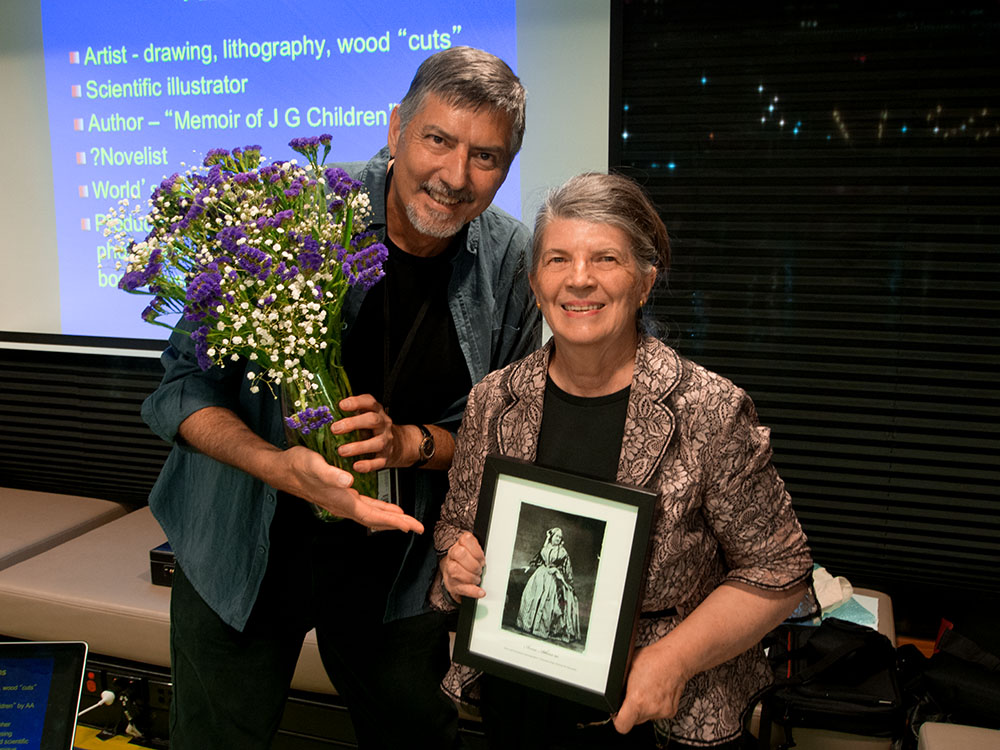
Doug makes a thankyou presentation to Gael
.
.
Other images from the events…
.
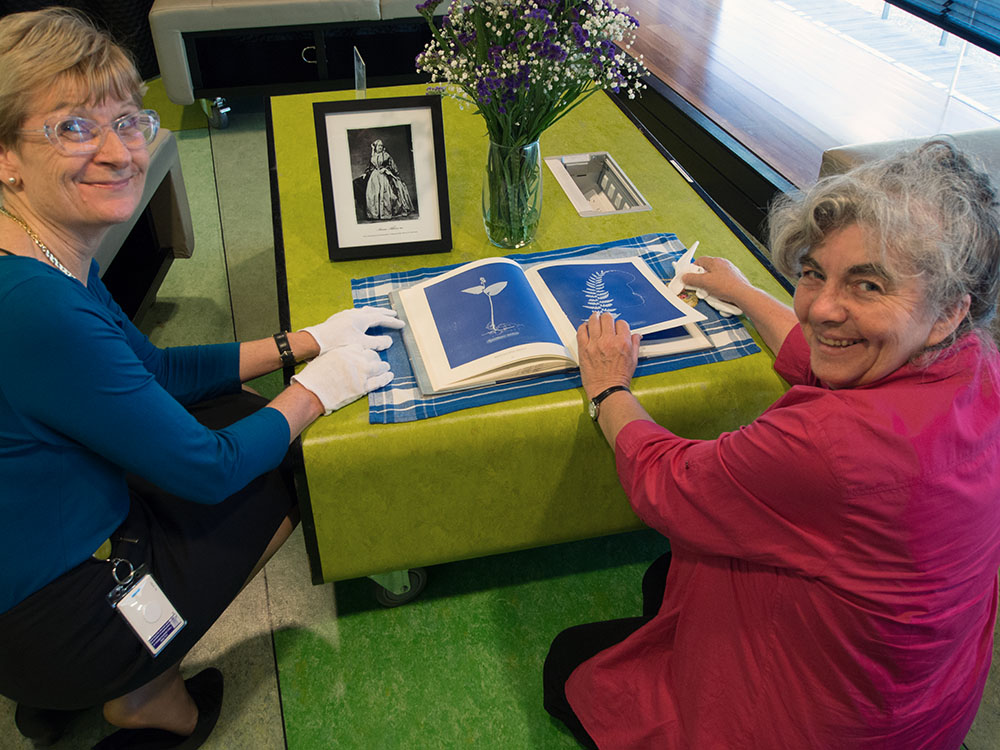
The Anna Atkins ‘memorial’ with Larry J Schaaf’s book Sun Gardens
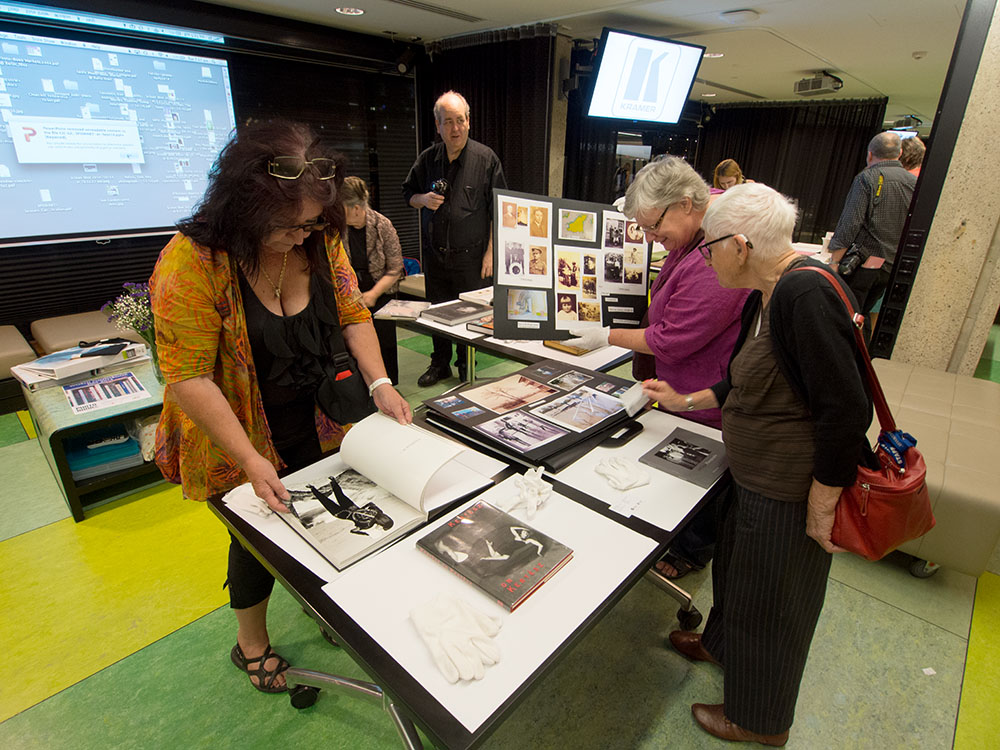
Looking at the books brought to the event
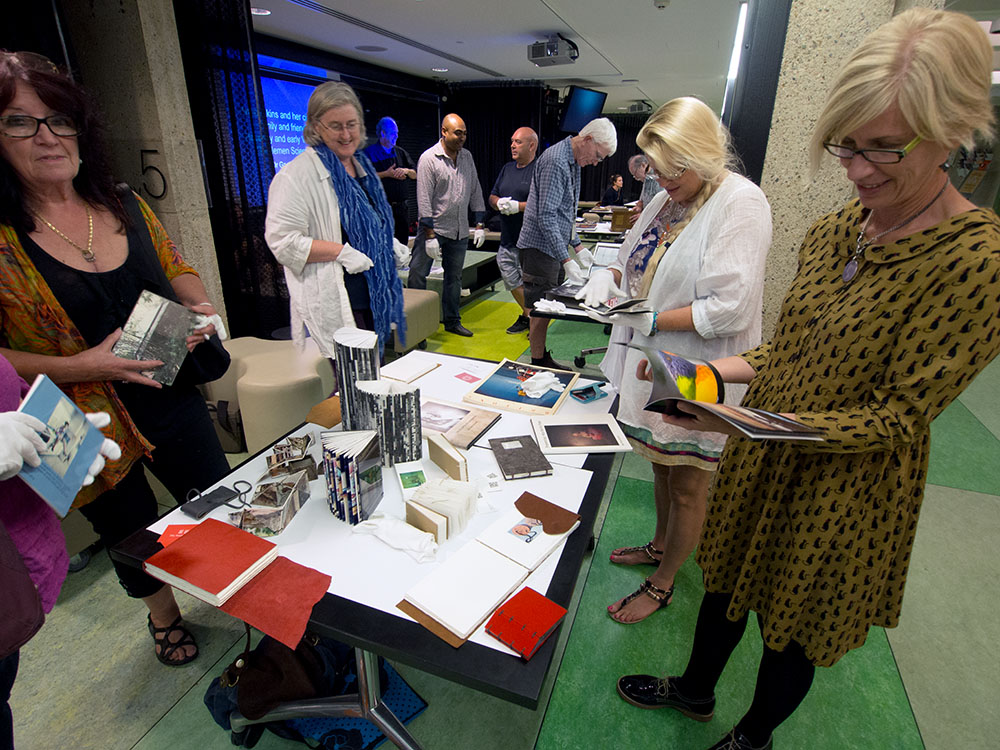
The artists’ photobook end of the books brought along by Adele Outeridge, Mel Brackstone and Jan Ramsay
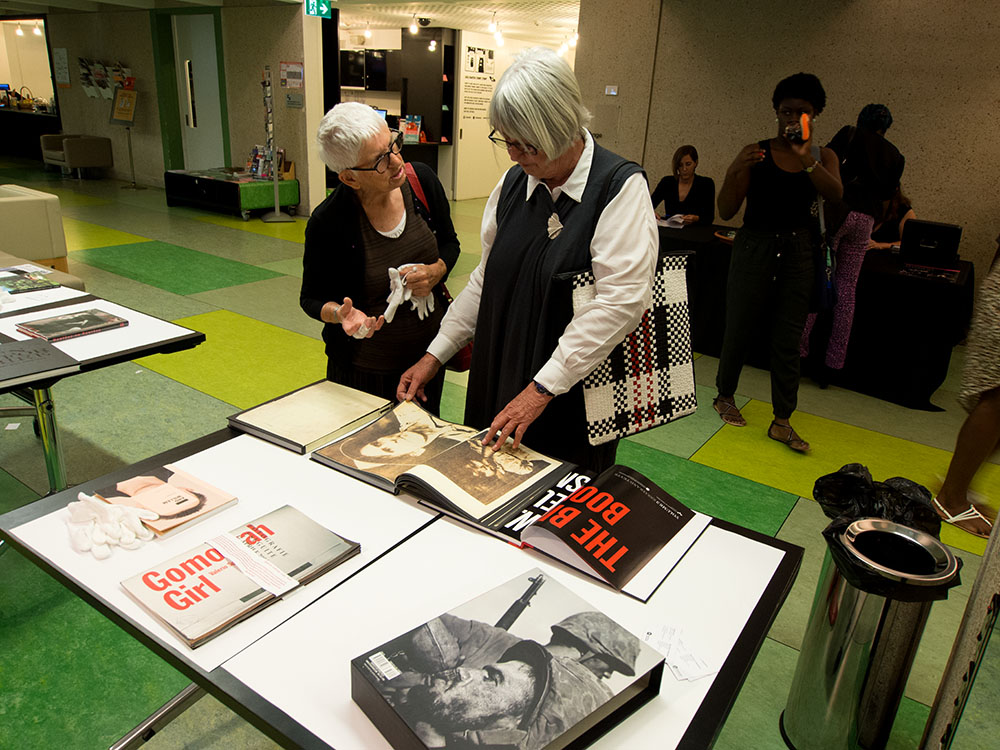
Looking at W Eugene Smith’s BIG BOOK.
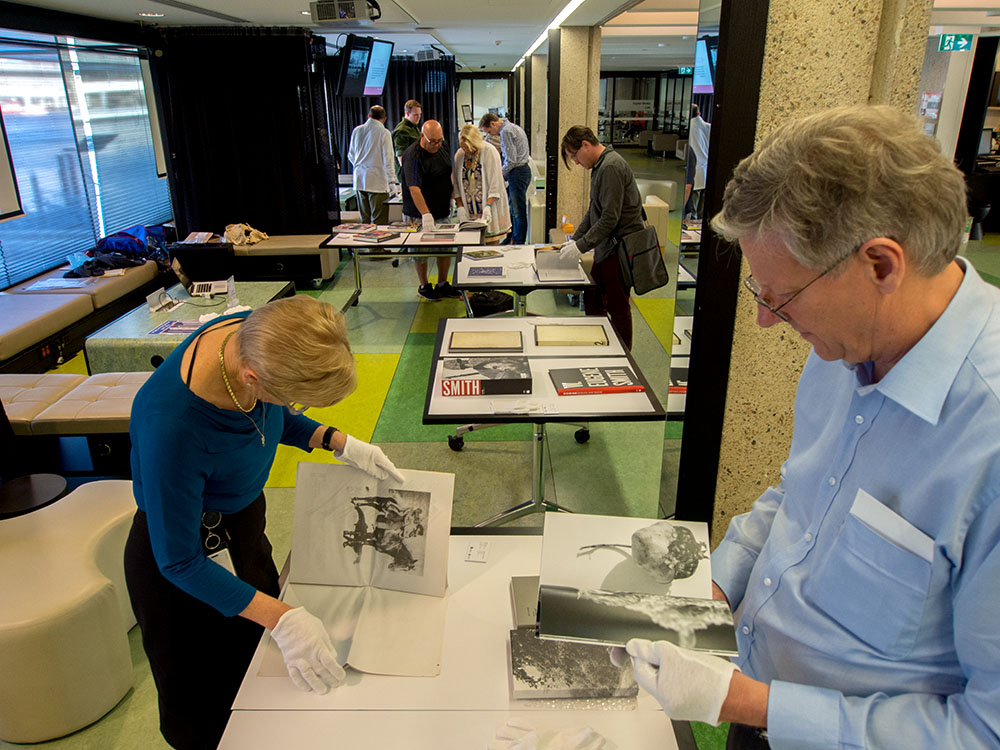
Checking out Jacob Raupatch’s newspaper
FOTO FRENZY’S WPD Event
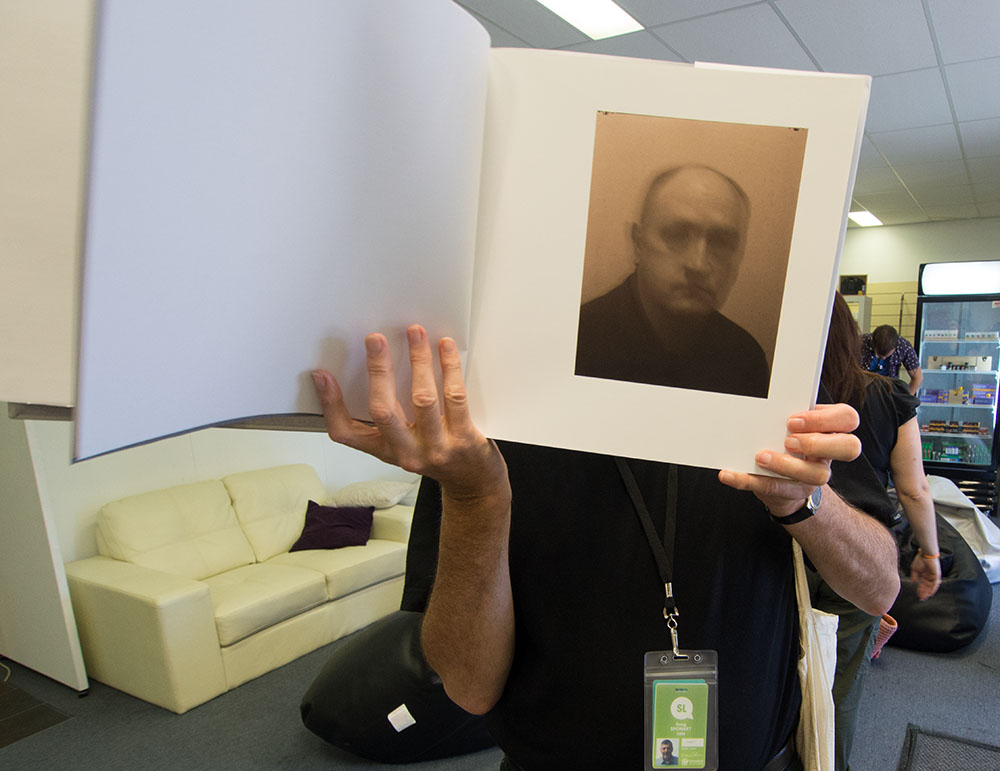
With Doc Ross’ book 37 @ the Foto Frenzy WPD event
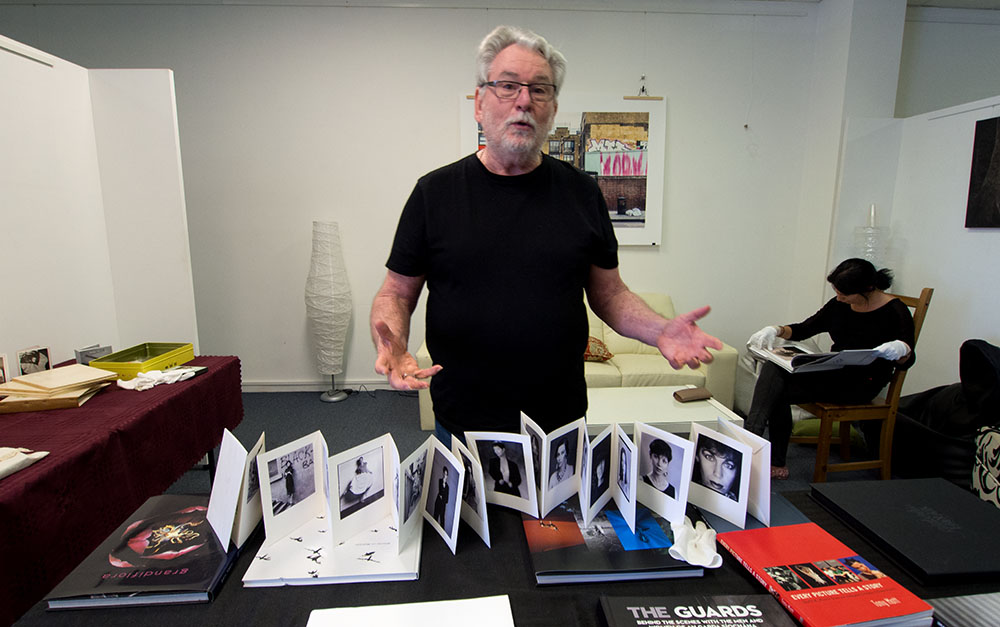
Ian Poole @ the Foto Frenzy WPD event
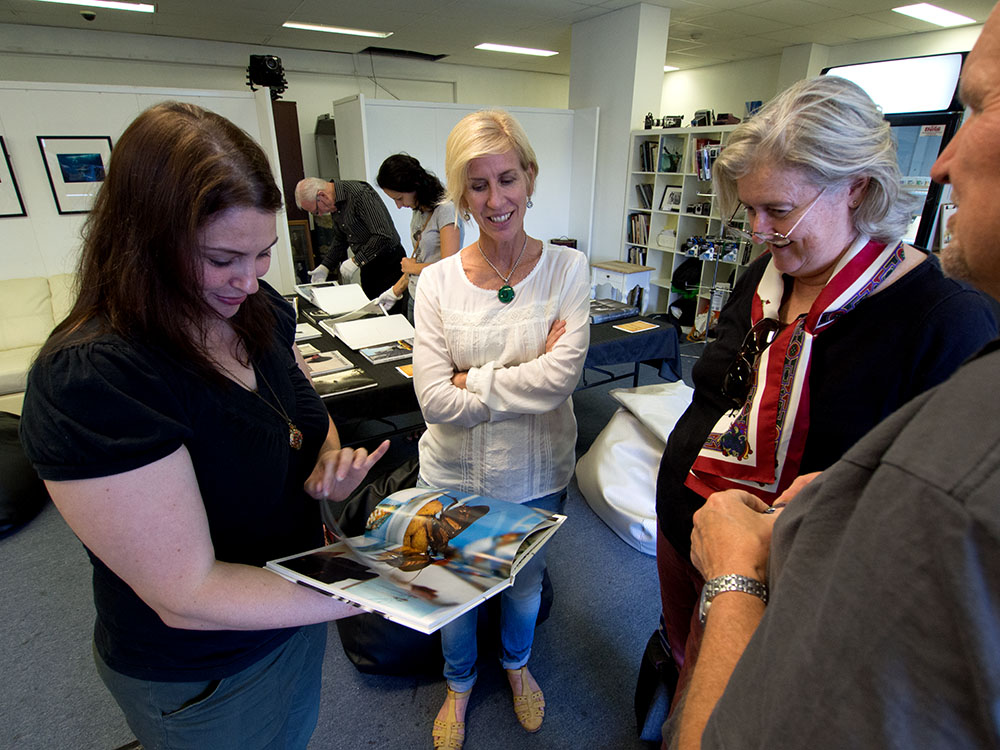
@ the Foto Frenzy WPD event
.
Until next year….
.

PBC logo
.
BEING [photo]BOOKED @ QLD COLLEGE OF ART
Heather introduces Doug’s lecture…
.
Last week we were guest presenters at the Queensland College of Art on the Gold Coast. We worked with photo media and digital media students and their lecturer Heather Faulkner discussing the topic of the contemporary photobook.
.
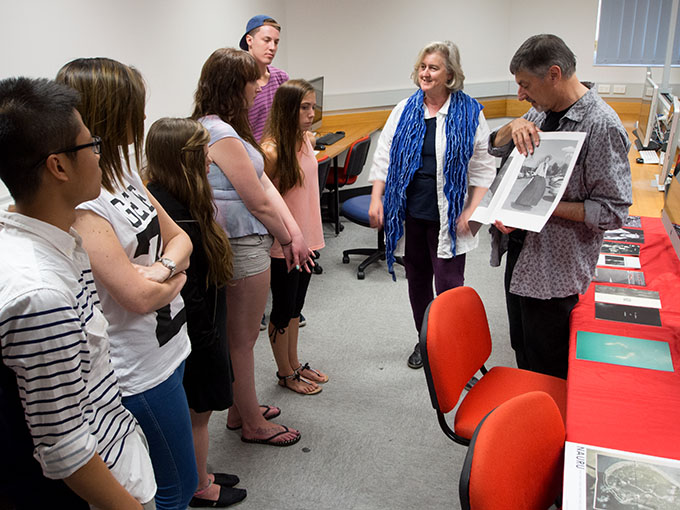
Victoria Cooper and Doug Spowart talking about photobooks….PHOTO: Heather Faulkner
.
Doug presented a lecture on the history of the photobook and brought students up to date with the contemporary photobook including Ying Ang’s latest book ‘Gold Coast’. Students then were given an opportunity to hold, handle and view a range of contemporary photobooks from Australia and overseas including books by, Alec Soth and Brad Zellar, Martin Parr, Garry Trinh, Daniel Milnor, George Voulgaropoulos, Jacob Raupach, Lloyd Stubber, Emma Phillips, Kelvin Skewes, Joachim Schmid, James Mollison, Paul Graham, Gracia and Louise as well as a selection of zines from the Sticky Institute. We also presented a selection of our own photobooks and artists’ books. Of particular interest to the students was the structure, construction, printing and binding of photobooks.
.
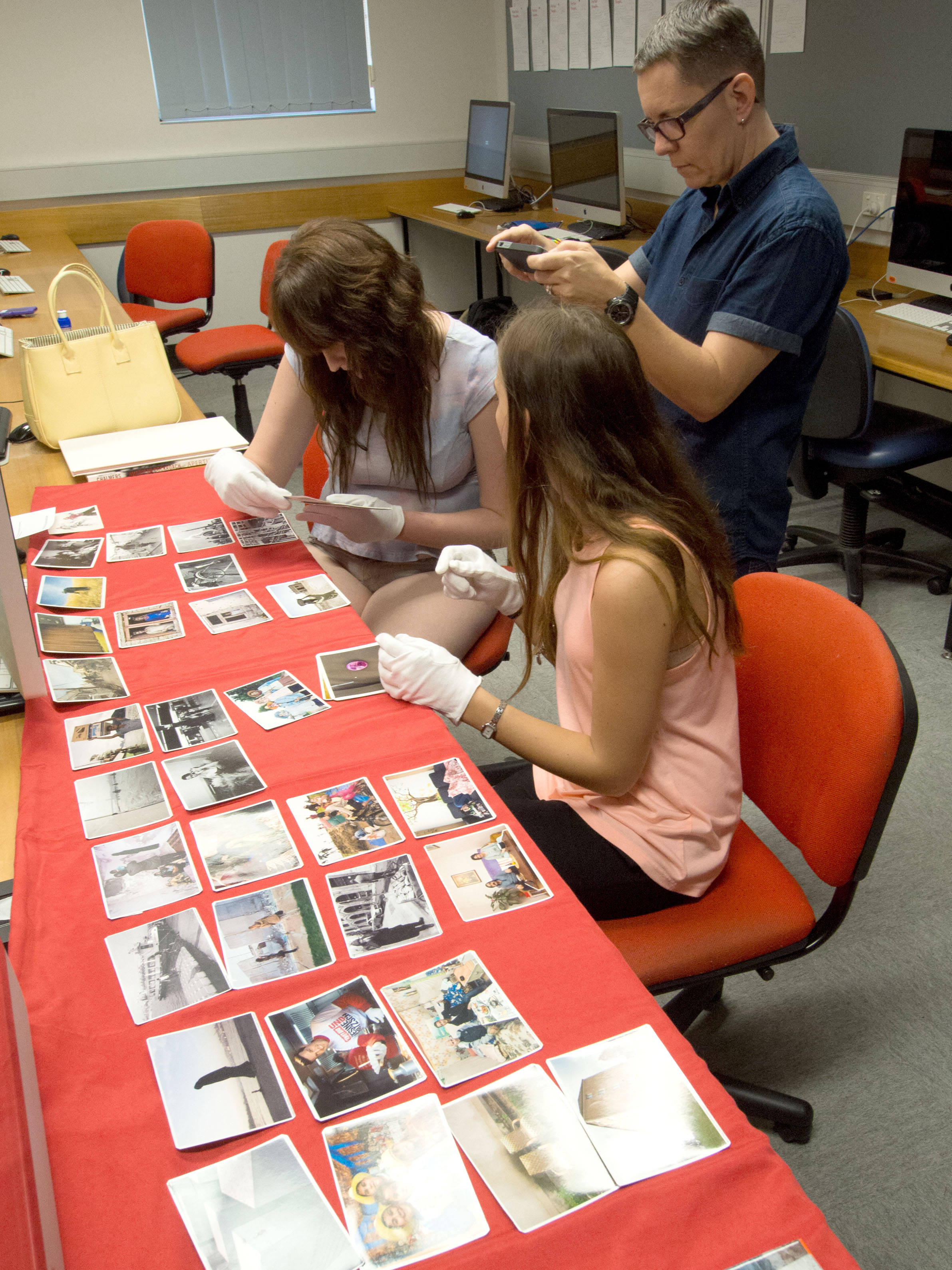
Students working on a sequencing task with Heather Faulkner
An important part of an accompanying tutorial covered ideas around the sequencing of images in photobooks and the ways in which narrative could be expressed. Students were then tasked to work with a series of images using unusual sequencing strategies that we suggested.
.
We enjoyed the opportunity to engage with these students and discuss one of our favourite topics and share amazing books from our photobook library. Thank you Heather Faulkner for arranging this event…
.
.
.
.
SELECTING AN APPA PHOTOBOOK DISPLAY
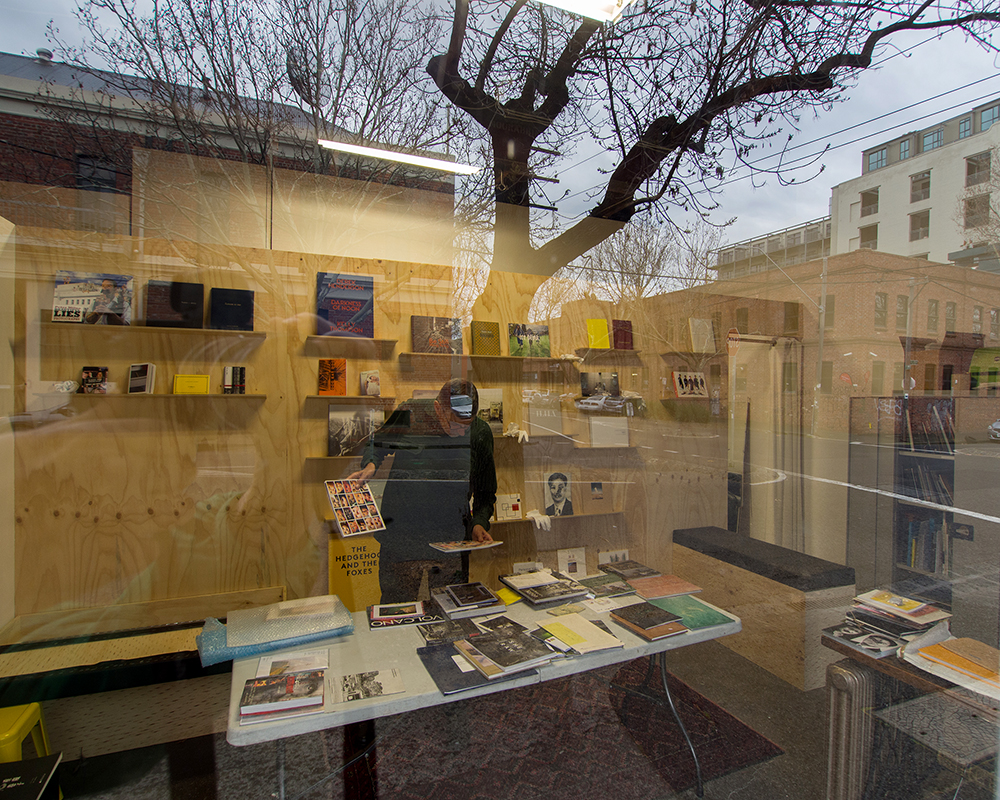
Doug in the APPA space working thru the books on a cold Melbourne winter’s day PHOTO: Victoria Cooper
.
Selecting photobooks @ APPA: A methodology and the list.
I was recently given the opportunity to select books from the Asia Pacific Photobook Archive for their wall display over the next month. While selecting a book to look at and buy in a bookshop can be a challenging enough, the task to review the archive and select around 30 books was daunting. I figured that I needed a methodology.
.
After some thought I put my ideas to Victoria Cooper, photomonteur Peter Lyssiotis, and APPA Director Daniel Boetker-Smith – here’s what we came up with:
- that I’d attempt to make a book array that mirrors the Asia Pacific geographical region
- that I’d select work that was reasonably contemporary
- that the names of the book makers would not unnecessarily bias my selection (interestingly the photographers of books from locations like China, Japan and south east Asia were quite unknown to me)
- that where possible I would select photographers working on their subject matter relating to their own country (the books of some localities were made by visiting photographers).
I wasn’t just going to look at books. As I reached out for, and held each book, I’d consider it as an object, feel its presence and weight, the tactile and sensory experience of the thing. Then I’d engage with its mechanical properties of turning the pages and becoming acquainted with it as a communicative device. In this the following would be considered:
- layout
- typography
- images and their sequencing
- paper, production and binding methods
- it as a narrative form.
In the final moments of engagement with the book I’d need to make a judgment call – was it successful? Whatever that may be? I am a firm believer in Roland Barthes’ proposition that the moment a written piece, I would say a book, is passed to others to read/view that the ‘author dies’ and that the ‘reader is born’. So, as the reader, I was to make the following decisions. I should note that towards the final stages of geographical assemblage I called upon Daniel and his extensive knowledge, to suggest books from, or about specific areas to be considered by me for inclusion.
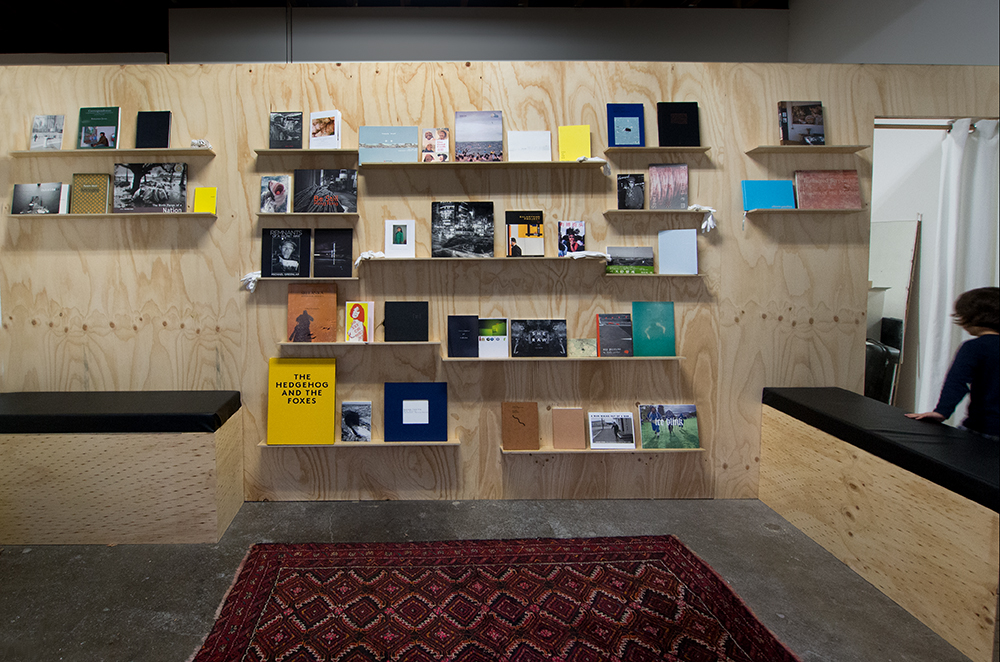
The Doug Spowart APPA Selection
.
.
Here is selection of the geographic locations, their makers and the titles:
Dubai/Surfers Paradise – Sean Fennessy ‘Gold’
Iran/Australia – Katayoun Javan ‘Correspondences: A photographic journey between past/Iran & present/Australia’
India – Munem Wasif ‘Belonging’
India – Pablo Bartholomew ‘Outside In’
Bangladesh – Shahidul Alam ‘The Birth Pangs of a Nation’
.
.
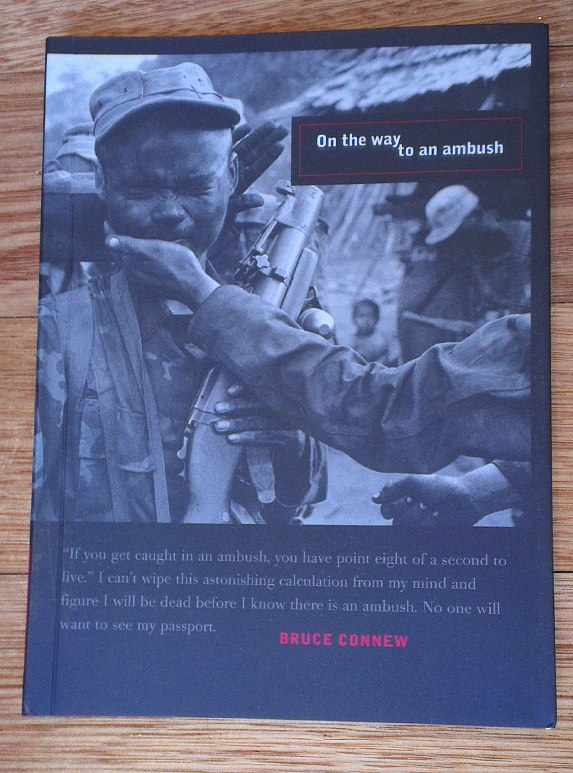
Burma – Bruce Connew ‘On the way to an ambush’
Cambodia – Isabella Capzio ‘Where the water once was: Boeung Kat Lake Phnom Penh
Thailand – Hiro Imai ‘Bangkok’
Thailand – Miti Ruangkritya ‘Thai Politics no.2’
Laos – Michael Greenlar ‘Remnants of a secret war’
Malaysia – Welan Chong ‘Please mind the gap: Singapore’
Hong Kong – Douglas Khoo ‘Be Still Hong Kong’
Sri Lanka – Nihal Fernando ‘Sri Lanka: A personal Journey’
China – Huang Qingjun & Ma Hongjie ‘Family Stuff’
.
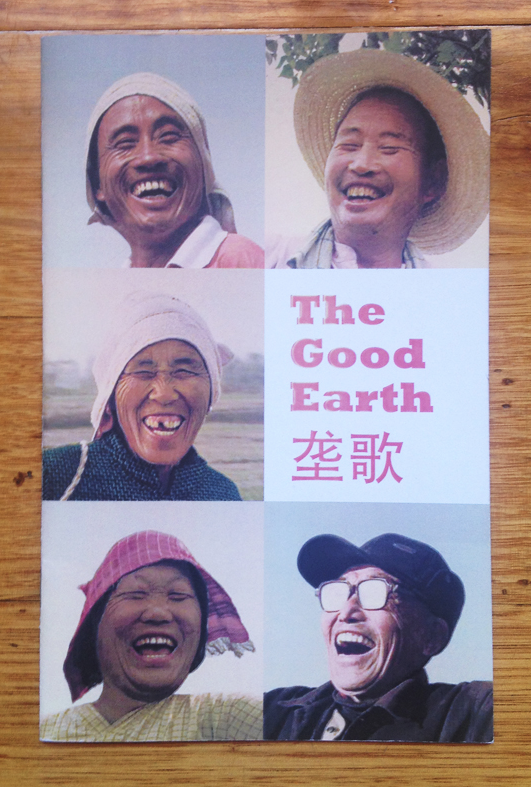
China – Li Kejun ‘The Good Earth’
China – Zhang Xiao ‘Coastline’ (?)
China – ‘Lens on Wesi Lake’
China – Vincci Huang ‘Eyes in the air’
.
.
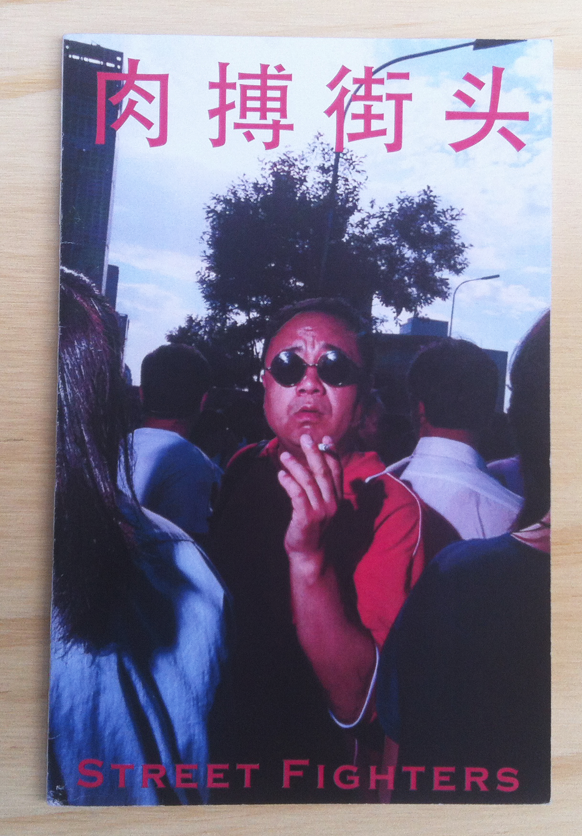
China – Wu Chenghuan ‘Street Fighters’ Beijing
Taiwan – Paul Koolher ‘Political Chaos’
Japan – Bruno Quinquet ‘Salaryman Project: Business Schedule’
Japan – Chie Murakami ‘Japanese Girl’
Japan – Sun Yanchu ‘Obsessed’
Japan – Big book Japanese cities
Japan – Saori Ninomiya ‘Requiem’.
.
.
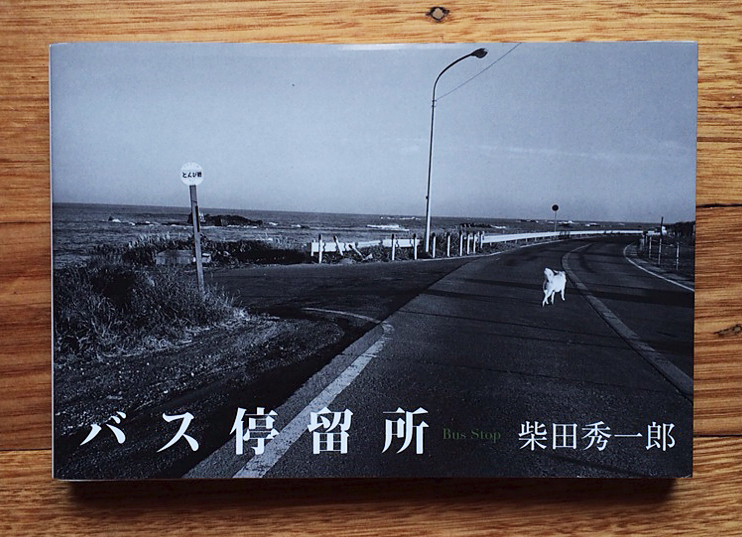
Japan – Shuichiro Shibata ‘Bus Stop’
Japan – Zhao Renbui & Satoshi Katnoku ‘The whiteness of a whale: a project with The Institute of Critical Zoologists’
West Coast American book
Canadian book
Philippines – Dina Gadia ‘Buxxxom Grind’
South Pacific region – Monini Chandra ‘Album Pacifica’
Mexico – Isabella Capezio ‘Feathered Serpents & Visions of the Mother’
Australia – George Voulgaropoulos ‘Children of Auburn’
Australia – [n]
Australia – Emma Phillips ‘Volcán’ (Variant ?)
Australia – Lilli Waters ‘She Raw’
Australia – Ingvar Kenne ‘The Hedgehog and the Foxes’
Australia – Melissa Deerson (Coordinated) ‘Docklands Field Trip’ Melbourne
.
.
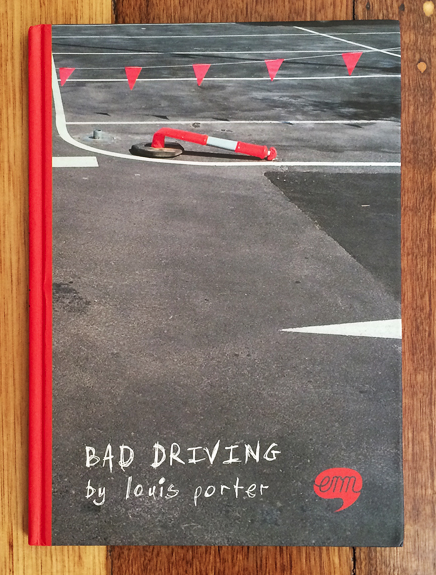
Australia – Louis Porter ‘Bad Driving’
New Zealand – David Cook, Wiramu Puke and Jenty Valentine ‘River–Road: Journeys Through Ecology’
New Zealand – Solomon Mortimer ‘Solomon’s Travels: Volume One 2012’
New Zealand – Lucien Rizos ‘A man walks out of a bar: New Zealand photographs 1979-1982’
.
.
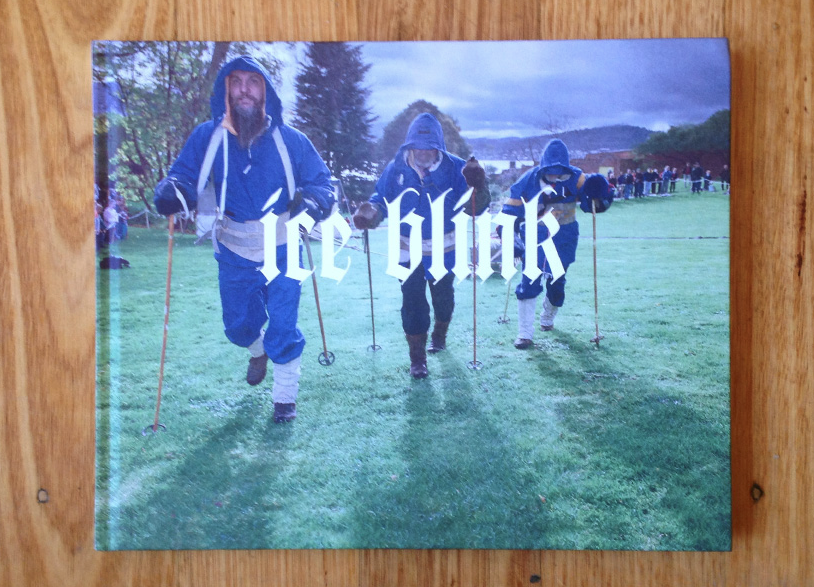
Antarctica – Ann Noble ‘Ice Blink’
END OF LIST (Some books are not listed here…)
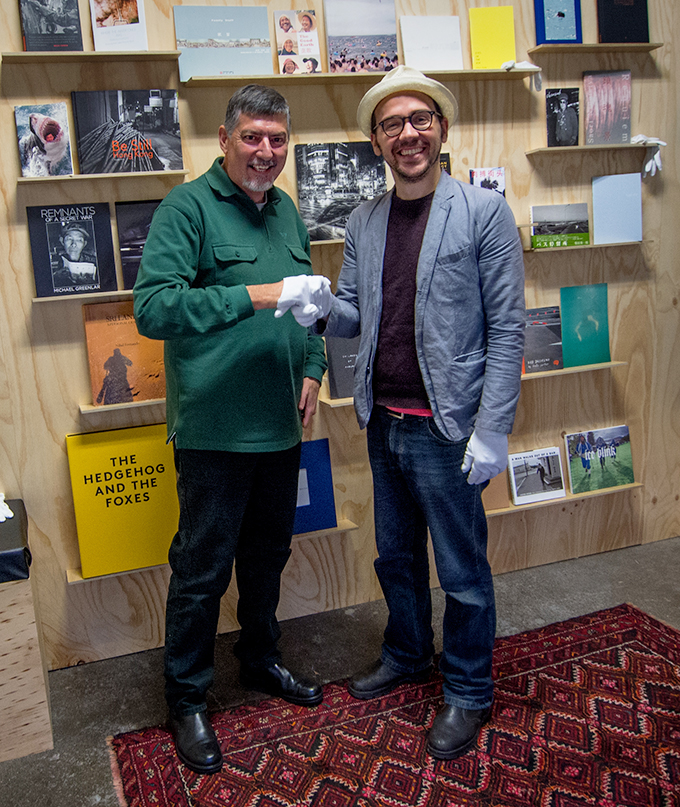
Doug and APPA Director Daniel Boetker-Smith PHOTO: Victoria Cooper
.
Thanks must go to Daniel’s ongoing support of this project and making this resource available for us all — And also thanks to the photographers for contributing to the archive.
Cheers Doug
.
APPA Sign
ALEX STALLING’s PORTRAITS [part two]
.
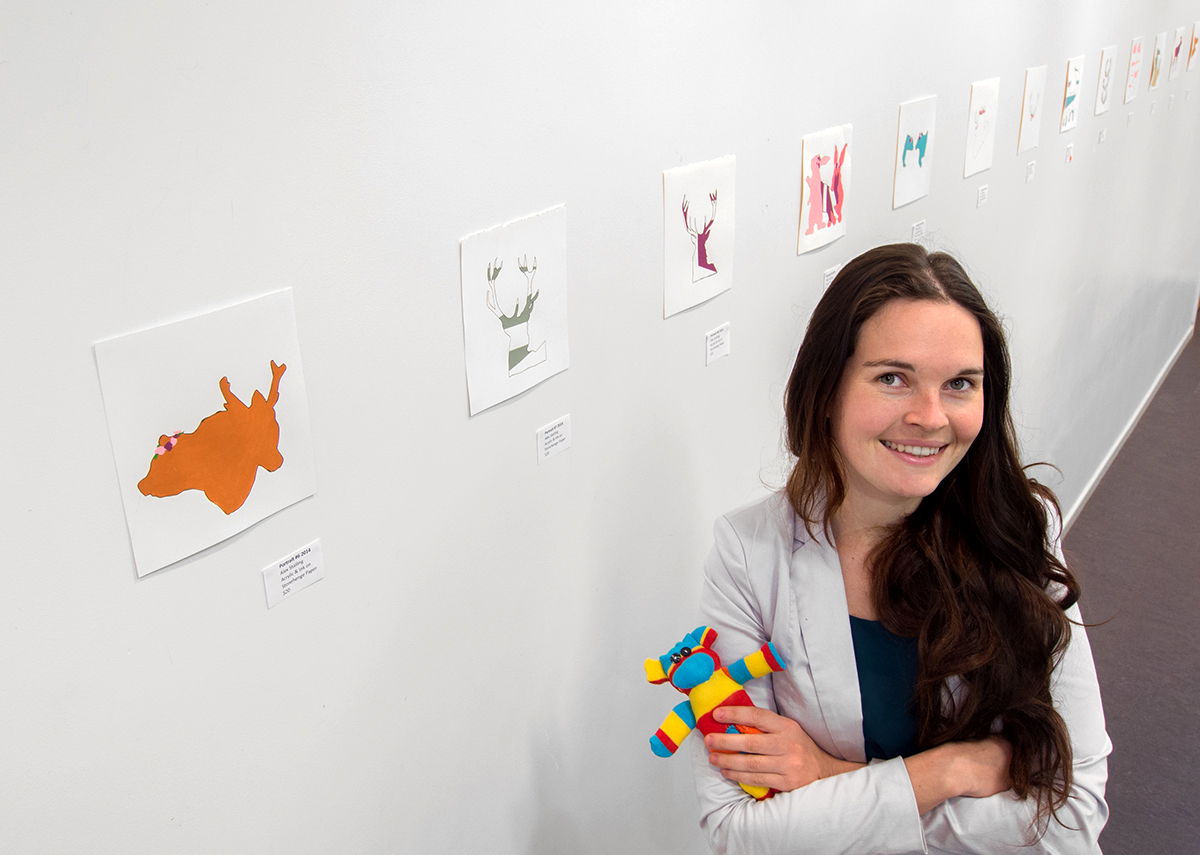
Alex Stalling in her Portrait exhibition
.
Portraits: Layers of Meaning
Portraits [part two] An exhibition by Alex Stalling at Culliford Gallery, Toowoomba. July 28 – August 24, 2014
.
Alex Stalling’s latest exhibition Portraits [Part Two] will certainly challenge the idea we might have of what a portrait can be. The bare white walls of the Toowoomba Art Society’s Culliford House Gallery, are punctuated by 20cm square pieces of white art paper onto which the artist has meticulously drawn and painted a ‘portrait’. Now these portraits are not of people we might know, someone famous, auntie Ethel, a sleeping child or a happy couple – they are … of animals – meta animals!
.
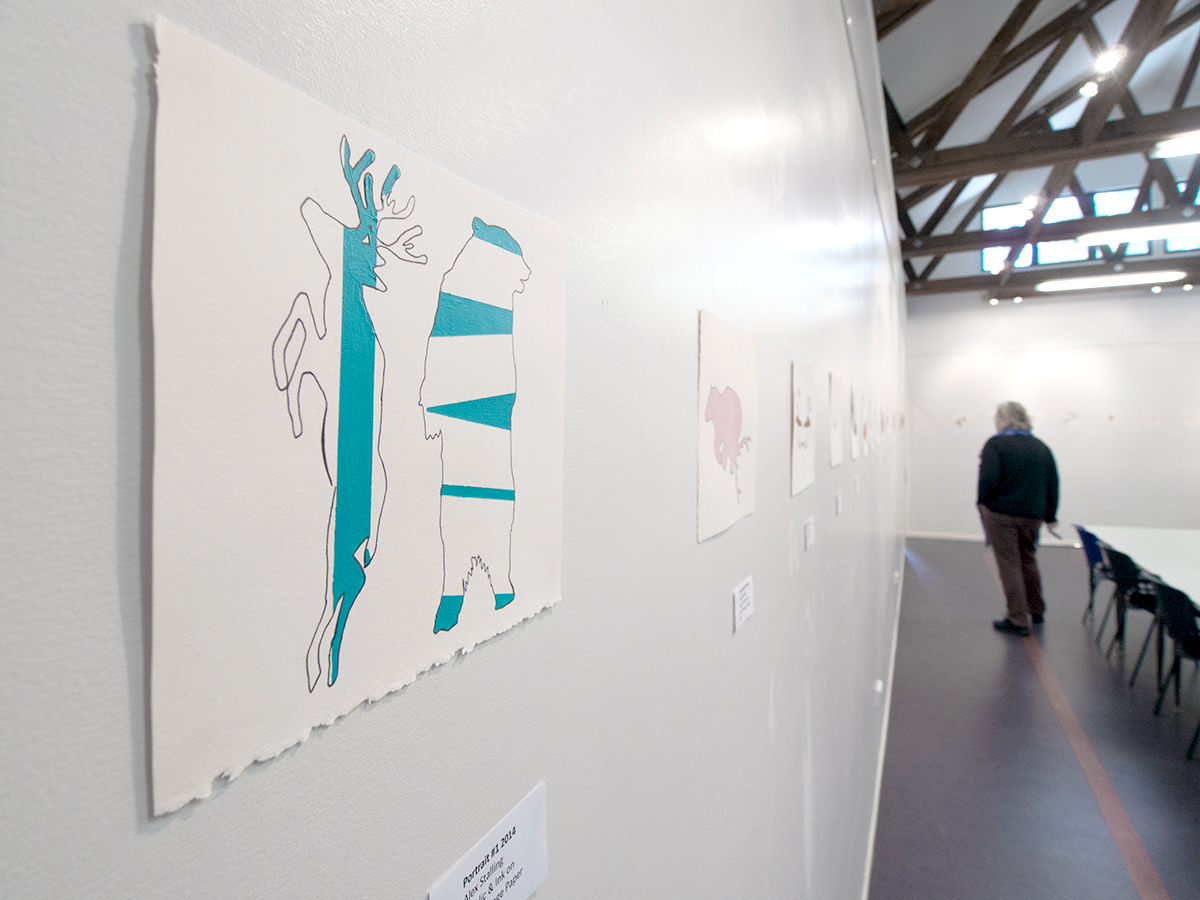
Alex Stalling’s Portrait exhibition
.
Stalling has essentially created works made up of the shape or outlines of different animals. The animals sometimes morph and overlap – other times they are juxtaposed to suggest associations. A deer’s head and antlers adjoin a similar shape at 180o to form what looks like tree roots. A prancing deer dances with the outline of a upright bear. A moose stands on top of another, and a doe stands yet again on top! These works are like Mr Squiggle drawings gone wrong, or prints where the paper has jammed in the printer.
.
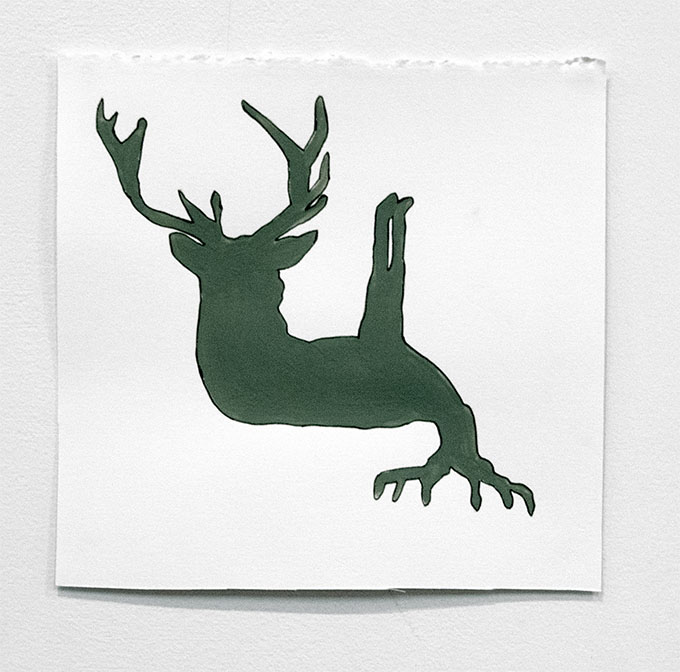
Portrait #5
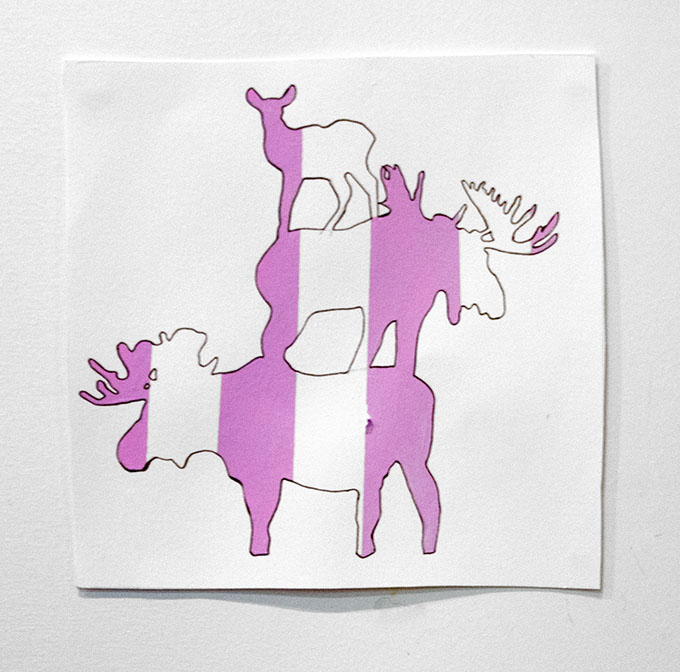
Portrait #36
.
Many animals are bedecked with garlands of pink and orange flowers. This decorative element links individual artworks in the exhibition. A limited palette of flat colours of brown, orange, bright blue, pink and dark green also provides a cohesive aspect to the show.
The confusion of meaning continues. As if to create a cryptic challenge to the viewer – the animal outlines are partially filled-in often with bright and fluoro colours, but not in ways that help identification. The colouring implies another shapes or patternings which are partially obscured by the outlined edge of the animal. It is as though the animal outline has been cut out to reveal the abstract flat colour shape below on a background sheet.
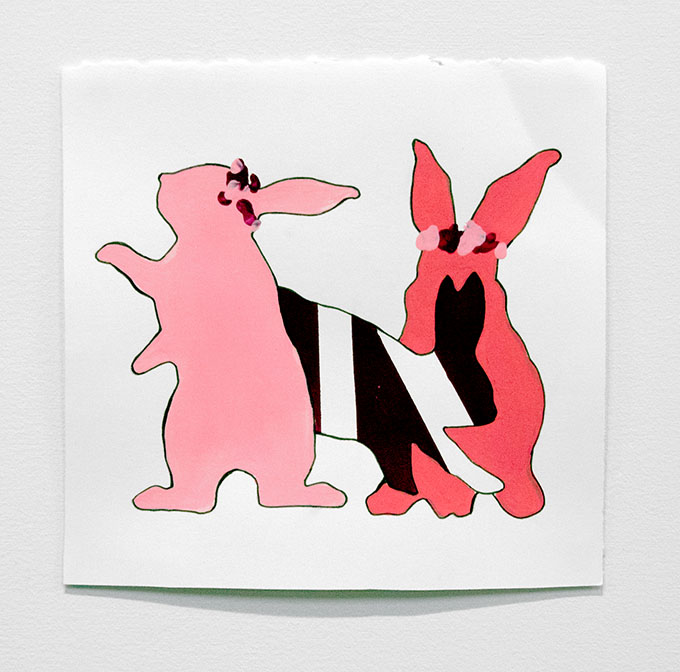
Portrait #9
.
From a distance the outlines and colour shapes may appear to the gallery visitors as maps of continents, countries or localities. The colours perhaps define boundaries within those spaces. Moving up-close the another interpretation emerges – but it too, as discussed, is puzzling. Every image becomes a game, a riddle of confused meaning, a mind recognition trick, something that can amuse, entertain or stimulate the viewer to action.
Just who are these animal motifs a portrait of? The artist? A thought? And idea? A dream or muse, or influence? Or all of these…
The strength of Alex Stalling’s Portrait works is that they are not unchallenging easy-lookers, but rather works that demand the viewer to seek within themselves a resolution to a visual challenge – there, maybe they will find their ‘portrait’, and the meaning within the artworks.
Perhaps too, when an artist does a portrait, it also becomes a self-portrait of the artist themselves …
.
Doug Spowart
August 12, 2014
.
MORE INFORMATION
THIS SUNDAY in the exhibition space:

https://www.facebook.com/bespokemarkets
.
.
Text and installation photos ©2014 Doug Spowart All artworks ©2014 Alex Stalling
.
COOPER+SPOWART EXHIBITION: Speaking About Place
.

Speaking About Place gallery layout
Speaking About Place: the Nocturne Project
Victoria Cooper & Doug Spowart
Cam Robertson Gallery, Toowoomba Regional Art Gallery, 19 July – 17 August 2014
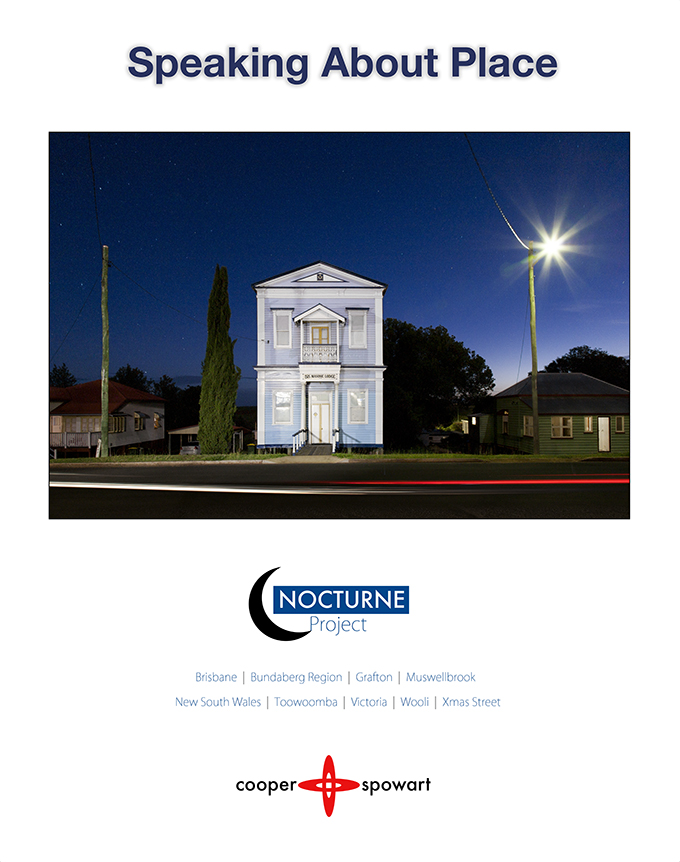
Our arts practice is informed by our ongoing and evolving connection with Place. Our Place-Projects are influenced by the context and the consequences of living within a constantly changing landscape. We work with a range of photographic concepts and techniques, from the camera obscura, through analogue processes to the digital forms of the medium. Our work is presented as visual narratives in artists’ books, photobooks, exhibition images and, more recently, blogs and social media.
Through our Nocturne documentary photography and Facebook social media projects, we have explored connections with Place in urban and regional communities throughout Queensland, New South Wales and Victoria. For us the phenomenon of nocturnal light transforms these everyday spaces. Buildings, busy street corners, quiet alleyways all become filled with the dramatic light of a movie scene. In 2013 and 2014 we were given the opportunity, through funded Artists-in-Residence (AIR) programmes, to undertake Nocturne projects in the regional communities of Muswellbrook, Grafton and Bundaberg.
In this exhibition we present a selection of images from three years of our Nocturne Projects. The work shown here adds to the recent Childers Art Gallery exhibition of this project, by the inclusion of social media elements. Therefore in this gallery we invite viewers to connect with the work in a forum outside the virtual space of Facebook. To enable this connection to take place we have created folios that contain transcripts of Facebook/Place/Storytelling from each of the three AIRs.
.
About the photographs
We photograph in the early evening nocturnal light, a time of day where the afterglow of sunset and the glow of streetlights transform the everyday experience of place for the viewer. Images created at this time require long camera exposures and therefore produce photographs that can capture blurred movement of people and vehicles. Another important aspect of the Nocturne aesthetic is the effect of colour and the juxtaposition of coloured lights in the different situations of ambient daylight, artificial lighting, car head and taillights.
.
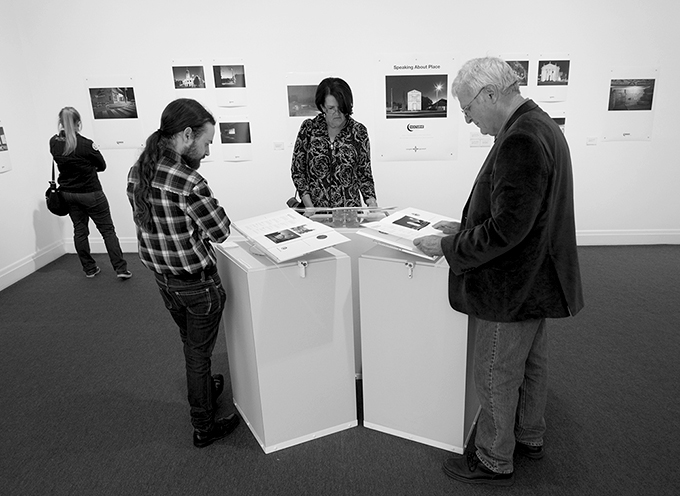
Exhibition viewers reading Facebook responses
.
More than photographs
The photographs in themselves have no intrinsic meaning – it is the viewer, with their experience and memory that brings life to the image. In this moment of connection they may recount a personal narrative or connect with the historical significance of the place. This collaboration between photograph and viewer is exciting and vibrant – expanding the potential for the documentary image to go beyond the vision of the photographer.
As the Nocturne project has evolved, we have discovered the importance of sharing place stories through images, words, in person and online. Through Speaking about Place we have extended the potential for this project to share the transformative nature of lived experience and everyday life in each community.
The Western Downs town of Miles is scheduled for a social media Nocturne project later this year.
.
CLICK HERE To download a PDF of some of the Facebook narratives Catalogue-Comments-interact-FP3
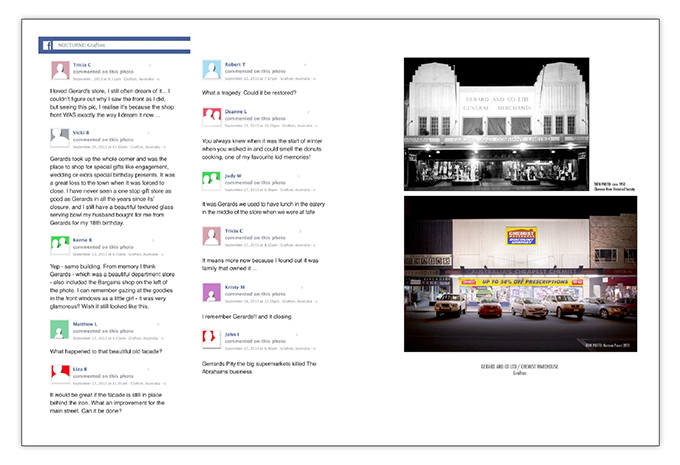
Community comments about the photographs on Facebook
The online Nocturne Projects can be accessed at http://nocturnelink.com
.
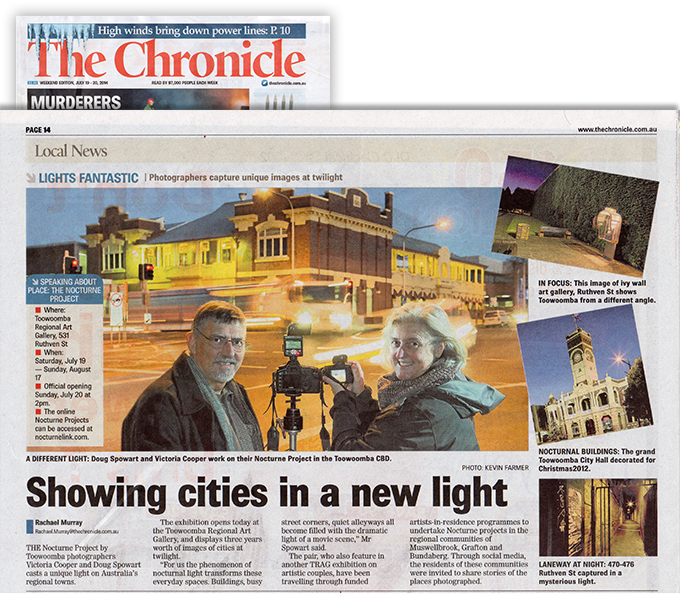
Link to The Toowoomba Chronicle online news story:
http://www.thechronicle.com.au/news/showing-cities-in-a-new-light/2323064/
.
A selection of images from the opening and associated events
.
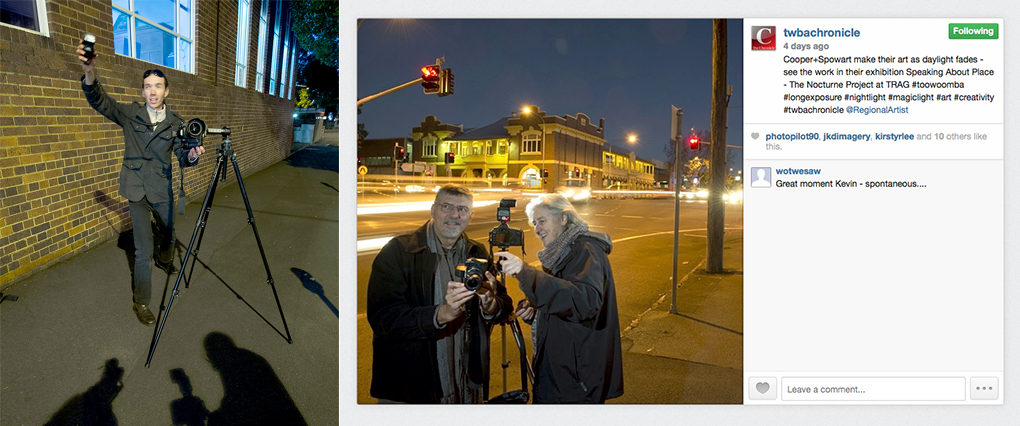
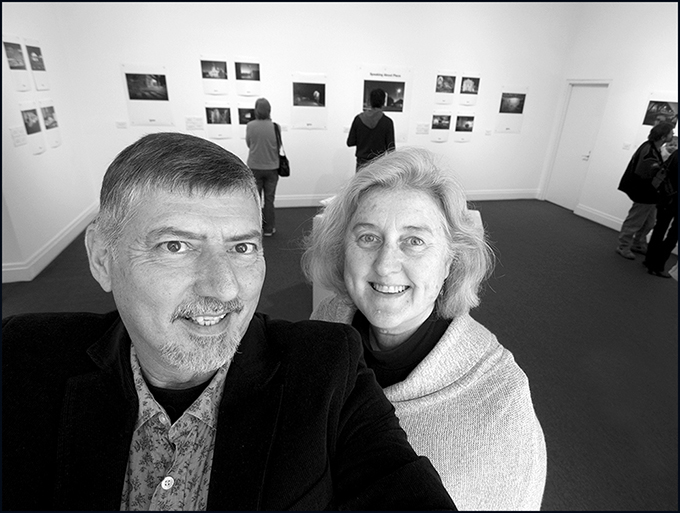
Toowoomba Chronicle photographer Kevin Farmer gets a Nocturne reverse-photo with us – From The Chronicle Instagram feed
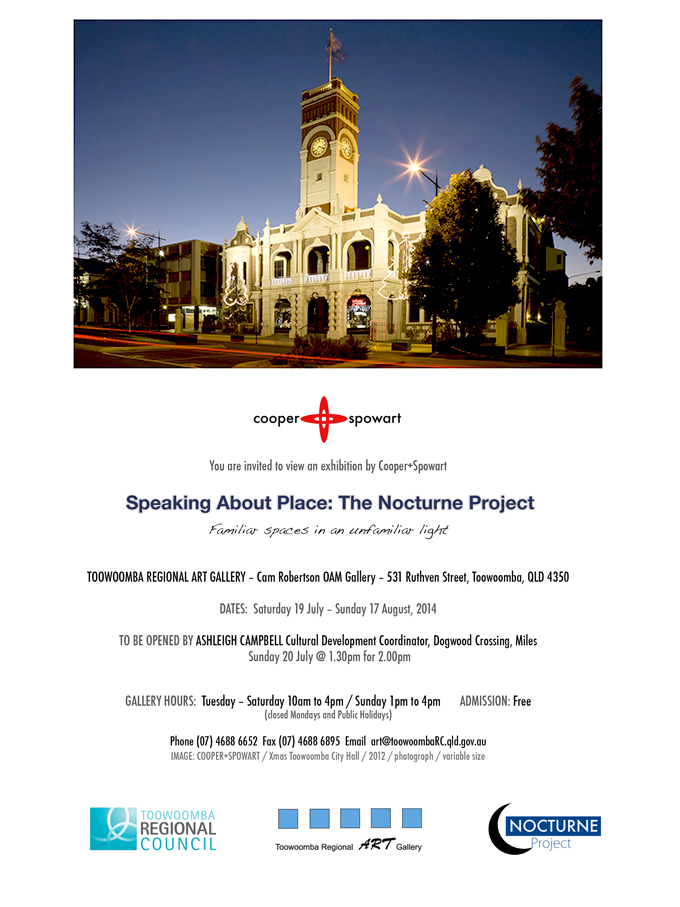
Exhibition invitation featuring the Toowoomba Town Hall Xmas 2012
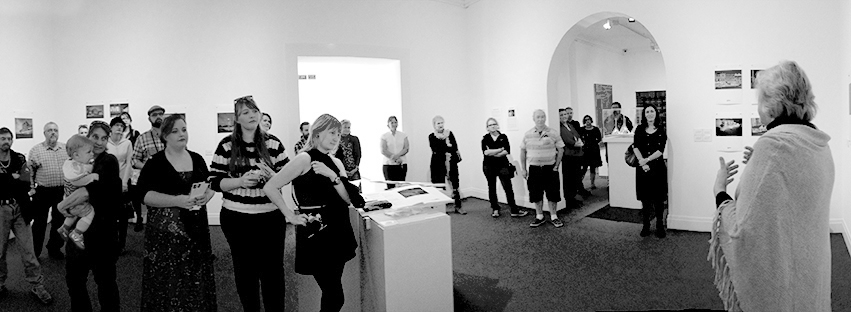
The opening of ‘Speaking About Place by Ashleigh Campbell
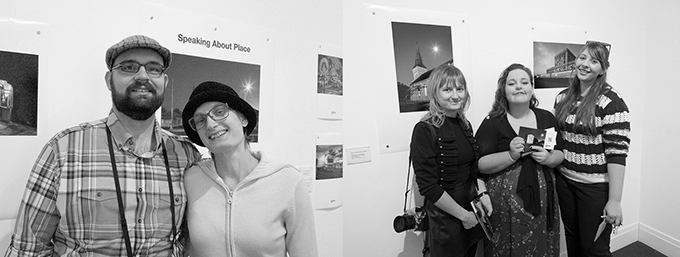
Some attendees at the opening
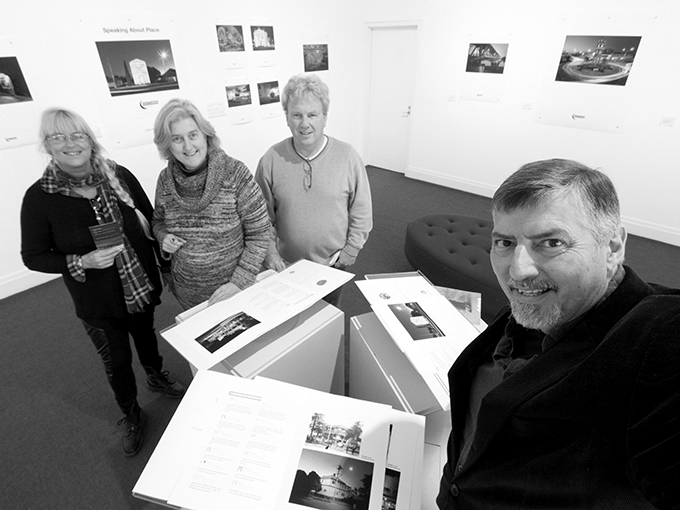
Maureen Trainor and Kevin Scattergood visit the show
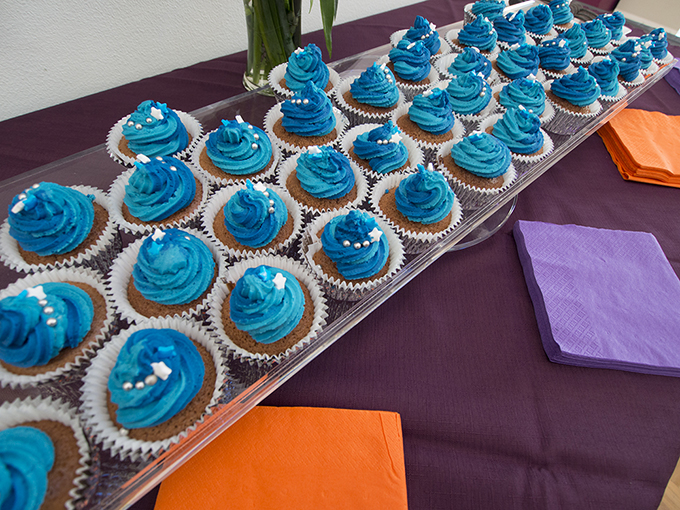
Jess Martin’s Nocturne Cup Cakes…
.
.
Visit http://nocturnelink.com to connect with our Nocturne Projects
..
.
.
.
Installation photos and documentation of the artworks and text ©Doug Spowart
Instagram photo and news story © The Toowoomba Chronicle and Kevin Farmer
.

My photographs and words are licensed under a Creative Commons Attribution-NonCommercial-NoDerivs 3.0 Unported License.
http://creativecommons.org/licenses/by-nc-sa/2.5/au/
.
.
MEMORY COLLECTIVE: Super Moon + Phoenix
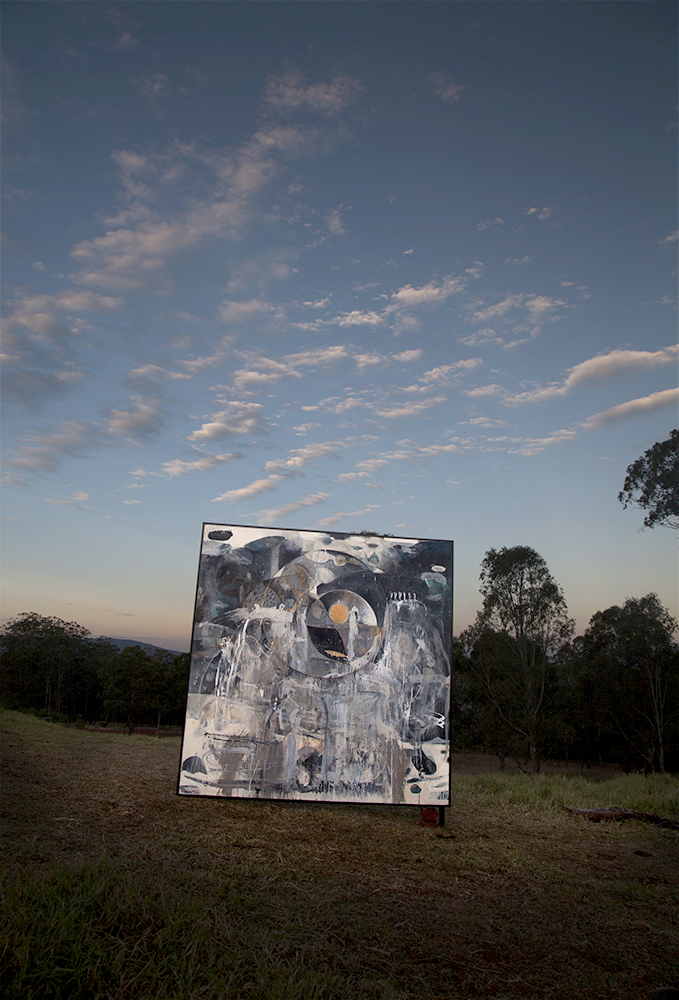
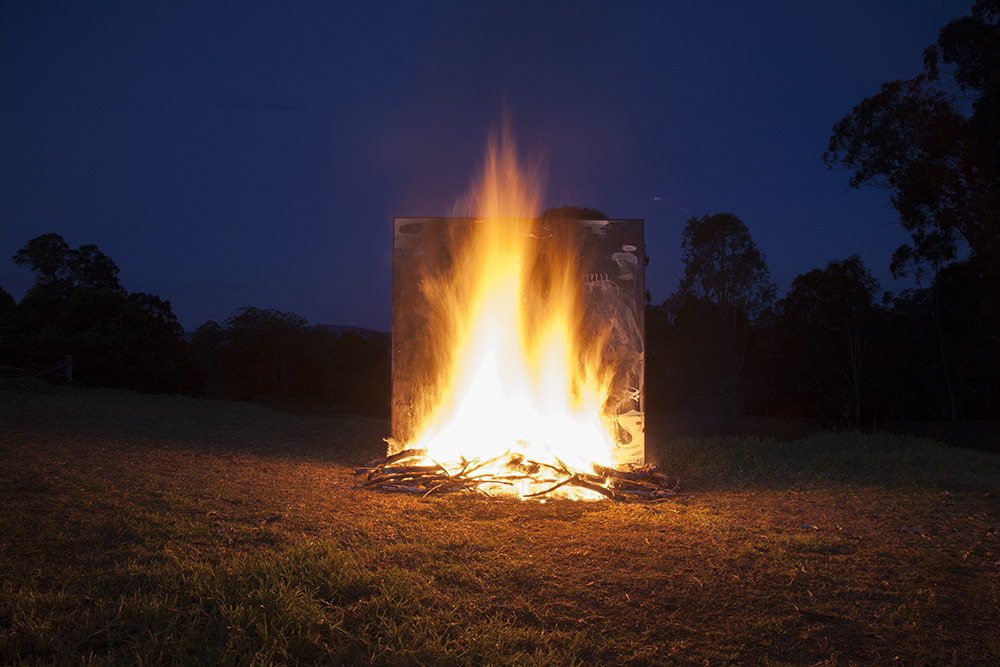
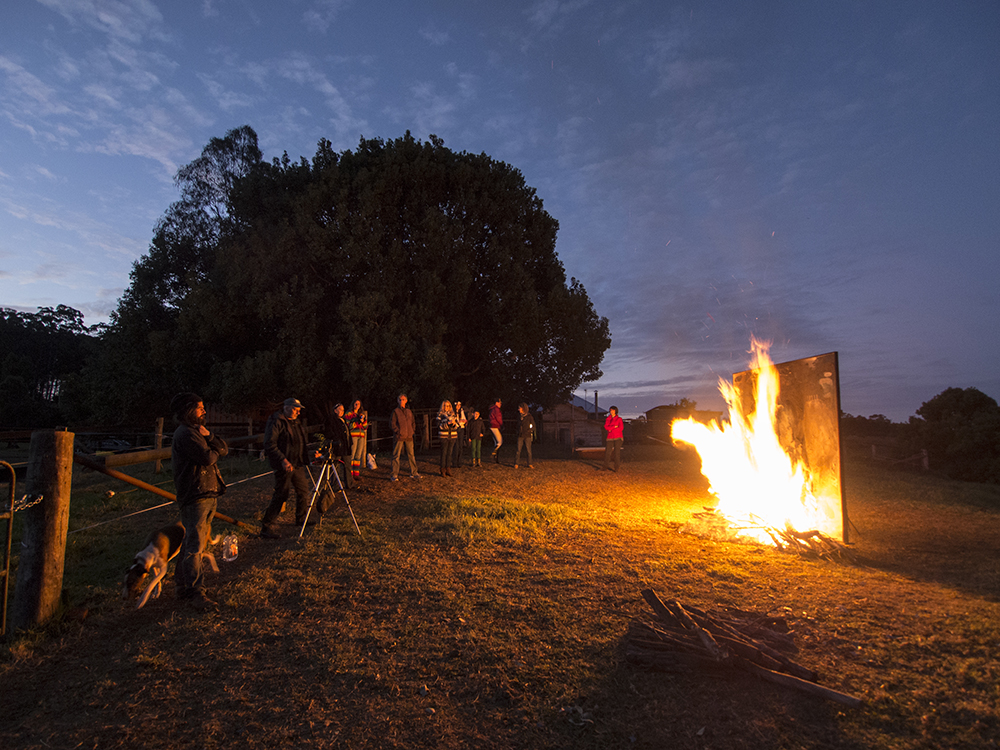
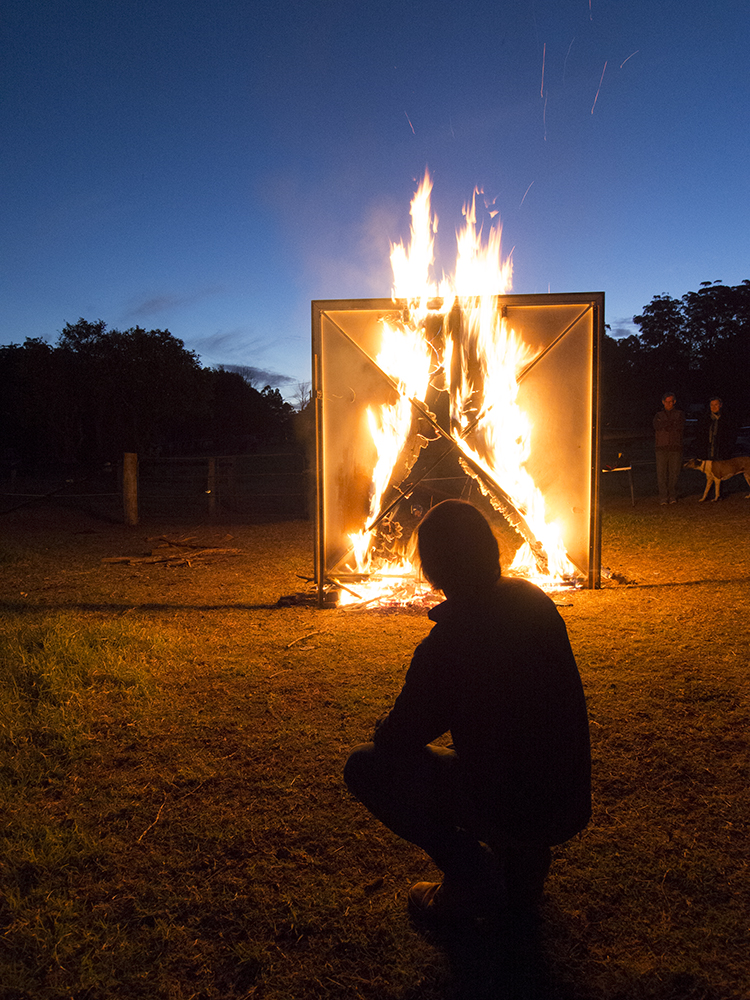
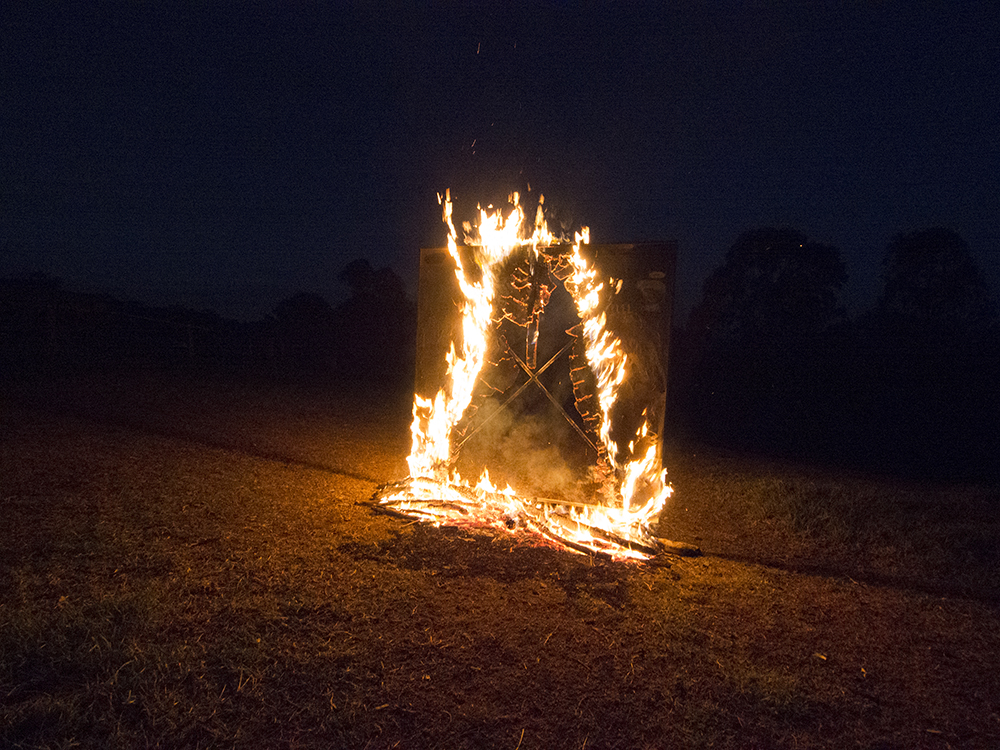
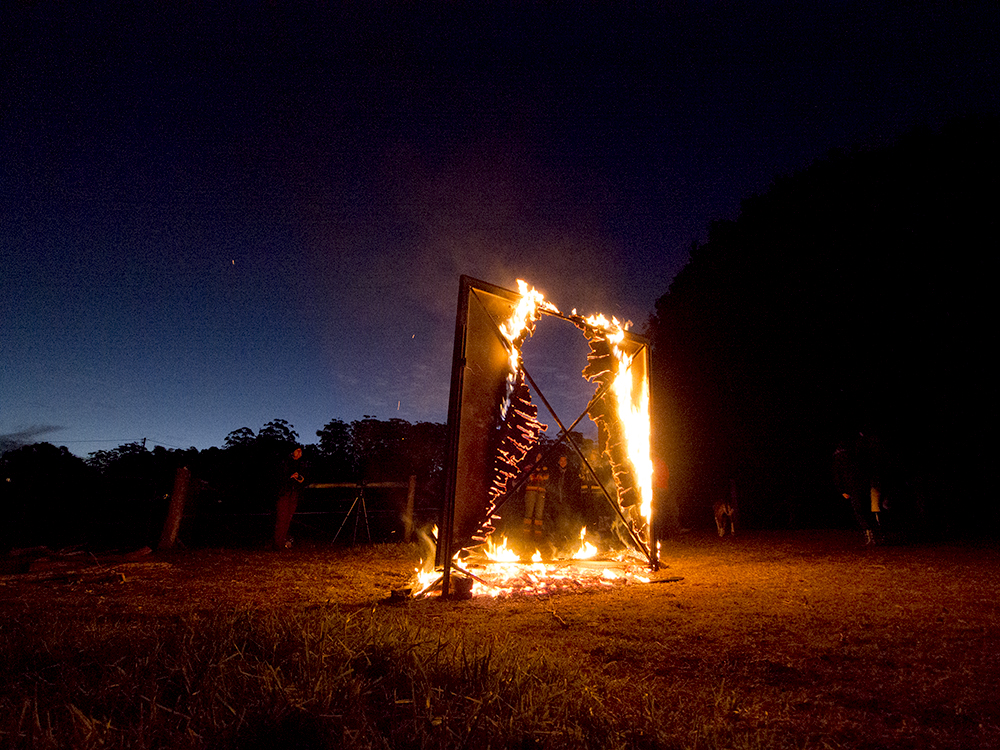
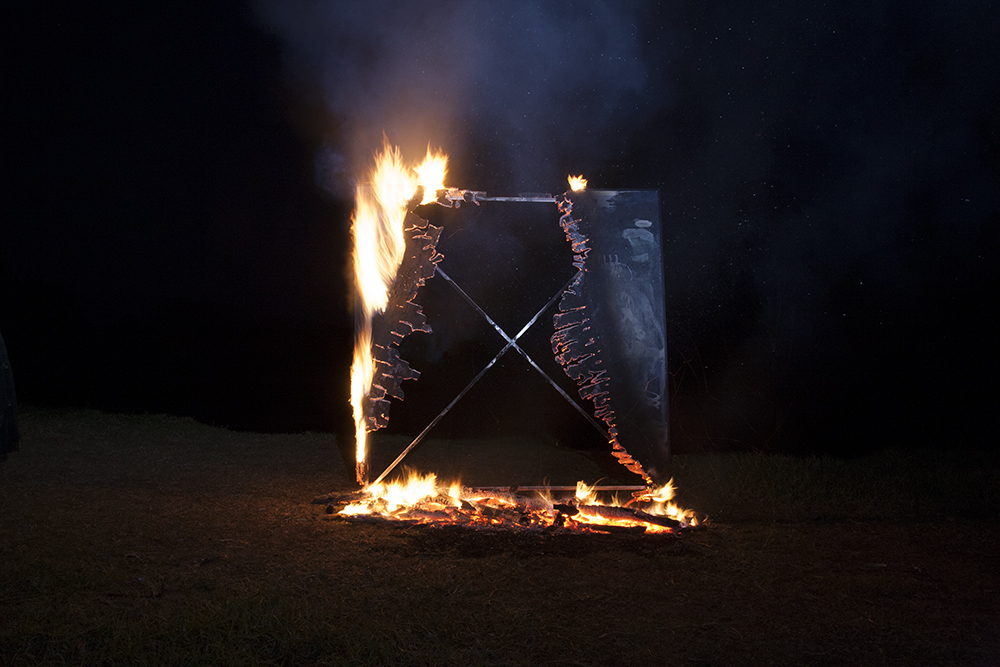
Eighteen months ago Toowoomba artist Damien Kamholtz began a project that was to bring together a team of local artists to participate in a conceptual artwork that would have many states and private and public iterations. The first public presentation of the The Memory Collective was at the Toowoomba Regional Art Gallery in August/September 2013.
.
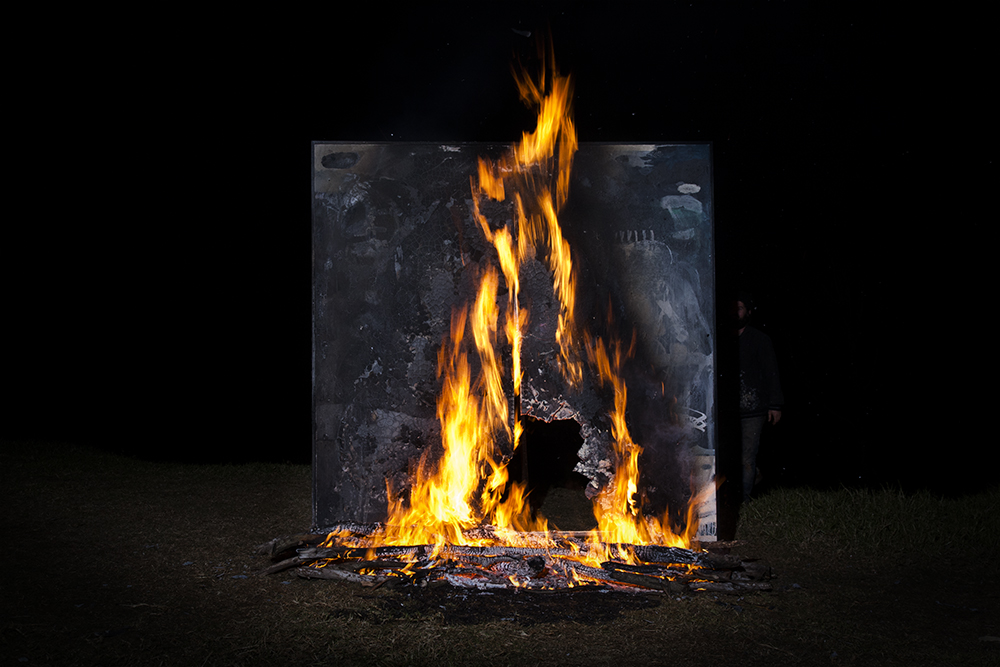
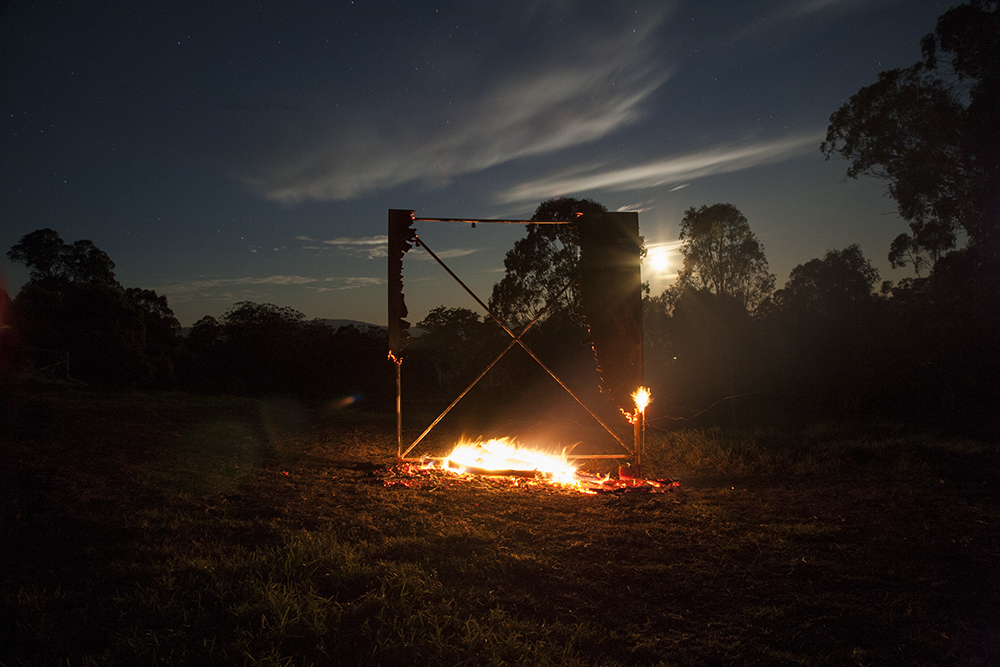
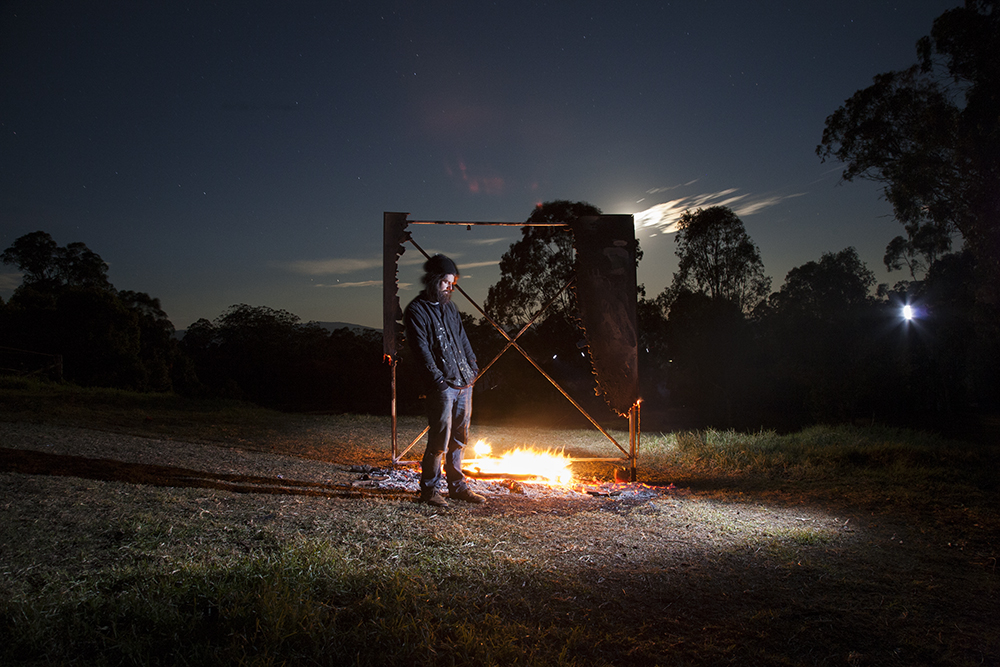
Two weeks ago a key element of The Memory Collective project was altered yet again into a new state. This took place near Cabarlah at a symbolic time for Kamholtz, the recent super moon…
.
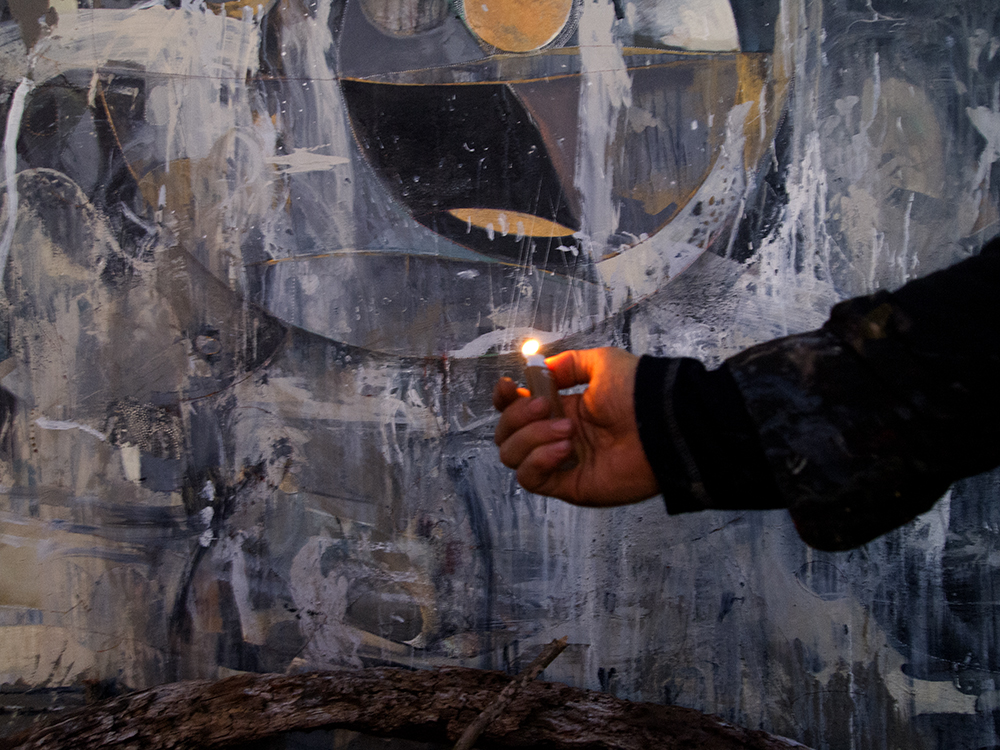
Here is part of the document made on that July evening.
.
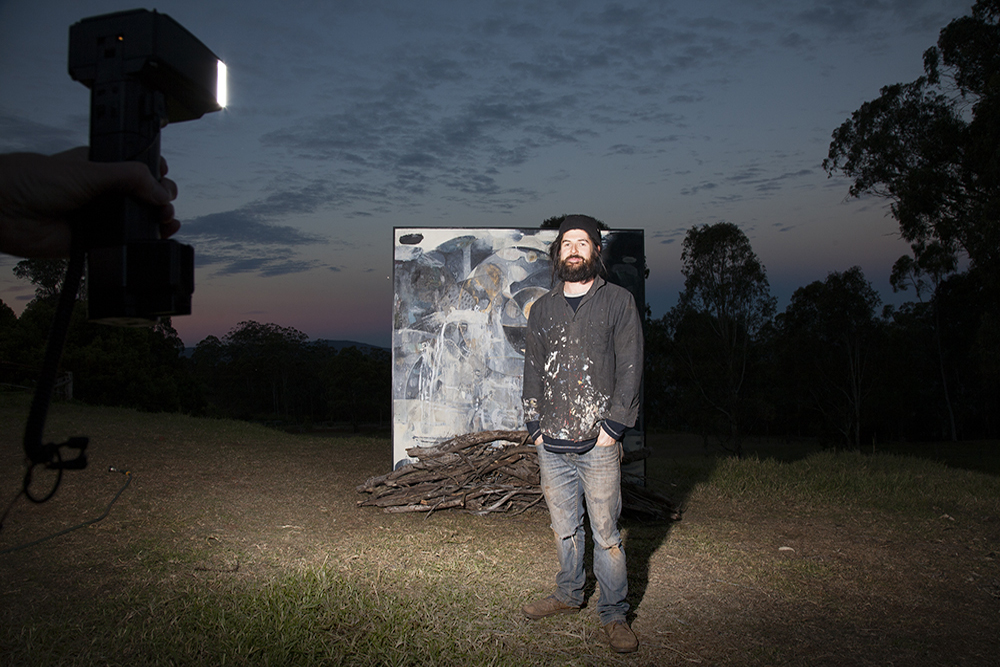
Damien Kamholtz before the burning Photo: Cooper+Spowart
.
.
.
.
.
 .
.
.
.
.
..
.
.
.
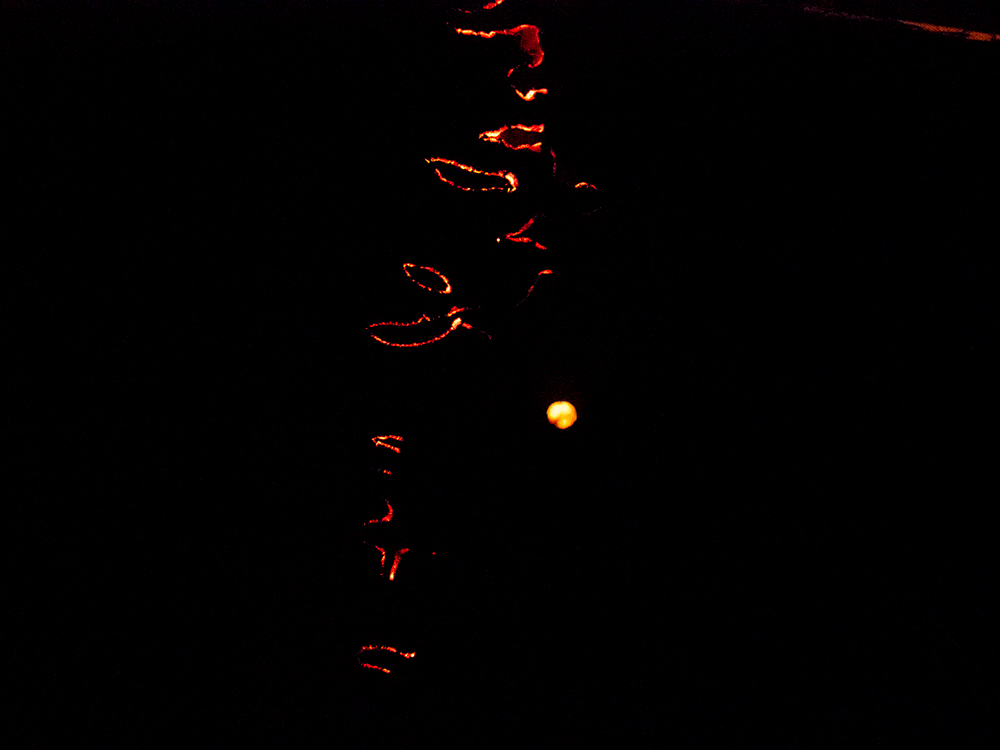
The super-moon rising and the embers of the phoenix rising
.
.
Aftermath of the fire
.
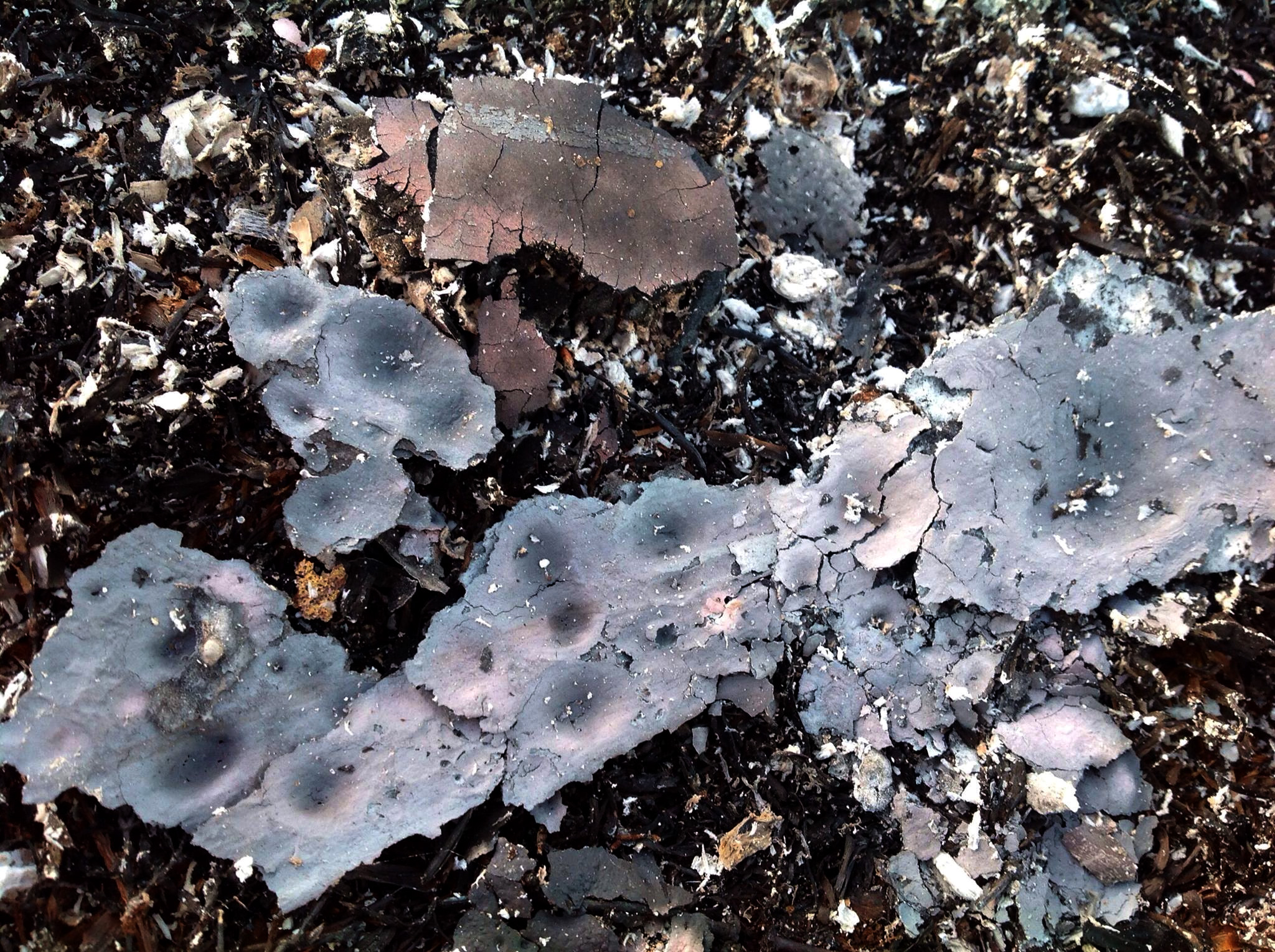
Aftermath: ashes of the painting the next morning. Photo: Damien Kamholtz
…. this is not an ending for the Memory Collective…
.
THE BACKSTORY OF THE MEMORY COLLECTION
.
An exhibition of the collaborative artwork as a singlarity
.
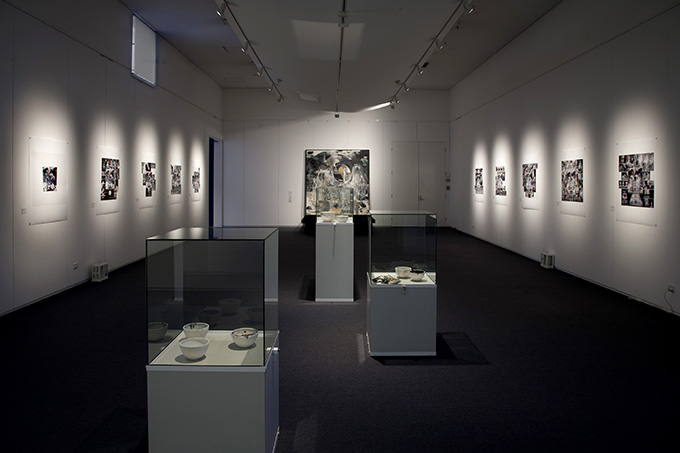
Memory Collective image from the exhibition @ Toowoomba Regional
.
A painting and a performance
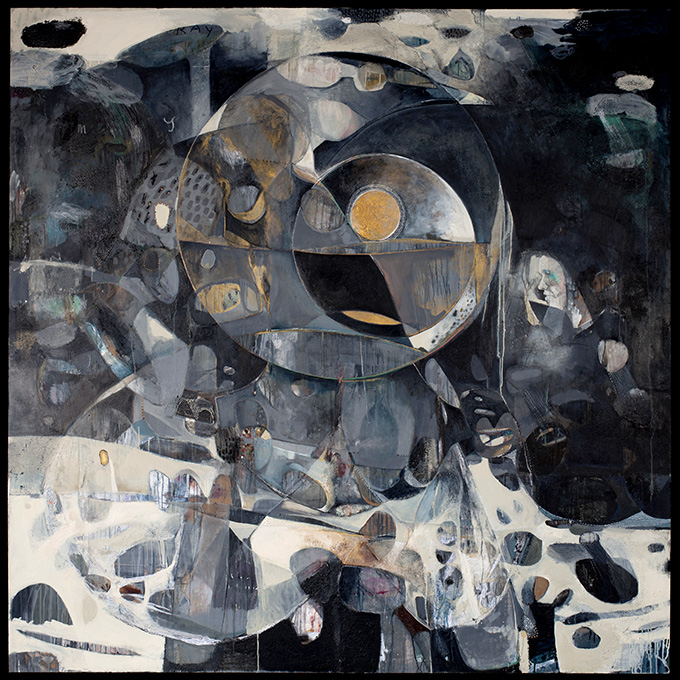
The Memory Collective painting by Damien Kamholtz
.
The Memory Collective is a multi-disciplinary collaboration orchestrated by artist Damien Kamholtz. Kamholtz states: The Memory Collective Project is a creative collaboration between 12 artists across eight artistic disciplines exploring concepts and themes relating to the human condition such as change, constants, history, refection and memory. The artworks created during the project will make up an exhibition to be held at the Toowoomba Regional Art Gallery in September 2013.
There are different stages to the project. First Kamholtz created a large 2.2 metre square painting, while sculptor, Jessie Wright constructed the large vessel to hold the water. Kamholtz’s painting is embedded with personal meaning in the form of fragments of his past art, the ashes of diaries. In the presence of this artwork we are drawn into a poetic landscape where faces emerge; symbols and totems slip from passive dark spaces and come into conscious awareness.
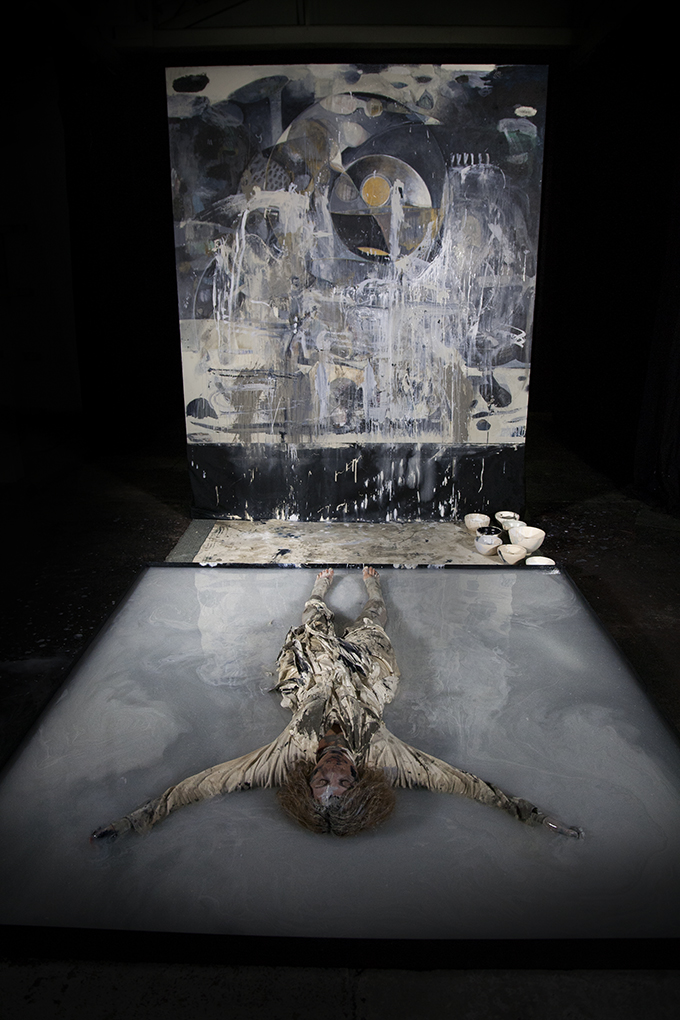
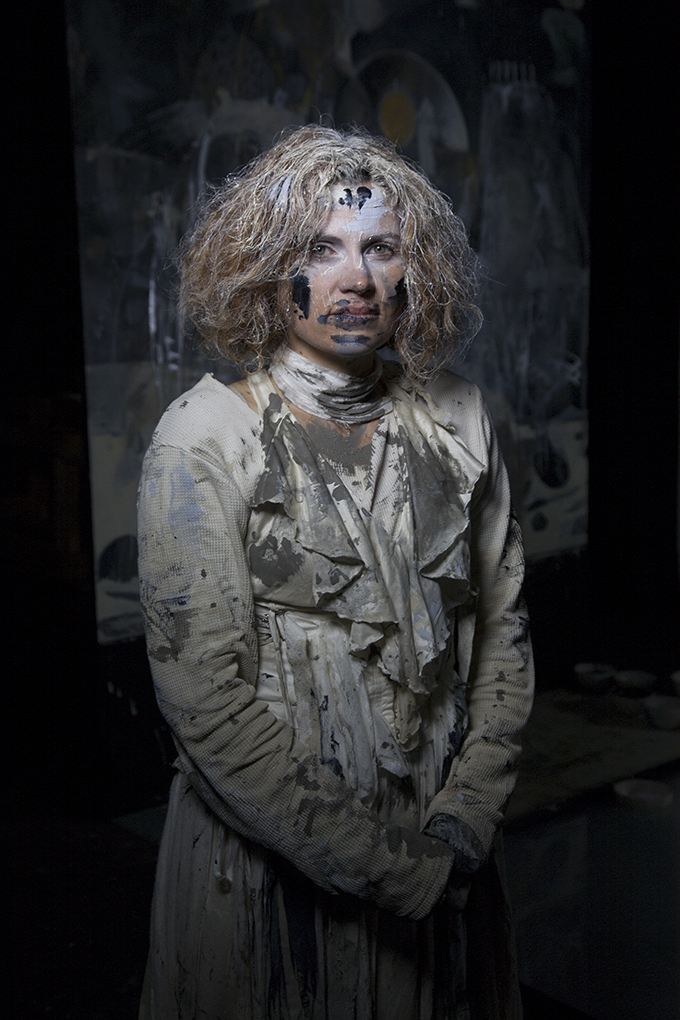
The second stage of the work was the performance in the form of 9 responses to the painting by Kristy Lee. The painting and the pool created the reflective and reflexive performative space and the transformative process of the original painting then began. Integral to the space were David Usher’s delicate pots; these vessels contained the pallet of shades that then shrouded and clouded the memory of the work. Over the course of the day the painting’s physical form was transformed into something different loosing its current visual form as only a memory.
Our part of the collaboration was to witness, respond and record the transformation of the work over the day. The next stage of the Memory Collective’s work will continue over the next month our component will be to create 9 large collaged photograph memory states of the work for the show in September. Works by others include; a video art piece, a documentary video, a soundscape, interviews, prose and poems. It is a significant project and is being funded by the RADF and supported through the exhibition at the Toowoomba Regional Art Gallery.
.
A fragment of photographic memories made by us for the MEMORY COLLECTIVE…
.
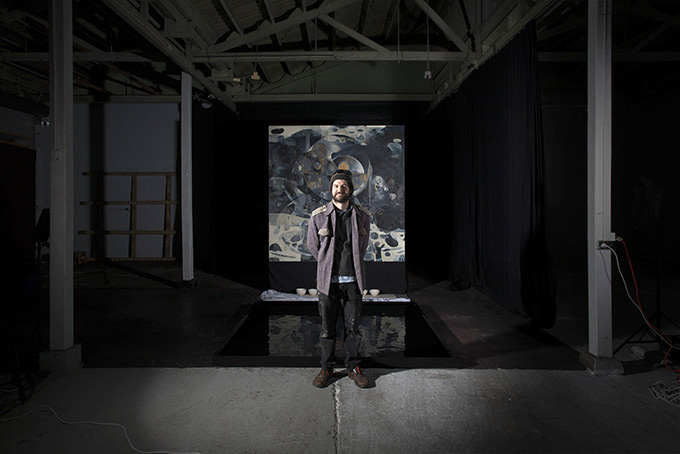
Damien Kamholtz in the performance space with the painting and pool
.
.
A performance
..

Kirsty Lee and painting – in the early state…
…
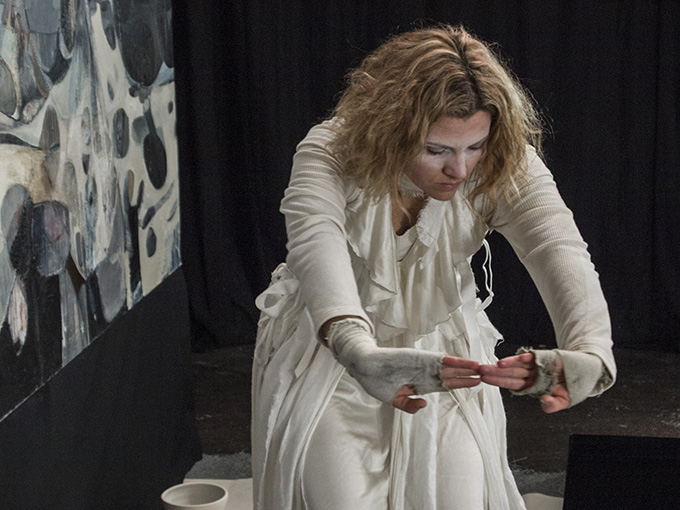
Kirsty Lee performs before the painting
.
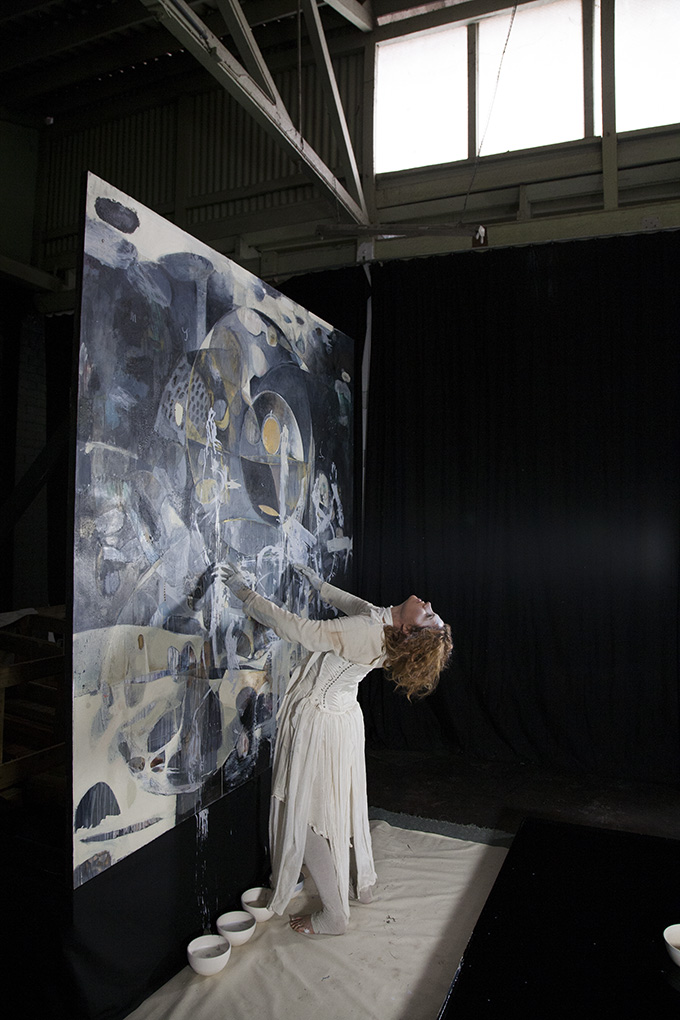
State 3 Kirsty applies paint to the paining…
.
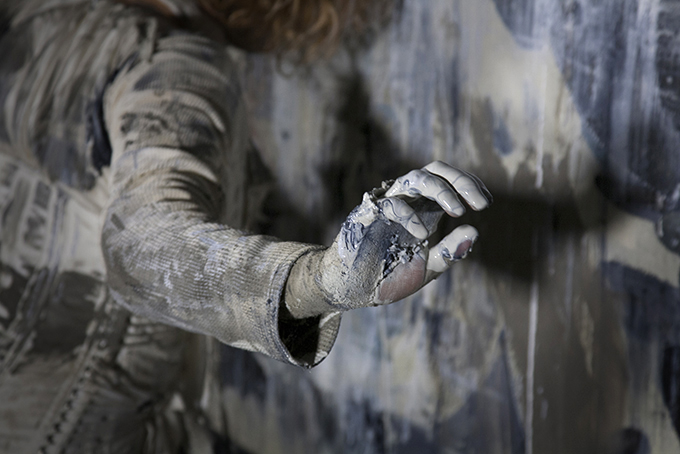
Hand paint
.

Kirsty Lee and her interaction with the painting … around Stage 6
.
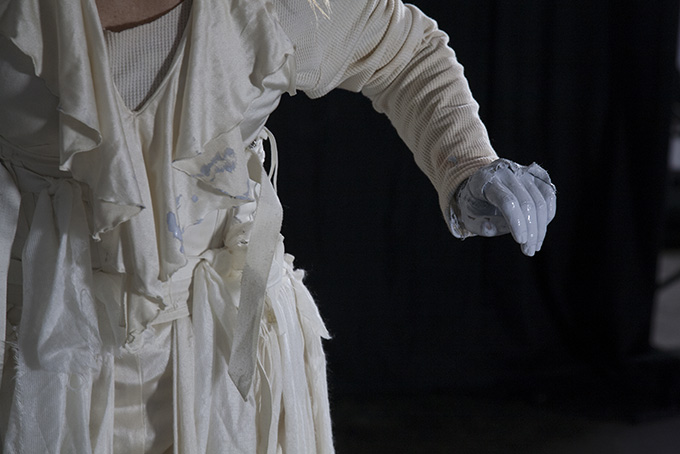
Blue hand…
.
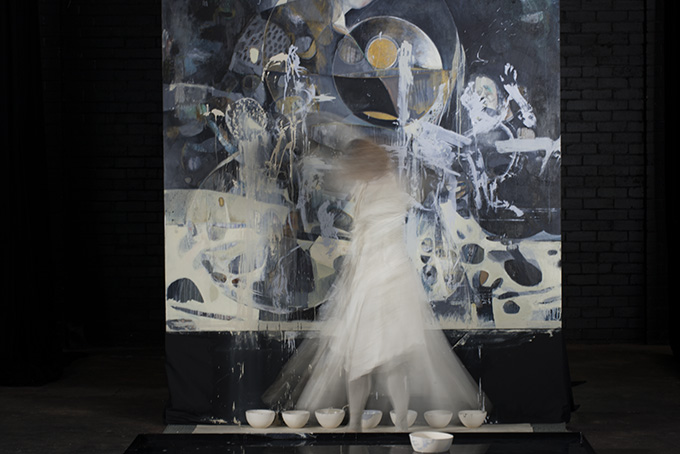
Kirsty Lee in a frenetic stage…
.
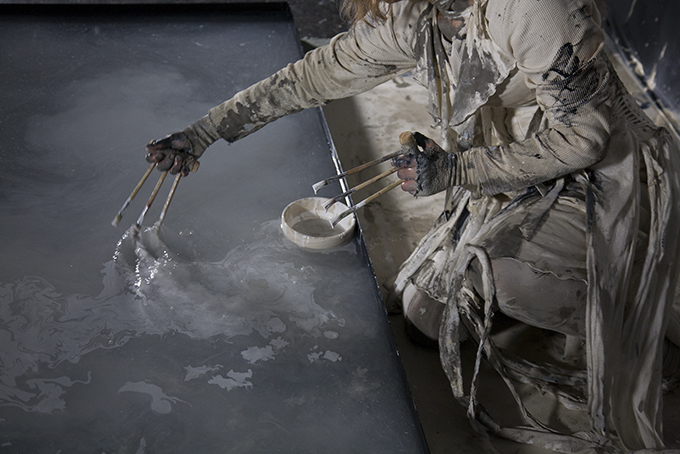
Kirsty Lee and brushes before the pool
.
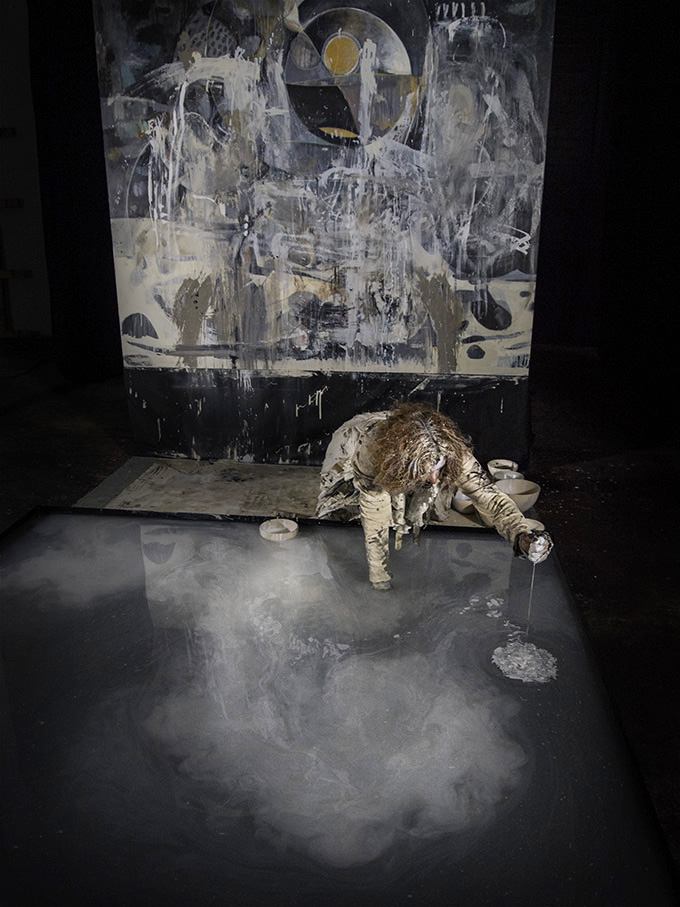
Paint fluid in the pool…
.

Towards the final state…
.
The final state …
…
.
 .
.
.
Additional material
/.

Damien discussing movement with Kirsty
.
Kirsty Lee towards the end of the performance
.
Another creative work from the performance by Jason Nash…
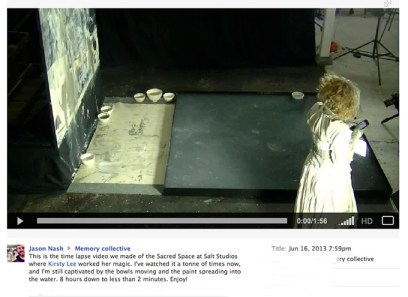
Jason Nash – Time lapse video
CLICK HERE to see Jason Nash’s ‘Memory Collective’ time-lapse video
.
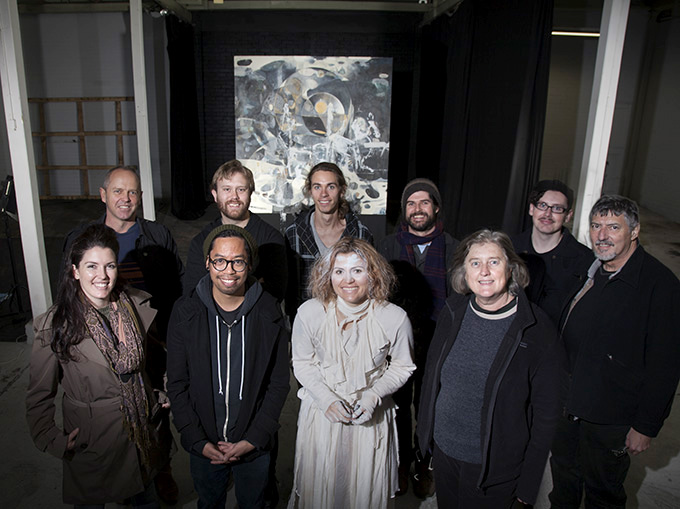
The Team: Front Ashleigh Campbell, Julio Dunlop, Kirsty Lee, Victoria Cooper, Doug Spowart
Back: David Usher, Jason Nash, Jesse Wright, Damien Kamholtz, Zac Rowling ( weakling).
Not present: Craig Allen & Jake Hickey
.
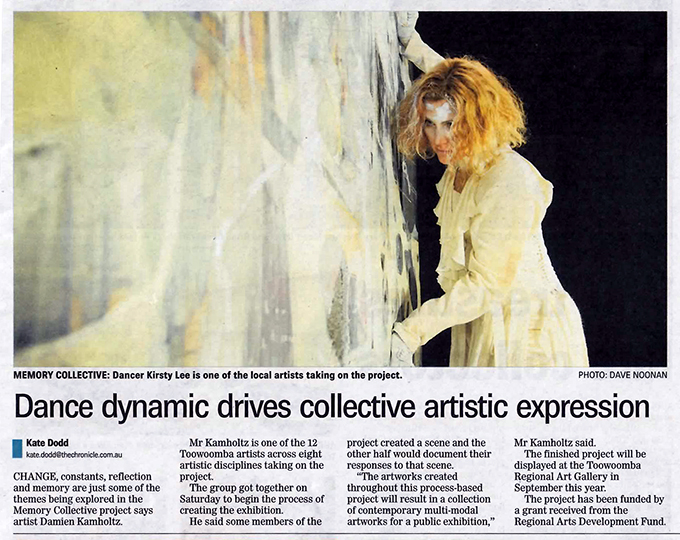
Toowoomba Chronicle 17 June, 2013 by Kate Dodd PHOTO: Dave Noonan
.
..
 .
.
.
© 2013+2014 Victoria Cooper and Doug Spowart for The Memory Collective
.
This work is licensed under a Creative Commons Attribution-NonCommercial-NoDerivs 3.0 Unported License.
.
.
MAUD GALLERY: TRANSLUCENCE: Jacqui Dean’s Xrayograms
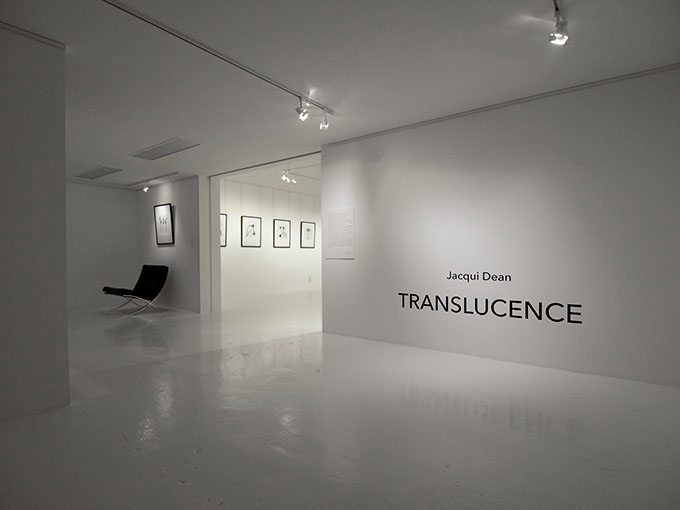
Jacqui Dean’s TRANSLUCENCE @ Maud Gallery, Brisbane Photo: Doug Spowart
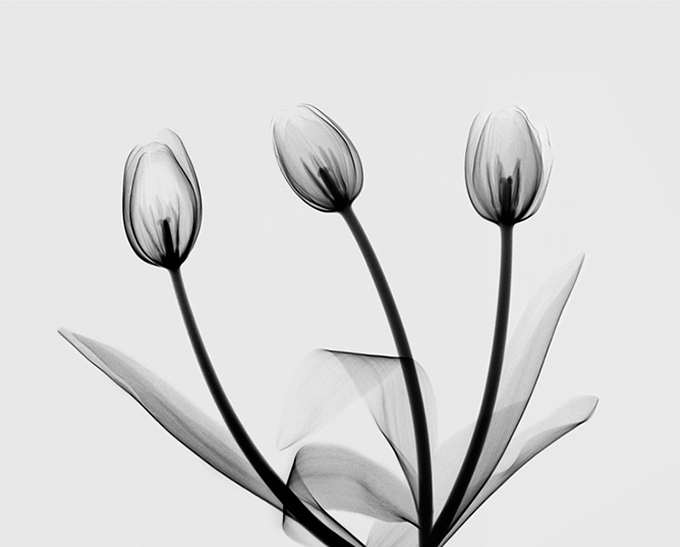
An image of tulips from the Translucence exhibition
.
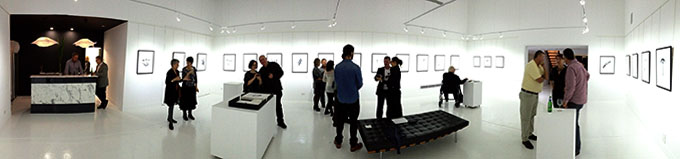
Translucence @ Maud Gallery, Brisbane. . iPhone Photo: Doug Spowart
.
TRANSLUCENCE: Jacqui Dean’s Xrayograms
Maud Creative Gallery June 18th – July 19th, 2014
6 Maud Street Newstead, QLD 4006
Ph 07 32161727
www.maud-creative.com
.
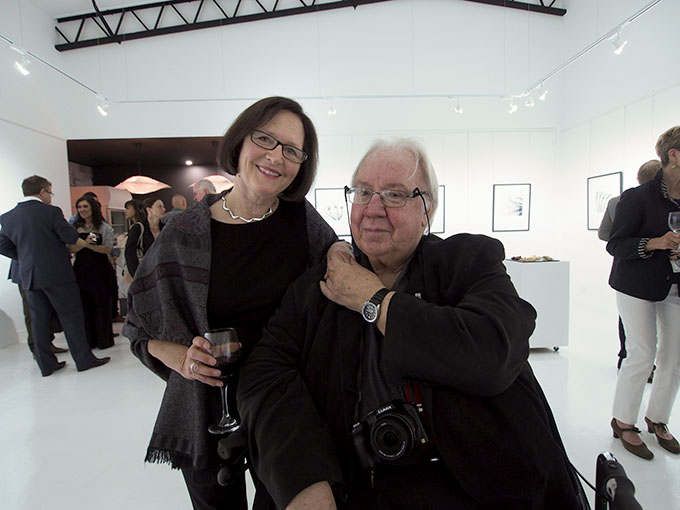
Jacqui Dean + Robert MacFarlane Photo: Doug Spowart
.
A comment about the work by the exhibition speaker Robert McFalane
In TRANSLUCENCE, photographic artist Jacqui Dean reveals Australia’s flora, both native and introduced – in radically new ways. Dean’s searching vision reduces flowers to their essential, sculptural shapes, translating them into exquisite, archival black and white prints. Calla lilies are seen as never before – with their curved flowers resembling the shape and texture of a crystal goblet. Dean’s delicate images of roses, through composition and digital magic, reveal interlaced petals that mimic the textures of a Tulle bridal veil.
Dean’s delicate, dancing images in TRANSLUCENCE mirror the elegance of Nature while resonating deeply with the work of artists as disparate as photographic pioneer William Henry Fox Talbot (1800-1877) and the affectionate, intricate drawings of Nature by Albrecht Durer. (1471-1528)
Jacqui Dean is a talented Sydney architectural, corporate and fine-art photographer known for her rigourous sense of composition and peerless black and white printmaking skills. Twenty seven prints will be on display at Maud Creative Gallery during this first Brisbane exhibition of TRANSLUCENCE.
“Look deep into nature, and then you will understand everything better.”
ALBERT EINSTEIN (1879 – 1955)
‘Another Universe’ a review by Victoria Cooper
.
From the late 19th, and into the early 20th century there was a growing movement in the sciences and the arts that associated with Nature’s inherent resonance of form and structure from the microscopic to the cosmic. These new vistas and universes were recorded not only by the scientists’ hand but also by new developments in technology, notably the invention of the photographic process. Visual communication through imaging technologies continues to be an important tool in scientific research. But these images were not just useful as scientific evidence they were and continue to be inspiration for the creative work of artists and designers.
One noted exemplar utilising this visual medium was Karl Blossfeldt (1865-1932), a sculptor, metal craftsman and teacher. Blossfeldt began taking photographs of botanical specimens to use in his classes as ideas for students to create design forms from nature. But Blossfeldt’s work became very influential in the art, craft and design movement that popularised natural forms as templates for architecture, sculpture and 3D design work. His photographic documentation revealed abstract views of humble everyday roadside plants as visually interesting structural and aesthetic forms. As a result, Blossfeldt’s photographs also became renowned as works of fine art.
Jacqui Dean’s exhibition Translucence, at 2 Danks Street Gallery, Sydney, and now at Maud Gallery in Brisbane, is the result of artistic curiosity and visual investigation natural forms through the phenomenon of Xrays. Art in this respect is the revelation of the unseen, the beholding of the essence within ordinary objects or a transforming perception of the everyday experience. The photograph, or in this case ‘xrayograph’, seals the object within the frame safe from the changes and inevitable decay over time. At first glance these images could appeal to the naturalist or perhaps a student of design (after Blossfeldt). Yet a deeper – more poetic vision immanent in nature is also suggested through a more contemplative viewing of these images.
Some may argue that this is an uncomfortable clash between the modernist and the romantic, or the objectivity of scientific evidence and the subjective imagination. But could this work identify with a need to embrace a sense of wonder rarely seen within a super-hyped, virtual digital-image society? Dean’s work in Translucence is informed by the poetry of music and her life’s experiences and her prodigious professional practice in photography. However the rewards for the thoughtful viewer will be to share in her wonder of the natural world that surrounds and nourishes our everyday life.
Victoria Cooper . . . June 9, 2013.
.
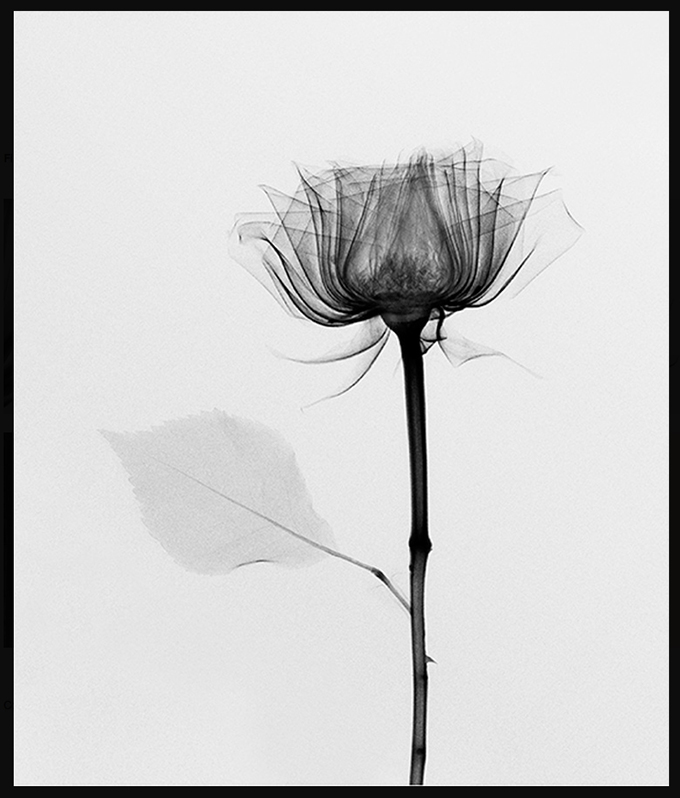
Rose Xrayogram by Jacqui Dean
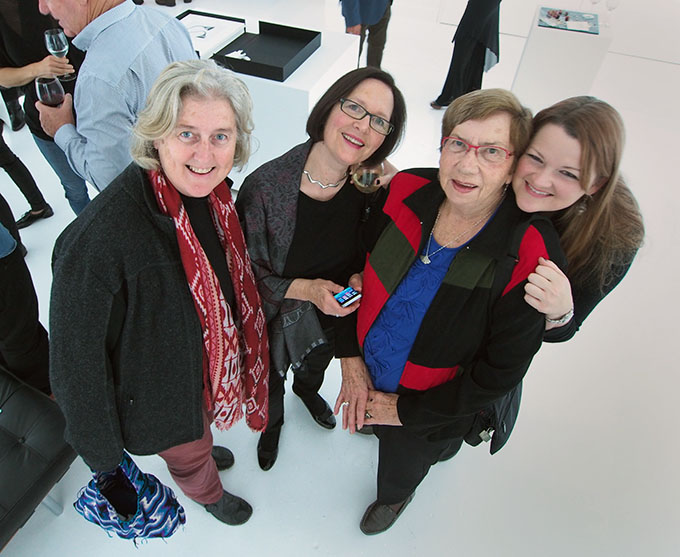
Victoria Cooper, Jacqui Dean, Ruby Spowart & Mel Anderson Photo:Doug Spowart
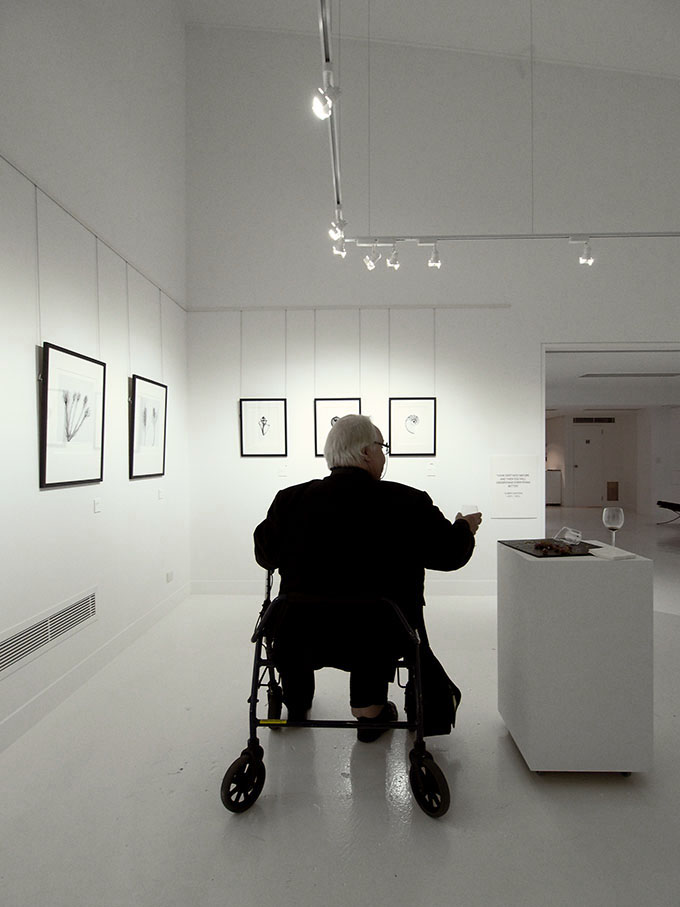
Robert takes a drink — Photo: Doug Spowart+Steve Jones
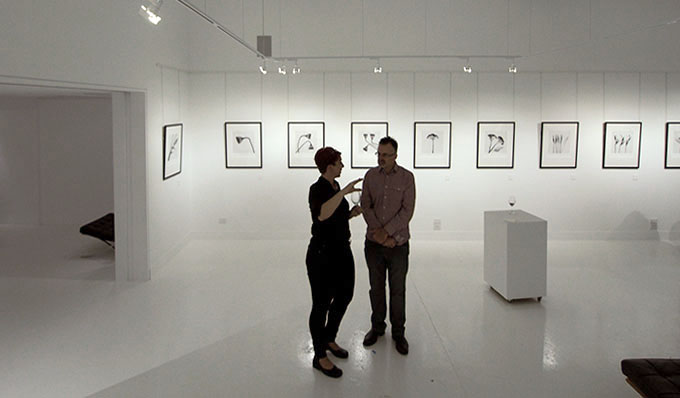
Bibiana Stanfield and Neil Burton @ Maud Gallery
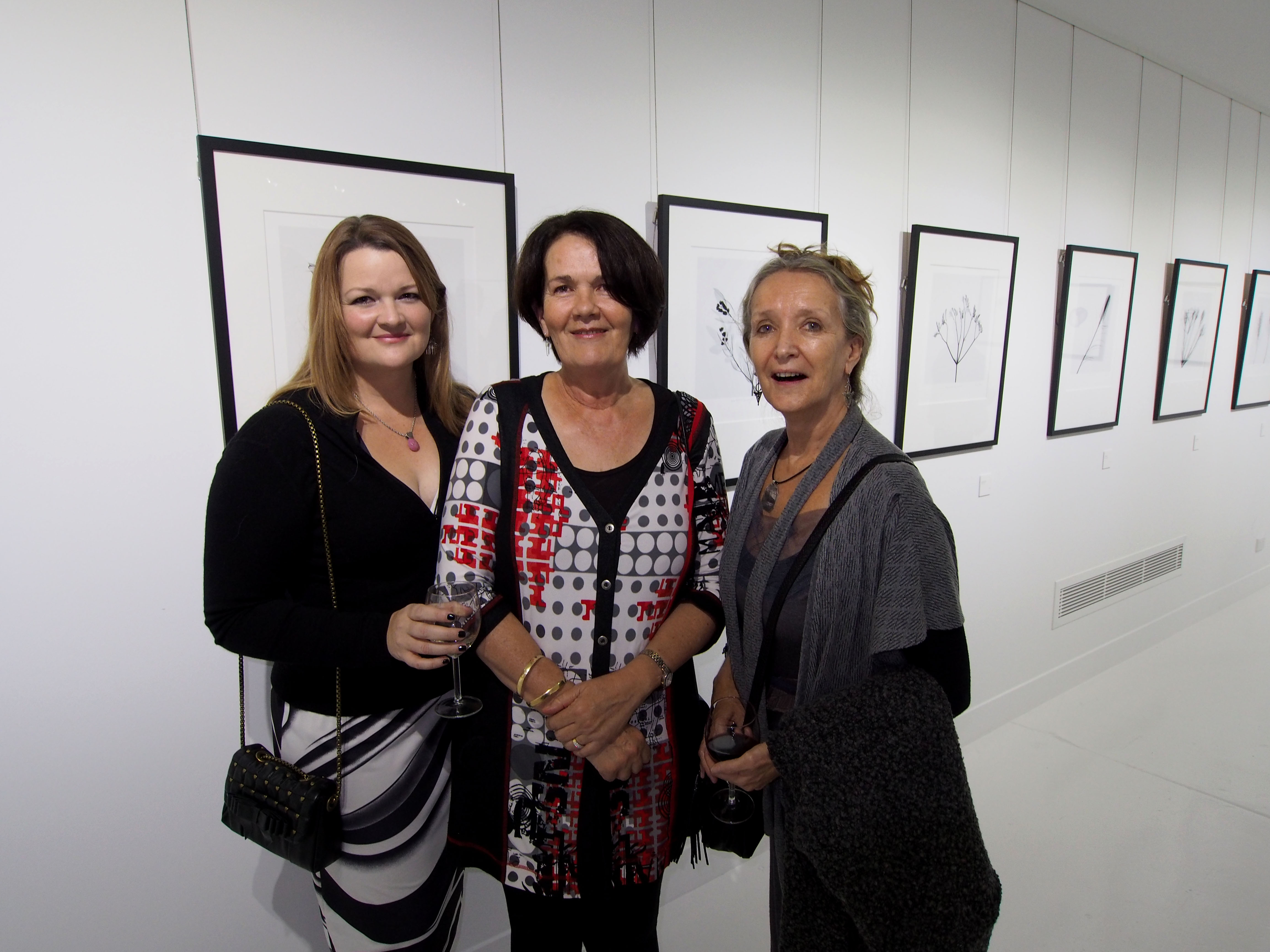
Mel Anderson, Ros Stakes and Lesle Downie @ the opening Maud Gallery Photo: Doug Spowart
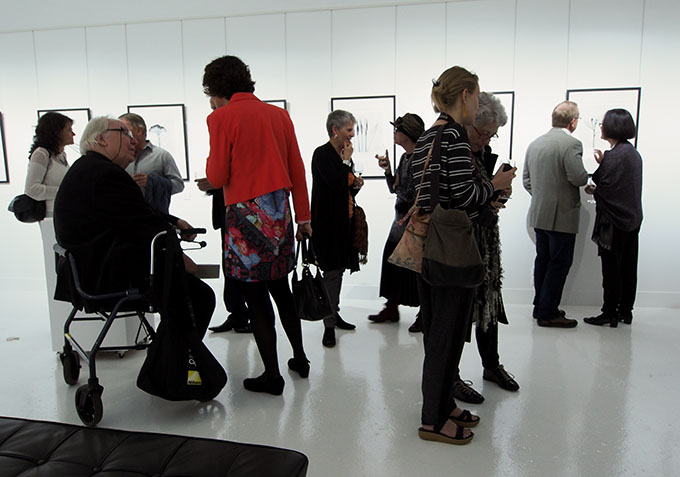
Guests at the Translucence opening Maud Gallery Photo: Doug Spowart
.
MORE INFORMATION:
Jacqui Dean’s Website: http://deanphotographics.com.au/fine-art/
Interview by Gemma Piali of FBi Radio, Sydney: http://fbiradio.com/interview-jacqui-dean-on-translucence/
.
Xrayograms: © Jacqui Dean
Review text © 2013 Victoria Cooper
All exhibition opening photographs © 2014 Doug Spowart
.
This work is licensed under a Creative Commons Attribution-NonCommercial-NoDerivs 3.0 Unported License.
.
.
IT’S ALL GREEK TO US…
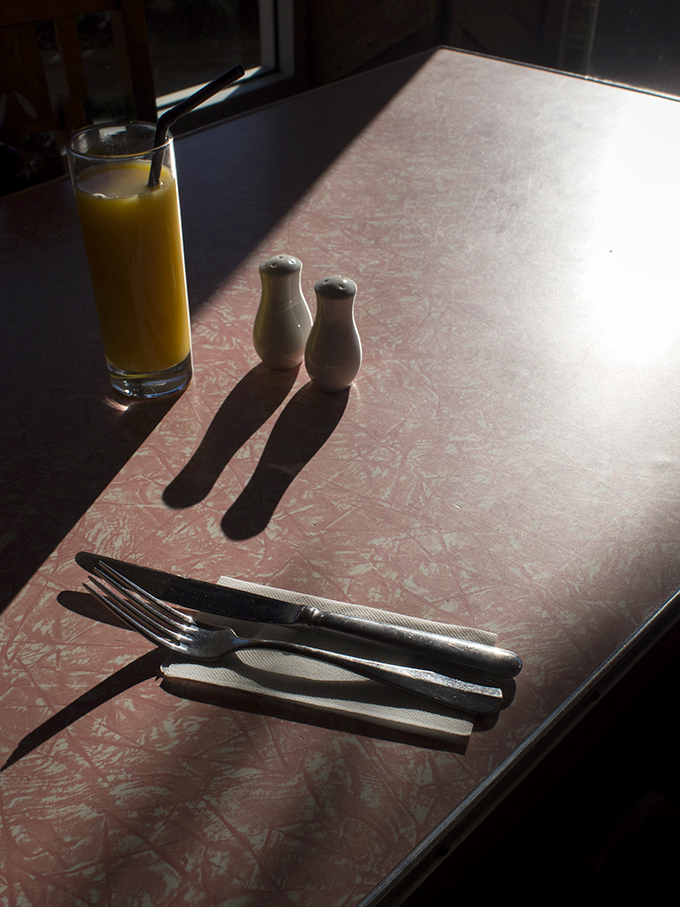
Waiting for the breakfast order: Peter’s Café, Bingara
.
The Roxy Theatre and Peter’s Café, Bingara
.
When we were young the Greek restaurant was a feature of every country town’s main street. They opened all hours, often being the first to open in the morning and the last to close in the evening. All kinds of meals and foods were served from fish ‘n’ chips to espresso coffee and cold malted milkshakes. Greek cafes often had the architectural style of the art deco palace, with its Aztec plasterwork, chrome, mirrors, aluminium-edged laminex tops, bench seats and cubicles, terrazzo floors and pendant light fittings. The welcoming and friendly staffs were usually the family and sometimes they were your schoolmates as well.
We have had a fascination with these places and in our travels we’ve often picked out a few candidates for the most authentic Greek Café experience of the past. For quite a few years we have been calling into the Niagara Café in Gundagai for lunch, breakfast or dinner. The Niagara is a survivor of the fine tradition of the Greek restaurant with an interesting connection to the Australian Labour Party. An earlier blog posts tell about this place – SEE a folio of images HERE.
.
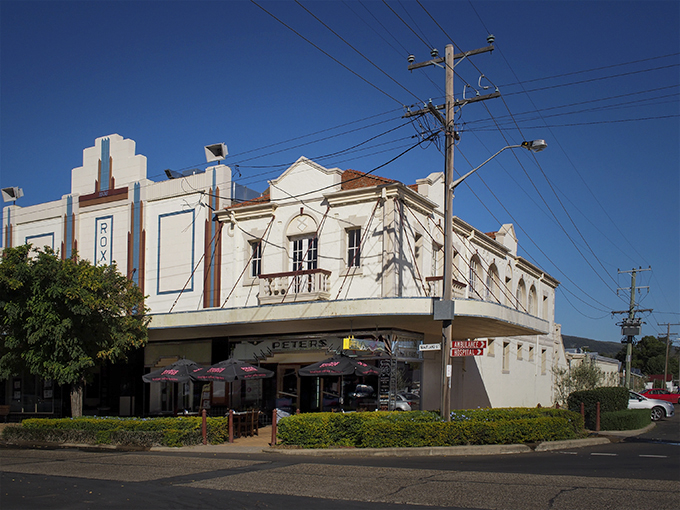
Corner of Maitland and Cunningham Streets, Bingara
Last year when doing some research into the Niagara we encountered an amazing story about another Greek restaurant called Peter’s Cafe in the central north NSW town of Bingara. Three friends Peter Feros, Emanuel Aroney and George Psaltis from the island of Kythera came to Bingara in the 1920s and formed a partnership in a range of businesses. They designed and built Peter’s Café and the adjacent Roxy Theatre. When it opened in 1936 the enterprise was a quite remarkable package: café, guest accommodation, theatre, leased shops and energetic and entrepreneurial expertise of the three partners.
.
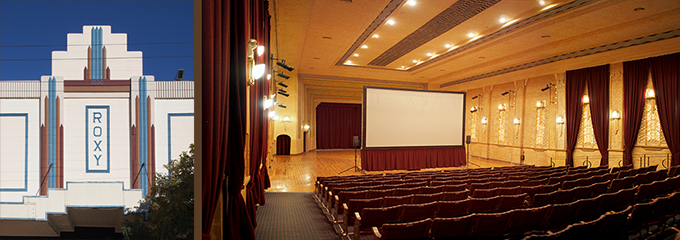
The Roxy façade and interior
But fierce competition from the local Regent Theatre meant that the Roxy could not survive in the small community and within months the three owners filed for bankruptcy. The doors of the theatre were closed and the structure protected from redevelopment – entombed. In the 1960 the café also closed and was converted into, amongst other things, a Chinese restaurant.
.
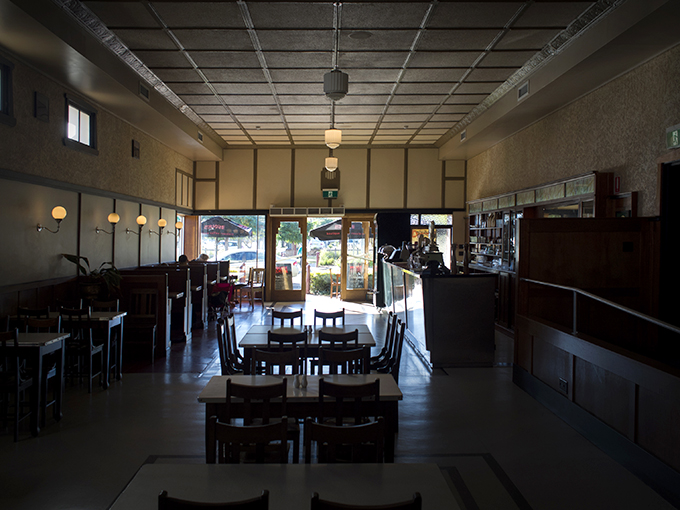
In Peter’s Café looking towards the street
In the 1990s group of dedicated community members began a process that sought support from all levels of government to reinstate the Peter’s Café and Roxy Theatre complex to its former glory. Funds were granted and the restoration work began with the re-opening in 2004. The official opening ceremony to launch the fully restored Greek cafe and the new ‘Museum of Greek settlement in Country Australia (New South Wales and Queensland)’ took place in April 2011.
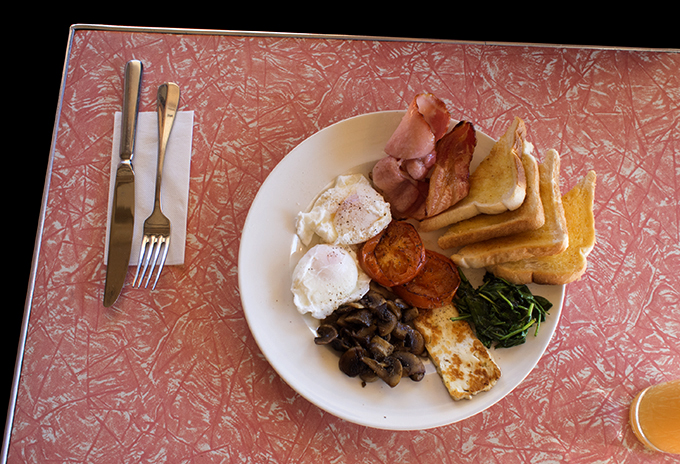
A Hercules breakfast from Peter’s Café
We had breakfast at Peter’s Café. From the menu we selected and shared a Hercules Breakfast consisting of bacon, poached eggs, haloumi, spinach, tomatoes and mushrooms cooked by the resident chef Vio. It was a great start to the day.
.
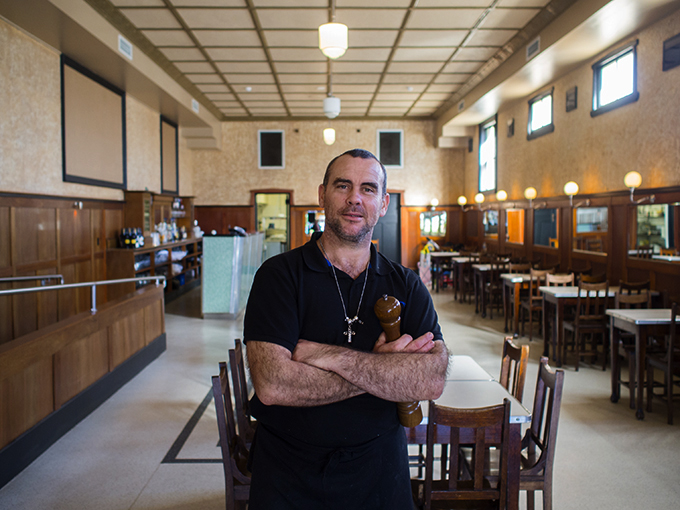
Our chef Vio at Peter’s Café
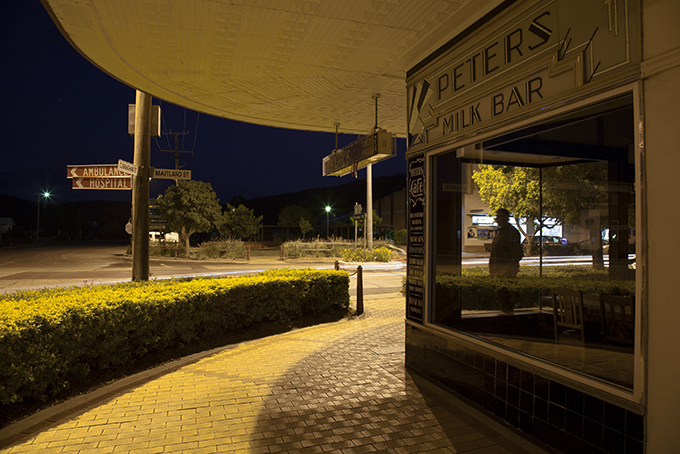
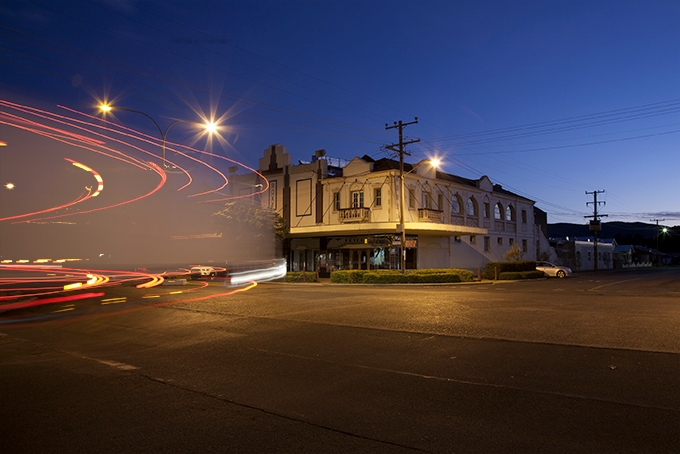
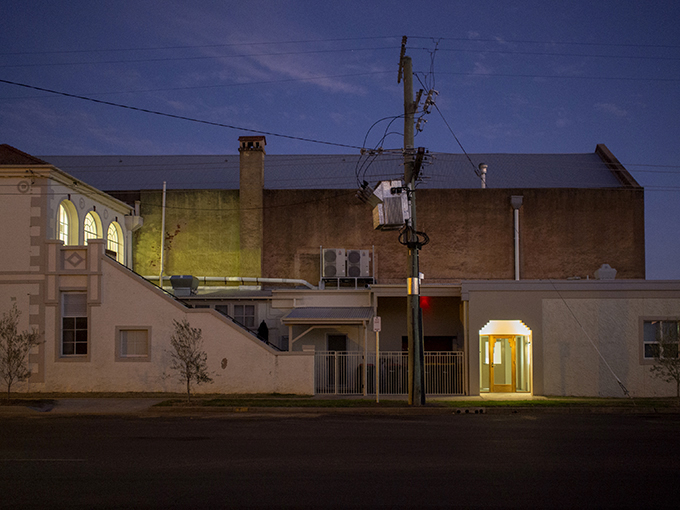
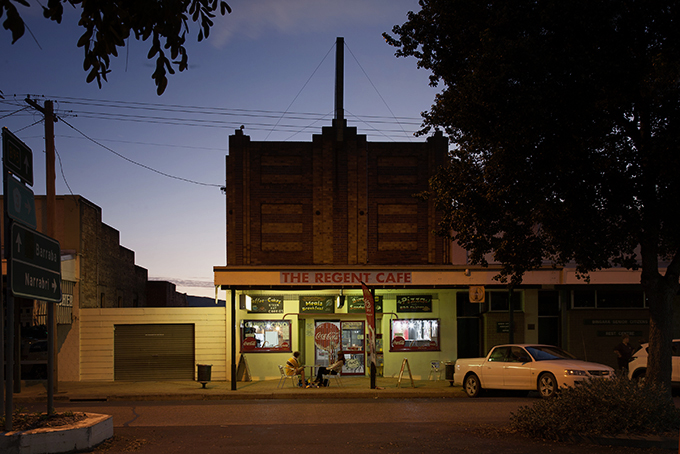
Around the town of Bingara the night before we added a few images to our Nocturne Project – some of the photographs are at the end of this post.
To find out more about this place visit the attached links to the ROXY, PETER’s CAFÉ and KYTHERA FAMILY websites for more details of this fascinating story.
.
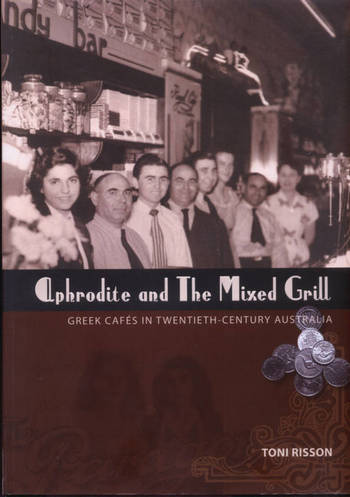
An interesting book by Toni Risson about the Greek Cafe in Australia – Aphrodite and the Mixed Grill. Greek Cafes in Twentieth Century Australia
.
HERE ARE SOME MORE IMAGES OF PETER’S CAFE …
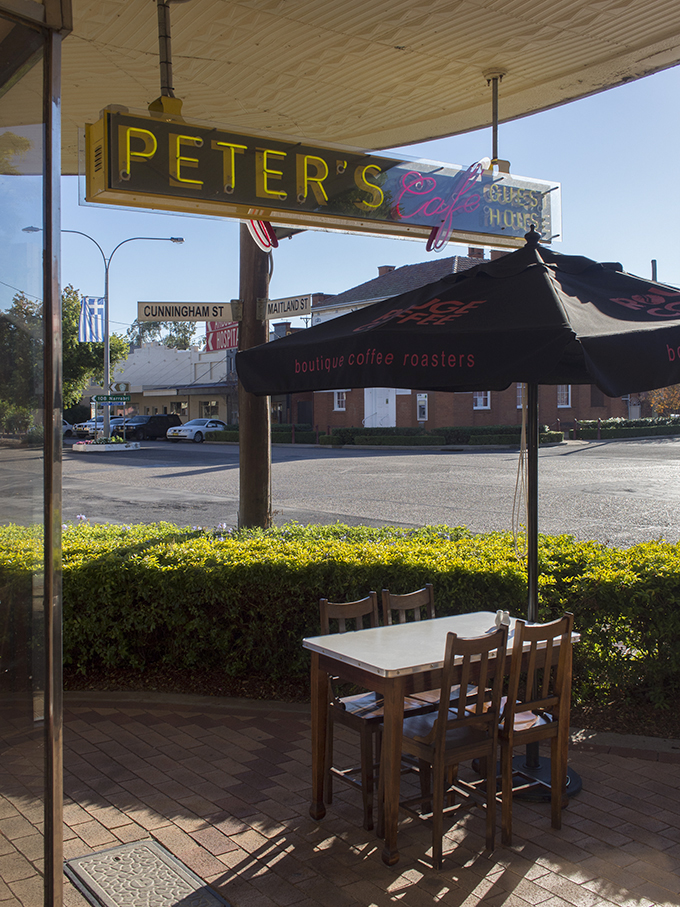
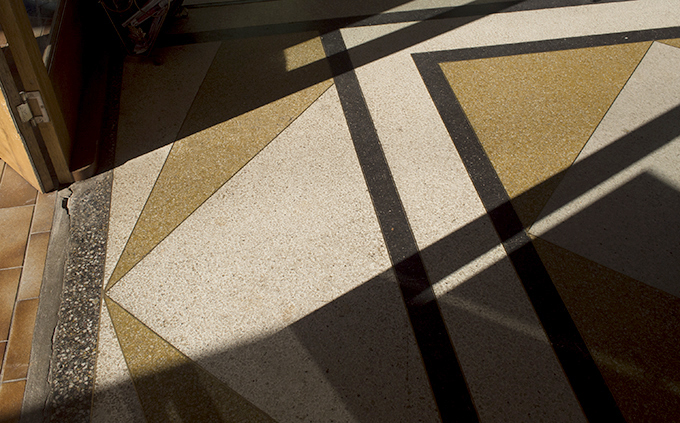
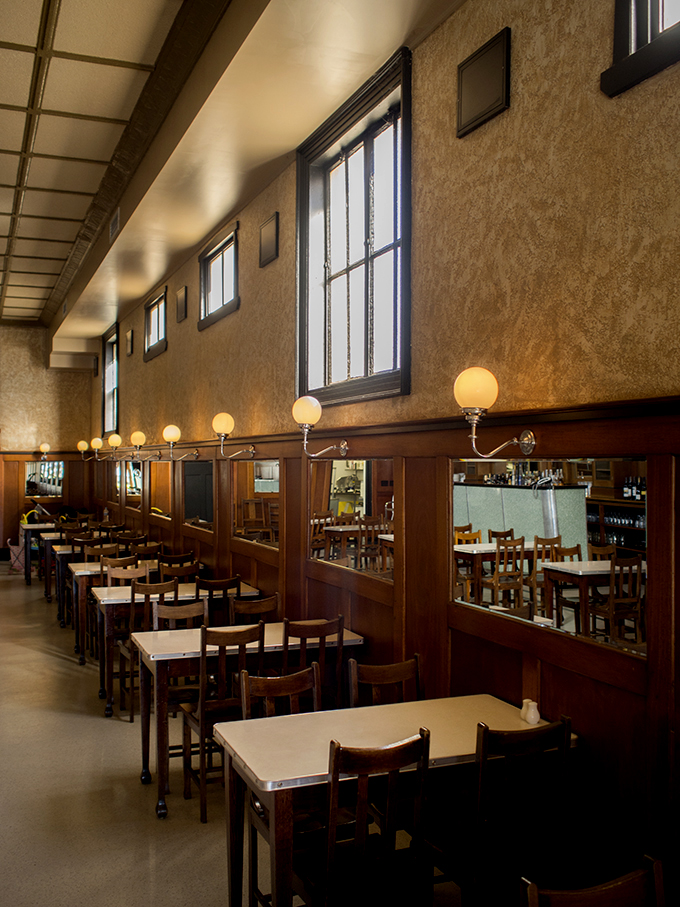
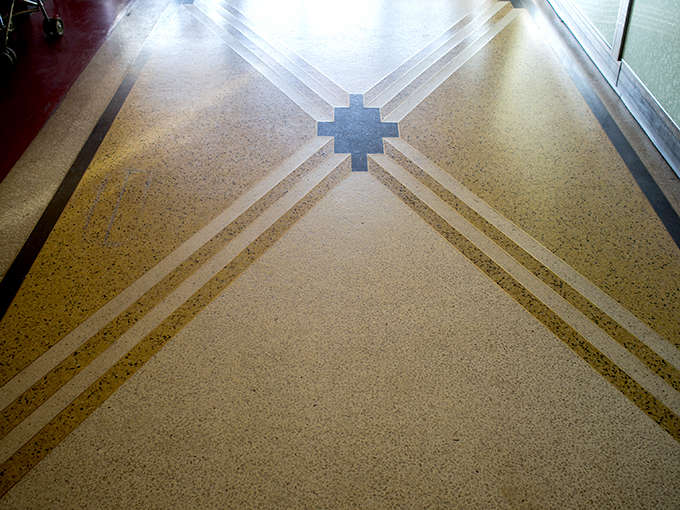
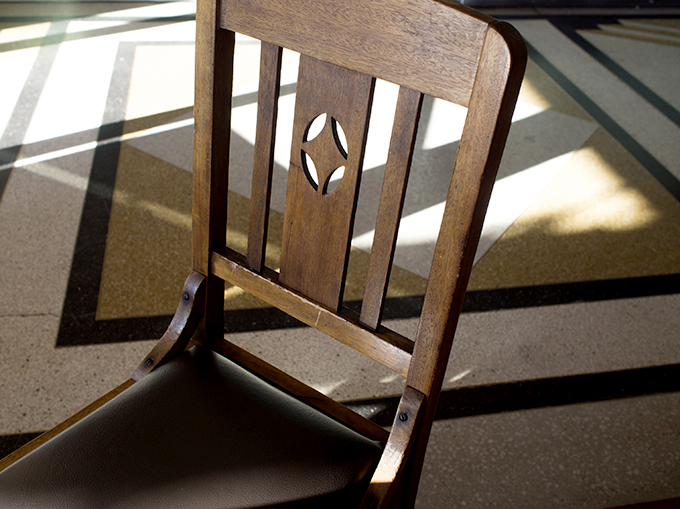
.
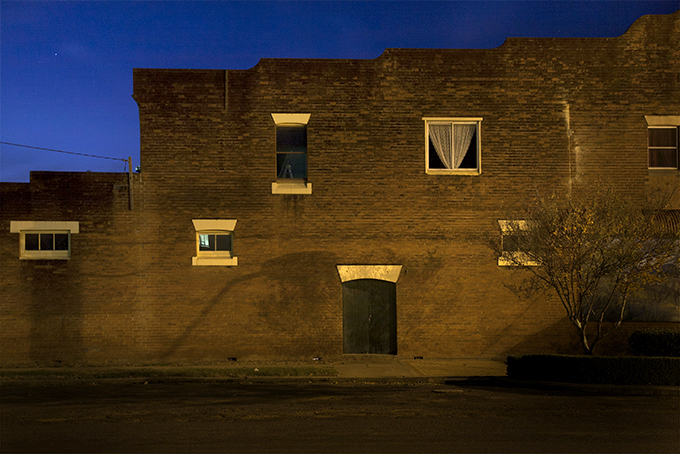
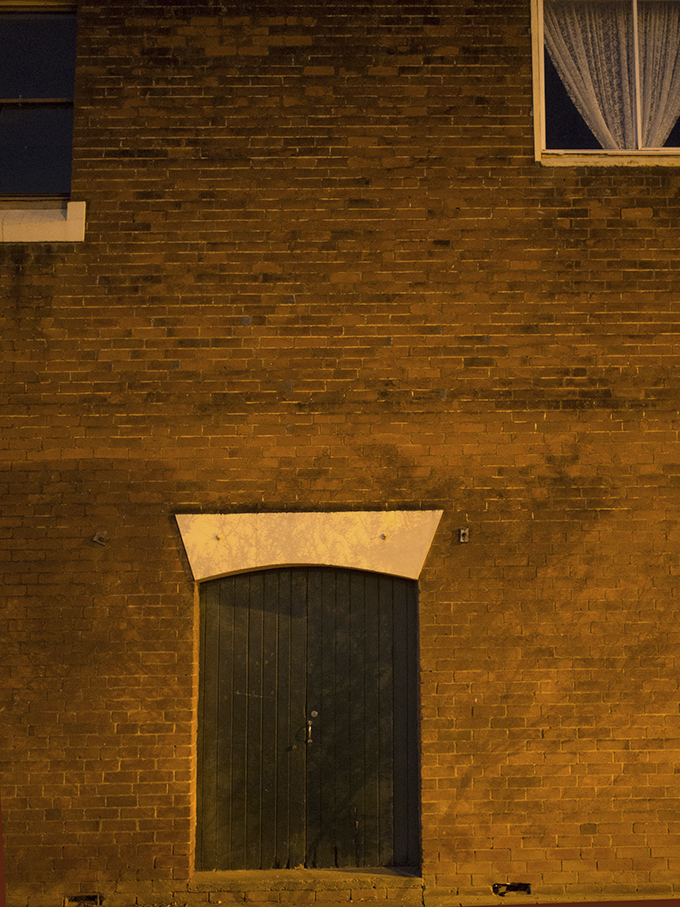
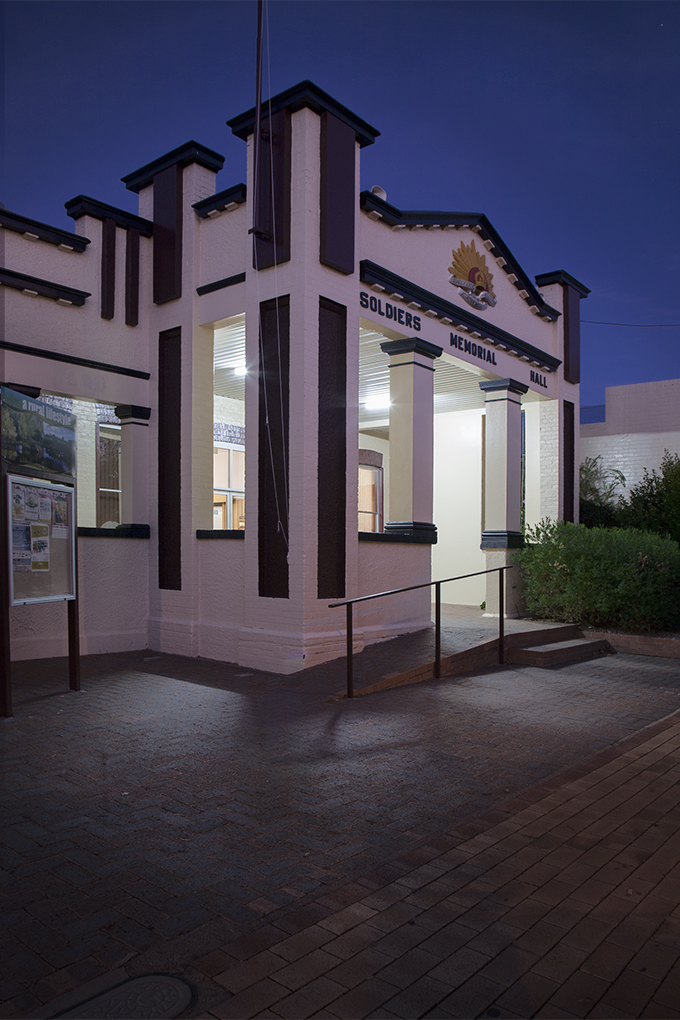
AND SOME NOCTURNE IMAGES OF BINGARA
.
.
.
.
Our photographs and words are licensed under a Creative Commons Attribution-NonCommercial-NoDerivs 3.0 Unported License.
http://creativecommons.org/licenses/by-nc-sa/2.5/au/
HeadOn–AddOn: Cooper+Spowart invited to participate
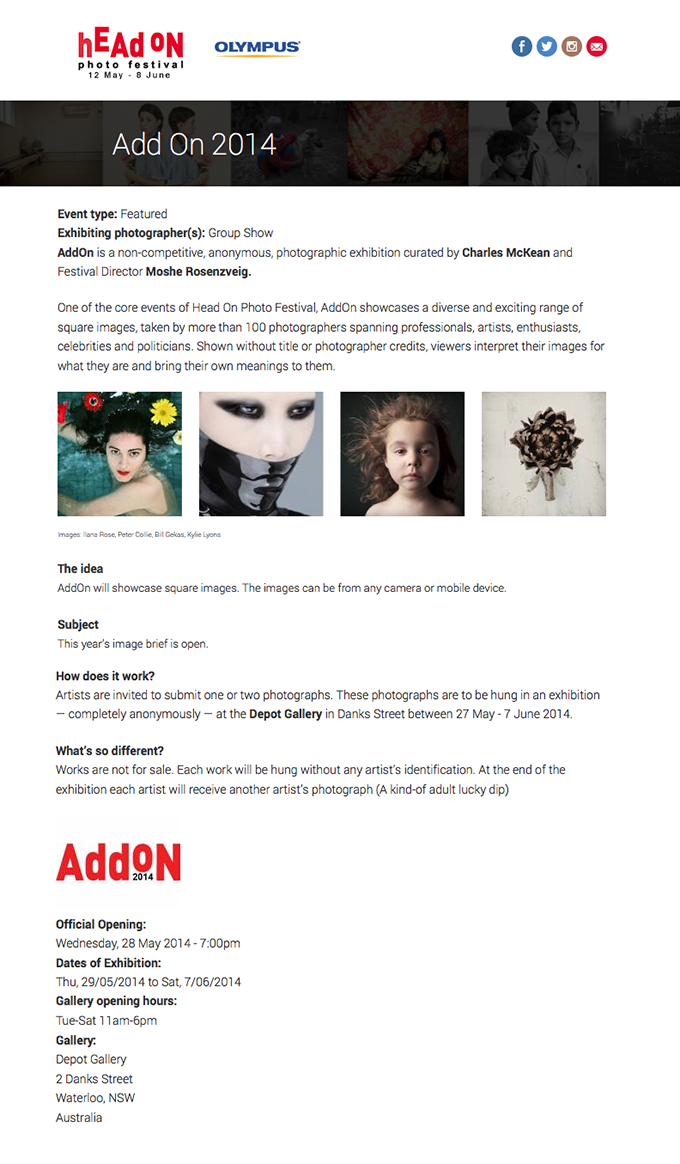
This year we were invited to participate in the 2014 HeadOn – AddOn event: Here are the details behind the event from the HeadOn Website…
.
.h
AND HERE ARE OUR IMAGES …
.
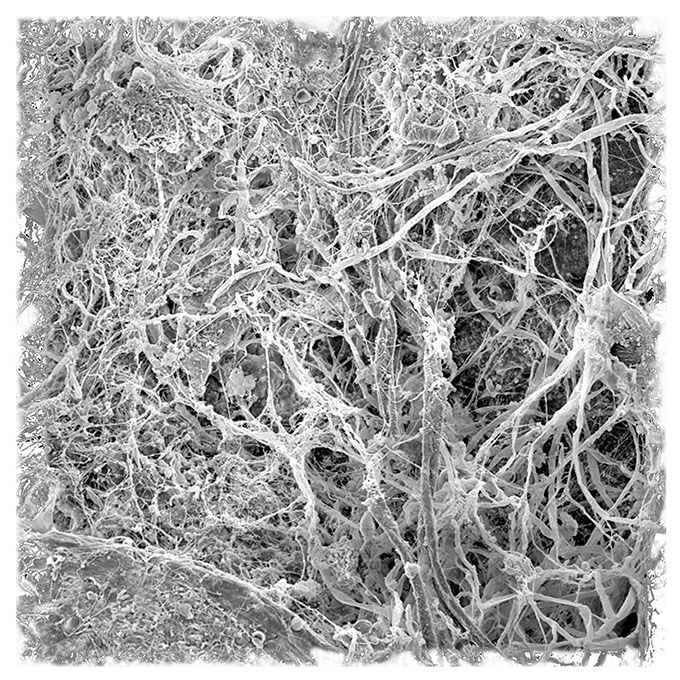
Victoria COOPER’s – Detail from Home 2011–2014
.
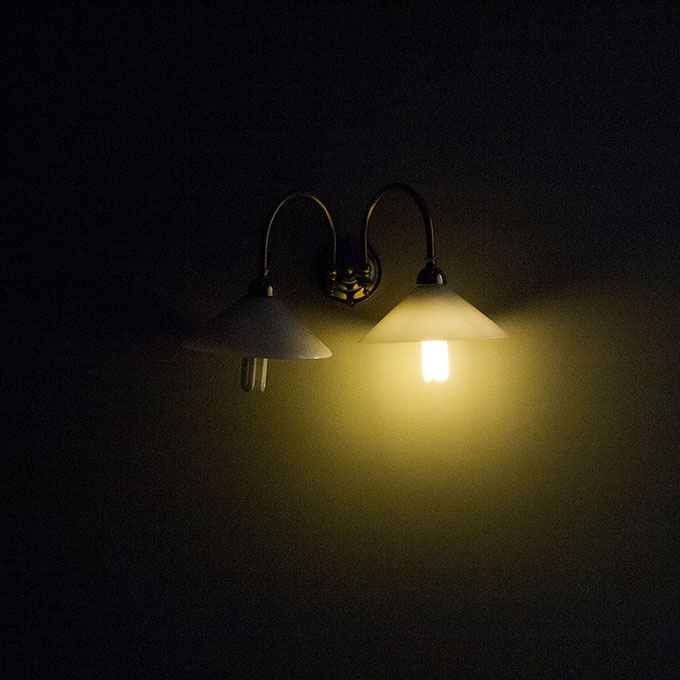
Doug SPOWART’s – Half-light
.
Part of the 2014 programme of:

HeadOn logo
.
.
© 2014 Cooper+Spowart
.

 wotwedid