Archive for the ‘Wot happened on this day’ Category
‘Our Home on the Range’ exhibition @ QCP
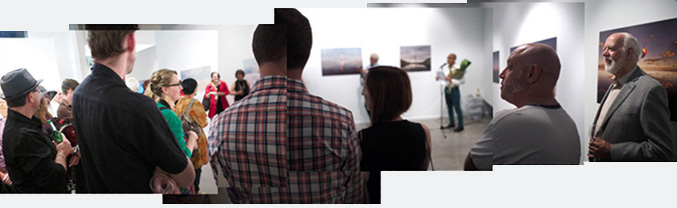
Maurice Ortega opens the QCP Exhibition – November 30, 2013 … PHOTO: Doug Spowart
.
DOUG CURATES QCP STUDENT EXHIBITION: “Our Home on the Range”
Southern Queensland Institute of TAFE Certificate IV in Photoimaging students recently presented their work in Brisbane as part of the Queensland Centre for Photography’s Undergraduate Bridging Program. The images in the series “Our Home on the Range” are indicative of the intention for the program to allow students to develop both creative and personal directions in their studies. Throughout 2013 the exhibiting photographers have worked with teachers Alison Ahlhaus, Sheryleigh Burns, Bev Lacey, Rachel Susa and Doug Spowart. The exhibition was curated by Doug Spowart.
The QCP Undergraduate Photo Media Bridging Program profiles the work of emerging artists who are currently studying photo media at an Australian higher learning institution. The program provides a bridge between higher learning institutions, students and the QCP, providing an insight into work currently being produced by undergraduates recognising the outstanding cultural investment made by institutions and lecturers across Australia.
.
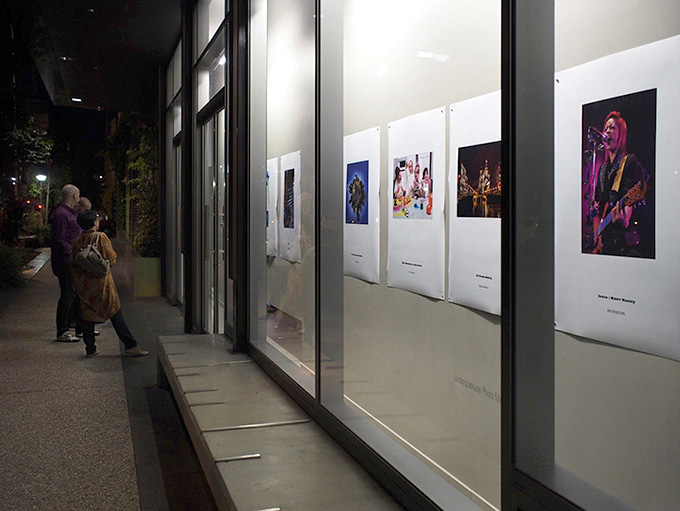
The Our Home on the Range exhibition @ QCP ….PHOTO: Doug Spowart

A ‘selfie’ with Kirsten Butters and her work ….PHOTO: Doug Spowart
.
Here is a gallery of the Our Home on the Range photographs …
.
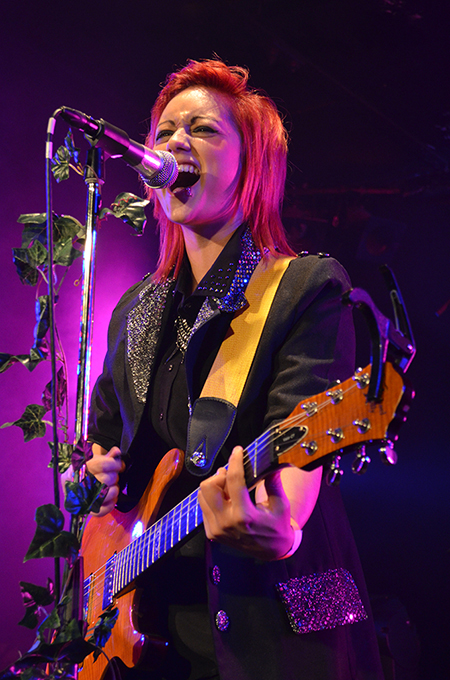
Jesse – Rawr Vanity by Kirsten Butters
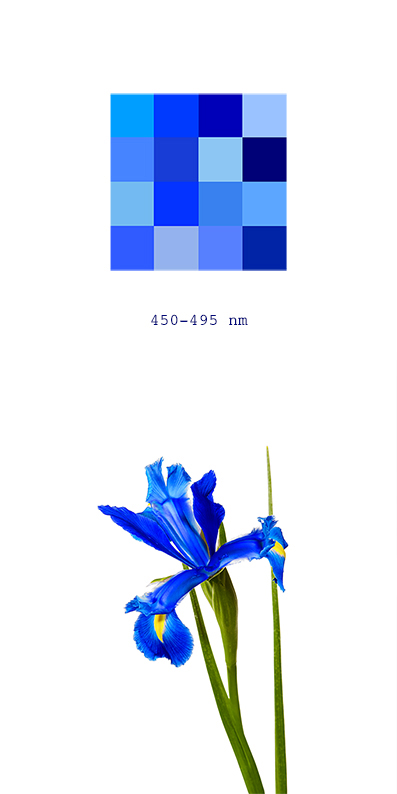
The Colours of Light by Craig Seibel
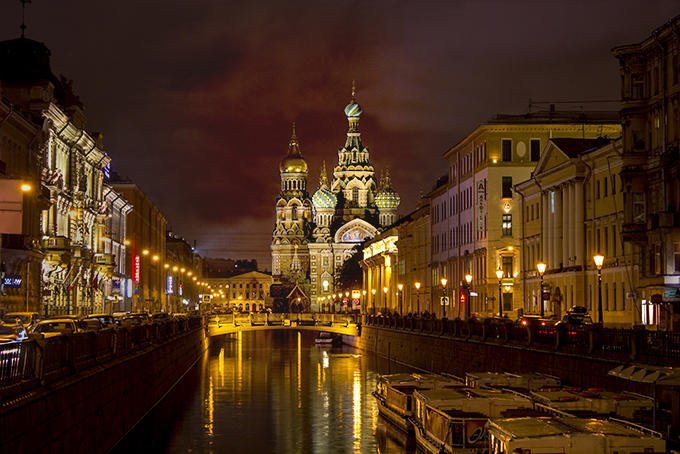
St Petersburg by Carolyn Johnson

A chemistry experiment by Perri Hammond
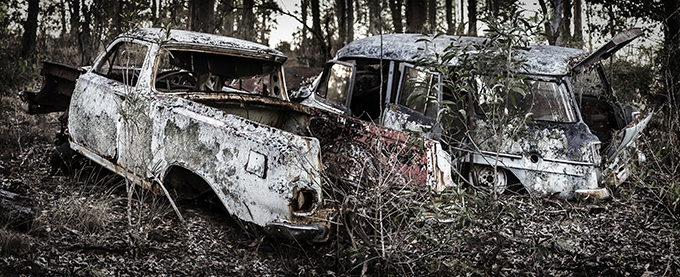
Rest in Pieces by Anna Schwenke

The Planet of Garden by Linsey Walker

Shoot ‘Em Up by Rhianen Dodd

The colours of tranquiity by Sandra McEwan

A Lone Man by Riry Foran
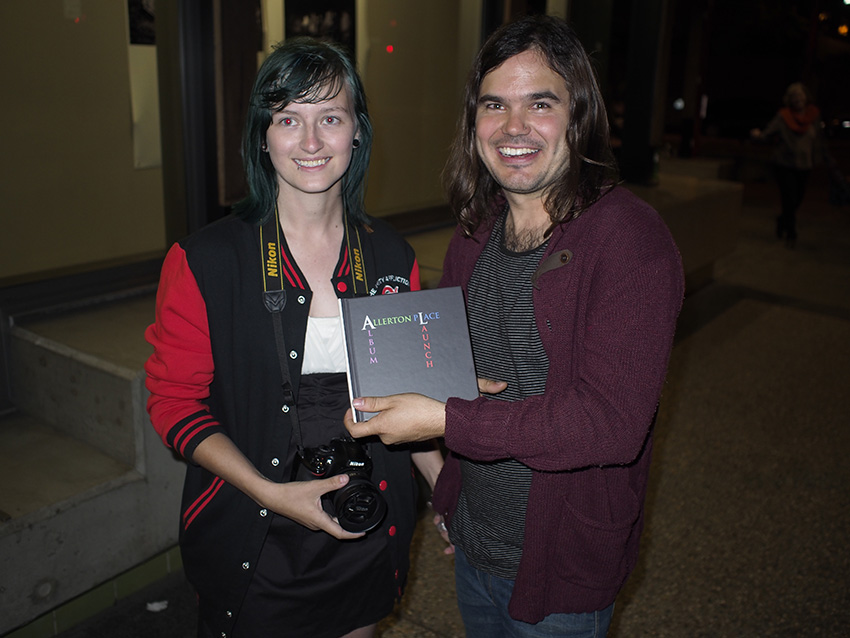
Kirsten showing work to Rock+Roll photographer and publisher Dane Beesley ….PHOTO: Doug Spowart
.

Toowoomba’s Mail Story about the exhibition
.
QCP Logo
Thank you to the Queensland Centre for Photography for the support to these emerging photographers.
.
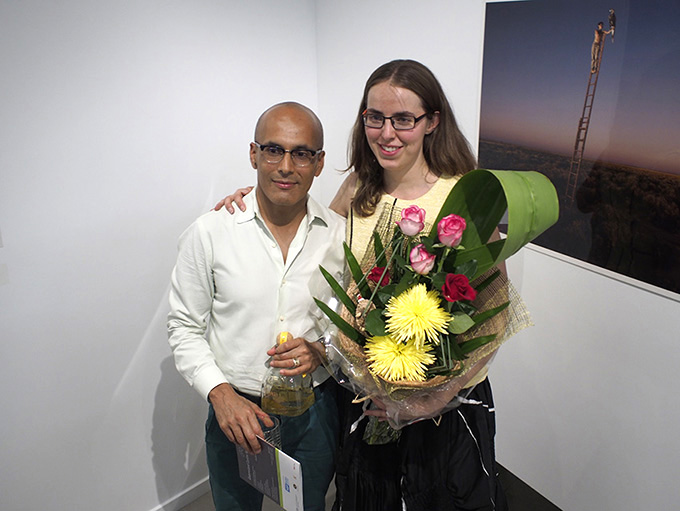
QCP Director Maurice Ortega and Deputy Camilla Birkeland at the opening
.
Copyright in the photographs remains with the the photographers.
2013-14 NEW YEARS EVE FIREWORKS: Frogs Hollow – Toowoomba
.
NEW YEAR’s EVE – A time for freedom from order — a time for fun.
.
So we left the big cameras at home and went out with the little Olympus Pens point-n-shoot. No tripod – no big plans – “Bulb” setting, watch, mingle, be a part of the ‘BANG’, ‘Crackle’, ‘POP’ and the gasps and murmur of the crowd.
.
These are truly experiments in capturing the experience and essence of a fireworks display in regional Australia … Enjoy!
And all the very best to you for the New Year!
.
Click on any image for it to enlarge …
.


.
.
© 2014 Victoria Cooper and Doug Spowart
.

This work is licensed under a Creative Commons Attribution-NonCommercial-NoDerivs 3.0 Unported License.
.
.
WOTWEDID Blog: 2013 in review
The WordPress.com stats helper monkeys prepared a 2013 annual report for this blog.  Here’s an excerpt:
The concert hall at the Sydney Opera House holds 2,700 people. This blog was viewed about 18,000 times in 2013. If it were a concert at Sydney Opera House, it would take about 7 sold-out performances for that many people to see it.
Click here to see the complete report.
.
.
.
.
FROM SMALL THINGS … : Queensland Small Towns Documentary Project
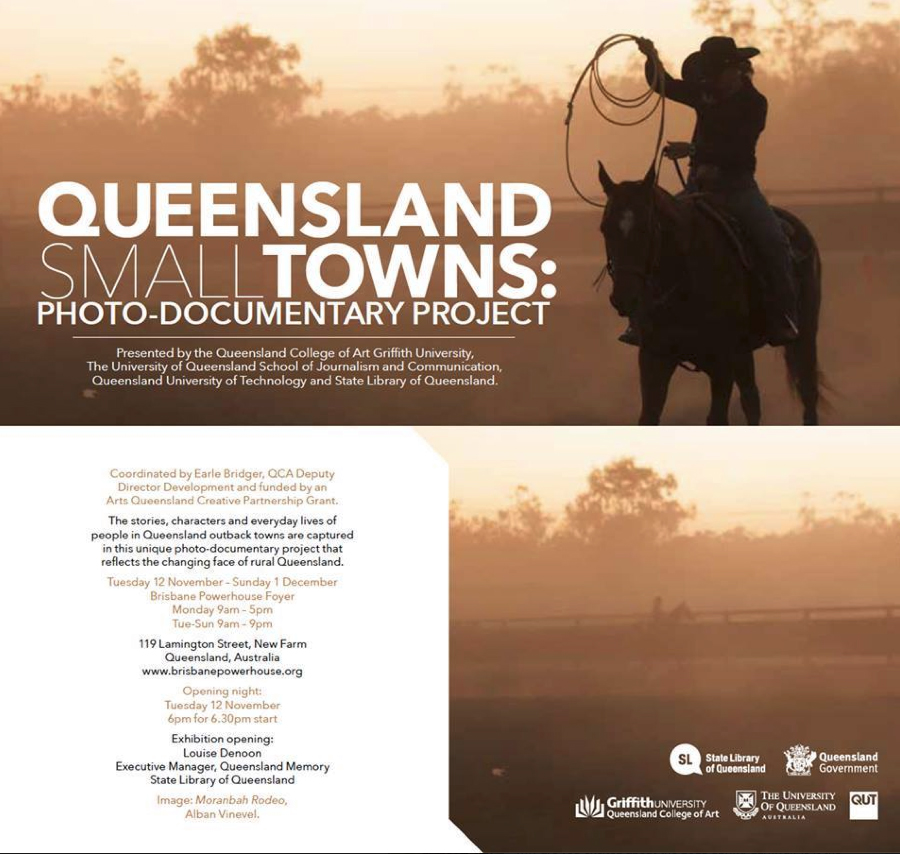
Queensland Small Towns: Documentary Project – Invite
.
Queensland Small Towns: Documentary Project
Brisbane Powerhouse, 12 November to 1 December, 2013
.
Queensland’s regional areas are fast becoming the most common subject for the scrutiny of the photodocumentary image-makers. In August the Central Queensland Project exhibition was shown at the Powerhouse in Brisbane and now, only a few months later, another show entitled Queensland Small Towns: Documentary Project is hung in the same venue. This new contribution to the documentation of regional communities is a student/lecturer project initiated by the three big Institutions: University of Queensland, Queensland University of Technology and the Queensland College of Art (QCA).
With the support of academic staff, students of these photography and photojournalism faculties descended on the Queensland towns of Moranbah and Dalby. The exhibition’s coordinator Earle Bridger from QCA, chose these two regional localities because of the impact of mining. To add contemporary photodocumentary rigor to the activity, professional photographers: Russel Shakespeare, Adam Ferguson and Shehab Uddin were collaborators and advisors to the fieldwork.
The project’s mission, as stated in exhibition press, was to capture: ‘The stories, characters and everyday lives of people in Queensland outback towns’1. They further claim that: ‘this unique photo-documentary project [will] reflect[s] the changing face of rural Queensland.’ 2
This project was instigated to provide an in-field experience for the students. They were charged with the challenge of avoiding the traditional news story and to: ‘capture a visually appealing and thought-provoking narrative to a high-professional standard.’ 3
The exhibition at the Brisbane Powerhouse was extensive–the photographic images and video interviews were shoehorned into every available space. This made viewing of the show a little like a ‘hide and seek’ exercise. Its curation within this space created a fragmented view confusing the holistic flow of the exhibition.
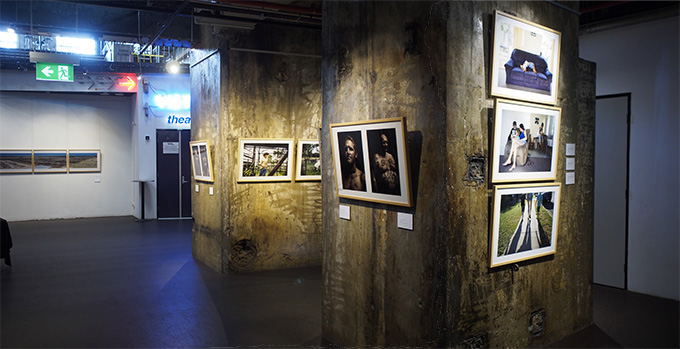
Queensland Small Towns: Documentary Project – Installation … Photo: Doug Spowart
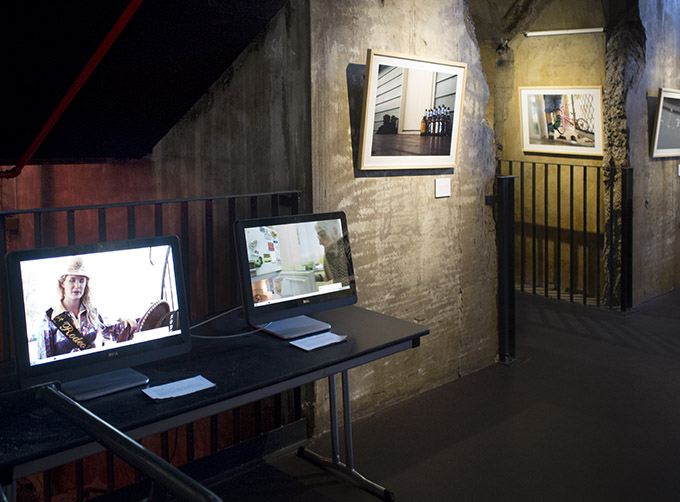
Queensland Small Towns: Documentary Project – Video and Photo installation … Photo: Doug Spowart
.
Under the tutelage of lecturers and the photodocumentary practitioners assigned the project, as well as study, research and personal preparation, one may think that these primary concerns are well covered. However there is one other critical factor–The preconditioning from existing media overexposure and hype. This rhetoric includes the following: That these small towns, besieged by the extraordinary pressures of the extractive mining industries, are places in a state of flux between the perceived benevolent farming practices of the past and the boisterous bully of mining. These once sleepy rural places are now zones of friction between itinerant workers, inadequate infrastructure, fractured families and ‘fracked’ communities. Any documentary commentator must not let this prejudice impede their impartial reportage. Furthermore one must consider methodological and ethical issues around the selection of subject/s, the gaining of access and trust and the authenticity of the resulting work.
All that aside, what of the exhibition Queensland Small Towns: Documentary Project? What I found was a proficient and diverse presentation of contemporary photodocumentary work. Mixed in amongst the contemporary trend of the bland document aesthetic were emotive and sensitive photographs of private lives in difficult times. Images were grouped as mini photo-essays enabling a concept or a subject to be pursued.
Importantly the opportunity provided to these students and the lecturers to get into the field is one of the best lessons they both can have. As mentor Russell Shakespeare comments: ‘I think these projects are so important on every level. To get students out working on self generated stories and also for the Town to have a group of photographers recording “History” as they see it, and then to be archived by the State Library, hopefully this project will continue on throughout other Qld Towns in years to come.’ 4
Unlike the financial reality that students may encounter in their post graduation world, a $50,000 Arts Queensland Creative Partnership Grant funded the Small Towns Documentary Project5. And fittingly, considering the generous budget for the project, the photographs and video works will be gifted to the people of Queensland by their inclusion in the permanent collection of the State Library of Queensland.
This work will add to a significant archive for the future, however I’m concerned about the ‘thought-provoking narrative’ and its importance now. The exhibition at the Brisbane Powerhouse only marginally serves the purpose and power of contemporary documentary work … to communicate. No mention is given to exhibitions in Dalby and Moranbah–the communities that gave the project subject matter to image and document. The project is also left wanting in the application of eJournalism platforms like YouTube, Facebook, blogs and websites. Googling the project one encounters variations of the same succinct media release without external links to any online archive that says what was done, who did it and most importantly, provide a space for the communities documented to share and extend their stories.
The domain of the photodocumentary practitioner is not just the creation of material for the archive–its perhaps more important role is now, being in and of the times, and the communities and people who shared stories and submitted their lives to the gaze of these lens men and women. These stories are required now to inform, to cajole, to stir commentary and demand corporate and political acknowledgement, response and action. That’s where documentary photography does its best work …
Dr Doug Spowart
December 27, 2013
.
1 http://brisbanepowerhouse.org/events/2013/11/12/queensland-small-towns-photo-documentary-project/
2 Ibid
3 http://www.uq.edu.au/sjc/qld-towns-project
4 Online correspondence from Russell Shakespeare
5 http://www.linkedin.com/pub/earle-bridger/b/521/737
.
What follows are images and videos from the exhibition.
.
Please Note: The photographs in this exhibition were presented as multiple image groups – only single images represent the photographer’s body of work. I have included the photographer’s statement under most images to give an understanding of their project and the context for the work. Most images in this review are from camera exposures within the exhibition environment and may not represent the image/s accurately due to reflections and uneven lighting.
.
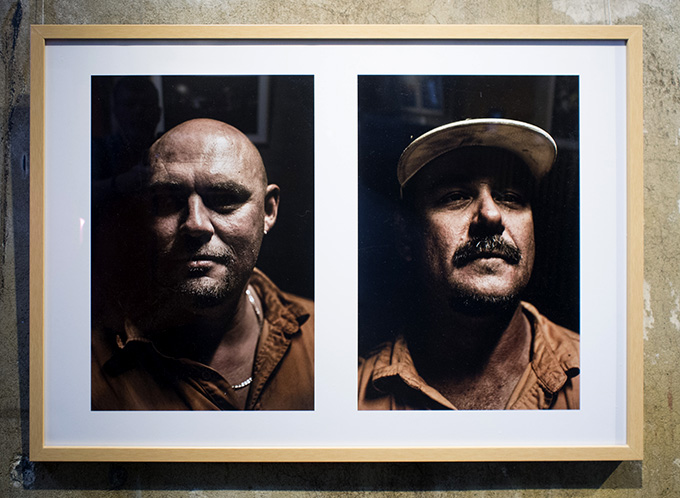
“Al Phillips, Drilling Supervisor + Chris Mannion, Driller, Moranbah” … Photo: Adam Ferguson and Brodie Standen, 2013
.
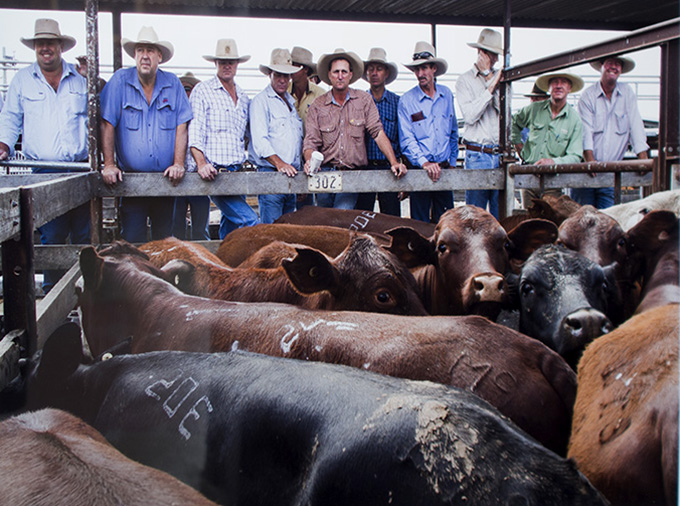
Potential buyers survey a pen of cattle at the Dalby sale yards. The weekly auctions are Australia’s larget one-day cattle sale, with over 6,000 head of cattle passing through each week.…Photo: Kimberley McCosker
.
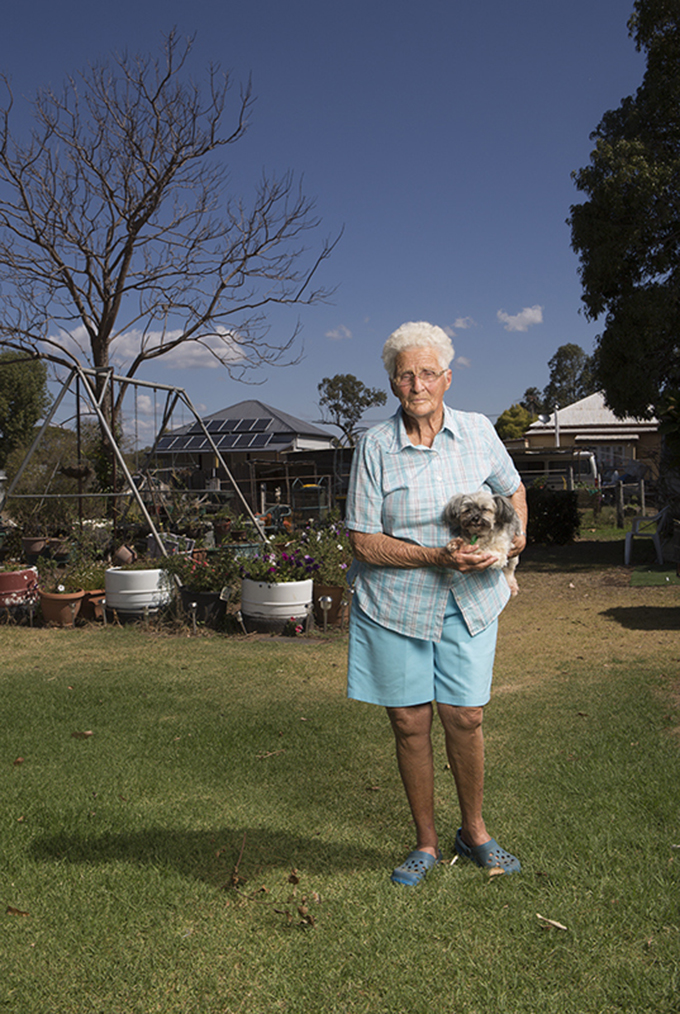
“Joyce Coss”
83 years old with “Waddles” her Sliky Cross.
63 years living in Warra.
Photo: Russell Shakespeare 2013
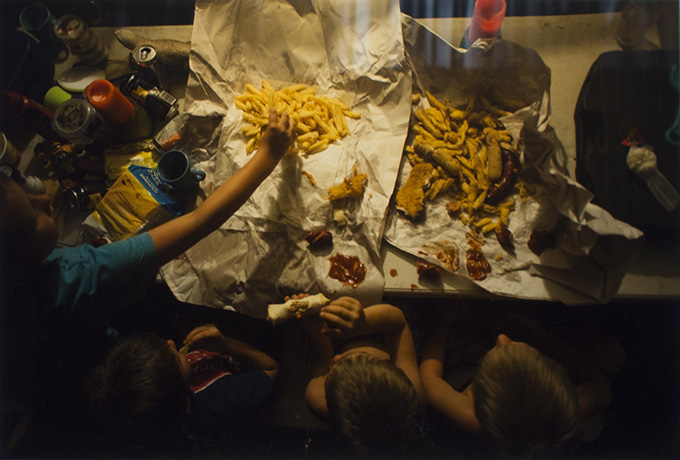
Beyond the sporting ovals, on the outskirts of Moranbah, Sean lives in a trailer. The trailer is powered by a petrol generator and drinking water tanks are filled at a family member’s house. He lives there by choice, a house has “too many walls”. Separated from his wife Sean shares custody of their 5 boys. Charlie, Darcy, Bailey, Harley, & Riley spend each weekend with their Dad and I was fortunate enough to spend a few days with them while they visited over school holidays. With Moranbah as a backdrop, a town where much of the population’s main objective is obtaining and retaining material wealth, getting rich and getting out, Sean’s lifestyle begs a closer look at what separates need and want. I would like to thank Charlie, Darcy, Bailey, Harley, Riley & Sean for their hospitality & allowing me to tag along with them. Photo: Cory Wright
.
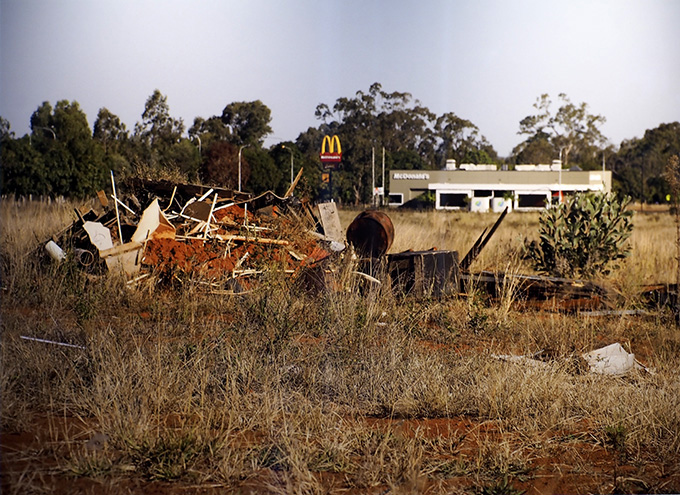
“Moranbah McDonald’s which lies on the outskirts of town” … Photo: Julia Whitwell
.
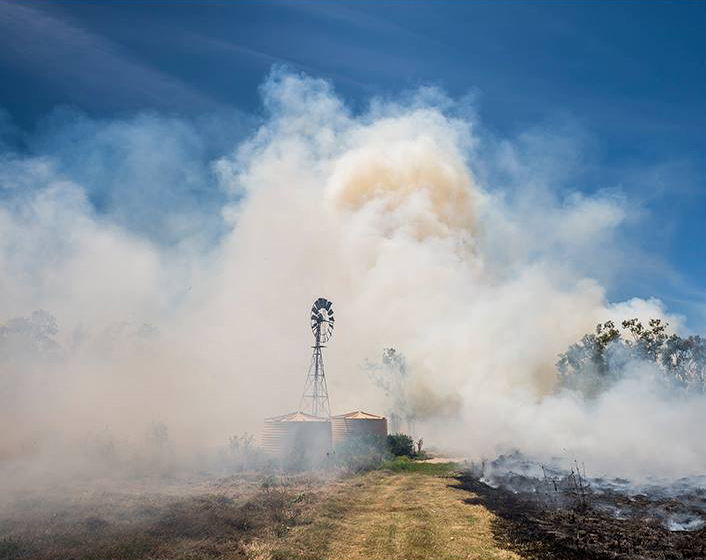
The Wilkie Creek Rural Fire Brigade in conjunction with other local fire brigades, coordinate necessary hazard reduction fires, as well as keeping life threatening fires at bay during the high risk summer season. Pictured [in my project] are their lives on a daily basis, as well as their involvement in a hazard reduction fire completed near Lake Broadwater in October, 2013. Photo: Eva Turek-Jewkes
Four videos by students from the University of Queensland School of Journalism and Communication:
.
.
.
.
.
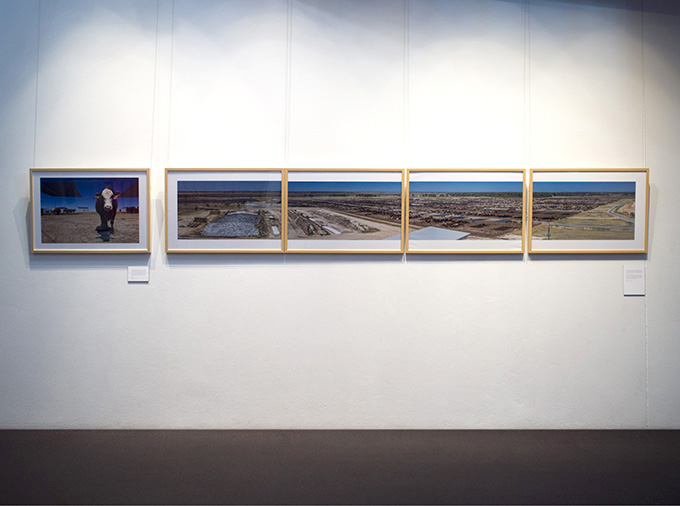
“Grassdale Feedlots”
A curios 2 year old, 620kg Hereford steer in Grassdale Feedlots state of the art facility (to extreme left of series). Pens are cleared every 50 days as part of the facilities self-audited quality and health assurance measures. World class traceability systems allow staff to track, monitor and isolate specific data on each individual beast, including birth date, purchase date and origin, weight, breed, feeding ration and medical record. Established in 2008, Grassdale Feedlot is a 13,000 acre property 30kms south of Dalby centre. Currently with over 38,000 head of cattle and a capacity of up to 50,000 head, the feedlot boasts one of the largest and most technologically advanced feedlot facilities in Australia. The estimated $60 million facility employs over 50 staff and is a major driver in the economic stability of the Dalby, Millmerran and Chinchilla region and remains at the forefront of grain-fed beef production in Australia employing some ground breaking technologies in milling and feeding processes. … Photo installation: Victoria Nikolova
.
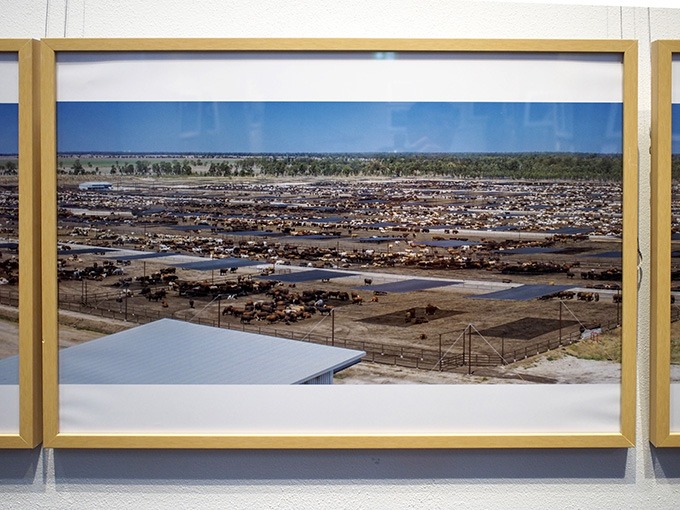
“Grassdale Feedlots” … Photo installation (detail): Victoria Nikolova
.
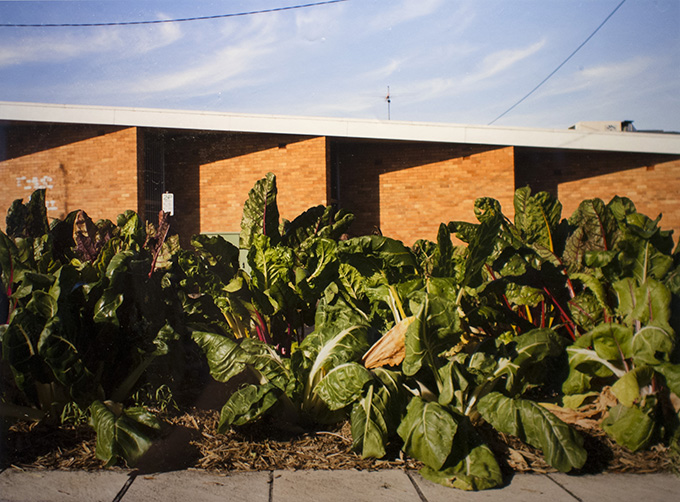
Garden Bed. Cunningham Street … Photo: Liss Fenwick
.
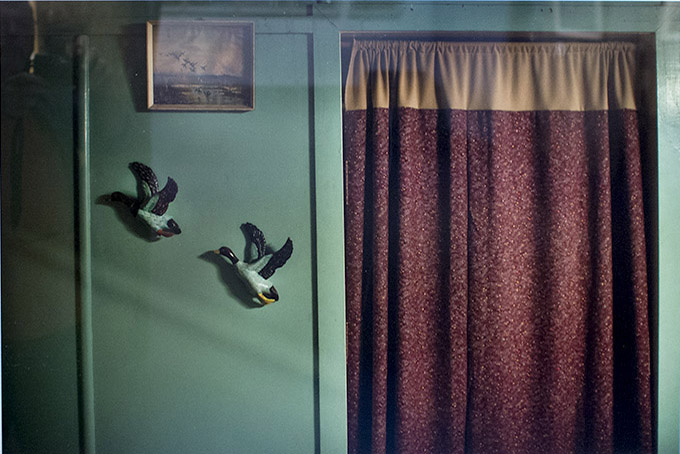
“Some Trash, Others Treasure”
Pioneer Park Museum in Dalby seems a place suspended in time, somewhere around the beginning of the 20th century. Located on Black Street – once very quiet and peaceful but nowadays one of the main truck parking spots in town – the museum is a magical space with colonial houses and antique machinery, accompanied by rustling of leaves and bird’s trill. Elaine and Daniel Fox, the main founders, have lived on-site for almost 11 years, taking care of this magical place on a daily basis. They began 23 years ago with only seven antique tractors. Today, they can boast of one of the largest collections of operating antique agricultural machinery in Queensland – some of which date back to the early 19th century. Together with a few passionate volunteers they keep the place alive and once a year, during Field Weekend, the town of Dalby travels in time to discover again the old knowledge, tradition and way of living of their ancestors. The Museum is mostly financed by an annual fund from the local government, entry tickets, and the craft shop income and the Field Day. However, it is hard enough to keep it working, with a fast developing technology and little funding; they struggle to keep their museum operating in the modern, quickly changing mining town, that Dalby has become. … Photo: Kasia Strek
.
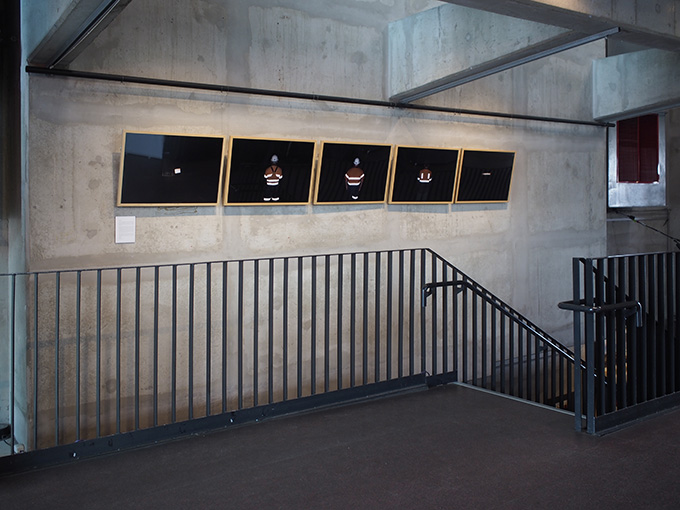
“No Access”
This work is not against mining. For whether it be the computers we use to stay connected, the solar panels we purchase that make us feel socially responsible or the cameras I use to tell stories, mining is embedded into the fabric of the 21st century. The debate should not be whether or not to mine, but rather how is mining to be controlled. What became obvious in Moranbah was that combined the mining companies controlled the political and social agendas. Through ostensibly generous salaries, subsidized housing and rare community donations mining companies have become the pushers and the population the addicts. Mine workers are afraid to speak to strangers for fear they are the media. Criticism is only whispered when in the company of friends. The right to have an opinion that may differ from the company has been severely eroded. To express that opinion puts job and home at risk. No Access argues that Australia should retain exclusive rights to its resource management. It argues for controlled mining. But most of all it presents a snapshot of the liberties we have sold in order to satisfy those who seek to maximize profits and minimize social responsibility. Moranbah. David Lloyd. 2013.
.
.
The photographers and video producers retain all copyright in their images and presentations. Text and installation photographs © 2013 Doug Spowart
.
.
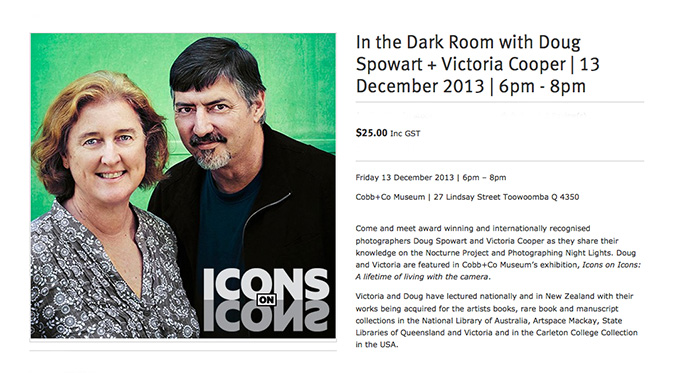
COOPER+SPOWART to talk @ Cobb+Co Museum Dec 13
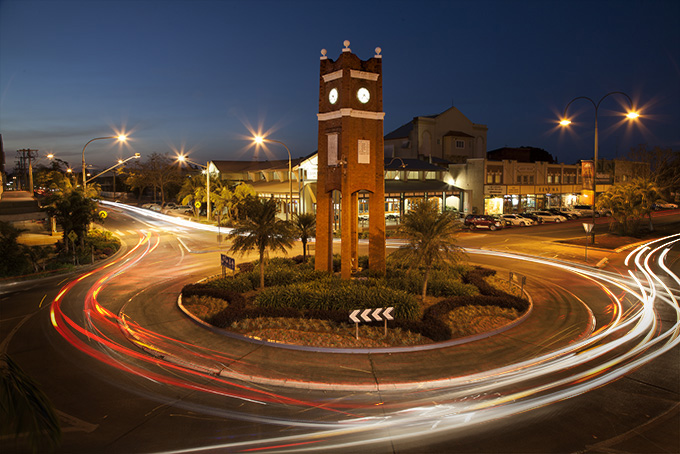
The Roundabout Clocktower from Weiley’s Hotel balcony
.
CLICK HERE TO BOOK ON THE COBB+CO WEBSITE
.
In the Dark Room with… Cooper+Spowart
In this talk we will discuss a number of topics and including:
-
A commentary on the works in the ICONS on ICONS exhibition
-
Our Nocturne residency projects around Australia
-
How to make amazing Nocturne Photographs
-
Our use of Social Media to connect art with the community.
.
Attendees may wish to conclude their night activities @ Cobb+Co with a visit to the nearby Christmas Wonderland Spectacular in Queens Park
.
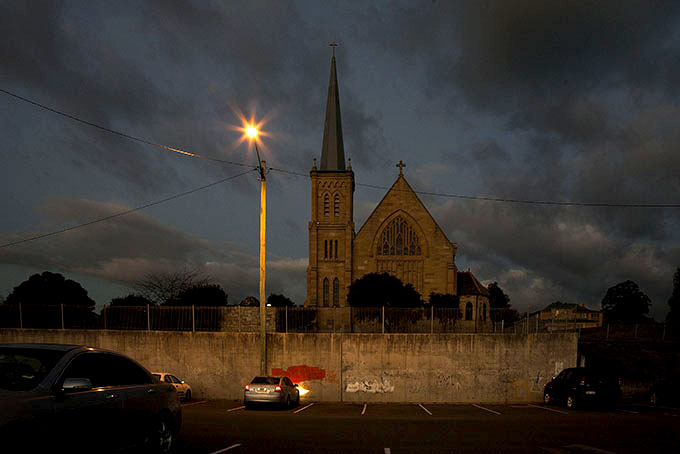
St James’ Catholic Church
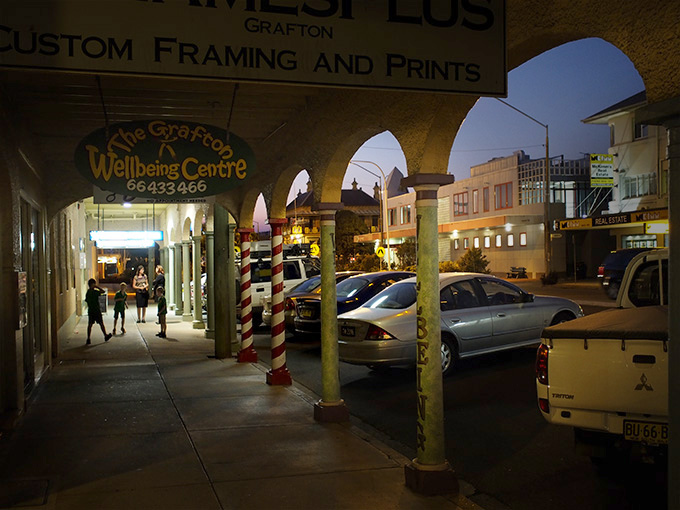
Outside the Grafton Hotel

The Subway – The Nocturne Muswellbrook Project
.
VIEW A VIDEO OF THE ICONS SHOW FEATURING THE PHOTOGRAPHERS
.
.
TO BOOK THE EVENT
http://www.shop.qm.qld.gov.au/cobbandco/in-the-dark-room-with-doug-and-victoria.html
.

Cobb+Co Museum – Icons on Icons
.
.
PERV: Jess Martin does an iPhone Cloud @ MARS Gallery
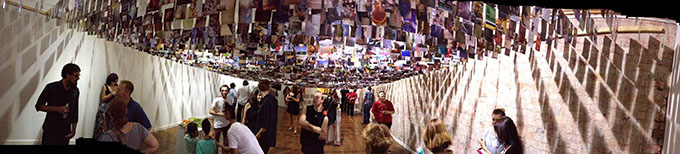
The Mars Gallery with the Perv exhibition photo ‘cloud’
.
In 1936, the one-time Bauhaus teacher Làzlò Moholy-Nagy, described his idea of the ‘photographic series’, and he spoke of it as being ‘the logical culmination of photography’. In his discussion he states that the ‘picture loses its identity as such and becomes a detail of assembly, an essential structural element of the whole which is the thing itself.’
.
An exhibition, entitled Perv, by Toowoomba artist Jess Martin on show at MARS Gallery would no doubt excite Mohly-Nagy in that she has taken the idea of a photo sequence and turned it into a sculptural form to express her view of contemporary life and photography. Martin has for two years been collecting iPhone images of her life. Last year she exhibited at Futures Gallery in Toowoomba a mosaic of 2,000 of these images in three 1 square metre murals. The theme was her life as a photographer, curious about the visual nature of the world and the access to quick imaging via the mobile phone.
Perv takes the idea further by expanding it to encompass iPhone image submissions sent to her via Facebook social media from friends and their friends …. Deciding to take the concept off the gallery wall where it’s just glanced at by the viewer Martin has constructed a 3-Dimensional space to mirror the image overload of modern life. What’s more, is that the images are suspended the full length and breadth of the Mars space – some 5×10 metres creating a cloud of photo images.
.
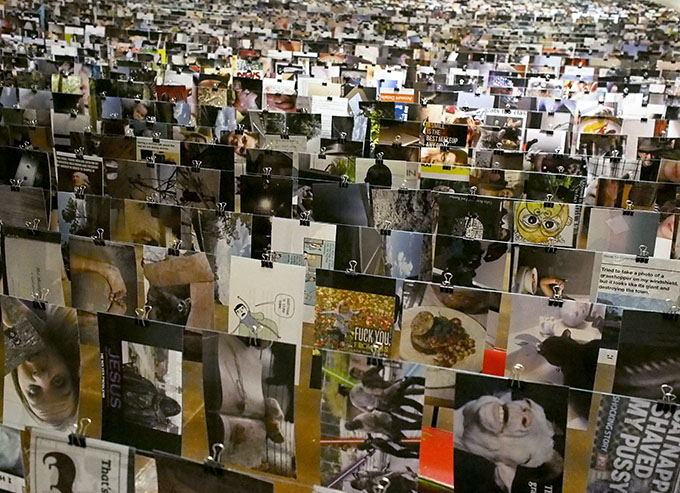
The view from above
.
Who knows how many thousand images are here… who cares? Who measures our daily dose of images anyway? So while this exhibition is confrontational it is also indicative of the prevalence, pervasiveness and proliferation of vernacular photography today. Viewers encountering this sky-load of images will need to search far if they are looking for classic pictorial beauty, or even well crafted documentary images. These pics are rapid snaps — faces, places, events, Facebook trivia, the weird and wonderful, rude and humorous. In a few seconds you can find photos of cats and dogs doing amazing things, food being devoured, over-flashed close-up faces and obviously candid and personal moments between lovers, family and friends.
.
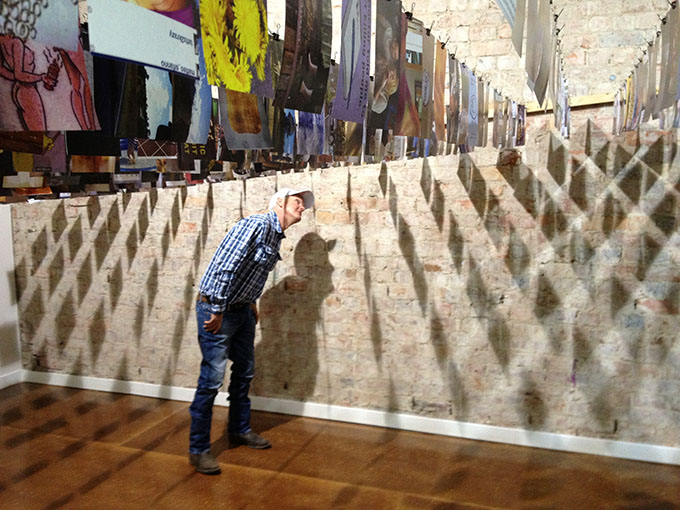
Looking at Perv’s pics
.
Billions of photographs are made and Perv‘s several thousand may be the equivalent of a grain of sand in all the beaches of the world however within this space we have an opportunity to connect with the contemporary reality of the photo today and the use of this once specialist human activity.
In coming back to Moholy-Nagy again there is something else to ponder that this exhibition celebrates and that is, in Nagy’s words; ‘its separate but inseparable parts a photographic series inspired by a definite purpose can become at once the most potent weapon and the tenderest lyric.’
The exhibition remains on show at Mars Gallery until December 6, 2013.
.
Words and photos: Doug Spowart
.
Moholy-Nagy, L. (1936). From Pigment to Light. Telehor. 1: 32-36.
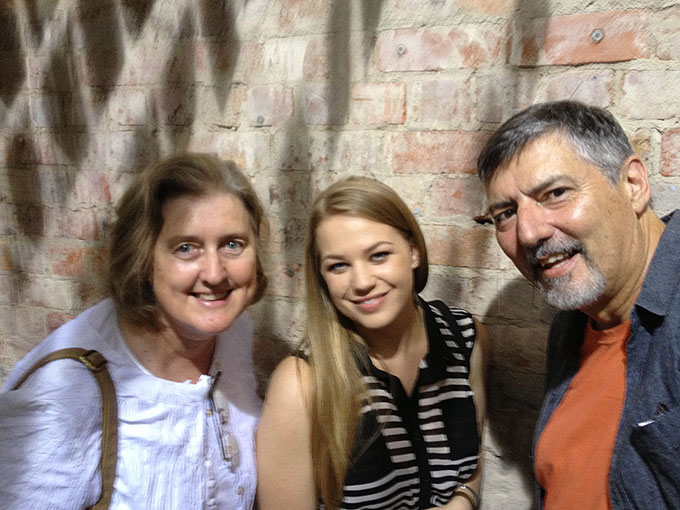
Vicky, Jess and Doug
Jess is a past student from Doug’s SQIT Art Photography class. We have mentored her during this project however Jess’ creativity, innovation and hard work has transformed this exhibition into a significant outcome – Congratulations Jess!
It should also be acknowledged that this exhibition has been supported by the Queensland Government through an RADF Arts Queensland Grant.
.
This work is licensed under a Creative Commons Attribution-NonCommercial-NoDerivs 3.0 Unported License.
.
.
QCP FUNDING CUT: Statements 1&2 from the QCP Board
FOLLOWING ON FROM PREVIOUS POST: LETTER TO THE MINISTER SUPPORTING THE QCP.
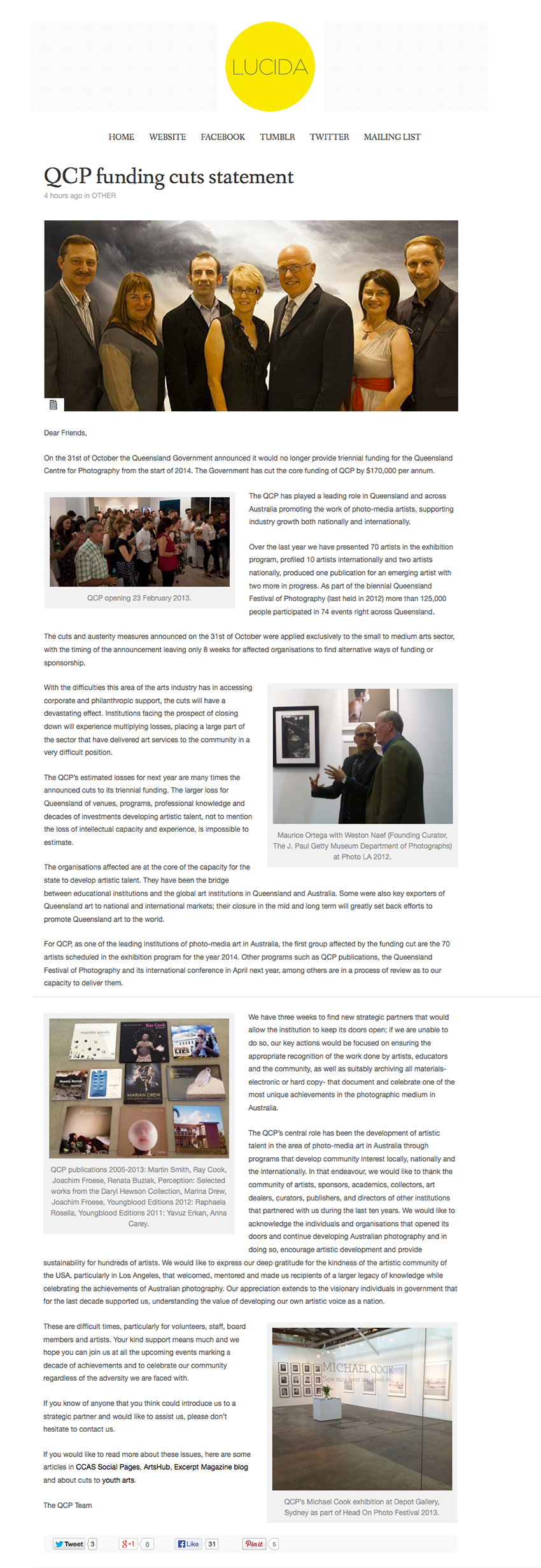
NOW THE QCP HAS HAD ITS QUEENSLAND GOVERNMENT FUNDING CUT
STATEMENT #1 Posted by QCP today (November 11, 2013) on their Lucida Site:
.
UPDATE
THE QCP HAS BEEN ABLE TO NEGOTIATE SUPPORT TO CONTINUE ALL PROGRAMS AND PROJECTS INCLUDING THE QLD FESTIVAL OF PHOTOGRAPY, LA ART FAIR & CONFERENCE UNTIL THE END OF APRIL 2014
STATEMENT #2 Posted by QCP December 11, 2013 on their Lucida Site:
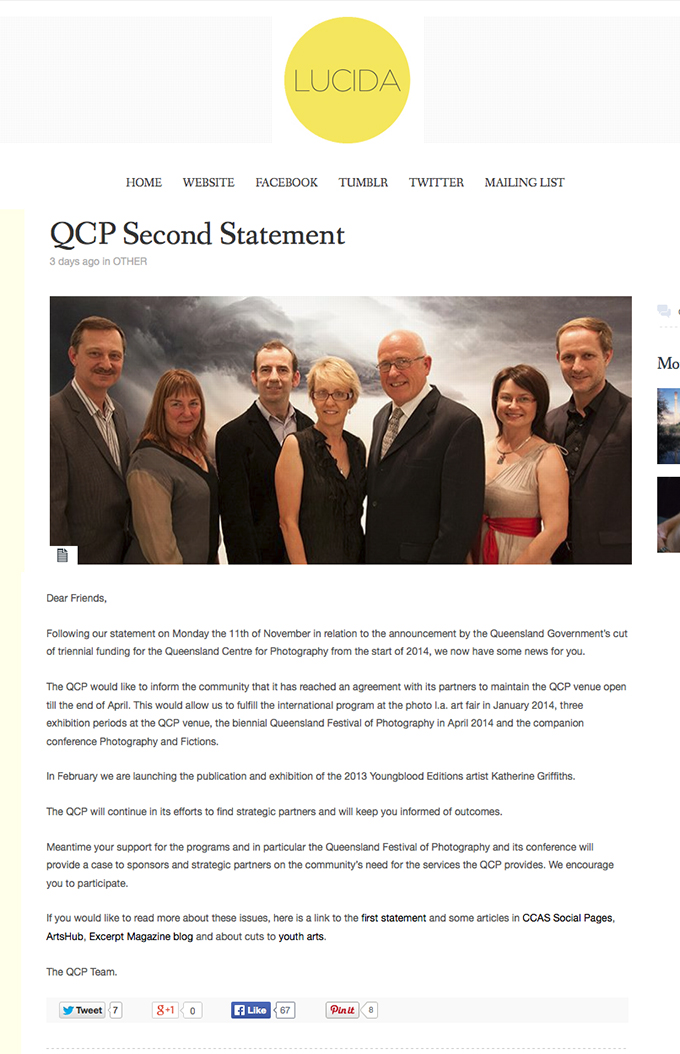
.
OTHER RELATED COMMENTARIES:
Overland Website – Article by Alison Croggon:
http://overland.org.au/previous-issues/issue-212/feature-alison-croggon/
.
Tamara Winikoff on current cuts to the Arts in Queensland:
http://www.artshub.com.au/news-article/news/all-arts/savage-queensland-arts-cuts-197252
.
Article by David Broker, director of CCAS, reflecting on funding cuts by the Queensland Government to QCP:
http://canberracontemporaryartspace.wordpress.com/2013/11/04/qcp-hard-times/
.
ImageNews comments:
http://imagenews.com.au/article/savage-implementation-reform
.
.
A BOOK ABOUT DEATH: Now in Australia
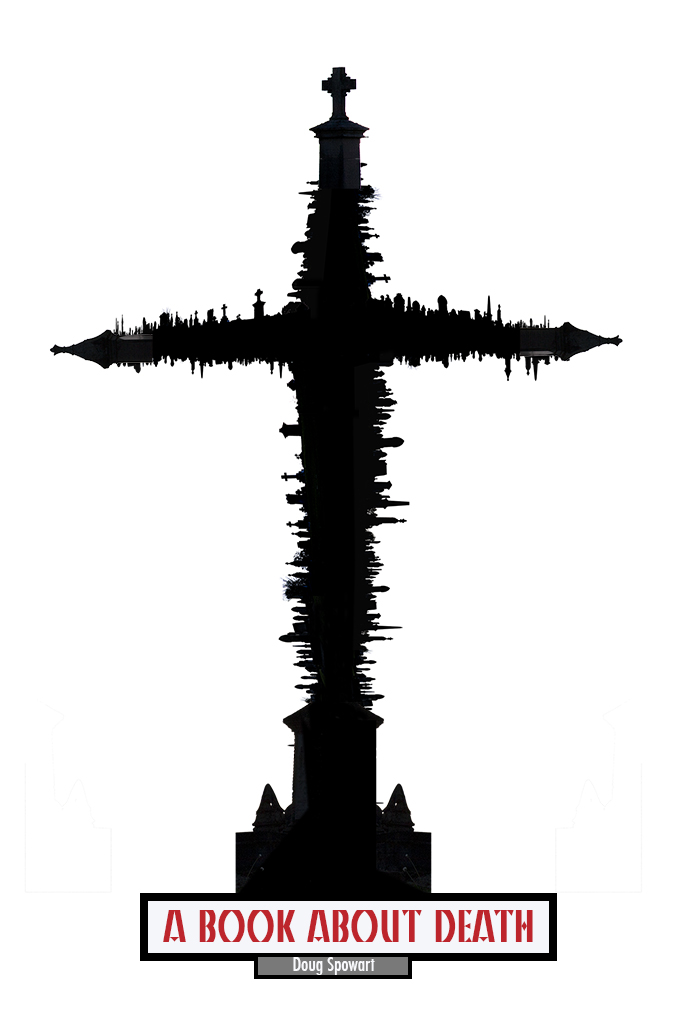
Doug’s contribution to A Book About Death
.
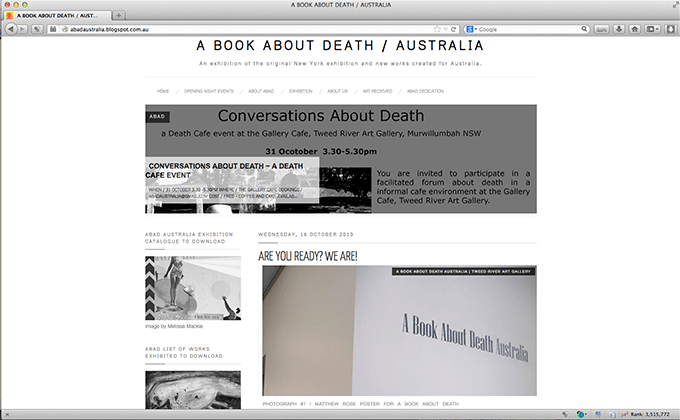
A new exhibition at the Tweed River Art Gallery presents an exhibition of mail art contributed by artists from all over the world which that deals with the topic of death. Entitled, A Book About Death (ABAD), this exhibition is the most recent iteration of the concept that began in 1963 by Mail Art ‘father’ Ray Johnson – The difference on this occasion being that most of the artists represented in the show are Australian. The coordination and curation of this ABAD exhibition has been overseen by Julie Barrett and Heather Matthew.
.
.
The following background information comes from the ABAD website:
.
First and foremost, the American artist Ray Johnson (1927-1995) the founder of the New York Correspondence School deserves all the credit for creating the concept of A Book About Death because he was really onto something when he came up with the concept in 1963. Between March of that year and February 1965, he sent out 13 pages or so of something he called A Book About Death. In framing one piece of a paper as one page of a conceptual book, he anticipated many literary developments of the four decades that have followed. Ray Johnson’s A Book About Death connects to hypertext, cyberpunk, the internet, as well as devices like the Kindle, a device that is an accumulator of electrons that shows its user pictures on a screen of what can be thought of as a book. But the Kindle, one of the possible signposts of what the future of reading will be like, cannot show us an entire book. It can only show us one page at a time.
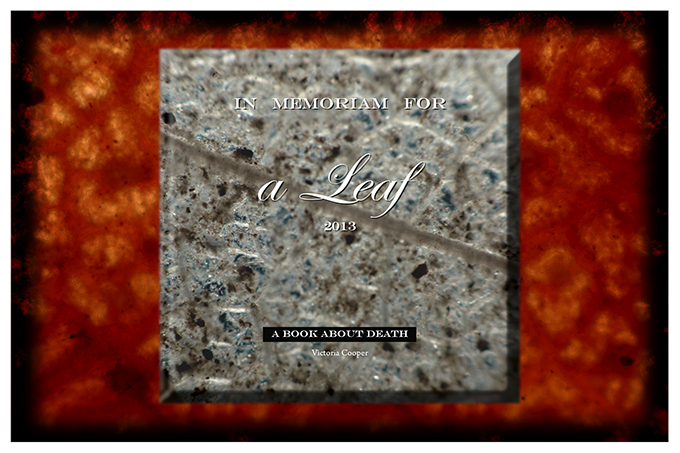
Vicky’s contribution to the ABAD exhibition
.
Vicky’s statement about the work:
Through the microscope I saw the death of a leaf as a metaphor for the forest.
In this leaf I could see
The searing flames of a bush fire,
The decay and recycling of its flesh and bones,
The crystallization of time
A fossil
The past and the future
The story of the forest
In the death of a leaf . . .
.
AN EVENT ASSOCIATED WITH THE EXHIBITION
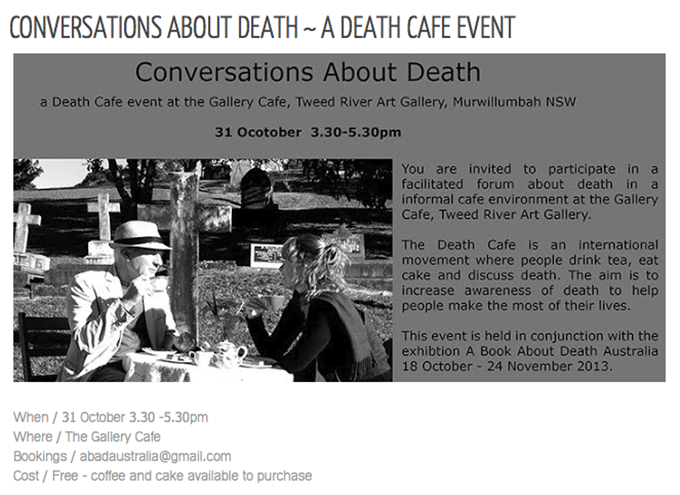
Death Cafe Event
.
The Cooper+Spowart text and work is licensed under a Creative Commons Attribution-NonCommercial-NoDerivs 3.0 Unported License.WORLD PHOTOBOOK DAY: Toowoomba Oct 14, 2013
.
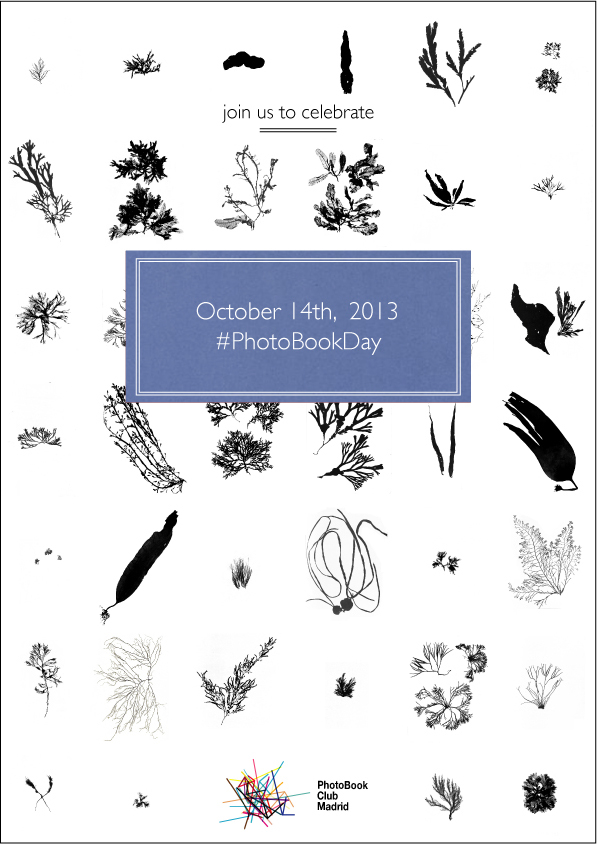
WORLD PHOTOBOOK DAY – CELEBRATED IN AUSTRALIA
.
.
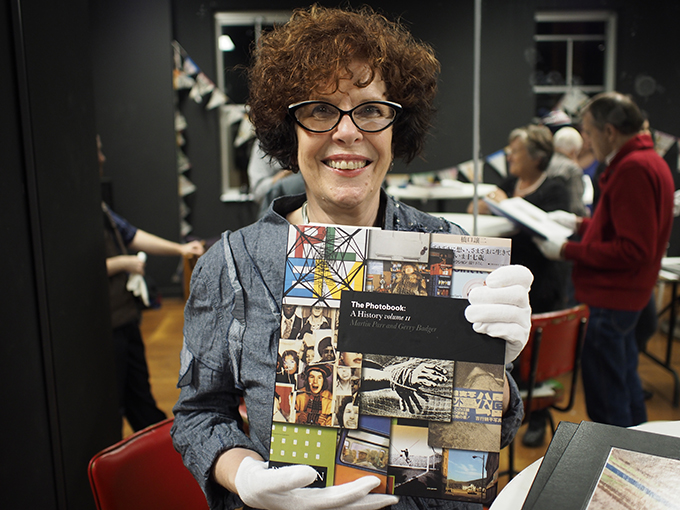
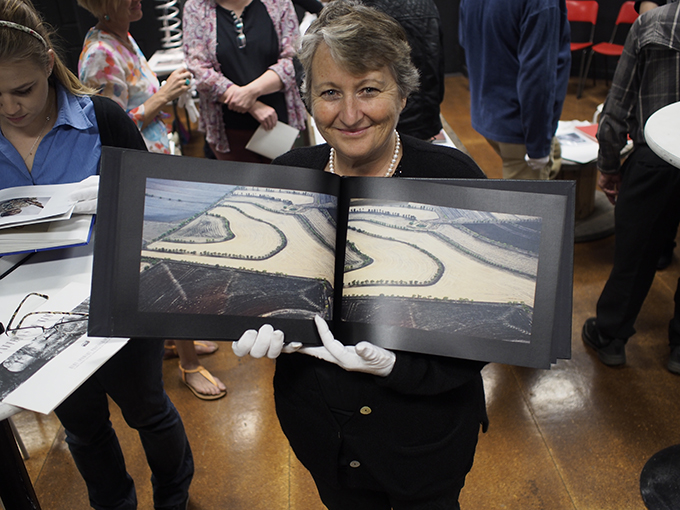
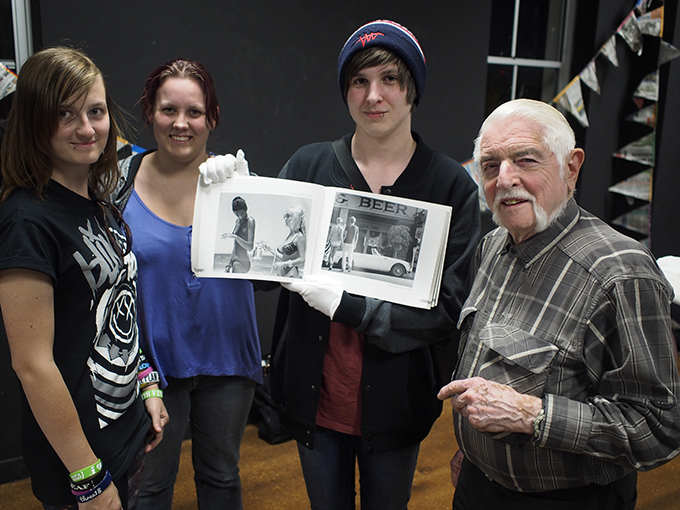
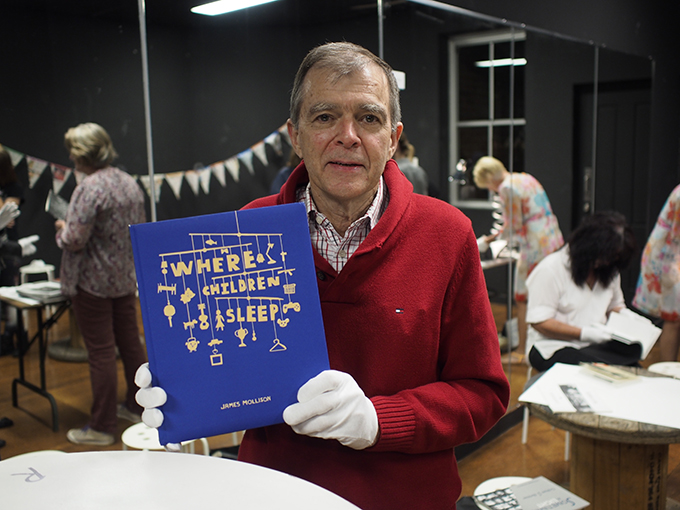
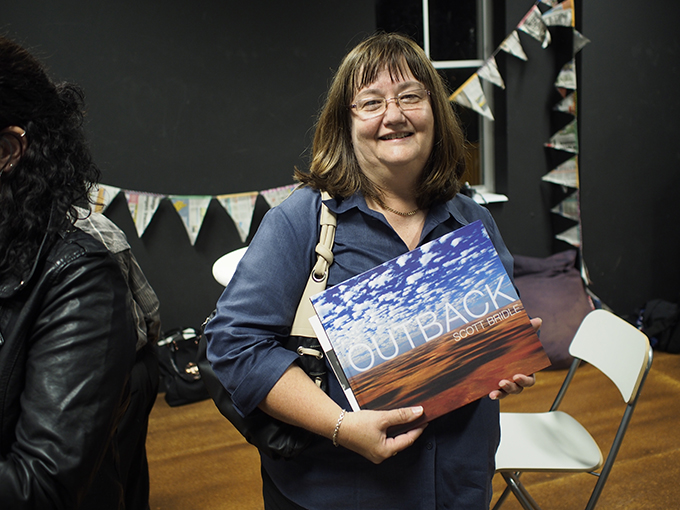
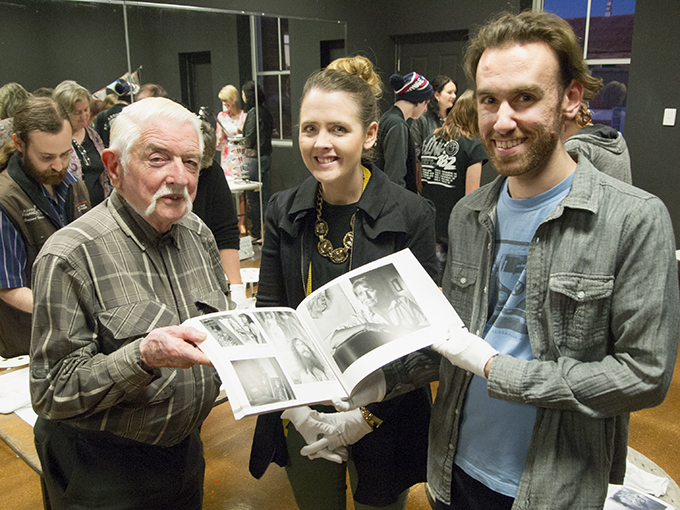
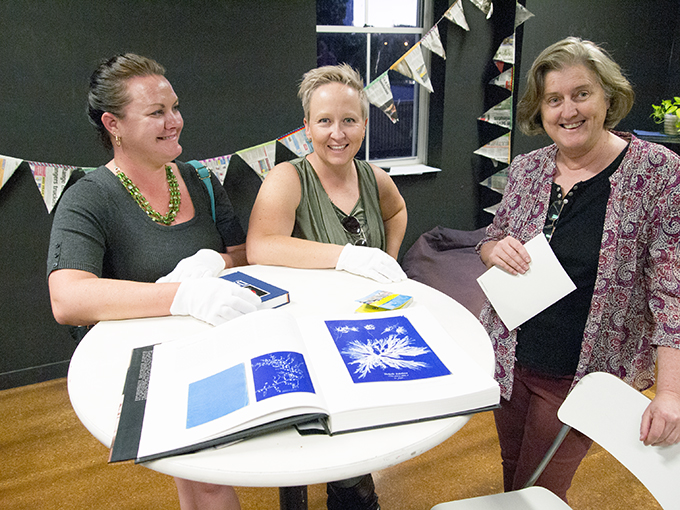
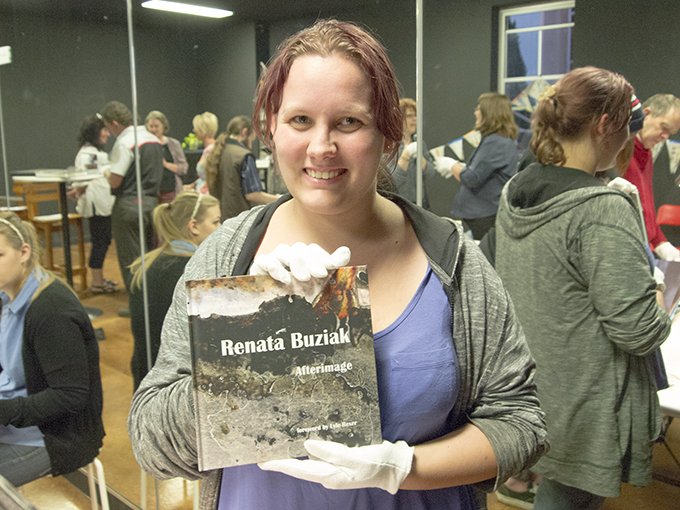
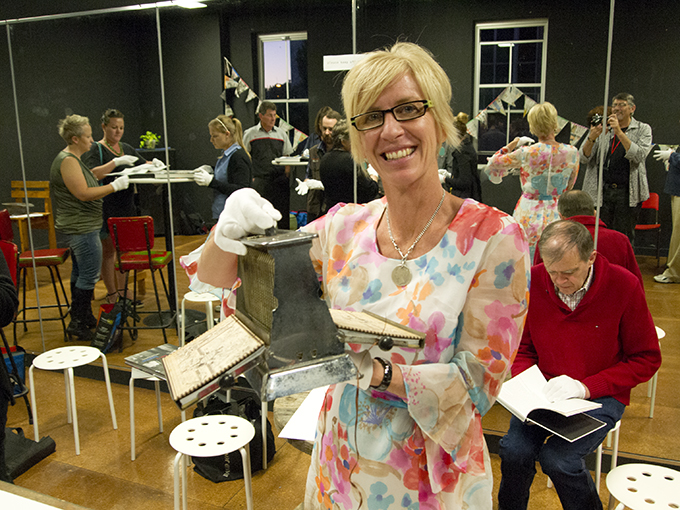
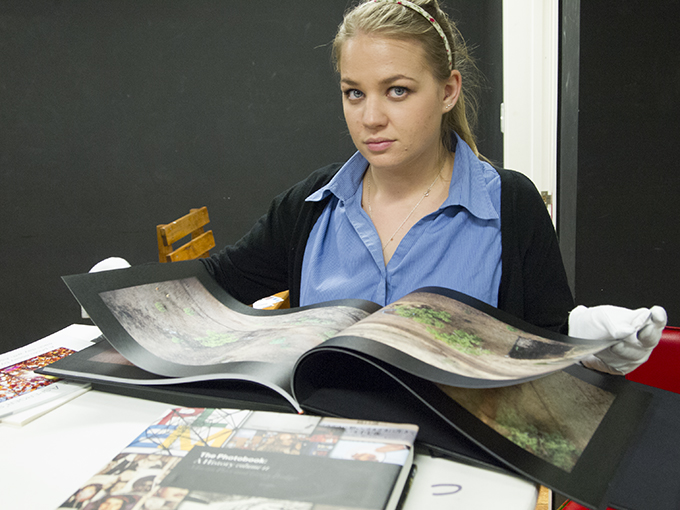
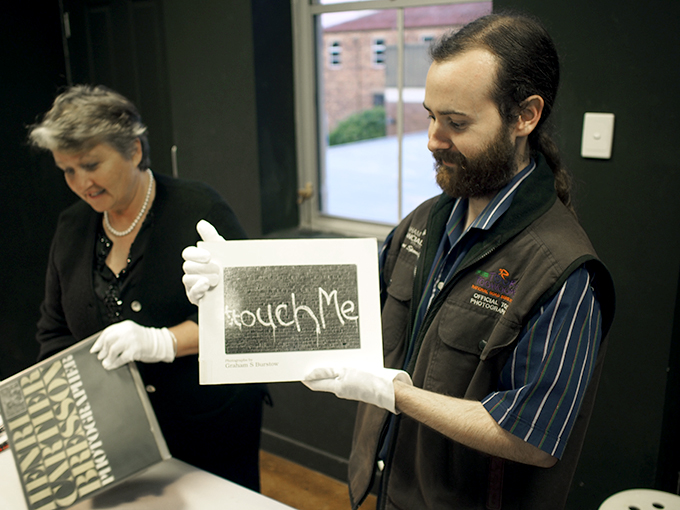
The city of Toowoomba in Queensland Australia celebrated World Photobook Day with a group of around thirty attending a Photo Book Club meeting. The event was held at TheGRID: Hybrid Arts Collective. The participants were from a wide range of photographically interested people: some from the local TAFE college, The Toowoomba Photographic Society, professional photographers, artists and academics. Each brought with them a favourite photobook to share and talk over with others. There were some precious books, some funky contemporary publications, and some of the more traditional coffee table tomes.
.
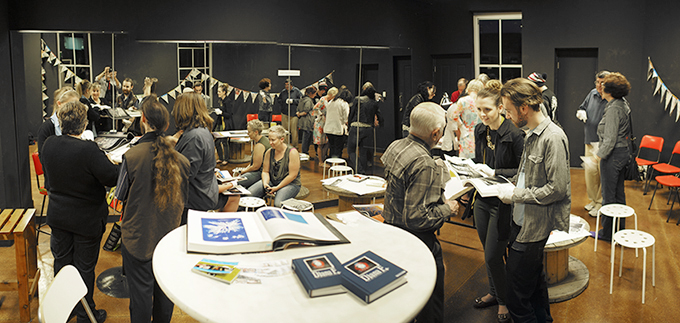
Toowoomba Celebrates World Photobook Day
.
Event coordinator Doug Spowart welcomed the group and gave some background on the history of the photobook and the amazing place that Anna Atkins has within that history. On hand was the Badger and Parr The Photobook: A History Vol1 opened to the page of the Atkins Algae of the British Isles. Doug announced that an acquaintance of he and Victoria Cooper’s – Gael Phillips, was a distant relative of Anna Atkins and that whilst be unable to attend she has provided a commentary on the times, life and family. Gaels words are as follows…
… I thought I might give you a few details of the family of Anna Atkins, nee Children, which may help to explain the setting in which she produced the world’s first photographic book. My cousins, Elizabeth Parkes and Jean Doggett, with input from other family members, have published an account of our family which includes chapters on the Children family. At their family home, “Ferox Hall”, in Tonbridge, Kent, John George Children, Anna’s father and George Children, her grandfather, had built the largest electric battery the world has ever seen at their private laboratory. They were collaborating with Sir Humphry Davy on electrical experiments. It was because of her family’s experience with battery technology and electrochemistry, and almost certainly with the help of her father, that Anna would have had access to sufficient ferric ammonium citrate to produce cyanotypes. Her publication of “Photographs of British Algae” first appeared in October 1843 – British Algae – Cyanotype Impressions. Fox Talbot, a friend of the family, and from whom Anna had obtained her first camera, published “Pencil of Nature” between 1844 and 1846, in several parts. In 1979 Professor Larry Schaaf brought the attention of the world to the fact that the author of the world’s first photo book, AA, was Anna Atkins.
Anna Atkins, nee Children, was born in 1799. Her mother, Hester Anna Children, nee Holwell, was the grand-daughter of Governor Hollwell, one of the survivors of the Black Hole of Calcutta in 1756. Hester never recovered from the birth of Anna and died in 1800.
Anna also wrote a biography of her father, partly concealing her authorship under the initials, “AA”, as she did with her “Photographs of British Algae”.
.
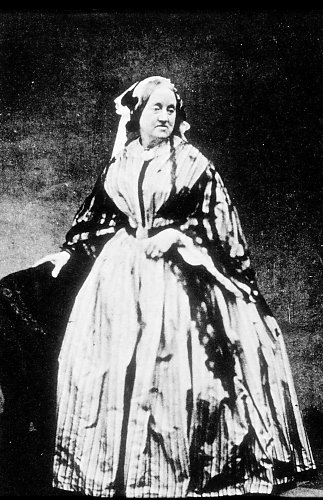
Anna Atkins 1861 [Source Wikipedia}
Anna and her husband, John Pelly Atkins, had no children of their own. Anna died in 1871 and her husband a year later. Their home, “Halstead Place”‘ has since been demolished.
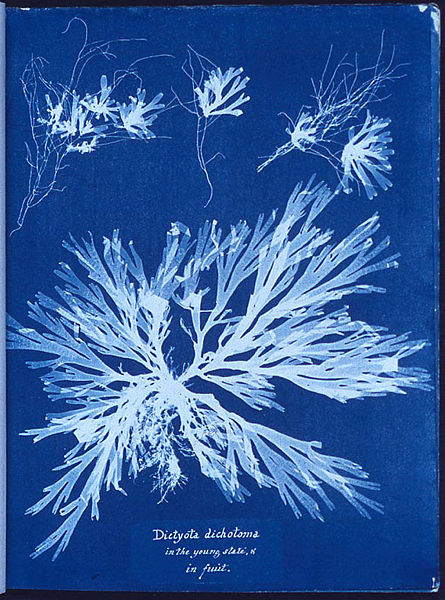
A photogram of Algae, made by Anna Atkins as part of her 1843 book, Photographs of British Algae: Cyanotype Impressions. Courtesy of The New York Public Library http://www.nypl.org.
.
Naturally my favourite photo book (or books, because the Cyanotypes of British Algae by AA run to three volumes) – “Photographs of British Algae – Cyanotype Impressions” by Anna Atkins, my distant cousin. In 1992 I had the great privilege to view copies of the volumes at the Library of the Royal Society in London. The edition ran from between 10 to 12 copies and a few of the plates from one of the copies are held in the National Gallery of Australia in Canberra.
I wish you all well for this celebration of the world’s first photo book by Anna Atkins.
Doug thanked Gael for her insight into the lady whose premier photographic pursuit we celebrate today.
Guests were then invited to continue their looking and talking about books, photography and other worthy matters. It was a remarkable event and one which will no doubt repeated in the future –– but it will be sooner than the next time we gather, once again, to celebrate WORLD PHOTOBOOK DAY.
..A PHOTOBOOK CLUB EVENT

.
HERE SOME IMAGES OF ATTENDEES AND BOOKS … A detailed list of books presented for viewing and other contributions submitted online will be added to this post in the near future.
.
Report and photographs: ©2013 Doug Spowart. Anna Atkins’ story © Gael Phillips. Images of Anna Atkins sourced from Wikipedia and acknowledged appropriately.
.
.
FACING FACES: Judging the photographic portrait
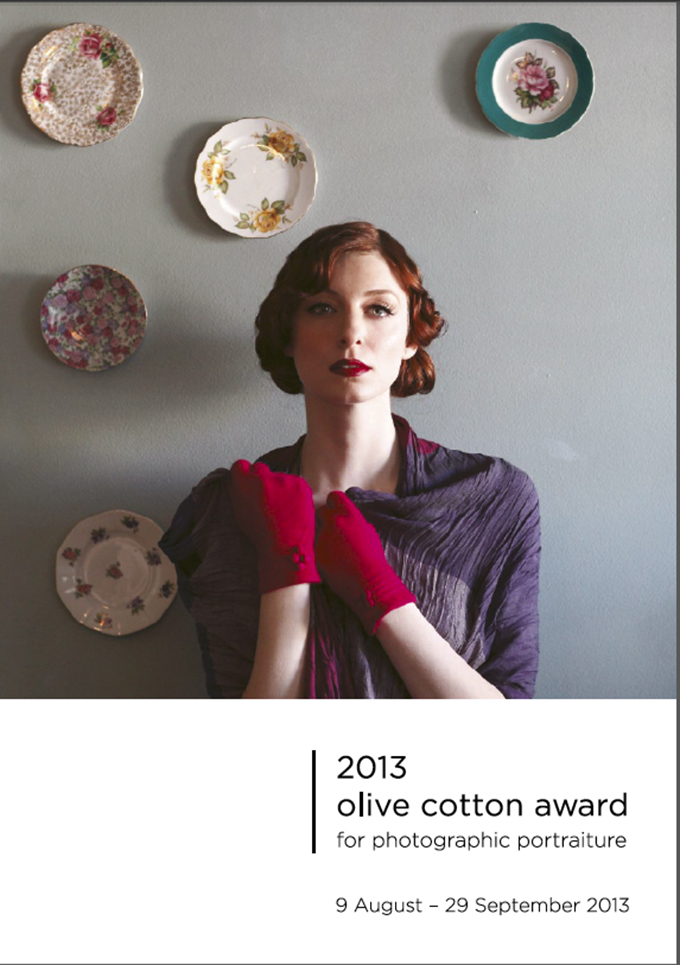
OCA Catalogue Cover
.
Olive Cotton Award Floortalk, Tweed River Art Gallery
.
On September 15 about 30 people attended a floortalk in the exhibition space of the 2013 Olive Cotton Photography Award (OCA). In my preparation I reflected on the demands of a floortalk. Over the years I have given quite a few floortalks about my own as well as the work of others, including one at a previous Olive Cotton Award. I have also attended presentations by others. In this years OCA award I wanted to create an inclusive space for the audience. Rather than taking centre stage, I wanted to empower the attendees in a kind of role reversal–to bring to the discussion their approaches to looking at, and responding to, the photographic portrait.
.
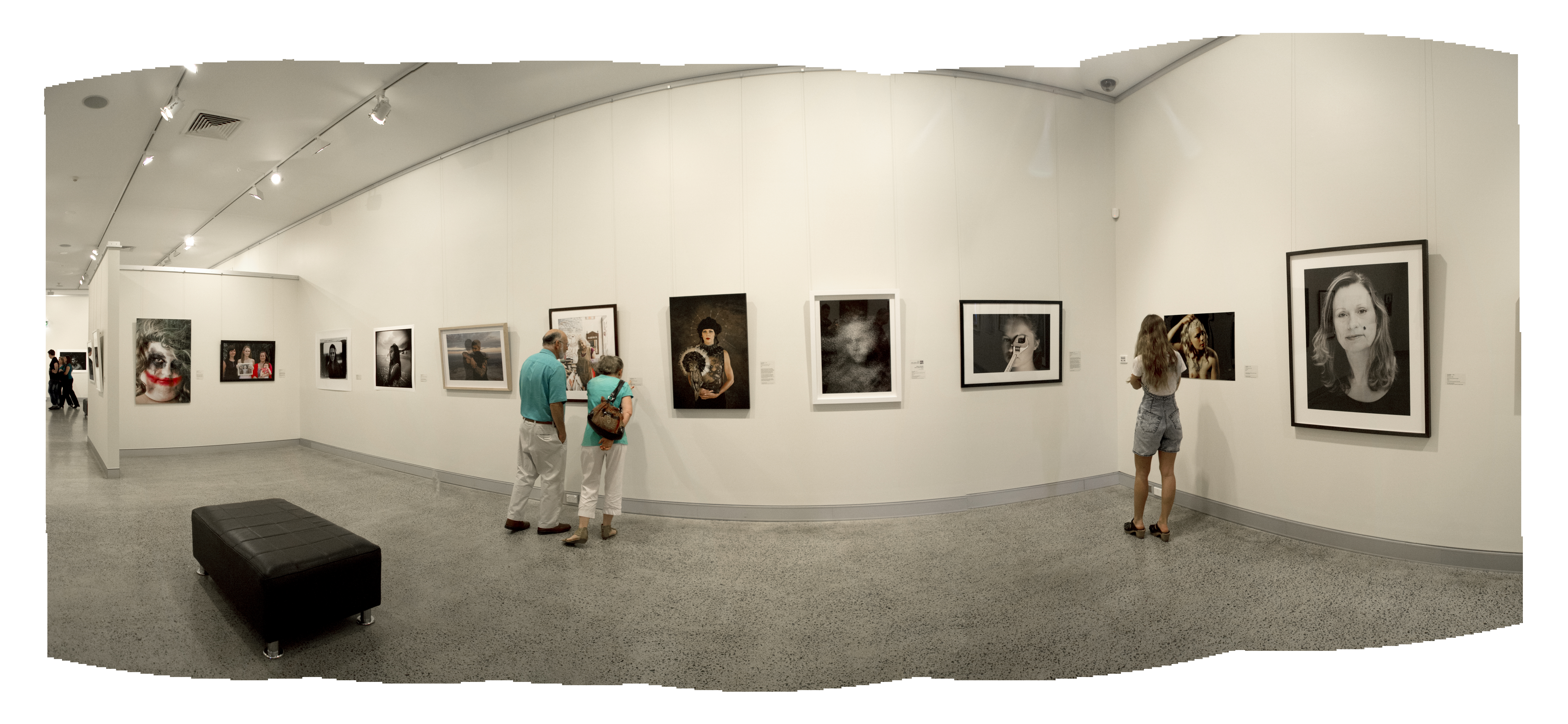
Olive Cotton Award installation at Tweed River Art Gallery
I introduced a concept for viewing and interpreting photographs that I call ‘positioning’. It relates to the interaction that takes place when looking at a photograph – particularly a portrait. It is what reaches into our emotions lived experience and solicits our response. The premise of this floortalk format draws upon the notion that everyone is a judge and is also informed by Roland Barthes’ concept of the ‘death of the author’. I am interested in how the viewer’s interpretation relates to their own life’s experience rather than a direct connection with the author’s intent for the communication. After all, I as the floortalk presenter, can only offer an opinion based on my personal experience and knowledge.
What follows is a conversational précis of the floortalk and the concepts covered relating to portrait photography and the OCA. After a formal introduction by Tweed River Art Gallery’s Public Programs Curator and Coordinator of the Award Anouk Beck, I addressed the group.
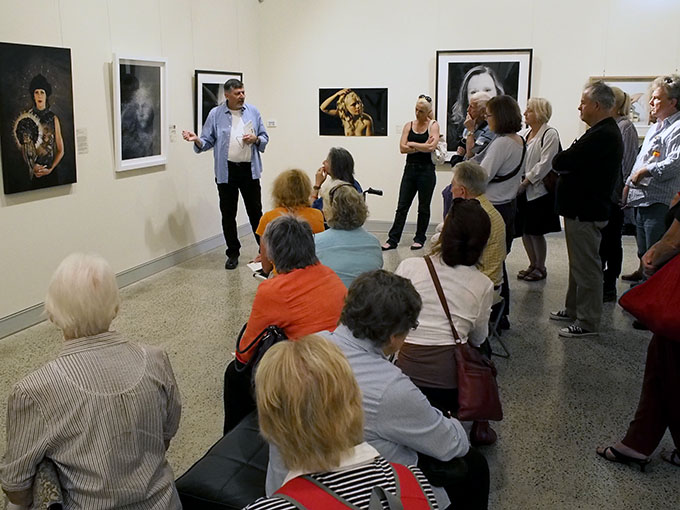
Doug Spowart presenting the floortalk
.
We stand this morning in a gallery exhibition dedicated to the most photographed subject of all – the human face! The floor talk today will explore the idea of the photographic portrait and how we reflect on the success of this visual communication.
There is an old saying that you can tell a great portrait because the eyes follow you around the room – Well any portrait, even a painting, where the subject is represented looking toward the photographer’s/artist’s viewpoint will capture the subject in a way that will enable this ‘phenomenon’ to be observed. So this method for assessing a portrait will not successfully operate here.
Another way of knowing what great portraits look like is to ask an expert, whomever they may be, to make a decision. Awards such as the Olive Cotton Award use this principle and over the years an impressive list of pre-eminent photographers and/or critics and commentators on photography have been commissioned for the task. I must acknowledge the judge for this year’s award – Helen Ennis. I cannot think of anyone who would be as knowledgeable of the ideas, thoughts and working methods of Olive Cotton than Helen Ennis. In her connection with Olive Cotton, Ennis has written several books and catalogues, selected works and curated exhibitions and is in the process of writing Cotton’s biography. Ennis has provided for us all a greater understanding of Cotton’s work and prominent position within the history of Australian photography.
Now, let us think about portraiture and the act, as we find ourselves today, looking at and evaluating portraits. It is interesting to note that although the portrait is at the top of the list of photographic subjects, we can see in this award there is no standard approach. As we look around this gallery space today no two portraits look the same – I’m not referring to the diversity of subject’s portrayed, but rather the way the photographer has created and presented the subject to us. The photographs range from snapshots of unplanned spontaneous moments to documentary reportage and illustrative magazine styled images, and then to the overtly staged theatrical tableaux. Some images are derivative – that is that the approach to the image replicates time honoured, and sometimes perhaps over used or common, techniques, styles or treatments. Other images may represent subject and styles in ways that are vibrant and fresh.
When a portrait is made the photographer makes personal decisions relating to equipment selected, technique, style, lighting, posing, gesture and subject expression. They make a portrait that satisfies their personal urge to tell a story. This story is usually firmly related to the subject; although it can be a theme the photographer is investigating or be based on something from the photographer’s own life experience. The photographer may want or even demand that viewers take from the work a particular and specific meaning. The artist’s statement accompanying exhibited works can support and signpost and influence the readings that a photographer may want to pass on.
However, I would suggest to you, that once the image leaves the photographer and is presented publically a new paradigm exists. Writer and commentator on photography Roland Barthes wrote ‘… the birth of the reader must be at the cost of the death of the Author.’ (Barthes 1977:148). In this instance I propose that the photographer is the author – the reader is the viewer. When looking at photographs the viewer connects their life experience to what the work presents, and the narrative or meaning that emerges can no longer be the photographers alone – it is a hybrid born by the activation of the viewer.
We are all judges in a way and each of us has a unique experience of the world that directs and supports our response to images that we view. We will no doubt encounter portraits here today that are universally powerful and profound yet there will be other images that may reach individuals amongst us in the most direct and personal ways. What this means is that each of us is a kind of judge, and that our individual responses may be just as profound as those experienced by Helen Ennis five or so weeks ago.
Today then, I invite you all to be the judge and what we will be doing is engaging with selected works from the exhibition to discuss and review – and I will be asking you to contribute to the conversation. To assist you with this I’d like to pass on the concept that may help us with this process – it’s essentially about what I will call ‘positioning’. Your response to a portrait photograph, or perhaps in another context any photograph or work of art, is informed by your personal background as we have already discussed. Your ‘position’ can be informed by the synergies of your life experiences that may include; physical, ideological, religious, gender, specific demographic, life experience of birth, death, love, illness, war or personal achievement or tragedy. So when we talk about a portrait please consider your position…
[What followed in the floortalk was a conversation by the participants moderated through my involvement. The audience contributed some interesting responses and ideas about portraits that included; Tamara Dean’s ‘Brothers’ 2013, Russell Shakespeare’s ‘Bob Katter’ MP 2011, Tina Fiveash’s ‘Twin Spirits’ 2013, Imogen Hall’s ‘Barry Jones and the ancestor’ 2012. At times there were powerful and emotional connections made by particular participants which were then shared through this floortalk conversational strategy.
.
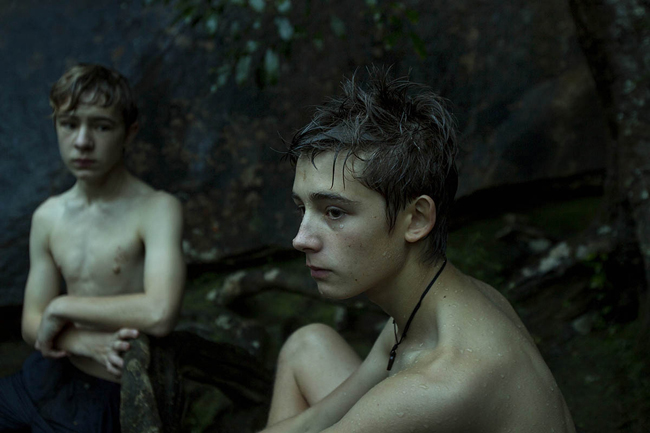
Tamara Dean’s Brothers
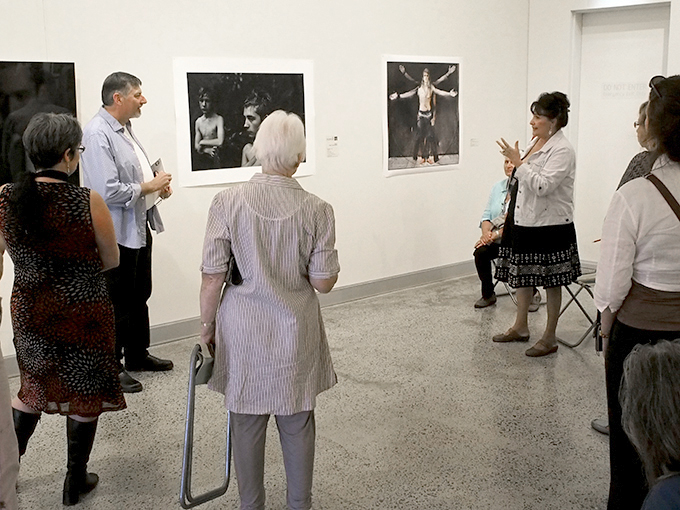
Participants discussing their position and response to a portrait
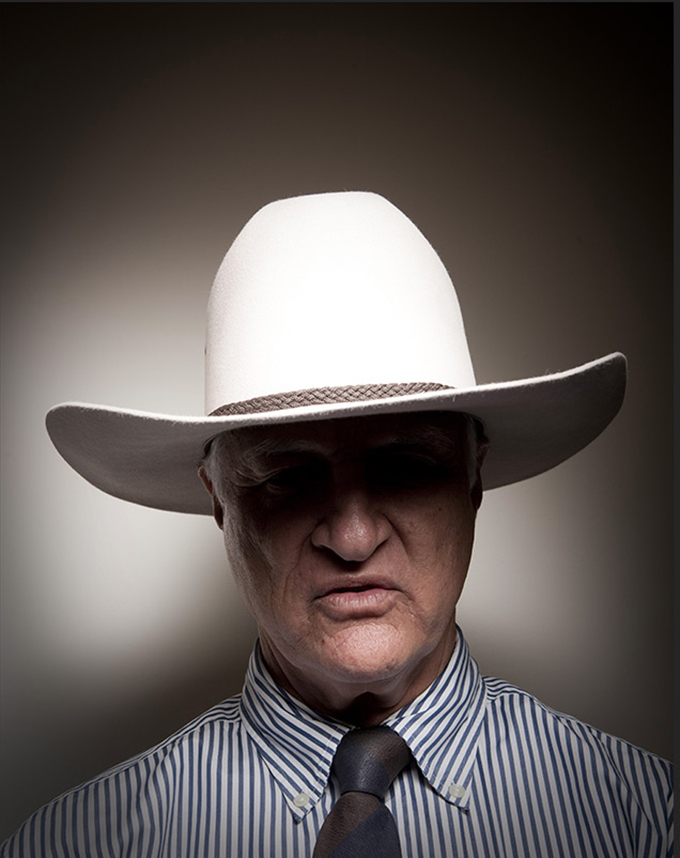
Russell Shakespeare’s Bob Katter MP
.
I was asked to give my position on the winning photograph – Trent Parke’s ‘Candid portrait of a woman on a street corner’ 2013. Many attendees did not –or– could not find a ‘position’, that would enable them to understand the reason behind its selection. I spoke from my position informed by my background in the art and professional practice of photography and many years dedicated to the education and critique of this medium – I knew from comments made by the judge on announcing the award that she found Parke’s image something that she at first didn’t standout as so many images do – but she kept coming back to it. My position on the image was as follows…]
.
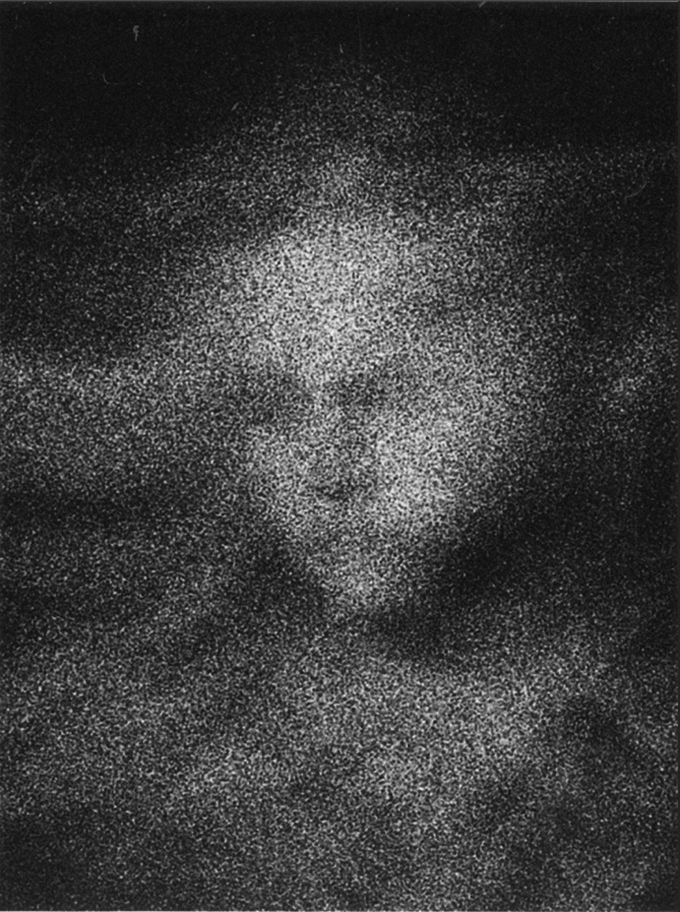
Trent Parke’s Candid portrait of a woman on a street corner
.
On first encountering Parke’s image it does not give us much – it initially appears as a field of greatly magnified monochrome film grain, which hides the delicate structure of a female face. A closer view reveals less, and interestingly, the further away you move the ‘sharper’ the image. Parke’s portrait demands more of the viewer to find meaning – it challenges, it questions, it’s not a specific person, unlike every other portrait in this award, but more the generic form. For me it also comments about the romance of film and ‘humanness’ in the digital age. At the beginning of this floortalk I suggested that much of portraiture can be derivative – but this image has no provenance in contemporary portraiture – it stands alone, perhaps signalling that there is room for new and exciting representations of the human visage yet to come…
[The floortalk concluded and attendees continued viewing other portraits in the show from their newfound critical ‘position’. The outcomes and exchanges resulting from my floortalk strategy was, for me, personally enlightening and rewarding. A number of participants came up after the talk to say how much they had enjoyed and appreciated the opportunity to discuss work and have their ideas, opinions and experiences shared in that way.
From their participation and responses today one could perhaps say that the author is dead – and many readers have been born …]
.
Dr Doug Spowart 3 October 2013
.
A PDF catalogue of the Olive Cotton Award is available here 2013 OCA catalogue for web_screen
.
Barthes, R. (1977). Image Music Text. London, Fontana Press.
,
Photographs of the floortalk © 2013 Victoria Cooper. All other images are the copyright of the photographer.
.
This work is licensed under a Creative Commons Attribution-NonCommercial-NoDerivs 3.0 Unported License.
.

 wotwedid