Archive for the ‘Speaking on Photography’ Category
2013 BALLARAT INT’L FOTO BIENNALE: LAUNCH – August 17, 2013
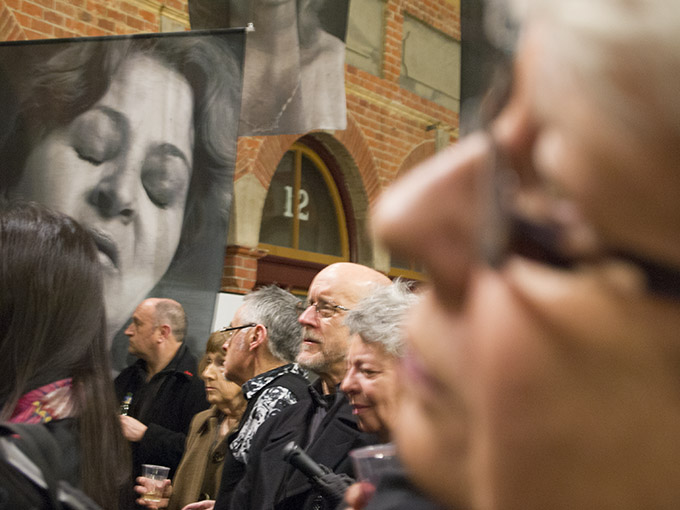
BIFB Lauch attendees
.
Around 400 guests attend a gala Festival Launch on Saturday August 17, 2013. Master of Ceremonies Dominic Brine introduced Cr Samantha McIntosh and Festival Director Jeff Moorfoot who both commented on this year’s event. The opening speech was presented by former Director of the Australian Centre of Photography, international curator and commentator on photography – Alasdair Foster.
The main hall of the Ballarat Mining Exchange was filled by the convivial sounds of conversation and the clink of glasses. The open space above crowd was filled by, what will become the signature feature of this year’s BIFB, Erika Diettes’ giant hanging ‘Sudarios (Shrouds).’
.
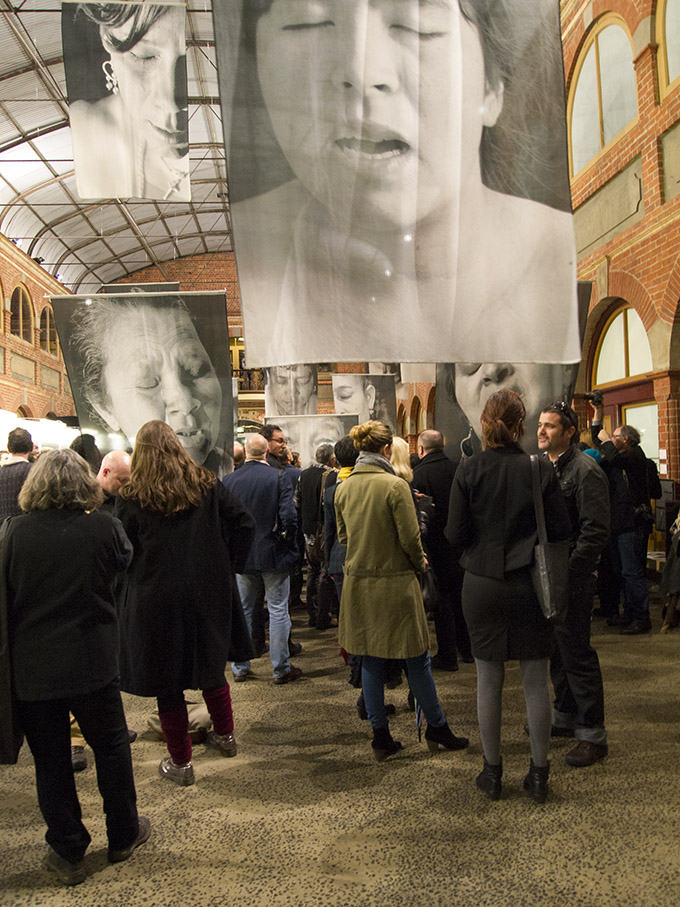
The launch crowd with Erika Diettes shroud images
.
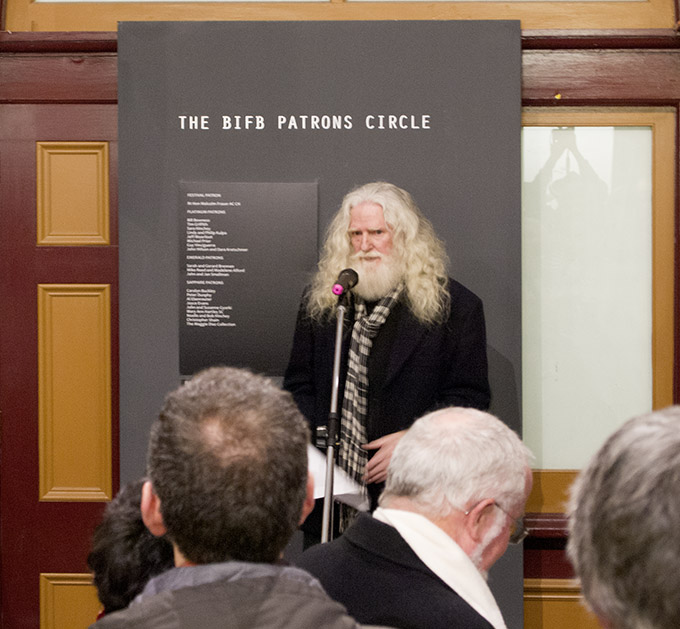
BIFB Festival Director and Icon Jeff Moorfoot speaks at the launch
.
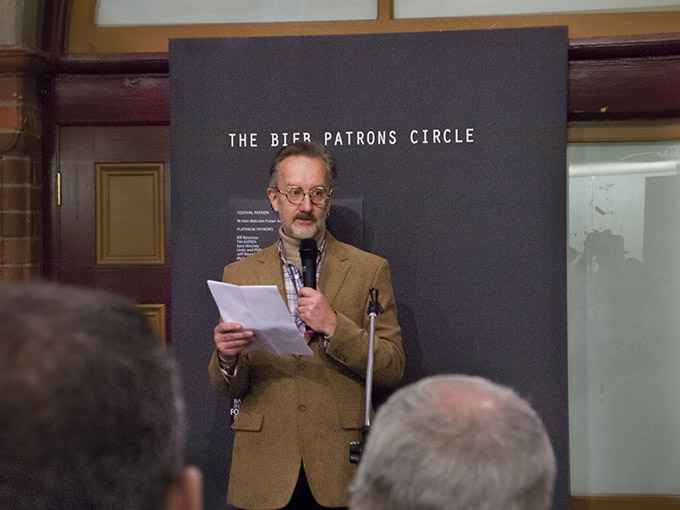
Alasdair Foster delivers his opening address
.
OPENING SPEECH BY ALASDAIR FOSTER – BALLARAT BIENNALE 2013
Good evening everyone.
It is a great pleasure and honour to be opening the 2013 Ballarat International Foto Biennale.
Look around you. Look where you are standing. For tonight you stand at a global nexus. A meeting point of many cultures and conversations.
Today, photography is our most international and effective mode of expression and communication. An art form supreme in its breadth of engagement and influence in the world. A medium of creativity and of the people, which crosses cultural and linguistic borders and has the potential to bring us closer together.
The exhibitions and events presented at the festival draw lines of human connection from across Australia and out through Colombia, Germany, the Netherlands, New Zealand, South Korea, Sweden, the United Kingdom and the United States of America. It is a program that recognises the importance of the relationship between personal experience locally and the things we share in the larger global community. Our common humanity. For, as Joan Miro noted:
“Art can only be truly universal when it is fundamentally local”
Photography is the art form of the people because it ultimately belongs to the people and not to one class or coterie. It is an egalitarian form in which there is a place for everyone.
But Ballarat Biennale is more than just this event. It is a highly proactive builder of networks. It now has two free online magazines: one focusing on images, the other on writing about images – subscription is free, just go onto the website and sign up to receive each issue.
Ballarat Biennale is the only Australian member of a network of photo festivals that spreads across Europe and the Americas, linking activity here with that undertaken in many other communities (large and small) on the other side of the globe.
Inspired by that model, Jeff Moorfoot initiated a new network in our greater region: The Asia-Pacific PhotoForum or APP. It has grown over a few short years until now, when it meets in China this September, the membership spans Australia, Bangladesh, Cambodia, Colombia, China, Guatemala, Korea, New Zealand and Thailand. The Asia-Pacific is the region of the future, as markets and global focus shifts from the Atlantic to our own back yard. It is a region of significant diversity, and initiatives such as the PhotoForum are important ways, not just to further the interest of those who love photography, but to build an atmosphere of cultural sharing, empathy and mutual respect for difference.
All this from one small organisation with a big vision and an even bigger heart.
And you, who make and appreciate photography, are the beneficiaries.
At the risk of this sounding like a sermon, let me recount a parable…
In 1598, if you cast your minds back, Dutch sailors landed on the Island of Mauritius and found to their delight a large flightless bird that was easy to catch and delicious to eat. From then on a visit to Mauritius meant a slap-up meal for free. Fifty years later the sailors were scratching their heads, why were there so few birds these days. Where had they all gone? By 1662 the bird was extinct.
The bird was, of course, the dodo.
There was nothing wrong with the dodo. Quite the reverse. It was a marvel of adaptation to its surroundings; part of a thriving ecology. The problem arose when people came along who only took and did not give back. The result was irrevocable.
There is no such thing as a free lunch. And, if Ballarat Biennale is to flourish, it needs your support.
The festival draws together a wonderful, egalitarian, local–global community. Its survival is a matter of solidarity.
There is much you can do. Something to match every circumstance.
Membership of the festival is a mere $40 per biennial cycle. $20 per year. Everyone can manage that. So I urge you to join up and tell your friends. It is, quite literally, the least you can do.
The Biennale offers you the best deal around to acquire the status of a Patron of the Arts. For less than the cost of one soya latte a week you can become a Sapphire patron. Rising through Emerald to the status of Platinum for no more than the cost of a couple of boozy lunches with friends.
And you can lobby. It is your democratic right and your cultural duty. It’s election time. Write to the candidates standing in your area. Make it clear to them that Ballarat International Foto Biennale is, for you, an election issue. Write to the State. Send letters of thanks to the Mayor for the continuing support of the City of Ballarat. Suggest an increase.
We can all do our bit to ensure that the event that brings so much joy and inspiration; that celebrates the local enriched by the global; that reminds us that our culture is something in which we all have a share, continues to flourish.
So, in declaring the festival open, I would propose a toast. It is a toast of appreciation to the photographers, the funders and sponsors, the volunteers and to Jeff Moorfoot and his tireless team. And it is a toast to you, its supporters. The success of the festival is in your hands.
Ladies and gentleman the toast is “Solidarity!”
.
Alasdair Foster ©2013
Thank you Alasdair for passing on your text to be published in this blog post.
.
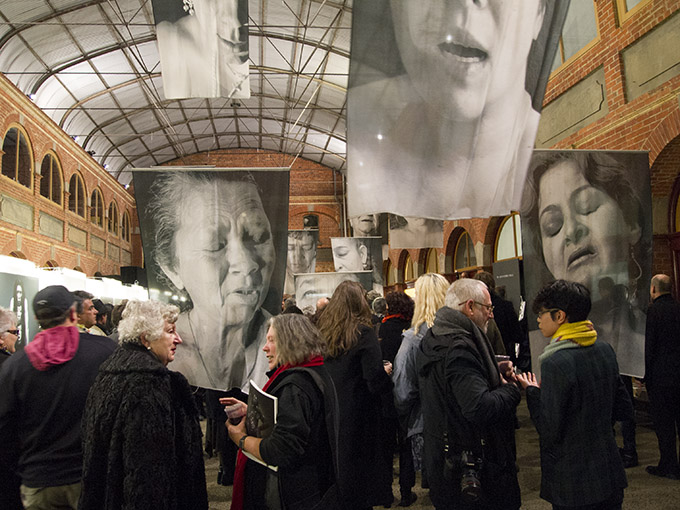
The launch crowd with Erika Diettes images
.
Photos © 2013 Doug Spowart, Opening address text © 2013 Alasdair Foster
.

The photos are licensed under a Creative Commons Attribution-NonCommercial-NoDerivs 3.0 Unported License.
.
.
.
JACKIE RANKEN @ BIFB: Doug’s catalogue essay
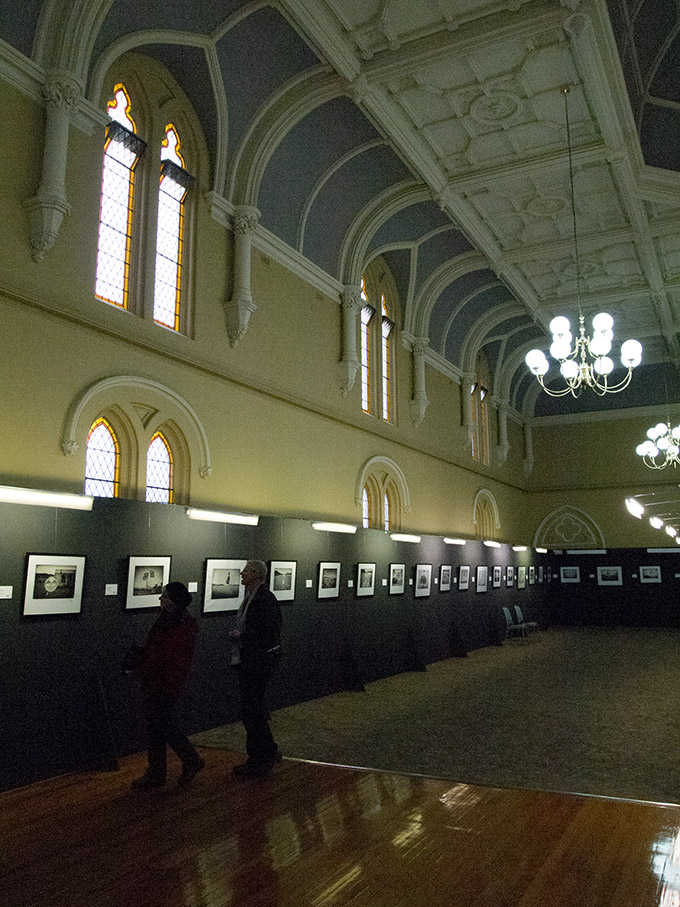
Jackie Ranken’s BIFB show
.
Jackie Ranken has a huge show at the 2013 Ballarat International Foto Biennale –
I was privileged to write the catalogue essay …
..
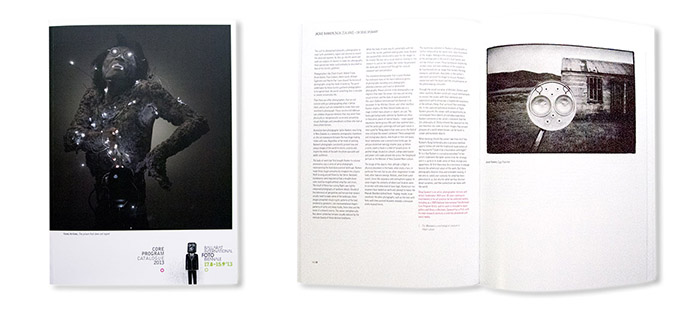
Jackie’s BIFB Catalogue pages
.
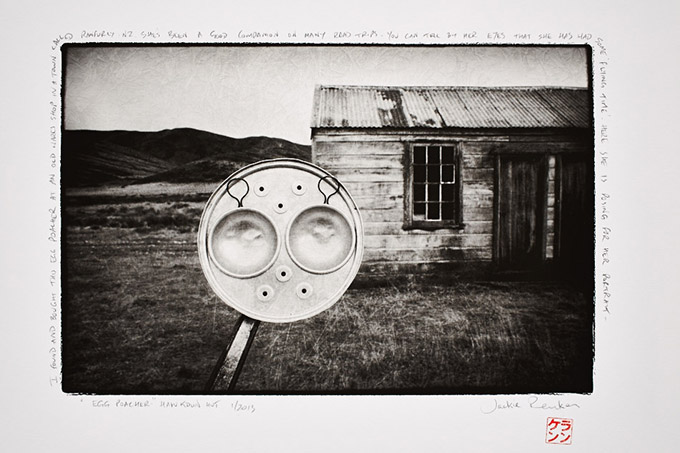
Egg Poacher
.
THE ESSAY
Jackie Ranken: far-flung – home and away
The call to photograph demands a photographer to react with spontaneity, vigour and intuition to record the observed moment. As they go into the world and seek out subjects of interest to make into photographs their operational mode could probably be described as that of the hunter-gatherer. Photographers like Elliott Erwitt, Robert Frank, Ansel Adams, Faye Godwin, Helen Levitt, William Eggleston and Martin Parr have shaped the history of photography using this mode of working. The quest undertaken by these hunter-gatherer photographers is to capture from the world something that is invisible or unseen in everyday life.
Then there are other photographers that are not content with just photographing what is before them, and as such are compelled to create their own realities to photograph. These constructed tableaux can combine disparate elements that may never have physically or metaphorically co-existed, presenting visual challenges and conundrums to those who look at these photo-fictions.
Australian born photographer Jackie Ranken, now living in New Zealand, is somewhat a photographic chameleon as she can manoeuvre between the two image-making styles with ease. Regardless of her mode of working Ranken’s photographs consistently present new and unique images of the world to inform, surprise and inspire the minds of the both the photo-specialist and public audiences.
The body of work that first brought Jackie Ranken to national prominence was a series of aerial photographs reinterpreting the Australian pastoral landscape. Ranken made these images precariously strapped into a Gypsy Moth bi-wing aircraft flown by her father. Aerobatic manoeuvres were required so that a straight-down view could be imaged without wing tips and struts. The result of these hair-raising flights was tightly composed photographs of landform details. Devoid of the references of perspective and horizon that viewers usually need to make sense of the landscape, these images presented visual cryptic patterns of the land rendered as geometric, non-representational shapes–patterns of cattle and sheep tracks, fence lines and the twist of a stream’s course. The viewer metaphorically flies above unfamiliar terrains visually seduced by the intricate beauty of these abstract landforms.
While this body of work may fit comfortably with the idea of the hunter-gatherer photographic mode, Ranken also purposefully constructed a space for her images to be created. She was not a casual observer waiting for the moment to capture her subject, but rather she provoked the landscape to reveal itself through her unusual viewpoint and representation.
The chameleon photographer that is Jackie Ranken has embraced many of the more traditional genres of photography including press photography, photodocumentary and travel or destination photography. Always present in her photography is an edginess that takes the viewer into new and exciting visual territory and the body of work presented in this year’s Ballarat International Foto Biennale is no exception. In her Kitchen Stories and other realities Ranken employs the New Zealand landscape as a stage in which many players or objects are cast. The landscape backgrounds selected by Ranken are often in themselves places of natural beauty – snow-capped mountains, barren grassy hills and clear watered lakes … until the landscape’s seemingly still and quiet nature is interrupted by flying objects that come across the field of view and grab the viewer’s attention. These unexpected and incongruous objects, now frozen in time and space, hover motionless over a monochrome landscape. An antique aluminium two-egg steamer pops up before a rustic country shack in field of tussock grass. In another image, located on a beach a drop-sided toaster and power cord snake serpent-like across the foreground perhaps as the Manaia[1] of New Zealand Māori culture.
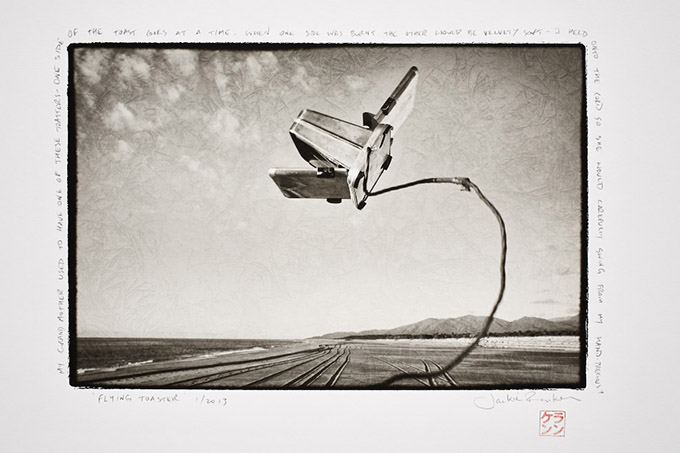
Flying Toaster
.
The design of the objects, their attitude in flight or physical placement in the frame, often imply a face in particular–the eyes, but as you allow imagination to take hold other features emerge. Robotic, alien (from outer space), drone-like apparatus and contraptions appear. In some images the similarity of object and location seem to connect with some kind of loose logic. Aluminium rice steamers have landed on earth and attempt to mimic the Moeraki Boulders behind them–hoping, maybe, to go unnoticed. Yet in other photographs, such as ones in which forks, with tines pointed skyward, emulate a miniature steely massed forest.
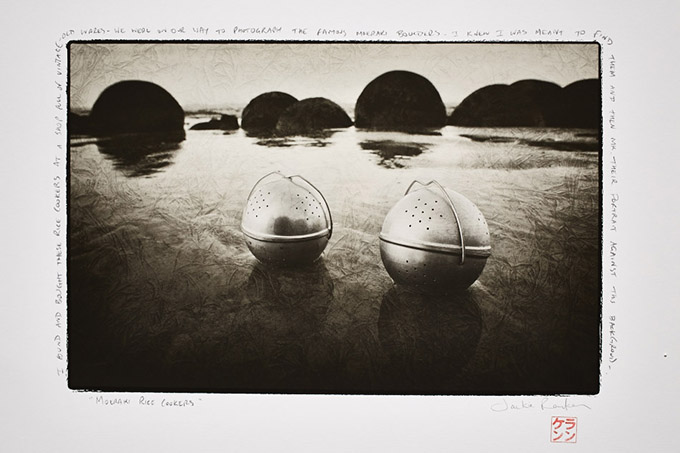
Moeraki Rice Cookers
.
The mysterious presence in Ranken’s photographs is further enhanced by her warm tone, sepia treatment of the images. Adding to the visual presentation of the photographs is the use of a dark border and veil-like texture screen. These techniques enable the normal colour and tone rendition of the subject to be transformed into an image that invokes fleeting memories and dreams. Anecdotes in the author’s own hand surround the image to recount Ranken’s connection with the object and the circumstances of the photo-making encounter.
Through the visual narrative of Kitchen Stories and other realities, Ranken constructs visual communiqués to connect the viewer with their memories and experiences and to encourage a heightened awareness of the ordinary things that surround their everyday life. In the captured ephemeral moments of flight Ranken presents the viewer with an opportunity to contemplate these objects of everyday experience. Ranken comments in her artist’s statement, that the Zen philosophy of Shibui informs her approach to life, and therefore she seeks to create images that present glimpses of a world where beauty can be found in simple and mundane objects.
What meaning should the viewer take from this? Are Ranken’s flung kitchenalia also a personal rebellion against homecraft and the traditional expectations of the housewife? Could it be a fascination with flight? Or is it that Ranken is a visual provocateur? In her artist’s statement the latter seems to be her strategy and it’s up to us to make sense of these incongruous apparitions. At first there may be a resistance to engage beyond the whimsical nature of the work. But these photographs deserve close and extended viewing, if not only to satisfy our curiosity for what has been presented to us, but also for what we may discover about ourselves, and the connections we make with the world.
.
Dr Doug Spowart
[1] http://en.wikipedia.org/wiki/Manaia_%28mythological_creature%29
BIOG: Doug Spowart is an artist, photographer, lecturer and artists’ bookmaker. With over 30 years continuous involvement in his art practice he has exhibited widely and his work is included in major gallery and library collections. Spowart has a PhD with his main research interests in both the photobook and social media.
.
Photos © 2013 Jackie Ranken and Doug Spowart, installation photo
.
This text is licensed under a Creative Commons Attribution-NonCommercial-NoDerivs 3.0 Unported License.
.
UPDATE: Nocturne Muswellbrook
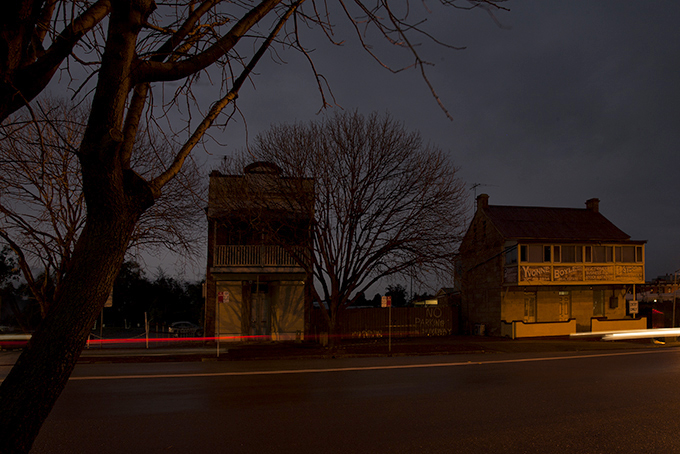
Intersection of Sydney & Haydon Streets
..
We’ve been busy in the Nocturne Muswellbrook project – Here is an update …
.
A NEWSPAPER STORY
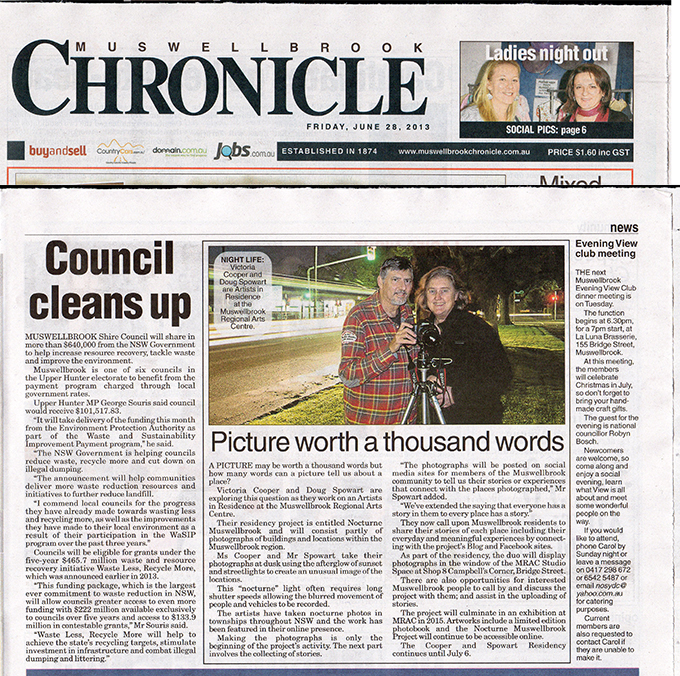
Chronicle News story: 28 June 2013
.
Our Gallery
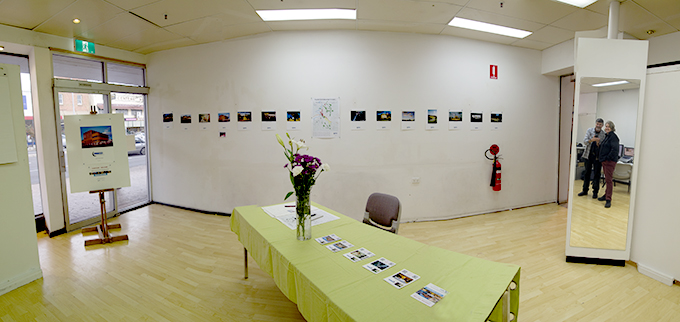
The Nocturne Gallery in SHop 8 Campbell’s Corner
.
An ABC Radio interview
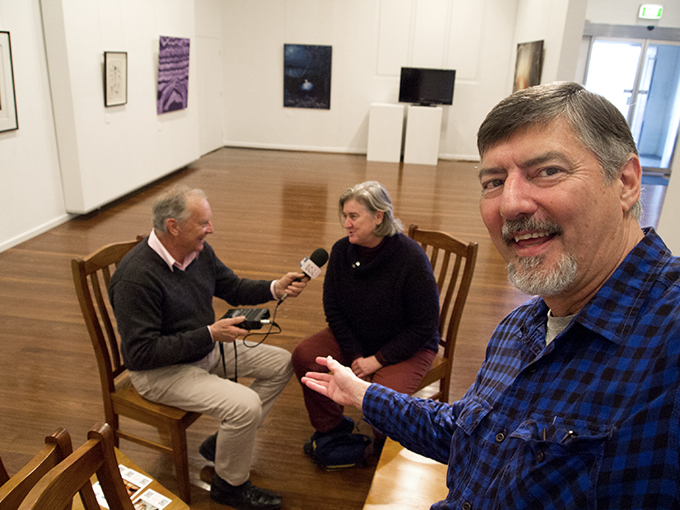
Mike Pritchard from ABC Radio interview
.
A presentation to the local Camera Club
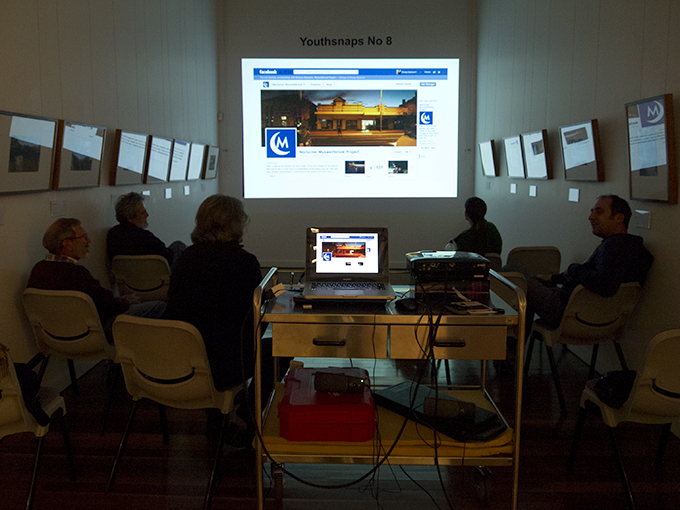
Muswellbrook & District Camera Club
.
Working in the rain – nearly every night lately …
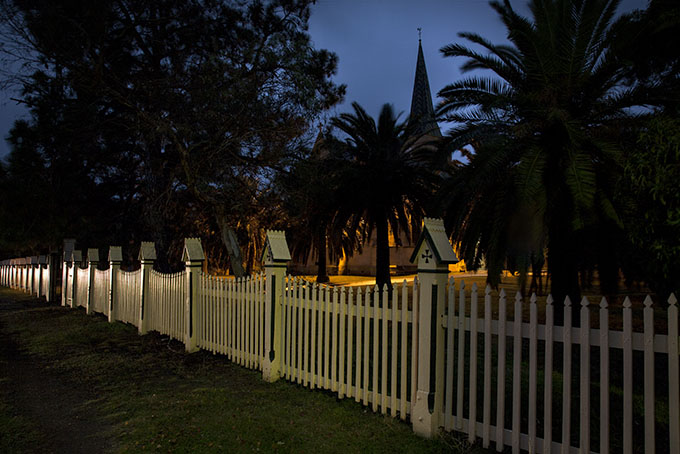
St Alban’s Anglican Church
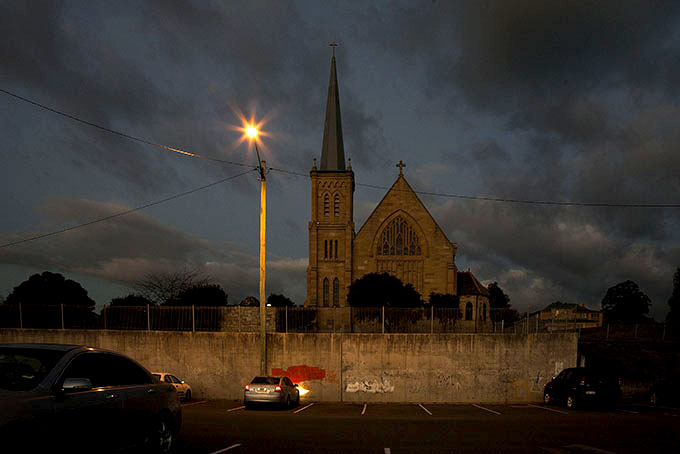
St James’ Catholic Church
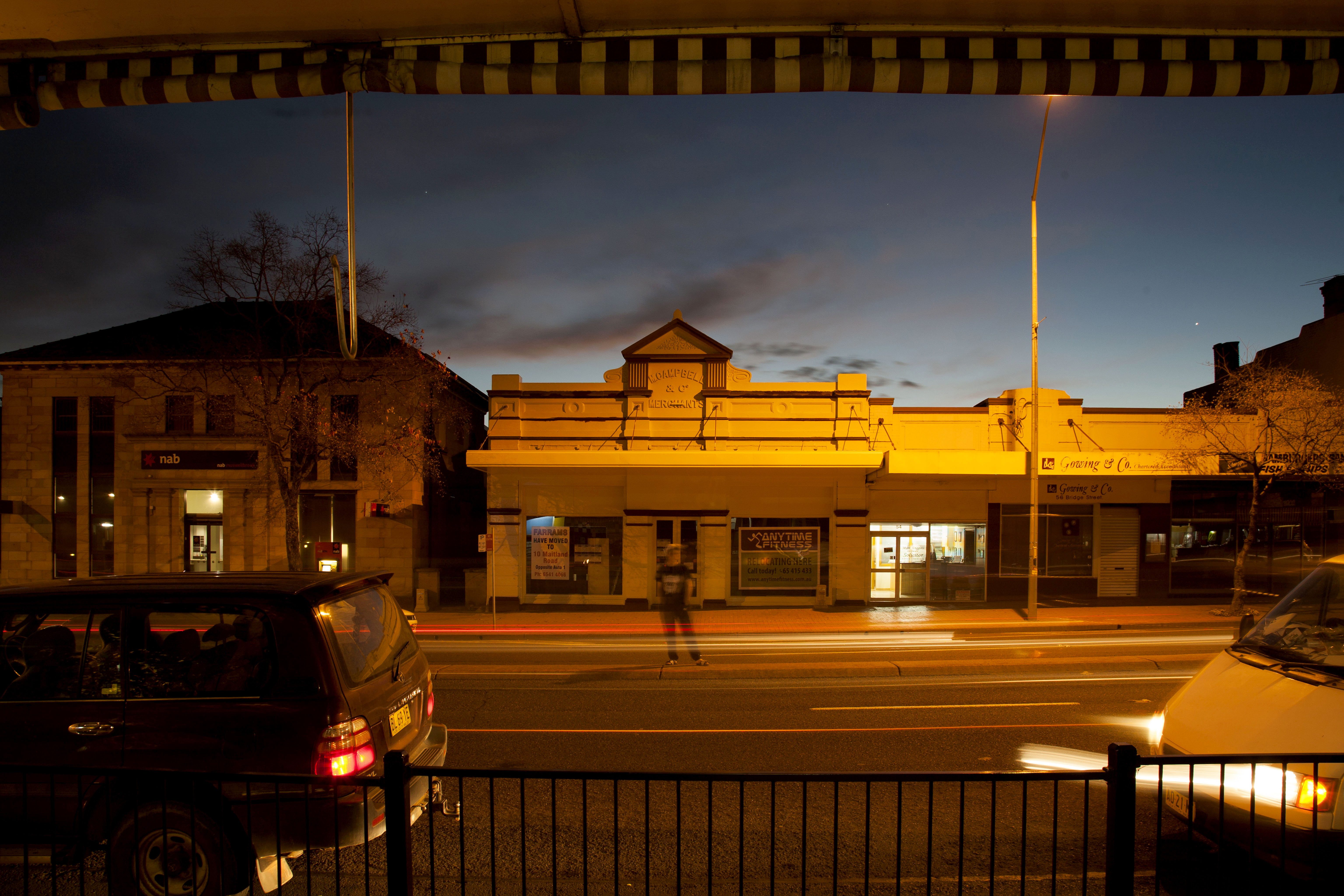
56 Bridge Street
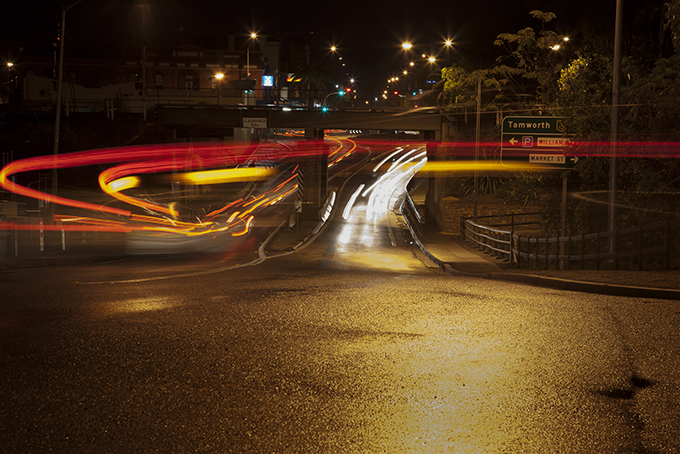
Southern end of the Subway
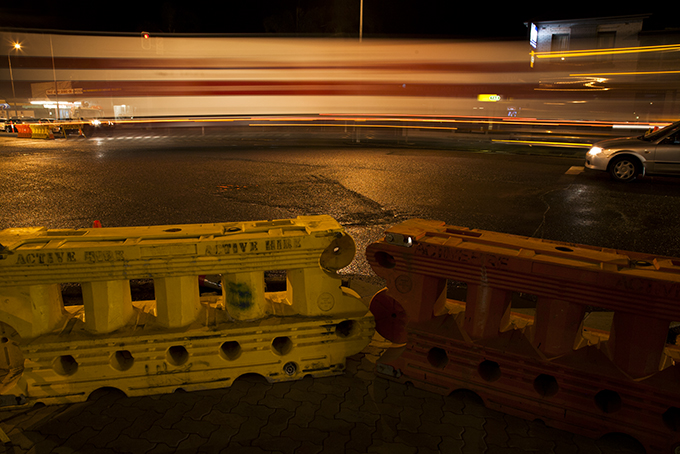
Corner Sydney Street and Maitland Road
.
SEE MORE IMAGES AND TO ALSO MAKE A PERSONAL COMMENT ON THE POSTS about your experience of ‘PLACE’ or stories evoked by the subjects we have photographed:
.
https://www.facebook.com/pages/Nocturne-Muswellbrook-Project/462047657214253.
AND
The Blog: www.nocturnemuswellbrook.org
.

Comment Now …
..
To Follow us on FACEBOOK ‘Tick’ GET NOTIFICATIONS and ALL UPDATES

.
© 2013 Victoria Cooper and Doug Spowart for The Nocturne Muswellbrook Project
.
This work is licensed under a Creative Commons Attribution-NonCommercial-NoDerivs 3.0 Unported License.
.
.
.
DOUG Has article on Photobooks in BETTER PHOTOGRAPHY
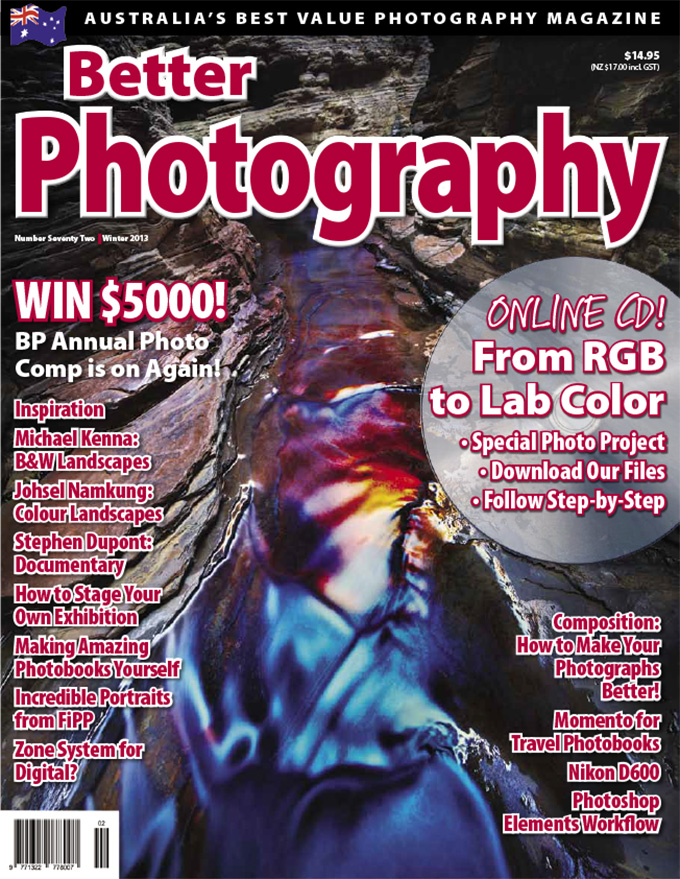
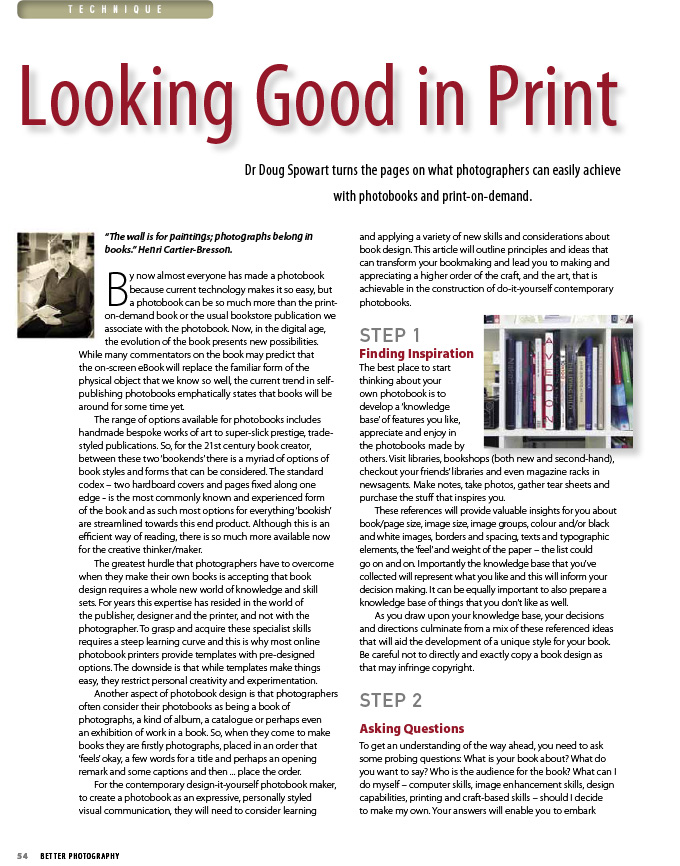
The winter edition of Peter Eastway’s BETTER PHOTOGRAPHY includes an article by Doug on Photobooks. The piece covers a step-by-step discussion on making your own photobooks from concept to output, either by DIY or Print-on-demand.
.
.
Here’s page one of the article …
.
.
DOWNLOAD A PDF of the article here: SPOWART-Photobooks-Better_Photography
.
AND – Do buy the magazine for the other great stories and prizes!!
.
.
.
.
SUPPORT THIS PROJECT: Retake Melbourne App
In the opening paragraph of a review of John Elliott’s rephotography exhibition The Last Show and Re-shoot that was published in Art Monthly (#240 June 2011) I made the following comment:
Part of the mystique bestowed upon photography is the notion that a photograph captures a moment of time that enables a viewer to reconnect with or gain insights into the subject portrayed. Since its inception photographers have utilised photography’s inherent connection with time and place by reimaging the original subject days, months and years after the originating photographic ‘moment’. One notable re-photography project began in the 1970s by Mark Klett and his team in the United States with the Second View: The Rephotographic Survey Project, and continues with the recent Third views, second sights: a rephotographic survey of the American West. These projects draw upon the concept that comparative images over time extend the narrative of the single image, and that the differences and similarities observed tell a larger story – that of time and change.
I am excited by rephotography projects and from the early 1980s I have undertaken many myself. Now I have encountered news of an exciting project in Melbourne that will make this specialised photographic activity available to anyone with a smart phone or imaging device . Entitled Retake Melbourne the project will do two significant things; firstly, it will create an APP where earlier photographs of Melbourne can be located and aligned for the contemporary photographer to image the exact same view; and secondly, the source images will be from the the Sate Library of Victoria’s extensive Mark Strizic photography collection.
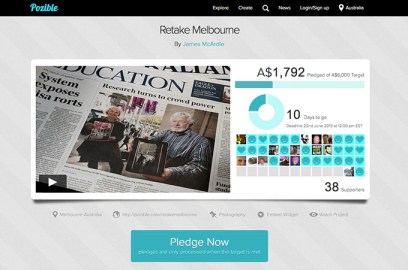
The project is being ‘floated’ via Pozible crowd sourcing, and time is running out to ensure this project gets the support to make it happen. I would ask you to review the project details that follow – login to Pozible, and make a pledge to support this valid and innovative project.
Thanking You
Doug Spowart
.
Here are the details … From the POZIBLE Project page
..
.
.
POZIBLE – Project Title: Retake Melbourne
Overview:
We Melburnians jealously defend our city as the ‘most live-able’; a cultured grande dame with a creative dash, anti-establishment street art, a larrikin love of football and lots of delicious secrets.
To participate in this project will be to illuminate and contrast her hidden past with her contemporary face.
Key to this is the mine of visual data in the State Library of Victoria’s collection, in particular immigrant Australian photographer Mark Strizic’s 5000 half-century-old negatives, colour transparencies and slides, acquired in 2007.
Aims:
When associate Greg Neville saw this archive, he envisaged a repeat photography project based on Strizic’s images which would uncover the glorious Melbourne buildings of his childhood memories.
We’d like to share this chance to retake Melbourne’s past. But re-photography is technically demanding. I realised that a mobile app would make the process accessible to everyone.

Image: © Mark Strizic: Melbourne GPO, 1950s

Mobile App mockup: © Strizic image overlay enables user to compose their own version accurately

A finished ‘re-photograph’ accurately duplicating Strizic photograph angle of view
By tapping the ‘crowd’ we can include you in this project. Your images might become valuable records, as Strizic’s are now, to researchers in the still further future! They will compare your view with Mark’s to see how the city has changed. You can be in on the birth of Melbourne’s first comparative photographic research project.
But first we need the tech to do it; a photography app that contributors will be first to use!
Background:
Close associate of architects Robyn Boyd and David Saunders, Strizic’s love of architecture and his European eye provoked his condemnation of the ugliness he saw invading Australian city-scapes during the 1960s when architecture of the Gold Rush era coexisted with, and was being demolished for, Modernist curtain-glass high-rise office buildings.

LHS Image: © Mark Strizic: Russell Street Melbourne, 1950s
RHS image: Greg Neville: Russell Street Melbourne, 2013

Image: © Mark Strizic: Melbourne Museum and State Library, 1950s
Outcomes:
By contributing to the development of our crowd-funded app, you will create the means to contribute accurate repeat photography of the locations of Strizic’s thirty-to-fifty year-old images of architecture, street-scenes and pedestrians, and to uncover the layers of history.
Historical and Creative results
Re-photography is studied and recognised for its value for historical, scientific, geographic, geologic and social science research; this use of crowd sourced material will be innovative.
Rather than being slavish copies of old photos, yours will be interpretations of Strizic’s originals which will build a picture of how a city has changed, and is in turn transforming us. There is a creative dimension in the ratio of interpretation to replication each contributor will employ in this process, that will add to value of their artefact. Their resultant contribution may be incorporated in the SLV online collection for comparison, by these and future researchers, with Strizic’s original.
The Mobile App:
With this app, members of the public can find locations photographed by Strizic on a map, orient their device’s camera closely to the angle, orientation and framing that he used using a transparent overlay of his image, downloaded from the SLV online collection, over their screen image.
This app will simplify the repeat photography exercise and enable you to produce a comparative image which will match or contrast existing conditions and features with those in his original image.
Contribute to our shared archive:
The State Library of Victoria‘s huge archive opens up a rich resource for Victorians online; now that everyone can access it; they can also interact with it. This crowd-sourced project will give the archive more exposure and contribute new resources.
Provide a resource for future research:
The Strizic archive forms a reference for participants who will be asked to repeat the making of the images in the same location. In doing so they will record a contemporary street scene peopled with pedestrians who may regard, occupy and use the city of Melbourne in very different ways now.
Increase your own knowledge of Melbourne and Photography:
Part of the durable, interactive and updatable project outcomes is that participants will make a substantial contribution, they in turn will benefit from the exercise of finding the locations in coming to understand at first hand the operation of the forces of change on the city, the influences of crowd behaviour on the city, and its power to change us and our societal interactions. You too can become a ‘re-photographer’!
- What will your contribution do?
Level of funding sought: $6,000 – $10,000
A huge volume of photographic contributions will be required to enable worthwhile comparison of the old and new images to show how Melbourne’s buildings and streets have shaped, and are shaped by, its populace and its society. Achieving the necessary quantity and accuracy will require $6,000 base funding for the development and distribution of a mobile-device app.
$6000 will pay for six months of the developer’s time in building the app.
Researcher Dr James McArdle, will contribute $12,000 in-kind support; for research into the State Library collection and mapping of locations of Strizic images for GPS locator in the app.
*Reaching $10,000:
will enable us to map significantly more locations and to pinpoint the date/time of capture for more Strizic photographs as a guide to the re-photographers.
Twitter: JamesmMcArdle
Content on this page is licensed under

DOCUMENT MAKING IN METROPOLIS

.
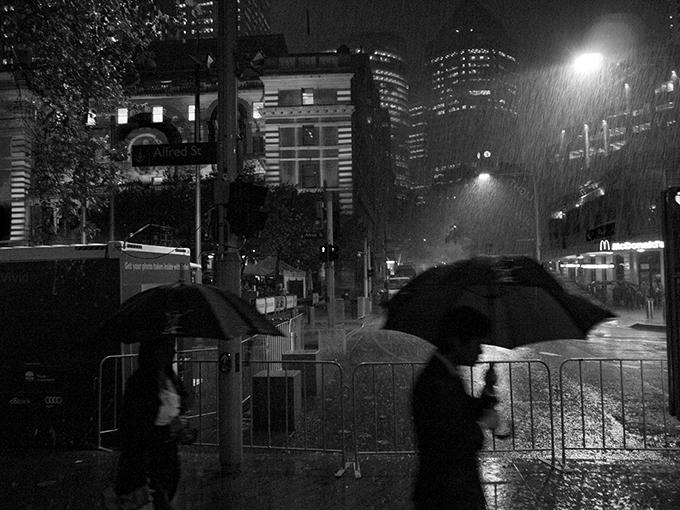
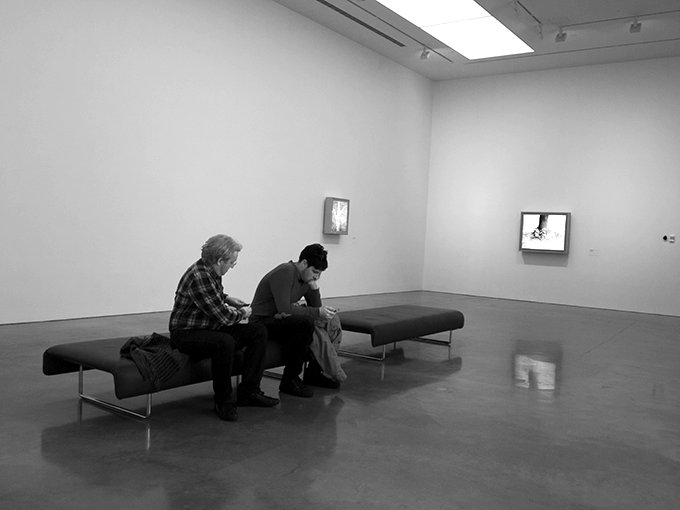
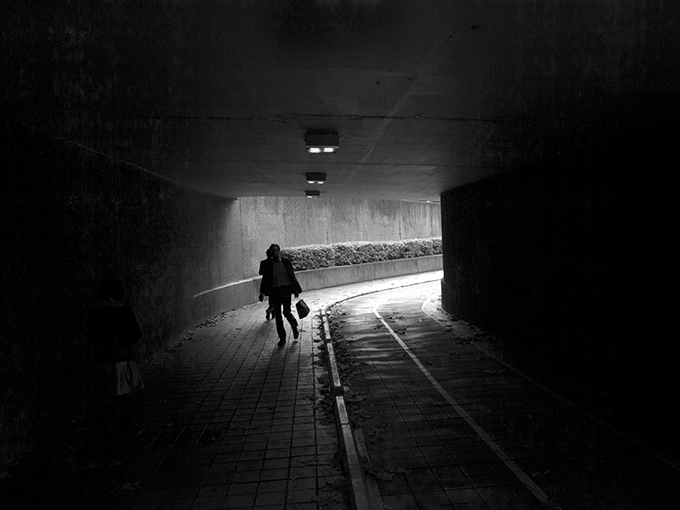
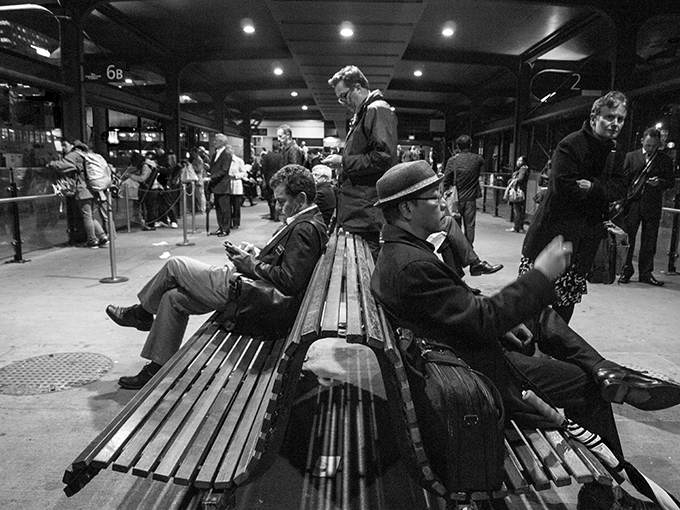
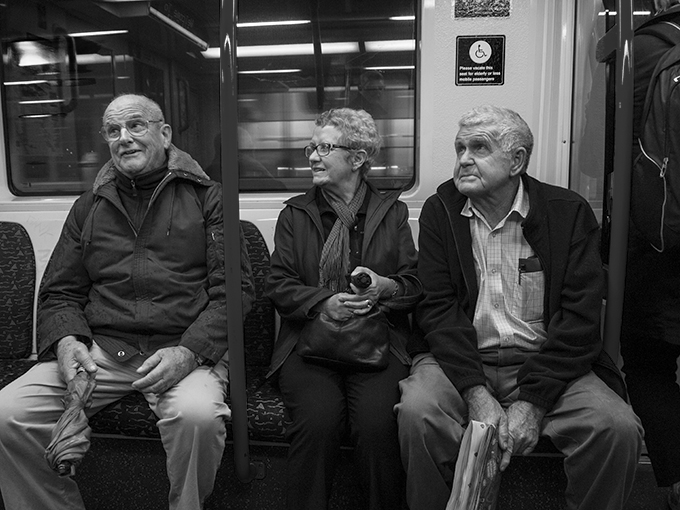
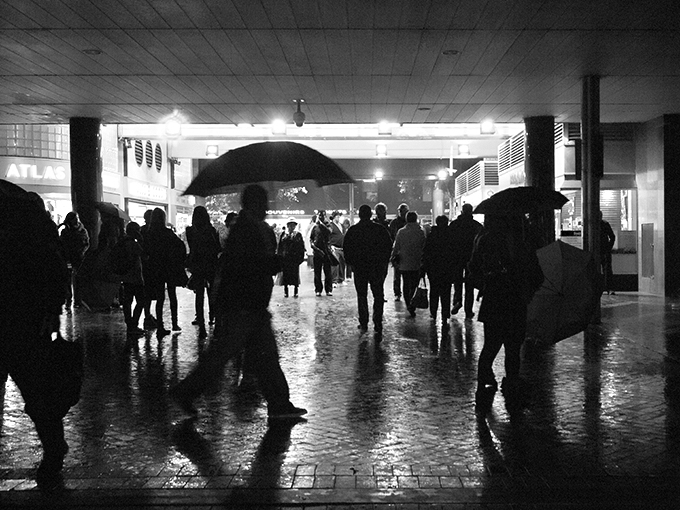
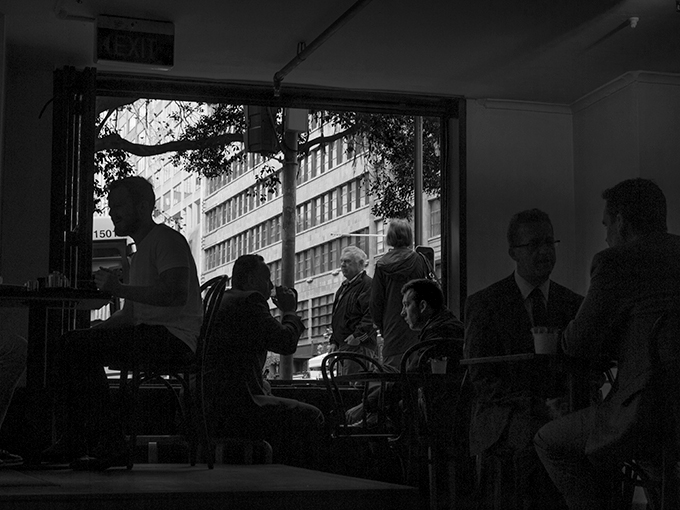
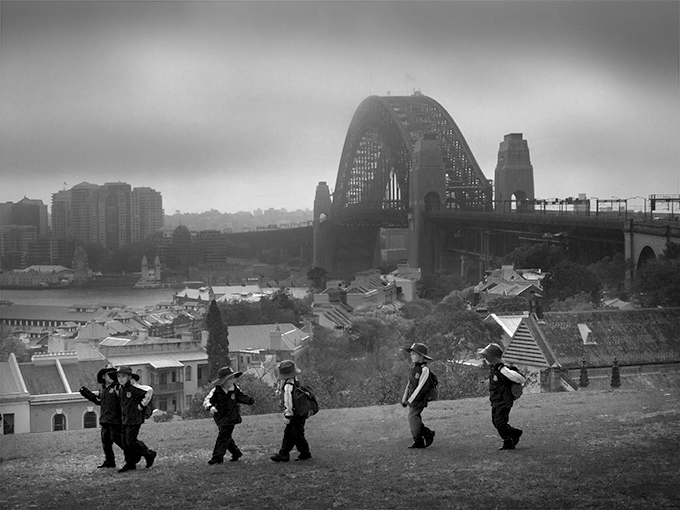
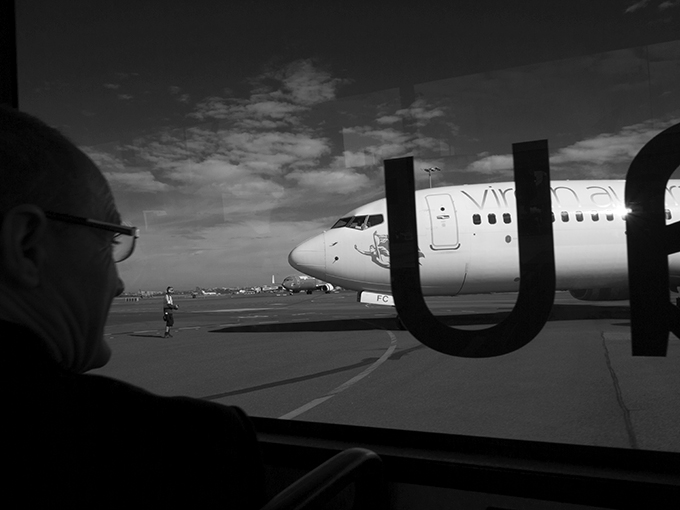
Vicky and I were in Sydney last week. It is a Big city, lots of things to see and do, festivals; Vivid, Headon and Reportage, people everywhere with phones, iPads and DSLRs shooting. We joined in the photo foray that is Sydney and found in ourselves – and in our subjects, a connection with Australian documentary photography that threaded from Parke’s glowing ghost-light, to Dupain and Moore’s modernist clean lines and then all the way back to Cazneaux’s warm pictorialist pictures. These connections with the history of photography were warm and fuzzy for me and gave a feeling of confidence, comfort and purpose for my engagement with image making.
.
I began to think about photography and photographers today, particularly the often cited us and them divide between those who have a significant history, both professional and academic in photography, and those who pick up a camera, or use their smart imaging device and just take pictures.
Questions arose – I’ll use the terms vernacular and serious to distinguish my discussion of these two groups:
- Does a sense of history and experience in photography really make a difference to the ‘quality’ of the resulting image?
- There is a lot of hype and acceptance of the snapshot ethic within photography circles – so what is the difference when between a serious and a vernacular snapshot photo?
- Is the general public today more astute about image design, content, moment of capture than serious photographers choose to give them credit for?
- Is there any difference in the workflow between serious photographers and those ubiquitous vernacular snappers? Isn’t photography still about; having access to imaging technology>looking/seeing/experiencing the world>responding to visual triggers>readying the imaging device>considering it in the viewscreen>take the picture at a selected time/timing> and then doing something with it?
- Does it make a difference if the vernacular photographer engages in a spontaneous act of self-documentation and the serious photographer engages in the process with a methodology that which is informed by a past lived in photography and the appreciation of the underpinning awareness of the photoimaging process, technology, visual literacy and human sociology?
- Are both the vernacular and the serious photographer’s images ultimately the result of the assimilation of every studied or subliminal idea and visual influence that they have encountered?
On these days in Sydney I made my photographs, as did thousands of other photographers who shared my interest in using the photograph, or the very act of photography, to ‘still’ a moment in time. But are there other synergies at play? The philosopher Wilém Flusser might an alternate view on what photographer, vernacular and serious alike. In his book, Towards a Philosophy of Photography (2000) Flusser proposes that everyone using photography is essentially being seduced by the camera and its ‘program’. He states:
Both those taking snaps and documentary photographers, however, have not understood ‘information.’ What they produce are camera memories, not information, and the better they do it, the more they prove the victory of the camera over the human being. (Flusser 2000:59)
Perhaps then, if Flusser is right, we have no say in the process at all and that we are merely slaves to the technology. With that in mind, I guess I’ll just continue to make ‘camera memories’ so that the camera and I can connect with the times, and the places, that we shared together …
Doug Spowart 8 June 2013
.
.
SOME CAMERA MEMORIES OF THE METROPOLIS
My Olympus Pen & me: May 27-30, 2013
.



.
.
All photographs by my Olympus Pen whose ‘program’ made me take the photos….
© Doug Spowart 2013.
.
This work is licensed under a Creative Commons Attribution-NonCommercial-NoDerivs 3.0 Unported License.
.
.
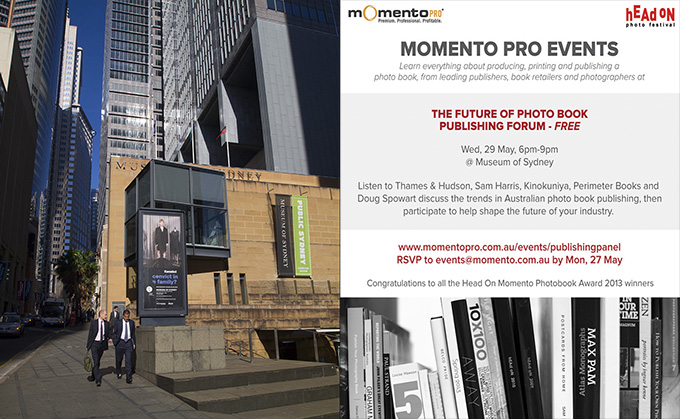
hEADoN into THE FUTURE OF PHOTOBOOK PUBLISHING
Invite and MOS

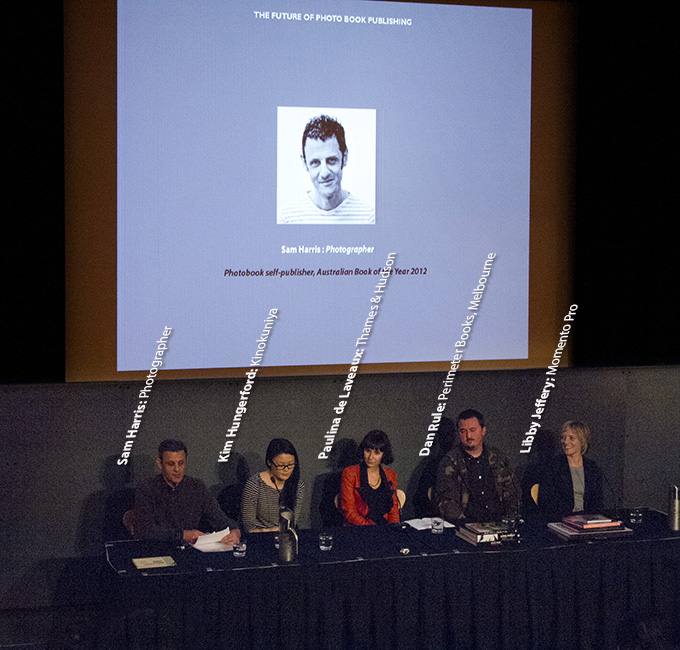
The Future of the Photo Book Forum ……Photo: Victoria Cooper
.
RUNSHEET & OVERVIEW:
Momento Pro/HEADON Event: The Future of Photo Book Publishing
.
6.00 pm Panellists arrive on stage
6.10 pm Doug Spowart: Welcome and good evening.
Photographers and those who make photobooks are storytellers – and – with this in mind – I would like to acknowledge and pay respect to the traditional owners and story-tellers of this land on which we meet; the Gadigal people of the Eora Nation.
This evening we will discuss the photobook and consider the opportunities for its future in Australia.
My name is Doug Spowart, I make artists books, photobooks and I have a research interest in photography and the form of the photobook.
This evening I’m joined by an eminent panel of book people with a wide range of knowledge and expertise on the topic.
The order of this evening will begin with an overview by me about the photobook. Then each of the panellists will discuss their involvement within the book and photobook world. Following that the panel will be presented with a range of questions – some sent in from attendees. Towards the end of the forum we have set aside time for your questions and comments to the panel. The forum will close and be followed by refreshments and networking opportunities …
At this juncture I would like to thank our Sponsor Momento Pro and the Organizers of the HeadOn Photo Festival, and the Museum of Sydney for this opportunity to engage in dialogue about this growing and evolving medium …
.
AN OVERVIEW OF THE PHOTOBOOK
.
Photobook luminary Martin Parr states:
… that photography and the book were just meant for each other; they always have been. It’s the perfect medium for photography: it’s printed, it’s reproducible and it travels well. (Parr in Lane 2006:15)
The photobook is indeed the ‘perfect medium’ for photography and its history, the history of photography are inextricably linked with that of publishing. In fact some of the earliest experiments in photography made by Hércules Florence (1804 -1879), Nicéphore Niépce (1765 -1833) and Henry Fox Talbot (1800 -1877) were to discover methods and processes that would enable the copying and printing of texts or designs by capturing and fixing camera obscura images.
![William Henry Fox Talbot, by John Moffat, 1864 By Michael Maggs [Public domain], via Wikimedia Commons](https://wotwedid.com/wp-content/uploads/2013/06/william_henry_fox_talbot_by_john_moffat_1864-by-michaelmaggs-public-domain-via-wikimedia-commons.jpg)
William Henry Fox Talbot, by John Moffat, 1864
By Michael Maggs [Public domain], via Wikimedia Commons
Books illustrated by photographs as a genre of the publishing industry flourished. The photographic image could operate as a storyteller, a precise document of truth, a device to entertain and, at times, a carrier of propaganda. Early photography book works consisted of travel, geographical and military expeditions, trade catalogues, scientific and ethnographic documentation.
Although some photographers, like Talbot, may have established their own publishing ventures, usually the photographer was a supplier of images for a publication that was commissioned by someone else – a publisher, benefactor or government agency. The publishing of a book was, and still is, a task requiring the specialized skills, the entrepreneurship and financial acumen found in the worlds of publishing, marketing and bookselling. Books are created for a purchasing audience: it is a mercantile process where return on the investment in a publishing project is a necessary outcome.
What is it about photographers and their need for photobooks?
Martin Parr describes the influence that photobooks had on his own practice by stating that:
I’m a photographer and I need to inform myself about what’s going on in the world photographically. Books have taught me more about photography and photographers than anything else I can think of. (Parr in Badger 2003:54)
Parr is not alone. The publishing house Aperture – a well established international publisher of contemporary and historical photographic essays and monographs – acknowledges in their organization’s credo that:
Every photographer who is a master of his [sic] medium has evolved a philosophy from such experiences; and whether we agree or not, his thoughts act like a catalyst upon our own — he has contributed to dynamic ideas of our time. Only rarely do such concepts get written down clearly and in a form where photographers scattered all over the earth may see and look at the photographs that are the ultimate expression. (in Craven 2002:13)
Library
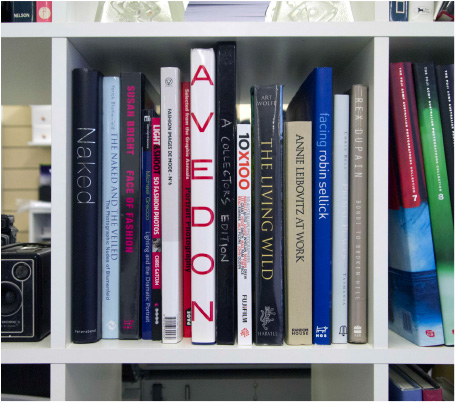
So photographers seek inspiration for their work by building their own reference libraries: have you ever visited a photographer and not had discussions about books or been invited to see their library? It then makes sense that photographers will want a book of their own. Photobook publisher Dewi Lewis exclaims: ‘I have yet to meet a photographer who doesn’t want to see their work in book form.’ (Lewis and Ward 1992:7).
Photobook commentators and publishers of the book Publish Your Photography Book, Darius Himes and Mary Virginia Swanson claim that this need is universal and emotive:
It almost goes without saying that every photographer wants a book of his or her work. It’s a major milestone, an indicator of success and recognition, and a chance to place a selection of one’s work in the hands of hundreds, if not thousands, of people. Plus it is just plain exciting to hold a book of your photographs! (Himes and Swanson 2011:26)
It seems that this ‘rite of passage’ is an important step of professional recognition as photographer, photobook maker and writer – Robert Adams – makes the following statement in his book Why people photograph:
I know of no first-rate photographer who has come of age in the past twenty-five years who has found the audience that he or she deserves without publishing such a book. (Adams 1994:44-5)
Does it then follow that every photographer of note or the creator of a significant body of work deserves a book?
It is not that easy. Amongst others the photobook publisher Dewi Lewis argues that the market for photobooks is limited – where he identifies that: ‘photographers themselves are the largest purchasers of photobooks’ (Lewis and Ward 1992).
Ultimately unsold books are remaindered – something even Magnum photographer Martin Parr experienced. His first book Bad Weather (1982) sold poorly and was remaindered at 40p. In an essay on photobook publishing Peter Metelerkamp reports that:
Parr himself bought in as many copies as he could at that price (very much below the cost of production) (Metelerkamp circa 2004:7).
But while remaindered books can be a great way to acquire a low priced library they represent a loss to the publisher, who may then be wary of undertaking future photobook ventures.
The photographers who are successfully trade-published are usually either well known and/or are those who produce work that is of interest to a broad audience. Most notably in Australia this has included celebrated photographers such as Harold Cazneaux (1878-1953), Frank Hurley (1885 -1962), Max Dupain (1911-1992), Jeff Carter (1928-2010), David Moore (1927-2003), Peter Dombrovskis (1945 -1996), Rennie Ellis (1940-2003).
In contemporary times other avenues of photobook publishing as a documentary/art project have emerged and include photobooks by Tracey Moffatt (1960- ), Max Pam (1949- ), Matthew Sleeth (1972- ), Stephen Dupont (1967- ), Trent Parke (1971- ) Michael Coyne (1945- ) and Wesley Stacey (1941- ) and many others. The field of contemporary pictorial photobook books could be represented by the likes of Ken Duncan (1954 – ), Peter Lik (1959 – ) and Steve Parish (1945 – ). Then there are so many more …
So what about the photographer doing it for themselves?
Historically, the self-publishing of photobooks was a huge investment of time and money – an individual photographer’s access to the required production and printing facilities was a major barrier. Also those who have financed their own publishing exploits generally lacked the distribution and marketing connections that were attached to the major publishing houses.
Access to printing facilities were overcome by the photographer having contacts in or working in the printing industry such as American photobook-maker Ed Ruscha did with books like Twenty-six Gasoline Stations (1963). In Australia Peter Lyssiotis was able to produce: Journey of a Wise Electron (1981) and other books by participating in a co-operative that accessed a commercial printing press during down time or on weekends. But these access points were not available for everyone who wanted to publish a book.
Bill Owen’s book
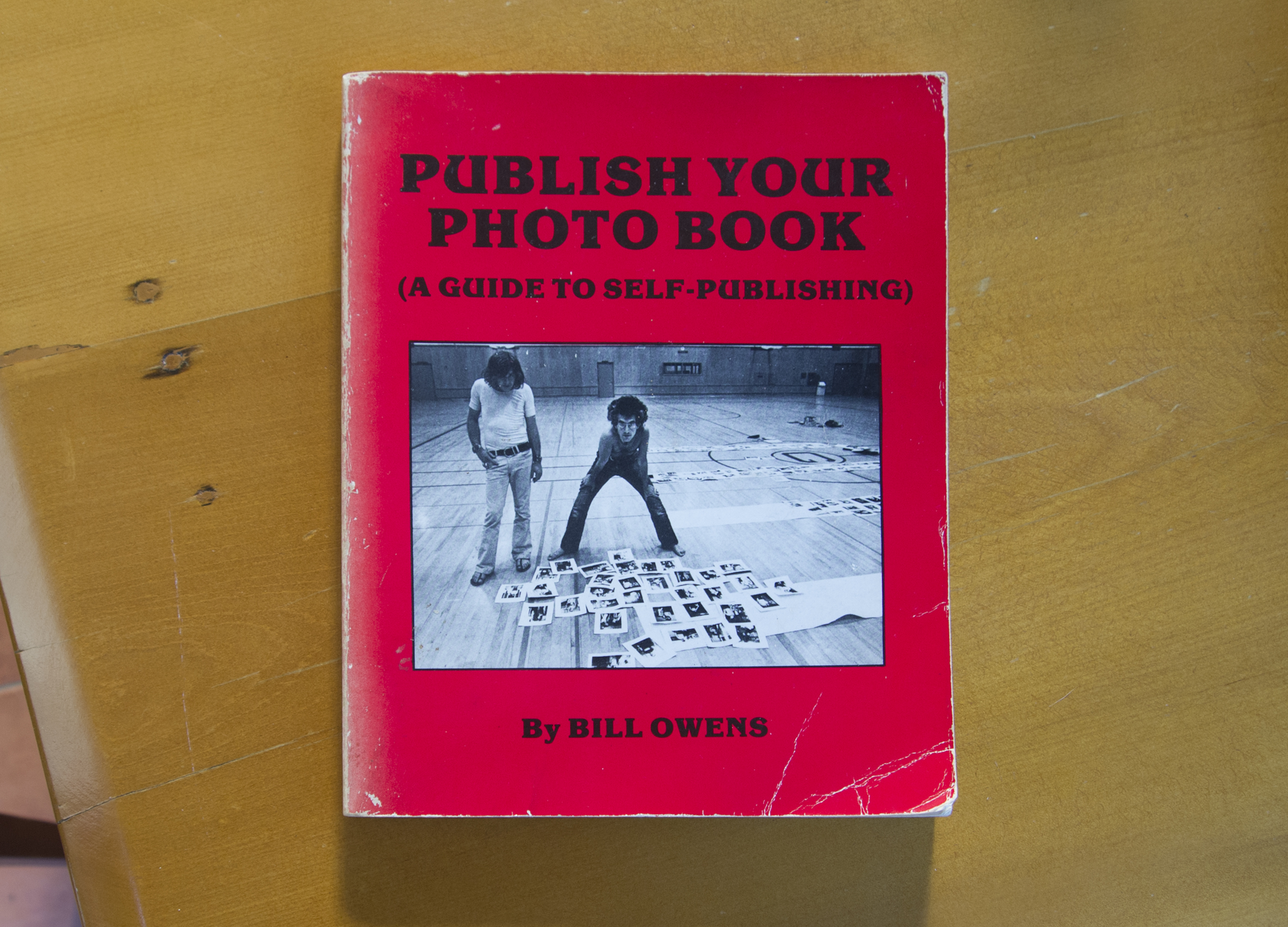
Nearly 35 years ago American photographer Bill Owens, publisher of Suburbia (1972) and other books made the following introductory statement to his info-guide – Publish Your Photo Book (1979) – a statement that may resonate with the experience of today’s photobook publishers:
Had my photographic books made lots of money I would not have written this book. I wouldn’t need to because I would be part of the establishment and enjoying its privileges. (Owens 1979:3)
It has been a long time coming, but 175 years later with digital technologies including DIY book design software, print-on-demand presses like HP Indigo, the self-published photobook is fulfilling Talbot’s prediction. It’s never been easier for anyone to make a photobooks.
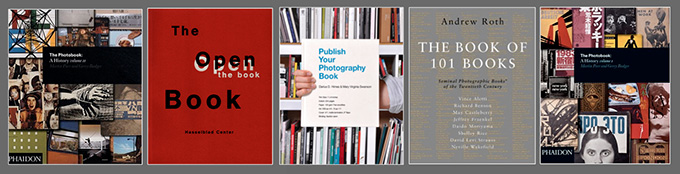
Some seminal photobook texts
The photobook discipline now has commentators and critics, there are awards, linkages with the artists book, supporting independent groups like Self Publish Be Happy, The Photo Book Club and the Indie Photo Book Library.
However just making a book, even your own, does not guarantee success – whatever that might be. But at this time, what are the barriers and opportunities that we in Australia need to consider and respond to as this boom in photobooks continues?
What ideas, social and political mechanisms and appropriate structures do we need to create to nurture and support this emerging publishing paradigm?
Let us now pose some questions to the panel …
.
INTRODUCTION OF THE PANELISTS
See invitation blog post for bios http://wp.me/p1tT11-MT
.
.
A SELECTION OF THE QUESTIONS POSED TO THE PANEL
- What is the recipe for the perfect commercially viable photo book?
- Are Awards/Fairs/Festivals/Exhibitions important to or essential for photo book sales and marketing?
- It’s often stated that the basic market for the photo book is photographers themselves – how can this market be expanded so that the photo book can become more popular for a broader audience?
- Is the Australian photo book consumer more interested in Euro/USA content than homegrown books?
- Is there a market for Australian photo books overseas? Are there mechanisms in pace to support photo books as export? Are our photo books internationally competitive?
- If, as a publisher, you were approached by a photographer with a photo book idea – What would you expect them to bring to your meeting with them.
- What kinds of books/themes or content would an independent or niche publisher take on that a mainstream publisher wouldn’t?
- In the photo book genre, as with other special interest low volume publication sales, will print on demand publishing become a viable option – thereby doing away with the practice of remaindering?
- How can we nurture, inspire and develop the Australian photo book market?
.
A SYNOPSIS OF THE DISCUSSION WILL BE POSTED SEPARATELY:
.
In conclusion … I’d like to see, and I guess you would as well, that the photobook break from the publishing paradigm that Bill Owens spoke of before.
Let’s hope that as a result of, or perhaps more modestly, that this forum will contribute to a future where photographers and their photobooks will be recognized, revered and financially rewarded for their contribution to telling their stories, our stories and the stories of humanity and of life on this planet and beyond.
Once again thank you to our panelists …
Our sponsor – Momento Pro
The HeadOn Photo Festival
And to you all —–
You are now most welcome to join us for some refreshments and networking
8.15 pm Close…..
.
.
Bibliography for Doug’s Overview
Adams, R. (1994). Why People Photograph. New York, USA, Aperture Foundation.
Badger, G. (2003). Collecting Photography. London, Mitchell Beazley Ltd.
Craven, R. H. (2002). Photography past forward: Aperture at 50. New York, Aperture Foundation Inc.
Himes, D. D. and M. V. Swanson (2011). Publish Your Photography Book. New York, Princetown Architectural Press.
Lane, G. (2006). “Interview: Photography from the Photographer’s Viewpoint. Guy Lane interviews Martin Parr.” The Art Book 13(4): 15-16.
Lewis, D. and A. Ward (1992). Publishing Photography. Manchester, Conerhouse Publishing.
Metelerkamp, P. (2004). “The Photographer, the Publisher, and the Photographer’s Book.” Retrieved 12 March 2009, from http://www.petermet.com/writing/photobook.html.
Owens, B. (1979). Publish your Photo Book (A Guide to Self-Publishing). Livermore, California, USA, Bill Owens.
Talbot, W. H. F. (1839). Letter to Sir John Herschel, HS/17/289. The Royal Society. S. J. Herschel. London, UK, The Royal Society: HS/17/289.
.
.
.
All photographs © 2013 Victoria Cooper & Doug Spowart
Texts an Overview (except references as cited) © 2013 Doug Spowart
.
This work is licensed under a Creative Commons Attribution-NonCommercial-NoDerivs 3.0 Unported License.
.
.
hEAdoN/Sydney: Doug to moderate panel on Photobooks
 .
.
.
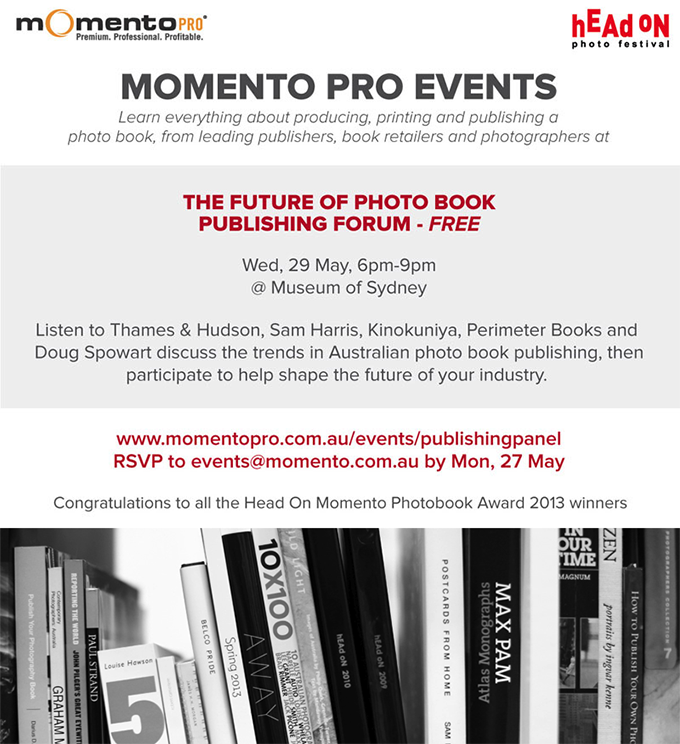
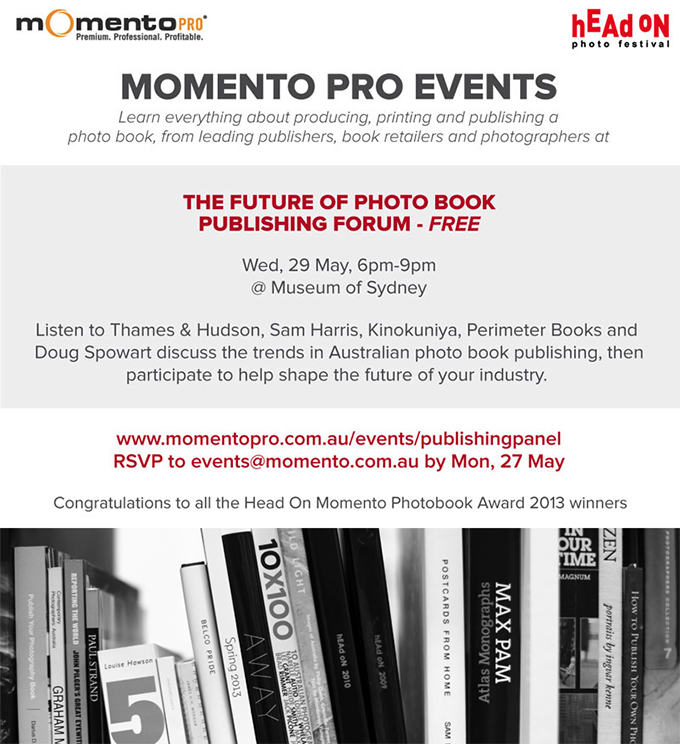
THE FUTURE OF PHOTO BOOK PUBLISHING FORUM
Presented by Momento Pro http://www.momentopro.com.au/events/publishingpanel
A Head On Photo Festival Event
Wed, 29 May, 6.00 – 9.00pm
@ The Museum of Sydney
Admission is free but please RSVP to events@momento.com.au by 25 May
Join panelists and guests from the photography, publishing, print, book retail and creative industries to discuss local and international trends in photographic book publishing, and contribute to shaping its future. The panel discussion will conclude with open questions from the audience, followed by refreshments and networking.
Should you wish to submit questions for consideration please email events@momento.com.au.
THE PANEL
.
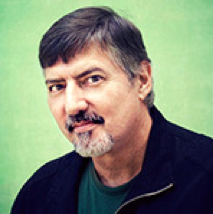
Doug Spowart …..Moderator
Photographer & Academic
Dr Doug Spowart has been extensively involved in creative media areas for over 40 years — his practice includes: artists books, photobooks, artist, critic, judge, writer and teacher. He has completed a Doctorate of Philosophy at James Cook University researching issues of the contemporary photobook. Spowart’s work, as well as collaborative work with Victoria Cooper has found its way into many private, regional and state public galleries, national and international photography and artists’ book collections. Spowart’s photobooks have won the AIPP Queensland Photographic Book of the year on two occasions and he has twice been Runner-up to the national AIPP photobook award.
.
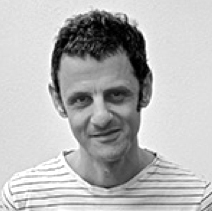
Sam Harris / Photographer
Sam Harris has been a passionate photographer and educator for more than 20 years. He started freelancing in the London music industry making album sleeve art then went on to shoot editorial portraits and documentary features for leading publications including The Sunday Times Magazine, Esquire, GQ and Ray Gun (USA).
In 2002 he re-evaluated his lifestyle to travel the globe with his family, until he settled in the forests of South Western Australia in 2008 where he shoots his on-going family diary, lectures photography, runs workshops and creates photographic books. His book Postcards from Home has received multiple awards including the publishing industry’s Galley Club Book of the Year and Australian Book of the Year Award 2012.
.

Kim Hungerford
Kinokuniya / Art & Design Department Manager
Kinokuniya stocks an extensive collection of graphic novels, art, design and travel books and also features an instore Art Gallery which exhibits works from creative artists to help them develop their careers. As Art & Design Manager, Kim is versed in the distribution, sales, marketing and financials of art and photographic book publishing, the different publishing options available and the differences in reception from book consumers, critics and collectors.
.
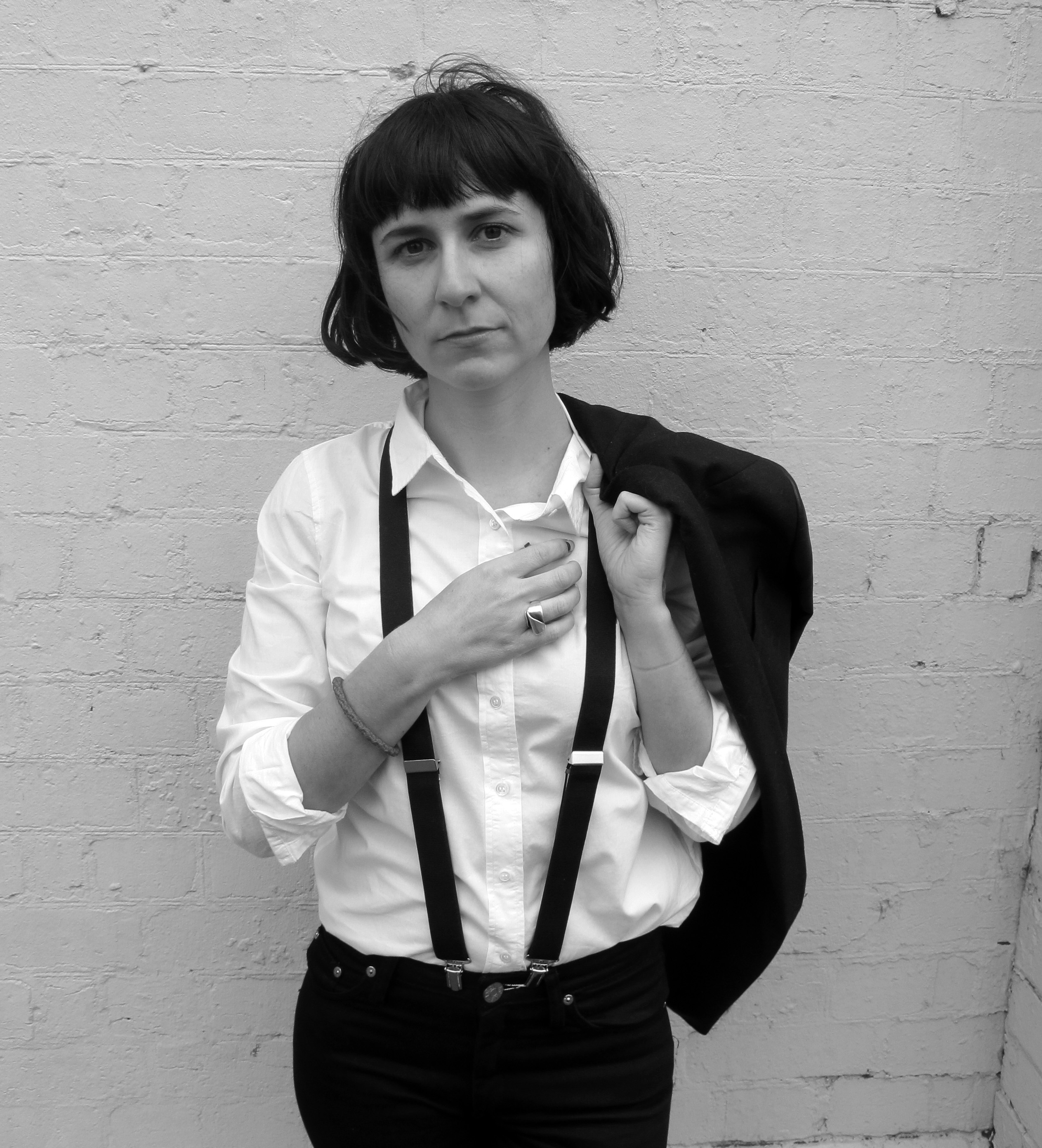
Paulina DeLaveaux
Thames & Hudson / Publishing Manager
Paulina de Laveaux is Publishing Manager of Thames & Hudson Australia specialising in illustrated books on art, architecture, design, photography, fashion and other creative fields.
Paulina is passionate about books, and familiar with what makes a photographic book artistically and commercially successful, what is popular with the mainstream consumer verse the cultural consumer, and has also been a judge for the Head On Momento Photobook Awards 2013 and the Most Beautiful Books Awards
.

Dan Rule
Perimeter Editions / Director
Dan Rule is a writer, critic, editor and publisher from Melbourne, Australia. He is the co-director of Perimeter Books, Perimeter Editions and Perimeter Distribution, the co-publisher of Erm Books and an editor of Composite Journal.
He is also a weekly art critic and columnist for The Saturday Age, contributing editor and senior writer at Broadsheet Media and has written on art, photography, music and culture for The Sydney Morning Herald, Dazed & Confused, Oyster, Vault, Art Guide, Australian Art Collector and countless others.
.
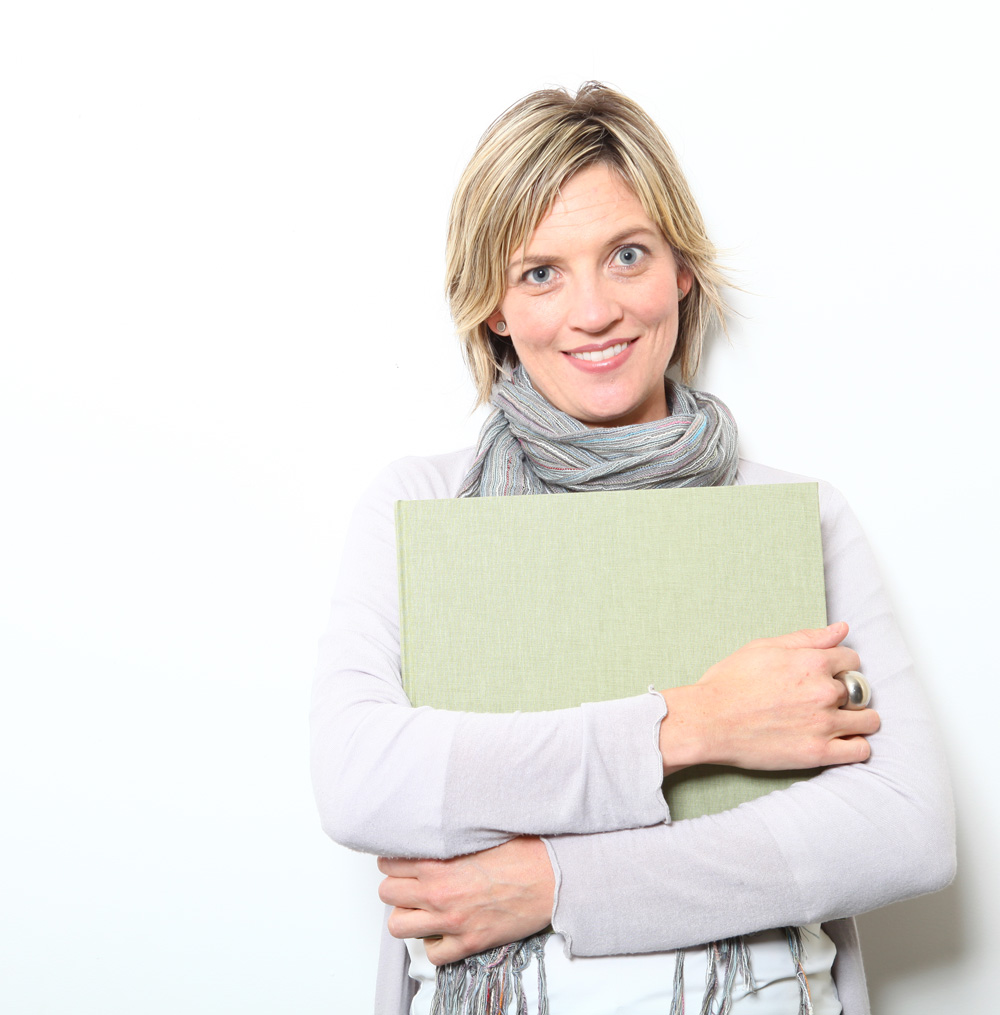
Libby Jeffery
Co-founder and Communications Manager @ Momento
Libby has enjoyed studying and working in communications and media production since undertaking a B.A. Communications at UTS and volunteering with interactive CD-ROM producer Pacific Advanced Media Studios in 1994. Since then her career has revolved around communications, events coordination and media production for creative industry pioneers including OzEmail, the Australian Interactive Media Industry Association (AIMIA), IPR Systems and most recently the Chippendale Creative Precinct.
Following her role in 1999 as Project Manager for the Australian Society of Authors’ e-publishing and digital rights management experiment, OzAuthors, she, partner Geoff Hunt, and colleague James Whitwell founded Momento in 2004. Momento was Australia’s first print-on-demand photo book service and the proprietary Momento layout software, lets anyone design their own coffee-table photo book easily, ready for printing. Momento remains the ‘finest’ service provider in Australia today, celebrating photography and photographers in all forms
.

.
.
GETTING the BLURB on PHOTOBOOKS
.
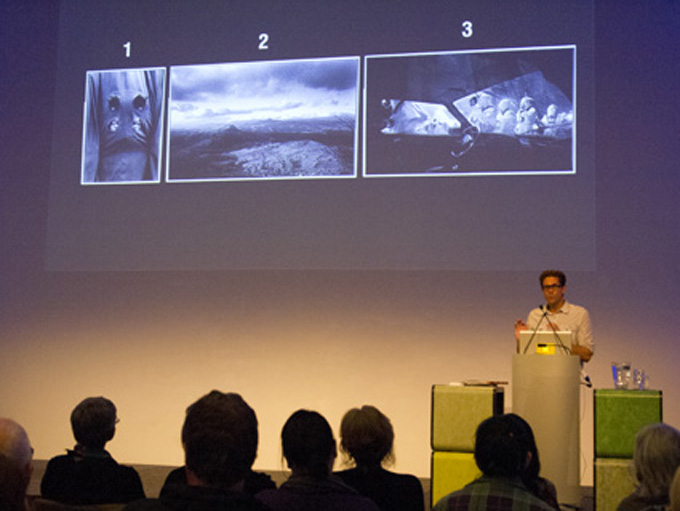
Daniel Milnor is Blurb’s Photographer-at-large and inspirational bookmaker. Last week we attended presentation by Daniel at the Edge (SLQ) in Brisbane. Attended by an audience of around 80 the presentation, of three hours duration, told the story of how to make photobooks. Not just a bunch of photos in a catalogue or folio form but something that told a story – expressing a narrative.
Milnor is the consummate presenter and storyteller – adding to each technical concept and thing to consider in book-making his own personal story. And there were some amazing insights into Daniel’s career as a photodocumentary photographer of exotic places like South America and Sicily, but also of his own life. In one book he discussed, which was made entirely in his own home, he showed a picture of his shower curtain!!
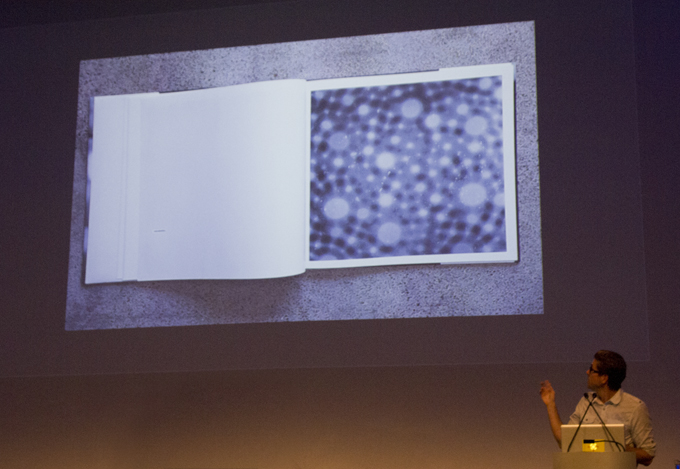
Milnor’s shower curtain
.
In the presentation Milnor provided a step-by-step approach to the making of a book:
Step 1 Make/locate a body of work
Step 2 Give yourself time to edit
Step 3 Time to sequence
Step 4 Start the book using an online POD service – Like Blurb.
Step 5 Get the book
And – not really covered specifically although constantly part of his refinement of book ideas: Step 6 – Review it and re-do it better!!!
.
His little phrases and comments that stuck in my memory (or notepad include):
Photobooks that are driven by the photographer –“don’t make any money” unless you have a big-name and are chosen by Steidl. However “subject driven books” can be successful
“Leopard lighting” portraits made under a tree – dappled light
Unless you “Think about your work, write about your work, talk about your work and show your work – You are never going to have a connection with your work!”
“Book builder”
Landscape “rocks and twig” photography
“The narrative arc”
“The perfect solution is YOUR solution”
“Don’t be afraid to play around…”
.
What interested me was the excitement he expressed for his own books – their concepts and development. Towards the end of the presentation he showed examples of books created as collaborations with artists, books that were ‘added-to’ by creative intervention whereby the outcome became a unique state work of art. A seminal book for him in his challenge to the ‘normal’ photobook is the book On Approach which has won much acclaim for him. He commented that a curator he had met casually had described him as a ‘conceptual artist’ he seemed excited by the title and that his work, as art, could enter another space – the gallery.
.
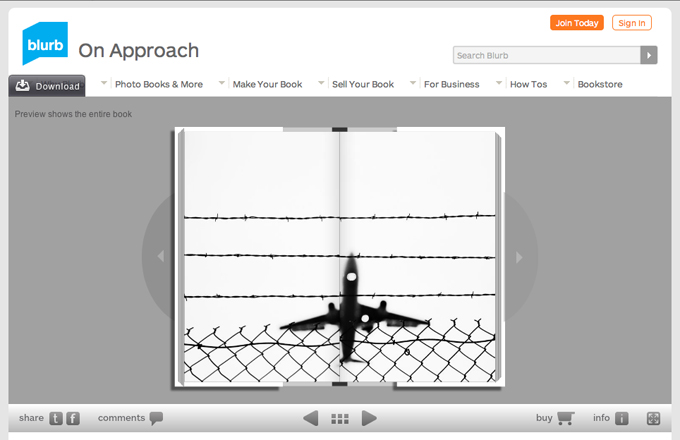
See Daniel Milnor’s book On Approach @ Blurb
.
In the second last question of the day I asked him about the idea of the artists’ book and how artists can inform, as he had found, a new direction for photobooks – in his answer he spoke at length about the proposition — I think he agreed…
Thank you Daniel Milnor, and thank you Blurb for bringing some discussion on photobooks into this country. And the opportunity to engage with so many Australian photographers wanting to tell photo stories using the emancipating opportunities of print-on-demand indie publishing.
.
Doug Spowart
.
LINKS TO DANIEL MILNOR:
His Website: http://www.smogranch.com/
.
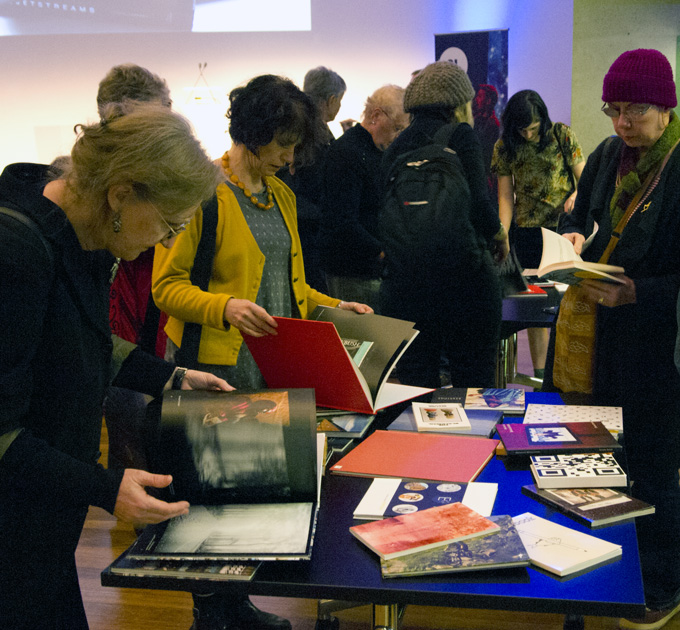
Attendees looking a Blurb sample books
.
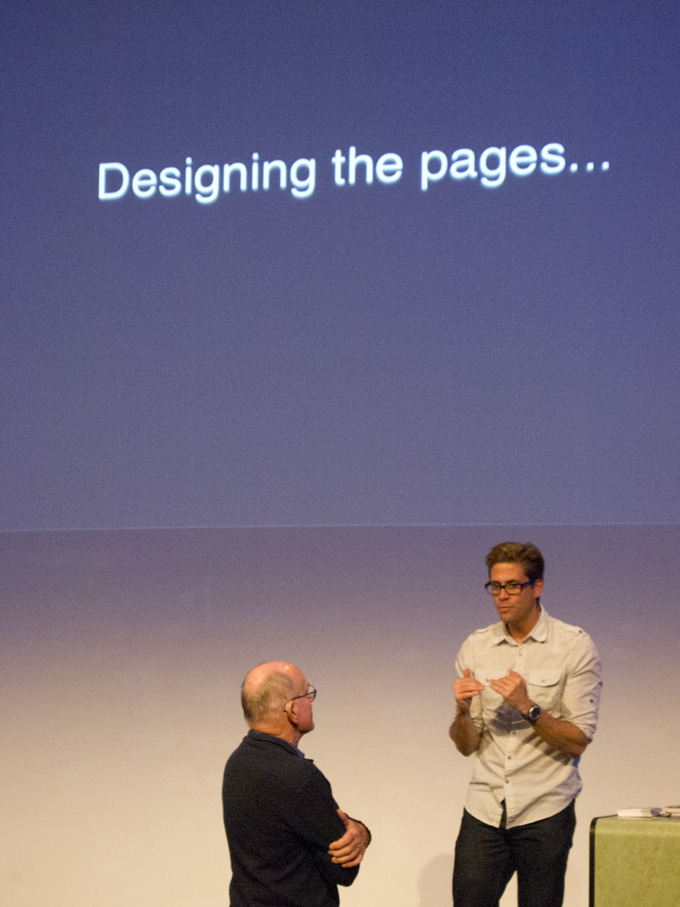
Daniel Milnor talking with an attendee during the break
.
.
All photographs © Doug Spowart 2013.
This work is licensed under a Creative Commons Attribution-NonCommercial-NoDerivs 3.0 Unported License.
.
.
JUDGING THE SHOW: Photography @ the Goondiwindi P&A Show
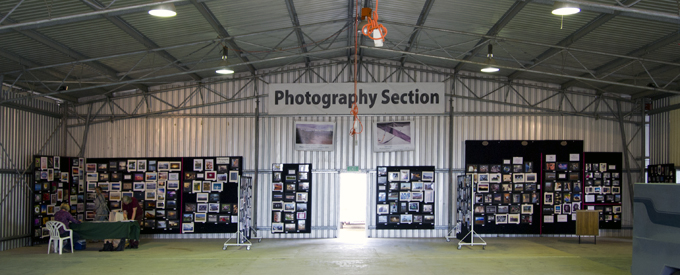
Goondiwindi Photo Section Display
We have been to Goondiwindi before as their local camera club hosted the South East Queensland Association of Camera Club’s conference in 2011 for passionate amateurs to connect and learn about their chosen hobby. This time we were at ‘Gundy’ to judge the P&A Show Society’s 2013 Photography Section. The organizing team are an energetic, cheerful and professional group of people who carry out their duties as a service to the local community.
When we arrived all 424 images were already installed on the portable screens. A welcoming cup of tea and Janet’s delicious homemade orange cake refreshed us after our two-hour drive from Toowoomba. Then all we had to do was to judge the 14 categories, the grand champions and the encouragement award winners. This was an enjoyable task as the images were delightful mix of landscapes, action, animals, humour, travel, poetic and abstract images.
.

Goondiwindi Photo Section Entry Details
.
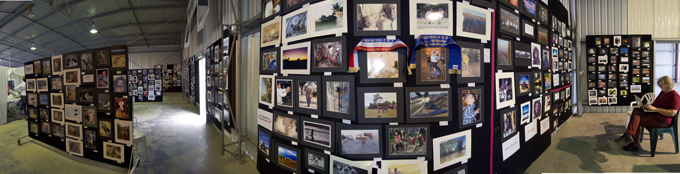
Goondiwindi Photo Section panorama
.
Although there were interesting images of travel, urban spaces, people and places some of the strongest images were found in the sections landscape, ‘a picture tells a thousand words’ and the youth categories. Images taken of their own environment, local people and animals communicated the desire to share and record their own stories. This made our task challenging but more rewarding as we encountered these images.
Some images were amazing: a fish, firmly grasped by a cormorant bites on its captors neck, a young girl fires-off a shotgun, old blokes sit on a park bench in the sun, a huge irrigation sprinkler glistens backlit by the morning sun and a young girl kneels before a poppy studded war memorial. There is a visual calisthenics required to be a judge in this competition. What was evident was a passion for photography and a quality, both technical and conceptual, that would match anything seen from their city cousins.
.
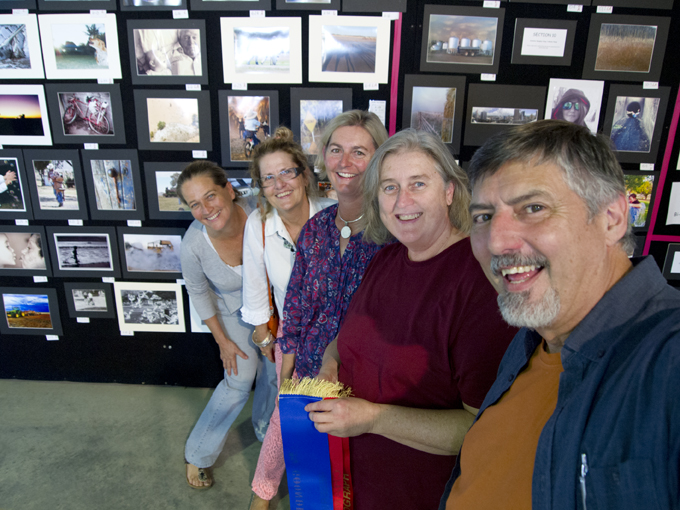
Photo Section Team: Mandie O’Shea, Michelle Kearney, Janet Doyle, Vicky & Doug
.
The Grand Champion photograph was by Rick Kearney and was entitled Flood victims. The photo was made from a helicopter during the floods and shows an island surrounded by water on which 80 or more kangaroos had taken refuge–the helicopter has startled the mob and they have taken off in all directions. The photograph captures this frenzied dash from these isolated animals.
.
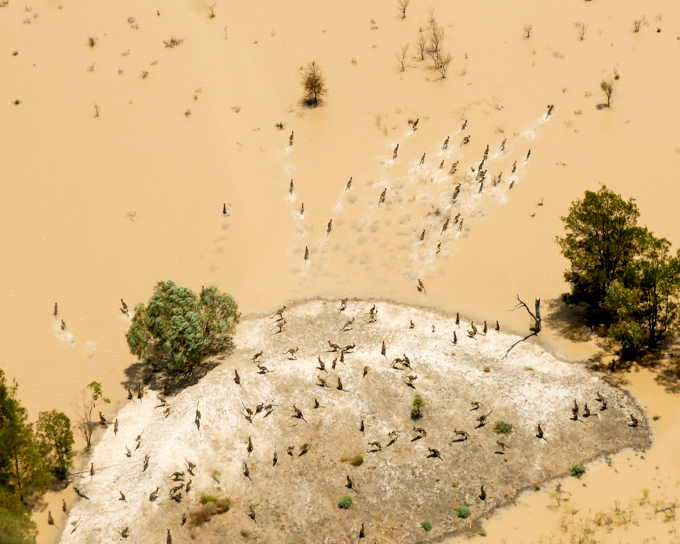
The Grand Champion Print: Flood victims by Rick Kearney
.
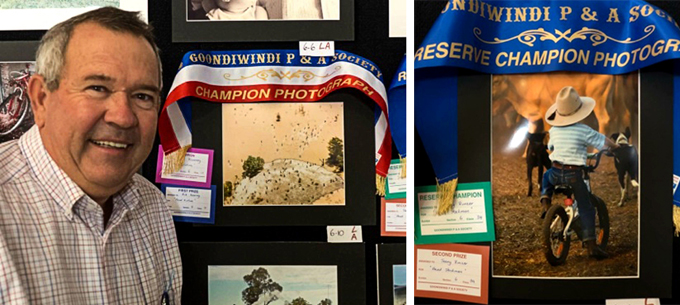
Rick Kearney’s Flood victims+Reserve Champion Teeny Runzer’s Head Stockman. Photo: Michelle Kearney
.
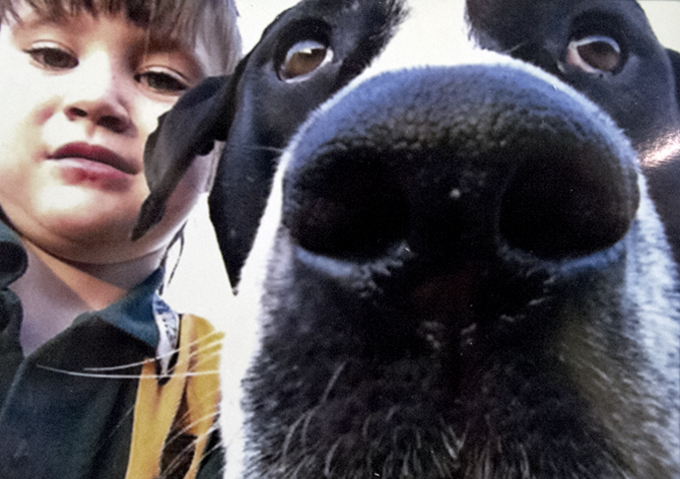
Equal First Prize – Primary Hot Shots: Jenna McCall for Selfie
.
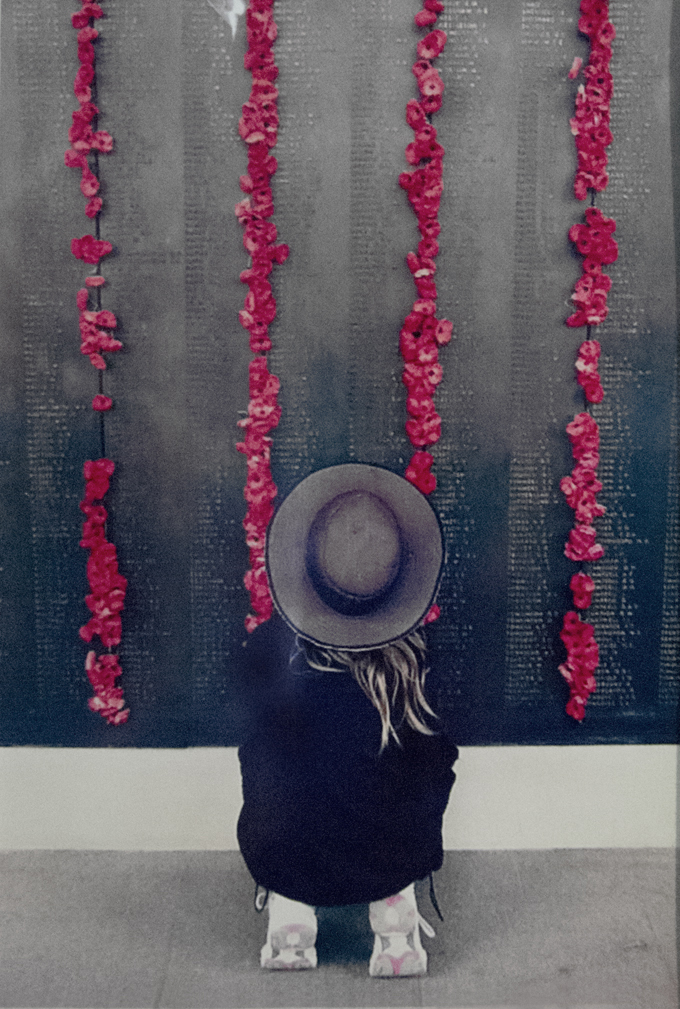
Junior Champion and Equal First Prize – Primary Hot Shots : Bethany Buckle for Poppies
.
Thanks to the Goondiwindi team of Janet, Michelle and Mandie and the photography community for sharing their creativity and vision with us and the hospitality extended to us during our visit.
.
Victoria Cooper and Doug Spowart.
.
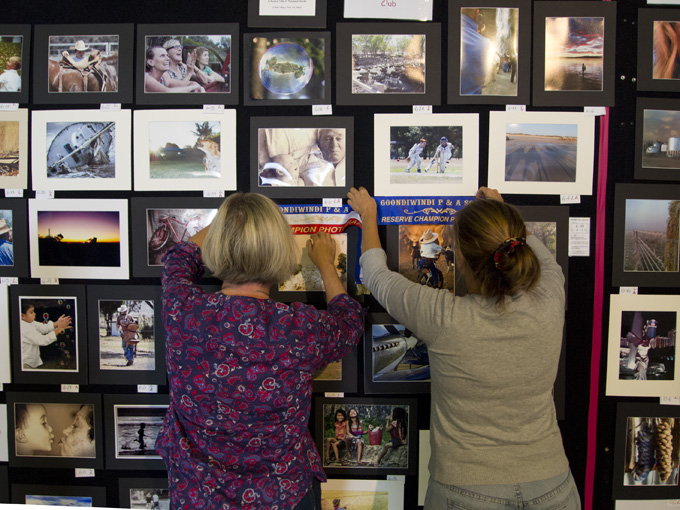
Janet and Mandie place the Champion Ribbons
.
.
Images of the exhibition installation © Doug Spowart, Text © Victoria Cooper, Photo of Rick and Reserve Champion Michelle, © in all other works the photographers credited in the caption
..
This work is licensed under a Creative Commons Attribution-NonCommercial-NoDerivs 3.0 Unported License.
.

 wotwedid