Archive for the ‘Speaking on Photography’ Category
GETTING the BLURB on PHOTOBOOKS
.
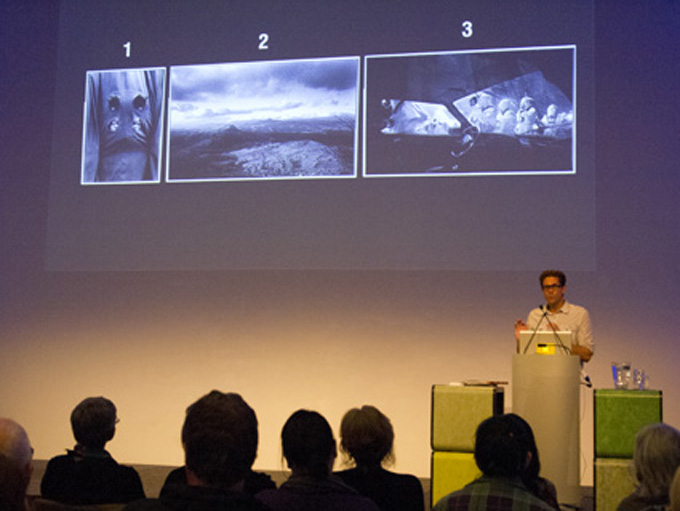
Daniel Milnor is Blurb’s Photographer-at-large and inspirational bookmaker. Last week we attended presentation by Daniel at the Edge (SLQ) in Brisbane. Attended by an audience of around 80 the presentation, of three hours duration, told the story of how to make photobooks. Not just a bunch of photos in a catalogue or folio form but something that told a story – expressing a narrative.
Milnor is the consummate presenter and storyteller – adding to each technical concept and thing to consider in book-making his own personal story. And there were some amazing insights into Daniel’s career as a photodocumentary photographer of exotic places like South America and Sicily, but also of his own life. In one book he discussed, which was made entirely in his own home, he showed a picture of his shower curtain!!
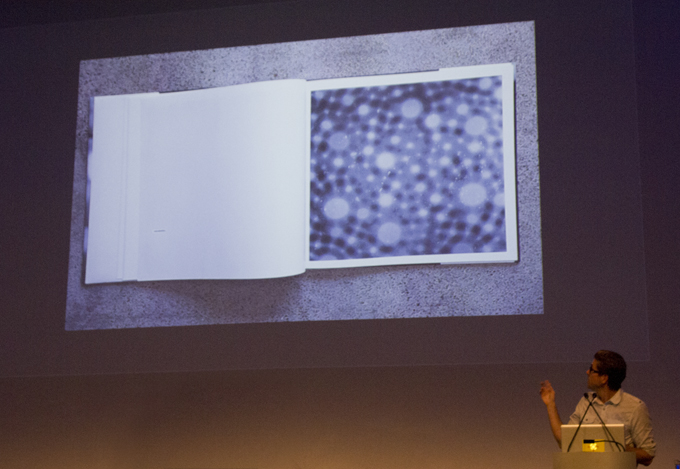
Milnor’s shower curtain
.
In the presentation Milnor provided a step-by-step approach to the making of a book:
Step 1 Make/locate a body of work
Step 2 Give yourself time to edit
Step 3 Time to sequence
Step 4 Start the book using an online POD service – Like Blurb.
Step 5 Get the book
And – not really covered specifically although constantly part of his refinement of book ideas: Step 6 – Review it and re-do it better!!!
.
His little phrases and comments that stuck in my memory (or notepad include):
Photobooks that are driven by the photographer –“don’t make any money” unless you have a big-name and are chosen by Steidl. However “subject driven books” can be successful
“Leopard lighting” portraits made under a tree – dappled light
Unless you “Think about your work, write about your work, talk about your work and show your work – You are never going to have a connection with your work!”
“Book builder”
Landscape “rocks and twig” photography
“The narrative arc”
“The perfect solution is YOUR solution”
“Don’t be afraid to play around…”
.
What interested me was the excitement he expressed for his own books – their concepts and development. Towards the end of the presentation he showed examples of books created as collaborations with artists, books that were ‘added-to’ by creative intervention whereby the outcome became a unique state work of art. A seminal book for him in his challenge to the ‘normal’ photobook is the book On Approach which has won much acclaim for him. He commented that a curator he had met casually had described him as a ‘conceptual artist’ he seemed excited by the title and that his work, as art, could enter another space – the gallery.
.
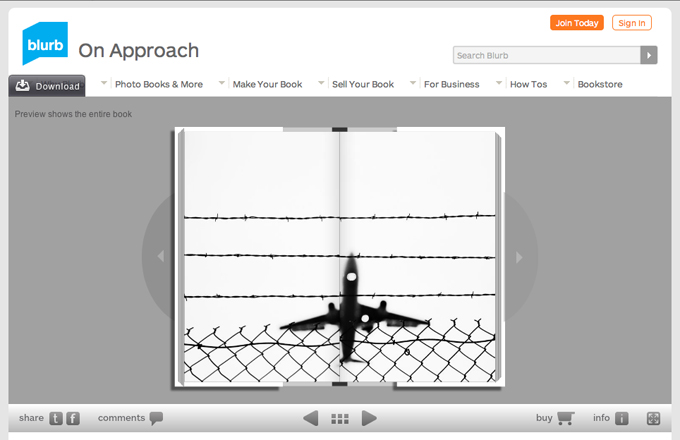
See Daniel Milnor’s book On Approach @ Blurb
.
In the second last question of the day I asked him about the idea of the artists’ book and how artists can inform, as he had found, a new direction for photobooks – in his answer he spoke at length about the proposition — I think he agreed…
Thank you Daniel Milnor, and thank you Blurb for bringing some discussion on photobooks into this country. And the opportunity to engage with so many Australian photographers wanting to tell photo stories using the emancipating opportunities of print-on-demand indie publishing.
.
Doug Spowart
.
LINKS TO DANIEL MILNOR:
His Website: http://www.smogranch.com/
.
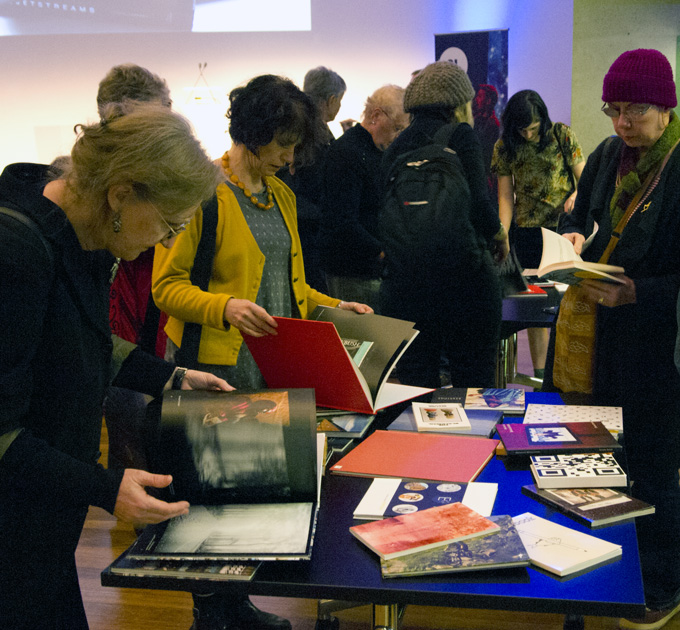
Attendees looking a Blurb sample books
.
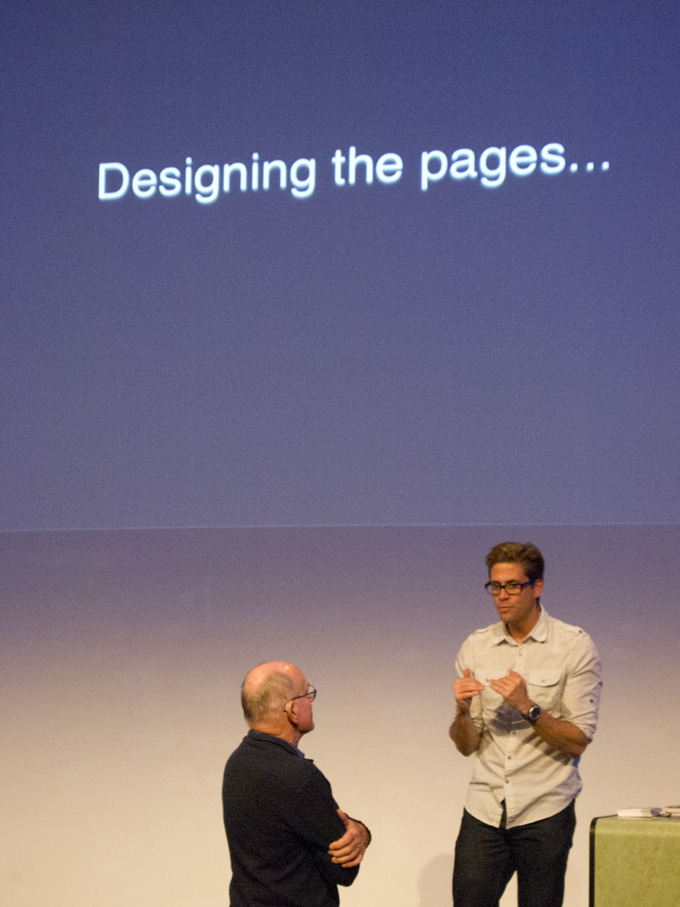
Daniel Milnor talking with an attendee during the break
.
.
All photographs © Doug Spowart 2013.

This work is licensed under a Creative Commons Attribution-NonCommercial-NoDerivs 3.0 Unported License.
.
.
JUDGING THE SHOW: Photography @ the Goondiwindi P&A Show
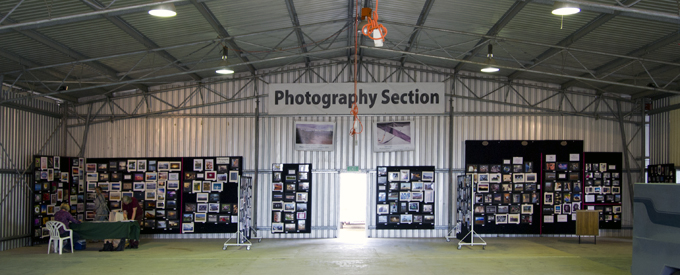
Goondiwindi Photo Section Display
We have been to Goondiwindi before as their local camera club hosted the South East Queensland Association of Camera Club’s conference in 2011 for passionate amateurs to connect and learn about their chosen hobby. This time we were at ‘Gundy’ to judge the P&A Show Society’s 2013 Photography Section. The organizing team are an energetic, cheerful and professional group of people who carry out their duties as a service to the local community.
When we arrived all 424 images were already installed on the portable screens. A welcoming cup of tea and Janet’s delicious homemade orange cake refreshed us after our two-hour drive from Toowoomba. Then all we had to do was to judge the 14 categories, the grand champions and the encouragement award winners. This was an enjoyable task as the images were delightful mix of landscapes, action, animals, humour, travel, poetic and abstract images.
.

Goondiwindi Photo Section Entry Details
.
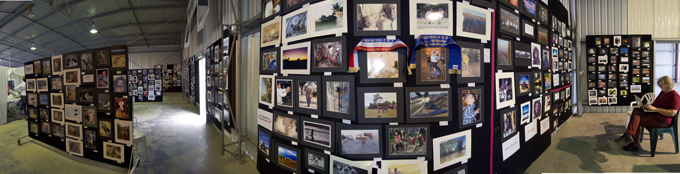
Goondiwindi Photo Section panorama
.
Although there were interesting images of travel, urban spaces, people and places some of the strongest images were found in the sections landscape, ‘a picture tells a thousand words’ and the youth categories. Images taken of their own environment, local people and animals communicated the desire to share and record their own stories. This made our task challenging but more rewarding as we encountered these images.
Some images were amazing: a fish, firmly grasped by a cormorant bites on its captors neck, a young girl fires-off a shotgun, old blokes sit on a park bench in the sun, a huge irrigation sprinkler glistens backlit by the morning sun and a young girl kneels before a poppy studded war memorial. There is a visual calisthenics required to be a judge in this competition. What was evident was a passion for photography and a quality, both technical and conceptual, that would match anything seen from their city cousins.
.
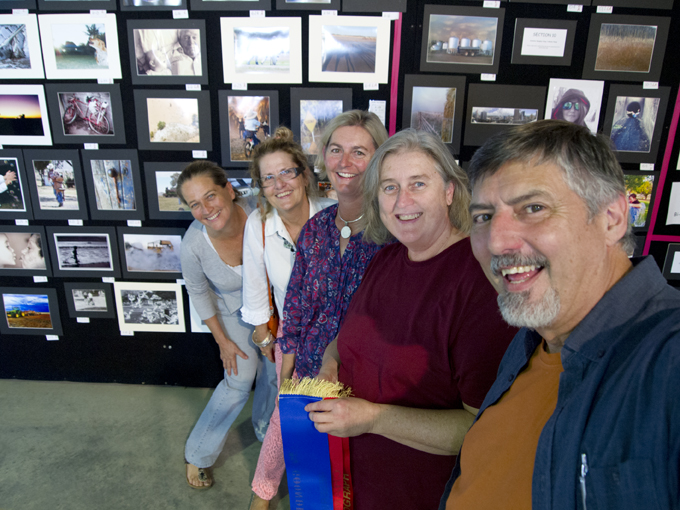
Photo Section Team: Mandie O’Shea, Michelle Kearney, Janet Doyle, Vicky & Doug
.
The Grand Champion photograph was by Rick Kearney and was entitled Flood victims. The photo was made from a helicopter during the floods and shows an island surrounded by water on which 80 or more kangaroos had taken refuge–the helicopter has startled the mob and they have taken off in all directions. The photograph captures this frenzied dash from these isolated animals.
.
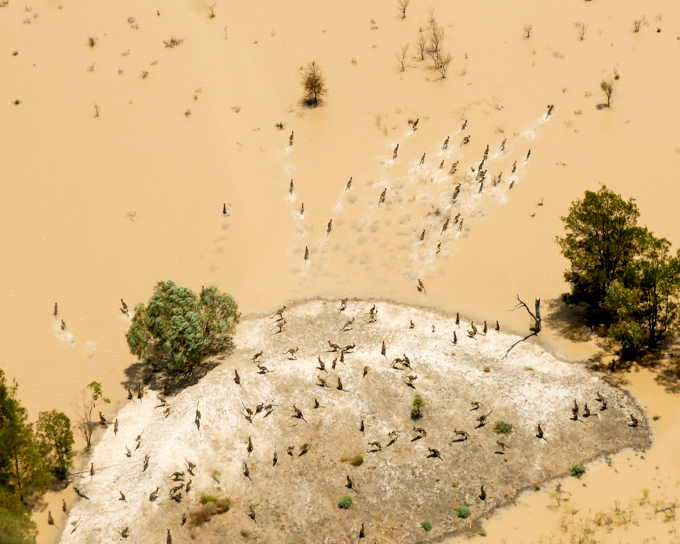
The Grand Champion Print: Flood victims by Rick Kearney
.
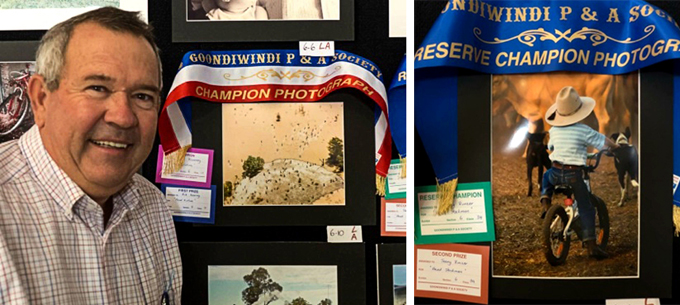
Rick Kearney’s Flood victims+Reserve Champion Teeny Runzer’s Head Stockman. Photo: Michelle Kearney
.
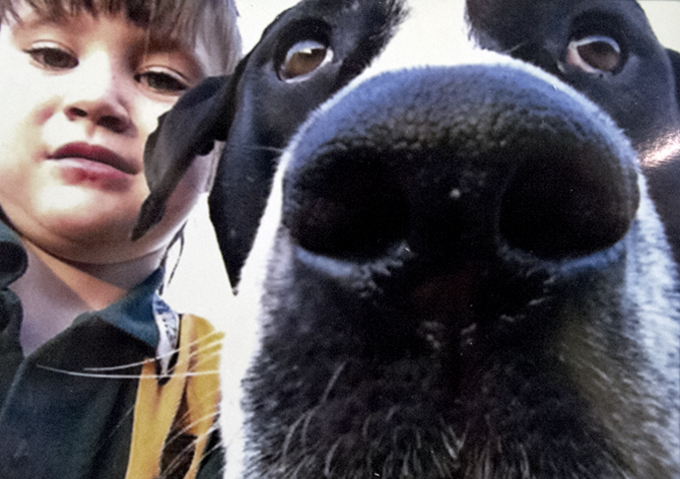
Equal First Prize – Primary Hot Shots: Jenna McCall for Selfie
.
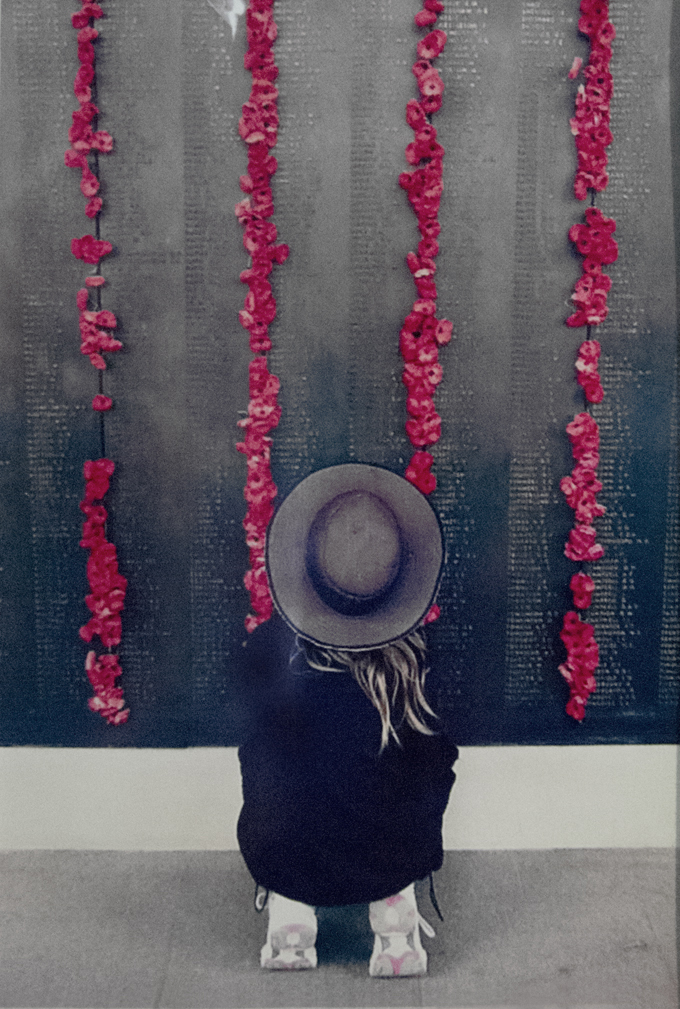
Junior Champion and Equal First Prize – Primary Hot Shots : Bethany Buckle for Poppies
.
Thanks to the Goondiwindi team of Janet, Michelle and Mandie and the photography community for sharing their creativity and vision with us and the hospitality extended to us during our visit.
.
Victoria Cooper and Doug Spowart.
.
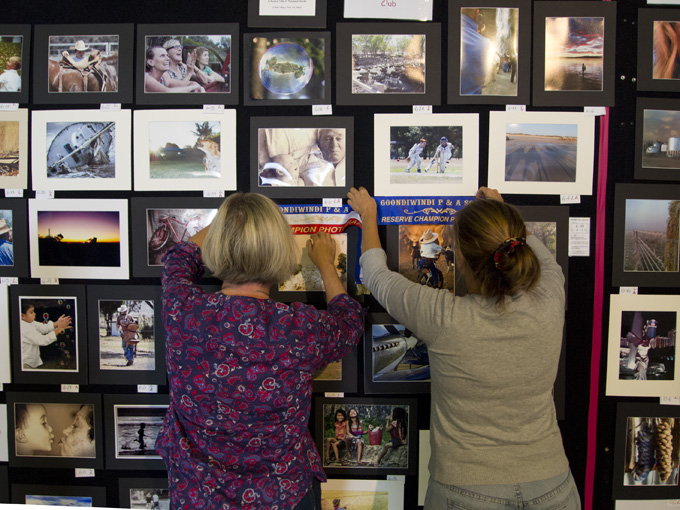
Janet and Mandie place the Champion Ribbons
.
.
Images of the exhibition installation © Doug Spowart, Text © Victoria Cooper, Photo of Rick and Reserve Champion Michelle, © in all other works the photographers credited in the caption
..
This work is licensed under a Creative Commons Attribution-NonCommercial-NoDerivs 3.0 Unported License.
.
COOPER+SPOWART TALK ABOUT PHOTOBOOKS
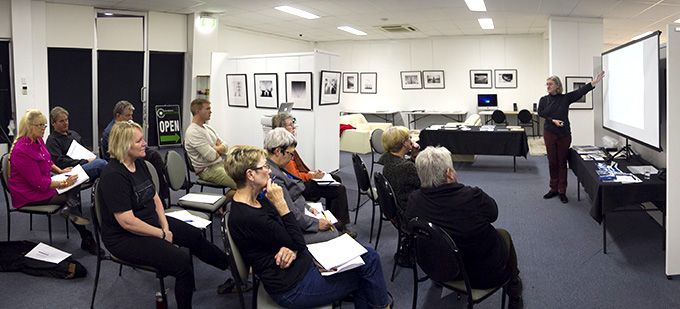
Victoria Cooper talking about photobooks @ Foto Frenzy
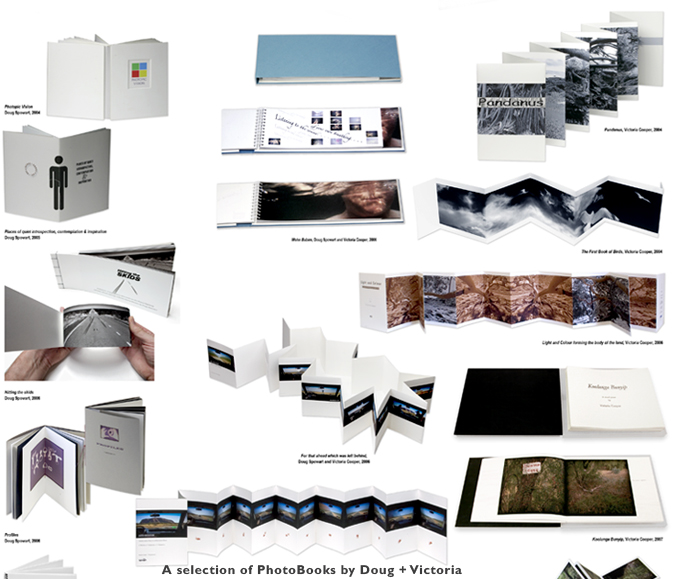
On the evening of May 21 Victoria + Doug presented a talk and showing of their self-published photobooks and artists books. Entitled LOOKING GOOD IN PRINT: PHOTOBOOK, the talk connected participants with concepts and techniques on how to personalize and create photo-stories in the form of the bespoke self-published book.
Participants engaged in a lecture presentation that helped them to develop a broader understanding of what a photobook can be—extending them beyond just a collection of photos into a resolved personal narrative of high technical and aesthetic values.
The range of options for making photobooks was discussed and samples of hand-made, inkjet printed and hand-bound artists’ books, as well as print-on-demand books were available for viewing and handling.
The Intro Session included an overview of the following topics:
- Simple and advanced forms and structures of books
- The creative influence of artists books
- The image, sequence and the narrative flow
- Production and design issues for handmade/print-on-demand book
- Computer processing of the book
- Simple bindings for the handmade book
.
.
.
Location:
Unit 3/429 Old Cleveland Road, Camp Hill, QLD 4152.
Time + Date: 6.00 – 8.30pm, Tuesday May 21, 2013.
THE FEE: $ 75.
Bookings were made through:

.
.
All photographs + text © Doug Spowart 2013.
This work is licensed under a Creative Commons Attribution-NonCommercial-NoDerivs 3.0 Unported License.
DOUG HAS FEATURED POST: State Library of Qld DESIGN ONLINE Blog
Recently I was commissioned to write a piece for the State Library of Queensland’s Design Online Blog.
I chose to write a commentary on the proliferation of images on social media and connect it with the Andy Warhol statement about everyone having 15 minutes of fame.
The Design Online blog has as its mission the following proposition:
Every idea, thought, or position has an origin, and often this origin exists in the ideas, thoughts and positions of others. Design Online creates a shared environment for the design community to come together in the creation of new knowledge centred around design in the Asia Pacific.

.
If you are interested in fame, social media and photography today please view the design online site an consider the idea I’ve posted … CLICK THE PICTURE
.
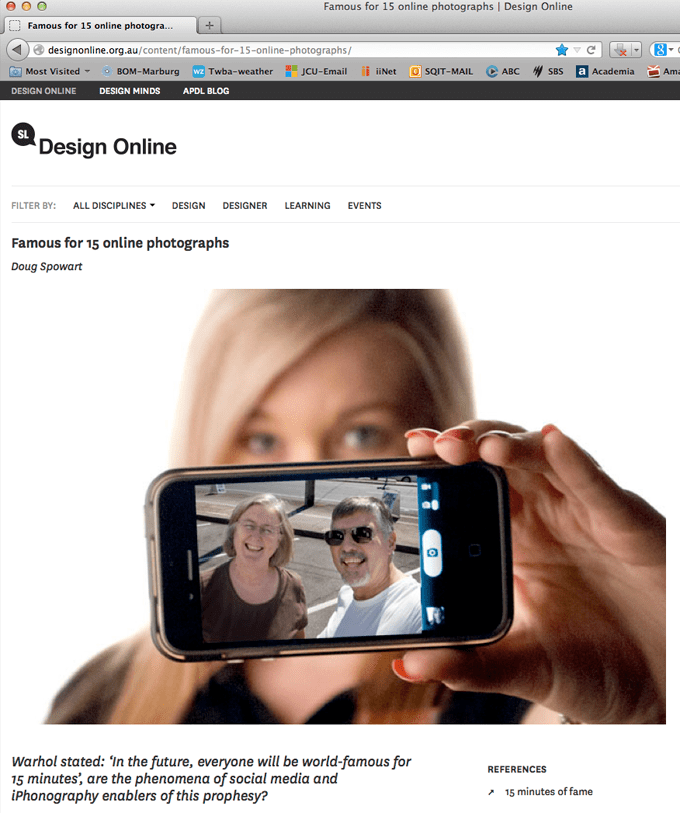
Doug Spowart post SLQ Designonline Blog
Thanks to Design Online for the opportunity to post the idea and to model Tash Armit for helping out with the photo header image.
.
Photography and Essay ©2013 Doug Spowart
. This work is licensed under a Creative Commons Attribution-NonCommercial-NoDerivs 3.0 Unported License. . .
CAMERA OBSCURA + Pinhole Event @ Foto Frenzy: A Report

Since the year 2000 we have been making large-scale room camera obscuras. These have been made as part of visual research for our Place Projects. Usually we document the process and the images form a narrative for inclusion in photobooks and exhibitions. In 2009 we launched WINDOW/s, a limited edition photobook of 9 copies, along with an exhibition of the 9 camera obscura images @ the Queensland Centre for Photography.
SEE the book as an Adobe Flash Pageflip HERE
In our Place Project work we have found that the camera obscura connects us directly with the place or site that we are working in. We have found that anyone witnessing the place-specific camera obscura responds enthusiastically this natural phenomenon. Time spent inside the camera obscura evokes a sharing of different perceptions: of the visual, of memory and of experiences in the lives of each visitor. So we decided that we should create a camera obscura as part of our Foto Frenzy artist in residence.
As a result of a conversation with a past QCA student of Doug’s from the 1980s, photographer John Pryke, through some great research on the internet, found that not far down the road was the site of an historical camera obscura on Whites Hill.
.
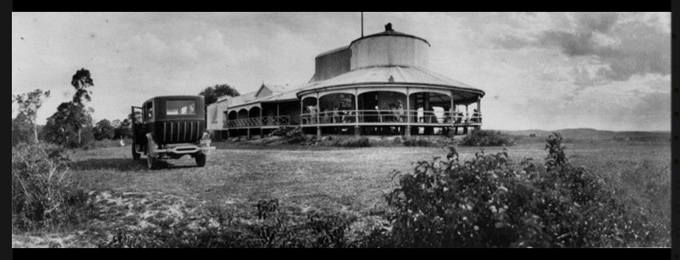
The Whites Hill Camera Obscura c1924 from the ‘Lost Brisbane’ Project site
.
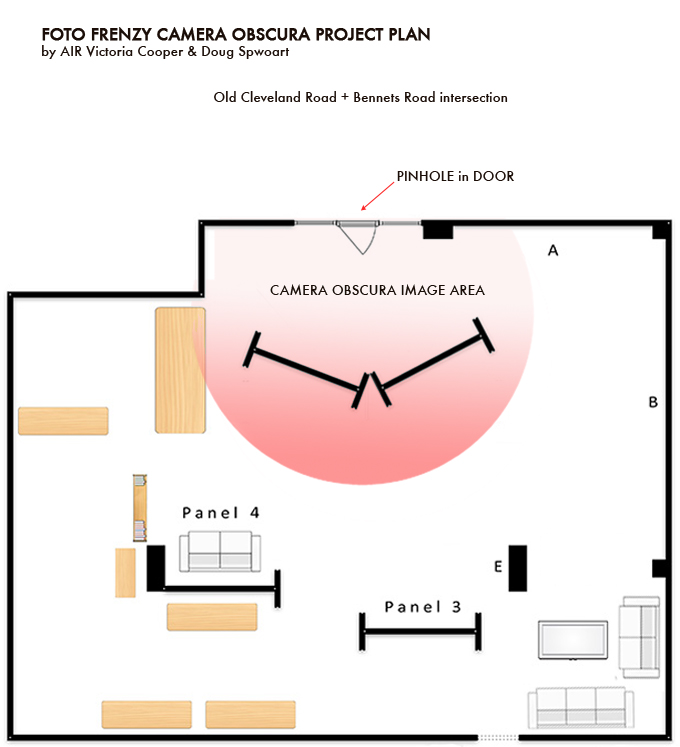
The view from the front entry of Foto Frenzy was selected as its outlook is of the defining feature of this place – the major intersection of Bennetts and Old Cleveland Roads Coorparoo. A plan was created, the room blacked out with thick black agricultural plastic, a light admitting hole of around 12 mm was made and fitted in the door of the building, and screens arranged inside onto which the image could be projected.
.
Saturday the 20th of April was a bright sunny day with occasional clouds and the 40 or so visitors witnessed the wonders of this simple device. Many brought cameras with them to make images, some brought family members including children – all, as we hoped, were taken by the visual experience of being ‘IN’ a camera, one which did not even require a lens.
As artists in residence working with the Foto Frenzy / Brisbane Camera Hire Team, we were around some amazing technology and people with special knowledge. Director Darren Jew produced his Canon EOS 1D and a high speed 12mm lens for the cover image of this post. If you’ve not been in a ‘lensless’ camera obscura you will not be aware of how dark the images is – usually it takes several minutes for your eyes to adjust to see what is going on, it is that dark. There are perhaps only a few movies of camera obscura images that have ever been made as it requires specialized cameras and equipment. Darren Jew offered to wind up the ISO of his latest camera and at 40,000 ISO we were able to create a movie of the impromptu performance of our antics outside the building as – ‘Vicky and Doug do a Selfie’.
SEE the movie here ….
.
What fascinated us was the excitement and enthusiasm for the project, much of which was posted on Facebook soon after the event. With the permission of the respondents we have posted some of their images and words in the screen grabs that follow …
.

Megan Rizzo and family visit and photograph the camera obscura
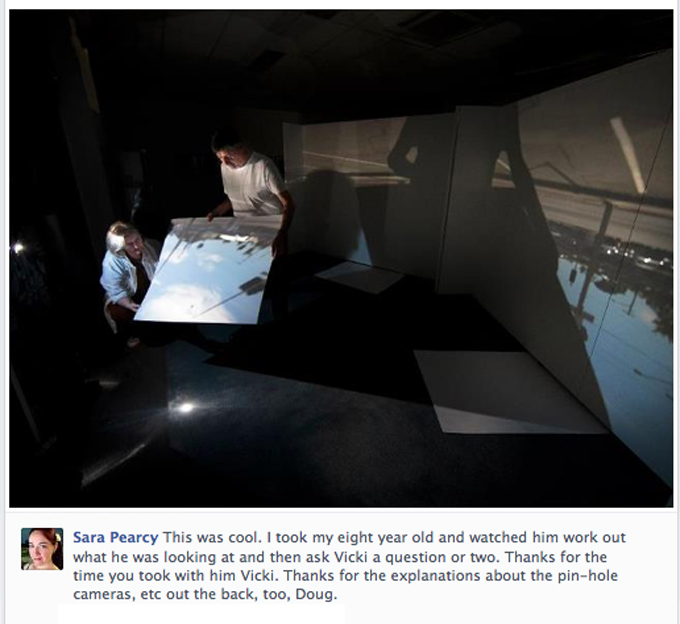
Sara Pearcy comments on her experience with son Nicholas in the camera obscura
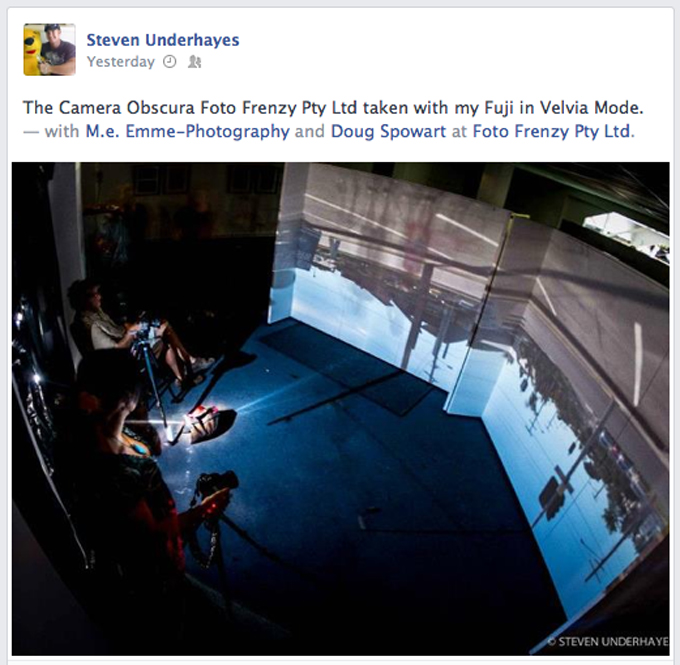
Steven Underhayes’ terrific camera obscura image

John Pryke does a ‘Selfie’ in the camera obscura
SEE more of John’s photographs on his blog: <http://johnprykephoto.blogspot.com.au/2013/04/camera-obscura.html>..
.Additionally the event included a presentation of some of our pinhole cameras, pinhole making techniques, and discussions about how to make pinhole images with SLR and DSLR cameras. Most importantly we encouraged participants to make and enter photos made on April 28 in the 2013 World Pinhole Photography Day event.
Thank you to the participants, the Foto Frenzy / Brisbane Camera Hire team, in particular Darren Jew and Jacob Schneider, for helping to make this a successful event
.
All photographs and texts © of the authors 2013.
This work is licensed under a Creative Commons Attribution-NonCommercial-NoDerivs 3.0 Unported License.
.
PHOTO TREASURE: The QCPs ‘Treasures: The art of collecting’
 .
.
REVIEW: Treasures: The art of collecting
.
I’m an obsessive collector. It’s a big problem because I’m finding it difficult to store everything …
Martin Parr talking about his book collection 1.
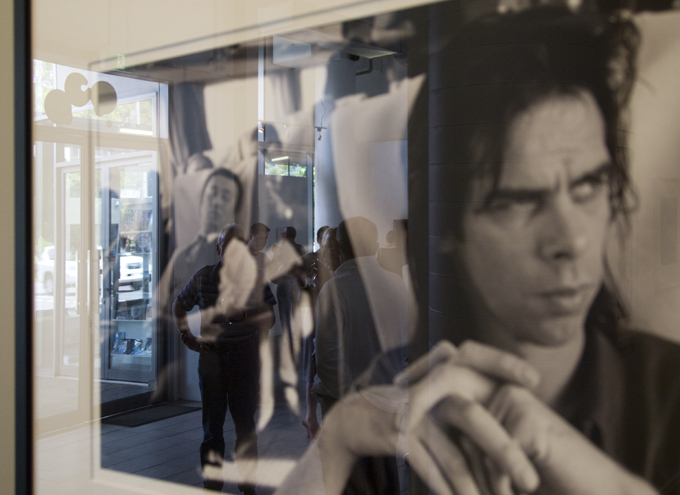
Peter Milne’s portrait of Nick Cave reflects visitors to the Treasures show
Collecting photographs and collecting collections is the subject of the current exhibition at the Queensland Centre of Photography. 72 photographic works on loan from 23 collections both significant and personal, fill the exhibition space. The works represent a wide selection of the history of the medium, the range of themes pursued by photographers and the stuff that collectors collect.
The exhibition was curated by QCP Director Maurice Ortega and was drawn from the contacts, colleagues and members of the QCP fraternity. Works from significant collectors like Daryl Hewson and Fred Hunt were prominently featured in the show. Other works came from the QCP’s own collection, many of which have interesting provenance, were gifts to the Centre, or to members of QCP photography fair delegations travelling overseas.
Each work has a unique story not only of the photograph’s making but also of the collector’s possession and the story of ownership. To pass on these dual narratives each work is accompanied by a comprehensive didactic panel that provides a connection with why the work was collected and its meaningfulness for the collector.
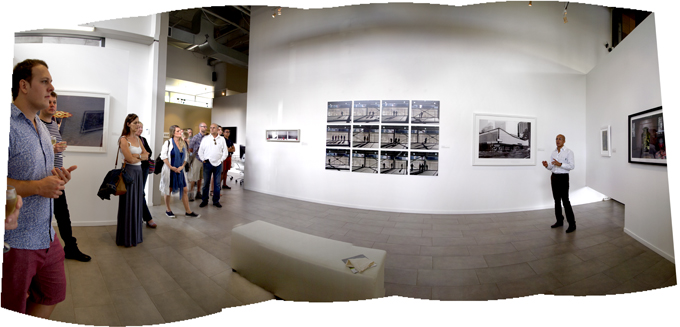
QCP floor talk by Director Maurice Ortega
.
On Sunday 14th April Maurice Ortega gave a floor talk about the Treasures. He discussed the idea and practice of collecting generally and then walked through the space drawing attention to selected works–their owners and any special stories around their provenance.
Ortega spoke of the importance of collectors and how they can support artists at all levels of their careers. He noted that in Australia so many art photographers make a fine start in their professional practice but so often slip from view due to the inability for them to derive sufficient income to survive. He lamented the lack of a passion for collecting within Australia citing the success of the American scene. A video presentation in the gallery shows, as an example, the collection of Steven Reinstein and it’s presentation within a home. It is a grand statement about how ‘amazing’ the personal accumulation of art can be.

QCP floor talk by Director Maurice Ortega
In Ortega’s catalogue statement he pays great respect to the collector by stating that:
… collectors of every kind should be celebrated and emulated; first for directly supporting the artist, second for maintaining cultural diversity and thirdly for keeping art thoroughly democratic by keeping it grounded on its domestic domain, that of everyday life.
The Treasures exhibition may be a significant look into the art of collecting but it has many other valuable outcomes. It presents to visitors an array of photographic materials, techniques, themes and makers, the like of which has not been shown in this region for some time. It highlights the importance of collection and possession and the link that it provides for a supporting structure within art photography. And it must also surprise the viewer of the exhibition with the spectacular range of art photography that exists out in the wilds of the private collector.
Furthermore this exhibition is a curatorial tour de force and is an example of the significant role that the QCP plays within Queensland–perhaps even Australia, in the provision of true and relevant exhibitions of what the art of photography is, and what can be…
.
Dr Doug Spowart
For images and more details of the exhibition SEE http://www.qcp.org.au/exhibitions/current/album-791/28
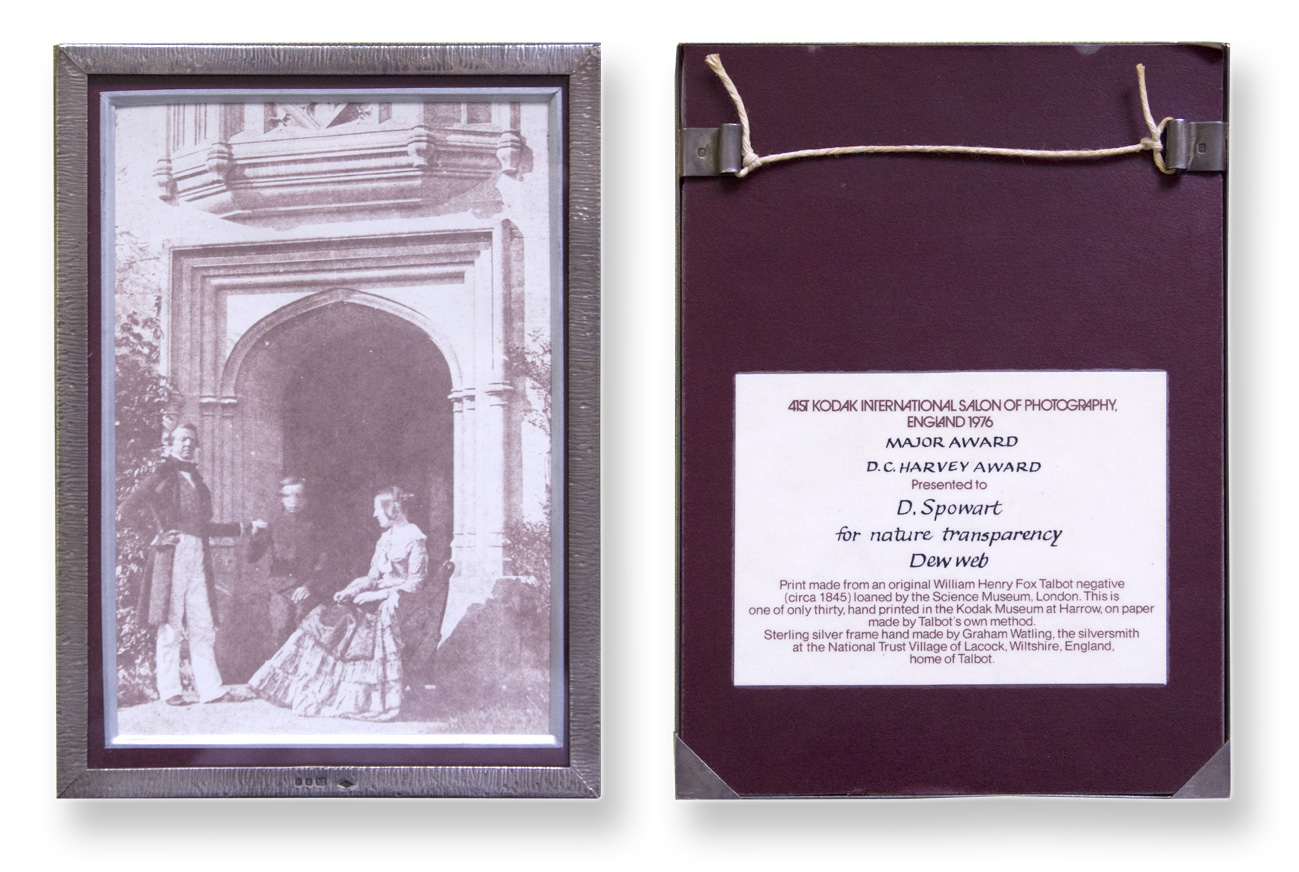
A personal postscript: Like Martin Parr I’m an obsessive collector of photographs, photographica, photobooks and photo ephemera. I was asked by Maurice for a piece from my collection for the Treasures show–I selected a calotype print made from a Henry Fox Talbot negative c1843. Printed by author, historian and Kodak Museum Curator Brian Coe in 1976. The provenance of the photograph was that it was an award won by me in the Kodak International of Photography in that year. Due to difficult display requirements it was decided not to include the work in the Treasures show.
 .
.
1. Badger, G 2003, Collecting Photography, Mitchell Beazley Ltd., London.
.
Images of the exhibition installation and text by Doug Spowart .
This work is licensed under a Creative Commons Attribution-NonCommercial-NoDerivs 3.0 Unported License.
.
HEATHER FAULKNER’s ‘A Matter of Time’ Exhibition

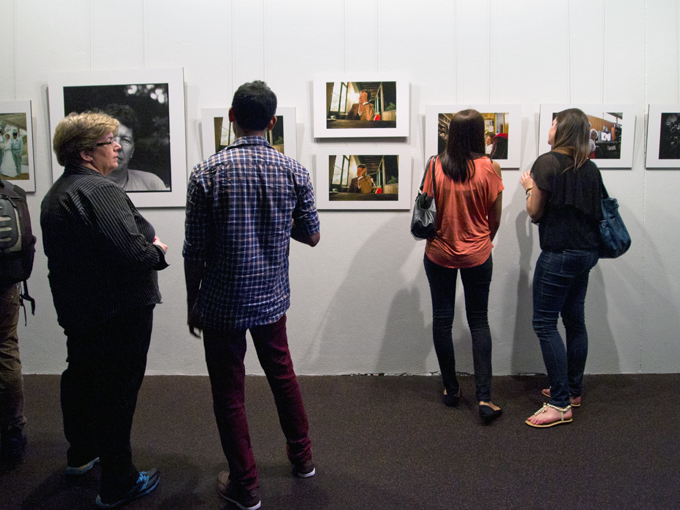
In Heather Faulkner’s exhibition A Matter of Time
A Matter of Time – Heather Faulkner, Brisbane Powerhouse 26 March–28 April 2013.
Today everyone possesses a camera so by association everyone is a photographer and everyone takes photographs. Evidence of this activity is in all kinds of spaces we inhabit, but of course it is most prevalent in the pervasive and immediate space of online social media. Andy Warhol once exhorted that: ‘In the future, everyone will be world-famous for 15 minutes’, and perhaps the proliferation of photography in Facebook, Pinterest and Instagram has indeed made everyone famous, as some purport, ‘for 15 people’1. The extension of this euphemism could be that ‘everyone may be famous for 15 online photographs.’
But what has all this to do with an exhibition of documentary photographs in suburban Brisbane? Well … for me ‘photography’ in the hands of casual shooters, responding spontaneously to their lives, represents only a segment of the world’s daily dose of photography. Documentary photographers for example, use photography as visual research to inform and create understanding for others. These photographers are usually directed by passion for a particular issue, and driven by the need to tell stories of others and maybe even–of themselves. In this context the act and product of photography transcends the milieu of images and provides us with a deeper connection through the communication of the narrative. This exhibition is from one such photographer.
Heather Faulkner’s exhibition A Matter of Time, at the Brisbane Powerhouse, is a charged and evocative statement about the circumstances, situations and legacies of lesbian women living in the state of Queensland. Faulkner documented the lives of eight women and their significant lived experience of the political and social regimes that existed and, as claimed in the exhibition statements, still exists today.
Faulkner’s images take on two separate forms: large format black and white full frame portraits, and colour images of a more documentary nature. In the large portraits the subject’s stare is direct to camera capturing the viewer’s attention in what Faulkner describes as the ‘oppositional gaze’2. They are assertive and declare ‘this is me’. Placed alongside these portraits is the biography and backstory of each woman. For the viewer/reader in this juxtaposition the text and the image creates a silent dialogue. As in the examples of Faulkner’s presentation of Carol Lloyd’s story shown here.
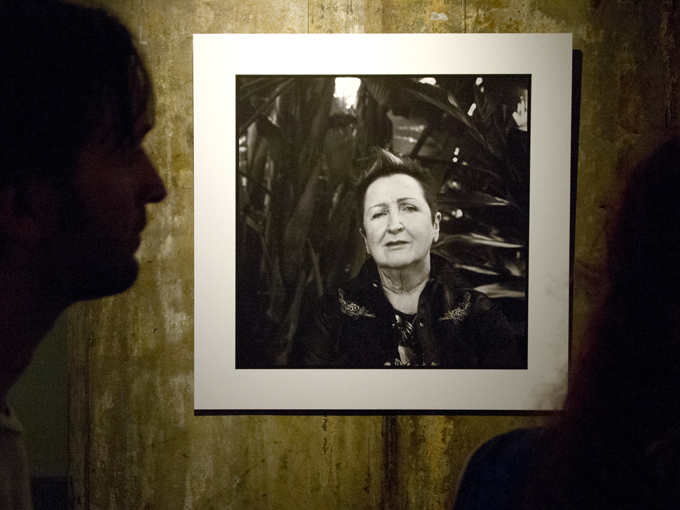
Carol Lloyd – the large portrait. Heather Faulkner’s exhibition A Matter of Time
.
The colour images are extremely intimate and distinctly banal, perhaps exhibiting the photographer’s light touch to aesthetically intervene in the narrative. The subject is imaged engaging in life’s everyday activities: cuddling a family pet, on the couch watching TV, talking with others, arranging things on a bed. The photographic treatment of these photographs is not the sensationalised grainy monochrome, extreme perspective depth and overtly dramatic composition that so often pervades the modern photojournalistic genre. There is a sense of the view being derived from ‘hanging out with friends’, and of the camera as an invisible witness. For me this approach results in authentic and genuine documents.

Carol Lloyd in a reflective moment – Heather Faulkner’s exhibition A Matter of Time

Carol Lloyd as performer – Heather Faulkner’s exhibition A Matter of Time
.
The exhibition also includes historical family snapshots that are presented alongside the recent images. A young child smiles back at the viewer, faded and colour-casted prints and wedding group photographs all add to the story of each subject. To protect the anonymity of people in these images black bands have been placed across faces to prevent recognition. The integration of these photographs extends the exhibition beyond just being about photographs and into the realm of a more complete and provocative social documentary statement.

Carol Lloyd’s personal image history in Heather Faulkner’s exhibition A Matter of Time
.
Ultimately everyone will draw their own conclusions about the women portrayed and the lives that they have lived, or should I say, endured. Faulkner states in exhibition materials that a research report suggests that: ‘Queensland is the most homophobic state in Australia’3. Facilitated through Faulkner’s photographs, exhibition strategies and other products resulting from this work, the stories told here engage with the human face of the weary struggle, of these women’s resilience, and the strength gained by the rewards of living an authentic life.
.
Dr Doug Spowart with a contribution from Victoria Cooper
More on Heather Faulkner: http://heatherfaulkner.com.au/
1 Bell Hooks (1992) The Oppositional Gaze in Black Looks: Race and Representation, Boston: South End Press.
2 http://web.archive.org/web/20061214124420/http://www.hyperorg.com/blogger/mtarchive/004264.html
3 Faulkner’s Artist’s Statement cites Roy Morgan Research (2008-2010)

Heather Faulkner @ the opening
Heather Faulkner’s exhibition A Matter of Time
All exhibition photographs © Heather Faulkner 2013.
Images of the exhibition installation and text by Doug Spowart .
This work is licensed under a Creative Commons Attribution-NonCommercial-NoDerivs 3.0 Unported License.
NICOLA POOLE’s ‘Lost Girls’ @ Gallery Frenzy, Brisbane
Lost Girls by Nicola Poole @ Gallery Frenzy, Brisbane.

Image from Nicola Poole’s Lost Girls exhibition
.
Excerpts from my opening address:
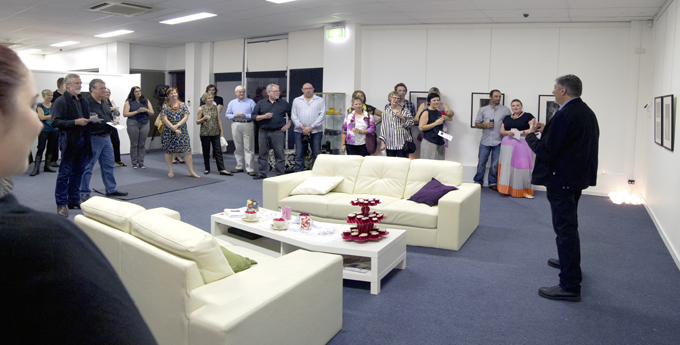
Doug Spowart opens Nicola Poole’s ‘Lost Girls’ exhibition
This morning on checking my Facebook news feed, there was a message from Darren Jew, of Brisbane’s Foto Frenzy Photography Centre, in which he described the ‘Oh My God’ moment at the age of 12, that inspired his life in photography. That moment was watching a black and white print develop in a tray in a darkroom. I was reminded of my same experience. From other posts there seemed to be quite a few others who were also seduced by the darkroom’s red safelight and its mysterious stinky chemicals.
I posted back to Darren posing the question: ‘how many 12 year olds are out there making digi images today and missing out on that OMG darkroom moment?’ Later, during a conversation with my partner Victoria, we made the interesting observation that in the old darkroom days we ‘MADE’ photographs in every sense of the word. Film was handled in darkness and loaded into tanks–chemicals added, agitation, water washes, hanging up to dry–negatives placed in the enlarger carrier, paper touched and slid into the easel, exposed to light, paper slipped into chemicals, trays rocked… etc. Photography was something that extended well after the shutter was fired. It took time and trouble for an image or two to emerge–made–from the process.
We thought that today with digital photography we just TAKE images–with rapidity and ease. Just click, add a filter effect or two and share. And we may take many, many images. In contemporary image taking the picture has a very transient and superficial value. Quickly taken and distributed they are even consumed faster on social media and quickly lost from view–particularly if you have lots of friends who post with the rapidity of a machine-gun. What is missing today is the time spent with an image realising it as a physical object. Digital imaging is like visual ‘fast food’. We, as consumers, end up fat, lazy and with pixelated indigestion.
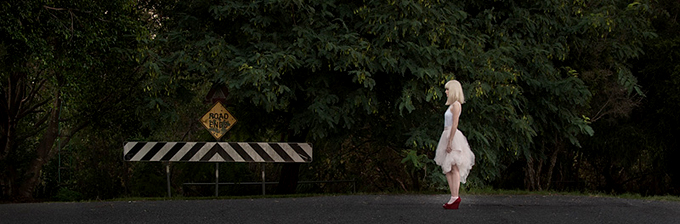
What excites me about Nicola Poole’s Lost Girls exhibition is that Nicola has assembled a collection of cohesive thematic image work and formed it into a physical and tangible MADE thing. Over the last week at Foto Frenzy I have witnessed her making this show. Photographs handled, selected and compared, prints emerging line by line from the printer, matted/mounted/framed, placed in the gallery space shuffled–moved, re-ordered and hung. I know that selecting, preparing and presenting work in an exhibition is complex and demanding. The artist embeds their energy and time in it and we the viewers are rewarded in proportion to the care and effort expended in its making.
I congratulate Nicola Poole and applaud her energy, enthusiasm and vision. As a younger girl herself, it is appropriate that she should make photographs the comment on her own experiences and on her generation. As we engage with these photographs questions might emerge: are the subjects looking into memories of the past, or are they facing an uncertain future? These images evoke a sense of, or a time of, waiting–a kind of anxiety or anticipation for something or someone. As viewers we may ponder and be drawn into the narrative.
As to the Lost Girls–What I do know is that in the making of this exhibition, somehow they have all been ‘FOUND’.
And, as Nicola’s first solo exhibition, it is indeed my please to formally announce it open …
Dr Doug Spowart

Nicola Poole and Me

Image from Nicola Poole’s Lost Girls exhibition
.
This work is licensed under a Creative Commons Attribution-NonCommercial-NoDerivs 3.0 Unported License.
.
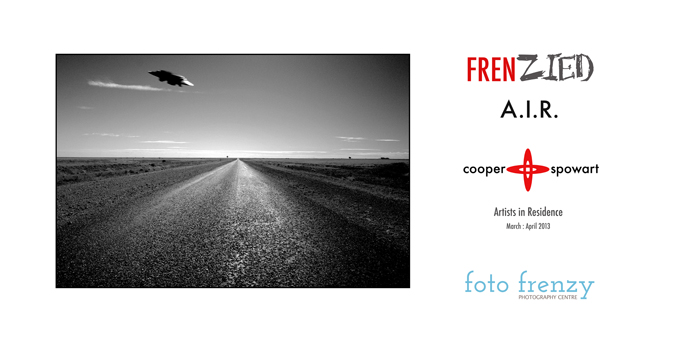
FRENZIED A.I.R. ‘PoPuP’ Exhibition @ Brisbane’s GALLERY FRENZY
We are now in Brisbane participating in an Artist in Residence @ Foto Frenzy in Coorparoo.
On Wednesday evening we presented an artist’s talk about our previous residencies and our approach to ‘Place Projects’. The event was attended by around 40 photographers, artists and students.
The exhibition will be on show on Easter Monday April 1st and Tuesday 2nd of April – We will be in attendance at the gallery between 11.00 am and 4.00 pm on those days.
GALLERY FRENZY is in the Foto Frenzy Photography Centre
Unit 3/429 Old Cleveland Rd, Coorparoo QLD 4151
We are also presenting a series of workshops @ Foto Frenzy–for details visit the website WWW.WOTWEDO.COM.
FRENzied A.I.R. Poster

Ian Poole, a Director of Foto Frenzy, opens the exhibition.
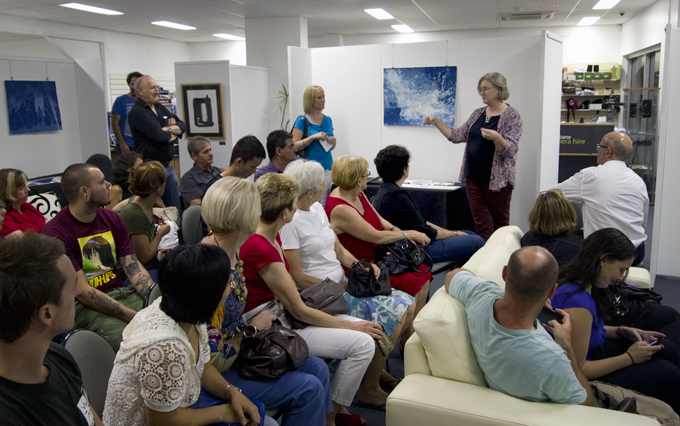
Vicky talking about her work

Selfie with Ian Poole
.
SOME OF THE WORK ON SHOW …
The exhibition features a selection of Camera Obscura works, Projections, cyanotypes and artists’ book and photobook works.

CarCamera concertina book
.
PLAY A VIDEO OF SOME OF THE CARCAMERA WORK

The ‘Hitting the Skids’ flipbook
.
PLAY A VIDEO OF THE FLIPBOOK
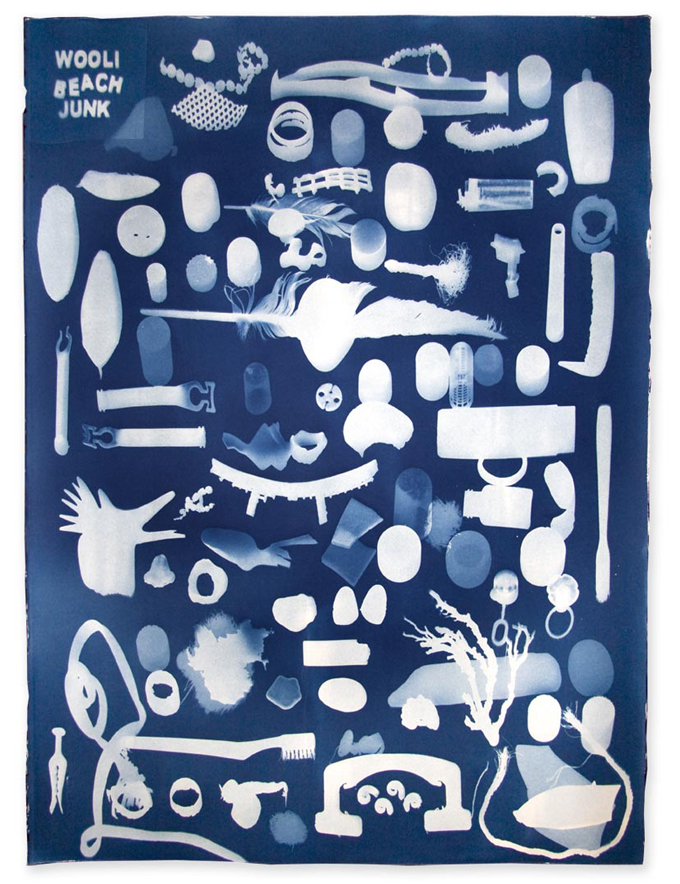
‘A cyanotype by Doug Spowart ‘Wooli Beach Junk’
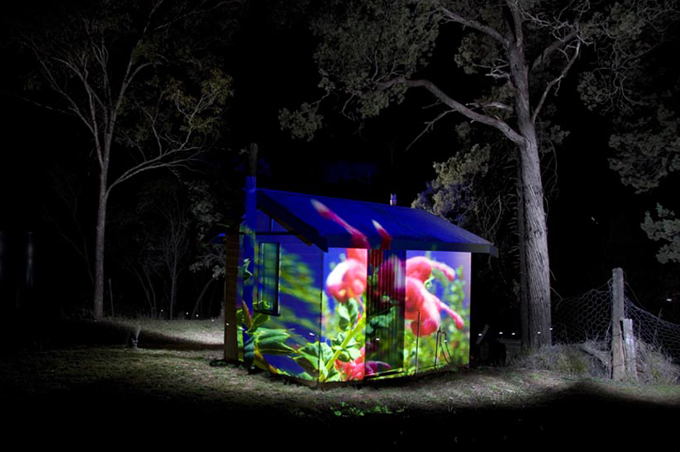
Projection – Myall Park Botanic Gardens
.
This work is licensed under a Creative Commons Attribution-NonCommercial-NoDerivs 3.0 Unported License.
.
.
YOU ARE INVITED: Meet the Artists Talk @ Foto Frenzy
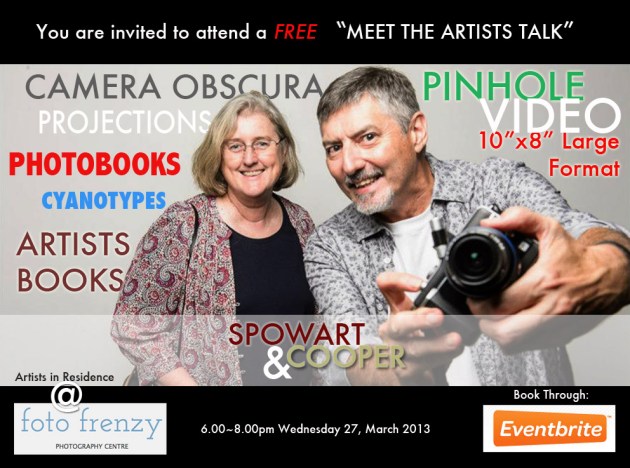
Meet the artists, see their work, hear them talk about creativity, invention, tinkering with art, and how to pursue personal directions in art-making and life.
The artists will also launch their Foto Frenzy workshop series and Artist in Residence.
Foto Frenzy
Unit 3, 429 Old Cleveland Road
Brisbane, QLD 4151
Australia
Wednesday, 27 March 2013 from 6:00 PM to 8:00 PM (EST)
.
The event is FREE but seating is limited. Please book through Eventbrite
Click Here
.
Victoria Cooper and Doug Spowart of Photographers of the Great Divide, are visual artists working in the fields of photoimaging, books as art, cultural research and education. They have collaborated on many art projects and exhibitions of book works that have featured their room and car camera obscuras.
As part of their PhD studies research and artworks produced were in the form of Photobooks and Artists Books. Both are Masters of Photography and Honorary Fellows of the Australian Institute of Professional Photography.
Spowart and Cooper have both lectured in Australia and New Zealand on the topic of the photobook and artists’ books and their book have been purchased for the rare book and manuscript collections in the State Libraries of Queensland and Victoria, and the National Library of Australia.
.
Visit <wotwedo.com> for the Cooper and Spowart Workshops.
.