Archive for the ‘Regional arts’ Category
COOPER SCROLLS @ Toowoomba Regional Art Gallery
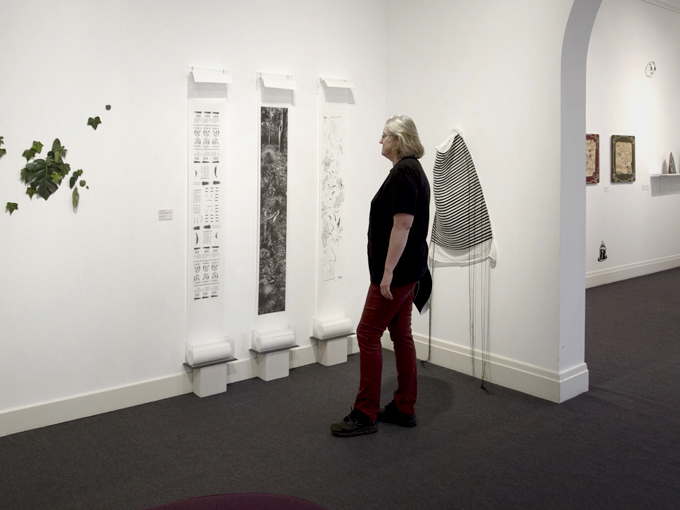
Victoria Cooper in the Off The Wall installation of three scrolls from the series of five
.
ABOUT ‘THE STORIES OF THE GORGE’ ON SHOW @ TRAG
Victoria Cooper’s digital montage Stories from the Gorge scrolls, made over ten years ago were included in Toowoomba Regional Art Gallery show. The exhibition was entitled Off the wall and was on show in Gallery 2 and Amos Gallery in May 2013.
The information about the exhibition that follows comes from the exhibition room sheet prepared at the time by Toowoomba Regional Art Gallery Exhibitions Officer, Ashleigh Bunter:
The works in the exhibition have been selected from the Toowoomba Regional Art Gallery’s City Collection. They have been placed simply together due to their three-dimensional nature and to highlight their derivation from the traditional two-dimensional picture plane.
This exhibition demonstrates the way that artists manipulate physical depth within their works which can often create a greater engagement between the object and the viewer. Interestingly, many of the works in this exhibition focus upon environment, whether it is the natural, public or the domestic environment. Materiality is also a common consideration. Throughout this exhibition one can see the influence of ‘the collector’, artists who gather images or common materials, reusing and reinterpreting them to create their art.
Victoria Cooper’s Stories from the Gorge: Order, chaos and the story of the hillside is a Chinese-landscape-scroll inspired series that represents “the last bastion of a natural chaos and order, an anti-culture, occurring on the fringes of agriculture.”[i] Human effects on the natural environment are central to Cooper’s practice and her prints and artists’ books in various formations lead the view from a flat two dimensional plane into the landscapes she investigates. These printed scrolls rise up from handmade acrylic boxes like the tall gum trees on their surfaces.
Other artists in the Off The Wall show include; Michael Schlitz, Marieke Dench, Tiffany Shafran, Judith Kentish, and Brigid Cole-Adams and the exhibition will be on the wall until May 26, 2013.
.
PRIZES AND AWARDS
2001 The Gorge was purchased by Australian Library of Art at the State Library of Queensland
2001 – Photographer and gallery director Sandy Edwards awarded The Gorge, First Prize in the Muswellbrook Photography Award
2001 – MCA Director Elizabeth Ann Macgregor awarded The Cliff, First Prize for Works on Paper, Martin Hanson Memorial Art Awards, Gladstone Regional Art Gallery and Museum
2002 – Five Stories from the Gorge was a Finalist in the 2002 Josephine Ulrick & Win Schubert Foundation for the Arts Photography Award at the Gold Coast City Art Gallery was selected by Isobel Crombie Curator at the National Gallery of Victoria
2002 –The triptych was acquired during its showing in the Toowoomba Biennial Acquisitive Award selected by Julie Ewington, then Curator at the Queensland Art Gallery..
.
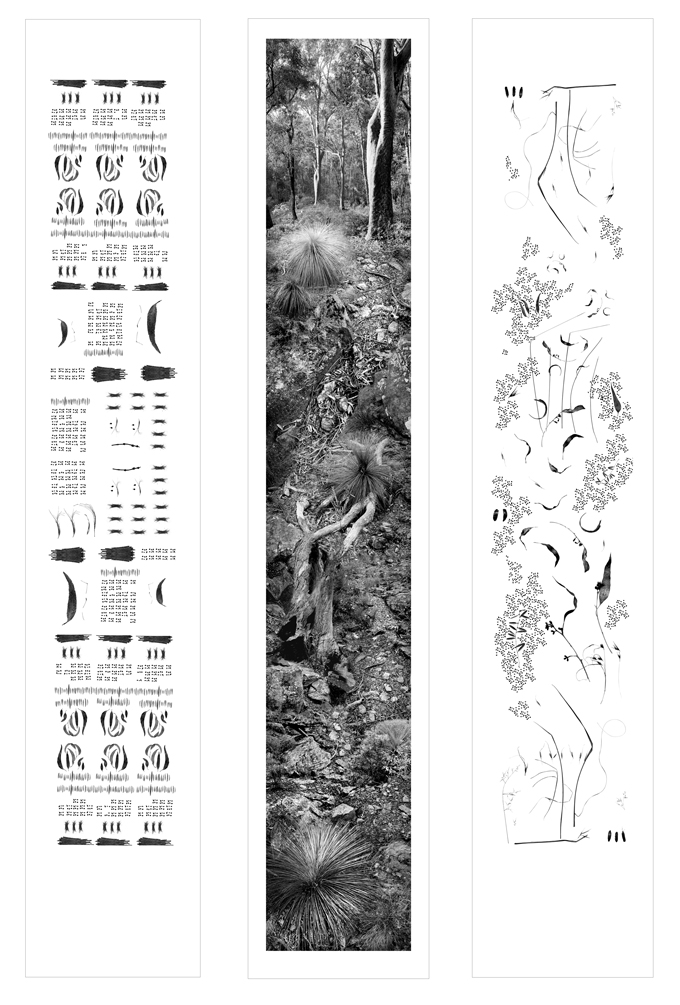
Three images of the Stories from the Gorge triptych as presented @TRAG
.
THE BACKSTORY OF THE SCROLLS AND THE SERIES OF 5 WORKS
Cooper’s scrolls were presented for the TRAG exhibition as a triptych, however in the original exhibition, entitled Searching for the Sublime, there were five scrolls. Searching for the Sublime was a collaborative project with sculptor Jim Roberts, fellow artist Doug Spowart and curator Deborah Godfrey. The inspiration for the project was a wilderness area in the Helidon Hills a mere 20 kilometres north-east of Toowoomba. Supported by an RADF Grant, the show featured Roberts’ sculptures, Spowart’s abstract water photographs, and Cooper’s scrolls and was shown at 62 Robertson Gallery in Brisbane in August 2001.
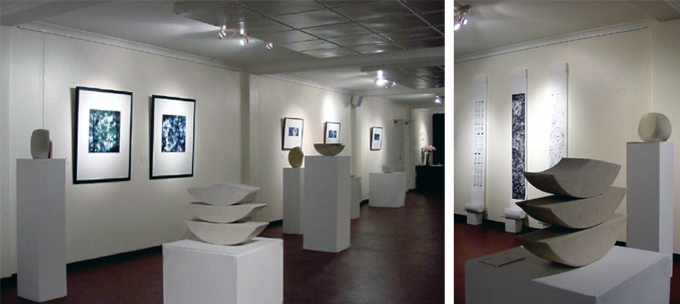
Searching for the Sublime @ Gallery 62 Robinson PHOTO: Courtesy of 62 Robertson
.
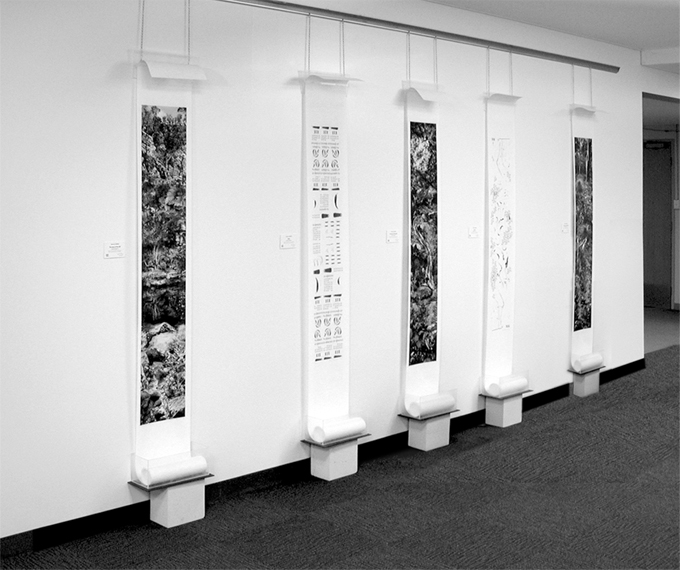
Five Stories from the Gorge installation at SQIT Gallery
.
The images were assembled as a photomontage in the tiny, by current sizes, Blueberry iMac computer. At times Victoria juggled 200 layers in one Adobe Photoshop document to create the fiction panoramas. Seeing the whole image was a problem as most of the time Cooper’s view was no bigger than the iMac screen requiring her to ‘scroll’ the image up and down–just as you will do in looking at the images in this post. Saving the files took 20-30 minutes and the system often crashed. The images were printed in pigment inks on an Ilford Novajet printer onto Hahnemühle Japan ‘rice paper’ by IMT on the Gold Coast. Victoria worked with artist Wim de Vos to design the bespoke handmade acrylic boxes. The design featured the ability for the box to not only serve as a container, but also act as a device to display the scrolls.
The complete set of scrolls, Five Stories from the Gorge, was shown in many venues and awards (see prize list at the end of this post), including Photospace at National Art School, Australian National University, Canberra. Canberra Times arts reviewer Myra McIntyre commented that Cooper’s works are:
Most elegant and fascinating photographic objects are Landscape stories, a series of five Asian-inspired scrolls. Cooper crawls, wanders and flies through the Australian landscape gathering hundreds of objects, patterns, and perspectives that she digitally intertwines, creating a continuum of almost imperceptibly diverse perspectives and a physical sense of vertigo in the viewer.
Review, Canberra Times, May 10, 2002
In 2002 the triptych was acquired during its showing in the Toowoomba Biennial Acquisitive Award selected by Julie Ewington, then Curator at the Queensland Art Gallery. Interestingly the rules of the competition at the time restricted entries to work that had not previously won an art award–as such only the three scrolls The Story of the Hillside, Chaos and Order were entered. When purchased the two other scrolls were orphaned from the set.
So here in this blog, we reunite the Five Stories from the Gorge presented in a form for you to scroll/stroll through … Enjoy.
.
By Doug Spowart
.

Story of the Cliff
.

Story of the Gorge
.

Story of the Hillside
.

This work is licensed under a Creative Commons Attribution-NonCommercial-NoDerivs 3.0 Unported License.
YOU ARE INVITED: Meet the Artists Talk @ Foto Frenzy
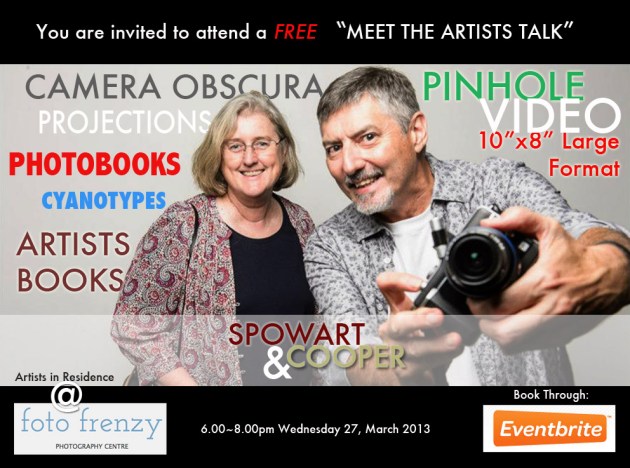
Meet the artists, see their work, hear them talk about creativity, invention, tinkering with art, and how to pursue personal directions in art-making and life.
The artists will also launch their Foto Frenzy workshop series and Artist in Residence.
Foto Frenzy
Unit 3, 429 Old Cleveland Road
Brisbane, QLD 4151
Australia
Wednesday, 27 March 2013 from 6:00 PM to 8:00 PM (EST)
.
The event is FREE but seating is limited. Please book through Eventbrite
Click Here 
.
Victoria Cooper and Doug Spowart of Photographers of the Great Divide, are visual artists working in the fields of photoimaging, books as art, cultural research and education. They have collaborated on many art projects and exhibitions of book works that have featured their room and car camera obscuras.
As part of their PhD studies research and artworks produced were in the form of Photobooks and Artists Books. Both are Masters of Photography and Honorary Fellows of the Australian Institute of Professional Photography.
Spowart and Cooper have both lectured in Australia and New Zealand on the topic of the photobook and artists’ books and their book have been purchased for the rare book and manuscript collections in the State Libraries of Queensland and Victoria, and the National Library of Australia.
.
Visit <wotwedo.com> for the Cooper and Spowart Workshops.
.
The regional gallery that advertises on highway billboards
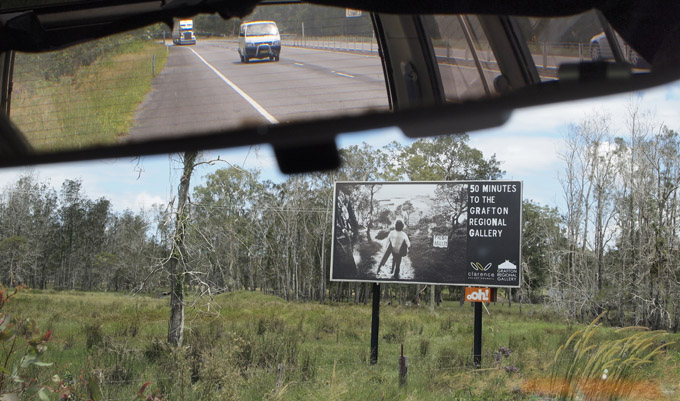
Grafton Art Gallery – Highway Billboard Photo: Doug Spowart
The concept of cultural tourism is often cited as the justification for local council support of regional arts infrastructure that may include, cultural policy, gallery facility and staffing, education or interpretive or developmental officers, local arts workers, regional grant administration and auspicing. What interests us as we travel around the country is the quality of regional arts practice and the entrepreneurial activities that are taking place that tend to be lost in the white noise of the big city hype of blockbusters and art heroes.
The Grafton Regional Gallery is well known for its Jacaranda trees and the Jacaranda Acquisitive Drawing Prize. But there are other things, for example how many regional galleries participate in highway billboard advertising? —GRG does. Another aspect is the diversity of shows presented include curated exhibitions from works in their collection, shows by local artists and travelling exhibitions—recently the Archibald Prize,.
On this occasion two exhibitions attracted our interest, The Art of Sound, a GRG collaboration with the National Film and Sound Archive and Garlugun.gi by local ceramicist Bevan Skinner.
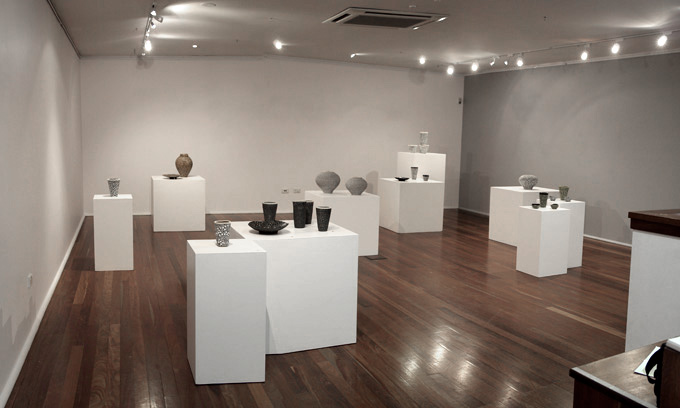
Bevan Skinner’s Garlugun.gi
Skinner’s work is informed by his indigenous heritage. A Gumbaygan man he states in the detailed catalogue accompanying the show that: ‘my work always revolves around my culture, my identity and my spirit.’ While any artist could claim the same provenance for their art Skinner’s work is a deliberate and profound blending of the earth of his country (clays, oxides and pigments), and culture (mark making, tradition and storytelling). While the dot technique of the desert artists is apparent in this work Skinner’s use of the motif is to represent stars in the sky and the meaningfulness that they have for him as a way to connect and remember loved ones passed away and now appearing as stars in the night sky. These works are part of a larger series Winda-bin Waluurrgundi – Stars of The Valley.
Bevan Skinner’s work is presented in a multi-plinthed exhibition space with groups of pots and plates resonating. Some time ago I remember a comment by David Hockney in which he said something around the idea that the time the artist takes in making a work is matched by how it will engage with the viewer. There is something of this in Skinner’s work, for me each piece is a vessel that holds in the artist’s communiqué and the viewer’s gaze activates the message.
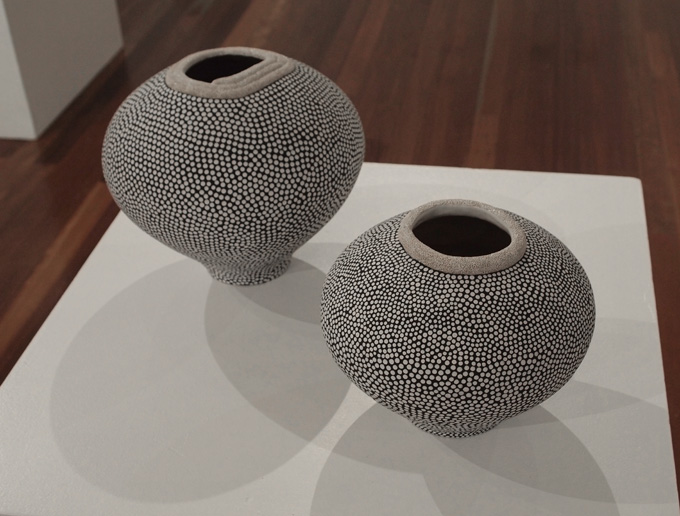
Winda-bin Waluurrgundi – Stars of The Valley Series 1 2008 (foreground)
One side issue emerging from Bevan Skinner’s biography is Associate Diploma in Ceramics training he completed at TAFE in the early 1990s with art teachers who assisted with his development as an artist. I can only exhibit trepidation about the future of artists like Skinner who early in their career ‘found themselves’ through TAFE, now that in NSW art training has been dropped from all TAFE colleges.
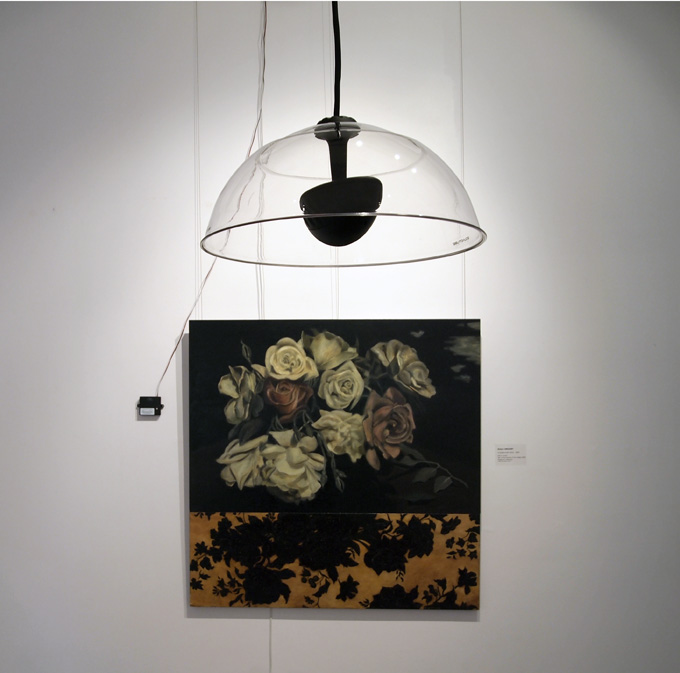
Robyn Sweaney A passionate affair (2003)+ Country Garden audio
The Art of Sound offers a new way of presenting visual art in a gallery space. The concept is to pair works from the GAG collection with audio material supplied from the National Film and Sound Archive so that the viewer of an artwork has a sight and sound experience of the art. On entering the gallery space the visitor is immediately met with the usual artworks on the wall but something is different—each has some kind of parabolic Perspex dish suspended above or headphones nearby. These sonic devices deliver, in a fairly localised way, music or audio to compliment the work. Composer and sound/artist designer James Hurley undertook the installation of the audio apparatus at GAG.
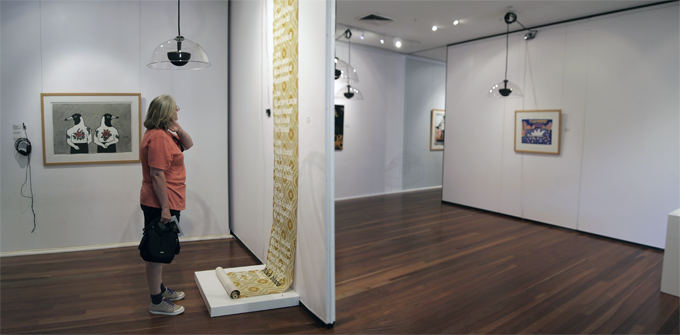
The Art of Sound installation
Gallery Director Jude McBean does not provide answers in her didactic panel statement but rather asks some provocative questions:
‘I wonder how long the effect of linking a particular sound with an artwork will last and how much will the sound determine or change perceptions of the work. These questions also apply to the linking of an artwork to a sound. How long will the participant recall the artwork when hearing that sound outside of the gallery and will the artwork determine or change the experience of the sound or not? The answers are eagerly anticipated over the duration of the project and in later years.’
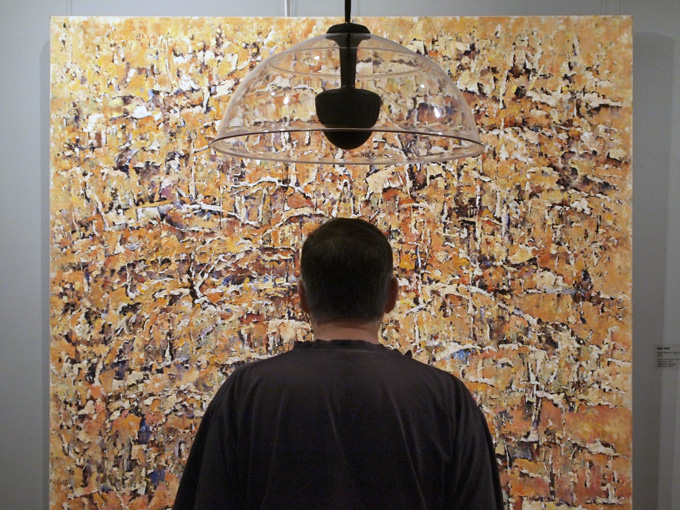
Mike Riley Stock Reserve near Grafton (2010) + AMATA audio PHOTO: Victoria Cooper
What I found was that sometimes the audio triggered personal recollections of time and place and that these could be used as a kind of reference for the visual experience of the art. Music, for example, has a broad dissemination across a generation. Take for example the ‘Happy Little Vegemites’ 1954 advertisement. However the artist’s work is very limited in its distribution so the audio conjures up a familiar personal response through which the image is viewed for its concurrency. On other occasions like with Mike Riley’s Stock Reserve near Grafton (2010) and indigenous folk music by AMATA (2007) where the piece of music or audio was unknown as was the artwork a new experience was created. A profound work for me was the Judy Cassab, Mothers Love (2004), J W Lindt pair of 1870s photographs of local Aboriginal people with children synergised by the traditional Indigenous singing by BUMA (2008) a song about crying babies who will go to sleep when fed. Could it be that mine was the predictable response that the curators and their pairing of visual and audio stimulus wished to create?
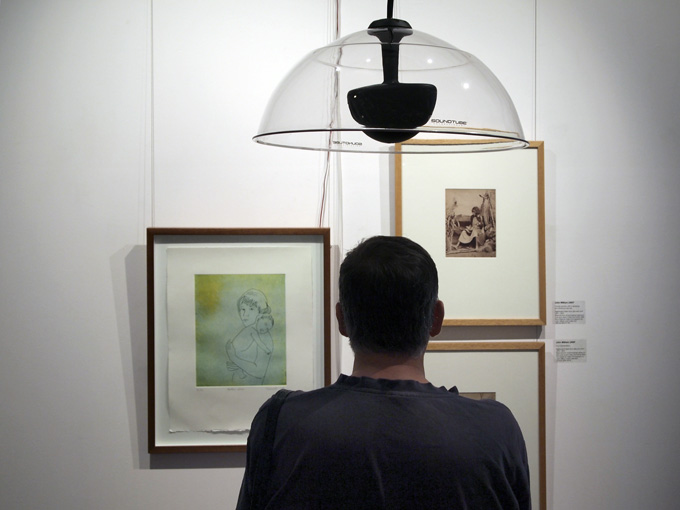
Judy Cassab Mothers Love (2004), JW Lindt photographs (1870s)+BUMA audio PHOTO: Victoria Cooper
Another, perhaps subversive experiment that I undertook in the space was to attempt to activate as many sound sources as possible and listen to the montage of sounds whilst moving about the artworks—somehow it created an experience of life itself …
Thank you to the GAG and to other regional galleries around the country who through ingenuity, creativity, entrepreneurship and cunning do as much for their communities as they do for the rest of the country in presenting contemporary art.
.
Dr Doug Spowart
Photos by Doug and Victoria Cooper
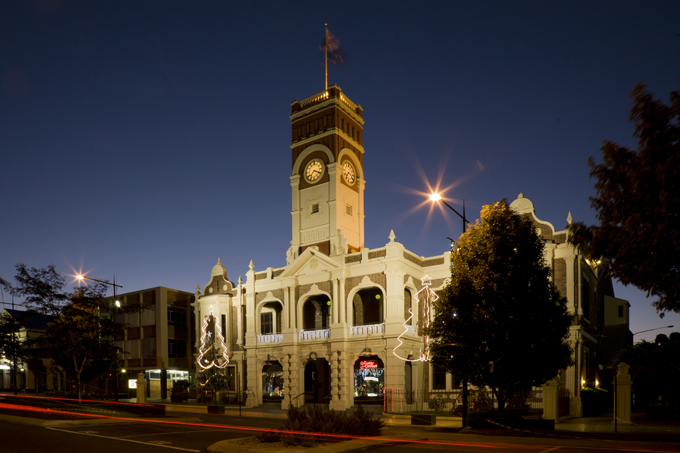
XMAS STREET NOCTURNE: A new site project
.
On the road and in the street
.
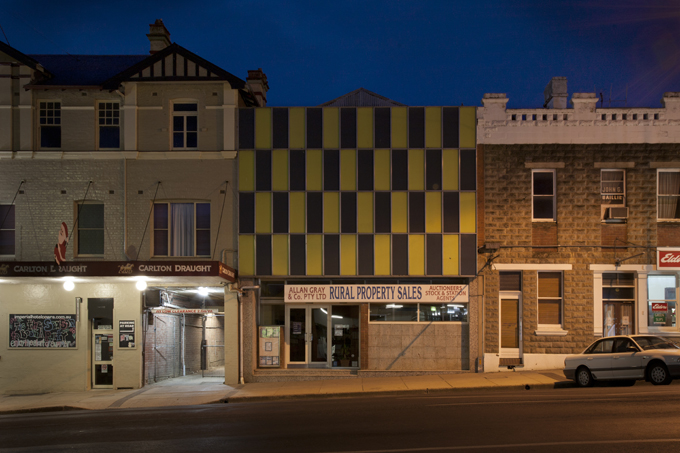
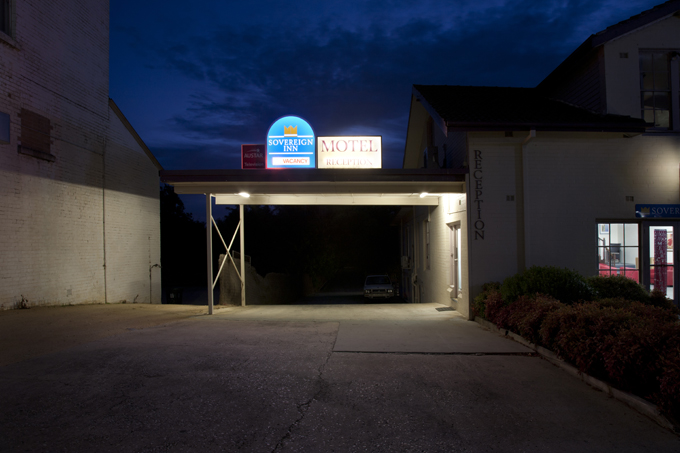
In past years after a day’s travelling doing fieldwork we usually aim for an overnight stay in a country town to rest for the night before attacking the road again. On arrival in the town we drive down the main street to inspect the available/affordable accommodation options. By nightfall we are usually ensconced in the motel room: organising our day’s imaging, catching up with emails, dinner and so on. The next day we move on . . .
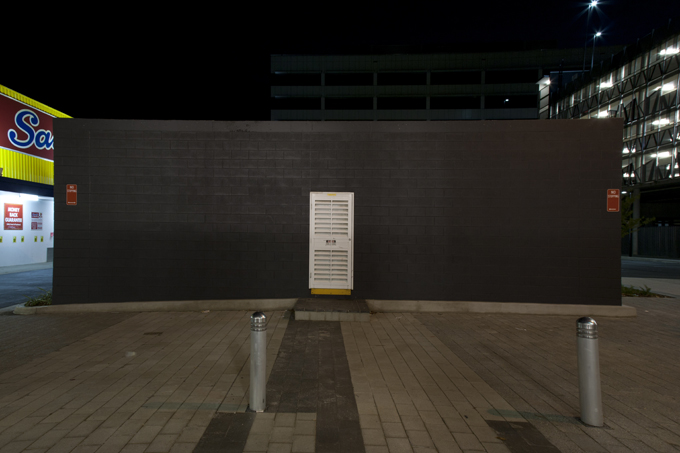
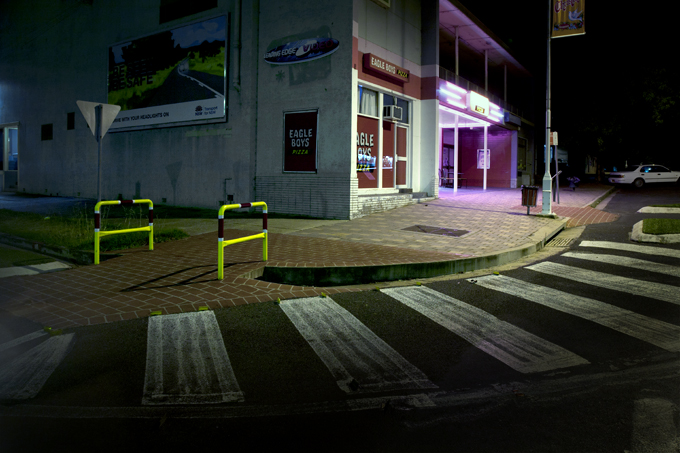
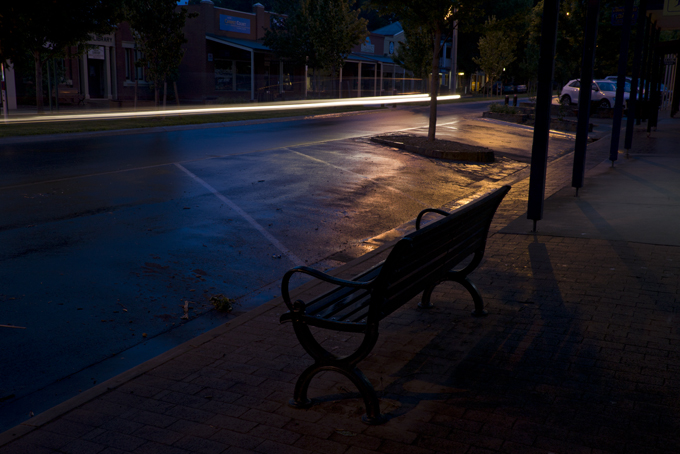
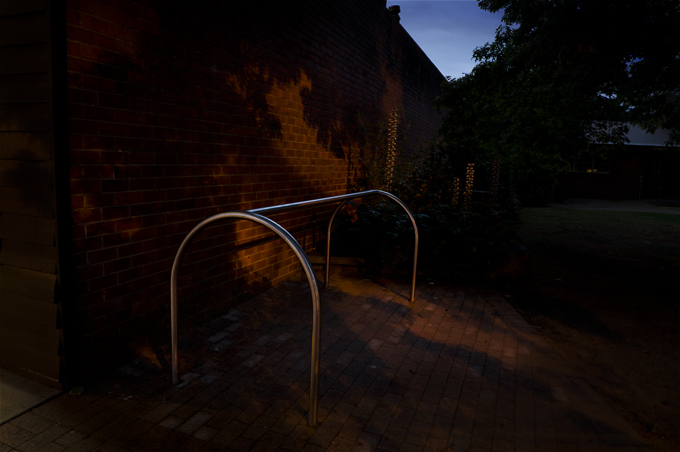
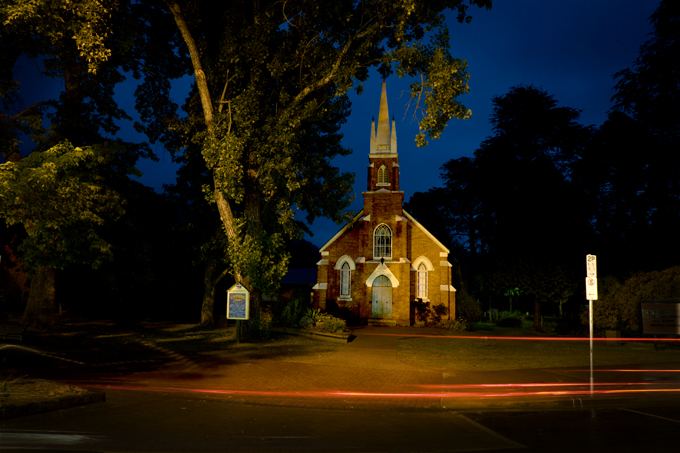
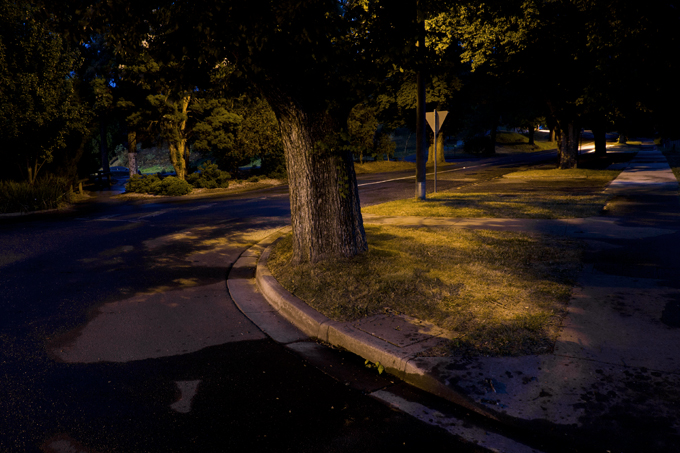
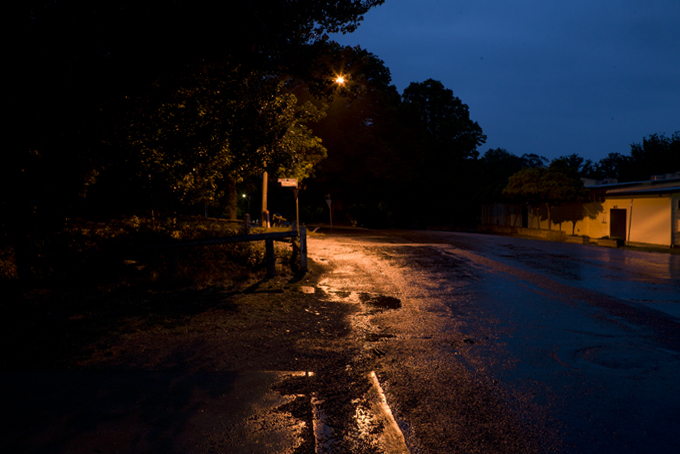
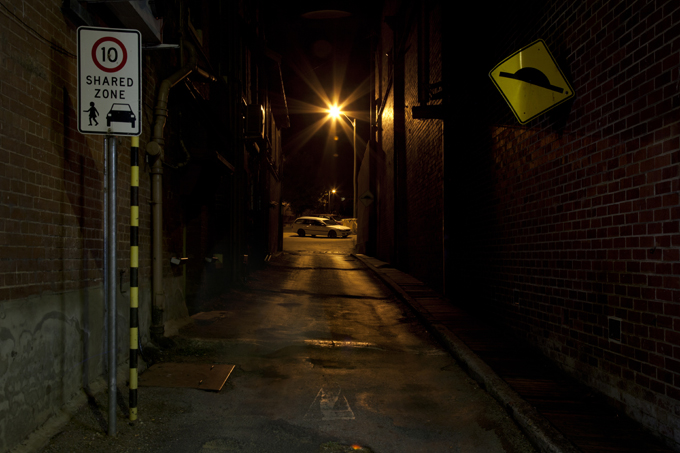
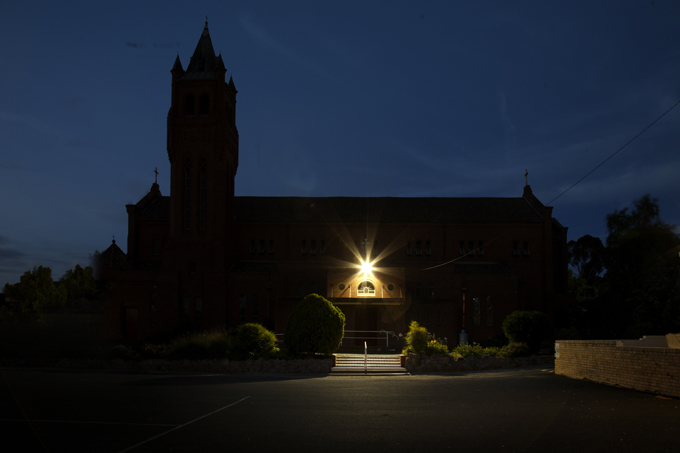
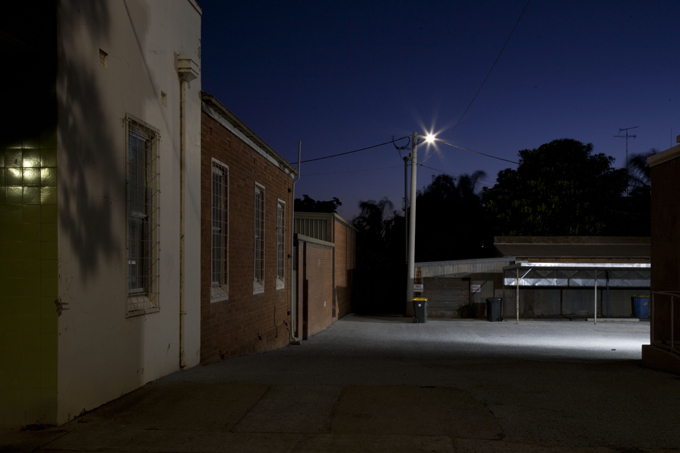
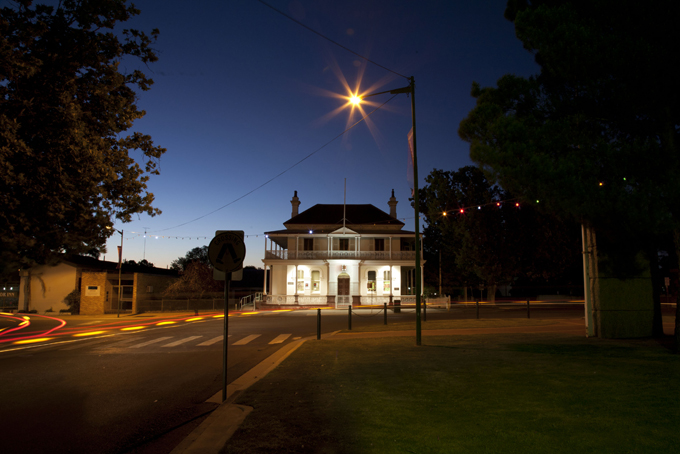
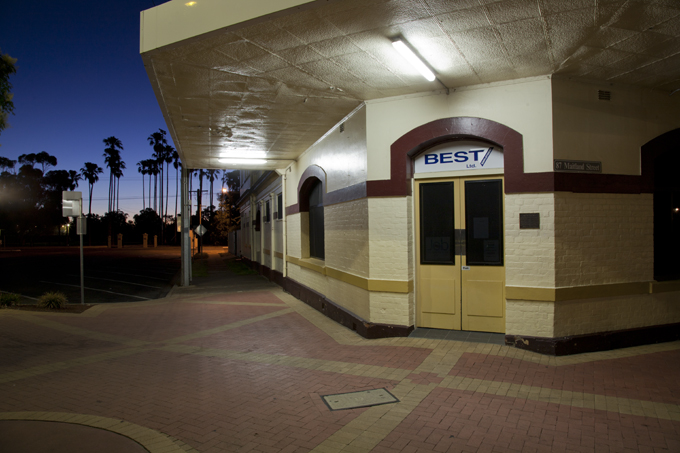
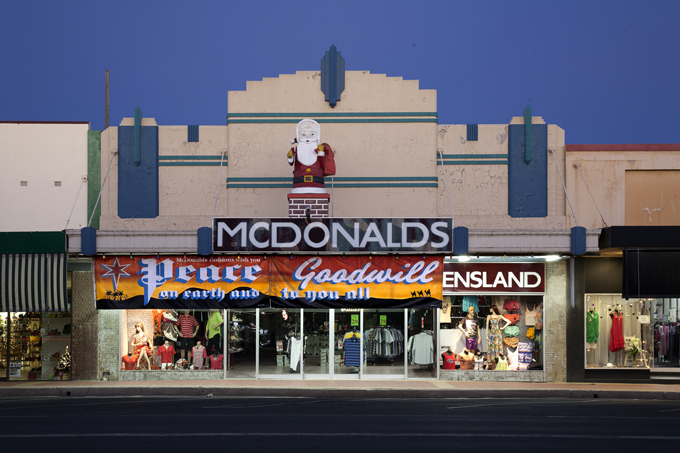
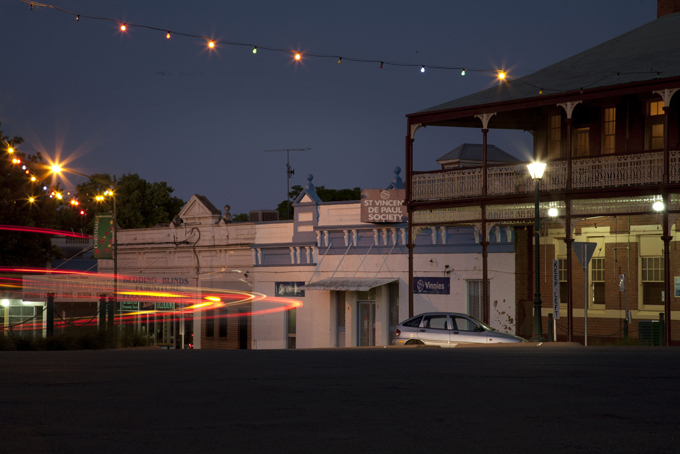
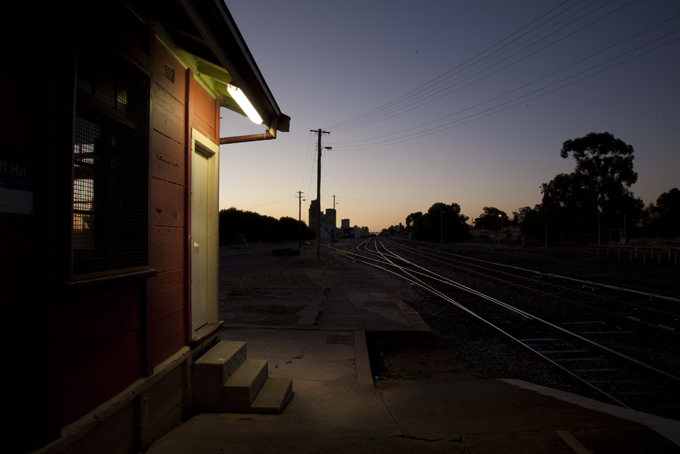
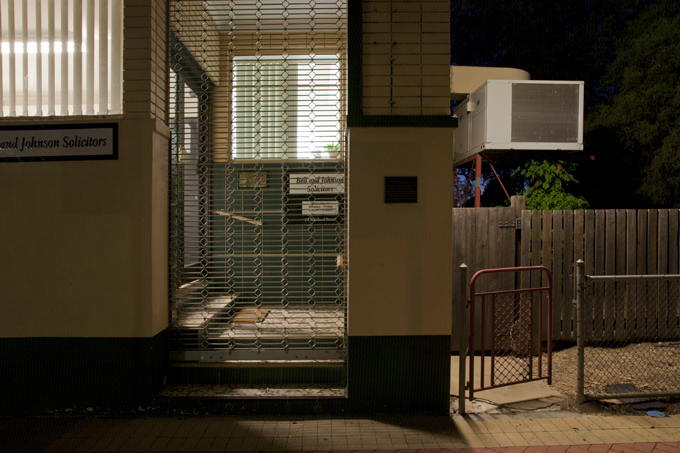
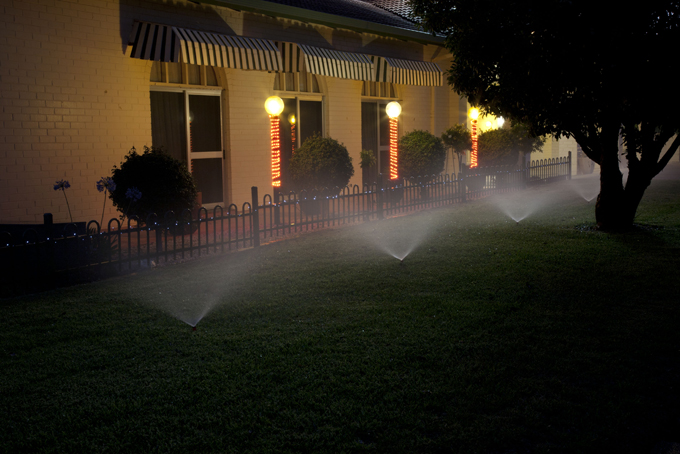
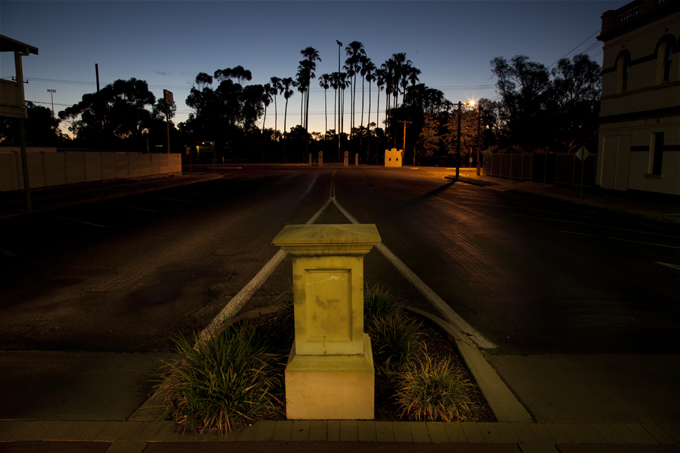
This year during our summer field trip, motivated by the results of our recent Wooli Nocturne Project, we decided to document at twilight an aspect of each town where we stayed. This meant arriving early so that we could walk down the main street before sunset. Our objective was to survey the site-specific arrangement of town’s Xmas display, (whether present or absent), and identify features that at dusk would also be artificially illuminated. Returning later we would shoot under the deep blue/magenta skies of the early evening and the night lights.
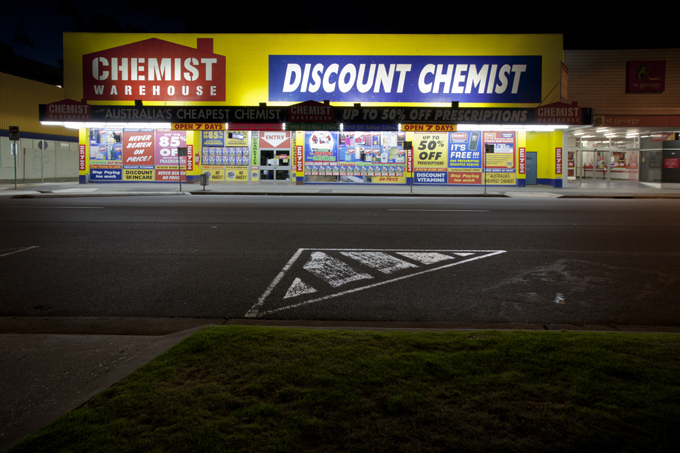
In this work we are not alone, as photographers across the history of the art have used this montage of artificial and natural light effects to document urban environments. The development of this work has been influenced over time by a sustained interest in artists like Edward Hopper and Jeffrey Smart, and the photographers Eugène Atget, Brassaï, William Eggleston, Joel Meyerowitz, Gregory Crewdson and Brian Brake. More recently in Australia, artists and photographers notably Bill Henson and Mark Kimber have also explored aspects of this genre.
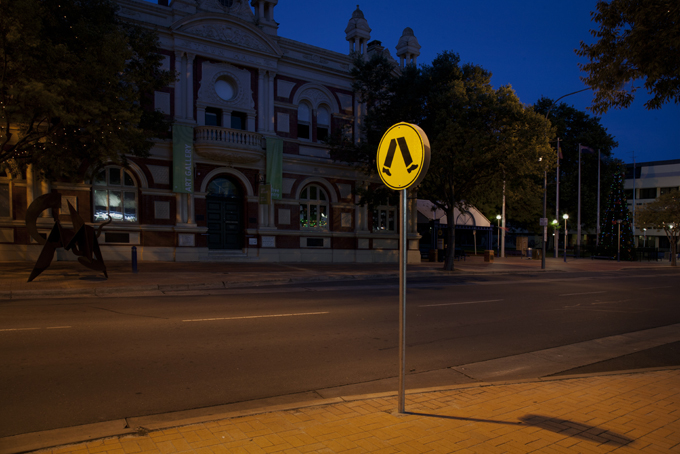
Recognising that the inherent nature of this transient light evokes the uncanny, an unseen presence or the interstitial filmic moment captured as a still is fundamental to our project. In this work the documentary photograph is not just a record of the idiosyncratic nature of each town’s main street and its Xmas light show as in these lighting conditions everyday objects are transformed from their daytime function. The prosaic nature of these towns, when photographed in the dusk light, becomes part of a found aesthetic: a site-specific monument to nocturnal light; a visual narrative of light, colour and form.
Xmas Street Nocturne: A site-specific project by Victoria Cooper + Doug Spowart
5 January 2013
.
Towns and cities imaged:
- Albury
- Bright
- Coonabarabran
- Cowra
- Narrabri
- Narrandera
- Toowoomba
2013 SABBATICAL for Doug+Victoria: A ‘Leap of Faith’
A NEW YEARS MESSAGE FROM COOPER+SPOWART
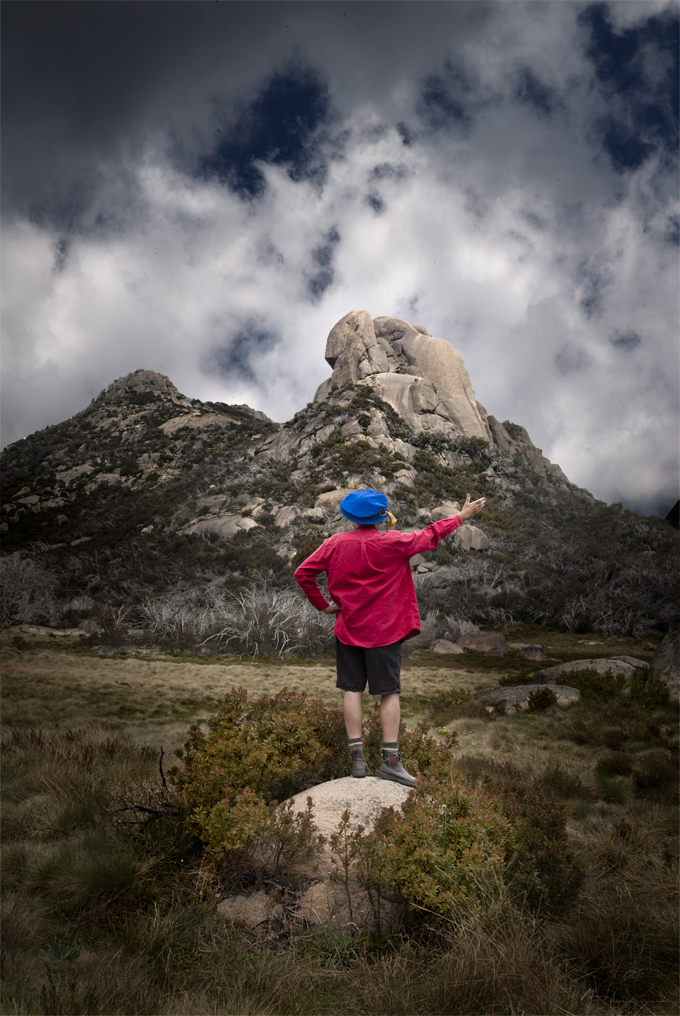
Dr Doug consulting Casper David Friedrichs re 2013 sabbatical, The Cathedral, Mt Buffalo.
In the year 2000 we began our involvement in higher academic study at Monash University in Post Graduate Diploma study. Since then, except for a small break in 2003, we continued our university research and art practice. Throughout this period we maintained both our arts practice and working at TAFE where Doug was full-time employed as a teacher and Victoria worked as a sessional teacher. All holidays and long service leave was consumed by the demands of study, research and at times a busy exhibition and private lecture programme. The hard work and study culminated last year (2012) with Doug being awarded Doctor of Philosophy at James Cook University in May, and Victoria submitting her PhD for final examination in late November.
Now, as we head into 2013, we are taking time out to pursue our post-doctorial research interests, opportunities to present and share our specialist knowledge and skills and to re-connect with our professional practice as artists and commentators on contemporary issues. It is a ‘self-funded sabbatical’. To finance this venture we intend to generate opportunities that may include ‘cloud funded projects’, artists in residencies, specialist workshops, seminars and consultancies, and sessional teaching or lecturing. We are also open to projects that may become available through our connections.
To up date you on our current interests and professional activities we include the following:
Doug: Social media and its applications within creative practice and personal communication; assembling and writing a critical commentary about Australian photobooks from 1900-2000; the narrative form of the hybrid photobook and the elevation of the print-on-demand photobook into a higher order of visual communication.
Victoria: Maintain a review of contemporary science/art interdisciplinary research as an accepted practice in academic institutions. Special interest in: the scientist, the artist and intuition; the historical use of visual art practice as information within scientific publications; Montage Thinking, as a mode for visual thinking and intellectual discourse through visual and non-visual information.
This adventure is somewhat a ‘leap of faith’ and as such we have created a blog onto which we will post sabbatical related content – we will invite to view this site when it comes online. This WOTWEDID blog will continue as our broader commentary platform – on occasion dual postings may occur. Other special research interest blogs will also emerge and you will be advised of opportunities to connect with their content.
Please contact us if you see any opportunities to support our ‘leap of faith’ sabbatical.
We wish you all an exciting 2013 New Year and look forward to perhaps connecting with you, and also connecting you with, commentaries about the issues of our shared interests.
Cheerio
Victoria and Doug
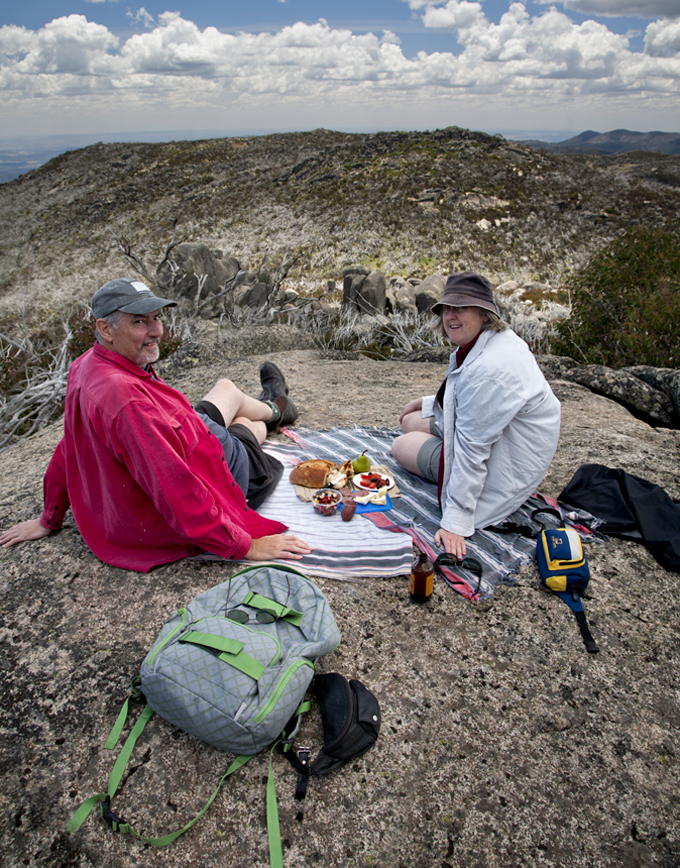
A 2013 lunch planning meeting at The Horn @ Mt Buffalo on 12.12.12
SIMON GLEESON’s ‘PERU EMBRACED’ Exhibition
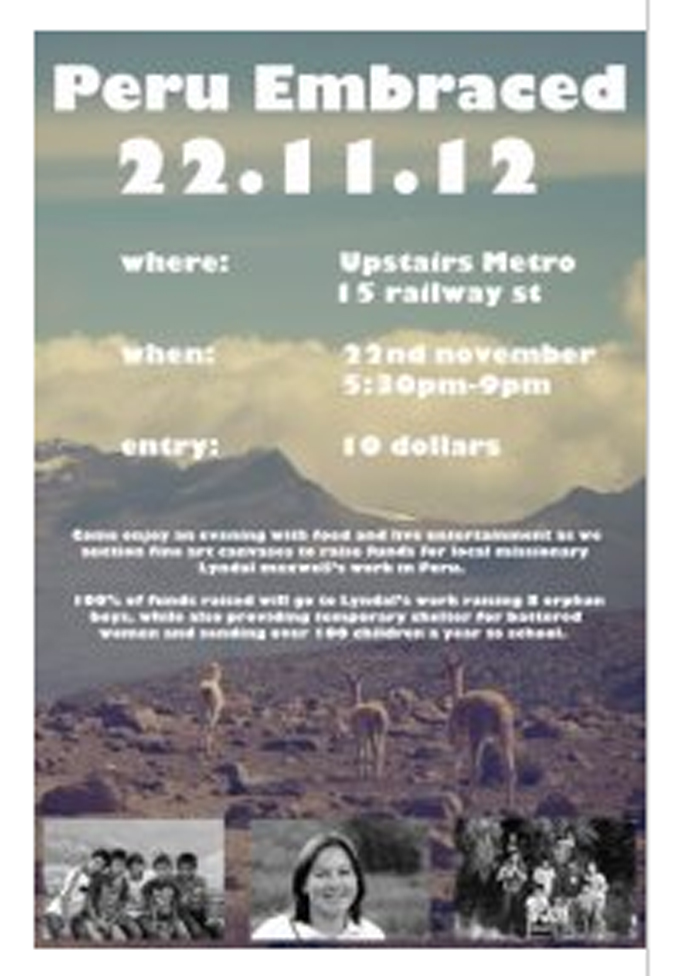
Simon Gleeson: ‘Peru Embraced’ Poster
Simon Gleeson studied photography with me a few years ago in Toowoomba. His world travels have taken him to some remarkable places but his current love affair is with Peru. An exhibition fund-raiser recently opened at the Metro Gallery in Toowoomba. Simon presented a selection of large colour and black & white images presented on canvas mounts.
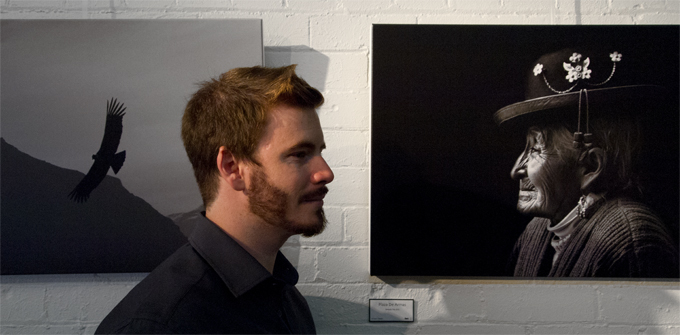
Simon Gleeson portrait by Doug Spowart
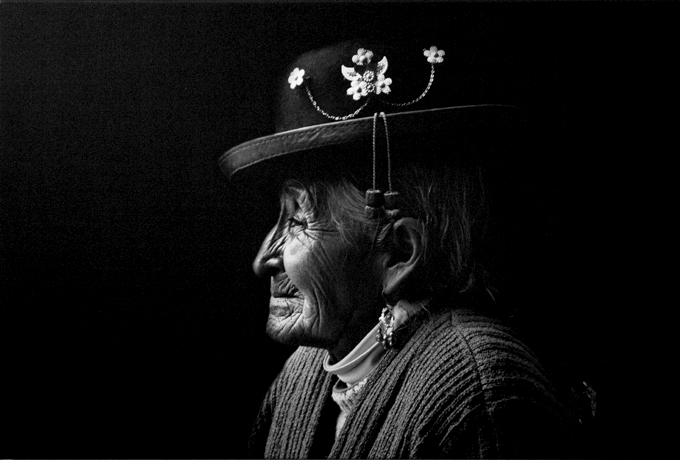
Plaza De Armas by Simon Gleeson
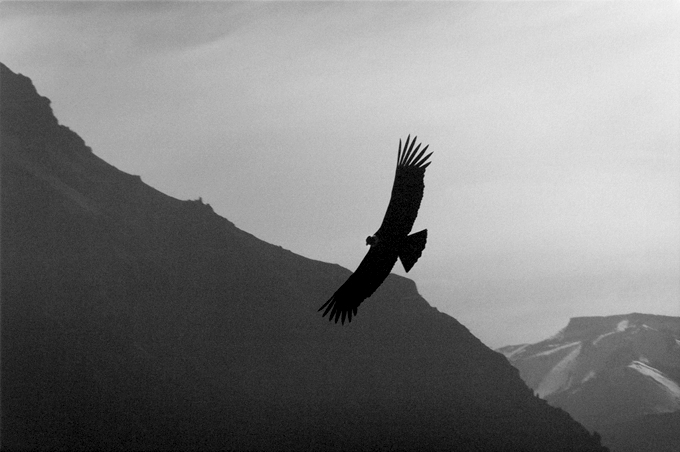
Condor by Simon Gleeson
At the opening the works were auctioned generating around $4,000 for an amazing lady Lyndal Maxwell who cares for and adopts Peruvian children. Simon’s message is presented here …
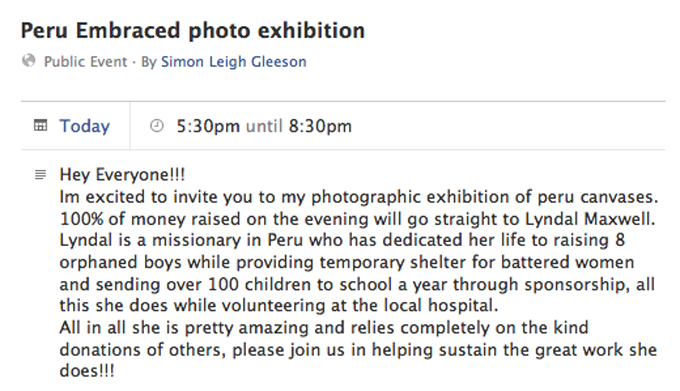
A story in the Toowoomba Chronicle newspaper is available HERE
Congratulations Simon…
Doug
THE RANGE: Comments about the C.R.A.P. event
The RANGE Festival Director Ashley Bunter and Arts Council Toowoomba President Jennifer Wright (Summers) comment on the Centre for Regional Arts Practice event at the GRID. SEE earlier post on the event HERE.
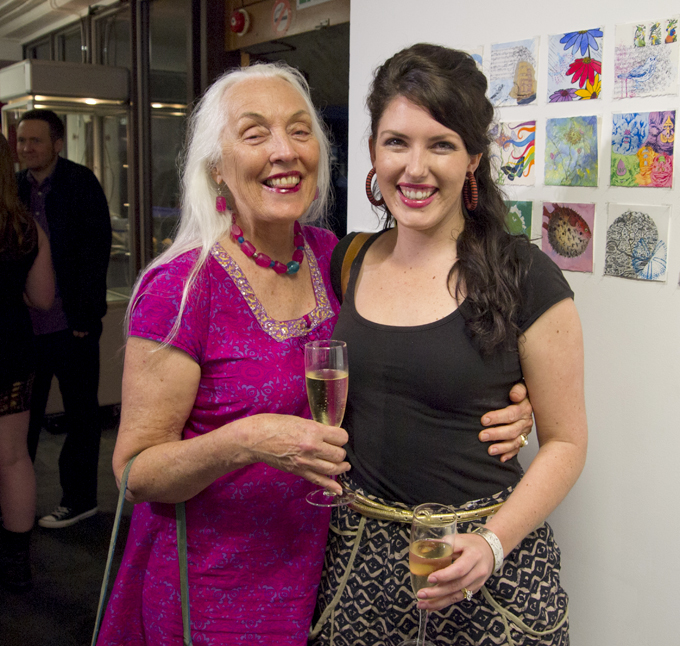
Jennifer Wright (Summers) and Ashleigh Bunter
Mining jobs are temporary and have negative impacts with binge drinking, lack of affordable housing for any nearby community.Why can’t we continue to make Toowoomba a centre of creativity, art and culture? Arts Council Toowoomba’s mission statement has always been to create a vibrant and creative centre for the arts.
At the Regional Arts Australia Conference in Golwa Federal Minister Simon Crean detailed how collaborative creative projects and partnerships had renewed regional cities including Newcastle and Townsville.Mark Robinson from Arts Council UK talked about making adaptive resilience real. When industries declined, regional UK communities remained creatively productive and adapted with integrity to changing circumstances with lasting benefit for the community.
The Edinburgh Festival, now 21 years old is part of Edinburgh’s strength and creates formal and informal social capital and feeds the community.
Transformations have started here and I hope we can ride the momentum of the RANGE festival. Festivals become part of the environment, attracting the touring dollar.
We can support a growing ecology and develop critical discussion in the region if we stick together, continue to adapt, gain confidence but not wreck the community,
if we remain open, dynamic and creative we position ourselves behind a creative industry that has longevity stands to benefit the community in a long term sustainable way.
Jennifer Wright (Summers)
THE RANGE: Centre for Regional Arts Practice Event
ARE YOU A REGIONAL ARTIST?

Jennifer Wright (Summers) makes a point at the Centre for Regional Arts Practice event
The Centre for Regional Arts Practice (C.R.A.P.) event, ‘Are you a regional artist?’ was part of the 2012 RANGE festival of art and culture program. Attended by around thirty people from around the Toowoomba region the event took place at The GRID Creative Space. The stimulus for the event and its question is the series of artist survey books produced by C.R.A.P. founders Victoria Cooper and Doug Spowart. Topics covered by the books deal with the issues and the experiences that Cooper and Spowart have encountered over many years as regional artists. Surveys have included the following titles:
#1 How do you know you are a regional artist?
#2 How do you now you operate a regional arts business?
#3 The inland regional artist & the beach
#4 The regional artist & climate change
#5 The regional artist & the global financial crisis
#6 Swine flu & the regional artist
#7 Air travel & the regional artist
#8 Flooding in your studio
#9 Summer lethargy
#10 The New Zealand regional artist
#11 Vote 1: Campaign for Regional Artists for Government Election (Democracy)
#12 Checklist of the signs that extractive mining has taken over your regional community.

7 of the 12 Artist Survey books published by the Centre for Regional Arts Practice
Six local artists accepted the invitation to participate in the event by selecting an artist survey book that related to their experiences and interests. They were asked to select passages from the books and to present and discuss these passages. The artists were: Jack Atley, Fancy Darling, John Elliott, Elysha Gould, Sue Lostroh and Jennifer Wright (Summers) [Their Bios are included at the end of this post]. The panel members represent a diversity of practice which is both grounded by necessity but also enjoying the freedom to be at the creative edge. Toowoomba’s art community is evolving and seemingly drawing strength from a fertile montage of place-minded inclusivity along with strident individualism. This motivated group of young and established artists are moving with the changing landscape of the regional arts practice, while also operating within a national and global perspective.
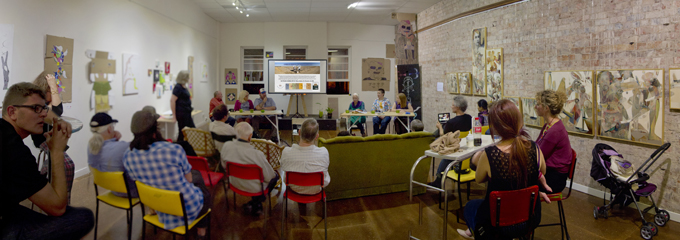
At the Centre for Regional Arts Practice event @ The Grid in Toowoomba
The Artist Survey books acted as catalyst and provocateurs for discussion and commentary where each panellist presented a particular slant on their selected subject. What followed was an organic and freeform forum with a range of questions being discussed and challenged. The main theme—the identity crisis of regional artist—was at the centre; the responses made the issues relevant, while evoking alternative considerations.
After each panellist’s segment the audience was asked if the ‘agreed’ or ‘disagreed’ with the proposition put by each Artists Survey Book. Some topics, such as ‘Do you need a week at the beach’, ‘How do you know if you operate a regional business’ and ‘The signs that mining has taken over your community’ resulted in a majority support. Other books, including ‘Would you agree that regional artists should form their own political party’ and ‘The regional artist and the GFC’, drew out other interesting issues and challenges from the panel and attendees beyond just the questions posed in the books. In some cases the outcome of the discussion recognised that all artists, from both regions and city, connect with the same issues. Perhaps all artists are regional?

Sue Lostroh asks ‘Do regional artists need a week at the beach?’
From the panellist’s responses it became evident that regional artists are passionate people with opinions and ideas about their practice and the opportunities and challenges of regional life. The feedback coming from some of the informal discussions at the end of the night suggested there could be future events of this nature in the form of a forum.
From our perspective this event brought not just consensus, but importantly new perspectives on, and challenges to, what it means to be a regional artist living and working on The RANGE.
Finally, attendees were invited to contribute comments to the forthcoming Artists Survey Book ‘The regional artist and the artists run initiative’. This edition of the C.R.A.P. Artist Survey book is intended to celebrate the role of the ARI in the Toowoomba region—the main theme of The RANGE festival.
Until next time …

C.R.A.P. event attendees chatting after the activity
PANELIST’S BIOS
Elysha Gould is a visual artist and Co-Director and founder of the artist-run initiative, made.Creative Space Toowoomba, and is the current Supervisor of Dogwood Crossing arts and cultural facility in Miles, Queensland. Living as an expatriate during the formative years of her childhood and having a mixed Australian-Japanese heritage, Elysha’s work incorporates paper cutting, drawing and installation that explore ideas of cross-cultural representations, contrasting contexts in the imagery and materials she uses.
Sue Lostroh was born in Sydney half a century ago, now living and working in Toowoomba, Sue has various tertiary qualifications the latest being a Master of Philosophy. However her study now happens on her travels to various destinations including Hong Kong, Singapore, England, Belgium, Holland, Germany, Italy, Switzerland, and France so far. Sue trained as a printmaker but turned into an installation artist who has held a handful of solo exhibitions, her favourite was at the National Sculpture Forum in Canberra: Adopt my language say your farewells. She has participated in over 35 group shows in a variety of locations including Singapore, Brisbane and Toowoomba and she has a wide and varied arts experience curating about 80 exhibitions since 1987, she was an associate lecturer in visual arts and has supervised various research projects for students undertaking professional development. Sue is associated with the production, editing or authoring of over 30 exhibition catalogues, 4 CDs and a considerable number of education kits, didactics and exhibition support material. Sue currently coordinates the education programmes at TRAG
John Elliott is a writer/photographer based in Toowoomba and works all over Australia. He has 14 books to his credit, had his own exhibition at the National Portrait Gallery and 25 works are in the NPG Collection. John’s work centres around his love of the bush and interest in people’s stories.
Jennifer Wright (Summers) is President at Arts Council Toowoomba and advocate for the establishment of Toowoomba Regional Council’s Public Art Policy. She enjoys building respectful relationships between councillors, businesses, artists and local community members. Jennifer was chosen to win the 2012 Regional Arts Australia award because she has demonstrated an outstanding contribution to the Arts in her community, her commitment to creating opportunity for regional artists and tireless volunteering work.
Fancy Darling is an artist and musician. Painting and drawing the erotic, classically trained pianist singer songwriter and cabaret performer, currently a resident artist at the grid.
Jack Atley: punk rock warlord.
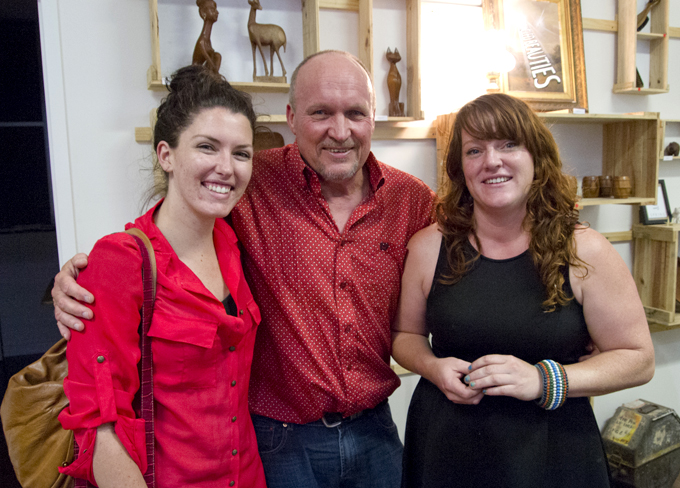
Ashley Bunter, John Elliott and Alison Mooney

Jack Atley, Fancy Darling and Doug Spowart
THE RANGE: Damien Kamholtz – Artist’s Talk@The Grid
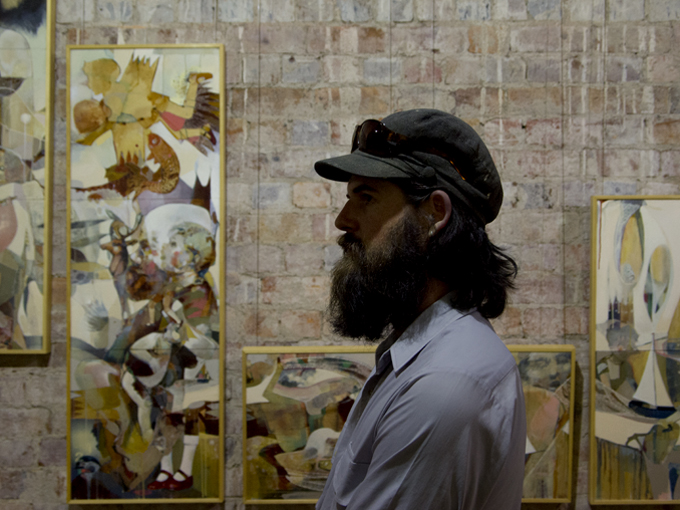
Damien Kamholtz portrait Photo: Doug Spowart
A commentary of Damien’s presentation is being prepared and will be posted soon… Email Subscribe to this Blog to get the notice of new posts and updates. The subscription box is at the bottom right-hand side of this page… scroll down.
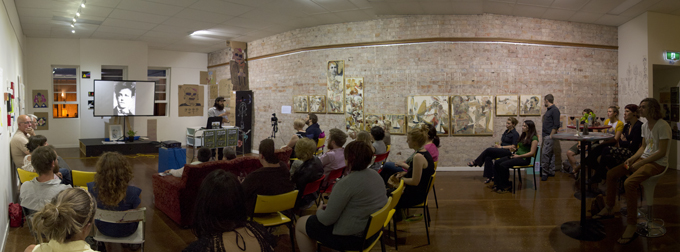
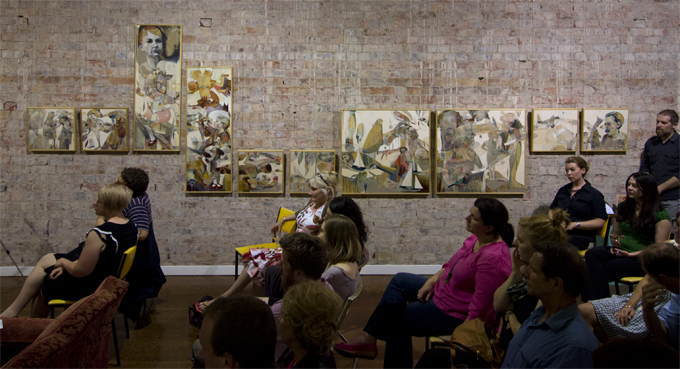
Damien Kamholtz audience @ The Grid Photo: Doug Spowart
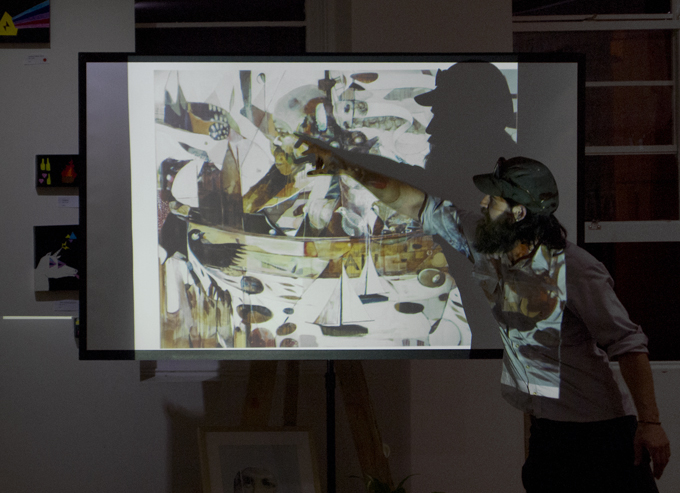
Damien Kamholtz discussing work Photo: Doug Spowart
Damien Kamholtz’s painting ‘The spit that joins the magic together’

 wotwedid
OUR BOOK in the show ‘Lessons in History Vol. II – Democracy’ grahame galleries
leave a comment »
Cover: Art is always the best policy
.
ART IS ALWAYS THE BEST POLICY
Recent democratic debate in Australian politics has been apprehended by special interest lobby groups. It is now time for artists to stand up and be vocal to capture their share of the political scene.
This policy booklet presents the Regional Artists for Government Election (R.A.G.E.) campaign and its political demands. The R.A.G.E. policies at first seem flippant and glib, however, as we have experienced in contemporary politics, the absurd can, with the right ‘spin’ and ‘media cycle’, become plausible – in fact, even highly appealing to the voters, leading to positive opinion polls and success at the ballot box.
SUPPORT R.A.G.E. – Join the Art Revolution Today.
The edition of the book is 25 with 5 artist’s proofs. Copies of the book can be purchased from grahame galleries for $25 + packaging and post.
A video performance of the book is available here …
.
..
Share this:
Written by Cooper+Spowart
November 28, 2012 at 3:04 am
Posted in Artists Books, Exhibitions, Regional arts
Tagged with Art is always the best policy, artists and art policy, artists and democracy, artists comment on democracy, C.R.A.P., Centre fro Regional Arts Practice, grahame galleries, Lesson in History Vol. II - Democracy, Noreen Grahame