Archive for the ‘Photobooks’ Category
REVIEW PANELS at the Vienna Photo Book Festival
Vienna Photo Book Festival logo
.
THE REVIEW PANELS AT THE VIENNA PHOTO BOOK FESTIVAL
(From the website)
Publishers, gallery owners, curators, critics and collectors representing small, mid-sized, and major venues from all over Europe, will gather in Vienna to review unpublished photo books. 30 photographers will be selected to show their photobook dummies to15 national and international reviewers.
Our goal is to offer talented photographers from around the world a forum to discuss their books with a wide range of photography experts, thereby producing a lively dialogue between the aspiring artists and the experts from various prestigious institutions.
Photographers will have one-on-one meetings with the reviewers. Each review session will last 20 minutes and we will limit the number of participants to assure that everyone receives six reviews each. It is a great way to network. Numerous photographers have walked away with opportunities to publish, exhibit and sell their work after attending such reviews.
Vicky and I submitted our ‘You are here’ book to be considered for the Vienna Photo Book Festival Reviews. ‘You are here’, that considers our place on planet Earth within the solar system and has also been a finalist in a couple of artists book awards in Australia over the last 9 months. Additionally the State Libraries of Queensland and Victoria have collected this artists’ book.
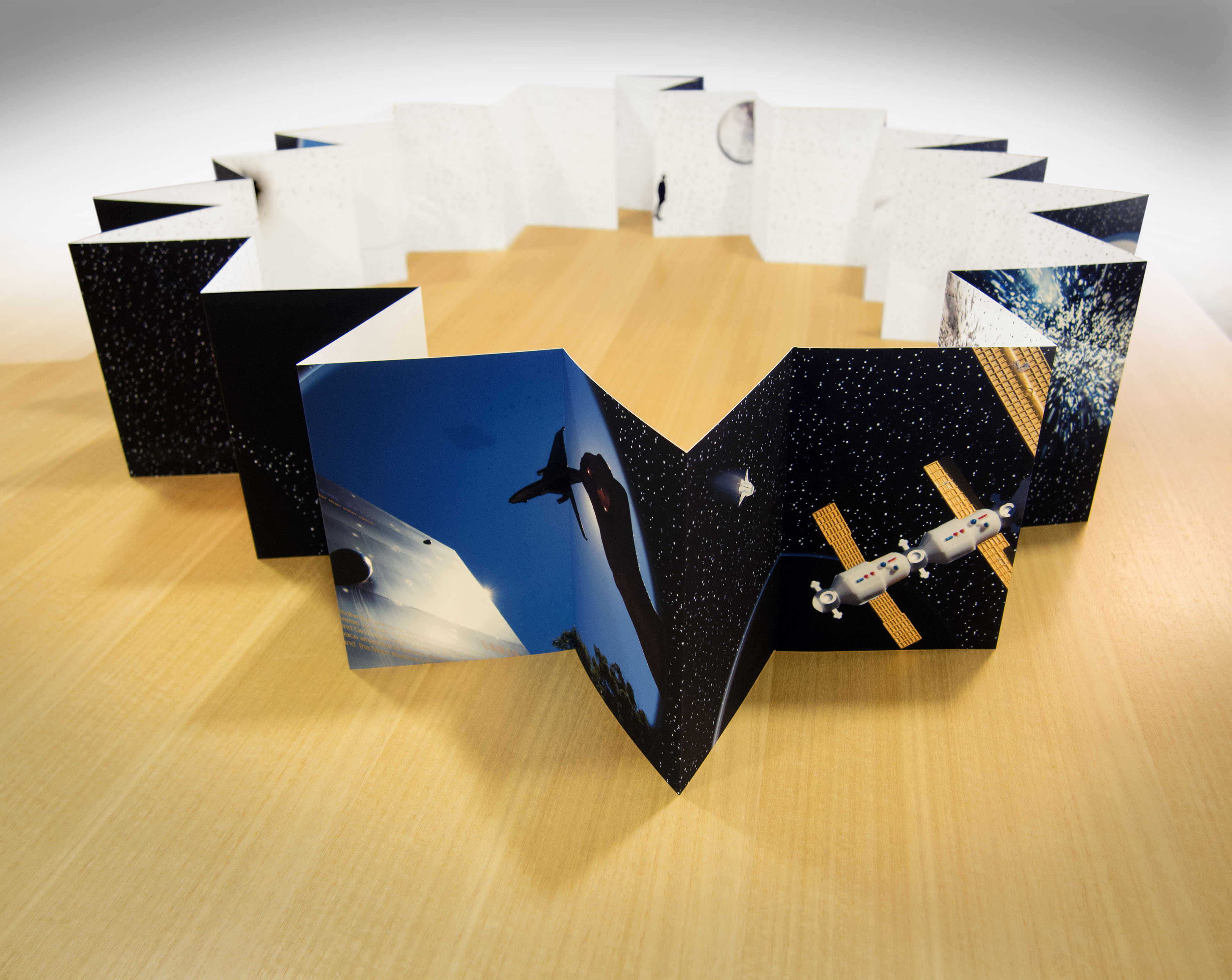
You are here…
At the end of April we were advised that our submission for the review session had been successful. At this time we were asked to suggest six possible reviewers from their list to look at our book. We selected the following:
- Gerry Badger, photographer, curator, photo critics, architect UK. http://www.gerrybadger.com
- Peter Gössner, collector, Austria.
- Rob van Hoesel, The Eriskay Connection, The Netherlands. http://www.eriskayconnection.com
- Hannes Wanderer, Peperoni Books, 25 books, Germany. http://www.peperoni-books.de
- Matej Sitar, The Angry Bat, Slovenia. http://www.matejsitar.com
- Manfred Zollner, fotomagazin, Germany.
.
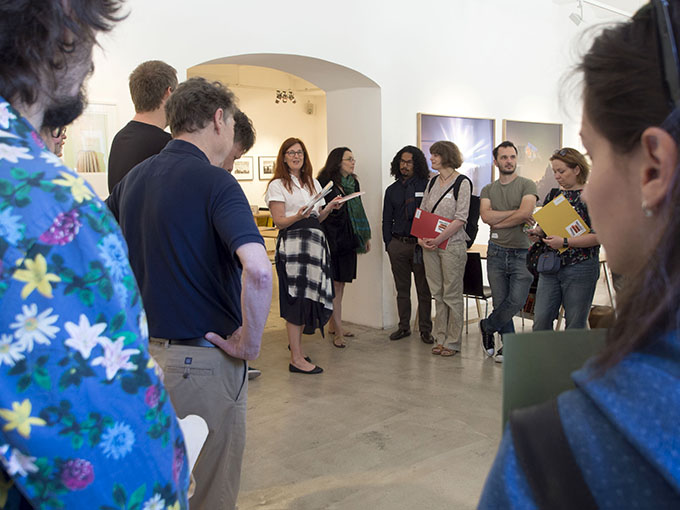
Regina Maria Anzenberger opens the Reviews
On Friday 9th we excitedly waited outside the Anzenberger Gallery with 30 other finalists who came from all over Europe. The reviewers were assembled and Regina Anzenberger opened the event and advised participants of the process – 20 minutes each, then a bell is rung, and the next review gets underway. Sufficient time is given for reviewers and photographers to take breaks and have lunch.
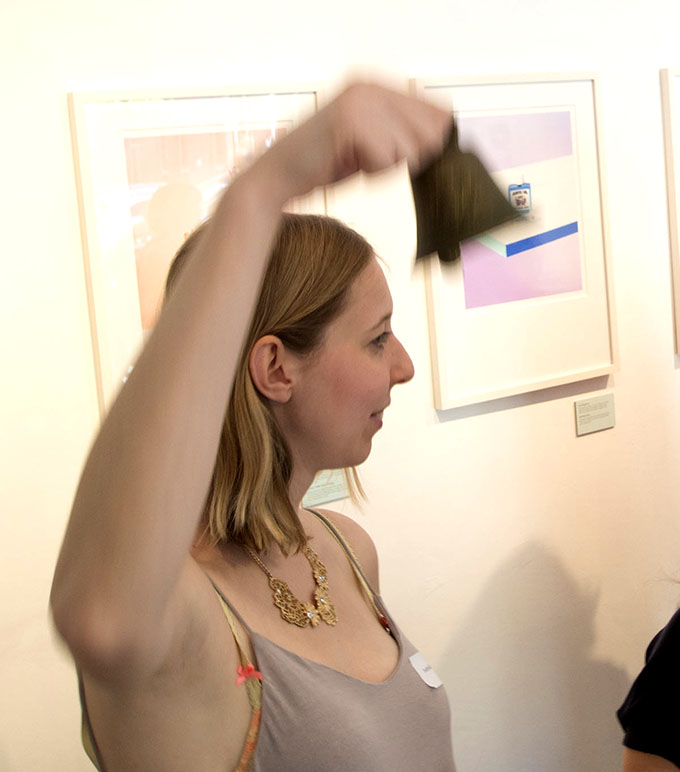
Isa Maria rings the bell
The bell rang and we sat down with photobook aficionado Gerry Badger. He asked to look at the book first, so we silently sat as he turned the pages of our concertina book as a codex. Badger said he loved it and couldn’t improve on it as an object and visual narrative. We then spoke about other things including his latest project documenting graffiti in Italy. He then pulled out his prints to share with us… an interesting project he has been working on over many years. The bell soon rang and we moved on to the next reviewer.


Over the next few hours we met with the other reviewers. The responses we received acknowledged the beauty of the object and the work’s ‘challenge’ to accepted photobook practice. Most of the attendees were looking for publishers for the ‘dummy’ book that they were presenting. As ours was a resolved work and more of an object/artwork rather than a publishable codex-based photo-project, there was not much room for suggestions. However many points emerged from the discussions that will inform future directions for new work from the project.
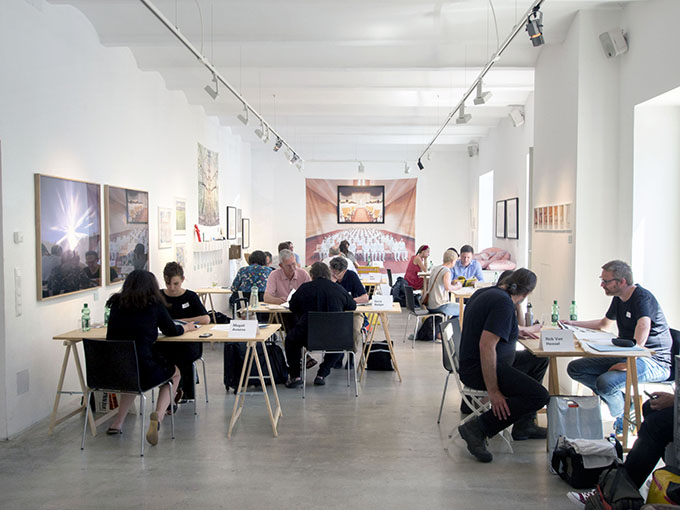
The review tables
It was a warm Vienna day and review participants gathered outside the gallery when their work was not being reviewed. We actively connected with these photobook makers – a fascinating experience as we were meeting members of with representatives of a united nations of photobooks – Russians, French, Austrians, Polish and Czech, German, Hungarian and Slovakian. Most spoke English and from these new ‘friends’ we had instant contacts to see their works for sale in the Book and Print Sale Festival event.
After the seeing the books, the reviewers discuss the projects/books and the winner of the Vienna Photo Book Award was determined. The 1st prize winner receives a book publishing contract from Anzenberger Edition which covers production costs of Euro 5,000.
On Saturday evening the winner of the 4th Vienna Photo Book Award was announced. The winners were Nadine Schlieper and Robert Pufleb with their photobook ‘Alternative Moons’.
.
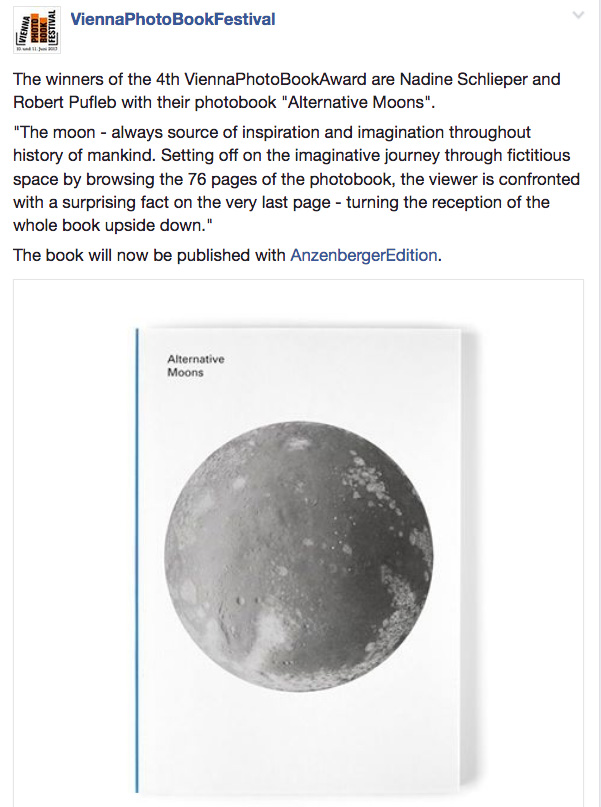
The winner
Here are photos of some of our fellow review participants
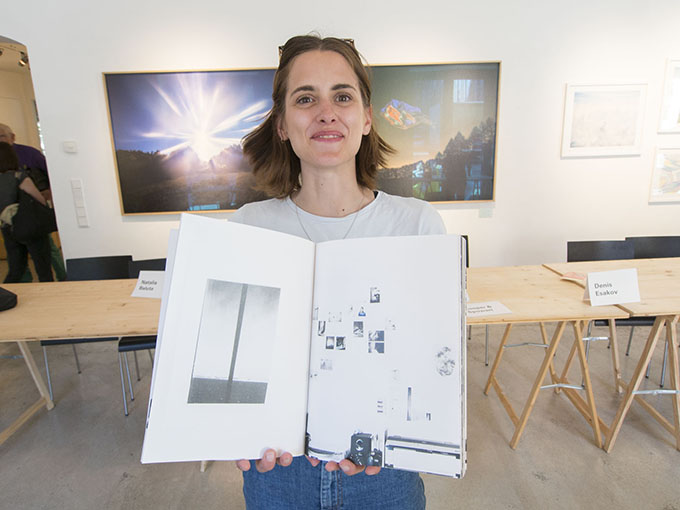
Lore Horre
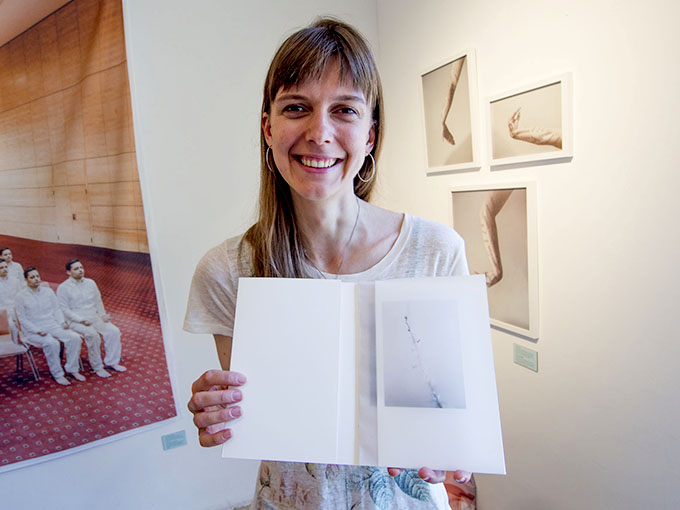
Mariya_Kozhanova
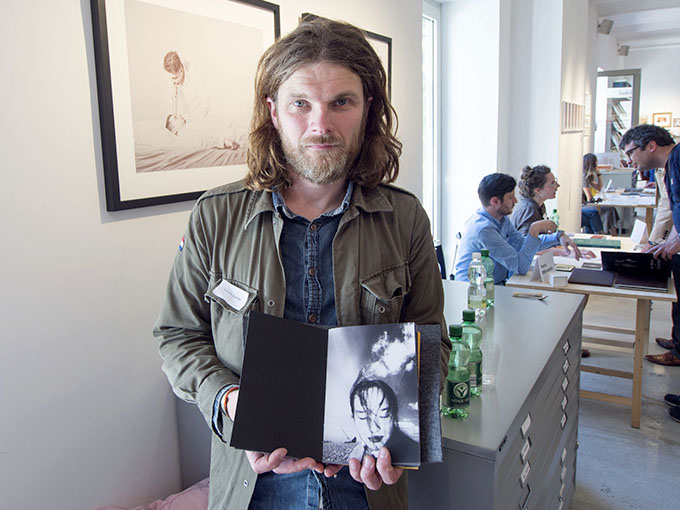
Thomaz Laczny
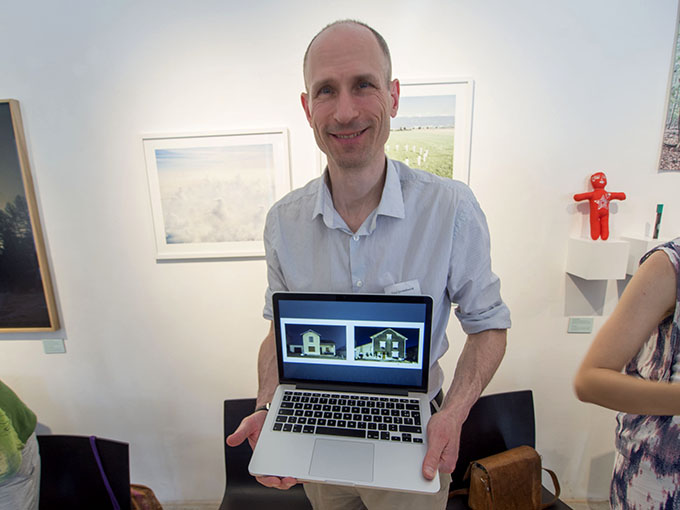
Paul Grandsard
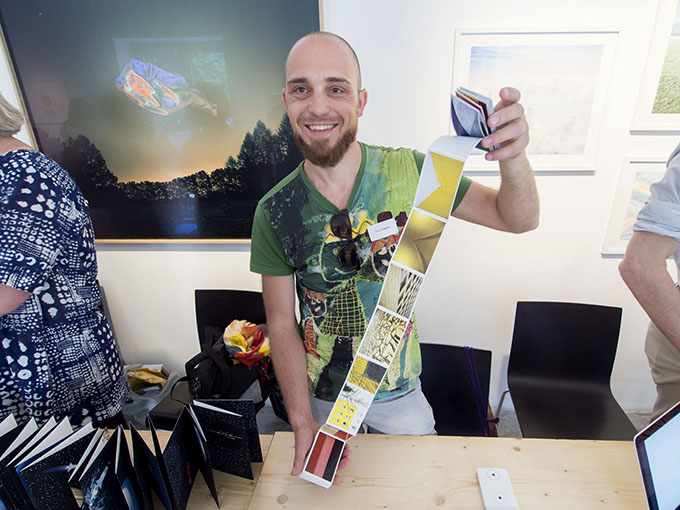
Denis Esakov
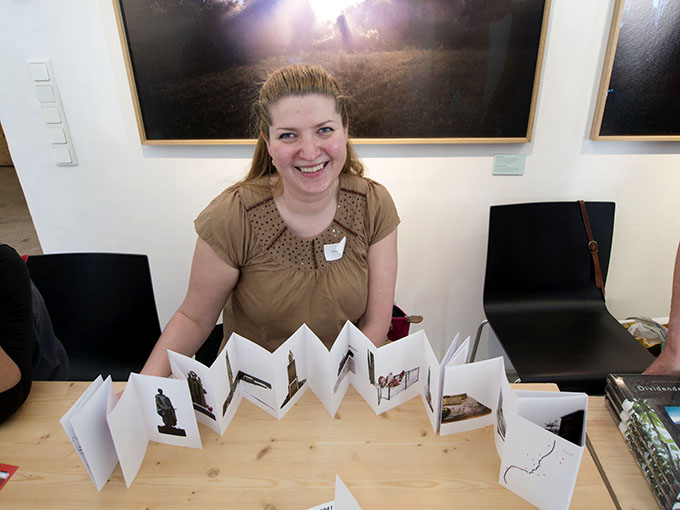
Natalia Baluta
SEE ALSO:
The LECTURE
The EVENT
https://wotwedid.com/2017/06/18/aunz-photobooks-the-vienna-photo-book-festival/
.
.
.
.
MORE THAN THE COVER: Judging the Photobook of the Year
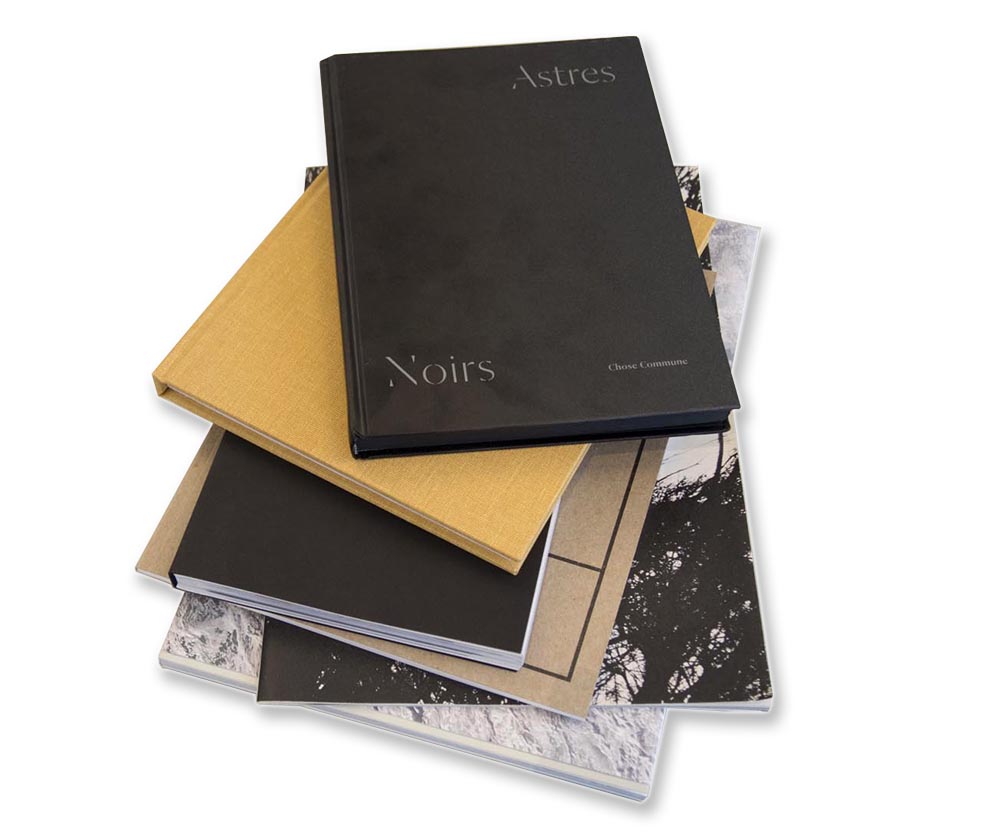
The Finalists…
.
Recently in Auckland and Melbourne two groups of photobook aficionadas and aficionados assembled before 31 and 71 books respectively, and worked as a team to decide which of the books before them were exemplary of contemporary photobooks and, if consensus could prevail, which book – in each location, was the ‘best’ photobook.
The selection process is based on a ‘Judging Criteria’ that has been developed and enhanced over the many years of the awards which states that the judges will review each entry to assess the:
- excellence of the photography, design, layout, typography and cover art
- quality of the photo editing and sequencing to create an engaging visual narrative
- ability of any additional imagery, text or ephemera to enhance the story in the photographs and/or book
- appropriateness of the photography, design and format for the book’s intended purpose and audience
As the definition of a photobook remains broad, from photozines to trade coffee table books, a key consideration for the judging panel is to evaluate the ‘appropriateness’ of the book in the context of its ‘intended purpose and audience’. This aspect of the Criteria creates an opportunity for diverse products to be sensitively and fairly assessed.
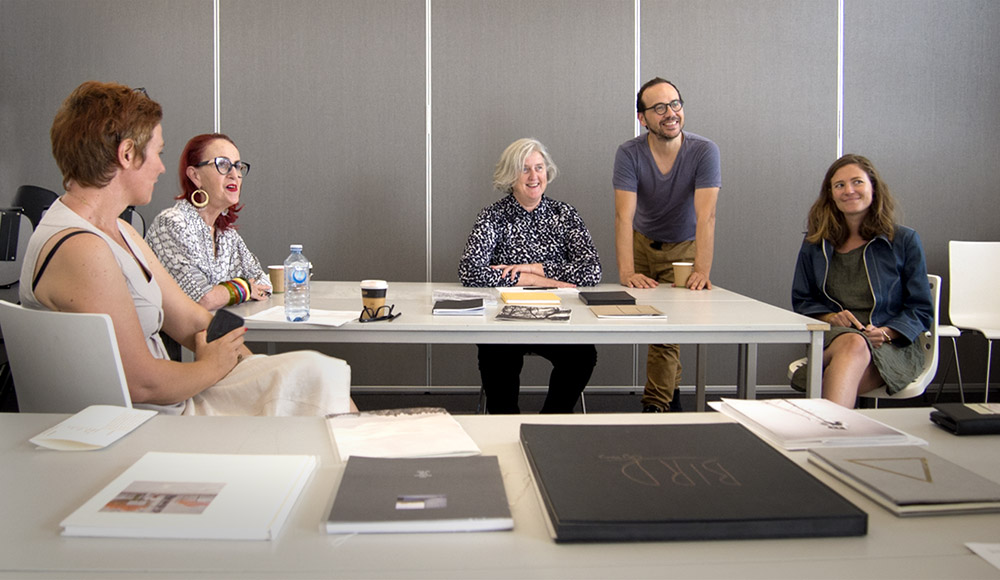
The AuPOTY judges: Heidi Romano, Helen Frajman, Victoria Cooper, Daniel Boetker-Smith and Emma Phillips
The judging panel is purposefully selected to include experts in photography, design and book publishing. Each year these judges are changed to allow for representatives from different backgrounds, locations, gender, industry areas including design, publishing, media, cultural institution, academia, retail, art and commercial worlds.
Additionally judges weren’t allowed to score or advocate for books in which potential conflict of interest may cause problems. This is a particularly important issue as our photobook communities in Australia and New Zealand are small and connected.
The Photobook of the Year – 5 stage judging process:
Stage 1. A PDF of each book was forwarded to the judges in advance for them to gauge a preliminary impression of the book, its visual nature, content and narrative. Each judge completed a ‘first impression’ top 10 books spread sheet and provided feedback in the form of a comment and score for the books that they had selected.


Stage 2. The judges met and participated in some introductory discussions about the award and the processes that were to follow. After that the books were laid out on tables enabling the judges to encounter the physical and haptic experience of each book. Another ‘score sheet’ was provided so that judges could quantify their response to each book. While this review was basically carried out individually some casual discussion took place between judges. Many judges were to comment that seeing the ‘real’ book was surprisingly different from the impression that they had gained from the PDF screen view.
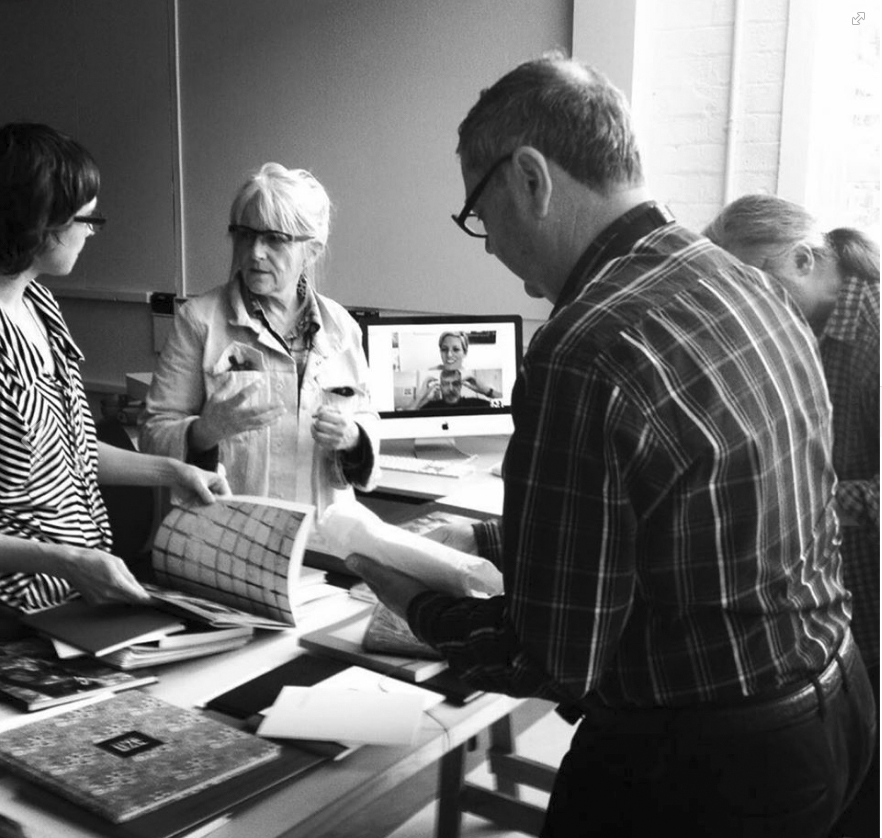
NzPOTY Judging team included Jonty Valentine, Anne Noble, Layla Tweedie-Cullen, Haru Sameshima, Ron Brownson and Doug Spowart PHOTO: From Facebook post
Stage 3. The judges score sheets were tallied resulting in a group of books being selected for round-table review and discussion. From this group activity the finalists were determined. In the AuPOTY 12 books were selected and in NzPOTY 10 made the finalist list. It should be noted that judge/s disclosed any involvement or potential conflict of interest with particular books or association that they may have with the author.
.


Stage 4. In this, the final stage, the judges debated the relative attributes of the books working towards a point where consensus over the ultimate winner could be determined as well as any books deserving of ‘Commended’ awards could be made. This stage of the process was interesting to participate in or to observe, as the many differing opinions of what constitutes the ‘contemporary photobook’ made for a lively and informative debate.
A consensus was to be achieved in both judgings and the results were:
Australian Photobook of the Year Winner:
Astres Noirs by Katrin Koenning & Sarker Protick, published by Chose Commune
.

AuPOTY WINNER: Astres Noirs by Katrin Koenning & Sarker Protick & Published by Chose Commune
.
Recipients of Commended awards were:
- Elsewhere by Fuad Osmancevic
- J.W. by Clare Steele
- Memorandum by Ana Paula Estrada
- Some Want Quietly by Drew Pettifer, Published by M.33
- Surface Phenomena by Bartolomeo Celestino, Published by Perimeter Editions
FINALISTS
- Bird by Gary Heery
- Courts 02 by Ward Roberts & Editions
- Elemental by Rohan Hutchinson
- Golden Triangle by Hannah Nikkelson
- Kinglake by Jade Byrnes
- Two Pandanus Trees Side by Side by Aaron Claringbold
Page views, the judges and other book details of the AuPOTY can be seen HERE

APOTY Website
New Zealand Photobook of the Year Joint Winners:
- Rannoch by Simon Devitt
- Touchy by Evangeline Davis

Rannoch by Simon Devitt PHOTO: From the NzPOTY Website

Touchy by Evangeline Davis PHOTO: From the NzPOTY website
Recipients of Commended awards were:
- As the Road Bends by Blair Barclay
- Duplex City by Blair Kitchener
FINALISTS
- Conversations With My Mother by Shelley Ashford
- R&S Satay Noodle House by Sally Young
- Soap and Water by Bronwyn McKenzie
- Someone’s Mana by Michael Krzanich
- The Shops by Peter Black
- Watching the fishes go by by Niki Boon
Page views, the judges and other book details of the NzPOTY can be seen HERE
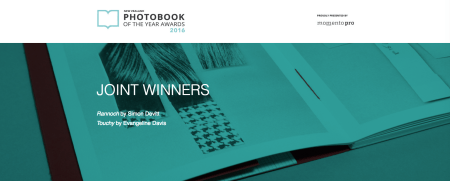
NzPOTY Website
The travelling exhibition of the POTY winners and finalists

A&NZ Photobooks of the Year 2015 @ Maud Gallery in Brisbane PHOTO: Doug Spowart
STAGE 5. In each country visitors to the AuNzPOTY exhibitions in Melbourne, Sydney and Brisbane are invited to vote for their favourite book, and the winner receives $500 cash + $2,000 printing credit with Momento Pro. The winner will be announced via a Photobook of the Year Awards email later in the year. Subscribe at awards@photobookoftheyear.com.au.
Some personal observations and comments about the judging
As a witness to one of the judgings (AuPOTY), and a participant judge in the other (NzPOTY) I have reflected on the process and the salient issues, topics and well-discussed points and prepared this comment piece. I might add that these are based on my recollections of the proceedings as well as my personal thoughts gained from my involvement.
1
The universal definition of what is a photobook remains illusive. What judges think, what the entrants or others may think is a photobook may never be resolved. Although the perception of what a photobook might be does effect every aspect of the awards influencing who might enter and what their expectations of the award may be.
Also what is the nature of the selected finalists, and what book wins the awards, sends out a message to the broad range of people interested in photobooks to confirm or challenge their idea of what a photobook is.
2
Who made the book? Is it self-published? Or was it trade published? Was it a collaboration – did it involve a single photographer or multiple photographers with editor/s, publisher and designer/s? As all have a bearing on the book as a creative product or a commercial outcome.
3
What was the purpose for the book…? Is it for general consumers, niche markets or a personal record bound in book form?
4
Much discussion centred around concepts relating to design style, tricks of printing and binding, different papers, round fore edge corners, trendy layouts, typography, embellishments and packaging. Some books were considered derivative as certain features were part of last year’s trend or were recognised as being influenced by/taken/copied/borrowed from a recent well-known successful book. Therefore books with original concepts were held in higher esteem.
The question begs to be asked… at what point do any of these ‘derivative’ features become recognised as a visual style/form or narrative effect that contributes to the book communiqué?
5
The meaning and implications of collaboration.
6
Artist’s statements were often poorly written, or overtly academic ‘artspeak’.
7
One important consideration was that the book was as a total package where all of its components; concept, content, design, production values and binding were seen as creating a total creative entity.
8
Some common phrases from the judges were:
- Fabric of construction
- Economical
- I wish I’d made that…
- If only I could have had those images to edit…
In conclusion:
The Patrons for Australian and New Zealand Photobook of the Year Awards are Libby Jeffery and Geoff Hunt of MomentoPro. They have funded prizes, coordinating the judging process: including judge selection, announcement events and exhibitions. Partners in the awards include Heidi Romano from Unless You Will, Photography Studies College Melbourne and in New Zealand f11 Online magazine. Over 6 years these awards have championed photobook publishing activity and discourse and as such created a record of contemporary photobook practice in the antipodes.
The Australian and New Zealand Photobook of the Year 2016 will tour nationally in 2017… Visit the Photobook of the Year website for details.
Dr Doug Spowart
.
.
.
TEXT: ©2017 Doug Spowart
PHOTOs: ©2017 Doug Spowart (unless indicated otherwise)
ANNOUNCEMENT: The 2016 Australian Photobook of the Year Award
Momento Pro and UNLESS YOU WILL joined forces to present the 2016 Australian Photobook of the Year Awards culminating with a presentation in Melbourne on February 17, 2017.
The awards were open to unpublished, self-published or trade published photo books by Australian citizens and residents. The Australian Photobook of the Year Awards celebrates excellence and innovation in photobook creation and also showcases the work of Australian photographers to a growing local and international audience.
THE ANNOUNCEMENT OF THE WINNER

Libby Jeffery talking about the Award
A group of around 70 photobook makers, collectors, commentators and others interested in the discipline attended a presentation of the finalist books and the announcement of the overall winner at Magic Johnston in Melbourne on February 17, 2017. Brief speeches were presented by UNLESS YOU WILL’s founder Heidi Romano and MomentoPro’s Libby Jeffery were followed by the announcement of Katrin Koenning & Sarker Protick’s Astres Noirs as the winner. The Commended awards were also announced and attendees were able to experience the finalist’s books first-hand.


.
THE WINNER: Astres Noirs by Katrin Koenning & Sarker Protick & Chose Commune
.
APOTY WINNER: Astres Noirs by Katrin Koenning & Sarker Protick & Chose Commune
THE 2016 APOTY FINALISTS
- Astres Noirs by Katrin Koenning & Sarker Protick & Chose Commune Winner
- Elsewhere by Fuad Osmancevic Commended
- J.W. by Clare Steele Commended
- Memorandum by Ana Paula Estrada Commended
- Some Want Quietly by Drew Pettifer & M.33 Commended
- Surface Phenomena by Bartolomeo Celestino & Perimeter Editions Commended
- Bird by Gary Heery
- Courts 02 by Ward Roberts & Editions
- Elemental by Rohan Hutchinson
- Golden Triangle by Hannah Nikkelson
- Kinglake by Jade Byrnes
- Two Pandanus Trees Side by Side by Aaron Claringbold
.
A detailed report and images of the winner and commended books can be seen on the Australian Photobook of the Year Website – HERE
ALL photographs ©2017 Doug Spowart
.
.
.
.
UPDATE-SKOPELOS WORKSHOP: Join us on a Greek Island
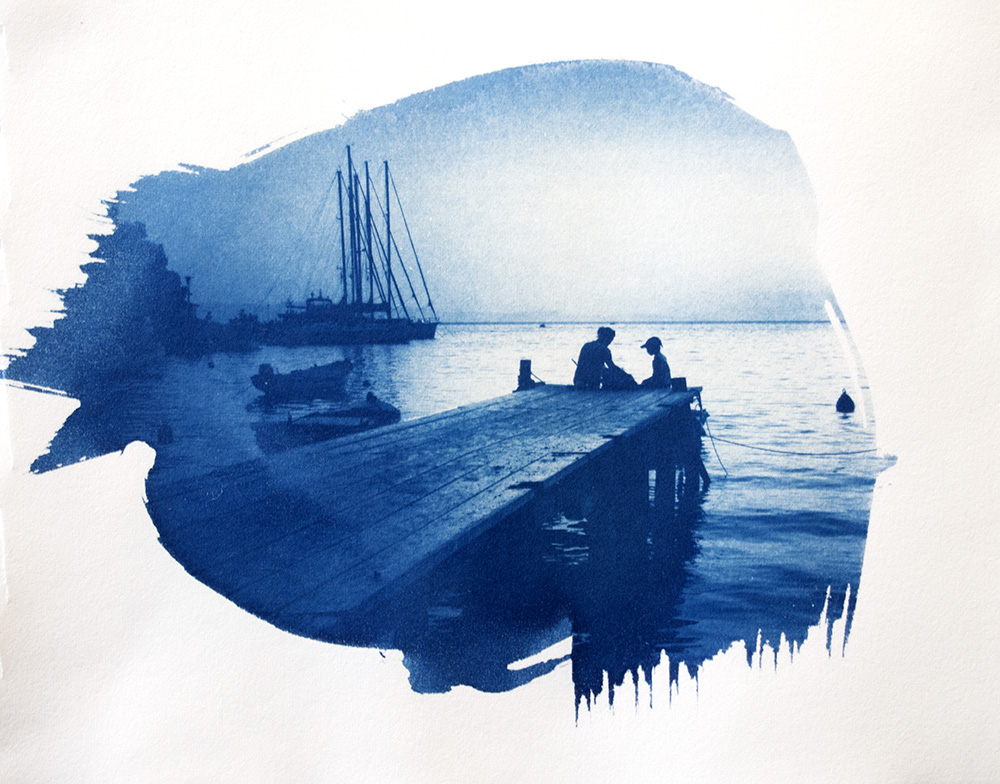
Skopelos jetty …….PHOTO: Steph Bolt Cyanotype: Cooper+Spowart
.
IMAGINE – the inspiration for PHOTOGRAPHY on an Aegean Island
CONSIDER – exploring photodocumentary, cyanotypes and books
AND ENJOY – Greek food and wine, experience the blue of the Aegean Sea, Greek lifestyle and its mythical landscapes – All shared with fellow workshop participants with similar interests.
.
THIS WORKSHOP TOOK PLACE IN MAY 2017 – A REPORT CAN BE VIEWED HERE>>>
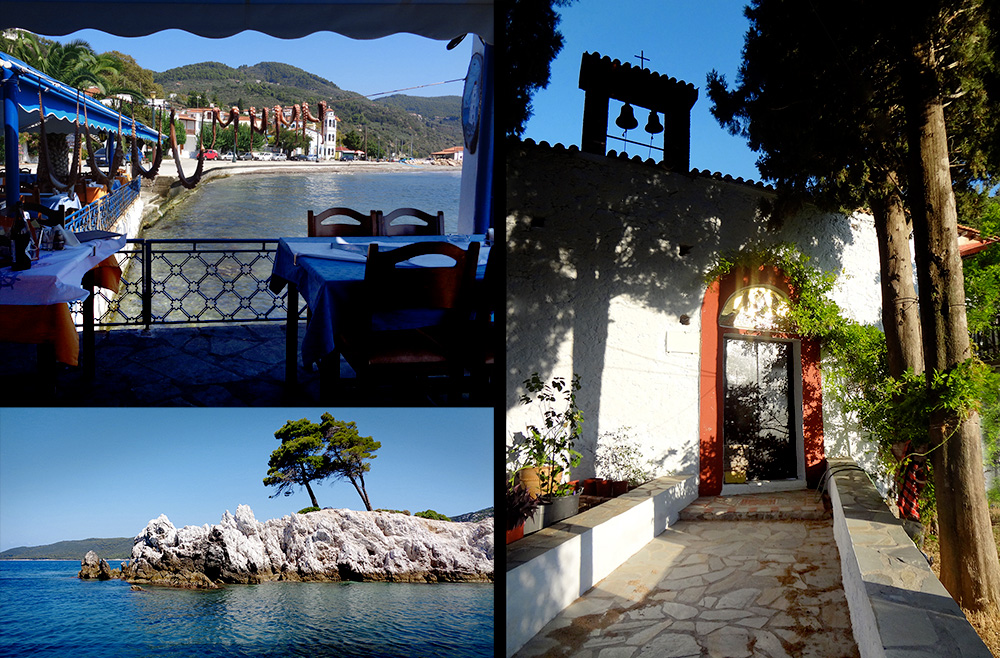
Skopelos landscapes ……..PHOTOs: Steph Bolt
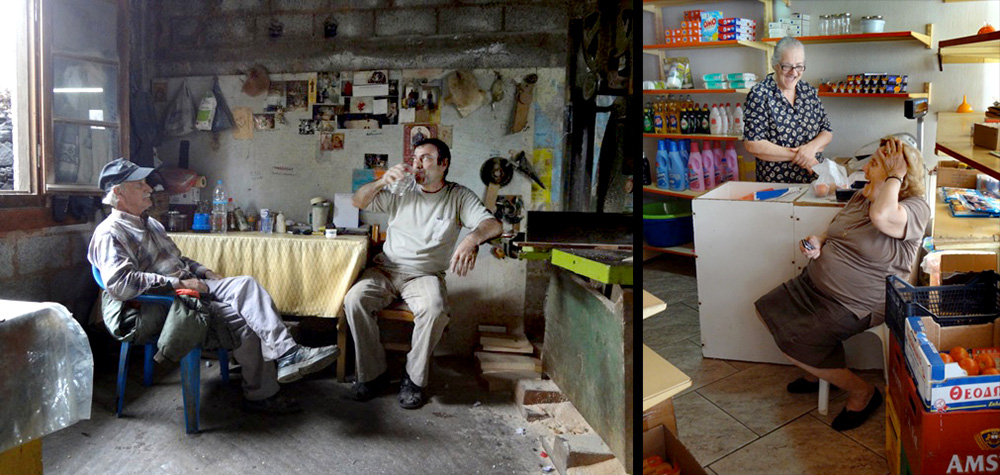
Greek women and men talking ……..PHOTOs: Steph Bolt
In May 2017 we will be presenting a 12 day workshop on the Greek island of Skopelos with Australian artist and printmaker Steph Bolt.
We plan to work with participants to capture the experience of ‘being there’ and to tell stories about ‘place’ in books and photographs.
.
The workshop topics will include:
- The cyanotype process to produce prints on paper and cloth to reference the Aegean blue
- Working with found objects and inkjet negatives from photos made on excursions
- Making bespoke photobooks that you will handcraft during the workshop
- Aspects of documentary ‘placemaking’
- Using online photobook making services to design books
- A sharing of our techniques to optimise and enhance digital photographs.
What is included in the fee:
- Tuition for 12 days
- 12 breakfasts
- Opening & closing dinners
- 2 lunches
- Morning tea – on the days we are in the studio
- Excursion days – transport included
- The odd drink on the terrace overlooking the Aegean
Workshop specific materials included:
- Cyanotype chemistry
- Some printing papers and cloth
- An allocation of inkjet negative material for photographic images
- Basic book-making materials: threads, needles, glue
- Air conditioned studio access
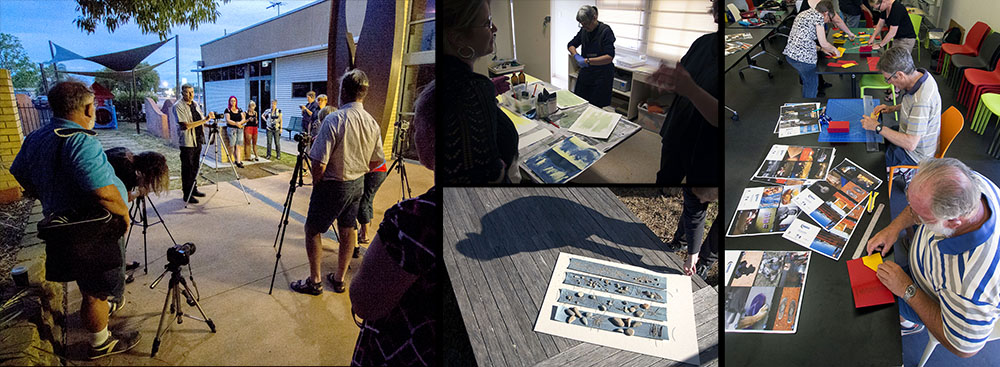
Vicky+Doug presenting workshops
.
A detailed website: SKOPELOS WORKS ON PAPER
Contact Steph Bolt at skopelosworksonpaper@gmail.com

ABOUT THE TUTORS
We have been involved in the arts as practitioners, teachers, critics, commentators and allied professional activities for many years: Doug Spowart, from the 1980s and Victoria Cooper, from 1990.
Our individual and collaborative book works have been acquired for the artists’ books, rare book and manuscript collections in Artspace Mackay, State Libraries of Queensland and Victoria, Mitchell Library (Doug), the National Library of Australia. Our wall based artworks are held in numerous public collections.
Our artists’ books have also been exhibited in New Zealand, the United Kingdom and the United States of America and are held by private and public collections in these countries.
We have both completed individual PhD studies based on philosophical and theoretical considerations in our practice. Since completing these studies we have continued our research activities and have each received separate Siganto Foundation Artists Book Research Fellowships in the Australian Library of Art at the State Library of Queensland: Doug in 2014 and Victoria in 2015.
Victoria Cooper PhD and has holds the following AIPP credentials –APP.L, M.Photog, Hon.FAIPP.
Doug Spowart PhD and has holds the following AIPP credentials – APP.L, M.Photog, Hon.FAIPP, FAIPP.
AIPP APP Log
This workshop is recommended by the AIPP for its members for their Continuing Professional Development as a Third Party CPD Event.

.
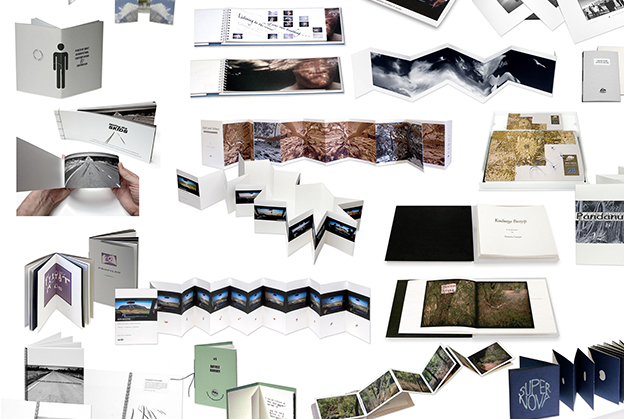
Some hand-made photobooks/artists books we have made
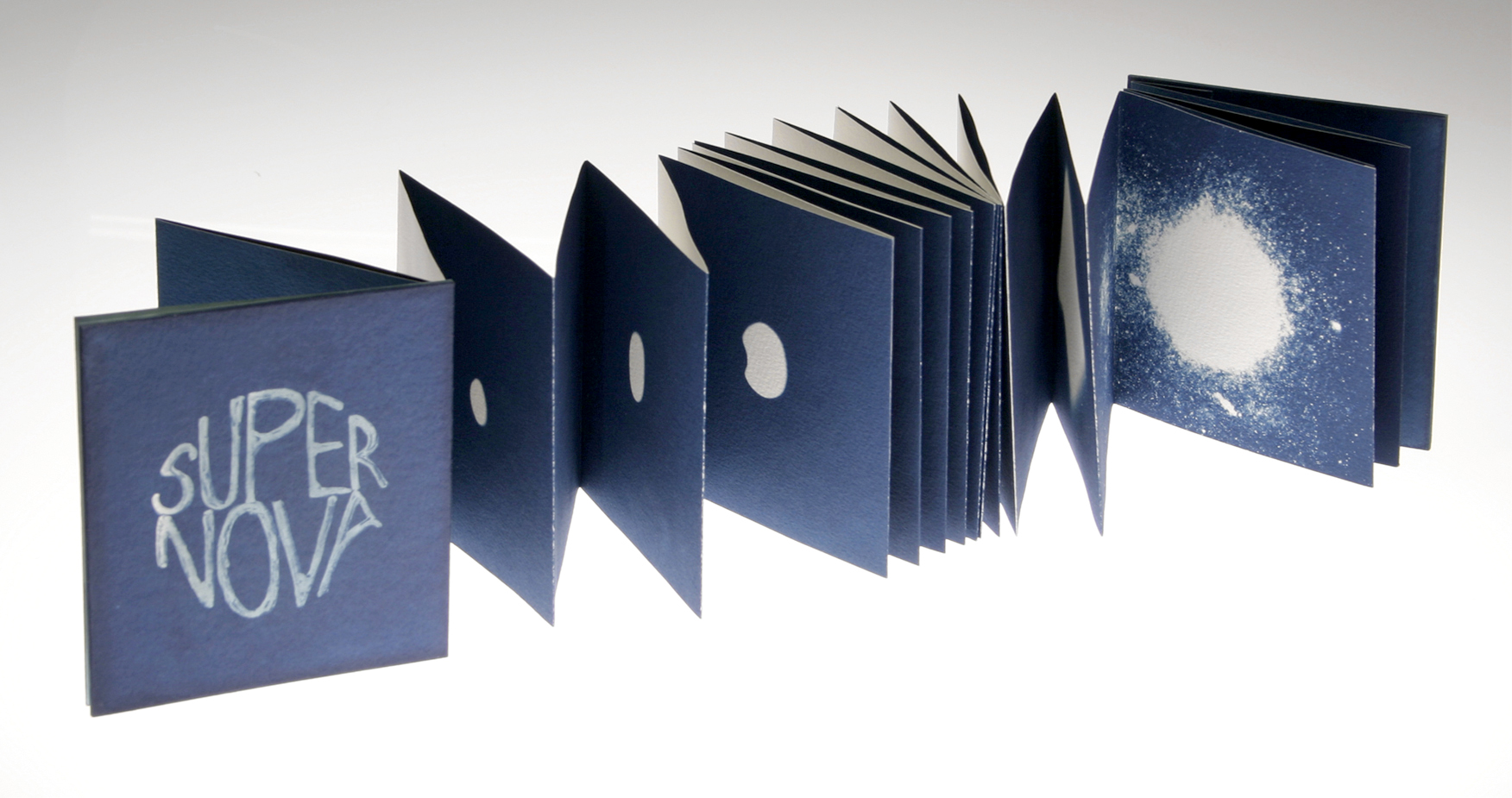
Super Nova a cyanotype by Victoria Cooper
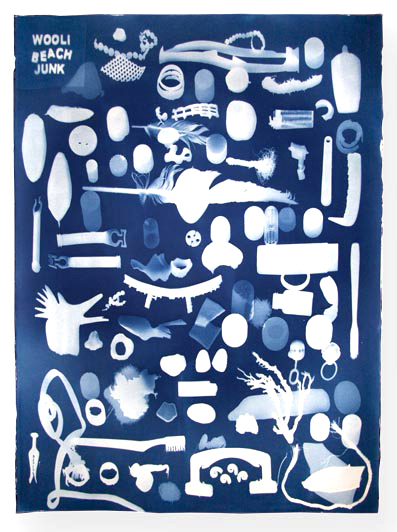
Wooli Beach Junk a cyanotype by Doug Spowart
.
.
.
.
.
.
BOOK DUMPING: Clearing the library shelves
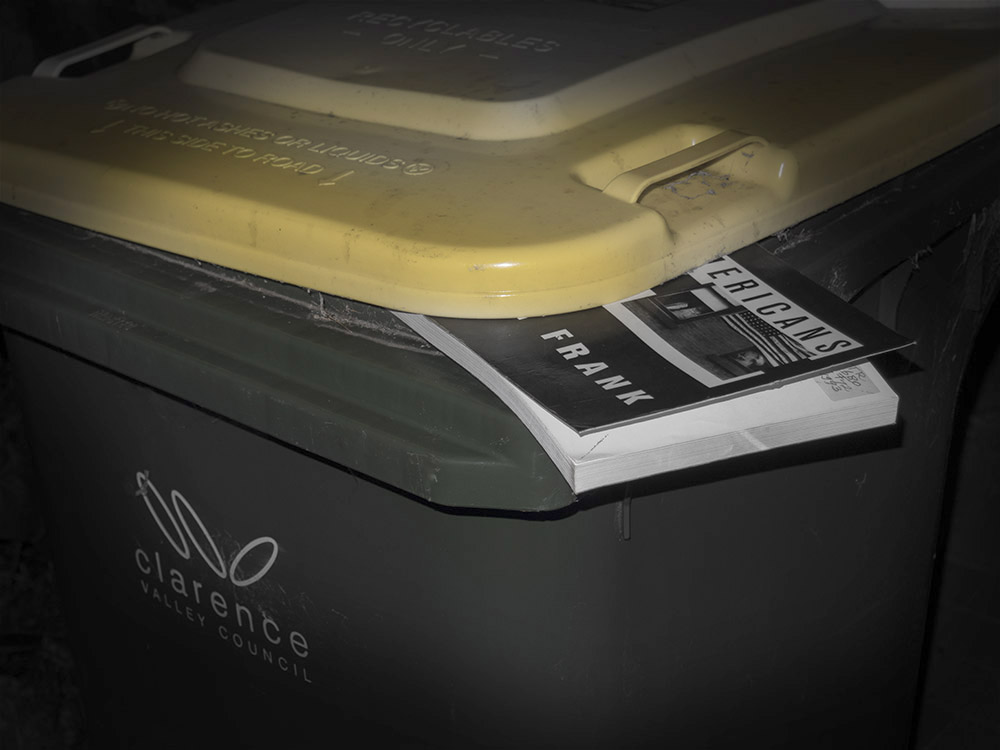
Simulated Americans dumped
I found Robert Frank’s Americans in my cornflakes packet today. Yesterday I found bits of Irving Penn’s Passage: a work record and Cartier Bresson’s Decisive Moments in my Epson inkjet paper box. And the black and red flecks in the Mercury Cider carton I’d just purchased from Dan Murphy’s where from Trent Parkes’ Dream Life and Robert Holden’s Photography in Colonial Australia: The Mechanical Eye and the Illustrated Book respectively. Whether we like it or not books are slowly and systematically being slipped off the shelves in public libraries and research libraries in institutions across the nation to end up as recycled pulp for new books and boxes and cartons as well as landfill.
In 2014 the University of Sydney Medical School was found to be secretly dumping books. A significant article on this and the institutional practice deaccessioning (dumping) books by Elizabeth Farrelly was published in the Sydney Morning Herald in 2014 entitled Library book dumping signals a new dark age. She wrote:
In May, Sydney University announced its library “restructure”. This magnificent library, among the country’s finest, had already, a decade earlier, deacquisitioned some 60,000 books and theses. More recently there were further, unquantified and undeclared cloak-and-dagger dumpings to make space for the wifi and lounge-chairs that have given the once magical Fisher stack the look and feel of a church playgroup.
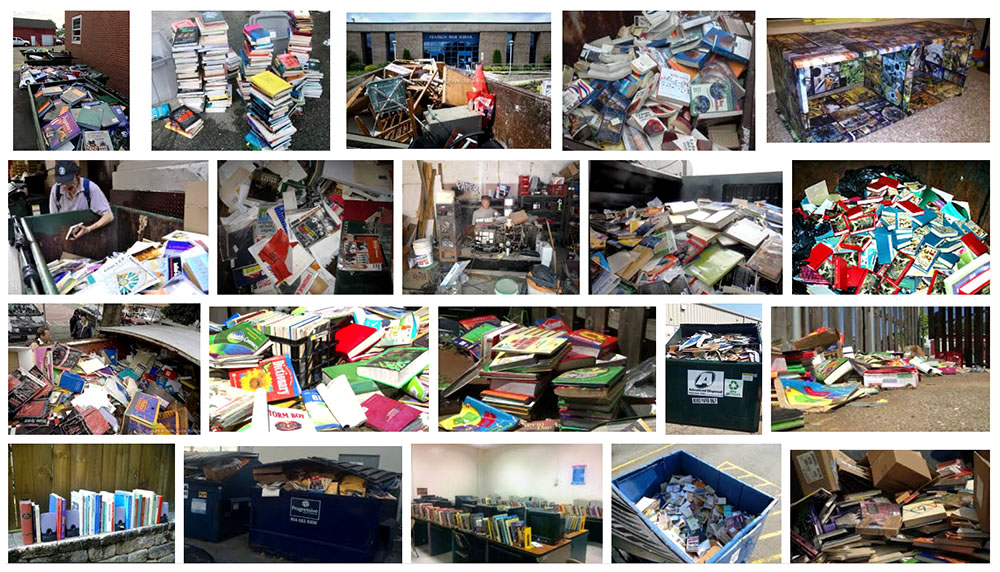
GOOGLE – Search for book dumping (Detail)
I found it interesting to do a Google search of the terms <books dumped in skips dumpsters> and discovered more instances of the destruction of books. There were many articles about book dumping including one from 2005 in The Guardian reporting the University of London’s Octagon Library dumping stacks of books in skips outside the library. Left to the elements these books, some dating back to the 19th century, were in peril until students and staff rummaged through to salvage what they could. The article quotes author, publisher and campaigner for libraries Tim Coates as saying:
A library is a collection of books, it’s not a building. Throwing out books because you are having a refurbishment is like moving house but saying I won’t bother taking my family with me.
Progressively real books are disappearing fast from community and institutional libraries. If you talk to the librarians, who love the books that they are custodians of and are sworn to protect, these book dumpings are being directed by library managers who use include factors such as refurbishment and re-utilisation of library spaces as the need for their actions.
Aiding the downsizing process is the use of automated book culling software that analyses the user demand for books held by the library and prepares a deaccession list for books with low or no borrowing or patron access. For public lending libraries whose borrowing clientele may be towards popular fiction and children’s books other Dewey groupings may suffer. The use of this kind of software causes a whole range of books to be stripped from the selves and causes frustrations for librarians who want to maintain a broad range of subject matter. This can lead to desperate acts. Jason Ruiter of the Orlando Sentinel newspaper reported how staff at the East Lake County Library created a fake library patron in 2016 who then proceeded to check out 2,361 books over nine months. The ruse was reported and library staff were reprimanded or had their employment terminated.
The heart of the problem is that the knowledge economy is shifting from physical assets to the online presentation of virtual resources. In a somewhat charged conversation I had with a State Librarian around 18 months ago I was informed that the particular library had 1 million physical visitors over a year and 20 million online visits or ‘hits’. The Librarian continued by saying that they, in conjunction with a consortium of institutions with similar strategies, were directing funding to support the online user. What can be put online and be remotely searched and accessed is the focus of these institutions. My argument was that although page-turning software may make available remote viewing of the usual codex form of the book, books like artists’ books that have so many more features and physical attributes that could not be conveyed online. At best, I said, was that the online presentation of an artists’ book could only be like a travel postcard to an exotic place that could be used to encourage the virtual viewer to visit the real thing.
Very recently the effects of library downsizing have become very evident to me. For 20 years I nurtured an institutional special library collection relating to photography. Dutifully, with the support of my fellow staff members, we dispensed the yearly library budget by acquiring the best books that represented the industry and the art of photography. Despite having my own professional library I considered the institutional library as an extension of my bibliophile activities. Special books beyond my personal budget were able to added to the library and as a diligent seeker of discounted and remaindered books, I occasionally bought two copies of heavily discounted books – one of which I donated. At times, through professional networks and contacts when opportunities to get complimentary copies of books came available, I’d make sure that I’d score some for the library.
Now at this institution over the years I’d seen changes affecting the library and it’s space for books. Firstly, in a remodeling of the space high shelving were replaced by the OH&S friendly chest-high form – I thought, where did the surplus books go? Next was the encroachment of extra office space in the shelving area. Not for library staff but interestingly for IT support services. I thought, where did the surplus books go? Next computer bays and a classroom were added into the library space and the stacks shrunk further – where did the excess books go? Well I know where some of them went as just outside the library door resided a trolley for years that has a sign on it, ‘help yourself – please take away these books we no longer need’.
It has been 21/2 years since I left the institution and I recently visited my old teaching space to have lunch with my former co-teacher to reminisce over the old days and collect a few possessions left behind. While gathering together my things I encountered a 100 or so library books in one of the back rooms. My former co-teacher explained that the library was downsizing and that they were to be ‘disposed’ of, so she had asked them to give the books to her and she would distribute them. She said: ‘you can have some if you like’ – and I did. I selected a few books that were in the library’s initial set that seemed to me to be based around remainders from the early 1980s American photobook publishing era – books that are now difficult or really expensive to get. These I passed on to a friend who has been assembling a specialist photobook library. I did keep a few special things for myself: a 1980s copy of Frank’s The Americans; Les Levine’s early 1980’s Using the camera as a club … not necessarily a great one; a catalogue for Susan Purdy’s The shaking tree and Axel and Roslyn Poingant’s Mangrove Creek 1951: a day with the Hawkesbury River postman … and … and.
In a way I’m not surprised by the deaccessioning of ‘my’ teaching library as over the last 5 or so years of my teaching I found that students would not go to the library even when I’d suggest a particular text or texts that were related to their personal research. Always, when interviewing students about what they researched I would be presented with a bunch of URLs and low-res laser prints of screen dumps. Oh! How disappointed I would be when the physical manifestation of their interests, a book, was shelved in the library only a few minutes away. Ultimately I did embrace online research opportunities for students and helped to develop skills in that area that I’d honed in my PhD candidature a few years earlier.
Whatever I may feel about my personal experience, in the wider world of books and libraries, the practice of book dumping and shredding no doubt will continue and escalate. We need to protect access to books in public libraries and research collections and many public groups have emerged to challenge politicians and bureaucrats for their initiation of changes to libraries. One example is the group Citizens Defending Libraries that has an ongoing campaign against the Mayor and developers about changes to the New York Public Library service. In a currently running petition they make the following statement:
We demand that Mayor de Blasio, all responsible elected officials, rescue our libraries from the sales, shrinkage, defunding and elimination of books and librarians undertaken by the prior administration to benefit real estate developers, not the public. Selling irreplaceable public assets at a time of increased use and city wealth is unjust, shortsighted, and harmful to our prosperity. These plans that undermine democracy, decrease opportunity, and escalate economic and political inequality, should be rejected by those we have elected to pursue better, more equitable, policies
There may need to be a new term in the library lexicon to recognize these supporters of libraries – maybe we could call them bibliovigilantes.
Outside the public and the academic systems there is a more important role for those who collect and maintain personal specialist libraries. They may become the keepers of the knowledge. More importantly though, in this increasingly virtual world, they will know not only of the content of books, but the will also possess the experience of turning physical pages, the aroma of paper, ink and binder’s glue, and the power of the solidity and weight of the object we call a book.
Scarily, if we allow the unfettered disintegration of the library and the demise of the book, we may be creating a bookless world like that in Ray Bradbury’s Fahrenheit 451, and the job title for those who deal with books will not be librarians but rather ‘book firemen’.
Doug Spowart
Written @ Wooli, December 2016
.
 .
.
.
.
OUR LATEST BOOK IS IN THE CCP SALON
CCP Header
Australia’s largest open-entry exhibition and competition, CCP Salon, is now in its 24th year and our photobook “YOU ARE HERE…” is in the show.
Presented by Leica and Ilford, with support from Affinity, this annual event celebrates the latest developments in photomedia practice around the country, and provides an exciting opportunity to exhibit work in a professional, high-profile context. Supported by 21 national leaders in the photographic industry, CCP Salon awards up to $20,000 worth of prizes over 26 categories, and visitors are invited to vote for their favourite image in the Michaels People’s Choice Award.
JUDGES: Janina Green – Artist, Dylan Rainforth – Writer, Michelle Mountain – CCP Program Manager, Naomi Cass, CCP Director – Non-voting Chair. Winners of the different categories will be announced at the opening on November 24th. The exhibition continues until December 17.
You are here…
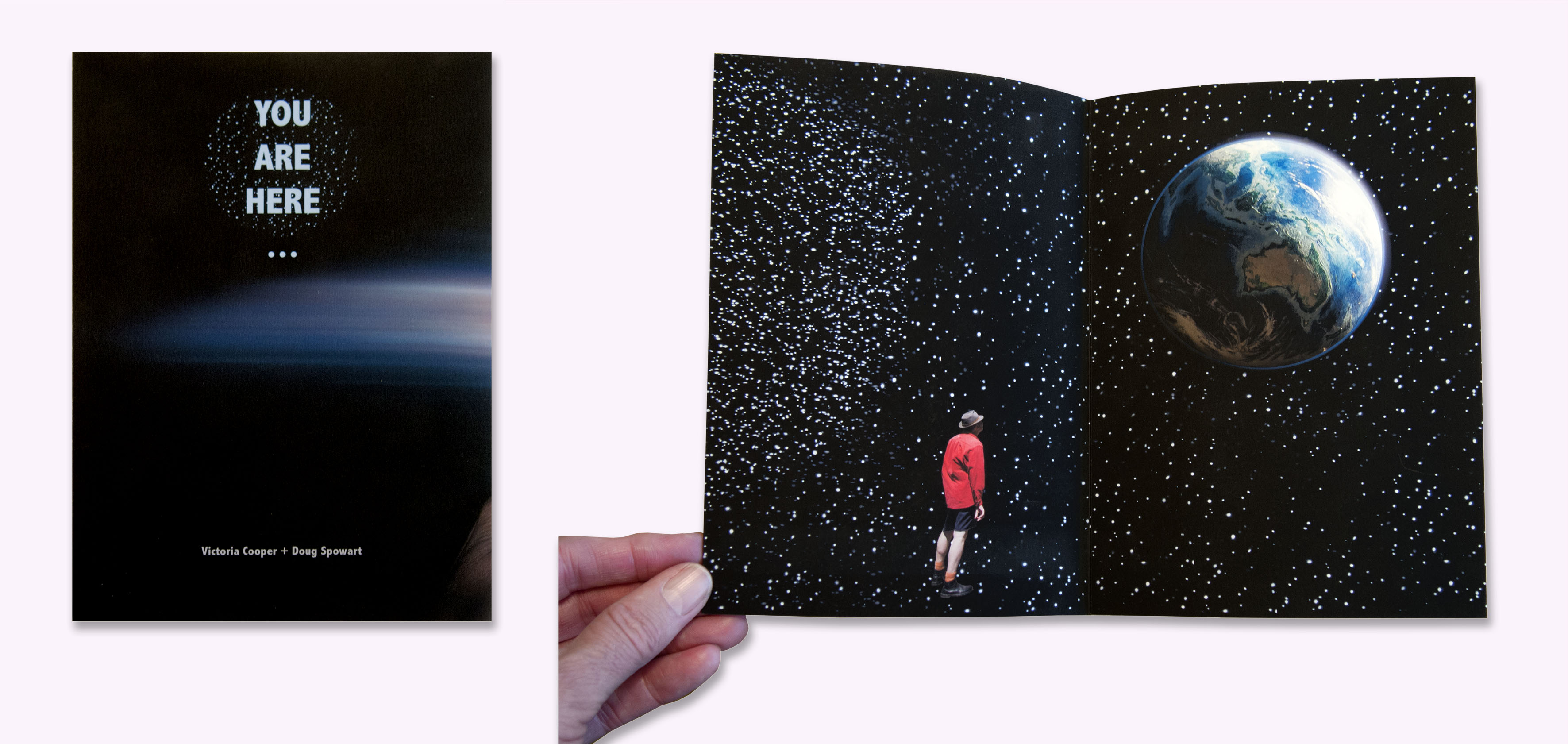
‘You are here…” Cover and codex opening
“You are here” a collaborative artists’ book by Victoria Cooper and Doug Spowart
This book is inspired by many years of travelling through the Pilliga Scrub along the Newell Highway in central western NSW.
On this major highway there is another journey for the road traveller that can take them metaphorically into outer space. This tourist attraction is called the “Solar System Drive” and extends from Belatta to Dubbo. The planets placed on signs along the highway lead to the “sun” which is located in the centre of the array at Siding Springs Space Observatory in the Warrumbungle National Park.
You are here traverses the liminal space between these two journeys, playing with the philosophical questions of place, space and time.
Details of the book: Pigment inks on cotton rag inkjet paper, 14 x 20 x3cm – extends to 6.3metres.
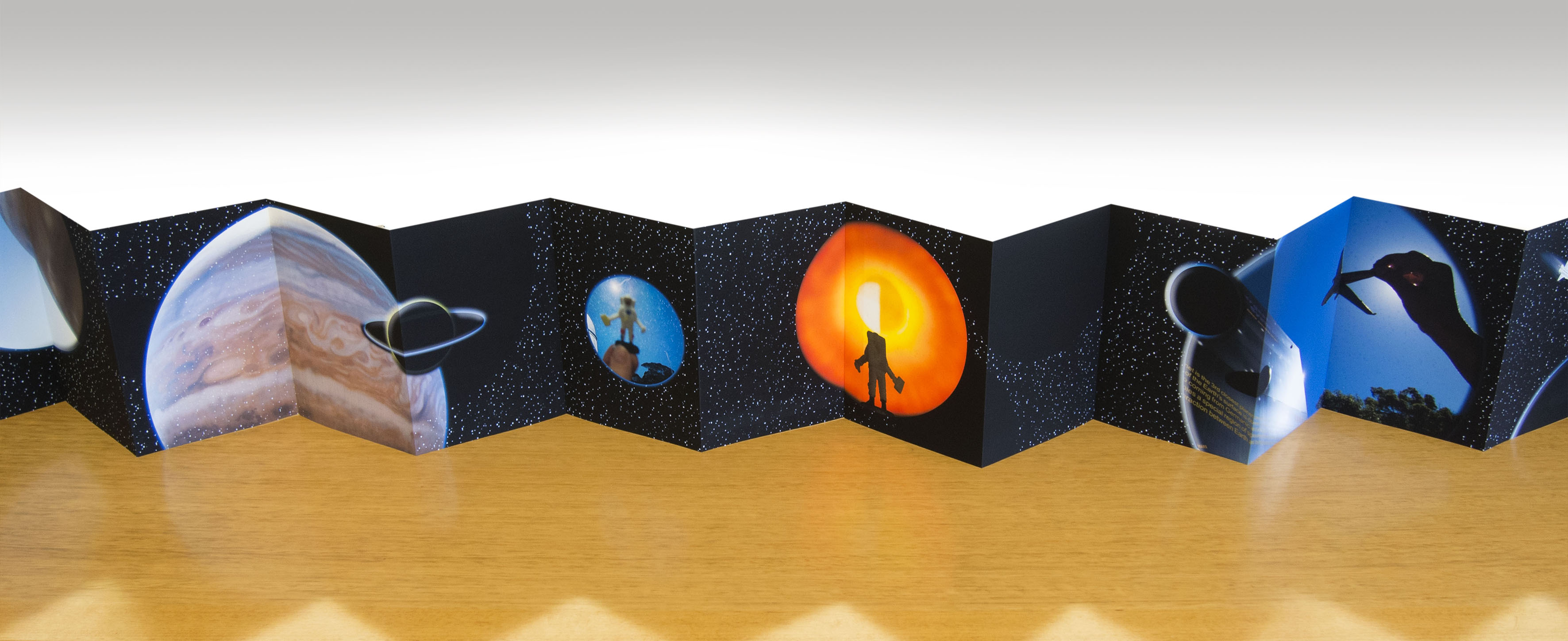
‘You are here…” detail
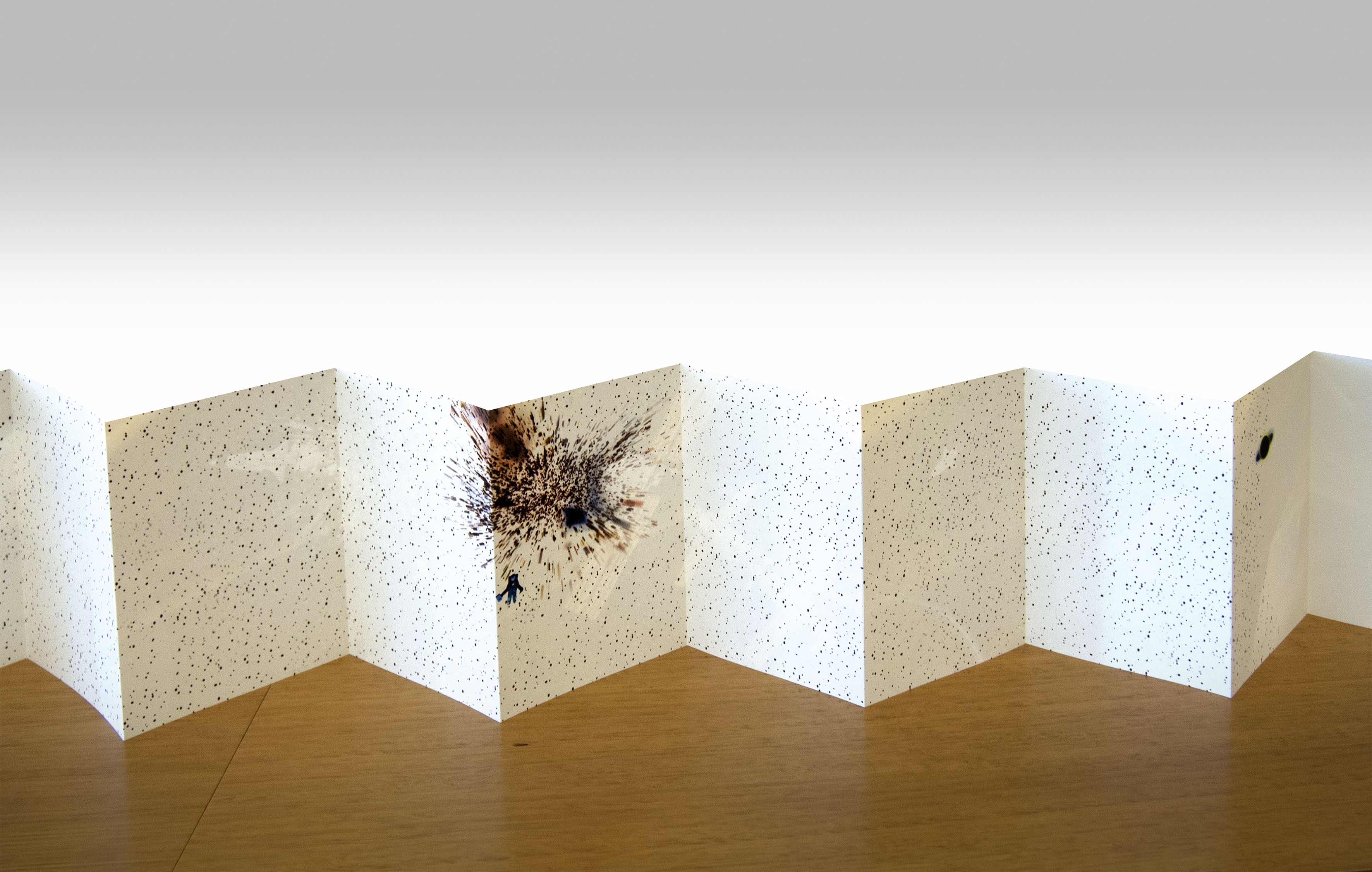
“You are here…” back detail
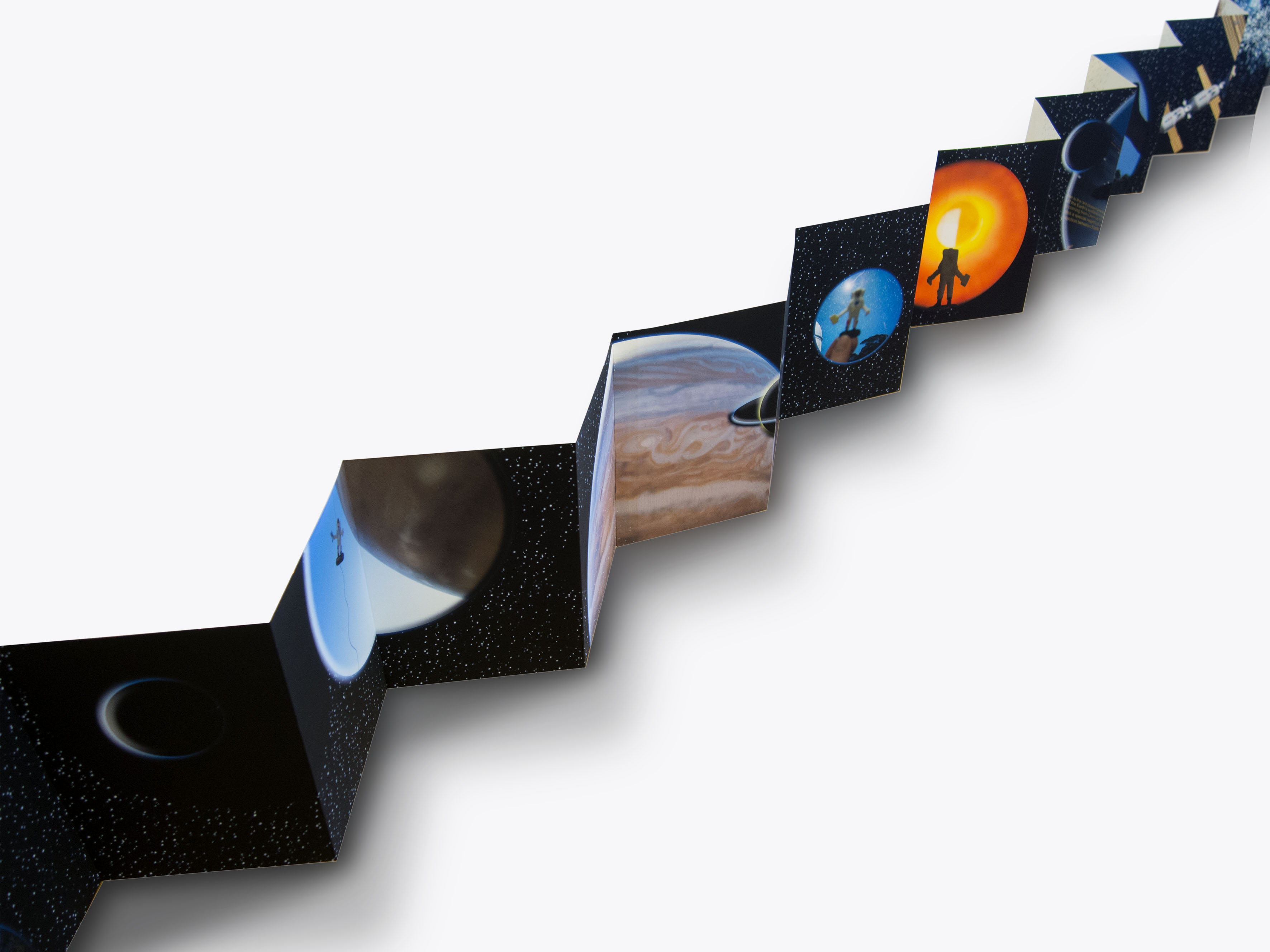
‘You are here…” detail
Planning the narrative of “You are here…” earlier this year.
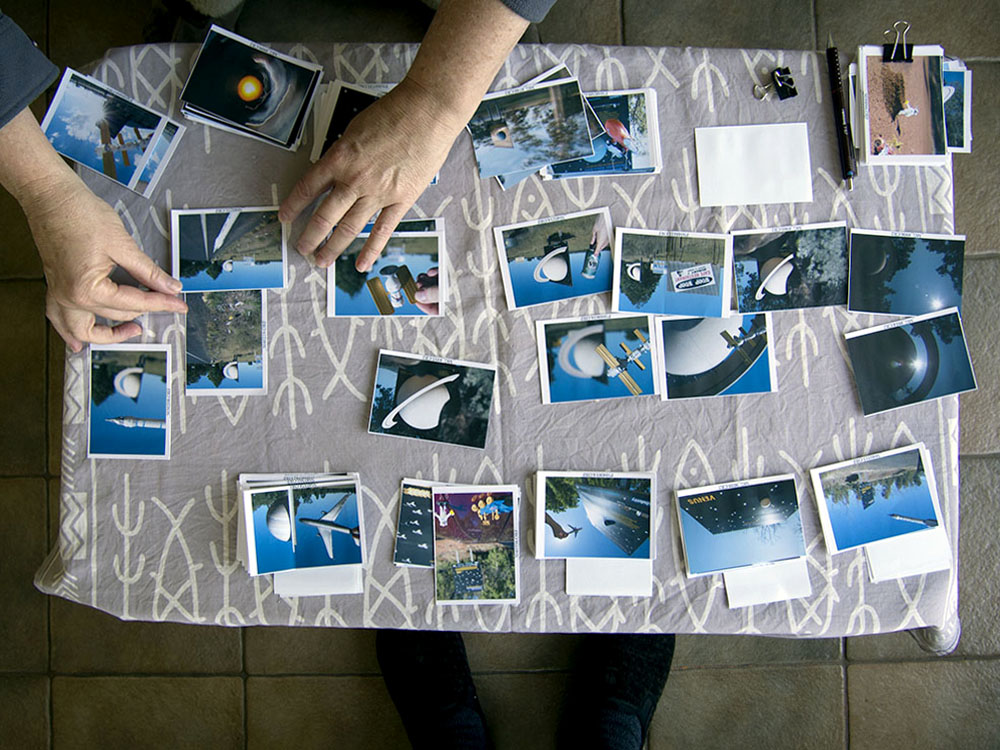
.
.
.
ANA PAULA ESTRADA’s new book “MEMORANDUM”
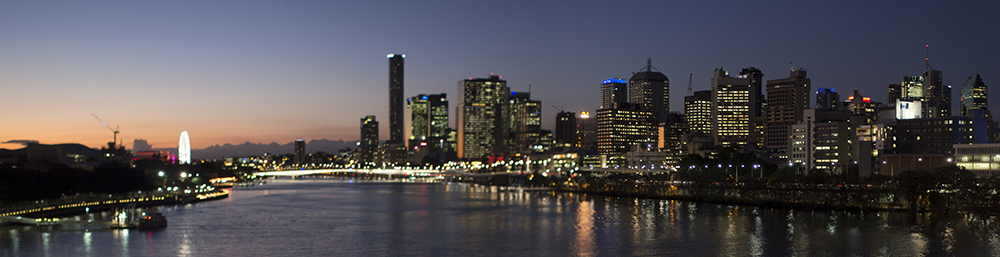
Brisbane City skyline
Brisbane is not a place not known for its photobook makers… there’s not much happening. Occasionally a gem from Dane Beesley, a few college student publications made for assessment and, every now and again, artists’ books/photobooks from yours truly and Victoria Cooper. So it is an exciting time when a new book is made as a total production from concept to printing and binding in Brisbane. That book is by photographer and photobook self-publisher Ana Paula Estrada and is entitled Memorandum. The book was completed as a project associated with Estrada’s Siganto Foundation Creative Fellowship in the Australian Library of Art at the State Library of Queensland.
.
Memorandum is a conceptual bookwork and is concerned with concepts of aging and memory, remembrance and the recounting of stories. In this book Estrada presents evocative associations where the photograph infers a memory or moment re-called.
At a first glance Memorandum could seem to be just a book of straight portraits featuring old people. The are multiple images on successive pages occasionally interspersed with a range of other photos and ephemera. Each of the people pictured in this book have been interviewed by Estrada and shared with her stories of their lives. Fragments of their memories, exhumed from the depths of memory, or in some cases, from lost recesses of the mind caused by age-related memory impairment or varied stages of Alzheimer’s disease. Estrada’s portrait sequences present the subjects with subtle expression changes. Turning the pages of the book are like a conversation with the person – animated and suggesting a dialogue is taking place.
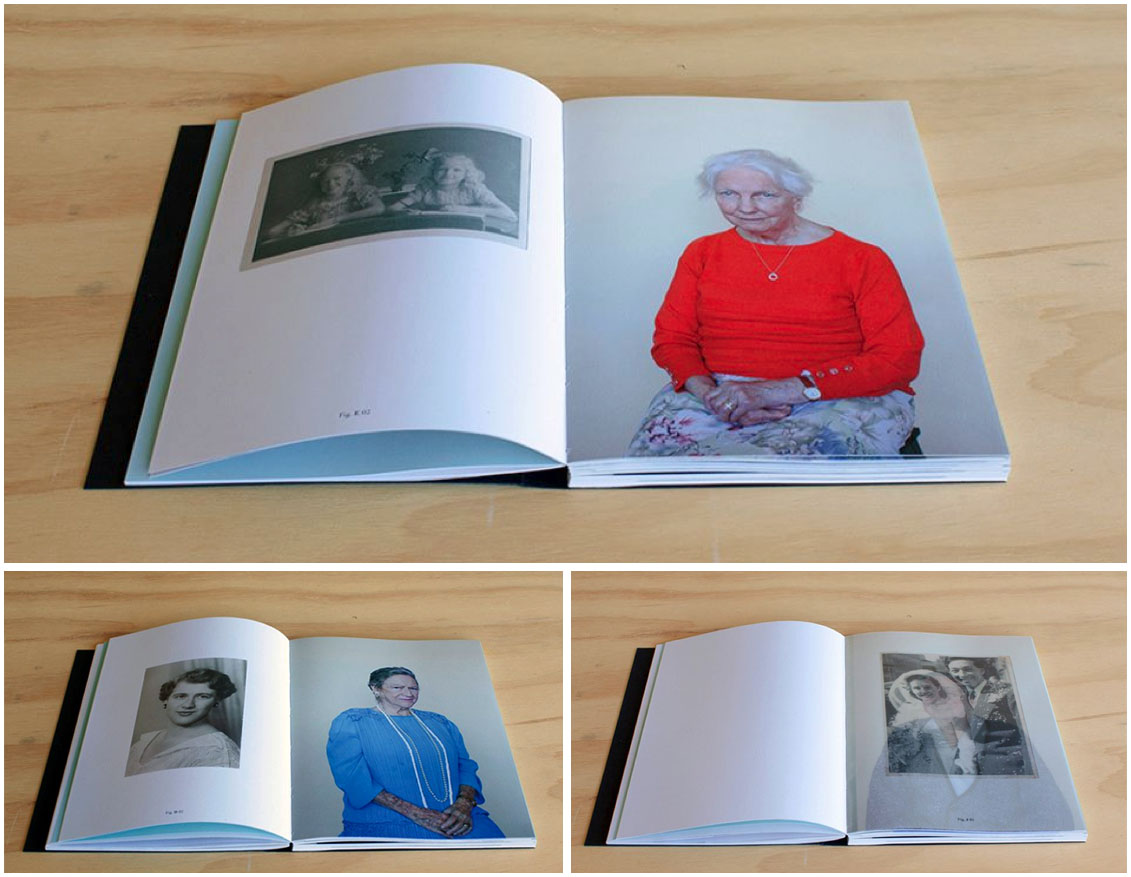
Page openings – Memorandum
Facing pages are sometimes blank to create a punctuation or pause in the conversation. Sometimes images and other ephemera are on the verso pages. These act as windows to the conversation – they need no caption, they are physical evidence of existence, substantiating the memory. They act as memory maps placed before the reader as additional information. Many of these images have been sourced from the person in conversation. Other photographs have been sourced by Estrada from the archives of the State Library of Queensland to illustrate the memory relayed to her in conversation with the subject.
Memorandum has achieved the notice of the world-wide photobook community:
Harvey Benge comments on the book https://harveybenge.blogspot.com.au/2016/08/ana-paula-estrada-memorandum-new.html
The Royal Photographic Society’s curated photobook exhibition https://issuu.com/bjsdesign/docs/photobook_exhibition_2016_catalogue
Shortlisting for the Artspace Mackay Libris Artists’ Book Awards 2016-librisawards_illustratedlistofworks
Shortlisting for the Encontros da Imagem Festival (Braga, Portugal)
A review by Gabriela Cendoya (in Spanish) can be seen HERE
The State Library of Queensland BLOG about the development of the book can be read HERE
The Australian Library of Art at the State Library of Queensland and the National Library of Australia have both bought copies.
I was honored to have Ana Paula approach me to write an essay to accompany the book. My text is printed as a broadsheet page folded and inserted into a pocket in the book’s cover. My essay is as follows….
PHOTOGRAPHIC MEMORY
Sitting here, I’m trying to recall the earliest memories of my life as a child. In this process of reflection I attempt to delve back into my memory searching for images, thoughts, experiences and feelings. What I find are personal, unique and fragmented memories that seem to have the appearance of photographs.
As I remember more of my childhood, I wonder if there is another way of visualising memories? But what emerges again in my mind are stilled photographic moments in particular, one of a family group. These photo memories have no colours, just black and white and slightly sepia. Wide white borders surround each memory and the corners are slightly bumped showing the patina of being handled. It even seems plausible to me I could even turn the memory over, and there would be a caption there in someone’s handwriting.
How could I, at 3 years of age, have known the significance and the outcome of my father’s posed group – my brother, mother and me? Other aspects of the photograph, like how youthful my mother appears, or how my father was not yet bald, give me something to base what I think should be my memories of that time. Could it be that I remember the photograph and have forgotten the moment of its making?
Writer and critic John Berger claims that, ‘All photographs are there to remind us of what we forget.’[i] Does this mean that because we have photographs, we allow ourselves to forget? What I do know is when we want to remember – we look at photographs. And when it comes to remembering there are social rituals that help us do this. Every family, for example, at some time or another, gathers together and the musty pages of photo albums are turned, old yellowed Kodak print packets thumbed through and the slides are held up to the light with everyone squinting to see some glimmer of recognition in the tiny frame. We have seen the archived baby photos, the wedding couple, holidays and kids playing at the beach, the new house and the other treasures that vernacular photography presents as a personal record. Through this ritual we encounter the rich archive of our family and ancestor’s lives. These now become ‘conditioned memories’, whether real or fiction. When we next see these photos we will think we remember the moment of their making and not necessarily our moment of first encountering them.
This conceptual bookwork by Ana Paula Estrada is concerned with the human condition of memory. Perhaps more specifically this work deals with concepts of ageing and memory, remembrance and the recounting of stories. The work also comments on the interpretation of stories and the retelling of what could be referred to as meta-stories in the form of a book.
As the pages of Memorandum are turned – people will be met. There will be conversations through the sharing of photographs, documents and news-clippings of these people’s lives. Through the process of making this book, memories have been revisited, refreshed and retold anew. These stories are offered for reader’s contemplation, perhaps even for future remembering. Memoranda, such as these, may be about other people’s stories – but in many ways they may stir our memories and become part of our stories as well.
Doug Spowart
[i] Berger, John. Keeping a Rendezvous [in English]. Granta in association with Penguin, 1992.
.
- Black soft cover, Section Sewn (Exposed Spine), 21 cm x 15 cm Stock: Ecostar Uncoated It contains a small 8pp booklet, fold out pages and a tipped in 112gsm translucent page
- 170 pages and 86 photographs
- Selling price $80
Other details about the book:
Photographs & Text:
Ⓒ2016 Ana Paula Estrada
Subject´s personal photographs.
John Oxley Collection, State Library of Queensland.
Design & concept: Ana Paula Estrada
Essay: Dr. Doug Spowart
Artwork: Linda Carling
Colour management: Martin Barry
Printing: Allclear in Brisbane, Australia
Typefaces: Chronicle Display and Aparajita
Paper stock: 120gsm &140gsm Ecostar
First edition, 2016
Print run: 200
Ana Paula Estrada’s Memorandum makes a significant contribution to the contemporary photobook genre in her ability to resolve the conceptualisation, capture – in photographs and recorded interview, the design and coordination of a complex concept into the simple form of of a book. And in doing so give us an opportunity to consider contemporary issues of our time through the photobook.
Doug Spowart
October 31, 2016
PHOTOS OF THE BOOK LAUNCH
AVID READER IN WEST END BRISBANE
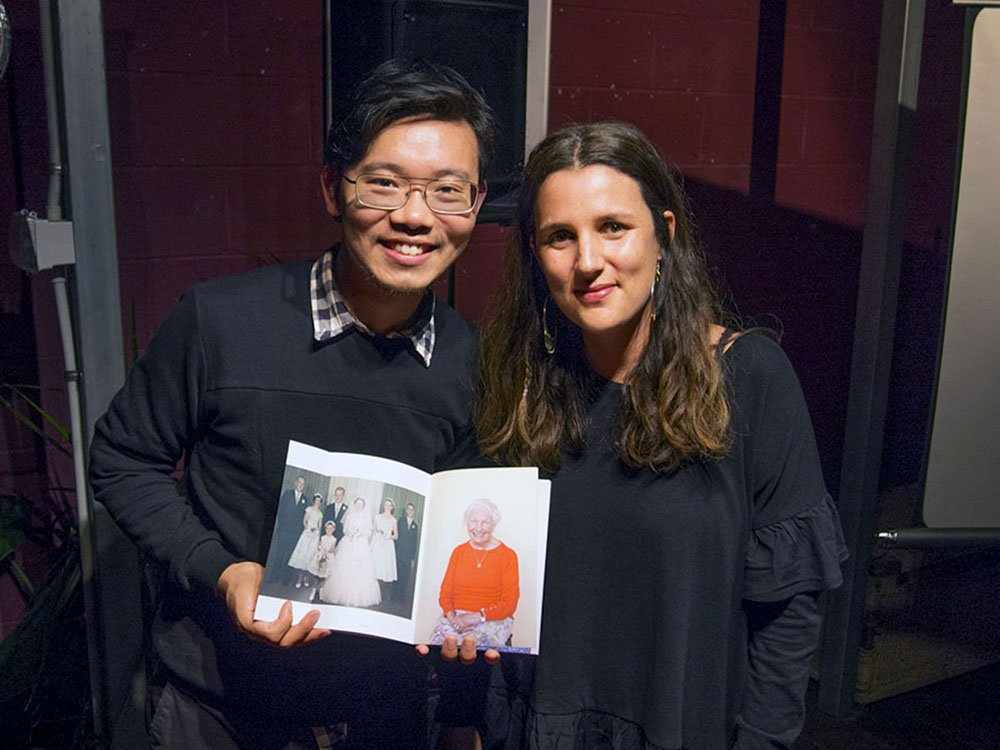
Louis Lim bought a book
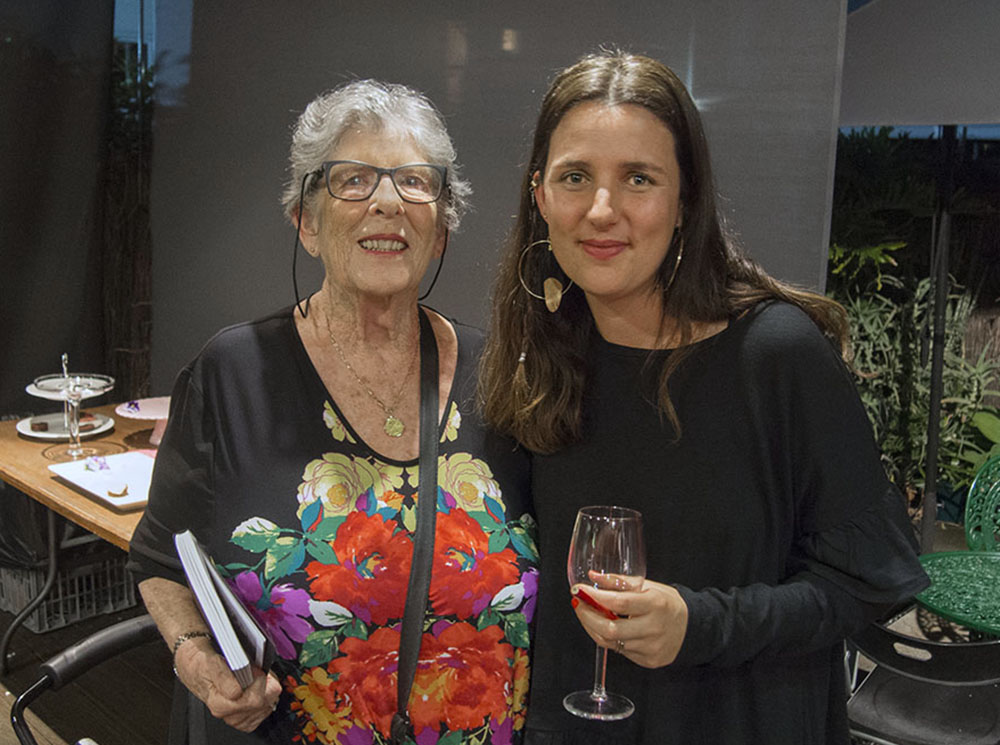
Annette Green and Ana Paula
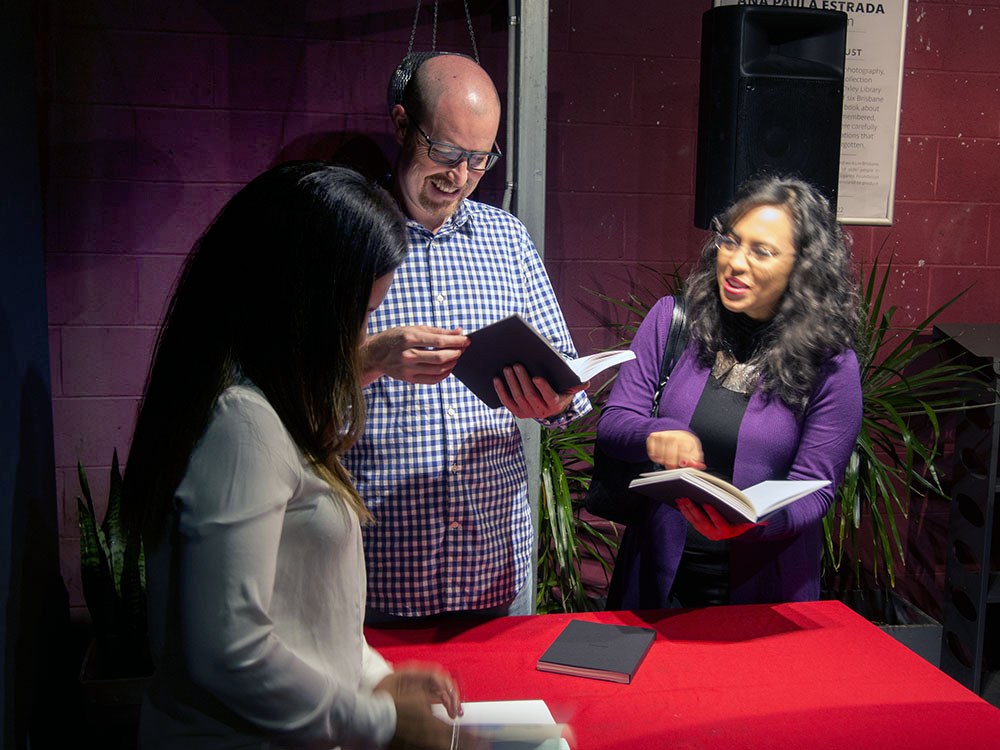
Looking at the book
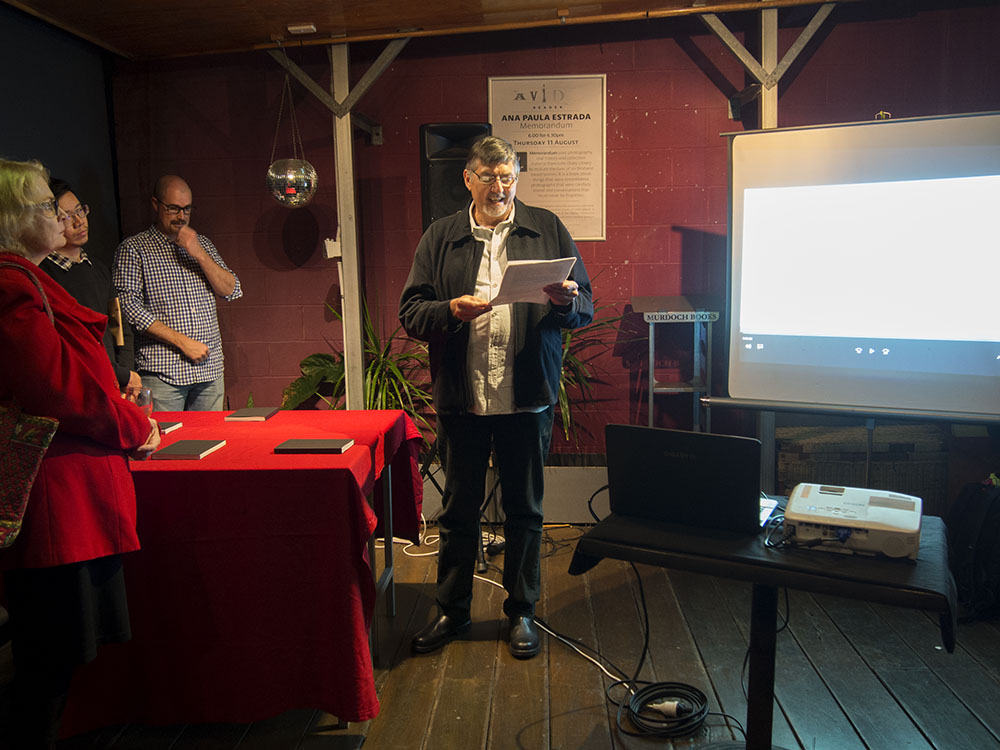
Doug Spowart reading his essay from the book
.
.
.
ORPHEUS PHOTO WORKSHOP WRAP-UP
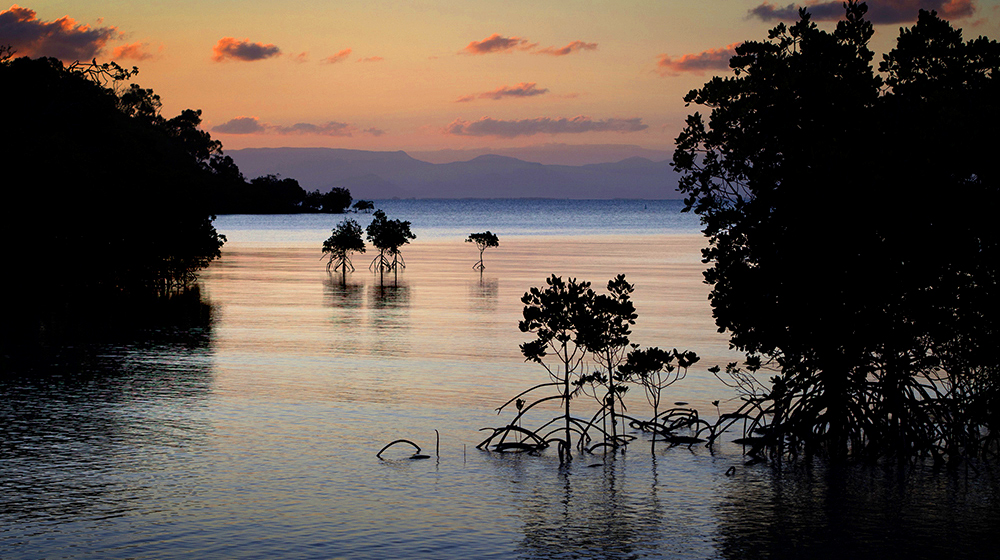
An Orpheus sunset
.
We came to Orpheus to share our knowledge, skills and experience of photography and the book. We were ready to assist and encourage – motivate and create with the participants… We had plotted and planned for months – but nothing could have prepared us for the Orpheus experience we were to have!
We were amazed with the boundless energy and enthusiasm for all things photography. In particular:
• Everyone’s participation in the lecture presentations
• The amazing camera obscura that John de Rooy & Spyder Displays had made
• The fun everyone had with pinhole imaging, lumen printing and other ‘photo play’ projects
• The playful and the deeply considered work made by everyone
• The individual creative development towards making books
• The joy that everyone expressed from making and crafting fine images and books
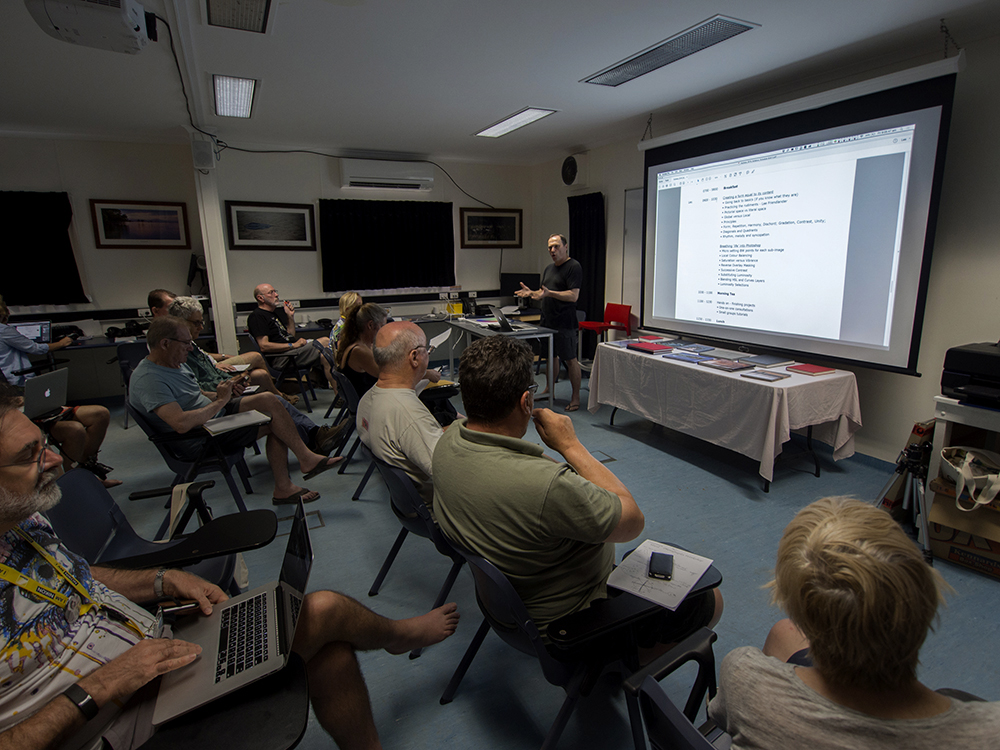
With Les in the lecture room
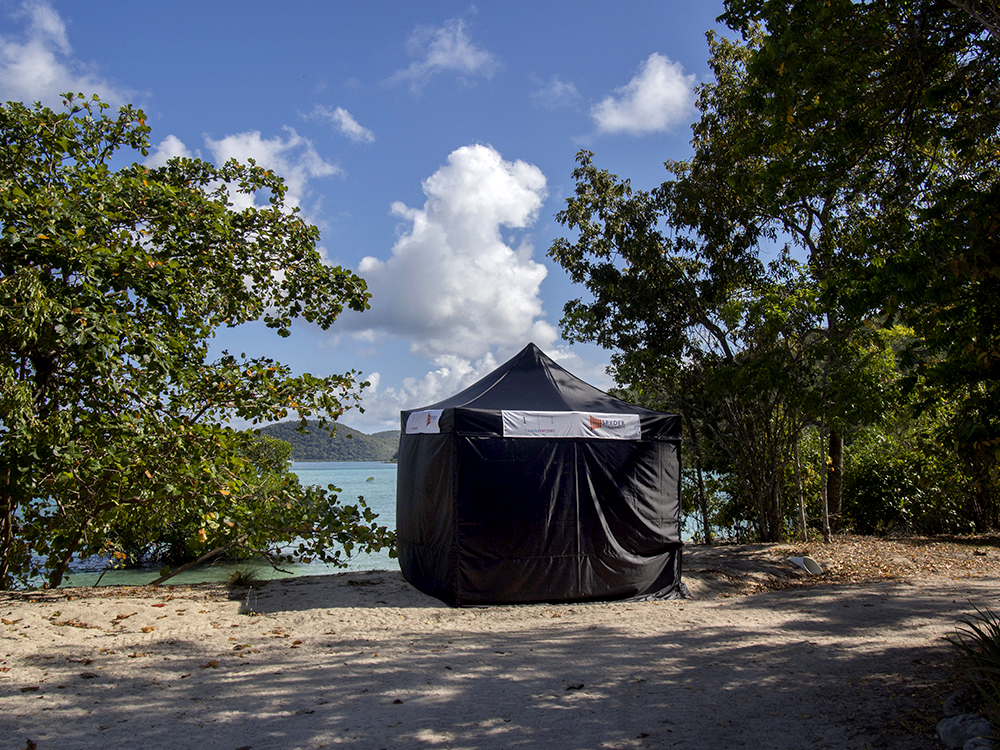
Our Spyder Camera Obscura
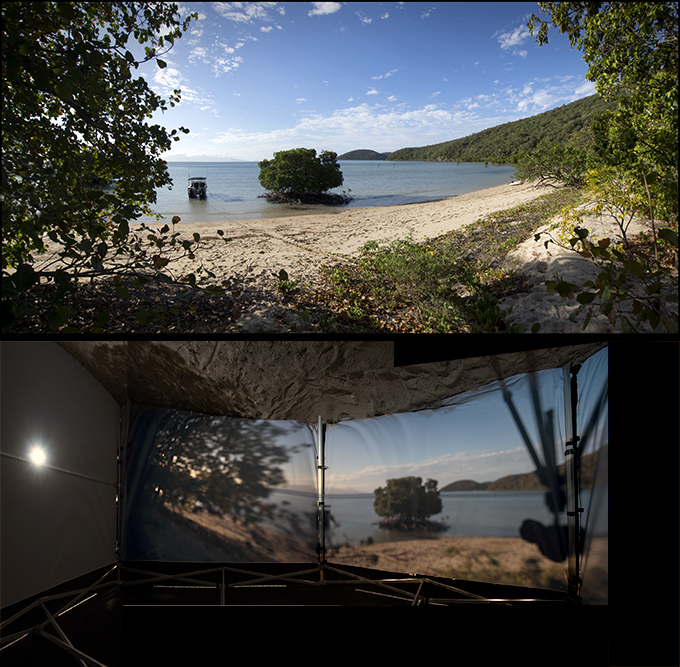
A DUO View of the scene and the Camera Obscura image
We appreciated the special access to the incredible equipment from Kayell, Hasselblad, Nikon, Epson and ProPhoto.
The support workers and organisers were photo experts, construction workers and logistical whizzes while always with a smile and good humour. So much happens behind the scenes of the great Orpheus Drama. But there was another endless creative space – the kitchen. And it was those that worked from dawn to well after we all had dined that we owe our sustained creative energy, fed our bodies and delighted our taste buds.
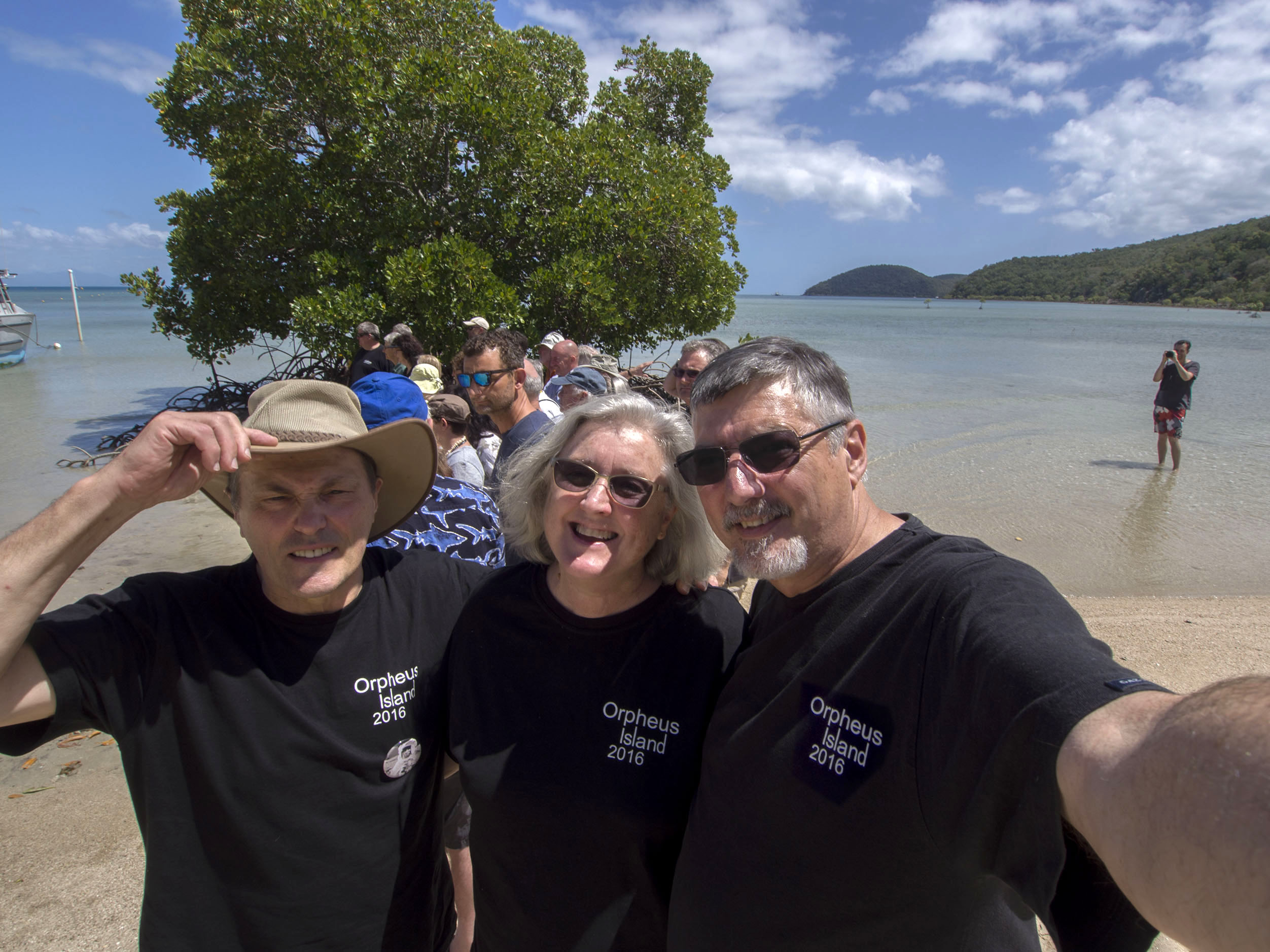
The lecture team – D+V and Les
All this made the working environment possible as we, with the amazing Les Walkling, worked together to share our knowledge, passion and inspiration for photography. It was inspiring for us working with Les – his dedication to sharing his great knowledge and experience. He is truly unique in Australian photography. Thank you also for your words about our contribution to the Orpheus Photo Workshop …
… I loved every minute of the ‘Doug & Vicky Roadshow’, and I even ‘re-named’ the main lecture theatre the ‘Doug and Vicky Studio’. What memorable times were had in and around that space. Every aspect of Doug and Vicky’s presentations were informative and entertaining, and I don’t think I have ever loved photo books so much, nor ‘played’ so joyfully with my photography. What a difference it makes working with skilled presenters who are at the top of their field and not afraid to share their love and devotion to what we all adore; our photography. I can’t thank them enough for their contribution to Orpheus 2016, their generosity and tireless expansiveness, and the difference they have made to our photographic lives.
.
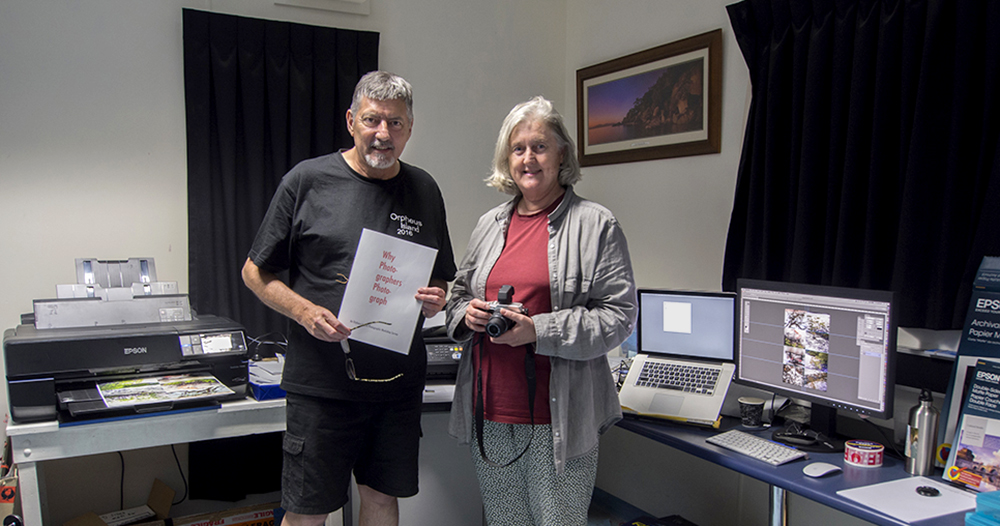
The Doug and Vicky studio
.
WHAT FOLLOWS IS AN ALBUM OF PHOTOS FROM THE WORKSHOP
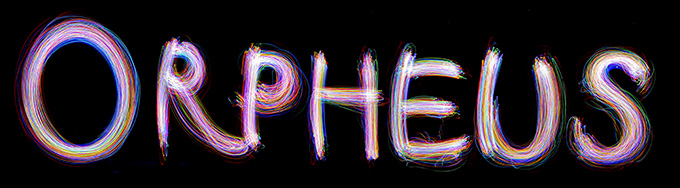
Light painted ‘Orpheus’ on Orpheus Island
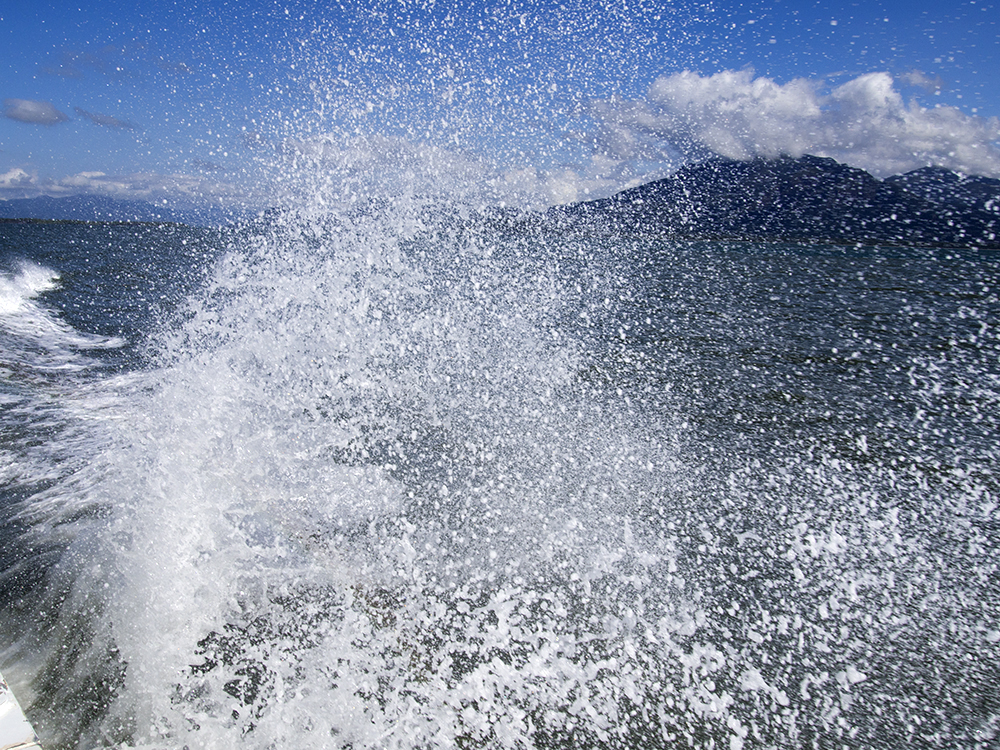
A ‘millpond crossing’ they said…!
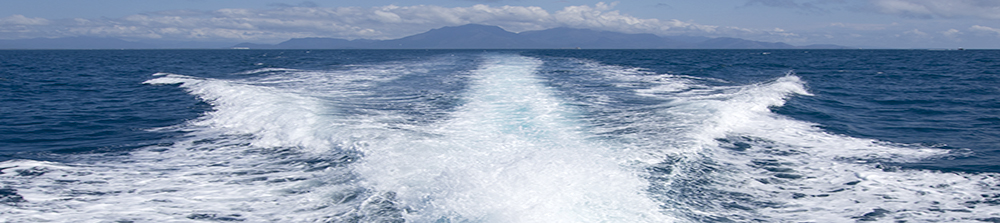
But it did smooth out – heading towards Orpheus Island
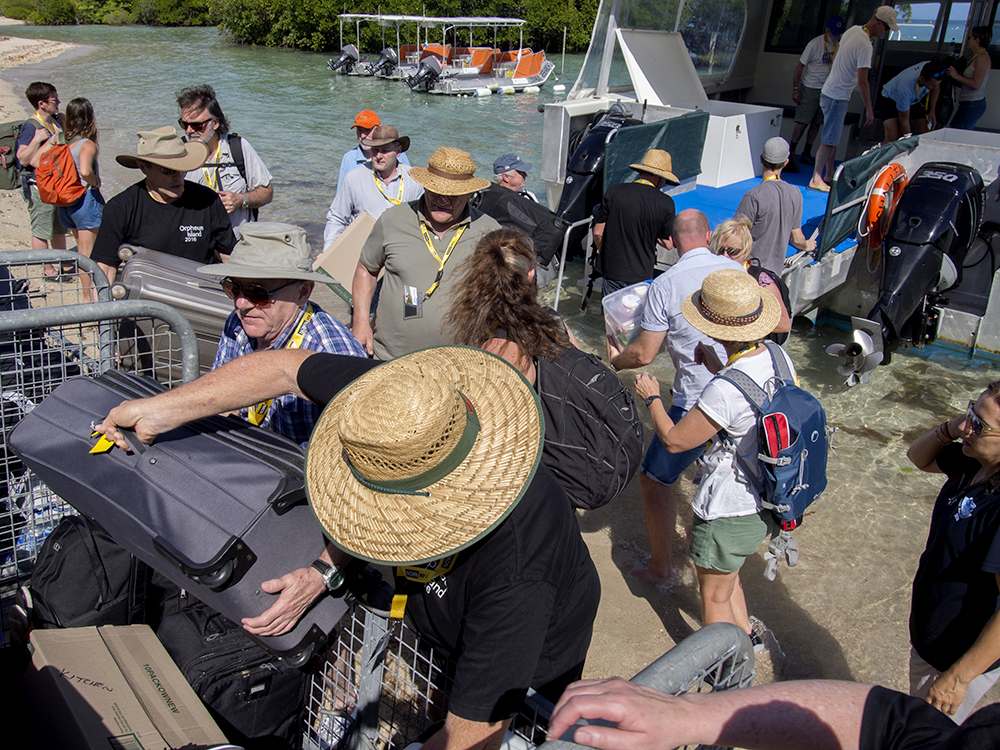
The arrival — unloading the boat
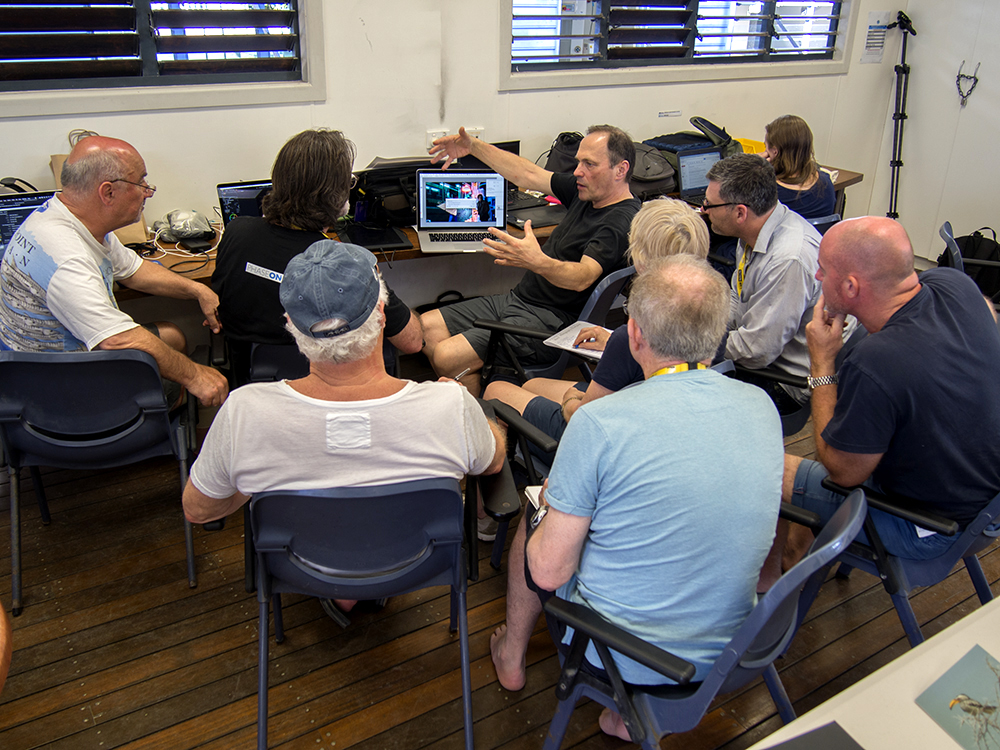
A Photoshop power session with Les
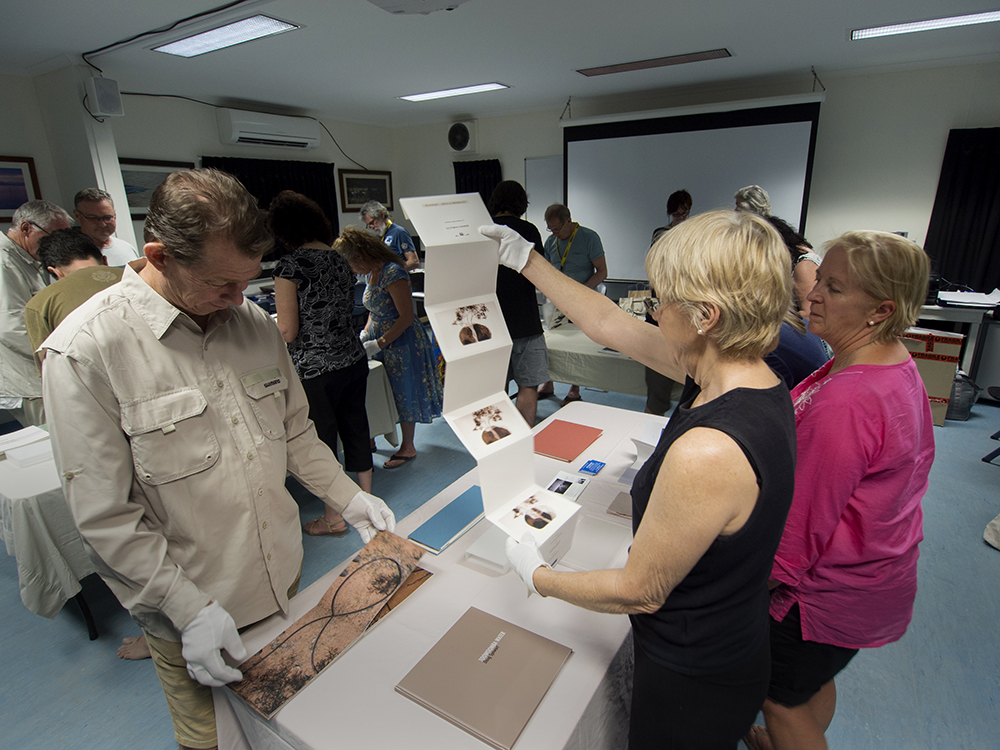
The Doug and Vicky ‘White Gloves Event’ showing a range of our artists’ books and photobooks
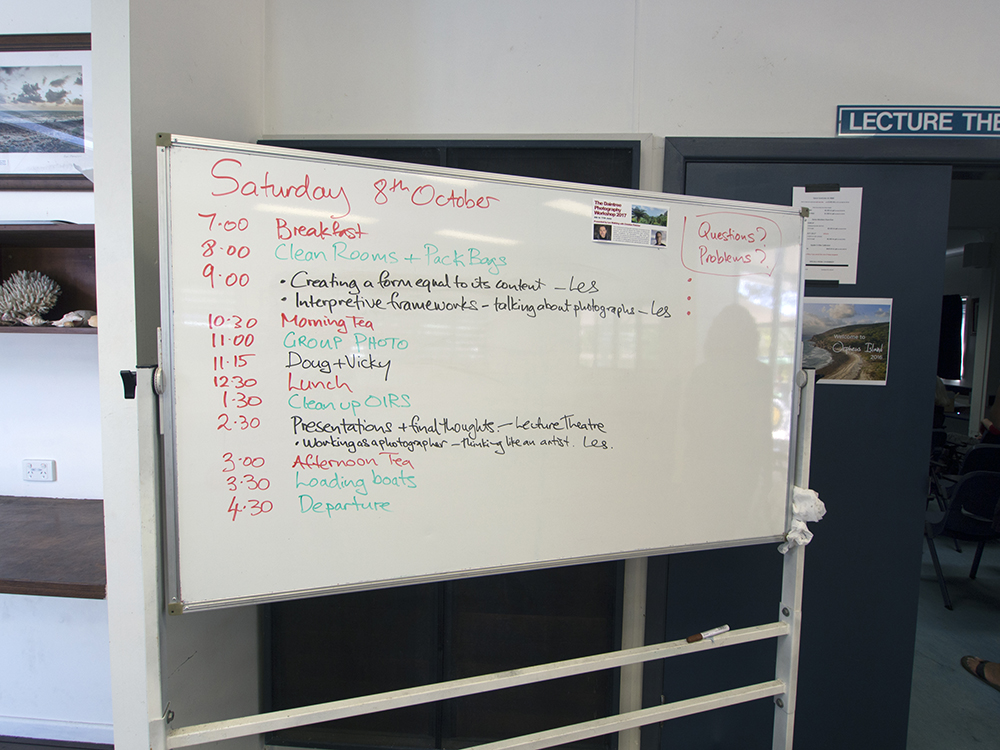
The order of the day
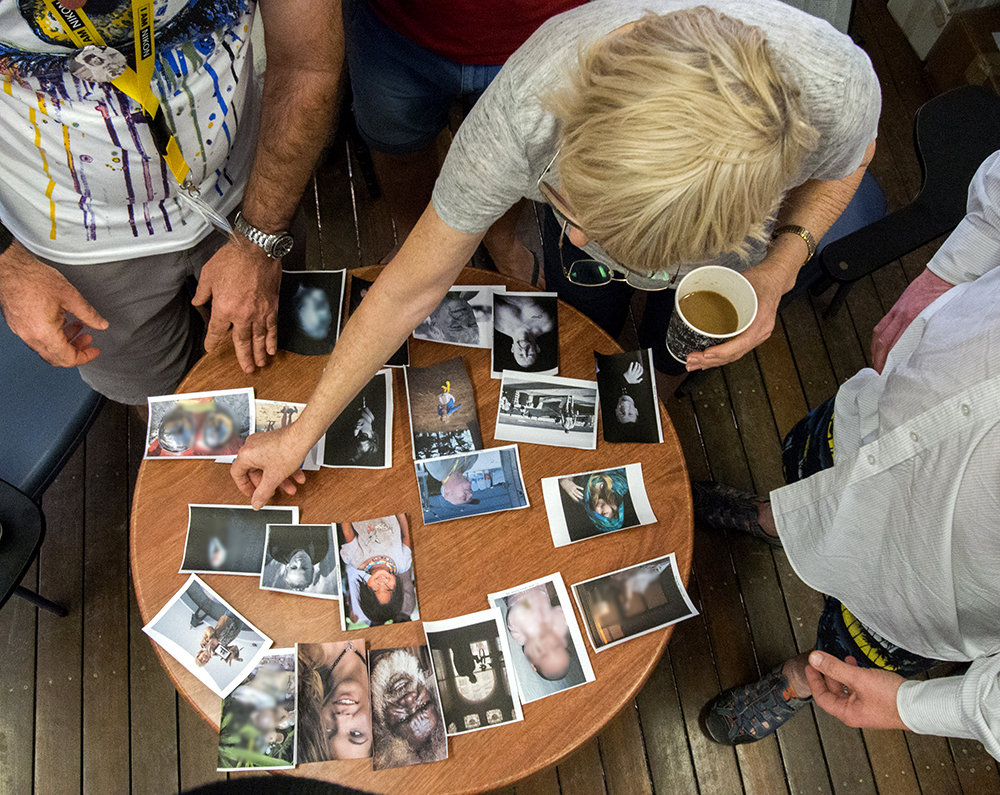
A photobook narrative development exercise
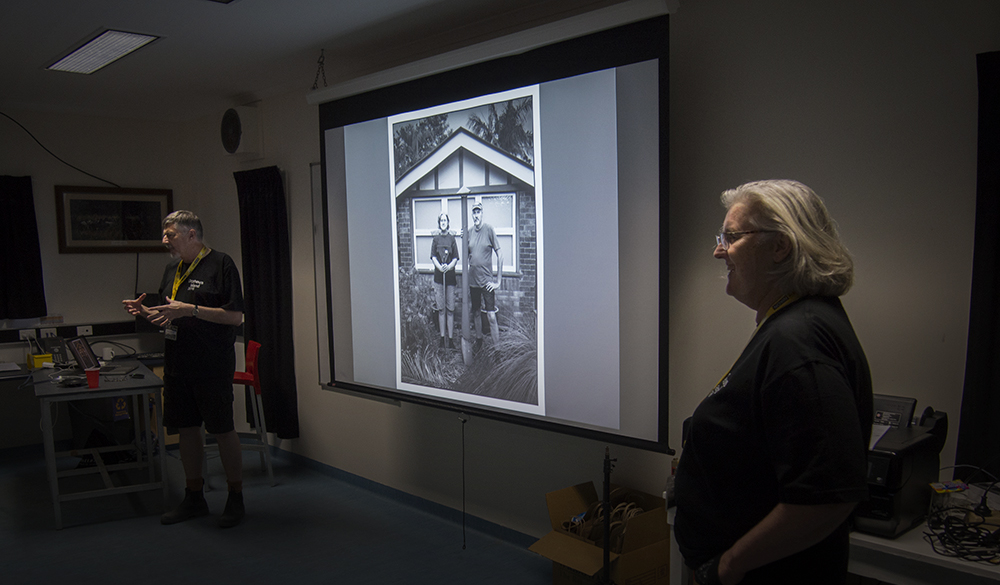
The D+V Roadshow….
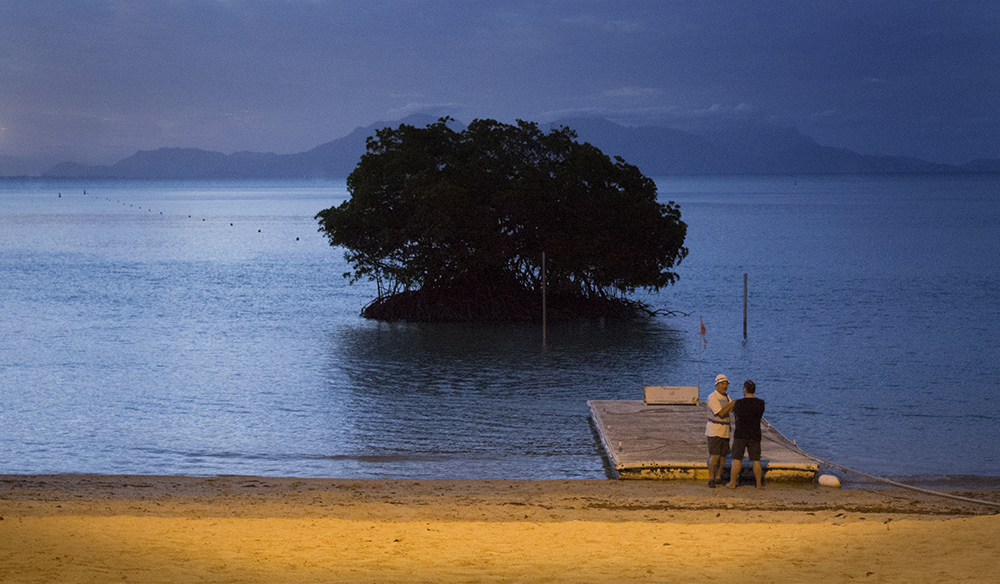
An early evening conversation
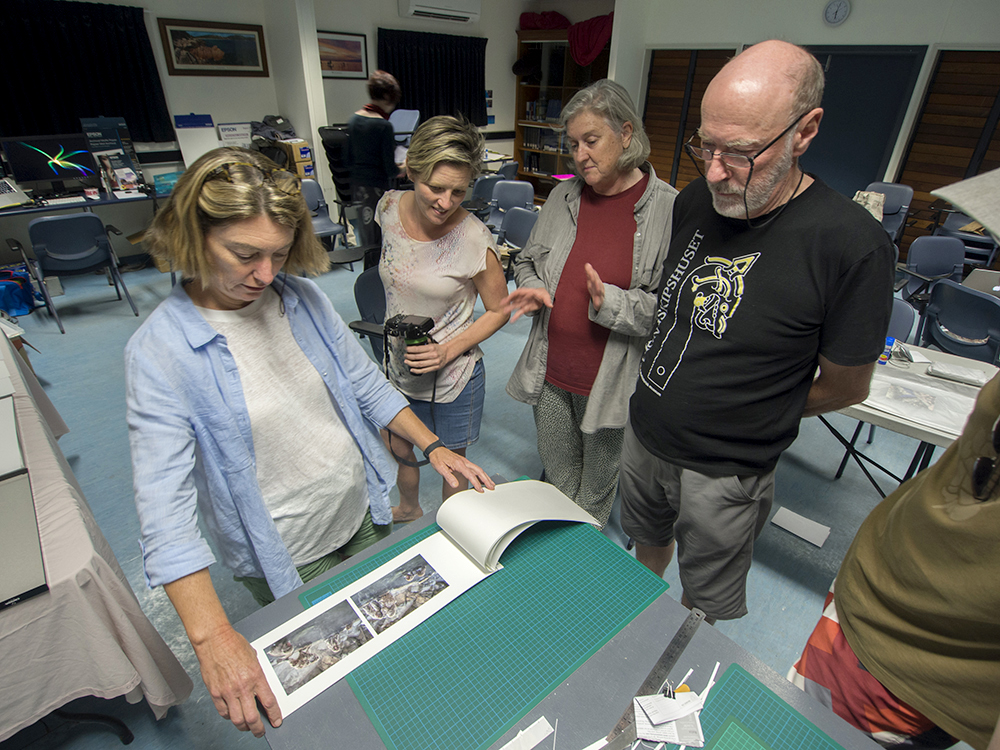
‘I made a photobook!!!’ Sarah shows her bookwork
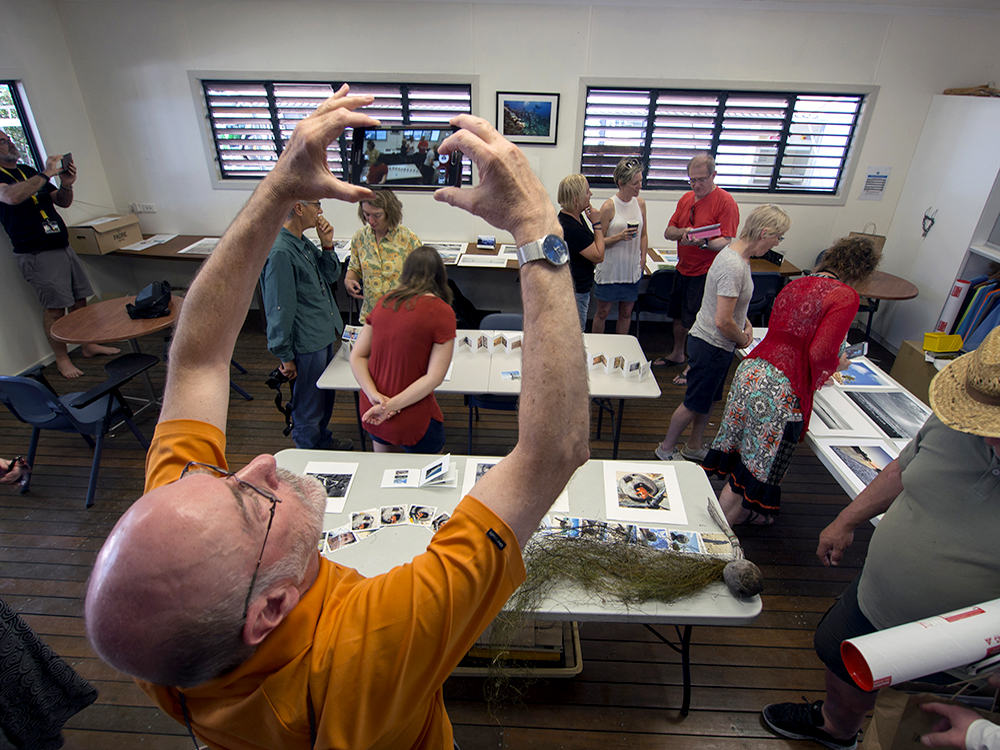
An exhibition of student work at the end of the workshop
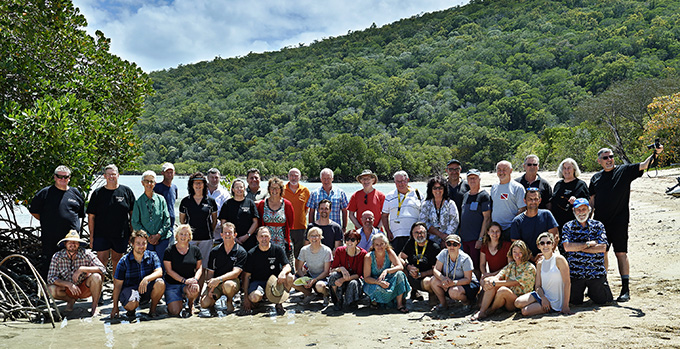
Orpheus Group Shot 2016
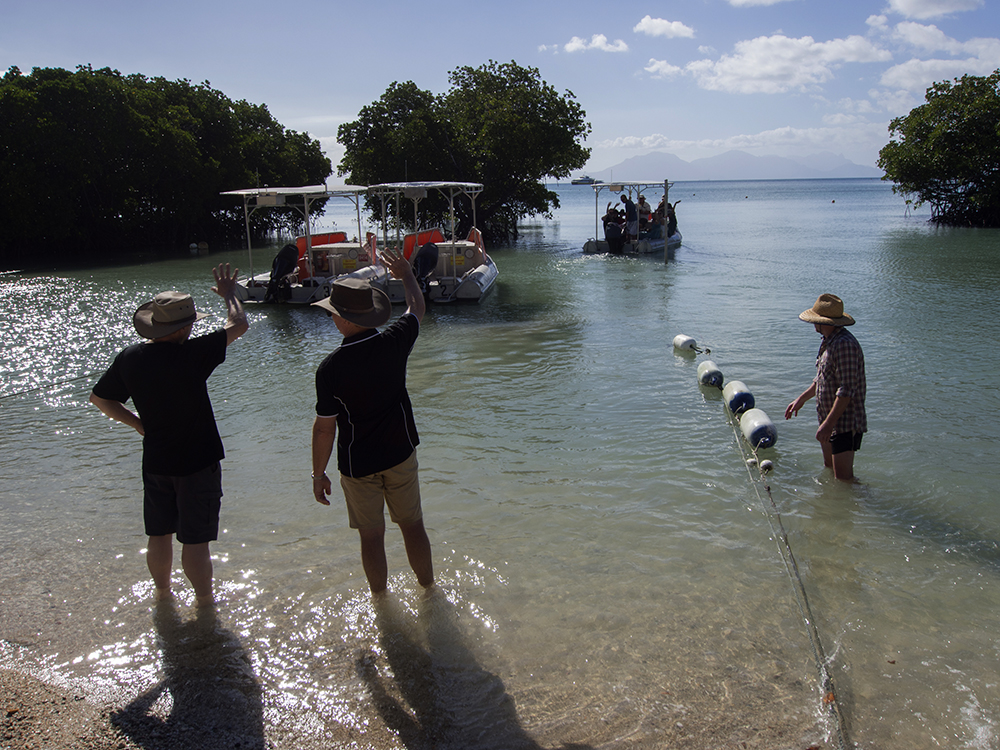
Saying goodbye to the participants…
The ‘staff’ take a break in a pinhole time-lapse movie made by Ross Eason…
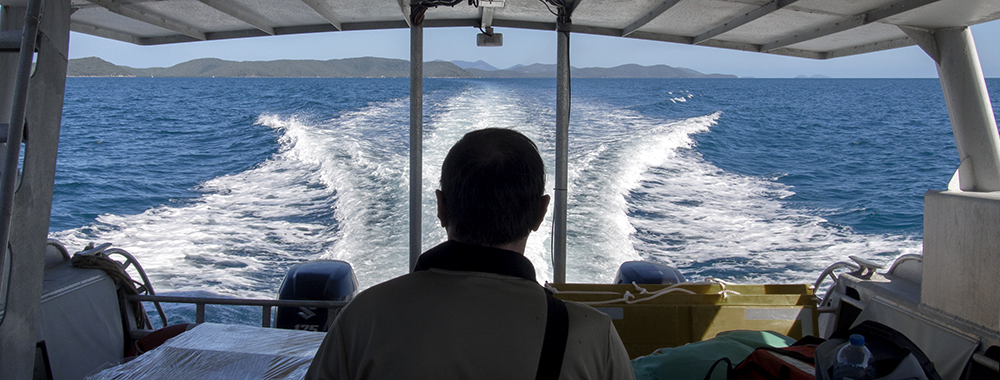
Les takes a last look as we leave the island behind…
.
Special thank you to:
John and Pam de Rooy our hosts and organisers – the rocks that underpin Orpheus
Tutors Murray, Ross and Rod for their ever-present support
Brenda, Dave and Nikolaj – an amazing Chef team
Marta and Jimmy from the JCU Research Facility – where would we be without their support?
Libby and Geoff from MomentoPro for their enthusiasm and collaboration in the book projects
Epson, Kayell and Canson for the fabulous papers and printers
William from Hasselblad and John from Kayell for the exceptional access to the gear
Nikon and the wonderful range of quality professional camera equipment.
AND… A very special thank you to all the photographers, now new friends, with whom we shared the experience of Orpheus 2016 …
Cheers
Doug+Vicky
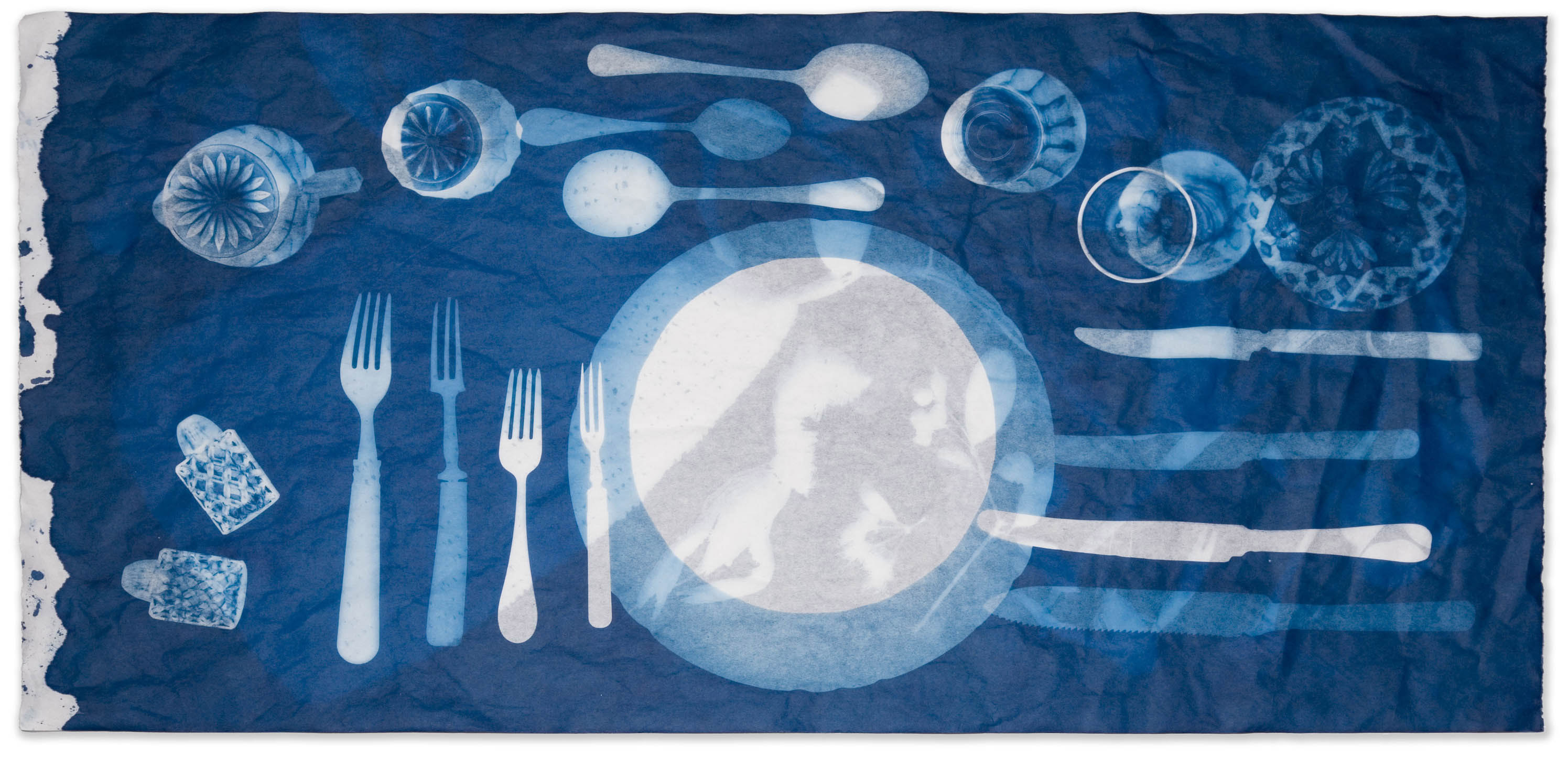
Cyanotype in rice paper, Broadsheet artists book
We are now getting ready for our next island workshop: on the Greek island of SKOPELOS
May 2017 for 2 weeks of art photography about ‘place’ making cyanotypes and photobooks + Greek culture, wine and food. SEE HERE FOR MORE INFO
.
.
COVERING: The 2016 Libris Artists’ Book Award
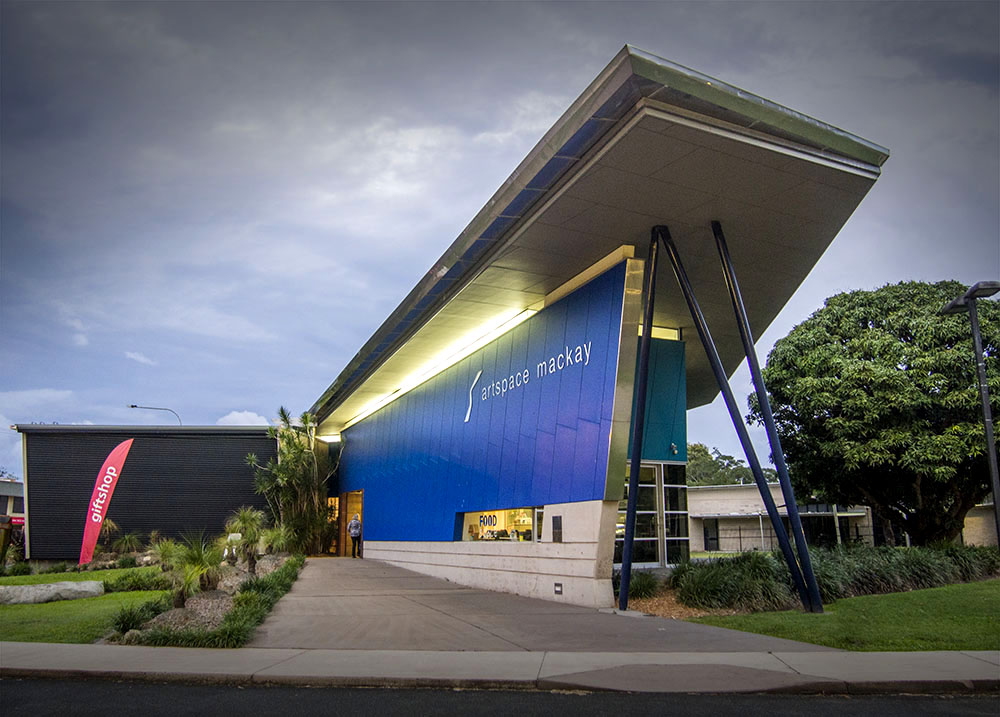
Artspace Mackay
A COMMENT ON THE 2016 LIBRIS ARTISTS’ BOOK AWARDS
In his announcement speech for the 2016 Libris Awards at Artspace Mackay judge Sasha Grishin makes the observation that: ‘The contemporary artists book is characterised by boundless freedom’, and adds that: ‘… it has absorbed many conceptual frameworks, many art mediums and technologies and goes across the spectrum of the senses.’
Visitors to Artspace and the Libris Awards encounter an open space with islands of book presentation devices. Plinths of all sizes – some encased, others at floor level, there are shelves on walls, books as mobile installations hung from the ceiling and other books with ‘pages’ covering large expanses of wall. This is not an easy walk-through exhibition as each work beckons, siren-like, calling for the extended gaze of the reader.

The Artspace Libris exhibition
.
On this occasion the winners were:
- Dalrymple Bay Coal Terminal National Artists Book Award $10,000 Acquisitive Award went to George Matoulas and Angela Cavalieri, with the text by Antoni Jach, for Europa to Oceania.*
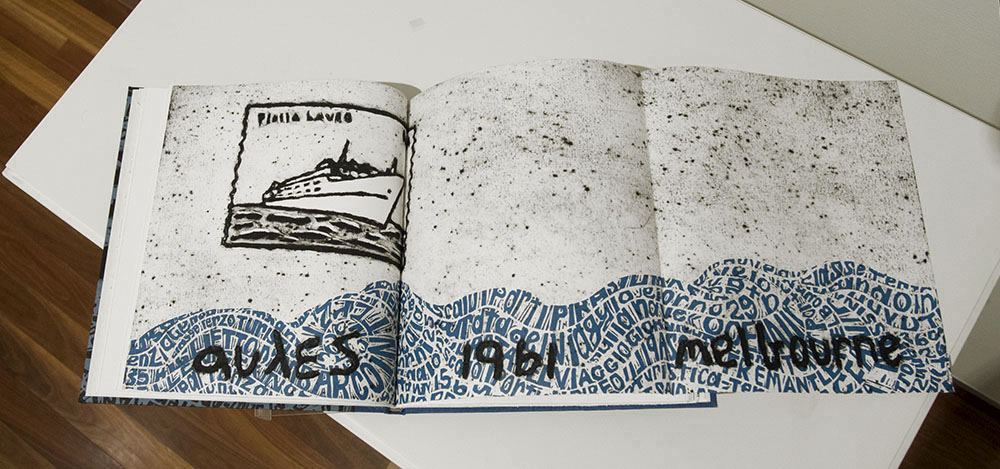
George Matoulas & Angela Cavalieri, with the text by Antoni Jach, Europa to Oceania
Grishin’s comments about the work were:
After much soulsearching I decided to allot the winning entry for the major prize to a collaborative and fabulous artists book by two Melbourne‐based artists, George Matoulas and Angela Cavalieri, with the text by the novelist and playwright Antoni Jach, titled Europa to Oceania. The three linocuts are by Angela, the three collographs are by George and there are another two collaborative foldout prints. The two artists, one of Greek extraction, the other from Calabria in Italy, with wit, profundity and beauty explore the migrant experience at a time when the Australian social fabric is under stress with the question of refugees and migration.
Highly commended in this award were:
Gracia Haby and Louise Jennison’s Closer to Natural
Monica Oppen’s Metropolis
Tim Moseley’s Kange pholu wandaPeter Lyssiotis’ Blind Spot
- Mackay Regional Council Regional Artists Book Award for a local artist went to May‐Britt Mosshamer for Tapping the knowledge.*
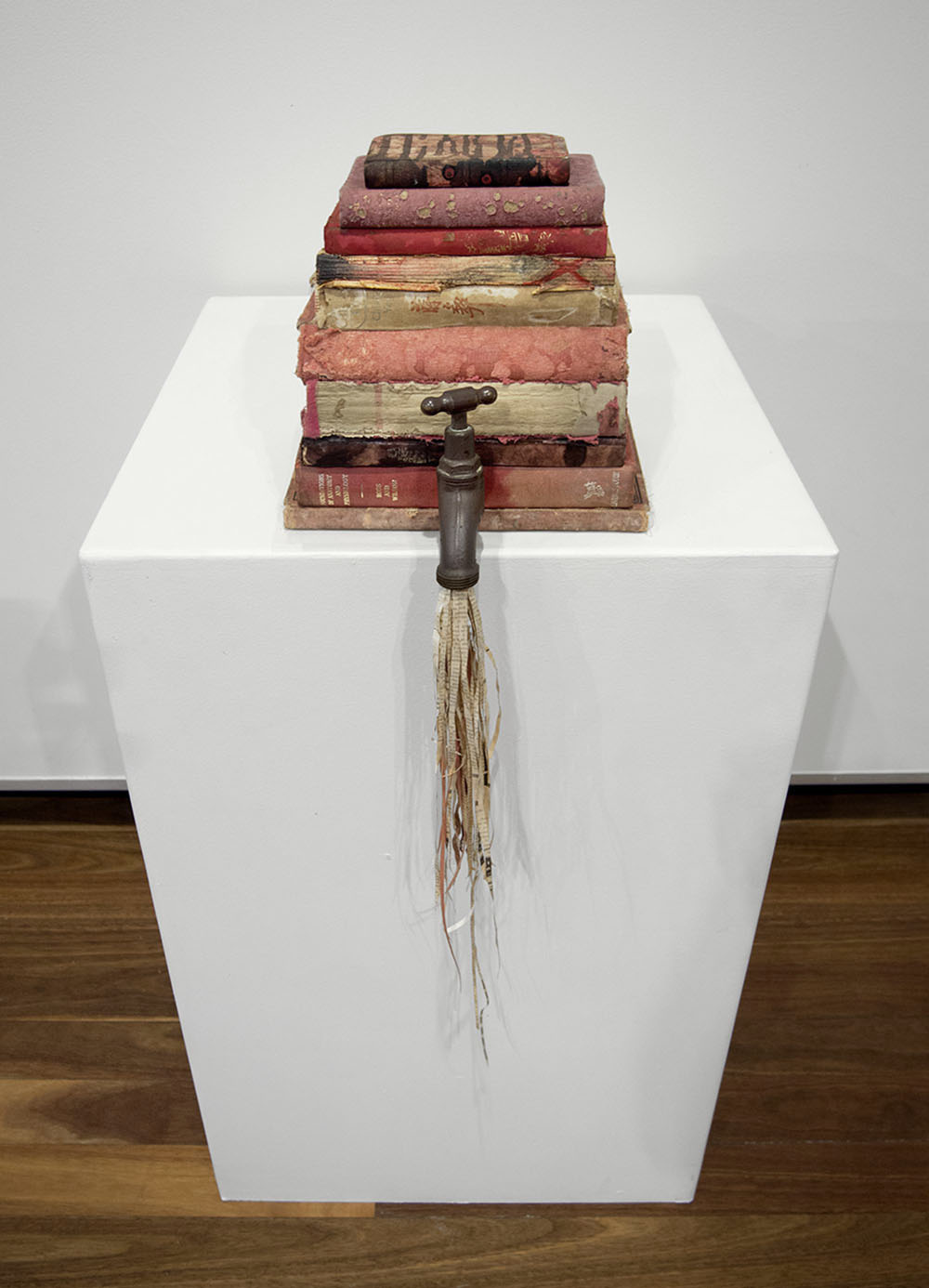
May‐Britt Mosshamer Tapping the knowledge.*
Grishin’s comments about the work were:
As much as one fought the temptation, the $2,500 award had to go to the local artist, May‐Britt Mosshamer and her effective piece Tapping the knowledge. In art you can say very important things with a bit of humour in your back pocket. This work is all about the flood of information and the drought in knowledge.
The highly commended, or runner‐up entries in this category were:
Denise Vanderlugt’s I used to wrap rainbows
Jo Mitchell’s For Mary
- Artspace Mackay Foundation Youth and Student Artists Book Award (under 26years), went to Brooke Ferguson and her The Small Garden (for M.S.).*
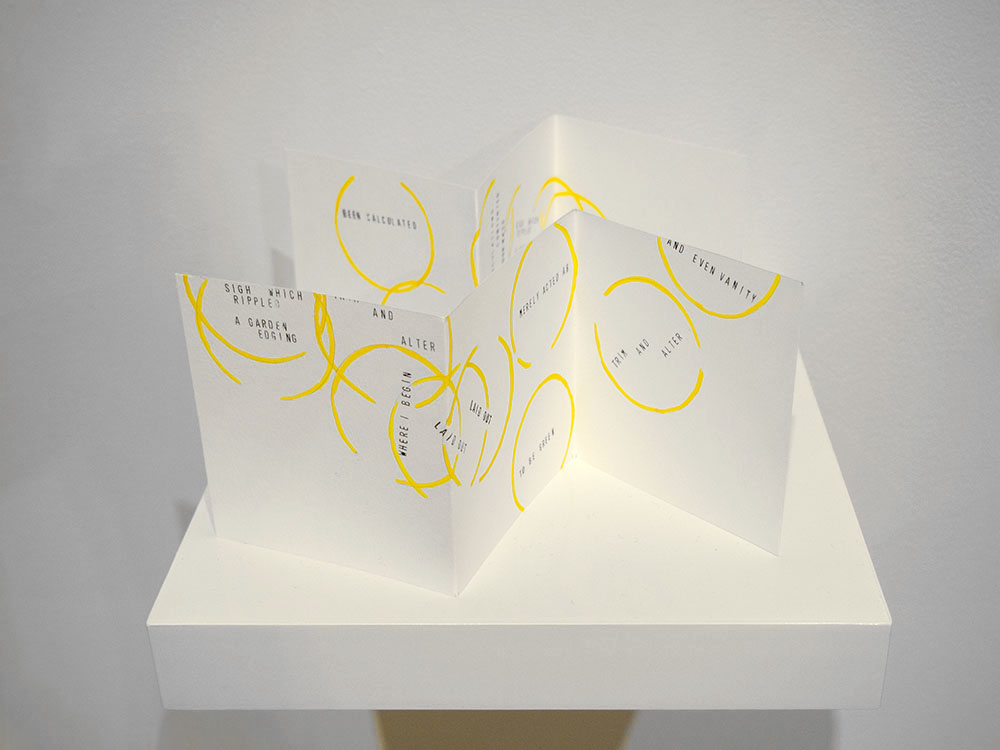
Brooke Ferguson The Small Garden (for M.S.).
Judge Grishin’s comment on the work:
This is an award that is about taking risks, a punt and choosing the unexpected, the promising and the challenging. It is literally a once in a lifetime opportunity for an emerging artist to gain national recognition plus a handy fistful of dollars. I selected the work by the 25‐year‐old Brisbane‐based artist, Brooke Ferguson and her The Small Garden (for M.S.) The MS stands for the wonderful veteran artist, Madonna Staunton, where young Brooke Ferguson was inspired by a poem by Staunton and with gouache, pen and ink and pencil has created a fragile concertina – a beautiful sensibility from a promising young artist.
.
In my opinion some books call for special mention. Caren Florance’s Pleasure demolition is transfixing. The suspended brown paper sheets with a hand printed letterpress phrases from poetry by Angela Gardner are animated by the flow of air and movement in the space. Forever moving, the oscillation of the pages becomes a machine for the generation of concrete poetry… phrases twirl and merge, poetic moments where new meaningful/less messages materialise.
.
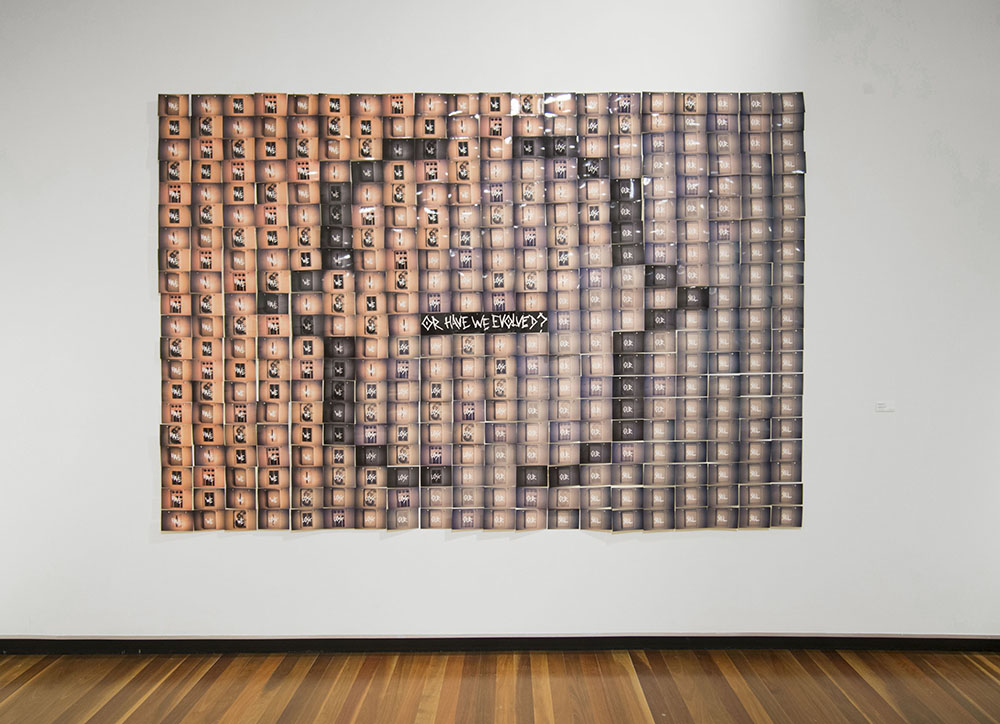
Jamian Stayt’s Soulless evolution
The individual pages of Jamian Stayt’s Soulless evolution are pinned to the wall making what may seem like a vast wallpaper pattern. However, Stayt’s work invites a closer reading of the cipher hidden within the layers of the image. He presents some big questions where contemporary notions of tradition are challenged and rapidly changing technology has intertwined agency in the evolutionary pathway for humanity.
.
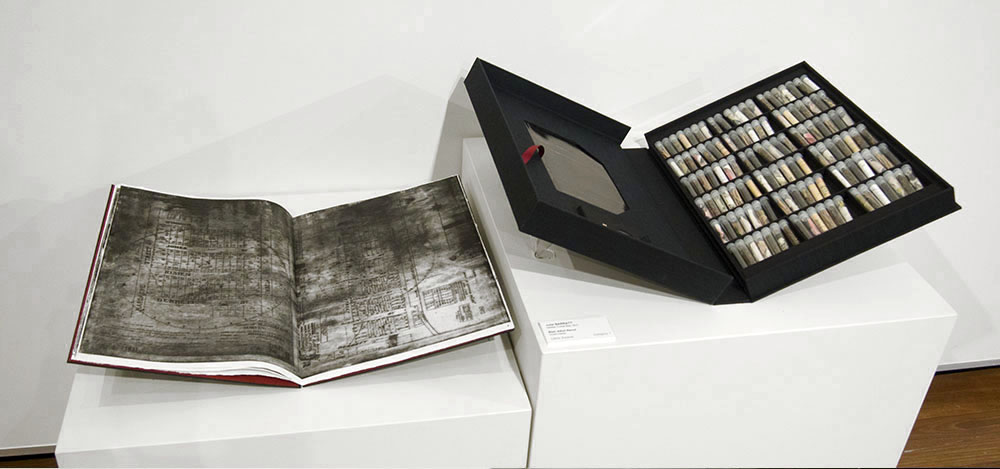
Julie Barratt Blair Athol recut
Julie Barratt’s Blair Athol recut refers to Solastalgia: a theory on the contemporary human condition for a deep loss of place. In one part of the installation there is a book of dark photolithographs where maps are encroached upon by black inks. For the reader this growing blackness evokes a gloomy absence. Facing the dark pages in the clamshell container are vials of coloured soils, plant fragments and found objects. Although collected from this disturbed place, these samples are vibrant and alive – perhaps they are the vestiges of childhood memories that recall a different time before the destruction of the physical place by coal mining.
.
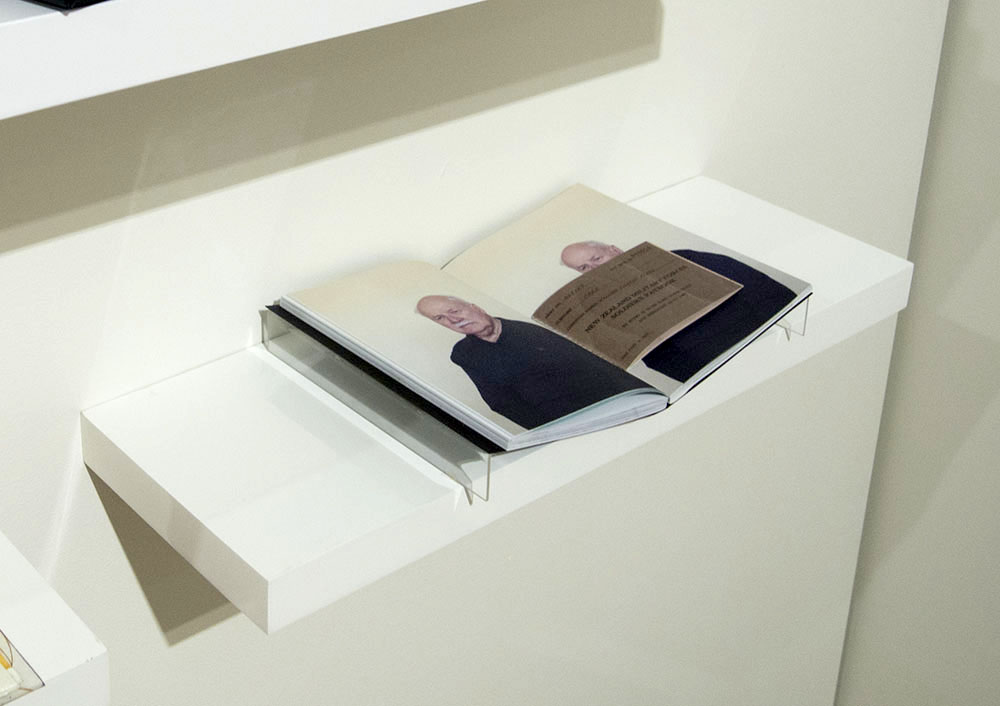
Ana Paula Estrada Memorandum
Many books feature photographs as the primary carrier of the narrative. Ana Paula Estrada’s Memorandum employs the medium to document elderly people and their connection with life through personal photographs and how their memories are re-lived through viewing these photos. The book, conceived and made through the Siganto Foundation Creative Fellowship in the Australian Library of Art at the State Library of Queensland, is a complex assemblage of contemporary portraits, photo-glimpses from family albums and a narrative conveyed through the turning of pages.
.

Exhibition view
.
As usual the artists’ book as exhibition defies direct touch and the turning of pages for narratives to be revealed and for the book to speak of what it has allowed the artist to create. But for the 72 books in the exhibition to be read the visitor would need to stay for the duration of the exhibition, working through the night with white gloves and torchlight. The exhibition reconnects and continues the significant contribution of the Artspace Mackay’s Libris Award to inspire artists and create a space discourse on the book in all its forms. In doing so the assembled exhibition represents cutting edge survey of Australian artists’ book practice.
Some works will become part of the Artspace Mackay collection; others will be re-packaged and returned to their makers. While the exhibition is dispersed its spirit will continue in the form of the gallery’s excellent illustrated catalogue, the text of Grishin’s speech, reviews, videos and other commentaries such as this, as well as the memories of the readers who viewed the show.
In two years time – the next iteration of this important event in the Australian artists’ book calendar will take place again. Wouldn’t it be nice if the whole collection could be purchased and held in perpetuity as a record of the discipline? Until then …
Dr Doug Spowart
16 October 2016

DOWNLOAD THE CATALOGUE: 2016-librisawards_illustratedlistofworks
Click to access 2016LibrisAwards_IllustratedListofWorks.pdf
.
A VIDEO FLY-THRU OF THE EXHIBITION
OTHER BOOKS FROM THE EXHIBITION

Denise Vanderlugt with her highly commended bookwork I used to wrap rainbows
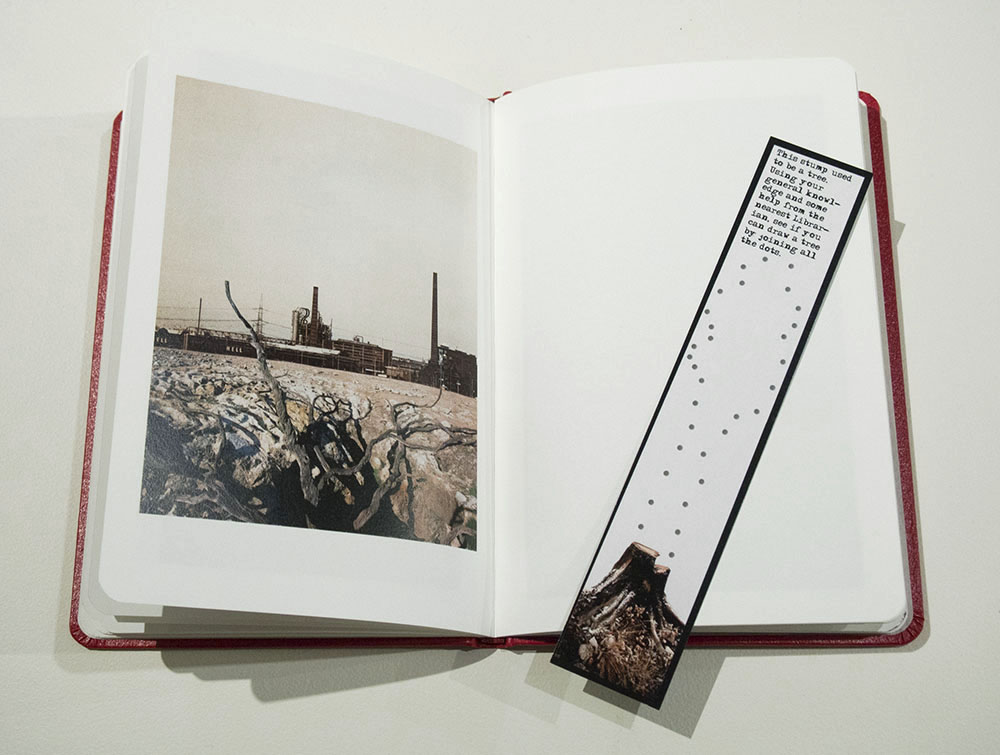
Peter LYSSIOTIS Blind spot
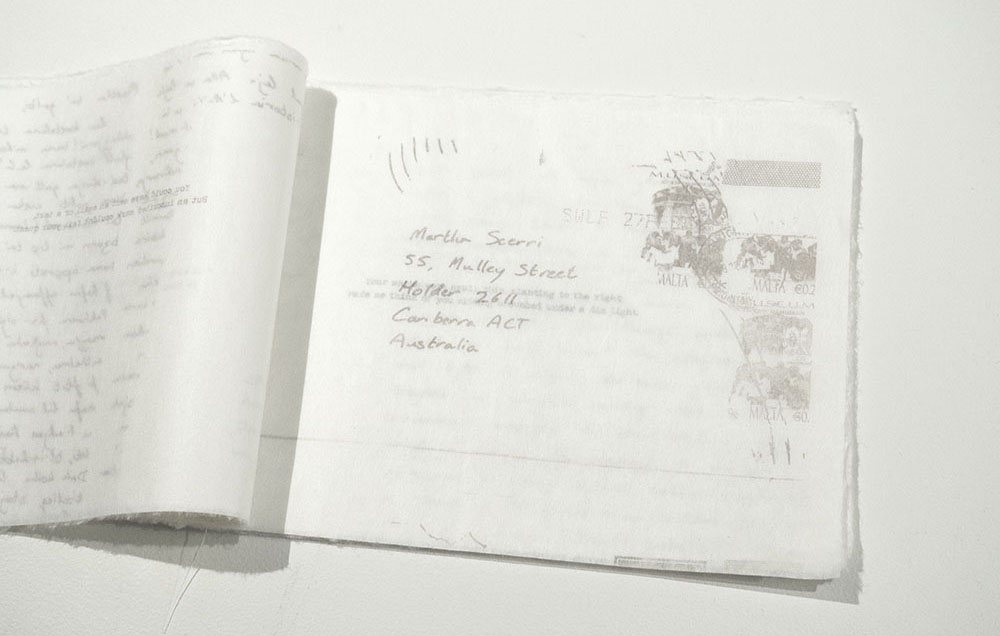
Martha BOWMAN You could have sent an email or a text
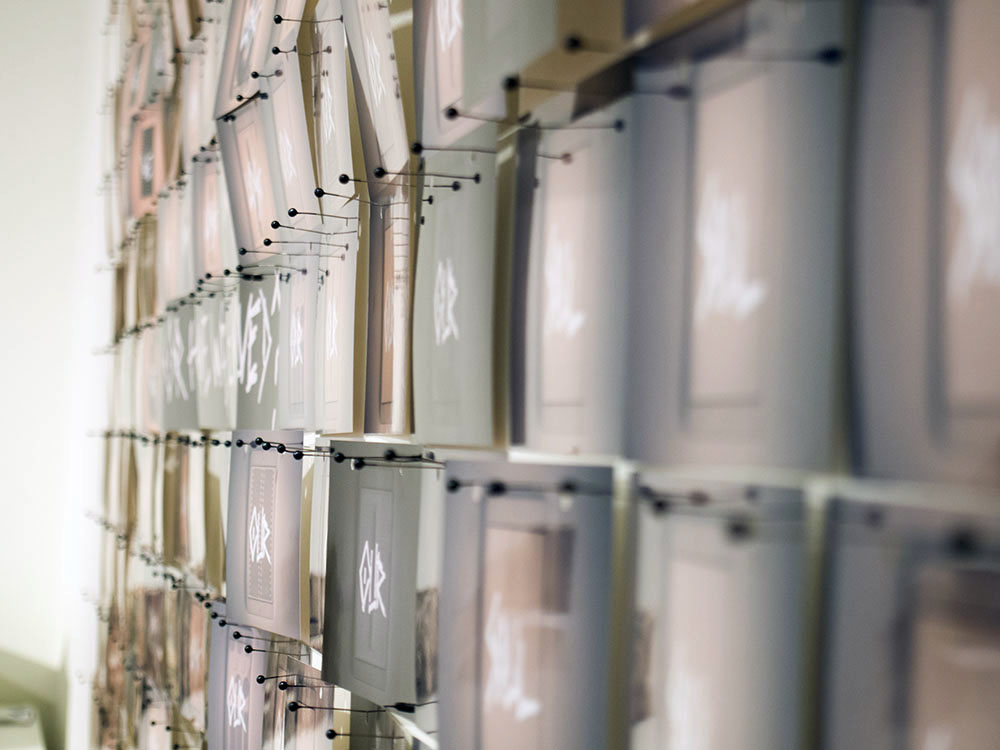
Jamian Stayt’s Soulless evolution (Detail)
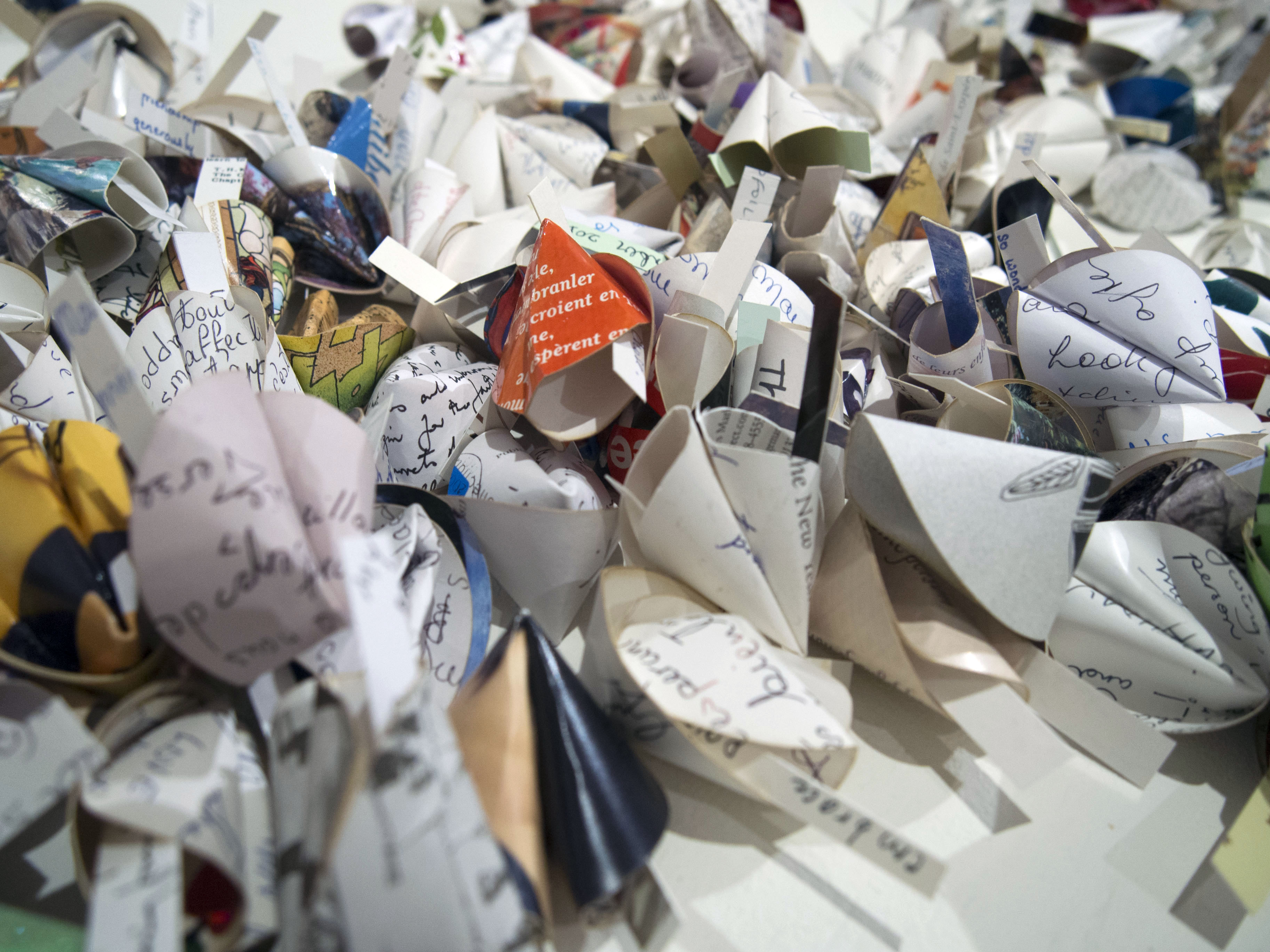
Bernard APPASSAMY Constellation of endearment (Detail)

Deanna HITTI Assimilated museum

Gracia HABY and Louise JENNISON Closer to natural
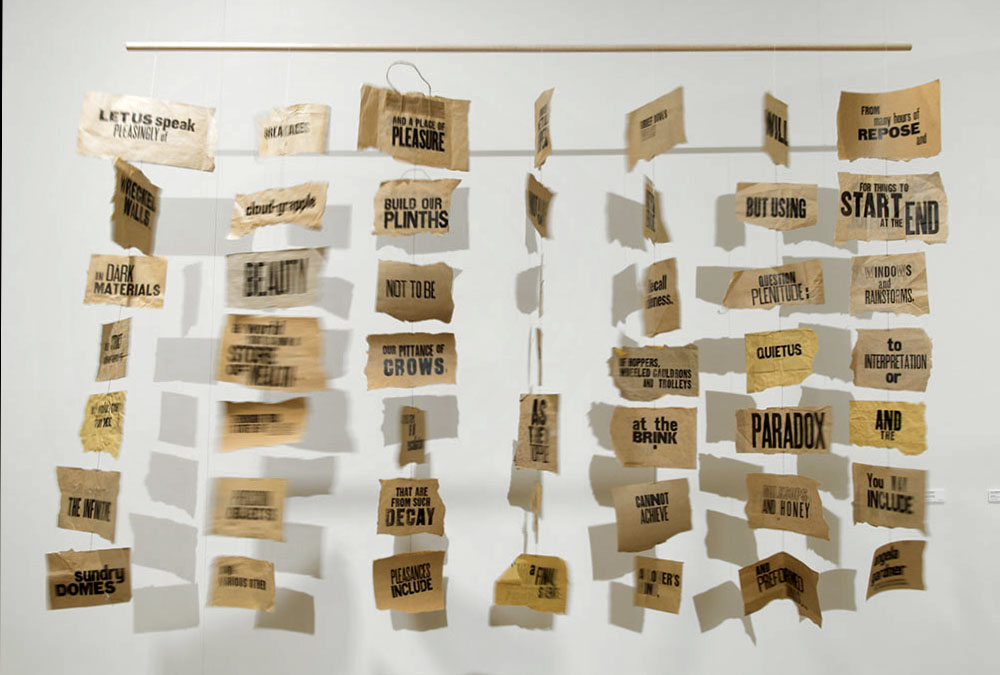
Caren Florance’s Pleasure demolition
.
.
All photographs and videos ©2015 Doug Spowart. Main text (except Judge Sasha Grishin’s words) ©2016 Doug Spowart With thanks to Victoria Cooper for her suggestions and edits.
.
.
ADVANCE NOTICE: SKOPELOS-A Greek Island Workshop
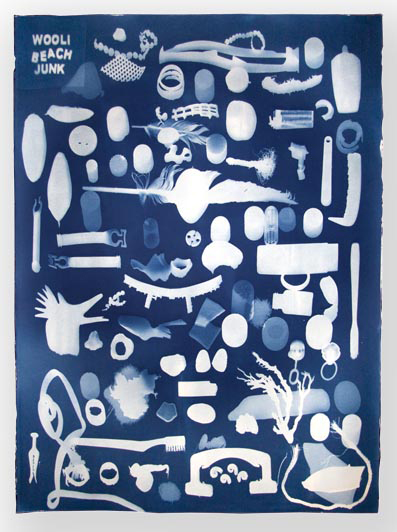
Wooli Beach Junk a cyanotype by Doug Spowart
.
IMAGINE COMBINING ARTMAKING – PHOTOGRAPHY + BOOKS, eating Greek food and drinking wine, watching the blue of the Aegean Sea, experiencing Greek lifestyle and the mythical landscape?
.
In May 2017 we will be presenting a 12 day workshop on the Greek island of Skopelos with Australian artist and printmaker Steph Bolt.
Vicky and Doug
We plan to work with participants to capture the experience of ‘being there’ and to tell stories about the place in books and photographs.
The workshop topics will include:
- The cyanotype process to produce prints on paper and cloth to reference the Aegean blue
- Working with found objects and inkjet negatives from photos made on excursions
- Making bespoke photobooks that you will handcraft during the workshop
- Aspects of documentary ‘placemaking’
- Using online photobook making services to design books
- A sharing of our techniques to optimise and enhance digital photographs.
.
A detailed website has been prepared by Steph Bolt and SKOPELOS WORKS ON PAPER
http://www.skopelosworksonpaper.com/spowartcooper-workshop.html
.
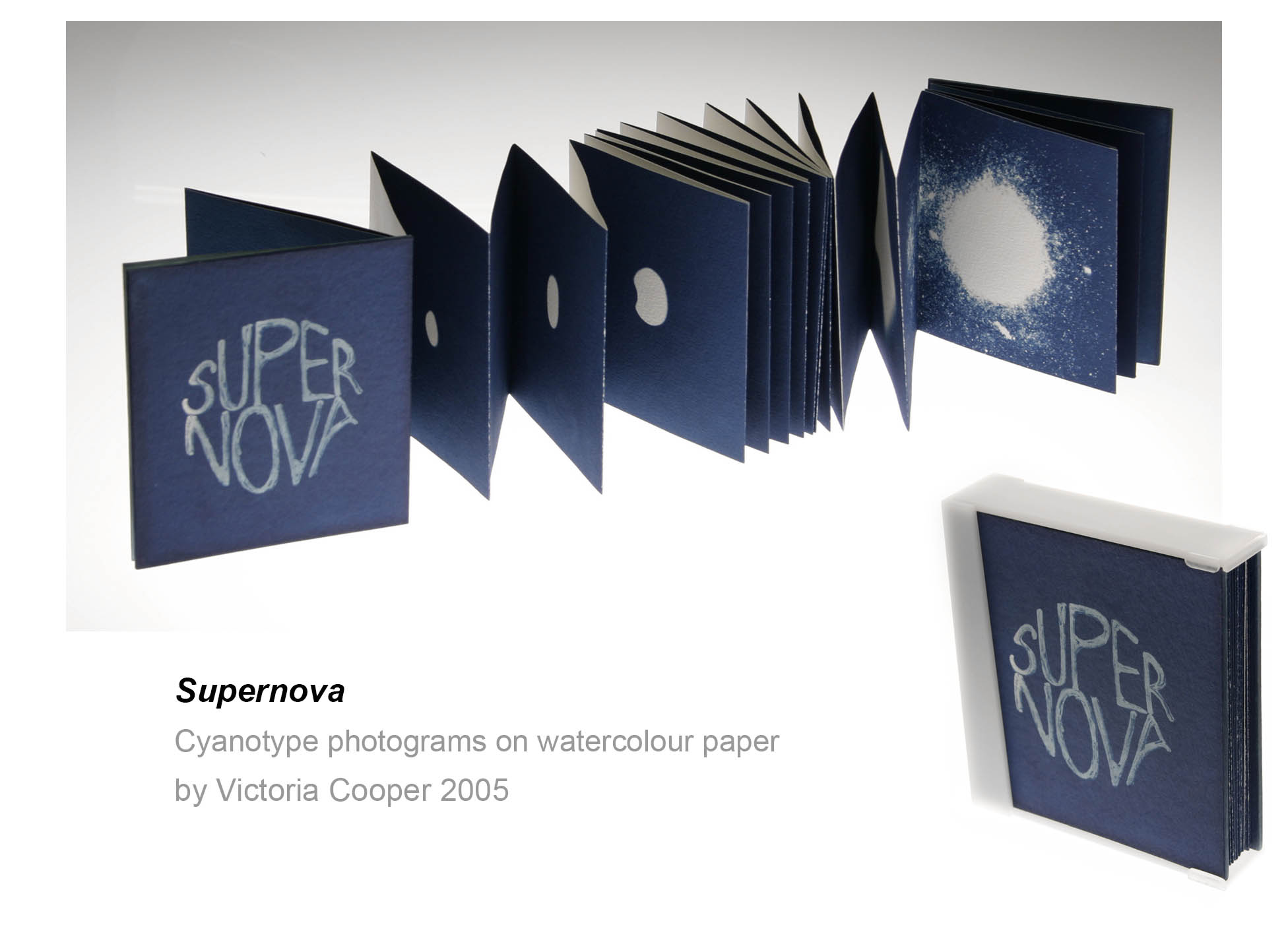
Supernova a cyanotype book by Victoria Cooper

 wotwedid