Archive for the ‘Meeting People’ Category
June 13 – Speakers@PSQ Convention, Goondiwindi
PSQ Goondiwindi Logo
Victoria’s topic was “Our home : emoh ruO” which dealt with re- visualizing local neighbourhoods, landscapes and familiar places with personal narratives and perspectives.
She says that, “We all have experienced disaster and change within our own “back yard”. We have been flooded repeatedly by images of this destruction and it’s traumatic effects on humanity. Is it now time, rather than yearning for the exotic travel photo experience, to re-discover our everyday environments and invent new ways of visualizing ourselves and the land we inhabit? Victoria Cooper will be discussing her work in this area and how places can be transformed by bringing together knowledge and personal experience to build creative visual stories.”

Vicky speaks at the convention
Doug’s topic was “LANDSCAPE: Between the covers” in which he spoke about making photobooks of the landscape. His lecture dealt with the idea of the extended narrative of the book and how the ‘artists’ book’ can inform contemporary photobook making. His talk was illustrated by examples and his own work in the form of the hand-made (home-made) book. Ideas about the print-on-demand book and the do-it-yourself monograph were covered. He said “Ken Duncan and Steve Parish did it – You can do it too — Self publish and have Fun!”

Attendees viewing Cooper+Spowart books
The PSQ Convention program speakers program included the photodocumentary photographer John Elliott, Somalia hostage Nigel Brennan and large format guru Richard White.
More details of the event may be available on the website:
http://psqgoeswest2011.weebly.com/
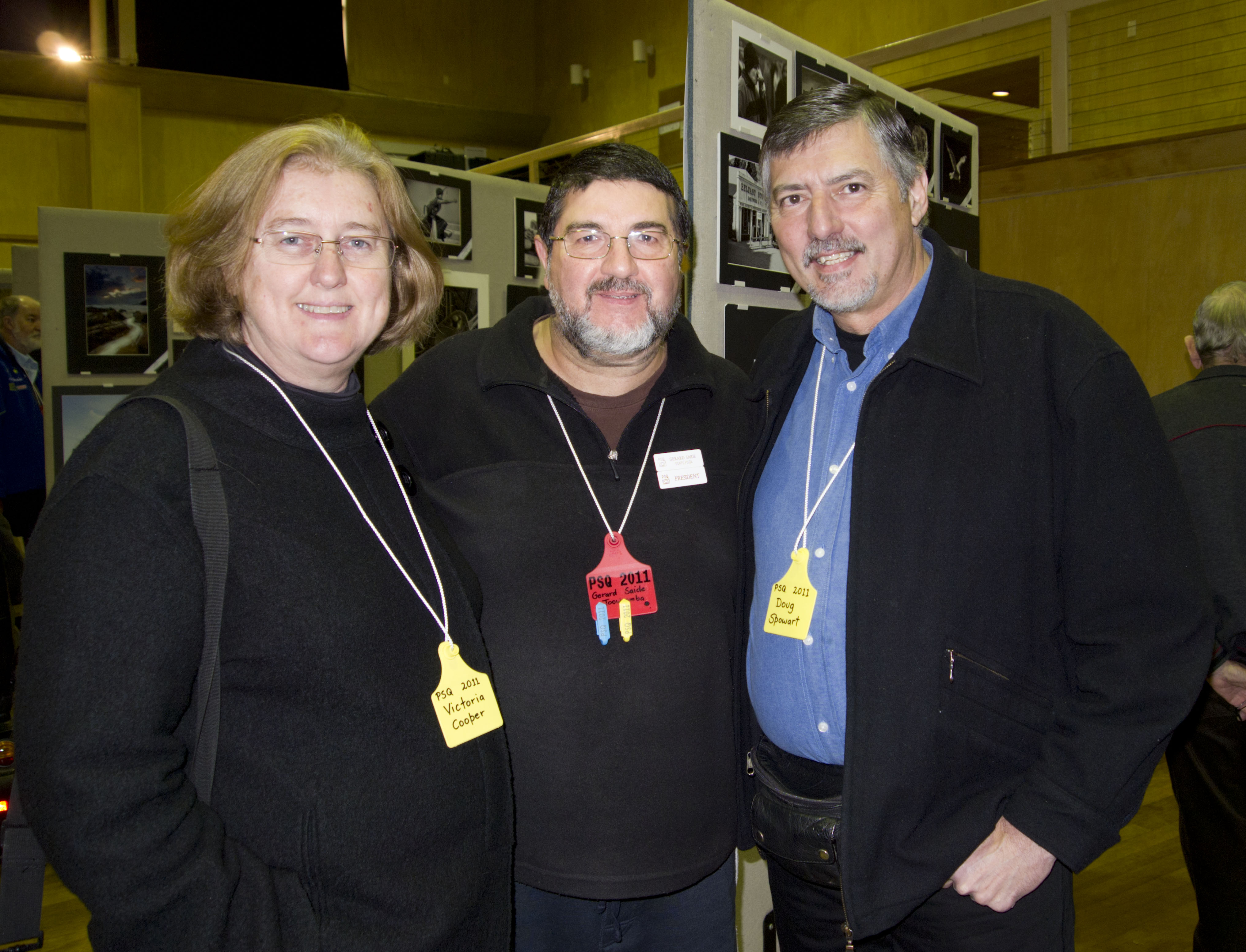
Vicky+Doug with PSQ President Gerry Saide
June 11 – Lydia Egunnike – Qld Disaster Hero, Ipswich Ceremony
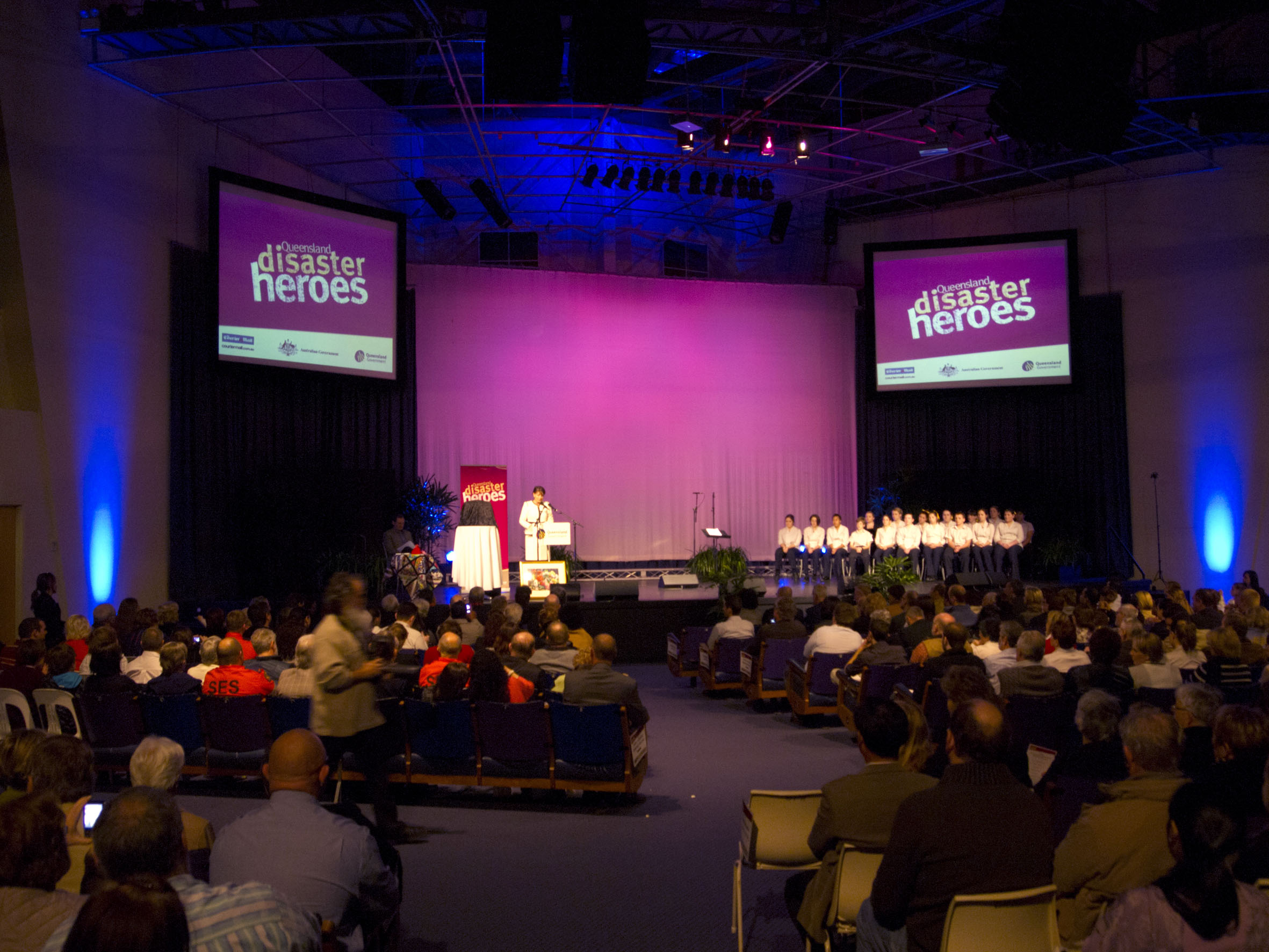
Premier Anna Bligh @ Qld Disaster Heroes Ceremony - Ipswich
For those who follow our WOTWEDID blog will remember the post about the salvage work done on the Sandy Barrie Photo Collection that was inundated in the Ipswich Floods. Conservator Lydia Egunnike, a member of the Australian Institute for the Conservation of Cultural Materials, worked tirelessly with a team that included Noel, John Rossiter and Peter Marquis-Kyle.
As part of Anna Bligh’s Queensland Government DISASTER HEROES awards Lydia, and Sandy’s friend and Salvage Recovery Co-ordinator – Marcel Safier, were both nominated for the dedication and support that they provided during the emergency.
Lydia attended the award ceremony at Ipswich today – Vicky and I attended the event to congratulate Lydia and the members of her team who were able to attend.
Words+Pictures: Doug Spowart
SEE original story post https://wotwedid.wordpress.com/2011/04/08/flood-image-salvage-sandy-barrie-collection/

Noel, Christine Ianna, Lydia, John Rossiter and Victoria Cooper

Lydia's Medal and Certificate
For other information about the Queensland Disaster Heroes awards SEE:
http://www.abc.net.au/local/stories/2011/06/10/3241339.htm?site=brisbane
http://www.qt.com.au/story/2011/06/04/qld-disaster-heroes-honoured/
May 23 – Re-New[s]ing the news Exhibition
Chronicle Zine: Re-new[s]ing the news
An exhibition of artists’ zines based on the Toowoomba Chronicle newspaper
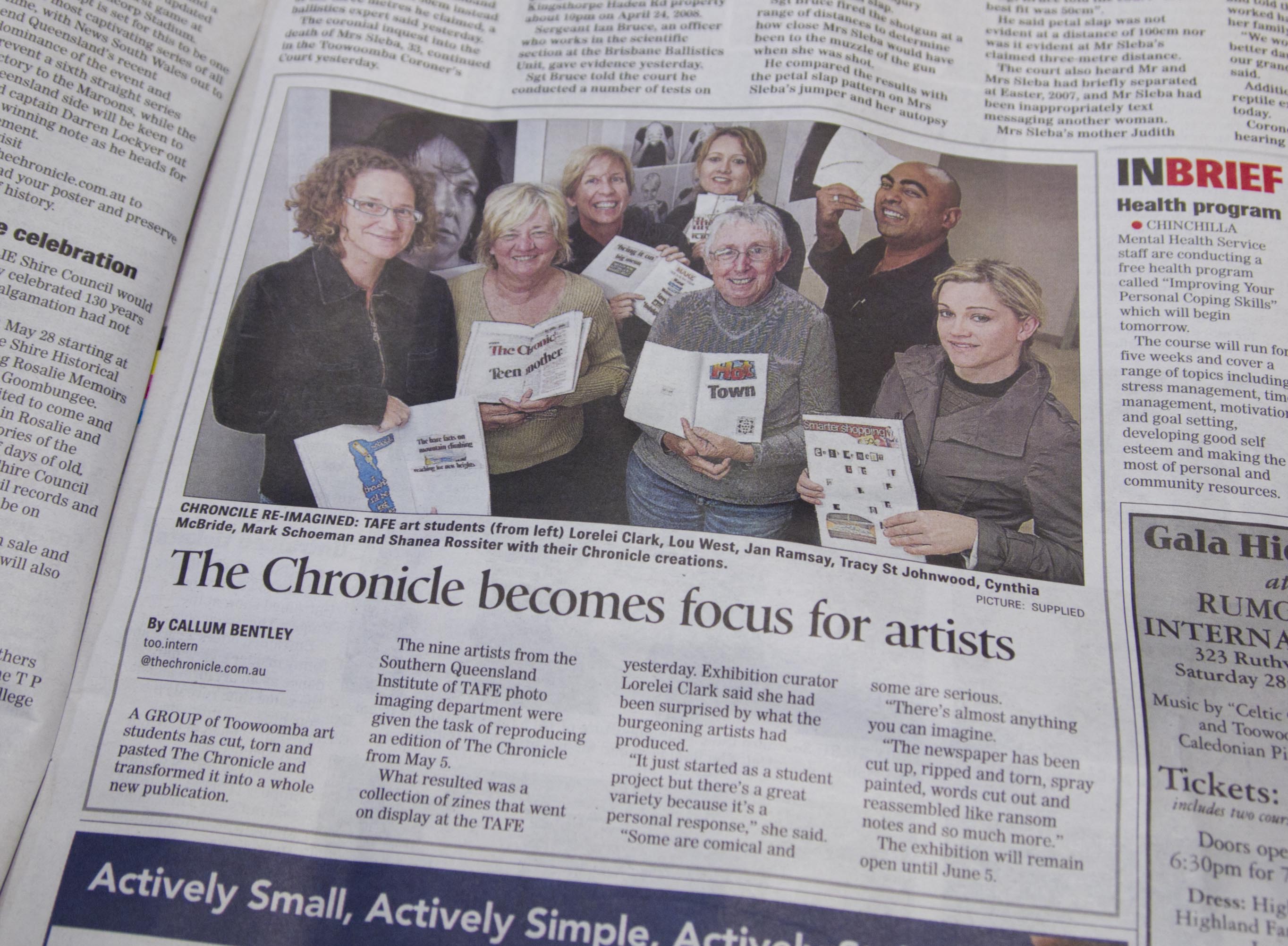
Exhibition story in the Chronicle Newspaper May 25
http://www.thechronicle.com.au/story/2011/05/25/chronicle-artists-toowoomba-tafe-students
.
On Saturday 5 March 2011, nine artists all bought a copy of the Chronicle newspaper. Their challenge was to read, interpret and make an artists’ statement by reading between the lines.
In doing so they find a place where their artistic view collides with the truth of the newspaper. Now these re-used newspapers are presented to the public for viewing at an exhibition in the Flexilearn Centre (library) at the Southern Queensland Institute of TAFE (SQIT).
The publication form chosen by the artists to present their statements is the informal pamphlet format commonly known as the ‘Zine’. This ubiquitous newspaper form has its origins in the ‘free’ press and personal expression.
The contributing artists are all art photography students from SQIT and Teacher Doug Spowart set the project as part of course work.
“The zine task has resulted in some insightful commentary about Toowoomba. Interestingly, whilst each artist made their own statement about news items, in many ways they have retold the news with their own spin on it,” Mr Spowart said.
Curator of the exhibition, SQIT Artist in Residence Lorelei Clark describes the works as almost anything you can imagine.
“The Chronicle newspaper has been cut-up, ripped and torn, spray painted, words cut out and reassembled, with some works having a ransom note look about them,” Ms Clark said,
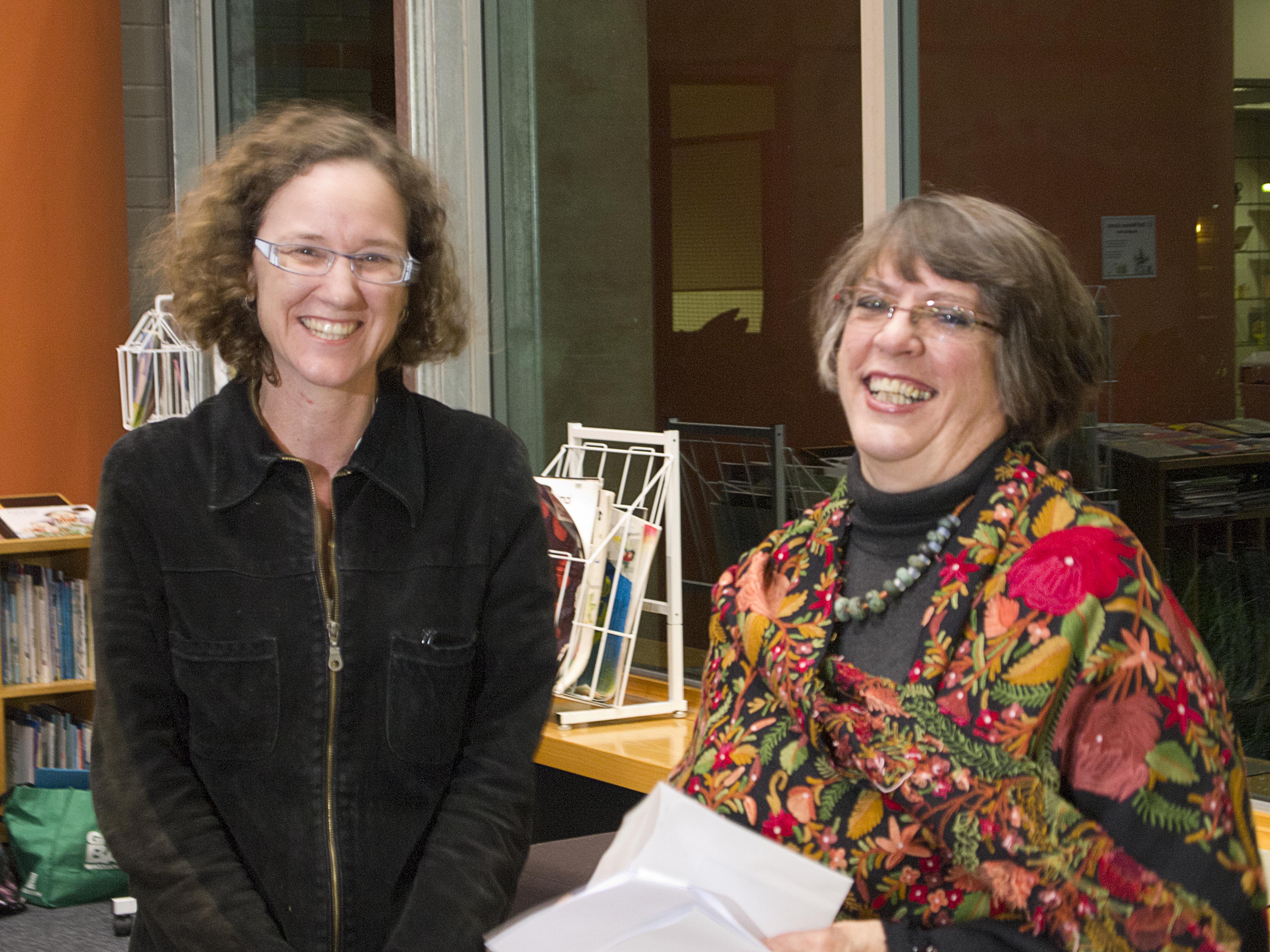
Curator Lorelei Clark and Beverley Bloxham
The exhibition was opened by local arts identity Beverley Bloxham who said
As the name implies, the brief for this project was to take back copies of Toowoomba’s Chronicle as the source material to creatively refashion it with new geometries and to invest it with new meaning as artist’s zines.
According to Wikipedia, “a zine (an abbreviation of fanzine, or magazine) is most commonly a small circulation publication of original or appropriated texts and images. More broadly, the term encompasses any self-published work of minority interest usually reproduced via photocopier.
A popular definition includes that circulation must be 5,000 or less, although in practice the significant majority are produced in editions of less than 1,000, and profit is not the primary intent of publication.”
This exhibition gives me a giggle in choice of source material: repurposing an ephemeral object: ie: yesterday’s news, as a creative exercise. It is many moons since I was so engaged in reading the Chronicle, having decided long ago that it was not the most efficient use of my news gathering time since I became a devotee of Radio National & SBS. However, I do dip into it from time to time to get my fix of local news.
But here, fresh from the minds and hands of creative people, is another reason the read the print emanating from our local daily purveyor of news which had its beginnings as a four penny weekly on July 4, 1861 in a coachbuilder’s shop in James Street with founder Darius Hunt.
The newsprint, however, in these artists’ hands, has been sliced, spliced, torn and shorn, with realigned and juxtaposed journalism, hacked (not hackneyed) headlines, dubious by-lines, reinvented meaning, and re-contextualised content in a manner unintended by the founder and original authors.
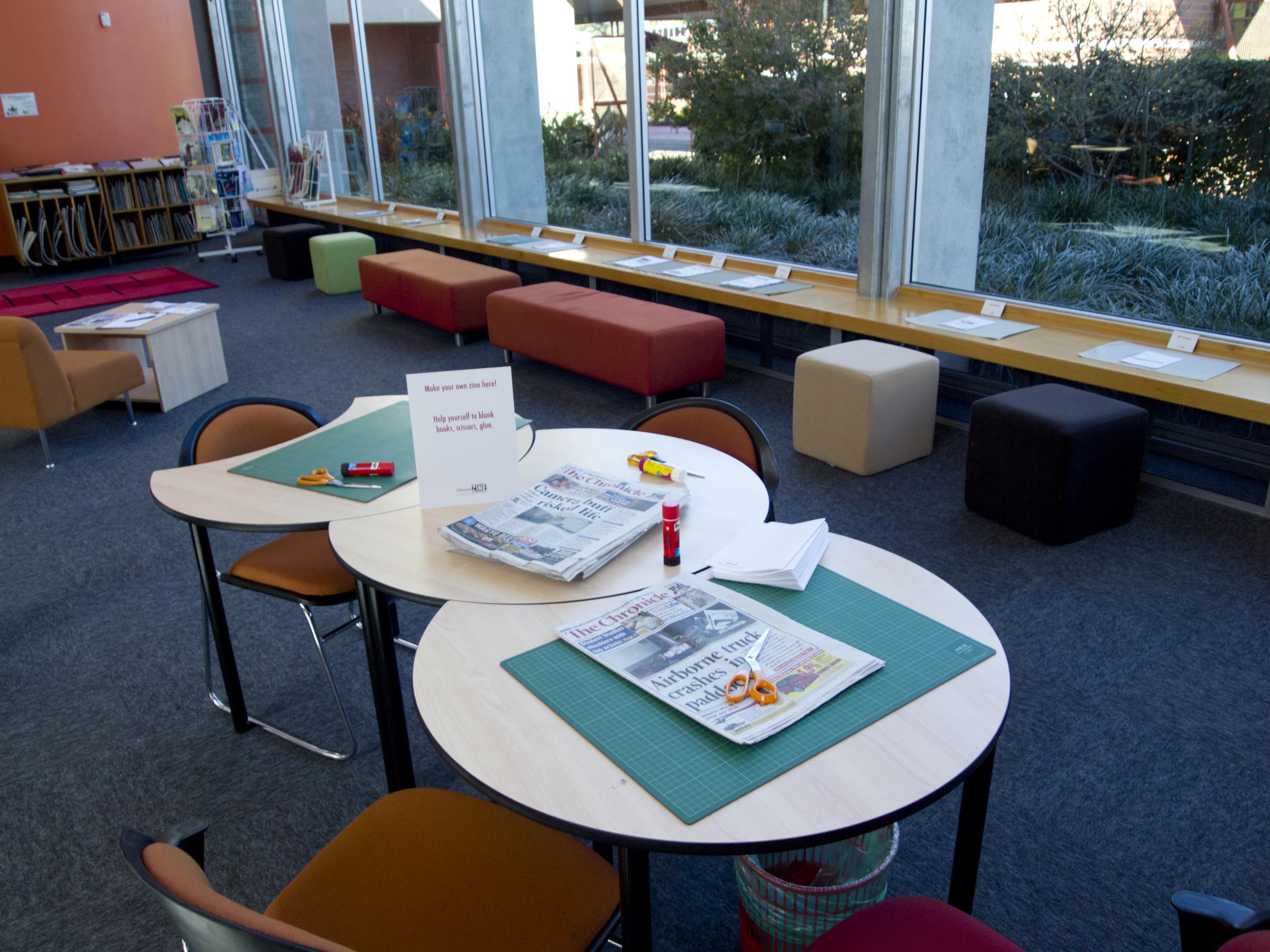
The exhibition - including the 'Make your own Zine' workspace
The zines are available for viewing from May 24 to June 5, 2011 at SQIT Flexilearn Centre in A Block at 100 Bridge Street. Open Monday and Wednesday 8am to 6pm, Tuesday to Thursday from 8am to 5pm and Friday from 8am to 4pm.
.
.
.
May 17 – NEW VIDEOs – QCP ALT & Japanese Pinhole Opening
Uploaded two Video presentations from the Queensland Centre for Photography shows – ALT and Seven Japanese Pinhole Photographers.
THE ALT + PINHOLE OPENING
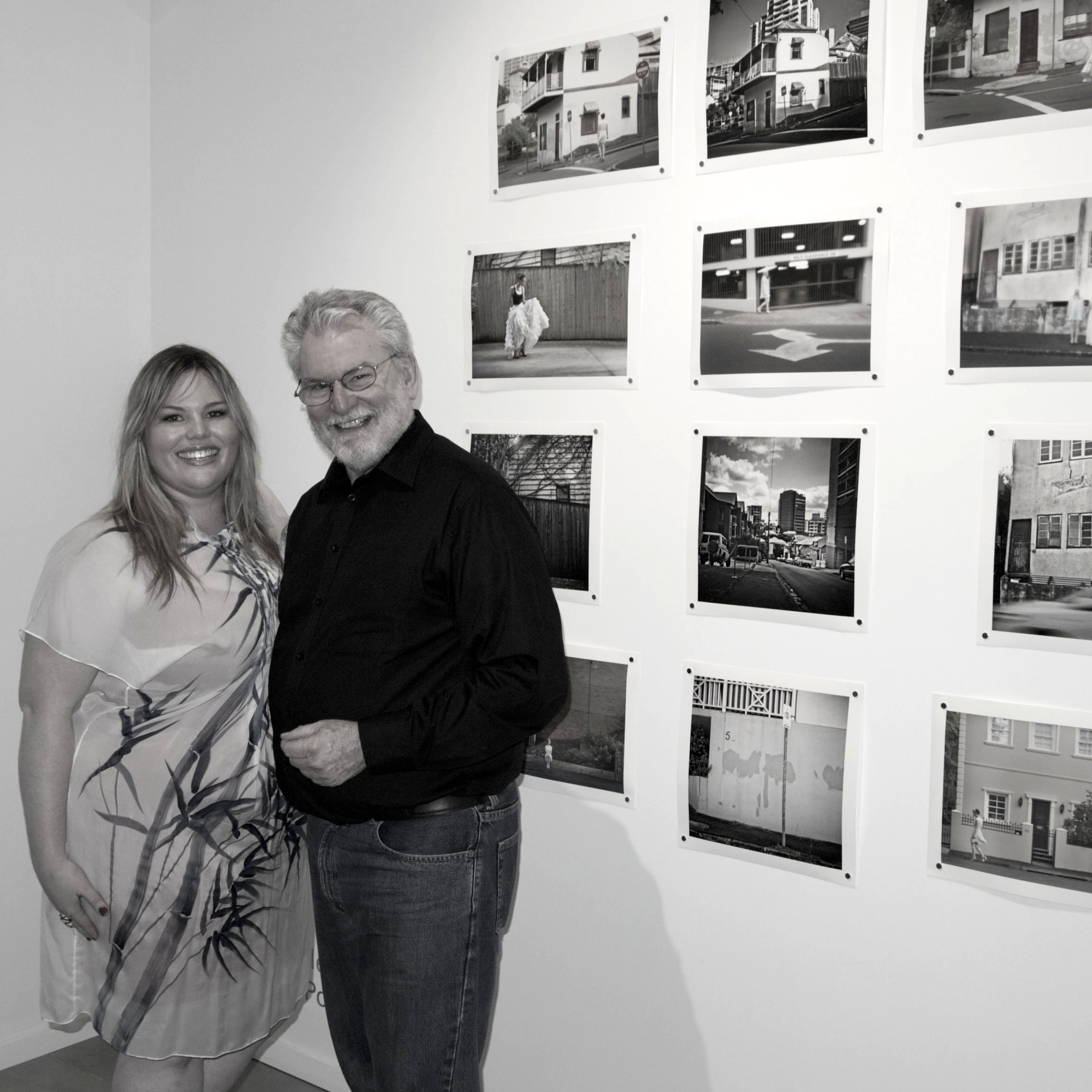
SEE THE OPENING VIDEO:
https://www.youtube.com/watch?v=WYAY3zXQrfI&feature=mfu_in_order&list=UL
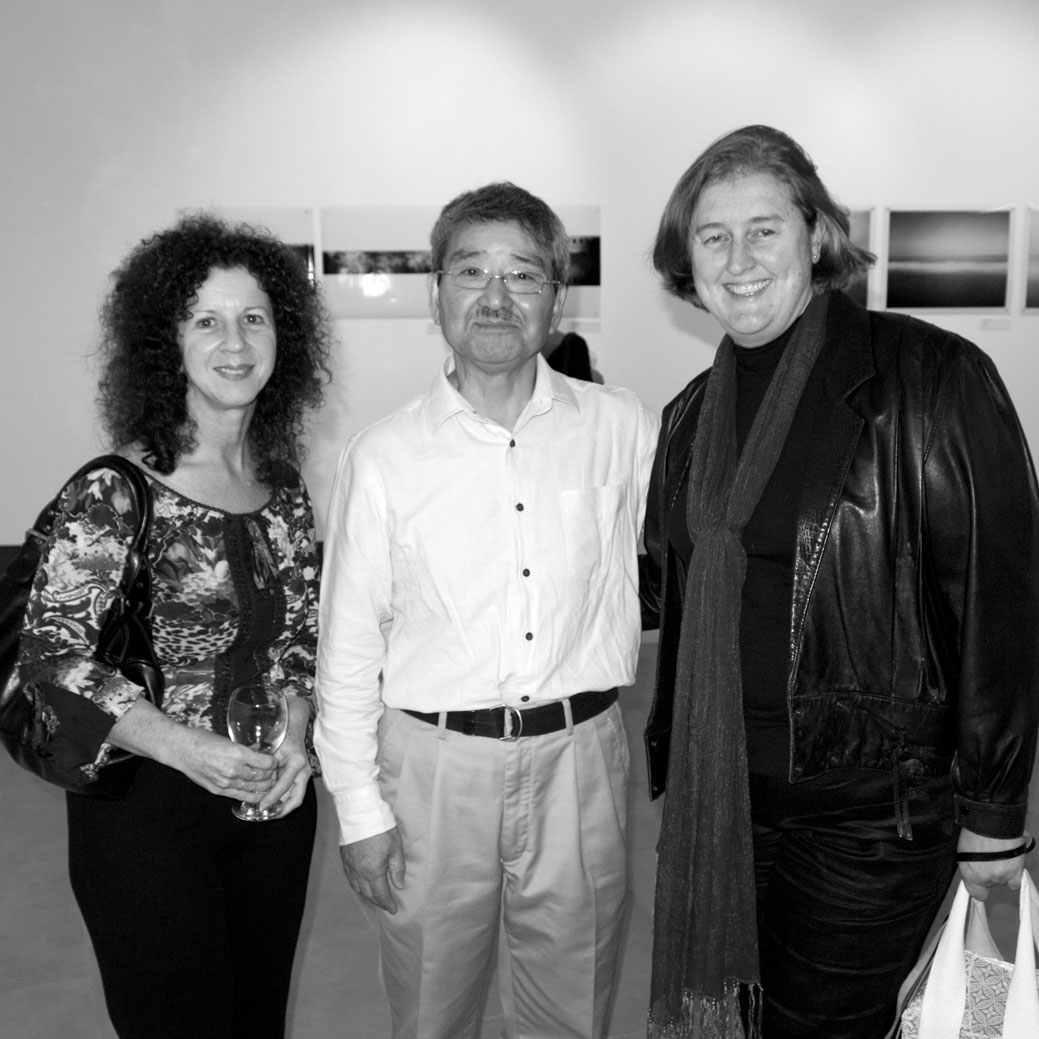
SEE THE JAPANESE PINHOLE PHOTOGRAPHERS VIDEO (Note: Mainly in Japanese language)
https://www.youtube.com/watch?v=ewUTYY2enKc&feature=mfu_in_order&list=UL.
.
May 7, 2011 ALT Exhibition opens @ Qld Centre for Photography
SEE TWO NEW EXHIBITIONS @ QCP – Our video work “CARCAMERA” is on show
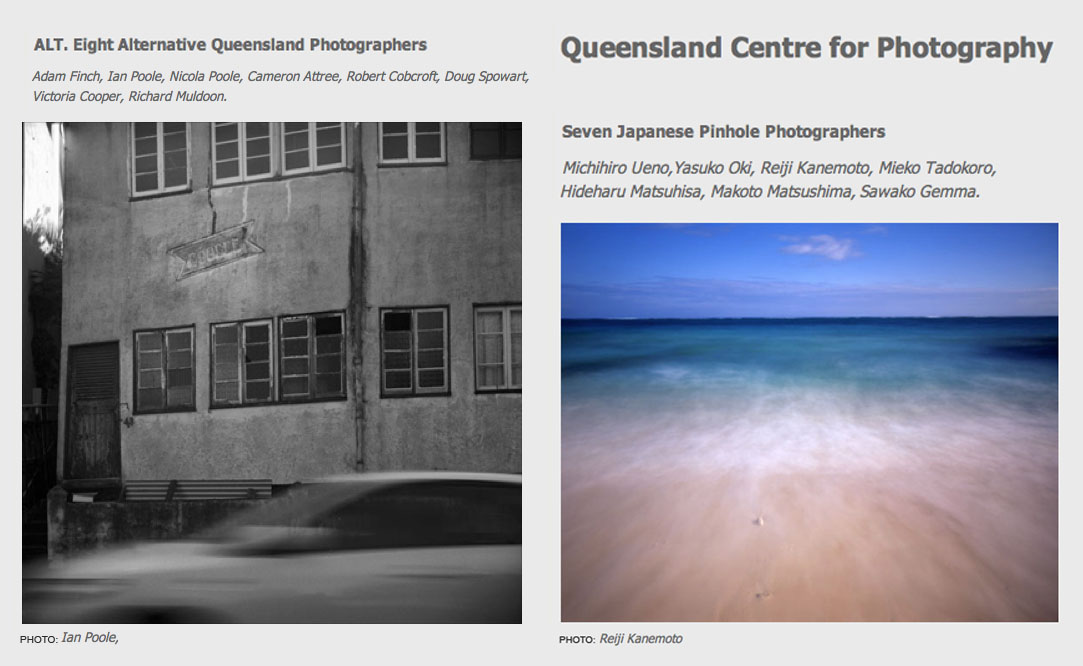
SEE <http://www.qcp.org.au/exhibitions/current/album-603/28>
SEE OUR VIDEO <https://www.youtube.com/watch?v=Wg8zdvr1nfY&feature=mfu_in_order&list=UL>
.
We wrote the exhibition catalogue text – See below
.
Somewhere between the making, the idea and dreaming: Post-technology Photography
Ban lenses and viewfinders. Ban your auto-wind buzzy-flashing built in obsolescence jewellery.
Give up aspiring to the conventional. Play with light, rediscover your vision and party.
Justin Quinnell[1] talking about pinhole photography
Who would have thought that age old processes along with out dated technology would have any relevance in the seamless slick technological digital image world. Or even that the latest digital technology could become hijacked as a mere emulator of the appearance of old time photos. With its arcane history of chemicals, darkrooms and focussing cloths photography is now morphing into a brave new emancipated world where everything old can be new again and anything goes.
Many photographers find this review of processes and technologies liberating—providing an alternative avenue for exploring photography often resulting in the excitement of discovering new visions. A recent popular photobook on the Holga[2] camera illustrates a kaleidoscope of visual imagery created with this simple plastic camera. In the introduction to the book Adam Scott exemplifies this method of working, “I had already been shooting for many years with single lens reflex cameras and was beginning to get bored of photography, but the Holga reopened my eyes and injected me with new love, I felt as though I had discovered a new sense or a new colour.”[3]
Into this argument steps curator Ian Poole with this exhibition entitled ALT. Photographers in this show are similarly enamored by this technological tinkering as Scott and dust off old junk cameras like the Russian Lubitel or dislocate a Diana lens and relocate it onto a DSLR sensor. Some photographers may use new technology like the ubiquitous iPhone as creative stimulation for follow-up imaging. But is it the technology that lubricates creativity in these photographers work? As in Justin Quinnell’s challenge in the opening quote “give up aspiring to the conventional” these image makers aim to subvert the ‘conventional’ and reinvent photography for and by themselves.
The images made by photographers in the ALT exhibition exalt and capitalise on the vagaries and flaws arising from technology, uncontrolled serendipitous moments and the slowing of time. All of these questionable qualities are commonly regarded as poor technique from faulty and inadequate equipment. Through their experimentation these photo-rebels appear to be reacting against technological control by preferring the serendipity and imperfections of real human experience.
It seems that these processes allow a space for pure wonderment much like that of children at play. Here the photographer’s imagination is stimulated by ‘tinkering’ with technology and the conventions of photographic practice from which new approaches to subjects and concepts arise. Critically the act of making, discovery and reflexive action is fundamental throughout the process. In other words the photographer makes the photograph—not the technology.
Pinhole photography is another malleable medium for the tinkerer. The exhibition, Seven Japanese Pinhole Photographers, brought together by Hideharu Matsuhisa a respected graphic designer and pinhole photographer, shows the diversity and commonalities of the pinhole experience. In the catalogue specially produced by Matsuhisa for this show, Reiji Kanemoto comments, “These pinhole views of restless waves show me the passage of time, condensed into a single moment that lives forever.” This is an experience that is common to many pinhole photographers as long exposures are inherent in the process. In a recent exhibition of Matsuhisa’s pinhole photography at Caloundra Regional Gallery, the Director, John Waldron referred to pinhole photography as “part of the Slow Revolution”[4]
Slow cameras: slow photography—creates a kind of image making approach that is just as satisfying and as good for you as slow food. For some Japanese pinhole photographers the work is meditative as Michihiro Ueno finds when working with pinhole cameras that, “I’m made to be more conscious to face time and objects.”[5] Alternatively Yasuko Oki is motivated by the pure wonderment of capturing unseen visual phenomena as she photographs fluids in glasses (water, juice and beer) that she drinks everyday.
As the camera, the lens and the darkroom/computer are increasingly open to subversion, the photograph maybe now free from connection to a specific technological time and place and it’s associated obsolescence. Although there has always been a cult following for the “alternative” in photography, what we see strongly from this exhibition series, and more broadly in the electronic medium, is that photographers are well equipped and ready to grasp, shape and fiddle with any means to extract images. Is this the sign of the onset of a post technology condition? Has the “alternative” contagion gone viral? Can technology or iPhone apps keep pace with the imagination and the inventive nature of the photographer? Certainly, photography has loosened up. Rather than being the keeper of secret knowledge and technological proficiency, the photographer is now more . . .
Victoria Cooper and Doug Spowart
Victoria Cooper and Doug Spowart are visual artists working in the fields of photoimaging, artists’ books and photo education. Victoria and Doug have collaborated on many art projects and exhibitions including pinhole, projections, the room and car camera obscura. Their images and artists’ books are included in major national collections.
[1] The World through a pinhole (catalogue) curated by Diane Stoppard and Ellie Smith, Wellington, New Zealand, 1998.
[2] Lomographic Society International (ed), 2006. Holga, The world through a plastic lens, compiled by the Lomographic Society International and Adam Scott. Lomographic Society International, Vienna, Austria.
[3] Introduction by Adam Scott, Holga, The world through a plastic lens, Page 17.
[5] See catalogue, Japanese Seven Pinhole Photographers, by Hideharu Matsuhisa
EASTER 2011 – At the Beach: WOOLI
Well Easter has come and gone – WOT DID YOU DO? Did it rain? Were you able to get away? Did you mow the lawn? Did you get to the Beach? Did you do things that you’ve been hanging out to do?
Well, Here’s what we did . . . .
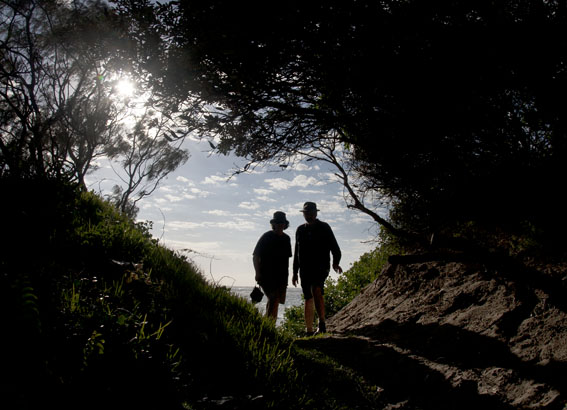
Entering the Sunlight: Entering the darkness
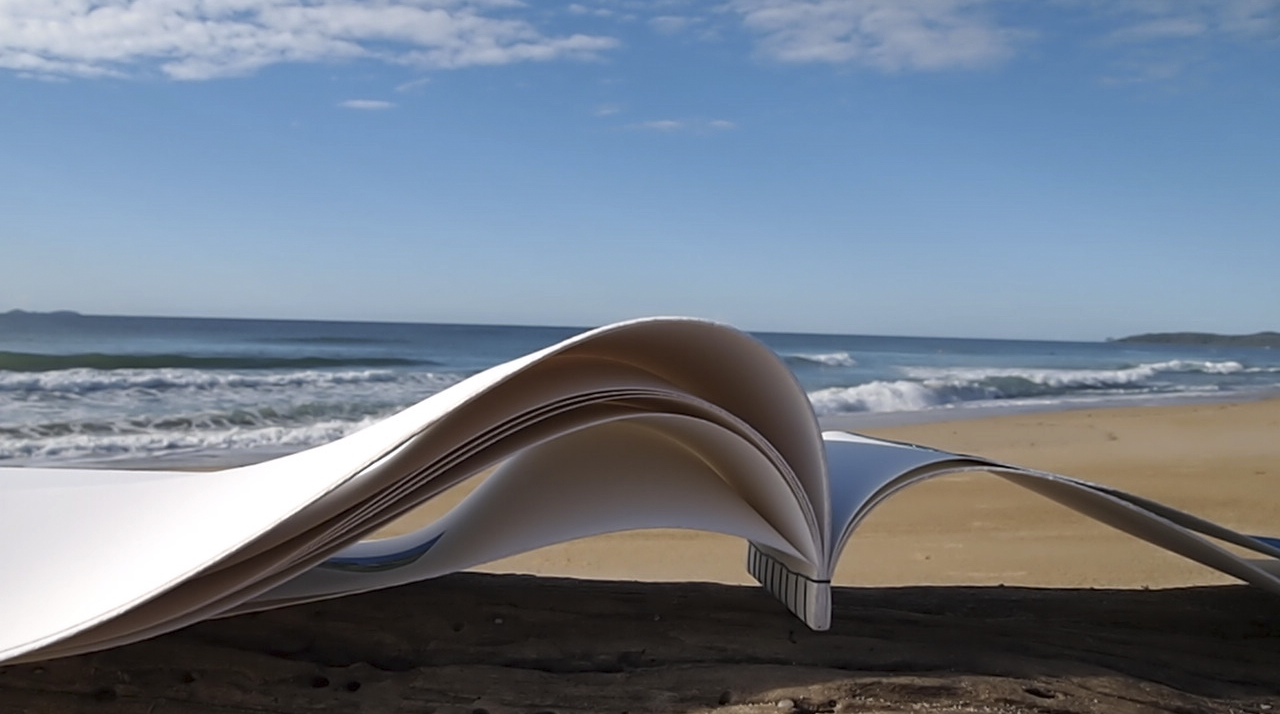
'White Shadows' The Book: On Wooli Beach
SEE: Other Wooli Books on our website
http://www.cooperandspowart.com.au/2_PLACES/WOOLIflipBOOKS/index.html
SEE: An introductory WOOLI BEACH video on YouTUBE
GLEN O’MALLEY visits Toowoomba April 12+13, 2011

Significant Queensland documentary photographer Glen O’Malley visited Toowoomba over the last few days to catch up with old friends and acquaintances. On the evening of April 12 he made a presentation and showed recent work to students from the Southern Queensland Institute of TAFE.
Glen is one of Queensland’s great photography characters. Well known for his street documentary photographs which go back to the earliest days of ‘art photography’ – his first solo exhibition was held in 1975. Coming from way up north, near Babinda, Glen has for years been a master of traditional black and white. In recent years he has ‘crossed over’ to the digital and that has opened up a whole new vision for him – one that is very coloured. Originally trained as an artist Glen considers his ‘colourist’ background has re-emerged in his digital capture.
Another aspect to the O’Malley style is that he is a surrealist. Images in recent exhibitions ‘Hotplate Heaven’ and the ‘Pet Show’ feature prosaic home environments which are inhabited by ordinary looking people who do the most bizzare things. His latest work for a new show at the Queensland Centre for Photography in June. The exhibition is entitled ‘What a night!’ and features not only his own work but also images by Kellie White.
 Students viewing Glen and Kellie’s works
Glen and Kellie’s work feature images made at night or dusk with flash or torch work illuminating the subject. Technique is one thing but the images are something else – they are, as you might expect, surreal but there is more! The images appear as spontaneous, serendipitous and intuitive moments. Intrigue and mystery are embedded in each image and do demand intense and prolonged viewing
 Glen frames his point
Some of Kellie’s images
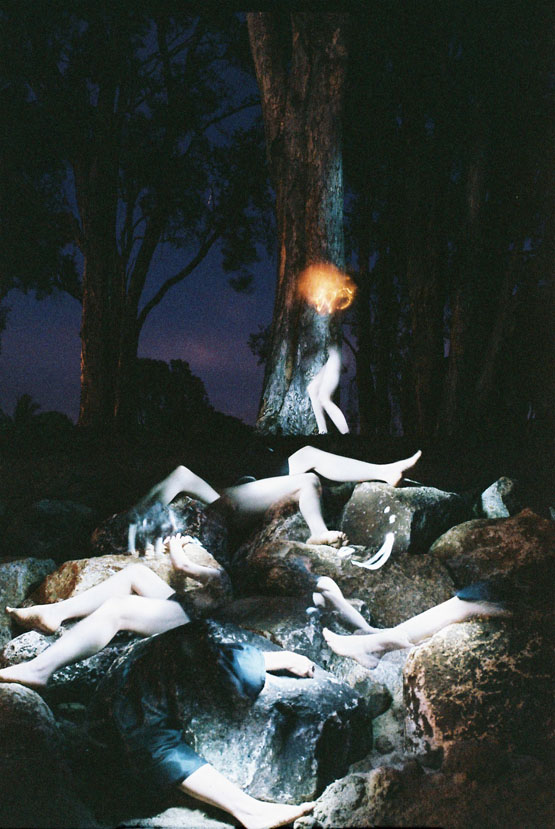
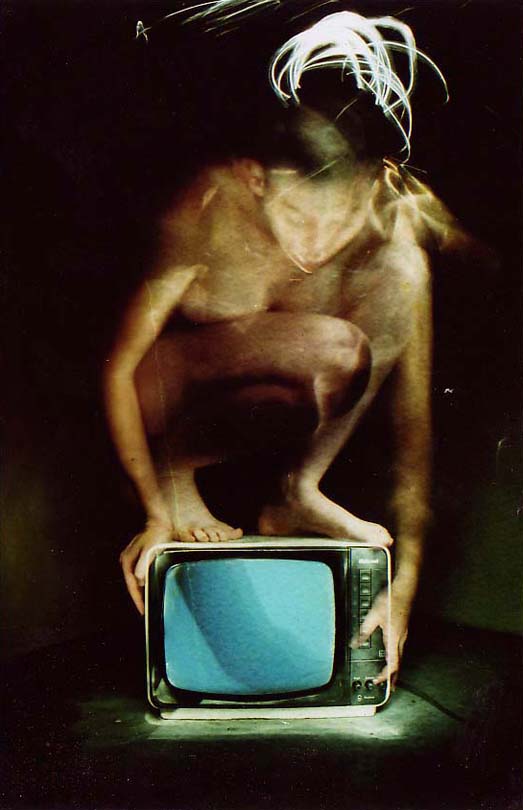
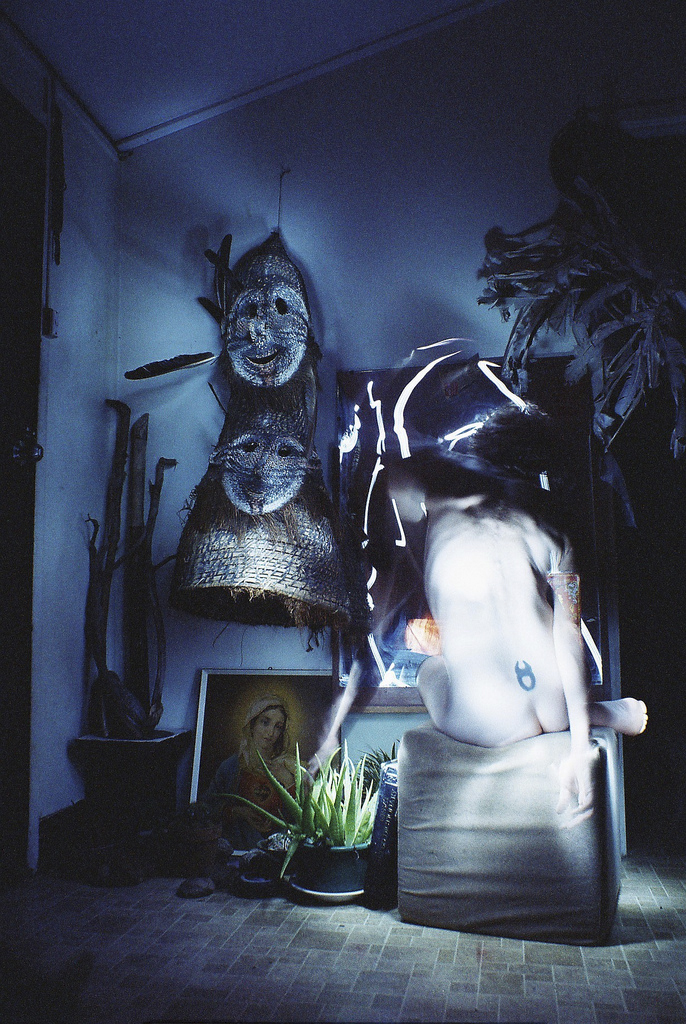
Some of Glen’s work

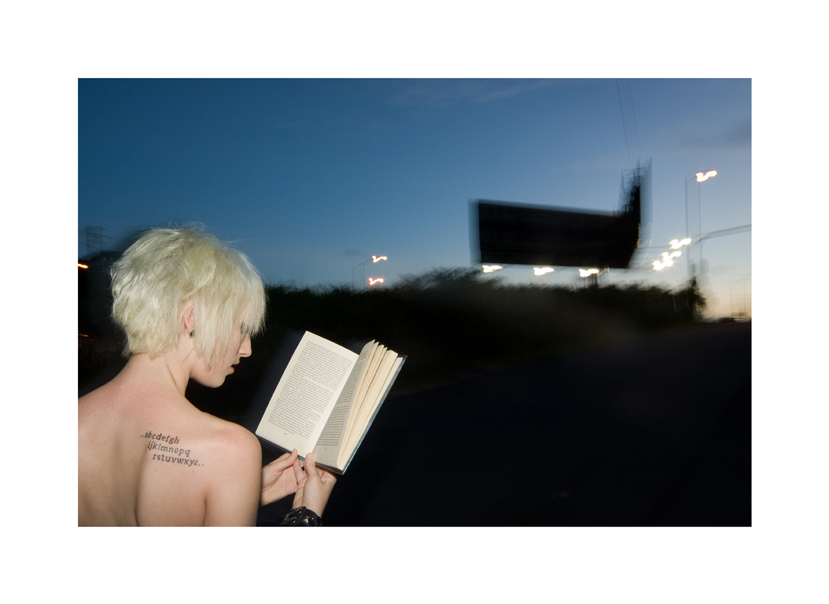
Written by Doug Spowart
SCU Acquisitive Artists Book Award – February 26, 2011
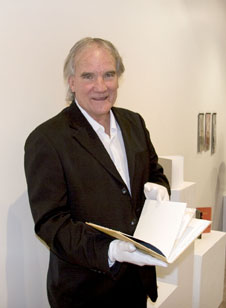
Judge: Prof Ross Woodrow
The 2011 Southern Cross University’s Acquisitive Artists Book Award was announced at the Next Gallery in Lismore on February 26. Shortlisted works represented a cross section of the discipline from sculptural books to the ephemeral oddities, readymades, recycled, sticks ‘n’ feathers and solidly traditional weighty codexes. The exhibition was a ‘something for everyone’ sampler of contemporary approaches to the art—whatever that may be.
The exhibition venue, whilst modest in size, amply accommodated the works and gave an intimate viewing experience to the books. Importantly the gallery places the works within the centre of the Lismore Central Business District enabling a very public connection to artists’ books as art gallery presentation content. This is contrary to the almost secular way in which this kind of work is presented in libraries and specialized venues.
Professor Ross Woodrow, from the Queensland College of Art, as this year’s judge was charged with the responsibility of selecting works to compliment the books already held by the university’s library that are used not only for exhibition and reading, but also for lecture discussion samples.
Woodrow listed his three principal criteria for selection; (1) the best books for the collection, (2) personal taste and (3) books that look like books and acted as books. His selection of 3 books confirms this criteria:
- Lyn Ashby: The Ten Thousand Things, digital prints, Arches Watercolour paper, boards, 24 x 30cm closed, Edition 50.
- Peter E Charuk: Glacies Lux, digital photographs, 21 x 34cm
- Peter Lyssiotis + Ann-Marie Hunter: A Modern Forest, screenprint, 26.3 x 17.5cm Edition 10, Publisher: Mastertheif / Psyclonic Studios
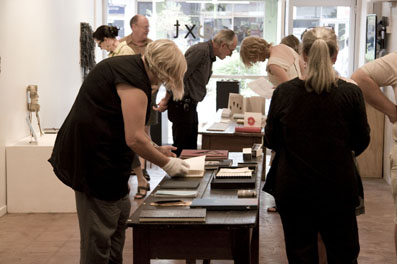
Viewing books @ the NEXT Gallery
As usual the judge’s selections have created some contention in the artists book scene. Some commentators on the awards seem to miss the point that this is an acquisitive award that contributes to the university’s teaching library of artists books. Each acquisitive award event is presided over by a different judge and different areas of artists book practice will be represented in their selection. Ultimately the winner is everyone interested in artists books as the collection will quite possibly become one of the most diverse, in terms of examples of exemplary practice, in the country.
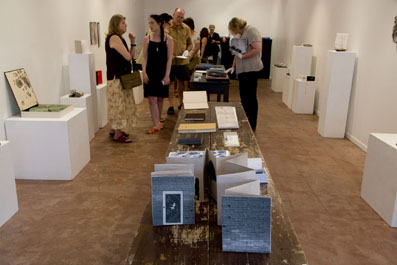
More viewing of books
An online catalogue is available for viewing on the Next Gallery Site
Check it out!
Cheers
Doug

 wotwedid