Archive for the ‘Meeting People’ Category
PHOTOBOOK Workshop: Wanaka Autumn Art School
For the last 5 days we have been working with 13 participants in a Photobook workshop in Wanaka, New Zealand. The idea of the workshop was to enable the development of concepts and techniques for the presentation of personal photo-stories in the form of the self-published photobook. Two key aspects for the workshop were the photo-narrative and the form that a photobook can take beyond the traditional ‘pictures-in-a-book’ format.
The students were put through a steep learning curve engaging with the computer technology and software required, as many had never used Adobe Photoshop before. Sessions of intense computer activity were punctuated by practical book construction exercises.
Each student worked to develop a major personal book project during the workshop and, as tutors, we supported the conceptual and technical progress to make it happen.
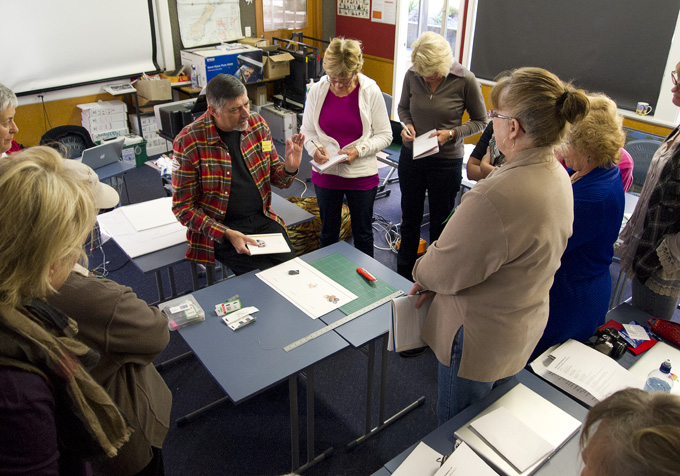
Students @ our Photobook workshop – Wanaka Autumn Art School
They were an amazing bunch of people with varied interests and backgrounds. They all shared a great sense of humour and enthusiasm to get into the process of applying acquired knowledge—some doing ‘homework’ into the wee hours.
Coordinator of the Wanaka Autumn Art School is fabric artist (quilter), Robyn van Reenen who was supported by a motivated and energetic team including her husband Gilbert the photographer of Clean Green Images fame. Robyn and her team provided the tutors, many from Australia, with a great experience and opportunity to share their skills and knowledge with the participating students and artists.
We had a great learning experience as well and ended up probably as worn out as the students by the end of the workshop.
The group shot tells the story . . .
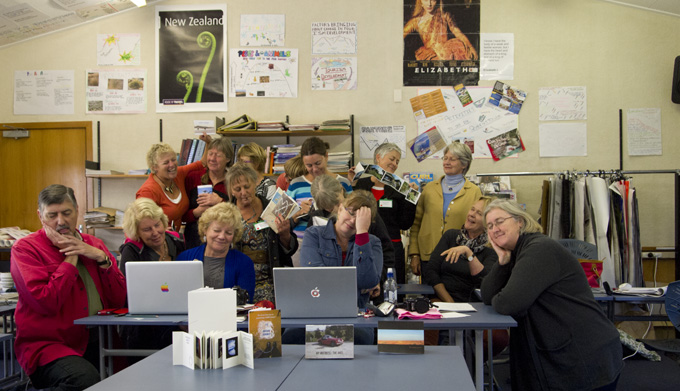
Worn out students and tutors @ Wanaka Autumn Art School
SEE a collaborative book that was made with contributions from the students;
http://www.cooperandspowart.com.au/2_PLACES/OtherBooks/WANAKA-Bk_PageFLIP/WANAKA_Flip.html
Cheers Doug + Vicky
AIPP ON THE LOUNGE: SQIT Toowoomba April 11, 2012

- AIPP – On the lounge SQIT, Website invite
On this evening the SQIT Photoimaging team hosted two events for visiting AIPP members and invited guests. The visit began with a ‘High Tea’ catered for by the SQIT Hospitality team – sumptuous treats were accompanied by tea and coffee. Those attending settled down to conversation with each other in the convivial atmosphere of the ‘Futures’ Restaurant. Coffee Shop
At 5.30 stage two of the visit began with the open of an exhibition of photobooks and artists’ books made by SQIT Photo students over the last 5 years. The show was opened by Queensland Division President Jan Ramsay, who as a past student of an art photography unit, and also part of the end-of-year professional assessment team at SQIT, had experienced the Toowoomba TAFE Photo team at work.

Doug thanks Jan Ramsay for opening the ‘Brought to Book’ show
The books on show ranged from Shanea Rossiter’s ‘Inspiring Women’ book of portraits to Cathy Smith’s book ‘Junked’, a documentary comment on our disposable society and Lorraine Seipel’s political message in the book ‘Song for the future’. The exhibition was curated by Victoria Cooper and Doug Spowart for the Queensland Festival of Photography.
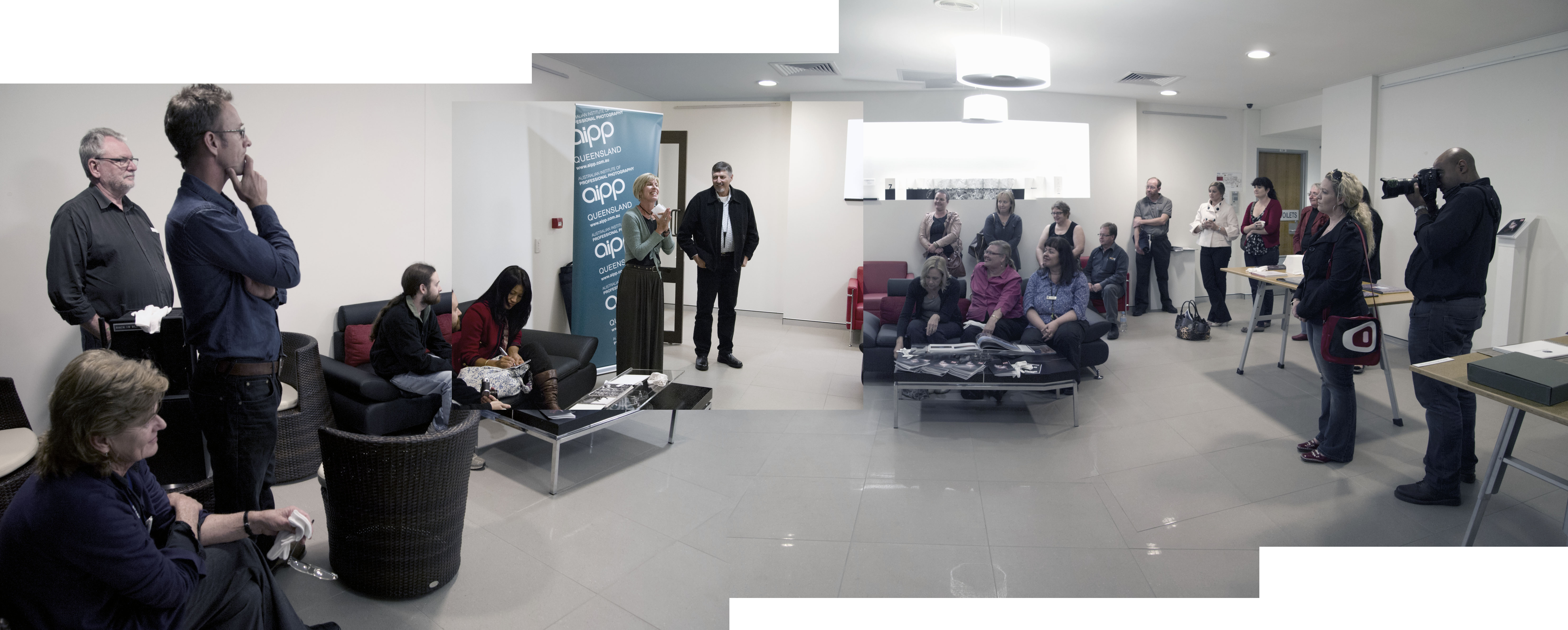
‘Brought to Book’ opening @ Futures Gallery SQIT Toowoomba
The third stage of the program included presentations by the three full-time staff of the photo team – Rachel Susa, Alison Ahlhaus and Doug Spowart. Each spoke of their connection with photography from both the personal and professional context. Doug spoke of the 20-year history of the photo Diploma and Certificate courses at SQIT and the Photoimaging teaching methodology.
The session concluded with a PowerPoint show presenting a selection of images and comments from past students. It was interesting to hear of the experiences of these past students about studying at SQT as well as their achievement in photography. The past students included: AIPP Chairman of the Board Alice Bennett, Nicola Poole, Katie Finn, Lisa Mattiazzi – National Gallery of Australia imaging specialist, Lydia Shaw who works in many areas including photography and teaching in Dubai, nationally acclaimed commercial photographer Damien Bredberg, Sue Lewis – APPA Team Manager and recent graduate Shanea Rossiter who is establishing a business in Warwick.
The Past Students PowerPoint show (PPS) can be downloaded from the www.cooperandspowart.com.au website – It’s a 30.9 mb download but presents an interesting overview of where SQIT students go to and the amazing achievements that they have. CLICK <http://www.cooperandspowart.com.au/2_PLACES/OtherBooks/index.html> Then select the PowerPoint AIPP OTL picture.
The evening concluded with the video fusion show “Dance-on’ by 2011 SQIT Diploma Student of the Year. “Lindsey’s video represents the future of photography” said Doug, and added, “that the stilled image is dead!” The point was not debated, but in the context of an industry that has gone from wet darkrooms to light rooms and digital output in the last ten years everyone left knowing that anything is possible.
Cheers Doug
Judging professional photography: MSIT, Brisbane, March 24&25
The 2012 AIPP Queensland Professional Photography Awards.
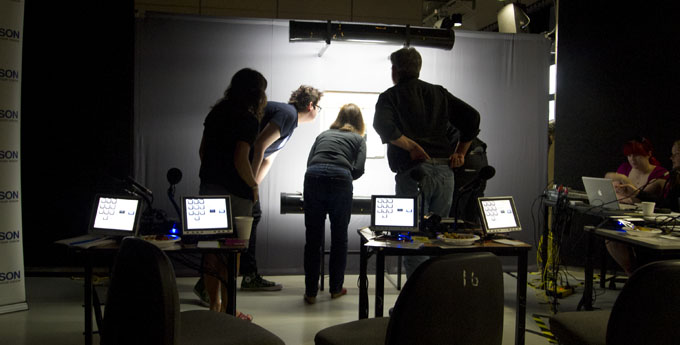
Queensland AIPP Professional Photography Awards judging
I’m sitting on judging panels for the landscape and documentary panels of the 2012 AIPP Queensland PPY Awards. The work is challenging and diverse and the judging panel capable and opinionated. My mind wanders to thoughts about photography, its assessment and critique.
The social scientist Pierre Bourdieu wrote many things about photography. Many photographers would take particular exception to his essay on ‘Photography: A Middle-Brow Art.’ But some of what he says bears a strong and salient connection with the way photographer’s debate, discuss and judge their work. Bourdieu states,
” It is no accident that passionate photographers are always obliged to develop the aesthetic theory of their practice, to justify their existence as photographers by justifying the existence of photography as a true art.” (Bourdieu 1996:98)
Whilst his statement may relate to all kinds of photography from the camera club to the teaching institution it connects, to my mind, most directly to professional photography. Shortly after the time he wrote the original French text (early 1990s) I was not only a fervent participant in all kinds of photography competitions but also the chairperson of the AIPP Australian Professional Photography Awards. I witnessed and perhaps even guided the transition of the APPA, as it became known as, into the form that it now takes.
Founded in 1977 The AIPP National Print Awards were judged with an interest in the work being suitable and relevant to professional products for clients. Prints were glorious colour, 16”x20” flush mounted and were a celebration of technique as well as saleability. Each year 300~500 prints would be judged by the doyens of the industry and a few rising stars. In 1984 I sat on one of these judging panels alongside the big names of professional photography at the time – I felt quite small.
By the end of the 1980s new influences were invading the professional scene. John Whitfield-King and others of his persuasion were creating a space for documentary approaches to wedding photography informed by Henri Cartier-Bresson and Elliott Erwitt. Areas of photographic practice such as illustrative and landscape were emerging and along with them was a recognition of art photography from the American scene by practitioners like Ansel Adams, Harry Callahan, Lee Friedlander, Arnold Newman et al. Black and white prints with Leica-esque full-frame black fuzzy borders became the emergent trend and prints became small and fine on white mount boards. Along with Paul Griggs, Jeff Moorfoot, Lyn Whitfield-King, Peter Adams and Robert Billington, I also was also one of this new guard.
Photographers began to present images from their own personal photographic exploration – subjects that excited and invigorated their practice. These were photographs made by photographers – for photographers. The judges were excited by this work as well and awards were made that celebrated inspirational photography. Each year new work became more and more detached from the previous client-based assessment, and the new paradigm became the engine room for photographers to experiment and push ideas about what professional photography could be and also what clients may want. All this change was not without its detractors. The photo press and newsletters published the laments by some about the loss of industry and the self-indulgence of those engaged in it.
Despite this, professional photographers did embrace the awards process with such enthusiasm that larger entries necessitated extra judging rooms, days of judging and an army of judges and event team volunteers. Early in my chairmanship I undertook a national judge training program with the intension of filling the judging ranks with new judges, and in particular, evening up the gender balance of such panels. The term ‘judge training’ implies some kind of conditioning process where the participant is shown how to spot and reward certain standards. This was not the route that I chose. My philosophy was related to the recognition that all candidates start with a significant understanding of photography and that what they needed was to (1) understand the APPA judging system of team-based scoring and debates, (2) come to know and practice discussion and debate techniques, and (3) grow through the process accepting it as not only one which is about making judgements, but also its educative nature for the judge and the entrant alike.
In time we achieved much of what we set out to do. The judging team became more representative of membership – gender balanced, younger, from the regions as well as the city. APPA as a system during my time as chair cautiously welcomed-in digital output, imaging and image enhancement – something we take for granted now but an area of significant consternation in the mid 1990s. Not to mention each year’s crop of award winners that are celebrated in the prestigious form of the Awards Book. Additionally we should not forget that the APPAs were originally, and still are an accreditation system to recognise and reward the professional photography skills of AIPP members through the awarding of APPA Associate, Master and Grand Master honours. At one time you could count the number of APPA Masters on the fingers of two hands – they were a rare-breed indeed. Now the AIPP is replete with masters and Grand Masters may need more than two hands to count. In my opinion what it takes to be a Master is no less now than it was 20 years ago – it’s just that the general standard of professional photography as an innovative and expressive form of communication has grown exponentially.
Over time the APPAs have grown beyond our imaginings of the 1990s into the mega event it is today. States such as Queensland have their local awards judgings that have entry numbers exceeding the national entry only 20 years ago. Professional photography practitioners from this country have, for over ten years, won every major international award, had top ten listings in numerous disciplines and travel extensively as guest speakers and leaders of the industry internationally. Some of this acclaim comes from the spark that was set by the team that was APPAs in the 1990s. Most of the names and contribution that these people made have now gone. I think of David Puddefoot, Mike Woods, Ian Hawthorne, the ‘godfather’ Ian McKenzie, Malcolm Mathieson, Jeff Moorfoot, Ruby Spowart, Victoria Cooper and the current Chair David Paterson. We owe these individuals and a host of other committee members of that era including Paul Griggs, Robyn Hills, William Long, Ian Poole, for the foundation that they helped make so that APPA, and the state events could be what they are today.
It has been some time since I have judged at an APPA style event. As I sat on the judging panel I reflected on the history that has brought us to this moment. It felt good – and I was able to contribute to great discussion about some amazing imagery. Photographers have embraced the theory and aesthetics of their art and justify it through the most interesting and informative processes.
.
Doug Spowart
.
Bourdieu, P 1996, The Rules of Art: Genesis and Structure of the Literary Field, Stanford University Press.
CHARLIE SNOOK: HIS LIKENESS RETURNS AS A PHOTO
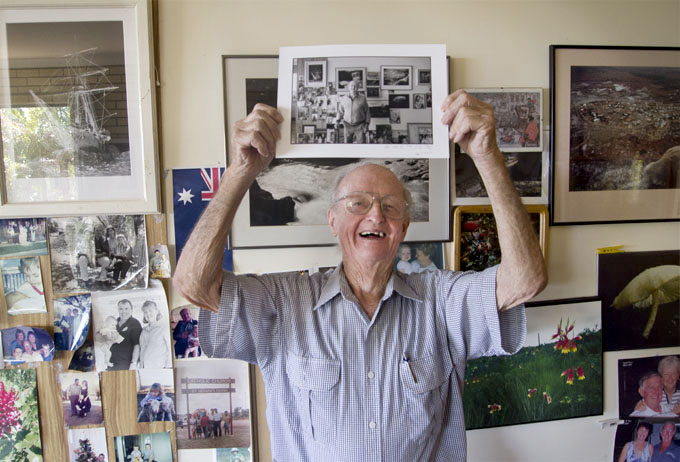
Charlie Snook + portrait by Doug Spowart
I first met Charlie Snook in 1977 when he and I were among the guest lecturer team for the Binna Burra Photo School in Lamington National Park near the Gold Coast. The weeklong event was an inspirational live-in experience for keen photographers. Day and night workshop sessions were augmented by bushwalk forays into the surrounding National Park. Darkrooms for black and white processing and even colour work were set up to provide a complete experience of ‘learn and do’ in just about everything photographic.
Other members of the lecture team included Rob Heyman, Rob Bannerman, Alec Fraser (recently departed for the big darkroom in the sky), Ansett photographer Gary Lewis and of course Tony Groom traveller and photographer the son of the founder Arthur Groom. Someone was always up to something—whether it was photography, experiencing nature or telling tall stories of travel or life or just plain joking around. Over time great photographers like Steve Parish presented workshops and added to the yearly event’s reputation.
Charlie and I struck up a friendship that connected us with the love of photography and the natural environment. Apart from the annual Photo School adventures that included the Coomera Crevice, the Shipstern decent and the Ballanjui Falls abseil, Charlie and I, assisted by his two son’s-in-law canoed the Mann and Clarence Rivers from Nymboida to Jackadgery. Later when my mother and I began of offer photo tours around Australia as part of our Imagery Gallery business activities Charlie became a regular traveller.
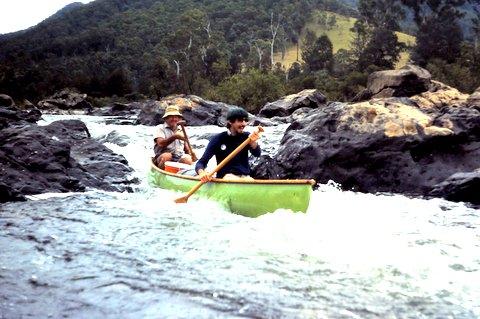
Charlie and me on the river Photo courtesy of Lesley Wall (Charlies Granddaughter)
In 1987 photographer Maris Rusis and I made a 10”x8” photographer’s journey along the east coast of Australia. We spent some time with Charlie helping to fix plasterboard panels to the ceiling of a house he was building at Minnie Waters near Grafton. A plumber by trade Charlie had worked in a variety of amazing projects including The Blue Cow tunnel in the Snowy Mountains, massive holiday resorts in Yamba and as a volunteer for the Catholic Church missions in the islands of the Pacific building community infrastructure.
In July 2011 Vicky and I visited Charlie and I made a portrait of him in front of his photo gallery. He stood proudly before his cherished image by Frank Hurley of the ship the Endurance trapped in ice in Antarctica, images from his travels and of family and friends.
Today we revisited Charlie to return his image as a black and white print—he was chuffed!!
Cheers Charlie.
POST SCRIPT: Charlie passed away peacefully in Grafton last Saturday, August 10, 2013. He will be sadly missed but his enthusiasm for photography, wilderness and Minnie Waters lives on with those who remember him.
TIM MOSELY: An Eskimo climbing to a plateau
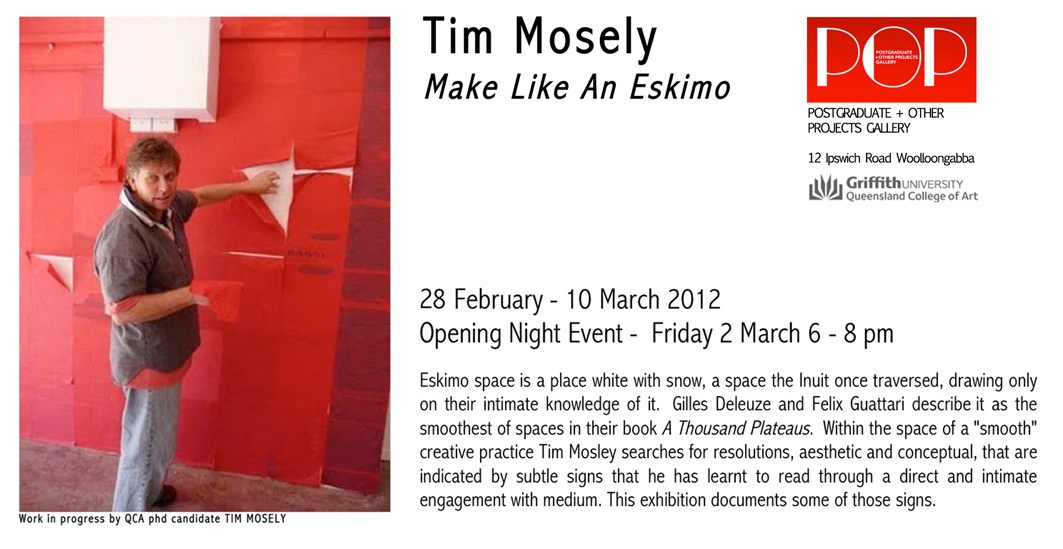
Make like an Eskimo – Invite
Tim Mosely is a PhD candidate at the Queensland College of Art. He is working through the research processes that students engage in to position their academic imprimatur on some aspect of human knowledge. Mosely over the years has developed a significant international practice in artists’ books, handmade paper and the book experience as one in which the tactile senses are evoked.
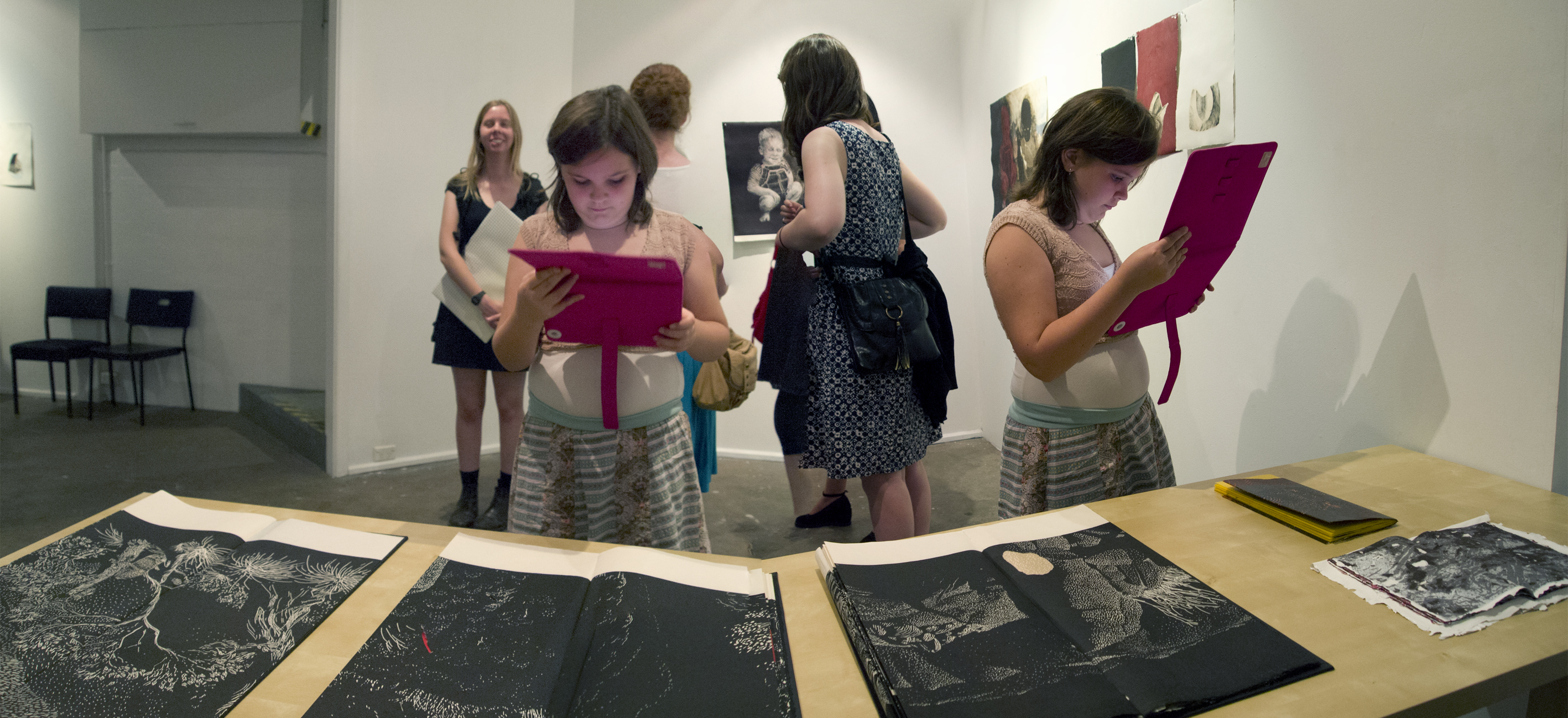
Tim Mosely – Make Like An Eskimo. POP Gallery Brisbane
Make like An Eskimo, at first appears as a mixed exhibition originating from many individual artists as each body of work teases out an idea, a gesture, a memory – blurred, or a theme. These are experiments, the research level is PhD so we do expect something that presents a challenge, or expresses a cathartic moment or even a line of questioning that leads … nowhere. This work does not leave this viewer wanting. The stones have been turned over and what has emerged are things that show Mosely’s Inuit traverse of the smooth white space where he has drawn on his intimate knowledge of printmaking medium, of his personal semiotics and his dreams.
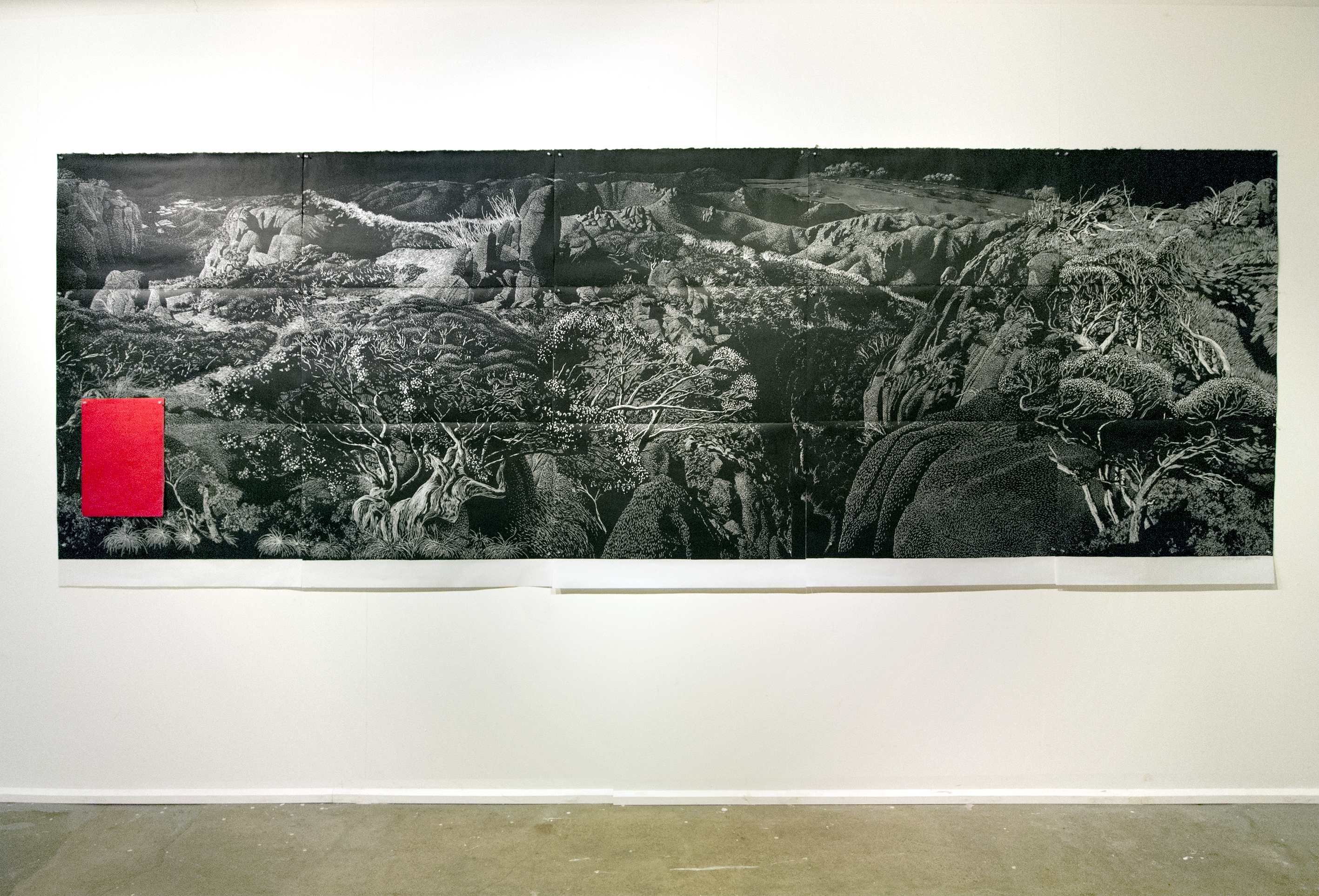
Tim Mosely – ‘imagining mt giluwe‘ a multi-sheet linocut
One monumental piece explodes from the wall – imagining mt giluwe. It’s a multi-sheet linocut – dark and brooding with markings made by Mosely’s tools that resemble some kind of tribal scarification. The wild landscape overpowers the smooth white gallery wall and entices the viewer to move in close. There is a hidden map implied by the transecting vertical and horizontal lines of the individual printed sheets. Is it a map of the physical, the metaphysical or is it just mere tactile experience – for touching with the eyes? There is a movement through the monochrome surface and a red rectangle of paper overlays a part of the image – is this order implied over chaos? Colonial blood over Nature? Or could it hide a didactic code with its intention to perplex the viewer – or maybe it is there to just hide the fact that no code exists?
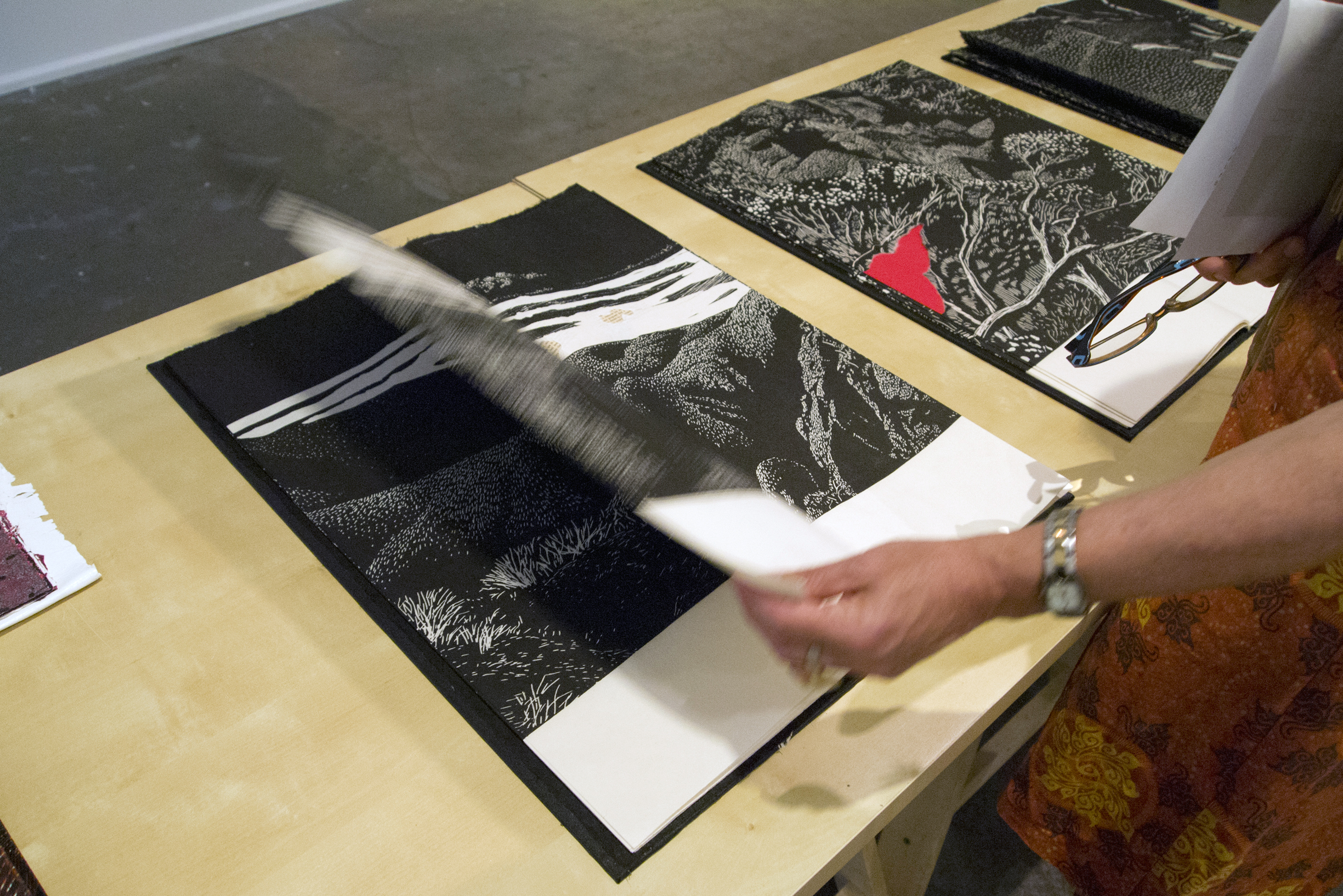
Tim Mosely – Make Like An Eskimo books
Another work, a series of books attempts to contain the big lino imagining mt giluwe. It is in fact, books made from pages of the large work. Once again there is a calling to explore and this time it is easier as the dividing and sectioning of the work into book form creates a path through the act of page turning. Some pages have been slashed and red paper shows through the jagged shapes implying similar questions as the red rectangle in the larger work. I am comfortable with this work, and perhaps Mosely is as well, as it is derivative of the language that he has employed in the past.
As I reflect on the experience of the POP Gallery I can confirm that Mosely is interrogating his practice, his experience of life and what it means to be an artist. What stands out is his haptic encounter in the making of his artworks and the profound need that he has for that vital energy to be infused into the art. And in that I think he is not alone – the materials seem to respond to his interaction. Here I am reminded of a discussion that Barbara Bolt has about a mode of thinking informed by Martin Heidegger’s techne and Paul Carter’s ‘material thinking’, where she states,
‘In the place of an instrumentalist understanding of our tools and material, this mode of thinking suggests that in the artistic process, objects have agency and it is through the establishing conjunctions with other contributing elements in the art that humans are co-responsible for letting art emerge.’ (Bolt 2007:1)
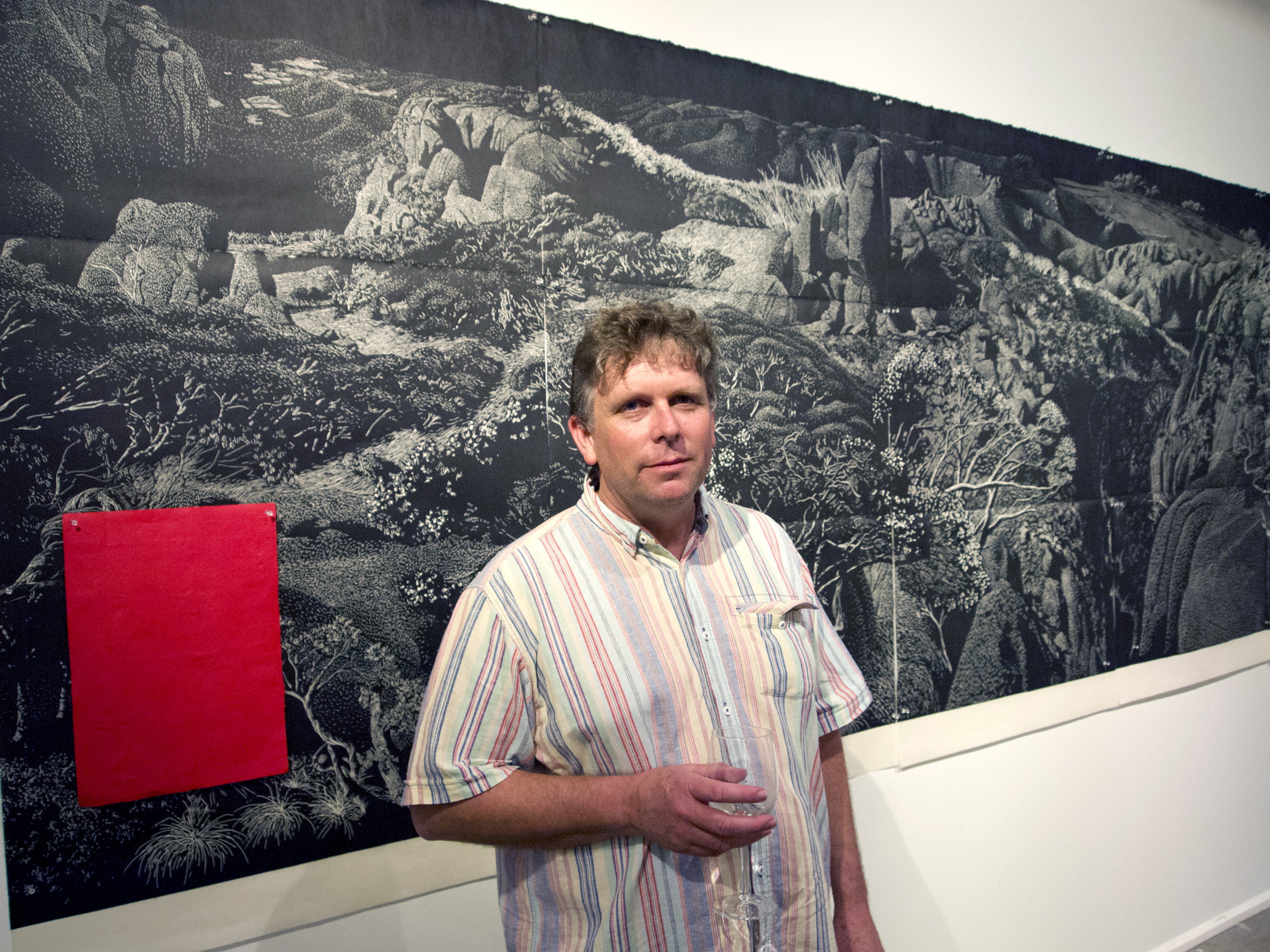
Tim Mosely in the exhibition Make Like An Eskimo
Mosely’s work and the materials in his work do emerge to present the viewer with communiqués that are enriched not only by what is embedded in them but also what they invoke in the mind of those who encounter them. We wish him well in the ascent to his academic plateau.
Doug Spowart
AIPP Student Event @ SQIT
Sue Lewis, as part of her AIPP Education Liaison attended SQIT and made a presentation to photoimaging students about the professional photography industry and the peak industry body – the Australian Institute of Professional Photography. The presentation, on the 22 February, consisted of print displays, AIPP books, PowerPoint and video show. Sue was assisted by AIPP Queensland Divisional councillor Tony Holden.

Sue Lewis presents an AIPP talk at SQIT
Sue spoke of the AIPP’s history, structure, services and events. The Canon AIPP Australian Professional Photography Awards in Melbourne and the Nikon AIPP Event in the Hunter Valley were featured as ‘must attend’ events in the coming year. Sue also discussed her own photo history as a SQIT photography student 10 years ago and how she networked and connected with the APP Awards firstly working as a ‘helper’ behind the scenes. She is still behind the scenes however now she is a major manager of the national event.

Sue Lewis @ lecturn – presents an AIPP talk at SQIT
The response by SQIT students to Sue’s presentation was significant – 8 students signed up for AIPP Student membership on the day – joining many other SQIT students who are AIPP Student members. In appreciation of Sues efforts over the years and her support for students across the nation she was presented with a bouquet of flowers by teacher Rachel Susa.
What is amazing is Sue’s enthusiasm for professional photography and how the AIPP helped her along the way. She called it networking, networking, networking, and having fun with, and through, photography. Something I’m very familiar with – I joined the AIPP as a student nearly 40 years ago – still a member and having fun with photography.
Thank you Sue, and, the AIPP…

Sue Lewis with Rachel Susa @ SQIT
ALLORA SHOW: Bush Poets and passionate people
Telling living stories: Bush Poets and passionate people
FOR MORE PHOTOS OF DISPLAYS CLICK HERE!
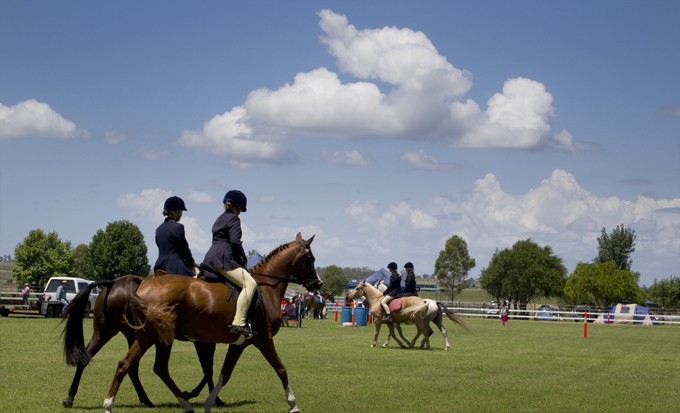
Beyond the football and cricket ground there is a great Australian tradition of the agricultural show. In Allora recently we had the privilege to spend some time with a regional show – a show that had been running since 134 years. Doug judged the photography section and then we spent some time with the people and the exhibits that made the show an interesting and engaging event. These were passionate people busily supporting this local community event.
There were displays showcasing with their creative pastime pursuits and community projects. The local schools had creative displays; there were the hobbyist awards for hand made objects and Leggo sculptures. Also in the big shed were the usual competitions for the best cakes, scones, dampers and my favorite – the fancily iced arrowroot biscuit, the heaviest pumpkin and the best Dahlia and the woodwork and quilts displays.
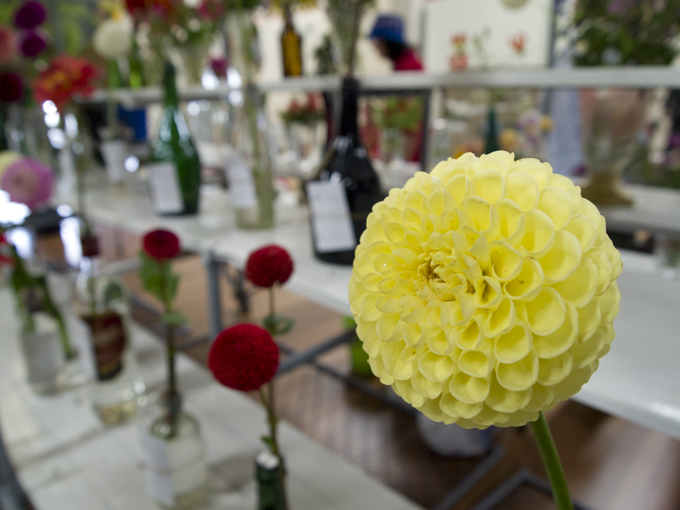
Allora Show - Best Dahlia
In the main oval there were suitably attired young girls with their horses in the dressage event. With their plaited hair matched the plaited mane and tails of the horses they competed with serious attention to the requirements of the event for the judge.
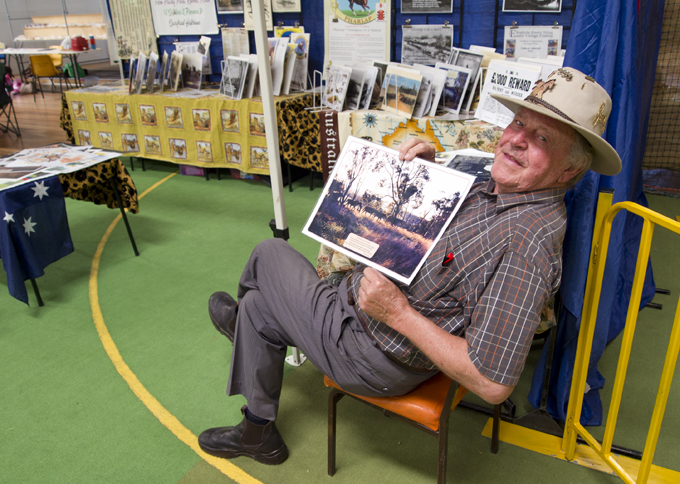
Lindsay Ashcroft with landscape photo and poem (see below) Photo: Victoria Cooper
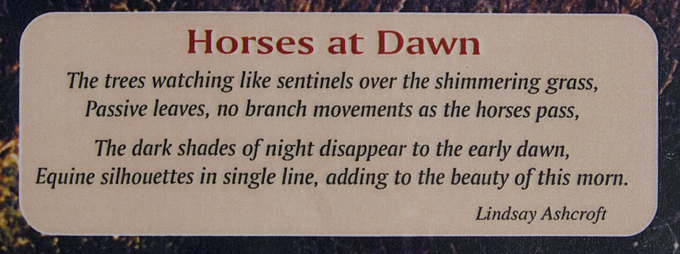
Lindsay Ashcroft poem
Lindsay Ashcroft, the bush poet, seasoned regional traveller, with his lyrical repartee made impromptu performances to our group of workers as Doug judged the photos. He passionately recited his poems of Australian sentiments that referred to iconic symbols like the poems of Banjo Patterson. Photographs taken by Lindsay or a graphic and artwork that inspired the words accompanied each poem, were available for purchase.
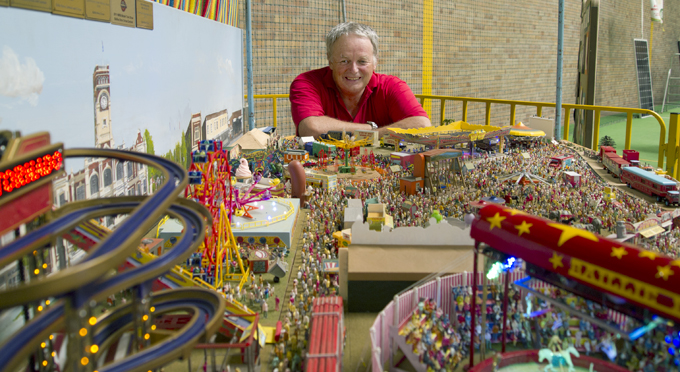
Baillie Boys Show Photo: Victoria Cooper
Beside Lindsay was a miniature show, a scale model carnival, with a painted background featuring Toowoomba buildings. A trio of enthusiasts, the Baillie Boys Shows, created this as a departure from the usual model trains display. They are now working on their next venture. You can see more of their work on their website, www.baillieboysshows.com , where they show the construction of various elements and display venue schedule.
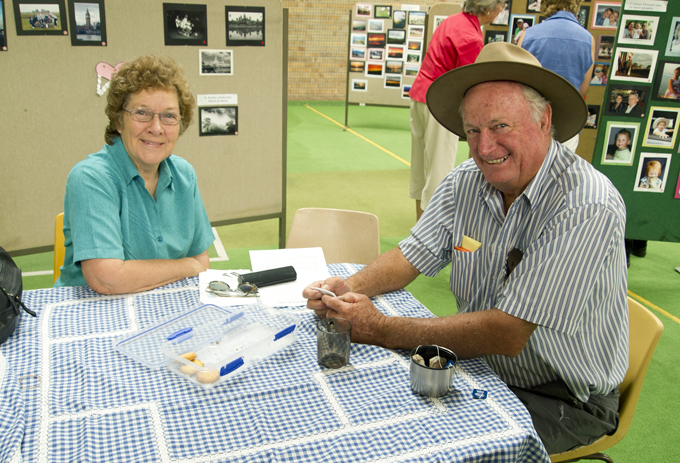
Margaret Phelan and Chief Pavillion Steward Barrie Geitz
It was fun to spend time with these people, their passions and their stories.
FOR MORE PHOTOS OF DISPLAYS CLICK HERE!
Words and photos: Victoria Cooper
JUDGING: ALLORA SHOW PHOTOGRAPHY SECTION
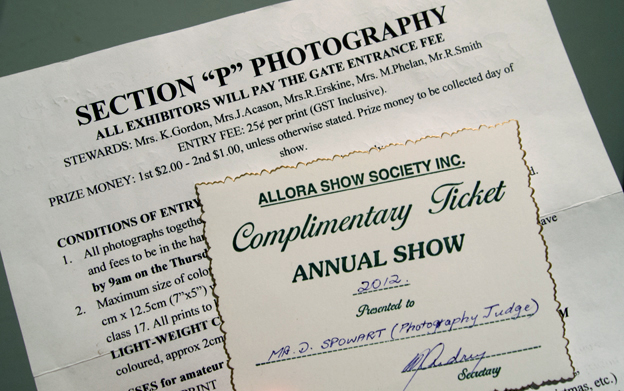
Most photographers and commentators of photography discuss endlessly the biggest and the ‘best’ photo competitions around the country. It would appear that competitions are considered a most important aspect of the genre. But photo competitions come in many forms, some of which come in under the radar. Recently I judged the Allora Show Society’s Section “P” Photography, and the experience connected me with the grass roots of the world of photo competitions.
At the Allora Show photography stands alongside a diverse collection of arts, crafts and skills from needlework, baking, woodworking and scrapbooking, to painting, big pumpkin growing and cut flowers. My task was to work through the submitted entries in the 27 categories and select the winners. But first, on Vicky’s and my arrival we took a moment to take tea with the stewards, Kate Gordon, Judy Acason and Margaret Phelan. The tea was made from hot water brought in a thermos by Judy and was accompanied by home-baked fruit slice and butter and mini-lamingtons. Conversations over tea discussed the pros and cons of organising and presenting photographic competitions. Whether we were talking about the event we were about to participate in, or the big capital city extravaganzas of the AIPP Professional Photography Awards, the concerns and issues are the same.
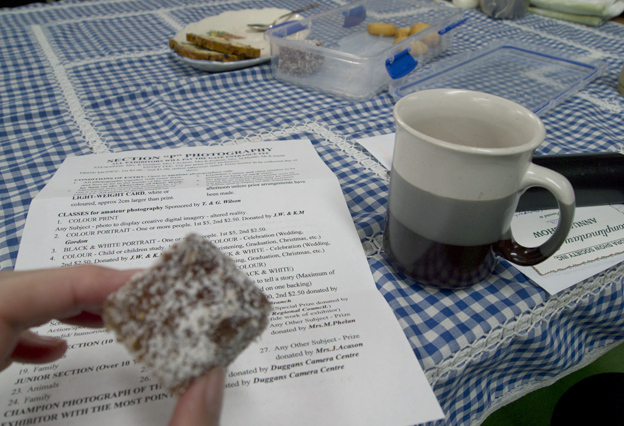
We began the judging of class 1 – First and Second prizes were awarded as well as appropriate Highly Commendeds. Then the next, and the next category – working our way through the adult sections to the Junior sections. I was taken by the nature of the community document that the photographs represented. The ‘quality’, if you can call it that, was uneven at times, but the purpose and the honesty of each image as an authentic representation of an experience encountered and recorded is no different to those of the major national competitions.
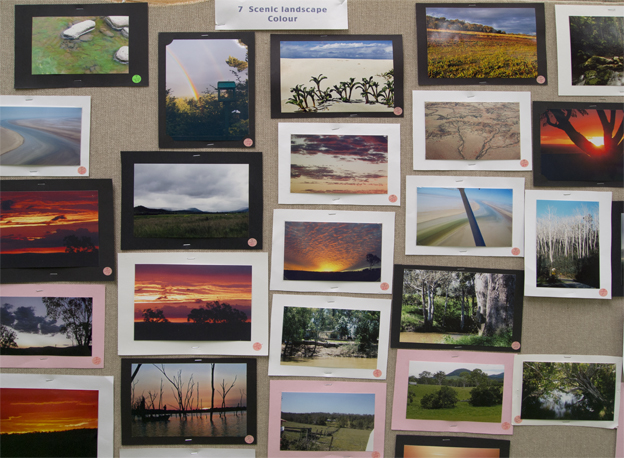
Allora Show Photography judging - Landscape Section
Subject matter included; flowers, pets, family portraits, bugs, birds, frogs, lots of sunsets, people doing stuff, pictorial landscapes, sporting moments and vignettes of rural life. And the number of categories enabled specialist areas a chance to have comparisons between similar works. An interesting category was one in which a set of images were required to tell a story.
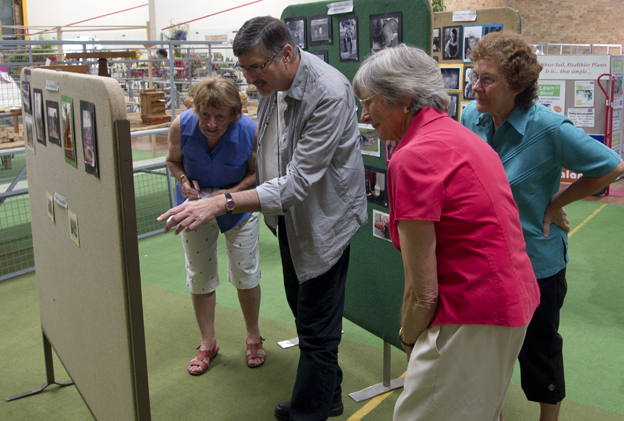
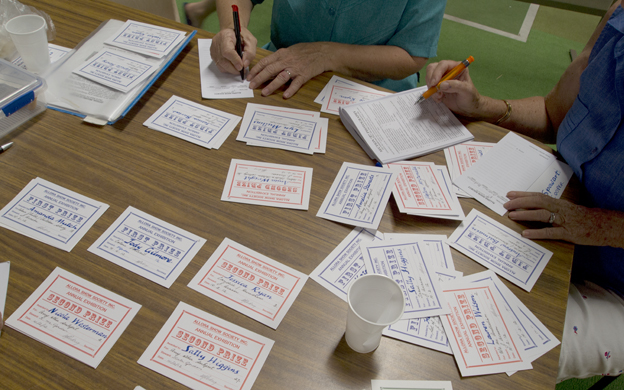
In the end a Champion Photograph of the show was chosen and for me the task was at an end. Vicky and I wandered off to view equestrian events, other displays of competitive work and lunch. When we returned the volunteer steward team was hard at it hand annotating the 80 or so award cards that had been made. I felt that maybe I should have held back on some of the Highly Commendeds. Participating in this event was just as important to me as any other I have had the honour to judge.
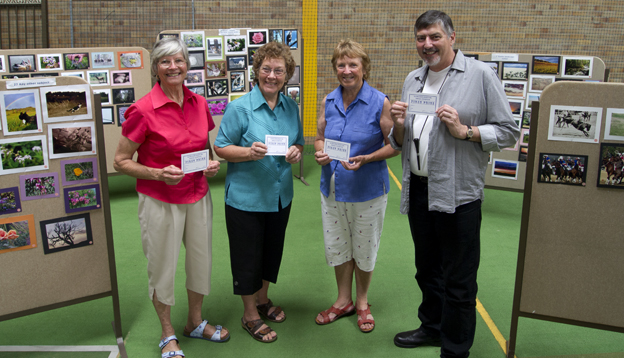
Stewards; Judy, Margaret, Kate and judge Doug
Words: Doug Photos: Vicky + Doug
AIPP QLD ‘Hair of the Dog’ Conference

IMAGES ONLY AT THIS TIME – Texts to follow shortly!!
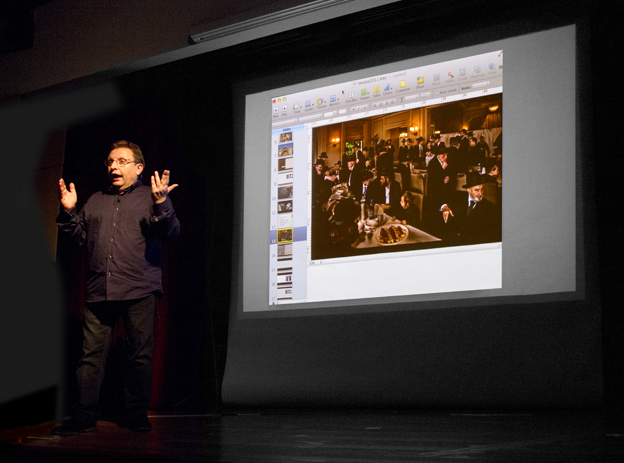
Yervant Zanazanian speaking @ the 2012 AIPP Hair of the dog
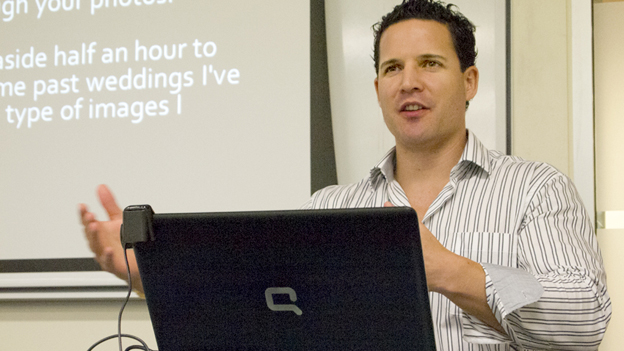
Matt Adams speaks at the 2012 AIPP Hair of the Dog

Murray Fredericks with workshop group and time-lapse rig
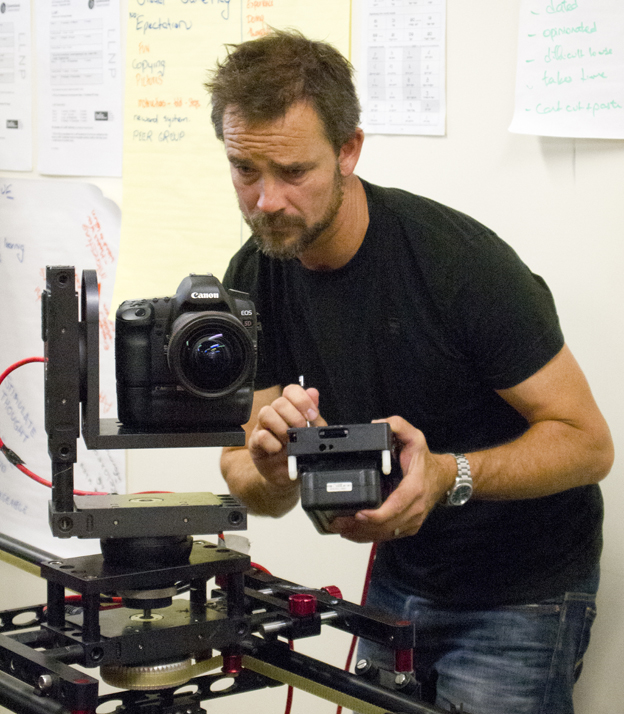
Murray Fredericks with time lapse rig at AIPP Hair of the Dog 2012
Murray Fredericks SALT Video GREENLAND Project Sydney New Years Fireworks
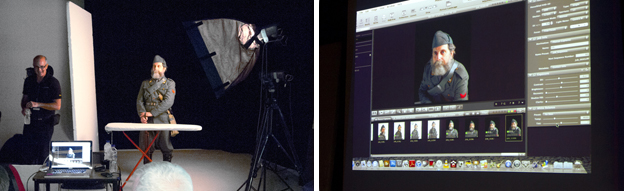
William Long at AIPP Hair of the Dog demonstarting the Hasselblad H camera and Phocus software

AIPP “Normally” Event, MSIT, Brisbane
PHOTOGRAPHY: 5 Years From Now
I’ve just asked 6 prominent Queensland Professional photographers “What will photography be like in 5 years from now?” Their answers I’ve assembled into a YouTube Video.
Their answers give us a crystal ball glimpse into the future. As the clouds and mists swirl and part in the orb what emerges are visions that may just help us prepare for what’s in store.
The photographers were: Jan Ramsay (AIPP Queensland Division – President and Eyeon Photography), Ian Poole (international professional photography judge and presenter), Gary Cranitch (Photographer – Queensland Museum), Stephen Jones (Photography – Arana Photography), Tony Holden (photo-equipment representative – C.R. Kennedy), Mark Schoeman (wedding and portrait photographer – Brisbane).

SEE THE VIDEO: Click Here!!
This project was supported as a SQIT Release to Industry activity and the Photographers of the Great Divide.
Thank you to the participating photographers.
Concept / words / photos / video: Doug Spowart

 wotwedid