Archive for the ‘Doug Spowart’ Category
HeadOn–AddOn: Cooper+Spowart invited to participate
This year we were invited to participate in the 2014 HeadOn – AddOn event: Here are the details behind the event from the HeadOn Website…
.
.h
AND HERE ARE OUR IMAGES …
.
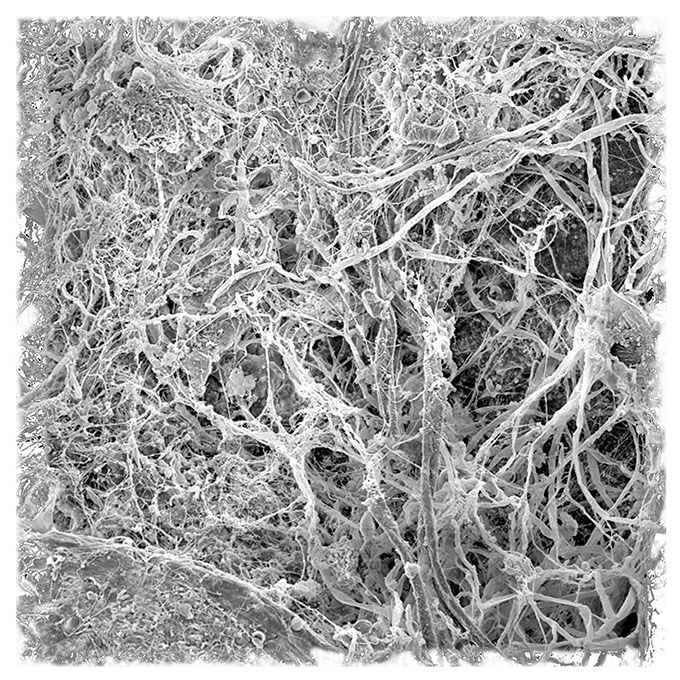
Victoria COOPER’s – Detail from Home 2011–2014
.
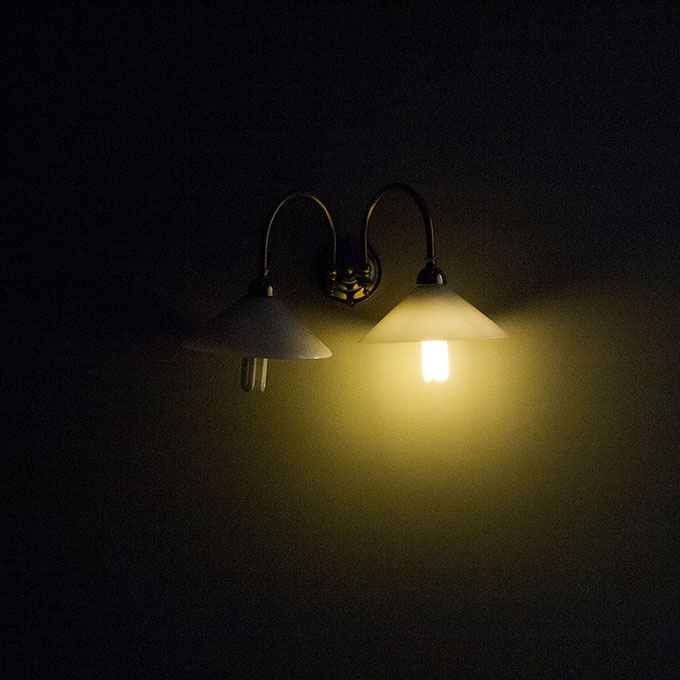
Doug SPOWART’s – Half-light
.
Part of the 2014 programme of:

HeadOn logo
.
.
© 2014 Cooper+Spowart
.
WORLD PINHOLE DAY, 2014: Our Contribution

.
Round the [w]hole world on the 27th of April pinholers were out having fun – Making their images for the 2014 WPD. We’ve used our Olympus camera again and this time made duo self-portraits. This is the 10th year we have made pinhole images to support the WPD project!
.
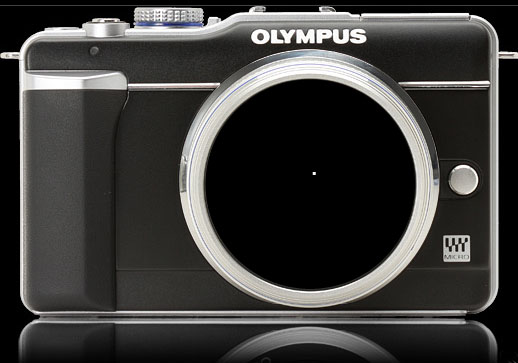
Olympus Pen with hand pierced aluminum foil hole, Auto exposure mode, ISO 1600.
.
VICKY’s Submission:
.
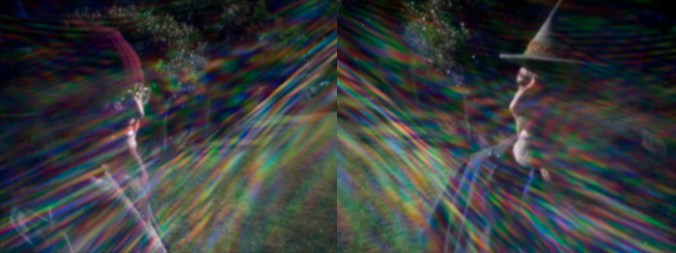
Victoria+Doug RayPortrait
.
DOUG’s Submission:
.
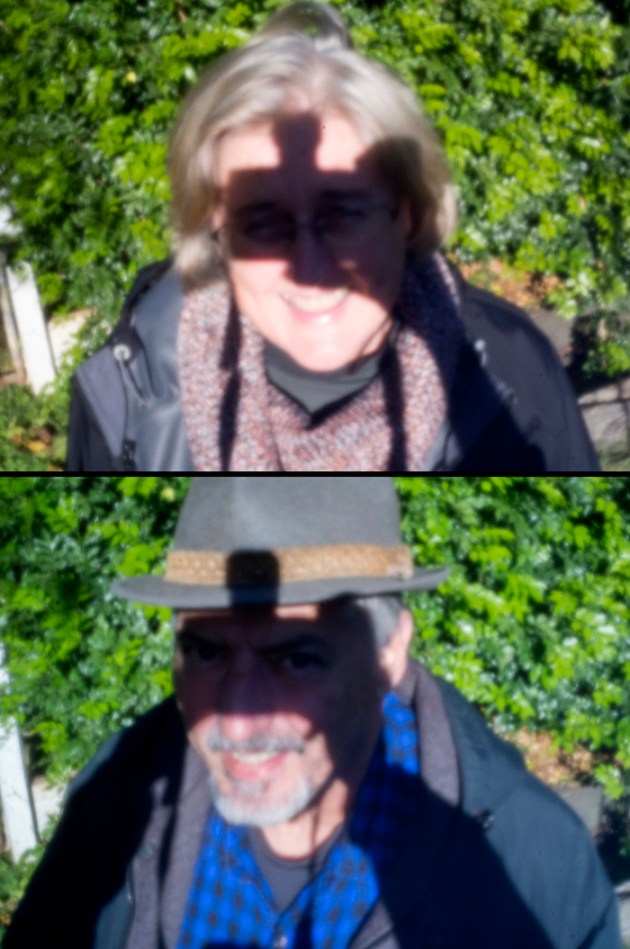
“A duo portrait – camera shadow to block the sun from the eyes — A bit of self-portrait fun…”
.
Vist the WPD Site for other contributors: http://www.pinholeday.org/gallery/2014/
Our Past WPD images:
.
2013 https://wotwedid.com/2013/04/29/world-pinhole-photography-day-our-contribution/
2012 http://www.pinholeday.org/gallery/2012/index.php?id=1937&searchStr=spowart
2011 http://www.pinholeday.org/gallery/2011/index.php?id=924
HERE IS THE LINK to the 2011 pinhole video http://www.youtube.com/watch?v=Yk4vnbzTqOU
2010 http://www.pinholeday.org/gallery/2010/index.php?id=2464&Country=Australia&searchStr=spowart
2006 http://www.pinholeday.org/gallery/2006/index.php?id=1636&Country=Australia&searchStr=cooper
2004 Vicky http://www.pinholeday.org/gallery/2004/index.php?id=1553&Country=Australia&searchStr=cooper
2004 Doug http://www.pinholeday.org/gallery/2004/index.php?id=1552&Country=Australia&searchStr=spowart
2003 http://www.pinholeday.org/gallery/2003/index.php?id=615&Country=Australia&searchStr=spowart
2002 http://www.pinholeday.org/gallery/2002/index.php?id=826&Country=Australia&searchStr=spowart
.
.

LIGHT READINGS: the photograph and the book – An SLQ White Gloves event
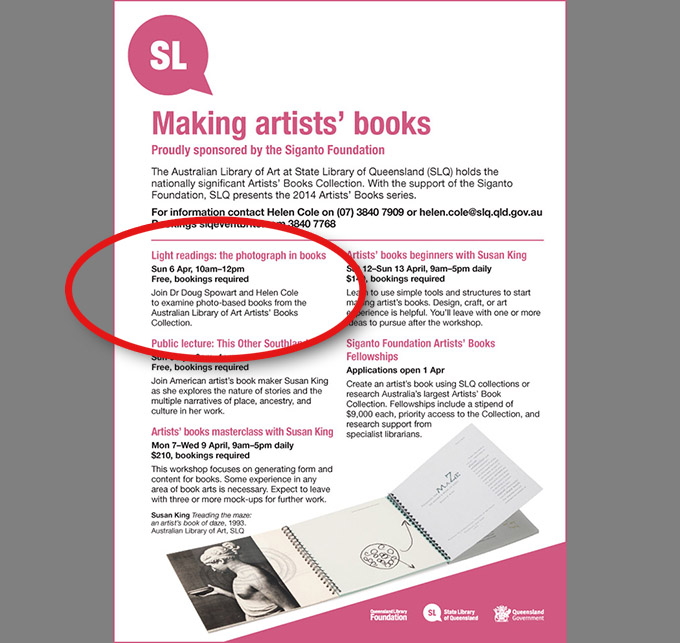
Flyer for the event
.
Light Readings: The photograph in books from the SLQ Artists’ Book Collection and the Spowart+Cooper Photobook Collection
.
On Sunday April 6 a group of around 25 artists book and photobook dillettantes attended a special ‘White Gloves’ event at the State Library of Queesnland. Assembled in the viewing room on level 4 was a selection of artists books and photobooks that addressed the topic of the photograph and the book. The 43 books were drawn from the SLQ’s Australian Library of Art Artists’ Book collection, the SLQ General Library, supplemented by books from the Spowart+Cooper Photobook Collection. The book’s selection was curated by SLQ Senior Librarian Helen Cole and Doug Spowart. Those attending the event were given a presentation by Doug Spowart to introduce the rationale for the selection. A discussion paper by Spowart is included in this blog post along with a bibliography of the selected books.
.
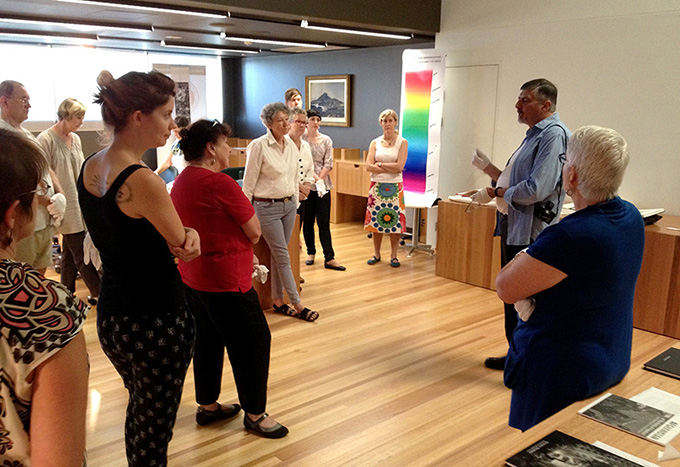
Doug Spowart presents an introduction …….PHOTO: Victoria Cooper
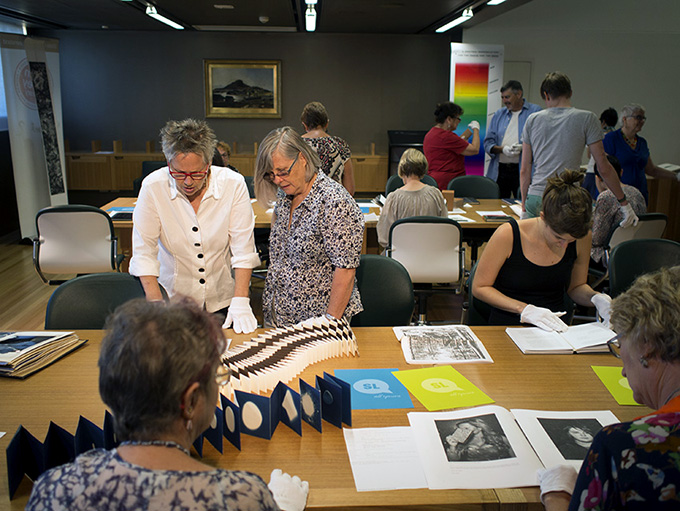
SLQ White Gloves event – Attendees viewing books
Doug Spowart’s discussion inspired by the ‘Light Readings’ event: A nomenclature for photos in books
For one hundred and fifty years the making of ‘quality’ photographs had been almost exclusively the domain of the professional practitioner. Outside of the professional photography scene vernacular photography, made popular due to the enabling technologies of ‘you press the button – we do the rest’ companies like Kodak, usually produced results that were of an inferior standard. There were of course exceptions – ‘prosumers’, as we would call them today, image-makers from the camera club movement, dilettantes and artists whose visual acutance and mastery of process suited photography.
Today digital technology has interceded and now anyone can make photographs. From a range of informed sources it is easy to predict that nearly a trillion photographs will be made in 2014. These images from phone camera snaps to video grabs, from high-end pro digital cameras to surveillance satellites, as well as a plethora of straight and enhanced images will be made and used for a range of outcomes. It seems that now anyone can make a photograph and almost anything can be done with it.
Like photography the publishing of books was once a closed world, as it required specialist processes, skilled artisans and financial entrepreneurship. But this powerful structure of gatekeepers too has also been dissolved by the empowering digital technologies of computers, software, computer-to-press and print on demand workflows. Making books has never been easier. Photographers particularly have embraced the opportunity and launched a revolution creating all kinds of photobooks to extend the bland form of the traditional photobook. Bruno Ceshel, founder of the photobook publishing and promotion enterprise Self-Publish Be Happy, comments that:
From the stapled fanzine assembled in a student bedroom to the traditionally printed photobook, these publications not only reshape our understanding of the medium but offer exciting and sometimes radical ideas. (Ceschel 2011)
.
Whilst photographers have embraced this new found direct publishing paradigm artists have made books with photos in them for decades. For them the processes of printmaking and multiples that they employ, along with access to printing press technology, is accessible and ‘doable’. Additionally artists have experimented with communication concepts that included the democratic multiple publications. Artists employ a range of media and the photograph was just another tool that they could access to create their art.
A significant connection between photography and the artists book is discussed by Anne Thurmann-Jajes and Martin Hellmold in their 2002 exhibition and catalogue ars photographica. They state that: ‘In very general terms, it is possible to say that half of all artists’ books produced to date have been based on photographs.’(Thurmann-Jajes and Hellmold 2002:19). It is interesting to note that the first book of the modern American artists book genre is Ed Ruscha’s book of photographs entitled Twenty-six Gasoline Stations.
The artist’s use of photography has created a degree of frisson. A point of contention for photographers was their ownership over the term ‘photographer’. Essentially photographers claimed that while artists may have made photographs, only photographers made ‘real’ photographs – artists just took photographs. Ruscha provocatively denounced the preciousness of the fine art photography movement that came out of the 1960s and announced that all he wanted out of photography was ‘facts, facts, facts.’ (Rowell 2006:24)
Thurmann-Jajes and Hellmold go further in that they propose differences between the artist and the photographer in the conceptual aspects of making a book based on photographs:
The authors of photo books followed photographic tradition, according to which the photograph as such was decisive, becoming the bearer of meaning. … By contrast to the photo book, the artists’ book is not the bearer, but the medium of the artistic message. (Thurmann-Jajes and Hellmold 2002:20)
.
Interestingly, the photobook and the artists book share a lost history that Johanna Drucker discusses in her 1995 book, The Century of Artists’ Books. She states that:
The photographic book became a standard of artists’ book activity, and its history belongs to the early 20th century in which the concept of the book as an artistic form was taking on a new, vital identity. (Drucker 2004:63)
.
Drucker adds:
These were works which were considered avant-garde, experimental, and innovative when they were made; they broke with the formal conventions of earlier book production, establishing new parameters for visual, verbal, graphic, photographic, and synthetic conceptualization of the book as a work of art … they were part of a history which was temporarily forgotten at the time artists’ book emerged in the 1960s. (Drucker 2004:63-4)
.
Despite these shared histories and theories of ‘differences’ the nature of the creative process, the disciplines of artist and photographer may present an interesting conundrum. Nancy Foote, for example, may question the ‘us and them’ argument by her observation in a 1976 article in Artforum, The Anti-Photographers that: ‘For every photographer who clamors to make it as an artist, there is an artist running a grave risk of turning into a photographer.’ (Foote 1976:46)
Today the photograph continues to pervade all kinds of books by artists, artists–photographers, photographers and photographer-artists in collections like the Australian Library of Art at the State Library of Queensland. At this time it is important to review the field of creative book production that utilises the photograph and consider what has been created to date and in the SLQ collection, as well as look for emergent trends.
In this research project Senior Librarian Helen Cole and I have collaborated to bring together a selection of books to survey the nature of the photo and the book. Whilst most books have been sourced from the SLQ Artists’ Book collection some books have come from the SLQ general area and some, mainly emergent photobooks have been drawn from my personal collection. In bringing these 43 books together in the one ‘white gloves’ space there has been an ability to create come kind of order from the divergent practice.
It would take a courageous and brave commentator to propose a definition or a canon for the photo and the book. Instead I will suggest a spectrum of activity and assign some characteristics that may aid those interested in the topic to compare, sample and discuss. I will use the term nomenclature as it best describes the devising or choosing of names for things in this type of discussion.
As the visible light spectrum has a rainbow of seven main colours this discussion has seven as well. Each has a specific characteristics and terms associated with it – although, at times certain books may challenge attempts to place them within this spectrum. The 7 colours are:
1. Red – The ‘Classic’ trade photobook
2. Orange – Print on demand trade-like photobook
3. Yellow – Emergent – PhotoStream* [of Consciousness] or Insta-photobook*
4. Green – Photozine*/ broadsheet / newspaper
5. Blue – Experimental’ or ‘Freestyle’ artists book
6. Indigo – Artists book
7. Violet – ‘Classic’, ‘Book Arts’, Livre d’artiste book
*Names I have considered to best describe these emergent forms
.
This spectral approach accepts the notion that the use of the photograph may be by either photographer or artist, and the nature of their creative products may enable their books to reside in generic areas. In many ways the transition of the rainbow metaphor from red to violet could represent the pure book forms of the photographer at one end and the purest artist form at the other at the other. This suggests that 1-4 would be photobooks conceived and produced by photographers. And those books in 4-7 would be principally books made by artists using photography. And at times the nature and form of the book may defy this nomenclature and be in a grey area, or a tint or shade, or even a blend of colour opposites!
Just as Johanna Drucker found when she attempted to define the artists book my categorising the practitioner’s discipline and the type or style of a book that they make also may be challenging. Drucker came under fire even though she predicted that her proposition would ‘… cause strife, competition, [and] set up a hierarchy, make people feel they are either included or excluded’ (Drucker 2005:3). More recently, in 2010, Sarah Bodman and Tom Sowden from the Centre for Fine Print Research at the University of the West of England sought to define the canon for the artists book in the 21st century. They did this by creating a survey of world practitioners of book making by artists in every conceivable outcome, including the emergent eBook. They found that the heirarical form of a tree diagram was ‘too rigid and too concerned with process’ (Bodman and Sowdon 2010:5). They discovered that their respondents wanted to alter the diagram to satisfy the, ‘cross-pollination that is often required by artists’ and added in, ‘connectors across, up and down to bring seemingly disparate disciplines together.’ (Bodman and Sowdon 2010:5)
Rather than a rigid definitive structure, I present this spectral organization a guide where we can bring some concepts into a critical debate that will extend the ideas, and the motivations, behind those who create these communicative devices. Ultimately researchers, and those interested in engaging with and exploring the nature of the photo in the book, will add their voices to the conversation. Then new dialogue, scholarship and opportunities for thought on the topic will advance understanding of the book that carries its message with the photograph.
At the end of this blog post I have included the bibliography of selected books for the ‘Light Readings’ event.
Dr Doug Spowart April 14, 2014
References:
Bodman, S. and T. Sowdon (2010). A Manifesto for the Book: What will be the canon for the artist’s book in the 21st Century? A Manifesto for the Book: What will be the canon for the artist’s book in the 21st Century? T. S. Sarah Bodman. Bristol, England, Impact Press, The Centre for Fine Print Research, University of the West of England, Bristol.
Ceschel, B. (2011). “The Best Books of 2010.” Retrieved June 6, 2011, from http://www.photoeye.com/magazine_admin/index.cfm/bestbooks.2010.list/author_id/68/.
Drucker, J. (2004). The Century of Artists’ Books. New York, Granary Books.
Drucker, J. (2005). “Critical Issues / Exemplary Works.” The Bonefolder: An e-journal for the bookbinder and book artist 1(2): 3-15.
Foote, N. (1976). “The Anti-Photographers.” Artforum September: 46-54.
Rowell, M. (2006). Ed Ruscha Photographer. Gottingen, Steidl Publishers.
Thurmann-Jajes, A. and M. Hellmold, Eds. (2002). ars photographica: Fotografie und Künstlerbücher. Weserburg, Bremen, Neues Museum
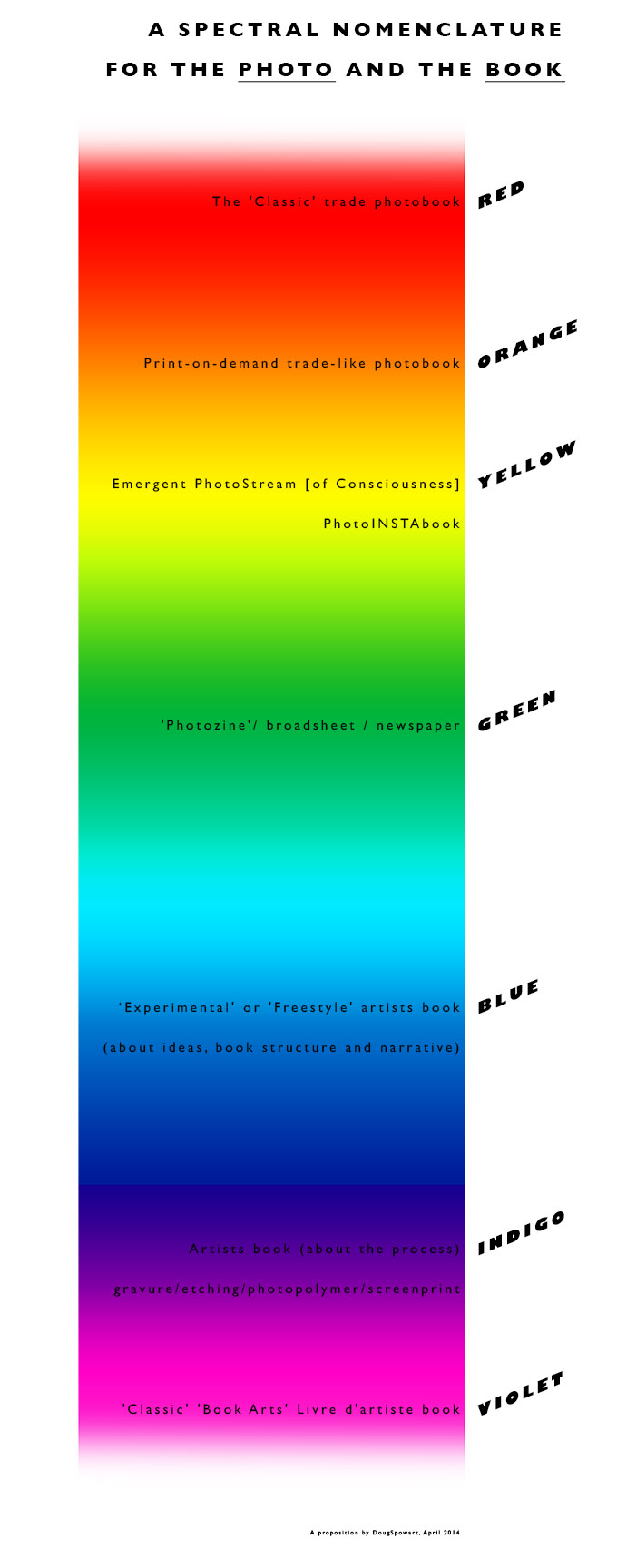
A SPECTRAL NOMENCLATURE FOR THE PHOTO AND THE BOOK
.
A Bibliography of the selected books
From the Artists’ Book Collection of the Australian Library of Art, State Library of Queensland and the Spowart+Cooper Photobook Collection
Red – The ‘Classic’ trade photobook
American Cockroach
Photographs by Catherine Chalmers
Essays by Steve Baker, Garry Marvin, and Lyall Watson
Aperture, 2004
(Spowart+Cooper Photobook Collection)
Afghanistan, or, The perils of freedom
Stephen Dupont 1967- ; Jacques Menasche 1964-; Stephen C Pinson; New York Public Library : 2008
Steam : India’s last steam trains
Stephen Dupont 1967- ; Mark Tully
Stockport : Dewi Lewis :1999
Foundphotos / DickJewell
Dick Jewell
London : s. n. :1977
FromMontelucotoSpoleto : December1976
Sol LeWitt 1928-2007.
Eindhoven Netherlands : Van Abbemuseum ; Weesp Netherlands : Openbaar Kunstbezit :1984
Journey of a wise electron
Peter Lyssiotis 1949- ; PeterLyssiotis 1949-.; PeterLyssiotis 1949-.
Prahan, Vic. : Champion Books :1981
Eat : Jan-Mar 2001
Jo Pursey
Sydney, N.S.W. : J. Pursey :2001
Tour of duty : winning hearts and minds in East Timor
Matthew Sleeth 1972- ; Paul James (Paul Warren), 1958-
South Yarra, Vic. : Hardie Grant Books in association with M.33 :2002
Signs of Australia
Richard Tipping 1949-
Ringwood, Vic. : Penguin Books :1982
Intimations : with selected poetic responses by Michele Morgan
Gordon Undy
Surry Hills, NSW. : Point Light :2004
Orange – Print on demand trade-like photobook
Various fires and MLK
Scott L. McCarney 1954-
Rochester, N. Y. : VisualBooks :2010
Reportage : a retrospective 1999-2009.
Robert McFarlane 1942-; Jacqui Vicario; StephenDupont 1967-; National Art School (Australia); Momento Pro.
Bondi Junction, N.S.W. : Reportage :2010
Flashback : SE Queensland flood event January 2011
Julie White
Strawberry Hills, N.S.W. : Momento :2011
Yellow – Emergent PhotoStream* [of Consciousness] or InstaPhotoBook*
Iris Garden
Wiliam Gedney
Designed by Hans Seeger
Little Brown Mushroom, 2013
(Spowart+Cooper Photobook Collection)
Moved Objects
Georgia Hutchison and Arini Byng
Perimeter Editions
Melbourne, Australia, 2013
(Spowart+Cooper Photobook Collection)
Lost horizons
Scott L. McCarney 1954-,
Rochester, NY : ScottMcCarney/Visual Books :2008
Call of the wild
Matthew Sleeth 1972- ; Josef Lebovic Gallery.
Sydney N.S.W. : Published by Josef Lebovic Gallery :2004
Signed up : 22 postcards
Richard Tipping 1949-
Newcastle, N.S.W. : Artpoem :c2010
Green – Photozine*/ broadsheet / newspaper
Radiata, 2013
Jacob Raupach
(Spowart+Cooper Photobook Collection)
.
LBM Dispatch #6: Texas Triangle
Alec Soth and Brad Zellar
Little Brown Mushroom, 2013
Edition of 2000
(Spowart+Cooper Photobook Collection)
Blue – Experimental’ or ‘Freestyle’ artists book
Ten menhirs at Plouharnel, Carnac, Morbihan, Bretagne, France
Jihad Muhammad aka John Armstrong 1948-
Hobart Tas. : J. Armstrong :1982
Detour ; Kõrvaltee
Christiane Baumgartner 1967- ; Lucy Harrison 1974-; Grahame Galleries + Editions.
Leipzig, Germany : C. Baumgartner & L. Harrison :2004
No diving II : evidence
Peter E. Charuk
Hazelbrook, N.S.W. : P.E. Charuk :2005
The story of the gorge
Victoria Cooper 1957-
Toowoomba, Qld. : V. Cooper :2001
Supernova
Victoria Cooper 1957- ; Photographers of the Great Divide.
Toowoomba, Qld. : Photographers of the Great Divide :2005?
Space + Time
Ken Leslie ; Grahame Galleries + Editions.
Atlanta, Ga. : Nexus Press :2002
The river city : eyewitness document
Helen Malone 1948-
Yeronga, Qld : H. Malone :2011
Tonguey
Ron McBurnie 1957-
Townsville, Qld. : R. McBurnie :1996?
Portrait of an Australian
Jonathan Tse 1967-
Robertson, Qld. : J. Tse :1998
[Eleven]
Marshall Weber 1960- ; Christopher Wilde; Sara Parkel; Alison E Williams; Isabelle Weber; Booklyn Artists Alliance.
New York : Booklyn :c2002
Posted
Normana Wight 1936- ; Numero Uno Publications.
Milton, Qld. : Numero Uno Publications :2009
High tension
Philip Zimmermann ; Montage 93 : International Festival of the Image (Rochester, N.Y.)
Rochester, NY : the author :1993
Indigo – Artists book (Inkjet – gravure – photopolymer – screenprint)
Lost and found : a bookwork
Lyn Ashby 1953-
Vic. : ThisTooPress :2007?
The ten thousand things
LynAshby 1953-
Victoria : Lyn Ashby, Thistoopress :2010
Solomon
JanDavis 1952-
Lismore : J. Davis :c1995
Limes
Tommaso Durante 1956- ; Chris Wallace-Crabbe 1934-; Elke Ahokas
North Warrandyte, Vic. : Tommaso Durante :2011
Terra Australis
Tommaso Durante 1956- ; Kay Aldenhoven
Warrandyte, Vic. : TommasoDurante :2003
Homeland
Noga Freiberg 1962- ; Peter Lyssiotis 1949-.; Masterthief Enterprises
Burwood, Vic. : Masterthief :2003
Deeply honoured
Fred Hagstrom ; Densho Digital Archive.; Carleton College (Northfield, Minn.). Archives.
Saint Paul, Minn. : Strong Silent Type Press :2010
Cars of the fifties : book number 247
Keith A. Smith 1938-
Rochester, N.Y. : KeithSmith :2006
Violet – ‘Classic’ ‘Book Arts’ Livre d’artiste book
Through closed doors : 7 paraclausithyra
Susan J. Allix 1943-
London : S. Allix :2005
A gardener at midnight : travels in the Holy Land ; from drawings made on the spot by Yabez Al-Kitab
Peter Lyssiotis 1949- ; Brian Castro 1950-; David Roberts 1796-1864.; Nick Doslov; David Pidgeon; State Library of Victoria.; Masterthief Enterprises.; Renaissance Bookbinding.
Melbourne : Masterthief :2004
New branches on an old tree
Susan Purdy ; Blue Moon Press.
Melbourne : Blue Moon Press :2006
List concludes.
.
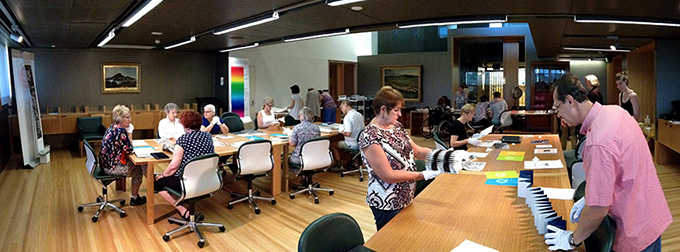
SLQ White Gloves event – Attendees viewing books
.
.
This work is licensed under a Creative Commons Attribution-NonCommercial-NoDerivs 3.0 Unported License.
.
.
Text: © 2014 Dr Doug Spowart Photos: ©2014 Victoria Cooper and Doug Spowart
.
.
.
.
ROCKHAMPTON CYANOTYPE: A workshop in ‘Blue’
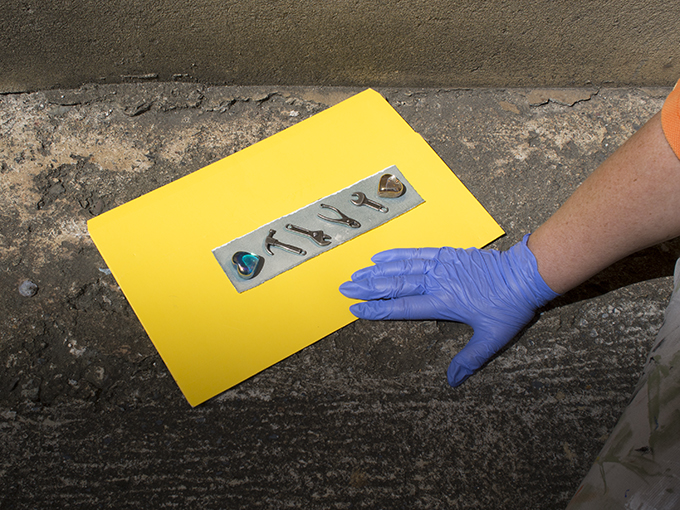
A Capricornia Printmaker’s hand and cyanotype being exposed
.
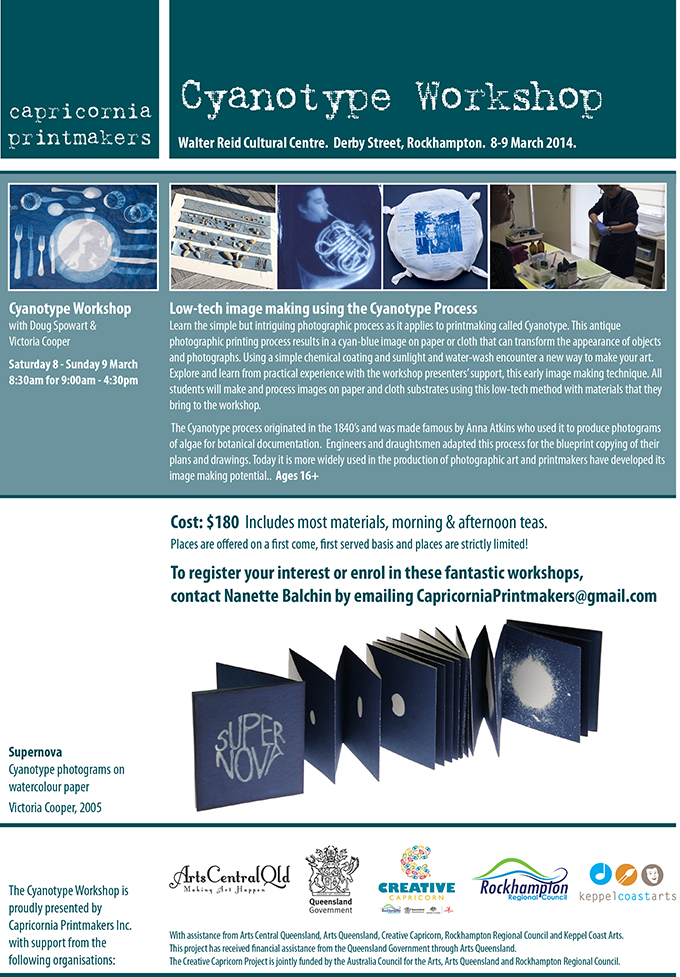
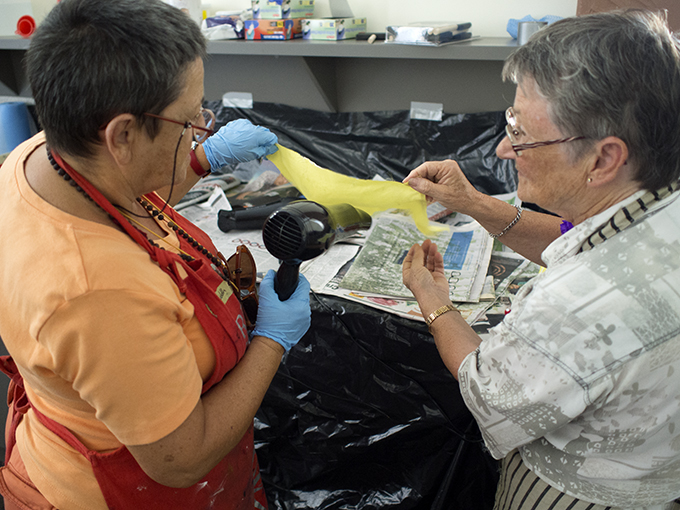
Last weekend we worked with members of the Capricornia Printmakers Inc in an investigation of Sir John Herschel’s 1840s historical cyanotype process. The 12 participants spent two days working with a range of shadow making objects and the blue image of the simple ferrous iron.
.
The process relies on coating paper or cloth with a chemical made by the combination of potassium ferricyanide and ferric ammonium citrate. On drying the light sensitive material has objects placed on it and then exposed in sunlight. Ultra-violet light is required and exposure times may be 8-10 minutes although times may vary depending on the time of year – or day – or if clouds get in the way.
Advanced work uses enlarged contact negatives of photographs made on overhead projection transparencies through laser photocopiers or inkjet printers.
We experienced one day of intermittent sun that worked out well for us. The next day though presented us with thick clouds of tropical cyclone Hadi making the direct sunlight system all but impossible. Luckily we had our A2 UV exposure unit with us that enabled us to continue work indoors regardless of the weather.
We all had a great time and the Capricornia Printmakers pushed the limits of the process and will, with the chemistry remaining, continue having the ‘blues’.
.
What follows is a report in images….
.
 .
.
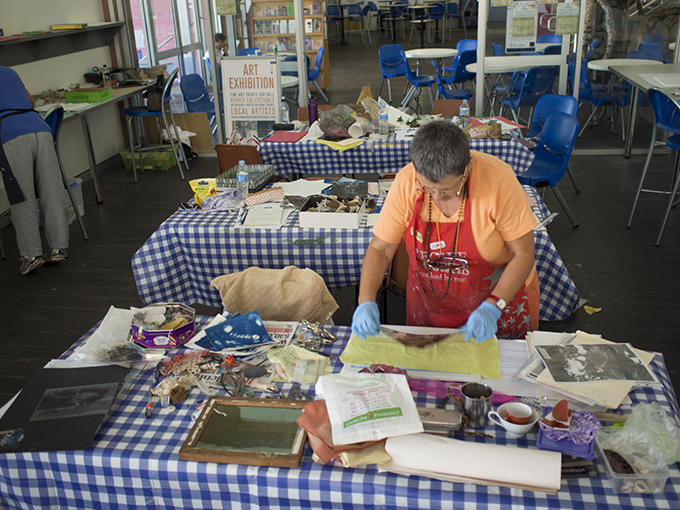
This goes with that — selecting objects to image…
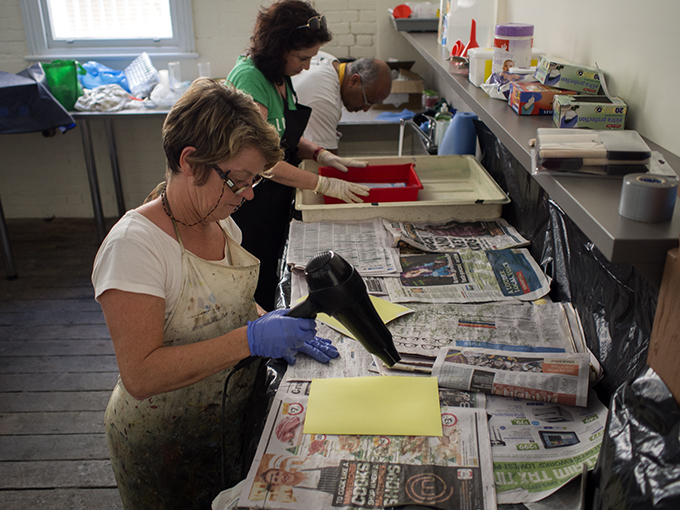
Drying a coated sheet
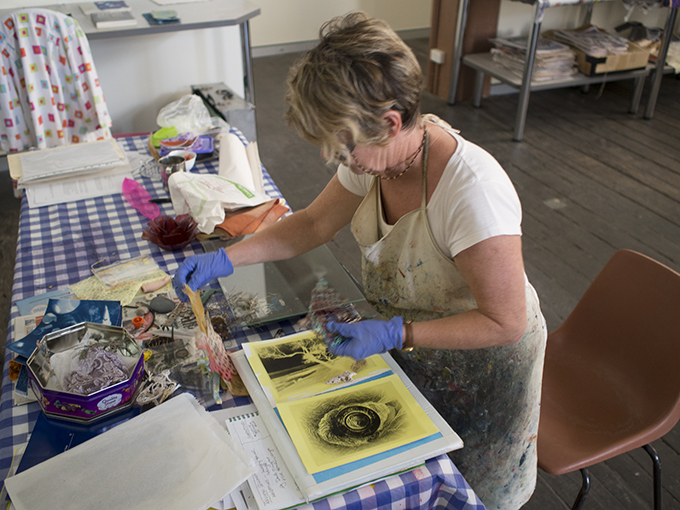
Nanette selecting stuff to image
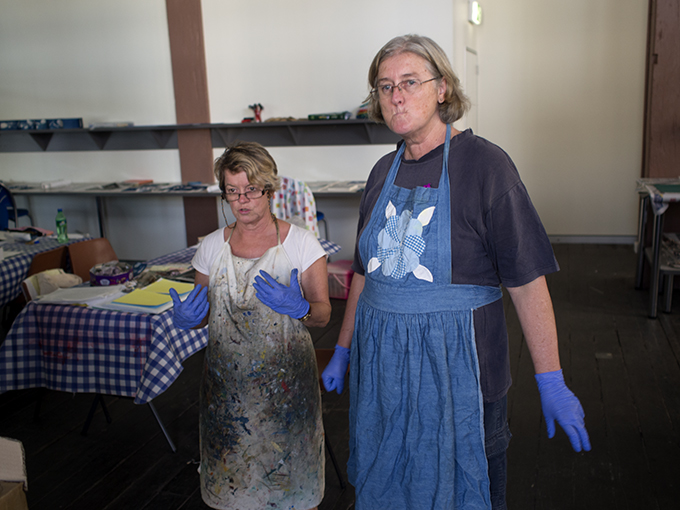
Ready for action – Nanette and Vicky
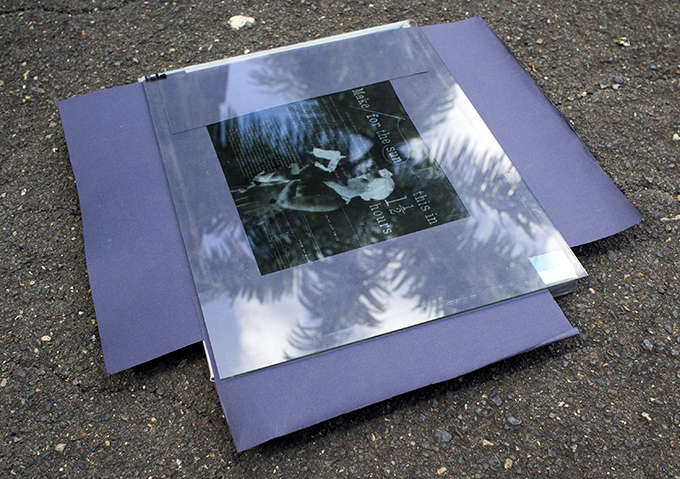
Exposing a negative of image and text
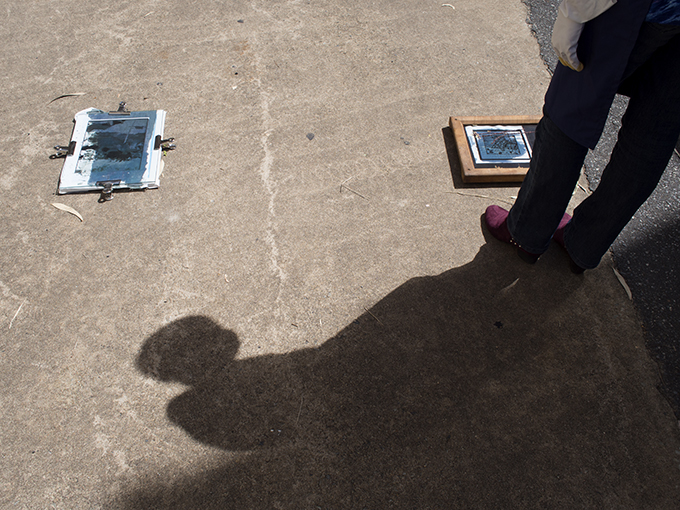
Exposing the contact frams to the sun
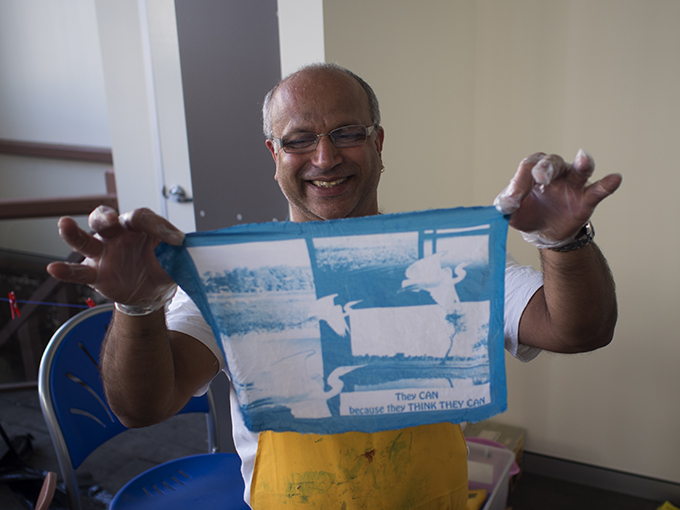
Image and text on cloth — a success!
Drying coated cloth
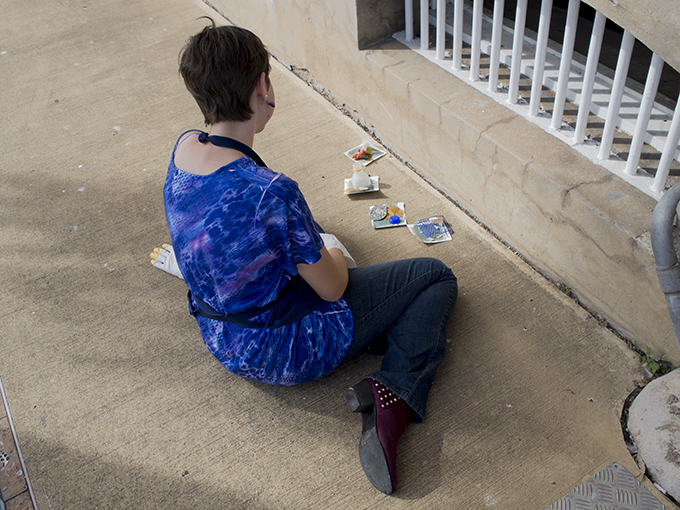
- Exposing some miniature cyanotypes in fading light
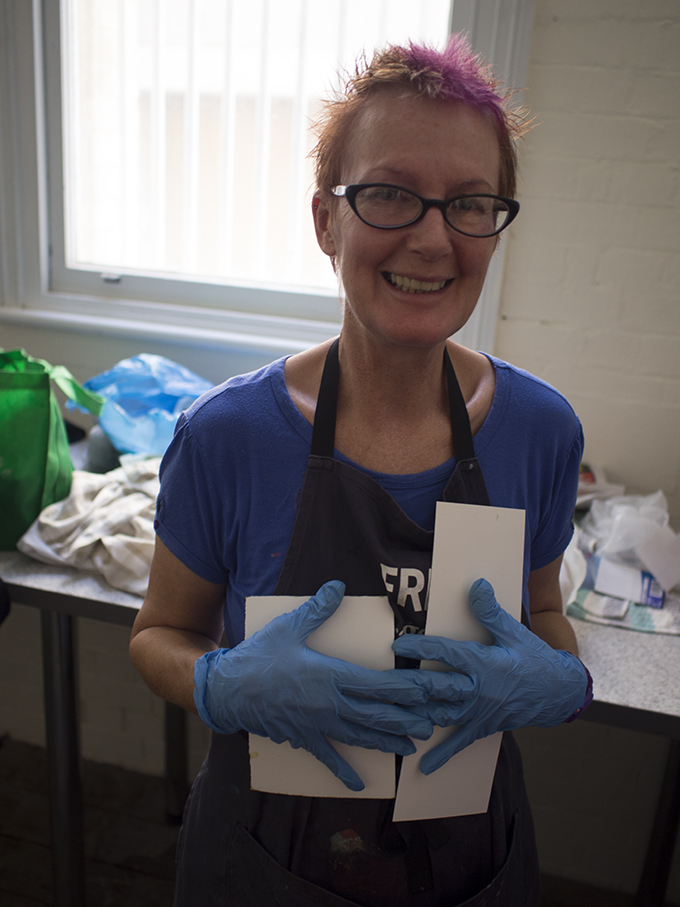
Peta holding her images close before washing-out.
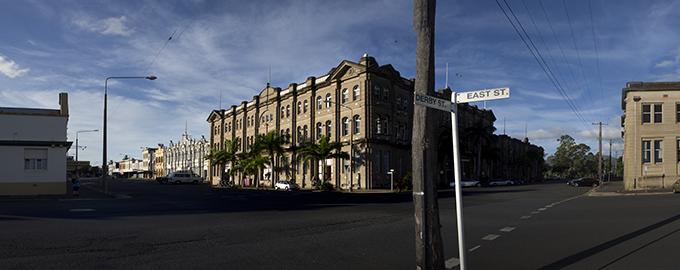
The Walter Reid Cultural Centre in Rockhapton – The venue for the workshop
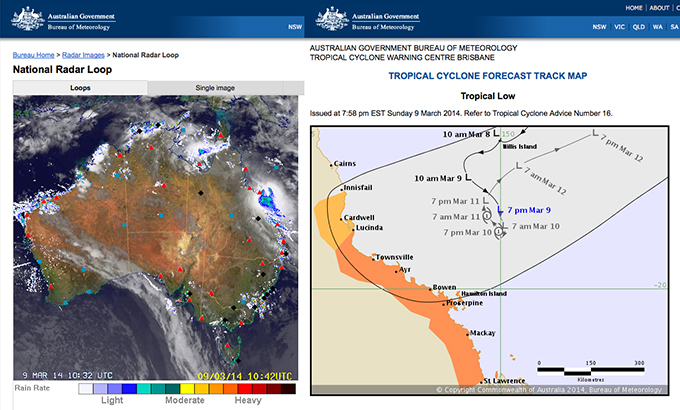
The BOM cyclone track map
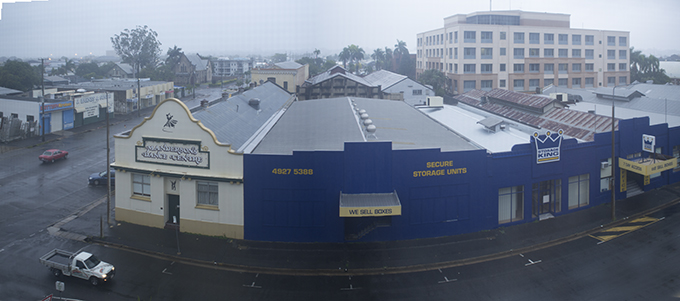
Rain coming in on Sunday – Not good for sunlight exposures
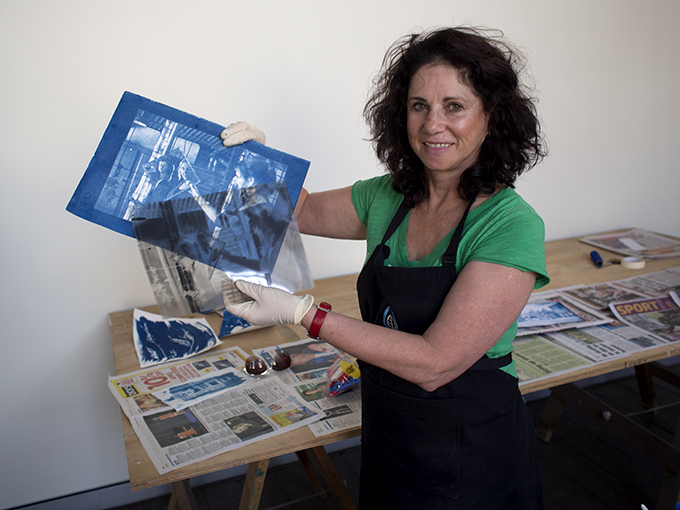
Aileen with one of her works
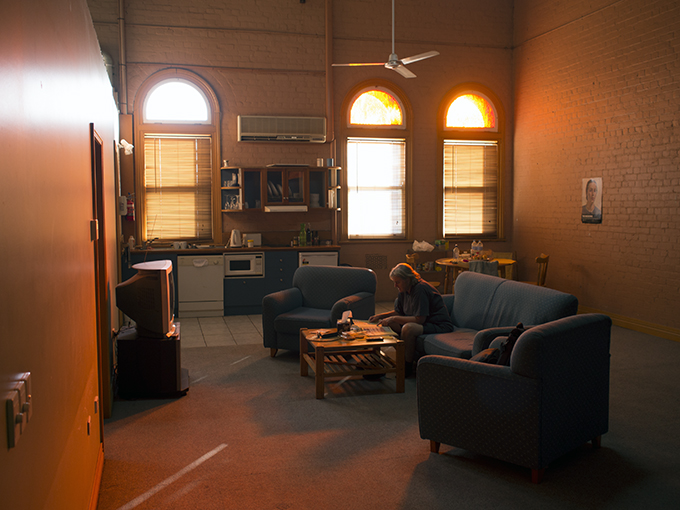
Taking a break at the artists residency @ Walter Reid Cultural Centre after a frenetic Saturday’s workshop
.
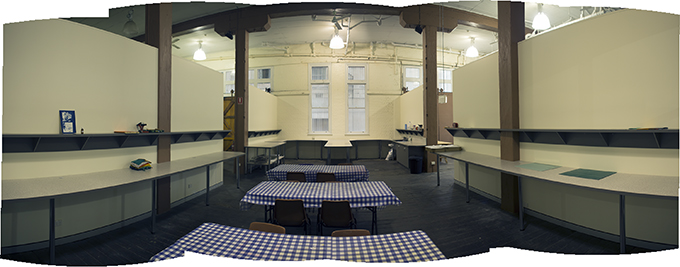
The workspace cleared and ready for the next time …
.
All photos © Doug Spowart. Participants are welcome to access their photos…
BUNDABERG: A New Nocturne Community Project


.
NOCTURNE BUNDABERG: Stage One of a new community project concept
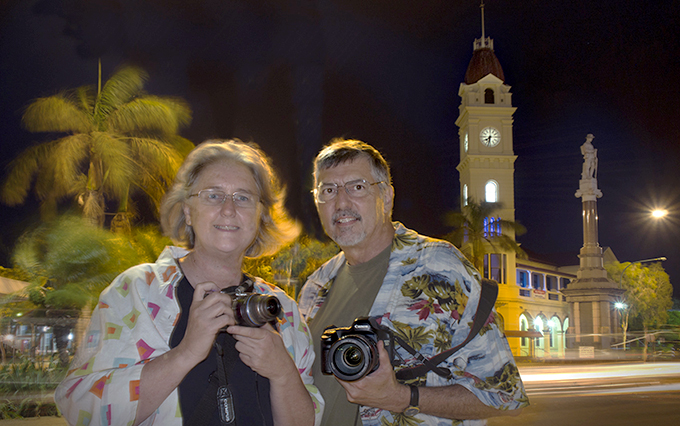
Vicky and Doug go tropical (shirts anyway) in Bundaberg
.
We’ve been in Bundaberg this week (January 5-12)doing preliminary work on a new concept in our nocturne work. Here is the overview of the project:
.
In April 2014 Bundaberg Regional Galleries will be hosting an artist in residency program with artists Victoria Cooper and Doug Spowart. An exhibition of their Nocturne work including new images from this region will be on show at CHARTS Gallery at Childers during April in conjunction with the Queensland Festival of Photography 5. The artists will be also working on their next Nocturne photodocumentary project, entitled Nocturne Bundaberg Region. As with the previous Nocturne Muswellborook and Nocturne Grafton projects the photographs they make will be posted on the Nocturne Bundaberg Region Facebook page so that communities can connect with the project, and importantly, share their stories about each place.
.
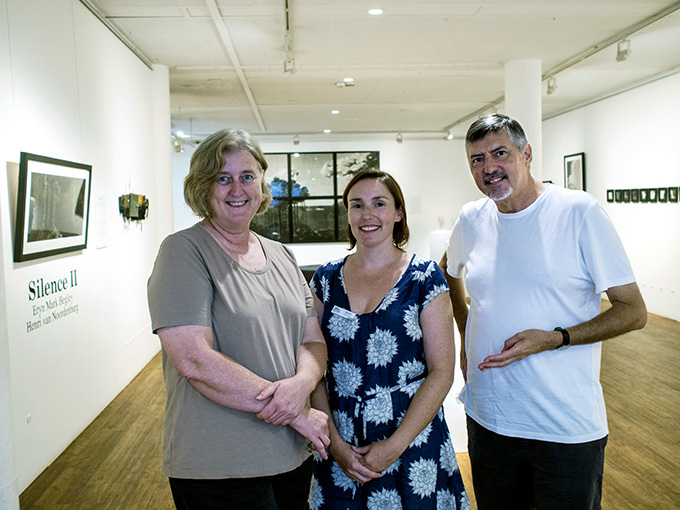
Talking with Trudie Leigo – Exhibitions Officer @ Bundaberg Regional
.
To extend the community’s connection with the project, Victoria and Doug will be working with a small group of photographers from across the Bundaberg Regional Council area to be contributors to the image-making part of the project. The participants will be selected using an EOI process that will be launched on the project’s Facebook page by the end of the month. Successful applicants will be advised in mid-March and they’ll attend a workshop in specialist aspects of nocturnal photography, image enhancement and the safety considerations for this work. After attending the workshop the local photographers will have an opportunity to add their images to the project’s Facebook page. Preferably, applicants should be 18 or over. Other community members may be invited to post images as well.
Any community member or person who has stories inspired by the photographs can post comments to the Facebook page..
.
The Nocturne Bundaberg Region’s Facebook page images, as well as the community conversation derived from the project, may be incorporated in other outcomes including exhibitions or publications associated with the project. A selection of images may go into the Picture Bundaberg Archive.
.

Nocturne Bundaberg Logo
.
All photographs © 2014 Cooper+Spowart for the Nocturne Bundaberg community documentation project
.
.
This work is licensed under a Creative Commons Attribution-NonCommercial-NoDerivs 3.0 Unported License.
http://creativecommons.org/licenses/by-nc-sa/2.5/au/
.
.
.
THE EXPO 88 PHOTO SHOW – 25 years on
.
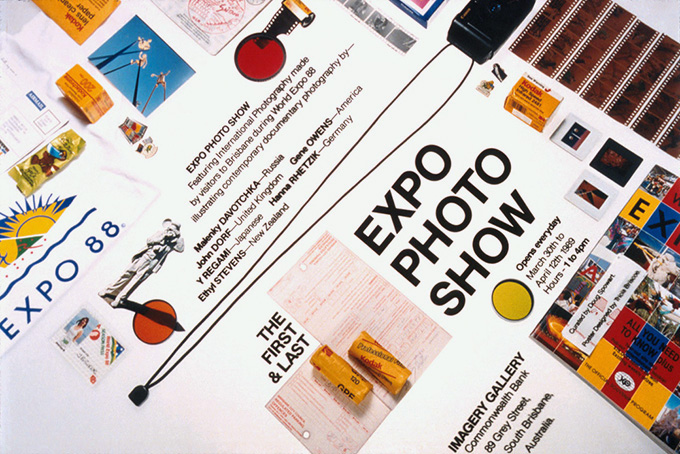
First & Last EXPO PHOTO SHOW Poster
.
EXPO’88 – A conceptual photographer’s document
.
At this time twenty-five years ago, January 1989 – the people of Brisbane were beginning to lament the passing of EXPO’88. While the six-month adventure opportunity to encounter the world and its cultures and cuisine was to form lasting memories for some, others may have recollections of the crush of interstate and overseas visitors, the nightly flamboyant fireworks displays and the inevitable queuing to visit everything from food stalls, to exhibitions and toilets. EXPO’88 is often seen as a watershed in the transformation of Brisbane as a sleepy backwater into a vibrant cosmopolitan city of the world and, most certainly part of the 21st Century.
I had a season pass for EXPO’88 and created a personal body of work as a response to my experience of the event.
.
Here is the back-story behind my 1988 project … The First & Last EXPO PHOTO SHOW
.
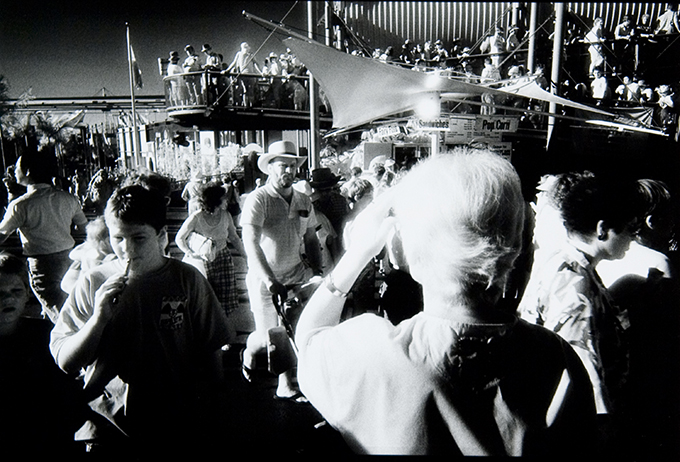
EXPO 88 Crowd Crush ………..PHOTO: Ethyl Stevens aka Doug Spowart
.
In the EXPO’88 event I recognised an opportunity for the creation of a new body of work investigating emerging approaches to my work methodology. For varied reasons I had introduced to my practice the creation of alias identities to which my work was attributed. These identities were quite complete in that they had refined working styles, subject matter, presentation forms, a photographic portrait, signatures and artists statements. As a gallery director it was easy to slip the work of these ‘photographers’ into group shows for commentary and critical acclaim. These personae enable me to play a little game on a system that at times, from my perspective at times, was biased, exclusive, nepotistic and overly critical. It also enabled me to explore ideas and concepts relating to my photography and the presentation of photographs.
.
When EXPO offered season passes I attended the passport portrait session with pair of fake glasses and a fictitious name, Eugene Xavier Pelham Owens, the initials and the signature spelled ‘EXPO’. The deception had begun. In time this project grew into an extensive body of work from 5 different personae all representing their manufactured personal responses to the EXPO experience. The exhibition was opened on April 1st 1989 (April Fools Day), it was reviewed positively in the Courier Mail and sales of work resulted from people who found the photographs reconnecting them with their experience of the event. The deception went undetected and after the exhibition the body of work passed into obscurity, as do so many exhibitions of photographs, and was slipped into archive storage boxes in my studio.
Whilst, at the time of the fieldwork on this project I called myself a ‘conceptual photographer’ as I felt that my work was driven by the overarching idea of personal experience documents rather than the photodocumentary reportage principles of truth and reality. I was aware of the term ‘conceptual artist’ and recognized that it had all kinds of baggage attached to it based on art theory and movements, however my work as a photographer at this time has simpatico with Sol Lewitt’s 1967 manifesto on conceptual art. He states:
In conceptual art the idea or concept is the most important aspect of the work. When an artist uses a conceptual form of art, it means that all of the planning and decisions are made beforehand and the execution is a perfunctory affair. The idea becomes a machine that makes the art. (Lewitt 1967)
Recently Melissa Miles has discussed the term ‘Conceptual Documentary’ in her 2010 paper The Drive to Archive: Conceptual Documentary Photobook Design. The discusses in reviewing the photobooks of Stephen Gill, Mathieu Pernot and Matthew Sleeth. She asserts that this mode of photography is based on a theory that photographers want to collect and respond to a kind of ‘archive impulse’, making and arranging image sequences of daily life into photobooks. What appeals to me is that, as a Conceptual Documentary photographer I, as Miles defines, ‘seek[s] out and frame[s] their subjects according to a pre-determined idea or scheme. Processes of repetition and categorization are central to Conceptual Documentary’ (Miles 2010:50). For me, what I was engaged in was to make a commentary from a personal viewpoint and to create a contemporary record for public presentation and, ultimately archiving. While Miles’ contemporary Conceptual Documentary practitioner including the likes of Martin Parr freely publish their photobooks in the 1980s trade published productions were beyond the reach of most photographers including myself.
What I find interesting now is that the 1980s was a particularly productive period for me as I created a trilogy of exhibitions: Tourists Facts, Acts, Rituals and Relics, Icons & Revered Australiana and The First & Last Photo Expo Show. These were essentially social documentary projects based on a personal directorial premise. I found that the limited opportunities for presentation of the framed exhibition format of these shows led me to initial experiments with boxed sets of images and ultimately to self-published photobooks, the first of which was completed in 1992.
These days I’m not so concerned about any tag as my work is often so interdiciplinarian it is hard to define. What for me is interesting is that at the time I made work that may now be able to be defined and categorized using contemporary terms and definitions. What is also important now is that the EXPO’88 photographs, some 5,000 of them, exist as an archive not necessarily as a document of the place but rather as a personal, conceptual documentary photographer’s response to the EXPO’88 experience.
Doug Spowart December 26, 2013
.
Lewitt, S. (1967). Paragraphs on Conceptual Art. Artforum 5: 8.
Miles, M. (2010) “The Drive to Archive: Conceptual Documentary Photobook Design.” Photographies 3, 49-68.
.
HERE IS A SELECTION OF WORKS FROM MY EXPO’88 PSEUDONYMS
.
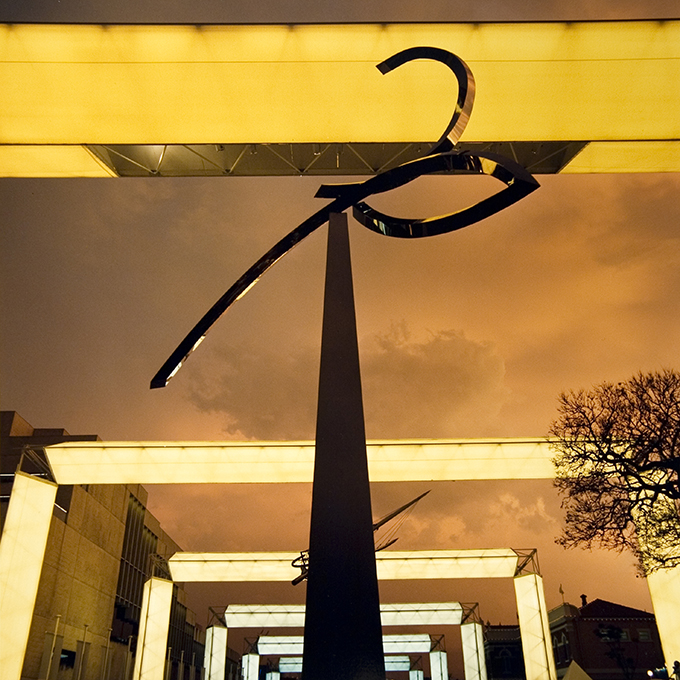
John (Jack) Dorf ………(United Kingdom)

John (Jack) Dorf ………(United Kingdom)
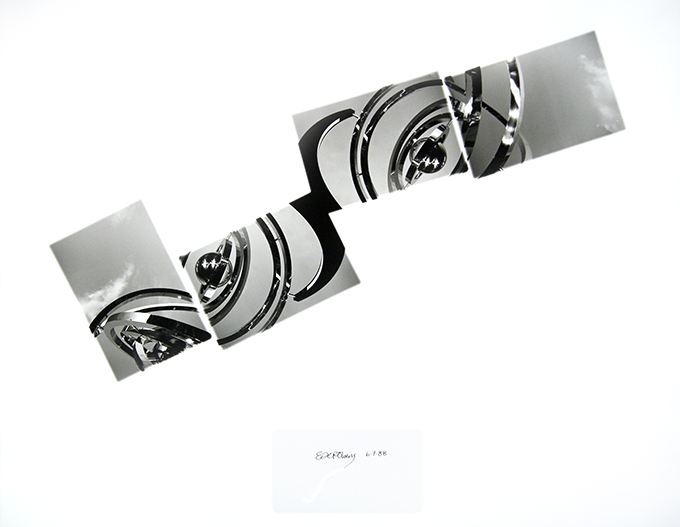
Eugene Owens …….(USA)
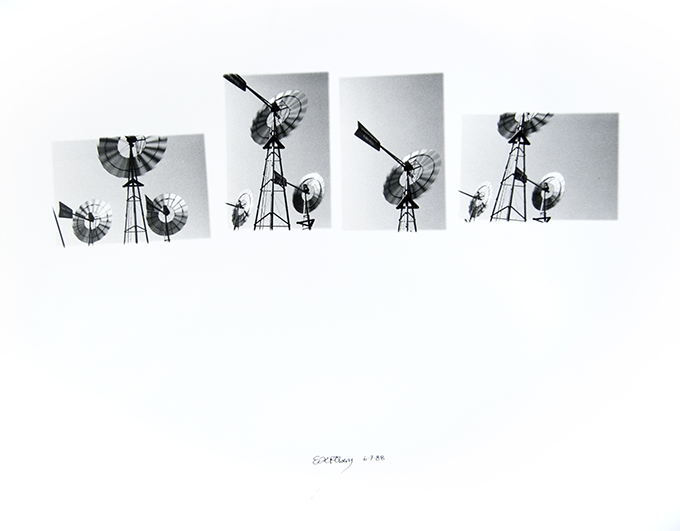
Eugene Owens …….(USA)
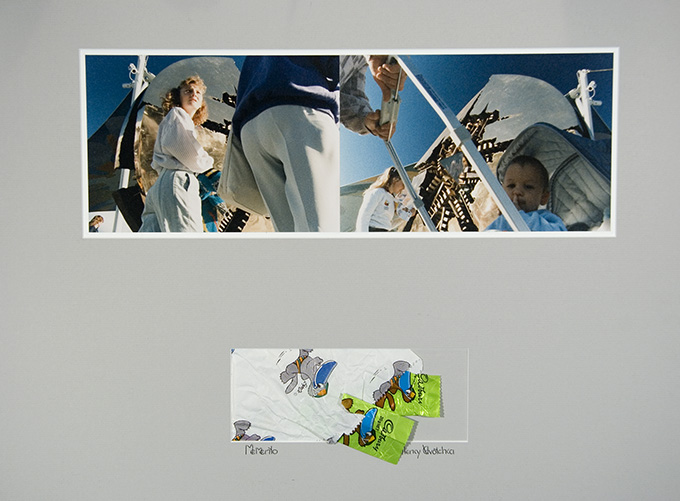
Malenky Davotchka ……. (Russia)
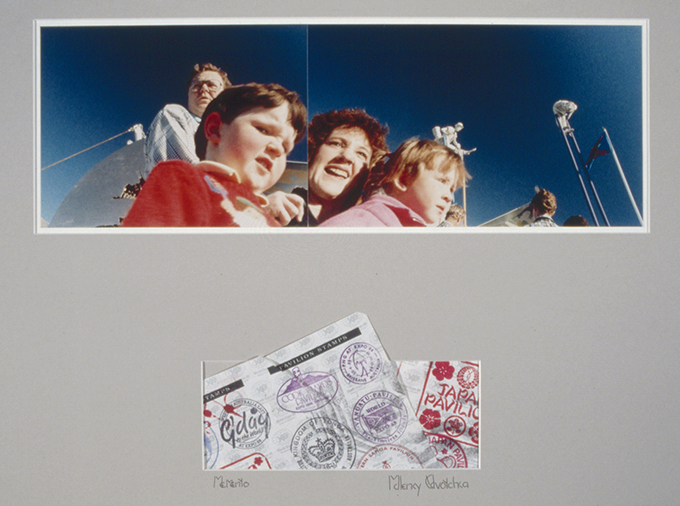
Malenky Davotchka …….(Russia)
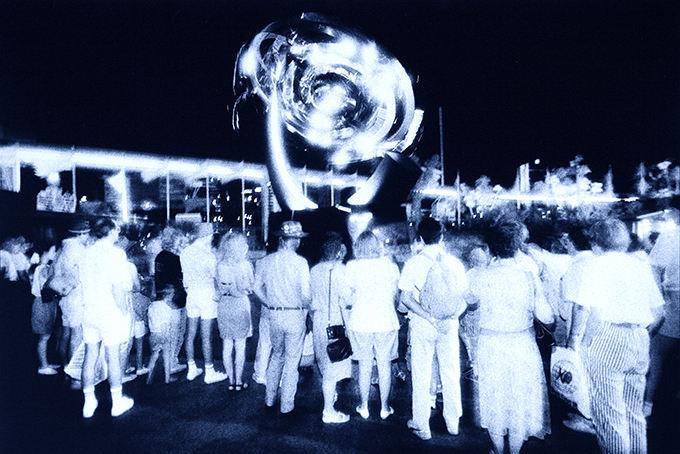
Y Regami ……(Japan)
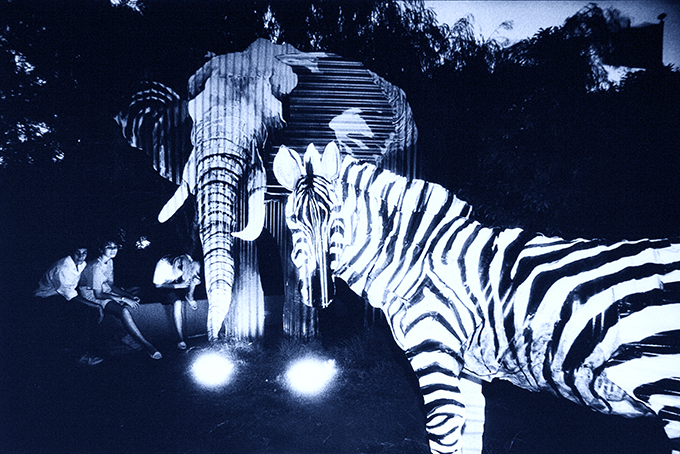
Y Regami ……. (Japan)
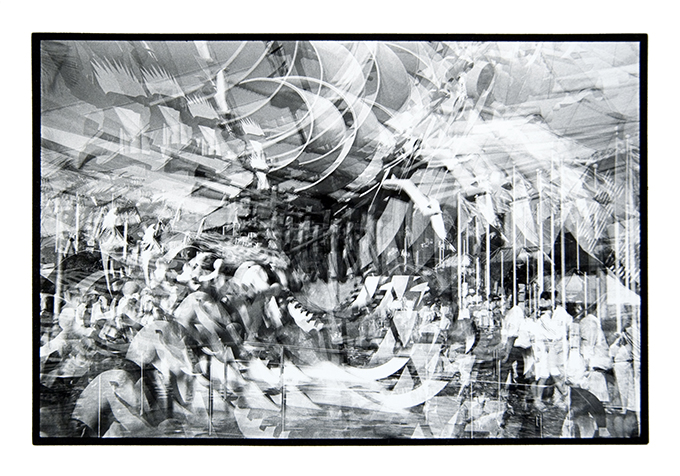
Hanna Rhetzik …….(Czechoslovakia)
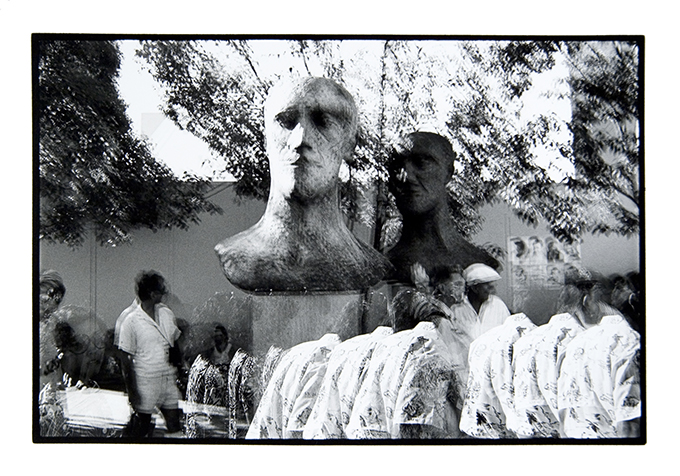
Hanna Rhetzik ……(Czechoslovakia)
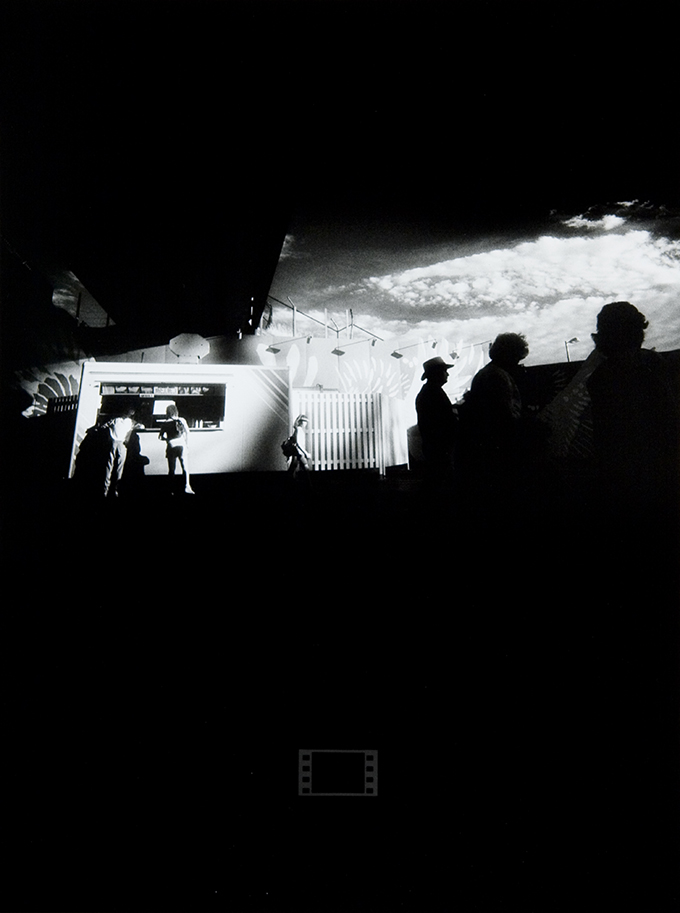
Ethyl Stevens …….(USA)
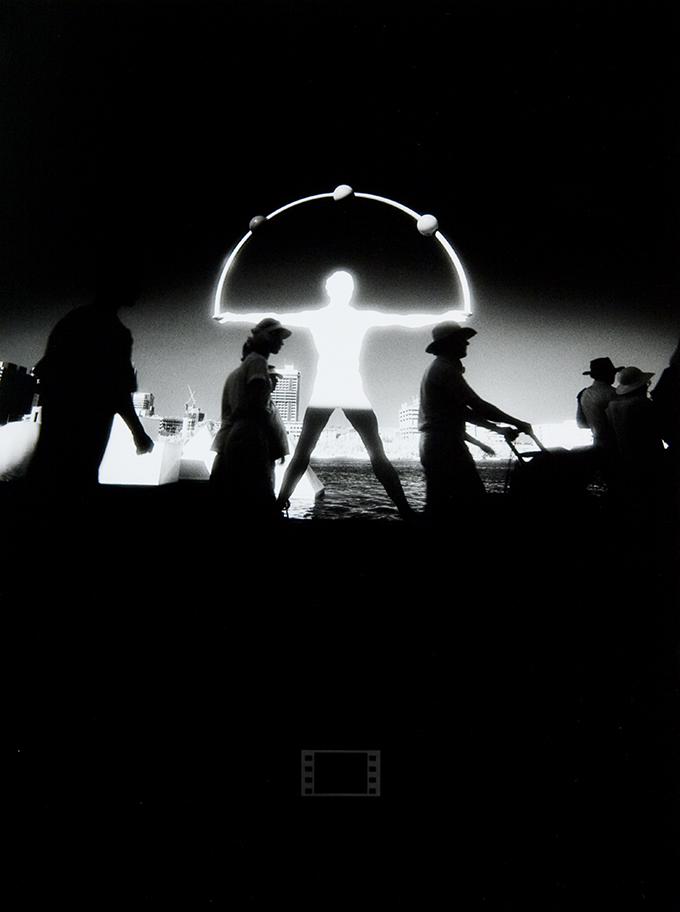
Ethyl Stevens …….(USA)
.
A PDF PRESENTATION CONTAINING MORE IMAGES IS AVAILABLE HERE: EXPO-SPOWART-v3
.
First & Last EXPO PHOTO SHOW Poster
.
.
Images and text © Doug Spowart Design of the Poster: Trish Briscoe
From the Doug Spowart Personal Art Archive 1953-2014
..
.
This work is licensed under a Creative Commons Attribution-NonCommercial-NoDerivs 3.0 Unported License.
.
FROM SMALL THINGS … : Queensland Small Towns Documentary Project
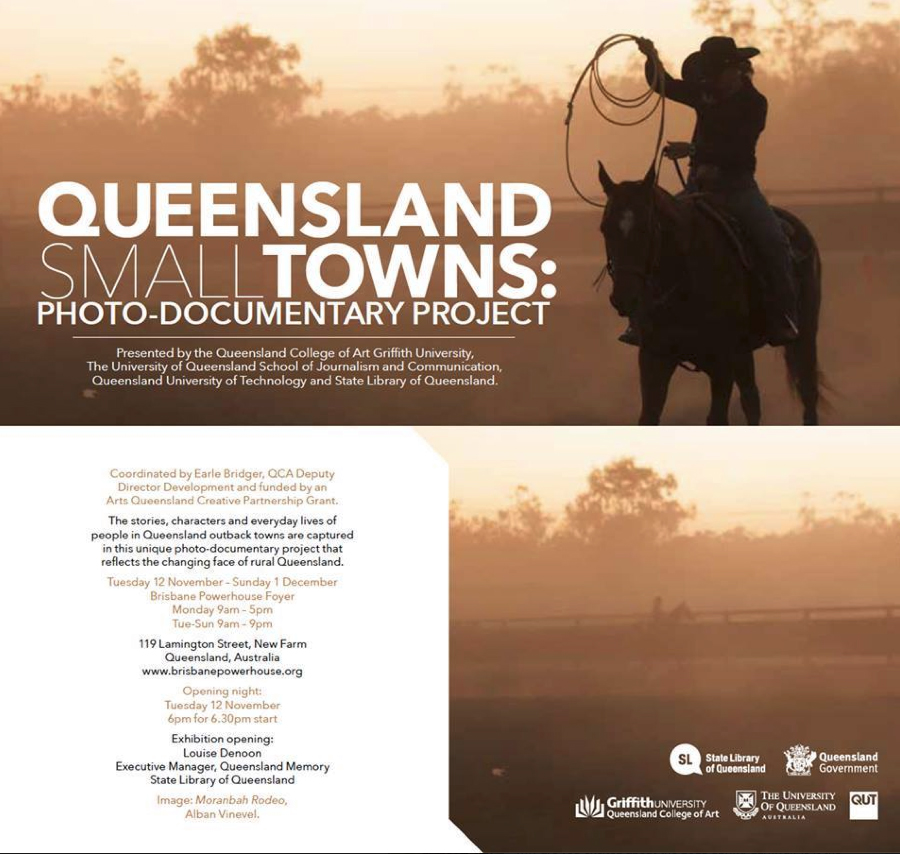
Queensland Small Towns: Documentary Project – Invite
.
Queensland Small Towns: Documentary Project
Brisbane Powerhouse, 12 November to 1 December, 2013
.
Queensland’s regional areas are fast becoming the most common subject for the scrutiny of the photodocumentary image-makers. In August the Central Queensland Project exhibition was shown at the Powerhouse in Brisbane and now, only a few months later, another show entitled Queensland Small Towns: Documentary Project is hung in the same venue. This new contribution to the documentation of regional communities is a student/lecturer project initiated by the three big Institutions: University of Queensland, Queensland University of Technology and the Queensland College of Art (QCA).
With the support of academic staff, students of these photography and photojournalism faculties descended on the Queensland towns of Moranbah and Dalby. The exhibition’s coordinator Earle Bridger from QCA, chose these two regional localities because of the impact of mining. To add contemporary photodocumentary rigor to the activity, professional photographers: Russel Shakespeare, Adam Ferguson and Shehab Uddin were collaborators and advisors to the fieldwork.
The project’s mission, as stated in exhibition press, was to capture: ‘The stories, characters and everyday lives of people in Queensland outback towns’1. They further claim that: ‘this unique photo-documentary project [will] reflect[s] the changing face of rural Queensland.’ 2
This project was instigated to provide an in-field experience for the students. They were charged with the challenge of avoiding the traditional news story and to: ‘capture a visually appealing and thought-provoking narrative to a high-professional standard.’ 3
The exhibition at the Brisbane Powerhouse was extensive–the photographic images and video interviews were shoehorned into every available space. This made viewing of the show a little like a ‘hide and seek’ exercise. Its curation within this space created a fragmented view confusing the holistic flow of the exhibition.
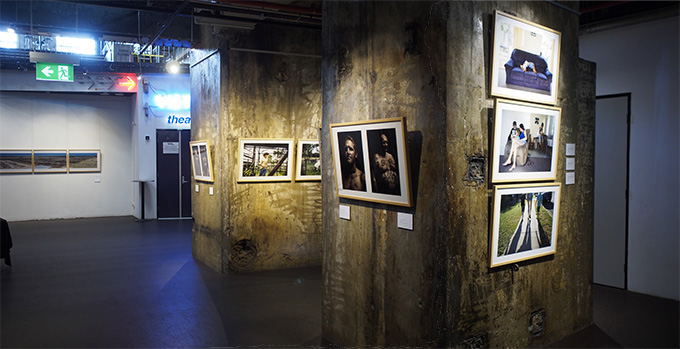
Queensland Small Towns: Documentary Project – Installation … Photo: Doug Spowart
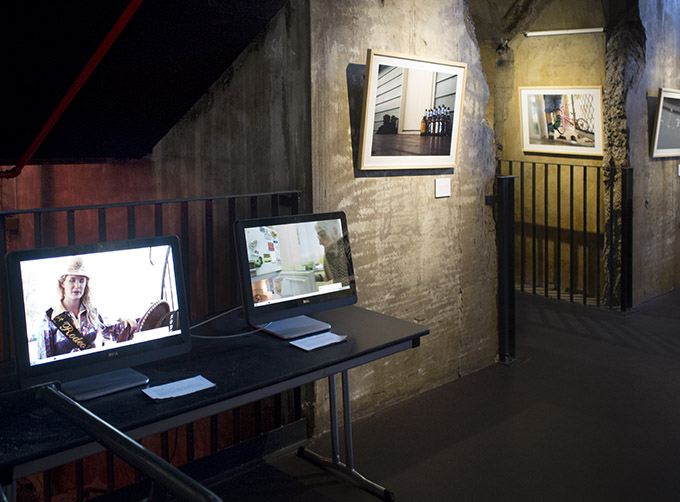
Queensland Small Towns: Documentary Project – Video and Photo installation … Photo: Doug Spowart
.
Under the tutelage of lecturers and the photodocumentary practitioners assigned the project, as well as study, research and personal preparation, one may think that these primary concerns are well covered. However there is one other critical factor–The preconditioning from existing media overexposure and hype. This rhetoric includes the following: That these small towns, besieged by the extraordinary pressures of the extractive mining industries, are places in a state of flux between the perceived benevolent farming practices of the past and the boisterous bully of mining. These once sleepy rural places are now zones of friction between itinerant workers, inadequate infrastructure, fractured families and ‘fracked’ communities. Any documentary commentator must not let this prejudice impede their impartial reportage. Furthermore one must consider methodological and ethical issues around the selection of subject/s, the gaining of access and trust and the authenticity of the resulting work.
All that aside, what of the exhibition Queensland Small Towns: Documentary Project? What I found was a proficient and diverse presentation of contemporary photodocumentary work. Mixed in amongst the contemporary trend of the bland document aesthetic were emotive and sensitive photographs of private lives in difficult times. Images were grouped as mini photo-essays enabling a concept or a subject to be pursued.
Importantly the opportunity provided to these students and the lecturers to get into the field is one of the best lessons they both can have. As mentor Russell Shakespeare comments: ‘I think these projects are so important on every level. To get students out working on self generated stories and also for the Town to have a group of photographers recording “History” as they see it, and then to be archived by the State Library, hopefully this project will continue on throughout other Qld Towns in years to come.’ 4
Unlike the financial reality that students may encounter in their post graduation world, a $50,000 Arts Queensland Creative Partnership Grant funded the Small Towns Documentary Project5. And fittingly, considering the generous budget for the project, the photographs and video works will be gifted to the people of Queensland by their inclusion in the permanent collection of the State Library of Queensland.
This work will add to a significant archive for the future, however I’m concerned about the ‘thought-provoking narrative’ and its importance now. The exhibition at the Brisbane Powerhouse only marginally serves the purpose and power of contemporary documentary work … to communicate. No mention is given to exhibitions in Dalby and Moranbah–the communities that gave the project subject matter to image and document. The project is also left wanting in the application of eJournalism platforms like YouTube, Facebook, blogs and websites. Googling the project one encounters variations of the same succinct media release without external links to any online archive that says what was done, who did it and most importantly, provide a space for the communities documented to share and extend their stories.
The domain of the photodocumentary practitioner is not just the creation of material for the archive–its perhaps more important role is now, being in and of the times, and the communities and people who shared stories and submitted their lives to the gaze of these lens men and women. These stories are required now to inform, to cajole, to stir commentary and demand corporate and political acknowledgement, response and action. That’s where documentary photography does its best work …
Dr Doug Spowart
December 27, 2013
.
1 http://brisbanepowerhouse.org/events/2013/11/12/queensland-small-towns-photo-documentary-project/
2 Ibid
3 http://www.uq.edu.au/sjc/qld-towns-project
4 Online correspondence from Russell Shakespeare
5 http://www.linkedin.com/pub/earle-bridger/b/521/737
.
What follows are images and videos from the exhibition.
.
Please Note: The photographs in this exhibition were presented as multiple image groups – only single images represent the photographer’s body of work. I have included the photographer’s statement under most images to give an understanding of their project and the context for the work. Most images in this review are from camera exposures within the exhibition environment and may not represent the image/s accurately due to reflections and uneven lighting.
.
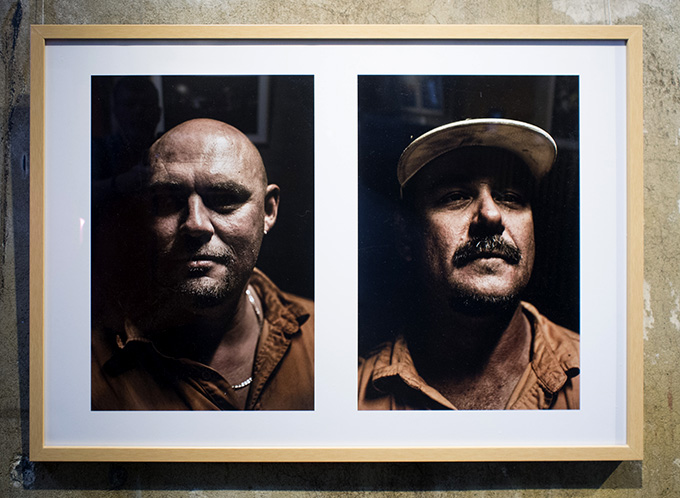
“Al Phillips, Drilling Supervisor + Chris Mannion, Driller, Moranbah” … Photo: Adam Ferguson and Brodie Standen, 2013
.
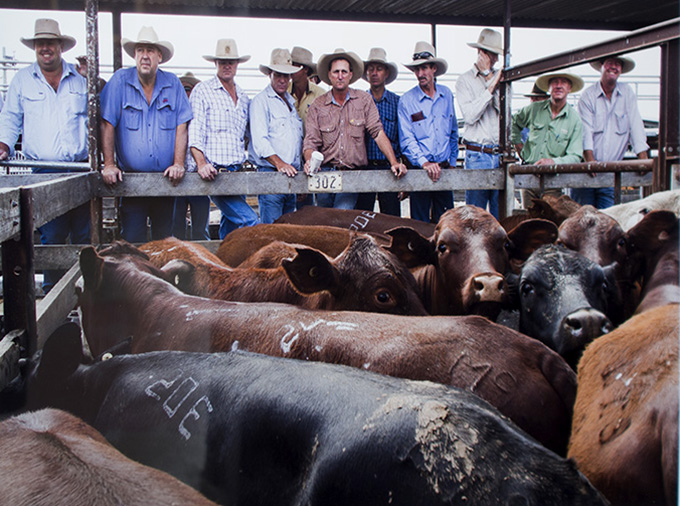
Potential buyers survey a pen of cattle at the Dalby sale yards. The weekly auctions are Australia’s larget one-day cattle sale, with over 6,000 head of cattle passing through each week.…Photo: Kimberley McCosker
.
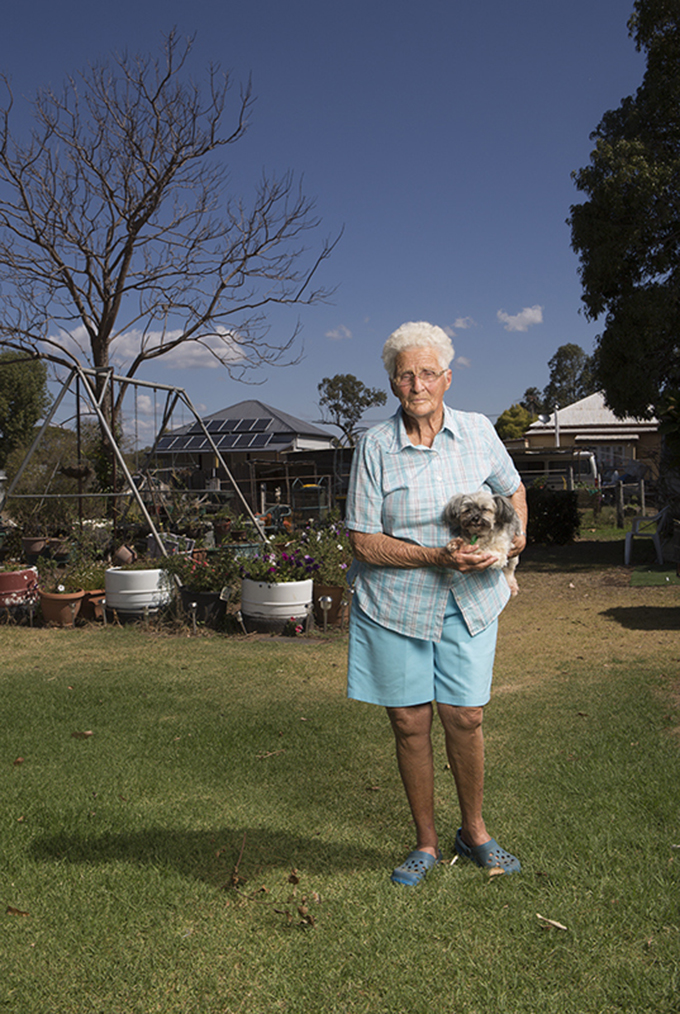
“Joyce Coss”
83 years old with “Waddles” her Sliky Cross.
63 years living in Warra.
Photo: Russell Shakespeare 2013
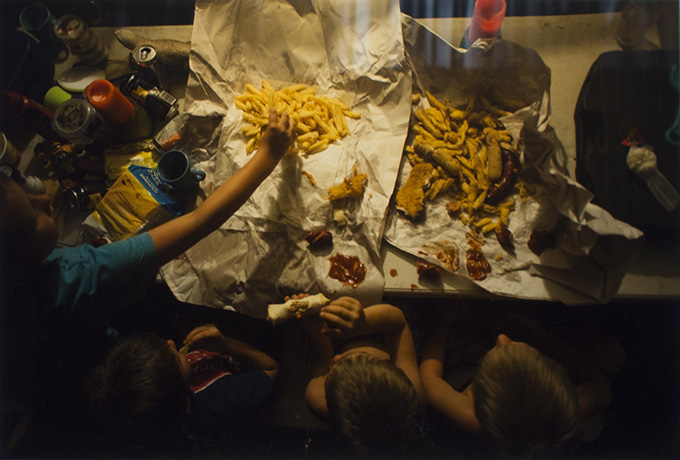
Beyond the sporting ovals, on the outskirts of Moranbah, Sean lives in a trailer. The trailer is powered by a petrol generator and drinking water tanks are filled at a family member’s house. He lives there by choice, a house has “too many walls”. Separated from his wife Sean shares custody of their 5 boys. Charlie, Darcy, Bailey, Harley, & Riley spend each weekend with their Dad and I was fortunate enough to spend a few days with them while they visited over school holidays. With Moranbah as a backdrop, a town where much of the population’s main objective is obtaining and retaining material wealth, getting rich and getting out, Sean’s lifestyle begs a closer look at what separates need and want. I would like to thank Charlie, Darcy, Bailey, Harley, Riley & Sean for their hospitality & allowing me to tag along with them. Photo: Cory Wright
.
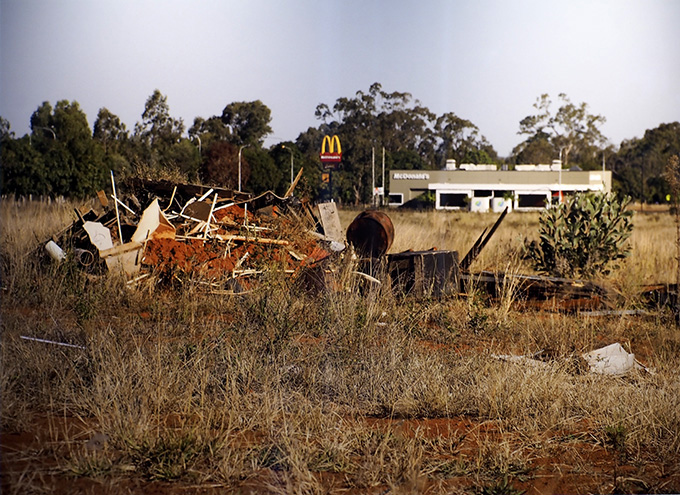
“Moranbah McDonald’s which lies on the outskirts of town” … Photo: Julia Whitwell
.
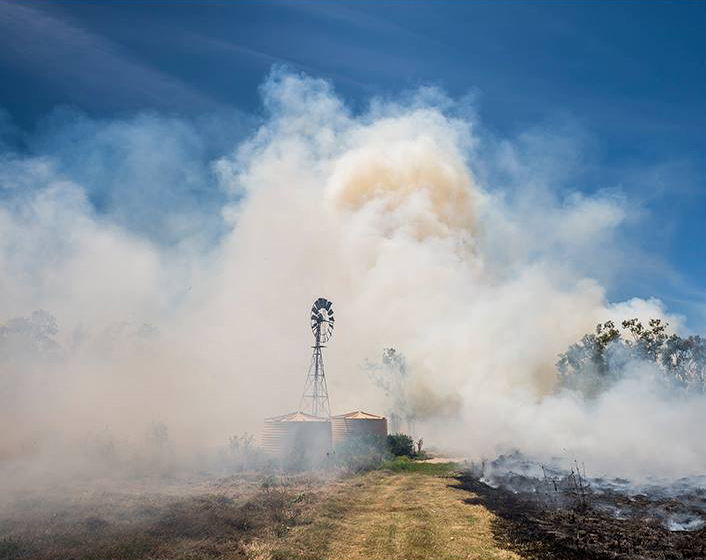
The Wilkie Creek Rural Fire Brigade in conjunction with other local fire brigades, coordinate necessary hazard reduction fires, as well as keeping life threatening fires at bay during the high risk summer season. Pictured [in my project] are their lives on a daily basis, as well as their involvement in a hazard reduction fire completed near Lake Broadwater in October, 2013. Photo: Eva Turek-Jewkes
Four videos by students from the University of Queensland School of Journalism and Communication:
.
.
.
.
.
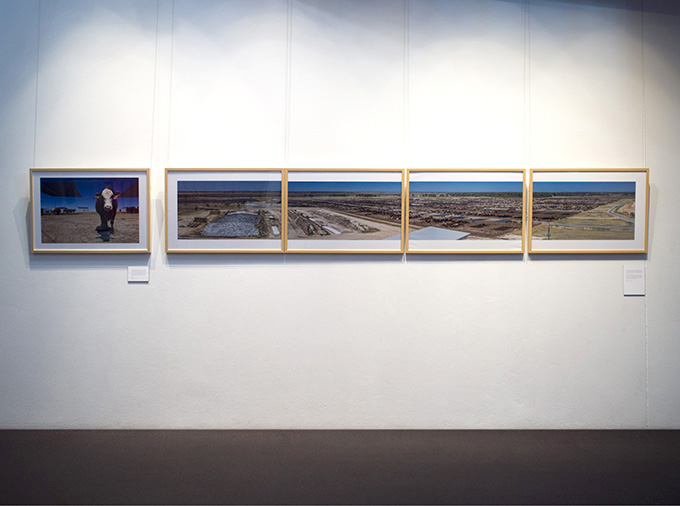
“Grassdale Feedlots”
A curios 2 year old, 620kg Hereford steer in Grassdale Feedlots state of the art facility (to extreme left of series). Pens are cleared every 50 days as part of the facilities self-audited quality and health assurance measures. World class traceability systems allow staff to track, monitor and isolate specific data on each individual beast, including birth date, purchase date and origin, weight, breed, feeding ration and medical record. Established in 2008, Grassdale Feedlot is a 13,000 acre property 30kms south of Dalby centre. Currently with over 38,000 head of cattle and a capacity of up to 50,000 head, the feedlot boasts one of the largest and most technologically advanced feedlot facilities in Australia. The estimated $60 million facility employs over 50 staff and is a major driver in the economic stability of the Dalby, Millmerran and Chinchilla region and remains at the forefront of grain-fed beef production in Australia employing some ground breaking technologies in milling and feeding processes. … Photo installation: Victoria Nikolova
.
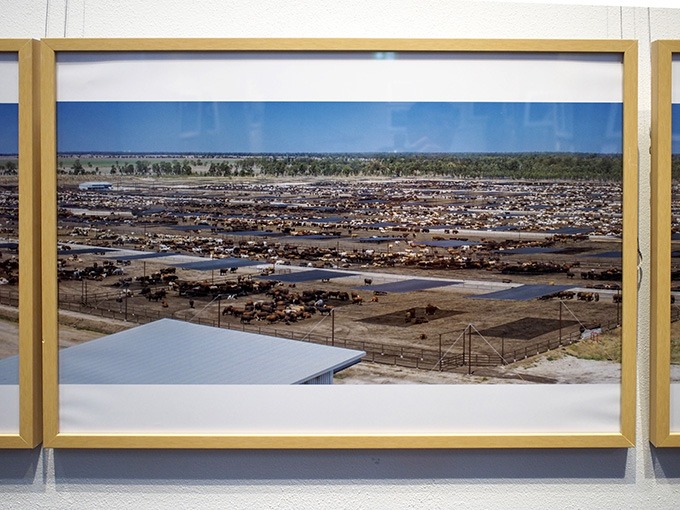
“Grassdale Feedlots” … Photo installation (detail): Victoria Nikolova
.
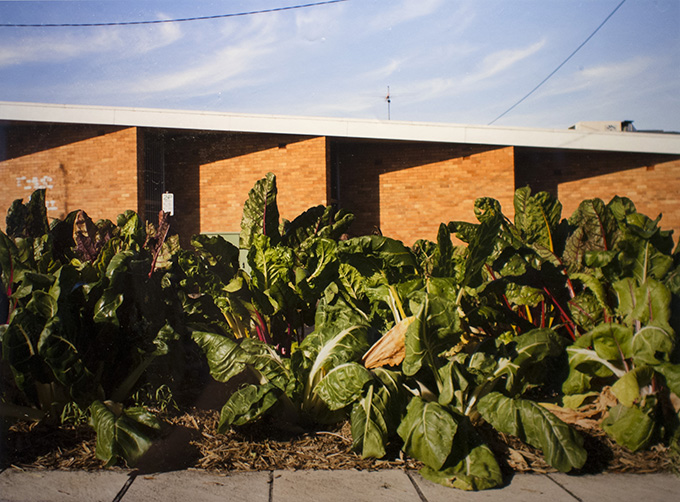
Garden Bed. Cunningham Street … Photo: Liss Fenwick
.
“Some Trash, Others Treasure”
Pioneer Park Museum in Dalby seems a place suspended in time, somewhere around the beginning of the 20th century. Located on Black Street – once very quiet and peaceful but nowadays one of the main truck parking spots in town – the museum is a magical space with colonial houses and antique machinery, accompanied by rustling of leaves and bird’s trill. Elaine and Daniel Fox, the main founders, have lived on-site for almost 11 years, taking care of this magical place on a daily basis. They began 23 years ago with only seven antique tractors. Today, they can boast of one of the largest collections of operating antique agricultural machinery in Queensland – some of which date back to the early 19th century. Together with a few passionate volunteers they keep the place alive and once a year, during Field Weekend, the town of Dalby travels in time to discover again the old knowledge, tradition and way of living of their ancestors. The Museum is mostly financed by an annual fund from the local government, entry tickets, and the craft shop income and the Field Day. However, it is hard enough to keep it working, with a fast developing technology and little funding; they struggle to keep their museum operating in the modern, quickly changing mining town, that Dalby has become. … Photo: Kasia Strek
.
“No Access”
This work is not against mining. For whether it be the computers we use to stay connected, the solar panels we purchase that make us feel socially responsible or the cameras I use to tell stories, mining is embedded into the fabric of the 21st century. The debate should not be whether or not to mine, but rather how is mining to be controlled. What became obvious in Moranbah was that combined the mining companies controlled the political and social agendas. Through ostensibly generous salaries, subsidized housing and rare community donations mining companies have become the pushers and the population the addicts. Mine workers are afraid to speak to strangers for fear they are the media. Criticism is only whispered when in the company of friends. The right to have an opinion that may differ from the company has been severely eroded. To express that opinion puts job and home at risk. No Access argues that Australia should retain exclusive rights to its resource management. It argues for controlled mining. But most of all it presents a snapshot of the liberties we have sold in order to satisfy those who seek to maximize profits and minimize social responsibility. Moranbah. David Lloyd. 2013.
.
.
The photographers and video producers retain all copyright in their images and presentations. Text and installation photographs © 2013 Doug Spowart
.
.
BACK STORY: The Icons & Revered Australiana Show
.

ICONS Logo
.
..
The Icons & Revered Australiana show: Twenty – Five Years On
The ICONS on ICONS exhibition at the Cobb+Co Museum in Toowoomba features 5 local photographers. For the show I have selected 26 gelatine silver photographs drawn from my archive. They were originally prepared for the Australian Bi-centennial celebrations in 1988 – 25 years have elapsed and yet the images are as fresh and evocative as ever. For me the work represents an important aspect of my photographic and photobook work – where the narrative of life and culture is expressed through a set of images and sometimes accompanied by a complimentary text.
So here is the back story of my Icons & Revered Australiana
.
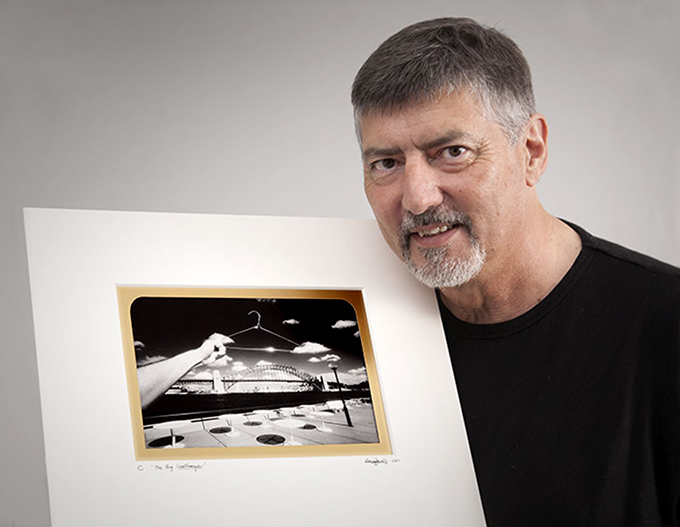
Doug Spowart
.
I have had a lifetime interest in the Australian idiom, slang and its stories. This body of work represents the culmination of a personal investigation into what are seminal identifiers of our culture and the way the Australian condition has shaped our language. In my early teenage years I read most of John O’Grady’s books like They’re a weird mob and Gone Fishin. His dictionary of Australian-isms Aussie English was a particular favourite. At that time I would encounter people, mainly older people, who spoke using the language defined by Sidney J Baker’s or what Afferbeck Lauder called Strine, (a condensation of Australian with an emphasis on the latter part of the word = STRINE).
.
.
Throughout my life I have travelled around Australia, firstly as a child with my family then later with friends and from the1980s onward as a tour leader on outback safaris. I always felt close to the land and the Australian condition and was fascinated by the stories and the vernacular language by which it was described. I met outback characters including songwriter/performer Ted Egan, before his Northern Territory Governor commission, who immortalised these Australian-isms and stories in song. I was also influenced by a library of photographers like Jeff Carter, George Farwell, Douglas Baglin and perhaps even Rennie Ellis who made photographs and told stories in their photobooks. Inspiration also came from Barry Humphreys, Walkabout magazine and the works of painters like Russell Drysdale, Hans Heysen and Sydney Nolan.
From my experiences I decided to make a selection of things Australian that I considered were so embedded in culture that they could be considered as icons and revered with a religious fervour. I resolved to call the exhibition Icons & Revered Australiana. To provide an extra personal challenge to the project I limited my selection to an A to Z list representing a range of ideas, subjects, myths and localities. I then embarked upon a 4 state and territory journey to make images. While most images were deliberate and targeted some photographs were made along the way as opportunistic discoveries. I do remember specifically driving into Sydney, putting a wire coat hanger under my arm and walking down to the Sydney Opera House to photograph the bridge.
The Icons show was presented at Imagery Gallery in March 1988 and I think, well received. However the Courier Mail critic, a friend of mine of the time, was not impressed – his headline read There’s better work to come! I did ponder the thought that there may have been a sub-plot to his review. The exhibition went on to show at another venue in Queensland and individual images, such as the BIG Coat Hanger received accolades, was published in many journals, and went on to be one of my signature images. After the show was over the exhibition was de-framed and the mounted images sequestered away in archival solander boxes.
But what of this current iteration of the Icons & Revered Australiana body of work? Twenty-five years may have elapsed and yet these pre-digital gelatine silver images are as fresh as ever – a testimony to the special nature of infrared and black+white analogue photography. In revisiting the original catalogue text, I’ve re-connected with the thread of humour, irony and pastiche that has always run through my work.
While those who knew these aspects of life, culture and language intimately, and practised it daily, may have long passed on, Icons & Revered Australiana may still resonate with contemporary audiences. I do not expect that everyone will begin to use terms like ‘Bonza’, ‘Sheila’ and ‘Wouldn’t be dead for quids’, although we do encounter this kind of vernacular language in contemporary song writing, (particularly in country and western music), prose and poetry. And for a while we enjoyed it in the wonderfully expressive Strine of Steve Irwin.
These Icons and Revered Australiana are just the tip of the great myriad of things Australian. Deep down, within us, is a kind of ‘knowing’ of our Australian-isms, and how they have defined us and continue to define us as a people and a country.
Doug Spowart
.
SO HERE THEY ARE: My ‘A to Z’ Icons & Revered Australiana
.
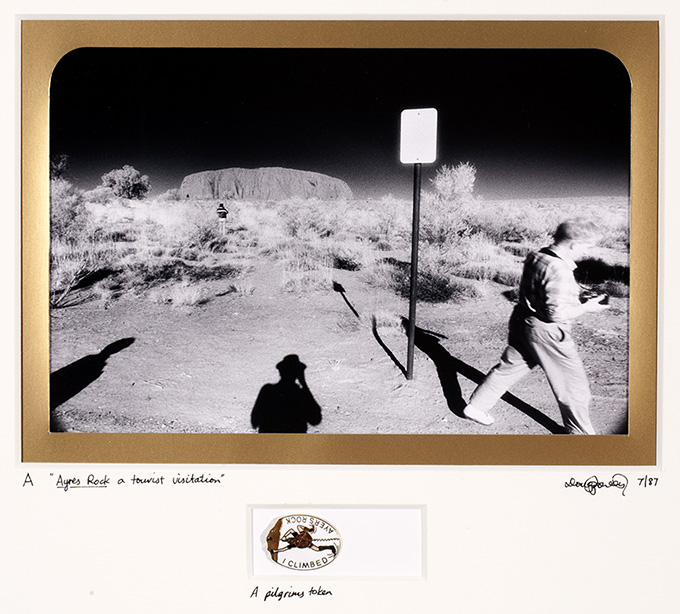
A = Ayers Rock – Revered as the largest monolith in the world, Ayers Rock is now known by its traditional Aboriginal name Uluru.
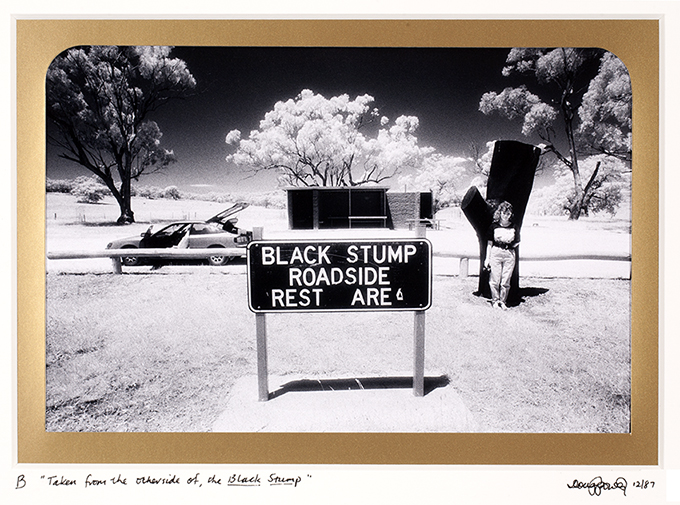
B = The Black Stump. It was once believed that the black stump was the limit of possible human habitation beyond which nothing existed but useless land and desert. Today, it’s revered by a roadside stop featuring a Black Stump storyboard and black painted stump icon, a car park, BBQ and toilet. And lots of people have come to live on ‘the other side’. Near Coolah, New South Wales.
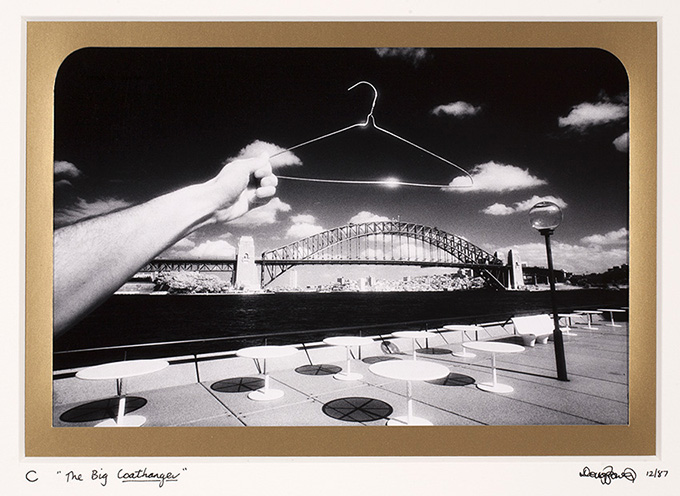
C = The Big Coat Hanger – Slang for the Sydney Harbour Bridge.
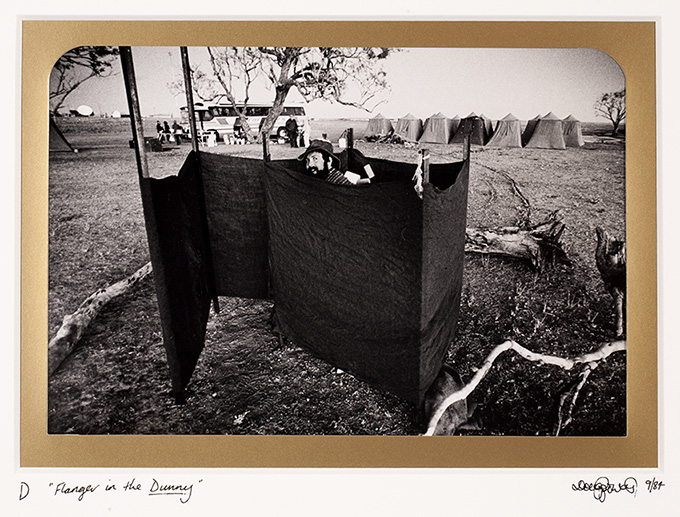
D = Dunny – The Australian out-house or toilet is affectionately known by this name.
A coach camp dunny Birdsville, Queensland.
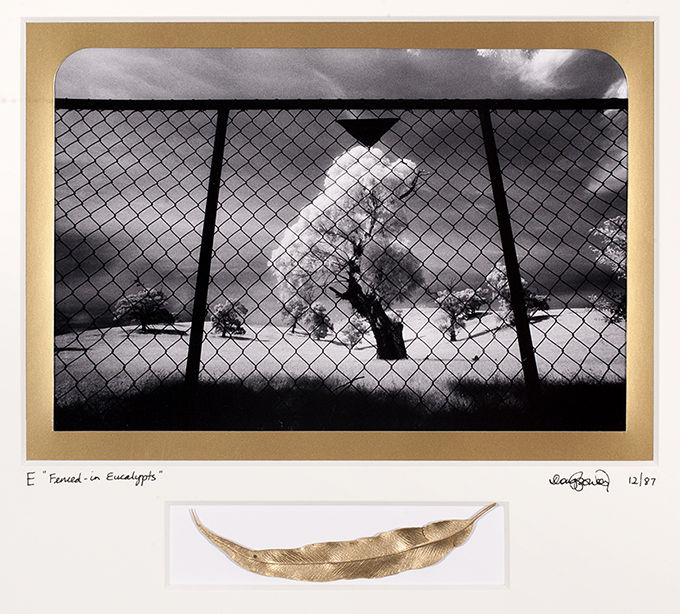
E = Eucalyptus – This is an iconic plant embedded in the Australia psyche; from the arts to the construction of our towns, and the source of therapeutic aromatic oil – a familiar memory in everyday households of Australia. On the Heysen Trail, Mount Lofty Ranges, S.A.
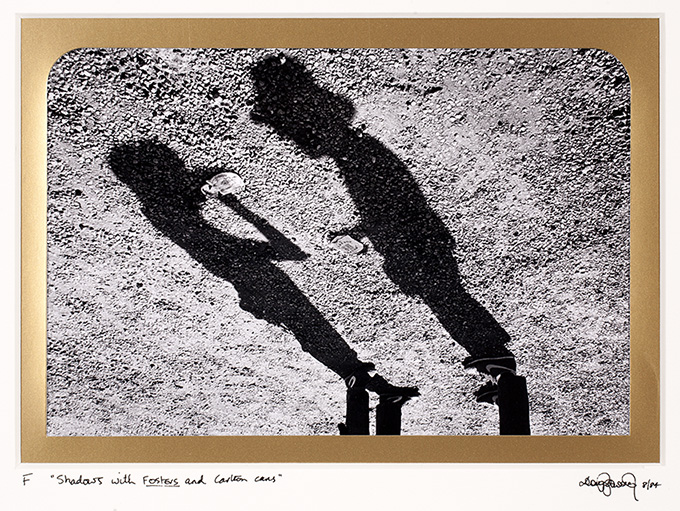
F = Fosters – An historically famous Australian beer. Barry Caves, The Northern Territory.
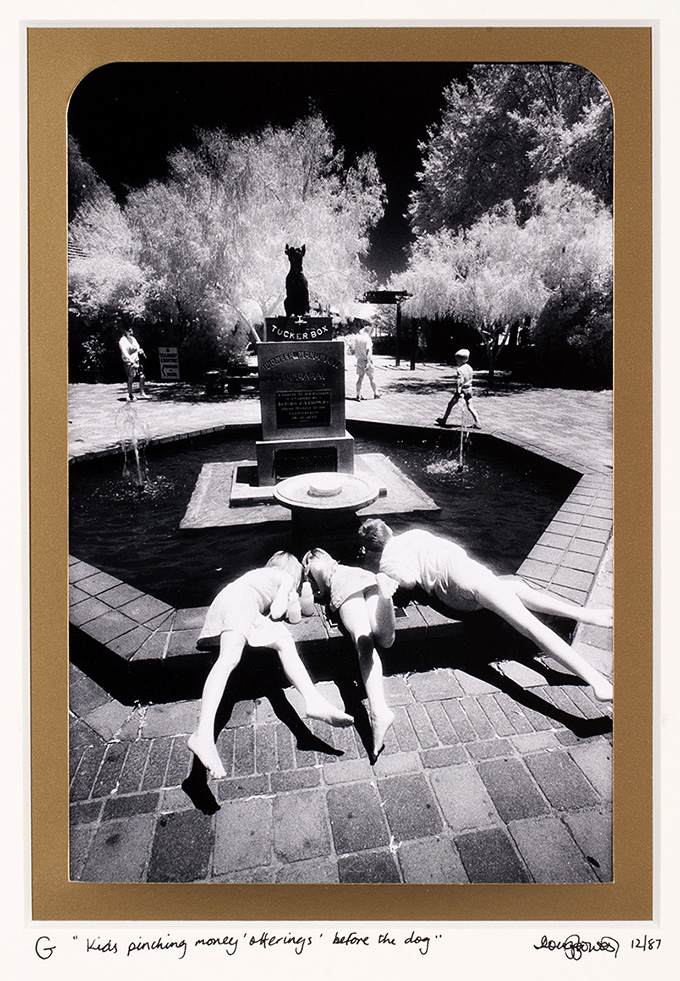
G = Gundagai – Five miles from Gundagai is the location described in the bush verse about a bullocky’s bad luck. While the popular version of this story makes a hero of the bullocky’s dog who ‘sat on’ his tucker box protecting it from harm. However anyone reading the original poem would come to the conclusion that the ultimate in bad luck had befallen the bullocky – that the dog had actually ‘shat in’ the tucker box. In this image of the tourist memorial near Gundagai a statue of the dog ‘sits’ on the tucker box while kids steal money from the wishing fountain in front.
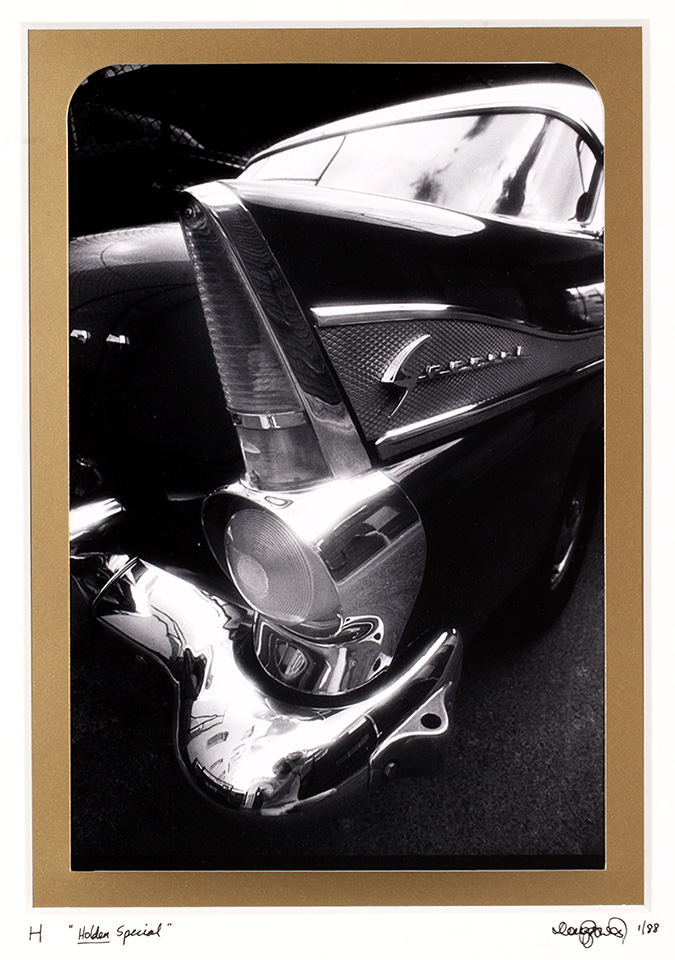
H = Holden – The quintessential Australian motor vehicle. Fish Lane, South Brisbane, Queensland.
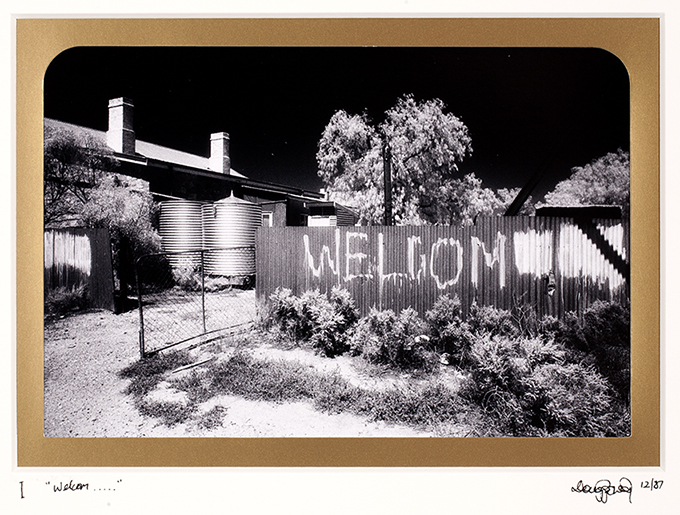
I = Iron (Corrugated) – The most common and versatile building material for outback structures. Olary, S. A.
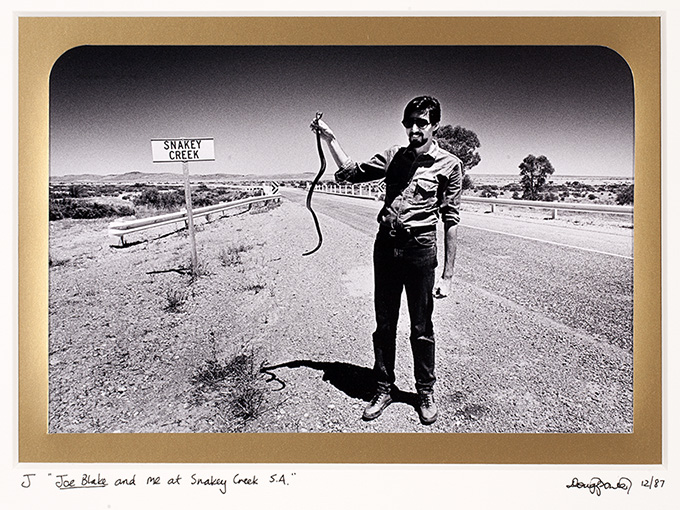
J = Joe Blake – Equals ‘snake’ in Australian rhyming slang. Mannahill, South Australia.
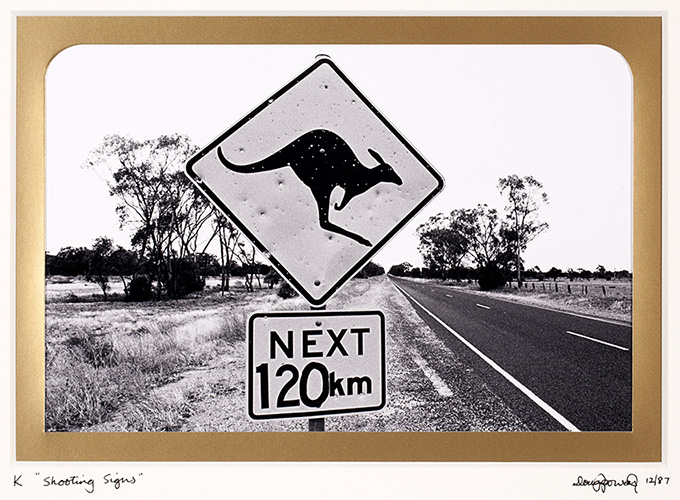
K = Kangaroo – An endemic Australian species often so prolific in number that road signs are erected to warn motorists of their presence. The signs are also useful as a test of shooters skill if a shortage of the real thing exists. Judging by this example the Roos have a fair chance. West of Nyngan, New South Wales.
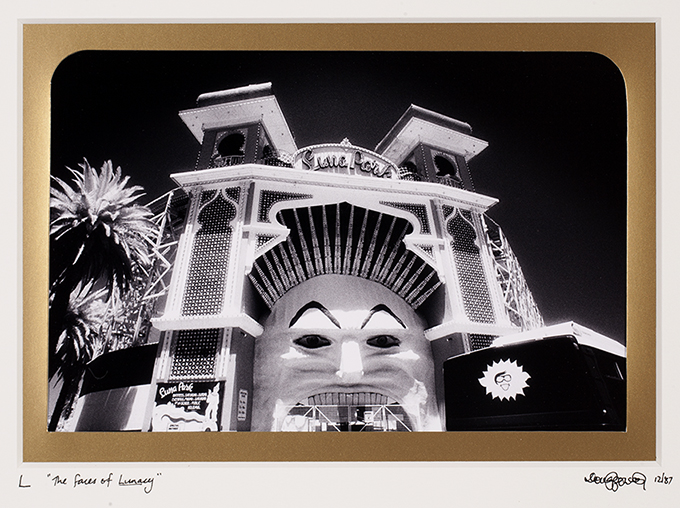
L = Luna Park – A Temple of fun, frivolity and scary rides for Sydney-siders and Melbournites. St Kilda, Melbourne, Victoria.
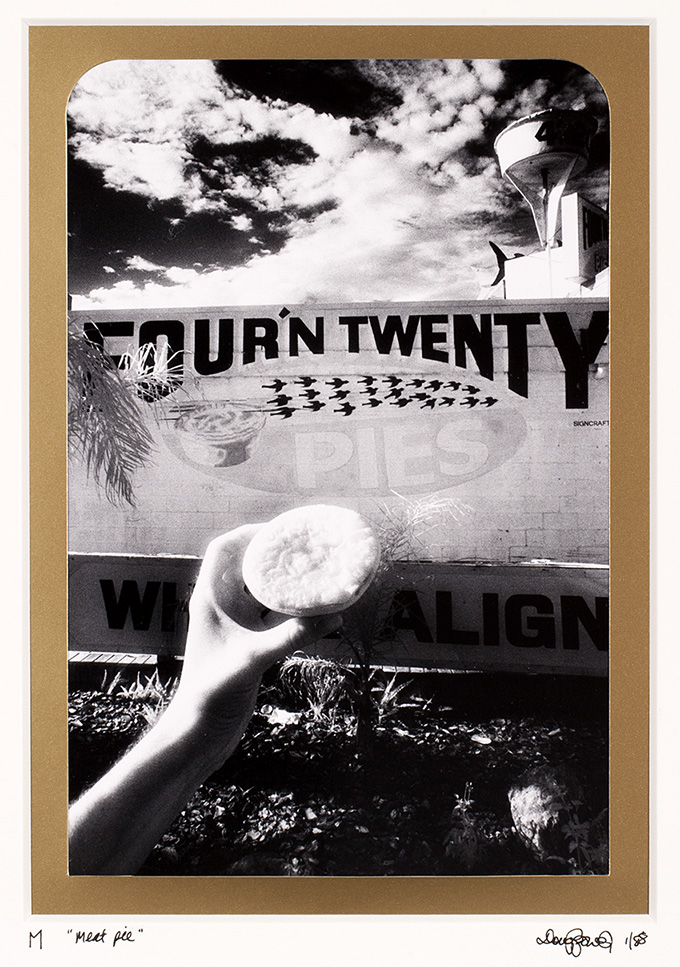
M = Meat Pie – The eating of a meat pie and tomato sauce is a celebrated Australian rite or sacrament, and if you come from Victoria the Four’n Twenty variety would have once been considered the best! Broadbeach, Queensland.
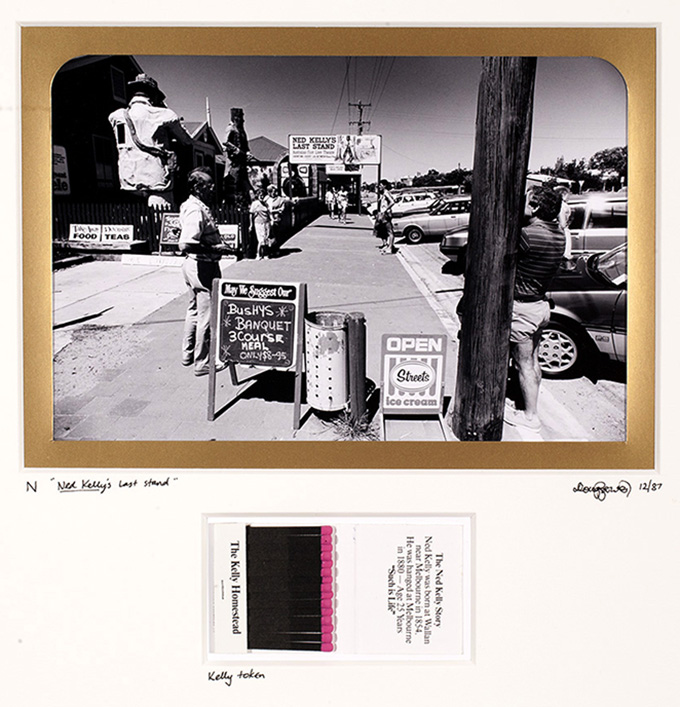
N = Ned Kelly – Located at Glenrowan this colonial sacred site is the place where the Australian folk hero Ned Kelly made his notorious last stand against the Victorian Police. Erected to enable ‘pilgrims’ to ‘revere’ the place, these modern day structures house a multitude of Ned Kelly tokens and souvenirs. Rather than recognise this as a solemn and tragic clash between authority and the underclass, these souvenirs often seem to parody the event. Here, the matches are a strange connection to the fact that the Victorian Police set fire to the Kelly gang’s refuge and burned it down to enable his capture. Glenrowan, Victoria.
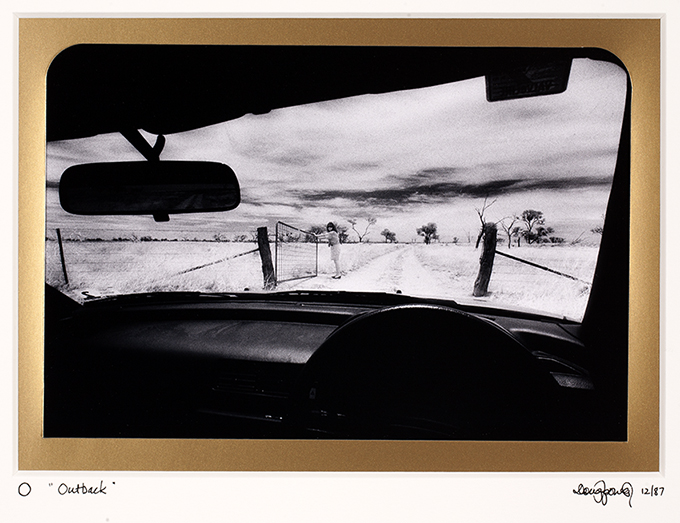
O = Outback. An open gate, and two tyre tracks pointing toward infinity best expresses the great expanse of wide-open space that is the outback. Near Scopes Range Bore Western, New South Wales.
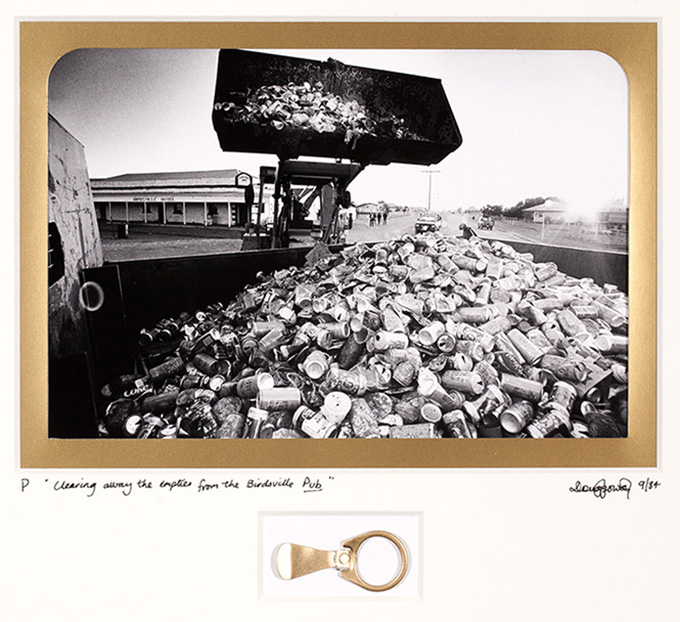
P = Pub. Revered as the typical lonely outback pub the Birdsville hotel is so inundated with visitors for the annual races that the traveller’s empty beer cans are removed each morning with a front-end loader and a tip truck. Birdsville, Western Queensland.
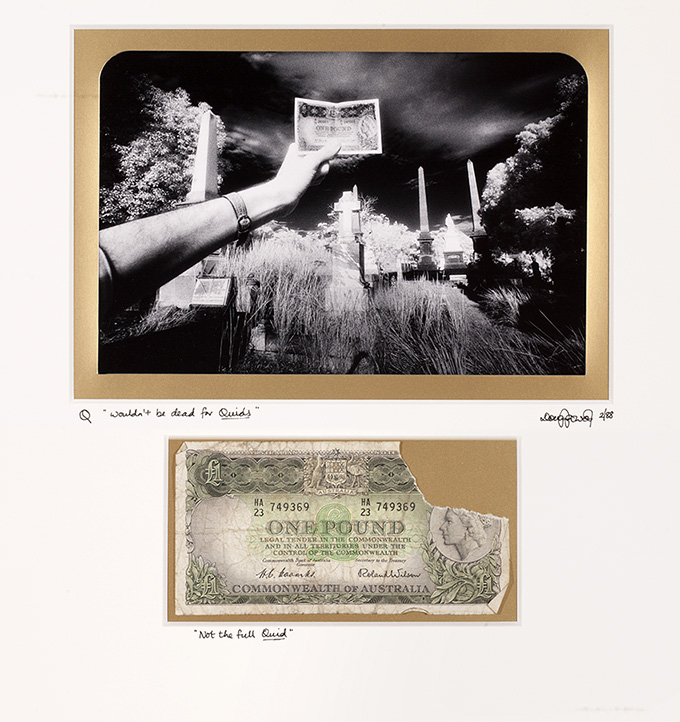
Q = Quid. The pre-decimalization equivalent of two dollars, often associated with value statements like ‘wouldn’t be dead for quids’ and, ‘not the full quid’. Toowong Cemetery, Brisbane, Queensland.
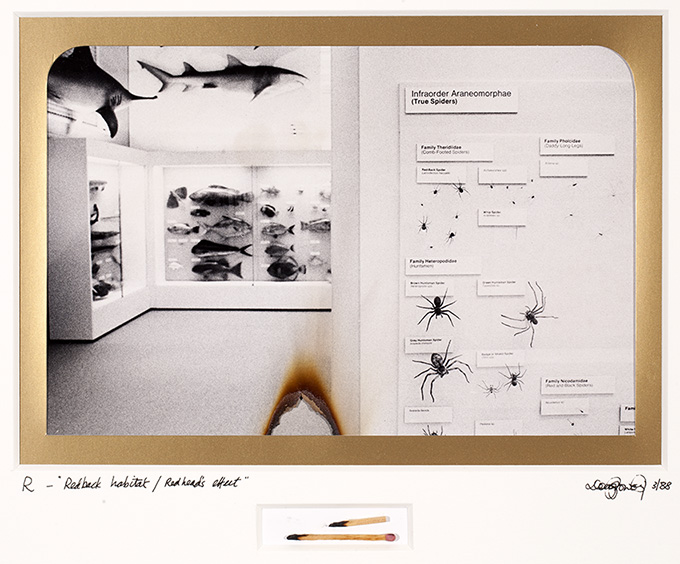
R = Red Heads & Red Backs. Both being red these two Australian items can spell danger. Queensland Museum, Brisbane.
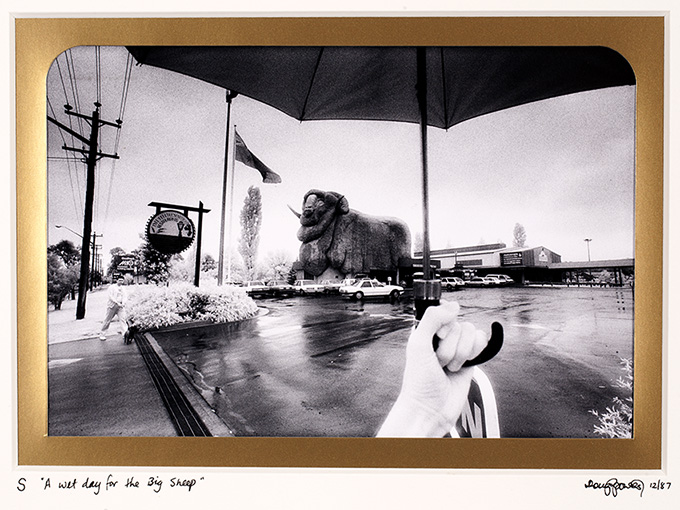
S = Sheep. The Australia economy was once described as living off the sheep’s back. Immortalized here is a giant merino variety attracting pilgrims to its past glory. Goulburn, New South Wales.
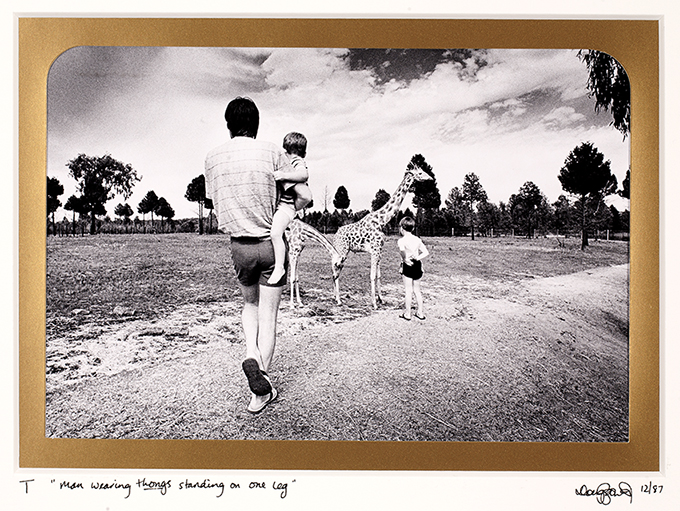
T = Thong. Casual Australian footwear. Western Pains Zoo, Dubbo, New South Wales.
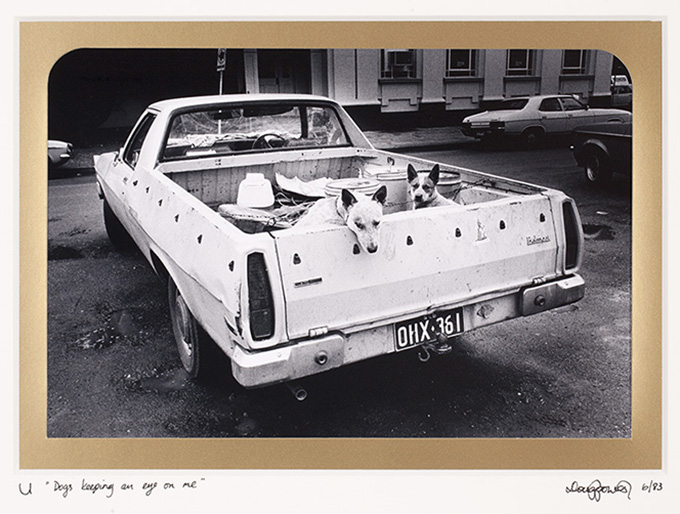
U = Ute. Invented by Australians both in concept and name. Longreach, Queensland.
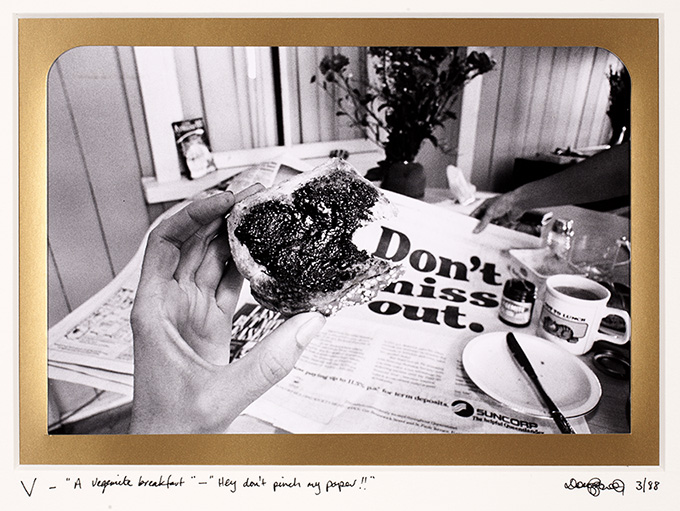
V = Vegemite. A black vegetable extract used as a spread on toast or Salada biscuits.
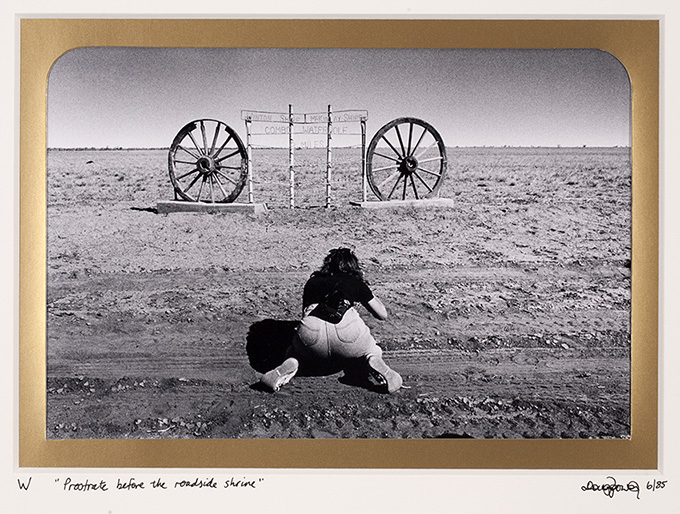
W = Waltzing Matilda. Shown here is a shrine erected by the McKinlay Shire Council to mark the location where Banjo Paterson wrote the Australian anthem about a swagman’s demise on stuffing a jumbuck (sheep) in his tuckerbag. Combo Waterhole near Kynuna, Queensland.
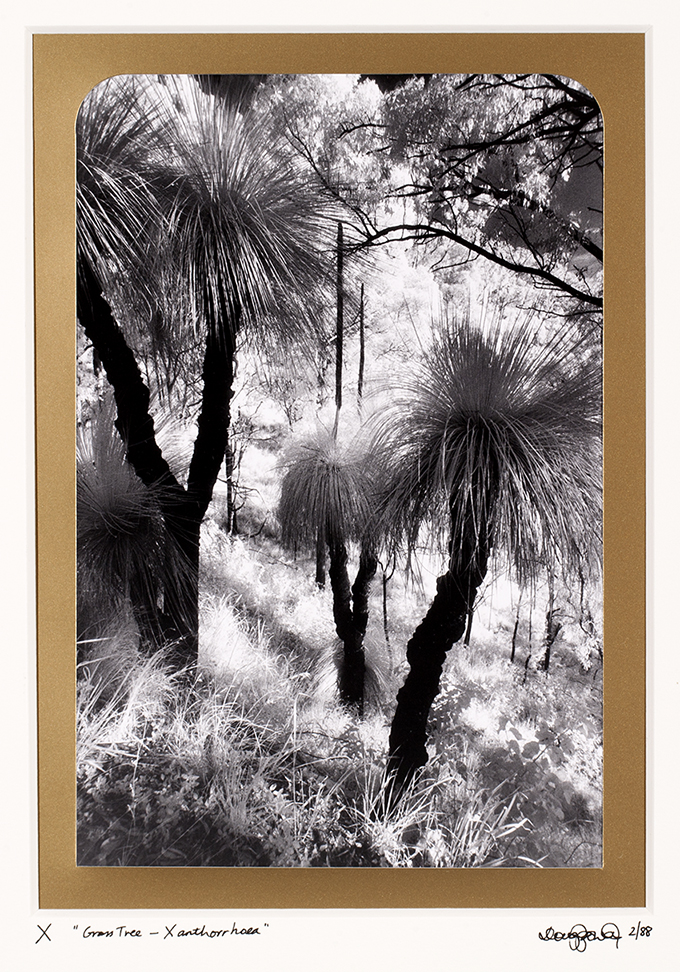
X = Xanthorrhoea. The botanical name for the Australian native plant commonly referred to as the grass tree. Near Canungra, Queensland.
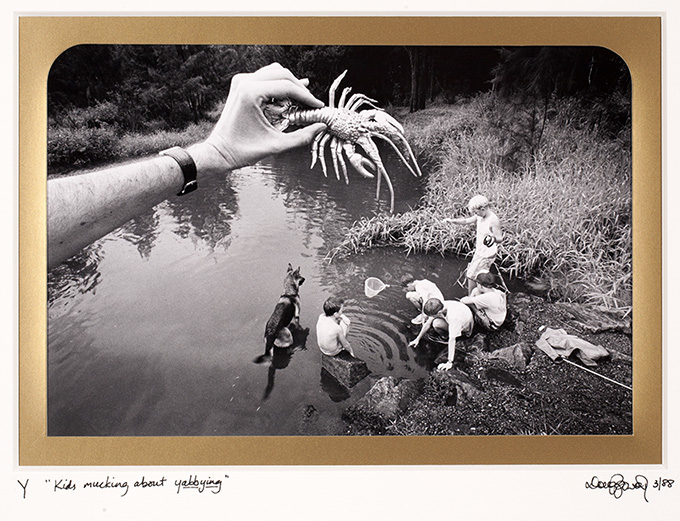
Y =Yabbie. Any form of the Australian freshwater crayfish of the genus Cherax. Yabbying or catching yabbies is a favourite pastime of Australian kids. Near Nerang, Queensland.
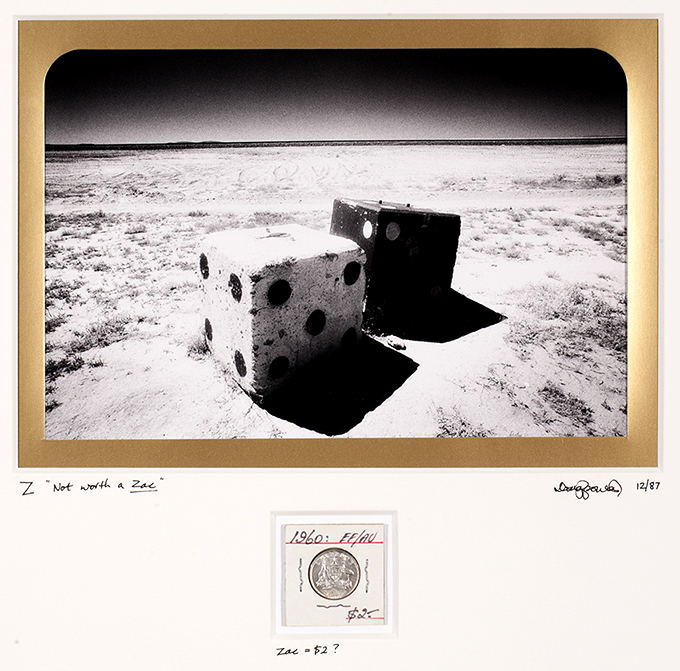
Z = Zack. The colloquial term for a pre-decimal coin with a value of 5 cents, usually associated with statements of worthless value, hence ‘not worth a zack’ – pertaining here to barren outback country. Near Yunta, South Australia.
.
This unique state complete exhibition set is available for purchase – Contact me for details
.fo.
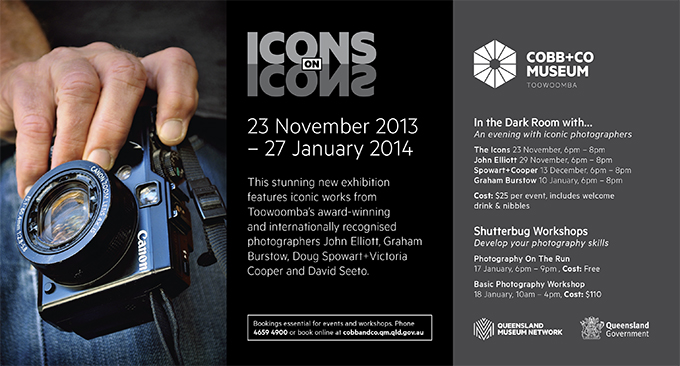
Cobb+Co Museum – Icons on Icons events
.
.
Images and text © Doug Spowart
..
.
This work is licensed under a Creative Commons Attribution-NonCommercial-NoDerivs 3.0 Unported License.
.
COOPER+SPOWART to talk @ Cobb+Co Museum Dec 13
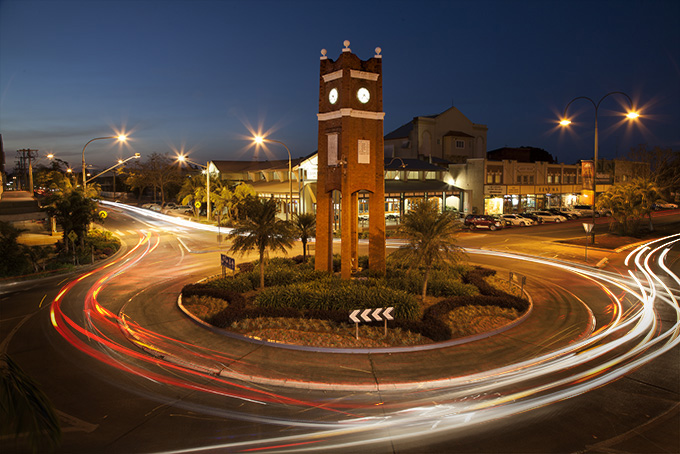
The Roundabout Clocktower from Weiley’s Hotel balcony
.
CLICK HERE TO BOOK ON THE COBB+CO WEBSITE
.
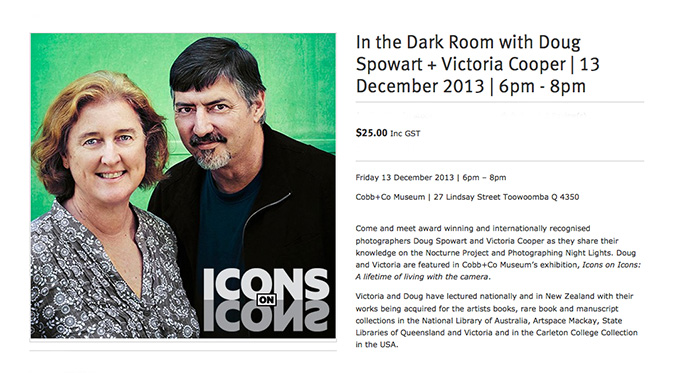
In the Dark Room with… Cooper+Spowart
In this talk we will discuss a number of topics and including:
-
A commentary on the works in the ICONS on ICONS exhibition
-
Our Nocturne residency projects around Australia
-
How to make amazing Nocturne Photographs
-
Our use of Social Media to connect art with the community.
.
Attendees may wish to conclude their night activities @ Cobb+Co with a visit to the nearby Christmas Wonderland Spectacular in Queens Park
.
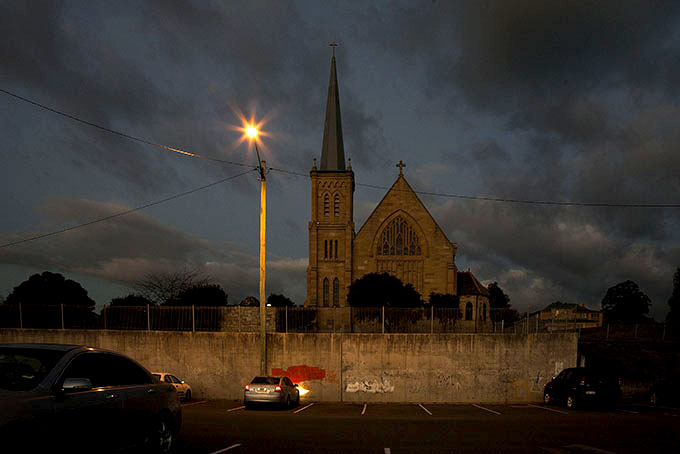
St James’ Catholic Church
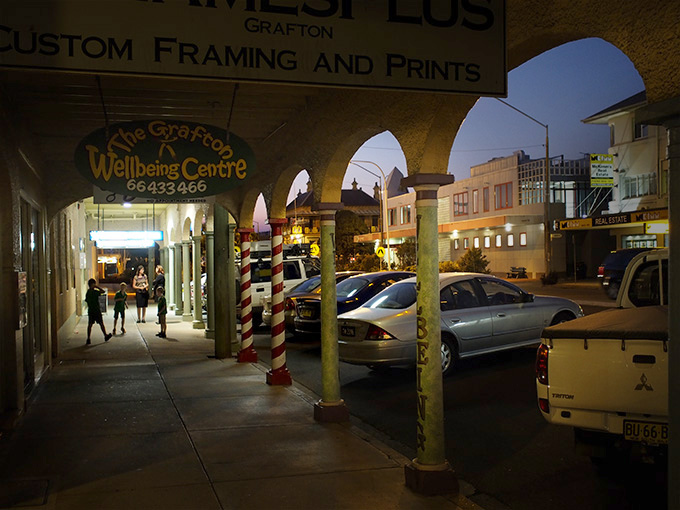
Outside the Grafton Hotel
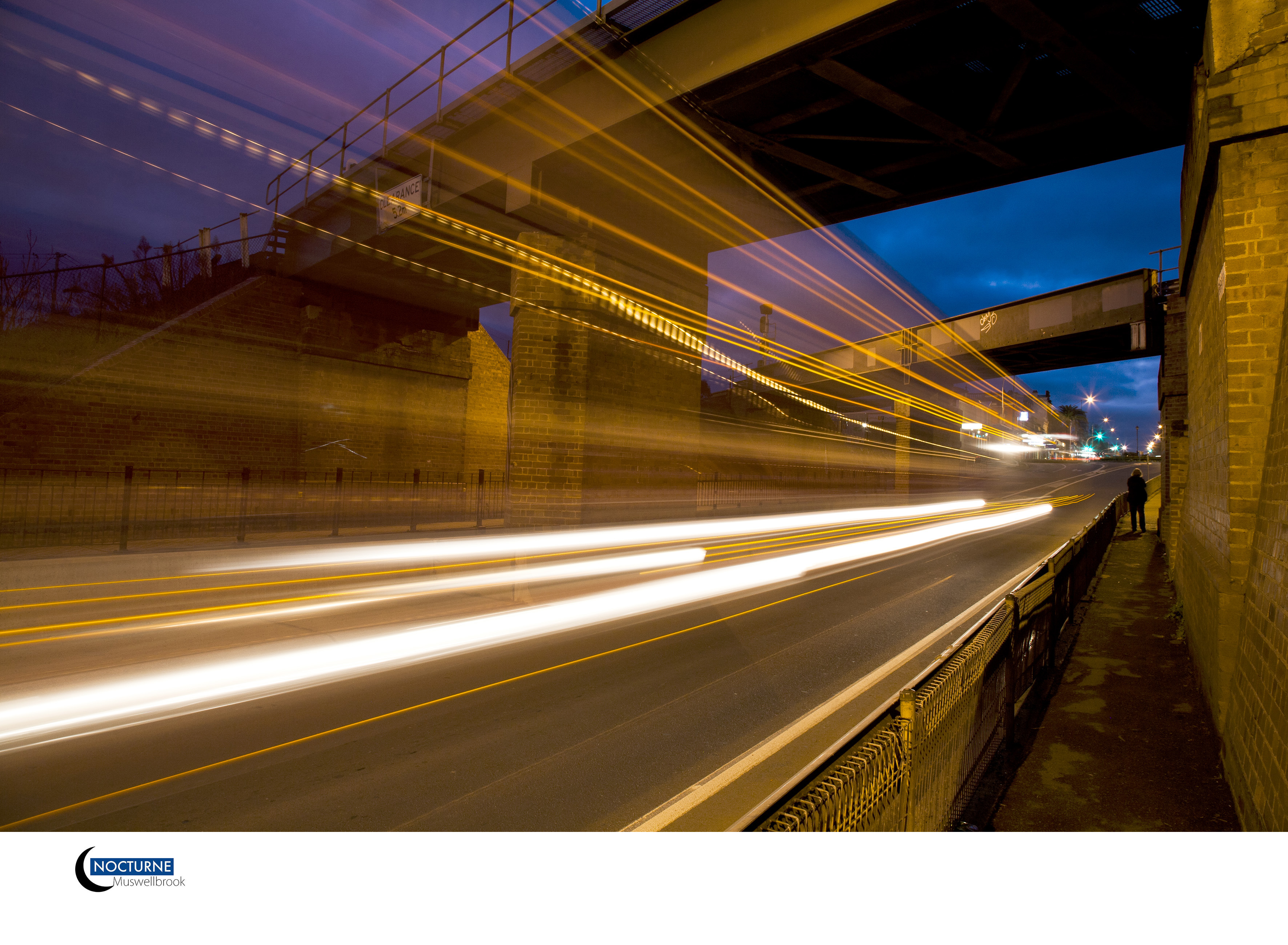
The Subway – The Nocturne Muswellbrook Project
.
VIEW A VIDEO OF THE ICONS SHOW FEATURING THE PHOTOGRAPHERS
.
.
TO BOOK THE EVENT
http://www.shop.qm.qld.gov.au/cobbandco/in-the-dark-room-with-doug-and-victoria.html
.

Cobb+Co Museum – Icons on Icons
.
.
CENTRAL QLD PROJECT: REVIEW published in Queensland Review

…
The latest issue of the journal Queensland Review features a review by us of the exhibition The Central Queensland Project that was shown at the Powerhouse Brisbane from 22 July to 18 August, 2013.
As the journal has publishing rights over their commissioned review we are unable to publish the text here. The review can be accessed from Cambridge Journals with the following links–a charge applies unless you are able to gain access through an academic institution or library.
Queensland Review, ,Volume20, Issue02, December 2013 pp 238-240
http://journals.cambridge.org/abstract_S1321816613000329
As an introduction to the piece we provide the following:
.
Queensland, its society and natural resources, has been the source of investigation by photographers for over 150 years. In the 1860s surveyor and photographer Richard Daintree created a quantitative analysis of the region’s potential for development. Associated with this record was a significant visual document in the form of photographs. In the lead up to Australia’s Bicentennial of white settlement the Queensland Art Gallery commissioned 6 photographers under the title Journeys North, to travel the state and: ‘produce a portfolio of photographs on the theme of community life in Queensland’ (Williamson 1988: p5). Now, nearly 25 years after this latest project, two photographers, Kelly Hussey-Smith and Alan Hill, have travelled north with cameras to document the current life and situations of people far away from the urbanized southeast corner.
The products of this latest documentary coverage were presented as the exhibition The Central Queensland Project (CQP) at the Powerhouse in Brisbane from July 22 to August 18, 2013. In exhibition material the photographers claim that:
Given the complexity of the modern economy, and the insularity of city life, many of us are blind to what lies beyond the city limits. Through this project we seek to gain insight into the lives, values and experiences of Central Queenslanders (Hill and Hussey-Smith 2013).
.References:
Hill, A. and K. Hussey-Smith. (2013). “About: Central Queensland Project ” Retrieved 25 July 2013, from http://centralqldproject.com/about/.
Williamson, C. (1988). Journeys North – Photographic Practice in Queensland in the 1980s: one aspect. Q. A. Gallery. Brisbane, Queensland, Queensland Art Gallery.
.
.
A selection of installation photographs as well as images and captions commented on in the review are published here courtesy of the photographers Kelly Hussey-Smith and Alan Hill:
.
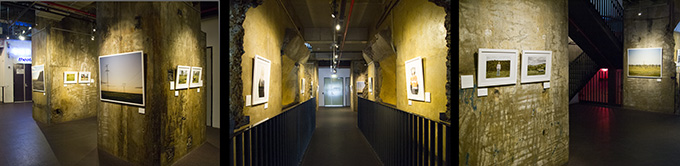
Installation triptich ….Photos: Doug Spowart
.
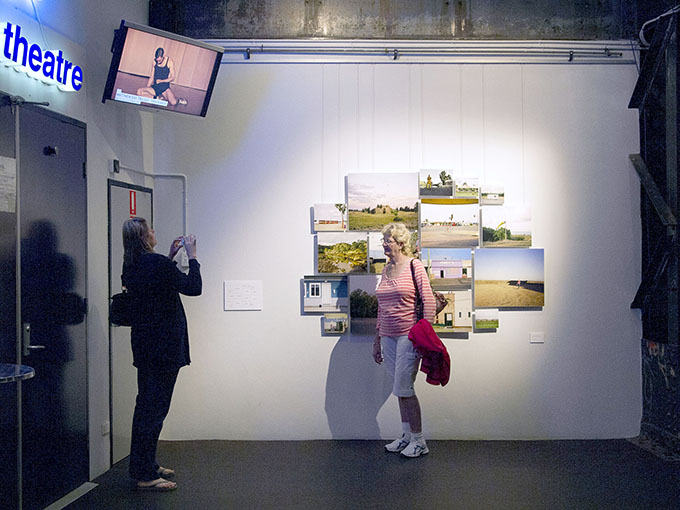
An exhibition visitor is photographed before the artwork Postcards From The Shires …Installation photo: Doug Spowart
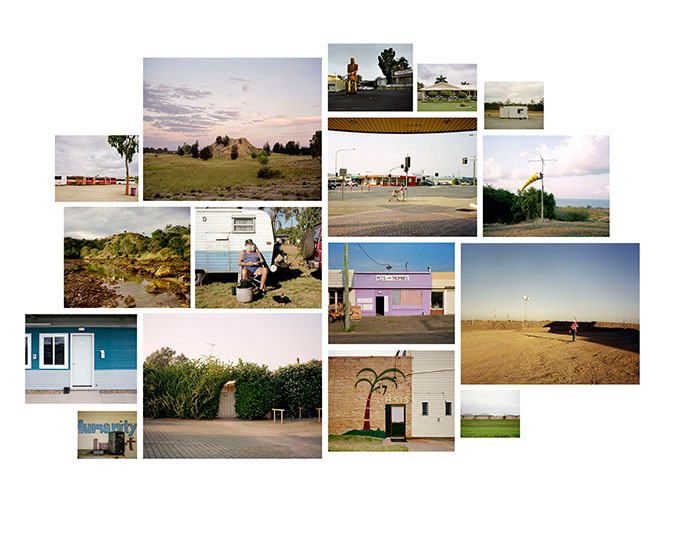
Postcards from the Shires
.
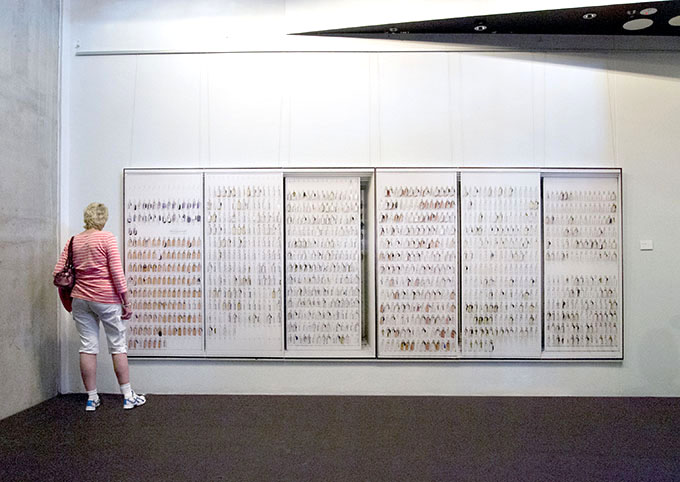
The New Village ..Installation photo: Doug Spowart
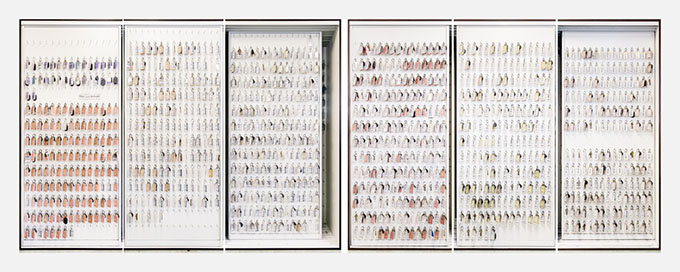
The New Village
With 3048 beds, The MAC Coppabella is one of the largest workers villages in Australia and larger than many towns in the region. Up to 1000 people will check in or out on any given day.
.
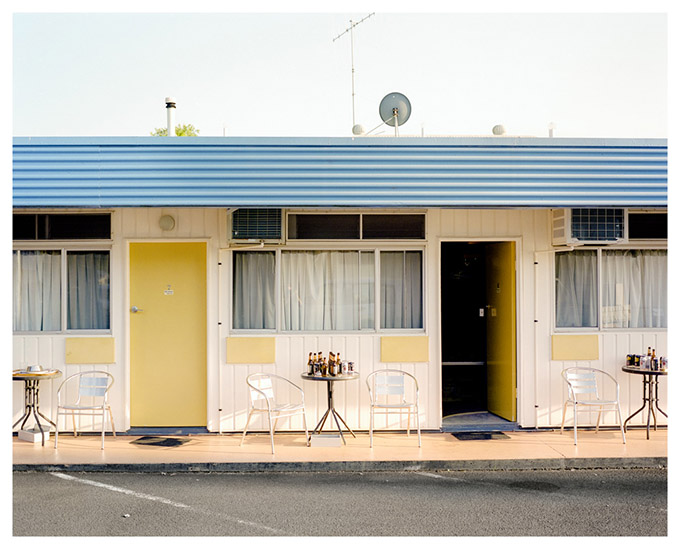
5am
Three Moon Motel, Monto. FIFO and DIDO have entered the Australian vocabulary, along with debates about their social impacts. As a result, accommodation is often difficult to find, and motels have become temporary homes for transient workers.
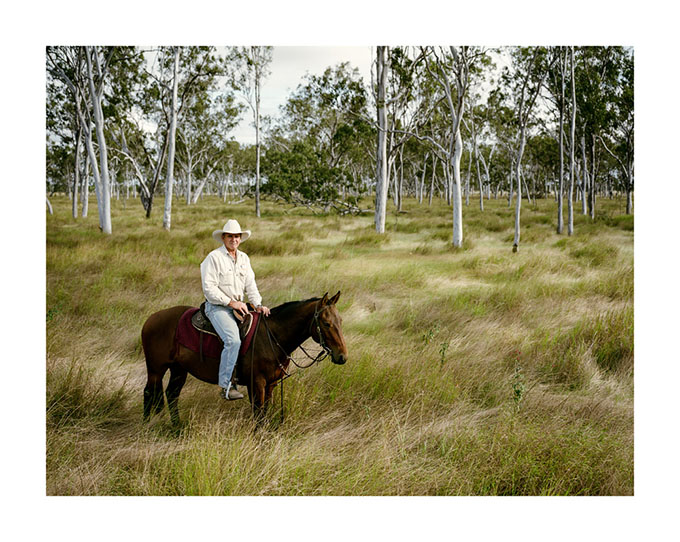
Caterpillar Cowboy
Greg Barr introduced us to the phenomena of the Caterpillar Cowboy, which he describes himself as, being a ‘Cat’ machinery operator in the mines who is really a cowboy at heart. He and his partner Debbie run a modest property where they spend half the week on the land with their crops, cattle, and horses, and the other half of the week in the mines to support their rural lifestyle.
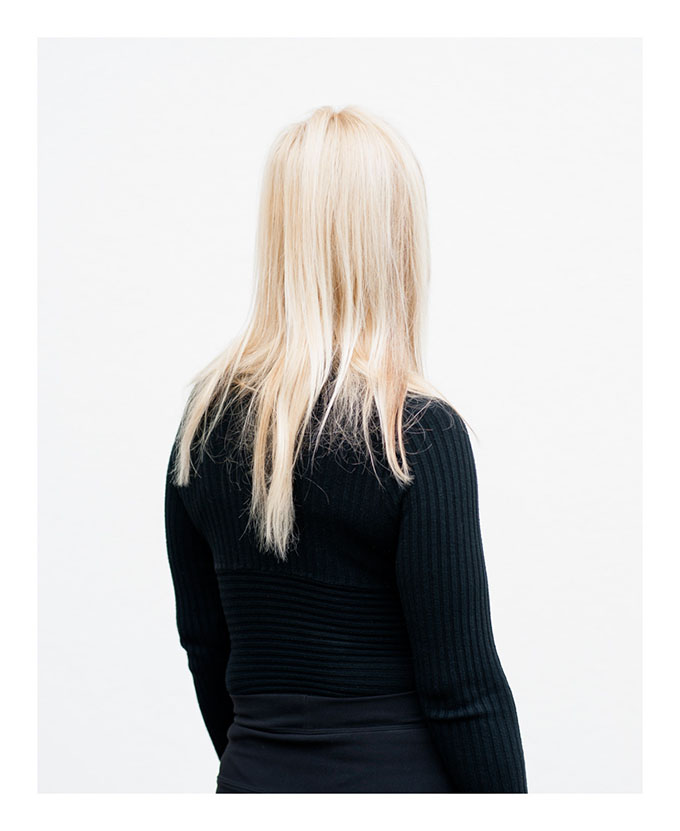
Karlaa
FIFO work does not just apply to mining. Karlaa works legally as a FIFO sex worker in the Central Queensland region. In 2010 Karlaa was asked not to return to a motel she had been working from discretely for two years after the proprietors realised she was a sex worker. She took the motel to court claiming discrimination on the basis of her profession. She initially lost this case, as it was found the motel did not discriminate against her because she was a sex worker, but because she was running her business from their premises. Many feared the decision would send the industry underground, resulting in unsafe working conditions and less transparency. Karlaa appealed the decision and in 2012 it was ruled that discrimination had taken place and the decision revoked. However, in November that year the Queensland Government made changes to the anti-discrimination act making it legal for moteliers and hoteliers to refuse sex workers accommodation.
Karlaa understands her profession may not appeal to everyone, but believes she has as much right as other businesses to take advantage of opportunities in the region.
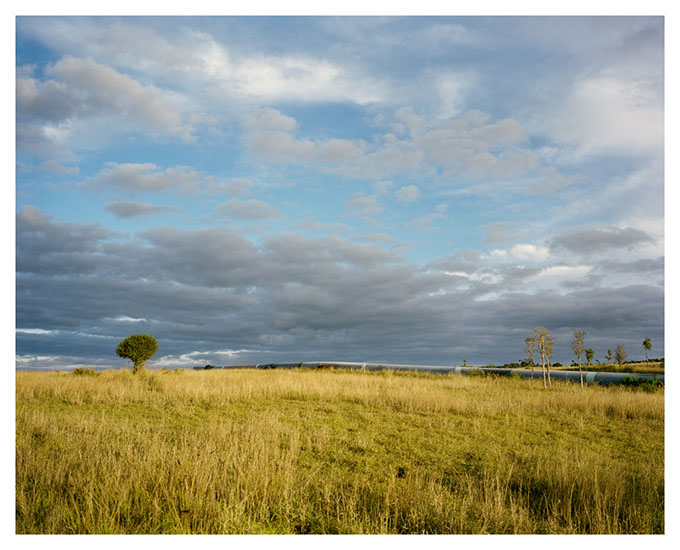
From the ‘Transmission’ series
A section of the 540-kilometre long coal seam gas pipeline currently under construction crosses a property near Thangool. The pipeline stretches from southern Queensland to a liquefaction plant on Curtis Island near Gladstone.
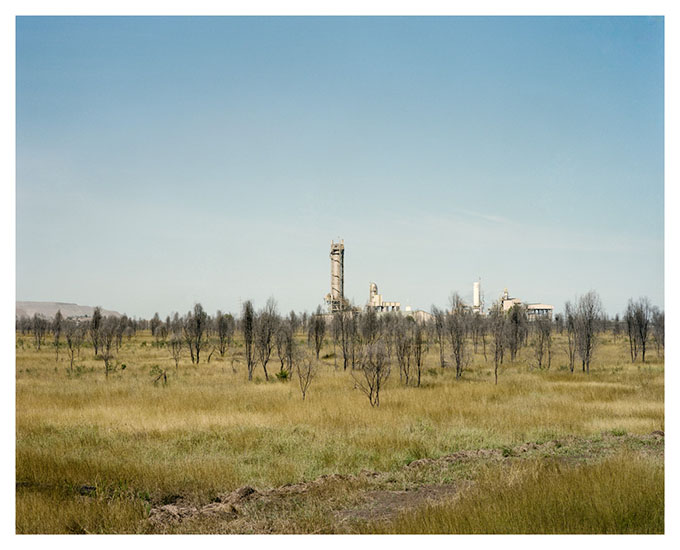
From the ‘Extraction’ series
View towards Dawson Mine Complex, Moura.
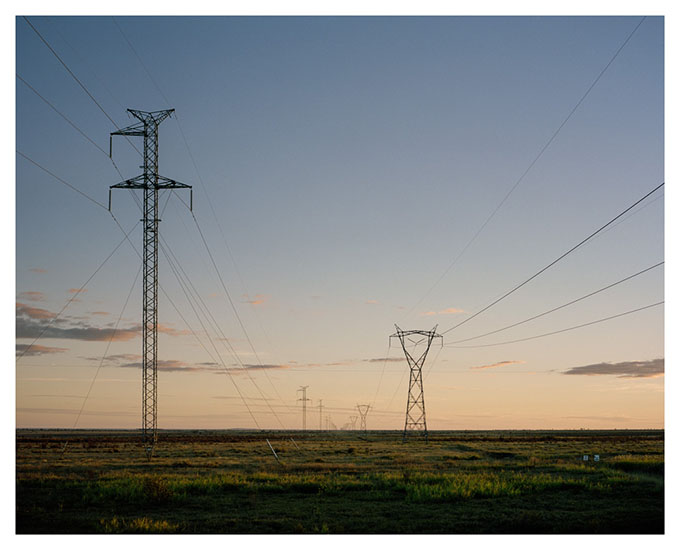
From the ‘Transmission’ series
Coal and electricity are inextricably linked. In the first half of the 20th century, Brisbane’s electricity came from power stations in the city that were fuelled by coal from Ipswich. Now Queensland is part of a complex energy network not only spanning the state and the nation, but as the world’s largest coal exporter, the globe. Powerlines outside Middlemount.
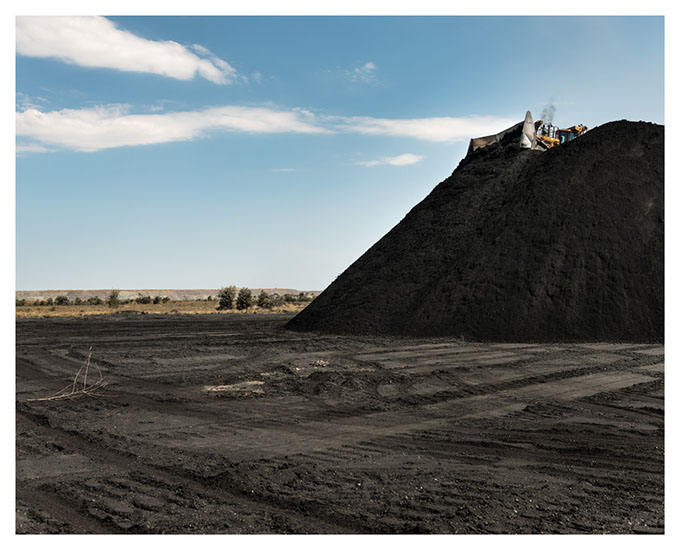
From the ‘Extraction’ series
Export ready semi-hard coking coal in a Bowen Basin coal mine.
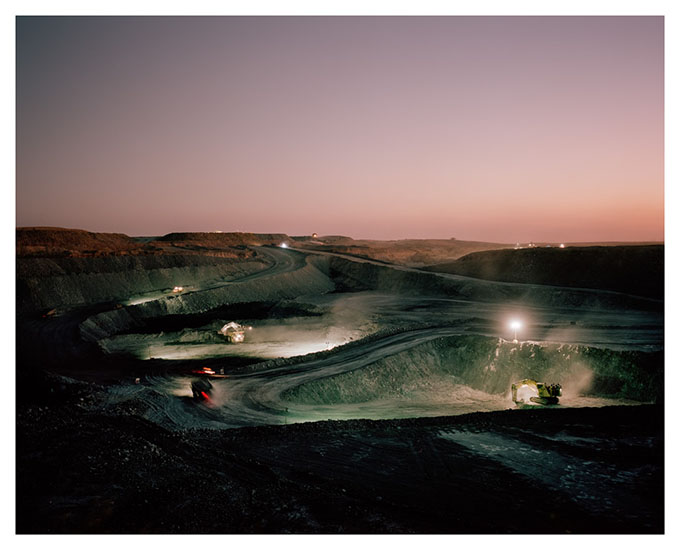
From the ‘Extraction’ series
Coal mining in the Central Queensland region is a 24-hour operation. The night shift begins in a Bowen Basin coal mine near Mooranbah.
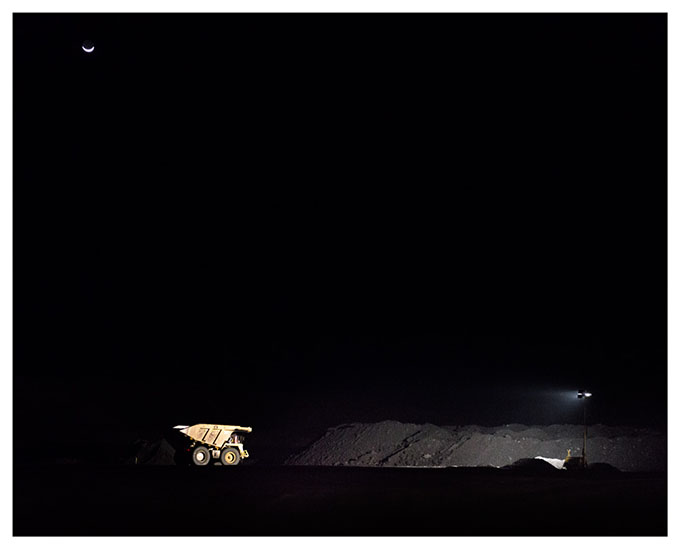
From the ‘Extraction’ series
Coal mining in the Central Queensland region is a 24-hour operation. Night shift in a Bowen Basin coal mine near Mooranbah.
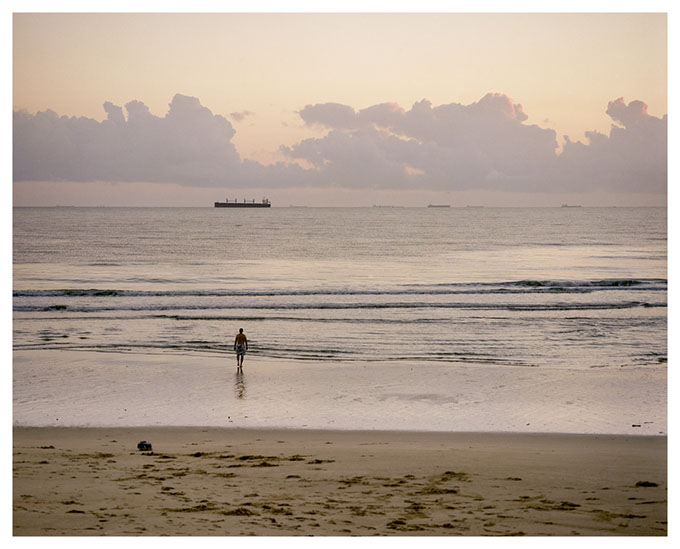
From the ‘Transmission’ series
Tannum Sands, south of Gladstone. In addition to being a major coal port, Gladstone is the destination for several major coal seam gas pipelines snaking their way through the Central Queensland landscape. The pipelines will deliver gas to three major liquefaction and export facilities currently under construction on Curtis Island.
.
Photos © 2013 The Central Queensland Project Kelly Hussey-Smith and Alan Hill and installation photos Doug Spowart.
..
.
.
.

 wotwedid