
wotwedid

Victoria Cooper+Doug Spowart Blog

Archive for the ‘Artists Books’ Category

ANA PAULA ESTRADA’s new book “MEMORANDUM”

leave a comment »

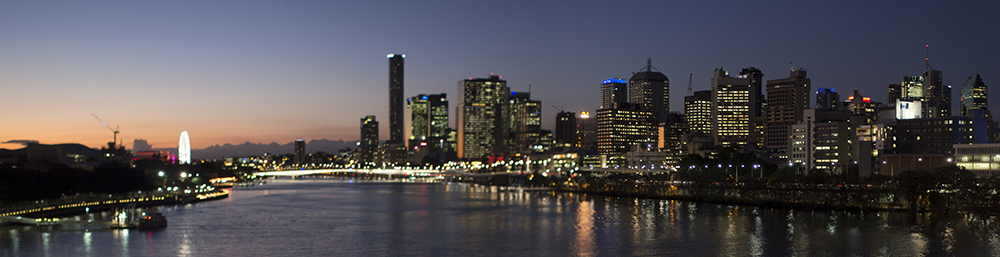
Brisbane City skyline

Brisbane City skyline

Brisbane is not a place not known for its photobook makers… there’s not much happening.  Occasionally a gem from Dane Beesley, a few college student publications made for assessment and, every now and again, artists’ books/photobooks from yours truly and Victoria Cooper. So it is an exciting time when a new book is made as a total production from concept to printing and binding in Brisbane. That book is by photographer and photobook self-publisher Ana Paula Estrada and is entitled Memorandum. The book was completed as a project associated with Estrada’s Siganto Foundation Creative Fellowship in the Australian Library of Art at the State Library of Queensland.

.

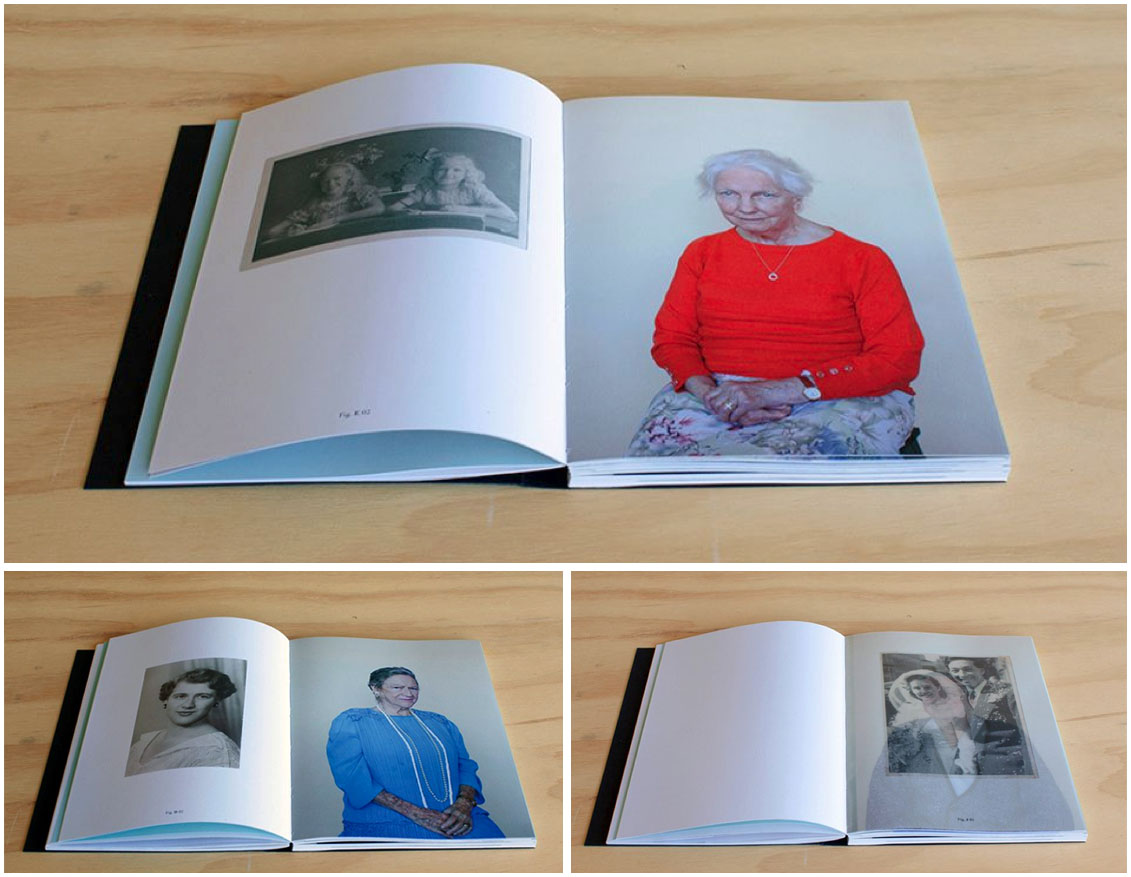
Memorandum is a conceptual bookwork and is concerned with concepts of aging and memory, remembrance and the recounting of stories. In this book Estrada presents evocative associations where the photograph infers a memory or moment re-called.

At a first glance Memorandum could seem to be just a book of straight portraits featuring old people. The are multiple images on successive pages occasionally interspersed with a range of other photos and ephemera. Each of the people pictured in this book have been interviewed by Estrada and shared with her stories of their lives. Fragments of their memories, exhumed from the depths of memory, or in some cases, from lost recesses of the mind caused by age-related memory impairment or varied stages of Alzheimer’s disease. Estrada’s portrait sequences present the subjects with subtle expression changes. Turning the pages of the book are like a conversation with the person – animated and suggesting a dialogue is taking place.

Page opening – Memorandum

Page openings – Memorandum

Facing pages are sometimes blank to create a punctuation or pause in the conversation. Sometimes images and other ephemera are on the verso pages. These act as windows to the conversation – they need no caption, they are physical evidence of existence, substantiating the memory. They act as memory maps placed before the reader as additional information. Many of these images have been sourced from the person in conversation. Other photographs have been sourced by Estrada from the archives of the State Library of Queensland to illustrate the memory relayed to her in conversation with the subject.

Memorandum has achieved the notice of the world-wide photobook community:

Harvey Benge comments on the book https://harveybenge.blogspot.com.au/2016/08/ana-paula-estrada-memorandum-new.html

The Royal Photographic Society’s curated photobook exhibition https://issuu.com/bjsdesign/docs/photobook_exhibition_2016_catalogue

Shortlisting for the Artspace Mackay Libris Artists’ Book Awards 2016-librisawards_illustratedlistofworks

Shortlisting for the Encontros da Imagem Festival (Braga, Portugal)

A review by Gabriela Cendoya (in Spanish) can be seen HERE

The State Library of Queensland BLOG about the development of the book can be read HERE

The Australian Library of Art at the State Library of Queensland and the National Library of Australia have both bought copies.

I was honored to have Ana Paula approach me to write an essay to accompany the book. My text is printed as a broadsheet page folded and inserted into a pocket in the book’s cover. My essay is as follows….

PHOTOGRAPHIC MEMORY

Sitting here, I’m trying to recall the earliest memories of my life as a child. In this process of reflection I attempt to delve back into my memory searching for images, thoughts, experiences and feelings. What I find are personal, unique and fragmented memories that seem to have the appearance of photographs.

As I remember more of my childhood, I wonder if there is another way of visualising memories? But what emerges again in my mind are stilled photographic moments in particular, one of a family group. These photo memories have no colours, just black and white and slightly sepia. Wide white borders surround each memory and the corners are slightly bumped showing the patina of being handled. It even seems plausible to me I could even turn the memory over, and there would be a caption there in someone’s handwriting.

How could I, at 3 years of age, have known the significance and the outcome of my father’s posed group – my brother, mother and me? Other aspects of the photograph, like how youthful my mother appears, or how my father was not yet bald, give me something to base what I think should be my memories of that time. Could it be that I remember the photograph and have forgotten the moment of its making?

Writer and critic John Berger claims that, ‘All photographs are there to remind us of what we forget.’[i] Does this mean that because we have photographs, we allow ourselves to forget? What I do know is when we want to remember – we look at photographs. And when it comes to remembering there are social rituals that help us do this. Every family, for example, at some time or another, gathers together and the musty pages of photo albums are turned, old yellowed Kodak print packets thumbed through and the slides are held up to the light with everyone squinting to see some glimmer of recognition in the tiny frame. We have seen the archived baby photos, the wedding couple, holidays and kids playing at the beach, the new house and the other treasures that vernacular photography presents as a personal record. Through this ritual we encounter the rich archive of our family and ancestor’s lives. These now become ‘conditioned memories’, whether real or fiction. When we next see these photos we will think we remember the moment of their making and not necessarily our moment of first encountering them.

This conceptual bookwork by Ana Paula Estrada is concerned with the human condition of memory. Perhaps more specifically this work deals with concepts of ageing and memory, remembrance and the recounting of stories. The work also comments on the interpretation of stories and the retelling of what could be referred to as meta-stories in the form of a book.

As the pages of Memorandum are turned – people will be met. There will be conversations through the sharing of photographs, documents and news-clippings of these people’s lives. Through the process of making this book, memories have been revisited, refreshed and retold anew. These stories are offered for reader’s contemplation, perhaps even for future remembering. Memoranda, such as these, may be about other people’s stories – but in many ways they may stir our memories and become part of our stories as well.

Doug Spowart

[i] Berger, John. Keeping a Rendezvous [in English]. Granta in association with Penguin, 1992.

.

Memorandum‘s book specifications and price:
  • Black soft cover, Section Sewn (Exposed Spine), 21 cm x 15 cm Stock: Ecostar Uncoated It contains a small 8pp booklet, fold out pages and a tipped in 112gsm translucent page
  • 170 pages and 86 photographs
  • Selling price $80

Other details about the book:

Photographs & Text:

Ⓒ2016 Ana Paula Estrada

Subject´s personal photographs.

John Oxley Collection, State Library of Queensland.

Design & concept: Ana Paula Estrada

Essay: Dr. Doug Spowart

Artwork: Linda Carling

Colour management: Martin Barry

Printing: Allclear in Brisbane, Australia

Typefaces: Chronicle Display and Aparajita

Paper stock: 120gsm &140gsm Ecostar

First edition, 2016

Print run: 200

Ana Paula Estrada’s Memorandum makes a significant contribution to the contemporary photobook genre in her ability to resolve the conceptualisation, capture – in photographs and recorded interview, the design and coordination of a complex concept into the simple form of of a book. And in doing so give us an opportunity to consider contemporary issues of our time through the photobook.

Doug Spowart

October 31, 2016

PHOTOS OF THE BOOK LAUNCH

AVID READER IN WEST END BRISBANE

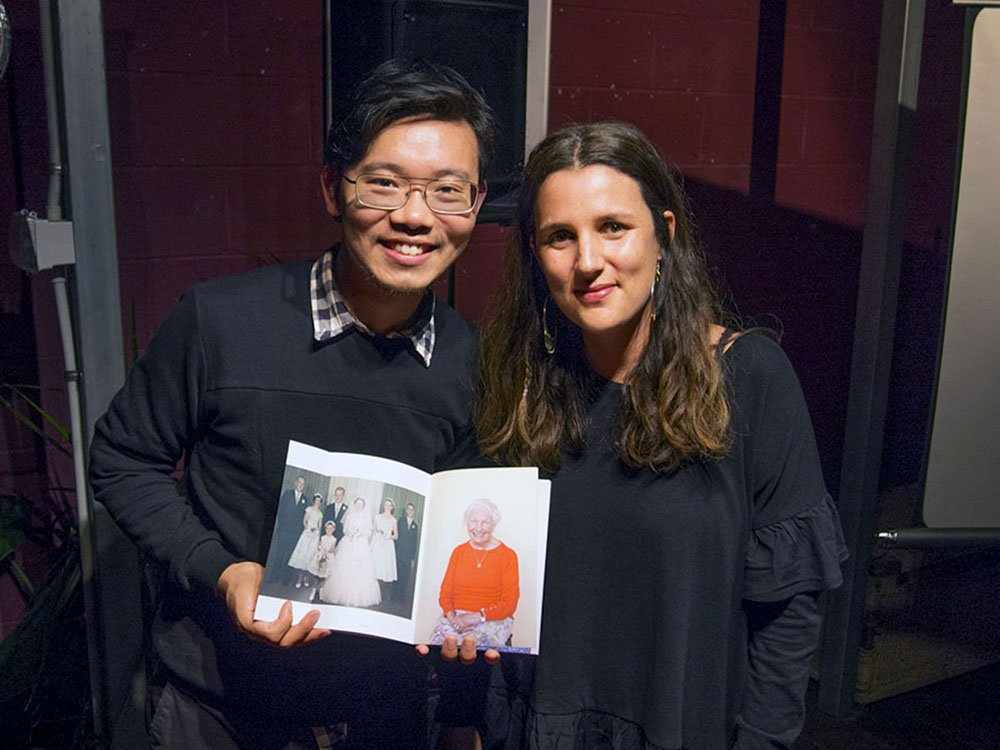
Louis Lim bought a book

Louis Lim bought a book

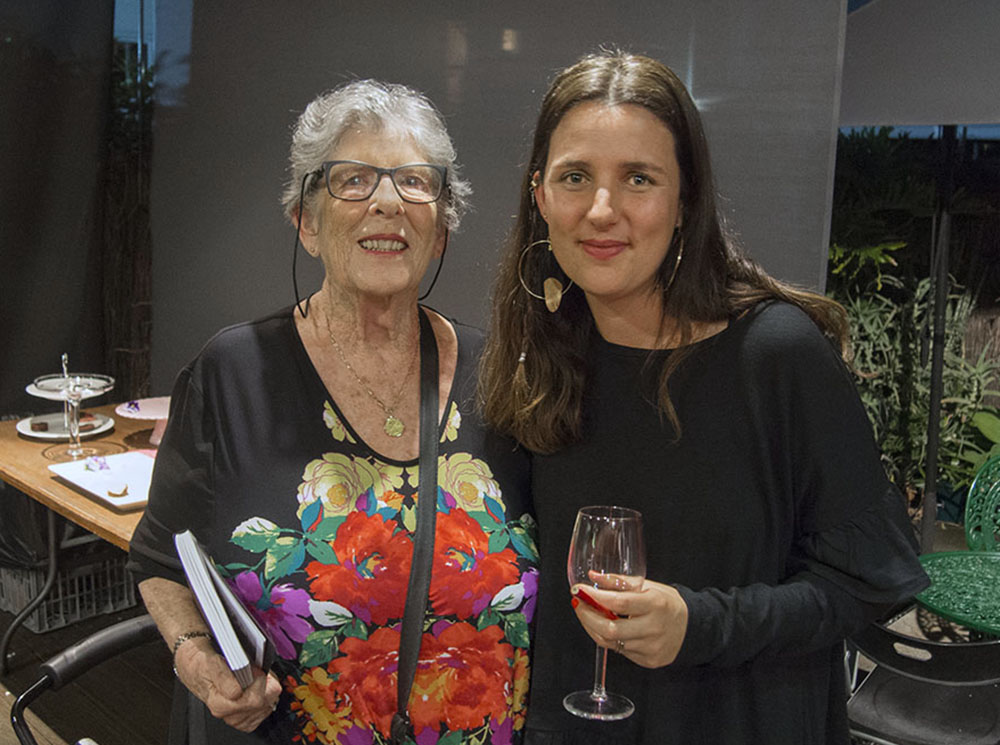
Annette Green and Ana Paula

Annette Green and Ana Paula

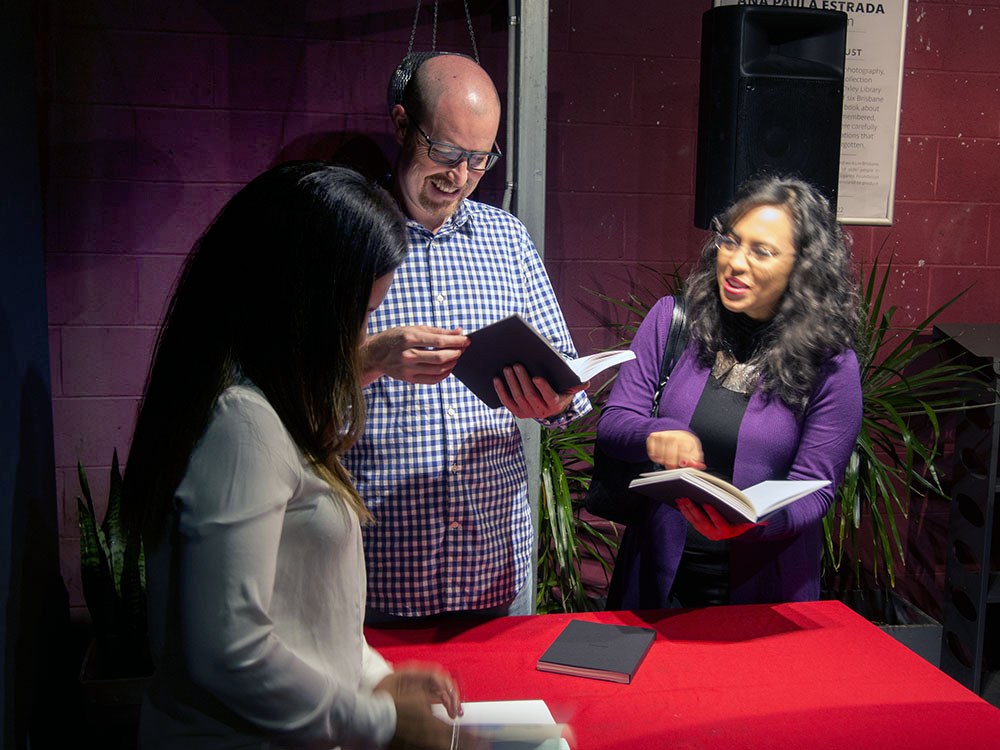
Looking at the book

Looking at the book

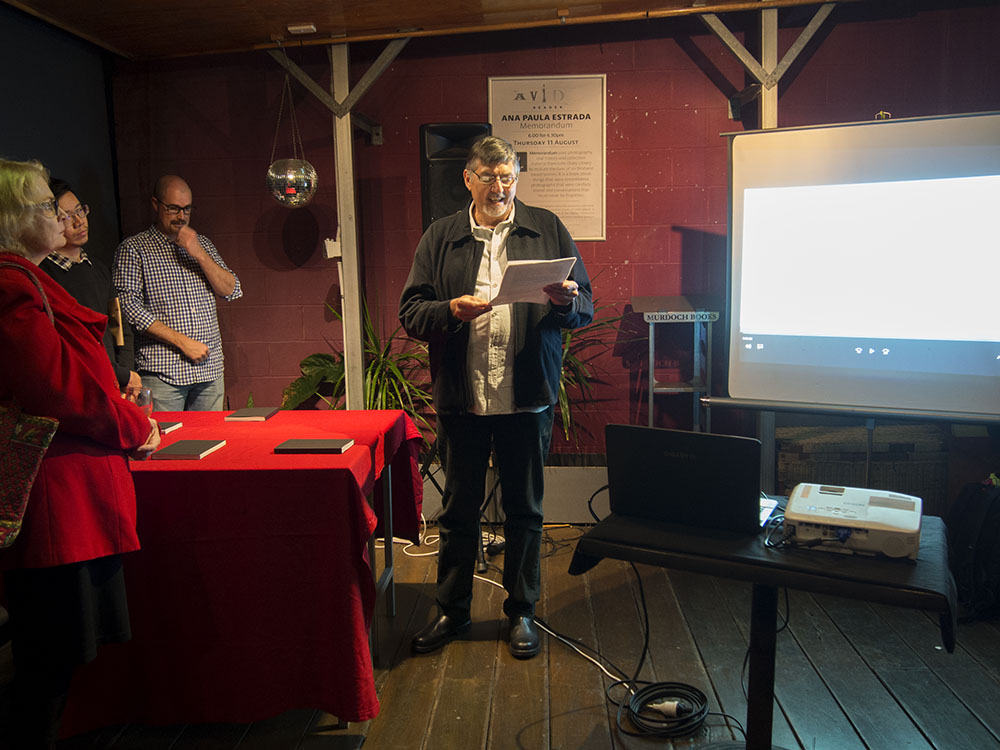
Doug Spowart reading his essay from the book

Doug Spowart reading his essay from the book

.

.

.

COVERING: The 2016 Libris Artists’ Book Award

with 2 comments

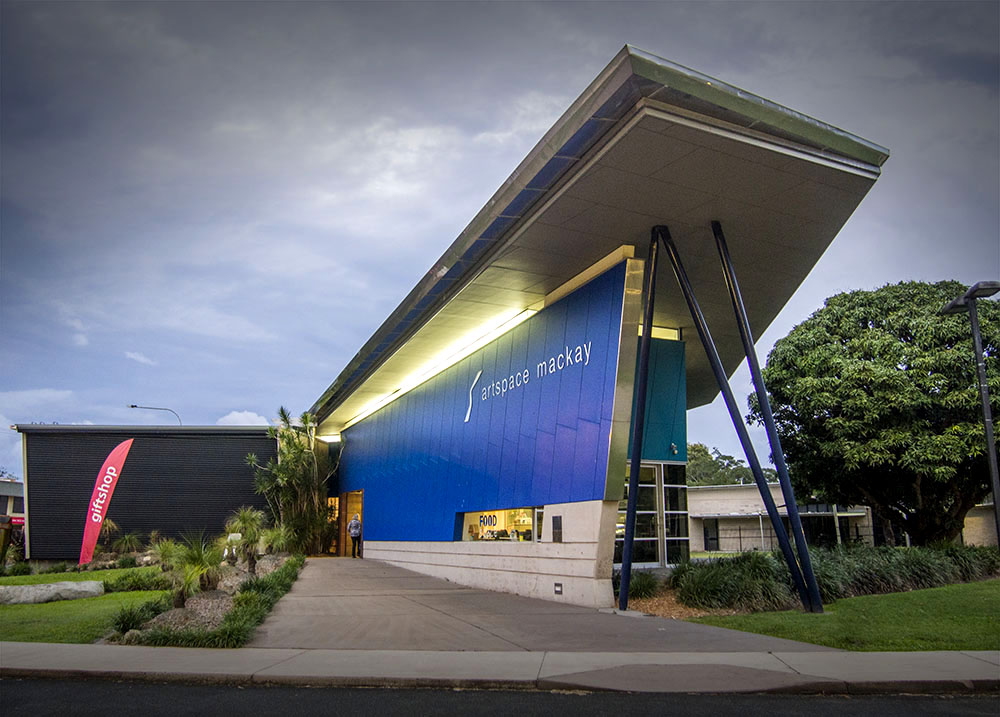
Artspace Mackay

Artspace Mackay


A COMMENT ON THE 2016 LIBRIS ARTISTS’ BOOK AWARDS


In his announcement speech for the 2016 Libris Awards at Artspace Mackay judge Sasha Grishin makes the observation that: ‘The contemporary artists book is characterised by boundless freedom’, and adds that: ‘… it has absorbed many conceptual frameworks, many art mediums and technologies and goes across the spectrum of the senses.’


Visitors to Artspace and the Libris Awards encounter an open space with islands of book presentation devices. Plinths of all sizes – some encased, others at floor level, there are shelves on walls, books as mobile installations hung from the ceiling and other books with ‘pages’ covering large expanses of wall. This is not an easy walk-through exhibition as each work beckons, siren-like, calling for the extended gaze of the reader.

The Artspace Libris exhibition

The Artspace Libris exhibition

.

On this occasion the winners were:

  • Dalrymple Bay Coal Terminal National Artists Book Award $10,000 Acquisitive Award went to George Matoulas and Angela Cavalieri, with the text by Antoni Jach, for Europa to Oceania.*


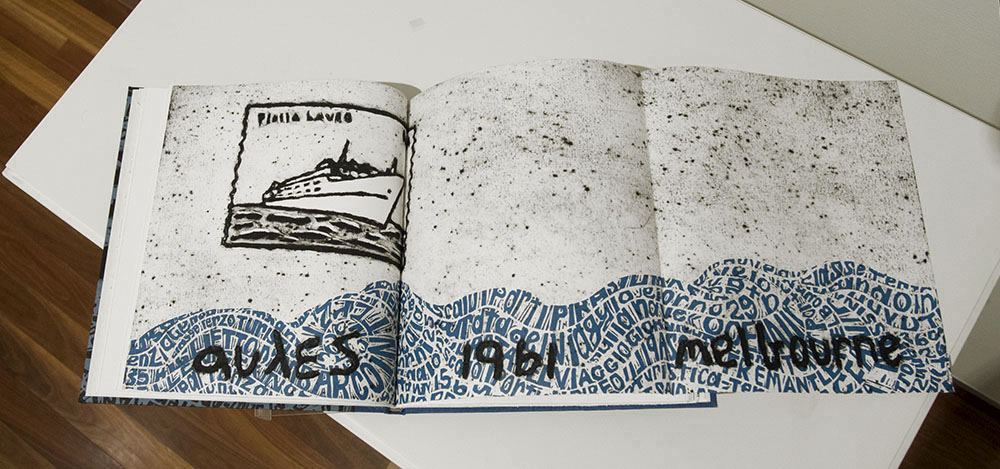
George Matoulas and Angela Cavalieri, with the text by Antoni Jach, for Europa to Oceania

George Matoulas & Angela Cavalieri, with the text by Antoni Jach, Europa to Oceania

Grishin’s comments about the work were:

After much soulsearching I decided to allot the winning entry for the major prize to a collaborative and fabulous artists book by two Melbourne‐based artists, George Matoulas and Angela Cavalieri, with the text by the novelist and playwright Antoni Jach, titled Europa to Oceania. The three linocuts are by Angela, the three collographs are by George and there are another two collaborative foldout prints. The two artists, one of Greek extraction, the other from Calabria in Italy, with wit, profundity and beauty explore the migrant experience at a time when the Australian social fabric is under stress with the question of refugees and migration.

Highly commended in this award were:
Gracia Haby and Louise Jennison’s Closer to Natural
Monica Oppen’s Metropolis
Tim Moseley’s Kange pholu wanda

Peter Lyssiotis’ Blind Spot


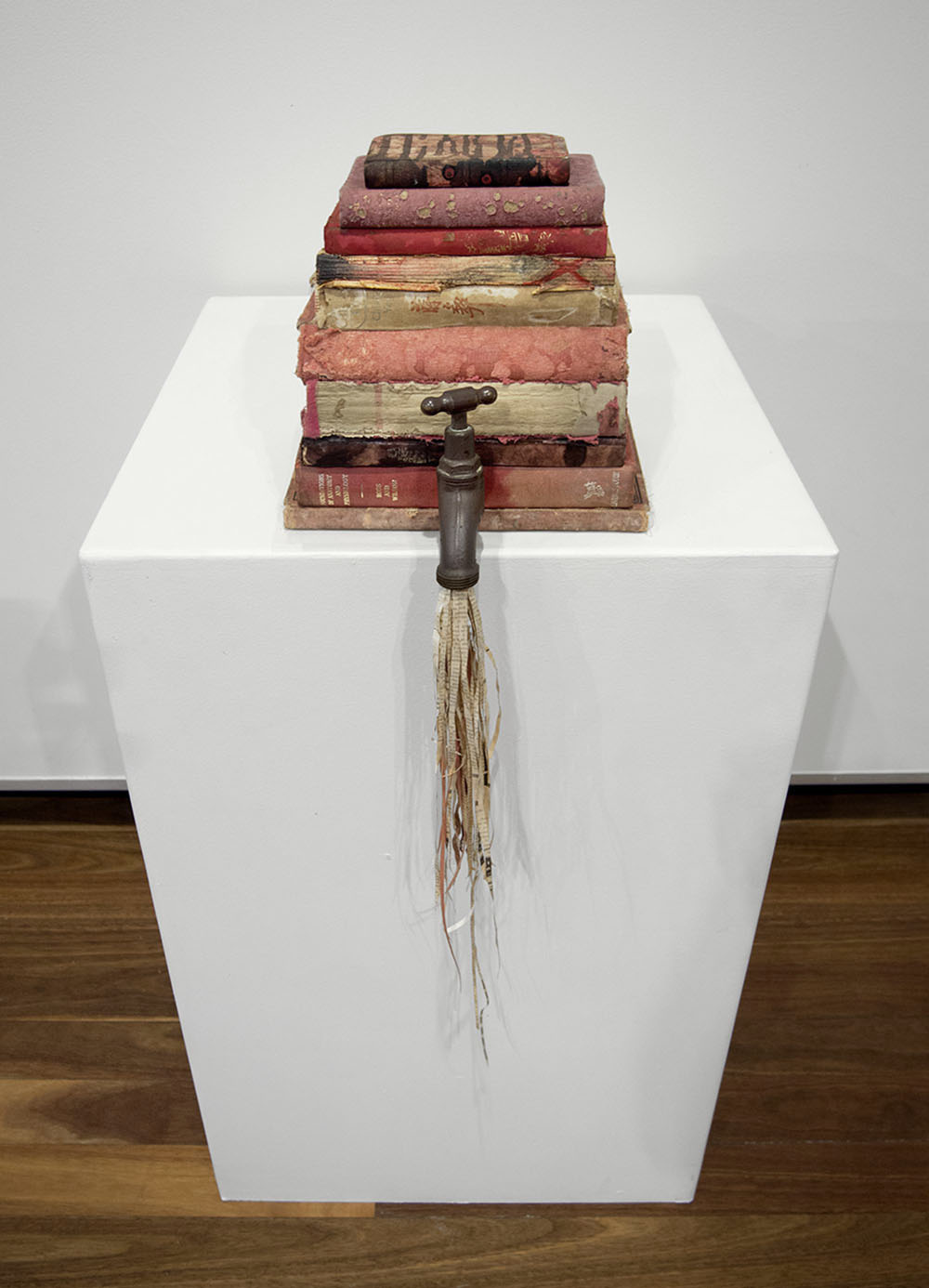
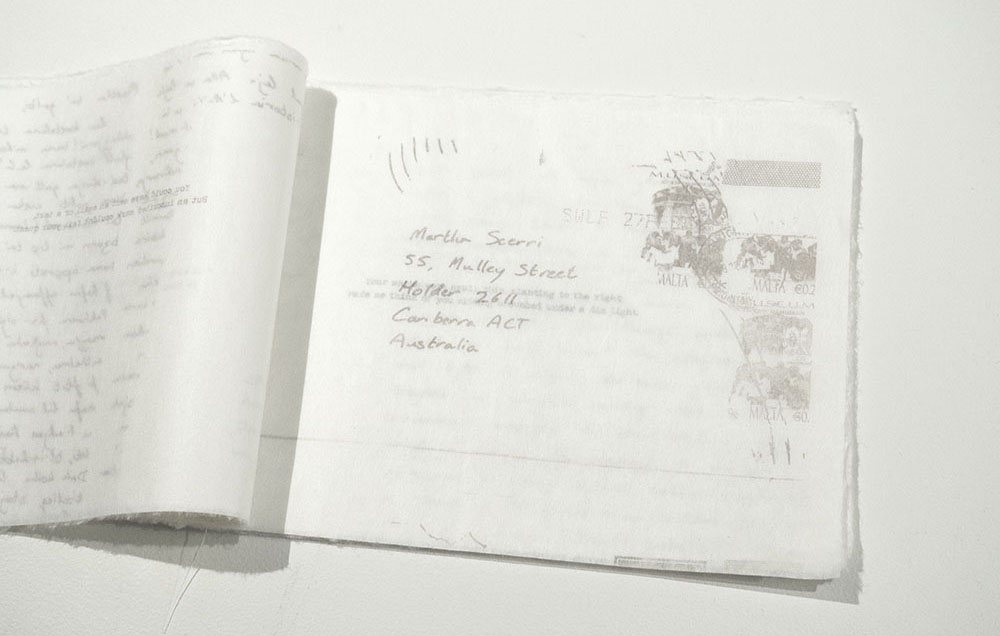
  • Mackay Regional Council Regional Artists Book Award for a local artist went to May‐Britt Mosshamer for Tapping the knowledge.*
May‐Britt Mosshamer for Tapping the knowledge.*

May‐Britt Mosshamer Tapping the knowledge.*

Grishin’s comments about the work were:

As much as one fought the temptation, the $2,500 award had to go to the local artist, May‐Britt Mosshamer and her effective piece Tapping the knowledge. In art you can say very important things with a bit of humour in your back pocket. This work is all about the flood of information and the drought in knowledge.

The highly commended, or runner‐up entries in this category were:

Denise Vanderlugt’s I used to wrap rainbows
Jo Mitchell’s For Mary


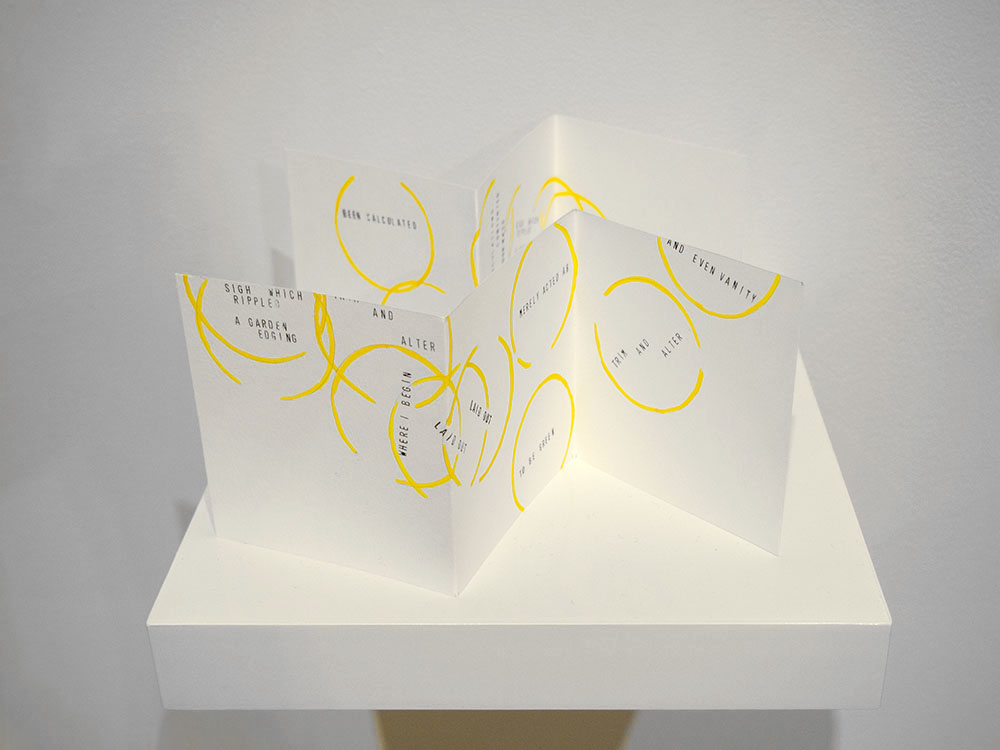
  • Artspace Mackay Foundation Youth and Student Artists Book Award (under 26years), went to Brooke Ferguson and her The Small Garden (for M.S.).*
Brooke Ferguson The Small Garden (for M.S.).

Brooke Ferguson The Small Garden (for M.S.).

Judge Grishin’s comment on the work:

This is an award that is about taking risks, a punt and choosing the unexpected, the promising and the challenging. It is literally a once in a lifetime opportunity for an emerging artist to gain national recognition plus a handy fistful of dollars. I selected the work by the 25‐year‐old Brisbane‐based artist, Brooke Ferguson and her The Small Garden (for M.S.) The MS stands for the wonderful veteran artist, Madonna Staunton, where young Brooke Ferguson was inspired by a poem by Staunton and with gouache, pen and ink and pencil has created a fragile concertina – a beautiful sensibility from a promising young artist.


.

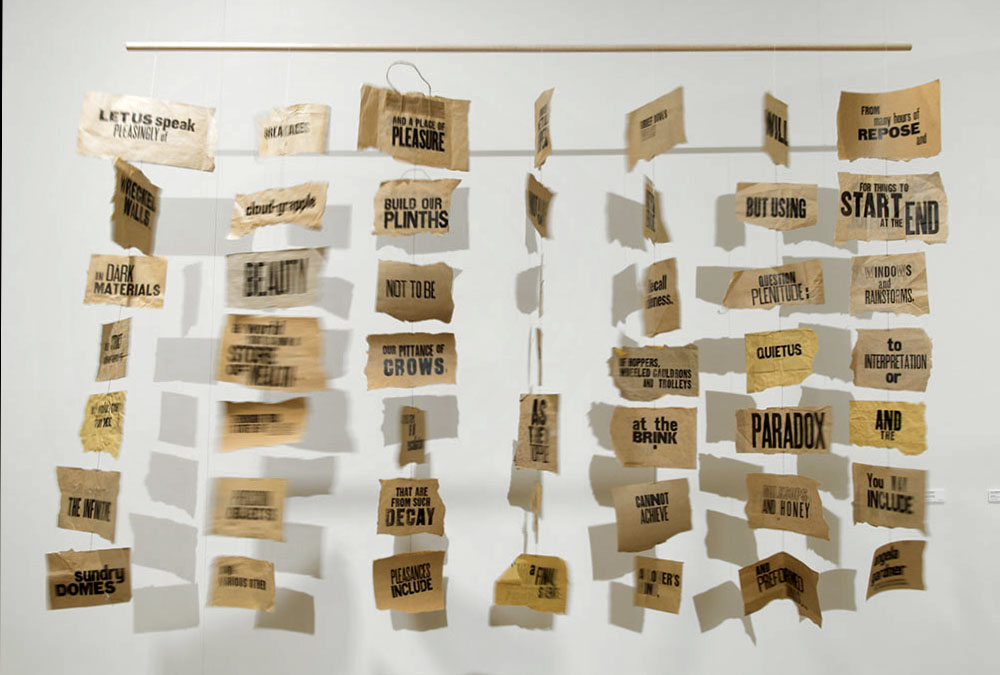
In my opinion some books call for special mention. Caren Florance’s Pleasure demolition is transfixing. The suspended brown paper sheets with a hand printed letterpress phrases from poetry by Angela Gardner are animated by the flow of air and movement in the space. Forever moving, the oscillation of the pages becomes a machine for the generation of concrete poetry… phrases twirl and merge, poetic moments where new meaningful/less messages materialise.

.

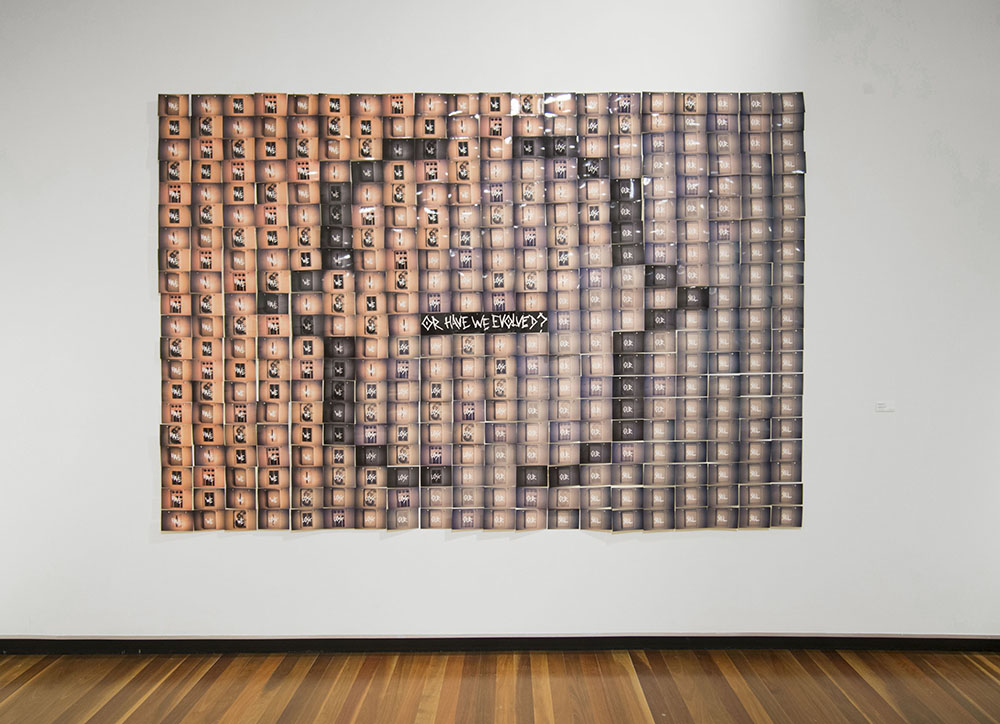
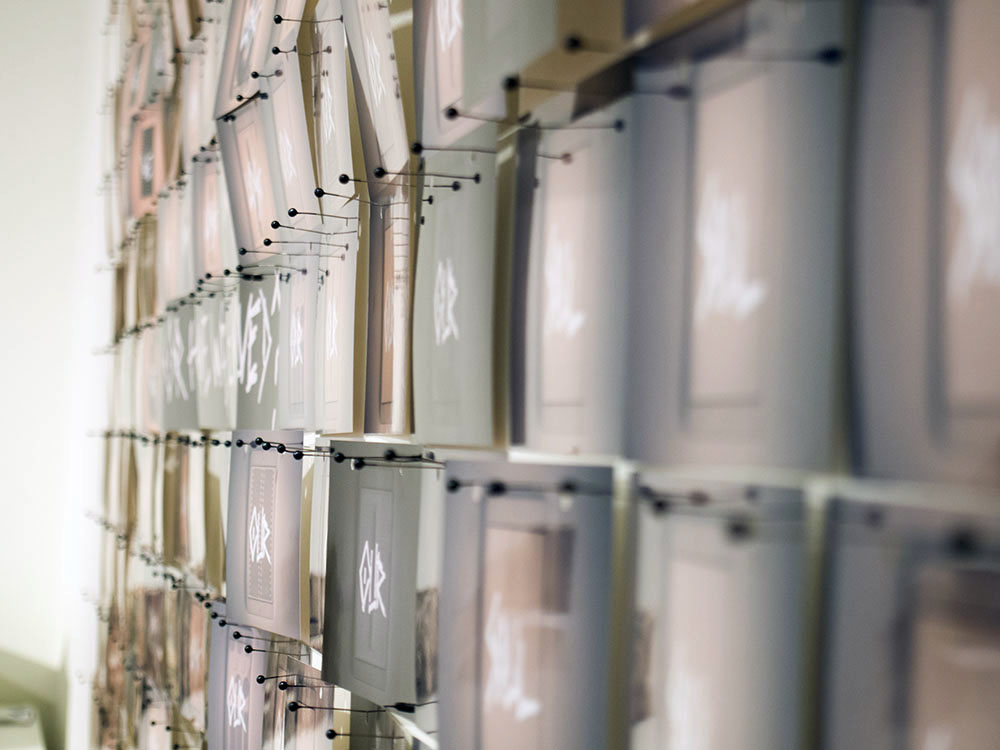
Jamian Stayt’s Soulless evolution

Jamian Stayt’s Soulless evolution

The individual pages of Jamian Stayt’s Soulless evolution are pinned to the wall making what may seem like a vast wallpaper pattern. However, Stayt’s work invites a closer reading of the cipher hidden within the layers of the image. He presents some big questions where contemporary notions of tradition are challenged and rapidly changing technology has intertwined agency in the evolutionary pathway for humanity.

.

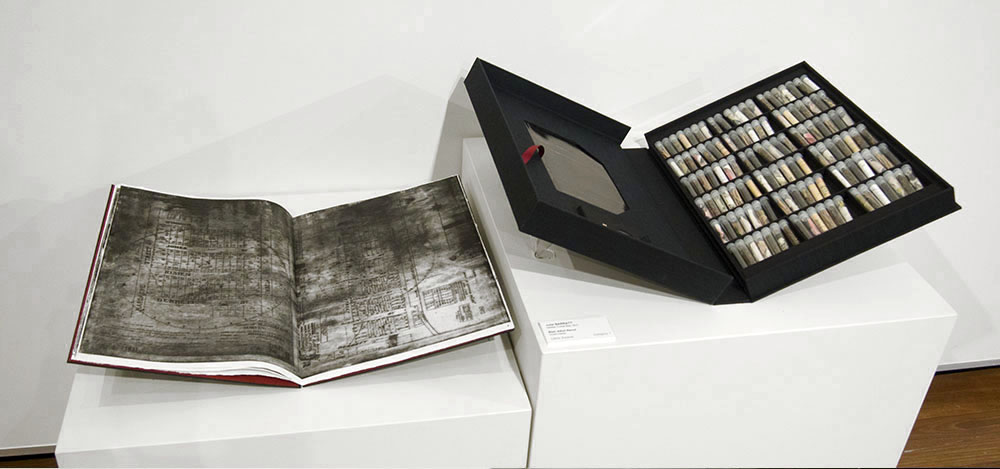
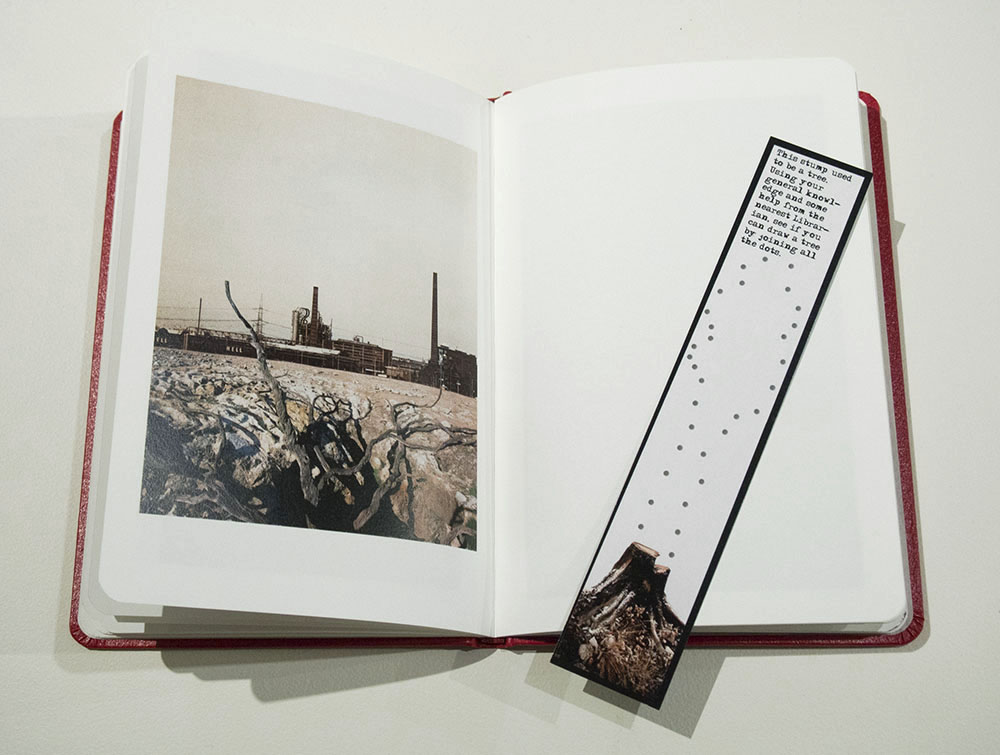
Julie Barratt Blair Athol recut

Julie Barratt Blair Athol recut

Julie Barratt’s Blair Athol recut refers to Solastalgia: a theory on the contemporary human condition for a deep loss of place. In one part of the installation there is a book of dark photolithographs where maps are encroached upon by black inks. For the reader this growing blackness evokes a gloomy absence. Facing the dark pages in the clamshell container are vials of coloured soils, plant fragments and found objects. Although collected from this disturbed place, these samples are vibrant and alive – perhaps they are the vestiges of childhood memories that recall a different time before the destruction of the physical place by coal mining.

.

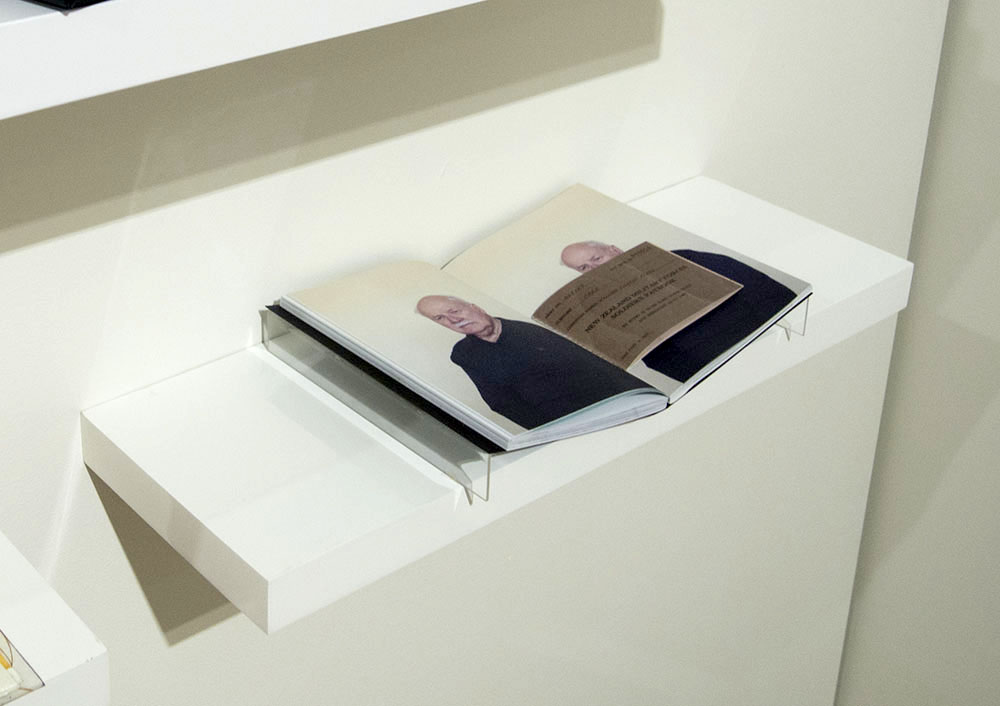
Ana Paula Estrada Memorandum

Ana Paula Estrada Memorandum

Many books feature photographs as the primary carrier of the narrative. Ana Paula Estrada’s Memorandum employs the medium to document elderly people and their connection with life through personal photographs and how their memories are re-lived through viewing these photos. The book, conceived and made through the Siganto Foundation Creative Fellowship in the Australian Library of Art at the State Library of Queensland, is a complex assemblage of contemporary portraits, photo-glimpses from family albums and a narrative conveyed through the turning of pages.

.

Exhibition view

Exhibition view

.

As usual the artists’ book as exhibition defies direct touch and the turning of pages for narratives to be revealed and for the book to speak of what it has allowed the artist to create. But for the 72 books in the exhibition to be read the visitor would need to stay for the duration of the exhibition, working through the night with white gloves and torchlight. The exhibition reconnects and continues the significant contribution of the Artspace Mackay’s Libris Award to inspire artists and create a space discourse on the book in all its forms. In doing so the assembled exhibition represents cutting edge survey of Australian artists’ book practice.

Some works will become part of the Artspace Mackay collection; others will be re-packaged and returned to their makers. While the exhibition is dispersed its spirit will continue in the form of the gallery’s excellent illustrated catalogue, the text of Grishin’s speech, reviews, videos and other commentaries such as this, as well as the memories of the readers who viewed the show.

In two years time – the next iteration of this important event in the Australian artists’ book calendar will take place again. Wouldn’t it be nice if the whole collection could be purchased and held in perpetuity as a record of the discipline? Until then …


Dr Doug Spowart

16 October 2016


screen-shot-2016-10-22-at-6-25-18-pm

DOWNLOAD THE CATALOGUE: 2016-librisawards_illustratedlistofworks

Click to access 2016LibrisAwards_IllustratedListofWorks.pdf

.

A VIDEO FLY-THRU OF THE EXHIBITION


OTHER BOOKS FROM THE EXHIBITION


Denise Vanderlugt with her highly commended bookwork I used to wrap rainbows

Denise Vanderlugt with her highly commended bookwork I used to wrap rainbows

Peter LYSSIOTIS Blind spot

Peter LYSSIOTIS Blind spot

Martha BOWMAN You could have sent an email or a text

Martha BOWMAN You could have sent an email or a text

Jamian Stayt’s Soulless evolution (Detail)

Jamian Stayt’s Soulless evolution (Detail)

Bernard APPASSAMY Constellation of endearment (Detail)

Bernard APPASSAMY Constellation of endearment (Detail)

Deanna HITTI Assimilated museum

Deanna HITTI Assimilated museum

Gracia HABY and Louise JENNISON Closer to natural

Gracia HABY and Louise JENNISON Closer to natural

Caren Florance’s Pleasure demolition

Caren Florance’s Pleasure demolition

.

.

All photographs and videos ©2015 Doug Spowart.  Main text (except Judge Sasha Grishin’s words) ©2016 Doug Spowart   With thanks to Victoria Cooper for her suggestions and edits.

.

.

ADVANCE NOTICE: SKOPELOS-A Greek Island Workshop

leave a comment »

doug-wooli_beach_junk

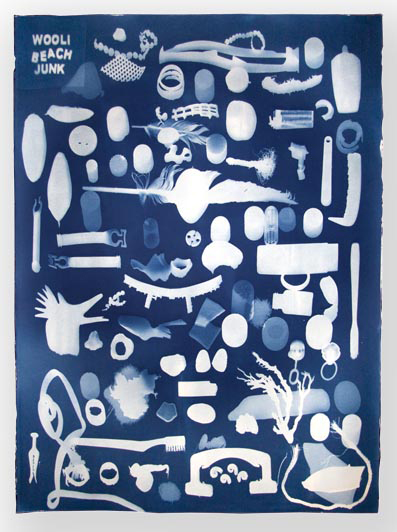
Wooli Beach Junk a cyanotype by Doug Spowart

 .

IMAGINE COMBINING ARTMAKING – PHOTOGRAPHY + BOOKS, eating Greek food and drinking wine, watching the blue of the Aegean Sea, experiencing Greek lifestyle and the mythical landscape?

.

In May 2017 we will be presenting a 12 day workshop on the Greek island of Skopelos with Australian artist and printmaker Steph Bolt.

Vicky and Doug

Vicky and Doug

We plan to work with participants to capture the experience of ‘being there’ and to tell stories about the place in books and photographs.

The workshop topics will include:

  • The cyanotype process to produce prints on paper and cloth to reference the Aegean blue
  • Working with found objects and inkjet negatives from photos made on excursions
  • Making bespoke photobooks that you will handcraft during the workshop
  • Aspects of documentary ‘placemaking’
  • Using online photobook making services to design books
  • A sharing of our techniques to optimise and enhance digital photographs.

.

A detailed website has been prepared by Steph Bolt and SKOPELOS WORKS ON PAPER

http://www.skopelosworksonpaper.com/spowartcooper-workshop.html

Googled images of Skopelos

.

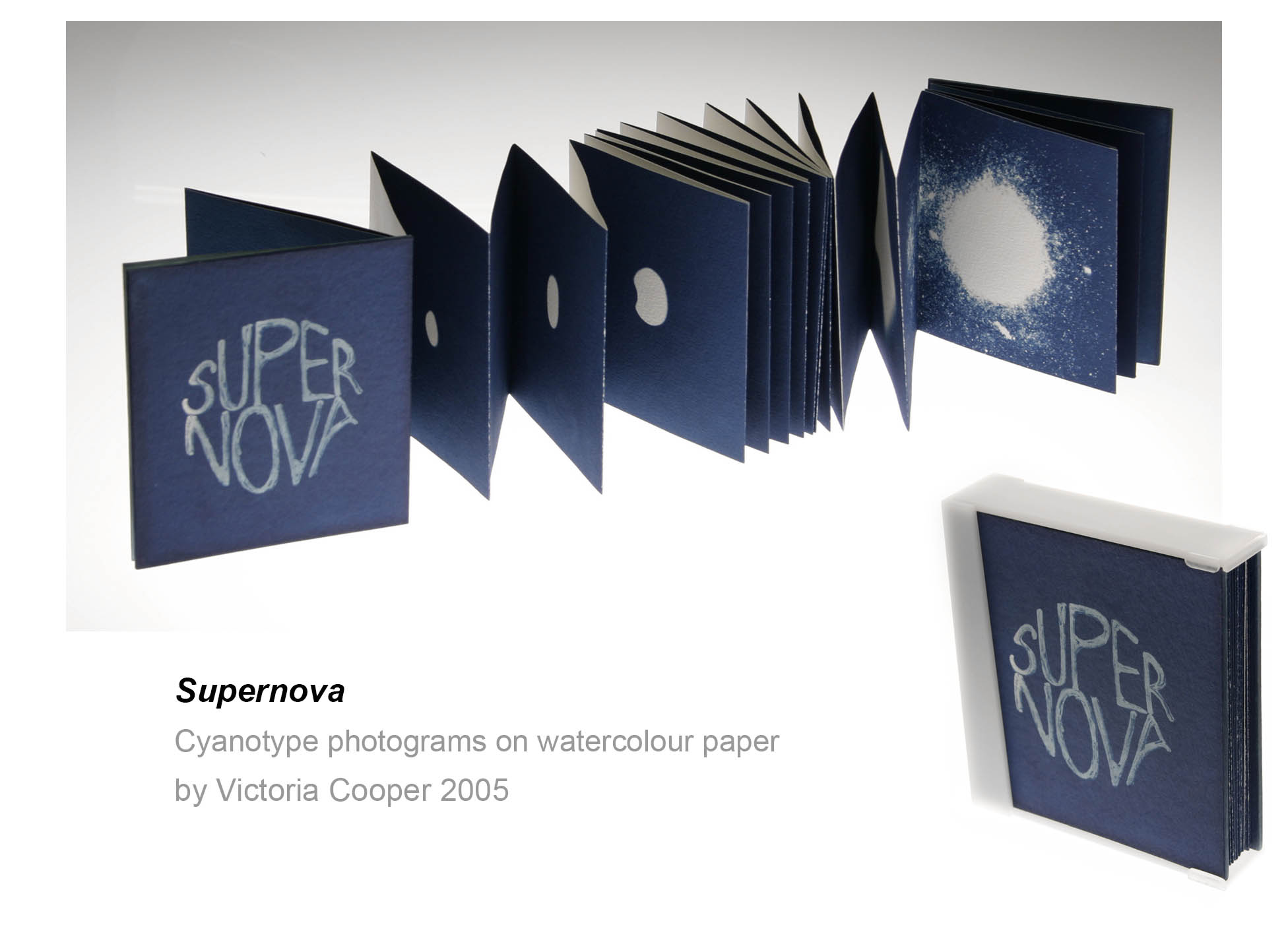
Super Nova a cyanotype book by Victoria Cooper

Supernova a cyanotype book by Victoria Cooper


A COMMENT ON JUDGING PHOTOBOOKS

leave a comment »

In a photobook judging...

In a photobook judging…


The photobook: And the winner is…


Any field of human endeavor seems to have connected with it a need for measurement, for qualification and quantification – a need to find the best, the fastest, tallest, smartest, dumbest, prettiest and ugliest. The photobook is no exception. Every year when the call goes out for entries to be submitted, or when the winners of numerous awards are announced the worldwide photobook community responds.

To attract those who make, or share an interest in, the photobook there are many incentives to participate in awards including:

  • Winning an award leads to sales for the book
  • Winning awards enhances reputations and future opportunities for the maker/s
  • Winning awards can provide opportunities to publish through prize money and/or ‘in-kind’ services
  • Entering awards provide an opportunity to present your ideas, your stories and your creation process to other participants of the discipline
  • By entering an award your concepts and narrative expression can reach extended audiences.

Additionally those who coordinate awards also receive compensation. Companies promote their products and services through organising and/or sponsoring awards. Organisations like art museums, professional associations, and significant commentators of the discipline all stand to gain prominence through the awards that they support. An interesting cross-section of photobook awards could include: The Kassel Photobook Dummy Awards, InFocus Photobook Exhibition at the Phoenix Art Museum, Photobook Bristol Festival, New Zealand Photobook of the Year Award, and The Paris Photo–Aperture Foundation PhotoBook Awards. The income from entry fees can also go towards offsetting the costs of prize monies and running the award.

Any award would not take place without a judging, but how are judges selected? What are the attributes of a good judge? Generally judges come from the various, and sometimes disparate, groups within the discipline for example: a photographer, a publisher, a book designer, a printer or a critic. As each judge brings to the judging his or her ideas and opinions regarding what makes a great photobook, the assessment session can be an interesting space to witness.

There is one common discussion point for any photobook judging – What is a photobook? The diversity of the discipline defies a standard definition and may include: newspaper styled items, funky zines, and the bespoke hand-made ‘artists book’, self-published books using digital POD technologies, trade published books and designer confections. Photobooks can contain photographs only, they can be books with photographs and accompanying texts, prose, poetry, captions and they also can be complex and sophisticated design experiences – book as object. In a photobook competition all these can compete for the overall award title. It’s like all the Olympic pool-based events being run simultaneously in the one pool, from high diving to the 100 metre dash –– Chaos…!

Getting a result requires consensus that can only be achieved through a process of review, discussion and the sharing of opinions and insights. Perhaps the assessment task would be simpler if there was a solitary judge.

Another concern is the number of books could a judge be reasonably expected to fully engage with before being overcome by the inability to fairly and consistently consider each entry. Other questions arise: Do strong and articulate judges sway the panel decision? Does every book say the same thing to every reader? And how does bias for or against certain book styles, photographers, and publishers or photographic content affect the judging outcome?

In the world of photobooks one thing is for certain – awards and competitions are not going to go away anytime soon. Social scientist Pierre Bourdieu in his book ‘Photography: a middle brow art’ commented that:

It is no accident that passionate photographers are always obliged to develop the aesthetic theory of their practice, to justify their existence as photographers by justifying the existence of photography as a true art. 1

Perhaps all those who, through organizing, entering and judging awards ultimately help to create dialogue, definition and an aesthetic that justifies the photobook’s existence as a ‘true art’.


Dr Doug Spowart August 25, 2016


  1. Bourdieu, Pierre. Photography: A Middle-Brow Art. Translated by Shaun Whiteside. Stanford, USA: Stanford University Press, 1996.


Text+Image ©2016 Doug Spowart

Written by Cooper+Spowart

September 9, 2016 at 12:19 pm

COOPER+SPOWART – JOURNEY NORTH

with 3 comments

OLYMPUS DIGITAL CAMERA

Travelling along highways north….

.

We are travelling up to north Queensland at the end of September for a month of artists’ book and photography projects, workshops and lectures.

.

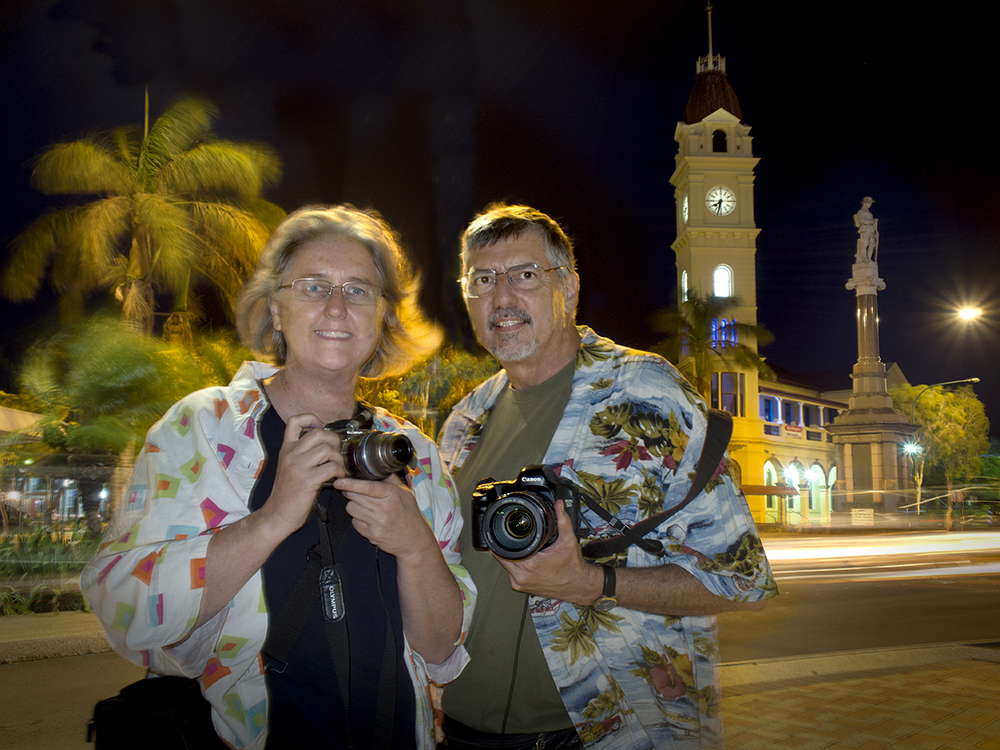
The artists in tropical garb with palm trees...

The artists in tropical garb with palm trees…

.

Our Journey …


sept-1000


Capricornia Printmakers logo

Capricornia Printmakers logo

.

September 27 ROCKHAMPTON: CAPRICORNIA PRINTMAKERS

We will present an evening talk about our artists books/photobooks and the Siganto Foundation Research Fellowships work we have been doing in the Australian Library of Art at the State Library of Queensland.

.

.

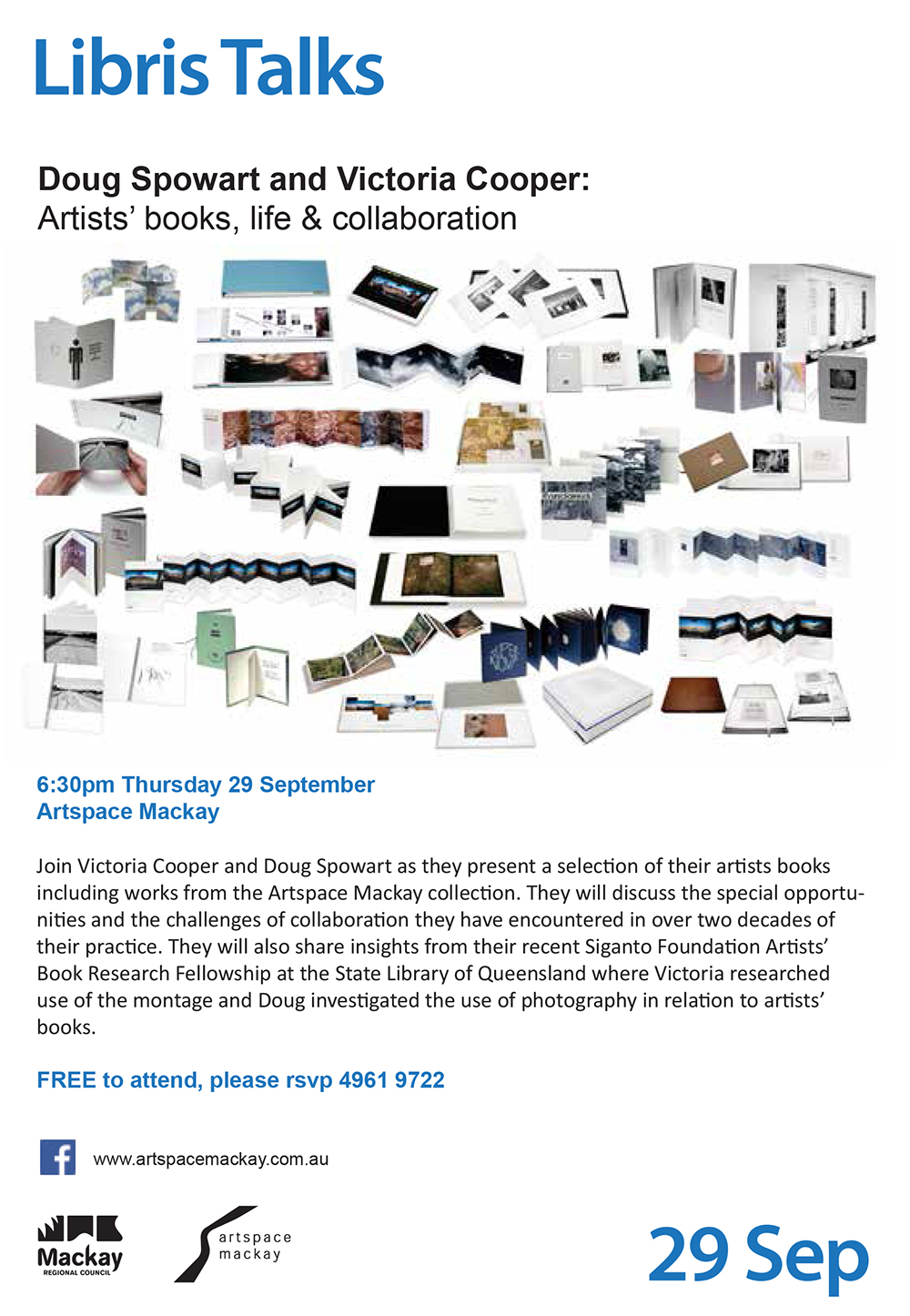
September 29 MACKAY: ARTSPACE MACKAY as part of the LIBRIS AWARDS PROGRAM

Here are the details…

.

SpowartCooper flyer


oct-calendar-1000


.

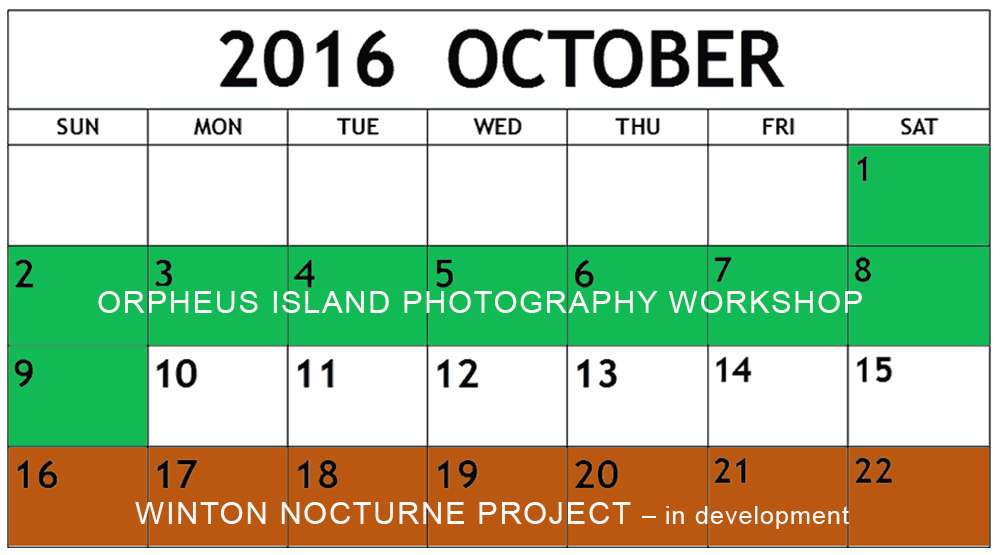
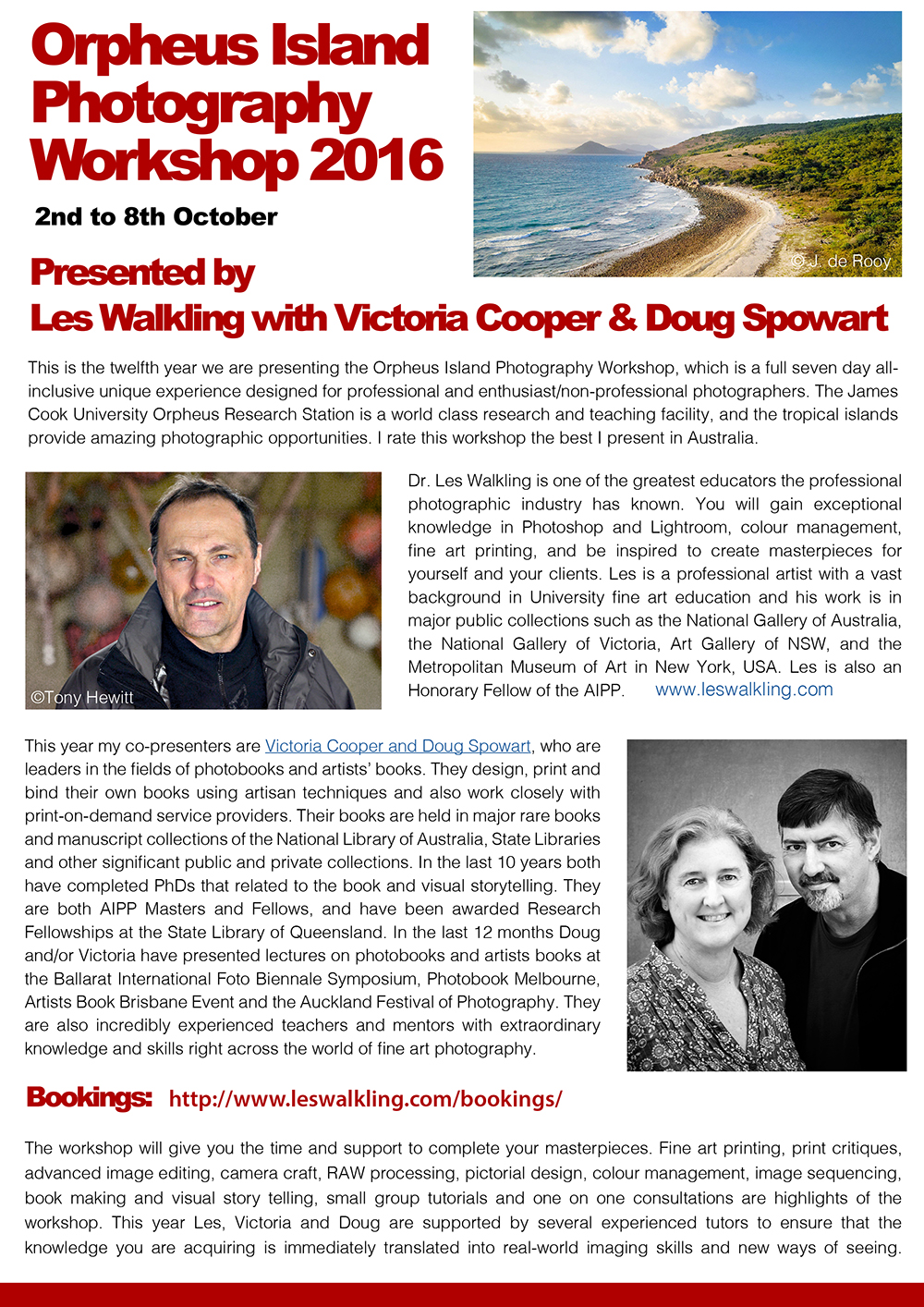
October 2-8 ORPHEUS ISLAND

Here are the details…

orpheus-flyer-2016-1000

.

.

October 16-22 WINTON: NOCTURNE WINTON – To be confirmed

See our other Nocturne Projects …  HERE

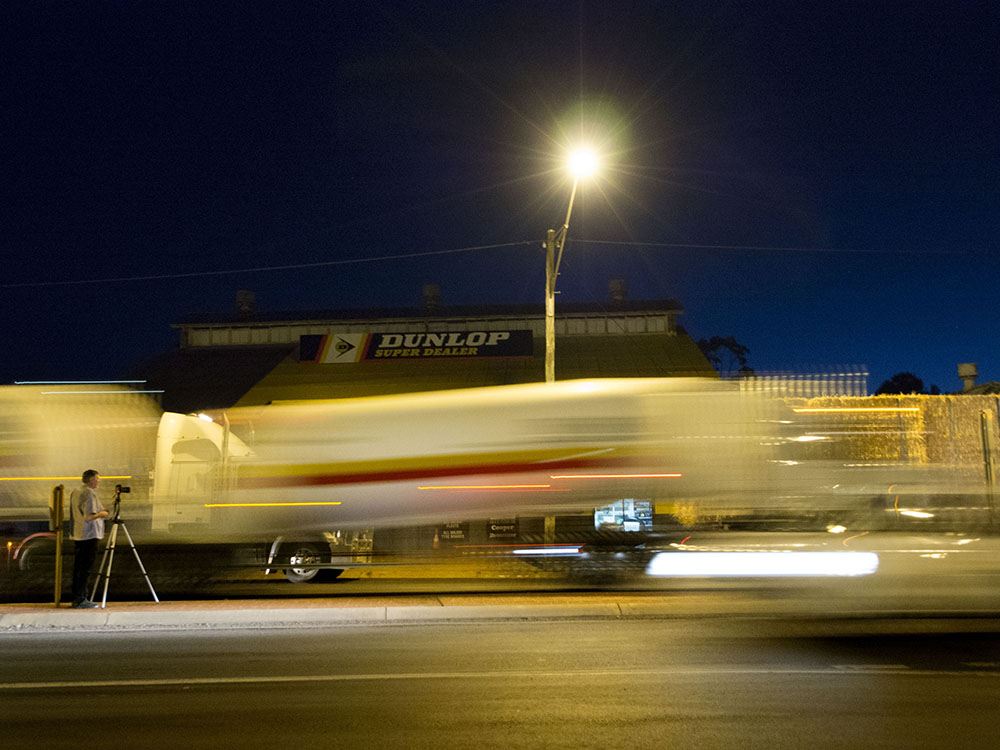
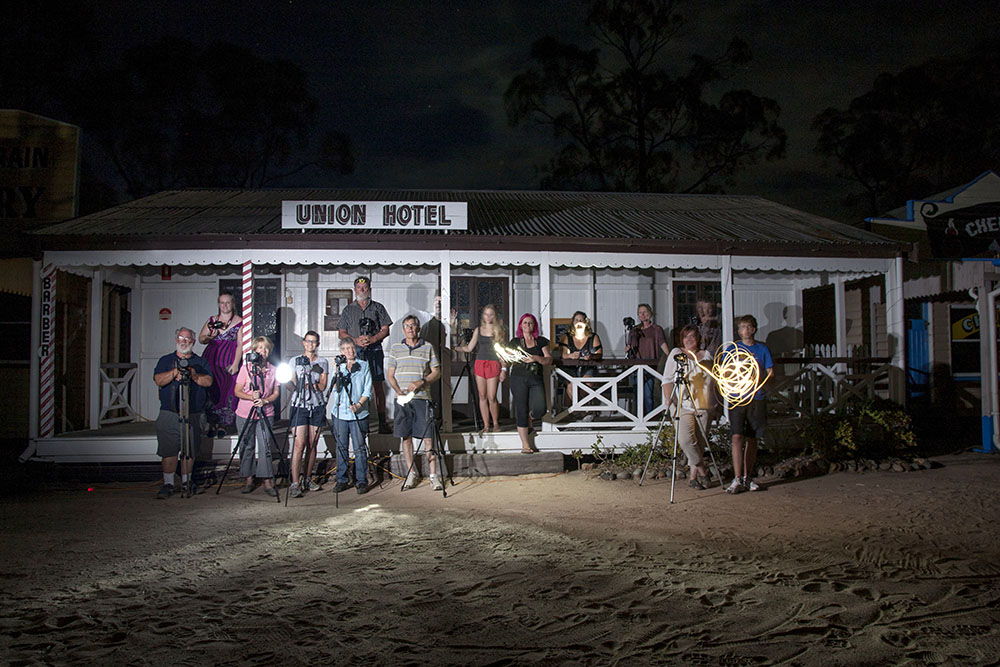
A few images like those we could be making at Winton follow…

.

Walker's Hotel, Grafton

Walker’s Hotel, Grafton

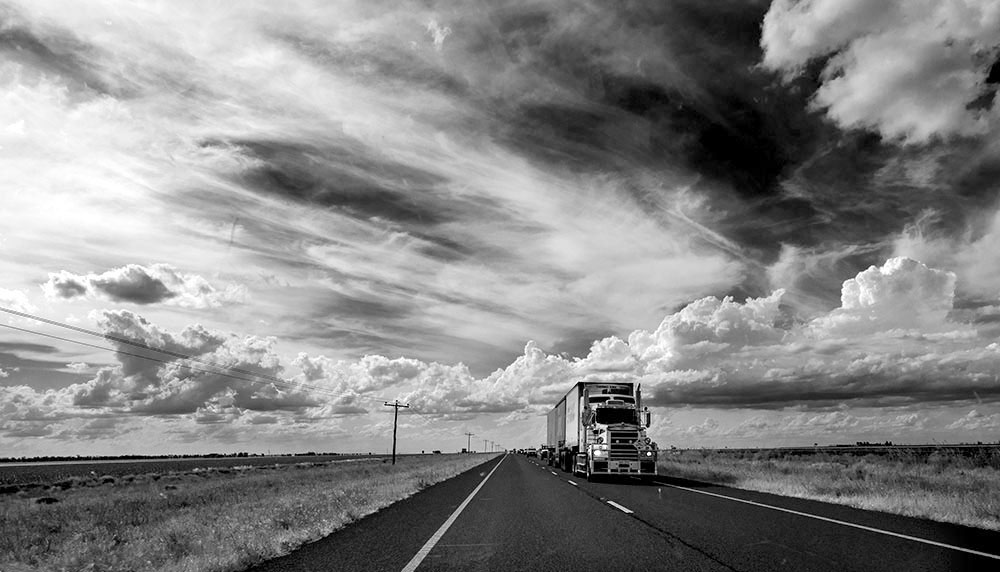
Trucks through town...

Trucks through town…

A group of Nocturne photographers

A group of Nocturne photographers

.

Nocturne Winton Facebook Logo

Nocturne Winton FB Logo

.

CONTACT US FOR DETAILS OF ANY OF OUR JOURNEYS NORTH ACTIVITIES

<Greatdivide@a1.com.au>

.

.

VICKY DISCUSSES ‘READING MONTAGES’ on the SLQ Blog

leave a comment »

Siganto Research Fellow Victoria Cooper

Siganto Research Fellow Victoria Cooper

 .

Vicky has recently posted a her latest paper about her research on the State Library of Qld’s Blog. This latest post comments on the montage and is illustrated by some interesting books from the SLQ’s Artists’ Book Collection.

 .
Read on or visit the post here: http://blogs.slq.qld.gov.au/ala/2016/05/27/reading-montages-perceptions-dilemmas-edges-and-resolution/

.

Reading Montages: perceptions, dilemmas, edges and resolution.

Nomenclature Dilemma: Collage or Montage

In this third blog post I will share the dilemmas of encountering the blurred boundaries associated with the lexicon of these art forms, for example: What is the difference between collage and montage? Does it matter? Are there different “readings” of collage vs montage images that have been reproduced by mechanical or digital means for both wall art, or as encountered in my research, book forms? I will present an Occam’s Razor resolution arising from the considerations that inform my research to provide a path through the complexity of these issues.

Responding to terminology dilemma:

As I progress through the research I am continually confronted with terminology issues and questions regarding the nature of montage and its intersection with collage. The dilemma is with me as a kind of Sisyphean cycle where, after climbing the mountain of wondrous diversity in the Australian Library of Art artists’ book collection; I am drawn back down by the weighty issues of inconsistent terminology.

Many artists, who cut, arrange and glue disparate and/or mixed media elements refer to their work as collage or for computer made images, digital collage.  This should be the end of the debate as the etymology of collage is the French word ‘to glue’. But there are others who cut and piece together disparate elements and ‘glue’ and then fuse them within the image and refer to their process as montage (or digital montage for computer images). Also interesting to note is that the origin of the word montage is a French word meaning ‘to mount’.  Is there a need to differentiate between these similar practices? Does terminology affect the ‘reading’ of these works? In my art practice I refer to myself as a montage maker, thinker and reader and as such I bring my own perspective to reading visual narratives.

Gracia Haby and Louise Jennison, who prefer to be known as paper artists, make collage works. Their unique state artists’ books and democratic multiples in the form of zines and editions of artists’ books have a place within this discussion.
Haby and Jennison responded to my email question regarding the nature of the digital work in their book, ‘And we stood alone in the silent night’, where they state that: ‘Digital collages are made in chorus with unique state pieces. They are all a means of making, with the ‘how’ of lesser interest to us than the ‘why’ or ‘message’.

In their statement above they suggest that the means of the making is secondary to the final work. Even when the collage has been digitally scanned and then printed it remains, for them, a collage.

‘And we stood alone in the silent night’

‘And we stood alone in the silent night’

The book, ‘And we stood alone in the silent night’, presents the reader with an enchanted narrative through the composition of images and poetic texts across the pages. Underpinning the reading is the smooth and seamless joins of the elements creating a surreal landscape with a theatre of colourful inhabitants. The compositional elements draw the reader into a kind of Alice in Wonderland experience of reading: where the fused elements are arranged in a mise en page; and the turning page emulates the scenes of a paper movie (i) . The small size text comes through the reading as a poetic aside to underscore the scene.

‘And we stood alone in the silent night’

‘And we stood alone in the silent night’

Haby and Jennison’s careful cutting and pasting of added elements over or alongside the original image distinguish their broader collage work.  Again, in these works the silent edges between these interventions and the original image provide uninterrupted reading. Importantly as this transition or interval between the elements goes unnoticed the added element ultimately colonize the interior space and time of the original image.

So far in my research, I have not found many artists that tear and roughly cut their elements intentionally leaving these edges in the final montage for the reader to interpret. One example however is Lorelei Clark’s work, ‘Brisbane: River City‘.

Although the elements are fused by digital

reproduction, their roughly torn or cut edges seem to separate the elements so that the reading is disturbed much like a jump-cut (ii)  edit in a film.

'Brisbane: River City'

‘Brisbane: River City’

The elements combined in this way demand separate attention and focus on individual parts of the narrative or issue presented. As the source material may have been glossy magazines or pictorial publications, these edges could represent a critique or even an attack on social issues that affect the human condition. In many ways the reading is unsettling, rather like the political montages of Peter Lyssiotis, they shout back at the reader.

'The very first book of fish'

‘The very first book of fish’

Another example of the rough cut collage can be found in Jack Oudyn’s Book of Fish series of small books, where the original collage or paste-up can be seen in the ALA collection along with the small zine like productions. Rather than attached to the surface, the reproduction of these collages fuses the elements into the page and transforms the reading of the text and images. In these little books, the elements are submerged within the narrative and seem to float around like the flotsam and jetsam of everyday life.

Jack Oudyn 'The very first book of fish'.

Jack Oudyn ‘The very first book of fish’.

My resolve:

For the purpose of this research, I have decided to take account of how the artist defines their work as stated in the Library catalogue. As a researcher I am reliant on the information supplied by the artist, either in the form of an artist’s statement or catalogue information. This information allows a deep engagement with the work that ultimately enriches the reading experience for the researcher. Many may consider that too much information may reduce the potential for the book to be reimagined, but for readers like myself there are many ‘readings’ of an artists’ book.  As social scientist, Pierre Bourdieu suggests that an artwork is:

‘in fact made not twice, but hundreds of times, thousands of times by all those who have an interest in it, who find a material or symbolic profit in reading it, classifying it, decoding it, commenting on it, reproducing it, criticizing  it, combating it, knowing it, possessing it.’ (iii)

As mentioned earlier in this blog I refer to my work as montage, and align my methodology and inspiration with that of film and the pioneers of montage and page design from the early 20th century. In this research I have found similarities in the ‘reading’ of collages that have been either created or reproduced through mechanical or digital processes with the images created as montages. As I strive to engage with the many new ways of reading that each artist presents, any background information can take me into new spaces and places, each time I read the same book.

So rather than questioning the terminology, either a collage or montage, I am more informed by the way elements are grafted or combined; their arrangement on the page; the typography and page design. When the elements such as type, photographs, painting, drawing, found objects etc have been fused within the space of the page of the book by photomechanical, digital or another printmaking process, I will read these as a montage. As such, in the research I will consider the following:

•    whether I am seduced by nature of the smooth transition and the interval between elements is subliminal or if the torn edge focuses my attention;
•    whether the adjacency of the elements is disturbing or attacking my attempts to flow smoothly;
•    whether the transition has been digitally achieved or by hand if the information is available.

The nature of the edges of the combined visual elements within the composition is a profound aspect to reading these visual books. So rather than questioning the terminology, whether a collage or montage, I will continue in my ‘montage readings’ informed by the narratives contained within and between grafted edges.

.

Victoria Cooper
 

PART 2 of this research series can be viewed here https://wotwedid.com/2016/03/19/victorias-slq-blog-post-montage-research/

.


i. Lou Stoumen is the author of visual books including ‘Can’t Argue With Sunrise: A Paper Movie‘ (1975)
ii. Film makers Jean-Luke Godard and Sergei Eisenstein championed the use of discontinuity devices such as jump cuts in scenes to disrupt the flow of the cinematic narrative and create the illusion of moving through time and space. This was intended to engage the viewer proactively to think about the issues surrounding the scene.
iii. Bourdieu, Pierre. ‘The Rules of Art: Genesis and Structure of the Literary Field’. Translated by Susan Emanuel. Stanford University Press, 1996. Editions du Seuil 1992. Page 171.

.

.

.

AUSTRALIAN & NEW ZEALAND PHOTOBOOKS OF THE YEAR 2015

leave a comment »

ANZ-LOGO


AUSTRALIAN + NEW ZEALAND PHOTOBOOK @ MAUD GALLERY


The photobook continues to capture the imagination of not just photographers but a broader community who enjoy ‘reading’ the visual nature of photostories. Part of the enthusiasm for the photobook lies in the diversity of the discipline from hand-made zines stapled together on the kitchen table to the slick graphic design of commercially printed books. The other major aspect of interest in the photobook is it’s accessibility – anyone can make his or her own book within the diverse range of practice. How then can the best books be acknowledged, rewarded and celebrated?

In Australia there have been awards for photographic books such as the Australian Institute of Professional Photography’s Photography Book of the Year Award, and more recently the Australian Photobook of the Year. This year for the first time, New Zealand photographers were able to enter their own Photobook of the Year Awards and have the ‘best’ books defined by a group of respected photobook judges and commentators on the art. An important contributor in the development of a critical evaluation structure for photobooks in Australia and New Zealand is the ongoing work being done by Australian print-on-demand service provider Momento Pro. Once again Momento Pro teamed up with Heidi Romano of Photobook Melbourne to sponsor and coordinate the Australian award. The creation of a New Zealand photobook award was also sponsored through Momento Pro’s local branch was coordinated with the organisers of this year’s inaugural Photobook New Zealand event in Wellington.

From April 14-22, under the auspices of the Brisbane Photobook Club, I coordinated an exhibition of the award winners and the finalists of both the Australian and the New Zealand Photobook of the Year Awards at Brisbane’s Maud Gallery. A special ‘launch’ event was followed by around a week of potential viewing time for those interested in seeing 26 of the ‘best’ books from our part of the world.

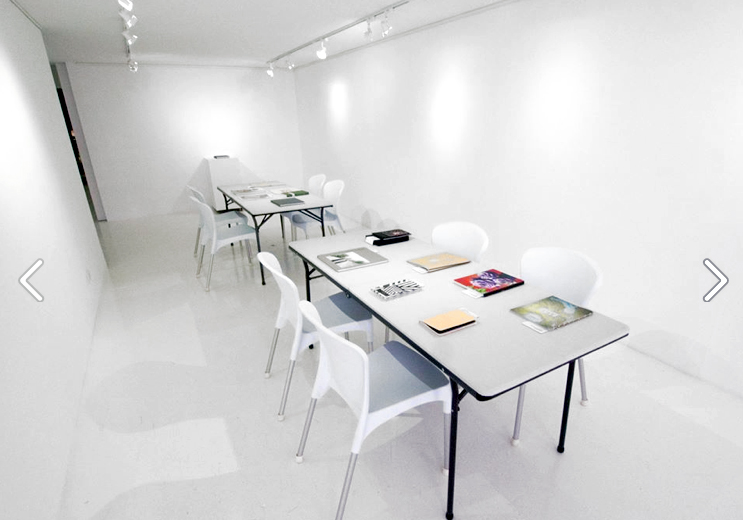
Conscious of the need to provide a ‘reading’ experience rather than the usual gallery ‘viewing’, Vicky and I installed the books within the gallery space on tables with chairs or stools. To highlight the winners, I chose to place these four books on plinths and therefore provide not only a prominent positioning within the space but also to allow a more intimate access the books without the visual ‘clutter’ of other displayed works and their readers.


The tables setup

The tables setup

.

Around 60 people attended the launch event. It was an unusual gallery experience as attendees found a space at a table, sat down and began reading. Moving on occasionally to the next chair and the selection of books in close proximity. A group of students clustered around certain books discussing quietly amongst themselves the book design and narrative features that interested them. I had intended to present a welcome and a short talk about the books but chose not to as it just seemed that everyone was engrossed in the process of reading. The video made in one part of the evening shows the intensity of the ‘shush — I’m reading’ vibe permeating the gallery.


That evening, and over the following days, I had many conversations with those who had come to see the show. Many attendees enquired about technical production attributes of the books. Some seemed to have been expecting a collection of books that were of a more traditional bookshop nature. Readers noted the diversity of physical forms of the photobook, how the story was communicated and the themes pursued by these successful book award entrants. Most attendees enthusiastically accepted the opportunity to cast their vote for the People’s Choice Award.


ANZ Photobooks of the Year @ Maud Gallery

ANZ Photobooks of the Year @ Maud Gallery


An interesting topic of discussion emerging from conversations with attendees related to the current categories of entry and the characteristics of the selected books. It was noted that the awarded books and finalists from both categories seemed to blur these category perceptions. This is in part because self-publishers may create ‘trade-like’ products and trade publishers may make ‘creative style products’.

Ultimately it comes down to the question ‘Did they like what they saw?’ I would say yes… although some comments related to the seriousness of selected photobooks as they often dealt with austere, conceptual themes or raw documentary – ‘Where are the happy books?’ one reader commented.

Would they come again to another Photobook of the Year showing? I would think they would. Many indicated that they would enter the next awards…

A call for entries in the 2016 Photobook of the Year Awards will be made later in the year


REPORT: Doug Spowart


WHAT FOLLOWS ARE COMMENTS ABOUT EACH AWARD AND THE WINNERS

(Edited from the Awards’ press releases)


APBOTY LOGO

APBOTY LOGO

.

AUSTRALIAN PHOTOBOOK OF THE YEAR AWARDS 2015

The judging panel included representatives from photography, publishing and art institutions, and was co-chaired by international art consultant and curator, Alasdair Foster, and Photobook Melbourne Director, Heidi Romano. The judges assessed the physical books for excellence in photography, layout and design, and the suitability of the format for the book’s theme and purpose, resulting in a selection of 14 finalist books.

The winners were announced at the Photobook Melbourne project space, Southbank, on 25 February. “Australian photographers are continuing to embrace the book format as a means for exploring, documenting and disseminating photography, just as locally created photography books and the artists behind them are being applauded internationally,” stated Foster. “Our finalists prove that a successful photo book does not require a major capital investment or an expensive publicity machine, but it does require a strong and engaging visual narrative in a sophisticated design, as well as genuine relationships within the photo book community.”


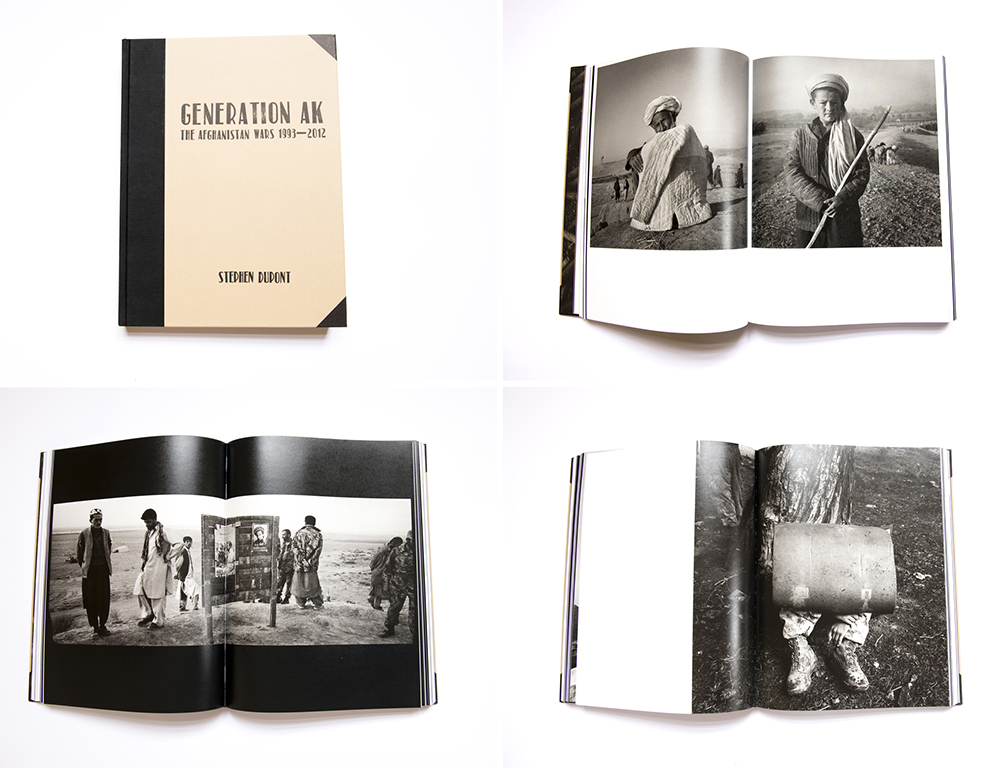
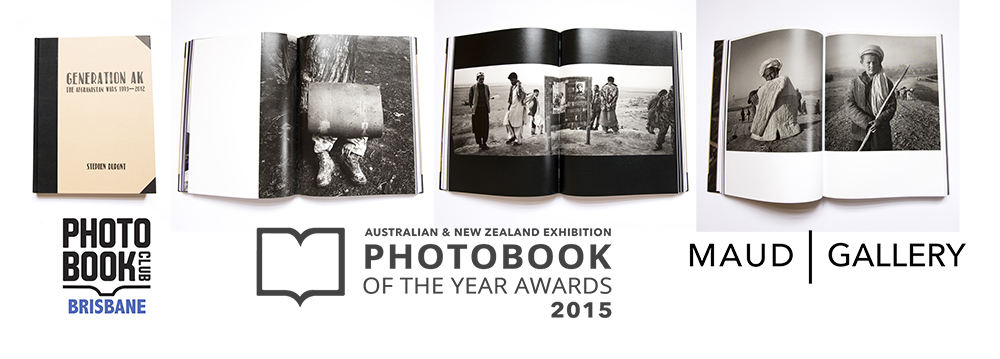
Generation AK: The Afghanistan Wars, 1993 - 2012

Generation AK: The Afghanistan Wars, 1993 – 2012 by Stephen Dupont

TRADE PUBLISHED

WinnerGeneration AK: The Afghanistan Wars, 1993 – 2012 by Stephen Dupont, Steidl –

CommendedBelanglo by Warwick Baker, Perimeter Editions, Dan Rule –

CommendedBirdland by Leila Jeffreys, Hachette

Finalists

+ The Middle of Somewhere by Sam Harris, Ceiba Foto

+ Arc by Zoe Croggon, Perimeter Editions, Asia Pacific Photobook Archive

+ Limits to Growth by James Farley, Currency Editions


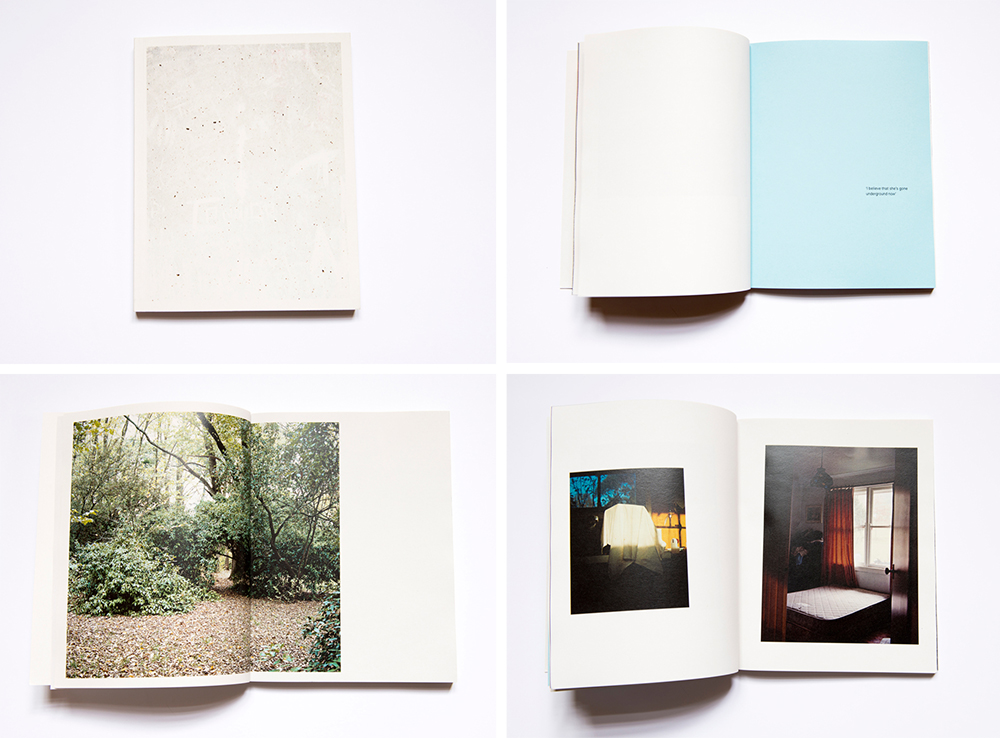
Winner – Red Herring by Jordan Madge

SELF-PUBLISHED WINNER – Red Herring by Jordan Madge


SELF PUBLISHED

WinnerRed Herring by Jordan Madge

CommendedYour love is not safe with me by Ailsa Bowyer –

CommendedLA – NY by Sam Wong and Jack Shelton –

Finalists

+ By the River by Ian Flanders

+ The Smell of Narenj by Hoda Afshar

+ Magic City #2 by Chloe Ferres

+ The Moon Belongs to Everyone by Stacy Mehrfar

+ STAN by Christian Belgaux and Jack Pam

People’s Choice – The Middle of Somewhere by Sam Harris, Ceiba Foto

.

.


NZPBOTY LOGO

NZPBOTY LOGO


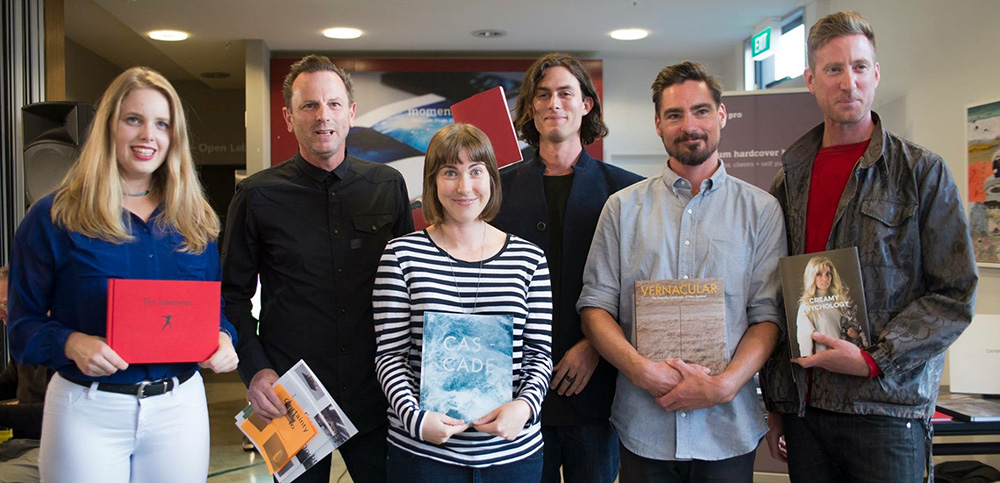
THE NZPBOTY WINNERS

THE NZPBOTY WINNERS

 .


NEW ZEALAND PHOTOBOOK OF THE YEAR AWARDS 2015

.

The judging panel, chaired by David Cook, a Senior Lecturer in photography at Massey University, Wellington, selected 13 finalist books that presented excellence in photography, layout and design, and whose format complemented the book’s theme and purpose.

“The best works presented a carefully edited selection of images, in an engaging visual narrative, with sophisticated design that didn’t overwhelm the imagery,” stated Cook, “Age and experience weren’t the defining characteristics, it was the skill of visual storytelling and the ability to combine photos with graphics, text and materials to enhance the story told by the images, to create a new artwork in its own right.”


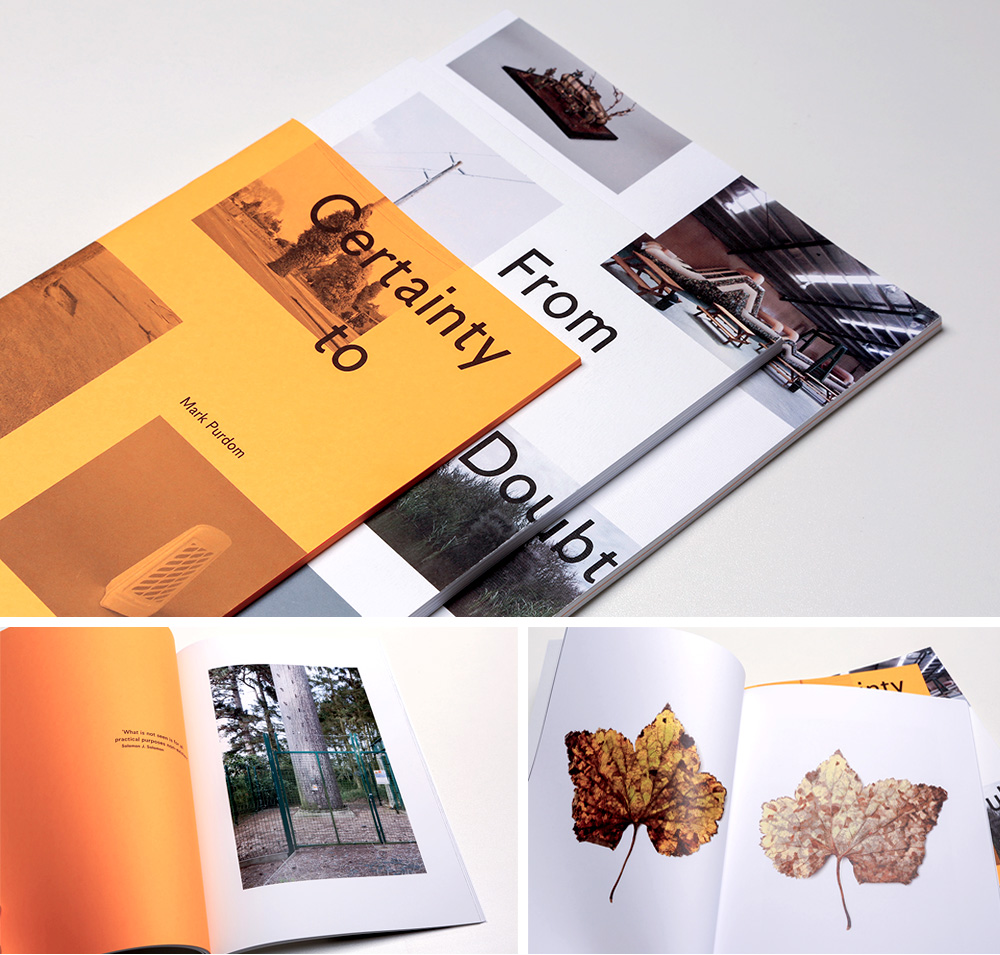
NZPOTY Trade Winner_Purdom

Winner – From Certainty to Doubt by Mark Purdom


Trade Published
WinnerFrom Certainty to Doubt by Mark Purdom, Ramp Press
CommendedCreamy Psychology by Yvonne Todd, Victoria University Press
CommendedVernacular by David Straight, Potton & Burton
Finalists

New Zealand Photography Collected by Te Papa Press
Karakia by Ben Clement, Sallyann Clement, Bloom Publishing
The Imperial Body by Fiona Amundsen, split/fountain


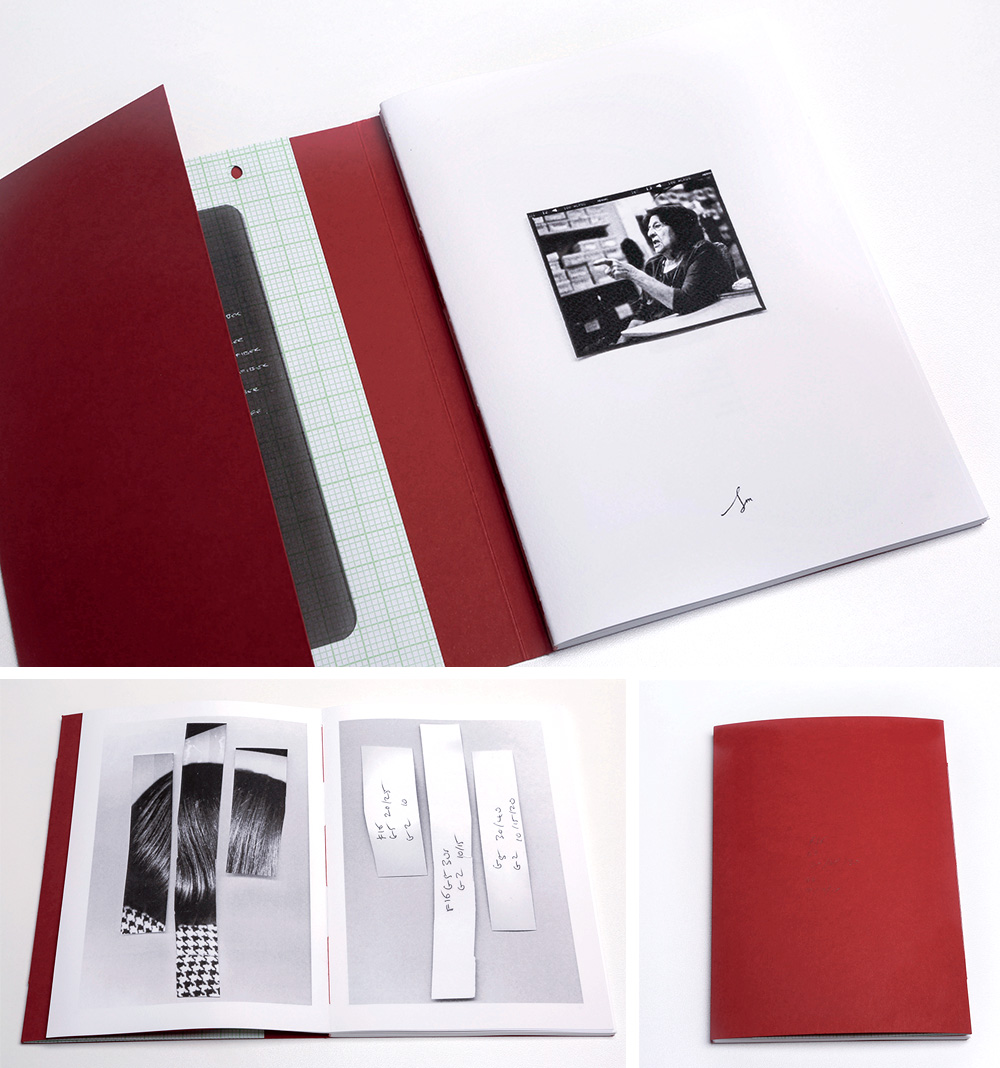
F.16 G3 20/25/30 by Solomon Mortimer

F.16 G3 20/25/30 by Solomon Mortimer


Self Published
WinnerF.16 G3 20/25/30 by Solomon Mortimer
CommendedCascade by Shelley Jacobson
CommendedThe Inbetween by Georgia Periam
Finalists

Some kind of life in dying by Shelley Ashford
The Reality Principle by Yvonne Shaw
Waipureku by Conor Findlay
When the sun sets your eyes change colour by Solomon Mortimer & + Zahra Killeen-Chance

People’s Choice Waipureku by Conor Findlay


A PDF Catalogue of the New Zealand Awards is available NZPOTY 2015 Exhibition Brochure

.

.

All photographs of books and the individual awards text supplied by Momento Pro.
Photographs @ Maud Gallery and introductory text ©2016 Doug Spowart


SLQ – 2016 SIGANTO FOUNDATION ARTISTS’ BOOK SERIES

with one comment

Post event resfreshments on level 5 of the SLQ

Post event refreshments on level 5 of the SLQ

.

CELEBRATING ARTISTS’ BOOKS @ THE STATE LIBRARY OF QLD

The Program: The Siganto Foundation Fellowship artist book series 2016 – April 17


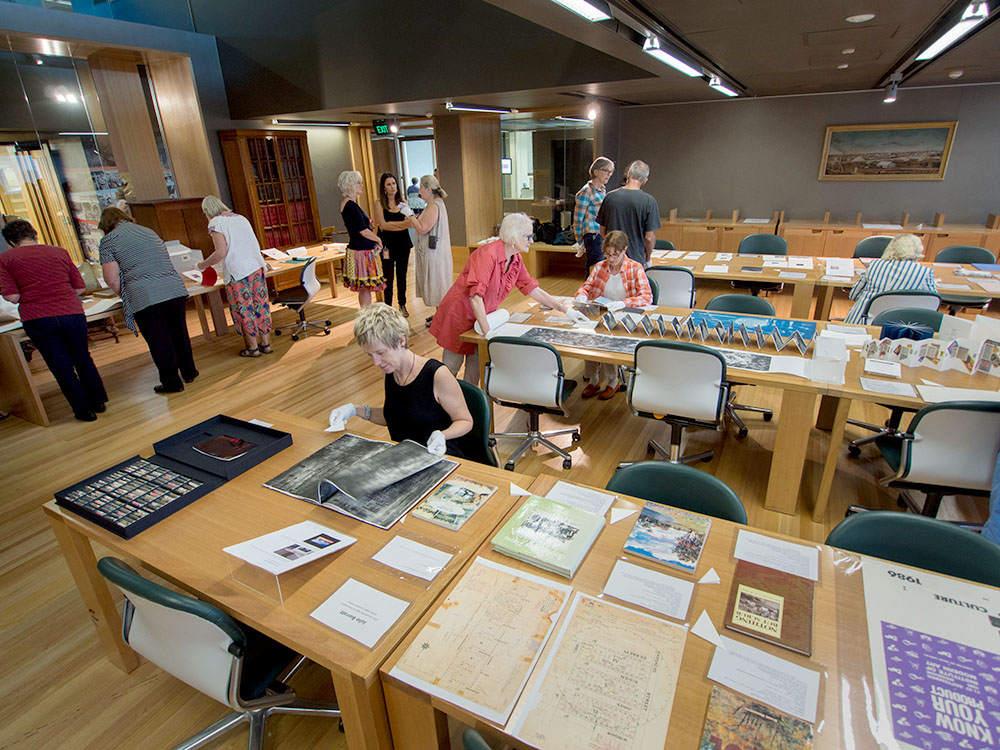
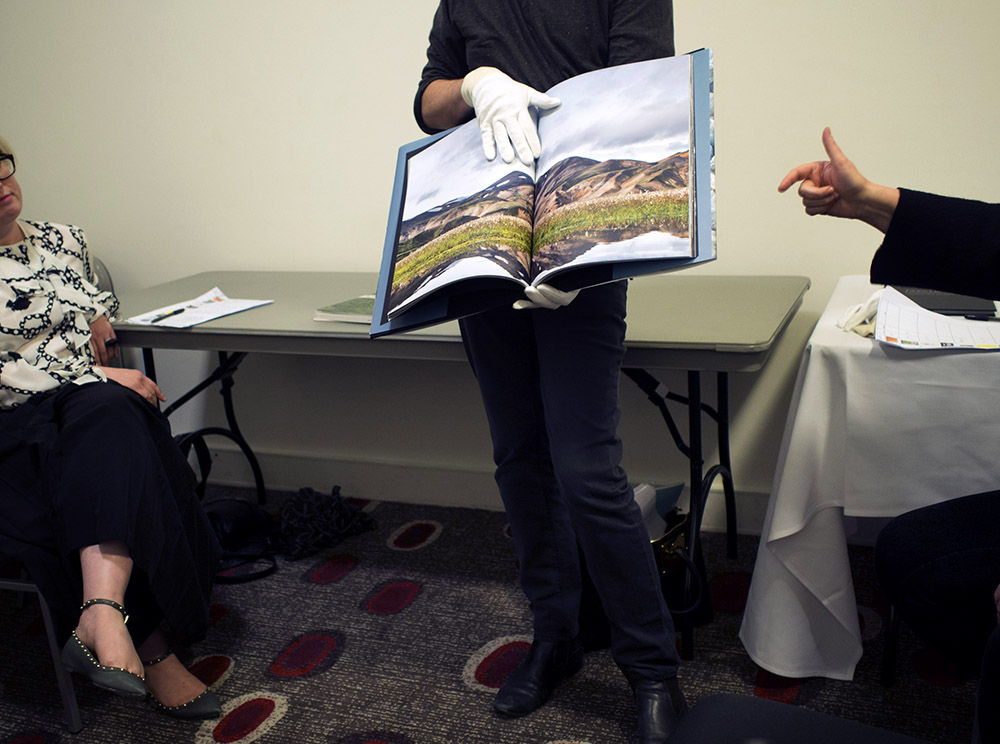
From 10am-1pm – White Gloves Room, level 4. The Siganto Foundation Fellows presented a display that featured their research and creative works which included research papers, artist books, drawings, letterpresses and prints. The Fellows spoke with attendees about their work and research outcomes. Participating in the Fellows White Gloves event were Peter Anderson, Lyn Ashby, Julie Barratt, Victoria Cooper, Marion Crawford, Jan Davis, Clyde McGill and Doug Spowart.

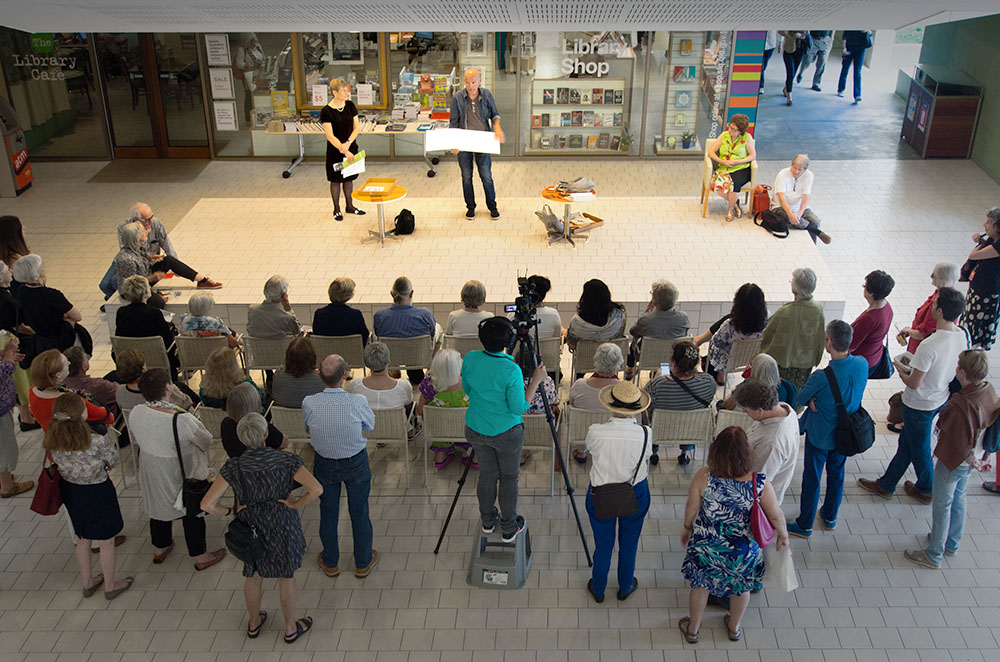
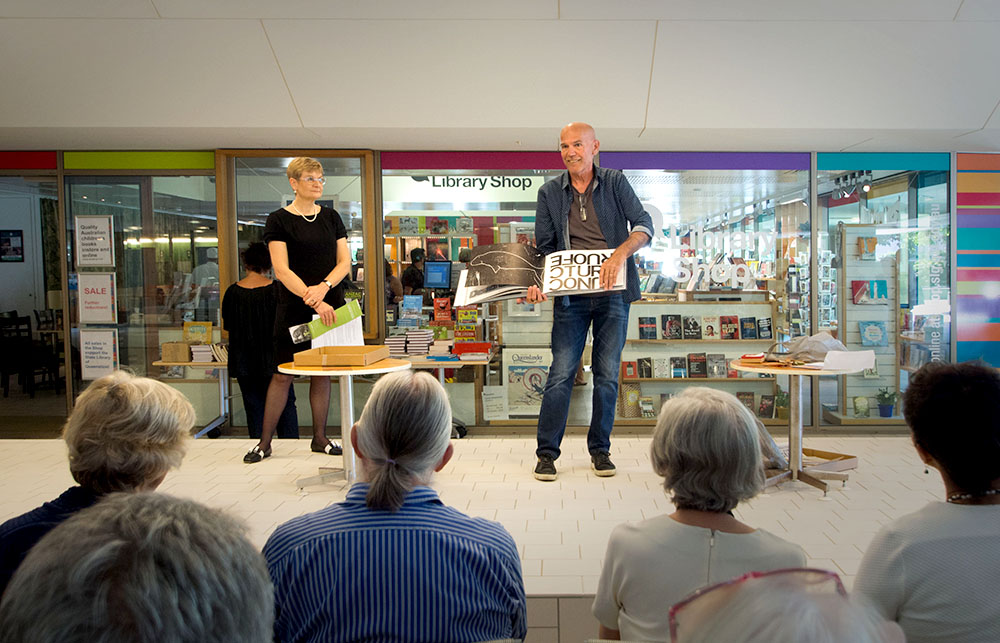
At 1:30pm on the Knowledge Walk Stage on level 1 – Clyde McGill presented Looking for Place, a performance for his artist book.

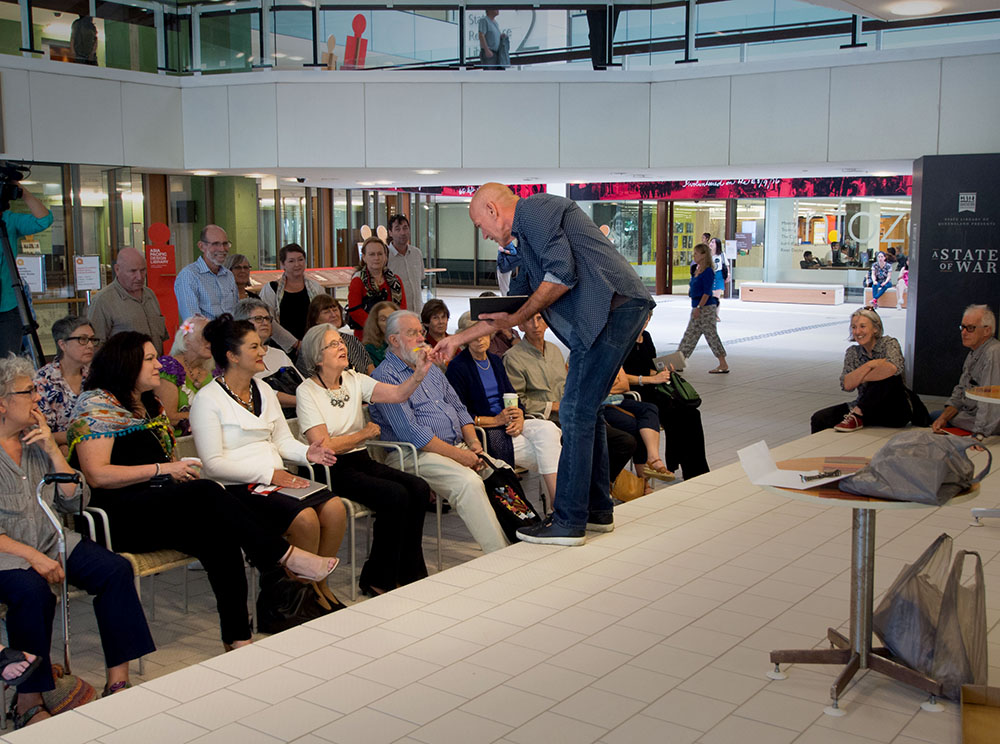
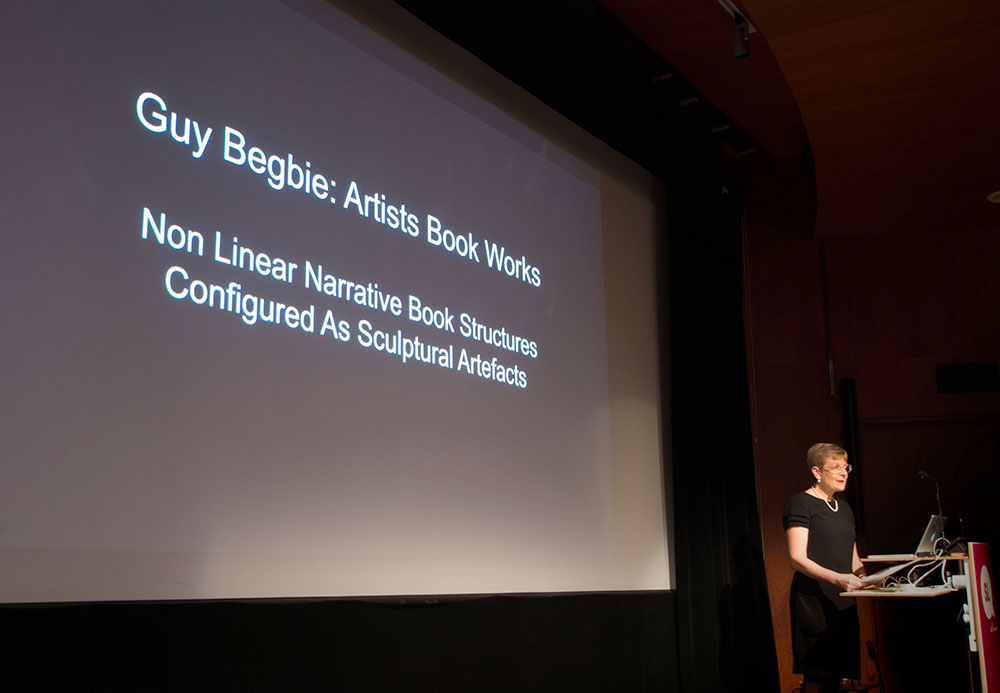
At 2pm The lecture component of the event was opened by Chief Executive Officer and State Librarian, Sonia Cooper. This was followed by a presentation by guest, UK artist and designer, Guy Begbie who talked about his current interdisciplinary arts practice. Following on – Dr Victoria Cooper, the 2015 Siganto Foundation Fellow, talked about her research into the use of montage in the State Library of Queensland’s artists’ book collection.

From 3.30pm attendees enjoyed refreshments in the SLQ Boardroom on level 5.


HERE ARE SOME PHOTOS AND OTHER DETAILS OF THE EVENT:


Siganto Foundation Fellows in the White Gloves Room

Siganto Foundation Fellows in the White Gloves Room


Clyde McGill performing Looking for Place @ SLQ Sigantio Artists Book Series 2016 event

Clyde McGill performing Looking for Place @ SLQ Sigantio Artists Book Series 2016 event


CLYDE McGILL: Looking for Place, a performance for artist book (an extract)

Crossing the river under the Goodwill bridge, knee then neck deep in the warm water, not too salty, navigating around the mangrove roots, expecting to hear mud crabs clanking and whistling, curling my toes just in case, alloneword, who calls me fictivefriend, if only he knew, shows me another pressed flower (soggy) and a leaf. Then a pterodactyl feather he says was floating down from Mt Bartle Frere last night, I suggest it was the southern end of the Glass House Mountains. It looks like it’s from the ibisosaurus between GOMA and SLQ. We are dodging the rivercat (aow carrying our bag of sandwiches above his head), the tide is running. Finally making our way over to HMAS Diamantina to borrow her (alloneword thinks we’ll have to pay), in our bid to sail her along the Diamantina River (there is water). It’s an incredible resonance of names and place, isn’t it fictivefriend, he asks. Soon we’ll picnique (no replacements found, typeahead here) on the shores of the Inland Sea. We drip mud as we tell the man at the dock entrance about our project, it’s exciting, he raises his eyebrows, says what(?) looks away and closes the gate.

.

SLQ VIDEO of the performance: http://www.slq.qld.gov.au/audio-video/webcasts/recent-webcasts/clyde-mcgills-performance

Clyde McGill performing his artists' book Looking for Place

Clyde McGill performing his artists’ book Looking for Place

Clyde McGill performing Looking for Place @ SLQ Sigantio Artists Book Series 2016 event

Clyde McGill presents a fragment of his presentation to Dr Marie Siganto.


Christene Drewe from the SLQ introduces the program for the day

Christene Drewe from the SLQ introduces the program for the day


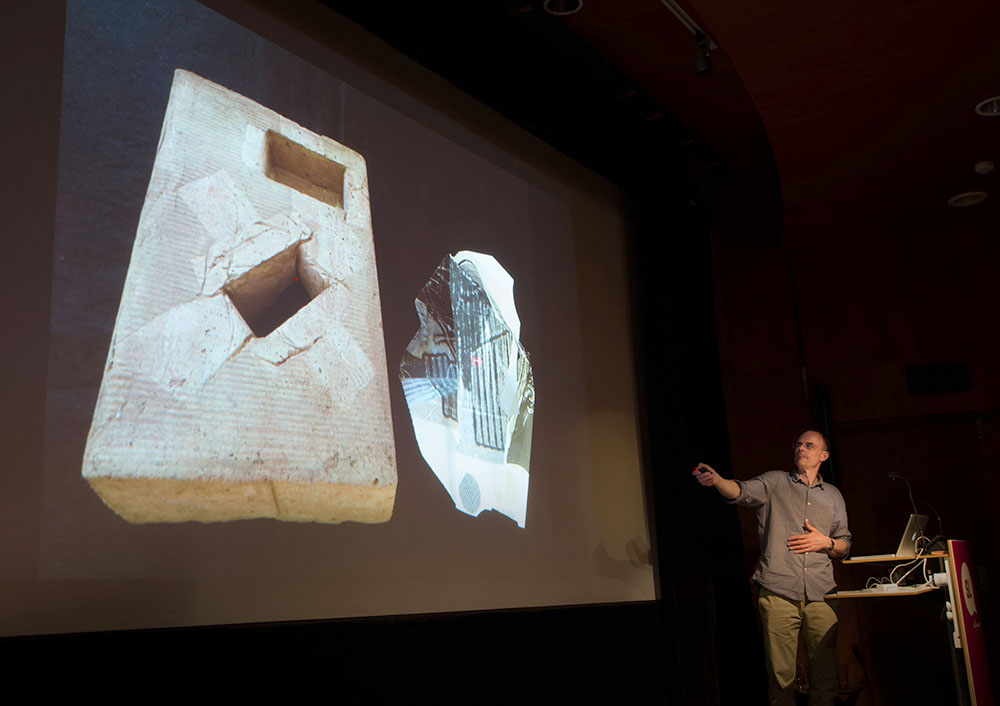
Guy Begbie presenting @ Siganto Seminar Series 2016

Guy Begbie presenting @ Siganto Seminar Series 2016


THE GUY BEGBIE PRESENTATION


Guy Begbie is an interdisciplinary artist, bookbinder & university associate lecturer.

As an artist, he makes book works influenced by a core interest in parallels between bookbinding structures & architectural forms.

He works in a variety of media, that includes traditional bindery materials, drawing, painting, printmaking, sculptural casting and filmmaking.

His work uses non-linear narrative and sculptural forms to investigate further innovative structures for the book and the potential in its transition from a closed two dimension to an opened three dimensionality.

The notion of a contained space in the book is of particular interest, both conceptually and physically, with book works alluding to spatial qualities in architecture and the built environment.

Filmic and time based qualities are also examined in other book works, using painterly printmaking media to present visual distillations of memories of place and the the fleeting moment.

The relationship of the book juxtaposed with the solid non-paper based artifact is also of concern and is tested through placement and the filming of constructed books and cast objects that both share some common aspects in media and construction methodologies.

This dichotomy of the kinetic book structure and the static cast form, is re-scaled in projection and further informed by the sound of the book, captured through recording the making and placement processes, then configured to provide audio soundtrack supporting the moving visual image.

http://www.guybegbie.com/Pages/default.aspx

SLQ Video of Guy’s presentation: http://www.slq.qld.gov.au/audio-video/webcasts/recent-webcasts/guy-begbie


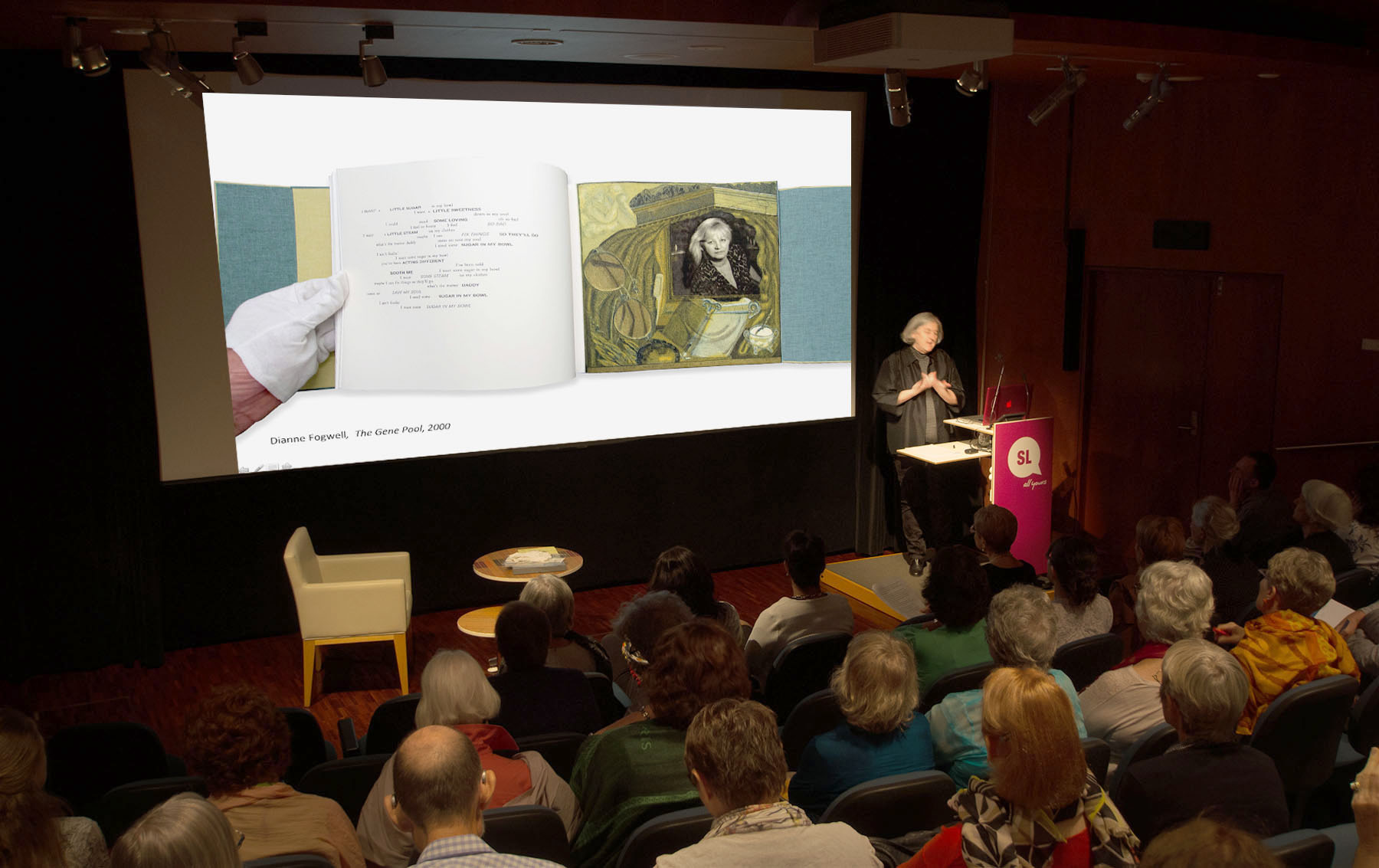
Dr Victoria Cooper presenting @ Siganto Seminar Series 2016

Dr Victoria Cooper presenting @ Siganto Seminar Series 2016

.

DR VICTORIA COOPER’s PRESENTATION

A segment from Victoria’s presentation follows:


Montage Readings: Informed by History


There is a long tradition of artists and designers creatively combining images.

Photomontage or combination printing has its origins in late-nineteenth-century pictorial photography, most notably in the work of Henry Peach Robinson and Oscar Rejlander.

Then in the early twentieth century, Russian filmmakers, notably Sergei Eisenstein, pioneered the practice of montage in motion picture films to present animated visual concepts and to record the passing of time. Also in the first part of the 20th century, there was the work of the German and Russian visual artists including Hanna Höch, George Grosz, John Heartfield, El Lissitzky and Alexander Rodchenko used the “cut and paste” mediums of photocollage and photomontage to create political and social commentaries.

The surrealists such as Max Ernst, and Salvador Dalí and many other artists of this movement used the montage/collage to create visual contradictions referencing the uncanny connection between psychology of dreams and familiar experiences of the world.

Bauhaus teacher, pioneering designer and experimental artist László Moholy-Nagy became well known for his creative use of photomontage with text and image to construct innovative posters and page designs for his visual narratives. In a 1925 text, Painting Photography Film, Moholy-Nagy described this work as photoplastics.


My Project

Rather than see the concept of montage limited to that of a special case of film editing, he argues that the montage … is a principle to be found underlying artistic construction of all kinds

Eisenstein’s original concept of montage was that meaning in the cinema was not inherent in any filmed object but was carried by the collision of two signifying elements.

Geoffrey Nowell-Smith Eisenstein on Montage, in Towards a Theory of Montage, 2010 pp. xiii-xvi

From the research I was drawn to the montage as a way of thinking and making. In this Fellowship I am now engaged with the montage and its ‘reading”. In this project I intended to investigate the montage through the Reading the elements… their Edges, Borders and Intervals.. or their ‘collisions’ The act of cutting and splicing in the creation of the collage/montage assigns new meanings and readings to the individual fragments. Each element, fractured by tearing or careful cutting (whether physical or virtual) before the blending, overprinting, or collage construction phase, forms the basic structure, a mise-en-scène, or syntax, of the final visual composition and narrative work.

I am interested in the differences of reading that is created through of the visible edge As opposed to the Fused and the seamless edge of the elements in montage.

These edges, whether seamless or visible, always refer to the nature of its original content, as in the grafted fruit tree where the origins of the elements are still evident. The narrative then becomes embedded or montaged inside the reading of the image or the page.


More to follow in a subsequent post on this Blog. The SLQ will post a video of the presentation shortly


SLQ Video of the lecture: http://www.slq.qld.gov.au/audio-video/webcasts/recent-webcasts/victoria-cooper


We offer our thanks to the SLQ team: Christene Drewe, Sharon Nolan, Bec Kilner, and Janette Garrard and also to the Dr Marie Siganto and the Siganto Foundation for their support of this event.


PHOTOBOOK WORKSHOPS by Spowart+Cooper @ Maud Gallery

leave a comment »

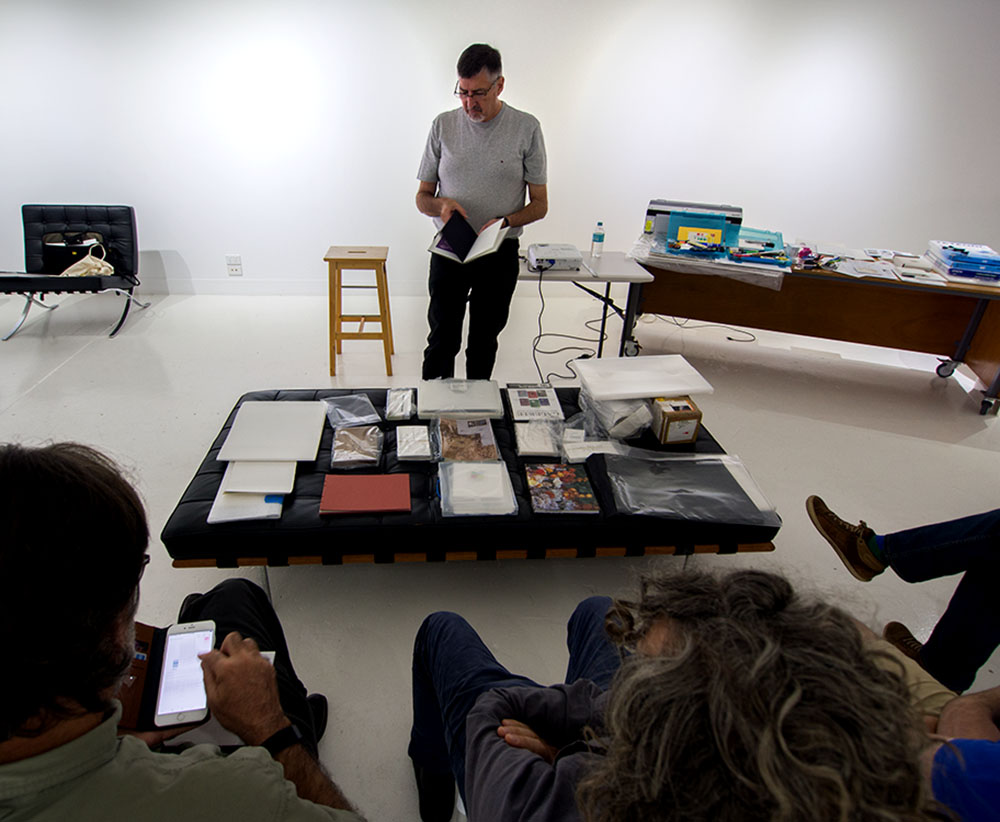
Doug doing a show 'n' tell with examples of their handmade photobooks

Doug doing a show ‘n’ tell with examples of their handmade photobooks and artists’ books

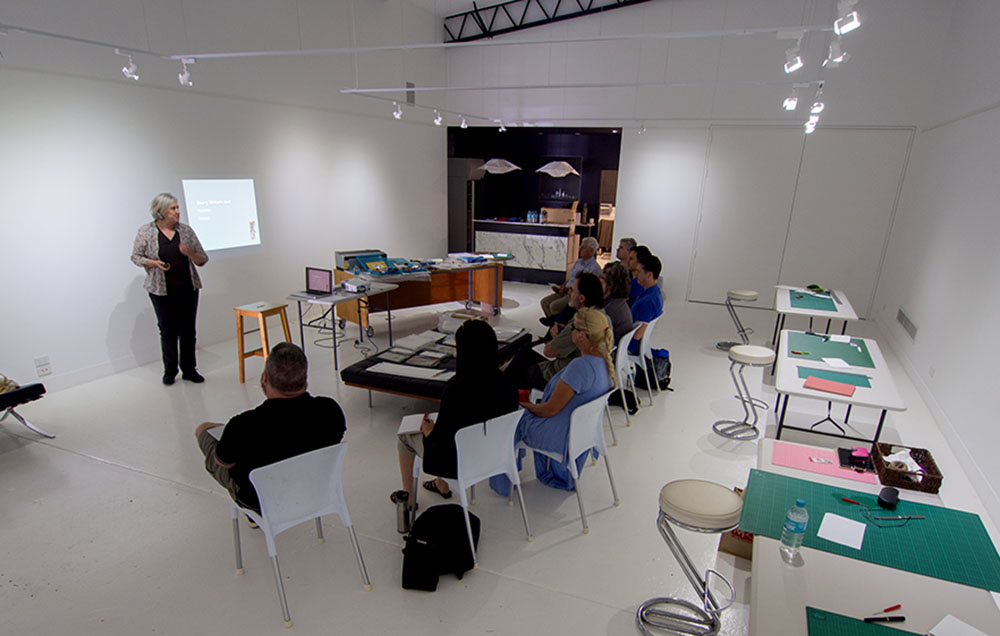
Vicky making a presentation on constructing narrative in the photobook form

Vicky making a presentation on constructing narrative in the photobook form

.


As a companion to the exhibition of the Australian and New Zealand Photobooks of the Year at Maud Gallery we developed and presented a workshop series on the Photobook.

Our next series of Photobook workshops are in the planning stage – if you are interested please get in contact with us by filling out the form at the bottom of this page….

.

  • These workshops are ideally suited to people who want to know what is happening within the discipline
  • How to DIY photobook projects within your studio workspace
  • How to access and master online Print-on-Demand photobook-making services – their needs and products.
  • One-on-one mentorships.


The program has the following 4 sessions:

.

DIY PHOTOBOOKS: YOU CAN MAKE IT FOR YOURSELF

Show and tell tips, tricks and secrets

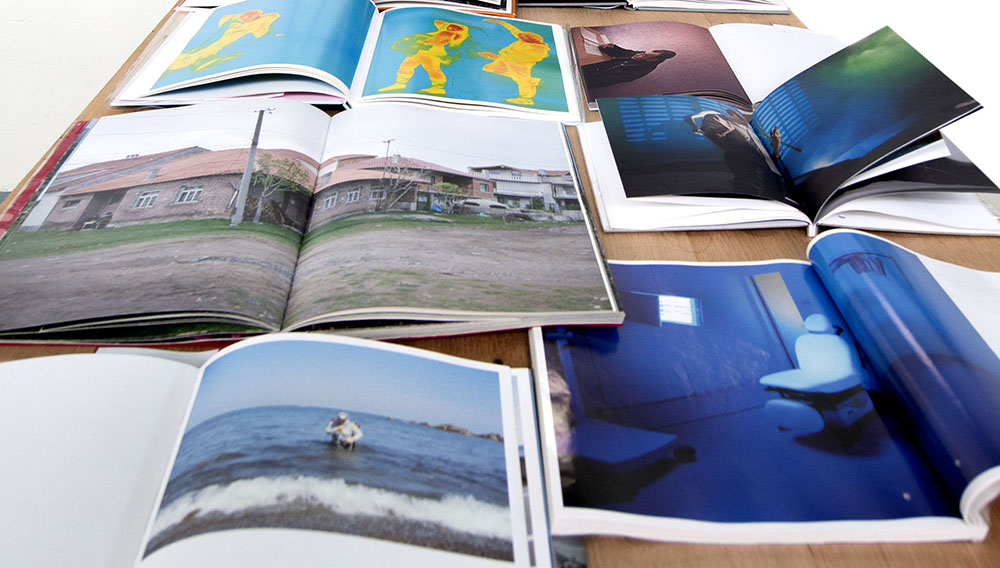
The photobook 'Borderlines' by Doug Spowart

The photobook ‘Borderlines’ by Doug Spowart

Participants will engage in a lecture presentation that will develop a broader understanding of what a photobook can be—extending them beyond just a collection of photos into a resolved personal narrative of high technical and aesthetic values.

$35

Wednesdays – 2.5 hours, 6pm-8.30pm


.

.

.

DIY PHOTOBOOK DESIGN and INKJET PRINTING

Demonstrate, share and do – tips, tricks and secrets

Photoshopping a book

Photoshopping a book

In participating in this workshop you will gain awareness and knowledge of how to create documents and templates, design, colour manage (for books), select papers, prepare files, print and output self-made photobooks.

$70 including materials (limited to 8 participants)

Saturdays – 3 hours 9.30am-12.30pm


.


.

.

MAKING IT – THE HANDMADE PHOTOBOOK

Demonstrations and Practical hands-on

Making a book

Making a book

  • Folding, stitching and sewing
  • Materials, methods and making
  • The 8-page single sided fold booklet
  • The 3-hole pamphlet stitch
  • Concertina and snake books

$70 including materials (limited to 8 participants)

Saturdays – 3 hours 1.30pm-4.30pm


.

.

PHOTOBOOKS: THE ONLINE (PRINT-ON-DEMAND) + TRADE BOOKS

Demonstrate and share tips, tricks and downfalls

POD and trade books

POD and trade books

  • Working with Print-on-Demand service providers
  • Using Publishers and Trade Printers
  • Coffee table books, Zines and Newspapers
  • Colour management
  • Selecting a provider
  • The things that no one ever tells you…

$40

Wednesday April 20, 2.5 hours, 6pm-8.30pm

BOOK HERE: http://photobookspod.eventbrite.com.au.

.

Go back

Your message has been sent

Warning
Warning
Warning
Warning

Warning.

VICTORIA’S SLQ BLOG POST – Montage Research

leave a comment »

____ALA-Blog-Victoria


http://blogs.slq.qld.gov.au/ala/2016/03/03/fractured-worlds-i-considering-the-photomontage-work-of-peter-lyssiotis/

.

Recently Victoria’s ongoing research on the topic of montage in artists’ books was published. This paper discussed Peter Lyssiotis’ work and the use of photomontage.

.

‘Fractured Worlds’ (i) : Considering the photomontage work of Peter Lyssiotis

.

Photomontage is the cause before it becomes the picture.  . . .
For me, ideas present themselves as a presence. Their full realization depends not so much on thinking them, but rather in making them…. (ii)

Spanning several decades of artists’ book production, Peter Lyssiotis’ work both openly probes contemporary political issues, while in many books, presents an enigmatic personal vision through his poetic visual narratives. Lyssiotis is a not only an artist and maker of books he is also a reader; he has an extensive knowledge of literature along with historical and contemporary thinking on art. Inspired by the political montage work of German artist John Heartfield, Lyssiotis brings to his photomontage compositions well researched and deeply considered thought processes. As he creates his montage work, Lyssiotis will often have metaphorical conversations with Heartfield. In a recent personal communication Lyssiotis poetically expressed this deep connection:

The shadow of John Heartfield always crosses the work I am making. Sometimes he’s so pleased he smiles and sometimes he gets so annoyed his shadow becomes pitch black. . . (iii)

In my research at the ALA, I look at Lyssiotis’ work not only for its content but also for the deeply considered and painstaking aesthetic work behind each montage production in image, page and book. In his statement in Products of wealth (cited in the epigraph) he discloses how the power of the work is developed through the making. It is this Material Thinking (iv) process that informs my ‘reading’ of the artists books I have chosen to engage with in this research. All artists’ books are invested with rich imagery drawn from the artist’s mind and hand, including computer or photo-mechanically generated and composed narratives.

As a reader of these books I now hold the object that represents the time spent problem solving, the years of knowledge in making and working with materials, the conceptual development of all elements that is the book–whether simple or complex, the aesthetic choices for image, page and text design, the many small or big decisions that are embodied in this work of art that is made to be held and considered by a reader.  My challenge now is to find a way to share these insights with you as a distant reader who is unable to take in the necessary sensory and haptic experience of reading these works of art. In this blog I share my ruminations and questions that inspire me to read and read again many times these books of wondering and wandering, which are deeply poetic and sometimes melancholic.

I chose, Feather and Prey, for the deeply considered and poetic use of the page; the balance and arrangement of image, text and white space. Alternatively, Products Of Wealth has politically motivated photomontage prints tipped-in or glued onto the page. These are two very different ways of composing a narrative with photomontage and text and ultimately presented two different experiences for reading the montage.

Feather and Prey is bound in black leather with details of red leather on the spine and embossed images on the front and back covers.

Covers of Feather and prey by Peter Lyssiotis.

These embossed images at the beginning and end importantly announce that the reading starts from the cover rather than from inside the book. Along with this distinctive book binding, the use of fine art papers and considered printing processes, suggests a reverence in the reading of each page.

The photo-elements in Lyssiotis’ montage narratives are no longer records of reality but now have emerged, through a process of poiesis, as visual codes with a new life and purpose:

In these images giant moths are nibbling away at the perfect mechanical reproduction that photography promises. They don’t rely on the traditional borders of a photograph to tell them when to start and where to finish. They don’t want to be a photograph; they would prefer to be maquettes for pieces of sculpture. (v)

These new hybrid images create a disturbance within the familiar routine of everyday practice and present an alternate way of perceiving and referring to the world. The visual semiotics of reality that photography represents is now channeling through montage–new spaces for imagining–a poetics of dreams.

But what characteristic does Lyssiotis identify in each element as he carefully separates them from their original contexts? Does this question really matter, as each fragment will be transformed having little relationship to its origin. These montaged elements are then fused together perhaps as a metaphorical act of transcendence and then placed or montaged within the page.

These fragments of images and text strategically appear across the white space in the book. In a short exegetic essay or artist’s statement on this book Lyssiotis discusses his intention for the white space in the book:

The white spaces here constitute something unassuming: a whiteness more like a whisper; something neutral.

In the whiteness there are things the photographic paper has not been allowed to reveal; these are not omissions, they are commissions … of sins, failed intentions, of habit. (vi)

I turn the pages and they ‘whisper’ of something hidden where only hints and clues are allowed through as the photomontage emerges through the white space. A cherub holds a curtain rope that reveals a narrow view of the sky behind.

Feather and prey by Peter Lyssiotis

Does the white space hide knowledge from the reader as if in a white out or a fog? Or is Lyssiotis creating a collaborative space with the reader to bring to the reading their own narrative or composition–a psychological montage of memory and life’s experience?

Lyssiotis’ texts are evocative, poetic and political and appear sparingly in different places on each page. The texts and their aesthetic placement on the page–a mise en page (vii) –add to the layering of the reading as a montage. In Feather and Prey Lyssiotis signals that perhaps there could be shifting meanings arising in the reading of the words and their visual placement on the page. In the book he writes:

Words always arrange themselves to tell

The same story: that things will change

But words are heretics and later,

In the fire they will deny it all.

In Products of Wealth the montages  (viii) are not embedded in the page but rather pasted over the white space where the page becomes the carrier rather than part of the message.

Products of wealth by Peter Lyssiotis

These images become windows–looking into a montage hybrid world that may seem alien to us but paradoxically it is of us. Looking into the space of the image–rather than the page as in Feather and Prey–I am transported to a place where there is no space left to think… claustrophobic. The view shows the reader terrifying and perhaps even diabolic territories for consideration and reflection.

The edition consists of six separate books stored and presented in a bespoke box.

Products of wealth by Peter Lyssiotis

The books are bound using the simple pamphlet style, perhaps referencing the tradition of the political publication. The covers of the books are red and the box is covered in red and black cloth again suggesting the political nature of the reading. As I read, I notice that the 3D relief pattern of the letterpress texts (ix) seems to bite emphatically into the paper.  Lyssiotis’ choice of font styles along with the red and black font colours also adds to the political tone that is invested in the photomontages and the binding. In book 6, Lyssiotis writes about the montage:

In these montages, the planet isn’t about to explode; the explosion has already happened. What is left is a fractured world

Finally, I find it interesting to note that these books were produced in the same year, 1997, and yet each have quite different approaches to the montage of image, text and page. Can these differences point to a deeper comprehension of the value in and values of visual reading? In this kind of reading the psychology and memory of the reader can be engaged in the transference of something more than knowledge and information.

So is the montage a space for questions rather than answers?  Reading these artists’ books is in some way also a montage where the visual narrative and the artistic intention is adapted and interpreted by the memory and mind of the reader. Perhaps the nature of the montage hybrid including the page could be comprehended in terms of gestalt. As it is greater than the individual parts–the montage can be a holistic comment or reflection on the cultural and human questions of its historical location.


Victoria Cooper PhD

Feb 2016


(i) Peter Lyssiotis, 1997, The Products of Wealth, Book 6: Political Photomonteurs Can Give You The Courage To Eat Bricks, Masterthief Enterprises, Melbourne.
(ii) Ibid.
(iii) Handwritten note sent by email to the author, February 23 2016. In this note, Lyssiotis presents an evocative and intriguing discussion on the montage works in his books Feather and Prey and The Products of Wealth. Although seemingly a dialogue between himself and Heartfield, it is more a self-critique informed by the Heartfield polemics and the political montage. This note will be published in full with the permission of Peter Lyssiotis in a future article I am writing on his work.
(iv) As presented in: Paul Carter 2004, Material Thinking, Melbourne University Publishing Ltd, Melbourne. In many ways this book is a philosophical discussion on the work and methodology of the artist including: the interaction with their materials, the intellectual nature of the artists’ visual research and their resulting art.
(v) In the ALA original Materials Archive there are several boxes of Peter Lyssiotis papers. This quote is cited from unpublished writing discussing his book “Feather and Prey” Call Number: item #29358/3 box # 13331.
(vi) ibid.
(vii) This references the mise en scène in cinema theory.
(viii) The montages are black and white archival fibre-based silver gelatin photographic prints where Lyssiotis worked with Robert Colvin to print for this publication.
(ix) Texts were handset and printed by Nick Doslov, Renaissance Bookbinding