Archive for the ‘Artists Books’ Category
BOOKS & ANZ PHOTOBOOK AWARDS – 22&23 September 2018
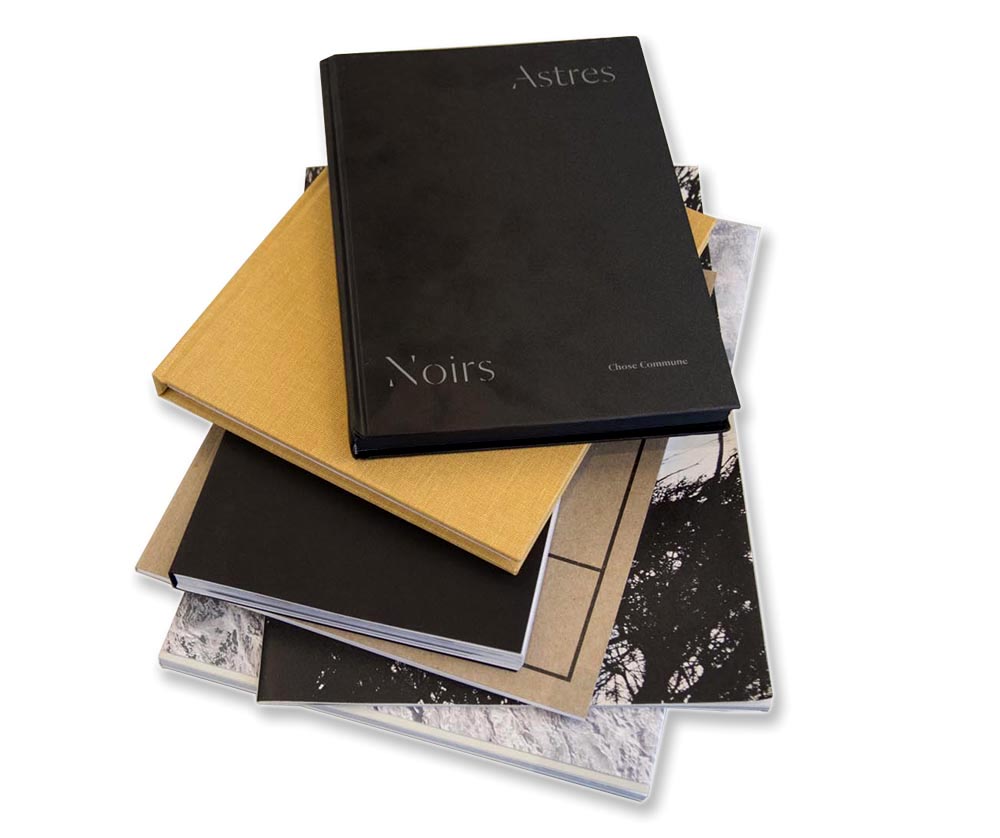
Australian 2016 Photobooks of the Year Finalists
.
TWO SPECIAL PHOTOBOOK EVENTS IN BRISBANE ORGANISED BY THE PHOTOBOOK CLUB BRISBANE
Photobook Club Logo
.
Event 1 – VIEW PHOTOBOOKS FRIDAY (FREE)
22nd September evening presents the very best of contemporary photobooks from Australia and New Zealand from the recent Photobook of the Year Awards.
Meet Libby Jeffery from the Award’s Patron MOMENTO PRO.
Come in and look at the books from 5.30pm — The viewing will close at 8.00pm.
Location: MAUD GALLERY – 6 Maud Street, Newstead, Brisbane.
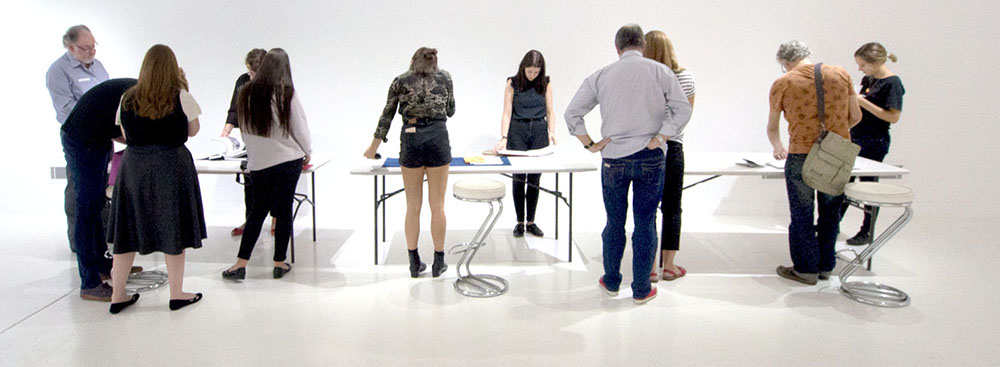
ANZ Photobook Awards at Maud Gallery
TO BOOK this event do so on this Facebook page: PHOTOBOOK FRIDAY FACEBOOK EVENT
Event 2 – TALKING BOOKS SATURDAY (FREE)
23 September – a free day of presentations about making photobooks and talking about the latest local and international photobooks.
Saturday September 23 10.30am – 4.00pm
Location: MAUD GALLERY – 6 Maud Street, Newstead, Brisbane.
Libby Jeffery – MomentoPro
At 11.00am
KEYNOTE SPEAKER: Libby Jeffery from MomentoPro
Libby will talk about all things that make a difference for self publishers including:
-
Crowdfunding for projects
-
Working with editors, designers, reviewers, printers, distributors, publicists
-
The value of awards like Australian Photoboook of the Year Awards
-
Art book fairs
-
Print-on-demand services
From 1.00-4.00pm
HEAR FROM SOME LOCAL PHOTOBOOK MAKERS & THEIR BOOKS

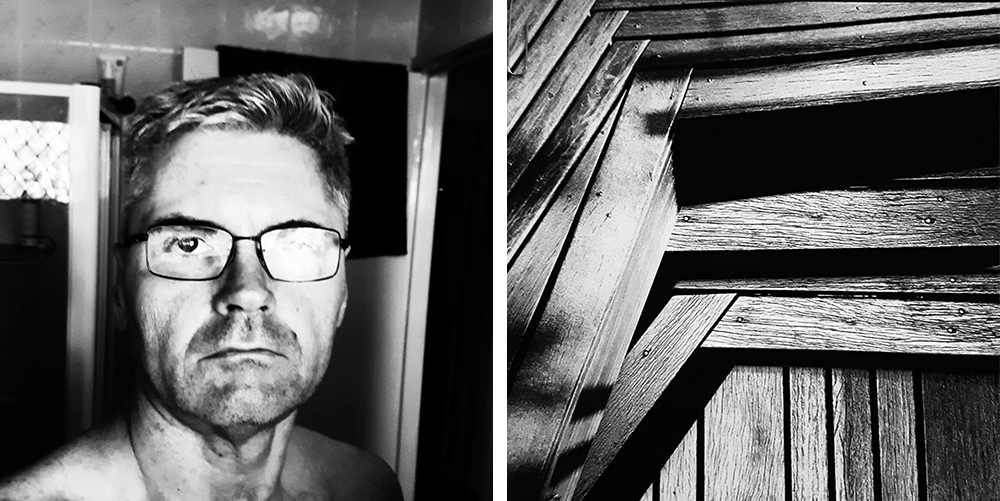
Dane Beesley and his books
The images in Dane’s book The Road trace an unknown timeline to an unknown destination, where he appears only as a tall shadow. There’s an honesty, a quest for truth, perhaps a naiveté in the images reminiscent of cinéma vérité that captures the adolescent wanderlust it seeks to document.
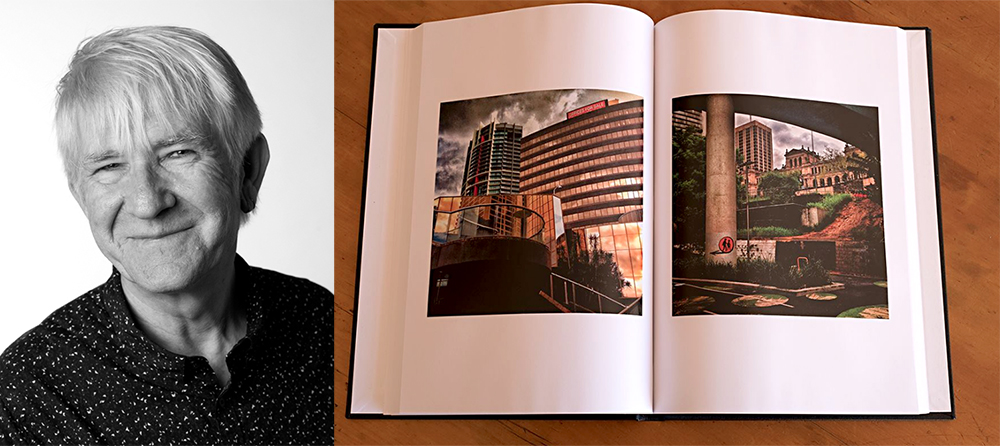
David Symons and his book
David will show the ‘ins and outs’ of the work that he produced at the Siganto Foundation artists’ book workshops and a masterclass held at the State Library of Queensland earlier this year with UK artist Helen Douglas.
Neil Degney and his book You are here
The images in Neil’s book have been taken on the streets of inner city Brisbane over the years 2014 to 2017. The title references the ubiquitous wayfinding signs often found in unfamiliar environments that enable us to determine our geographical position and plan a course towards our intended destination. It is also my Instagram user name all the images have at some time been posted to Instagram. The photographs are taken with a camera phone and processed using an app called Snapseed. (Neil is scheduled in October to have the next exhibition at Maud Gallery).

Isaac Brown and his book This Rock Between Us
This Rock Between Us investigates the difficult relationship between my father and me. Hard, floating, and an unsubstantiated substance, the rock appears and vanishes from moment to moment. This handmade photobook attempts to represent the relationship as a physicality, as an object that exists ‘in-between’, and built, by my father and me.
HEAR ABOUT RECENT PHOTOBOOK EVENTS ACTIVITIES IN ATHENS, MALAYSIA & VIENNA
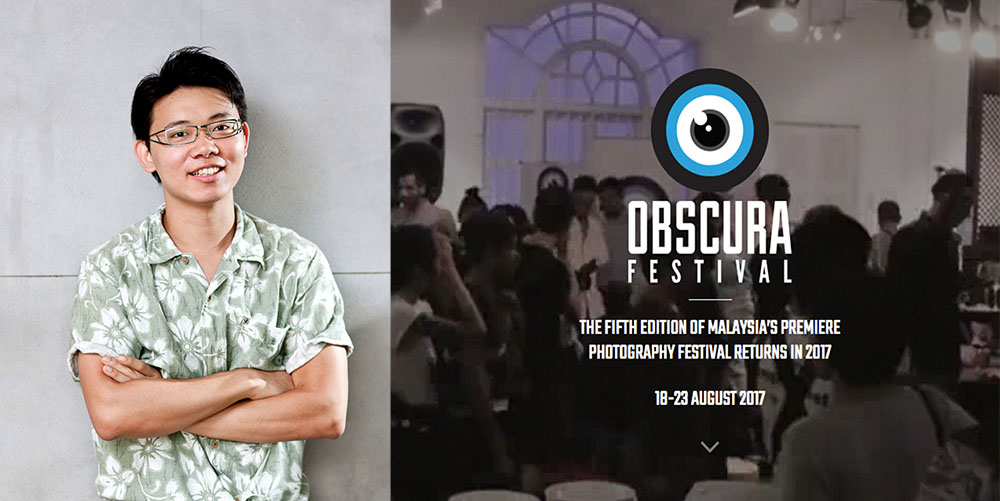
Louis at the Obscura Festival
Louis will be presenting some photobooks he had the pleasure of reading from his recent visit to the Obscura Festival 2017, as well as his recent work-in-progress photobook An Opened Letter.

Justin Ma
In March 2017 Justin Ma was invited to do a photography workshop with Antoine D’agata in Athens, Greece. The workshop was hosted by VOID, a new organisation in Athens focussed on alternative publishing, exhibitions and workshops mainly based around photography as well as other visual arts. During the event at Maud Justin will be showing a few examples of publications from VOID including their collaboration with Antoine D’agata’s latest book “Cidade de Pedra”.

Martin Parr talking photobooks with Vicky and Doug in Vienna
Doug and Vicky will talk about their experiences at the Vienna Photo Book Festival, meeting Martin Parr and Gerry Badger and show some of the books they bought home from the Festival.
.
SEE BOOKS FROM AROUND THE WORLD
.
.

TO BOOK SATURDAY PLEASE REGISTER ON THE EVENTBRITE SITE LISTED BELOW.
https://www.eventbrite.com.au/e/talking-books-photobook-club-brisbane-event-tickets-37573180394

Maud Gallery sign
Thank You Maud Gallery for supporting this Photobook Club Brisbane event.
.
.
.
.
ABBE 2017 – The academic artists book conference
ABBE Logo
The second Artist Book Brisbane Event (ABBE) promised an academic conference dealing with the artists book as a folded and risky space. The event consisted of three elements at the Queensland College of Art and a fourth satellite pop-up exhibition at the State Library of Queensland. Drawn to ABBE 2017 were artists bookmakers, thinkers, commentators, teachers, lecturers and tinkerers from across Australia. All came with a desire to contribute to, or participate in, perhaps this Australia’s penultimate artists book gathering.
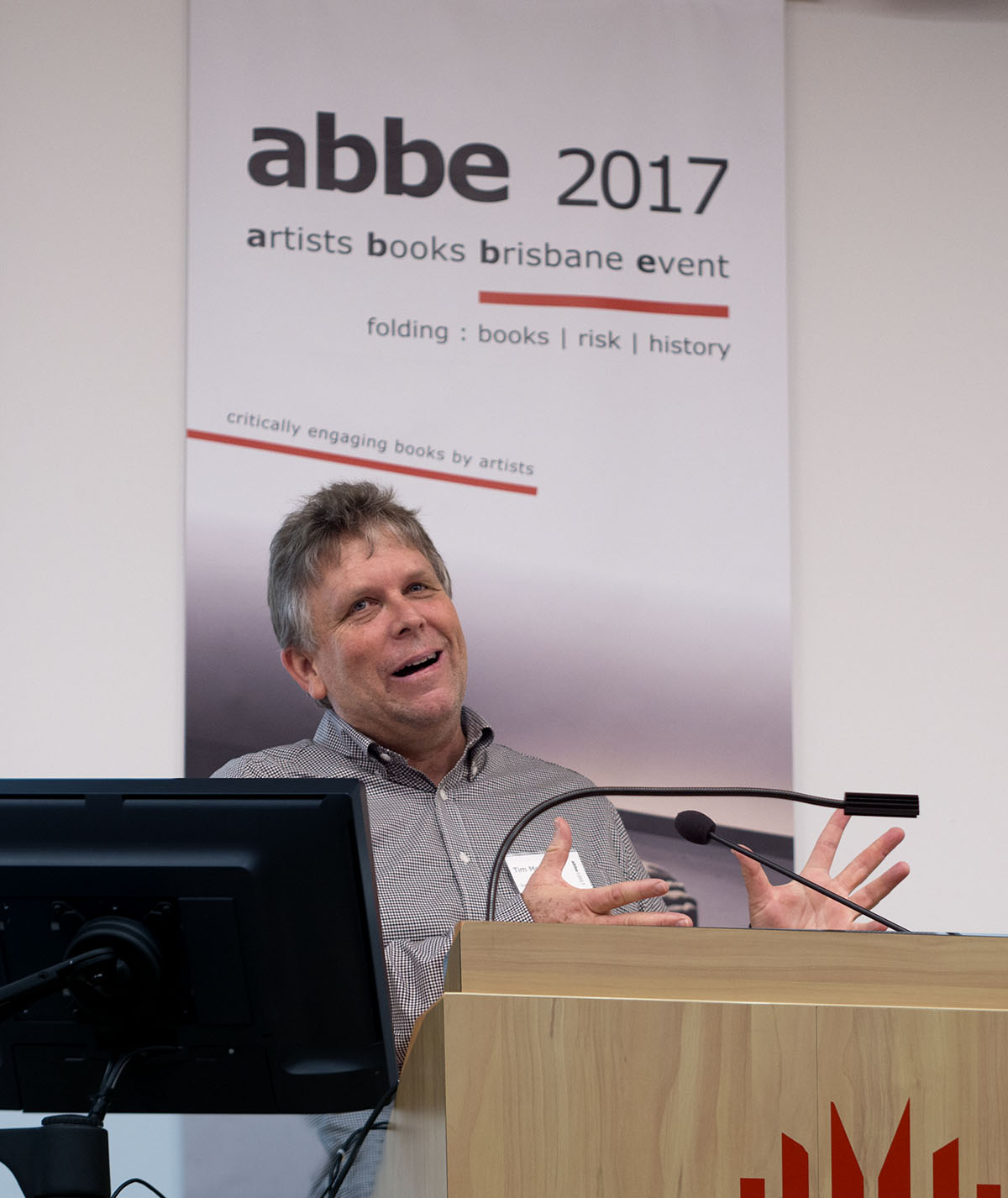
Dr Tim Mosely ABBE coordinator and chair
The event was convened and chaired by QCA lecturer Tim Mosely and was launched by Griffith University’s Dean Academic, Arts, Education and Law Professor Ruth Bereson who spoke about the book as art and the need for that the discipline has for scholarly discourse. She commented that the Griffith Centre for Creative Arts Research ABBE program and its connection with Columbia University’s JAB (Journal of Artists Book) publication of selected papers would contribute to this discourse. Significant keynote speakers, Uta Schneider and Ulrike Stoltz from Germany and Clyde McGill from Western Australia headlined the event. Other program contributors came from practitioners, academic staff, students, and recent graduates from institutions in the USA, New Zealand and around Australia.
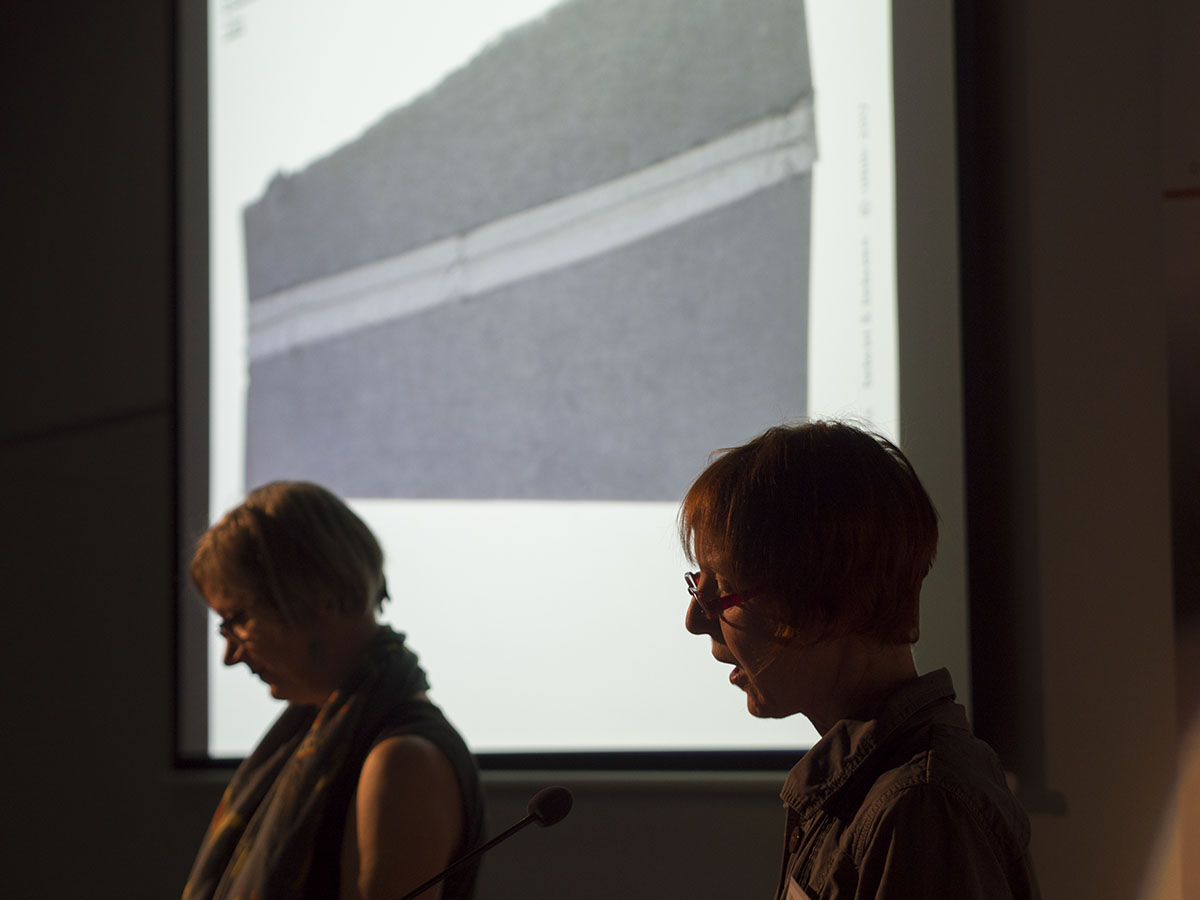
Ulrike Stoltz & Uta Schneider
The first keynotes were Uta Schneider and Ulrike Stoltz who presented a paper entitled betwixt & between. Presenting in tandem their voices were almost like a turning of the pages – recto and verso. They teased out and formed the conference theme of ‘folding’ into an ordered analysis of the physical and metaphorical ways that books fold. They connected the theme ‘folding’ with their own individual and collaborative works and the concepts, philosophies and discussions about artists books that informed them. Mythology, Martin Heidegger on contemprality and the ekstaticon, Carrion, Gillies Deleuze and ‘thinking means folding’ and Michel Serres and ‘the crumpled nature of time’.
The lecture then proceeded to a review of book forms with terms like:
- Folded paper
- Cross fold
- Sharpness of the fold
- Container folds
- Staging folds
- French fold
- Inside folding outside
- Concertina and multi-concertina folds
- Wormholes and science fiction
The works they illustrated their paper with were refined and exquisitely designed. They featured wordplay and poetry, folded page spaces, transparency using ‘show-through’, typography and graphic design elements. As an introduction to the topic, the hour long presentation provided a solid and exciting insight into ways of considering the fold, its forms and the way it can connect with the reader, as receiver of the communiqué.
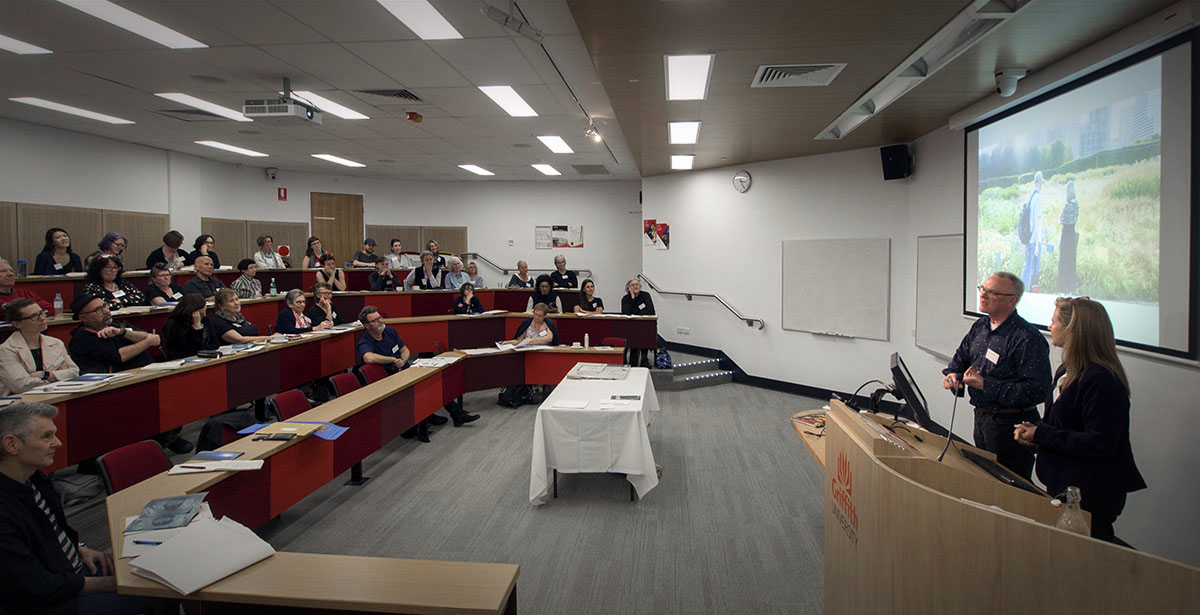
A K Milroy + Brad Freeman presenting
Other presentations on the program included:
- Marian Macken Reading Volume: Between Folded Drawings and Collapsible Models
- Caren Florance & Angela Gardner Unfolding to refold: collaborative wordings
- Paul Uhlmann Meditations on process: Three artists books, letters to the land, sea and sky
- Caren Florance An Instrument of Collaboration: Unfolding the GIW Legacy
- Monica Oppen Eclectic items: early books by Australian artists
- Ana Paula Estrada “Memorandum”, from concept to publication
- Wim de Vos Air, edge, surface image – concertina books
- Nicola Hooper The Citronella Artists Book as an Augmented Narrative
- Amy E. Thompson Folding and the potential of Artists’ Books
- A K Milroy & Brad Freeman Folding and unfolding in JAB41: cultures, research, pages
- Tess Mehonoshen DISINTEGRATE: the destructive folding of materials
- Marian Crawford A lively phantom: the rare and popular artists book
- Carolyn Craig Unfolding(s)
- Isaac Brown Relationship risk and ethics in photographic artist books
- Monica Carroll & Adam Dickerson Unfolding the episteme of artists’ books
- Bridget Hillebrand Handling folds: an intimate encounter
- Julie Barratt & Virginia Barratt The exquisite fold, the immanent word
- Maren Götzmann The Anarchist Notebooks


While most papers were read from the dais with carefully illustrated PowerPoint slides the second keynote speaker Clyde McGill emerged on the stage with a device that could be called a ‘bibliophone’. McGill had altered a range of book titles by folding back the pages and attaching a sound pick-up to the book cover and then connected the 7 books to an amplifier. Volunteers from the audience were given bonefolders as plectrums and, on McGill’s guidance were instructed to make the various movements of hands and object associated with hand-making a book. The haptic actions were converted to sound and the room filled with the noise of ‘making’ associated with a great deal of laughter.
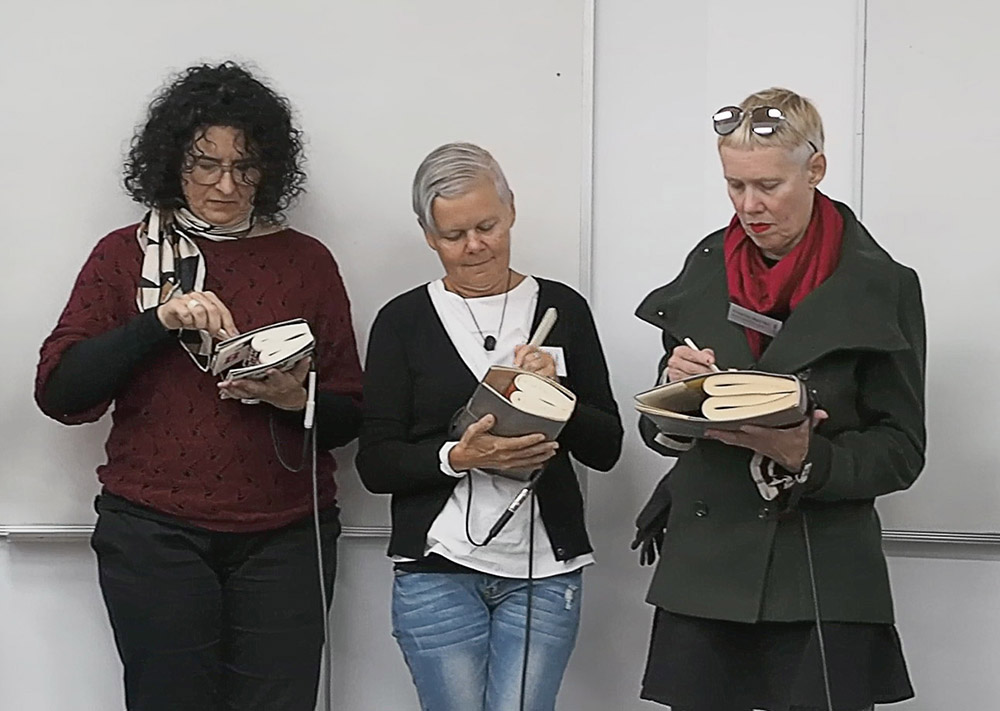
Making book music with Clyde McGill


McGill continued his presentation with a detailed investigation of the idea of folding books. Where possible his own works were referenced. At other times he created new books by playful investigation… bending and folding light was a particularly humorous but gave those present an insight into how the artist’s off-tangential and obtuse thought processes process can lead to new conceptual and visual discoveries.

Julie and Virginia Barrett’s performance
Another departure from the read-the-paper format was a performance by Julie Barratt and her sister Virginia Barratt. Attendees, on returning to the lecture theatre after morning tea, found the space darkened except for two sharply defined spotlit circles. One pool of light was vacant, just the floor’s carpet – in the other artists’ book maker Julie Barratt was busy unfurling paper, measuring it and tearing of lengths and positioning them in a stack on the table before her. Also on the table were scissors a ball of thread and other bookmaker’s things. The unroll>measure>cut>position sequence was progressing methodically for some time making the sheets one might guess that would go to making a book. A soundtrack began with a female voice expressing thoughts ideas, word associations sometimes repeated – perhaps the thoughts of the bookmaker? There was a rustling sound – stage right. Gradually a large dome-like white shape appeared and moved towards the empty spotlight area. The shape was covered in what looked like pages – ominous maybe… the audio continued and Julie Barratt left her table and proceeded toward the shape and picked up a folded sheet and returned to the table – flattening out the sheet it was melded with other sheets. The performance continued. What was it about? What came to my mind was that the shape was like the book working with Julie so its story could be told as in Paul Carter’s ‘material thinking’. At the end of the performance it was revealed that Virginia Barratt, Julie’s sister, was the artists book ‘monster’.


Another aspect of the conference presentations were two papers by photographers Ana Paula Estrada and Isaac Brown both featuring bookwork’s that they had created. Estrada, as a State Library of Queensland Siganto Foundation Creative Fellow, discussed concepts of memory, photography and old age as the inspiration for her project. She detailed the process of design, making maquettes, refining and working with commercial printers and binders to complete the project. Brown spoke of the integration of his project and PhD study focussing on his relationship to his father, a Vietnam veteran. Aspects of text and dialogue were addressed as well as Brown’s own recent fatherhood. What was interesting was the informal narrative and connection with audience that both presenters had and the expanding space of the artists book being inhabited by photographers.
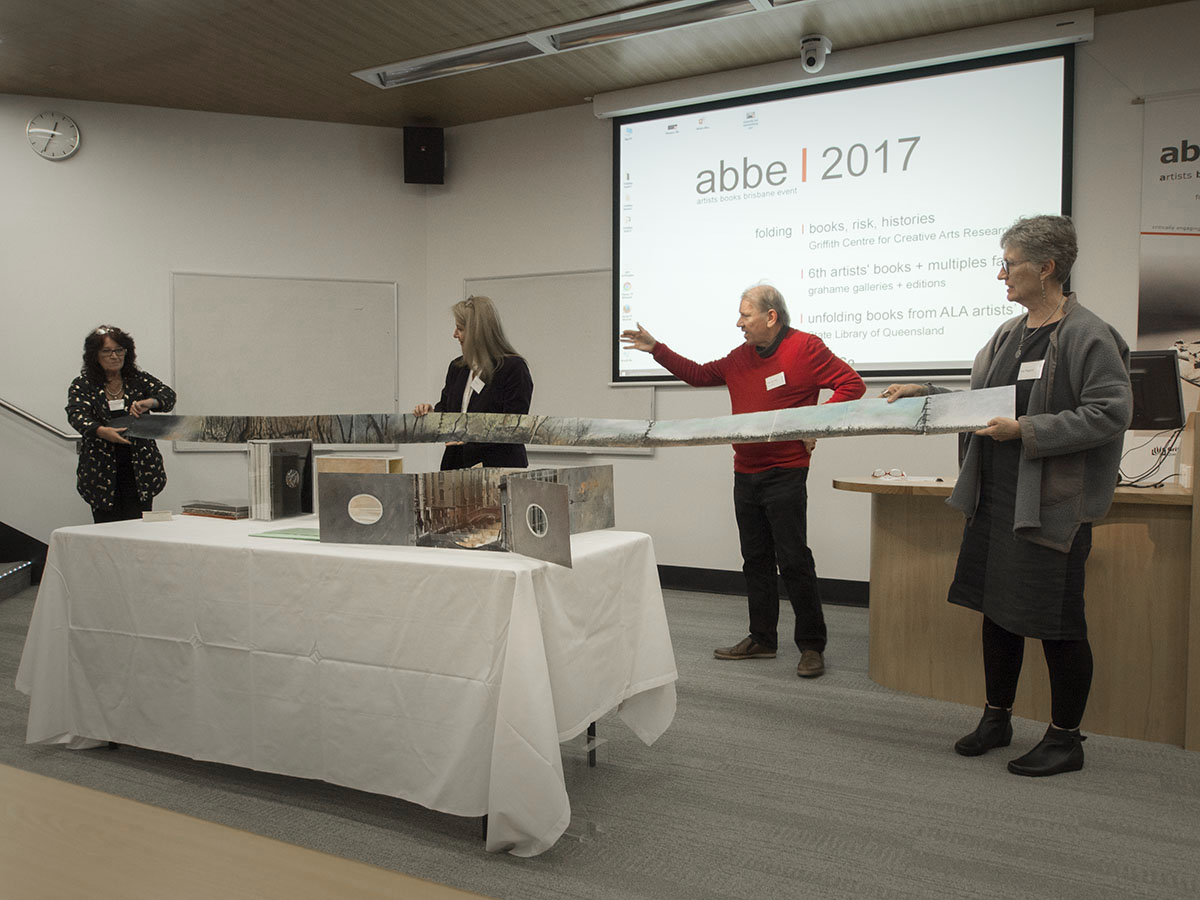
Wim de Vos presents his work
Wim de Vos made an animated presentation and several helpers as his concertina books by the metre unfolded across the width of the theatre and tunnel books expanded, evidence of the pre-eminence of his artists book practice in Queensland.


Midway through the academic papers a ‘plenary’ session consisting of a panel of artists’ book ‘movers and shakers’ discussed several issues relating to the discipline. The session quickly became absorbed with the perennial issues of nomenclature, the dearth of private and public purchasers of bookworks and the grooming of possible artists book collectors. The impact of the term ‘Art Book’ was mentioned and the way events associated with the term has grown in popularity worldwide and has come to encompass artists books, photobooks, zines, art books and institutional catalogues. Another topic mentioned was the importance of research and critical commentary on the discipline. A suggestion was made for the formation of a ‘double-blind peer review’ collective.
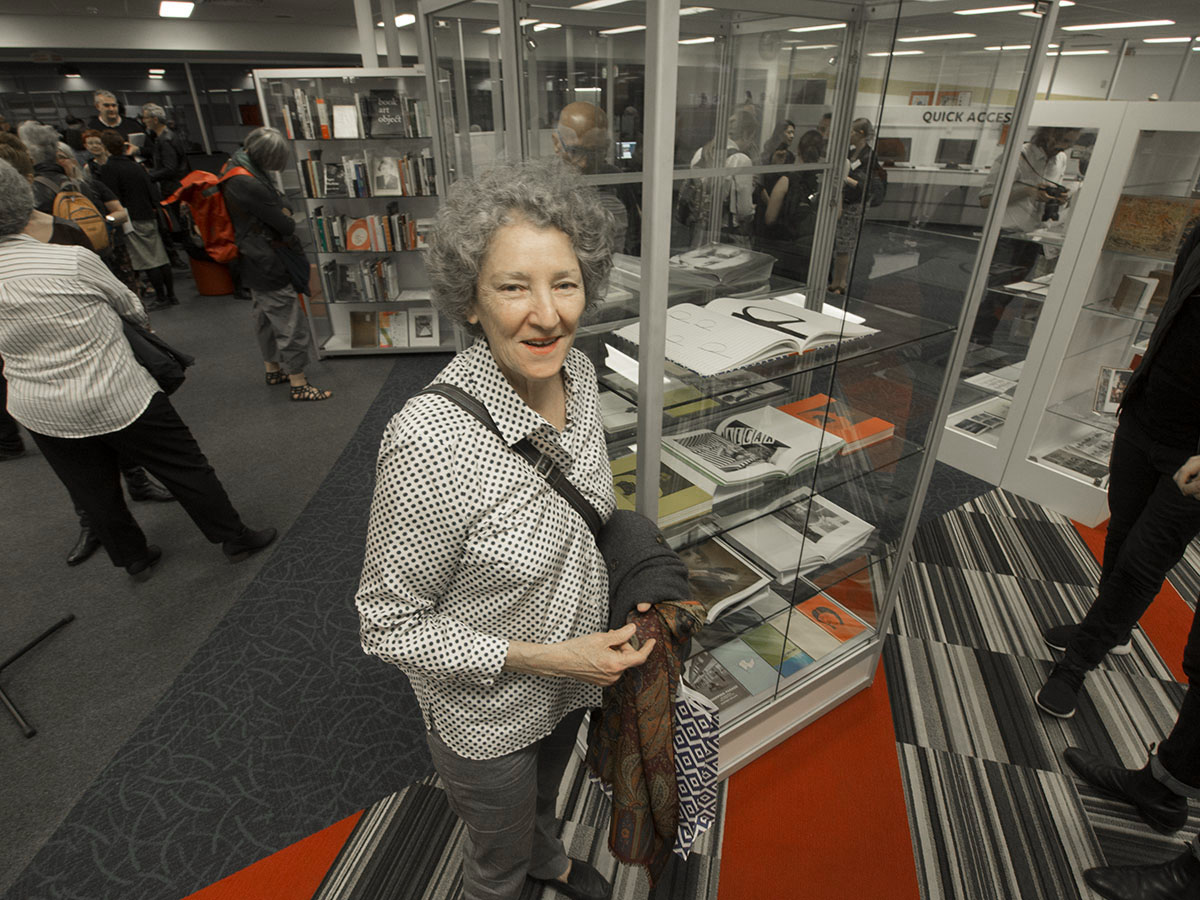
Noreen Grahame at the QCA Library and her ‘… & So’ artists book show
On the evening of the first day Robert Heather, Director, New England Regional Art Museum opened the exhibition “… & So” at QCA Library. The exhibition features a significant collection of seminal Australian and international artists books and multiples sourced predominately from Noreen Grahame’s Centre for the Artist Book collection and her numero uno publications alongside artists’ books from the Queensland College of Art. A list of the selected works can be downloaded here. ALA Books for abbe 2017 … $ so Exhibition list
Mid afternoon on the second day the State Librarian and CEO from the State Librarian of Queensland Vicki McDonald opened the 6th artists’ books + multiples fair. Twelve tables presented a hand-to-eye experience of books by significant makers of contemporary artists’ books. These included:

A silhouette view of the Grahame Galleries tables
Stand 1 – grahame galleries + editions
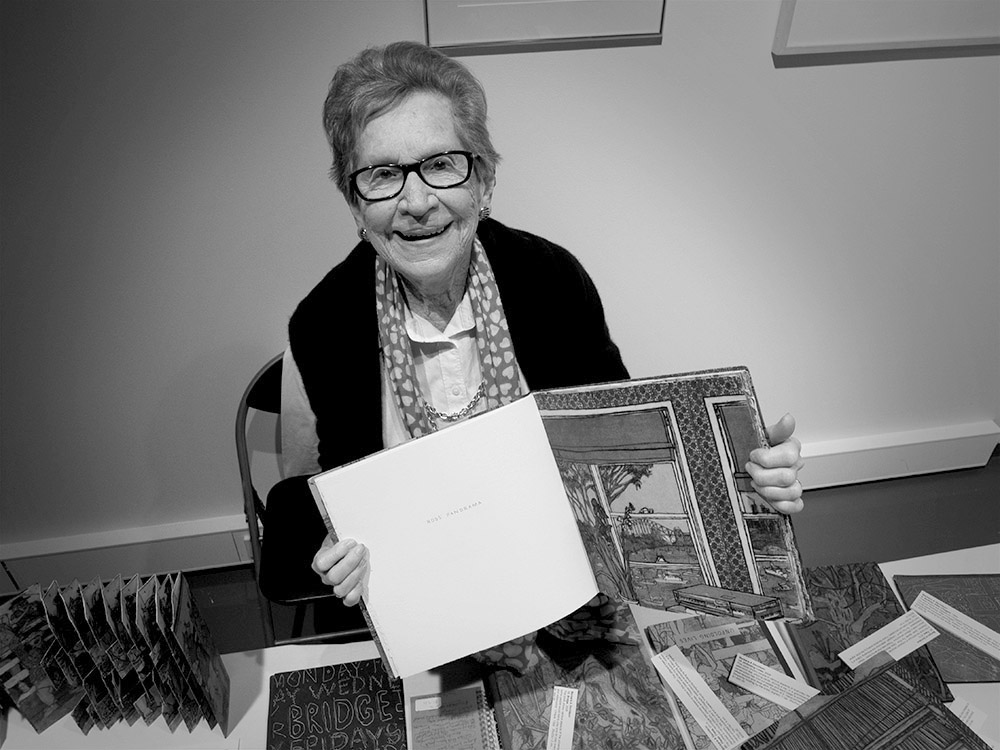
Barbara Davidson

Caren Florance
Stand 3 – Caren Florance – Ampersand Duck

Photo from ABBE Artists Book Conference July 6-9 2017 at the Queensland College of Art

Anne-Marie Hunter
Stand 7 – Psyclonic Studios – Anne-Maree Hunter
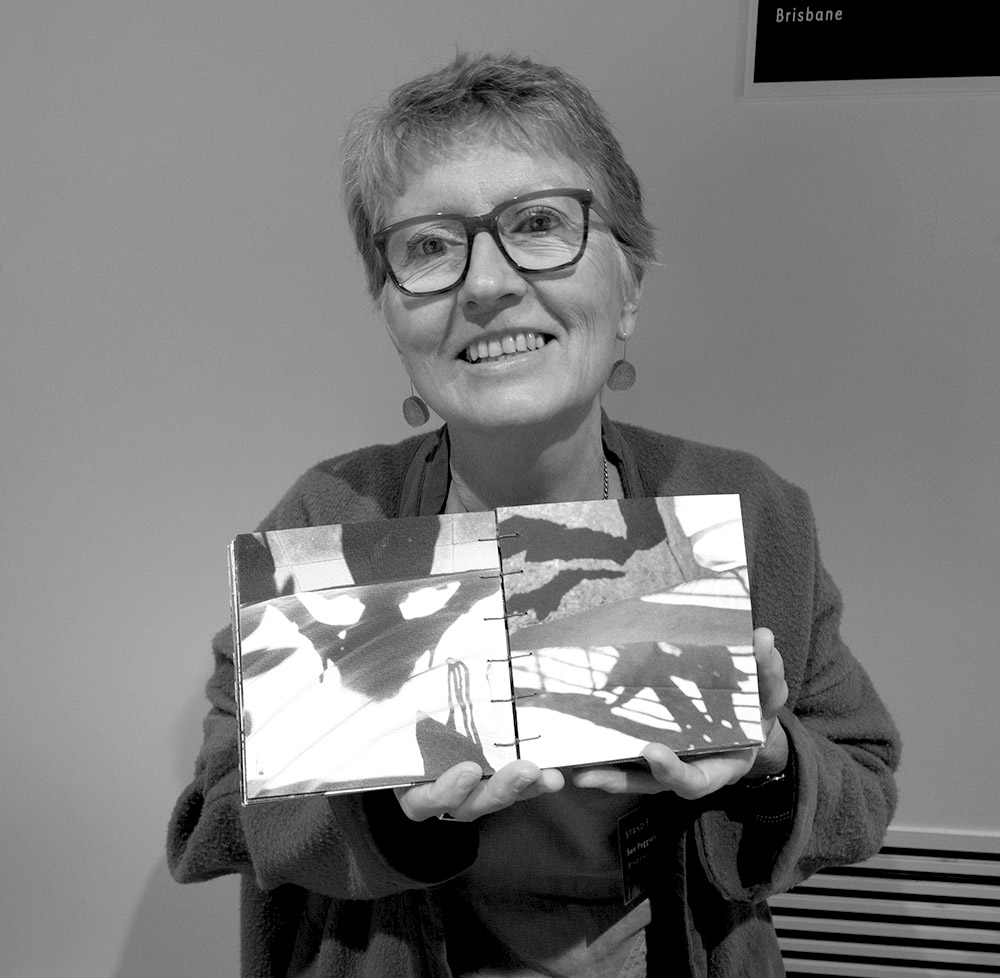
Sue Poggioli
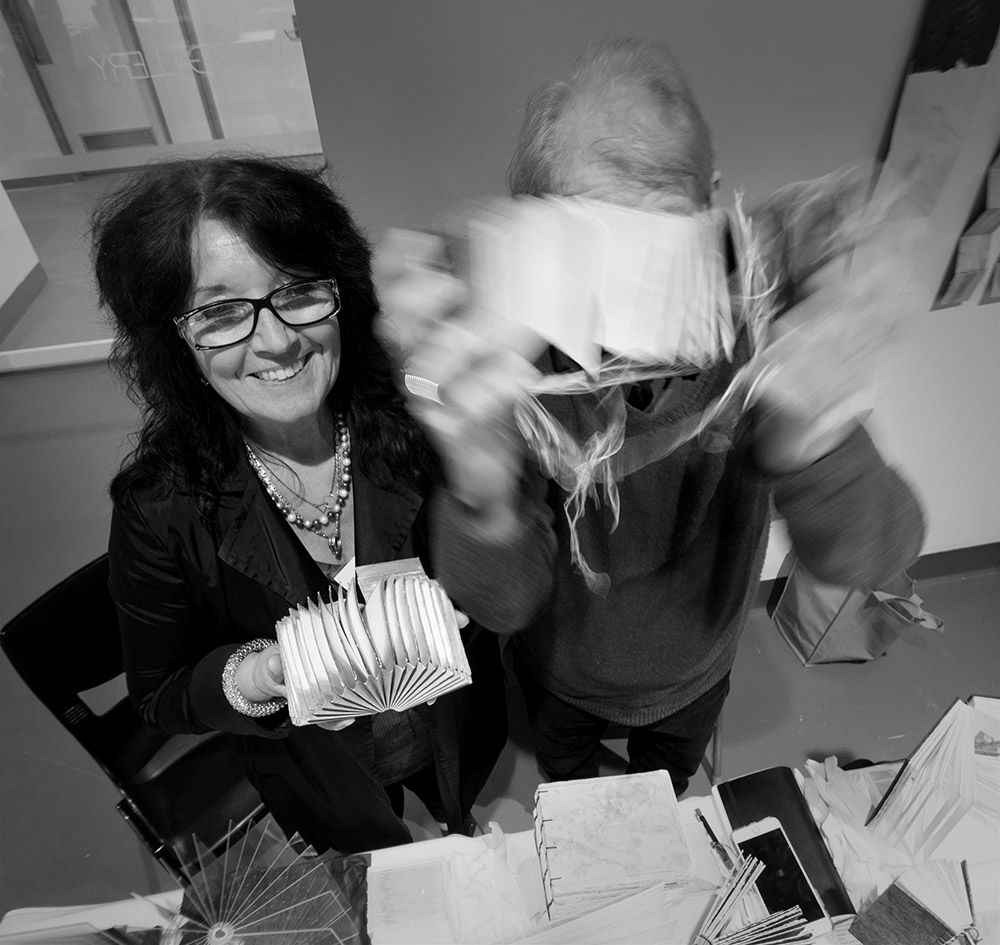
Adele Outteridge & Wim de Vos

Ulrike Stoltz & Uta Schneider
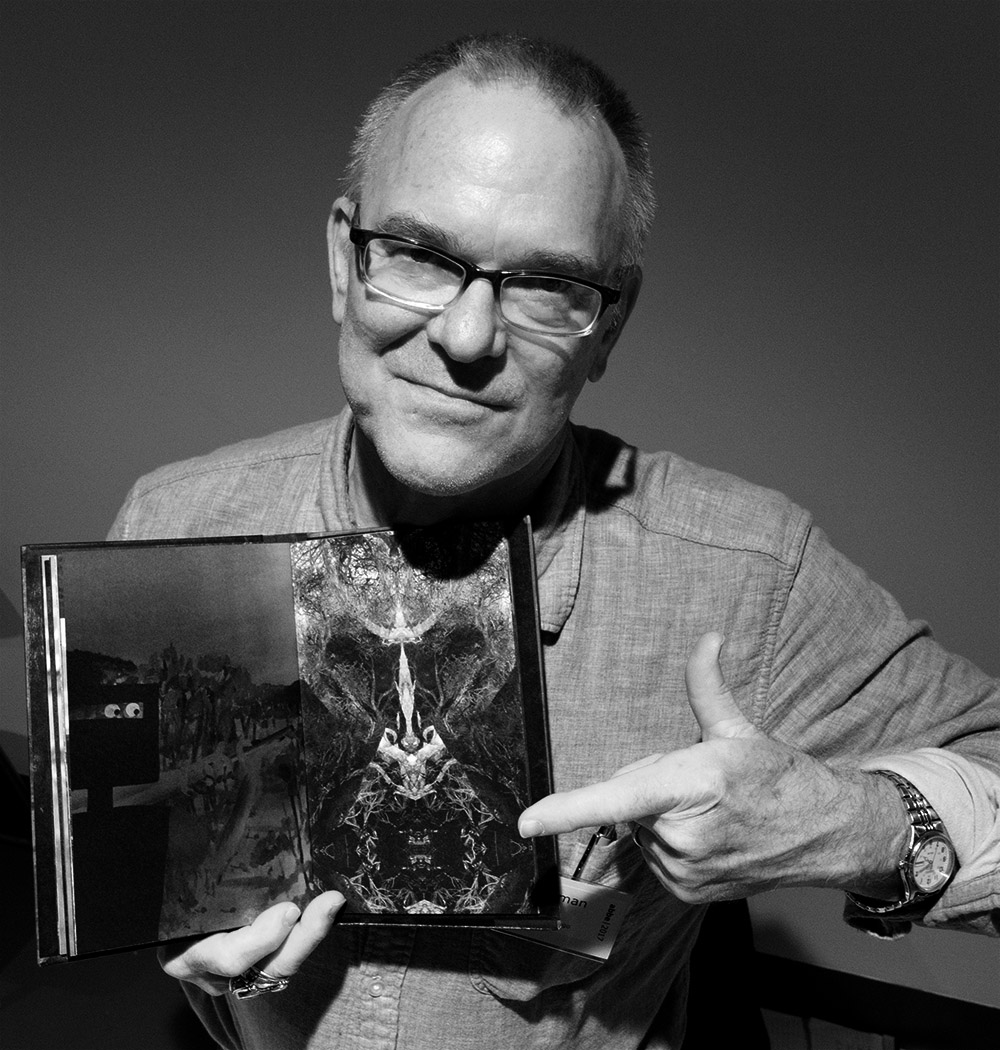
Brad Freeman

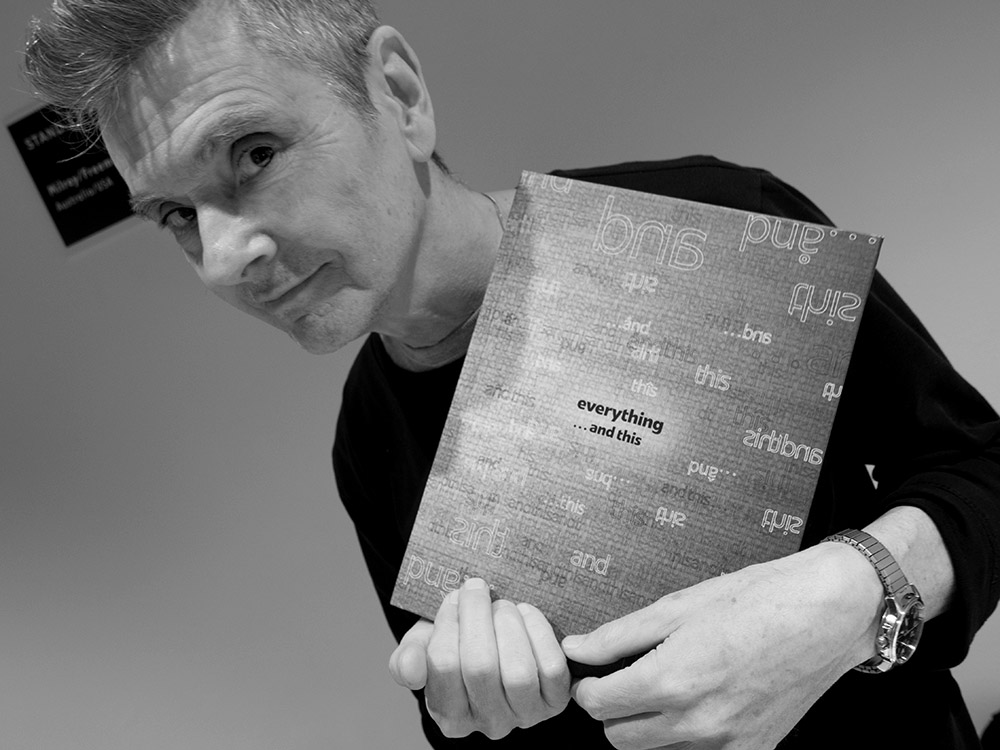
Anita Milroy
Lyn Ashby
Stand 11 – Milroy-Australia / Freeman-USA / Ashby-Australia
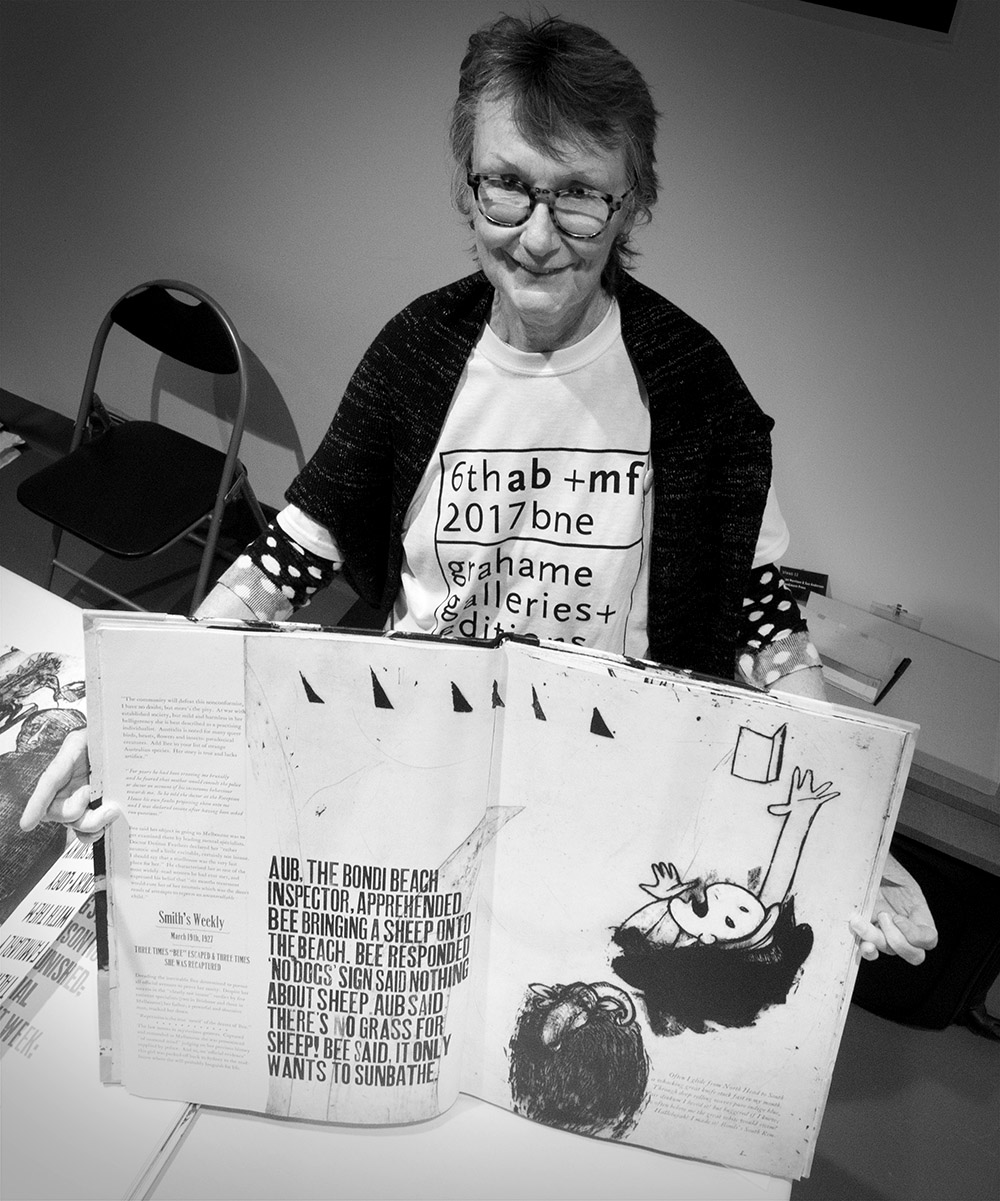
Sue Anderson

SLQ Australian Library of Art artists book exhibition
To complement the theme of the ABBE conference a special collection of concertina and folded books was curated by Christene Drewe of the Australian Library of Art at the State Library of Queensland. Open only for 2 hours on the Saturday morning of the conference this satellite event was well patronised. The Australian Library of Art is recognised as Australia’s premier public collection of artists books and the range of works presented was a testimony to the variety and depth of the collection. A list of the books displayed can be downloaded here. ALA Books for abbe 2017
In keeping with the conference theme the community of practice for artists books in this country is supported by the ‘folding’ and ‘unfolding’ of ideas, theories, concepts, access to exemplar book samples and the social connection that ABBE provides. While selected ABBE 2017 papers will be published in JAB, beyond that, the influence and impact of this gathering highlights the need for ABBE to provide this ongoing forum in Australia.
Dr Doug Spowart
All photographs and text ©2017 Doug Spowart
.
.
CYANOTYPE: Working the ‘blues’ in Greece
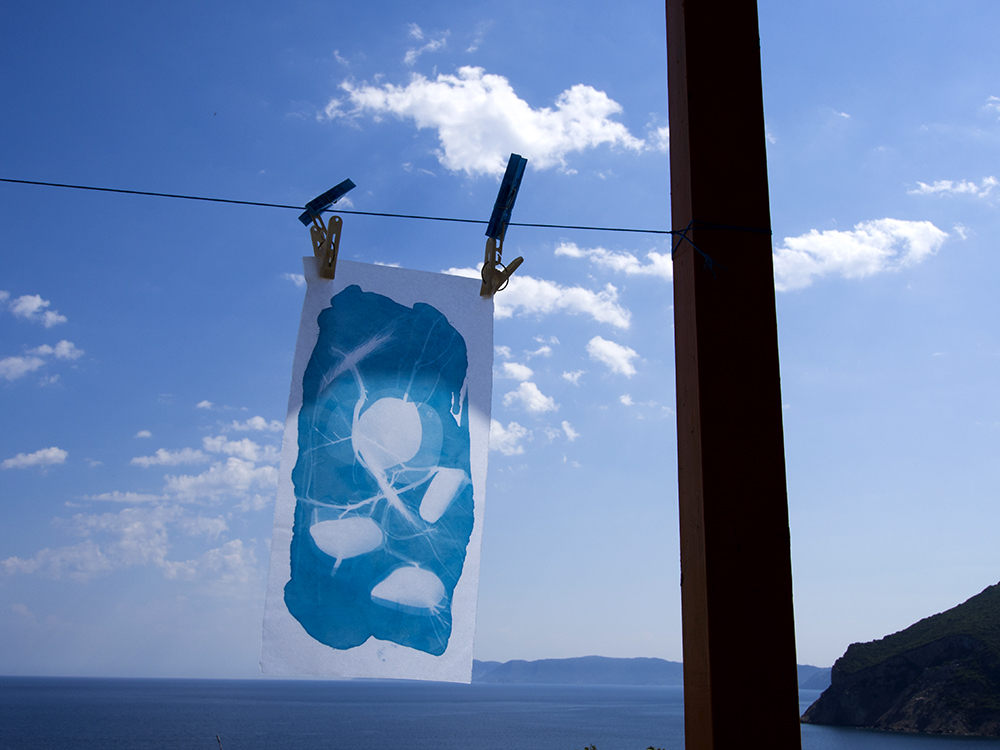
A cyanotype print on rice paper hung out to dry on Skopelos
.
The azure blue of the Aegean Sea perfectly matches the prussian blue of the historic process cyanotype. The ancient stories of Ulysses and Jason’s Argonauts lend themselves to the contemporary narratives that can be made through photography and the photobook. In May we sought to explore these creative possibilities through a collaborative workshop coordinated by artist Steph Bolt and Skopelos Works on Paper on the island of Skopelos located in the Sporades north-east of Athens.
Six participants worked with us over a two-week program of structured lectures, practical sessions and photo forays to explore the possibilities for image taking and art making on the island. Staying in the main town on the island we worked out of the purpose-built printmaking studio with a view out over rocky headlands, distant islands, blue waters and skies. The studio sits atop of the town next to the remains of a castle with steps and paved pathways leading to the harbour and the Paralia. Tourism is a significant industry for the island however its impact does not destroy a feeling of being within an authentic experience of Greece.


The workshops started with breakfast daily at 8.30am with a studio start at 9.00am. By 2.30pm the formal program finished enabling personal exploration of the diverse subject matter available. Everyday participant’s day concluded in the restaurants of the Paralia partaking in the culinary delights of rustic Greek food supported by ouzo, retsina and aspro krasi (white wine). We ate fantastic squid, octopus, anchovies, little fishes, rabbit, goat, traditional foraged foods like the succulent kritima, local cheeses, Skopelos pies and gyros. Some members of the group formed relationships with the restaurateurs and towards the end of each meal extra wine and special desserts were presented as gifts by the host.


At regular intervals in the program Steph and her husband Robin took us on photo adventures: to the ancient graves at Sendoukia for sunrise, the Roman bathhouse ruins of Loutraki, the hillside town of Glossa and the classic white rocky cliffs and beaches of the island. The island is also famous for providing the setting for the Bronson and Streep film, Mama Mia so we visited the famous church on the rock Agios Ioannis. As part of most of these forays we had more opportunities to dine in tavernas, coffee shops and seaside restaurants.

Agios Ioannis
Key to the program was the concept of ‘place-making’, that is making photographs and forming them into themes and photo-essays that told of the personal experience of place by the photographer. The process of the cyanotype was explored employing traditional ‘shadow’ imprint of objects collected from the island to some very experimental work with multiple materials and exposures and double-sided printing. We worked not only with art papers but also with rice paper, various cloth materials event kitchen paper towelling. We had also gathered some special objects like a range Greek laces and linens, local rocks and a diverse range of plant material. Connecting direct photography with the cyanotype process was achieved on-site by the making of enlarged inkjet negatives.


Photobooks were developed at first as mini-book projects that could lead to online projects with MomentoPro software. MomentoPro supported the project by accrediting our program as part of the ‘Club’ services giving the participants 40% discount on their first book and 10% on each of their future books.

A local cat keeps Gail amused while she exposes a cyanotype
The participants were accommodated near the studio at the top of the town – one group had extensive views of the Aegean Sea sunrise with the other group overlooking the town. As mentioned earlier the distance to the shops and restaurants in the harbour required the negotiation of several hundred bespoke steps of local stone and concrete all with their leading edge painted white. The steps meandered past mainly two storied whitewashed houses with ornate doors and grilles. Ancient churches some built with reclaimed stones from other building provided an experience of place that was quite memorable. Coming home from shopping or dinner meant a steep climb up through the paths, sometime dodging motorcycles although many steps are so narrow that even they are footpaths alone. On one early evening return we encountered a church group with candles being led in a song procession with a Greek Orthodox priest leading the way – a memorable moment indeed.


The weather was very changeable requiring some program shuffles, as cyanotypes are direct sun exposures for many minutes. Ah! Today is sunny – we’ll make cyanotypes then… Once participants grasped the technique each took the process in their own directions. Many sophisticated books were made based on other workshop classes in book binding and finishing. Some went BIG making full sheet (55x76cm) cyanotypes.
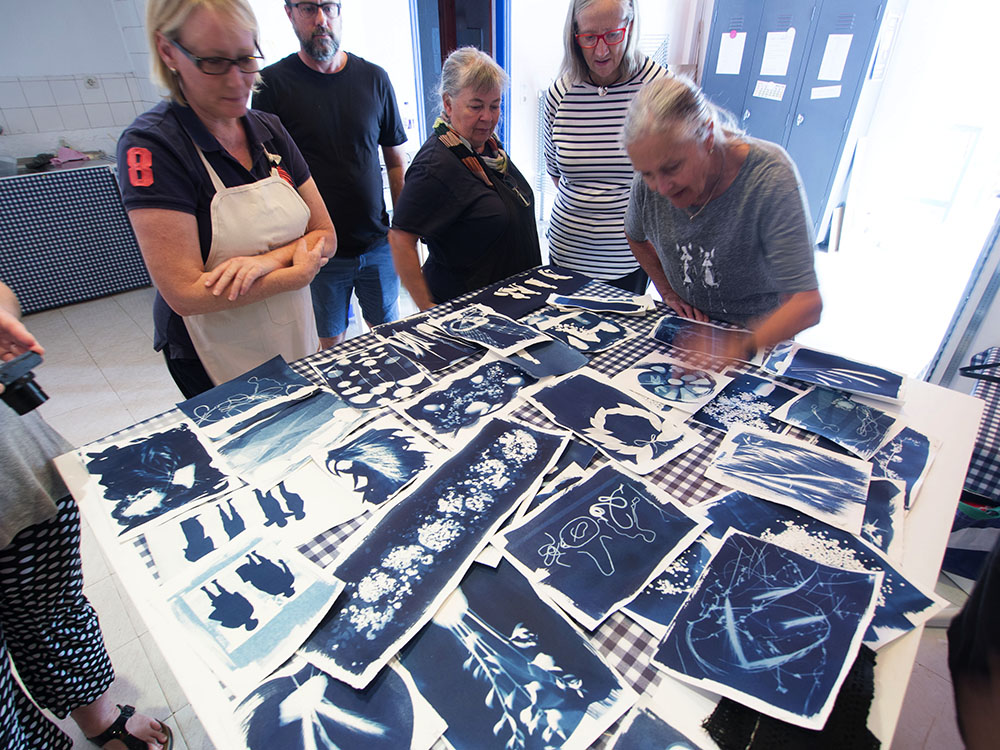
Morning review
At the beginning of each workday a review of the previous activities was undertaken. The specific needs of each participant could be covered and ideas shared.
On the final day each photographer presented their best work – what an amazing body of work that represented – although within hours each had said their goodbyes and had caught ferries off the island and were flying homeward. We were all jealous of Steph and Robin who have a house in the town and stay there for about half the year. Their knowledge of the island and networking with island people was invaluable for the success of the workshop. Works were shared and a folio set of eight small books were made in multiple so everyone ended up with a memento from each of other individual experiences …
All of us were touched by something special on the island – our photographs and books act as evidence of experience but also a touchstone to relive and share those experiences…
Here are some photos of the final presentations…


Copyright in the text and all photographs are the copyright of Doug Spowart+Victoria Cooper unless otherwise indicated. The copyright of the artworks is held by the artists.
.
THE ANTIPODEAN PHOTOBOOK – a lecture at the Vienna Photo Book Festival
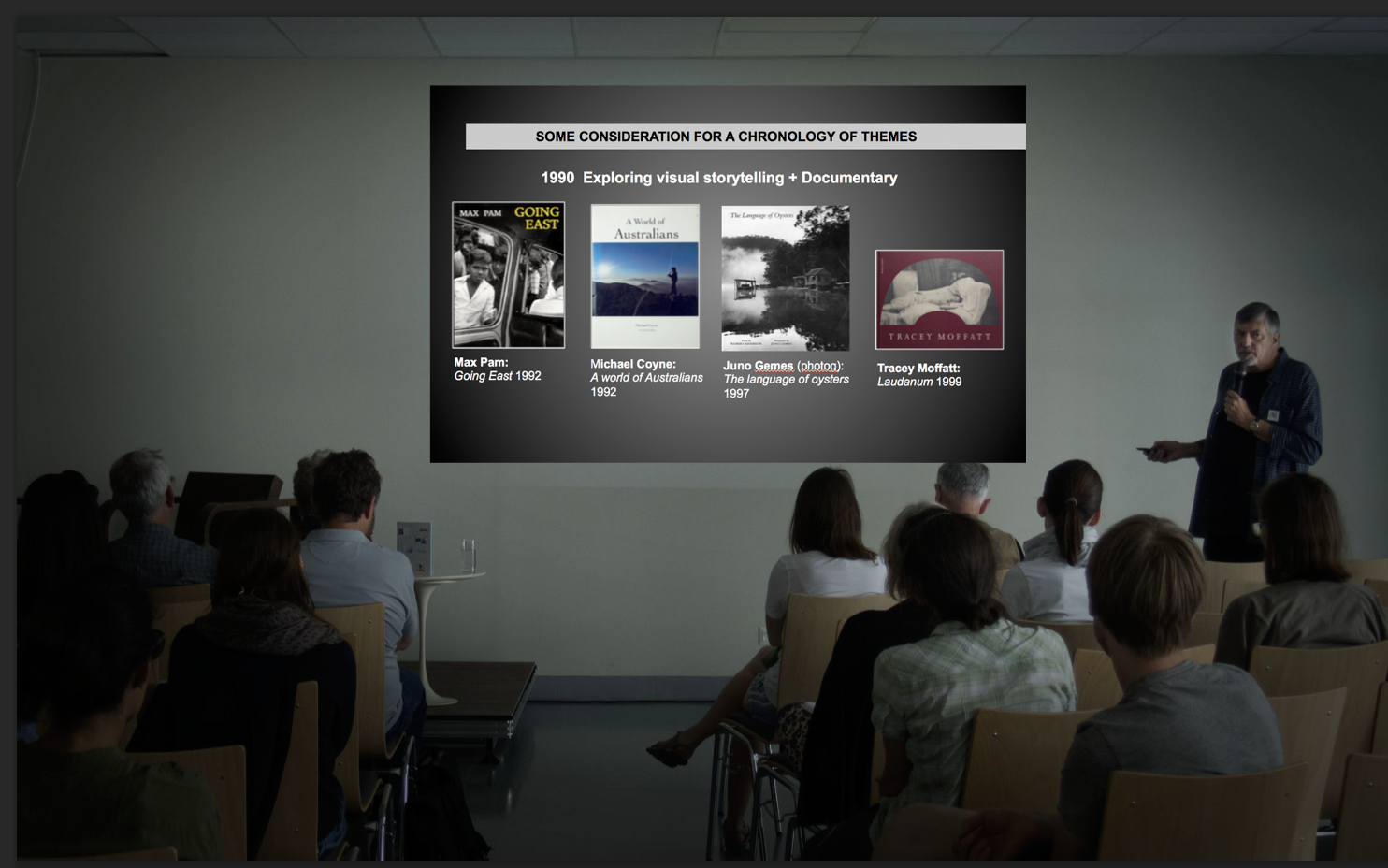
Doug Spowart presenting The Antipodean Photobook at Vienna Photo Book Festival
THE LECTURE: THE ANTIPODEAN PHOTOBOOK
My lecture brief was to make an hour-long presentation about the Australian and New Zealand photobook scene. After some thought I organised my lecture content around 4 distinct areas.
1. The supporting structures
The contemporary scene was to be included covering both practitioners and the major events in AuNZ that have shaped and contributed to the development of strong network and community of practice. The key events, movers and shakers such as:
- Photobook Melbourne
- Photobook New Zealand
- Unless you will 2017 event and book reviews
- Melbourne Artbook Fair
- Sydney’s Volume Another Artbook Fair
- Zinefairs
- The Photobook of the Year Awards
- Bookshops
- Perimeter Editions
- m.33
- T&G
- Rim Books
- Remote Photobooks
- Perimeter
- Photobook Clubs
- Asia Pacific Photobook Archive
- Photobook collections
I commented also on the sources of critical discourse on photobooks in AuNZ.
The role of Libby Jeffery and Geoff Hunt of MomentoPro as patrons and supporters of all things photobook in Australia and New Zealand was acknowledged.
2. Photobook histories of Australia and New Zealand from first examples to 2000
Here are a few slides from the presentation…
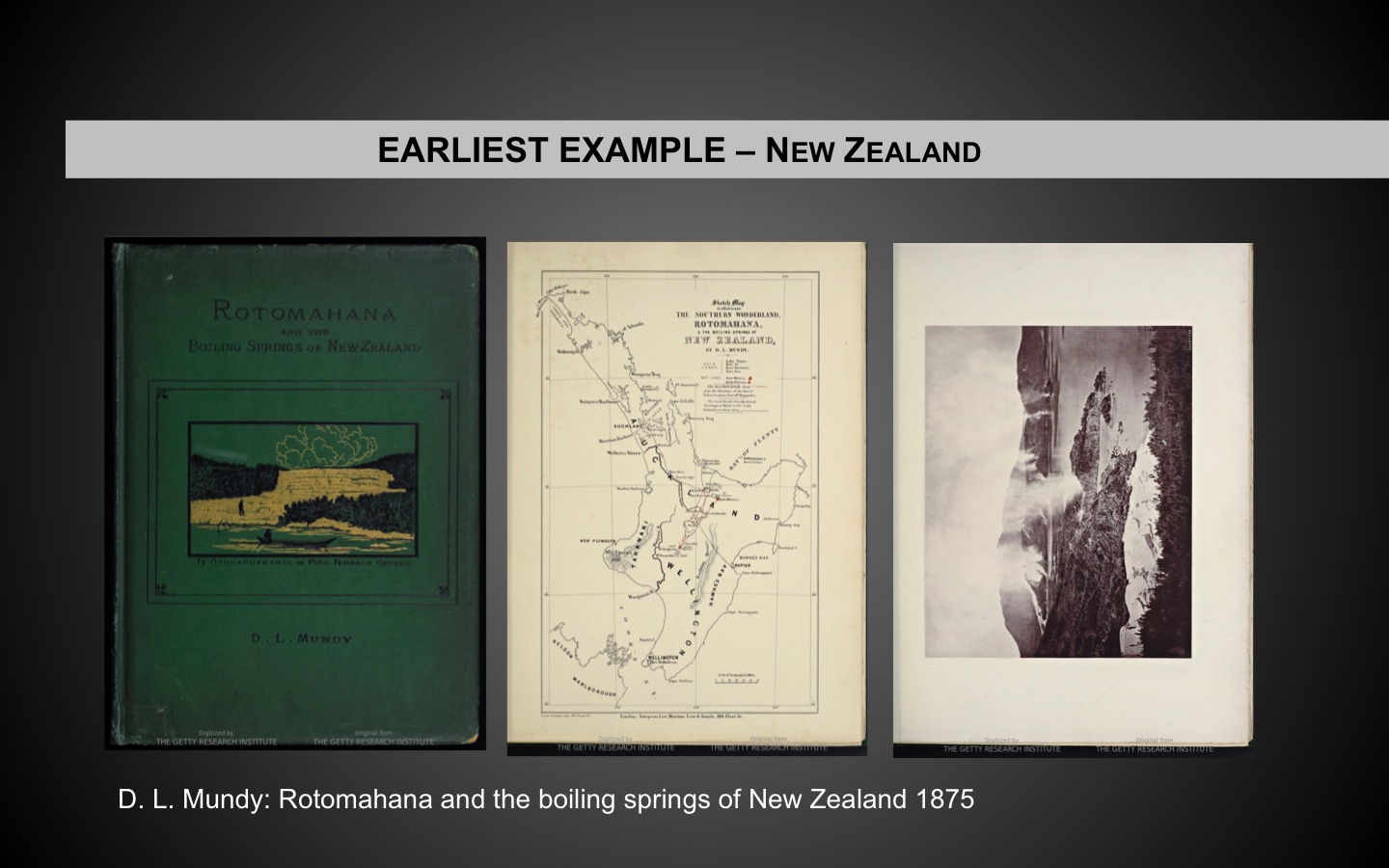
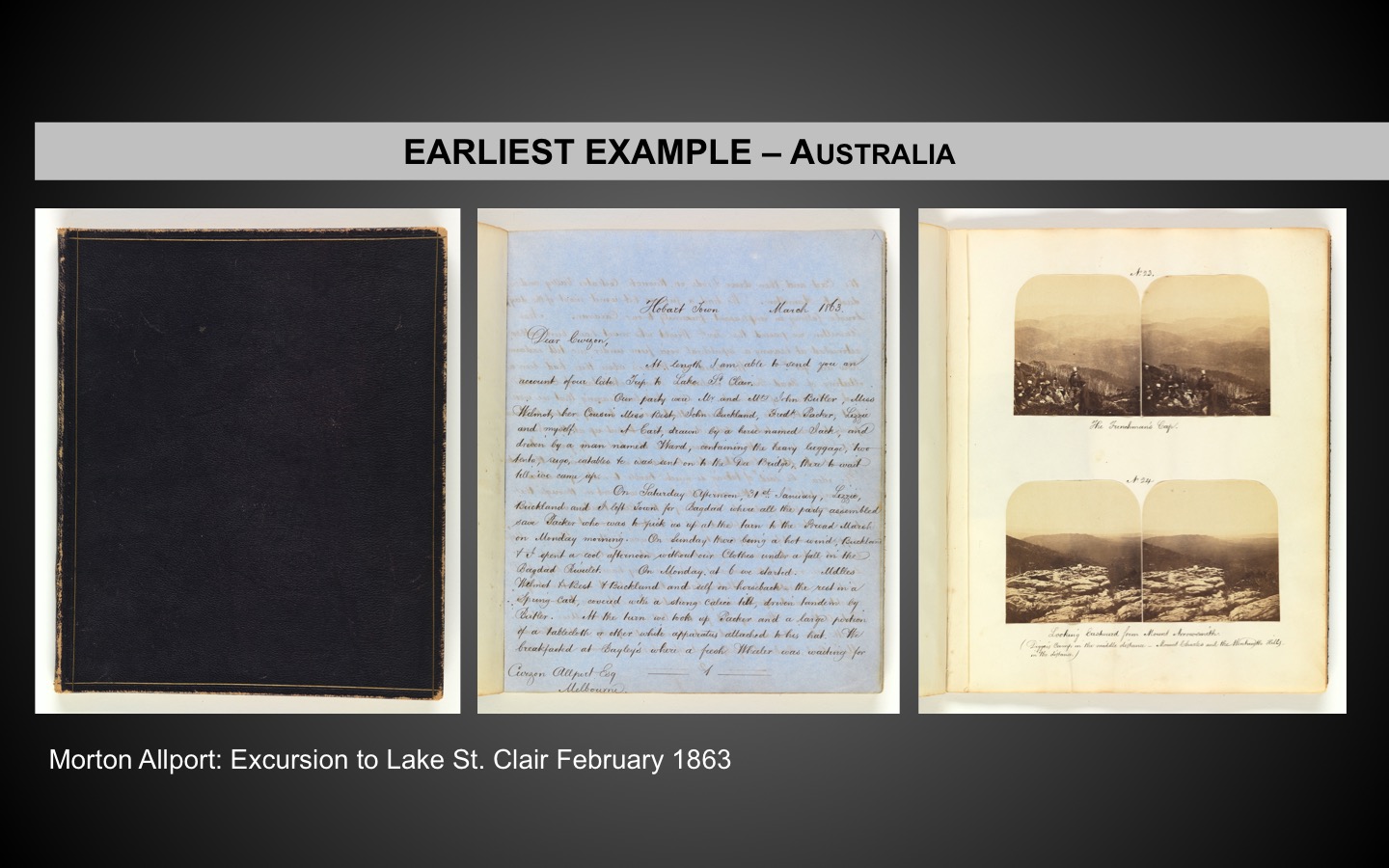
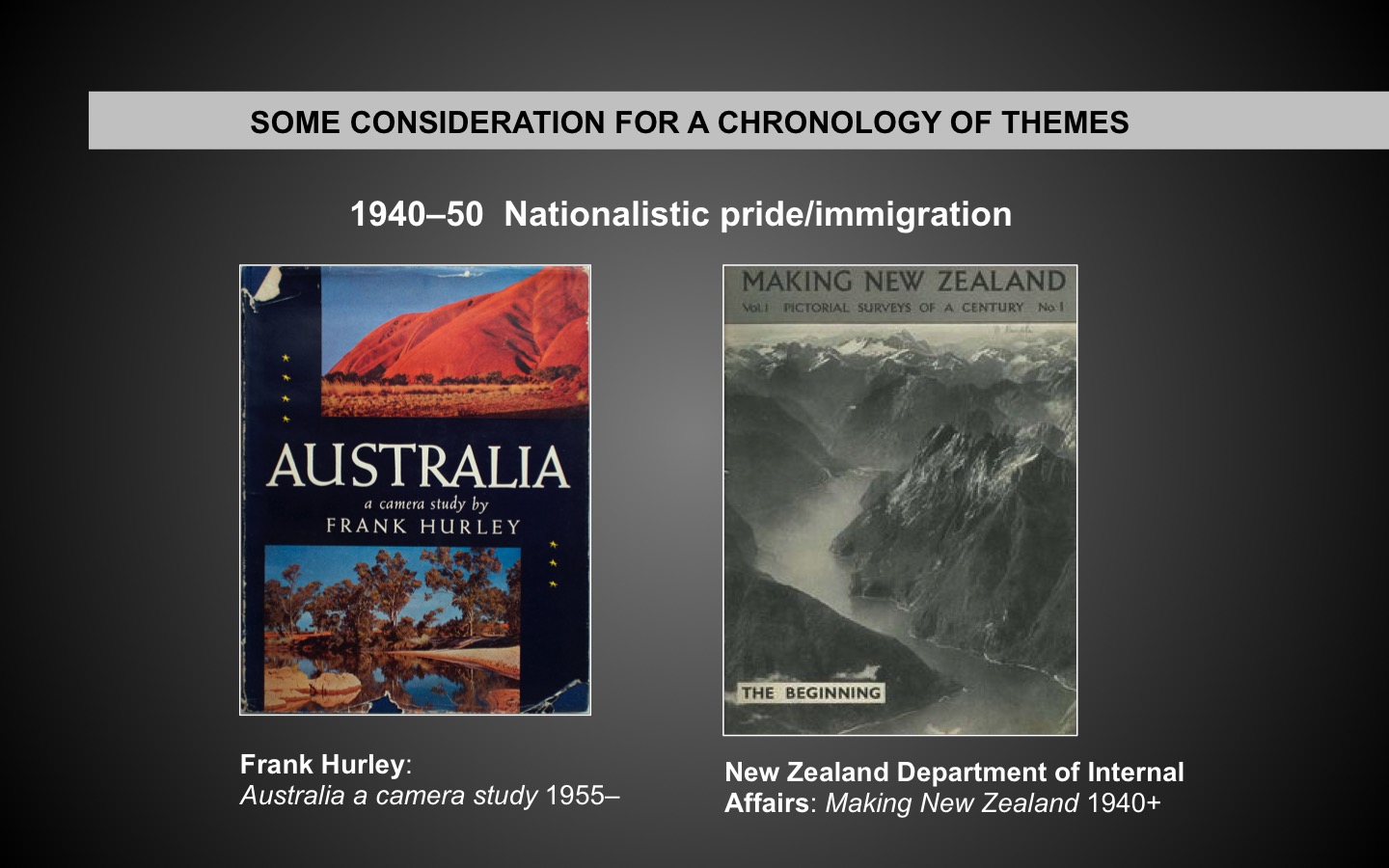
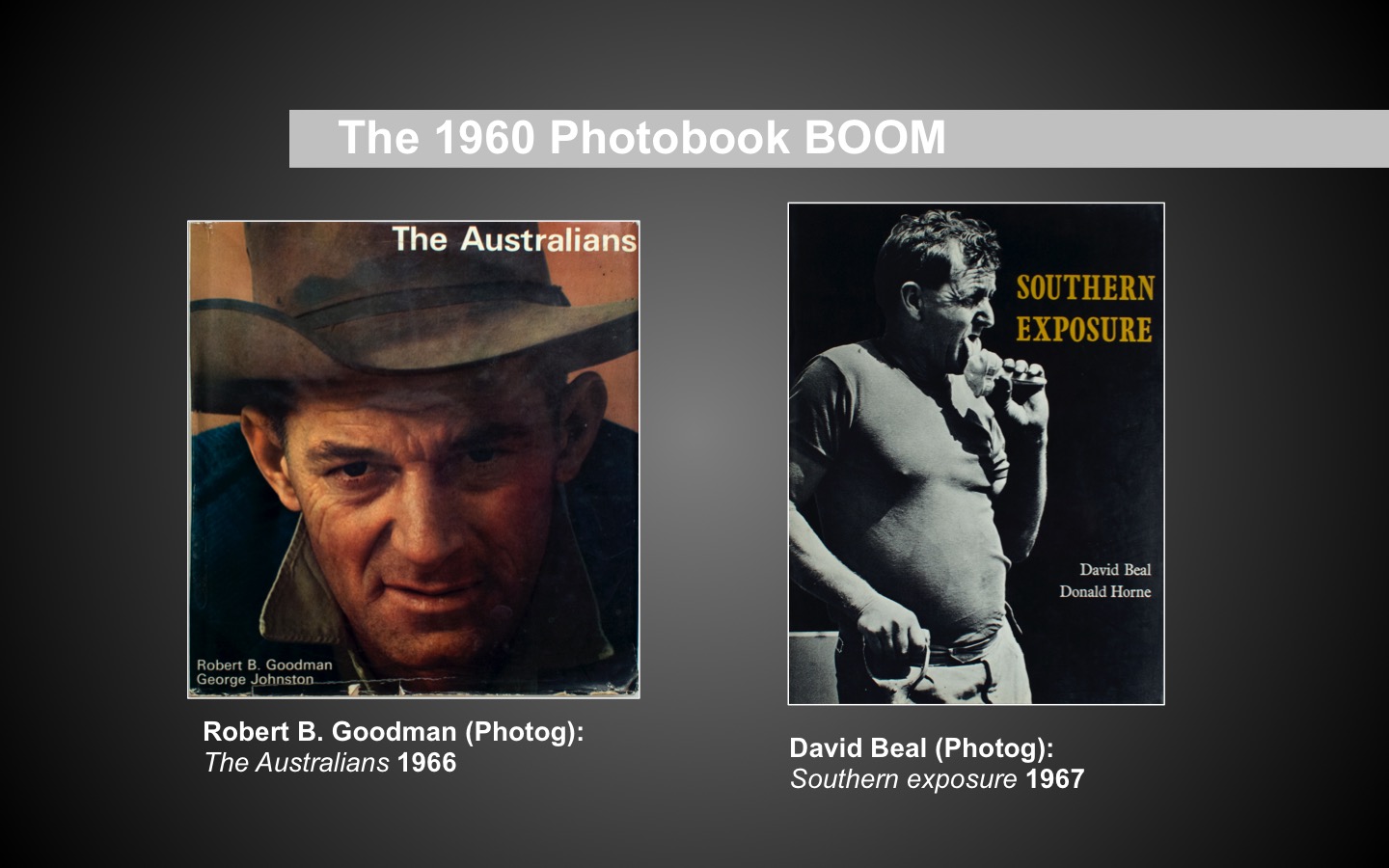
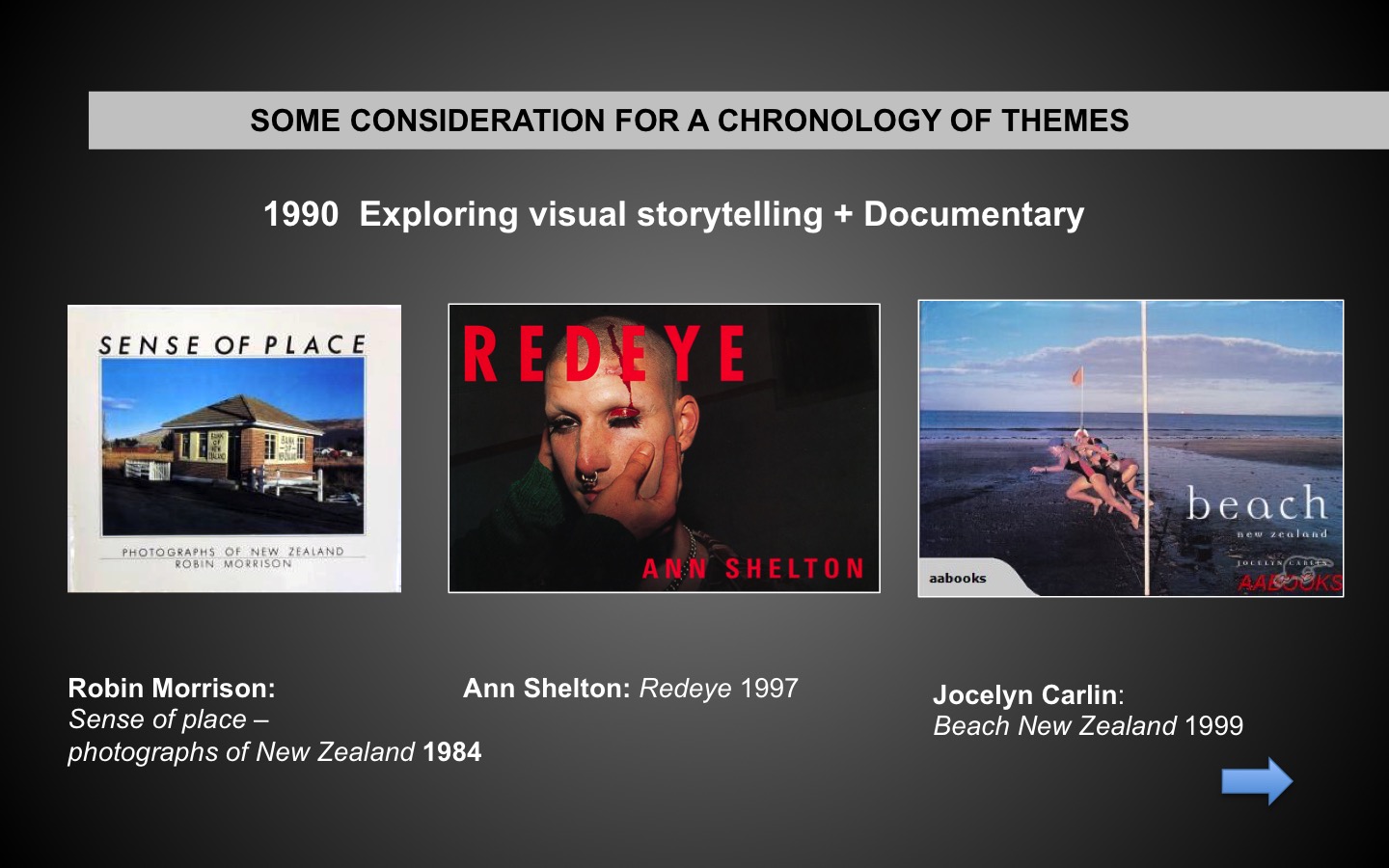
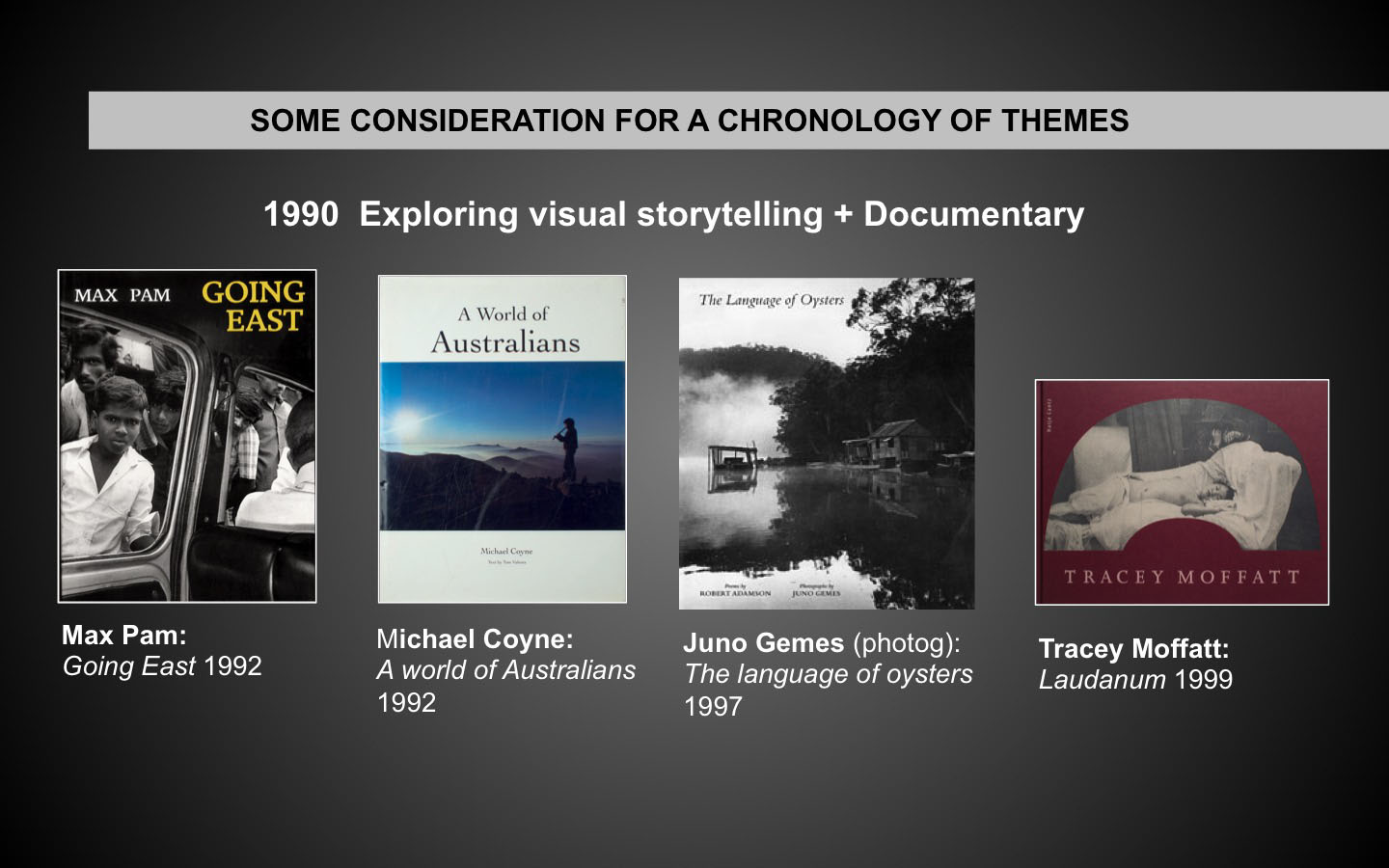
I was able also to present a discussion on the challenge of commercial book production as against personal work using Wes Stacey as an exemplar.
I also spoke about the informal links that exist between the photobook and artists’ book disciplines.
3. The contemporary scene and a selection of interesting books and makers
Here are a few slides from the presentation…
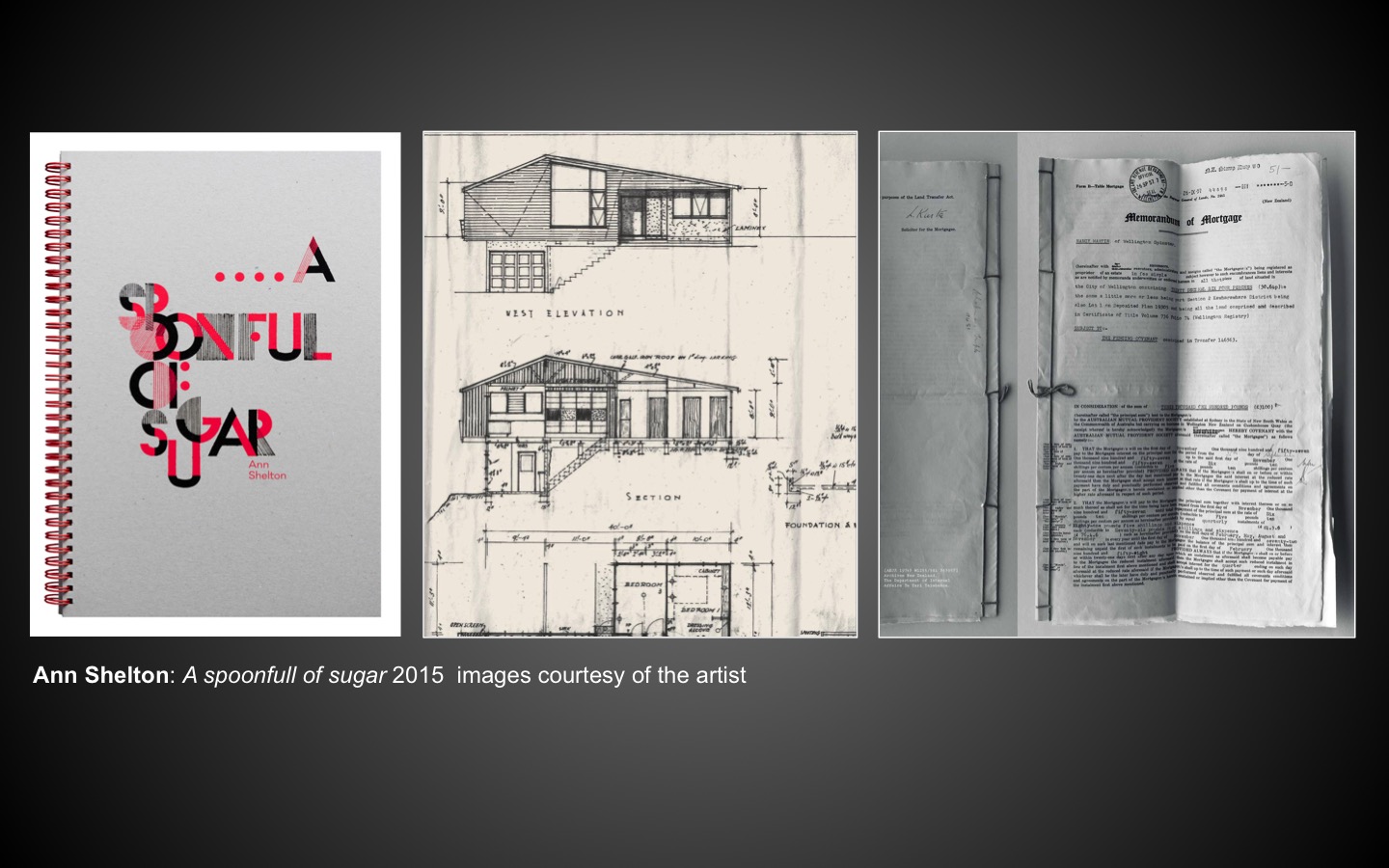
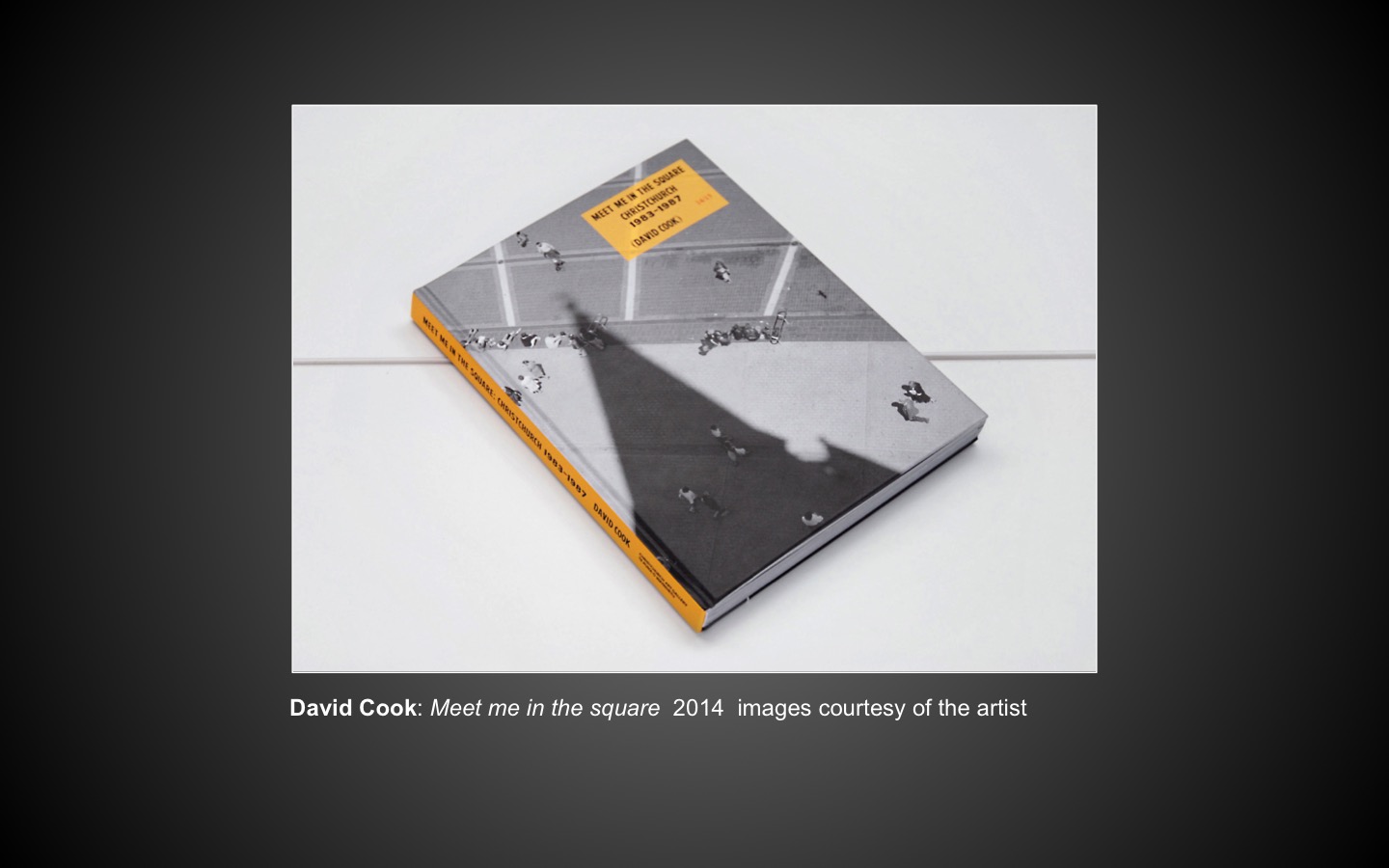
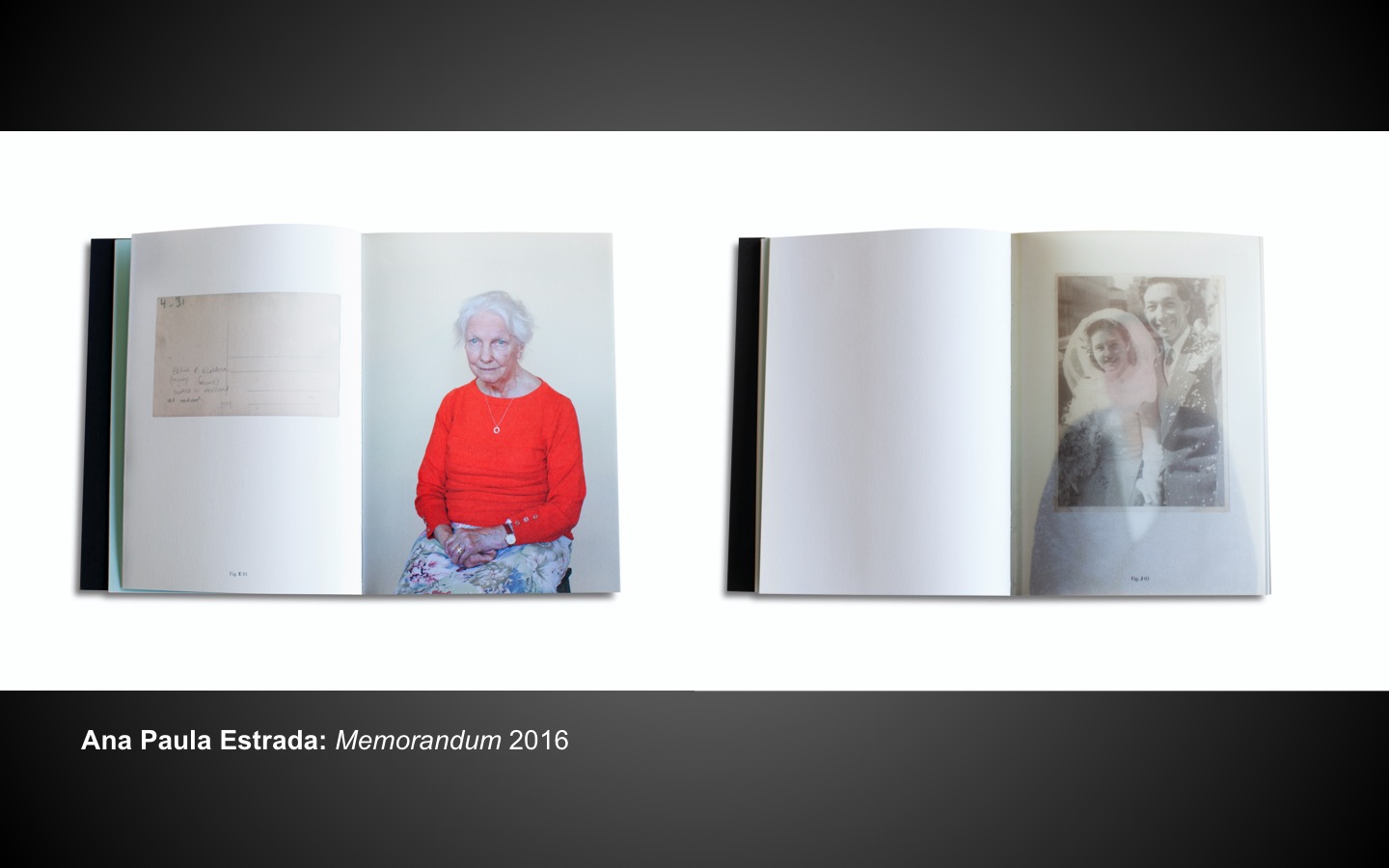
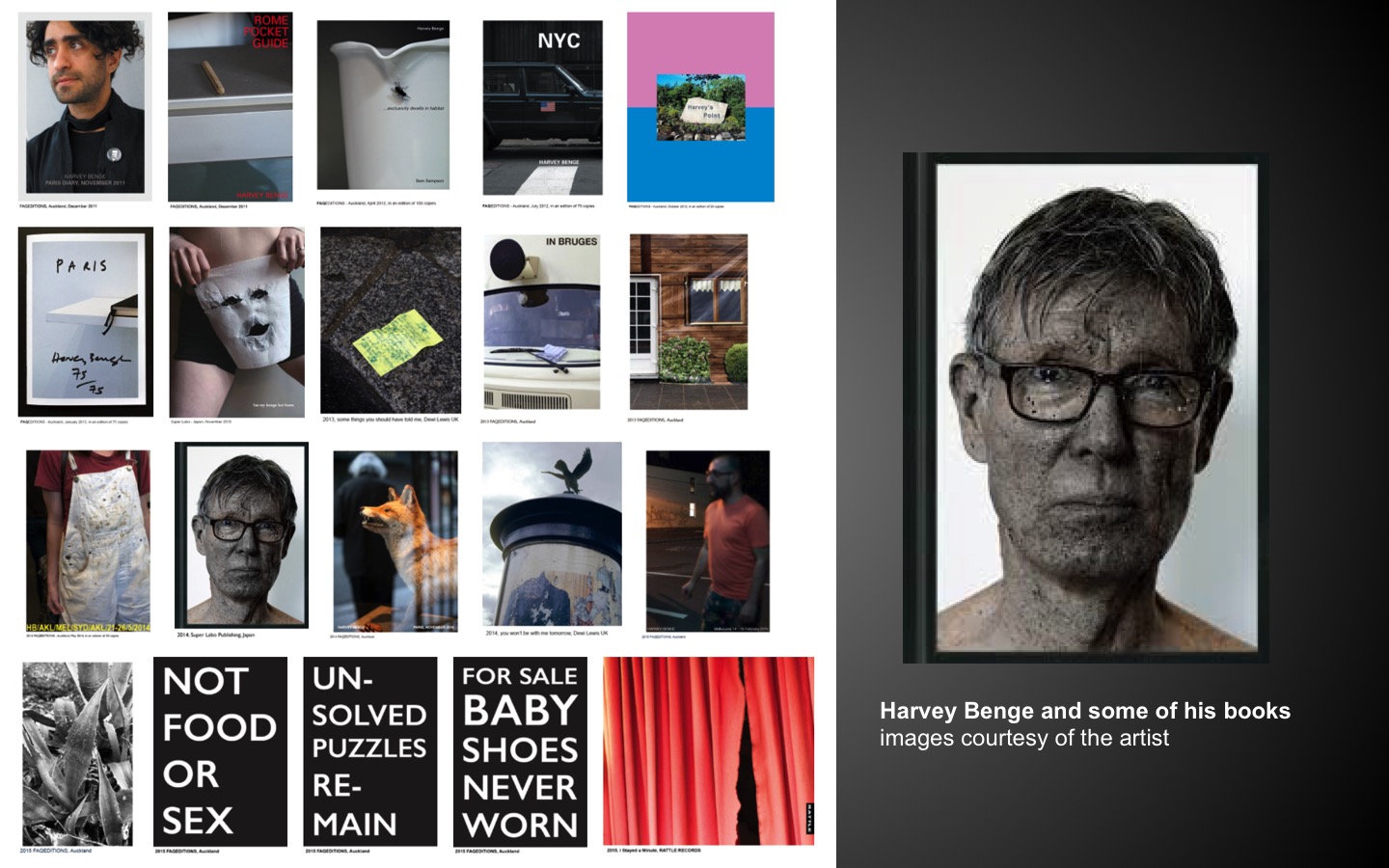
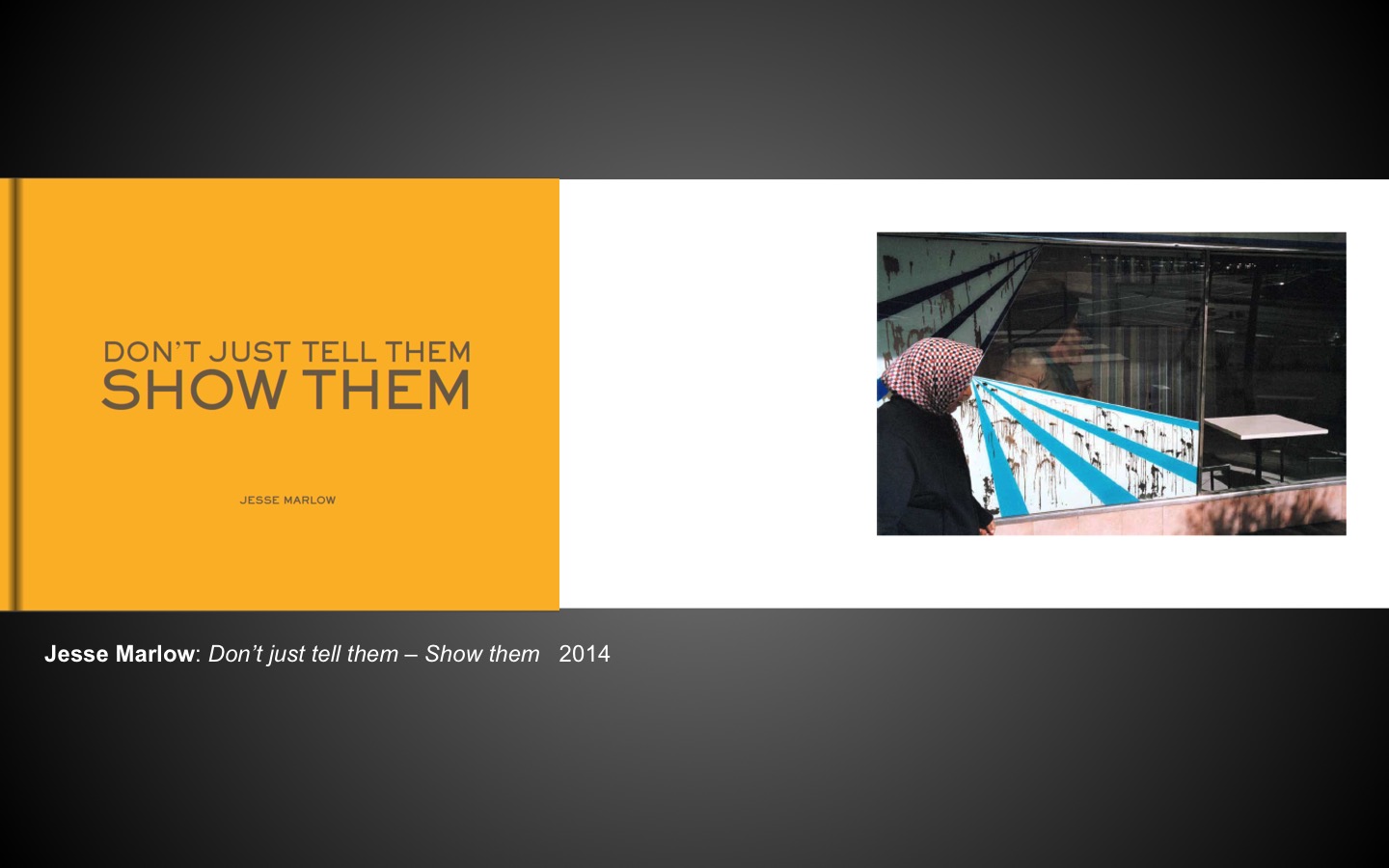
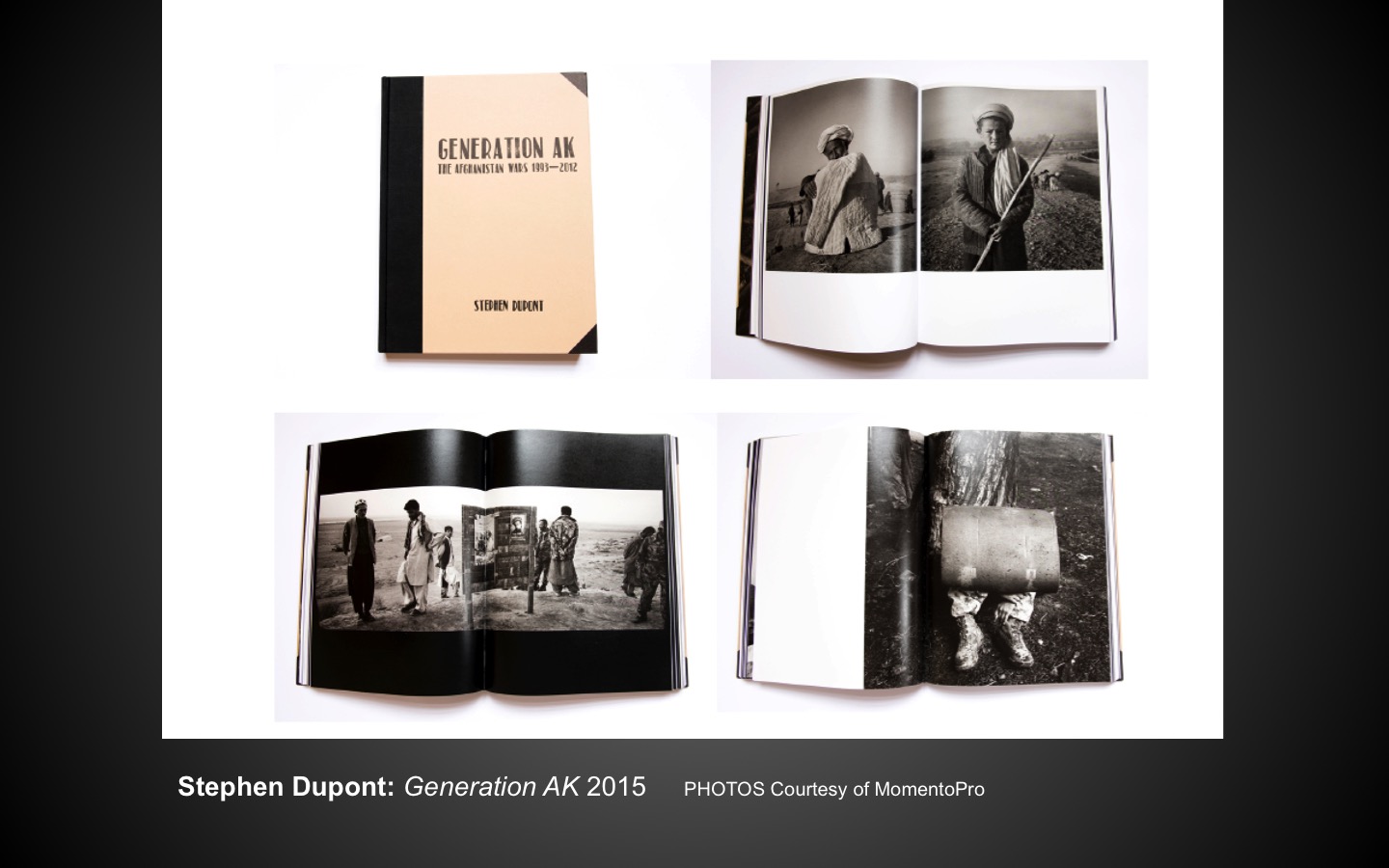
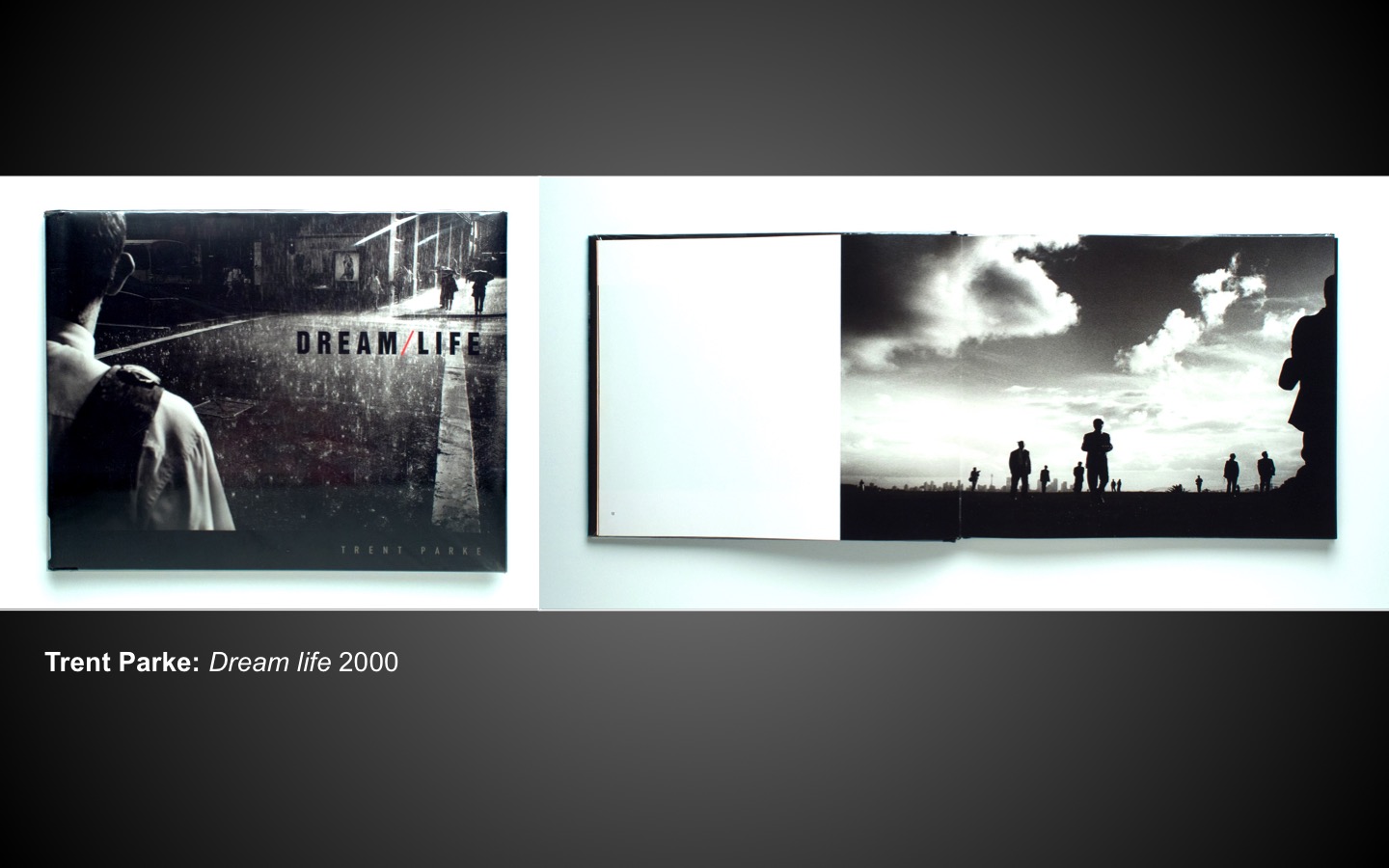
4. Voices from the Antipodean scene
It was important for me that contributors to the photobook discipline in Australia and New Zealand be given an opportunity to provide their personal insights to my presentation.
I sought comments from a range of key contributors and received responses from Libby Jeffery, Daniel Boetker-Smith, Helen Frajman, Harvey Benge, Bruce Connew, Garry Trinh, Sam Harris, Ying Ang, Anith Totha, The 2018 Photo Book Wellington Committee.
Here are a few slides from the presentation…
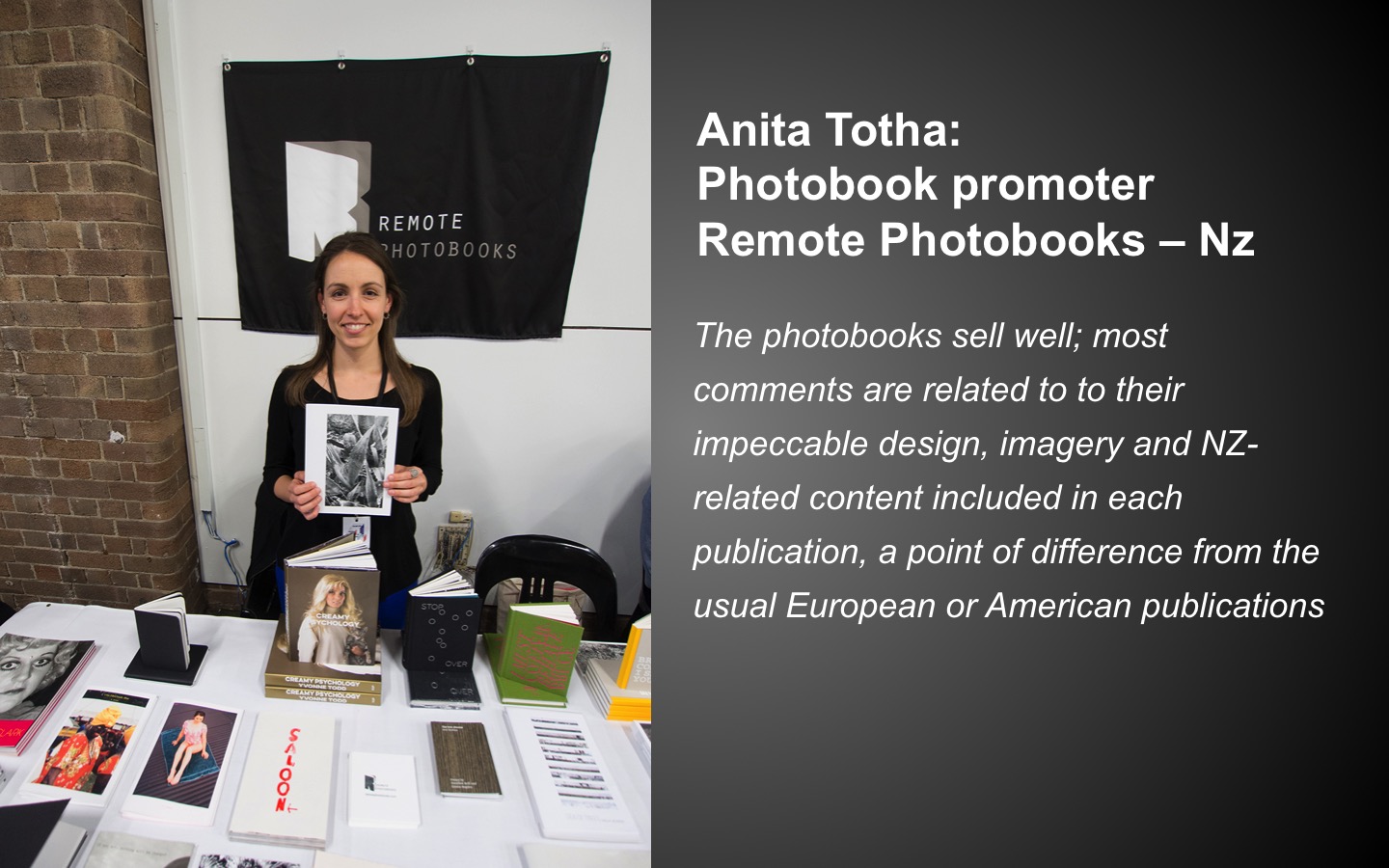
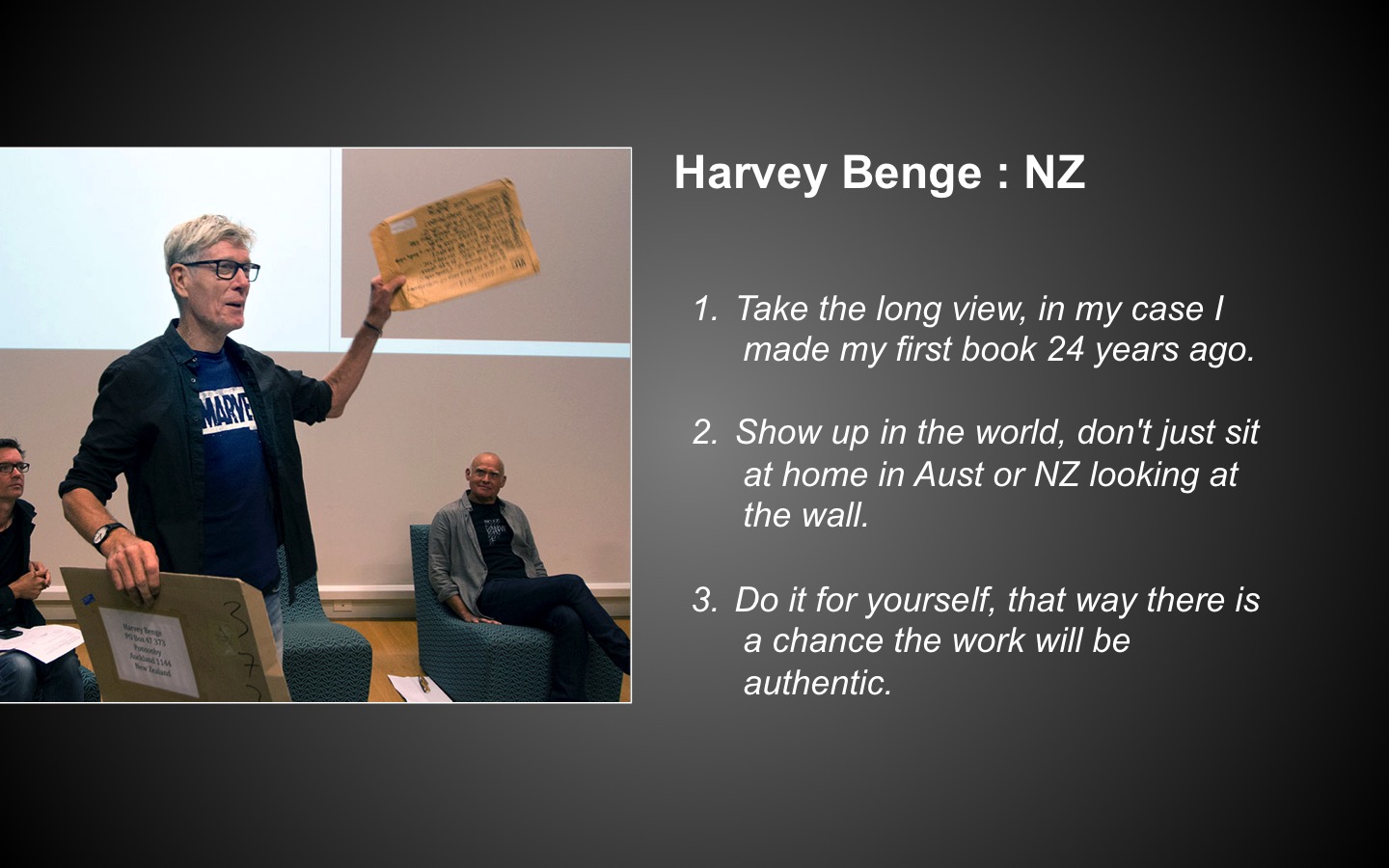
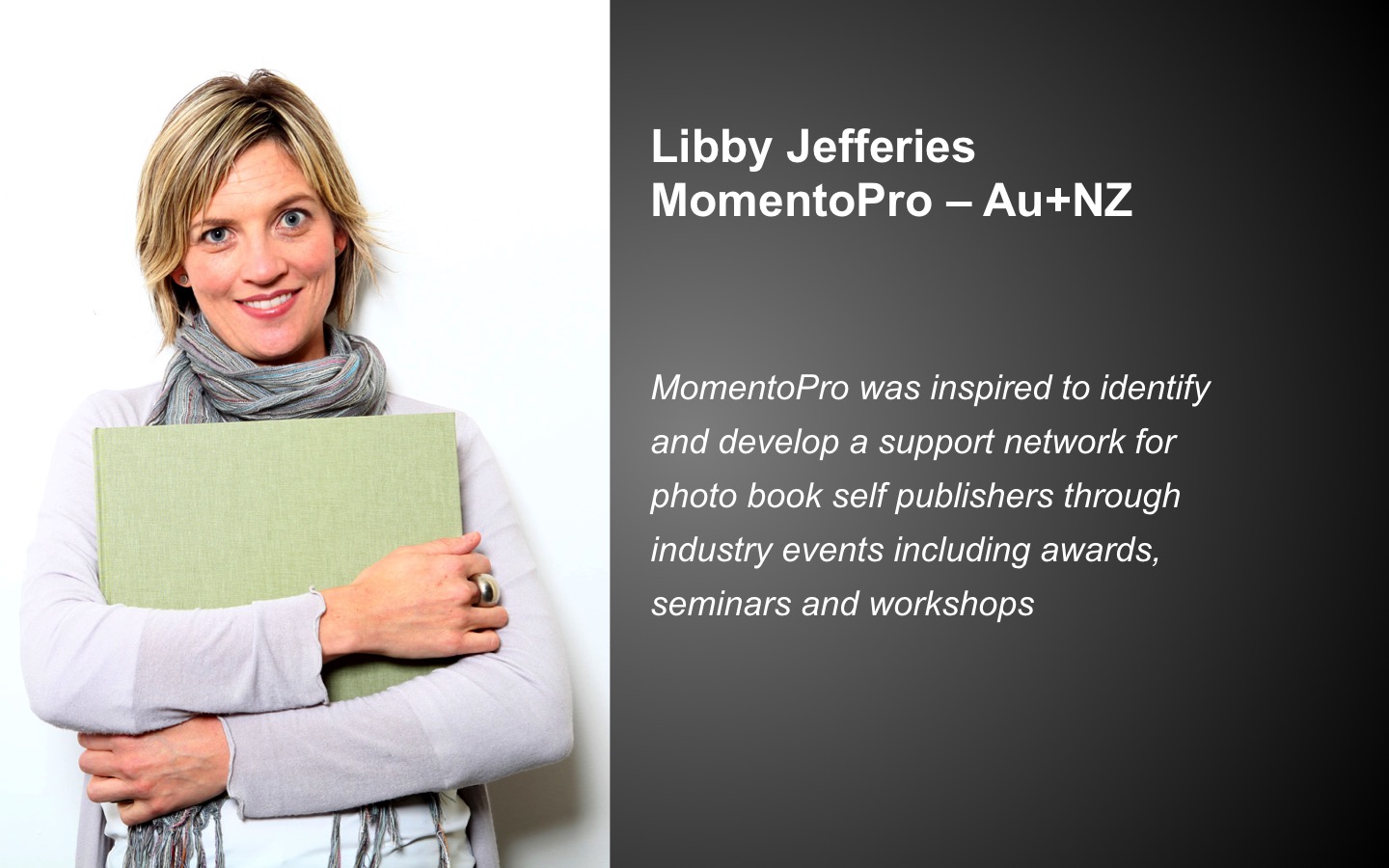
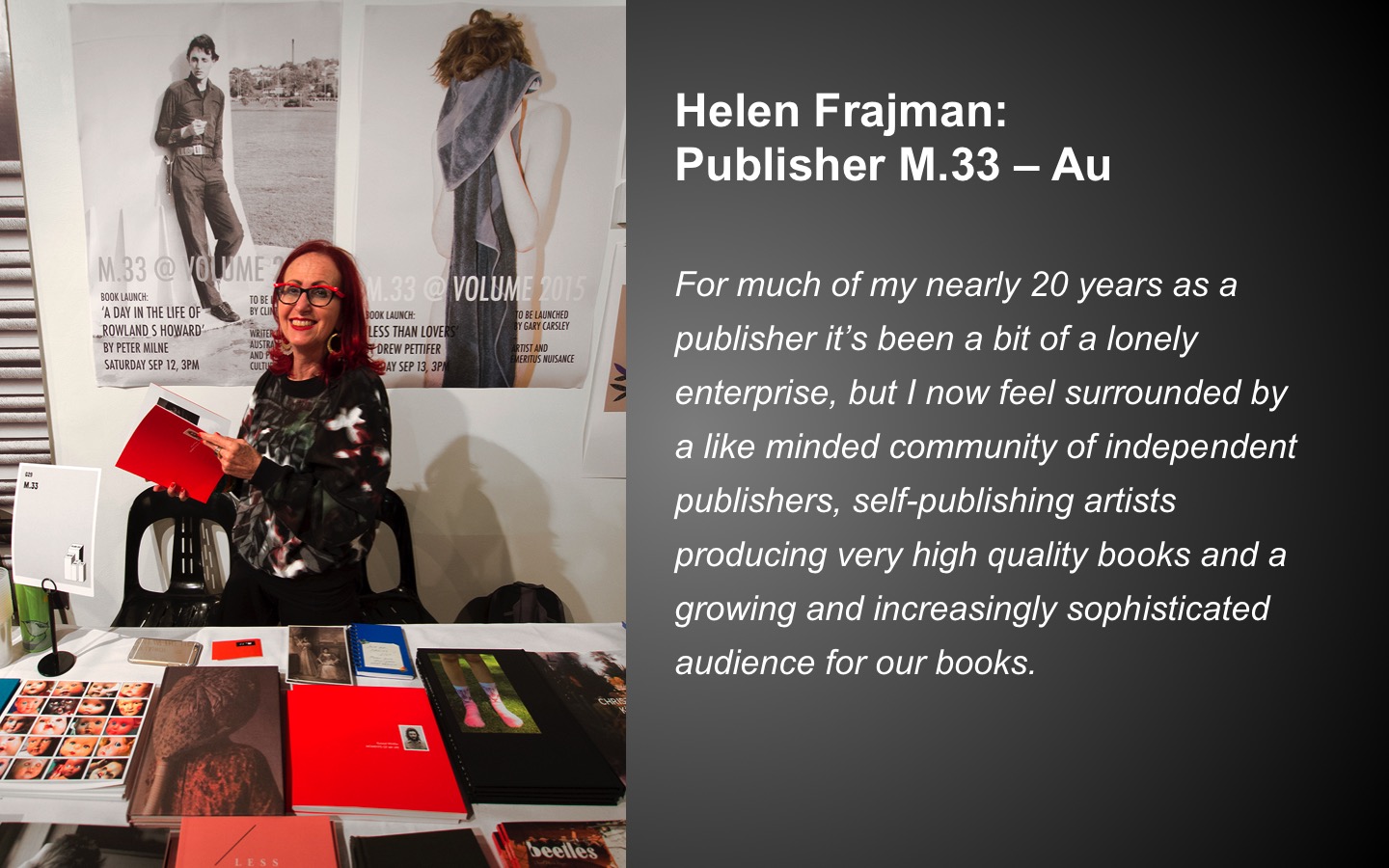
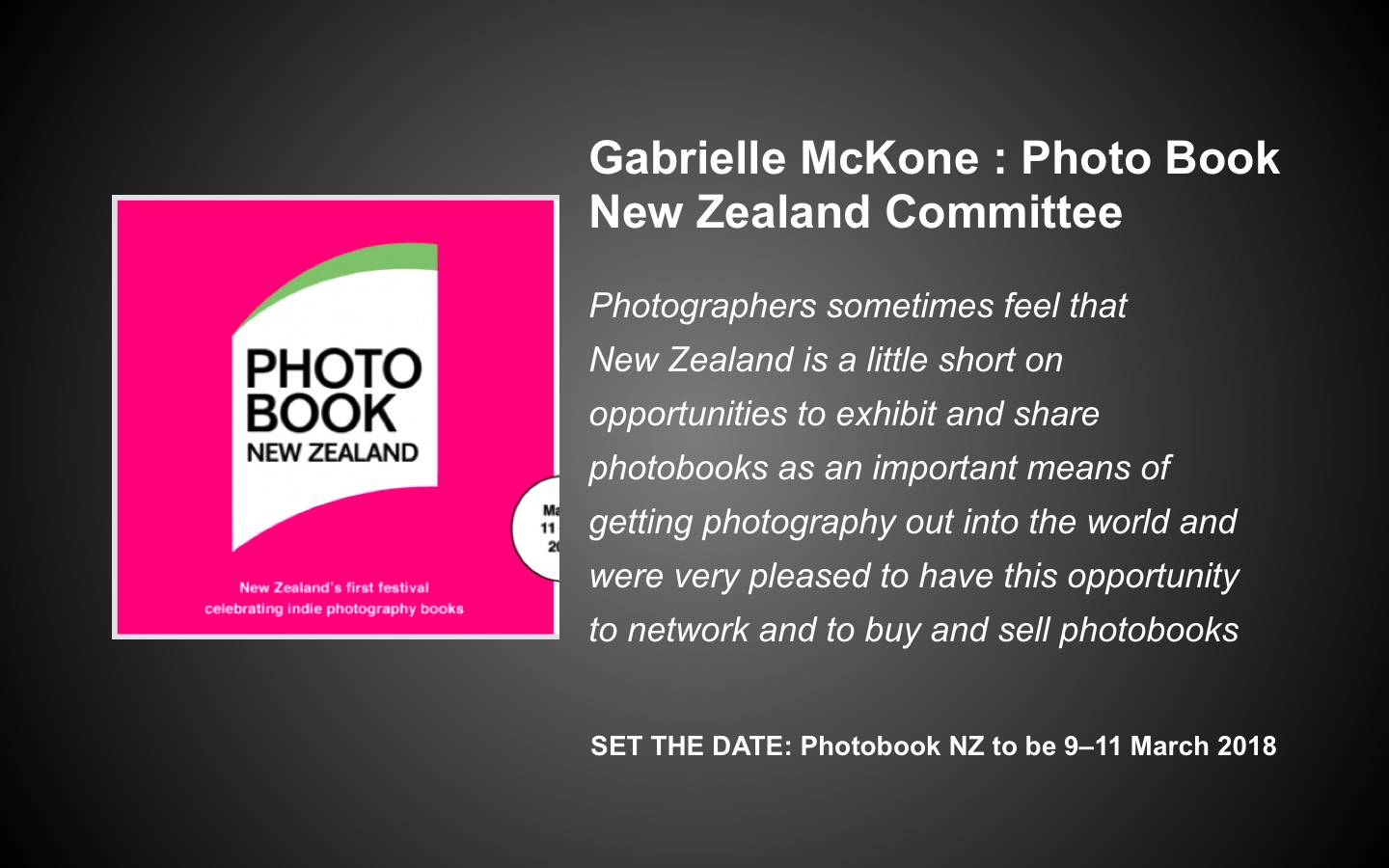
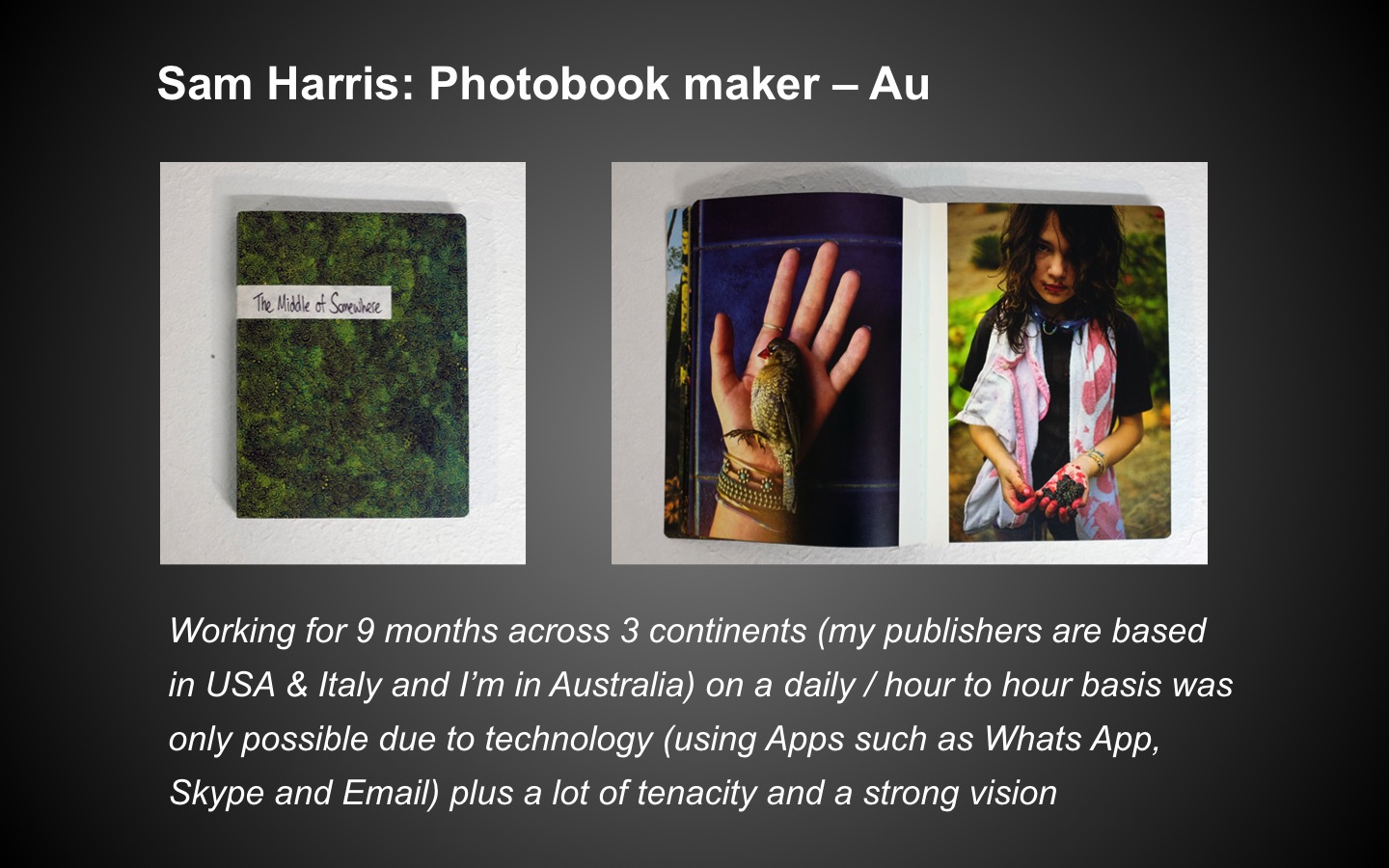
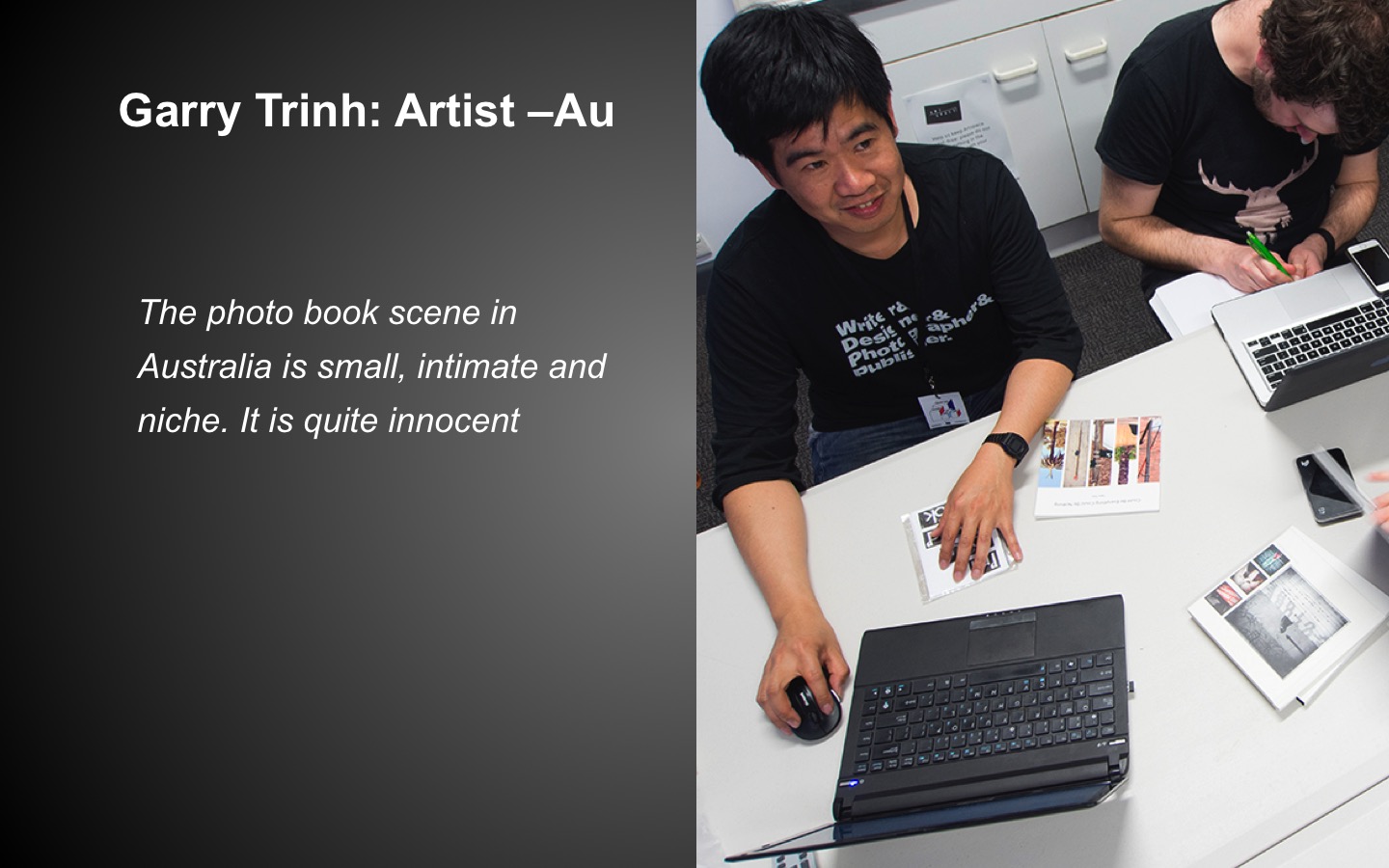
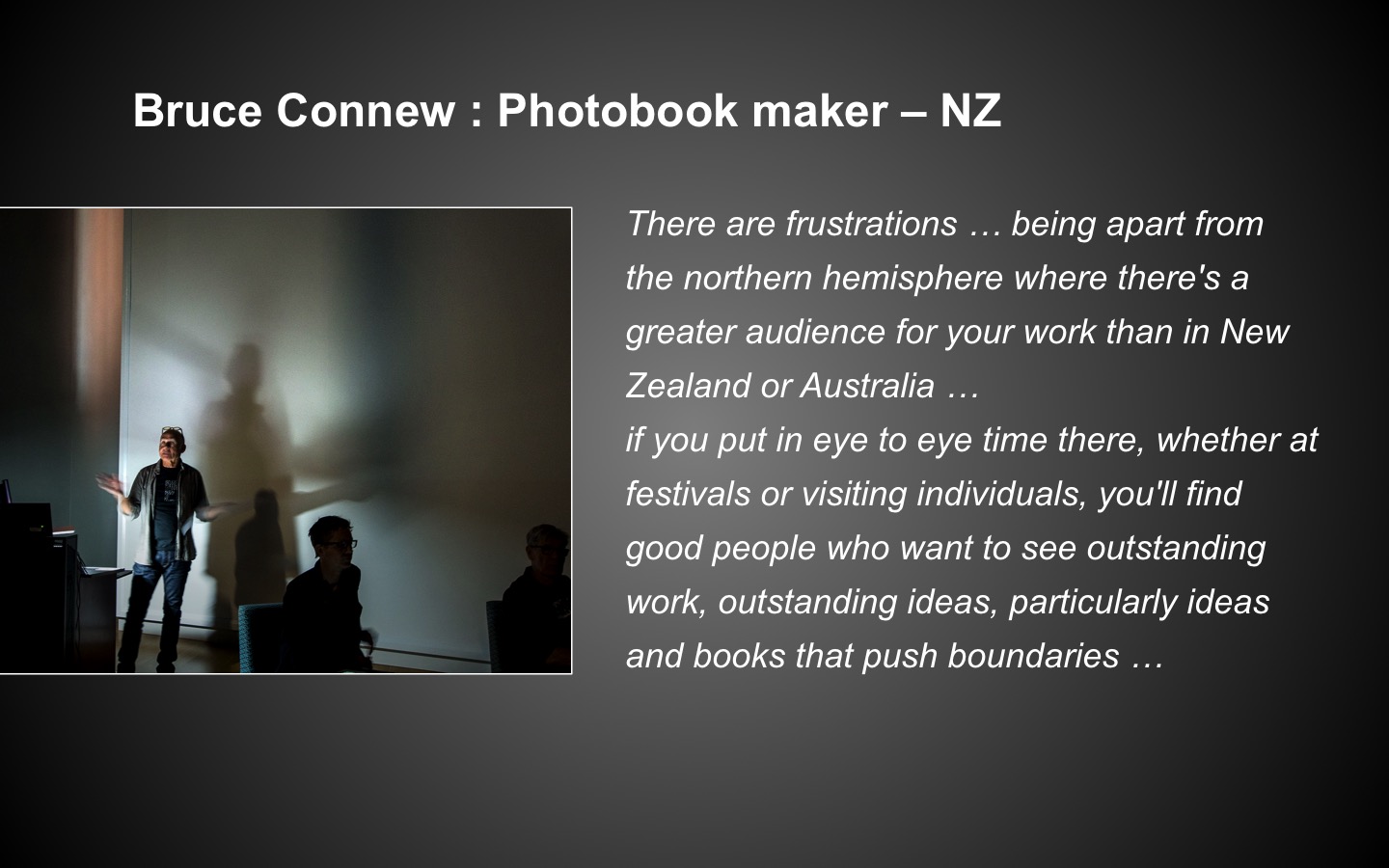
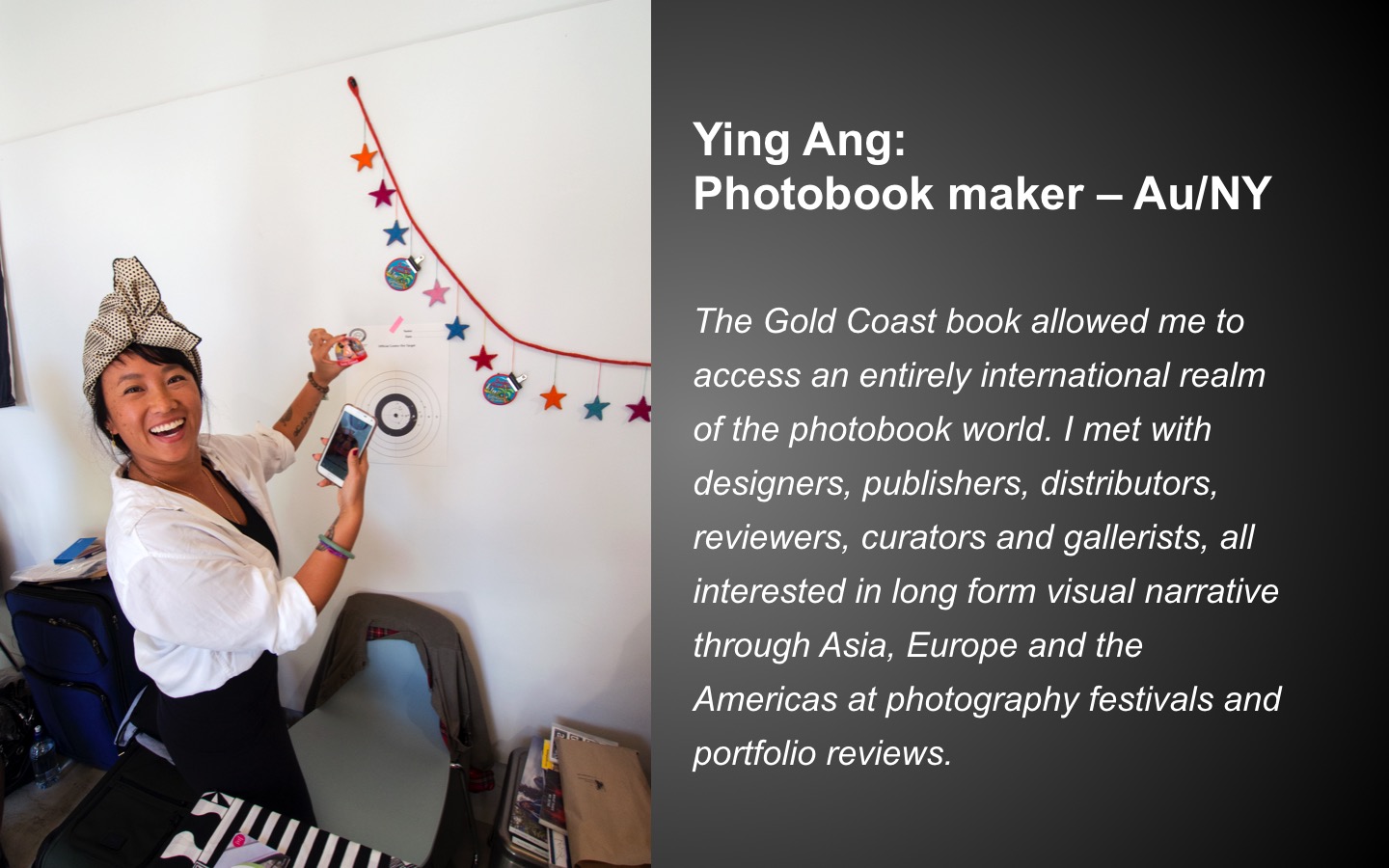
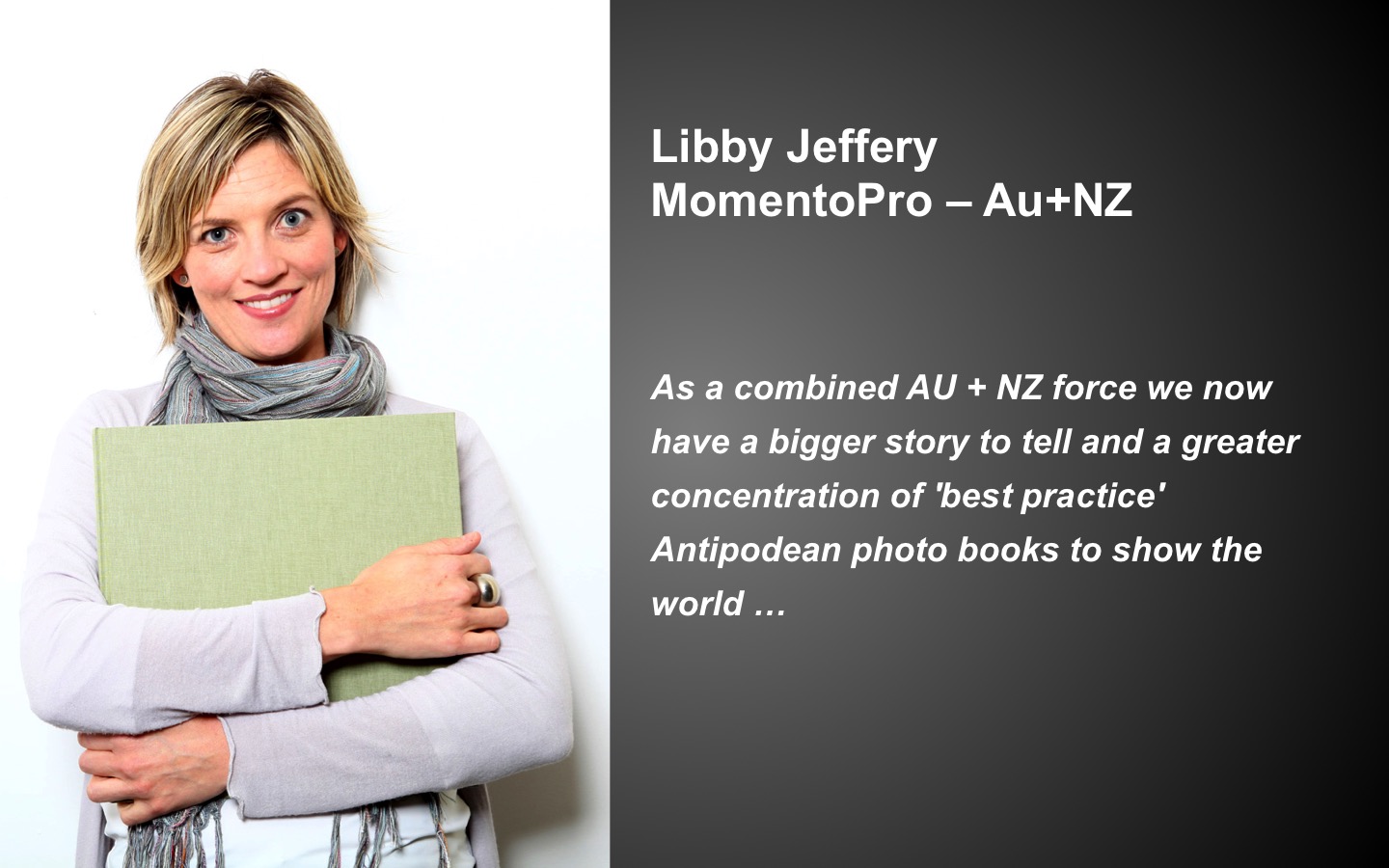
My concluding comment was that AuNZ and the Asia-Pacific regions offer new and refreshing ideas of what a photobook could be and the stories of peoples outside of the usual Euro/Americano scene.
I invited all attendees to visit our table and view the Photobook of the Year finalists and winners and offered, as an additional incentive a copy of the Awards booklet.
My lecture was well attended by festival participants from different parts of Europe including Martin Parr, Photo historian Hans-Michael Koetzle and collectors with an interest in the AuNZ books.
After the lecture Martin Parr and I discussed AuNZ photobooks that he was aware of and commented that in my lecture he had seen many new books. Our conversation continued later that day and he, Gerry Badger, and probably most of those who attended the lecture came to our table to look at the books.
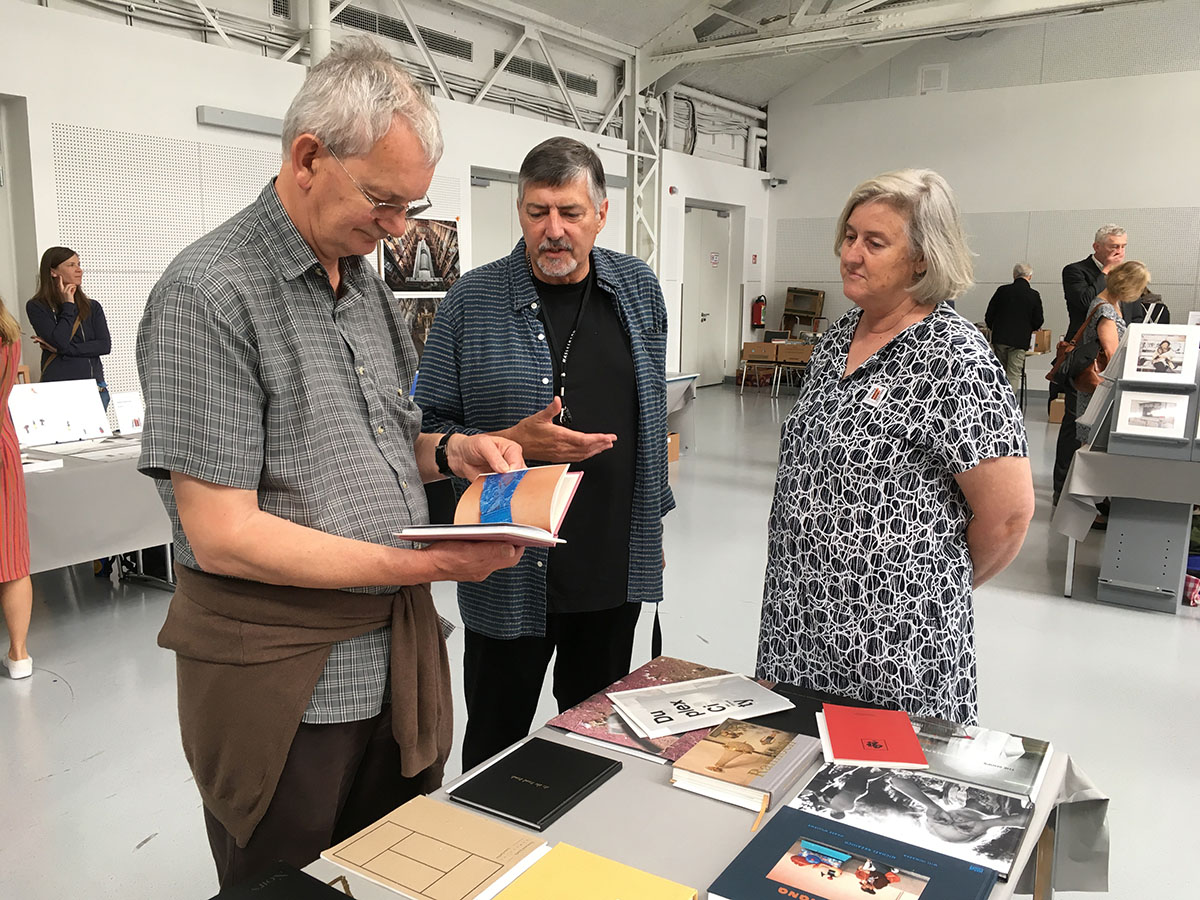
Martin Parr at the AuNZ photobook table PHOTO: Lachlan Blair
SEE ALSO
The EVENT
https://wotwedid.com/2017/06/18/aunz-photobooks-the-vienna-photo-book-festival/
The REVIEW SESSIONS
https://wotwedid.com/2017/06/18/review-panels-at-the-vienna-photo-book-festival/
.
.
.
.
.
.
.
.
.
.
.
AuNZ PHOTOBOOKS @ The Vienna Photo Book Festival
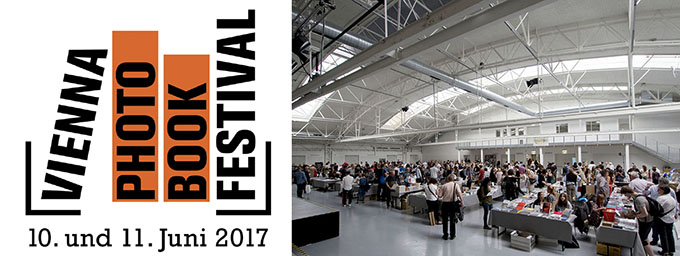
The exhibition at Brotfabrik Wien
.
THE FESTIVAL: LECTURES, ACTIVITIES, OLD+NEW BOOKS & PRINT SALES
(from the ViennaPhotoBookFestival website)
The Artistic Directors, Regina Maria Anzenberger of Anzenberger Gallery and Michael Kollmann of OstLicht Gallery state that:
The ViennaPhotoBookFestival is celebrating its 5th anniversary on the 10th and 11th of June 2017 and to celebrate the medium of the photobook accordingly we have set up an exciting program. In addition to prominent guests like the Magnum legend Bruce Davidson and the creator of The Photobook: A History and Magnum photographer Martin Parr, we are expecting the photo critics Gerry Badger and Hans-Michael Koetzle, the Russian photographer Nikolay Bakharev, archipelago founder Magali Avezou, the chief curator of the Italian center for photography Camera Francesco Zanot, the Danish photographer Krass Clement and the Swiss photographer Rene Groebli, who is celebrating his 90th birthday this year.
Also in 2017 we are following the vision of a modern platform that helps to create networks between publishers, rare photobook dealers, independent publishers, artists and students. In addition, the festival’s international lectures will attract photobook aficionados from all over the world making Vienna a photobook metropolis once again.
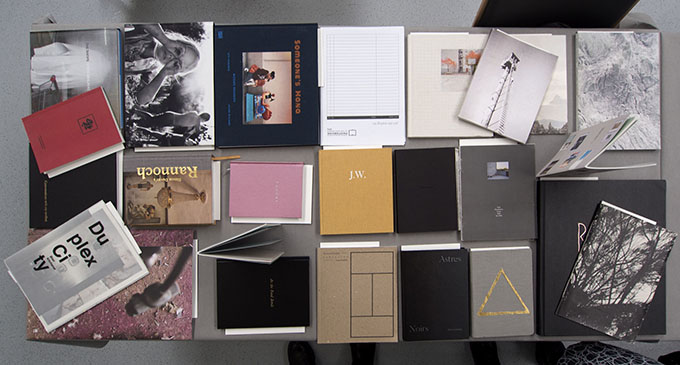
The AuNZ Photobook of the Year set of books
Early Saturday morning along with 100 other table holders we unpacked and set-up our display. Around us other table holders offered everything from prints to booksellers of new and antiquarian books, student groups and educational institutions from all over Europe. There were special activities including a 10×8 Polaroid portrait and wet plate photography studios.
Our ANZ PBOTY display was positioned next to our Austrian/expat Australian friend Lachlan Blair’s table. Although he had paid for his table to show his beautiful photogram works and prints, Lachlan also shared the table minding duties with us. With his support we all were able to attend lecture events and also checkout other VPBF tables.
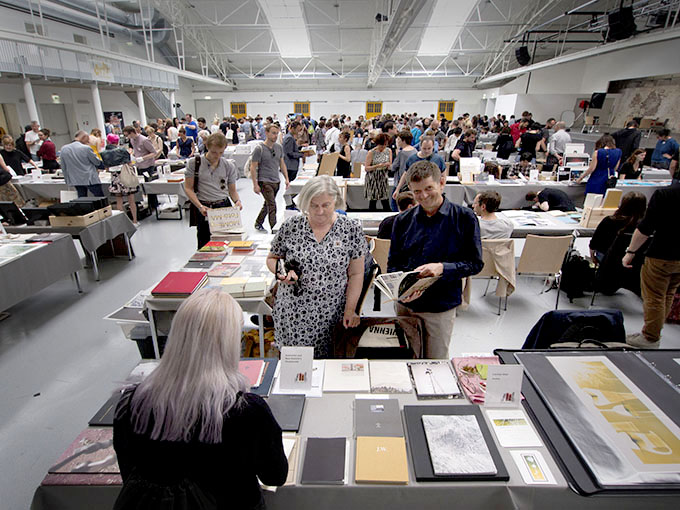
The exhibition space with the AuNZ table in the foreground
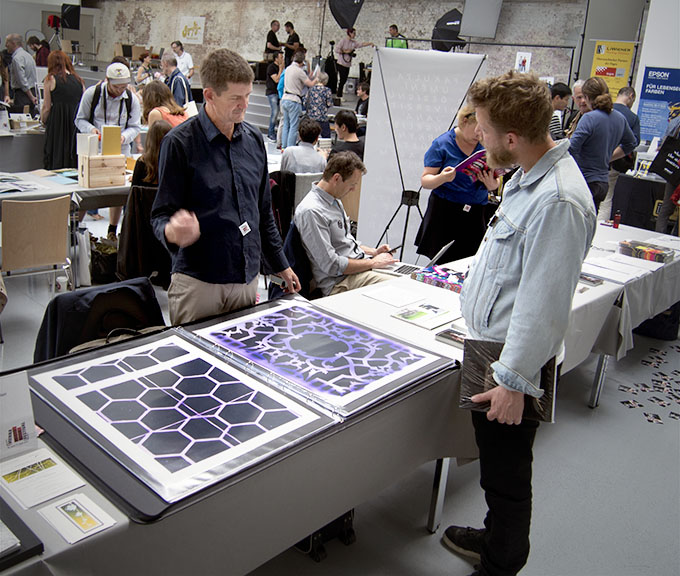
Lachlan Blair’s photogram print display
The history of the photobook was represented by significant collections and booksellers – I held a copy of Roy DeCarava’s Sweet flypaper of life… Lazlo Moholy-Nagy’s essay in Telehor from 1936 – books by Blossfeldt, Brandt, Van Elsen, Klaus Clement. I held back – a limited budget, though my new friend from Russia Natalia had an amazing handmade book by Julia Borissova that I had to buy, other books were bought and some were swapped – one of these was Surveillance by Valentyn Odnoviun which featured the circular observation peep-holes from Gestapo, STASI and KGB prisons – a most chilling yet remarkable book, this work was inspired by his father’s incarceration for 3 years on false charges.
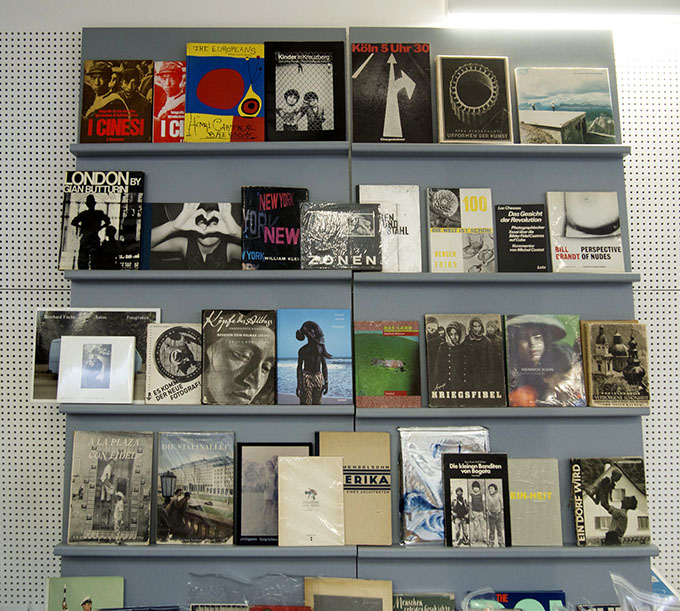
Classic photobooks
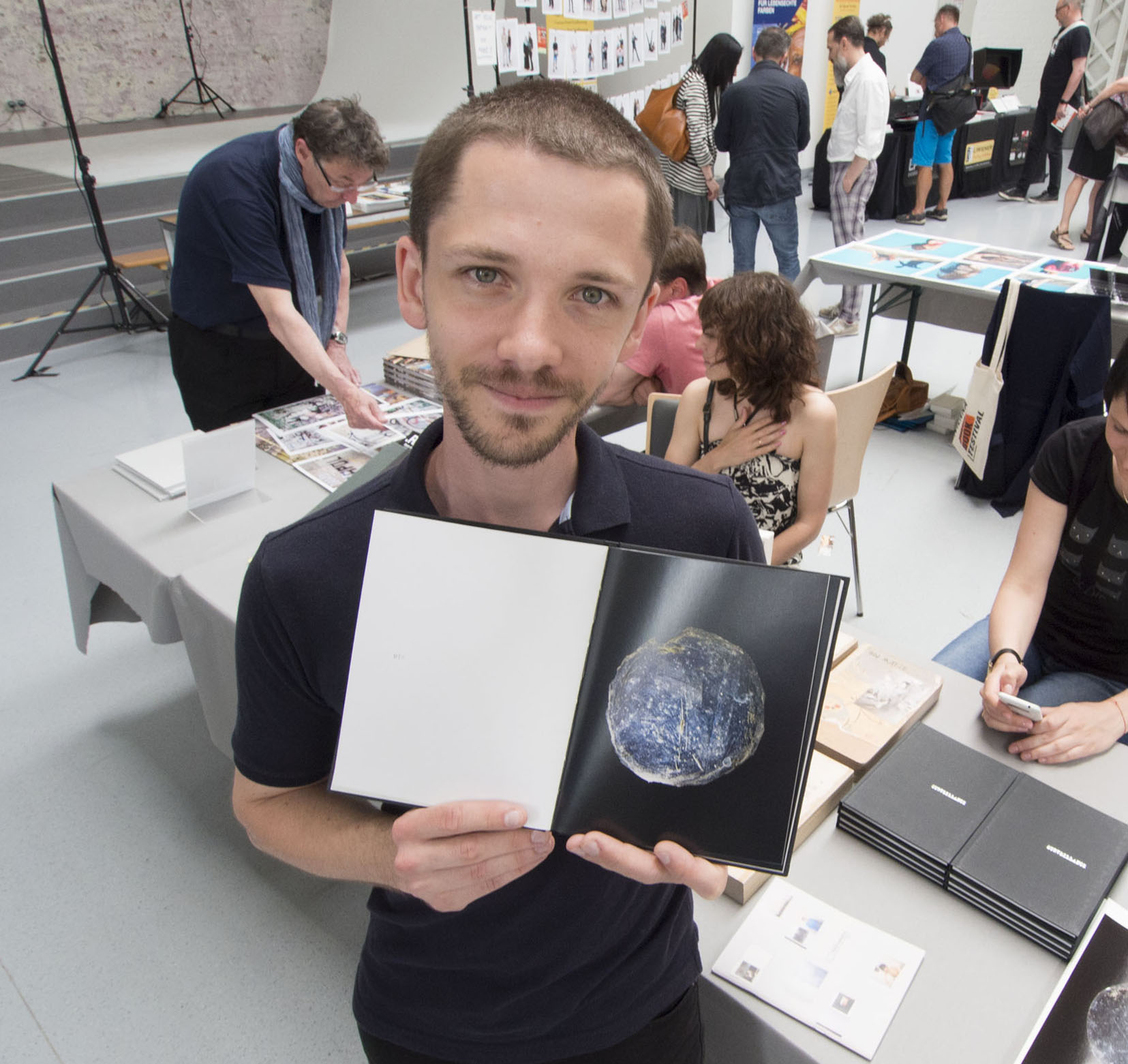
Valentyn Odnoviun with his book ‘Surveillance’
Martin Parr was interviewed by Verena Kaspar-Eisert at the opening event – the room was full. Parr was the complete mischievous interviewee as Verena teased out some interesting facts and comments from this ‘Photobook Rock Star’.
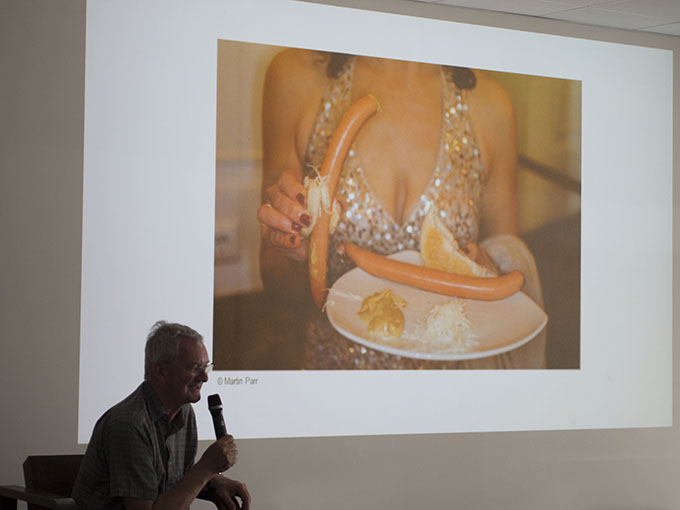
Martin Parr being interviewed by Verena Kaspar-Eisert
Sunday continued the frantic pace – lectures, including one by Bruce Davidson, another by Nikolay Bakharev and Klaus Clement interviewed by Gerry Badger.
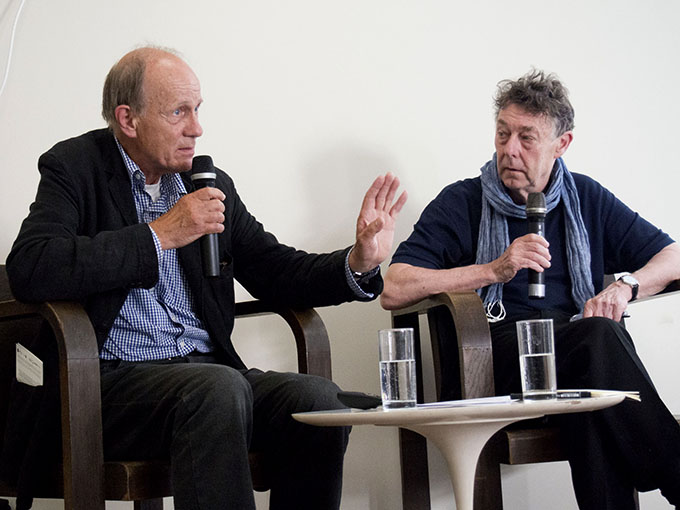
Krass Clement being interviewed by Gerry Badger
As the hours wore down there was a frantic activity to see other tables and catch up with as much as one could handle. MomentoPro had also sent along with the books around 30 of the little catalogues and these became gifts to selected viewers of our books… these included collectors, teachers serious photobook makers and others from the photo press and of course Anzenberger, Badger and Parr.
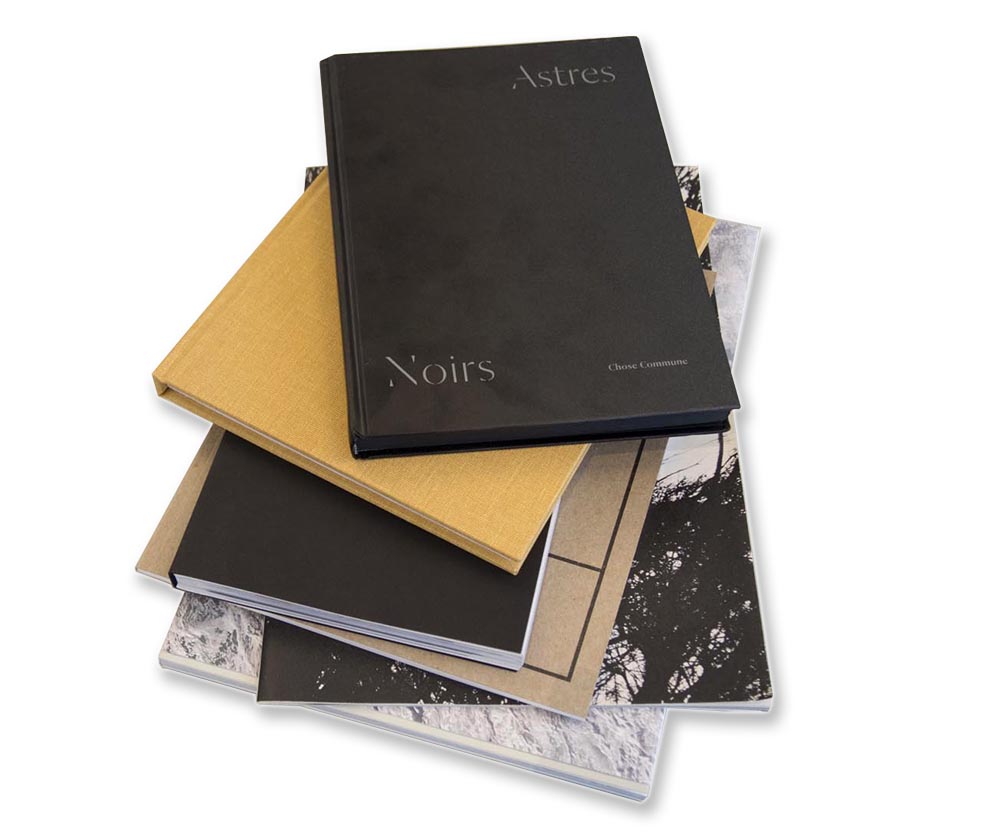
We received many statements from viewers complimenting the quality of our books some even saying that the work was better than the general European scene. In response to people wanting to buy ANZ books we suggested direct connection with the photographers websites, bookshops and online stores in ANZ. One collector came to us on Sunday and excitedly exclaimed that he had been in contact with a NZ photographer and had bought the book…! Katrin Koenning+ Sarker Protick’s Astres Noirs APOTY winner could have been sold many time over as it’s 1st edition is ‘sold out’ and is now a rarity – luckily the Anzenberger Bookshop had copies of the 2nd edition.
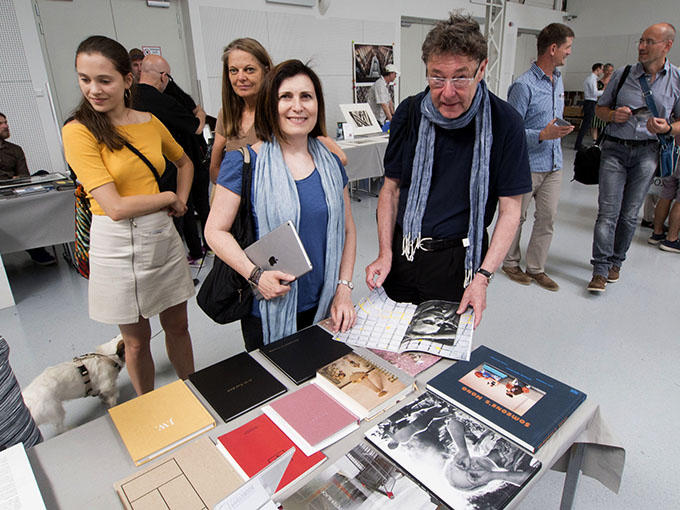
Gerry Badger with Sonia Lenzi at the AuNZ table
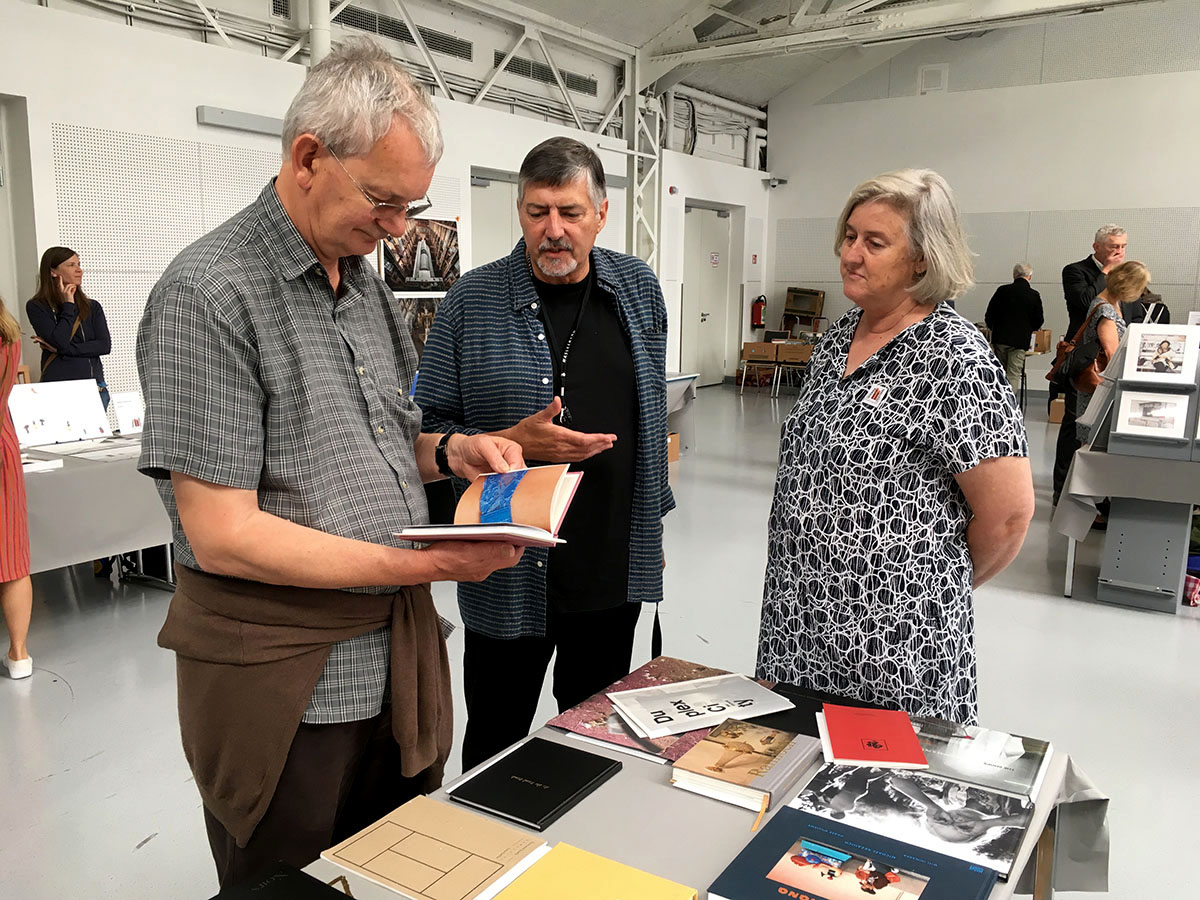
Martin Parr at the AuNZ table
In the final minutes of the 2016 VPBF all table holders packed up their displays of books and prints leaving behind a vacant space that had once held so many books, their stories and those who make or care for them. We left the building, said our goodbyes, repacked suitcases with new books and a couple of hours later Lachlan took us to Vienna airport to catch our flight home.
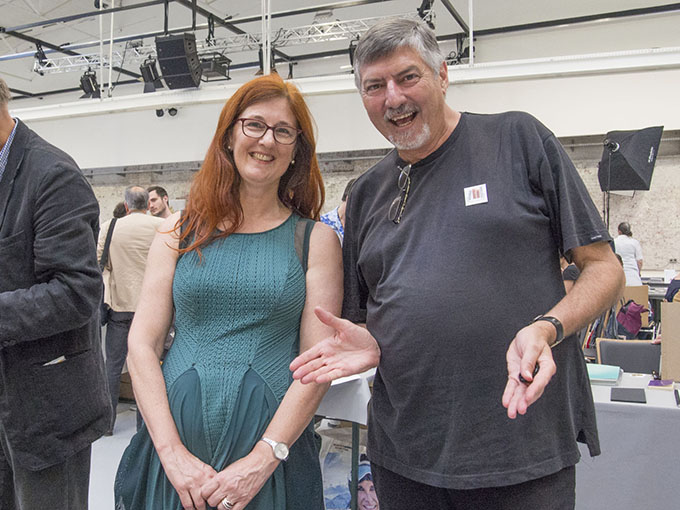
Regina Maria Anzenberger and Doug Spowart
It’s now the middle of the plane flight somewhere over the Black Sea – about 1.35am. I’m still pumped and excited to have been able to have made this foray into the European photobook scene. I also want to acknowledge the support of Regina Marie Anzenberger and Michael Kollmann from Vienna Photobook Festival, Libby Jeffery and Rony Wilson of MomentoPro, Lachlan Blair and my partner Victoria Cooper,
For many people in the northern hemisphere Australia and New Zealand will be known not just as an interesting travel destination but rather a place where a dynamic photobook network of practitioners exists making great books….
.
What follows is a selection of images from the event…


SEE ALSO:
The LECTURE
The REVIEW SESSIONS
https://wotwedid.com/2017/06/18/review-panels-at-the-vienna-photo-book-festival/
MORE THAN THE COVER: Judging the Photobook of the Year
The Finalists…
.
Recently in Auckland and Melbourne two groups of photobook aficionadas and aficionados assembled before 31 and 71 books respectively, and worked as a team to decide which of the books before them were exemplary of contemporary photobooks and, if consensus could prevail, which book – in each location, was the ‘best’ photobook.
The selection process is based on a ‘Judging Criteria’ that has been developed and enhanced over the many years of the awards which states that the judges will review each entry to assess the:
- excellence of the photography, design, layout, typography and cover art
- quality of the photo editing and sequencing to create an engaging visual narrative
- ability of any additional imagery, text or ephemera to enhance the story in the photographs and/or book
- appropriateness of the photography, design and format for the book’s intended purpose and audience
As the definition of a photobook remains broad, from photozines to trade coffee table books, a key consideration for the judging panel is to evaluate the ‘appropriateness’ of the book in the context of its ‘intended purpose and audience’. This aspect of the Criteria creates an opportunity for diverse products to be sensitively and fairly assessed.
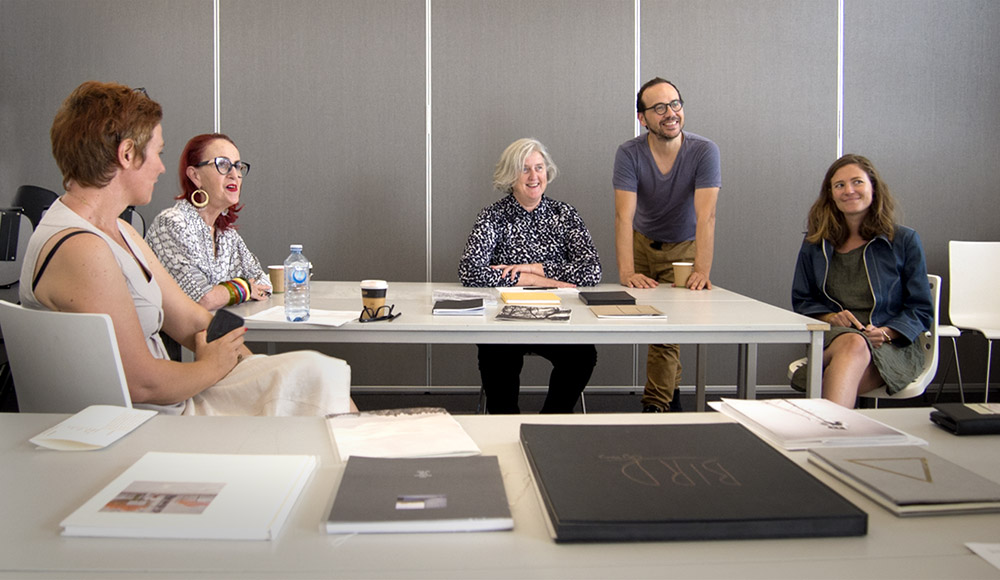
The AuPOTY judges: Heidi Romano, Helen Frajman, Victoria Cooper, Daniel Boetker-Smith and Emma Phillips
The judging panel is purposefully selected to include experts in photography, design and book publishing. Each year these judges are changed to allow for representatives from different backgrounds, locations, gender, industry areas including design, publishing, media, cultural institution, academia, retail, art and commercial worlds.
Additionally judges weren’t allowed to score or advocate for books in which potential conflict of interest may cause problems. This is a particularly important issue as our photobook communities in Australia and New Zealand are small and connected.
The Photobook of the Year – 5 stage judging process:
Stage 1. A PDF of each book was forwarded to the judges in advance for them to gauge a preliminary impression of the book, its visual nature, content and narrative. Each judge completed a ‘first impression’ top 10 books spread sheet and provided feedback in the form of a comment and score for the books that they had selected.


Stage 2. The judges met and participated in some introductory discussions about the award and the processes that were to follow. After that the books were laid out on tables enabling the judges to encounter the physical and haptic experience of each book. Another ‘score sheet’ was provided so that judges could quantify their response to each book. While this review was basically carried out individually some casual discussion took place between judges. Many judges were to comment that seeing the ‘real’ book was surprisingly different from the impression that they had gained from the PDF screen view.
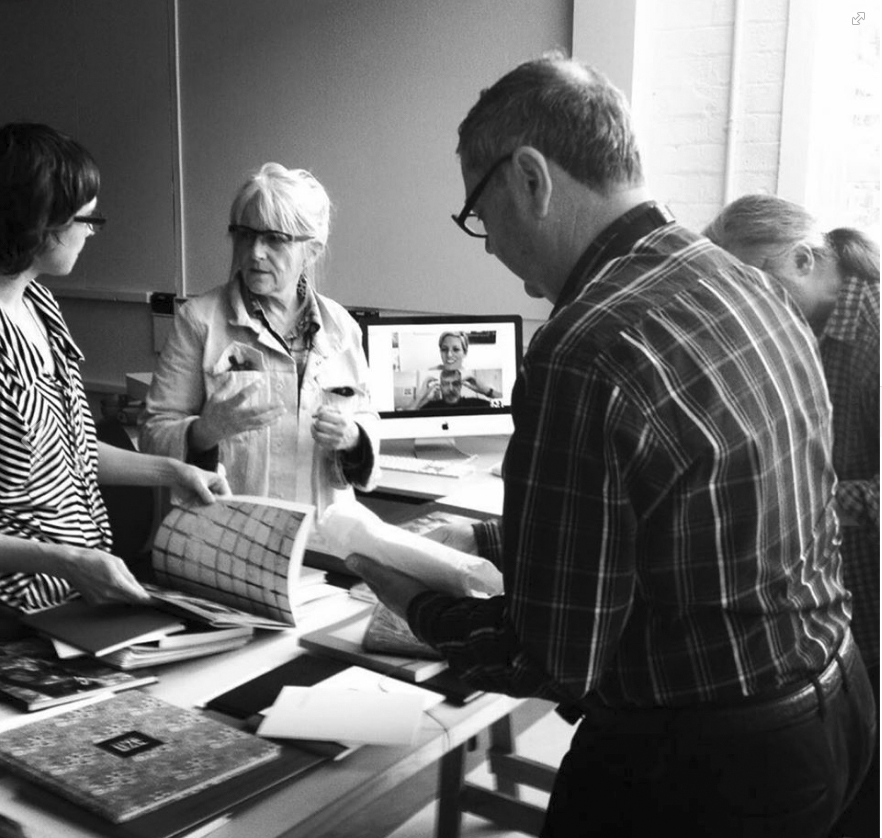
NzPOTY Judging team included Jonty Valentine, Anne Noble, Layla Tweedie-Cullen, Haru Sameshima, Ron Brownson and Doug Spowart PHOTO: From Facebook post
Stage 3. The judges score sheets were tallied resulting in a group of books being selected for round-table review and discussion. From this group activity the finalists were determined. In the AuPOTY 12 books were selected and in NzPOTY 10 made the finalist list. It should be noted that judge/s disclosed any involvement or potential conflict of interest with particular books or association that they may have with the author.
.


Stage 4. In this, the final stage, the judges debated the relative attributes of the books working towards a point where consensus over the ultimate winner could be determined as well as any books deserving of ‘Commended’ awards could be made. This stage of the process was interesting to participate in or to observe, as the many differing opinions of what constitutes the ‘contemporary photobook’ made for a lively and informative debate.
A consensus was to be achieved in both judgings and the results were:
Australian Photobook of the Year Winner:
Astres Noirs by Katrin Koenning & Sarker Protick, published by Chose Commune
.

AuPOTY WINNER: Astres Noirs by Katrin Koenning & Sarker Protick & Published by Chose Commune
.
Recipients of Commended awards were:
- Elsewhere by Fuad Osmancevic
- J.W. by Clare Steele
- Memorandum by Ana Paula Estrada
- Some Want Quietly by Drew Pettifer, Published by M.33
- Surface Phenomena by Bartolomeo Celestino, Published by Perimeter Editions
FINALISTS
- Bird by Gary Heery
- Courts 02 by Ward Roberts & Editions
- Elemental by Rohan Hutchinson
- Golden Triangle by Hannah Nikkelson
- Kinglake by Jade Byrnes
- Two Pandanus Trees Side by Side by Aaron Claringbold
Page views, the judges and other book details of the AuPOTY can be seen HERE

APOTY Website
New Zealand Photobook of the Year Joint Winners:
- Rannoch by Simon Devitt
- Touchy by Evangeline Davis

Rannoch by Simon Devitt PHOTO: From the NzPOTY Website

Touchy by Evangeline Davis PHOTO: From the NzPOTY website
Recipients of Commended awards were:
- As the Road Bends by Blair Barclay
- Duplex City by Blair Kitchener
FINALISTS
- Conversations With My Mother by Shelley Ashford
- R&S Satay Noodle House by Sally Young
- Soap and Water by Bronwyn McKenzie
- Someone’s Mana by Michael Krzanich
- The Shops by Peter Black
- Watching the fishes go by by Niki Boon
Page views, the judges and other book details of the NzPOTY can be seen HERE
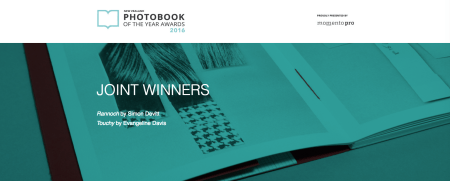
NzPOTY Website
The travelling exhibition of the POTY winners and finalists

A&NZ Photobooks of the Year 2015 @ Maud Gallery in Brisbane PHOTO: Doug Spowart
STAGE 5. In each country visitors to the AuNzPOTY exhibitions in Melbourne, Sydney and Brisbane are invited to vote for their favourite book, and the winner receives $500 cash + $2,000 printing credit with Momento Pro. The winner will be announced via a Photobook of the Year Awards email later in the year. Subscribe at awards@photobookoftheyear.com.au.
Some personal observations and comments about the judging
As a witness to one of the judgings (AuPOTY), and a participant judge in the other (NzPOTY) I have reflected on the process and the salient issues, topics and well-discussed points and prepared this comment piece. I might add that these are based on my recollections of the proceedings as well as my personal thoughts gained from my involvement.
1
The universal definition of what is a photobook remains illusive. What judges think, what the entrants or others may think is a photobook may never be resolved. Although the perception of what a photobook might be does effect every aspect of the awards influencing who might enter and what their expectations of the award may be.
Also what is the nature of the selected finalists, and what book wins the awards, sends out a message to the broad range of people interested in photobooks to confirm or challenge their idea of what a photobook is.
2
Who made the book? Is it self-published? Or was it trade published? Was it a collaboration – did it involve a single photographer or multiple photographers with editor/s, publisher and designer/s? As all have a bearing on the book as a creative product or a commercial outcome.
3
What was the purpose for the book…? Is it for general consumers, niche markets or a personal record bound in book form?
4
Much discussion centred around concepts relating to design style, tricks of printing and binding, different papers, round fore edge corners, trendy layouts, typography, embellishments and packaging. Some books were considered derivative as certain features were part of last year’s trend or were recognised as being influenced by/taken/copied/borrowed from a recent well-known successful book. Therefore books with original concepts were held in higher esteem.
The question begs to be asked… at what point do any of these ‘derivative’ features become recognised as a visual style/form or narrative effect that contributes to the book communiqué?
5
The meaning and implications of collaboration.
6
Artist’s statements were often poorly written, or overtly academic ‘artspeak’.
7
One important consideration was that the book was as a total package where all of its components; concept, content, design, production values and binding were seen as creating a total creative entity.
8
Some common phrases from the judges were:
- Fabric of construction
- Economical
- I wish I’d made that…
- If only I could have had those images to edit…
In conclusion:
The Patrons for Australian and New Zealand Photobook of the Year Awards are Libby Jeffery and Geoff Hunt of MomentoPro. They have funded prizes, coordinating the judging process: including judge selection, announcement events and exhibitions. Partners in the awards include Heidi Romano from Unless You Will, Photography Studies College Melbourne and in New Zealand f11 Online magazine. Over 6 years these awards have championed photobook publishing activity and discourse and as such created a record of contemporary photobook practice in the antipodes.
The Australian and New Zealand Photobook of the Year 2016 will tour nationally in 2017… Visit the Photobook of the Year website for details.
Dr Doug Spowart
.
.
.
TEXT: ©2017 Doug Spowart
PHOTOs: ©2017 Doug Spowart (unless indicated otherwise)
ANNOUNCEMENT: The 2016 Australian Photobook of the Year Award
Momento Pro and UNLESS YOU WILL joined forces to present the 2016 Australian Photobook of the Year Awards culminating with a presentation in Melbourne on February 17, 2017.
The awards were open to unpublished, self-published or trade published photo books by Australian citizens and residents. The Australian Photobook of the Year Awards celebrates excellence and innovation in photobook creation and also showcases the work of Australian photographers to a growing local and international audience.
THE ANNOUNCEMENT OF THE WINNER

Libby Jeffery talking about the Award
A group of around 70 photobook makers, collectors, commentators and others interested in the discipline attended a presentation of the finalist books and the announcement of the overall winner at Magic Johnston in Melbourne on February 17, 2017. Brief speeches were presented by UNLESS YOU WILL’s founder Heidi Romano and MomentoPro’s Libby Jeffery were followed by the announcement of Katrin Koenning & Sarker Protick’s Astres Noirs as the winner. The Commended awards were also announced and attendees were able to experience the finalist’s books first-hand.


.
THE WINNER: Astres Noirs by Katrin Koenning & Sarker Protick & Chose Commune
.
APOTY WINNER: Astres Noirs by Katrin Koenning & Sarker Protick & Chose Commune
THE 2016 APOTY FINALISTS
- Astres Noirs by Katrin Koenning & Sarker Protick & Chose Commune Winner
- Elsewhere by Fuad Osmancevic Commended
- J.W. by Clare Steele Commended
- Memorandum by Ana Paula Estrada Commended
- Some Want Quietly by Drew Pettifer & M.33 Commended
- Surface Phenomena by Bartolomeo Celestino & Perimeter Editions Commended
- Bird by Gary Heery
- Courts 02 by Ward Roberts & Editions
- Elemental by Rohan Hutchinson
- Golden Triangle by Hannah Nikkelson
- Kinglake by Jade Byrnes
- Two Pandanus Trees Side by Side by Aaron Claringbold
.
A detailed report and images of the winner and commended books can be seen on the Australian Photobook of the Year Website – HERE
ALL photographs ©2017 Doug Spowart
.
.
.
.
UPDATE-SKOPELOS WORKSHOP: Join us on a Greek Island
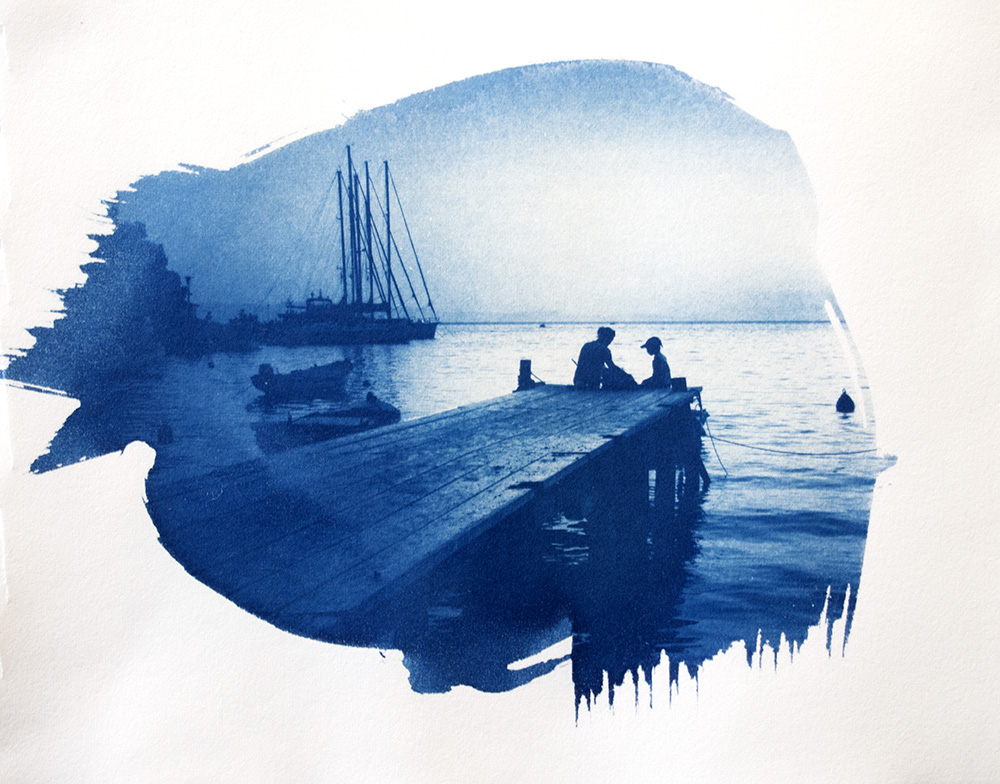
Skopelos jetty …….PHOTO: Steph Bolt Cyanotype: Cooper+Spowart
.
IMAGINE – the inspiration for PHOTOGRAPHY on an Aegean Island
CONSIDER – exploring photodocumentary, cyanotypes and books
AND ENJOY – Greek food and wine, experience the blue of the Aegean Sea, Greek lifestyle and its mythical landscapes – All shared with fellow workshop participants with similar interests.
.
THIS WORKSHOP TOOK PLACE IN MAY 2017 – A REPORT CAN BE VIEWED HERE>>>
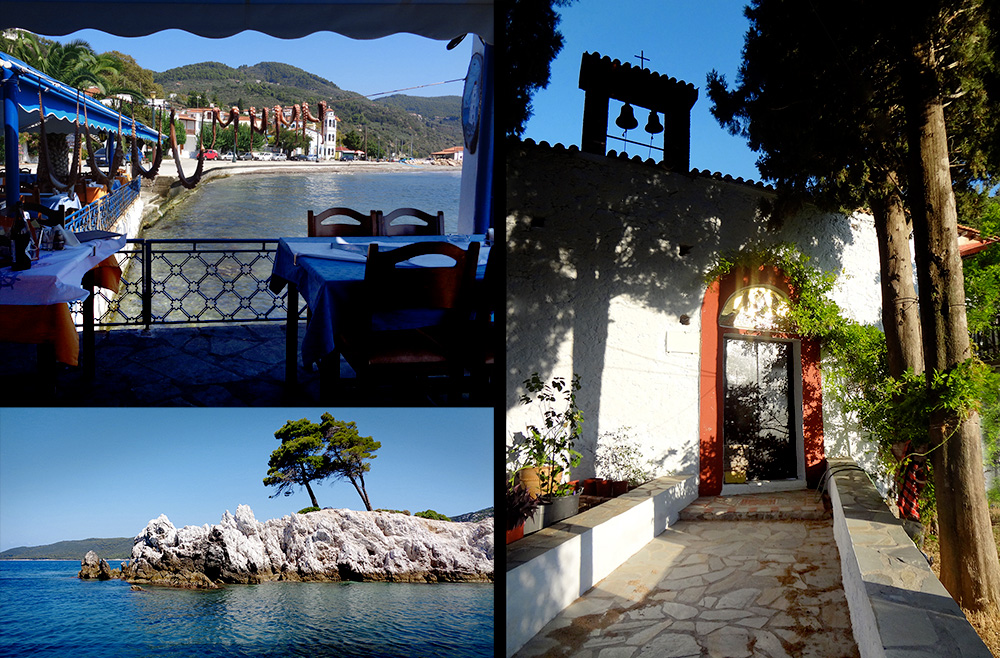
Skopelos landscapes ……..PHOTOs: Steph Bolt
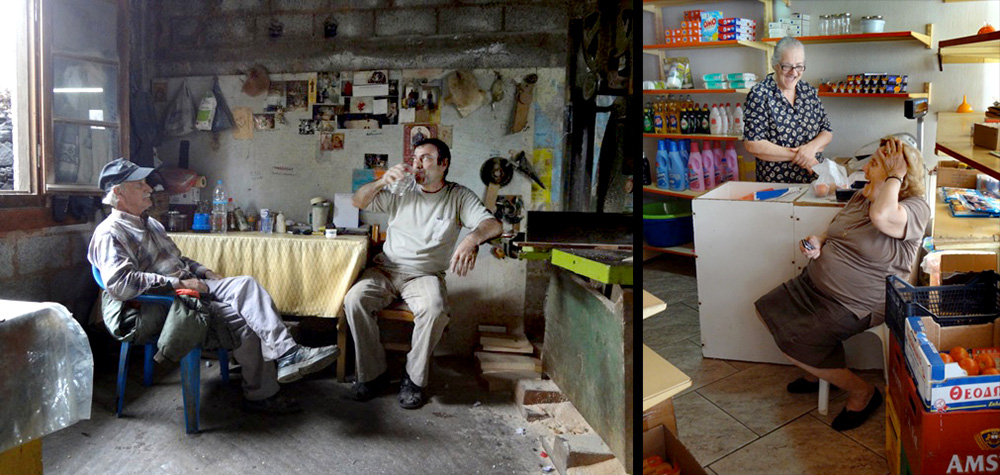
Greek women and men talking ……..PHOTOs: Steph Bolt
In May 2017 we will be presenting a 12 day workshop on the Greek island of Skopelos with Australian artist and printmaker Steph Bolt.
We plan to work with participants to capture the experience of ‘being there’ and to tell stories about ‘place’ in books and photographs.
.
The workshop topics will include:
- The cyanotype process to produce prints on paper and cloth to reference the Aegean blue
- Working with found objects and inkjet negatives from photos made on excursions
- Making bespoke photobooks that you will handcraft during the workshop
- Aspects of documentary ‘placemaking’
- Using online photobook making services to design books
- A sharing of our techniques to optimise and enhance digital photographs.
What is included in the fee:
- Tuition for 12 days
- 12 breakfasts
- Opening & closing dinners
- 2 lunches
- Morning tea – on the days we are in the studio
- Excursion days – transport included
- The odd drink on the terrace overlooking the Aegean
Workshop specific materials included:
- Cyanotype chemistry
- Some printing papers and cloth
- An allocation of inkjet negative material for photographic images
- Basic book-making materials: threads, needles, glue
- Air conditioned studio access
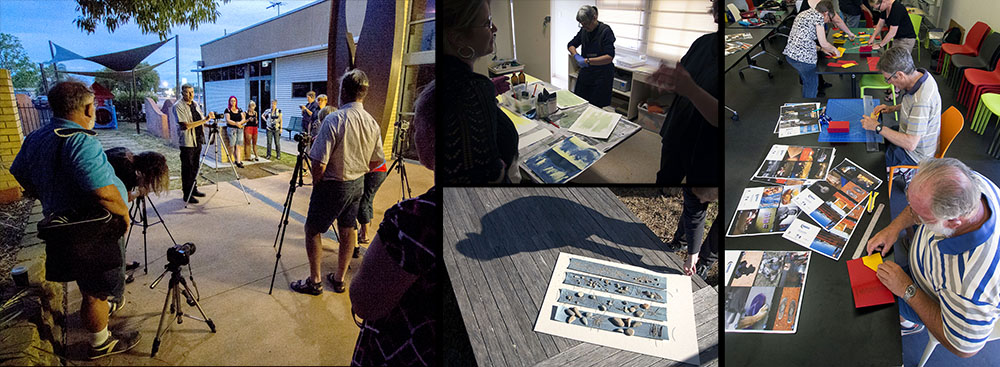
Vicky+Doug presenting workshops
.
A detailed website: SKOPELOS WORKS ON PAPER
Contact Steph Bolt at skopelosworksonpaper@gmail.com

ABOUT THE TUTORS
We have been involved in the arts as practitioners, teachers, critics, commentators and allied professional activities for many years: Doug Spowart, from the 1980s and Victoria Cooper, from 1990.
Our individual and collaborative book works have been acquired for the artists’ books, rare book and manuscript collections in Artspace Mackay, State Libraries of Queensland and Victoria, Mitchell Library (Doug), the National Library of Australia. Our wall based artworks are held in numerous public collections.
Our artists’ books have also been exhibited in New Zealand, the United Kingdom and the United States of America and are held by private and public collections in these countries.
We have both completed individual PhD studies based on philosophical and theoretical considerations in our practice. Since completing these studies we have continued our research activities and have each received separate Siganto Foundation Artists Book Research Fellowships in the Australian Library of Art at the State Library of Queensland: Doug in 2014 and Victoria in 2015.
Victoria Cooper PhD and has holds the following AIPP credentials –APP.L, M.Photog, Hon.FAIPP.
Doug Spowart PhD and has holds the following AIPP credentials – APP.L, M.Photog, Hon.FAIPP, FAIPP.
AIPP APP Log
This workshop is recommended by the AIPP for its members for their Continuing Professional Development as a Third Party CPD Event.

.
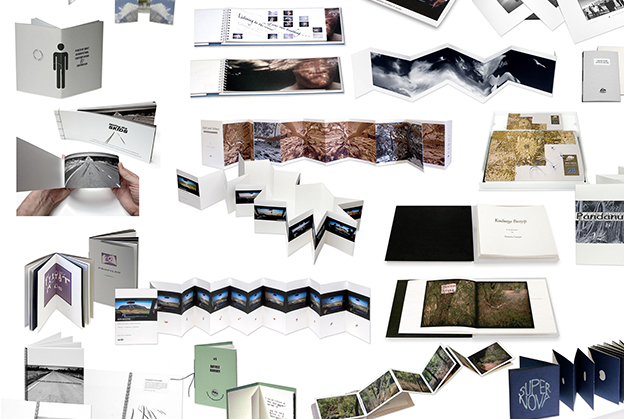
Some hand-made photobooks/artists books we have made
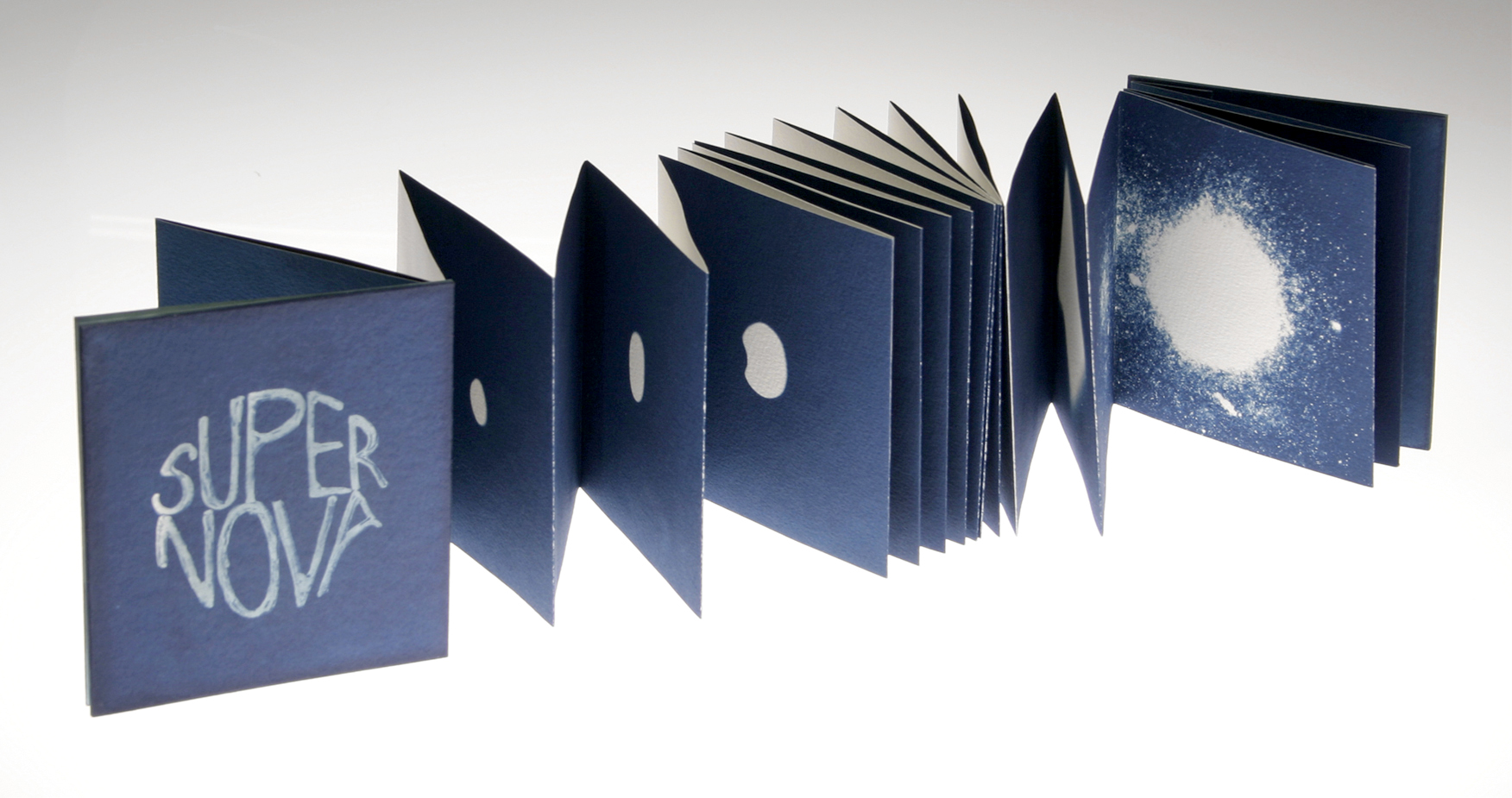
Super Nova a cyanotype by Victoria Cooper
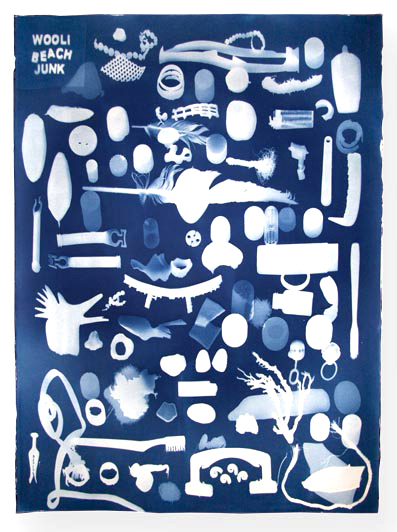
Wooli Beach Junk a cyanotype by Doug Spowart
.
.
.
.
.
.
BOOK DUMPING: Clearing the library shelves
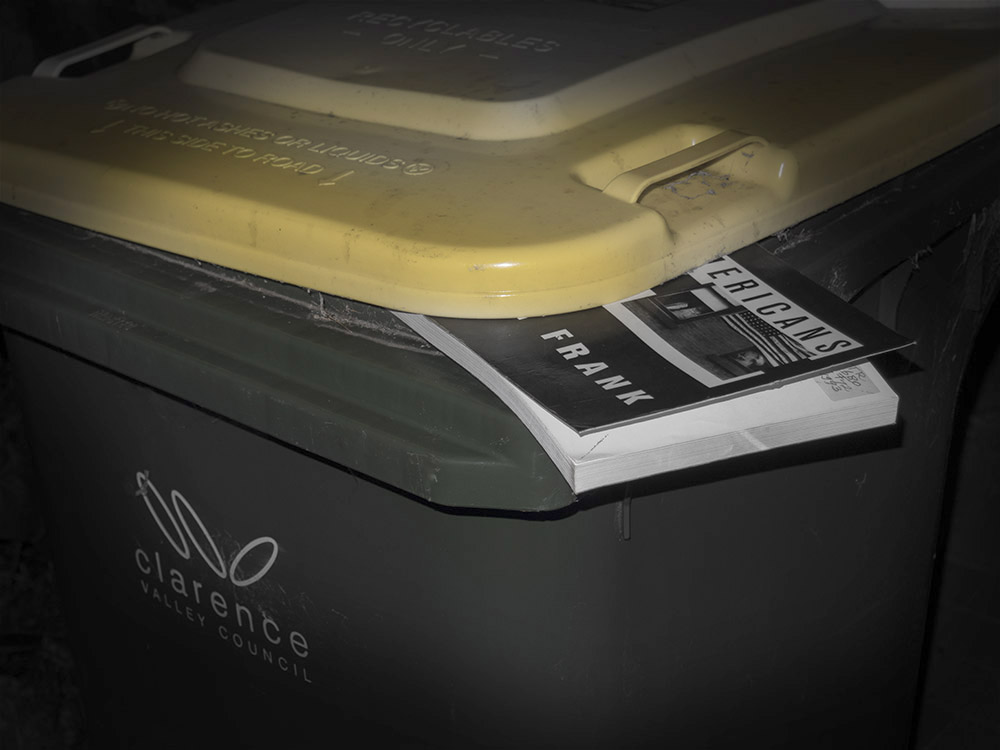
Simulated Americans dumped
I found Robert Frank’s Americans in my cornflakes packet today. Yesterday I found bits of Irving Penn’s Passage: a work record and Cartier Bresson’s Decisive Moments in my Epson inkjet paper box. And the black and red flecks in the Mercury Cider carton I’d just purchased from Dan Murphy’s where from Trent Parkes’ Dream Life and Robert Holden’s Photography in Colonial Australia: The Mechanical Eye and the Illustrated Book respectively. Whether we like it or not books are slowly and systematically being slipped off the shelves in public libraries and research libraries in institutions across the nation to end up as recycled pulp for new books and boxes and cartons as well as landfill.
In 2014 the University of Sydney Medical School was found to be secretly dumping books. A significant article on this and the institutional practice deaccessioning (dumping) books by Elizabeth Farrelly was published in the Sydney Morning Herald in 2014 entitled Library book dumping signals a new dark age. She wrote:
In May, Sydney University announced its library “restructure”. This magnificent library, among the country’s finest, had already, a decade earlier, deacquisitioned some 60,000 books and theses. More recently there were further, unquantified and undeclared cloak-and-dagger dumpings to make space for the wifi and lounge-chairs that have given the once magical Fisher stack the look and feel of a church playgroup.
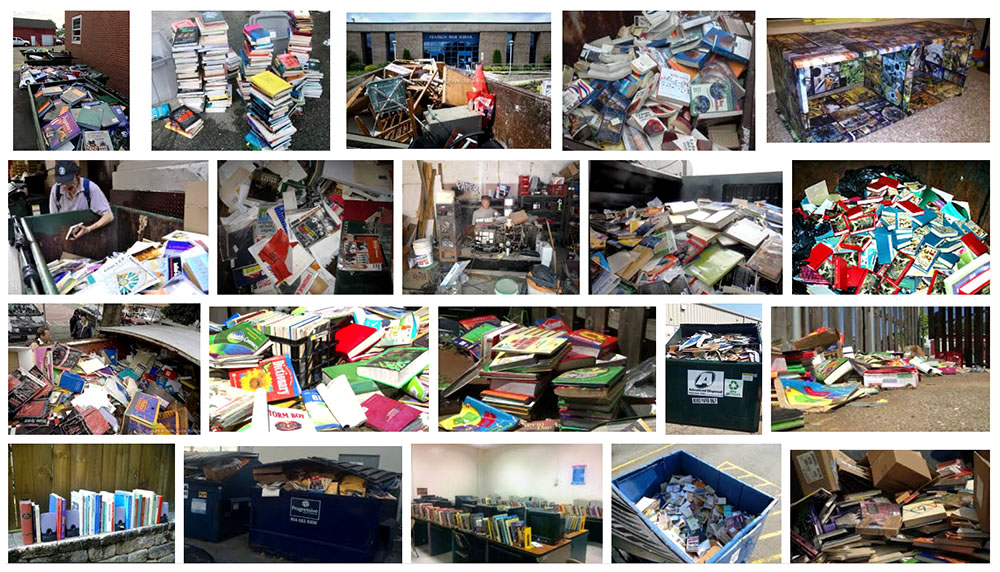
GOOGLE – Search for book dumping (Detail)
I found it interesting to do a Google search of the terms <books dumped in skips dumpsters> and discovered more instances of the destruction of books. There were many articles about book dumping including one from 2005 in The Guardian reporting the University of London’s Octagon Library dumping stacks of books in skips outside the library. Left to the elements these books, some dating back to the 19th century, were in peril until students and staff rummaged through to salvage what they could. The article quotes author, publisher and campaigner for libraries Tim Coates as saying:
A library is a collection of books, it’s not a building. Throwing out books because you are having a refurbishment is like moving house but saying I won’t bother taking my family with me.
Progressively real books are disappearing fast from community and institutional libraries. If you talk to the librarians, who love the books that they are custodians of and are sworn to protect, these book dumpings are being directed by library managers who use include factors such as refurbishment and re-utilisation of library spaces as the need for their actions.
Aiding the downsizing process is the use of automated book culling software that analyses the user demand for books held by the library and prepares a deaccession list for books with low or no borrowing or patron access. For public lending libraries whose borrowing clientele may be towards popular fiction and children’s books other Dewey groupings may suffer. The use of this kind of software causes a whole range of books to be stripped from the selves and causes frustrations for librarians who want to maintain a broad range of subject matter. This can lead to desperate acts. Jason Ruiter of the Orlando Sentinel newspaper reported how staff at the East Lake County Library created a fake library patron in 2016 who then proceeded to check out 2,361 books over nine months. The ruse was reported and library staff were reprimanded or had their employment terminated.
The heart of the problem is that the knowledge economy is shifting from physical assets to the online presentation of virtual resources. In a somewhat charged conversation I had with a State Librarian around 18 months ago I was informed that the particular library had 1 million physical visitors over a year and 20 million online visits or ‘hits’. The Librarian continued by saying that they, in conjunction with a consortium of institutions with similar strategies, were directing funding to support the online user. What can be put online and be remotely searched and accessed is the focus of these institutions. My argument was that although page-turning software may make available remote viewing of the usual codex form of the book, books like artists’ books that have so many more features and physical attributes that could not be conveyed online. At best, I said, was that the online presentation of an artists’ book could only be like a travel postcard to an exotic place that could be used to encourage the virtual viewer to visit the real thing.
Very recently the effects of library downsizing have become very evident to me. For 20 years I nurtured an institutional special library collection relating to photography. Dutifully, with the support of my fellow staff members, we dispensed the yearly library budget by acquiring the best books that represented the industry and the art of photography. Despite having my own professional library I considered the institutional library as an extension of my bibliophile activities. Special books beyond my personal budget were able to added to the library and as a diligent seeker of discounted and remaindered books, I occasionally bought two copies of heavily discounted books – one of which I donated. At times, through professional networks and contacts when opportunities to get complimentary copies of books came available, I’d make sure that I’d score some for the library.
Now at this institution over the years I’d seen changes affecting the library and it’s space for books. Firstly, in a remodeling of the space high shelving were replaced by the OH&S friendly chest-high form – I thought, where did the surplus books go? Next was the encroachment of extra office space in the shelving area. Not for library staff but interestingly for IT support services. I thought, where did the surplus books go? Next computer bays and a classroom were added into the library space and the stacks shrunk further – where did the excess books go? Well I know where some of them went as just outside the library door resided a trolley for years that has a sign on it, ‘help yourself – please take away these books we no longer need’.
It has been 21/2 years since I left the institution and I recently visited my old teaching space to have lunch with my former co-teacher to reminisce over the old days and collect a few possessions left behind. While gathering together my things I encountered a 100 or so library books in one of the back rooms. My former co-teacher explained that the library was downsizing and that they were to be ‘disposed’ of, so she had asked them to give the books to her and she would distribute them. She said: ‘you can have some if you like’ – and I did. I selected a few books that were in the library’s initial set that seemed to me to be based around remainders from the early 1980s American photobook publishing era – books that are now difficult or really expensive to get. These I passed on to a friend who has been assembling a specialist photobook library. I did keep a few special things for myself: a 1980s copy of Frank’s The Americans; Les Levine’s early 1980’s Using the camera as a club … not necessarily a great one; a catalogue for Susan Purdy’s The shaking tree and Axel and Roslyn Poingant’s Mangrove Creek 1951: a day with the Hawkesbury River postman … and … and.
In a way I’m not surprised by the deaccessioning of ‘my’ teaching library as over the last 5 or so years of my teaching I found that students would not go to the library even when I’d suggest a particular text or texts that were related to their personal research. Always, when interviewing students about what they researched I would be presented with a bunch of URLs and low-res laser prints of screen dumps. Oh! How disappointed I would be when the physical manifestation of their interests, a book, was shelved in the library only a few minutes away. Ultimately I did embrace online research opportunities for students and helped to develop skills in that area that I’d honed in my PhD candidature a few years earlier.
Whatever I may feel about my personal experience, in the wider world of books and libraries, the practice of book dumping and shredding no doubt will continue and escalate. We need to protect access to books in public libraries and research collections and many public groups have emerged to challenge politicians and bureaucrats for their initiation of changes to libraries. One example is the group Citizens Defending Libraries that has an ongoing campaign against the Mayor and developers about changes to the New York Public Library service. In a currently running petition they make the following statement:
We demand that Mayor de Blasio, all responsible elected officials, rescue our libraries from the sales, shrinkage, defunding and elimination of books and librarians undertaken by the prior administration to benefit real estate developers, not the public. Selling irreplaceable public assets at a time of increased use and city wealth is unjust, shortsighted, and harmful to our prosperity. These plans that undermine democracy, decrease opportunity, and escalate economic and political inequality, should be rejected by those we have elected to pursue better, more equitable, policies
There may need to be a new term in the library lexicon to recognize these supporters of libraries – maybe we could call them bibliovigilantes.
Outside the public and the academic systems there is a more important role for those who collect and maintain personal specialist libraries. They may become the keepers of the knowledge. More importantly though, in this increasingly virtual world, they will know not only of the content of books, but the will also possess the experience of turning physical pages, the aroma of paper, ink and binder’s glue, and the power of the solidity and weight of the object we call a book.
Scarily, if we allow the unfettered disintegration of the library and the demise of the book, we may be creating a bookless world like that in Ray Bradbury’s Fahrenheit 451, and the job title for those who deal with books will not be librarians but rather ‘book firemen’.
Doug Spowart
Written @ Wooli, December 2016
.
 .
.
.
.
OUR LATEST BOOK IS IN THE CCP SALON
CCP Header
Australia’s largest open-entry exhibition and competition, CCP Salon, is now in its 24th year and our photobook “YOU ARE HERE…” is in the show.
Presented by Leica and Ilford, with support from Affinity, this annual event celebrates the latest developments in photomedia practice around the country, and provides an exciting opportunity to exhibit work in a professional, high-profile context. Supported by 21 national leaders in the photographic industry, CCP Salon awards up to $20,000 worth of prizes over 26 categories, and visitors are invited to vote for their favourite image in the Michaels People’s Choice Award.
JUDGES: Janina Green – Artist, Dylan Rainforth – Writer, Michelle Mountain – CCP Program Manager, Naomi Cass, CCP Director – Non-voting Chair. Winners of the different categories will be announced at the opening on November 24th. The exhibition continues until December 17.
You are here…
‘You are here…” Cover and codex opening
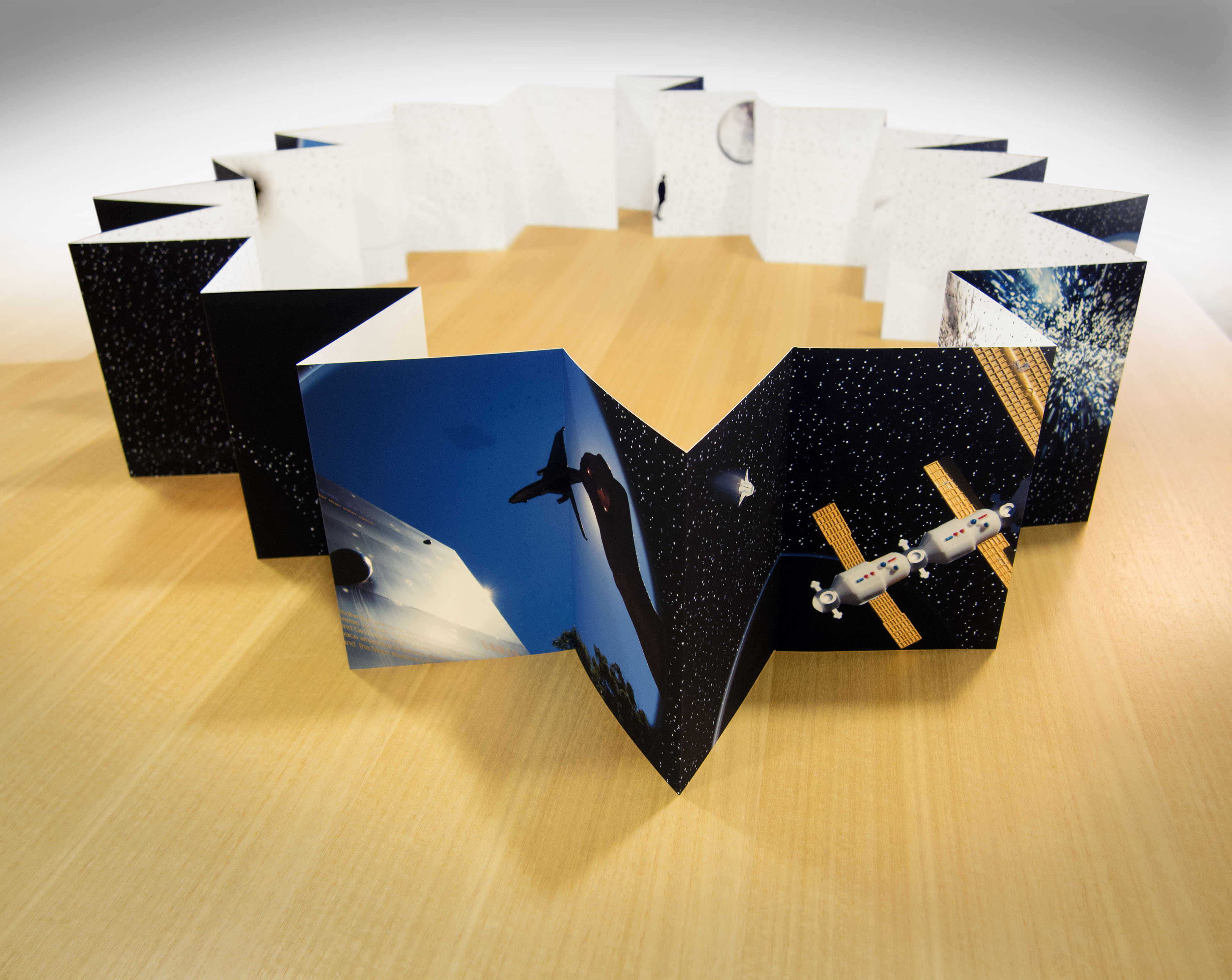
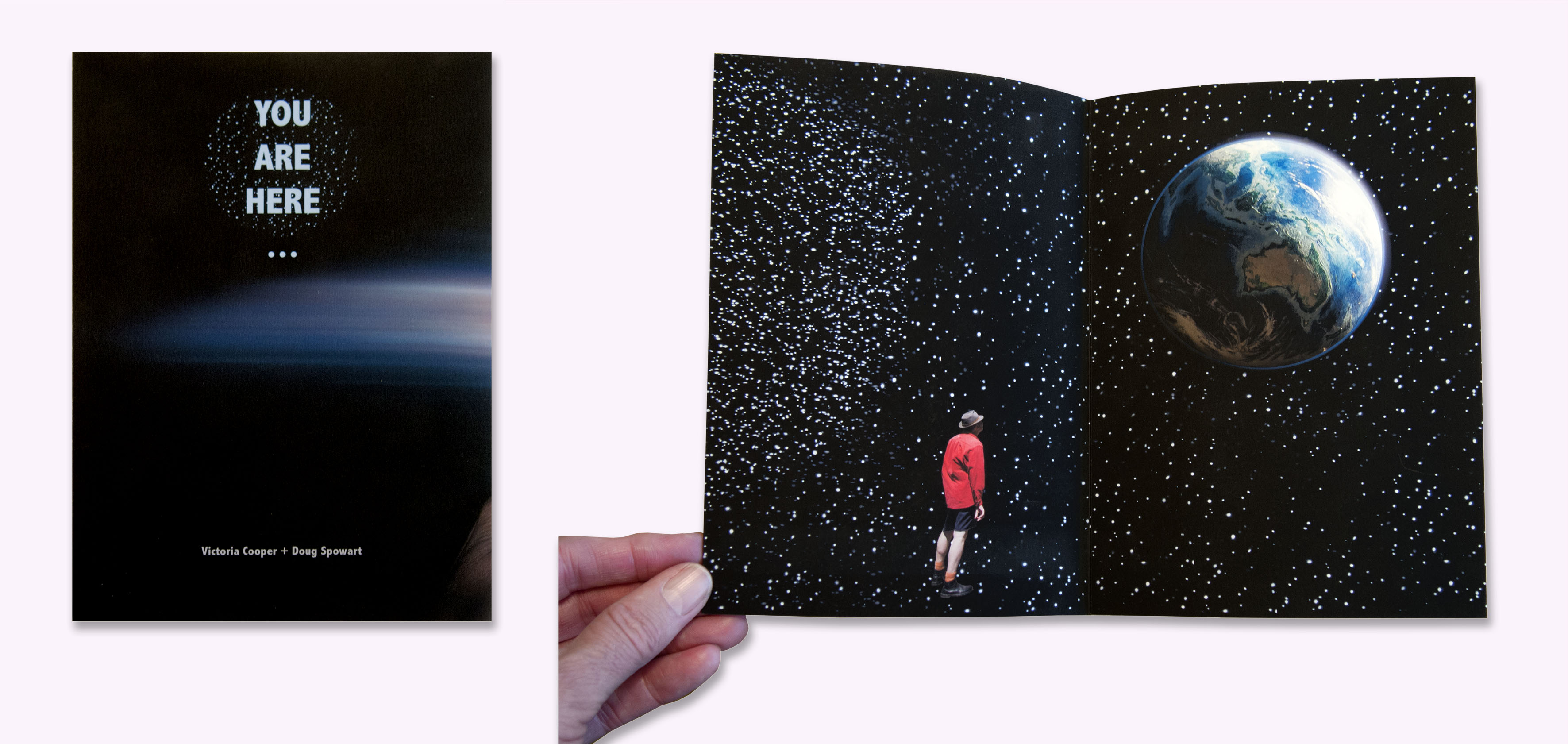
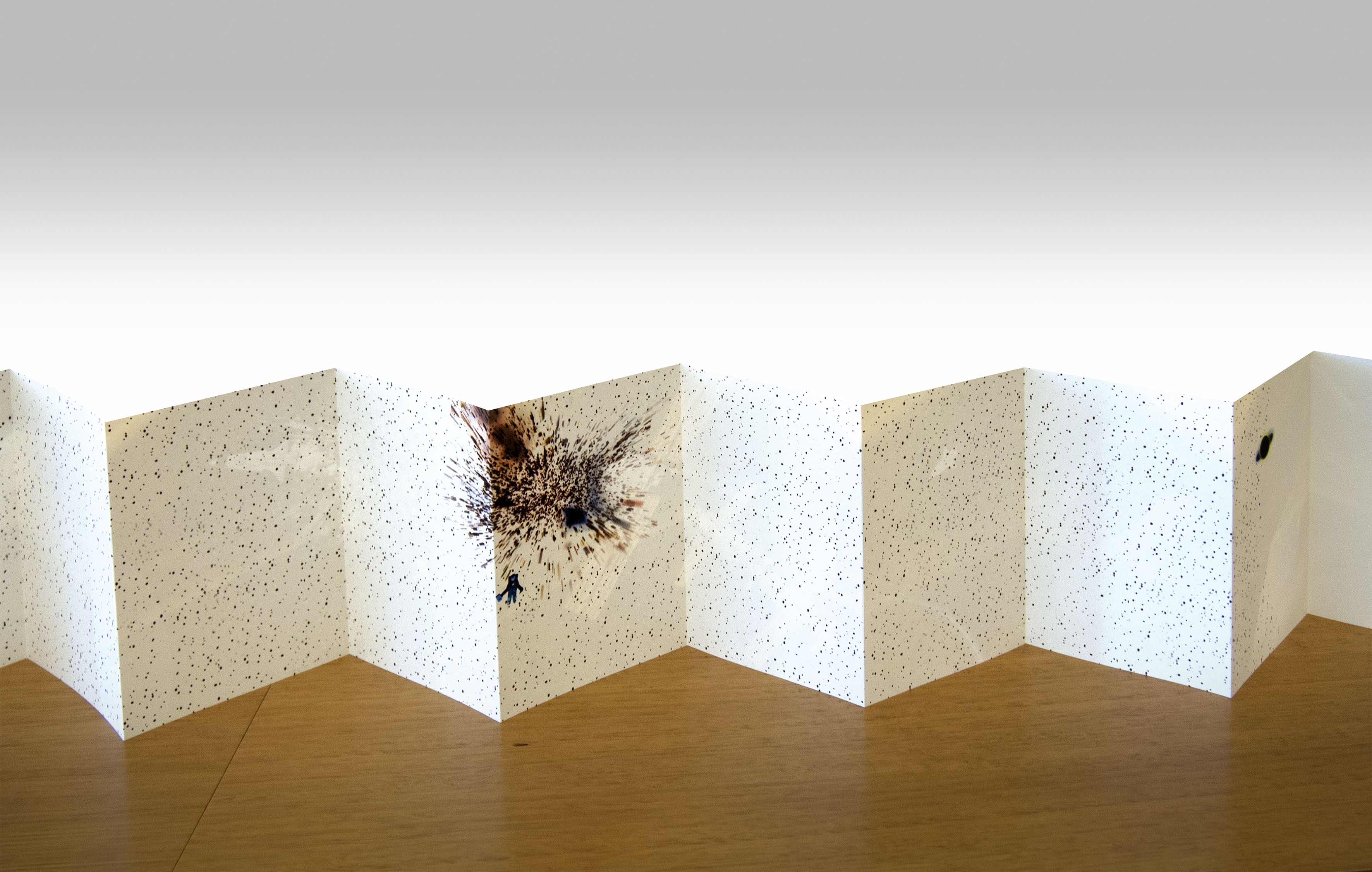
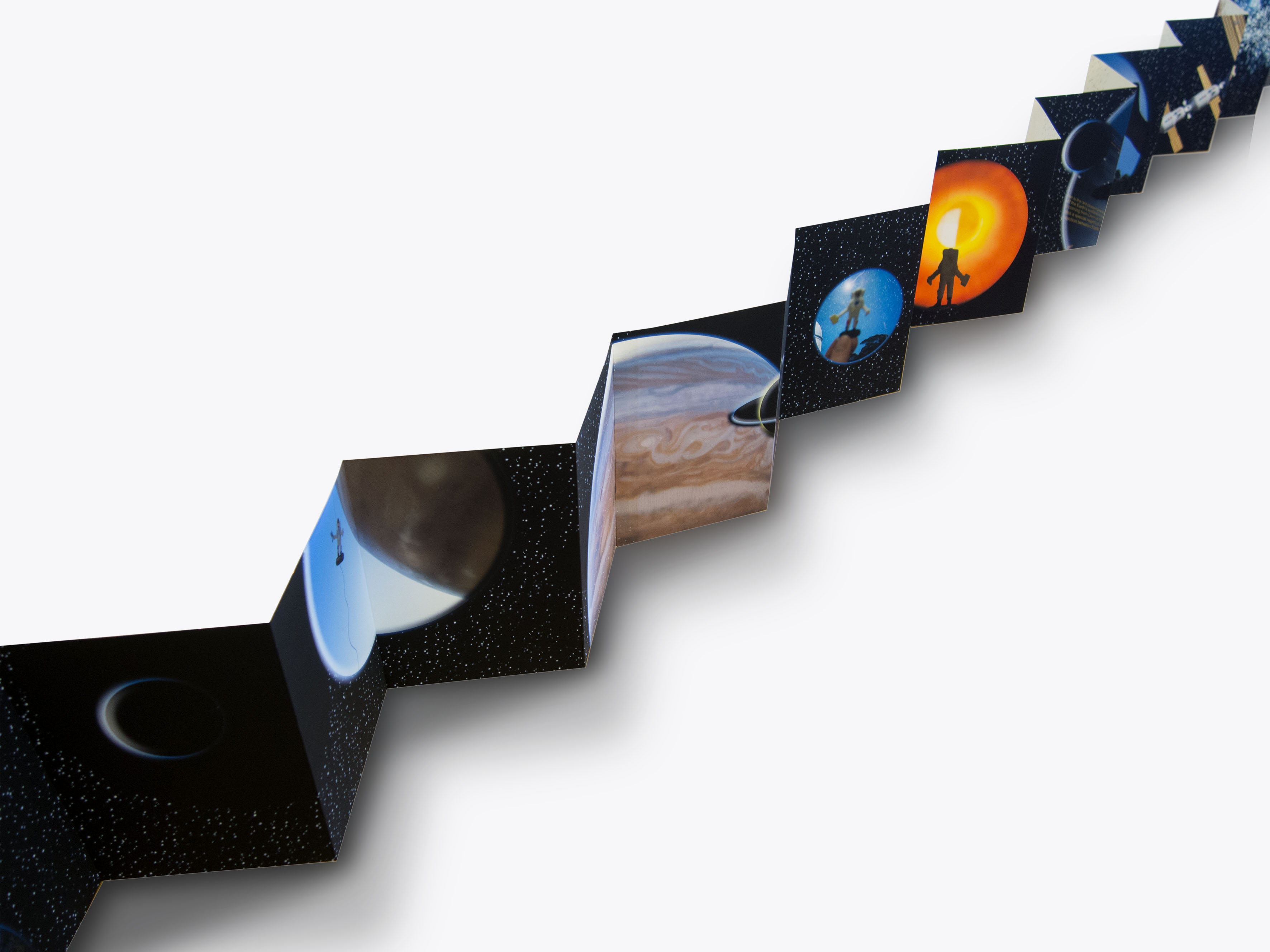
“You are here” a collaborative artists’ book by Victoria Cooper and Doug Spowart
This book is inspired by many years of travelling through the Pilliga Scrub along the Newell Highway in central western NSW.
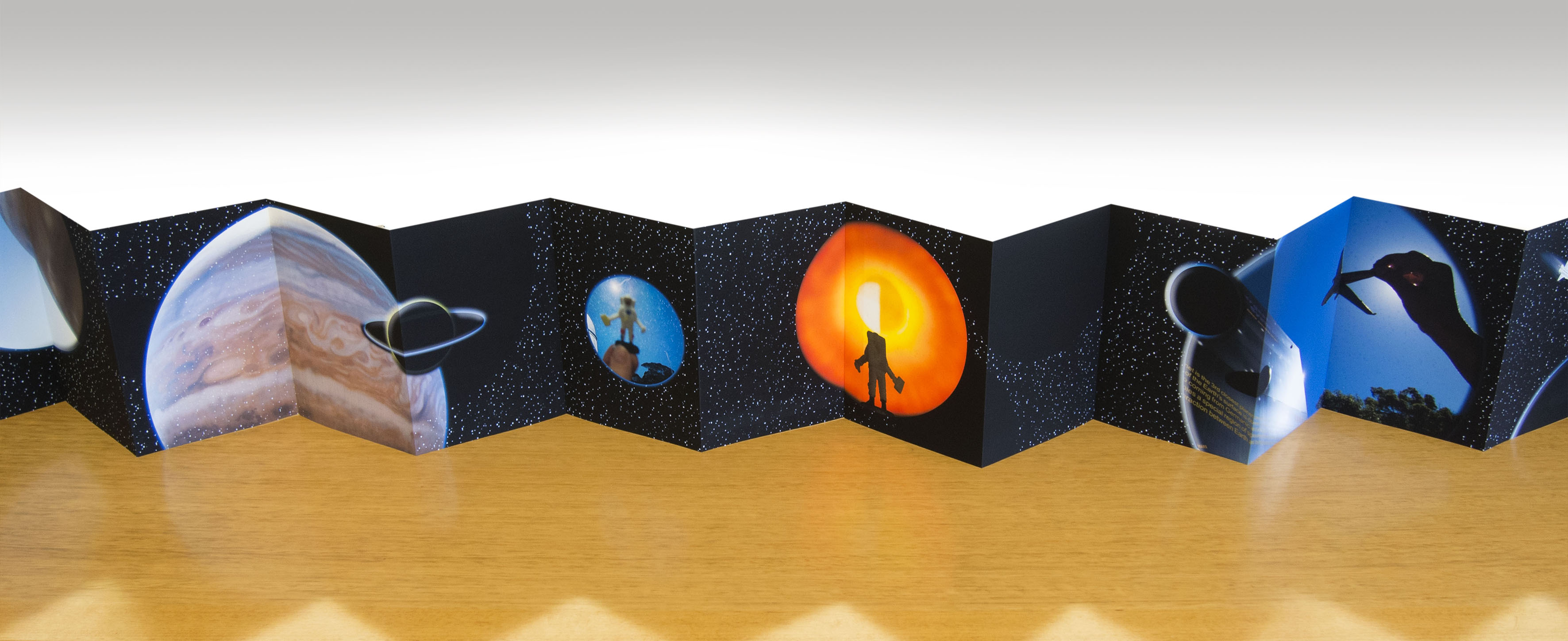
On this major highway there is another journey for the road traveller that can take them metaphorically into outer space. This tourist attraction is called the “Solar System Drive” and extends from Belatta to Dubbo. The planets placed on signs along the highway lead to the “sun” which is located in the centre of the array at Siding Springs Space Observatory in the Warrumbungle National Park.
You are here traverses the liminal space between these two journeys, playing with the philosophical questions of place, space and time.
Details of the book: Pigment inks on cotton rag inkjet paper, 14 x 20 x3cm – extends to 6.3metres.
‘You are here…” detail
“You are here…” back detail
‘You are here…” detail
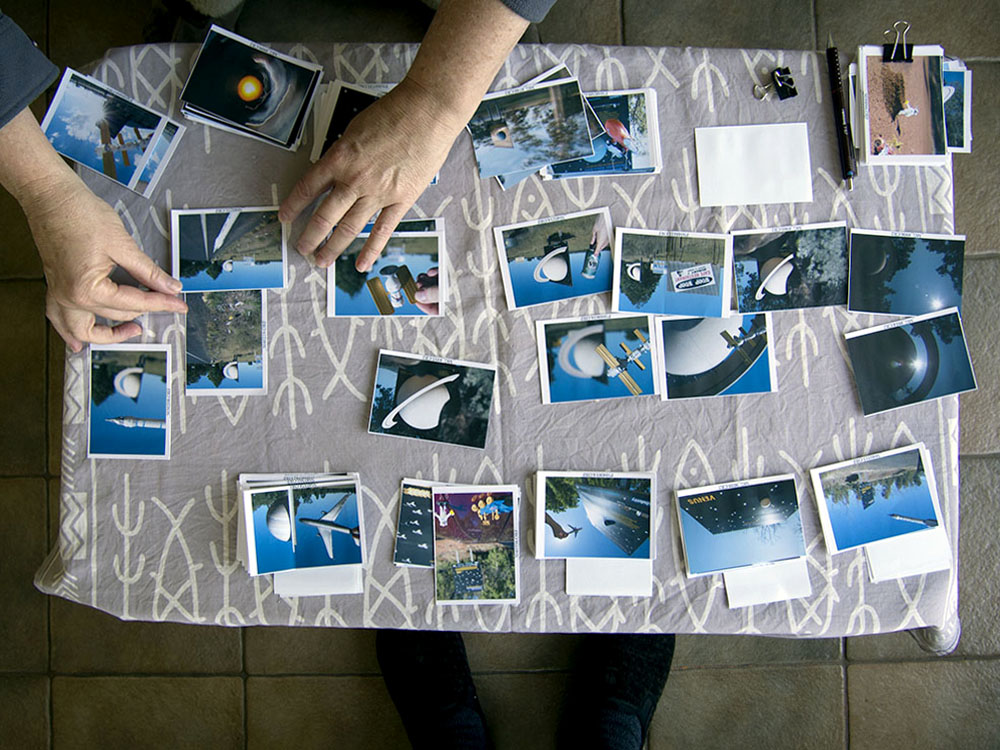
Planning the narrative of “You are here…” earlier this year.
.
.
.

 wotwedid