Archive for the ‘Artists Books’ Category
THE PHOTOBOOK CLUB: Box of Books Event – Toowoomba!
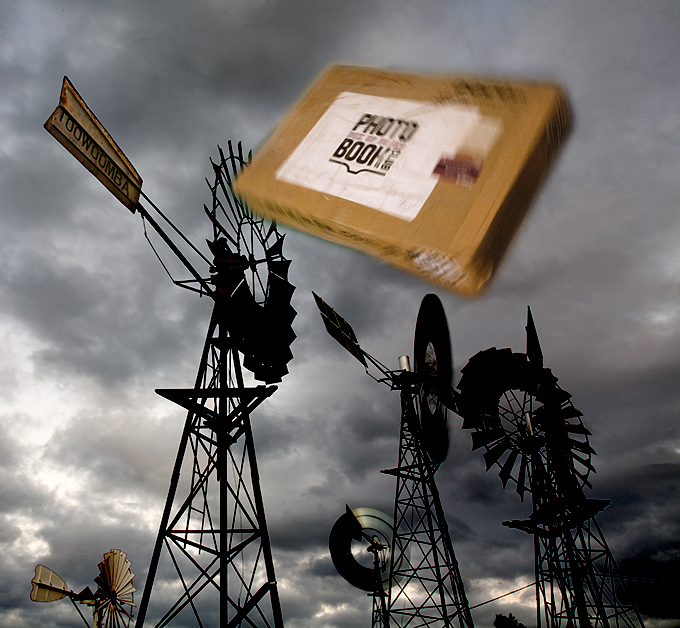
The Photobook Club’s BOX of BOOKS arrives in Toowoomba
.
In 2013, and now in 2014, a box of photobooks will be traveling over 30,000 miles, stopping off at each of the Photobook Club branches around the world in order to promote discussion of the physical photobook.
..
Now, The Box of Books is in Toowoomba —- Queensland, Australia.
As part of the LAST DAY of the ICONS on ICONS show at the Cobb+Co Museum in Toowoomba featuring the work of John Elliott, Graham Burstow, David Seeto Victoria Cooper (photobooks) and Doug Spowart – a special viewing of the THE PHOTOBOOK CLUB’s BOX of BOOKS will be made available. Come and sit with some of the world’s best photobooks and turn the pages – and release the narrative that each book contains.
THE DATE: Between 1 – 3pm, January 27 – The AUSTRALIA DAY Holiday
THE VENUE: The Cobb+Co Museum, 27 Lindsay Street, Toowoomba.
.
A small charge of $5 is being made to cover postage to the Boxes’ next destination in Auckland New Zealand.
.
The book viewing and discussions will take place between 1-3pm. The Museum’s coffee shop is open for lunch as well as drinks and snacks throughout the afternoon until 4pm.
Take a road trip into the country – Visitors to the Cobb+Co Museum from outside the Toowoomba Region will gain FREE admittance if they advise that they are attending this special event.
This Photobook Club BOX OF BOOKS event is coordinated by Doug Spowart and Victoria Cooper of the Centre for Regional Arts Practice.
.
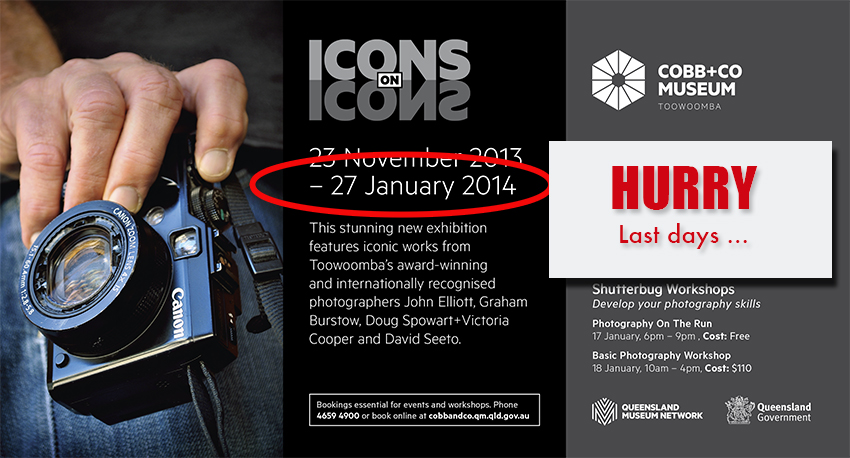
Cobb+Co Museum – Icons on Icons events
.
What’s in the Box?
A big thanks to Mack Books (London), Schilt Publishing (Amsterdam) and also to Filipe Casaca who have all contributed books to this project. If you are a publisher or photographer who would like a book to be included in ‘Box of Books #2′ then please get in touch. The following books were chosen for the discussions of content, narrative and physical properties that I hope they will encourage – Matt from the Photobook Club
Another Language
Mårten Lange
(Mack, 2012)

The blurb: Combining images of flora, fauna and natural phenomena in an intimate and beautifully crafted book, Lange teases out a subtle narrative – a meteor crashes, a landmass is visible and a distant planet occupies the final page – but the book is more akin to the workings of a scientist collecting specimens. Together the photographs create a cryptic and heterogeneous index of nature, with recurring shapes, patterns and texture, where the clarity and simplicity of the individual photographs contrasts with the enigmatic whole.
………………………………………………………………………………………..
Blue Mud Swamp
Filipe Casaca
(Self published, 2012)

The blurb: (Filipe Casaca) Blue Mud Swamp. The shoreline, hot and humid, is a postcard that attracts and invites Men to settle where the land meets the Yellow Sea. However, the reality is dissonant. Although surrounded by natural beauty, beaches and entertainment facilities, the city and its urban spaces transmits, as a whole, a feeling of artificiality. In some cases the abundance created a certain degradation and abandonment. With a splendor that takes us back to a recent past, a certain melancholy is present, as happens with all that was new, colorful and perfect but perished with time.
………………………………………………………………………………………..
Interrogations
Donald Webber
(Schilt, 2012)

The blurb: Interrogations is the result of [Webber’s] personal quest to uncover the hidden meaning of the bloody 20th Century. In dialogue with writer Larry Frolick – whose own ancestors had been decimated in the final months of WW II – Weber insistently and provocatively addresses his questions both to the living survivors and to the ghosts of the State’s innumerable victims, resurrecting their final hours by taking their point of view, and performing a kind of incantatory meditation over their private encounters with Power.
………………………………………………………………………………………..
Lick Creek Line
Ron Jude
(Mack, 2012)

The blurb: Ron Jude’s new book, Lick Creek Line, extends and amplifies his ongoing fascination with the vagaries of photographic empiricism, and the gray area between documentation and fiction. In a sequential narrative punctuated by contrasting moments of violence and beauty, Jude follows the rambling journey of a fur trapper, methodically checking his trap line in a remote area of Idaho in the Western United States. Through converging pictures of landscapes, architecture, an encroaching resort community, and the solitary, secretive process of trapping pine marten for their pelts, Lick Creek Line underscores the murky and culturally arbitrary nature of moral critique.
………………………………………………………………………………………..
Liquid Land
Rena Effendi
(Schilt, 2012)

The blurb: (Rena Effendi) Next to my father’s dead but iridescent butterflies, my photographs show life in some of the world’s most polluted areas, near Baku, where I was born and grew up. In my mind, the contrasting images gravitate towards each other – as I have to my father. Since working on this book I have gotten to know him much better than when he was alive. Salty Waters is the translation from Persian of the ‘Ab-sheuran’ Peninsula; in and around Baku, its main city, the earth is breathing with petroleum fumes, as oil oozes to the surface, turning it liquid. The Caspian Sea hugs the eagle-beak shaped land, salting its gas-pocked soil.
………………………………………………………………………………………..
Mrs. Merryman’s Collection
Anne Sophie Merryman
(Mack, 2012)

The blurb: The book, Mrs. Merryman’s Collection, presents the postcards which together form the story of two intertwined lives – one life lived travelling the world through the postcard images, the other a child and then adult whose life and relationship to her own history and her future were influenced by the collection. While Anne-Marie and Anne Sophie never met, both their lives were inspired by the postcard collection – a relationship that was born, and continues to flourish, in the realms of the imagination.
………………………………………………………………………………………..
The Present
Paul Graham
(Mack, 2012)

The blurb: The Present is Paul Graham’s contribution to this legacy. The images in this book come unbidden from the streets of New York, but are not quite what we might expect, for each moment is brought to us with its double – two images taken from the same location, separated only by the briefest fraction of time. We find ourselves in sibling worlds, where a businessman with an eye patch becomes, an instant later, a man with an exaggerated wink; a woman eating a banana walks towards us, and a small focus shift reveals the blind man right behind her.
.
Also in the box are other items that add to the idea and object of the photobook.
.
A small charge of $5 is being made to cover postage to the Boxes’ next destination in Auckland New Zealand.
.
.
WORLD PHOTOBOOK DAY: Toowoomba Oct 14, 2013
.
WORLD PHOTOBOOK DAY – CELEBRATED IN AUSTRALIA
.
.
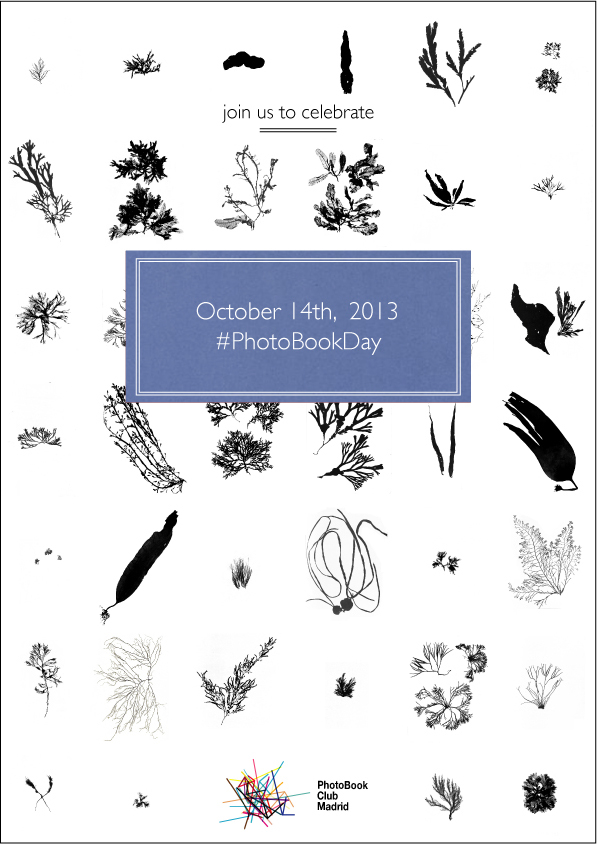
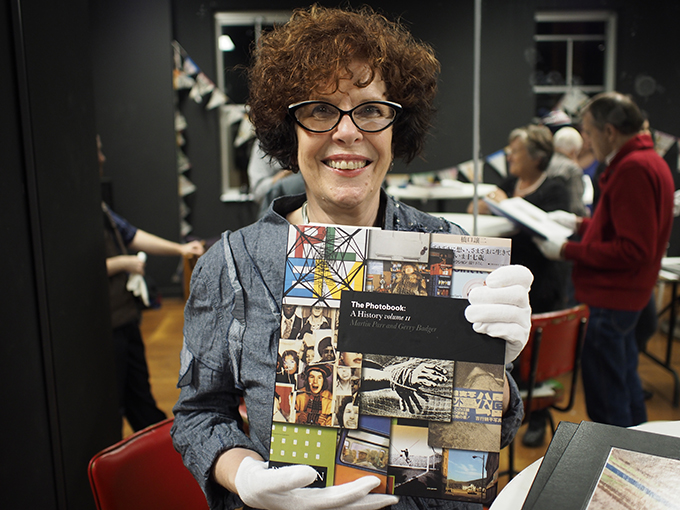
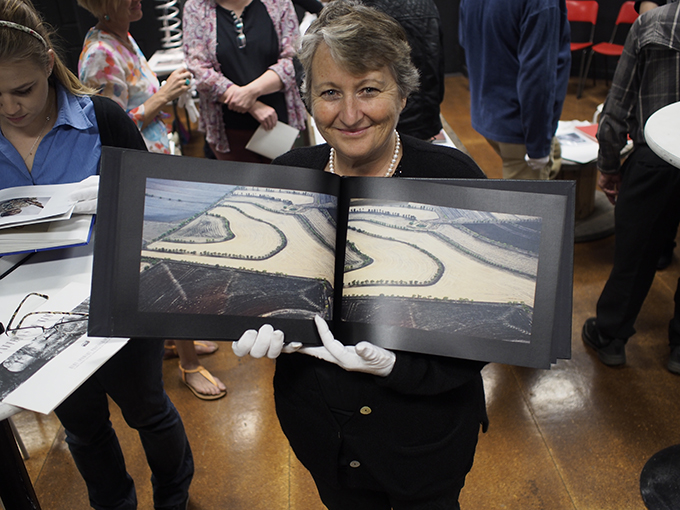
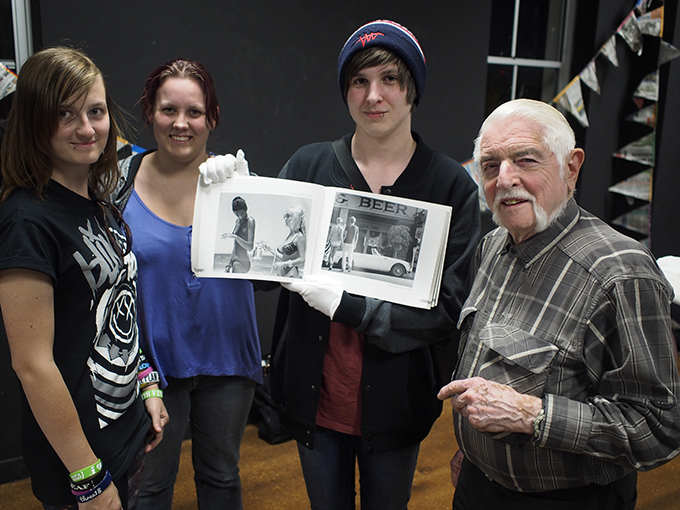
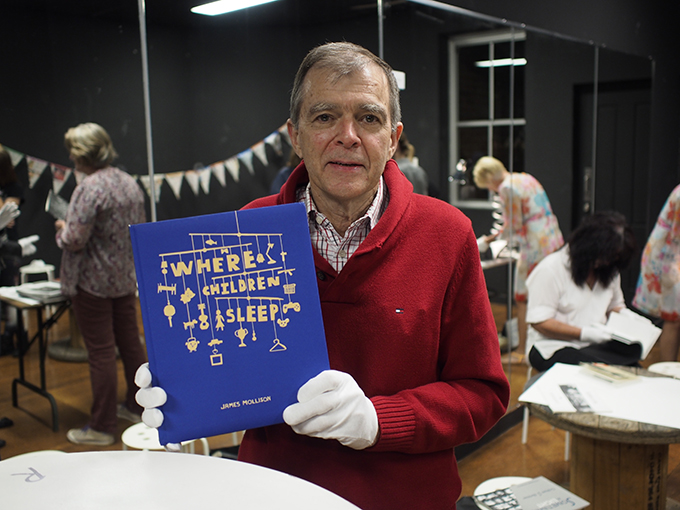
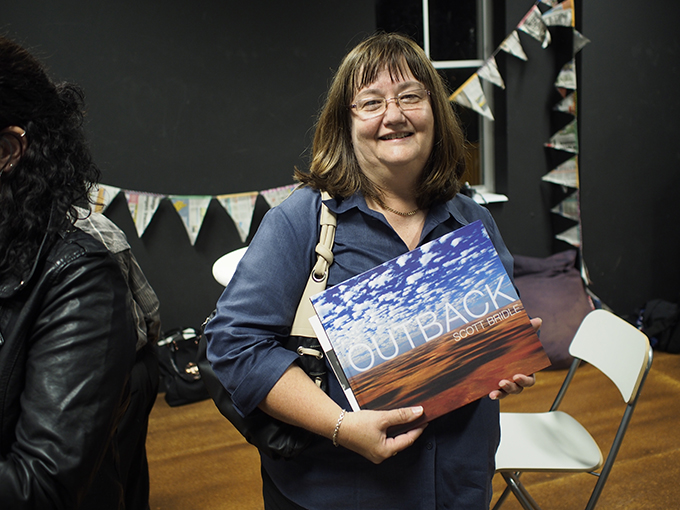
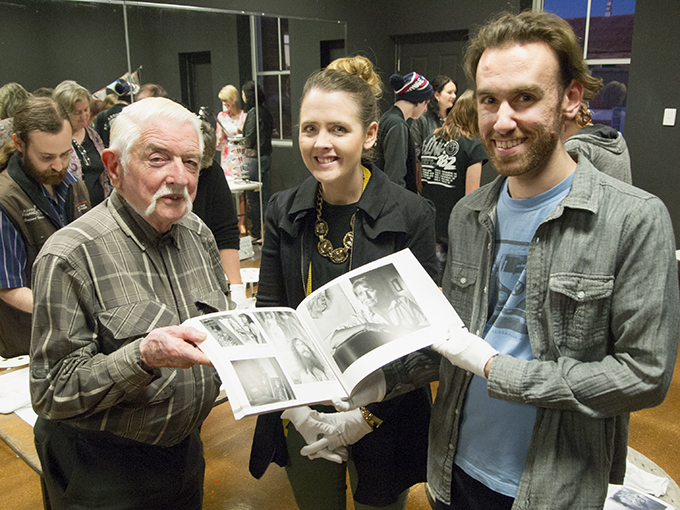
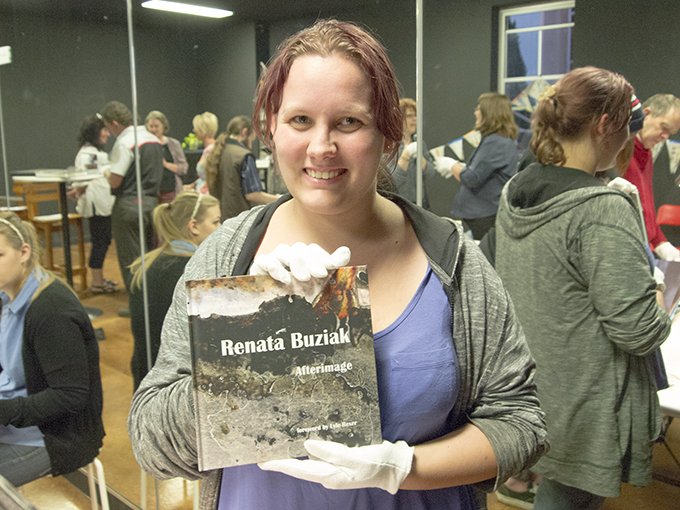
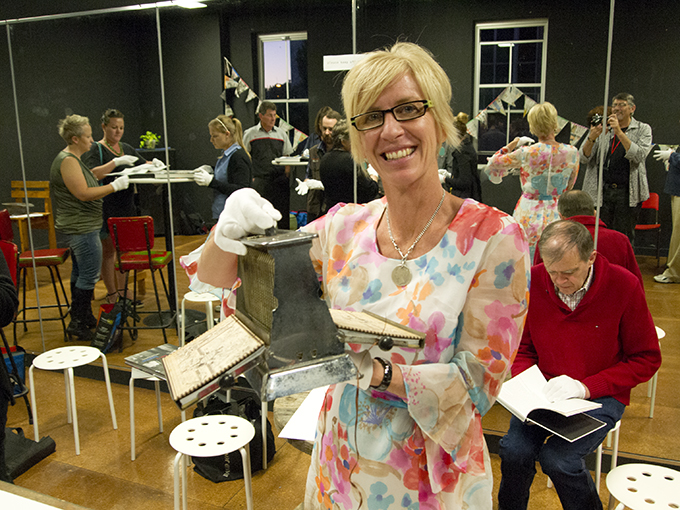
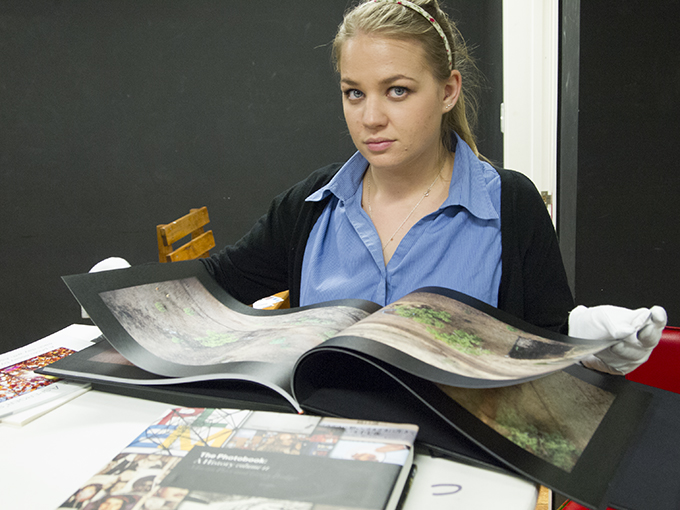
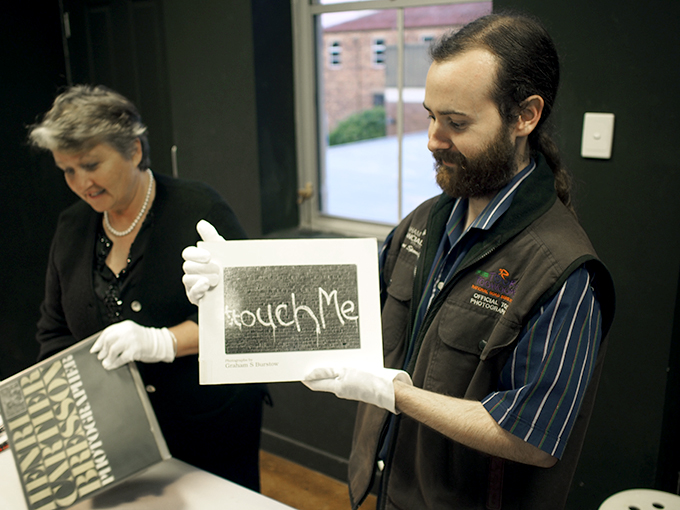
The city of Toowoomba in Queensland Australia celebrated World Photobook Day with a group of around thirty attending a Photo Book Club meeting. The event was held at TheGRID: Hybrid Arts Collective. The participants were from a wide range of photographically interested people: some from the local TAFE college, The Toowoomba Photographic Society, professional photographers, artists and academics. Each brought with them a favourite photobook to share and talk over with others. There were some precious books, some funky contemporary publications, and some of the more traditional coffee table tomes.
.
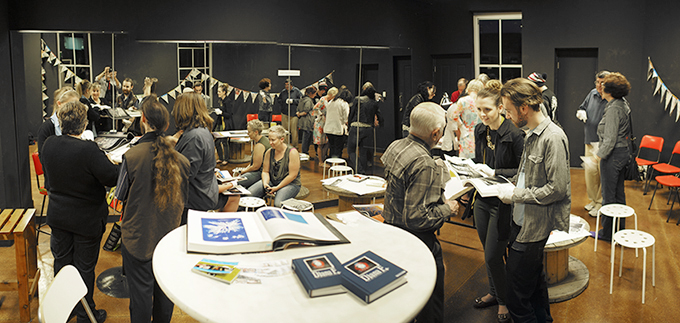
Toowoomba Celebrates World Photobook Day
.
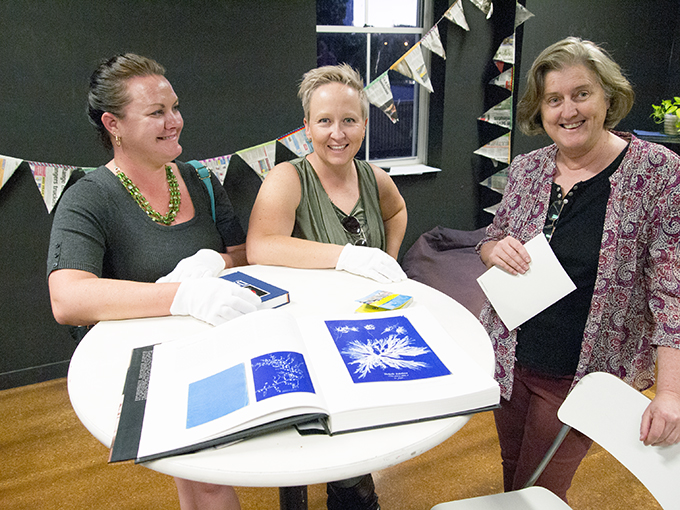
Event coordinator Doug Spowart welcomed the group and gave some background on the history of the photobook and the amazing place that Anna Atkins has within that history. On hand was the Badger and Parr The Photobook: A History Vol1 opened to the page of the Atkins Algae of the British Isles. Doug announced that an acquaintance of he and Victoria Cooper’s – Gael Phillips, was a distant relative of Anna Atkins and that whilst be unable to attend she has provided a commentary on the times, life and family. Gaels words are as follows…
… I thought I might give you a few details of the family of Anna Atkins, nee Children, which may help to explain the setting in which she produced the world’s first photographic book. My cousins, Elizabeth Parkes and Jean Doggett, with input from other family members, have published an account of our family which includes chapters on the Children family. At their family home, “Ferox Hall”, in Tonbridge, Kent, John George Children, Anna’s father and George Children, her grandfather, had built the largest electric battery the world has ever seen at their private laboratory. They were collaborating with Sir Humphry Davy on electrical experiments. It was because of her family’s experience with battery technology and electrochemistry, and almost certainly with the help of her father, that Anna would have had access to sufficient ferric ammonium citrate to produce cyanotypes. Her publication of “Photographs of British Algae” first appeared in October 1843 – British Algae – Cyanotype Impressions. Fox Talbot, a friend of the family, and from whom Anna had obtained her first camera, published “Pencil of Nature” between 1844 and 1846, in several parts. In 1979 Professor Larry Schaaf brought the attention of the world to the fact that the author of the world’s first photo book, AA, was Anna Atkins.
Anna Atkins, nee Children, was born in 1799. Her mother, Hester Anna Children, nee Holwell, was the grand-daughter of Governor Hollwell, one of the survivors of the Black Hole of Calcutta in 1756. Hester never recovered from the birth of Anna and died in 1800.
Anna also wrote a biography of her father, partly concealing her authorship under the initials, “AA”, as she did with her “Photographs of British Algae”.
.
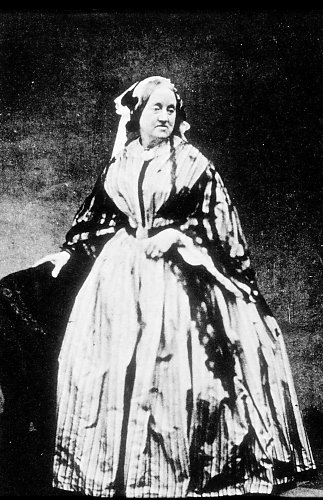
Anna Atkins 1861 [Source Wikipedia}
Anna and her husband, John Pelly Atkins, had no children of their own. Anna died in 1871 and her husband a year later. Their home, “Halstead Place”‘ has since been demolished.
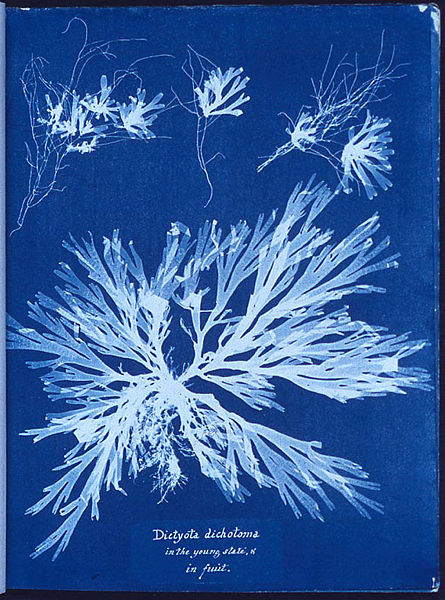
A photogram of Algae, made by Anna Atkins as part of her 1843 book, Photographs of British Algae: Cyanotype Impressions. Courtesy of The New York Public Library http://www.nypl.org.
.
Naturally my favourite photo book (or books, because the Cyanotypes of British Algae by AA run to three volumes) – “Photographs of British Algae – Cyanotype Impressions” by Anna Atkins, my distant cousin. In 1992 I had the great privilege to view copies of the volumes at the Library of the Royal Society in London. The edition ran from between 10 to 12 copies and a few of the plates from one of the copies are held in the National Gallery of Australia in Canberra.
I wish you all well for this celebration of the world’s first photo book by Anna Atkins.
Doug thanked Gael for her insight into the lady whose premier photographic pursuit we celebrate today.
Guests were then invited to continue their looking and talking about books, photography and other worthy matters. It was a remarkable event and one which will no doubt repeated in the future –– but it will be sooner than the next time we gather, once again, to celebrate WORLD PHOTOBOOK DAY.
..A PHOTOBOOK CLUB EVENT
.
HERE SOME IMAGES OF ATTENDEES AND BOOKS … A detailed list of books presented for viewing and other contributions submitted online will be added to this post in the near future.
.
Report and photographs: ©2013 Doug Spowart. Anna Atkins’ story © Gael Phillips. Images of Anna Atkins sourced from Wikipedia and acknowledged appropriately.
.
.
WORLD PHOTOBOOK DAY EVENT: October 14, Toowoomba – INVITE
.
THIS IS THE INVITATION TO THE EVENT — TO SEE THE REPORT – Click
.
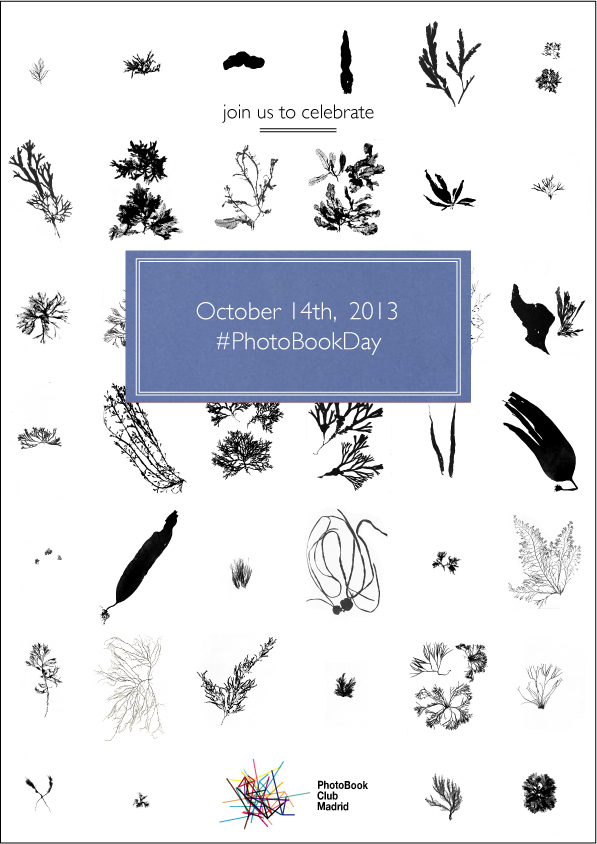
World PhotoBook Day – PhotoBook Club Madrid
Inspired by the PhotoBook Club of Madrid’s proclamation of October 14th being World PhotoBook Day, Vicky and I are organising and event in Toowoomba. We wish to revere the history and celebrate this, most enduring and important aspect of photography – the PhotoBook.
.
To participate:
- Bring: Your favourite Photobook
- Be prepared: To look at books and talk about Photobooks
- Bring: Your white gloves – save you fingerpint DNA for your own library
- Bring $5 to assist with the room hire
.
The event will take place on Monday, October 14, between 5.30-7.00pm at the MARS Gallery – The Grid: Hybrid Arts Collective, 488 Ruthven Street Toowoomba.
PLEASE RSVP – A Facebook Event Page will be posted shortly.
.
If you are unable to attend but are interested in contributing, email us <greatdivide@a1.com.au> a photo or scan of your favourite photobook’s cover with 40 words about your book – we will post these after the event.
.
FOR MORE DETAILS or ANSWERS TO YOUR QUESTIONS: Respond to this Blog/Facebook/Email/Phone us…
.
MORE INFO ON WORLD PHOTOBOOK DAY is available World PhotoBook Day | World Photobook Day
.
NOW AN INTERNATIONAL PHOTO BOOK CLUB EVENT
.
.
.
.
ARTISTS BOOK FLASH MOB create collaborative Artists Survey Book
.
Artist Book Flash Mob and the Artists Survey Book @ Grafton Regional Gallery
.

Artists Survey #15
.
During our Artist in Residence at the Grafton Regional Gallery we chose to conduct a Centre for Regional Arts Practice event that would culminate in a collaborative Artist Survey chapbook. The 15th edition of the Artists Survey comments on the idea that regional artists engaging travel as a necessary part of their arts practice. The book is entitled NOMAD: Journeying for art.
Whether it is for residencies, such as we are currently undertaking, or to attend conferences, seminars and workshops – or – just to encounter something new to inform one’s life or feelings for place, all artists travel. This theme was to be embraced by each of the participating artists. Three of the ‘Artists Book Flash Mob’ came from Brisbane, Lismore and Alstonville and were joined by 5 local Grafton artists for the two-day event. The contributing artists were: Julie Barratt, Cher Breeze, Darren Bryant, Helen Cole, Victoria Cooper, Jo Kambourian, Louise Kirby, Evey Miller, Cass Samms, Hayley Skeggs and Doug Spowart.
Each artist brought objects and materials that were then transformed by their approach to the theme through of their chosen medium. Art making techniques included stamping, collage, digital montage, altered pages, painting, photomontage, photocopy art, images of glass etching, stitching, sewing and paper sculpture. Many ideas were resolved through collaboration with fellow artists during the event.
.

Artists Survey #15 NOMAD:Journeying for Art
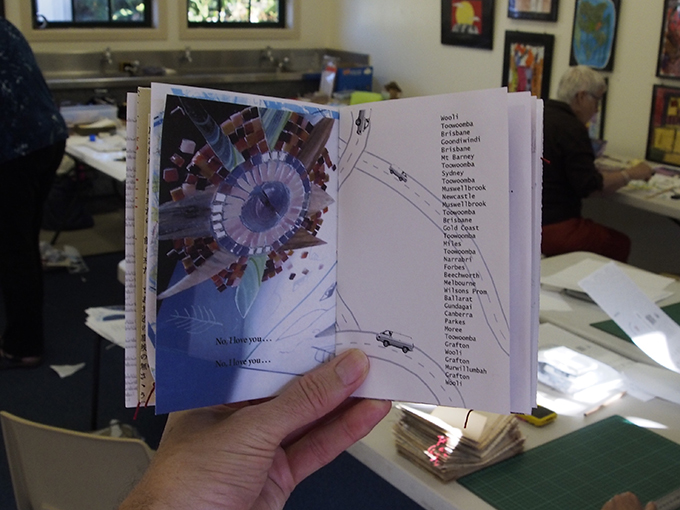
Two pages from inside the book – Artists Survey #15 NOMAD: Journeying for Art
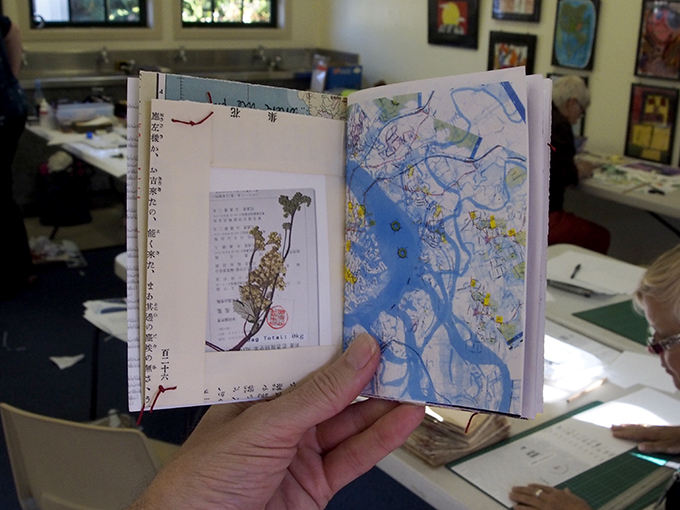
Two pages from inside the book – Artists Survey #15 NOMAD: Journeying for Art
..

The workspace – must be lunchtime @ the cafe!
.
Frenetic times of activity were interspersed with conversation, a sunset soiree, Thai dinner and coffee and cakes from the gallery’s café. At noon on the second day so much still needed to be completed. Each artist concentrated on their own multiple artworks – requiring 60 individual pieces. By mid afternoon, as each artist’s work was near completion, attention could be turned toward the collaborative outcome: cutting, printing and folding covers, collating of the pages, and beginning the process of sewing the finishing 3 hole pamphlet stitch.
At end of the weekend all that was left to do was the binding of the books and each artist has taken their five copies to finish in personal time. We all departed with a renewed energy enriched by the experience and enjoyment of artmaking along with the exchange of ideas and knowledge that was shared in the intimate space of the studio. Further copies of the NOMAD: Journeying for art will be passed on to significant artists book collections around the country.
We thank the participating artists for their participation and contribution to another C.R.A.P. (Centre for Regional Arts Practice) event.
.

The artist book flash mob
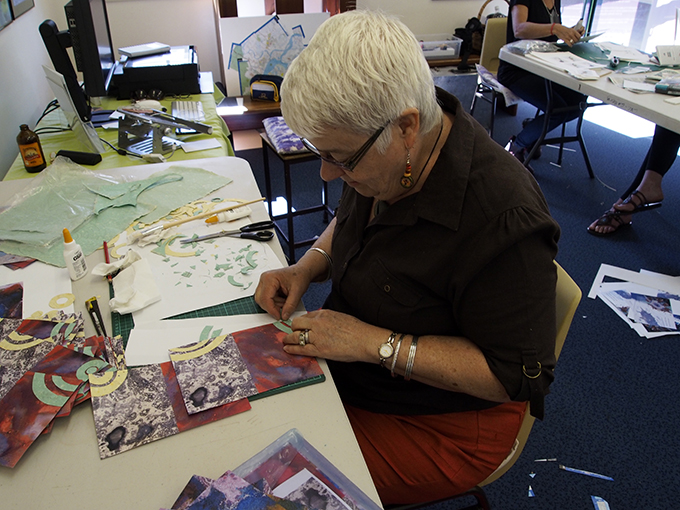
Helen at work

Hayley at work
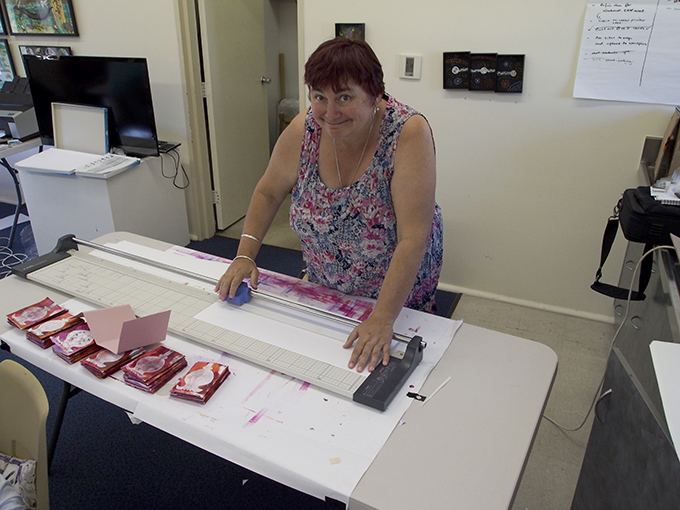
Louise at work

Jo at work
.
© 2013 Victoria Cooper and Doug Spowart. The copyright in individual artworks resides with the artists.
.

This work is licensed under a Creative Commons Attribution-NonCommercial-NoDerivs 3.0 Unported License.
.
.
.
ONE FOR THE BOOK – THE 2013 BLURB BIFB BOOK AWARD

.
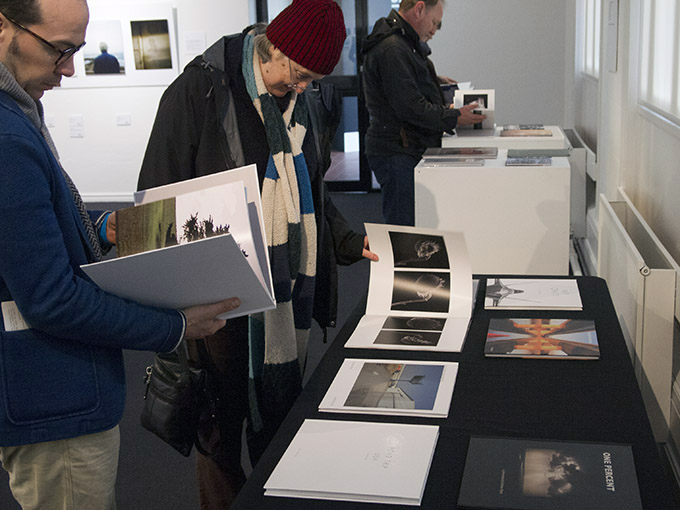
BIFB visitors checking out the book award entries
.
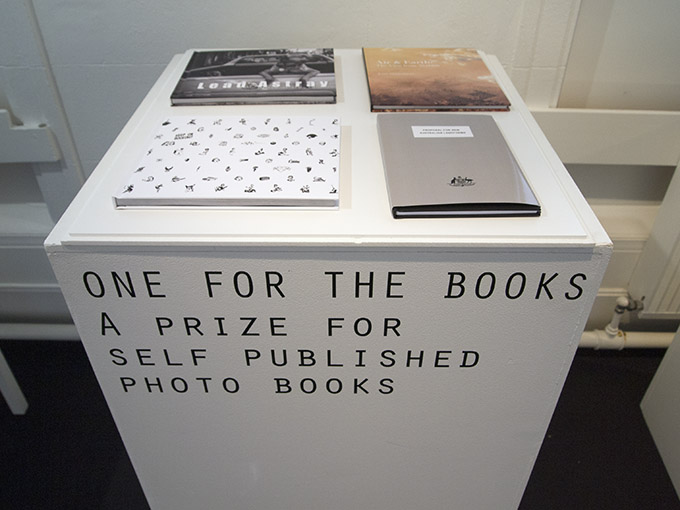
Doug’s book – front right
ONE FOR THE BOOKS
A display of some of the best self-published photobooks in the country are being exhibited at the 2013 Ballarat International Foto Biennale.
A PRIZE FOR SELF PUBLISHED PHOTOGRAPHY BOOKS proudly sponsored by Blurb
The Ballarat International Foto Biennale with major sponsor Blurb, present ‘One for the Books’ an exciting new prize celebrating the book as an innovative and contemporary format for presenting photography in a creative and narrative form. This prize is specifically for self publish, print on demand books. Books previously published by a traditional publishing house are not eligible for entry.
WHO COULD ENTER
The 2013 ‘One for the Books’ Prize will accept submissions for two categories; Professional and Amateur. Winners will be announced at on Monday 19th August 2013 at the Post Office Gallery, Ballarat. Entrants must be Australian residents. Around 100 books were submitted for the judging and 20 finalists were selected.
THE FINALISTS WERE …
The finalists [professional category]
Rhiannon HOPLEY NSW
Charles KLEIN SA
Darren MARTIN NSW
Garry MOORE VIC
Gary SHEPPARD NSW
Doug SPOWART QLD
Andrew STY AN NSW
Peter WHYTE TAS
The finalists [amateur category]
John Paul AZIZ & Shaun DUNCAN VIC
Michael DAVISON VIC
Lidia D’OPERA WA
Grant HUNT QLD
Paul JURAK ACT
Erin STONESTREET ACT
Scott VINEY QLD
.
AND THE WINNERS WERE …
At a special event on Monday August 19th the announcement of the winners of the inauguaral One for the books prize was announced.
.
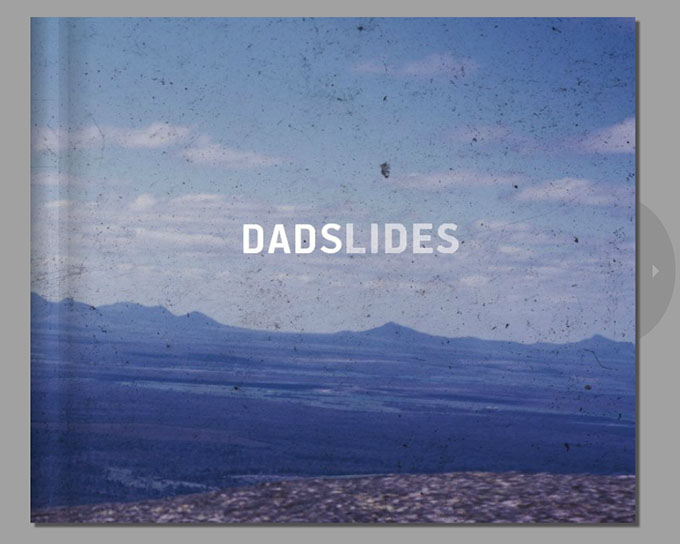
Charles Klein’s Awarded Book – Professional Category
Dadslides is a book dealing with a personal sense of nostalgia in the discovery of one’s own family photographs after the passing of a loved one. Klein’s book consisted of his father’s slides made between 1950 and 1981. The photos were scanned and sequenced within the book to create a document of a family growing up, going on holidays, messing around in the back yard and the other things that symbolise Australian life in this era. Strangely, whilst the book is about Charles Klein’s family, it strikes a resonance with us all and therein lies the beauty and the power of its narrative.
SEE THE BLURB REVIEW HERE: Charles Klein’s Awarded book
.
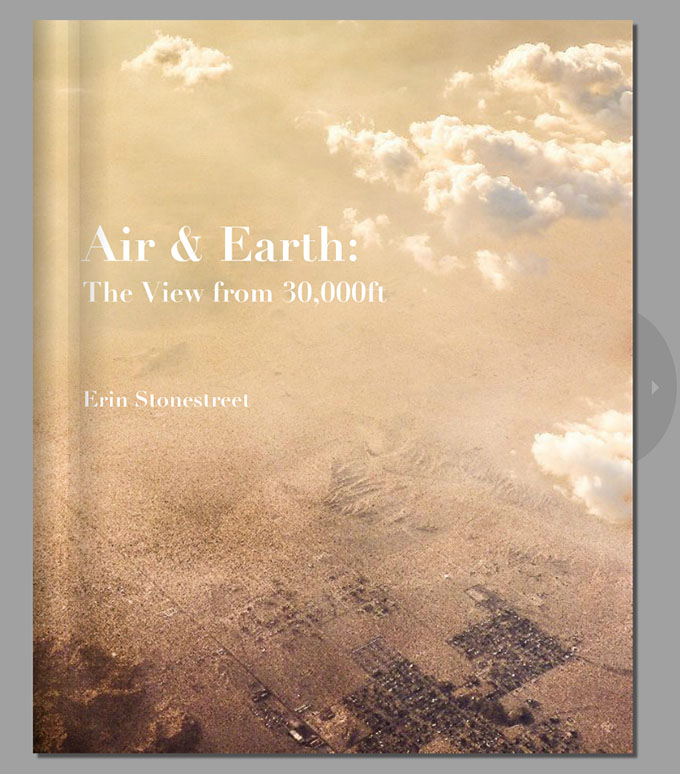
Erin Stonestreet’s Awarded Book – Amateur Category
Air & Earth: The view from 30,000 ft is a book that deals with the aerial view of the earth. The rich colours and image juxtaposition create for the viewer an abstract view – all scale is abandoned and the images take on a sense of the magical, and perhaps even for some, a spiritual meaning.
SEE THE BLURB REVIEW HERE: Erin Stonestreet’s book
.
I was excited to be a finalist in the award – Here is my book…
..
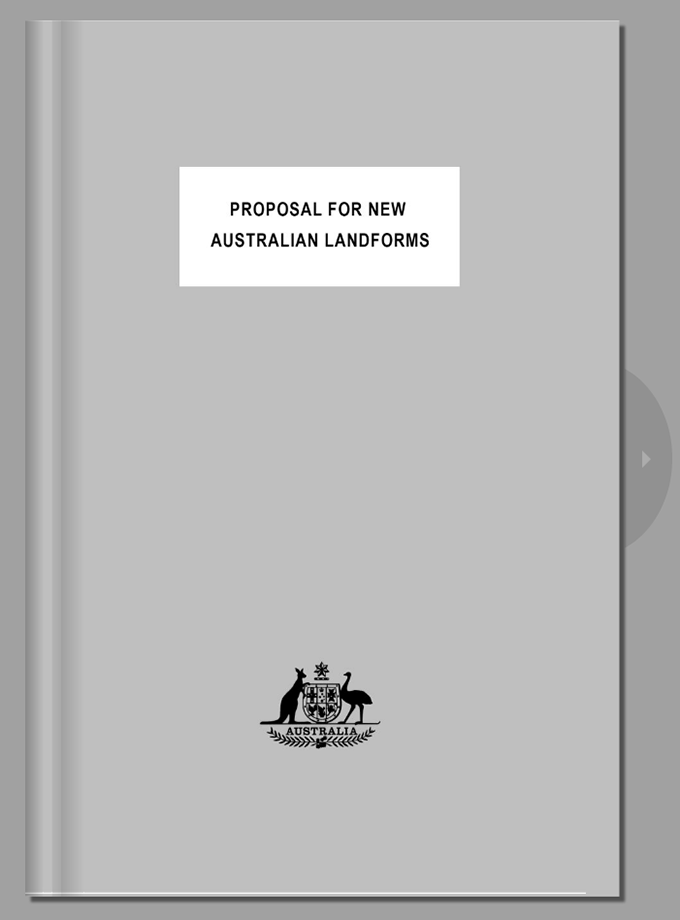
Doug’s Finalists Book
My book deals with the political scene and is a parody of the potential for government agencies and politicians to do absurd things for, as they call it, ‘the good of the people’.
.
SEE THE BLURB PREVIEW HERE: Doug’s Book.
.
PLEASE ENJOY – And do get to Ballarat to see these amazing books in person …
And join in on the photobook print-on-demand revolution.
.
.
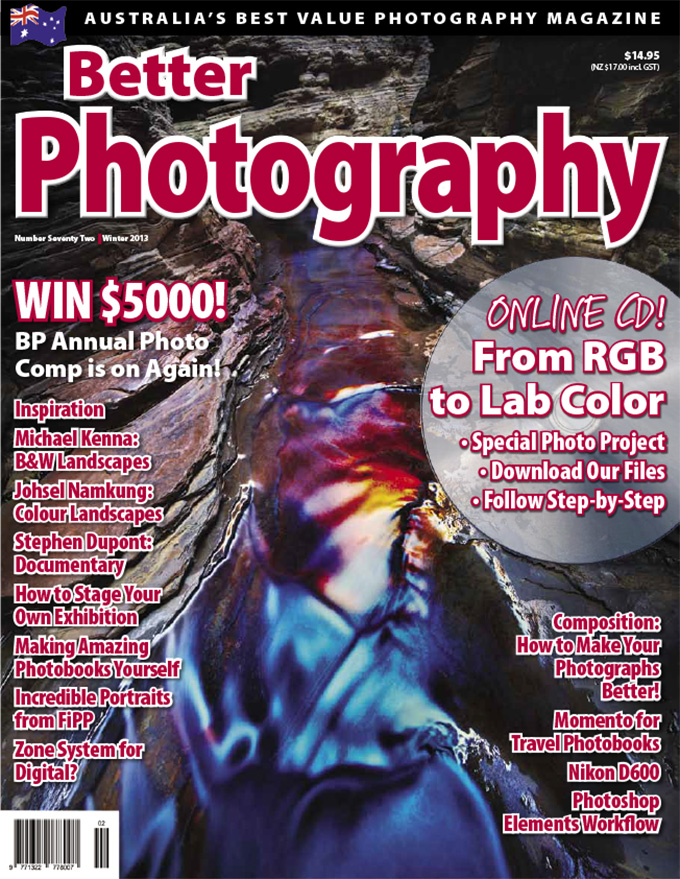
DOUG Has article on Photobooks in BETTER PHOTOGRAPHY
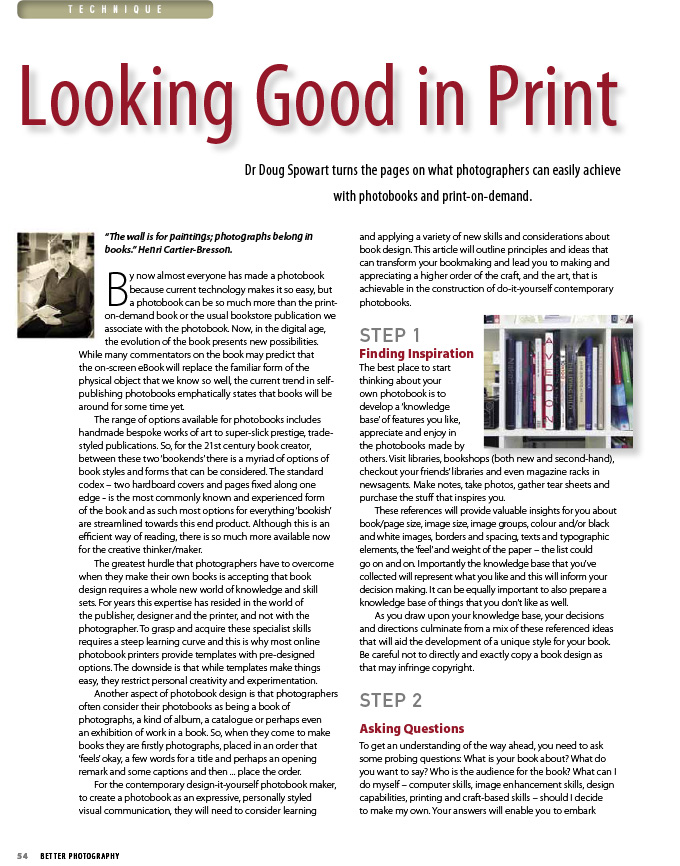
The winter edition of Peter Eastway’s BETTER PHOTOGRAPHY includes an article by Doug on Photobooks. The piece covers a step-by-step discussion on making your own photobooks from concept to output, either by DIY or Print-on-demand.
.
.
Here’s page one of the article …
.
.
DOWNLOAD A PDF of the article here: SPOWART-Photobooks-Better_Photography
.
AND – Do buy the magazine for the other great stories and prizes!!
.
.
.
.
hEADoN into THE FUTURE OF PHOTOBOOK PUBLISHING
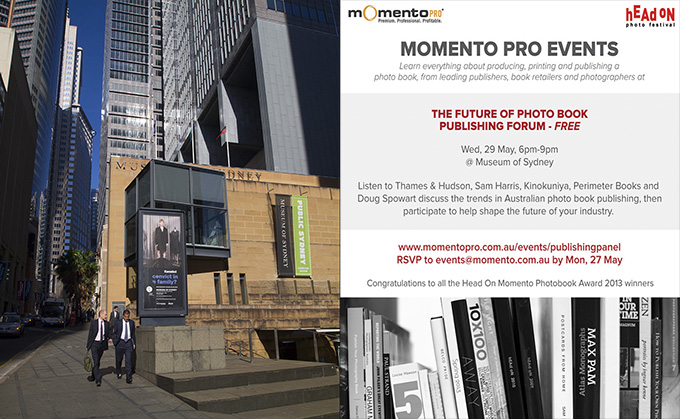
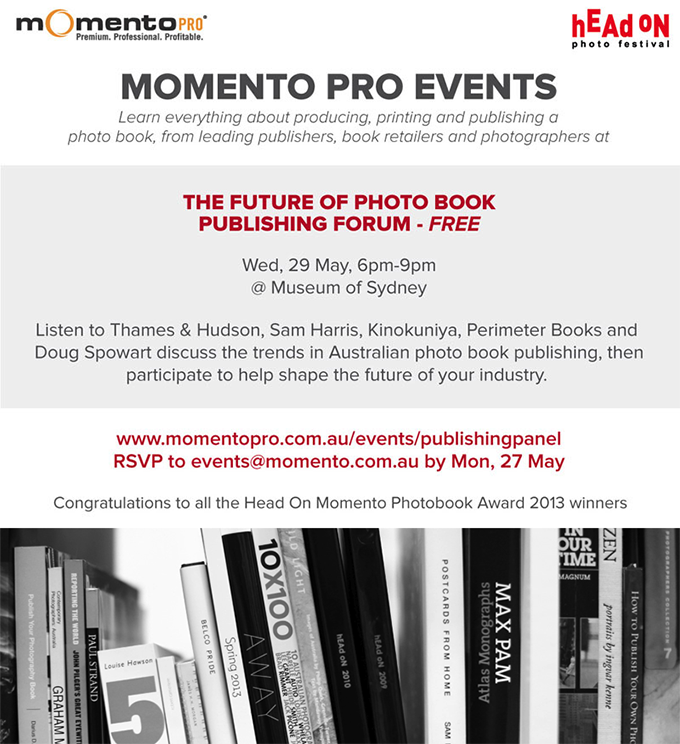
Invite and MOS

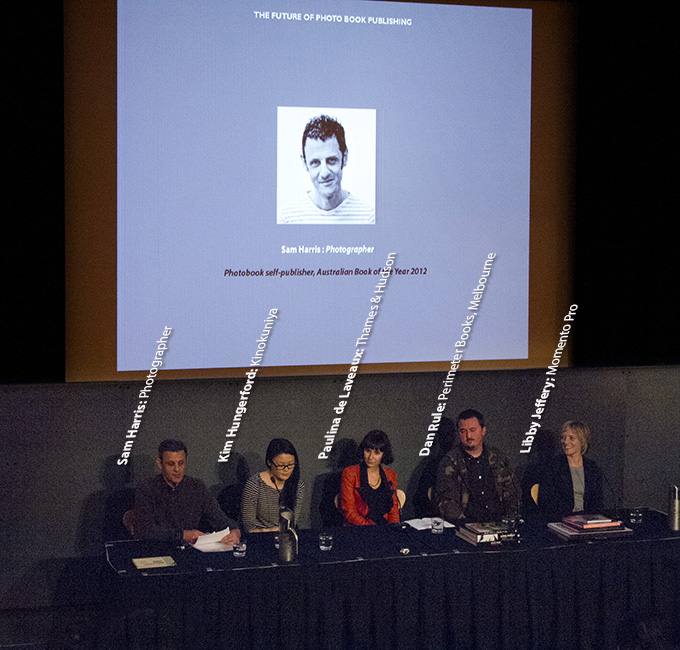
The Future of the Photo Book Forum ……Photo: Victoria Cooper
.
RUNSHEET & OVERVIEW:
Momento Pro/HEADON Event: The Future of Photo Book Publishing
.
6.00 pm Panellists arrive on stage
6.10 pm Doug Spowart: Welcome and good evening.
Photographers and those who make photobooks are storytellers – and – with this in mind – I would like to acknowledge and pay respect to the traditional owners and story-tellers of this land on which we meet; the Gadigal people of the Eora Nation.
This evening we will discuss the photobook and consider the opportunities for its future in Australia.
My name is Doug Spowart, I make artists books, photobooks and I have a research interest in photography and the form of the photobook.
This evening I’m joined by an eminent panel of book people with a wide range of knowledge and expertise on the topic.
The order of this evening will begin with an overview by me about the photobook. Then each of the panellists will discuss their involvement within the book and photobook world. Following that the panel will be presented with a range of questions – some sent in from attendees. Towards the end of the forum we have set aside time for your questions and comments to the panel. The forum will close and be followed by refreshments and networking opportunities …
At this juncture I would like to thank our Sponsor Momento Pro and the Organizers of the HeadOn Photo Festival, and the Museum of Sydney for this opportunity to engage in dialogue about this growing and evolving medium …
.
AN OVERVIEW OF THE PHOTOBOOK
.
Photobook luminary Martin Parr states:
… that photography and the book were just meant for each other; they always have been. It’s the perfect medium for photography: it’s printed, it’s reproducible and it travels well. (Parr in Lane 2006:15)
The photobook is indeed the ‘perfect medium’ for photography and its history, the history of photography are inextricably linked with that of publishing. In fact some of the earliest experiments in photography made by Hércules Florence (1804 -1879), Nicéphore Niépce (1765 -1833) and Henry Fox Talbot (1800 -1877) were to discover methods and processes that would enable the copying and printing of texts or designs by capturing and fixing camera obscura images.
![William Henry Fox Talbot, by John Moffat, 1864 By Michael Maggs [Public domain], via Wikimedia Commons](https://wotwedid.com/wp-content/uploads/2013/06/william_henry_fox_talbot_by_john_moffat_1864-by-michaelmaggs-public-domain-via-wikimedia-commons.jpg)
William Henry Fox Talbot, by John Moffat, 1864
By Michael Maggs [Public domain], via Wikimedia Commons
Books illustrated by photographs as a genre of the publishing industry flourished. The photographic image could operate as a storyteller, a precise document of truth, a device to entertain and, at times, a carrier of propaganda. Early photography book works consisted of travel, geographical and military expeditions, trade catalogues, scientific and ethnographic documentation.
Although some photographers, like Talbot, may have established their own publishing ventures, usually the photographer was a supplier of images for a publication that was commissioned by someone else – a publisher, benefactor or government agency. The publishing of a book was, and still is, a task requiring the specialized skills, the entrepreneurship and financial acumen found in the worlds of publishing, marketing and bookselling. Books are created for a purchasing audience: it is a mercantile process where return on the investment in a publishing project is a necessary outcome.
What is it about photographers and their need for photobooks?
Martin Parr describes the influence that photobooks had on his own practice by stating that:
I’m a photographer and I need to inform myself about what’s going on in the world photographically. Books have taught me more about photography and photographers than anything else I can think of. (Parr in Badger 2003:54)
Parr is not alone. The publishing house Aperture – a well established international publisher of contemporary and historical photographic essays and monographs – acknowledges in their organization’s credo that:
Every photographer who is a master of his [sic] medium has evolved a philosophy from such experiences; and whether we agree or not, his thoughts act like a catalyst upon our own — he has contributed to dynamic ideas of our time. Only rarely do such concepts get written down clearly and in a form where photographers scattered all over the earth may see and look at the photographs that are the ultimate expression. (in Craven 2002:13)
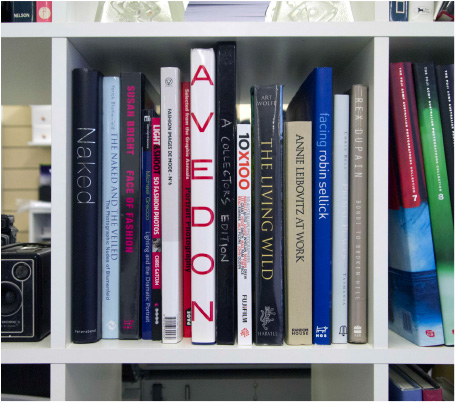
Library
So photographers seek inspiration for their work by building their own reference libraries: have you ever visited a photographer and not had discussions about books or been invited to see their library? It then makes sense that photographers will want a book of their own. Photobook publisher Dewi Lewis exclaims: ‘I have yet to meet a photographer who doesn’t want to see their work in book form.’ (Lewis and Ward 1992:7).
Photobook commentators and publishers of the book Publish Your Photography Book, Darius Himes and Mary Virginia Swanson claim that this need is universal and emotive:
It almost goes without saying that every photographer wants a book of his or her work. It’s a major milestone, an indicator of success and recognition, and a chance to place a selection of one’s work in the hands of hundreds, if not thousands, of people. Plus it is just plain exciting to hold a book of your photographs! (Himes and Swanson 2011:26)
It seems that this ‘rite of passage’ is an important step of professional recognition as photographer, photobook maker and writer – Robert Adams – makes the following statement in his book Why people photograph:
I know of no first-rate photographer who has come of age in the past twenty-five years who has found the audience that he or she deserves without publishing such a book. (Adams 1994:44-5)
Does it then follow that every photographer of note or the creator of a significant body of work deserves a book?
It is not that easy. Amongst others the photobook publisher Dewi Lewis argues that the market for photobooks is limited – where he identifies that: ‘photographers themselves are the largest purchasers of photobooks’ (Lewis and Ward 1992).
Ultimately unsold books are remaindered – something even Magnum photographer Martin Parr experienced. His first book Bad Weather (1982) sold poorly and was remaindered at 40p. In an essay on photobook publishing Peter Metelerkamp reports that:
Parr himself bought in as many copies as he could at that price (very much below the cost of production) (Metelerkamp circa 2004:7).
But while remaindered books can be a great way to acquire a low priced library they represent a loss to the publisher, who may then be wary of undertaking future photobook ventures.
The photographers who are successfully trade-published are usually either well known and/or are those who produce work that is of interest to a broad audience. Most notably in Australia this has included celebrated photographers such as Harold Cazneaux (1878-1953), Frank Hurley (1885 -1962), Max Dupain (1911-1992), Jeff Carter (1928-2010), David Moore (1927-2003), Peter Dombrovskis (1945 -1996), Rennie Ellis (1940-2003).
In contemporary times other avenues of photobook publishing as a documentary/art project have emerged and include photobooks by Tracey Moffatt (1960- ), Max Pam (1949- ), Matthew Sleeth (1972- ), Stephen Dupont (1967- ), Trent Parke (1971- ) Michael Coyne (1945- ) and Wesley Stacey (1941- ) and many others. The field of contemporary pictorial photobook books could be represented by the likes of Ken Duncan (1954 – ), Peter Lik (1959 – ) and Steve Parish (1945 – ). Then there are so many more …
So what about the photographer doing it for themselves?
Historically, the self-publishing of photobooks was a huge investment of time and money – an individual photographer’s access to the required production and printing facilities was a major barrier. Also those who have financed their own publishing exploits generally lacked the distribution and marketing connections that were attached to the major publishing houses.
Access to printing facilities were overcome by the photographer having contacts in or working in the printing industry such as American photobook-maker Ed Ruscha did with books like Twenty-six Gasoline Stations (1963). In Australia Peter Lyssiotis was able to produce: Journey of a Wise Electron (1981) and other books by participating in a co-operative that accessed a commercial printing press during down time or on weekends. But these access points were not available for everyone who wanted to publish a book.
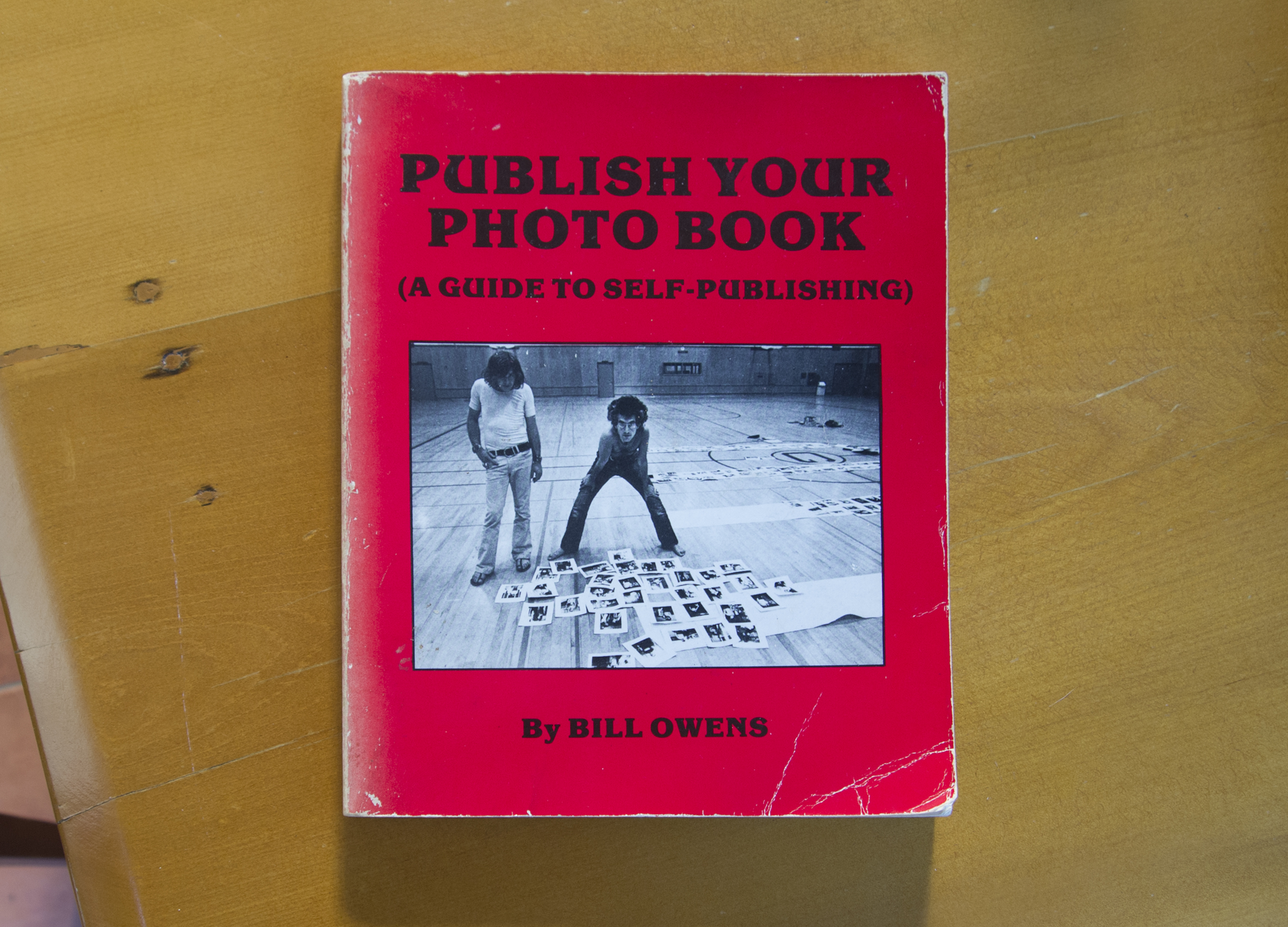
Bill Owen’s book
Nearly 35 years ago American photographer Bill Owens, publisher of Suburbia (1972) and other books made the following introductory statement to his info-guide – Publish Your Photo Book (1979) – a statement that may resonate with the experience of today’s photobook publishers:
Had my photographic books made lots of money I would not have written this book. I wouldn’t need to because I would be part of the establishment and enjoying its privileges. (Owens 1979:3)
It has been a long time coming, but 175 years later with digital technologies including DIY book design software, print-on-demand presses like HP Indigo, the self-published photobook is fulfilling Talbot’s prediction. It’s never been easier for anyone to make a photobooks.
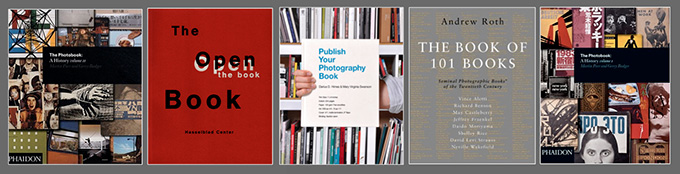
Some seminal photobook texts
The photobook discipline now has commentators and critics, there are awards, linkages with the artists book, supporting independent groups like Self Publish Be Happy, The Photo Book Club and the Indie Photo Book Library.
However just making a book, even your own, does not guarantee success – whatever that might be. But at this time, what are the barriers and opportunities that we in Australia need to consider and respond to as this boom in photobooks continues?
What ideas, social and political mechanisms and appropriate structures do we need to create to nurture and support this emerging publishing paradigm?
Let us now pose some questions to the panel …
.
INTRODUCTION OF THE PANELISTS
See invitation blog post for bios http://wp.me/p1tT11-MT
.
.
A SELECTION OF THE QUESTIONS POSED TO THE PANEL
- What is the recipe for the perfect commercially viable photo book?
- Are Awards/Fairs/Festivals/Exhibitions important to or essential for photo book sales and marketing?
- It’s often stated that the basic market for the photo book is photographers themselves – how can this market be expanded so that the photo book can become more popular for a broader audience?
- Is the Australian photo book consumer more interested in Euro/USA content than homegrown books?
- Is there a market for Australian photo books overseas? Are there mechanisms in pace to support photo books as export? Are our photo books internationally competitive?
- If, as a publisher, you were approached by a photographer with a photo book idea – What would you expect them to bring to your meeting with them.
- What kinds of books/themes or content would an independent or niche publisher take on that a mainstream publisher wouldn’t?
- In the photo book genre, as with other special interest low volume publication sales, will print on demand publishing become a viable option – thereby doing away with the practice of remaindering?
- How can we nurture, inspire and develop the Australian photo book market?
.
A SYNOPSIS OF THE DISCUSSION WILL BE POSTED SEPARATELY:
.
In conclusion … I’d like to see, and I guess you would as well, that the photobook break from the publishing paradigm that Bill Owens spoke of before.
Let’s hope that as a result of, or perhaps more modestly, that this forum will contribute to a future where photographers and their photobooks will be recognized, revered and financially rewarded for their contribution to telling their stories, our stories and the stories of humanity and of life on this planet and beyond.
Once again thank you to our panelists …
Our sponsor – Momento Pro
The HeadOn Photo Festival
And to you all —–
You are now most welcome to join us for some refreshments and networking
8.15 pm Close…..
.
.
Bibliography for Doug’s Overview
Adams, R. (1994). Why People Photograph. New York, USA, Aperture Foundation.
Badger, G. (2003). Collecting Photography. London, Mitchell Beazley Ltd.
Craven, R. H. (2002). Photography past forward: Aperture at 50. New York, Aperture Foundation Inc.
Himes, D. D. and M. V. Swanson (2011). Publish Your Photography Book. New York, Princetown Architectural Press.
Lane, G. (2006). “Interview: Photography from the Photographer’s Viewpoint. Guy Lane interviews Martin Parr.” The Art Book 13(4): 15-16.
Lewis, D. and A. Ward (1992). Publishing Photography. Manchester, Conerhouse Publishing.
Metelerkamp, P. (2004). “The Photographer, the Publisher, and the Photographer’s Book.” Retrieved 12 March 2009, from http://www.petermet.com/writing/photobook.html.
Owens, B. (1979). Publish your Photo Book (A Guide to Self-Publishing). Livermore, California, USA, Bill Owens.
Talbot, W. H. F. (1839). Letter to Sir John Herschel, HS/17/289. The Royal Society. S. J. Herschel. London, UK, The Royal Society: HS/17/289.
.
.
.
All photographs © 2013 Victoria Cooper & Doug Spowart
Texts an Overview (except references as cited) © 2013 Doug Spowart
.
This work is licensed under a Creative Commons Attribution-NonCommercial-NoDerivs 3.0 Unported License.
.
.
OUR ZINE @ MCA ZINE FAIR Sunday 26th May, 2013
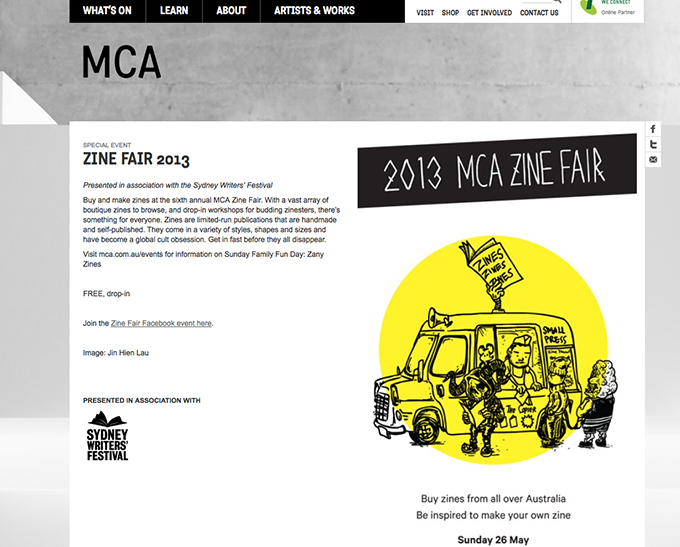
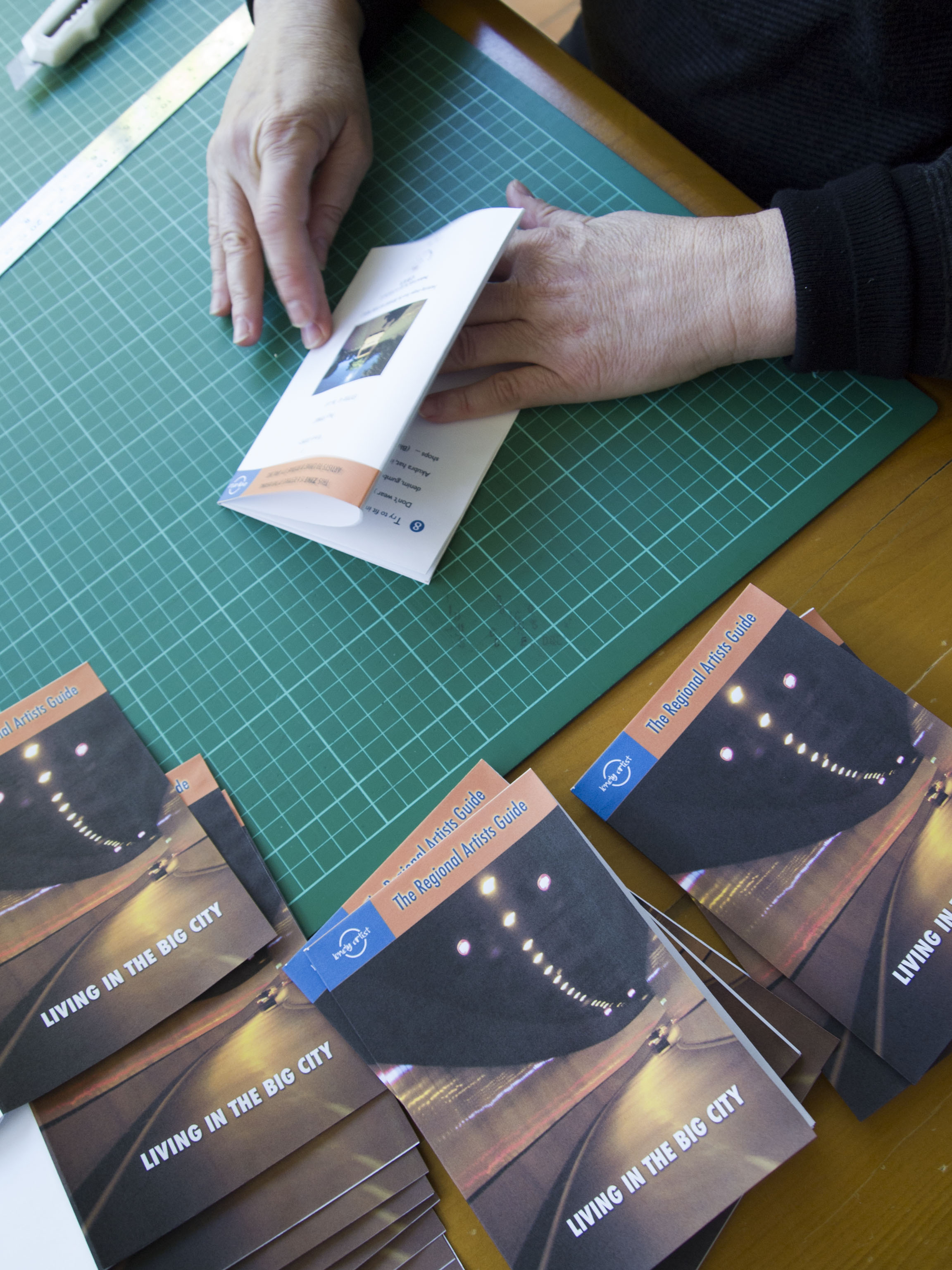
Thanks to Jo Kambourian of Lismore’s MS Browns Lounge a special edition of our Centre for Regional Arts Practice Artists Surveys will be presented as a zine for the event at the Sydney Writers Festival, Museum of Contemporary Art’s Zine Fair. Entitled The Lonely Artists Guide to Living in the Big City it presents a commentary of two artists and their experiences living in Brisbane for the month of April 2013.
A REPORT FROM JO IS AVAILABLE HERE http://msbrownslounge.com.au/unpacking-the-zine-fair/
The zine is an 8 page fancy fold and we made them up as an edition of 40 over the last few weeks. Here is what it looks like …
.
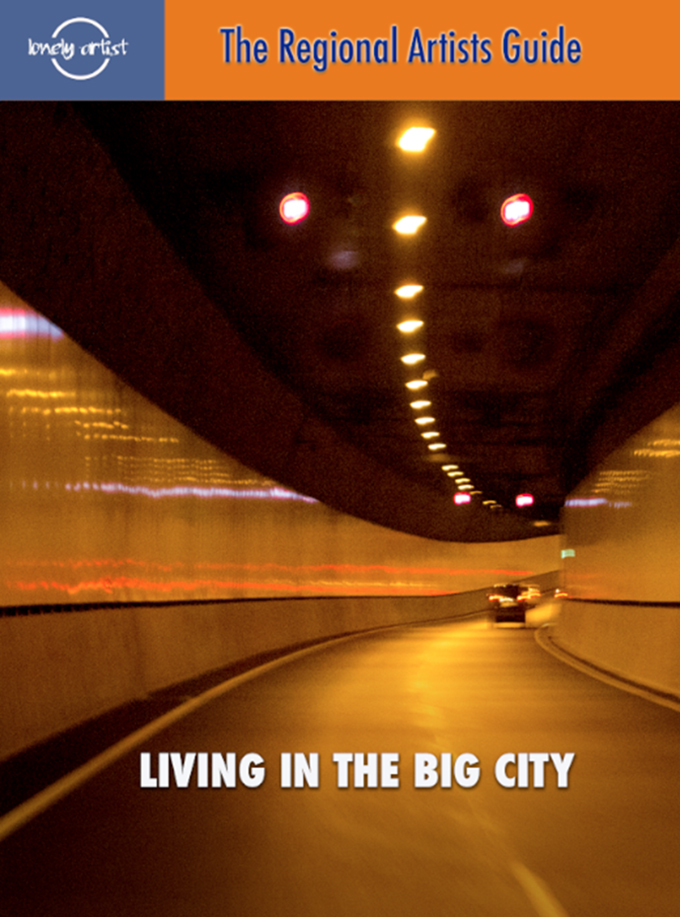
Zine Cover
.
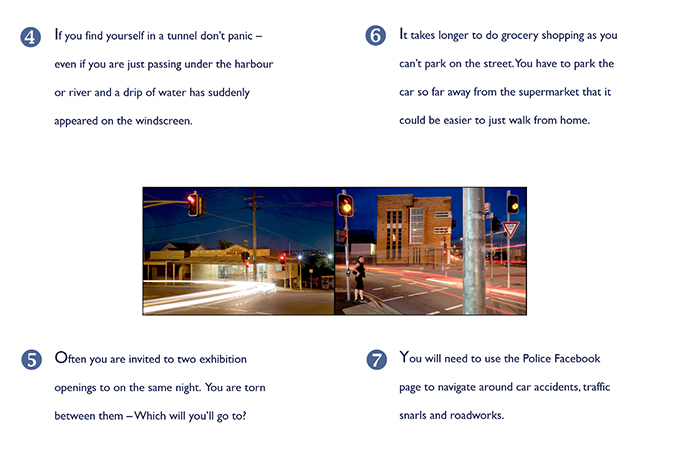
Observations 4 to 7: Living in the BIG City
Handmade in Print. The MCA Zine Fair is back tomorrow from 11.00am (via Broadsheet Sydney)
Join the Facebook event here -> http://on.fb.me/13rY3P1
Presented in association with the Sydney Writers’ Festival
..
All photographs © Doug Spowart 2013.
This work is licensed under a Creative Commons Attribution-NonCommercial-NoDerivs 3.0 Unported License.
.
.
.
hEAdoN/Sydney: Doug to moderate panel on Photobooks
 .
.
.
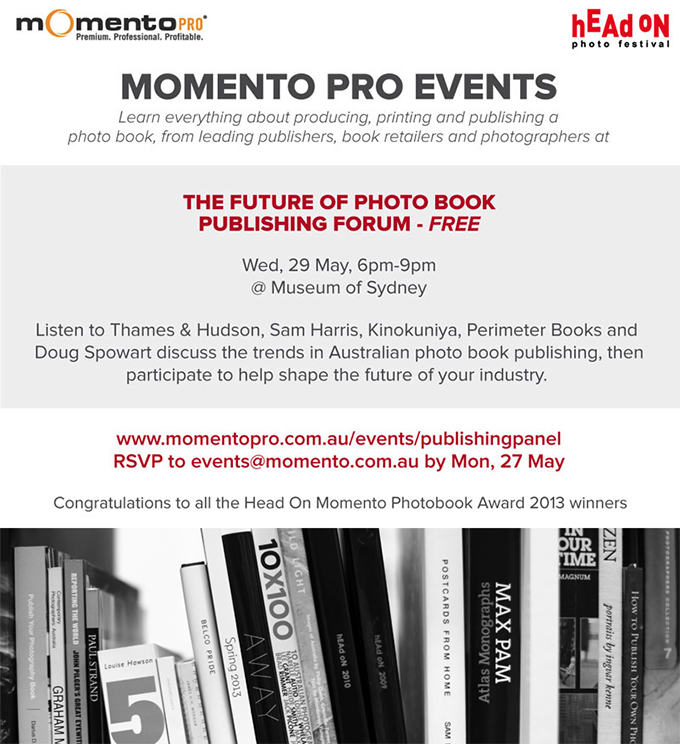
THE FUTURE OF PHOTO BOOK PUBLISHING FORUM
Presented by Momento Pro http://www.momentopro.com.au/events/publishingpanel
A Head On Photo Festival Event
Wed, 29 May, 6.00 – 9.00pm
@ The Museum of Sydney
Admission is free but please RSVP to events@momento.com.au by 25 May
Join panelists and guests from the photography, publishing, print, book retail and creative industries to discuss local and international trends in photographic book publishing, and contribute to shaping its future. The panel discussion will conclude with open questions from the audience, followed by refreshments and networking.
Should you wish to submit questions for consideration please email events@momento.com.au.
THE PANEL
.
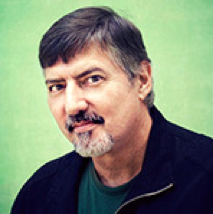
Doug Spowart …..Moderator
Photographer & Academic
Dr Doug Spowart has been extensively involved in creative media areas for over 40 years — his practice includes: artists books, photobooks, artist, critic, judge, writer and teacher. He has completed a Doctorate of Philosophy at James Cook University researching issues of the contemporary photobook. Spowart’s work, as well as collaborative work with Victoria Cooper has found its way into many private, regional and state public galleries, national and international photography and artists’ book collections. Spowart’s photobooks have won the AIPP Queensland Photographic Book of the year on two occasions and he has twice been Runner-up to the national AIPP photobook award.
.
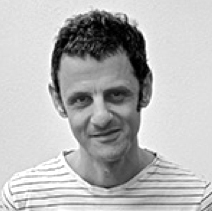
Sam Harris / Photographer
Sam Harris has been a passionate photographer and educator for more than 20 years. He started freelancing in the London music industry making album sleeve art then went on to shoot editorial portraits and documentary features for leading publications including The Sunday Times Magazine, Esquire, GQ and Ray Gun (USA).
In 2002 he re-evaluated his lifestyle to travel the globe with his family, until he settled in the forests of South Western Australia in 2008 where he shoots his on-going family diary, lectures photography, runs workshops and creates photographic books. His book Postcards from Home has received multiple awards including the publishing industry’s Galley Club Book of the Year and Australian Book of the Year Award 2012.
.
Kim Hungerford
Kinokuniya / Art & Design Department Manager
Kinokuniya stocks an extensive collection of graphic novels, art, design and travel books and also features an instore Art Gallery which exhibits works from creative artists to help them develop their careers. As Art & Design Manager, Kim is versed in the distribution, sales, marketing and financials of art and photographic book publishing, the different publishing options available and the differences in reception from book consumers, critics and collectors.
.
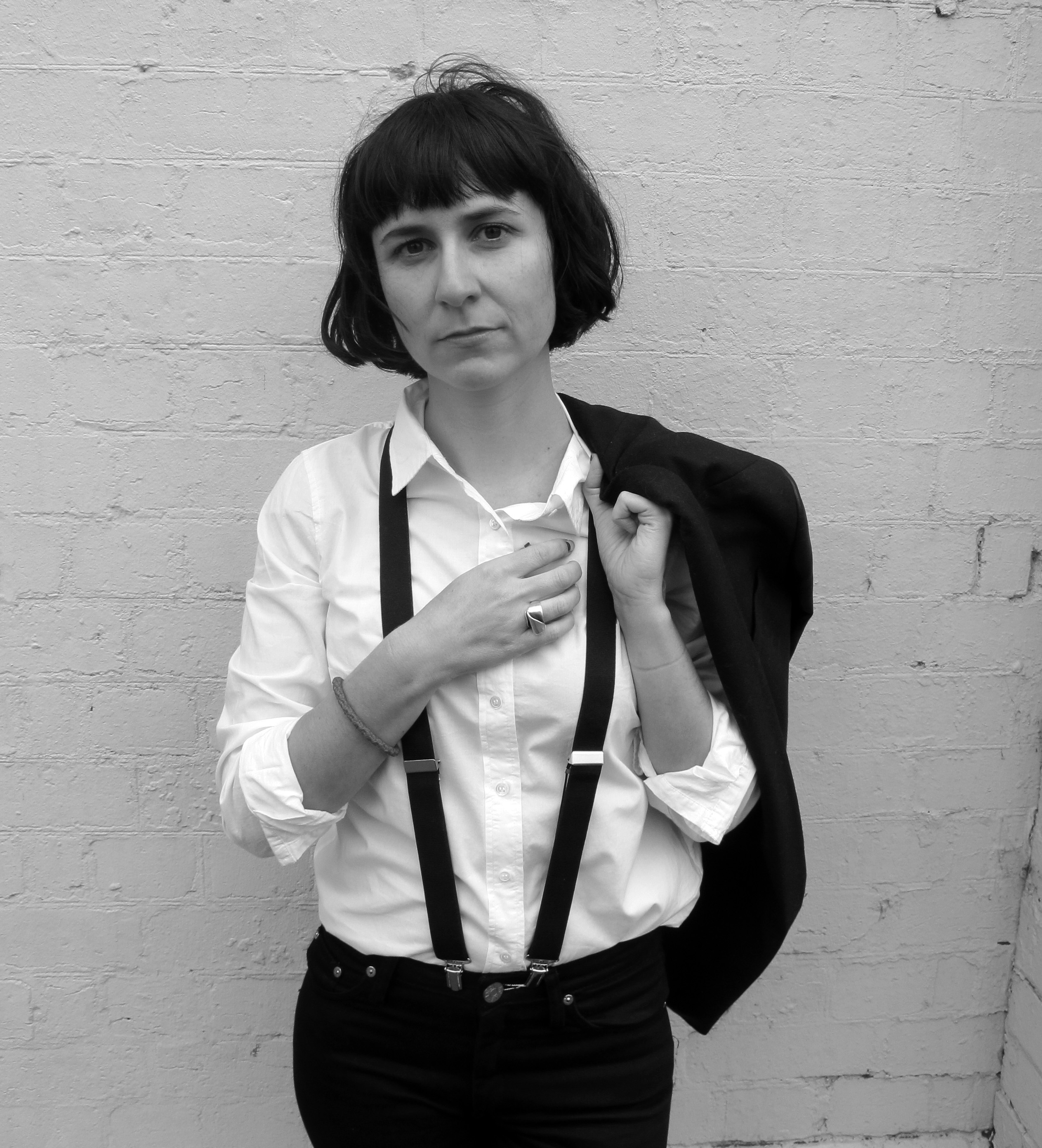
Paulina DeLaveaux
Thames & Hudson / Publishing Manager
Paulina de Laveaux is Publishing Manager of Thames & Hudson Australia specialising in illustrated books on art, architecture, design, photography, fashion and other creative fields.
Paulina is passionate about books, and familiar with what makes a photographic book artistically and commercially successful, what is popular with the mainstream consumer verse the cultural consumer, and has also been a judge for the Head On Momento Photobook Awards 2013 and the Most Beautiful Books Awards
.

Dan Rule
Perimeter Editions / Director
Dan Rule is a writer, critic, editor and publisher from Melbourne, Australia. He is the co-director of Perimeter Books, Perimeter Editions and Perimeter Distribution, the co-publisher of Erm Books and an editor of Composite Journal.
He is also a weekly art critic and columnist for The Saturday Age, contributing editor and senior writer at Broadsheet Media and has written on art, photography, music and culture for The Sydney Morning Herald, Dazed & Confused, Oyster, Vault, Art Guide, Australian Art Collector and countless others.
.
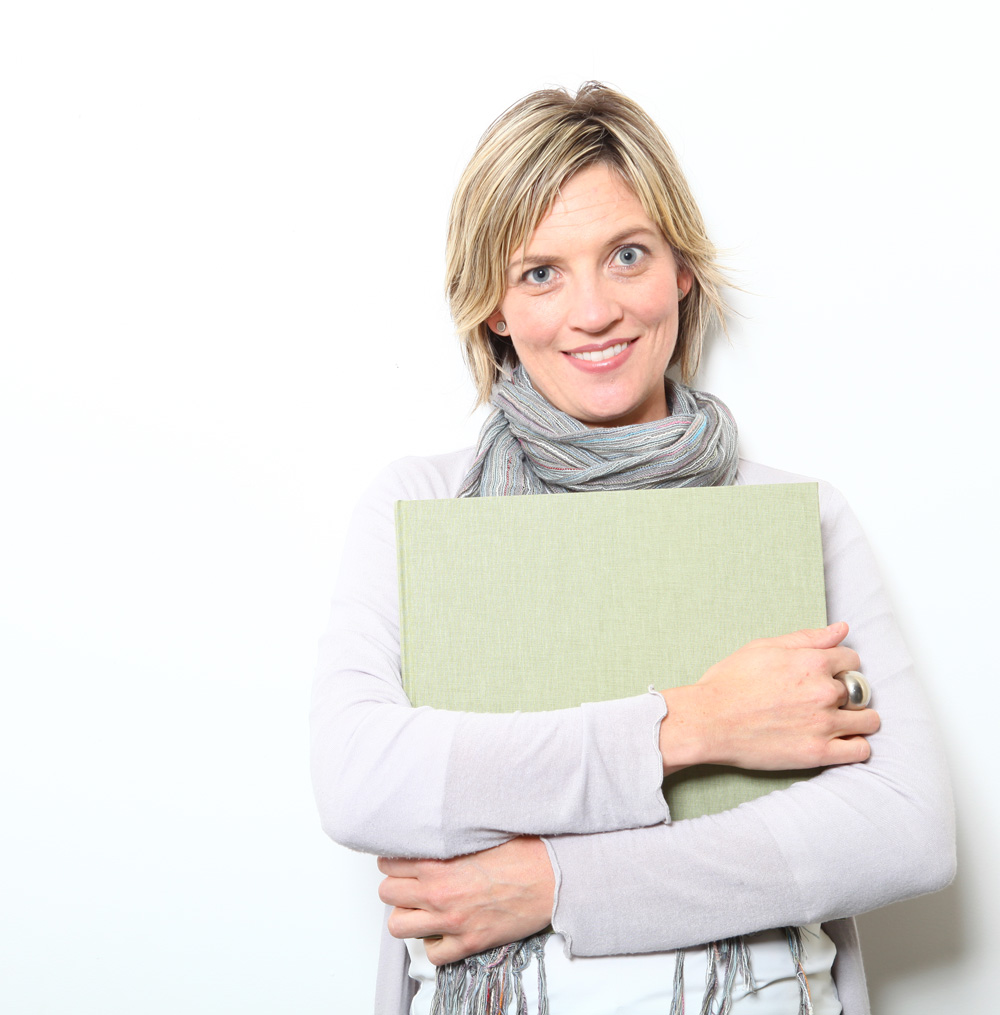
Libby Jeffery
Co-founder and Communications Manager @ Momento
Libby has enjoyed studying and working in communications and media production since undertaking a B.A. Communications at UTS and volunteering with interactive CD-ROM producer Pacific Advanced Media Studios in 1994. Since then her career has revolved around communications, events coordination and media production for creative industry pioneers including OzEmail, the Australian Interactive Media Industry Association (AIMIA), IPR Systems and most recently the Chippendale Creative Precinct.
Following her role in 1999 as Project Manager for the Australian Society of Authors’ e-publishing and digital rights management experiment, OzAuthors, she, partner Geoff Hunt, and colleague James Whitwell founded Momento in 2004. Momento was Australia’s first print-on-demand photo book service and the proprietary Momento layout software, lets anyone design their own coffee-table photo book easily, ready for printing. Momento remains the ‘finest’ service provider in Australia today, celebrating photography and photographers in all forms
.

.
.

 wotwedid
COMMENTARIES: ARTISTS BOOKS … AS POPULAR AS TATOOs!
leave a comment »
The wide view
COMMENTARIES ARISING FROM THE SLQ SIGANTO FOUNDATION SEMINAR
The trouble with artists’ books
State Library of Queensland – May 4, 2013
.
The quote “artists’ books … as popular as tatoos” was an opening remark by gallerist Noreen Grahame
.
In Volume 7 of the Bonefolder e-journal I reported on the dual artists book events of the 2010 Artspace Mackay Focus on Artists Book V, event and the 3rd Libris Awards. In this report I commented on the speaker’s presentations and reviewed the artists book award. I then concluded that these events were integral to the development and maintenance of a community of practice for those who make artists books in this country. Three years on the energy and enthusiasm for artists’ books remains however the Mackay Focus event has been abandoned and some awards events have slipped from their usual place in the yearly/bi-yearly calendar.
We are indeed indebted to the Siganto Foundation and the SLQ who in 2012 made possible the Keith Smith and Scott McCarney workshop and seminar, and this year the The trouble with artists’ books seminar. It seems to me that artists book community in this country has a great appetite for information, connecting with the heroes and heroines of the discipline, learning about methods and techniques as well as participating in camaraderie with their peers. My concluding words in the Bonefolder report recognised the importance of events such as Artspace’s Focus on Artists Books and the Libris Awards as they invigorate the discipline and the art of artists books … The significant response to this seminar indicates that the pace and frequency of artists book events should not slacken – we want more!
The Bonefolder report concluding comments were:
Awareness of the origins of the discipline of artists’ books and the Australian context as well as issues of contemporary and emergent practice is a unique outcome for FOAB. Where else in Australia this year would one be able to experience, or participate in a program where issues as diverse as Avatars making books in their second life, the death of the book/author, wild books and zoo viewing of books, propositions for new perceptive literature, mail art and the products of psychometry being resolved as artists’ books? Perhaps attendees should be warned of the ride that they would encounter.
Central to need for the FOAB, as an event, is its ability to pull together artists’ book interested people and provide a forum for them to be a part of something bigger than themselves. Artists’ bookmakers are individual artists, sometimes collaborators, librarians, academics, gallerists and collectors are isolated as islands of interest in their usual place of activity. But at FOAB they meet, greet, mingle, chat, discuss, argue and get down to the flensing-out of ideas, polemics and concerns about practice and the book as a work of art. This blend of interested parties forms the nucleus, the hub, of the discipline within this country – without it, there would only be individual soliloquies in the wilderness
.
Julie Barratt
Julie Barratt – Artist
I guess really briefly what I got from ‘the trouble with artist book ‘ talk if I was going to quote is ” it seems the trouble with artist books is that there are too many to love!!!” On a more serious note I guess for me it always comes down to how we talk about/define an artist book, as an ongoing discussion.
Almost on a daily basis when I had the gallery (I always had at lead a few artist books on display) people would ask what these books are! How to define them without quoting Johanna Drucker? Should there be categories i.e. Sculptural, digital etc etc. How do we expect the audience to understand them if we as practitioners have difficulty talking about them? But how do we agree on a definition?
That’s what I imagined the forum to be about because ‘isn’t that the trouble with artist books’? Having said that I thoroughly enjoyed the forum and think there need to be many many more of them when in fact there seem to be less (Mackay forum? ) so that the discussion can continue….
Its always a pleasure to catch up with the artist book community, feels like a reunion every time!
Julie
.
Maureen Trainor
Maureen Trainor – Photographer and QCA Masters student
I found these presentations to be very informative and inspiring.
The content and sequence of the presentations were dynamic.
By breaking down the delivery into the three different viewpoints the three Keynote speakers were engaging and thought provoking.
Starting with Helen Cole presenting ‘the Librarian’s view’, Noreen Grahame presenting ‘the Gallerist’s view’, Jan Davis presenting ‘the Artist’s view’ and ending with an interactive audience time for ‘questions and answers’ was right on target with information.
The Hearsay team discussing their project was fantastic. Combined with humour and wit they certainly kept the attention of a diverse audience.
I truly enjoyed the afternoon and felt I could of stayed into the night with more speakers and presentations.
Maureen
.
Monica Oppen
Monica Oppen – Artist and collector
The Trouble with Artists’ Books (and the Libris Awards)
Coming away from the SLQ seminar where the attendance was so strong and having attended the opening and announcement of the Libris Award at Artspace Mackay the conviction that has risen strongly in my mind is that there is a real need for events such as the SLQ Siganto Seminar. The strong attendance not only indicates a real interest in the topic but a desire of artists to reconnect with others working in the field. As Helen writes in her post about the Libris Awards, and I can vouch for it, there were very, very few artists there but also no other significant persons from the institutions who have an ongoing interest and involvement in artists’ books were there. The tyranny of distance and the associated costs of travel and accommodation will only be overcome by creating an event that is worth travelling for.
The topic The Trouble with Artists Books is pertinent and complex and was way too big to handle in one afternoon; a multi-day conference could have been structure around this topic. Time restrictions meant that Jan Davis and Noreen Grahame could only touch on, hint at and introduce the work/books from which a broader discussion could have expanded. The sense that there is a need for these seminars (judging from the attendance numbers) also hopefully indicates a need for more rigorous, mature critical discourse around the genre, a breadth of conversation and argument. Does the constant discussion of definition and the non-committal responses from ‘those who should know’ arise from this lack of discourse? I don’t consider the definition ‘if the artist calls it a book, it is a book’ to be an adequate, exciting nor empowering definition unless some force is allowed to work in opposition to it, that demands a justification, demands some critical analysis. The lines will always be blurry but this could be an energizing force and contribute a dynamism to the genre. By not taking a stand are we in fact leaving definitions to the gallery? Surely the gallery as a medium is the antithesis of the (artists’) book. The gallery is exposed and extraverted; the book is enclosed and introverted. Always it comes up, the problem with exhibiting artists books— this is because books are not meant to be exhibited, they are meant to be read. What are the implications for the genre if books are only viewed in the gallery, and more seriously if the gallery maintains a ‘no touch’ policy? Ironically, making a (artist’s) book was originally about abandoning the gallery; about the subversion of the commercialism of the art object. The book was meant to be a free-floating object in wider society. Where is that rebel spirit?
A hundred more questions could be asked. I hope the SLQ seminar is not a one-off but gives an impetus to more symposiums throughout the country.
Monica Oppen 14/5/13
.
Judy Barrass
Judy Barrass – Artist
THIS COMMENTARY COMES FROM JUDY’s BLOG – ‘Critical Mass’ http://www.criticalmassblog.net/2012/?p=2568
No one can agree on what they are, or even where the apostrophe should be placed, but a seminar on artists’ books at the State Library on Saturday drew a crowd.
It was a rare get-together of artist book makers and officianados, with attendees travelling from other states and regional Queensland just to attend the two-and-a-half-hour seminar and catch up with old friends.
According to the speakers, librarian Helen Cole, gallerist Noreen Grahame, and artist book maker and academic Jan Davis, artist books are problematic. That’s not just because no one seems to be able to agree on a definition, but also because they are hard to store, hard to display, and are not usually included in mainstream collections or exhibitions. They attract mostly a smallish group of makers and collectors and don’t sell in large numbers. Despite this, artists’ books draw a passionate audience of makers and supporters whenever they are on show (or whenever there’s a seminar).
Queensland has been a leader in the artist book phenomenon. The Queensland State Library is a significant collector, and Grahame Galleries took an early leading role. Artspace Mackay and Noosa Regional Gallery added public gallery support to exhibitions and collecting.
Someone suggested that it’s an inbred audience made up almost entirely of artist book makers, but a show of hands in the crowd on Saturday debunked this myth since at least half the attendees were not makers. Still, as Noreen Grahame remarked, artist books are a sort of ‘underground’ movement outside the mainstream.
I can’t help wondering if this is merely a question of naming. By calling these artworks ‘books’ they are relegated to the collections of libraries rather than art galleries, or they exist in a no man’s land between library and gallery. Nonetheless I have seen many works in public art gallery collections that could (or perhaps should) be called artist books. The boundaries are thin and flexible, and this was evident at the seminar. The mantra seems to be that if the artist calls it a book then it is a book.
One of the more interesting questions on the day was about the growing number of artist books that exist only in digital format. Helen Cole said the library was considering how these books might be collected and preserved, but indicated it was extremely difficult, particularly as technology changes so rapidly and formats and software become obsolete. Noreen Grahame solved the problem by referring to digital books as ‘ephemera’, and Jan Davis thought the number of artists working in the digital realm was small.
Following the discussion, a very chatty audience enjoyed a scrumptious afternoon tea and the launch of Hearsay, a large format collaborative artists’ book by artist Euan Macleod, printmaker Ron McBurnie, and writer Lloyd Jones. They apparently didn’t worry too much whether or not their work was or was not an artist book, but have sensibly hedged their bets by also producing the pages as a portfolio of unbound prints (in case anyone thought it wasn’t art, or more probably because the portfolio might be more saleable than an artist book ).
The seminar ‘The Trouble with Artist Books’ was sponsored by the Siganto Foundation through the Queensland Library Foundation.
The State Library artist book collection is part of the Australian Library of Art.
(Thank you Judy for allowing this re-posting in this blog)
.
.
Wim de Vos
Wim de Vos – Artist
‘The Trouble with Artists Books’
The lecture sponsored by the Siganto Foundation was very well attended by a large audience of art practitioners, administrators, and lovers of Artists Books, and was introduced by the new head of the State Library, Janette Wright. The speakers were Helen Cole, Senior Librarian of Special Collections at the Library; Noreen Grahame, Gallerist and long time respected promoter of the Artist Books within Australia and Internationally; and Jan Davis, Academic, and practitioner of Artists Books at Southern Cross University, Lismore, NSW.
Technically the lecture was informative, ran smoothly and was very well presented.
It was great to see so many practitioners (well over half the audience) and the general public, as this event facilitated a forum – to share, and some time to catch up with friends and colleagues. This has over the last few years become non-existent with the loss of the Art Space Mackay Artist Book Forum. Also the Noosa Regional Gallery’s ‘demise’ of the Artists Book annual exhibition was a sad occurrence. In addition, both venues offered successful workshops with renowned National and International Practitioners in the Visual Arts to nurture the visual arts and the book.
Many aspects of the development of Artists Books were addressed. Helen Cole addressed the ‘Trouble with Artists Books’ from a Librarian’s point of view, in that, because they were ‘Artists Books’ and diverse in so many ways, the logistics of preservation, cataloguing and storage were ‘Troublesome’. Furthermore, it was stated that the ‘Galleries’ had passed the Artists Books onto Libraries to display and make use of them, and by making Libraries the custodians of the ever-growing phenomenon of the Artists Book.
The concept of Artists Books is generally not an easy topic to present. It is in fact generally not understood at all. A friend recently pointed out, ‘I didn’t even know that an artist book existed, but as I have learnt through the language of art over time, I can say, I view this process as Book Works by Artists.’ A major exhibition of books of this nature: DAS BUCH was presented at the Queensland Art Gallery in association with the Museum of Contemporary Art in Sydney and the Goethe Institut in Germany during 1992. This was, I’m sure, a huge influence on art practitioners and the public. At the time, it placed an emphasis on the ‘Book as Object’ in a context never before experienced in the Antipodes. There has been no major exhibition of this type in a public gallery in this State, since.
As I am a practising artist and maker of prints, paintings, and sculpture, and work with a wide variety of materials, the book as object comes naturally as a medium to extend my practice. It has in fact tied together all my processes of making art, including text, giving me the freedom of story telling on many levels.
I observed, as the afternoon progressed, that in the presentation not all aspects of Artists Books practice was being fully covered and explored by the presenters. This became, indeed, troublesome. There is actually content within books, books with text, images and text, objects and materials, and so on. There was very little mentioned on the subject of the Sculptural Book or the Photo Book. A visual list WAS presented with images of the types of books that were in the collection of the Library. But no further elaboration was offered to those in the audience that were not already ‘in the know’. The State Library of Queensland has one of the largest collections of Creative & Historical books in the southern hemisphere.
Let it be said that we can be proud of a comprehensive, diverse, eclectic and public collection of books – particularly in the collection of Contemporary Art practice in Queensland and beyond. It is promoted that it ‘may be visited at any time, by appointment’.
I recognise that there is not time to cover everything fully. This made duplication and repetition even more irritating. Time may have been used more productively.
The lecture continued with the history of the Artists Book and it’s growth within Australia over the last 30 odd years. This painted an impressive picture of collections and practise over that time. Artists were mentioned who were instrumental in its development, but presenters did not go far enough on this issue, and failed to mention key motivators: artists both local and international. There was a ‘flow of words’ promoting a few artists over and over again. When the presentation of ‘Favourite Artists Books’ was introduced the theme of the lecture was totally abandoned. We were presented with a self-indulgent diversion as to what the book may mean only to the ‘literate Artists Book fans’ present.
It would have been more useful to give the audience an indication of how they may wish to learn more about Artist Books through the public and private system. There was enough talent and experience behind the microphone to impart this information. It seemed much of this lecture was preaching to the converted.
Afternoon tea on the terrace was followed by the launch of a collaboration of an Artist Book created by two well-known visual artists: Ewan McCloud and Ron McBurnie, and the writer Lloyd Jones. This was a very good presentation chaired by Suzi Muddiman: Director of the Murwillumbah Regional Art Gallery in NSW. This gave the opportunity for the layperson to experience the processes of collaboration in art making.
As there are no indications of any follow-up lecture or activities relating to Artist Books, it would be worthwhile to plan something on the promotion and educational aspects of Artists Books. I am sure it would be a great success.
A ‘large bouquet’ to Helen Cole in particular, and the State Library, for organising this generally informative and pleasant afternoon. We look forward to a more expansive event in the future.
Wim de Vos
.
.
Peter Lyssiotis
Peter Lyssiotis – Artists book-maker and photomonteur
Peter’s letter
.
A vodcast for the event is available at http://www.slq.qld.gov.au/audio-video/webcasts/recent-webcasts/siganto-seminar
.
Cheers Doug+Victoria
.
.
© Of all texts resides with the authors
Photograph of the SLQ Theatre, Julie Barratt, Monica Oppen, Wim de Vos © Doug Spowart 2013. Self-portrait of Maureen Trainor ©2013. Judy Barrass portrait supplied by Judy.
This work is licensed under a Creative Commons Attribution-NonCommercial-NoDerivs 3.0 Unported License.
.
.
.
Share this:
Written by Cooper+Spowart
June 3, 2013 at 1:56 pm
Posted in Artists Books, Meeting People, Reviews, Wot happened on this day
Tagged with Artists Books, artists' books in Australia, Artspace Mackay, Bonefolder e-journal, commentary on artists books, communities of practice, communities of practice artists books, Focus on Artists' Books, Helen Cole, Judy Barrass, Julie Barratt, Libris Awards, Maureen Trainor, Monica Oppen, Peter Lyssiotis, Siganto Foundation, State Library of Queensland, the trouble with artists' books, Wim de Vos