Archive for the ‘AIPP’ Category
AIPP ON THE LOUNGE: SQIT Toowoomba April 11, 2012
- AIPP – On the lounge SQIT, Website invite
On this evening the SQIT Photoimaging team hosted two events for visiting AIPP members and invited guests. The visit began with a ‘High Tea’ catered for by the SQIT Hospitality team – sumptuous treats were accompanied by tea and coffee. Those attending settled down to conversation with each other in the convivial atmosphere of the ‘Futures’ Restaurant. Coffee Shop
At 5.30 stage two of the visit began with the open of an exhibition of photobooks and artists’ books made by SQIT Photo students over the last 5 years. The show was opened by Queensland Division President Jan Ramsay, who as a past student of an art photography unit, and also part of the end-of-year professional assessment team at SQIT, had experienced the Toowoomba TAFE Photo team at work.

Doug thanks Jan Ramsay for opening the ‘Brought to Book’ show
The books on show ranged from Shanea Rossiter’s ‘Inspiring Women’ book of portraits to Cathy Smith’s book ‘Junked’, a documentary comment on our disposable society and Lorraine Seipel’s political message in the book ‘Song for the future’. The exhibition was curated by Victoria Cooper and Doug Spowart for the Queensland Festival of Photography.
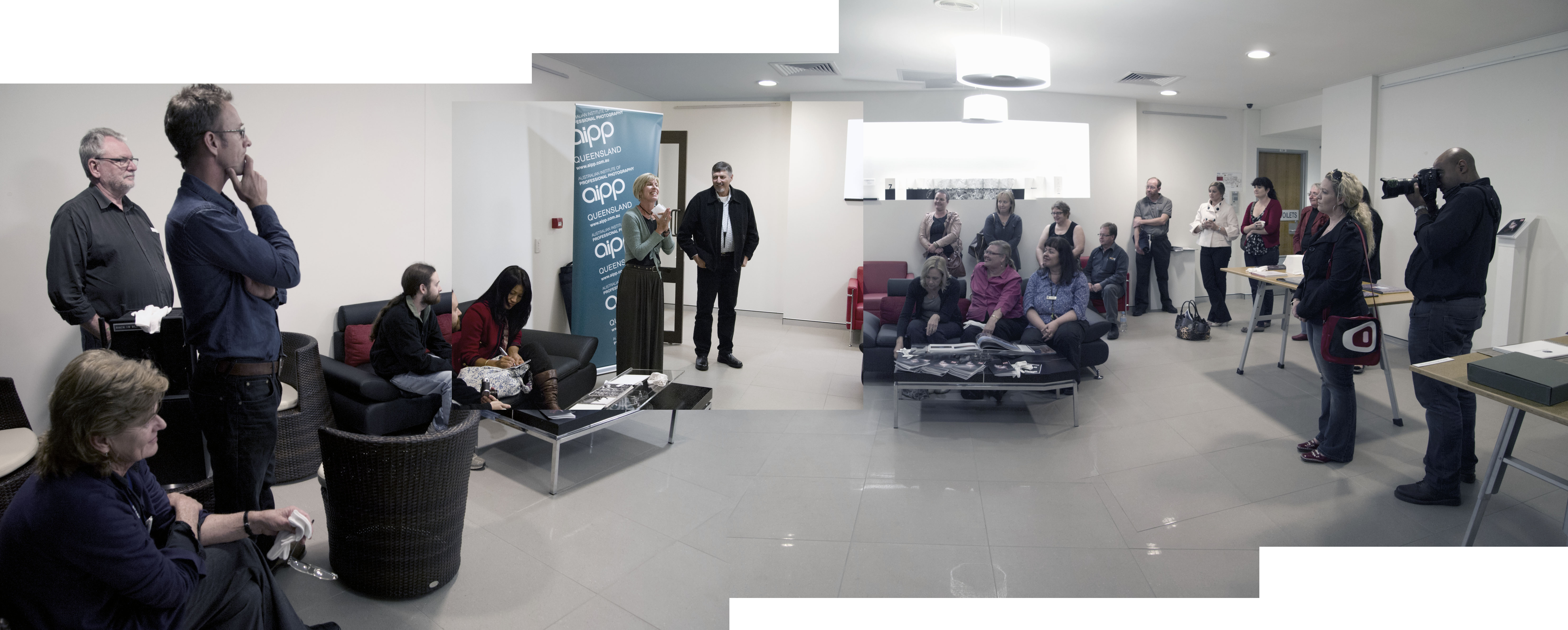
‘Brought to Book’ opening @ Futures Gallery SQIT Toowoomba
The third stage of the program included presentations by the three full-time staff of the photo team – Rachel Susa, Alison Ahlhaus and Doug Spowart. Each spoke of their connection with photography from both the personal and professional context. Doug spoke of the 20-year history of the photo Diploma and Certificate courses at SQIT and the Photoimaging teaching methodology.
The session concluded with a PowerPoint show presenting a selection of images and comments from past students. It was interesting to hear of the experiences of these past students about studying at SQT as well as their achievement in photography. The past students included: AIPP Chairman of the Board Alice Bennett, Nicola Poole, Katie Finn, Lisa Mattiazzi – National Gallery of Australia imaging specialist, Lydia Shaw who works in many areas including photography and teaching in Dubai, nationally acclaimed commercial photographer Damien Bredberg, Sue Lewis – APPA Team Manager and recent graduate Shanea Rossiter who is establishing a business in Warwick.
The Past Students PowerPoint show (PPS) can be downloaded from the www.cooperandspowart.com.au website – It’s a 30.9 mb download but presents an interesting overview of where SQIT students go to and the amazing achievements that they have. CLICK <http://www.cooperandspowart.com.au/2_PLACES/OtherBooks/index.html> Then select the PowerPoint AIPP OTL picture.
The evening concluded with the video fusion show “Dance-on’ by 2011 SQIT Diploma Student of the Year. “Lindsey’s video represents the future of photography” said Doug, and added, “that the stilled image is dead!” The point was not debated, but in the context of an industry that has gone from wet darkrooms to light rooms and digital output in the last ten years everyone left knowing that anything is possible.
Cheers Doug
Judging professional photography: MSIT, Brisbane, March 24&25
The 2012 AIPP Queensland Professional Photography Awards.
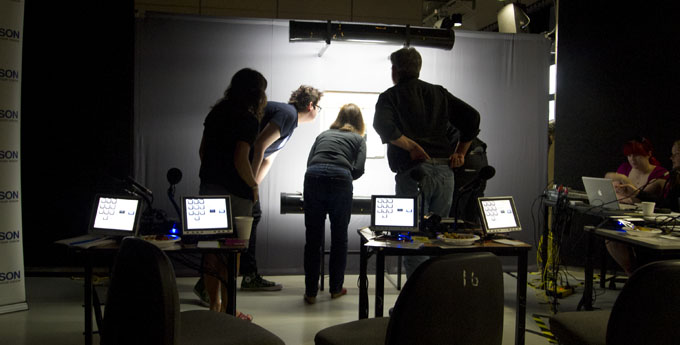
Queensland AIPP Professional Photography Awards judging
I’m sitting on judging panels for the landscape and documentary panels of the 2012 AIPP Queensland PPY Awards. The work is challenging and diverse and the judging panel capable and opinionated. My mind wanders to thoughts about photography, its assessment and critique.
The social scientist Pierre Bourdieu wrote many things about photography. Many photographers would take particular exception to his essay on ‘Photography: A Middle-Brow Art.’ But some of what he says bears a strong and salient connection with the way photographer’s debate, discuss and judge their work. Bourdieu states,
” It is no accident that passionate photographers are always obliged to develop the aesthetic theory of their practice, to justify their existence as photographers by justifying the existence of photography as a true art.” (Bourdieu 1996:98)
Whilst his statement may relate to all kinds of photography from the camera club to the teaching institution it connects, to my mind, most directly to professional photography. Shortly after the time he wrote the original French text (early 1990s) I was not only a fervent participant in all kinds of photography competitions but also the chairperson of the AIPP Australian Professional Photography Awards. I witnessed and perhaps even guided the transition of the APPA, as it became known as, into the form that it now takes.
Founded in 1977 The AIPP National Print Awards were judged with an interest in the work being suitable and relevant to professional products for clients. Prints were glorious colour, 16”x20” flush mounted and were a celebration of technique as well as saleability. Each year 300~500 prints would be judged by the doyens of the industry and a few rising stars. In 1984 I sat on one of these judging panels alongside the big names of professional photography at the time – I felt quite small.
By the end of the 1980s new influences were invading the professional scene. John Whitfield-King and others of his persuasion were creating a space for documentary approaches to wedding photography informed by Henri Cartier-Bresson and Elliott Erwitt. Areas of photographic practice such as illustrative and landscape were emerging and along with them was a recognition of art photography from the American scene by practitioners like Ansel Adams, Harry Callahan, Lee Friedlander, Arnold Newman et al. Black and white prints with Leica-esque full-frame black fuzzy borders became the emergent trend and prints became small and fine on white mount boards. Along with Paul Griggs, Jeff Moorfoot, Lyn Whitfield-King, Peter Adams and Robert Billington, I also was also one of this new guard.
Photographers began to present images from their own personal photographic exploration – subjects that excited and invigorated their practice. These were photographs made by photographers – for photographers. The judges were excited by this work as well and awards were made that celebrated inspirational photography. Each year new work became more and more detached from the previous client-based assessment, and the new paradigm became the engine room for photographers to experiment and push ideas about what professional photography could be and also what clients may want. All this change was not without its detractors. The photo press and newsletters published the laments by some about the loss of industry and the self-indulgence of those engaged in it.
Despite this, professional photographers did embrace the awards process with such enthusiasm that larger entries necessitated extra judging rooms, days of judging and an army of judges and event team volunteers. Early in my chairmanship I undertook a national judge training program with the intension of filling the judging ranks with new judges, and in particular, evening up the gender balance of such panels. The term ‘judge training’ implies some kind of conditioning process where the participant is shown how to spot and reward certain standards. This was not the route that I chose. My philosophy was related to the recognition that all candidates start with a significant understanding of photography and that what they needed was to (1) understand the APPA judging system of team-based scoring and debates, (2) come to know and practice discussion and debate techniques, and (3) grow through the process accepting it as not only one which is about making judgements, but also its educative nature for the judge and the entrant alike.
In time we achieved much of what we set out to do. The judging team became more representative of membership – gender balanced, younger, from the regions as well as the city. APPA as a system during my time as chair cautiously welcomed-in digital output, imaging and image enhancement – something we take for granted now but an area of significant consternation in the mid 1990s. Not to mention each year’s crop of award winners that are celebrated in the prestigious form of the Awards Book. Additionally we should not forget that the APPAs were originally, and still are an accreditation system to recognise and reward the professional photography skills of AIPP members through the awarding of APPA Associate, Master and Grand Master honours. At one time you could count the number of APPA Masters on the fingers of two hands – they were a rare-breed indeed. Now the AIPP is replete with masters and Grand Masters may need more than two hands to count. In my opinion what it takes to be a Master is no less now than it was 20 years ago – it’s just that the general standard of professional photography as an innovative and expressive form of communication has grown exponentially.
Over time the APPAs have grown beyond our imaginings of the 1990s into the mega event it is today. States such as Queensland have their local awards judgings that have entry numbers exceeding the national entry only 20 years ago. Professional photography practitioners from this country have, for over ten years, won every major international award, had top ten listings in numerous disciplines and travel extensively as guest speakers and leaders of the industry internationally. Some of this acclaim comes from the spark that was set by the team that was APPAs in the 1990s. Most of the names and contribution that these people made have now gone. I think of David Puddefoot, Mike Woods, Ian Hawthorne, the ‘godfather’ Ian McKenzie, Malcolm Mathieson, Jeff Moorfoot, Ruby Spowart, Victoria Cooper and the current Chair David Paterson. We owe these individuals and a host of other committee members of that era including Paul Griggs, Robyn Hills, William Long, Ian Poole, for the foundation that they helped make so that APPA, and the state events could be what they are today.
It has been some time since I have judged at an APPA style event. As I sat on the judging panel I reflected on the history that has brought us to this moment. It felt good – and I was able to contribute to great discussion about some amazing imagery. Photographers have embraced the theory and aesthetics of their art and justify it through the most interesting and informative processes.
.
Doug Spowart
.
Bourdieu, P 1996, The Rules of Art: Genesis and Structure of the Literary Field, Stanford University Press.
AIPP Student Event @ SQIT
Sue Lewis, as part of her AIPP Education Liaison attended SQIT and made a presentation to photoimaging students about the professional photography industry and the peak industry body – the Australian Institute of Professional Photography. The presentation, on the 22 February, consisted of print displays, AIPP books, PowerPoint and video show. Sue was assisted by AIPP Queensland Divisional councillor Tony Holden.

Sue Lewis presents an AIPP talk at SQIT
Sue spoke of the AIPP’s history, structure, services and events. The Canon AIPP Australian Professional Photography Awards in Melbourne and the Nikon AIPP Event in the Hunter Valley were featured as ‘must attend’ events in the coming year. Sue also discussed her own photo history as a SQIT photography student 10 years ago and how she networked and connected with the APP Awards firstly working as a ‘helper’ behind the scenes. She is still behind the scenes however now she is a major manager of the national event.

Sue Lewis @ lecturn – presents an AIPP talk at SQIT
The response by SQIT students to Sue’s presentation was significant – 8 students signed up for AIPP Student membership on the day – joining many other SQIT students who are AIPP Student members. In appreciation of Sues efforts over the years and her support for students across the nation she was presented with a bouquet of flowers by teacher Rachel Susa.
What is amazing is Sue’s enthusiasm for professional photography and how the AIPP helped her along the way. She called it networking, networking, networking, and having fun with, and through, photography. Something I’m very familiar with – I joined the AIPP as a student nearly 40 years ago – still a member and having fun with photography.
Thank you Sue, and, the AIPP…

Sue Lewis with Rachel Susa @ SQIT
AIPP QLD ‘Hair of the Dog’ Conference

IMAGES ONLY AT THIS TIME – Texts to follow shortly!!
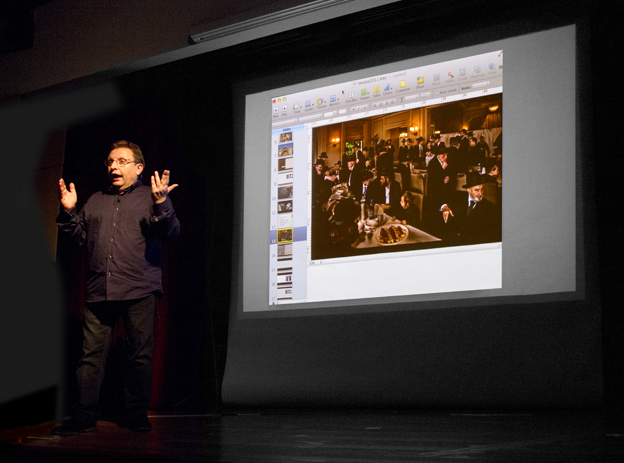
Yervant Zanazanian speaking @ the 2012 AIPP Hair of the dog
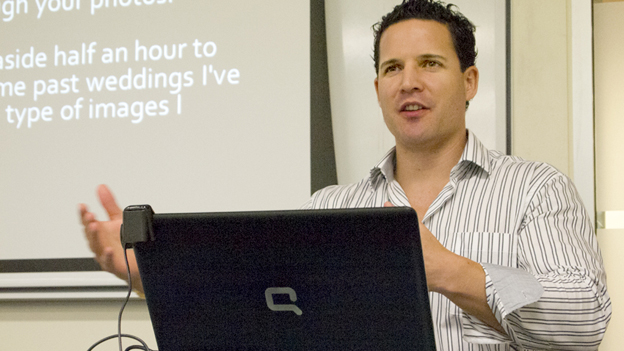
Matt Adams speaks at the 2012 AIPP Hair of the Dog

Murray Fredericks with workshop group and time-lapse rig
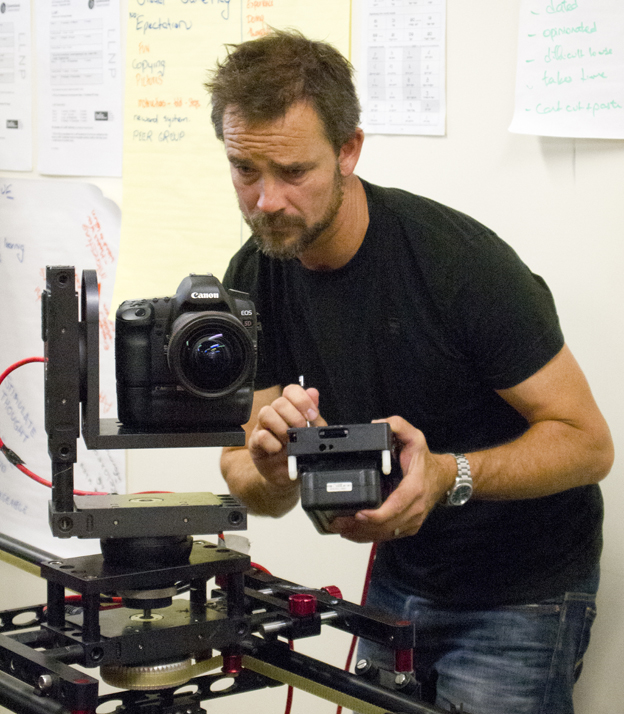
Murray Fredericks with time lapse rig at AIPP Hair of the Dog 2012
Murray Fredericks SALT Video GREENLAND Project Sydney New Years Fireworks
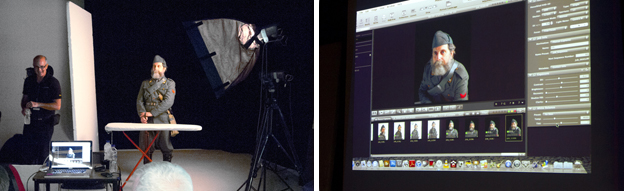
William Long at AIPP Hair of the Dog demonstarting the Hasselblad H camera and Phocus software

AIPP “Normally” Event, MSIT, Brisbane
PHOTOGRAPHY: 5 Years From Now
I’ve just asked 6 prominent Queensland Professional photographers “What will photography be like in 5 years from now?” Their answers I’ve assembled into a YouTube Video.
Their answers give us a crystal ball glimpse into the future. As the clouds and mists swirl and part in the orb what emerges are visions that may just help us prepare for what’s in store.
The photographers were: Jan Ramsay (AIPP Queensland Division – President and Eyeon Photography), Ian Poole (international professional photography judge and presenter), Gary Cranitch (Photographer – Queensland Museum), Stephen Jones (Photography – Arana Photography), Tony Holden (photo-equipment representative – C.R. Kennedy), Mark Schoeman (wedding and portrait photographer – Brisbane).

SEE THE VIDEO: Click Here!!
This project was supported as a SQIT Release to Industry activity and the Photographers of the Great Divide.
Thank you to the participating photographers.
Concept / words / photos / video: Doug Spowart
11 November: Jan and Mark’s exhibition opening
A wildly exciting exhibition was opened last night featuring the first art photography exhibition by AIPP members Jan Ramsay and Mark Schoeman. The show is presented on the premises of Flute Fine Foods @ 380 Cavendish Road Coorparoo in Brisbane.
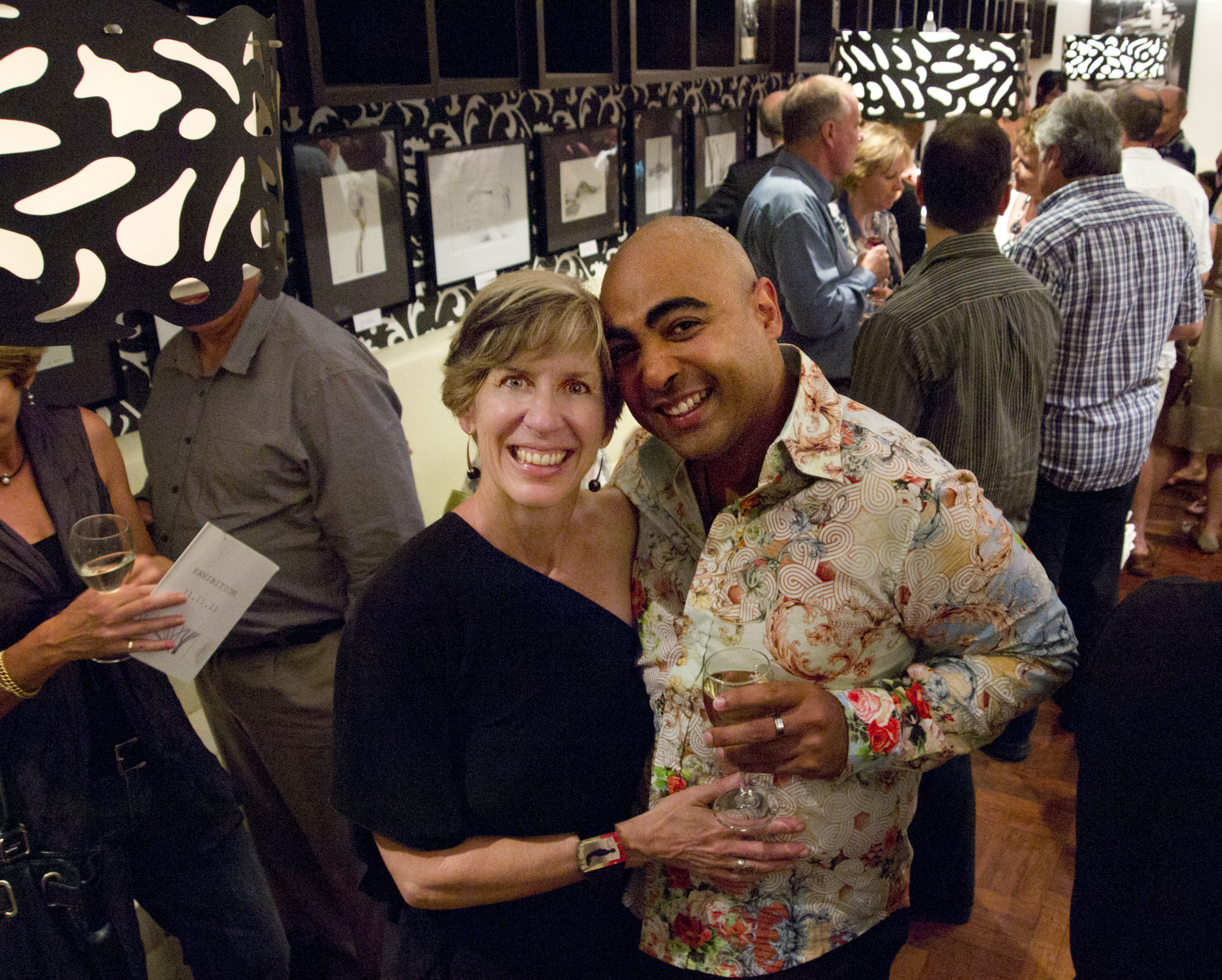
Jan + Mark @ the opening of their show
In the opening address I made the following comments:
Jan and Mark, as professional photographers and AIPP members, have stumbled upon the ultimate promotional activity in the the form of the art photography exhibition. They have created a convivial environment within the Flute Gallery, they have presented their photographic interests as fine art images of high key flowers (Jan) and female nudes (Mark), they have assembled an eclectic bunch of people and lubricated the conversation with fine wines and good food. Tonight friendships will be made or re-affirmed – participants will propose, make love and feel the joy of living. They will then want their engagements to be photographed, weddings recorded, babies and kids to be documented … The cycle goes on and on.
This evening we are all part of that strategy – So look at the art, be inspired. Consider your options for the future need for a photographer – Or – even just enjoy the moment, the present company and the art works presented here that come from the creative urges of these two remarkable people!
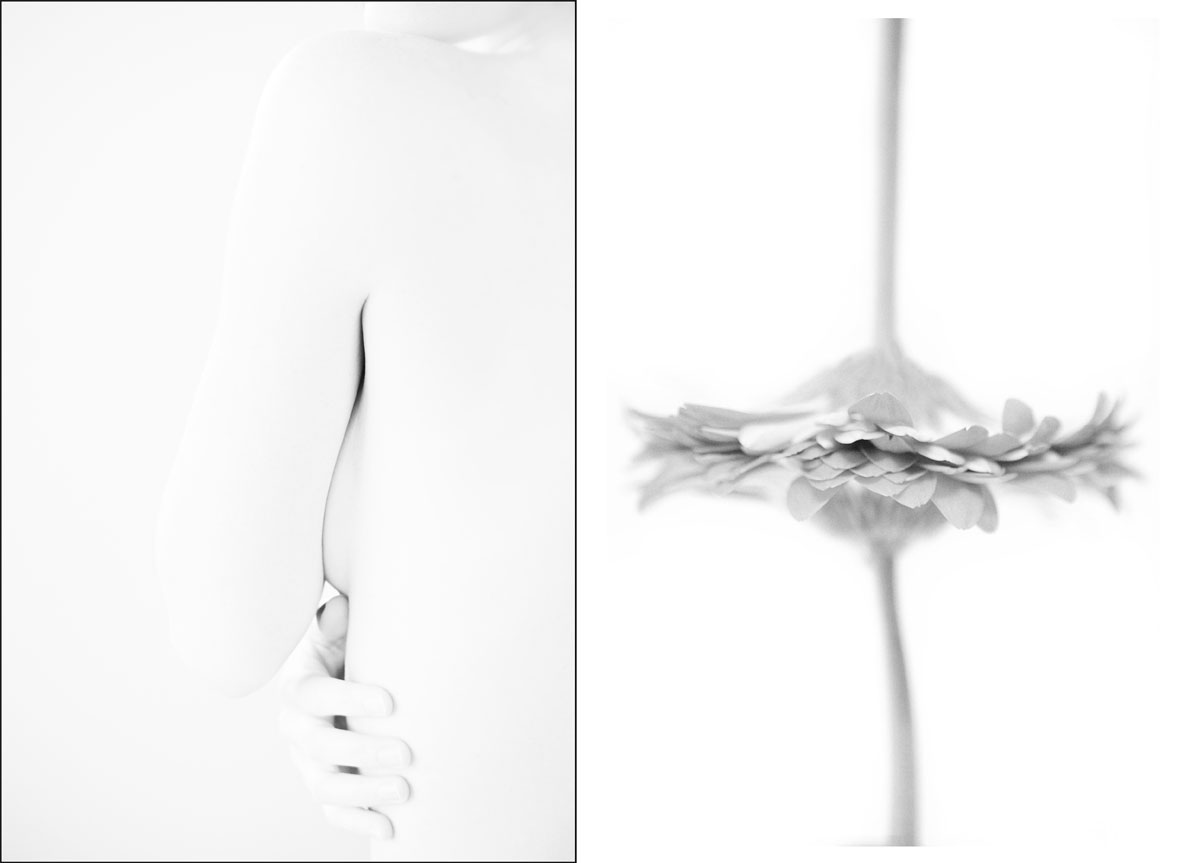
Mark’s high key nude + Jan’s high key flower transfer
Congratulations Jan and Mark.
Words+portrait photo: Doug Spowart

 wotwedid