Archive for the ‘Exhibitions’ Category
FROM TOOWOOMBA TO SPAIN AND BACK AGAIN – IN 24 HOURS!
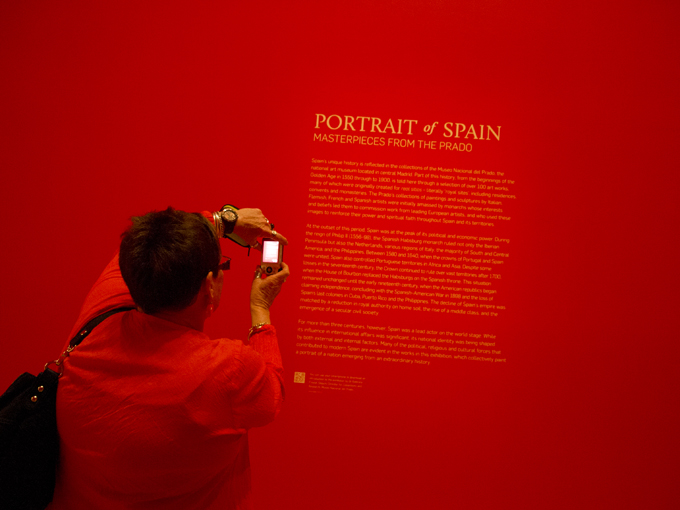
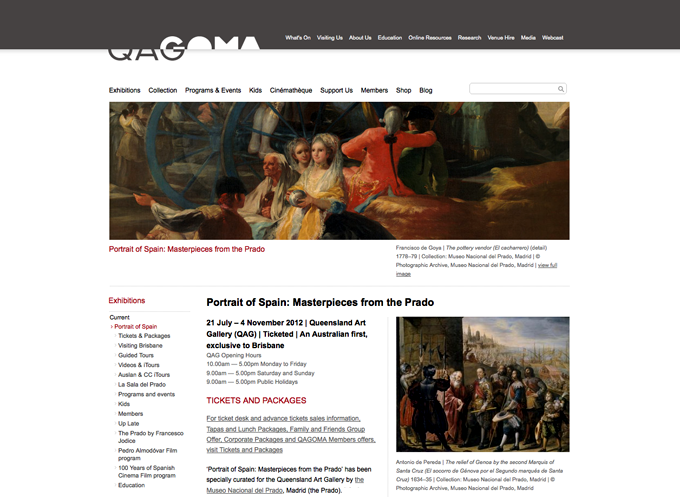
The fastest way for a Toowoomba person to get to Spain is to visit the Portrait of Spain—Masterpieces from the Prado exhibition at the Queensland Art Gallery. 100 paintings and prints are on loan from the Museo Nacional del Prado, Madrid. The QAG walls have been re-painted red and the gallery has been converted into a little Spanish culture experience.
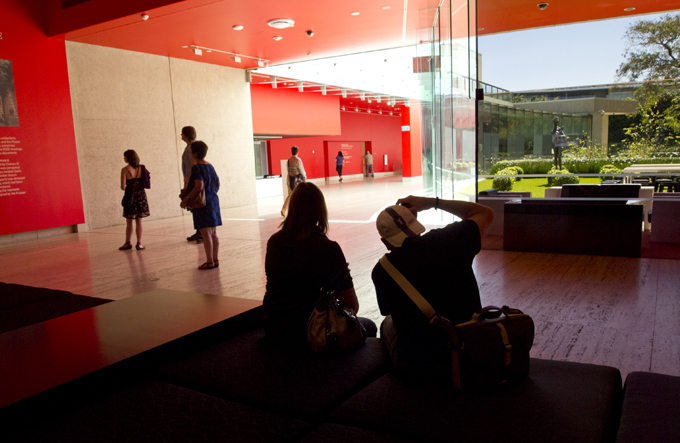
We visited the show last Saturday and participated in what was offered to the viewer/attendee.

Vicky and Doug @ Prado trompe l’oeil
The paintings were magnificent examples of oil painting from the 16th-19th century. Spanish aristocracy, royalty, religious iconography, decorative still-life and court-life. There were no nude or clothed Majas, no Meninas nor swirling clouded El Greco landscapes however there were a few of the famous work to stir the interest. One work of huge scale and interest was Pereda’s The Relief of Genoa.
The exhibition is extended over many rooms and is broken into eras and subject matter. Didactic panels and QR coded prompts help the visitor to discover the curator’s spin on what they are seeing.
All in all the Spanish portraits seem a pretty interesting lot. Fine clothing, porcelain skin, mustashes (even on some women), dogs, horses drawfs and aloof expressions abound. Then you enter the Goya’s Disasters of War series—It’s a reminder that for much of the duration of time that this exhibition covers the Spanish were at war with most of Europe at one time or another and were exercising colonial power and plunder in Central America, the Phillipines and other places.
The last room of the exhibition features the 19th century—some predictible landscapes, one entitled ‘Landscape with sheep’, our own QAG Picasso La Belle Hollandaise and some works which didn’t seem to add to the narrative of Spain in the context of the emerging trends in world art at the time.
We breezed through the exhibition shop and were drawn to the Tapas Bar for lunch after which we were enticed to play with the ‘DIY interactive portrait photobooths’ and the still-life drawing stations accompanied by a Spanish guitar performance.
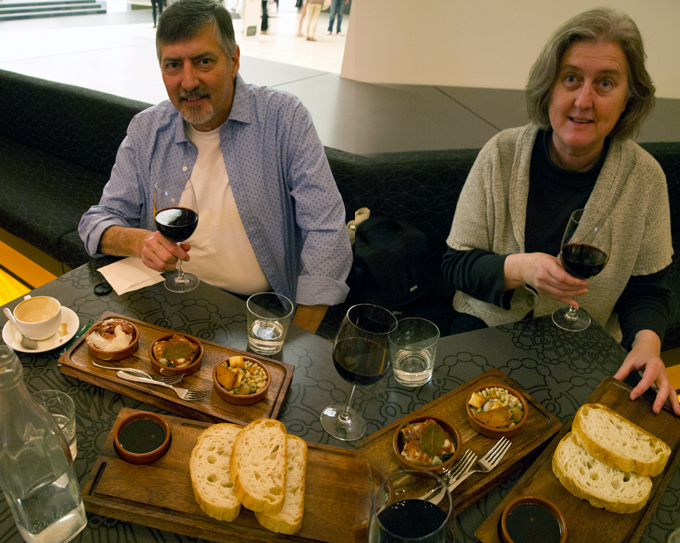
Seeing the exhibition is one thing but now, in the contemporary manifestation of gallery, we experienced a little more; Spanish culture, the work practice of the artist and other entertainment. We went to see a art exhibition and came away with so much more …
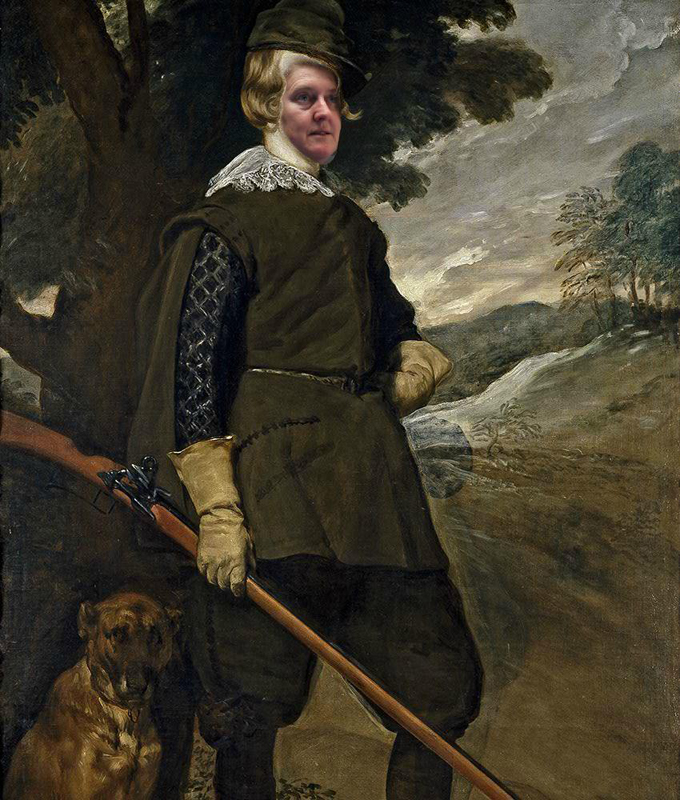
King Victoria
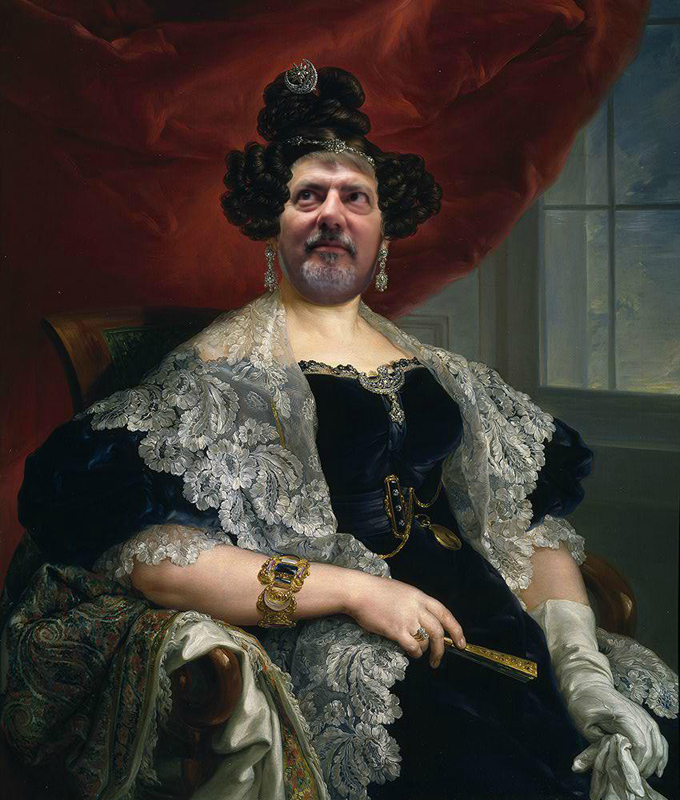
Doug posing as a moustached lady
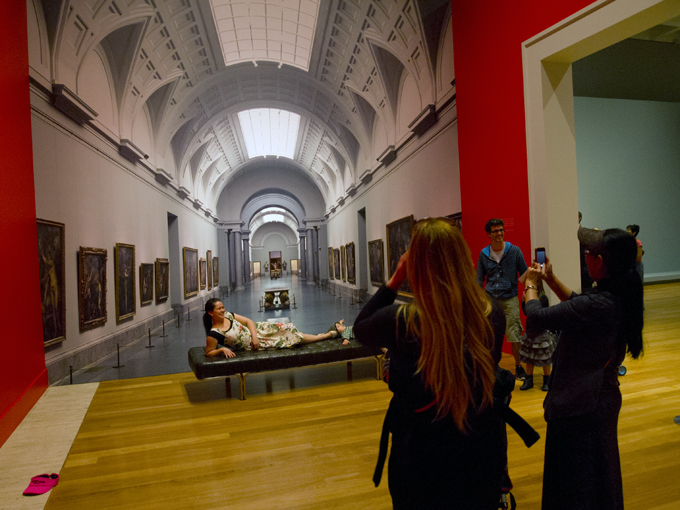
A visitor poses as the ‘Clothed Maja'(?) before the trompe l’oeil
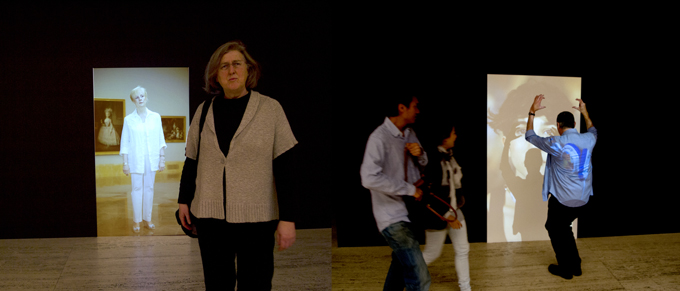
Playing with projected images of Prado visitors
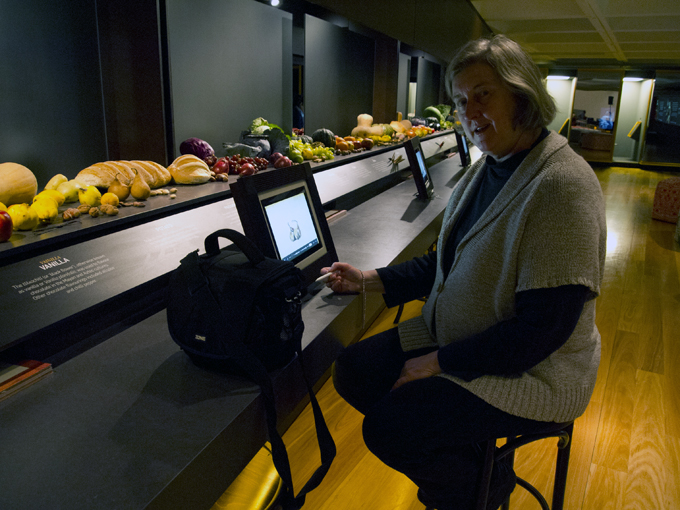
Vicky @ still-life drawing station
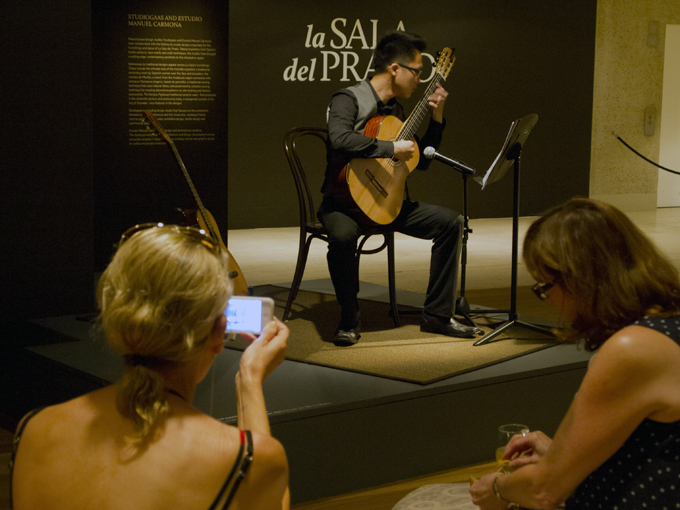
SHOOTING STRAIGHT: Regional Artists as Provocateurs
Shoot Straight You Bastards, Bungil Gallery, Roma, Queensland. 6 July-12 August, 2012
.
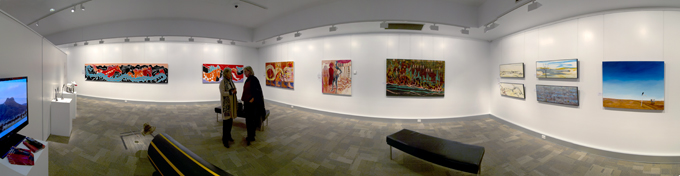
Shoot Straight You Bastards, Bungil Gallery, Roma
In her book The Lure of the Local (1997) Lucy R. Lippard states that ‘Artists can be very good at exposing the layers of emotional and aesthetic resonance in our relationships to place.’ (Lippard 1997:286) She also defines an ‘ethic’ for ‘art governed by place’ which includes the expectation, amongst others, that the work should be, ‘Provocative and Critical enough to make people think about the issues beyond the scope of the work, to call into question superficial assumptions about place, its history and its use.’ (Lippard 1997:287)
An exhibition at the Bungil Gallery in Roma, Shoot Straight You Bastards, by artists who collectively call themselves, the 6 artists from out of nowhere, creates a powerful document about relationships to place which are, as Lippard demands, ‘provocative and critical enough to make people think.’ These artists are from the Bowen Basin area around Central Southern Queensland that is currently the centre of a mining boom driven by the world’s need for cheap energy. In the enthusiastic push for profits to bolster shareholder’s returns and to reduce budget deficits, both the mining industry and the government have grasped the opportunity. While it may seem perfectly logical to develop a resource and capitalise upon it, there are many who oppose it. The principle concerns shared by many of these local communities are the threats to the farming and grazing productivity of the land, and the potential risk for long term damage to the quality of underground water across the region where mining and gas extraction is undertaken. The transformative effect on the communities and the landscape should not be underestimated.
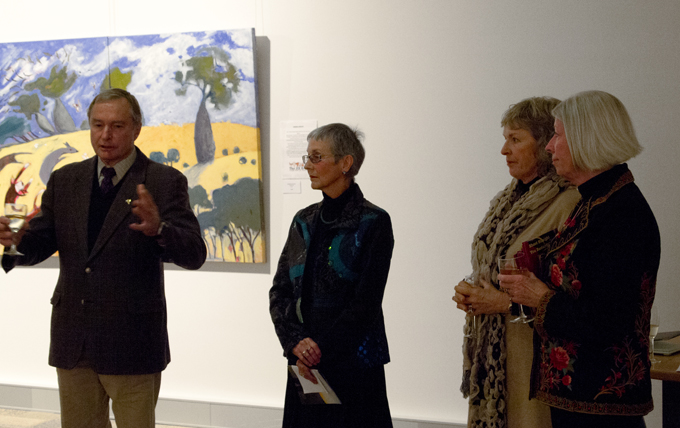
Howard Hobbs MP for Warrego opens the Shoot Straight You Bastards exhibition with 3 of the artists
The six artists are, Sandra Allen, Anne Cameron, Elizabeth Corfe, Barbara Hancock, Helen and Wally Peart. These artists and their families live on and work within this landscape as farmers and graziers. Time spent creating their artwork has to ‘fit in’ with the demands of daily living and working on the land. In their bios, the artists reference the many challenges of making art on a working farming property, as three of the artists reveal:
Anne Cameron, As with all women on the land, her artistic aspirations had to be subjugated to the needs of the property and the family,
Barbara Hancock, … the urge to paint often saw her running from paint brush to breast feeding the latest baby, and
Elizabeth Corfe’s life, has been shaped by a lifetime immersed in the highs and lows of making a living off the land.
Even though there have been obstacles they remain dedicated to their art and when possible have engaged in art training through a range of opportunities including academic study, Flying Arts and the Roma Art Group. Their works are technically and conceptually strident—quite distinct from the stereotypic pastoral ‘windmill in the sunset’ and ‘gum tree lined billabong’ paintings that art aesthetes may consider regional artists make.
These artists have amassed a large body of work expressing their concern for the land and, what they see as its impending demise. The title for the exhibition, Shoot Straight You Bastards originates from the last words of Breaker Morant as he stood before the firing squad. The six have chosen this phrase as their catch cry and they apply it to their current situation—shoot straight implies that the proponents; mining companies and governments present honest and accurate information and manage this development ethically and fairly. Their poem manifesto <http://www.sixartists.com.au/exhibitions.htm>(Link broken July 2016) questions the speed of resource development and the potential damage to air, water, earth, flora, fauna and people that this boom may have. In their impassioned plea they lament,
Why not look after Australia
For our country
For our people
For our future
In dry Australia, without artesian water we die.
Words on a website may be one avenue for activism but concepts expressed through art can also be a powerful way to evoke commentary and debate on broad social issues. Nicholas Croggan in an essay on Bonita Ely’s ecological work claims,
… the current state of ecological crisis will soon replace globalisation as the dominant cultural condition. In contrast to globalisation, which emphasises the invisible and the infinite, the state of environmental crisis drags us back to earth to contemplate the material and the finite. It demands that artists and non-artists alike reassess the way in which they engage with the natural world—both at a real and an imaginary level. (Croggan 2010:47)
Banished by Elizabeth Corfe
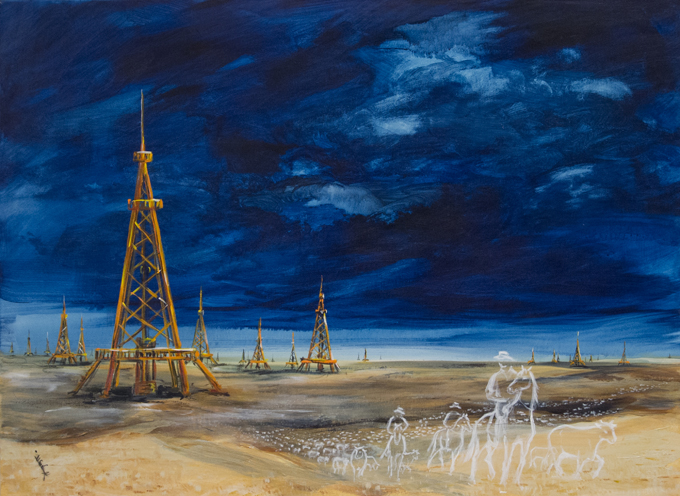
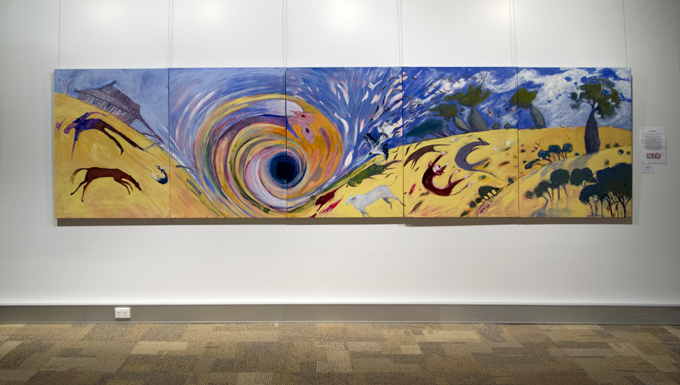
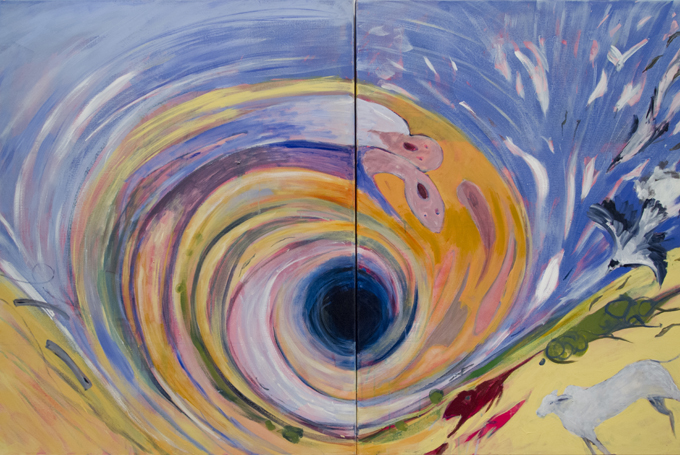
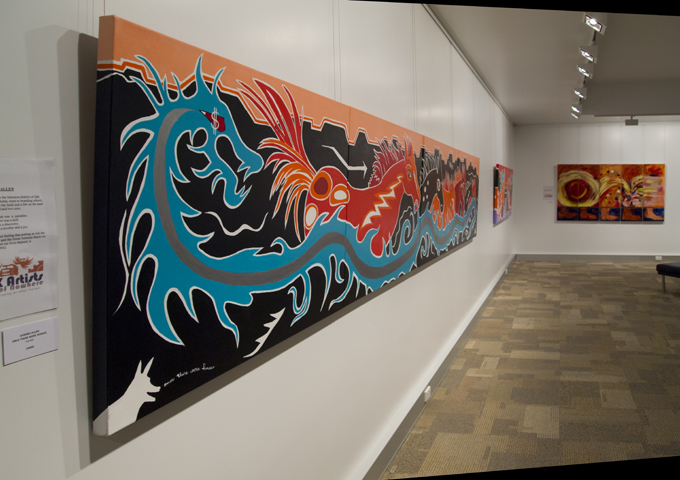
The work of these artists does bring us ‘back to earth’ in ‘real’ and ‘imaginary’ ways. In the work Banished, Elizabeth Corfe presents a landscape of drilling rigs against blue sky and beige earth—ghostly forms of men on horseback tend phantom flocks and herds that may no longer exist. An expansive piece entitled Sucked in by Barbara Hancock depicts a vortex of change ‘sucking in’ the landscape and its inhabitants—several figures inside the central maelstrom mimic the expression of the subject in Edvard Munch’s The Scream. In Sandra Allen’s Once there were horses a snake-like chimerical (Chinese) dragon with $ signs for eyes scares horses to take flight. Refer to their website for more examples.
Sucked in by Barbara Hancock
Sucked in by Barbara Hancock (detail)
Once there were horses by Sandra Allen
The Shoot Straight You Bastards exhibition has already travelled to outback regions and is set to open in Wondoan in the next month, then on to Brisbane at the White Canvas Gallery in November.
These artists are empowered in the face of this inexorable transformation—as their voices can be heard through the making, presentation and communication of their art. In 2007, Lucy Lippard curated the exhibition Weather Report: Art and Climate Change. In her catalogue essay she spoke of the artist as a commentator, communicator and as one who acts as a provocateur. In the closing remark of her essay Lippard proposes, ‘… it is the artist’s job to teach us how to see.’ (Lippard 2007:11)
Artists do ‘teach us to see’ and it is commendable that these six artists work hard to engage their communities in issues that are important. Ultimately art is a considered and authentic vision of the world and ideas. Perhaps through the dissemination and connection with others these artists’ vision may bridge a gap and change perceptions.
Curator Stephanie Smith, in the catalogue for Weather Report: Art and Climate Change (2007), presents a call to arms where she states that as artists,
… we need occasional pauses to reflect on the ever-changing and sometimes inscrutable interrelationships in which we are all embroiled … And then we need to get up from that perch … and act on the insights derived from these critical, reflective pauses. We need to get into the fray … (Smith, 2007:15)
The 6 artists from out of nowhere are certainly getting ‘into the fray’.
Dr Doug Spowart July 29, 2012
Croggan, N 2010, ‘Bonita Ely’s art of ecology’, Art & Australia, vol. 48, no. 1, Spring 2010.
Lippard, LR 2007, ‘Weather Report: Expecting the Unexpected’, in K Gerdes (ed.), Weather Report: Art and Climate Change, Boulder Museum of Contemporary Art, Boulder, Colorado, USA.
Lippard, LR 1997, The Lure of the Local: Sense of Place in a Multicentered Society, The New Press, New York.
Smith, S 2007, ‘Weather Systems: Questions About Art and Climate Change’, in K Gerdes (ed.), Weather Report: Art and Climate Change, Boulder Museum of Contemporary Art, Boulder, Colorado, USA.
SOME ART GALLERIES OF WESTERN QUEENSLAND
This post offers a pictorial view of 6 regional art galleries of western Queensland visited during an 800 klms journey from Toowoomba to Roma, Surat and return.
Weblinks for the galleries are included for further information.
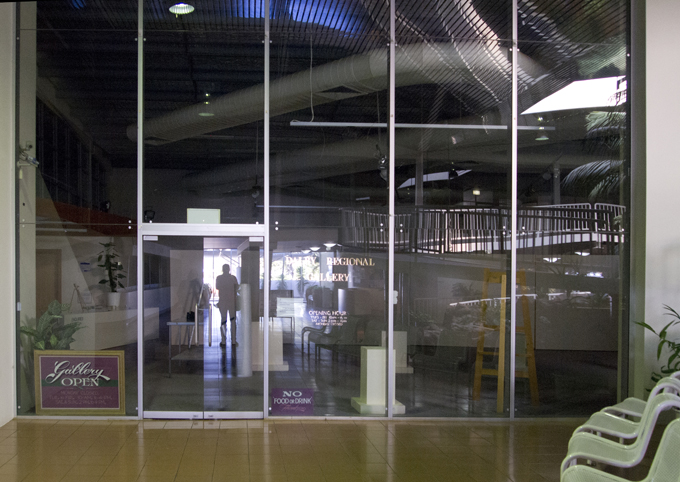
Dalby Gallery: Closed at the time of visit, 6 July 2012
http://www.dalby.info/news/autumn09_art.asp
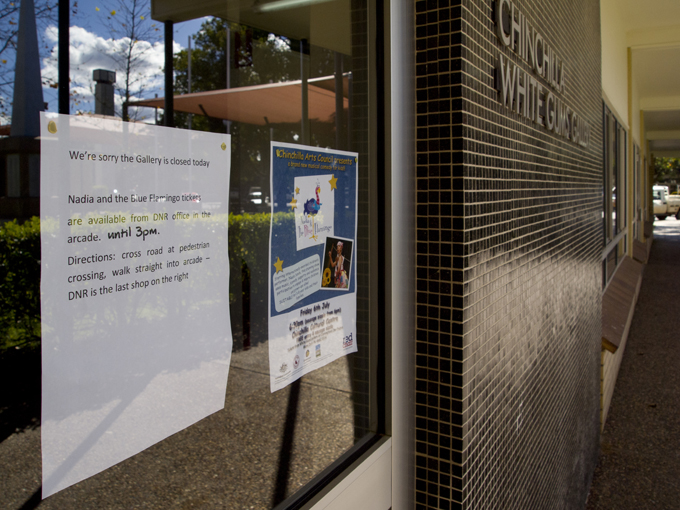
Chinchilla White Gums Gallery: Closed at the time of visit, 6 July 2012
http://www.rgaq.org.au/Chinchilla.html
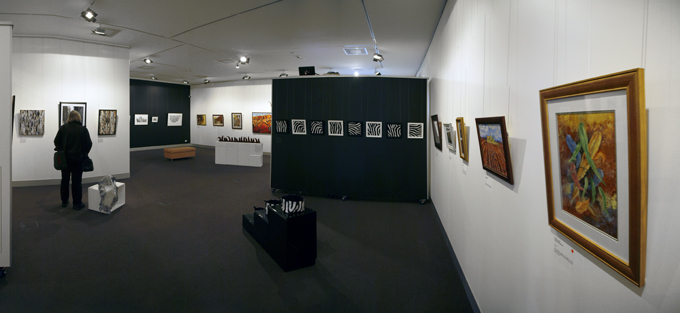
Dogwood Crossing, John Mullins Memorial Art Gallery: Patterns in Nature
http://www.dogwoodcrossing.com
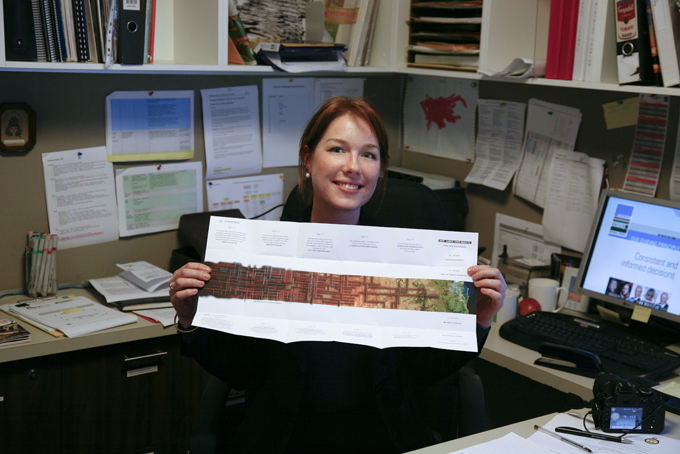
Elysha Gould Gallery Supervisor in her office @ Dogwood Crossing
.
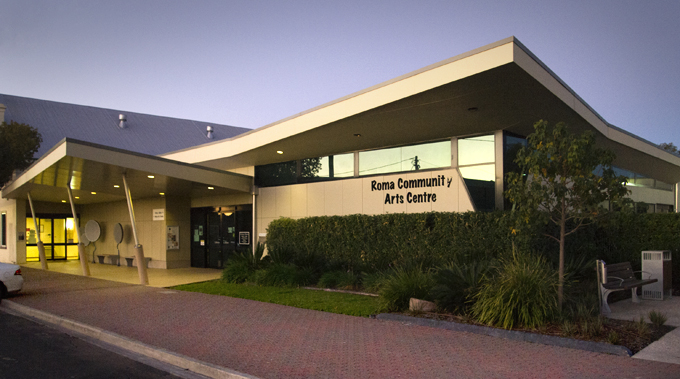
Bungil Art Gallery, Roma
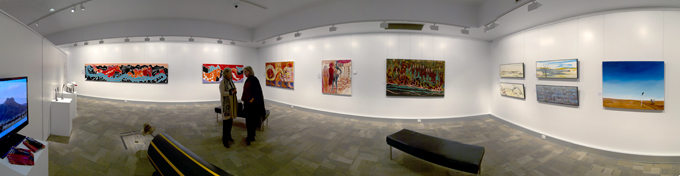
Bungil Art Gallery @ Roma: 6 July 2012: Shoot Straight You Bastards exhibition
http://www.romaonbungil.com.au
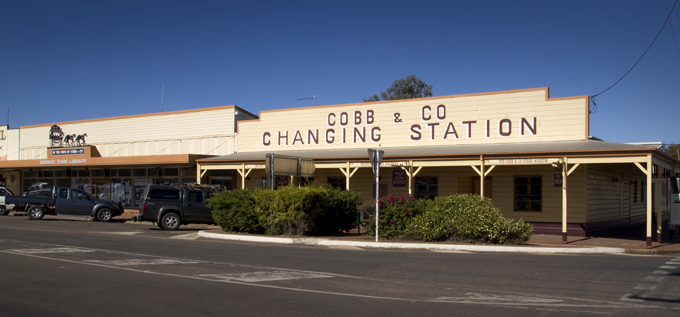
Cobb & Co Changing Station, Balonne River Art Gallery: Open 7 July 2012
http://www.rgaq.org.au/Balonne%20River%20Gallery.html
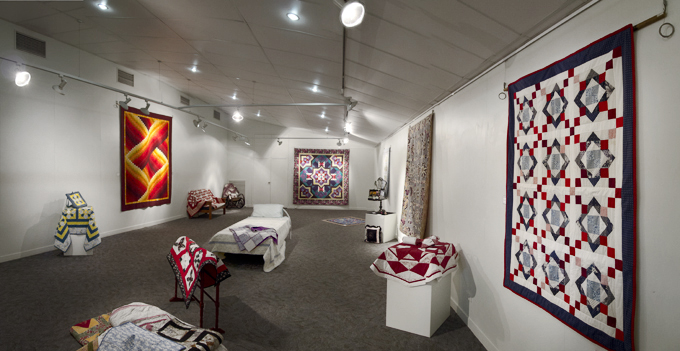
Cobb & Co Changing Station, Balonne River Art Gallery: Exhibition – Debbie Weinert Quilter
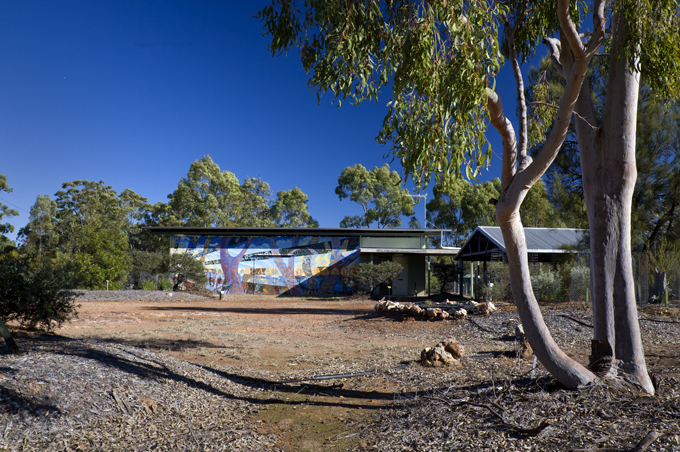
Myall Park Botanic Gardens Art Gallery
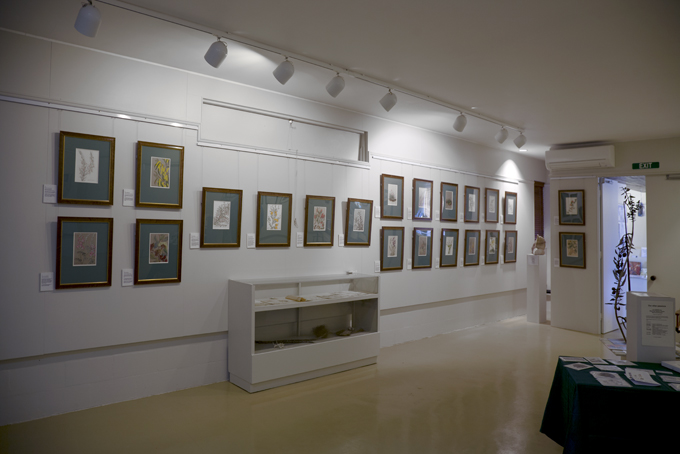
Myall Park Botanic Garden: Dorothy Gordon’s botanic paintings
http://www.myallparkbotanicgarden.org.au/gallery.htm
JOURNEY COMPLETED BY VICTORIA AND DOUG : ALL PHOTOS BY DOUG
75 Years: Toowoomba Regional Art Gallery
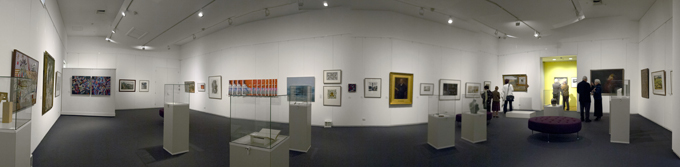
Toowoomba Regional Art Gallery Panorama
Toowoomba Regional Art Gallery, the oldest regional art gallery in Queensland, this month celebrated its 75th year of operation. When we consider that Queensland only recently celebrated its sesquicentennial therefore the gallery is half the age of Queensland itself! Other interesting dates; the Toowoomba region was settled in the 1840s and was proclaimed a city in 1904 The Toowoomba Show Society recently achieved a milestone of 142 years of shows in agriculture and industry and the Empire theatre celebrated its 100th birthday last year. It seems that the Toowoomba region was well and truly fired up as a community and perhaps overdue for an art gallery that was finally established in 1937.
The records show that various Governors of Queensland were associated with TRAG over the years and this association continues to this day with the current Governor Her Excellency Ms Penelope Wensley opening the 75th exhibition on July 2, 2012. In an impressively researched speech Governor Wensley recounted newspaper reports of the day relating to the gallery’s foundation. The 75th opening was attended by around 100 members of the local community including Mayor Paul Antonio, various councillors and members of the trustees or families of significant donors to the gallery.

Gallery Curator Di Baker with Governor Wensley discussing artworks
The exhibition features 75 individual artworks from the gallery’s collection—one for each of the 75 years. Standing in the middle of the main exhibition area one sees a diverse range of visual material. Paintings of bygone and contemporary eras by some very prominent artists, there are ceramics, fine jewellery (from the gallery’s principle collection media—contemporary wearables), and finally photographs and prints complete the veritable visual cornucopia on show. When I came to testing my recollection of the artwork’s titles and artists I was stumped, as the artwork didactics bore none of that information. This presented some confusion until I became aware the curatorial strategy for the show. The 75 works were selected on the basis of the year and the work’s conceptual connection with significant social, political or historical aspects of that year. The key to the sometimes quirky and idiosyncratic curatorial selection is the exhibition catalogue in which the rationale for the selection is linked with the title, media and the artist’s name.
While at first this seems a little strange my reflection on the concept confirms, for me at least, that the strategy is conceptually stimulating. The usual gallery exhibition is about artists and their art—this show IS about the gallery, its PLACE in the community and TIME, or rather the passage of time—75 years in fact. In this exhibition the gallery then assumes the position of ‘artist’ and were the ‘artwork’ is the curatorial team’s strategy.
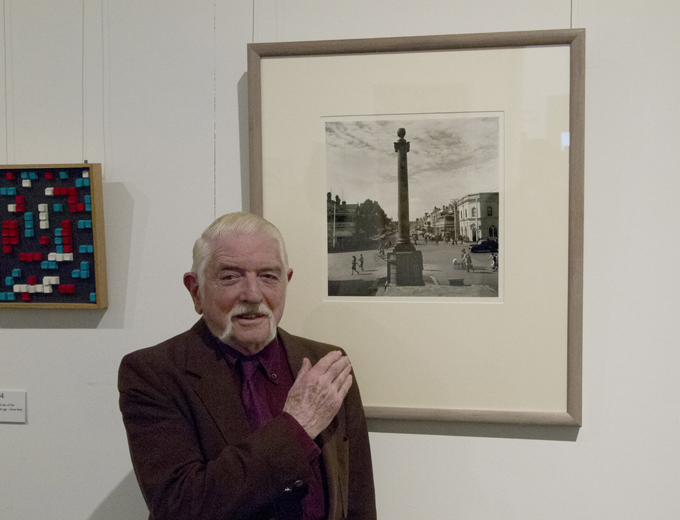
Doyen of Toowoomba’s photo scene Graham Burstow with a Max Dupain photograph in the exhibition
Bravo to the Toowoomba Regional Art Gallery and the team for bringing to us an exhibition featuring the gems of art from its collection that can tell these multiple stories. One, which is about the assiduous collection by the gallery of art stimulated by and/or created by the regional community. And secondly, this show provides recognition of significant art from outside Toowoomba that has been generously donated by benefactors over the years. Through the gallery display of these artworks the local community is able to connect with these wonderful touchstones of artists’ creative practice.
A visit to TRAG to see this show will require much more engagement than usual walk-through, so do plan for extended visits while the 75th year celebration show is on.
SEE more info Toowoomba Regional Council website
Doug Spowart 8 July 2012
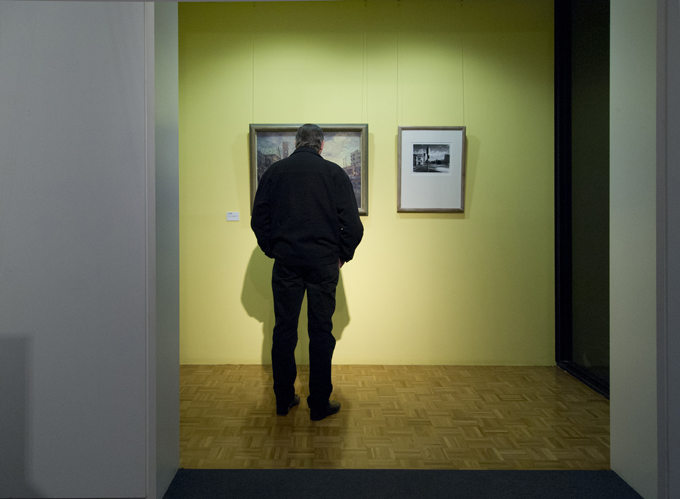
Doug next to his photograph of Ruthven Street selected for the exhibition
LIFE’S JOURNEY: Artists’ Book Exhibition, Redland Art Gallery
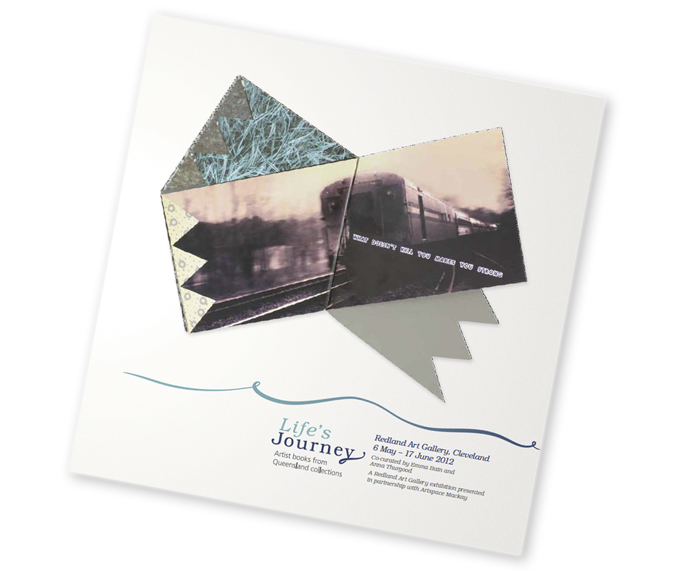
Life’s Journeys exhibition catalogue cover Redland Art Gallery
Judging a book by its cover a page
The artists’ book is usually sequestered away in library stacks and drawers in their neat little custom made archival cardboard boxes and plastic bags. In specialised library and private collections these are treasured objects; their owners become the custodian of the physical object of the book and the story is revealed in the site-specific act of reading within these spaces. But … sometimes they escape. On occasion artists’ books escape en-mass from their natural home of the library or private collection, and this is exactly the case with the exhibition Life’s Journey recently presented at the Redland Art Gallery, Cleveland.
Co-curated by Emma Bain Director of Redland Art Gallery and Anna Thurgood Acting Director of Artspace Mackay, the exhibition assembles books drawn from the significant, perhaps one could say—international quality, collections found in Queensland; Artspace Mackay (AM), grahame gallies + editions (gg+e), the State Library of Queensland (SLQ) and Studio West End (SWE). The exhibition’s themes, as highlighted in the catalogue essay by Louise Martin-Chew claim that they are intended to seek ‘out universal truths in individual journeys’, ‘the personal and individual’, …and ‘artist narratives with memoir-like threads’.
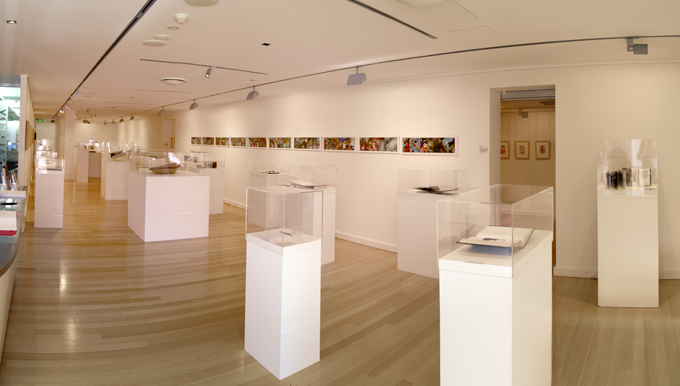
Life’s Journey exhibition @ Redland Art Gallery, Cleveland Photo: Doug Spowart
The viewer entering the gallery to see the Life’s Journeys books may not have read the catalogue, or have an understanding of the artists’ book discipline, but what they are to encounter in the white cube of the gallery space will be unusual. The Redland Gallery’s main room a literal forest of fourteen or more acrylic topped display cases. Inside each case resides the book, open to a page and resting on a stand or pillow. Some books don’t seem like books at all, they look more like 3D sculpture, or jewellery forms, or even things just fastened or bound together by threads. Other ‘books’ are in frames or on panels on the wall—one is even a projected image. It’s here where the viewer becomes acquainted with the ‘non-standard’ nature of the artists’ book—but there is more… The viewer can look at the narrative segment presented by the open page, or the expanded story presented in the wall-mounted works, or books that are of the concertina form. While being visually entertained by the titillating ‘sample’ view, the visitor may probably enjoy the encounter and will leave feeling a sense of discovering something interesting and unusual. But I would suggest that this is only part of the experience that the artists who made the books expected or wanted for those who see their books.
I know that this sounds like the continuing debate about the gallery exhibition of books where the sequential narrative that artists’ books require is neutered by single page views. But there is an issue, and for me a redeeming feature for shows like this, and that is that the display of artists’ books will encourage and excite people to hunt down these books in their usual library-sited storage spaces.
What I have written about before,* and what I will restate is, that these exhibitions are ‘tasters’ only. The exhibition strategy needs to include ways by which viewers can identify books of interest, understand how to access them, and then go-see, handle, read and fully encounter the artist’s communiqué. What is needed for the gallery viewer is a catalogue of the books and their source collections, how to access these collections, online references (maybe even flip-books of the works), perhaps even initiated within the exhibition space by QR codes or augmented reality clips. Using this concept the exhibition becomes an invitation for those who wish to take up the offer to handle and read the books in their site-specific habitat.
Now that’s off my chest, I have to say what an amazing collection of artists’ books the curators have pulled together. Seeing this cherry-picked selection in this context is far more interesting for me than looking through an online catalogue—here there is a sense of discovery. It’s a bit like going to a second-hand bookshop and just wandering through the stacks picking up whatever takes your fancy. Wandering through Life’s Journey was indeed an encounter with an eclectic bunch of artists’ books. Some of my favourites were there.

Adele Outteridge’s God Bless America Photo courtesy of Adele Outteridge
This included Adele Outteridge’s Teabag Book (2005) from SWE – just how many cups of tea were consumed to make this book? And another of Adele’s books, God Bless America (2003?) also from SWE, makes a political statement that can be read in different ways depending on the reader’s point of view of American society or foreign policy.
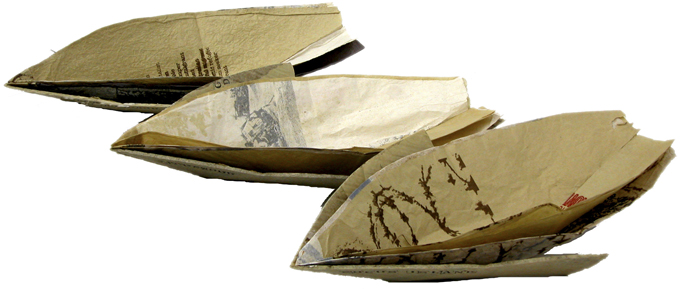
Books from the Codex Event 4 of which Naru is one (for reference only) Image courtesy of Tim Mosely
Another book Naru (2007), from the SLQ, was constructed from paper to form a 3D vessel—the book as a metaphor for a boat. The work was the result of a collaborative project entitled Codex Event 4 coordinated by Tim Mosely at Southern Cross University. Naru and the other books that were created by the team have an overtly political statement contained within their shape and the titling. These works comment on idea of the freedom that many people seek as they cross borders as refugees and how this conflicts with the Australian Government’s immigration policies.
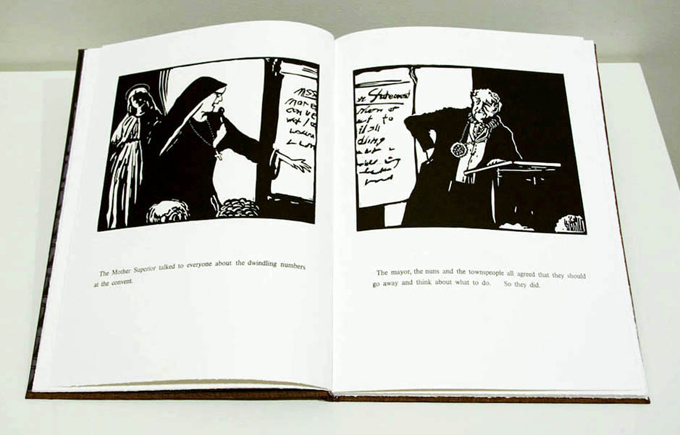
Sheree Kinlyside’s ‘The reluctant nun” (2009) @ 2010 Libris Artist Book Awards. Photo Doug Spowart
A fine press/printmakers book is represented by Sheree Kinlyside’s The reluctant nun (2009) from AM. The book was the winner of the Regional Artists Book Award at the 2010 Libris Artist Book Awards.
A book of a different shape, five sides(!) by American book artist Philip Zimmerman High Tension (1993), from gg+e, deals with a humorous look at contemporary society. The book is intentionally over-designed, montaging graphic elements and text with image narrative to make it an immensely interesting book—you want to pick it up and read through.
In the display of another book, Judy Watson’s Under the Act (2007) from gg+e, each page is framed and the work extends across one complete wall of the gallery. The folio single-sheet form of this book enables its reconfiguration to the wall possible. The work describes a personal narrative, a life’s journey, through the impact of oppressive white bureaucracy applied to Aboriginal peoples living in Queensland not that long ago.
Peter Lyssiotis and Noga Freiburg’s collaborative book Homeland (2003) from AM presents personal narratives of the authors, one a Greek Cypriot—the other an Israeli, about the way lines are drawn across maps to divide communities. The book invokes the story concept by using texts, family photographs and photomontages all bisected by a green line that divides the two communities.
One final book that I’ve always been inspired by is Scott McCarney’s Memory Loss (1988) from AM which deals with a medical condition that afficted his sibling. McCarney was recently in Brisbane with partner Keith Smith presenting an artists’ book workshop at the State Library of Queensland. This two-sided accordion structure book is replete with information from numerous sources including medical literature, personal photographs and correspondence. For me Scott’s book had truly escaped from the cases and was presented, sans protective acrylic lid, atop a plinth where viewing of one side was unobstructed. I think in terms of Scott’s politically subversive work that he would’ve liked that…
Life’s Journeys is a significant showing of what artists’ books can be and it puts the book firmly within the art gallery display environment. But none-the-less, with all the problems of display and the expectations that this commentator may have, the books do need to get out and about. They assert by their presence in the gallery that they exist and can be encountered by a diverse range of the art-interested public. And, perhaps is the case with any gallery exhibition, the viewer experience is something that develops and is enhanced by continued reflection after the viewing. The importance of the exhibition Life’s Journey, the accompanying exhibition Mind Mapping by local artist and bookmaker Jack Oudyn, and the associated workshops is that they will create much needed interest, scholarship and activity in the artists’ book genre. …. And hopefully inspire some viewers to become readers by pursuing the fuller of the artists’ book communiqué by engaging more fully with them when the books return to their respective collection homes.
Doug Spowart June 9, 2012
Please note: The links that I’ve selected to provide a visual connection with the text have been sourced from Google images and may not be the exact book presented for display in this show. I have found it interesting to discover how so many artists’ books are poorly, if at all, represented in the online domain.
REGIONAL ARTISTS DOING IT FOR THEMSELVES
CRISS-CROSSING THE DIVIDE
Living west of the Great Dividing Range places regional artists far from the arts hubs of the capital cities where the opportunities for exhibition, audience and critical review abound. And whilst most regional artists crave the benefits of urban proximity they may be overlooking plenty of career and professional development opportunities within their own regions.
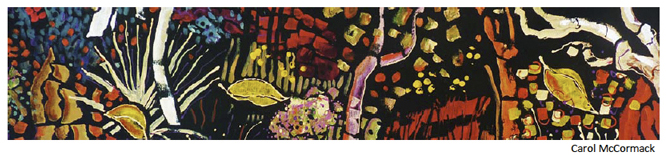
For that reason Sally Johnson, Director of Blockwork Gallery in Toowoomba, encourages regional artists to seek opportunities within their home boundaries. To show and share her ideas of what may exist for regional artists, she has curated an exhibition called Crossing the Divide at made.Creative Space, that featured paintings by Patricia Hinz, Carol McCormack and Catherine Rose.
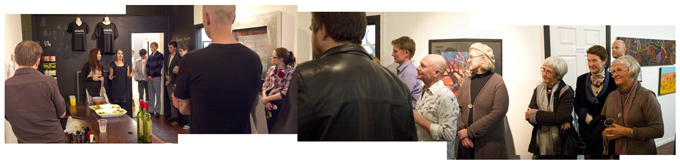
The exhibition opening was well attended and the made gallery directors Alex Stalling and Elysha Gould provided a commentary about the exhibitions that were to open that evening—they also announced the imminent closure of the gallery and the new ‘pop-up’ exhibition strategy that they will be introducing, as well as Elysha’s new position in Miles as a ‘manager’ (?) of the Dogwood Crossing Gallery.
Attached to the exhibition was a workshop in which the featured artists participated in a discussion led by Sally that looked at the range of exhibition venues throughout the South West region. Emerging and mid‐career Toowoomba Artists were encouraged to expand their careers by considering exhibitions at the venues mentioned.
The artists represented in the Crossing the Divide show, Pat, Carol and Catherine then discussed the nature and history of their arts practice. Each had really interesting backgrounds in art-making and exhibition with experiences that included working with Mervyn Moriarty in the early days of Flying Arts, having exhibitions in New York and being driven on outback roads with a canvas spread out across the dashboard—painting.
A lively question and answer discussion ensued that connected the ideas and experiences of the three visiting artists with those from the local scene.
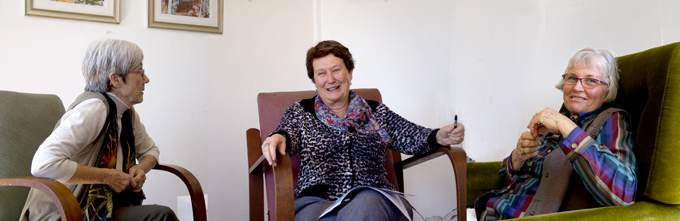
Carol McCormack, Patricia Hinz and Catherine Rose
Sally announced that this project will also include a managed interactive online forum that will allow for a continued engagement process beyond the workshop. It is intended that this forum will have the potential to act as a platform by which Toowoomba and South West artists can connect more broadly.
The workshop and forum received support from the Regional Arts Development Fund—a Queensland Government and Toowoomba Regional Council partnership to support local arts and culture.
For more information on the exhibition and the online forum contact, sally@blockwork.com.au or 0418 227 784.
Words: Doug
JOHN ELLIOTT’s ‘GIFTED COUNTRY’

An image of the ballad of country and western

As a photographer attempting to communicate personal experiences and my, at least I think, special view of life and the world, occasionally I have thoughts that if I wanted to connect en mass I should have been into music! When I look at what music does to I see participants who will slap, tap, hum, whistle, laugh, tear up and even cry. Music sure beats the visual arts hands down as a way of creating a connected audience response. But an exhibition of photographs at the Caboolture Regional Art Gallery, just a few kilometres north of Brisbane, may just win some points back for the visual artist.
Gifted Country is a photographic exhibition of the doyens of the world of country and western music by Toowoomba photographer John Elliott. As a follower of the music industry for over 30 years Elliott has amassed a collection of the latest top hits and the golden oldies. On the walls of the gallery the faces of C&W music stare out at the viewer — frozen and mute. Elliott has reduced them to an eye-only sensory experience. The only sounds permeating the space are the shuffle of footsteps of other gallery viewers and the muffled voices of local community members returning books to the library next door.
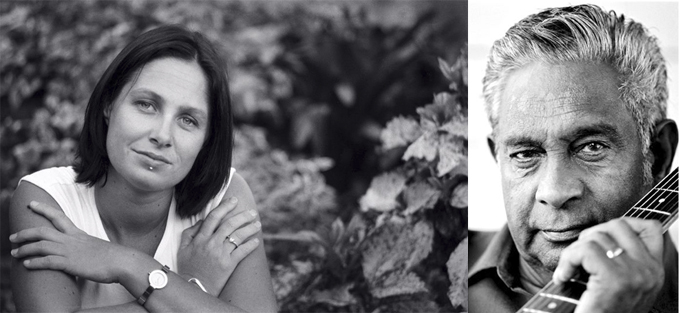
Casey Chambers + Jimmy Little
Before you get the feeling that the show is a little underwhelming there are other things to consider. Firstly the music and photography industry do share some similarities. Apart from practitioners at the most visible pinnacle of the discipline, those who make the sound and the image – the photographer behind the camera, the songwriter, the muso behind the lead singer and the mixer at the sound deck — are faceless. Only the products of their creative efforts are known to us. Okay, we can all recognise a Slim Dusty, Casey Chambers and Keith Urban from across the room. And that is perhaps because photographers like Elliott have made their image, apart from their music, famous. A reflective Jimmy Little leaning on a guitar neck (the one Little’s family selected as the ‘hero’ image for his recent funeral service), Lee Kernaghan stridently stands sky-pointing before a dramatic theatrically lit stage and a wide-eyed Chad Morgan’s face pokes out from his trade-mark safety-pinned hat. Once you’ve cherry-picked a few of the icons you are left with portraits of haggard faced, guitar holding middle-aged men, sweet smiling young girls and longhaired youths that crowd the rectangle photo frame.
What Elliott’s efforts bring to us is the human face of the extended country and western industry. These faces could be those of the waitress, the farm hand, the rodeo queen and the Big Mack truck mechanic. To help make the connection for the viewer Elliott pairs the portrait with the carefully chosen words of a biography that makes visible the musical provenance that we may share with the subject. Additionally a website links to interviews, commentaries and music to enliven the interest of those with a passion for C&W music.
What is remarkable is that over the years John Elliott has worked to amass this body of work. And this is not his sole interest — there are landscapes, urban vistas, other portraits and the personal and intimate moments of life. But this body of work has a quality and magnitude that sets it aside from the usual music documentary record.
This exhibition will be of great interest to the country and western dilettante, the music maker and the photographer alike. For this is a unique assemblage that is testimony to value of photography as record that is at once about history and the present — becoming history. The John Elliott Gifted Country performance will continue until June 23, and then, hopefully, will in the tradition of C&W — go on the road …
Doug Spowart May 26, 2012.
Also @ the Gifted Country show is a C&W PHOTO BOOTH – we had a bit of fun there …
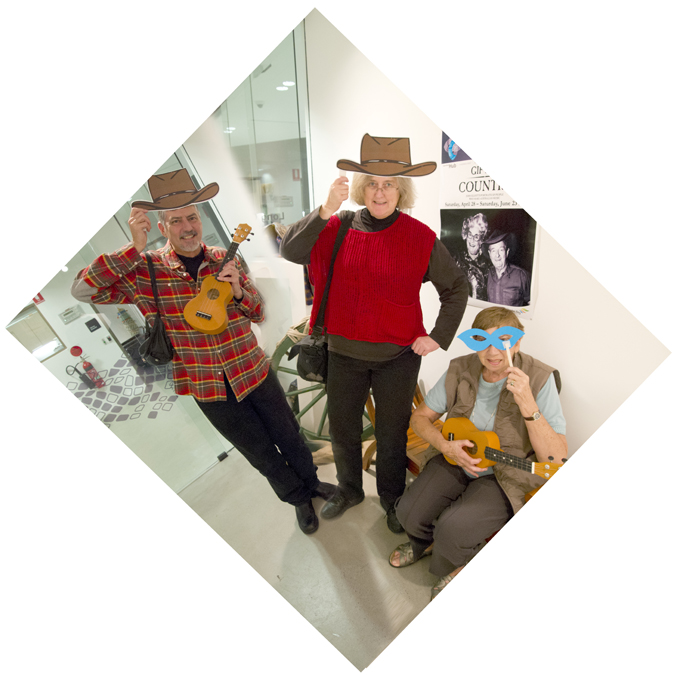
What is this thing called art photography?
Visiting the 2012 Josephine Ulrick and Win Schubert Photography Award
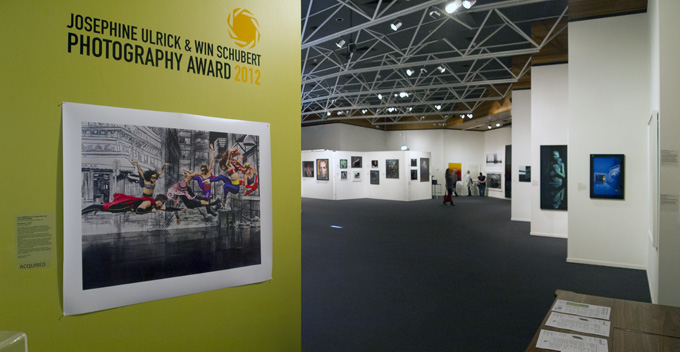
2012 Josephine Ulrick and Win Schubert Photography Award
What is this thing called art photography? Can it be nailed down and quantified? Each year across the country institutions and the judges they select attempt to do just that. Do they succeed? And is everyone happy about these events? A comment in the visitors book of 2012 Josephine Ulrich and Win Schubert Photographic Award at the Gold Coast Art Gallery makes the observation, something like “How high was the judge when he made that selection?” Well you can’t please everyone, and these awards with their huge prize purses do ultimately end up making one person ecstatic at winning and a few others happy by having their work purchased.
I for one am thoroughly excited by the depth and breadth of art photography that this award unearths each year. Although not an entrant for a few years my work, and collaborative works with Victoria Cooper have been displayed as finalists on 4 or 5 occasions, the exhibition continues to be a motivation for pushing our own work forward.
This year’s judge was Kon Gouriotis – Director, Australian Centre for Photography and the winner was Vestiges #3 by Sydney based artist Eugenia Raskopoulos. A press release about the award can be accessed HERE
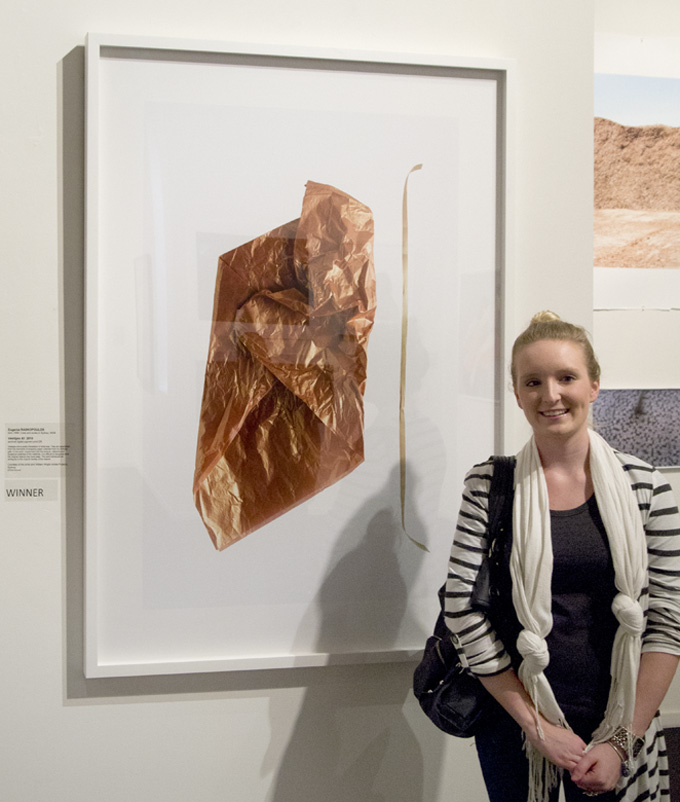
‘Vestiges #3’ by Eugenia Raskopoulos – with gallery visitor Tamekka
Over the years the Ulrich Award has gradually moved into increasingly large sized, huge framed or pinned to the wall works. This year 75 works were selected and this created what must have been an installation challenge. Double hanging of many photographs shoe-horned them into the space although due to this strategy some photographs suffer viewability problems.
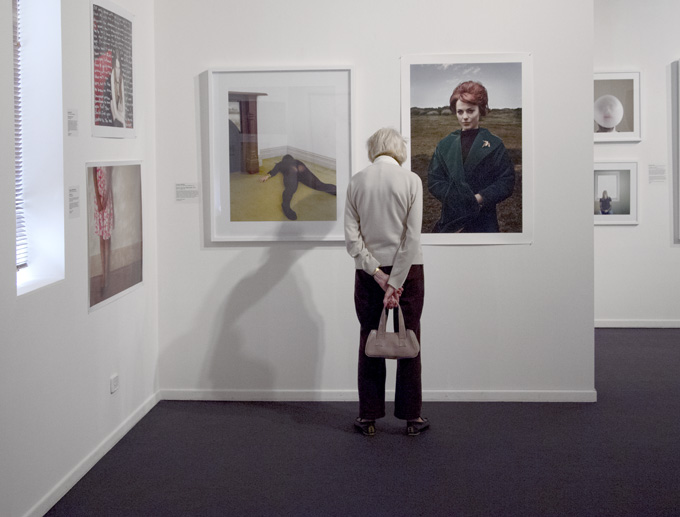
The gallery space
A new sophistication in artist’s statements on didactic panels heralds an increasing reliance from artists to attempt to direct the viewer into seeing the meaning of a work through a narrow, and perhaps confusingly worded sometimes pseudo-intellectual window. Robert Adams writes in his book Why people photograph that said that artists should not attempt to describe their work. He states that, ‘Words are proof that the vision they [the photographer] had is not … fully there in the picture.’
Anyway, be that as it may, one artist not only out does everyone else in square metres of wallspace but also presents an insightful statement that addresses the current photographic art scene. Hedy Ritterman’s Bollard 2011, for me was the standout conceptual piece for the show – the artist’s statement is well worth reading:
I abandon the idea of a photograph as a “window to the world” – instead I embrace the materiality of the surface itself. The highgloss, large scale photographic paper, with its fragility exposed, acts as a distorting mirror capturing the changing surrounds and highlighting its sculptural form. The distinction between the image in the photograph and the object of the photograph is underscored here. The subject of the photograph, a huge analogue negative of the museums’ people barrier, stands in direct opposition to the seductive invitation of the surface.
My work explores the complex relationship between the contemporary photo-artist, the collecting institution and the viewer. As photography shifts away from the print to the screen its status as object is being challenged. As photography shifts into the realm of the museum its object status is being valued.
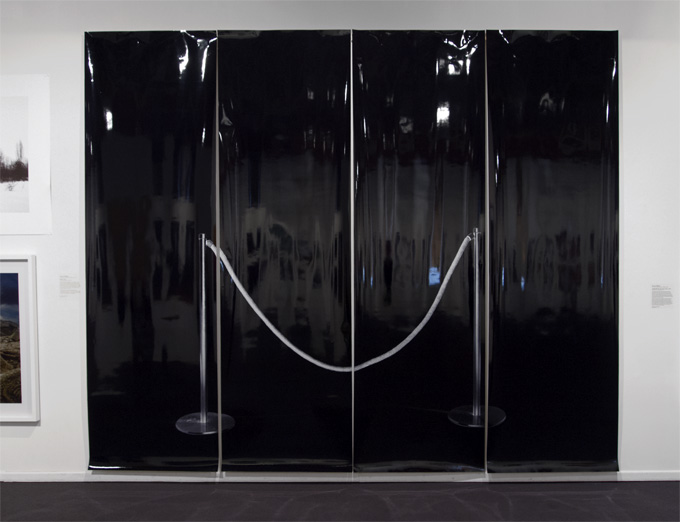
Hedy Ritterman’s ‘Bollard’ 2011
As a viewer what I like about the exhibition is the intellectual and visual calisthenics that I’m engaged in while walking through the space. Whether I, or you, agree with the judge’s decision or not, the exhibition still remains a celebration of contemporary photographic art that continues to challenge and reward the photographic and broader arts communities.
Doug Spowart
JENNY SAGES: Paths to Portraiture @ TRAG
A travelling exhibition from the National Portrait Gallery
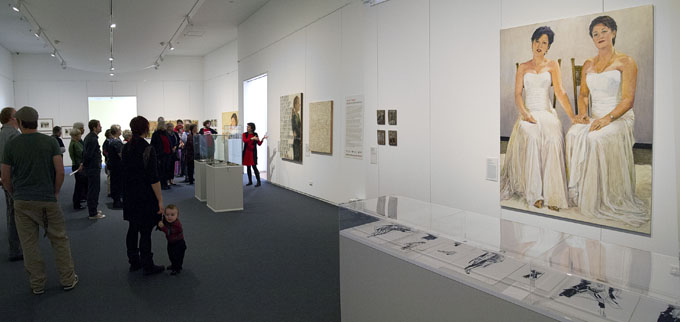
Christine Clark presenting a floor talk – ‘Jenny Sages: Paths to Portraiture’
A painted portrait, to be authentic, must be more than a visual transcription of the subject. A couple of years ago Christopher Allen, in writing a review of a photographic portraiture exhibition at the National Portrait Gallery made the statement that ‘humans are not ultimately machine-readable’. (Allen 2010) He claims that portraits by any group of ‘reasonably able’ painters do the task of portraiture much better than photographers as, ‘Every mark is significant, and records something seen and felt; intellect and intuition are one and become simultaneous with making.’
In encountering Jenny Sages’ Paths to Portraiture exhibition at the Toowoomba Regional Art Gallery Allen’s dictum is profoundly proved. The portrait works are layered with an expression of the artist’s relationship with the subject – Sages needs to develop a friendship with the subject, to share the space and moment and the ‘other’ sense-stuff that makes a portrait more than a likeness.
The exhibition Jenny Sages: Paths to Portraiture was curated by Christine Clark, Manager of Exhibitions from the National Portrait Gallery, Canberra. The show’s premise was to present more than a collection of Sages’ portrait work, but as the title of the show alludes to – the path the artist takes in making a portrait. Included with the finished portraits are reference drawings, ephemera, and objects referential to the subject that informed the painted portrait. For the student of painting and for members of the public who wish to understand more of the artist’s process these elements provide an insight that is not usually part of the experience we have of finished artworks.
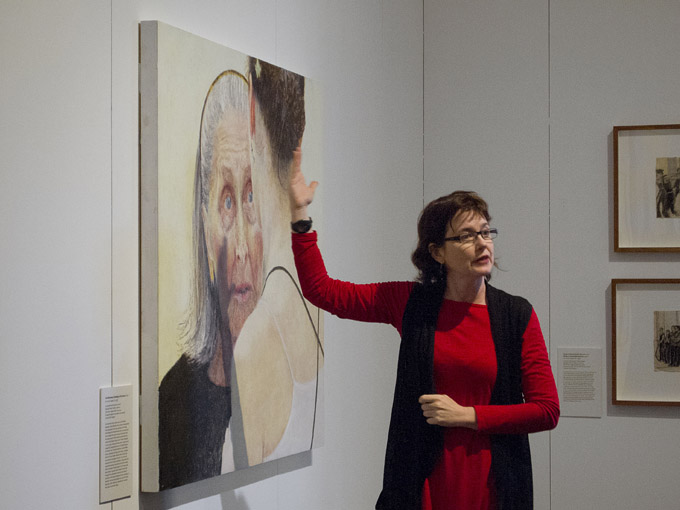
Christine Clark talking about Sages’ work
To compliment the exhibition Christine Clark presented a floor talk on the exhibition for around forty attendees from the Toowoomba art scene. Clark’s talk provided special insights into Sages’ background and the story of the paintings. She linked these stories with the displayed preliminary sketches, drawings and other objects making the experience of the art and Sages’ process rich and alive. Clark, through her enthusiasm for the artwork and her expressive gesture and discussion, took all present at the floor talk to a higher understanding and respect for the work before them. Thank you to the NPG, TRAG, Christine Clark and Jenny Sages for the opportunity to see and hear about this artist’s work in portraiture.
Doug Spowart 20 May 2012
Allen, C 2010, ‘Through a lens darkly’, The Australian, July 3, p. 11-2.
AIPP ON THE LOUNGE: SQIT Toowoomba April 11, 2012
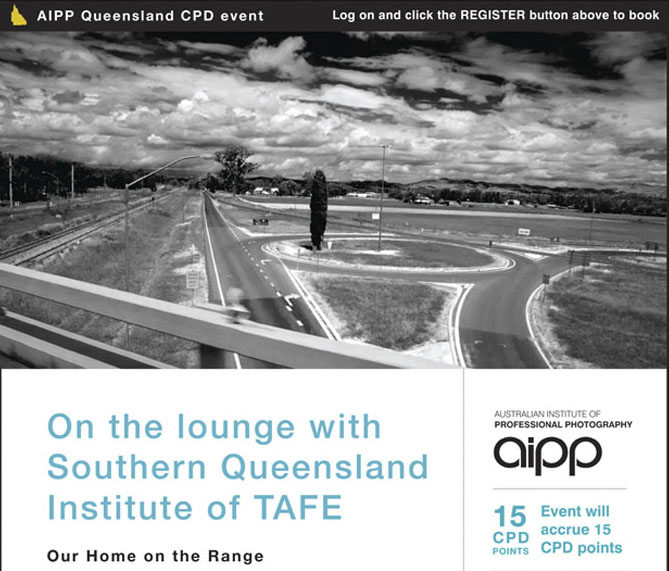
- AIPP – On the lounge SQIT, Website invite
On this evening the SQIT Photoimaging team hosted two events for visiting AIPP members and invited guests. The visit began with a ‘High Tea’ catered for by the SQIT Hospitality team – sumptuous treats were accompanied by tea and coffee. Those attending settled down to conversation with each other in the convivial atmosphere of the ‘Futures’ Restaurant. Coffee Shop
At 5.30 stage two of the visit began with the open of an exhibition of photobooks and artists’ books made by SQIT Photo students over the last 5 years. The show was opened by Queensland Division President Jan Ramsay, who as a past student of an art photography unit, and also part of the end-of-year professional assessment team at SQIT, had experienced the Toowoomba TAFE Photo team at work.

Doug thanks Jan Ramsay for opening the ‘Brought to Book’ show
The books on show ranged from Shanea Rossiter’s ‘Inspiring Women’ book of portraits to Cathy Smith’s book ‘Junked’, a documentary comment on our disposable society and Lorraine Seipel’s political message in the book ‘Song for the future’. The exhibition was curated by Victoria Cooper and Doug Spowart for the Queensland Festival of Photography.
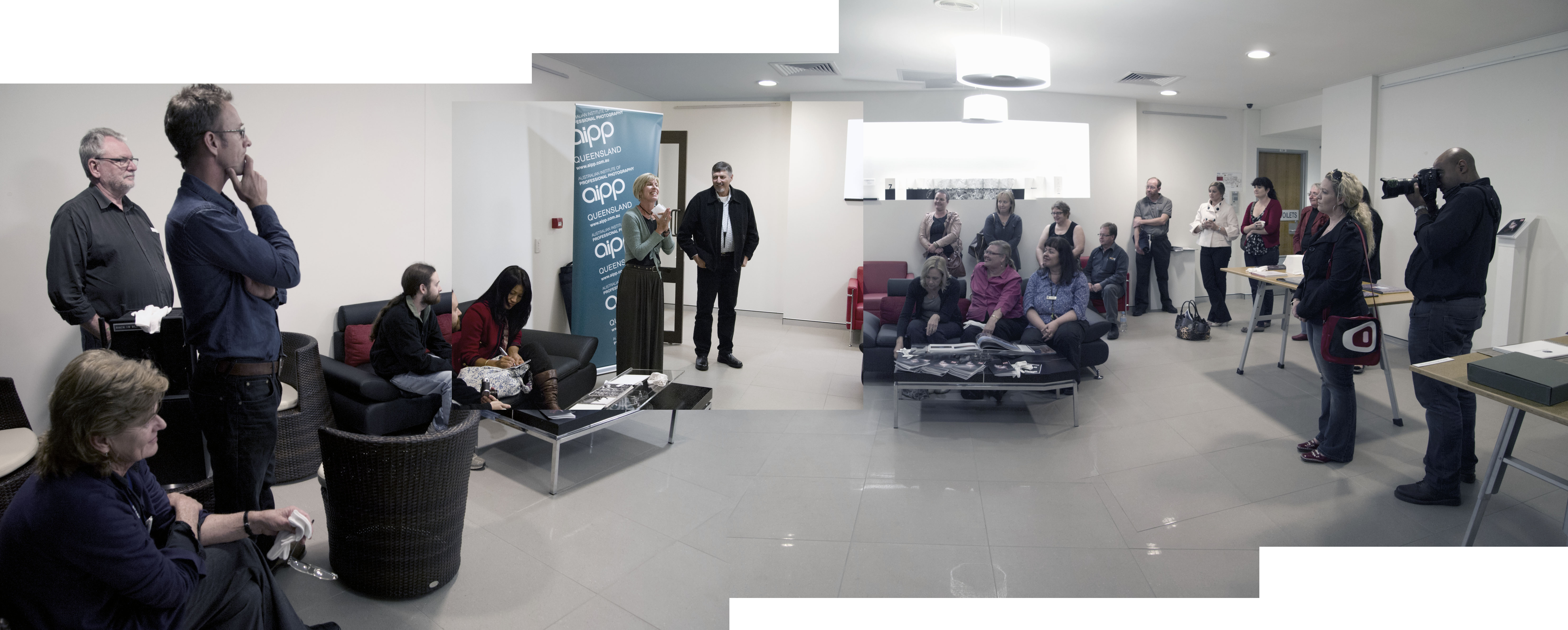
‘Brought to Book’ opening @ Futures Gallery SQIT Toowoomba
The third stage of the program included presentations by the three full-time staff of the photo team – Rachel Susa, Alison Ahlhaus and Doug Spowart. Each spoke of their connection with photography from both the personal and professional context. Doug spoke of the 20-year history of the photo Diploma and Certificate courses at SQIT and the Photoimaging teaching methodology.
The session concluded with a PowerPoint show presenting a selection of images and comments from past students. It was interesting to hear of the experiences of these past students about studying at SQT as well as their achievement in photography. The past students included: AIPP Chairman of the Board Alice Bennett, Nicola Poole, Katie Finn, Lisa Mattiazzi – National Gallery of Australia imaging specialist, Lydia Shaw who works in many areas including photography and teaching in Dubai, nationally acclaimed commercial photographer Damien Bredberg, Sue Lewis – APPA Team Manager and recent graduate Shanea Rossiter who is establishing a business in Warwick.
The Past Students PowerPoint show (PPS) can be downloaded from the www.cooperandspowart.com.au website – It’s a 30.9 mb download but presents an interesting overview of where SQIT students go to and the amazing achievements that they have. CLICK <http://www.cooperandspowart.com.au/2_PLACES/OtherBooks/index.html> Then select the PowerPoint AIPP OTL picture.
The evening concluded with the video fusion show “Dance-on’ by 2011 SQIT Diploma Student of the Year. “Lindsey’s video represents the future of photography” said Doug, and added, “that the stilled image is dead!” The point was not debated, but in the context of an industry that has gone from wet darkrooms to light rooms and digital output in the last ten years everyone left knowing that anything is possible.
Cheers Doug

 wotwedid